AB 1000: Water conveyance: use of facility with unused capacity.
- Session Year: 2017-2018
- House: Assembly
- Latest Version Date: 2017-07-03
Existing law prohibits the state or a regional or local public agency from denying a bona fide transferor of water from using a water conveyance facility that has unused capacity for the period of time for which that capacity is available, if fair compensation is paid for that use and other requirements are met.
This bill would, notwithstanding that provision, prohibit a transferor of water from using a water conveyance facility that has unused capacity to transfer water from a groundwater basin underlying desert lands, as defined, that is in the vicinity of specified federal lands or state lands to outside of the groundwater basin unless the State Lands Commission, in consultation with the Department of Fish and Wildlife, finds that the transfer of the water will not adversely affect the natural or cultural resources of those federal and state lands.
Existing law requires the State Energy Resources Conservation and Development Commission to establish design and construction standards and energy and water conservation design standards that increase efficiency in the use of energy and water for new residential and new nonresidential buildings to reduce the wasteful, uneconomic, inefficient, or unnecessary consumption of energy. Existing law requires the commission to establish minimum levels of operating efficiency to promote the use of energy and water efficient appliances. The Water Measurement Law requires every water purveyor to require, as a condition of new water service, the installation of a water meter to measure water service. That law also requires urban water suppliers to install water meters on specified service connections, and to charge water users based on the actual volume of deliveries as measured by those water meters in accordance with a certain timetable.This bill would authorize the commission to adopt regulations establishing performance standards for water meters installed in residential and nonresidential buildings, including water meters installed pursuant to the Water Measurement Law.Existing law requires the State Energy Resources Conservation and Development Commission to establish design and construction standards and energy and water conservation design standards that increase efficiency in the use of energy and water for new residential and new nonresidential buildings to reduce the wasteful, uneconomic, inefficient, or unnecessary consumption of energy. Existing law requires the commission to establish minimum levels of operating efficiency to promote the use of energy and water efficient appliances. The Water Measurement Law requires every water purveyor to require, as a condition of new water service, the installation of a water meter to measure water service. That law also requires urban water suppliers to install water meters on specified service connections, and to charge water users based on the actual volume of deliveries as measured by those water meters in accordance with a certain timetable.
This bill would authorize the commission to adopt regulations establishing performance standards for water meters installed in residential and nonresidential buildings, including water meters installed pursuant to the Water Measurement Law.
This bill would require the commission to certify innovative water conservation and water loss detection and control technologies that meet certain criteria.Existing law requires the State Energy Resources Conservation and Development Commission to establish design and construction standards and energy and water conservation design standards that increase efficiency in the use of energy and water for new residential and new nonresidential buildings to reduce the wasteful, uneconomic, inefficient, or unnecessary consumption of energy. Existing law requires the commission to establish minimum levels of operating efficiency to promote the use of energy and water efficient appliances.
This bill would require the commission to certify innovative water conservation and water loss detection and control technologies that meet certain criteria.
(a)Notwithstanding Section 1810, a transferor of water shall not use a water conveyance facility that has unused capacity to transfer water from a groundwater basin underlying desert lands that is in the vicinity of a national monument, a national preserve, a national park, a state or federal wilderness area, or state lands to outside of the groundwater basin unless the State Lands Commission, in consultation with the Department of Fish and Wildlife, finds that the transfer of the water will not adversely affect the natural or cultural resources, including groundwater resources or habitat, of those federal and state lands.
(b)For purposes of this section, desert lands means the portion of California located south of Interstate 15, east of State Highway 247, north of State Highway 62, west of Interstate 95, and west of the Nevada state line between Interstate 95 and Interstate 15.
SECTION 1.Section 25402.14 is added to the Public Resources Code, to read:25402.14.The commission may adopt regulations to establish performance standards for water meters installed in residential and nonresidential buildings, including water meters required to be installed pursuant to Article 3.5 (commencing with Section 525) of Chapter 8 of Division 1 of the Water Code.The commission may adopt regulations to establish performance standards for water meters installed in residential and nonresidential buildings, including water meters required to be installed pursuant to Article 3.5 (commencing with Section 525) of Chapter 8 of Division 1 of the Water Code.
SECTION 1.Section 25402.14 is added to the Public Resources Code, to read:25402.14.The commission shall certify innovative water conservation and water loss detection and control technologies that meet both of the following criteria:(a)The technology increases the energy efficiency of the system affected.(b)The technology is cost effective.The commission shall certify innovative water conservation and water loss detection and control technologies that meet both of the following criteria:
(a)The technology increases the energy efficiency of the system affected.
(b)The technology is cost effective.
|
Date
|
Status
|
|---|---|
| Sep 1, 2017 | In committee: Held under submission. |
| Aug 28, 2017 | In committee: Referred to APPR. suspense file. |
| Aug 21, 2017 | In committee: Set, first hearing. Hearing canceled at the request of author. |
| Jul 11, 2017 | From committee: Do pass and re-refer to Com. on APPR. (Ayes 7. Noes 2.) (July 11). Re-referred to Com. on APPR. |
| Jul 3, 2017 | From committee chair, with author's amendments: Amend, and re-refer to committee. Read second time, amended, and re-referred to Com. on N.R. & W. |
| Jun 14, 2017 | Referred to Com. on N.R. & W. |
| Jun 1, 2017 | In Senate. Read first time. To Com. on RLS. for assignment. |
| May 31, 2017 | Read third time. Passed. Ordered to the Senate. (Ayes 57. Noes 18. Page 1966.) |
| May 30, 2017 | Assembly Rule 63 suspended. (Ayes 52. Noes 24. Page 1776.) |
| May 26, 2017 | From committee: Amend, and do pass as amended. (Ayes 12. Noes 5.) (May 26). |
| May 10, 2017 | In committee: Set, first hearing. Referred to APPR. suspense file. |
| Apr 26, 2017 | From committee: Do pass and re-refer to Com. on APPR. (Ayes 10. Noes 5.) (April 25). Re-referred to Com. on APPR. |
| Mar 2, 2017 | Referred to Com. on W.,P., & W. |
| Feb 17, 2017 | From printer. May be heard in committee March 19. |
| Feb 16, 2017 | Read first time. To print. |
|
Date
|
Description
|
Location
|
Votes
|
|
|---|---|---|---|---|
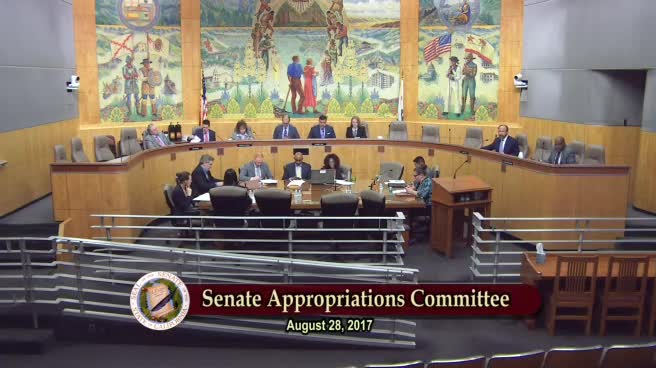
| Aug 28, 2017 | Placed on suspense file | Senate Standing Committee on Appropriations |
Passed |
|
| Jul 11, 2017 | Do pass, but first be re-referred to the Committee on [Appropriations] | Senate Standing Committee on Natural Resources and Water |
Passed |
|
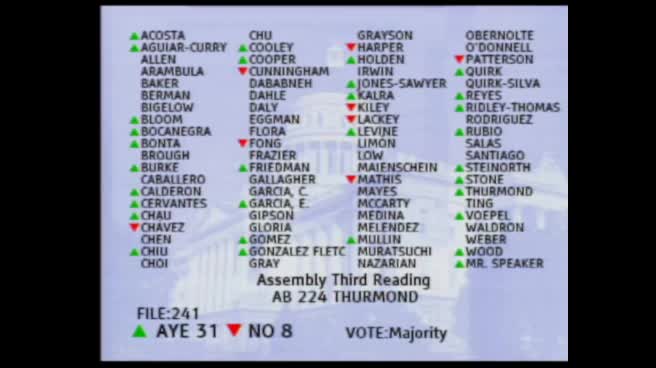
| May 31, 2017 | AB 1000 FRIEDMAN Assembly Third Reading | Assembly Floor |
Passed |
|
| May 26, 2017 | Do pass as amended. | Assembly Standing Committee on Appropriations |
Passed |
|
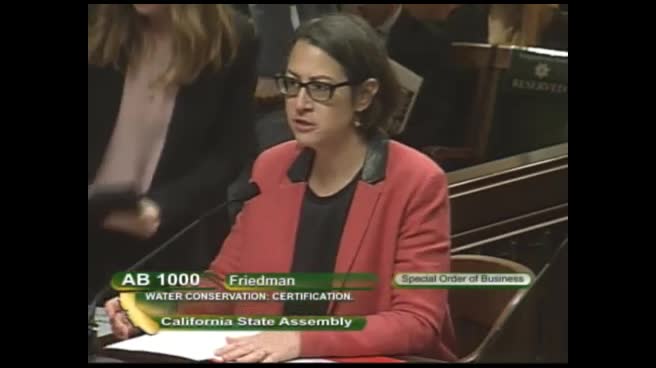
| Apr 25, 2017 | Do pass and be re-referred to the Committee on [Appropriations] | Assembly Standing Committee on Water, Parks, and Wildlife |
Passed |
This list shows positions taken on this bill by organizations on the date displayed, which is linked to the original source.
Positions by individuals are not included.
|
Organization
|
Position
|
Date
|
|---|---|---|
| 29 palms inn | ** Support | Jul 7, 2017 |
| Audubon Caifornia | * Support | Aug 28, 2017 |
| BizFed | ** Against | Jul 7, 2017 |
| Cadiz Inc. | * Against | Aug 28, 2017 |
| California Chamber Of Commerce | * Against | Aug 28, 2017 |
| California Desert Land Conservancy Dba Mojave Desert Land Trust The | * Support | Aug 28, 2017 |
| California League Of Conservation Voters | ** Support | Jul 7, 2017 |
| California State Council Of Laborers | ** Against | Jul 7, 2017 |
| Center For Biological Diversity | ** Support | Jul 7, 2017 |
| Ceres | ** Support | Apr 21, 2017 |
| Clean Water Action | * Support | Aug 28, 2017 |
| coalition to protect america's national parks | ** Support | Jul 7, 2017 |
| Cucamonga Valley Water District | * Against | Aug 28, 2017 |
| Defenders Of Wildlife | * Support | Aug 28, 2017 |
| Engineering Contractors' Association | ** Against | Jul 7, 2017 |
| Environment California | ** Support | Jul 7, 2017 |
| Friends of the Los Angeles River | * Support | Aug 28, 2017 |
| Garney Construction | ** Against | Jul 7, 2017 |
| Hispanic Access Foundation | ** Support | Jul 7, 2017 |
| Inland Empire Economic Partnership | ** Against | Jul 7, 2017 |
| Inland Empire Utilities Agency | * Against | Aug 28, 2017 |
| Inland Empire Waterkeeper | ** Support | Jul 7, 2017 |
| mojave national preserve conservancy | ** Support | Jul 7, 2017 |
| morongo basin conservation association | ** Support | Jul 7, 2017 |
| National Parks Conservation Association | ** Support | Jul 7, 2017 |
| native american land conservancy | * Support | Aug 28, 2017 |
| Natural Resources Defense Council | * Support | Aug 28, 2017 |
| Orange County Business Council | ** Against | Jul 7, 2017 |
| Orange County Coastkeeper | ** Support | Jul 7, 2017 |
| Roscoe Moss Company | ** Against | Jul 7, 2017 |
| Santa Margarita Water Agency | * Against | Aug 28, 2017 |
| Santa Margarita Water District | ** Against | Jul 7, 2017 |
| Seich | * Against | Aug 28, 2017 |
| Series | * Support | Apr 25, 2017 |
| Sierra Club California | * Support | Aug 28, 2017 |
| Southern California District Council Of Laborers | ** Against | Jul 7, 2017 |
| Southern California Partnership For Jobs | ** Against | Jul 7, 2017 |
| State Building and Construction Trades Council | ** Against | Jul 7, 2017 |
| The Nature Conservancy | * Support | Aug 28, 2017 |
| vet voice foundation | ** Support | Jul 7, 2017 |
SENATE COMMITTEE ON APPROPRIATIONS
Senator Ricardo Lara, Chair
2017 - 2018 Regular Session
AB 1000 (Friedman) - Water conveyance: use of facility with unused capacity
Version: July 3, 2017 | Policy Vote: N.R. & W. 7 - 2 |
Urgency: No | Mandate: No |
Hearing Date: August 21, 2017 | Consultant: Narisha Bonakdar |
This bill meets the criteria for referral to the Suspense File.
Bill Summary:
AB 1000
prohibits the conyenance of water from a groundwater basin underlying desert lands near a national monument, a national preserve, a national park, a state or federal wilderness area, or state lands (protected lands) to outside of the groundwater basin unless the State Lands Commission (SLC), in consultation with the Department of Fish and Wildlife (Department), finds that the transfer will not adversely affect the natural or cultural resources of those lands, including groundwater resources or habitat.
Fiscal Impact:
- Unknown, significant cost to the SLC (General Fund) to contract for the development of the environmental impact assessment necessary to make the finding required in the bill, and for staff time to analyze the assessment, draft the staff report, and brief the commissioners in preparation for the vote. (See staff comments)
- Approximately $212,000 annually for CDFW (General Fund) to review water transfers and conduct analysis of the environmental impacts for various projects involving groundwater extraction.
- Potential, likely significant, litigation costs to defend the state against challenges to the requirements imposed by this bill and/or the outcomes of the required assessment (e.g., delays or stopping the project).
Background:
Wheeling water. Current law prohibits a public agency from denying a bona fide water transferor access to and conveyance in a water facility with unused capacity for the period of time for which that capacity is available, if (1) fair compensation is paid for that use and (2) the transferred water does not reduce the beneficial uses or lessen water quality of the water in the facility. Additionally, use of the facility cannot injure any legal user of water; unreasonably affect fish, wildlife, or other instream beneficial uses; or unreasonably affect the overall economy or the environment of the county from which the water is being transferred.
The conflict over Cadiz. This bill attempts to impose an additional environmental review on the Cadiz Valley Water Conservation, Recovery and Storage Project (Cadiz). The project is located in the Cadiz Valley, about three miles south of historic Route 66 near the now abandoned Mojave Desert town of Chambless. According to the Cadiz Inc. website, the project “is designed to capture and conserve billions of gallons of renewable native groundwater flowing beneath our property in California’s Mojave Desert that is currently being lost to evaporation and salt contamination at nearby dry lakes. Through the active management of the aquifer system and employing a state-of-the-art groundwater protection program, the Project will reduce the loss of groundwater
to evaporation from the dry lakes, put this water to beneficial use and create a reliable water supply for Southern California.”
In 1998, Cadiz Inc. and the Metropolitan Water District of Southern California (MWD) began discussions about a project that would have imported Colorado River water to the town of Cadiz and exported groundwater from Cadiz to the MWD service area. Ultimately, MWD opted not to go forward citing uncertainties about potential for environmental impacts (discussed below). Despite the MWD’s concerns, pursued the environmental review and permits necessary to commence the transfer.
The intervening years have been wrought with conflict over the land—debate among diametrically opposed stakeholder, lengthy environmental reviews with 200 comments; and nine lawsuits, all of which were decided in favor of Cadiz .seemingly project ending blow when, just as Cadiz was preparing to finalize transportation arrangements, President Obama invoked the Antiquities Act to create three national monuments preserving the nearly 1.4 million acres of on which the project was proposed.
At the core of the dispute is differing estimates of the sustainable yield of the Cadiz Valley groundwater basin. Cadiz, citing a CH2M study, claims the groundwater basin naturally recharges at 32,500 acre-feet/year and can sustainably support the proposed water supply and storage project. Opponents respond that the U.S. Geological Survey’s study found that the natural refill rate of the desert aquifer is between 2,000 and 10,000 acre feet of water per year.
The election of Donald Trump not only pulled this project from the brink of failure, but accelerated its implementation. Before President Trump took office, in December of 2016, he provided his transition team with a list of priority projects; Cadiz was on the list. As a result, the seemingly successful efforts to stop the project, led by Senator Diane Feinstein, and aided by environmentalists, nongaming tribes, and President Barack Obama are now facing potential defeat.
The State Lands Commission. The SLC was established in 1938, and has since amassed four million acres of tide and submerged lands and the beds of navigable rivers, streams, lakes, bays, estuaries, inlets, and straits (often referred to as sovereign or public trust lands). Among its other charges are the protection and management of lands granted by Congress to support public schools, environmental review, and protection, mineral resources management, among others.
Proposed Law: This bill:
- Prohibits a transferor of water from using a water facility that has unused capacity to transfer water from a groundwater basin protected lands to outside of the groundwater basin unless the SLC, in consultation with the Department, finds that the transfer of the water will not adversely affect the natural or cultural resources, including groundwater resources or habitat, of those federal and state lands.
- Defines “desert lands” as the portion of California located south of Interstate 15, east of State Highway 247, north of State Highway 62, west of Interstate 95, and west of the Nevada state line between Interstate 95 and Interstate 15, for purposes of this section.
Staff Comments:
Reason for the bill. The author argues that “AB 1000 strengthens protections for the ecologically fragile Mojave Desert by ensuring any water transfers from desert groundwater basins do not adversely affect the region’s natural or cultural resources, including vital groundwater or habitat.”
The means with no end. This bill attempts to condition the conveyance of water that is otherwise required under law on the SLC finding that the project will not result in any adverse impacts on natural or cultural resources, including groundwater resources or habitat, of those federal and state lands. While environmental protection of unique landscapes and water is both a laudable goal and critical to California’s economy, public health and safety, among other things, it does not exempt the legislature from legal challenges or responsibilities.
The bill assumes that once a SLC makes a finding, regardless of which party it favors, the other will simply accept the new reality and move on. This seems unlikely given the contentious and highly litigious history of this project. What’s more likely is a state-funded perpetual battle over this land—lawsuits brought by Cadiz Inc. against the state for any delays or findings that prevent use of their land for the purpose for which it was acquired or additional attempts to invalidate previous environmental reviews. It seems equally unlikely that long-time desert protectionist, Senator Diane Feinstein, will accept a finding that does not at least slow the project. The benefit of expending state resources to engage in this potentially no-win situation is unclear.
How does one find “no adverse impacts”? The standard outlined in the bill seems challenging if not impossible to prove, especially given that the bill provides no direction regarding what type and level of analysis is expected (e.g., review of existing environmental documents versus field tests). This also makes it difficult to fully consider the costs of the bill or the credibility of the findings. Environmental assessments vary widely in cost—from low thousands of dollars to millions—depending on the project location, scope, public comment or hearings, and other factors. Given the SLC’s lack of experience with groundwater assessments, the lack of direction may result in unnecessary or less cost efficient expenditures.
Concerns about the project. It appears that much of the controversy surrounding this project stems from potential improprieties on the part of the project sponsor, local lead agency, and federal government in getting this project approved despite the potential significant adverse impacts on the environment, injury to local tribes and the resources on which they depend and hold sacred, as well potential impacts to the waters of the state. This analysis makes no judgement related to the alleged improprieties or the project’s negative impacts on the environment; these were neither proven, nor are they under the jurisdiction of this committee. However, staff notes the following to exemplify the reasons supporters argue the state should intervene:
- Several documents submitted indicate serious flaws in the Cadiz environmental impact report that could be hiding the potential for environmental damage. In a letter to the Bureau of Land Management detailing concerns about the need for Cadiz to undergo an environmental assessment, David Lamfrom, California Desert Senior Program Manager for National Parks Conservation Association, noted:
“The proposed Cadiz/ARZC pipeline would have significant impacts on the environment, listed species, and tribal interests, and thus warrants an environmental analysis by the BLM under NEPA.”
- This sentiment was also expressed in the National Parks Services comments submitted in response to eth draft EIR. The comments indicated that recharge rates used in the EIR were inconsistent with every other study of the area, and highlighted several other technical inconsistencies. The project sponsor did not respond to these comments.
While potentially providing support for a broader policy allowing for state intervention in environmental assessment that may be invoked in narrow and specific circumstances to protect the state and the public’s interest, it is not clear that it is appropriate in this circumstance (e.g., given legal challenges, CEQA review and approval, etc.). The committee may wish to consider the appropriateness of state intervention at this time in the project’s history, the potential consequence of the precedent set by state intervention, and the best possible and most likely outcome of intervening at this point.
-- END --
SENATE COMMITTEE ON NATURAL RESOURCES AND WATER
Senator Robert Hertzberg, Chair
2017 - 2018 Regular
Bill No: AB Hearing Date: July 11, 2017
Author: | Friedman | ||
Version: | July 3, 2017 | ||
Urgency: | No | Fiscal: | Yes |
Consultant: | Dennis O'Connor | ||
Subject: Water conveyance: use of facility with unused capacity
BACKGROUND AND EXISTING LAW
Current law prohibits the state or a regional or local public agency from denying a bona fide transferor of water from using a water conveyance facility that has unused capacity for the period of time for which that capacity is available, if fair compensation is paid for that use and other requirements are met, including:
- The commingling of transferred water does not result in a diminution of the beneficial uses or quality of the water in the facility and the transferred water is of substantially the same quality as the water in the facility.
- This use of a water conveyance facility is to be made:
- Without injuring any legal user of water.
- Without unreasonably affecting fish, wildlife, or other instream beneficial uses.
- Without unreasonably affecting the overall economy or the environment of the county from which the water is being transferred.
PROPOSED LAW
Notwithstanding current law, this bill would prohibit a transferor of water from using a water conveyance facility that has unused capacity to transfer water from a groundwater basin as specified, unless the State Lands Commission, in consultation with the Department of Fish and Wildlife, finds that the transfer of the water will not adversely affect the natural or cultural resources, including groundwater resources or habitat, of those federal and state lands.
For this prohibition to apply, the groundwater basin must underlie desert lands that are in the vicinity of a national monument, a national preserve, a national park, a state or federal wilderness area, or state lands.
“Desert lands” are defined as the portion of California located south of Interstate 15, east of State Highway 247, north of State Highway 62, west of Interstate 95, and west of the Nevada state line between Interstate 95 and Interstate 15.
ARGUMENTS IN SUPPORT
According to the author, “The California desert is home to unique scenic, historical, archeological, ecological, wildlife, cultural, scientific, educational, and recreational values used and enjoyed by millions of Americans for hiking and camping, scientific study and scenic appreciation. Through acts of Congress and designations by past Presidents, the California desert is home to national parks, preserves, monuments and wilderness areas that preserve the unique values and history of the California desert including but not limited to: Mojave National Preserve, Mojave Trails National Monument, Joshua Tree National Park, Sheephole Valley Wilderness, and Clipper Mountains Wilderness.
These unique lands, which support wildlife and sustain tourism economies, face increasing threats to their existence from ongoing development and the effects of climate change. The current federal administration and the United States Congress has signaled a series of direct challenges to protections previously provided by the federal government to the California desert, including national monuments.
The federal administration has prioritized the Cadiz water extraction project—a proposed environmentally harmful groundwater extraction project in the Mojave Desert—by rescinding policies that would trigger a federal environmental review of the project. The project was also included on the “Emergency and National Security Projects” list developed by the administration.
Scientists have determined that the Cadiz project would draw out up to 10 times more water from the desert aquifer than can be naturally recharged. Cadiz asserts that the aquifer’s water recharge rate is 32,000 acre feet per year and proposes to export an average of 50,000 acre feet of groundwater from the region each year over a 50-year period. However, the U.S. Geological Survey has stated the recharge rate is less than 5,000 acre feet per year.
AB 1000 strengthens protections for the ecologically fragile Mojave Desert by ensuring any water transfers from desert groundwater basins do not adversely affect the region’s natural or cultural resources, including vital groundwater or habitat.”
ARGUMENTS IN OPPOSITION
According to the Santa Margarita Water District, “AB 1000 seeks to impose an unnecessary and duplicative environmental review of the [Cadiz Valley Water Conservation, Recovery & Storage Project (Project)]. Since 2009, the Project has been extensively studied, publicly-reviewed, and approved under California’s stringent environmental laws. Following a multi-year public California Environmental Quality Act (CEQA) review process, Project operations were determined to have no significant adverse environmental impacts of any kind. Separately, under the County of San Bernardino’s desert groundwater ordinance, the Project was independently reviewed, constrained and then also approved, again with the determination that it would not harm the area’s groundwater resources.
The CEQA approvals were challenged by opponents of the Project in 12 separate cases in Superior Court and the California Court of Appeal over four years from 2012 – 2016. Every claim brought by each opponent in every case was denied in court; and the Project’s Environmental Impact Report and Groundwater Management Plan were upheld in their entirety, both at trial and on appeal. Not one word in the environmental documents has been changed by the courts or remanded back for further study.
It is for these reasons that AB 1000 is so concerning. At the 11th hour, as the project is finally close to being shovel-ready and, at a time when we truly need to invest in more reliable supplies and storage, Project opponents are attempting an end-run around the Project’s lawful CEQA process and our state’s esteemed courts, which would not only carve out this one project for singular, extreme treatment but also create a precedent for similar regulatory abuse for any other water transfer project in the state. We view the Project as a necessary component of Southern California’s water supply portfolio that has followed every law and complied with every regulation, so AB 1000 is not an appropriate law to further constrain the Project.
If enacted, AB 1000 will have far reaching negative impacts on the entire California water community. The transportation of water in existing conveyance facilities is already a highly-regulated process, that must also follow CEQA. The creation of a new legislative layer to block the Cadiz Water Project sets a dangerous precedent that can be used to block any water conveyance project. We urge you to oppose this bill and pull it from consideration.
COMMENTS
It’s All About Cadiz. This bill is focused on the proposed groundwater transfer and storage project known as the Cadiz Valley Water Conservation, Recovery and Storage Project. The Cadiz Valley is about 3 miles south of historic Route 66 near the now abandoned town of Chambless in the Mojave Desert. According to the Cadiz Inc. website, the project “is designed to capture and conserve billions of gallons of renewable native groundwater flowing beneath our property in California’s Mojave Desert that is currently being lost to evaporation and salt contamination at nearby dry lakes. Through the active management of the aquifer system and employing a state-of-the-art groundwater protection program, the Project will reduce the loss of groundwater to evaporation from the dry lakes, put this water to beneficial use and create a reliable water supply for Southern California.”
Long Standing Controversy. In 1998, Cadiz Inc. and Metropolitan Water District of Southern California (MWD) began discussion about a project that would have imported Colorado River water to Cadiz, Ca. and exported groundwater from Cadiz to the MWD service area. Ultimately, MWD decided not to go forward citing uncertainties about potential for environmental impacts.
In the intervening years, there have been environmental documents certified, numerous court challenges, sometimes conflicting findings by federal agencies, and strong and consistent opposition by Senator Feinstein and others.
The crux of the dispute is differing estimates of the sustainable yield of the Cadiz Valley groundwater basin. Cadiz, citing a CH2M study, claims the groundwater basin naturally recharges at 32,500 acre-feet/year and can sustainably support the proposed water supply and storage project. Opponents respond that the U.S. Geological Survey’s study found that the natural refill rate of the desert aquifer is between 2,000 and 10,000 acre feet of water per year.
Why The State Lands Commission? The bill makes approval of the transfer contingent on a finding by the State Lands Commission, in consultation with the Department of Fish and Wildlife, that the transfer of the water will not adversely affect the natural or cultural resources, including groundwater resources or habitat, of those federal and state lands. One might wonder why the State Lands Commission is the key decision maker.
In 1984, the California Legislature enacted the School Land Bank Act, requiring the Commission to take all action necessary to fully develop school lands into a permanent and productive resource base. According to the author’s office, there are school lands in and around the Cadiz Valley.
That might be, but the State Lands Commission doesn’t have expertise in groundwater, water transfers, groundwater dependent desert ecosystems, water quality, or any of the other major points of contention that this project has generated over the years.
Given the controversy about this project, it might make sense for some sort of state role in approving this project. However, there are other state agencies might make more appropriate leads. For example, the Department of Water Resources has expertise in groundwater management and water transfers. The Department of Fish and Wildlife updated the groundwater priorities under the Sustainable Groundwater Management Act to reflect groundwater dependent ecosystems. The State Water Resources Control Board manages water quality under the Federal Clean Water Act and Porter-Cologne Water Quality Control Act. Any of these agencies would seem a reasonable lead agency for evaluating and approving a project under this bill.
Should the committee pass this bill, it might want to encourage the author to more fully explore which state agency should take the lead in determining if the project is appropriately protective of natural and cultural resources when the bill is in the appropriations committee.
SUGGESTED AMENDMENTS: None
SUPPORT
National Parks Conservation Association (sponsor)
29 Palms Inn
Audubon California
California League of Conservation Voters
Center for Biological Diversity
Coalition to Protect America’s National Parks
Defenders of Wildlife
Environment California
Hispanic Access Foundation
Inland Empire Waterkeeper
Mojave Desert Land Trust
Mojave National Preserve Conservancy
Morongo Basin Conservation Association
Native American Land Conservancy
Natural Resources Defense Council
Orange County Coastkeeper
Sierra Club California
The Nature Conservancy
Vet Voice Foundation
OPPOSITION
BizFed
Engineering Contractors’ Association
California Chamber
California State Council of Laborers
Garney Construction
Inland Empire Economic Partnership
Orange County Business Council
Roscoe Moss Company
Santa Margarita Water District
Southern California District Council of Laborers
Southern California Partnership For Jobs
State Building and Construction Trades Council
ASSEMBLY THIRD READING
ATR Bill Id:AB 1000
Author:(Friedman)
As Amended Ver:May 30, 2017
Majority vote
Committee | Votes | Ayes | Noes |
Water | 10-5 | Eduardo Garcia, Chu, Friedman, Gloria, Bocanegra, Levine, Rubio, Salas, Thurmond, Wood | Gallagher, Bigelow, Choi, Harper, Mathis |
Appropriations | 12-5 | Gonzalez Fletcher, Bloom, Bocanegra, Bonta, Calderon, McCarty, Quirk, Friedman, Eduardo Garcia, Gray, Muratsuchi, Reyes | Bigelow, Brough, Fong, Gallagher, Obernolte |
SUMMARY: Allows the California Energy Commission (CEC) to adopt regulations to establish performance standards for water meters installed in residential and nonresidential buildings. May 30, 2017
EXISTING LAW:
- Establishes the CEC as five Governor-appointed commissioners that are approved by the Senate and serve staggered five-year terms. The commissioners must come from and represent specific areas of expertise: law, environment, economics, science/engineering, and the public at large.
- Requires the CEC to reduce the inefficient consumption of energy and water on a statewide basis by prescribing efficiency standards and other cost-effective measures.
- Prohibits CEC energy and water efficiency standards from adding total costs for consumers over the designed life of the appliance.
- Requires every water purveyor as a condition of water service to have a suitable water meter to measure water service. Establishes a timeline by which water purveyors must have a suitable water meter, but every connection must have a meter by January 1, 2025.
FISCAL EFFECT: According to the Assembly Appropriations Committee, unknown CEC costs, likely in the $150,000 to $300,000 range to develop regulations (General Fund or special fund.)
COMMENTS: Existing law requires water meters to be installed on all residential and nonresidential connections by at least January 1, 2025. There is evidence of varying performance capabilities in water meters, with modern water meters having "smart" capabilities. This bill would allow the CEC to establish standards for all water meters, both those already installed and those yet to be installed. Reliable water meters, with enhanced monitoring and communication capabilities and that have extended life expectancies, allow rate payers and water purveyors to ensure that water purveyors are charging and notifying consumers accurately.
Analysis Prepared by: Ryan Ojakian / W., P., & W. / (916) 319-2096 FN: 0000843
Date of Hearing: May 10, 2017
ASSEMBLY COMMITTEE ON APPROPRIATIONS
Lorena Gonzalez Fletcher, Chair
ABPCA Bill Id:AB 1000
Author:(Friedman) – As Introduced Ver:February 16, 2017
Policy Committee: | Water, Parks and Wildlife | Vote: | 10 - 5 |
|
| ||
|
|
Urgency: No State Mandated Local Program: No Reimbursable: No
SUMMARY:
This bill requires the California Energy Commission (CEC) to certify innovative water conservation and water loss detection and control technologies that increase the energy efficiency of the system affected and are cost effective.
FISCAL EFFECT:
- One-time CEC costs of $1 million over two years in contract funds to modify the existing appliance efficiency database (GF or special fund.)
- Ongoing annual CEC costs of $1.2 million to create a six staff member unit to administer the certification program including two mechanical engineers, one economist, two energy analysts, and one supervisor (GF or special fund.)
The CEC’s primary operating account, the Energy Resources Program Account, is currently in a structural deficit and as such, is unable to absorb additional costs.
COMMENTS:
- Purpose. According to the author, Governor Brown’s May 2016 Executive Order (EO) B-37-16 directed the CEC to certify innovative water conservation and water loss detection and control technologies that also increase energy efficiency. However, the EO did not specify what it meant by “certify.” AB 1000 seeks to define what certification is with some criteria: 1) The technology increases the energy efficiency of the system affected; and (2) The technology is cost effective.
- Background. Among other things, EO B-37-16 required CEC to certify innovative water conservation and water loss detection and control technologies that also increase energy efficiency.
In October 2016, CEC conducted a public workshop to gather information on innovative water conservation and water loss detection and control technologies from industry, stakeholders, and the public. In the final report issued April 7, 2017, CEC stated it will continue to evaluate technologies for water loss detection and control and continue to work with agencies and stakeholders to provide information about innovative water loss control technologies as more information about their performance and use become available.
Analysis Prepared by: Jennifer Galehouse / APPR. / (916) 319-2081
Date of Hearing: April 25, 2017
ASSEMBLY COMMITTEE ON WATER, PARKS, AND WILDLIFE
Eduardo Garcia, Chair
ABPCA Bill Id:AB 1000 (
Author:Friedman) – As Introduced Ver:February 16, 2017
SUBJECT: Water conservation: certification
SUMMARY: Requires the California Energy Commission (CEC) to certify innovative water conservation and water loss detection and control technologies. Specifically, this bill:
Requires technologies to both increase energy efficiency and be cost effective.
EXISTING LAW:
- Establishes the CEC as five Governor - appointed commissioners that are approved by the Senate and serve staggered five-year terms. The commissioners must come from and represent specific areas of expertise: law, environment, economics, science/engineering, and the public at large.
- Requires the CEC to reduce the inefficient consumption of energy and water on a statewide basis by prescribing efficiency standards and other cost-effective measures.
FISCAL EFFECT: Unknown.
COMMENTS: This bill requires the CEC to certify innovative water conservation and water loss detection control technologies.
Author statement:
Reducing the amount of water used by appliances can result in water savings. Setting water efficiency standards can help reduce the level of water use across the State. In addition, technologies are in various states of development and deployment that aim to find underground leaks and leaks past the utility meter. As leak detection and reduction technologies advance, water loss control measures may become more cost-effective.
Governor Brown’s May 2016 Executive Order B-37-16 directed the California Energy Commission to “certify innovative water conservation and water loss detection and control technologies that also increase energy efficiency.” However the EO did not specify what it meant by “certify.” AB 1000 seeks to define what certification is with some criteria: (1) The technology increases the energy efficiency of the system affected, and (2) The technology is cost effective.
Background. On May 9, 2016, Governor Brown signed Executive Order B-37-16 to “make water conservation a way of life” in California. Among other things, the executive order required the CEC to certify innovative water conservation and water loss detection and control technologies that also increase energy efficiency.
In October 2016, the CEC conducted a public workshop to gather information on innovative water conservation and water loss detection and control technologies from industry, stakeholder, and the public. At the workshop, the CEC received information about a variety of water loss and leak detection and control technologies.
In the final “making water conservation a way of life” report issued April 7, 2017, the CEC stated that it will continue to evaluate technologies for water loss detection and control. To date, existing technologies are tailored for specific uses. The CEC will continue to work with agencies and stakeholders to provide information about innovative water loss control technologies as technologies mature and more information about their performance and use becomes available.
Prior and Related Legislation.
AB 1928 (Campos), Chapter 326, Statutes of 2016, extends the date from January 1, 2010, to January 1, 2019, by which the CEC is required to adopt landscape irrigation equipment performance standards and labeling requirements.
Supporting Arguments. Drought and climate variations are requiring businesses to look for new ways to manage and secure local water supplies for the long-term. Many businesses are embracing water stewardship in their own operations and supply chain. Efforts to maximize local water supplies through efficiencies and leak detection can help ensure resilient water supplies for people, the environment and businesses. This bill will provide insight into best management practices for addressing water inefficiencies.
REGISTERED SUPPORT / OPPOSITION:
Support
Ceres
Opposition
None on file
Analysis Prepared by: Ryan Ojakian / W., P., & W. /
Discussed in Hearing
 9MIN
Senate Standing Committee on Appropriations
 1MIN
Assembly Floor
 1H
Assembly Standing Committee on Appropriations
 9MIN
Assembly Standing Committee on Water, Parks, and Wildlife
Bill Author

Bill Co-Author(s):