AB 1017: Collective bargaining agreements: arbitration: litigation.
- Session Year: 2017-2018
- House: Assembly
- Latest Version Date: 2017-07-05
Existing law, with regard to disputes concerning collective bargaining agreements for private employment, requires a court to award attorneys fees to a prevailing party in an action to compel arbitration of the disputes unless the other party has raised substantial and credible issues involving complex or significant questions of law or fact regarding whether or not the dispute is arbitrable. Existing law also creates, in this context, a right to attorneys fees for a prevailing party in a court action to compel compliance with the decision or award of an arbitrator or grievance panel regarding the disputes, or for a prevailing appellee in the appeal of the decision of an arbitrator regarding the disputes, unless the other party or appellant, respectively, has raised substantial issues involving complex or significant questions of law.
This bill would apply these provisions to public employment. The bill would provide that, for the purposes of awarding attorneys fees under these provisions, a party to a collective bargaining agreement means limit liability for attorneys fees under these provisions to a labor organization or employer. The bill would prohibit the cost of attorneys fees from being passed on to the employee. This bill would also provide that, in connection with an appeal of a decision of an arbitrator, or an action to compel compliance with a decision or award, as described above, in order to avoid an award of attorneys fees, the appellant or other party must raise credible as well as substantial issues involving complex or significant questions of law.
Existing law, with regard to disputes concerning collective bargaining agreements for private employment, requires a court to award attorneys fees to a prevailing party in an action to compel arbitration of the disputes unless the other party has raised substantial and credible issues involving complex or significant questions of law or fact regarding whether or not the dispute is arbitrable. Existing law also creates, in this context, a right to attorneys fees for a prevailing party in a court action to compel compliance with the decision or award of an arbitrator or grievance panel regarding the disputes, or for a prevailing appellee in the appeal of the decision of an arbitrator regarding the disputes, unless the other party or appellant, respectively, has raised substantial issues involving complex or significant questions of law.
This bill would apply these provisions to public employment. The bill would provide that, for the purposes of awarding attorneys fees under these provisions, a party to a collective bargaining agreement means a labor organization or employer. The bill would prohibit the cost of attorneys fees from being passed on to the employee. This bill would also provide that, in connection with an appeal of a decision of an arbitrator, or an action to compel compliance with a decision or award, as described above, in order to avoid an award of attorneys fees, the appellant or other party must raise credible as well as substantial issues involving complex or significant questions of law.
Existing law, with regard to disputes concerning collective bargaining agreements for private employment, requires a court to award attorneys fees to a prevailing party in an action to compel arbitration of the disputes unless the other party has raised substantial and credible issues involving complex or significant questions of law or fact regarding whether or not the dispute is arbitrable. Existing law also creates, in this context, a right to attorneys fees for a prevailing party in a court action to compel compliance with the decision or award of an arbitrator or grievance panel regarding the disputes, or for a prevailing appellee in the appeal of the decision of an arbitrator regarding the disputes, unless the other party or appellant, respectively, has raised substantial issues involving complex or significant questions of law.
This bill would apply these provisions to public employment. This bill would also provide that, in connection with an appeal of a decision of an arbitrator, or an action to compel compliance with a decision or award, as described above, in order to avoid an award of attorneys fees, the appellant or other party must raise credible as well as substantial issues involving complex or significant questions of law.
(a)If a party to a collective bargaining agreement prevails in a court action to compel arbitration of disputes concerning the collective bargaining agreement, the court shall award attorneys fees to the prevailing party unless the other party has raised substantial and credible issues involving complex or significant questions of law or fact regarding whether or not the dispute is arbitrable under the agreement.
If the dispute is later found to be not arbitrable under the collective bargaining agreement, any award made pursuant to this subdivision shall be vacated and those sums paid to satisfy the award shall be reimbursed to the payor.
(b)If a party to a collective bargaining agreement appeals the decision of an arbitrator regarding disputes concerning the collective bargaining agreement, the court shall award attorneys fees to the prevailing appellee unless the appellant has raised substantial and credible issues involving complex or significant questions of law.
(c)If a party to a collective bargaining agreement prevails in a court action to compel compliance with the decision or award of an arbitrator or a grievance panel regarding disputes concerning the collective bargaining agreement, the court shall award attorneys fees to the prevailing party unless the other party has raised substantial and credible issues involving complex or significant questions of law.
(d)This section shall apply to private and public employment.
(e)For purposes of awarding attorneys fees under this section, a party to a collective bargaining agreement means a labor organization or an employer. The cost of attorneys fees shall not be passed on to the employee.(e)Only a labor organization or an employer shall be liable for attorneys fees under this section.
(a)If a party to a collective bargaining agreement prevails in a court action to compel arbitration of disputes concerning the collective bargaining agreement, the court shall award attorneys fees to the prevailing party unless the other party has raised substantial and credible issues involving complex or significant questions of law or fact regarding whether or not the dispute is arbitrable under the agreement.
If the dispute is later found to be not arbitrable under the collective bargaining agreement, any award made pursuant to this subdivision shall be vacated and those sums paid to satisfy the award shall be reimbursed to the payor.
(b)If a party to a collective bargaining agreement appeals the decision of an arbitrator regarding disputes concerning the collective bargaining agreement, the court shall award attorneys fees to the prevailing appellee unless the appellant has raised substantial and credible issues involving complex or significant questions of law.
(c)If a party to a collective bargaining agreement prevails in a court action to compel compliance with the decision or award of an arbitrator or a grievance panel regarding disputes concerning the collective bargaining agreement, the court shall award attorneys fees to the prevailing party unless the other party has raised substantial and credible issues involving complex or significant questions of law.
(d)This section shall apply to private and public employment.
(e)For purposes of awarding attorneys fees under this section, a party to a collective bargaining agreement means a labor organization or an employer. The cost of attorneys fees shall not be passed on to the employee.
(a)Where If a party to a collective bargaining agreement prevails in a court action to compel arbitration of disputes concerning the collective bargaining agreement, the court shall award attorneys fees to the prevailing party unless the other party has raised substantial and credible issues involving complex or significant questions of law or fact regarding whether or not the dispute is arbitrable under the agreement.
If the dispute is later found to be not arbitrable under the collective bargaining agreement, any award made pursuant to this subdivision shall be vacated and those sums paid to satisfy the award shall be reimbursed to the payor.
(b)Where If a party to a collective bargaining agreement appeals the decision of an arbitrator regarding disputes concerning the collective bargaining agreement, the court shall award attorneys fees to the prevailing appellee unless the appellant has raised substantial and credible issues involving complex or significant questions of law.
(c)Where If a party to a collective bargaining agreement prevails in a court action to compel compliance with the decision or award of an arbitrator or a grievance panel regarding disputes concerning the collective bargaining agreement, the court shall award attorneys fees to the prevailing party unless the other party has raised substantial and credible issues involving complex or significant questions of law.
(d)This section shall not apply to private and public employment.
|
Date
|
Status
|
|---|---|
| Sep 15, 2017 | In Senate. Held at Desk. |
| Sep 15, 2017 | Ordered to the Senate. |
| Sep 14, 2017 | In Assembly. Concurrence in Senate amendments pending. |
| Sep 14, 2017 | Read third time. Passed. Ordered to the Assembly. |
| Sep 12, 2017 | Ordered to special consent calendar. |
| Sep 5, 2017 | Read second time. Ordered to third reading. |
| Sep 1, 2017 | From committee: Do pass. (Ayes 7. Noes 0.) (September 1). |
| Jul 17, 2017 | In committee: Referred to APPR. suspense file. |
| Jul 5, 2017 | Read second time and amended. Re-referred to Com. on APPR. |
| Jul 3, 2017 | From committee: Amend, and do pass as amended and re-refer to Com. on APPR. (Ayes 6. Noes 0.) (June 27). |
| Jun 13, 2017 | From committee: Do pass and re-refer to Com. on JUD. (Ayes 4. Noes 0.) (June 12). Re-referred to Com. on JUD. |
| Jun 1, 2017 | Referred to Coms. on P.E. & R. and JUD. |
| May 22, 2017 | In Senate. Read first time. To Com. on RLS. for assignment. |
| May 22, 2017 | Read third time. Passed. Ordered to the Senate. (Ayes 74. Noes 2. Page 1646.) |
| May 11, 2017 | Read second time. Ordered to third reading. |
| May 10, 2017 | From committee: Do pass. (Ayes 16. Noes 0.) (May 10). |
| May 2, 2017 | Re-referred to Com. on APPR. |
| May 1, 2017 | Read second time and amended. |
| Apr 27, 2017 | From committee: Amend, and do pass as amended and re-refer to Com. on APPR. (Ayes 11. Noes 0.) (April 25). |
| Apr 20, 2017 | From committee: Do pass and re-refer to Com. on JUD. (Ayes 5. Noes 2.) (April 19). Re-referred to Com. on JUD. |
| Mar 9, 2017 | Referred to Coms. on P.E., R., & S.S. and JUD. |
| Feb 17, 2017 | From printer. May be heard in committee March 19. |
| Feb 16, 2017 | Read first time. To print. |
|
Date
|
Description
|
Location
|
Votes
|
|
|---|---|---|---|---|
| Sep 14, 2017 | Special Consent Calendar # AB1017 | Senate Floor |
Passed |
|
| Sep 1, 2017 | Do pass | Senate Standing Committee on Appropriations |
Passed |
|
| Jul 17, 2017 | Placed on suspense file | Senate Standing Committee on Appropriations |
Passed |
|
| Jun 27, 2017 | Do pass as amended, but first amend, and re-refer to the Committee on [Appropriations] | Senate Standing Committee on Judiciary |
Passed |
|
| Jun 12, 2017 | Do pass, but first be re-referred to the Committee on [Judiciary] | Senate Standing Committee on Public Employment and Retirement |
Passed |
|
| May 22, 2017 | AB 1017 SANTIAGO Assembly Third Reading | Assembly Floor |
Passed |
|
| May 10, 2017 | Do pass. | Assembly Standing Committee on Appropriations |
Passed |
|
| Apr 25, 2017 | Do pass as amended and be re-referred to the Committee on [Appropriations] | Assembly Standing Committee on Judiciary |
Passed |
|
| Apr 19, 2017 | Do pass and be re-referred to the Committee on [Judiciary] | Assembly Standing Committee on Public Employees, Retirement, and Social Security |
Passed |
This list shows positions taken on this bill by organizations on the date displayed, which is linked to the original source.
Positions by individuals are not included.
|
Organization
|
Position
|
Date
|
|---|---|---|
| AFSCME, AFL-CIO | ** Support | Sep 4, 2017 |
| AFSCME, District Council 36 | ** Support | Sep 4, 2017 |
| California Professional Firefighters | ** Support | Sep 4, 2017 |
| Los Angeles County Professional Peace Officers Association | ** Support | Sep 4, 2017 |
| Organization Of Smud Employees | ** Support | Sep 4, 2017 |
| San Diego County Court Employees Association | ** Support | Sep 4, 2017 |
| San Luis Obispo County Employees Association | ** Support | Sep 4, 2017 |
| School Employers Association Of California | ** Against | Jun 7, 2017 |
| United Public Employees | ** Support | Sep 4, 2017 |
CONCURRENCE IN SENATE AMENDMENTS
CSA1 Bill Id:AB 1017
Author:(Santiago)
As Amended Ver:July 5, 2017
Majority vote
ASSEMBLY: | 74-2 | (May 22, 2017) | SENATE: | 40-0 | (September 14, 2017) |
Original Committee Reference: P.E.,R., & S.S.
SUMMARY: Extends, in legal causes of action between parties to a collective bargaining agreement, provisions related to arbitration and awarding of attorney's fees, subsequent appeals thereof, and the compelling of compliance by a nonprevailing party, to public employment.
The Senate amendments:
- Delete provisions related to the awarding of attorney's fees to a party to a collective bargaining agreement defined as a labor organization or employer;
- Delete a provision that prohibits passing the costs of attorney's fees on to an employee;
- Limit liability for attorney's fees to a labor organization or an employer; and
- Make other clarifying, technical changes.
EXISTING LAW:
- Applies the "American Rule," where generally, each party to a legal cause of action ordinarily pays his or her own attorney's fees, unless otherwise provided by statute or contract. The American Rule contrasts with the English Rule under which the losing party pays the prevailing party's attorney's fees.
- Provides that any collective bargaining agreement between an employer and a labor organization is enforceable at law or in equity, and a breach of a collective bargaining agreement by any party thereto is subject to the same remedies, including injunctive relief, which are available on other contracts in the courts of this State.
- For private sector employment, requires a court, in a dispute over arbitration concerning the collective bargaining agreement, to award attorney's fees to the prevailing party (unless the other party has raised substantial and certain credible issues in an action a) to compel arbitration of the dispute; b) to appeal the decision of the arbitrator; or c) to compel compliance with the decision or award of the arbitrator or a grievance panel.
Existing law also provides that if the appropriate arbitrator, grievance panel, or court later finds the dispute is not covered under the collective bargaining agreement's arbitration clause, the court must vacate any award made in the above actions and the payer must be reimbursed any sums paid to satisfy the award by the recipient or recipients of the award.
- For public sector employment, establishes seven collective bargaining statutes governing labor relations between public employers and public employees. These statutes are the Meyers-Milias-Brown Act (MMBA), the Educational Employment Relations Act (EERA), the Ralph C Dills (Dills Act), the Higher Education Employer-Employee Relations Act (HEERA), the Transit Employer-Employee Relations Act (TEERA), the Trial Court Employment Protection and Governance Act (TCEPGA), and the Trial Court Interpreter ad Labor Relations Act. Generally, each provides the respective frameworks for managing disputes between public employers and their employees as to the terms and conditions of employment and resolution of disputes.
- Establishes the Public Employment Relations Board (PERB), a quasi-judicial administrative agency charged with administering the collective bargaining statutes covering most public employers and their employees.
- Delegates jurisdiction to PERB over the public employer-employee relationship and charges PERB with resolving disputes and enforcing the statutory duties and rights of public employers and employee organizations, except for certain authorized local public employer-employee relations boards.
FISCAL EFFECT: According to the Senate Appropriations Committee, this bill would result in unknown costs to state agencies related to paying attorneys' fees to employee organizations. The magnitude would depend on the number of cases, but could exceed $50,000 in a given year (General Fund and/or special funds).
COMMENTS: Please see the policy committee analyses for a full discussion of this bill.
Analysis Prepared by: Michael Bolden / P.E.,R., & S.S. / (916) 319-3957 FN: 0001827
Office of Senate Floor Analyses (916) 651-1520 Fax: (916) 327-4478 | AB |
THIRD READING
Bill No: AB 1017
:
SENATE PUBLIC EMP. & RET. COMMITTEE: 4-0, 6/12/17
AYES: Pan, Leyva, Moorlach, Portantino
NO VOTE RECORDED: Morrell
SENATE JUDICIARY COMMITTEE: 6-0, 6/27/17
AYES: Jackson, Moorlach, Anderson, Hertzberg, Stern, Wieckowski
NO VOTE RECORDED: Monning
SENATE APPROPRIATIONS COMMITTEE: 7-0, 9/1/17
AYES: Lara, Bates, Beall, Bradford, Hill, Nielsen, Wiener
ASSEMBLY FLOOR: 74-2, 5/22/17 - See last page for vote
DIGEST:
This bill deletes the exclusion of public sector arbitration disputes from the Labor Code provision that requires a court to award attorney’s fees to the prevailing party, as specified, in employer-employee disputes over arbitration for parties to a collective bargaining agreement. This bill also clarifies that only a labor organization or an employer is liable for attorney’s fees under this provision.
ANALYSIS:
Existing law:
- Provides, under what is known as the American Rule, that each party in litigation is responsible for paying its own attorney's fees unless specific authority granted by statute or contract allows the assessment of those fees against the other party. The American rule contrasts with the English rule, under which the losing party pays the prevailing party's attorney’s fees.
- Provides that any collective bargaining agreement between an employer and a labor organization shall be enforceable at law or in equity, and a breach of such collective bargaining agreement by any party thereto shall be subject to the same remedies, including injunctive relief, as are available on other contracts in the courts of this State.
- Requires, for private sector collective bargaining disputes over arbitration, a court to award attorney’s fees to the prevailing party in an action to: a) compel arbitration of the dispute; b) appeal the decision of the arbitrator; or c) compel compliance with the decision or award of the arbitrator or a grievance panel, unless the other party has raised substantial and credible issues, as specified.
Existing law also provides that if the appropriate arbitrator, grievance panel, or court later finds the dispute is not covered under the collective bargaining agreement’s arbitration clause, the court shall vacate any award made in the above actions and the payer shall be reimbursed any sums paid to satisfy the award by the recipient or recipients of the award.
- Excludes, specifically, public sector collective bargaining disputes over arbitration from the Labor Code provision that awards attorney’s fees to the prevailing party.
- Establishes, for public sector employment disputes between labor organizations and employers, eight collective bargaining statutes governing labor relations between public employers and public employees, including the Meyers-Milias-Brown Act (MMBA) and the Educational Employment Relations Act (EERA). The MMBA and EERA provide the respective frameworks for managing disputes between local public employers and their employees and school employers and public school employees with respect to terms and conditions of employment and resolution of disputes.
- Requires local public employers and public school employers to meet and confer in good faith with the representatives of their respective employees’ recognized employee organizations regarding wages, hours, and other terms and conditions of employment.
- Establishes the Public Employment Relations Board (PERB), a quasi-judicial administrative agency charged with administering the collective bargaining statutes covering most public employers and their employees.
- Delegates jurisdiction to PERB over the public employer-employee relationship and charges PERB with resolving disputes and enforcing the statutory duties and rights of public employers and employee organizations, except for certain authorized local public employer-employee relations boards.
This bill:
- Deletes the exclusion of public sector arbitration disputes from the Labor Code provision that requires a court to award attorney’s fees to the prevailing party, as specified, in disputes over arbitration for parties to a collective bargaining agreement and thus, applies the English Rule to public sector arbitration disputes.
- Provides that in order for the losing party to avoid paying the prevailing party’s attorney’s fees, the losing party only needs to have raised “substantial issues” instead of the current requirement that the losing party needs to have raised “substantial and credible issues” involving complex or significant questions of law.
- Clarifies that, for both private and public sector collective bargaining arbitration disputes covered by the provision, only a labor organization or an employer shall be liable for attorney’s fees, as specified.
Background
According to the sponsor, public employers face no or little consequence from refusing to participate in binding arbitration or frivolously challenging or refusing to comply with the arbitrator’s decision. By requiring the employee organization to litigate to enforce arbitration provisions or arbiters’ decisions, the employer presumably delays implementing an adverse decision and costs the employee organization time and money in litigation costs. At most, the employer is eventually forced to participate in the arbitration process or implement the arbiter’s decision. Presumably, a public employer would be less likely to engage in delay tactics if it faced potential litigation damages that included reimbursing the other party for its litigation costs, which can be substantial in comparison to enforcing some provisions of a collective bargaining agreement that may not involve money.
FISCAL EFFECT: Appropriation: Fiscal Com.: Local:
According to the Senate Appropriations Committee, this bill will result in unknown costs to state agencies related to paying attorneys’ fees to employee organizations. The magnitude would depend on the number of cases, but could exceed $50,000 in a given year (General Fund and/or special funds).
AFSCME, AFL-CIO (source)
AFSCME, District Council 36
California Professional Firefighters
Los Angeles County Professional Peace Officers Association
Organization of SMUD Employees
San Diego County Court Employees Association
San Luis Obispo County Employees Association
United Public Employees
None received
ARGUMENTS IN SUPPORT: According to the sponsor, “giving courts the ability to award reasonable attorney’s fees will discourage public sector employers and employees from ignoring, avoiding, or frivolously appealing arbitration related issues. AB 1017 would help to reduce unnecessary and wasteful legal costs for all parties and prevent delayed justice and enforcement.”
ASSEMBLY FLOOR: 74-2, 5/22/17
AYES: Acosta, Aguiar-Curry, Arambula, Baker, Berman, Bigelow, Bloom, Bocanegra, Brough, Burke, Caballero, Calderon, Cervantes, Chau, Chávez, Chiu, Chu, Cooley, Cooper, Cunningham, Dababneh, Dahle, Daly, Eggman, Flora, Fong, Frazier, Friedman, Gallagher, Cristina Garcia, Eduardo Garcia, Gipson, Gloria, Gomez, Gonzalez Fletcher, Gray, Grayson, Holden, Irwin, Jones-Sawyer, Kalra, Kiley, Lackey, Levine, Limón, Low, Maienschein, Mathis, Mayes, McCarty, Medina, Melendez, Mullin, Muratsuchi, Obernolte, O'Donnell, Patterson, Quirk, Quirk-Silva, Reyes, Ridley-Thomas, Rodriguez, Rubio, Salas, Santiago, Steinorth, Mark Stone, Thurmond, Ting, Voepel, Waldron, Weber, Wood, Rendon
NOES: Travis Allen, Harper
NO VOTE RECORDED: Bonta, Chen, Choi, Nazarian
9/4/17 12:19:20
**** END ****
SENATE COMMITTEE ON
Senator Ricardo Lara, Chair
2017 - 2018 Regular Session
AB 1017 (Santiago) - Collective bargaining agreements: arbitration: litigation
Version: | Policy Vote: |
Urgency: | Mandate: |
Hearing Date: | Consultant: |
This bill meets the criteria for referral to the Suspense File.
Bill Summary:
AB 1017 would bring public sector arbitration disputes under the Labor Code provision that (1) governs private sector employment cases over arbitration, and (2) requires a court to award attorney’s fees to the prevailing party, as specified. Additionally, this bill specifies that costs of attorney's fees would not be passed on to the employee.
Fiscal Impact:
This bill would result in unknown costs to state agencies related to paying attorneys’ fees to employee organizations. The magnitude would depend on the number of cases, but could exceed $50,000 in a given year (General Fund and/or special funds).
Background:
Arbitration is an alternative method for resolving legal disputes. Instead of going through the formal, public court process, the parties to the dispute submit their evidence and legal arguments to a private arbitrator (or a panel of arbitrators) for decision. Critics of arbitration point out, among other things, that the process (1) can be potentially one-sided, and (2) lacks the transparency of the public court system. These concerns are mitigated, however, when the situation involves sophisticated parties with relatively even bargaining power who mutually and freely agree to submit any disputes between them to arbitration. Such is usually the case in collective bargaining negotiations between unions and employers. Under these circumstances, arbitration can sometimes be a speedier, more cost-efficient means to resolve disputes.
Any advantages of arbitration are significantly diluted, however, if the parties to it are constantly diverting aspects of their dispute back to the courts by challenging elements of the arbitration itself. As a deterrent to this behavior in the context of disputes arising under private sector collective bargaining agreements, current law creates incentives not to challenge the arbitration process or its outcome unless the challenger has a legitimately serious situation to bring to a court’s attention.
Specifically, under current law, whenever an employer or union who have agreed to use arbitration tries to: (1) get out of arbitrating the matter, (2) avoid complying with the arbitrator’s decision, or (3) appeals the arbitrator’s decision to a court, the court stuck sorting this out is required to make the losing side pay the winner’s attorneys’ fees. The only way the losing side can elude paying the winner’s attorney’s fees is to demonstrate that, although it lost, the losing party raised substantive and credible issues to the court involving complex or significant questions. In this way, with regard to private sector disputes between unions and employers, current law seeks to encourage the parties to stick with arbitration without deterring them from bringing legitimate concerns to the attention of the court.
This bill would apply this same set of rules to public sector disputes involving collective bargaining agreements.
Proposed Law:
This bill would (1) bring public sector arbitration disputes under the Labor Code provision that governs private sector employment cases over arbitration and also requires a court to apply the English rule awarding attorney’s fees to the prevailing party, as specified, and (2) clarify that for purposes of awarding attorney’s fees over an arbitration dispute, a party to a collective bargaining agreement means a labor organization or an employer and that the cost of attorney’s fees shall not be passed on to the employee.
Related Legislation:
- SB 2570 (Lockyer, Chapter 1211, Statutes of 1986) added appeals from arbitration decisions to the legal actions for which attorney’s fees must be paid to the prevailing party, with specified exceptions, in the context of private sector collective bargaining agreements.
- SB 2322 (Petris, Chapter 672, Statutes of 1984) enacted the original Labor Code Section, which awarded attorney’s fees to the prevailing party in an action to compel arbitration or compel compliance with an arbitrator or grievance panel’s decision, with specified exceptions, in the context of private sector collective bargaining agreements.
Staff Comments:
If just a few cases in a given year resulted in decisions against the State, under this bill, costs would be in the hundreds of thousands of dollars. As a point of reference, according to the California Department of Human Resources (Cal HR), a typical two-day arbitration costs roughly $40,000, including the arbitrator, attorney’s fees, court reporter, and fees associated with producing witnesses and legal documents.
-- END --
Senator Hannah-Beth Jackson, Chair
2017-2018 Regular Session
Bill No: AB 1017 (Author:Santiago)
Version: May 1, 2017
Hearing Date: June 27, 2017
Fiscal: Yes
Urgency: No
Consultant: TSG
SUBJECT
Collective bargaining agreements: arbitration: litigation
DESCRIPTION
In a legal dispute over a private sector collective bargaining agreement, existing law requires the court to award attorney’s fees to the prevailing party in any motion to compel arbitration, in any motion to compel compliance with the arbitrator or grievance panel’s decision, or in any appeal of the arbitrator’s decision, unless the losing party raised substantial issues involving complex or significant matters. This bill would extend these provisions to legal disputes over public sector collective bargaining agreements.
BACKGROUND
Arbitration is an alternative method for resolving legal disputes. Instead of going through the formal, public court process, the parties to the dispute submit their evidence and legal arguments to a private arbitrator (or a panel of arbitrators) who decides the case. Critics of arbitration point out that it can be one-sided and lacks the transparency of the public court system, among other things. These concerns are significantly mitigated, however, when the situation involves sophisticated parties with relatively even bargaining power who mutually and freely agree to submit any disputes between them to arbitration. Such is usually the case in collective bargaining negotiations between unions and employers. Under these circumstances, arbitration can sometimes be a speedier, more cost-efficient dispute resolution alternative.
Any advantages of arbitration are significantly diluted, however, if the parties to it are constantly diverting aspects of their dispute back to the courts by challenging elements of the arbitration itself. As a deterrent to this behavior in the context of disputes arising under private sector collective bargaining agreements, existing California law creates incentives not to challenge the arbitration process or its outcome unless the challenger has a legitimately serious situation to bring to a court’s attention.
Specifically, under existing California law, whenever an employer or union who have agreed to use arbitration tries to: (1) get out of arbitrating the matter; (2) avoid complying with the arbitrator’s decision; or (3) appeals the arbitrator’s decision to a court, existing California law requires the court stuck sorting this out to make the losing side pay the winner’s attorney’s fees. The only way the losing side can get out of paying the winner’s attorney’s fees under this rule is to show that, although it lost, the losing party raised substantive and credible issues to the court involving complex or significant questions. In other words, to get out of paying the winner’s attorney’s fees, the loser has to show that it was not just wasting time or making the other side jump through hoops. In this way, with regard to private sector disputes between unions and employers, existing law seeks to encourage the parties to stick with arbitration without deterring them from bringing legitimate concerns to the attention of the court.
This bill would apply this same set of rules to public sector disputes involving collective bargaining agreements.
The Senate Committee on Public Employees and Retirement passed this bill on a 4-0 vote.
CHANGES TO EXISTING LAW
Existing law applies the “American Rule,” under which each party to a lawsuit must ordinarily pay his or her own attorney’s fees to all actions unless otherwise provided by statute or contract. (Code Civ. Proc. Sec. 1021.) The American rule contrasts with the English rule, under which the losing party pays the prevailing party’s attorney’s fees.
Existing law establishes that any collective bargaining agreement between an employer and a labor organization is enforceable at law or in equity, and a breach of such collective bargaining agreement by any party thereto shall be subject to the same remedies, including injunctive relief, that are available on other contracts in the courts of this State. (Lab. Code Sec. 1126.)
Existing law requires an award of attorney’s fees to a party in a collective bargaining agreement who prevails in a court action to compel arbitration of disputes concerning the collective bargaining agreement, unless the other party has raised substantial and credible issues involving complex or significant questions of law or fact regarding whether or not the dispute is arbitrable under the agreement. (Lab. Code Sec. 1128(a).)
Existing law specifies that if the dispute is later found to be not arbitrable under the collective bargaining agreement, any award made pursuant to this subdivision shall be vacated and those sums paid to satisfy the award shall be reimbursed. (Lab. Code Sec. 1128(a).)
Existing law provides that if a party to a collective bargaining agreement appeals the decision of an arbitrator regarding disputes concerning the collective bargaining agreement and does not prevail, the court shall award attorney’s fees to the appellee unless the appellant has raised substantial issues involving complex or significant questions of law. (Lab. Code Sec. 1128(b).)
Existing law requires an award of attorney’s fees to a party in a collective bargaining agreement who prevails in a court action to compel compliance with the decision or award of an arbitrator or a grievance panel regarding disputes concerning the collective bargaining agreement unless the other party has raised substantial issues involving complex or significant questions of law. (Lab. Code Sec. 1128(c).)
Existing law applies these attorney’s fees shifting provision to disputes arising under collective bargaining agreements reached in the private sector only. (Lab. Code Sec. 1128(d).)
This bill would extend these same attorney fee shifting provisions to disputes arising under collective bargaining agreements reached in the public sector as well.
This bill would provide that the cost of attorney’s fees shall not be passed on to the employee.
COMMENT
1. Stated need for the bill
According to the author:
AB 1017 would help ensure that public employee labor disputes could be settled directly through arbitration, as negotiated, rather than undergoing a costly court case in order to reach this step.
Currently, there is zero disincentive for public employers and employees to unnecessarily avoid participating in arbitration, to frivolously appeal the decision of an arbitrator, or to refuse to comply with a decision in an arbitration. The worst-case scenario for the bad actor on the wrong side of a court decision in these situations is merely to go to arbitration or to comply with the original determination of the arbitrator.
As a result, public employers and employees may needlessly or punitively engage in tactics that result in the perversion of the arbitration process – increasing legal costs for all parties and unnecessarily delaying the decision of the arbitrator. The common sense deterrent of allowing a court to award attorney’s fees in these situations applies to private sector employment and should be extended to the public sector.
Giving courts the ability to award reasonable attorney’s fees will discourage public sector employers and employees from ignoring, avoiding or frivolously appealing arbitration related issues. AB 1017 would help to reduce unnecessary and wasteful legal costs for all parties and prevent delayed justice and enforcement.
In support, the American Federation of State, County and Municipal Employees, AFL-CIO writes:
AB 1017 creates parity in public sector labor laws to the statute that has solely applied to the private sector. Specifically, AB 1017 gives courts the ability to award reasonable attorney’s fees to a prevailing party in certain court actions involving public sector collective bargaining agreements and arbitration. This will discourage public sector employers and employees from ignoring, avoiding, or frivolously appealing arbitration related issues.
2. The function of the fee shifting provision
Under the so-called “American Rule” in U.S. law, the parties to civil litigation are generally expected to bear their own attorney’s fees, regardless of who wins the case. (Alyeska Pipeline Company v. Wilderness Society (1975) 421 U.S. 240.) In California, the American Rule is codified at Code of Civil Procedure Section 1021. Either through prior contractual agreement or by statute, the American Rule can be altered so that payment of attorney’s fees depends on the outcome of the case. These are called “fee-shifting” provisions.
Since attorney’s fees quickly add up and can often reach or surpass the amount of money at issue in a case, fee shifting provisions can have a profound effect on how the parties approach a case. What incentives and considerations arise out of the fee shifting provision depends on how it is set up. One way fee-shifting statutes are typically used to incentivize plaintiffs to bring lawsuits that enforce public policy. Fee-shifting statutes are also used where plaintiffs are unlikely to be able to find or to afford counsel to represent them, unless those attorneys have some hope of prevailing and thus receiving their pay from the other side. (See Krent, Explaining One Way Fee Shifting (November 1993) 79 Va. L. Rev. 2039, 2080; Flannery v. Prentice (2001) 26 Cal.4th 572.)
Two-way fee-shifting provisions also help incentivize attorneys to take up the case, but they also raise the stakes generally for both sides, which encourages settlement, assuming the parties are risk averse. Paying a judgment plus attorney’s fees represents a much greater downside risk than merely paying a judgment. To mitigate against that risk, litigants facing the possibility of paying an attorney’s fee award are more likely to settle. Additionally, while the amount of time each side puts into a case does not impact the size of a potential judgment, the more time that goes into a case, the greater the attorney’s fee award will be. The threat of accumulating attorney’s fees thus incentivizes early resolution.
In this instance, the fee-shifting provision proposed by the bill is somewhat unique. It is a two way fee-shifting provision—that is, both sides are affected by it equally. Its purpose is to discourage the parties from going outside of the arbitration process they have already agreed to use, since doing so subjects them to the risk of paying attorney’s fees. However, in order not to discourage the parties from going outside the arbitration system when something about that arbitration system raises genuine concerns, this bill would include a safe harbor of sorts: a party will not be penalized with having to pay attorney’s fees, even if the party loses, provided the party has brought up substantial questions, rather than merely wasting time or forcing their adversary to jump through additional legal hoops.
3. Doubling down on arbitration in the collective bargaining agreement context
This bill would serve the same purpose in the public sector as existing law serves in the private sector: encouraging unions and employers that have agreed to arbitrate their disputes to stay within that process. Inherent in that incentive structure is the belief that once unions and employers have chosen arbitration, they should stick with it. As discussed earlier in this analysis, because a collective bargaining agreement is, in most instances, a genuinely negotiated contract between entities of reasonably equal power and legal sophistication, it makes sense to hold the parties to their promises.
4. Credibility and questions of law
This bill inserts the word “credible” into places where it does not appear in existing law. It is not immediately clear what the author’s intent was in doing so.
In the legal world, as a general matter, whether or not certain evidence is “credible” or not is a question of fact, not a question of law. That is probably why the existing statute uses the term “credible” only in subdivision (a) where it relates to “questions of law or fact,” whereas subdivisions (b) and (c) refer to “questions of law” only and the word “credible” is omitted. This bill would insert the word “credible” into subdivisions (b) and (c), but does not expand the phrase “questions of law” to include questions of fact.
This may be a very technical point, but it raises some questions about proper interpretation. Asking the judge to decide if a witness or a document is credible is routine. Asking a judge to decide whether a party has raised “substantial and credible issues involving complex or significant questions of law,” by contrast, seems to require a judge to do something outside of typical judicial inquiry: determine whether the party’s legal argument is credible or not. Judges regularly consider whether they agree with a party’s legal argument; judges may find a party’s legal argument weak or strong, but judges do not ordinarily decide whether or not a legal argument is “credible,” at least not in the sense of being honest or dishonest, real or fake, as they would when evaluating evidence to determine the facts of a case.
Perhaps the author inserted “credible” into subdivisions (b) and (c) just to emphasize that a party wanting to escape liability for attorney’s fees if they lose cannot just raise really weak arguments; there has to be a legitimate basis for those arguments. The existing phrase “substantial issues involving complex or significant questions of law” seems sufficient to make that point, however.
In any event, the insertion of the word “credible” into subdivisions (b) and (c) is awkward and does not change the substance of the bill in any discernible way. For clarity and ease of interpretation, the author has agreed to strike the word “credible” from both places. (See Comment 6, below for details on all amendments.)
5. Preemption considerations
The Labor Relations Act of 1947 Section 301 governs judicial procedures for resolving lawsuits for violations of contracts between employers and unions. (29 U.S.C. Sec. 185(a).) The U.S. Supreme Court has interpreted Section 301 of the Labor Relations Act expansively. It concluded that Section 301 confers federal courts jurisdiction over controversies involving collective bargaining agreements; authorizes federal courts to develop a body of federal law for enforcement of those agreements; reserves to the state courts concurrent jurisdiction over claims within the purview of the Act; but requires that state courts apply federal law in deciding those cases. (Lingle v. Norge Division of Magic Chef, Inc. (1988) 486 U.S. 399, 403 and fn. 2.) In a related holding, the U.S. Supreme Court ruled that Section 301 “governs claims founded directly on rights created by collective bargaining agreements, and also [state law] claims substantially dependent on analysis of a collective bargaining agreement.” (Caterpillar Inc. v. Williams (1987) 482 U.S. 386, 394-395.)
After an exhaustive examination of how Section 301 impacts application of California Labor Code 1128, the California Court of Appeal for the Fourth District concluded that, at least as to “an action to enforce an arbitration provision, a right specifically created by a bargaining agreement,” federal Section 301 preempted state Labor Code Section 1128. (Warehouse v. Hugo Neu Proler Co. (1998) 65 Cal.App.4th 732, 737.)
According to the bill’s sponsor, however, such preemption concerns would not apply to disputes under collective bargaining agreements between public sector employers and employees:
Section 301(a) applies to “[s]uits for violation of contracts between an employer and a labor organization representing employees in an industry engaged in commerce….” 29 U.S.C. 185(a). The definitions of the terms used in Section 301(a) are the same as those in the National Labor Relations Act. See 29 U.S.C. 142(3). Hence, the term “employer” in Section 301(a) is defined as “any person acting as an agent of an employer, directly or indirectly, but shall not include the United States or any wholly owned government corporation... or any State or political subdivision thereof….” 29 U.S.C. sec. 152(2) (emphasis added). Because a public-sector employer is therefore not an “employer” within the meaning of Section 301(a), a labor contract between such a public-sector employer and a union is not covered by the terms of Section 301(a).
Notably, courts have ruled that there is no jurisdiction under Section 301 for suits involving public-sector labor agreements. For example, in Ayres v. Int’l Bhd. Of Electrical Workers, 666 F.2d 441 (9th Cir. 1982), the Ninth Circuit held that Section 301(a) did not provide jurisdiction for a suit brought by an employee of a public utility district based on the provisions of a labor agreement between his union and his employer: “We hold that Section 301(a) of the Act, 29 U.S.C. s 185(a), does not grant this court jurisdiction over the claims of an individual employed by a political subdivision of a state.” Id. at 444; see also Crilly v. Southeastern Penn. Transp. Authority, 529 F.2d 1355 (3d Cir. 1976) (holding that district court correctly dismissed suit under Section 301(a) brought by employee of public transportation authority against his employer and union related to violation of labor contract between employer and union).
6. Amendments
In order to clarify that only employers and labor unions would be on the hook to pay attorney’s fees under this bill, and to eliminate any possible confusion over the meaning of the word “credible” in two places in the bill, the author proposes to accept the following amendments in Committee:
Amendment 1
On page 2, in line 18, strike “and credible”
Amendment 2
On page 2, in line 25, strike “and credible”
Amendment 3
On page 2, strike lines 28 and 29; on page 3, strike lines 1 and 2, and insert:
(e) Only a labor organization or an employer shall be liable for attorney’s fees under this section.
Support: California Professional Firefighters
Opposition: None known
HISTORY
Source: American Federation of State, County, and Municipal Employees, AFL-CIO
Related Pending Legislation: None known
Prior Legislation:
SB 2570 (Lockyer, Chapter 1211, Statutes of 1986) added appeals from arbitration decisions to the legal actions for which attorney’s fees must be paid to the prevailing party, with specified exceptions, in the context of private sector collective bargaining agreements.
SB 2322 (Petris, Chapter 672, Statutes of 1984) enacted the original Labor Code Section, which awarded attorney’s fees to the prevailing party in an action to compel arbitration or compel compliance with an arbitrator or grievance panel’s decision, with specified exceptions, in the context of private sector collective bargaining agreements.
Prior Vote:
Senate Public Employment and Retirement Committee (Ayes 4, Noes 0)
Assembly Floor (Ayes 74, Noes 2)
Assembly Appropriations Committee (Ayes 16, Noes 0)
Assembly Judiciary Committee (Ayes 11, Noes 0)
Assembly Public Employees, Retirement/Soc Sec Committee (Ayes 5, Noes 2)
**************
SENATE COMMITTEE ON
PUBLIC EMPLOYMENT AND RETIREMENT
Dr. Richard Pan, Chair
2017 - 2018 Regular
Bill No: AB 1017 Hearing Date: 6/12/17
Author: | Santiago | ||
Version: | 5/1/17 As amended | ||
Urgency: | No | Fiscal: | Yes |
Consultant: | Glenn Miles | ||
Subject: Collective bargaining agreements: arbitration: litigation
SOURCE: American Federation of State, County and Municipal Employees
ASSEMBLY VOTES:
Assembly Floor: | 74 - 2 |
Assembly Appropriations Committee: | 16 - 0 |
Assembly Public Employees, Retirement/Soc Sec Committee: | 5 - 2 |
DIGEST: This bill brings public sector arbitration disputes under the Labor Code provision that governs private sector employment cases over arbitration and which requires a court to award attorney’s fees to the prevailing party, as specified.
ANALYSIS:
Existing law:
- Provides, under what is known as the American Rule, that each party in litigation is responsible for paying its own attorney's fees unless specific authority granted by statute or contract allows the assessment of those fees against the other party. The American rule contrasts with the English rule, under which the losing party pays the prevailing party's attorney’s fees.
- Provides that any collective bargaining agreement between an employer and a labor organization shall be enforceable at law or in equity, and a breach of such collective bargaining agreement by any party thereto shall be subject to the same remedies, including injunctive relief, as are available on other contracts in the courts of this State.
- For private sector employment, requires a court, in a dispute over arbitration concerning the collective bargaining agreement, to award attorney’s fees to the prevailing party (unless the other party has raised substantial and credible issues, as specified) in an action 1) to compel arbitration of the dispute; 2) to appeal the decision of the arbitrator; or 3) to compel compliance with the decision or award of the arbitrator or a grievance panel.
Existing law also provides that if the appropriate arbitrator, grievance panel, or court later finds the dispute is not covered under the collective bargaining agreement’s arbitration clause, the court shall vacate any award made in the above actions and the payer shall be reimbursed any sums paid to satisfy the award by the recipient or recipients of the award.
- For public sector employment, establishes eight collective bargaining statutes governing labor relations between public employers and public employees, including the Meyers-Milias-Brown Act (MMBA) and the Educational Employment Relations Act (EERA). The MMBA and EERA provide the respective frameworks for managing disputes between local public employers and their employees and school employers and public school employees with respect to terms and conditions of employment and resolution of disputes.
- Requires local public employers and public school employers to meet and confer in good faith with the representatives of their respective employees’ recognized employee organizations regarding wages, hours, and other terms and conditions of employment.
- Establishes the Public Employment Relations Board (PERB), a quasi-judicial administrative agency charged with administering the collective bargaining statutes covering most public employers and their employees.
- Delegates jurisdiction to PERB over the public employer-employee relationship and charges PERB with resolving disputes and enforcing the statutory duties and rights of public employers and employee organizations, except for certain authorized local public employer-employee relations boards.
This bill:
- Brings public sector arbitration disputes under the Labor Code provision that governs private sector employment cases over arbitration and which requires a court to apply the English rule awarding attorney’s fees to the prevailing party, as specified.
- Clarifies that for purposes of awarding attorney’s fees over an arbitration dispute, a party to a collective bargaining agreement means a labor organization or an employer and that the cost of attorney’s fees shall not be passed on to the employee.
Background
According to the sponsor, public employers face no or little consequence from refusing to participate in binding arbitration or frivolously challenging or refusing to comply with the arbitrator’s decision. By requiring the employee organization to litigate to enforce arbitration provisions or arbiters’ decisions, the employer presumably delays implementing an adverse decision and costs the employee organization time and money in litigation costs. At most, the employer is eventually forced to participate in the arbitration process or implement the arbiter’s decision. Presumably, a public employer would be less likely to engage in delay tactics if it faced potential litigation damages that included reimbursing the other party for its litigation costs, which can be substantial in comparison to enforcing some provisions of a collective bargaining agreement that may not involve money.
Related/Prior Legislation
None known.
FISCAL EFFECT: Appropriation: No Fiscal Com.: Yes Local: No
According to the Assembly Appropriations Committee, there is “unknown, but likely modest, impact on litigation costs for state employers.”
SUPPORT:
American Federation of State, County and Municipal Employees, AFL-CIO
(source)
American Federation of State, County and Municipal Employees, District Council
36
California Professional Firefighters
Los Angeles County Professional Peace Officers Association
Organization of SMUD Employees
San Diego County Court Employees Association
San Luis Obispo County Employees Association
United Public Employees
OPPOSITION:
School Employers Association of California
ARGUMENTS IN SUPPORT: According to the sponsor, “giving courts the ability to award reasonable attorney’s fees will discourage public sector employers and employees from ignoring, avoiding, or frivolously appealing arbitration related issues. AB 1017 would help to reduce unnecessary and wasteful legal costs for all parties and prevent delayed justice and enforcement.”
ARGUMENTS IN OPPOSITION: The School Employers Association of California states that it does “not support legislation that would require a diversion of funds from the classroom, particularly for the purpose of paying another party’s legal fees. The American Rule on attorney’s fees was designed to incentivize parties to independently control attorney’s fees.”
ASSEMBLY THIRD READING
ATR Bill Id:AB 1017
Author:(Santiago)
As Amended Ver:May 1, 2017
Majority vote
Committee | Votes | Ayes | Noes |
Public Employees | 5-2 | Rodriguez, Cervantes, Cooley, Cooper, O'Donnell | Travis Allen, Gallagher |
Judiciary | 11-0 | Mark Stone, Cunningham, Chau, Chiu, Cristina Garcia, Holden, Kalra, Kiley, Maienschein, Reyes, Ting | |
Appropriations | 16-0 | Gonzalez Fletcher, Bigelow, Bloom, Bocanegra, Bonta, Brough, Calderon, Chau, Eggman, Fong, Friedman, Eduardo Garcia, Gray, Muratsuchi, Obernolte, Reyes |
SUMMARY: Makes applicable to both private and public employment, provisions related to arbitration and awarding of attorney's fees, subsequent appeals, and the compelling of compliance by a non-prevailing party in legal causes of action between parties to a collective bargaining agreement. Specifically, this bill:
- Amends existing law by making these provisions applicable to both private and public employment.
- Clarifies that for the purposes of awarding attorney's fees, a party to a collective bargaining agreement means a labor organization or employer, and that the cost of attorney's fees must not be passed on to the employee.
EXISTING LAW:
- Establishes that any collective bargaining agreement between an employer and a labor organization is enforceable at law or in equity, and a breach of the collective bargaining agreement by any party to the agreement must be subject to the same remedies, including injunctive relief, that are available on other contracts in the courts of this state.
- Requires an award of attorney's fees to a party in a collective bargaining agreement who prevails in a court action to compel arbitration of disputes concerning the collective bargaining agreement, unless the other party has raised substantial and credible issues involving complex or significant questions of law or fact regarding whether or not the dispute is arbitrable under the agreement.
- Specifies that if the dispute is later found not to be arbitrable under the collective bargaining agreement, an award made is to be vacated and the sums paid to satisfy the award must be reimbursed to the payor.
- Provides that if a party to a collective bargaining agreement appeals the decision of an arbitrator regarding disputes concerning the collective bargaining agreement and does not prevail, the court must award attorney's fees to the appellee unless the appellant has raised substantial issues involving complex or significant questions of law.
- Requires an award of attorney's fees to a party in a collective bargaining agreement who prevails in a court action to compel compliance with the decision or award of an arbitrator or a grievance panel regarding disputes concerning the collective bargaining agreement unless the other party has raised substantial issues involving complex or significant questions of law.
- Specifies that these provisions do not apply to public employment.
FISCAL EFFECT: According to the Assembly Appropriations Committee, costs are unknown, but will likely have a modest impact on litigation costs for state employers. While this bill may result in increased costs related to paying attorney's fees to employee organizations, the number of these cases involving state employers is likely to be small in any given year.
COMMENTS: Arbitration is a form of alternative dispute resolution held outside of courts where a third-party makes a binding, and rarely appealable, award. Because most arbitration is created by entering into a contract, the arbitration agreement will lay out the procedures that will be followed during the arbitration hearing. For example, the terms of the arbitration agreement may stipulate that the award need not be written or justified, and that the entire process be kept in secret. Arbitrators do not need to be lawyers, nor do they need to be trained in the law.
According to the Assembly Judiciary Committee, in a unionized private employment setting, attorney's fees are awarded to parties in a collective bargaining agreement upon a successful motion to compel. Under existing law, a party who prevails in a court action to compel arbitration of disputes concerning the collective bargaining agreement is awarded attorney's fees, unless the opposing party has raised substantial and credible issues. If the dispute is later found to not be arbitrable, the award is vacated and the payor is reimbursed.
Existing law seems to favor the use of the arbitrator as the final arbiter to resolve disputes arising from a collective bargaining agreement in a unionized private employment setting. Under existing law, if a party appeals the arbitrator's decision and does not prevail, the court must award attorney's fees to the appellee unless the appellant has raised substantial issues involving complex or significant questions of law. Additionally, a party who prevails upon filing a motion to compel compliance with an arbitrator's award (or a grievance panel decision) is awarded attorney's fees unless the opposing party has raised substantial issues. These provisions only apply to collective bargaining agreements in the private employment context.
Given that the attorney's fees rule already applies to private unionized employment, this bill reasonably expands the rule to public unionized employment.
Analysis Prepared by: Michael Bolden / P.E.,R., & S.S. / (916) 319-3957 FN: 0000346
Date of Hearing: May 10, 2017
ASSEMBLY COMMITTEE ON APPROPRIATIONS
Lorena Gonzalez Fletcher, Chair
ABPCA Bill Id:AB 1017
Author:(Santiago) – As Amended Ver:May 1, 2017
Policy Committee: | Public Employees, Retirement/Soc Sec | Vote: | 5 - 2 |
Judiciary | 11 - 0 | ||
|
|
Urgency: No State Mandated Local Program: No Reimbursable: No
SUMMARY:
This bill provides that prevailing public sector parties can be awarded attorney’s fees in a court action to compel arbitration of collective bargaining agreement disputes. The cost of attorney’s fees cannot be passed on to the employee.
FISCAL EFFECT:
Unknown, but likely modest, impact on litigation costs for state employers. While this bill may result in increased costs related to paying attorney’s fees to employee organizations, the number of these cases involving state employers is likely to be small in any given year.
COMMENTS:
Background and Purpose. Arbitration is a form of alternative dispute resolution held outside of courts where a third-party makes a binding, and rarely appealable, award. Because most arbitration is created by entering into a contract, the arbitration agreement will lay out the procedures that will be followed during the arbitration hearing. For example, the terms of the arbitration agreement may stipulate that the award need not be written or justified, and that the entire process be kept in secret. Arbitrators do not need to be lawyers, nor do they need to be trained in the law.
Under existing law in the private unionized employment context, parties who unsubstantially oppose a collective bargaining agreement dispute going into arbitration or the arbitrator’s decision are ordered by the court to pay attorney’s fees to the prevailing party.
According to the author, AB 1017 will create parity with respect to collective bargaining agreements and arbitration between private sector employment and public sector employment. The author argues that this bill will discourage public sector employers and employees from ignoring, avoiding, or frivolously appealing arbitration-related issues.
Analysis Prepared by: Luke Reidenbach / APPR. / (916) 319-2081
Date of Hearing: April 25, 2017
ASSEMBLY COMMITTEE ON JUDICIARY
Mark Stone, Chair
ABPCA Bill Id:AB 1017
Author:(Santiago) – As Introduced Ver:February 16, 2017
As Proposed to be Amended
SUBJECT: COLLECTIVE BARGAINING AGREEMENTS: ARBITRATION
KEY ISSUE: IN ORDER TO PROMOTE THE USE OF ARBITRATION IN A COLLECTIVE BARGAINING EMPLOYMENT RELATIONSHIP WHERE THERE IS A VOLUNTARY AND MEANINGFUL AGREEMENT TO RESOLVE A DISPUTE BEFORE AN UNBIASED ARBITRATOR, SHOULD ATTORNEY’s FEE PROVISIONS that are AVAILABLE IN UNIONIZED PRIVATE EMPLOYMENT also be available in UNIONIZED PUBLIC EMPLOYMENT?
SYNOPSIS
Arbitration is a form of alternative dispute resolution that is held outside of courts in which a third-party (rather than a judge) makes a binding (and rarely appealable) award. Because most arbitration is created by entering into a contract (usually a contract that is adhesive or take-it-or-leave-it), this Committee has raised concerns about the use of pre-dispute arbitration clauses in many consumer and employment contracts. With that being said, an arbitration of a labor dispute arising from a collective bargaining agreement seems to fall into a different category and is generally seen as being fair and protective of employees. In fact, labor arbitration is so favored that many public employment contracts between state bargaining units and the State use arbitration as an alternative dispute resolution forum for employees to resolve grievances.
Under existing law that applies in the private unionized employment context, parties who unsubstantially oppose the labor arbitration or the arbitrator’s decision arising from a collective bargaining agreement are ordered by the court to pay attorney’s fees to the prevailing party. This bill expands these provisions to public employment, and requires the party who opposes the arbitration or the arbitrator’s decision to make both substantial and credible arguments in order to avoid paying attorney’s fees. As proposed to be amended, this bill provides additional protections to the employee by ensuring that either the employer, or the bargaining unit (rather than the employee), bears the cost of attorney’s fees in a court order. The author will take a number of clarifying amendments in this Committee. The bill summary and analysis reflect those amendments.
This bill is sponsored by American Federation of State, County and Municipal Employees (AFSCME) AFL-CIO and is supported by the California Professional Firefighters and several other employee organizations. There is no opposition on file. This bill previously passed out of Assembly Public Employees, Retirement, and Social Security Committee with a 5-2 vote.
SUMMARY: Expands to public employment the collective bargaining provisions that award attorney’s fees to a party who prevails on claims made against the arbitration or arbitrator’s decision, and requires the party opposing the arbitration or the arbitrator’s decision to proffer both substantial and credible issues to avoid paying such attorney’s fees. Specifically, this bill:
- Provides that the award of attorney’s fees relating to prevailing parties on a motion to compel arbitration, a motion appealing an arbitrator award, and a motion to compel compliance of an arbitrator award, as provided, concerning disputes arising from a collective bargaining agreement, applies to both private and public employment.
- Specifies that a party to a collective bargaining agreement means a labor organization or an employer.
- Provides that the cost of attorney’s fees shall not be passed on to the employee.
- Clarifies that if a party to a collective bargaining agreement prevails in a court action to compel compliance with the decision or award of an arbitrator or a grievance panel regarding disputes concerning the collective bargaining agreement, the court shall award attorney’s fees to the prevailing party, unless the other party has raised substantial and credible issues involving complex or significant questions of law.
- Clarifies that if a party to a collective bargaining agreement appeals the decision of an arbitrator regarding disputes concerning the collective bargaining agreement, the court shall award attorney’s fees to the prevailing appellee unless the appellant has raised substantial and credible issues involving complex or significant questions of law.
- Makes other technical changes.
EXISTING LAW:
- Establishes that any collective bargaining agreement between an employer and a labor organization is enforceable at law or in equity, and a breach of such collective bargaining agreement by any party thereto shall be subject to the same remedies, including injunctive relief, that are available on other contracts in the courts of this State. (Labor Code Section 1126. Unless otherwise stated, all further statutory references are to the Labor Code.)
- Requires an award of attorney’s fees to a party in a collective bargaining agreement who prevails in a court action to compel arbitration of disputes concerning the collective bargaining agreement, unless the other party has raised substantial and credible issues involving complex or significant questions of law or fact regarding whether or not the dispute is arbitrable under the agreement. (Section 1128 (a).)
- Specifies that if the dispute is later found to be not arbitrable under the collective bargaining agreement, any award made pursuant to this subdivision shall be vacated and those sums paid to satisfy the award shall be reimbursed to the payor. (Ibid.)
- Provides that if a party to a collective bargaining agreement appeals the decision of an arbitrator regarding disputes concerning the collective bargaining agreement and does not prevail, the court shall award attorney’s fees to the appellee unless the appellant has raised substantial issues involving complex or significant questions of law. (Section 1128 (b).)
- Requires an award of attorney’s fees to a party in a collective bargaining agreement who prevails in a court action to compel compliance with the decision or award of an arbitrator or a grievance panel regarding disputes concerning the collective bargaining agreement unless the other party has raised substantial issues involving complex or significant questions of law. (Section 1128 (c).)
- States that the provisions under Section 1128 do not apply to public employment. (Section 1128 (d).)
FISCAL EFFECT: As currently in print this bill is keyed fiscal.
COMMENTS: Justice Brennan once said that, “courts are the central dispute-setting institutions of our society. They are bound to do equal justice under the law, to rich and poor alike.” It comes as no surprise then that the phrase, “Equal Justice Under Law,” is engraved above the entrance to our nation’s highest court. And so it seems, we put a great deal of faith in our courts—but would we expect any less? We anticipate our courts to apply the law in a fair, neutral, open, and consistent manner. We hold judges to high standards and ask that they avoid even the appearance of impropriety. We count on our judiciary to advance the law, issue orders, and render written opinions. And yet, we acknowledge that our system isn’t perfect and that despite their best efforts, courts sometimes make incorrect decisions. Acknowledging the imperfection of our justice system is undoubtedly one reason why it has safeguards. We remember that decisions of courts are reviewed by appellate courts and indeed, reviewed by our elected branches. In order to facilitate the right to appeal, we provide a record of court proceedings, at least in criminal matters. And so, when our families, friends, and neighbors are injured, wronged, or have disputes, we rely upon that faith that our courts—the institution we trust upon to promote fairness—will deliver equal justice under the law.
As this Committee is well-aware, arbitration is a form of alternative dispute resolution held outside of courts where a third-party (rather than a judge) makes a binding (and rarely appealable) award. Because most arbitration is created by entering into a contract (usually a contract that is adhesive or take-it-or-leave-it), the arbitration agreement will lay-out the procedures that will be followed during the arbitration hearing. For example, the terms of the arbitration agreement may stipulate that the award need not be written or justified (unlike in court), and that the entire process be kept in secret (rather than in public view). Arbitrators do not need to be lawyers, nor do they need to be trained in the law. Arbitrators who issue favorable awards to a particular company can be repeatedly hired by that same company to serve as the arbitration-neutral without ever notifying the public about that award-granting history. Together, all of these shortcomings create a system that can be inherently flawed in its ability to apply the law in the way that we expect our court system to apply it: in a fair, neutral, open, and consistent manner. It’s easy to predict the calls if you can hire the umpire.
In 2015, the New York Times issued a three-part series titled, “Beware the Fine Print,” a special report examining arbitration clauses buried in contracts, which examined how such clauses deprive Americans of their fundamental constitutional rights:
Over the last 10 years, thousands of businesses across the country – from big corporations to storefront shops – have used arbitration to create an alternate system of justice. There, rules tend to favor businesses, and judges and juries have been replaced by arbitrators who commonly consider the companies their clients. The change has been swift and virtually unnoticed, even though it has meant that tens of millions of Americans have lost a fundamental right: their day in court. (Silver-Greenberg & Corkery, In Arbitration, a Privatization of the Justice System, N.Y. Times (Nov. 1, 2015).)
In fact, as some legal scholars have stated, arbitration “amounts to the whole-scale privatization of the justice system.” (Ibid.) In an effort to protect consumers and workers, this Legislature has worked to level the playing field for arbitration, a turf that has been used by corporate interests to evade public scrutiny, and in some cases, to avoid the law. This is because arbitrators are not required to be attorneys, to be trained in the law. They do not have to apply the law, or render a decision consistent with the evidence which is presented to them. What evidence is presented may, in fact, be incomplete because parties in arbitration have no legal right to obtain evidence through discovery in support of their claims or defenses, or the claims or defenses of the other party, contrary to the longstanding discovery practice used in public courts. Advocates continue to debate the benefits and harms of mandatory arbitration. Proponents of arbitration say that arbitration produces quicker results and reduces litigation costs. Opponents argue that arbitration harms consumers and workers because arbitration proceedings render unfair awards.
Labor arbitration. With all of this being said, an arbitration of a labor dispute arising from a collective bargaining agreement seems to fall into a different category and is generally seen as a fair process that is protective of employees. Presumably, the terms of the collective bargaining agreement are not on a take-it-or-leave-it basis; rather, the terms are negotiated by the employer and the bargaining unit on an arms-length basis and mutually and voluntarily agreed to in order to resolve their disputes through an arbitrator. Indeed, it has been noted in the legal community that arbitration in the labor context is markedly different than in the context of commercial and consumer disputes. According to one legal scholar, “[g]rievance arbitration in the unionized workplace is part of the continuing process of collective bargaining....[Involuntary] employment arbitration in the nonunionized workplace does not serve the same function.” (Malin & Ladenson, Privatizing Justice: A Jurisprudential Perspective on Labor and Employment Arbitrartion from the Steelworkers Trilogy to Gilmer (1993) 44 Hastings L.J. 1187, 1239.) In fact, labor arbitration is so favored that many public employment contracts between state bargaining units and the State agree to use arbitration as an alternative dispute resolution forum for the resolution of employee grievances.
In a unionized private employment setting, attorney’s fees are awarded to parties in a collective bargaining agreement upon a successful motion to compel. Under existing law, a party who prevails in a court action to compel arbitration of disputes concerning the collective bargaining agreement is awarded attorney’s fees, unless the opposing party has raised substantial and credible issues. If the dispute is later found to not be arbitrable, the award is vacated and the payor is reimbursed.
Existing law seems to favor the use of the arbitrator as the final arbiter to resolve disputes arising from a collective bargaining agreement in a unionized private employment setting. Under existing law, if a party appeals the arbitrator’s decision and does not prevail, the court must award attorney’s fees to the appellee unless the appellant has raised substantial issues involving complex or significant questions of law. Additionally, a party who prevails upon filing a motion to compel compliance with an arbitrator’s award (or a grievance panel decision) is awarded attorney’s fees unless the opposing party has raised substantial issues. These provisions only apply to collective bargaining agreements in the private employment context.
Stated reason for the bill. According to the author:
The ability of a court to award reasonable attorney fees is meant to discourage frivolous claims that drive up litigation costs and burden our courts. There are no disincentives for public employers and employees to unnecessarily avoid participating in arbitration, to frivolously appeal the decision of an arbitrator, or to refuse to comply with a decision in arbitration. As a result, public employers and employees may needlessly or punitively engage in tactics that result in the perversion of the arbitration process – increasing legal costs for all parties and unnecessarily delaying the decision of the arbitrator.
AB 1017 creates parity with respect to collective bargaining agreements and arbitration between private sector employment and public sector employment. AB 1017 will discourage public sector employers and employees from ignoring, avoiding or frivolously appealing arbitration related issues.
Summary of this bill. Under existing law in the private unionized employment context, parties who unsubstantially oppose the labor arbitration or the arbitrator’s decision arising from a collective bargaining agreement are ordered by the court to pay attorney’s fees to the prevailing party. This bill expands these provisions to public employment, and requires the party opposing the arbitration or the arbitrator’s decision to make both substantial and credible arguments in order to avoid paying attorney’s fees. As proposed to be amended, this bill provides additional protections to the employee by ensuring that the employer or the bargaining unit (rather than the employee) bears the responsibility of paying attorney’s fees in a court order.
Given that the attorney’s fees rule already applies to private unionized employment, this bill reasonable expands the rule to public unionized employment. Given the concerns about private binding arbitration, this Committee is generally weary of creating disincentives for parties to file a motion to compel, or for parties to appeal arbitral awards. However, since labor arbitration in a collective bargaining agreement is markedly different from arbitration under an adhesive contract, the concerns about awarding attorney’s fees against parties disfavoring the arbitration arising from a collective bargaining agreement are not present. After all, the parties have voluntarily and mutually agreed to use the arbitrator to resolve potential disputes. Since the rules to award attorney’s fees in the private unionized employment appear to be fair, it is reasonable for this bill to extend those same rules to public employment.
This bill requires the party opposing the arbitration or the arbitrator’s decisions to proffer both substantial and credible arguments in order to avoid an award of attorney’s fees against the party. As stated before, a party opposing a motion to compel must raise both substantial and credible issues to avoid an award of attorney’s fees against that party. However, if a party appeals an arbitrator’s award, or opposes compliance with an award, that party can avoid an award of attorney’s fees if that party only raises substantial issues. Consistent with the standard under a motion to compel, this bill requires the party opposing the arbitration or the arbitrator’s decisions to raise both substantial and credible arguments in order to avoid paying attorney’s fees to the prevailing party. Accordingly, it would seem that this bill furthers existing policy that favors the use of the arbitrator as the final arbiter to resolve disputes arising from a collective bargaining agreement.
Proposed amendments. To protect the employee from being forced to bear the costs of attorney’s fees, but still ensure that there is an even playing field between the employer and the bargaining unit (which represents the employee during the dispute), the author plans to accept the following amendment in Committee:
On page 2, line 28, after the period, insert:
(e) For purposes of awarding attorney’s fees under this section, a party to a collective bargaining agreement means a labor organization or an employer. The cost of attorney’s fees shall not be passed on to the employee.
REGISTERED SUPPORT / OPPOSITION:
Support
American Federation of State, County and Municipal Employees, AFL-CIO (sponsor)
American Federation of State, County and Municipal Employees, District Council 36
California Professional Firefighters
Los Angeles County Professional Peace Officers Association
Organization of SMUD Employees
San Diego County Court Employees Association
San Luis Obispo County Employees Association
Opposition
None on file
Analysis Prepared by: Eric Dang / JUD. / (916) 319-2334
Discussed in Hearing
 1H
Senate Standing Committee on Appropriations
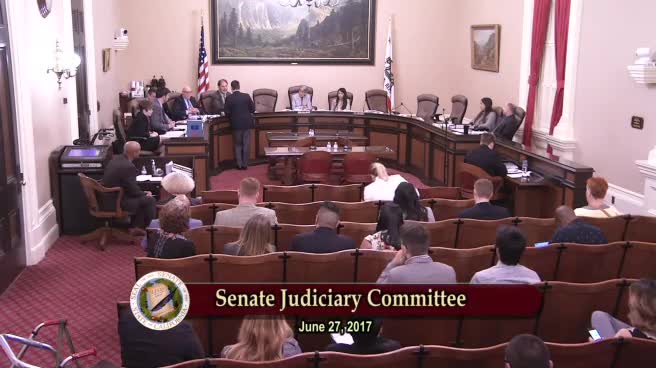 4MIN
Senate Standing Committee on Judiciary
 3MIN
Senate Standing Committee on Public Employment and Retirement
 1MIN
Assembly Floor
 2MIN
Assembly Standing Committee on Appropriations
 3MIN
Assembly Standing Committee on Judiciary
 5MIN
Assembly Standing Committee on Public Employees, Retirement, and Social Security
Bill Author

Bill Co-Author(s):