AB 1049: Driver's licenses: renewal.
- Session Year: 2017-2018
- House: Assembly
- Latest Version Date: 2017-03-23
Existing law provides that the expiration date for an original drivers license or a drivers license renewal is the 5th birthday of the applicant following the date of the application for the license. Existing law authorizes a program for renewal of drivers licenses by mail. Existing law prohibits renewal of a drivers license by mail if the licensee is 70 years of age or older, and prohibits renewal of a drivers license by mail more than 2 consecutive times.
This bill would provide that, for an applicant that is between 25 and 75 who is at least 25 years of age, but under 70 years of age, inclusive, at the time of the application for an original drivers license, or at the time of expiration of an original drivers license or a license renewed, renewed license, the original drivers license or a drivers license renewal will expire on the 8th birthday of the applicant following the date of the application for the license. The bill would prohibit renewal of a drivers license by mail 2 consecutive times. The bill would make other, conforming changes.
Existing law provides that the expiration date for an original drivers license or a drivers license renewal is the 5th birthday of the applicant following the date of the application for the license.
This bill would provide that, for an applicant that is between 25 and 75 years of age, inclusive, at the time of the application for an original drivers license, or at the time of expiration of an original drivers license or a license renewed, the original drivers license or a drivers license renewal will expire on the 8th birthday of the applicant following the date of the application for the license. The bill would make other, conforming changes.
(a)The director may establish a program to evaluate the traffic safety and other effects of renewing drivers licenses by mail. Pursuant to that program, the department may renew by mail drivers licenses for licensees not holding a probationary license, and whose records, for the two years immediately preceding the determination of eligibility for the renewal, show no notification of a violation of subdivision (a) of Section 40509, a total violation point count not greater than one as determined in accordance with Section 12810, no suspension of the driving privilege pursuant to Section 13353.2, and no refusal to submit to or complete chemical testing pursuant to Section 13353 or 13353.1.
(b)The director may terminate the renewal by mail program authorized by this section at any time the department determines that the program has an adverse impact on traffic safety.
(c)No A renewal by mail shall not be granted to any person who is 70 years of age or older.
(d)The department shall notify each licensee granted a renewal by mail pursuant to this section of major changes to the Vehicle Code affecting traffic laws occurring during the prior five-year or eight-year period, as determined by the length of the licensees last renewal period under Section 12816.
(e)The department shall not renew a drivers license by mail if the license has been previously renewed by mail two consecutive times for five-year or eight-year periods, as determined by the length of the licensees last renewal period under Section 12816. times.
SEC. 2.Section 12816 of the Vehicle Code is amended to read:12816.(a)Except as otherwise specified in subdivision (b), all of the following shall apply to the renewal of a drivers license:
(1)An original drivers license expires on the fifth birthday of the applicant following the date of the application for the license.
(2)Renewal of a drivers license shall be made for a term which that expires on the fifth birthday of the applicant following the expiration of the license renewed, if application for renewal is renewed license. The application and fee for a renewal license shall be made within six months prior to the expiration of the license to be renewed, or within 90 days after expiration of the that license. If renewal is not applied for If the application for a renewal license is not made within 90 days after expiration of the license, the application and fee is considered the same as an application shall be for an original license.
(3)The department may accept an application for a renewal of a drivers license made more than six months prior to the date of expiration. The renewal shall be made for a term which that expires on the fifth birthday of the applicant following the date of the application for the renewal license.
(4)The department may accept an application for a license of a different class made more than six months before the expiration of the license previously issued, if the previously issued license is surrendered for cancellation in accordance with Section 13100. The drivers license issued from that application expires on the fifth birthday of the applicant following the date of the application.
(b)For an applicant that is between 25 and 75 who is at least 25 years of age, but under 70 years of age, inclusive, at the time of the application for an original drivers license, or expiration of an original drivers license or a license renewed, renewed license, as applicable, all of the following shall apply to the renewal issuance of a drivers license:
(1)An original drivers license expires on the eighth birthday of the applicant following the date of the application for the license.
(2)Renewal of a drivers license shall be made for a term which that expires on the eighth birthday of the applicant following the expiration of the license renewed, if application for renewal is renewed license. The application and fee shall be made within six months prior to the expiration of the license to be renewed, or within 90 days after expiration of the that license. If renewal is not applied for If the application for a renewal license is not made within 90 days after expiration of the license, the application and fee is considered the same as an application shall be for an original license.
(3)The department may accept an application for a renewal of a drivers license made more than six months prior to the date of expiration. The renewal shall be made for a term which that expires on the eighth birthday of the applicant following the date of the application for the renewal license.
(4)The department may accept an application for a license of a different class made more than six months before the expiration of the license previously issued, if the previously issued license is surrendered for cancellation in accordance with Section 13100. The drivers license issued from that application expires on the eighth birthday of the applicant following the date of the application.
(c)Notwithstanding subdivisions (a) and (b), the department may adjust the expiration date for any drivers license issued pursuant to this code.
(a)The director may establish a program to evaluate the traffic safety and other effects of renewing drivers licenses by mail. Pursuant to that program, the department may renew by mail drivers licenses for licensees not holding a probationary license, and whose records, for the two years immediately preceding the determination of eligibility for the renewal, show no notification of a violation of subdivision (a) of Section 40509, a total violation point count not greater than one as determined in accordance with Section 12810, no suspension of the driving privilege pursuant to Section 13353.2, and no refusal to submit to or complete chemical testing pursuant to Section 13353 or 13353.1.
(b)The director may terminate the renewal by mail program authorized by this section at any time the department determines that the program has an adverse impact on traffic safety.
(c)No renewal by mail shall be granted to any person who is 70 years of age or older.
(d)The department shall notify each licensee granted a renewal by mail pursuant to this section of major changes to the Vehicle Code affecting traffic laws occurring during the prior five-year period. or eight-year period, as determined by the length of the licensees last renewal period under Section 12816.
(e)The department shall not renew a drivers license by mail if the license has been previously renewed by mail two consecutive times for five-year periods. or eight-year periods, as determined by the length of the licensees last renewal period under Section 12816.
SEC. 2.Section 12816 of the Vehicle Code is amended to read:12816.(a)Except as otherwise specified in subdivision (b), all of the following shall apply to the renewal of a drivers license:
(a)
(1)Every An original drivers license expires on the fifth birthday of the applicant following the date of the application for the license.
(b)
(2)Renewal of a drivers license shall be made for a term which expires on the fifth birthday of the applicant following the expiration of the license renewed, if application for renewal is made within six months prior to the expiration of the license to be renewed, or within 90 days after expiration of the license. If renewal is not applied for within 90 days after expiration of the license, the application and fee is considered the same as an application for an original license.
(c)
(3)The department may accept application for a renewal of a drivers license made more than six months prior to the date of expiration. The renewal shall be made for a term which expires on the fifth birthday of the applicant following the date of the application for the renewal license.
(d)
(4)The department may accept an application for a license of a different class made more than six months before the expiration of the license previously issued, if the previously issued license is surrendered for cancellation in accordance with Section 13100. The drivers license issued from that application expires on the fifth birthday of the applicant following the date of the application.
(b)For an applicant that is between 25 and 75 years of age, inclusive, at the time of the application for an original drivers license, or expiration of an original drivers license or a license renewed, as applicable, all of the following shall apply to the renewal of a drivers license:
(1)An original drivers license expires on the eighth birthday of the applicant following the date of the application for the license.
(2)Renewal of a drivers license shall be made for a term which expires on the eighth birthday of the applicant following the expiration of the license renewed, if application for renewal is made within six months prior to the expiration of the license to be renewed, or within 90 days after expiration of the license. If renewal is not applied for within 90 days after expiration of the license, the application and fee is considered the same as an application for an original license.
(3)The department may accept application for a renewal of a drivers license made more than six months prior to the date of expiration. The renewal shall be made for a term which expires on the eighth birthday of the applicant following the date of the application for the renewal license.
(4)The department may accept an application for a license of a different class made more than six months before the expiration of the license previously issued, if the previously issued license is surrendered for cancellation in accordance with Section 13100. The drivers license issued from that application expires on the eighth birthday of the applicant following the date of the application.
(e)
(c)Notwithstanding subdivisions (a), (b), (c), and (d), (a) and (b), the department may adjust the expiration date for any drivers license issued pursuant to this code.
|
Date
|
Status
|
|---|---|
| Feb 1, 2018 | From committee: Filed with the Chief Clerk pursuant to Joint Rule 56. |
| Jan 31, 2018 | Died pursuant to Art. IV, Sec. 10(c) of the Constitution. |
| Apr 25, 2017 | In committee: Set, final hearing. Failed passage. Reconsideration granted. |
| Mar 29, 2017 | In committee: Set, second hearing. Hearing canceled at the request of author. |
| Mar 27, 2017 | Re-referred to Com. on TRANS. |
| Mar 23, 2017 | From committee chair, with author's amendments: Amend, and re-refer to Com. on TRANS. Read second time and amended. |
| Mar 14, 2017 | In committee: Set, first hearing. Hearing canceled at the request of author. |
| Mar 6, 2017 | Referred to Com. on TRANS. |
| Feb 17, 2017 | From printer. May be heard in committee March 19. |
| Feb 16, 2017 | Read first time. To print. |
|
Date
|
Description
|
Location
|
Votes
|
|
|---|---|---|---|---|
| Apr 24, 2017 | Reconsideration. | Assembly Standing Committee on Transportation |
Passed |
|
| Apr 24, 2017 | Do pass and be re-referred to the Committee on [Appropriations] | Assembly Standing Committee on Transportation |
Failed |
This list shows positions taken on this bill by organizations on the date displayed, which is linked to the original source.
Positions by individuals are not included.
|
Organization
|
Position
|
Date
|
|---|---|---|
| 1 private citizen | ** Support | Apr 21, 2017 |
| California Delivery Association | * Support | Apr 24, 2017 |
| California Trucking Association | ** Support | Apr 21, 2017 |
| Donate Life California | * Against | Apr 24, 2017 |
| Southwest California Legislative Council | ** Support | Apr 21, 2017 |
Date of Hearing: April 24, 2017
ASSEMBLY COMMITTEE ON TRANSPORTATION
Jim Frazier, Chair
ABPCA Bill Id:AB 1049 (
Author:Melendez) – As Amended Ver: March 23, 2017
SUBJECT: Driver’s licenses: renewal
SUMMARY: Extends the period of time before a driver’s license expires from five years to eight years for persons between the ages of 25 and 70 and prohibits a licensee from renewing his or her driver’s license by mail two consecutive times.
EXISTING LAW:
- Prohibits a person from driving a motor vehicle unless the person holds a valid driver’s license issued by the Department of Motor Vehicles (DMV), with limited exceptions, as specified.
- Authorizes DMV to renew a person’s driver’s license by mail if the person is under the age of 70 and has not previously renewed his or her license by mail two consecutive times for 5-year periods.
- Provides that a driver’s license expires on the applicant’s fifth birthday following the date of the application for the original or renewal license.
- Federal law, the REAL ID Act, requires states to limit the period of validity of all driver’s licenses and identification cards that are not temporary to a period not exceeding eight years.
- Federal regulations, adopted pursuant to the REAL ID Act, require states to require holders of REAL ID driver’s licenses and identification cards to renew their driver’s license or identification cards with the state DMV in person every other renewal cycle, or at least once every 16 years.
FISCAL EFFECT: Unknown
COMMENTS: In 2016, 30 million Californians held driver’s licenses or identification cards issued by DMV. Under existing law, a driver must renew his or her driver’s license every five years. While an original driver’s license must be obtained at a DMV field office, DMV allows a driver to renew his or her license by mail up to two consecutive times, with every third renewal taking place in person. This process means a driver only needs to physically visit a DMV field office once every 15 years. When a driver renews his or her license in person, he or she must also complete a vision exam and a written knowledge test, and have his or her photograph updated. As with DMV vehicle registration renewals, the by-mail driver’s license renewal transactions can also be conducted over the internet. On average, DMV renews 5.2 million driver licenses annually, with approximately 2.3 million transactions occurring online or through the mail. Approximately 2.9 million renewal transactions are performed in a DMV field office. In total, DMV handled 27.2 million field office visits in 2016, with 2.9 million in-person driver’s license renewals making up approximately 10.7% of that total number.
This bill would extend the period for a driver’s license renewal from five years to eight years for persons between the ages of 25 and 70. As the author notes, the federal REAL ID Act allows states to issue driver’s licenses with validity periods of up to eight years. Because REAL ID Act regulations also require states to require licensees to renew their driver’s licenses in person every other renewal, or at least once every 16 years, this bill also prohibits DMV from renewing a driver’s license by mail two consecutive times, preserving California’s compliance with REAL ID requirements for the bulk of licenses issued by DMV.
The author argues that this bill will reduce the number of instances that licensees must visit DMV offices and reduce DMV’s operational costs, while reducing the average wait time for DMV customers.
Writing in support of this bill, the Southwest California Legislative Council states this bill “will add convenience to many Californians by decreasing the frequency of their DMV visits and reducing wait times” and will improve DMV customer convenience.
Writing in opposition to this bill, Donate Life California (DLC) writes that “95% of all donor registrations in California have occurred as a direct result of the DLC/DMV Registry collaboration and the convenience that allows individuals to sign up as donors at the same time they apply for or renew driver’s licenses or I.D. cards at the DMV,” and that DLC’s operations would be severely impacted by the additional 3 years between renewals.
Committee concerns: It is unclear if this bill will reduce the number of DMV field office visits or alleviate customer wait times by a significant amount. Because licensees would only be required to come into a DMV field office for an in-person renewal once every 16 years instead of once every 15 years, the impact on the total number of field office visits for in-person renewals would be minimal. If 30 million licensees were required to renew in person once every 16 years instead of once every 15 years, it would only result in an estimated 0.66% reduction in the total number of annual field office visits. Furthermore, while field offices may experience slightly fewer visits per year under this bill as proposed, in most instances, a driver would still have to go into a field office for a driver’s license renewal the exact same number of times before the age of 70 as he or she would under existing law. With the introduction of 8-year licenses, DMV would be offering licenses with different length terms to different groups of customers, which may add confusion to the DMV customer experience, as well as additional minutes of transaction time to in-person visits.
The author cites DMV customer wait times in 2014 at 35 minutes on average for non-appointment customers and at 47 minutes for non-appointment customers in 2016, attributing the growth in wait times to AB 60 (Alejo, Chapter 524, Statutes of 2013), which allowed persons who are unable to show proof of legal presence in the United States to obtain a California driver’s license beginning January 2, 2015. DMV issued approximately 822,000 driver’s licenses to AB 60 customers in 2015 and 2016; each customer would have been required to make at least one DMV field office visit. While the average wait time for non-appointment customers did increase over that two-year period, the data for early 2017 suggests wait times are leveling off, with an average of 33 minutes for all field office visits in January 2017, and 34 minutes in February 2017. DMV has also submitted a budget change proposal for the 2016-2017 state budget to make permanent increased staffing levels to accommodate higher demand associated with the large number of AB 60 customers, which should in turn alleviate pressures on customer wait times.
Additionally, it is difficult to know if fluctuations in wait times can be solely attributed to AB 60, or if other recent changes to DMV’s procedures that happened over the same period, such as changes in the Motor Voter registration process, new requirements for driver’s license and identification card customers to show proof of California residency to comply with the REAL ID Act, and the expanded traffic amnesty program are also to blame for changes in wait times.
Meanwhile, while non-appointment wait times are unstable and potentially growing longer, wait times for customers who have made appointments consistently remain a fraction of non-appointment wait times, with average appointment wait times in 2014 at 6 minutes (compared to 35 minutes) and 9 minutes (compared to 47 minutes) in 2016. Wait times in field offices in smaller communities are also consistently lower than wait times in more densely populated urban areas.
In recent years, DMV has acted aggressively to reduce the need to customers to physically visit a field office, through initiatives such as implementing the appointment system, or by piloting and deploying technology such as self-service kiosks at supermarkets to make it more convenient for DMV customers to complete their business. These developments demonstrate DMV’s ability to accommodate customers’ needs and find creative solutions to limitations on the number of DMV field offices without the need for additional legislation.
For these reasons, and because this bill would only make a minimal impact on the number of annual field office visits, this bill is unlikely to achieve the author’s goal of reducing customer wait times by making DMV function more efficiently. Without a compelling argument to make this change, requiring DMV to completely restructure its computer and mailing infrastructure to accommodate this change does not seem worth the massive cost to DMV and the confusion inflicted on DMV customers.
REGISTERED SUPPORT / OPPOSITION:
Support
California Delivery Association
California Trucking Association
Southwest California Legislative Council
1 private citizen
Opposition
Donate Life California
Analysis Prepared by: Justin Behrens / TRANS. /
Discussed in Hearing
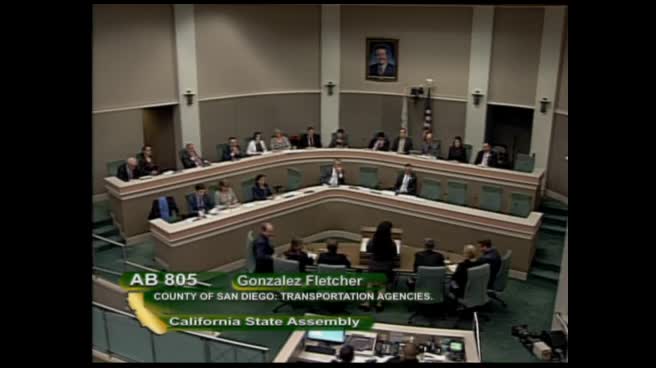 11MIN
Assembly Standing Committee on Transportation
Bill Author

Bill Co-Author(s):