AB 1070: Solar energy systems: contracts: disclosures.
- Session Year: 2017-2018
- House: Assembly
- Latest Version Date: 2017-10-11
Existing law provides for the licensure and regulation of various professions and vocations by boards within the Department of Consumer Affairs. Existing law, the Contractors State License Law, provides for the licensure and regulation of contractors by the Contractors State License Board. Existing law requires licensed contractors to be classified and authorizes them to be classified as, among other things, a solar contractor. Under existing law, a solar contractor installs, modifies, maintains, and repairs thermal and photovoltaic solar energy systems. Existing law prohibits a solar contractor from performing building or construction trades, crafts, or skills, except when required to install a thermal or photovoltaic solar energy system.
Existing law authorizes the legislative body of a public agency, as defined, to determine that it would be convenient, advantageous, and in the public interest to designate an area within which authorized public agency officials and property owners may enter into voluntary contractual assessments to finance certain improvements, and to utilize Property Assessed Clean Energy (PACE) financing for the installation of distributed generation renewable energy sources and energy or water efficiency improvements, as specified. Existing law requires a financing estimate and disclosure form to be completed and delivered to a property owner before the property owner consummates a voluntary contractual assessment pursuant to one of these programs.
This bill would require the board, in collaboration with the Public Utilities Commission, on or before July 1, 2018, to develop and make available on its Internet Web site a disclosure document that provides a consumer with accurate, clear, and concise information regarding the installation of a solar energy system, as specified. The bill would require this disclosure document to be provided by the solar energy systems company to the consumer prior to completion of a sale, financing, or lease of a solar energy system, as defined, and that it, and the contract, be written in the same language as was principally used in the sales presentation and marketing material. The bill would also require, for solar energy systems utilizing PACE financing, that the financing estimate and disclosure form satisfy these requirements with respect to the financing contract, as specified. The bill would also require the board to post the PACE Financing Estimate and Disclosure form on its Internet Web site.
The bill would require the Contractors State License Board to receive and review complaints and consumer questions, and complaints received from state agencies, regarding solar energy systems companies and solar contractors. The bill would, beginning on July 1, 2019, require the board annually to compile a report documenting complaints it received relating to solar contractors that it shall make available publicly on the boards and the Public Utilities Commissions Internet Web sites.
The California Constitution establishes the Public Utilities Commission and authorizes the commission to exercise ratemaking and rulemaking authority over all public utilities, as defined, subject to control by the Legislature.
This bill would require the Public Utilities Commission, on or before July 1, 2019, to develop standardized inputs and assumptions to be used in the calculation and presentation of electric utility bill savings to a consumer that can be expected by using a solar energy system by vendors, installers, or financing entities and to post them on its Internet Web site. The bill also would require electrical corporations to post the standardized inputs and assumptions.
Existing law provides for the licensure and regulation of various professions and vocations by boards within the Department of Consumer Affairs. Existing law, the Contractors State License Law, provides for the licensure and regulation of contractors by the Contractors State License Board. Existing law requires licensed contractors to be classified and authorizes them to be classified as, among other things, a solar contractor. Under existing law, a solar contractor installs, modifies, maintains, and repairs thermal and photovoltaic solar energy systems. Existing law prohibits a solar contractor from performing building or construction trades, crafts, or skills, except when required to install a thermal or photovoltaic solar energy system.
Existing law authorizes the legislative body of a public agency, as defined, to determine that it would be convenient, advantageous, and in the public interest to designate an area within which authorized public agency officials and property owners may enter into voluntary contractual assessments to finance certain improvements, and to utilize Property Assessed Clean Energy (PACE) financing for the installation of distributed generation renewable energy sources and energy or water efficiency improvements, as specified. Existing law requires a financing estimate and disclosure form to be completed and delivered to a property owner before the property owner consummates a voluntary contractual assessment pursuant to one of these programs.
This bill would require the board, in collaboration with the Public Utilities Commission, on or before July 1, 2018, to develop and make available on its Internet Web site a disclosure document that provides a consumer with accurate, clear, and concise information regarding the installation of a solar energy system, as specified. The bill would require this disclosure document to be provided by the solar energy systems company to the consumer prior to completion of a sale, financing, or lease of a solar energy system, as defined, and that it, and the contract, be written in the same language as was principally used in the sales presentation and marketing material. The The bill would also require, for solar energy systems utilizing PACE financing, that the financing estimate and disclosure form satisfy these requirements with respect to the financing contract, as specified. The bill would also require the board to post the PACE Financing Estimate and Disclosure form on its Internet Web site.
The bill would require the department Contractors State License Board to receive and resolve review complaints and consumer questions, and complaints received from state agencies, regarding solar energy systems companies and solar contractors. The bill would would, beginning on July 1, 2019, require the department board annually to compile a report documenting complaints it received relating to solar energy systems companies and solar contractors that it shall make available publicly on the departments boards and the Public Utilities Commissions Internet Web sites.
Existing law governs certain obligations arising from particular transactions, including consumer contracts.This bill would afford a consumer who enters into a contract for sale, financing, or lease of a solar energy system a period not exceeding 3 days, during which time he or she may cancel the contract for any reason.The California Constitution establishes the Public Utilities Commission and authorizes the commission to exercise ratemaking and rulemaking authority over all public utilities, as defined, subject to control by the Legislature.
This bill would require the Public Utilities Commission Commission, on or before July 1, 2019, to develop a standard methodology standardized inputs and assumptions to be used in the calculation and presentation of electric utility bill savings to a consumer that can be expected by using a solar energy system by vendors, installers, or financing entities and to post the methodology them on its Internet Web site. The bill also would require electrical corporations to post the methodology. standardized inputs and assumptions.
Existing law provides for the licensure and regulation of various professions and vocations by boards within the Department of Consumer Affairs. Existing law, the Contractors State License Law, provides for the licensure and regulation of contractors by the Contractors State License Board. Existing law requires licensed contractors to be classified and authorizes them to be classified as, among other things, a solar contractor. Under existing law, a solar contractor installs, modifies, maintains, and repairs thermal and photovoltaic solar energy systems. Existing law prohibits a solar contractor from performing building or construction trades, crafts, or skills, except when required to install a thermal or photovoltaic solar energy system.
This bill would require the board, in collaboration with the Public Utilities Commission, on or before July 1, 2018, to develop and make available on its Internet Web site a specified solar energy system disclosure document. disclosure document that provides a consumer with accurate, clear, and concise information regarding the installation of a solar energy system, as specified. The bill would require this disclosure document to be provided by the solar energy systems company to the consumer prior to completion of a sale, financing, or lease of a solar energy system, as defined, and that it, and the contract, be written in the same language as was principally used in the sales presentation and marketing material. The bill would require the department to receive and resolve complaints and consumer questions, and complaints received from state agencies, regarding solar energy systems companies and solar contractors. The bill would require the department annually to compile a report documenting complaints it received relating to solar energy systems companies and solar contractors that it shall make available publicly on the departments and the Public Utilities Commissions Internet Web sites.
Existing law governs certain obligations arising from particular transactions, including consumer contracts.
This bill would afford a consumer who enters into a contract for sale, financing, or lease of a solar energy system a period not exceeding 3 days, during which time he or she may cancel the contract for any reason.
The California Constitution establishes the Public Utilities Commission and authorizes the commission to exercise ratemaking and rulemaking authority over all public utilities, as defined, subject to control by the Legislature.
This bill would require the Public Utilities Commission to develop a standard methodology to be used in the calculation and presentation of electric utility bill savings to a consumer that can be expected by using a solar energy system by vendors, installers, or financing entities and to post the methodology on its Internet Web site. The bill also would require electrical corporations to post the methodology.
Existing law provides for the licensure and regulation of various professions and vocations by boards within the Department of Consumer Affairs. Existing law, the Contractors State License Law, provides for the licensure and regulation of contractors by the Contractors State License Board. Existing law requires licensed contractors to be classified and authorizes them to be classified as, among other things, a solar contractor. Under existing law, a solar contractor installs, modifies, maintains, and repairs thermal and photovoltaic solar energy systems. Existing law prohibits a solar contractor from performing building or construction trades, crafts, or skills, except when required to install a thermal or photovoltaic solar energy system.
This bill would require the board, on or before July 1, 2018, to develop and make available on its Internet Web site a specified solar energy system disclosure document. The bill would require this disclosure document to be provided by the solar energy systems company to the consumer prior to completion of a sale, financing, or lease of a solar energy system, as defined, and that it, and the contract, be written in the same language as was principally used in the sales presentation and marketing material. The bill would require the department to receive and resolve complaints and consumer questions, and complaints received from state agencies, regarding solar energy systems companies and solar contractors. The bill would require the department annually to compile a report documenting complaints it received relating to solar energy systems companies and solar contractors that it shall make available publicly on the departments and the Public Utilities Commissions Internet Web sites.
Existing law governs certain obligations arising from particular transactions, including consumer contracts.
This bill would afford a consumer who enters into a contract for sale, financing, or lease of a solar energy system a period not exceeding 3 days, during which time he or she may cancel the contract for any reason.
The California Constitution establishes the Public Utilities Commission and authorizes the commission to exercise ratemaking and rulemaking authority over all public utilities, as defined, subject to control by the Legislature.
This bill would require the Public Utilities Commission to develop a standard methodology to be used in the calculation and presentation of electric utility bill savings to a consumer that can be expected by using a solar energy system by vendors, installers, or financing entities and to post the methodology on its Internet Web site. The bill also would require electrical corporations to post the methodology.
Existing law provides for the licensure and regulation of various professions and vocations by boards within the Department of Consumer Affairs. Existing law, the Contractors State License Law, provides for the licensure and regulation of contractors by the Contractors State License Board. Existing law requires licensed contractors to be classified and authorizes them to be classified as, among other things, a solar contractor. Under existing law, a solar contractor installs, modifies, maintains, and repairs thermal and photovoltaic solar energy systems. Existing law prohibits a solar contractor from performing building or construction trades, crafts, or skills, except when required to install a thermal or photovoltaic solar energy system.
This bill would require the board, on or before July 1, 2018, to develop and make available on its Internet Web site a specified solar energy system disclosure document. The bill would require this disclosure document to be provided by the solar energy systems company to the consumer prior to completion of a sale, financing, or lease of a solar energy system, and that it, and the contract, be written in the same language as was principally used in the sales presentation and marketing material. The bill would require the department to receive and resolve complaints and consumer questions, and complaints received from state agencies, regarding solar energy systems companies and solar contractors. The bill would require the department annually to compile a report documenting the number, types, and locations of complaints it received relating to solar energy systems companies and solar contractors that it shall make available publicly on the departments and the Public Utility Utilities Commissions Internet Web site. sites.
Existing law governs certain obligations arising from particular transactions, including consumer contracts.
This bill would afford a consumer who enters into a contract for sale, financing, or lease of a solar energy system a period not exceeding ____ 3 days, during which time he or she may cancel the contract for any reason.
The California Constitution establishes the Public Utilities Commission and authorizes the commission to exercise ratemaking and rulemaking authority over all public utilities, as defined, subject to control by the Legislature.
This bill would require the Public Utilities Commission to develop a standard methodology to be used in the calculation and presentation of electric utility bill savings to a consumer that can be expected by using a solar energy system by vendors, installers, or financing entities and to post the methodology on its Internet Web site. The bill also would require Electric Investor-Owned Utilities electrical corporations to post the methodology.
Existing law provides for the licensure and regulation of various professions and vocations by boards within the Department of Consumer Affairs. Existing law, the Contractors State License Law, provides for the licensure and regulation of contractors by the Contractors State License Board. Existing law requires licensed contractors to be classified and authorizes them to be classified as, among other things, a solar contractor. Under existing law, a solar contractor installs, modifies, maintains, and repairs thermal and photovoltaic solar energy systems. Existing law prohibits a solar contractor from performing building or construction trades, crafts, or skills, except when required to install a thermal or photovoltaic solar energy system.
This bill would require the board, on or before July 1, 2018, to develop and make available on its Internet Web site a specified solar energy system disclosure document. The bill would require this disclosure document to be provided by the solar energy systems company to the consumer prior to completion of a sale, financing, or lease of a solar energy system, and that it, and the contract, be written in the same language as was principally used in the sales presentation and marketing material. The bill would require the department to receive and resolve complaints and consumer questions, and complaints received from state agencies, regarding solar energy systems companies and solar contractors. The bill would require the department annually to compile a report documenting the number, types, and locations of complaints it received relating to solar energy systems companies and solar contractors that it shall make available publicly on the departments and the Public Utility Commissions Internet Web site.
Existing law governs certain obligations arising from particular transactions, including consumer contracts.
This bill would afford a consumer who enters into a contract for sale, financing, or lease of a solar energy system a period not exceeding ____ days, during which time he or she may cancel the contract for any reason.
The California Constitution establishes the Public Utilities Commission and authorizes the commission to exercise ratemaking and rulemaking authority over all public utilities, as defined, subject to control by the Legislature.
This bill would require the Public Utilities Commission to develop a standard methodology to be used in the presentation of savings to a consumer that can be expected by using a solar energy system by vendors, installers, or financing entities and to post the methodology on its Internet Web site. The bill also would require Electric Investor-Owned Utilities to post the methodology.
Existing law provides for the licensure and regulation of various professions and vocations by boards within the Department of Consumer Affairs. Existing law, the Contractors State License Law, provides for the licensure and regulation of contractors by the Contractors State License Board. This bill would make a nonsubstantive change to these provisions.Existing law provides for the licensure and regulation of various professions and vocations by boards within the Department of Consumer Affairs. Existing law, the Contractors State License Law, provides for the licensure and regulation of contractors by the Contractors State License Board.
This bill would make a nonsubstantive change to these provisions.
(a)The board, in collaboration with the Public Utilities Commission, shall develop and make available a solar energy system disclosure document or documents that provide a consumer, at a minimum, accurate, clear, and concise information regarding the installation of a solar energy system, total costs of installation, anticipated savings, the assumptions and inputs used to estimate the savings, and the implications of various financing options.
(b)On or before July 1, 2018, the board, in collaboration with the Public Utilities Commission, shall develop, and make available on its Internet Web site, the disclosure document described in subdivision (a) that a solar energy system company shall provide to a consumer prior to completion of a sale, financing, or lease of a solar energy system. The solar energy system disclosure document shall be printed on the front page or cover page of every solar energy contract. The solar energy system disclosure document shall be printed in boldface 16-point type and include the following types of primary information:
(1)The total cost and payments for the system, including financing costs.
(2)Information on how and to whom customers may provide complaints.
(3)The consumers right to a cooling off period of three days pursuant to Section 7159 of the Business and Professions Code.
(c)At the boards discretion, other types of supporting information the board and the commission deem appropriate or useful in furthering the directive described in subdivision (a) may be included in the solar energy disclose document following the front page or cover page, including, but not limited to:
(1)The amounts and sources of financing obtained.
(2)The calculations used by the home improvement salesperson to determine how many panels the homeowner needs to install.
(3)The calculations used by the home improvement salesperson to determine how much energy the panels will generate.
(4)Any additional monthly fees the homeowners electric company may bill, any turn-on charges, and any fees added for the use of an Internet monitoring system of the panels or inverters.
(5)The terms and conditions of any guaranteed rebate.
(6)The final contract price, without the inclusion of possible rebates.
(7)The solar energy system companys contractors license number.
(8)The impacts of solar energy system installations not performed to code.
(9)Types of solar energy system malfunctions.
(10)Information about the difference between a solar energy system lease and a solar energy system purchase.
(11)The impacts that the financing options, lease agreement terms, or contract terms will have on the sale of the consumers home, including any balloon payments or solar energy system relocation that may be required if the contract is not assigned to the new owner of the home.
(12)A calculator that calculates performance of solar projects to provide solar customers the solar power systems projected output, which may include an expected performance-based buydown calculator.
(d)A contract for sale, financing, or lease of a solar energy system and the solar energy system disclosure document shall be written in the same language as was principally used in the oral sales presentation made to the consumer or the print or digital marketing material given to the consumer.
(e)For solar energy systems utilizing Property Assessed Clean Energy (PACE) financing, the Financing Estimate and Disclosure form required by subdivision (b) of Section 5898.17 of the Streets and Highways Code shall satisfy the requirements of this section with respect to the financing contract only, but not, however, with respect to the underlying contract for installation of the solar energy system.
(f)The board shall post the PACE Financing Estimate and Disclosure form required by subdivision (b) of Section 5898.17 of the Streets and Highways Code on its Internet Web site.
(g)For purposes of this section, solar energy system means a solar energy device to be installed on a residential building that has the primary purpose of providing for the collection and distribution of solar energy for the generation of electricity, that produces at least one kW, and not more than five MW, alternating current rated peak electricity, and that meets or exceeds the eligibility criteria established pursuant to Section 25782 of the Public Resources Code.
(h)This section does not apply to a solar energy system that is installed as a standard feature on new construction.
SEC. 2.Section 7170 is added to the Business and Professions Code, to read:7170.(a)The Contractors State License Board shall receive and review complaints and consumer questions regarding solar energy systems companies and solar contractors. The board shall also receive complaints received from state agencies regarding solar energy systems companies and solar contractors.
(b)Beginning on July 1, 2019, the board annually shall compile a report documenting consumer complaints relating to solar contractors. The report shall be made available publicly on the boards and the Public Utilities Commissions Internet Web sites. The report shall contain all of the following:
(1)The number and types of complaints.
(2)The ZIP Code where the consumer complaint originated.
(3)The disposition of all complaints received against a solar contractor.
(c)For purposes of this section, solar energy system means a solar energy device to be installed on a residential building that has the primary purpose of providing for the collection and distribution of solar energy for the generation of electricity, that produces at least one kW, and not more than five MW, alternating current rated peak electricity, and that meets or exceeds the eligibility criteria established pursuant to Section 25782 of the Public Resources Code.
SEC. 3.Section 2854.6 is added to the Public Utilities Code, to read:2854.6.(a)On or before July 1, 2019, the commission shall develop standardized inputs and assumptions to be used in the calculation and presentation of electric utility bill savings to a consumer that can be expected by using a solar energy system by vendors, installers, or financing entities, and the commission and each electrical corporation shall post these standardized inputs and assumptions on their Internet Web sites.
(b)For purposes of this section, solar energy system means a solar energy device to be installed on a residential building that has the primary purpose of providing for the collection and distribution of solar energy for the generation of electricity, that produces at least one kW, and not more than five MW, alternating current rated peak electricity, and that meets or exceeds the eligibility criteria established pursuant to Section 25782 of the Public Resources Code.
(a)The board, in collaboration with the Public Utilities Commission, shall develop and make available a solar energy system disclosure document or documents that provide a consumer, at a minimum, accurate, clear, and concise information regarding the installation of a solar energy system, total costs of installation, anticipated savings, the assumptions and inputs used to estimate the savings, and the implications of various financing options.
(b)On or before July 1, 2018, the board, in collaboration with the Public Utilities Commission, shall develop, and make available on its Internet Web site, the disclosure document described in subdivision (a) that a solar energy system company shall provide to a consumer prior to completion of a sale, financing, or lease of a solar energy system. The solar energy system disclosure document shall be printed on the front page or cover page of every solar energy contract. The solar energy system disclosure document may include, at the boards and the commissions discretion, shall be printed in boldface 16-point type and include the following types of information, as well as other information deemed appropriate or useful by the board and the commission in furthering the directive described in subdivision (a): primary information:
(1)The amounts and sources of financing obtained. (2)(1)The total cost and payments for the system, including financing costs.
(2)Information on how and to whom customers may provide complaints.
(3)The consumers right to a cooling off period of three days pursuant to Section 7159 of the Business and Professions Code.
(c)At the boards discretion, other types of supporting information the board and the commission deem appropriate or useful in furthering the directive described in subdivision (a) may be included in the solar energy disclose document following the front page or cover page, including, but not limited to:
(1)The amounts and sources of financing obtained.
(3)(2)The calculations used by the home improvement salesperson to determine how many panels the homeowner needs to install.
(4)(3)The calculations used by the home improvement salesperson to determine how much energy the panels will generate.
(5)(4)Any additional monthly fees the homeowners electric company may bill, any turn-on charges, and any fees added for the use of an Internet monitoring system of the panels or inverters.
(6)(5)The terms and conditions of any guaranteed rebate.
(7)(6)The final contract price, without the inclusion of possible rebates.
(8)(7)The solar energy system companys contractors license number.
(9)(8)The impacts of solar energy system installations not performed to code.
(10)(9)Types of solar energy system malfunctions.
(11)(10)Information about the difference between a solar energy system lease and a solar energy system purchase.
(12)Information on how and to whom consumers may provide complaints. (13)The consumers right to a cooling off period of three days pursuant to Section 1882.7 of the Civil Code. (14)(11)The impacts that the financing options, lease agreement terms, or contract terms will have on the sale of the consumers home, including any balloon payments or solar energy system relocation that may be required if the contract is not assigned to the new owner of the home.
(12)A calculator that calculates performance of solar projects to provide solar customers the solar power systems projected output, which may include an expected performance-based buydown calculator.
(c)(d)A contract for sale, financing, or lease of a solar energy system and the solar energy system disclosure document shall be written in the same language as was principally used in the oral sales presentation made to the consumer or the print or digital marketing material given to the consumer.
(e)For solar energy systems utilizing Property Assessed Clean Energy (PACE) financing, the Financing Estimate and Disclosure form required by subdivision (b) of Section 5898.17 of the Streets and Highways Code shall satisfy the requirements of this section with respect to the financing contract only, but not, however, with respect to the underlying contract for installation of the solar energy system.
(f)The board shall post the PACE Financing Estimate and Disclosure form required by subdivision (b) of Section 5898.17 of the Streets and Highways Code on its Internet Web site.
(d)(g)For purposes of this section, solar energy system means a solar energy device to be installed on a residential building that has the primary purpose of providing for the collection and distribution of solar energy for the generation of electricity, that produces at least one kW, and not more than five MW, alternating current rated peak electricity, and that meets or exceeds the eligibility criteria established pursuant to Section 25782 of the Public Resources Code.
(e)(h)This section does not apply to a solar energy system that is installed as a standard feature on new construction.
SEC. 2.Section 7170 is added to the Business and Professions Code, to read:7170.(a)The Department of Consumer Affairs Contractors State License Board shall receive and resolve review complaints and consumer questions regarding solar energy systems companies and solar contractors. The department board shall also receive complaints received from state agencies regarding solar energy systems companies and solar contractors.
(b)The department Beginning on July 1, 2019, the board annually shall compile a report documenting consumer complaints relating to solar energy systems companies and solar contractors. The report shall be made available publicly on the departments boards and the Public Utilities Commissions Internet Web sites. The report shall contain all of the following:
(1)The name of the solar energy system company or solar contractor. (2)(1)The number and types of complaints for each business. complaints.
(3)(2)The ZIP Code where the consumer complaint originated.
(3)The disposition of all complaints received against a solar contractor.
(c)For purposes of this section, solar energy system means a solar energy device to be installed on a residential building that has the primary purpose of providing for the collection and distribution of solar energy for the generation of electricity, that produces at least one kW, and not more than five MW, alternating current rated peak electricity, and that meets or exceeds the eligibility criteria established pursuant to Section 25782 of the Public Resources Code.
SEC. 3.Section 1882.7 is added to the Civil Code, to read:1882.7.(a)A consumer who enters into a contract for sale, financing, or lease of a solar energy system shall be afforded a period not exceeding three days, during which time he or she may cancel the contract for any reason.(b)For purposes of this section, solar energy system means a solar energy device to be installed on a residential building that has the primary purpose of providing for the collection and distribution of solar energy for the generation of electricity, that produces at least one kW, and not more than five MW, alternating current rated peak electricity, and that meets or exceeds the eligibility criteria established pursuant to Section 25782 of the Public Resources Code.(c)This section does not apply to a solar energy system that is installed as a standard feature on new construction.SEC. 4.SEC. 3.Section 2854.6 is added to the Public Utilities Code, to read:2854.6.(a)The On or before July 1, 2019, the commission shall develop a standard methodology standardized inputs and assumptions to be used in the calculation and presentation of electric utility bill savings to a consumer that can be expected by using a solar energy system by vendors, installers, or financing entities. This methodology shall be posted by entities, and the commission and each electrical corporation shall post these standardized inputs and assumptions on their Internet Web sites.
(b)For purposes of this section, solar energy system means a solar energy device to be installed on a residential building that has the primary purpose of providing for the collection and distribution of solar energy for the generation of electricity, that produces at least one kW, and not more than five MW, alternating current rated peak electricity, and that meets or exceeds the eligibility criteria established pursuant to Section 25782 of the Public Resources Code.
(a)The board, in collaboration with the Public Utilities Commission, shall develop and make available a solar energy system disclosure document or documents that provide a consumer, at a minimum, accurate, clear, and concise information regarding the installation of a solar energy system, total costs of installation, anticipated savings, the assumptions and inputs used to estimate the savings, and the implications of various financing options.
(b)On or before July 1, 2018, the board board, in collaboration with the Public Utilities Commission, shall develop, and make available on its Internet Web site, a solar energy system disclosure document the disclosure document described in subdivision (a) that a solar energy system company shall provide to a consumer prior to completion of a sale, financing, or lease of a solar energy system. The solar energy system disclosure document shall include may include, at the boards and the commissions discretion, the following information: types of information, as well as other information deemed appropriate or useful by the board and the commission in furthering the directive described in subdivision (a):
(1)The amounts and sources of financing obtained.
(2)The total cost and payments for the system, including financing costs.
(3)The calculations used by the home improvement salesperson to determine how many panels the homeowner needs to install.
(4)The calculations used by the home improvement salesperson to determine how much energy the panels will generate.
(5)Any additional monthly fees the homeowners electric company may bill, any turn-on charges, and any fees added for the use of an Internet monitoring system of the panels or inverters.
(6)The terms and conditions of any guaranteed rebate.
(7)The final contract price, without the inclusion of possible rebates.
(8)The solar energy system companys contractors license number.
(9)The impacts of solar energy system installations not performed to code.
(10)Types of solar energy system malfunctions.
(11)Information about the difference between a solar energy system lease and a solar energy system purchase.
(12)Information on how and to whom consumers may provide complaints.
(13)The consumers right to a cooling off period of three days pursuant to Section 1882.7 of the Civil Code.
(14)The impacts that the financing options, lease agreement terms, or contract terms will have on the sale of the consumers home, including any balloon payments or solar energy system relocation that may be required if the contract is not assigned to the new owner of the home.
(b)(c)A contract for sale, financing, or lease of a solar energy system and the solar energy system disclosure document shall be written in the same language as was principally used in the oral sales presentation made to the consumer or the print or digital marketing material given to the consumer.
(c)(d)For purposes of this section, solar energy system means a solar energy device to be installed on a residential building that has the primary purpose of providing for the collection and distribution of solar energy for the generation of electricity, that produces at least one kW, and not more than five MW, alternating current rated peak electricity, and that meets or exceeds the eligibility criteria established pursuant to Section 25782 of the Public Resources Code.
(e)This section does not apply to a solar energy system that is installed as a standard feature on new construction.
SEC. 2.Section 7170 is added to the Business and Professions Code, to read:7170.(a)The Department of Consumer Affairs shall receive and resolve complaints and consumer questions regarding solar energy systems companies and solar contractors. The department shall also receive complaints received from state agencies regarding solar energy systems companies and solar contractors.
(b)The department annually shall compile a report documenting consumer complaints relating to solar energy systems companies and solar contractors. The report shall be made available publicly on the departments and the Public Utilities Commissions Internet Web sites. The report shall contain all of the following:
(1)The name of the solar energy system company or solar contractor.
(2)The number and types of complaints for each business.
(3)The Zip ZIP Code where the consumer complaint originated.
(c)For purposes of this section, solar energy system means a solar energy device to be installed on a residential building that has the primary purpose of providing for the collection and distribution of solar energy for the generation of electricity, that produces at least one kW, and not more than five MW, alternating current rated peak electricity, and that meets or exceeds the eligibility criteria established pursuant to Section 25782 of the Public Resources Code.
SEC. 3.Section 1882.7 is added to the Civil Code, to read:1882.7.(a)A consumer who enters into a contract for sale, financing, or lease of a solar energy system shall be afforded a period not exceeding three days, during which time he or she may cancel the contract for any reason.
(b)For purposes of this section, solar energy system means a solar energy device to be installed on a residential building that has the primary purpose of providing for the collection and distribution of solar energy for the generation of electricity, that produces at least one kW, and not more than five MW, alternating current rated peak electricity, and that meets or exceeds the eligibility criteria established pursuant to Section 25782 of the Public Resources Code.
(c)This section does not apply to a solar energy system that is installed as a standard feature on new construction.
SEC. 4.Section 2854.6 is added to the Public Utilities Code, to read:2854.6.(a)The commission shall develop a standard methodology to be used in the calculation and presentation of electric utility bill savings to a consumer that can be expected by using a solar energy system by vendors, installers, or financing entities. This methodology shall be posted by the commission and each electrical corporation on their Internet Web sites.
(b)For purposes of this section, solar energy system means a solar energy device to be installed on a residential building that has the primary purpose of providing for the collection and distribution of solar energy for the generation of electricity, that produces at least one kW, and not more than five MW, alternating current rated peak electricity, and that meets or exceeds the eligibility criteria established pursuant to Section 25782 of the Public Resources Code.
(a)On or before July 1, 2018, the board shall develop, and make available on its Internet Web site, a solar energy system disclosure document that a solar energy system company shall provide to a consumer prior to completion of a sale, financing, or lease of a solar energy system. The solar energy system disclosure document shall include the following information:
(1)The amounts and sources of financing obtained.
(2)The total cost and payments for the system, including financing costs.
(3)The calculations used by the home improvement salesperson to determine how many panels the homeowner needs to install.
(4)The calculations used by the home improvement salesperson to determine how much energy the panels will generate.
(5)Any additional monthly fees the homeowners electric company may bill, any turn-on charges, and any fees added for the use of an Internet monitoring system of the panels or inverters.
(6)The terms and conditions of any guaranteed rebate.
(7)The final contract price, without the inclusion of possible rebates.
(8)The solar energy system companys contractors license number.
(9)The impacts of solar energy system installations not performed to code.
(10)Types of solar energy system malfunctions.
(11)Information about the difference between a solar energy system lease and a solar energy system purchase.
(12)Information on how and to whom consumers may provide complaints.
(13)The consumers right to a cooling off period of three days pursuant to Section 1882.7 of the Civil Code.
(14)The impacts that the financing options, lease agreement terms, or contract terms will have on the sale of the consumers home, including any balloon payments or solar energy system relocation that may be required if the contract is not assigned to the new owner of the home.
(b)A contract for sale, financing, or lease of a solar energy system and the solar energy system disclosure document shall be written in the same language as was principally used in the oral sales presentation made to the consumer or the print or digital marketing material given to the consumer.
(c)For purposes of this section, solar energy system means a solar energy device that has the primary purpose of providing for the collection and distribution of solar energy for the generation of electricity, that produces at least one kW, and not more than five MW, alternating current rated peak electricity, and that meets or exceeds the eligibility criteria established pursuant to Section 25782 of the Public Resources Code.
SEC. 2.Section 7170 is added to the Business and Professions Code, to read:7170.(a)The Department of Consumer Affairs shall receive and resolve complaints and consumer questions regarding solar energy systems companies and solar contractors. The department shall also receive complaints received from state agencies regarding solar energy systems companies and solar contractors.
(b)The department annually shall compile a report documenting consumer complaints relating to solar energy systems companies and solar contractors. The report shall be made available publicly on the departments and the Public Utilities Commissions Internet Web sites. The report shall contain all of the following:
(1)The name of the solar energy system company or solar contractor.
(2)The number and types of complaints for each business.
(3)The Zip Code where the consumer complaint originated.
(c)For purposes of this section, solar energy system means a solar energy device that has the primary purpose of providing for the collection and distribution of solar energy for the generation of electricity, that produces at least one kW, and not more than five MW, alternating current rated peak electricity, and that meets or exceeds the eligibility criteria established pursuant to Section 25782 of the Public Resources Code.
SEC. 3.Section 1882.7 is added to the Civil Code, to read:1882.7.(a)A consumer who enters into a contract for sale, financing, or lease of a solar energy system shall be afforded a period not exceeding three days, during which time he or she may cancel the contract for any reason.
(b)For purposes of this section, solar energy system means a device the primary purpose of which is to provide for the collection, storage, or distribution of solar energy for space heating, space cooling, electric generation, or water heating. solar energy device that has the primary purpose of providing for the collection and distribution of solar energy for the generation of electricity, that produces at least one kW, and not more than five MW, alternating current rated peak electricity, and that meets or exceeds the eligibility criteria established pursuant to Section 25782 of the Public Resources Code.
SEC. 4.Section 2854.6 is added to the Public Utilities Code, to read:2854.6.(a)The commission shall develop a standard methodology to be used in the calculation and presentation of electric utility bill savings to a consumer that can be expected by using a solar energy system by vendors, installers, or financing entities. This methodology shall be posted by the commission and each electrical corporation on their Internet Web sites.
(b)For purposes of this section, solar energy system means a solar energy device that has the primary purpose of providing for the collection and distribution of solar energy for the generation of electricity, that produces at least one kW, and not more than five MW, alternating current rated peak electricity, and that meets or exceeds the eligibility criteria established pursuant to Section 25782 of the Public Resources Code.
(a)On or before July 1, 2018, the board shall develop, and make available on its Internet Web site, a solar energy system disclosure document that a solar energy system company shall provide to a consumer prior to completion of a sale, financing, or lease of a solar energy system. The solar energy system disclosure document shall include the following information:
(1)The amounts and sources of financing obtained.
(2)The total cost and payments for the system, including financing costs.
(3)The calculations used by the home improvement salesperson to determine how many panels the homeowner needs to install.
(4)The calculations used by the home improvement salesperson to determine how much energy the panels will generate.
(5)Any additional monthly fees the homeowners electric company may bill, any turn-on charges, and any fees added for the use of an Internet monitoring system of the panels or inverters.
(6)The terms and conditions of any guaranteed rebate.
(7)The final contract price, without the inclusion of possible rebates.
(8)The solar energy system companys contractors license number.
(9)The impacts of solar energy system installations not performed to code.
(10)Types of solar energy system malfunctions.
(11)Information about the difference between a solar energy system lease and a solar energy system purchase.
(12)Information on how and to whom consumers may provide complaints.
(13)The consumers right to a cooling off period of ___ three days pursuant to Section 1882.7 of the Civil Code.
(14)The impacts that the financing options or the options, lease agreement terms, or contract terms will have on the sale of the consumers home. home, including any balloon payments or solar energy system relocation that may be required if the contract is not assigned to the new owner of the home.
(b)A contract for sale, financing, or lease of a solar energy system and the solar energy system disclosure document shall be written in the same language as was principally used in the oral sales presentation made to the consumer or the print or digital marketing material given to the consumer.
SEC. 2.Section 7170 is added to the Business and Professions Code, to read:7170.(a)The Department of Consumer Affairs shall receive and resolve complaints and consumer questions regarding solar energy systems companies and solar contractors. The department shall also receive complaints received from state agencies regarding solar energy systems companies and solar contractors.
(b)The department annually shall compile a report documenting the number, types, and locations of consumer complaints relating to solar energy systems companies and solar contractors. The report shall be made available publicly on the departments and the Public Utility Utilities Commissions Internet Web site. sites. The report shall contain all of the following:
(1)The name of the solar energy system company or solar contractor.
(2)The number and types of complaints for each business.
(3)The Zip Code where the consumer complaint originated.
SEC. 3.Section 1882.7 is added to the Civil Code, to read:1882.7.(a)A consumer who enters into a contract for sale, financing, or lease of a solar energy system shall be afforded a period not exceeding ____ three days, during which time he or she may cancel the contract for any reason.
(b)For purposes of this section, solar energy system means a device the primary purpose of which is to provide for the collection, storage, or distribution of solar energy for space heating, space cooling, electric generation, or water heating.
SEC. 4.Section 2854.6 is added to the Public Utilities Code, to read:2854.6.The commission shall develop a standard methodology to be used in the calculation and presentation of electric utility bill savings to a consumer that can be expected by using a solar energy system by vendors, installers, or financing entities. This methodology shall be posted by the commission and each Electric Investor-Owned Utility electrical corporation on its their Internet Web site. sites.
(a)On or before July 1, 2018, the board shall develop, and make available on its Internet Web site, a solar energy system disclosure document that a solar energy system company shall provide to a consumer prior to completion of a sale, financing, or lease of a solar energy system. The solar energy system disclosure document shall include the following information:
(1)The amounts and sources of financing obtained.
(2)The total cost and payments for the system, including financing costs.
(3)The calculations used by the home improvement salesperson to determine how many panels the homeowner needs to install.
(4)The calculations used by the home improvement salesperson to determine how much energy the panels will generate.
(5)Any additional monthly fees the homeowners electric company may bill, any turn-on charges, and any fees added for the use of an Internet monitoring system of the panels or inverters.
(6)The terms and conditions of any guaranteed rebate.
(7)The final contract price, without the inclusion of possible rebates.
(8)The solar energy system companys contractors license number.
(9)The impacts of solar energy system installations not performed to code.
(10)Types of solar energy system malfunctions.
(11)Information about the difference between a solar energy system lease and a solar energy system purchase.
(12)Information on how and to whom consumers may provide complaints.
(13)The consumers right to a cooling off period of ___ days pursuant to Section 1882.7 of the Civil Code.
(14)The impacts that the financing options or the contract terms will have on the sale of the consumers home.
(b)A contract for sale, financing, or lease of a solar energy system and the solar energy system disclosure document shall be written in the same language as was principally used in the oral sales presentation made to the consumer or the print or digital marketing material given to the consumer.
SEC. 2.Section 7170 is added to the Business and Professions Code, to read:7170.(a)The Department of Consumer Affairs shall receive and resolve complaints and consumer questions regarding solar energy systems companies and solar contractors. The department shall also receive complaints received from state agencies regarding solar energy systems companies and solar contractors.
(b)The department annually shall compile a report documenting the number, types, and locations of complaints relating to solar energy systems companies and solar contractors. The report shall be made available publicly on the departments and the Public Utility Commissions Internet Web site.
SEC. 3.Section 1882.7 is added to the Civil Code, to read:1882.7.(a)A consumer who enters into a contract for sale, financing, or lease of a solar energy system shall be afforded a period not exceeding ____ days, during which time he or she may cancel the contract for any reason.
(b)For purposes of this section, solar energy system means a device the primary purpose of which is to provide for the collection, storage, or distribution of solar energy for space heating, space cooling, electric generation, or water heating.
SEC. 4.Section 2854.6 is added to the Public Utilities Code, to read:2854.6.The commission shall develop a standard methodology to be used in the presentation of savings to a consumer that can be expected by using a solar energy system by vendors, installers, or financing entities. This methodology shall be posted by the commission and each Electric Investor-Owned Utility on its Internet Web site.
SECTION 1.Section 7159.5 of the Business and Professions Code is amended to read:7159.5.This section applies to all home improvement contracts, as defined in Section 7151.2, between an owner or tenant and a contractor, whether a general contractor or a specialty contractor, who is licensed or subject to be licensed pursuant to this chapter with regard to the transaction.(a)Failure by the licensee or a person subject to be licensed under this chapter, or by his or her agent or salesperson, to comply with the following provisions is cause for discipline:(1)The contract shall be in writing and shall include the agreed contract amount in dollars and cents. The contract amount shall include the entire cost of the contract, including profit, labor, and materials, but excluding finance charges.(2)If there is a separate finance charge between the contractor and the person contracting for home improvement, the finance charge shall be set out separately from the contract amount.(3)If a downpayment will be charged, the downpayment may not exceed one thousand dollars ($1,000) or 10 percent of the contract amount, whichever is less.(4)If, in addition to a downpayment, the contract provides for payments to be made prior to completion of the work, the contract shall include a schedule of payments in dollars and cents specifically referencing the amount of work or services to be performed and any materials and equipment to be supplied.(5)Except for a downpayment, the contractor may neither request nor accept payment that exceeds the value of the work performed or material delivered.(6)Upon any payment by the person contracting for home improvement, and prior to any further payment being made, the contractor shall, if requested, obtain and furnish to the person a full and unconditional release from any potential lien claimant claim or mechanics lien authorized pursuant to Sections 8400 and 8404 of the Civil Code for any portion of the work for which payment has been made. The person contracting for home improvement may withhold all further payments until these releases are furnished.(7)If the contract provides for a payment of a salespersons commission out of the contract price, that payment shall be made on a pro rata basis in proportion to the schedule of payments made to the contractor by the disbursing party in accordance with paragraph (4).(8)A contractor furnishing a performance and payment bond, lien and completion bond, or a bond equivalent or joint control approved by the registrar covering full performance and payment is exempt from paragraphs (3), (4), and (5), and need not include, as part of the contract, the statement regarding the downpayment specified in subparagraph (C) of paragraph (8) of subdivision (d) of Section 7159, the details and statement regarding progress payments specified in paragraph (9) of subdivision (d) of Section 7159, or the Mechanics Lien Warning specified in paragraph (4) of subdivision (e) of Section 7159. A contractor furnishing these bonds, bond equivalents, or a joint control approved by the registrar may accept payment prior to completion. If the contract provides for a contractor to furnish joint control, the contractor shall not have any financial or other interest in the joint control. Notwithstanding any other law, a licensee shall be licensed in this state in an active status for not less than two years prior to submitting an Application for Approval of Blanket Performance and Payment Bond as provided in Section 858.2 of Title 16 of the California Code of Regulations as it read on January 1, 2016.(b)A violation of paragraph (1), (3), or (5) of subdivision (a) by a licensee or a person subject to be licensed under this chapter, or by his or her agent or salesperson, is a misdemeanor punishable by a fine of not less than one hundred dollars ($100) nor more than five thousand dollars ($5,000), or by imprisonment in a county jail not exceeding one year, or by both that fine and imprisonment.(1)An indictment or information against a person who is not licensed but who is required to be licensed under this chapter shall be brought, or a criminal complaint filed, for a violation of this section, in accordance with paragraph (4) of subdivision (d) of Section 802 of the Penal Code, within four years from the date of the contract or, if the contract is not reduced to writing, from the date the buyer makes the first payment to the contractor.(2)An indictment or information against a person who is licensed under this chapter shall be brought, or a criminal complaint filed, for a violation of this section, in accordance with paragraph (2) of subdivision (d) of Section 802 of the Penal Code, within two years from the date of the contract or, if the contract is not reduced to writing, from the date the buyer makes the first payment to the contractor.(3)The limitations on actions in this subdivision shall not apply to any administrative action filed against a licensed contractor.(c)Any person who violates this section as part of a plan or scheme to defraud an owner or tenant of a residential or nonresidential structure, including a mobilehome or manufactured home, in connection with the offer or performance of repairs to the structure for damage caused by a natural disaster, shall be ordered by the court to make full restitution to the victim based on the persons ability to pay, as defined in subdivision (e) of Section 1203.1b of the Penal Code. In addition to full restitution, and imprisonment authorized by this section, the court may impose a fine of not less than five hundred dollars ($500) nor more than twenty-five thousand dollars ($25,000), based upon the defendants ability to pay. This subdivision applies to natural disasters for which a state of emergency is proclaimed by the Governor pursuant to Section 8625 of the Government Code, or for which an emergency or major disaster is declared by the President of the United States.This section applies to all home improvement contracts, as defined in Section 7151.2, between an owner or tenant and a contractor, whether a general contractor or a specialty contractor, that who is licensed or subject to be licensed pursuant to this chapter with regard to the transaction.
(a)Failure by the licensee or a person subject to be licensed under this chapter, or by his or her agent or salesperson, to comply with the following provisions is cause for discipline:
(1)The contract shall be in writing and shall include the agreed contract amount in dollars and cents. The contract amount shall include the entire cost of the contract, including profit, labor, and materials, but excluding finance charges.
(2)If there is a separate finance charge between the contractor and the person contracting for home improvement, the finance charge shall be set out separately from the contract amount.
(3)If a downpayment will be charged, the downpayment may not exceed one thousand dollars ($1,000) or 10 percent of the contract amount, whichever is less.
(4)If, in addition to a downpayment, the contract provides for payments to be made prior to completion of the work, the contract shall include a schedule of payments in dollars and cents specifically referencing the amount of work or services to be performed and any materials and equipment to be supplied.
(5)Except for a downpayment, the contractor may neither request nor accept payment that exceeds the value of the work performed or material delivered.
(6)Upon any payment by the person contracting for home improvement, and prior to any further payment being made, the contractor shall, if requested, obtain and furnish to the person a full and unconditional release from any potential lien claimant claim or mechanics lien authorized pursuant to Sections 8400 and 8404 of the Civil Code for any portion of the work for which payment has been made. The person contracting for home improvement may withhold all further payments until these releases are furnished.
(7)If the contract provides for a payment of a salespersons commission out of the contract price, that payment shall be made on a pro rata basis in proportion to the schedule of payments made to the contractor by the disbursing party in accordance with paragraph (4).
(8)A contractor furnishing a performance and payment bond, lien and completion bond, or a bond equivalent or joint control approved by the registrar covering full performance and payment is exempt from paragraphs (3), (4), and (5), and need not include, as part of the contract, the statement regarding the downpayment specified in subparagraph (C) of paragraph (8) of subdivision (d) of Section 7159, the details and statement regarding progress payments specified in paragraph (9) of subdivision (d) of Section 7159, or the Mechanics Lien Warning specified in paragraph (4) of subdivision (e) of Section 7159. A contractor furnishing these bonds, bond equivalents, or a joint control approved by the registrar may accept payment prior to completion. If the contract provides for a contractor to furnish joint control, the contractor shall not have any financial or other interest in the joint control. Notwithstanding any other law, a licensee shall be licensed in this state in an active status for not less than two years prior to submitting an Application for Approval of Blanket Performance and Payment Bond as provided in Section 858.2 of Title 16 of the California Code of Regulations as it read on January 1, 2016.
(b)A violation of paragraph (1), (3), or (5) of subdivision (a) by a licensee or a person subject to be licensed under this chapter, or by his or her agent or salesperson, is a misdemeanor punishable by a fine of not less than one hundred dollars ($100) nor more than five thousand dollars ($5,000), or by imprisonment in a county jail not exceeding one year, or by both that fine and imprisonment.
(1)An indictment or information against a person who is not licensed but who is required to be licensed under this chapter shall be brought, or a criminal complaint filed, for a violation of this section, in accordance with paragraph (4) of subdivision (d) of Section 802 of the Penal Code, within four years from the date of the contract or, if the contract is not reduced to writing, from the date the buyer makes the first payment to the contractor.
(2)An indictment or information against a person who is licensed under this chapter shall be brought, or a criminal complaint filed, for a violation of this section, in accordance with paragraph (2) of subdivision (d) of Section 802 of the Penal Code, within two years from the date of the contract or, if the contract is not reduced to writing, from the date the buyer makes the first payment to the contractor.
(3)The limitations on actions in this subdivision shall not apply to any administrative action filed against a licensed contractor.
(c)Any person who violates this section as part of a plan or scheme to defraud an owner or tenant of a residential or nonresidential structure, including a mobilehome or manufactured home, in connection with the offer or performance of repairs to the structure for damage caused by a natural disaster, shall be ordered by the court to make full restitution to the victim based on the persons ability to pay, as defined in subdivision (e) of Section 1203.1b of the Penal Code. In addition to full restitution, and imprisonment authorized by this section, the court may impose a fine of not less than five hundred dollars ($500) nor more than twenty-five thousand dollars ($25,000), based upon the defendants ability to pay. This subdivision applies to natural disasters for which a state of emergency is proclaimed by the Governor pursuant to Section 8625 of the Government Code, or for which an emergency or major disaster is declared by the President of the United States.
|
Date
|
Status
|
|---|---|
| Oct 11, 2017 | Chaptered by Secretary of State - Chapter 662, Statutes of 2017. |
| Oct 11, 2017 | Approved by the Governor. |
| Sep 19, 2017 | Enrolled and presented to the Governor at 3 p.m. |
| Sep 11, 2017 | Senate amendments concurred in. To Engrossing and Enrolling. |
| Sep 7, 2017 | In Assembly. Concurrence in Senate amendments pending. May be considered on or after September 9 pursuant to Assembly Rule 77. |
| Sep 7, 2017 | Read third time. Passed. Ordered to the Assembly. |
| Sep 5, 2017 | Read second time. Ordered to third reading. |
| Sep 1, 2017 | From committee: Amend, and do pass as amended. (Ayes 5. Noes 0.) (September 1). |
| Aug 21, 2017 | In committee: Referred to APPR. suspense file. |
| Jul 18, 2017 | Read second time and amended. Re-referred to Com. on APPR. |
| Jul 17, 2017 | From committee: Amend, and do pass as amended and re-refer to Com. on APPR. (Ayes 11. Noes 0.) (July 10). |
| Jun 29, 2017 | In committee: Hearing postponed by committee. |
| Jun 27, 2017 | From committee: Do pass and re-refer to Com. on E., U. & C. (Ayes 9. Noes 0.) (June 26). Re-referred to Com. on E., U. & C. |
| Jun 8, 2017 | Referred to Coms. on B., P. & E.D. and E., U. & C. |
| May 30, 2017 | In Senate. Read first time. To Com. on RLS. for assignment. |
| May 30, 2017 | Read third time. Passed. Ordered to the Senate. (Ayes 77. Noes 0. Page 1834.) |
| May 26, 2017 | From committee: Do pass. (Ayes 17. Noes 0.) (May 26). |
| May 17, 2017 | In committee: Set, first hearing. Referred to APPR. suspense file. |
| May 3, 2017 | Re-referred to Com. on APPR. |
| May 2, 2017 | Read second time and amended. |
| Apr 19, 2017 | In committee: Hearing postponed by committee. |
| May 1, 2017 | From committee: Amend, and do pass as amended and re-refer to Com. on APPR. (Ayes 14. Noes 0.) (April 26). |
| Apr 19, 2017 | From committee: Do pass and re-refer to Com. on U. & E. with recommendation: To Consent Calendar. (Ayes 10. Noes 0.) (April 18). Re-referred to Com. on U. & E. |
| Apr 18, 2017 | Re-referred to Com. on P. & C.P. |
| Apr 17, 2017 | From committee chair, with author's amendments: Amend, and re-refer to Com. on P. & C.P. Read second time and amended. |
| Apr 6, 2017 | Assembly Rule 56 suspended. |
| Apr 6, 2017 | Assembly Rule 56 suspended. (Page 970.) |
| Apr 3, 2017 | Re-referred to Com. on P. & C.P. |
| Mar 30, 2017 | From committee chair, with author's amendments: Amend, and re-refer to Com. on P. & C.P. Read second time and amended. |
| Mar 30, 2017 | Referred to Coms. on P. & C.P. and U. & E. |
| Feb 17, 2017 | From printer. May be heard in committee March 19. |
| Feb 16, 2017 | Read first time. To print. |
|
Date
|
Description
|
Location
|
Votes
|
|
|---|---|---|---|---|
| Sep 11, 2017 | AB 1070 GONZALEZ FLETCHER Concurrence in Senate Amendments | Assembly Floor |
Passed |
|
| Sep 7, 2017 | Assembly 3rd Reading AB1070 Gonzalez Fletcher By Hueso | Senate Floor |
Passed |
|
| Sep 1, 2017 | Do pass as amended | Senate Standing Committee on Appropriations |
Passed |
|
| Aug 21, 2017 | Placed on suspense file | Senate Standing Committee on Appropriations |
Passed |
|
| Jul 10, 2017 | Do pass as amended, but first amend, and re-refer to the Committee on [Appropriations] | Senate Standing Committee on Energy, Utilities and Communications |
Passed |
|
| Jun 26, 2017 | Do pass, but first be re-referred to the Committee on [Energy, Utilities and Communications] | Senate Standing Committee on Business, Professions and Economic Development |
Passed |
|
| May 30, 2017 | AB 1070 GONZALEZ FLETCHER Assembly Third Reading | Assembly Floor |
Passed |
|
| May 26, 2017 | Do pass. | Assembly Standing Committee on Appropriations |
Passed |
|
| Apr 26, 2017 | Do pass as amended and be re-referred to the Committee on [Appropriations] | Assembly Standing Committee on Utilities and Energy |
Passed |
|
| Apr 18, 2017 | Favorable With Committee Substitute (Post-Secondary Education Subcommittee) | Assembly Standing Committee on Privacy and Consumer Protection |
Passed |
This list shows positions taken on this bill by organizations on the date displayed, which is linked to the original source.
Positions by individuals are not included.
|
Organization
|
Position
|
Date
|
|---|---|---|
| California Association Of Realtors | ** Support | Sep 5, 2017 |
| California Environmental Justice Alliance | ** Support | Sep 5, 2017 |
| California Municipal Utilities Association | ** Support | Sep 5, 2017 |
| California Solar Energy Industries Association | ** Against | Sep 5, 2017 |
| California State Association Of Electrical Workers | ** Support | Sep 5, 2017 |
| City of Roseville | ** Support | Sep 5, 2017 |
| Coalition of California Utility Employees | ** Support | Sep 5, 2017 |
| Contractor State License Board | * Support | Jun 26, 2017 |
| Hernandez Strategy | * Support | Jun 26, 2017 |
| Northern California Power Agency | ** Support | Sep 5, 2017 |
| Solar Energy Industries Association | ** Against | Sep 5, 2017 |
| The Utility Reform Network | ** Support | Sep 5, 2017 |
CONCURRENCE IN SENATE AMENDMENTS
CSA1 Bill Id:AB 1070
Author:(Gonzalez Fletcher)
As Amended Ver:September 1, 2017
Majority vote
ASSEMBLY: | 77-0 | (May 30, 2017) | SENATE: | 40-0 | (September 7, 2017) |
Original Committee Reference: P. & C.P.
SUMMARY: Requires the Contractors State License Board (CSLB) in collaboration with the Public Utilities Commission (PUC) to develop and make available a "solar energy system disclosure document" (disclosure) for solar energy customers, compile an annual report documenting consumer complaints relating to solar contractors and, develop standardized inputs and assumptions to be used in the calculation and presentation of electric utility bill savings to a consumer.
The Senate amendments
- Clarify that the CSLB is required to collaborate with the PUC to develop and make available a disclosure that provides a consumer, at a minimum, accurate, clear, and concise information regarding the installation of a solar energy system, total costs of installation, anticipated savings, the assumptions and inputs used to estimate the savings, and the implications of various financing options.
- Require the disclosure to be printed on the front or cover page of every solar energy contract in boldface 16-point type.
- Give the CSLB and PUC discretion over the types of supporting information that are included on the disclosure beyond those specified.
- Require the disclosure to contain a calculator that calculates performance of solar projects to provide solar customers the solar power system's projected output.
- Specify that for solar energy systems utilizing Property Assessed Clean Energy (PACE) financing, current law shall satisfy the requirements of this section with respect to the financing contract, but not with respect to the underlying contract for installation of the solar energy system.
- Require the CSLB to post the PACE Financing Estimate and Disclosure form, as specified, on its Internet Web site.
- Specify that these provisions do not apply to a solar energy system that is installed as a standard feature on new construction.
- Designate the CSLB, instead of the Department of Consumer Affairs (DCA), as the entity to receive and review complaints and consumer questions regarding solar energy systems companies and solar contractors.
- Specify a July 1, 2019, start date for the annual report that the CSLB is required to compile documenting consumer complaints related to solar contractors.
- Strike the requirement for the report to contain the name of the solar energy system company or solar contractor and instead require the report to include consumer complaints related to solar contractors, including the disposition of all complaints received against a solar contractor.
- Specify that a "solar energy system" is limited to a solar energy device installed on a residential building.
- Specify the date the PUC, is required to develop standardized inputs and assumptions to be used in the calculation and presentation of electric utility bill savings
- Make other clarifying and technical changes.
EXISTING LAW:
- Provides for the licensure and regulation of contractors, including home improvement contractors, under the Contractors' State License Law by the CSLB within the DCA. The CSLB is under the direction of the registrar of contractors. (Business and Professions Code (BPC) Section 7000 et seq.)
- Defines a home improvement salesperson as a person engaged in soliciting, selling, negotiating or executing contracts for home improvements, for the sale, installation or furnishings of home improvement goods or services, or swimming pools, spas or hot tubs on behalf of a licensed home improvement contractor. The home improvement salesperson must also register with the CSLB. (BPC Section 7152)
- Makes it a misdemeanor for any person to engage in the occupation of a salesperson for one or more home improvement contractors within the state without having a current and valid home improvement registration issued by the CSLB registrar. (BPC Section 7153)
- Provides consumers who sign home improvement project contracts the right to cancel the contract within three business days. (BPC Section 7159)
- Establishes the DCA to generally advance the interests of consumers by facilitating the proper functioning of the free enterprise market economy by educating consumers, fostering competition, and promoting the consumers' interest. (BPC Section 300)
FISCAL EFFECT: According to the Senate Appropriations Committee:
- One-time costs of $40,000 for the development of the required disclosure statement by the Contractors State License Board (Contractors License Fund). These costs include the cost to adopt regulations and to make the disclosure statement available on the Board's Internet website.
- Ongoing costs of about $100,000 per year for the State Contractors License Board to review and take action on complaints from consumers (Contractors License Fund).
- One-time costs of $1.1 million for the Public Utilities Commission to develop a standard methodology to be used to calculate savings to a consumer from the installation of a solar energy system (Public Utilities Commission Utilities Reimbursement Account). These cost include both Commission staff to develop the methodology and adopt a Commission rule on the subject and $900,000 for a technical consultant to develop the methodology.
COMMENTS:
Purpose of the bill: This bill is intended to enhance consumer protections for solar energy system customers by establishing a standard consumer disclosure document that gives accurate information about the sale, financing or lease of solar energy systems and establishing a standard method to calculate energy savings generated by solar energy systems, while giving that consumer a three-day period to change their mind about the sale. According to the author, "We can't rely on commission-driven salespeople in an under-regulated industry to ensure that all customers reliably receive all the information they need to make informed, responsible decisions. California has wisely used its legislative influence to help spur the growth of the home solar market. Now, the Legislature has an obligation to ensure that home solar customers receive accurate, clear and concise information about the installation of home solar systems. "This bill is sponsored by The Utility Reform Network (TURN).
Solar energy financing: One of the largest obstacles to widespread adaptation of solar energy systems is the high up-front cost. Financing through a third-party owned system, which allows a developer to build and own a photovoltaic system on the customer's property and sell the power back to the customer, has become an effective method to increase solar energy production. The United States Energy Information Administration estimates that about one-third of the solar capacity in California is owned by third parties. A Lawrence Berkeley National Laboratory analysis of approximately 300 California homes with third-party owned contracts, found that 83% of contracts were from three companies: SolarCity, SunRun and SunPower.
Consumer complaints: In 2015, the CSLB created the Solar Task Force to address the increasing number of consumer complaints related to solar power installation. According to information provided by the CSLB, the board received 449 solar complaints in 2016, a 61% increase over 2015. In 2016, the CSLB closed 567 solar complaints (including some from prior years) and settled 94 cases, resulting in $642,461 paid in restitution to injured consumers.
Many consumer complaints received by the CSLB are related to false or misleading advertising and the salesperson not being registered with the CSLB. One typical complaint is for "willful or fraudulent injury or misrepresentation" where the consumer is told verbally that he or she will only be billed for the energy they use, when the contract states in writing that the consumer is liable (and billed) for all energy produced. Complaints of misrepresentation, where the consumer is falsely told that the solar power generated would be cheaper than the energy provided by a public utility, are also common. Unfulfilled promises from salespeople and lack of clear understanding about the benefits and disadvantages of solar energy systems appear to be common issues as well.
Analysis Prepared by: Jennifer Chase / P. & C.P. / (916) 319-2200 FN: 0002006
Office of Senate Floor Analyses (916) 651-1520 Fax: (916) 327-4478 | AB |
THIRD READING
Bill No: AB 1070
Amended: 9/1/17 in Senate
SENATE BUS., PROF. & ECON. DEV. COMMITTEE: 9-0, 6/26/17
AYES: Hill, Fuller, Dodd, Galgiani, Glazer, Hernandez, Newman, Pan, Wilk
SENATE ENERGY, U. & C. COMMITTEE: 11-0, 7/10/17
AYES: Hueso, Morrell, Bradford, Cannella, Hertzberg, Hill, McGuire, Skinner, Stern, Vidak, Wiener
SENATE APPROPRIATIONS COMMITTEE: 5-0, 9/1/17
AYES: Lara, Beall, Bradford, Hill, Wiener
NO VOTE RECORDED: Bates, Nielsen
ASSEMBLY FLOOR: 77-0, 5/30/17 - See last page for vote
SOURCE: The Utility Reform Network
DIGEST:
This bill requires the Contractors State License Board (CSLB) in collaboration with the Public Utilities Commission (PUC) to develop a “solar energy system disclosure” document, as specified, which a solar energy system company will provide to a consumer prior to the sale, financing or leasing of a solar energy system; requires the CSLB to review complaints and consumer questions regarding solar companies and contractors; requires the CSLB, beginning January 1, 2019, to annually compile a report documenting consumer complaints and make it available on the CSLB and the PUC’s Web Sites; and, further requires the PUC to develop standardized inputs and assumptions to be used in the calculation and presentation of electric utility bill savings, as specified.
Existing law:
- Provides for the licensure and regulation of contractors, including home improvement contractors, under the Contractors' State License Law (Contractors Law) by the CSLB within the Department of Consumer Affairs (DCA). The CSLB is under the direction of the registrar of contractors. (Business and Professions Code (BPC) § 7000 et seq.)
- Defines a Home Improvement Salesperson (HIS) as a person employed by a home improvement contractor licensed under the Contractors Law to solicit, sell, negotiate, or execute contracts for home improvements, for the sale, installation or furnishing of home improvement goods or services, or of swimming pools, spas, or hot tubs, except as specified. (BPC § 7152)
- Requires the registrar to make available to members of the public the date, nature and status of all complaints on file against a licensee that have either been referred for accusation or have been referred for investigation after a determination by the CSLB enforcement staff that a probable violation has occurred, and have been reviewed by a supervisor, and regard all allegations that if proven would present a risk of harm to the public and would be appropriate for suspension or revocation of the contractor’s license or criminal prosecution. (BPC § 7124.6(a))
- Requires the CSLB to create a disclaimer that accompanies the disclosure of a complaint that states the complaint is an allegation, as specified. (BPC § 7124.6(b))
- Sets forth the requirements to cancel a home improvement contract, as specified. (BPC 7159)
This bill:
- Requires the CSLB, in consultation with the PUC, on or before July 1, 2018, to develop and make available on its Internet Web site, a “solar energy system disclosure document” that a solar energy company must provide to a consumer prior to completion of a sale, financing or lease of a solar energy system.
- Requires the “solar energy system disclosure document” to be printed in boldface 16-point type and contain the following primary information:
- The total cost and payments for the system, including financing costs;
- Information on how and to whom customers may provide complaints;
- The consumer’s right to a cooling off period of three days, as specified in BPC Section 7159.
- The total cost and payments for the system, including financing costs;
- Permits, at the CSLB’s discretion, the solar energy system disclosure document to include other types of supporting information the CSLB and the PUC deem appropriate or useful, including:
- The amounts and sources of financing obtained;
- The calculations used by HIS to determine how many panels the homeowner needs to install and how much energy the panels will generate;
- Any additional monthly fees the homeowner’s electric company may bill, any turn-on charges, and any fees added for the use of an Internet monitoring system of the panels or inverters;
- The terms and conditions of any guaranteed rebate, along with the final contract price without inclusion of rebates;
- The solar energy system company’s contractor license number;
- The impacts of solar energy system installations not performed to code and types of solar energy system malfunctions;
- Information about the difference between a solar energy system lease and a solar energy system purchase, along with the impacts that the financing options, lease agreement terms, or contract terms will have on the sale of the consumer’s home, including any balloon payments or solar energy system relocation that may be required if the contract is not assigned to the new owner of the home.; and,
- A calculator that calculates performance of solar projects to provide solar customers the solar power system’s projected output, which may include an expected performance-based buy-down calculator.
- The amounts and sources of financing obtained;
- Requires a contract for sale, financing, or lease to a solar energy system and the solar energy system disclosure document to be written in the same language as was principally used in the oral sales presentation made to the consumer or the print or digital marketing material given to the consumer.
- Specifies that for solar energy systems utilizing Property Assessed Clean Energy (PACE), Financing the Financing Estimate and Disclosure form required in Section 5898.17 of the Streets and Highways Code satisfies the requirements of 1) above with respect to the financing contract only, but not, however, with respect to the underlying contract for installation of the solar energy system.
- Requires the CSLB to post the PACE Financing Estimate and Disclosure form in Item #5) above on its Web site.
- Requires the CSLB to review complaints and consumer questions regarding solar energy system companies and solar contractors, and also receive complaints from state agencies regarding solar energy systems companies and solar contractors.
- Requires the CSLB, beginning July 1, 2019, to annually compile a report documenting consumer complaints relating to solar contractors containing, which must be made publicly available on both the CSLB and PUC’s Web site and contain the following information:
- The number and types of complaints;
- The zip code where the consumer complaint originated; and,
- The disposition of all complaints received against a solar contractor.
- The number and types of complaints;
- Requires the PUC to develop standardized inputs and assessments to be used in the calculation and presentation of electric utility bill savings to a consumer that can be expected by using a solar energy system by vendors, installers or financing entities and further requires the PUC and electrical corporations to post the inputs and assessments on their Internet Web sites.
- Defines, for purposes of this bill, “solar energy system”, as specified.
Background
AB 1070 aims to enhance protections for consumers by providing accurate information about solar energy systems, including financing information and how financing options impact the sale of the home. The author notes that solar financing and leasing is complicated and current law does not adequately address consumer issues and complaints. In order to help consumers navigate the complex system of choosing to purchase or lease a system, this bill will require that consumers are provided a disclosure prior to completion of a sale containing consumer-specific information. The disclosure document will be developed by the CSLB in collaboration with the PUC.
CSLB. All businesses and individuals who construct or alter, or offer to construct or alter, any building, highway, road, parking facility, railroad, excavation, or other structure in California must be licensed by the CSLB if the total cost (labor and materials) of one or more contracts on the project is $500 or more. The CSLB licenses approximately 290,000 contractors in 44 license classifications and two certifications. In addition, the CSLB registers some 9,600 HISs who are engaged in the sale of home improvement goods and services.
Solar sales and financing personnel must register as HISs with CSLB. Any individual who solicits door-to-door or negotiates the terms of a contract is required to be a registered HIS. The CSLB currently provides general information on its Web site regarding residential solar construction. References on the Web site include whether solar may be right for a consumer, descriptions of the financing options available, and the licenses which can legally perform solar installations, among others. The consumer disclosure document proposed by this bill will be required to be available on both the CSLB and the PUC’s Web site.
The disclosure document will be required to be printed on the cover page of every solar contract and must include the following: 1) total cost and payments for the system; 2) information on how and to whom customers may provide complaints; and 3), the consumer’s right to a cooling off period as specified in BPC Section 7159.
At the CSLB’s discretion, this bill allows of other types of supporting information to be included in a disclosure. Much of the additional information contained within the solar disclosure document as proposed by this bill will be tailored to the individual consumer purchasing a system including, total costs, financing sources and amounts, calculations used to determine panels necessary energy generation assumptions, and rebate information. The current information on the CSLB’s Web site is broad and generally informative whereas this bill proposes the information in the disclosure to be tailored to each consumer.
Solar complaints. The CSLB created a Solar Task Force in 2015 in an effort to address the increasing number of complaints involving solar power installations. The CSLB reports that in 2016 it received 449 solar complaints, a 61 percent increase over 2015, and closed 567 solar complaints (including complaints levied in the previous year). Solar complaints are referred to the Task Force based on the severity of allegations. During 2016, 161 of the 449 solar-related complaints received by CSLB were assigned to the Solar Task Force for investigation.
Although solar complaints from consumers often involve traditional issues of workmanship and/or project completion, many of these complaints include allegations related to the unique financing programs used within the industry, or to cost savings and equipment operations that fall short of promises. Consequently, the Enforcement division also tracks solar cases based on the type of financial contract involved: 1) Power Purchase Agreement; 2) “green” financing; or 3) solar lease. Complaints against contractors may be filed with CSLB by homeowners, other contractors, subcontractors and employees. Other public agencies also may file complaints. Currently, the CSLB does not refer or share complaints related to the CSLB’s jurisdiction with other state agencies. For example, the PUC may share complaint information with the CSLB if the complaint is related to the jurisdiction of the CSLB. This bill would require the CSLB to receive complaints from other state agencies regarding solar energy companies and contractors.
BPC Section 7124.6 requires the registrar to make available to members of the public the date, nature, and status of all complaints on file against a licensee that have either been referred for accusation, or have been referred for investigation after a determination by CSLB enforcement staff that a probable violation has occurred and that if proven would be appropriate for suspension or revocation of the license. In addition, the CSLB is required to create a disclaimer that accompanies the complaint disclosure that states that the complaint is an allegation. This bill requires the DCA to review complaints and make specified complaint information available in annual report regarding solar contractors.
California Public Utilities Commission. The PUC regulates privately owned electric, natural gas, telecommunications, water, railroad, rail transit, and passenger transportation companies, in addition to authorizing video franchises. The PUC is comprised of five Governor-appointed Commissioners. The PUC’s mission is to “serves the public interest by protecting consumers and ensuring the provision of safe, reliable utility service and infrastructure at just and reasonable rates, with a commitment to environmental enhancement and a healthy California economy.” In order to create a standard methodology for solar companies to use in the presentation to consumers about the electric utility bill savings a consumer can expect as a result of using solar, this bill will require the PUC to develop standardized inputs and assumptions to be used in the calculation and presentation of electric utility bill savings.
FISCAL EFFECT: Appropriation: Fiscal Com.: Local:
According to the Senate Appropriations Committee:
- One-time costs of $40,000 for the development of the required disclosure statement by the CSLB (Contractors License Fund). These costs include the cost to adopt regulations and to make the disclosure statement available on the CSLB’s Web site.
- Ongoing costs of about $100,000 per year CSLB to review and take action on complaints from consumers (Contractors License Fund).
- One-time costs of $1.1 million for PUC to develop a standard methodology to be used to calculate savings to a consumer from the installation of a solar energy system (PUC Utilities Reimbursement Account). These cost include both PUC staff to develop the methodology and adopt a PUC rule on the subject and $900,000 for a technical consultant to develop the methodology.
The Utility Reform Network (source)
California Association of Realtors
California Environmental Justice Alliance
California Municipal Utilities Association
California State Association of Electrical Workers
City of Roseville
Coalition of California Utility Employees
Northern California Power Agency
California Solar Energy Industries Association
Solar Energy Industries Association
ARGUMENTS IN SUPPORT: Supporters note that “the disclosure requirements of this bill will ensure that solar energy companies provide such information to homeowners” and “[this bill] as it will ensure that every consumer be fully informed about costs and contractual obligation of the solar system that are planning to purchase or lease.”
ARGUMENTS IN OPPOSITION: Opponents note concerns about the “posting of complaints before they are verified.”
ASSEMBLY FLOOR: 77-0, 5/30/17
AYES: Acosta, Aguiar-Curry, Travis Allen, Arambula, Baker, Berman, Bigelow, Bloom, Bocanegra, Bonta, Brough, Burke, Caballero, Calderon, Cervantes, Chávez, Chen, Chiu, Chu, Cooley, Cooper, Cunningham, Dababneh, Dahle, Daly, Flora, Fong, Frazier, Friedman, Gallagher, Cristina Garcia, Eduardo Garcia, Gipson, Gloria, Gomez, Gonzalez Fletcher, Gray, Grayson, Harper, Holden, Irwin, Jones-Sawyer, Kalra, Kiley, Lackey, Levine, Limón, Low, Maienschein, Mathis, Mayes, McCarty, Medina, Melendez, Mullin, Muratsuchi, Nazarian, Obernolte, O'Donnell, Patterson, Quirk, Quirk-Silva, Reyes, Ridley-Thomas, Rodriguez, Rubio, Salas, Santiago, Steinorth, Mark Stone, Thurmond, Ting, Voepel, Waldron, Weber, Wood, Rendon
NO VOTE RECORDED: Chau, Choi, Eggman
9/5/17 9:41:33
**** END ****
SENATE COMMITTEE ON
Senator Ricardo Lara, Chair
2017 - 2018 Regular Session
AB 1070 (Gonzalez Fletcher) - Solar energy systems: contracts: disclosures
Version: | Policy Vote: |
Urgency: | Mandate: |
Hearing Date: | Consultant: |
Bill Summary:
AB 1070 would require specified disclosure documents to be made available to consumers who are considering purchasing or leasing a solar energy system. The bill would provide consumers three days to cancel a contract to purchase, finance, or lease a solar energy system.
*********** ANALYSIS ADDENDUM – SUSPENSE FILE ***********
The following information is revised to reflect amendments
adopted by the committee on September 1, 2017
Fiscal Impact:
- One-time costs of $40,000 for the development of the required disclosure statement by the Contractors State License Board (Contractors License Fund). These costs include the cost to adopt regulations and to make the disclosure statement available on the Board’s website.
- Ongoing costs of about $100,000 per year for the State Contractors License Board to review and take action on complaints from consumers (Contractors License Fund).
- One-time costs of $1.1 million for the Public Utilities Commission to develop a standard methodology to be used to calculate savings to a consumer from the installation of a solar energy system (Public Utilities Commission Utilities Reimbursement Account). These cost include both Commission staff to develop the methodology and adopt a Commission rule on the subject and $900,000 for a technical consultant to develop the methodology.
Author Amendments:
apply the disclosure requirements in the bill to solar energy systems financed through Property Assessed Clean Energy financing, revise the disclosure requirements, delay certain requirements on the Contractor’s State License Board and the Public Utilities Commission, and make technical changes.
-- END --
SENATE COMMITTEE ON APPROPRIATIONS
Senator Ricardo Lara, Chair
2017 - 2018 Regular Session
AB 1070 (Gonzalez Fletcher) - Solar energy systems: contracts: disclosures
Version: July 18, 2017 | Policy Vote: B., P. & E.D. 9 - 0, E., U., & C. 11 - 0 |
Urgency: No | Mandate: No |
Hearing Date: August 21, 2017 | Consultant: Brendan McCarthy |
This bill meets the criteria for referral to the Suspense File.
Bill Summary:
AB 1070 would require specified disclosure documents to be made available to consumers who are considering purchasing or leasing a solar energy system. The bill would provide consumers three days to cancel a contract to purchase, finance, or lease a solar energy system.
Fiscal Impact:
- One-time costs of $40,000 for the development of the required disclosure statement by the Contractors State License Board (Contractors License Fund). These costs include the cost to adopt regulations and to make the disclosure statement available on the Board’s website.
- Ongoing costs of about $100,000 per year for the State Contractors License Board to review and take action on complaints from consumers (Contractors License Fund).
- One-time costs of $1.1 million for the Public Utilities Commission to develop a standard methodology to be used to calculate savings to a consumer from the installation of a solar energy system (Public Utilities Commission Utilities Reimbursement Account). These cost include both Commission staff to develop the methodology and adopt a Commission rule on the subject and $900,000 for a technical consultant to develop the methodology.
Background:
The Contractors State License Board is responsible for licensing and regulating construction-related entities in California. All businesses and individuals who construct or alter any building, highway, road, parking facility, railroad, excavation, or other structure in California must be licensed by the Board if the total cost is $500 or more. Individuals engaged in the selling and financing of solar energy systems must register with the Contractors State License Board as home improvement salespersons. The Board provides general information on its website for consumers regarding solar energy systems. However, that information is not as detailed as would be provided under this bill.
In recent years, the Contractors State License Board has received an increasing number of complaints from consumers regarding licensed contractors who have installed a solar energy system. The Board has established an internal task force to investigate complaints and take action against contractors who have had multiple complaints made against them.
Proposed Law:
AB 1070 would require specified disclosure documents to be made available to consumers who are considering purchasing or leasing a solar energy system. The bill would provide consumers three days to cancel a contract to purchase, finance or lease a solar energy system.
Specific provisions of the bill would:
- Require the Contractors State License Board, in collaboration with the Public Utilities Commission, to develop a “solar energy system disclosure document” that provides specified information to consumers;
- Specify the types of information that may be included in the disclosure document;
- Require a contract for sale, financing, or leasing of a solar energy system and the required disclosure document to be written in the same language as principally used in the oral sales presentation or marketing materials given to the consumer;
- Require the Department of Consumer Affairs to receive and resolve complaints regarding solar energy systems from consumers and other state agencies;
- Require the Department to compile an annual report on consumer complaints received;
- Provide a consumer who enters into a contract for sale, financing or leasing of a solar energy system a three-day period to cancel the contract for any reason;
- Require the Public Utilities Commission to develop a standard methodology for the calculation and presentation of electric utility bill savings to a consumer from a solar energy system;
- Exclude non-residential solar systems or systems installed on new construction from the above requirements.
Related Legislation:
- SB 242 (Skinner) would enact consumer protections related to Property Assessed Clean Energy (PACE) programs. That bill is pending in the Assembly.
- AB 2699 (Gonzalez, 2016) would have required specified disclosures be made to prospective consumers of solar energy systems. That bill was held on the Assembly Appropriations Committee’s Suspense File.
Staff Comments:
The Public Utilities Commission indicates that the costs to hire an outside technical consultant to assist with the development of the standardized methodology for calculating electric bill savings would be about $900,000. The Commission indicates that in order to accurately make such a calculation, the methodology would have to account for issues such electricity generation of different solar systems, differing energy generation relating to the orientation of an installed system, local weather patterns, impacts of consumer energy use patterns, local retail energy rates, and assumptions about future rates. Developing a methodology that incorporates all those issues and is sufficiently user-friendly to be used by contractors will require considerable technical effort.
-- END --
SENATE COMMITTEE ON ENERGY, UTILITIES AND COMMUNICATIONS
Senator Ben Hueso, Chair
2017 - 2018 Regular
Bill No: AB 1070 Hearing Date: 7/10/2017
Author: | Gonzalez Fletcher | ||
Version: | 5/2/2017 As Amended | ||
Urgency: | No | Fiscal: | Yes |
Consultant: | Jay Dickenson | ||
SUBJECT: Solar energy systems: contracts: disclosures
DIGEST: This bill requires the Contractor State License Board (CSLB) to develop a “solar energy disclosure document,” which a solar company must give to a consumer prior to completion of a transaction for a solar energy system.
ANALYSIS:
Existing law:
- Establishes the Department of Consumer Affairs (DCA) to advance the interests of consumers. (Business and Professions Code §300)
- Provides for the licensure and regulation of contractors by the CSLB within the DCA. (Business and Professions Code §7000 et seq.)
- Provides consumers who sign home improvement project contracts the right to cancel the contract within three business days. (Business and Professions Code §7159)
- Orders the establishment of subsidy programs to support the goal of installing 3,000 megawatts (MW) of photovoltaic solar energy in California. The programs are known as the California Solar Initiative (CSI). (Public Resources Code §25780)
- Requires most every electric utility to offer net-energy metering (NEM) to eligible customer-generators until the total rated generating capacity exceeds five percent of the electric utility’s aggregate customer peak demand.
Requires each large electrical corporation, using a successor tariff developed by the California Public Utilities Commission (CPUC), to continue to offer NEM to its customers on July 1, 2017, or upon reaching the five-percent NEM program limit, whichever is earlier. (Public Utilities Code §2827 et seq.)
As proposed to be amended, this bill:
- Directs the CPUC to develop standardized inputs and assumptions, to be used by solar energy system vendors, installers or financing entities for the calculation and presentation of electric utility bill saving to a consumer that can be expected by using a solar energy system. Requires the methodology to be posted on the websites of the CPUC and each electrical corporation.
- Requires the CSLB, on or before July 1, 2018, to develop and post on its website a “solar energy system disclosure document” relevant to solar energy systems that produce between one kilowatt (kW) and five MW of electricity.
- Requires inclusion in the document specified information regarding financing, costs, calculations used by the salesperson to determine the number of solar panels to install and expected electricity generation, the difference between leasing and financing, and other information.
- Requires a solar energy system company to provide the solar energy system disclosure document to a consumer prior to completion of solar energy system transaction.
- Provides that a contract for a solar energy system and the solar energy system disclosure document be written in the same language as that principally used in the oral sales presentation to the consumer or printed materials given to the consumer.
- Requires the CSLB to receive and review complaints, including complaints from state agencies, and consumer questions regarding solar energy systems companies and contractors, and to compile an annual report documenting consumer complaints, to be published the CSLB and CPUC websites.
- Provides a consumer who enters into a solar energy system contract three days to cancel the contract for any reason.
Background
State Programs Encourage Installation of Onsite Solar. There has been considerable growth over the past decade of the installation of residential solar electricity generating systems. That growth has been enabled by state policy to encourage installation of onsite solar generation and legislatively authorized programs—the CSI, mandatory NEM, the New Homes Solar Partnership and others—to realize it.
California Solar Rising1) Growth in residential rooftop solar installations as reflected by applications for net-energy metering received by the state’s investor-owned electrical utilities. | |
|
|


Consumer Complaints Up, Consumer Protections Needed. As residential solar installations have increased, so have consumer complaints. According to analysis of this bill by a prior committee, the CSLB reports that, in 2016, the board received 449 solar complaints, a 61-percent increase over the number of such complaints CSLB received in 2015.[1] The analysis notes that many of these complaints concern confusion regarding the mechanism used to finance the solar system or misleading or inaccurate claims made about savings to be realized from use of a solar energy system.
The CSI was a $2.2 billion program to subsidize the installation of 1,940 MW of new solar photovoltaic generation capacity. The CSI is now defunct. The program budget is exhausted. The collective capacity of solar systems installed under the program exceeded the program goal. Notably, the CSI program included several consumer protections, including equipment eligibility requirements, warranty and performance requirements, and other standards.
The CPUC reports that it is considering solar consumer protections as part of its ongoing proceeding to revise the NEM program. However, at this time, no such protections exist specific to solar energy system installation.
The author intends this bill to provide consumers considering installation of a residential solar energy system with better and more consistent information regarding financing, costs, savings, system performance and other specified information. The author also intends this bill to create a process by which CSLB receives and resolves consumer questions and complaints regarding solar energy systems and by which it publishes complaints. These measure seem reasonable and overdue, given the recent and likely continued popularity of residential solar installations and the uptick in complaints about such installations and their financial implications. Nonetheless, the author and committee may wish to consider several amendments to this bill to better enable it to achieve the author’s intent. Those amendments are:
- Provide CSLB, and CPUC, discretion in development of disclosure document. As currently written, this bill prescribes a long list of information that the CSLB must include in disclosure document. Some of the prescribed information seems less than essential to a consumer understanding a solar transaction she or he is about to enter in to. Certainly, some of the prescribed information—types of solar system malfunctions, for example—are likely difficult to include in a “concise” one-page document, which is how the author has described the disclosure document.
Instead of this prescribed list, the author and committee might consider amending this bill to provide direction, through intent language, and discretion to CSLB, in collaboration with the CPUC, as follows:
7169.
(a) It is the intent of the Legislature that the board, in collaboration with the Public Utilities Commission, develop and make available a “solar energy system disclosure document” or documents that provides the consumer with accurate, clear and concise information regarding the installation of a solar energy system, total costs of installation, anticipated savings and the assumptions and inputs used to estimate such savings, and the implications of various financing options, among other information.
(b) On or before July 1, 2018, the board, in collaboration with the CPUC, shall develop, and make available on its Internet Web site, a “solar energy system the disclosure document described in subparagraph (a) that a solar energy system company shall provide to a consumer prior to completion of a sale, financing, or lease of a solar energy system. The “solar energy system disclosure document” shall may include, at the board’s and the CPUC’s discretion, the following types of information, as well as any other information deemed appropriate or useful by the board and the CPUC in furthering the intent described in subparagraph (a):
- Limit applicability to residential installations. The author describes her intent as to ensure that home solar customers receive accurate, clear, concise information about the installation of home solar systems. However, this bill’s definition of “solar energy system” is not limited to installation of such systems on residential buildings. To fulfill the author’s intent, the author and committee may wish to amend every definition of “solar energy system” in this bill, as follows:
For purposes of this section, “solar energy system” means a solar energy device to be installed on a residential building that has the primary purpose of providing for the collection and distribution of solar energy for the generation of electricity, that produces at least one kW, and not more than five MW, alternating current rated peak electricity, and that meets or exceeds the eligibility criteria established pursuant to Section 25782 of the Public Resources Code.
- Exclude new construction. The building industry has expressed concern that this bill’s three-day cooling-off period could be understood to apply to new construction, an outcome the author says is contrary to her intent. To avoid such an outcome, this bill should be amended as follows, applicable to sections 7169 and 7170 of the current version of this bill:
This section does not apply to solar energy systems installed as a standard feature on new construction.
Double Referral. This bill was approved by the Senate Committee on Business, Professions and Economic Development on a 9-0 vote.
Prior/Related Legislation
AB 2699 (Gonzalez, 2016) would have required DCA to create a solar energy disclosure document, provided specific legal remedies for solar customers for damages, and established an insurance pool for solar customers. The bill was held on suspense in the Assembly Committee on Appropriations.
AB 2693 (Dababneh, Chapter 618, Statutes of 2016) created the Property Assessed Clean Energy (PACE) Program Preservation and Consumer Protections Act by adding consumer protections to California's PACE Program.
SB 242 (Skinner, 2017) creates a civil penalty for program administrators of Clean PACE loans if they willfully state as true a fact on the financial declaration that s/he knows to be false. The bill passed the Senate Floor on a 34-3 vote and is currently waiting to be considered in the Assembly Committee on Local Government.
FISCAL EFFECT: Appropriation: No Fiscal Com.: Yes Local: No
SUPPORT:
The Utility Reform Network (Source)
California Association of Realtors
California Environmental Justice Alliance
California State Association of Electrical Workers
City of Roseville
Coalition of California Utility Employees
Northern California Power Agency
OPPOSITION:
None received
ARGUMENTS IN SUPPORT: According to the author:
Californians are committed to aggressive action to address the ongoing threats of climate change, including the adoption of aggressive goals for renewable energy production. These benchmarks serve as a model for the entire world and continue to motivate entire countries to take stronger steps of their own.
Essential to achieving these goals and mitigating the dangerous impact people are having on our climate is ongoing investment in home solar systems. To their credit, Californians across the state have embraced this challenge enthusiastically, leading to a major boom in the solar industry. It’s critical that our oversight and disclosure keep pace.
As is too often the case, rapid expansion has led to uncertainty and occasional bad actors in the marketplace, where multiple incentive programs have presented the general public with unprecedented options but often without the levels of clarity or disclosure that other large-scale financial products carry. As a result, many consumers have been surprised by long-term financial impacts, often hindering their ability to stay in or sell their homes. Complaints have been lodged nationwide over the lack of clear disclosures, prompting widespread efforts to improve consumer protections.
We can't rely on commission-driven salespeople in an under-regulated industry to ensure that all customers reliably receive all the information they need to make informed, responsible decisions. California has wisely used its legislative influence to help spur the growth of the home solar market, and now has an obligation to ensure that home solar customers receive accurate, clear, concise information about the installation of home solar systems.
-- END --
See the June 26, 2017, analysis of AB 1070 prepared by the Senate Committee on Business, Professions and Economic Development. ↑
SENATE COMMITTEE ON
BUSINESS, PROFESSIONS AND ECONOMIC DEVELOPMENT
Senator Jerry Hill, Chair
2017 - 2018 Regular
Bill No: AB 1070 Hearing Date: June 26, 2017
Author: | Gonzalez Fletcher | ||
Version: |
| ||
Urgency: | Fiscal: | ||
Consultant: | |||
Subject: Solar energy systems: contracts: disclosures
SUMMARY:
Requires the Contractors State License Board (CSLB) to develop a “solar energy system disclosure” document, as specified, which a solar energy system company will provide to a consumer prior to the sale, financing or leasing of a solar energy system; requires the Department of Consumer Affairs (DCA) to receive and resolve complaints and consumer questions regarding solar energy systems and solar contractors; requires the DCA to annually compile a report documenting consumer complaints which will be available on the DCA’s and the Public Utilities Commission’s (PUC) Internet Web Sites; and, further requires the PUC to develop a standard methodology to be used in the calculation and presentation of electric utility bill savings, as specified.
Existing law:
- Provides for the licensure and regulation of contractors, including home improvement contractors, under the Contractors' State License Law (Contractors Law) by the CSLB within the DCA. The CSLB is under the direction of the registrar of contractors. (Business and Professions Code (BPC) § 7000 et seq.)
- Defines a Home Improvement Salesperson (HIS) as a person employed by a home improvement contractor licensed under the Contractors Law to solicit, sell, negotiate, or execute contracts for home improvements, for the sale, installation or furnishing of home improvement goods or services, or of swimming pools, spas, or hot tubs, except as specified. (BPC § 7152)
- Provides that it is a misdemeanor for any person to engage in the occupation of a salesperson for one or more home improvement contractors within this state without having a registration issued by the Registrar for each of the home improvement contractors by whom he or she is employed as a HIS. (BPC § 7153)
- Establishes the DCA to advance the interests of consumers by facilitating the proper functioning of the free enterprise market economy by educating consumers, fostering competition, and promoting the consumers’ interest. (BPC § 300)
- Requires the registrar to make available to members of the public the date, nature and status of all complaints on file against a licensee that have either been referred for accusation or have been referred for investigation after a determination by the CSLB enforcement staff that a probable violation has occurred, and have been reviewed by a supervisor, and regard all allegations that if proven would present a risk of harm to the public and would be appropriate for suspension or revocation of the contractor’s license or criminal prosecution. (BPC § 7124.6(a))
- Requires the CSLB to create a disclaimer that accompanies the disclosure of a complaint that states the complaint is an allegation, as specified. (BPC § 7124.6(b))
This bill:
- Requires the CSLB on or before July 1, 2018 to develop and make available on its Internet Web site, a “solar energy system disclosure document” that a solar energy company must provide to a consumer prior to completion of a sale, financing or lease of a solar energy system.
- Requires the “solar energy system disclosure document” to contain all of the following:
- The amounts and sources of financing obtained;
- The total cost and payments for the system, including financing costs;
- The calculations used by the home improvement salesperson to determine how many panels the homeowner needs to install and how much energy the panels will generate;
- Any additional monthly fees the homeowner’s electric company may bill, any turn-on charges, and any fees added for the use of an Internet monitoring system of the panels or inverters;
- The terms and conditions of any guaranteed rebate, along with the final contract price without inclusion of rebates;
- The solar energy system company’s contractor license number and information on how and to whom consumers may provide complaints;
- The impacts of solar energy system installations not performed to code and types of solar energy system malfunctions;
- Information about the difference between a solar energy system lease and a solar energy system purchase;
- The consumer’s right to a cooling off period pursuant to existing law; and,
- The impacts that the financing options, lease agreement terms, or contract terms will have on the sale of the consumer’s home, including any balloon payments or solar energy system relocation that may be required if the contract is not assigned to the new owner of the home.
- Requires a contract for sale, financing, or lease to a solar energy system and the solar energy system disclosure document to be written in the same language as was principally used in the oral sales presentation made to the consumer or the print or digital marketing material given to the consumer.
- Requires the DCA to receive and resolve complaints and consumer questions regarding solar energy system companies and solar contractors, and also receive complaints from state agencies regarding solar energy systems companies and solar contractors.
- Requires the DCA to compile a report documenting consumer complaints relating to solar energy system companies and solar contractors annually.
- Requires the report in Item #5) above, to be made publicly available on the DCA’s and the PUC’s Internet Web site and contain: 1) the name of the solar energy system contractor; 2) the number and types of complaints for each business; and 3) the Zip Code where the consumer complaint originated.
- Allows a consumer who enters into a contract for sale, financing, or lease of a solar energy system, a period not exceeding three days during which time he or she may cancel the contract for any reason.
- Requires the PUC to develop a standard methodology to be used in the calculation and presentation of electric utility bill savings to a consumer that can be expected by using a solar energy system by vendors, installers or financing entities and further requires the PUC and electrical corporations to post the methodology on their Internet Web sites.
- Defines, for purposes of this bill, “solar energy system” to mean a solar energy device that has the primary purpose of providing for the collection and distribution of solar energy for the generation of electricity, that produces at least one kilowatts? Kw, and not more than five MW, altering current rated peak electricity, and that meets or exceeds the eligibility criteria, as specified.
FISCAL EFFECT:
This bill is keyed fiscal by the Legislative Counsel. According to the Assembly Committee on Appropriations analysis dated May 17, 2017:
- One-time General Fund costs of about $1.35 million to the PUC over a two year period. This cost includes $900,000 to contract with a consultant to provide technical support on developing the methodology and $225,000 annually for two years for PUC staff.
- Ongoing costs of about $100,000 for one staff person to handle complaints and enforcement workload at DCA/CSLB.
- One-time cost of $42,000 to DCA/CLSB to develop the required form and make it available online.
COMMENTS:
- Purpose. This bill is sponsored by the Author. According to the Author, “AB 1070 would protect consumers by requiring solar companies to abide by a greater level of transparency. AB 1070 is a consumer protection bill that will require a company that sells residential solar photovoltaic systems to provide a fillable document with an itemized, transparent breakdown of the entire cost of the system prior to sale.”
- The Solar Industry. According to information retrieved from the Bureau of Labor Statistics, residential solar power is generated by homeowners who have solar panels installed on their roofs in order to provide power to their home. The typical method for residential rooftop solar is through the use of photovoltaic (PV) solar panels to generate electricity directly from sunlight. While this technology has been around for decades, residential solar power has become increasing popular in California and across the nation. According to the Solar Energy Industries Association, nearly 260,000 Americans work in solar, a number that has doubled since 2012 and the industry projects that number to increase to around 360,000 workers by 2021.[1] According to the National Solar Jobs Census 2016, released by The Solar Foundation, California ranks number 1 in solar jobs. Further, California continues to be the leading State in the solar market in the U.S.—with over 4 million homes powered by solar.[2] The Author notes that solar sales financing and leasing is complicated and current law does not adequately address consumer issues and complaints.
There have been many news reports which highlight a trend in consumer confusion relative to the financing options and the potential impact the various financing options have on home ownership and resale. In a June 4, 2017Los Angeles Times article, “These loans were created to help homeowners, but for some they did the opposite”, it was reported: “According to lawsuits and interviews with borrowers and their advocates, some contractors are inflating the cost of their services and misrepresenting how much the loans cost or how they are paid back. Contractors can get consumers approved on the spot, having them sign documents on a tablet computer — an experience advocates say can be confusing, particularly for elderly homeowners. Lenders then send final financing documents to homeowners for their signature, with the process taking a few hours to several days.”
A June 30, 2016, Consumer Reports article, “The Real Cost of Leasing vs. Buying Solar Panels”, outlined the potential challenges associated with leasing solar systems included, modest savings, loss of control over your roof, and leases can scare of home buyers[3]. The problem arises largely from buyers and sellers being unable to resolve who should pay for the money owed on long-term solar energy system leases.
In order to help consumers navigate the complex system of choosing to purchase or lease a solar system, this bill will require consumers be provided with a disclosure document prior to the completion of a sale containing consumer-specific information about a consumer’s purchase including the type and source of financing, energy rate calculations, maintenance of the solar systems, calculations used to determine the appropriate number of panels and energy generated, the contractor's license number, impacts on systems not performed to code, types of malfunctions, and where consumers may provide complaints. The disclosure document will developed by the CSLB.
- CSLB. The CSLB is within the jurisdiction of DCA and is responsible for implementation and enforcement of the Contractor's State License Law; the laws and regulations related to the licensure, practice and discipline of the construction industry in California. All businesses and individuals who construct or alter, or offer to construct or alter, any building, highway, road, parking facility, railroad, excavation, or other structure in California must be licensed by the CSLB if the total cost (labor and materials) of one or more contracts on the project is $500 or more. The Board licenses approximately 290,000 contractors in 44 license classifications and two certifications. In addition, the CSLB registers some 9,600 home improvement salespersons who are engaged in the sale of home improvement goods and services. Only those contractors with specified license classifications are authorized to perform solar construction or installation. Those without the proper license classifications are not authorized to perform solar installation work.
Solar sales and financing personnel must register as home improvement salespersons with CSLB. Any individual who solicits door-to-door or negotiates the terms of a contract is required to be a registered home improvement salesperson. In theory, a registered salesperson is less likely to mislead or misinform potential customers about the benefits of installing a solar system. Although this bill does not revise current licensure requirements for solar companies, it does require the disclosure to contain a contractor's license number and provides the consumer direction in where to levy complaints.
The CSLB currently provides general information on its Internet Web site regarding residential solar construction. References on the Web site include whether solar may be right for a consumer, descriptions of the financing options available, and the licenses which can legally perform solar installations, among others. The consumer disclosure document proposed by this bill will be required to be available on the CSLB’s Web site.
Much of the information that would be contained within the consumer solar disclosure document as proposed by this bill will be tailored to the individual consumer purchasing a system including, total costs, financing sources and amounts, calculations used to determine panels necessary energy generation assumptions, and rebate information. The current information on the CSLB’s Web site is broad and generally informative whereas this bill proposes the information in the disclosure to be general for one consumer. - Solar Complaints. The CSLB created a Solar Task Force in 2015 in an effort to address the increasing number of complaints involving solar power installations. The CSLB reports that in 2016 the CSLB received 449 solar complaints, a 61 percent increase over 2015 and closed 567 solar complaints (including complaints levied in the previous year.
The Solar Task Force is presently comprised of a Consumer Services Representative and three Enforcement Representatives. Solar complaints are referred to the Task Force based on the severity of allegations. If a complaint involves a respondent who has received three or more complaints with defined criteria within a 12-month period, it is assigned to the Task Force for investigation. During 2016, 161 of the 449 solar-related complaints received by CSLB were assigned to the Solar Task Force for investigation.
Although solar complaints from consumers often involve traditional issues of workmanship and/or project completion, many of these complaints include allegations related to the unique financing programs used within the industry, or to cost savings and equipment operations that fall short of promises. Consequently, the Enforcement division also tracks solar cases based on the type of financial contract involved: 1) Power Purchase Agreement; 2) “green” financing; or 3) solar lease.
Complaints against contractors may be filed with CSLB by homeowners, other contractors, subcontractors and employees. Other public agencies also may file complaints. Currently, the CSLB does not refer or share complaints related to the CSLB’s jurisdiction with other state agencies. For example, the PUC may share complaint information with the CSLB if the complaint is related to the jurisdiction of the CSLB.
This bill would require the DCA to receive complaints received from other state agencies regarding solar energy companies and contractors. Typically, the DCA would refer these types of complaints to the appropriate board (such as CSLB) for follow up which would make the complaint intake and resolution processes proposed within this bill more appropriate under the CSLB’s current jurisdiction, instead of the DCA as the measure currently directs.
BPC § 7124.6 requires the Registrar to make available to members of the public the date, nature, and status of all complaints on file against a licensee that have either been referred for accusation, or have been referred for investigation after a determination by CSLB enforcement staff that a probable violation has occurred and that if proven would be appropriate for suspension or revocation of the license. In addition, the CSLB is required to create a disclaimer that accompanies the complaint disclosure that states that the complaint is an allegation. This bill would require the DCA to receive and resolve complaints and annually make specified complaint information available on its Web site which could potentially create a different standard for complaint disclosures than for solar contractors only.
AB 1070 aims to enhance protections for consumers by providing accurate information about the solar energy system, including financing information and how financing options impact the sale of the home. This bill also gives consumers the right to cancel their contracts within three days, which aligns with the time period consumers currently have to cancel home improvement contracts in general.
- California Public Utilities Commission. The CPUC regulates privately owned electric, natural gas, telecommunications, water, railroad, rail transit, and passenger transportation companies, in addition to authorizing video franchises. The PUC is comprised of five Governor-appointed Commissioners. The PUC’s mission is to “serves the public interest by protecting consumers and ensuring the provision of safe, reliable utility service and infrastructure at just and reasonable rates, with a commitment to environmental enhancement and a healthy California economy.” In order to create a standard methodology for solar companies to use in the presentation to consumers about the electric utility bill savings a consumer can expect as a result of using solar, this bill will require the PUC to develop a standard methodology to be used in the calculation and presentation of electric utility bill savings to be used in the calculation and presentation of those savings.
- Arguments in Support. The Utility Reform Network writes in support, “One of the most important consumer protection issues addressed in AB 1070 is the ability to accurately evaluate costs and potential bill savings of an onsite solar system.
The California Association of Realtors writes in support, “As with any home improvement which results in a significant encumbrance on a home, it is vital that homeowners have sufficient information to make an informed decision about whether a solar energy system makes sense for them. The disclosure requirements of this bill will ensure that solar energy companies provide such information to homeowners.”
The Northern California Power Agency writes in support, “For many of our member utilities’ customers, rooftop solar is a good investment both financial and environmentally…Based on our experience, however, there are certain circumstances (based on home energy usage, utility rates, location, etc.) when solar may not provide financial benefits to the customer. As such, ensuring the public is well informed before making a decision on rooftop solar is good public policy.”
The California Environmental Justice Alliance writes in support, “AB 1070 (Gonzalez-Fletcher) will bring clarity and ensure that a prospective solar consumer is provided important accurate and clear information to make an educated decision about solar system installation. Homeowners are usually over their heads with the range of choices they have and some vendors are taking advantage of them.”
The Coalition of California Utility Employees and the California State Association of Electrical Workers writes in support, “This legislation provides for a “solar energy system disclosure document” which will provide detailed information regarding the solar installation. This document and the oversight by the [DCA] will create an environment allowing customers to reach an informed decision.”
The California Municipal Utilities Association writes in support, “CMUA supports [this bill] as it will ensure that every consumer be fully informed about costs and contractual obligation of the solar system that are planning to purchase or lease, and to also designate a state agency to address customer complaints and answer customer questions regarding solar companies and contractors.”
- Arguments in Opposition. The California Solar Energy Industries Association is opposed unless amended and writes, “CALSEIA greatly appreciates the efforts of the author to protect consumers. We strongly support legislation that would address errant behavior in the marketplace in a meaningful way while not unduly harming the ethical California businesses men and women who are critical architects of California’s clean energy future. We look forward to a continued collaboration with the author to move CALSEIA into a support position on the bill.”
- Related Legislation This Year. SB 242 (Skinner) proposes to enact consumer protections to Property Assessed Clean Energy (PACE) programs, as specified. (Status: This bill is current pending referral in the Assembly Committee on Rules.)
- Prior Related Legislation. AB 2699 (Gonzalez, 2016) would have required the CSLB to develop a disclosure form related to solar panel purchase, including information about financing, terms, rebates, risks, fees, where to file complaints, and related information. Specifies a solar energy systems company must provide the form to a consumer prior to completion of a sale, financing, or lease of a solar energy system. (Status: This bill was held in the Assembly Committee on Appropriations.)
AB 2693 (Dababneh, Chapter 618, Statues of 2016) Creates the PACE Preservation and Consumer Protections Act by adding consumer protections to California's PACE Program.
- Implementation Issues and Recommended Amendments.
- As currently drafted, this bill requires the DCA to receive and resolve complaints regarding solar energy systems and system contractors, and further requires the DCA to annually compile a report documenting consumer complaints related to solar companies and make the information available on both the DCA and the PUC’s Web sites. While the DCA may receive some complaints, those complaints are often referred to the appropriate regulatory entity with the authority to investigate and take disciplinary action as necessary. In cases related to solar business, which are required to be licensed under the CLSB, the resolution and tracking of complaints is better handled by the CSLB. This bill additionally requires the DCA to annually compile a report regarding complaints against solar businesses and make that report available on its Web site.
According to enforcement data from the CSLB in, FY 2013/14 the CSLB received 18,322 complaints, and the majority of complaints come from owners of residential property involved in remodeling or repair work. Contractor licenses are classified within three basic branches of contracting as defined in the Business and Professions Code and in the regulations of the CSLB. There are two general classifications (Class “A” and Class “B” licenses) and 42 specialty classifications (Class “C” licenses) which are identified as follows: 1) Class “A” General Engineering contractor; involved in construction of infrastructure and similar projects requiring specialized engineering knowledge and skill; 2) Class “B” General Building contractor; involved in construction of buildings, housing, commercial, office, etc.; and, 3) Class “C” Specialty contractor; involved in specific trades, such as painters, plumbers, electricians, etc.
This bill would require the DCA to report complaints against “solar contractors”, which includes licensees in a number of classifications. As currently drafted, it is unclear if the report would contain only closed complaints, complaints with no action, or complaints with disciplinary outcomes. Posting of unsubstantiated complaints or complaints which are not within the CSLB’s jurisdiction may not be beneficial to consumers. In order to ensure the proper agency receives and resolves complaints and the proper complaint information is made available to consumers, the Author should amend the bill to strike the requirement for the DCA to receive and resolve complaints instead require the CSLB to handle complaints related to solar contractors, further, the CSLB should be charged with annually compiling a report on the complaints related to solar contractors with pertinent information for consumers as follows:
7170. (a) The Department of Consumer Affairs Contractors State License Board shall receive and resolve review complaints and consumer questions regarding solar energy systems companies and solar contractors. The department Contractors State License Board shall also receive complaints received from state agencies regarding solar energy systems companies and solar contractors.
(b) Beginning July 1, 2019, The department Contractors State License Board annually shall compile a report documenting consumer complaints relating to solar energy systems companies and solar contractors. The report shall be made available publicly on the department’s Contractors State License Board and the Public Utilities Commission’s Internet Web sites. The report shall contain all of the following:
(1) The name of the solar energy system company or solar contractor.
(2)(1) The number and types of complaints for each business.
(3)(2) The Zip Code where the consumer complaint originated.
(3) The disposition of all complaints received against a solar contractor
- This bill requires the CPUC to develop a “standard methodology to be used in the calculation and presentation of electric utility bill savings a consumer can expect when deciding their solar options. In order to better clarify the use of this tool, the Author should amend the bill as follows:
2854.6. (a) On or before July 1, 2019, The commission shall develop a standard methodology standardized inputs and assumptions to be used in for the calculation and presentation of electric utility bill savings to a consumer that can be expected by using a solar energy system by vendors, installers, or financing entities, and. This methodology shall be posted by the commission and each electrical corporation on their Internet Web sites.
- Policy Issues. The information provided to consumers in the mandated disclosure document developed by the CSLB under this bill seeks to enhance consumer protection and increase a consumer’s knowledge and awareness about the solar product, the cost and savings and where to levy complaints should there be problems. As such, it is imperative that the Author consider stakeholder input from solar representatives, the CSLB, and the PUC in developing this disclosure document. The Author should continue to work with stakeholders, including the appropriate regulatory agencies, to ensure the document provides accurate, succinct, and relevant information that will aid and inform consumers when they choose to install a solar system.
NOTE:
Double-referral to Energy, Utilities and Communications Committee, second.
SUPPORT AND OPPOSITION:
Support:
The Utility Reform Network (sponsor)
California Association of Realtors
California Environmental Justice Alliance
California Municipal Utilities Association
California State Association of Electrical Workers
Coalition of California Utility Employees
Northern California Power Agency
Opposition:
California Solar Energy Industries Association (oppose unless amended)
-- END --
ASSEMBLY THIRD READING
ATR Bill Id:AB 1070
Author:(Gonzalez Fletcher)
As Amended Ver:May 2, 2017
Majority vote
Committee | Votes | Ayes | Noes |
Privacy | 10-0 | Chau, Kiley, Baker, Berman, Calderon, Dababneh, Irwin, Kalra, Obernolte, Reyes | |
Utilities | 14-0 | Holden, Patterson, Burke, Chen, Dahle, Eggman, Fong, Cristina Garcia, Eduardo Garcia, Muratsuchi, Quirk, Reyes, Santiago, Ting | |
Appropriations | 17-0 | Gonzalez Fletcher, Bigelow, Bloom, Bocanegra, Bonta, Brough, Calderon, McCarty, Quirk, Fong, Friedman, Gallagher, Eduardo Garcia, Gray, Muratsuchi, Obernolte, Reyes |
|
SUMMARY: Requires the Contractors' State License Board (CSLB) to create a standard "solar energy disclosure document" for solar energy systems consumers, and would give consumers a three-day right of rescission on the contract. Requires the California Public Utilities Commission (PUC) to develop a standard methodology for calculating the electricity savings expected from solar energy system installations. Specifically, this bill:
- Requires the CSLB, on or before July 1, 2018, to develop and post on their website a "solar energy disclosure document" that companies must provide to consumers prior to completion of a sale, financing, or lease of a solar energy system. The disclosure document must be written in the same language that the sales presentation was made and must include specified information regarding the cost of the system, financing, rebates, and right to cancel the contract.
- Requires a three-day right to cancel a contract for a solar energy system which is defined as a device the primary purpose of which is to provide for the collection, storage, or distribution of solar energy for space heating, space cooling, electric generation, or water heating.
- Requires the Department of Consumer Affairs (DCA) to accept and resolve consumer complaints and questions about solar energy systems and solar contractors, and publish specified complaint data on the DCA and PUC Internet Web sites.
- Requires the PUC to develop a uniform methodology to calculate and present electric utility bill savings to a customer that must be used by vendors, installers and financing entities and requires this methodology to be posted on the PUC's Web site and the websites of each electrical corporation.
FISCAL EFFECT: According the Appropriations Committee:
- One-time GF (General Fund) costs of about $1.35 million to the PUC over a two year period. This cost includes $900,000 to contract with a consultant to provide technical support on developing the methodology and $225,000 annually for two years for PUC staff.
- Ongoing costs of about $100,000 for one staff person to handle complaints and enforcement workload at DCA/CSLB.
- One-time cost of $42,000 to DCA/CSLB to develop the required form and make it available online.
COMMENTS
Purpose of the bill: This bill is intended to enhance consumer protections for solar energy system customers by establishing a standard consumer disclosure document that gives accurate information about the sale, financing or lease of solar energy systems and establishing a standard method to calculate energy savings generated by solar energy systems, while giving that consumer a three-day period to change their mind about the sale. According to the author, "We can't rely on commission-driven salespeople in an under-regulated industry to ensure that all customers reliably receive all the information they need to make informed, responsible decisions. California has wisely used its legislative influence to help spur the growth of the home solar market. Now, the Legislature has an obligation to ensure that home solar customers receive accurate, clear and concise information about the installation of home solar systems." This bill is sponsored by The Utility Reform Network (TURN).
Solar energy financing: One of the largest obstacles to widespread adaptation of solar energy systems is the high up-front cost. Financing through a third-party owned system, which allows a developer to build and own a photovoltaic system on the customer's property and sell the power back to the customer, has become an effective method to increase solar energy production. The US Energy Information Administration estimates that about one-third of the solar capacity in California is owned by third parties. A Lawrence Berkeley National Laboratory analysis of approximately 300 California homes with third-party owned contracts, found that 83% of contracts were from three companies: SolarCity, SunRun and SunPower.
Consumer complaints: In 2015, the CSLB created the Solar Task Force to address the increasing number of consumer complaints related to solar power installation. According to information provided by the CSLB, the board received 449 solar complaints in 2016, a 61% increase over 2015. In 2016, the CSLB closed 567 solar complaints (including some from prior years) and settled 94 cases, resulting in $642,461 paid in restitution to injured consumers.
Many consumer complaints received by the CSLB are related to false or misleading advertising and the salesperson not being registered with the CSLB. One typical complaint is for "willful or fraudulent injury or misrepresentation" where the consumer is told verbally that he or she will only be billed for the energy they use, when the contract states in writing that the consumer is liable (and billed) for all energy produced. Complaints of misrepresentation, where the consumer is falsely told that the solar power generated would be cheaper than the energy provided by a public utility, are also common. Unfulfilled promises from salespeople and lack of clear understanding about the benefits and disadvantages of solar energy systems appear to be common issues as well.
Analysis Prepared by: Jennifer Chase / P. & C.P. / (916) 319-2200 FN: 0000698
Date of Hearing: May 17, 2017
ASSEMBLY COMMITTEE ON APPROPRIATIONS
Lorena Gonzalez Fletcher, Chair
ABPCA Bill Id:AB 1070
Author:(Gonzalez Fletcher) – As Amended Ver:May 2, 2017
Policy Committee: | Privacy and Consumer Protection | Vote: | 10 - 0 |
Utilities and Energy | 14 - 0 | ||
|
|
Urgency: No State Mandated Local Program: No Reimbursable: No
SUMMARY:
This bill provides various protections and information to consumers regarding the sale, lease, or financing of a solar energy system. Specifically, this bill:
- Requires the Contractors’ State License Board (CSLB), by July 1, 2018, to develop and post on its internet website a “solar energy disclosure document” that companies must provide to consumers prior to completion of a sale, financing, or lease of a solar energy system. This document must include specific information about the contract for a solar energy system. Companies must provide a copy of this disclosure document in the same language that the sales presentation was made in and must include specified information regarding the cost of the system, financing, rebates, and right to cancel the contract.
- Requires the California Public Utilities Commission (CPUC) to develop a uniform methodology to calculate and present electric utility bill savings to a customer that must be used by vendors, installers and financing entities, and requires this methodology to be posted on the CPUC’s website and the websites of each electrical corporation.
- Requires the Department of Consumer Affairs (DCA) to accept and resolve consumer complaints and questions about solar energy systems and solar contractors, and to publish specified complaint data on the DCA and CPUC Internet Web sites.
- Requires a three-day right to cancel a contract for a solar energy system which is defined as a device the primary purpose of which is to provide for the collection, storage, or distribution of solar energy for space heating, space cooling, electric generation, or water heating.
FISCAL EFFECT:
- One-time GF costs of about $1.35 million to the PUC over a two year period. This cost includes $900,000 to contract with a consultant to provide technical support on developing the methodology and $225,000 annually for two years for PUC staff.
- Ongoing costs of about $100,000 for one staff person to handle complaints and enforcement workload at DCA/CDLB.
- One-time cost of $42,000 to DCA/CLSB to develop the required form and make it available online.
COMMENTS:
- Background. Existing law provides for the licensure and regulation of contractors, including home improvement contractors, under the Contractors’ State License Law by the CSLB within the DCA. Existing law also provides consumers who sign home improvement project contracts the right to cancel the contract within three business days.
- Purpose. This bill is intended to enhance consumer protections for solar energy system customers by establishing a standard consumer disclosure document that gives accurate information about the sale, financing or lease of solar energy systems and establishing a standard method to calculate energy savings generated by solar energy systems, while giving that consumer a three-day period to change their mind about the sale. According to the author, “We can't rely on commission-driven salespeople in an under-regulated industry to ensure that all customers reliably receive all the information they need to make informed, responsible decisions. California has wisely used its legislative influence to help spur the growth of the home solar market. Now, the Legislature has an obligation to ensure that home solar customers receive accurate, clear and concise information about the installation of home solar systems.”
Analysis Prepared by: Jessica Peters / APPR. / (916) 319-2081
Date of Hearing: April 26, 2017
ASSEMBLY COMMITTEE ON UTILITIES AND ENERGY
Chris Holden, Chair
ABPCA Bill Id:AB 1070 (
Author:Gonzalez Fletcher) – As Amended Ver:April 17, 2017
SUBJECT: Solar energy systems: contracts: disclosures
SUMMARY: Requires the California Public Utilities Commission (CPUC) to develop a standard methodology for calculating the electricity savings expected from solar energy system installations. Requires the Contractors’ State License Board (CSLB) to create a standard “solar energy disclosure document” for solar energy system consumers. Requires the Department of Consumer Affairs (DCA) to receive and resolve consumer complaints related to solar energy companies and contractors. Specifically, this bill:
- Requires the CPUC to develop a uniform methodology to calculate and present electric utility bill savings to a customer that must be used by vendors, installers and financing entities and requires this methodology to be posted on the CPUC’s website and the websites of each electrical corporation.
- Requires the CSLB, on or before July 1, 2018, to develop and post on their website a “solar energy disclosure document” that companies must provide to consumers prior to completion of a sale, financing, or lease of a solar energy system. The disclosure document must be written in the same language that the sales presentation was made and must include specified information regarding the cost of the system, financing, rebates, and right to cancel the contract.
- Requires the DCA to accept and resolve consumer complaints and questions about solar energy systems and solar contractors, and publish specified complaint data on the DCA and CPUC Internet Web sites.
- Requires a three-day right to cancel a contract for a solar energy system which is defined as a device the primary purpose of which is to provide for the collection, storage, or distribution of solar energy for space heating, space cooling, electric generation, or water heating.
EXISTING LAW:
- Requires electric utilities to offer net energy metering (NEM) to customers until the total rated generating capacity used by eligible customer-generators exceeds 5% of an electric utility's aggregate customer peak demand until the IOU reaches its NEM program limit or July 1, 2017, whichever is earlier. (Public Utilities Code § 2827)
- Requires the CPUC to develop a standard contract or tariff, which may include NEM, by December 31, 2015 that provides sustainable growth of customer sited renewable generation, bases the contract or tariff on the costs and benefits of the renewable generation facility, and ensures that the total benefits of the standard contract or tariff to all customers and the electrical system are approximately equal to the costs. (Public Utilities Code § 2827.1)
- Defines solar energy system as a solar energy device that has the primary purpose of providing for the collection and distribution of solar energy for the generation of electricity, which produces at least one kW, and not more than five MW, alternating current rated peak electricity. (Public Resources Code § 25781(e))
- Provides for the licensure and regulation of contractors, including home improvement contractors, under the Contractors’ State License Law by the CSLB within the DCA. The CSLB is under the direction of the registrar of contractors. (Business and Professions Code §7000 et seq.)
- Defines a home improvement salesperson as a person engaged in soliciting, selling, negotiating or executing contracts for home improvements, for the sale, installation or furnishings of home improvement goods or services on behalf of a licensed home improvement contractor. The home improvement salesperson must register with the CSLB or face misdemeanor penalties. (Business and Professions Code §§ 7152-7153)
- Provides consumers who sign home improvement project contracts the right to cancel the contract within three business days. (Business and Professions Code § 7159)
- Establishes the DCA to generally advance the interests of consumers by facilitating the proper functioning of the free enterprise market economy by educating consumers, fostering competition, and promoting the consumers’ interest. (Business and Professions Code § 300)
FISCAL EFFECT: This bill is keyed fiscal and will be referred to the Appropriations Committee for its review of the fiscal effect of this bill.
BACKGROUND:
Solar Energy System Financing: One of the largest obstacles to widespread adaptation of solar energy systems is the up-front cost. Financing through a third-party owned system, which allows a developer to build and own a photovoltaic (PV) system on the customer’s property and sell the power back to the customer, has become an effective method to increase solar energy production. The US Energy Information Administration estimates that about one-third of the solar capacity in California is owned by third parties. A Lawrence Berkeley National Laboratory (LBNL) analysis of over 200 California homes with third-party owned contracts, found that 85% of contracts were from three companies.[1] There have been multiple media reports of leased solar panels negatively impacting home sales. The Los Angeles Times documented the problem in a March 2015 story and quoted a Vacaville real estate agent who said that disputes arising over solar panel leases are “becoming an increasing problem” for sellers and buyers, and that because of the rising popularity of solar “it’s going to get worse.” The problem arises largely from buyers and sellers being unable to resolve who should pay for the money owed on long-term solar energy system leases. However, research published by LBNL in February 2017, titled “Leasing into The Sun: a mixed method analysis of homes with third party owned solar,” found no difference in the price or rate of home sales for homes that had solar energy systems owned by a third-party versus non solar homes in California.[2] There are a variety of factors that influence home sales in the state, so it may take years to determine precisely how leased solar energy systems impact the housing market.
After rapid growth, the residential solar industry appears to be slowing down. According to a Greentech Media (GTM) Research report, titled “U.S. Residential Solar Financing 2016-2021,” after four straight years of rapid growth, the U.S. residential solar market only grew by 16% in 2016. GTM Research estimates that “direct ownership will overtake third-party ownership as more customers choose to purchase, rather than lease, their panels.” While the solar energy industry continues to grow, these trends illustrate that consumers may be taking a more cautious approach to solar financing, and saving up to purchase panels rather than signing third-party lease contracts.
Contractors’ State License Board (CSLB). The DCA issues licenses in more than 250 business and professional categories, and includes 40 regulatory entities. These entities establish minimum qualifications for licensure; and license, register, or certify practitioners, investigate complaints, and discipline violators. The CSLB is housed within the DCA, and protects the state’s consumers by licensing and regulating the state’s construction industry. CSLB implements and enforces the Contractor’s State License Law and the statutes and regulations related to the licensure, practice and discipline of the construction industry in California. Except for those systems that are self-installed, all solar energy systems must be installed by appropriately licensed California contractors in accordance with rules and regulations adopted by the CSLB.
In 2015, CSLB created the Solar Task Force to address the increasing number of consumer complaints related to solar power installation. According to the CSLB last board meeting figures, the board received 449 solar complaints in 2016, a 61% increase over 2015.[3] In 2016, the CSLB participated in a CPUC-led workshop on consumer protection issues under the NEM tariffs. In that workshop, the CLSB reported approximately 467 solar contractor complaints were received from January 2015 to July 2016.[4] Unlike traditional complaints of workmanship/project completion, CSLB noted the majority of these complaints included “license status of the contractor, contract terms, or alleged misrepresentation.” Currently if a person has a complaint with the installation of their solar power system they may file their complaint on the CSLB website. Per statute, the CSLB can only disclose construction related civil judgments.[5]
COMMENTS:
- Author’s Statement. According to the author, “Californians are committed to aggressive action to address the ongoing threats of climate change, including the adoption of aggressive goals for renewable energy production. These benchmarks serve as a model for the entire world and continue to motivate entire countries to take stronger steps of their own. Essential to achieving these goals and mitigating the dangerous impact people are having on our climate is ongoing investment in home solar systems. To their credit, Californians across the state have embraced this challenge enthusiastically, leading to a major boom in the solar industry. But it’s also critical that our oversight and disclosure of the household solar industry keep pace with this emerging industry.”
“As is too often the case, rapid expansion has led to uncertainty and occasional bad actors in the marketplace, where multiple incentive programs have presented the general public with unprecedented options but often without the levels of clarity or disclosure that other large-scale financial products carry. As a result, many consumers have been surprised by long-term financial impacts, often hindering their ability to stay in or sell their homes. Complaints have been lodged nationwide over the lack of clear disclosures, prompting widespread efforts to improve consumer protections.”
“We can't rely on commission-driven salespeople in an under-regulated industry to ensure that all customers reliably receive all the information they need to make informed, responsible decisions. California has wisely used its legislative influence to help spur the growth of the home solar market. Now, the Legislature has an obligation to ensure that home solar customers receive accurate, clear and concise information about the installation of home solar systems.”
- CPUC Consideration of Consumer Protection. The sponsor of this bill reports that the California Solar Initiative (CSI) had several consumer protection mechanisms associated with the rebate program but that those protections were terminated when the rebates were exhausted. The CSI was conceived as a ten year market transformation program that provided solar incentives to eligible systems, from 2007 through 2016.[6] The CSI Handbook[7] detailed a number of consumer protection measures of the CSI program, which included system performance, system cost, consumer education, and contractor performance. Within the system performance protection, the CSI program required a “customer disclosure of expected performance” using a standardized “expected performance based buy down” (EPBB) calculator for EPBB incentives. The EPBB calculator[8] provided customers with estimates of system production, i.e. how many kilowatt hours the system will produce, in an effort to correctly size the solar system and provide the best incentive. It did not provide an estimate of the actual cost savings customers might anticipate, but did provide a platform on which consumers could check the accuracy of the size estimate. The CSI general market closed on December 31, 2016.
The CPUC is considering consumer protection measures related to rooftop solar in an ongoing proceeding initiated to address net energy metering tariff revisions. (R.14-07-002). The need for these protections was explored in a CPUC workshop last fall at which the CLSB reported,[9] that there has been a 335% increase between 2010 and 2016 in the number of solar contractor complaints received. Of those complaints, only 27% have been workmanship-related, indicating the majority of complaints deal with non-workmanship concerns such as financing, contract terms, licensing, or other misrepresentation. The California Solar Energy Industries Association (CalSEIA) noted in the same CPUC workshop the increase in news coverage on “solar scams.” They encouraged consumer education on solar transactions, and the development of specific tools and resources for companies and consumers to help address these issues.[10] The CLSB pointed to a number of financing concerns within the solar industry, such as power purchase agreements that require approval from solar energy contractors prior to consumers being able to sell their home, or lease agreements that include kilowatt hour costs exceeding that of the public utility.
Following the workshop a ruling was issued in the proceeding asking parties to comment on “the most important consumer protection issues that NEM successor tariff customers face now, or are likely to face in the near future.” Included in the comments filed were the ability for consumers to accurately evaluate the costs and potential bill savings of rooftop solar and understanding lease and financing agreements. The CPUC has not issued any further rulings or decisions on this track of this proceeding thus far.
This bill addresses issues outside of CPUC jurisdiction by mandating that a uniform disclosure document be given to consumers by solar contractors, a report of customer complaints be created and posted online annually by the DCA, and a three day “cooling off” period for customers entering into a solar contract be established which would permit them to cancel a signed contract in that time frame. This bill however jumps ahead of the CPUC proceeding by mandating the development of standard methodologies upon which estimates of electricity savings are based and provided to customers, and further mandating the posting of those methodologies on the CPUC and IOU (investor owner utilities) websites. - Feasibility of Calculating Energy Savings. AB 1070 mandates the CPUC “develop a standard methodology to be used in the calculation and presentation of electric utility bill savings to a consumer.” CalSEIA argues that requiring “the CPUC develop a standard methodology to evaluate the economic benefits of every solar system installed in the state could prove to be error-filled and is prone to being out of date and/or in need of regular updates that may prove challenging to the CPUC.” They oppose the bill unless it is amended opining that “inaccurate calculators would serve neither the consumer nor the industry well.”
The bill does not specify the data or timeframe to be included in the methodologies for estimating bill savings to be developed by the CPUC. Opponents seem focused on the lack of certainty surrounding future costs, but The Utility Reform Network (TURN) reported[11] that solar companies are using “historical average rate increases that are not consistent with reality” upon which to base future savings estimates provided to customers which is misleading. TURN opines that “neither solar companies nor utilities can accurately predict long-term savings at this time.”
The CPUC has yet to comment on the feasibility of developing the methodologies required under this measure. - Limited Protections for POU Customers. The bill calls for the CPUC to establish a standard methodology to be used in the calculation and presentation of electric bill savings to a customer using a solar energy system. Since the CPUC’s jurisdiction is limited to IOUs, the committee infers from this bill that these consumer savings estimates would only be required for solar systems sold within IOU territories. Consequently, this provision of the bill would not provide any protection for POU customers. If the CEC was directed to develop and post the methodologies, it could be available to all rooftop solar customers in the state.
- Definition of Solar Energy System. The measure uses the phrase “solar energy system” in several different code sections but only defines the phrase for the limited purpose of establishing a three-day “cooling off” period for consumers entering contracts in the Civil Code. Additionally, the definition used is much broader than the rooftop solar systems and related contracts that are at the core of this measure. The broader definition would include, for instance, solar thermal water heating systems and storage, and require the CPUC to calculate several methodologies beyond the intent of this measure along with the reported problems in the marketplace. Since adoption of the CSI program more than ten years ago rooftop solar has been defined as “a solar energy device that has the primary purpose of providing for the collection and distribution of solar energy for the generation of electricity, that produces at least one kW, and not more than five MW, alternating current rated peak electricity” as defined in Public Resources Code §25781. To ensure that the bill’s provisions are limited to rooftop solar contracts the committee may wish to consider amending the bill to strike the definition of solar system under the Civil Code and instead cross-reference the existing definition of solar energy system which is limited to rooftop solar system.
- Prior legislation.
AB 2699 (Gonzalez, 2016), would have required DCA to create a solar energy disclosure document, provided specific legal remedies for solar customers for damages, and established an insurance pool for solar customers. AB 2699 was held on the suspense in the Assembly Appropriations Committee.
AB 2693 (Dababneh, 2016) Creates the PACE Preservation and Consumer Protections Act by adding consumer protections to California's PACE Program. (Chapter 618, Statues of 2016)
- Related Legislation.
SB 242 (Skinner, 2017) creates a civil penalty for program administrators of Property Assessed Clean Energy (PACE) loans if they willfully state as true a fact on the financial declaration that s/he knows to be false.
REGISTERED SUPPORT / OPPOSITION:
Support
California Association of Realtors
Northern California Power Agency
The Utility Reform Network
Opposition
None on file.
Oppose Unless Amended
California Solar Energy Industries Association
Analysis Prepared by: Elle Hoxworth / U. & E. /
Hoen, B.; Rand, J.; and Adomatis, S. “Leasing into the sun: a mixed method analysis of homes with third party owned solar.” LBNL-1007003; Feb. 2017; https://emp.lbl.gov/sites/all/files/lbnl-1007003.pdf ↑
Hoen, B.; Rand, J.; and Adomatis, S. “Leasing into the sun: a mixed method analysis of homes with third party owned solar.” LBNL-1007003; Feb. 2017; https://emp.lbl.gov/sites/all/files/lbnl-1007003.pdf ↑
http://www.cslb.ca.gov/Resources/BoardPackets/BoardMeetingPacket2017031314.pdf ↑
http://www.cpuc.ca.gov/WorkArea/DownloadAsset.aspx?id=6442451308 ↑
Business & Professions Code § 7071.17 ↑
CPUC D.06-07-024; 06-08-028; 06-12-033 ↑
See 2016 handbook at: http://www.gosolarcalifornia.ca.gov/documents/CSI_HANDBOOK.PDF ↑
http://www.csi-epbb.com/default.aspx ↑
http://www.cpuc.ca.gov/WorkArea/DownloadAsset.aspx?id=6442451308 ↑
http://www.cpuc.ca.gov/WorkArea/DownloadAsset.aspx?id=6442451313 ↑
http://www.cpuc.ca.gov/WorkArea/DownloadAsset.aspx?id=6442451312 ↑
Date of Hearing: April 18, 2017
ASSEMBLY COMMITTEE ON PRIVACY AND CONSUMER PROTECTION
Ed Chau, Chair
ABPCA Bill Id:AB 1070 (
Author:Gonzalez Fletcher) – As Amended Ver:April 17, 2017
SUBJECT: Solar energy systems: contracts: disclosures
SUMMARY: Requires the Contractors’ State License Board (CSLB) to create a standard “solar energy disclosure document” for solar energy systems consumers, and would give consumers a three-day right of rescission on the contract. Specifically, this bill:
- Requires, on or before July 1, 2018, the CSLB to develop and post on the Internet a “solar energy disclosure document” that companies must provide to consumers prior to completion of a sale, financing, or lease of a solar energy system.
- Requires the disclosure document to be written in the same language that the sales presentation was made and to include the following information:
- The amounts and sources of financing obtained;
- The total cost and payments for the system, including financing costs;
- The calculations used to determine how many panels the homeowner needs to install and how much energy the panels will generate;
- Any additional monthly fees the homeowner’s electric company may bill, any turn-on charges, and any fees added for the use of an Internet monitoring system of the panels or inverters;
- The terms and conditions of any guaranteed rebate;
- The final contract price, without the inclusion of possible rebates;
- The solar energy system company’s contractor’s license number;
- The impacts of improperly installed solar energy systems and types of system malfunctions;
- Information about the difference between purchasing and leasing a solar energy system;
- Information on how and to whom consumers may file a complaint;
- The consumer’s right to a three-day cooling off period; and
- The impacts that the financing options, lease agreement terms, or contract terms will have on the sale of the consumer’s home, including any balloon payments or solar energy system relocation that may be required if the contract is not assigned to the new owner of the home.
- Requires the Department of Consumer Affairs (DCA) to accept and resolve consumer complaints and questions about solar energy systems and solar contractors.
- Requires the DCA to compile and publish on the DCA and Public Utilities Commission (PUC) websites an annual report documenting the name of each solar energy system or solar contractor, the number and type of complaints filed against each solar energy contractor and the zip code where each consumer complaint originated.
- Requires a consumer who enters into a contract for sale, financing, or lease of a solar energy system shall be afforded a period not exceeding three days, during which time he or she may cancel the contract for any reason.
- Requires the PUC to develop a uniform methodology to calculate and present electric utility bill savings to a customer that must be used by vendors, installers and financing entities and requires this methodology to be posted the PUC’s website and the websites of each electrical corporation, i.e., electric utility company.
- Defines “solar energy system” as a device to collect, store, or distribute solar energy for space heating or cooling, electricity generation, or water heating.
EXISTING LAW:
- Provides for the licensure and regulation of contractors, including home improvement contractors, under the Contractors’ State License Law by the CSLB within the DCA. The CSLB is under the direction of the registrar of contractors. (Business and Professions Code (BPC) Section 7000 et seq.)
- Defines a home improvement salesperson as a person engaged in soliciting, selling, negotiating or executing contracts for home improvements, for the sale, installation or furnishings of home improvement goods or services, or swimming pools, spas or hot tubs on behalf of a licensed home improvement contractor. The home improvement salesperson must also register with the CSLB. (BPC 7152)
- Makes it a misdemeanor for any person to engage in the occupation of a salesperson for one or more home improvement contractors within the state without having a current and valid home improvement registration issued by the CSLB registrar. (BPC 7153)
- Provides consumers who sign home improvement project contracts the right to cancel the contract within three business days. (BPC 7159)
- Establishes the DCA to generally advance the interests of consumers by facilitating the proper functioning of the free enterprise market economy by educating consumers, fostering competition, and promoting the consumers’ interest. (BPC 300)
FISCAL EFFECT: Unknown
COMMENTS:
- Purpose of the bill: This bill is intended to enhance consumer protections for solar energy system customers by establishing a standard consumer disclosure document that gives accurate information about the sale, financing or lease of solar energy systems and establishing a standard method to calculate energy savings generated by solar energy systems, while giving that consumer a three-day period to change their mind about the sale. AB 1070 is sponsored by The Utility Reform Network (TURN).
- Author’s statement: According to the author, “Californians are committed to aggressive action to address the ongoing threats of climate change, including the adoption of aggressive goals for renewable energy production. These benchmarks serve as a model for the entire world and continue to motivate entire countries to take stronger steps of their own. Essential to achieving these goals and mitigating the dangerous impact people are having on our climate is ongoing investment in home solar systems. To their credit, Californians across the state have embraced this challenge enthusiastically, leading to a major boom in the solar industry. But it’s also critical that our oversight and disclosure of the household solar industry keep pace with this emerging industry.”
“As is too often the case, rapid expansion has led to uncertainty and occasional bad actors in the marketplace, where multiple incentive programs have presented the general public with unprecedented options but often without the levels of clarity or disclosure that other large-scale financial products carry. As a result, many consumers have been surprised by long-term financial impacts, often hindering their ability to stay in or sell their homes. Complaints have been lodged nationwide over the lack of clear disclosures, prompting widespread efforts to improve consumer protections.”
“We can't rely on commission-driven salespeople in an under-regulated industry to ensure that all customers reliably receive all the information they need to make informed, responsible decisions. California has wisely used its legislative influence to help spur the growth of the home solar market. Now, the Legislature has an obligation to ensure that home solar customers receive accurate, clear and concise information about the installation of home solar systems.”
- Solar energy industry: Solar energy, or photovoltaic (PV), systems have spread across the country as costs have dropped and ownership and financing models have allowed more consumers to invest in home renewable energy systems. California is a leader in the solar marketplace, with more solar jobs and solar panels than any other state. According to the Solar Foundation, California is home to 100,050 solar jobs in 2016, a 32% growth from 2015. The Solar Energy Industry Association estimates that in 2016, California generated enough solar energy to power more than 4.7 million homes and 13.2% of the state’s electricity was generated from solar energy.
California has been investing in solar energy for decades and the state Legislature has codified renewable energy goals. The California Renewable Portfolio Program requires that the Public Utilities Commission provides 50% of total retail sales of electricity from renewable energy resources by December 31, 2030. Furthermore, the state has been offering rebates to solar customers since 2007. Solar rebates have been distributed by the state through the California Solar Initiative (CSI), the New Solar Homes Partnership (NSHP) and utility company rebate programs.
The CSI program funds solar rebates on existing homes, existing or new commercial, agricultural, government and non-profit buildings. The NSHP program began in 2007 with the aim to have at least half of all new homes include solar. A March 2015 report from the California Energy Commission entitled, “The California Energy Commission’s New Solar Homes Partnership Program Case Study,” found that the program had installed 14,100 solar energy systems.
The state’s commitment to environmental sustainability has created a strong investment in solar energy. In fact, California reached an important solar milestone on March 11, 2017: The US Energy Information Administration estimated that for roughly three hours, solar power met roughly half of all electricity demand across a large section of California.
- Solar energy system financing: One of the largest obstacles to widespread adaptation of solar energy systems is the high up-front cost. Financing through a third-party owned system, which allows a developer to build and own a PV system on the customer’s property and sell the power back to the customer, has become an effective method to increase solar energy production. The US Energy Information Administration estimates that about one-third of the solar capacity in California is owned by third parties. A Lawrence Berkeley National Laboratory (LBNL) analysis of approximately 300 California homes with third-party owned contracts, found that 83% of contracts were from three companies: SolarCity, SunRun and SunPower.
There have been multiple media reports of leased solar panels negatively impacting home sales. The Los Angeles Times documented the problem in a March 2015 story and quoted a Vacaville real estate agent who said that disputes arising over solar panel leases are “becoming an increasing problem” for sellers and buyers, and that because of the rising popularity of solar “it’s going to get worse.” The problem arises largely from buyers and sellers being unable to resolve who should pay for the money owed on long-term solar energy system leases. However, research published by LBNL in February 2017, titled “Leasing into the sun: a mixed method analysis of homes with third party owned solar,” found no difference in the price or rate of home sales for homes that had solar energy systems owned by a third-party versus non solar homes in California. There are a variety of factors that influence home sales in the state, so it may take years to determine precisely how leased solar energy systems impact the housing market.
After rapid growth, the residential solar industry appears to be slowing down. According to a Greentech Media (GTM) Research report, titled “U.S. Residential Solar Financing 2016-2021,” after four straight years of rapid growth, the U.S. residential solar market only grew by 16% in 2016. GTM Research estimates that “direct ownership will overtake third-party ownership as more customers choose to purchase, rather than lease, their panels.” While the solar energy industry continues to grow, these trends illustrate that consumers may be taking a more cautious approach to solar financing and saving up to purchase panels rather than signing third-party lease contracts.
AB 1070 aims to enhance protections for consumers by providing accurate information about the solar energy system, including financing information and how financing options impact the sale of the home. This bill also gives consumers the right to cancel their contracts within three days, which aligns with the time period consumers currently have to cancel home improvement contracts in general.
- CSLB: The CSLB within DCA protects California consumers by licensing and regulating the state’s construction industry. CSLB implements and enforces the Contractor’s State License Law and the statutes and regulations related to the licensure, practice and discipline of the construction industry in California. All businesses and individuals who construct or alter, or offer to construct or alter, any building, highway, road, parking facility, railroad, excavation, or other structure in California must be licensed by the CSLB if the total cost (labor and materials) of one or more contracts on the project is $500 or more.
Except for those systems that are self-installed, all solar energy systems must be installed by appropriately licensed California contractors in accordance with rules and regulations adopted by the CSLB. Solar installation contractors must possess a valid C-46 license, which allows the contractor to install, modify, maintain and repair thermal and photovoltaic solar energy systems. A C-46 licensee may not undertake or perform building or construction trades, crafts or skills, except when required to install a thermal or PV solar energy system. Solar sales representatives must be registered with the CSLB as a Home Improvement Salesperson (HIS). The CSLB licenses approximately 300,000 contractors in the state, with 44 classifications within the construction industry. Additionally, over 11,000 home improvement salespersons are registered with the CSLB.
In 2015, CSLB created the Solar Task Force to address the increasing number of consumer complaints related to solar power installation. According to information provided by the CSLB, the board received 449 solar complaints in 2016, a 61% increase over 2015. In 2016, CSLB closed 567 solar complaints (including some from prior years) and settled 94 cases, resulting in $642,461 paid in restitution to injured consumers. Unlike traditional complaints of workmanship/project completion, CSLB noted that many of these complaints include “allegations related to the unique financing programs used within the industry, or to cost savings and equipment operations that fall short of promises.”
- Consumer complaints: Many consumer complaints received by the CSLB are related to false or misleading advertising and the salesperson not being registered with CSLB. One typical complaint is for “willful or fraudulent injury or misrepresentation” where the consumer is told verbally that he or she will only be billed for the energy they use, when the contract states in writing that the consumer is liable (and billed) for all energy produced. Complaints of misrepresentation, where the consumer is falsely told that the solar power generated would be cheaper than the energy provided by a public utility, are also common. Unfulfilled promises from salespeople and lack of clear understanding about the benefits and disadvantages of solar energy systems appear to be common issues as well. One California consumer filed a class action lawsuit against SunRun in January 2013 (Shawn Reed vs. Sunrun Inc.) (BC498002; Superior Court of the State of California, County of Los Angeles), alleging that SunRun violated the Contractors’ State License Law by leasing and installing solar panels without a license and using deceptive marketing.
Other states are also facing problems with solar contractors allegedly misleading consumers. Arizona Attorney General Brnovich has brought consumer fraud lawsuits against several solar companies including Going Green Solar, Stealth Solar, and Epcon Solar. The lawsuits claim the companies deceived consumers about how much their energy bills would be reduced and made other misleading and deceptive statements. The cases were settled and restitution paid to consumers.
Similarly, in 2015, Connecticut Attorney General Jepsen spoke out against deceptive solar companies: "I encourage the expanded use of clean and renewable energy sources, such as solar; however, as with any other major purchase or investment, it's critically important that consumers follow some basic precautions in deciding to purchase or lease a solar power system for their home," said Attorney General Jepsen. "Consumers should make sure they understand the terms of the deal and know who they are dealing with. They should work with only licensed contractors and reputable companies and make very sure that they know all the facts before signing a contract."
- This bill in practice: This bill is designed to enhance consumer control and knowledge about the sale, financing and lease of solar energy systems.
AB 1070 provides additional information to the consumer and highlights the potential financial risks and benefits by specifying relevant information the “solar energy disclosure” document. It also grants consumers a three-day "cooling off" period, in order to give them time to review the contract away from salespeople and a right to cancel the contract for any reason during that period.
This bill also requires that DCA receive and resolve consumer complaints and compile a list of consumer complaints that are associated with specific companies. The consumer complaint report must be published on the Internet to allow consumers to identify bad actors. Additionally, the report will include the zip code where each consumer complaint originated, which helps consumers and CSLB determine if specific companies are targeting particular communities.
Lastly the PUC is required to develop a standard methodology to be used in the calculation and presentation of electric utility savings to a consumer. Standardizing methodology for consumers will allow consumers to evaluate costs and compare offers between multiple providers. - Arguments in support: According to The Utility Reform Network (TURN), “One of the most important consumer protection issues addressed in AB 1070 is the ability to accurately evaluate the costs and potential bill savings of an onsite solar system. Unfortunately, very few customers understand utility rate design and how the changes to electricity rate structure can significantly affect the bill savings for solar, including the consolidation of rate tiers, potential fixed charges, and a potential shift to default time of use rates. As a result, the savings presented to customers rely on inaccurate historical price trends, vary between solar vendors, and do not account for ongoing changes to the rate structure. These estimates are misleading and often result in customers left with unmet expectations from their onsite solar system.”
“AB 1070 includes other important consumer protections, including a standard disclosure form and “cooling off period” which ensures that consumers are protected from the high-pressure sales tactics used by some solar vendors […] Disclosure requirements regarding contract terms, balloon payments and relocation of the solar system are needed to help ensure that consumers fully understand the financial impact of onsite solar.”
- Prior legislation: AB 2699 (Gonzalez) of 2016, would have required DCA to create a solar energy disclosure document, provided specific legal remedies for solar customers for damages, and established an insurance pool for solar customers. AB 2699 was held on the suspense file in the Assembly Appropriations Committee.
- Double referred: This bill is double-referred with the Assembly Utilities and Energy Committee, where it will be heard if passed by this Committee.
REGISTERED SUPPORT / OPPOSITION:
Support
The Utility Reform Network (TURN) (sponsor)
California State Association of Electrical Workers
Coalition of California Utility Employees
Opposition
None on file.
Analysis Prepared by: Jennifer Chase / P. & C.P. / 916-319-2200
Discussed in Hearing
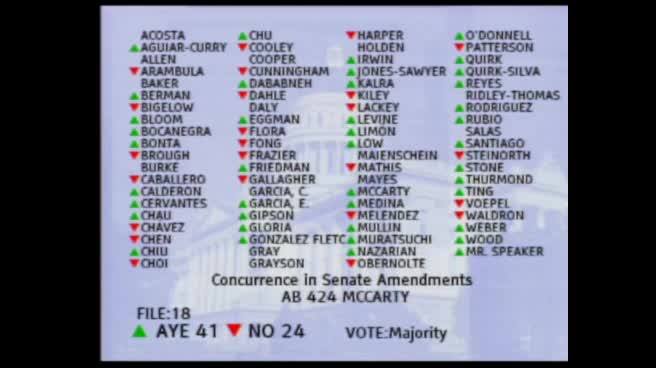 1MIN
Assembly Floor
 3MIN
Senate Floor
 1H
Senate Standing Committee on Appropriations
 8MIN
Senate Standing Committee on Energy, Utilities and Communications
 16MIN
Senate Standing Committee on Business, Professions and Economic Development
 2MIN
Assembly Floor
 1H
Assembly Standing Committee on Appropriations
 12MIN
Assembly Standing Committee on Utilities and Energy
Bill Author

Bill Co-Author(s):