AB 1072: Sales and use taxes: exclusion: garment alterations.
- Session Year: 2017-2018
- House: Assembly
- Latest Version Date: 2017-05-18
Existing sales and use tax laws impose a tax on retailers measured by the gross receipts from the sale of tangible personal property sold at retail in this state, or on the storage, use, or other consumption in this state of tangible personal property purchased from a retailer for storage, use, or other consumption in this state. Existing law defines sale and purchase for these purposes and provides certain exclusions from those definitions.
This bill bill, before January 1, 2023, would provide that sale and purchase do not include alterations to new or used garments if the alteration occurs after the retail sale of the new garment, the person performing the alteration was not the retailer of the new garment, and the person performing the alteration does not have an agreement with a clothing retailer to perform alterations for the clothing retailer or the clothing retailers customers, thus excluding the purchase or sale of those alterations from imposition of sales and use tax. As a result, the retail sale subject to tax would be the sale of tangible personal property used or furnished in the alteration to the person who performs the alteration.
The Bradley-Burns Uniform Local Sales and Use Tax Law authorizes cities and counties to impose local sales and use taxes in conformity with the Sales and Use Tax Law, and existing laws authorize districts, as specified, to impose transactions and use taxes in accordance with the Transactions and Use Tax Law, which generally conforms to the Sales and Use Tax Law. Amendments to the Sales and Use Tax Law are automatically incorporated into the local tax laws.
Existing law requires the state to reimburse cities and counties for revenue losses caused by the enactment of sales and use tax exemptions.
This bill would provide that, notwithstanding these provisions, no appropriation is made and the state shall not reimburse cities and counties for sales and use tax revenues lost by them pursuant to this bill.
This bill would take effect immediately as a tax levy, but its operative date would depend on its effective date.
Existing sales and use tax laws impose a tax on retailers measured by the gross receipts from the sale of tangible personal property sold at retail in this state, or on the storage, use, or other consumption in this state of tangible personal property purchased from a retailer for storage, use, or other consumption in this state. Existing law defines sale and purchase for these purposes and provides certain exclusions from those definitions.
This bill would provide that sale and purchase do not include alterations to new or used garments if the alteration occurs after the retail sale of the new garment, the person performing the alteration was not the retailer of the new garment, and the person performing the alteration does not have an agreement with a clothing retailer to perform alterations for the clothing retailer or the clothing retailers customers, thus excluding the purchase or sale of those alterations from imposition of sales and use tax. As a result, the retail sale subject to tax would be the sale of tangible personal property used or furnished in the alteration to the person who performs the alteration.
The Bradley-Burns Uniform Local Sales and Use Tax Law authorizes cities and counties to impose local sales and use taxes in conformity with the Sales and Use Tax Law, and existing laws authorize districts, as specified, to impose transactions and use taxes in accordance with the Transactions and Use Tax Law, which generally conforms to the Sales and Use Tax Law. Amendments to the Sales and Use Tax Law are automatically incorporated into the local tax laws.
Existing law requires the state to reimburse cities and counties for revenue losses caused by the enactment of sales and use tax exemptions.
This bill would provide that, notwithstanding these provisions, no appropriation is made and the state shall not reimburse cities and counties for sales and use tax revenues lost by them pursuant to this bill.
This bill would take effect immediately as a tax levy, but its operative date would depend on its effective date.
Existing sales and use tax laws impose a tax on retailers measured by the gross receipts from the sale of tangible personal property sold at retail in this state, or on the storage, use, or other consumption in this state of tangible personal property purchased from a retailer for storage, use, or other consumption in this state. Those laws specify that certain sellers of tangible personal property are consumers, and not retailers, of the tangible personal property they sell. Existing law makes a person who received no more than 20% of his or her total gross receipts from the alteration of garments during the preceding calendar year a consumer of, and not a retailer with respect to, property used or furnished by that person in altering new or used clothing, provided that person meets specified conditions that include, among other things, that 75% or more of the persons total gross receipts represent charges for garment cleaning or dyeing services. This bill would provide that any person who performs the alteration of garments is a consumer of, and not a retailer with respect to, property used or furnished by that person in altering new or used garments, as provided, so that the retail sale subject to tax is the sale of tangible personal property to the person who performs the alteration.The Bradley-Burns Uniform Local Sales and Use Tax Law authorizes cities and counties to impose local sales and use taxes in conformity with the Sales and Use Tax Law, and existing laws authorize districts, as specified, to impose transactions and use taxes in accordance with the Transactions and Use Tax Law, which generally conforms to the Sales and Use Tax Law. Amendments to the Sales and Use Tax Law are automatically incorporated into the local tax laws.Existing law requires the state to reimburse cities and counties for revenue losses caused by the enactment of sales and use tax exemptions.This bill would provide that, notwithstanding these provisions, no appropriation is made and the state shall not reimburse cities and counties for sales and use tax revenues lost by them pursuant to this bill.This bill would take effect immediately as a tax levy, but its operative date would depend on its effective date.Existing sales and use tax laws impose a tax on retailers measured by the gross receipts from the sale of tangible personal property sold at retail in this state, or on the storage, use, or other consumption in this state of tangible personal property purchased from a retailer for storage, use, or other consumption in this state. Those laws specify that certain sellers of tangible personal property are consumers, and not retailers, of the tangible personal property they sell. Existing law makes a person who received no more than 20% of his or her total gross receipts from the alteration of garments during the preceding calendar year a consumer of, and not a retailer with respect to, property used or furnished by that person in altering new or used clothing, provided that person meets specified conditions that include, among other things, that 75% or more of the persons total gross receipts represent charges for garment cleaning or dyeing services.
This bill would provide that any person who performs the alteration of garments is a consumer of, and not a retailer with respect to, property used or furnished by that person in altering new or used garments, as provided, so that the retail sale subject to tax is the sale of tangible personal property to the person who performs the alteration.
The Bradley-Burns Uniform Local Sales and Use Tax Law authorizes cities and counties to impose local sales and use taxes in conformity with the Sales and Use Tax Law, and existing laws authorize districts, as specified, to impose transactions and use taxes in accordance with the Transactions and Use Tax Law, which generally conforms to the Sales and Use Tax Law. Amendments to the Sales and Use Tax Law are automatically incorporated into the local tax laws.
Existing law requires the state to reimburse cities and counties for revenue losses caused by the enactment of sales and use tax exemptions.
This bill would provide that, notwithstanding these provisions, no appropriation is made and the state shall not reimburse cities and counties for sales and use tax revenues lost by them pursuant to this bill.
This bill would take effect immediately as a tax levy, but its operative date would depend on its effective date.
The Sales and Use Tax Law imposes taxes on retailers measured by the gross receipts from the sale of tangible personal property sold at retail in this state, or on the storage, use, or other consumption in this state of tangible personal property purchased from a retailer for storage, use, or other consumption in this state. The law defines sale for the purposes of that law as including, among others, a sale at an auction with respect to tangible personal property sold to a successful bidder at the auction upon an agreement or understanding with specified terms.This bill would make nonsubstantive changes to that definition.The Sales and Use Tax Law imposes taxes on retailers measured by the gross receipts from the sale of tangible personal property sold at retail in this state, or on the storage, use, or other consumption in this state of tangible personal property purchased from a retailer for storage, use, or other consumption in this state. The law defines sale for the purposes of that law as including, among others, a sale at an auction with respect to tangible personal property sold to a successful bidder at the auction upon an agreement or understanding with specified terms.
This bill would make nonsubstantive changes to that definition.
(a)Notwithstanding Before January 1, 2023, notwithstanding subdivision (b) of Section 6006 and subdivision (d) of Section 6010, sale and purchase, for the purposes of this part, do not include alterations to new or used garments if all of the following conditions are met:
(1)The alteration occurs after the retail sale of the new garment.
(2)The person performing the alteration was not the retailer of the new garment.
(3)The person performing the alteration does not have an agreement with a clothing retailer to perform alterations for the clothing retailer or the clothing retailers customers.
(b)For the purpose of this section, new garment means a garment that was not worn except for trying on or fitting.
SEC. 2.Notwithstanding Section 2230 of the Revenue and Taxation Code, no appropriation is made by this act and the state shall not reimburse any local agency for any sales and use tax revenues lost by it under this act.
SEC. 3.This act provides for a tax levy within the meaning of Article IV of the California Constitution and shall go into immediate effect. However, the provisions of this act shall become operative on the first day of the first calendar quarter commencing more than 90 days after the effective date of this act.
(a)Notwithstanding subdivision (b) of Section 6006 and subdivision (d) of Section 6010, sale and purchase, for the purposes of this part, do not include alterations to new or used garments if all of the following conditions are met:
(1)The alteration occurs after the retail sale of the new garment.
(2)The person performing the alteration was not the retailer of the new garment.
(3)The person performing the alteration does not have an agreement with a clothing retailer to perform alterations for the clothing retailer or the clothing retailers customers.
(b)For the purpose of this section, new garment means a garment that was not worn except for trying on or fitting.
SEC. 2.Notwithstanding Section 2230 of the Revenue and Taxation Code, no appropriation is made by this act and the state shall not reimburse any local agency for any sales and use tax revenues lost by it under this act.
SEC. 3.This act provides for a tax levy within the meaning of Article IV of the California Constitution and shall go into immediate effect. However, the provisions of this act shall become operative on the first day of the first calendar quarter commencing more than 90 days after the effective date of this act.
SECTION 1.Section 6018.11 is added to the Revenue and Taxation Code, to read:6018.11.(a)Any person who creates or fabricates new garments to a customers specification or for retail sale is considered the retailer of those items and tax applies with respect to the sale of those items. (b)Any person who performs the alteration of garments shall be considered the consumer of, and not a retailer within the provisions of this part with respect to, property used or furnished by that person in altering new or used garments, provided that all of the following apply:(1)The alteration does not result in a new garment or different garment. (2)The person was not the retailer of the new garment.(3)The person performing the alterations does not have a formal agreement or informal agreement with a clothing retailer to perform alterations for the clothing retailers customers.(c)Sales tax shall not apply to the charges for alterations specified in subdivision (b). However, that person is a retailer of any other tangible personal property sold to consumers in the regular course of business and sales tax shall apply to the gross receipts from those sales. (d)For the purpose of this section:(1)Alteration means mending, shortening, lengthening, taking in, letting out, adding or removing material, rearranging, restyling, or otherwise altering garments.(2)Formal agreement means a contract to perform alterations of new garments for customers of the retailer. (3)Informal agreement means a verbal or written agreement between a person or alteration establishment whereby the person or alteration establishment offers a discount or preferential pricing to alter new items for customers of the retailer.(4)New garment means a garment that was not worn except for trying on or fitting.SEC. 2. Notwithstanding Section 2230 of the Revenue and Taxation Code, no appropriation is made by this act and the state shall not reimburse cities and counties for any sales and use tax revenues lost by them under this act.SEC. 3. This act provides for a tax levy within the meaning of Article IV of the California Constitution and shall go into immediate effect. However, the provisions of this act shall become operative on the first day of the first calendar quarter commencing more than 90 days after the effective date of this act.(a)Any person who creates or fabricates new garments to a customers specification or for retail sale is considered the retailer of those items and tax applies with respect to the sale of those items.
(b)Any person who performs the alteration of garments shall be considered the consumer of, and not a retailer within the provisions of this part with respect to, property used or furnished by that person in altering new or used garments, provided that all of the following apply:
(1)The alteration does not result in a new garment or different garment.
(2)The person was not the retailer of the new garment.
(3)The person performing the alterations does not have a formal agreement or informal agreement with a clothing retailer to perform alterations for the clothing retailers customers.
(c)Sales tax shall not apply to the charges for alterations specified in subdivision (b). However, that person is a retailer of any other tangible personal property sold to consumers in the regular course of business and sales tax shall apply to the gross receipts from those sales.
(d)For the purpose of this section:
(1)Alteration means mending, shortening, lengthening, taking in, letting out, adding or removing material, rearranging, restyling, or otherwise altering garments.
(2)Formal agreement means a contract to perform alterations of new garments for customers of the retailer.
(3)Informal agreement means a verbal or written agreement between a person or alteration establishment whereby the person or alteration establishment offers a discount or preferential pricing to alter new items for customers of the retailer.
(4)New garment means a garment that was not worn except for trying on or fitting.
SEC. 2.Notwithstanding Section 2230 of the Revenue and Taxation Code, no appropriation is made by this act and the state shall not reimburse cities and counties for any sales and use tax revenues lost by them under this act.
SEC. 3.This act provides for a tax levy within the meaning of Article IV of the California Constitution and shall go into immediate effect. However, the provisions of this act shall become operative on the first day of the first calendar quarter commencing more than 90 days after the effective date of this act.
SECTION 1.Section 6006.6 of the Revenue and Taxation Code is amended to read:6006.6.Sale includes any sale at an auction in respect to tangible personal property that is sold to a successful bidder at the auction upon an agreement or understanding at the time of the sale that the property involved either will not be delivered to the successful bidder or that any amount that he or she may pay for the property pursuant to the sale will be returned to him or her. The tax shall be computed in such case upon the amount of the successful bid.Sale includes any sale at an auction in respect to tangible personal property which that is sold to a successful bidder at the auction upon an agreement or understanding at the time of the sale that the property involved either will not be delivered to the successful bidder or that any amount which that he or she may pay for the property pursuant to the sale will be returned to him. him or her. The tax shall be computed in such case upon the amount of the successful bid.
|
Date
|
Status
|
|---|---|
| Feb 1, 2018 | From committee: Filed with the Chief Clerk pursuant to Joint Rule 56. |
| Jan 31, 2018 | Died pursuant to Art. IV, Sec. 10(c) of the Constitution. |
| May 26, 2017 | In committee: Held under submission. |
| May 24, 2017 | In committee: Set, first hearing. Referred to APPR. suspense file. |
| May 22, 2017 | Re-referred to Com. on APPR. |
| May 18, 2017 | Read second time and amended. |
| May 17, 2017 | From committee: Amend, and do pass as amended and re-refer to Com. on APPR. (Ayes 8. Noes 1.) (May 15). |
| Apr 18, 2017 | Re-referred to Com. on REV. & TAX. |
| Apr 17, 2017 | From committee chair, with author's amendments: Amend, and re-refer to Com. on REV. & TAX. Read second time and amended. |
| Mar 22, 2017 | Re-referred to Com. on REV. & TAX. |
| Mar 21, 2017 | From committee chair, with author's amendments: Amend, and re-refer to Com. on REV. & TAX. Read second time and amended. |
| Mar 20, 2017 | Referred to Com. on REV. & TAX. |
| Feb 17, 2017 | From printer. May be heard in committee March 19. |
| Feb 16, 2017 | Read first time. To print. |
|
Date
|
Description
|
Location
|
Votes
|
|
|---|---|---|---|---|
| May 15, 2017 | Do pass as amended and be re-referred to the Committee on [Appropriations] | Assembly Standing Committee on Revenue and Taxation |
Passed |
This list shows positions taken on this bill by organizations on the date displayed, which is linked to the original source.
Positions by individuals are not included.
|
Organization
|
Position
|
Date
|
|---|---|---|
| State Board of Equalization | ** Support | May 12, 2017 |
Date of Hearing: May 24, 2017
ASSEMBLY COMMITTEE ON APPROPRIATIONS
Lorena Gonzalez Fletcher, Chair
ABPCA Bill Id:AB 1072
Author:(Brough) – As Amended Ver:May 18, 2017
Policy Committee: | Revenue and Taxation | Vote: | 8 - 1 |
|
| ||
|
|
Urgency: No State Mandated Local Program: No Reimbursable: No
SUMMARY:
This bill excludes from the sales and use tax, until January 1, 2023, and under certain conditions, the sale or purchase of alterations to new or used garments.
FISCAL EFFECT:
Annual General Fund (GF) revenue loss in the range of $1 million to $2 million.
COMMENTS:
- Background. Under current law, the alternation of new clothing is subject to sales tax. This is because this work is considered to be “fabrication labor,” which is the work in creating or assembling a product. Fabrication labor is generally subject to the sales tax, and other examples include engraving a new ring being sold to a customer or tinting the windows of new vehicle for a customer who purchased the vehicle from a new car dealer.
While fabrication labor is subject to the sales tax, repair labor is not. Repair labor is work performed on a product to restore it to its intended use. As a result, the alteration of new garments is subject to the sales tax while the alteration of used garments is not. One exception to this general rule applies to dry cleaners. Existing law allows alterations to either new or used garments by dry cleaners to be non-taxable services if alteration activities represent no more than 20% of their gross receipts during the preceding calendar year and 75% of their receipts is from clothes cleaning or dyeing. Under this criteria, dry cleaners are considered consumers of the materials and supplies used for alterations and not retailers.
- Purpose. According to the author, AB 1072 will tax ease compliance for tailors and create equity between the tailoring industry and dry cleaners. This bill exempts qualifying taxpayers’ charges for alterations from the sales tax, thereby treating the alteration of new or used garments equally.
Analysis Prepared by: Luke Reidenbach / APPR. / (916) 319-2081
Date of Hearing: May 15, 2017
ASSEMBLY COMMITTEE ON REVENUE AND TAXATION
Sebastian Ridley-Thomas, Chair
ABPCA Bill Id:AB 1072 (
Author:Brough) – As Amended Ver:April 17, 2017
Majority vote. Tax levy. Fiscal committee.
SUBJECT: Sales and use taxes: exclusion: garment alterations
SUMMARY: Excludes from the sales and use tax (SUT), under certain conditions, the sale or purchase of alterations to new or used garments. Specifically, this bill:
- Provides, notwithstanding Revenue and Taxation Code (R&TC) Section 6006(b) and R&TC Section 6010(d), respectively, that "sale" and "purchase" for purposes of the SUT Law do not include alterations to new or used garments, if all of the following conditions are met:
- The alteration occurs after the retail sale of the new garment;
- The person performing the alteration was not the retailer of the new garment; and,
- The person performing the alteration does not have an agreement with a clothing retailer to perform alterations for the clothing retailer or the clothing retailer's customers.
- Defines a "new garment" as a garment that was not worn except for trying on or fitting.
- Provides, notwithstanding R&TC Section 2230, that no appropriation or reimbursement is made to any local agency for any SUT revenues lost.
- Takes immediate effect as a tax levy, but only becomes operative on the first day of the first calendar quarter commencing more than 90 days after the effective date of this act.
EXISTING LAW:
- Imposes the SUT on the sale of, or the storage, use, or other consumption of, tangible personal property (TPP), unless specifically exempted, and provides that the SUT must be computed based on the sales price or gross receipts of TPP, unless specifically excluded.
- Authorizes cities and counties to impose a local SUT, pursuant to the Bradley-Burns Uniform Local SUT Law, fixed at 1.25% of the sales price or gross receipts of TPP.
- Authorizes cities and counties to impose a transactions and use tax (TUT) for general or special purposes if approved by the requisite threshold of voters. The TUT Law is administered in conformity with the SUT Law.
- Defines "sale" to include the producing, fabricating, processing, printing, or imprinting of TPP for a consideration for consumers who furnish either directly or indirectly the materials used in the producing, fabricating, processing, printing, or imprinting. (R&TC Section 6006(b).)
- Defines "purchase" to include a transfer for a consideration of TPP that has been produced, fabricated, or printed to the special order of the customer, or of any publication. (R&TC Section 6010(d).)
- Specifies that charges for the alteration of new items (such as garments, bedding, draperies, or other personal and household items), which includes any work performed upon new items to meet the requirements of the customer when such alterations result in the creation or production of a new item or constitute a step in the creation or production of a new item for the customer, are subject to tax, regardless of whether the alterations are performed by the seller of the item or by another person. Persons engaged in the producing, processing, or fabricating of new items are retailers, not consumers, of the alterations provided to the customer and are thus required to hold a seller's permit. (BOE SUT Regulation 1524(b)(1)(A).)
- Specifies that charges for the alteration of used items (such as garments, bedding, draperies, or other personal and household items), which includes work performed merely to refit or repair the item for the use for which it was created or produced, are not subject to tax. Generally, persons performing the alteration of used items are consumers, not retailers, of the supplies and materials furnished in connection with the alterations, and the SUT applies to the sale of the supplies and materials to such persons. (BOE SUT Regulation 1524(b)(1)(B).)
- Provides that any person who received 20% or less of his or her total gross receipts from the alteration of garments during the preceding calendar year is a consumer of, and is not considered a retailer with respect to, property used or furnished by that person in altering new or used clothing, provided that 75% or more of that person's total gross receipts represent charges for garment cleaning or dyeing services. As such, the SUT does not apply to charges for alterations to new or used clothing made by dry cleaning businesses, as specified. (R&TC Section 6018.6.)
FISCAL EFFECT: The State Board of Equalization (BOE) estimates annual state and local revenue losses of $2 million to $4 million.
COMMENTS:
- The author has provided the following statement in support of this bill:
This bill provides that a taxpayer who alters garments is the consumer of property used or furnished in altering new garments provided that (1) the alterations occur after the retail sale of the new item, (2) the alterations establishment was not the retailer of the new garment, and (3) the alteration establishment does not have an agreement to perform alterations for a clothing retailer's customers. The bill exempts qualifying taxpayers' charges for alterations from sales tax. Such taxpayers will be considered the consumer of the materials used in performing alterations of new and used garments, and tax applies instead to their purchase of materials.
This bill would ease compliance for clothing alteration establishments. Tailoring industry representatives have expressed difficulty distinguishing between new and used clothing. Tailors cannot always determine if an item is new because there is no evidence, such as attached store tags, labels or unfinished hems, indicating that the item is new. Customers often remove the sales tags from the garments before being altered.
In addition, treating dry cleaners as consumers rather than retailers places tailors at a competitive disadvantage. Customers will choose dry cleaners to hem a pair of pants over tailors who must charge and separately state sales tax for the alterations. This bill addresses this inequity and levels the playing field for both tailors and dry cleaners.
- The BOE is the sponsor of this bill, stating in support that "[t]his bill makes taxpayers that perform clothing alterations consumers, rather than retailers, of property used or furnished by excluding from the terms "sale" and "purchase" alterations to new garments if the alteration occurs after the retail sale of the new garment and the person performing the alterations is not the garment retailer." As a result, this bill "[e]ases tax compliance for clothing alteration establishments" and "[p]rovides tax equity."
- Committee Staff Comments:
- California's Eroding SUT Base: The SUT represents the state's second largest source of General Fund (GF) revenues. Nevertheless, the past 60 years have seen a dramatic reduction in the state's reliance on the SUT and a corresponding increase in its reliance on personal income tax revenues. In fiscal year (FY) 2014-15, SUT revenues were estimated to comprise 23% of the state's GF revenues, down from nearly 60% in FY 1950-51.
The SUT Law was enacted in a very different era. In the 1930s, California's economy was largely dominated by manufacturing, and residents mostly bought and sold tangible goods. Thus, in establishing the base for a new consumption tax, it made sense to impose the tax on sales of TPP, defined as personal property that may be "seen, weighed, measured, felt, or touched." Over the past 80 years, however, California's economy has seen dramatic growth in the service and information sectors, resulting in a significant erosion of the SUT base. For example, the Commission on the 21st Century Economy noted that spending on taxable goods represented 34.6% of personal income in 2008, down from 55.4% in 1980. As a result, tax experts and economists from across the political spectrum argue that California should expand its SUT base.
It could be argued that, while well-intentioned, additional SUT exclusions and exemptions further erode an already shrinking SUT base. This, in turn, increases fiscal pressures to maintain or even increase California's relatively high SUT rate. High rates arguably promote non-compliance and encourage out-of-state purchases, placing California retailers at a competitive disadvantage. High rates also risk impacting consumer decision-making, which runs counter to widely accepted principles of sound tax policy.
- What is a "Tax Expenditure"? Existing law provides various credits, deductions, exclusions, and exemptions for particular taxpayer groups. In the late 1960s, United States Treasury officials began arguing that these features of the tax law should be referred to as "expenditures," since they are generally enacted to accomplish some governmental purpose and there is a determinable cost associated with each of them (in the form of forgone revenues). This bill would enact a new tax expenditure program in the form of a SUT exclusion for alterations to new garments.
- Tax Expenditure vs. Direct Expenditure: As the Department of Finance notes in its annual Tax Expenditure Report, there are several key differences between tax expenditures and direct expenditures. First, tax expenditures are reviewed less frequently than direct expenditures once they are put in place. This can offer taxpayers greater certainty, but it can also result in tax expenditures remaining part of the tax code without demonstrating any public benefit. Second, there is generally no control over the amount of revenue losses associated with any given tax expenditure. Finally, it should also be noted that, once enacted, it takes a two-thirds vote to rescind an existing tax expenditure absent a sunset date. This bill does not include a sunset date. The Committee may wish to consider including a sunset date to allow for proper legislative review of the benefits and costs of this tax expenditure in the future.
- Fabrication Labor is Subject to the SUT: Fabrication is considered to be work done in creating, producing, processing, or assembling a product, and charges for fabrication labor are generally taxable, whether the labor charges are itemized for the customer or included in the price of the product. Fabrication labor is taxable even when the customer supplies the materials for the work, as alterations result in the creation or production of a new item or constitute a step in the creation or production of a new item for the customer. Examples of fabrication labor include engraving a new ring being sold to a customer, tinting the windows of a new vehicle for a customer who purchased the vehicle from a new car dealer, and altering a new suit to better fit the buyer. However, tax generally does not apply to work performed on a product to repair or restore it to its intended use, referred to as repair labor. Examples of repair labor include restoring damaged jewelry, replacing a broken window on a customer's used car, and altering a used suit to better fit the customer.
- Imposition of the SUT on Alterations: The SUT is generally imposed on alterations of new garments as fabrication labor. Alteration of new items includes adding or removing material from the item, rearranging, restyling, or otherwise altering the item. In comparison, alteration of used items includes mending, shortening or lengthening, taking in or letting out, or otherwise altering the item. Alteration of used items are thought to merely refit or repair the item for its originally intended use, so are not subject to tax.
However, an exception to these rules applies to dry cleaners. Existing law provides that alteration to either new or used garments by dry cleaners are non-taxable services if alteration activities represent no more than 20% of their total gross receipts during the preceding calendar year and 75% or more of their total gross receipts is from clothes cleaning or dyeing. Dry cleaners that meet the gross receipts criteria, along with other businesses when altering used items, are considered consumers, not retailers, of the materials and supplies furnished in connection with the alterations. Conversely, dry cleaners that do not meet the gross receipts criteria, along with other businesses when altering new items, are considered retailers, thus making charges for alterations they make to garments taxable.
Historically, the BOE has considered a garment brought into an alterations business to be new if it does not have hems or cuffs, store tags are still attached, or the item is clearly unworn or unused to the observer, an interpretation validated by the courts in Duffy v. State Board of Equalization (1984) 152 Cal.App.3d 1156. In this case, the court held that charges for alterations to new garments furnished by the customer constituted a step in the fabrication or production of a product, and that existing statute, regulations, and rulings give businesses reasonable notice that they are liable for the SUT on alterations to new garments for customers.
- BOE Interested Parties Process (IPP): This bill is sponsored by the BOE, and stems from the BOE's IPP to amend Regulation 1524, Manufacturers of Personal Property, to clarify the application of tax to alterations of new and used garments. During the IPP, representatives from the tailoring industry commented that distinguishing between new and used garments is too difficult for tailors, as customers often remove sales tags from garments or wait several months before bringing items in to be altered, making new garments less identifiable. Representatives from the tailoring industry also surveyed tailors throughout California, revealing that some tailors charge tax on all alterations (for both new and used garments), while others charged no tax on any alterations because they were unaware of how tax applies to alterations and considered alterations to be a nontaxable service rather than a sale.
Tailors argued that alterations for new and used garments should be treated the same, and that a simple alteration, such as hemming a pair of pants, does not create a new product. In addition, tailors argued that treating dry cleaners as consumers rather than retailers for SUT purposes confuses customers and puts tailors at a competitive disadvantage, as customers would prefer alterations businesses where the SUT is not charged.
- Updated Regulations for Garment Alterations Proposed: During the October 25, 2016 meeting of the BOE's Business Taxes Committee (BTC), the BTC voted to update BOE Regulation 1524, Manufacturers of Personal Property, to further clarify when garments are considered new or used. The proposed amendments specify that new garments are clothing not previously worn except for trying on or fitting. Additionally, persons who perform alterations have a rebuttable presumption that they are altering used garments if both of the following apply: (i) the person performing and charging for the alterations does not have a formal or informal agreement to provide alterations for customers of the retailer of new garments, and (ii) there is no evidence that the garments are new, such as unhemmed pants or store tags affixed to the garment. The proposed rule is undergoing the requisite review process prior to being submitted to the Office of Administrative Law for final approval.
- What Does This Bill Do? During the IPP, stakeholders expressed that, while the proposed rule addresses the difficulty of determining which garments are new or used for purposes of applying the SUT, tax should not apply to alterations of new or used garments, and persons performing alterations should be treated the same – as consumers of materials and supplies, rather than retailers. However, differences in application of the SUT across business industries (dry cleaning compared to tailoring) is set by statute and was outside the scope of rulemaking. The BTC discussed at its October 25, 2016 meeting that staff planned to propose statutory changes at the December 2016 BOE Legislative Committee meeting to address tailors' transactions.
This bill excludes alterations to new or used garments from the definition of "sale" or "purchase" upon which the SUT is imposed. To qualify for the exclusion, the alteration must occur after the retail sale of the new garment, the person performing the alteration cannot be the retailer of the new garment, and the person performing the alteration cannot have an agreement with a clothing retailer to perform alterations for the clothing retailer or its customers. As such, persons performing alterations would be considered consumers of materials and supplies used in performing alterations, and not retailers. However, the alterations business would continue to be treated as a retailer when it sells items to customers such as lint brushes or stain protection products, or if the alterations business is the retailer of the new garment (such as a dress custom-ordered from fabric). Clothing retailers that perform alterations on garments they sell would also continue to be treated as retailers.
- Setting a Precedent: While this bill would create a simpler standard of taxation within the garment industry regarding alterations, the Committee may wish to consider the precedent set by excluding specific incidences of fabrication labor from the SUT. Stakeholders from other industries such as the jewelry or auto mechanic industry may similarly contend that their fabrication labor should be excluded from tax. More uniform taxation could be achieved by reevaluating whether fabrication labor across all businesses performing garment alterations (both dry cleaning and tailoring) should be subject to the same rules regarding application of the SUT to new items. Alternatively, the Committee may wish to consider whether increased education and outreach efforts to businesses performing fabrication labor would improve compliance with existing law.
REGISTERED SUPPORT / OPPOSITION:
Support
State Board of Equalization (Sponsor)
Opposition
None on file
Analysis Prepared by: Irene Ho / REV. & TAX. / (916) 319-2098
Discussed in Hearing
 1H
Assembly Standing Committee on Appropriations
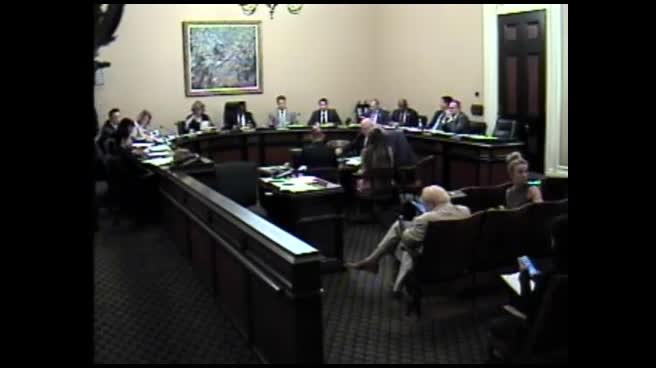 5MIN
Assembly Standing Committee on Revenue and Taxation
Bill Author

Bill Co-Author(s):