AB 1085: Minimum annual tax: exemption.
- Session Year: 2017-2018
- House: Assembly
- Latest Version Date: 2018-08-06
Existing law imposes a minimum franchise tax of $800, except as provided, on every corporation incorporated in this state, qualified to transact intrastate business in this state, or doing business in this state. state, and a minimum annual tax on every limited partnership, limited liability partnership, and limited liability company registered, qualified to transact business, or doing business in this state, as specified. Existing law exempts a corporation that incorporates or qualifies to do business in this state from the payment of the minimum franchise tax in its first taxable year.
.This bill would, for taxable years beginning on or after January 1, 2019, exempt a corporation that is a new corporation limited partnership that is a new limited partnership and a limited liability company that is a new limited liability company in taxable years beginning on or after January 1, 2019, and is a small business in its first and 2nd taxable year from payment of the minimum franchise annual tax for its first and 2nd taxable years. taxable year.
This bill would take effect immediately as a tax levy.
Existing law imposes an annual tax in an amount equal to the minimum franchise tax on every limited liability company doing business in this state. In addition, existing law requires every limited liability company, if the articles of organization have been accepted by, or a certificate of registration has been issued by, the Secretary of State, to pay an annual tax in an amount equal to the minimum franchise tax. Existing law requires the tax assessed under these provisions to be due and payable on or before the 15th day of the 4th month of the taxable year. a minimum franchise tax of $800, except as provided, on every corporation incorporated in this state, qualified to transact intrastate business in this state, or doing business in this state. Existing law exempts a corporation that incorporates or qualifies to do business in this state from the payment of the minimum franchise tax in its first taxable year.
Existing law imposes an annual minimum franchise tax, except as provided, on every corporation incorporated in this state, qualified to transact intrastate business in this state, or doing business in this state. Existing law exempts a corporation that incorporates or qualifies to do business in this state from the payment of the minimum franchise tax in its first taxable year. Existing law requires corporations subject to the minimum franchise tax to pay annually to the state a minimum franchise tax of $800 and provides that the estimated tax shall not be less than the minimum tax. If the amount of estimated tax does not exceed the minimum franchise tax, existing law requires the entire amount of the estimated tax to be due and payable on or before the 15th day of the 4th month of the taxable year.
This bill would also authorize that annual tax and minimum franchise tax to be due and payable in 2 or 3 equal installments, on or before specified dates. would, for taxable years beginning on or after January 1, 2019, exempt a corporation that is a new corporation in taxable years beginning on or after January 1, 2019, and is a small business in its first and 2nd taxable year from payment of the minimum franchise tax for its first and 2nd taxable years.
This bill would take effect immediately as a tax levy.
Existing law imposes an annual tax in an amount equal to the minimum franchise tax on every limited liability company doing business in this state. In addition, existing law requires every limited liability company, if the articles of organization have been accepted by, or a certificate of registration has been issued by, the Secretary of State, to pay an annual tax in an amount equal to the minimum franchise tax. Existing law requires the tax assessed under these provisions to be due and payable on or before the 15th day of the 4th month of the taxable year.
Existing law imposes an annual minimum franchise tax, except as provided, on every corporation incorporated in this state, qualified to transact intrastate business in this state, or doing business in this state. Existing law exempts a corporation that incorporates or qualifies to do business in this state from the payment of the minimum franchise tax in its first taxable year. Existing law requires corporations subject to the minimum franchise tax to pay annually to the state a minimum franchise tax of $800 and provides that the estimated tax shall not be less than the minimum tax. If the amount of estimated tax does not exceed the minimum franchise tax, existing law requires the entire amount of the estimated tax to be due and payable on or before the 15th day of the 4th month of the taxable year.
This bill would also authorize that annual tax and minimum franchise tax to be due and payable in 2 or 3 equal installments, on or before specified dates.
Existing law imposes an annual tax in an amount equal to the minimum franchise tax on every limited liability company doing business in this state. In addition, existing law requires every limited liability company, if the articles of organization have been accepted by, or a certificate of registration has been issued by, the Secretary of State, to pay an annual tax in an amount equal to the minimum franchise tax. Existing law requires the tax assessed under these provisions to be due and payable on or before the 15th day of the 4th month of the taxable year.
Existing law imposes an annual minimum franchise tax, except as provided, on every corporation incorporated in this state, qualified to transact intrastate business in this state, or doing business in this state. Existing law exempts a corporation that incorporates or qualifies to do business in this state from the payment of the minimum franchise tax in its first taxable year. Existing law requires corporations subject to the minimum franchise tax to pay annually to the state a minimum franchise tax of $800 and provides that the estimated tax shall not be less than the minimum tax. If the amount of estimated tax does not exceed the minimum franchise tax, existing law requires the entire amount of the estimated tax to be due and payable on or before the 15th day of the 4th month of the taxable year.
This bill would also authorize that annual tax and minimum franchise tax to be due and payable in 2 or 3 equal installments, on or before specified dates.
(a)For each taxable year beginning on or after January 1, 1997, every limited partnership doing business in this state (as defined by Section 23101) and required to file a return under Section 18633 shall pay annually to this state a tax for the privilege of doing business in this state in an amount equal to the applicable amount specified in paragraph (1) of subdivision (d) of Section 23153.
(b)(1)In addition to any limited partnership that is doing business in this state and therefore is subject to the tax imposed by subdivision (a), for each taxable year beginning on or after January 1, 1997, every limited partnership that has executed, acknowledged, and filed a certificate of limited partnership with the Secretary of State pursuant to Section 15621 or 15902.01 of the Corporations Code, and every foreign limited partnership that has registered with the Secretary of State pursuant to Section 15692 or 15909.01 of the Corporations Code, shall pay annually the tax prescribed in subdivision (a). The tax shall be paid for each taxable year, or part thereof, until a certificate of cancellation is filed on behalf of the limited partnership with the office of the Secretary of State pursuant to Section 15623, 15696, 15902.03, or 15909.07 of the Corporations Code.
(2)If a taxpayer files a return with the Franchise Tax Board that is designated its final return, that board shall notify the taxpayer that the tax imposed by this chapter is due annually until a certificate of cancellation is filed with the Secretary of State pursuant to Section 15623, 15696, 15902.03, or 15909.07 of the Corporations Code.
(c)The tax imposed by this chapter shall be due and payable on the date the return is required to be filed under former Section 18432 or 18633.
(d)For purposes of this section, limited partnership means any partnership formed by two or more persons under the laws of this state or any other jurisdiction and having one or more general partners and one or more limited partners.
(e)Notwithstanding subdivision (b), any limited partnership that ceased doing business prior to January 1, 1997, filed a final return with the Franchise Tax Board for a taxable year ending before January 1, 1997, and filed a certificate of dissolution with the Secretary of State pursuant to Section 15623 of the Corporations Code prior to January 1, 1997, shall not be subject to the tax imposed by this chapter for any period following the date the certificate of dissolution was filed with the Secretary of State, but only if the limited partnership files a certificate of cancellation with the Secretary of State pursuant to Section 15623 of the Corporations Code. In the case where a notice of proposed deficiency assessment of tax or a notice of tax due (whichever is applicable) is mailed after January 1, 2001, the first sentence of this subdivision shall not apply unless the certificate of cancellation is filed with the Secretary of State not later than 60 days after the date of the mailing of the notice.
(f)(1)Notwithstanding subdivision (a), a limited partnership that is a new limited partnership in taxable years beginning on or after January 1, 2019, and is a small business in its first taxable year shall not be subject to the minimum annual tax for its first taxable year.
(2)For purposes of this subdivision:
(A)Gross receipts, less returns and allowances reportable to this state, means the sum of the gross receipts from the production of business income, as defined in subdivision (a) of Section 25120, and the gross receipts from the production of nonbusiness income, as defined in subdivision (d) of Section 25120.
(B)New limited partnership means a limited partnership that is formed on or after January 1, 2019. New limited partnership does not include any limited partnership that began business operations as, or acquired its business operations from, a sole proprietorship, a limited liability partnership, or any other form of business entity prior to beginning business operations or any limited partnership that acquired its business operations from a limited partnership.
(C)Small business means a limited partnership that has gross receipts, less returns and allowances, reportable to this state for the taxable year of fifty thousand dollars ($50,000) or less.
(3)(A)This subdivision shall not apply to any limited partnership that reorganizes solely for the purpose of reducing its minimum tax.
(B)This subdivision shall not apply to a limited partnership that does not file a timely return.
SEC. 2.Section 17941 of the Revenue and Taxation Code is amended to read:17941.(a)For each taxable year beginning on or after January 1, 1997, a limited liability company doing business in this state (as defined in Section 23101) shall pay annually to this state a tax for the privilege of doing business in this state in an amount equal to the applicable amount specified in paragraph (1) of subdivision (d) of Section 23153 for the taxable year.
(b)(1)In addition to any limited liability company that is doing business in this state and is therefore subject to the tax imposed by subdivision (a), for each taxable year beginning on or after January 1, 1997, a limited liability company shall pay annually the tax prescribed in subdivision (a) if articles of organization have been accepted, or a certificate of registration has been issued, by the office of the Secretary of State. The tax shall be paid for each taxable year, or part thereof, until a certificate of cancellation of registration or of articles of organization is filed on behalf of the limited liability company with the office of the Secretary of State.
(2)If a taxpayer files a return with the Franchise Tax Board that is designated as its final return, the Franchise Tax Board shall notify the taxpayer that the annual tax shall continue to be due annually until a certificate of dissolution is filed with the Secretary of State pursuant to Section 17707.08 of the Corporations Code or a certificate of cancellation is filed with the Secretary of State pursuant to Section 17708.06 of the Corporations Code.
(c)The tax assessed under this section shall be due and payable on or before the 15th day of the fourth month of the taxable year.
(d)For purposes of this section, limited liability company means an organization, other than a limited liability company that is exempt from the tax and fees imposed under this chapter pursuant to Section 23701h or Section 23701x, that is formed by one or more persons under the law of this state, any other country, or any other state, as a limited liability company and that is not taxable as a corporation for California tax purposes.
(e)Notwithstanding anything in this section to the contrary, if the office of the Secretary of State files a certificate of cancellation pursuant to Section 17707.02 of the Corporations Code for any limited liability company, then paragraph (1) of subdivision (f) of Section 23153 shall apply to that limited liability company as if the limited liability company were properly treated as a corporation for that limited purpose only, and paragraph (2) of subdivision (f) of Section 23153 shall not apply. Nothing in this subdivision entitles a limited liability company to receive a reimbursement for any annual taxes or fees already paid.
(f)(1)Notwithstanding any provision of this section to the contrary, a limited liability company that is a small business solely owned by a deployed member of the United States Armed Forces shall not be subject to the tax imposed under this section for any taxable year the owner is deployed and the limited liability company operates at a loss or ceases operation.
(2)The Franchise Tax Board may promulgate regulations as necessary or appropriate to carry out the purposes of this subdivision, including a definition for ceases operation.
(3)For the purposes of this subdivision, all of the following definitions apply:
(A)Deployed means being called to active duty or active service during a period when a Presidential Executive order specifies that the United States is engaged in combat or homeland defense. Deployed does not include either of the following:
(i)Temporary duty for the sole purpose of training or processing.
(ii)A permanent change of station.
(B)Operates at a loss means a limited liability companys expenses exceed its receipts.
(C)Small business means a limited liability company with total income from all sources derived from, or attributable, to the state of two hundred fifty thousand dollars ($250,000) or less.
(4)This subdivision shall become inoperative for taxable years beginning on or after January 1, 2018.
(g)(1)Notwithstanding subdivision (a), a limited liability company that is a new limited liability company in taxable years beginning on or after January 1, 2019, and is a small business in its first taxable year shall not be subject to the minimum annual tax for its first taxable year.
(2)For purposes of this subdivision:
(A)Gross receipts, less returns and allowances reportable to this state, means the sum of the gross receipts from the production of business income, as defined in subdivision (a) of Section 25120, and the gross receipts from the production of nonbusiness income, as defined in subdivision (d) of Section 25120.
(B)New limited liability company means a limited liability company that is formed on or after January 1, 2019. New limited liability company does not include any limited liability company that began business operations as, or acquired its business operations from, a sole proprietorship, a limited liability partnership, or any other form of business entity prior to beginning business operations or any limited liability company that acquired its business operations from a limited liability company.
(C)Small business means a limited liability company that has gross receipts, less returns and allowances, reportable to this state for the taxable year of fifty thousand dollars ($50,000) or less.
(3)(A)This subdivision shall not apply to any limited liability company that reorganizes solely for the purpose of reducing its minimum tax.
(B)This subdivision shall not apply to a limited liability company that does not file a timely return.
SEC. 3.This act provides for a tax levy within the meaning of Article IV of the California Constitution and shall go into immediate effect.
SECTION 1.Section 23153 of the Revenue and Taxation Code is amended to read:23153.(a)Every corporation described in subdivision (b) shall be subject to the minimum franchise tax specified in subdivision (d) from the earlier of the date of incorporation, qualification, or commencing to do business within this state, until the effective date of dissolution or withdrawal as provided in Section 23331 or, if later, the date the corporation ceases to do business within the limits of this state.(b)Unless expressly exempted by this part or the California Constitution, subdivision (a) shall apply to each of the following:(1)Every corporation that is incorporated under the laws of this state.(2)Every corporation that is qualified to transact intrastate business in this state pursuant to Chapter 21 (commencing with Section 2100) of Division 1 of Title 1 of the Corporations Code.(3)Every corporation that is doing business in this state.(c)The following entities are not subject to the minimum franchise tax specified in this section:(1)Credit unions.(2)Nonprofit cooperative associations organized pursuant to Chapter 1 (commencing with Section 54001) of Division 20 of the Food and Agricultural Code that have been issued the certificate of the board of supervisors prepared pursuant to Section 54042 of the Food and Agricultural Code. The association shall be exempt from the minimum franchise tax for five consecutive taxable years, commencing with the first taxable year for which the certificate is issued pursuant to subdivision (b) of Section 54042 of the Food and Agricultural Code. This paragraph only applies to nonprofit cooperative associations organized on or after January 1, 1994.(d)(1)Except as provided in paragraph (2), paragraph (1) of subdivision (f) of Section 23151, paragraph (1) of subdivision (f) of Section 23181, and paragraph (1) of subdivision (c) of Section 23183, corporations subject to the minimum franchise tax shall pay annually to the state a minimum franchise tax of eight hundred dollars ($800).(2)The minimum franchise tax shall be twenty-five dollars ($25) for each of the following:(A)A corporation formed under the laws of this state whose principal business when formed was gold mining, which is inactive and has not done business within the limits of the state since 1950.(B)A corporation formed under the laws of this state whose principal business when formed was quicksilver mining, which is inactive and has not done business within the limits of the state since 1971, or has been inactive for a period of 24 consecutive months or more.(3)For purposes of paragraph (2), a corporation shall not be considered to have done business if it engages in business other than mining.(e)Notwithstanding subdivision (a), for taxable years beginning on or after January 1, 1999, and before January 1, 2000, every qualified new corporation shall pay annually to the state a minimum franchise tax of five hundred dollars ($500) for the second taxable year. This subdivision shall apply to any corporation that is a qualified new corporation and is incorporated on or after January 1, 1999, and before January 1, 2000.(1)The determination of the gross receipts of a corporation, for purposes of this subdivision, shall be made by including the gross receipts of each member of the commonly controlled group, as defined in Section 25105, of which the corporation is a member.(2)Gross receipts, less returns and allowances reportable to this state, means the sum of the gross receipts from the production of business income, as defined in subdivision (a) of Section 25120, and the gross receipts from the production of nonbusiness income, as defined in subdivision (d) of Section 25120.(3)Qualified new corporation means a corporation that is incorporated under the laws of this state or has qualified to transact intrastate business in this state, that begins business operations at or after the time of its incorporation and that reasonably estimates that it will have gross receipts, less returns and allowances, reportable to this state for the taxable year of one million dollars ($1,000,000) or less. Qualified new corporation does not include any corporation that began business operations as a sole proprietorship, a partnership, or any other form of business entity prior to its incorporation. This subdivision shall not apply to any corporation that reorganizes solely for the purpose of reducing its minimum franchise tax.(4)This subdivision shall not apply to limited partnerships, as defined in Section 17935, limited liability companies, as defined in Section 17941, limited liability partnerships, as described in Section 17948, charitable organizations, as described in Section 23703, regulated investment companies, as defined in Section 851 of the Internal Revenue Code, real estate investment trusts, as defined in Section 856 of the Internal Revenue Code, real estate mortgage investment conduits, as defined in Section 860D of the Internal Revenue Code, qualified Subchapter S subsidiaries, as defined in Section 1361(b)(3) of the Internal Revenue Code, or to the formation of any subsidiary corporation, to the extent applicable.(5)For any taxable year beginning on or after January 1, 1999, and before January 1, 2000, if a corporation has qualified to pay five hundred dollars ($500) for the second taxable year under this subdivision, but in its second taxable year, the corporations gross receipts, as determined under paragraphs (1) and (2), exceed one million dollars ($1,000,000), an additional tax in the amount equal to three hundred dollars ($300) for the second taxable year shall be due and payable by the corporation on the due date of its return, without regard to extension, for that year.(f)(1)Notwithstanding subdivision (a), every corporation that incorporates or qualifies to do business in this state on or after January 1, 2000, shall not be subject to the minimum franchise tax for its first taxable year.(2)This subdivision shall not apply to limited partnerships, as defined in Section 17935, limited liability companies, as defined in Section 17941, limited liability partnerships, as described in Section 17948, charitable organizations, as described in Section 23703, regulated investment companies, as defined in Section 851 of the Internal Revenue Code, real estate investment trusts, as defined in Section 856 of the Internal Revenue Code, real estate mortgage investment conduits, as defined in Section 860D of the Internal Revenue Code, and qualified Subchapter S subsidiaries, as defined in Section 1361(b)(3) of the Internal Revenue Code, to the extent applicable.(3)This subdivision shall not apply to any corporation that reorganizes solely for the purpose of avoiding payment of its minimum franchise tax.(g)Notwithstanding subdivision (a), a domestic corporation, as defined in Section 167 of the Corporations Code, that files a certificate of dissolution in the office of the Secretary of State pursuant to subdivision (b) of Section 1905 of the Corporations Code, prior to its amendment by the act amending this subdivision, and that does not thereafter do business shall not be subject to the minimum franchise tax for taxable years beginning on or after the date of that filing.(h)The minimum franchise tax imposed by paragraph (1) of subdivision (d) shall not be increased by the Legislature by more than 10 percent during any calendar year.(i)(1)Notwithstanding subdivision (a), a corporation that is a small business solely owned by a deployed member of the United States Armed Forces shall not be subject to the minimum franchise tax for any taxable year the owner is deployed and the corporation operates at a loss or ceases operation.(2)The Franchise Tax Board may promulgate regulations as necessary or appropriate to carry out the purposes of this subdivision, including a definition for ceases operation.(3)For the purposes of this subdivision, all of the following definitions apply:(A)Deployed means being called to active duty or active service during a period when a Presidential Executive order specifies that the United States is engaged in combat or homeland defense. Deployed does not include either of the following:(i)Temporary duty for the sole purpose of training or processing.(ii)A permanent change of station.(B)Operates at a loss means negative net income as defined in Section 24341.(C)Small business means a corporation with total income from all sources derived from, or attributable, to the state of two hundred fifty thousand dollars ($250,000) or less.(4)This subdivision shall become inoperative for taxable years beginning on or after January 1, 2018.(j)(1)Notwithstanding subdivision (a), a corporation that is a new corporation in taxable years beginning on or after January 1, 2019, and is a small business in its first and second taxable year shall not be subject to the minimum franchise tax for its first and second taxable years.(2)For purposes of this subdivision:(A)Gross receipts, less returns and allowances reportable to this state, means the sum of the gross receipts from the production of business income, as defined in subdivision (a) of Section 25120, and the gross receipts from the production of nonbusiness income, as defined in subdivision (d) of Section 25120.(B)New corporation means a corporation that, on or after January 1, 2019, is first incorporated under the laws of this state or has first qualified to transact intrastate business in this state that begins business operations at or after the time of its incorporation. New corporation does not include any corporation that began business operations as, or acquired its business operations from, a sole proprietorship, a limited liability partnership, or any other form of business entity prior to its incorporation or any corporation that acquired its business operations from a corporation.(C)Small business means a limited partnership that has gross receipts, less returns and allowances, reportable to this state for the taxable year of five thousand dollars ($5,000) or less.(3)(A)This subdivision shall not apply to any corporation that reorganizes solely for the purpose of reducing its minimum franchise tax.(B)This subdivision shall not apply to a corporation that does not file a timely return.SEC. 2.This act provides for a tax levy within the meaning of Article IV of the California Constitution and shall go into immediate effect.(a)Every corporation described in subdivision (b) shall be subject to the minimum franchise tax specified in subdivision (d) from the earlier of the date of incorporation, qualification, or commencing to do business within this state, until the effective date of dissolution or withdrawal as provided in Section 23331 or, if later, the date the corporation ceases to do business within the limits of this state.
(b)Unless expressly exempted by this part or the California Constitution, subdivision (a) shall apply to each of the following:
(1)Every corporation that is incorporated under the laws of this state.
(2)Every corporation that is qualified to transact intrastate business in this state pursuant to Chapter 21 (commencing with Section 2100) of Division 1 of Title 1 of the Corporations Code.
(3)Every corporation that is doing business in this state.
(c)The following entities are not subject to the minimum franchise tax specified in this section:
(1)Credit unions.
(2)Nonprofit cooperative associations organized pursuant to Chapter 1 (commencing with Section 54001) of Division 20 of the Food and Agricultural Code that have been issued the certificate of the board of supervisors prepared pursuant to Section 54042 of the Food and Agricultural Code. The association shall be exempt from the minimum franchise tax for five consecutive taxable years, commencing with the first taxable year for which the certificate is issued pursuant to subdivision (b) of Section 54042 of the Food and Agricultural Code. This paragraph only applies to nonprofit cooperative associations organized on or after January 1, 1994.
(d)(1)Except as provided in paragraph (2), paragraph (1) of subdivision (f) of Section 23151, paragraph (1) of subdivision (f) of Section 23181, and paragraph (1) of subdivision (c) of Section 23183, corporations subject to the minimum franchise tax shall pay annually to the state a minimum franchise tax of eight hundred dollars ($800).
(2)The minimum franchise tax shall be twenty-five dollars ($25) for each of the following:
(A)A corporation formed under the laws of this state whose principal business when formed was gold mining, which is inactive and has not done business within the limits of the state since 1950.
(B)A corporation formed under the laws of this state whose principal business when formed was quicksilver mining, which is inactive and has not done business within the limits of the state since 1971, or has been inactive for a period of 24 consecutive months or more.
(3)For purposes of paragraph (2), a corporation shall not be considered to have done business if it engages in business other than mining.
(e)Notwithstanding subdivision (a), for taxable years beginning on or after January 1, 1999, and before January 1, 2000, every qualified new corporation shall pay annually to the state a minimum franchise tax of five hundred dollars ($500) for the second taxable year. This subdivision shall apply to any corporation that is a qualified new corporation and is incorporated on or after January 1, 1999, and before January 1, 2000.
(1)The determination of the gross receipts of a corporation, for purposes of this subdivision, shall be made by including the gross receipts of each member of the commonly controlled group, as defined in Section 25105, of which the corporation is a member.
(2)Gross receipts, less returns and allowances reportable to this state, means the sum of the gross receipts from the production of business income, as defined in subdivision (a) of Section 25120, and the gross receipts from the production of nonbusiness income, as defined in subdivision (d) of Section 25120.
(3)Qualified new corporation means a corporation that is incorporated under the laws of this state or has qualified to transact intrastate business in this state, that begins business operations at or after the time of its incorporation and that reasonably estimates that it will have gross receipts, less returns and allowances, reportable to this state for the taxable year of one million dollars ($1,000,000) or less. Qualified new corporation does not include any corporation that began business operations as a sole proprietorship, a partnership, or any other form of business entity prior to its incorporation. This subdivision shall not apply to any corporation that reorganizes solely for the purpose of reducing its minimum franchise tax.
(4)This subdivision shall not apply to limited partnerships, as defined in Section 17935, limited liability companies, as defined in Section 17941, limited liability partnerships, as described in Section 17948, charitable organizations, as described in Section 23703, regulated investment companies, as defined in Section 851 of the Internal Revenue Code, real estate investment trusts, as defined in Section 856 of the Internal Revenue Code, real estate mortgage investment conduits, as defined in Section 860D of the Internal Revenue Code, qualified Subchapter S subsidiaries, as defined in Section 1361(b)(3) of the Internal Revenue Code, or to the formation of any subsidiary corporation, to the extent applicable.
(5)For any taxable year beginning on or after January 1, 1999, and before January 1, 2000, if a corporation has qualified to pay five hundred dollars ($500) for the second taxable year under this subdivision, but in its second taxable year, the corporations gross receipts, as determined under paragraphs (1) and (2), exceed one million dollars ($1,000,000), an additional tax in the amount equal to three hundred dollars ($300) for the second taxable year shall be due and payable by the corporation on the due date of its return, without regard to extension, for that year.
(f)(1)Notwithstanding subdivision (a), every corporation that incorporates or qualifies to do business in this state on or after January 1, 2000, shall not be subject to the minimum franchise tax for its first taxable year.
(2)This subdivision shall not apply to limited partnerships, as defined in Section 17935, limited liability companies, as defined in Section 17941, limited liability partnerships, as described in Section 17948, charitable organizations, as described in Section 23703, regulated investment companies, as defined in Section 851 of the Internal Revenue Code, real estate investment trusts, as defined in Section 856 of the Internal Revenue Code, real estate mortgage investment conduits, as defined in Section 860D of the Internal Revenue Code, and qualified Subchapter S subsidiaries, as defined in Section 1361(b)(3) of the Internal Revenue Code, to the extent applicable.
(3)This subdivision shall not apply to any corporation that reorganizes solely for the purpose of avoiding payment of its minimum franchise tax.
(g)Notwithstanding subdivision (a), a domestic corporation, as defined in Section 167 of the Corporations Code, that files a certificate of dissolution in the office of the Secretary of State pursuant to subdivision (b) of Section 1905 of the Corporations Code, prior to its amendment by the act amending this subdivision, and that does not thereafter do business shall not be subject to the minimum franchise tax for taxable years beginning on or after the date of that filing.
(h)The minimum franchise tax imposed by paragraph (1) of subdivision (d) shall not be increased by the Legislature by more than 10 percent during any calendar year.
(i)(1)Notwithstanding subdivision (a), a corporation that is a small business solely owned by a deployed member of the United States Armed Forces shall not be subject to the minimum franchise tax for any taxable year the owner is deployed and the corporation operates at a loss or ceases operation.
(2)The Franchise Tax Board may promulgate regulations as necessary or appropriate to carry out the purposes of this subdivision, including a definition for ceases operation.
(3)For the purposes of this subdivision, all of the following definitions apply:
(A)Deployed means being called to active duty or active service during a period when a Presidential Executive order specifies that the United States is engaged in combat or homeland defense. Deployed does not include either of the following:
(i)Temporary duty for the sole purpose of training or processing.
(ii)A permanent change of station.
(B)Operates at a loss means negative net income as defined in Section 24341.
(C)Small business means a corporation with total income from all sources derived from, or attributable, to the state of two hundred fifty thousand dollars ($250,000) or less.
(4)This subdivision shall become inoperative for taxable years beginning on or after January 1, 2018.
(j)(1)Notwithstanding subdivision (a), a corporation that is a new corporation in taxable years beginning on or after January 1, 2019, and is a small business in its first and second taxable year shall not be subject to the minimum franchise tax for its first and second taxable years.
(2)For purposes of this subdivision:
(A)Gross receipts, less returns and allowances reportable to this state, means the sum of the gross receipts from the production of business income, as defined in subdivision (a) of Section 25120, and the gross receipts from the production of nonbusiness income, as defined in subdivision (d) of Section 25120.
(B)New corporation means a corporation that, on or after January 1, 2019, is first incorporated under the laws of this state or has first qualified to transact intrastate business in this state that begins business operations at or after the time of its incorporation. New corporation does not include any corporation that began business operations as, or acquired its business operations from, a sole proprietorship, a limited liability partnership, or any other form of business entity prior to its incorporation or any corporation that acquired its business operations from a corporation.
(C)Small business means a limited partnership that has gross receipts, less returns and allowances, reportable to this state for the taxable year of five thousand dollars ($5,000) or less.
(3)(A)This subdivision shall not apply to any corporation that reorganizes solely for the purpose of reducing its minimum franchise tax.
(B)This subdivision shall not apply to a corporation that does not file a timely return.
SEC. 2.This act provides for a tax levy within the meaning of Article IV of the California Constitution and shall go into immediate effect.
SECTION 1.Section 17941 of the Revenue and Taxation Code is amended to read:17941.(a)For each taxable year beginning on or after January 1, 1997, a limited liability company doing business in this state (as defined in Section 23101) shall pay annually to this state a tax for the privilege of doing business in this state in an amount equal to the applicable amount specified in subdivision (d) of Section 23153 for the taxable year.(b)(1)In addition to any limited liability company that is doing business in this state and is therefore subject to the tax imposed by subdivision (a), for each taxable year beginning on or after January 1, 1997, a limited liability company shall pay annually the tax prescribed in subdivision (a) if articles of organization have been accepted, or a certificate of registration has been issued, by the office of the Secretary of State. The tax shall be paid for each taxable year, or part thereof, until a certificate of cancellation of registration or of articles of organization is filed on behalf of the limited liability company with the office of the Secretary of State.(2)If a taxpayer files a return with the Franchise Tax Board that is designated as its final return, the Franchise Tax Board shall notify the taxpayer that the annual tax shall continue to be due annually until a certificate of dissolution is filed with the Secretary of State pursuant to Section 17707.08 of the Corporations Code or a certificate of cancellation is filed with the Secretary of State pursuant to Section 17708.06 of the Corporations Code.(c)(1)The tax assessed under this section shall be due and payable according to one of the following:(A)On or before the 15th day of the fourth month of the taxable year.(B)In three equal installments on or before the 15th day of the 4th, 8th, and 12th months of the taxable year.(C)In two equal installments, with the first installment on or before the 15th day of the fourth month of the taxable year and the second installment on or before the 15th day of the 12th month of the taxable year.(2)The Franchise Tax Board shall develop procedures for taxpayers to make an annual binding election, by the 15th day of the second month of the taxable year, with the Franchise Tax Board to elect the alternate payment option under subparagraph (B) or (C).(d)For purposes of this section, limited liability company means an organization, other than a limited liability company that is exempt from the tax and fees imposed under this chapter pursuant to Section 23701h or Section 23701x, that is formed by one or more persons under the law of this state, any other country, or any other state, as a limited liability company and that is not taxable as a corporation for California tax purposes.(e)Notwithstanding anything in this section to the contrary, if the office of the Secretary of State files a certificate of cancellation pursuant to Section 17707.02 of the Corporations Code for any limited liability company, then paragraph (1) of subdivision (f) of Section 23153 shall apply to that limited liability company as if the limited liability company were properly treated as a corporation for that limited purpose only, and paragraph (2) of subdivision (f) of Section 23153 shall not apply. Nothing in this subdivision entitles a limited liability company to receive a reimbursement for any annual taxes or fees already paid.(f)(1)Notwithstanding any provision of this section to the contrary, a limited liability company that is a small business solely owned by a deployed member of the United States Armed Forces shall not be subject to the tax imposed under this section for any taxable year the owner is deployed and the limited liability company operates at a loss or ceases operation.(2)The Franchise Tax Board may promulgate regulations as necessary or appropriate to carry out the purposes of this subdivision, including a definition for ceases operation.(3)For the purposes of this subdivision, all of the following definitions apply:(A)Deployed means being called to active duty or active service during a period when a Presidential Executive order specifies that the United States is engaged in combat or homeland defense. Deployed does not include either of the following:(i)Temporary duty for the sole purpose of training or processing.(ii)A permanent change of station.(B)Operates at a loss means a limited liability companys expenses exceed its receipts.(C)Small business means a limited liability company with total income from all sources derived from, or attributable, to the state of two hundred fifty thousand dollars ($250,000) or less.(4)This subdivision shall become inoperative for taxable years beginning on or after January 1, 2018.SEC. 2.Section 19025 of the Revenue and Taxation Code is amended to read:19025.(a)(1)If the amount of estimated tax does not exceed the minimum tax specified by Section 23153, the entire amount of the estimated tax shall be due and payable according to one of the following:(A)On or before the 15th day of the fourth month of the taxable year.(B)In three equal installments on or before the 15th day of the 4th, 8th, and 12th months of the taxable year.(C)In two equal installments, with the first installment on or before the 15th day of the fourth month of the taxable year and the second installment on or before the 15th day of the 12th month of the taxable year.(2)The Franchise Tax Board shall develop procedures for taxpayers to make an annual binding election, by the 15th day of the second month of the taxable year, with the Franchise Tax Board to elect the alternate payment option under subparagraph (B) or (C).(b)Except as provided in subdivision (c), if the amount of estimated tax exceeds the minimum tax specified by Section 23153, the amount payable shall be paid in installments as follows:If the requirementsThe following percentages of the estimated tax shall be paid on the 15th day of theof this subdivision are first met4th month6th month9th month12th monthBefore the 1st day of the 4th month of the taxable year30 (but not less than the minimum tax provided in Section 23153 and any tax under Section 23800.5)40030After the last day of the 3rd month and before the 1st day of the 6th month of the taxable year__60040After the last day of the 5th month and before the 1st day of the 9th month of the taxable year____7030After the last day of the 8th month and before the 1st day of the 12th month of the taxable year______100(c)If a wholly owned subsidiary is first subject to tax under Section 23800.5 after the last day of the third month of the taxable year of owner, the amount of the next installment of estimated tax under subdivision (b) after the wholly owned subsidiary is subject to tax under Section 23800.5 shall not be less than the amount of the tax of the wholly owned subsidiary under Section 23800.5 and an amount equal to that amount shall be due and payable on the date the installment is required to be paid. For purposes of determining which installment is the next installment of estimated tax under subdivision (b), subdivision (b) shall be modified by substituting includes the tax of a wholly owned subsidiary under Section 23800.5 for exceeds the minimum tax specified by Section 23153.(d)The amendments made to this section by Section 1 of Chapter 1 of the First Extraordinary Session of the Statutes of 2008 shall apply to installments due for each taxable year beginning on or after January 1, 2009, and before January 1, 2010.(e)The amendments made to this section by Section 2 of Chapter 15 of the Fourth Extraordinary Session of the Statutes of 2009 shall apply to installments due for each taxable year beginning on or after January 1, 2010.(a)For each taxable year beginning on or after January 1, 1997, a limited liability company doing business in this state (as defined in Section 23101) shall pay annually to this state a tax for the privilege of doing business in this state in an amount equal to the applicable amount specified in subdivision (d) of Section 23153 for the taxable year.
(b)(1)In addition to any limited liability company that is doing business in this state and is therefore subject to the tax imposed by subdivision (a), for each taxable year beginning on or after January 1, 1997, a limited liability company shall pay annually the tax prescribed in subdivision (a) if articles of organization have been accepted, or a certificate of registration has been issued, by the office of the Secretary of State. The tax shall be paid for each taxable year, or part thereof, until a certificate of cancellation of registration or of articles of organization is filed on behalf of the limited liability company with the office of the Secretary of State.
(2)If a taxpayer files a return with the Franchise Tax Board that is designated as its final return, the Franchise Tax Board shall notify the taxpayer that the annual tax shall continue to be due annually until a certificate of dissolution is filed with the Secretary of State pursuant to Section 17707.08 of the Corporations Code or a certificate of cancellation is filed with the Secretary of State pursuant to Section 17708.06 of the Corporations Code.
(c)(1)The tax assessed under this section shall be due and payable according to one of the following:
(A)On or before the 15th day of the fourth month of the taxable year.
(B)In three equal installments on or before the 15th day of the 4th, 8th, and 12th months of the taxable year.
(C)In two equal installments, with the first installment on or before the 15th day of the fourth month of the taxable year and the second installment on or before 12 months of that date. the 15th day of the 12th month of the taxable year.
(2)The Franchise Tax Board shall develop procedures for taxpayers to notify make an annual binding election, by the 15th day of the second month of the taxable year, with the Franchise Tax Board of the to elect the alternate payment option used under this subdivision. under subparagraph (B) or (C).
(3)Penalties and interest shall not be imposed on a taxpayer for electing to use an alternative payment option under this subdivision.(d)For purposes of this section, limited liability company means an organization, other than a limited liability company that is exempt from the tax and fees imposed under this chapter pursuant to Section 23701h or Section 23701x, that is formed by one or more persons under the law of this state, any other country, or any other state, as a limited liability company and that is not taxable as a corporation for California tax purposes.
(e)Notwithstanding anything in this section to the contrary, if the office of the Secretary of State files a certificate of cancellation pursuant to Section 17707.02 of the Corporations Code for any limited liability company, then paragraph (1) of subdivision (f) of Section 23153 shall apply to that limited liability company as if the limited liability company were properly treated as a corporation for that limited purpose only, and paragraph (2) of subdivision (f) of Section 23153 shall not apply. Nothing in this subdivision entitles a limited liability company to receive a reimbursement for any annual taxes or fees already paid.
(f)(1)Notwithstanding any provision of this section to the contrary, a limited liability company that is a small business solely owned by a deployed member of the United States Armed Forces shall not be subject to the tax imposed under this section for any taxable year the owner is deployed and the limited liability company operates at a loss or ceases operation.
(2)The Franchise Tax Board may promulgate regulations as necessary or appropriate to carry out the purposes of this subdivision, including a definition for ceases operation.
(3)For the purposes of this subdivision, all of the following definitions apply:
(A)Deployed means being called to active duty or active service during a period when a Presidential Executive order specifies that the United States is engaged in combat or homeland defense. Deployed does not include either of the following:
(i)Temporary duty for the sole purpose of training or processing.
(ii)A permanent change of station.
(B)Operates at a loss means a limited liability companys expenses exceed its receipts.
(C)Small business means a limited liability company with total income from all sources derived from, or attributable, to the state of two hundred fifty thousand dollars ($250,000) or less.
(4)This subdivision shall become inoperative for taxable years beginning on or after January 1, 2018.
SEC. 2.Section 19025 of the Revenue and Taxation Code is amended to read:19025.(a)(1)If the amount of estimated tax does not exceed the minimum tax specified by Section 23153, the entire amount of the estimated tax shall be due and payable according to one of the following:
(A)On or before the 15th day of the fourth month of the taxable year.
(B)In three equal installments on or before the 15th day of the 4th, 8th, and 12th months of the taxable year.
(C)In two equal installments, with the first installment on or before the 15th day of the fourth month of the taxable year and the second installment on or before 12 months of that date. the 15th day of the 12th month of the taxable year.
(2)The Franchise Tax Board shall develop procedures for taxpayers to notify make an annual binding election, by the 15th day of the second month of the taxable year, with the Franchise Tax Board of the to elect the alternate payment option used under this subdivision. under subparagraph (B) or (C).
(3)Penalties and interest shall not be imposed on a taxpayer for electing to use an alternative payment option under this subdivision.(b)Except as provided in subdivision (c), if the amount of estimated tax exceeds the minimum tax specified by Section 23153, the amount payable shall be paid in installments as follows:
If the requirements | The following percentages of the estimated tax | |||
of this subdivision | 4th | 6th | 9th | 12th |
Before the 1st day of the 4th month of the taxable year |
|
|
|
|
After the last day of the 3rd month and before the 1st day of the 6th month of the taxable year | __ | 60 | 0 | 40 |
After the last day of the 5th month and before the 1st day of the 9th month of the taxable year | __ | __ | 70 | 30 |
After the last day of the 8th month and before the 1st day of the 12th month of the taxable year | __ | __ | __ | 100 |
(c)If a wholly owned subsidiary is first subject to tax under Section 23800.5 after the last day of the third month of the taxable year of owner, the amount of the next installment of estimated tax under subdivision (b) after the wholly owned subsidiary is subject to tax under Section 23800.5 shall not be less than the amount of the tax of the wholly owned subsidiary under Section 23800.5 and an amount equal to that amount shall be due and payable on the date the installment is required to be paid. For purposes of determining which installment is the next installment of estimated tax under subdivision (b), subdivision (b) shall be modified by substituting includes the tax of a wholly owned subsidiary under Section 23800.5 for exceeds the minimum tax specified by Section 23153.
(d)The amendments made to this section by Section 1 of Chapter 1 of the First Extraordinary Session of the Statutes of 2008 shall apply to installments due for each taxable year beginning on or after January 1, 2009, and before January 1, 2010.
(e)The amendments made to this section by Section 2 of Chapter 15 of the Fourth Extraordinary Session of the Statutes of 2009 shall apply to installments due for each taxable year beginning on or after January 1, 2010.
(a)For each taxable year beginning on or after January 1, 1997, a limited liability company doing business in this state (as defined in Section 23101) shall pay annually to this state a tax for the privilege of doing business in this state in an amount equal to the applicable amount specified in subdivision (d) of Section 23153 for the taxable year.
(b)(1)In addition to any limited liability company that is doing business in this state and is therefore subject to the tax imposed by subdivision (a), for each taxable year beginning on or after January 1, 1997, a limited liability company shall pay annually the tax prescribed in subdivision (a) if articles of organization have been accepted, or a certificate of registration has been issued, by the office of the Secretary of State. The tax shall be paid for each taxable year, or part thereof, until a certificate of cancellation of registration or of articles of organization is filed on behalf of the limited liability company with the office of the Secretary of State.
(2)If a taxpayer files a return with the Franchise Tax Board that is designated as its final return, the Franchise Tax Board shall notify the taxpayer that the annual tax shall continue to be due annually until a certificate of dissolution is filed with the Secretary of State pursuant to Section 17707.08 of the Corporations Code or a certificate of cancellation is filed with the Secretary of State pursuant to Section 17708.06 of the Corporations Code.
(c)(1)The tax assessed under this section shall be due and payable according to one of the following:
(c)The tax assessed under this section shall be due and payable on
(A)On or before the 15th day of the fourth month of the taxable year.
(B)In three equal installments on or before the 15th day of the 4th, 8th, and 12th months of the taxable year.
(C)In two equal installments, with the first installment on or before the 15th day of the fourth month of the taxable year and the second installment on or before 12 months of that date.
(2)The Franchise Tax Board shall develop procedures for taxpayers to notify the Franchise Tax Board of the payment option used under this subdivision.
(3)Penalties and interest shall not be imposed on a taxpayer for electing to use an alternative payment option under this subdivision.
(d)For purposes of this section, limited liability company means an organization, other than a limited liability company that is exempt from the tax and fees imposed under this chapter pursuant to Section 23701h or Section 23701x, that is formed by one or more persons under the law of this state, any other country, or any other state, as a limited liability company and that is not taxable as a corporation for California tax purposes.
(e)Notwithstanding anything in this section to the contrary, if the office of the Secretary of State files a certificate of cancellation pursuant to Section 17707.02 of the Corporations Code for any limited liability company, then paragraph (1) of subdivision (f) of Section 23153 shall apply to that limited liability company as if the limited liability company were properly treated as a corporation for that limited purpose only, and paragraph (2) of subdivision (f) of Section 23153 shall not apply. Nothing in this subdivision entitles a limited liability company to receive a reimbursement for any annual taxes or fees already paid.
(f)(1)Notwithstanding any provision of this section to the contrary, a limited liability company that is a small business solely owned by a deployed member of the United States Armed Forces shall not be subject to the tax imposed under this section for any taxable year the owner is deployed and the limited liability company operates at a loss or ceases operation.
(2)The Franchise Tax Board may promulgate regulations as necessary or appropriate to carry out the purposes of this subdivision, including a definition for ceases operation.
(3)For the purposes of this subdivision, all of the following definitions apply:
(A)Deployed means being called to active duty or active service during a period when a Presidential Executive order specifies that the United States is engaged in combat or homeland defense. Deployed does not include either of the following:
(i)Temporary duty for the sole purpose of training or processing.
(ii)A permanent change of station.
(B)Operates at a loss means a limited liability companys expenses exceed its receipts.
(C)Small business means a limited liability company with total income from all sources derived from, or attributable, to the state of two hundred fifty thousand dollars ($250,000) or less.
(4)This subdivision shall become inoperative for taxable years beginning on or after January 1, 2018.
SEC. 2.Section 19025 of the Revenue and Taxation Code is amended to read:19025.(a)(1)If the amount of estimated tax does not exceed the minimum tax specified by Section 23153, the entire amount of the estimated tax shall be due and payable on or before the 15th day of the fourth month of the taxable year. according to one of the following:
(A)On or before the 15th day of the fourth month of the taxable year.
(B)In three equal installments on or before the 15th day of the 4th, 8th, and 12th months of the taxable year.
(C)In two equal installments, with the first installment on or before the 15th day of the fourth month of the taxable year and the second installment on or before 12 months of that date.
(2)The Franchise Tax Board shall develop procedures for taxpayers to notify the Franchise Tax Board of the payment option used under this subdivision.
(3)Penalties and interest shall not be imposed on a taxpayer for electing to use an alternative payment option under this subdivision.
(b)Except as provided in subdivision (c), if the amount of estimated tax exceeds the minimum tax specified by Section 23153, the amount payable shall be paid in installments as follows:
If the | The following percentages of the estimated tax | |||
of this subdivision | 4th | 6th | 9th | 12th |
Before the 1st day of the 4th month of the taxable year |
|
|
|
|
After the last day of the 3rd month and before the 1st day of the 6th month of the taxable year | __ | 60 | 0 | 40 |
After the last day of the 5th month and before the 1st day of the 9th month of the taxable year | __ | __ | 70 | 30 |
After the last day of the 8th month and before the 1st day of the 12th month of the taxable year | __ | __ | __ | 100 |
(c)If a wholly owned subsidiary is first subject to tax under Section 23800.5 after the last day of the third month of the taxable year of owner, the amount of the next installment of estimated tax under subdivision (b) after the wholly owned subsidiary is subject to tax under Section 23800.5 shall not be less than the amount of the tax of the wholly owned subsidiary under Section 23800.5 and an amount equal to that amount shall be due and payable on the date the installment is required to be paid. For purposes of determining which installment is the next installment of estimated tax under subdivision (b), subdivision (b) shall be modified by substituting includes the tax of a wholly owned subsidiary under Section 23800.5 for exceeds the minimum tax specified by Section 23153.
(d)The amendments made to this section by Section 1 of Chapter 1 of the First Extraordinary Session of the Statutes of 2008 shall apply to installments due for each taxable year beginning on or after January 1, 2009, and before January 1, 2010.
(e)The amendments made to this section by the act adding this subdivision Section 2 of Chapter 15 of the Fourth Extraordinary Session of the Statutes of 2009 shall apply to installments due for each taxable year beginning on or after January 1, 2010.
|
Date
|
Status
|
|---|---|
| Aug 16, 2018 | In committee: Held under submission. |
| Aug 13, 2018 | In committee: Referred to APPR. suspense file. |
| Aug 8, 2018 | From committee: Do pass and re-refer to Com. on APPR. (Ayes 7. Noes 0.) (August 8). Re-referred to Com. on APPR. |
| Aug 6, 2018 | From committee chair, with author's amendments: Amend, and re-refer to committee. Read second time, amended, and re-referred to Com. on GOV. & F. |
| Jul 2, 2018 | From committee chair, with author's amendments: Amend, and re-refer to committee. Read second time, amended, and re-referred to Com. on GOV. & F. |
| Jun 20, 2017 | In committee: Set, first hearing. Hearing canceled at the request of author. |
| Jun 14, 2017 | Referred to Com. on GOV. & F. |
| Jun 1, 2017 | In Senate. Read first time. To Com. on RLS. for assignment. |
| May 31, 2017 | Read third time. Passed. Ordered to the Senate. (Ayes 77. Noes 0. Page 1937.) |
| May 30, 2017 | Read second time. Ordered to third reading. |
| May 26, 2017 | From committee: Amend, and do pass as amended. (Ayes 16. Noes 0.) (May 26). |
| Apr 5, 2017 | In committee: Set, first hearing. Referred to APPR. suspense file. |
| Mar 29, 2017 | From committee: Do pass and re-refer to Com. on APPR. with recommendation: To Consent Calendar. (Ayes 10. Noes 0.) (March 27). Re-referred to Com. on APPR. |
| Mar 6, 2017 | Referred to Com. on REV. & TAX. |
| Feb 17, 2017 | From printer. May be heard in committee March 19. |
| Feb 16, 2017 | Read first time. To print. |
|
Date
|
Description
|
Location
|
Votes
|
|
|---|---|---|---|---|
| Aug 13, 2018 | Placed on suspense file | Senate Standing Committee on Appropriations |
Passed |
|
| Aug 8, 2018 | Do pass, but first be re-referred to the Committee on [Appropriations] | Senate Standing Committee on Governance and Finance |
Passed |
|
| May 31, 2017 | AB 1085 CALDERON Assembly Third Reading | Assembly Floor |
Passed |
|
| May 26, 2017 | Do pass as amended. | Assembly Standing Committee on Appropriations |
Passed |
|
| Mar 27, 2017 | Do pass and be re-referred to the Committee on [Appropriations] with recommendation: To Consent Calendar | Assembly Standing Committee on Revenue and Taxation |
Passed |
This list shows positions taken on this bill by organizations on the date displayed, which is linked to the original source.
Positions by individuals are not included.
|
Organization
|
Position
|
Date
|
|---|---|---|
| California Chamber Of Commerce. | ** Support | Jun 16, 2017 |
| Unknown. | ** Against | Aug 6, 2018 |
| Unknown. | ** Support | Aug 6, 2018 |
SENATE COMMITTEE ON APPROPRIATIONS
Senator Anthony Portantino, Chair
2017 - 2018 Regular Session
AB 1085 (Calderon) - Minimum annual tax: exemption
Version: August 6, 2018 | Policy Vote: GOV. & F. 7 - 0 |
Urgency: No | Mandate: No |
Hearing Date: August 13, 2018 | Consultant: Robert Ingenito |
This bill meets the criteria for referral to the Suspense File.
Bill Summary: AB 1085 would create a first-year exemption from the minimum annual tax for small businesses that are classified as either Limited Liability Companies (LLCs) or Limited Partnerships (LPs).
Fiscal Impact: The Franchise Tax Board (FTB) estimates that the bill would result in General Fund revenue losses of $18 million in 2018-19, $31 million in 2019-20, and $32 million in 2020-21. FTB’s costs to implement the bill would be minor and absorbable.
Background: Corporations in the State generally must pay either the minimum franchise tax (MFT) of $800, or the measured franchise tax of 8.84 percent of apportioned net income if that amount is in excess of $800 (except during their first year of operation). Beginning in taxable year 1997, only taxpayers with net income less than approximately $9,050 pay the MFT because the amount of measured tax owed would be less than $800 ($9,049 multiplied by 8.84 percent equals $799). Under current law, every corporation that incorporates or qualifies to do business in the State on or after January 1, 2000, is exempt from the MFT for its first taxable year. This exemption does not apply to any corporation that reorganizes solely for the purposes of avoiding payment of its MFT.
Additionally, current law imposes an annual tax on LLCs not classified as associations, LPs, and Limited Liability Partnerships (LLPs) that are either organized or doing business in California. The annual tax is currently set at $800 by reference to the MFT. These entities (known as 'pass-through entities') are not subject to any tax based on taxable income. Rather, the entity’s items of income, gain, loss, deduction, and credit are passed-through to the owners and reported on their respective income or franchise tax returns. Unlike corporations which are granted a first-year exemption from the MFT, LLCs, LPs, and LLPs are not granted a similar exemption from the annual tax.
The MFT was enacted to ensure that all corporations, LPs, LLPs, and limited liability corporations LLCs pay at least a minimum amount of tax for the privilege of conducting business in California, regardless of the business’s income or losses. Thus, the tax is not an income tax; instead, is a tax on the right to exercise the powers granted to a corporation conducting business in California. Even when a business earns no income, it still receives the benefits of its corporate status, including the limited liability protection.
Proposed Law: This bill would create a one-year exemption from the annual tax for small businesses in the first year of their formation. Small businesses are defined as LLCs or LPs with gross receipts of $50,000 or less. The business must also be formed on or after January 1st, 2019 to qualify for this exemption, and would not apply to (1) LLCs and LPs that reorganize solely for the purpose of reducing its annual tax and, (2) those that file untimely tax returns.
Related Legislation:
- SB 1417 (Canella) would have exempted certain small business LLCs from the MFT for up to two taxable years. The bill was held under submission on the Suspense File of this Committee.
- AB 2131 (Melendez) would reduce the MFT from $800 to $400. The bill was held under submission on the Suspense File of the Assembly Appropriations Committee.
- AB 2410 (Grayson) would reduce the annual tax for LLCs that are a small business, as defined, within the first two years of operation from $800 to $400. The bill was held under submission on the Suspense File of the Assembly Appropriations Committee.
- AB 2625 (Lopez, 2016) would have reduced the minimum franchise and annual tax on certain new microbusiness entities. The bill failed to pass out of the Assembly by the constitutional deadline.
Staff Comments: California's minimum tax was increased from $100 to $200 in 1972. It was increased to $300 in 1987, to $600 in 1989, and to $800 in 1990. Inflation (as measured by the Gross Domestic Product Implicit Price Deflator for State and Local Purchases) has risen 670 percent since 1972, when the MFT was increased for the first time, to $200. Had the MFT been adjusted for inflation since 1972, it would have been $1,336 in 2017.
-- END --
SENATE COMMITTEE ON GOVERNANCE AND FINANCE
Senator Mike McGuire, Chair
2017 - 2018 Regular
Bill No: | AB 1085 | Hearing Date: | 8/8/18 |
Author: | Calderon | Tax Levy: | Yes |
Version: | 8/6/18 | Fiscal: | Yes |
Consultant: | Brown | ||
Minimum franchise tax: exemption
Creates a first year exemption from the minimum annual tax for small businesses that are classified as either Limited Liability Companies or Limited Partnerships.
Background
Tax expenditures. California law allows various income tax credits, deductions, exemptions, and exclusions. The Legislature enacts such tax incentives to compensate taxpayers for incurring certain expenses, such as child adoption, and/or to influence certain behavior, such as charitable giving. The Legislature uses tax incentives to encourage taxpayers to do something that but for the tax credit, they would otherwise not do. The Department of Finance is required to annually publish a list of tax expenditures, currently totaling around $61 billion per year.
Minimum Franchise Tax. State law imposes a franchise tax on all corporations doing business in California equal to 8.84% of the corporation’s taxable income attributable to California. State law also imposes a Minimum Franchise Tax (MFT) of $800 on all corporations that are either organized or doing business in California. Taxpayers must pay either the regular franchise tax or the MFT, whichever is greater. For taxable years beginning on or after January 1, 1997,
corporations that have net income of less than $9,050 pay the MFT since their measured franchise tax would be less than $800 as shown below:
$9,050 Corporation’s Net Income x 8.84% State Tax Rate = $800.02
Every corporation that incorporates or qualifies to do business in this state on or after
January 1, 2000, is exempt from the MFT for its first taxable year. This exemption does not apply to any corporation that reorganizes solely for the purposes of avoiding payment of its MFT.
Annual Tax. State law imposes an annual tax on Limited Liability Companies (LLCs) not classified as associations, Limited Partnerships (LPs), and Limited Liability Partnerships (LLPs) that are either organized or doing business in California. The annual tax is currently set at $800 by reference to the minimum franchise tax. These entities (known as 'pass-through entities') are not subject to any tax based on taxable income. Rather, the entity’s items of income, gain, loss, deduction, and credit are passed-through to the owners and reported on their respective income or franchise tax returns.
Unlike corporations which are granted a first year exemption from the MFT, LLCs, LPs, and LLPs are not granted a similar exemption from the annual tax. The author would like to offer small businesses an exemption from the annual tax in their first year of formation.
Proposed Law
Assembly Bill 1085 creates a one year exemption from the annual tax for small businesses in the first year of their formation. Small businesses are defined as LLCs or LPs with gross receipts of $50,000 or less. The business must also be formed on or after January 1st, 2019 to qualify for this exemption. AB 1085 does not apply to LLCs and LPs that reorganize solely for the purpose of reducing its annual tax and that file untimely tax returns.
State Revenue Impact
Pending.
Comments
1. Purpose of the bill. According to the author, “AB 1085 seeks to help new businesses succeed in California, by exempting new, small businesses from having to pay the minimum franchise tax in their first year of operation. California consistently leads the nation in economic vitality and innovative technologies, but the state has one of the highest corporate taxes in the nation. This distinction threatens our position as a leader in economic opportunity and can have a dampening effecting on our businesses’ ability to create jobs. California has the opportunity to spur economic growth and create jobs for its residents by alleviating the cost restraints new businesses face during their first operating year. AB 1085 will encourage our citizens to explore their entrepreneurial capabilities.”
2. The rationale. The MFT and the annual tax are essentially taxes for the privilege of doing business in California. Regardless of whether a corporation, LLC, LP, or LLP generates income, the entity accrues benefits from the state. For example, one of the benefits entities receive is the limitations on the personal liability of all or some of the entity’s officers. In other words, if the business fails, the entity can discharge its debts and its officers can avoid personal bankruptcy. In return for these benefits, the state imposes the MFT or annual tax of $800. Additionally, the formation of a new business entity imposes administrative costs on the state. Whether or not the annual tax is applied, the state will still incur the same administrative costs to form the new entity. If no annual tax is imposed on newly formed LLCs and LPs, the state will have to reduce spending on vital public services such as education and public safety, or increase taxes to fund the additional cost incurred. The Committee may wish to consider weather AB 1085 is worth the spending cuts and/or tax increases.
3. Equality. Currently corporations incorporated on or after January 1st, 2000, are exempt from the MFT in their first year but, LPs, LLCs, and LLPs are not extended the same treatment. Providing a tax benefit to corporations and not to LPs, LLCs, and LLPs means the state is essentially treating taxpayers differently based on their business entity’s classification. AB 1085 attempts to correct this inequity by extending a similar tax benefit to LLCs and LLPs. However, LLPs are not included in AB 1085’s exemption, which allows the differential treatment of LLPs to continue. The Committee may wish to consider amending AB 1085 to include LLPs in the first year annual tax exemption.
4. Gut and amend. When approved by the Assembly, AB 1085 previously related to payment plans for Corporations and LLCs treated as corporations to pay their MFT in two or three equal installments. On July 2nd, the author deleted those provisions, and inserted provisions to create an annual tax exemption for newly formed LLCs and LPs that were classified as small businesses.
Assembly Actions
Prior vote not relevant to the August 6th version of the bill.
Support and Opposition
(8/6/18)
Support: Unknown.
Opposition: Unknown.
-- END --
SENATE COMMITTEE ON GOVERNANCE AND FINANCE
Senator Mike McGuire, Chair
2017 - 2018 Regular
Bill No: | AB 1085 | Hearing Date: | 6/21/17 |
Author: | Calderon | Tax Levy: | No |
Version: | 5/26/17 | Fiscal: | Yes |
Consultant: | Shea | ||
Business entities: annual tax: minimum franchise tax: fees
Allows corporations and limited liability companies (LLCs) the option to pay their minimum franchise tax (MFT) or annual tax in 2 or 3 equal installments.
Background
California law imposes franchise tax on all corporations doing business in California equal to 8.84% of the taxable income attributable to California. A minimum franchise tax (MFT) of $800 is imposed on all corporations that are incorporated under the laws of California, qualified to transact intrastate business in California, or are doing business in California. Taxpayers must pay the MFT only if it is more than their regular franchise tax liability. For taxable years beginning on or after January 1, 1997, only corporate taxpayers whose net income is less than approximately $9,040 pay the MFT because their measured tax would be less than $800 ($9,039 x 8.84% = $799). Every corporation that incorporates or qualifies to do business in this state on or after January 1, 2000, is exempt from the MFT for its first taxable year.
Limited Liability Companies (LLCs) not classified as associations, Limited partnerships (LPs) and limited liability partnerships (LLPs) that are doing business in California, registered or qualified to do business in California, or formed in this state, are subject to an “annual tax” in an amount equal to the minimum franchise tax, currently set at $800. These entities (known as 'pass-through entities') are not subject to any tax based on taxable income. Rather, the items of income, gain, loss, deduction and credit are passed-through to the owners and reported on their respective income or franchise tax returns. All LLCs do, however, pay an annual fee based on their gross receipts derived from or attributable to California.
Both the MFT and the annual tax are due and payable on or before the 15th day of the fourth month of the taxable year. The author wants to offer businesses the option of paying these tax liabilities in installments to better manage their cash flows.
Proposed Law
Assembly Bill 1085 allows corporations and LLCs two new payment options for their MFT and annual tax liabilities:
- In three equal installments due on or before the 15th day of the 4th, 8th, and 12th months of the taxable year, or
- In two equal installments, with the first installment due on or before the 15th day of the fourth month of the taxable year and the second installment due on or before the 15th day of the 12th month of the taxable year.
The Franchise Tax Board (FTB) would be required to develop procedures for taxpayers choosing one of the new installment payment options.to make an annual binding election, by the 15th day of the second month of the taxable year.
State Revenue Impact
Pending.
Comments
1. Purpose of the bill. According to the author, “From technological innovations to its vibrant entertainment industry, California has long been heralded as a role model for the rest of the nation. However, the effects of the most recent recession are still being felt throughout the State. AB 1085 seeks to help struggling businesses succeed in California by offering payment options for the minimum franchise tax. This bill intends to create and retain existing jobs in the State to further decrease California’s unemployment rate. Currently, California’s unemployment rate stands at 5.1%, which when compared with the national average of 4.7%, only illustrates that there are still things California can do to continue the reduction in unemployment. In order to further reduce California’s unemployment rate and create jobs for its citizens, the State must provide long term solutions and incentives to businesses that wish to operate in California. With one of the highest corporate taxes in the nation, California’s position as a leader in economic opportunity and job creation is threatened. By addressing the effects of high tax rates on companies, California can move in the right direction to spur economic growth and create jobs for its citizens.”
2. Rationale for the MFT and annual tax. The MFT and the annual tax essentially are taxes for the privilege of doing business in this state. Neither tax is a tax on income. Regardless of whether a corporation, LLC, LP, or LLP generates income, the entity accrues the benefit of limitations on the personal liability of its officers. If the business entity fails, it can discharge its debts and its officers can avoid personal bankruptcy. Moreover, the formation of a new business entity imposes administrative costs on the state. In return for these benefits, the state imposes the MFT or annual tax of $800.
3. Do cash flow benefits to business justify state costs? AB 1085 gives taxpayers two new installment payment options for their MFT and annual tax liabilities. Under current law, if corporation or LLC does not pay its MFT or annual tax on time, it is subject to the “underpayment of estimated tax” penalty of only $25. Thus, a corporation or LLC that pays its MFT or annual tax with its tax return for that year (typically in April of the following year) would pay only this de minimus penalty. The Committee may wish to consider whether the additional payment flexibility offered by this bill is necessary or justifies the administrative burden and expense it would impose on FTB.
Additionally, FTB notes that this bill would provide a tax benefit to corporations and LLCs that would not be provided to other business types such as LPs and LLPs, thereby treating similarly situated taxpayers differently based on the business entity’s classification.
Assembly Actions
Assembly Revenue and Taxation 10-0
Assembly Appropriations 16-0
Assembly Floor 77-0
Support and Opposition
(6/14/17)
Support: California Chamber of Commerce.
Opposition: Unknown.
-- END --
ASSEMBLY THIRD READING
ATR Bill Id:
Author:(Calderon)
As Introduced Ver:
Majority vote
Committee | Votes | Ayes | Noes |
Revenue & Taxation | 10-0 | Ridley-Thomas, Brough, Travis Allen, Bocanegra, Burke, Chen, Dababneh, Gipson, Mullin, Quirk | |
Appropriations | 16-0 | Gonzalez Fletcher, Bigelow, Bloom, Bocanegra, Bonta, Brough, Calderon, McCarty, Quirk, Fong, Friedman, Gallagher, Eduardo Garcia, Gray, Muratsuchi, Reyes |
|
SUMMARY: Provides limited liability companies (LLCs) with various installment payment options for paying the annual tax, and provides corporations with similar installment payment options for paying the estimated minimum franchise tax. Specifically, this bill:
- Provides the following payment options to LLCs and corporations:
- On or before the 15th day of the fourth month of the taxable year;
- In two equal installments, with the first installment on or before the 15th day of the fourth month of the taxable year and the second installment on or before the 15th day of the 12 month of the taxable year; or,
- In three equal installments on or before the 15th day of the 4th, 8th, and 12th months of the taxable year.
- Requires the Franchise Tax Board (FTB) to develop procedures for taxpayers to make an annual binding election, by the 15th day of the second month of the taxable year, with the FTB to elect the alternate payment option selected.
EXISTING LAW:
- Imposes a franchise tax on all corporations doing business in California equal to 8.84% of the taxable income attributable to California. A minimum franchise tax of $800 is imposed on all corporations that are incorporated under the laws of California, qualified to transact intrastate business in California, or are doing business in California.[1] Taxpayers must pay the minimum franchise tax only if it is more than their regular franchise tax liability.
- Provides exceptions with respect to imposition of the minimum franchise tax. For instance, credit unions and nonprofit organizations are not subject to the minimum franchise tax and a corporation is not subject to the minimum franchise tax for its first taxable year. However, even though a corporation is not subject to the minimum tax in its first taxable year, it will be subject to franchise tax in its first taxable year based on its taxable income.
- Provides that limited partnerships, limited liability partnerships, and LLCs that are doing business in California, registered or qualified to do business in California, or formed in this state, are subject to annual tax in an amount equal to the minimum franchise tax, currently set at $800. These entities (known as 'pass-through entities') are not subject to any tax based on taxable income. Rather, the items of income, gain, loss, deduction and credit are passed-through to the owners and reported on their respective income or franchise tax returns.
- Provides that LLCs and certain small corporations, solely owned by a deployed member of the United States (U.S.) Armed Forces, are exempted until January 1, 2018, from the $800 annual tax and minimum franchise tax.
FISCAL EFFECT: According to the Assembly Appropriations Committee, moderate administrative costs to FTB in excess of $150,000.
COMMENTS:
- The author has provided the following statement in support of this bill:
California has long been heralded as a role model for the rest of the nation. From technological innovation to its vibrant entertainment industry, California leads the way in diverse economic opportunities and job creation. However, the effects of the most recent recession are still being felt throughout the State. While California's unemployment rate of 5.1% as of January 2017 has decreased over the past few years, it is still higher than the national unemployment rate of 4.7%.
In order to further reduce California's unemployment rate and create jobs for its citizens, the State must provide long term solutions and incentives to businesses that wish to operate in California. With one of the highest corporate taxes in the nation, California's position as a leader in economic opportunity and job creation is threatened. By addressing the effects of high tax rates on companies, California can move in the right direction to spur economic growth and create jobs for its citizens.
- Committee Staff Comments:
- Minimum Tax: The minimum franchise tax, the annual tax, and annual fee, were enacted to ensure that all corporations and LLCs pay at least a minimum amount of tax for the privilege of doing business in this state, regardless of the businesses income or loss. Thus, the minimum tax is not an "income tax", but rather it is a tax on the right to exercise the powers granted to a corporation doing business in California. Even when a business earns no income, it still receives the benefits of its corporate status, including the limited liability protection under the laws of this state.
The creation of LLCs in particular extended the privileges of corporate power and limited liability without the more complicated tax status and governance requirements of a full corporation. The corporate veil is critical to capital formation in businesses large and small, and provides protection to owners and creditors from liability in tort and insolvency situations. In exchange for protecting business owners and creditors, the state requires these entities to pay an annual minimum franchise tax of $800.
- Cash-Flow Problems: Both startups and established companies may, at some point, face cash-flow problems. A number of things can put a strain on a business' cash flow: customers can choose not to pay or pay late, cost of materials can skyrocket, unforeseen acts can delay production, and changes in interest rates can increase the costs of capital. Additionally, once a business realizes that it is unable to pay current debts, it may be difficult, if not impossible, to secure additional funding. It appears that this bill would provide LLCs and corporations with the ability to pay the tax over time, allowing businesses to use cash on hand to pay other obligations. Regardless of the benefit that may be provided to struggling LLCs and corporations, $800 is a nominal amount, even for a small business. Therefore, it is unclear to Committee staff if a payment plan for an $800 obligation would help struggling businesses succeed.
- FTB Staff Comment: According to FTB staff with regard to implementation concerns, this bill “lacks a process for a taxpayer to select a payment option and report that selection in advance of the installment due dates to the FTB. Generally, a taxpayer is required to make a binding election each tax year to provide certainty for both the taxpayer and the department. For example, absent a provision requiring a binding election, taxpayers could select a different payment option during the tax year to avoid penalties or interest. For clarity and ease of administration, this bill should be amended.” Additionally, FTB staff states that despite the language in the bill, a taxpayer making payments under one of the payment options would still be subject to interest and penalties. The amendments taken in the Assembly Committee on Appropriations address the implementation concerns raised by FTB staff.
Analysis Prepared by: Carlos Anguiano / REV. & TAX. / (916) 319-2098 FN: 0000852
According to the FTB, for taxable years beginning on or after January 1, 1997, only a taxpayer with a net income less than approximately $9,040 pays the minimum franchise tax because the amount of measured tax owed would be less than $800 ($9,039 x 8.84% = $799). ↑
Date of Hearing: April 5, 2017
ASSEMBLY COMMITTEE ON APPROPRIATIONS
Lorena Gonzalez Fletcher, Chair
ABPCA Bill Id:AB 1085
Author:(Calderon) – As Introduced Ver:February 16, 2017
Policy Committee: | Revenue and Taxation | Vote: | 10 - 0 |
|
|
Urgency: No State Mandated Local Program: No Reimbursable: No
SUMMARY:
This bill provides limited liability companies (LLCs) with installment plan options for paying the annual tax and provides corporations with similar installment plan options for paying the minimum franchise tax. Specifically, this bill:
- Allows LLCs and corporations to pay these taxes in two equal installments, as specified, or in three equal installments, as specified. These options are in addition to the current requirement to pay these taxes on or before the 15th day of the fourth month of the taxable year.
- Requires the Franchise Tax Board (FTB) to develop procedures for taxpayers to notify the FTB of the payment option selected.
- Provides that penalties and interest will not be imposed on a taxpayer for electing an alternative payment option.
FISCAL EFFECT:
- Significant administrative costs to FTB in excess of $150,000. FTB will need to update processes and forms, as required by this bill. FTB will also need to educate taxpayers about different payment options for paying either the annual tax or the minimum franchise tax. Moreover, implementation challenges with AB 1085 impose unnecessary administrative costs on FTB. (See Comment #3).
- Possible reduction in penalty and interest revenue due to taxpayers electing a different installment plan so as to avoid penalties. (See Comment #3).
COMMENTS:
- Purpose. According to supporters, AB 1085 will alleviate financial pressures on businesses by giving them flexibility regarding when to make payments of the minimum franchise tax.
- Background. Existing law imposes a franchise tax on all corporations doing business in California equal to 8.84% of its taxable income. The minimum franchise tax (MFT) is $800, no matter what the taxable income is. Existing law also requires a limited partnership (LP), a limited liability partnership (LLP), or a LLC to pay an annual tax equal to the MFT for the privilege of doing business in California. These entities (known as “pass-through entities”) are not subject to any tax based on taxable income because income is passed through to the owners.
The MFT was enacted to ensure that all corporations, LPs, LLPs, and LLs pay at least a minimum amount of tax for the privilege of conducting business in California, regardless of the business’s income or losses. Thus, the tax is not an income tax but rather it is a tax on the right to exercise the powers granted to a corporation conducting business in California. Even when a business earns no income, it still receives the benefits of its corporate status, including the limited liability protection under this state.
- Implementation concerns and associated costs. This bill strives to make the process of paying the minimum franchise tax or LLC’s annual tax easier and less cost-prohibitive for LLCs and certain corporations. In doing so, it also creates significant implementation challenges and unnecessary costs for the state.
One consequence of AB 1085 is that a taxpayer who has missed the scheduled payment can now instead elect a different installment plan. Under current law, a taxpayer faces a penalty and interest on a missed payment. While the bill requires FTB to develop procedures for taxpayers to notify in advance the payment option selected, this notification is not binding. Therefore, AB 1085 could both reduce penalty revenue and also create administrative confusion for FTB as the schedule of payments changes without notice.
Moreover, as drafted, AB 1085 allows taxpayers to choose the day in a given month, depending on the plan they choose, to pay their scheduled tax payment. This creates significant uncertainty for FTB, since the universe of days in which these tax payments can be made is substantially expanded. Moreover, FTB must now develop systems that can accommodate this new flexibility.
Addressing this implementation concerns can help reduce administrative costs and help clarify the impact on penalty revenue.
Analysis Prepared by: Luke Reidenbach / APPR. / (916) 319-2081
Date of Hearing: March 27, 2017
ASSEMBLY COMMITTEE ON REVENUE AND TAXATION
Sebastian Ridley-Thomas, Chair
ABPCA Bill Id:AB 1085 (
Author:Calderon) – As Introduced Ver:February 16, 2017
Majority vote. Fiscal committee.
SUBJECT: Business entities: annual tax: minimum franchise tax: fees
SUMMARY: Provides limited liability companies (LLCs) with various installment payment options for paying the annual tax, and provides corporations with similar installment payment options for paying the estimated minimum franchise tax. Specifically, this bill:
- Provides the following payment options to LLCs and corporations:
- On or before the 15th day of the fourth month of the taxable year;
- In two equal installments, with the first installment on or before the 15th day of the fourth month of the taxable year and the second installment on or before 12 months of that date; or,
- In three equal installments on or before the 15th day of the 4th, 8th, and 12th months of the taxable year.
- Requires the Franchise Tax Board (FTB) to develop procedures for taxpayers to notify the FTB of the payment option selected.
- Provides that penalties and interest shall not be imposed on a taxpayer for electing an alternative payment option.
EXISTING LAW:
- Imposes a franchise tax on all corporations doing business in California equal to 8.84% of the taxable income attributable to California. A minimum franchise tax of $800 is imposed on all corporations that are incorporated under the laws of California, qualified to transact intrastate business in California, or are doing business in California.[1] Taxpayers must pay the minimum franchise tax only if it is more than their regular franchise tax liability.
- Provides exceptions with respect to imposition of the minimum franchise tax. For instance, credit unions and nonprofit organizations are not subject to the minimum franchise tax and a corporation is not subject to the minimum franchise tax for its first taxable year. However, even though a corporation is not subject to the minimum tax in its first taxable year, it will be subject to franchise tax in its first taxable year based on its taxable income.
- Provides that limited partnerships, limited liability partnerships, and LLCs that are doing business in California, registered or qualified to do business in California, or formed in this state, are subject to annual tax in an amount equal to the minimum franchise tax, currently set at $800. These entities (known as 'pass-through entities') are not subject to any tax based on taxable income. Rather, the items of income, gain, loss, deduction and credit are passed-through to the owners and reported on their respective income or franchise tax returns.
- Provides that LLCs and certain small corporations, solely owned by a deployed member of the United States (U.S.) Armed Forces, are exempted until January 1, 2018, from the $800 annual tax and minimum franchise tax.
FISCAL EFFECT: The FTB is unable to estimate the impact on General Fund revenues until implementation concerns are resolved.
COMMENTS:
- The author has provided the following statement in support of this bill:
California has long been heralded as a role model for the rest of the nation. From technological innovation to its vibrant entertainment industry, California leads the way in diverse economic opportunities and job creation. However, the effects of the most recent recession are still being felt throughout the State. While California’s unemployment rate of 5.1% as of January 2017 has decreased over the past few years, it is still higher than the national unemployment rate of 4.7%.
In order to further reduce California’s unemployment rate and create jobs for its citizens, the State must provide long term solutions and incentives to businesses that wish to operate in California. With one of the highest corporate taxes in the nation, California’s position as a leader in economic opportunity and job creation is threatened. By addressing the effects of high tax rates on companies, California can move in the right direction to spur economic growth and create jobs for its citizens.
- Supporters state that “[w]hile AB 1085 still requires a business to pay the minimum franchise tax, it does provide businesses with flexibility regarding when to make payments of the minimum franchise tax in order to alleviate financial pressures on a business.”
- Committee Staff Comments:
- Minimum Tax: The minimum franchise tax, the annual tax, and annual fee, were enacted to ensure that all corporations and LLCs pay at least a minimum amount of tax for the privilege of doing business in this state, regardless of the businesses income or loss. Thus, the minimum tax is not an "income tax", but rather it is a tax on the right to exercise the powers granted to a corporation doing business in California. Even when a business earns no income, it still receives the benefits of its corporate status, including the limited liability protection under the laws of this state.
The creation of LLCs in particular extended the privileges of corporate power and limited liability without the more complicated tax status and governance requirements of a full corporation. The corporate veil is critical to capital formation in businesses large and small, and provides protection to owners and creditors from liability in tort and insolvency situations. In exchange for protecting business owners and creditors, the state requires these entities to pay an annual minimum franchise tax of $800.
- Cash-Flow Problems: Both startups and established companies may, at some point, face cash-flow problems. A number of things can put a strain on a business' cash flow: customers can choose not to pay or pay late, cost of materials can skyrocket, unforeseen acts can delay production, and changes in interest rates can increase the costs of capital. Additionally, once a business realizes that it is unable to pay current debts, it may be difficult, if not impossible, to secure additional funding. It appears that this bill would provide LLCs and corporations with the ability to pay the tax over time, allowing businesses to use cash on hand to pay other obligations. Regardless of the benefit that may be provided to struggling LLCs and corporations, $800 is a nominal amount, even for a small business. Therefore, it is unclear to Committee staff if a payment plan for an $800 obligation would help struggling businesses succeed.
- FTB Staff Comment: According to the FTB with regard to implementation concerns, this bill “lacks a process for a taxpayer to select a payment option and report that selection in advance of the installment due dates to the FTB. Generally, a taxpayer is required to make a binding election each tax year to provide certainty for both the taxpayer and the department. For example, absent a provision requiring a binding election, taxpayers could select a different payment option during the tax year to avoid penalties or interest. For clarity and ease of administration, this bill should be amended.” Additionally, FTB states that despite the language in the bill, a taxpayer making payments under one of the payment options would still be subject to interest and penalties.
REGISTERED SUPPORT / OPPOSITION:
Support
California Chamber of Commerce
Opposition
None on file
Analysis Prepared by: Carlos Anguiano / REV. & TAX. / (916) 319-2098
According to the FTB, for taxable years beginning on or after January 1, 1997, only a taxpayer with a net income less than approximately $9,040 pays the minimum franchise tax because the amount of measured tax owed would be less than $800 ($9,039 x 8.84% = $799). ↑
Discussed in Hearing
 1H
Senate Standing Committee on Appropriations
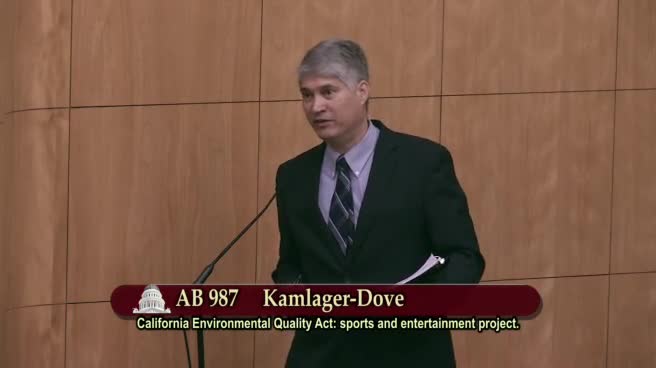 42SEC
Senate Standing Committee on Appropriations
 4MIN
Senate Standing Committee on Governance and Finance
 1MIN
Assembly Floor
 1H
Assembly Standing Committee on Appropriations
Bill Author

Bill Co-Author(s):