AB 1086: Housing: regional housing needs.
- Session Year: 2017-2018
- House: Assembly
- Latest Version Date: 2017-09-01
(1)The Planning and Zoning Law requires each city, county, and city and county to prepare and adopt a general plan that contains certain mandatory elements, including, but not limited to, a housing element that analyzes existing and projected housing needs. That law also requires the housing element, in turn, to include, among other things, an assessment of housing needs and an inventory of resources and constraints relevant to the meeting of those needs. That law further requires the Department of Housing and Community Development, for the 4th and subsequent revisions of the housing element, to determine the existing and projected need for housing for each region, based upon population projections produced by the Department of Finance and regional population forecasts used in preparing regional transportation plans, in consultation with each council of governments. Existing law includes a declaration of legislative intent regarding the allocation of regional housing need.
This bill would make additional findings regarding the relationship between the shortage of housing and the states environmental policies.
(2)Existing law requires the population forecast developed by the council of governments to be the basis upon which the department determines the existing and projected need for that region if the total regional population forecast for the project year, developed by the council of governments and used for the preparation of the regional transportation plan, is within 3% of the total regional population forecast prepared by the Department of Finance.
This bill would instead require the population forecast developed by the council of governments to be the basis upon which the department determines the existing and projected need for that region if the total regional population forecast for the project year, developed by the council of governments and used for the preparation of the regional transportation plan, is within 1.5% of the total regional population forecast prepared by the Department of Finance.
(3)Existing law requires the department to meet and consult with the council of governments regarding the existing and projected housing need for a region at least 26 months prior to the scheduled revision. Existing law requires the council of governments to provide data assumptions from the councils projections, including, if available, among other things, household size data and trends in household size.
This bill would require the council of governments to additionally include data on the percentage of renters households that are overcrowded, as specified. By increasing the duties of local officials, this bill would impose a state-mandated local program.
(4)Existing law requires each council of governments and delegate subregion, as applicable, to distribute a draft allocation of regional housing needs to each local government within the region or subregion, as provided, at least 1.5 years prior to the scheduled revision of its housing element. Existing law authorizes a local government to request from the council of governments or delegate subregion, as applicable, a revision of its share of the regional housing need, in accordance with specified factors, within 60 days following receipt of the draft allocation.
This bill would require that a request for a revised share pursuant to these provisions be consistent with, and not to the detriment of, the development pattern in an applicable sustainable communities strategy.
(5)The California Constitution requires the state to reimburse local agencies and school districts for certain costs mandated by the state. Statutory provisions establish procedures for making that reimbursement.
This bill would provide that no reimbursement is required by this act for a specified reason.
(1)The Planning and Zoning Law requires each city, county, and city and county to prepare and adopt a general plan that contains certain mandatory elements, including, but not limited to, a housing element that analyzes existing and projected housing needs. That law also requires the housing element, in turn, to include, among other things, an assessment of housing needs and an inventory of resources and constraints relevant to the meeting of those needs. That law further requires the Department of Housing and Community Development, for the 4th and subsequent revisions of the housing element, to determine the existing and projected need for housing for each region, based upon population projections produced by the Department of Finance and regional population forecasts used in preparing regional transportation plans, in consultation with each council of governments. Existing law requires includes a declaration of legislative intent regarding the allocation of regional housing need.
This bill would make additional findings regarding the relationship between the shortage of housing and the states environmental policies.
(2)Existing law requires the population forecast developed by the council of governments to be the basis upon which the department determines the existing and projected need for that region if the total regional population forecast for the project year, developed by the council of governments and used for the preparation of the regional transportation plan, is within 3% of the total regional population forecast prepared by the Department of Finance.
This bill would instead require the population forecast developed by the council of governments to be the basis upon which the department determines the existing and projected need for that region if the total regional population forecast for the project year, developed by the council of governments and used for the preparation of the regional transportation plan, is within 1.5% of the total regional population forecast prepared by the Department of Finance.
(2)(3)Existing law requires the department to meet and consult with the council of governments regarding the existing and projected housing need for a region at least 26 months prior to the scheduled revision. Existing law requires the council of governments to provide data assumptions from the councils projections, including, if available, among other things, household size data and trends in household size.
This bill would require the council of governments to additionally include data on the percentage of renters households that are overcrowded, as specified. By increasing the duties of local officials, this bill would impose a state-mandated local program.
(4)Existing law requires each council of governments and delegate subregion, as applicable, to distribute a draft allocation of regional housing needs to each local government within the region or subregion, as provided, at least 1.5 years prior to the scheduled revision of its housing element. Existing law authorizes a local government to request from the council of governments or delegate subregion, as applicable, a revision of its share of the regional housing need, in accordance with specified factors, within 60 days following receipt of the draft allocation.
This bill would require that a request for a revised share pursuant to these provisions be consistent with, and not to the detriment of, the development pattern in an applicable sustainable communities strategy.
(3)(5)The California Constitution requires the state to reimburse local agencies and school districts for certain costs mandated by the state. Statutory provisions establish procedures for making that reimbursement.
This bill would provide that no reimbursement is required by this act for a specified reason.
(1)The Planning and Zoning Law requires each city, county, and city and county to prepare and adopt a general plan that contains certain mandatory elements, including, but not limited to, a housing element that analyzes existing and projected housing needs. That law also requires the housing element, in turn, to include, among other things, an assessment of housing needs and an inventory of resources and constraints relevant to the meeting of those needs. That law further requires the Department of Housing and Community Development, for the 4th and subsequent revisions of the housing element, to determine the existing and projected need for housing for each region, based upon population projections produced by the Department of Finance and regional population forecasts used in preparing regional transportation plans, in consultation with each council of governments. Existing law requires the population forecast developed by the council of governments to be the basis upon which the department determines the existing and projected need for that region if the total regional population forecast for the project year, developed by the council of governments and used for the preparation of the regional transportation plan, is within 3% of the total regional population forecast prepared by the Department of Finance.
This bill would instead require the population forecast developed by the council of governments to be the basis upon which the department determines the existing and projected need for that region if the total regional population forecast for the project year, developed by the council of governments and used for the preparation of the regional transportation plan, is within 1.5% of the total regional population forecast prepared by the Department of Finance.
(2)Existing law requires the department to meet and consult with the council of governments regarding the existing and projected housing need for a region at least 26 months prior to the scheduled revision. Existing law requires the council of governments to provide data assumptions from the councils projections, including, if available, among other things, household size data and trends in household size.
This bill would require trends in household size to include overcrowding data, the council of governments to additionally include data on the percentage of renters households that are overcrowded, as specified. By increasing the duties of local officials, this bill would impose a state-mandated local program.
(3)The California Constitution requires the state to reimburse local agencies and school districts for certain costs mandated by the state. Statutory provisions establish procedures for making that reimbursement.
This bill would provide that no reimbursement is required by this act for a specified reason.
(1)The Planning and Zoning Law requires each city, county, and city and county to prepare and adopt a general plan that contains certain mandatory elements, including, but not limited to, a housing element that analyzes existing and projected housing needs. Existing law includes various legislative findings and declarations related to the statewide importance of housing availability and the responsibility of local government to address regional housing needs. That law also requires the housing element, in turn, to include, among other things, an assessment of housing needs and an inventory of resources and constraints relevant to the meeting of those needs. That law further requires the Department of Housing and Community Development, for the 4th and subsequent revisions of the housing element, to determine the existing and projected need for housing for each region, based upon population projections produced by the Department of Finance and regional population forecasts used in preparing regional transportation plans, in consultation with each council of governments. Existing law requires the population forecast developed by the council of governments to be the basis upon which the department determines the existing and projected need for that region if the total regional population forecast for the project year, developed by the council of governments and used for the preparation of the regional transportation plan, is within 3% of the total regional population forecast prepared by the Department of Finance.
This bill would require the Department of Housing and Community Development, on or before May 1, 2018, to report to the Legislature on whether the guidance and procedures for determining the methodology for regional housing needs contained in this article are sufficient to capture total housing needs, particularly in coastal regions.This bill would instead require the population forecast developed by the council of governments to be the basis upon which the department determines the existing and projected need for that region if the total regional population forecast for the project year, developed by the council of governments and used for the preparation of the regional transportation plan, is within 1.5% of the total regional population forecast prepared by the Department of Finance.
(2)Existing law requires the department to meet and consult with the council of governments regarding the existing and projected housing need for a region at least 26 months prior to the scheduled revision. Existing law requires the council of governments to provide data assumptions from the councils projections, including, if available, among other things, household size data and trends in household size.
This bill would require trends in household size to include overcrowding data, as specified. By increasing the duties of local officials, this bill would impose a state-mandated local program.
(3)The California Constitution requires the state to reimburse local agencies and school districts for certain costs mandated by the state. Statutory provisions establish procedures for making that reimbursement.
This bill would provide that no reimbursement is required by this act for a specified reason.
The Planning and Zoning Law requires each city, county, and city and county to prepare and adopt a general plan that contains certain mandatory elements, including, but not limited to, a housing element that analyzes existing and projected housing needs. Existing law includes various legislative findings and declarations related to the statewide importance of housing availability and the responsibility of local government to address regional housing needs.
This bill would require the Department of Housing and Community Development, on or before May 1, 2018, to report to the Legislature on whether the guidance and procedures for determining the methodology for regional housing needs contained in this article are sufficient to capture total housing needs, particularly in coastal regions.
Existing law requires each city, county, or city and county to prepare and adopt a general plan for its jurisdiction that contains certain mandatory elements, including a housing element. One part of the housing element is an assessment of housing needs and an inventory of resources and constraints relevant to meeting those needs. The assessment includes the localitys share of the regional housing need. That share is determined by the appropriate council of governments, subject to revision by the Department of Housing and Community Development.This bill would express the intent of the Legislature to enact legislation that would provide additional funding for parks or other financial incentives to local agencies that meet their share of the regional housing need.Existing law requires each city, county, or city and county to prepare and adopt a general plan for its jurisdiction that contains certain mandatory elements, including a housing element. One part of the housing element is an assessment of housing needs and an inventory of resources and constraints relevant to meeting those needs. The assessment includes the localitys share of the regional housing need. That share is determined by the appropriate council of governments, subject to revision by the Department of Housing and Community Development.
This bill would express the intent of the Legislature to enact legislation that would provide additional funding for parks or other financial incentives to local agencies that meet their share of the regional housing need.
(a)(1)For the fourth and subsequent revisions of the housing element pursuant to Section 65588, the department shall determine the existing and projected need for housing for each region pursuant to this article. For purposes of subdivision (a) of Section 65583, the share of a city or county of the regional housing need shall include that share of the housing need of persons at all income levels within the area significantly affected by the general plan of the city or county.
(2)While it is the intent of the Legislature that cities, counties, and cities and counties should undertake all necessary actions to encourage, promote, and facilitate the development of housing to accommodate the entire regional housing need, it is recognized, however, that future housing production may not equal the regional housing need established for planning purposes.
(3)The Legislature finds and declares that insufficient housing in job centers hinders the states environmental quality and runs counter to the states environmental goals. In particular, when Californians seeking affordable housing are forced to drive longer distances to work, an increased amount of greenhouse gases and other pollutants is released and puts in jeopardy the achievement of the states climate goals, as established pursuant to Section 38566 of the Health and Safety Code, and clean air goals.
(b)The department, in consultation with each council of governments, shall determine each regions existing and projected housing need pursuant to Section 65584.01 at least two years prior to the scheduled revision required pursuant to Section 65588. The appropriate council of governments, or for cities and counties without a council of governments, the department, shall adopt a final regional housing need plan that allocates a share of the regional housing need to each city, county, or city and county at least one year prior to the scheduled revision for the region required by Section 65588. The allocation plan prepared by a council of governments shall be prepared pursuant to Sections 65584.04 and 65584.05 with the advice of the department.
(c)Notwithstanding any other provision of law, the due dates for the determinations of the department or for the council of governments, respectively, regarding the regional housing need may be extended by the department by not more than 60 days if the extension will enable access to more recent critical population or housing data from a pending or recent release of the United States Census Bureau or the Department of Finance. If the due date for the determination of the department or the council of governments is extended for this reason, the department shall extend the corresponding housing element revision deadline pursuant to Section 65588 by not more than 60 days.
(d)The regional housing needs allocation plan shall be consistent with all of the following objectives:
(1)Increasing the housing supply and the mix of housing types, tenure, and affordability in all cities and counties within the region in an equitable manner, which shall result in each jurisdiction receiving an allocation of units for low- and very low income households.
(2)Promoting infill development and socioeconomic equity, the protection of environmental and agricultural resources, and the encouragement of efficient development patterns.
(3)Promoting an improved intraregional relationship between jobs and housing.
(4)Allocating a lower proportion of housing need to an income category when a jurisdiction already has a disproportionately high share of households in that income category, as compared to the countywide distribution of households in that category from the most recent decennial United States census.
(e)For purposes of this section, household income levels are as determined by the department as of the most recent decennial census pursuant to the following code sections:
(1)Very low incomes as defined by Section 50105 of the Health and Safety Code.
(2)Lower incomes, as defined by Section 50079.5 of the Health and Safety Code.
(3)Moderate incomes, as defined by Section 50093 of the Health and Safety Code.
(4)Above moderate incomes are those exceeding the moderate-income level of Section 50093 of the Health and Safety Code.
(f)Notwithstanding any other provision of law, determinations made by the department, a council of governments, or a city or county pursuant to this section or Section 65584.01, 65584.02, 65584.03, 65584.04, 65584.05, 65584.06, 65584.07, or 65584.08 are exempt from the California Environmental Quality Act (Division 13 (commencing with Section 21000) of the Public Resources Code).
SEC. 2.Section 65584.01 of the Government Code is amended to read:65584.01.For the fourth and subsequent revision of the housing element pursuant to Section 65588, the department, in consultation with each council of governments, where applicable, shall determine the existing and projected need for housing for each region in the following manner:
(a)The departments determination shall be based upon population projections produced by the Department of Finance and regional population forecasts used in preparing regional transportation plans, in consultation with each council of governments. If the total regional population forecast for the projection year, developed by the council of governments and used for the preparation of the regional transportation plan, is within a range of 1.5 percent of the total regional population forecast for the projection year by the Department of Finance, then the population forecast developed by the council of governments shall be the basis from which the department determines the existing and projected need for housing in the region. If the difference between the total population projected by the council of governments and the total population projected for the region by the Department of Finance is greater than 1.5 percent, then the department and the council of governments shall meet to discuss variances in methodology used for population projections and seek agreement on a population projection for the region to be used as a basis for determining the existing and projected housing need for the region. If no agreement is reached, then the population projection for the region shall be the population projection for the region prepared by the Department of Finance as may be modified by the department as a result of discussions with the council of governments.
(b)(1)At least 26 months prior to the scheduled revision pursuant to Section 65588 and prior to developing the existing and projected housing need for a region, the department shall meet and consult with the council of governments regarding the assumptions and methodology to be used by the department to determine the regions housing needs. The council of governments shall provide data assumptions from the councils projections, including, if available, the following data for the region:
(A)Anticipated household growth associated with projected population increases.
(B)Household size data and trends in household size.
(C)The percentage of renters households that are overcrowded. For purposes of this subparagraph, the term overcrowded means more than one resident per room in each room in a dwelling.
(D)The rate of household formation, or headship rates, based on age, gender, ethnicity, or other established demographic measures.
(E)The vacancy rates in existing housing stock, and the vacancy rates for healthy housing market functioning and regional mobility, as well as housing replacement needs.
(F)Other characteristics of the composition of the projected population.
(G)The relationship between jobs and housing, including any imbalance between jobs and housing.
(2)The department may accept or reject the information provided by the council of governments or modify its own assumptions or methodology based on this information. After consultation with the council of governments, the department shall make determinations in writing on the assumptions for each of the factors listed in subparagraphs (A) to (G), inclusive, of paragraph (1) and the methodology it shall use and shall provide these determinations to the council of governments.
(c)(1)After consultation with the council of governments, the department shall make a determination of the regions existing and projected housing need based upon the assumptions and methodology determined pursuant to subdivision (b). The regions existing and projected housing need shall reflect the achievement of a feasible balance between jobs and housing within the region using the regional employment projections in the applicable regional transportation plan. Within 30 days following notice of the determination from the department, the council of governments may file an objection to the departments determination of the regions existing and projected housing need with the department.
(2)The objection shall be based on and substantiate either of the following:
(A)The department failed to base its determination on the population projection for the region established pursuant to subdivision (a), and shall identify the population projection which the council of governments believes should instead be used for the determination and explain the basis for its rationale.
(B)The regional housing need determined by the department is not a reasonable application of the methodology and assumptions determined pursuant to subdivision (b). The objection shall include a proposed alternative determination of its regional housing need based upon the determinations made in subdivision (b), including analysis of why the proposed alternative would be a more reasonable application of the methodology and assumptions determined pursuant to subdivision (b).
(3)If a council of governments files an objection pursuant to this subdivision and includes with the objection a proposed alternative determination of its regional housing need, it shall also include documentation of its basis for the alternative determination. Within 45 days of receiving an objection filed pursuant to this section, the department shall consider the objection and make a final written determination of the regions existing and projected housing need that includes an explanation of the information upon which the determination was made.
SEC. 3.Section 65584.05 of the Government Code is amended to read:65584.05.(a)At least one and one-half years prior to the scheduled revision required by Section 65588, each council of governments and delegate subregion, as applicable, shall distribute a draft allocation of regional housing needs to each local government in the region or subregion, where applicable, based on the methodology adopted pursuant to Section 65584.04. The draft allocation shall include the underlying data and methodology on which the allocation is based. It is the intent of the Legislature that the draft allocation should be distributed prior to the completion of the update of the applicable regional transportation plan. The draft allocation shall distribute to localities and subregions, if any, within the region the entire regional housing need determined pursuant to Section 65584.01 or within subregions, as applicable, the subregions entire share of the regional housing need determined pursuant to Section 65584.03.
(b)Within 60 days following receipt of the draft allocation, a local government may request from the council of governments or the delegate subregion, as applicable, a revision of its share of the regional housing need in accordance with the factors described in paragraphs (1) to (9), inclusive, of subdivision (d) of Section 65584.04, including any information submitted by the local government to the council of governments pursuant to subdivision (b) of that section. The request for a revised share shall be based upon comparable data available for all affected jurisdictions and accepted planning methodology, and supported by adequate documentation. A request for a revised share pursuant to this subdivision shall be consistent with, and not to the detriment of, the development pattern in an applicable sustainable communities strategy developed pursuant to paragraph (2) of subdivision (b) of Section 65080.
(c)Within 60 days after the request submitted pursuant to subdivision (b), the council of governments or delegate subregion, as applicable, shall accept the proposed revision, modify its earlier determination, or indicate, based upon the information and methodology described in Section 65584.04, why the proposed revision is inconsistent with the regional housing need.
(d)If the council of governments or delegate subregion, as applicable, does not accept the proposed revised share or modify the revised share to the satisfaction of the requesting party, the local government may appeal its draft allocation based upon either or both of the following criteria:
(1)The council of governments or delegate subregion, as applicable, failed to adequately consider the information submitted pursuant to subdivision (b) of Section 65584.04, or a significant and unforeseen change in circumstances has occurred in the local jurisdiction that merits a revision of the information submitted pursuant to that subdivision.
(2)The council of governments or delegate subregion, as applicable, failed to determine its share of the regional housing need in accordance with the information described in, and the methodology established pursuant to, Section 65584.04.
(e)The council of governments or delegate subregion, as applicable, shall conduct public hearings to hear all appeals within 60 days after the date established to file appeals. The local government shall be notified within 10 days by certified mail, return receipt requested, of at least one public hearing on its appeal. The date of the hearing shall be at least 30 days and not more than 35 days after the date of the notification. Before taking action on an appeal, the council of governments or delegate subregion, as applicable, shall consider all comments, recommendations, and available data based on accepted planning methodologies submitted by the appellant. The final action of the council of governments or delegate subregion, as applicable, on an appeal shall be in writing and shall include information and other evidence explaining how its action is consistent with this article. The final action on an appeal may require the council of governments or delegate subregion, as applicable, to adjust the allocation of a local government that is not the subject of an appeal.
(f)The council of governments or delegate subregion, as applicable, shall issue a proposed final allocation within 45 days after the completion of the 60-day period for hearing appeals. The proposed final allocation plan shall include responses to all comments received on the proposed draft allocation and reasons for any significant revisions included in the final allocation.
(g)In the proposed final allocation plan, the council of governments or delegate subregion, as applicable, shall adjust allocations to local governments based upon the results of the revision request process and the appeals process specified in this section. If the adjustments total 7 percent or less of the regional housing need determined pursuant to Section 65584.01, or, as applicable, total 7 percent or less of the subregions share of the regional housing need as determined pursuant to Section 65584.03, then the council of governments or delegate subregion, as applicable, shall distribute the adjustments proportionally to all local governments. If the adjustments total more than 7 percent of the regional housing need, then the council of governments or delegate subregion, as applicable, shall develop a methodology to distribute the amount greater than the 7 percent to local governments. In no event shall the total distribution of housing need equal less than the regional housing need, as determined pursuant to Section 65584.01, nor shall the subregional distribution of housing need equal less than its share of the regional housing need as determined pursuant to Section 65584.03. Two or more local governments may agree to an alternate distribution of appealed housing allocations between the affected local governments. If two or more local governments agree to an alternative distribution of appealed housing allocations that maintains the total housing need originally assigned to these communities, then the council of governments shall include the alternative distribution in the final allocation plan.
(h)Within 45 days after the issuance of the proposed final allocation plan by the council of governments and each delegate subregion, as applicable, the council of governments shall hold a public hearing to adopt a final allocation plan. To the extent that the final allocation plan fully allocates the regional share of statewide housing need, as determined pursuant to Section 65584.01, the council of governments shall have final authority to determine the distribution of the regions existing and projected housing need as determined pursuant to Section 65584.01. The council of governments shall submit its final allocation plan to the department within three days of adoption. Within 60 days after the departments receipt of the final allocation plan adopted by the council of governments, the department shall determine whether or not the final allocation plan is consistent with the existing and projected housing need for the region, as determined pursuant to Section 65584.01. The department may revise the determination of the council of governments if necessary to obtain this consistency.
(i)Any authority of the council of governments to review and revise the share of a city or county of the regional housing need under this section shall not constitute authority to revise, approve, or disapprove the manner in which the share of the city or county of the regional housing need is implemented through its housing program.
SEC. 4.No reimbursement is required by this act pursuant to Section 6 of Article XIIIB of the California Constitution because a local agency or school district has the authority to levy service charges, fees, or assessments sufficient to pay for the program or level of service mandated by this act, within the meaning of Section 17556 of the Government Code.
(a)(1)For the fourth and subsequent revisions of the housing element pursuant to Section 65588, the department shall determine the existing and projected need for housing for each region pursuant to this article. For purposes of subdivision (a) of Section 65583, the share of a city or county of the regional housing need shall include that share of the housing need of persons at all income levels within the area significantly affected by the general plan of the city or county.
(2)While it is the intent of the Legislature that cities, counties, and cities and counties should undertake all necessary actions to encourage, promote, and facilitate the development of housing to accommodate the entire regional housing need, it is recognized, however, that future housing production may not equal the regional housing need established for planning purposes.
(3)The Legislature finds and declares that insufficient housing in job centers hinders the states environmental quality and runs counter to the states environmental goals. In particular, when Californians seeking affordable housing are forced to drive longer distances to work, an increased amount of greenhouse gases and other pollutants is released and puts in jeopardy the achievement of the states climate goals, as established pursuant to Section 38566 of the Health and Safety Code, and clean air goals.
(b)The department, in consultation with each council of governments, shall determine each regions existing and projected housing need pursuant to Section 65584.01 at least two years prior to the scheduled revision required pursuant to Section 65588. The appropriate council of governments, or for cities and counties without a council of governments, the department, shall adopt a final regional housing need plan that allocates a share of the regional housing need to each city, county, or city and county at least one year prior to the scheduled revision for the region required by Section 65588. The allocation plan prepared by a council of governments shall be prepared pursuant to Sections 65584.04 and 65584.05 with the advice of the department.
(c)Notwithstanding any other provision of law, the due dates for the determinations of the department or for the council of governments, respectively, regarding the regional housing need may be extended by the department by not more than 60 days if the extension will enable access to more recent critical population or housing data from a pending or recent release of the United States Census Bureau or the Department of Finance. If the due date for the determination of the department or the council of governments is extended for this reason, the department shall extend the corresponding housing element revision deadline pursuant to Section 65588 by not more than 60 days.
(d)The regional housing needs allocation plan shall be consistent with all of the following objectives:
(1)Increasing the housing supply and the mix of housing types, tenure, and affordability in all cities and counties within the region in an equitable manner, which shall result in each jurisdiction receiving an allocation of units for low- and very low income households.
(2)Promoting infill development and socioeconomic equity, the protection of environmental and agricultural resources, and the encouragement of efficient development patterns.
(3)Promoting an improved intraregional relationship between jobs and housing.
(4)Allocating a lower proportion of housing need to an income category when a jurisdiction already has a disproportionately high share of households in that income category, as compared to the countywide distribution of households in that category from the most recent decennial United States census.
(e)For purposes of this section, household income levels are as determined by the department as of the most recent decennial census pursuant to the following code sections:
(1)Very low incomes as defined by Section 50105 of the Health and Safety Code.
(2)Lower incomes, as defined by Section 50079.5 of the Health and Safety Code.
(3)Moderate incomes, as defined by Section 50093 of the Health and Safety Code.
(4)Above moderate incomes are those exceeding the moderate-income level of Section 50093 of the Health and Safety Code.
(f)Notwithstanding any other provision of law, determinations made by the department, a council of governments, or a city or county pursuant to this section or Section 65584.01, 65584.02, 65584.03, 65584.04, 65584.05, 65584.06, 65584.07, or 65584.08 are exempt from the California Environmental Quality Act (Division 13 (commencing with Section 21000) of the Public Resources Code).
SEC. 2.Section 65584.01 of the Government Code is amended to read:65584.01.For the fourth and subsequent revision of the housing element pursuant to Section 65588, the department, in consultation with each council of governments, where applicable, shall determine the existing and projected need for housing for each region in the following manner:
(a)The departments determination shall be based upon population projections produced by the Department of Finance and regional population forecasts used in preparing regional transportation plans, in consultation with each council of governments. If the total regional population forecast for the projection year, developed by the council of governments and used for the preparation of the regional transportation plan, is within a range of 1.5 percent of the total regional population forecast for the projection year by the Department of Finance, then the population forecast developed by the council of governments shall be the basis from which the department determines the existing and projected need for housing in the region. If the difference between the total population projected by the council of governments and the total population projected for the region by the Department of Finance is greater than 1.5 percent, then the department and the council of governments shall meet to discuss variances in methodology used for population projections and seek agreement on a population projection for the region to be used as a basis for determining the existing and projected housing need for the region. If no agreement is reached, then the population projection for the region shall be the population projection for the region prepared by the Department of Finance as may be modified by the department as a result of discussions with the council of governments.
(b)(1)At least 26 months prior to the scheduled revision pursuant to Section 65588 and prior to developing the existing and projected housing need for a region, the department shall meet and consult with the council of governments regarding the assumptions and methodology to be used by the department to determine the regions housing needs. The council of governments shall provide data assumptions from the councils projections, including, if available, the following data for the region:
(A)Anticipated household growth associated with projected population increases.
(B)Household size data and trends in household size.
(C)The percentage of renters households that are overcrowded. For purposes of this subparagraph, the term overcrowded means more than one resident per room in each room in a dwelling.
(D)The rate of household formation, or headship rates, based on age, gender, ethnicity, or other established demographic measures.
(E)The vacancy rates in existing housing stock, and the vacancy rates for healthy housing market functioning and regional mobility, as well as housing replacement needs.
(F)Other characteristics of the composition of the projected population.
(G)The relationship between jobs and housing, including any imbalance between jobs and housing.
(2)The department may accept or reject the information provided by the council of governments or modify its own assumptions or methodology based on this information. After consultation with the council of governments, the department shall make determinations in writing on the assumptions for each of the factors listed in subparagraphs (A) to (G), inclusive, of paragraph (1) and the methodology it shall use and shall provide these determinations to the council of governments.
(c)(1)After consultation with the council of governments, the department shall make a determination of the regions existing and projected housing need based upon the assumptions and methodology determined pursuant to subdivision (b). The regions existing and projected housing need shall reflect the achievement of a feasible balance between jobs and housing within the region using the regional employment projections in the applicable regional transportation plan. Within 30 days following notice of the determination from the department, the council of governments may file an objection to the departments determination of the regions existing and projected housing need with the department.
(2)The objection shall be based on and substantiate either of the following:
(A)The department failed to base its determination on the population projection for the region established pursuant to subdivision (a), and shall identify the population projection which the council of governments believes should instead be used for the determination and explain the basis for its rationale.
(B)The regional housing need determined by the department is not a reasonable application of the methodology and assumptions determined pursuant to subdivision (b). The objection shall include a proposed alternative determination of its regional housing need based upon the determinations made in subdivision (b), including analysis of why the proposed alternative would be a more reasonable application of the methodology and assumptions determined pursuant to subdivision (b).
(3)If a council of governments files an objection pursuant to this subdivision and includes with the objection a proposed alternative determination of its regional housing need, it shall also include documentation of its basis for the alternative determination. Within 45 days of receiving an objection filed pursuant to this section, the department shall consider the objection and make a final written determination of the regions existing and projected housing need that includes an explanation of the information upon which the determination was made.
SEC. 3.Section 65584.05 of the Government Code is amended to read:65584.05.(a)At least one and one-half years prior to the scheduled revision required by Section 65588, each council of governments and delegate subregion, as applicable, shall distribute a draft allocation of regional housing needs to each local government in the region or subregion, where applicable, based on the methodology adopted pursuant to Section 65584.04. The draft allocation shall include the underlying data and methodology on which the allocation is based. It is the intent of the Legislature that the draft allocation should be distributed prior to the completion of the update of the applicable regional transportation plan. The draft allocation shall distribute to localities and subregions, if any, within the region the entire regional housing need determined pursuant to Section 65584.01 or within subregions, as applicable, the subregions entire share of the regional housing need determined pursuant to Section 65584.03.
(b)Within 60 days following receipt of the draft allocation, a local government may request from the council of governments or the delegate subregion, as applicable, a revision of its share of the regional housing need in accordance with the factors described in paragraphs (1) to (9), inclusive, of subdivision (d) of Section 65584.04, including any information submitted by the local government to the council of governments pursuant to subdivision (b) of that section. The request for a revised share shall be based upon comparable data available for all affected jurisdictions and accepted planning methodology, and supported by adequate documentation. A request for a revised share pursuant to this subdivision shall be consistent with, and not to the detriment of, the development pattern in an applicable sustainable communities strategy developed pursuant to paragraph (2) of subdivision (b) of Section 65080.
(c)Within 60 days after the request submitted pursuant to subdivision (b), the council of governments or delegate subregion, as applicable, shall accept the proposed revision, modify its earlier determination, or indicate, based upon the information and methodology described in Section 65584.04, why the proposed revision is inconsistent with the regional housing need.
(d)If the council of governments or delegate subregion, as applicable, does not accept the proposed revised share or modify the revised share to the satisfaction of the requesting party, the local government may appeal its draft allocation based upon either or both of the following criteria:
(1)The council of governments or delegate subregion, as applicable, failed to adequately consider the information submitted pursuant to subdivision (b) of Section 65584.04, or a significant and unforeseen change in circumstances has occurred in the local jurisdiction that merits a revision of the information submitted pursuant to that subdivision.
(2)The council of governments or delegate subregion, as applicable, failed to determine its share of the regional housing need in accordance with the information described in, and the methodology established pursuant to to, Section 65584.04.
(e)The council of governments or delegate subregion, as applicable, shall conduct public hearings to hear all appeals within 60 days after the date established to file appeals. The local government shall be notified within 10 days by certified mail, return receipt requested, of at least one public hearing on its appeal. The date of the hearing shall be at least 30 days and not more than 35 days after the date of the notification. Before taking action on an appeal, the council of governments or delegate subregion, as applicable, shall consider all comments, recommendations, and available data based on accepted planning methodologies submitted by the appellant. The final action of the council of governments or delegate subregion, as applicable, on an appeal shall be in writing and shall include information and other evidence explaining how its action is consistent with this article. The final action on an appeal may require the council of governments or delegate subregion, as applicable, to adjust the allocation of a local government that is not the subject of an appeal.
(f)The council of governments or delegate subregion, as applicable, shall issue a proposed final allocation within 45 days after the completion of the 60-day period for hearing appeals. The proposed final allocation plan shall include responses to all comments received on the proposed draft allocation and reasons for any significant revisions included in the final allocation.
(g)In the proposed final allocation plan, the council of governments or delegate subregion, as applicable, shall adjust allocations to local governments based upon the results of the revision request process and the appeals process specified in this section. If the adjustments total 7 percent or less of the regional housing need determined pursuant to Section 65584.01, or, as applicable, total 7 percent or less of the subregions share of the regional housing need as determined pursuant to Section 65584.03, then the council of governments or delegate subregion, as applicable, shall distribute the adjustments proportionally to all local governments. If the adjustments total more than 7 percent of the regional housing need, then the council of governments or delegate subregion, as applicable, shall develop a methodology to distribute the amount greater than the 7 percent to local governments. In no event shall the total distribution of housing need equal less than the regional housing need, as determined pursuant to Section 65584.01, nor shall the subregional distribution of housing need equal less than its share of the regional housing need as determined pursuant to Section 65584.03. Two or more local governments may agree to an alternate distribution of appealed housing allocations between the affected local governments. If two or more local governments agree to an alternative distribution of appealed housing allocations that maintains the total housing need originally assigned to these communities, then the council of governments shall include the alternative distribution in the final allocation plan.
(h)Within 45 days after the issuance of the proposed final allocation plan by the council of governments and each delegate subregion, as applicable, the council of governments shall hold a public hearing to adopt a final allocation plan. To the extent that the final allocation plan fully allocates the regional share of statewide housing need, as determined pursuant to Section 65584.01, the council of governments shall have final authority to determine the distribution of the regions existing and projected housing need as determined pursuant to Section 65584.01. The council of governments shall submit its final allocation plan to the department within three days of adoption. Within 60 days after the departments receipt of the final allocation plan adopted by the council of governments, the department shall determine whether or not the final allocation plan is consistent with the existing and projected housing need for the region, as determined pursuant to Section 65584.01. The department may revise the determination of the council of governments if necessary to obtain this consistency.
(i)Any authority of the council of governments to review and revise the share of a city or county of the regional housing need under this section shall not constitute authority to revise, approve, or disapprove the manner in which the share of the city or county of the regional housing need is implemented through its housing program.
SEC. 4.No reimbursement is required by this act pursuant to Section 6 of Article XIIIB of the California Constitution because a local agency or school district has the authority to levy service charges, fees, or assessments sufficient to pay for the program or level of service mandated by this act, within the meaning of Section 17556 of the Government Code.
(a)(1)For the fourth and subsequent revisions of the housing element pursuant to Section 65588, the department shall determine the existing and projected need for housing for each region pursuant to this article. For purposes of subdivision (a) of Section 65583, the share of a city or county of the regional housing need shall include that share of the housing need of persons at all income levels within the area significantly affected by the general plan of the city or county.
(2)While it is the intent of the Legislature that cities, counties, and cities and counties should undertake all necessary actions to encourage, promote, and facilitate the development of housing to accommodate the entire regional housing need, it is recognized, however, that future housing production may not equal the regional housing need established for planning purposes.
(3)The Legislature finds and declares that insufficient housing in job centers hinders the states environmental quality and runs counter to the states environmental goals. In particular, when Californians seeking affordable housing are forced to drive longer distances to work, an increased amount of greenhouse gases and other pollutants is released and puts in jeopardy the achievement of the states climate goals, as established pursuant to Section 38566 of the Health and Safety Code, and clean air goals.
(b)The department, in consultation with each council of governments, shall determine each regions existing and projected housing need pursuant to Section 65584.01 at least two years prior to the scheduled revision required pursuant to Section 65588. The appropriate council of governments, or for cities and counties without a council of governments, the department, shall adopt a final regional housing need plan that allocates a share of the regional housing need to each city, county, or city and county at least one year prior to the scheduled revision for the region required by Section 65588. The allocation plan prepared by a council of governments shall be prepared pursuant to Sections 65584.04 and 65584.05 with the advice of the department.
(c)Notwithstanding any other provision of law, the due dates for the determinations of the department or for the council of governments, respectively, regarding the regional housing need may be extended by the department by not more than 60 days if the extension will enable access to more recent critical population or housing data from a pending or recent release of the United States Census Bureau or the Department of Finance. If the due date for the determination of the department or the council of governments is extended for this reason, the department shall extend the corresponding housing element revision deadline pursuant to Section 65588 by not more than 60 days.
(d)The regional housing needs allocation plan shall be consistent with all of the following objectives:
(1)Increasing the housing supply and the mix of housing types, tenure, and affordability in all cities and counties within the region in an equitable manner, which shall result in each jurisdiction receiving an allocation of units for low- and very low income households.
(2)Promoting infill development and socioeconomic equity, the protection of environmental and agricultural resources, and the encouragement of efficient development patterns.
(3)Promoting an improved intraregional relationship between jobs and housing.
(4)Allocating a lower proportion of housing need to an income category when a jurisdiction already has a disproportionately high share of households in that income category, as compared to the countywide distribution of households in that category from the most recent decennial United States census.
(e)For purposes of this section, household income levels are as determined by the department as of the most recent decennial census pursuant to the following code sections:
(1)Very low incomes as defined by Section 50105 of the Health and Safety Code.
(2)Lower incomes, as defined by Section 50079.5 of the Health and Safety Code.
(3)Moderate incomes, as defined by Section 50093 of the Health and Safety Code.
(4)Above moderate incomes are those exceeding the moderate-income level of Section 50093 of the Health and Safety Code.
(f)Notwithstanding any other provision of law, determinations made by the department, a council of governments, or a city or county pursuant to this section or Section 65584.01, 65584.02, 65584.03, 65584.04, 65584.05, 65584.06, 65584.07, or 65584.08 are exempt from the California Environmental Quality Act (Division 13 (commencing with Section 21000) of the Public Resources Code).
SECTION 1.SEC. 2.Section 65584.01 of the Government Code is amended to read:65584.01.For the fourth and subsequent revision of the housing element pursuant to Section 65588, the department, in consultation with each council of governments, where applicable, shall determine the existing and projected need for housing for each region in the following manner:
(a)The departments determination shall be based upon population projections produced by the Department of Finance and regional population forecasts used in preparing regional transportation plans, in consultation with each council of governments. If the total regional population forecast for the projection year, developed by the council of governments and used for the preparation of the regional transportation plan, is within a range of 1.5 percent of the total regional population forecast for the projection year by the Department of Finance, then the population forecast developed by the council of governments shall be the basis from which the department determines the existing and projected need for housing in the region. If the difference between the total population projected by the council of governments and the total population projected for the region by the Department of Finance is greater than 1.5 percent, then the department and the council of governments shall meet to discuss variances in methodology used for population projections and seek agreement on a population projection for the region to be used as a basis for determining the existing and projected housing need for the region. If no agreement is reached, then the population projection for the region shall be the population projection for the region prepared by the Department of Finance as may be modified by the department as a result of discussions with the council of governments.
(b)(1)At least 26 months prior to the scheduled revision pursuant to Section 65588 and prior to developing the existing and projected housing need for a region, the department shall meet and consult with the council of governments regarding the assumptions and methodology to be used by the department to determine the regions housing needs. The council of governments shall provide data assumptions from the councils projections, including, if available, the following data for the region:
(A)Anticipated household growth associated with projected population increases.
(B)Household size data and trends in household size.
(C)The percentage of renters households that are overcrowded. For purposes of this subparagraph, the term overcrowded means more than one resident per room in each room in a dwelling.
(D)The rate of household formation, or headship rates, based on age, gender, ethnicity, or other established demographic measures.
(E)The vacancy rates in existing housing stock, and the vacancy rates for healthy housing market functioning and regional mobility, as well as housing replacement needs.
(F)Other characteristics of the composition of the projected population.
(G)The relationship between jobs and housing, including any imbalance between jobs and housing.
(2)The department may accept or reject the information provided by the council of governments or modify its own assumptions or methodology based on this information. After consultation with the council of governments, the department shall make determinations in writing on the assumptions for each of the factors listed in subparagraphs (A) to (G), inclusive, of paragraph (1) and the methodology it shall use and shall provide these determinations to the council of governments.
(c)(1)After consultation with the council of governments, the department shall make a determination of the regions existing and projected housing need based upon the assumptions and methodology determined pursuant to subdivision (b). The regions existing and projected housing need shall reflect the achievement of a feasible balance between jobs and housing within the region using the regional employment projections in the applicable regional transportation plan. Within 30 days following notice of the determination from the department, the council of governments may file an objection to the departments determination of the regions existing and projected housing need with the department.
(2)The objection shall be based on and substantiate either of the following:
(A)The department failed to base its determination on the population projection for the region established pursuant to subdivision (a), and shall identify the population projection which the council of governments believes should instead be used for the determination and explain the basis for its rationale.
(B)The regional housing need determined by the department is not a reasonable application of the methodology and assumptions determined pursuant to subdivision (b). The objection shall include a proposed alternative determination of its regional housing need based upon the determinations made in subdivision (b), including analysis of why the proposed alternative would be a more reasonable application of the methodology and assumptions determined pursuant to subdivision (b).
(3)If a council of governments files an objection pursuant to this subdivision and includes with the objection a proposed alternative determination of its regional housing need, it shall also include documentation of its basis for the alternative determination. Within 45 days of receiving an objection filed pursuant to this section, the department shall consider the objection and make a final written determination of the regions existing and projected housing need that includes an explanation of the information upon which the determination was made.
SEC. 3.Section 65584.05 of the Government Code is amended to read:65584.05.(a)At least one and one-half years prior to the scheduled revision required by Section 65588, each council of governments and delegate subregion, as applicable, shall distribute a draft allocation of regional housing needs to each local government in the region or subregion, where applicable, based on the methodology adopted pursuant to Section 65584.04. The draft allocation shall include the underlying data and methodology on which the allocation is based. It is the intent of the Legislature that the draft allocation should be distributed prior to the completion of the update of the applicable regional transportation plan. The draft allocation shall distribute to localities and subregions, if any, within the region the entire regional housing need determined pursuant to Section 65584.01 or within subregions, as applicable, the subregions entire share of the regional housing need determined pursuant to Section 65584.03.
(b)Within 60 days following receipt of the draft allocation, a local government may request from the council of governments or the delegate subregion, as applicable, a revision of its share of the regional housing need in accordance with the factors described in paragraphs (1) to (9), inclusive, of subdivision (d) of Section 65584.04, including any information submitted by the local government to the council of governments pursuant to subdivision (b) of that section. The request for a revised share shall be based upon comparable data available for all affected jurisdictions and accepted planning methodology, and supported by adequate documentation. A request for a revised share pursuant to this subdivision shall be consistent with, and not to the detriment of, the development pattern in an applicable sustainable communities strategy developed pursuant to paragraph (2) of subdivision (b) of Section 65080.
(c)Within 60 days after the request submitted pursuant to subdivision (b), the council of governments or delegate subregion, as applicable, shall accept the proposed revision, modify its earlier determination, or indicate, based upon the information and methodology described in Section 65584.04, why the proposed revision is inconsistent with the regional housing need.
(d)If the council of governments or delegate subregion, as applicable, does not accept the proposed revised share or modify the revised share to the satisfaction of the requesting party, the local government may appeal its draft allocation based upon either or both of the following criteria:
(1)The council of governments or delegate subregion, as applicable, failed to adequately consider the information submitted pursuant to subdivision (b) of Section 65584.04, or a significant and unforeseen change in circumstances has occurred in the local jurisdiction that merits a revision of the information submitted pursuant to that subdivision.
(2)The council of governments or delegate subregion, as applicable, failed to determine its share of the regional housing need in accordance with the information described in, and the methodology established pursuant to Section 65584.04.
(e)The council of governments or delegate subregion, as applicable, shall conduct public hearings to hear all appeals within 60 days after the date established to file appeals. The local government shall be notified within 10 days by certified mail, return receipt requested, of at least one public hearing on its appeal. The date of the hearing shall be at least 30 days and not more than 35 days after the date of the notification. Before taking action on an appeal, the council of governments or delegate subregion, as applicable, shall consider all comments, recommendations, and available data based on accepted planning methodologies submitted by the appellant. The final action of the council of governments or delegate subregion, as applicable, on an appeal shall be in writing and shall include information and other evidence explaining how its action is consistent with this article. The final action on an appeal may require the council of governments or delegate subregion, as applicable, to adjust the allocation of a local government that is not the subject of an appeal.
(f)The council of governments or delegate subregion, as applicable, shall issue a proposed final allocation within 45 days after the completion of the 60-day period for hearing appeals. The proposed final allocation plan shall include responses to all comments received on the proposed draft allocation and reasons for any significant revisions included in the final allocation.
(g)In the proposed final allocation plan, the council of governments or delegate subregion, as applicable, shall adjust allocations to local governments based upon the results of the revision request process and the appeals process specified in this section. If the adjustments total 7 percent or less of the regional housing need determined pursuant to Section 65584.01, or, as applicable, total 7 percent or less of the subregions share of the regional housing need as determined pursuant to Section 65584.03, then the council of governments or delegate subregion, as applicable, shall distribute the adjustments proportionally to all local governments. If the adjustments total more than 7 percent of the regional housing need, then the council of governments or delegate subregion, as applicable, shall develop a methodology to distribute the amount greater than the 7 percent to local governments. In no event shall the total distribution of housing need equal less than the regional housing need, as determined pursuant to Section 65584.01, nor shall the subregional distribution of housing need equal less than its share of the regional housing need as determined pursuant to Section 65584.03. Two or more local governments may agree to an alternate distribution of appealed housing allocations between the affected local governments. If two or more local governments agree to an alternative distribution of appealed housing allocations that maintains the total housing need originally assigned to these communities, then the council of governments shall include the alternative distribution in the final allocation plan.
(h)Within 45 days after the issuance of the proposed final allocation plan by the council of governments and each delegate subregion, as applicable, the council of governments shall hold a public hearing to adopt a final allocation plan. To the extent that the final allocation plan fully allocates the regional share of statewide housing need, as determined pursuant to Section 65584.01, the council of governments shall have final authority to determine the distribution of the regions existing and projected housing need as determined pursuant to Section 65584.01. The council of governments shall submit its final allocation plan to the department within three days of adoption. Within 60 days after the departments receipt of the final allocation plan adopted by the council of governments, the department shall determine whether or not the final allocation plan is consistent with the existing and projected housing need for the region, as determined pursuant to Section 65584.01. The department may revise the determination of the council of governments if necessary to obtain this consistency.
(i)Any authority of the council of governments to review and revise the share of a city or county of the regional housing need under this section shall not constitute authority to revise, approve, or disapprove the manner in which the share of the city or county of the regional housing need is implemented through its housing program.
SEC. 2.SEC. 4.No reimbursement is required by this act pursuant to Section 6 of Article XIIIB of the California Constitution because a local agency or school district has the authority to levy service charges, fees, or assessments sufficient to pay for the program or level of service mandated by this act, within the meaning of Section 17556 of the Government Code.
(a)For the fourth and subsequent revision of the housing element pursuant to Section 65588, the department, in consultation with each council of governments, where applicable, shall determine the existing and projected need for housing for each region in the following manner:
(b)(a)The departments determination shall be based upon population projections produced by the Department of Finance and regional population forecasts used in preparing regional transportation plans, in consultation with each council of governments. If the total regional population forecast for the projection year, developed by the council of governments and used for the preparation of the regional transportation plan, is within a range of 1.5 percent of the total regional population forecast for the projection year by the Department of Finance, then the population forecast developed by the council of governments shall be the basis from which the department determines the existing and projected need for housing in the region. If the difference between the total population projected by the council of governments and the total population projected for the region by the Department of Finance is greater than 1.5 percent, then the department and the council of governments shall meet to discuss variances in methodology used for population projections and seek agreement on a population projection for the region to be used as a basis for determining the existing and projected housing need for the region. If no agreement is reached, then the population projection for the region shall be the population projection for the region prepared by the Department of Finance as may be modified by the department as a result of discussions with the council of governments.
(c)(b)(1)At least 26 months prior to the scheduled revision pursuant to Section 65588 and prior to developing the existing and projected housing need for a region, the department shall meet and consult with the council of governments regarding the assumptions and methodology to be used by the department to determine the regions housing needs. The council of governments shall provide data assumptions from the councils projections, including, if available, the following data for the region:
(A)Anticipated household growth associated with projected population increases.
(B)Household size data and trends in household size.
(C)Trends in household size shall include overcrowding data and trends used in the departments definition of overcrowding in Californias Housing Future: Challenges and Opportunities, 2017. This assessment shall include the percentage of renter households that are overcrowded.
(C)The percentage of renters households that are overcrowded. For purposes of this subparagraph, the term overcrowded means more than one resident per room in each room in a dwelling.
(D)The rate of household formation, or headship rates, based on age, gender, ethnicity, or other established demographic measures.
(E)The vacancy rates in existing housing stock, and the vacancy rates for healthy housing market functioning and regional mobility, as well as housing replacement needs.
(F)Other characteristics of the composition of the projected population.
(G)The relationship between jobs and housing, including any imbalance between jobs and housing.
(2)The department may accept or reject the information provided by the council of governments or modify its own assumptions or methodology based on this information. After consultation with the council of governments, the department shall make determinations in writing on the assumptions for each of the factors listed in subparagraphs (A) to (G), inclusive, of paragraph (1) and the methodology it shall use and shall provide these determinations to the council of governments.
(d)(c)(1)After consultation with the council of governments, the department shall make a determination of the regions existing and projected housing need based upon the assumptions and methodology determined pursuant to subdivision (c). (b). The regions existing and projected housing need shall reflect the achievement of a feasible balance between jobs and housing within the region using the regional employment projections in the applicable regional transportation plan. Within 30 days following notice of the determination from the department, the council of governments may file an objection to the departments determination of the regions existing and projected housing need with the department.
(2)The objection shall be based on and substantiate either of the following:
(A)The department failed to base its determination on the population projection for the region established pursuant to subdivision (b), (a), and shall identify the population projection which the council of governments believes should instead be used for the determination and explain the basis for its rationale.
(B)The regional housing need determined by the department is not a reasonable application of the methodology and assumptions determined pursuant to subdivision (c). (b). The objection shall include a proposed alternative determination of its regional housing need based upon the determinations made in subdivision (c), (b), including analysis of why the proposed alternative would be a more reasonable application of the methodology and assumptions determined pursuant to subdivision (c). (b).
(3)If a council of governments files an objection pursuant to this subdivision and includes with the objection a proposed alternative determination of its regional housing need, it shall also include documentation of its basis for the alternative determination. Within 45 days of receiving an objection filed pursuant to this section, the department shall consider the objection and make a final written determination of the regions existing and projected housing need that includes an explanation of the information upon which the determination was made.
SEC. 2.No reimbursement is required by this act pursuant to Section 6 of Article XIIIB of the California Constitution because a local agency or school district has the authority to levy service charges, fees, or assessments sufficient to pay for the program or level of service mandated by this act, within the meaning of Section 17556 of the Government Code.
(a)For the fourth and subsequent revision of the housing element pursuant to Section 65588, the department, in consultation with each council of governments, where applicable, shall determine the existing and projected need for housing for each region in the following manner:
(b)The departments determination shall be based upon population projections produced by the Department of Finance and regional population forecasts used in preparing regional transportation plans, in consultation with each council of governments. If the total regional population forecast for the projection year, developed by the council of governments and used for the preparation of the regional transportation plan, is within a range of 3 1.5 percent of the total regional population forecast for the projection year by the Department of Finance, then the population forecast developed by the council of governments shall be the basis from which the department determines the existing and projected need for housing in the region. If the difference between the total population projected by the council of governments and the total population projected for the region by the Department of Finance is greater than 3 1.5 percent, then the department and the council of governments shall meet to discuss variances in methodology used for population projections and seek agreement on a population projection for the region to be used as a basis for determining the existing and projected housing need for the region. If no agreement is reached, then the population projection for the region shall be the population projection for the region prepared by the Department of Finance as may be modified by the department as a result of discussions with the council of governments.
(c)(1)At least 26 months prior to the scheduled revision pursuant to Section 65588 and prior to developing the existing and projected housing need for a region, the department shall meet and consult with the council of governments regarding the assumptions and methodology to be used by the department to determine the regions housing needs. The council of governments shall provide data assumptions from the councils projections, including, if available, the following data for the region:
(A)Anticipated household growth associated with projected population increases.
(B)Household size data and trends in household size.
(C)Trends in household size shall include overcrowding data and trends used in the departments definition of overcrowding in Californias Housing Future: Challenges and Opportunities, 2017. This assessment shall include the percentage of renter households that are overcrowded.
(C)(D)The rate of household formation, or headship rates, based on age, gender, ethnicity, or other established demographic measures.
(D)(E)The vacancy rates in existing housing stock, and the vacancy rates for healthy housing market functioning and regional mobility, as well as housing replacement needs.
(E)(F)Other characteristics of the composition of the projected population.
(F)(G)The relationship between jobs and housing, including any imbalance between jobs and housing.
(2)The department may accept or reject the information provided by the council of governments or modify its own assumptions or methodology based on this information. After consultation with the council of governments, the department shall make determinations in writing on the assumptions for each of the factors listed in subparagraphs (A) to (F), (G), inclusive, of paragraph (1) and the methodology it shall use and shall provide these determinations to the council of governments.
(d)(1)After consultation with the council of governments, the department shall make a determination of the regions existing and projected housing need based upon the assumptions and methodology determined pursuant to subdivision (c). The regions existing and projected housing need shall reflect the achievement of a feasible balance between jobs and housing within the region using the regional employment projections in the applicable regional transportation plan. Within 30 days following notice of the determination from the department, the council of governments may file an objection to the departments determination of the regions existing and projected housing need with the department.
(2)The objection shall be based on and substantiate either of the following:
(A)The department failed to base its determination on the population projection for the region established pursuant to subdivision (b), and shall identify the population projection which the council of governments believes should instead be used for the determination and explain the basis for its rationale.
(B)The regional housing need determined by the department is not a reasonable application of the methodology and assumptions determined pursuant to subdivision (c). The objection shall include a proposed alternative determination of its regional housing need based upon the determinations made in subdivision (c), including analysis of why the proposed alternative would be a more reasonable application of the methodology and assumptions determined pursuant to subdivision (c).
(3)If a council of governments files an objection pursuant to this subdivision and includes with the objection a proposed alternative determination of its regional housing need, it shall also include documentation of its basis for the alternative determination. Within 45 days of receiving an objection filed pursuant to this section, the department shall consider the objection and make a final written determination of the regions existing and projected housing need that includes an explanation of the information upon which the determination was made.
SEC. 2.No reimbursement is required by this act pursuant to Section 6 of Article XIIIB of the California Constitution because a local agency or school district has the authority to levy service charges, fees, or assessments sufficient to pay for the program or level of service mandated by this act, within the meaning of Section 17556 of the Government Code.
SECTION 1.Section 65589.9 is added to the Government Code, to read:65589.9.(a)The Legislature finds and declares both of the following:(1)The Legislative Analyst reported in 2016 that while rents remain extremely high in coastal housing markets, most coastal counties are meeting or nearly meeting their production goals.(2)The finding of the Legislative Analyst suggests that coastal production goals do not reflect the full extent of the demand for housing in these areas.(b)On or before May 1, 2018, the department shall report to the Legislature on whether the guidance and procedures for determining the methodology for regional housing needs contained in this article are sufficient to capture total housing needs, particularly in coastal regions. The report shall be submitted in compliance with Section 9795.(c)This section shall remain in effect only until January 1, 2019, and as of that date is repealed.(a)The Legislature finds and declares both of the following:
(1)The Legislative Analyst reported in 2016 that while rents remain extremely high in coastal housing markets, most coastal counties are meeting or nearly meeting their production goals.
(2)The finding of the Legislative Analyst suggests that coastal production goals do not reflect the full extent of the demand for housing in these areas.
(b)On or before May 1, 2018, the department shall report to the Legislature on whether the guidance and procedures for determining the methodology for regional housing needs contained in this article are sufficient to capture total housing needs, particularly in coastal regions. The report shall be submitted in compliance with Section 9795.
(c)This section shall remain in effect only until January 1, 2019, and as of that date is repealed.
SECTION 1.It is the intent of the Legislature to enact legislation that would provide additional funding for parks or other financial incentives to local agencies that meet their share of the regional housing need.It is the intent of the Legislature to enact legislation that would provide additional funding for parks or other financial incentives to local agencies that meet their share of the regional housing need.
|
Date
|
Status
|
|---|---|
| Sep 1, 2017 | Chaptered by Secretary of State - Chapter 206, Statutes of 2017. |
| Sep 1, 2017 | Approved by the Governor. |
| Aug 25, 2017 | Enrolled and presented to the Governor at 3 p.m. |
| Aug 21, 2017 | Senate amendments concurred in. To Engrossing and Enrolling. |
| Jul 17, 2017 | In Assembly. Concurrence in Senate amendments pending. May be considered on or after July 19 pursuant to Assembly Rule 77. |
| Jul 17, 2017 | Read third time. Passed. Ordered to the Assembly. |
| Jul 11, 2017 | Read second time. Ordered to third reading. |
| Jul 10, 2017 | From committee: Be ordered to second reading pursuant to Senate Rule 28.8. |
| Jul 5, 2017 | From committee chair, with author's amendments: Amend, and re-refer to committee. Read second time, amended, and re-referred to Com. on APPR. |
| Jun 21, 2017 | From committee: Do pass and re-refer to Com. on APPR. (Ayes 12. Noes 0.) (June 20). Re-referred to Com. on APPR. |
| Jun 12, 2017 | From committee chair, with author's amendments: Amend, and re-refer to committee. Read second time, amended, and re-referred to Com. on T. & H. |
| Jun 8, 2017 | Referred to Com. on T. & H. |
| May 30, 2017 | In Senate. Read first time. To Com. on RLS. for assignment. |
| May 30, 2017 | Read third time. Passed. Ordered to the Senate. (Ayes 77. Noes 0. Page 1858.) |
| May 25, 2017 | Read second time. Ordered to Consent Calendar. |
| May 24, 2017 | From committee: Do pass. To Consent Calendar. (Ayes 17. Noes 0.) (May 24). |
| May 2, 2017 | Re-referred to Com. on APPR. |
| May 1, 2017 | Read second time and amended. |
| Apr 27, 2017 | From committee: Amend, and do pass as amended and re-refer to Com. on APPR. (Ayes 7. Noes 0.) (April 26). |
| Apr 18, 2017 | Re-referred to Com. on H. & C.D. |
| Apr 17, 2017 | From committee chair, with author's amendments: Amend, and re-refer to Com. on H. & C.D. Read second time and amended. |
| Mar 29, 2017 | Re-referred to Com. on H. & C.D. |
| Mar 28, 2017 | From committee chair, with author's amendments: Amend, and re-refer to Com. on H. & C.D. Read second time and amended. |
| Mar 27, 2017 | Referred to Com. on H. & C.D. |
| Feb 17, 2017 | From printer. May be heard in committee March 19. |
| Feb 16, 2017 | Read first time. To print. |
|
Date
|
Description
|
Location
|
Votes
|
|
|---|---|---|---|---|
| Aug 21, 2017 | AB 1086 DALY Concurrence in Senate Amendments | Assembly Floor |
Passed |
|
| Jul 17, 2017 | Favorable With Amendment(s) (Health & Human Services Committee) | Senate Floor |
Passed |
|
| Jun 20, 2017 | Do pass, but first be re-referred to the Committee on [Appropriations] | Senate Standing Committee on Transportation and Housing |
Passed |
|
| May 30, 2017 | AB 1086 DALY Consent Calendar Second Day Regular Session | Assembly Floor |
Passed |
|
| May 24, 2017 | Do pass. To Consent Calendar. | Assembly Standing Committee on Appropriations |
Passed |
|
| Apr 26, 2017 | Do pass as amended and be re-referred to the Committee on [Appropriations] | Assembly Standing Committee on Housing and Community Development |
Passed |
This list shows positions taken on this bill by organizations on the date displayed, which is linked to the original source.
Positions by individuals are not included.
|
Organization
|
Position
|
Date
|
|---|---|---|
| East Bay Forward | ** Support | Jul 12, 2017 |
CONCURRENCE IN SENATE AMENDMENTS
CSA1 Bill Id:AB 1086
Author:(Daly)
As Amended Ver:July 5, 2017
Majority vote
ASSEMBLY: | 77-0 | (May 30, 2017) | SENATE: | 40-0 | (July 17, 2017) |
Original Committee Reference: H. & C.D.
SUMMARY: Makes changes to the process for determining the population projections for the Regional Housing Needs Assessment (RHNA) allocation. Specifically, this bill:
- Requires that if the regional population forecast developed by the council of government (COG) is within a range of 1.5% rather than 3% of the total regional population forecast for the projection year by Department of Finance (DOF) than the Department of Housing and Community Development (HCD) shall use the COGS projection.
- Provides that if the difference in population projection between the COG and DOF is larger than 1.5% rather than 3% then HCD and the COG shall meet and discuss variances in the methodology used for the population projection and seek agreement on a population projection for the region.
- Adds trends in overcrowding, including the percentage of renter households that are overcrowded, to the data assumptions that a COG shall provide HCD, if available, to support the COGs population projections.
- Require any revised share to the draft allocation to be consistent with, and not to the detriment of, the development pattern in an applicable sustainability communities strategy.
- Include legislative findings and declarations that insufficient housing near jobs centers hinders the state's environmental quality and runs counter to the state's environmental goals.
The Senate amendments:
- Add legislative findings and declarations that insufficient housing near jobs centers hinders the state's environmental quality and runs counter to the state's environmental goals.
- Require any revised share to the draft allocation to be consistent with, and not to the detriment of, the development pattern in an applicable sustainability communities strategy.
FISCAL EFFECT: According to the Assembly Appropriations Committee:
- Negligible costs to HCD.
- Minor costs to cities and counties. These costs are non-reimbursable because they have authority to impose fees or service charges to cover any costs.
COMMENTS:
Background: Housing element law requires local governments to adequately plan to meet their existing and projected housing needs including their share of the regional housing need. The housing element update process addresses the statewide concern of providing "decent housing and a suitable living environment for every California family," in part by facilitating increases in housing supply to accommodate the needs of the state's population and its growth. The law recognizes the most critical decisions regarding housing development occur at the local level within the context of the general plan. In order for the private sector to adequately address housing needs and demand, local governments must regularly update their general plans, zoning, and development standards to provide opportunities for, and do not unduly constrain, housing development for all income groups.
RHNA for each city and county constitute a fundamental basis for housing element updates. A RHNA for each city and county is a projection of additional housing units needed to accommodate existing households and projected household growth of all income levels by the end of the housing element planning period.
RHNAs establish minimum housing development capacity that cities and counties are to make available via their land use powers to accommodate growth within a planning period. RHNAs are assigned by four income categories as guideposts for each community to develop a mix of housing types for all economic segments of the population. The process is also known as "fair share" planning, as shares of the regional housing need are determined for constituent cities and counties of the affected region of the housing element update cycle. Regions are represented by COGs or counties, which are charged with preparing RHNA plans.
In consultation with each COG, HCD determines the housing needs for each COG using a demographic method based on DOF's population projections. Typically, the larger COGS develop their own population projections. If the COG's projections are within 3% of the population projection of DOFs projection then HCD uses the COG's number. If the difference between the two is larger than 3% then HCD and the COG meet and discuss and try to come to an agreement about the correct number. If there is no agreement than HCD can use DOF's projection or make changes to it as a result of the conversations with the COG.
While HCD forwards projections for the region, the distribution of the need within the region to individual cities and counties is subject to determination by the COG. The COGs allocate the RHNA to their city and county members in a draft allocation plan and each city and county has an opportunity to request revision of their need allocation by the COG. The COG may revise the initial allocations, subject to maintaining the total regional need. This process was a result of a convening of stakeholders over ten years ago to revise the methodology of determining RNHA.
This bill would reduce the permissible range in difference between the HCD population projection and the COGs projection from three percent to 1.5%. In other words, if the population projections differ by more than 1.5%, the COG and DOF would have to engage in a reconciliation process to determine an appropriate population projection. According to the author, this change was proposed by the Legislative Analyst's Office because population growth has steadied in the last 12 years, including year-to-year variances. In the 5th RHNA cycle, the Associated Bay Area Government's (ABAG) estimates were 2.7% lower than DOF’s projections. The change in this bill would have required ABAG to engage in the reconciliation process with HCD.
Overcrowding: According to HCD's state draft assessment, California Housing Future: Challenges and Opportunities," overcrowding is defined as when there is more than one resident per room (including every room in the home). California's overcrowding rate is 8.4%, more than twice as high as the national average of 3.4%. California has the second highest percentage of overcrowded households in the nation. The renter overcrowding rate for California is 13.5%, more than triple the owner overcrowding rate of 4%. "
Twenty-six months prior to determining the population housing need for a region, HCD is required to meet with the COG regarding the underlying assumptions and methodology used to determine the region's housing need. The COG is required to also provide details regarding their data assumptions in determining their population projections. This bill adds trends in overcrowding to the list of data points to be considered by the COG and inform HCD's ultimate determination of the regional's existing and projected housing need. This change will require the COG to look at data regarding overcrowding in determining its population projections, and in theory this could result in the COG population projections being higher than under the current process.
Consistency with Sustainable Communities Strategies (SCSs): Current law requires the final housing needs allocation plan to be consistent with the applicable SCS. This bill would also require any revision to the draft of the allocation plan, submitted by a locality to a COG, to be consistent, and not to the detriment, of the SCS. A request for a revision by a locality serves as an appeal of the allocation made by the COG and can become contentious if the COG allocates too much RHNA (beyond locality's capacity), if the COG allocates too little RHNA to the locality, or if a neighboring locality receives additional RHNA from a COG to reduce the RHNA from another. Requiring consistency with the SCS during the revision process would establish a metric for the COG in determining how much to allocate to each locality and guide the locality in whether to request a revision to the RHNA allocation.
Analysis Prepared by: Lisa Engel / H. & C.D. / (916) 319-2085 FN: 0001240
Office of Senate Floor Analyses (916) 651-1520 Fax: (916) 327-4478 | AB |
THIRD READING
Bill No: AB 1086
:
SENATE TRANS. & HOUSING COMMITTEE: 12-0, 6/20/17
AYES: Beall, Cannella, Allen, Atkins, Bates, McGuire, Mendoza, Morrell, Roth, Skinner, Wieckowski, Wiener
NO VOTE RECORDED: Gaines
SENATE APPROPRIATIONS COMMITTEE: Senate Rule 28.8
ASSEMBLY FLOOR: 77-0, 5/30/17 (Consent) - See last page for vote
DIGEST:
This bill makes changes to the process for determining the population projections for the regional housing needs assessment allocation.
Existing law:
- Requires each city, county, and city and county to prepare and adopt a general plan that contains a housing element that analyzes current and projected housing need.
- Requires the Department of Housing and Community Development (HCD) to determine the existing and projected need for housing in each region, based upon population projections produced by the Department of Finance (DOF) and in consultation with each regional council of government (COG).
- Requires that, if the total regional population forecast for the projection year developed by the COGs is within three percent of the total regional population forecast for the projection year by DOF, then the population forecast developed by the COGs shall be the basis from which HCD determines the existing and projected need for housing in the region. If the difference exceeds three percent, HCD and the COG shall meet to discuss variances in methodology used for population projections and seek agreement on a population projection for the region. If no agreement is reached, the population projection shall be the population projection for the region prepared by DOF as may be modified by HCD as a result of discussion with the COGs.
- Requires DOF's population projection for the region to be used if the COG and HCD cannot come to an agreement on a population projection for the region.
- Requires HCD to meet and consult with the COG regarding the existing and projected housing need for a region at least 26 months prior to the scheduled revision and requires the COG to provide the following data assumptions from the COG's projections, including the following if available:
- Anticipated household growth associated with projected population growth;
- Household size data and trends in household size;
- The rate of household formation or headship rates, based on age, gender, ethnicity, or other established demographic measures;
- The vacancy rates in existing housing stock, vacancy rates for healthy housing market function and regional mobility as well as housing replacement needs; and
- The relationship between jobs and housing including any imbalance between jobs and housing.
- Requires each COG to provide a draft allocation of the regional housing need to each locality at least 1.5 years prior to the scheduled revision and permits the locality to seek a revision of the draft allocation within 60 days following receipt of the draft.
- States that the resolution adopting the final housing need allocation plan shall demonstrate that the plan is consistent with a sustainable communities strategy in the regional transportation plan.
This bill:
- Requires that, if the total regional population forecast for the projection year, developed by the COGs is within 1.5% (reduced from three percent) of the total regional population forecast for the projection year by DOF, then the population forecast developed by the COGs shall be the basis from which HCD determines the existing and projected need for housing in the region. If the difference exceeds 1.5% percent, HCD and the COG shall meet to discuss variances in methodology used for population projections and seek agreement on a population projection for the region. If no agreement is reached, the population projection shall be the population projection for the region prepared by DOF as may be modified by HCD as a result of discussion with the COGs.
- Adds trends in overcrowding, including the percentage of renter households that are overcrowded, to the data assumptions that a COG shall provide HCD, if available, to support the COGs population projections. Overcrowded means more than one resident per room in each room in a dwelling.
- Requires any revised share to the draft allocation to be consistent with, and not to the detriment of, the development pattern in an applicable sustainability communities strategy.
Comments
- Purpose. According to the author, this bill will help regional COGs and state entities to produce better population growth and household size data in the Regional Housing Need Allocation (RHNA) process. This improved data should help the DOF and HCD work with the COGs to more accurately identify the state’s significant housing needs. This bill seeks to facilitate housing development and higher-density projects in a more equitable way, which is a critical need in efforts to alleviate the housing crisis and mitigate GHG and other vehicular emissions.
- RHNA Process. Housing element law requires local governments to adequately plan to meet their existing and projected housing needs including their share of the regional housing need. The housing element update process addresses the statewide concern of providing "decent housing and a suitable living environment for every California family," in part by facilitating increases in housing supply to accommodate the needs of the state's population and its growth. The law recognizes the most critical decisions regarding housing development occur at the local level within the context of the general plan. In order for the private sector to adequately address housing needs and demand, local governments must regularly update their general plans, zoning, and development standards to provide opportunities for, and do not unduly constrain, housing development for all income groups.
RHNAs for each city and county constitute a fundamental basis for housing element updates. A RHNA for each city and county is a projection of additional housing units needed to accommodate existing households and projected household growth of all income levels by the end of the housing element planning period.
RHNAs establish minimum housing development capacity that cities and counties are to make available via their land use powers to accommodate growth within a planning period. RHNAs are assigned by four income categories as guideposts for each community to develop a mix of housing types for all economic segments of the population. The process is also known as "fair share" planning, as shares of the regional housing need are determined for constituent cities and counties of the affected region of the housing element update cycle. Regions are represented by COGs or counties, which are charged with preparing RHNA plans.
- Population projections. In consultation with each COG, HCD determines the housing needs for each COG using a demographic method based on DOF's population projections. Typically, the larger COGs develop their own population projections. While HCD forwards projections for the region, the distribution of the need within the region to individual cities and counties is subject to determination by the COG. The COGs allocate the RHNA to their city and county members in a draft allocation plan and each city and county has an opportunity to request revision of their need allocation by the COG. The COG may revise the initial allocations, subject to maintaining the total regional need.
This bill reduces the permissible range in difference between the HCD population projection and the COGs projection from three percent to 1.5%. In other words, if the population projections differ by more than 1.5%, the COG and DOF would have to engage in a reconciliation process to determine an appropriate population projection. According to the author, this change was proposed by the Legislative Analyst’s Office because population growth has steadied in the last 12 years, including year-to-year variances. In the 5th RHNA cycle, the Associated Bay Area Government’s (ABAG) estimates were 2.7% lower than DOF’s projections. The change in this bill will require ABAG to engage in the reconciliation process with HCD.
- Overcrowding. According to HCD's draft statewide housing assessment, California Housing Future: Challenges and Opportunities, "overcrowding” is defined as when there is more than one resident per room (including every room in the home). California's overcrowding rate is 8.4%, or more than twice as high as the national average of 3.4%. California has the second highest percentage of overcrowded households in the nation. The renters overcrowding rates for California is 13.5%, or more than triples the owner overcrowding rate of 4%. This data indicates that there are insufficient housing units for the population.
Twenty-six months prior to determining the population housing need for a region, HCD is required to meet with the COG regarding the underlying assumptions and methodology used to determine the region's housing need. The COG is required to also provide details regarding their data assumptions in determining their population projections. This bill adds trends in overcrowding to the list of data points to be considered by the COG and to inform HCD's ultimate determination of the regional's existing and projected housing need. This change will require the COG to look at data regarding overcrowding – derived from census data – in determining its population projections. In theory this could result in the COG population projections being higher than under the current process, and would accommodate existing housing needs.
- Consistency with Sustainable Communities Strategies (SCSs). Current law requires the final housing needs allocation plan to be consistent with the applicable SCS. This bill also requires any revision to the draft of the allocation plan, submitted by a locality to a COG, to be consistent, and not to the detriment, of the SCS. A request for a revision by a locality serves as an appeal of the allocation made by the COG and can become contentious if the COG allocates too much RHNA (beyond locality’s capacity), if the COG allocates too little RHNA to the locality, or if a neighboring locality receives additional RHNA from a COG to reduce the RHNA from another. Requiring consistency with the SCS during the revision process would establish a metric for the COG in determining how much to allocate to each locality and guide the locality in whether to request a revision to the RHNA allocation.
FISCAL EFFECT: Appropriation: Fiscal Com.: Local:
East Bay Forward
OPPOSITION: (Verified 7/11/17)
None received
ARGUMENTS IN SUPPORT: East Bay Forward states that RHNA is a critical too going forward to ensuring that cities build affordable housing. This bill makes modest but meaningful reforms to RHNA to bring it closer to the reality of the housing shortage we face.
ASSEMBLY FLOOR: 77-0, 5/30/17
AYES: Acosta, Aguiar-Curry, Travis Allen, Arambula, Baker, Berman, Bigelow, Bloom, Bocanegra, Bonta, Brough, Burke, Caballero, Calderon, Cervantes, Chávez, Chen, Chiu, Chu, Cooley, Cooper, Cunningham, Dababneh, Dahle, Daly, Flora, Fong, Frazier, Friedman, Gallagher, Cristina Garcia, Eduardo Garcia, Gipson, Gloria, Gomez, Gonzalez Fletcher, Gray, Grayson, Harper, Holden, Irwin, Jones-Sawyer, Kalra, Kiley, Lackey, Levine, Limón, Low, Maienschein, Mathis, Mayes, McCarty, Medina, Melendez, Mullin, Muratsuchi, Nazarian, Obernolte, O'Donnell, Patterson, Quirk, Quirk-Silva, Reyes, Ridley-Thomas, Rodriguez, Rubio, Salas, Santiago, Steinorth, Mark Stone, Thurmond, Ting, Voepel, Waldron, Weber, Wood, Rendon
NO VOTE RECORDED: Chau, Choi, Eggman
7/12/17 9:07:07
**** END ****
SENATE COMMITTEE ON TRANSPORTATION AND HOUSING
Senator Jim Beall, Chair
2017 - 2018 Regular
Bill No: Hearing Date: 6/20/2017
Author: | Daly | ||
Version: | 6/12/2017 Amended | ||
Urgency: | No | Fiscal: | Yes |
Consultant: | Alison Hughes | ||
SUBJECT: .
DIGEST: This bill makes changes to the process for determining the population projections for the regional housing needs assessment (RHNA) allocation.
ANALYSIS:
Existing law:
- Requires each city, county, and city and county to prepare and adopt a general plan that contains a housing element that analyzes current and projected housing need.
- Requires HCD to determine the existing and projected need for housing in each region, based upon population projections produced by the Department of Finance (DOF) and in consultation with each regional council of government (COG).
- Requires that, if the total regional population forecast for the projection year developed by the COGs is within three percent of the total regional population forecast for the projection year by DOF, then the population forecast developed by the COGs shall be the basis from which HCD determines the existing and projected need for housing in the region. If the difference exceeds three percent, HCD and the COG shall meet to discuss variances in methodology used for population projections and seek agreement on a population projection for the region. If no agreement is reached, the population projection shall be the population projection for the region prepared by DOF as may be modified by HCD as a result of discussion with the COGs.
- Requires DOF's population projection for the region to be used if the COG and HCD cannot come to an agreement on a population projection for the region.
- Requires HCD to meet and consult with the COG regarding the existing and projected housing need for a region at least 26 months prior to the scheduled revision and requires the COG to provide the following data assumptions from the COG's projections, including the following if available:
- Anticipated household growth associated with projected population growth;
- Household size data and trends in household size;
- The rate of household formation or headship rates, based on age, gender, ethnicity, or other established demographic measures;
- The vacancy rates in existing housing stock, vacancy rates for healthy housing market function and regional mobility as well as housing replacement needs; and
- The relationship between jobs and housing including any imbalance between jobs and housing.
- Requires each COG to provide a draft allocation of the regional housing need to each locality at least 1.5 years prior to the scheduled revision and permits the locality to seek a revision of the draft allocation within 60 days following receipt of the draft.
- States that the resolution adopting the final housing need allocation plan shall demonstrate that the plan is consistent with a sustainable communities strategy in the regional transportation plan.
This bill:
- Requires that, if the total regional population forecast for the projection year, developed by the COGs is within 1.5% (reduced from three percent) of the total regional population forecast for the projection year by DOF, then the population forecast developed by the COGs shall be the basis from which HCD determines the existing and projected need for housing in the region. If the difference exceeds 1.5% percent, HCD and the COG shall meet to discuss variances in methodology used for population projections and seek agreement on a population projection for the region. If no agreement is reached, the population projection shall be the population projection for the region prepared by DOF as may be modified by HCD as a result of discussion with the COGs.
- Adds trends in overcrowding, including the percentage of renter households that are overcrowded, to the data assumptions that a COG shall provide HCD, if available, to support the COGs population projections. Overcrowded means more than one resident per room in each room in a dwelling.
- Requires any revised share to the draft allocation to be consistent with, and not to the detriment of, the development pattern in an applicable sustainability communities strategy.
COMMENTS:
- Purpose. According to the author, this bill will help regional COGs and state entities to produce better population growth and household size data in the Regional Housing Need Allocation (RHNA) process. This improved data should help the DOF and HCD work with the COGs to more accurately identify the state’s significant housing needs. The bill seeks to facilitate housing development and higher-density projects in a more equitable way, which is a critical need in efforts to alleviate the housing crisis and mitigate GHG and other vehicular emissions.
- Background of RHNA Process. Housing element law requires local governments to adequately plan to meet their existing and projected housing needs including their share of the regional housing need. The housing element update process addresses the statewide concern of providing "decent housing and a suitable living environment for every California family," in part by facilitating increases in housing supply to accommodate the needs of the state's population and its growth. The law recognizes the most critical decisions regarding housing development occur at the local level within the context of the general plan. In order for the private sector to adequately address housing needs and demand, local governments must regularly update their general plans, zoning, and development standards to provide opportunities for, and do not unduly constrain, housing development for all income groups.
RHNA for each city and county constitute a fundamental basis for housing element updates. A RHNA for each city and county is a projection of additional housing units needed to accommodate existing households and projected household growth of all income levels by the end of the housing element planning period.
RHNAs establish minimum housing development capacity that cities and counties are to make available via their land use powers to accommodate growth within a planning period. RHNAs are assigned by four income categories as guideposts for each community to develop a mix of housing types for all economic segments of the population. The process is also known as "fair share" planning, as shares of the regional housing need are determined for constituent cities and counties of the affected region of the housing element update cycle. Regions are represented by COGs or counties, which are charged with preparing RHNA plans.
- Population projections. In consultation with each COG, HCD determines the housing needs for each COG using a demographic method based on DOF's population projections. Typically, the larger COGs develop their own population projections. While HCD forwards projections for the region, the distribution of the need within the region to individual cities and counties is subject to determination by the COG. The COGs allocate the RHNA to their city and county members in a draft allocation plan and each city and county has an opportunity to request revision of their need allocation by the COG. The COG may revise the initial allocations, subject to maintaining the total regional need.
This bill would reduce the permissible range in difference between the HCD population projection and the COGs projection from three percent to 1.5%. In other words, if the population projections differ by more than 1.5%, the COG and DOF would have to engage in a reconciliation process to determine an appropriate population projection. According to the author, this change was proposed by the Legislative Analyst’s Office because population growth has steadied in the last 12 years, including year-to-year variances. In the 5th RHNA cycle, the Associated Bay Area Government’s (ABAG) estimates were 2.7% lower than DOF’s projections. The change in this bill would have required ABAG to engage in the reconciliation process with HCD.
- Overcrowding. According to HCD's draft statewide housing assessment, California Housing Future: Challenges and Opportunities, "overcrowding” is defined as when there is more than one resident per room (including every room in the home). California's overcrowding rate is 8.4%, or more than twice as high as the national average of 3.4%. California has the second highest percentage of overcrowded households in the nation. The renters overcrowding rates for California is 13.5%, or more than triples the owner overcrowding rate of 4%. This data indicates that there are insufficient housing units for the population.
Twenty-six months prior to determining the population housing need for a region, HCD is required to meet with the COG regarding the underlying assumptions and methodology used to determine the region's housing need. The COG is required to also provide details regarding their data assumptions in determining their population projections. This bill adds trends in overcrowding to the list of data points to be considered by the COG and to inform HCD's ultimate determination of the regional's existing and projected housing need. This change will require the COG to look at data regarding overcrowding – derived from census data – in determining its population projections. In theory this could result in the COG population projections being higher than under the current process, and would accommodate existing housing needs.
- Consistency with Sustainable Communities Strategies (SCSs). Current law requires the final housing needs allocation plan to be consistent with the applicable SCS. This bill would also require any revision to the draft of the allocation plan, submitted by a locality to a COG, to be consistent, and not to the detriment, of the SCS. A request for a revision by a locality serves as an appeal of the allocation made by the COG and can become contentious if the COG allocates too much RHNA (beyond locality’s capacity), if the COG allocates too little RHNA to the locality, or if a neighboring locality receives additional RHNA from a COG to reduce the RHNA from another. Requiring consistency with the SCS during the revision process would establish a metric for the COG in determining how much to allocate to each locality and guide the locality in whether to request a revision to the RHNA allocation.
Assembly Votes
Floor: 77-0
Appr.: 17-0
H&CD: 7-0
FISCAL EFFECT: Appropriation: No Fiscal Com.: Yes Local: Yes
POSITIONS: (Communicated to the committee before noon on Wednesday,
June 14, 2017.)
SUPPORT:
None received.
OPPOSITION:
None received.
-- END --
Date of Hearing: May 24, 2017
ASSEMBLY COMMITTEE ON APPROPRIATIONS
Lorena Gonzalez Fletcher, Chair
ABPCA Bill Id:AB 1086
Author:(Daly) – As Amended Ver:May 1, 2017
Policy Committee: | Housing and Community Development | Vote: | 7 - 0 |
|
| ||
|
|
Urgency: No State Mandated Local Program: Yes Reimbursable: No
SUMMARY:
This bill makes changes to the process for determining the population projections for the Regional Housing Needs Assessment (RHNA) allocation. Specifically, this bill:
- Requires that if the regional population forecast developed by the council of government (COG) is within a range of 1.5%, rather than 3%, of the total regional population forecast for the projection year by Department of Finance (DOF), then the Department of Housing and Community Development (HCD) must use the COGS projection.
- Provides that if the difference in population projection between the COG and DOF is larger than 1.5%, rather than 3%, then HCD and the COG must meet and discuss variances in the methodology used for the population projection and seek agreement on a population projection for the region.
- Includes the percentage of renter households that are overcrowded, to the data assumptions that a COG shall provide HCD, if available, to support the COGs population projections.
FISCAL EFFECT:
- Negligible costs to HCD.
- Minor costs to cities and counties. These costs are non-reimbursable because they have authority to impose fees or service charges to cover any costs.
COMMENTS:
- Purpose. According to the author, "currently local jurisdictions need to be more accountable in the RHNA calculations and allocations. California’s housing shortage is steadily getting worse. HCD estimates that there is a two million home backlog and an additional 180,000 new units per year need to be built on top of that. Part of this problem is inadequate data. California does not have detailed information on issues like the average time it takes for a building application to be approved or how many new housing development applications are blocked by local opposition. This bill requires overcrowding data to be recorded, helping to clarify regional housing need more accurately. The 3% variation rule was adopted in 2004. The historical record of population growth was quite a bit different leading up to 2004 than it has been since. From 1990 to 2004, the state’s population grew by 1.4% per year on average, with a typical variation year to year of about 0.5%. From 2005 to 2016 the state’s population grew by 0.8% per year on average with much less variation from year to year, only tending to vary about 0.1% from year to year. All this suggests that population growth has been both lower and more stable since 2004, arguing for an update to the 3% rule to help get more accurate RHNA data. AB 1086 would help address not only the state housing shortage but the vehicle–miles-traveled (VMT) challenge. Both the housing shortage and the VMT problem could be mitigated by requiring more data for the RHNA process, including better population growth estimates and jobs-housing balance. "
- Background. RHNAs establish minimum housing development capacity that cities and counties must make available via their land use powers to accommodate growth. RHNAs are assigned by four income categories as guideposts for each community to develop a mix of housing types for all economic segments of the population. Regions are represented by COGs or counties, which are charged with preparing RHNA plans.
In consultation with each COG, HCD determines the housing needs for each COG using a demographic method based on DOF's population projections. Typically, the larger COGS develop their own population projections. If the COG's projections are within 3% of the population projection of DOF’s projection, then HCD uses the COG's number. If the difference between the two is larger than 3%, then HCD and the COG meet and discuss and try to come to an agreement about the correct number. If there is no agreement than HCD can use DOF's projection or make changes to it as a result of the conversations with the COG. Staff's research indicated in the last RNHA cycle this option was only used by one of the larger COGs.
While HCD forwards projections for the region, the distribution of the need within the region to individual cities and counties is subject to determination by the COG. The COGs allocate the RHNA to their city and county members in a draft allocation plan and each city and county has an opportunity to request revision of their need allocation by the COG. The COG may revise the initial allocations, subject to maintaining the total regional need. It's unclear what real impact this change will have since only one COG challenged HCD's numbers in the last cycle.
California's overcrowding rate is 8.4%, more than twice as high as the national average of 3.4%. California has the second highest percentage of overcrowded households in the nation. The renter overcrowding rate for California is 13.5%, more than triple the owner overcrowding rate of 4%. "
Twenty-six months prior to determining the population housing need for a region, HCD is required to meet with the COG regarding the underlying assumptions and methodology used to determine the region's housing need. The COG is required to also provide details regarding their data assumptions in determining their population projections. AB 1086 adds trends in renter overcrowding to the list of data points to be considered by the COG and inform HCD's ultimate determination of the regional's existing and projected housing need.
Analysis Prepared by: Jennifer Swenson / APPR. / (916) 319-2081
Date of Hearing: April 26, 2017
ASSEMBLY COMMITTEE ON HOUSING AND COMMUNITY DEVELOPMENT
David Chiu, Chair
ABPCA Bill Id:AB 1086 (
Author:Daly) – As Amended Ver:March 28, 2017
SUBJECT: Housing: regional housing needs
SUMMARY: Makes changes to the process for determining the population projections for the Regional Housing Needs Assessment (RHNA) allocation. Specifically, this bill:
- Requires that if the regional population forecast developed by the council of government (COG) is within a range of 1.5% rather than 3% of the total regional population forecast for the projection year by Department of Finance (DOF) than the Department of Housing and Community Development (HCD) shall use the COGS projection.
- Provides that if the difference in population projection between the COG and DOF is larger than 1.5% rather than 3% then HCD and the COG shall meet and discuss variances in the methodology used for the population projection and seek agreement on a population projection for the region.
- Adds trends in overcrowding, including the percentage of renter households that are overcrowded, to the data assumptions that a COG shall provide HCD, if available, to support the COGs population projections.
EXISTING LAW:
- Requires each city, county, and city and county to prepare and adopt a general plan that contains a housing element that analyzes current and projected housing need. (Government Code Section 65580-65589.8)
- Requires HCD to determine the existing and projected need for housing in each region, based upon population projections produced by DOF and in consultation with each COG.
- Requires the population forecast developed by the COG to be the basis upon which HCD determines the existing and projected need for that region if the total regional population forecast developed by the COG is within 3% of the total regional population forecast prepared by the DOF.
- Provides that if the difference between the total population projected by the COG and the total population projected by DOF is greater than 3% then HCD and the COG shall meet to discuss variances in methodology used for the projections and seek agreement on a population projection for the region.
- Requires DOF's population projection for the region to be used if the COG and HCD cannot come to an agreement on a population projection for the region.
- Requires HCD to meet and consult with the COG regarding the existing and projected housing need for a region at least 26 months prior to the scheduled revision and requires the COG to provide the following data assumptions from the COG's projections, including the following if available:
- anticipated household growth associated with projected population growth;
- household size data and trends in household size;
- the rate of household formation or headship rates, based on age, gender, ethnicity, or other established demographic measures;
- the vacancy rates in existing housing stock, vacancy rates for healthy housing market function and regional mobility as well as housing replacement needs; and
- the relationship between jobs and housing including any imbalance between jobs and housing.
FISCAL EFFECT: Unknown
COMMENTS:
Background: Housing element law requires local governments to adequately plan to meet their existing and projected housing needs including their share of the regional housing need. The housing element update process addresses the statewide concern of providing "decent housing and a suitable living environment for every California family," in part by facilitating increases in housing supply to accommodate the needs of the state's population and its growth. The law recognizes the most critical decisions regarding housing development occur at the local level within the context of the general plan. In order for the private sector to adequately address housing needs and demand, local governments must regularly update their general plans, zoning, and development standards to provide opportunities for, and do not unduly constrain, housing development for all income groups.
RHNA for each city and county constitute a fundamental basis for housing element updates. A RHNA for each city and county is a projection of additional housing units needed to accommodate existing households and projected household growth of all income levels by the end of the housing element planning period.
RHNAs establish minimum housing development capacity that cities and counties are to make available via their land use powers to accommodate growth within a planning period. RHNAs are assigned by four income categories as guideposts for each community to develop a mix of housing types for all economic segments of the population. The process is also known as "fair share" planning, as shares of the regional housing need are determined for constituent cities and counties of the affected region of the housing element update cycle. Regions are represented by COGs or counties, which are charged with preparing RHNA plans.
In consultation with each COG, HCD determines the housing needs for each COG using a demographic method based on DOF's population projections. Typically, the larger COGS develop their own population projections. If the COG's projections are within 3% of the population projection of DOFs projection then HCD uses the COG's number. If the difference between the two is larger than 3% then HCD and the COG meet and discuss and try to come to an agreement about the correct number. If there is no agreement than HCD can use DOF's projection or make changes to it as a result of the conversations with the COG. Staff's research indicated in the last RNHA cycle this option was only used by one of the larger COGs.
While HCD forwards projections for the region, the distribution of the need within the region to individual cities and counties is subject to determination by the COG. The COGs allocate the RHNA to their city and county members in a draft allocation plan and each city and county has an opportunity to request revision of their need allocation by the COG. The COG may revise the initial allocations, subject to maintaining the total regional need. This process was a result of a convening of stakeholders over ten years ago to revise the methodology of determining RNHA. It's unclear what real impact this change will have since only one COG challenged HCD's numbers in the last cycle.
Overcrowding: According to HCD's state draft assessment, California Housing Future: Challenges and Opportunities," overcrowding is defined as when there is more than one resident per room (including every room in the home). California's overcrowding rate is 8.4%, more than twice as high as the national average of 3.4%. California has the second highest percentage of overcrowded households in the nation .The renter overcrowding rate for California is 13.5%, more than triple the owner overcrowding rate of 4%. "
Twenty-six months prior to determining the population housing need for a region, HCD is required to meet with the COG regarding the underlying assumptions and methodology used to determine the region's housing need. The COG is required to also provide details regarding their data assumptions in determining their population projections. AB 1086 adds trends in overcrowding to the list of data points to be considered by the COG and inform HCD's ultimate determination of the regional's existing and projected housing need. This change will require the COG to look at data regarding overcrowding in determining its population projections, and in theory this could result in the COG population projections being higher than under the current process.
Purpose of this bill: According to the author, "currently local jurisdictions need to be more accountable in the RHNA calculations and allocations. California’s housing shortage is steadily getting worse. HCD estimates that there is a two million home backlog and an additional 180,000 new units per year need to be built on top of that. Part of this problem is inadequate data. California does not have detailed information on issues like the average time it takes for a building application to be approved or how many new housing development applications are blocked by local opposition. This bill requires overcrowding data to be recorded, helping to clarify regional housing need more accurately. The 3% variation rule was adopted in 2004. The historical record of population growth was quite a bit different leading up to 2004 than it has been since. From 1990 to 2004, the state’s population grew by 1.4% per year on average, with a typical variation year to year of about 0.5%. From 2005 to 2016 the state’s population grew by 0.8% per year on average with much less variation from year to year, only tending to vary about 0.1% from year to year. All this suggests that population growth has been both lower and more stable since 2004, arguing for an update to the 3% rule to help get more accurate RHNA data. AB 1086 would help address not only the state housing shortage but the vehicle–miles-traveled (VMT) challenge. Both the housing shortage and the VMT problem could be mitigated by requiring more data for the RHNA process, including better population growth estimates and jobs-housing balance. "
Technical amendment:
For clarity, the committee may wish to delete the cross reference to HCD's state draft assessment, California Housing Future: Challenges and Opportunities, and replace it with the metrics for determining overcrowding. Overcrowding means more than one resident per room (inclusive of all rooms in the home).
REGISTERED SUPPORT / OPPOSITION:
Support
None on file
Opposition
None on file
Analysis Prepared by: Lisa Engel/ H. & C.D. / (916) 319-2085
Discussed in Hearing
 1MIN
Assembly Floor
 3MIN
Senate Floor
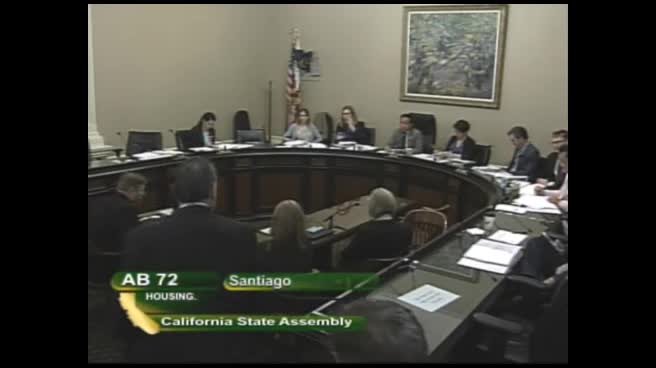 2MIN
Assembly Standing Committee on Housing and Community Development
Bill Author

Bill Co-Author(s):
