AB 11: Early and Periodic Screening, Diagnosis, and Treatment Program: screening services.
- Session Year: 2017-2018
- House: Assembly
- Latest Version Date: 2018-09-05
Existing law provides for the Medi-Cal program, which is administered by the State Department of Health Care Services and under which qualified low-income individuals receive health care services, including Early and Periodic Screening, Diagnosis, and Treatment (EPSDT) for any individual under 21 years of age who is covered under Medi-Cal consistent with the requirements under federal law. The Medi-Cal program is, in part, governed and funded by federal Medicaid program provisions.
Existing federal law provides that EPSDT services include periodic screening services, vision services, dental services, hearing services, and other necessary services to correct or ameliorate defects and physical and mental illnesses and conditions discovered by the screening services, whether or not the services are covered under the state plan.
This bill would require, consistent with federal law, that screening services under the EPSDT program include developmental screening services for individuals zero to 3 years of age, inclusive. Until July 1, 2023, the bill would require an external quality review organization entity to annually review, survey, and report on managed care plan reporting and compliance with specified developmental screening tools and schedules. The bill would also make legislative findings and declarations relating to child development.
Existing law provides for the Medi-Cal program, which is administered by the State Department of Health Care Services and under which qualified low-income individuals receive health care services, including Early and Periodic Screening, Diagnosis, and Treatment (EPSDT) for any individual under 21 years of age who is covered under Medi-Cal consistent with the requirements under federal law. The Medi-Cal program is, in part, governed and funded by federal Medicaid program provisions.
Existing federal law provides that EPSDT services include periodic screening services, vision services, dental services, hearing services, and other necessary services to correct or ameliorate defects and physical and mental illnesses and conditions discovered by the screening services, whether or not the services are covered under the state plan.
This bill would require, consistent with federal law, that screening services under the EPSDT program include developmental screening services for individuals zero to 3 years of age, inclusive, and be in compliance with the periodicity schedule and the standardized and validated developmental screening tools that are established by the Bright Futures/American Academy of Pediatrics Recommendations for Preventive Pediatric Health Care and by any future updates to those recommendations. The bill would require that screening tools be administered in their entirety and in adherence to the specific tools recommended guidelines. inclusive. Until July 1, 2023, the bill would require an external quality review organization entity to annually review, survey, and report on managed care plan reporting and compliance with specified developmental screening tools and schedules. The bill would also make legislative findings and declarations relating to child development.
Existing law provides for the Medi-Cal program, which is administered by the State Department of Health Care Services and under which qualified low-income individuals receive health care services, including Early and Periodic Screening, Diagnosis, and Treatment (EPSDT) for any individual under 21 years of age who is covered under Medi-Cal consistent with the requirements under federal law. The Medi-Cal program is, in part, governed and funded by federal Medicaid program provisions.
Existing federal law provides that EPSDT services include periodic screening services, vision services, dental services, hearing services, and other necessary services to correct or ameliorate defects and physical and mental illnesses and conditions discovered by the screening services, whether or not the services are covered under the state plan.
This bill would require, consistent with federal law, that screening services under the EPSDT program include developmental screening services for individuals zero to 3 years of age, inclusive, and be in compliance with the periodicity schedule and the standardized and validated developmental screening tools that are established by the Bright Futures/American Academy of Pediatrics Recommendations for Preventive Pediatric Health Care and by any future updates to those recommendations. The bill would require that screening tools be administered in their entirety and in adherence to the specific tools recommended guidelines. The bill would also make legislative findings and declarations relating to child development.
Existing law provides for the Medi-Cal program, which is administered by the State Department of Health Care Services and under which qualified low-income individuals receive health care services, including Early and Periodic Screening, Diagnosis, and Treatment (EPSDT) for any individual under 21 years of age who is covered under Medi-Cal consistent with the requirements under federal law. The Medi-Cal program is, in part, governed and funded by federal Medicaid program provisions.
Existing federal law provides that EPSDT services include periodic screening services, vision services, dental services, hearing services, and other necessary services to correct or ameliorate defects and physical and mental illnesses and conditions discovered by the screening services, whether or not the services are covered under the state plan.
This bill would require, consistent with federal law, that screening services under the EPSDT program include developmental screening services for individuals zero to 3 years of age, inclusive, in compliance with the periodicity schedule and the standardized and validated screening tool tools that are established by the Bright Futures/American Academy of Pediatrics Recommendations for Preventive Pediatric Health Care and by any future updates to those recommendations. The bill would also make legislative findings and declarations relating to child development.
Existing law provides for the Medi-Cal program, which is administered by the State Department of Health Care Services and under which qualified low-income individuals receive health care services, including Early and Periodic Screening, Diagnosis, and Treatment (EPSDT) for any individual under 21 years of age who is covered under Medi-Cal consistent with the requirements under federal law. The Medi-Cal program is, in part, governed and funded by federal Medicaid program provisions.
Existing federal law provides that EPSDT services include periodic screening services, vision services, dental services, hearing services, and other necessary services to correct or ameliorate defects and physical and mental illnesses and conditions discovered by the screening services, whether or not the services are covered under the state plan.
This bill would require, consistent with federal law, that screening services under the EPSDT program include screening services for individuals zero to 3 years of age, inclusive, in compliance with the periodicity schedule and the standardized and validated screening tool that are established by the Bright Futures/American Academy of Pediatrics Recommendations for Preventive Pediatric Health Care and by any future updates to those recommendations. The bill would also make legislative findings and declarations relating to child development.
The Child Care and Development Services Act has a purpose to provide a comprehensive, coordinated, and cost-effective system of child care and development services for children from infancy to 13 years of age and their parents, including a full range of supervision, health, and support services through full- and part-time programs. Existing law requires the Governor to appoint an advisory committee composed of representatives from various entities and requires the advisory committee to, among other things, assist the State Department of Education in developing a state plan for child development programs pursuant to the act. Existing law requires the advisory committee to continually evaluate the effectiveness of these programs and to provide reports to the Legislature.This bill would, commencing July 1, 2018, until January 1, 2024, and upon an appropriation by the Legislature, establish a grant program for purposes of providing grants to local partnerships, that the bill would authorize local entities to establish, that use a systems approach to deliver health, child welfare, early care and education, and social services that meet the needs of the most vulnerable infants and toddlers, and their families, as provided. The bill would require the partnership to be comprised of various entities, including a representative from a county office of education. The bill would require the partnership to, among other things, build, expand, and test innovative early childhood system approaches that effectively identify and serve children from birth to 3 years of age, inclusive, and their families, who are experiencing adverse childhood experience, and provide them with individualized services and support.The bill would establish in the California Health and Human Services Agency the Early Childhood Innovation Partnership Advisory Council, to be comprised of various entities, including a representative from the State Department of Education. The bill would require the advisory council to be responsible for various functions, including reviewing and approving partnership grant applications, hearing and responding to partnership requests for technical assistance, and providing reports to the Legislature, as provided.The Child Care and Development Services Act has a purpose to provide a comprehensive, coordinated, and cost-effective system of child care and development services for children from infancy to 13 years of age and their parents, including a full range of supervision, health, and support services through full- and part-time programs. Existing law requires the Superintendent of Public Instruction to advise local educational agencies of the federal requirements relating to the Head Start Program. Existing law requires the Governor to appoint an advisory committee composed of representatives from various entities and requires the advisory committee to, among other things, assist the State Department of Education in developing a state plan for child development programs pursuant to the act. Existing law requires the advisory committee to continually evaluate the effectiveness of these programs and to provide reports to the Legislature.
This bill would make various findings and declarations regarding child care and would provide that it is the intent of the Legislature to enact legislation that would establish the Early Head Start-Child Care-Early Intervention Partnership and provide funding to establish classroom-based early intervention services to Early Head Start-Child Care programs.This bill would, commencing July 1, 2018, until January 1, 2024, and upon an appropriation by the Legislature, establish a grant program for purposes of providing grants to local partnerships, that the bill would authorize local entities to establish, that use a systems approach to deliver health, child welfare, early care and education, and social services that meet the needs of the most vulnerable infants and toddlers, and their families, as provided. The bill would require the partnership to be comprised of various entities, including a representative from a county office of education. The bill would require the partnership to, among other things, build, expand, and test innovative early childhood system approaches that effectively identify and serve children from birth to 3 years of age, inclusive, and their families, who are experiencing adverse childhood experience, and provide them with individualized services and support.
The bill would establish in the California Health and Human Services Agency the Early Childhood Innovation Partnership Advisory Council, to be comprised of various entities, including a representative from the State Department of Education. The bill would require the advisory council to be responsible for various functions, including reviewing and approving partnership grant applications, hearing and responding to partnership requests for technical assistance, and providing reports to the Legislature, as provided.
The Child Care and Development Services Act has a purpose to provide a comprehensive, coordinated, and cost-effective system of child care and development services for children from infancy to 13 years of age and their parents, including a full range of supervision, health, and support services through full- and part-time programs. Existing law requires the Superintendent of Public Instruction to advise local educational agencies of the federal requirements relating to the Head Start Program.
This bill would make various findings and declarations regarding child care and would provide that it is the intent of the Legislature to enact legislation that would establish the Early Head Start-Child Care-Early Intervention Partnership and provide funding to establish classroom-based early intervention services to Early Head Start-Child Care programs.
The Legislature finds and declares all of the following:
(a)Not all children experience a clear path toward healthy development, making the early identification of developmental concerns and the timely connection to appropriate intervention essential to a childs well-being.
(b)Despite the prevalence of developmental delays and disorders, the overall rate of developmental screening remains low and the use of validated screening tools is often inconsistent.
(c)Many children at risk for developmental delays or disabilities due to environmental or biological factors are not identified in a timely fashion, greatly reducing the effectiveness of applied intervention.
(d)The Bright Futures Guidelines by the American Academy of Pediatrics provide evidence-driven guidance for all preventive care screenings and well-child visits, recommending that developmental surveillance include the periodic administration of a standardized developmental screening test.
(e)Early access to appropriate intervention for children with developmental delays and disabilities is critically important for healthy and optimal development.
SEC. 2.Section 14132.195 is added to the Welfare and Institutions Code, immediately following Section 14132.19, to read:14132.195.Consistent with federal law, screening services provided under the Early and Periodic Screening, Diagnosis, and Treatment (EPSDT) benefit pursuant to subdivision (v) of Section 14132 shall include developmental screening services for individuals zero to three years of age, inclusive.
SEC. 3.Section 14197.07 is added to the Welfare and Institutions Code, to read:14197.07.(a)As part of the federally required external quality review organization (EQRO) review of Medi-Cal managed care plans in the annual detailed technical report required by Section 438.364 of Title 42 of the Code of Federal Regulations, effective for contract periods commencing on or after July 1, 2018, the EQRO entity shall annually review, survey, and report on managed care plan reporting and compliance with the use of the validated developmental screening tools and periodicity schedule recommended by the American Academy of Pediatrics for children zero to three years of age, inclusive.
(b)This section shall remain in effect only until July 1, 2023, and as of that date is repealed.
The Legislature finds and declares all of the following:
(a)Not all children experience a clear path toward healthy development, making the early identification of developmental concerns and the timely connection to appropriate intervention essential to a childs well-being.
(b)Despite the prevalence of developmental delays and disorders, the overall rate of developmental screening remains low and the use of validated screening tools is often inconsistent.
(c)Many children at risk for developmental delays or disabilities due to environmental or biological factors are not identified in a timely fashion, greatly reducing the effectiveness of applied intervention.
(d)The Bright Futures Guidelines by the American Academy of Pediatrics provide evidence-driven guidance for all preventive care screenings and well-child visits, recommending that developmental surveillance include the periodic administration of a standardized developmental screening test.
(e)Early access to appropriate intervention for children with developmental delays and disabilities is critically important for healthy and optimal development.
SEC. 2.Section 14132.195 is added to the Welfare and Institutions Code, immediately following Section 14132.19, to read:14132.195.Consistent with federal law, screening services provided under the Early and Periodic Screening, Diagnosis, and Treatment (EPSDT) benefit pursuant to subdivision (v) of Section 14132 shall include developmental screening services for individuals zero to three years of age, inclusive. These developmental screening services shall be in compliance with the periodicity schedule and the standardized and validated developmental screening tools that are established by the Bright Futures/American Academy of Pediatrics Recommendations for Preventive Pediatric Health Care and by any future updates to those recommendations. Developmental screening tools shall be administered in their entirety and in adherence to the specific tools recommended guidelines.
SEC. 3.Section 14197.07 is added to the Welfare and Institutions Code, to read:14197.07.(a)As part of the federally required external quality review organization (EQRO) review of Medi-Cal managed care plans in the annual detailed technical report required by Section 438.364 of Title 42 of the Code of Federal Regulations, effective for contract periods commencing on or after July 1, 2018, the EQRO entity shall annually review, survey, and report on managed care plan reporting and compliance with the use of the validated developmental screening tools and periodicity schedule recommended by the American Academy of Pediatrics for children zero to three years of age, inclusive.
(b)This section shall remain in effect only until July 1, 2023, and as of that date is repealed.
The Legislature finds and declares all of the following:
(a)Not all children experience a clear path toward healthy development, making the early identification of developmental concerns and the timely connection to appropriate intervention essential to a childs well-being.
(b)Despite the prevalence of developmental delays and disorders, the overall rate of developmental screening remains low and the use of validated screening tools is often inconsistent.
(c)Many children at risk for developmental delays or disabilities due to environmental or biological factors are not identified in a timely fashion, greatly reducing the effectiveness of applied intervention.
(d)The Bright Futures Guidelines by the American Academy of Pediatrics provide evidence-driven guidance for all preventive care screenings and well-child visits, recommending that developmental surveillance include the periodic administration of a standardized developmental screening test.
(e)Early access to appropriate intervention for children with developmental delays and disabilities is critically important for healthy and optimal development.
SEC. 2.Section 14132.195 is added to the Welfare and Institutions Code, immediately following Section 14132.19, to read:14132.195.Consistent with federal law, screening services provided under the Early and Periodic Screening, Diagnosis, and Treatment (EPSDT) benefit pursuant to subdivision (v) of Section 14132 shall include developmental screening services for individuals zero to three years of age, inclusive, inclusive. These developmental screening services shall be in compliance with the periodicity schedule and the standardized and validated developmental screening tools that are established by the Bright Futures/American Academy of Pediatrics Recommendations for Preventive Pediatric Health Care and by any future updates to those recommendations. Developmental screening tools shall be administered in their entirety and in adherence to the specific tools recommended guidelines.
The Legislature finds and declares all of the following:
(a)Not all children experience a clear path toward healthy development, making the early identification of developmental concerns and the timely connection to appropriate intervention essential to a childs well-being.
(b)Despite the prevalence of developmental delays and disorders, the overall rate of developmental screening remains low and the use of validated screening tools is often inconsistent.
(c)Many children at risk for developmental delays or disabilities due to environmental or biological factors are not identified in a timely fashion, greatly reducing the effectiveness of applied intervention.
(d)The Bright Futures Guidelines by the American Academy of Pediatrics provide evidence-driven guidance for all preventive care screenings and well-child visits, recommending that developmental surveillance include the periodic administration of a standardized developmental screening test.
(e)Early access to appropriate intervention for children with developmental delays and disabilities is critically important for healthy and optimal development.
SEC. 2.Section 14132.195 is added to the Welfare and Institutions Code, immediately following Section 14132.19, to read:14132.195.Consistent with federal law, screening services provided under the Early and Periodic Screening, Diagnosis, and Treatment (EPSDT) benefit pursuant to subdivision (v) of Section 14132 shall include developmental screening services for individuals zero to three years of age, inclusive, in compliance with the periodicity schedule and the standardized and validated screening tool tools that are established by the Bright Futures/American Academy of Pediatrics Recommendations for Preventive Pediatric Health Care and by any future updates to those recommendations.
The Legislature finds and declares all of the following:
(a)Not all children experience a clear path toward healthy development, making the early identification of developmental concerns and the timely connection to appropriate intervention essential to a childs well-being.
(b)Despite the prevalence of developmental delays and disorders, the overall rate of developmental screening remains low and the use of validated screening tools is often inconsistent.
(c)Many children at risk for developmental delays or disabilities due to environmental or biological factors are not identified in a timely fashion, greatly reducing the effectiveness of applied intervention.
(d)The Bright Futures Guidelines by the American Academy of Pediatrics provide evidence-driven guidance for all preventive care screenings and well-child visits, recommending that developmental surveillance include the periodic administration of a standardized developmental screening test.
(e)Early access to appropriate intervention for children with developmental delays and disabilities is critically important for healthy and optimal development.
SEC. 2.Section 14132.195 is added to the Welfare and Institutions Code, immediately following Section 14132.19, to read:14132.195.Consistent with federal law, screening services provided under the Early and Periodic Screening, Diagnosis, and Treatment (EPSDT) benefit pursuant to subdivision (v) of Section 14132 shall include screening services for individuals zero to three years of age, inclusive, in compliance with the periodicity schedule and the standardized and validated screening tool that are established by the Bright Futures/American Academy of Pediatrics Recommendations for Preventive Pediatric Health Care and by any future updates to those recommendations.
SECTION 1.The Legislature finds and declares all of the following:(a)The future of any society depends on its ability to foster the healthy development of the next generation. Extensive research on the biology of stress now shows that healthy development can be derailed by excessive or prolonged activation of stress response systems in the body and brain. Such toxic stress can have damaging effects on learning, behavior, and health across the lifespan.(b)By the age of three, a childs brain has already established much of the architecture that will influence his or her lifelong learning, behavior, and health. Every baby deserves a strong start, but unmet basic needs and adverse experiences can create toxic stress with potential to weaken this architecture. (c)When toxic stress response occurs continually, or is triggered by multiple sources, it can have a cumulative toll on an individuals physical and mental health, and last for a lifetime. The more adverse experiences in childhood, the greater the likelihood of developmental delays and later health problems, including heart disease, diabetes, substance abuse, and depression.(d)For children and families experiencing conditions of risk and adversity that may jeopardize their long-term health and well-being, finding these children and families as soon as possible and introducing effective supports can stabilize a potentially negative trajectory, improve child and family outcomes, and prevent more costly and harder to resolve issues in the future. (e)Research also indicates that supportive, responsive relationships with caring adults as early in life as possible can prevent or reverse the damaging effects of toxic stress response.(f)In order to best match families with what they need, and utilize limited intervention resources most efficiently and effectively, there is a need for focus on better identifying these very young children and their families, optimizing their linkage to support and services, and whenever possible, ensuring the settings and programs they participate in are equipped to respond to their needs.(g)In some places in California, there are already early care and education programs innovatively identifying, linking, and supporting children and families experiencing adversity. In different places, these efforts are developing, while in many other places they are not yet underway but needed.(h)The state has a role and an opportunity to support communities in starting and scaling innovative approaches in this regard, and would benefit from establishing a foundation of local data, research, and evaluation to understand the practices, funding mechanisms, and coordination necessary to better identify, link, and serve these children and families across the state.(i)In 2014, the Legislature passed Assembly Concurrent Resolution No. 155 by Assembly Member Raul Bocanegra, recognizing that research over the last two decades in the evolving fields of neuroscience, molecular biology, public health, genomics, and epigenetics reveals that experiences in the first few years of life build changes into the biology of the human body that, in turn, influence the persons physical and mental health over his or her lifetime.(j)On May 3, 2012, Governor Edmund G. Brown Jr. issued Executive Order B-19-12, establishing the Lets Get Healthy California Task Force to develop a 10-year plan for improving the health of Californians, controlling health care costs, promoting personal responsibility for individual health, and advancing health equity. The task force identified several priorities, including a subset for Healthy Beginnings, which include improving birth outcomes, increasing vaccination rates, reducing childhood trauma, and reducing adolescent tobacco use. The final report of the task force states the challenge going forward is to identify evidence-based interventions and quicken the pace of uptake across the state, to meet the ambitious goals in the Governors directive.(k)The 2014 First 5 California Strategic Plan articulates goals and activities as follows: Goal 1.3. Family and Community Support and Partnership: Families and communities are engaged, supported, and strengthened through culturally effective resources and opportunities that assist them in nurturing, caring, and providing for their childrens success and well-being: Meet and collaborate with existing statewide child welfare workgroups and stakeholders to identify key issues for affecting systems change in child welfare practices that will reduce the number of children birth through age 5 who have contact with the child welfare system.SEC. 2.Article 14.5 (commencing with Section 8290) is added to Chapter 2 of Part 6 of Division 1 of Title 1 of the Education Code, to read:14.5.Early Childhood Innovation Partnerships and Grant Program8290.For purposes of this article, the following terms have the following meanings:(a)Adverse childhood experiences means traumatic experiences that occur during childhood, including physical, emotional, or sexual abuse, physical and emotional neglect, household dysfunction, including substance abuse, untreated mental illness or incarceration of a household member, domestic violence, or separation or divorce involving household members, that can have a profound effect on a childs developing brain and body and can result in poor health during the persons adulthood.(b)Advisory council means the Early Childhood Innovation Partnership Advisory Council established pursuant to Section 8290.3.(c)Partnership means the entity established pursuant to Sections 8290.1 and 8290.2.(d)Systems approach means ____.8290.1.(a)Local entities may form a partnership, in accordance with Section 8290.2, for purposes of using a systems approach to deliver health, child welfare, early care and education, and social services that meet the needs of the most vulnerable infants and toddlers, and their families.(b)The partnership shall do all of the following:(1)Build, expand, and test innovative early childhood system approaches that effectively identify and serve children from birth to age three, inclusive, and their families, who are experiencing adverse childhood experiences, and provide them with the seamless, individualized services and support they need to thrive.(2)Focus on implementing proven system and program innovations where they are needed and testing and strengthening promising practices already in use.(3)Evaluate and research the effectiveness of paragraphs (1) and (2), including an overarching report capturing diverse approaches and impacts of the partnership, and report the findings to the Early Childhood Innovation Partnership Advisory Council established pursuant to Section 8290.3.(4)Designate a lead entity who is responsible for preparing and submitting grant applications.8290.2.(a)A partnership shall be comprised of, at minimum, a representative from each of the following entities:(1)First 5 California county commissions.(2)The county offices of education.(3)The county department of health or the county department of behavioral health.(4)The county department of social services or the county department of child welfare.(b)The partnership may include additional locally relevant and appropriate entities, including, but not limited to, the following entities:(1)Early care and education programs.(2)Early Head Start programs.(3)Local child care and development planning councils.(4)Regional centers.(5)Hospitals.(6)Health care plans and providers.(7)The Women, Infants, and Children Program.(8)Community-based organizations.(9)Research institutions.(10)Other family and child serving programs.8290.3.(a)There is hereby established in the California Health and Human Services Agency the Early Childhood Innovation Partnership Advisory Council that has a purpose of providing leadership and technical guidance, as appropriate, regarding the administration of funding to the partnerships, progress toward specified objectives, and alignment to state goals across health, education, and social service departments.(b)(1)The advisory council shall be comprised of the following entities:(A)A representative from the California Health and Human Services Agency, appointed by the agency, who shall serve as chair of the advisory council.(B)A representative from the State Department of Education, appointed by the department.(C)A representative from First 5 California, appointed by First 5 California.(D)A representative from the Department of Finance, appointed by the Department of Finance.(E)A representative appointed by the Governor.(F)A representative appointed by the Speaker of the Assembly.(G)A representative appointed by the Senate Committee on Rules.(2)Representatives appointed to the advisory council shall have expertise working with infants and toddlers.(c)The advisory council shall be responsible for all of the following:(1)Review and approve partnership grant applications on a form developed by the advisory council.(2)Hear and respond to partnership requests for technical assistance.(3)Review and analyze key data related to research-established risk factors and adverse experiences among pregnant women and very young children statewide.(4)Identify opportunities to align existing resources, braid funding, engage relevant incentives, and maximize federal funds for purposes of this article.(5)Articulate guidance relating to policy barriers and opportunities within existing state programs administered through departments within the California Health and Human Services Agency and the State Department of Education.(6)Establish a state evaluation plan that shall include a common set of core measures, including child outcomes, which shall allow for data aggregation and data sharing across partnerships.(7)On or before July 1, 2020, provide a report to the Legislature on the partnership objectives as found in the implementation plans created by the partnerships pursuant to Section 8290.6.(8)On or before July 1, 2023, provide a comprehensive report to the Legislature that provides both of the following: (A)Recommendations of effective policy and program approaches to meeting the needs of infants and toddlers, and their families, experiencing circumstances of adversity, trauma, or multidimensional risk factors that could jeopardize their long-term health and well-being.(B)Statements about unmet need, scalability complexities, and recommendations to address these challenges.(d)The advisory council may accept donations for purposes of funding the advisory councils administrative responsibilities necessary to implement this article.(e)Reports submitted to the Legislature pursuant to subdivision (c) shall be submitted in compliance with Section 9795 of the Government Code.8290.4.A partnership may submit an application pursuant to Section 8290.5 to the California Health and Human Services Agency, who shall receive all applications from the partnerships and be responsible for communicating with applicants, on behalf of the advisory council.8290.5.(a)Commencing July 1, 2018, and upon appropriation by the Legislature for these purposes, the advisory council shall provide grants to applicant partnerships that use a systems approach to delivering health, child welfare, early care and education, and social services that meet the needs of the most vulnerable infants and toddlers, and their families.(b)(1)Successful applicant partnerships shall receive a grant over a five-year period as follows: (A)(i)Year one funds shall be used for needs assessment and creating an implementation plan pursuant to Section 8290.6.(ii)Funds shall not be used to supplant or expand existing services, but may be used to start or scale science-based innovations, risk assessment and referral systems, initiate program enhancements such as materials, training, coaching, or curriculum, evaluate impacts, pursue replication studies to validate existing promising programs, or activities to streamline local cross-agency partnerships, data, and systems.(B)(i)Years two to five, inclusive, funds shall be used to implement the plan, data collection, formative evaluations to support continuous improvement during implementation, and promote learning among partnership members.(ii)Years two to five, inclusive, funding shall be contingent on both of the of the following:(I)Satisfactory completion of year one activities.(II)Dedicated local match funding as follows:(ia)Years two to three, inclusive, one dollar ($1) of matching funds for every four grant dollars ($4) awarded.(ib)Year four, two dollars ($2) of matching funds for every four grant dollars ($4) awarded.(ic)Year five, three dollars ($3) of matching funds for every four grant dollars ($4) awarded.(2)Grant funds can also be used for the following purposes:(A)Convene and facilitate active, ongoing collaboration among public agencies, early childhood practitioners, researchers, and key local partners.(B)Use systems strategies to build, expand, and test innovative early childhood interventions that identify, link, and serve children from birth to three years of age, inclusive, and their families, who are at risk of adverse health and educational outcomes due to unmet basic needs, or adverse childhood experiences.(c)When making grants, the advisory council shall make determinations as to grant amounts by taking into account county size, complexity, and need, among other criteria to be established by the advisory council, in alignment with the purposes of the partnership.(d)(1)Grantee partnerships shall submit annual reports to the advisory council that shall include information about expenditures, progress toward identified objectives, as well as qualitative insights and expertise that will over time contribute to establishing a statewide cumulative report on best practices, unmet need, challenges, and opportunities with regard to this endeavor. (2)Grantee applicants shall complete a summative five-year, full scope evaluation at the conclusion of the grant term. 8290.6.The implementation plan, created by the partnership, shall include all of the following:(a)Analysis of key data related to research-established risk factors and adverse experiences among pregnant women and very young children locally.(b)Assessment of assets and gaps across existing local programs and systems that serve women, children, and families during the prenatal, postpartum, and infant/toddler periods experiencing such factors or circumstances of adversity.(c)Documentation of previous or existing relevant local efforts and initiatives and anticipated role in the implementation plan. (d)Articulation of needs and opportunities related to strengthening or establishing a local, integrated system to identify, link, and provide support mechanisms to ensure target populations are identified early and matched with the level of services that meets their needs.(e)Building and expanding effective local program models and using formative evaluation to guide program improvements, promote scalability, and maximize impact.(f)An evaluation plan that includes the exact measures and processes that will be used to evaluate impact.8290.7.This article shall remain in effect only until January 1, 2024, and as of that date is repealed, unless a later enacted statute that is enacted before January 1, 2024, deletes or extends that date.(a)The Legislature finds and declares all of the following:
(1)(a)The future of any society depends on its ability to foster the healthy development of the next generation. Extensive research on the biology of stress now shows that healthy development can be derailed by excessive or prolonged activation of stress response systems in the body and brain. Such toxic stress can have damaging effects on learning, behavior, and health across the lifespan.
(b)By the age of three, a childs brain has already established much of the architecture that will influence his or her lifelong learning, behavior, and health. Every baby deserves a strong start, but unmet basic needs and adverse experiences can create toxic stress with potential to weaken this architecture.
(2)(c)When toxic stress response occurs continually, or is triggered by multiple sources, it can have a cumulative toll on an individuals physical and mental healthfor health, and last for a lifetime. The more adverse experiences in childhood, the greater the likelihood of developmental delays and later health problems, including heart disease, diabetes, substance abuse, and depression.
(d)For children and families experiencing conditions of risk and adversity that may jeopardize their long-term health and well-being, finding these children and families as soon as possible and introducing effective supports can stabilize a potentially negative trajectory, improve child and family outcomes, and prevent more costly and harder to resolve issues in the future.
(3)(e)Research also indicates that supportive, responsive relationships with caring adults as early in life as possible can prevent or reverse the damaging effects of toxic stress response.
(b)Therefore, it is the intent of the Legislature to enact legislation that does both of the following:(1)Establish the Early Head Start-Child Care-Early Intervention Partnership. There currently exists a federal program called the Early Head Start-Child Care Partnership, established by the Obama Administration. This partnership provides infants and toddlers living in poverty with full day child care and Early Head Start, which includes early learning, home visitation, and health and mental health services.(2)Provide funding to establish classroom-based early intervention services to existing and new Early Head Start-Child Care programs for children suffering from toxic stress, who often need intensive early intervention services, such as speech, occupational, developmental, and physical therapy.(f)In order to best match families with what they need, and utilize limited intervention resources most efficiently and effectively, there is a need for focus on better identifying these very young children and their families, optimizing their linkage to support and services, and whenever possible, ensuring the settings and programs they participate in are equipped to respond to their needs.
(g)In some places in California, there are already early care and education programs innovatively identifying, linking, and supporting children and families experiencing adversity. In different places, these efforts are developing, while in many other places they are not yet underway but needed.
(h)The state has a role and an opportunity to support communities in starting and scaling innovative approaches in this regard, and would benefit from establishing a foundation of local data, research, and evaluation to understand the practices, funding mechanisms, and coordination necessary to better identify, link, and serve these children and families across the state.
(i)In 2014, the Legislature passed Assembly Concurrent Resolution No. 155 by Assembly Member Raul Bocanegra, recognizing that research over the last two decades in the evolving fields of neuroscience, molecular biology, public health, genomics, and epigenetics reveals that experiences in the first few years of life build changes into the biology of the human body that, in turn, influence the persons physical and mental health over his or her lifetime.
(j)On May 3, 2012, Governor Edmund G. Brown Jr. issued Executive Order B-19-12, establishing the Lets Get Healthy California Task Force to develop a 10-year plan for improving the health of Californians, controlling health care costs, promoting personal responsibility for individual health, and advancing health equity. The task force identified several priorities, including a subset for Healthy Beginnings, which include improving birth outcomes, increasing vaccination rates, reducing childhood trauma, and reducing adolescent tobacco use. The final report of the task force states the challenge going forward is to identify evidence-based interventions and quicken the pace of uptake across the state, to meet the ambitious goals in the Governors directive.
(k)The 2014 First 5 California Strategic Plan articulates goals and activities as follows: Goal 1.3. Family and Community Support and Partnership: Families and communities are engaged, supported, and strengthened through culturally effective resources and opportunities that assist them in nurturing, caring, and providing for their childrens success and well-being: Meet and collaborate with existing statewide child welfare workgroups and stakeholders to identify key issues for affecting systems change in child welfare practices that will reduce the number of children birth through age 5 who have contact with the child welfare system.
SEC. 2.Article 14.5 (commencing with Section 8290) is added to Chapter 2 of Part 6 of Division 1 of Title 1 of the Education Code, to read:14.5.Early Childhood Innovation Partnerships and Grant Program8290.For purposes of this article, the following terms have the following meanings:
(a)Adverse childhood experiences means traumatic experiences that occur during childhood, including physical, emotional, or sexual abuse, physical and emotional neglect, household dysfunction, including substance abuse, untreated mental illness or incarceration of a household member, domestic violence, or separation or divorce involving household members, that can have a profound effect on a childs developing brain and body and can result in poor health during the persons adulthood.
(b)Advisory council means the Early Childhood Innovation Partnership Advisory Council established pursuant to Section 8290.3.
(c)Partnership means the entity established pursuant to Sections 8290.1 and 8290.2.
(d)Systems approach means ____.
8290.1.(a)Local entities may form a partnership, in accordance with Section 8290.2, for purposes of using a systems approach to deliver health, child welfare, early care and education, and social services that meet the needs of the most vulnerable infants and toddlers, and their families.
(b)The partnership shall do all of the following:
(1)Build, expand, and test innovative early childhood system approaches that effectively identify and serve children from birth to age three, inclusive, and their families, who are experiencing adverse childhood experiences, and provide them with the seamless, individualized services and support they need to thrive.
(2)Focus on implementing proven system and program innovations where they are needed and testing and strengthening promising practices already in use.
(3)Evaluate and research the effectiveness of paragraphs (1) and (2), including an overarching report capturing diverse approaches and impacts of the partnership, and report the findings to the Early Childhood Innovation Partnership Advisory Council established pursuant to Section 8290.3.
(4)Designate a lead entity who is responsible for preparing and submitting grant applications.
8290.2.(a)A partnership shall be comprised of, at minimum, a representative from each of the following entities:
(1)First 5 California county commissions.
(2)The county offices of education.
(3)The county department of health or the county department of behavioral health.
(4)The county department of social services or the county department of child welfare.
(b)The partnership may include additional locally relevant and appropriate entities, including, but not limited to, the following entities:
(1)Early care and education programs.
(2)Early Head Start programs.
(3)Local child care and development planning councils.
(4)Regional centers.
(5)Hospitals.
(6)Health care plans and providers.
(7)The Women, Infants, and Children Program.
(8)Community-based organizations.
(9)Research institutions.
(10)Other family and child serving programs.
8290.3.(a)There is hereby established in the California Health and Human Services Agency the Early Childhood Innovation Partnership Advisory Council that has a purpose of providing leadership and technical guidance, as appropriate, regarding the administration of funding to the partnerships, progress toward specified objectives, and alignment to state goals across health, education, and social service departments.
(b)(1)The advisory council shall be comprised of the following entities:
(A)A representative from the California Health and Human Services Agency, appointed by the agency, who shall serve as chair of the advisory council.
(B)A representative from the State Department of Education, appointed by the department.
(C)A representative from First 5 California, appointed by First 5 California.
(D)A representative from the Department of Finance, appointed by the Department of Finance.
(E)A representative appointed by the Governor.
(F)A representative appointed by the Speaker of the Assembly.
(G)A representative appointed by the Senate Committee on Rules.
(2)Representatives appointed to the advisory council shall have expertise working with infants and toddlers.
(c)The advisory council shall be responsible for all of the following:
(1)Review and approve partnership grant applications on a form developed by the advisory council.
(2)Hear and respond to partnership requests for technical assistance.
(3)Review and analyze key data related to research-established risk factors and adverse experiences among pregnant women and very young children statewide.
(4)Identify opportunities to align existing resources, braid funding, engage relevant incentives, and maximize federal funds for purposes of this article.
(5)Articulate guidance relating to policy barriers and opportunities within existing state programs administered through departments within the California Health and Human Services Agency and the State Department of Education.
(6)Establish a state evaluation plan that shall include a common set of core measures, including child outcomes, which shall allow for data aggregation and data sharing across partnerships.
(7)On or before July 1, 2020, provide a report to the Legislature on the partnership objectives as found in the implementation plans created by the partnerships pursuant to Section 8290.6.
(8)On or before July 1, 2023, provide a comprehensive report to the Legislature that provides both of the following:
(A)Recommendations of effective policy and program approaches to meeting the needs of infants and toddlers, and their families, experiencing circumstances of adversity, trauma, or multidimensional risk factors that could jeopardize their long-term health and well-being.
(B)Statements about unmet need, scalability complexities, and recommendations to address these challenges.
(d)The advisory council may accept donations for purposes of funding the advisory councils administrative responsibilities necessary to implement this article.
(e)Reports submitted to the Legislature pursuant to subdivision (c) shall be submitted in compliance with Section 9795 of the Government Code.
8290.4.A partnership may submit an application pursuant to Section 8290.5 to the California Health and Human Services Agency, who shall receive all applications from the partnerships and be responsible for communicating with applicants, on behalf of the advisory council.
8290.5.(a)Commencing July 1, 2018, and upon appropriation by the Legislature for these purposes, the advisory council shall provide grants to applicant partnerships that use a systems approach to delivering health, child welfare, early care and education, and social services that meet the needs of the most vulnerable infants and toddlers, and their families.
(b)(1)Successful applicant partnerships shall receive a grant over a five-year period as follows:
(A)(i)Year one funds shall be used for needs assessment and creating an implementation plan pursuant to Section 8290.6.
(ii)Funds shall not be used to supplant or expand existing services, but may be used to start or scale science-based innovations, risk assessment and referral systems, initiate program enhancements such as materials, training, coaching, or curriculum, evaluate impacts, pursue replication studies to validate existing promising programs, or activities to streamline local cross-agency partnerships, data, and systems.
(B)(i)Years two to five, inclusive, funds shall be used to implement the plan, data collection, formative evaluations to support continuous improvement during implementation, and promote learning among partnership members.
(ii)Years two to five, inclusive, funding shall be contingent on both of the of the following:
(I)Satisfactory completion of year one activities.
(II)Dedicated local match funding as follows:
(ia)Years two to three, inclusive, one dollar ($1) of matching funds for every four grant dollars ($4) awarded.
(ib)Year four, two dollars ($2) of matching funds for every four grant dollars ($4) awarded.
(ic)Year five, three dollars ($3) of matching funds for every four grant dollars ($4) awarded.
(2)Grant funds can also be used for the following purposes:
(A)Convene and facilitate active, ongoing collaboration among public agencies, early childhood practitioners, researchers, and key local partners.
(B)Use systems strategies to build, expand, and test innovative early childhood interventions that identify, link, and serve children from birth to three years of age, inclusive, and their families, who are at risk of adverse health and educational outcomes due to unmet basic needs, or adverse childhood experiences.
(c)When making grants, the advisory council shall make determinations as to grant amounts by taking into account county size, complexity, and need, among other criteria to be established by the advisory council, in alignment with the purposes of the partnership.
(d)(1)Grantee partnerships shall submit annual reports to the advisory council that shall include information about expenditures, progress toward identified objectives, as well as qualitative insights and expertise that will over time contribute to establishing a statewide cumulative report on best practices, unmet need, challenges, and opportunities with regard to this endeavor.
(2)Grantee applicants shall complete a summative five-year, full scope evaluation at the conclusion of the grant term.
8290.6.The implementation plan, created by the partnership, shall include all of the following:
(a)Analysis of key data related to research-established risk factors and adverse experiences among pregnant women and very young children locally.
(b)Assessment of assets and gaps across existing local programs and systems that serve women, children, and families during the prenatal, postpartum, and infant/toddler periods experiencing such factors or circumstances of adversity.
(c)Documentation of previous or existing relevant local efforts and initiatives and anticipated role in the implementation plan.
(d)Articulation of needs and opportunities related to strengthening or establishing a local, integrated system to identify, link, and provide support mechanisms to ensure target populations are identified early and matched with the level of services that meets their needs.
(e)Building and expanding effective local program models and using formative evaluation to guide program improvements, promote scalability, and maximize impact.
(f)An evaluation plan that includes the exact measures and processes that will be used to evaluate impact.
8290.7.This article shall remain in effect only until January 1, 2024, and as of that date is repealed, unless a later enacted statute that is enacted before January 1, 2024, deletes or extends that date.
(a)The Legislature finds and declares all of the following:
(1)The future of any society depends on its ability to foster the healthy development of the next generation. Extensive research on the biology of stress now shows that healthy development can be derailed by excessive or prolonged activation of stress response systems in the body and brain. Such toxic stress can have damaging effects on learning, behavior, and health across the lifespan.
(2)When toxic stress response occurs continually, or is triggered by multiple sources, it can have a cumulative toll on an individuals physical and mental healthfor a lifetime. The more adverse experiences in childhood, the greater the likelihood of developmental delays and later health problems, including heart disease, diabetes, substance abuse, and depression.
(3)Research also indicates that supportive, responsive relationships with caring adults as early in life as possible can prevent or reverse the damaging effects of toxic stress response.
(b)Therefore, it is the intent of the Legislature to enact legislation that does both of the following:
(1)Establish the Early Head Start-Child Care-Early Intervention Partnership. There currently exists a federal program called the Early Head Start-Child Care Partnership, established by the Obama Administration. This partnership provides infants and toddlers living in poverty with full day child care and Early Head Start, which includes early learning, home visitation, and health and mental health services.
(2)Provide funding to establish classroom-based early intervention services to existing and new Early Head Start-Child Care programs for children suffering from toxic stress, who often need intensive early intervention services, such as speech, occupational, developmental, and physical therapy.
|
Date
|
Status
|
|---|---|
| Sep 21, 2018 | Vetoed by Governor. |
| Sep 11, 2018 | Enrolled and presented to the Governor at 4:30 p.m. |
| Aug 31, 2018 | Senate amendments concurred in. To Engrossing and Enrolling. |
| Aug 23, 2018 | In Assembly. Concurrence in Senate amendments pending. May be considered on or after August 25 pursuant to Assembly Rule 77. |
| Aug 23, 2018 | Read third time. Passed. Ordered to the Assembly. |
| Aug 17, 2018 | From committee: Do pass. (Ayes 7. Noes 0.) (August 16). |
| Aug 6, 2018 | In committee: Referred to APPR. suspense file. |
| Jul 3, 2018 | Read second time and amended. Re-referred to Com. on APPR. |
| Jul 2, 2018 | From committee: Amend, and do pass as amended and re-refer to Com. on APPR. (Ayes 9. Noes 0.) (June 27). |
| Jun 18, 2018 | From committee chair, with author's amendments: Amend, and re-refer to committee. Read second time, amended, and re-referred to Com. on HEALTH. |
| Mar 15, 2018 | Referred to Com. on HEALTH. |
| Jan 29, 2018 | In Senate. Read first time. To Com. on RLS. for assignment. |
| Jan 29, 2018 | Read third time. Passed. Ordered to the Senate. |
| Jan 22, 2018 | Read second time. Ordered to third reading. |
| Jan 18, 2018 | From committee: Do pass. (Ayes 17. Noes 0.) (January 18). |
| Jan 11, 2018 | Re-referred to Com. on APPR. |
| Jan 10, 2018 | Read second time and amended. |
| Jan 9, 2018 | From committee: Amend, and do pass as amended and re-refer to Com. on APPR. (Ayes 14. Noes 0.) (January 9). |
| Jan 4, 2018 | Re-referred to Com. on HEALTH. |
| Jan 3, 2018 | From committee chair, with author's amendments: Amend, and re-refer to Com. on HEALTH. Read second time and amended. |
| Apr 18, 2017 | In committee: Set, first hearing. Hearing canceled at the request of author. |
| Mar 27, 2017 | Re-referred to Com. on HEALTH. |
| Mar 23, 2017 | From committee chair, with author's amendments: Amend, and re-refer to Com. on HEALTH. Read second time and amended. |
| Mar 23, 2017 | Referred to Coms. on HEALTH and ED. |
| Dec 6, 2016 | From printer. May be heard in committee January 5. |
| Dec 5, 2016 | Read first time. To print. |
|
Date
|
Description
|
Location
|
Votes
|
|
|---|---|---|---|---|
| Aug 31, 2018 | AB 11 MCCARTY Concurrence in Senate Amendments | Assembly Floor |
Passed |
|
| Aug 23, 2018 | Assembly 3rd Reading AB11 McCarty et al. By Mitchell | Senate Floor |
Passed |
|
| Aug 16, 2018 | Do pass | Senate Standing Committee on Appropriations |
Passed |
|
| Aug 6, 2018 | Placed on suspense file | Senate Standing Committee on Appropriations |
Passed |
|
| Jun 27, 2018 | Do pass as amended, but first amend, and re-refer to the Committee on [Appropriations] | Senate Standing Committee on Health |
Passed |
|
| Jan 29, 2018 | AB 11 MCCARTY Assembly Third Reading | Assembly Floor |
Passed |
|
| Jan 18, 2018 | Do pass. | Assembly Standing Committee on Appropriations |
Passed |
|
| Jan 9, 2018 | Do pass as amended and be re-referred to the Committee on [Appropriations] | Assembly Standing Committee on Health |
Passed |
This list shows positions taken on this bill by organizations on the date displayed, which is linked to the original source.
Positions by individuals are not included.
|
Organization
|
Position
|
Date
|
|---|---|---|
| Alameda County Board of Supervisors | ** Support | Aug 23, 2018 |
| Alliance for Children's Rights | ** Support | Aug 23, 2018 |
| American Academy Of Pediatrics, California | ** Support | Aug 23, 2018 |
| Association Of California School Administrators | ** Support | Aug 23, 2018 |
| California Academy of Child and Adolescent Psychiatry | ** Support | Aug 23, 2018 |
| California Alternative Payment Program Association | ** Support | Aug 23, 2018 |
| California Association of Clinical Nurse Specialists | ** Support | Aug 23, 2018 |
| California Coverage and Health Initiatives | ** Support | Aug 23, 2018 |
| California Maternal, Child, And Adolescent Health Directors | ** Support | Aug 23, 2018 |
| California Right to Life Committee | ** Against | Aug 23, 2018 |
| California School Employees Association | ** Support | Aug 23, 2018 |
| California School-Based Health Alliance | ** Support | Aug 23, 2018 |
| California State PTA | ** Support | Aug 23, 2018 |
| Center for Autism and Related Disorders | ** Support | Aug 23, 2018 |
| Children And Families Commission Of Orange County | ** Support | Aug 23, 2018 |
| Children Now | ** Support | Aug 23, 2018 |
| Children'S Defense Fund | ** Support | Aug 23, 2018 |
| Children'S Specialty Care Coalition | ** Support | Aug 23, 2018 |
| City and County of San Francisco | ** Support | Aug 23, 2018 |
| Common Sense Kids Action | ** Support | Aug 23, 2018 |
| County Health Executives Association Of California | ** Support | Aug 23, 2018 |
| Department Of Finance | ** Against | Aug 23, 2018 |
| Department of Health Care Services | ** Against | Aug 23, 2018 |
| Family Connections | ** Support | Aug 17, 2018 |
| Family Voices of California | ** Support | Aug 23, 2018 |
| First 5 Alameda County | ** Support | Aug 17, 2018 |
| First 5 Association Of California | ** Support | Aug 23, 2018 |
| First 5 California | ** Support | Aug 23, 2018 |
| First 5 Contra Costa | ** Support | Aug 23, 2018 |
| First 5 Fresno County | ** Support | Aug 17, 2018 |
| First 5 Kern | ** Support | Aug 23, 2018 |
| First 5 La | ** Support | Aug 23, 2018 |
| First 5 Marin Children and Families Commission | ** Support | Aug 23, 2018 |
| First 5 Mono County | ** Support | Aug 23, 2018 |
| First 5 Monterey County | ** Support | Aug 17, 2018 |
| First 5 Nevada County | ** Support | Aug 23, 2018 |
| First 5 Placer Children And Families Commission | ** Support | Aug 23, 2018 |
| First 5 Sacramento | ** Support | Aug 23, 2018 |
| First 5 San Bernardino | ** Support | Aug 23, 2018 |
| First 5 San Diego | ** Support | Aug 17, 2018 |
| First 5 San Francisco | ** Support | Aug 23, 2018 |
| First 5 San Luis Obispo County | ** Support | Aug 17, 2018 |
| First 5 San Mateo County | ** Support | Aug 17, 2018 |
| First 5 Santa Clara County | ** Support | Aug 23, 2018 |
| First 5 Santa Cruz County | ** Support | Aug 23, 2018 |
| First 5 Siskiyou County | ** Support | Aug 17, 2018 |
| First 5 Solano Children and Families Commission | ** Support | Aug 23, 2018 |
| First 5 Sonoma County Commission | ** Support | Aug 23, 2018 |
| First 5 Tehama Gatepath | ** Support | Aug 23, 2018 |
| Gatepath | ** Support | Aug 17, 2018 |
| Health Access California | ** Support | Aug 23, 2018 |
| Health Officers Association Of California | ** Support | Aug 23, 2018 |
| Help Me Grow Orange County | ** Support | Aug 17, 2018 |
| Help Me Grow San Mateo County | ** Support | Aug 23, 2018 |
| Help Me Grow Ventura County | ** Support | Aug 23, 2018 |
| Kidango | ** Support | Aug 23, 2018 |
| La Trust For Children'S Health | ** Support | Aug 23, 2018 |
| Los Angeles Trust for Children's Health | ** Support | Aug 17, 2018 |
| Lucile Packard Children's Hospital | ** Support | Aug 23, 2018 |
| Maternal and Child Health Access | ** Support | Aug 17, 2018 |
| Mcah Action | ** Support | Aug 17, 2018 |
| North Los Angeles County Regional Center | ** Support | Aug 23, 2018 |
| Sonoma County Board of Supervisors | ** Support | Aug 23, 2018 |
| The Arc and United Cerebral Palsy California Collaboration | ** Support | Aug 23, 2018 |
| The Children's Partnership | ** Support | Aug 23, 2018 |
| United Ways Of California | ** Support | Aug 23, 2018 |
| Wested Center For Prevention & Early Intervention | ** Support | Aug 23, 2018 |
| western center on law and poverty | ** Support | Aug 23, 2018 |
GOVERNOR'S VETO
GV Bill Id:AB 11
Author:(McCarty and Bonta)
As Enrolled Ver:September 11, 2018
2/3 vote
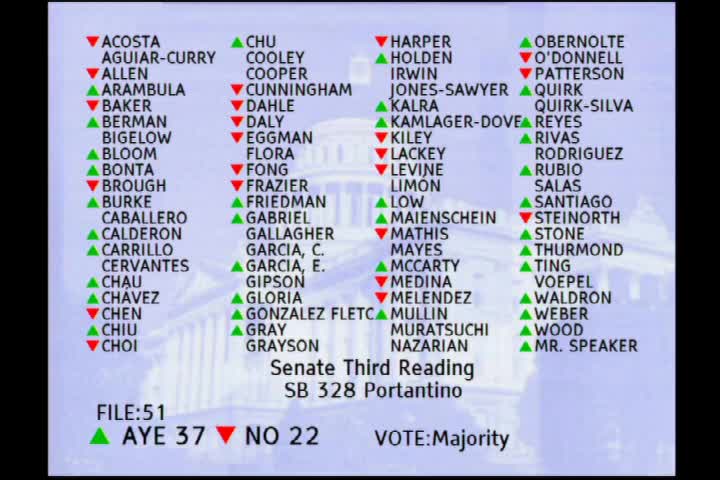
ASSEMBLY: | 77-0 | (January 29, 2018) | SENATE: | 38-0 | (August 23, 2018) |
ASSEMBLY: | 80-0 | (August 31, 2018) |
|
|
Original Committee Reference: HEALTH
SUMMARY: Requires that screening services available under the Early and Periodic Screening, Diagnostic, and Treatment (EPSDT) Program, consistent with federal law, include developmental screening services for individuals zero to three years of age, inclusive.
The Senate amendments require an external quality review organization (EQRO) to review, survey, and report, as currently part of the federally required EQRO review of Medi-Cal managed care plans (MCPs), on compliance by MCPs of the use of validated developmental screening tools and periodicity schedules recommended by the American Academy of Pediatrics for children zero to three years of age, inclusive, for EQRO contract periods commencing on or after July 1, 2018 until July 1, 2023.
FISCAL EFFECT: According to the Senate Appropriations Committee, possible increased administrative costs of $500,000 total funds ($250,000 General Fund (GF)) to $1 million ($500,000 GF) in fiscal year (FY) 2019-20 through FY 2022-23 and unknown local assistance costs (up to low millions) to the extent that the EQRO study results in increased screenings.
COMMENTS: According to the author, research has shown that toxic stress affects the development of young children, especially infants and toddlers, and we must start earlier to make a positive impact on our youngest learners. Early identification and intervention can improve a child's long-term outcome, and minimize the need for costly health care, special education, juvenile justice, and child welfare services in the future. This bill further implements the Bright Futures Guidelines by ensuring that developmental screenings, with a validated tool, are routinely occurring for infants and toddlers during Medi-Cal health care visits.
EPSDT. EPSDT services are a benefit of the State's Medicaid program (Medi-Cal) that provide comprehensive, preventative, diagnostic, and treatment services to eligible children under the age of 21, as specified in Section 1905(r) of the Federal Social Security Act. This benefit is designed to ensure that children receive early detection and care, so that health problems are averted or diagnosed and treated as early as possible. EPSDT allows for periodic screenings to determine health care needs and based upon the identified health care need and diagnosis, treatment services are provided. EPSDT services include all services otherwise covered by Medi-Cal and EPSDT beneficiaries can receive additional medically necessary services.
Screening Services. Federal law defines the term "early and periodic screening, diagnostic, and treatment services" to mean screening services which are provided at intervals that meet reasonable standards of medical and dental practice, as determined by the State, that at a minimum include:
- A comprehensive health and developmental history, including assessment of both physical and mental health development;
- A comprehensive unclothed physical exam;
- Appropriate immunizations;
- Laboratory tests, including lead blood level assessment appropriate for age and risk factors; and,
- Health education, including anticipatory guidance.
Federal law defers screening intervals to the implementing states and California state regulations define "screening services" as an initial, periodic, or additional health assessment, but do not directly discuss developmental screening services, intervals, or tools.
Children Now, cosponsors of this bill, states that this bill takes the first critical step to help ensure that every California child, especially those who are low-income, has the opportunity to reach his or her full potential by having timely developmental screenings in Medi-Cal. Early identification of developmental delays through screening is the first step to connecting children with the supports they need for healthy development. When children with (or at risk of) developmental or other delays are not identified early, they may not receive the timely care and intervention services they need to address those developmental delays or concerns. Unidentified delays during the child's first years of life can significantly impact a child's school readiness and have long-term effects on their overall well-being. Children Now also states that less than one in three California kids are actually receiving timely developmental screenings, further delaying any referrals to needed early intervention services. Additionally, California ranks 43rd in the nation in the rate of young kids who receive timely screenings, and puts California children at a serious disadvantage.
First 5 Association of California, cosponsors of this bill, state that currently, pediatricians are relying on surveillance rather than using a validated screening tool to identify children at-risk for developmental delays. When they do screen, pediatricians are not consistent in their use of validated tools. For example, many do not use the entire tool or follow its intended directions. Subsequently, pediatricians believe they are properly implementing developmental screening and following the American Academy of Pediatrics recommendations, when in fact they are not.
The California Right to Life Committee, Inc., states in opposition that this bill would be the beginning step in a system to further impinge on the privacy of families. Under the guise of developing an extensive healthcare system for the betterment of California children and families, this bill would encompass more than early childhood healthcare programs and services and would result in a sizeable data collection of family life and "toxic stress" factors. Therefore, family privacy could be jeopardized and what appears to be for the betterment of the family could result in more stress for individual family members as various agencies determine how family members interact with each other.
This bill would require developmental screening of children from birth to age three in Medi-Cal and impose annual reporting requirements to assess managed care plan compliance.
The Medi-Cal State Plan already requires providers to screen children for developmental delays according to the schedule recommended by the American Academy of Pediatrics. Codifying this requirement and producing another costly report is not necessary.
Analysis Prepared by: Paula Villescaz / HEALTH / (916) 319-2097 FN: 0005282
Office of Senate Floor Analyses (916) 651-1520 Fax: (916) 327-4478 | AB |
THIRD READING
Bill No: AB 11
:
SENATE HEALTH COMMITTEE: 9-0, 6/27/18
AYES: Pan, Nguyen, Beall, Hernandez, Leyva, Mitchell, Monning, Nielsen, Roth
SENATE APPROPRIATIONS COMMITTEE: 7-0, 8/16/18
AYES: Portantino, Bates, Beall, Bradford, Hill, Nielsen, Wiener
ASSEMBLY FLOOR: 77-0, 1/29/18 - See last page for vote
First 5 Association of California
First 5 LA
DIGEST:
This bill requires, consistent with federal law, screening services provided under the Early and Periodic Screening, Diagnosis, and Treatment program to include developmental screening services for individuals zero to three years of age. Requires the federally required external quality review organization to annually review, survey, and report on Medi-Cal managed care plan reporting and compliance with the use of the validated developmental screening tools and periodicity schedule recommended for children zero to three years of age.
Existing law:
- Establishes the Medi-Cal program, which is administered by the Department of Health Care Services (DHCS) and under which qualified low-income individuals receive health care services. [WIC §14000, et seq.]
- Makes children age 18 and under with incomes up to 266% of the federal poverty level (FPL) eligible for Medi-Cal. [WIC §14005.26 and 14005.64]
- Establishes a schedule of benefits in the Medi-Cal program, which includes the Early and Periodic Screening, Diagnosis, and Treatment (EPSDT) program for any individual under 21 years of age, consistent with the requirements of a specified EPSDT provision of federal Medicaid law. [WIC §14132, 42 U.S.C. §1396d]
- Requires DHCS, in consultation with the Department of Social Services, county mental health experts, managed care plan experts, behavioral health experts, child welfare experts, and stakeholders, to convene an advisory working group to update, amend, or develop, if appropriate, tools and protocols for the screening of children for trauma, within the EPSDT benefit, consistent with existing law. [WIC §14132.19]
- Requires the advisory working group to consider both of the following:
- Existing screening tools used in the Medi-Cal program, including, but not limited to, the Staying Healthy Assessment developed by DHCS, the U.S. Preventive Services Task Force grade “A” or “B” recommendations, and the American Academy of Pediatrics (AAP) Bright Futures periodicity schedule and anticipatory guidance; and,
- The efficacy and appropriateness of the types of providers authorized to administer screenings. [WIC §14132.19]
- Requires DHCS to convene the advisory working group by May 1, 2018, and requires the advisory working group to report its findings and recommendations, as well as any appropriations necessary to implement those recommendations, to DHCS and to the Legislature’s budget subcommittees on health and human services no later than May 1, 2019. Disbands the advisory working group on December 31, 2019. [WIC §14132.19]
- Prohibits findings or recommendations of the advisory working group that cannot be implemented without a subsequent appropriation by the Legislature, as determined by DHCS from being implemented until the appropriation is made. [WIC §14132.19]
- Requires, under federal Medicaid law, EPSDT services to include screening, vision, dental, hearing and other Medicaid health care, diagnostic services, treatment, and other measures to correct or ameliorate defects and physical and mental illnesses and conditions discovered by the screening services. [42 U.S.C. §1396d]
This bill:
- Requires, consistent with federal law, screening services provided under EPSDT benefit to include developmental screening services for individuals ages 0-3, inclusive.
- Requires, as part of the federally required external quality review organization (EQRO) review of Medi-Cal managed care plans in the annual detailed technical report required by federal regulation, effective for contract periods commencing on or after July 1, 2018, the EQRO entity to annually review, survey, and report on Medi-Cal managed care plan reporting and compliance with the use of the validated developmental screening tools and periodicity schedule recommended by the AAP for children zero to three years of age, inclusive. Sunsets this requirements on July 1, 2023.
- Makes legislative findings and declarations regarding identification of developmental concerns, the low rate of screening and inconsistent use of validated screening tools, that children at risk are not identified due to environmental or development factors are not identified, that the Bright Futures Guidelines by the AAP provides evidence-driven guidance, including recommending that developmental surveillance include the periodic administration of a standardized developmental screening test, and that early access to appropriate intervention for children with developmental delays and disabilities is critically important for healthy and optimal development.
Comments
- Author’s statement. According to the author, research has shown that we must start earlier to make a positive impact on our youngest learners. Toxic stress can affect young children’s development, especially among infants and toddlers. However, early identification and intervention can improve a child’s long-term outcome, and minimize the need for costly health care, special education, juvenile justice, and child welfare services in the future. This bill further implements the Bright Futures Guidelines by ensuring that developmental screenings, with a validated tool, are routinely occurring for infants and toddlers during Medi-Cal health care visits.
- EPSDT. The purpose of EPSDT is to discover and treat childhood health conditions before they become serious or disabling. States must inform all Medicaid-eligible families about the benefit, screen children at reasonable intervals, diagnose and treat any health problems found, and report certain data regarding EPSDT participation annually to the Centers for Medicare & Medicaid Services. The EPSDT benefit is more robust than the Medi-Cal benefit package provided to adults. For example, services that are optional benefits under federal law for adults in Medi-Cal (such as dental, eyeglasses, physical and occupational therapy and pharmacy) are required goods and services under EPSDT. The EPSDT benefit is designed to ensure that eligible members receive early detection and preventive care in addition to medically necessary treatment services, so that health problems are averted or diagnosed and treated as early as possible.
- Bright Futures. The Child Health and Disability Prevention Program (CHDP) is responsible for the screening component of the EPSDT benefit of the Medi-Cal program, including the health assessments, immunizations, and laboratory screening procedures for Medi-Cal children. CHDP issues guidelines to set CHDP provider standards for pediatric health assessments for children served by the CHDP Program. DHCS indicates these guidelines are consistent with the AAP Bright Futures Guidelines and provide guidance to ensure compliance with California state specific regulations, and that all CHDP providers are required to comply with the most recent AAP Bright Futures Guidelines and the AAP Bright Futures Recommendations for Preventive Pediatric Health Care. DHCS indicates that the CHDP Program is continuing to update the CHDP Guidelines to meet Bright Futures Guidelines, as well as state regulations that may supersede some of the Bright Futures periodicity requirements for screening and testing. As a result, there may be some differences between the CHDP Guidelines and Bright Futures Guidelines.
- Focused study on development screening. In 2016, DHCS contracted with its EQRO to conduct a focused study to help DHCS determine if Common Procedural Terminology Code 96110 (CPT Code 96110 is a code for developmental screening) could be used to evaluate plans’ rates for the Developmental Screening in the First Three Years of Life measure in California as DHCS considered the potential inclusion of this measure in its External Accountability Set. DHCS indicated statewide coding rate for CPT 96110 at one, two, and three years of age was 54.8%, 41.1% and 30.8 respectively, with a total over three years of 36.4% DHCS indicated the questionnaires identified similar barriers, including lack of education on the importance of children receiving development screening (provider and beneficiary), resource constrains, lack of referral services and/or pathways, inconsistent use of standardized tools, inconsistent use of CPT 96110, and data reporting issues so that it cannot be accurately assessed whether or not a child has received developmental screening.
FISCAL EFFECT: Appropriation: Fiscal Com.: Local:
According to the Senate Appropriations Committee, staff notes the following estimate is predicated on similar estimates for costs related to scope of work expansions performed by external quality review organizations:
- Possible increased administrative costs of $500,000 total funds ($250,000 General Fund) to $1 million ($500,000 General Fund) in fiscal year 2019-2020 through fiscal year 2022-23.
- Unknown local assistance costs (up to low millions) to the extent that the EQRO study results in increased screenings.
Children Now (co-source)
First 5 Association of California (co-source)
First 5 LA (co-source)
Alameda County Board of Supervisors
Alliance for Children’s Rights
American Academy of Pediatrics, California
Association of California School Administrators
California Academy of Child and Adolescent Psychiatry
California Alternative Payment Program Association
California Association of Clinical Nurse Specialists
California Coverage and Health Initiatives
California Maternal, Child, and Adolescent Health Directors
California School Employees Association
California School-Based Health Alliance
California State PTA
Center for Autism and Related Disorders
Children and Families Commission of Orange County
Children’s Defense Fund
Children’s Specialty Care Coalition
City and County of San Francisco
Common Sense Kids Action
County Health Executives Association of California
Family Voices of California
First 5 California
First 5 Contra Costa
First 5 Kern
First 5 Marin Children and Families Commission
First 5 Mono County
First 5 Nevada County
First 5 Placer Children and Families Commission
First 5 Sacramento
First 5 San Bernardino
First 5 San Francisco
First 5 Santa Clara County
First 5 Santa Cruz County
First 5 Solano Children and Families Commission
First 5 Sonoma County Commission
First 5 Tehama
Gatepath
Health Access California
Health Officers Association of California
Help Me Grow San Mateo County
Help Me Grow Ventura County
Kalmanovitz Child Development Center at California Pacific Medical Center
Kidango
LA Trust for Children’s Health
Lucile Packard Children’s Hospital
North Los Angeles County Regional Center
Sonoma County Board of Supervisors
The Arc and United Cerebral Palsy California Collaboration
The Children’s Partnership
United Ways of California
WestEd Center for Prevention & Early Intervention
Western Center on Law and Poverty
OPPOSITION: (Verified 8/23/18)
California Right to Life Committee
Department of Finance
Department of Health Care Services
ARGUMENTS IN SUPPORT: This bill is jointly sponsored by Children Now and the First 5 Association of California. Children Now writes that this bill will clarify that all infants and toddlers in Medi-Cal should receive routine developmental screenings with a validated tool during a health care visit, as recommended by pediatricians. The Bright Futures Preventive Health Guidelines from the AAP recommends that all infants and toddlers under the age of three should receive routine developmental screenings as part of a well-child visit. Early identification of developmental delays through screening is the first step to connecting children with the supports they need for healthy development. When children with (or at risk of) developmental or other delays are not identified early, they may not receive the timely care and intervention services they need to address those developmental delays or concerns. Unidentified delays during the child’s first years of life can significantly impact a child’s school readiness and have long-term effects on their overall well-being. Children Now cites a National Survey of Children’s Health, which found that fewer than one in three California kids are actually receiving timely developmental screenings, further delaying any referrals to needed early intervention services. Additionally, California ranks 43rd in the nation in the rate of young kids who receive timely screenings, which puts California children at a serious disadvantage. Children Now concludes that this bill takes the first critical step to help ensure that every California child, especially those who are low-income, has the opportunity to reach his or her full potential by having timely developmental screenings in Medi-Cal.
The First 5 Association of California states that currently, pediatricians are relying on surveillance rather than using a validated screening tool to identify children at-risk for developmental delays. When they do screen, pediatricians are not consistent in their use of validated tools. For example, many do not use the entire tool or follow its intended directions. Subsequently, pediatricians believe they are properly implementing developmental screening and following the AAP recommendations, when in fact they are not.
ARGUMENTS IN OPPOSITION: The California Right to Life Committee (CRLC) writes that it has concerns about this bill and its potential for invasion of privacy of families through the collection of data on these families. CRLC also expresses concern with the requirement that development screening tools must be administered in their entirety and in adherence to the specific tools’ guidelines. CRLC writes that this does not allow for parental permission or refusal of the use of certain tools, and the recommended guidelines are open to future changes from AAP. CRLC writes that it appears to them that this bill is opening a pathway to a mandated yearly presentation of the child before a health committee to check on the compliance of parents with the state health plan for children.
The Department of Finance is opposed to this bill, arguing it will result in increased General Fund costs for the EQRO entity to report on compliance for screening, and DHCS is already undertaking administrative efforts to improve screening levels and this bill duplicates data collected from a 2016 study, which DHCS’ EQRO completed. Based on the study results, which showed a low percentage of providers billing for these screenings, DHCS is updating its policy manual to provide more clear guidance to increase provider awareness of the requirement for developmental screenings. Additionally, DHCS is working with managed care plans to identify ways to collaborate on developmental screenings with the goal of improving screening rates.
ASSEMBLY FLOOR: 77-0, 1/29/18
AYES: Acosta, Aguiar-Curry, Travis Allen, Arambula, Baker, Berman, Bigelow, Bloom, Bonta, Brough, Burke, Caballero, Calderon, Carrillo, Cervantes, Chau, Chávez, Chen, Chiu, Choi, Chu, Cooley, Cooper, Cunningham, Dahle, Daly, Eggman, Flora, Fong, Frazier, Friedman, Gallagher, Cristina Garcia, Eduardo Garcia, Gipson, Gloria, Gonzalez Fletcher, Gray, Grayson, Harper, Holden, Irwin, Jones-Sawyer, Kalra, Kiley, Lackey, Levine, Limón, Low, Maienschein, Mathis, Mayes, McCarty, Medina, Melendez, Mullin, Muratsuchi, Nazarian, Obernolte, O'Donnell, Patterson, Quirk, Quirk-Silva, Reyes, Rodriguez, Rubio, Salas, Santiago, Steinorth, Mark Stone, Thurmond, Ting, Voepel, Waldron, Weber, Wood, Rendon
**** END ****
CONCURRENCE IN SENATE AMENDMENTS
CSA1 Bill Id:AB 11
Author:(McCarty and Bonta)
As Amended Ver:July 3, 2018
Majority vote
ASSEMBLY: | 77-0 | (January 29, 2018) | SENATE: | 38-0 | (August 23, 2018) |
Original Committee Reference: HEALTH
SUMMARY: Requires that screening services available under the Early and Periodic Screening, Diagnostic, and Treatment (EPSDT) Program, consistent with federal law, include developmental screening services for individuals zero to three years of age, inclusive.
The Senate amendments require an external quality review organization (EQRO) to review, survey, and report, as currently part of the federally required EQRO review of Medi-Cal managed care plans (MCPs), on compliance by MCPs of the use of validated developmental screening tools and periodicity schedules recommended by the American Academy of Pediatrics for children zero to three years of age, inclusive, for EQRO contract periods commencing on or after July 1, 2018 until July 1, 2023.
FISCAL EFFECT: According to the Senate Appropriations Committee, possible increased administrative costs of $500,000 total funds ($250,000 General Fund (GF)) to $1 million ($500,000 GF) in fiscal year (FY) 2019-20 through FY 2022-23 and unknown local assistance costs (up to low millions) to the extent that the EQRO study results in increased screenings.
COMMENTS: According to the author, research has shown that toxic stress affects the development of young children, especially infants and toddlers, and we must start earlier to make a positive impact on our youngest learners. Early identification and intervention can improve a child's long-term outcome, and minimize the need for costly health care, special education, juvenile justice, and child welfare services in the future. This bill further implements the Bright Futures Guidelines by ensuring that developmental screenings, with a validated tool, are routinely occurring for infants and toddlers during Medi-Cal health care visits.
EPSDT. EPSDT services are a benefit of the State's Medicaid program (Medi-Cal) that provide comprehensive, preventative, diagnostic, and treatment services to eligible children under the age of 21, as specified in Section 1905(r) of the Federal Social Security Act. This benefit is designed to ensure that children receive early detection and care, so that health problems are averted or diagnosed and treated as early as possible. EPSDT allows for periodic screenings to determine health care needs and based upon the identified health care need and diagnosis, treatment services are provided. EPSDT services include all services otherwise covered by Medi-Cal and EPSDT beneficiaries can receive additional medically necessary services.
Screening Services. Federal law defines the term "early and periodic screening, diagnostic, and treatment services" to mean screening services which are provided at intervals that meet reasonable standards of medical and dental practice, as determined by the State, that at a minimum include:
- A comprehensive health and developmental history, including assessment of both physical and mental health development;
- A comprehensive unclothed physical exam;
- Appropriate immunizations;
- Laboratory tests, including lead blood level assessment appropriate for age and risk factors; and,
- Health education, including anticipatory guidance.
Federal law defers screening intervals to the implementing states and California state regulations define "screening services" as an initial, periodic, or additional health assessment, but do not directly discuss developmental screening services, intervals, or tools.
Children Now, cosponsors of this bill, states that this bill takes the first critical step to help ensure that every California child, especially those who are low-income, has the opportunity to reach his or her full potential by having timely developmental screenings in Medi-Cal. Early identification of developmental delays through screening is the first step to connecting children with the supports they need for healthy development. When children with (or at risk of) developmental or other delays are not identified early, they may not receive the timely care and intervention services they need to address those developmental delays or concerns. Unidentified delays during the child's first years of life can significantly impact a child's school readiness and have long-term effects on their overall well-being. Children Now also states that less than one in three California kids are actually receiving timely developmental screenings, further delaying any referrals to needed early intervention services. Additionally, California ranks 43rd in the nation in the rate of young kids who receive timely screenings, and puts California children at a serious disadvantage.
First 5 Association of California, cosponsors of this bill, state that currently, pediatricians are relying on surveillance rather than using a validated screening tool to identify children at-risk for developmental delays. When they do screen, pediatricians are not consistent in their use of validated tools. For example, many do not use the entire tool or follow its intended directions. Subsequently, pediatricians believe they are properly implementing developmental screening and following the American Academy of Pediatrics recommendations, when in fact they are not.
The California Right to Life Committee, Inc., states in opposition that this bill would be the beginning step in a system to further impinge on the privacy of families. Under the guise of developing an extensive healthcare system for the betterment of California children and families, this bill would encompass more than early childhood healthcare programs and services and would result in a sizeable data collection of family life and "toxic stress" factors. Therefore, family privacy could be jeopardized and what appears to be for the betterment of the family could result in more stress for individual family members as various agencies determine how family members interact with each other.
Analysis Prepared by: Paula Villescaz / HEALTH / (916) 319-2097 FN: 0004264
Date of Hearing: January 9, 2018
ASSEMBLY COMMITTEE ON HEALTH
Jim Wood, Chair
ABPCA Bill Id:AB 11
Author:(McCarty) – As Amended Ver:January 3, 2018
SUBJECT: Early and Periodic Screening, Diagnosis, and Treatment Program: screening services.
SUMMARY: Requires that screening services available under the Early and Periodic Screening, Diagnostic, and Treatment (EPSDT) Program include screening services for individuals zero to three years of age, inclusive, in compliance with the periodicity schedule and the standardized and validated screening tool that are established by the Bright Futures/American Academy of Pediatrics (AAP) Recommendations for Preventive Pediatric Health Care and by any future updates to those recommendations.
EXISTING LAW:
- Establishes the Medi-Cal program, administered by the Department of Health Care Services (DHCS), under which qualified low-income individuals receive health care services.
- Establishes a schedule of benefits under the Medi-Cal program, which includes EPSDT for any individual under 21 years of age, consistent with federal Medicaid requirements. Defines, through regulation, “screening services” for purposes of EPSDT to mean:
- An initial, periodic, or additional health assessment of a Medi-Cal eligible individual under 21 years of age provided in accordance with the requirements of the Child Health and Disability Prevention (CHDP) program;
- A health assessment, examination, or evaluation of a Medi-Cal eligible individual under 21 years of age by a licensed health care professional acting within his or her scope of practice, at intervals other than the CHDP intervals, to determine the existence of physical or mental illnesses or conditions; or,
- Any other encounter with a licensed health care professional that results in the determination of the existence of a suspected illness or condition or a change or complication in a condition for a Medi-Cal eligible person under 21 years of age.
- An initial, periodic, or additional health assessment of a Medi-Cal eligible individual under 21 years of age provided in accordance with the requirements of the Child Health and Disability Prevention (CHDP) program;
- Requires mental health plans to provide specialty mental health services to eligible Medi-Cal beneficiaries, including both adults and children. Includes EPSDT within the scope of specialty mental health services for eligible Medi-Cal beneficiaries under 21 years of age pursuant to federal Medicaid law.
FISCAL EFFECT: This bill has not yet been analyzed by a fiscal committee.
COMMENTS:
- PURPOSE OF THIS BILL. According to the author, research has shown that toxic stress affects the development of young children, especially infants and toddlers, and we must start earlier to make a positive impact on our youngest learners. Early identification and intervention can improve a child’s long-term outcome, and minimize the need for costly health care, special education, juvenile justice, and child welfare services in the future. This bill further implements the Bright Futures Guidelines by ensuring that developmental screenings, with a validated tool, are routinely occurring for infants and toddlers during Medi-Cal health care visits.
- BACKGROUND.
- EPSDT. EPSDT services are a benefit of the State’s Medicaid program (Medi-Cal) that provide comprehensive, preventative, diagnostic, and treatment services to eligible children under the age of 21, as specified in Section 1905(r) of the Federal Social Security Act. This benefit is designed to ensure that children receive early detection and care, so that health problems are averted or diagnosed and treated as early as possible. EPSDT allows for periodic screenings to determine health care needs and based upon the identified health care need and diagnosis, treatment services are provided. EPSDT services include all services otherwise covered by Medi-Cal and EPSDT beneficiaries can receive additional medically necessary services.
- Screening Services. Federal law defines the term “early and periodic screening, diagnostic, and treatment services” to mean screening services which are provided at intervals that meet reasonable standards of medical and dental practice, as determined by the State, that at a minimum include:
- A comprehensive health and developmental history, including assessment of both physical and mental health development;
- A comprehensive unclothed physical exam;
- Appropriate immunizations;
- Laboratory tests, including lead blood level assessment appropriate for age and risk factors; and,
- Health education, including anticipatory guidance.
- A comprehensive health and developmental history, including assessment of both physical and mental health development;
As discussed above, federal law defers screening intervals to the implementing states and California state regulations define "screening services" as an initial, periodic, or additional health assessment, but do not directly discuss developmental screening services, intervals, or tools.
- Bright Futures/AAP Recommendations. Bright Futures is a national health promotion and prevention initiative, led by the AAP and supported, in part, by the U.S. Department of Health and Human Services, Health Resources and Services Administration, Maternal and Child Health Bureau. The Bright Futures Guidelines provide theory-based and evidence-driven guidance for all preventive care screenings and well-child visits. Bright Futures content can be incorporated into many public health programs such as home visiting, child care, school-based health clinics, and many others. The Bright Futures/AAP periodicity schedule recommends an initial developmental screening at nine months, and additional screenings at 18 months and 30 months of age and that developmental surveillance be incorporated at every well-child preventive care visit. AAP validated developmental screening tools include the Ages and Stages Questionnaire, Parents' Evaluation of Developmental Status, FirstSTEp Screening Test for Evaluating Preschooler, and Developmental Assessment of Young Children, among others.
- SUPPORT. Children Now, cosponsors of this bill, states that this bill takes the first critical step to help ensure that every California child, especially those who are low-income, has the opportunity to reach his or her full potential by having timely developmental screenings in Medi-Cal. Early identification of developmental delays through screening is the first step to connecting children with the supports they need for healthy development. When children with (or at risk of) developmental or other delays are not identified early, they may not receive the timely care and intervention services they need to address those developmental delays or concerns. Unidentified delays during the child’s first years of life can significantly impact a child’s school readiness and have long-term effects on their overall well-being. Children Now also states that fewer than one in three California kids are actually receiving timely developmental screenings, further delaying any referrals to needed early intervention services. Additionally, California ranks 43rd in the nation in the rate of young kids who receive timely screenings, which puts California children at a serious disadvantage.
First 5 Association of California, cosponsors of this bill, state that currently, pediatricians are relying on surveillance rather than using a validated screening tool to identify children at-risk for developmental delays. When they do screen, pediatricians are not consistent in their use of validated tools. For example, many do not use the entire tool or follow its intended directions. Subsequently, pediatricians believe they are properly implementing developmental screening and following the AAP recommendations, when in fact they are not.
- OPPOSITION. The California Right to Life Committee, Inc., states in opposition that this bill would be the beginning step in a system to further impinge on the privacy of families. Under the guise of developing an extensive healthcare system for the betterment of California children and families, this bill would encompass more than early childhood healthcare programs and services and would result in a sizeable data collection of family life and "toxic stress" factors. Therefore, family privacy could be jeopardized and what appears to be for the betterment of the family could result in more stress for individual family members as various agencies determine how family members interact with each other.
- PREVIOUS LEGISLATION.
- AB 340 (Arambula), Chapter 700, Statutes of 2017, requires that screening services provided under the EPSDT Program include screening for trauma, defines trauma for the purpose of screening, and requires the DHCS, in consultation with the Department of Social Services, behavioral health experts, child welfare experts, and stakeholders, to adopt, employ, and develop tools and protocols for the screening of children for trauma, as specified.
- AB 470 (Arambula), Chapter 550, Statutes of 2017, requires the DHCS to consult with specified stakeholders to inform the updates to the performance outcomes system for specialty mental health services (SMHS) developed for the EPSDT Program and under the Special Terms and Conditions of the Medi-Cal SMHS Waiver.
- SB 1466 (Mitchell) of 2016 would have required screening services provided under the EPSDT Program to include screening for trauma, as defined, at all screenings. SB 1446 was vetoed by the Governor. The Governor's veto message stated:
I am returning Senate Bill 1466 without my signature. This bill establishes a new trauma screening entitlement for every child on Medi-Cal. Medi-Cal has grown from 8 million to 14 million beneficiaries since our implementation of the federal Affordable Care Act and provides coverage for over 5 million children. Given this dramatic expansion, I am reluctant to create another entitlement as required by this bill.
- SUGGESTED AMENDMENTS. The Committee suggests amendments to clarify provisions regarding the future implementation of Bright Futures/AAP Recommendations and clarify that the screening services include developmental screening services.
REGISTERED SUPPORT / OPPOSITION:
Support
Children Now (cosponsor)
First 5 Association of California (cosponsor)
American Academy of Pediatrics, California
California Association of Clinical Nurse Specialists
California Coverage & Health Initiatives
California School-Based Health Alliance
Center for Autism and Related Disorders
Children's Defense Fund California
Common Sense Kids Action
Family Connections
Family Voices of California
First 5 Alameda County
First 5 Contra Costa
First 5 Fresno County
First 5 Kern
First 5 Kings County
First 5 LA
First 5 Lake County
First 5 Marin
First 5 Merced County
First 5 Mono County
First 5 Monterey County
First 5 Napa County
First 5 Placer
First 5 Riverside County
First 5 Sacramento
First 5 San Bernardino
First 5 San Diego
First 5 San Luis Obispo County
First 5 San Mateo County
First 5 Santa Clara County
First 5 Santa Cruz County
First 5 Shasta
First 5 Siskiyou County
First 5 Solano County
First 5 Sonoma County
First 5 Tehama County
First 5 Ventura County
Gatepath
Help Me Grow Orange County
Help Me Grow Ventura County
Kalmanovitz Child Development Center at California Pacific Medical Center
Los Angeles Trust for Children's Health
Lucile Packard Children's Hospital Stanford
Maternal and Child Health Access
MCAH Action
The Children's Partnership
United Ways of California
WestEd Center for Prevention & Early Intervention
Western Center on Law and Poverty
Opposition
California Right to Life Committee, Inc.
Analysis Prepared by: Paula Villescaz / HEALTH / (916) 319-2097
SENATE COMMITTEE ON APPROPRIATIONS
Senator Anthony Portantino, Chair
2017 - 2018 Regular Session
AB 11 (McCarty) - Early and Periodic Screening, Diagnosis, and Treatment Program: screening services
Version: July 3, 2018 | Policy Vote: HEALTH 9 - 0 |
Urgency: No | Mandate: No |
Hearing Date: August 6, 2018 | Consultant: Samantha Lui |
This bill meets the criteria for referral to the Suspense File.
Bill Summary:
Requires, consistent with federal law, screening services provided under the Early and Periodic Screening, Diagnosis, and Treatment program to include developmental screening services for individuals zero to three years of age.
Fiscal Impact:
Staff notes the following estimate is predicated on similar estimates for costs related to scope of work expansions performed by external quality review organizations:
- Possible increased administrative costs of $500,000 total funds ($250,000 General Fund) to $1 million ($500,000 General Fund) in fiscal year 2019-2020 through fiscal year 2022-23.
- Unknown local assistance costs (up to low millions) to the extent that the EQRO study results in increased screenings.
Background:
DHCS administers the state’s Medi-Cal program, which provides health care services to qualified individuals who are low-income, including children aged 18 and under and those under incomes up to 266 percent of the federal poverty level. Federal Medicaid law requires early and periodic screening, diagnostic, and treatment (EPSDT) services to include screening, vision, dental, hearing and other Medicaid health care, diagnostic services, treatment, and other measures to correct or ameliorate defects and physical and mental illnesses and conditions discovered by the screening services. Existing screening tools used in the Medi-Cal program, include the Staying Healthy Assessment developed by DHCS, the U.S. Preventive Services Task Force grade “A” or “B” recommendations, and the American Academy of Pediatrics (AAP) Bright Futures periodicity schedule and anticipatory guidance. EPSDT is a Medi-Cal benefit for individuals under the age of 21 who have full-scope Medi-Cal eligibility. The EPSDT benefit is designed to ensure that eligible members receive early detection and preventive care in addition to medically necessary treatment services, so that health problems are averted or diagnosed and treated as early as possible.
Proposed Law:
The bill includes the following provisions:
- Requires Early and Periodic Screening, Diagnosis, and Treatment (EPSDT) to include developmental screening services for individuals zero to three years of age, inclusive.
- Requires the external quality review organization (EQRO) to conduct an annual review, survey, and report on managed care plan compliance with developmental screening tools and screening scheduled, as recommended by the American Academy of Pediatrics, for children zero to three, inclusive, for contract periods commencing on or after July 1, 2018 and until July 1, 2023.
Related Legislation:
- SB 1287 (Hernandez) defines in state law, for individuals under age 21 years of age enrolled in Medi-Cal, a service as medically necessary or a medical necessity when it would correct or ameliorate defects and physical and mental illnesses and conditions, including substance use disorders. SB 1287 is pending consideration in the Assembly Appropriations Committee.
- AB 340 (Arambula, Chapter 700, Statutes of 2017) requires DHCS, in consultation with specified entities, to convene an advisory working group to update, amend, or develop, if appropriate, tools and protocols for the screening of children for trauma, within the EPSDT benefit, consistent with existing law.
- AB 470 (Arambula, Chapter 550, Statutes of 2017) requires the DHCS to consult with specified stakeholders to inform the updates to the performance outcomes system for specialty mental health services (SMHS) developed for the EPSDT Program and under the Special Terms and Conditions of the Medi-Cal SMHS Waiver.
- SB 1466 (Mitchell of 2016) would have required screening services provided under the EPSDT Program to include screening for trauma, as defined, at all screenings. SB 1446 was vetoed by the Governor. In his veto message, the Governor stated this bill establishes a new trauma screening entitlement for every child on Medi-Cal, that Medi-Cal has grown from 8 million to 14 million beneficiaries since Affordable Care Act implementation, and given this dramatic expansion, he was reluctant to create another entitlement.
Staff Comments:
- In 2016, DHCS contracted with its EQRO to conduct a focused study to help DHCS determine if Common Procedural Terminology Code 96110 (CPT Code 96110 is a code for developmental screening) could be used to evaluate plans’ rates for the Developmental Screening in the First Three Years of Life measure in California as Of the 23 plans that received the questionnaire, the EQRO received 20 distinct responses, with two plans not responding and two plans submitting a combined response due to their contractual setup. DHCS reported the Focus Study Results at a September 17, 2017 meeting of the Medi-Cal Managed Care Advisory Group. DHCS indicated statewide coding rate for CPT 96110 at 1, 2, and 3 years of age was 54.8 percent, 41.1 percent and 30.8 percent respectively, with a total over three years of 36.4 percent. The questionnaire indicated similar barriers: lack of education on the importance of children receiving development screening (provider and beneficiary), resource constrains, lack of referral services and/or pathways, inconsistent use of standardized tools, inconsistent use of CPT 96110, and data reporting issues so that it cannot be accurately assessed whether or not a child has received developmental screening.
-- END --
SENATE COMMITTEE ON HEALTH
Senator Dr. Richard Pan, Chair
BILL NO: AB 11
AUTHOR: | McCarty | ||
VERSION: | June 18, 2018 | ||
HEARING DATE: | June 27, 2018 | ||
CONSULTANT: | Scott Bain | ||
SUBJECT: Early and Periodic Screening, Diagnosis, and Treatment Program: screening services
SUMMARY:
Requires, consistent with federal law, screening services provided under the Early and Periodic Screening, Diagnosis, and Treatment program to include developmental screening services for individuals zero to three years of age. Requires these developmental screenings to be in compliance with the periodicity schedule and the standardized and validated screening tools that are established by the Bright Futures/American Academy of Pediatrics Recommendations for Preventive Pediatric Health Care and by any future updates to those recommendations.
Existing law:
- Establishes the Medi-Cal program, which is administered by the Department of Health Care Services (DHCS) and under which qualified low-income individuals receive health care services. [WIC §14000, et seq.]
- Makes children age 18 and under with incomes up to 266% of the federal poverty level (FPL) eligible for Medi-Cal. [WIC §14005.26 and 14005.64]
- Establishes a schedule of benefits in the Medi-Cal program, which includes the Early and Periodic Screening, Diagnosis, and Treatment (EPSDT) program for any individual under 21 years of age, consistent with the requirements of a specified EPSDT provision of federal Medicaid law. [WIC §14132, 42 U.S.C. §1396d]
- Requires DHCS, in consultation with the Department of Social Services, county mental health experts, managed care plan experts, behavioral health experts, child welfare experts, and stakeholders, to convene an advisory working group to update, amend, or develop, if appropriate, tools and protocols for the screening of children for trauma, within the EPSDT benefit, consistent with existing law. [WIC §14132.19]
- Requires the advisory working group to consider both of the following:
- Existing screening tools used in the Medi-Cal program, including, but not limited to, the Staying Healthy Assessment developed by DHCS, the U.S. Preventive Services Task Force grade “A” or “B” recommendations, and the American Academy of Pediatrics (AAP) Bright Futures periodicity schedule and anticipatory guidance; and,
- The efficacy and appropriateness of the types of providers authorized to administer screenings. [WIC §14132.19]
- Requires DHCS to convene the advisory working group by May 1, 2018, requires the advisory working group to report its findings and recommendations, as well as any appropriations necessary to implement those recommendations, to DHCS and to the Legislature’s budget subcommittees on health and human services no later than May 1, 2019. Disbands the advisory working group on December 31, 2019. [WIC §14132.19]
- Prohibits findings or recommendations of the advisory working group that cannot be implemented without a subsequent appropriation by the Legislature, as determined by DHCS from being implemented until the appropriation is made. [WIC §14132.19]
- Requires DHCS, on or before May 1, 2019, to identify an existing advisory working group to periodically review and consider the protocols for the screening of trauma in children. Requires the advisory working group identified by DHCS to review and consider the protocols for the screening of trauma in children at least once every five years, or upon the request of DHCS. [WIC §14132.19]
- Requires, under federal Medicaid law, EPSDT services to include screening, vision, dental, hearing and other Medicaid health care, diagnostic services, treatment, and other measures to correct or ameliorate defects and physical and mental illnesses and conditions discovered by the screening services. [42 U.S.C. §1396d]
This bill:
- Requires, consistent with federal law, screening services provided under EPSDT benefit to include developmental screening services for individuals zero to three years of age, inclusive.
- Requires these developmental screenings to be in compliance with the periodicity schedule and the standardized and validated screening tools that are established by the Bright Futures/AAP Recommendations for Preventive Pediatric Health Care and by any future updates to those recommendations.
- Requires developmental screening tools to be administered in their entirety and in adherence to the specific tools’ guidelines.
- Makes legislative findings and declarations regarding identification of developmental concerns, the low rate of screening and inconsistent use of validated screening tools, that children at risk are not identified due to environmental or development factors are not identified, that the Bright Futures Guidelines by the AAP provides evidence-driven guidance, including recommending that developmental surveillance include the periodic administration of a standardized developmental screening test, and that early access to appropriate intervention for children with developmental delays and disabilities is critically important for healthy and optimal development.
FISCAL EFFECT:
According to the Assembly Appropriations committee analyses of the previous version of this bill, none, as this bill appears to codify existing federal requirements.
PRIOR VOTES:
Assembly Floor: | 77 - 0 |
Assembly Appropriations Committee: | 17 - 0 |
Assembly Health Committee: | 14 - 0 |
COMMENTS:
- Author’s statement. According to the author, research has shown that we must start earlier to make a positive impact on our youngest learners. Toxic stress can affect young children’s development, especially among infants and toddlers. However, early identification and intervention can improve a child’s long-term outcome, and minimize the need for costly health care, special education, juvenile justice, and child welfare services in the future. This bill further implements the Bright Futures Guidelines by ensuring that developmental screenings, with a validated tool, are routinely occurring for infants and toddlers during Medi-Cal health care visits.
- EPSDT. The purpose of EPSDT is to discover and treat childhood health conditions before they become serious or disabling. States must inform all Medicaid-eligible families about the benefit, screen children at reasonable intervals, diagnose and treat any health problems found, and report certain data regarding EPSDT participation annually to the Centers for Medicare & Medicaid Services. The EPSDT benefit is more robust than the Medi-Cal benefit package provided to adults. For example, services that are optional benefits under federal law for adults in Medi-Cal (such as dental, eyeglasses, physical and occupational therapy and pharmacy) are required goods and services under EPSDT. The EPSDT benefit is designed to ensure that eligible members receive early detection and preventive care in addition to medically necessary treatment services, so that health problems are averted or diagnosed and treated as early as possible.
- Bright Futures. The Child Health and Disability Prevention Program (CHDP) is responsible for the screening component of the EPSDT benefit of the Medi-Cal program, including the health assessments, immunizations, and laboratory screening procedures for Medi-Cal children. CHDP issues guidelines to set CHDP provider standards for pediatric health assessments for children served by the CHDP Program. DHCS indicates these guidelines are consistent with the AAP Bright Futures Guidelines and provide guidance to ensure compliance with California state specific regulations, and that all CHDP providers are required to comply with the most recent AAP Bright Futures Guidelines and the AAP Bright Futures Recommendations for Preventive Pediatric Health Care. DHCS indicates that the CHDP Program is continuing to update the CHDP Guidelines to meet Bright Futures Guidelines, as well as state regulations that may supersede some of the Bright Futures periodicity requirements for screening and testing. As a result, there may be some differences between the CHDP Guidelines and Bright Futures Guidelines.
- Focused study on development screening. In 2016, DHCS contracted with its External Quality Review Organization (EQRO) to conduct a focused study to help DHCS determine if Common Procedural Terminology Code 96110 (CPT Code 96110 is a code for developmental screening) could be used to evaluate plans’ rates for the Developmental Screening in the First Three Years of Life measure in California as DHCS considered the potential inclusion of this measure in its External Accountability Set (EAS). The objective of the focus study was to determine to what extent can CPT Code 96110 be used to evaluate Medi-Cal managed plans’ rates for at “Developmental Screening in the First Three Years of Life” measure in California. DHCS had concerns that the rates for this measure would be artificially low due to provider lack of use of the CPT Code 96110 (for example, providers who are capitated or working in FQHCs have no incentive to use the code as it does not result in additional payment).
The EQRO distributed the Developmental Screening in the First Three Years of Life measure questionnaire to 23 Medi-Cal managed care plans in February 2017. The EQRO then reviewed Medi-Cal managed care plans’ questionnaire responses and followed up with them, if necessary, in March and April 2017. Of the 23 plans that received the questionnaire, the EQRO received 20 distinct responses, with two plans not responding and two plans submitting a combined response due to their contractual setup. DHCS reported the Focus Study Results at a September 17, 2017 meeting of the Medi-Cal Managed Care Advisory Group. DHCS indicated statewide coding rate for CPT 96110 at 1, 2, and 3 years of age was 54.8%, 41.1% and 30.8 respectively, with a total over three years of 36.4% DHCS indicated the questionnaires identified similar barriers, including lack of education on the importance of children receiving development screening (provider and beneficiary), resource constrains, lack of referral services and/or pathways, inconsistent use of standardized tools, inconsistent use of CPT 96110, and data reporting issues so that it cannot be accurately assessed whether or not a child has received developmental screening. - Related legislation. SB 1287 (Hernandez) defines in state law, for individuals under age 21 years of age enrolled in Medi-Cal, a service as medically necessary or a medical necessity when it would correct or ameliorate defects and physical and mental illnesses and conditions, including substance use disorders. SB 1287 is set for hearing on June 26, 2018 in the Assembly Health Committee.
- Prior legislation. AB 340 (Arambula, Chapter 700, Statutes of 2017) requires DHCS, in consultation with specified entities, to convene an advisory working group to update, amend, or develop, if appropriate, tools and protocols for the screening of children for trauma, within the EPSDT benefit, consistent with existing law.
AB 470 (Arambula, Chapter 550, Statutes of 2017) requires the DHCS to consult with specified stakeholders to inform the updates to the performance outcomes system for specialty mental health services (SMHS) developed for the EPSDT Program and under the Special Terms and Conditions of the Medi-Cal SMHS Waiver.
SB 1466 (Mitchell of 2016) would have required screening services provided under the EPSDT Program to include screening for trauma, as defined, at all screenings. SB 1446 was vetoed by the Governor. In his veto message, the Governor stated this bill establishes a new trauma screening entitlement for every child on Medi-Cal, that Medi-Cal has grown from 8 million to 14 million beneficiaries since implementation of the federal Affordable Care Act and provides coverage for over five million children, and given this dramatic expansion, he was reluctant to create another entitlement as required by the bill.
- Support. This bill is jointly sponsored by Children Now and the First 5 Association of California. Children Now writes that this bill will clarify that all infants and toddlers in Medi-Cal should receive routine developmental screenings with a validated tool during a health care visit, as recommended by pediatricians. The Bright Futures Preventive Health Guidelines from the AAP recommends that all infants and toddlers under the age of three should receive routine developmental screenings as part of a well-child visit. Early identification of developmental delays through screening is the first step to connecting children with the supports they need for healthy development. When children with (or at risk of) developmental or other delays are not identified early, they may not receive the timely care and intervention services they need to address those developmental delays or concerns. Unidentified delays during the child’s first years of life can significantly impact a child’s school readiness and have long-term effects on their overall well-being. Children Now cites a National Survey of Children’s Health, which found that fewer than one in three California kids are actually receiving timely developmental screenings, further delaying any referrals to needed early intervention services. Additionally, California ranks 43rd in the nation in the rate of young kids who receive timely screenings, which puts California children at a serious disadvantage. Children Now concludes that this bill takes the first critical step to help ensure that every California child, especially those who are low-income, has the opportunity to reach his or her full potential by having timely developmental screenings in Medi-Cal.
The First 5 Association of California states that currently, pediatricians are relying on surveillance rather than using a validated screening tool to identify children at-risk for developmental delays. When they do screen, pediatricians are not consistent in their use of validated tools. For example, many do not use the entire tool or follow its intended directions. Subsequently, pediatricians believe they are properly implementing developmental screening and following the APP recommendations, when in fact they are not.
- Concerns. The California Right to Life Committee (CRLC) writes that it has concerns about this bill and its potential for invasion of privacy of families through the collection of data on these families. CRLC also expresses concern with the requirement that development screening tools must be administered in their entirety and in adherence to the specific tools’ guidelines. CRLC writes that this does not allow for parental permission or refusal of the use of certain tools, and the recommended guidelines are open to future changes from the American Academy of Pediatrics. CRLC writes that it appears to them that this bill is opening a pathway to a mandated yearly presentation of the child before a health committee to check on the compliance of parents with the state health plan for children.
- Policy questions:
- Is this bill premature? While its focus is on trauma, the advisory group convened pursuant to AB 340 (Arambula, Chapter 700, Statutes of 2017) is required to consider both:
- Existing screening tools used in the Medi-Cal program, including, but not limited to, the Staying Healthy Assessment developed by DHCS, the US Preventive Services Task Force grade “A” or “B” recommendations, and the AAP Bright Futures periodicity schedule and anticipatory guidance; and,
- The efficacy and appropriateness of the types of providers authorized to administer screenings.
The advisory group has is required to report its findings and recommendations, as well as any appropriations necessary to implement those recommendations, no later than May 1, 2019. Given that this advisory group is working on the type of screening tools to be used in EPSDT, should this bill require compliance with the Bright Futures recommendations? Or should the Legislature wait for the results of the advisory body before codifying a particular screening tool (or allow the tool to be established administratively by DHCS on the basis of DHCS’ review of the medical evidence supporting a screening tool)?
- Coverage requirement for compliance with Bright Futures and health care provider treatment mandate. This bill requires developmental screenings to be in compliance with the periodicity schedule and the standardized and validated screening tools that are established by the Bright Futures/AAP Recommendations for Preventive Pediatric Health Care. In addition, this bill requires developmental screening tools to be administered in their entirety and in adherence to the specific tools’ guidelines. This language appears to both statutorily require compliance developmental screenings to be in compliance with of the Bright Futures tools, and to require health care providers to follow the developmental screening tools in Bright Futures in their entirety and in adherence to the specific tools’ recommended guidelines. However, these guidelines are intended for use by health care providers based on medical evidence, as opposed to being codified in law.
- Bright Futures currently in use. CHDP issues guidelines to set CHDP provider standards for pediatric health assessments for children served by the program. DHCS indicates these guidelines are consistent with the AAP Bright Futures Guidelines, that all CHDP providers are required to comply with the most recent AAP Bright Futures Guidelines and the AAP Bright Futures Recommendations for Preventive Pediatric Health Care. Given the current use of Bright Futures and the work of the AB 340 advisory group, it is unclear why statutory codification is needed.
SUPPORT AND OPPOSITION:
Support: Children Now (co-sponsor)
First 5 Association of California (co-sponsor)
First 5 LA (co-sponsor)
Alameda County Board of Supervisors
Alliance for Children’s Rights
American Academy of Pediatrics, California
Association of California School Administrators
California Academy of Child and Adolescent Psychiatry
California Association of Clinical Nurse Specialists
California Alternative Payment Program Association
California Coverage and Health Initiatives
California School-Based Health Alliance
California School Employees Association
California Maternal, Child, and Adolescent Health Directors
California State PTA
Children and Families Commission of Orange County
Children’s Defense Fund
Children’s Specialty Care Coalition
Center for Autism and Related Disorders
City and County of San Francisco
Common Sense Kids Action
County Health Executives Association of California
Family Voices of California
First 5 California
First 5 Contra Costa
First 5 Kern
First 5 Marin Children and Families Commission
First 5 Mono County
First 5 Nevada County
First 5 Placer Children and Families Commission
First 5 Santa Clara County
First 5 Sacramento
First 5 San Bernardino
First 5 San Francisco
First 5 Santa Cruz County
First 5 Solano Children and Families Commission
First 5 Sonoma County Commission
First 5 Tehama
Gatepath
Health Access California
Health Officers Association of California
Help Me Grow San Mateo County
Help Me Grow Ventura County
Kalmanovitz Child Development Center at California Pacific Medical Center
Kidango
LA Trust for Children’s Health
Lucile Packard Children’s Hospital
North Los Angeles County Regional Center
Sonoma County Board of Supervisors
The Arc and United Cerebral Palsy California Collaboration
The Children’s Partnership
United Ways of California
Western Center on Law and Poverty
WestEd Center for Prevention & Early Intervention
Oppose: None received
-- END --
ASSEMBLY THIRD READING
ATR Bill Id:AB 11
Author:(McCarty and Bonta)
As Amended Ver:January 10, 2018
Majority vote
Committee | Votes | Ayes | Noes |
Health | 14-0 | Wood, Maienschein, Aguiar-Curry, Bonta, Burke, Carrillo, Flora, Limón, McCarty, Nazarian, Rodriguez, Santiago, Thurmond, Waldron | |
Appropriations | 17-0 | Gonzalez Fletcher, Bigelow, Bloom, Bonta, Brough, Calderon, Carrillo, Chau, Eggman, Fong, Friedman, Gallagher, Eduardo Garcia, Jones-Sawyer, Obernolte, Quirk, Reyes |
|
SUMMARY: Requires that screening services available under the Early and Periodic Screening, Diagnostic, and Treatment (EPSDT) Program specifically include screening services for individuals zero to three years of age, inclusive, in compliance with the periodicity schedule and the standardized and validated screening tool that are established by the Bright Futures/American Academy of Pediatrics (AAP) Recommendations for Preventive Pediatric Health Care and by any future updates to those recommendations.
FISCAL EFFECT: According to the Assembly Appropriations committee, none, as this bill appears to codify existing federal requirements.
COMMENTS: According to the author, research has shown that toxic stress affects the development of young children, especially infants and toddlers, and we must start earlier to make a positive impact on our youngest learners. Early identification and intervention can improve a child's long-term outcome, and minimize the need for costly health care, special education, juvenile justice, and child welfare services in the future. This bill further implements the Bright Futures Guidelines by ensuring that developmental screenings, with a validated tool, are routinely occurring for infants and toddlers during Medi-Cal health care visits.
BACKGROUND.
- EPSDT. EPSDT services are a benefit of the State's Medicaid program (Medi-Cal) that provide comprehensive, preventative, diagnostic, and treatment services to eligible children under the age of 21, as specified in Section 1905(r) of the Federal Social Security Act. This benefit is designed to ensure that children receive early detection and care, so that health problems are averted or diagnosed and treated as early as possible. EPSDT allows for periodic screenings to determine health care needs and based upon the identified health care need and diagnosis, treatment services are provided. EPSDT services include all services otherwise covered by Medi-Cal and EPSDT beneficiaries can receive additional medically necessary services.
- Screening Services. Federal law defines the term "early and periodic screening, diagnostic, and treatment services" to mean screening services which are provided at intervals that meet reasonable standards of medical and dental practice, as determined by the State, that at a minimum include:
- A comprehensive health and developmental history, including assessment of both physical and mental health development;
- A comprehensive unclothed physical exam;
- Appropriate immunizations;
- Laboratory tests, including lead blood level assessment appropriate for age and risk factors; and,
- Health education, including anticipatory guidance.
Federal law defers screening intervals to the implementing states and California state regulations define "screening services" as an initial, periodic, or additional health assessment, but do not directly discuss developmental screening services, intervals, or tools.
- Bright Futures/AAP Recommendations. Bright Futures is a national health promotion and prevention initiative, led by the AAP and supported, in part, by the United States Department of Health and Human Services, Health Resources and Services Administration, Maternal and Child Health Bureau. The Bright Futures Guidelines provide theory-based and evidence-driven guidance for all preventive care screenings and well-child visits. Bright Futures content can be incorporated into many public health programs such as home visiting, child care, school-based health clinics, and many others. The Bright Futures/AAP periodicity schedule recommends an initial developmental screening at nine months, and additional screenings at 18 months and 30 months of age and that developmental surveillance be incorporated at every well-child preventive care visit. AAP validated developmental screening tools include the Ages and Stages Questionnaire, Parents' Evaluation of Developmental Status, FirstSTEp Screening Test for Evaluating Preschooler, and Developmental Assessment of Young Children, among others.
- SUPPORT. Children Now, cosponsors of this bill, states that this bill takes the first critical step to help ensure that every California child, especially those who are low-income, has the opportunity to reach his or her full potential by having timely developmental screenings in Medi-Cal. Early identification of developmental delays through screening is the first step to connecting children with the supports they need for healthy development. When children with (or at risk of) developmental or other delays are not identified early, they may not receive the timely care and intervention services they need to address those developmental delays or concerns. Unidentified delays during the child's first years of life can significantly impact a child's school readiness and have long-term effects on their overall well-being. Children Now also states that fewer than one in three California kids are actually receiving timely developmental screenings, further delaying any referrals to needed early intervention services. Additionally, California ranks 43rd in the nation in the rate of young kids who receive timely screenings, which puts California children at a serious disadvantage.
First 5 Association of California, cosponsors of this bill, state that currently, pediatricians are relying on surveillance rather than using a validated screening tool to identify children at-risk for developmental delays. When they do screen, pediatricians are not consistent in their use of validated tools. For example, many do not use the entire tool or follow its intended directions. Subsequently, pediatricians believe they are properly implementing developmental screening and following the APP recommendations, when in fact they are not.
- OPPOSITION. The California Right to Life Committee, Inc., states in opposition that this bill would be the beginning step in a system to further impinge on the privacy of families. Under the guise of developing an extensive healthcare system for the betterment of California children and families, this bill would encompass more than early childhood healthcare programs and services and would result in a sizeable data collection of family life and "toxic stress" factors. Therefore, family privacy could be jeopardized and what appears to be for the betterment of the family could result in more stress for individual family members as various agencies determine how family members interact with each other.
Analysis Prepared by: Paula Villescaz/Lara Flynn / HEALTH / (916) 319-2097 FN: 0002560
Date of Hearing: January 18, 2018
ASSEMBLY COMMITTEE ON APPROPRIATIONS
Lorena Gonzalez Fletcher, Chair
ABPCA Bill Id:AB 11
Author:(McCarty) – As Amended Ver:January 10, 2018
Policy Committee: | Health | Vote: | 14 - 0 |
Urgency: No State Mandated Local Program: No Reimbursable: No
SUMMARY:
This bill requires screening services available under the Early and Periodic Screening, Diagnostic, and Treatment (EPSDT) benefit for children in Medi-Cal to include developmental screening services for individuals zero to three years of age according to specified expert recommendations.
FISCAL EFFECT:
No fiscal effect is expected, as this bill appears to codify existing federal requirements.
COMMENTS:
- Purpose. This bill is intended to ensure developmental screenings, with a standardized and validated tool, are routinely occurring for infants and toddlers during Medi-Cal health care visits. According to the bill sponsors, although it is a federal requirement, screenings are routinely either not occurring or not being conducted as required.
- Background. Medi-Cal coverage for children includes enumerated preventive health and developmental screenings. This bill requires screenings to include those established by the Bright Futures/ American Academy of Pediatrics (AAP) Periodicity Schedule. Bright Futures is a national health promotion and prevention initiative, led by the AAP and supported, in part, by the federal governmental health agencies. The periodicity schedule provides evidence-based guidance for preventive care screenings and well-child visits. It includes recommended procedures, measurements, and exams for each visit according to a child's age, and includes developmental screenings at 9, 18, and 30 months.
It should be noted Medi-Cal already requires EPSDT to include the screenings in accordance with the Bright Futures periodicity schedule. A Medi-Cal state plan amendment effective October 1, 2015, approved by the federal Centers for Medicare and Medicaid Services March 17, 2016, states EPSDT screening includes "preventive care and screening for infants and children recommended by Health Resources and Services Administration’s (HRSA) Bright Futures program/project." Thus, the bill is codifying existing practice.
- Support and opposition. This bill is co-sponsored by Children Now and the First 5 Association of California, and is supported by a large number of children's advocacy organizations and local First 5 agencies, as well as AAP-California, because it will improve early identification of developmental delays. The California Right to Life Committee, Inc., opposes the bill, indicating it jeopardizes family privacy.
- Staff comment. It does not appear this bill will, itself, increase provider adherence to standardized and validated developmental screening tools. It simply restates current practice. To accomplish the stated intent, the author may wish to consider enhancing provider accountability requirements or improving provider education about the required practices.
Analysis Prepared by: Lisa Murawski / APPR. / (916) 319-2081