AB 1102: Health facilities: whistleblower protections.
- Session Year: 2017-2018
- House: Assembly
- Latest Version Date: 2017-09-25
Existing law provides for the licensure and regulation of health facilities, as defined, by the department. Existing law prohibits a health facility from discriminating or retaliating against a patient, employee, member of the medical staff, or any other health care worker of the health facility because that person has presented a grievance, complaint, or report to the facility, as specified, or has initiated, participated, or cooperated in an investigation or administrative proceeding related to the quality of care, services, or conditions at the facility, as specified. Existing law makes a person who willfully violates those provisions guilty of a misdemeanor punishable by a fine of not more than $20,000 and makes a violation of those provisions subject to a civil penalty.
This bill would increase the maximum fine for a misdemeanor violation of these provisions to $75,000.
Existing law provides for the licensure and regulation of health facilities, as defined, by the department. Existing law prohibits a health facility from discriminating or retaliating against a patient, employee, member of the medical staff, or any other health care worker of the health facility because that person has presented a grievance, complaint, or report to the facility, as specified, or has initiated, participated, or cooperated in an investigation or administrative proceeding related to the quality of care, services, or conditions at the facility, as specified. Existing law makes a person who willfully violates those provisions guilty of a misdemeanor punishable by a fine of not more than $20,000 and makes a violation of those provisions subject to a civil penalty.
This bill would additionally prohibit a health facility from discriminating or retaliating against any of the above-described persons because that person has refused an assignment or change in assignment on the basis that it would violate requirements set forth pursuant to regulations adopted under the provisions described above relating to nursing. By expanding the scope of a crime, this bill would impose a state-mandated local program. The bill would also make technical, nonsubstantive changes to those provisions.The California Constitution requires the state to reimburse local agencies and school districts for certain costs mandated by the state. Statutory provisions establish procedures for making that reimbursement.This bill would provide that no reimbursement is required by this act for a specified reason.This bill would increase the maximum fine for a misdemeanor violation of these provisions to $75,000.
Existing law requires the State Department of Public Health to adopt regulations that establish minimum, specific, and numerical licensed nurse-to-patient ratios by licensed nurse classification and by hospital unit, as defined, for all licensed health facilities, as specified. Existing law requires additional staff to be assigned in accordance with a documented patient classification system for determining nursing care requirements, as specified. Existing law prohibits a registered nurse from being assigned to a nursing unit or clinical area unless that nurse has first received sufficient orientation in that clinical area and has demonstrated current competence, as specified.
Existing law provides for the licensure and regulation of health facilities, as defined, by the department. Existing law prohibits a health facility from discriminating or retaliating against a patient, employee, member of the medical staff, or any other health care worker of the health facility because that person has presented a grievance, complaint, or report to the facility, as specified, or has initiated, participated, or cooperated in an investigation or administrative proceeding related to the quality of care, services, or conditions at the facility, as specified. Existing law makes a person who willfully violates those provisions guilty of a misdemeanor and makes a violation of those provisions subject to a civil penalty.
This bill would additionally prohibit a health facility from discriminating or retaliating against any of the above-described persons because that person has refused an assignment or change in assignment on the basis that it would violate requirements set forth pursuant to regulations adopted under the provisions described above relating to nursing. By expanding the scope of a crime, this bill would impose a state-mandated local program. The bill would also make technical, nonsubstantive changes to those provisions.
The California Constitution requires the state to reimburse local agencies and school districts for certain costs mandated by the state. Statutory provisions establish procedures for making that reimbursement.
This bill would provide that no reimbursement is required by this act for a specified reason.
(a)The Legislature finds and declares that it is the public policy of the State of California to encourage patients, nurses, members of the medical staff, and other health care workers to notify government entities of suspected unsafe patient care and conditions. The Legislature encourages this reporting in order to protect patients and in order to assist those accreditation and government entities charged with ensuring that health care is safe. The Legislature finds and declares that whistleblower protections apply primarily to issues relating to the care, services, and conditions of a facility and are not intended to conflict with existing provisions in state and federal law relating to employee and employer relations.
(b)(1)No health facility shall discriminate or retaliate, in any manner, against any patient, employee, member of the medical staff, or any other health care worker of the health facility because that person has done either of the following:
(A)Presented a grievance, complaint, or report to the facility, to an entity or agency responsible for accrediting or evaluating the facility, or the medical staff of the facility, or to any other governmental entity.
(B)Has initiated, participated, or cooperated in an investigation or administrative proceeding related to the quality of care, services, or conditions at the facility that is carried out by an entity or agency responsible for accrediting or evaluating the facility or its medical staff, or governmental entity.
(2)No entity that owns or operates a health facility, or that owns or operates any other health facility, shall discriminate or retaliate against any person because that person has taken any actions pursuant to this subdivision.
(3)A violation of this section shall be subject to a civil penalty of not more than twenty-five thousand dollars ($25,000). The civil penalty shall be assessed and recovered through the same administrative process set forth in Chapter 2.4 (commencing with Section 1417) for long-term health care facilities.
(c)Any type of discriminatory treatment of a patient by whom, or upon whose behalf, a grievance or complaint has been submitted, directly or indirectly, to a governmental entity or received by a health facility administrator within 180 days of the filing of the grievance or complaint, shall raise a rebuttable presumption that the action was taken by the health facility in retaliation for the filing of the grievance or complaint.
(d)(1)There shall be a rebuttable presumption that discriminatory action was taken by the health facility, or by the entity that owns or operates that health facility, or that owns or operates any other health facility, in retaliation against an employee, member of the medical staff, or any other health care worker of the facility, if responsible staff at the facility or the entity that owns or operates the facility had knowledge of the actions, participation, or cooperation of the person responsible for any acts described in paragraph (1) of subdivision (b), and the discriminatory action occurs within 120 days of the filing of the grievance or complaint by the employee, member of the medical staff or any other health care worker of the facility.
(2)For purposes of this section, discriminatory treatment of an employee, member of the medical staff, or any other health care worker includes, but is not limited to, discharge, demotion, suspension, or any unfavorable changes in, or breach of, the terms or conditions of a contract, employment, or privileges of the employee, member of the medical staff, or any other health care worker of the health care facility, or the threat of any of these actions.
(e)The presumptions in subdivisions (c) and (d) shall be presumptions affecting the burden of producing evidence as provided in Section 603 of the Evidence Code.
(f)Any person who willfully violates this section is guilty of a misdemeanor punishable by a fine of not more than seventy-five thousand dollars ($75,000), in addition to the civil penalty provided in paragraph (3) of subdivision (b).
(g)An employee who has been discriminated against in employment pursuant to this section shall be entitled to reinstatement, reimbursement for lost wages and work benefits caused by the acts of the employer, and the legal costs associated with pursuing the case, or to any remedy deemed warranted by the court pursuant to this chapter or any other applicable provision of statutory or common law. A health care worker who has been discriminated against pursuant to this section shall be entitled to reimbursement for lost income and the legal costs associated with pursuing the case, or to any remedy deemed warranted by the court pursuant to this chapter or other applicable provision of statutory or common law. A member of the medical staff who has been discriminated against pursuant to this section shall be entitled to reinstatement, reimbursement for lost income resulting from any change in the terms or conditions of his or her privileges caused by the acts of the facility or the entity that owns or operates a health facility or any other health facility that is owned or operated by that entity, and the legal costs associated with pursuing the case, or to any remedy deemed warranted by the court pursuant to this chapter or any other applicable provision of statutory or common law.
(h)The medical staff of the health facility may petition the court for an injunction to protect a peer review committee from being required to comply with evidentiary demands on a pending peer review hearing from the member of the medical staff who has filed an action pursuant to this section, if the evidentiary demands from the complainant would impede the peer review process or endanger the health and safety of patients of the health facility during the peer review process. Prior to granting an injunction, the court shall conduct an in camera review of the evidence sought to be discovered to determine if a peer review hearing, as authorized in Section 805 and Sections 809 to 809.5, inclusive, of the Business and Professions Code, would be impeded. If it is determined that the peer review hearing will be impeded, the injunction shall be granted until the peer review hearing is completed. Nothing in this section shall preclude the court, on motion of its own or by a party, from issuing an injunction or other order under this subdivision in the interest of justice for the duration of the peer review process to protect the person from irreparable harm.
(i)For purposes of this section, health facility means any facility defined under this chapter, including, but not limited to, the facilitys administrative personnel, employees, boards, and committees of the board, and medical staff.
(j)This section shall not apply to an inmate of a correctional facility or juvenile facility of the Department of Corrections and Rehabilitation, or to an inmate housed in a local detention facility including a county jail or a juvenile hall, juvenile camp, or other juvenile detention facility.
(k)This section shall not apply to a health facility that is a long-term health care facility, as defined in Section 1418. A health facility that is a long-term health care facility shall remain subject to Section 1432.
(l)Nothing in this section shall be construed to limit the ability of the medical staff to carry out its legitimate peer review activities in accordance with Sections 809 to 809.5, inclusive, of the Business and Professions Code.
(m)Nothing in this section abrogates or limits any other theory of liability or remedy otherwise available at law.
(a)The Legislature finds and declares that it is the public policy of the State of California to encourage patients, nurses, members of the medical staff, and other health care workers to notify government entities of suspected unsafe patient care and conditions. The Legislature encourages this reporting in order to protect patients and in order to assist those accreditation and government entities charged with ensuring that health care is safe. The Legislature finds and declares that whistleblower protections apply primarily to issues relating to the care, services, and conditions of a facility and are not intended to conflict with existing provisions in state and federal law relating to employee and employer relations.
(b)(1)No health facility shall discriminate or retaliate, in any manner, against any patient, employee, member of the medical staff, or any other health care worker of the health facility because that person has done any either of the following:
(A)Presented a grievance, complaint, or report to the facility, to an entity or agency responsible for accrediting or evaluating the facility, or the medical staff of the facility, or to any other governmental entity.
(B)Has initiated, participated, or cooperated in an investigation or administrative proceeding related to the quality of care, services, or conditions at the facility that is carried out by an entity or agency responsible for accrediting or evaluating the facility or its medical staff, or governmental entity.
(C)Has refused an assignment or change in assignment on the basis that it would violate requirements set forth pursuant to regulations adopted under Section 1276.4, including any requirements related to nurse assignments.(2)No entity that owns or operates a health facility, or that owns or operates any other health facility, shall discriminate or retaliate against any person because that person has taken any actions pursuant to this subdivision.
(3)A violation of this section shall be subject to a civil penalty of not more than twenty-five thousand dollars ($25,000). The civil penalty shall be assessed and recovered through the same administrative process set forth in Chapter 2.4 (commencing with Section 1417) for long-term health care facilities.
(c)Any type of discriminatory treatment of a patient by whom, or upon whose behalf, a grievance or complaint has been submitted, directly or indirectly, to a governmental entity or received by a health facility administrator within 180 days of the filing of the grievance or complaint, shall raise a rebuttable presumption that the action was taken by the health facility in retaliation for the filing of the grievance or complaint.
(d)(1)There shall be a rebuttable presumption that discriminatory action was taken by the health facility, or by the entity that owns or operates that health facility, or that owns or operates any other health facility, in retaliation against an employee, member of the medical staff, or any other health care worker of the facility, if responsible staff at the facility or the entity that owns or operates the facility had knowledge of the actions, participation, or cooperation of the person responsible for any acts described in paragraph (1) of subdivision (b), and the discriminatory action occurs within 120 days of the filing of the grievance or complaint by the employee, member of the medical staff or any other health care worker of the facility.
(2)For purposes of this section, discriminatory treatment of an employee, member of the medical staff, or any other health care worker includes, but is not limited to, discharge, demotion, suspension, or any unfavorable changes in, or breach of, the terms or conditions of a contract, employment, or privileges of the employee, member of the medical staff, or any other health care worker of the health care facility, or the threat of any of these actions.
(e)The presumptions in subdivisions (c) and (d) shall be presumptions affecting the burden of producing evidence as provided in Section 603 of the Evidence Code.
(f)Any person who willfully violates this section is guilty of a misdemeanor punishable by a fine of not more than twenty thousand dollars ($20,000). seventy-five thousand dollars ($75,000), in addition to the civil penalty provided in paragraph (3) of subdivision (b).
(g)An employee who has been discriminated against in employment pursuant to this section shall be entitled to reinstatement, reimbursement for lost wages and work benefits caused by the acts of the employer, and the legal costs associated with pursuing the case, or to any remedy deemed warranted by the court pursuant to this chapter or any other applicable provision of statutory or common law. A health care worker who has been discriminated against pursuant to this section shall be entitled to reimbursement for lost income and the legal costs associated with pursuing the case, or to any remedy deemed warranted by the court pursuant to this chapter or other applicable provision of statutory or common law. A member of the medical staff who has been discriminated against pursuant to this section shall be entitled to reinstatement, reimbursement for lost income resulting from any change in the terms or conditions of his or her privileges caused by the acts of the facility or the entity that owns or operates a health facility or any other health facility that is owned or operated by that entity, and the legal costs associated with pursuing the case, or to any remedy deemed warranted by the court pursuant to this chapter or any other applicable provision of statutory or common law.
(h)The medical staff of the health facility may petition the court for an injunction to protect a peer review committee from being required to comply with evidentiary demands on a pending peer review hearing from the member of the medical staff who has filed an action pursuant to this section, if the evidentiary demands from the complainant would impede the peer review process or endanger the health and safety of patients of the health facility during the peer review process. Prior to granting an injunction, the court shall conduct an in camera review of the evidence sought to be discovered to determine if a peer review hearing, as authorized in Section 805 and Sections 809 to 809.5, inclusive, of the Business and Professions Code, would be impeded. If it is determined that the peer review hearing will be impeded, the injunction shall be granted until the peer review hearing is completed. Nothing in this section shall preclude the court, on motion of its own or by a party, from issuing an injunction or other order under this subdivision in the interest of justice for the duration of the peer review process to protect the person from irreparable harm.
(i)For purposes of this section, health facility means any facility defined under this chapter, including, but not limited to, the facilitys administrative personnel, employees, boards, and committees of the board, and medical staff.
(j)This section shall not apply to an inmate of a correctional facility or juvenile facility of the Department of Corrections and Rehabilitation, or to an inmate housed in a local detention facility including a county jail or a juvenile hall, juvenile camp, or other juvenile detention facility.
(k)This section shall not apply to a health facility that is a long-term health care facility, as defined in Section 1418. A health facility that is a long-term health care facility shall remain subject to Section 1432.
(l)Nothing in this section shall be construed to limit the ability of the medical staff to carry out its legitimate peer review activities in accordance with Sections 809 to 809.5, inclusive, of the Business and Professions Code.
(m)Nothing in this section abrogates or limits any other theory of liability or remedy otherwise available at law.
SEC. 2.No reimbursement is required by this act pursuant to Section 6 of Article XIIIB of the California Constitution because the only costs that may be incurred by a local agency or school district will be incurred because this act creates a new crime or infraction, eliminates a crime or infraction, or changes the penalty for a crime or infraction, within the meaning of Section 17556 of the Government Code, or changes the definition of a crime within the meaning of Section 6 of Article XIIIB of the California Constitution.(a)The Legislature finds and declares that it is the public policy of the State of California to encourage patients, nurses, members of the medical staff, and other health care workers to notify government entities of suspected unsafe patient care and conditions. The Legislature encourages this reporting in order to protect patients and in order to assist those accreditation and government entities charged with ensuring that health care is safe. The Legislature finds and declares that whistleblower protections apply primarily to issues relating to the care, services, and conditions of a facility and are not intended to conflict with existing provisions in state and federal law relating to employee and employer relations.
(b)(1)No health facility shall discriminate or retaliate, in any manner, against any patient, employee, member of the medical staff, or any other health care worker of the health facility because that person has done either any of the following:
(A)Presented a grievance, complaint, or report to the facility, to an entity or agency responsible for accrediting or evaluating the facility, or the medical staff of the facility, or to any other governmental entity.
(B)Has initiated, participated, or cooperated in an investigation or administrative proceeding related to, to the quality of care, services, or conditions at the facility that is carried out by an entity or agency responsible for accrediting or evaluating the facility or its medical staff, or governmental entity.
(C)Has refused an assignment or change in assignment on the basis that it would violate requirements set forth pursuant to regulations adopted under Section 1276.4, including any requirements related to nurse assignments.
(2)No entity that owns or operates a health facility, or which that owns or operates any other health facility, shall discriminate or retaliate against any person because that person has taken any actions pursuant to this subdivision.
(3)A violation of this section shall be subject to a civil penalty of not more than twenty-five thousand dollars ($25,000). The civil penalty shall be assessed and recovered through the same administrative process set forth in Chapter 2.4 (commencing with Section 1417) for long-term health care facilities.
(c)Any type of discriminatory treatment of a patient by whom, or upon whose behalf, a grievance or complaint has been submitted, directly or indirectly, to a governmental entity or received by a health facility administrator within 180 days of the filing of the grievance or complaint, shall raise a rebuttable presumption that the action was taken by the health facility in retaliation for the filing of the grievance or complaint.
(d)(1)There shall be a rebuttable presumption that discriminatory action was taken by the health facility, or by the entity that owns or operates that health facility, or that owns or operates any other health facility, in retaliation against an employee, member of the medical staff, or any other health care worker of the facility, if responsible staff at the facility or the entity that owns or operates the facility had knowledge of the actions, participation, or cooperation of the person responsible for any acts described in paragraph (1) of subdivision (b), and the discriminatory action occurs within 120 days of the filing of the grievance or complaint by the employee, member of the medical staff or any other health care worker of the facility.
(2)For purposes of this section, discriminatory treatment of an employee, member of the medical staff, or any other health care worker includes, but is not limited to, discharge, demotion, suspension, or any unfavorable changes in, or breach of, the terms or conditions of a contract, employment, or privileges of the employee, member of the medical staff, or any other health care worker of the health care facility, or the threat of any of these actions.
(e)The presumptions in subdivisions (c) and (d) shall be presumptions affecting the burden of producing evidence as provided in Section 603 of the Evidence Code.
(f)Any person who willfully violates this section is guilty of a misdemeanor punishable by a fine of not more than twenty thousand dollars ($20,000).
(g)An employee who has been discriminated against in employment pursuant to this section shall be entitled to reinstatement, reimbursement for lost wages and work benefits caused by the acts of the employer, and the legal costs associated with pursuing the case, or to any remedy deemed warranted by the court pursuant to this chapter or any other applicable provision of statutory or common law. A health care worker who has been discriminated against pursuant to this section shall be entitled to reimbursement for lost income and the legal costs associated with pursuing the case, or to any remedy deemed warranted by the court pursuant to this chapter or other applicable provision of statutory or common law. A member of the medical staff who has been discriminated against pursuant to this section shall be entitled to reinstatement, reimbursement for lost income resulting from any change in the terms or conditions of his or her privileges caused by the acts of the facility or the entity that owns or operates a health facility or any other health facility that is owned or operated by that entity, and the legal costs associated with pursuing the case, or to any remedy deemed warranted by the court pursuant to this chapter or any other applicable provision of statutory or common law.
(h)The medical staff of the health facility may petition the court for an injunction to protect a peer review committee from being required to comply with evidentiary demands on a pending peer review hearing from the member of the medical staff who has filed an action pursuant to this section, if the evidentiary demands from the complainant would impede the peer review process or endanger the health and safety of patients of the health facility during the peer review process. Prior to granting an injunction, the court shall conduct an in camera review of the evidence sought to be discovered to determine if a peer review hearing, as authorized in Section 805 and Sections 809 to 809.5, inclusive, of the Business and Professions Code, would be impeded. If it is determined that the peer review hearing will be impeded, the injunction shall be granted until the peer review hearing is completed. Nothing in this section shall preclude the court, on motion of its own or by a party, from issuing an injunction or other order under this subdivision in the interest of justice for the duration of the peer review process to protect the person from irreparable harm.
(i)For purposes of this section, health facility means any facility defined under this chapter, including, but not limited to, the facilitys administrative personnel, employees, boards, and committees of the board, and medical staff.
(j)This section shall not apply to an inmate of a correctional facility or juvenile facility of the Department of Corrections and Rehabilitation, or to an inmate housed in a local detention facility including a county jail or a juvenile hall, juvenile camp, or other juvenile detention facility.
(k)This section shall not apply to a health facility that is a long-term health care facility, as defined in Section 1418. A health facility that is a long-term health care facility shall remain subject to Section 1432.
(l)Nothing in this section shall be construed to limit the ability of the medical staff to carry out its legitimate peer review activities in accordance with Sections 809 to 809.5, inclusive, of the Business and Professions Code.
(m)Nothing in this section abrogates or limits any other theory of liability or remedy otherwise available at law.
SEC. 2.No reimbursement is required by this act pursuant to Section 6 of Article XIIIB of the California Constitution because the only costs that may be incurred by a local agency or school district will be incurred because this act creates a new crime or infraction, eliminates a crime or infraction, or changes the penalty for a crime or infraction, within the meaning of Section 17556 of the Government Code, or changes the definition of a crime within the meaning of Section 6 of Article XIIIB of the California Constitution.
|
Date
|
Status
|
|---|---|
| Sep 25, 2017 | Chaptered by Secretary of State - Chapter 275, Statutes of 2017. |
| Sep 25, 2017 | Approved by the Governor. |
| Sep 7, 2017 | Enrolled and presented to the Governor at 3 p.m. |
| Aug 31, 2017 | In Assembly. Ordered to Engrossing and Enrolling. |
| Aug 31, 2017 | Read third time. Passed. Ordered to the Assembly. |
| Aug 22, 2017 | Read second time. Ordered to third reading. |
| Aug 21, 2017 | From committee: Be ordered to second reading pursuant to Senate Rule 28.8. |
| Jul 12, 2017 | From committee: Do pass and re-refer to Com. on APPR. (Ayes 6. Noes 0.) (July 11). Re-referred to Com. on APPR. |
| Jun 22, 2017 | From committee: Do pass and re-refer to Com. on JUD. (Ayes 9. Noes 0.) (June 21). Re-referred to Com. on JUD. |
| Jun 8, 2017 | Referred to Coms. on HEALTH and JUD. |
| May 26, 2017 | In Senate. Read first time. To Com. on RLS. for assignment. |
| May 26, 2017 | Read third time. Passed. Ordered to the Senate. (Ayes 75. Noes 0. Page 1718.) |
| May 25, 2017 | Read second time. Ordered to third reading. |
| May 24, 2017 | From committee: Do pass. (Ayes 17. Noes 0.) (May 24). |
| Apr 25, 2017 | From committee: Do pass and re-refer to Com. on APPR. (Ayes 11. Noes 0.) (April 25). Re-referred to Com. on APPR. |
| Apr 24, 2017 | Re-referred to Com. on JUD. |
| Apr 20, 2017 | From committee chair, with author's amendments: Amend, and re-refer to Com. on JUD. Read second time and amended. |
| Apr 17, 2017 | In committee: Set, first hearing. Hearing canceled at the request of author. |
| Mar 29, 2017 | From committee: Do pass and re-refer to Com. on JUD. (Ayes 9. Noes 1.) (March 28). Re-referred to Com. on JUD. |
| Mar 9, 2017 | Referred to Coms. on HEALTH and JUD. |
| Feb 19, 2017 | From printer. May be heard in committee March 21. |
| Feb 17, 2017 | Read first time. To print. |
|
Date
|
Description
|
Location
|
Votes
|
|
|---|---|---|---|---|
| Aug 31, 2017 | Assembly 3rd Reading AB1102 Rodriguez By Jackson | Senate Floor |
Passed |
|
| Jul 11, 2017 | Do pass, but first be re-referred to the Committee on [Appropriations] | Senate Standing Committee on Judiciary |
Passed |
|
| Jun 21, 2017 | Do pass, but first be re-referred to the Committee on [Judiciary] | Senate Standing Committee on Health |
Passed |
|
| May 26, 2017 | AB 1102 RODRIGUEZ Assembly Third Reading | Assembly Floor |
Passed |
|
| May 24, 2017 | Do pass. | Assembly Standing Committee on Appropriations |
Passed |
|
| Apr 25, 2017 | Do pass and be re-referred to the Committee on [Appropriations] | Assembly Standing Committee on Judiciary |
Passed |
|
| Mar 28, 2017 | Do pass and be re-referred to the Committee on [Judiciary] | Assembly Standing Committee on Health |
Passed |
This list shows positions taken on this bill by organizations on the date displayed, which is linked to the original source.
Positions by individuals are not included.
|
Organization
|
Position
|
Date
|
|---|---|---|
| AFSCME Local 2620 | ** Support | Apr 22, 2017 |
| board of registered nurses | ** Support | Aug 23, 2017 |
| California Nurses Association | ** Support | Aug 23, 2017 |
| LCIU Nurses | * Support | Jul 11, 2017 |
| Los Angeles County Supervisor Janice Hahn | ** Support | Aug 23, 2017 |
| National Nurses United | ** Support | Aug 23, 2017 |
| Service Employees International Union, California State Council | ** Support | Aug 23, 2017 |
| SIU 121 | * Support | Jul 11, 2017 |
| supervisor janice hahn, los angeles county | ** Support | Jun 19, 2017 |
| UHCP | ** Support | Jun 19, 2017 |
| UNAC | ** Support | Jun 19, 2017 |
| Union Of Health Care Professionals | ** Support | Aug 23, 2017 |
| United Nurses Associations of California | ** Support | Aug 23, 2017 |
Office of Senate Floor Analyses (916) 651-1520 Fax: (916) 327-4478 | AB 1102 |
THIRD READING
Bill No: AB 1102
Amended: 4/20/17 in Assembly
SENATE HEALTH COMMITTEE: 9-0, 6/21/17
AYES: Hernandez, Nguyen, Atkins, Leyva, Mitchell, Monning, Newman, Nielsen, Roth
SENATE JUDICIARY COMMITTEE: 6-0, 7/11/17
AYES: Jackson, Anderson, Hertzberg, Monning, Stern, Wieckowski
NO VOTE RECORDED: Moorlach
SENATE APPROPRIATIONS COMMITTEE: Senate Rule 28.8
ASSEMBLY FLOOR: 75-0, 5/26/17 - See last page for vote
SUBJECT: Health facilities: whistleblower protections
SOURCE: California Nurses Association/National Nurses United
Service Employees International Union, California State Council
United Nurses Associations of California/Union of Health Care Professionals
DIGEST:
This bill increases the maximum criminal fine, from $20,000 to $75,000, for violations of whistleblower protection laws that apply to patients, employees and other health care workers of hospitals.
Existing law:
- Licenses and regulates health facilities, including general acute care hospitals, special hospitals, and acute psychiatric hospitals, by the Department of Public Health (DPH).
- Establishes whistleblower protections to encourage patients and employees of health care facilities to notify government entities of suspected unsafe patient care and conditions by prohibiting health facilities from discriminating or retaliating, in any manner, against any patient or employee of the health facility because that person has presented a grievance or complaint to the facility or to a governmental entity, or has initiated or participated in an investigation or administrative proceeding related to the quality of care, services or conditions at the facility.
- Defines “health facility,” for purposes of the whistleblower protection provisions described in 2) above, as any licensed health facility with the exception of long-term health care facilities, as specified.
- Subjects a violation of the whistleblower protections described in 2) above to a civil penalty of up to $25,000, assessed and recovered through an administrative process as specified.
- Makes any person who willfully violates the whistleblower protections guilty of a misdemeanor punishable by a criminal fine of up to $20,000.
- Establishes similar whistleblower protections for long-term health care facilities such as skilled nursing facilities and intermediate care facilities, with a civil penalty of up to $10,000 for a violation, and a criminal fine (infraction) of up to $10,000 for a person who commits a willful violation, and specifies that a licensee is subject to either a civil penalty or a criminal fine, but not both.
This bill increases the maximum criminal fine, to $75,000 from the current maximum of $20,000, for any person who willfully violates whistleblower protections for patients and employees of licensed hospitals, and specifies that this fine is in addition to the existing civil penalty of up to $25,000 that can be assessed by DPH against a facility that violates the whistleblower protections.
Background
The health facility whistleblower protection laws are intended to protect patients, employees, and other healthcare workers from any sort of retaliation when they make a complaint about the quality of care or conditions at a facility, or participate in an investigation. According to DPH, they have not issued a penalty tied specifically to the whistleblower protection statute since at least July 1, 2013. However, this is only on the administrative side, and would not include any civil suits citing the whistleblower protection statute. The Assembly Judiciary Committee, in its analysis of this bill, stated that they performed a Lexis search and found that since January 1, 2008, 66 appellate court decisions have at least mentioned the whistleblower protection statute that is being amended by this bill.
DPH fine authority for hospitals. Existing law establishes a structure under which DPH is permitted to assess administrative fines to general acute care hospitals, acute psychiatric hospitals, and special hospitals for violation of any of their licensing laws and regulations. Generally, violations are categorized as either constituting “immediate jeopardy,” or not constituting immediate jeopardy. Immediate jeopardy is defined as a situation in which the licensee’s noncompliance with one or more requirements of licensure has caused, or is likely to cause, serious injury or death to the patient. DPH is authorized to assess an administrative penalty against a general acute care hospital, acute psychiatric hospital, and special hospital, for a deficiency constituting an immediate jeopardy violation, up to a maximum of $75,000 for the first administrative penalty, up to $100,000 for the second administrative penalty, and up to $125,000 for the third and every subsequent administrative penalty. For violations that are not deemed to constitute immediate jeopardy, DPH is permitted to assess an administrative penalty of up to $25,000 per violation.
Additionally, DPH has other specific enforcement authority for certain types of violations. The whistleblower protection statute being amended by this bill is one example. Another example is the state version of the emergency medical treatment and active labor act (EMTALA), which requires hospitals to treat patients with emergency conditions regardless of their ability to pay. Existing law provides for a civil penalty of up to $25,000 for hospitals found by the DPH to have violated state EMTALA. Additionally, a person who suffers personal harm as a result of a violation of state EMTALA is entitled to recover damages and other appropriate relief in a civil action (known as a private right of action).
Comments
Author’s statement. According to the author, California’s healthcare facility whistleblower protection laws provide workers with the legal protection to complain, report, grieve, and initiate or participate in investigations and administrative proceedings related to quality of care and conditions at health facilities. Whistleblower laws have resulted in health facility staff feeling empowered to object to their employers’ violations of the law, and to serve as patient advocates. In the case of nurses, they are mandated by law to serve as a patient advocate. Despite the fact that these protections have existed in law for almost 20 years, employers continue to knowingly violate these provisions by retaliating against workers who complain about unsafe working and patient conditions. Lawsuits filed on behalf of workers who have been discriminated or retaliated against have consistently found evidence of these practices. In order to further discourage ongoing willful violations of these laws, and to update and align the fines with the scale of other hospital fines, AB 1102 proposes to increase the existing fines for willful violation from up to $20,000 to up to $75,000.
Related/Prior Legislation
SB 632 (Salas, Chapter 683, Statutes of 2007) established protections, similar to those in existing law for employees and patients, for medical staff and other health care workers who file complaints or grievances concerning a licensed health care facility, or who initiate or participate in an investigation or proceeding related to the quality of care, services, or conditions at the facility.
SB 97 (Burton, Chapter 155, Statutes of 1999) prohibited health facilities from retaliating against a patient or employee who presents a grievance or participates in any investigation against that facility.
FISCAL EFFECT: Appropriation: No Fiscal Com.: Yes Local: No
California Nurses Association/National Nurses United (co-source)
Service Employees International Union, California State Council (co-source)
United Nurses Associations of California/Union of Health Care Professionals (co-source)
Board of Registered Nurses
Los Angeles County Supervisor Janice Hahn
OPPOSITION: (Verified 8/22/17)
None received
ARGUMENTS IN SUPPORT: This bill is co-sponsored by the California State Council of the Service Employees International Union (SEIU California), the California Nurses Association/National Nurses United (CNA), and the United Nurses Associations of California/Union of Health Care Professionals (UNAC/UHCP). SEIU California states that nurses throughout the state have used the whistleblower protections to complain about hospitals cutting corners on patient safety by requiring nursing staff to go out of compliance with nurse-to-patient staffing ratio during meal breaks, or assigning patients to charge nurses. SEIU California states that despite the fact that whistleblower protections have been on the books for 18 years now, hospitals continue to knowingly and willfully retaliate against nurses for raising concerns with state and federal regulators about abuses of law and regulation which threaten patient safety. SEIU California states that this bill increases the fines for a willful violation of the whistleblower provisions to $75,000, which aligns with the current maximum fine for a first violation of a hospital immediate jeopardy violation. CNA states that it has negotiated a process in their collective bargaining agreements for nurses to immediately notify management when an unsafe staffing situation exists by documenting it in an “Assignment Despite Objection” form. CNA states that this process has been effective in protecting their members and effectively responding to any employer retaliation under current laws, but sees the penalty increase as necessary to protect nurses from retaliation when advocating for safe patient care. UNAC/UHCP states that despite the fact that current law imposes a civil penalty of up to $25,000 and a willful violation fine of up to $20,000, nurses are still subject to retaliation by hospitals when they speak up about dangerous conditions. UNAC/UHCP states that the threat of a larger fine will deter some health facilities from willfully punishing nurses. The Board of Registered Nursing supports this bill to discourage retaliation or discrimination against registered nurses who advocate for patient safety standards.
ASSEMBLY FLOOR: 75-0, 5/26/17
AYES: Acosta, Aguiar-Curry, Arambula, Baker, Berman, Bigelow, Bloom, Bocanegra, Bonta, Brough, Burke, Caballero, Calderon, Cervantes, Chávez, Chen, Chiu, Choi, Chu, Cooley, Cooper, Cunningham, Dababneh, Dahle, Daly, Flora, Fong, Frazier, Friedman, Gallagher, Cristina Garcia, Eduardo Garcia, Gipson, Gloria, Gomez, Gonzalez Fletcher, Gray, Grayson, Harper, Holden, Irwin, Jones-Sawyer, Kalra, Kiley, Lackey, Levine, Limón, Low, Maienschein, Mathis, Mayes, McCarty, Medina, Melendez, Mullin, Muratsuchi, Nazarian, Obernolte, O'Donnell, Patterson, Quirk, Quirk-Silva, Reyes, Ridley-Thomas, Rodriguez, Rubio, Salas, Santiago, Mark Stone, Thurmond, Ting, Voepel, Weber, Wood, Rendon
NO VOTE RECORDED: Travis Allen, Chau, Eggman, Steinorth, Waldron
Prepared by: Vincent D. Marchand / HEALTH / (916) 651-4111
8/23/17 11:07:27
Senator Hannah-Beth Jackson, Chair
2017-2018 Regular Session
Bill No: AB 1102 (Author:Rodriguez)
Version: April 20, 2017
Hearing Date: July 11, 2017
Fiscal: Yes
Urgency: No
Consultant: MEC
SUBJECT
Health facilities: whistleblower protections
DESCRIPTION
This bill would increase penalties on persons who willfully violate the patient and health worker whistleblower protection law.
BACKGROUND
The Legislature enacted the health facilities whistleblower protection law through SB 97 (Burton, Ch. 155, Stats. 1999), amid reports that health facilities were retaliating against nurses who made complaints about the operation of the facilities. SB 97 prohibited health facilities from retaliating against a patient or employee who presents a grievance or participates in any investigation against that facility. The bill also required a health facility that violates this provision to be subject to a civil penalty of not more than $25,000; defines "discriminatory treatment of an employee" to include discharge, demotion, suspension, any other unfavorable changes in employment, or the threat of these actions; and established a misdemeanor penalty of up to $20,000 for any person who willfully violated these provisions. Subsequently, AB 632 (Salas, Ch. 683, Stats. 2007) established whistleblower protections, similar to those in SB 97 for medical staff and other health care workers who file complaints or grievances concerning a licensed health care facility, or who initiate or participate in an investigation or proceeding related to the quality of care, services, or conditions at the facility.
The bill currently before this committee would raise the civil penalty for the misdemeanor crime of a willful violation of the health facilities whistleblower protection law that was established by SB 97 to a maximum of $75,000. The current misdemeanor civil penalty was established nearly 20 years ago and has remained at a maximum of $20,000. The updated penalty better aligns with civil penalties set forth in regulations issued by the California Department of Public Health for enforcement of health facilities immediate jeopardy violations under Section 1280.3, which range from $75,000 for the first violation and up to $125,000 for a third violation.
This bill passed out of the Senate Health Committee with a 9 to 0 vote.
CHANGES TO EXISTING LAW
Existing law includes legislative findings and declarations that: it is the public policy of the State of California to encourage patients, nurses, members of the medical staff, and other health care workers to notify government entities of suspected unsafe patient care and conditions; and that whistleblower protections apply primarily to issues relating to the care, services, and conditions of a facility and are not intended to conflict with existing provisions in state and federal law relating to employee and employer relations. Existing law also states that the Legislature encourages this reporting in order to protect patients and in order to assist those accreditation and government entities charged with ensuring that health care is safe. (Health & Saf. Code Sec. 1278.5(f).)
Existing law, the patient and health worker whistleblower protection law, provides that no health facility shall discriminate or retaliate, in any manner, against any patient, employee, member of the medical staff, or any other health care worker of the health facility because that person has: presented a grievance, complaint, or report to the facility, to an entity or agency responsible for accrediting or evaluating the facility, or the medical staff of the facility, or to any other governmental entity; or has initiated, participated, or cooperated in an investigation or administrative proceeding related to the quality of care, services, or conditions at the facility that is carried out by an entity or agency responsible for accrediting or evaluating the facility or its medical staff, or governmental entity. Existing law provides that no entity that owns or operates a health facility, or which owns or operates any other health facility, shall discriminate or retaliate against any person because that person has taken any of the above actions. (Health & Saf. Code Sec. 1278.5(b)(1) & (b)(2).)
Existing law establishes that any type of discriminatory treatment of a patient by whom, or upon whose behalf, a grievance or complaint has been submitted, directly or indirectly, to a governmental entity or received by a health facility administrator within 180 days of the filing of the grievance or complaint, shall raise a rebuttable presumption that the action was taken by the health facility in retaliation for the filing of the grievance or complaint. (Health & Saf. Code Sec. 1278.5(c).)
Existing law establishes that there shall be a rebuttable presumption that discriminatory action was taken by the health facility, or by the entity that owns or operates that health facility, or that owns or operates any other health facility, in retaliation against an employee, member of the medical staff, or any other health care worker of the facility, if responsible staff at the facility or the entity that owns or operates the facility had knowledge of the actions, participation, or cooperation of the person responsible for any prohibited acts, and the discriminatory action occurs within 120 days of the filing of the grievance or complaint by the employee, member of the medical staff, or any other health care worker of the facility. (Health & Saf. Code Sec. 1278.5(d)(1).)
Existing law establishes that the rebuttable presumptions under the patient and health worker whistleblower protection law shall be presumptions affecting the burden of producing evidence as provided in Section 603 of the Evidence Code. (Health & Saf. Code Sec. 1278.5(e).)
Existing law establishes that discriminatory treatment of an employee, member of the medical staff, or any other health care worker includes, but is not limited to, discharge, demotion, suspension, or any unfavorable changes in, or breach of, the terms or conditions of a contract, employment, or privileges of the employee, member of the medical staff, or any other health care worker of the health care facility, or the threat of any of these actions. (Health & Saf. Code Sec. 1278.5(d)(2).)
Existing law, for purposes of the patient and health worker whistleblower protection law, defines “health facility,” as including, but not limited to, the facility’s administrative personnel, employees, boards, and committees of the board, and medical staff. (Health & Saf. Code Sec. 1278.5(i).)
Existing law provides that an employee who has been discriminated against in employment pursuant to the patient and health worker whistleblower protection law shall be entitled to reinstatement, reimbursement for lost wages and work benefits caused by the acts of the employer, and the legal costs associated with pursuing the case, or to any remedy deemed warranted by the court pursuant to this chapter or any other applicable provision of statutory or common law. Existing law provides that a health care worker who has been discriminated against pursuant to the patient and health worker whistleblower protection law shall be entitled to reimbursement for lost income and the legal costs associated with pursuing the case, or to any remedy deemed warranted by the court pursuant to this chapter or other applicable provision of statutory or common law. Existing law provides that a member of the medical staff who has been discriminated against pursuant to this whistleblower law shall be entitled to reinstatement, reimbursement for lost income resulting from any change in the terms or conditions of his or her privileges caused by the acts of the facility or the entity that owns or operates a health facility or any other health facility that is owned or operated by that entity, and the legal costs associated with pursuing the case, or to any remedy deemed warranted by the court pursuant to this chapter or any other applicable provision of statutory or common law. (Health & Saf. Code Sec. 1278.5(e).)
Existing law provides that the patient and health worker whistleblower protection law does not apply to: an inmate of a correctional facility or juvenile facility of the Department of Corrections and Rehabilitation, or to an inmate housed in a local detention facility, including a county jail or a juvenile hall, juvenile camp, or other juvenile detention facility; a health facility that is a long-term health care facility, as defined. (Health & Saf. Code Sec. 1278.5(j) & (k).)
Existing law provides that a violation of the patient and health worker whistleblower protection law shall subject a health facility or entity that owns or operates a health facility to a civil penalty of not more than twenty-five thousand dollars ($25,000). The civil penalty shall be assessed and recovered through the same administrative process set forth in Chapter 2.4 (commencing with Section 1417) for long-term health care facilities. (Health & Saf. Code Sec. 1278.5(b)(3).)
Existing law provides that any person who willfully violates the patient and health worker whistleblower protection law is guilty of a misdemeanor punishable by a fine of not more than twenty thousand dollars ($20,000). (Health & Saf. Code Sec. 1278.5(f).)
Existing law provides that nothing in the patient and health worker whistleblower protection law abrogates or limits any other theory of liability or remedy otherwise available at law. (Health & Saf. Code Sec. 1278.5 (m).)
This bill would instead provide that any person who willfully violates the patient and health worker whistleblower protection law is guilty of a misdemeanor punishable by a fine of not more than seventy-five thousand dollars ($75,000), in addition to the civil penalty of up to twenty-five thousand dollars ($25,000) provided in the Act.
This bill would also make nonsubstantive conforming changes.
COMMENT
1. Stated need for the bill
According to the Author:
California’s healthcare facility whistleblower protection laws provide workers with the legal protection to complain, report, grieve, and initiate or participate in investigations and administrative proceedings related to quality of care and conditions at health facilities. Whistleblower laws have resulted in health facilities staff feeling empowered to object to their employers’ violations of the law, and to serve as patient advocates. In the case of nurses, they are mandated by law to serve as a patient advocate.
Despite the fact that these protections have existed in law for almost 20 years, employers continue to knowingly violate these provisions by retaliating against workers who complain about unsafe working and patient conditions. Lawsuits filed on behalf of workers who have been discriminated or retaliated against have consistently found evidence of these practices. In order to further discourage ongoing willful violations of these laws, and to update and align the fines with the scale of other hospital fines, AB 1102 proposes to increase the existing fines for willful violation from up to $20,000 to up to $75,000.
In support, co-sponsor of this legislation, the California Nurses Association/National Nurses United (CAN) writes:
CAN was the sponsor of the original health facility whistleblower legislation, SB 97 (Burton, Ch. 155, Stats. of 1999). [. . .] this important measure [. . .] extended protections that existed for retaliatory actions by long-term health care facilities to also include employees and patients of acute care facilities. Because registered nurses are required by statute to serve as patient advocates, if a nurse believes that a hospital practice, an unsafe doctor or other conditions jeopardize patients, the nurse is required to act to protect patients. Without whistleblower protections, employees must weigh whether or not they should sacrifice their jobs to expose practices that endanger patients.
We recognize that the penalties need to be updated to maintain the same level of disincentive for willful violation of the whistleblower protections. In addition, nurses and other healthcare workers in unorganized facilities need a penalty enhancement that creates more of a disincentive for employers who would otherwise violate the protections and that better aligns with enforcement standards set forth in other areas of the law.
In support, co-sponsor of this legislation, the United Nurses Associations of California/Union of Health Care Professionals writes:
Despite the fact that current law imposes a civil penalty of up to $25,000 and a willful violation fine of up to $20,000, our nurses are still subject to retaliation by hospitals when they speak up about dangerous conditions, unsafe practices, or violations of laws and regulations designed to protect patient safety. This bill will help deter reprisals against whistleblowers by increasing the willful violation fine substantially, up to a maximum of $75,000. We believe that the threat of a larger fine will deter some health facilities from willfully punishing our nurses. This, in turn, will encourage more nurses to come forward to correct unsafe and unhealthy conditions, which will lead to better patient outcomes.
2. Increasing civil penalties against those who willfully violate the patient and health worker whistleblower protection law
According to the Service Employees International Union, California, a co-sponsor of this measure:
Nurses throughout the state [. . .] have used the whistleblower protections afforded to them under SB 97 [. . .] to complain about [nursing ratio violations] and other routine hospital violations. [. . .] [D]espite the fact that whistleblower protections have been on the books for 18 years now, hospitals continue to knowingly and willfully retaliate against nurses for raising concerns with state and federal regulators about these abuses of law and regulation which threaten patient safety.
In fact, nurses already have an ethical and legal responsibility under CCR Title 16) to use their training and professional judgment to put their patients’ needs first. When employers make violation of safe staffing laws a part of the hospital culture, however, and threaten nurses with their livelihoods, it can put them in an untenable and unfair situation. Our whistleblower protections have helped to bolster nurses who comply with their legal and ethical responsibility to advocate on behalf of their patients.
AB 1102 seeks to protect nurses, members of the medical staff, other health care workers, and other employees of health facilities by subjecting any person who willfully violates the patient and health worker whistleblower protection law to a misdemeanor punishable by a fine of not more than $75,000. Proponents of this measure argue that the current $20,000 ceiling should be increased to a ceiling of $75,000 to better align the misdemeanor civil penalty to hospital immediate jeopardy fines which are $75,000 for a first-time violation and $125,000 for repeated offenses. (Health & Saf. Code Sec. 42402.3.) Proponents also note that last year, the Obama Administration updated OSHA penalties on employers for willful violations of workplace safety violations from a minimum base fine of $70,000 to a new minimum base fine of $124,709. Staff notes that the current misdemeanor civil penalty for a willful violation of the patient and health worker whistleblower protection law was established nearly 20 years ago and has remained at a maximum of $20,000. An increase in penalties will arguably deter bad actors from retaliating, thus helping ensure that health facilities are not cutting corners that could lead to poor patient outcomes.
Support: Board of Registered Nursing; Supervisor Janice Hahn, Los Angeles County
Opposition: None Known
HISTORY
Source: American Federation of State County and Municipal Employees, Local 2620; California Nurses Association/National Nurses United; Service Employees International Union California; United Nurses Associations of California/Union of Health Care Professionals
Related Pending Legislation: None Known
Prior Legislation:
AB 632 (Salas, Ch. 683, Stats. 2007) established protections, similar to those in SB 97 (Burton, Ch. 155, Stats. 1999) for employees and patients, for medical staff and other health care workers who file complaints or grievances concerning a licensed health care facility, or who initiate or participate in an investigation or proceeding related to the quality of care, services, or conditions at the facility.
SB 97 (Burton, Ch. 155, Stats. 1999) prohibited health facilities from retaliating against a patient or employee who presents a grievance or participates in any investigation against that facility; required a health facility that violates this provision to be subject to a civil penalty of not more than $25,000; defined "discriminatory treatment of an employee" to include discharge, demotion, suspension, any other unfavorable changes in employment, or the threat of these actions; and established a misdemeanor penalty of up to $20,000 for any person who willfully violates these provisions.
Prior Vote:
Senate Health Committee (Ayes 9, Noes 0)
Assembly Floor (Ayes 75, Noes 0)
Assembly Appropriations Committee (Ayes 17, Noes 0)
Assembly Judiciary Committee (Ayes 11, Noes 0)
Assembly Health Committee (Ayes 9, Noes 1)
**************
SENATE COMMITTEE ON HEALTH
Senator Ed Hernandez, O.D., Chair
BILL NO: AB 1102
AUTHOR: | Rodriguez | ||
VERSION: | April 20, 2017 | ||
HEARING DATE: | June 21, 2017 | ||
CONSULTANT: | Vincent D. Marchand | ||
SUBJECT: Health facilities: whistleblower protections
SUMMARY:
Increases the maximum criminal fine, from $20,000 to $75,000, for violations of whistleblower protection laws that apply to patients, employees and other health care workers of hospitals.
Existing law:
- Licenses and regulates health facilities, including general acute care hospitals, special hospitals, and acute psychiatric hospitals, by the Department of Public Health (DPH).
- Establishes whistleblower protections to encourage patients and employees of health care facilities to notify government entities of suspected unsafe patient care and conditions by prohibiting health facilities from discriminating or retaliating, in any manner, against any patient or employee of the health facility because that person has presented a grievance or complaint to the facility or to a governmental entity, or has initiated or participated in an investigation or administrative proceeding related to the quality of care, services or conditions at the facility.
- Defines “health facility,” for purposes of the whistleblower protection provisions described in 2) above, as any licensed health facility with the exception of long-term health care facilities, as specified.
- Subjects a violation of the whistleblower protections described in 2) above to a civil penalty of up to $25,000, assessed and recovered through an administrative process as specified.
- Makes any person who willfully violates the whistleblower protections guilty of a misdemeanor punishable by a criminal fine of up to $20,000.
- Establishes similar whistleblower protections for long-term health care facilities such as skilled nursing facilities and intermediate care facilities, with a civil penalty of up to $10,000 for a violation, and a criminal fine (infraction) of up to $10,000 for a person who commits a willful violation, and specifies that a licensee is subject to either a civil penalty or a criminal fine, but not both.
This bill: Increases the maximum criminal fine, to $75,000 from the current maximum of $20,000, for any person who willfully violates whistleblower protections for patients and employees of licensed hospitals, and specifies that this fine is in addition to the existing civil penalty of up to $25,000 that can be assessed by DPH against a facility that violates the whistleblower protections.
FISCAL EFFECT:
According to the Assembly Appropriations Committee, any costs to DPH are expected to be minor and absorbable (Licensing and Certification Fund), and potential increased penalty revenue is not expected to be significant.
PRIOR VOTES:
Assembly Floor: | 75 - 0 |
Assembly Appropriations Committee: | 17 - 0 |
Assembly Health Committee: | 9 - 1 |
COMMENTS:
- Author’s statement. According to the author, California’s healthcare facility whistleblower protection laws provide workers with the legal protection to complain, report, grieve, and initiate or participate in investigations and administrative proceedings related to quality of care and conditions at health facilities. Whistleblower laws have resulted in health facility staff feeling empowered to object to their employers’ violations of the law, and to serve as patient advocates. In the case of nurses, they are mandated by law to serve as a patient advocate. Despite the fact that these protections have existed in law for almost 20 years, employers continue to knowingly violate these provisions by retaliating against workers who complain about unsafe working and patient conditions. Lawsuits filed on behalf of workers who have been discriminated or retaliated against have consistently found evidence of these practices. In order to further discourage ongoing willful violations of these laws, and to update and align the fines with the scale of other hospital fines, AB 1102 proposes to increase the existing fines for willful violation from up to $20,000 to up to $75,000.
- Background. The health facility whistleblower protection laws are intended to protect patients, employees, and other healthcare workers from any sort of retaliation when they make a complaint about the quality of care or conditions at a facility, or participate in an investigation. According to DPH, they have not issued a penalty tied specifically to the whistleblower protection statute since at least July 1, 2013. However, this is only on the administrative side, and would not include any civil suits citing the whistleblower protection statute. The Assembly Judiciary Committee, in its analysis of this bill, stated that they performed a Lexis search and found that since January 1, 2008, 66 appellate court decisions have at least mentioned the whistleblower protection statute that is being amended by this bill.
- DPH fine authority for hospitals. Existing law establishes a structure under which DPH is permitted to assess administrative fines to general acute care hospitals, acute psychiatric hospitals, and special hospitals for violation of any of their licensing laws and regulations. Generally, violations are categorized as either constituting “immediate jeopardy,” or not constituting immediate jeopardy. Immediate jeopardy is defined as a situation in which the licensee’s noncompliance with one or more requirements of licensure has caused, or is likely to cause, serious injury or death to the patient. DPH is authorized to assess an administrative penalty against a general acute care hospital, acute psychiatric hospital, and special hospital, for a deficiency constituting an immediate jeopardy violation, up to a maximum of $75,000 for the first administrative penalty, up to $100,000 for the second administrative penalty, and up to $125,000 for the third and every subsequent administrative penalty. For violations that are not deemed to constitute immediate jeopardy, DPH is permitted to assess an administrative penalty of up to $25,000 per violation.
Additionally, DPH has other specific enforcement authority for certain types of violations. The whistleblower protection statute being amended by this bill is one example. Another example is the state version of the emergency medical treatment and active labor act (EMTALA), which requires hospitals to treat patients with emergency conditions regardless of their ability to pay. Existing law provides for a civil penalty of up to $25,000 for hospitals found by the DPH to have violated state EMTALA. Additionally, a person who suffers personal harm as a result of a violation of state EMTALA is entitled to recover damages and other appropriate relief in a civil action (known as a private right of action). - Double referral. This bill is double referred. Should it pass out of this Committee, it will be referred to the Senate Judiciary Committee.
- Prior legislation. SB 632 (Salas, Chapter 683, Statutes of 2007) established protections, similar to those in existing law for employees and patients, for medical staff and other health care workers who file complaints or grievances concerning a licensed health care facility, or who initiate or participate in an investigation or proceeding related to the quality of care, services, or conditions at the facility.
SB 97 (Burton, Chapter 155, Statutes of 1999) prohibited health facilities from retaliating against a patient or employee who presents a grievance or participates in any investigation against that facility.
- Support. This bill is co-sponsored by the California State Council of the Service Employees International Union (SEIU California), the California Nurses Association/National Nurses United (CNA), and the United Nurses Associations of California/Union of Health Care Professionals (UNAC/UHCP). SEIU California states that nurses throughout the state have used the whistleblower protections to complain about hospitals cutting corners on patient safety by requiring nursing staff to go out of compliance with nurse-to-patient staffing ratio during meal breaks, or assigning patients to charge nurses. SEIU California states that despite the fact that whistleblower protections have been on the books for 18 years now, hospitals continue to knowingly and willfully retaliate against nurses for raising concerns with state and federal regulators about abuses of law and regulation which threaten patient safety. SEIU California states that this bill increases the fines for a willful violation of the whistleblower provisions to $75,000, which aligns with the current maximum fine for a first violation of a hospital immediate jeopardy violation. CNA states that it has negotiated a process in their collective bargaining agreements for nurses to immediately notify management when an unsafe staffing situation exists by documenting it in an “Assignment Despite Objection” form. CNA states that this process has been effective in protecting their members and effectively responding to any employer retaliation under current laws, but sees the penalty increase as necessary to protect nurses from retaliation when advocating for safe patient care. UNAC/UHCP states that despite the fact that current law imposes a civil penalty of up to $25,000 and a willful violation fine of up to $20,000, nurses are still subject to retaliation by hospitals when they speak up about dangerous conditions. UNAC/UHCP states that the threat of a larger fine will deter some health facilities from willfully punishing nurses. The Board of Registered Nursing supports this bill to discourage retaliation or discrimination against registered nurses who advocate for patient safety standards.
SUPPORT AND OPPOSITION:
Support: California Nurses Association/National Nurses United (co-sponsor)
SEIU California (co-sponsor)
UNAC/UHCP (co-sponsor)
Board of Registered Nurses
Supervisor Janice Hahn, Los Angeles County
Oppose: None received
-- END --
ASSEMBLY THIRD READING
ATR Bill Id:AB 1102
Author:(Rodriguez)
As Amended Ver:April 20, 2017
Majority vote
Committee | Votes | Ayes | Noes |
Health | 9-1 | Wood, Bonta, Berman, Limón, McCarty, Quirk-Silva, Rodriguez, Santiago, Waldron | Gallagher |
Judiciary | 11-0 | Mark Stone, Cunningham, Chau, Chiu, Cristina Garcia, Holden, Kalra, Kiley, Maienschein, Reyes, Ting | |
Appropriations | 17-0 | Gonzalez Fletcher, Bigelow, Bloom, Bocanegra, Bonta, Brough, Gloria, Chau, Quirk, Fong, Friedman, Gallagher, Eduardo Garcia, Jones-Sawyer, Muratsuchi, Obernolte, Reyes |
|
SUMMARY: Increases the civil fine, from up to $20,000 to up to $75,000, that can be assessed for a willful violation of the whistleblower protection law that prohibits discrimination and retaliation against a patient, employee, member of the medical staff, or any other health care worker of the health facility who exercises his or her rights under the whistleblower protection law, which is punishable as a misdemeanor. Clarifies that the willful violation penalty is in addition to the possible civil penalty violation of up to $25,000.
FISCAL EFFECT: According to the Assembly Appropriations Committee, any costs to the California Department of Public Health (DPH) are expected to be minor and absorbable (Licensing and Certification Fund), and potential increased penalty revenue is not expected to be significant.
COMMENTS: The author and cosponsors, SEIU California and the California Nurses Association, state that the health facilities whistleblower protection law needs to be updated again because of continuing issues with enforcement of the law. According to the author: despite the fact that these protections have existed in law for almost 20 years, employers continue to knowingly violate these provisions by retaliating against workers who complain about unsafe working and patient conditions. Lawsuits filed on behalf of workers who have been discriminated or retaliated against have consistently found evidence of these practices. In order to further discourage ongoing willful violations of these laws, and to update and align the fines with the scale of other hospital fines, this bill proposes to increase the existing fines for willful violation from up to $20,000 to up to $75,000.
SEIU California, cosponsor of the bill, observes that despite the relatively strong protections offered to health facility whistleblowers under existing law, problems persist: SEIU regularly deals with nurses who complain about employers who compromise patient safety by violating state and federal laws, and then are threatened with retaliation as a result. Often, citing Health and Safety Code (HSC) 1278.5 has helped to mitigate some of these threats. In other cases, employers proceed with retaliating against employees.
Cosponsor California Nurses Association similarly observes that "we see the penalty increase necessary to protect nurses from retaliation when advocating for safe patient care standards and when reporting any unsafe conditions to licensing agencies or to other governmental entities who oversee hospitals or who enforce employee workplace protections."
There is no known opposition to this bill.
Updated fine under this bill. This bill would raise the civil penalty for the misdemeanor crime of a willful violation of the health facilities whistleblower protection law from $20,000 to $75,000. The current civil penalty was established by SB 97 (Burton), Chapter 155, Statutes of 1999, when it was enacted nearly 20 years ago. The updated penalty better aligns with civil penalties set forth in other areas of the law, including a willful violation of air contamination laws under HSC Section 42402.3 (up to $75,000) and more importantly, regulations issued by DPH for enforcement of health facilities immediate jeopardy violations under HSC Section 1280.3, updated in 2014, which range from $75,000 for the first violation up to $125,000 for a third violation. Finally, the federal Occupational Safety and Health Administration increased its fines for willful violations of workplace safety rules in 2016 from the old base fine of $70,000 to a new base fine of $124,709. Given that the whistleblower protection laws set forth in HSC Section 1278.5 are intended to protect workers who are concerned about patient safety standards, it is important to ensure that employers and other persons who willfully violate the law by retaliating or discriminating against workers who are exercising their rights under this law are subject to higher civil penalties.
Analysis Prepared by: Lara Flynn / HEALTH / (916) 319-2097 FN: 0000493
Date of Hearing: May 24, 2017
ASSEMBLY COMMITTEE ON APPROPRIATIONS
Lorena Gonzalez Fletcher, Chair
ABPCA Bill Id:AB 1102
Author:(Rodriguez) – As Amended Ver:April 20, 2017
Policy Committee: | Health | Vote: | 9 - 1 |
Judiciary | 11 - 0 | ||
|
|
Urgency: No State Mandated Local Program: No Reimbursable: No
SUMMARY:
This bill raises fines from $20,000 to $75,000, for an individual who willfully violate laws protecting health care worker whistleblowers from discrimination and retaliation, and specifics the fine is in addition to current-law civil penalties.
FISCAL EFFECT:
- Any costs to the California Department of Public Health are expected to be minor and absorbable (Licensing and Certification Fund).
- Potential increased penalty revenue is not expected to be significant.
COMMENTS:
- Purpose. This bill seeks protect nurses by putting in place a greater disincentive for employers to retaliate against whistleblowers, by increasing the fines for a willful violation of existing law. According to the author, this is consistent with the state’s updated hospital immediate jeopardy fines, which recently changed to $75,000 for a first-time violation and $125,000 for repeated offenses, as well as federal penalties issued by the Occupational Safety and Health Administration for workplace safety violations. This bill is sponsored by the California State Council of the Service Employees International Union and has no known opposition.
- Background. The CDPH Licensing and Certification Program (L&C) is responsible for regulatory oversight of licensed health facilities and health care professionals to ensure safe, effective, and quality healthcare for Californians. L&C fulfills this role by conducting periodic inspections and complaint investigation of health facilities to ensure that they comply with federal and state laws and regulations. State law and regulations establish numerous health, safety, and labor protections. The fines changed by this bill were put into place to encourage reporting of violations, in order to protect patients and to assist those accreditation and government entities charged with ensuring that health care is safe.
Analysis Prepared by: Lisa Murawski / APPR. / (916) 319-2081
Date of Hearing: April 25, 2017
ASSEMBLY COMMITTEE ON JUDICIARY
Mark Stone, Chair
ABPCA Bill Id:AB 1102
Author:(Rodriguez) – As Amended Ver:April 20, 2017
SUBJECT: HEALTH FACILITIES: WHISTLEBLOWER PROTECTIONS
KEY ISSUE: SHOULD THE CIVIL PENALTY FOR A PERSON WHO WILLFULLY VIOLATES THE HEALTH FACILITY WHISTLEBLOWER LAW, AND BY DOING SO COMMITS A MISDEMEANOR, BE SIGNIFICANTLY INCREASED FROM $20,000 TO $75,000 IN ORDER TO PUNISH AND DETER VIOLATIONS OF THE LAW?
SYNOPSIS
The Legislature enacted the health facilities whistleblower protection law in SB 97 (Burton), Chapter 155, Statutes of 1999, amid reports that health facilities were retaliating against employees who made complaints about the operation of the facilities that could not be investigated by the regulatory agencies responsible for investigating the retaliation claims in addition to the substance of the claims themselves. In 2007, the Legislature amended the health facilities whistleblower protection law by enacting AB 607 (Salas), Chapter 683, Statutes of 2007. In response to complaints by doctors, who often are not “employees” of health care facilities, that they—like employees--were victims of discrimination and retaliation by health care facilities because of their complaints about facility operations, the law was expanded to apply to a larger group of health care workers.
This bill, co-sponsored by SEIU California and the California Nurses Association, would continue this history of legislative efforts to strengthen the law by increasing the civil fine—from up to $20,000 to up to $75,000—that can be assessed for a willful violation of the whistleblower protection law, which is punishable as a misdemeanor. The author and co-sponsors, SEIU California and the California Nurses Association, state that the health facilities whistleblower protection law needs to be updated again because of continuing issues with enforcement of the law. The updated civil penalty amount for willful violations better aligns with standards set forth in other areas of the law that protect worker safety. Given that the whistleblower protection laws set forth in Section 1278.5 are intended to protect workers who are concerned about patient safety standards, it is important to ensure that employers and other persons who willfully violate the law by retaliating or discriminating against workers who are exercising their rights under this law are subject to higher civil penalties. The bill was recently amended and, because of those amendments, now has no opposition on file.
SUMMARY: Imposes more serious sanctions on persons who willfully violate the patient and health worker whistleblower protection law. Specifically, this bill:
- Increases the civil fine—from up to $20,000 to up to $75,000—that can be assessed for a willful violation of the whistleblower protection law that prohibits discrimination and retaliation against a patient, employee, member of the medical staff, or any other health care worker of the health facility who exercises his or her rights under the whistleblower protection law, which is punishable as a misdemeanor.
- In addition, clarifies that the willful violation penalty is in addition to the possible civil penalty violation of up to $25,000. Given that the law has been in place for close to 20 years for health facilities, and employers continue to willfully violate its provisions.
EXISTING LAW:
- Makes Legislative findings and declarations that it is the public policy of the State of California to encourage patients, nurses, members of the medical staff, and other health care workers to notify government entities of suspected unsafe patient care and conditions. The Legislature encourages this reporting in order to protect patients and in order to assist those accreditation and government entities charged with ensuring that health care is safe. The Legislature finds and declares that whistleblower protections apply primarily to issues relating to the care, services, and conditions of a facility and are not intended to conflict with existing provisions in state and federal law relating to employee and employer relations. (Health and Safety Code Section 1278.5 (a). All further statutory references are to this code, unless otherwise indicated.)
- Provides that no health facility shall discriminate or retaliate, in any manner, against any patient, employee, member of the medical staff, or any other health care worker of the health facility because that person has done either of the following:
- Presented a grievance, complaint, or report to the facility, to an entity or agency responsible for accrediting or evaluating the facility, or the medical staff of the facility, or to any other governmental entity.
- Has initiated, participated, or cooperated in an investigation or administrative proceeding related to, the quality of care, services, or conditions at the facility that is carried out by an entity or agency responsible for accrediting or evaluating the facility or its medical staff, or governmental entity. (Section 1278.5 (b)(1).)
- Makes a violation of the above provision subject to a civil penalty of not more than twenty-five thousand dollars ($25,000). The civil penalty shall be assessed and recovered through the same administrative process set forth in Chapter 2.4 (commencing with Section 1417) for long-term health care facilities. (Section 1278.5 (b)(2).)
- Creates a rebuttable presumption that discriminatory action was taken by the health facility, or by the entity that owns or operates that health facility, or that owns or operates any other health facility, in retaliation against an employee, member of the medical staff, or any other health care worker of the facility, if responsible staff at the facility or the entity that owns or operates the facility had knowledge of the actions, participation, or cooperation of the person responsible for any acts described above, and the discriminatory action occurs within 120 days of the filing of the grievance or complaint by the employee, member of the medical staff or any other health care worker of the facility. (Section 1278.5 (d)(1).)
- Defines discriminatory treatment of an employee, member of the medical staff, or any other health care worker to include, but not be limited to, discharge, demotion, suspension, or any unfavorable changes in, or breach of, the terms or conditions of a contract, employment, or privileges of the employee, member of the medical staff, or any other health care worker of the health care facility, or the threat of any of these actions. (Section 1278.5 (d)(2).)
- Provides that the presumption in 4), above, is a presumption affecting the burden of producing evidence as provided in Section 603 of the Evidence Code. (Section 1278.5 (e).)
- Provides that any person who willfully violates this section is guilty of a misdemeanor punishable by a fine of not more than twenty thousand dollars ($20,000). (Section 1278.5 (f).)
- Provides specific remedies based upon who is the victim of discrimination or retaliation:
- For an employee who has been discriminated against in employment: reinstatement, reimbursement for lost wages and work benefits caused by the acts of the employer; and the legal costs associated with pursuing the case, or to any remedy deemed warranted by the court pursuant to this chapter or any other applicable provision of statutory or common law.
- For a health care worker who has been discriminated against: reimbursement for lost income and the legal costs associated with pursuing the case, or to any remedy deemed warranted by the court pursuant to this chapter or other applicable provision of statutory or common law.
- For a member of the medical staff who has been discriminated against: pursuant to this section shall be entitled to reinstatement, reimbursement for lost income resulting from any change in the terms or conditions of his or her privileges caused by the acts of the facility or the entity that owns or operates a health facility or any other health facility that is owned or operated by that entity, and the legal costs associated with pursuing the case, or to any remedy deemed warranted by the court pursuant to this chapter or any other applicable provision of statutory or common law. (Section 1278.5 (g).)
- Allows the medical staff of the health facility to petition the court for an injunction to protect a peer review committee from being required to comply with evidentiary demands on a pending peer review hearing from the member of the medical staff who has filed an action pursuant to this section, if the evidentiary demands from the complainant would impede the peer review process or endanger the health and safety of patients of the health facility during the peer review process. (Section 1278.5 (h).)
- Exempts the following from the provisions of the whistleblower protection law: an inmate of a correctional facility or juvenile facility of the Department of Corrections and Rehabilitation; an inmate housed in a local detention facility including a county jail or a juvenile hall, juvenile camp, or other juvenile detention facility; or a health facility that is a long-term health care facility. (Section 1278.5 (j), Section 1278.5 (k).)
- States that the health care whistleblower protections, above, do not limit the ability of the medical staff to carry out its legitimate peer review activities, or abrogate or limit any other theory of liability or remedy otherwise available at law. (Section 1278.5 (l), Section 1278.5 (m).)
FISCAL EFFECT: As currently in print this bill is keyed fiscal.
COMMENTS: The Legislature enacted the health facilities whistleblower protection law in SB 97 (Burton), Chapter 155, Statutes of 1999, amid reports that health facilities were retaliating against employees who made complaints about the operation of the facilities that could not be investigated by the regulatory agencies responsible for investigating the retaliation claims in addition to the substance of the claims themselves. The Assembly Health Committee’s analysis of SB 97 included the following information to support the need for the original legislation:
Department of Health Services (DHS), which was responsible for reports an annual average of 11,000 complaints against all types of health facilities, including long-term care facilities and hospitals. An estimated 7,000 complaints per year are against long-term care facilities. In fiscal year 1997-98, DHS issued 1,258 citations against long-term care facilities. One of these situations was against a long-term care facility for retaliation and discrimination against an employee. DHS staff indicates that they receive a number of retaliation complaints against health care facilities, other than long-term care facilities, but without statutory authority DHS cannot follow-up on these types of complaints.
SB 97 established the framework of existing law: providing protection to health care workers in health care facilities who register complaints, grievances, or initiate an investigation with a governmental entity related to the quality of care, services, or conditions at the facility. These protections include a rebuttable presumption that discriminatory action was taken, and the ability to recover a civil penalty of up to $25,000 through an administrative process for a violation of the law, and to be fined up to $20,000 and be charged with a misdemeanor for a willful violation.
In 2007, the Legislature amended the health facilities whistleblower protection law by enacting AB 607 (Salas), Chapter 683, Statutes of 2007. In response to complaints by doctors, who often are not “employees” of health care facilities, that they—like employees--were victims of discrimination and retaliation by health care facilities because of their complaints about facility operations, the law was expanded to apply to a larger group of health care workers. In addition, AB 607 extended the whistleblower protections to complaints or grievances made to an entity or agency responsible for accrediting or evaluating the health facility (in addition to those made to a government entity under existing law) or its medical staff; extended the whistleblower protections to participation or cooperation in an investigation or administrative proceeding carried out by an entity or agency responsible for accrediting or evaluating the health facility (in addition to those carried out by a governmental entity under existing law) or its medical staff; and extended the prohibition against discrimination or retaliation to any entity that owns or operates a health facility.
Stated need for the bill. The author and co-sponsors, SEIU California and the California Nurses Association, state that the health facilities whistleblower protection law needs to be updated again because of continuing issues with enforcement of the law. According to the author:
Despite the fact that these protections have existed in law for almost 20 years, employers continue to knowingly violate these provisions by retaliating against workers who complain about unsafe working and patient conditions. Lawsuits filed on behalf of workers who have been discriminated or retaliated against have consistently found evidence of these practices. In order to further discourage ongoing willful violations of these laws, and to update and align the fines with the scale of other hospital fines, AB 1102 proposes to increase the existing fines for willful violation from up to $20,000 to up to $75,000.
SEIU California, co-sponsor of the bill, observes that despite the relatively strong protections offered to health facility whistleblowers under existing law, problems persist:
SEIU regularly deals with nurses who complain about employers who compromise patient safety by violating state and federal laws, and then are threatened with retaliation as a result. Often, citing HSC 1278.5 has helped to mitigate some of these threats. In other cases, employers proceed with retaliating against employees.
Co-sponsor California Nurses Association similarly observes that “we see the penalty increase necessary to protect nurses from retaliation when advocating for safe patient care standards and when reporting any unsafe conditions to licensing agencies or to other governmental entities who oversee hospitals or who enforce employee workplace protections.”
The author also indicates that there have been several examples of lawsuits that have been filed by physicians or employees of hospitals which cite examples of retaliation as a result of filing complaints against the health facility and provides Mendiondo v. Centinela Hosp. Med. Ctr. (9th Cir. 2008) 521 F.3d 1097 as an example. That case involved claims of unlawful termination and retaliation in violation of Section 1278.5 (among other state and federal laws), but was decided on procedural grounds, rather than the merits of the claim. Nevertheless, dozens of published and unpublished appellate court decisions have discussed claims filed pursuant to the health facilities whistleblower protection law. A Lexis search by Committee staff indicates that since January 1, 2008, when AB 607 took effect, 66 appellate court decisions have at least mentioned Section 1278.5. While it is impossible to conclude from just the number appellate court decisions whether or not current law is effective, it would seem to indicate employees (and other health care workers) and health care facility employers and operators continue to be in conflict about the rights and protections of employees and other health care workers under the health facilities whistleblower protection law.
Updated fine under this bill. This bill would raise the civil penalty for the misdemeanor crime of a willful violation of the health facilities whistleblower protection law from $20,000 to $75,000. The current civil penalty was established by SB 97 when it was enacted in 1999, nearly 20 years ago. The updated penalty better aligns with civil penalties set forth in other areas of the law, including a willful violation of air contamination laws under Section 42402.3 (up to $75,000) and more importantly, regulations issued by the California Department of Public Health for enforcement of health facilities immediate jeopardy violations under Section 1280.3, updated in 2014, which range from $75,000 for the first violation up to $125,000 for a third violation. Finally, federal OSHA increased its fines for willful violations of workplace safety rules in 2016 from the old base fine of $70,000 to a new base fine of $124,709. Given that the whistleblower protection laws set forth in Section 1278.5 are intended to protect workers who are concerned about patient safety standards, it is important to ensure that employers and other persons who willfully violate the law by retaliating or discriminating against workers who are exercising their rights under this law are subject to higher civil penalties.
REGISTERED SUPPORT / OPPOSITION:
Support
SEIU California (co-sponsor)
California Nurses Association (co-sponsor)
AFSCME Local 2620 (to a prior version of the bill)
Opposition
None on file
Analysis Prepared by: Alison Merrilees / JUD. / (916) 319-2334
Date of Hearing: March 28, 2017
ASSEMBLY COMMITTEE ON HEALTH
Jim Wood, Chair
ABPCA Bill Id:AB 1102
Author:(Rodriguez) – As Introduced Ver:February 17, 2017
SUBJECT: Health facilities: whistleblower protections.
SUMMARY: Prohibits a health facility from discriminating or retaliating, in any manner against any patient, employee, member of the medical staff, or any other health care worker of the facility because that person has refused an assignment or change in assignment on the basis that it would violate nurse-to-patient ratio regulations.
EXISTING LAW:
- Establishes the Department of Public Health (DPH) to, among other things, license and regulate health facilities including general acute care hospitals (GACH).
- Requires DPH to adopt regulations by January 1, 2002, that establish minimum, specific, and numerical licensed nurse-to-patient ratios by licensed nurse classification and by hospital unit for the following types of facilities:
- GACHs, which are defined as a health facility having a duly constituted governing body with overall administrative and professional responsibility and an organized medical staff that provides 24-hour inpatient care, including the following basic services: medical; nursing; surgical; anesthesia; laboratory; radiology; pharmacy; and, dietary services. Includes in the definition of GACH a rural GACH which is not required to provide surgery and anesthesia services;
- Acute psychiatric hospitals, which are defined as health facilities having a duly constituted governing body with overall administrative and professional responsibility and an organized medical staff that provides 24-hour inpatient care for persons with mental health disorders; and,
- Special hospitals, which are defined as health facilities having a duly constituted governing body with overall administrative and professional responsibility and an organized medical or dental staff that provides inpatient or outpatient care in dentistry or maternity.
- Specifies that a hospital unit means a critical care unit, burn unit, labor and delivery room, postanesthesia service area, emergency department, operating room, pediatric unit, step-down/intermediate care unit, specialty care unit, telemetry unit, general medical care unit, subacute care unit, and transitional inpatient care unit.
- Specifies that the ratios constitute the minimum number of registered and licensed nurses that must be allocated, and that additional staff must be assigned in accordance with a documented patient classification system for determining nursing care requirements, including the severity of the illness, the need for specialized equipment and technology, the complexity of clinical judgment needed to design, implement, and evaluate the patient care plan and the ability for self-care, and the licensure of the personnel required for care.
- Requires health facilities in 2) above to adopt written policies and procedures for training and orientation of nursing staff and specifies that no registered nurse (RN) be assigned to a nursing unit or clinical area unless that RN has first received orientation in that clinical area sufficient to provide competent care to patients in that area, and has demonstrated current competence in providing care in that area. Specifies that written policies and procedures for orientation of nursing staff must require that all temporary personnel receive orientation and be subject to competency validation consistent with regulations.
- Allows waivers to this section that do not jeopardize the health, safety, and well-being of patients and that are needed for increased operational efficiency to be granted by DPH to rural general acute care hospitals that meet specific criteria.
- Defines immediate jeopardy as a situation in which a facilities' noncompliance with one or more requirements of licensure has caused, or is likely to cause, serious injury or death to the patient.
- Prohibits a health facility from discriminating or retaliating, in any manner, against any patient, employee, member of the medical staff, or any other health care worker of the health facility because that person has done either of the following:
- Presented a grievance, complaint, or report to the facility, to an entity or agency responsible for accrediting or evaluating the facility or the medical staff of the facility, or to any other governmental entity; or,
- Has initiated, participated, or cooperated in an investigation or administrative proceeding related to, the quality of care, services, or conditions at the facility that is carried out by an entity or agency responsible for accrediting or evaluating the facility or its medical staff, or governmental entity.
- Specifies that a violation of the provisions in 8) above is subject to a civil penalty of not more than $25,000.
- Specifies that discriminatory treatment of an employee, member of the medical staff, or any other health care worker includes, but is not limited to, discharge, demotion, suspension, or any unfavorable changes in, or breach of, the terms or conditions of a contract, employment, or privileges, or the threat of any of these actions.
EXISTING REGULATIONS:
- Specify that an RN act as the clients' advocate, as circumstances require by initiating action to improve health care or to change decisions or activities which are against the interests or wishes of the client, and by giving the client the opportunity to make informed decisions about health care before it is provided.
- Define patient classification system, in part, as a method for establishing hospital RN staffing requirements by unit, patient, and shift.
- Define direct patient care to mean the provision of health care services directly to individuals being treated for, or suspected of having, physical or mental illnesses. Includes preventive care in the definition of direct patient.
- Require a hospital's administrator of nursing service to develop a written staffing plan based on patient care needs determined by the patient classification system.
- Require the reliability of the patient classification system for validating staffing requirements to be reviewed at least annually by a committee appointed by the nursing administrator to determine whether or not the system accurately measures patient care needs, and requires at least half of the members of the review committee to be RNs who provide direct patient care.
- Authorize DPH to assess administrative penalties on specified health facilities for a deficiency constituting an immediate jeopardy violation up to a maximum of 75,000 for the first, up to $100,000 for the second, and up to $125,000 for the third and every subsequent violation.
- Authorize DPH, for violations that do not constitute immediate jeopardy, to assess an administrative penalty up to twenty-five thousand dollars per violation.
FISCAL EFFECT: This bill has not yet been analyzed by a fiscal committee.
COMMENTS:
- PURPOSE OF THIS BILL. According to the author, patient safety in California should never be compromised. The author states, that as an emergency medical technician for over 30 years, he has seen first-hand how critical the required nurse-to-patient ratio is to the delivery of quality care. The author notes that laws and regulations have been put in place to assure nurses are not given improper staffing assignments that can put patient care at risk, and his experience in the field has shown him the alarming frequency to which these laws and regulations are not being adhered. The author concludes that nurses should not be placed in a situation where they must choose between compromising patient care or jeopardizing their license and career, and this bill protects nurses and places the responsibility for proper staffing back where it belongs; with the employer.
- BACKGROUND.
- Nurse-to-patient ratios and patient classification systems. In 2004, regulations implementing nurse-to-patient ratios in California hospitals pursuant to AB 394 (Kuehl), Chapter 945, Statutes of 1999, went into effect. However, long before California had specific nurse-to-patient ratios, hospitals were required by regulation to establish a patient classification system. This patient classification system is a method by which hospitals establish staffing requirements by unit, patient, and shift, and includes a method by which the amount of nursing care needed for each category of patient is validated for each unit.
The regulations implementing the AB 394 nurse-to-patient ratios law set the minimum ratio of nurses to patient by unit, including 1:1 in operating rooms, 1:2 in intensive care units, and 1:5 in general medical-surgical units. These regulations also incorporated the patient classification system requirement. In essence, the specific nurse-to-patient ratios establish the minimum number of nurses by unit, while the patient classification system determines whether there needs to be a higher level of staffing beyond the minimum ratio after taking into consideration factors such as the severity of the illness, the need for specialized equipment and technology, and the complexity of clinical judgment needed to evaluate the patient care plan, among other factors. The nurse-to-patient ratio regulations require that minimum ratios be met at all times. - Research on nurse-to-patient ratios. According to a 2010 study by researchers at the University of Pennsylvania, "Implications of the California Nurse Staffing Mandate for Other States," 29% of nurses in California experienced high burnout, compared with 34% of nurses in New Jersey and 36% of nurses in Pennsylvania, states without minimum staffing ratios during the period of research. The study also found that 20% of nurses in California reported dissatisfaction with their jobs, compared with 26% and 29% in New Jersey and Pennsylvania. California nurse staffing ratios also accompanied a lower likelihood of in-patient death within 30 days of hospital admission than in New Jersey or Pennsylvania; there was also a lower likelihood of death from failing to properly respond to symptoms. A 2013 study from the University of California, Davis, "California's nurse-to-patient ratio law and occupational injury," found that the ratios reduced occupational injury and illness rates for both RNs and licensed practical nurses by up to 33% compared to the expected rate without the law.
- DPH Licensing and Certification Program. The DPH Licensing and Certification Program (L&C) is responsible for regulatory oversight of licensed health facilities and health care professionals to ensure safe, effective, and quality healthcare for Californians. L&C fulfills this role by conducting periodic inspections and complaint investigation of health facilities to ensure that they comply with federal and state laws and regulations. However, there have been long-standing concerns about the L&C program. A 2014 California State Auditor report highlighted gaps in state oversight of health facilities and certain professionals that work in these facilities. While the focus of the audit was on nursing homes, DPH acknowledged that they also faced a backlog of complaint investigations that are hospital-based. The 2015-16 Budget provided DPH L&C with an additional $19.8 million for 237 positions over two years to address workload and to do licensing surveys of hospitals every three years, as is statutorily required.
At present, L&C is not caught up on the backlog and is unable to inspect each hospital every three years. According to DPH, it is prioritizing inspections at hospitals that have higher rates of infection compared to other facilities and this prioritization will occur until all hospitals are inspected every three years. - Nurse-to-Patient Ratio enforcement. In April 2014 regulations went into effect allowing DPH to assess administrative penalties on GACHs for violations of licensing requirements, including ratio violations. According to DPH between July1, 2014 and February 28, 2017 it received 680 allegations, 644 of which were complaints and 36 were entity reported incidents, meaning they were reported by the facility, associated with quality of care/treatment regarding facility staffing. During the same timeframe, DPH cited 254 deficiencies associated with staffing regulations, all of which required a plan of correction. DPH did not issue any administrative penalties. According to DPH nurse staffing was added to the statewide survey tool used during hospital inspections beginning in 2016. Prior to inclusion in the survey tool, verification with staffing requirements was conducted in response to complaints.
- Nurse-to-patient ratios and patient classification systems. In 2004, regulations implementing nurse-to-patient ratios in California hospitals pursuant to AB 394 (Kuehl), Chapter 945, Statutes of 1999, went into effect. However, long before California had specific nurse-to-patient ratios, hospitals were required by regulation to establish a patient classification system. This patient classification system is a method by which hospitals establish staffing requirements by unit, patient, and shift, and includes a method by which the amount of nursing care needed for each category of patient is validated for each unit.
- SUPPORT. The California State Council of the Service Employees International Union (SEIU California) is the sponsor of this bill and states that despite the fact that nurse staffing ratios have been the law for over a decade, too many hospitals routinely ask their nurses to violate the law by accepting unsafe patient assignments. SEIU California notes that nurses file "Assignment Despite Objection" (ADO) forms with DPH, but unfortunately, the enforcement mechanisms have not been enough to ensure compliance with the law. The sponsor also notes that should a nurse refuse to accept an unsafe and unlawful patient assignment, he or she can be disciplined and/or fired for insubordination. SEIU California concludes that nurses have an ethical and legal responsibility to use their training and professional judgment to put their patients' needs first and this bill will allow them to accomplish this by placing the burden of legal compliance and appropriate staffing back on the employer, where it belongs.
- OPPOSE UNLESS AMENDED. The California Hospital Association (CHA) is opposed to this bill unless it is amended, stating that under the current version of the bill, an employee may refuse to be transferred from one department to another, even in the case where the charge nurse has made the determination that the assignment is consistent with current law and regulation. CHA states that in that circumstance, the hospital may be left without qualified staff and the patient is left in the middle of this staffing discussion. CHA requests the bill be amended to require nurses to identify the specific concern and give the employer the opportunity to clarify that there is no violation and/or to correct the identified violation.
- OPPOSITION. The California Nurses Association (CNA) is opposed to this bill stating that this bill establishes a right for individual healthcare providers to interpret hospital licensing regulation and to personally enforce these standards by refusing to provide care to patients based on his/her assertion that accepting the assignment or a change in the assignment would violate hospital licensing regulations related to nurse staffing. CNA contends that the potential harm to patient safety, an unintended consequence of this bill, is staggering. CNA also contends that the above referenced regulations include a new requirement stating, “additional staff in excess of these prescribed [nurse-to-patient] ratios, including non-licensed staff, shall be assigned in accordance with the hospital’s documented patient classification system…” CNA wonders, if this bill is meant to allow non-licensed hospital staff to refuse an assignment to care for patients or a change in assignment mid-shift because they assert that there is insufficient unlicensed or licensed staff. Or, conversely, if this bill is intended to allow a nurse to refuse to care for patients or refuse to accept an additional patient to his/her assignment if not given additional unlicensed staff for assistance. CNA concludes that the chaos and delays to the functioning of critical patient care services that this bill could create at any time, day or night, are unimaginable.
- RELATED LEGISLATION. SB 349 (Lara) establishes minimum staffing requirements for chronic dialysis clinics and establishes a minimum transition time between patients receiving dialysis services at a treatment station. Requires chronic dialysis clinics to maintain certain information relating to the minimum staffing and minimum transition time requirements and provide that information, certified by the medical director and the chief executive officer or administrator under penalty of perjury, to DPH on a schedule and in a format specified by DPH, but no less frequently than four times per year. Establishes a schedule of penalties and actions to be taken for failing to comply with the minimum staffing and minimum transition time requirements, including, among other things, the imposition of civil fines and the requirement that the chronic dialysis clinic submit a correction plan. Also establishes a private right of action to enforce the minimum staffing and minimum transition time requirements. SB 349 is set for hearing in the Senate Health Committee on March 29, 2017.
- PREVIOUS LEGISLATION.
- SB 455 (Hernandez) of 2013 would have codified existing regulations requiring hospitals to have a committee annually review the reliability of its patient classification system, including regulations requiring at least one-half of this committee be composed of RNs who provide direct patient care, and required DPH, during every periodic state inspection of a hospital, to inspect for compliance with nurse-to-patient ratios, as specified. Governor Brown vetoed SB 455.
- SB 1246 (Hernandez) of 2012 would have required periodic inspections by DPH to include a review of compliance with nurse staffing ratios and patient classification systems, and eliminated a requirement that DPH promulgate regulations further defining the criteria for assessing administrative penalties, thereby allowing existing fine authority to go into effect. Governor Brown vetoed SB 1246.
- AB 632 (Salas), Chapter 683, Statutes of 2007, establishes protections, similar to those for employees and patients, for medical staff and other health care workers who file complaints or grievances concerning a licensed health care facility, or who initiate or participate in an investigation or proceeding related to the quality of care, services, or conditions at the facility.
- DOUBLE REFERRAL. This bill is double referred; upon passage in this Committee, this bill will be referred to the Assembly Judiciary Committee.
REGISTERED SUPPORT / OPPOSITION:
Support
California State Council of the Service Employees International Union (sponsor)
Opposition
California Nurses Association
Analysis Prepared by: Lara Flynn / HEALTH /
Discussed in Hearing
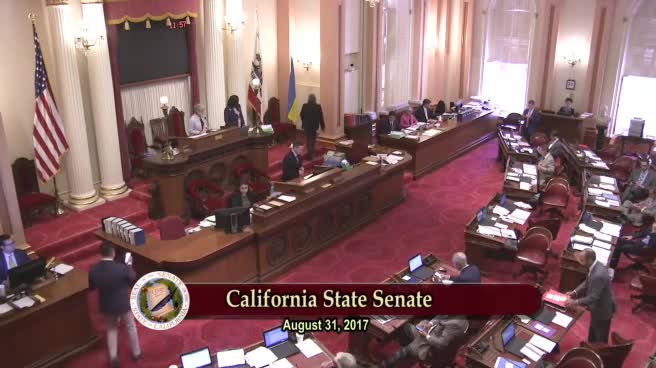 4MIN
Senate Floor
 7MIN
Senate Standing Committee on Judiciary
 6MIN
Senate Standing Committee on Health
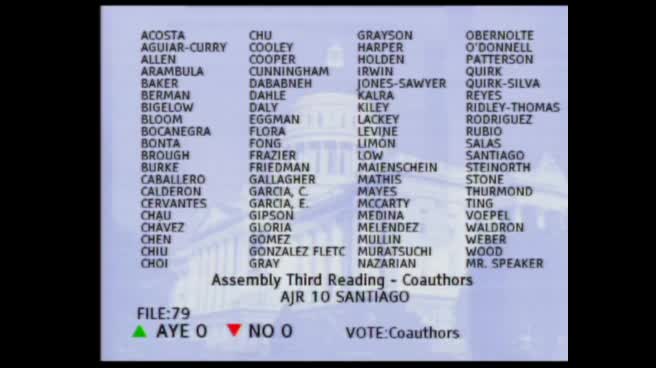 1MIN
Assembly Floor
 3MIN
Assembly Standing Committee on Appropriations
 7MIN
Assembly Standing Committee on Judiciary
 37MIN
Assembly Standing Committee on Health
Bill Author

Bill Co-Author(s):