AB 1111: Removing Barriers to Employment Act: Breaking Barriers to Employment Initiative.
- Session Year: 2017-2018
- House: Assembly
- Latest Version Date: 2017-10-15
Existing law, the California Workforce Innovation and Opportunity Act, establishes the California Workforce Development Board as the body responsible for assisting the Governor in the development, oversight, and continuous improvement of Californias workforce investment system and the alignment of the education and workforce investment systems to the needs of the 21st century economy and workforce. That act requires the establishment of a local workforce development board in each local workforce development area of the state to, among other things, carry out analyses of the economic conditions in the local region.
This bill would enact the Removing Barriers to Employment Act, which would establish the Breaking Barriers to Employment Initiative administered by the California Workforce Development Board. The bill would specify that the purpose of the initiative is to create a grant program to provide individuals with barriers to employment the services they need to enter, participate in, and complete broader workforce preparation, training, and education programs aligned with regional labor market needs. The bill would specify that people completing these programs should have the skills and competencies to successfully enter the labor market, retain employment, and earn wages that lead to self-sufficiency and economic security. The bill would require the board to develop criteria for the selection of grant recipients, as specified. The bill also would specify the criteria by which grants are required to be evaluated, the populations that are eligible to be served by grants, and the activities eligible for grant funding. The bill would make the funding of the initiative subject to an appropriation by the Legislature for that purpose and would make implementation of the initiative contingent on the board notifying the Department of Finance that sufficient moneys have been appropriated. The bill would create the Breaking Barriers to Employment Initiative Fund, as specified, in the State Treasury for the purpose of carrying out its provisions.
Existing law establishes the Labor and Workforce Development Agency overseen by the Secretary of Labor and Workforce Development and provides that the agency consists of, among other entities, the California Workforce Investment Board, the Employment Development Department, and the Employment Training Panel. The law, the California Workforce Innovation and Opportunity Act Act, establishes the California Workforce Development Board as the body responsible for assisting the Governor in the development, oversight, and continuous improvement of Californias workforce investment system and the alignment of the education and workforce investment systems to the needs of the 21st century economy and workforce. That act requires the establishment of a local workforce development board in each local workforce development area of the state to, among other things, carry out analyses of the economic conditions in the local region.
This bill would enact the Removing Barriers to Employment Act, which would establish the Breaking Barriers to Employment Initiative within the Labor and Workforce Development Agency. The bill would require the initiative to be led by the Secretary of Labor and Workforce Development and authorizes the secretary to assign all or part of the administration of the initiative to one or more entities within the agencys oversight, or to authorize another state agency, under specified conditions, to administer a portion of the initiative. administered by the California Workforce Development Board. The bill would specify that the purpose of the initiative is to create a grant program to assist provide individuals who have multiple with barriers to employment to receive the remedial education and work readiness skills that will help those individuals to successfully participate in training, apprenticeship, or employment opportunities that enhance skill development that will lead to self-sufficiency and economic stability, and would set forth the goals of the initiative. the services they need to enter, participate in, and complete broader workforce preparation, training, and education programs aligned with regional labor market needs. The bill would specify that people completing these programs should have the skills and competencies to successfully enter the labor market, retain employment, and earn wages that lead to self-sufficiency and economic security. The bill would require the secretary board to develop criteria for the selection of grant recipients, as specified, and would require the secretary, by January 1, 2019, and annually thereafter, to post a report on the agencys Internet Web site that provides a status report on the implementation of the initiative and aggregates information provided by grant recipients. The bill would authorize the secretary, when implementing the initiative, to fund a project that uses a model that was previously funded as a pilot project under certain programs if specified criteria are met. specified. The bill also would specify the criteria by which grants are required to be evaluated, the populations that are eligible to be served by grants, and the activities eligible for grant funding. The bill would make the funding of the initiative subject to an appropriation by the Legislature for that purpose and would make implementation of the initiative contingent on the secretary board notifying the Department of Finance that sufficient moneys have been appropriated. The bill would create the Breaking Barriers to Employment Initiative Fund, as specified, in the State Treasury for the purpose of carrying out its provisions.
Existing law establishes the Labor and Workforce Development Agency overseen by the Secretary of Labor and Workforce Development and provides that the agency consists of, among other entities, the California Workforce Investment Board, the Employment Development Department, and the Employment Training Panel. The California Workforce Innovation and Opportunity Act establishes the California Workforce Development Board as the body responsible for assisting the Governor in the development, oversight, and continuous improvement of Californias workforce investment system and the alignment of the education and workforce investment systems to the needs of the 21st century economy and workforce. That act requires the establishment of a local workforce development board in each local workforce development area of the state to, among other things, carry out analyses of the economic conditions in the local region.
This bill would enact the Removing Barriers to Employment Act, which would establish the Breaking Barriers to Employment Initiative within the Labor and Workforce Development Agency. The bill would require the initiative to be led by the Secretary of Labor and Workforce Development and authorizes the secretary to assign all or part of the administration of the initiative to one or more entities within the agencys oversight, or to authorize another state agency, under specified conditions, to administer a portion of the initiative. The bill would specify that the purpose of the initiative is to create a grant program to assist individuals who have multiple barriers to employment to receive the remedial education and work readiness skills that will help those individuals to successfully participate in training, apprenticeship, or employment opportunities that enhance skill development that will lead to self-sufficiency and economic stability, and would set forth the goals of the initiative. The bill would require the secretary to develop criteria for the selection of grant recipients, as specified, and would require the secretary, by January 1, 2019, and annually thereafter, to post a report on the agencys Internet Web site that provides a status report on the implementation of the initiative and aggregates information provided by grant recipients. The bill would authorize the secretary, when implementing the initiative, to fund a project that uses a model that was previously funded as a pilot project under certain programs if specified criteria are met. The bill would make the funding of the initiative subject to an appropriation by the Legislature for that purpose and would make implementation of the initiative contingent on the secretary notifying the Department of Finance that sufficient moneys have been appropriated.
As used in this article, Breaking Barriers to Employment Initiative or initiative means the Breaking Barriers to Employment Initiative established in this article.
14031.(a)All efforts funded under this initiative are intended to supplement and be aligned with the broader workforce and education system in the State of California. The initiative is not intended to duplicate or replicate existing programs or to create new workforce and education programs, but rather to provide supplemental funding and services to ensure the success of individuals either preparing to enter or already enrolled in workforce and education programs operating under the policy vision of this division and the state plan under this division.
(b)The primary purpose of the initiative is to provide individuals with barriers to employment the services they need to enter, participate in, and complete broader workforce preparation, training, and education programs aligned with regional labor market needs. Those who complete these programs should have the skills and competencies necessary to successfully enter the labor market, retain employment, and earn wages that lead to self-sufficiency, and eventually, economic security.
(c)The distinguishing characteristic of the initiative is the manner in which services will be delivered at the local and regional level. Under the initiative, services shall be delivered principally through a collaborative partnership between mission-driven, community-based organizations with experience in providing services consistent with the objectives of this initiative and to the populations specified, which may include, but are not limited to, faith-based, business-based, labor-based, cultural-based, and services-based organizations, and local workforce development boards to strengthen the Americas Job Center of California system. The role of the community-based organizations shall be to use their expertise in working with targeted populations and employers to ensure that individuals from these targeted populations receive the necessary supplemental, supportive, remedial, and wrap-around services they need to successfully enter, participate in, and complete workforce and education programs and enter, be retained, and advance in the labor market. The role of local workforce development boards is to ensure a connection between community-based organizations and the Americas Job Center of California system to integrate individuals served by community-based organizations under this initiative into the education system and broader workforce for employment.
14032.(a)Funding for the initiative shall be subject to appropriation by the Legislature, but only for the purposes expressed in this article, and shall not draw from, supplant, or redirect existing state or federally funded education, workforce, or employment services programs, except that those funds may, but shall not be required to, be used as leverage with initiative funds.
(b)Implementation of the initiative shall be contingent upon the California Workforce Development Board notifying the Department of Finance that sufficient moneys have been appropriated by the Legislature for this purpose.
(c)The California Workforce Development Board shall develop criteria for the selection of grant recipients that include, but are not limited to, all of the following:
(1)Outreach and technical assistance shall be provided to prospective applicants, especially in rural and small population areas.
(2)Grants shall be awarded on a competitive basis.
(3)The initiative shall include provisions to ensure that a range of targeted populations and geographic locations receive grants.
(4)Applications shall explain the community-based organizations capacity to provide services to relevant target populations and provide evidence of this capacity.
(5)Each grant proposal shall be consistent with the purposes of the initiative.
(d)Each application shall, at a minimum, include all of the following:
(1)The designation of at least one lead workforce development board and one lead mission-driven, community-based organization with experience in providing services consistent with the objectives of this initiative and to the populations specified, which may include, but is not limited to, faith-based, business-based, labor-based, cultural-based, and services-based organizations. Documentation shall be included to demonstrate that each lead workforce development board and lead community-based organization has agreed to be the lead designation in the grant proposal.
(2)The designation of one or more targeted populations that will be served by the grant.
(3)The designation of a service area, which may include one or more neighborhoods, local jurisdictions, regions, or statewide. A grant proposal that proposes to serve clients across one or more workforce development areas shall include a commitment to notify each workforce development board in the proposed service area.
(4)An explanation of the specific purpose of the grant funds, the roles and responsibilities of each of the lead workforce development boards and community-based organizations, and a discussion of how funds will be used, the number of individuals who will be served, and the services provided to these individuals.
(5)A description of how the grant proposal is designed to complement the work of, and integrate the individuals being served with, the broader workforce, education, and employment system within the proposed service area, and evidence that the proposal incorporates innovative strategies or proven practices for service delivery that will lead to improved outcomes, sustainability, and systems improvement.
(6)A grant application may be submitted jointly by a lead workforce development board and a lead community-based organization or jointly by one or more lead workforce development boards and one or more lead community-based organizations.
14033.(a)The purpose of the initiative shall be to provide individuals with barriers to employment the services they need to enter, participate in, and complete broader workforce preparation, training and education programs, and, ultimately, to obtain employment. Special emphasis shall be given to applications that integrate individuals from target populations into career pathway programs aligned with regional labor market needs.
(b)Grants shall be evaluated using the following criteria:
(1)Ability to provide the services proposed in the grant to the number of individuals specified in the grant as evidenced by, among other things, whether the grantee completed the work proposed.
(2)Ability of individuals to successfully complete relevant programming funded under the grant as demonstrated by relevant measures directly related to the purpose of the program.
(3)Ability of individuals to transition into or be integrated into the broader workforce and education system as evidenced by enrollment in relevant programs.
(4)Ability of individuals to succeed in both the broader workforce and education system and labor market once they transition into the broader system. This shall be measured by tracking these individuals utilizing the existing performance monitoring systems and metrics governing relevant programs and outcomes once they transition into the broader system.
(c)Grant applicants shall provide all necessary information to local workforce development boards and the California Workforce Development Board to facilitate grant performance evaluation.
(d)Grant applicants may be required to participate in technical assistance activities, including, but not limited to, the convening of communities of practice to identify and help replicate evidence-based practices and to help facilitate an assessment and evaluation of grant performance and initiative success.
14034.Populations eligible to be served by grants include, but are not limited to, all of the following:
(a)Youths who are disconnected from the education system or employment.
(b)Women seeking training or education to move into nontraditional fields of employment.
(c)Displaced workers and long-term unemployed.
(d)Unskilled or underskilled, low-wage workers.
(e)Persons for whom English is not their primary language.
(f)Economically disadvantaged persons.
(g)CalWORKs participants.
(h)Persons who are incarcerated and soon to be released or formerly incarcerated.
(i)Armed services veterans.
(j)Native Americans.
(k)Migrants or seasonal farmworkers.
(l)Persons with developmental or other disabilities.
(m)Any other population with barriers to employment identified in subdivision (j) of Section 14005.
(n)Immigrants.
(o)Persons over 50 years of age who need retraining for in-demand skills.
14035.Eligible activities for initiative and grant funds shall include, but are not limited to, all of the following:
(a)English language improvement training.
(b)Basic skills and adult education.
(c)High school diploma and GED acquisition.
(d)Skills and vocational training that aligns with regional labor market needs identified as part of the California Workforce Innovation and Opportunity Act regional planning process.
(e)Work experience.
(f)On-the-job training.
(g)Stipends for trainees.
(h)Earn and learn training.
(i)Industry certifications.
(j)Preapprenticeship programming offered in a manner that is consistent with the requirements of Section 14230, regardless of whether the preapprenticeship program funding source includes California Workforce Innovation and Opportunity Act funds.
(k)Mentoring.
(l)Other remedial education and work readiness skills.
(m)Supportive services under the California Workforce Innovation and Opportunity Act.
(n)Activities undertaken pursuant to subdivision (d) of Section 14033.
14036.The California Workforce Development Board may develop necessary policies to ensure that grants awarded under the initiative fund are activities that are consistent with the intent of this article.
14037.There is hereby created in the State Treasury the Breaking Barriers to Employment Initiative Fund. All moneys in the fund shall be available, upon appropriation by the Legislature, to carry out this article in support of the initiative. Subject to the approval of the Department of Finance, all moneys appropriated, or those collected or received from gifts, bequests, or donations, shall be deposited in the Breaking Barriers to Employment Initiative Fund in accordance with the terms of the gift or donation from which the moneys are derived and in accordance with Sections 8647, 11005, 11005.1, and 16302 of the Government Code.
As used in this article, Breaking Barriers to Employment Initiative or initiative means the Breaking Barriers to Employment Initiative established in this article.
14031.(a)All efforts funded under this initiative are intended to supplement and be aligned with the broader workforce and education system in the State of California. The initiative is not intended to duplicate or replicate existing programs or to create new workforce and education programs, but rather to provide supplemental funding and services to ensure the success of individuals either preparing to enter or already enrolled in workforce and education programs operating under the policy vision of this division and the state plan under this division.
(b)The primary purpose of the initiative is to provide individuals with barriers to employment the services they need to enter, participate in, and complete broader workforce preparation, training, and education programs aligned with regional labor market needs. Those who complete these programs should have the skills and competencies necessary to successfully enter the labor market, retain employment, and earn wages that lead to self-sufficiency, and eventually, economic security.
(c)The distinguishing characteristic of the initiative is the manner in which services will be delivered at the local and regional level. Under the initiative, services shall be delivered principally through a collaborative partnership between mission-driven, community-based organizations with experience in providing services consistent with the objectives of this initiative and to the populations specified, which may include, but are not limited to, faith-based, business-based, labor-based, cultural-based, and services-based organizations, and local workforce development boards to strengthen the Americas Job Center of California system. The role of the community-based organizations shall be to use their expertise in working with targeted populations and employers to ensure that individuals from these targeted populations receive the necessary supplemental, supportive, remedial, and wrap-around services they need to successfully enter, participate in, and complete workforce and education programs and enter, be retained, and advance in the labor market. The role of local workforce development boards is to ensure a connection between community-based organizations and the Americas Job Center of California system to integrate individuals served by community-based organizations under this initiative into the education system and broader workforce for employment.
14032.(a)Funding for the initiative shall be subject to appropriation by the Legislature, but only for the purposes expressed in this article, and shall not draw from, supplant, or redirect existing state or federally funded education, workforce, or employment services programs, except that those funds may, but shall not be required to, be used as leverage with initiative funds.
(b)Implementation of the initiative shall be contingent upon the California Workforce Development Board notifying the Department of Finance that sufficient moneys have been appropriated by the Legislature for this purpose.
(c)The California Workforce Development Board shall develop criteria for the selection of grant recipients that include, but are not limited to, all of the following:
(1)Outreach and technical assistance shall be provided to prospective applicants, especially in rural and small population areas.
(2)Grants shall be awarded on a competitive basis.
(3)The initiative shall include provisions to ensure that a range of targeted populations and geographic locations receive grants.
(4)Applications shall explain the community-based organizations capacity to provide services to relevant target populations and provide evidence of this capacity.
(5)Each grant proposal shall be consistent with the purposes of the initiative.
(6)(d)Each application shall, at a minimum, include all of the following:
(A)(1)The designation of at least one lead workforce development board and one lead mission-driven, community-based organization. organization with experience in providing services consistent with the objectives of this initiative and to the populations specified, which may include, but is not limited to, faith-based, business-based, labor-based, cultural-based, and services-based organizations. Documentation shall be included to demonstrate that each lead workforce development board and lead community-based organization has agreed to be the lead designation in the grant proposal.
(B)(2)The designation of one or more targeted populations that will be served by the grant.
(C)(3)The designation of a service area, which may include one or more neighborhoods, local jurisdictions, regions, or statewide. A grant proposal that proposes to serve clients across one or more workforce development areas shall include a commitment to notify each workforce development board in the proposed service area.
(D)(4)An explanation of the specific purpose of the grant funds, the roles and responsibilities of each of the lead workforce development boards and community-based organizations, and a discussion of how funds will be used, the number of individuals who will be served, and the services provided to these individuals.
(E)(5)A description of how the grant proposal is designed to complement the work of, and integrate the individuals being served with, the broader workforce, education, and employment system within the proposed service area, and evidence that the proposal incorporates innovative strategies or proven practices for service delivery that will lead to improved outcomes, sustainability, and systems improvement.
(F)(6)A grant application may be submitted jointly by a lead workforce development board and a lead community-based organization or jointly by one or more lead workforce development boards and one or more lead community-based organizations.
14033.(a)The purpose of the initiative shall be to provide individuals with barriers to employment the services they need to enter, participate in, and complete broader workforce preparation, training and education programs, and, ultimately, to obtain employment. Special emphasis shall be given to applications that integrate individuals from target populations into career pathway programs aligned with regional labor market needs. Grants
(b)Grants shall be evaluated using the following criteria:
(a)(1)Ability to provide the services proposed in the grant to the number of individuals specified in the grant as evidenced by, among other things, whether the grantee completed the work proposed.
(b)(2)Ability of individuals to successfully complete relevant programming funded under the grant as demonstrated by relevant measures directly related to the purpose of the program.
(c)(3)Ability of individuals to transition into or be integrated into the broader workforce and education system as evidenced by enrollment in relevant programs.
(d)(4)Individuals that transition into the broader system and employment shall be tracked utilizing the existing performance monitoring systems and metrics governing relevant programs and outcomes to ascertain their ability Ability of individuals to succeed in both the broader workforce and education system and labor market, including, but not limited to, whether individuals provided services by community-based organizations under the initiative actually succeed when they are integrated market once they transition into the broader system and labor market. system. This shall be measured by tracking these individuals utilizing the existing performance monitoring systems and metrics governing relevant programs and outcomes once they transition into the broader system.
(e)(c)Grant applicants shall provide all necessary information to local workforce development boards and the California Workforce Development Board to facilitate grant performance evaluation.
(f)(d)Grant applicants may be required to participate in technical assistance activities, including, but not limited to, the convening of communities of practice to identify and help replicate evidence-based practices and to help facilitate an assessment and evaluation of grant performance and initiative success.
14034.Populations eligible to be served by grants include, but are not limited to, all of the following:
(a)Youths who are disconnected from the education system or employment.
(b)Women seeking training or education to move into nontraditional fields of employment.
(c)Displaced workers and long-term unemployed.
(d)Unskilled or underskilled, low-wage workers.
(e)Persons for whom English is not their primary language.
(f)Economically disadvantaged persons.
(g)CalWORKs participants.
(h)Persons who are incarcerated and soon to be released or formerly incarcerated.
(i)Armed services veterans.
(j)Native Americans.
(k)Migrants or seasonal farmworkers.
(l)Persons with developmental or other disabilities.
(m)Any other population with barriers to employment identified in subdivision (j) of Section 14005.
(n)Immigrants.
(o)Persons over 50 years of age who need retraining for in-demand skills.
14035.Eligible activities for initiative and grant funds shall include, but are not limited to, all of the following:
(a)English language improvement training.
(b)Basic skills and adult education.
(c)High school diploma and GED acquisition.
(d)Skills and vocational training that aligns with regional labor market needs identified as part of the California Workforce Innovation and Opportunity Act regional planning process.
(e)Work experience.
(f)On-the-job training.
(g)Stipends for trainees.
(h)Earn and learn training.
(i)Industry certifications.
(j)Preapprenticeship programming offered in a manner that is consistent with the requirements of Section 14230, regardless of whether the preapprenticeship program funding source includes California Workforce Innovation and Opportunity Act funds.
(k)Mentoring.
(l)Other remedial education and work readiness skills.
(m)Supportive services under the California Workforce Innovation and Opportunity Act.
(n)Activities undertaken pursuant to subdivision (f) (d) of Section 14033.
14036.The California Workforce Development Board may develop necessary policies to ensure that grants awarded under the initiative fund are activities that are consistent with the intent of this article.
14037.There is hereby created in the State Treasury the Breaking Barriers to Employment Initiative Fund. All moneys in the fund shall be available, upon appropriation by the Legislature, to carry out this article in support of the initiative. Subject to the approval of the Department of Finance, all moneys appropriated, or those collected or received from gifts, bequests, or donations, shall be deposited in the Breaking Barriers to Employment Initiative Fund in accordance with the terms of the gift or donation from which the moneys are derived and in accordance with Sections 8647, 11005, 11005.1, and 16302 of the Government Code.
As used in this article, Breaking Barriers to Employment Initiative or initiative means the Breaking Barriers to Employment Initiative established in this article.
14031.(a)All efforts funded under this initiative are intended to supplement and be aligned with the broader workforce and education system in the State of California. The initiative is not intended to duplicate or replicate existing programs or to create new workforce and education programs, but rather to provide supplemental funding and services to ensure the success of individuals either preparing to enter or already enrolled in workforce and education programs operating under the policy vision of this division and the state plan under this division.
(b)The primary purpose of the initiative is to provide individuals with barriers to employment the services they need to enter, participate in, and complete broader workforce preparation, training, and education programs aligned with regional labor market needs. Those who complete these programs should have the skills and competencies necessary to successfully enter the labor market, retain employment, and earn wages that lead to self-sufficiency, and eventually, economic security.
(c)The distinguishing characteristic of the initiative is the manner in which services will be delivered at the local and regional level. Under the initiative, services shall be delivered principally through a collaborative partnership between community-based organizations and local workforce development boards to strengthen the Americas Job Center of California system. The role of the community-based organizations shall be to use their expertise in working with targeted populations and employers to ensure that individuals from these targeted populations receive the necessary supplemental, supportive, remedial, and wrap-around services they need to successfully enter, participate in, and complete workforce and education programs and enter, be retained, and advance in the labor market. The role of local workforce development boards is to ensure a connection between community-based organizations and the Americas Job Center of California system to integrate individuals served by community-based organizations under this initiative into the education system and broader workforce for employment.
14032.(a)Funding for the initiative shall be subject to appropriation by the Legislature, but only for the purposes expressed in this article, and shall not draw from, supplant, or redirect existing state or federally funded education, workforce, or employment services programs, except that those funds may, but shall not be required to, be used as leverage with initiative funds.
(b)Implementation of the initiative shall be contingent upon the California Workforce Development Board notifying the Department of Finance that sufficient moneys have been appropriated by the Legislature for this purpose.
(c)The California Workforce Development Board shall develop criteria for the selection of grant recipients that include, but are not limited to, all of the following:
(1)Outreach and technical assistance shall be provided to prospective applicants, especially in rural and small population areas.
(2)Grants shall be awarded on a competitive basis.
(3)The initiative shall include provisions to ensure that a range of targeted populations and geographic locations receive grants.
(4)Applications shall explain the community-based organizations capacity to provide services to relevant target populations and provide evidence of this capacity.
(5)Each grant proposal shall be consistent with the purposes of the initiative.
(6)Each application shall, at a minimum, include all of the following:
(A)The designation of at least one lead workforce development board and one lead community-based organization. Documentation shall be included to demonstrate that each lead workforce development board and lead community-based organization has agreed to be the lead designation in the grant proposal.
(B)The designation of one or more targeted populations that will be served by the grant.
(C)The designation of a service area, which may include one or more neighborhoods, local jurisdictions, regions, or statewide. A grant proposal that proposes to serve clients across one or more workforce development areas shall include a commitment to notify each workforce development board in the proposed service area.
(D)An explanation of the specific purpose of the grant funds, the roles and responsibilities of each of the lead workforce development boards and community-based organizations, and a discussion of how funds will be used, the number of individuals who will be served, and the services provided to these individuals.
(E)A description of how the grant proposal is designed to complement the work of, and integrate the individuals being served with, the broader workforce, education, and employment system within the proposed service area, and evidence that the proposal incorporates innovative strategies or proven practices for service delivery that will lead to improved outcomes, sustainability, and systems improvement.
(F)A grant application may be submitted jointly by a lead workforce development board and a lead community-based organization or jointly by one or more lead workforce development boards and one or more lead community-based organizations.
14033.The purpose of the initiative shall be to provide individuals with barriers to employment the services they need to enter, participate in, and complete broader workforce preparation, training and education programs, and, ultimately, to obtain employment. Special emphasis shall be given to applications that integrate individuals from target populations into career pathway programs aligned with regional labor market needs. Grants shall be evaluated using the following criteria:
(a)Ability to provide the services proposed in the grant to the number of individuals specified in the grant as evidenced by, among other things, whether the grantee completed the work proposed.
(b)Ability of individuals to successfully complete relevant programming funded under the grant as demonstrated by relevant measures directly related to the purpose of the program, including, but not limited to, the number of individuals who completed substance abuse treatment, received a GED, or improved their basic skills. program.
(c)Ability of individuals to transition into or be integrated into the broader workforce and education system as evidenced by enrollment in relevant programs.
(d)Individuals that transition into the broader system and employment shall be tracked utilizing the existing performance monitoring systems and metrics governing relevant programs and outcomes to ascertain their ability to succeed in the broader workforce and education system and labor market, including, but not limited to, whether individuals provided services by community-based organizations under the initiative actually succeed when they are integrated into the broader system and labor market.
(e)Grant applicants shall provide all necessary information to local workforce development boards and the California Workforce Development Board to facilitate grant performance evaluation.
(f)Grant applicants may be required to participate in technical assistance activities, including, but not limited to, the convening of communities of practice to identify and help replicate evidence-based practices and to help facilitate an assessment and evaluation of grant performance and initiative success.
14034.Populations eligible to be served by grants include, but are not limited to, all of the following:
(a)Youths who are disconnected from the education system or employment.
(b)Women seeking training or education to move into nontraditional fields of employment.
(c)Displaced workers and long-term unemployed.
(d)Unskilled or underskilled, low-wage workers.
(e)Persons for whom English is not their primary language.
(f)Economically disadvantaged persons.
(g)CalWORKs participants.
(h)Persons who are incarcerated and soon to be released or formerly incarcerated.
(i)Armed services veterans.
(j)Native Americans.
(k)Migrants or seasonal farmworkers.
(l)Persons with developmental or other disabilities.
(m)Any other population with barriers to employment identified in subdivision (j) of Section 14005.
(n)Immigrants.
(o)Persons over 50 years of age who need retraining for in-demand skills.
14035.Eligible activities for initiative and grant funds shall include, but are not limited to, all of the following:
(a)English language improvement training.
(b)Basic skills and adult education.
(c)High school diploma and GED acquisition.
(d)Skills and vocational training that aligns with regional labor market needs identified as part of the California Workforce Innovation and Opportunity Act regional planning process.
(e)Work experience.
(f)On-the-job training.
(g)Stipends for trainees.
(h)Earn and learn training.
(i)Industry certifications.
(j)Preapprenticeship programming offered in a manner that is consistent with the requirements of Section 14230, regardless of whether the preapprenticeship program funding source includes California Workforce Innovation and Opportunity Act funds.
(k)Mentoring.
(l)Other remedial education and work readiness skills.
(m)Supportive services under the California Workforce Innovation and Opportunity Act.
(n)Activities undertaken pursuant to subdivision (f) of Section 14033.
14036.The California Workforce Development Board may develop necessary policies to ensure that grants awarded under the initiative fund are activities that are consistent with the intent of this article.
14037.There is hereby created in the State Treasury the Breaking Barriers to Employment Initiative Fund. All moneys in the fund shall be available, upon appropriation by the Legislature, to carry out this article in support of the initiative. Subject to the approval of the Department of Finance, all moneys appropriated, or those collected or received from gifts, bequests, or donations, shall be deposited in the Breaking Barriers to Employment Initiative Fund in accordance with the terms of the gift or donation from which the moneys are derived and in accordance with Sections 8647, 11005, 11005.1, and 16302 of the Government Code.
As used in this article, Breaking Barriers to Employment Initiative or initiative means the Breaking Barriers to Employment Initiative established in this article.
14031.(a)All efforts funded under this initiative are intended to supplement and be aligned with the broader workforce and education system in the State of California. The initiative is not intended to duplicate or replicate existing programs or to create new workforce and education programs, but rather to provide supplemental funding and services to ensure the success of individuals either preparing to enter or already enrolled in workforce and education programs operating under the policy vision of this division and the state plan under this division.
(b)The primary purpose of the initiative is to provide individuals with barriers to employment the services they need to enter, participate in, and complete broader workforce preparation, training, and education programs aligned with regional labor market needs. Those who complete these programs should have the skills and competencies necessary to successfully enter the labor market, retain employment, and earn wages that lead to self-sufficiency, and eventually, economic security.
(c)The distinguishing characteristic of the initiative is the manner in which services will be delivered at the local and regional level. Under the initiative, services shall be delivered principally through a collaborative partnership between community-based organizations and local workforce development boards to strengthen the Americas Job Center of California system. The role of the community-based organizations shall be to use their expertise in working with targeted populations and employers to ensure that individuals from these targeted populations receive the necessary supplemental, supportive, remedial, and wrap-around services they need to successfully enter, participate in, and complete workforce and education programs and enter, be retained, and advance in the labor market. The role of local workforce development boards is to ensure a connection between community-based organizations and the Americas Job Center of California system to integrate individuals served by community-based organizations under this initiative into the education system and broader workforce for employment.
14032.(a)Funding for the initiative shall be subject to appropriation by the Legislature, but only for the purposes expressed in this article, and shall not draw from, supplant, or redirect existing state or federally funded education, workforce, or employment services programs, except that those funds may, but shall not be required to, be used as leverage with initiative funds.
(b)Implementation of the initiative shall be contingent upon the California Workforce Development Board notifying the Department of Finance that sufficient moneys have been appropriated by the Legislature for this purpose.
(c)The California Workforce Development Board shall develop criteria for the selection of grant recipients that include, but are not limited to, all of the following:
(1)Outreach and technical assistance shall be provided to prospective applicants, especially in rural and small population areas.
(2)Grants shall be awarded on a competitive basis.
(3)The initiative shall include provisions to ensure that a range of targeted populations and geographic locations receive grants.
(4)Applications shall explain the community-based organizations capacity to provide services to relevant target populations and provide evidence of this capacity.
(5)Each grant proposal shall be consistent with the purposes of the initiative.
(6)Each application shall, at a minimum, include all of the following:
(A)The designation of at least one lead workforce development board and one lead community-based organization. Documentation shall be included to demonstrate that each lead workforce development board and lead community-based organization has agreed to be the lead designation in the grant proposal.
(B)The designation of one or more targeted populations that will be served by the grant.
(C)The designation of a service area, which may include one or more neighborhoods, local jurisdictions, regions, or statewide. A grant proposal that proposes to serve clients across one or more workforce development areas shall include a commitment to notify each workforce development board in the proposed service area.
(D)An explanation of the specific purpose of the grant funds, the roles and responsibilities of each of the lead workforce development boards and community-based organizations, and a discussion of how funds will be used, the number of individuals who will be served, and the services provided to these individuals.
(E)A description of how the grant proposal is designed to complement the work of, and integrate the individuals being served with, the broader workforce, education, and employment system within the proposed service area, and evidence that the proposal incorporates innovative strategies or proven practices for service delivery that will lead to improved outcomes, sustainability, and systems improvement.
(F)A grant application may be submitted jointly by a lead workforce development board and a lead community-based organization or jointly by one or more lead workforce development boards and one or more lead community-based organizations.
14033.The purpose of the initiative shall be to provide individuals with barriers to employment the services they need to enter, participate in, and complete broader workforce preparation, training and education programs, and, ultimately, to obtain employment. Special emphasis shall be given to applications that integrate individuals from target populations into career pathway programs aligned with regional labor market needs. Grants shall be evaluated using the following criteria:
(a)Ability to provide the services proposed in the grant to the number of individuals specified in the grant as evidenced by, among other things, whether the grantee completed the work proposed.
(b)Ability of individuals to successfully complete relevant programming funded under the grant as demonstrated by relevant measures directly related to the purpose of the program, including, but not limited to, the number of individuals who completed substance abuse treatment, received a GED, or improved their basic skills.
(c)Ability of individuals to transition into or be integrated into the broader workforce and education system as evidenced by enrollment in relevant programs.
(d)Individuals that transition into the broader system and employment shall be tracked utilizing the existing performance monitoring systems and metrics governing relevant programs and outcomes to ascertain their ability to succeed in the broader workforce and education system and labor market, including, but not limited to, whether individuals provided services by community-based organizations under the initiative actually succeed when they are integrated into the broader system and labor market.
(e)Grant applicants shall provide all necessary information to local workforce development boards and the California Workforce Development Board to facilitate grant performance evaluation.
(f)Grant applicants may be required to participate in technical assistance activities, including, but not limited to, the convening of communities of practice to identify and help replicate evidence-based practices and to help facilitate an assessment and evaluation of grant performance and initiative success.
14034.Populations eligible to be served by grants include, but are not limited to, all of the following:
(a)Youths who are disconnected from the education system or employment.
(b)Women seeking training or education to move into nontraditional fields of employment.
(c)Displaced workers and long-term unemployed.
(d)Unskilled or underskilled, low-wage workers.
(e)Persons for whom English is not their primary language.
(f)Economically disadvantaged persons.
(g)CalWORKs participants.
(h)Persons who are incarcerated and soon to be released or formerly incarcerated.
(i)Armed services veterans.
(j)Native Americans.
(k)Migrants or seasonal farmworkers.
(l)Persons with developmental or other disabilities.
(m)Any other population with barriers to employment identified in subdivision (j) of Section 14005.
(n)Immigrants.
(o)Persons over 50 years of age who need retraining for in-demand skills.
14035.Eligible activities for initiative and grant funds shall include, but are not limited to, all of the following:
(a)English language improvement training.
(b)Basic skills and adult education.
(c)High school diploma and GED acquisition.
(d)Skills and vocational training that aligns with regional labor market needs identified as part of the California Workforce Innovation and Opportunity Act regional planning process.
(e)Work experience.
(f)On-the-job training.
(g)Stipends for trainees.
(h)Earn and learn training.
(i)Industry certifications.
(j)Preapprenticeship programming offered in a manner that is consistent with the requirements of Section 14230, regardless of whether the preapprenticeship program funding source includes California Workforce Innovation and Opportunity Act funds.
(k)Mentoring.
(l)Other remedial education and work readiness skills.
(m)Supportive services under the California Workforce Innovation and Opportunity Act.
(n)Activities undertaken pursuant to subdivision (f) of Section 14033.
14036.The California Workforce Development Board may develop necessary policies to ensure that grants awarded under the initiative fund are activities that are consistent with the intent of this article.
14037.There is hereby created in the State Treasury the Breaking Barriers to Employment Initiative Fund. All moneys in the fund shall be available, upon appropriation by the Legislature, to carry out this article in support of the initiative. Subject to the approval of the Department of Finance, all moneys appropriated, or those collected or received from gifts, bequests, or donations, shall be deposited in the Breaking Barriers to Employment Initiative Fund in accordance with the terms of the gift or donation from which the moneys are derived and in accordance with Sections 8647, 11005, 11005.1, and 16302 of the Government Code.
All matter omitted in this version of the bill appears in the bill as amended in the Senate, June 19, 2017. (JR11)The Legislature finds and declares all of the following:
(a)The economy in California continues to improve as shown by lower unemployment rates and higher job growth, but poverty is still an issue in many of our cities and among many of our citizens. The California Poverty Measure reported in 2015 that 78 percent of Californians in poverty live in families with at least one adult working, with 69 percent of those working full time. Low-income families continue to struggle to pay for the basic cost of supporting their families. With low wages, lack of job skills, and limited access to current resources for workforce training, this target population falls further behind and cannot escape poverty.
(b)Lack of formal education, low English literacy, and lower-level job skills prevent upward mobility in pay and job stability. There is a need for improved access and funding to provide career pathways services, particularly for the poor.
(c)Increased funding for English language improvement training, basic skills and adult education, high school diploma and GED acquisition, skills training, work experience, on-the-job training, earn-as-you-learn, industry certifications, mentoring, case management, and more is needed to bridge the gap to gainful employment for the more difficult to reach in our population.
(d)Local community-based organizations, government agencies, and workforce development boards throughout California struggle to provide adequate services to the increasing number of poor residents who need career pathways services. In particular, funding is needed for case management, career guidance, and other services that enhance training and job retention and the ability to meet family basic expense needs while pursuing a career opportunity. It is important to recognize the range of career pathways available to individuals who face barriers to employment. Identifying the best pathway for an individual may include those developed by the state, federal, or tribal governments, as well as community-based service providers.
(e)Special emphasis is needed to make sure that programs reach those among us with the most difficult needs with the goal of preparing those persons for training, educational, apprenticeship, or employment opportunities.
180.1As used in this division, Breaking Barriers to Employment Initiative or initiative means the Breaking Barriers to Employment Initiative established in this chapter. division.
180.2(a)This division establishes the The Breaking Barriers to Employment Initiative is hereby established within the agency. The initiative shall be led by the Secretary of Labor and Workforce Development, who Development. The secretary may assign all or part of the administration of the initiative to one or more entities within the agencys oversight. The secretary may authorize another state entity that has experience with serving one or more of the populations identified in subdivision (e) of Section 180.3 to administer a portion of the initiative, if the other state entity agrees to meet all the requirements of this division and to provide the secretary with the information necessary to meet the reporting requirements.
(b)(1)The purpose of the initiative is to assist individuals who have multiple barriers to employment to receive the remedial education and work readiness skills that will help them to successfully participate in training, apprenticeship, or employment opportunities that enhance skill development that will lead to self-sufficiency and economic stability.
(2)The initiative operationalizes an innovative model of effective collaboration between two important workforce partners for the benefit of populations that routinely face barriers to employment. By leveraging the experience of community-based organizations to meet the unique needs of certain groups with the resources of the workforce boards, the initiative creates an on-ramp to groups that have been historically disconnected from traditional programs. The role of the lead community-based organization is to use its expertise in working with the targeted populations to remediate education and workforce readiness skills and to collaborate with the lead workforce board to transition clients to career pathways and sector strategies. The role of the lead workforce development board, at a minimum, is to collaborate with and assist the lead community-based organization in designing a program that supports the transition of participants who have successfully achieved the goals and objectives of the grant proposal to career pathways and sector strategies.
(c)In developing the initiative, the Secretary secretary or his or her delegate shall consult with public and private stakeholders, including nonprofit community-based organizations, workforce development boards, local governments, and other entities that serve individuals who face barriers to employment and educational programs.
(d)(1)Funding for the initiative shall be subject to appropriation by the Legislature for that purpose. Implementation of the initiative is contingent upon thesecretary the secretary notifying the Department of Finance that sufficient moneys have been appropriated and deposited in the Consolidated Work Program Fund.
(2)The secretary or the state entity authorized by the secretary pursuant to subdivision (a) shall be responsible as appropriate for the oversight and monitoring of any funds awarded pursuant to the initiative to ensure the goals, objectives, and other requirements of the initiative are met.
(e)The goals of the initiative shall include all of the following:
(1)Individuals who face barriers to employment take measurable steps to remediate education and workforce readiness skills.
(2)Partnerships between community-based organizations and workforce development boards and providers of quality education and training are demonstrably strengthened in ways that benefit their clients ability to continue to access services that ultimately lead clients utilizing career pathways and sector strategies.
(3)Community-based organizations increase their capacity to achieve and measure results.
(f)Targeted population for initiative grant proposals are defined in subdivision (e) of Section 180.3.
(g)The outcomes of the initiative shall be reported pursuant to Section 180.3.
180.3.The secretary shall develop criteria for the selection of grant recipients that meet all of the following:
(a)Outreach and technical assistance shall be provided to prospective applicants, especially in rural and small population areas.
(b)(1)Grants shall be awarded on a competitive basis. The initiative shall include provisions to ensure a range of targeted populations and geographic locations receive training opportunities.
(2)Applications shall be evaluated based on the lead community-based organizations and workforce development boards demonstrated capacity to successfully deliver previous programs to the targeted populations who whom the applicant is proposing to serve pursuant to subdivisions (c) and (e).
(3)Each grant proposal shall further the initiative goals, as identified in subdivision (e) of Section 180.2.
(4)Eligible activities for grant funds may include, but are not limited to, English language improvement training, basic skills and adult education, high school diploma or recognized equivalency certificate, skills and vocational training, work experience, on-the-job training, stipends for trainees, entrepreneurship training, earn-as-you-learn, industry certifications, preapprenticeship programs, job placement, mentoring, and other remedial education and work readiness and retention skills.
(5)Grant proposals funded through the initiative shall use at least 90 percent of their funds for direct services to the clients who face multiple barriers to employment, including staffing to provide those services.
(6)Grant proposals funded through this initiative shall be for a term of at least two years.
(c)Each application shall, at a minimum, include all of the following:
(1)The designation of at least one lead workforce development board and one lead community-based organization.
(2)The designation of one or more targeted populations which that will be served by the grant, as specified in subdivision (e).
(3)The designation of a service area, which may include one or more neighborhoods, local jurisdictions, or regions, or may be statewide. A grant proposal that proposes to serve clients across one or more workforce development areas shall include a commitment to notify each workforce development board in the proposed service area, pursuant to the requirements in subdivision (g).
(4)An explanation of the specific purpose of the grant funds, the roles and responsibilities of each of the lead workforce development boards and community-based organizations, and a discussion of the general methodology and training methods proposed to be used.
(5)A description of how the grant proposal is designed to complement the work of, and integrate the individuals being served with, the workforce development boards within the proposed service area.
(d)A grant application may be submitted jointly by a lead workforce development board and a lead community-based organization, or jointly by one or more lead workforce development board or boards, and one or more lead community-based organization or organizations.
(e)Eligible targeted populations for the initiative grant proposals include:
(1)Youths who are disconnected from the education system or employment.
(2)Women seeking training or education to move into nontraditional fields of employment.
(3)Displaced workers and long-term unemployed.
(4)Unskilled or under-skilled, underskilled, low-earning workers.
(5)Persons for whom English is not their primary language.
(6)Economically disadvantaged persons.
(7)CalWORKS CalWORKs participants.
(8)Persons who are incarcerated and soon to be released or formerly incarcerated.
(9)Armed services veterans.
(10)Native Americans.
(11)Migrants or seasonal farmworkers.
(12)Persons with developmental or other disabilities.
(f)(1)The proposal shall identify baseline criteria and metrics by which the overall success of the proposal can be evaluated, consistent with the initiative goals as identified in subdivision (e) of Section 180.2. The proposal shall identify which activities, if any, will require enrollment or coenrollment in the federal Workforce Innovation and Opportunity Act of 2014 for performance reporting and tracking purposes. The proposal shall also explain the manner in which the progress of the individuals participating in the program will be monitored during the grant period.
(2)One component of the grant proposal shall provide for a preservice education and training assessment, which shall form the baseline for measuring program performance. A prior assessment may be used if, in the determination of the Secretary, secretary, its results are accurate and appropriate for the grant proposal.
(3)The grant proposal shall identify overall measurements of success relevant to the targeted population, consistent with the initiative goals identified in subdivision (e) of Section 180.2. The proposal shall explain how the baseline measurements, as established by individual assessments, will be used to calibrate the overall measurements of success. Measurements and metrics may include, but are not limited to:
(A)The number of participants in the program who have completed a high school diploma or received a recognized equivalency certificate.
(B)The number of participants in the program who have completed a remedial education program.
(C)The number of participants in the program who have completed a work readiness program.
(D)The number of participants who have supportive services, including child care and transportation, that are necessary to enable an individual to participate in education and training.
(E)The number of participants who have completed a certified drug treatment or mental health program.
(F)The number of participants who have matriculated to a preapprenticeship or apprenticeship program.
(G)The number of participants who passed the Ability to Benefit ability-to-benefit test and enrolled into a career pathway program, as defined in the federal Higher Education Act (20 U.S.C. Sec. 1091(d)(2)).
(H)The number of participants placed into part-time or full-time jobs.
(g)(1)Key features of the grant shall be provided in a grant agreement between the grant recipient and the agency, including, but not limited to, the purpose of the grant, expected outcomes, the oversight and monitoring process, reporting requirements, the term of the grant, amount of the grant, and intended use of the grant moneys.
(2)As a condition of receiving funds, a grant recipient shall agree to provide information to the Secretary secretary that is determined by the Secretary secretary as necessary to meet all reporting requirements.
(3)Prior to the signing of the grant agreement, the grant recipient or recipients who have been awarded funds for a grant proposal that serves clients across one or more workforce development areas shall provide the Secretary secretary with documentation that each workforce development board within the proposed service area has been notified of the grant award and provided a summary of its purpose and goals.
(h)On at least an annual basis and upon completion of the grant period, grant recipients shall report to the Secretary secretary information regarding their use of funds, workforce training outcomes, and any other information required by the Secretary. secretary.
(i)By January 1, 2019, and by January 1 of each year thereafter, the Secretary secretary shall post a report on the agencys Internet Web site that provides a status report on the implementation of the initiative and aggregates the information provided by the grant recipients, including, but not limited to, the overall progress and success of the grant programs.
180.4.In implementing the initiative, the Secretary secretary may fund a full-scale project that uses a model that was previously funded as a pilot project through the Workforce Accelerator, the Supervised Population Workforce Training Program, SlingShot, or other existing programs, to the extent that the goals, measures, and metrics are sufficiently aligned, so as to:
(a)Serve the same client base.
(b)Address the needs of individuals who face multiple barriers to employment to receive remedial education and work readiness skills.
(c)Have an end goal of preparing those individuals for further training that results in apprenticeship or middle-skill employment opportunities. Eligible applicants for programs under this section shall exclusively be joint applications from one or more workforce development boards and one or more community-based organizations.
The Legislature finds and declares all of the following:
(a)The economy in California continues to improve as shown by lower unemployment rates and higher job growth, but poverty is still an issue in many of our cities and among many of our citizens. The California Poverty Measure reported in 2015 that 78 percent of Californians in poverty live in families with at least one adult working, with 69 percent of those working full time. Low-income families continue to struggle to pay for the basic cost of supporting their families. With low wages, lack of job skills, and limited access to current resources for workforce training, this target population falls further behind and cannot escape poverty.
(b)Lack of formal education, low English literacy, and lower-level job skills prevent upward mobility in pay and job stability. There is a need for improved access and funding to provide career pathways services, particularly for the poor.
(c)Increased funding for English language improvement training, basic skills and adult education, high school diploma and GED acquisition, skills training, work experience, on-the-job training, earn-as-you-learn, industry certifications, mentoring, case management, and more is needed to bridge the gap to gainful employment for the more difficult to reach in our population.
(d)Local community-based organizations, government agencies, and workforce development boards throughout California struggle to provide adequate services to the increasing number of poor residents who need career pathways services. In particular, funding is needed for case management, career guidance, and other services that enhance training and job retention and the ability to meet family basic expense needs while pursuing a career opportunity. It is important to recognize the range of career pathways available to individuals who face barriers to employment. Identifying the best pathway for an individual may include those developed by the state, federal, or tribal governments, as well as community-based service providers.
(e)Special emphasis is needed to make sure that programs reach those among us with the most difficult needs with the goal of preparing those persons for training, educational, apprenticeship, or employment opportunities.
180.1As used in this division, Breaking Barriers to Employment Initiative or initiative means the Breaking Barriers to Employment Initiative established in this chapter.
180.2(a)This division establishes the Breaking Barriers to Employment Initiative within the agency. The initiative shall be led by the Secretary of Labor and Workforce Development, who may assign all or part of the administration of the initiative to one or more entities within the agencys oversight. The Secretary secretary may authorize another state entity that has experience with serving one or more of the populations identified in subdivision (e) of Section 180.3 to administer a portion of the initiative, if the other state entity agrees to meet all the requirements of this division and to provide the Secretary secretary with the information necessary to meet the reporting requirements.
(b)(1)The purpose of the initiative is to assist individuals who have multiple barriers to employment to receive the remedial education and work readiness skills that will help them to successfully participate in training, apprenticeship, or employment opportunities that enhance skill development that will lead to self-sufficiency and economic stability.
(2)The initiative operationalizes an innovative model of effective collaboration between two important workforce partners for the benefit of populations that routinely face barriers to employment. By leveraging the experience of community-based organizations to meet the unique needs of certain groups with the resources of the workforce boards, the initiative creates an on-ramp to groups that have been historically disconnected from traditional programs. The role of the lead community-based organization is to use its expertise in working with the targeted populations to remediate education and workforce readiness skills and to collaborate with the lead workforce board to transition clients to career pathways and sector strategies. The role of the lead workforce development board, at a minimum, is to collaborate with and assist the lead community-based organization in designing a program that supports the transition of participants who have successfully achieved the goals and objectives of the grant proposal to career pathways and sector strategies.
(c)In developing the initiative, the Secretary or his or her delegate shall consult with public and private stakeholders, including nonprofit community-based organizations, workforce development boards, local governments, and other entities that serve individuals who face barriers to employment and educational programs.
(d)(1)Funding for the initiative shall be subject to appropriation by the Legislature for that purpose. Implementation of the initiative is contingent upon the Secretarysecretary notifying the Department of Finance that sufficient moneys have been appropriated and deposited in the Consolidated Work Program Fund.
(2)The secretary or the state entity authorized by the secretary pursuant to subdivision (a) shall be responsible as appropriate for the oversight and monitoring of any funds awarded pursuant to the initiative to ensure the goals, objectives, and other requirements of the initiative are met.
(e)The goals of the initiative shall include all of the following:
(1)Individuals who face barriers to employment take measurable steps to remediate education and workforce readiness skills.
(2)Partnerships between community-based organizations and workforce development boards and providers of quality education and training are demonstrably strengthened in ways that benefit their clients ability to continue to access services that ultimately lead clients utilizing career pathways and sector strategies.
(3)Community-based organizations increase their capacity to achieve and measure results.
(f)Targeted population for initiative grant proposals are defined in subdivision (e) of Section 180.3.
(g)The Secretary or the state entity authorized by the Secretary pursuant to subdivision (a) shall be responsible as appropriate for the oversight and monitoring of any funds awarded pursuant to the initiative to ensure the goals, objectives, and other requirements of the initiative are met.(h)(g)The outcomes of the initiative shall be reported pursuant to Section 180.3.
180.3.The Secretary secretary shall develop criteria for the selection of grant recipients that meet all of the following:
(a)Outreach and technical assistance shall be provided to prospective applicants, especially in rural and small population areas.
(b)(1)Grants shall be awarded on a competitive basis. The initiative shall include provisions to ensure a range of targeted populations and geographic locations receive training opportunities.
(2)Applications shall be evaluated based on the lead community-based organizations and workforce development boards demonstrated capacity to successfully deliver previous programs to the targeted populations who the applicant is proposing to serve pursuant to subdivisions (c) and (e).
(3)Each grant proposal shall further the initiative goals, as identified in subdivision (e) of Section 180.2.
(4)Eligible activities for grant funds may include, but are not limited to, English language improvement training, basic skills and adult education, high school diploma or recognized equivalency certificate, skills and vocational training, work experience, on-the-job training, stipends for trainees, entrepreneurship training, earn-as-you-learn, industry certifications, preapprenticeship programs, job placement, mentoring, and other remedial education and work readiness and retention skills.
(5)Grant proposals funded through the initiative shall use at least 90 percent of their funds for direct services to the clients who face multiple barriers to employment, including staffing to provide those services.
(6)Grant proposals funded through this initiative shall be for a term of at least two years.
(c)Each application shall, at a minimum, include all of the following:
(1)The designation of at least one lead workforce development board and one lead community-based organization. Documentation shall be included that each lead workforce development board and lead community-based organization has agreed to be the lead designation in the grant proposal.
(2)The designation of one or more targeted populations which will be served by the grant, as specified in subdivision (e).
(3)The designation of a service area, which may include one or more neighborhoods, local jurisdictions, regions, or statewide. A grant proposal that proposes to serve clients across one or more workforce development areas shall include a commitment to notify each workforce development board in the proposed service area, pursuant to the requirements in subdivision (g).
(4)An explanation of the specific purpose of the grant funds, the roles and responsibilities of each of the lead workforce development boards and community-based organizations, and a discussion of the general methodology and training methods proposed to be used.
(5)A description of how the grant proposal is designed to complement the work of, and integrate the individuals being served with, the workforce development boards within the proposed service area.
(d)A grant application may be submitted jointly by a lead workforce development board and a lead community-based organization, or jointly by one or more lead workforce development board or boards, and one or more lead community-based organization or organizations.
(e)Eligible targeted populations for the initiative grant proposals include:
(1)Youths who are disconnected from the education system or employment.
(2)Women seeking training or education to move into nontraditional fields of employment.
(3)Displaced workers and long-term unemployed.
(4)Unskilled or under-skilled, low-earning workers.
(5)Persons for whom English is not their primary language.
(6)Economically disadvantaged persons.
(7)CalWORKS participants.
(8)Persons who are incarcerated and soon to be released or formerly incarcerated.
(9)Armed services veterans.
(10)Native Americans.
(11)Migrants or seasonal farmworkers.
(12)Persons with developmental or other disabilities.
(f)(1)The proposal shall identify baseline criteria and metrics by which the overall success of the proposal can be evaluated, consistent with the initiative goals as identified in subdivision (e) of Section 180.2. The proposal shall identify which activities, if any, will require enrollment or coenrollment in the federal Workforce Innovation and Opportunity Act of 2014 for performance reporting and tracking purposes. The proposal shall also explain the manner in which the progress of the individuals participating in the program will be monitored during the grant period.
(2)One component of the grant proposal shall provide for a preservice education and training assessment, which shall form the baseline for measuring program performance. A prior assessment may be used if, in the determination of the Secretary, its results are accurate and appropriate for the grant proposal.
(3)The grant proposal shall identify overall measurements of success relevant to the targeted population, consistent with the initiative goals identified in subdivision (e) of Section 180.2. The proposal shall explain how the baseline measurements, as established by individual assessments, will be used to calibrate the overall measurements of success. Measurements and metrics may include, but are not limited to:
(A)The number of participants in the program who have completed a high school diploma or received a GED. recognized equivalency certificate.
(B)The number of participants in the program who have completed a remedial education program.
(C)The number of participants in the program who have completed a work readiness program.
(D)The number of participants who have received assistance to enroll their children in after school programs while the program participant enrolls in secondary or postsecondary education or maintains employment. supportive services, including child care and transportation, that are necessary to enable an individual to participate in education and training.
(E)The number of participants who have completed a certified drug treatment or mental health program.
(F)The number of participants who have matriculated to a preapprenticeship or apprenticeship program.
(G)The number of participants who passed the Ability to Benefit test and enrolled into a career pathway program, as defined in the federal Higher Education Act (20 U.S.C. Sec. 1091(d)(2)).
(H)The number of participants placed into part-time or full-time jobs.
(g)(1)Key features of the grant shall be provided in a grant agreement between the grant recipient and the agency, including, but not limited to, the purpose of the grant, expected outcomes, the oversight and monitoring process, reporting requirements, the term of the grant, amount of the grant, and intended use of the grant moneys.
(2)As a condition of receiving funds, a grant recipient shall agree to provide information to the Secretary that is determined by the Secretary as necessary to meet all reporting requirements.
(3)Prior to the signing of the grant agreement, the grant recipient or recipients who have been awarded funds for a grant proposal that serves clients across one or more workforce development areas shall provide the Secretary with documentation that each workforce development board within the proposed service area has been notified of the grant award and provided a summary of its purpose and goals.
(h)On at least an annual basis and upon completion of the grant period, grant recipients shall report to the Secretary information regarding their use of funds, workforce training outcomes, and any other information required by the Secretary.
(i)By January 1, 2019, and by January 1 of each year thereafter, the Secretary shall post a report on the agencys Internet Web site that provides a status report on the implementation of the initiative and aggregates the information provided by the grant recipients, including, but not limited to, the overall progress and success of the grant programs.
180.4.In implementing the initiative, the Secretary may fund a full-scale project that uses a model that was previously funded as a pilot project through the Workforce Accelerator, the Supervised Population Workforce Training Program, SlingShot, or other existing programs, to the extent that the goals, measures, and metrics are sufficiently aligned, so as to:
(a)Serve the same client base.
(b)Address the needs of individuals who face multiple barriers to employment to receive remedial education and work readiness skills.
(c)Have an end goal of preparing those individuals for further training that results in apprenticeship or middle-skill employment opportunities. Eligible applicants for programs under this section shall exclusively be joint applications from one or more workforce development boards and one or more community-based organizations.
REVISIONS: HeadingLines 2 and 3.The Legislature finds and declares all of the following:
(a)The economy in California continues to improve as shown by lower unemployment rates and higher job growth, but poverty is still an issue in many of our cities and among many of our citizens. The California Poverty Measure reported in 2015 that 78 percent of Californians in poverty live in families with at least one adult working, with 69 percent of those working full time. Low-income families continue to struggle to pay for the basic cost of supporting their families. With low wages, lack of job skills, and limited access to current resources for workforce training, this target population falls further behind and cannot escape poverty.
(b)Lack of formal education, low English literacy, and lower-level job skills prevent upward mobility in pay and job stability. There is a need for improved access and funding to provide career pathways services, particularly for the poor.
(c)Increased funding for English language improvement training, basic skills and adult education, high school diploma and GED acquisition, skills training, work experience, on-the-job training, earn-as-you-learn, industry certifications, mentoring, case management, and more is needed to bridge the gap to gainful employment for the more difficult to reach in our population.
(d)Local community-based organizations, government agencies, and workforce development boards throughout California struggle to provide adequate services to the increasing number of poor residents who need career pathways services. In particular, funding is needed for case management, career guidance, and other services that enhance training/job training and job retention and the ability to meet family basic expense needs while pursuing a career opportunity. It is important to recognize the range of career pathways available to individuals who face barriers to employment. Identifying the best pathway for an individual may include those developed by the state, federal, or tribal governments, as well as community-based service providers.
(e)Special emphasis is needed to make sure that programs reach those among us with the most difficult needs with the goal of preparing those persons for training, educational, apprenticeship, or employment opportunities.
180.1As used in this division, Breaking Barriers to Employment Initiative or initiative means the Breaking Barriers to Employment Initiative established in this chapter.
180.2(a)This division establishes the Breaking Barriers to Employment Initiative within the agency. The initiative shall be led by the Secretary of Labor and Workforce Development, who may assign all or part of the administration of the initiative to one or more entities within the agencys oversight. The Secretary may authorize another state entity that has experience with serving one or more of the populations identified in subdivision (e) of Section 180.3 to administer a portion of the initiative, if the other state entity agrees to meet all the requirements of this division and to provide the Secretary with the information necessary to meet the reporting requirements.
(b)(1)The purpose of the initiative is to assist individuals who have multiple barriers to employment to receive the remedial education and work readiness skills that will help them to successfully participate in training, apprenticeship, or employment opportunities that enhance skill development that will lead to self-sufficiency and economic stability.
(2)The initiative operationalizes an innovative model of effective collaboration between two important workforce partners for the benefit of populations that routinely face barriers to employment. By leveraging the experience of community-based organizations to meet the unique needs of certain groups with the resources of the workforce boards, the initiative creates an on-ramp to groups that have been historically disconnected from traditional programs. The role of the lead community-based organization is to use its expertise in working with the targeted populations to remediate education and workforce readiness skills and to collaborate with the lead workforce board to transition clients to career pathways and sector strategies. The role of the lead workforce development board, at a minimum, is to collaborate with and assist the lead community-based organization in designing a program that supports the transition of participants who have successfully achieved the goals and objectives of the grant proposal to career pathways and sector strategies.
(c)In developing the initiative, the Secretary or his or her delegate shall consult with public and private stakeholders, including nonprofit community-based organizations, workforce development boards, local governments, and other entities that serve individuals who face barriers to employment. employment and educational programs.
(d)Funding for the initiative shall be subject to appropriation by the Legislature for that purpose. Implementation of the initiative is contingent upon the Secretary notifying the Department of Finance that sufficient moneys have been appropriated and deposited in the Consolidated Work Program Fund.
(e)The goals of the initiative shall include all of the following:
(1)Individuals who face barriers to employment take measurable steps to remediate education and workforce readiness skills.
(2)Partnerships between community-based organizations and workforce development boards and providers of quality education and training are demonstrably strengthened in ways that benefit their clients ability to continue to access services that ultimately lead clients utilizing career pathways and sector strategies.
(3)Community-based organizations increase their capacity to achieve and measure results.
(f)Targeted population for initiative grant proposals are defined in subdivision (e) of Section 180.3.
(g)The Secretary or the state entity authorized by the Secretary pursuant to subdivision (a) shall be responsible as appropriate for the oversight and monitoring of any funds awarded pursuant to the initiative to ensure the goals, objectives, and other requirements of the initiative are met.
(h)The outcomes of the initiative shall be reported pursuant to Section 180.3.
180.3.The Secretary shall develop criteria for the selection of grant recipients that meet all of the following:
(a)Outreach and technical assistance shall be provided to prospective applicants, especially in rural and small population areas.
(b)(1)Grants shall be awarded on a competitive basis. The initiative shall include provisions to ensure a range of targeted populations and geographic locations receive training opportunities.
(2)Applications shall be evaluated based on the lead community-based organizations and workforce development boards demonstrated capacity to successfully deliver previous programs to the targeted populations who the applicant is proposing to serve pursuant to subdivisions (c) and (e).
(3)Each grant proposal shall further the initiative goals, as identified in subdivision (e) of Section 180.2.
(4)Eligible activities for grant funds shall may include, but are not limited to, English language improvement training, basic skills and adult education, high school diploma and GED acquisition, or recognized equivalency certificate, skills and vocational training, work experience, on-the-job training, stipends for trainees, entrepreneurship training, earn-as-you-learn, industry certifications, preapprenticeship programs, job placement, mentoring, and other remedial education and work readiness and retention skills.
(5)Grant proposals funded through the initiative shall use at least 90 percent of their funds for direct services to the clients who face multiple barriers to employment, including staffing to provide those services.
(6)Grant proposals funded through this initiative shall be for a term of at least two years.
(c)Each application shall, at a minimum, include all of the following:
(1)The designation of at least one lead workforce development board and one lead community-based organization. Documentation shall be included that each lead workforce development board and lead community-based organization has agreed to be the lead designation in the grant proposal.
(2)The designation of one or more targeted populations which will be served by the grant, as specified in subdivision (e).
(3)The designation of a service area, which may include one or more neighborhoods, local jurisdictions, regions, or statewide. A grant proposal that proposes to serve clients across one or more workforce development areas shall include a commitment to notify each workforce development board in the proposed service area, pursuant to the requirements in subdivision (g).
(4)An explanation of the specific purpose of the grant funds, the roles and responsibilities of each of the lead workforce development boards and community-based organizations, and a discussion of the general methodology and training methods proposed to be used.
(5)A description of how the grant proposal is designed to complement the work of, and integrate the individuals being served with, the workforce development boards within the proposed service area.
(d)A grant application may be submitted jointly by a lead workforce development board and a lead community-based organization, or jointly by one or more lead workforce development boards, or board or boards, and one or more of the lead community-based organization or organizations.
(e)Eligible targeted populations for the initiative grant proposals include:
(1)Youths who are disconnected from the education system or employment.
(2)Women seeking training or education to move into nontraditional fields of employment.
(3)Displaced workers and long-term unemployed.
(4)Unskilled or under-skilled, low-earning workers.
(5)Persons for whom English is not their primary language.
(6)Economically disadvantaged persons.
(7)CalWORKS participants.
(8)Persons who are incarcerated and soon to be released or formerly incarcerated.
(9)Armed services veterans.
(10)Native Americans.
(11)Migrants or seasonal farmworkers.
(12)Persons with developmental or other disabilities.
(f)(1)The proposal shall identify baseline criteria and metrics by which the overall success of the proposal can be evaluated, consistent with the initiative goals as identified in subdivision (e) of Section 180.2. The proposal shall also explain the manner in which the progress of the individuals participating in the program will be monitored during the grant period.
(2)One component of the grant proposal shall provide for a preservice education and training assessment, which shall form the baseline for measuring program performance. A prior assessment may be used if, in the determination of the Secretary, its results are accurate and appropriate for the grant proposal.
(3)The grant proposal shall identify overall measurements of success relevant to the targeted population, consistent with the initiative goals identified in subdivision (e) of Section 180.2. The proposal shall explain how the baseline measurements, as established by individual assessments, will be used to calibrate the overall measurements of success. Measurements and metrics may include, but are not limited to:
(A)The number of participants in the program who have completed a high school diploma or received a GED.
(B)The number of participants in the program who have completed a remedial education program.
(C)The number of participants in the program who have completed a work readiness program.
(D)The number of participants who have received assistance to enroll their children in after school programs while the program participant enrolls in secondary or postsecondary education or maintains employment.
(E)The number of participants who have completed a certified drug treatment or mental health program.
(F)The number of participants who have matriculated to a preapprenticeship or apprenticeship program.
(G)The number of participants who passed the Ability to Benefit test and enrolled into a career pathway program, as defined in the federal Higher Education Act (20 U.S.C. Sec. 1091(d)(2)).
(H)The number of participants placed into part-time or full-time jobs.
(g)(1)Key features of the grant shall be provided in a grant agreement between the grant recipient and the agency, including, but not limited to, the purpose of the grant, expected outcomes, the oversight and monitoring process, reporting requirements, the term of the grant, amount of the grant, and intended use of the grant moneys.
(2)As a condition of receiving funds, a grant recipient shall agree to provide information to the Secretary that is determined by the Secretary as necessary to meet all reporting requirements.
(3)Prior to the signing of the grant agreement, the grant recipient or recipients who have been awarded funds for a grant proposal that serves clients across one or more workforce development areas shall provide the Secretary with documentation that each workforce development board within the proposed service area has been notified of the grant award and provided a summary of its purpose and goals.
(h)On at least an annual basis and upon completion of the grant period, grant recipients shall report to the Secretary information regarding their use of funds, workforce training outcomes, and any other information required by the Secretary.
(i)By January 1, 2019, and by January 1 of each year thereafter, the Secretary shall post a report on the agencys Internet Web site that provides a status report on the implementation of the initiative and aggregates the information provided by the grant recipients, including, but not limited to, the overall progress and success of the grant programs.
180.4.In implementing the initiative, the Secretary may fund a full-scale project that uses a model that was previously funded as a pilot project through the Workforce Accelerator, the Supervised Population Workforce Training Program, SlingShot, or other existing programs, to the extent that the goals, measures, and metrics are sufficiently aligned, so as to:
(a)Serve the same client base.
(b)Address the needs of individuals who face multiple barriers to employment to receive remedial education and work readiness skills.
(c)Have an end goal of preparing those individuals for further training that results in apprenticeship or middle-skill employment opportunities. Eligible applicants for programs under this section shall exclusively be joint applications from one or more workforce development boards and one or more community-based organizations.
The Legislature finds and declares all of the following:
(a)The economy in California continues to improve as shown by lower unemployment rates and higher job growth, but poverty is still an issue in many of our cities and among many of our citizens. The California Poverty Measure reported in 2015 that 78 percent of Californians in poverty live in families with at least one adult working, with 69 percent of those working full time. Low-income families continue to struggle to pay for the basic cost of supporting their families. With low wages, lack of job skills, and limited access to current resources for workforce training, this target population falls further behind and cannot escape poverty.
(b)Lack of formal education, low English literacy, and lower-level job skills prevent upward mobility in pay and job stability. There is a need for improved access and funding to provide career pathways services, particularly for the poor.
(c)Increased funding for English language improvement training, basic skills and adult education, high school diploma and GED acquisition, skills training, work experience, on-the-job training, earn-as-you-learn, industry certifications, mentoring, case management, and more is needed to bridge the gap to gainful employment for the more difficult to reach in our population.
(d)Local community-based organizations, government agencies, and workforce development boards throughout California struggle to provide adequate services to the increasing number of poor residents who need career pathways services. In particular, funding is needed for case management, career guidance, and other services that enhance training/job retention and the ability to meet family basic expense needs while pursuing a career opportunity. It is important to recognize the range of career pathways available to individuals who face barriers to employment. Identifying the best pathway for an individual may include those developed by the state, federal, or tribal governments, as well as community-based service providers.
(e)Special emphasis is needed to make sure that programs reach those among us with the most difficult needs with the goal of preparing those persons for training, educational, apprenticeship, or employment opportunities.
180.1As used in this division, Breaking Barriers to Employment Initiative or initiative means the Breaking Barriers to Employment Initiative established in this chapter.
180.2(a)This division establishes the Breaking Barriers to Employment Initiative within the agency. The initiative shall be led by the Secretary of Labor and Workforce Development, who may assign all or part of the administration of the initiative to one or more entities within the agencys oversight. The Secretary may authorize another state entity that has experience with serving one or more of the populations identified in subdivision (e) of Section 180.3 to administer a portion of the initiative, if the other state entity agrees to meet all the requirements of this division and to provide the Secretary with the information necessary to meet the reporting requirements.
(b)(1)The purpose of the initiative is to assist individuals who have multiple barriers to employment to receive the remedial education and work readiness skills that will help them to successfully participate in training, apprenticeship, or employment opportunities that enhance skill development that will lead to self-sufficiency and economic stability.
(2)The initiative operationalizes an innovative model of effective collaboration between two important workforce partners for the benefit of populations that routinely face barriers to employment. By leveraging the experience of community-based organizations to meet the unique needs of certain groups with the resources of the workforce boards, the initiative creates an on-ramp to groups that have been historically disconnected from traditional programs. The role of the lead community-based organization is to use its expertise in working with the targeted populations to remediate education and workforce readiness skills and to collaborate with the lead workforce board to transition clients to career pathways and sector strategies. The role of the lead workforce development board, at a minimum, is to collaborate with and assist the lead community-based organization in designing a program that supports the transition of participants who have successfully achieved the goals and objectives of the grant proposal to career pathways and sector strategies.
(c)In developing the initiative, the Secretary or his or her delegate shall consult with public and private stakeholders, including nonprofit community-based organizations, workforce development boards, local governments, and other entities that serve individuals who face barriers to employment.
(d)Funding for the initiative shall be subject to appropriation by the Legislature for that purpose. Implementation of the initiative is contingent upon the Secretary notifying the Department of Finance that sufficient moneys have been appropriated and deposited in the Consolidated Work Program Fund.
(e)The goals of the initiative shall include all of the following:
(1)Individuals who face barriers to employment take measurable steps to remediate education and workforce readiness skills.
(2)Partnerships between community-based organizations and workforce development boards and providers of quality education and training are demonstrably strengthened in ways that benefit their clients ability to continue to access services that ultimately lead clients utilizing career pathways and sector strategies.
(3)Community-based organizations increase their capacity to achieve and measure results.
(f)Targeted population for initiative grant proposals are defined in subdivision (e) of Section 180.3.
(g)The Secretary or the state entity authorized by the Secretary pursuant to subdivision (a) shall be responsible as appropriate for the oversight and monitoring of any funds awarded pursuant to the initiative to ensure the goals, objectives, and other requirements of the initiative are met.
(h)The outcomes of the initiative shall be reported pursuant to Section 180.3.
180.3.The Secretary shall develop criteria for the selection of grant recipients that meet all of the following:
(a)Outreach and technical assistance shall be provided to prospective applicants, especially in rural and small population areas.
(b)(1)Grants shall be awarded on a competitive basis. The initiative shall include provisions to ensure a range of targeted populations and geographic locations receive training opportunities.
(2)Applications shall be evaluated based on the lead community-based organizations demonstrated capacity to successfully deliver previous programs to the targeted populations who the applicant is proposing to serve pursuant to subdivisions (c) and (e).
(3)Each grant proposal shall further the initiative goals, as identified in subdivision (e) of Section 180.2.
(4)Eligible activities for grant funds shall include, but are not limited to, English language improvement training, basic skills and adult education, high school diploma and GED acquisition, skills and vocational training, work experience, on-the-job training, stipends for trainees, entrepreneurship training, earn-as-you-learn, industry certifications, preapprenticeship programs, mentoring, and other remedial education and work readiness skills.
(5)Grant proposals funded through the initiative shall use at least 90 percent of their funds for direct services to the clients who face multiple barriers to employment, including staffing to provide those services.
(6)Grant proposals funded through this initiative shall be for a term of at least two years.
(c)Each application shall, at a minimum, include all of the following:
(1)The designation of at least one lead workforce development board and one lead community-based organization. Documentation shall be included that each lead workforce development board and lead community-based organization has agreed to be the lead designation in the grant proposal.
(2)The designation of one or more targeted populations which will be served by the grant, as specified in subdivision (e).
(3)The designation of a service area, which may include one or more neighborhoods, local jurisdictions, regions, or statewide. A grant proposal that proposes to serve clients across one or more workforce development areas shall include a commitment to notify each workforce development board in the proposed service area, pursuant to the requirements in subdivision (g).
(4)An explanation of the specific purpose of the grant funds, the roles and responsibilities of each of the lead workforce development boards and community-based organizations, and a discussion of the general methodology and training methods proposed to be used.
(5)A description of how the grant proposal is designed to complement the work of, and integrate the individuals being served with, the workforce development boards within the proposed service area.
(d)A grant application may be submitted jointly by a lead workforce development board and a lead community-based organization, or by one or more lead workforce development boards, or one or more of the lead community-based organizations.
(e)Eligible targeted populations for the initiative grant proposals include:
(1)Youths who are disconnected from the education system or employment.
(2)Women seeking training or education to move into nontraditional fields of employment.
(3)Displaced workers and long-term unemployed.
(4)Unskilled or under-skilled, low-earning workers.
(5)Persons for whom English is not their primary language.
(6)Economically disadvantaged persons.
(7)CalWORKS participants.
(8)Persons who are incarcerated and soon to be released or formerly incarcerated.
(9)Armed services veterans.
(10)Native Americans.
(11)Migrants or seasonal farmworkers.
(12)Persons with developmental or other disabilities.
(f)(1)The proposal shall identify baseline criteria and metrics by which the overall success of the proposal can be evaluated, consistent with the initiative goals as identified in subdivision (e) of Section 180.2. The proposal shall also explain the manner in which the progress of the individuals participating in the program will be monitored during the grant period.
(2)One component of the grant proposal shall provide for a preservice education and training assessment, which shall form the baseline for measuring program performance. A prior assessment may be used if, in the determination of the Secretary, its results are accurate and appropriate for the grant proposal.
(3)The grant proposal shall identify overall measurements of success relevant to the targeted population, consistent with the initiative goals identified in subdivision (e) of Section 180.2. The proposal shall explain how the baseline measurements, as established by individual assessments, will be used to calibrate the overall measurements of success. Measurements and metrics may include, but are not limited to:
(A)The number of participants in the program who have completed a high school diploma or received a GED.
(B)The number of participants in the program who have completed a remedial education program.
(C)The number of participants in the program who have completed a work readiness program.
(D)The number of participants who have received assistance to enroll their children in after school programs while the program participant enrolls in secondary or postsecondary education or maintains employment.
(E)The number of participants who have completed a certified drug treatment or mental health program.
(F)The number of participants who have matriculated to a preapprenticeship or apprenticeship program.
(G)The number of participants who passed the Ability to Benefit test and enrolled into a career pathway program, as defined in the federal Higher Education Act (20 U.S.C. Sec. 1091(d)(2)).
(g)(1)Key features of the grant shall be provided in a grant agreement between the grant recipient and the agency, including, but not limited to, the purpose of the grant, expected outcomes, the oversight and monitoring process, reporting requirements, the term of the grant, amount of the grant, and intended use of the grant moneys.
(2)As a condition of receiving funds, a grant recipient shall agree to provide information to the Secretary that is determined by the Secretary as necessary to meet all reporting requirements.
(3)Prior to the signing of the grant agreement, the grant recipient or recipients who have been awarded funds for a grant proposal that serves clients across one or more workforce development areas shall provide the Secretary with documentation that each workforce development board within the proposed service area has been notified of the grant award and provided a summary of its purpose and goals.
(h)On at least an annual basis and upon completion of the grant period, grant recipients shall report to the Secretary information regarding their use of funds, workforce training outcomes, and any other information required by the Secretary.
(i)By January 1, 2019, and by January 1 of each year thereafter, the Secretary shall post a report on the agencys Internet Web site that provides a status report on the implementation of the initiative and aggregates the information provided by the grant recipients, including, but not limited to, the overall progress and success of the grant programs.
180.4.In implementing the initiative, the Secretary may fund a full-scale project that uses a model that was previously funded as a pilot project through the Workforce Accelerator, the Supervised Population Workforce Training Program, SlingShot, or other existing programs, to the extent that the goals, measures, and metrics are sufficiently aligned, so as to:
(a)Serve the same client base.
(b)Address the needs of individuals who face multiple barriers to employment to receive remedial education and work readiness skills.
(c)Have an end goal of preparing those individuals for further training that results in apprenticeship or middle-skill employment opportunities. Eligible applicants for programs under this section shall exclusively be joint applications from one or more workforce development boards and one or more community-based organizations.
|
Date
|
Status
|
|---|---|
| Oct 15, 2017 | Chaptered by Secretary of State - Chapter 824, Statutes of 2017. |
| Oct 15, 2017 | Approved by the Governor. |
| Sep 26, 2017 | Enrolled and presented to the Governor at 3 p.m. |
| Sep 15, 2017 | Senate amendments concurred in. To Engrossing and Enrolling. |
| Sep 14, 2017 | In Assembly. Concurrence in Senate amendments pending. |
| Sep 13, 2017 | Read third time. Passed. Ordered to the Assembly. |
| Sep 11, 2017 | Read second time. Ordered to third reading. |
| Sep 8, 2017 | Read third time and amended. Ordered to second reading. |
| Sep 5, 2017 | Read second time. Ordered to third reading. |
| Sep 1, 2017 | From committee: Amend, and do pass as amended. (Ayes 6. Noes 0.) (September 1). |
| Aug 21, 2017 | In committee: Referred to APPR. suspense file. |
| Jul 12, 2017 | From committee: Do pass and re-refer to Com. on APPR. (Ayes 4. Noes 0.) (July 12). Re-referred to Com. on APPR. |
| Jul 5, 2017 | From committee chair, with author's amendments: Amend, and re-refer to committee. Read second time, amended, and re-referred to Com. on L. & I.R. |
| Jun 22, 2017 | In committee: Set, first hearing. Hearing canceled at the request of author. |
| Jun 19, 2017 | From committee chair, with author's amendments: Amend, and re-refer to committee. Read second time, amended, and re-referred to Com. on L. & I.R. |
| Jun 8, 2017 | Referred to Com. on L. & I.R. |
| May 30, 2017 | In Senate. Read first time. To Com. on RLS. for assignment. |
| May 30, 2017 | Read third time. Passed. Ordered to the Senate. (Ayes 77. Noes 0. Page 1835.) |
| May 26, 2017 | Coauthors revised. |
| May 17, 2017 | In committee: Set, first hearing. Referred to APPR. suspense file. |
| May 4, 2017 | Re-referred to Com. on APPR. |
| May 3, 2017 | Read second time and amended. |
| May 2, 2017 | From committee: Amend, and do pass as amended and re-refer to Com. on APPR. (Ayes 7. Noes 0.) (April 25). |
| Apr 20, 2017 | Re-referred to Com. on J., E.D., & E. |
| Apr 19, 2017 | From committee chair, with author's amendments: Amend, and re-refer to Com. on J., E.D., & E. Read second time and amended. |
| Mar 9, 2017 | Referred to Com. on J., E.D., & E. |
| Feb 19, 2017 | From printer. May be heard in committee March 21. |
| Feb 17, 2017 | Read first time. To print. |
|
Date
|
Description
|
Location
|
Votes
|
|
|---|---|---|---|---|
| Sep 15, 2017 | AB 1111 GARCIA, E. Concurrence in Senate Amendments | Assembly Floor |
Passed |
|
| Sep 14, 2017 | With recommendation: That Senate amendments be concurred in. | Assembly Standing Committee on Jobs, Economic Development, and the Economy |
Passed |
|
| Sep 13, 2017 | Assembly 3rd Reading AB1111 Eduardo Garcia By Bradford | Senate Floor |
Passed |
|
| Sep 1, 2017 | Do pass as amended | Senate Standing Committee on Appropriations |
Passed |
|
| Aug 21, 2017 | Placed on suspense file | Senate Standing Committee on Appropriations |
Passed |
|
| Jul 12, 2017 | Do pass, but first be re-referred to the Committee on [Appropriations] | Senate Standing Committee on Labor and Industrial Relations |
Passed |
|
| May 30, 2017 | AB 1111 GARCIA, E. Assembly Third Reading | Assembly Floor |
Passed |
|
| May 26, 2017 | Do pass. | Assembly Standing Committee on Appropriations |
Passed |
|
| Apr 25, 2017 | Do pass as amended and be re-referred to the Committee on [Appropriations] | Assembly Standing Committee on Jobs, Economic Development, and the Economy |
Passed |
This list shows positions taken on this bill by organizations on the date displayed, which is linked to the original source.
Positions by individuals are not included.
|
Organization
|
Position
|
Date
|
|---|---|---|
| Alliance for Boys and Men of Color | ** Support | Sep 11, 2017 |
| american fire sprinkler association - california chapters | ** Against | Sep 11, 2017 |
| Association Of Regional Center Agencies | ** Support | Sep 11, 2017 |
| California Adult Education Administrators Association | ** Against | Sep 11, 2017 |
| California Association Of Local Conservation Corps | ** Support | Sep 11, 2017 |
| California Catholic Conference | ** Support | Sep 11, 2017 |
| California Chamber Of Commerce | ** Support | Sep 11, 2017 |
| California Chapter National Association of Social Workers | * Support | Apr 25, 2017 |
| California Council For Adult Education | ** Against | Sep 11, 2017 |
| California EDGE Coalition | ** Support | Sep 11, 2017 |
| California Indian Manpower Consortium, Inc. | ** Support | Sep 11, 2017 |
| California Manufacturers And Technology Association | * Indeterminate | Apr 25, 2017 |
| California State Council Of Laborers | ** Support | Sep 11, 2017 |
| California Workforce Association | ** Support | Sep 11, 2017 |
| Capitol Strategies Group | * Support | Apr 25, 2017 |
| City of Lakewood | ** Support | Sep 11, 2017 |
| City Of Oakland | ** Support | Sep 11, 2017 |
| Independent Roofing Contractors of California, Inc. | ** Against | Sep 11, 2017 |
| Jewish Vocational Services of San Francisco | ** Support | Sep 11, 2017 |
| La Cooperativa | ** Support | Apr 23, 2017 |
| la Cooperativa Campesina de California | ** Support | Sep 11, 2017 |
| Los Angeles County Board of Supervisors | ** Support | Sep 11, 2017 |
| Merced County Board of Supervisors | ** Support | Sep 11, 2017 |
| National Association of Social Workers | ** Support | Sep 11, 2017 |
| neumiller & beardslee attorneys and counselors | ** Support | Sep 11, 2017 |
| Plumbing-Heating-Cooling Contractors Association of California | ** Against | Sep 11, 2017 |
| PolicyLink | ** Support | Sep 11, 2017 |
| REDF | ** Support | Sep 11, 2017 |
| San Bernardino County | ** Support | Sep 11, 2017 |
| San Diego Workforce Partnership | ** Support | Apr 23, 2017 |
| san joaquin county economic development association | ** Support | Sep 11, 2017 |
| san joaquin county workforce development association | ** Support | Sep 11, 2017 |
| SIATech California | ** Support | Sep 11, 2017 |
| Western Electrical Contractors Association | ** Against | Sep 11, 2017 |
| Workforce Development Board of Madera County | ** Support | Apr 23, 2017 |
CONCURRENCE IN SENATE AMENDMENTS
CSA2 Bill Id:AB 1111
Author:(Eduardo Garcia, et al.)
As Amended Ver:September 8, 2017
Majority vote
ASSEMBLY: | 77-0 | (May 30, 2017) | SENATE: | 38-1 | (September 13, 2017) |
COMMITTEE VOTE: | 5-0 | (September 14, 2017) | RECOMMENDATION: | concur |
J., E.D., & E.
Original Committee Reference: J., E.D., & E.
SUMMARY: Establishes the Breaking Barriers to Employment Initiative for the purpose of assisting individuals who have multiple barriers to employment to receive the remedial education and work readiness skills to help them to successfully participate in training, apprenticeship, or employment opportunities that will lead to self-sufficiency and economic stability.
The Senate amendments delete the contents of the bill and insert Administration provided language to implement a similar, but not identical, Initiative. Among other changes, the Senate amendments:
- Transfer the administration from the California Labor Agency to the California Workforce Development Board (CWDB).
- Limit the use of initiative funds, including but not limited to:
- Specifying that the initiative is not intended to create new workforce or education programs or to duplicate or replicate existing programs. The Initiative is, instead, intended to supplement existing funding for programs and services;
- Specifying that the Initiative funding is only used for the purposes expressed in the bill and shall not draw from, supplant, or redirect existing state or federally funded education, workforce, or employment programs;
- Authorizes existing state and federal funds, as specified, to be used as leverage with Initiative funds, but prohibits those funds from being used as a mandatory match; and
- Deleting the language authorizing the use of initiative funds to fund full scale projects based on successful pilot projects previously funded by the CWDB, as specified.
- State that those who complete these programs should have the skills and competencies necessary to successfully enter the labor market, retain employment, and earn wages that lead to self-sufficiency, and eventually, economic security.
- Align the use of Initiative funding with workforce preparation, training, and education with regional labor market needs, policies of the state Workforce Innovation and Opportunity Act state plan, and the America's Job Centers of California System. As the bill passed the Assembly, the Initiative included career pathways and sector strategies which were exclusively sponsored by the community-based organization. The Assembly provision reflected the challenges of some rural community-based organizations and the perceived residence of some individuals in hard to serve populations to being "mainstreamed."
- Authorize the CWDB to develop necessary policy to ensure that grants awarded under the Initiative fund activities that are consistent with this bill. In providing this broad authority to implement the initiative, the Senate amendments:
- Delete the statutorily provided Initiative goals, which included:
- Individuals who face multiple barriers to employment take measureable steps to remediate education and workforce readiness skills;
- Partnerships between community-based organizations and workforce development boards, community colleges, and other providers of quality education and training are demonstratively strengthened in ways that benefit their client's ability to continue to access services and that ultimately lead to career pathways and sector strategies; and
- Community-based organizations increase their capacity to achieve and measure results.
- Delete the requirement that development of the Initiative be informed through consultation with public and private stakeholders, including nonprofit organizations, workforce development boards, local governments, and other entities that serve individuals who face barriers to employment and education programs;
- Delete the requirement that 90% of the grantees funds be used for direct services to clients;
- Delete the requirement that grants be for a term of no less than two-years; and
- Delete the requirement that one component of the grant include a pre-service and training assessment, which would form the baseline for measuring the grants performance.
- Delete the statutorily provided Initiative goals, which included:
- Require grant applications be evaluated based on the following:
- The ability to provide the services proposed in the grant to the number of individuals specified in the grant as evidenced by, among other things, whether the grantee completed the work proposed;
- The ability of individuals to successfully complete relevant programming funded under the grant as demonstrated by relevant measures directly related to the purpose of the program; and
- The ability of individuals to transition or be integrated into the broader workforce and education system as evidenced by enrollment in relevant programs.
- The ability of individuals to succeed in both the broader workforce and education system and labor market once they transition into the broader system. This shall be measured by tracking these individuals utilizing the existing performance monitoring systems and metrics governing relevant programs and outcomes once they transition into the broader system.
- Provides that grant applicants may be required to participate in technical assistance activities, including, but not limited to, the convening of communities of practice to identify and help replicate evidence-based practices and to help facilitate an assessment and evaluation of grant performance and initiative success.
- Expand the eligible population of individuals who face barriers to employment to include:
- Persons over the age of 50 who need re-training for in-demand skills;
- Immigrants; and
- Any other population groups determined by Governor as having barriers to employment, as specified.
- Expand the list of eligible activities to include:
- Supportive services; and
- Activities undertaken to provide technical assistance activities to grant applicants, including, but not limited to, the convening of communities of practice to identify and help replicate evidence-based practices and to help facilitate an assessment and evaluation of grant performance and initiative success.
- Establish the Breaking Barriers to Employment Initiative Fund for moneys made available upon appropriation to support this Initiative.
- Delete the annual reporting requirement and the final report to the Legislature on the progress and success of the Initiative.
EXISTING LAW establishes and designates the CWDB as the state entity responsible for assisting the state in meeting the requirements of the federal Workforce Innovation and Opportunity Act 2014 (WIOA), as well as assisting the Governor in the development, oversight, and continuous improvement of California's workforce investment system.
FISCAL EFFECT: This bill would result in an unknown cost pressure to fund a grant program, as specified. State administrative costs would depend upon the size of the grant program. For illustrative purposes, for a future appropriation of $10 million, the California Workforce Investment Board (CWDB) indicates that it would incur administrative costs of approximately $430,000.
In addition, the Employment Development Department (EDD) generally serves as the fiscal agent for grant programs managed by CWDB. EDD's administrative costs are generally five to ten percent of grant funding. However, its costs can vary considerably depending on 1) the total amount of grant funding available, 2) the number of grants awarded, 3) the number of funding rounds, 4) legal challenges, and 5) the complexity of reporting requirements. Thus, based on a $10 million appropriation, EDD's costs would be up to $1 million.
COMMENTS: In implementing the Workforce Innovation and Opportunity Act of 2014 (WIOA), California has set aggressive new goals and objectives to guide the state's workforce development system. By 2027, California is committed to producing one million "middle-skill" industry valued and recognized postsecondary credentials and to double the number of people enrolled in apprenticeship programs.
Achieving this goal is important to California remaining competitive within the global marketplace. One of the key challenges, however, is the current labor shortage for middle-skill jobs and the significant number of workers who are not currently prepared to enter career pathways that can lead to middle-skill training.
This bill proposes a targeted initiative to assist the millions of Californians who face significant barriers to employment by offering new opportunities for them to access remedial education and obtain work readiness skills. With support, the authors' believe that these individuals will help the state in meeting its workforce development goals, while becoming financially secure and independent.
Policy Shift: The most significant policy shift proposed in the Senate amendments is to tighten the focus of the Initiative on providing individuals from historically underserved population groups with workforce training and education that is more closely aligned with dominant and emerging business needs. In doing so, the Senate amendments remove flexibility that allowed prospective workers to be linked to career pathways uniquely developed by a community-based organization to serve the targeted population.
Opposition: Concerns have been raised relative to the "pre-apprenticeship" provisions in the bill, which require, regardless of the funding source, that all pre-apprenticeship programming is aligned with WIOA requirements. Under the state WIOA requirements, pre-apprenticeship programs must "follow the Multi-Craft Core Curriculum implemented by the State Department of Education for its pilot project with California Partnership Academies."
The opponents argue that this bill excludes other high quality pre-apprenticeship curriculum, including that set by the National Center for Construction Education and Research (NCCER). The NCCER Core Curriculum is used in more than 70 craft areas, serves 77 programs in 32 different states, including 16 programs in California.
Further Information: The policy committee analysis includes additional background on the California economy, the state's growing income inequality, and discussion on why it is important to create new opportunities to assist individuals who face barriers to employment into the workforce.
Analysis Prepared by: Toni Symonds / J., E.D., & E. / (916) 319-2090 FN: 0002380
CONCURRENCE IN SENATE AMENDMENTS
CSA1 Bill Id:AB 1111
Author:(Eduardo Garcia, et al.)
As Amended Ver:September 8, 2017
Majority vote
ASSEMBLY: | 77-0 | (May 30, 2017) | SENATE: | 38-1 | (September 13, 2017) |
Original Committee Reference: J., E.D., & E.
SUMMARY: Establishes the Breaking Barriers to Employment Initiative for the purpose of assisting individuals who have multiple barriers to employment to receive the remedial education and work readiness skills to help them to successfully participate in training, apprenticeship, or employment opportunities that will lead to self-sufficiency and economic stability.
The Senate amendments delete the contents of the bill and insert Administration provided language to implement a similar, but not identical, Initiative. Among other changes, the Senate amendments:
- Transfer the administration from the California Labor Agency to the California Workforce Development Board (CWDB).
- Limit the use of initiative funds, including but not limited to:
- Specifying that the initiative is not intended to create new workforce or education programs or to duplicate or replicate existing programs. The Initiative is, instead, intended to supplement existing funding for programs and services;
- Specifying that the Initiative funding is only used for the purposes expressed in the bill and shall not draw from, supplant, or redirect existing state or federally funded education, workforce, or employment programs;
- Authorizing existing state and federal funds, as specified, to be used as leverage with Initiative funds, but prohibits those funds from being used as a mandatory match; and
- Deleting the language authorizing the use of initiative funds to fund full scale projects based on successful pilot projects previously funded by the CWDB, as specified.
- State that those who complete these programs should have the skills and competencies necessary to successfully enter the labor market, retain employment, and earn wages that lead to self-sufficiency, and eventually, economic security.
- Align the use of Initiative funding with workforce preparation, training, and education with regional labor market needs, policies of the state Workforce Innovation and Opportunity Act state plan, and the America's Job Centers of California System. As the bill passed the Assembly, the Initiative included career pathways and sector strategies which were exclusively sponsored by the community-based organization. The Assembly provision reflected the challenges of some rural community-based organizations and the perceived residence of some individuals in hard to serve populations to being "mainstreamed."
- Authorize the CWDB to develop necessary policy to ensure that grants awarded under the Initiative fund activities that are consistent with this bill. In providing this broad authority to implement the initiative, the Senate amendments:
- Delete the statutorily provided Initiative goals, which included:
- Individuals who face multiple barriers to employment take measureable steps to remediate education and workforce readiness skills;
- Partnerships between community-based organizations and workforce development boards, community colleges, and other providers of quality education and training are demonstratively strengthened in ways that benefit their client's ability to continue to access services and that ultimately lead to career pathways and sector strategies; and
- Community-based organizations increase their capacity to achieve and measure results.
- Delete the requirement that development of the Initiative be informed through consultation with public and private stakeholders, including nonprofit organizations, workforce development boards, local governments, and other entities that serve individuals who face barriers to employment and education programs;
- Delete the requirement that 90% of the grantees funds be used for direct services to clients;
- Delete the requirement that grants be for a term of no less than two-years; and
- Delete the requirement that one component of the grant include a pre-service and training assessment, which would form the baseline for measuring the grants performance.
- Delete the statutorily provided Initiative goals, which included:
- Require grant applications be evaluated based on the following:
- The ability to provide the services proposed in the grant to the number of individuals specified in the grant as evidenced by, among other things, whether the grantee completed the work proposed;
- The ability of individuals to successfully complete relevant programming funded under the grant as demonstrated by relevant measures directly related to the purpose of the program; and
- The ability of individuals to transition or be integrated into the broader workforce and education system as evidenced by enrollment in relevant programs.
- The ability of individuals to succeed in both the broader workforce and education system and labor market once they transition into the broader system. This shall be measured by tracking these individuals utilizing the existing performance monitoring systems and metrics governing relevant programs and outcomes once they transition into the broader system.
- Provide that grant applicants may be required to participate in technical assistance activities, including, but not limited to, the convening of communities of practice to identify and help replicate evidence-based practices and to help facilitate an assessment and evaluation of grant performance and initiative success.
- Expand the eligible population of individuals who face barriers to employment to include:
- Persons over the age of 50 who need re-training for in-demand skills;
- Immigrants; and
- Any other population groups determined by Governor as having barriers to employment, as specified.
- Expand the list of eligible activities to include:
- Supportive services; and
- Activities undertaken to provide technical assistance activities to grant applicants, including, but not limited to, the convening of communities of practice to identify and help replicate evidence-based practices and to help facilitate an assessment and evaluation of grant performance and initiative success.
- Establish the Breaking Barriers to Employment Initiative Fund for moneys made available upon appropriation to support this Initiative.
- Delete the annual reporting requirement and the final report to the Legislature on the progress and success of the Initiative.
EXISTING LAW establishes and designates the CWDB as the state entity responsible for assisting the state in meeting the requirements of the federal Workforce Innovation and Opportunity Act 2014 (WIOA), as well as assisting the Governor in the development, oversight, and continuous improvement of California's workforce investment system.
FISCAL EFFECT: According to the Senate Appropriations Committee, this bill would result in an unknown cost pressure to fund a grant program, as specified. State administrative costs would depend upon the size of the grant program. For illustrative purposes, for a future appropriation of $10 million, the California Workforce Investment Board (CWDB) indicates that it would incur administrative costs of approximately $430,000.
In addition, the Employment Development Department (EDD) generally serves as the fiscal agent for grant programs managed by CWDB. EDD's administrative costs are generally five to ten percent of grant funding. However, its costs can vary considerably depending on 1) the total amount of grant funding available, 2) the number of grants awarded, 3) the number of funding rounds, 4) legal challenges, and 5) the complexity of reporting requirements. Thus, based on a $10 million appropriation, EDD's costs would be up to $1 million.
COMMENTS: In implementing the WIOA, California has set aggressive new goals and objectives to guide the state's workforce development system. By 2027, California is committed to producing one million "middle-skill" industry valued and recognized postsecondary credentials and to double the number of people enrolled in apprenticeship programs.
Achieving this goal is important to California remaining competitive within the global marketplace. One of the key challenges, however, is the current labor shortage for middle-skill jobs and the significant number of workers who are not currently prepared to enter career pathways that can lead to middle-skill training.
This bill proposes a targeted initiative to assist the millions of Californians who face significant barriers to employment by offering new opportunities for them to access remedial education and obtain work readiness skills. With support, the authors' believe that these individuals will help the state in meeting its workforce development goals, while becoming financially secure and independent.
Policy Shift: The most significant policy shift proposed in the Senate amendments is to tighten the focus of the Initiative on providing individuals from historically underserved population groups with workforce training and education that is more closely aligned with dominant and emerging business needs. In doing so, the Senate amendments remove flexibility that allowed prospective workers to be linked to career pathways uniquely developed by a community-based organization to serve the targeted population.
Opposition: Concerns have been raised relative to the "pre-apprenticeship" provisions in the bill, which require, regardless of the funding source, that all pre-apprenticeship programming is aligned with WIOA requirements. Under the state WIOA requirements, pre-apprenticeship programs must "follow the Multi-Craft Core Curriculum implemented by the State Department of Education for its pilot project with California Partnership Academies."
The opponents argue that this bill excludes other high quality curriculum, including that set by the National Center for Construction Education and Research (NCCER). The NCCER Core Curriculum is used in more than 70 craft areas, serves 77 programs in 32 different states, including 16 programs in California.
Further Information: The policy committee analysis includes additional background on the California economy, the state's growing income inequality, and discussion on why it is important to create new opportunities to assist individuals who face barriers to employment into the workforce.
Analysis Prepared by: Toni Symonds / J., E.D., & E. / (916) 319-2090 FN: 0002358
Office of Senate Floor Analyses (916) 651-1520 Fax: (916) 327-4478 | AB |
THIRD READING
Bill No: AB 1111
:
SENATE LABOR & IND. REL. COMMITTEE: 4-0, 7/12/17
AYES: Bradford, Stone, Atkins, Jackson
NO VOTE RECORDED: Mitchell
SENATE APPROPRIATIONS COMMITTEE: 6-0, 9/1/17
AYES: Lara, Beall, Bradford, Hill, Nielsen, Wiener
NO VOTE RECORDED: Bates
ASSEMBLY FLOOR: 77-0, 5/30/17 - See last page for vote
SOURCE: California Workforce Association
DIGEST:
This bill establishes the Breaking Barriers to Employment Initiative grant program to provide individuals with barriers to employment with services to aid them in workforce preparation, training and education.
Senate Floor Amendments of 9/8/17 provide additional specificity regarding the types of organizations that may apply for grant funds under the “Breaking Barriers to Employment Initiative.” The amendments also re-number and re-organize some of the bill’s sections in order to explain more clearly how grant criteria and applications for grant funds will be evaluated. Finally these amendments make other clarifying and technical changes.
Existing federal law:
- Establishes the Workforce Innovation and Opportunity Act (WIOA) of 2014 in order to help job seekers access employment, education, training, and support services to succeed in the labor market and to match employers with skilled workers. WIOA coordinates employment and training services for adults, dislocated workers, and youth through grants to states that are implemented at the state and local level.
- Requires that WIOA, among other things:
- Increase employment, education, training, and support services for individuals who face barriers to employment, also known as individuals with employment barriers, as defined above.
- Provide workforce investment activities, through statewide and local workforce development systems, that increase the employment, retention, and earnings of participants, and increase the attainment of recognized postsecondary credentials by participants, and as a result, improve the quality of the workforce, reduce welfare dependency, increase economic self-sufficiency.
Existing state law:
- Establishes the Labor and Workforce Development Agency (LWDA) for the purpose of addressing issues relating to California workers and their employers. The LWDA is responsible for labor law enforcement, workforce development, and benefit payment and adjudication. The LWDA works to combat the underground economy and help legitimate businesses and workers in California through a combination of enforcement and education activities. Departments and other state entities under LWDA include:
- Agricultural Labor Relations Board.
- The California Workforce Development Board (CWDB).
- The Employment Development Department, including the Employment and Employment-related Services Program and the National Dislocated Workers Grant Program.
- Employment Training Panel.
- The Department of Industrial Relations, including the Division of Apprenticeship Standards.
- Public Employment Relations Board.
(Government Code §12813 and §15554 et seq.)
- Establishes CWDB, whose members are appointed by the Governor and are representative of the areas of business, labor, public education, higher education, economic development, youth activities, employment and training, as well as the Legislature (Unemployment Insurance Code §14011 and §14012).
- Requires the CWDB to assist the Governor in the development, oversight, and continuous improvement of California’s workforce investment system, including its alignment to the needs of the economy and the workforce (Unemployment Insurance Code §14010).
- Requires the CWDB to assist the Governor in supporting the use of career pathways to provide individuals, including those with barriers to employment, with workforce investment activities, education, and supportive services in order to enter or retain employment (Unemployment Insurance Code §14013).
- Defines an “individual with employment barriers” as one with any characteristic that substantially limits their ability to obtain employment, including indicators of poor work history, lack of work experience, or access to employment in non-traditional occupations, long-term unemployment, lack of educational or occupational skills attainment, dislocation from high-wage and high-benefit employment, low levels of literacy or English proficiency, disability status, or welfare dependency (Unemployment Insurance Code §14005).
This bill:
- Enacts the Removing Barriers to Employment Act in order to establish the Breaking Barriers to Employment Initiative (BBEI) which creates a grant program that provides individuals with barriers to employment with workforce preparation, training and education that are aligned with regional labor market needs.
- Specifies that the BBEI will accomplish these goals by providing supplemental funding and services at the local and regional level through a collaborative partnership between certain specified community-based organizations with experience providing services consistent with the objectives of the BBEI to its target populations, and local workforce development boards (LWDBs) to support individuals about to enter or already enrolled in workforce and education programs operating under the policies intended to achieve the state’s workforce development objectives.
- Specifies that eligible activities for the initiative include, but are not limited to:
- English language improvement training.
- Basic skills and adult education.
- High school diploma and GED acquisition.
- Skills and vocational training
- Work experience.
- On-the-job training.
- Stipends for trainees.
- Earn and learn training.
- Industry certifications.
- Pre-apprenticeship programming.
- Mentoring.
- Other remedial education and work readiness skills.
- Supportive services under the California Workforce Innovation and Opportunity Act.
- Allows the CWDB to develop policies to ensure that BBEI grants are awarded for activities consistent with the intent of the BBEI.
- Mandates that the CWDB administer this grant program and develop criteria for the evaluation and selection of grant recipients. These criteria include, among others:
- Providing outreach and technical assistance to prospective applicants, especially in rural and small population areas.
- Ensuring a range of targeted populations and geographic locations receive grants.
- Demonstration of applicants’ capacity to provide services to relevant target populations.
- Requires the CWDB to develop an application for consideration of prospective grant recipients. The application will include, among other things:
- Designation of at least one lead LWDB and one specified lead community-based organization with experience providing services consistent with the objectives of the BBEI to its target populations.
- Specification of one or more targeted populations that will be served by the grant.
- Definition of a service area, which may include one or more neighborhoods, local jurisdictions, regions, or statewide, contingent on notification of all affected LWDBs if a grant proposal seeks to serve clients across one or more workforce development areas.
- Explanation of the specific purpose of the grant funds, the roles and responsibilities of each of the lead LWDB and community-based organizations, and a discussion of the use of funds, number of individuals served, and services provided.
- Description and evidence of how the grant proposal is designed to complement the work of the broader workforce, education, and employment system within the proposed service area.
- States that funding for the BBEI is contingent upon appropriation by the Legislature.
- Creates the Breaking Barriers to Employment Initiative Fund in the State Treasury. Moneys in the Fund, including the specified appropriation by the Legislature, and potential gifts or donations, will support the BBEI.
Comments
Need for this bill? According to the author, California's Unified Strategic Workforce Development Plan (State Plan) outlines a comprehensive four-year strategy for investing federal workforce training and employment service dollars in a manner that aligns and coordinates six core WIOA funded programs. The state goal (2017 through 2027) is to produce one million "middle-skill" industry valued and recognized postsecondary credentials. In meeting this goal, the State Plan anticipates doubling the number of people enrolled in apprenticeship programs.
The author contends that the key challenges to meeting this goal are the significant number of workers who are not currently ready to take on middle-skill training. In 2012, there were 1.9 million unfilled middle skill jobs. This number is expected to grow as one-third of middle skill workers retire over the next ten years. As such, the author believes that California needs a targeted program to help unskilled and under-skilled workers improve their skills and be prepared to meet business and industry need for middle-skilled jobs.
FISCAL EFFECT: Appropriation: Fiscal Com.: Local:
According to the Senate Appropriations Committee, this bill would result in an unknown cost pressure to fund a grant program, as specified. State administrative costs would depend upon the size of the grant program. For illustrative purposes, for a future appropriation of $10 million, the California Workforce Investment Board indicates that it would incur administrative costs of approximately $430,000.
California Workforce Association (source)
Alliance for Boys and Men of Color
Association of Regional Center Agencies
California Association of Local Conservation Corps
California Catholic Conference
California Chamber of Commerce
California EDGE Coalition
California Indian Manpower Consortium, Inc.
California State Council of Laborers
California Workforce Association
City and County of San Francisco, office of Economic and Workforce Development
City of Lakewood
City of Oakland
Jewish Vocational Services of San Francisco
La Cooperativa Campesina de California
Los Angeles County Board of Supervisors
Merced County Board of Supervisors
National Association of Social Workers
Neumiller & Beardslee Attorneys and Counselors
PolicyLink
REDF
San Bernardino County
San Joaquin County Economic Development Association
San Joaquin County Workforce Development Association
SIATech California
The ARC and United Cerebral Palsy of California Collaboration
American Fire Sprinkler Association - California Chapters
Associated Builders and Contractors - San Diego, Southern California, and Central Valley Chapters
California Adult Education Administrators Association
California Council for Adult Education
Independent Roofing Contractors of California, Inc.
Plumbing-Heating-Cooling Contractors Association of California
Western Electrical Contractors Association
ARGUMENTS IN SUPPORT: Proponents state that AB 1111 establishes a competitive grant program for activities that address the needs of individuals who face multiple barriers to prepare for training, apprenticeship, or employment opportunities, which will lead to self-sufficiency and economic stability. The program targets many economically disadvantaged groups including veterans, unskilled and low-skilled workers, out-of-school youth, foster youth, long-term unemployed, individuals with developmental and other disabilities, Native Americans, formerly incarcerated individuals, and farmworkers.
Proponents believe that AB 1111 builds upon key objectives present in previously-established regional service plans. They go on to state that individuals who face systemic barriers to employment will gain the fundamental skills to prepare for work in high-priority industries, and leverage multiple services to meet a worker’s individual needs by participating in the programs created through this bill.
ARGUMENTS IN OPPOSITION: The California Council for Adult Education and California Adult Education Administrators Association have taken a “Support If Amended” position on AB 1111. These groups, hereafter “opponents”, believe that AB 1111 needs to be amended to provide better alignment with the Adult Education Block Grant (AEBG) and associated regional planning occurring for adult education throughout the state. They feel that the activities mentioned in AB 1111 are not required to be aligned to related AEBG work.
Opponents believe that such an alignment is important to ensure the best opportunities, pathways, and outcomes for adult students. They state that these are the same individuals the grant funds of AB 1111 would benefit, albeit with a slightly different but related focus of programming. Opponents state that while additional funding for AEBG would be welcome, they would like to ensure the proper configuration of activities under AB 1111 rather than perpetuating the siloed nature of this critically important work, much to the detriment of those they serve.
ASSEMBLY FLOOR: 77-0, 5/30/17
AYES: Acosta, Aguiar-Curry, Travis Allen, Arambula, Baker, Berman, Bigelow, Bloom, Bocanegra, Bonta, Brough, Burke, Caballero, Calderon, Cervantes, Chávez, Chen, Chiu, Chu, Cooley, Cooper, Cunningham, Dababneh, Dahle, Daly, Flora, Fong, Frazier, Friedman, Gallagher, Cristina Garcia, Eduardo Garcia, Gipson, Gloria, Gomez, Gonzalez Fletcher, Gray, Grayson, Harper, Holden, Irwin, Jones-Sawyer, Kalra, Kiley, Lackey, Levine, Limón, Low, Maienschein, Mathis, Mayes, McCarty, Medina, Melendez, Mullin, Muratsuchi, Nazarian, Obernolte, O'Donnell, Patterson, Quirk, Quirk-Silva, Reyes, Ridley-Thomas, Rodriguez, Rubio, Salas, Santiago, Steinorth, Mark Stone, Thurmond, Ting, Voepel, Waldron, Weber, Wood, Rendon
NO VOTE RECORDED: Chau, Choi, Eggman
9/11/17 20:03:58
**** END ****
Office of Senate Floor Analyses (916) 651-1520 Fax: (916) 327-4478 | AB |
THIRD READING
Bill No: AB 1111
:
SENATE LABOR & IND. REL. COMMITTEE: 4-0, 7/12/17
AYES: Bradford, Stone, Atkins, Jackson
NO VOTE RECORDED: Mitchell
SENATE APPROPRIATIONS COMMITTEE: 6-0, 9/1/17
AYES: Lara, Beall, Bradford, Hill, Nielsen, Wiener
NO VOTE RECORDED: Bates
ASSEMBLY FLOOR: 77-0, 5/30/17 - See last page for vote
SOURCE: California Workforce Association
DIGEST:
This bill establishes the Breaking Barriers to Employment Initiative grant program to provide individuals with barriers to employment with services to aid them in workforce preparation, training and education.
Existing federal law:
- Establishes the Workforce Innovation and Opportunity Act (WIOA) of 2014 in order to help job seekers access employment, education, training, and support services to succeed in the labor market and to match employers with skilled workers. WIOA coordinates employment and training services for adults, dislocated workers, and youth through grants to states that are implemented at the state and local level.
- Requires that WIOA, among other things:
- Increase employment, education, training, and support services for individuals who face barriers to employment, also known as individuals with employment barriers, as defined above.
- Provide workforce investment activities, through statewide and local workforce development systems, that increase the employment, retention, and earnings of participants, and increase the attainment of recognized postsecondary credentials by participants, and as a result, improve the quality of the workforce, reduce welfare dependency, increase economic self-sufficiency.
Existing state law:
- Establishes the Labor and Workforce Development Agency (LWDA) for the purpose of addressing issues relating to California workers and their employers. The LWDA is responsible for labor law enforcement, workforce development, and benefit payment and adjudication. The LWDA works to combat the underground economy and help legitimate businesses and workers in California through a combination of enforcement and education activities. Departments and other state entities under LWDA include:
- Agricultural Labor Relations Board.
- The California Workforce Development Board (CWDB).
- The Employment Development Department, including the Employment and Employment-related Services Program and the National Dislocated Workers Grant Program.
- Employment Training Panel.
- The Department of Industrial Relations, including the Division of Apprenticeship Standards.
- Public Employment Relations Board.
(Government Code §12813 and §15554 et seq.)
- Establishes CWDB, whose members are appointed by the Governor and are representative of the areas of business, labor, public education, higher education, economic development, youth activities, employment and training, as well as the Legislature (Unemployment Insurance Code §14011 and §14012).
- Requires the CWDB to assist the Governor in the development, oversight, and continuous improvement of California’s workforce investment system, including its alignment to the needs of the economy and the workforce (Unemployment Insurance Code §14010).
- Requires the CWDB to assist the Governor in supporting the use of career pathways to provide individuals, including those with barriers to employment, with workforce investment activities, education, and supportive services in order to enter or retain employment (Unemployment Insurance Code §14013).
- Defines an “individual with employment barriers” as one with any characteristic that substantially limits their ability to obtain employment, including indicators of poor work history, lack of work experience, or access to employment in non-traditional occupations, long-term unemployment, lack of educational or occupational skills attainment, dislocation from high-wage and high-benefit employment, low levels of literacy or English proficiency, disability status, or welfare dependency (Unemployment Insurance Code §14005).
This bill:
- Enacts the Removing Barriers to Employment Act in order to establish the Breaking Barriers to Employment Initiative (BBEI) which creates a grant program that provides individuals with barriers to employment with workforce preparation, training and education that are aligned with regional labor market needs.
- Specifies that the BBEI will accomplish these goals by providing supplemental funding and services at the local and regional level through a collaborative partnership between community-based organizations and local workforce development boards (LWDBs) to support individuals about to enter or already enrolled in workforce and education programs operating under the policies intended to achieve the state’s workforce development objectives.
- Specifies that eligible activities for the initiative include, but are not limited to:
- English language improvement training.
- Basic skills and adult education.
- High school diploma and GED acquisition.
- Skills and vocational training
- Work experience.
- On-the-job training.
- Stipends for trainees.
- Earn and learn training.
- Industry certifications.
- Pre-apprenticeship programming.
- Mentoring.
- Other remedial education and work readiness skills.
- Supportive services under the California Workforce Innovation and Opportunity Act.
- Allows the CWDB to develop policies to ensure that BBEI grants are awarded for activities consistent with the intent of the BBEI.
- Mandates that the CWDB administer this grant program and develop criteria for the evaluation and selection of grant recipients. These criteria include, among others:
- Providing outreach and technical assistance to prospective applicants, especially in rural and small population areas.
- Ensuring a range of targeted populations and geographic locations receive grants.
- Demonstration of applicants’ capacity to provide services to relevant target populations.
- Requires the CWDB to develop an application for consideration of prospective grant recipients. The application will include, among other things:
- Designation of at least one lead LWDB and one lead community-based organization.
- Specification of one or more targeted populations that will be served by the grant.
- Definition of a service area, which may include one or more neighborhoods, local jurisdictions, regions, or statewide, contingent on notification of all affected LWDBs if a grant proposal seeks to serve clients across one or more workforce development areas.
- Explanation of the specific purpose of the grant funds, the roles and responsibilities of each of the lead LWDB and community-based organizations, and a discussion of the use of funds, number of individuals served, and services provided.
- Description and evidence of how the grant proposal is designed to complement the work of the broader workforce, education, and employment system within the proposed service area.
- States that funding for the BBEI is contingent upon appropriation by the Legislature.
- Creates the Breaking Barriers to Employment Initiative Fund in the State Treasury. Moneys in the Fund, including the specified appropriation by the Legislature, and potential gifts or donations, will support the BBEI.
Comments
Need for this bill? According to the author, California's Unified Strategic Workforce Development Plan (State Plan) outlines a comprehensive four-year strategy for investing federal workforce training and employment service dollars in a manner that aligns and coordinates six core WIOA funded programs. The state goal (2017 through 2027) is to produce one million "middle-skill" industry valued and recognized postsecondary credentials. In meeting this goal, the State Plan anticipates doubling the number of people enrolled in apprenticeship programs.
The author contends that the key challenges to meeting this goal are the significant number of workers who are not currently ready to take on middle-skill training. In 2012, there were 1.9 million unfilled middle skill jobs. This number is expected to grow as one-third of middle skill workers retire over the next ten years. As such, the author believes that California needs a targeted program to help unskilled and under-skilled workers improve their skills and be prepared to meet business and industry need for middle-skilled jobs.
FISCAL EFFECT: Appropriation: Fiscal Com.: Local:
According to the Senate Appropriations Committee, this bill would result in an unknown cost pressure to fund a grant program, as specified. State administrative costs would depend upon the size of the grant program. For illustrative purposes, for a future appropriation of $10 million, the California Workforce Investment Board indicates that it would incur administrative costs of approximately $430,000.
California Workforce Association (source)
Alliance for Boys and Men of Color
Association of Regional Center Agencies
California Association of Local Conservation Corps
California Catholic Conference
California Chamber of Commerce
California Indian Manpower Consortium, Inc.
California State Council of Laborers
California Workforce Association
City and County of San Francisco, office of Economic and Workforce Development
City of Lakewood
City of Oakland
Jewish Vocational Services of San Francisco
La Cooperativa Campesina de California
Los Angeles County Board of Supervisors
Merced County Board of Supervisors
National Association of Social Workers
Neumiller & Beardslee Attorneys and Counselors
PolicyLink
REDF
San Bernardino County
San Joaquin County Economic Development Association
San Joaquin County Workforce Development Association
SIATech California
The ARC and United Cerebral Palsy of California Collaboration
American Fire Sprinkler Association - California Chapters
Associated Builders and Contractors - San Diego, Southern California, and Central Valley Chapters
California Adult Education Administrators Association
California Council for Adult Education
Independent Roofing Contractors of California, Inc.
Plumbing-Heating-Cooling Contractors Association of California
Western Electrical Contractors Association
ARGUMENTS IN SUPPORT: Proponents state that AB 1111 establishes a competitive grant program for activities that address the needs of individuals who face multiple barriers to prepare for training, apprenticeship, or employment opportunities, which will lead to self-sufficiency and economic stability. The program targets many economically disadvantaged groups including veterans, unskilled and low-skilled workers, out-of-school youth, foster youth, long-term unemployed, individuals with developmental and other disabilities, Native Americans, formerly incarcerated individuals, and farmworkers.
Proponents believe that AB 1111 builds upon key objectives present in previously-established regional service plans. They go on to state that individuals who face systemic barriers to employment will gain the fundamental skills to prepare for work in high-priority industries, and leverage multiple services to meet a worker’s individual needs by participating in the programs created through this bill.
ARGUMENTS IN OPPOSITION: The California Council for Adult Education and California Adult Education Administrators Association have taken a “Support If Amended” position on AB 1111. These groups, hereafter “opponents”, believe that AB 1111 needs to be amended to provide better alignment with the Adult Education Block Grant (AEBG) and associated regional planning occurring for adult education throughout the state. They feel that the activities mentioned in AB 1111 are not required to be aligned to related AEBG work.
Opponents believe that such an alignment is important to ensure the best opportunities, pathways, and outcomes for adult students. They state that these are the same individuals the grant funds of AB 1111 would benefit, albeit with a slightly different but related focus of programming. Opponents state that while additional funding for AEBG would be welcome, they would like to ensure the proper configuration of activities under AB 1111 rather than perpetuating the siloed nature of this critically important work, much to the detriment of those they serve.
ASSEMBLY FLOOR: 77-0, 5/30/17
AYES: Acosta, Aguiar-Curry, Travis Allen, Arambula, Baker, Berman, Bigelow, Bloom, Bocanegra, Bonta, Brough, Burke, Caballero, Calderon, Cervantes, Chávez, Chen, Chiu, Chu, Cooley, Cooper, Cunningham, Dababneh, Dahle, Daly, Flora, Fong, Frazier, Friedman, Gallagher, Cristina Garcia, Eduardo Garcia, Gipson, Gloria, Gomez, Gonzalez Fletcher, Gray, Grayson, Harper, Holden, Irwin, Jones-Sawyer, Kalra, Kiley, Lackey, Levine, Limón, Low, Maienschein, Mathis, Mayes, McCarty, Medina, Melendez, Mullin, Muratsuchi, Nazarian, Obernolte, O'Donnell, Patterson, Quirk, Quirk-Silva, Reyes, Ridley-Thomas, Rodriguez, Rubio, Salas, Santiago, Steinorth, Mark Stone, Thurmond, Ting, Voepel, Waldron, Weber, Wood, Rendon
NO VOTE RECORDED: Chau, Choi, Eggman
9/6/17 16:04:55
**** END ****
SENATE COMMITTEE ON
Senator Ricardo Lara, Chair
2017 - 2018 Regular Session
AB 1111 (Eduardo Garcia) - Removing Barriers to Employment Act: Breaking Barriers to Employment Initiative
Version: | Policy Vote: |
Urgency: | Mandate: |
Hearing Date: | Consultant: |
*********** ANALYSIS ADDENDUM – SUSPENSE FILE ***********
The following information is revised to reflect amendments
adopted by the committee on September 1, 2017
Bill Summary:
AB 1111 would establish the Breaking Barriers to Employment Initiative grant program to provide individuals who have barriers to employment with services to aid them in workforce preparation, training and education.
Fiscal Impact:
This bill would result in an unknown cost pressure to fund a grant program, as specified. State administrative costs would depend upon the size of the grant program. For illustrative purposes, for a future appropriation of $10 million, the California Workforce Investment Board (CWDB) indicates that it would incur administrative costs of approximately $430,000.
Author Amendments:
Make clarifying changes.
-- END --
SENATE COMMITTEE ON APPROPRIATIONS
Senator Ricardo Lara, Chair
2017 - 2018 Regular Session
AB 1111 (Eduardo Garcia) - Removing Barriers to Employment Act: Breaking Barriers to Employment Initiative
Version: July 5, 2017 | Policy Vote: L. & I.R. 4 - 0 |
Urgency: No | Mandate: No |
Hearing Date: August 21, 2017 | Consultant: Robert Ingenito |
This bill meets the criteria for referral to the Suspense File.
Bill Summary:
AB 1111 would establish the Breaking Barriers to Employment Initiative grant program to provide individuals who have barriers to employment with services to aid them in workforce preparation, training and education.
Fiscal Impact: This bill would result in an unknown cost pressure to fund a grant program, as specified. State administrative costs would depend upon the size of the grant program. For illustrative purposes, for a future appropriation of $10 million, the California Workforce Investment Board (CWDB) indicates that it would incur administrative costs of approximately $430,000.
In addition, the Employment Development Department (EDD) generally serves as the fiscal agent for grant programs managed by CWDB. EDD’s administrative costs are generally five to ten percent of grant funding. However, its costs can vary considerably depending on (1) the total amount of grant funding available, (2) the number of grants awarded, (3) the number of funding rounds, (4) legal challenges, and (5) the complexity of reporting requirements. Thus, based on a $10 million appropriation, EDD’s costs would be up to $1 million.
Background:
Current law establishes the Labor and Workforce Development Agency (LWDA) for the purpose of addressing issues relating to the State’s workers and employers. LWDA is responsible for labor law enforcement, workforce development, and benefit payment and adjudication. LWDA works to combat the underground economy and help legitimate businesses and workers in California through a combination of enforcement and education activities. Multiple departments are under the agency’s umbrella, including CWDB, EDD, and the Employment Training Panel. CWDB is required to assist the Governor in developing strategies to support the use of career pathways for the purpose of providing individuals, including low-skilled adults, youth, and other individuals with barriers to employment, and including individuals with disabilities and out-of-school youth, with workforce investment activities, education, and supportive services to enter or retain employment.
Research indicates that significant demographic shifts in terms of age, race, and geography impact the State's economic growth. Research further indicates that one of the most important economic development actions the State could make in supporting economic growth, overall, is to make greater investments in California's low-income families. This is particularly true for proposals that provided assistance to those individuals who face employment barriers to obtain the remedial and entry-level skills necessary to begin training within career pathways that led to economic security and financial independence.
Proposed Law: This bill would, among other things, do the following:
- Establish the Breaking Barriers to Employment Initiative (BBEI), which would create a grant program that provides individuals with barriers to employment with workforce preparation, training and education that are aligned with regional labor market needs.
- Specify that the BBEI would accomplish these goals by providing supplemental funding and services at the local and regional level through a collaborative partnership between community-based organizations and local workforce development boards (LWDBs) to support individuals about to enter or already enrolled in workforce and education programs operating under the policies intended to achieve the state’s workforce development objectives.
- Specify that eligible activities for the initiative include, but are not limited to, a list of specified items.
- Allow CWDB to develop policies to ensure that BBEI grants are awarded for activities consistent with its intent.
- Mandate that CWDB administer this grant program and develop specified criteria for the evaluation and selection of grant recipients.
- Require CWDB to develop an application, as specified, for consideration of prospective grant recipients.
- Create the Breaking Barriers to Employment Initiative Fund in the State Treasury. Moneys in the Fund, including the specified appropriation by the Legislature, and potential gifts or donations, would support the BBEI.
Related Legislation:
- AB 2642 (E. Garcia, 2016), was substantially similar to this bill, and would have established a competitive grant program to provide training funds to assist individuals who face multiple barriers to employment prepare for middle-skill training, apprenticeship, or employment opportunities that lead to self-sufficiency and economic stability. The bill was held under submission on the Suspense File of the Assembly Appropriations Committee.
- AB 288 (Holden, Chapter 618, Statutes of 2015) authorized the governing board of a community college district to enter into a College and Career Access Pathways (CCAP) partnership with the governing board of a school district within its immediate service area to offer or expand dual enrollment opportunities for students who may not already be college- bound or who are underrepresented in higher education. The authority in this measure sunsets on January 1, 2022.
Staff Comments:
The Public Policy Institute of California has projected that, by 2025, the State will produce 1.5 million fewer workers with postsecondary skills than its economy requires. Such a skills gap poses a concern for both (1) employers, and (2) unskilled and underskilled workers. Moneys awarded through this bill’s initiative would help to operationalize an innovative model of collaboration between two important workforce partners for the benefit of populations that routinely face barriers to employment. Specifically, community-based organizations (CBOs) and LWDAs would collaborate to serve the most-challenging-to reach individuals in the State. Thus, local agencies with closer proximity to program recipients and a more detailed understanding of local socioeconomic conditions would be empowered to customize their programs for maximum impact.
CWDB’s costing is based on prior experience with similar grant programs. For illustrative purposes, if the grant program were $5 million instead of $10 million, CWDB’s costs would be reduced by $100,000, reflecting fewer new staff additions. EDD’s costs would be proportionately lower as well.
-- END --
SENATE COMMITTEE ON LABOR AND INDUSTRIAL RELATIONS
Senator Steven Bradford, Chair
2017 - 2018 Regular
Bill No: AB 1111 Hearing Date: June 28, 2017
Author: | Eduardo Garcia | ||
Version: | July 5, 2017 | ||
Urgency: | No | Fiscal: | Yes |
Consultant: | Brandon Seto | ||
Subject: Removing Barriers to Employment Act: Breaking Barriers to Employment Initiative
KEY ISSUE
Should the Legislature establish the Breaking Barriers to Employment Initiative grant program to provide individuals with barriers to employment with services to aid them in workforce preparation, training and education?
ANALYSIS
Existing law
- Establishes the Labor and Workforce Development Agency (LWDA) for the purpose of addressing issues relating to California workers and their employers. The LWDA is responsible for labor law enforcement, workforce development, and benefit payment and adjudication. The LWDA works to combat the underground economy and help legitimate businesses and workers in California through a combination of enforcement and education activities. Departments and other state entities under the Agency include:
- Agricultural Labor Relations Board
- The California Workforce Development Board (CWDB)
- The Employment Development Department, including the Employment and Employment-related Services Program and the National Dislocated Workers Grant Program
- Employment Training Panel
- The Department of Industrial Relations, including the Division of Apprenticeship Standards
- Public Employment Relations Board.
(Government Code §12813 and §15554 et seq.)
- Establishes the California Workforce Development Board (CWDB), whose members are appointed by the Governor and are representative of the areas of business, labor, public education, higher education, economic development, youth activities, employment and training, as well as the Legislature (Unemployment Insurance Code §14011 and §14012).
- The CWDB assists the Governor in the development, oversight, and continuous improvement of California’s workforce investment system, including its alignment to the needs of the economy and the workforce (Unemployment Insurance Code §14010).
- Requires the CWDB to assist the Governor in supporting the use of career pathways to provide individuals, including those with barriers to employment, with workforce investment activities, education, and supportive services in order to enter or retain employment (Unemployment Insurance Code §14013).
- Defines an “individual with employment barriers” as one with any characteristic that substantially limits their ability to obtain employment, including indicators of poor work history, lack of work experience, or access to employment in non-traditional occupations, long-term unemployment, lack of educational or occupational skills attainment, dislocation from high-wage and high-benefit employment, low levels of literacy or English proficiency, disability status, or welfare dependency (Unemployment Insurance Code §14005).
Existing federal law
- Establishes the Workforce Innovation and Opportunity Act (WIOA) of 2014 in order to help job seekers access employment, education, training, and support services to succeed in the labor market and to match employers with skilled workers. WIOA coordinates employment and training services for adults, dislocated workers, and youth through grants to states that are implemented at the state and local level.
- Requires that WIOA, among other things:
- Increase employment, education, training, and support services for individuals who face barriers to employment, also known as individuals with employment barriers, as defined above.
- Provide workforce investment activities, through statewide and local workforce development systems, that increase the employment, retention, and earnings of participants, and increase the attainment of recognized postsecondary credentials by participants, and as a result, improve the quality of the workforce, reduce welfare dependency, increase economic self-sufficiency.
This Bill
Enacts the Removing Barriers to Employment Act in order to establish the Breaking Barriers to Employment Initiative (BBEI) which creates a grant program that provides individuals with barriers to employment with workforce preparation, training and education that are aligned with regional labor market needs.
- Specifies that the BBEI will accomplish these goals by providing supplemental funding and services at the local and regional level through a collaborative partnership between community-based organizations and local workforce development boards (LWDBs) to support individuals about to enter or already enrolled in workforce and education programs operating under the policies intended to achieve the state’s workforce development objectives.
- Specifies that eligible activities for the initiative include, but are not limited to:
- English language improvement training.
- Basic skills and adult education.
- High school diploma and GED acquisition.
- Skills and vocational training
- Work experience.
- On-the-job training.
- Stipends for trainees.
- Earn and learn training.
- Industry certifications.
- Pre-apprenticeship programming.
- Mentoring.
- Other remedial education and work readiness skills.
- Supportive services under the California Workforce Innovation and Opportunity Act.
- Allows the CWDB to develop policies to ensure that BBEI grants are awarded for activities consistent with the intent of the BBEI.
- Mandates that the CWDB administer this grant program and develop criteria for the evaluation and selection of grant recipients. These criteria include, among others:
- Providing outreach and technical assistance to prospective applicants, especially in rural and small population areas.
- Ensuring a range of targeted populations and geographic locations receive grants.
- Demonstration of applicants’ capacity to provide services to relevant target populations.
- Requires the CWDB to develop an application for consideration of prospective grant recipients. The application will include, among other things:
- Designation of at least one lead LWDB and one lead community-based organization.
- Specification of one or more targeted populations that will be served by the grant.
- Definition of a service area, which may include one or more neighborhoods, local jurisdictions, regions, or statewide, contingent on notification of all affected LWDBs if a grant proposal seeks to serve clients across one or more workforce development areas.
- Explanation of the specific purpose of the grant funds, the roles and responsibilities of each of the lead LWDB and community-based organizations, and a discussion of the use of funds, number of individuals served, and services provided.
- Description and evidence of how the grant proposal is designed to complement the work of the broader workforce, education, and employment system within the proposed service area.
- States that funding for the BBEI is contingent upon appropriation by the Legislature.
- Creates the Breaking Barriers to Employment Initiative Fund in the State Treasury. Moneys in the fund, including the specified appropriation by the Legislature, and potential gifts or donations, will support the BBEI.
1. Drafting Concern of the Author
The author has notified the committee that there is a drafting error in the language of Subdivision (b) of Section 14033 which states:
(b) Ability of individuals to successfully complete relevant programming funded under the grant as demonstrated by relevant measures directly related to the purpose of the program, including, but not limited to, the number of individuals who completed substance abuse treatment, received a GED, or improved their basic skills.
This language, as drafted, does not reflect the author’s intent. As such, should this bill pass out of this committee, the following amendment with be taken in the Senate Appropriations Committee:
(b) Ability of individuals to successfully complete relevant programming funded under the grant as demonstrated by relevant measures directly related to the purpose of the program. including, but not limited to, the number of individuals who completed substance abuse treatment, received a GED, or improved their basic skills.
2. Need for this bill?
According to the author, California's Unified Strategic Workforce Development Plan (State Plan) outlines a comprehensive four-year strategy for investing federal workforce training and employment service dollars in a manner that aligns and coordinates six core WIOA funded programs. The state goal (2017 through 2027) is to produce one million "middle-skill" industry valued and recognized postsecondary credentials. In meeting this goal, the State Plan anticipates doubling the number of people enrolled in apprenticeship programs.
The author contends that the key challenges to meeting this goal are the significant number of workers who are not currently ready to take on middle-skill training. In 2012, there were 1.9 million unfilled middle skill jobs. This number is expected to grow as one-third of middle skill workers retire over the next ten years. As such, the author believes that California needs a targeted program to help unskilled and under-skilled workers improve their skills and be prepared to meet business and industry need for middle-skilled jobs.
3. Proponent Arguments:
Proponents state that AB 1111 establishes a competitive grant program for activities that address the needs of individuals who face multiple barriers to prepare for training, apprenticeship, or employment opportunities, which will lead to self-sufficiency and economic stability. The program targets many economically disadvantaged groups including veterans, unskilled and low-skilled workers, out-of-school youth, foster youth, long-term unemployed, individuals with developmental and other disabilities, Native Americans, formerly incarcerated individuals, and farmworkers.
Proponents believe that AB 1111 builds upon key objectives present in previously-established regional service plans. They go on to state that individuals who face systemic barriers to employment will gain the fundamental skills to prepare for work in high-priority industries, and leverage multiple services to meet a worker’s individual needs by participating in the programs created through this bill.
4. Opponent Arguments:
The California Council for Adult Education and California Adult Education Administrators Association have taken a “Support If Amended” position on AB 1111. These groups, hereafter “opponents”, believe that AB 1111 needs to be amended to provide better alignment with the Adult Education Block Grant (AEBG) and associated regional planning occurring for adult education throughout the state. They feel that the activities mentioned in AB 1111 are not required to be aligned to related AEBG work.
Opponents believe that such an alignment is important to ensure the best opportunities, pathways, and outcomes for adult students. They state that these are the same individuals the grant funds of AB 1111 would benefit, albeit with a slightly different but related focus of programming. Opponents state that while additional funding for AEBG would be welcome, they would like to ensure the proper configuration of activities under AB 1111 rather than perpetuating the siloed nature of this critically important work, much to the detriment of those they serve.
5. Prior Legislation:
AB 2642 (E. Garcia, Eggman, C. Garcia, Gomez, and Maienschein), 2016, Held on the Suspense File of the Assembly Appropriations Committee. AB 1111 is substantially similar to this bill, which would have established a competitive grant program to provide training funds to assist individuals who face multiple barriers to employment prepare for middle-skill training, apprenticeship, or employment opportunities that lead to self-sufficiency and economic stability.
AB 288 (Holden), Chapter 618, Statutes of 2015 authorized the governing board of a community college district to enter into a College and Career Access Pathways (CCAP) partnership with the governing board of a school district within its immediate service area to offer or expand dual enrollment opportunities for students who may not already be college- bound or who are underrepresented in higher education. The authority in this measure sunsets on January 1, 2022.
SUPPORT
California Workforce Association (sponsor)
Alliance for Boys and Men of Color
Association of Regional Center Agencies
California Association of Local Conservation Corps
California Catholic Conference
California Indian Manpower Consortium, Inc.
California State Council of Laborers
California Workforce Association
City and County of San Francisco, office of Economic and Workforce Development
City of Lakewood
City of Oakland
Jewish Vocational Services of San Francisco
La Cooperativa Campesina de California
Los Angeles County Board of Supervisors
Merced County Board of Supervisors
National Association of Social Workers
Neumiller & Beardslee Attorneys and Counselors
PolicyLink
REDF
San Bernardino County
San Joaquin County Economic Development Association
San Joaquin County Workforce Development Association
SIATech California
The ARC and United Cerebral Palsy of California Collaboration
OPPOSITION
California Adult Education Administrators Association
California Council for Adult Education
-- END --
ASSEMBLY THIRD READING
ATR Bill Id:AB 1111
Author:(Eduardo Garcia, et al.)
As Amended Ver:May 3, 2017
Majority vote
Committee | Votes | Ayes | Noes |
Jobs | 7-0 | Quirk-Silva, Travis Allen, Berman, Cervantes, Grayson, Rodriguez, Steinorth | |
Appropriations | 17-0 | Gonzalez Fletcher, Bigelow, Bloom, Bocanegra, Bonta, Brough, Calderon, McCarty, Quirk, Fong, Friedman, Gallagher, Eduardo Garcia, Gray, Muratsuchi, Obernolte, Reyes |
|
SUMMARY: Establishes the Breaking Barriers to Employment Initiative for the purpose of assisting individuals who have multiple barriers to employment to receive the remedial education and work readiness skills to help them to successfully participate in training, apprenticeship, or employment opportunities that will lead to self-sufficiency and economic stability. For the purposes of implementing the Initiative, this bill:
- Establishes the following goals for the initiative:
- Individuals who face multiple barriers to employment take measureable steps to remediate education and workforce readiness skills;
- Partnerships between community-based organizations and workforce development boards, community colleges, and other providers of quality education and training are demonstratively strengthened in ways that benefit their client's ability to continue to access services and that ultimately lead to career pathways and sector strategies; and
- Community-based organizations increase their capacity to achieve and measure results.
- Requires the Secretary to develop a selection process and criteria for making grant awards, including, at a minimum, all of the following:
- Grants are to be awarded through a competitive award process that addresses the need for a range of targeted populations and geographic locations to receive training opportunities;
- No less than 90% of the funds be used for direct services to clients who face multiple barriers to employment;
- Each grant proposal is required to have at least one lead workforce investment board and one lead community-based organization. The lead entities are both required to demonstrate their ability to have successfully delivered previous programs to the targeted populations they are proposing to serve using the grant funds.
- Authorizes grant proposals to serve one or more targeted populations in one or more neighborhoods, local jurisdictions, regions, or statewide. Each application is required to explain how the proposed training program or service is designed to complement the work of, and integrate the individuals being served with, the workforce development boards within the proposed service area.
- Targeted populations include: Youths who are disconnected from the education system or employment; Women seeking training or education to move into nontraditional fields of employment; Workers displaced by the movement of an employer or are long-term unemployed; Unskilled or under-skilled, low-earning workers looking to advance into better-paying employment opportunities; Persons for whom English is not their primary language; Economically disadvantaged persons who face barriers to reaching training or apprenticeship opportunities for sustainable careers; CalWORKS participants; Persons who are incarcerated and soon to be released or formerly incarcerated; Armed services veterans, as specified; Native Americans; Migrant, seasonal farmworkers; who require and people with developmental or other disabilities.
- Specifies that grant awards may be used for, but are not limited to, English language improvement training, basic skills and adult education, high school diploma and GED acquisition, skills training, work experience, on-the-job training, earn-as-you-learn programs, industry certifications, apprenticeship, mentoring, job placement, and other remedial education, work readiness, and retention skills.
- Requires the grant proposal to identify baseline criteria and metrics by which the overall success of the grant program can be evaluated. The proposal shall also explain the manner in which the progress of the individuals participating in the program will be monitored during the grant period.
- Requires the Secretary to post a report on the agency's Internet Web site by January 1, 2019 that aggregates the information provided by the grant recipients, including, but not limited to, the overall success of the grant programs.
FISCAL EFFECT: According to the Appropriations Committee analysis, costs to implement this bill include:
- Significant cost pressures to the California Workforce Investment Board (CWDB) of approximately $430,000. This estimate assumes a future appropriation of $10 million for the initiative. The program will necessitate new positions at CWDB to provide technical assistance to applicants, evaluation of applications, and oversight. If the grant was funded by $5 million only, the administrative costs will decrease to approximately $330,000.
- Administrative cost pressures to the Employment Development Department (EDD) of approximately $1.2 million to administer this new grant initiative. EDD typically retains ten percent of grant funds for administrative purposes. Assuming this program is funded by $10 million; EDD would need 8 full-time staff to implement the grant program, with costs amounting to approximately $1.2 million and on-going costs of $400,000 annually for each year that the grant program runs.
COMMENTS In implementing the Workforce Innovation and Opportunity Act of 2014 (WIOA), California has set aggressive new goals and objectives to guide the state's workforce development system. By 2027, California is committed to producing one million "middle-skill" industry valued and recognized postsecondary credentials and to double the number of people enrolled in apprenticeship programs.
Achieving this goal is important to California remaining competitive within the global marketplace. One of the key challenges, however, is the current labor shortage for middle-skill jobs and the significant number of workers who are not currently prepared to enter career pathways that can lead to middle-skill training.
This bill proposes a targeted initiative to assist the millions of Californians who face significant barriers to employment by offering new opportunities for them to access remedial education and obtain work readiness skills. With support, these individuals will help the state in meeting its workforce development goals, while becoming financially secure and independent.
The policy analysis includes background on the California economy, the state's growing income inequality, and discussion on why it is important to create new opportunities to assist individuals who face barriers to employment into the workforce.
Analysis Prepared by: Toni Symonds / J., E.D., & E. / (916) 319-2090 FN: 0000660
Date of Hearing: May 17, 2017
ASSEMBLY COMMITTEE ON APPROPRIATIONS
Lorena Gonzalez Fletcher, Chair
ABPCA Bill Id:AB 1111
Author:(Eduardo Garcia) – As Amended Ver:May 3, 2017
Policy Committee: | Jobs, Economic Development, and the Economy | Vote: | 7 - 0 |
|
| ||
|
|
Urgency: No State Mandated Local Program: No Reimbursable: No
SUMMARY:
This bill establishes the Breaking Barriers to Employment Initiative for the purpose of assisting individuals who have multiple barriers to employment to receive the remedial education and work readiness skills to help them to successfully participate in training, apprenticeship, or employment opportunities that will lead to self-sufficiency and economic stability. Specifically, this bill:
- Authorizes the Secretary of Labor and Workforce Development (Secretary) to assign all or part of the administration of the initiative to one or more entities within the agency.
- Requires the Secretary to consult with public and private stakeholders, including nonprofit community-based organizations, workforce development boards, local governments, and other entities that serve individuals who face barriers to employment.
- Provides that funding will be appropriated through the Budget Act and deposited into the Consolidated Work Program Fund (CWPF). The bill also specifies that the Secretary is responsible for providing appropriate oversight and monitoring of any funds awarded, and for developing a selection process and criteria for making grant awards.
- Requires grant proposals to include a pre-service education and training assessment, which will form the baseline for measuring program performance, consistent with the initiative goals. A prior assessment may be used if, in the determination of the Secretary, the results are accurate and appropriate for the grant proposal.
- Requires grant recipients report to the Secretary, at least on an annual basis, and upon completion of the grant period. The Secretary is also required to post a report on the agency's Internet Web site by January 1, 2019.
FISCAL EFFECT:
- Significant cost pressures to the California Workforce Investment Board (CWDB) of approximately $430,000. This estimate assumes a future appropriation of $10 million for the initiative. The program will necessitate new positions at CWDB to provide technical assistance to applicants, evaluation of applications, and oversight. If the grant was funded by $5 million only, the administrative costs will decrease to approximately $330,000. While the CWFD fund is designated to receive federal funds only, the CWDB believes federal funds cannot be used for this initiative.
- Administrative cost pressures to the Employment Development Department (EDD) of approximately $1.2 million to administer this new grant initiative. EDD typically retains ten percent of grant funds for administrative purposes. Assuming this program is funded by $10 million; EDD would need 8 full-time staff to implement the grant program, with costs amounting to approximately $1.2 million and on-going costs of $400,000 annually for each year that the grant program runs.
COMMENTS:
- Background and Purpose. Existing law establishes the Labor and Workforce Development Agency (Agency) for the purpose of addressing issues relating to California workers and their employers. The Agency is responsible for labor law enforcement, workforce development, and benefit payment and adjudication. The Agency works to combat the underground economy and help legitimate businesses and workers in California through a combination of enforcement and education activities. Multiple departments are under the agency, including the CWDB, EDD and the Employment Training Panel. CWDB is required to assist the Governor in the development of strategies to support the use of career pathways for the purpose of providing individuals, including low-skilled adults, youth, and individuals with barriers to employment, and including individuals with disabilities, disabilities and out-of-school youth, with workforce investment activities, education, and supportive services to enter or retain employment.
This bill is the result of recommendations from a 2015 hearing by the Jobs, Economic Development and the Economy (JEDE) Committee. The JEDE Committee, then chaired by Assembly Member Eduardo Garcia, found that significant demographic shifts in terms of age, race, and geography were impacting the state's economic growth. Research and testimony at the hearing reinforced the knowledge that one of the most important economic development actions the state could make in supporting economic growth, overall, was to make greater investments in California's low-income families. This was particularly true for proposals that provided assistance to those individuals who faced employment barriers to obtain the remedial and entry level skills necessary to begin training within career pathways that led to economic security and financial independence. AB 1111 establishes the Breaking Barriers to Employment initiative, administered through the Agency, to provide a framework for one or more competitive grant programs. Moneys awarded through this initiative will help to operationalize an innovative model of collaboration between two important workforce partners for the benefit of populations that routinely face barriers to employment.
- Related Legislation. AB 2642 (E. Garcia, Eggman, C. Garcia, Gomez, and Maienschein), of the 2015-16 Legislative Session, established the Removing Barriers to Employment Act of 2016, to provide competitive grant program to assist individuals who face multiple barriers to employment prepare for middle-skill training, apprenticeship, or employment opportunities that lead to self-sufficiency and economic stability. The bill was held in the Suspense File of this Committee.
Analysis Prepared by: Daisy Gonzales / APPR. / (916) 319-2081
Date of Hearing: April 25, 2017
ASSEMBLY COMMITTEE ON JOBS, ECONOMIC DEVELOPMENT, AND THE ECONOMY
Sharon Quirk-Silva, Chair
ABPCA Bill Id:AB 1111 (
Author:Eduardo Garcia) – As Amended Ver:April 19, 2017
SUBJECT: Breaking Barriers to Employment Initiative
SUMMARY: Establishes the Breaking Barriers to Employment Initiative for the purpose of assisting individuals who have multiple barriers to employment to receive the remedial education and work readiness skills to help them to successfully participate in training, apprenticeship, or employment opportunities that will lead to self-sufficiency and economic stability. Specifically, this bill:
- Finds and declares, among other things, the following:
- Although the California economy has demonstrated growth through overall lower unemployment and higher job growth, poverty is still an issue embedded in many of our cities and among many of our citizens. The California Poverty Measure reported in 2015 that 78% of Californians in poverty live in families with at least one adult working, with 69% of those individuals working full time.
- With low wages and lack of job skills, this target population falls further behind and cannot escape poverty. There is a need for improved access and funding to provide “career pathway” services, particularly for the poor.
- Increased funding for services such as English language improvement training, basic skills and adult education, high school diploma and GED acquisition, skills training, work experience, on-the-job training, mentoring, case management, and more is needed to bridge the gap to gainful employment for these particularly vulnerable populations.
- Special emphasis is needed to make sure that programs reach those among us with the most difficult needs with the goal of preparing those persons for training, educational, apprenticeship or employment opportunities.
- Establishes the Breaking Barriers Initiative within the Labor and Workforce Development Agency for the purpose of assisting individuals who face multiple barriers to employment receive the remedial education and work readiness skills that will help them to successfully participate in training, apprenticeship, or employment opportunities.
- Establishes the following goals for the initiative:
- Individuals who face multiple barriers to employment take measureable steps to remediate education and workforce readiness skills;
- Partnerships between community-based organizations and workforce development boards, community colleges, and other providers of quality education and training are demonstratively strengthened in ways that benefit their client's ability to continue to access services and that ultimately lead to career pathways and sector strategies; and
- Community-based organizations increase their capacity to achieve and measure results.
- Authorizes the Secretary of Labor and Workforce Development (Secretary) to assign all or part of the administration of the initiative to one or more entities within the agency's oversight, as specified.
- Requires the Secretary to consult with public and private stakeholders, including nonprofit community-based organizations, workforce development boards, local governments, and other entities that serve individuals who face barriers to employment.
- Provides that funding will be appropriated through the budget act and specifies that the Secretary is responsible for providing appropriate oversight and monitoring of any funds awarded, as specified.
- Requires the Secretary to develop a selection process and criteria for making grant awards, including, at a minimum, all of the following:
- Outreach and technical assistance to prospective applicants, especially in rural and small population areas;
- Grants are to be awarded through a competitive award process that addresses the need for a range of targeted populations and geographic locations to receive training opportunities;
- No less than 90% of the funds be used for direct services to clients who face multiple barriers to employment;
- Each grant proposal is required to have at least one lead workforce investment board and one lead community-based organization.
- The lead community-based organization and the lead local workforce board are required to demonstrate their ability to successfully deliver previous programs to targeted populations they are proposing to serve using the grant funds.
- Authorizes grant proposals to serve one or more targeted populations in one or more neighborhoods, local jurisdictions, regions, or statewide. Each application is required to explain how the proposed training program or service is designed to complement the work of, and integrate the individuals being served with, the workforce development boards within the proposed service area. Targeted populations include:
- Youths who are disconnected from the education system or employment;
- Women seeking training or education to move into nontraditional fields of employment;
- Workers displaced by the movement of an employer or are long-term unemployed;
- Unskilled or under-skilled, low-earning workers looking to advance into better-paying employment opportunities;
- Persons for whom English is not their primary language;
- Economically disadvantaged persons who face barriers to reaching training or apprenticeship opportunities for sustainable careers;
- CalWORKS participants;
- Persons who are incarcerated and soon to be released or formerly incarcerated;
- Armed services veterans who face barriers due to skills that are not applicable to employment, training, apprenticeship opportunities in the region in which they live, or because of mental health, health, or other barriers that serve as impediments to opportunities;
- Native Americans;
- Migrant, seasonal farmworkers; and
- People with developmental or other disabilities.
- Specifies that grant awards may be used for, but are not limited to, English language improvement training, basic skills and adult education, high school diploma and GED acquisition, skills training, work experience, on-the-job training, earn-as-you-learn programs, industry certifications, apprenticeship, mentoring, job placement, and other remedial education, work readiness, and retention skills.
- Requires grant proposals to include a pre-service education and training assessment, which will form the baseline for measuring program performance, consistent with the initiative goals. A prior assessment may be used if, in the determination of the Secretary, the results are accurate and appropriate for the grant proposal.
- Requires the grant proposal to identify baseline criteria and metrics by which the overall success of the grant program can be evaluated. The proposal shall also explain the manner in which the progress of the individuals participating in the program will be monitored during the grant period.
- Specifies that measurements of success are to be based on the initiative goals, as relevant to the targeted population and baseline measurements set through the individual client assessment. These measurements may include, but are not limited to:
- The number of participants in the program who have completed a high school diploma or received a GED;
- The number of participants in the program who have completed a remedial education program;
- The number of participants in the program who have completed a work readiness program;
- The number of participants who have completed a certified drug treatment or mental health program;
- The number of participants who have matriculated to a pre-apprenticeship or apprenticeship program; and
- The number of participants who passed the Ability to Benefit test and enrolled into an Adult Education-Career Pathway program, as defined in a specified section of the 1988 Amendment to the Higher Education Act.
- The number of participants placed into part-time or full-time jobs.
- Requires that key features of the grant be provided in a memorandum of understanding between the lead applicants and the agency, including, but not limited to, the purpose of the grant, expected outcomes, the oversight and monitoring process, and reporting requirements.
- Requires that, as a condition of receiving funds, a grant recipient shall agree to provide information to the Secretary, as necessary to meet all reporting requirements.
- Requires grant recipients to report, at least on an annual basis, and upon completion of the grant period regarding their use of funds, workforce training outcomes, and any other information required by the secretary.
- Requires the Secretary to post a report on the agency's Internet Web site by January 1, 2019 that aggregates the information provided by the grant recipients, including, but not limited to, the overall success of the grant programs.
- Authorizes the Secretary to fund a full-scale project that uses a model that was previously funded as a pilot project through the Workforce Accelerator, the Supervised Population Workforce Training Program, SlingShot, or other existing programs to the extent that the goals, measures, and metrics are sufficiently aligned with the initiative. These core components include:
- Serving the same client base;
- Addressing the needs of individuals who face multiple barriers to employment to receive remedial education and work readiness skills;
- Having an end goal of preparing those individuals for further training that results in apprenticeship or middle-skill employment opportunities; and
- Having applications jointly filed with one or more workforce investment boards and one or more community-based organizations serving as the lead.
EXISTING LAW:
- Establishes the Labor and Workforce Development Agency (Agency) for the purpose of addressing issues relating to California workers and their employers. The Agency is responsible for labor law enforcement, workforce development, and benefit payment and adjudication. The Agency works to combat the underground economy and help legitimate businesses and workers in California through a combination of enforcement and education activities. Departments and other state entities under the Agency include:
- Agricultural Labor Relations Board;
- The California Workforce Development Board (CWDB);
- The Employment Development Department, including the Employment and Employment-related Services Program and the National Dislocated Workers Grant Program;
- Employment Training Panel;
- The Department of Industrial Relations, including the Division of Apprenticeship Standards; and
- Public Employment Relations Board.
- Establishes and designates the CWDB as the state entity responsible for assisting the state in meeting the requirements of the federal Workforce Innovation and Opportunity Act 2014 (WIOA), as well as assisting the Governor in the development, oversight, and continuous improvement of California’s workforce investment system.
- Requires the CWDB to assist the Governor in the development of strategies to support the use of career pathways for the purpose of providing individuals, including low-skilled adults, youth, and individuals with barriers to employment, and including individuals with disabilities, disabilities and out-of-school youth, with workforce investment activities, education, and supportive services to enter or retain employment. To the extent permissible under state and federal laws, these policies and strategies should support linkages between kindergarten and grades 1 to 12, inclusive, and community college educational systems in order to help secure educational and career advancement.
FISCAL EFFECT: Unknown
POLICY ISSUE FRAME
In implementing Workforce Innovation and Opportunity Act of 2014 (WIOA), California has set aggressive new goals and objectives to guide the state's workforce development system. By 2027, California is committed to producing one million "middle-skill" industry valued and recognized postsecondary credentials and to double the number of people enrolled in apprenticeship programs.
Achieving this goal is important to California remaining competitive within the global marketplace. One of the key challenges, however, is the current labor shortage for middle-skill jobs and the significant number of workers who are not currently prepared to enter career pathways that can lead to middle-skill training.
AB 1111 proposes a targeted initiative to assist the millions of Californians who face significant barriers to employment by offering new opportunities for them to access remedial education and obtain work readiness skills. With support, these individuals will help the state in meeting its workforce development goals, while becoming financially secure and independent.
The analysis includes background on the California economy, the state's growing income inequality, and discussion on why it is important to create new opportunities to assist individuals who face barriers to employment into the workforce. Amendments are discussed in Comment #5 to further clarify the purpose and structure of the bill.
COMMENTS:
- The California Economy in the Future: As California continues to transition from the recession, businesses and workers face an economy comprised of highly integrated industry sectors that are also more geographically dispersed. Advances in technology and processes are occurring more rapidly. This is resulting in competitiveness being increasingly defined in terms of speed, flexibility, specialization, and innovation.
Economists have identified nine key trends (see chart below) that will most influence the U.S. and California economies. Several of these trends place new and demanding challenges on California's training and workforce system. Advances in information technology, advanced manufacturing, expanded logistical networks, and the need to have more environmentally sustainable products are just a few of the new workplace realities.
Key Economic Trends Affecting the California Economy | |
1 | Cities and regions will become increasingly dominant economic players. |
2 | Global networks will be supported through more advanced information and transportation technologies. |
3 | Barriers to trade will continue to decline among both developed and emerging economies. |
4 | The world's largest companies will increasingly be headquartered in emerging foreign markets. |
5 | Global and more diversified markets provide new opportunities for entrepreneurs and smaller size businesses. |
6 | Scarcity and rising prices will increase pressure on the development and deployment of cleaner technologies. |
7 | Deepening income inequality will result in costly outcomes, most adversely affecting women, minorities, immigrants, the disabled, and the formerly incarcerated, and thus require the diversion of public resources to address unemployment, poverty, and social unrest. |
8 | The retirement of Boomers will place an even greater need for middle- and high-skilled workers. |
9 | The U.S workforce is becoming smaller, more ethnically diversified, and attending public education systems that are lower than many other developed economies. |
Compiled by: Assembly Committee on Jobs, Economic Development, and the Economy | |
The nature of work is also substantially changing such that new skill sets are necessary to be successful. Even entry-level workers will be expected to have important soft skills, such as the ability to work in teams, actively listen, communicate effectively with co-workers and bosses, and be able to negotiate workplace needs in a positive manner. Unlike hard skills, which are about a person's ability to perform a certain task or activity, soft skills provide the tools necessary to learn and advance in the state's continually evolving workplace environment.
The modern economy has also given rise to a growing need for smaller businesses because of their ability to provide innovative technologies and help other businesses access global markets. While vital economic players, small businesses and entrepreneurs also face unique challenges in competing in an increasingly global and interconnected marketplace. Programs and regulations which may have been designed to serve large companies may need to be retooled to better serve the nearly 90% of businesses that have less than 20 employees. These small and adaptable businesses will have an inherent advantage in the post-recession economy, provided they are able to obtain the skillsets necessary to run a successful business and have access to appropriately trained workers.
Changes in the workplace are also impacted by the competitiveness of the regional economies in which they and their customers are located. The economic foundation of many of California's strong regional economies are innovation-based industry clusters which have the ability to support high-paying jobs, lucrative career ladders, and longer term job stability. Research shows that there are specific characteristics that support the rise and success of these industry clusters, including proximity to high quality universities, research labs, businesses within the same industry, and attracting a critical mass of skilled workers is also an important component.
Though the economic composition of regions may differ in California, each region has strengths and weaknesses, with several areas of the state having multiple dominant industry sectors. The identification and cultivation of key industry sectors will factor heavily on the future economic success of California's regional economies.
- Data on Income Disparities: While California is currently ranked as having the 6th largest economy in world, there remains several regions and certain population groups in the state for which economic security remains out of reach.
One example of these economic disparities is found in state poverty and education levels. For 2015, 15.3% of individuals in the state (14.7% for U.S.) live on incomes at or below the federal poverty designation. Using the federal Supplemental Poverty Measure, which accounts for geographic differences, transfer payments, and out-of-pocket expenses, 20.6% of California residents live in poverty, as compared to 15.1% nationally.
While the number of Californians with four-year and advanced college degrees ranks 14th in the U.S., educational attainment comparisons for those who hold high school diplomas are well below national average. In 2015, 88% of the US population over 25 years old had a high school diploma or an equivalent, as compared to only 81.8% of Californians. This ranks California last among all states in the US, plus the District of Columbia.
The combination of high poverty and lower levels of basic education, have significant impacts of not only on these people's lives, but the state as a whole. The chart below displays unemployment figures, as reported by the Employment Development Department for February 2017. While the state's unemployment rate for February 2017 was 5.2% (not seasonally adjusted), unemployment rates among inland areas of the state, and among Black, Hispanic, and young demographic groups are significantly higher.
Unemployment February 2017 (not seasonally adjusted) | ||||
Unemployment Rate | Unemployment Rate | |||
California | 5.2% | California | 5.2% | |
Colusa County | 22.8% | Blacks | 8.2% | |
Imperial County | 18.4% | Hispanics | 6.5% | |
Los Angeles County | 4.4% | Whites | 5.4% | |
Orange County | 3.7% | 16 to 19 year olds | 18.7% | |
Riverside County | 5.5% | 20 to 24 year olds | 8.2% | |
San Bernardino County | 5.2% | 25 to 34 year olds | 5.6% | |
San Mateo County | 2.8% |
Source: California Employment Development Department | ||
Tulare County | 12.1% | |||
Ventura County | 4.7% | |||
The numbers in the chart represent over one million people unemployed who are actively seeking work and 912,000 who worked part-time involuntarily; nearly two million un- or under-employed individuals. Over the past month, EDD estimates that the number of people not in the labor force increased by 6,000 people for a total of 11.6 million, an increase of 104,000 people over the prior year.
While some of these employment disparities have existed for decades, more recent demographic shifts in the age, race and ethnicity of California's population have heightened these economic impacts. The U.S. Census Bureau projects that by 2043 a majority of the U.S. population will be comprised of people of color. In 2014, people of color were already the majority in California (61.55), Hawaii (77%), New Mexico (61.1%), and Texas (56.5%), with another nine states close to reaching 50%.
2014 also marked the year when Millennials surpassed Gen Xers (age 35 to 50 in 2015) as the largest generation in the U.S. labor force. Overall, Millennials are more diverse than prior generations, with 44% being of a race or ethnic group other than non-Hispanic whites. This shift is particularly significant, as the Gen Xers only overtook the Baby Boomers as the largest cohort in the labor force in 2012. For many Gen Xers, this will mean additional stress in the workforce with Boomers remaining in the workforce due to economic reasons and a large and aggressive younger cohort ready to move up.
Achieving job growth within globally competitive industries and addressing the state's growing income disparities will likely require the state to develop and employ different community, economic, and workforce development approaches. Policies and programs that require more coordinated efforts by industry, labor, nonprofits, and government could assist the state on a range of issues, including education, workforce training, infrastructure repair and expansion, entrepreneurship, and finance, among others.
- The Breaking Barriers' Legacy: As noted above, AB 1111 builds upon and is consistent with work being undertaken across the economic and workforce development landscape. The Breaking Barriers to Employment Initiative itself is based on findings and recommendations from the JEDE Committee' 2015 hearing: Building and Inclusive Economy: The State's Role in Closing California's Opportunity Gap.
Among other issues, the JEDE Committee, then chaired by Assembly Member Eduardo Garcia, found that significant demographic shifts in terms of age, race, and geography were impacting the state's economic growth. Research and testimony at the hearing reinforced the knowledge that one of the most important economic development actions the state could make in supporting economic growth, overall, was to make greater investments in California's low-income families. This was particularly true for proposals that provided assistance to those individuals who faced employment barriers to obtain the remedial and entry level skills necessary to begin training within career pathways that led to economic security and financial independence. Specific recommendations from the hearing included:
- Setting an equity standard for new state investments;
- Supporting smaller size businesses;
- Reframing workforce development to insure it focused on the needs of businesses and inclusive of historically underserved populations; and
- Investing in workforce programs that resulted in long-term economic security.
One of the bills that arose from hearing was AB 2642 (E. Garcia, Eggman, Garcia-Fletcher, Gomez, and Maienschein), which proposed the Breaking Barriers to Employment Initiative of 2016. This year, these authors and other Assembly leaders introduced AB 1111. The Republican Caucus also proposed a similar initiative, AB 316 (Waldron and Salas), which was heard by JEDE and passed unanimously on March 28, 2017.
- Creating On-Ramps to Success: The federal Workforce Innovation and Opportunity Act of 2014 represents the most significant shift in federal workforce policy in several decades. Among other requirements, the act mandates that the state develop a plan for making workforce investments, set goals, and report on their progress. Future federal funding will be dependent on the state meeting established milestones leading to these goals.
California's Unified Strategic Workforce Development Plan (State Plan) outlines a comprehensive four-year strategy for investing federal workforce training and employment service dollars in a manner that aligns and coordinates six core Workforce Innovation and Opportunity Act funded programs. The state goal (2017 through 2027) is to produce one million "middle-skill" industry valued and recognized postsecondary credentials. In meeting this goal, the State Plan anticipates doubling the number of people enrolled in apprenticeship programs.
While certainly a laudable goal to guide the state's workforce investment system, achieving those goals will be challenging. Key among those challenges is the significant number of workers who are not currently ready to take on middle-skill training. In 2012, there were 1.9 million unfilled middle skill jobs. This number is expected to grow as one-third of middle skill workers retire over the next ten years.
AB 1111 establishes the Breaking Barriers to Employment initiative, administered through the Labor and Workforce Development Agency, to provide a framework for one or more competitive grant programs. Moneys awarded through this initiative will help to operationalize an innovative model of collaboration between two important workforce partners for the benefit of populations that routinely face barriers to employment.
The program's targeted populations include, but are not limited to, veterans, unskilled and low-skilled workers, out-of-school youth, foster youth, long-term unemployed, individuals with developmental and other disabilities, Native Americans, formerly incarcerated individuals, farmworkers, and other economically disadvantaged individuals.
The Breaking Barriers model is designed to leverage the experience of community-based organizations to work with targeted populations to remediate education and workforce readiness skills and to collaborate with workforce boards to transition clients to career pathways and sector strategies developed by local workforce boards. The authors believe that the initiative will create a career on-ramp for groups that have been historically disconnected from traditional programs.
AB 1111 builds upon key objectives in the State Plan by assisting individuals to obtain the fundamental skills necessary to prepare for work in high priority industries, leverage multiple services to meet a worker's individual needs, and target people who face systemic barriers to employment.
- Amendments: Staff understands that the author will offer amendments to:
- Require grant proposals to identify which activities, if any, will require enrollment or co-enrollment in WIOA.
- Expand a reporting require to cover with more general category of supportive services.
- Remove procedural requirements that would better be developed through regulations; and
- Make other technical and conforming changes.
- Related Legislation: Below is a list of the related bills.
- AB 80 (Campos) Interagency Task Force on the Status of Boys and Men: This bill would have established a 20-member Interagency Task Force on the Status of Boys and Men of Color. Issues to be addressed by the Task Force would include, but not be limited to, employment and wealth creation, health and safety, education, and juvenile justice. Status: Vetoed by the Governor, 2015. Governor’s Veto Message: How state policy can be tailored to promote the well-being of boys and men of color is profoundly important. These issues, however, are best addressed through concrete actions, not another non-binding commission. The Legislature and the Administration are working on the critical issues raised by this bill, such as the Local Control Funding Formula, healthcare expansion and criminal justice reform. Much more can be done, and I am committed to advancing this work.
- AB 316 (Waldron and Salas) Employment Revitalization Initiative: This bill establishes a the Employment Revitalization Initiative, administered through the Workforce Development Board, for the purpose of assisting individuals who face multiple barriers to employment to receive the remedial education and work readiness skills that will help lead them to self-sufficiency and economic stability. The bill appropriates $200 million for the purpose of implementing the Initiative, $100 million for performance-based contracts awarded through the Employment Training Panel, and $10 million for additional Workforce Accelerator Grants. Status: Pending in the Assembly Appropriations Committee.
- AB 288 (Holden) College and Career Pathways: This bill authorizes the governing board of a community college district to enter into a College and Career Access Pathways (CCAP) partnership with the governing board of a school district within its immediate service area, as specified, to offer or expand dual enrollment opportunities for students who may not already be college bound or who are underrepresented in higher education. The goal of the agreements is to develop seamless pathways for students from high school to community college for career-technical education or preparation for transfer, improve high school graduation rates, or help high school pupils achieve college and career readiness. The bill includes specific conditions which must be met prior to the adoption of such an agreement. The authority in this measure sunsets on January 1, 2022. Status: Signed by the Governor, Chapter 618, Statutes of 2015.
- AB 931 (Irwin) New Hire Tax Credit: This bill would have expanded the definition of the term "qualified full-time employee" under the new hire tax credit to include a veteran who has separated from service in the U.S. Armed Forces within the 36 months preceding commencement of employment with a qualified taxpayer. Status: Vetoed by the Governor, 2015. Governor’s Veto Message: Despite strong revenue performance over the past few years, the state's budget has remained precariously balanced due to unexpected costs and the provision of new services. Now, without the extension of the managed care organization tax that I called for in special session, next year's budget faces the prospect of over $1 billion in cuts. Given these financial uncertainties, I cannot support providing additional tax credits that will make balancing the state's budget even more difficult. Tax credits, like new spending on programs, need to be considered comprehensively as part of the budget deliberations.
- AB 1058 (Atkins) Second Chance Program: This bill establishes the Second Chance Program under the administrative direction of the Department of Corrections for the purpose of investing in community-based programs, services, and initiatives for formerly incarcerated individuals in need of mental health and substance use treatment services. The grant program will be funded through the savings resulting from the implementation of Proposition 47, the Safe Neighborhoods and Schools Act of 2014, and other specified sources. The bill also extends the sunset on the Social Innovation Financing Program until 2022. Status: Signed by the Governor, Chapter 748, Statutes of 2015.
- AB 1093 (E. Garcia) Supervised Population Workforce Training Grant Program: This bill expedites the allocation of funding under the existing Supervised Population Workforce Training Grant Program, which is administered through the California Workforce Development Board. Status: Signed by the Governor, Chapter 220, Statutes of 2015. In addition, $1.5 million was authorized in the 2015-16 Budget for additional funding rounds.
- AB 1270 (E. Garcia) California Workforce Innovation and Opportunity Act: This bill aligns California statute with the new requirements of the federal Workforce Innovation and Opportunity Act of 2014. The bill sets the foundation for policy changes in 2016 through SB 45 (Mendoza). Status: Signed by the Governor, Chapter 94, Statutes of 2015.
- AB 2061 (Waldron) Supervised Population Workforce Training Grant Program: This bill makes program enhancements to the Supervised Population Workforce Training Grant Program, including the addition of program priorities for applications that document employer participation, as specified. Status: Signed by the Governor, Chapter 100, Statutes of 2016.
- AB 2448 (Burke) Welfare-to-Work Education: This bill changes certain California Work Opportunity and Responsibility to Kids requirements regarding permissible welfare-to-work activities in order to facilitate a recipient's completion of a high school equivalency program. Status: Vetoed by the Governor, 2016. The Governor's veto message: This bill suspends the CalWORKs 24-month time clock for up to 12 months for recipients actively seeking their high school diploma or equivalent. There is flexibility in this program which allows counties to extend the 24-month clock on a case-by-case basis for recipients making progress toward their high school diploma. I am not convinced that a state level suspension as called for in this bill is necessary.
- AB 2642 (E. Garcia, Eggman, C. Garcia, Gomez, and Maienschein) Removing Barriers to Employment Act: This bill would have established a competitive grant program to provide training funds to assist individuals who face multiple barriers to employment prepare for middle-skill training, apprenticeship, or employment opportunities that lead to self-sufficiency and economic stability. Status: Held on the Suspense File of the Assembly Committee on Appropriations, 2016.
- SB 81 (Senate Budget Committee) Post-Secondary Education Budget: This bill provides guidance and makes modifications to the states three systems of higher education, including but not limited to:
- Amends the Middle Class Scholarship program to exclude students with family assets over $150,000, sets a four- or five-year time limit for the program similar to limits imposed in the Cal Grant program, and allows income and asset limits to increase with the Consumer Price Index.
- Creates the Basic Skills Partnership Pilot Program, which will provide five community college districts with $2-million grants to develop partnerships among schools districts, community colleges and California State University campuses to develop improved strategies to provide remedial education for underprepared college students.
- Requires the California Community Colleges or California State University to exempt students from nonresident tuition starting on July 1, 2015, if they the meet all of the following requirements: a) student resides in California; b) student meets the definition of "covered individual," as defined under United States Code Title 38, federal statute; c) student is eligible for education benefits under either the federal Montgomery GI Bill or Post 9/11 GI Bill program, and are continuously enrolled at the campus they attend.
- Extends the sunset date for the Career Technical Education Pathways Program from June 30, 2015, to July 1, 2016, and appropriates $48 million one-time Proposition 98 funds for the program.
- Requires the Community College Chancellor's Office to report to the California Apprenticeship Council within 30 days of each apportionment period information regarding the hourly rate paid to local educational agencies and community colleges, and the number of instruction hours allocated to and reported by each local educational agency and community college.
- Allows the Community College Chancellor's Office to work with the Division of Apprenticeship Standards to develop and implement innovative apprenticeship programs in high-growth industries.
- Creates the Basic Skills and Student Outcomes Transformation Program, which will provide $60 million Proposition 98 General Fund to assist community college districts in improving the delivery of basic skills instruction.
Status: Signed by the Governor, Chapter 22, Statutes of 2015.
REGISTERED SUPPORT / OPPOSITION:
Support
City of Lakewood
Alliance for Boys and Men of Color
California Catholic Conference
California Workforce Association (sponsor)
Jewish Vocational Services of San Francisco
La Cooperativa (sponsor)
National Association of Social Workers
Policy Link (sponsor)
San Diego Workforce Partnership
Workforce Development Board of Madera County
Opposition
None on File
Analysis Prepared by: Toni Symonds / J., E.D., & E. /
Date of Hearing: April 25, 2017
ASSEMBLY COMMITTEE ON JOBS, ECONOMIC DEVELOPMENT, AND THE ECONOMY
Sharon Quirk-Silva, Chair
ABPCA Bill Id:AB 1111 (
Author:Eduardo Garcia) – As Amended Ver:April 19, 2017
SUBJECT: Breaking Barriers to Employment Initiative
SUMMARY: Establishes the Breaking Barriers to Employment Initiative for the purpose of assisting individuals who have multiple barriers to employment to receive the remedial education and work readiness skills to help them to successfully participate in training, apprenticeship, or employment opportunities that will lead to self-sufficiency and economic stability. Specifically, this bill:
- Finds and declares, among other things, the following:
- Although the California economy has demonstrated growth through overall lower unemployment and higher job growth, poverty is still an issue embedded in many of our cities and among many of our citizens. The California Poverty Measure reported in 2015 that 78% of Californians in poverty live in families with at least one adult working, with 69% of those individuals working full time.
- With low wages and lack of job skills, this target population falls further behind and cannot escape poverty. There is a need for improved access and funding to provide “career pathway” services, particularly for the poor.
- Increased funding for services such as English language improvement training, basic skills and adult education, high school diploma and GED acquisition, skills training, work experience, on-the-job training, mentoring, case management, and more is needed to bridge the gap to gainful employment for these particularly vulnerable populations.
- Special emphasis is needed to make sure that programs reach those among us with the most difficult needs with the goal of preparing those persons for training, educational, apprenticeship or employment opportunities.
- Establishes the Breaking Barriers Initiative within the Labor and Workforce Development Agency for the purpose of assisting individuals who face multiple barriers to employment receive the remedial education and work readiness skills that will help them to successfully participate in training, apprenticeship, or employment opportunities.
- Establishes the following goals for the initiative:
- Individuals who face multiple barriers to employment take measureable steps to remediate education and workforce readiness skills;
- Partnerships between community-based organizations and workforce development boards, community colleges, and other providers of quality education and training are demonstratively strengthened in ways that benefit their client's ability to continue to access services and that ultimately lead to career pathways and sector strategies; and
- Community-based organizations increase their capacity to achieve and measure results.
- Authorizes the Secretary of Labor and Workforce Development (Secretary) to assign all or part of the administration of the initiative to one or more entities within the agency's oversight, as specified.
- Requires the Secretary to consult with public and private stakeholders, including nonprofit community-based organizations, workforce development boards, local governments, and other entities that serve individuals who face barriers to employment.
- Provides that funding will be appropriated through the budget act and specifies that the Secretary is responsible for providing appropriate oversight and monitoring of any funds awarded, as specified.
- Requires the Secretary to develop a selection process and criteria for making grant awards, including, at a minimum, all of the following:
- Outreach and technical assistance to prospective applicants, especially in rural and small population areas;
- Grants are to be awarded through a competitive award process that addresses the need for a range of targeted populations and geographic locations to receive training opportunities;
- No less than 90% of the funds be used for direct services to clients who face multiple barriers to employment;
- Each grant proposal is required to have at least one lead workforce investment board and one lead community-based organization.
- The lead community-based organization and the lead local workforce board are required to demonstrate their ability to successfully deliver previous programs to targeted populations they are proposing to serve using the grant funds.
- Authorizes grant proposals to serve one or more targeted populations in one or more neighborhoods, local jurisdictions, regions, or statewide. Each application is required to explain how the proposed training program or service is designed to complement the work of, and integrate the individuals being served with, the workforce development boards within the proposed service area. Targeted populations include:
- Youths who are disconnected from the education system or employment;
- Women seeking training or education to move into nontraditional fields of employment;
- Workers displaced by the movement of an employer or are long-term unemployed;
- Unskilled or under-skilled, low-earning workers looking to advance into better-paying employment opportunities;
- Persons for whom English is not their primary language;
- Economically disadvantaged persons who face barriers to reaching training or apprenticeship opportunities for sustainable careers;
- CalWORKS participants;
- Persons who are incarcerated and soon to be released or formerly incarcerated;
- Armed services veterans who face barriers due to skills that are not applicable to employment, training, apprenticeship opportunities in the region in which they live, or because of mental health, health, or other barriers that serve as impediments to opportunities;
- Native Americans;
- Migrant, seasonal farmworkers; and
- People with developmental or other disabilities.
- Specifies that grant awards may be used for, but are not limited to, English language improvement training, basic skills and adult education, high school diploma and GED acquisition, skills training, work experience, on-the-job training, earn-as-you-learn programs, industry certifications, apprenticeship, mentoring, job placement, and other remedial education, work readiness, and retention skills.
- Requires grant proposals to include a pre-service education and training assessment, which will form the baseline for measuring program performance, consistent with the initiative goals. A prior assessment may be used if, in the determination of the Secretary, the results are accurate and appropriate for the grant proposal.
- Requires the grant proposal to identify baseline criteria and metrics by which the overall success of the grant program can be evaluated. The proposal shall also explain the manner in which the progress of the individuals participating in the program will be monitored during the grant period.
- Specifies that measurements of success are to be based on the initiative goals, as relevant to the targeted population and baseline measurements set through the individual client assessment. These measurements may include, but are not limited to:
- The number of participants in the program who have completed a high school diploma or received a GED;
- The number of participants in the program who have completed a remedial education program;
- The number of participants in the program who have completed a work readiness program;
- The number of participants who have completed a certified drug treatment or mental health program;
- The number of participants who have matriculated to a pre-apprenticeship or apprenticeship program; and
- The number of participants who passed the Ability to Benefit test and enrolled into an Adult Education-Career Pathway program, as defined in a specified section of the 1988 Amendment to the Higher Education Act.
- The number of participants placed into part-time or full-time jobs.
- Requires that key features of the grant be provided in a memorandum of understanding between the lead applicants and the agency, including, but not limited to, the purpose of the grant, expected outcomes, the oversight and monitoring process, and reporting requirements.
- Requires that, as a condition of receiving funds, a grant recipient shall agree to provide information to the Secretary, as necessary to meet all reporting requirements.
- Requires grant recipients to report, at least on an annual basis, and upon completion of the grant period regarding their use of funds, workforce training outcomes, and any other information required by the secretary.
- Requires the Secretary to post a report on the agency's Internet Web site by January 1, 2019 that aggregates the information provided by the grant recipients, including, but not limited to, the overall success of the grant programs.
- Authorizes the Secretary to fund a full-scale project that uses a model that was previously funded as a pilot project through the Workforce Accelerator, the Supervised Population Workforce Training Program, SlingShot, or other existing programs to the extent that the goals, measures, and metrics are sufficiently aligned with the initiative. These core components include:
- Serving the same client base;
- Addressing the needs of individuals who face multiple barriers to employment to receive remedial education and work readiness skills;
- Having an end goal of preparing those individuals for further training that results in apprenticeship or middle-skill employment opportunities; and
- Having applications jointly filed with one or more workforce investment boards and one or more community-based organizations serving as the lead.
EXISTING LAW:
- Establishes the Labor and Workforce Development Agency (Agency) for the purpose of addressing issues relating to California workers and their employers. The Agency is responsible for labor law enforcement, workforce development, and benefit payment and adjudication. The Agency works to combat the underground economy and help legitimate businesses and workers in California through a combination of enforcement and education activities. Departments and other state entities under the Agency include:
- Agricultural Labor Relations Board;
- The California Workforce Development Board (CWDB);
- The Employment Development Department, including the Employment and Employment-related Services Program and the National Dislocated Workers Grant Program;
- Employment Training Panel;
- The Department of Industrial Relations, including the Division of Apprenticeship Standards; and
- Public Employment Relations Board.
- Establishes and designates the CWDB as the state entity responsible for assisting the state in meeting the requirements of the federal Workforce Innovation and Opportunity Act 2014 (WIOA), as well as assisting the Governor in the development, oversight, and continuous improvement of California’s workforce investment system.
- Requires the CWDB to assist the Governor in the development of strategies to support the use of career pathways for the purpose of providing individuals, including low-skilled adults, youth, and individuals with barriers to employment, and including individuals with disabilities, disabilities and out-of-school youth, with workforce investment activities, education, and supportive services to enter or retain employment. To the extent permissible under state and federal laws, these policies and strategies should support linkages between kindergarten and grades 1 to 12, inclusive, and community college educational systems in order to help secure educational and career advancement.
FISCAL EFFECT: Unknown
POLICY ISSUE FRAME
In implementing Workforce Innovation and Opportunity Act of 2014 (WIOA), California has set aggressive new goals and objectives to guide the state's workforce development system. By 2027, California is committed to producing one million "middle-skill" industry valued and recognized postsecondary credentials and to double the number of people enrolled in apprenticeship programs.
Achieving this goal is important to California remaining competitive within the global marketplace. One of the key challenges, however, is the current labor shortage for middle-skill jobs and the significant number of workers who are not currently prepared to enter career pathways that can lead to middle-skill training.
AB 1111 proposes a targeted initiative to assist the millions of Californians who face significant barriers to employment by offering new opportunities for them to access remedial education and obtain work readiness skills. With support, these individuals will help the state in meeting its workforce development goals, while becoming financially secure and independent.
The analysis includes background on the California economy, the state's growing income inequality, and discussion on why it is important to create new opportunities to assist individuals who face barriers to employment into the workforce. Amendments are discussed in Comment #5 to further clarify the purpose and structure of the bill.
COMMENTS:
- The California Economy in the Future: As California continues to transition from the recession, businesses and workers face an economy comprised of highly integrated industry sectors that are also more geographically dispersed. Advances in technology and processes are occurring more rapidly. This is resulting in competitiveness being increasingly defined in terms of speed, flexibility, specialization, and innovation.
Economists have identified nine key trends (see chart below) that will most influence the U.S. and California economies. Several of these trends place new and demanding challenges on California's training and workforce system. Advances in information technology, advanced manufacturing, expanded logistical networks, and the need to have more environmentally sustainable products are just a few of the new workplace realities.
Key Economic Trends Affecting the California Economy | |
1 | Cities and regions will become increasingly dominant economic players. |
2 | Global networks will be supported through more advanced information and transportation technologies. |
3 | Barriers to trade will continue to decline among both developed and emerging economies. |
4 | The world's largest companies will increasingly be headquartered in emerging foreign markets. |
5 | Global and more diversified markets provide new opportunities for entrepreneurs and smaller size businesses. |
6 | Scarcity and rising prices will increase pressure on the development and deployment of cleaner technologies. |
7 | Deepening income inequality will result in costly outcomes, most adversely affecting women, minorities, immigrants, the disabled, and the formerly incarcerated, and thus require the diversion of public resources to address unemployment, poverty, and social unrest. |
8 | The retirement of Boomers will place an even greater need for middle- and high-skilled workers. |
9 | The U.S workforce is becoming smaller, more ethnically diversified, and attending public education systems that are lower than many other developed economies. |
Compiled by: Assembly Committee on Jobs, Economic Development, and the Economy | |
The nature of work is also substantially changing such that new skill sets are necessary to be successful. Even entry-level workers will be expected to have important soft skills, such as the ability to work in teams, actively listen, communicate effectively with co-workers and bosses, and be able to negotiate workplace needs in a positive manner. Unlike hard skills, which are about a person's ability to perform a certain task or activity, soft skills provide the tools necessary to learn and advance in the state's continually evolving workplace environment.
The modern economy has also given rise to a growing need for smaller businesses because of their ability to provide innovative technologies and help other businesses access global markets. While vital economic players, small businesses and entrepreneurs also face unique challenges in competing in an increasingly global and interconnected marketplace. Programs and regulations which may have been designed to serve large companies may need to be retooled to better serve the nearly 90% of businesses that have less than 20 employees. These small and adaptable businesses will have an inherent advantage in the post-recession economy, provided they are able to obtain the skillsets necessary to run a successful business and have access to appropriately trained workers.
Changes in the workplace are also impacted by the competitiveness of the regional economies in which they and their customers are located. The economic foundation of many of California's strong regional economies are innovation-based industry clusters which have the ability to support high-paying jobs, lucrative career ladders, and longer term job stability. Research shows that there are specific characteristics that support the rise and success of these industry clusters, including proximity to high quality universities, research labs, businesses within the same industry, and attracting a critical mass of skilled workers is also an important component.
Though the economic composition of regions may differ in California, each region has strengths and weaknesses, with several areas of the state having multiple dominant industry sectors. The identification and cultivation of key industry sectors will factor heavily on the future economic success of California's regional economies.
- Data on Income Disparities: While California is currently ranked as having the 6th largest economy in world, there remains several regions and certain population groups in the state for which economic security remains out of reach.
One example of these economic disparities is found in state poverty and education levels. For 2015, 15.3% of individuals in the state (14.7% for U.S.) live on incomes at or below the federal poverty designation. Using the federal Supplemental Poverty Measure, which accounts for geographic differences, transfer payments, and out-of-pocket expenses, 20.6% of California residents live in poverty, as compared to 15.1% nationally.
While the number of Californians with four-year and advanced college degrees ranks 14th in the U.S., educational attainment comparisons for those who hold high school diplomas are well below national average. In 2015, 88% of the US population over 25 years old had a high school diploma or an equivalent, as compared to only 81.8% of Californians. This ranks California last among all states in the US, plus the District of Columbia.
The combination of high poverty and lower levels of basic education, have significant impacts of not only on these people's lives, but the state as a whole. The chart below displays unemployment figures, as reported by the Employment Development Department for February 2017. While the state's unemployment rate for February 2017 was 5.2% (not seasonally adjusted), unemployment rates among inland areas of the state, and among Black, Hispanic, and young demographic groups are significantly higher.
Unemployment February 2017 (not seasonally adjusted) | ||||
Unemployment Rate | Unemployment Rate | |||
California | 5.2% | California | 5.2% | |
Colusa County | 22.8% | Blacks | 8.2% | |
Imperial County | 18.4% | Hispanics | 6.5% | |
Los Angeles County | 4.4% | Whites | 5.4% | |
Orange County | 3.7% | 16 to 19 year olds | 18.7% | |
Riverside County | 5.5% | 20 to 24 year olds | 8.2% | |
San Bernardino County | 5.2% | 25 to 34 year olds | 5.6% | |
San Mateo County | 2.8% |
Source: California Employment Development Department | ||
Tulare County | 12.1% | |||
Ventura County | 4.7% | |||
The numbers in the chart represent over one million people unemployed who are actively seeking work and 912,000 who worked part-time involuntarily; nearly two million un- or under-employed individuals. Over the past month, EDD estimates that the number of people not in the labor force increased by 6,000 people for a total of 11.6 million, an increase of 104,000 people over the prior year.
While some of these employment disparities have existed for decades, more recent demographic shifts in the age, race and ethnicity of California's population have heightened these economic impacts. The U.S. Census Bureau projects that by 2043 a majority of the U.S. population will be comprised of people of color. In 2014, people of color were already the majority in California (61.55), Hawaii (77%), New Mexico (61.1%), and Texas (56.5%), with another nine states close to reaching 50%.
2014 also marked the year when Millennials surpassed Gen Xers (age 35 to 50 in 2015) as the largest generation in the U.S. labor force. Overall, Millennials are more diverse than prior generations, with 44% being of a race or ethnic group other than non-Hispanic whites. This shift is particularly significant, as the Gen Xers only overtook the Baby Boomers as the largest cohort in the labor force in 2012. For many Gen Xers, this will mean additional stress in the workforce with Boomers remaining in the workforce due to economic reasons and a large and aggressive younger cohort ready to move up.
Achieving job growth within globally competitive industries and addressing the state's growing income disparities will likely require the state to develop and employ different community, economic, and workforce development approaches. Policies and programs that require more coordinated efforts by industry, labor, nonprofits, and government could assist the state on a range of issues, including education, workforce training, infrastructure repair and expansion, entrepreneurship, and finance, among others.
- The Breaking Barriers' Legacy: As noted above, AB 1111 builds upon and is consistent with work being undertaken across the economic and workforce development landscape. The Breaking Barriers to Employment Initiative itself is based on findings and recommendations from the JEDE Committee' 2015 hearing: Building and Inclusive Economy: The State's Role in Closing California's Opportunity Gap.
Among other issues, the JEDE Committee, then chaired by Assembly Member Eduardo Garcia, found that significant demographic shifts in terms of age, race, and geography were impacting the state's economic growth. Research and testimony at the hearing reinforced the knowledge that one of the most important economic development actions the state could make in supporting economic growth, overall, was to make greater investments in California's low-income families. This was particularly true for proposals that provided assistance to those individuals who faced employment barriers to obtain the remedial and entry level skills necessary to begin training within career pathways that led to economic security and financial independence. Specific recommendations from the hearing included:
- Setting an equity standard for new state investments;
- Supporting smaller size businesses;
- Reframing workforce development to insure it focused on the needs of businesses and inclusive of historically underserved populations; and
- Investing in workforce programs that resulted in long-term economic security.
One of the bills that arose from hearing was AB 2642 (E. Garcia, Eggman, Garcia-Fletcher, Gomez, and Maienschein), which proposed the Breaking Barriers to Employment Initiative of 2016. This year, these authors and other Assembly leaders introduced AB 1111. The Republican Caucus also proposed a similar initiative, AB 316 (Waldron and Salas), which was heard by JEDE and passed unanimously on March 28, 2017.
- Creating On-Ramps to Success: The federal Workforce Innovation and Opportunity Act of 2014 represents the most significant shift in federal workforce policy in several decades. Among other requirements, the act mandates that the state develop a plan for making workforce investments, set goals, and report on their progress. Future federal funding will be dependent on the state meeting established milestones leading to these goals.
California's Unified Strategic Workforce Development Plan (State Plan) outlines a comprehensive four-year strategy for investing federal workforce training and employment service dollars in a manner that aligns and coordinates six core Workforce Innovation and Opportunity Act funded programs. The state goal (2017 through 2027) is to produce one million "middle-skill" industry valued and recognized postsecondary credentials. In meeting this goal, the State Plan anticipates doubling the number of people enrolled in apprenticeship programs.
While certainly a laudable goal to guide the state's workforce investment system, achieving those goals will be challenging. Key among those challenges is the significant number of workers who are not currently ready to take on middle-skill training. In 2012, there were 1.9 million unfilled middle skill jobs. This number is expected to grow as one-third of middle skill workers retire over the next ten years.
AB 1111 establishes the Breaking Barriers to Employment initiative, administered through the Labor and Workforce Development Agency, to provide a framework for one or more competitive grant programs. Moneys awarded through this initiative will help to operationalize an innovative model of collaboration between two important workforce partners for the benefit of populations that routinely face barriers to employment.
The program's targeted populations include, but are not limited to, veterans, unskilled and low-skilled workers, out-of-school youth, foster youth, long-term unemployed, individuals with developmental and other disabilities, Native Americans, formerly incarcerated individuals, farmworkers, and other economically disadvantaged individuals.
The Breaking Barriers model is designed to leverage the experience of community-based organizations to work with targeted populations to remediate education and workforce readiness skills and to collaborate with workforce boards to transition clients to career pathways and sector strategies developed by local workforce boards. The authors believe that the initiative will create a career on-ramp for groups that have been historically disconnected from traditional programs.
AB 1111 builds upon key objectives in the State Plan by assisting individuals to obtain the fundamental skills necessary to prepare for work in high priority industries, leverage multiple services to meet a worker's individual needs, and target people who face systemic barriers to employment.
- Amendments: Staff understands that the author will offer amendments to:
- Require grant proposals to identify which activities, if any, will require enrollment or co-enrollment in WIOA.
- Expand a reporting require to cover with more general category of supportive services.
- Remove procedural requirements that would better be developed through regulations; and
- Make other technical and conforming changes.
- Related Legislation: Below is a list of the related bills.
- AB 80 (Campos) Interagency Task Force on the Status of Boys and Men: This bill would have established a 20-member Interagency Task Force on the Status of Boys and Men of Color. Issues to be addressed by the Task Force would include, but not be limited to, employment and wealth creation, health and safety, education, and juvenile justice. Status: Vetoed by the Governor, 2015. Governor’s Veto Message: How state policy can be tailored to promote the well-being of boys and men of color is profoundly important. These issues, however, are best addressed through concrete actions, not another non-binding commission. The Legislature and the Administration are working on the critical issues raised by this bill, such as the Local Control Funding Formula, healthcare expansion and criminal justice reform. Much more can be done, and I am committed to advancing this work.
- AB 316 (Waldron and Salas) Employment Revitalization Initiative: This bill establishes a the Employment Revitalization Initiative, administered through the Workforce Development Board, for the purpose of assisting individuals who face multiple barriers to employment to receive the remedial education and work readiness skills that will help lead them to self-sufficiency and economic stability. The bill appropriates $200 million for the purpose of implementing the Initiative, $100 million for performance-based contracts awarded through the Employment Training Panel, and $10 million for additional Workforce Accelerator Grants. Status: Pending in the Assembly Appropriations Committee.
- AB 288 (Holden) College and Career Pathways: This bill authorizes the governing board of a community college district to enter into a College and Career Access Pathways (CCAP) partnership with the governing board of a school district within its immediate service area, as specified, to offer or expand dual enrollment opportunities for students who may not already be college bound or who are underrepresented in higher education. The goal of the agreements is to develop seamless pathways for students from high school to community college for career-technical education or preparation for transfer, improve high school graduation rates, or help high school pupils achieve college and career readiness. The bill includes specific conditions which must be met prior to the adoption of such an agreement. The authority in this measure sunsets on January 1, 2022. Status: Signed by the Governor, Chapter 618, Statutes of 2015.
- AB 931 (Irwin) New Hire Tax Credit: This bill would have expanded the definition of the term "qualified full-time employee" under the new hire tax credit to include a veteran who has separated from service in the U.S. Armed Forces within the 36 months preceding commencement of employment with a qualified taxpayer. Status: Vetoed by the Governor, 2015. Governor’s Veto Message: Despite strong revenue performance over the past few years, the state's budget has remained precariously balanced due to unexpected costs and the provision of new services. Now, without the extension of the managed care organization tax that I called for in special session, next year's budget faces the prospect of over $1 billion in cuts. Given these financial uncertainties, I cannot support providing additional tax credits that will make balancing the state's budget even more difficult. Tax credits, like new spending on programs, need to be considered comprehensively as part of the budget deliberations.
- AB 1058 (Atkins) Second Chance Program: This bill establishes the Second Chance Program under the administrative direction of the Department of Corrections for the purpose of investing in community-based programs, services, and initiatives for formerly incarcerated individuals in need of mental health and substance use treatment services. The grant program will be funded through the savings resulting from the implementation of Proposition 47, the Safe Neighborhoods and Schools Act of 2014, and other specified sources. The bill also extends the sunset on the Social Innovation Financing Program until 2022. Status: Signed by the Governor, Chapter 748, Statutes of 2015.
- AB 1093 (E. Garcia) Supervised Population Workforce Training Grant Program: This bill expedites the allocation of funding under the existing Supervised Population Workforce Training Grant Program, which is administered through the California Workforce Development Board. Status: Signed by the Governor, Chapter 220, Statutes of 2015. In addition, $1.5 million was authorized in the 2015-16 Budget for additional funding rounds.
- AB 1270 (E. Garcia) California Workforce Innovation and Opportunity Act: This bill aligns California statute with the new requirements of the federal Workforce Innovation and Opportunity Act of 2014. The bill sets the foundation for policy changes in 2016 through SB 45 (Mendoza). Status: Signed by the Governor, Chapter 94, Statutes of 2015.
- AB 2061 (Waldron) Supervised Population Workforce Training Grant Program: This bill makes program enhancements to the Supervised Population Workforce Training Grant Program, including the addition of program priorities for applications that document employer participation, as specified. Status: Signed by the Governor, Chapter 100, Statutes of 2016.
- AB 2448 (Burke) Welfare-to-Work Education: This bill changes certain California Work Opportunity and Responsibility to Kids requirements regarding permissible welfare-to-work activities in order to facilitate a recipient's completion of a high school equivalency program. Status: Vetoed by the Governor, 2016. The Governor's veto message: This bill suspends the CalWORKs 24-month time clock for up to 12 months for recipients actively seeking their high school diploma or equivalent. There is flexibility in this program which allows counties to extend the 24-month clock on a case-by-case basis for recipients making progress toward their high school diploma. I am not convinced that a state level suspension as called for in this bill is necessary.
- AB 2642 (E. Garcia, Eggman, C. Garcia, Gomez, and Maienschein) Removing Barriers to Employment Act: This bill would have established a competitive grant program to provide training funds to assist individuals who face multiple barriers to employment prepare for middle-skill training, apprenticeship, or employment opportunities that lead to self-sufficiency and economic stability. Status: Held on the Suspense File of the Assembly Committee on Appropriations, 2016.
- SB 81 (Senate Budget Committee) Post-Secondary Education Budget: This bill provides guidance and makes modifications to the states three systems of higher education, including but not limited to:
- Amends the Middle Class Scholarship program to exclude students with family assets over $150,000, sets a four- or five-year time limit for the program similar to limits imposed in the Cal Grant program, and allows income and asset limits to increase with the Consumer Price Index.
- Creates the Basic Skills Partnership Pilot Program, which will provide five community college districts with $2-million grants to develop partnerships among schools districts, community colleges and California State University campuses to develop improved strategies to provide remedial education for underprepared college students.
- Requires the California Community Colleges or California State University to exempt students from nonresident tuition starting on July 1, 2015, if they the meet all of the following requirements: a) student resides in California; b) student meets the definition of "covered individual," as defined under United States Code Title 38, federal statute; c) student is eligible for education benefits under either the federal Montgomery GI Bill or Post 9/11 GI Bill program, and are continuously enrolled at the campus they attend.
- Extends the sunset date for the Career Technical Education Pathways Program from June 30, 2015, to July 1, 2016, and appropriates $48 million one-time Proposition 98 funds for the program.
- Requires the Community College Chancellor's Office to report to the California Apprenticeship Council within 30 days of each apportionment period information regarding the hourly rate paid to local educational agencies and community colleges, and the number of instruction hours allocated to and reported by each local educational agency and community college.
- Allows the Community College Chancellor's Office to work with the Division of Apprenticeship Standards to develop and implement innovative apprenticeship programs in high-growth industries.
- Creates the Basic Skills and Student Outcomes Transformation Program, which will provide $60 million Proposition 98 General Fund to assist community college districts in improving the delivery of basic skills instruction.
Status: Signed by the Governor, Chapter 22, Statutes of 2015.
REGISTERED SUPPORT / OPPOSITION:
Support
City of Lakewood
Alliance for Boys and Men of Color
California Catholic Conference
California Workforce Association
Jewish Vocational Services of San Francisco
La Cooperativa
National Association of Social Workers
Policy Link
San Diego Workforce Partnership
Workforce Development Board of Madera County
Opposition
None on File
Analysis Prepared by: Toni Symonds / J., E.D., & E. /
Discussed in Hearing
 50SEC
Assembly Floor
 9MIN
Assembly Standing Committee on Jobs, Economic Development, and the Economy
 2MIN
Senate Floor
 1H
Senate Standing Committee on Appropriations
 1MIN
Assembly Floor
 1H
Assembly Standing Committee on Appropriations
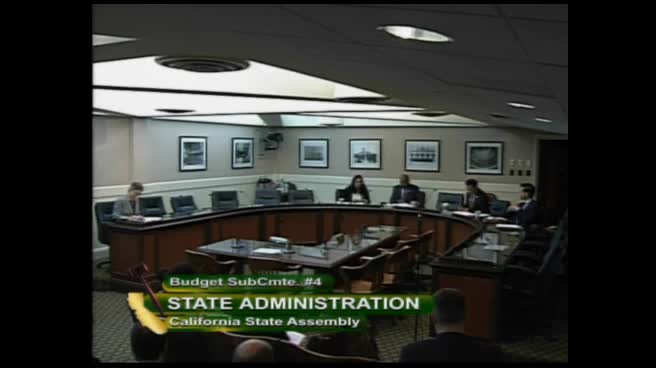 7MIN
Assembly Budget Subcommittee No. 4 on State Administration
 6MIN











