AB 1135: California Marijuana Tax Fund.
- Session Year: 2017-2018
- House: Assembly
- Latest Version Date: 2017-02-17
Existing law establishes the California Marijuana Tax Fund, which is funded by the taxes paid on nonmedical marijuana, to be used for specified purposes. Existing law, after other specified disbursements, requires the Controller to disburse 60% of the remaining funds to the State Department of Health Care Services for use for specified purposes, including prevention and early intervention services to recognize and reduce risks related to substance use and early signs of problematic use and substance use disorders.
This bill would require the State Department of Public Health and the State Department of Education to establish an inclusive public stakeholder process to seek input from stakeholders to determine a disbursement formula for the funds provided to the State Department of Health Care Services from the California Marijuana Tax Fund and would require the findings of the stakeholder meetings to be given to the State Department of Health Care Services and considered by that department when determining funding priorities for those moneys.
The State Department of Public Health and the State Department of Education shall establish an inclusive public stakeholder process to seek input from stakeholders to determine a disbursement formula for the funds to be distributed by the State Department of Health Care Services pursuant to paragraph (1) of subdivision (f) of Section 34019. The State Department of Public Health and the State Department of Education shall provide the findings of the stakeholder meetings to the State Department of Health Care Services, which shall consider those recommendations when determining funding priorities pursuant to paragraph (1) of subdivision (f) of Section 34019.
|
Date
|
Status
|
|---|---|
| Feb 1, 2018 | From committee: Filed with the Chief Clerk pursuant to Joint Rule 56. |
| Jan 31, 2018 | Died pursuant to Art. IV, Sec. 10(c) of the Constitution. |
| May 26, 2017 | In committee: Held under submission. |
| May 3, 2017 | In committee: Set, first hearing. Referred to APPR. suspense file. |
| Apr 19, 2017 | From committee: Do pass and re-refer to Com. on APPR. (Ayes 13. Noes 0.) (April 18). Re-referred to Com. on APPR. |
| Mar 27, 2017 | Referred to Com. on HEALTH. |
| Feb 19, 2017 | From printer. May be heard in committee March 21. |
| Feb 17, 2017 | Read first time. To print. |
|
Date
|
Description
|
Location
|
Votes
|
|
|---|---|---|---|---|
| Apr 18, 2017 | Do pass and be re-referred to the Committee on [Appropriations] | Assembly Standing Committee on Health |
Passed |
This list shows positions taken on this bill by organizations on the date displayed, which is linked to the original source.
Positions by individuals are not included.
|
Organization
|
Position
|
Date
|
|---|---|---|
| California Behavioral Health Directors Association | * Support | Apr 18, 2017 |
| County Behavioral Health Directors Association | ** Support | Apr 14, 2017 |
| Steinberg Institute | ** Support | Apr 14, 2017 |
| western center on law and poverty | ** Support | Apr 14, 2017 |
Date of Hearing: May 3, 2017
ASSEMBLY COMMITTEE ON APPROPRIATIONS
Lorena Gonzalez Fletcher, Chair
ABPCA Bill Id:AB 1135
Author:(Wood) – As Introduced Ver:February 17, 2017
Policy Committee: | Health | Vote: | 13 - 0 |
|
|
Urgency: No State Mandated Local Program: No Reimbursable: No
SUMMARY:
This bill requires the California Department of Public Health (CDPH) and the California Department of Education (CDE) to conduct a stakeholder process to determine a disbursement formula for the Youth Education, Prevention, Early Intervention and Treatment Account (Youth Account), established by Proposition 64, or the Adult Use of Marijuana Act.
It also requires CDPH and CDE to provide their findings to DHCS, which is required to consider the recommendations when determining funding priorities.
FISCAL EFFECT:
Minor costs to CDPH and CDE, not likely to exceed $50,000 to $100,000 to conduct a stakeholder process, could likely be absorbed within the allocation of tax funds (California Marijuana Tax Fund, comprised of Proposition 64 tax revenues). However, a GF loan would likely be necessary to implement the stakeholder process quickly.
COMMENTS:
- Purpose. According to the author, one of the stated intents of Proposition 64 is to generate revenue for youth treatment and prevention. Given estimates of hundreds of millions of dollars that could potentially be allocated to the Youth Account, the author states it is important that this large investment of funds be informed by appropriate state agencies, stakeholder input, and legislative priorities. The author also states the revenue could present an opportunity to coordinate existing revenues and programs, such as the Mental Health Services Act (MHSA), and establish a true system of care with a focus on prevention and early intervention.
- Background. Proposition 64 imposes new state taxes on growing and selling both medical and nonmedical marijuana. After certain set-asides, sixty percent of the remaining revenues raised by the taxes are deposited in the Youth Account administered by DHCS, and used for youth programs designed to educate about and prevent substance use disorders, and to prevent harm from substance use. The act requires DHCS to enter into interagency agreements with CDPH and CDE to implement and administer these programs. Tax revenues allocated to the Youth Account could eventually be in the hundreds of millions of dollars annually, according to a fiscal analysis of the ballot measure by the Legislative Analyst's Office.
Analysis Prepared by: Lisa Murawski / APPR. / (916) 319-2081
Date of Hearing: April 18, 2017
ASSEMBLY COMMITTEE ON HEALTH
Jim Wood, Chair
ABPCA Bill Id:AB 1135
Author:(Wood) – As Introduced Ver:February 17, 2017
SUBJECT: California Marijuana Tax Fund.
SUMMARY: Requires the California Department of Public Health (DPH) and the California Department of Education (CDE) to establish an inclusive public stakeholder process to seek input to determine a disbursement formula for the funds to be distributed by the California Department of Health Care Services (DHCS) for purposes of the Youth Education, Prevention, Early Intervention and Treatment Account (Youth Treatment Account), established by Proposition 64 (Prop 64), or the Adult Use of Marijuana Act (AUMA). Requires DPH and CDE to provide the findings of the stakeholder meetings to DHCS, and for DHCS to consider those recommendations when determining funding priorities for the Youth Treatment Account.
EXISTING LAW:
- Establishes, through the AUMA, the California Marijuana Tax Fund (Fund), for purposes of depositing taxes collected from the sale and cultivation of marijuana.
- Allocates, after other specified disbursements, 60% of the remaining Fund for the Youth Treatment Account, for programs for youth that are designed to educate about, and to prevent harm from, substance use disorders.
- Requires DHCS to enter into interagency agreements with DPH and CDE to implement and administer these programs. Requires the programs to emphasize accurate education, effective prevention, early intervention, school retention, and timely treatment services for youth, their families, and caregivers. Allows the programs to include, but not be limited to, the following components:
- Prevention and early intervention services including outreach, risk survey, and education to youth, families, caregivers, schools, primary care health providers, behavioral health and substance use disorder service providers, community and faith-based organizations, fostercare providers, juvenile and family courts, and others to recognize and reduce risks related to substance use, and the early signs of problematic use and of substance use disorders;
- Grants to schools to develop and support student assistance programs, or other similar programs, designed to prevent and reduce substance use, and improve school retention and performance, by supporting students who are at risk of dropping out of school and promoting alternatives to suspension or expulsion that focus on school retention, remediation, and professional care. Requires that schools with higher than average dropout rates be prioritized for grants;
- Grants to programs for outreach, education, and treatment for homeless youth and out-of-school youth with substance use disorders;
- Access and linkage to care provided by county behavioral health programs for youth, and their families and caregivers, who have a substance use disorder or who are at risk for developing a substance use disorder;
- Youth-focused substance use disorder treatment programs that are culturally and gender competent, trauma-informed, evidence-based and provide a continuum of care that includes screening and assessment (substance use disorder as well as mental health), early intervention, active treatment, family involvement, case management, overdose prevention, prevention of communicable diseases related to substance use, relapse management for substance use and other co-occurring behavioral health disorders, vocational services, literacy services, parenting classes, family therapy and counseling services, medication-assisted treatments, psychiatric medication, and psychotherapy;
- Requires, to the extent permitted by law and where indicated, interventions to utilize a two-generation approach to addressing substance use disorders with the capacity to treat youth and adults together. Supporting the development of family-based interventions that address substance use disorders and related problems within the context of families, including parents, foster parents, caregivers, and all their children;
- Programs to assist individuals, as well as families and friends of drug using young people, to reduce the stigma associated with substance use including being diagnosed with a substance use disorder or seeking substance use disorder services. Includes peer-run outreach and education to reduce stigma, anti-stigma campaigns, and community recovery networks;
- Workforce training and wage structures that increase the hiring pool of behavioral health staff with substance use disorder prevention and treatment expertise. Provide ongoing education and coaching that increases substance use treatment providers’ core competencies and trains providers on promising and evidenced-based practices;
- Construction of community-based youth treatment facilities;
- Permits DPH to contract with each county behavioral health program for the provision of services;
- Requires that funds be allocated to counties based on demonstrated need, including the number of youth in the county, the prevalence of substance use disorders among adults, and confirmed through statistical data, validated assessments, or submitted reports prepared by the applicable county to demonstrate and validate need;
- Requires DPH, CDE, and DHCS to periodically evaluate the programs they are funding to determine the effectiveness of the programs.
- Permits DPH, CDE, and DHCS to use up to 4% of the moneys allocated to the Youth Education, Prevention, Early Intervention and Treatment Account for administrative costs related to implementation, evaluation, and oversight of the programs;
- Requires, if the Department of Finance ever determines that funding pursuant to marijuana taxation exceeds demand for youth prevention and treatment services in the state, DPH, CDE, and DHCS to provide a plan to the Department of Finance to provide treatment services to adults using these funds; and,
- Requires DPH, CDE, and DHCS to solicit input from volunteer health organizations, physicians who treat addiction, treatment researchers, family therapy and counseling providers, and professional education associations with relevant expertise as to the administration of any grants.
- Enacts Prop 215, also known as the Compassionate Use Act of 1996, which exempts certain patients and their primary caregivers from criminal liability under state law for the possession and cultivation of marijuana.
- Establishes the Medical Cannabis Regulation and Safety Act (MCRSA) to regulate medical cannabis in California, including its cultivation, transportation, storage, distribution, and sale, as specified in AB 243 (Wood), Chapter 688, Statutes of 2015; AB 266 (Bonta), Chapter 689, Statutes of 2015; and, SB 643 (McGuire), Chapter 719, Statutes of 2015.
- Establishes within the Department of Consumer Affairs the Bureau of Medical Cannabis Regulation for the licensure and regulation of medical cannabis.
FISCAL EFFECT: This bill has not yet been analyzed by a fiscal committee.
COMMENTS:
- PURPOSE OF THIS BILL. According to the author, one of the stated intents of Prop 64 is to generate hundreds of millions of dollars in new state revenue annually for youth treatment and prevention. It is estimated that Prop 64 will bring in approximately $300-800 million starting in fiscal year 2018-19, and the revenues are expected to rise in future years. Prop 64 requires that 60% of funds generated and deposited in the Fund, after initial set-asides, will go into a Youth Education, Prevention, Early Intervention and Treatment Account. DHCS is tasked with developing the guidelines on what these funds are allocated for, and how their use is governed. It is important that this large investment of funds be informed by the appropriate agencies, stakeholder, and legislative priorities.
Additionally, it is critical to establish oversight on outcomes required at the state level. This new revenue represents an unprecedented opportunity to address policy and funding shortfalls in schools, justice systems, and communities. Additionally, this revenue could present an opportunity to coordinate existing revenues and programs, such as the Mental Health Services Act (MHSA), and establish a true system of care with a focus on prevention and early intervention. This bill ensures that the appropriate stakeholders are at the table when determining how these funds are spent to make sure we are providing preventative services to Californians while also making the most of their tax dollars.
- BACKGROUND.
- Proposition 64 (AUMA). Prop 64 was passed by the voters in November 2016. As a result of the passage of Prop 64, adults, aged 21 years or older, are allowed to possess and use marijuana for recreational purposes. Prop 64 created two new taxes; a cultivation tax on marijuana plants and flowers and a 15% excise tax on the sale of all marijuana and marijuana products. Prop 64 also exempted from the California state sales tax, sales of medical marijuana or marijuana products. Revenues collected from the new state excise tax and the cultivation tax on growing marijuana will be deposited in a new state account, the Fund. Certain fines on businesses or individuals who violate regulations created by Prop 64 would also be deposited into the Fund. Monies in the fund will first be used to pay back certain state agencies for any marijuana regulatory costs not covered by license fees. A portion of the monies will then be allocated as follows:
- Sixty percent for youth programs including substance use disorder education, prevention, and treatment;
- Twenty percent to clean up and prevent environmental damage resulting from the illegal growing of marijuana, and;
- Twenty percent for programs designed to reduce driving under the influence of alcohol, marijuana, and other drugs and a grant program designed to reduce any potential negative impacts on public health or safety resulting from the measure.
- Proposition 63 (MHSA). Prop 63 was passed by voters in November 2004. The MHSA imposes a 1% income tax on personal income in excess of $1 million and creates the 16 member Commission charged with overseeing the implementation of MHSA. The 2016-17 Governor’s Budget projected that $1.9 billion in revenue would be deposited into the Fund in fiscal year 2017-18. The MHSA addresses a broad continuum of prevention, early intervention, and service needs, as well as provided funding for infrastructure, technology, and training needs for the community mental health system. In addition to local programs, the MHSA authorizes up to 5% of revenues for state administrative functions performed by a variety of state entities such as the DHCS and the Office of Statewide Health Planning and Development. It also funds evaluation of the MHSA by the Commission.
- Audit. A report by the California State Auditor (CSA), published in August of 2013, almost 10 years after the passage of the MHSA, and titled "The State's Oversight Has Provided Little Assurance of the Act's Effectiveness, and Some Counties Can Improve Measurement of Their Program Performance, " indicating that the two state entities charged with providing oversight of MHSA funds, the California Department of Mental Health (Mental Health) and the Mental Health Services Oversight and Accountability Commission (Accountability Commission) provided little oversight of county implementation of MHSA programs and their effectiveness. CSA noted then that because of the minimal oversight Mental Health and the Accountability Commission provided in the past, the state had little current assurance that the funds directed to counties for MHSA programs have been used effectively and appropriately. There have been numerous legislative attempts to improve oversight of MHSA. The author states that the intent of this bill is to adopt "lessons learned" from the MHSA process to ensure that from the beginning, Prop 64 funds are spent the way voters intended.
- Governor’s Budget Trailer Proposal. With the passage of AUMA, many inconsistencies were created between implementation of MCRSA and implementation of AUMA. The Governor, through a proposed budget trailer bill, is recommending several proposals to address the differences between MCRSA and AUMA. Among other provisions, the proposed trailer bill provides for: i) maintenance of local autonomy of zoning and planning decisions while providing state regulators with local compliance information; ii) adoption of AUMA’s vertical integrated licensing structure for both adult use and medicinal cannabis licensees; iii) maintenance of AUMA’s open distribution model allowing for a business to hold multiple licenses; iv) limitations on the number of Type 3 (medium size) cultivation licenses consistent with MCRSA; v) amendment of AUMA to include the same environmental protection requirements as MCRSA; and, vii) moving licensure of testing laboratories from the Department of Public Health to the Bureau.
- Proposition 64 (AUMA). Prop 64 was passed by the voters in November 2016. As a result of the passage of Prop 64, adults, aged 21 years or older, are allowed to possess and use marijuana for recreational purposes. Prop 64 created two new taxes; a cultivation tax on marijuana plants and flowers and a 15% excise tax on the sale of all marijuana and marijuana products. Prop 64 also exempted from the California state sales tax, sales of medical marijuana or marijuana products. Revenues collected from the new state excise tax and the cultivation tax on growing marijuana will be deposited in a new state account, the Fund. Certain fines on businesses or individuals who violate regulations created by Prop 64 would also be deposited into the Fund. Monies in the fund will first be used to pay back certain state agencies for any marijuana regulatory costs not covered by license fees. A portion of the monies will then be allocated as follows:
- SUPPORT. The Steinberg Institute, sponsor of this bill, states that the goal with this bill is to draw on the numerous lessons learned since Prop 63 was passed by voters in 2004. Like Prop 64, the MHSA provides a new revenue stream for critical local services. But the implementation hasn’t always been easy, and the state still struggles with collecting and producing data on MHSA spending. This bill will provide clear direction to DHCS to establish guidelines that direct the use of Prop 64 prevention and early intervention funds for community-based mental health best practices, including substance use disorder services, for youth and their families. DHCS is tasked with developing the guidelines on the uses of these funds, as well as oversight. There is concern that the timeline for DHCS to develop the guidelines should be well before the 2018-19 budget, when the funds become available, and, if DHCS fails to act quickly and collaboratively, that this large investment will not advance the Legislature’s key funding priorities.
Additionally, the Steinberg Institute states that it has a strong interest in establishing robust oversight and outcome reporting for this funding, which is informed by the Institute's experience with implementing the MHSA. This new revenue represents an unprecedented opportunity to address policy and funding shortfalls in schools, justice systems, and communities and could allow for the state to create a nexus between MHSA and Prop 64 funds to establish a true system of care for youth with a focus on prevention and early intervention.
The County Behavioral Health Directors Association (CBHDA) and the Western Center on Law and Poverty state in support that this bill will enable counties, schools, and community prevention and treatment providers to establish a system of care and early intervention for youth who struggle with or are at risk of developing a substance use disorder. CBHDA states that this bill will help ensure that the funds are fairly and appropriately utilized for their intended purpose.
- RELATED LEGISLATION.
- AB 175 (Chau) requires a manufacturer, prior to introducing an edible marijuana product into commerce in California, to submit the packaging and labeling to the Bureau of Marijuana Control for approval and would require the bureau to determine whether the packaging and labeling are in compliance with the requirements of prescribed provisions of AUMA, including the requirements that the packaging be child resistant and not attractive to children, as specified. AB 175 is pending in the Assembly Business & Professions Committee.
- AB 350 (Salas) would specify that a marijuana product is deemed to be appealing to children or easily confused with commercially sold candy if it is in the shape of a person, animal, insect, fruit, or in another shape normally associated with candy, but would not prohibit a licensee from making an edible marijuana product in the shape of the licensee’s logo. AB 350 is pending in the Assembly Health Committee.
- AB 903 (Cunningham) would amend AUMA by requiring the Department of the California Highway Patrol to use its annual appropriation from the fund to study the viability of standards for marijuana impairment. AB 903 is pending in the Assembly Public Safety Committee.
REGISTERED SUPPORT / OPPOSITION:
Support
Steinberg Institute (sponsor)
County Behavioral Health Directors Association
Western Center on Law and Poverty
Opposition
None on file.
Analysis Prepared by: Paula Villescaz / HEALTH / (916) 319-2097
Discussed in Hearing
 1H
Assembly Standing Committee on Appropriations
 6MIN
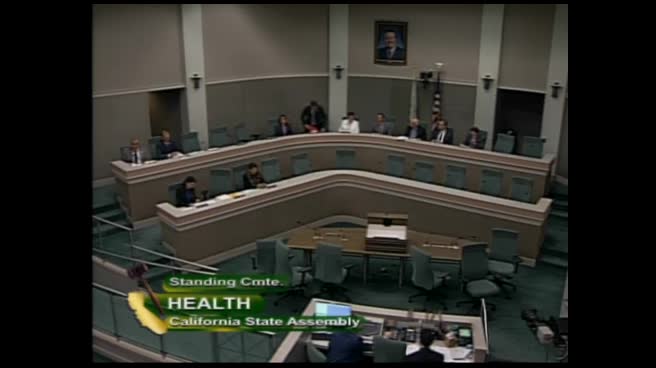
Assembly Standing Committee on Health
Bill Author

Bill Co-Author(s):