AB 1149: Workforce investment boards: funding.
- Session Year: 2017-2018
- House: Assembly
- Latest Version Date: 2017-09-27
The federal Workforce Innovation and Opportunity Act of 2014 provides for workforce investment activities, including activities in which states may participate. Existing law contains various programs for job training and employment investment, including work incentive programs, as specified, and establishes local workforce investment boards to perform duties related to the implementation and coordination of local workforce investment activities. Existing law requires local workforce investment boards to spend a minimum percentage of specified funds for adults and dislocated workers on federally identified workforce training programs and allows the boards to leverage specified funds to meet the funding requirements, as specified. Existing law authorizes a credit of up to 10% of that funding minimum for leveraged funds, which include Pell Grants and employment training panel grants.
This bill would expand the types of services to which leveraged funds may be applied to include supportive services and would expand the types of leveraged funds that may be applied to the 10% credit, described above, to include specified federal, local, state, and private funds.
Existing law requires the Employment Development Department to calculate, within 6 months after the end of the 2nd program year, whether the local workforce development board met the above-described requirements.
This bill would instead require the department to make the above-described calculation at the end of each program year. It would also require the department to make annual reports regarding the training and supportive services expenditures.
The federal Workforce Innovation and Opportunity Act of 2014 provides for workforce investment activities, including activities in which states may participate. Existing law contains various programs for job training and employment investment, including work incentive programs, as specified, and establishes local workforce investment boards to perform duties related to the implementation and coordination of local workforce investment activities. Existing law requires local workforce investment boards to spend a minimum percentage of specified funds for adults and dislocated workers on federally identified workforce training programs and allows the boards to leverage specified funds to meet the funding requirements, as specified. Existing law authorizes a credit of up to 10% of that funding minimum for leveraged funds, which include Pell Grants and employment training panel grants.
This bill would expand the types of services to which leveraged funds may be applied to include supportive services and would expand the types of leveraged funds that may be applied to the 10% credit, described above, to include specified federal, local, state, and private funds.
(a)(1)Beginning program year 2012, an amount equal to at least 25 percent of funds available under Title I of the federal Workforce Innovation and Opportunity Act of 2014 (Public Law 113-128) provided to local workforce investment boards for adults and dislocated workers shall be spent on workforce training programs. This minimum may be met either by spending 25 percent of those base formula funds on training or by combining a portion of those base formula funds with leveraged funds as specified in subdivision (b).
(2)Beginning program year 2016, an amount equal to at least 30 percent of funds available under Title I of the federal Workforce Innovation and Opportunity Act of 2014 (Public Law 113-128) provided to local workforce development boards for adults and dislocated workers shall be spent on workforce training programs. This minimum may be met either by spending 30 percent of those base formula funds on training or by combining a portion of those base formula funds with leveraged funds as specified in subdivision (b).
(3)Except as provided in subdivision (b), expenditures that shall count toward the minimum percentage of funds shall include only training services as defined in Section 3174(c)(3)(D) of Title 29 of the United States Code and the corresponding sections of the Code of Federal Regulations, including all of the following:
(A)Occupational skills training, including training for nontraditional employment.
(B)On-the-job training.
(C)Programs that combine workplace training with related instruction, which may include cooperative education programs.
(D)Training programs operated by the private sector.
(E)Skills upgrading and retraining.
(F)Entrepreneurial training.
(G)Incumbent worker training in accordance with Section 3174(d)(4) of Title 29 of the United States Code.
(H)Transitional jobs in accordance with Section 3174(d)(5) of Title 29 of the United States Code.
(I)Job readiness training provided in combination with any of the services described in subparagraphs (A) to (H), inclusive.
(J)Adult education and literacy activities provided in combination with services described in any of subparagraphs (A) to (G), inclusive.
(K)Customized training conducted with a commitment by an employer or group of employers to employ an individual upon successful completion of the training.
(b)(1)Local workforce development boards may receive a credit of up to 10 percent of their adult and dislocated worker formula fund base allocations for public education and training funds and private resources from industry and from joint labor-management trusts that are leveraged by a local workforce development board for expenditure on training and supportive services. This credit may be applied toward the minimum training requirements in paragraphs (1) and (2) of subdivision (a).
(A)Leveraged funds that may be applied toward the credit allowed by this subdivision shall only include the following:
(i)Federal Pell Grants established under Title IV of the federal Higher Education Act of 1965 (20 U.S.C. Sec. 1070 et seq.).
(ii)Programs authorized by the federal Workforce Innovation and Opportunity Act of 2014 (Public Law 113-128).
(iii)Trade adjustment assistance.
(iv)Department of Labor National Emergency Grants.
(v)Match funds from employers, industry, and industry associations.
(vi)Match funds from joint labor-management trusts.
(vii)Employment training panel grants.
(viii)Supportive services as defined by the federal Workforce Innovation and Opportunity Act of 2014 (Public Law 113-128) and the corresponding sections of the Code of Federal Regulations, but only for those individuals enrolled in training services for occupations in demand by industry, as defined in Section 3174(c)(3)(D) of Title 29 of the United States Code and the corresponding sections of the Code of Federal Regulations. Supportive services may include, but are not limited to, the costs of trainees or students books, safety and lab equipment, tools and any payment of costs permitted under the rules of the federal Workforce Innovation and Opportunity Act of 2014 and corresponding regulations pertaining to supportive services expenditures, including the rule that these supportive services costs are necessary for the individual to participate in training.
(ix)Temporary Assistance for Needy Families (TANF) funds spent on supportive services as defined by the federal Workforce Innovation and Opportunity Act of 2014 (Public Law 113-128) and the corresponding sections of the Code of Federal Regulations, for TANF enrolled individuals coenrolled in and receiving training services for occupations in demand by industry through the federal Workforce Innovation and Opportunity Act of 2014. Supportive services may include, but are not limited to, the costs of trainees or students books, safety and lab equipment, tools and any payment of costs permitted under the rules of the federal Workforce Innovation and Opportunity Act of 2014 and corresponding regulations pertaining to supportive services expenditures, including the rule that these supportive services costs are necessary for the individual to participate in training.
(x)Temporary Assistance for Needy Families (TANF) funds spent on transitional and subsidized employment for TANF enrolled individuals coenrolled in and receiving training services through the federal Workforce Innovation and Opportunity Act of 2014.
(xi)Any other local, state, or federal funds spent on training or supportive services for individuals enrolled in training, provided the individuals receiving the training are enrolled in the federal Workforce Innovation and Opportunity Act of 2014 for performance reporting and tracking purposes.
(xii)With the approval of the state board, any other public or private funds source not identified in this subparagraph that is used to provide training or supportive services for individuals who are also enrolled in training provided the individuals receiving the relevant services are enrolled in the federal Workforce Innovation and Opportunity Act of 2014 for performance reporting and tracking purposes.
(B)Credit for leveraged funds shall only be given if the local workforce development board keeps records of all training and supportive services expenditures it chooses to apply to the credit. Training and supportive services expenditures may only be applied to the credit if the relevant training costs can be independently verified by the Employment Development Department and, without exception, training participants must be coenrolled in the federal Workforce Innovation and Opportunity Act of 2014 performance monitoring system.
(2)The use of leveraged funds to partially meet the training requirements specified in paragraphs (1) and (2) of subdivision (a) is the prerogative of a local workforce development board. A local workforce development board shall annually provide data to the Employment Development Department on the amount of leveraged funds used to partially meet the requirements of subdivision (a). This data shall disaggregate and report separately, the amount spent on both training and supportive services. Costs arising from the recordkeeping required to demonstrate compliance with the leveraging requirements of this subdivision are the responsibility of the local board.
(c)(1)At the end of each program year, the Employment Development Department shall calculate for each local workforce development board whether the local workforce development board met the expenditure requirements of this section.
(2)The Employment Development Department shall provide to each local workforce development board its individual calculations with respect to the expenditure requirements of this section.
(3)The Employment Development Department shall report annually to the Governor, the Legislature, and the California Workforce Development Board, on or before November 30, regarding the training and supportive services expenditures made by local workforce development boards pursuant to the expenditure requirements of this section.
(4)Consistent with the definitions and regulations of the federal Workforce Innovation and Opportunity Act of 2014, the Employment Development Department shall specify which expenditures qualify as training and supportive services expenditures. The annual report shall specify the total amount of federal funding provided to the state and to each of the local workforce development areas for the adult and dislocated persons programs and the amount of these federal Workforce Innovation and Opportunity Act of 2014 funds expended for training services.
(5)Consistent with calculations required by paragraph (1), the report shall also include, for each local workforce development area, the total amount of leverage funds utilized as training expenditure allowances authorized by subdivision (b) to meet the expenditure requirements of this section. The report shall specify the share of leverage funds that were expended on both training and supportive services for each Local Workforce Development Area.
(6)A report submitted pursuant to this section shall comply with Section 9795 of the Government Code.
(d)A local workforce development area that does not meet the requirements of subdivision (a) shall submit a corrective action plan to the Employment Development Department that provides reasons for not meeting the requirements and describes actions taken to address the identified expenditure deficiencies. A local workforce development area shall provide a corrective action plan to the Employment Development Department pursuant to this section within 90 days of receiving the calculations described in subdivision (c).
(e)For the purpose of this section, program year has the same meaning as provided in Section 667.100 of Title 20 of the Code of Federal Regulations.
(a)(1)Beginning program year 2012, an amount equal to at least 25 percent of funds available under Title I of the federal Workforce Innovation and Opportunity Act of 2014 (Public Law 113-128) provided to local workforce investment boards for adults and dislocated workers shall be spent on workforce training programs. This minimum may be met either by spending 25 percent of those base formula funds on training or by combining a portion of those base formula funds with leveraged funds as specified in subdivision (b).
(2)Beginning program year 2016, an amount equal to at least 30 percent of funds available under Title I of the federal Workforce Innovation and Opportunity Act of 2014 (Public Law 113-128) provided to local workforce development boards for adults and dislocated workers shall be spent on workforce training programs. This minimum may be met either by spending 30 percent of those base formula funds on training or by combining a portion of those base formula funds with leveraged funds as specified in subdivision (b).
(3)Except as provided in subdivision (b), expenditures that shall count toward the minimum percentage of funds shall include only training services as defined in Section 3174(c)(3)(D) of Title 29 of the United States Code and the corresponding sections of the Code of Federal Regulations, including all of the following:
(A)Occupational skills training, including training for nontraditional employment.
(B)On-the-job training.
(C)Programs that combine workplace training with related instruction, which may include cooperative education programs.
(D)Training programs operated by the private sector.
(E)Skills upgrading and retraining.
(F)Entrepreneurial training.
(G)Incumbent worker training in accordance with Section 3174(d)(4) of Title 29 of the United States Code.
(H)Transitional jobs in accordance with Section 3174(d)(5) of Title 29 of the United States Code.
(I)Job readiness training provided in combination with any of the services described in subparagraphs (A) to (H), inclusive.
(J)Adult education and literacy activities provided in combination with services described in any of subparagraphs (A) to (G), inclusive.
(K)Customized training conducted with a commitment by an employer or group of employers to employ an individual upon successful completion of the training.
(b)(1)Local workforce development boards may receive a credit of up to 10 percent of their adult and dislocated worker formula fund base allocations for public education and training funds and private resources from industry and from joint labor-management trusts that are leveraged by a local workforce development board for expenditure on training services described in paragraph (3) of subdivision (a). and supportive services. This credit may be applied toward the minimum training requirements in paragraphs (1) and (2) of subdivision (a).
(A)Leveraged funds that may be applied toward the credit allowed by this subdivision shall only include the following:
(i)Federal Pell Grants established under Title IV of the federal Higher Education Act of 1965 (20 U.S.C. Sec. 1070 et seq.).
(ii)Programs authorized by the federal Workforce Innovation and Opportunity Act of 2014 (Public Law 113-128).
(iii)Trade adjustment assistance.
(iv)Department of Labor National Emergency Grants.
(v)Match funds from employers, industry, and industry associations.
(vi)Match funds from joint labor-management trusts.
(vii)Employment training panel grants.
(viii)Supportive services as defined by the federal Workforce Innovation and Opportunity Act of 2014 (Public Law 113-128) and the corresponding sections of the Code of Federal Regulations, but only for those individuals enrolled in training services for occupations in demand by industry, as defined in Section 3174(c)(3)(D) of Title 29 of the United States Code and the corresponding sections of the Code of Federal Regulations. Supportive services may include, but are not limited to, the costs of trainees or students books, safety and lab equipment, tools and any payment of costs permitted under the rules of the federal Workforce Innovation and Opportunity Act of 2014 and corresponding regulations pertaining to supportive services expenditures, including the rule that these supportive services costs are necessary for the individual to participate in training.
(ix)Temporary Assistance for Needy Families (TANF) funds spent on supportive services as defined by the federal Workforce Innovation and Opportunity Act of 2014 (Public Law 113-128) and the corresponding sections of the Code of Federal Regulations, for TANF enrolled individuals coenrolled in and receiving training services for occupations in demand by industry through the federal Workforce Innovation and Opportunity Act of 2014. Supportive services may include, but are not limited to, the costs of trainees or students books, safety and lab equipment, tools and any payment of costs permitted under the rules of the federal Workforce Innovation and Opportunity Act of 2014 and corresponding regulations pertaining to supportive services expenditures, including the rule that these supportive services costs are necessary for the individual to participate in training.
(x)Temporary Assistance for Needy Families (TANF) funds spent on transitional and subsidized employment for TANF enrolled individuals coenrolled in and receiving training services through the federal Workforce Innovation and Opportunity Act of 2014.
(xi)Any other local, state, or federal funds spent on training or supportive services for individuals enrolled in training training, provided the individuals receiving the training are enrolled in the federal Workforce Innovation and Opportunity Act of 2014 for performance reporting and tracking purposes.
(xii)With the approval of the state board, any other public or private funds source not identified in this subparagraph that is used to provide training or supportive services for individuals who are also enrolled in training provided the individuals receiving the relevant services are enrolled in the federal Workforce Innovation and Opportunity Act of 2014 for performance reporting and tracking purposes.
(B)Credit for leveraged funds shall only be given if the local workforce development board keeps records of all training and supportive services expenditures it chooses to apply to the credit. Training and supportive services expenditures may only be applied to the credit if the relevant training costs can be independently verified by the Employment Development Department and, without exception, training participants must be coenrolled in the federal Workforce Innovation and Opportunity Act of 2014 performance monitoring system.
(2)The use of leveraged funds to partially meet the training requirements specified in paragraphs (1) and (2) of subdivision (a) is the prerogative of a local workforce development board. A local workforce development board shall annually provide data to the Employment Development Department on the amount of leveraged funds used to partially meet the requirements of subdivision (a). This data shall disaggregate and report separately, the amount spent on both training and supportive services. Costs arising from the recordkeeping required to demonstrate compliance with the leveraging requirements of this subdivision are the responsibility of the local board.
(c)(1)At the end of each program year, the Employment Development Department shall calculate for each local workforce development board whether the local workforce development board met the expenditure requirements of this section.
(2)The Employment Development Department shall provide to each local workforce development board its individual calculations with respect to the expenditure requirements of this section.
(3)The Employment Development Department shall report annually to the Governor, the Legislature, and the California Workforce Development Board, on or before November 30, regarding the training and supportive services expenditures made by local workforce development boards pursuant to the expenditure requirements of this section.
(4)Consistent with the definitions and regulations of the federal Workforce Innovation and Opportunity Act of 2014, the Employment Development Department shall specify which expenditures qualify as training and supportive services expenditures. The annual report shall specify the total amount of federal funding provided to the state and to each of the local workforce development areas for the adult and dislocated persons programs and the amount of these federal Workforce Innovation and Opportunity Act of 2014 funds expended for training services.
(5)Consistent with calculations required by paragraph (1), the report shall also include, for each local workforce development area, the total amount of leverage funds utilized as training expenditure allowances authorized by subdivision (b) to meet the expenditure requirements of this section. The report shall specify the share of leverage funds that were expended on both training and supportive services for each Local Workforce Development Area.
(6)A report submitted pursuant to this section shall comply with Section 9795 of the Government Code.
(c)Beginning program year 2012, the Employment Development Department shall calculate for each local workforce development board, within six months after the end of the second program year of the two-year period of availability for expenditure of federal Workforce Innovation and Opportunity Act of 2014 funds, whether the local workforce development board met the requirements of subdivision (a). The Employment Development Department shall provide to each local workforce development board its individual calculations with respect to the expenditure requirements of subdivision (a).(d)A local workforce development area that does not meet the requirements of subdivision (a) shall submit a corrective action plan to the Employment Development Department that provides reasons for not meeting the requirements and describes actions taken to address the identified expenditure deficiencies. A local workforce development area shall provide a corrective action plan to the Employment Development Department pursuant to this section within 90 days of receiving the calculations described in subdivision (c).
(e)For the purpose of this section, program year has the same meaning as provided in Section 667.100 of Title 20 of the Code of Federal Regulations.
(a)(1)Beginning program year 2012, an amount equal to at least 25 percent of funds available under Title I of the federal Workforce Innovation and Opportunity Act of 2014 (Public Law 113-128) provided to local workforce investment boards for adults and dislocated workers shall be spent on workforce training programs. This minimum may be met either by spending 25 percent of those base formula funds on training or by combining a portion of those base formula funds with leveraged funds as specified in subdivision (b).
(2)Beginning program year 2016, an amount equal to at least 30 percent of funds available under Title I of the federal Workforce Innovation and Opportunity Act of 2014 (Public Law 113-128) provided to local workforce development boards for adults and dislocated workers shall be spent on workforce training programs. This minimum may be met either by spending 30 percent of those base formula funds on training or by combining a portion of those base formula funds with leveraged funds as specified in subdivision (b).
(3)Expenditures Except as provided in subdivision (b), expenditures that shall count toward the minimum percentage of funds shall include only training services as defined in Section 3174(c)(3)(D) of Title 29 of the United States Code and the corresponding sections of the Code of Federal Regulations, including all of the following:
(A)Occupational skills training, including training for nontraditional employment.
(B)On-the-job training.
(C)Programs that combine workplace training with related instruction, which may include cooperative education programs.
(D)Training programs operated by the private sector.
(E)Skill Skills upgrading and retraining.
(F)Entrepreneurial training.
(G)Incumbent worker training in accordance with Section 3174(d)(4) of Title 29 of the United States Code.
(H)Transitional jobs in accordance with Section 3174(d)(5) of Title 29 of the United States Code.
(I)Job readiness training provided in combination with any of the services described in subparagraphs (A) to (H), inclusive.
(J)Adult education and literacy activities provided in combination with services described in any of subparagraphs (A) to (G), inclusive.
(K)Customized training conducted with a commitment by an employer or group of employers to employ an individual upon successful completion of the training.
(b)(1)Local workforce development boards may receive a credit of up to 10 percent of their adult and dislocated worker formula fund base allocations for public education and training funds and private resources from industry and from joint labor-management trusts that are leveraged by a local workforce development board for training services described in paragraph (3) of subdivision (a). This credit may be applied toward the minimum training requirements in paragraphs (1) and (2) of subdivision (a).
(A)Leveraged funds that may be applied toward the credit allowed by this subdivision shall only include the following:
(i)Federal Pell Grants established under Title IV of the federal Higher Education Act of 1965 (20 U.S.C. Sec. 1070 et seq.).
(ii)Programs authorized by the federal Workforce Innovation and Opportunity Act of 2014 (Public Law 113-128).
(iii)Trade adjustment assistance.
(iv)Department of Labor National Emergency Grants.
(v)Match funds from employers, industry, and industry associations.
(vi)Match funds from joint labor-management trusts.
(vii)Employment training panel grants.
(viii)Supportive services as defined by the federal Workforce Innovation and Opportunity Act of 2014 (Public Law 113-128) and the corresponding sections of the Code of Federal Regulations, but only for those individuals enrolled in training services as defined in Section 3174(c)(3)(D) of Title 29 of the United States Code and the corresponding sections of the Code of Federal Regulations.
(ix)Temporary Assistance for Needy Families (TANF) funds spent on supportive services as defined by the federal Workforce Innovation and Opportunity Act of 2014 (Public Law 113-128) and the corresponding sections of the Code of Federal Regulations, for TANF enrolled individuals coenrolled in and receiving training services through the federal Workforce Innovation and Opportunity Act of 2014.
(x)Temporary Assistance for Needy Families (TANF) funds spent on transitional and subsidized employment for TANF enrolled individuals coenrolled in and receiving training services through the federal Workforce Innovation and Opportunity Act of 2014.
(xi)Any other local, state, or federal funds spent on training or supportive services for individuals enrolled in training provided the individuals receiving the training are enrolled in the federal Workforce Innovation and Opportunity Act of 2014 for performance reporting and tracking purposes.
(xii)With the approval of the state board, any other public or private funds source not identified in this subparagraph that is used to provide training or supportive services for individuals who are also enrolled in training provided the individuals receiving the relevant services are enrolled in the federal Workforce Innovation and Opportunity Act of 2014 for performance reporting and tracking purposes.
(B)Credit for leveraged funds shall only be given if the local workforce development board keeps records of all training and supportive services expenditures it chooses to apply to the credit. Training and supportive services expenditures may only be applied to the credit if the relevant training costs can be independently verified by the Employment Development Department and and, without exception, training participants must be coenrolled in the federal Workforce Innovation and Opportunity Act of 2014 performance monitoring system.
(2)The use of leveraged funds to partially meet the training requirements specified in paragraphs (1) and (2) of subdivision (a) is the prerogative of a local workforce development board. Costs arising from the recordkeeping required to demonstrate compliance with the leveraging requirements of this subdivision are the responsibility of the local board.
(c)Beginning program year 2012, the Employment Development Department shall calculate for each local workforce development board, within six months after the end of the second program year of the two-year period of availability for expenditure of federal Workforce Innovation and Opportunity Act of 2014 funds, whether the local workforce development board met the requirements of subdivision (a). The Employment Development Department shall provide to each local workforce development board its individual calculations with respect to the expenditure requirements of subdivision (a).
(d)A local workforce development area that does not meet the requirements of subdivision (a) shall submit a corrective action plan to the Employment Development Department that provides reasons for not meeting the requirements and describes actions taken to address the identified expenditure deficiencies. A local workforce development area shall provide a corrective action plan to the Employment Development Department pursuant to this section within 90 days of receiving the calculations described in subdivision (c).
(e)For the purpose of this section, program year has the same meaning as provided in Section 667.100 of Title 20 of the Code of Federal Regulations.
|
Date
|
Status
|
|---|---|
| Sep 27, 2017 | Chaptered by Secretary of State - Chapter 324, Statutes of 2017. |
| Sep 27, 2017 | Approved by the Governor. |
| Sep 12, 2017 | Enrolled and presented to the Governor at 2:30 p.m. |
| Sep 5, 2017 | Senate amendments concurred in. To Engrossing and Enrolling. (Ayes 77. Noes 0.). |
| Aug 31, 2017 | In Assembly. Concurrence in Senate amendments pending. May be considered on or after September 2 pursuant to Assembly Rule 77. |
| Aug 31, 2017 | Read third time. Passed. Ordered to the Assembly. |
| Jun 27, 2017 | Read second time. Ordered to third reading. |
| Jun 26, 2017 | From committee: Be ordered to second reading pursuant to Senate Rule 28.8. |
| Jun 14, 2017 | From committee: Do pass and re-refer to Com. on APPR. (Ayes 5. Noes 0.) (June 14). Re-referred to Com. on APPR. |
| Jun 5, 2017 | From committee chair, with author's amendments: Amend, and re-refer to committee. Read second time, amended, and re-referred to Com. on L. & I.R. |
| May 24, 2017 | Referred to Com. on L. & I.R. |
| May 11, 2017 | In Senate. Read first time. To Com. on RLS. for assignment. |
| May 11, 2017 | Read third time. Passed. Ordered to the Senate. (Ayes 77. Noes 0. Page 1483.) |
| May 4, 2017 | Read second time. Ordered to Consent Calendar. |
| May 3, 2017 | From committee: Do pass. To Consent Calendar. (Ayes 16. Noes 0.) (May 3). |
| Apr 25, 2017 | From committee: Do pass and re-refer to Com. on APPR. (Ayes 7. Noes 0.) (April 25). Re-referred to Com. on APPR. |
| Mar 30, 2017 | From committee: Do pass and re-refer to Com. on J., E.D., & E. with recommendation: To Consent Calendar. (Ayes 7. Noes 0.) (March 29). Re-referred to Com. on J., E.D., & E. |
| Mar 9, 2017 | Referred to Coms. on L. & E. and J., E.D., & E. |
| Feb 19, 2017 | From printer. May be heard in committee March 21. |
| Feb 17, 2017 | Read first time. To print. |
|
Date
|
Description
|
Location
|
Votes
|
|
|---|---|---|---|---|
| Sep 5, 2017 | AB 1149 ARAMBULA Concurrence in Senate Amendments | Assembly Floor |
Passed |
|
| Aug 31, 2017 | Assembly 3rd Reading AB1149 Arambula et al. By Mendoza | Senate Floor |
Passed |
|
| Jun 14, 2017 | Do pass, but first be re-referred to the Committee on [Appropriations] | Senate Standing Committee on Labor and Industrial Relations |
Passed |
|
| May 11, 2017 | AB 1149 ARAMBULA Consent Calendar Second Day Regular Session | Assembly Floor |
Passed |
|
| May 3, 2017 | Do pass. To Consent Calendar. | Assembly Standing Committee on Appropriations |
Passed |
|
| Apr 25, 2017 | Do pass and be re-referred to the Committee on [Appropriations] | Assembly Standing Committee on Jobs, Economic Development, and the Economy |
Passed |
|
| Mar 29, 2017 | Do pass and be re-referred to the Committee on [Jobs, Economic Development, and the Economy] with recommendation: To Consent Calendar | Assembly Standing Committee on Labor and Employment |
Passed |
This list shows positions taken on this bill by organizations on the date displayed, which is linked to the original source.
Positions by individuals are not included.
|
Organization
|
Position
|
Date
|
|---|---|---|
| California Labor Federation, Afl-Cio | ** Support | Jun 28, 2017 |
| California Manufacturers And Technology Association | ** Support | Jun 28, 2017 |
| California Workforce Association | ** Support | Jun 28, 2017 |
| California Workforce Development Board | ** Support | Jun 28, 2017 |
| Los Angeles Area Chamber Of Commerce | ** Support | Jun 28, 2017 |
| phenix technology, inc. | ** Support | Jun 28, 2017 |
| Riverside County Workforce Development Board | ** Support | Jun 28, 2017 |
| san bernardino county workforce development board | ** Support | Jun 28, 2017 |
CONCURRENCE IN SENATE AMENDMENTS
CSA1 Bill Id:AB 1149
Author:(Arambula and Eduardo Garcia)
As Amended Ver:June 5, 2017
Majority vote
ASSEMBLY: | 77-0 | (May 11, 2017) | SENATE: | 40-0 | (August 31, 2017) |
Original Committee Reference: L. & E.
SUMMARY: This bill allows Local Workforce Development Boards (LWDBs) to classify funds spent providing supportive services to those served by the federal Workforce Innovation and Opportunity Act (WIOA) as "leveraged funds" that satisfy mandated spending requirements for workforce training.
The Senate amendments
- Move and expand an existing reporting mandate to require the Employment Development Department (EDD) to determine and report to the Governor, Legislature, and California Workforce and Development Board (CWDB), at the end of each program year, whether LWDBs met specified statutory expenditure requirements and require EDD to include in that report the training and supportive services expenditures made for each Local Workforce Development Area.
- Enumerate some of the expenditures that may be considered supportive services for purposes of satisfying these expenditure requirements.
- Require each LWDB to annually provide to EDD, as specified, the data necessary to create the report mentioned above.
EXISTING LAW:
- Establishes the CWDB, whose members are appointed by the Governor and are representative of the areas of business, labor, public education, higher education, economic development, youth activities, employment and training, as well as the Legislature.
- States that the CWDB assists the Governor in the development, oversight, and continuous improvement of California's workforce investment system, including LWDBs and their alignment to the needs of the economy and the workforce.
- Mandates that the CWDB assist the Governor in enabling the use of career pathways to provide individuals, including those with barriers to employment, with workforce investment activities, education, and supportive services in order to enter or retain employment.
- Requires that at least 30% of WIOA funds provided to LWDBs must be spent on workforce training programs. This minimum may be met either by spending 30% of those base WIOA funds or by combining a portion of those funds with so-called "leveraged funds".
- Specifies that LWDBs may apply as a credit towards satisfying this 30% requirement, spending from other non-WIOA sources called "leveraged funds" amounting up to 10% of this 30% minimum spending requirement for workforce training
- Stipulates that for this purpose "leveraged funds" mean, among other things: federal Pell Grants, trade adjustment assistance, United States Department of Labor National Emergency Grants, and funds from employers, industry, industry associations, and joint labor-management trusts.
- Requires the EDD to determine and report to the Governor, Legislature, and CWDB within six months after the end of the second program year, whether LWDBs met the requirements described above.
FISCAL EFFECT: According to the Senate Appropriations Committee, pursuant to Senate Rule 28.8, negligible state costs.
COMMENTS: California's WIOA State Plan emphasizes training individuals with barriers to employment by placing them in career pathways that result in the attainment of industry recognized postsecondary credentials. The State Plan also emphasizes program alignment and innovative partnerships between the WIOA workforce system, community-based organizations, state-funded education programs, and human services programs that serve populations with barriers to employment.
According to the author, this bill helps implement California's WIOA State Plan, which specifically calls for better regional and local alignment of programs through the development of partnerships and collaborative funding of workforce programs. The State Plan also places great emphasis on providing services to populations with barriers to employment who often need supportive services such as transportation and childcare in order to enroll in, attend and complete training services.
According to the author, this measure will encourage broad based partnerships between LWDBs and other entities that provide funding for job training. Additionally, the bill would allow LWDBs to count expenditures for supportive services provided to those who are enrolled in training, to help facilitate the provision of training for individuals from hard to serve populations, who need supportive services, such as transportation vouchers and childcare, to enroll in, attend, and complete training programs.
Analysis Prepared by: Jennifer Richard / L. & E. / (916) 319-2091 FN: 0001091
Office of Senate Floor Analyses (916) 651-1520 Fax: (916) 327-4478 | AB |
THIRD READING
Bill No: AB 1149
:
SENATE LABOR & IND. REL. COMMITTEE: 5-0, 6/14/17
AYES: Bradford, Stone, Atkins, Jackson, Mitchell
SENATE APPROPRIATIONS COMMITTEE: Senate Rule 28.8
ASSEMBLY FLOOR: 77-0, 5/11/17 (Consent) - See last page for vote
SOURCE: California Workforce Development Board
DIGEST:
This bill allows Local Workforce Development Boards (LWDBs) to classify funds spent providing supportive services to those served by the federal Workforce Innovation and Opportunity Act (WIOA) as “leveraged funds” that satisfy mandated spending requirements for workforce training.
Existing federal law:
- Establishes the WIOA of 2014 in order to help job seekers access employment, education, training, and support services to succeed in the labor market and to match employers with skilled workers. WIOA coordinates employment and training services for adults, dislocated workers, and youth through grants to states that are implemented at the state and local level.
- Defines supportive services, under WIOA, to mean services such as transportation, child care, dependent care, housing, and needs-related payments that are necessary to enable an individual to participate in activities authorized under WIOA.
Existing state law:
- Establishes the California Workforce Development Board (CWDB), whose members are appointed by the Governor and are representative of the areas of business, labor, public education, higher education, economic development, youth activities, employment and training, as well as the Legislature (Unemployment Insurance Code §14011 and §14012).
- States that the CWDB assists the Governor in the development, oversight, and continuous improvement of California’s workforce investment system, including LWDBs and their alignment to the needs of the economy and the workforce (Unemployment Insurance Code §14010 and §14013).
- Mandates that the CWDB assist the Governor in enabling the use of career pathways to provide individuals, including those with barriers to employment, with workforce investment activities, education, and supportive services in order to enter or retain employment (Unemployment Insurance Code §14013).
- Requires that at least 30 percent of WIOA funds provided to LWDBs must be spent on workforce training programs. This minimum may be met either by spending 30 percent of those base WIOA funds or by combining a portion of those funds with so-called “leveraged funds” (Unemployment Insurance Code §14211).
- Specifies that LWDBs may apply as a credit towards satisfying this 30 percent requirement, spending from other non-WIOA sources called “leveraged funds” amounting up to 10 percent of this 30 percent minimum spending requirement for workforce training (Unemployment Insurance Code §14211).
- Stipulates that for this purpose “leveraged funds” mean, among other things: federal Pell Grants, trade adjustment assistance, U.S. Department of Labor National Emergency Grants, and funds from employers, industry, industry associations, and joint labor-management trusts (Unemployment Insurance Code §14211).
- Requires the Employment Development Department (EDD) to determine and report to the Governor, Legislature, and CWDB within six months after the end of the second program year, whether LWDBs met the requirements described above (Unemployment Insurance Code §9600.5).
This bill:
- Expands the type of services to which leveraged funds may be applied by LWDBs to include supportive services, as defined by the federal WIOA.
- Expands the type of leveraged funds that LWDBs may apply toward receiving a 10 percent credit toward their 30 percent training expenditure requirement to include specified private, local, state, and federal funds such as:
- Supportive services, but only for those individuals enrolled in eligible training services.
- Temporary Assistance for Needy Families (TANF) funds spent on supportive services, for TANF-enrolled individuals who are also enrolled in and receiving training services through WIOA.
- TANF funds spent on transitional and subsidized employment for TANF-enrolled individuals who are also enrolled in and receiving training services through WIOA.
- Requires the EDD to determine and report to the Governor, Legislature, and CWDB at the end of each program year, whether LWDBs met the requirements described above, and to make annual reports regarding training and supportive services expenditures.
Comments
Need for this bill? According to the author, AB 1149 seeks to amend the training mandate under SB 734 (DeSaulnier, Chapter 498, Statutes of 2011), and Unemployment Insurance Code §14211, specifically the provision allowing LWDBs to receive a credit for the leveraging of certain funds for training. The author states that current law limits the sources of funds that can be classified as leveraged funds, and thereby limits the formation of strategic partnerships between WIOA programs and other relevant programs like TANF. Current law also does not allow costs associated with the provision of supportive services to count toward mandated expenditure levels.
AB 1149 expands the list of the types of funds that can be leveraged, encouraging broad-based partnerships between LWDBs and other entities who provide funding for training. Additionally, the author states that the bill allows LWDBs to count expenditures for supportive services provided to individuals enrolled in training, as leveraged funds. The author asserts that many of the populations WIOA is intended to serve need supportive services, such as transportation vouchers and childcare, in order to enroll in, attend, and complete training programs. The author contends that this bill will help facilitate the provision of training for individuals from hard to serve populations.
FISCAL EFFECT: Appropriation: Fiscal Com.: Local:
California Workforce Development Board (source)
California Labor Federation, AFL-CIO
California Manufacturers and Technology Association
California Workforce Association
Los Angeles Area Chamber of Commerce
Phenix Technology, Inc.
Riverside County Workforce Development Board
San Bernardino County Workforce Development Board
OPPOSITION: (Verified 6/27/17)
None received
ARGUMENTS IN SUPPORT: Proponents state that the language in AB 1149 was developed by the CWDB, in consultation with stakeholders, with the goal of supporting the successful implementation of the WIOA in California. Proponents state that current law limits the sources of training funds that can be used for leverage to meet training expenditure mandates and does not allow any costs associated with the provision of supportive services to individuals enrolled in training to count toward statutorily- required expenditure levels.
Proponents believe that AB 1149 changes the training mandate to encourage more varied financial partnerships between LWDBs and other governmental and non-governmental entities by expanding the types of non-WIOA sources of funding that count toward the training mandate. The bill also allows a portion of the mandated expenditures to be used to provide supportive services to individuals enrolled in a training program. Proponents state that research has shown that individuals with barriers to employment often need a comprehensive set of supports to enroll in, attend, and complete workforce training programs.
In addition, proponents claim that AB 1149 will help implement California’s WIOA State Plan, which emphasizes training individuals with barriers to employment by placing them in career pathways that result in the attainment of industry-recognized postsecondary credentials. Proponents add that the State Plan also emphasizes program alignment and new innovative partnerships between the WIOA workforce system, community-based organizations, state-funded education programs, and human services programs that serve populations with barriers to employment. Finally, proponents state that AB 1149 will encourage the formation of local and regional strategic partnerships supporting the vision of WIOA to align workforce training and employment programs as one workforce development system accessible to all job seekers.
ASSEMBLY FLOOR: 77-0, 5/11/17
AYES: Acosta, Aguiar-Curry, Travis Allen, Arambula, Baker, Berman, Bigelow, Bloom, Bocanegra, Bonta, Brough, Burke, Caballero, Calderon, Cervantes, Chau, Chávez, Chen, Chiu, Choi, Chu, Cooley, Cooper, Cunningham, Dababneh, Daly, Eggman, Flora, Fong, Frazier, Friedman, Gallagher, Cristina Garcia, Eduardo Garcia, Gipson, Gloria, Gomez, Gonzalez Fletcher, Gray, Grayson, Harper, Holden, Irwin, Jones-Sawyer, Kalra, Kiley, Lackey, Levine, Limón, Low, Maienschein, Mathis, Mayes, McCarty, Medina, Melendez, Mullin, Muratsuchi, Nazarian, Obernolte, Quirk, Quirk-Silva, Reyes, Ridley-Thomas, Rodriguez, Rubio, Salas, Santiago, Steinorth, Mark Stone, Thurmond, Ting, Voepel, Waldron, Weber, Wood, Rendon
NO VOTE RECORDED: Dahle, O'Donnell, Patterson
6/28/17 15:29:48
**** END ****
SENATE COMMITTEE ON LABOR AND INDUSTRIAL RELATIONS
Senator Steven Bradford, Chair
2017 - 2018 Regular
Bill No: AB 1149 Hearing Date: June 14, 2017
Author: | Arambula | ||
Version: | June 5, 2017 | ||
Urgency: | No | Fiscal: | Yes |
Consultant: | Brandon Seto | ||
Subject: Workforce investment boards: funding
KEY ISSUE
Should the Legislature allow Local Workforce Development Boards (LWDBs) to classify funds spent providing supportive services to those served by the federal Workforce Innovation and Opportunity Act (WIOA) as “leveraged funds” that satisfy mandated spending requirements for workforce training?
ANALYSIS
Existing law
- Establishes the California Workforce Development Board (CWDB), whose members are appointed by the Governor and are representative of the areas of business, labor, public education, higher education, economic development, youth activities, employment and training, as well as the Legislature (Unemployment Insurance Code §14011 and §14012).
- States that the CWDB assists the Governor in the development, oversight, and continuous improvement of California’s workforce investment system, including LWDBs and their alignment to the needs of the economy and the workforce (Unemployment Insurance Code §14010 and §14013).
- Mandates that the CWDB assist the Governor in enabling the use of career pathways to provide individuals, including those with barriers to employment, with workforce investment activities, education, and supportive services in order to enter or retain employment (Unemployment Insurance Code §14013).
- Requires that at least 30 percent of WIOA funds provided to LWDBs must be spent on workforce training programs. This minimum may be met either by spending 30 percent of those base WIOA funds or by combining a portion of those funds with so-called “leveraged funds” (Unemployment Insurance Code §14211).
- Specifies that LWDBs may apply as a credit towards satisfying this 30 percent requirement, spending from other non-WIOA sources called “leveraged funds” amounting up to 10 percent of this 30 percent minimum spending requirement for workforce training (Unemployment Insurance Code §14211).
- Stipulates that for this purpose “leveraged funds” mean, among other things: federal Pell Grants, trade adjustment assistance, U.S. Department of Labor National Emergency Grants, and funds from employers, industry, industry associations, and joint labor-management trusts (Unemployment Insurance Code §14211).
- Requires the Employment Development Department (EDD) to determine and report to the Governor, Legislature, and CWDB within 6 months after the end of the second program year, whether LWDBs met the requirements described above (Unemployment Insurance Code §9600.5).
Existing federal law
- Establishes the Workforce Innovation and Opportunity Act (WIOA) of 2014 in order to help job seekers access employment, education, training, and support services to succeed in the labor market and to match employers with skilled workers. WIOA coordinates employment and training services for adults, dislocated workers, and youth through grants to states that are implemented at the state and local level.
- Defines supportive services, under WIOA, to mean services such as transportation, child care, dependent care, housing, and needs-related payments that are necessary to enable an individual to participate in activities authorized under WIOA.
This Bill
- Expands the type of services to which leveraged funds may be applied by LWDBs to include supportive services, as defined by the federal WIOA.
- Expands the type of leveraged funds that LWDBs may apply toward receiving a 10 percent credit toward their 30 percent training expenditure requirement to include specified private, local, state, and federal funds such as:
- Supportive services, but only for those individuals enrolled in eligible training services.
- Temporary Assistance for Needy Families (TANF) funds spent on supportive services, for TANF-enrolled individuals who are also enrolled in and receiving training services through WIOA.
- TANF funds spent on transitional and subsidized employment for TANF-enrolled individuals who are also enrolled in and receiving training services through WIOA.
- Requires the EDD to determine and report to the Governor, Legislature, and CWDB at the end of each program year, whether LWDBs met the requirements described above, and to make annual reports regarding training and supportive services expenditures.
COMMENTS
1. Need for this bill?
According to the author, AB 1149 seeks to amend the training mandate under SB 734 (DeSaulnier, Chapter 498, Statutes of 2011), and Unemployment Insurance Code §14211, specifically the provision allowing LWDBs to receive a credit for the leveraging of certain funds for training. The author states that current law limits the sources of funds that can be classified as leveraged funds, and thereby limits the formation of strategic partnerships between WIOA programs and other relevant programs like TANF. Current law also does not allow costs associated with the provision of supportive services to count toward mandated expenditure levels.
AB 1149 would expand the list of the types of funds that can be leveraged, encouraging broad-based partnerships between LWDBs and other entities who provide funding for training. Additionally, the author states that the bill would allow LWDBs to count expenditures for supportive services provided to individuals enrolled in training, as leveraged funds. The author asserts that many of the populations WIOA is intended to serve need supportive services, such as transportation vouchers and childcare, in order to enroll in, attend, and complete training programs. The author contends that this bill will help facilitate the provision of training for individuals from hard to serve populations.
2. Proponent Arguments:
Proponents state that the language in AB 1149 was developed by the CWDB, in consultation with stakeholders, with the goal of supporting the successful implementation of the Workforce Innovation and Opportunity Act in California. Proponents state that current law limits the sources of training funds that can be used for leverage to meet training expenditure mandates and does not allow any costs associated with the provision of supportive services to individuals enrolled in training to count toward statutorily- required expenditure levels.
Proponents believe that AB 1149 would change the training mandate to encourage more varied financial partnerships between LWDBs and other governmental and non-governmental entities by expanding the types of non-WIOA sources of funding that count toward the training mandate. The bill would also allow a portion of the mandated expenditures to be used to provide supportive services to individuals enrolled in a training program. Proponents state that research has shown that individuals with barriers to employment often need a comprehensive set of supports to enroll in, attend, and complete workforce training programs.
In addition, proponents claim that AB 1149 will help implement California’s WIOA State Plan, which emphasizes training individuals with barriers to employment by placing them in career pathways that result in the attainment of industry-recognized postsecondary credentials. Proponents add that the State Plan also emphasizes program alignment and new innovative partnerships between the WIOA workforce system, community-based organizations, state-funded education programs, and human services programs that serve populations with barriers to employment. Finally, proponents state that AB 1149 will encourage the formation of local and regional strategic partnerships supporting the vision of WIOA to align workforce training and employment programs as one workforce development system accessible to all job seekers.
3. Opponent Arguments:
None received.
4. Prior Legislation:
SB 734 (DeSaulnier), Chapter 498, Statutes of 2011 created the mandate that LWDBs must spend at least 30 percent of their WIOA funds on workforce training programs. Furthermore, the bill established the 10 percent credit to mandated expenditure levels for LWDBs, thus bringing additional funds into the workforce system by leveraging non-WIOA funds to provide training services. The bill also instructed EDD to monitor compliance with these requirements.
SUPPORT
California Workforce Development Board (Sponsor)
California Labor Federation, AFL-CIO
California Workforce Association
Los Angeles Area Chamber of Commerce
Phenix Technology, Inc.
Riverside County Workforce Development Board
San Bernardino County Workforce Development Board
OPPOSITION
None on file.
-- END --
Date of Hearing: May 3, 2017
ASSEMBLY COMMITTEE ON APPROPRIATIONS
Lorena Gonzalez Fletcher, Chair
ABPCA Bill Id:AB 1149
Author:(Arambula) – As Introduced Ver:February 17, 2017
Policy Committee: | Labor and Employment | Vote: | 7 - 0 |
Jobs, Economic Development, and the Economy | 7 - 0 | ||
|
|
Urgency: No State Mandated Local Program: No Reimbursable: No
SUMMARY:
This bill expands the types of funds that can be leveraged by Local Workforce Development Boards (LWDBs) to meet their training expenditure mandates. Specifically, this bill:
- Expands the type of services to which leveraged funds may be applied by LWDBs to include supportive services as defined by the federal Workforce Innovation and Opportunity Act of 2014 (WIOA).
- Expands the type of leveraged funds that LWDBs may apply toward receiving a 10% credit toward their training expenditure mandate to include specified private, local, state, and federal funds.
FISCAL EFFECT:
No new state costs.
COMMENTS:
- Background. Under existing law, 30% of the federal Workforce Innovation and Opportunity Act (WIOA) funds available to LWDBs must be spent on workforce training programs themselves. However, LWDBS can combine these base funds and leverage funds – up to 10% - from other sources in order to meet this requirement. Those other leveraged funds can include Pell Grants, trade adjustment assistance, and match funds from employers, industry, and industry association. However, funds for “supportive services, which are services that enable a program participant who cannot afford to pay for such services, are not currently included as part of the funds that can be used for the 10% credit.
- Purpose. According to the author, AB 1149 will help implement California’s WIOA State Plan, which places great emphasis on providing services to populations with barriers to employment who often need supportive services such as transportation and childcare in order to enroll in, attend and complete training services.
Analysis Prepared by: Luke Reidenbach / APPR. / (916) 319-2081
Date of Hearing: April 25, 2017
ASSEMBLY COMMITTEE ON JOBS, ECONOMIC DEVELOPMENT, AND THE ECONOMY
Sharon Quirk-Silva, Chair
ABPCA Bill Id:AB 1149 (
Author:Arambula) – As Introduced Ver:February 17, 2017
SUBJECT: Workforce investment boards: funding
SUMMARY: Expands the type of funds that count toward a 10% credit that a local workforce development board may use to offset the existing requirement that at least 30% of its annual base allocations be used for training. Specifically, this bill increases the categories of funds that count as "leveraged funds" to include:
- Supportive services as defined by the federal Workforce Innovation and Opportunity Act of 2014 (WIOA), but only for those individuals enrolled in eligible training services.
- Temporary Assistance for Needy Families (TANF) funds spent on supportive services, as defined, for TANF enrolled individuals co-enrolled in and receiving training services through WIOA.
- TANF funds spent on transitional and subsidized employment for TANF enrolled individuals co-enrolled in and receiving training services through WIOA.
- Any other local, state, or federal funds spent on training or supportive services for individuals enrolled in training that has WIOA performance reporting and tracking.
- With the approval of the state board, any other public or private funds source not identified in this subparagraph that is used to provide training or supportive services for individuals who are also enrolled in training provided the individuals receiving the relevant services are enrolled in WIOA for performance reporting and tracking purposes.
EXISTING STATE LAW:
- Establishes the California Workforce Development Board (CWDB), comprised of members appointed by the Governor and the appropriate presiding officer(s) of each house of the Legislature, and specifies that the executive director of the CWDB report to the Secretary of the California Labor and Workforce Development Agency. The CWDB is responsible for assisting the state in meeting the requirements of the federal WIOA, as well as assisting the Governor in the development, oversight, and continuous improvement of California’s workforce investment system.
- Requires, beginning program year 2016, an amount equal to at least 30% of specified federal WIOA funds provided to each local workforce development board for adults and dislocated workers be spent on workforce training programs.
- Authorizes a local workforce development board to either spend 30% of those base formula funds on training or by combining a portion of those base formula funds with leveraged funds, as specified.
- Provides a specific list of funds (consistent with WIOA) that can be counted as "training funds," which includes the following:
- Occupational skills training, including training for nontraditional employment;
- On-the-job training;
- Programs that combine workplace training with related instruction, which may include cooperative education programs;
- Training programs operated by the private sector;
- Skills upgrading and retraining;
- Entrepreneurial training;
- Incumbent worker training, as specified;
- Transitional jobs, as defined in WIOA and described under "Existing Federal Law";
- Job readiness training provided in combination with other specified services described in (a) through (h) above;
- Adult education and literacy activities provided in combination with services described in any of subparagraphs (A) to (G), inclusive; and
- Customized training conducted with a commitment by an employer or group of employers to employ an individual upon successful completion of the training.
- Authorizes a credit of up to 10% of their adult and dislocated worker formula fund base allocations for specified public and private education and training funds that are leveraged by a local workforce development board for the training services described in (4) above.
- Specifies that only the following moneys may be used as leveraged funds and be applied toward the 10% credit:
- Federal Pell Grants, as specified.
- Programs authorized by the federal Workforce Innovation and Opportunity Act of 2014;
- Trade adjustment assistance;
- Department of Labor National Emergency Grants;
- Matching funds from employers, industry, and industry associations;
- Matching funds from joint labor-management trusts; and
- Employment training panel grants.
- Defines transitional employment, under TANF, to mean employment that is time limited work experience, which is combined with comprehensive employment and supportive services, and is designed to assist individuals who are chronically unemployed or have an inconsistent work history establish a work history, demonstrate success in the workplace, and develop skills that lead to entry into and retention in unsubsidized employment.
- Defines subsidized employment to mean jobs for which the employer receives a subsidy from TANF or other public funds to offset some or all of the wages and costs of employing an individual. The participant is paid wages and receives the same benefits as any other employee doing similar work.
FEDERAL EXISTING LAW
- Authorizes WIOA for the purpose of:
- Increasing access and opportunities for the employment, education, training, and support services individuals require to succeed in the labor market, particularly for those individuals with barriers to employment.
- Supporting the alignment of workforce investment, education, and economic development systems in support of a comprehensive, accessible, and high-quality workforce development system in the US.
- Improving the quality and labor market relevance of workforce investment, education, and economic development efforts to provide America's workers with the skills and credentials necessary to secure and advance in employment with family-sustaining wages and to provide America's employers with the skilled workers the employers need to succeed in a global economy.
- Promoting improvement in the structure of and delivery of services through the US workforce development system to better address the employment and skill needs of workers, jobseekers, and employers.
- Increasing the prosperity of workers and employers in the US, the economic growth of communities, regions, and States, and the global competitiveness of the United States.
- Providing workforce investment activities, through statewide and local workforce development systems, that increase the employment, retention, and earnings of participants, and increase attainment of recognized postsecondary credentials by participants, and as a result, improve the quality of the workforce, reduce welfare dependency, increase economic self-sufficiency, meet the skill requirements of employers, and enhance the productivity and competitiveness of the Nation.
- Defines supportive services, under WIOA, to mean services such as transportation, child care, dependent care, housing, and needs-related payments, that are necessary to enable an individual to participate in activities authorized under WIOA.
- Defines transitional employment, under WIOA, to mean employment that is time limited work experience, which is combined with comprehensive employment and supportive services, and is designed to assist individuals who are chronically unemployed or have an inconsistent work history establish a work history, demonstrate success in the workplace, and develop skills that lead to entry into and retention in unsubsidized employment. A local board is prohibited from using more than 10% of its base allocation funds on transitional jobs.
FISCAL EFFECT: Unknown
POLICY FRAME:
WIOA represents the most significant shift in federal workforce policy in several decades. Among other requirements, the act mandates that the state develop a plan for making workforce investments, set goals, and report on their progress. Future federal funding will be dependent on the state meeting established milestones leading to these goals.
California's Unified Strategic Workforce Development Plan (State Plan) outlines a comprehensive four-year strategy for investing federal workforce training and employment service dollars in a manner that aligns and coordinates six core WIOA Act funded programs. The state goal (2017 through 2027) is to produce one million "middle-skill" industry valued and recognized postsecondary credentials. In meeting this goal, the State Plan anticipates doubling the number of people enrolled in apprenticeship programs.
While certainly a laudable goal to guide the state's workforce investment system, achieving those goals will be challenging. Key among those challenges is the significant number of workers who are not currently ready to take on middle-skill training. In 2012, there were 1.9 million unfilled middle-skill jobs. This number is expected to grow as one-third of middle-skill workers retire over the next ten years.
AB 1149 recognizes these challenges and proposes a method for aligning and coordinating public funds to provide the supportive services necessary for individuals who face barriers to employment to benefit from supportive services. Supporters of the bill believe that access these resources could be a determining factor in an individual's long-term success.
The analysis includes information on the California economy, challenges in meeting future workforce demands, and related policy discussions with the Legislature. A commitment for developing an amendment to tighten the linkages between providing support serves and middle-skill attainment is explained in Comment 6. A suggested amendment on reporting the use of the 10% credit is included in Comment 7.
COMMENTS:
- California Economy: California is home to over 39 million people, providing the state with one of the most diverse populations in the world, often comprising the single largest concentration of nationals outside their native country. In 2015, this diverse group of business owners and workers produced $2.45 trillion in goods and services, ranking the size of the state economy as sixth largest in the world.
The state's significance in the global marketplace results from a variety of factors: including its strategic west coast location; its economically diverse regional economies; its skilled workforce; and its culture of innovation and entrepreneurship, particularly in the area of technology. California has the largest workforce in the nation, comprised of 19.3 million people who are comparatively younger and more educated than the national average. As an example, over 30% of the working age population in California holds at least a bachelor's degree.
Many policy makers and economists describe California as having not a single economy, but having a highly integrated network of regional industry clusters that provide access points to other areas of the U.S. and across the world. While biotech has a comparative advantage in some regions, information technology drives growth in others. Driving this economic vitality are both global fortune 250 companies with California headquarters and other facilities, as well as the state's robust small business sector, which employees half of all workers and is comprised of more than 98% of all businesses in the state. California's well diversified small business base also provides an economic advantage by meeting the niche needs of the state's dominant and emerging innovation-based industry sectors.
California's largest industry sector, based on employment, is the Trade, Transportation, and Utilities sector, employing 2.9 million people and representing 15.5% of all California jobs. Jobs in this sector also support employment in other industry sectors including Manufacturing (8.1% of state employment), Professional Services (13.1% of state employment), and Financial Activities (4.1%). The Chart on the following page displays additional employment sectors.
Many of the jobs associated with several of the state's largest industry sectors pay wages that are generally considered well above the state average. Manufacturing is considered the "gold standard" for jobs because of the higher wages paid to workers, the inclusion of small businesses within its extended supply chains, and the high multiplier effect on their local communities and across the state. The Milken Institute estimates that for every job created in manufacturing, 2.5 jobs are created in other sectors. In some industry subsectors, such as electronic computer manufacturing, the multiplier effect is 16 to 1.
While California has the largest manufacturing sector in the nation, the state is often bypassed for new facilities and the expansion of existing facilities. According to the California Manufacturers and Technology Association, California falls into the lower quartile of states, based on its job growth following the recession. In comparing new and expanding manufacturing activity (January 2010 to October 2016), California ranked 24 out of 32 major manufacturing states. California received only 2.57% of the job growth, as compared to Michigan (32.49%) that generated the most and New Jersey (-4.78%) that had a net loss of jobs over the 16-year period.
One challenge California faces in growing manufacturing jobs is the state's perceived lack of cost competitiveness and the regulated nature of its business environment. These perceptions impact not only decisions about expansions and relocation from other states, but also reshoring decisions. According to one study, California is receiving only about 1% of reshored manufacturing jobs.
In recent years, the Legislature and Administration have adopted and funded new initiatives to lower costs for development and expansions of manufacturing and R&D facilities, increase economic analysis of major regulations, and to provide technical assistance to help businesses navigate the state regulatory and permitting environment. This year, there is a broad, bipartisan movement to add workforce development to the list of aggressive new initiative's California is employing to maintain and expand the state's manufacturing competitiveness.
- Data on Income Disparities: While California is currently ranked as having the 6th largest economy in world, there remains several regions and certain population groups in the state for which economic security remains out of reach.
One example of these economic disparities is found in state poverty and education levels. For 2015, 15.3% of individuals in the state (14.7% for U.S.) live on incomes at or below the federal poverty designation. Using the federal Supplemental Poverty Measure, which accounts for geographic differences, transfer payments, and out-of-pocket expenses, 20.6% of California residents live in poverty, as compared to 15.1% nationally.
While the number of Californians with four-year and advanced college degrees ranks 14th in the U.S., educational attainment comparisons for those who hold high school diplomas are well below then national average. In 2015, 88% of the US population over 25 years old had a high school diploma or a equivalent, as compared to only 81.8% of Californians. This ranks California last among all states in the US, plus the District of Columbia.
The combination of high poverty and lower levels of basic education, have significant impacts not only on these people's lives, but the state as a whole. The chart below displays unemployment figures, as reported by the Employment Development Department for February 2017. While the state's unemployment rate for February 2017 was 5.2% (not seasonally adjusted), unemployment rates among inland areas of the state, and among Black, Hispanic, and young demographic groups are significantly higher.
Unemployment February 2017 (not seasonally adjusted) | ||||
Unemployment Rate | Unemployment Rate | |||
California | 5.2% | California | 5.2% | |
Colusa County | 22.8% | Blacks | 8.2% | |
Imperial County | 18.4% | Hispanics | 6.5% | |
Los Angeles County | 4.4% | Whites | 5.4% | |
Orange County | 3.7% | 16 to 19 year olds | 18.7% | |
Riverside County | 5.5% | 20 to 24 year olds | 8.2% | |
San Bernardino County | 5.2% | 25 to 34 year olds | 5.6% | |
San Mateo County | 2.8% |
Source: California Employment Development Department | ||
Tulare County | 12.1% | |||
Ventura County | 4.7% | |||
The numbers in the chart represent over one million people unemployed who are actively seeking work and 912,000 who worked part-time involuntarily; nearly two million un- or under-employed individuals. Over the past month, EDD estimates that the number of people not in the labor force increased by 6,000 people for a total of 11.6 million; an increase of 104,000 people over the prior year.
- Future Employment Growth: EDD has forecasted that California will add 2.6 million nongovernment jobs between 2014 and 2024, which includes 100% recovery of the number of jobs lost during the recession. By 2024, California is expected to have 19.7 million people in the workforce. Over the 2014-2024 projection period, EDD estimates that California will generate:
- 2,651,100 new jobs from industry growth; and
- 3,962,200 jobs due to replacement needs.
Over 70% of the job growth will be concentrated in one of five industry sections: educational services; health and social services; professional and business services; leisure and hospitality; and construction. Manufacturing is expected to add 17,200 jobs.
While a significant portion of the growth is in domestic-based services, this projected employment growth is not expected to substantially shift the California economy's reliance on industry sectors that are linked to consumers and supply chains outside the state. With 95% of the world’s population and 80% of the world’s purchasing power being located outside of the U.S, economic growth in California will be highly dependent on the state's integration within global markets.
Preparing California's workforce to meet these demands is serving as a catalyst for breaking down silos in education and workforce training, including a recognition that in moving forward, the state will need to address a workforce-age population that has historically been left behind.
AB 1149 recognizes these challenges and proposes a method for aligning and coordinating public funds to provide the supportive services necessary for individuals who face barriers to employment to benefit from supportive services. Beneficiaries of the 10% credit are most likely to include, but are not limited to, veterans, unskilled and low-skilled workers, out-of-school youth, foster youth, long-term unemployed, individuals with developmental and other disabilities, Native Americans, formerly incarcerated individuals, farmworkers, and other economically disadvantaged individuals.
Other legislation being heard this session to support career on-ramp for groups that have been historically disconnected from traditional programs include AB 316 (Waldron and Salas) and AB 1111 (E. Garcia, Arambula, Eggman, Maienschein, Quirk-Silva, Reyes, Santiago, Steinorth).
- Workforce Innovation Opportunity Act and California Workforce Board: Enacted in 2014, WIOA provides states with federal funding for job training and employment investment activities and programs, including work incentive and employment training outreach programs. Distribution of the funds is based on a set formula which includes specified economic and demographic data and flows to the state through three primary programs: Adult, Youth, and Dislocated Worker.
California's workforce development funding from the U.S. Department of Labor has declined over the years from a high of $630 million in 2000-01 to $411 million in 2012-13. Federal law dictates that 85% of Adult and Youth formula funds, and 60% of Dislocated Worker formula funds, are distributed to local workforce development boards. Funding for the state's discretionary activities is derived from the 15% discretionary funds.
California received approximately $421.6 million for program year 2016-17, with $358.4 million being allocated to local workforce development boards to provide services for adults, laid-off workers, and youth, and $63.2 million remaining at the state-level for program oversight and discretionary programs.
California's WIOA dollars are overseen by the 49-member CWDB, of which 51% of the members represent the private sector, as required by federal law. The CWDB has 22.9 authorized positions and is currently led by Executive Director Tim Rainey. In 2008, a Green Collar Jobs Council was established to address the workforce development needs of the emerging clean and green economy.
Among its primary duties, the CWD provides guidance to local workforce boards and is responsible for the development of a unified, strategic plan to coordinate various education, training, and employment programs that result in an integrated workforce development system that supports economic development. The plan is required to be updated at least every 2 years in order to address the state’s changing economic, demographic, and workplace needs.
The CWD submitted its first plan under WIOA to the U.S. Labor Department in 2016, which set three policy objectives: Fostering "demand-driven skills attainment"; enabling upward mobility for all Californians; and aligning, coordinating, and integrating programs and services. These objectives support the accomplishment of the state goals (2017 to 2027) of producing a million "middle-skill" industry-valued and recognized postsecondary credentials, while also doubling the number of people enrolled in apprenticeship programs.
There are 49 local workforce development boards that plan for and oversee the workforce system at the local and regional levels. Local workforce boards are comprised of a range of workforce stakeholders, a majority of which are required to be representatives from business. Each local workforce development board has one or more One-Stop Career Centers, called American Job Centers under WIOA, which provide access to career information, counseling, and funding for education, training, and supportive services.
On March 15, 2017, the local workforce boards submitted regional plans that brought together local and regional level data on the workforce needs, skills gaps, and initiatives that are designed to address those needs, including benchmarks. A priority for the state, regional, and local plans is serving individuals who face employment barriers. In the following years, state funding through WIOA will be modified by the U.S. Department of Labor, based on the ability of the state to meet these goals.
- Policy Engagement with the Legislature: Following WIOA's enactment, the Labor Agency presented a two-part package of bills to the Legislature. The first bill [AB 1270 (E. Garcia and Hernandez), Chapter 94, Statutes of 2015] was designated as a strict code conformity bill and was drafted to make only those most technical changes necessary to bring California into conformity with federal law. When policy and process recommendations were suggested in AB 1270, the Administration requested that those changes be made in the second bill, SB 45, which would move more slowly through the legislative process allowing time for expanded policy discussions with the Legislature.
AB 1270 moved swiftly through the process and arrived on the Governor's desk by the summer 2015. As policy recommendations were made by stakeholder groups and Members of the Legislature, the Assembly Jobs Committee began to compile a list, which was initially published in the AB 1270 committee analysis.
At the end of the 2015-16 Session, SB 45 was used for a different purpose by the author. The contents of the bill were then amended into a different bill on the Senate Floor, AB 1508 (Mullin). However, due to its substantial late amendments, AB 1508 was sent to the Senate Rules where it died without further action. This language is substantially similar to the provisions of AB 1149.
This session, the Administration is sponsoring AB 1149 in order to assist local work force boards in serving individuals who face barriers to employment. Without supportive services, such as child care or transportation subsidies, many of these individuals may not have sufficient resources to access the necessary education and training resources to become economically secure and financially independent.
- Tightening the Connection Between Supportive Services to Middle-Skill Training: Concerns have been raised by the California Manufacture & Technology Association (CMTA) regarding the use of the supportive service funds to offset actual training dollars. Among other points, the CMTA notes that the list of leveraged funds in existing law are those moneys that would most commonly be spent on training. Therefore the credit offset resulted in substantially similar amount of training funds being deployed. In this bill, leveraged funds will include money for supportive services for individuals enrolled in training programs. The bill also allows for "any other local, state, and federal funds that are spent on training or supportive services," as well as authority for the CWDB to "approve any other public or private funds" used to provide training or supportive services for individuals enrolled in WIOA training program. The CMTA states that they are working with the author and CWDB, the sponsor of the bill, on language to address their concerns.
- Proposed Amendments: Given the expansion in the type of workforce activities that may be counted toward the 10% credit, it may be appropriate for the Committee to consider some level of public transparency and to expand an existing report to include aggregate reporting by local board on the categories (training, education, and supportive services) of leverage fund activities.
- Related Legislation: Below is a list of bills from the current and prior sessions.
- AB 316 (Waldron and Salas) Employment Revitalization Initiative: This bill establishes a the Employment Revitalization Initiative, administered through the Workforce Development Board, for the purpose of assisting individuals who face multiple barriers to employment to receive the remedial education and work readiness skills that will help lead them to self-sufficiency and economic stability. The bill appropriates $200 million for the purpose of implementing the Initiative, $100 million for performance-based contracts awarded through the Employment Training Panel, and $10 million for additional Workforce Accelerator Grants. Status: Pending in the Assembly Appropriations Committee.
- AB 1111 (E. Garcia, Arambula, Eggman, Maienschein, Quirk-Silva, Reyes, Santiago, Steinorth) Breaking Barriers to Employment: This bill establishes the Breaking Barriers Initiative within the Labor and Workforce Development Agency for the purpose of assisting individuals who face multiple barriers to employment receive the remedial education and work readiness skills that will help them to successfully participate in training, apprenticeship, or employment opportunities.
- AB 1270 (E. Garcia and Hernandez) California Workforce Innovation and Opportunity Act: This bill aligns California statute with the new requirements of the federal Workforce Innovation and Opportunity Act of 2014. The bill sets the foundation for policy changes in 2016 through SB 45 (Mendoza). Status: Signed by the Governor, Chapter 94, Statutes of 2015.
- AB 1508 Mullen: Supportive Services for Training: This bill expands the type of funds that count toward a 10% credit that a local workforce development board can use to offset the existing requirement that at least 30% of its annual base allocations be used for training. Status: Held in Senate Rules without further actions, 2016.
- SB 118 (Lieu) Alignment of Workforce and Education Systems: This bill requires the California Workforce Investment Board to incorporate specific principles into the state’s strategic plan that align the education and workforce investment systems to the needs of the 21st century economy. Additionally, the bill encouraged state and local workforce boards to collaborate with other public and private institutions in adopting local and regional training and education strategies across all delivery systems and making investments outcome oriented and accountable, measuring results through program completion, employment, and earnings. Status: Signed by the Governor, Chapter 562, Statutes of 2013.
- SB 734 (DeSaulnier) Training Set Aside: This bill imposed requirements related to the expenditure of funds from the Workforce Investment Act of 1998 on job training programs. Status: Signed by the Governor, Chapter 498, Statutes of 2011.
- Double Referral: The Assembly Rules Committee has referred this measure to the Assembly Committee on Labor (Labor) and the Assembly Committee on Jobs, Economic Development and the Economy. This measure passed Labor on a 7 to 0 vote.
REGISTERED SUPPORT / OPPOSITION:
Support
California Workforce Development Board (sponsor)
California Workforce Association
Los Angeles Area Chamber of Commerce
Riverside County Workforce Development Board
Opposition
None on File
Analysis Prepared by: Toni Symonds / J., E.D., & E. /
Date of Hearing: April 25, 2017
ASSEMBLY COMMITTEE ON JOBS, ECONOMIC DEVELOPMENT, AND THE ECONOMY
Sharon Quirk-Silva, Chair
ABPCA Bill Id:AB 1149 (
Author:Arambula) – As Introduced Ver:February 17, 2017
SUBJECT: Workforce investment boards: funding
SUMMARY: Expands the type of funds that count toward a 10% credit that a local workforce development board may use to offset the existing requirement that at least 30% of its annual base allocations be used for training. Specifically, this bill increases the categories of funds that count as "leveraged funds" to include:
- Supportive services as defined by the federal Workforce Innovation and Opportunity Act of 2014 (WIOA), but only for those individuals enrolled in eligible training services.
- Temporary Assistance for Needy Families (TANF) funds spent on supportive services, as defined, for TANF enrolled individuals co-enrolled in and receiving training services through WIOA.
- TANF funds spent on transitional and subsidized employment for TANF enrolled individuals co-enrolled in and receiving training services through WIOA.
- Any other local, state, or federal funds spent on training or supportive services for individuals enrolled in training that has WIOA performance reporting and tracking.
- With the approval of the state board, any other public or private funds source not identified in this subparagraph that is used to provide training or supportive services for individuals who are also enrolled in training provided the individuals receiving the relevant services are enrolled in WIOA for performance reporting and tracking purposes.
EXISTING STATE LAW:
- Establishes the California Workforce Development Board (CWDB), comprised of members appointed by the Governor and the appropriate presiding officer(s) of each house of the Legislature, and specifies that the executive director of the CWDB report to the Secretary of the California Labor and Workforce Development Agency. The CWDB is responsible for assisting the state in meeting the requirements of the federal WIOA, as well as assisting the Governor in the development, oversight, and continuous improvement of California’s workforce investment system.
- Requires, beginning program year 2016, an amount equal to at least 30% of specified federal WIOA funds provided to each local workforce development board for adults and dislocated workers be spent on workforce training programs.
- Authorizes a local workforce development board to either spend 30% of those base formula funds on training or by combining a portion of those base formula funds with leveraged funds, as specified.
- Provides a specific list of funds (consistent with WIOA) that can be counted as "training funds," which includes the following:
- Occupational skills training, including training for nontraditional employment;
- On-the-job training;
- Programs that combine workplace training with related instruction, which may include cooperative education programs;
- Training programs operated by the private sector;
- Skills upgrading and retraining;
- Entrepreneurial training;
- Incumbent worker training, as specified;
- Transitional jobs, as defined in WIOA and described under "Existing Federal Law";
- Job readiness training provided in combination with other specified services described in (a) through (h) above;
- Adult education and literacy activities provided in combination with services described in any of subparagraphs (A) to (G), inclusive; and
- Customized training conducted with a commitment by an employer or group of employers to employ an individual upon successful completion of the training.
- Authorizes a credit of up to 10% of their adult and dislocated worker formula fund base allocations for specified public and private education and training funds that are leveraged by a local workforce development board for the training services described in (4) above.
- Specifies that only the following moneys may be used as leveraged funds and be applied toward the 10% credit:
- Federal Pell Grants, as specified.
- Programs authorized by the federal Workforce Innovation and Opportunity Act of 2014;
- Trade adjustment assistance;
- Department of Labor National Emergency Grants;
- Matching funds from employers, industry, and industry associations;
- Matching funds from joint labor-management trusts; and
- Employment training panel grants.
- Defines transitional employment, under TANF, to mean employment that is time limited work experience, which is combined with comprehensive employment and supportive services, and is designed to assist individuals who are chronically unemployed or have an inconsistent work history establish a work history, demonstrate success in the workplace, and develop skills that lead to entry into and retention in unsubsidized employment.
- Defines subsidized employment to mean jobs for which the employer receives a subsidy from TANF or other public funds to offset some or all of the wages and costs of employing an individual. The participant is paid wages and receives the same benefits as any other employee doing similar work.
FEDERAL EXISTING LAW
- Authorizes WIOA for the purpose of:
- Increasing access and opportunities for the employment, education, training, and support services individuals require to succeed in the labor market, particularly for those individuals with barriers to employment.
- Supporting the alignment of workforce investment, education, and economic development systems in support of a comprehensive, accessible, and high-quality workforce development system in the US.
- Improving the quality and labor market relevance of workforce investment, education, and economic development efforts to provide America's workers with the skills and credentials necessary to secure and advance in employment with family-sustaining wages and to provide America's employers with the skilled workers the employers need to succeed in a global economy.
- Promoting improvement in the structure of and delivery of services through the US workforce development system to better address the employment and skill needs of workers, jobseekers, and employers.
- Increasing the prosperity of workers and employers in the US, the economic growth of communities, regions, and States, and the global competitiveness of the United States.
- Providing workforce investment activities, through statewide and local workforce development systems, that increase the employment, retention, and earnings of participants, and increase attainment of recognized postsecondary credentials by participants, and as a result, improve the quality of the workforce, reduce welfare dependency, increase economic self-sufficiency, meet the skill requirements of employers, and enhance the productivity and competitiveness of the Nation.
- Defines supportive services, under WIOA, to mean services such as transportation, child care, dependent care, housing, and needs-related payments, that are necessary to enable an individual to participate in activities authorized under WIOA.
- Defines transitional employment, under WIOA, to mean employment that is time limited work experience, which is combined with comprehensive employment and supportive services, and is designed to assist individuals who are chronically unemployed or have an inconsistent work history establish a work history, demonstrate success in the workplace, and develop skills that lead to entry into and retention in unsubsidized employment. A local board is prohibited from using more than 10% of its base allocation funds on transitional jobs.
FISCAL EFFECT: Unknown
POLICY FRAME:
WIOA represents the most significant shift in federal workforce policy in several decades. Among other requirements, the act mandates that the state develop a plan for making workforce investments, set goals, and report on their progress. Future federal funding will be dependent on the state meeting established milestones leading to these goals.
California's Unified Strategic Workforce Development Plan (State Plan) outlines a comprehensive four-year strategy for investing federal workforce training and employment service dollars in a manner that aligns and coordinates six core WIOA Act funded programs. The state goal (2017 through 2027) is to produce one million "middle-skill" industry valued and recognized postsecondary credentials. In meeting this goal, the State Plan anticipates doubling the number of people enrolled in apprenticeship programs.
While certainly a laudable goal to guide the state's workforce investment system, achieving those goals will be challenging. Key among those challenges is the significant number of workers who are not currently ready to take on middle-skill training. In 2012, there were 1.9 million unfilled middle-skill jobs. This number is expected to grow as one-third of middle-skill workers retire over the next ten years.
AB 1149 recognizes these challenges and proposes a method for aligning and coordinating public funds to provide the supportive services necessary for individuals who face barriers to employment to benefit from supportive services. Supporters of the bill believe that access these resources could be a determining factor in an individual's long-term success.
The analysis includes information on the California economy, challenges in meeting future workforce demands, and related policy discussions with the Legislature. A commitment for developing an amendment to tighten the linkages between providing support serves and middle-skill attainment is explained in Comment 6. A suggested amendment on reporting the use of the 10% credit is included in Comment 7.
COMMENTS:
- California Economy: California is home to over 39 million people, providing the state with one of the most diverse populations in the world, often comprising the single largest concentration of nationals outside their native country. In 2015, this diverse group of business owners and workers produced $2.45 trillion in goods and services, ranking the size of the state economy as sixth largest in the world.
The state's significance in the global marketplace results from a variety of factors: including its strategic west coast location; its economically diverse regional economies; its skilled workforce; and its culture of innovation and entrepreneurship, particularly in the area of technology. California has the largest workforce in the nation, comprised of 19.3 million people who are comparatively younger and more educated than the national average. As an example, over 30% of the working age population in California holds at least a bachelor's degree.
Many policy makers and economists describe California as having not a single economy, but having a highly integrated network of regional industry clusters that provide access points to other areas of the U.S. and across the world. While biotech has a comparative advantage in some regions, information technology drives growth in others. Driving this economic vitality are both global fortune 250 companies with California headquarters and other facilities, as well as the state's robust small business sector, which employees half of all workers and is comprised of more than 98% of all businesses in the state. California's well diversified small business base also provides an economic advantage by meeting the niche needs of the state's dominant and emerging innovation-based industry sectors.
California's largest industry sector, based on employment, is the Trade, Transportation, and Utilities sector, employing 2.9 million people and representing 15.5% of all California jobs. Jobs in this sector also support employment in other industry sectors including Manufacturing (8.1% of state employment), Professional Services (13.1% of state employment), and Financial Activities (4.1%). The Chart on the following page displays additional employment sectors.
Many of the jobs associated with several of the state's largest industry sectors pay wages that are generally considered well above the state average. Manufacturing is considered the "gold standard" for jobs because of the higher wages paid to workers, the inclusion of small businesses within its extended supply chains, and the high multiplier effect on their local communities and across the state. The Milken Institute estimates that for every job created in manufacturing, 2.5 jobs are created in other sectors. In some industry subsectors, such as electronic computer manufacturing, the multiplier effect is 16 to 1.
While California has the largest manufacturing sector in the nation, the state is often bypassed for new facilities and the expansion of existing facilities. According to the California Manufacturers and Technology Association, California falls into the lower quartile of states, based on its job growth following the recession. In comparing new and expanding manufacturing activity (January 2010 to October 2016), California ranked 24 out of 32 major manufacturing states. California received only 2.57% of the job growth, as compared to Michigan (32.49%) that generated the most and New Jersey (-4.78%) that had a net loss of jobs over the 16-year period.
One challenge California faces in growing manufacturing jobs is the state's perceived lack of cost competitiveness and the regulated nature of its business environment. These perceptions impact not only decisions about expansions and relocation from other states, but also reshoring decisions. According to one study, California is receiving only about 1% of reshored manufacturing jobs.
In recent years, the Legislature and Administration have adopted and funded new initiatives to lower costs for development and expansions of manufacturing and R&D facilities, increase economic analysis of major regulations, and to provide technical assistance to help businesses navigate the state regulatory and permitting environment. This year, there is a broad, bipartisan movement to add workforce development to the list of aggressive new initiative's California is employing to maintain and expand the state's manufacturing competitiveness.
- Data on Income Disparities: While California is currently ranked as having the 6th largest economy in world, there remains several regions and certain population groups in the state for which economic security remains out of reach.
One example of these economic disparities is found in state poverty and education levels. For 2015, 15.3% of individuals in the state (14.7% for U.S.) live on incomes at or below the federal poverty designation. Using the federal Supplemental Poverty Measure, which accounts for geographic differences, transfer payments, and out-of-pocket expenses, 20.6% of California residents live in poverty, as compared to 15.1% nationally.
While the number of Californians with four-year and advanced college degrees ranks 14th in the U.S., educational attainment comparisons for those who hold high school diplomas are well below then national average. In 2015, 88% of the US population over 25 years old had a high school diploma or a equivalent, as compared to only 81.8% of Californians. This ranks California last among all states in the US, plus the District of Columbia.
The combination of high poverty and lower levels of basic education, have significant impacts not only on these people's lives, but the state as a whole. The chart below displays unemployment figures, as reported by the Employment Development Department for February 2017. While the state's unemployment rate for February 2017 was 5.2% (not seasonally adjusted), unemployment rates among inland areas of the state, and among Black, Hispanic, and young demographic groups are significantly higher.
Unemployment February 2017 (not seasonally adjusted) | ||||
Unemployment Rate | Unemployment Rate | |||
California | 5.2% | California | 5.2% | |
Colusa County | 22.8% | Blacks | 8.2% | |
Imperial County | 18.4% | Hispanics | 6.5% | |
Los Angeles County | 4.4% | Whites | 5.4% | |
Orange County | 3.7% | 16 to 19 year olds | 18.7% | |
Riverside County | 5.5% | 20 to 24 year olds | 8.2% | |
San Bernardino County | 5.2% | 25 to 34 year olds | 5.6% | |
San Mateo County | 2.8% |
Source: California Employment Development Department | ||
Tulare County | 12.1% | |||
Ventura County | 4.7% | |||
The numbers in the chart represent over one million people unemployed who are actively seeking work and 912,000 who worked part-time involuntarily; nearly two million un- or under-employed individuals. Over the past month, EDD estimates that the number of people not in the labor force increased by 6,000 people for a total of 11.6 million; an increase of 104,000 people over the prior year.
- Future Employment Growth: EDD has forecasted that California will add 2.6 million nongovernment jobs between 2014 and 2024, which includes 100% recovery of the number of jobs lost during the recession. By 2024, California is expected to have 19.7 million people in the workforce. Over the 2014-2024 projection period, EDD estimates that California will generate:
- 2,651,100 new jobs from industry growth; and
- 3,962,200 jobs due to replacement needs.
Over 70% of the job growth will be concentrated in one of five industry sections: educational services; health and social services; professional and business services; leisure and hospitality; and construction. Manufacturing is expected to add 17,200 jobs.
While a significant portion of the growth is in domestic-based services, this projected employment growth is not expected to substantially shift the California economy's reliance on industry sectors that are linked to consumers and supply chains outside the state. With 95% of the world’s population and 80% of the world’s purchasing power being located outside of the U.S, economic growth in California will be highly dependent on the state's integration within global markets.
Preparing California's workforce to meet these demands is serving as a catalyst for breaking down silos in education and workforce training, including a recognition that in moving forward, the state will need to address a workforce-age population that has historically been left behind.
AB 1149 recognizes these challenges and proposes a method for aligning and coordinating public funds to provide the supportive services necessary for individuals who face barriers to employment to benefit from supportive services. Beneficiaries of the 10% credit are most likely to include, but are not limited to, veterans, unskilled and low-skilled workers, out-of-school youth, foster youth, long-term unemployed, individuals with developmental and other disabilities, Native Americans, formerly incarcerated individuals, farmworkers, and other economically disadvantaged individuals.
Other legislation being heard this session to support career on-ramp for groups that have been historically disconnected from traditional programs include AB 316 (Waldron and Salas) and AB 1111 (E. Garcia, Arambula, Eggman, Maienschein, Quirk-Silva, Reyes, Santiago, Steinorth).
- Workforce Innovation Opportunity Act and California Workforce Board: Enacted in 2014, WIOA provides states with federal funding for job training and employment investment activities and programs, including work incentive and employment training outreach programs. Distribution of the funds is based on a set formula which includes specified economic and demographic data and flows to the state through three primary programs: Adult, Youth, and Dislocated Worker.
California's workforce development funding from the U.S. Department of Labor has declined over the years from a high of $630 million in 2000-01 to $411 million in 2012-13. Federal law dictates that 85% of Adult and Youth formula funds, and 60% of Dislocated Worker formula funds, are distributed to local workforce development boards. Funding for the state's discretionary activities is derived from the 15% discretionary funds.
California received approximately $421.6 million for program year 2016-17, with $358.4 million being allocated to local workforce development boards to provide services for adults, laid-off workers, and youth, and $63.2 million remaining at the state-level for program oversight and discretionary programs.
California's WIOA dollars are overseen by the 49-member CWDB, of which 51% of the members represent the private sector, as required by federal law. The CWDB has 22.9 authorized positions and is currently led by Executive Director Tim Rainey. In 2008, a Green Collar Jobs Council was established to address the workforce development needs of the emerging clean and green economy.
Among its primary duties, the CWD provides guidance to local workforce boards and is responsible for the development of a unified, strategic plan to coordinate various education, training, and employment programs that result in an integrated workforce development system that supports economic development. The plan is required to be updated at least every 2 years in order to address the state’s changing economic, demographic, and workplace needs.
The CWD submitted its first plan under WIOA to the U.S. Labor Department in 2016, which set three policy objectives: Fostering "demand-driven skills attainment"; enabling upward mobility for all Californians; and aligning, coordinating, and integrating programs and services. These objectives support the accomplishment of the state goals (2017 to 2027) of producing a million "middle-skill" industry-valued and recognized postsecondary credentials, while also doubling the number of people enrolled in apprenticeship programs.
There are 49 local workforce development boards that plan for and oversee the workforce system at the local and regional levels. Local workforce boards are comprised of a range of workforce stakeholders, a majority of which are required to be representatives from business. Each local workforce development board has one or more One-Stop Career Centers, called American Job Centers under WIOA, which provide access to career information, counseling, and funding for education, training, and supportive services.
On March 15, 2017, the local workforce boards submitted regional plans that brought together local and regional level data on the workforce needs, skills gaps, and initiatives that are designed to address those needs, including benchmarks. A priority for the state, regional, and local plans is serving individuals who face employment barriers. In the following years, state funding through WIOA will be modified by the U.S. Department of Labor, based on the ability of the state to meet these goals.
- Policy Engagement with the Legislature: Following WIOA's enactment, the Labor Agency presented a two-part package of bills to the Legislature. The first bill [AB 1270 (E. Garcia and Hernandez), Chapter 94, Statutes of 2015] was designated as a strict code conformity bill and was drafted to make only those most technical changes necessary to bring California into conformity with federal law. When policy and process recommendations were suggested in AB 1270, the Administration requested that those changes be made in the second bill, SB 45, which would move more slowly through the legislative process allowing time for expanded policy discussions with the Legislature.
AB 1270 moved swiftly through the process and arrived on the Governor's desk by the summer 2015. As policy recommendations were made by stakeholder groups and Members of the Legislature, the Assembly Jobs Committee began to compile a list, which was initially published in the AB 1270 committee analysis.
At the end of the 2015-16 Session, SB 45 was used for a different purpose by the author. The contents of the bill were then amended into a different bill on the Senate Floor, AB 1508 (Mullin). However, due to its substantial late amendments, AB 1508 was sent to the Senate Rules where it died without further action. This language is substantially similar to the provisions of AB 1149.
This session, the Administration is sponsoring AB 1149 in order to assist local work force boards in serving individuals who face barriers to employment. Without supportive services, such as child care or transportation subsidies, many of these individuals may not have sufficient resources to access the necessary education and training resources to become economically secure and financially independent.
- Tightening the Connection Between Supportive Services to Middle-Skill Training: Concerns have been raised by the California Manufacture & Technology Association (CMTA) regarding the use of the supportive service funds to offset actual training dollars. Among other points, the CMTA notes that the list of leveraged funds in existing law are those moneys that would most commonly be spent on training. Therefore the credit offset resulted in substantially similar amount of training funds being deployed. In this bill, leveraged funds will include money for supportive services for individuals enrolled in training programs. The bill also allows for "any other local, state, and federal funds that are spent on training or supportive services," as well as authority for the CWDB to "approve any other public or private funds" used to provide training or supportive services for individuals enrolled in WIOA training program. The CMTA states that they are working with the author and CWDB, the sponsor of the bill, on language to address their concerns.
- Proposed Amendments: Given the expansion in the type of workforce activities that may be counted toward the 10% credit, it may be appropriate for the Committee to consider some level of public transparency and to expand an existing report to include aggregate reporting by local board on the categories (training, education, and supportive services) of leverage fund activities.
- Related Legislation: Below is a list of bills from the current and prior sessions.
- AB 316 (Waldron and Salas) Employment Revitalization Initiative: This bill establishes a the Employment Revitalization Initiative, administered through the Workforce Development Board, for the purpose of assisting individuals who face multiple barriers to employment to receive the remedial education and work readiness skills that will help lead them to self-sufficiency and economic stability. The bill appropriates $200 million for the purpose of implementing the Initiative, $100 million for performance-based contracts awarded through the Employment Training Panel, and $10 million for additional Workforce Accelerator Grants. Status: Pending in the Assembly Appropriations Committee.
- AB 1111 (E. Garcia, Arambula, Eggman, Maienschein, Quirk-Silva, Reyes, Santiago, Steinorth) Breaking Barriers to Employment: This bill establishes the Breaking Barriers Initiative within the Labor and Workforce Development Agency for the purpose of assisting individuals who face multiple barriers to employment receive the remedial education and work readiness skills that will help them to successfully participate in training, apprenticeship, or employment opportunities.
- AB 1270 (E. Garcia and Hernandez) California Workforce Innovation and Opportunity Act: This bill aligns California statute with the new requirements of the federal Workforce Innovation and Opportunity Act of 2014. The bill sets the foundation for policy changes in 2016 through SB 45 (Mendoza). Status: Signed by the Governor, Chapter 94, Statutes of 2015.
- AB 1508 Mullen: Supportive Services for Training: This bill expands the type of funds that count toward a 10% credit that a local workforce development board can use to offset the existing requirement that at least 30% of its annual base allocations be used for training. Status: Held in Senate Rules without further actions, 2016.
- SB 118 (Lieu) Alignment of Workforce and Education Systems: This bill requires the California Workforce Investment Board to incorporate specific principles into the state’s strategic plan that align the education and workforce investment systems to the needs of the 21st century economy. Additionally, the bill encouraged state and local workforce boards to collaborate with other public and private institutions in adopting local and regional training and education strategies across all delivery systems and making investments outcome oriented and accountable, measuring results through program completion, employment, and earnings. Status: Signed by the Governor, Chapter 562, Statutes of 2013.
- SB 734 (DeSaulnier) Training Set Aside: This bill imposed requirements related to the expenditure of funds from the Workforce Investment Act of 1998 on job training programs. Status: Signed by the Governor, Chapter 498, Statutes of 2011.
- Double Referral: The Assembly Rules Committee has referred this measure to the Assembly Committee on Labor (Labor) and the Assembly Committee on Jobs, Economic Development and the Economy. This measure passed Labor on a 7 to 0 vote.
REGISTERED SUPPORT / OPPOSITION:
Support
California Workforce Development Board (sponsor)
California Workforce Association
Opposition
None on File
Analysis Prepared by: Toni Symonds / J., E.D., & E. /
Date of Hearing: March 29, 2017
ASSEMBLY COMMITTEE ON LABOR AND EMPLOYMENT
Tony Thurmond, Chair
ABPCA Bill Id:AB 1149 (
Author:Arambula) – As Introduced Ver:February 17, 2017
SUBJECT: Workforce investment boards: funding
SUMMARY: Expands the types of funds that can be leveraged by Local Workforce Development Boards (LWDBs) to meet their training expenditure mandates. Specifically, this bill:
- Expands the type of services to which leveraged funds may be applied by LWDBs to include supportive services as defined by the federal Workforce Innovation and Opportunity Act of 2014 (WIOA).
- Expands the type of leveraged funds that LWDBs may apply toward receiving a 10% credit toward their training expenditure mandate to include specified private, local, state, and federal funds.
EXISTING LAW:
- The federal Workforce Innovation and Opportunity Act of 2014 (WIOA) provides for workforce investment activities, including activities in which states may participate.
- Existing law contains various programs for job training and employment investment, including work incentive programs, as specified, and establishes LWDBs to perform duties related to the implementation and coordination of local workforce investment activities.
- Existing law requires LWDBs to spend a minimum percentage of specified funds for adults and dislocated workers on federally identified workforce training programs and allows the boards to leverage specified funds to meet the funding requirements, as specified.
- Existing law authorizes a credit of up to 10% of that funding minimum for leveraged funds, which include Pell Grants and employment training panel grants.
FISCAL EFFECT: Unknown
COMMENTS: California’s Workforce Investment Innovation and Opportunity Act (WIOA) State Plan emphasizes training individuals with barriers to employment by placing them in career pathways that result in the attainment of industry recognized postsecondary credentials. The State Plan also emphasizes program alignment and innovative partnerships between the WIOA workforce system, community-based organizations, state-funded education programs, and human services programs that serve populations with barriers to employment.
According to the author, this bill helps implement California’s WIOA State Plan, which specifically calls for better regional and local alignment of programs through the development of partnerships and collaborative funding of workforce programs. The State Plan also places great emphasis on providing services to populations with barriers to employment who often need supportive services such as transportation and childcare in order to enroll in, attend and complete training services.
According to the author, this measure will encourage broad based partnerships between LWDBs and other entities that provide funding for job training. Additionally, the bill would allow LWDBs to count expenditures for supportive services provided to those who are enrolled in training, to help facilitate the provision of training for individuals from hard to serve populations, who need supportive services, such as transportation vouchers and childcare, to enroll in, attend, and complete training programs.
Previous Legislation
SB 734 (DeSaulnier) Chapter 498, Statutes of 2011, imposed requirements related to the expenditure of funds from the Workforce Investment Act of 1998 on job training programs.
This bill is double-referred to Jobs and Economic Development Committee upon passage from this Committee.
REGISTERED SUPPORT / OPPOSITION:
Support
California Workforce Development Board (sponsor)
Opposition
None on file.
Analysis Prepared by: Jennifer Richard / L. & E. /
Discussed in Hearing
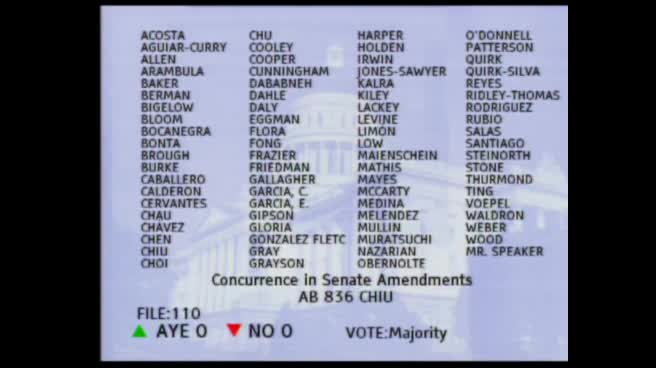 1MIN
Assembly Floor
 2MIN
Senate Floor
 7MIN
Assembly Standing Committee on Jobs, Economic Development, and the Economy


Bill Co-Author(s):