AB 1157: School property: school district advisory committees: teacher and school district employee housing: property tax exemption.
- Session Year: 2017-2018
- House: Assembly
- Latest Version Date: 2017-10-12
(1)Existing law authorizes the governing board of any school district, and, prior to the sale, lease, or rental of any excess real property, except rentals not exceeding 30 days, requires the governing board of each school district, to appoint a school district advisory committee to advise the governing board of the school district in the development of districtwide policies and procedures governing the use or disposition of school buildings or space in school buildings which is not needed for school purposes. Notwithstanding that law, existing law authorizes the governing board of a school district to elect not to appoint an advisory committee in the case of a lease or rental to a private educational institution for the purpose of offering summer school in a facility of the school district.
This bill would also authorize the governing board of a school district to elect not to appoint a school district advisory committee in the sale, lease, or rental of excess real property to be used for teacher or school district employee housing.
Existing law exempts certain transactions from the requirements that otherwise apply to the sale or lease of real property by a school district if certain conditions are met, including that the financing proceeds obtained by the school district pursuant to the transaction are expended solely for specified capital outlay purposes.
This bill would specify that the construction, reconstruction, or renovation of rental housing facilities for school district employees is a permissible capital outlay expenditure for purposes of those provisions.
(2)The California Constitution provides that all property is taxable, and requires that it be assessed at the same percentage of fair market value, unless otherwise provided by the California Constitution or federal law. The California Constitution exempts from taxation, among other types of property, property used exclusively for public schools, community colleges, state colleges, and state universities. Existing property tax law implements these exemptions for property used exclusively for public schools, community colleges, state colleges, and state universities, including the University of California.
This bill would specify that the exemption for school, college, or university property applies to an interest in property, including a possessory interest, belonging to the state, a county, a city, a school district, a community college district, or any combination thereof, that is used to provide rental housing for employees of one or more public school or community college districts.
By increasing the duties of local assessors with respect to applying the above-described property tax exemptions, this bill would impose a state-mandated local program.
Existing law requires the state to reimburse local agencies annually for certain property tax revenues lost as a result of any exemption or classification of property for purposes of ad valorem property taxation.
This bill would provide that, notwithstanding those provisions, no appropriation is made and the state shall not reimburse local agencies for property tax revenues lost by them pursuant to the bill.
(3)The California Constitution requires the state to reimburse local agencies and school districts for certain costs mandated by the state. Statutory provisions establish procedures for making that reimbursement.
This bill would provide that, if the Commission on State Mandates determines that the bill contains costs mandated by the state, reimbursement for those costs shall be made pursuant to the statutory provisions noted above.
(1)Existing law authorizes the governing board of any school district, and, prior to the sale, lease, or rental of any excess real property, except rentals not exceeding 30 days, requires the governing board of each school district, to appoint a school district advisory committee to advise the governing board of the school district in the development of districtwide policies and procedures governing the use or disposition of school buildings or space in school buildings which is not needed for school purposes. Notwithstanding that law, existing law authorizes the governing board of a school district to elect not to appoint an advisory committee in the case of a lease or rental to a private educational institution for the purpose of offering summer school in a facility of the school district.
This bill would also authorize the governing board of a school district to elect not to appoint a school district advisory committee in the sale, lease, or rental of excess real property to be used for teacher or school district employee housing.
Existing law exempts certain transactions from the requirements that otherwise apply to the sale or lease of real property by a school district if certain conditions are met, including that the financing proceeds obtained by the school district pursuant to the transaction are expended solely for specified capital outlay purposes.
This bill would specify that the construction, reconstruction, or renovation of rental housing facilities for school district employees is a permissible capital outlay expenditure for purposes of those provisions.
(2)The California Constitution provides that all property is taxable, and requires that it be assessed at the same percentage of fair market value, unless otherwise provided by the California Constitution or federal law. The California Constitution exempts from taxation, among other types of property, property owned by the state or by local governments and property used exclusively for public schools, community colleges, state colleges, and state universities. Existing property tax law implements these exemptions for property used exclusively for public schools, community colleges, state colleges, and state universities, including the University of California, and property belonging to this state, a county, or a city. California.
This bill would specify that the exemption for school, college, or university property applies to an interest in property, including a possessory interest, belonging to the state, a county, a city, a school district, a community college district, or any combination thereof, that is used to provide rental housing for employees of one or more public school or community college districts. The bill would also specify that the exemption for property owned by a county applies to an interest in property, including a possessory interest, belonging to the state, a county, a city, a school district, a community college district, or any combination thereof, that is used to provide housing for employees of the state, a county, a city, a school district, a community college district, or any combination thereof.
By increasing the duties of local assessors with respect to applying the above-described property tax exemptions, this bill would impose a state-mandated local program.
Existing law requires the state to reimburse local agencies annually for certain property tax revenues lost as a result of any exemption or classification of property for purposes of ad valorem property taxation.
This bill would provide that, notwithstanding those provisions, no appropriation is made and the state shall not reimburse local agencies for property tax revenues lost by them pursuant to the bill.
(3)The California Constitution requires the state to reimburse local agencies and school districts for certain costs mandated by the state. Statutory provisions establish procedures for making that reimbursement.
This bill would provide that, if the Commission on State Mandates determines that the bill contains costs mandated by the state, reimbursement for those costs shall be made pursuant to the statutory provisions noted above.
(1)Existing law authorizes the governing board of any school district, and, prior to the sale, lease, or rental of any excess real property, except rentals not exceeding 30 days, requires the governing board of each school district, to appoint a school district advisory committee to advise the governing board of the school district in the development of districtwide policies and procedures governing the use or disposition of school buildings or space in school buildings which is not needed for school purposes. Notwithstanding that law, existing law authorizes the governing board of a school district to elect not to appoint an advisory committee in the case of a lease or rental to a private educational institution for the purpose of offering summer school in a facility of the school district.
This bill would also authorize the governing board of a school district to elect not to appoint a school district advisory committee in the sale, lease, or rental of excess real property to be used for teacher or school district employee housing.
Existing law exempts certain transactions from the requirements that otherwise apply to the sale or lease of real property by a school district if certain conditions are met, including that the financing proceeds obtained by the school district pursuant to the transaction are expended solely for specified capital outlay purposes.
This bill would specify that the construction, reconstruction, or renovation of rental housing facilities for school district employees is a permissible capital outlay expenditure for purposes of those provisions.
(2)The California Constitution provides that all property is taxable, and requires that it be assessed at the same percentage of fair market value, unless otherwise provided by the California Constitution or federal law. The California Constitution exempts from taxation, among other types of property, property owned by the state or by local governments and property used exclusively for public schools, community colleges, state colleges, and state universities. Existing property tax law implements these exemptions for property used exclusively for public schools, community colleges, state colleges, and state universities, including the University of California, and property belonging to this state, a county, or a city.
This bill would specify that the exemption for school, college, or university property includes property that is used to jointly provide housing for employees of one or more public school districts or community college districts, provided that the use of property to jointly provide housing is pursuant to a written agreement between the affected public school districts or community college districts. applies to an interest in property, including a possessory interest, belonging to the state, a county, a city, a school district, a community college district, or any combination thereof, that is used to provide housing for employees of one or more public school or community college districts. The bill would also specify that the exemption for property owned by a county includes property, used to provide housing for the employees of that county, that is also used to provide housing to employees of a public school district or community college district that includes within its jurisdictional boundaries territory that is also within the jurisdictional boundaries of the county. applies to an interest in property, including a possessory interest, belonging to the state, a county, a city, a school district, a community college district, or any combination thereof, that is used to provide housing for employees of the state, a county, a city, a school district, a community college district, or any combination thereof.
By increasing the duties of local assessors with respect to applying the above-described property tax exemptions, this bill would impose a state-mandated local program.
Existing law requires the state to reimburse local agencies annually for certain property tax revenues lost as a result of any exemption or classification of property for purposes of ad valorem property taxation.
This bill would provide that, notwithstanding those provisions, no appropriation is made and the state shall not reimburse local agencies for property tax revenues lost by them pursuant to the bill.
(3)The California Constitution requires the state to reimburse local agencies and school districts for certain costs mandated by the state. Statutory provisions establish procedures for making that reimbursement.
This bill would provide that, if the Commission on State Mandates determines that the bill contains costs mandated by the state, reimbursement for those costs shall be made pursuant to the statutory provisions noted above.
(1)Existing law authorizes the governing board of any school district, and, prior to the sale, lease, or rental of any excess real property, except rentals not exceeding 30 days, requires the governing board of each school district, to appoint a school district advisory committee to advise the governing board of the school district in the development of districtwide policies and procedures governing the use or disposition of school buildings or space in school buildings which is not needed for school purposes. Notwithstanding that law, existing law authorizes the governing board of a school district to elect not to appoint an advisory committee in the case of a lease or rental to a private educational institution for the purpose of offering summer school in a facility of the school district.
This bill would also authorize the governing board of a school district to elect not to appoint a school district advisory committee in the sale, lease, or rental of excess real property to be used for teacher or school district employee housing.
Existing law exempts certain transactions from the requirements that otherwise apply to the sale or lease of real property by a school district if certain conditions are met, including that the financing proceeds obtained by the school district pursuant to the transaction are expended solely for specified capital outlay purposes.
This bill would specify that the construction, reconstruction, or renovation of rental housing facilities for school district employees is a permissible capital outlay expenditure for purposes of those provisions.
(2)The California Constitution provides that all property is taxable, and requires that it be assessed at the same percentage of fair market value, unless otherwise provided by the California Constitution or federal law. The California Constitution exempts from taxation, among other types of property, property owned by the state or by local governments and property used exclusively for public schools, community colleges, state colleges, and state universities. Existing property tax law implements these exemptions for property used exclusively for public schools, community colleges, state colleges, and state universities, including the University of California, and property belonging to this state, a county, or a city.
This bill would specify that the exemption for school, college, or university property includes property that is used to jointly provide housing for employees of one or more public school districts or community college districts, provided that the use of property to jointly provide housing is pursuant to a written agreement between the affected public school districts or community college districts. The bill would also specify that the exemption for property owned by a county includes property, used to provide housing for the employees of that county, that is also used to provide housing to employees of a public school district or community college district that includes within its jurisdictional boundaries territory that is also within the jurisdictional boundaries of the county.
By increasing the duties of local assessors with respect to applying the above-described property tax exemptions, this bill would impose a state-mandated local program.
Existing law requires the state to reimburse local agencies annually for certain property tax revenues lost as a result of any exemption or classification of property for purposes of ad valorem property taxation.
This bill would provide that, notwithstanding those provisions, no appropriation is made and the state shall not reimburse local agencies for property tax revenues lost by them pursuant to the bill.
(3)The California Constitution requires the state to reimburse local agencies and school districts for certain costs mandated by the state. Statutory provisions establish procedures for making that reimbursement.
This bill would provide that, if the Commission on State Mandates determines that the bill contains costs mandated by the state, reimbursement for those costs shall be made pursuant to the statutory provisions noted above.
Existing law authorizes the governing board of any school district, and, prior to the sale, lease, or rental of any excess real property, except rentals not exceeding 30 days, requires the governing board of each school district, to appoint a school district advisory committee to advise the governing board of the school district in the development of districtwide policies and procedures governing the use or disposition of school buildings or space in school buildings which is not needed for school purposes. Notwithstanding that law, existing law authorizes the governing board of a school district to elect not to appoint an advisory committee in the case of a lease or rental to a private educational institution for the purpose of offering summer school in a facility of the school district.
This bill would also authorize the governing board of a school district to elect not to appoint a school district advisory committee in the sale, lease, or rental of excess real property to be used for teacher or school district employee housing.
Existing law prescribes requirements for the disposal of surplus land by a local agency, including a school district, and requires the local agency disposing of surplus land to first offer to sell or lease the property to other local public entities for specified purposes.This bill would express the intent of the Legislature to enact legislation that would authorize a school district to use surplus property to build teacher housing without giving first priority to other local public entities for specified purposes.Existing law prescribes requirements for the disposal of surplus land by a local agency, including a school district, and requires the local agency disposing of surplus land to first offer to sell or lease the property to other local public entities for specified purposes.
This bill would express the intent of the Legislature to enact legislation that would authorize a school district to use surplus property to build teacher housing without giving first priority to other local public entities for specified purposes.
Notwithstanding Section 17388, the governing board of a school district may elect not to appoint a school district advisory committee pursuant to Section 17388 in either of the following circumstances:
(a)A lease or rental of excess real property to a private educational institution for the purpose of offering summer school in a facility of the school district.
(b)The sale, lease, or rental of excess real property to be used for teacher or school district employee housing.
SEC. 2.Section 17456 of the Education Code is amended to read:17456.Notwithstanding Section 17455, the sale by the governing board of a school district of any real property belonging to the school district or the lease by that governing board, for a term not exceeding 99 years, of any real property, together with any personal property located thereon, belonging to the school district shall not be subject to any other provision of this chapter, to Article 5 (commencing with Section 17485), or to Article 8 (commencing with Section 54220) of Chapter 5 of Part 1 of Division 2 of Title 5 of the Government Code, if all of the following conditions are met:
(a)The property is sold or leased to another local governmental agency, or to a nonprofit corporation that is organized for the purpose of assisting one or more local governmental agencies in obtaining financing.
(b)(1)In the case of the sale of school district property pursuant to this section, the school district, as part of that same sale transaction, simultaneously repurchases the same property that is the subject of the transaction.
(2)In the case of the lease of school district property pursuant to this section, the school district, as part of that same lease transaction, simultaneously leases back, for a term that is not substantially less than the term of that lease, the same property that is the subject of the transaction.
(c)(1)The financing proceeds obtained by the school district pursuant to the transaction described in this section are expended solely for capital outlay purposes, including the acquisition of real property for intended use as a schoolsite and the construction, reconstruction, and renovation of school facilities.
(2)For purposes of this section, the construction, reconstruction, or renovation of rental housing facilities for school district employees constitutes a permissible capital outlay expenditure of the financing proceeds obtained by the school district.
SEC. 3.Section 202 of the Revenue and Taxation Code is amended to read:202.(a)The exemption of the following property is as specified in subdivisions (a), (b), (d), and (h) of Section 3 of Article XIII of the Constitution, except as otherwise provided in subdivision (a) of Section 11 thereof:
(1)Growing crops.
(2)Property used for free public libraries and free museums.
(3)Property used exclusively for public schools, community colleges, state colleges, and state universities, including the University of California.
(4)Property belonging to this state, a county, or a city. Property belonging to the State Compensation Insurance Fund is not property belonging to this state.
(b)(1)The exemption described in paragraph (3) of subdivision (a) shall apply to off-campus facilities owned or leased by an apprenticeship program sponsor, if such facilities are used exclusively by the public schools for classes of related and supplemental instruction for apprentices or trainees which are conducted by the public schools under Chapter 4 (commencing with Section 3070) of Division 3 of the Labor Code.
(2)The exemption described in paragraph (3) of subdivision (a) shall apply to an interest in property, including a possessory interest as defined in Section 107, belonging to the state, a county, a city, a school district, a community college district, or any combination thereof, that is used to provide rental housing for employees of one or more public school districts or community college districts.
(c)Without prejudice to the right to assert an exemption otherwise available under subdivision (a), (d), or (e) of Section 3 of Article XIII of the Constitution, a property tax under this division shall be imposed upon that portion of the bookstore property determined to be generating the unrelated business taxable income, as defined in Section 512 of the Internal Revenue Code, to the extent property is:
(1)Owned by an educational institution of collegiate grade or used by a nonprofit corporation operating a student bookstore affiliated with such an educational institution, and
(2)Is primarily devoted to bookstore use that produces income that is taxable as unrelated business taxable income.
This tax shall be determined by establishing a ratio of the unrelated business taxable income to the bookstores gross income as defined by the Internal Revenue Code. That percent shall be the maximum percentage of such bookstore property on which a property tax can be levied.
At the end of a fiscal year when unrelated business income has been generated, the nonprofit organization shall file with the assessor copies of the organizations most recent tax return filed with the Internal Revenue Service.
SEC. 4.Notwithstanding Section 2229 of the Revenue and Taxation Code, no appropriation is made by this act and the state shall not reimburse any local agency for any property tax revenues lost by it pursuant to this act.
SEC. 5.If the Commission on State Mandates determines that this act contains costs mandated by the state, reimbursement to local agencies and school districts for those costs shall be made pursuant to Part 7 (commencing with Section 17500) of Division 4 of Title 2 of the Government Code.
Notwithstanding Section 17388, the governing board of a school district may elect not to appoint a school district advisory committee pursuant to Section 17388 in either of the following circumstances:
(a)A lease or rental of excess real property to a private educational institution for the purpose of offering summer school in a facility of the school district.
(b)The sale, lease, or rental of excess real property to be used for teacher or school district employee housing.
SEC. 2.Section 17456 of the Education Code is amended to read:17456.Notwithstanding Section 17455, the sale by the governing board of a school district of any real property belonging to the school district or the lease by that governing board, for a term not exceeding 99 years, of any real property, together with any personal property located thereon, belonging to the school district shall not be subject to any other provision of this chapter, to Article 5 (commencing with Section 17485), or to Article 8 (commencing with Section 54220) of Chapter 5 of Part 1 of Division 2 of Title 5 of the Government Code, if all of the following conditions are met:
(a)The property is sold or leased to another local governmental agency, or to a nonprofit corporation that is organized for the purpose of assisting one or more local governmental agencies in obtaining financing.
(b)(1)In the case of the sale of school district property pursuant to this section, the school district, as part of that same sale transaction, simultaneously repurchases the same property that is the subject of the transaction.
(2)In the case of the lease of school district property pursuant to this section, the school district, as part of that same lease transaction, simultaneously leases back, for a term that is not substantially less than the term of that lease, the same property that is the subject of the transaction.
(c)(1)The financing proceeds obtained by the school district pursuant to the transaction described in this section are expended solely for capital outlay purposes, including the acquisition of real property for intended use as a schoolsite and the construction, reconstruction, and renovation of school facilities.
(2)For purposes of this section, the construction, reconstruction, or renovation of rental housing facilities for school district employees constitutes a permissible capital outlay expenditure of the financing proceeds obtained by the school district.
SEC. 3.Section 202 of the Revenue and Taxation Code is amended to read:202.(a)The exemption of the following property is as specified in subdivisions (a), (b), (d), and (h) of Section 3 of Article XIII of the Constitution, except as otherwise provided in subdivision (a) of Section 11 thereof:
(1)Growing crops.
(2)Property used for free public libraries and free museums.
(3)Property used exclusively for public schools, community colleges, state colleges, and state universities, including the University of California.
(4)Property belonging to this state, a county, or a city. Property belonging to the State Compensation Insurance Fund is not property belonging to this state.
(b)(1)The exemption described in paragraph (3) of subdivision (a) shall apply to off-campus facilities owned or leased by an apprenticeship program sponsor, if such facilities are used exclusively by the public schools for classes of related and supplemental instruction for apprentices or trainees which are conducted by the public schools under Chapter 4 (commencing with Section 3070) of Division 3 of the Labor Code.
(2)The exemption described in paragraph (3) of subdivision (a) shall apply to an interest in property, including a possessory interest as defined in Section 107, belonging to the state, a county, a city, a school district, a community college district, or any combination thereof, that is used to provide rental housing for employees of one or more public school districts or community college districts.
(3)The exemption described in paragraph (4) of subdivision (a) shall apply to an interest in property, including a possessory interest as defined in Section 107, belonging to the state, a county, or a city, that is used to provide housing for employees of the state, a county, a city, a school district, a community college district, or any combination thereof.(c)Without prejudice to the right to assert an exemption otherwise available under subdivision (a), (d), or (e) of Section 3 of Article XIII of the Constitution, a property tax under this division shall be imposed upon that portion of the bookstore property determined to be generating the unrelated business taxable income, as defined in Section 512 of the Internal Revenue Code, to the extent property is:
(1)Owned by an educational institution of collegiate grade or used by a nonprofit corporation operating a student bookstore affiliated with such an educational institution, and
(2)Is primarily devoted to bookstore use that produces income that is taxable as unrelated business taxable income.
This tax shall be determined by establishing a ratio of the unrelated business taxable income to the bookstores gross income as defined by the Internal Revenue Code. That percent shall be the maximum percentage of such bookstore property on which a property tax can be levied.
At the end of a fiscal year when unrelated business income has been generated, the nonprofit organization shall file with the assessor copies of the organizations most recent tax return filed with the Internal Revenue Service.
SEC. 4.Notwithstanding Section 2229 of the Revenue and Taxation Code, no appropriation is made by this act and the state shall not reimburse any local agency for any property tax revenues lost by it pursuant to this act.
SEC. 5.If the Commission on State Mandates determines that this act contains costs mandated by the state, reimbursement to local agencies and school districts for those costs shall be made pursuant to Part 7 (commencing with Section 17500) of Division 4 of Title 2 of the Government Code.
Notwithstanding Section 17388, the governing board of a school district may elect not to appoint a school district advisory committee pursuant to Section 17388 in either of the following circumstances:
(a)A lease or rental of excess real property to a private educational institution for the purpose of offering summer school in a facility of the school district.
(b)The sale, lease, or rental of excess real property to be used for teacher or school district employee housing.
SEC. 2.Section 17456 of the Education Code is amended to read:17456.Notwithstanding Section 17455, the sale by the governing board of a school district of any real property belonging to the school district or the lease by that governing board, for a term not exceeding 99 years, of any real property, together with any personal property located thereon, belonging to the school district shall not be subject to any other provision of this chapter, to Article 5 (commencing with Section 17485), or to Article 8 (commencing with Section 54220) of Chapter 5 of Part 1 of Division 2 of Title 5 of the Government Code, if all of the following conditions are met:
(a)The property is sold or leased to another local governmental agency, or to a nonprofit corporation that is organized for the purpose of assisting one or more local governmental agencies in obtaining financing.
(b)(1)In the case of the sale of school district property pursuant to this section, the school district, as part of that same sale transaction, simultaneously repurchases the same property that is the subject of the transaction.
(2)In the case of the lease of school district property pursuant to this section, the school district, as part of that same lease transaction, simultaneously leases back, for a term that is not substantially less than the term of that lease, the same property that is the subject of the transaction.
(c)(1)The financing proceeds obtained by the school district pursuant to the transaction described in this section are expended solely for capital outlay purposes, including the acquisition of real property for intended use as a schoolsite and the construction, reconstruction, and renovation of school facilities.
(2)For purposes of this section, the construction, reconstruction, or renovation of rental housing facilities for school district employees constitutes a permissible capital outlay expenditure of the financing proceeds obtained by the school district.
SEC. 3.Section 202 of the Revenue and Taxation Code is amended to read:202.(a)The exemption of the following property is as specified in subdivisions (a), (b), (d), and (h) of Section 3 of Article XIII of the Constitution, except as otherwise provided in subdivision (a) of Section 11 thereof:
(1)Growing crops.
(2)Property used for free public libraries and free museums.
(3)Property used exclusively for public schools, community colleges, state colleges, and state universities, including the University of California.
(4)Property belonging to this state, a county, or a city. Property belonging to the State Compensation Insurance Fund is not property belonging to this state.
(b)(1)The exemption described in paragraph (3) of subdivision (a) shall apply to off-campus facilities owned or leased by an apprenticeship program sponsor, if such facilities are used exclusively by the public schools for classes of related and supplemental instruction for apprentices or trainees which are conducted by the public schools under Chapter 4 (commencing with Section 3070) of Division 3 of the Labor Code.
(2)The exemption described in paragraph (3) of subdivision (a) shall include property apply to an interest in property, including a possessory interest as defined in Section 107, belonging to the state, a county, a city, a school district, a community college district, or any combination thereof, that is used to jointly provide housing for employees of one or more public school districts or community college districts, provided that the use of property by more than one public school district or community college district to jointly provide housing for employees of those public school districts or community college districts is pursuant to a written agreement between the affected public school districts or community college districts. districts.
(3)The exemption described in paragraph (4) of subdivision (a) shall include county property, used to provide housing for the employees of the county, that is also used to provide housing to employees of a public school district or community college district that includes within its jurisdictional boundaries territory that is also within the jurisdictional boundaries of the county. apply to an interest in property, including a possessory interest as defined in Section 107, belonging to the state, a county, or a city, that is used to provide housing for employees of the state, a county, a city, a school district, a community college district, or any combination thereof.
(c)Without prejudice to the right to assert an exemption otherwise available under subdivision (a), (d), or (e) of Section 3 of Article XIII of the Constitution, a property tax under this division shall be imposed upon that portion of the bookstore property determined to be generating the unrelated business taxable income, as defined in Section 512 of the Internal Revenue Code, to the extent property is:
(1)Owned by an educational institution of collegiate grade or used by a nonprofit corporation operating a student bookstore affiliated with such an educational institution, and
(2)Is primarily devoted to bookstore use that produces income that is taxable as unrelated business taxable income.
This tax shall be determined by establishing a ratio of the unrelated business taxable income to the bookstores gross income as defined by the Internal Revenue Code. That percent shall be the maximum percentage of such bookstore property on which a property tax can be levied.
At the end of a fiscal year when unrelated business income has been generated, the nonprofit organization shall file with the assessor copies of the organizations most recent tax return filed with the Internal Revenue Service.
SEC. 4.Notwithstanding Section 2229 of the Revenue and Taxation Code, no appropriation is made by this act and the state shall not reimburse any local agency for any property tax revenues lost by it pursuant to this act.
SEC. 5.If the Commission on State Mandates determines that this act contains costs mandated by the state, reimbursement to local agencies and school districts for those costs shall be made pursuant to Part 7 (commencing with Section 17500) of Division 4 of Title 2 of the Government Code.
Notwithstanding Section 17388, the governing board of a school district may elect not to appoint a school district advisory committee pursuant to Section 17388 in either of the following circumstances:
(a)A lease or rental of excess real property to a private educational institution for the purpose of offering summer school in a facility of the school district.
(b)The sale, lease, or rental of excess real property to be used for teacher or school district employee housing.
SEC. 2.Section 17456 of the Education Code is amended to read:17456.Notwithstanding Section 17455, the sale by the governing board of any a school district of any real property belonging to the school district or the lease by that governing board, for a term not exceeding 99 years, of any real property, together with any personal property located thereon, belonging to the school district shall not be subject to any other provision of this chapter, to Article 5 (commencing with Section 17485), or to Article 8 (commencing with Section 54220) of Chapter 5 of Part 1 of Division 2 of Title 5 of the Government Code, if all of the following conditions are met:
(a)The property is sold or leased to another local governmental agency, or to a nonprofit corporation that is organized for the purpose of assisting one or more local governmental agencies in obtaining financing.
(b)(1)In the case of the sale of school district property pursuant to this section, the school district, as part of that same sale transaction, simultaneously repurchases the same property that is the subject of the transaction.
(2)In the case of the lease of school district property pursuant to this section, the school district, as part of that same lease transaction, simultaneously leases back, for a term that is not substantially less than the term of that lease, the same property that is the subject of the transaction.
(c)(1)The financing proceeds obtained by the school district pursuant to the transaction described in this section are expended solely for capital outlay purposes, including the acquisition of real property for intended use as a schoolsite and the construction, reconstruction, and renovation of school facilities.
(2)For purposes of this section, the construction, reconstruction, or renovation of rental housing facilities for school district employees constitutes a permissible capital outlay expenditure of the financing proceeds obtained by the school district.
SEC. 3.Section 202 of the Revenue and Taxation Code is amended to read:202.(a)The exemption of the following property is as specified in subdivisions (a), (b), (d), and (h) of Section 3 of Article XIII of the Constitution, except as otherwise provided in subdivision (a) of Section 11 thereof:
(1)Growing crops.
(2)Property used for free public libraries and free museums.
(3)Property used exclusively for public schools, community colleges, state colleges, and state universities, including the University of California.
(4)Property belonging to this state, a county, or a city. Property belonging to the State Compensation Insurance Fund is not property belonging to this state.
(b)(1)The exemption described in paragraph (3) of subdivision (a) shall apply to off-campus facilities owned or leased by an apprenticeship program sponsor, if such facilities are used exclusively by the public schools for classes of related and supplemental instruction for apprentices or trainees which are conducted by the public schools under Chapter 4 (commencing with Section 3070) of Division 3 of the Labor Code.
(2)The exemption described in paragraph (3) of subdivision (a) shall include property that is used to jointly provide housing for employees of one or more public school districts or community college districts, provided that the use of property by more than one public school district or community college district to jointly provide housing for employees of those public school districts or community college districts is pursuant to a written agreement between the affected public school districts or community college districts.
(3)The exemption described in paragraph (4) of subdivision (a) shall include county property, used to provide housing for the employees of the county, that is also used to provide housing to employees of a public school district or community college district that includes within its jurisdictional boundaries territory that is also within the jurisdictional boundaries of the county.
(c)Without prejudice to the right to assert an exemption otherwise available under subdivision (a), (d), or (e) of Section 3 of Article XIII of the Constitution, a property tax under this division shall be imposed upon that portion of the bookstore property determined to be generating the unrelated business taxable income, as defined in Section 512 of the Internal Revenue Code, to the extent property is:
(1)Owned by an educational institution of collegiate grade or used by a nonprofit corporation operating a student bookstore affiliated with such an educational institution, and
(2)Is primarily devoted to bookstore use that produces income that is taxable as unrelated business taxable income.
This tax shall be determined by establishing a ratio of the unrelated business taxable income to the bookstores gross income as defined by the Internal Revenue Code. That percent shall be the maximum percentage of such bookstore property on which a property tax can be levied.
At the end of a fiscal year when unrelated business income has been generated, the nonprofit organization shall file with the assessor copies of the organizations most recent tax return filed with the Internal Revenue Service.
SEC. 4.Notwithstanding Section 2229 of the Revenue and Taxation Code, no appropriation is made by this act and the state shall not reimburse any local agency for any property tax revenues lost by it pursuant to this act.
SEC. 5.If the Commission on State Mandates determines that this act contains costs mandated by the state, reimbursement to local agencies and school districts for those costs shall be made pursuant to Part 7 (commencing with Section 17500) of Division 4 of Title 2 of the Government Code.
The Notwithstanding Section 17388, the governing board of a school district may elect not to appoint an a school district advisory committee pursuant to Section 17387 in the case of a lease or rental to a private educational institution for the purpose of offering summer school in a facility of the district. 17388 in either of the following circumstances:
(a)A lease or rental of excess real property to a private educational institution for the purpose of offering summer school in a facility of the school district.
(b)The sale, lease, or rental of excess real property to be used for teacher or school district employee housing.
SECTION 1.It is the intent of the Legislature to enact legislation that would authorize a school district to use surplus property to build teacher housing without giving first priority to other local public entities for specified purposes.It is the intent of the Legislature to enact legislation that would authorize a school district to use surplus property to build teacher housing without giving first priority to other local public entities for specified purposes.
|
Date
|
Status
|
|---|---|
| Oct 12, 2017 | Chaptered by Secretary of State - Chapter 717, Statutes of 2017. |
| Oct 12, 2017 | Approved by the Governor. |
| Sep 19, 2017 | Enrolled and presented to the Governor at 3 p.m. |
| Sep 11, 2017 | Senate amendments concurred in. To Engrossing and Enrolling. |
| Sep 5, 2017 | In Assembly. Concurrence in Senate amendments pending. May be considered on or after September 7 pursuant to Assembly Rule 77. |
| Sep 5, 2017 | Read third time. Passed. Ordered to the Assembly. |
| Aug 22, 2017 | Read second time. Ordered to third reading. |
| Aug 21, 2017 | From committee: Be ordered to second reading pursuant to Senate Rule 28.8. |
| Jul 12, 2017 | From committee: Do pass and re-refer to Com. on APPR. (Ayes 7. Noes 0.) (July 12). Re-referred to Com. on APPR. |
| Jul 5, 2017 | In committee: Set, first hearing. Hearing canceled at the request of author. |
| Jun 29, 2017 | From committee chair, with author's amendments: Amend, and re-refer to committee. Read second time, amended, and re-referred to Com. on GOV. & F. |
| Jun 28, 2017 | From committee: Do pass and re-refer to Com. on GOV. & F. (Ayes 6. Noes 1.) (June 28). Re-referred to Com. on GOV. & F. |
| Jun 15, 2017 | From committee chair, with author's amendments: Amend, and re-refer to committee. Read second time, amended, and re-referred to Com. on ED. |
| Jun 12, 2017 | In committee: Set, first hearing. Hearing canceled at the request of author. |
| Jun 8, 2017 | Referred to Coms. on ED. and GOV. & F. |
| May 26, 2017 | In Senate. Read first time. To Com. on RLS. for assignment. |
| May 26, 2017 | Read third time. Passed. Ordered to the Senate. (Ayes 76. Noes 0. Page 1721.) |
| May 18, 2017 | Read second time. Ordered to Consent Calendar. |
| May 17, 2017 | From committee: Do pass. To Consent Calendar. (Ayes 17. Noes 0.) (May 17). |
| May 11, 2017 | From committee: Do pass and re-refer to Com. on APPR. (Ayes 7. Noes 0.) (May 10). Re-referred to Com. on APPR. |
| May 3, 2017 | Re-referred to Com. on ED. |
| May 2, 2017 | From committee chair, with author's amendments: Amend, and re-refer to Com. on ED. Read second time and amended. |
| Apr 26, 2017 | In committee: Hearing postponed by committee. |
| Mar 29, 2017 | Re-referred to Com. on ED. |
| Mar 28, 2017 | From committee chair, with author's amendments: Amend, and re-refer to Com. on ED. Read second time and amended. |
| Mar 27, 2017 | Referred to Com. on ED. |
| Feb 19, 2017 | From printer. May be heard in committee March 21. |
| Feb 17, 2017 | Read first time. To print. |
|
Date
|
Description
|
Location
|
Votes
|
|
|---|---|---|---|---|
| Sep 11, 2017 | AB 1157 MULLIN Concurrence in Senate Amendments | Assembly Floor |
Passed |
|
| Sep 5, 2017 | Assembly 3rd Reading AB1157 Mullin et al. By Atkins | Senate Floor |
Passed |
|
| Jul 12, 2017 | Do pass, but first be re-referred to the Committee on [Appropriations] | Senate Standing Committee on Governance and Finance |
Passed |
|
| Jun 28, 2017 | Do pass, but first be re-referred to the Committee on [Governance and Finance] | Senate Standing Committee on Education |
Passed |
|
| May 26, 2017 | AB 1157 MULLIN Consent Calendar Second Day Regular Session | Assembly Floor |
Passed |
|
| May 17, 2017 | Do pass. To Consent Calendar. | Assembly Standing Committee on Appropriations |
Passed |
|
| May 10, 2017 | Do pass and be re-referred to the Committee on [Appropriations] | Assembly Standing Committee on Education |
Passed |
This list shows positions taken on this bill by organizations on the date displayed, which is linked to the original source.
Positions by individuals are not included.
|
Organization
|
Position
|
Date
|
|---|---|---|
| County of San Mateo Office of the County Council | * Support | Jul 12, 2017 |
| Non-profit Housing Association of California | * Support | Jul 12, 2017 |
| San Mateo Foster City School District | * Support | Jul 12, 2017 |
| Unknown. | ** Against | Jul 7, 2017 |
CONCURRENCE IN SENATE AMENDMENTS
CSA1 Bill Id:AB 1157
Author:(Mullin)
As Amended Ver:June 29, 2017
Majority vote
ASSEMBLY: | 76-0 | (May 26, 2017) | SENATE: | 35-4 | (September 5, 2017) |
Original Committee Reference: ED.
SUMMARY: Exempts a school district from convening a specified advisory committee related to surplus property and exempts specified requirements relating to the sale or lease of real property if the purpose of the sale or lease of property is for the construction, reconstruction or renovation of rental housing facilities for school district employees, and clarifies a taxation exemption for property used to house employees of school and community college districts. Specifically, this bill:
- Exempts a school district from the requirement to appoint a specified school district advisory committee if the sale, lease or rental of excess real property is to be used for teacher or school district employee housing.
- Specifies that the construction, reconstruction, or renovation of rental housing facilities for school district employees constitutes a permissible capital outlay expenditure of the financing proceeds obtained by the school district for the purposes of meeting specified requirements that apply to the sale or lease of real property by a school district.
- Provides that the exemption for taxation of property for school, college, or university applies to an interest in property, including a possessory interest as defined in Section 107 of the Revenue and Taxation Code, belonging to the state, a county, a city, a school district, a community college district, or any combination thereof, that is used to provide rental housing for employees of one or more public school districts or community college districts.
The Senate amendments:
- Revise the provision specifying that the exemption of taxation of property is pursuant to a written agreement between the affected public school districts or community college districts and instead specify that the exemption of taxation of property applies to an interest in property belonging to a state, county, a city, a school district, a community college district, or any combination thereof, that is used to provide rental housing for employees.
- Strike the provision specifying that the exemption of taxation of property shall include county property, that is also used to provide housing to employees of a public school district or community college district that includes within its jurisdictional boundaries territory that is also within the jurisdictional boundaries of the county.
FISCAL EFFECT: According to the Senate Appropriations Committee, pursuant to Senate Rule 28.8, negligible state costs.
COMMENTS: This bill makes changes to the Education and Revenue and Taxation codes in an effort to increase availability of teacher and school district employee housing.
Education Code provisions: Under current law, prior to selling surplus property, a school district is required to appoint an advisory committee between seven and 11 members (commonly known as the 7-11 committee) comprised of community members, school-based representatives, and individuals with expertise in construction, land use, legal contracts or environmental impact. The purpose of 7-11 committees is to garner community input about uses for district owned surplus property prior to the sale of property. Under current law, a district is allowed to waive the requirement to appoint a 7-11 committee if district property is to be leased or rented to a private educational institution for the purpose of offering summer school. This bill expands the exemption to form a 7-11 committee if the sale, lease, or rental of district property is to be used for teacher or school district employee housing. The effect of this provision is to prevent school districts from having to offer surplus property to specified entities and instead enable school districts to use the property for employee housing.
Another provision in the bill exempts the sale or lease of real property for a term not exceeding 99 years from requirements related to sale or lease of property if the proceeds from the sale or lease will be used for the construction, reconstruction, or renovation of rental housing facilities for school district employees. Under current law, property deemed as "surplus" must be offered to specified entities, including local governmental agencies, childcare centers, and park or recreation districts. The exemption from having to comply with these provisions is provided if, among others, the proceeds are expended solely for capital outlay purposes, including the acquisition of real property for intended use as a schoolsite and the construction, reconstruction, and renovation of school facilities. This bill specifies that "construction, reconstruction or renovation" of facilities include rental facilities for school district employees.
Revenue and Taxation Code provisions: According to the Senate Governance and Finance Committee, "Section One of Article XIII of the California Constitution provides that all property is taxable unless explicitly exempted by the Constitution or federal law, which include properties either owned by local agencies or used by nonprofit organizations for educational purposes. To be exempt, the property must be exclusively used for education purposes. Courts have generally interpreted this requirement to include any facilities which are reasonably necessary to fulfil the function of the educational institution.
"Case law for the welfare exemption for housing on school-owned property holds that such housing furthers the educational purpose of the university, and is therefore exempt, but is limited to employee housing at colleges and universities, so the law may not be entirely clear regarding its application to housing owned by K-12 school districts." This bill clarifies that the welfare exemption applies to employees of one district living in housing owned by another.
The author states, "Due to the extreme shortage of teachers in the state, many school districts must seek opportunities to attract qualified teachers. In districts where housing is cost prohibitive, building teacher housing on surplus land will create such an opportunity. This bill seeks to clarify language in statute to ease this process and increase the supply of housing for teachers and school district employees."
Analysis Prepared by: Sophia Kwong Kim / ED. / (916) 319-2087 FN: 0001438
Office of Senate Floor Analyses (916) 651-1520 Fax: (916) 327-4478 | AB |
THIRD READING
Bill No: AB 1157
:
SENATE EDUCATION COMMITTEE: 6-1, 6/28/17
AYES: Allen, Wilk, Galgiani, Leyva, Mendoza, Pan
NOES: Vidak
SENATE GOVERNANCE & FIN. COMMITTEE: 7-0, 7/12/17
AYES: McGuire, Nguyen, Beall, Hernandez, Hertzberg, Lara, Moorlach
SENATE APPROPRIATIONS COMMITTEE: Senate Rule 28.8
ASSEMBLY FLOOR: 76-0, 5/26/17 (Consent) - See last page for vote
DIGEST:
This bill excuses school districts that sell, lease, or rent excess real property to be used for teacher or school district employee housing from being required to appoint an advisory committee related to surplus property. Further, the bill specifies that school districts may use proceeds from the sale or lease of school district property to construct, reconstruct, or renovate rental housing facilities for teachers and school district employees.
Existing law:
- Expresses the intent of the Legislature to have the community involved before decisions are made about school closure or the use of surplus space, thus avoiding community conflict and assuring building use that is compatible with the community’s needs and desires.
- Authorizes the governing board of any school district to, and requires the governing board of the school district, prior to the sale, lease, or rental of any excess real property, to appoint a district advisory committee to advise the governing board in the development of districtwide policies and procedures governing the use or disposition of school buildings or space in school buildings which is not needed for school purposes.
- Specifies that a school district advisory committee shall consist of not less than seven nor more than 11 members, and shall be representative of each of the following:
- The ethnic, age group, and socioeconomic composition of the district.
- The business community, such as store owners, managers, or supervisors.
- Landowners or renters, with preference to be given to representatives of neighborhood associations.
- Teachers.
- Administrators.
- Parents of students.
- Persons with expertise in environmental impact, legal contracts, building codes, and land use planning, including, but not limited to, knowledge of the zoning and other land use restrictions of the cities or cities and counties in which surplus space and real property is located.
- Requires the school district advisory committee to do all of the following:
- Review the projected school enrollment and other data as provided by the district to determine the amount of surplus space and real property.
- Establish a priority list of use of surplus space and real property that will be acceptable to the community.
- Cause to have circulated throughout the attendance area a priority list of surplus space and real property and provide for hearings of community input to the committee on acceptable uses of space and real property, including the sale or lease of surplus real property for child care development purposes.
- Make a final determination of limits of tolerance of the use of space and real property.
- Forward to the district governing board a report recommending uses of surplus space and real property.
- Authorizes the governing board to elect not to appoint an advisory committee in the case of a lease or rental to a private educational institution for the purpose of offering summer school in a facility of the district.
- Establishes a mandatory process for school districts seeking to sell or lease surplus property. Specifically, school districts must:
- Identify surplus property and convene an advisory committee to develop a district-wide policy and hold hearings on the use of surplus property.
- Declare publically their intent to sell or lease surplus property, with the governing board considering the advisory committee’s recommendation that the property be declared surplus and declaring its intent to dispose of the property in a resolution.
- Until June 30, 2016, offer to sell or lease real property to any charter school that has submitted a written request to the school district to be notified of surplus property offered for sale or lease by the school district and that meets certain other criteria.
- For property subject to the Naylor Act (property that has been used entirely or partially for outdoor recreational or playground purposes), offer the property to the following entities in order of priority:
- Until June 30, 2016, a requesting charter school.
- Any city within which the land is located.
- Any park or recreation district within which the land is located.
- Any regional park authority in the area where the land is located.
- Any county within which the land may be situated.
- For sale or lease with option to purchase, offer the property to the following entities in order of priority:
- Until June 30, 2016, a requesting charter school.
- To any park or recreation department of the city or county, any regional park authority having jurisdiction within the area, and to the State Resources Agency or any agency that may succeed to its powers.
- In writing, to the Director of General Services, the Regents of the University of California, the Trustees of the California State University, the county, and city in which the property is situated.
- By public notice, to any public housing authority in the county in which the property is situated, and to any public district, public authority, public agency, public corporation, or any other political subdivision in the state, to the federal government, and to nonprofit charitable corporations, as specified.
This bill:
- Exempts a school district from the requirement to appoint a specified school district advisory committee if the sale, lease, or rental of excess real property is to be used for teacher or school district employee housing.
- Specifies that the construction, reconstruction, or renovation of rental housing facilities for school district employees constitutes a permissible capital outlay expenditure of the financing proceeds obtained by the school district for the purposes of meeting specified requirements that apply to the sale or lease of real property by a school district.
- Provides that the exemption for taxation of property for a school, college, or university includes property that is used to jointly provide rental housing for employees of one or more public school districts or community college districts, provided that the use of property to jointly provide housing is pursuant to a written agreement between the affected public school districts or community college districts.
Comments
- Need for the bill. According to the author, inadequate housing across the state had led to the displacement and shortage of thousands of teachers. In high-cost areas, this extreme disparity has forced even the highest paid teachers out of the market for both rental housing and homeownership. First, this causes teachers who do not have other housing arrangements to leave. Then, it makes it nearly impossible to fill those vacant positions. School districts are unable to hire a sufficient number of qualified teachers to fill the demand for classrooms.
This bill is intended to ease the way for districts, struggling to attract and retain teachers and other district staff, to provide affordable housing to their employees.
- Teacher housing and affordability. The Teacher Housing Act of 2016 authorizes school districts to establish and implement programs that address the housing needs of teachers and school district employees who face challenges in securing affordable housing. School districts can utilize these programs as an additional incentive for teachers to enter and stay in their schools. This bill specifies that school districts that sell, lease, or rent excess real property to be used for teacher or school district employee housing are not required to appoint an advisory committee and that proceeds from the sale or lease of school district property may be used to construct, reconstruct, or renovate rental housing facilities for teachers and school district employees.
Given that the intent of this bill is to assist school districts wishing to address affordable teacher housing shortages, the Committee may wish to consider whether the bill should be narrowed to affordable housing projects, defined under the Teacher Housing Act of 2016 as a housing development with a majority of its rent restricted to levels that are affordable to persons and families of “low or moderate income” (defined further in Health and Safety Code).
- Learning Policy Institute (LPI) report. The LPI’s 2016 report, “Addressing California’s Emerging Teacher Shortage: An Analysis of Sources and Solutions” included the following summary: “After many years of teacher layoffs in California, school districts around the state are hiring again. With the influx of new K-12 funding, districts are looking to lower student-teacher ratios and reinstate classes and programs that were reduced or eliminated during the Great Recession. However, mounting evidence indicates that teacher supply has not kept pace with the increased demand.” The report included the following findings:
- Enrollment in educator preparation programs has dropped by more than 70 percent over the last decade.
- In 2014-15, provisional and short-term permits nearly tripled from the number issued two years earlier, growing from about 850 to more than 2,400.
- The number of teachers hired on substandard permits and credentials nearly doubled in the last two years, to more than 7,700 comprising a third of all the new credentials issued in 2014-15.
- Estimated teacher hires for the 2015-16 school year increased by 25 percent from the previous year while enrollment in the University of California and the California State University teacher education programs increased by only about 3.8 percent.
The Learning Policy Institute (LPI) report offered several policy recommendations for consideration, including the creation of more innovative pipelines into teaching.
- Legislative Analyst Office (LAO) assessment. As part of the Proposition 98 Education Analysis for the 2016-17 Governor’s Budget released in February 2016, the LAO included a section on teacher workforce trends in which it examined evidence for teacher shortages in specific areas, identified and assessed past policy responses to these shortages, and raised issues for the Legislature to consider going forward in terms of new policy responses. In the report, the LAO indicated that the statewide teacher market will help alleviate existing shortages over time and that the shortages may decrease without direct state action. However, the LAO noted there are perennial staffing difficulties in specific areas, such as special education, math, and science, for which they encouraged the Legislature to address with narrowly tailored policies rather than with broad statewide policies.
- Are school districts required to form school property advisory committees? While existing law includes clear requirements about the composition and duties of school district advisory committees, it is unclear whether school districts have the discretion to choose whether to form the committees at all. According to the California Department of Education, it is the legislative intent, but not a mandate, for a district to have and use an advisory committee before decisions are made about school closure.
The job of the superintendent and board members is to evaluate facts, not gather them. And the process of gathering the facts must be as credible, transparent, and non-political as possible. So, at the very least, the advisory committee, often referred to as a 7-11 Committee (due to legislative requirements of at least 7 but no more than 11 members) should be involved in the fact-finding necessary for an informal recommendation about school closure. An essential role of the advisory committee is to consider the district's Facility Master Plan and how a potential school closure could affect, or reinforce, that plan. It may be necessary to revise that plan based upon the fact-finding conclusions.
Related/Prior Legislation
SB 765 (Wiener) requires school districts seeking to sell, lease, or jointly occupy property for non-educational purposes to first offer the property to a charter school, except property intended to be used for teacher housing. SB 765 is currently pending before the Assembly Education Committee.
FISCAL EFFECT: Appropriation: Fiscal Com.: Local:
None received
OPPOSITION: (Verified 8/21/17)
None received
ASSEMBLY FLOOR: 76-0, 5/26/17
AYES: Acosta, Aguiar-Curry, Travis Allen, Arambula, Baker, Berman, Bigelow, Bloom, Bocanegra, Bonta, Brough, Burke, Caballero, Calderon, Cervantes, Chávez, Chen, Chiu, Choi, Chu, Cooley, Cooper, Cunningham, Dababneh, Dahle, Daly, Flora, Fong, Frazier, Friedman, Gallagher, Cristina Garcia, Eduardo Garcia, Gipson, Gloria, Gomez, Gonzalez Fletcher, Gray, Grayson, Harper, Holden, Irwin, Jones-Sawyer, Kalra, Kiley, Lackey, Levine, Limón, Low, Maienschein, Mathis, Mayes, McCarty, Medina, Melendez, Mullin, Muratsuchi, Nazarian, Obernolte, O'Donnell, Patterson, Quirk, Quirk-Silva, Reyes, Ridley-Thomas, Rodriguez, Rubio, Salas, Santiago, Mark Stone, Thurmond, Ting, Voepel, Weber, Wood, Rendon
NO VOTE RECORDED: Chau, Eggman, Steinorth, Waldron
8/22/17 16:44:32
**** END ****
SENATE COMMITTEE ON GOVERNANCE AND FINANCE
Senator Mike McGuire, Chair
2017 - 2018 Regular
Bill No: | AB 1157 | Hearing Date: | 7/12/17 |
Author: | Mullin | Tax Levy: | No |
Version: | 6/29/17 | Fiscal: | Yes |
Consultant: | Grinnell | ||
School property: school district advisory committees: teacher and school district employee housing: property tax exemption
Clarifies the application of the welfare exemption from property tax for property used to house employees of school and community college districts.
Background
Section One of Article XIII of the California Constitution provides that all property is taxable unless explicitly exempted by the Constitution or federal law, which include properties either owned by local agencies or used by nonprofit organizations for educational purposes. To be exempt, the property must be exclusively used for education purposes. Courts have generally interpreted this requirement to include any facilities which are reasonably necessary to fulfil the function of the educational institution.
Additionally, the possessory interest tax applies on real property interests located on public land, such as a vacation cabin on U.S. Forest Service land. A taxable possessory interest must be independent, durable, and exclusive, all terms of which are defined by statute and case law.
Last year, the Legislature enacted the Teacher Housing Act of 2016, which provides that a school district may establish and implement programs that address the housing needs of teachers and school district employees who face challenges in securing affordable housing (SB 1413, Leno). The Act provides clear authorization to school districts to develop housing on district-owned property to provide affordable housing to teachers and school district employees who need it.
Case law for the welfare exemption for housing on school-owned property holds that such housing furthers the educational purpose of the university, and is therefore exempt, but is limited to employee housing at colleges and universities, so the law may not be entirely clear regarding its application to housing owned by K-12 school districts. A coalition of education advocates and county officials want to clarify that the welfare exemption applies to school district property too.
Proposed Law
Assembly Bill 1157 provides that the welfare exemption from property tax applies to interests, including possessory interests, in property owned by a state, county, city, or school or community college district used to provide housing for employees of one or more public school or community college districts.
The measure also makes changes to the Education Code to:
- Exempt a school district from the requirement to appoint a specified school district advisory committee if the sale, lease, or rental of excess real property is to be used for teacher or school district employee housing.
- Specify that the construction, reconstruction, or renovation of rental housing facilities for school district employees constitutes a permissible capital outlay expenditure.
State Revenue Impact
The Board of Equalization (BOE) states that AB 1157 does not impact state revenues.
Comments
1. Purpose of the bill. According to the author, “Due to extreme shortage of teachers in the state, many school districts must seek opportunities to attract qualified teachers. In districts where housing is cost prohibitive, building teacher housing on surplus property will create such an opportunity. This bill seeks to clarify language in statute to ease this process and increase the supply of housing for teachers and school district employees.”
2. Clarity. In a 2005, BOE opined that the Public Schools Exemption only applies to property housing the employees of the public school seeking the exemption. The opinion related to the construction of rental apartments for employees located on a community college campus where tenant eligibility priority extended to employees from nearby high school districts. The opinion stated that the housing provided to employees of other districts would be ineligible because the educational use of the owner couldn’t be furthered if the tenants worked in other districts. While BOE now argues that this opinion was incorrect, AB 1157 provides the necessary clarity that the welfare exemption applies to employees of one district living in housing owned by another.
3. Mandate. The California Constitution requires the state to reimburse local governments for the costs of new or expanded state mandated local programs. Because AB 1157 could be interpreted to change the manner in which assessors value real property, Legislative Counsel says that it imposes a new state mandate. The measure states that should the Commission on State Mandates determine that the bill imposes a reimbursable mandate, reimbursement must be made pursuant to existing statutory provisions. The bill also provides that the state shall not reimburse local agencies for property tax revenue losses resulting from AB 1157.
4. Incoming! On June 28th, the Senate Education Committee approved AB 1157 by a vote of 6 to 1. The Committee on Governance and Finance is hearing the measure as the Committee of second reference.
Assembly Actions
Assembly Education Committee: 7-0
Assembly Appropriations Committee: 17-0
Assembly Floor: 76-0
Support and Opposition
(7/7/17)
Support: San Mateo City Concilmember Maureen Freshet, Non-Profit Housing Association of Northern California, two individuals.
Opposition: Unknown.
-- END --
SENATE COMMITTEE ON GOVERNANCE AND FINANCE
Senator Mike McGuire, Chair
2017 - 2018 Regular
Bill No: | AB 1157 | Hearing Date: | 7/5/17 |
Author: | Mullin | Tax Levy: | No |
Version: | 6/29/17 | Fiscal: | Yes |
Consultant: | Grinnell | ||
School property: school district advisory committees: teacher and school district employee housing: property tax exemption
Clarifies the application of the welfare exemption from property tax for property used to house employees of school and community college districts.
Background
Section One of Article XIII of the California Constitution provides that all property is taxable unless explicitly exempted by the Constitution or federal law, which include properties either owned by local agencies or used by nonprofit organizations for educational purposes. To be exempt, the property must be exclusively used for education purposes. Courts have generally interpreted this requirement to include any facilities which are reasonably necessary to fulfil the function of the educational institution.
Additionally, the possessory interest tax applies on real property interests located on public land, such as a vacation cabin on U.S. Forest Service land. A taxable possessory interest must be independent, durable, and exclusive, all terms of which are defined by statute and case law.
Last year, the Legislature enacted the Teacher Housing Act of 2016, which provides that a school district may establish and implement programs that address the housing needs of teachers and school district employees who face challenges in securing affordable housing (SB 1413, Leno). The Act provides clear authorization to school districts to develop housing on district-owned property to provide affordable housing to teachers and school district employees who need it.
Case law for the welfare exemption for housing on school-owned property holds that such housing furthers the educational purpose of the university, and is therefore exempt, but is limited to employee housing at colleges and universities, so the law may not be entirely clear regarding its application to housing owned by K-12 school districts. A coalition of education advocates and county officials want to clarify that the welfare exemption applies to school district property too.
Proposed Law
Assembly Bill 1157 provides that the welfare exemption from property tax applies to interests, including possessory interests, in property owned by a state, county, city, or school or community college district used to provide housing for employees of one or more public school or community college districts.
The measure also makes changes to the Education Code to:
- Exempt a school district from the requirement to appoint a specified school district advisory committee if the sale, lease, or rental of excess real property is to be used for teacher or school district employee housing.
- Specify that the construction, reconstruction, or renovation of rental housing facilities for school district employees constitutes a permissible capital outlay expenditure.
State Revenue Impact
The Board of Equalization (BOE) states that AB 1157 does not impact state revenues.
Comments
1. Purpose of the bill. According to the author, “Due to extreme shortage of teachers in the state, many school districts must seek opportunities to attract qualified teachers. In districts where housing is cost prohibitive, building teacher housing on surplus property will create such an opportunity. This bill seeks to clarify language in statute to ease this process and increase the supply of housing for teachers and school district employees.”
2. Clarity. In a 2005, BOE opined that the Public Schools Exemption only applies to property housing the employees of the public school seeking the exemption. The opinion related to the construction of rental apartments for employees located on a community college campus where tenant eligibility priority extended to employees from nearby high school districts. The opinion stated that the housing provided to employees of other districts would be ineligible because the educational use of the owner couldn’t be furthered if the tenants worked in other districts. While BOE now argues that this opinion was incorrect, AB 1157 provides the necessary clarity that the welfare exemption applies to employees of one district living in housing owned by another.
3. Mandate. The California Constitution requires the state to reimburse local governments for the costs of new or expanded state mandated local programs. Because AB 1157 could be interpreted to change the manner in which assessors value real property, Legislative Counsel says that it imposes a new state mandate. The measure states that should the Commission on State Mandates determine that the bill imposes a reimbursable mandate, reimbursement must be made pursuant to existing statutory provisions. The bill also provides that the state shall not reimburse local agencies for property tax revenue losses resulting from AB 1157.
4. Incoming! On June 28th, the Senate Education Committee approved AB 1157 by a vote of 6 to 1. The Committee on Governance and Finance is hearing the measure as the Committee of second reference.
Assembly Actions
Assembly Education Committee: 7-0
Assembly Appropriations Committee: 17-0
Assembly Floor: 76-0
Support and Opposition
(6/30/17)
Support: San Mateo City Concilmember Maureen Freshet, Non-Profit Housing Association of Northern California, two individuals.
Opposition: Unknown.
-- END --
SENATE COMMITTEE ON EDUCATION
Senator Benjamin Allen, Chair
2017 - 2018 Regular
Bill No: AB 1157 Hearing Date: June 28, 2017
Author: | |||
Version: | June 15, 2017 | ||
Urgency: | No | Fiscal: | Yes |
Consultant: | Ian Johnson | ||
Subject: School property: school district advisory committees: teacher and school district employee housing: property tax exemption
NOTE: This bill has been referred to the Committees on Education and Governance and Finance. A "do pass" motion should include referral to the Committee on Governance and Finance.
SUMMARY
This bill excuses school districts that sell, lease, or rent excess real property to be used for teacher or school district employee housing from being required to appoint an advisory committee related to surplus property. Further, the bill specifies that school districts may use proceeds from the sale or lease of school district property to construct, reconstruct, or renovate rental housing facilities for teachers and school district employees.
BACKGROUND
Existing law:
- Expresses the intent of the Legislature to have the community involved before decisions are made about school closure or the use of surplus space, thus avoiding community conflict and assuring building use that is compatible with the community’s needs and desires.
- Authorizes the governing board of any school district to, and requires the governing board of the school district, prior to the sale, lease, or rental of any excess real property, to appoint a district advisory committee to advise the governing board in the development of districtwide policies and procedures governing the use or disposition of school buildings or space in school buildings which is not needed for school purposes.
- Specifies that a school district advisory committee shall consist of not less than seven nor more than 11 members, and shall be representative of each of the following:
- The ethnic, age group, and socioeconomic composition of the district.
- The business community, such as store owners, managers, or supervisors.
- Landowners or renters, with preference to be given to representatives of neighborhood associations.
- Teachers.
- Administrators.
- Parents of students.
- Persons with expertise in environmental impact, legal contracts, building codes, and land use planning, including, but not limited to, knowledge of the zoning and other land use restrictions of the cities or cities and counties in which surplus space and real property is located.
- Requires the school district advisory committee to do all of the following:
- Review the projected school enrollment and other data as provided by the district to determine the amount of surplus space and real property.
- Establish a priority list of use of surplus space and real property that will be acceptable to the community.
- Cause to have circulated throughout the attendance area a priority list of surplus space and real property and provide for hearings of community input to the committee on acceptable uses of space and real property, including the sale or lease of surplus real property for child care development purposes.
- Make a final determination of limits of tolerance of the use of space and real property.
- Forward to the district governing board a report recommending uses of surplus space and real property.
- Authorizes the governing board to elect not to appoint an advisory committee in the case of a lease or rental to a private educational institution for the purpose of offering summer school in a facility of the district.
- Establishes a mandatory process for school districts seeking to sell or lease surplus property. Specifically, school districts must:
- Identify surplus property and convene an advisory committee to develop a district-wide policy and hold hearings on the use of surplus property.
- Declare publically their intent to sell or lease surplus property, with the governing board considering the advisory committee’s recommendation that the property be declared surplus and declaring its intent to dispose of the property in a resolution.
- Until June 30, 2016, offer to sell or lease real property to any charter school that has submitted a written request to the school district to be notified of surplus property offered for sale or lease by the school district and that meets certain other criteria.
- For property subject to the Naylor Act (property that has been used entirely or partially for outdoor recreational or playground purposes), offer the property to the following entities in order of priority:
- Until June 30, 2016, a requesting charter school.
- Any city within which the land is located.
- Any park or recreation district within which the land is located.
- Any regional park authority in the area where the land is located.
- Any county within which the land may be situated.
- For sale or lease with option to purchase, offer the property to the following entities in order of priority:
- Until June 30, 2016, a requesting charter school.
- To any park or recreation department of the city or county, any regional park authority having jurisdiction within the area, and to the State Resources Agency or any agency that may succeed to its powers.
- In writing, to the Director of General Services, the Regents of the University of California, the Trustees of the California State University, the county, and city in which the property is situated.
- By public notice, to any public housing authority in the county in which the property is situated, and to any public district, public authority, public agency, public corporation, or any other political subdivision in the state, to the federal government, and to nonprofit charitable corporations, as specified.
ANALYSIS
This bill:
- Exempts a school district from the requirement to appoint a specified school district advisory committee if the sale, lease, or rental of excess real property is to be used for teacher or school district employee housing.
- Specifies that the construction, reconstruction, or renovation of rental housing facilities for school district employees constitutes a permissible capital outlay expenditure of the financing proceeds obtained by the school district for the purposes of meeting specified requirements that apply to the sale or lease of real property by a school district.
- Provides that the exemption for taxation of property for a school, college, or university includes property that is used to jointly provide housing for employees of one or more public school districts or community college districts, provided that the use of property to jointly provide housing is pursuant to a written agreement between the affected public school districts or community college districts.
- Specifies that the exemption for taxation of property shall include property belonging to the state, a county, a city, a school district, a community college district, or any combination thereof, that is also used to provide housing to employees of a public school district or community college district.
STAFF COMMENTS
- Need for the bill. According to the author, inadequate housing across the state had led to the displacement and shortage of thousands of teachers. In high-cost areas, this extreme disparity has forced even the highest paid teachers out of the market for both rental housing and homeownership. First, this causes teachers who do not have other housing arrangements to leave. Then, it makes it nearly impossible to fill those vacant positions. School districts are unable to hire a sufficient number of qualified teachers to fill the demand for classrooms.
This bill is intended to ease the way for districts, struggling to attract and retain teachers and other district staff, to provide affordable housing to their employees.
- Teacher housing and affordability. The Teacher Housing Act of 2016 authorizes school districts to establish and implement programs that address the housing needs of teachers and school district employees who face challenges in securing affordable housing. School districts can utilize these programs as an additional incentive for teachers to enter and stay in their schools. This bill specifies that school districts that sell, lease, or rent excess real property to be used for teacher or school district employee housing are not required to appoint an advisory committee and that proceeds from the sale or lease of school district property may be used to construct, reconstruct, or renovate rental housing facilities for teachers and school district employees.
Given that the intent of this bill is to assist school districts wishing to address affordable teacher housing shortages, the Committee may wish to consider whether the bill should be narrowed to affordable housing projects, defined under the Teacher Housing Act of 2016 as a housing development with a majority of its rent restricted to levels that are affordable to persons and families of “low or moderate income” (defined further in Health and Safety Code).
- Learning Policy Institute (LPI) report. The LPI’s 2016 report, “Addressing California’s Emerging Teacher Shortage: An Analysis of Sources and Solutions” included the following summary: “After many years of teacher layoffs in California, school districts around the state are hiring again. With the influx of new K-12 funding, districts are looking to lower student-teacher ratios and reinstate classes and programs that were reduced or eliminated during the Great Recession. However, mounting evidence indicates that teacher supply has not kept pace with the increased demand.” The report included the following findings:
Enrollment in educator preparation programs has dropped by more than 70 percent over the last decade.
In 2014-15, provisional and short-term permits nearly tripled from the number issued two years earlier, growing from about 850 to more than 2,400.
The number of teachers hired on substandard permits and credentials nearly doubled in the last two years, to more than 7,700 comprising a third of all the new credentials issued in 2014-15.
Estimated teacher hires for the 2015-16 school year increased by 25 percent from the previous year while enrollment in the University of California and the California State University teacher education programs increased by only about 3.8 percent.
The Learning Policy Institute (LPI) report offered several policy recommendations for consideration, including the creation of more innovative pipelines into teaching.
- Legislative Analyst Office (LAO) assessment. As part of the Proposition 98 Education Analysis for the 2016-17 Governor’s Budget released in February 2016, the LAO included a section on teacher workforce trends in which it examined evidence for teacher shortages in specific areas, identified and assessed past policy responses to these shortages, and raised issues for the Legislature to consider going forward in terms of new policy responses. In the report, the LAO indicated that the statewide teacher market will help alleviate existing shortages over time and that the shortages may decrease without direct state action. However, the LAO noted there are perennial staffing difficulties in specific areas, such as special education, math, and science, for which they encouraged the Legislature to address with narrowly tailored policies rather than with broad statewide policies.
- Are school districts required to form school property advisory committees? While existing law includes clear requirements about the composition and duties of school district advisory committees, it is unclear whether school districts have the discretion to choose whether to form the committees at all. According to the California Department of Education, it is the legislative intent, but not a mandate, for a district to have and use an advisory committee before decisions are made about school closure.
The job of the superintendent and board members is to evaluate facts, not gather them. And the process of gathering the facts must be as credible, transparent, and non-political as possible. So, at the very least, the advisory committee, often referred to as a 7-11 Committee (due to legislative requirements of at least 7 but no more than 11 members) should be involved in the fact-finding necessary for an informal recommendation about school closure. An essential role of the advisory committee is to consider the district's Facility Master Plan and how a potential school closure could affect, or reinforce, that plan. It may be necessary to revise that plan based upon the fact-finding conclusions.
- Related Legislation.
SB 765 (Wiener) requires school districts seeking to sell, lease, or jointly occupy property for non-educational purposes to first offer the property to a charter school, except property intended to be used for teacher housing. SB 765 passed this Committee on April 26, 2017, and is currently pending before the Assembly Education Committee.
SUPPORT
None received
OPPOSITION
None received
-- END --
Date of Hearing: May 17, 2017
ASSEMBLY COMMITTEE ON APPROPRIATIONS
Lorena Gonzalez Fletcher, Chair
ABPCA Bill Id:AB 1157
Author:(Mullin) – As Amended Ver:May 2, 2017
Policy Committee: | Education | Vote: | 7 - 0 |
|
| ||
|
|
Urgency: No State Mandated Local Program: Yes Reimbursable: No
SUMMARY:
This bill exempts a school district from convening a specified advisory committee related to surplus property and exempts specified requirements relating to the sale or lease of real property if the purpose of the sale or lease of property is for the construction, reconstruction or renovation of rental housing facilities for school district employees. Specifically, this bill:
- Exempts a school district from the requirement to appoint a specified school district advisory committee if the sale, lease or rental of excess real property is to be used for teacher or school district employee housing.
- Specifies that the construction, reconstruction, or renovation of rental housing facilities for school district employees constitutes a permissible capitol outlay expenditure.
- Provides that the exemption for taxation of property for school, college, or university includes property that is used to jointly provide housing for employees of one or more public school districts or community college districts, provided that the use of property to jointly provide housing is pursuant to a written agreement between the affected public school districts or community college districts.
- Specifies that the exemption for taxation of property includes county property, that is also used to provide housing to employees of a public school district or community college district that includes within its jurisdictional boundaries territory that is also within the jurisdictional boundaries of the county.
FISCAL EFFECT:
No fiscal impact. The Board of Equalization determined there is no revenue impact, as this bill is within the scope of existing law.
COMMENTS:
Background and Purpose. California requires the governing board of a school district, prior to the sale, lease, or rental of any excess real property, except rentals not exceeding 30 days, to appoint a district advisory committee to advise the governing board in the development of districtwide policies and procedures governing the use or disposition of school buildings or space in school buildings which is not needed for school purposes. Existing law also exempts from property taxation, property owned by the state or local governments and property used exclusively for public schools, community colleges, state colleges, and state universities. Since public schools are tax-exempt governmental entities, a public school typically files a claim for the Public Schools Exemption only on property the public school uses but does not own.
No property tax law provision explicitly relates to public school employee housing. While the courts have addressed the subject, these cases concern housing provided at the collegiate level. The courts have ruled that school employee housing may be exempt under the Public Schools Exemption. The Teacher Housing Act of 2016 creates a state public policy supporting affordable rental housing on school district (K-12)-owned land restricted to occupancy for teachers and school district employees.
This bill makes changes to the Education and Revenue and Taxation codes in an effort to increase availability of teacher and school district employee housing. Under current law, prior to selling surplus property, a school district is required to appoint an advisory committee between seven and eleven members (commonly known as the 7-11 committee) comprised of community members, school-based representatives, and individuals with expertise in construction, land use, legal contracts or environmental impact. The purpose of 7-11 committees is to garner community input about uses for district owned surplus property prior to the sale of property. This bill expands the exemption to form a 7-11 committee if the sale, lease, or rental of district property is to be used for teacher or school district employee housing. The effect of this provision is to prevent school districts from having to offer surplus property to specified entities and instead enable school districts to use the property for employee housing. The author states, “Due to the extreme shortage of teachers in the state, many school districts must seek opportunities to attract qualified teachers. In districts where housing is cost prohibitive, building teacher housing on surplus land will create such an opportunity. This bill seeks to clarify language in statute to ease this process and increase the supply of housing for teachers and school district employees.”
Analysis Prepared by: Daisy Gonzales / APPR. / (916) 319-2081
Date of Hearing: May 10, 2017
ASSEMBLY COMMITTEE ON EDUCATION
Patrick O'Donnell, Chair
ABPCA Bill Id:AB 1157 (
Author:Mullin) – As Amended Ver:May 2, 2017
SUBJECT: School property: school district advisory committees: teacher and school district employee housing: property tax exemption.
SUMMARY: Exempts a school district from convening a specified advisory committee related to surplus property and exempts specified requirements relating to the sale or lease of real property if the purpose of the sale or lease of property is for the construction, reconstruction or renovation of rental housing facilities for school district employees. Specifically, this bill:
- Exempts a school district from the requirement to appoint a specified school district advisory committee if the sale, lease or rental of excess real property is to be used for teacher or school district employee housing.
- Specifies that the construction, reconstruction, or renovation of rental housing facilities for school district employees constitutes a permissible capitol outlay expenditure of the financing proceeds obtained by the school district for the purposes of meeting specified requirements that apply to the sale or lease of real property by a school district.
- Provides that the exemption for taxation of property for school, college, or university includes property that is used to jointly provide housing for employees of one or more public school districts or community college districts, provided that the use of property to jointly provide housing is pursuant to a written agreement between the affected public school districts or community college districts.
- Specifies that the exemption for taxation of property shall include county property, that is also used to provide housing to employees of a public school district or community college district that includes within its jurisdictional boundaries territory that is also within the jurisdictional boundaries of the county.
EXISTING LAW:
- Expresses the intent of the Legislature to have the community involved before decisions are made about school closure or the use of surplus space, thus avoiding community conflict and assuring building use that is compatible with the community’s needs and desires. (Education Code (EC) Section 17387)
- Requires the governing board of a school district to, prior to the sale, lease, or rental of any excess real property, except rentals not exceeding 30 days, appoint a district advisory committee to advise the governing board in the development of districtwide policies and procedures governing the use or disposition of school buildings or space in school buildings which is not needed for school purposes. (EC Section 17388)
- Specifies that a school district advisory committee shall consist of not less than seven nor more than 11 members, and shall be representative of each of the following:
- The ethnic, age group, and socioeconomic composition of the district.
- The business community, such as store owners, managers, or supervisors.
- Landowners or renters, with preference to be given to representatives of neighborhood associations.
- Teachers.
- Administrators.
- Parents of students.
- Persons with expertise in environmental impact, legal contracts, building codes, and land use planning, including, but not limited to, knowledge of the zoning and other land use restrictions of the cities or cities and counties in which surplus space and real property is located. (EC Section 17389)
- Requires the school district advisory committee to do all of the following:
- Review the projected school enrollment and other data as provided by the district to determine the amount of surplus space and real property.
- Establish a priority list of use of surplus space and real property that will be acceptable to the community.
- Cause to have circulated throughout the attendance area a priority list of surplus space and real property and provide for hearings of community input to the committee on acceptable uses of space and real property, including the sale or lease of surplus real property for child care development purposes pursuant to Section 17458.
- Make a final determination of limits of tolerance of use of space and real property.
- Forward to the district governing board a report recommending uses of surplus space and real property. (EC Section 17390)
- Authorizes the governing board to elect not to appoint an advisory committee in the case of a lease or rental to a private educational institution for the purpose of offering summer school in a facility of the district. (EC Section 17391)
- Requires the governing board of a school district seeking to sell or lease surplus real property designed to provide direct instruction or instructional support to first offer that property to a contracting agency to be used for child care and development services. (EC Section 17458)
- Requires a school district, prior to selling or leasing a schoolsite containing all or a portion of the schoolsite which is used for school playground, playing field, or other outdoor recreational purposes and open space land, to offer to sell or lease the portion of the schoolsite used for school playground, playing field, or other outdoor recreational purposes to the following entities: 1) any city; 2) any park or recreation district; 3) any regional park authority; and 4) any county within which the land may be situated. (EC Section 17489)
FISCAL EFFECT: Unknown. Based on the May 2, 2017 amendments, Legislative Counsel reclassified the bill as fiscal.
COMMENTS: This bill makes changes to the Education and Revenue and Taxation codes in an effort to increase availability of teacher and school district employee housing. Under current law, prior to selling surplus property, a school district is required to appoint an advisory committee between seven and 11 members (commonly known as the 7-11 committee) comprised of community members, school-based representatives, and individuals with expertise in construction, land use, legal contracts or environmental impact. The purpose of 7-11 committees is to garner community input about uses for district owned surplus property prior to the sale of property. Under current law, a district is allowed to waive the requirement to appoint a 7-11 committee if district property is to be leased or rented to a private educational institution for the purpose of offering summer school. This bill expands the exemption to form a 7-11 committee if the sale, lease, or rental of district property is to be used for teacher or school district employee housing. The effect of this provision is to prevent school districts from having to offer surplus property to specified entities and instead enable school districts to use the property for employee housing.
Another provision in the bill exempts the sale or lease of real property for a term not exceeding 99 years from requirements related to sale or lease of property if the proceeds from the sale or lease will be used for the construction, reconstruction, or renovation of rental housing facilities for school district employees. Under current law, property deemed as “surplus” must be offered to specified entities, including local governmental agencies, childcare centers, and park or recreation districts. The exemption from having to comply with these provisions is provided if, among others, the proceeds are expended solely for capital outlay purposes, including the acquisition of real property for intended use as a schoolsite and the construction, reconstruction, and renovation of school facilities. This bill specifies that “construction, reconstruction or renovation” of facilities include rental facilities for school district employees.
The author states, “Due to the extreme shortage of teachers in the state, many school districts must seek opportunities to attract qualified teachers. In districts where housing is cost prohibitive, building teacher housing on surplus land will create such an opportunity. This bill seeks to clarify language in statute to ease this process and increase the supply of housing for teachers and school district employees.”
The May 2, 2017 amendments added two provisions amending the Revenue and Taxation Code. This bill may be re-referred to the Revenue and Taxation Committee upon passage from the Education Committee for review of issues under its jurisdiction.
REGISTERED SUPPORT / OPPOSITION:
Support
None on file
Opposition
None on file
Analysis Prepared by: Sophia Kwong Kim / ED. / (916) 319-2087
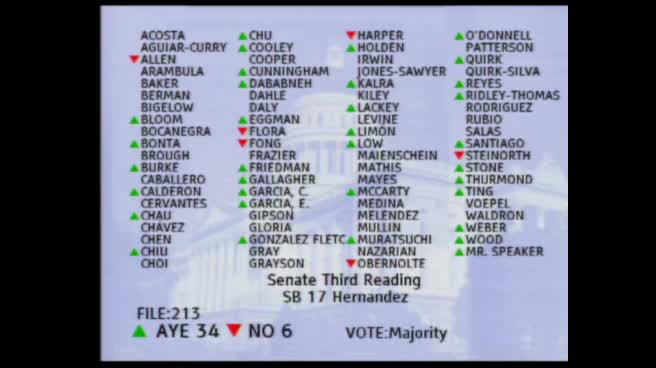
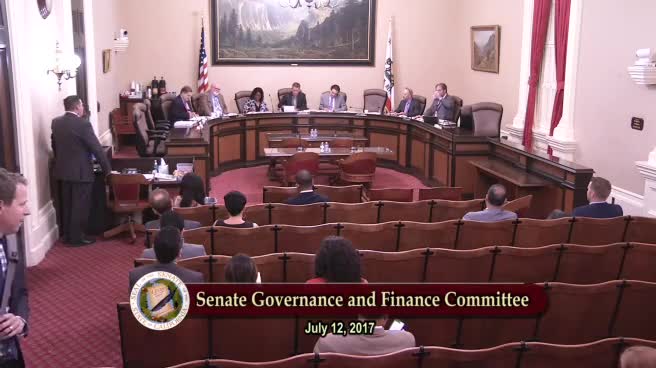
Bill Author


