AB 1174: Right to work: labor organizations.
- Session Year: 2017-2018
- House: Assembly
- Latest Version Date: 2017-02-17
Under existing law, it is against public policy for an employer and a prospective employee to enter into an agreement whereby either or both of them promise to join, or not to join, or remain a member of, a labor or an employer organization or to withdraw from an employment relation should one party or the other join or remain a member of a labor or employer organization. Existing law also grants state employees the right to form, join, and participate in the activities of employee organizations of their own choosing for the purpose of representation on matters of employer-employee relations and provides that once an employee organization is recognized as the exclusive representative of an appropriate bargaining unit, it may enter into an agreement with the state employer to provide for organizational security in the form of maintenance of membership or fair share fee deduction.
Under existing law, it is a misdemeanor for an employer to coerce or compel a person to enter into an agreement to not join or to become a member of, a labor organization, as a condition of securing or continuing in employment.
This bill would, commencing January 1, 2018, prohibit a person from requiring an employee, as a condition of obtaining or continuing employment, to contribute financial support to a labor organization or financially support a charity or other organization sponsored by, or at the behest of, a labor organization. This bill would permit an employee or potential employee to seek injunctive relief or monetary damages, or both, for violations or threatened violations of these provisions. This bill would exempt specified employers and employees covered by federal law and would exempt circumstances that would be preempted by federal law from these provisions.
Because this bill would expand the definition of a crime, it would impose a state-mandated local program.
The California Constitution requires the state to reimburse local agencies and school districts for certain costs mandated by the state. Statutory provisions establish procedures for making that reimbursement.
This bill would provide that no reimbursement is required by this act for a specified reason.
This act shall be known and may be cited as the California Right to Work Act of 2017.
SEC. 2.Section 922 of the Labor Code is amended to read:922.Any (a)For purposes of this section, the following terms have the following meanings:
(1)Employer means a person, firm, association or corporation, public entity, school, college, university, institution, or an education agency.
(2)Labor organization means any organization, agency, employee representation committee, or union that exists for the purpose, in whole or in part, of dealing with employers concerning wages, rates of pay, hours of work, and other conditions of employment or forms of compensation.
(b)Any person or agent or officer thereof who coerces or compels any person to enter into an agreement, written or verbal, not to join or become a member of any labor organization, do any of the following as a condition of securing employment or continuing in the employment of any such person is guilty of a misdemeanor. misdemeanor:
(1)Enter into an agreement, written or verbal, not to join or to remain a member of a labor organization.
(2)Pay any dues, fees, or assessments, or other similar charges, however denominated, of any kind or amount to a labor organization.
(3)Pay to any charity or other third party, in lieu of the payments described in paragraph (2), an amount equivalent to, or a pro rata portion of, dues, fees, assessments, or other charges required of a member of a labor organization.
(c)(1)A person injured as a result of a violation or threatened violation of this section may obtain the following remedies:
(A)Injunctive relief against a violator or person threatening a violation.
(B)Monetary damages, including costs and reasonable attorneys fees, resulting from a violation or threatened violation.
(2)These remedies are independent of and in addition to the penalties and remedies prescribed in other provisions of this chapter.
(d)This section does not apply to any of the following:
(1)Employers and employees covered by the federal Railway Labor Act (45 U.S.C. Sec. 151 et seq.).
(2)Federal employers and employees.
(3)Employers and employees on exclusive federal enclaves.
(4)Circumstances that would otherwise conflict with, or be preempted by, federal law.
(5)An employment contract entered into before January 1, 2018. However, this chapter applies to any subsequent renewal or extension of such a contract.
SEC. 3.The provisions of this act are severable. If any provision of this act or its application is held invalid, that invalidity shall not affect other provisions or applications that can be given effect without the invalid provision or application.
SEC. 4.No reimbursement is required by this act pursuant to Section 6 of Article XIIIB of the California Constitution because the only costs that may be incurred by a local agency or school district will be incurred because this act creates a new crime or infraction, eliminates a crime or infraction, or changes the penalty for a crime or infraction, within the meaning of Section 17556 of the Government Code, or changes the definition of a crime within the meaning of Section 6 of Article XIIIB of the California Constitution.
REVISIONS: HeadingLine 1.|
Date
|
Status
|
|---|---|
| May 16, 2017 | From committee: Without further action pursuant to Joint Rule 62(a). |
| Apr 19, 2017 | In committee: Set, first hearing. Failed passage. |
| Mar 28, 2017 | Coauthors revised. |
| Mar 16, 2017 | Coauthors revised. |
| Mar 9, 2017 | Referred to Coms. on L. & E. and JUD. |
| Feb 19, 2017 | From printer. May be heard in committee March 21. |
| Feb 17, 2017 | Read first time. To print. |
|
Date
|
Description
|
Location
|
Votes
|
|
|---|---|---|---|---|
| Apr 19, 2017 | Do pass and be re-referred to the Committee on [Judiciary] | Assembly Standing Committee on Labor and Employment |
Failed |
This list shows positions taken on this bill by organizations on the date displayed, which is linked to the original source.
Positions by individuals are not included.
|
Organization
|
Position
|
Date
|
|---|---|---|
| Aaron Reed and Associates | * Against | Apr 19, 2017 |
| American Federation Of State, County & Municipal Employees | * Against | Apr 19, 2017 |
| Associated Builders and Contractors, Southern CA Chapter | ** Support | Apr 17, 2017 |
| Bret Harte Middle School | * Against | Apr 19, 2017 |
| CA Conference Board of the Amalgamated Transit Union | ** Against | Apr 17, 2017 |
| CA Conference of Machinists | ** Against | Apr 17, 2017 |
| CAL FIRE, Local 2881 | ** Against | Apr 17, 2017 |
| California Association Of Highway Patrolmen | ** Against | Apr 17, 2017 |
| California Association Of Psychiatric Technicians | * Against | Apr 19, 2017 |
| California Employment Lawyers Association | * Against | Apr 19, 2017 |
| California Federation Of Teachers | * Against | Apr 19, 2017 |
| California Labor Federation, Afl-Cio | ** Against | Apr 17, 2017 |
| California Nurses Association | * Against | Apr 19, 2017 |
| California Professional Firefighters | * Against | Apr 19, 2017 |
| California Rural Legal Assistance Foundation | ** Against | Apr 17, 2017 |
| California School Employees Association | ** Against | Apr 17, 2017 |
| California Teachers Association | * Against | Apr 19, 2017 |
| California Teamsters Public Affairs Council | ** Against | Apr 17, 2017 |
| Consumer Attorneys Of California | ** Against | Apr 17, 2017 |
| Engineers & Scientists of CA, Local 20 | ** Against | Apr 17, 2017 |
| Equal Rights Advocates | * Against | Apr 19, 2017 |
| Faculty Association Of California Community Colleges | * Against | Apr 19, 2017 |
| Freedom Foundation | ** Support | Apr 17, 2017 |
| Howard Jarvis Taxpayers Association | ** Support | Apr 17, 2017 |
| International Longshore & Warehouse Union | ** Against | Apr 17, 2017 |
| Jockeys' Guild | ** Against | Apr 17, 2017 |
| Laborers Local 777 and 792 | * Against | Apr 19, 2017 |
| Los Angeles County Professional Peace Officers Association | ** Against | Apr 17, 2017 |
| National Right to Work Committee | ** Support | Apr 17, 2017 |
| NEW YORK STATE IRONWORKERS DISTRICT COUNCIL | * Against | Apr 19, 2017 |
| Orange County Employees Association | ** Against | Apr 17, 2017 |
| Organization Of Smud Employees | ** Against | Apr 17, 2017 |
| Pacific Advocacy Group | * Support | Apr 19, 2017 |
| Peace Officers Research Association Of California | ** Against | Apr 17, 2017 |
| Professional & Technical Engineers, Local 21 | ** Against | Apr 17, 2017 |
| San Diego County Court Employees Association | ** Against | Apr 17, 2017 |
| San Luis Obispo County Employees Association | ** Against | Apr 17, 2017 |
| Service Employees International | * Against | Apr 19, 2017 |
| State Building & Construction Trades Council Of California | * Against | Apr 19, 2017 |
| TradesWomen Inc. | * Against | Apr 19, 2017 |
| UC-AFT | * Against | Apr 19, 2017 |
| UDW Local 3930 | * Against | Apr 19, 2017 |
| UNITE-HERE | ** Against | Apr 17, 2017 |
| United EMS Workers | * Against | Apr 19, 2017 |
| United Transportation Union-SMART | ** Against | Apr 17, 2017 |
| Utility Workers Union of America | ** Against | Apr 17, 2017 |
Date of Hearing: April 19, 2017
ASSEMBLY COMMITTEE ON LABOR AND EMPLOYMENT
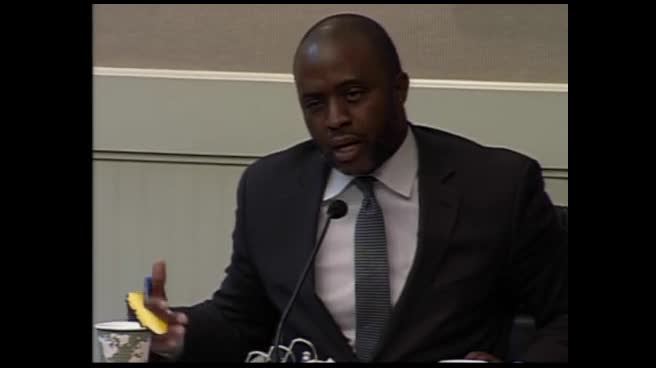
Tony Thurmond, Chair
ABPCA Bill Id:AB 1174 (
Author:Harper) – As Introduced Ver:February 17, 2017
SUBJECT: Right to work: labor organizations
SUMMARY: Establishes the “California Right to Work Act of 2017” which prohibits a person from requiring an employee, as a condition of obtaining or continuing employment, to contribute financial support to a labor organization as specified. Permits an employee or potential employee to seek injunctive relief, or monetary damages, or both, for violations or threatened violations of these provisions. Specifically, this bill:
- Provides that any person or agent or officer thereof who coerces or compels any person to do any of the following as a condition of securing employment or continuing in the employment of any such person is guilty of a misdemeanor:
- Enter into an agreement, written or verbal, not to join or to remain a member of a labor organization.
- Pay any dues, fees or assessments, or other similar charges, however denominated, of any kind or amount to a labor organization.
- Pay to any charity or other third party, in lieu of the payments described in these provisions, an amount equivalent to, or a pro rata portion of, dues, fees, assessments, or other charges required of a member of a labor organization.
- Permits a person injured as a result of a violation or threatened violation of this section may obtain the following remedies:
- Injunctive relief against a violator or person threatening a violation.
- Monetary damages, including costs and reasonable attorney’s fees, resulting from a violation or threatened violation.
- Provides that these remedies are independent of and in addition to the penalties and remedies prescribed in other provisions as specified.
- Provides that these provisions do not apply to any of the following:
- Employers and employees covered by the federal Railway Labor Act (45 U.S.C. Sec. 151 et seq.).
- Federal employers and employees.
- Employers and employees on exclusive federal enclaves.
- Circumstances that would otherwise conflict with, or be preempted by, federal law.
- An employment contract entered into before January 1, 2018.
- Provides however that these provisions apply to any subsequent renewal or extension of such a contract.
- Defines the term “employer” for purposes of this section to mean, a person, firm, association or corporation, public entity, school, college, university, institution, or an education agency.
- Defines the term “labor organization” for purposes of this section to mean, any organization, agency, employee representation committee, or union that exists for the purpose, in whole or in part, of dealing with employers concerning wages, rates of pay, hours of work, and other conditions of employment or forms of compensation.
EXISTING LAW:
- Prohibits an employer and a prospective employee to enter into an agreement whereby either or both of them promise to join, or not to join, or remain a member of, a labor or an employer organization or to withdraw from an employment relation should one party or the other join or remain a member of a labor or employer organization.
- Provides state employees the right to form, join, and participate in the activities of employee organizations of their own choosing for the purpose of representation on matters of employer-employee relations and provides that once an employee organization is recognized as the exclusive representative of an appropriate bargaining unit, it may enter into an agreement with the state employer to provide for organizational security in the form of maintenance of membership or fair share fee deduction.
- Provides that it is a misdemeanor for an employer to coerce or compel a person to enter into an agreement to not join or to become a member of, a labor organization, as a condition of securing or continuing in employment.
FISCAL EFFECT: Unknown
COMMENTS: The author writes in his statement that, “Right to work states enjoy greater economic prosperity than forced unionism states (which California is considered). Data shows that per capita income has grown significantly faster in Right to Work states. Right to Work states also have faster growth in manufacturing and nonagricultural jobs, increased capital expenditures, and have lower unemployment rates. In light of California’s emerging distressed economical issues, those who work for a union deserve the right to opt-out of paying their union dues if they choose to do so. Forcing members to participate is wrong and they should not have the financial burden or fear of repercussion if they chose to opt-out.”
Taft- Hartley Act of 1947
The Taft-Hartley Act, passed in 1947, amended the National Labor Relations Act of 1935 which ended the “closed shop” era in America. The Taft-Hartley Act also requires that employment agreements collectively bargained to benefit union members, would also be required to inure to the benefit of non-member employees, even though these employees elect not to join the union. Taft-Hartley further requires that the union be additionally obligated to provide non-members’ with almost all the benefits of union membership even if that worker elects not to become a full card-carrying union member.
As an example, if a non-member employee is fired for a reason that the employee believes to constitute a wrongful termination, the union is obligated to represent the rights of that employee in the identical fashion as it would represent a union member improperly terminated. If the non-union member employee is displeased with the quality of the fight the union has put forth on his or her behalf, that non-union member has the right to sue the union for failing to prosecute as good a defense as would be expected by a wrongfully terminated union member.
Taft-Hartley was written to curb union power in America. However given the fact that Taft-Hartley provided non-union members with most all the benefits of membership without having to join, the Congress that passed the law believed it would be unfair for non-member workers to gain all these benefits at no charge while members were obligated to pay dues for the same services the union provided. To compensate for this, Taft-Hartley required that, while nobody could be forced to join the union, non-union members would be required to pay a fee to the union, these are usually referred to as agency fees.
Right-To-Work Laws and a potential National Right-To-Work Law
In a Huffington Post article[1] from February of 2017, it was argued that, “under U.S. labor law; a union must represent all the employees in a workplace it has unionized, even those who may not want to be in a union. Unions argue that it’s only fair for all workers to contribute money to help cover the costs of bargaining. But right-to-work laws make such arrangements illegal, allowing workers to opt out of paying fees to a union that will have to represent them anyway. Unions call the phenomenon “free riding.” Supporters of right-to-work laws argue that no worker should be required to support a union, regardless of whether it bargains on his behalf.
Twenty-seven states are now right-to-work, and Missouri and New Hampshire could soon follow suit. The passage of national a right-to-work bill would make it the law of the land in all states, regardless of their own statutes.”
Arguments in Support
The Howard Jarvis Taxpayers Association writes in support, “AB 1174 would establish California as a Right to Work state. It would prohibit requiring an employee to become or remain a member of a labor organization; pay any dues or fees; or, give to a charity/third party in lieu of dues or fees. In light of California’s declining economy, all employees should be free to join, or not to join, any organization.
Unions long ago deviated from the primary reason for their existence: ensuring a fair wage and setting basic workplace standards. This inability to be responsive to their members has had truly devastating consequences. Union membership has declined from 33 percent to 10 percent of the nation’s population over the last 50 years, and nearly 30 states have approved Right to Work legislation, including six in the last five years.”
The Associated Builders and Contractors, Southern CA Chapter believes that compulsory unionism is just plain wrong. Right-to-Work is good for workers, good for the economy, good for job creation and good for the states that pass it. They further argue in support, this bill would enshrine in California law the common-sense principle already enforced in more than half of the states that no worker should be compelled to join or pay dues to a union just to get or keep a job.
Arguments in Opposition
SEIU California argues in opposition, “AB 1174 would establish California as a right-to-work state under the guise of employee “choice.” It is no secret the primary proponents behind right-to-work legislation in the United States are groups like the Freedom Foundation and the National Right to Work Legal Defense Foundation both of which have close ties to and backing from the Koch brothers and the Sarah Scaife Foundation, known for funding right-wing organizations.
With regard to policy, AB 1174 is built upon the faulty premise that workers must join a union. This simply doesn’t reflect the reality of unionism. Currently, all workers have the right to decide whether to be a union member or not. If a person elects not to be a union member, they simply become a “fair share” fee payer. This means they ONLY pay for the costs of union representation – essentially the services they enjoy. If a worksite is unionized, all employees (union members or not) receive the benefits of a union negotiated contract and the union has a legal duty to represent everyone in grievances, disciplinary and other matters. Federal law already mandates no one can be forced to join a union as a condition of employment and the US Supreme Court has made clear workers cannot be forced to pay dues for political purposes. Right-to-work laws go beyond this and require unions to represent non-union members for free.
Quality of life for workers in right-to-work states is worse than in other states:
- In 2014, the US Bureau of Labor Statistics found that on average, workers in right-to-work states earn 12.1% less than workers in other states.
- In 2015, the Economic Policy Institute found an increasing disparity with hourly wages being 15.8% higher in non-right-to-work states and the median wages being 16.6% higher in these states.
- The Henry J. Kaiser Foundation found in right-work-states people under the age of 65 are more likely to be uninsured (13% versus 9.4% in other states).
- The US Census Bureau found poverty rates are higher in right-to-work states being 21.4% for children and 15.3% overall compared to 18% for children and 12.8% overall in other states.
- The Bureau of Labor Statistics found the rate of workplace deaths in right-to-work states is 49% higher than in others.”
REGISTERED SUPPORT / OPPOSITION:
Support
Associated Builders and Contractors, Southern CA Chapter
Freedom Foundation
Howard Jarvis Taxpayers Association
National Right to Work Committee
Opposition
American Federation of State, County and Municipal Employees
AFSCME Local 2620
CA Conference Board of the Amalgamated Transit Union
CA Conference of Machinists
CAL FIRE, Local 2881
California Association of Highway Patrolmen
California Employment Lawyers Association
California Federation of Teachers
California Labor Federation, AFL-CIO
California Nurses Association
California Professional Firefighters
California Rural Legal Assistance Foundation
California School Employees Association
California Teachers Association
California Teamsters Public Affairs Council
Consumer Attorneys of California
Engineers & Scientists of CA, Local 20
Faculty Association of California Community Colleges
International Longshore & Warehouse Union
Jockeys' Guild
Los Angeles County Professional Peace Officers Association
Orange County Employees Association
Organization of SMUD Employees
Peace Officers Research Association of California
Professional & Technical Engineers, Local 21
San Diego County Court Employees Association
San Luis Obispo County Employees Association
Screen Actors Guild-American Federation of Television & Radio Artists
SEIU California
SEIU Local 1000
UDW/AFSCME, Local 3930
United Transportation Union-SMART
UNITE-HERE
Utility Workers Union of America
Analysis Prepared by: Taylor Jackson / L. & E. / 916-319-2091
Jamieson, Dave: Huffington Post Politics: http://www.huffingtonpost.com/entry/republicans-pursue-national-right-to-work-law-while-they-hold-the-reins-in-washington_us_5891fb30e4b0522c7d3e354d ↑
Discussed in Hearing
 23MIN