AB 1188: Health professions development: loan repayment.
- Session Year: 2017-2018
- House: Assembly
- Latest Version Date: 2017-10-07
(1)Existing law authorizes any licensed mental health service provider, as defined, including a mental health service provider who is employed at a publicly funded mental health facility or a public or nonprofit private mental health facility that contracts with a county mental health entity or facility to provide mental health services, and who provides direct patient care in a publicly funded facility or a mental health professional shortage area, to apply for grants under the Licensed Mental Health Service Provider Education Program to reimburse his or her educational loans related to a career as a licensed mental health service provider, as specified. Existing law establishes the Mental Health Practitioner Education Fund and provides that moneys in that fund are available, upon appropriation, for purposes of the Licensed Mental Health Service Provider Education Program.
This bill would, on and after July 1, 2018, add licensed professional clinical counselors and associate professional clinical counselors to those licensed mental health service providers eligible for grants to reimburse educational loans.
(2)The Psychology Licensing Law establishes the Board of Psychology to license and regulate the practice of psychology. That law establishes a biennial license renewal fee and also requires the board to collect an additional fee of $10 at the time of renewal and directs the deposit of that fee into the Mental Health Practitioner Education Fund.
This bill would, on or after July 1, 2018, increase that additional fee to $20.
(3)The Licensed Marriage and Family Therapist Act, the Clinical Social Worker Practice Act, and the Licensed Professional Clinical Counselor Act make the Board of Behavioral Sciences responsible for the licensure and regulation of marriage and family therapists, clinical social workers, and professional clinical counselors, respectively. Those acts require the board to establish and assess biennial license renewal fees, as specified. The Licensed Marriage and Family Therapist Act and the Clinical Social Worker Practice Act also require the board to collect an additional fee of $10 at the time of license renewal and directs the deposit of these additional fees into the Mental Health Practitioner Education Fund.
This bill would, on and after July 1, 2018, increase those existing additional fees under the Licensed Marriage and Family Therapist Act and the Clinical Social Worker Practice Act from $10 to $20, and would amend the Licensed Professional Clinical Counselor Act to require the Board of Behavioral Sciences to collect an additional $20 fee at the time of renewal of a license for a professional clinical counselor for deposit in the Mental Health Practitioner Education Fund.
(4)This bill would declare that it is to take effect immediately as an urgency statute.
(1)Existing law authorizes any licensed mental health service provider, as defined, including a mental health service provider who is employed at a publicly funded mental health facility or a public or nonprofit private mental health facility that contracts with a county mental health entity or facility to provide mental health services, and who provides direct patient care in a publicly funded facility or a mental health professional shortage area, to apply for grants under the Licensed Mental Health Service Provider Education Program to reimburse his or her educational loans related to a career as a licensed mental health service provider, as specified. Existing law establishes the Mental Health Practitioner Education Fund and provides that moneys in that fund are available, upon appropriation, for purposes of the Licensed Mental Health Service Provider Education Program.
This bill would would, on and after July 1, 2018, add licensed professional clinical counselors and licensed professional clinical counselor interns associate professional clinical counselors to those licensed mental health service providers eligible for grants to reimburse educational loans.
(2)The Psychology Licensing Law establishes the Board of Psychology to license and regulate the practice of psychology. That law establishes a biennial license renewal fee and also requires the board to collect an additional fee of $10 at the time of renewal and directs the deposit of that fee into the Mental Health Practitioner Education Fund.
This bill would, on or after July 1, 2018, increase that additional fee to $20.
(3)The Licensed Marriage and Family Therapist Act, the Clinical Social Worker Practice Act, and the Licensed Professional Clinical Counselor Act make the Board of Behavioral Sciences responsible for the licensure and regulation of marriage and family therapists, clinical social workers, and professional clinical counselors, respectively. Those acts require the board to establish and assess biennial license renewal fees, as specified. The Licensed Marriage and Family Therapist Act and the Clinical Social Worker Practice Act also require the board to collect an additional fee of $10 at the time of license renewal and directs the deposit of these additional fees into the Mental Health Practitioner Education Fund.
This bill would would, on and after July 1, 2018, increase those existing additional fees under the Licensed Marriage and Family Therapist Act and the Clinical Social Worker Practice Act from $10 to $20, and would amend the Licensed Professional Clinical Counselor Act to require the Board of Behavioral Sciences to collect an additional $20 fee at the time of renewal of a license for a professional clinical counselor for deposit in the Mental Health Practitioner Education Fund.
(4)This bill would declare that it is to take effect immediately as an urgency statute.
(1)Existing law authorizes any licensed mental health service provider, as defined, including a mental health service provider who is employed at a publicly funded mental health facility or a public or nonprofit private mental health facility that contracts with a county mental health entity or facility to provide mental health services, and who provides direct patient care in a publicly funded facility or a mental health professional shortage area, to apply for grants under the Licensed Mental Health Service Provider Education Program to reimburse his or her educational loans related to a career as a licensed mental health service provider, as specified. Existing law establishes the Mental Health Practitioner Education Fund and provides that moneys in that fund are available, upon appropriation, for purposes of the Licensed Mental Health Service Provider Education Program.
This bill would add licensed professional clinical counselors and licensed professional clinical counselor interns to those licensed mental health service providers eligible for grants to reimburse educational loans.
(2)The Psychology Licensing Law establishes the Board of Psychology to license and regulate the practice of psychology. That law establishes a biennial license renewal fee and also requires the board to collect an additional fee of $10 at the time of renewal and directs the deposit of that fee into the Mental Health Practitioner Education Fund.
This bill would increase that additional fee to $20.
(3)The Licensed Marriage and Family Therapist Act, the Clinical Social Worker Practice Act, and the Licensed Professional Clinical Counselor Act make the Board of Behavioral Sciences responsible for the licensure and regulation of marriage and family therapists, clinical social workers, and professional clinical counselors, respectively. Those acts require the board to establish and assess biennial license renewal fees, as specified. The Licensed Marriage and Family Therapist Act and the Clinical Social Worker Practice Act also require the board to collect an additional fee of $10 at the time of license renewal and directs the deposit of these additional fees into the Mental Health Practitioner Education Fund.
This bill would increase those existing additional fees under the Licensed Marriage and Family Therapist Act and the Clinical Social Worker Practice Act from $10 to $20, and would amend the Licensed Professional Clinical Counselor Act to require the Board of Behavioral Sciences to collect an additional $20 fee at the time of renewal of a license for a professional clinical counselor for deposit in the Mental Health Practitioner Education Fund.
(4)This bill would declare that it is to take effect immediately as an urgency statute.
(1)Existing law authorizes any licensed mental health service provider, as defined, including a mental health service provider who is employed at a publicly funded mental health facility or a public or nonprofit private mental health facility that contracts with a county mental health entity or facility to provide mental health services, and who provides direct patient care in a publicly funded facility or a mental health professional shortage area, to apply for grants under the Licensed Mental Health Service Provider Education Program to reimburse his or her educational loans related to a career as a licensed mental health service provider, as specified. Existing law establishes the Mental Health Practitioner Education Fund and provides that moneys in that fund are available, upon appropriation, for purposes of the Licensed Mental Health Service Provider Education Program.
This bill would add licensed professional clinical counselors to those licensed mental health service providers eligible for grants to reimburse educational loans.
(2)The Psychology Licensing Law establishes the Board of Psychology to license and regulate the practice of psychology. That law establishes a biennial license renewal fee and also requires the board to collect an additional fee of $10 at the time of renewal and directs the deposit of that fee into the Mental Health Practitioner Education Fund.
This bill would increase that additional fee to $20.
(3)The Licensed Marriage and Family Therapist Act, the Clinical Social Worker Practice Act, and the Licensed Professional Clinical Counselor Act make the Board of Behavioral Sciences responsible for the licensure and regulation of marriage and family therapists, clinical social workers, and professional clinical counselors, respectively. Those acts require the board to establish and assess biennial license renewal fees, as specified. The Licensed Marriage and Family Therapist Act and the Clinical Social Worker Practice Act also require the board to collect an additional fee of $10 at the time of license renewal and directs the deposit of these additional fees into the Mental Health Practitioner Education Fund.
This bill would increase those existing additional fees under the Licensed Marriage and Family Therapist Act and the Clinical Social Worker Practice Act from $10 to $20, and would amend the Licensed Professional Clinical Counselor Act to require the Board of Behavioral Sciences to collect an additional $20 fee at the time of renewal of a license for a professional clinical counselor for deposit in the Mental Health Practitioner Education Fund.
(4)This bill would declare that it is to take effect immediately as an urgency statute.
(a)In addition to the fees charged pursuant to Section 2987 for the biennial renewal of a license, the board shall collect an additional fee of ten dollars ($10) at the time of renewal. The board shall transfer this amount to the Controller who shall deposit the funds in the Mental Health Practitioner Education Fund.
(b)This section shall become inoperative on July 1, 2018, and, as of January 1, 2019, is repealed.
SEC. 2.Section 2987.2 is added to the Business and Professions Code, to read:2987.2.(a)In addition to the fees charged pursuant to Section 2987 for the biennial renewal of a license, the board shall collect an additional fee of twenty dollars ($20) at the time of renewal. The board shall transfer this amount to the Controller who shall deposit the funds in the Mental Health Practitioner Education Fund.
(b)This section shall become operative on July 1, 2018.
SEC. 3.Section 4984.75 of the Business and Professions Code is amended to read:4984.75.(a)In addition to the fees charged pursuant to Section 4984.7 for the biennial renewal of a license pursuant to Section 4984, the board shall collect an additional fee of ten dollars ($10) at the time of renewal. The board shall transfer this amount to the Controller who shall deposit the funds in the Mental Health Practitioner Education Fund.
(b)This section shall become inoperative on July 1, 2018, and, as of January 1, 2019, is repealed.
SEC. 4.Section 4984.75 is added to the Business and Professions Code, to read:4984.75.(a)In addition to the fees charged pursuant to Section 4984.7 for the biennial renewal of a license pursuant to Section 4984, the board shall collect an additional fee of twenty dollars ($20) at the time of renewal. The board shall transfer this amount to the Controller who shall deposit the funds in the Mental Health Practitioner Education Fund.
(b)This section shall become operative on July 1, 2018.
SEC. 5.Section 4996.65 of the Business and Professions Code is amended to read:4996.65.(a)In addition to the fees charged pursuant to Section 4996.3 for the biennial renewal of a license pursuant to Section 4996.6, the board shall collect an additional fee of ten dollars ($10) at the time of renewal. The board shall transfer this amount to the Controller who shall deposit the funds in the Mental Health Practitioner Education Fund.
(b)This section shall become inoperative on July 1, 2018, and, as of January 1, 2019, is repealed.
SEC. 6.Section 4996.65 is added to the Business and Professions Code, to read:4996.65.(a)In addition to the fees charged pursuant to Section 4996.3 for the biennial renewal of a license pursuant to Section 4996.6, the board shall collect an additional fee of twenty dollars ($20) at the time of renewal. The board shall transfer this amount to the Controller who shall deposit the funds in the Mental Health Practitioner Education Fund.
(b)This section shall become operative on July 1, 2018.
SEC. 7.Section 4999.121 is added to the Business and Professions Code, to read:4999.121.(a)In addition to the fees charged pursuant to Section 4999.120 for the biennial renewal of a license pursuant to Section 4999.102, the board shall collect an additional fee of twenty dollars ($20) at the time of renewal. The board shall transfer this amount to the Controller who shall deposit the funds in the Mental Health Practitioner Education Fund.
(b)This section shall become operative on July 1, 2018.
SEC. 8.Section 128454 of the Health and Safety Code is amended to read:128454.(a)There is hereby created the Licensed Mental Health Service Provider Education Program within the Health Professions Education Foundation.
(b)For purposes of this article, the following definitions shall apply:
(1)Licensed mental health service provider means a psychologist licensed by the Board of Psychology, registered psychologist, postdoctoral psychological assistant, postdoctoral psychology trainee employed in an exempt setting pursuant to Section 2910 of the Business and Professions Code, or employed pursuant to a State Department of Health Care Services waiver pursuant to Section 5751.2 of the Welfare and Institutions Code, marriage and family therapist, associate marriage and family therapist, licensed clinical social worker, and associate clinical social worker.
(2)Mental health professional shortage area means an area designated as such by the Health Resources and Services Administration (HRSA) of the United States Department of Health and Human Services.
(c)Commencing January 1, 2005, any licensed mental health service provider, including a mental health service provider who is employed at a publicly funded mental health facility or a public or nonprofit private mental health facility that contracts with a county mental health entity or facility to provide mental health services, who provides direct patient care in a publicly funded facility or a mental health professional shortage area may apply for grants under the program to reimburse his or her educational loans related to a career as a licensed mental health service provider.
(d)The Health Professions Education Foundation shall make recommendations to the director of the office concerning all of the following:
(1)A standard contractual agreement to be signed by the director and any licensed mental health service provider who is serving in a publicly funded facility or a mental health professional shortage area that would require the licensed mental health service provider who receives a grant under the program to work in the publicly funded facility or a mental health professional shortage area for at least one year.
(2)The maximum allowable total grant amount per individual licensed mental health service provider.
(3)The maximum allowable annual grant amount per individual licensed mental health service provider.
(e)The Health Professions Education Foundation shall develop the program, which shall comply with all of the following requirements:
(1)The total amount of grants under the program per individual licensed mental health service provider shall not exceed the amount of educational loans related to a career as a licensed mental health service provider incurred by that provider.
(2)The program shall keep the fees from the different licensed providers separate to ensure that all grants are funded by those fees collected from the corresponding licensed provider groups.
(3)A loan forgiveness grant may be provided in installments proportionate to the amount of the service obligation that has been completed.
(4)The number of persons who may be considered for the program shall be limited by the funds made available pursuant to Section 128458.
(f)This section shall become inoperative on July 1, 2018, and, as of January 1, 2019, is repealed.
SEC. 9.Section 128454 is added to the Health and Safety Code, to read:128454.(a)There is hereby created the Licensed Mental Health Service Provider Education Program within the Health Professions Education Foundation.
(b)For purposes of this article, the following definitions shall apply:
(1)Licensed mental health service provider means a psychologist licensed by the Board of Psychology, registered psychologist, postdoctoral psychological assistant, postdoctoral psychology trainee employed in an exempt setting pursuant to Section 2910 of the Business and Professions Code or employed pursuant to a State Department of Health Care Services waiver pursuant to Section 5751.2 of the Welfare and Institutions Code, marriage and family therapist, associate marriage and family therapist, licensed clinical social worker, associate clinical social worker, licensed professional clinical counselor, and associate professional clinical counselor.
(2)Mental health professional shortage area means an area designated as such by the Health Resources and Services Administration (HRSA) of the United States Department of Health and Human Services.
(c)Commencing January 1, 2005, any licensed mental health service provider, including a mental health service provider who is employed at a publicly funded mental health facility or a public or nonprofit private mental health facility that contracts with a county mental health entity or facility to provide mental health services, who provides direct patient care in a publicly funded facility or a mental health professional shortage area may apply for grants under the program to reimburse his or her educational loans related to a career as a licensed mental health service provider.
(d)The Health Professions Education Foundation shall make recommendations to the director of the office concerning all of the following:
(1)A standard contractual agreement to be signed by the director and any licensed mental health service provider who is serving in a publicly funded facility or a mental health professional shortage area that would require the licensed mental health service provider who receives a grant under the program to work in the publicly funded facility or a mental health professional shortage area for at least one year.
(2)The maximum allowable total grant amount per individual licensed mental health service provider.
(3)The maximum allowable annual grant amount per individual licensed mental health service provider.
(e)The Health Professions Education Foundation shall develop the program, which shall comply with all of the following requirements:
(1)The total amount of grants under the program per individual licensed mental health service provider shall not exceed the amount of educational loans related to a career as a licensed mental health service provider incurred by that provider.
(2)The program shall keep the fees from the different licensed providers separate to ensure that all grants are funded by those fees collected from the corresponding licensed provider groups.
(3)A loan forgiveness grant may be provided in installments proportionate to the amount of the service obligation that has been completed.
(4)The number of persons who may be considered for the program shall be limited by the funds made available pursuant to Section 128458.
(f)This section shall become operative on July 1, 2018.
SEC. 10.This act is an urgency statute necessary for the immediate preservation of the public peace, health, or safety within the meaning of Article IV of the California Constitution and shall go into immediate effect. The facts constituting the necessity are:
In order to address the urgent need for licensed mental health practitioners in medically underserved areas, it is necessary that this act take effect immediately.
(a)In addition to the fees charged pursuant to Section 2987 for the biennial renewal of a license, the board shall collect an additional fee of twenty dollars ($20) ten dollars ($10) at the time of renewal. The board shall transfer this amount to the Controller who shall deposit the funds in the Mental Health Practitioner Education Fund.
(b)This section shall become inoperative on July 1, 2018, and, as of January 1, 2019, is repealed.
SEC. 2.Section 2987.2 is added to the Business and Professions Code, to read:2987.2.(a)In addition to the fees charged pursuant to Section 2987 for the biennial renewal of a license, the board shall collect an additional fee of twenty dollars ($20) at the time of renewal. The board shall transfer this amount to the Controller who shall deposit the funds in the Mental Health Practitioner Education Fund.
(b)This section shall become operative on July 1, 2018.
SEC. 2.SEC. 3.Section 4984.75 of the Business and Professions Code is amended to read:4984.75.(a)In addition to the fees charged pursuant to Section 4984.7 for the biennial renewal of a license pursuant to Section 4984, the board shall collect an additional fee of twenty dollars ($20) ten dollars ($10) at the time of renewal. The board shall transfer this amount to the Controller who shall deposit the funds in the Mental Health Practitioner Education Fund.
(b)This section shall become inoperative on July 1, 2018, and, as of January 1, 2019, is repealed.
SEC. 4.Section 4984.75 is added to the Business and Professions Code, to read:4984.75.(a)In addition to the fees charged pursuant to Section 4984.7 for the biennial renewal of a license pursuant to Section 4984, the board shall collect an additional fee of twenty dollars ($20) at the time of renewal. The board shall transfer this amount to the Controller who shall deposit the funds in the Mental Health Practitioner Education Fund.
(b)This section shall become operative on July 1, 2018.
SEC. 3.SEC. 5.Section 4996.65 of the Business and Professions Code is amended to read:4996.65.(a)In addition to the fees charged pursuant to Section 4996.6 4996.3 for the biennial renewal of a license, license pursuant to Section 4996.6, the board shall collect an additional fee of twenty dollars ($20) ten dollars ($10) at the time of renewal. The board shall transfer this amount to the Controller who shall deposit the funds in the Mental Health Practitioner Education Fund.
(b)This section shall become inoperative on July 1, 2018, and, as of January 1, 2019, is repealed.
SEC. 6.Section 4996.65 is added to the Business and Professions Code, to read:4996.65.(a)In addition to the fees charged pursuant to Section 4996.3 for the biennial renewal of a license pursuant to Section 4996.6, the board shall collect an additional fee of twenty dollars ($20) at the time of renewal. The board shall transfer this amount to the Controller who shall deposit the funds in the Mental Health Practitioner Education Fund.
(b)This section shall become operative on July 1, 2018.
SEC. 4.SEC. 7.Section 4999.121 is added to the Business and Professions Code, to read:4999.121.(a)In addition to the fees charged pursuant to Section 4999.120 for the biennial renewal of a license, license pursuant to Section 4999.102, the board shall collect an additional fee of twenty dollars ($20) at the time of renewal. The board shall transfer this amount to the Controller who shall deposit the funds in the Mental Health Practitioner Education Fund.
(b)This section shall become operative on July 1, 2018.
SEC. 5.SEC. 8.Section 128454 of the Health and Safety Code is amended to read:128454.(a)There is hereby created the Licensed Mental Health Service Provider Education Program within the Health Professions Education Foundation.
(b)For purposes of this article, the following definitions shall apply:
(1)Licensed mental health service provider means a psychologist licensed by the Board of Psychology, registered psychologist, postdoctoral psychological assistant, postdoctoral psychology trainee employed in an exempt setting pursuant to Section 2910 of the Business and Professions Code, or employed pursuant to a State Department of Health Care Services waiver pursuant to Section 5751.2 of the Welfare and Institutions Code, marriage and family therapist, marriage and family therapist intern, associate marriage and family therapist, licensed clinical social worker, and associate clinical social worker, licensed professional clinical counselor, and licensed professional clinical counselor intern. worker.
(2)Mental health professional shortage area means an area designated as such by the Health Resources and Services Administration (HRSA) of the United States Department of Health and Human Services.
(c)Commencing January 1, 2005, any licensed mental health service provider, including a mental health service provider who is employed at a publicly funded mental health facility or a public or nonprofit private mental health facility that contracts with a county mental health entity or facility to provide mental health services, who provides direct patient care in a publicly funded facility or a mental health professional shortage area may apply for grants under the program to reimburse his or her educational loans related to a career as a licensed mental health service provider.
(d)The Health Professions Education Foundation shall make recommendations to the director of the office concerning all of the following:
(1)A standard contractual agreement to be signed by the director and any licensed mental health service provider who is serving in a publicly funded facility or a mental health professional shortage area that would require the licensed mental health service provider who receives a grant under the program to work in the publicly funded facility or a mental health professional shortage area for at least one year.
(2)The maximum allowable total grant amount per individual licensed mental health service provider.
(3)The maximum allowable annual grant amount per individual licensed mental health service provider.
(e)The Health Professions Education Foundation shall develop the program, which shall comply with all of the following requirements:
(1)The total amount of grants under the program per individual licensed mental health service provider shall not exceed the amount of educational loans related to a career as a licensed mental health service provider incurred by that provider.
(2)The program shall keep the fees from the different licensed providers separate to ensure that all grants are funded by those fees collected from the corresponding licensed provider groups.
(3)A loan forgiveness grant may be provided in installments proportionate to the amount of the service obligation that has been completed.
(4)The number of persons who may be considered for the program shall be limited by the funds made available pursuant to Section 128458.
(f)This section shall become inoperative on July 1, 2018, and, as of January 1, 2019, is repealed.
SEC. 9.Section 128454 is added to the Health and Safety Code, to read:128454.(a)There is hereby created the Licensed Mental Health Service Provider Education Program within the Health Professions Education Foundation.
(b)For purposes of this article, the following definitions shall apply:
(1)Licensed mental health service provider means a psychologist licensed by the Board of Psychology, registered psychologist, postdoctoral psychological assistant, postdoctoral psychology trainee employed in an exempt setting pursuant to Section 2910 of the Business and Professions Code or employed pursuant to a State Department of Health Care Services waiver pursuant to Section 5751.2 of the Welfare and Institutions Code, marriage and family therapist, associate marriage and family therapist, licensed clinical social worker, associate clinical social worker, licensed professional clinical counselor, and associate professional clinical counselor.
(2)Mental health professional shortage area means an area designated as such by the Health Resources and Services Administration (HRSA) of the United States Department of Health and Human Services.
(c)Commencing January 1, 2005, any licensed mental health service provider, including a mental health service provider who is employed at a publicly funded mental health facility or a public or nonprofit private mental health facility that contracts with a county mental health entity or facility to provide mental health services, who provides direct patient care in a publicly funded facility or a mental health professional shortage area may apply for grants under the program to reimburse his or her educational loans related to a career as a licensed mental health service provider.
(d)The Health Professions Education Foundation shall make recommendations to the director of the office concerning all of the following:
(1)A standard contractual agreement to be signed by the director and any licensed mental health service provider who is serving in a publicly funded facility or a mental health professional shortage area that would require the licensed mental health service provider who receives a grant under the program to work in the publicly funded facility or a mental health professional shortage area for at least one year.
(2)The maximum allowable total grant amount per individual licensed mental health service provider.
(3)The maximum allowable annual grant amount per individual licensed mental health service provider.
(e)The Health Professions Education Foundation shall develop the program, which shall comply with all of the following requirements:
(1)The total amount of grants under the program per individual licensed mental health service provider shall not exceed the amount of educational loans related to a career as a licensed mental health service provider incurred by that provider.
(2)The program shall keep the fees from the different licensed providers separate to ensure that all grants are funded by those fees collected from the corresponding licensed provider groups.
(3)A loan forgiveness grant may be provided in installments proportionate to the amount of the service obligation that has been completed.
(4)The number of persons who may be considered for the program shall be limited by the funds made available pursuant to Section 128458.
(f)This section shall become operative on July 1, 2018.
SEC. 6.SEC. 10.This act is an urgency statute necessary for the immediate preservation of the public peace, health, or safety within the meaning of Article IV of the California Constitution and shall go into immediate effect. The facts constituting the necessity are:
In order to address the urgent need for licensed mental health practitioners in medically underserved areas, it is necessary that this act take effect immediately.
In addition to the fees charged pursuant to Section 2987 for the biennial renewal of a license, the board shall collect an additional fee of twenty dollars ($20) at the time of renewal. The board shall transfer this amount to the Controller who shall deposit the funds in the Mental Health Practitioner Education Fund.
SEC. 2.Section 4984.75 of the Business and Professions Code is amended to read:4984.75.In addition to the fees charged pursuant to Section 4984.7 for the biennial renewal of a license pursuant to Section 4984, the board shall collect an additional fee of twenty dollars ($20) at the time of renewal. The board shall transfer this amount to the Controller who shall deposit the funds in the Mental Health Practitioner Education Fund.
SEC. 3.Section 4996.65 of the Business and Professions Code is amended to read:4996.65.In addition to the fees charged pursuant to Section 4996.6 for the biennial renewal of a license, the board shall collect an additional fee of twenty dollars ($20) at the time of renewal. The board shall transfer this amount to the Controller who shall deposit the funds in the Mental Health Practitioner Education Fund.
SEC. 4.Section 4999.121 is added to the Business and Professions Code, to read:4999.121.In addition to the fees charged pursuant to Section 4999.120 for the biennial renewal of a license, the board shall collect an additional fee of twenty dollars ($20) at the time of renewal. The board shall transfer this amount to the Controller who shall deposit the funds in the Mental Health Practitioner Education Fund.
SEC. 5.Section 128454 of the Health and Safety Code is amended to read:128454.(a)There is hereby created the Licensed Mental Health Service Provider Education Program within the Health Professions Education Foundation.
(b)For purposes of this article, the following definitions shall apply:
(1)Licensed mental health service provider means a psychologist licensed by the Board of Psychology, registered psychologist, postdoctoral psychological assistant, postdoctoral psychology trainee employed in an exempt setting pursuant to Section 2910 of the Business and Professions Code, or employed pursuant to a State Department of Health Care Services waiver pursuant to Section 5751.2 of the Welfare and Institutions Code, marriage and family therapist, marriage and family therapist intern, licensed clinical social worker, associate clinical social worker, and licensed professional clinical counselor. counselor, and licensed professional clinical counselor intern.
(2)Mental health professional shortage area means an area designated as such by the Health Resources and Services Administration (HRSA) of the United States Department of Health and Human Services.
(c)Commencing January 1, 2005, any licensed mental health service provider, including a mental health service provider who is employed at a publicly funded mental health facility or a public or nonprofit private mental health facility that contracts with a county mental health entity or facility to provide mental health services, who provides direct patient care in a publicly funded facility or a mental health professional shortage area may apply for grants under the program to reimburse his or her educational loans related to a career as a licensed mental health service provider.
(d)The Health Professions Education Foundation shall make recommendations to the director of the office concerning all of the following:
(1)A standard contractual agreement to be signed by the director and any licensed mental health service provider who is serving in a publicly funded facility or a mental health professional shortage area that would require the licensed mental health service provider who receives a grant under the program to work in the publicly funded facility or a mental health professional shortage area for at least one year.
(2)The maximum allowable total grant amount per individual licensed mental health service provider.
(3)The maximum allowable annual grant amount per individual licensed mental health service provider.
(e)The Health Professions Education Foundation shall develop the program, which shall comply with all of the following requirements:
(1)The total amount of grants under the program per individual licensed mental health service provider shall not exceed the amount of educational loans related to a career as a licensed mental health service provider incurred by that provider.
(2)The program shall keep the fees from the different licensed providers separate to ensure that all grants are funded by those fees collected from the corresponding licensed provider groups.
(3)A loan forgiveness grant may be provided in installments proportionate to the amount of the service obligation that has been completed.
(4)The number of persons who may be considered for the program shall be limited by the funds made available pursuant to Section 128458.
SEC. 6.This act is an urgency statute necessary for the immediate preservation of the public peace, health, or safety within the meaning of Article IV of the California Constitution and shall go into immediate effect. The facts constituting the necessity are:
In order to address the urgent need for licensed mental health practitioners in medically underserved areas, it is necessary that this act take effect immediately.
In addition to the fees charged pursuant to Section 2987 for the biennial renewal of a license, the board shall collect an additional fee of ten twenty dollars ($10) ($20) at the time of renewal. The board shall transfer this amount to the Controller who shall deposit the funds in the Mental Health Practitioner Education Fund.
SEC. 2.Section 4984.75 of the Business and Professions Code is amended to read:4984.75.In addition to the fees charged pursuant to Section 4984.7 for the biennial renewal of a license pursuant to Section 4984, the board shall collect an additional fee of ten twenty dollars ($10) ($20) at the time of renewal. The board shall transfer this amount to the Controller who shall deposit the funds in the Mental Health Practitioner Education Fund.
SEC. 3.Section 4996.65 of the Business and Professions Code is amended to read:4996.65.In addition to the fees charged pursuant to Section 4996.6 for the biennial renewal of a license, the board shall collect an additional fee of ten twenty dollars ($10) ($20) at the time of renewal. The board shall transfer this amount to the Controller who shall deposit the funds in the Mental Health Practitioner Education Fund.
SEC. 4.Section 4999.121 is added to the Business and Professions Code, to read:4999.121.In addition to the fees charged pursuant to Section 4999.120 for the biennial renewal of a license, the board shall collect an additional fee of twenty dollars ($20) at the time of renewal. The board shall transfer this amount to the Controller who shall deposit the funds in the Mental Health Practitioner Education Fund.
SEC. 5.Section 128454 of the Health and Safety Code is amended to read:128454.(a)There is hereby created the Licensed Mental Health Service Provider Education Program within the Health Professions Education Foundation.
(b)For purposes of this article, the following definitions shall apply:
(1)Licensed mental health service provider means a psychologist licensed by the Board of Psychology, registered psychologist, postdoctoral psychological assistant, postdoctoral psychology trainee employed in an exempt setting pursuant to Section 2910 of the Business and Professions Code, or employed pursuant to a State Department of Health Care Services waiver pursuant to Section 5751.2 of the Welfare and Institutions Code, marriage and family therapist, marriage and family therapist intern, licensed clinical social worker, and associate clinical social worker. worker, and licensed professional clinical counselor.
(2)Mental health professional shortage area means an area designated as such by the Health Resources and Services Administration (HRSA) of the United States Department of Health and Human Services.
(c)Commencing January 1, 2005, any licensed mental health service provider, including a mental health service provider who is employed at a publicly funded mental health facility or a public or nonprofit private mental health facility that contracts with a county mental health entity or facility to provide mental health services, who provides direct patient care in a publicly funded facility or a mental health professional shortage area may apply for grants under the program to reimburse his or her educational loans related to a career as a licensed mental health service provider.
(d)The Health Professions Education Foundation shall make recommendations to the director of the office concerning all of the following:
(1)A standard contractual agreement to be signed by the director and any licensed mental health service provider who is serving in a publicly funded facility or a mental health professional shortage area that would require the licensed mental health service provider who receives a grant under the program to work in the publicly funded facility or a mental health professional shortage area for at least one year.
(2)The maximum allowable total grant amount per individual licensed mental health service provider.
(3)The maximum allowable annual grant amount per individual licensed mental health service provider.
(e)The Health Professions Education Foundation shall develop the program, which shall comply with all of the following requirements:
(1)The total amount of grants under the program per individual licensed mental health service provider shall not exceed the amount of educational loans related to a career as a licensed mental health service provider incurred by that provider.
(2)The program shall keep the fees from the different licensed providers separate to ensure that all grants are funded by those fees collected from the corresponding licensed provider groups.
(3)A loan forgiveness grant may be provided in installments proportionate to the amount of the service obligation that has been completed.
(4)The number of persons who may be considered for the program shall be limited by the funds made available pursuant to Section 128458.
SEC. 6.This act is an urgency statute necessary for the immediate preservation of the public peace, health, or safety within the meaning of Article IV of the California Constitution and shall go into immediate effect. The facts constituting the necessity are:
In order to address the urgent need for licensed mental health practitioners in medically underserved areas, it is necessary that this act take effect immediately.
|
Date
|
Status
|
|---|---|
| Oct 7, 2017 | Chaptered by Secretary of State - Chapter 557, Statutes of 2017. |
| Oct 7, 2017 | Approved by the Governor. |
| Sep 13, 2017 | Enrolled and presented to the Governor at 4 p.m. |
| Sep 7, 2017 | In Assembly. Ordered to Engrossing and Enrolling. |
| Sep 7, 2017 | Read third time. Urgency clause adopted. Passed. Ordered to the Assembly. |
| Sep 5, 2017 | Read second time. Ordered to third reading. |
| Sep 1, 2017 | From committee: Do pass. (Ayes 6. Noes 1.) (September 1). |
| Aug 21, 2017 | In committee: Referred to APPR. suspense file. |
| Jul 13, 2017 | From committee: Do pass and re-refer to Com. on APPR. (Ayes 8. Noes 0.) (July 12). Re-referred to Com. on APPR. |
| Jun 19, 2017 | From committee: Do pass and re-refer to Com. on HEALTH. (Ayes 9. Noes 0.) (June 19). Re-referred to Com. on HEALTH. |
| Jun 14, 2017 | Referred to Coms. on B., P. & E.D. and HEALTH. |
| Jun 1, 2017 | In Senate. Read first time. To Com. on RLS. for assignment. |
| May 31, 2017 | Read third time. Urgency clause adopted. Passed. Ordered to the Senate. (Ayes 74. Noes 1. Page 1940.). |
| May 30, 2017 | Read second time. Ordered to third reading. |
| May 26, 2017 | From committee: Amend, and do pass as amended. (Ayes 16. Noes 0.) (May 26). |
| Apr 26, 2017 | In committee: Set, first hearing. Referred to APPR. suspense file. |
| Apr 19, 2017 | From committee: Do pass and re-refer to Com. on APPR. (Ayes 14. Noes 0.) (April 18). Re-referred to Com. on APPR. |
| Apr 6, 2017 | Re-referred to Com. on HEALTH. |
| Apr 5, 2017 | Read second time and amended. |
| Apr 4, 2017 | From committee: Amend, and do pass as amended and re-refer to Com. on HEALTH. (Ayes 14. Noes 0.) (April 4). |
| Mar 9, 2017 | Referred to Coms. on B. & P. and HEALTH. |
| Feb 19, 2017 | From printer. May be heard in committee March 21. |
| Feb 17, 2017 | Read first time. To print. |
|
Date
|
Description
|
Location
|
Votes
|
|
|---|---|---|---|---|
| Sep 7, 2017 | Assembly 3rd Reading AB1188 Nazarian By Hill Urgency Clause | Senate Floor |
Passed |
|
| Sep 1, 2017 | Do pass | Senate Standing Committee on Appropriations |
Passed |
|
| Aug 21, 2017 | Placed on suspense file | Senate Standing Committee on Appropriations |
Passed |
|
| Jul 12, 2017 | Do pass, but first be re-referred to the Committee on [Appropriations] | Senate Standing Committee on Health |
Passed |
|
| Jun 19, 2017 | Do pass, but first be re-referred to the Committee on [Health] | Senate Standing Committee on Business, Professions and Economic Development |
Passed |
|
| May 31, 2017 | AB 1188 NAZARIAN Third Reading Urgency | Assembly Floor |
Passed |
|
| May 26, 2017 | Do pass as amended. | Assembly Standing Committee on Appropriations |
Passed |
|
| Apr 18, 2017 | Do pass and be re-referred to the Committee on [Appropriations] | Assembly Standing Committee on Health |
Passed |
|
| Apr 4, 2017 | Do pass as amended and be re-referred to the Committee on [Health] | Assembly Standing Committee on Business and Professions |
Passed |
This list shows positions taken on this bill by organizations on the date displayed, which is linked to the original source.
Positions by individuals are not included.
|
Organization
|
Position
|
Date
|
|---|---|---|
| American Association For Marriage And Family Therapy | ** Support | Jul 10, 2017 |
| Board of Behavioral Sciences | ** Support | Sep 4, 2017 |
| Board of Psychology | ** Support | Sep 4, 2017 |
| California Access Coalition | ** Support | Sep 4, 2017 |
| California Association for Licensed Professional Clinical Counselors | ** Support | Sep 4, 2017 |
| California Association of Licensed Professional Clinical Counselors | * Support | Jul 12, 2017 |
| California Board of Psychology | ** Support | Jul 10, 2017 |
| California Council Of Community Behavioral Health Agencies | ** Support | Sep 4, 2017 |
| California Psychological Association | ** Support | Sep 4, 2017 |
| Mental Health America of Los Angeles | ** Support | Sep 4, 2017 |
| National Association Of Social Workers, California Chapter | ** Support | Sep 4, 2017 |
Office of Senate Floor Analyses (916) 651-1520 Fax: (916) 327-4478 | AB |
THIRD READING
Bill No: AB 1188
:
SENATE BUS., PROF. & ECON. DEV. COMMITTEE: 9-0, 6/19/17
AYES: Hill, Fuller, Dodd, Galgiani, Glazer, Hernandez, Newman, Pan, Wilk
SENATE HEALTH COMMITTEE: 7-1, 7/12/17
AYES: Hernandez, Atkins, Leyva, Mitchell, Monning, Newman, Roth
NOES: Nguyen
NO VOTE RECORDED: Nielsen
SENATE APPROPRIATIONS COMMITTEE: 6-1, 9/1/17
AYES: Lara, Beall, Bradford, Hill, Nielsen, Wiener
NOES: Bates
ASSEMBLY FLOOR: 74-1, 5/31/17 - See last page for vote
SOURCE: California Association for Licensed Professional Clinical Counselors
National Association of Social Workers, California Chapter
DIGEST:
This bill increases from $10 to $20 the additional license renewal fee collected by the Board of Psychology (BOP) from licensed psychologists and by the Board of Behavioral Sciences (BBS) from licensed marriage and family therapists (LMFTs) and licensed clinical social workers (LCSWs) for the Licensed Mental Health Service Provider Education Program (Loan Program); adds licensed professional clinical counselors (LPCCs) to the definition of "licensed mental health service provider" for participation in the Loan Program; and requires the BBS to collect the additional $20 licensure renewal fee from LPCCs. This is an urgency measure.
Existing law:
- Requires the BBS and the BOP to collect an additional $10 fee at the time of a licensee's renewal, which is transferred to the State Controller for deposit in the Mental Health Practitioner Education Fund. (BPC §§ 2987.5,4984.75, 4996.65)
- Establishes the Loan Program within the Health Professions Education Foundation. (Health and Safety Code (HSC) § 128454(a))
- Defines "Licensed Mental Health Service Provider" to mean a psychologist licensed by the BOP, a registered psychologist, postdoctoral psychological assistant, postdoctoral psychology trainee employed in an exempt setting, as specified, or employed pursuant to a State Department of Health Care Services waiver, a LMFT, a MFT intern, a LCSW, and an associate clinical social worker (ACSW). (HSC § 128454(1))
- Authorizes any licensed mental health service provider, including a mental health service provider who is employed at a publicly funded mental health facility or a public nonprofit private mental health facility that contracts with a county mental health entity or facility to provide mental health services, who provides direct patient care in a publicly funded facility or a mental health professional shortage area to apply for grants under the Loan Program to reimburse his or her educational loans related to a career as a licensed mental health service provider. (HSC Section 128454(2)(c))
This bill:
- Raises from $10 to $20 the additional biennial renewal fee for psychologists, LFMTs, and LCSWs for the Loan Program beginning July 1, 2018.
- Requires an LPCC to pay an additional $20 fee at the time of biennial renewal for the Loan Program beginning July 1, 2018.
- Declares this bill as urgent, in order to address the urgent need for licensed mental health practitioners in medically underserved areas.
Background
The Loan Program, which became operational in 2005, created a loan repayment program for mental health providers employed: 1) in publicly funded mental health facilities, 2) in public or nonprofit mental health facilities contracting with a county mental health facility, 3) or as individuals who provides direct patient care in a publicly funded facility or a mental health professional shortage area. Individuals employed as noted above may apply for grants under the Loan Program to reimburse his or her educational loans related to a career as a mental health service provider.
Medically underserved areas. The Loan Program is administered by the Office of Statewide Health Planning and Development's (OSHPD) Health Professions Education Foundation while the BBS and the BOP collect the fee. According to OSHPD, the Health Professions Education Foundation was established in 1987 to encourage persons from underrepresented communities to become health professionals and increase access to health providers in medically underserved areas. Supported by grants, donations, licensing fees, and special funds, the foundation provides scholarship, loan repayment and programs to students and graduates who agree to practice in California's medically underserved communities. Medically Underserved Areas or Medically Underserved Populations are based on the evaluation of criteria established through federal regulation to identify geographic areas or population groups based on demographic data.
According to information provided by OSHPD, in FY 2014/15 there were 443 applicants and only 79 awards and in FY 2015/2016 there were 846 applicants and only 52 awards. In order to increase the funding available to mental health professionals and to increase the number of eligible participants practicing in designated shortage areas, this bill will increase the current fee collected during biennial renewals by $10. An awardee may receive up to $15,000 to repay educational loans over a 24-month period in exchange for a 24-month commitment to practicing and providing direct care in a publicly funded or public mental health facility, a non-profit mental health facility, or a mental health professions shortage area.
LPCCs. SB 788 (Wyland, Chapter 619, Statutes of 2009) established the LPCC Act. LPCCs can use a variety of psychological techniques to help their clients, including individual, group, marriage and family therapy. Mental health services are provided in numerous settings including, community mental health clinics, private practice, and hospital settings.
The Loan Program was established in 2005, before LPCCs were licensed in California. As a result, LPCCs were not included in the Loan Program and therefore LPCCs are not permitted to access the funds for purposes of loan repayment. This bill adds LPCCs to the definition of "licensed mental health service provider" to authorize qualified individuals to receive benefits of the Loan Program by placing the same additional $20 renewal fee, proposed by this bill, upon LPCCs to participate in the Loan Program. In addition, this bill adds an urgency clause to address the "urgent need for mental health practitioners in medically underserved areas in California".
FISCAL EFFECT: Appropriation: Fiscal Com.: Local:
According to the Senate Appropriations Committee:
- One-time information technology costs of $40,000 to make the necessary changes to the licensing systems used by BOP and BBS (Psychology Fund and Behavioral Science Examiners Fund).
- Additional annual revenues of about $350,000 per year, to be used to support loan repayment programs for mental health providers (Mental Health Practitioner Education Fund). Based on the current licensee populations, the projected additional surcharge revenue by licensee type would be $205,000 per year from LMFTs, $125,000 per year from LCSWs, $15,000 per year from LPCCs, and $100,000 per year from licensed psychologists.
California Association for Licensed Professional Clinical Counselors (co-source)
National Association of Social Workers, California Chapter (co-source)
American Association for Marriage and Family Therapy, California Division
Board of Behavioral Sciences
Board of Psychology
California Access Coalition
California Council of Community Behavioral Health Agencies
California Psychological Association
Mental Health America of Los Angeles
OPPOSITION: (Verified 8/30/17)
None received
ARGUMENTS IN SUPPORT: The California Association for Licensed Professional Clinical Counselors writes in support, “CALPCC is a sponsor of this bill which seeks to increase access to mental health care in underserved areas by increasing the funding available for loan reimbursement for mental health professionals to serve in designated underserved areas of the state.”
The National Association of Social Workers, California Chapter writes in support, “The National Association of Social Workers, California Chapter (NASW-CA) is a co-sponsor of AB 1188 (Nazarian), which would help alleviate the shortage of mental health providers working in medically underserved areas by shoring up the current Licensed Mental Health Services Provider Education Program.”
The American Association for Marriage and Family Therapy, California Division writes in support, “…The MHPEF loan reimbursement program broadens the diversity of providers in public settings. Its expansion is critical to meeting the needs of diverse populations in public mental health systems.”
The California Access Coalition and the California Council of Community Behavioral Health Agencies write in support, “As in many other health care professions, there continues to be a shortage of Licensed Professional Clinical Counselors. We need to encourage more promising individuals to enter the field and the prospect of heavy debt loads from college is a deterrent to filling these crucial mental health needs.”
Mental Health America of Los Angeles (MHALA) writes in support, “MHALA believes this bill accomplishes three purposes: 1) it is a pay-it forward provision for existing licensees to seed future generations of mental health professionals; 2) it incentivizes students to choose the mental health field, and assists economically disadvantaged students to become mental health licensees; 3) this will result in levering increased access to mental health care in underserved areas of the state.”
The Board of Psychology and the California Psychological Association, write in support, “[this bill] will double the amount of funds available for psychologist who commit to work in underserved areas.”
ASSEMBLY FLOOR: 74-1, 5/31/17
AYES: Acosta, Aguiar-Curry, Arambula, Baker, Berman, Bigelow, Bloom, Bocanegra, Bonta, Brough, Burke, Caballero, Calderon, Cervantes, Chau, Chávez, Chen, Chiu, Chu, Cooley, Cooper, Cunningham, Dababneh, Dahle, Daly, Flora, Fong, Frazier, Friedman, Gallagher, Cristina Garcia, Eduardo Garcia, Gipson, Gloria, Gomez, Gonzalez Fletcher, Gray, Grayson, Holden, Irwin, Jones-Sawyer, Kalra, Kiley, Lackey, Levine, Limón, Low, Maienschein, Mathis, Mayes, McCarty, Medina, Mullin, Muratsuchi, Nazarian, O'Donnell, Patterson, Quirk, Quirk-Silva, Reyes, Ridley-Thomas, Rodriguez, Rubio, Salas, Santiago, Steinorth, Mark Stone, Thurmond, Ting, Voepel, Waldron, Weber, Wood, Rendon
NOES: Travis Allen
NO VOTE RECORDED: Choi, Eggman, Harper, Melendez, Obernolte
9/4/17 12:53:33
**** END ****
SENATE COMMITTEE ON APPROPRIATIONS
Senator Ricardo Lara, Chair
2017 - 2018 Regular Session
AB 1188 (Nazarian) - Health professions development: loan repayment
Version: May 26, 2017 | Policy Vote: B., P. & E.D. 9 - 0, HEALTH 7 - 1 |
Urgency: Yes | Mandate: No |
Hearing Date: August 21, 2017 | Consultant: Brendan McCarthy |
This bill meets the criteria for referral to the Suspense File.
Bill Summary:
AB 1188 would increase from $10 to $20 the additional surcharge assessed for a biennial license renewal for a licensed psychologist, licensed marriage and family therapist or a licensed clinical social worker. The bill would also impose a new $20 surcharge assessed on a biennial license renewal for a licensed professional clinical counsellor.
Fiscal Impact:
- One-time information technology costs of $40,000 to make the necessary changes to the licensing systems used by the Board of Psychology and the Board of Behavioral Sciences (Psychology Fund and Behavioral Science Examiners Fund).
- Additional annual revenues of about $350,000 per year, to be used to support loan repayment programs for mental health providers (Mental Health Practitioner Education Fund). Based on the current licensee populations, the projected additional surcharge revenue by licensee type would be $205,000 per year from licensed marriage and family therapists, $125,000 per year from licensed clinical social workers, $15,000 per year from licensed professional clinical counsellors, and $100,000 per year from licensed psychologists.
Background:
Under current law, licensed marriage and family therapists, licensed clinical social workers, and licensed professional clinical counsellors are licensed and regulated by the Board of Behavioral Sciences. Licensed psychologists are licensed and regulated by the Board of Psychology. Those licenses are renewable every other year and all require the licensee to pay a renewal fee. Currently, the licensees listed above (with the exception of licensed professional clinical counsellors) are required to pay an additional surcharge of $10 with their license renewal fee.
The revenues from the additional surcharge are used by the Office of Statewide Health Planning and Development to make grants for loan repayment to mental health providers. In order to qualify for funding, an applicant must agree to commit to practicing for at least two years in a publicly-funded or public mental health facility, a non-profit mental health facility, or individually in a designated mental health professional shortage area. Applicants can receive up to $15,000 over the two-year commitment period. According to the Office, in 2015-16, there were 846 applicants for funding, but only 52 awards were made.
Proposed Law:
AB 1188 would increase from $10 to $20 the additional surcharge assessed for a biennial license renewal for a licensed psychologist, licensed marriage and family therapist or a licensed clinical social worker.
The bill would also impose a new $20 surcharge assessed on a biennial license renewal for a licensed professional clinical counsellor.
The bill would be effective on July 1, 2018.
The bill also contains an urgency clause.
Related Legislation:
SB 1204 (Hernandez, 2016) included provisions similar to this bill. That bill was not heard in a policy committee.
Staff Comments:
By increasing the additional license renewal surcharges that fund the Licensed Mental Health Provider Education Program, the bill will make additional funding available for expenditure, upon appropriation of the Legislature, for that program.
-- END --
SENATE COMMITTEE ON HEALTH
Senator Ed Hernandez, O.D., Chair
BILL NO: AB 1188
AUTHOR: | Nazarian | ||
VERSION: | May 26, 2017 | ||
HEARING DATE: | July 12, 2017 | ||
CONSULTANT: | Melanie Moreno | ||
SUBJECT: Health professions development: loan repayment
SUMMARY:
- Raises the additional biennial renewal fee, from $10 to $20, for psychologists, licensed marriage and family therapists, and licensed clinical social workers for purposes of funding the Licensed Mental Health Service Provider Education Program (LMH Program). Adds licensed professional clinical counselors (LPCCs), and LPCC interns to the types of mental health providers eligible to participate in the LMH Program and requires LPCC to pay an additional $20 fee at the time of biennial license renewal.
Existing law:
- Establishes Health Professional Education Foundation (HPEF) within the Office of Statewide Health Planning and Development (OSHPD) to develop criteria for evaluating applicants for various scholarships and loan programs.
- Establishes the LMH Program within HPEF and authorizes any licensed mental health service provider, including a mental health service provider who is employed at a publicly funded mental health facility or a public nonprofit private mental health facility that contracts with a county mental health entity or facility to provide mental health services, who provides direct patient care in a publicly funded facility or a mental health professional shortage area (MHPSA), to apply for grants under the LMH Program to reimburse his or her educational loans related to a career as a licensed mental health service provider.
- Defines licensed mental health service provider to mean a psychologist licensed by the Board of Psychology (Board), a registered psychologist, post-doctoral psychological assistant, post-doctoral psychology trainee employed in an exempt setting, as specified, or employed pursuant to a California Department of Health Care Services waiver, a licensed marriage and family therapists (LMFT), a marriage and family therapist (MFT) intern, a licensed clinical social worker (LCSW), and an Associate Clinical Social Worker (ACSW).
- Establishes the licensing and renewal fees for LMFTs, MFT interns, LCSWs, ACSWs, and psychologists, and requires licensees to pay the Board an additional $10 fee at the time of license renewal, which is deposited in the Mental Health Practitioner Education Fund.
- Defines a MHPSA as an area designated by the Health Resources and Services Administration (HRSA) of the United States Department of Health and Human Services to have shortages of mental health providers and may be geographic (a county or service area), population (e.g., low income or Medicaid eligible), or facilities (e.g., federally qualified health centers, or state or federal prisons).
This bill:
- Raises the additional biennial renewal fee, from $10 to $20, for psychologists, LFMTs, and LCSWs for purposes of funding the LMH Program.
- Adds LPCCs and LPCC interns to the types of mental health providers eligible to participate in the LMH Program. Requires an LPCC to pay an additional $20 fee at the time of biennial license renewal for the LMH Program.
- Makes the provisions of this bill operative on July 1, 2018.
- Contains an urgency clause that will make this bill effective upon enactment.
FISCAL EFFECT:
According to the Assembly Appropriations Committee:
- According to OSHPD's 2014-15 annual report, the loan program received about $360,000 in revenue in that fiscal year, about $290,000 of which was disbursed in financial aid. This bill is expected to increase annual expenditures by about $730,000 based on higher surcharges and the addition of LPCCs, which is a small category of licensees (Mental Health Practitioner Education Fund).
- Information technology costs of in the range of $40,000 to make system changes and updates (Behavioral Science Examiners Fund; Psychology Fund).
- Ongoing revenues and expenditures will scale according to the number of mental health licensees, which according to the 2016 Occupational Outlook Handbook is projected to grow by nearly 20% over the following decade.
- Costs to the Board of Behavioral Sciences to collect the surcharge from an additional licensure category are expected to be minor and absorbable (Behavioral Science Examiners Fund).
PRIOR VOTES:
Assembly Floor: | 74 - 1 |
Assembly Appropriations Committee: | 16 - 0 |
Assembly Business and Professions Committee: | 14 - 0 |
COMMENTS:
- Author’s statement. According to the author, California and the rest of the nation suffer from shortages of mental health providers. The uneven concentration of existing providers exacerbates the issue particularly for federally designated medically underserved areas. A 2013 Substance Abuse and Mental Health Services Administration report states that recruitment and retention efforts are hampered by inadequate compensation. The report further cites a study that calls for increased attention to incentives, such as loan repayments and forgiveness as a way of successfully recruiting mental health professionals. This bill extends the opportunity for loan repayment assistance, currently available for other licensed mental health service providers, to licensed professional clinical counselors for a commitment to work temporarily in a medically underserved area.
- Mental health care in California. According to a July 2013 California HealthCare (CHCF) Almanac, nearly one in six California adults has a mental health need, and approximately one in 20 suffers from a serious mental illness that makes it difficult to carry out major life activities. About half of California adults with mental health needs did not get any mental health services during the past year. Only one third of children whose parents rated their emotional difficulties as definite or severe had a mental health visit in the past year. Rates varied dramatically by race. White and African-American children were considerably more likely to have had a mental health visit than Asian or Latino children. Compared to the U.S., California had a lower overall suicide rate, although it varied considerably within the state by gender, age, race/ethnicity, and region.
- Mental health workforce. Under the federal health professional shortage area (HPSA) designation, areas identified are as having a shortage of mental health (MH) providers on the basis of availability of psychiatrists and other MH professionals. Approximately 16% of Californians live in a MHPSA. According to OSHPD’s Web site, to qualify for designation as a MHPSA, an area must be a rational service area; the population-to-core MH professional and/or the population-to-psychiatrist ratio meet established shortage criteria; and there is a lack of access to MH care in surrounding areas because of excessive distance, overutilization, or access barriers. (Core mental health providers include psychiatrists, clinical psychologists, LCSWs, psychiatric nurse specialists, and LMFTs). MH providers in designated MHPSAs are eligible for the National Health Services Corp/State Loan Repayment Program, improved Medicare reimbursement, and enhanced federal grant eligibility. There are currently approximately 4,000 MHPSAs nationally, according to HRSA’s Web site. MHPSAs are based on a psychiatrist-to-population ratio of 1:30,000. April 2014 data from the Kaiser Family Foundation (KFF) shows that California has 339 MHPSAs and an unmet need of slightly less than 44%. According to the CHCF, California had:
- More psychiatrists (16.5 per 100,000) than the U.S. overall (14.4 per 100,000);
- Fewer nurses with psychiatric prescribing privileges (CA: 1 per 100,000 compared to U.S.: 3.3 per 100,000);
- More marriage and family therapists (CA: 76.9 per 100,000 compared to U.S.: 16.3 per 100,000); and,
- Fewer social workers (CA: 53.4 per 100,000 compared to U.S.: 82 per 100,000) and counselors (CA: 22.2 per 100,000 compared to U.S.: 54.4 per 100,000).
The distribution of licensed MH providers varied considerably among California regions. The Bay Area had the greatest concentration of licensed MH professionals, far exceeding the state average. The Inland Empire and San Joaquin Valley fell well below the state average for all MH professions. The Northern and Sierra region was below average in the numbers of psychiatrists and psychologists, but above average for marriage and family therapists. According to 2014 information on OSHPD’s Web site, data derived from the Medical Board of California’s Physician Survey showed the total number of currently licensed psychiatrists who selected psychiatry as their primary specialty and who practiced in California was 1,723. Fifty-seven percent of these psychiatrists practice in just five counties: Los Angeles (440), San Francisco (166), San Diego (146), Santa Clara (137), and Orange (95). According to the California Association of Social Rehabilitation Agencies (CASRA), in addition to the MH workforce shortage dilemma, there is great need, especially in the state’s public MH system (PMHS), for a different skill set than traditionally found in the MH professions. CASRA states that the emphasis on today’s MH delivery system is on recovery-based services and incorporating natural supports in the community, shifting from a strictly medical model of treating illnesses to a community-based recovery model of helping Californians learn to manage symptoms and develop skills and supports to pursue the life of their choice. CASRA further states that this practice is not reflected well in much of the county-operated PMHS, as the curriculum in most of the state’s graduate education programs do not reflect a recovery-oriented approach, and the job classification system relies on licensed practitioners who are educated in those programs.
- Senate informational hearings. In December 2015, the Senate Committee on Health and the Select Committee on Mental Health held a joint informational hearing on MH access and parity, which in part examined consumer experiences in the MH system. The purpose of this hearing was to further examine access to MH services for Californians, focusing on the extent to which a shortage in the MH workforce is an issue. In March 2016, the Health Committee and the Healthcare Workforce and Access to Care held a second hearing which included educational institutions that educate and train the MH workforce; state agencies that administer loan repayment programs for the MH workforce; and entities that employ the MH workforce about various ways MH professionals are recruited and retained, any trends they see in the increase or decrease in the MH workforce, and other challenges and barriers they face. The hearing sought to examine what strategies are effective, as well as explore how to expand efforts that are the most successful in supporting a robust MH workforce to ensure that MH services are available to people who need them when they need them.
- LMH Program. AB 938 (Yee, Chapter 437, Statutes of 2003) established the LMH Program, which became operational in 2005. The LMH Program is administered by HPEF and is supported by grants, donations, licensing fees, and special funds. HPEF provides scholarship and loan repayment programs to students and graduates who agree to practice in California's medically underserved communities. An awardee may receive up to $15,000 to repay educational loans over a 24-month period in exchange for a 24-month commitment to practicing and providing direct care in a publicly funded or public mental health facility, a non-profit mental health facility, or a MHPSA. Selection for awards is based on the following criteria: work experience; cultural and linguistic competence; career goals; community service; community background; and, fluency in a language other than English.
- Existing licensing fees. In order to increase the funding available to mental health professionals practicing in designated MHPSAs, this bill will increase the current fee collected during biennial license renewals by $10 to increase the funding available and possibly the number of eligible participants. The current biennial renewal fee for LMFTs is $140, for LCSWs is $110, and for LPCCs is $175. The current $10 fee charged to LMFTs and LCSWs is in addition to the current renewal fee specified in statute.
- Double referral. This bill was heard in the Senate Business and Professions Committee on June 19, 2017, and passed with a 9-0 vote.
- Prior legislation. SB 1204 (Hernandez of 2016) was substantially similar to this bill. SB 1204 was never heard in a policy Committee.
- Support. The California Association for Licensed Professional Clinical Counselors and the National Association of Social Workers, California Chapter are the cosponsors of this bill. The cosponsors note that this bill will help alleviate the shortage of mental health providers working in medically underserved areas by shoring up the LMH Program. The American Association for Marriage and Family Therapy states that the need for culturally and linguistically competent mental health providers in the public system has not abated, the Loan Program broadens the diversity of providers in public settings, and its expansion is critical to meeting the needs of diverse populations in the PMHS.
- Policy comment. This bill contains an urgency clause so that its provisions take effect immediately. However, it also contains language that delays implementation until July 1, 2018. These two provisions seem to conflict with each other.
SUPPORT AND OPPOSITION:
Support: American Association for Marriage and Family Therapy
Board of Behavioral Sciences
California Access Coalition
California Association for Licensed Professional Clinical Counselors
California Board of Psychology
California Council of Community Behavioral Health Agencies
California Psychological Association
Mental Health America of Los Angeles
National Association of Social Workers-California Chapter
Oppose: None received.
-- END --
SENATE COMMITTEE ON
BUSINESS, PROFESSIONS AND ECONOMIC DEVELOPMENT
Senator Jerry Hill, Chair
2017 - 2018 Regular
Bill No: Hearing Date: June 19, 2017
Author: | |||
Version: | May 26, 2017 | ||
Urgency: | Yes | Fiscal: | Yes |
Consultant: | Elissa Silva | ||
Subject:
SUMMARY:
Increases from $10 to $20 the additional license renewal fee collected by the Board of Psychology (BOP) from licensed psychologists and by the Board of Behavioral Sciences (BBS) from licensed marriage and family therapists (LMFTs) and licensed clinical social workers (LCSWs) for the Licensed Mental Health Service Provider Education Program (Loan Program); adds licensed professional clinical counselors (LPCCs) to the definition of "licensed mental health service provider" for participation in the Loan Program; and requires the BBS to collect the additional $20 licensure renewal fee from LPCCs. This is an urgency measure.
Existing law:
- Establishes the licensing and renewal fees, by the BOP, for licensed psychologists and applicants for licensure, as specified. (Business and Professions Code (BPC) Section 2987)
- Requires the BOP to collect an additional $10 fee at the time of a licensee's renewal, which is transferred to the Controller for deposit in the Mental Health Practitioner Education Fund. (BPC § 2987.5)
- Establishes the licensing and renewal fees for LMFTs, LCSWs, and LPCCs, as specified. (BPC §§ 4984.7, 4996.3, and 4999.120).
- Requires the BBS to collect an additional $10 fee at the time of a licensee's renewal, which is transferred to the Controller for deposit in the Mental Health Practitioner Education Fund. (BPC Sections 4984.75, 4996.65)
- Establishes the Loan Program within the Health Professions Education Foundation. (Health and Safety Code (HSC) § 128454(a))
- Defines "Licensed Mental Health Service Provider" to mean a psychologist licensed by the BOP, a registered psychologist, postdoctoral psychological assistant, postdoctoral psychology trainee employed in an exempt setting, as specified, or employed pursuant to a State Department of Health Care Services waiver, a LMFT, a MFT intern, a LCSW, and an associate clinical social worker (ACSW).
(HSC § 128454(1)) - Authorizes any licensed mental health service provider, including a mental health service provider who is employed at a publicly funded mental health facility or a public nonprofit private mental health facility that contracts with a county mental health entity or facility to provide mental health services, who provides direct patient care in a publicly funded facility or a mental health professional shortage area to apply for grants under the Loan Program to reimburse his or her educational loans related to a career as a licensed mental health service provider.
(HSC Section 128454(2)(c))
This bill:
- Raises from $10 to $20 the additional biennial renewal fee for psychologists, LFMTs, and LCSWs for the Loan Program beginning July 1, 2018.
- Requires an LPCC to pay an additional $20 fee at the time of biennial renewal for the Loan Program beginning July 1, 2018.
- Declares this bill as urgent, in order to address the urgent need for licensed mental health practitioners in medically underserved areas.
FISCAL EFFECT:
According to the Assembly Committee on Appropriations analysis dated April 26, 2017,
1) “According to the Office of Statewide Health Planning and Development's (OSHPD's) 2014-15 annual report, the loan program received about $360,000 in revenue in that fiscal year, about $290,000 of which was disbursed in financial aid. This bill is expected to increase annual expenditures by about $730,000 based on higher surcharges and the addition of LPCCs, which is a small category of licensees (Mental Health Practitioner Education Fund).
- Information technology costs of in the range of $40,000 to make system changes and updates (Behavioral Science Examiners Fund; Psychology Fund).
- Ongoing revenues and expenditures will scale according to the number of mental health licensees, which according to the 2016 Occupational Outlook Handbook is projected to grow by nearly 20% over the following decade.
4) Costs to the Board of Behavioral Sciences to collect the surcharge from an additional licensure category are expected to be minor and absorbable (Behavioral Science Examiners Fund).”
COMMENTS:
- Purpose. This bill is sponsored by the California Association of Licensed Professional Clinical Counselors and the National Association of Social Workers, California Chapter. According to the Author, “AB 1188 seeks to increase the number of mental health professionals working in medically underserved areas by increasing the funding available for loan reimbursement for psychologists, LMFTs, and LCSWs, and by adding LPCCs to the definition of “licensed mental health service provider” so that they may qualify for the Loan Program. California and the rest of the nation suffer from shortages of mental health providers. The misdistribution of existing providers compounds the issue particularly for federally designated medically underserved areas. Recent studies show that the U.S. mental health provider shortage is also made worse by the aging of the psychiatry specialty. Shortages in psychiatry may be considered even more acute than they are in primary care.”
- Background. AB 938 (Yee, Chapter 437, Statutes of 2003), established the Loan Program. The Loan Program, which became operational in 2005, created a loan repayment program for mental health providers employed: 1) in publicly funded mental health facilities, 2) in public or nonprofit mental health facilities contracting with a county mental health facility, 3) or as individuals who provides direct patient care in a publicly funded facility or a mental health professional shortage area. Individuals employed as noted above may apply for grants under the Loan Program to reimburse his or her educational loans related to a career as a mental health service provider.
- Medically Underserved Areas. The Loan Program is administered by the Office of Statewide Health Planning and Development's (OSHPD) Health Professions Education Foundation while the BBS and the BOP collect the fee. According to OSHPD, the Health Professions Education Foundation was established in 1987 to encourage persons from underrepresented communities to become health professionals and increase access to health providers in medically underserved areas. Supported by grants, donations, licensing fees, and special funds, the foundation provides scholarship, loan repayment and programs to students and graduates who agree to practice in California's medically underserved communities. Medically Underserved Areas or Medically Underserved Populations are based on the evaluation of criteria established through federal regulation to identify geographic areas or population groups based on demographic data.
According to information provided by OSHPD, in FY 2014/15 there were 443 applicants and only 79 awards and in FY 2015/2016 there were 846 applicants and only 52 awards. In order to increase the funding available to mental health professionals and to increase the number of eligible participants practicing in designated shortage areas, this bill will increase the current fee collected during biennial renewals by $10. The current biennial renewal fee for LMFTs is $140, for LCSWs is $110 and for LPCCs is $175. The current $10 fee charged to LMFTs and LCSWs is in addition to the current renewal fee specified in statute. An awardee may receive up to $15,000 to repay educational loans over a 24-month period in exchange for a 24-month commitment to practicing and providing direct care in a publicly funded or public mental health facility, a non-profit mental health facility, or a mental health professions shortage area.
- LPCCs. SB 788 (Wyland, Chapter 619, Statutes of 2009), established the LPCC Act. LPCCs are the newest of the four licensed professional mental health related service providers regulated by the BBS. California was the 50th state to establish licensure for this profession. LPCCs can use a variety of psychological techniques to help their clients, including individual, group, marriage and family therapy. Mental health services are provided in numerous settings including, but not limited to, community mental health clinics, private practice, and hospital settings. LPCCs can be licensed to treat couples, families, individuals and children.
In order to obtain licensure as a LPCC, an applicant who began graduate study on or after August 1, 2012 is required to obtain a master’s or doctoral degree from an accredited or approved institution, which covers counseling or psychotherapy in content, and includes supervised practicum in specified content areas. In addition, an applicant must obtain a minimum of 3000 post-degree hours of supervised experience.
The Loan Program was established in 2005, before LPCCs were licensed in California. As a result, LPCCs were not included in the Loan Program and therefore LPCCs are not permitted to access the funds for purposes of loan repayment. This bill adds LPCCs to the definition of "licensed mental health service provider" to authorize qualified individuals to receive benefits of the Loan Program by placing the same additional $20 renewal fee, proposed by this bill, upon LPCCs to participate in the Loan Program. In addition, this bill adds an urgency clause to address the "urgent need for mental health practitioners in medically underserved areas in California".
- Prior Related Legislation. SB 1204 (Hernández) of 2016, would have increased from $10 to $20 the additional licensure renewal fee for psychologists, LMFTs, and LCSWs, and required the BBS to collect the additional $20 renewal fee from LPCCs for deposit and participation in the Loan Program and would have increased the license application and renewal charge from $25 to $50 for physicians and osteopathic physicians to fund the Steven M. Thompson Physician Corps Loan Repayment Program. (Status: This bill was held in the Senate Committee on Business, Professions and Economic Development.)
AB 2543 (Berg) of 2008 would have established the Geriatric and Gerontology Workforce Expansion Act which allows any geriatric service provider, as defined, to apply for grants, on or after January 1, 2010, under the existing Loan Program to reimburse for educational loans related to a career as a LMFT or intern or LCSW who provides geriatric services, as specified. (Status: This bill was vetoed by Governor Schwarzenegger who indicated in his veto message that it would result in a double-assessment of fees for similar programs, on the same professions.)
AB 1852 (Yee, Chapter 557, Statutes of 2006), revised the definition of "licensed mental health care practitioner" related to the Loan Program to include a marriage and family therapist intern, associate clinical social worker, a psychologist licensed by the BOP, and a registered psychologist, postdoctoral psychological assistant, or postdoctoral psychology trainee employed in an exempt setting, as specified.
AB 938 (Yee, Chapter 437, Statutes of 2003), established the Loan Program, to be developed by the Health Professions Education Foundation after soliciting advice from specified boards and agencies, to provide grants to specified practicing mental health providers in return for service in medically underserved areas. The Loan Program became operational January 1, 2005 and funded by a $10 surcharge on specified mental health professionals' licensing fees, which would be deposited in the Mental Health Practitioner Education Fund.
- Arguments in Support. The California Association for Licensed Professional Clinical Counselors writes in support, “CALPCC is a sponsor of this bill which seeks to increase access to mental health care in underserved areas by increasing the funding available for loan reimbursement for mental health professionals to serve in designated underserved areas of the state.”
The National Association of Social Workers—California Chapter writes in support, The National Association of Social Workers, California Chapter (NASW-CA) is a co-sponsor of AB 1188 (Nazarian), which would help alleviate the shortage of mental health providers working in medically underserved areas by shoring up the current Licensed Mental Health Services Provider Education Program.
The American Association for Marriage and Family Therapy, California Division writes in support, “…The MHPEF loan reimbursement program broadens the diversity of providers in public settings. Its expansion is critical to meeting the needs of diverse populations in public mental health systems.”
The California Access Coalition and the California Council of Community Behavioral Health Agencies write in support, “As in many other health care professions, there continues to be a shortage of Licensed Professional Clinical Counselors. We need to encourage more promising individuals to enter the field and the prospect of heavy debt loads from college is a deterrent to filling these crucial mental health needs.”
Mental Health America of Los Angeles (MHALA) writes in support, “MHALA believes this bill accomplishes three purposes: 1) it is a pay-it forward provision for existing licensees to seed future generations of mental health professionals; 2) it incentivizes students to choose the mental health field, and assists economically disadvantaged students to become mental health licensees; 3) this will result in levering increased access to mental health care in underserved areas of the state.”
The Board of Psychology writes in support, “BOP supports this legislation as it will double the amount of funds available for psychologist who commit to work in underserved areas.”
- Implementation Issue. This bill contains an urgency clause in order to expediently address the urgent need for practitioners to serve in medically underserved areas in California. While the urgency will make the provisions of this bill take effect immediately, the bill delays the implementation of the fee increase and adding LPCCs to the program until July 1, 2018.
NOTE:
Double-referral to Senate Committee on Health, second.
SUPPORT AND OPPOSITION:
Support:
California Association for Licensed Professional Clinical Counselors (Co-sponsor)
National Association of Social Workers, California Chapter (Co-sponsor)
American Association for Marriage and Family Therapy, California Division
California Access Coalition
California Council of Community Behavioral Health Agencies
Mental Health America of Los Angeles
Board of Psychology
Opposition:
None on file as on June 14, 2017.
-- END --
ASSEMBLY THIRD READING
ATR Bill Id:AB 1188
Author:(Nazarian)
As Amended Ver:May 26, 2017
2/3 vote. Urgency
Committee | Votes | Ayes | Noes |
Business & Professions | 14-0 | Salas, Arambula, Baker, Bloom, Chiu, Cunningham, Dahle, Eggman, Gipson, Grayson, Holden, Low, Steinorth, Ting | |
Health | 14-0 | Wood, Maienschein, Bonta, Burke, Gallagher, Limón, McCarty, Nazarian, Patterson, Quirk-Silva, Rodriguez, Santiago, Thurmond, Waldron | |
Appropriations | 16-0 | Gonzalez Fletcher, Bigelow, Bloom, Bocanegra, Bonta, Brough, Calderon, McCarty, Quirk, Fong, Friedman, Gallagher, Eduardo Garcia, Gray, Muratsuchi, Reyes |
|
SUMMARY: Adds licensed professional clinical counselors (LPCCs), and associate LPCCs to the types of mental health providers eligible to participate in the Licensed Mental Health Service Provider Education Program (Loan Program) within the Health Professions Education Foundation and increases from $10 to $ 20 the license renewal fees paid by the mental health providers eligible to participate in the Loan Program beginning July 1, 2018. Specifically, this bill:
- Raises from $10 to $20 the additional biennial renewal fee for Psychologists, LMFTs, LPCCs and LPCC associates, and LCSWs for the Loan Program beginning July 1 2018.
- Requires an LPCC to pay an additional $10 fee at the time of biennial renewal for the Licensed Mental Health Service Provider Education Program, and adds LPCCs and LPCC associates to the definition of "licensed mental health service provider" for the Loan Program.
- Adds an urgency clause in order to address the urgent need for licensed mental health practitioners in medically underserved areas.
FISCAL EFFECT: According to the Assembly Appropriations Committee,
- According to the Office of Statewide Health Planning and Development's (OSHPD's) 2014-15 annual report, the loan program received about $360,000 in revenue in that fiscal year, about $290,000 of which was disbursed in financial aid. This bill is expected to increase annual expenditures by about $730,000 based on higher surcharges and the addition of LPCCs, which is a small category of licensees (Mental Health Practitioner Education Fund).
- Information technology costs of in the range of $40,000 to make system changes and updates (Behavioral Science Examiners Fund; Psychology Fund).
- Ongoing revenues and expenditures will scale according to the number of mental health licensees, which according to the 2016 Occupational Outlook Handbook is projected to grow by nearly 20% over the following decade.
- Costs to the Board of Behavioral Sciences to collect the surcharge from an additional licensure category are expected to be minor and absorbable (Behavioral Science Examiners Fund).
COMMENTS:
Purpose. This bill is sponsored by the California Association for Licensed Professional Clinical Counselors and the National Association for Social Workers, California Chapter. According to the author, "California and the rest of the nation suffer from shortages of mental health providers. The uneven concentration of existing providers exacerbates the issue particularly for federally designated medically underserved areas. A 2013 Substance Abuse and Mental Health Services Administration report states that recruitment and retention efforts are hampered by inadequate compensation. The report further cites a study that calls for increased attention to incentives, such as loan repayments and forgiveness as a way of successfully recruiting mental health professionals. This bill extends the opportunity for loan repayment assistance, currently available for other licensed mental health service providers, to licensed professional clinical counselors for a commitment to work temporarily in a medically underserved area."
Background. AB 938 (Yee), Chapter 437, Statutes of 2003, established the Loan Program. The Loan Program which became operational in 2005, created a loan repayment program for mental health providers employed: 1) in publicly funded mental health facilities 2) in public or nonprofit mental health facilities contracting with a county mental health facility, 3) or as individuals who provides direct patient care in a publicly funded facility or a mental health professional shortage area. Individuals employed as noted above may apply for grants under the Loan Program to reimburse his or her educational loans related to a career as a mental health service provider.
Medically Underserved Areas. The Loan Program is administered by the Office of Statewide Health Planning and Development's (OSHPD) Health Professions Education Foundation while the BBS and the BOP collect the fee. According to OSHPD, the Health Professions Education Foundation was established in 1987 to encourage persons from underrepresented communities to become health professionals and increase access to health providers in medically underserved areas. Supported by grants, donations, licensing fees, and special funds, the foundation provides scholarship, loan repayment and programs to students and graduates who agree to practice in California's medically underserved communities.
In order to increase the funding available to mental health professionals practicing in designated shortage areas, this bill will increase the current fee collected during biennial renewals by $10 to increase the funding available and possibly the number of eligible participants. The current biennial renewal fee for LMFTs is $140, for LCSWs is $110 and for LPCCs is $175. The current $10 fee charged to LMFTs and LCSWs is in addition to the current renewal fee specified in statute. An awardee may receive up to $15,000 to repay educational loans over a 24-month period in exchange for a 24-month commitment to practicing and providing direct care in a publicly funded or public mental health facility, a non-profit mental health facility, or a mental health professions shortage area.
LPCCs. SB 788 (Wyland), Chapter 619, Statutes of 2009, established the LPCC Act. LPCCs are the newest of the four licensed professional mental health related service providers regulated by the BBS. LPCCs can use a variety of psychological techniques to help their clients, including individual, group, marriage and family therapy. LPCCs can be licensed to treat couples, families, individuals and children.
The Loan Program was established in 2005, before LPCCs were licensed in California. As a result, LPCCs were not included in the Loan Program and therefore LPCCs are not permitted to access the funds for purposes of loan repayment. This bill adds LPCCs to the definition of "licensed mental health service provider" to authorize qualified individuals to receive benefits of the Loan Program by placing the same additional renewal fee, proposed by this bill, upon LPCCs to participate in the Loan Program. In addition, this bill adds an urgency clause to address the "urgent need for mental health practitioners in medically underserved areas in California".
Analysis Prepared by: Elissa Silva / B. & P. / (916) 319-3301 FN: 0000845
Date of Hearing: April 26, 2017
ASSEMBLY COMMITTEE ON APPROPRIATIONS
Lorena Gonzalez Fletcher, Chair
ABPCA Bill Id:AB 1188
Author:(Nazarian) – As Amended Ver:April 5, 2017
Policy Committee: | Business and Professions | Vote: | 14 - 0 |
Health | 14- 0 | ||
Urgency: Yes State Mandated Local Program: No Reimbursable: No
SUMMARY:
This bill expands the Licensed Mental Health Services Provider Education workforce development program (loan program). Specifically this bill:
- Doubles from $10 to $20 biennial renewal surcharge paid by psychologists, marriage and family therapists, and licensed clinical social workers for the loan program.
- Adds licensed professional clinical counselors (LPCCs), a newer type of mental health licensee, to the categories of licensees who pay the $20 renewal surcharge and are eligible to receive repayment through the loan program.
It also contains an urgency clause, stating the bill is needed in order to address the urgent need for licensed mental health practitioners in medically underserved areas.
FISCAL EFFECT:
- According to the Office of Statewide Health Planning and Development's (OSHPD's) 2014-15 annual report, the loan program received about $360,000 in revenue in that fiscal year, about $290,000 of which was disbursed in financial aid. This bill is expected to increase annual expenditures by about $730,000 based on higher surcharges and the addition of LPCCs, which is a small category of licensees (Mental Health Practitioner Education Fund).
- Information technology costs of in the range of $40,000 to make system changes and updates (Behavioral Science Examiners Fund; Psychology Fund).
- Ongoing revenues and expenditures will scale according to the number of mental health licensees, which according to the 2016 Occupational Outlook Handbook is projected to grow by nearly 20% over the following decade.
- Costs to the Board of Behavioral Sciences to collect the surcharge from an additional licensure category are expected to be minor and absorbable (Behavioral Science Examiners Fund).
COMMENTS:
- Purpose. This bill expands the size of the loan program in order to increase the number of mental health professionals working in defined mental health professional shortage areas. It also adds LPCCs, a mental health licensure category that did not exist when the program was created.
- Background. The program currently receives ongoing funding through a $10 surcharge upon licensure renewal for three categories of mental health licensees in California. An awardee may receive up to $15,000 to repay educational loans in exchange for a two-year commitment to practicing and providing direct care in a publicly funded or public mental health facility, a non-profit mental health facility, a mental health professions shortage area, or in a public mental health system. According to OSHPD, 330 awards have been made through the program from 2012-13 through 2015-16, funded through licensure surcharge revenue as well as supplementary one-time funds granted for the purpose.
- Prior Legislation.
AB 938 (Yee), Chapter 437, Statutes of 2003, established the loan program.
SB 1204 (Hernandez), of the 2015-16 Legislative Session, contained provisions substantially similar to that in this bill, as well as provisions related to physicians. SB 1204 was referred to the Senate Committee on Business, Professions, and Economic Development, and was never heard.
Analysis Prepared by: Lisa Murawski / APPR. / (916) 319-2081
Date of Hearing: April 18, 2017
ASSEMBLY COMMITTEE ON HEALTH
Jim Wood, Chair
ABPCA Bill Id:AB 1188
Author:Nazarian – As Amended Ver:April 5, 2017
SUBJECT: Health professions development: loan repayment.
SUMMARY: Adds licensed professional clinical counselors (LPCCs), and LPCC interns to the types of mental health providers eligible to participate in the Licensed Mental Health Service Provider Education Program (Loan Program) within the Health Professions Education Foundation (HPEF); increases the license renewal fees paid by the mental health providers eligible to participate in the Loan Program; and, contains an urgency clause to ensure that the provisions of this bill go into immediate effect upon enactment. Specifically, this bill: increases the license renewal fees paid by the following mental health providers:
- Raises from $10 to $20 the additional biennial renewal fee for Psychologists, Licensed Marriage and Family Therapists (LFMTs), and Licensed Clinical Social Workers (LCSWs) for the Loan Program; and,
- Requires an LPCC to pay an additional $20 fee at the time of biennial renewal for the Loan Program.
EXISTING LAW:
- Establishes HPEF within the Office of Statewide Health Planning and Development (OSHPD) to develop criteria for evaluating applicants for various scholarships and loan programs. Establishes the Loan Program within HPEF and authorizes any licensed mental health service provider, including a mental health service provider who is employed at a publicly funded mental health facility or a public nonprofit private mental health facility that contracts with a county mental health entity or facility to provide mental health services, who provides direct patient care in a publicly funded facility or a mental health provider shortage area (MHPSA) to apply for grants under the Loan Program to reimburse his or her educational loans related to a career as a licensed mental health service provider.
- Defines a MHPSA as an area designated by the Health Resources and Services Administration (HRSA) of the United States Department of Health and Human Services to have shortages of mental health providers and may be geographic (a county or service area), population (e.g., low income or Medicaid eligible), or facilities (e.g., federally qualified health centers, or state or federal prisons). Throughout the U.S., there are geographic areas, populations, and facilities with too few mental health providers and services. HRSA works with state partners to determine which of these should be “shortage designations,” and are therefore eligible to receive certain federal resources.
- Defines licensed mental health service provider to mean a psychologist licensed by the Board of Psychology (Board), a registered psychologist, postdoctoral psychological assistant, postdoctoral psychology trainee employed in an exempt setting, as specified, or employed pursuant to a California Department of Health Care Services waiver, a LMFT, a marriage and family therapist (MFT) intern, a LCSW, and an Associate Clinical Social Worker (ACSW).
- Establishes the licensing and renewal fees for LMFTs, MFT interns, LCSWs, ACSWs, and psychologists, and requires licensees to pay the Board an additional $10 fee at the time of license renewal, which is transferred to the Controller for deposit in the Mental Health Practitioner Education Fund.
FISCAL EFFECT: This bill has not yet been analyzed by a fiscal committee.
COMMENTS:
- PURPOSE OF THIS BILL. According to the author, California and the rest of the nation suffer from shortages of mental health providers. The author states that the uneven concentration of existing providers exacerbates the issue particularly for federally designated medically underserved areas. The author points to a 2013 Substance Abuse and Mental Health Services Administration report that states that recruitment and retention efforts are hampered by inadequate compensation. The report further cites a study that calls for increased attention to incentives, such as loan repayments and forgiveness as a way of successfully recruiting mental health professionals. The author concludes that this bill extends the opportunity for loan repayment assistance, currently available for other licensed mental health service providers, to LPCCs for a commitment to work temporarily in a MHPSA.
- BACKGROUND. Under the federal health professional shortage area designation, there are areas identified as having a shortage of mental health providers on the basis of availability of psychiatrists and other mental health professionals. Approximately 16% of Californians live in a MHPSA. According to OSHPD, to qualify for designation as a MHPSA, an area must be a rational service area; the population-to-core mental health professional and/or the population-to-psychiatrist ratio meet established shortage criteria; and, there is a lack of access to mental health care in surrounding areas because of excessive distance, overutilization, or access barriers. According to the California HealthCare Foundation Almanac, the distribution of licensed mental health providers varies considerably among California regions. The Bay Area has the greatest concentration of mental health professionals, far exceeding the state average. The Inland Empire and San Joaquin Valley fall well below the state average for all mental health professions. The Northern and Sierra region was below average in the numbers of psychiatrists and psychologists, but above average for MFTs.
Psychiatrists | Psychologists | Licensed clinical social workers | Marriage family therapists | |
Central Coast | 20 | 45 | 46 | 117 |
Greater Bay Area | 32 | 71 | 69 | 123 |
Inland Empire | 9 | 16 | 27 | 40 |
Los Angeles County | 20 | 45 | 52 | 81 |
Northern and Sierra | 10 | 25 | 46 | 91 |
Orange County | 16 | 41 | 43 | 83 |
Sacramento Area | 19 | 36 | 57 | 76 |
San Diego Area | 22 | 53 | 53 | 72 |
San Joaquin Valley | 8 | 17 | 25 | 34 |
State Average | 19 | 43 | 48 | 81 |
- Loan Program. AB 938 (Yee), Chapter 437, Statutes of 2003, established the Loan Program. The Loan Program, which became operational in 2005, created a loan repayment program for mental health providers. The Loan Program is administered by HPEF. Supported by grants, donations, licensing fees, and special funds, HPEF provides scholarship and loan repayment programs to students and graduates who agree to practice in California's medically underserved communities. An awardee may receive up to $15,000 to repay educational loans over a 24-month period in exchange for a 24-month commitment to practicing and providing direct care in a publicly funded or public mental health facility, a non-profit mental health facility, or a MHPSA. Selection for awards is based on the following criteria: work experience; cultural and linguistic competence; career goals; community service; community background; and, fluency in a language other than English.
- Current licensing fees. In order to increase the funding available to mental health professionals practicing in designated MHPSAs, this bill will increase the current fee collected during biennial license renewals by $10 to increase the funding available and possibly the number of eligible participants. The current biennial renewal fee for LMFTs is $140, for LCSWs is $110, and for LPCCs is $175. The current $10 fee charged to LMFTs and LCSWs is in addition to the current renewal fee specified in statute.
- Mental Health Services Act (MHSA) Workforce Education and Training (WET). MHSA was passed by voters in 2004 to create a transformed, culturally-competent system that promotes wellness, recovery and resilience across the lifespan. California's public mental health system (PMHS) suffers from a critical shortage of qualified mental health personnel to meet the needs of the diverse population. To address workforce issues, the MHSA included the WET component to develop programs that create a core of mental health personnel to support the transformation of the PMHS. In July 2012, the MHSA WET programs were transferred to OSHPD, which assumed the responsibility of administering the WET programs and developing the second MHSA WET Five-Year Plan. OSHPD, with advice from stakeholders and approval by the California Mental Health Planning Council, completed the development of the second MHSA WET Five-Year Plan, which covers the period from April 2014 to April 2019, and provides a framework of strategies that state, local government, community partners, education and training institutions, and other stakeholders can enact to further public mental health workforce, education, and training efforts. The current WET programs are: i) Stipend Programs; ii) the Mental Health Loan Assumption Program; iii) the Song-Brown Residency Program for Physician Assistants in Mental Health; iv) the Psychiatric Residency Program; v) MHSA Regional Partnerships; and, vi) the Client and Family Member Statewide Technical Assistance Center (Working Well Together).
- LPCCs. SB 788 (Wyland), Chapter 619, Statutes of 2009, established the LPCC Act. LPCCs are the newest of the four licensed professional mental health related service providers regulated by the Board of Behavioral Sciences. California was the 50th state to establish licensure for this profession. LPCCs can use a variety of psychological techniques to help their clients, including individual, group, and marriage and family therapy. Mental health services are provided in numerous settings including, but not limited to, community mental health clinics, private practice, and hospital settings. LPCCs can be licensed to treat couples, families, individuals, and children. In order to obtain licensure as a LPCC, an applicant who began graduate study on or after August 1, 2012 is required to obtain a master’s or doctoral degree from an accredited or approved institution, which covers counseling or psychotherapy in content, and includes supervised practicum in specified content areas. In addition, an applicant must obtain a minimum of 3000 post-degree hours of supervised experience.
According to the Department of Consumer Affairs' 2016 annual report, there are 1,390 LPCCs and 1,940 registered LPCC interns. Since licenses renew every two years, there would be approximately 700 license renewal a year. The additional $20 fee raised by the bill from LPCCs could potentially generate an additional $14,000 per year for the Loan Program.
- SUPPORT. The California Association for Licensed Professional Clinical Counselors and the National Association of Social Workers, California Chapter are the cosponsors of this bill. The cosponsors note that this bill will help alleviate the shortage of mental health providers working in medically underserved areas by shoring up the Loan Program. The American Association for Marriage and Family Therapy states that the need for culturally and linguistically competent mental health providers in the public system has not abated, the Loan Program broadens the diversity of providers in public setting, and its expansion is critical to meeting the needs of diverse populations in the PMHS.
- PREVIOUS LEGISLATION. SB 1204 (Hernandez) of 2016 was substantially similar to this bill. SB 1204 was never heard in a policy Committee.
- DOUBLE REFERRAL. This bill has been double referred. It passed the Assembly Committee on Business and Professions with a vote of 14-0 on April 4, 2017.
REGISTERED SUPPORT / OPPOSITION:
Support
California Association for Licensed Professional Clinical Counselors (cosponsor)
National Association of Social Workers – California Chapter (cosponsor)
American Association for Marriage and Family Therapy, California Division
California Access Coalition
California Council of Community Behavioral Health Agencies
California Psychological Association
Mental Health America of Los Angeles
Opposition
None on file.
Analysis Prepared by: Lara Flynn / HEALTH / (916) 319-2097
Date of Hearing: April 4, 2017
ASSEMBLY COMMITTEE ON BUSINESS AND PROFESSIONS
Rudy Salas, Chair
ABPCA Bill Id:AB 1188
Author:(Nazarian) – As Introduced Ver:February 17, 2017
NOTE: This bill is double referred and if passed by this Committee, it will be referred to the Assembly Committee on Health.
NOTE: This bill adds an urgency clause.
SUBJECT: Health professions development: loan repayment.
SUMMARY: Increases from $10 to $ 20 the additional license renewal fee collected by the Board of Psychology (BOP) from licensed Psychologists and by the Board of Behavioral Sciences (BBS) from Licensed Marriage and Family Therapists (LMFTs) and Licensed Clinical Social Workers (LCSWs) for the Licensed Mental Health Service Provider Education Program ; adds LPCCs to the definition of "licensed mental health service provider" for participation in the Licensed Mental Health Service Provider Education Program (Loan Program); and requires the BBS to collect the additional $20 licensure renewal fee from Licensed Professional Clinical Counselors (LPCCs).
EXISTING LAW:
- Establishes the licensing and renewal fees, by the BOP, for licensed psychologists and applicants for licensure, as specified. (Business and Professions Code (BPC) Section 2987)
- Requires the BOP to collect an additional $10 fee at the time of a licensee's renewal, which is transferred to the Controller for deposit in the Mental Health Practitioner Education Fund. (BPC Section 2987.5)
- Establishes the licensing and renewal fees for LMFTs, LCSWs, and LPCCs, as specified. (BPC Sections 4984.7, 4996.3, and 4999.120).
- Requires the BBS to collect an additional $10 fee at the time of a licensee's renewal, which is transferred to the Controller for deposit in the Mental Health Practitioner Education Fund. (BPC Sections 4984.75, 4996.65)
- Establishes the Licensed Mental Health Service Provider Education Program within the Health Professions Education Foundation. (Health and Safety Code (HSC) Section 128454(a))
- Defines "Licensed Mental Health Service Provider" to mean a psychologist licensed by the BOP, a registered psychologist, postdoctoral psychological assistant, postdoctoral psychology trainee employed in an exempt setting, as specified, or employed pursuant to a State Department of Health Care Services waiver, a LMFT, a MFT intern, a LCSW, and an Associate Clinical Social Worker (ACSW). (HSC Section 128454(1))
- Authorizes any licensed mental health service provider, including a mental health service provider who is employed at a publicly funded mental health facility or a public nonprofit private mental health facility that contracts with a county mental health entity or facility to provide mental health services, who provides direct patient care in a publicly funded facility or a mental health professional shortage area to apply for grants under the Loan Program to reimburse his or her educational loans related to a career as a licensed mental health service provider. (HSC Section 128454(2)(c))
THIS BILL:
- Raises from $10 to $20 the additional biennial renewal fee for Psychologists, LMFTs, and LCSWs for the Loan Program.
- Requires an LPCC to pay an additional $20 fee at the time of biennial renewal for the Licensed Mental Health Service Provider Education Program, and adds LPCCs to the definition of "licensed mental health service provider" for the Loan Program.
- Adds an urgency clause in order to address the urgent need for licensed mental health practitioners in medically underserved areas.
FISCAL EFFECT: Unknown. This bill is keyed fiscal by the Legislative Counsel
COMMENTS:
Purpose. This bill is sponsored by the California Association for Licensed Professional Clinical Counselors and the National Association for Social Workers, California Chapter. According to the author, "California and the rest of the nation suffer from shortages of mental health providers. The uneven concentration of existing providers exacerbates the issue particularly for federally designated medically underserved areas. A 2013 Substance Abuse and Mental Health Services Administration report states that recruitment and retention efforts are hampered by inadequate compensation. The report further cites a study that calls for increased attention to incentives, such as loan repayments and forgiveness as a way of successfully recruiting mental health professionals. This bill extends the opportunity for loan repayment assistance, currently available for other licensed mental health service providers, to licensed professional clinical counselors for a commitment to work temporarily in a medically underserved area."
Background. AB 938 (Yee), Chapter 437, Statutes of 2003, established the Loan Program. The Loan Program which became operational in 2005, created a loan repayment program for mental health providers employed: 1) in publicly funded mental health facilities 2) in public or nonprofit mental health facilities contracting with a county mental health facility, 3) or as individuals who provides direct patient care in a publicly funded facility or a mental health professional shortage area. Individuals employed as noted above may apply for grants under the Loan Program to reimburse his or her educational loans related to a career as a mental health service provider.
Medically Underserved Areas. The Loan Program is administered by the Office of Statewide Health Planning and Development's (OSHPD) Health Professions Education Foundation while the BBS and the BOP collect the fee. According to OSHPD, the Health Professions Education Foundation was established in 1987 to encourage persons from underrepresented communities to become health professionals and increase access to health providers in medically underserved areas. Supported by grants, donations, licensing fees, and special funds, the foundation provides scholarship, loan repayment and programs to students and graduates who agree to practice in California's medically underserved communities. Medically Underserved Areas or Medically Underserved Populations are based on the evaluation of criteria established through federal regulation to identify geographic areas or population groups based on demographic data.
In order to increase the funding available to mental health professionals practicing in designated shortage areas, this bill will increase the current fee collected during biennial renewals by $10 to increase the funding available and possibly the number of eligible participants. The current biennial renewal fee for LMFTs is $140, for LCSWs is $110 and for LPCCs is $175. The current $10 fee charged to LMFTs and LCSWs is in addition to the current renewal fee specified in statute. An awardee may receive up to $15,000 to repay educational loans over a 24-month period in exchange for a 24-month commitment to practicing and providing direct care in a publicly funded or public mental health facility, a non-profit mental health facility, or a mental health professions shortage area.
LPCCs. SB 788 (Wyland), Chapter 619, Statutes of 2009, established the LPCC Act. LPCCs are the newest of the four licensed professional mental health related service providers regulated by the BBS. California was the 50th state to establish licensure for this profession. LPCCs can use a variety of psychological techniques to help their clients, including individual, group, marriage and family therapy. Mental health services are provided in numerous settings including, but not limited to, community mental health clinics, private practice, and hospital settings. LPCCs can be licensed to treat couples, families, individuals and children.
In order to obtain licensure as a LPCC, an applicant who began graduate study on or after August 1, 2012 is required to obtain a master’s or doctoral degree from an accredited or approved institution, which covers counseling or psychotherapy in content, and includes supervised practicum in specified content areas. In addition, an applicant must obtain a minimum of 3000 post-degree hours of supervised experience.
The Loan Program was established in 2005, before LPCCs were licensed in California. As a result, LPCCs were not included in the Loan Program and therefore LPCCs are not permitted to access the funds for purposes of loan repayment. This bill adds LPCCs to the definition of "licensed mental health service provider" to authorize qualified individuals to receive benefits of the Loan Program by placing the same additional $ 20 renewal fee, proposed by this bill, upon LPCCs to participate in the Loan Program. In addition, this bill adds an urgency clause to address the "urgent need for mental health practitioners in medically underserved areas in California".
Prior Related Legislation. SB 1204 (Hernández) of 2016, would have increased from $10 to $20 the additional licensure renewal fee for Psychologists, LMFTs, and LCSWs, and required the BBS to collect the additional $20 renewal fee from LPCCs for deposit and participation in the Loan Program and would have increased the license application and renewal charge from $25 to $50 for physicians and osteopathic physicians to fund the Steven M. Thompson Physician Corps Loan Repayment Program. NOTE: This bill was held in the Senate Committee on Business, Professions and Economic Development.
AB 2543 (Berg) of 2008 would have established the Geriatric and Gerontology Workforce Expansion Act which allows any geriatric service provider, as defined, to apply for grants, on or after January 1, 2010, under the existing Licensed Mental Health Service Provider Education Program to reimburse for educational loans related to a career as a LMFT or intern or LCSW who provides geriatric services, as specified. NOTE: This bill was vetoed by Governor Schwarzenegger because it would have double-assessed fees for similar programs on the same professions.
AB 1852 (Yee), Chapter 557, Statutes of 2006, revised the definition of "licensed mental health care practitioner" related to the Loan Program to include a marriage and family therapist intern, associate clinical social worker, a psychologist licensed by the BOP, and a registered psychologist, postdoctoral psychological assistant, or postdoctoral psychology trainee employed in an exempt setting, as specified.
AB 938 (Yee), Chapter 437, Statutes of 2003, established the Licensed Mental Health Provider Education Program, to be developed by the Health Professions Education Foundation after soliciting advice from specified boards and agencies, to provide grants to specified practicing mental health providers in return for service in medically underserved areas. The Loan Program became operational January 1, 2005 and funded by a $10 surcharge on specified mental health professionals' licensing fees, which would be deposited in the Mental Health Practitioner Education Fund.
ARGUMENTS IN SUPPORT:
The California Association of Licensed Professional Clinical Counselors writes in support, "On behalf of the California Association for Licensed Professional Clinical Counselors (CALPCC), I am writing in Support of AB 1188 (Nazarian). CALPCC is a Sponsor of this bill which seeks to increase access to mental health care in underserved areas by increasing the funding available for loan reimbursement for mental health professionals to serve in designated underserved areas of the State."
The California Psychological Association writes in support, "CPA supports this legislation as it will double the amount of funds available for psychologists who commit to work in an underserved area. California and the rest of the nation suffer from shortages of mental health providers. The maldistribution of existing providers compounds the issue particularly for federally designated medical underserved areas. Recent studies show the U.S. mental health provider shortage is also made worse by the aging of the psychiatry specialty. Shortages in psychiatry may be considered even more acute than they are in primary care."
The American Association for Marriage and Family Therapy, California Division writes in support, the,[AAMFT-CA] has taken a position of Support on your Assembly Bill 1188, which would increase from $10 to $20 the amount each licensed MFT contributes to the Mental Health Practitioner Education Fund as a part of license renewal. It also would add professional clinical counselors to the program."
Mental Health American of Los Angeles writes in support "On behalf of Mental Health American of Los Angeles I am writing in support of [this bill], which seeks to increase access to mental health care in underserved areas by increasing the funding available for loan reimbursement for mental health professionals to serve in designated underserved areas of the State."
The National Association of Social Workers-California Chapter writes in support, "The National Association of Social Workers, California Chapter (NASW-CA) is a co-sponsor of AB 1188 (Nazarian), which would help alleviate the shortage of mental health providers working in medically underserved areas by shoring up the current Licensed Mental Health Services Provider Education Program (LMHSPEP)."
ARGUMENTS IN OPPOSITION:
None on file.
POLICY ISSUE(S) FOR CONSIDERATION:
AB 1852 (Yee), Chapter 557, Statutes of 2006, revised the definition of "licensed mental health care practitioner" for the Loan Program to include a marriage and family therapist intern, and an associate clinical social worker. This bill adds LPCCs to the definition of "licensed mental health care practitioner" but does not include LPCC interns. The author may wish to amend the bill as follows to include LPCC interns in the Loan Program.
AMENDMENTS:
On page 4, line 2, after counselor. insert, and licensed professional clinical counselor intern.
REGISTERED SUPPORT:
California Association of Licensed Professional Clinical Counselors (sponsor)
American Association for Marriage and Family Therapy, California Division
California Psychological Association
Mental Health America of Los Angeles
National Association of Social Workers-California Chapter
REGISTERED OPPOSITION:
None on file.
Analysis Prepared by: Elissa Silva / B. & P. / 916-319-3301
Discussed in Hearing
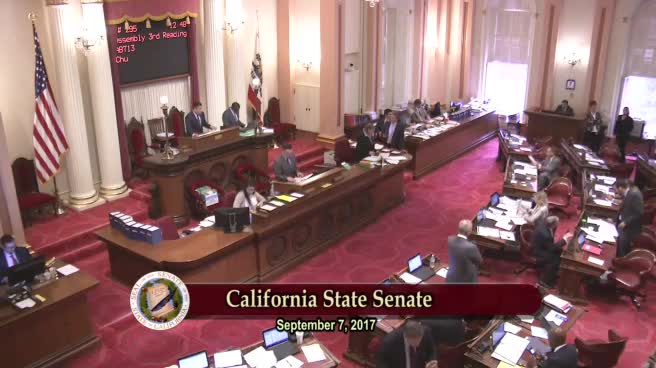 2MIN
Senate Floor
 1H
Senate Standing Committee on Appropriations
 8MIN
Senate Standing Committee on Health
 5MIN
Senate Standing Committee on Business, Professions and Economic Development
 1MIN
Assembly Floor
 1H
Assembly Standing Committee on Appropriations
 3MIN
Assembly Standing Committee on Health
 6MIN
Assembly Standing Committee on Business and Professions
Bill Author

Bill Co-Author(s):