AB 1196: California Coastal Act of 1976: Port of Newport Beach.
- Session Year: 2017-2018
- House: Assembly
- Latest Version Date: 2018-03-22
The California Coastal Act of 1976 establishes the California Coastal Commission and prescribes the membership and functions and duties of the commission with regard to the regulation and protection of coastal resources. The act specifies that after a port master plan for the Port of Hueneme, Long Beach, Los Angeles, or San Diego Unified Port District located within the coastal zone, as provided, is certified by the commission, the permit authority of the commission is thereafter delegated to the appropriate port governing body, except as specified. Existing law requires certain cities and counties to incorporate the master plan in its local coastal program.
This bill would additionally apply this port master plan provision to the Port of Newport Beach located within the coastal zone, except as provided. By imposing duties on local officials, this bill would impose a state-mandated local program.
The California Constitution requires the state to reimburse local agencies and school districts for certain costs mandated by the state. Statutory provisions establish procedures for making that reimbursement.
This bill would provide that, if the Commission on State Mandates determines that the bill contains costs mandated by the state, reimbursement for those costs shall be made pursuant to the statutory provisions noted above.
(1)Existing law authorizes the governing board of a school district or community college district to order an election and submit to the electors of the district whether the bonds of the district should be issued and sold, and sets forth requirements in that regard, including specifying that the term of a bond shall not exceed 25 years from the date of the bond or bond series.This bill would specify that a bond issued for projects that include the furnishing and equipping of classrooms shall have a weighted average maturity that does not exceed 120% of the average reasonably expected economic life of the financed project.(2)Existing law, additionally and alternatively to the authority described above, authorizes the issuance of bonds or refunding bonds by a school district or community college district secured by the levy of ad valorem taxes, and, pursuant to those provisions, authorizes a school district or community college district to issue bonds that do not allow for the compounding of interest and that have a maturity greater than 30 years, but no greater than 40 years, in accordance with specified requirements.This bill, notwithstanding those provisions, would specify that a bond issued for projects that include the furnishing and equipping of classrooms shall have a weighted average maturity that does not exceed 120% of the average reasonably expected economic life of the financed project.(1)Existing law authorizes the governing board of a school district or community college district to order an election and submit to the electors of the district whether the bonds of the district should be issued and sold, and sets forth requirements in that regard, including specifying that the term of a bond shall not exceed 25 years from the date of the bond or bond series.
This bill would specify that a bond issued for projects that include the furnishing and equipping of classrooms shall have a weighted average maturity that does not exceed 120% of the average reasonably expected economic life of the furnishings and equipment. financed project.
(2)Existing law, additionally and alternatively to the authority described above, authorizes the issuance of bonds or refunding bonds by a school district or community college district secured by the levy of ad valorem taxes, and, pursuant to those provisions, authorizes a school district or community college district to issue bonds that do not allow for the compounding of interest and that have a maturity greater than 30 years, but no greater than 40 years, in accordance with specified requirements.
This bill, notwithstanding those provisions, would specify that a bond issued for projects that include the furnishing and equipping of classrooms shall have a weighted average maturity that does not exceed 120% of the average reasonably expected economic life of the furnishings and equipment. financed project.
(1)Existing law authorizes the governing board of a school district or community college district to order an election and submit to the electors of the district whether the bonds of the district should be issued and sold, and sets forth requirements in that regard, including specifying that the term of a bond shall not exceed 25 years from the date of the bond or bond series.
This bill would specify that a bond issued for projects that include the furnishing and equipping of classrooms shall have a weighted average maturity that does not exceed 120% of the average reasonably expected economic life of the furnishings and equipment.
(2)Existing law, additionally and alternatively to the authority described above, authorizes the issuance of bonds or refunding bonds by a school district or community college district secured by the levy of ad valorem taxes, and, pursuant to those provisions, authorizes a school district or community college district to issue bonds that do not allow for the compounding of interest and that have a maturity greater than 30 years, but no greater than 40 years, in accordance with specified requirements.
This bill, notwithstanding those provisions, would specify that a bond issued for projects that include the furnishing and equipping of classrooms shall have a weighted average maturity that does not exceed 120% of the average reasonably expected economic life of the furnishings and equipment.
(1)Existing law authorizes the governing board of a school district or community college district to order an election and submit to the electors of the district whether the bonds of the district should be issued and sold, and sets forth requirements in that regard, including specifying that the term of a bond shall not exceed 25 years from the date of the bond or bond series.
This bill would specify that the term of a bond used for purposes of issued for projects that include the furnishing and equipping of classrooms shall have a weighted average maturity that does not exceed 120% of the average reasonably expected economic life of the furnishings and equipment.
(2)Existing law, additionally and alternatively to the authority described above, authorizes the issuance of bonds or refunding bonds by a school district or community college district secured by the levy of ad valorem taxes, and, pursuant to those provisions, authorizes a school district or community college district to issue bonds that do not allow for the compounding of interest and that have a maturity greater than 30 years, but no greater than 40 years, in accordance with specified requirements.
This bill, notwithstanding those provisions, would specify that a bond used for the purposes of issued for projects that include the furnishing and equipping of classrooms shall have a weighted average maturity that does not exceed 120% of the average reasonably expected economic life of the furnishings and equipment.
(1)Existing law authorizes the governing board of a school district or community college district to order an election and submit to the electors of the district whether the bonds of the district should be issued and sold, and sets forth requirements in that regard, including specifying that the term of a bond shall not exceed 25 years from the date of the bond or bond series.
This bill would specify that the term of a bond used for purposes of furnishing and equipping classrooms shall not exceed 120% of the average reasonably expected economic life of the furnishings and equipment.
(2)Existing law, additionally and alternatively to the authority described above, authorizes the issuance of bonds or refunding bonds by a school district or community college district secured by the levy of ad valorem taxes, and, pursuant to those provisions, authorizes a school district or community college district to issue bonds that do not allow for the compounding of interest and that have a maturity greater than 30 years, but no greater than 40 years, in accordance with specified requirements.
This bill, notwithstanding those provisions, would specify that a bond used for the purposes of furnishing and equipping classrooms shall not exceed 120% of the average reasonably expected economic life of the furnishings and equipment.
For purposes of this division, notwithstanding any other provisions of this division except as specifically stated in this chapter, this chapter shall govern those portions of the Ports of Hueneme, Long Beach, Los Angeles, and Newport Beach, and the San Diego Unified Port District located within the coastal zone, but excluding any wetland, estuary, or existing recreation area indicated in Part IV of the coastal plan.
SEC. 2.If the Commission on State Mandates determines that this act contains costs mandated by the state, reimbursement to local agencies and school districts for those costs shall be made pursuant to Part 7 (commencing with Section 17500) of Division 4 of Title 2 of the Government Code.
SECTION 1.Section 15144 of the Education Code is amended to read:15144.(a)The number of years the whole or any part of the bonds are to run shall not exceed 25 years from the date of the bonds or the date of any series thereof.(b)Notwithstanding subdivision (a), a bond issued for projects that include the furnishing and equipping of classrooms, including, but not limited to, purchasing electronic equipment, shall have a weighted average maturity that does not exceed 120 percent of the average reasonably expected economic life of the financed project.SEC. 2.Section 53508.6 of the Government Code is amended to read:53508.6.(a)Notwithstanding any other law, a school district or community college district may, pursuant to this article, issue bonds that do not allow for the compounding of interest and that have a maturity greater than 30 years, but not greater than 40 years, if the school district or community college district does both of the following:(1)Complies with the requirements of subdivisions (b) and (c) of Section 15146 of the Education Code.(2)Makes a finding that the useful life of the facility financed with the bonds that do not allow for the compounding of interest and that have a maturity greater than 30 years, but not greater than 40 years, equals or exceeds the maturity date of those bonds.(b)Notwithstanding subdivision (a), a bond issued for projects that include the furnishing and equipping of classrooms, including, but not limited to, purchasing electronic equipment, shall have a weighted average maturity that does not exceed 120 percent of the average reasonably expected economic life of the financed project.(a)The number of years the whole or any part of the bonds are to run shall not exceed 25 years from the date of the bonds or the date of any series thereof.
(b)Notwithstanding subdivision (a), a bond issued for projects that include the furnishing and equipping of classrooms, including, but not limited to, purchasing electronic equipment, shall have a weighted average maturity that does not exceed 120 percent of the average reasonably expected economic life of the furnishings and equipment. financed project.
SEC. 2.Section 53508.6 of the Government Code is amended to read:53508.6.(a)Notwithstanding any other law, a school district or community college district may, pursuant to this article, issue bonds that do not allow for the compounding of interest and that have a maturity greater than 30 years, but not greater than 40 years, if the school district or community college district does both of the following:
(1)Complies with the requirements of subdivisions (b) and (c) of Section 15146 of the Education Code.
(2)Makes a finding that the useful life of the facility financed with the bonds that do not allow for the compounding of interest and that have a maturity greater than 30 years, but not greater than 40 years, equals or exceeds the maturity date of those bonds.
(b)Notwithstanding subdivision (a), a bond issued for projects that include the furnishing and equipping of classrooms, including, but not limited to, purchasing electronic equipment, shall have a weighted average maturity that does not exceed 120 percent of the average reasonably expected economic life of the furnishings and equipment. financed project.
(a)The number of years the whole or any part of the bonds are to run shall not exceed 25 years, years from the date of the bonds or the date of any series thereof.
(b)Notwithstanding subdivision (a), a bond issued for projects that include the furnishing and equipping of classrooms, including, but not limited to, purchasing electronic equipment, shall have a weighted average maturity that does not exceed 120 percent of the average reasonably expected economic life of the furnishings and equipment.
SEC. 2.Section 53508.6 of the Government Code is amended to read:53508.6.(a)Notwithstanding any other law, a school district or community college district may, pursuant to this article, issue bonds that do not allow for the compounding of interest and that have a maturity greater than 30 years, but not greater than 40 years, if the school district or community college district does both of the following:
(1)Complies with the requirements of subdivisions (b) and (c) of Section 15146 of the Education Code.
(2)Makes a finding that the useful life of the facility financed with the bonds that do not allow for the compounding of interest and that have a maturity greater than 30 years, but not greater than 40 years, equals or exceeds the maturity date of those bonds.
(b)Notwithstanding subdivision (a), a bond issued for projects that include the furnishing and equipping of classrooms, including, but not limited to, purchasing electronic equipment, shall have a weighted average maturity that does not exceed 120 percent of the average reasonably expected economic life of the furnishings and equipment.
(a)The number of years the whole or any part of the bonds are to run shall not exceed 25 years, from the date of the bonds or the date of any series thereof.
(b)Notwithstanding subdivision (a), the term of a bond used issued for the purposes of projects that include the furnishing and equipping of classrooms, including, but not limited to, purchasing electronic equipment, shall have a weighted average maturity that does not exceed 120 percent of the average reasonably expected economic life of the furnishings and equipment.
SEC. 2.Section 53508.6 of the Government Code is amended to read:53508.6.(a)Notwithstanding any other law, a school district or community college district may, pursuant to this article, issue bonds that do not allow for the compounding of interest and that have a maturity greater than 30 years, but not greater than 40 years, if the school district or community college district does both of the following:
(1)Complies with the requirements of subdivisions (b) and (c) of Section 15146 of the Education Code.
(2)Makes a finding that the useful life of the facility financed with the bonds that do not allow for the compounding of interest and that have a maturity greater than 30 years, but not greater than 40 years, equals or exceeds the maturity date of those bonds.
(b)Notwithstanding subdivision (a), the term of a bond used issued for the purposes of projects that include the furnishing and equipping of classrooms, including, but not limited to, purchasing electronic equipment, shall have a weighted average maturity that does not exceed 120 percent of the average reasonably expected economic life of the furnishings and equipment.
(a)The number of years the whole or any part of the bonds are to run shall not exceed 25 years, from the date of the bonds or the date of any series thereof.
(b)Notwithstanding subdivision (a), the term of a bond used for the purposes of furnishing and equipping classrooms, including, but not limited to, purchasing electronic equipment, shall not exceed 120 percent of the average reasonably expected economic life of the furnishings and equipment.
SEC. 2.Section 53508.6 of the Government Code is amended to read:53508.6.(a)Notwithstanding any other law, a school district or community college district may, pursuant to this article, issue bonds that do not allow for the compounding of interest and that have a maturity greater than 30 years, but not greater than 40 years, if the school district or community college district does both of the following:
(a)(1)Complies with the requirements of subdivisions (b) and (c) of Section 15146 of the Education Code.
(b)(2)Makes a finding that the useful life of the facility financed with the bonds that do not allow for the compounding of interest and that have a maturity greater than 30 years, but not greater than 40 years, equals or exceeds the maturity date of those bonds.
(b)Notwithstanding subdivision (a), the term of a bond used for the purposes of furnishing and equipping classrooms, including, but not limited to, purchasing electronic equipment, shall not exceed 120 percent of the average reasonably expected economic life of the furnishings and equipment.
REVISIONS: HeadingLine 2.|
Date
|
Status
|
|---|---|
| Apr 19, 2018 | Re-referred to Com. on N.R. & W. |
| Apr 2, 2018 | Withdrawn from committee. |
| Mar 22, 2018 | From committee chair, with author's amendments: Amend, and re-refer to committee. Read second time, amended, and re-referred to Com. on GOV. & F. |
| Jul 12, 2017 | In committee: Set, first hearing. Failed passage. Reconsideration granted. |
| Jun 14, 2017 | Read second time and amended. Re-referred to Com. on GOV. & F. |
| Jun 13, 2017 | From committee: Amend, and do pass as amended and re-refer to Com. on GOV. & F. with recommendation: To Consent Calendar. (Ayes 7. Noes 0.) (June 7). |
| May 25, 2017 | From committee chair, with author's amendments: Amend, and re-refer to committee. Read second time, amended, and re-referred to Com. on ED. |
| May 10, 2017 | Referred to Coms. on ED. and GOV. & F. |
| Apr 20, 2017 | In Senate. Read first time. To Com. on RLS. for assignment. |
| Apr 20, 2017 | Read third time. Passed. Ordered to the Senate. (Ayes 73. Noes 0. Page 1127.) |
| Apr 3, 2017 | Read second time. Ordered to third reading. |
| Mar 30, 2017 | Read second time and amended. Ordered returned to second reading. |
| Mar 29, 2017 | From committee: Amend, and do pass as amended. (Ayes 6. Noes 0.) (March 22). |
| Mar 15, 2017 | Coauthors revised. |
| Mar 9, 2017 | Referred to Com. on ED. |
| Feb 19, 2017 | From printer. May be heard in committee March 21. |
| Feb 17, 2017 | Read first time. To print. |
|
Date
|
Description
|
Location
|
Votes
|
|
|---|---|---|---|---|
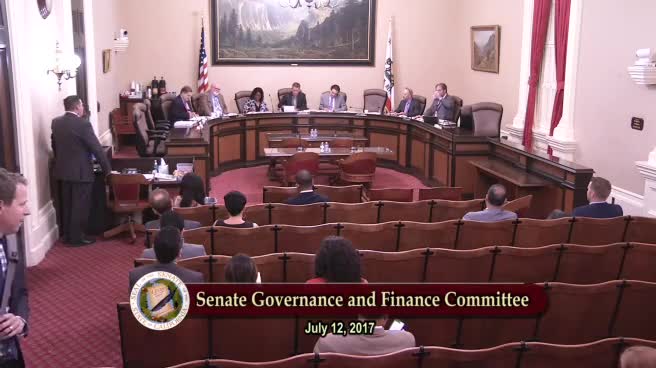
| Jul 12, 2017 | [First] hearing set for [07-12-2017]: Failed passage in Committee. Reconsideration granted | Senate Standing Committee on Governance and Finance |
Passed |
|
| Jul 12, 2017 | Do pass | Senate Standing Committee on Governance and Finance |
Failed |
|
| Jun 7, 2017 | Do pass as amended, but first amend, and re-refer to the Committee on [Governance and Finance] with the recommendation: To Consent Calendar | Senate Standing Committee on Education |
Passed |
|
| Apr 20, 2017 | Favorable (Civil Justice & Claims Subcommittee) | Assembly Floor |
Passed |
|
| Mar 22, 2017 | Do pass as amended. | Assembly Standing Committee on Education |
Passed |
This list shows positions taken on this bill by organizations on the date displayed, which is linked to the original source.
Positions by individuals are not included.
|
Organization
|
Position
|
Date
|
|---|---|---|
| Coalition For Adequate School Housing | * Against Unless Amend | Jul 12, 2017 |
SENATE COMMITTEE ON GOVERNANCE AND FINANCE
Senator Mike McGuire, Chair
2017 - 2018 Regular
Bill No: | AB 1196 | Hearing Date: | 7/12/17 |
Author: | Harper | Tax Levy: | No |
Version: | 6/14/17 | Fiscal: | No |
Consultant: | Grinnell | ||
School bonds: term of bonds: furnishing and equipping classrooms
Prohibits school bonds from having weighted average maturities that exceed 120% of the average reasonably expected economic life of the financed project.
Background
When public agencies issue bonds, they essentially borrow money from investors, who provide cash in exchange for the agencies’ commitment to repay the principal amount of the bond plus interest in the future. The California Constitution requires counties, cities, and school districts to get voter approval for long-term debt (Section 1, Article XIIIA). Counties, cities, school districts, community college districts, and some special districts can issue general obligation (GO) bonds, secured by ad valorem, or according to value, property tax revenues with 2/3-voter approval.
For many years, the Education Code provided the sole avenue for school and community college districts to sell GO Bonds, which limited the number of years a community college or school district could issue a bond to 25 years, with a maximum interest rate of 8%. In 1993, the Legislature added sections to the Government Code to allow cities, counties, cities and counties, special districts, and school and community college districts to issue 40-year bonds. However, in 2013, the Legislature responded to school districts selling capital appreciation bonds with debt to principal ratios of 10 to 1 or worse, by limiting maximum bond terms that allow for capitalization of interest to 25 years along with other reforms, such as an interest rate cap, maximum debt to principal ratio, and call option requirement (AB 182, Buchannan, 2013). However, a district could obtain a one-time waiver under specified circumstances. AB 182 also required bonds school districts issue under the Government Code with maturities longer than 30 years to make a finding that the useful life of the facility financed with the bonds equals or exceeds the maturity date of those bonds.
Proposition 39 (2000) allows school districts and school facility improvement districts to issue GO bonds to build, rehabilitate, or replace schools with 55% voter approval subject to certain conditions, including tax limits. Before Proposition 39, bond proceeds could only be used to finance “the acquisition or improvement of real property,” which meant the acquisition of land, the construction or acquisition of school buildings, and facilities, the expansion, restoration, remodeling or improvement of school facilities, and the permanent improvement of school grounds. Even though the Education Code appears to grant school districts the authority to finance certain additional items, including furniture, equipment and school buses, the traditional constitutional basis for authorizing voter approved general obligation bonds prohibits the use of bond proceeds to acquire vehicles, furnishings, or equipment, unless the equipment is affixed to real property and treated as real property for legal purposes.
Proposition 39 amended the California Constitution to allow bond proceeds to be spent on “the construction, reconstruction, rehabilitation, or replacement of school facilities, including the furnishing and equipping of school facilities, or the acquisition or lease of real property for school facilities.” As a result, many school districts have issued bonds for furnishing classrooms and purchasing technology to help students learn in addition to school facilities, instead of paying for these items out of general revenues. Legislative Counsel has since opined that while portable electronic devices such as iPads were not in existence when Proposition 39 was passed, they are evolved from desktop computers and as such, a court would construe Proposition 39 to authorize the purchase of portable electronic devices, as long as they were intended for use in a manner closely connected to classroom instruction at a school facility.
The Code of Federal Regulations requires the bonds to have a weighted average maturity of less than 120% percent of the average reasonably expected economic life of the facilities being financed with bond proceeds to remain tax exempt, so school districts often issue bonds with different maturities for furnishing or equipment, called serial bonds. Shorter-term bonds are more appropriate for acquiring technology or other relatively short-lived capital improvement projects, and align the costs of furniture or technology with the current generation of users to pay for the system. Other school districts have recently issued “Ed-Tech” bonds, a series of low-interest, short-term bonds, with a three- to five-year payback period, each issued after the previous one is paid off, to finance technology purchases with useful lives of between two and five years. Districts say that the bonds help adapt to Common Core standards, and save money for taxpayers due to reduced interest costs. School districts can also “blend” the useful life of all financed assets into one issue to meet the rule’s requirements.
Voters in the Los Angeles Unified School District (LAUSD) have approved several general obligation bonds to repair, renovate, upgrade, and build new schools. In 2012, LAUSD bond counsel opined that LAUSD could finance its Common Core Technology project with proceeds from these bonds, which included a tablet for each student in the district. However, bond counsel cautioned that the district needed to ensure that proceeds used to pay for tablets do not cause the average expected economic life of the property financed by the bond issue to be less than 120% of the average weighted maturity of the issue, and to be aware of these average maturity constraints in structuring any bond sale used for tablets. LAUSD went ahead with the planned bond sale; however, the district subsequently cancelled the contract amid allegations of unfairness in the bidding process. LAUSD’s superintendent subsequently resigned, and the Securities and Exchange Commission (SEC) opened an informal investigation into the bond issue.
Seeking to prevent districts from using bond proceeds to purchase technology, the author wants to establish an average weighted maturity standard in state law for school bonds.
Proposed Law
Assembly Bill 1196 amends both the Education and Government Code setting the maximum terms of bonds to provide that bonds issued for projects that include the furnishing and equipping of classrooms, must have a weighted average maturity that does not exceed 120% of the average reasonably expected economic life of the financed project.
State Revenue Impact
No estimate.
Comments
1. Purpose of the bill. According to the author, “Local educational institutions have been using Prop 39 bond funds to purchase items with a much shorter usable life. For example, Los Angeles Unified School District bought iPads in 2013, which is now an abandoned project that costed $1.3 billion. IPads have a life expectancy between four and five years. This cost is a burden on taxpayers that is paid back over time through property taxes. AB 1196 is needed to ensure that taxpayers are not paying long term bonds for projects that have a shorter lifespan. This bill will protect taxpayer dollars by ensuring Prop 39 bond funds are paid off based on the life expectancy of the project being purchased.”
2. Necessary? AB 1196 responds to the practice of school districts using bonds to finance personal electronic devices for education purposes; however, the measure only restates current requirements in federal regulations that school districts must comply with. If they don’t, they risk SEC action, or the Internal Revenue Service (IRS) revoking its bonds’ tax-exempt status. While inserting the requirement in state law places the responsibility on school districts to ensure compliance themselves, instead of waiting for the SEC and IRS, what’s the necessity or value of doing so? Inserting additional, duplicative language may make bond issuance more complicated and costly for school districts seeking clean opinions from bond counsel, which mean lower borrowing costs. Districts can’t always identify with certainty the exact projects that may be funded at issuance, and AB 1196 could result in districts having to issue a different set of bonds should a project financed by a first set be delayed. Opponents of bond issues could also use the bill’s standard to challenge the validity of the school district’s bonds because of differences measuring economic life, resulting in disputes and additional litigation. The Committee may wish to consider whether AB 1196 is necessary.
3. Risk. Federal regulation’s anti-fraud provisions impose liability on a school district for material misstatements or omissions made in connection with the offering and sale of the school district’s bonds. In addition, federal securities laws indirectly require school districts to disclose and annually update certain financial and operating information relevant to the security and repayment of its bonds. Instead of compounding risk with more regulations on school districts, a simpler approach would be to simply bar districts from purchasing technology using bond proceeds, thereby providing clear legislative direction that districts should instead use bond funds for capital expenditures related to classroom construction, modernization, and repair.
4. Incoming! On June 7th, the Senate Committee on Education approved AB 1196 on a 7-0 vote. The Committee on Governance and Finance is hearing the measure as the committee of second referral.
Assembly Actions
Assembly Education Committee: 7-0
Assembly Floor: 73-0
Support and Opposition
(7/7/17)
Support: None received.
Opposition: Coalition for Adequate School Housing, Community College Faculty Coalition.
-- END --
SENATE COMMITTEE ON EDUCATION
Senator Benjamin Allen, Chair
2017 - 2018 Regular
Bill No: Hearing Date: June 7, 2017
Author: | Harper | ||
Version: | May 25, 2017 | ||
Urgency: | Fiscal: | ||
Consultant: | |||
Subject:
NOTE: This bill has been referred to the Committees on Education and Governance and Finance. A "do pass" motion should include referral to the Committee on Governance and Finance.
SUMMARY
This bill requires the duration of bonds for projects that include classroom furnishings and equipment, such as electronic equipment, to be 120 percent or less of the average life of the furnishings and equipment being funded.
BACKGROUND
Existing law:
- Authorizes a school district, community college district, or county office of education to incur general obligation bond debt for the construction, reconstruction, rehabilitation, or replacement of school facilities, including the furnishing and equipping of school facilities, or the acquisition or lease of real property for school facilities upon approval of 55 percent of the voters.
- Specifies that the number of years the whole or any part of the bonds are to run shall not exceed 25 years, from the date of the bonds or the date of any series thereof.
- Specifies that a school or community college district may issue bonds that do not allow for the compounding of interest and that have a maturity between 30 and 40 years if the school district or community college district complies with specified requirements.
ANALYSIS
This bill specifies that bonds used for the purpose of furnishing and equipping classrooms, including, but not limited to, electronic equipment, shall have a weighted average maturity not to exceed 120 percent of the average reasonably expected economic life of the furnishings and equipment.
STAFF COMMENTS
- Need for the bill. According to the author, “Local educational institutions have been using Prop 39 bond funds to purchase non-facility related items with a much shorter usable life. For example, Los Angeles Unified School District bought iPads in 2013, which is now an abandoned project that cost $1.3 billion. IPads have a life expectancy of between four and five years. This cost is a burden on taxpayers that is paid back over time through property taxes. AB 1196 is needed to ensure that taxpayers are not paying long term bonds for items that have a shorter lifespan.”
- School and community college general obligation bonds. Proposition 39 of 2000 allows school and community college districts to seek approval of local general obligation bonds based on a 55 percent vote, rather than a two-thirds vote, provided that the local bond initiative meets specified accountability measures. Those measures include identifying the list of specific school facilities projects to be funded and conducting annual financial and performance audits.
- Can bond funds be used for portable technological devices? Proposition 39 specifically requires the use of bonds authorized under its provisions “for the construction, reconstruction, rehabilitation, or replacement of school facilities, including the furnishing and equipping of school facilities.” Amid concerns about the use of these bond funds for the purchase of portable technology equipment by school districts, Legislative Counsel was asked to opine whether a school district could use bond proceeds to purchase portable technological devices, such as laptops and electronic tablets. In their report, Legislative Counsel noted that while portable electronic devices such as iPads were not in existence when Proposition 39 was passed, they are evolved from desktop computers and as such, are likely an authorized purchase, as long as they were intended for use in a manner closely connected to classroom instruction at a school facility.
- Beyond federal bond issuance requirements. Federal law establishes various definitions for the purpose of meeting Internal Revenue Service requirements for tax-exempt government bond issuances. Among these are conditions which must be met regarding the term of the bonds issued. Federal regulations generally require that portions of an issue used to finance or refinance capital projects must have a “weighted average maturity” that does not exceed 120 percent of the average reasonably expected economic life of the financed capital projects. The provisions of this bill are similar, but not identical to the federal tax code provisions.
According to community college and school districts, bond programs are typically issued for a variety of purposes all at once, with varying maturities over the life of the program and with a mix of short-term and long-term issuances. As currently drafted it is unclear what effect the inclusion of furniture and equipment as a component of a bond issuance would have on a district’s overall bond program. Because the bill goes beyond the federal law requirements, the bill may have the unintended consequence of requiring the structuring of long-term obligation bond programs in a manner that increases the costs of bond issuances to the taxpayer. Additionally, it is unclear whether such a statutory restriction is necessary since at least one school district reports that it has balanced the need to acquire technology assets with shorter life spans, and the interest of taxpayers, by issuing bonds with maturities of 1 to 3 years for the acquisition of technology.
Since federal law already requires the alignment of the term and the economic life of furniture and equipment, and no examples of school districts failing to comply with these requirements were provided to the committee, it is unclear whether the provisions of this bill are necessary. However, if the committee wishes to pass this measure, staff recommends that the bill be amended to require bonds used for the purpose of furnishing and equipping classrooms, including, but not limited to, electronic equipment, to have a weighted average maturity not to exceed 120 percent of the average reasonably expected economic life of the financed project.
SUPPORT
None received.
OPPOSITION
None received.
-- END --
ASSEMBLY THIRD READING
ATR Bill Id:AB 1196
Author:(Harper)
As Amended Ver:March 30, 2017
Majority vote
Committee | Votes | Ayes | Noes |
Education | 6-0 | O'Donnell, Chávez, Gloria, Kiley, McCarty, Weber |
SUMMARY: Specifies that a bond issued for projects that include the furnishing and equipping of classrooms, including, but not limited to, electronic equipment, shall have a weighted average maturity that does not exceed 120% of the average reasonably expected economic life of the furnishings and equipment.
EXISTING LAW:
- Authorizes, under California Constitution Article XVI, Section 18, a school district, community college district or county office of education to incur indebtedness in the form of General Obligation (GO) bonds for the construction, reconstruction, rehabilitation, or replacement of school facilities, including the furnishing and equipping of school facilities, or the acquisition or lease of real property for school facilities upon approval of 55% of the voters.
- Specifies, under the Education Code, that the number of years the whole or any part of the bonds are to run shall not exceed 25 years, from the date of the bonds or the date of any series thereof.
- Specifies, under the Government Code, that a school district or community college district may issue bonds that do not allow for the compounding of interest and that have a maturity greater than 30 years, but not greater than 40 years, if the school district or community college district does both of the following:
- Complies with the requirements of Education Code Section 15146 (b) and (c).
- Makes a finding that the useful life of the facility financed with the bonds that do not allow for the compounding of interest and that have a maturity greater than 30 years, but not greater than 40 years, equals or exceeds the maturity date of those bonds.
FISCAL EFFECT: None. This bill is keyed non-fiscal by the Legislative Counsel.
COMMENTS: Proposition 39. In November, 2000, voters passed Proposition 39, a Constitutional Amendment which, among others, give school districts and community college districts the opportunity to seek approval of a local GO bond based on a 55% vote rather than a two-thirds vote, provided that the local bond initiative meets specified accountability measures, including identifying the list of specific school facilities projects that will be funded by bond proceeds and the requirement to conduct an annual independent performance audit and an independent financial audit.
Furnishing and equipping school facilities. Local educational agencies use bond funds to furnish and equip school facilities, including furniture, such as desks, and equipment, such as desktop computers. According to the Legislative Counsel, portable electronic equipment is a type of equipment that is allowable under Proposition 39. While portable electronic devices such as the iPads were not in existence when Proposition 39 was passed, they are evolved from desktop computers and as such, a court would construe Proposition 39 to authorize portable electronic devices. However, the equipment must be a part of equipping classrooms and school facilities and be used in connection with instruction in the classroom.
Technology. Many school districts have embarked on new technology programs, partly in response to the new Common Core State Standards and the accompanying Smarter Balanced assessments. The new assessments are computer-based and began in the 2014-15 school year. In 2013, the Los Angeles Unified School District launched the first phase of the Common Core Technology Project, which provided iPads to 31,000 students and 1,500 teachers at 47 schools. The iPads are installed with English and math curriculum and are assigned as personal devices to pupils, who are allowed to take the devices home. The district has since suspended the project.
Other school districts have purchased other types of portable electronic devices, such as the Chromebooks or MacBook Air laptops. Most school districts are not assigning devices to each student, and instead are rolling them into classrooms on carts.
Term of bonds. Under the Education Code, the term of local bonds cannot exceed 25 years, while bonds issued under the Government Code is no more than 40 years. Proposition 39 authorizes the proceeds from the sale of GO bonds to be used for the construction, reconstruction, rehabilitation, or replacement of school facilities, including the furnishing and equipping of school facilities. Existing law, however, does not differentiate between bonds for buildings versus bonds for furnishing and equipping of facilities, which may include electronic equipment.
This bill specifies that the weighted average maturity of local bonds used to furnish and equip classrooms cannot exceed 120% of the average reasonably expected life expectancy of the items being purchased, whether the bond is issued under the Education Code or the Government Code. This bill is consistent with federal tax rules on tax exempt bonds ensuring that taxpayers are not paying long term bonds for items that have shorter lifespan and will reduce costs for these purchases. A question can be raised as to whether this bill is necessary.
The author states, "Local educational institutions have been using Prop 39 bond funds to purchase non-facility related items with a much shorter usable life. For example, Los Angeles Unified School District bought iPads in 2013, which is now an abandoned project that costed $1.3 billion. IPads have a life expectancy of between four and five years. This cost is a burden on taxpayers that is paid back over time through property taxes. AB 1196 is needed to ensure that taxpayers are not paying long term bonds for items that have a shorter lifespan."
Analysis Prepared by: Sophia Kwong Kim / ED. / (916) 319-2087 FN: 0000073
Date of Hearing: March 22, 2017
ASSEMBLY COMMITTEE ON EDUCATION
Patrick O'Donnell, Chair
ABPCA Bill Id:AB 1196 (
Author:Harper) – As Introduced Ver:February 17, 2017
SUBJECT: School bonds: term of bonds: furnishing and equipping classrooms
SUMMARY: Specifies that the term of a bond used for the purposes of furnishing and equipping of classroom, including, but not limited to, electronic equipment, shall not exceed 120% of the average reasonably expected economic life of the furnishings and equipment.
EXISTING LAW:
- Authorizes, under California Constitution Article XVI, Section 18, a school district, community college district or county office of education to incur indebtedness in the form of General Obligation (GO) bonds for the construction, reconstruction, rehabilitation, or replacement of school facilities, including the furnishing and equipping of school facilities, or the acquisition or lease of real property for school facilities upon approval of 55% of the voters.
- Specifies, under the Education Code, that the number of years the whole or any part of the bonds are to run shall not exceed 25 years, from the date of the bonds or the date of any series thereof.
- Specifies, under the Government Code, that a school district or community college district may issue bonds that do not allow for the compounding of interest and that have a maturity greater than 30 years, but not greater than 40 years, if the school district or community college district does both of the following:
- Complies with the requirements of Education Code Section 15146 (b) and (c).
- Makes a finding that the useful life of the facility financed with the bonds that do not allow for the compounding of interest and that have a maturity greater than 30 years, but not greater than 40 years, equals or exceeds the maturity date of those bonds.
FISCAL EFFECT: None. This bill is keyed non-fiscal by the Legislative Counsel.
COMMENTS: Proposition 39. In November, 2000, voters passed Proposition 39, a Constitutional Amendment which, among others, give school districts and community college districts the opportunity to seek approval of a local GO bond based on a 55% vote rather than a two-thirds vote, provided that the local bond initiative meets specified accountability measures, including identifying the list of specific school facilities projects that will be funded by bond proceeds and the requirement to conduct an annual independent performance audit and an independent financial audit.
Furnishing and equipping school facilities. Local educational agencies use bond funds to furnish and equip school facilities, including furniture, such as desks, and equipment, such as desktop computers. According to the Legislative Counsel, portable electronic equipment is a type of equipment that is allowable under Proposition 39. While portable electronic devices such as the iPads were not in existence when Proposition 39 was passed, they are evolved from desktop computers and as such, a court would construe Proposition 39 to authorize portable electronic devices. However, the equipment must be a part of equipping classrooms and school facilities and be used in connection with instruction in the classroom.
Technology. Many school districts have embarked on new technology programs, partly in response to the new Common Core State Standards and the accompanying Smarter Balanced assessments. The new assessments are computer-based and began in the 2014-15 school year. In 2013, the Los Angeles Unified School District (LAUSD) launched the first phase of the Common Core Technology Project, which provided iPads to 31,000 students and 1,500 teachers at 47 schools. The iPads are installed with English and math curriculum and are assigned as personal devices to pupils, who are allowed to take the devices home. The district has since suspended the project.
San Diego Unified School District implemented a technology program several years ago through the passage of two local bonds. The district upgraded technology in the classrooms and purchased portable electronic devices. The devices are used in the classrooms, but the district also allows pupils to take the devices home and provides internet coverage to families that do not have access.
Other school districts have purchased other types of portable electronic devices, such as the Chromebooks or MacBook Air laptops. Most school districts are not assigning devices to each student, and instead are rolling them into classrooms on carts.
Term of bonds. Under the Education Code, the term of local bonds cannot exceed 25 years, while bonds issued under the Government Code is no more than 40 years. Proposition 39 authorizes the proceeds from the sale of GO bonds to be used for the construction, reconstruction, rehabilitation, or replacement of school facilities, including the furnishing and equipping of school facilities. Existing law, however, does not differentiate between bonds for buildings versus bonds for furnishing and equipping of facilities, which may include electronic equipment. This bill specifies that the issuance of local bonds used to furnish and equip classrooms cannot exceed 120% of the life expectancy of the items being purchased, whether the bond is issued under the Education Code or the Government Code. This bill is consistent with federal tax rules on tax exempt bonds ensuring that taxpayers are not paying long term bonds for items that have shorter lifespan and will reduce costs for these purchases. A question can be raised as to whether this bill is necessary.
Committee amendment. Staff recommends an amendment to ensure that this bill does not cause conflict with federal regulations, which generally require that portions of an issue used to finance or refinance capital projects must have a “weighted average maturity” that does not exceed 120 percent of the average reasonably expected economic life of the financed capital projects.
The author states, “Local educational institutions have been using Prop 39 bond funds to purchase non-facility related items with a much shorter usable life. For example, Los Angeles Unified School District bought iPads in 2013, which is now an abandoned project that costed $1.3 billion. IPads have a life expectancy of between four and five years. This cost is a burden on taxpayers that is paid back over time through property taxes. AB 1196 is needed to ensure that taxpayers are not paying long term bonds for items that have a shorter lifespan.”
Prior legislation. This bill is substantially similar to AB 882 (Wilk) from 2015, which passed the Assembly on a 75-0 vote. The author struck the contents of the bill and used the vehicle for another purpose in the Senate.
AB 1754 (Hagman), introduced in 2014, specifies that portable electronic devices may not be purchased with bond proceeds unless the devices are closely connected to classroom instruction, are not assigned to individual pupils and are not allowed to leave the schoolsite for more than one schoolday. The bill failed on a 3-0 vote in this Committee.
REGISTERED SUPPORT / OPPOSITION:
Support
None on file
Opposition
None on file
Analysis Prepared by: Sophia Kwong Kim / ED. / (916) 319-2087
Discussed in Hearing
 10MIN
Senate Standing Committee on Governance and Finance
 6MIN
Senate Standing Committee on Education
 2MIN
Assembly Floor
Bill Author