AB 1220: Certificated school employees: permanent status.
- Session Year: 2017-2018
- House: Assembly
- Latest Version Date: 2017-05-30
(1)Existing law requires each person who, after being employed for 2 complete consecutive school years by a county superintendent of schools in a teaching position in schools or classes maintained by the county superintendent of schools requiring certification qualifications, is reelected for the next succeeding school year to a teaching position to be classified as a permanent employee of the county superintendent of schools. Existing law requires an employee of a school district with an average daily attendance of 250 or more who, after having been employed by the school district for 2 complete consecutive school years in a position or positions requiring certification qualifications, is reelected for the next succeeding school year to a position requiring certification qualifications, at the commencement of the succeeding school year, to be classified as a permanent employee of the school district.
This bill would instead authorize each person who, after being employed for 3 complete consecutive school years by a county superintendent of schools in a teaching position maintained by the county superintendent of schools requiring certification qualifications, is reelected for the next succeeding school year to a teaching position to be classified as a permanent employee of the county superintendent of schools. The bill would authorize the county superintendent of schools to offer an employee of the county superintendent of schools in a teaching position in schools or classes maintained by the county superintendent of schools requiring certification qualifications to continue for up to 5 complete consecutive school years as a probationary employee.(2)Existing law requires an employee of a school district with an average daily attendance of 250 or more who, after having been employed by the school district for 2 complete consecutive school years in a position or positions requiring certification qualifications, is reelected for the next succeeding school year to a position requiring certification qualifications, at the commencement of the succeeding school year, to be classified as a permanent employee of the school district.This bill would instead authorize an employee of such a school district who, after having been employed by the school district for 3 complete consecutive school years in a position or positions requiring certification qualifications, is reelected for the next succeeding school year to a position requiring certification qualifications, at the commencement of the succeeding school year, to be classified as a permanent employee of the school district. The bill would authorize the governing board of a school district to offer an employee of the school district in a position or positions requiring certification qualifications to continue for up to 5 complete consecutive school years as a probationary employee.The bill would require the governing board of a school district, before an employee of the school district in a position or positions requiring certification qualifications is classified as a permanent employee of the school district, to determine that the employee has demonstrated 2 complete consecutive school years of effective teaching, as provided. The bill would require the governing board of a school district to adopt rules and regulations for this purpose. Because the bill would impose additional duties on local educational agency officials, the bill would impose a state-mandated local program.This bill would instead authorize a county superintendent of schools, and the governing board of a school district, to offer an employee of the county superintendent of schools or the school district in a position or positions requiring certification qualifications to continue for up to 3 complete consecutive school years as a probationary employee, as provided.
The bill would require a county superintendent of schools, and the governing board of a school district, if a probationary employee is offered a 3rd complete consecutive school year of probationary employment, to develop an individualized improvement plan to assist in addressing the deficiencies identified in the probationary employees evaluation, to provide copies of all prior evaluations before the plan meeting, and to provide individualized professional development consistent with the plan.
(3)(2)This bill would provide that, to the extent these provisions conflict with any provision of a collective bargaining agreement entered into before January 1, 2018, by a public school employer and an exclusive bargaining representative, these provisions shall not apply until the expiration or renewal of that collective bargaining agreement.
(4)(3)This bill would also make conforming changes and various nonsubstantive changes.
(5)The California Constitution requires the state to reimburse local agencies and school districts for certain costs mandated by the state. Statutory provisions establish procedures for making that reimbursement.This bill would provide that, if the Commission on State Mandates determines that the bill contains costs mandated by the state, reimbursement for those costs shall be made pursuant to the statutory provisions noted above.(1)Existing law requires each person who, after being employed for 2 complete consecutive school years by a county superintendent of schools in a teaching position in schools or classes maintained by the county superintendent of schools requiring certification qualifications, is reelected for the next succeeding school year to a teaching position to be classified as a permanent employee of the county superintendent of schools.
This bill would instead authorize each person who, after being employed for 3 complete consecutive school years by a county superintendent of schools in a teaching position maintained by the county superintendent of schools requiring certification qualifications, is reelected for the next succeeding school year to a teaching position to be classified as a permanent employee of the county superintendent of schools. The bill would authorize the county superintendent of schools to offer an employee of the county superintendent of schools in a teaching position in schools or classes maintained by the county superintendent of schools requiring certification qualifications to continue for up to 5 complete consecutive school years as a probationary employee.
(2)Existing law requires an employee of a school district with an average daily attendance of 250 or more who, after having been employed by the school district for 2 complete consecutive school years in a position or positions requiring certification qualifications, is reelected for the next succeeding school year to a position requiring certification qualifications, at the commencement of the succeeding school year, to be classified as a permanent employee of the school district.
This bill would instead authorize an employee of such a school district who, after having been employed by the school district for 3 complete consecutive school years in a position or positions requiring certification qualifications, is reelected for the next succeeding school year to a position requiring certification qualifications, at the commencement of the succeeding school year, to be classified as a permanent employee of the school district. The bill would authorize the governing board of a school district to offer an employee of the school district in a position or positions requiring certification qualifications to continue for up to 5 complete consecutive school years as a probationary employee.
The bill would require the governing board of a school district, before an employee of the school district in a position or positions requiring certification qualifications is classified as a permanent employee of the school district, to determine that the employee has demonstrated 2 complete consecutive school years of effective teaching, as provided. The bill would require the governing board of a school district to adopt rules and regulations for this purpose. Because the bill would impose additional duties on local educational agency officials, the bill would impose a state-mandated local program.
(3)This bill would provide that, to the extent these provisions conflict with any provision of a collective bargaining agreement entered into before January 1, 2018, by a public school employer and an exclusive bargaining representative, these provisions shall not apply until the expiration or renewal of that collective bargaining agreement.
(4)This bill would also make conforming changes and various nonsubstantive changes.
(5)The California Constitution requires the state to reimburse local agencies and school districts for certain costs mandated by the state. Statutory provisions establish procedures for making that reimbursement.
This bill would provide that, if the Commission on State Mandates determines that the bill contains costs mandated by the state, reimbursement for those costs shall be made pursuant to the statutory provisions noted above.
(1)Existing law requires each person who, after being employed for 2 complete consecutive school years by a county superintendent of schools in a teaching position in schools or classes maintained by the county superintendent of schools requiring certification qualifications, is reelected for the next succeeding school year to a teaching position to be classified as a permanent employee of the county superintendent of schools.
This bill would instead authorize each person who, after being employed for 3 complete consecutive school years by a county superintendent of schools in a teaching position maintained by the county superintendent of schools requiring certification qualifications, is reelected for the next succeeding school year to a teaching position to be classified as a permanent employee of the county superintendent of schools. The bill would authorize the county superintendent of schools to offer an employee of the county superintendent of schools in a teaching position in schools or classes maintained by the county superintendent of schools requiring certification qualifications to continue for up to 5 complete consecutive school years as a probationary employee.
(2)Existing law requires an employee of a school district with an average daily attendance of 250 or more who, after having been employed by the school district for 2 complete consecutive school years in a position or positions requiring certification qualifications, is reelected for the next succeeding school year to a position requiring certification qualifications, at the commencement of the succeeding school year, to be classified as a permanent employee of the school district.
This bill would instead authorize an employee of such a school district who, after having been employed by the school district for 3 complete consecutive school years in a position or positions requiring certification qualifications, is reelected for the next succeeding school year to a position requiring certification qualifications, at the commencement of the succeeding school year, to be classified as a permanent employee of the school district. The bill would authorize the governing board of a school district to offer an employee of the school district in a position or positions requiring certification qualifications to continue for up to 5 complete consecutive school years as a probationary employee.
The bill would require the governing board of a school district, before an employee of the school district in a position or positions requiring certification qualifications is classified as a permanent employee of the school district, to determine that the employee has demonstrated 2 complete consecutive school years of effective teaching, as provided. The bill would require the governing board of a school district to adopt rules and regulations for this purpose. Because the bill would impose additional duties on local educational agency officials, the bill would impose a state-mandated local program.
(3)This bill would provide that, to the extent these provisions conflict with any provision of a collective bargaining agreement entered into before January 1, 2018, by a public school employer and an exclusive bargaining representative, these provisions shall not apply until the expiration or renewal of that collective bargaining agreement.
(4)This bill would also make conforming changes and various nonsubstantive changes.
(5)The California Constitution requires the state to reimburse local agencies and school districts for certain costs mandated by the state. Statutory provisions establish procedures for making that reimbursement.
This bill would provide that, if the Commission on State Mandates determines that the bill contains costs mandated by the state, reimbursement for those costs shall be made pursuant to the statutory provisions noted above.
Existing law, enacted by the approval of Proposition 58 at the November 8, 2016, statewide general election and operative July 1, 2017, requires school districts and county offices of education, as part of the parent and community engagement process required for the development of a local control and accountability plan, to solicit input on and provide to pupils effective and appropriate instructional methods, including establishing language acquisition programs. This bill would make a nonsubstantive change to these provisions.Existing law, enacted by the approval of Proposition 58 at the November 8, 2016, statewide general election and operative July 1, 2017, requires school districts and county offices of education, as part of the parent and community engagement process required for the development of a local control and accountability plan, to solicit input on and provide to pupils effective and appropriate instructional methods, including establishing language acquisition programs.
This bill would make a nonsubstantive change to these provisions.
(a)(1)If the average daily attendance of the schools and classes maintained by a county superintendent of schools is 250 pupils or more, each person who, after being employed for three two complete consecutive school years by the county superintendent of schools in a teaching position in those schools or classes requiring certification qualifications and whose salary is paid from the county school service fund, is reelected for the next succeeding school year to this type of position in those schools or classes may be classified as and become a permanent employee of the county superintendent of schools. schools, unless the county superintendent of schools offers that employee a third complete consecutive school year of employment as a probationary employee pursuant to paragraph (2).
(2)The county superintendent of schools shall notify the employee, on or before March 15 of the employees third second complete consecutive school year of employment by the county superintendent of schools in a teaching position in schools or classes maintained by the county superintendent of schools requiring certification qualifications, of the decision to reelect or not reelect the employee for the next succeeding school year to this type of position in those schools. If schools, or of the decision to offer a third complete consecutive school year of employment as a probationary employee.
(3)The county superintendent of schools shall notify a probationary employee offered a third complete consecutive school year of employment as a probationary employee, on or before March 15 of the probationary employees third complete consecutive school year of employment by the county superintendent of schools in a teaching position in schools or classes maintained by the county superintendent of schools requiring certification qualifications, of the decision to reelect or not reelect the employee for the next succeeding school year to this type of position in those schools.
(4)If the county superintendent of schools does not give notice pursuant to this section on or before March 15, the employee shall be deemed reelected for the next succeeding school year. year as a permanent employee.
(3)(5)An employee described in paragraph (1) shall have the same rights and duties as employees of school districts to which Section 44929.21 applies. Sections 44842, 44929.21, 44929.24, 44948.3, and 44948.5 apply to these employees.
(b)(1)The county superintendent of schools may offer an employee of the county superintendent of schools in a teaching position in schools or classes maintained by the county superintendent of schools requiring certification qualifications to continue for up to five three complete consecutive school years as a probationary employee.
(2)(A)The county superintendent of schools shall give notice to the employee, on or before March 15 of the employees preceding complete consecutive school year of employment by the county superintendent of schools in a teaching position in schools or classes maintained by the county superintendent of schools requiring certification qualifications, of the offer of an additional complete consecutive school year as a probationary employee.(B)If the county superintendent of schools does not give notice on or before March 15, the employee shall be deemed reelected for the next succeeding school year and, at the commencement of the succeeding school year, be classified as and become a permanent employee of the county superintendent of schools.(3)An employee who has not already attained classification as a permanent employee of the county superintendent of schools at the conclusion of five complete consecutive school years of employment by the county superintendent of schools in a teaching position in schools or classes maintained by the county superintendent of schools requiring certification qualifications shall not be classified as a permanent employee of the county superintendent of schools.(4)(2)An employee described in paragraph (1) shall have the same rights and duties as employees of school districts to which Section 44929.21 applies. Sections 44842, 44929.21, 44929.24, 44948.3, and 44948.5 apply to these employees.
(c)The county superintendent of schools shall provide If the county superintendent of schools decides to offer a third complete consecutive school year of probationary employment pursuant to this section, the county superintendent of schools shall do all of the following:
(1)Develop an individualized improvement plan to assist in addressing the deficiencies identified in the probationary employees evaluation. The individualized improvement plan shall be developed in partnership with the probationary employee and his or her evaluator.
(2)Provide the probationary employee with copies of all prior evaluations before the individualized improvement plan meeting.
(3)Provide individualized professional support, including priority in development consistent with the individualized improvement plan, and prioritize the allocation of existing professional development funding, to support a probationary employee in his or her fourth or fifth third complete consecutive school year of employment by the county superintendent of schools in a teaching position in schools or classes maintained by the county superintendent of schools requiring certification qualifications.
(d)To the extent that this section as amended by the act adding this subdivision conflicts with a provision of a collective bargaining agreement entered into by a public school employer and an exclusive bargaining representative before January 1, 2018, pursuant to Chapter 10.7 (commencing with Section 3540) of Division 4 of Title 1 of the Government Code, the changes made to this section by the act adding this subdivision shall not apply until the expiration or renewal of that collective bargaining agreement.
(e)As used in this section, teaching position means any certificated position designated as of January 1, 1983, by the county board of education or the county superintendent of schools as a teaching position for the purpose of granting probationary or permanent status.
SEC. 2.Section 44929.21 of the Education Code is amended to read:44929.21.(a)(1)Every employee of a school district of any type or class having an average daily attendance of 250 pupils or more who, after having been employed by the school district for three two complete consecutive school years in a position or positions requiring certification qualifications, is reelected for the next succeeding school year to a position requiring certification qualifications may, at the commencement of the succeeding school year, be classified as and become a permanent employee of the school district. district, unless the governing board of the school district offers that employee a third complete consecutive school year of employment as a probationary employee pursuant to paragraph (2).
(2)The governing board of a school district shall notify the employee, on or before March 15 of the employees third second complete consecutive school year of employment by the school district in a position or positions requiring certification qualifications, of the decision to reelect or not reelect the employee for the next succeeding school year to this type of position. If position, or of the decision to offer a third complete consecutive school year of employment as a probationary employee.
(3)The governing board of a school district shall notify a probationary employee offered a third complete consecutive school year of employment as a probationary employee, on or before March 15 of the probationary employees third complete consecutive school year of employment by the school district in a position or positions requiring certification qualifications, of the decision to reelect or not reelect the employee for the next succeeding school year to this type of position.
(4)If the governing board does not give notice pursuant to this section on or before March 15, the employee shall be deemed reelected for the next succeeding school year. year as a permanent employee.
(b)(1)The governing board of a school district may offer an employee of the school district in a position or positions requiring certification qualifications to continue for up to five three complete consecutive school years as a probationary employee.
(2)(A)The governing board of a school district shall give notice to the employee, on or before March 15 of the employees preceding complete consecutive school year of employment by the school district in a position or positions requiring certification qualifications, of the offer of an additional complete consecutive school year as a probationary employee.(B)If the governing board of a school district does not give notice on or before March 15, the employee shall be deemed reelected for the next succeeding school year and, at the commencement of the succeeding school year, be classified as and become a permanent employee of the school district.(3)An employee who has not already attained classification as a permanent employee of the school district at the conclusion of five complete consecutive school years of employment by the school district in a position or positions requiring certification qualifications shall not be classified as a permanent employee of the school district.(c)The governing board of a school district shall provide If the governing board of a school district decides to offer a third complete consecutive school year of probationary employment pursuant to this section, the governing board of the school district shall do all of the following:
(1)Develop an individualized improvement plan to assist in addressing the deficiencies identified in the probationary employees evaluation. The individualized improvement plan shall be developed in partnership with the probationary employee and his or her evaluator.
(2)Provide the probationary employee with copies of all prior evaluations before the individualized improvement plan meeting.
(3)Provide individualized professional support, including priority in development consistent with the individualized improvement plan, and prioritize the allocation of existing professional development funding, to support a probationary employee in his or her fourth or fifth third complete consecutive school year of employment by the school district in a position or positions requiring certification qualifications.
(d)To the extent that this section as amended by the act adding this subdivision conflicts with a provision of a collective bargaining agreement entered into by a public school employer and an exclusive bargaining representative before January 1, 2018, pursuant to Chapter 10.7 (commencing with Section 3540) of Division 4 of Title 1 of the Government Code, the changes made to this section by the act adding this subdivision shall not apply until the expiration or renewal of that collective bargaining agreement.
SEC. 3.Section 44929.24 is added to the Education Code, to read:44929.24.(a)Before an employee of a school district in a position or positions requiring certification qualifications is classified as a permanent employee of the school district pursuant to Section 44929.21, the governing board of the school district shall determine that the employee has demonstrated two complete consecutive school years of effective teaching pursuant to this section. The two complete consecutive school years of effective teaching shall occur in the employees most recent two years of probationary employment by the school district in a position or positions requiring certification qualifications.(b)(1)The governing board of a school district shall adopt rules and regulations for determining whether a probationary employee of the school district has demonstrated effective teaching. An evaluation of a probationary employees teaching effectiveness shall include the progress of pupils toward standards of expected pupil achievement at each grade level in each area of study, as described in Section 44662.(2)An evaluation of a probationary employee who has not attained classification as a permanent employee of the school district after having been employed by the school district for three complete consecutive school years shall be conducted by multiple trained observers to ensure fairness to the probationary employee under evaluation.(c)To the extent that this section conflicts with a provision of a collective bargaining agreement entered into by a public school employer and an exclusive bargaining representative before January 1, 2018, pursuant to Chapter 10.7 (commencing with Section 3540) of Division 4 of Title 1 of the Government Code, this section shall not apply until the expiration or renewal of that collective bargaining agreement.SEC. 4.SEC. 3.Section 44948.3 of the Education Code is amended to read:44948.3.(a)A probationary employee may be dismissed during the school year for unsatisfactory performance determined pursuant to Article 11 (commencing with Section 44660) of Chapter 3, or for cause pursuant to Section 44932. Any dismissal pursuant to this section shall be in accordance with all of the following procedures:
(1)The superintendent of the school district or the superintendents designee shall give 30 days prior written notice of dismissal, not later than March 15 in the case of a probationary employee in the third, fourth, or fifth second or third complete consecutive school year of probationary employment. The notice shall include a statement of the reasons for the dismissal and notice of the opportunity to appeal. In the event of a dismissal for unsatisfactory performance, a copy of the evaluation conducted pursuant to Section 44664 shall accompany the written notice.
(2)The probationary employee shall have 15 days from receipt of the notice of dismissal to submit to the governing board of the school district a written request for a hearing. The governing board of the school district may establish procedures for the appointment of an administrative law judge to conduct the hearing and submit a recommended decision to the governing board. The failure of a probationary employee to request a hearing within 15 days from receipt of a dismissal notice shall constitute a waiver of the right to a hearing.
(b)The governing board of the school district, pursuant to this section, may suspend a probationary employee for a specified period of time without pay as an alternative to dismissal.
(c)This section applies only to probationary employees whose probationary period commenced during the 198384 fiscal year or any fiscal year thereafter, and does not apply to probationary employees in a school district having an average daily attendance of less than 250 pupils.
SEC. 5.If the Commission on State Mandates determines that this act contains costs mandated by the state, reimbursement to local agencies and school districts for those costs shall be made pursuant to Part 7 (commencing with Section 17500) of Division 4 of Title 2 of the Government Code.(a)(1)If the average daily attendance of the schools and classes maintained by a county superintendent of schools is 250 pupils or more, each person who, after being employed for three complete consecutive school years by the county superintendent of schools in a teaching position in those schools or classes requiring certification qualifications and whose salary is paid from the county school service fund, is reelected for the next succeeding school year to this type of position in those schools or classes may be classified as and become a permanent employee of the county superintendent of schools.
(2)The county superintendent of schools shall notify the employee, on or before March 15 of the employees third complete consecutive school year of employment by the county superintendent of schools in a teaching position in schools or classes maintained by the county superintendent of schools requiring certification qualifications, of the decision to reelect or not reelect the employee for the next succeeding school year to this type of position in those schools. If the county superintendent of schools does not give notice pursuant to this section on or before March 15, the employee shall be deemed reelected for the next succeeding school year.
(3)An employee described in paragraph (1) shall have the same rights and duties as employees of school districts to which Section 44929.21 applies. Sections 44842, 44929.21, 44929.24, 44929.28, 44948.3, and 44948.5 apply to these employees.
(b)(1)The county superintendent of schools may offer an employee of the county superintendent of schools in a teaching position in schools or classes maintained by the county superintendent of schools requiring certification qualifications to continue for up to five complete consecutive school years as a probationary employee.
(2)(A)The county superintendent of schools shall give notice to the employee, on or before March 15 of the employees preceding complete consecutive school year of employment by the county superintendent of schools in a teaching position in schools or classes maintained by the county superintendent of schools requiring certification qualifications, of the offer of an additional complete consecutive school year as a probationary employee.
(B)If the county superintendent of schools does not give notice on or before March 15, the employee shall be deemed reelected for the next succeeding school year and, at the commencement of the succeeding school year, be classified as and become a permanent employee of the county superintendent of schools.
(3)An employee who has not already attained classification as a permanent employee of the county superintendent of schools at the conclusion of five complete consecutive school years of employment by the county superintendent of schools in a teaching position in schools or classes maintained by the county superintendent of schools requiring certification qualifications shall not be classified as a permanent employee of the county superintendent of schools.
(4)An employee described in paragraph (1) shall have the same rights and duties as employees of school districts to which Section 44929.21 applies. Sections 44842, 44929.21, 44929.24, 44929.28, 44948.3, and 44948.5 apply to these employees.
(c)The county superintendent of schools shall give provide professional support, including priority in the allocation of existing professional development funding funding, to a probationary employee in his or her fourth or fifth complete consecutive school year of employment by the county superintendent of schools in a teaching position in schools or classes maintained by the county superintendent of schools requiring certification qualifications.
(d)To the extent that this section as amended by the act adding this subdivision conflicts with a provision of a collective bargaining agreement entered into by a public school employer and an exclusive bargaining representative before January 1, 2018, pursuant to Chapter 10.7 (commencing with Section 3540) of Division 4 of Title 1 of the Government Code, the changes made to this section by the act adding this subdivision shall not apply until the expiration or renewal of that collective bargaining agreement.
(e)As used in this section, teaching position means any certificated position designated as of January 1, 1983, by the county board of education or the county superintendent of schools as a teaching position for the purpose of granting probationary or permanent status.
SEC. 2.Section 44929.21 of the Education Code is amended to read:44929.21.(a)(1)Every employee of a school district of any type or class having an average daily attendance of 250 pupils or more who, after having been employed by the school district for three complete consecutive school years in a position or positions requiring certification qualifications, is reelected for the next succeeding school year to a position requiring certification qualifications may, at the commencement of the succeeding school year, be classified as and become a permanent employee of the school district.
(2)The governing board of a school district shall notify the employee, on or before March 15 of the employees third complete consecutive school year of employment by the school district in a position or positions requiring certification qualifications, of the decision to reelect or not reelect the employee for the next succeeding school year to this type of position. If the governing board does not give notice pursuant to this section on or before March 15, the employee shall be deemed reelected for the next succeeding school year.
(b)(1)The governing board of a school district may offer an employee of the school district in a position or positions requiring certification qualifications to continue for up to five complete consecutive school years as a probationary employee.
(2)(A)The governing board of a school district shall give notice to the employee, on or before March 15 of the employees preceding complete consecutive school year of employment by the school district in a position or positions requiring certification qualifications, of the offer of an additional complete consecutive school year as a probationary employee.
(B)If the governing board of a school district does not give notice on or before March 15, the employee shall be deemed reelected for the next succeeding school year and, at the commencement of the succeeding school year, be classified as and become a permanent employee of the school district.
(3)An employee who has not already attained classification as a permanent employee of the school district at the conclusion of five complete consecutive school years of employment by the school district in a position or positions requiring certification qualifications shall not be classified as a permanent employee of the school district.
(c)The governing board of a school district shall give provide professional support, including priority in the allocation of existing professional development funding funding, to a probationary employee in his or her fourth or fifth complete consecutive school year of employment by the school district in a position or positions requiring certification qualifications.
(d)To the extent that this section as amended by the act adding this subdivision conflicts with a provision of a collective bargaining agreement entered into by a public school employer and an exclusive bargaining representative before January 1, 2018, pursuant to Chapter 10.7 (commencing with Section 3540) of Division 4 of Title 1 of the Government Code, the changes made to this section by the act adding this subdivision shall not apply until the expiration or renewal of that collective bargaining agreement.
SEC. 3.Section 44929.24 is added to the Education Code, to read:44929.24.(a)Before an employee of a school district in a position or positions requiring certification qualifications is classified as a permanent employee of the school district pursuant to Section 44929.21, the governing board of the school district shall determine that the employee has demonstrated two complete consecutive school years of effective teaching pursuant to this section. The two complete consecutive school years of effective teaching shall occur in the employees most recent two years of probationary employment by the school district in a position or positions requiring certification qualifications.
(b)(1)The governing board of a school district shall adopt rules and regulations for determining whether a probationary employee of the school district has demonstrated effective teaching. An evaluation of a probationary employees teaching effectiveness shall include the progress of pupils toward standards of expected pupil achievement at each grade level in each area of study, as described in Section 44662.
(2)An evaluation of a probationary employee who has not attained classification as a permanent employee of the school district after having been employed by the school district for three complete consecutive school years shall be conducted by multiple trained observers to ensure fairness to the probationary employee under evaluation.
(c)To the extent that this section conflicts with a provision of a collective bargaining agreement entered into by a public school employer and an exclusive bargaining representative before January 1, 2018, pursuant to Chapter 10.7 (commencing with Section 3540) of Division 4 of Title 1 of the Government Code, this section shall not apply until the expiration or renewal of that collective bargaining agreement.
SEC. 4.Section 44948.3 of the Education Code is amended to read:44948.3.(a)A_A probationary employee may be dismissed during the school year for unsatisfactory performance determined pursuant to Article 11 (commencing with Section 44660) of Chapter 3, or for cause pursuant to Section 44932. Any dismissal pursuant to this section shall be in accordance with all of the following procedures:
(1)The superintendent of the school district or the superintendents designee shall give 30 days prior written notice of dismissal, not later than March 15 in the case of a probationary employee in the third, fourth, or fifth complete consecutive school year of probationary employment. The notice shall include a statement of the reasons for the dismissal and notice of the opportunity to appeal. In the event of a dismissal for unsatisfactory performance, a copy of the evaluation conducted pursuant to Section 44664 shall accompany the written notice.
(2)The probationary employee shall have 15 days from receipt of the notice of dismissal to submit to the governing board of the school district a written request for a hearing. The governing board of the school district may establish procedures for the appointment of an administrative law judge to conduct the hearing and submit a recommended decision to the governing board. The failure of a probationary employee to request a hearing within 15 days from receipt of a dismissal notice shall constitute a waiver of the right to a hearing.
(b)The governing board of the school district, pursuant to this section, may suspend a probationary employee for a specified period of time without pay as an alternative to dismissal.
(c)This section applies only to probationary employees whose probationary period commenced during the 198384 fiscal year or any fiscal year thereafter, and does not apply to probationary employees in a school district having an average daily attendance of less than 250 pupils.
SEC. 5.If the Commission on State Mandates determines that this act contains costs mandated by the state, reimbursement to local agencies and school districts for those costs shall be made pursuant to Part 7 (commencing with Section 17500) of Division 4 of Title 2 of the Government Code.
(a)(1)If the average daily attendance of the schools and classes maintained by a county superintendent of schools is 250 pupils or more, each person who, after being employed for two three complete consecutive school years by the county superintendent of schools in a teaching position in those schools or classes requiring certification qualifications and whose salary is paid from the county school service fund, is reelected for the next succeeding school year to such a this type of position in those schools or classes, shall classes may be classified as and become a permanent employee of the county superintendent of schools.
The(2)The county superintendent of schools shall notify the employee, on or before March 15 of the employees second third complete consecutive school year of employment by the county superintendent of schools in a teaching position in schools or classes maintained by the county superintendent of schools requiring certification qualifications, of the decision to reelect or not reelect the employee for the next succeeding school year to such a this type of position in those schools. In the event that If the county superintendent of schools does not give notice pursuant to this section on or before March 15, the employee shall be deemed reelected for the next succeeding school year.
Such an(3)An employee described in paragraph (1) shall have the same rights and duties as employees of school districts to which Section 44882 44929.21 applies. Sections 44841, 44842, 44882, 44842, 44929.21, 44929.24, 44929.28, 44948.3, and 44948.5 are applicable apply to these employees.
This subdivision shall apply only to probationary employees whose probationary period commenced during the 198384 fiscal year or any fiscal year thereafter.(b)(1)The county superintendent of schools may offer an employee of the county superintendent of schools in a teaching position in schools or classes maintained by the county superintendent of schools requiring certification qualifications to continue for up to five complete consecutive school years as a probationary employee.
(2)(A)The county superintendent of schools shall give notice to the employee, on or before March 15 of the employees preceding complete consecutive school year of employment by the county superintendent of schools in a teaching position in schools or classes maintained by the county superintendent of schools requiring certification qualifications, of the offer of an additional complete consecutive school year as a probationary employee.
(B)If the county superintendent of schools does not give notice on or before March 15, the employee shall be deemed reelected for the next succeeding school year and, at the commencement of the succeeding school year, be classified as and become a permanent employee of the county superintendent of schools.
(3)An employee who has not already attained classification as a permanent employee of the county superintendent of schools at the conclusion of five complete consecutive school years of employment by the county superintendent of schools in a teaching position in schools or classes maintained by the county superintendent of schools requiring certification qualifications shall not be classified as a permanent employee of the county superintendent of schools.
(4)An employee described in paragraph (1) shall have the same rights and duties as employees of school districts to which Section 44929.21 applies. Sections 44842, 44929.21, 44929.24, 44929.28, 44948.3, and 44948.5 apply to these employees.
(c)The county superintendent of schools shall give priority in the allocation of existing professional development funding to a probationary employee in his or her fourth or fifth complete consecutive school year of employment by the county superintendent of schools in a teaching position in schools or classes maintained by the county superintendent of schools requiring certification qualifications.
(d)To the extent that this section as amended by the act adding this subdivision conflicts with a provision of a collective bargaining agreement entered into by a public school employer and an exclusive bargaining representative before January 1, 2018, pursuant to Chapter 10.7 (commencing with Section 3540) of Division 4 of Title 1 of the Government Code, the changes made to this section by the act adding this subdivision shall not apply until the expiration or renewal of that collective bargaining agreement.
(c)(e)As used in this section, teaching position means any certificated position designated as of January 1, 1983, by the county board of education or the county superintendent of schools as a teaching position for the purpose of granting probationary or permanent status.
SEC. 2.Section 44929.21 of the Education Code is amended to read:44929.21.(a)Every employee of a school district of any type or class having an average daily attendance of 250 or more who, after having been employed by the district for three complete consecutive school years in a position or positions requiring certification qualifications, is reelected for the next succeeding school year to a position requiring certification qualifications shall, at the commencement of the succeeding school year be classified as and become a permanent employee of the district.This subdivision shall apply only to probationary employees whose probationary period commenced prior to the 1983-84 fiscal year.(b)44929.21.(a)(1)Every employee of a school district of any type or class having an average daily attendance of 250 pupils or more who, after having been employed by the school district for two three complete consecutive school years in a position or positions requiring certification qualifications, is reelected for the next succeeding school year to a position requiring certification qualifications shall, may, at the commencement of the succeeding school year year, be classified as and become a permanent employee of the school district.
The(2)The governing board of a school district shall notify the employee, on or before March 15 of the employees second third complete consecutive school year of employment by the school district in a position or positions requiring certification qualifications, of the decision to reelect or not reelect the employee for the next succeeding school year to the this type of position. In the event that If the governing board does not give notice pursuant to this section on or before March 15, the employee shall be deemed reelected for the next succeeding school year.
This subdivision shall apply only to probationary employees whose probationary period commenced during the 198384 fiscal year or any fiscal year thereafter.(b)(1)The governing board of a school district may offer an employee of the school district in a position or positions requiring certification qualifications to continue for up to five complete consecutive school years as a probationary employee.
(2)(A)The governing board of a school district shall give notice to the employee, on or before March 15 of the employees preceding complete consecutive school year of employment by the school district in a position or positions requiring certification qualifications, of the offer of an additional complete consecutive school year as a probationary employee.
(B)If the governing board of a school district does not give notice on or before March 15, the employee shall be deemed reelected for the next succeeding school year and, at the commencement of the succeeding school year, be classified as and become a permanent employee of the school district.
(3)An employee who has not already attained classification as a permanent employee of the school district at the conclusion of five complete consecutive school years of employment by the school district in a position or positions requiring certification qualifications shall not be classified as a permanent employee of the school district.
(c)The governing board of a school district shall give priority in the allocation of existing professional development funding to a probationary employee in his or her fourth or fifth complete consecutive school year of employment by the school district in a position or positions requiring certification qualifications.
(d)To the extent that this section as amended by the act adding this subdivision conflicts with a provision of a collective bargaining agreement entered into by a public school employer and an exclusive bargaining representative before January 1, 2018, pursuant to Chapter 10.7 (commencing with Section 3540) of Division 4 of Title 1 of the Government Code, the changes made to this section by the act adding this subdivision shall not apply until the expiration or renewal of that collective bargaining agreement.
SEC. 3.Section 44929.24 is added to the Education Code, to read:44929.24.(a)Before an employee of a school district in a position or positions requiring certification qualifications is classified as a permanent employee of the school district pursuant to Section 44929.21, the governing board of the school district shall determine that the employee has demonstrated two complete consecutive school years of effective teaching pursuant to this section. The two complete consecutive school years of effective teaching shall occur in the employees most recent two years of probationary employment by the school district in a position or positions requiring certification qualifications.
(b)(1)The governing board of a school district shall adopt rules and regulations for determining whether a probationary employee of the school district has demonstrated effective teaching. An evaluation of a probationary employees teaching effectiveness shall include the progress of pupils toward standards of expected pupil achievement at each grade level in each area of study, as described in Section 44662.
(2)An evaluation of a probationary employee who has not attained classification as a permanent employee of the school district after having been employed by the school district for three complete consecutive school years shall be conducted by multiple trained observers to ensure fairness to the probationary employee under evaluation.
(c)To the extent that this section conflicts with a provision of a collective bargaining agreement entered into by a public school employer and an exclusive bargaining representative before January 1, 2018, pursuant to Chapter 10.7 (commencing with Section 3540) of Division 4 of Title 1 of the Government Code, this section shall not apply until the expiration or renewal of that collective bargaining agreement.
SEC. 4.Section 44948.3 of the Education Code is amended to read:44948.3.(a)First and second year A_probationary employees employee may be dismissed during the school year for unsatisfactory performance determined pursuant to Article 11 (commencing with Section 44660) of Chapter 3, or for cause pursuant to Section 44932. Any dismissal pursuant to this section shall be in accordance with all of the following procedures:
(1)The superintendent of the school district or the superintendents designee shall give 30 days prior written notice of dismissal, not later than March 15 in the case of second year probationary employees. a probationary employee in the third, fourth, or fifth complete consecutive school year of probationary employment. The notice shall include a statement of the reasons for the dismissal and notice of the opportunity to appeal. In the event of a dismissal for unsatisfactory performance, a copy of the evaluation conducted pursuant to Section 44664 shall accompany the written notice.
(2)The probationary employee shall have 15 days from receipt of the notice of dismissal to submit to the governing board of the school district a written request for a hearing. The governing board of the school district may establish procedures for the appointment of an administrative law judge to conduct the hearing and submit a recommended decision to the governing board. The failure of an a probationary employee to request a hearing within 15 days from receipt of a dismissal notice shall constitute a waiver of the right to a hearing.
(b)The governing board, board of the school district, pursuant to this section, may suspend a probationary employee for a specified period of time without pay as an alternative to dismissal.
(c)This section applies only to probationary employees whose probationary period commenced during the 198384 fiscal year or any fiscal year thereafter, and does not apply to probationary employees in a school district having an average daily attendance of less than 250 pupils.
SEC. 5.If the Commission on State Mandates determines that this act contains costs mandated by the state, reimbursement to local agencies and school districts for those costs shall be made pursuant to Part 7 (commencing with Section 17500) of Division 4 of Title 2 of the Government Code.
SECTION 1.Section 305 of the Education Code, as amended by Section 3 of Chapter 753 of the Statutes of 2014, is amended to read:305.(a)(1)As part of the parent and community engagement process required for the development of a local control and accountability plan pursuant to Article 4.5 (commencing with Section 52060) of Chapter 6.1 of Part 28 of Division 4 of Title 2, school districts and county offices of education shall solicit input on and provide to pupils effective and appropriate instructional methods, including, but not limited to, establishing language acquisition programs, as defined in Section 306. This requirement is intended to ensure that all pupils, including English learners and native speakers of English, have access to the core academic content standards, including the English language development standards, as applicable, and become proficient in English pursuant to the state priorities identified in paragraph (2) of subdivision (d) of Section 52060 and of Section 52066.(2)School districts and county offices of education shall, at a minimum, provide English learners with a structured English immersion program, as specified in Section 306, for purposes of ensuring that English learners have access to the core academic content standards, including the English language development standards, and become proficient in English pursuant to the state priorities identified in paragraph (2) of subdivision (d) of Section 52060 and of Section 52066.(b)When a school district or a county office of education establishes a language acquisition program pursuant to this section, the school district or county office of education shall consult with the proper school personnel, including, but not limited to, administrators and certificated teachers with the appropriate authorizations and experience.(c)School districts and county offices of education are also encouraged to provide opportunities to pupils who are native speakers of English to be instructed in another language to a degree sufficient to produce proficiency in that language. The non-English language should be at the discretion of the parents, community, and school, depending upon the linguistic and financial resources of the school community and other local considerations.(d)A language acquisition program established pursuant to this section shall comply with the requirements of Section 310.(a)(1)As part of the parent and community engagement process required for the development of a local control and accountability plan pursuant to Article 4.5 (commencing with Section 52060) of Chapter 6.1 of Part 28 of Division 4 of Title 2, school districts and county offices of education shall solicit input on, and shall on and provide to pupils, pupils effective and appropriate instructional methods, including, but not limited to, establishing language acquisition programs, as defined in Section 306. This requirement is intended to ensure that all pupils, including English learners and native speakers of English, have access to the core academic content standards, including the English language development standards, as applicable, and become proficient in English pursuant to the state priorities identified in paragraph (2) of subdivision (d) of Section 52060 and of Section 52066.
(2)School districts and county offices of education shall, at a minimum, provide English learners with a structured English immersion program, as specified in Section 306, for purposes of ensuring that English learners have access to the core academic content standards, including the English language development standards, and become proficient in English pursuant to the state priorities identified in paragraph (2) of subdivision (d) of Section 52060 and of Section 52066.
(b)When a school district or a county office of education establishes a language acquisition program pursuant to this section, the school district or county office of education shall consult with the proper school personnel, including, but not limited to, administrators and certificated teachers with the appropriate authorizations and experience.
(c)School districts and county offices of education are also encouraged to provide opportunities to pupils who are native speakers of English to be instructed in another language to a degree sufficient to produce proficiency in that language. The non-English language should be at the discretion of the parents, community, and school, depending upon the linguistic and financial resources of the school community and other local considerations.
(d)A language acquisition program established pursuant to this section shall comply with the requirements of Section 310.
|
Date
|
Status
|
|---|---|
| Jun 26, 2018 | In committee: Set, second hearing. Hearing canceled at the request of author. |
| Jun 19, 2018 | In committee: Hearing postponed by committee. |
| Jul 12, 2017 | In committee: Set, first hearing. Hearing canceled at the request of author. |
| Jun 28, 2017 | Referred to Coms. on ED. and APPR. |
| Jun 5, 2017 | In Senate. Read first time. To Com. on RLS. for assignment. |
| Jun 1, 2017 | Read third time. Passed. Ordered to the Senate. (Ayes 60. Noes 5. Page 2050.) |
| May 30, 2017 | Assembly Rule 63 suspended. (Ayes 52. Noes 24. Page 1776.) |
| May 26, 2017 | From committee: Amend, and do pass as amended. (Ayes 11. Noes 1.) (May 26). |
| May 17, 2017 | In committee: Set, first hearing. Referred to APPR. suspense file. |
| Apr 27, 2017 | From committee: Do pass and re-refer to Com. on APPR. (Ayes 4. Noes 1.) (April 26). Re-referred to Com. on APPR. |
| Apr 19, 2017 | Re-referred to Com. on ED. |
| Apr 18, 2017 | From committee chair, with author's amendments: Amend, and re-refer to Com. on ED. Read second time and amended. |
| Mar 29, 2017 | Re-referred to Com. on ED. |
| Mar 28, 2017 | From committee chair, with author's amendments: Amend, and re-refer to Com. on ED. Read second time and amended. |
| Mar 27, 2017 | Referred to Com. on ED. |
| Feb 19, 2017 | From printer. May be heard in committee March 21. |
| Feb 17, 2017 | Read first time. To print. |
|
Date
|
Description
|
Location
|
Votes
|
|
|---|---|---|---|---|
| Jun 1, 2017 | AB 1220 WEBER Assembly Third Reading | Assembly Floor |
Passed |
|
| May 26, 2017 | Do pass as amended. | Assembly Standing Committee on Appropriations |
Passed |
|
| Apr 26, 2017 | Do pass and be re-referred to the Committee on [Appropriations] | Assembly Standing Committee on Education |
Passed |
This list shows positions taken on this bill by organizations on the date displayed, which is linked to the original source.
Positions by individuals are not included.
|
Organization
|
Position
|
Date
|
|---|---|---|
| Alliance for A Better Community | ** Support | Apr 25, 2017 |
| Association Of California School Administrators | ** Support | Apr 25, 2017 |
| Bret Harte Middle School | * Against | May 1, 2017 |
| california association of california school business officials | ** Support | Jun 26, 2018 |
| California Federation Of Teachers | ** Against | Jun 26, 2018 |
| California Labor Federation, Afl-Cio | * Against | May 1, 2017 |
| California Professional Firefighters | ** Against | Jun 26, 2018 |
| California School Employees Association | ** Support | Jun 26, 2018 |
| California School Employees Association | ** Against | Jun 26, 2018 |
| California State PTA | ** Support | Jun 26, 2018 |
| California Teachers Association | ** Against | Jun 26, 2018 |
| Children Now | ** Support | Jun 26, 2018 |
| Community Coalition | ** Support | Apr 25, 2017 |
| education trust--west | ** Support | Jun 26, 2018 |
| Educators for Excellence | ** Support | Apr 25, 2017 |
| Edvoice | ** Support | Jun 26, 2018 |
| Families In Schools | ** Support | Jun 26, 2018 |
| InnerCity Struggle | ** Support | Apr 25, 2017 |
| Kern County Superintend Of Schools Office | ** Support | Jun 26, 2018 |
| Orange County Business Council | ** Support | Apr 25, 2017 |
| Riverside County Superintendent of Schools | ** Support | Jun 26, 2018 |
| Service Employees International Union | ** Against | Jun 26, 2018 |
| Several individuals | ** Support | Apr 25, 2017 |
| Silicon Valley Leadership Group | ** Support | Jun 26, 2018 |
| Teach Plus California | ** Support | Apr 25, 2017 |
| United Way Greater Los Angeles | ** Support | Apr 25, 2017 |
| VALLEY INDUSTRY AND COMMERCE ASSOCIATION | ** Support | Jun 26, 2018 |
SENATE COMMITTEE ON EDUCATION
Senator Benjamin Allen, Chair
2017 - 2018 Regular
Bill No: Hearing Date: June 27, 2018
Author: | Weber | ||
Version: |
| ||
Urgency: | Fiscal: | ||
Consultant: | |||
Subject: .
SUMMARY
This bill extends the probationary period up to three years for certificated employees in school districts and teachers in county offices of education with an average daily attendance (ADA) greater than 250 pupils.
BACKGROUND
Existing law:
- Requires that a certificated employee of a school district or a teacher at a county office of education having an ADA of 250 or more who, after having been employed for two complete consecutive school years, is reelected for the next succeeding school year, at the commencement of the succeeding school year be classified as and become a permanent employee.
- Requires the governing board or the county superintendent to notify the employee, on or before March 15, of the employee’s second complete consecutive school year of employment, of the decision to reelect or not reelect the employee for the next succeeding school year to the position. In the event that the governing board or the county superintendent does not give notice on or before March 15, the employee shall be deemed reelected for the next succeeding school year. This applies only to probationary employees whose probationary period commenced during the 1983–84 fiscal year or any fiscal year thereafter.
- Requires every employee of a school district of any type or class having an ADA of 250 or more who, after having been employed by the district for three complete consecutive school years in a position or positions requiring certification qualifications, is reelected for the next succeeding school year to a position requiring certification qualifications shall, at the commencement of the succeeding school year be classified as and become a permanent employee of the district. Specifies this applies only to probationary employees whose probationary period commenced prior to the 1983–84 fiscal year.
- Establishes the Stull Act, enacted in 1971, which governs certificated employee evaluations and requires school districts to evaluate and assess teacher performance as it reasonability relates to pupil performance on criterion referenced tests, teacher technique and strategies, curricular objectives, and the maintenance of a suitable learning environment. Specifies that in the development and adoption of evaluation guidelines and procedures, the governing board shall avail itself of the advice of the certificated instructional personnel in the district's organization of certificated personnel pursuant to collective bargaining statutes. Specifies that a school district may, by mutual agreement between the exclusive representative of the certificated employees of the school district and the governing board of the school district, include any objective standards from the National Board for Professional Teaching Standards or any objective standards from the California Standards for the Teaching Profession. Specifies that teacher evaluations shall be made on a continuing basis at least once each school year for probationary personnel; at least every other year for personnel with permanent status; and, at least every five years for personnel with permanent status who have been employed at least 10 years with the school district, are highly qualified, if those personnel occupy positions that are required to be filled by a highly qualified professional, and whose previous evaluation rated the employee as meeting or exceeding standards, if the evaluator and certificated employee being evaluated agree. Specifies that an employee who receives an unsatisfactory rating in the area of teaching methods or instruction may be required to participate in a program designed to improve appropriate areas of the employee's performance; and, requires if a school district participates in the Peer Assistance and Review Program for Teachers (PAR), employees who receive an unsatisfactory rating shall participate in PAR.
- Authorizes a first and second-year probationary employee to be dismissed during the school year for unsatisfactory performance; and, specifies that any dismissal shall be in accordance with all of the following procedures:
- The superintendent of the school district or the superintendent’s designee shall give 30 days’ prior written notice of dismissal, not later than March 15 in the case of a probationary employee in the second complete consecutive school year of probationary employment. The notice shall include a statement of the reasons for the dismissal and notice of the opportunity to appeal. In the event of a dismissal for unsatisfactory performance, a copy of the evaluation conducted pursuant to Section 44664 shall accompany the written notice.
- The probationary employee shall have 15 days from receipt of the notice of dismissal to submit to the governing board of the school district a written request for a hearing. The governing board of the school district may establish procedures for the appointment of an administrative law judge to conduct the hearing and submit a recommended decision to the governing board. The failure of a probationary employee to request a hearing within 15 days from receipt of a dismissal notice shall constitute a waiver of the right to a hearing.
ANALYSIS
This bill:
- Authorizes a county superintendent of schools (CS) with an average daily attendance (ADA) greater than 250 pupils to classify teachers as permanent employees after the teacher's second complete consecutive school year, unless the CS offers that employee a third complete consecutive school year of employment as a probationary employee.
- Requires the CS to notify a teacher on or before March 15 of the teacher's second complete consecutive school year of the decision to reelect or not reelect the teacher for the next school year, or offer a third year of probation.
- Requires the CS to notify a teacher on or before March 15 of the teacher's third complete consecutive school year of the decision to reelect or not reelect the teacher for the next school year.
- Requires, if the CS does not give notice on or before March 15, the teacher shall be deemed reelected for the next succeeding school year and, at the commencement of the succeeding school year, be classified as and become a permanent employee.
- Specifies employees shall have the same rights and duties as employees of school districts to which Education Code (EC) Section 44929.21 applies. EC Sections 44842, 44929.21, 44929.24, 44948.3, and 44948.5 apply to these employees.
- Specifies that if a CS chooses to offer a third year of probationary employment, the CS shall:
- Develop an individualized improvement plan to address the deficiencies identified in the employee’s evaluation. The individualized improvement plan shall be developed in partnership with the employee and the evaluator.
- Provide the employee with copies of all prior evaluations, prior to the individualized improvement plan meeting.
- Provide individualized professional development consistent with the plan and prioritize the allocation of existing professional development funding to a probationary employee in his or her third complete consecutive school year of employment.
- Authorizes a school districts with an ADA greater than 250 pupils to classify employees as permanent employees after the employee's second complete consecutive school year, unless the school district offers that employee a third complete consecutive school year of employment as a probationary employee.
- Requires the governing board of a school district (school district) to notify a certificated employee on or before March 15 of the employee's second complete consecutive school year of the decision to reelect or not reelect the employee for the next school year, or offer a third year of probation.
- Requires the school district to notify a teacher on or before March 15 of the teacher's third complete consecutive school year of the decision to reelect or not reelect the employee for the next school year.
- Requires, if the school district does not give notice on or before March 15, the certificated employee shall be deemed reelected for the next succeeding school year and, at the commencement of the succeeding school year, be classified as and become a permanent employee.
- Specifies that if a school district chooses to offer a third year of probationary employment, the school district shall:
- Develop an individualized improvement plan to address the deficiencies identified in the employee's evaluation. The individualized improvement plan shall be developed in partnership with the employee and the evaluator.
- Provide the employee with copies of all prior evaluations, prior to the individualized improvement plan meeting.
- Provide individualized professional development consistent with the plan and prioritize the allocation of existing professional development funding to a probationary employee in his or her third complete consecutive school year of employment.
- Specifies to the extent that this measure conflicts with a provision of a collective bargaining agreement entered into by a public school employer and an exclusive bargaining representative before January 1, 2018, pursuant to Chapter 10.7 (commencing with Section 3540) of Division 4 of Title 1 of the Government Code, the changes made to this section by the act adding this subdivision shall not apply to the expiration or renewal of that collective bargaining agreement.
- Clarifies that the existing procedures for a probationary employee that is dismissed during the school year for unsatisfactory performance apply to third- year probationary employees.
STAFF COMMENTS
- Need for the bill. According to the author, “California has one of the shortest probationary periods of any state, with the deadline for notification of "reelection" of March 15th of the second year of teaching. If an additional three months are deducted for summer break where most teachers are out of the classroom, the total time a teacher has to develop and demonstrate their classroom effectiveness – and for administrators to evaluate it - is only around fifteen months. Research supports a longer probationary period as teachers on an upward trajectory will show notable growth in years two through five, with associated gains in student outcomes. Decisions coming at the 18-month mark would only capture first year gains, however, making it difficult to determine if a teacher is on an upward trajectory. Longer probationary periods are now the norm nationally. Forty-two states provide teachers three to five years to demonstrate classroom success and earn permanent status. AB 1220 provides a commonsense fix by giving teachers an extra year to develop and demonstrate – and for administrators to assess - classroom effectiveness."
- What do teachers say about tenure and the current system? As part of their 2015 publication “Raising the Bar: The Views of California Teachers on Tenure, Layoffs, and Dismissal”, Teach Plus noted that “Judges and lawyers are just one set of actors in a large cast of stakeholders who have a significant public voice in how teachers are hired, retained and dismissed. Legislators, school and district administrators, state department of education officials, researchers, parents and assorted policy experts and school reformers have all stepped to the metaphorical microphone to weigh in with an opinion. Yet the voice that has arguably been the least present is that of actual practicing public school teachers.”
For this publication, Teach Plus conducted an online survey of over 500 California traditional K-12 public school teachers. The composition of the responding teachers included 15 percent with five or fewer years of teaching experience, 21 percent with six to 10 years of experience, 34 percent with 11 to 19 years of experience and 30 percent with 20 or more years of experience. The key findings from the publication are:
- Teachers highly value tenure, but strongly support making tenure a more performance-based, professional benchmark.
- Teachers believe that classroom performance should be an important element in any layoff decision.
- The current system needs to better support struggling teachers while setting a clear time frame for exiting persistently ineffective teachers from the profession.
- Teachers must play a central role in both the development of policy around tenure, layoff, and dismissal systems and in the execution of these policies.
Another particularly notable finding related to this bill is that teachers strongly support a period of time beyond the current 18 months for an administrator to determine whether or not a teacher should be granted tenure. In fact, 72 percent of teachers believe that 18 months is not enough time for an administrator to make a tenure determination. A separate question found that, on average, teachers believe that five years is the appropriate length of time before an administrator makes a decision about whether or not a teacher should be granted tenure. Only 15 percent of teachers believed that the appropriate amount of time should be two years or less.
- Extending the probationary period. This bill allows the probationary period for certificated staff and teachers to last for three years, which is an increase of one year over the existing two-year period. For the third year of probation, school districts and county superintendents would be required to develop an individualized improvement plan in partnership with the employee and the evaluator to address the deficiencies identified in the employee’s evaluation and to prioritize the allocation of existing professional development funding to a probationary employee in his or her third complete consecutive school year of employment.
Currently, during the two-year probationary period, the law does not require a school district or county superintendent to demonstrate cause or provide due process for employees that are not reelected within this period. This would remain unchanged for the third year of probation under this measure. While the bill provides additional time for school districts and county superintendents to evaluate whether a new teacher is effective or not and more opportunity for the teacher to improve his or her skills, the Committee may wish to consider whether extending the probationary period is reasonable absent a requirement for school districts to indicate a reason for not electing to keep the teacher and not affording that teacher with due process rights. Further, the Committee should consider whether the individualized improvement plan will provide sufficient support, particularly compared to peer review models that have been shown to be more effective.
- Research on the Peer Assistance and Review Program for Teachers. The California Peer Assistance and Review (PAR) Program for teachers was established in statute in 1999. The program was developed to assist teachers whose bi-annual personnel reviews were not satisfactory. Assistance and support are provided by exemplary teachers and include subject matter knowledge, teaching strategies, or both. While school districts no longer receive dedicated state funding to administer PAR, they can continue to support the program with discretionary funding under the Local Control Funding Formula.
A 2011 report by SRI International and J. Koppich and Associates titled “Peer Review: Getting Serious About Teacher Support and Evaluation” examined the PAR programs in the Poway and San Juan school districts in California. After evaluating these districts’ programs, which are known to be of high quality, the report included two key conclusions:
- Peer support and evaluation can and should exist as a more effective approach to improving instructional practice than isolating teachers.
- PAR is a rigorous alternative to traditional forms of teacher evaluation and development, with research showing that peer review is far superior to principals’ evaluations in terms of rigor and comprehensiveness. Equally important, peer review offers a possible solution to the lack of capacity of the current system to both provide adequate teacher support and conduct thorough performance evaluations.
The report also included the following key recommendations for the state, and districts and their local unions to consider:
- The state should eliminate current statutory barriers to comprehensive Peer Assistance and Review programs, including expanding the programs to non-tenured teachers.
- Local districts and unions interested in the PAR model should reexamine their teacher evaluation policies. This reexamination should have an eye toward implementing the kinds of in-depth support and evaluation that are the hallmarks of these exemplary programs in Poway and San Juan.
- Local districts and their unions should use lessons learned from the work of the Poway and San Juan Governance Boards to improve labor-management collaboration. They can work to form cooperative union-management partnerships authorized to make decisions about high-stakes matters.
- Vergara v. California. The Vergara case was filed here in California by nine public school children from around the state in May 2012. The case challenges various state employment provisions of the education code related to the way the teacher workforce is managed, including seniority and last in, first out statutes, and whether they protect incompetent teachers and disproportionately hurt low-income and minority children. The plaintiffs argue that these laws play out in classrooms and schools in ways that violate students’ rights to access equal education under the California constitution. A decision was reached in August 2014 with the plaintiffs prevailing. However, the decision was appealed and the state appeals court reversed the trial court’s decision on April 14, 2016. The plaintiffs subsequently filed a petition for review with the Supreme Court, which was denied on August 22, 2016, validating many of the arguments made by educators and civil rights groups that the state statutes affirming educator rights do not harm students.
- Related legislation.
AB 1164 (Thurmond) extends the probationary period up to three years for certificated employees in school districts and teachers in county offices of education with an average daily attendance greater than 250 pupils, and increases the cap on school district reserves, changes the conditions that must be met for the cap to be triggered, and exempts small and basic aid school districts from the cap.
SUPPORT
California Association of California School Business Officials
California School Employees Association
California State PTA
Children Now
Education Trust—West
EdVoice
Families In Schools
Kern County Superintend of Schools Office
Riverside County Superintendent of Schools
Silicon Valley Leadership Group
Valley Industry and Commerce Association
OPPOSITION
California Federation of Teachers
California Professional Firefighters
California School Employees Association
California Teachers Association
Service Employees International Union
-- END --
SENATE COMMITTEE ON EDUCATION
Senator Benjamin Allen, Chair
2017 - 2018 Regular
Bill No: AB 1220 Hearing Date: July 12, 2017
Author: | |||
Version: | May 30, 2017 | ||
Urgency: | No | Fiscal: | No |
Consultant: | Ian Johnson | ||
Subject: Certificated school employees: permanent status
SUMMARY
This bill extends the probationary period up to three years for certificated employees in school districts and teachers in county offices of education with an average daily attendance (ADA) greater than 250 pupils.
BACKGROUND
Existing law:
- Requires that a certificated employee of a school district or a teacher at a county office of education (COE) having an ADA of 250 or more who, after having been employed for two complete consecutive school years, is reelected for the next succeeding school year, at the commencement of the succeeding school year be classified as and become a permanent employee.
- Requires the governing board or the county superintendent to notify the employee, on or before March 15, of the employee’s second complete consecutive school year of employment, of the decision to reelect or not reelect the employee for the next succeeding school year to the position. In the event that the governing board or the county superintendent does not give notice on or before March 15, the employee shall be deemed reelected for the next succeeding school year. This applies only to probationary employees whose probationary period commenced during the 1983–84 fiscal year or any fiscal year thereafter.
- Requires every employee of a school district of any type or class having an ADA of 250 or more who, after having been employed by the district for three complete consecutive school years in a position or positions requiring certification qualifications, is reelected for the next succeeding school year to a position requiring certification qualifications shall, at the commencement of the succeeding school year be classified as and become a permanent employee of the district. Specifies this applies only to probationary employees whose probationary period commenced prior to the 1983–84 fiscal year.
- Establishes the Stull Act, enacted in 1971, which governs certificated employee evaluations and requires school districts to evaluate and assess teacher performance as it reasonability relates to pupil performance on criterion referenced tests, teacher technique and strategies, curricular objectives, and the maintenance of a suitable learning environment. Specifies that in the development and adoption of evaluation guidelines and procedures, the governing board shall avail itself of the advice of the certificated instructional personnel in the district's organization of certificated personnel pursuant to collective bargaining statutes. Specifies that a school district may, by mutual agreement between the exclusive representative of the certificated employees of the school district and the governing board of the school district, include any objective standards from the National Board for Professional Teaching Standards or any objective standards from the California Standards for the Teaching Profession. Specifies that teacher evaluations shall be made on a continuing basis at least once each school year for probationary personnel; at least every other year for personnel with permanent status; and, at least every five years for personnel with permanent status who have been employed at least 10 years with the school district, are highly qualified, if those personnel occupy positions that are required to be filled by a highly qualified professional, and whose previous evaluation rated the employee as meeting or exceeding standards, if the evaluator and certificated employee being evaluated agree. Specifies that an employee who receives an unsatisfactory rating in the area of teaching methods or instruction may be required to participate in a program designed to improve appropriate areas of the employee's performance; and, requires if a school district participates in the Peer Assistance and Review Program for Teachers (PAR), employees who receive an unsatisfactory rating shall participate in PAR.
- Authorizes a first and second-year probationary employee to be dismissed during the school year for unsatisfactory performance; and, specifies that any dismissal shall be in accordance with all of the following procedures:
- The superintendent of the school district or the superintendent’s designee shall give 30 days’ prior written notice of dismissal, not later than March 15 in the case of a probationary employee in the second complete consecutive school year of probationary employment. The notice shall include a statement of the reasons for the dismissal and notice of the opportunity to appeal. In the event of a dismissal for unsatisfactory performance, a copy of the evaluation conducted pursuant to Section 44664 shall accompany the written notice.
- The probationary employee shall have 15 days from receipt of the notice of dismissal to submit to the governing board of the school district a written request for a hearing. The governing board of the school district may establish procedures for the appointment of an administrative law judge to conduct the hearing and submit a recommended decision to the governing board. The failure of a probationary employee to request a hearing within 15 days from receipt of a dismissal notice shall constitute a waiver of the right to a hearing.
ANALYSIS
This bill:
- Authorizes a county superintendent of schools (CS) with an average daily attendance (ADA) greater than 250 pupils to classify teachers as permanent employees after the teacher's second complete consecutive school year, unless the CS offers that employee a third complete consecutive school year of employment as a probationary employee.
- Requires the CS to notify a teacher on or before March 15 of the teacher's second complete consecutive school year of the decision to reelect or not reelect the teacher for the next school year, or offer a third year of probation.
- Requires the CS to notify a teacher on or before March 15 of the teacher's third complete consecutive school year of the decision to reelect or not reelect the teacher for the next school year.
- Requires, if the CS does not give notice on or before March 15, the teacher shall be deemed reelected for the next succeeding school year and, at the commencement of the succeeding school year, be classified as and become a permanent employee.
- Specifies employees shall have the same rights and duties as employees of school districts to which Education Code (EC) Section 44929.21 applies. EC Sections 44842, 44929.21, 44929.24, 44948.3, and 44948.5 apply to these employees.
- Specifies that if a CS chooses to offer a third year of probationary employment, the CS shall:
- Develop an individualized improvement plan to address the deficiencies identified in the employees evaluation. The individualized improvement plan shall be developed in partnership with the employee and the evaluator.
- Provide the employee with copies of all prior evaluations, prior to the individualized improvement plan meeting.
- Provide individualized professional development consistent with the plan and prioritize the allocation of existing professional development funding to a probationary employee in his or her third complete consecutive school year of employment.
- Authorizes a school districts with an ADA greater than 250 pupils to classify employees as permanent employees after the employee's second complete consecutive school year, unless the school district offers that employee a third complete consecutive school year of employment as a probationary employee.
- Requires the governing board of a school district (school district) to notify a certificated employee on or before March 15 of the employee's second complete consecutive school year of the decision to reelect or not reelect the employee for the next school year, or offer a third year of probation.
- Requires the school district to notify a teacher on or before March 15 of the teacher's third complete consecutive school year of the decision to reelect or not reelect the employee for the next school year.
- Requires, if the school district does not give notice on or before March 15, the certificated employee shall be deemed reelected for the next succeeding school year and, at the commencement of the succeeding school year, be classified as and become a permanent employee.
- Specifies that if a school district chooses to offer a third year of probationary employment, the school district shall:
- Develop an individualized improvement plan to address the deficiencies identified in the employee's evaluation. The individualized improvement plan shall be developed in partnership with the employee and the evaluator.
- Provide the employee with copies of all prior evaluations, prior to the individualized improvement plan meeting.
- Provide individualized professional development consistent with the plan and prioritize the allocation of existing professional development funding to a probationary employee in his or her third complete consecutive school year of employment.
- Specifies to the extent that this measure conflicts with a provision of a collective bargaining agreement entered into by a public school employer and an exclusive bargaining representative before January 1, 2018, pursuant to Chapter 10.7 (commencing with Section 3540) of Division 4 of Title 1 of the Government Code, the changes made to this section by the act adding this subdivision shall not apply to the expiration or renewal of that collective bargaining agreement.
- Clarifies that the existing procedures for a probationary employee that is dismissed during the school year for unsatisfactory performance apply to third- year probationary employees.
STAFF COMMENTS
- Need for the bill. According to the author, “California has one of the shortest probationary periods of any state, with the deadline for notification of "reelection" of March 15th of the second year of teaching. If an additional three months are deducted for summer break where most teachers are out of the classroom, the total time a teacher has to develop and demonstrate their classroom effectiveness – and for administrators to evaluate it - is only around fifteen months. Research supports a longer probationary period as teachers on an upward trajectory will show notable growth in years two through five, with associated gains in student outcomes. Decisions coming at the 18-month mark would only capture first year gains, however, making it difficult to determine if a teacher is on an upward trajectory. Longer probationary periods are now the norm nationally. Forty-two states provide teachers three to five years to demonstrate classroom success and earn permanent status. AB 1220 provides a commonsense fix by giving teachers an extra year to develop and demonstrate – and for administrators to assess - classroom effectiveness."
- What do teachers say about tenure and the current system? As part of their 2015 publication “Raising the Bar: The Views of California Teachers on Tenure, Layoffs, and Dismissal”, Teach Plus noted that “Judges and lawyers are just one set of actors in a large cast of stakeholders who have a significant public voice in how teachers are hired, retained and dismissed. Legislators, school and district administrators, state department of education officials, researchers, parents and assorted policy experts and school reformers have all stepped to the metaphorical microphone to weigh in with an opinion. Yet the voice that has arguably been the least present is that of actual practicing public school teachers.”
For this publication, Teach Plus conducted an online survey of over 500 California traditional K-12 public school teachers. The composition of the responding teachers included 15 percent with five or fewer years of teaching experience, 21 percent with six to 10 years of experience, 34 percent with 11 to 19 years of experience and 30 percent with 20 or more years of experience. The key findings from the publication are:
- Teachers highly value tenure but strongly support making tenure a more performance-based, professional benchmark.
- Teachers believe that classroom performance should be an important element in any layoff decision.
- The current system needs to better support struggling teachers while setting a clear time frame for exiting persistently ineffective teachers from the profession.
- Teachers must play a central role in both the development of policy around tenure, layoff, and dismissal systems and in the execution of these policies.
Another particularly notable finding related to this bill is that teachers strongly support a period of time beyond the current 18 months for an administrator to determine whether or not a teacher should be granted tenure. In fact, 72 percent of teachers believe that 18 months is not enough time for an administrator to make a tenure determination. A separate question found that, on average, teachers believe that five years is the appropriate length of time before an administrator makes a decision about whether or not a teacher should be granted tenure. Only 15 percent of teachers believed that the appropriate amount of time should be two years or less.
- Extending the probationary period. This bill allows the probationary period for certificated staff and teachers to last for three years, which is an increase of one year over the existing two-year period. For the third year of probation, school districts and county superintendents would be required to develop an individualized improvement plan in partnership with the employee and the evaluator to address the deficiencies identified in the employee’s evaluation and to prioritize the allocation of existing professional development funding to a probationary employee in his or her third complete consecutive school year of employment.
Currently, during the two-year probationary period, the law does not require a school district or county superintendent to demonstrate cause or provide due process for employees that are not reelected within this period. This would remain unchanged for the third year of probation under this measure. While the bill provides additional time for school districts and county superintendents to evaluate whether a new teacher is effective or not and more opportunity for the teacher to improve his or her skills, the Committee may wish to consider whether extending the probationary period is reasonable absent a requirement for school districts to indicate a reason for not electing to keep the teacher and not affording that teacher with due process rights. Further, the Committee should consider whether the individualized improvement plan will provide sufficient support, particularly compared to peer review models that have been shown to be more effective.
- Research on the Peer Assistance and Review Program for Teachers. The California Peer Assistance and Review (PAR) Program for teachers was established in statute in 1999. The program was developed to assist teachers whose bi-annual personnel reviews were not satisfactory. Assistance and support are provided by exemplary teachers and include subject matter knowledge, teaching strategies, or both. While school districts no longer receive dedicated state funding to administer PAR, they can continue to support the program with discretionary funding under the Local Control Funding Formula.
A 2011 report by SRI International and J. Koppich and Associates titled “Peer Review: Getting Serious About Teacher Support and Evaluation” examined the PAR programs in the Poway and San Juan school districts in California. After evaluating these districts’ programs, which are known to be of high quality, the report included two key conclusions:
- Peer support and evaluation can and should exist as a more effective approach to improving instructional practice than isolating teachers.
- PAR is a rigorous alternative to traditional forms of teacher evaluation and development, with research showing that peer review is far superior to principals’ evaluations in terms of rigor and comprehensiveness. Equally important, peer review offers a possible solution to the lack of capacity of the current system to both provide adequate teacher support and conduct thorough performance evaluations.
The report also included the following key recommendations for the state, and districts and their local unions to consider:
- The state should eliminate current statutory barriers to comprehensive PAR programs, including expanding the programs to non-tenured teachers.
- Local districts and unions interested in the PAR model should reexamine their teacher evaluation policies. This reexamination should have an eye toward implementing the kinds of in-depth support and evaluation that are the hallmarks of these exemplary programs in Poway and San Juan.
- Local districts and their unions should use lessons learned from the work of the Poway and San Juan Governance Boards to improve labor-management collaboration. They can work to form cooperative union-management partnerships authorized to make decisions about high-stakes matters.
- Vergara v. California. The Vergara case was filed here in California by nine public school children from around the state in May 2012. The case challenges various state employment provisions of the education code related to the way the teacher workforce is managed, including seniority and last in, first out statutes, and whether they protect incompetent teachers and disproportionately hurt low-income and minority children. The plaintiffs argue that these laws play out in classrooms and schools in ways that violate students’ rights to access equal education under the California constitution. A decision was reached in August 2014 with the plaintiffs prevailing. However, the decision was appealed and the state appeals court reversed the trial court’s decision on April 14, 2016. The plaintiffs subsequently filed a petition for review with the Supreme Court, which was denied on August 22, 2016, validating many of the arguments made by educators and civil rights groups that the state statutes affirming educator rights do not harm students.
- Related legislation.
AB 1164 (Thurmond) extends the probationary period up to three years for certificated employees in school districts and teachers in county offices of education with an average daily attendance greater than 250 pupils, and increases the cap on school district reserves, changes the conditions that must be met for the cap to be triggered, and exempts small and basic aid school districts from the cap.
SUPPORT
California Association of California School Business Officials
California State PTA
Children Now
Education Trust—West
EdVoice
Families In Schools
Riverside County Superintendent of Schools
Silicon Valley Leadership Group
Valley Industry and Commerce Association
OPPOSITION
California Professional Firefighters
-- END --
ASSEMBLY THIRD READING
ATR Bill Id:AB 1220
Author:(Weber)
As Amended Ver:May 30, 2017
Majority vote
Committee | Votes | Ayes | Noes |
Education | 4-1 | Flora, Gloria, Kiley, Weber | O'Donnell |
Appropriations | 11-1 | Gonzalez Fletcher, Bigelow, Bocanegra, Calderon, McCarty, Quirk, Fong, Friedman, Gallagher, Eduardo Garcia, Reyes | Gray |
SUMMARY: Extends the probationary period to three years for certificated employees in school districts and teachers in county offices of education with an average daily attendance greater than 250 pupils; and, requires employers to provide an individualized improvement plan and professional development for teachers in their third year of probation. Specifically, this bill:
County Office of Education Process
- Authorizes a county superintendent of schools (CS) with an average daily attendance greater than 250 pupils to classify teachers as permanent employees after the teacher's second complete consecutive school year.
- Requires the CS to notify a teacher on or before March 15 of the teacher's second complete consecutive school year of the decision to reelect or not reelect the teacher for the next school year, or offer a third year of probation.
- Requires the CS to notify a teacher on or before March 15 of the teacher's third complete consecutive school year of the decision to reelect or not reelect the teacher for the next school year.
- Requires, if the CS does not give notice on or before March 15, the teacher shall be deemed reelected for the next succeeding school year and, at the commencement of the succeeding school year, be classified as and become a permanent employee.
- Specifies employees shall have the same rights and duties as employees of school districts to which Education Code (EC) Section 44929.21 applies. EC Sections 44842, 44929.21, 44929.24, 44948.3, and 44948.5 apply to these employees.
- Specifies that if a CS chooses to offer a third year of probationary employment, the CS shall:
- Develop an individualized improvement plan to address the deficiencies identified in the employees evaluation. The individualized improvement plan shall be developed in partnership with the employee and the evaluator.
- Provide the employee with copies of all prior evaluations, prior to the individualized improvement plan meeting.
- Provide individualized professional development consistent with the plan and prioritize the allocation of existing professional development funding to a probationary employee in his or her third complete consecutive school year of employment.
- Specifies to the extent that this measure conflicts with a provision of a collective bargaining agreement entered into by a public school employer and an exclusive bargaining representative before January 1, 2018, pursuant to Chapter 10.7 (commencing with Section 3540) of Division 4 of Title 1 of the Government Code, the changes made to this section by the act adding this subdivision shall not apply until the expiration or renewal of that collective bargaining agreement.
School District Process
- Authorizes school districts with an average daily attendance greater than 250 pupils to classify employees as permanent employees after the employee's second complete consecutive school year.
- Requires the governing board of a school district (school district) to notify a certificated employee on or before March 15 of the employee's second complete consecutive school year of the decision to reelect or not reelect the employee for the next school year, or offer a third year of probation.
- Requires the school district to notify a teacher on or before March 15 of the teacher's third complete consecutive school year of the decision to reelect or not reelect the employee for the next school year.
- Requires, if the school district does not give notice on or before March 15, the certificated employee shall be deemed reelected for the next succeeding school year and, at the commencement of the succeeding school year, be classified as and become a permanent employee.
- Specifies that if a school district chooses to offer a third year of probationary employment, the school district shall:
- Develop an individualized improvement plan to address the deficiencies identified in the employee's evaluation. The individualized improvement plan shall be developed in partnership with the employee and the evaluator.
- Provide the employee with copies of all prior evaluations, prior to the individualized improvement plan meeting.
- Provide individualized professional development consistent with the plan and prioritize the allocation of existing professional development funding to a probationary employee in his or her third complete consecutive school year of employment.
- Specifies that to the extent that this measure conflicts with a provision of a collective bargaining agreement entered into by a public school employer and an exclusive bargaining representative before January 1, 2018, pursuant to Chapter 10.7 (commencing with Section 3540) of Division 4 of Title 1 of the Government Code, the changes made to this section by the act adding this subdivision shall not apply until the expiration or renewal of that collective bargaining agreement.
Dismissal
- Authorizes a probationary employee to be dismissed during the school year for unsatisfactory performance; and, specifies that any dismissal shall be in accordance with all of the following procedures:
- The superintendent of the school district or the superintendent's designee shall give 30 days' prior written notice of dismissal, not later than March 15 in the case of a probationary employee in the second or third complete consecutive school year of probationary employment. The notice shall include a statement of the reasons for the dismissal and notice of the opportunity to appeal. In the event of a dismissal for unsatisfactory performance, a copy of the evaluation conducted pursuant to EC Section 44664 shall accompany the written notice.
- The probationary employee shall have 15 days from receipt of the notice of dismissal to submit to the governing board of the school district a written request for a hearing. The governing board of the school district may establish procedures for the appointment of an administrative law judge to conduct the hearing and submit a recommended decision to the governing board. The failure of a probationary employee to request a hearing within 15 days from receipt of a dismissal notice shall constitute a waiver of the right to a hearing.
EXISTING LAW:
- Requires that a certificated employee of a school district or a teacher at a county office of education (COE) having an average daily attendance of 250 or more who, after having been employed for two complete consecutive school years, is reelected for the next succeeding school year, at the commencement of the succeeding school year be classified as and become a permanent employee.
- Requires the governing board or the CS to notify the employee, on or before March 15 of the employee's second complete consecutive school year of employment, of the decision to reelect or not reelect the employee for the next succeeding school year to the position. In the event that the governing board or the CS does not give notice on or before March 15, the employee shall be deemed reelected for the next succeeding school year. This applies only to probationary employees whose probationary period commenced during the 1983–84 fiscal year or any fiscal year thereafter. (Education Code 44929.21)
FISCAL EFFECT: According to the Assembly Appropriations Committee:
- Unknown Proposition 98/General Fund (GF) cost pressures due to reimbursable state mandates and increased burden on Local Control Funding Formula (LCFF) dollars. The Stull Act allows for school districts to receive state reimbursement for activities related to the evaluation and assessment of the performance of "certificated personnel" within each school district. Reimbursements for the evaluation of a probationary certificated employee are limited to one evaluation per year. Adding a third year would increase statewide reimbursement costs.
- Unknown cost pressures on Local Control Funding Formula (LCFF) in the millions of dollars annually to develop individualized improvement plans (IIP) and provide professional development (PD) to teachers. This bill requires county superintendent of schools (CS) and school districts to provide professional support, including priority in the allocation of existing PD funding to a probationary employee in his or her third complete consecutive school year of employment. The 2015 Budget Act provided $500 million in one-time Proposition 98 funding to enhance educator effectiveness. Of this amount, $490 million was provided to school districts, county offices of education and charter schools in an equal amount per certificated staff. Funds will be expended through the 2017-18 fiscal year. To the extent that CS and school districts select to keep teachers in a probationary status for a third year, LEA's will see a growth in funding needs and cost pressures on their existing PD dollars.
- Cost pressures to the governing board of the school district as a result of increased dismissal costs. By adding a third school year of probationary employment, teachers will have more opportunities to appeal if dismissed in the middle of the school year. The governing board of a school district is required to pay the expenses of the hearing for a probationary certificated employee. Conversely, it is much more costly to dismiss a permanent teacher. The dismissal of a permanent teacher requires the school district and state to share costs associated with the Commission on Professional Competence.
COMMENTS: This bill extends the probationary period to three years for certificated employees in school districts and teachers in county offices of education with an average daily attendance greater than 250 pupils. Specifically, the bill authorizes an employee to earn permanent status after two or three years of employment. Further, the bill requires employers to provide an individualized improvement plan and professional development to teachers in their third year of probation.
According to the author, California has one of the shortest probationary periods of any state, with the deadline for notification of "reelection" of March 15th of the second year of teaching. If an additional three months are deducted for summer break where most teachers are out of the classroom, the total time a teacher has to develop and demonstrate their classroom effectiveness – and for administrators to evaluate it - is only around fifteen months. Research supports a longer probationary period as teachers on an upward trajectory will show notable growth in years two through five, with associated gains in student outcomes. Decisions coming at the 18-month mark would only capture first year gains, however, making it difficult to determine if a teacher is on an upward trajectory. Longer probationary periods are now the norm nationally. Forty-two states provide teachers three to five years to demonstrate classroom success and earn permanent status. AB 1220 provides a commonsense fix by giving teachers an extra year to develop and demonstrate – and for administrators to assess - classroom effectiveness."
What is "permanent employee" status? "Permanent employee" status guarantees due process rights if a certificated employee is dismissed. In the case of dismissal, "permanent employee" status allows employees to request a hearing before a Commission on Professional Competence to decide whether their dismissal was appropriate. Further, a "permanent employee" has the right to request a hearing during a reduction in force. This type of due process is similar to the state civil service due process.
Probationary Period: According to the Legislative Analyst's Office (LAO), the state has explored alternative probationary periods in the past. Between 1959 and 1983, probationary teachers served three years before administrators had to make the decision whether to grant permanent status. In 1983, the state enacted major changes to state teacher policies, including changes to the probationary period and dismissals. Specifically, the state shortened the probationary period from three to two years. However, the state also made it easier to dismiss probationary teachers, removing certain due process rights.
In November 2005, a statewide initiative, Proposition 74, would have extended the probationary period from two years to five years. The measure also would have modified the process by which school boards can dismiss a permanent teaching employee who receives two consecutive unsatisfactory performance evaluations. This measure was defeated by 55.2% of the voters.
In a 2005 presentation, the LAO reported the following information about other state policies regarding K-12 teacher probationary periods:
- One Year Probationary Period – Three States
- Two Year Probationary Period – Nine States including California
- Three Year Probationary Period – 33 States
- Four Year Probationary Period – Four States
- Five year Probationary Period – Two States
Certainly some states have shifted their policies in the past decade, but this demonstrates a significant bell curve with the vast majority of states having a 3 year probationary period for K-12 teachers.
Anecdotal evidence suggests that many administrators state that the current two year probationary period is long enough to assess the vast majority of beginning teachers, and that only in a few cases, do administrators feel that additional time would be helpful to make their decision about granting permanent status. The Assembly should consider whether extending the probationary period is necessary for district administrators to observe and train new teachers, or whether the existing two year period is sufficient.
Teacher Recruitment during a Shortage: The California Commission on Teacher Credentialing reports a staggering 70% decline in the number of students enrolled in teacher preparation programs in the last decade. There has been a sharp increase in hiring in recent years (from 13,000 in 2014 to 17,000 in 2015) and a large increase in emergency permits this past year. Further the ACT test reports that only 5% of its test-takers report an interest in becoming teachers. And those that are interested have lower grade point averages than their peers. Not only is the teaching profession attracting fewer people, it is becoming even less attractive to the "best and brightest," the very people we should be attracting. The Assembly should consider whether extending the probationary period for beginning teachers will further hamper the State's efforts to attract teachers to the profession.
In light of the teacher shortage across the state, this measure could also keep teachers that are sub-par in the classroom longer. Anecdotal evidence from school districts suggests that principals are keeping sub-par first year probationary period teachers employed for a second year, simply because the principal is concerned about whether they will get another applicant for the job. If that logic continues, under this measure, a principal could keep a sub-par teacher in the classroom for 3 years, for fear of not being able to find another qualified teacher to take the position.
Professional Development: This bill requires an individualized improvement plan and professional development for employees in their third year of their probationary period including priority in the allocation of existing professional development funding. Because the state no longer pays for professional development in a separate categorical program, it is unclear what requirement will actually be imposed on districts and CSs for prioritizing the allocation of existing professional development funding, if there isn't separate funding specifically for professional development.
Analysis Prepared by: Chelsea Kelley / ED. / (916) 319-2087 FN: 0000743
Date of Hearing: May 17, 2017
ASSEMBLY COMMITTEE ON APPROPRIATIONS
Lorena Gonzalez Fletcher, Chair
ABPCA Bill Id:AB 1220
Author:(Weber) – As Amended Ver:April 18, 2017
Policy Committee: | Education | Vote: | 4 - 1 |
|
| ||
|
|
Urgency: No State Mandated Local Program: Yes Reimbursable: Yes
SUMMARY:
This bill extends the probationary period from two years to three years for certificated employees in school districts and teachers in county offices of education with an average daily attendance greater than 250 pupils; authorizes governing boards and the county superintended of schools to offer an employee to continue under a probationary status for up to five consecutive school years and provide professional development; and requires certificated teaching employees to receive "effective" evaluations for two complete consecutive school years prior to earning permanent status. Specifically, this bill:
- Authorizes a county superintendent of schools (CS) and schools districts with an average daily attendance greater than 250 pupils to: (a) classify a certificated teaching employee as permanent employees after the third complete consecutive school year with proper notice by March 15; (b) offer a certificated teaching employee to continue for up to five complete consecutive school years as a probationary employee with proper notice to continue for an additional year as a probationary employee on or before March 15 of the employees third complete consecutive school year; (c) provide professional support, including priority in the allocation of existing professional development (PD) funding to a probationary employee in his or her fourth or fifth complete consecutive school year of employment.
- Requires that before a certificated employee of a school is classified as a permanent employee, the school district determine that the employee has demonstrated two complete consecutive school years of effective teaching; and, specifies that the two complete consecutive school years of effective teaching will occur in the employee’s most recent two years of probationary employment.
- Requires the governing board of a school district to adopt rules and regulations for determining whether a probationary employee of the school district has demonstrated effective teaching; and, requires an evaluation of a probationary employee’s teaching effectiveness to be conducted by multiple trained observers.
- Extends the authority of school districts to dismiss a probationary employee during the school year for unsatisfactory performance through the third, fourth and fifth years of probationary employment.
- Specifies that if this measure conflicts with a provision of a collective bargaining agreement entered into before January 1, 2018 these provisions will not apply until the expiration or renewal of that collective bargaining agreement.
FISCAL EFFECT:
- Proposition 98/General Fund (GF) cost pressures in the millions due to reimbursable state mandates and increased burden on Local Control Funding Formula (LCFF) dollars. This bill requires a probationary employee to demonstrate two complete consecutive school years of effective teaching before earning permanent status, and requires “multiple trained observers” to evaluate a probationary employee. The Stull Act allows for school districts to receive state reimbursement for activities related to the evaluation and assessment of the performance of “certificated personnel” within each school district. Reimbursements for the evaluation of a probationary certificated employee are limited to one evaluation per year. Adding a third year increases statewide reimbursement costs. However, since continuing a probationary status beyond year three is optional, districts would have to pay for evaluations conducted in years four and five. Added cost may also emerge when a teacher changes schools or districts in the middle of a school year. The Stull Act reimburses school districts for probationary certificated employees once per year. It is reasonable to conclude that additional costs could be incurred to evaluate the same teacher who moves school districts. Additionally, currently a teacher evaluation is conducted by a school administrator, who undergoes training to undertake the assessment and evaluation of a certificated employee. This bill requires multiple trained observers, which means local educational agencies (LEAs) will have to train more administrators and/or hire more administrators to meet this new demand. Exiting Stull Act guidelines and parameters by the Commission on State Mandates (CSM) determined that the cost associated with the assessment of a certificated employee is not correlated with the number of teachers evaluated, but rather “the position and salary of the evaluator, and the way each district conducts evaluations.”
- Proposition 98/GF cost pressures in the millions of dollars annually and increased burden on local schools districts and CS PD dollars. This bill requires CS and school districts to provide professional support, including priority in the allocation of existing PD funding to a probationary employee in his or her fourth or fifth complete consecutive school year of employment. PD in year three is a reimbursable mandate costs and therefore, a GF cost pressure. The 2015 Budget Act provided $500 million in one-time Proposition 98 funding to enhance educator effectiveness. Of this amount, $490 million was provided to school districts, county offices of education and charter schools in an equal amount per certificated staff. However, since the fourth and fifth year of probationary period are optional, CS and school districts who select to keep teachers in a probationary status for a fourth or fifth year, will see a growth in PD costs and experience cost pressures on their existing PD dollars.
- Cost pressures to the governing board of the school district as a result of increased dismissal costs. By adding a third, fourth and fifth complete consecutive school year of probationary employment, teachers will have more opportunities to appeal if dismissed during the school year. The governing board of a school district is required to pay the expenses of the hearing for a probationary certificated employee. Conversely, it is much more costly to dismiss a permanent teacher. The dismissal of a permanent teacher requires the school district and state to share costs associated with the Commission on Professional Competence.
COMMENTS:
- Existing Law. California law requires that a certificated employee of a school district or a teacher at a county office of education (COE) having an average daily attendance of 250 or more who, after having been employed for two complete consecutive school years, is reelected for the next succeeding school year, at the commencement of the succeeding school year be classified as and become a permanent employee. The employee must be notified, on or before March 15 of the employee’s second complete consecutive school year of employment, of the decision to reelect or not reelect the employee for the next succeeding school year to the position. In the event that the governing board or the CS does not give notice on or before March 15, the employee is deemed reelected for the next succeeding school year. This applies only to probationary employees whose probationary period commenced during the 1983–84 fiscal years or any fiscal year thereafter.
State law also establishes the Stull Act, enacted in 1971, which governs certificated employee reimbursements for evaluations. The Stull Act requires school districts to evaluate and assess teacher performance as it reasonability relates to pupil performance on criterion referenced tests, teacher technique and strategies, curricular objectives, and the maintenance of a suitable learning environment. Certificated employees in a probationary status may be evaluated at least once each year. Each district must adopt evaluation and assessment guidelines which may, at the discretion of the governing board, be uniform throughout the district. Evaluations must be documented in writing and conducted by a school administrator, who undergoes professional development to conduct fair assessment. The evaluation must include recommendations for areas of improvement and the employing authority may endeavor to assist the employee in his or her performance by requiring participation in a program designed to improve appropriate areas of the employee’s performance.
As it related to dismissals, state law currently authorizes a first and second year probationary employee to be dismissed during the school year for unsatisfactory performance. A permanent employee status guarantees due process rights when a certificated employee is dismissed. In the case of dismissal, "permanent employee" status allows employees to request a hearing before a Commission on Professional Competence to decide whether their dismissal was appropriate. Further, a "permanent employee" has the right to request a hearing during a reduction in force. This type of due process is similar to the state civil service due process.
- Teacher Shortage. California is currently facing a teacher shortage with growing challenges to recruit, train and support teachers that meet the growing demand in our schools. The California Commission on Teacher Credentialing reports a staggering 70% decline in the number of students enrolled in teacher preparation programs in the last decade. There has been a sharp increase in hiring in recent years (from 13,000 in 2014 to 17,000 in 2015) and a large increase in emergency permits in 2016. Furthermore, the passage of Prop 58 increases demands for dual language and other bilingual teachers. California issued over 1,200 bilingual authorizations a year between 2003-04 and 2009-10. Since 2010, new bilingual authorizations have declined steadily, with fewer than 700 teachers authorized in 2015-16.
- Purpose. California’s short probationary time was one of five teacher protection laws challenged in the Vergara v. California lawsuit. According to the author, California has one of the shortest probationary periods of any state, with the deadline for notification of “reelection” of March 15th of the second year of teaching. If an additional three months are deducted for summer break where most teachers are out of the classroom, the total time a teacher has to develop and demonstrate their classroom effectiveness – and for administrators to evaluate it - is only around fifteen months…Longer probationary periods are now the norm nationally. Forty-two states provide teachers three to five years to demonstrate classroom success and earn permanent status. AB 1220 provides a commonsense fix by giving teachers an extra year to develop and demonstrate – and for administrators to assess - classroom effectiveness. The bill’s optional fourth and fifth year would provide school districts the flexibility to give teachers who may have the potential for excellence the additional time and professional support they need."
- Staff Comments. The 2017-18 Governor’s May Revision provides an additional $750 million in discretionary funds to schools. The funds can be used to “implement state-adopted academic standards, make necessary investments in professional development, provide teacher induction to beginning teachers, address infrastructure and deferred maintenance needs, and purchase instructional materials and technology for students and teachers.” It is unlikely that these additional funds will be substantial to meet the increased costs associated with this bill, given the existing fiscal needs and backlog in existing mandate reimbursements. It should also be noted that this bill requires all traditional public schools in the state to adopt these changes to the probationary period for teachers, but these provisions would not apply to charter schools.
Analysis Prepared by: Daisy Gonzales / APPR. / (916) 319-2081
Date of Hearing: April 26, 2017
ASSEMBLY COMMITTEE ON EDUCATION
Patrick O'Donnell, Chair
ABPCA Bill Id:AB 1220 (
Author:Weber) – As Amended Ver:April 18, 2017
SUBJECT: Certificated school employees: permanent status
SUMMARY: Extends the probationary period to five years for certificated employees in school districts and teachers in county offices of education with an average daily attendance greater than 250 pupils; and, requires employees to receive "effective" evaluations for two consecutive years prior to earning permanent status. Specifically, this bill:
County Office of Education Process
- Authorizes a county superintendent of schools (CS) with an average daily attendance greater than 250 pupils to classify teachers as permanent employees after the teacher's third complete consecutive school year.
- Requires the CS to notify a teacher on or before March 15 of the teacher's third complete consecutive school year of the decision to reelect or not reelect the teacher for the next school year and, specifies if the CS does not give notice, the employee shall be deemed reelected for the next school year.
- Authorizes the CS to offer a teacher to continue for up to five complete consecutive school years as a probationary employee.
- Requires the CS to give notice to the teacher, on or before March 15 of the employee’s preceding complete consecutive school year of the offer of an additional complete consecutive school year as a probationary employee.
- Requires, if the CS does not give notice on or before March 15, the teacher shall be deemed reelected for the next succeeding school year and, at the commencement of the succeeding school year, be classified as and become a permanent employee.
- Specifies that a teacher who has not already attained classification as a permanent employee at the conclusion of five complete consecutive school years shall not be classified as a permanent employee of the county superintendent of schools.
- Specifies employees shall have the same rights and duties as employees of school districts to which Section 44929.21 applies. Sections 44842, 44929.21, 44929.24, 44948.3, and 44948.5 apply to these employees.
- Requires the CS to provide professional support, including priority in the allocation of existing professional development funding to a probationary employee in his or her fourth or fifth complete consecutive school year of employment.
- Specifies to the extent that this measure conflicts with a provision of a collective bargaining agreement entered into by a public school employer and an exclusive bargaining representative before January 1, 2018, pursuant to Chapter 10.7 (commencing with Section 3540) of Division 4 of Title 1 of the Government Code, the changes made to this section by the act adding this subdivision shall not apply until the expiration or renewal of that collective bargaining agreement.
School District Process
- Authorizes school districts with an average daily attendance greater than 250 pupils to classify employees as permanent employees after the employee's third complete consecutive school year.
- Requires the governing board of a school district (school district) to notify a certificated employee on or before March 15 of the employee's third complete consecutive school year of the decision to reelect or not reelect the employee for the next school year; and specifies if the school district does not give notice, the employee shall be deemed reelected for the next school year.
- Authorizes the school district to offer a certificated employee to continue for up to five complete consecutive school years as a probationary employee.
- Requires the school district to give notice to the certificated employee, on or before March 15 of the employee’s preceding complete consecutive school year of the offer of an additional complete consecutive school year as a probationary employee.
- Requires, if the school district does not give notice on or before March 15, the certificated employee shall be deemed reelected for the next succeeding school year and, at the commencement of the succeeding school year, be classified as and become a permanent employee.
- Specifies that a credentialed employee who has not already attained classification as a permanent employee at the conclusion of five complete consecutive school years shall not be classified as a permanent employee of the school district.
- Requires the school district to provide professional support, including priority in the allocation of existing professional development funding to a probationary employee in his or her fourth or fifth complete consecutive school year of employment.
- Specifies that to the extent that this measure conflicts with a provision of a collective bargaining agreement entered into by a public school employer and an exclusive bargaining representative before January 1, 2018, pursuant to Chapter 10.7 (commencing with Section 3540) of Division 4 of Title 1 of the Government Code, the changes made to this section by the act adding this subdivision shall not apply until the expiration or renewal of that collective bargaining agreement.
Evaluation
- Specifies, before a certificated employee of a school is classified as a permanent employee, the school district or CS shall determine that the employee has demonstrated two complete consecutive school years of effective teaching; and, specifies that the two complete consecutive school years of effective teaching shall occur in the employee’s most recent two years of probationary employment.
- Requires the governing board of a school district or CS to adopt rules and regulations for determining whether a probationary employee of the school district has demonstrated effective teaching; and, requires an evaluation of a probationary employee’s teaching effectiveness to include the progress of pupils toward standards of expected pupil achievement at each grade level in each area of study.
- Requires an evaluation of a probationary employee who has not attained classification as a permanent employee of the school district or CS after having been employed by the school district for three complete consecutive school years to be conducted by multiple trained observers to ensure fairness to the probationary employee under evaluation.
- Specifies that to the extent that this section conflicts with a provision of a collective bargaining agreement entered into by a public school employer and an exclusive bargaining representative before January 1, 2018, pursuant to Chapter 10.7 (commencing with Section 3540) of Division 4 of Title 1 of the Government Code, this section shall not apply until the expiration or renewal of that collective bargaining agreement.
Dismissal
- Authorizes a probationary employee to be dismissed during the school year for unsatisfactory performance; and, specifies that any dismissal shall be in accordance with all of the following procedures:
- The superintendent of the school district or the superintendent’s designee shall give 30 days’ prior written notice of dismissal, not later than March 15 in the case of a probationary employee in the third, fourth, or fifth complete consecutive school year of probationary employment. The notice shall include a statement of the reasons for the dismissal and notice of the opportunity to appeal. In the event of a dismissal for unsatisfactory performance, a copy of the evaluation conducted pursuant to Section 44664 shall accompany the written notice.
- The probationary employee shall have 15 days from receipt of the notice of dismissal to submit to the governing board of the school district a written request for a hearing. The governing board of the school district may establish procedures for the appointment of an administrative law judge to conduct the hearing and submit a recommended decision to the governing board. The failure of a probationary employee to request a hearing within 15 days from receipt of a dismissal notice shall constitute a waiver of the right to a hearing.
EXISTING LAW:
- Requires that a certificated employee of a school district or a teacher at a county office of education (COE) having an average daily attendance of 250 or more who, after having been employed for two complete consecutive school years, is reelected for the next succeeding school year, at the commencement of the succeeding school year be classified as and become a permanent employee.
- Requires the governing board or the CS to notify the employee, on or before March 15 of the employee’s second complete consecutive school year of employment, of the decision to reelect or not reelect the employee for the next succeeding school year to the position. In the event that the governing board or the CS does not give notice on or before March 15, the employee shall be deemed reelected for the next succeeding school year. This applies only to probationary employees whose probationary period commenced during the 1983–84 fiscal year or any fiscal year thereafter. (Education Code 44929.21)
Requires every employee of a school district of any type or class having an average daily attendance of 250 or more who, after having been employed by the district for three complete consecutive school years in a position or positions requiring certification qualifications, is reelected for the next succeeding school year to a position requiring certification qualifications shall, at the commencement of the succeeding school year be classified as and become a permanent employee of the district. Specifies this applies only to probationary employees whose probationary period commenced prior to the 1983–84 fiscal year.
- Establishes the Stull Act, enacted in 1971, which governs certificated employee evaluations and requires school districts to evaluate and assess teacher performance as it reasonability relates to pupil performance on criterion referenced tests, teacher technique and strategies, curricular objectives, and the maintenance of a suitable learning environment. Specifies that in the development and adoption of evaluation guidelines and procedures, the governing board shall avail itself of the advice of the certificated instructional personnel in the district's organization of certificated personnel pursuant to collective bargaining statutes. Specifies that a school district may, by mutual agreement between the exclusive representative of the certificated employees of the school district and the governing board of the school district, include any objective standards from the National Board for Professional Teaching Standards or any objective standards from the California Standards for the Teaching Profession. Specifies that teacher evaluations shall be made on a continuing basis at least once each school year for probationary personnel; at least every other year for personnel with permanent status; and, at least every five years for personnel with permanent status who have been employed at least 10 years with the school district, are highly qualified, if those personnel occupy positions that are required to be filled by a highly qualified professional, and whose previous evaluation rated the employee as meeting or exceeding standards, if the evaluator and certificated employee being evaluated agree. Specifies that an employee who receives an unsatisfactory rating in the area of teaching methods or instruction may be required to participate in a program designed to improve appropriate areas of the employee's performance; and, requires if a school district participates in the Peer Assistance and Review Program for Teachers (PAR), employees who receive an unsatisfactory rating shall participate in PAR. (Education Code 44660 et. seq.)
- Authorizes a first and second year probationary employee to be dismissed during the school year for unsatisfactory performance; and, specifies that any dismissal shall be in accordance with all of the following procedures:
- The superintendent of the school district or the superintendent’s designee shall give 30 days’ prior written notice of dismissal, not later than March 15 in the case of a probationary employee in the second complete consecutive school year of probationary employment. The notice shall include a statement of the reasons for the dismissal and notice of the opportunity to appeal. In the event of a dismissal for unsatisfactory performance, a copy of the evaluation conducted pursuant to Section 44664 shall accompany the written notice.
- The probationary employee shall have 15 days from receipt of the notice of dismissal to submit to the governing board of the school district a written request for a hearing. The governing board of the school district may establish procedures for the appointment of an administrative law judge to conduct the hearing and submit a recommended decision to the governing board. The failure of a probationary employee to request a hearing within 15 days from receipt of a dismissal notice shall constitute a waiver of the right to a hearing.
FISCAL EFFECT: Unknown
COMMENTS: This bill extends the probationary period to five years for certificated employees in school districts and teachers in county offices of education with an average daily attendance greater than 250 pupils. Specifically, the bill authorizes an employee to earn permanent status after years three, four or five of employment. Further, the bill requires probationary employees to receive "effective" evaluations for two consecutive years prior to earning permanent status. The committee should consider whether a 5 year probationary period for teachers is an appropriate length of time and also consider whether a teacher should be in this profession if they have not demonstrated competence by year 4 or 5?
This measure makes several policy changes that are concerning:
- Extends the probationary period for teachers from 2 years to 5 years, which will hamper recruiting efforts for new teachers entering the field and, lead to ineffective teachers staying employed longer because principals are fearful that they won't find qualified candidates due to the severe teacher shortage.
- Requires probationary period teachers to be evaluated as "effective" for two years before earning permanent status, however, without a uniform state-wide teacher evaluation system, this will create inconsistent policies across the state.
- Requires traditional public schools to evaluate probationary period teachers but does not provide charter school teachers with the same opportunity for support prior to earning permanent status.
- Requires professional support be provided to teachers in years 4 & 5 of the probationary period, but does not require individualized professional development to meet the unique needs of each teacher.
According to the author, California has one of the shortest probationary periods of any state, with the deadline for notification of “reelection” of March 15th of the second year of teaching. If an additional three months are deducted for summer break where most teachers are out of the classroom, the total time a teacher has to develop and demonstrate their classroom effectiveness – and for administrators to evaluate it - is only around fifteen months. Research supports a longer probationary period as teachers on an upward trajectory will show notable growth in years two through five, with associated gains in student outcomes. Decisions coming at the 18-month mark would only capture first year gains, however, making it difficult to determine if a teacher is on an upward trajectory. Longer probationary periods are now the norm nationally. Forty-two states provide teachers three to five years to demonstrate classroom success and earn permanent status. AB 1220 provides a commonsense fix by giving teachers an extra year to develop and demonstrate – and for administrators to assess - classroom effectiveness. The bill’s optional fourth and fifth year would provide school districts the flexibility to give teachers who may have the potential for excellence the additional time and professional support they need."
What is "permanent employee" status? "Permanent employee" status guarantees due process rights if a certificated employee is dismissed. In the case of dismissal, "permanent employee" status allows employees to request a hearing before a Commission on Professional Competence to decide whether their dismissal was appropriate. Further, a "permanent employee" has the right to request a hearing during a reduction in force. This type of due process is similar to the state civil service due process.
Probationary Period: According to the Legislative Analyst’s Office (LAO), the state has explored alternative probationary periods in the past. Between 1959 and 1983, probationary teachers served three years before administrators had to make the decision whether to grant permanent status. In 1983, the state enacted major changes to state teacher policies, including changes to the probationary period and dismissals. Specifically, the state shortened the probationary period from three to two years. However, the state also made it easier to dismiss probationary teachers, removing certain due process rights.
In November 2005, a statewide initiative, Proposition 74, would have extended the probationary period from two years to five years. The measure also would have modified the process by which school boards can dismiss a permanent teaching employee who receives two consecutive unsatisfactory performance evaluations. This measure was defeated by 55.2% of the voters.
In a 2005 presentation, the LAO reported the following information about other state policies regarding K-12 teacher probationary periods:
- One Year Probationary Period – Three States
- Two Year Probationary Period – Nine States including California
- Three Year Probationary Period – 33 States
- Four Year Probationary Period – Four States
- Five year Probationary Period – Two States
Certainly some states have shifted their policies in the past decade, but this demonstrates a significant bell curve with the vast majority of states having a 3 year probationary period for K-12 teachers.
Anecdotal evidence suggests that many administrators state that the current two year probationary period is long enough to assess the vast majority of beginning teachers, and that only in a few cases, do administrators feel that additional time would be helpful to make their decision about granting permanent status. The committee should consider whether extending the probationary period is necessary for district administrators to observe and train new teachers, or whether the existing two year period is sufficient.
Evaluation: This bill requires a probationary employee to demonstrate two complete consecutive school years of effective teaching before earning permanent status. Further, the bill requires the school board to determine whether a probationary employee has demonstrated effective teaching using student test scores. Finally, the bill requires multiple trained observers to evaluate a probationary employee in their fourth and fifth probationary years. Without a consistent state-wide evaluation system, it is unclear how this will be implemented at districts across the state. The committee should consider whether a uniform teacher evaluation system should first be implemented before requiring evaluation outcomes to affect a teacher's permanent status.
Teacher Recruitment during a Shortage: The California Commission on Teacher Credentialing reports a staggering 70% decline in the number of students enrolled in teacher preparation programs in the last decade. There has been a sharp increase in hiring in recent years (from 13,000 in 2014 to 17,000 in 2015) and a large increase in emergency permits this past year. Further the ACT test reports that only 5% of its test-takers report an interest in becoming teachers. And those that are interested have lower grade point averages than their peers. Not only is the teaching profession attracting fewer people, it is becoming even less attractive to the "best and brightest," the very people we should be attracting. The committee should consider whether extending the probationary period for beginning teachers will further hamper the State's efforts to attract teachers to the profession.
In light of the teacher shortage across the state, this measure could also keep teachers that are sub-par in the classroom longer. Anecdotal evidence from school districts suggests that principals are keeping sub-par first year probationary period teachers employed for a second year, simply because the principal is concerned about whether they will get another applicant for the job. If that logic continues, under this measure, a principal could keep a sub-par teacher in the classroom for 5 years, for fear of not being able to find another qualified teacher to take the position. Five years is far too long to keep an ineffective teacher in front of children.
Professional Development: This bill requires professional support for employees in years four and five of their probationary period including priority in the allocation of existing professional development funding. Because the state no longer pays for professional development in a separate categorical program, it is unclear what requirement will actually be imposed on districts and CSs if there isn't separate funding specifically for professional development. While professional support is required for employees in year four and five in the measure, the committee should consider whether it is important to specify in the bill that these teachers should have targeted individualized professional development that would address each teacher's specific needs.
Charter Schools: This bill requires all traditional public schools in the state to adopt the changes to the evaluation process for probationary teachers, but the committee should note that these provisions do not apply to charter schools. The committee should consider whether charter school teachers should be left out of this opportunity for evaluation and support prior to earning permanent status.
REGISTERED SUPPORT / OPPOSITION:
Support
Alliance for A Better Community
Association of California School Administrators
Children Now
Community Coalition
Educators for Excellence
EdVoice
Families in Schools
Innercity Struggle
Orange County Business Council
Riverside County Superintendent of Schools
Silicon Valley Leadership Group
Teach Plus California
The Education Trust-West
United Way Greater Los Angeles
Several individuals
Opposition
California Federation of Teachers
California Teachers Association
Analysis Prepared by: Chelsea Kelley / ED. / (916) 319-2087
Discussed in Hearing
 1MIN
Senate Standing Committee on Education
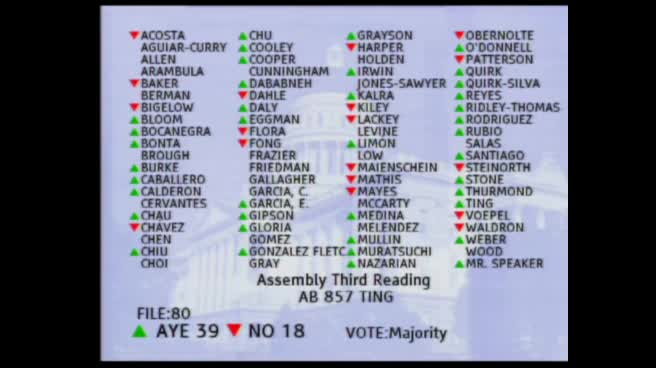 30MIN
Assembly Floor
 1H
Assembly Standing Committee on Appropriations
 56MIN
Assembly Standing Committee on Education
Bill Author

Bill Co-Author(s):