AB 1239: Building standards: electric vehicle charging infrastructure.
- Session Year: 2017-2018
- House: Assembly
- Latest Version Date: 2017-09-13
The California Building Standards Law provides for the adoption of building standards by state agencies by requiring all state agencies that adopt or propose adoption of any building standard to submit the building standard to the California Building Standards Commission for approval and adoption. That law requires the Department of Housing and Community Development to propose mandatory building standards for the installation of future electric vehicle charging infrastructure for parking spaces in multifamily dwellings. That law also requires the department and the commission to use specified provisions of the California Green Building Standards Code as a starting point for those mandatory building standards.
This bill would express legislative findings and declarations relating to the adoption of building standards to increase electric vehicle charging infrastructure. The bill would require the department and the commission to research, develop, and propose for adoption building standards regarding electric vehicle capable parking spaces for existing parking structures and lots, as specified, located adjacent to, or associated with, multifamily dwellings and nonresidential buildings in a triennial edition of the California Building Standards Code adopted after January 1, 2018, as specified.
The California Building Standards Law provides for the adoption of building standards by state agencies by requiring all state agencies that adopt or propose adoption of any building standard to submit the building standard to the California Building Standards Commission for approval and adoption. That law requires the Department of Housing and Community Development to propose mandatory building standards for the installation of future electric vehicle charging infrastructure for parking spaces in multifamily dwellings. That law also requires the department and the commission to use specified provisions of the California Green Building Standards Code as a starting point for those mandatory building standards.
This bill would express legislative findings and declarations relating to the adoption of building standards to increase electric vehicle charging infrastructure. The bill would require the department and the commission to research, develop, propose, and adopt and propose for adoption building standards regarding electric vehicle capable parking spaces for existing parking structures, structures and lots, as specified, located adjacent to, or associated with, multifamily dwellings and nonresidential buildings in a triennial edition of the California Building Standards Code adopted after January 1, 2018, as specified.
The California Building Standards Law provides for the adoption of building standards by state agencies by requiring all state agencies that adopt or propose adoption of any building standard to submit the building standard to the California Building Standards Commission for approval and adoption. That law requires the Department of Housing and Community Development to propose mandatory building standards for the installation of future electric vehicle charging infrastructure for parking spaces in multifamily dwellings. That law also requires the department and the commission to use specified provisions of the California Green Building Standards Code as a starting point for those mandatory building standards.
This bill would express legislative findings and declarations relating to the adoption of building standards to increase electric vehicle charging infrastructure. The bill would require the department and the commission to research, develop, propose, and adopt mandatory building standards regarding electric vehicle capable parking spaces for existing parking structures, as specified, located adjacent to, or associated with, multifamily dwellings and existing commercial nonresidential buildings in the next a triennial edition of the California Building Standards Code adopted after January 1, 2018, as specified.
The California Building Standards Law provides for the adoption of building standards by state agencies by requiring all state agencies that adopt or propose adoption of any building standard to submit the building standard to the California Building Standards Commission for approval and adoption. That law requires the Department of Housing and Community Development to propose mandatory building standards for the installation of future electric vehicle charging infrastructure for parking spaces in multifamily dwellings. That law also requires the department and the commission to use specified provisions of the California Green Building Standards Code as a starting point for those mandatory building standards.
This bill would express legislative findings and declarations relating to the adoption of building standards to increase electric vehicle charging infrastructure. The bill would require the department and the commission to research, develop, propose, and adopt mandatory building standards regarding electric vehicle capable parking spaces for existing multifamily housing, commercial, and parking structure construction and renovation, as specified. The bill would require the department and the commission to consider revising electric vehicle capable building standards every 18 months. dwellings and existing commercial buildings in the next triennial edition of the California Building Standards Code adopted after January 1, 2018, as specified.
The California Building Standards Law provides for the adoption of building standards by state agencies by requiring all state agencies that adopt or propose adoption of any building standard to submit the building standard to the California Building Standards Commission for approval and adoption. That law requires the Department of Housing and Community Development to propose mandatory building standards for the installation of future electric vehicle charging infrastructure for parking spaces in multifamily dwellings. That law also requires the department and the commission to use specified provisions of the California Green Building Standards Code as a starting point for those mandatory building standards.
This bill would require the department and the commission to research, propose, and adopt mandatory building standards regarding electric vehicle capable parking spaces for multifamily housing, commercial, and parking structure construction and renovation, as specified. The bill would require the department and the commission to consider revising electric vehicle capable building standards every 18 months.
The California Building Standards Law provides for the adoption of building standards by state agencies by requiring all state agencies that adopt or propose adoption of any building standard to submit the building standard to the California Building Standards Commission for approval and adoption. That law requires the Department of Housing and Community Development to propose mandatory building standards for the installation of future electric vehicle charging infrastructure for parking spaces in multifamily dwellings. That law also requires the department and the commission to use specified provisions of the California Green Building Standards Code as a starting point for those mandatory building standards.
This bill would require the department and the commission to research, propose, and adopt mandatory building standards regarding electric vehicle capable parking spaces for multifamily housing housing, commercial, and parking structure construction and renovation, as specified. The bill would require the department and the commission to consider revising electric vehicle capable building standards every 18 months.
The California Building Standards Law provides for the adoption of building standards by state agencies by requiring all state agencies that adopt or propose adoption of any building standard to submit the building standard to the California Building Standards Commission for approval and adoption. That law requires the Department of Housing and Community Development to propose mandatory building standards for the installation of future electric vehicle charging infrastructure for parking spaces in multifamily dwellings. That law also requires the department and the commission to use specified provisions of the California Green Building Standards Code as a starting point for those mandatory building standards.
This bill would instead require the department and the commission to adopt mandatory building standards that include specified mandatory provisions. regarding electric vehicle capable parking spaces for multifamily housing and parking structure construction and renovation, as specified.
The California Building Standards Law provides for the adoption of building standards by state agencies by requiring all state agencies that adopt or propose adoption of any building standard to submit the building standard to the California Building Standards Commission for approval and adoption. That law requires the Department of Housing and Community Development to propose mandatory building standards for the installation of future electric vehicle charging infrastructure for parking spaces in multifamily dwellings. That law also requires the department and the commission to use specified provisions of the California Green Building Standards Code as a starting point for those mandatory building standards.
This bill would instead require the department and the commission to adopt mandatory building standards that include specified mandatory provisions.
(a)The Legislature finds and declares all of the following:
(1)The electrification of the transportation system is a key strategy in improving transportation emissions, with the Governor establishing a goal of one million zero emission vehicles on the roads by the year 2020 and 1.5 million by the year 2025. As the vast majority of zero emission vehicles are electric, developing electric vehicle charging infrastructure is essential to meeting these goals.
(2)Developing electric vehicle charging infrastructure includes expanding the infrastructure beyond single family homes to multifamily dwellings to broaden the market and expand the opportunity to own electric vehicles.
(3)Californias green building code requirement that 3 percent of parking spaces in new multifamily dwellings be electric vehicle capable should be expanded to require 3 percent of parking in spaces in existing multifamily dwellings and nonresidential buildings to be electric vehicle capable. Installation of electric vehicle infrastructure can be done most cost effectively when it is concurrent with other construction on the parking spaces or the electric supply.
(b)Therefore, it is the intent of the Legislature, in enacting this act, to ensure that the Department of Housing and Community Development and the California Building Standards Commission do all of the following:
(1)Develop and adopt building standards that take advantage of the reduced cost of retrofitting electric vehicle charging infrastructure in multifamily dwellings and nonresidential buildings when other construction and repair is taking place so that electric vehicle charging infrastructure can be made more widely available in a cost effective way.
(2)Invite the participation of relevant public agencies and the public at large in the development of the electric vehicle charging infrastructure building standards.
(3)Revisit the electric vehicle charging infrastructure building standards every 18 months.
SEC. 2.Section 18941.10 of the Health and Safety Code is amended to read:18941.10.(a)(1)The commission shall, commencing with the next triennial edition of the California Building Standards Code (Title 24 of the California Code of Regulations) adopted after January 1, 2014, adopt, approve, codify, and publish mandatory building standards for the installation of future electric vehicle charging infrastructure for parking spaces in multifamily dwellings and nonresidential development.
(2)For purposes of paragraph (1), the Department of Housing and Community Development shall propose mandatory building standards for the installation of future electric vehicle charging infrastructure for parking spaces in multifamily dwellings and submit the proposed mandatory building standards to the commission for consideration.
(b)(1)In proposing and adopting mandatory building standards under this section, the Department of Housing and Community Development and the commission shall use Sections A4.106.6, A4.106.6.1, A4.106.6.2, A5.106.5.1, and A5.106.5.3 of the California Green Building Standards Code (Part 11 of Title 24 of the California Code of Regulations) as the starting point for the mandatory building standards and amend those standards as necessary.
(2)In proposing and adopting mandatory building standards under this section, the Department of Housing and Community Development and the commission shall actively consult with interested parties, including, but not limited to, investor-owned utilities, municipal utilities, manufacturers, local building officials, nonresidential building and apartment owners, and the building industry.
(c)(1)The Department of Housing and Community Development shall research, develop, and propose for adoption building standards regarding electric vehicle capable parking spaces for existing parking structures and lots, as specified by the Department of Housing and Community Development, located adjacent to, or associated with, multifamily dwellings for a triennial edition of the California Building Standards Code (Title 24 of the California Code of Regulations) adopted after January 1, 2018. The commission shall propose for adoption the building standards in a triennial edition of the California Building Standards Code (Title 24 of the California Code of Regulations) adopted after January 1, 2018.
(2)In the development of these building standards, the Department of Housing and Community Development shall determine appropriate application provisions that include circumstances when the installation of future electric vehicle charging infrastructure will not be required, including, but not limited to, cost impact, physical site constraints, utility infrastructure constraints, and other issues impacting the feasibility of the project.
(d)(1)The commission shall research, develop, and propose for adoption building standards regarding electric vehicle capable parking spaces for existing parking structures and lots, as specified by the commission, located adjacent to, or associated with, nonresidential buildings in a triennial edition of the California Building Standards Code (Title 24 of the California Code of Regulations) adopted after January 1, 2018.
(2)In the development of these building standards, the commission shall determine appropriate application provisions that include circumstances when the installation of future electric vehicle charging infrastructure will not be required, including, but not limited to, cost impact, physical site constraints, utility infrastructure constraints, and other issues impacting the feasibility of the project.
(a)The Legislature finds and declares all of the following:
(1)The electrification of the transportation system is a key strategy in improving transportation emissions, with the Governor establishing a goal of one million zero emission vehicles on the roads by the year 2020 and 1.5 million by the year 2025. As the vast majority of zero emission vehicles are electric, developing electric vehicle charging infrastructure is essential to meeting these goals.
(2)Developing electric vehicle charging infrastructure includes expanding the infrastructure beyond single family homes to multifamily dwellings to broaden the market and expand the opportunity to own electric vehicles.
(3)Californias green building code requirement that 3 percent of parking spaces in new multifamily dwellings be electric vehicle capable should be expanded to require 3 percent of parking in spaces in existing multifamily dwellings and nonresidential buildings to be electric vehicle capable. Installation of electric vehicle infrastructure can be done most cost effectively when it is concurrent with other construction on the parking spaces or the electric supply.
(b)Therefore, it is the intent of the Legislature, in enacting this act, to ensure that the Department of Housing and Community Development and the California Building Standards Commission do all of the following:
(1)Develop and adopt building standards that take advantage of the reduced cost of retrofitting electric vehicle charging infrastructure in multifamily dwellings and nonresidential buildings when other construction and repair is taking place so that electric vehicle charging infrastructure can be made more widely available in a cost effective way.
(2)Invite the participation of relevant public agencies and the public at large in the development of the electric vehicle charging infrastructure building standards.
(3)Revisit the electric vehicle charging infrastructure building standards every 18 months.
SEC. 2.Section 18941.10 of the Health and Safety Code is amended to read:18941.10.(a)(1)The commission shall, commencing with the next triennial edition of the California Building Standards Code (Title 24 of the California Code of Regulations) adopted after January 1, 2014, adopt, approve, codify, and publish mandatory building standards for the installation of future electric vehicle charging infrastructure for parking spaces in multifamily dwellings and nonresidential development.
(2)For purposes of paragraph (1), the Department of Housing and Community Development shall propose mandatory building standards for the installation of future electric vehicle charging infrastructure for parking spaces in multifamily dwellings and submit the proposed mandatory building standards to the commission for consideration.
(b)(1)In proposing and adopting mandatory building standards under this section, the Department of Housing and Community Development and the commission shall use Sections A4.106.6, A4.106.6.1, A4.106.6.2, A5.106.5.1, and A5.106.5.3 of the California Green Building Standards Code (Part 11 of Title 24 of the California Code of Regulations) as the starting point for the mandatory building standards and amend those standards as necessary.
(2)In proposing and adopting mandatory building standards under this section, the Department of Housing and Community Development and the commission shall actively consult with interested parties, including, but not limited to, investor-owned utilities, municipal utilities, manufacturers, local building officials, nonresidential building and apartment owners, and the building industry.
(c)(1)The Department of Housing and Community Development shall research, develop, and propose for adoption building standards regarding electric vehicle capable parking spaces for existing parking structures, structures and lots, as specified by the Department of Housing and Community Development, located adjacent to, or associated with, multifamily dwellings for a triennial edition of the California Building Standards Code (Title 24 of the California Code of Regulations) adopted after January 1, 2018. The commission shall adopt propose for adoption the building standards in a triennial edition of the California Building Standards Code (Title 24 of the California Code of Regulations) adopted after January 1, 2018.
(2)In the development of these building standards, the Department of Housing and Community Development shall determine appropriate application provisions that include circumstances when the installation of future electric vehicle charging infrastructure will not be required, including, but not limited to, cost impact, physical site constraints, utility infrastructure constraints, and other issues impacting the feasibility of the project.
(d)(1)The commission shall research, develop, propose, and adopt and propose for adoption building standards regarding electric vehicle capable parking spaces for existing parking structures, structures and lots, as specified by the commission, located adjacent to, or associated with, nonresidential buildings in a triennial edition of the California Building Standards Code (Title 24 of the California Code of Regulations) adopted after January 1, 2018.
(2)In the development of these building standards, the commission shall determine appropriate application provisions that include circumstances when the installation of future electric vehicle charging infrastructure will not be required, including, but not limited to, cost impact, physical site constraints, utility infrastructure constraints, and other issues impacting the feasibility of the project.
(a)The Legislature finds and declares all of the following:
(1)The electrification of the transportation system is a key strategy in improving transportation emissions, with the Governor establishing a goal of one million zero emission vehicles on the roads by the year 2020 and 1.5 million by the year 2025. As the vast majority of zero emission vehicles are electric, developing electric vehicle charging infrastructure is essential to meeting these goals.
(2)Developing electric vehicle charging infrastructure includes expanding the infrastructure beyond single family homes to multifamily dwellings to broaden the market and expand the opportunity to own electric vehicles.
(3)Californias green building code requirement that 3 percent of parking spaces in new multifamily dwellings be electric vehicle capable should be expanded to require 3 percent of parking in spaces in existing multifamily dwellings and commercial nonresidential buildings to be electric vehicle capable. Installation of electric vehicle infrastructure can be done most cost effectively when it is concurrent with other construction on the parking spaces or the electric supply.
(b)Therefore, it is the intent of the Legislature, in enacting this act, to ensure that the Department of Housing and Community Development and the California Building Standards Commission do all of the following:
(1)Develop and adopt building standards that take advantage of the reduced cost of retrofitting electric vehicle charging infrastructure in multifamily dwellings and commercial nonresidential buildings when other construction and repair is taking place so that electric vehicle charging infrastructure can be made more widely available in a cost effective way.
(2)Invite the participation of relevant public agencies and the public at large in the development of the electric vehicle charging infrastructure building standards.
(3)Revisit the electric vehicle charging infrastructure building standards every 18 months.
SEC. 2.Section 18941.10 of the Health and Safety Code is amended to read:18941.10.(a)(1)The commission shall, commencing with the next triennial edition of the California Building Standards Code (Title 24 of the California Code of Regulations) adopted after January 1, 2014, adopt, approve, codify, and publish mandatory building standards for the installation of future electric vehicle charging infrastructure for parking spaces in multifamily dwellings and nonresidential development.
(2)For purposes of paragraph (1), the Department of Housing and Community Development shall propose mandatory building standards for the installation of future electric vehicle charging infrastructure for parking spaces in multifamily dwellings and submit the proposed mandatory building standards to the commission for consideration.
(b)(1)In proposing and adopting mandatory building standards under this section, the Department of Housing and Community Development and the commission shall use Sections A4.106.6, A4.106.6.1, A4.106.6.2, A5.106.5.1, and A5.106.5.3 of the California Green Building Standards Code (Part 11 of Title 24 of the California Code of Regulations) as the starting point for the mandatory building standards and amend those standards as necessary.
(2)In proposing and adopting mandatory building standards under this section, the Department of Housing and Community Development and the commission shall actively consult with interested parties, including, but not limited to, investor-owned utilities, municipal utilities, manufacturers, local building officials, commercial nonresidential building and apartment owners, and the building industry.
(c)(1)The Department of Housing and Community Development shall research, develop, and propose building standards regarding electric vehicle capable parking spaces for existing parking structures, as specified by the Department of Housing and Community Development, located adjacent to, or associated with, multifamily dwellings for the next a triennial edition of the California Building Standards Code (Title 24 of the California Code of Regulations) adopted after January 1, 2018. The commission shall adopt the building standards in the next a triennial edition of the California Building Standards Code (Title 24 of the California Code of Regulations) adopted after January 1, 2018.
(2)In the development of these building standards, the Department of Housing and Community Development shall determine appropriate application provisions that include circumstances when the installation of future electric vehicle charging infrastructure will not be required, including, but not limited to, cost impact, physical site constraints, utility infrastructure constraints, and other issues impacting the feasibility of the project.
(d)(1)The commission shall research, develop, propose, and adopt mandatory building standards regarding electric vehicle capable parking spaces for commercial existing parking structures, as specified by the commission, located adjacent to, or associated with, nonresidential buildings in the next a triennial edition of the California Building Standards Code (Title 24 of the California Code of Regulations) adopted after January 1, 2018.
(2)In the development of these building standards, the commission shall determine appropriate application provisions that include circumstances when the installation of future electric vehicle charging infrastructure will not be required, including, but not limited to, cost impact, physical site constraints, utility infrastructure constraints, and other issues impacting the feasibility of the project.
(a)The Legislature finds and declares all of the following:
(1)The electrification of the transportation system is a key strategy in improving transportation emissions, with the Governor establishing a goal of one million zero emission vehicles on the roads by the year 2020 and 1.5 million by the year 2025. As the vast majority of zero emission vehicles are electric, developing electric vehicle charging infrastructure is essential to meeting these goals.
(2)Developing electric vehicle charging infrastructure includes expanding the infrastructure beyond single family homes to multifamily dwellings to broaden the market and expand the opportunity to own electric vehicles.
(3)Californias green building code requirement that 3 percent of parking spaces in new multifamily dwellings be electric vehicle capable should be expanded to require 3 percent of parking in spaces in existing multifamily dwellings and commercial buildings to be electric vehicle capable. Installation of electric vehicle infrastructure can be done most cost effectively when it is concurrent with other construction on the parking spaces or the electric supply.
(b)Therefore, it is the intent of the Legislature, in enacting this act, to ensure that the Department of Housing and Community Development and the California Building Standards Commission do all of the following:
(1)Develop and adopt building standards that take advantage of the reduced cost of retrofitting electric vehicle charging infrastructure in multifamily dwellings and commercial buildings when other construction and repair is taking place so that electric vehicle charging infrastructure can be made more widely available in a cost effective way.
(2)Invite the participation of relevant public agencies and the public at large in the development of the electric vehicle charging infrastructure building standards.
(3)Revisit the electric vehicle charging infrastructure building standards every 18 months.
SECTION 1.SEC. 2.Section 18941.10 of the Health and Safety Code is amended to read:18941.10.(a)(1)The commission shall, commencing with the next triennial edition of the California Building Standards Code (Title 24 of the California Code of Regulations) adopted after January 1, 2014, adopt, approve, codify, and publish mandatory building standards for the installation of future electric vehicle charging infrastructure for parking spaces in multifamily dwellings and nonresidential development.
(2)For purposes of paragraph (1), the Department of Housing and Community Development shall propose mandatory building standards for the installation of future electric vehicle charging infrastructure for parking spaces in multifamily dwellings and submit the proposed mandatory building standards to the commission for consideration.
(b)(1)In proposing and adopting mandatory building standards under this section, the Department of Housing and Community Development and the commission shall use Sections A4.106.6, A4.106.6.1, A4.106.6.2, A5.106.5.1, and A5.106.5.3 of the California Green Building Standards Code (Part 11 of Title 24 of the California Code of Regulations) as the starting point for the mandatory building standards and amend those standards as necessary.
(2)In proposing and adopting mandatory building standards under this section, the Department of Housing and Community Development and the commission shall actively consult with interested parties, including, but not limited to, investor-owned utilities, municipal utilities, manufacturers, local building officials, commercial building and apartment owners, and the building industry.
(3)In proposing and adopting mandatory building standards under this section, the(c)The Department of Housing and Community Development and the commission shall research, develop, and propose building standards regarding electric vehicle capable parking spaces that require for existing multifamily housing and parking structures to meet building standard codes, regarding electric vehicle capable parking spaces during any additions, significant repairs, or alterations involving existing parking areas. dwellings for the next triennial edition of the California Building Standards Code (Title 24 of the California Code of Regulations) adopted after January 1, 2018. The commission shall adopt the building standards in the next triennial edition of the California Building Standards Code (Title 24 of the California Code of Regulations) adopted after January 1, 2018.
(4)In proposing and adopting mandatory building standards regarding electric vehicle capable parking spaces under this section, the Department of Housing and Community Development and the commission shall actively consult with interested parties, including the State Air Resources Board and the California Energy Commission. (5)(d)The commission shall research, develop, and propose propose, and adopt mandatory building standards regarding electric vehicle capable parking spaces for commercial buildings in the next triennial edition of the California Building Standards Code (Title 24 of the California Code of Regulations) adopted after January 1, 2018.
(6)In proposing and adopting mandatory building standards under this section, the Department of Housing and Community Development and the commission shall consider revising electric vehicle capable building standards every 18 months.(a)(1)The commission shall, commencing with the next triennial edition of the California Building Standards Code (Title 24 of the California Code of Regulations) adopted after January 1, 2014, adopt, approve, codify, and publish mandatory building standards for the installation of future electric vehicle charging infrastructure for parking spaces in multifamily dwellings and nonresidential development.
(2)For purposes of paragraph (1), the Department of Housing and Community Development shall propose mandatory building standards for the installation of future electric vehicle charging infrastructure for parking spaces in multifamily dwellings and submit the proposed mandatory building standards to the commission for consideration.
(b)(1)In proposing and adopting mandatory building standards under this section, the Department of Housing and Community Development and the commission shall use Sections A4.106.6, A4.106.6.1, A4.106.6.2, A5.106.5.1, and A5.106.5.3 of the California Green Building Standards Code (Part 11 of Title 24 of the California Code of Regulations) as the starting point for the mandatory building standards and amend those standards as necessary.
(2)In proposing and adopting mandatory building standards under this section, the Department of Housing and Community Development and the commission shall actively consult with interested parties, including, but not limited to, investor-owned utilities, municipal utilities, manufacturers, local building officials, commercial building and apartment owners, and the building industry.
(3)In proposing and adopting mandatory building standards under this section, the Department of Housing and Community Development and the commission shall research, develop, and propose building standards regarding electric vehicle capable parking spaces that require existing multifamily housing and parking structures to meet building standard codes, regarding electric vehicle capable parking spaces during any additions, significant repairs, or alterations involving existing parking areas.
(4)In proposing and adopting mandatory building standards regarding electric vehicle capable parking spaces under this section, the Department of Housing and Community Development and the commission shall actively consult with interested parties, including the State Air Resources Board and the California Energy Commission.
(4)(5)The commission shall research, develop, and propose mandatory building standards regarding electric vehicle capable parking spaces for commercial buildings in the next triennial edition of the California Building Standards Code (Title 24 of the California Code of Regulations) adopted after January 1, 2018.
(5)(6)In proposing and adopting mandatory building standards under this section, the Department of Housing and Community Development and the commission shall consider revising electric vehicle capable building standards every 18 months.
(a)(1)The commission shall, commencing with the next triennial edition of the California Building Standards Code (Title 24 of the California Code of Regulations) adopted after January 1, 2014, adopt, approve, codify, and publish mandatory building standards for the installation of future electric vehicle charging infrastructure for parking spaces in multifamily dwellings and nonresidential development.
(2)For purposes of paragraph (1), the Department of Housing and Community Development shall propose mandatory building standards for the installation of future electric vehicle charging infrastructure for parking spaces in multifamily dwellings and submit the proposed mandatory building standards to the commission for consideration.
(b)(1)In proposing and adopting mandatory building standards under this section, the Department of Housing and Community Development and the commission shall use Sections A4.106.6, A4.106.6.1, A4.106.6.2, A5.106.5.1, and A5.106.5.3 of the California Green Building Standards Code (Part 11 of Title 24 of the California Code of Regulations) as the starting point for the mandatory building standards and amend those standards as necessary.
(2)In proposing and adopting mandatory building standards under this section, the Department of Housing and Community Development and the commission shall actively consult with interested parties, including, but not limited to, investor-owned utilities, municipal utilities, manufacturers, local building officials, commercial building and apartment owners, and the building industry.
(3)In proposing and adopting mandatory building standards under this section, the Department of Housing and Community Development and the commission shall adopt standards that allow for annual increases in electric vehicle capable parking spaces to 20 percent of all parking spaces in new multifamily housing by 2024. (4)(3)In proposing and adopting mandatory building standards under this section, the Department of Housing and Community Development and the commission shall adopt research, develop, and propose building standards regarding electric vehicle capable parking spaces that require existing multifamily housing and parking structures to meet building standard codes, regarding electric vehicle capable parking spaces during major renovations or construction any additions, significant repairs, or alterations involving existing parking areas.
(5)In proposing and adopting mandatory building standards regarding electric vehicle capable parking spaces under this section, the Department of Housing and Community Development and the commission shall actively consult with interested parties, including the State Air Resources Board and the California Energy Commission.(4)The commission shall research, develop, and propose mandatory building standards regarding electric vehicle capable parking spaces for commercial buildings in the next triennial edition of the California Building Standards Code (Title 24 of the California Code of Regulations) adopted after January 1, 2018.
(5)In proposing and adopting mandatory building standards under this section, the Department of Housing and Community Development and the commission shall consider revising electric vehicle capable building standards every 18 months.
(a)(1)The commission shall, commencing with the next triennial edition of the California Building Standards Code (Title 24 of the California Code of Regulations) adopted after January 1, 2014, adopt, approve, codify, and publish mandatory building standards for the installation of future electric vehicle charging infrastructure for parking spaces in multifamily dwellings and nonresidential development.
(2)For purposes of paragraph (1), the Department of Housing and Community Development shall propose mandatory building standards for the installation of future electric vehicle charging infrastructure for parking spaces in multifamily dwellings and submit the proposed mandatory building standards to the commission for consideration.
(b)(1)In proposing and adopting mandatory building standards under this section, the Department of Housing and Community Development and the commission shall use Sections A4.106.6, A4.106.6.1, A4.106.6.2, A5.106.5.1, and A5.106.5.3 of the California Green Building Standards Code (Part 11 of Title 24 of the California Code of Regulations) as the starting point for the mandatory building standards and amend those standards as necessary.
(2)In proposing and adopting mandatory building standards under this section, the Department of Housing and Community Development and the commission shall actively consult with interested parties, including, but not limited to, investor-owned utilities, municipal utilities, manufacturers, local building officials, commercial building and apartment owners, and the building industry.
(3)In proposing and adopting mandatory building standards under this section, the Department of Housing and Community Development and the commission shall adopt standards that allow for annual increases in electric vehicle capable parking spaces to 20 percent of all parking spaces in new multifamily housing by 2024.
(4)In proposing and adopting mandatory building standards under this section, the Department of Housing and Community Development and the commission shall adopt standards that require existing multifamily housing and parking structures to meet building standard codes, regarding electric vehicle capable parking spaces during major renovations or construction involving parking areas.
(5)In proposing and adopting mandatory building standards regarding electric vehicle capable parking spaces under this section, the Department of Housing and Community Development and the commission shall actively consult with interested parties, including the State Air Resources Board and the California Energy Commission.
SECTION 1.Section 18941.10 of the Health and Safety Code is amended to read:18941.10.(a)(1)The commission shall, commencing with the next triennial edition of the California Building Standards Code (Title 24 of the California Code of Regulations) adopted after January 1, 2014, adopt, approve, codify, and publish mandatory building standards for the installation of future electric vehicle charging infrastructure for parking spaces in multifamily dwellings and nonresidential development.(2)For purposes of paragraph (1), the Department of Housing and Community Development shall propose mandatory building standards for the installation of future electric vehicle charging infrastructure for parking spaces in multifamily dwellings and submit the proposed mandatory building standards to the commission for consideration.(b)(1)The Department of Housing and Community Development and the commission shall adopt the following as mandatory building standards:(A)With respect to new construction, the following:(i)New construction shall comply with Sections 4.106.4.1. and 4.106.4.2 of the Green Building Standards Code (Part 11 of Title 24 of the California Code of Regulations) to facilitate future installation of electric vehicle charging stations.(ii)Electric vehicle supply equipment shall be installed in accordance with Article 625 of the California Electrical Code (Part 3 of Title 24 of the California Code of Regulations).(iii)Exemptions from the requirements of this subparagraph may be granted on a case-by-case basis if the local enforcing agency determines that an electrical vehicle charging station and infrastructure are not feasible based on either or both of the following conditions:(I)There is no commercial power supply.(II)There is evidence substantiating a finding that meeting the requirements of this subparagraph will alter the local utility infrastructure design requirements on the utility side of the meter so as to increase the utility side cost to the homeowner or the developer by more than four hundred dollars ($400) per dwelling unit.(B)With respect to new one- or two-family dwellings and townhouses with attached private garages, the following:(i)Each dwelling unit shall have installed a listed raceway to accommodate a dedicated 208/240-volt branch circuit. The raceway shall not be less than trade size 1 (nominal one-inch inside diameter). The raceway shall originate at the main service panel or subpanel and shall terminate into a listed cabinet, box, or other enclosure that is in close proximity to the proposed location of an electric vehicle charger. Raceways shall be continuous at enclosed, inaccessible, or concealed areas and spaces.(ii)The service panel or subpanel shall provide capacity to install a dedicated branch circuit of 40 amperes minimum and spaces reserved to permit the installation of a branch circuit overcurrent protective device. The service panel or subpanel circuit director shall identify the overcurrent protective device space reserved for future electric vehicle charging stations as EV CAPABLE. The raceway termination location shall be permanently and visibly marked as EV CAPABLE.(C)With respect to new multifamily dwellings, if 17 or more multifamily dwelling units are constructed on a building site, at least 3 percent of the total number of parking spaces provided for all types of parking facilities, but in no event fewer than one space, shall be electric vehicle charging spaces capable of supporting future electric vehicle supply equipment. Calculations for the required number of electric vehicle spaces shall be rounded up to the nearest whole number.(D)With respect to electric vehicle charging space locations, the following:(i)Construction documents shall indicate the location of proposed electric vehicle spaces. At least one electric vehicle space shall be located in common use areas and available for use by all residents.(ii)When electric vehicle chargers are installed, electric vehicle spaces required by Section 4.106.4.2.2 of the Green Building Standards Code (Part 11 of Title 24 of the California Code of Regulations) shall meet at least one of the following criteria:(I)The electric vehicle space is located adjacent to an accessible parking space meeting the requirements of Chapter 11A of the California Building Code (Part 2 of Title 24 of the California Code of Regulations) to allow use of the electric vehicle charger from the accessible parking space.(II)The electric vehicle space shall be located on an accessible route, as defined in Chapter 11A of the California Building Code (Part 2 of Title 24 of the California Code of Regulations), to the building.(E)With respect to electric vehicle charging space dimensions, the following:(i)The minimum length of each electric vehicle charging space shall be 18 feet (5,486 millimeters).(ii)The minimum width of each electric vehicle charging space shall be 9 feet (2,743 millimeters).(iii)One in every 25 electric vehicle charging spaces, but in no event fewer than one space, shall also have an 8-foot (2,438-millimeter) wide minimum aisle. If the electric vehicle space is at least 12 feet (3,658 millimeters) wide, that space may provide a 5-foot (3,658-millimeter) wide minimum aisle. The surface slope for this electric vehicle space and the aisle shall not exceed 1 unit vertical in 48 units horizontal (2.083 percent slope) in any direction.(F)With respect to electric vehicle spaces generally, the following:(i)If a single electrical vehicle space is required, the following shall apply:(I)A listed raceway capable of accommodating a 208/240-volt dedicated branch circuit shall be installed. The raceway shall not be less than trade size 1 (nominal one-inch inside diameter).(II)The raceway shall originate at the main service panel or subpanel and shall terminate into a listed cabinet, box, or other enclosure that is in close proximity to the proposed location of an electric vehicle space. Construction documents shall identify the raceway termination point.(III)The service panel or subpanel shall provide capacity to install a dedicated branch circuit of 40 amperes minimum and spaces reserved to permit the installation of a branch circuit overcurrent protective device.(ii)If multiple electrical vehicle spaces are required, the following shall apply:(I)Construction documents shall identify the raceway termination point and provide information on amperage of future electric vehicle supply equipment, raceway methods, wiring schematics, and electrical load calculations to verify that the electrical panel service capacity and electrical system, including any on-site distribution transformers, have sufficient capacity to simultaneously charge all electric vehicles at all required electric vehicle spaces at the full rated amperage of the electric vehicle supply equipment.(II)Plan designs shall be based on a 40-ampere minimum branch circuit.(III)Raceways and related components that are planned to be installed underground or in enclosed, inaccessible, or concealed areas and spaces shall be installed at the time of original construction.(iii)The service panel or subpanel circuit director shall identify the overcurrent protective device space reserved for future electric vehicle charging stations as EV CAPABLE. The raceway termination location shall be permanently and visibly marked as EV CAPABLE.(2)In proposing and adopting mandatory building standards under this section, the Department of Housing and Community Development and the commission shall actively consult with interested parties, including, but not limited to, investor-owned utilities, municipal utilities, manufacturers, local building officials, commercial building and apartment owners, and the building industry.(a)(1)The commission shall, commencing with the next triennial edition of the California Building Standards Code (Title 24 of the California Code of Regulations) adopted after January 1, 2014, adopt, approve, codify, and publish mandatory building standards for the installation of future electric vehicle charging infrastructure for parking spaces in multifamily dwellings and nonresidential development.
(2)For purposes of paragraph (1), the Department of Housing and Community Development shall propose mandatory building standards for the installation of future electric vehicle charging infrastructure for parking spaces in multifamily dwellings and submit the proposed mandatory building standards to the commission for consideration.
(b)(1)In proposing and adopting mandatory building standards under this section, the The Department of Housing and Community Development and the commission shall use Sections A4.106.6, A4.106.6.1, A4.106.6.2, A5.106.5.1, and A5.106.5.3 of the California Green Building Standards Code (Part 11 of Title 24 of the California Code of Regulations) as the starting point for the mandatory building standards and amend those standards as necessary. adopt the following as mandatory building standards:
(A)With respect to new construction, the following:
(i)New construction shall comply with Sections 4.106.4.1. and 4.106.4.2 of the Green Building Standards Code (Part 11 of Title 24 of the California Code of Regulations) to facilitate future installation of electric vehicle charging stations.
(ii)Electric vehicle supply equipment shall be installed in accordance with Article 625 of the California Electrical Code (Part 3 of Title 24 of the California Code of Regulations).
(iii)Exemptions from the requirements of this subparagraph may be granted on a case-by-case basis if the local enforcing agency determines that an electrical vehicle charging station and infrastructure are not feasible based on either or both of the following conditions:
(I)There is no commercial power supply.
(II)There is evidence substantiating a finding that meeting the requirements of this subparagraph will alter the local utility infrastructure design requirements on the utility side of the meter so as to increase the utility side cost to the homeowner or the developer by more than four hundred dollars ($400) per dwelling unit.
(B)With respect to new one- or two-family dwellings and townhouses with attached private garages, the following:
(i)Each dwelling unit shall have installed a listed raceway to accommodate a dedicated 208/240-volt branch circuit. The raceway shall not be less than trade size 1 (nominal one-inch inside diameter). The raceway shall originate at the main service panel or subpanel and shall terminate into a listed cabinet, box, or other enclosure that is in close proximity to the proposed location of an electric vehicle charger. Raceways shall be continuous at enclosed, inaccessible, or concealed areas and spaces.
(ii)The service panel or subpanel shall provide capacity to install a dedicated branch circuit of 40 amperes minimum and spaces reserved to permit the installation of a branch circuit overcurrent protective device. The service panel or subpanel circuit director shall identify the overcurrent protective device space reserved for future electric vehicle charging stations as EV CAPABLE. The raceway termination location shall be permanently and visibly marked as EV CAPABLE.
(C)With respect to new multifamily dwellings, if 17 or more multifamily dwelling units are constructed on a building site, at least 3 percent of the total number of parking spaces provided for all types of parking facilities, but in no event fewer than one space, shall be electric vehicle charging spaces capable of supporting future electric vehicle supply equipment. Calculations for the required number of electric vehicle spaces shall be rounded up to the nearest whole number.
(D)With respect to electric vehicle charging space locations, the following:
(i)Construction documents shall indicate the location of proposed electric vehicle spaces. At least one electric vehicle space shall be located in common use areas and available for use by all residents.
(ii)When electric vehicle chargers are installed, electric vehicle spaces required by Section 4.106.4.2.2 of the Green Building Standards Code (Part 11 of Title 24 of the California Code of Regulations) shall meet at least one of the following criteria:
(I)The electric vehicle space is located adjacent to an accessible parking space meeting the requirements of Chapter 11A of the California Building Code (Part 2 of Title 24 of the California Code of Regulations) to allow use of the electric vehicle charger from the accessible parking space.
(II)The electric vehicle space shall be located on an accessible route, as defined in Chapter 11A of the California Building Code (Part 2 of Title 24 of the California Code of Regulations), to the building.
(E)With respect to electric vehicle charging space dimensions, the following:
(i)The minimum length of each electric vehicle charging space shall be 18 feet (5,486 millimeters).
(ii)The minimum width of each electric vehicle charging space shall be 9 feet (2,743 millimeters).
(iii)One in every 25 electric vehicle charging spaces, but in no event fewer than one space, shall also have an 8-foot (2,438-millimeter) wide minimum aisle. If the electric vehicle space is at least 12 feet (3,658 millimeters) wide, that space may provide a 5-foot (3,658-millimeter) wide minimum aisle. The surface slope for this electric vehicle space and the aisle shall not exceed 1 unit vertical in 48 units horizontal (2.083 percent slope) in any direction.
(F)With respect to electric vehicle spaces generally, the following:
(i)If a single electrical vehicle space is required, the following shall apply:
(I)A listed raceway capable of accommodating a 208/240-volt dedicated branch circuit shall be installed. The raceway shall not be less than trade size 1 (nominal one-inch inside diameter).
(II)The raceway shall originate at the main service panel or subpanel and shall terminate into a listed cabinet, box, or other enclosure that is in close proximity to the proposed location of an electric vehicle space. Construction documents shall identify the raceway termination point.
(III)The service panel or subpanel shall provide capacity to install a dedicated branch circuit of 40 amperes minimum and spaces reserved to permit the installation of a branch circuit overcurrent protective device.
(ii)If multiple electrical vehicle spaces are required, the following shall apply:
(I)Construction documents shall identify the raceway termination point and provide information on amperage of future electric vehicle supply equipment, raceway methods, wiring schematics, and electrical load calculations to verify that the electrical panel service capacity and electrical system, including any on-site distribution transformers, have sufficient capacity to simultaneously charge all electric vehicles at all required electric vehicle spaces at the full rated amperage of the electric vehicle supply equipment.
(II)Plan designs shall be based on a 40-ampere minimum branch circuit.
(III)Raceways and related components that are planned to be installed underground or in enclosed, inaccessible, or concealed areas and spaces shall be installed at the time of original construction.
(iii)The service panel or subpanel circuit director shall identify the overcurrent protective device space reserved for future electric vehicle charging stations as EV CAPABLE. The raceway termination location shall be permanently and visibly marked as EV CAPABLE.
(2)In proposing and adopting mandatory building standards under this section, the Department of Housing and Community Development and the commission shall actively consult with interested parties, including, but not limited to, investor-owned utilities, municipal utilities, manufacturers, local building officials, commercial building and apartment owners, and the building industry.
|
Date
|
Status
|
|---|---|
| Jan 12, 2018 | Stricken from file. |
| Jan 3, 2018 | Consideration of Governor's veto pending. |
| Oct 12, 2017 | Vetoed by Governor. |
| Sep 19, 2017 | Enrolled and presented to the Governor at 3 p.m. |
| Sep 11, 2017 | Senate amendments concurred in. To Engrossing and Enrolling. |
| Sep 6, 2017 | In Assembly. Concurrence in Senate amendments pending. May be considered on or after September 8 pursuant to Assembly Rule 77. |
| Sep 6, 2017 | Read third time. Passed. Ordered to the Assembly. |
| Sep 5, 2017 | Read second time. Ordered to third reading. |
| Sep 1, 2017 | From committee: Amend, and do pass as amended. (Ayes 7. Noes 0.) (September 1). |
| Aug 21, 2017 | In committee: Referred to APPR. suspense file. |
| Jul 18, 2017 | Read second time and amended. Re-referred to Com. on APPR. |
| Jul 17, 2017 | From committee: Amend, and do pass as amended and re-refer to Com. on APPR. (Ayes 12. Noes 1.) (July 11). |
| Jul 5, 2017 | From committee chair, with author's amendments: Amend, and re-refer to committee. Read second time, amended, and re-referred to Com. on T. & H. |
| Jun 14, 2017 | Referred to Com. on T. & H. |
| Jun 1, 2017 | In Senate. Read first time. To Com. on RLS. for assignment. |
| May 31, 2017 | Read third time. Passed. Ordered to the Senate. (Ayes 70. Noes 4. Page 1957.) |
| May 30, 2017 | Read second time. Ordered to third reading. |
| May 26, 2017 | From committee: Amend, and do pass as amended. (Ayes 16. Noes 0.) (May 26). |
| May 17, 2017 | In committee: Set, first hearing. Referred to APPR. suspense file. |
| May 2, 2017 | Re-referred to Com. on APPR. |
| May 1, 2017 | Read second time and amended. |
| Apr 27, 2017 | From committee: Amend, and do pass as amended and re-refer to Com. on APPR. (Ayes 7. Noes 0.) (April 26). |
| Apr 18, 2017 | Re-referred to Com. on H. & C.D. |
| Apr 17, 2017 | From committee chair, with author's amendments: Amend, and re-refer to Com. on H. & C.D. Read second time and amended. |
| Mar 16, 2017 | Referred to Com. on H. & C.D. |
| Feb 19, 2017 | From printer. May be heard in committee March 21. |
| Feb 17, 2017 | Read first time. To print. |
|
Date
|
Description
|
Location
|
Votes
|
|
|---|---|---|---|---|
| Sep 11, 2017 | AB 1239 HOLDEN Concurrence in Senate Amendments | Assembly Floor |
Passed |
|
| Sep 6, 2017 | Assembly 3rd Reading AB1239 Holden By Wieckowski | Senate Floor |
Passed |
|
| Sep 1, 2017 | Do pass as amended | Senate Standing Committee on Appropriations |
Passed |
|
| Aug 21, 2017 | Placed on suspense file | Senate Standing Committee on Appropriations |
Passed |
|
| Jul 11, 2017 | Do pass as amended, but first amend, and re-refer to the Committee on [Appropriations] | Senate Standing Committee on Transportation and Housing |
Passed |
|
| May 31, 2017 | AB 1239 HOLDEN Assembly Third Reading | Assembly Floor |
Passed |
|
| May 26, 2017 | Do pass as amended. | Assembly Standing Committee on Appropriations |
Passed |
|
| Apr 26, 2017 | Do pass as amended and be re-referred to the Committee on [Appropriations] | Assembly Standing Committee on Housing and Community Development |
Passed |
This list shows positions taken on this bill by organizations on the date displayed, which is linked to the original source.
Positions by individuals are not included.
|
Organization
|
Position
|
Date
|
|---|---|---|
| CalETC | ** Support | Sep 3, 2017 |
| California Apartment Association | ** Against | Apr 24, 2017 |
| California Building Industry Association | * Support | Jul 11, 2017 |
| California Business Properties Association | * Against Unless Amend | Apr 26, 2017 |
| California Electric Transportation Coalition | * Support | Apr 26, 2017 |
| California State Association Of Electrical Workers | ** Support | Sep 3, 2017 |
| California State Pipe Trades Council | ** Support | Sep 3, 2017 |
| City of Santa Monica | ** Support | Sep 3, 2017 |
| Environment California | * Support | Jul 11, 2017 |
| Environmental Defense Fund | ** Support | Sep 3, 2017 |
| EverCharge | ** Support | Sep 3, 2017 |
| Green Commuter | ** Support | Sep 3, 2017 |
| Integrated Infrastructures | ** Support | Sep 3, 2017 |
| International Union of Elevator Constructors | ** Support | Sep 3, 2017 |
| NextGen California | * Support | Jul 11, 2017 |
| Southern California Edison | ** Support | Sep 3, 2017 |
| Tesla | ** Support | Sep 3, 2017 |
| Western States Council Of Sheet Metal Workers | ** Support | Sep 3, 2017 |
GOVERNOR'S VETO
GV Bill Id:AB 1239
Author:(Holden)
As Enrolled Ver:September 13, 2017
2/3 vote
ASSEMBLY: | 70-4 | (May 31, 2017) | SENATE: | 39-0 | (September 6, 2017) |
ASSEMBLY: | 76-1 | (September 11, 2017) |
Original Committee Reference: H. & C.D.
SUMMARY: Requires the Department of Housing and Community Development (HCD) and the California Building Standards Commission (CBSC) to research, develop, and propose building standards for electric vehicle (EV) capable parking spaces. Specifically, this bill:
- Requires the HCD and CBSC to research, develop, and propose building standards for EV capable parking spaces during any additions, significant repairs, or alterations of involving existing parking areas.
- Requires HCD and the CBSC to research, develop, and propose mandatory building standards for EV capable parking spaces in commercial buildings in the next triennial building standards cycle adopted after January 1, 2018.
- Requires HCD to consult with the Air Resources Board and California Energy Commission in proposing and adopting mandatory building standards for EV capable parking spaces in multifamily housing.
- Requires HCD and CBSC to consider revising EV capable building standard every 18 months.
The Senate amendments:
- Replace "commercial" with "nonresidential."
- Clarify that HCD shall develop building standards for EV capable parking spaces in parking structures.
- Require HCD in developing building standards for EV capable parking spaces in existing residential parking structures to consider circumstances in which installation of future EV charging infrastructure shall not be required including but not limited to the cost impact, physical site constraints, utility infrastructure constraints, and other issues impacting the feasibility of the project.
- Require CBSC in developing building standards for EV capable parking spaces in existing nonresidential parking structures to consider circumstances in which installation of future EV charging infrastructure shall not be required including but not limited to the cost impact, physical site constraints, utility infrastructure constraints, and other issues impacting the feasibility of the project.
FISCAL EFFECT: According to the Senate Appropriations Committee:
- HCD estimates one-time costs of approximately $175,000 in staff time to research, develop, and propose a new mandatory building standard for EV capable parking spaces in parking structures associated with existing multifamily dwellings. There would be additional cost pressures to revisit the building standards every 18 months. (General Fund)
- The CBSC estimates ongoing costs of $196,000 annually and 1 personnel year of staff for workload to research, develop, and propose a mandatory building standard for EV capable parking spaces in parking structures associated with nonresidential buildings, as well as adoption of the standards for both multifamily and nonresidential buildings, and to revisit those standards every 18 months. BSC also estimates one-time costs of approximately $20,000 to reconfigure office space. (Building Standards Administration Revolving Fund)
COMMENTS:
Purpose of this bill: According to the author, residents of multifamily housing face great difficulty installing electric charging stations. Although landlords are required to approve a tenant's written request to install an electric vehicle charging station, at the tenant's expense tenants cannot cover the expense of installing a station on their own. The author states "factors impacting the cost of the installation including the need to upgrade transformers or electrical panels, charge stations power requirements, and the size of the construction project to route electricity underground. Therefore, installing the electric charging station could cost the tenant up to $15,000. If the infrastructure is already in place the tenant could save $20,000."
Background: The California Building Standards Law establishes the process for adopting state building standards by CBSC. Statewide building standards are intended to provide uniformity in building across the state. Among CBSC's duties are the following: receiving proposed building standards from state agencies for consideration in an triennial building code adoption cycle; reviewing and approving building standards submitted by state agencies; adopting building standards for state buildings where no other state agency is authorized by law; and publishing the approved building standards in the California Building Standards Code (California Code of Regulations, Title 24). There are approximately twenty state agencies that develop building standards. HCD is responsible for the standards for residential buildings.
In 2010, the CBSC adopted CALGreen, which included both mandatory and voluntary building standards. The purpose of CALGreen is to improve public health, safety, and general welfare by enhancing the design and construction of buildings through the use of building concepts having a reduced negative impact or positive environmental impact and encouraging sustainable construction practices in five categories: planning and design; energy efficiency; water efficiency and conservation; material conservation and resource efficiency; and environmental quality.
The CALGreen Code established a voluntary standard for the installation of EV charging infrastructure in multi-family dwellings for at least 3% of the total parking spaces to be capable of supporting future electric vehicle supply equipment. For non-residential development, the CALGreen Code establishes a voluntary standard for at least 10% of total parking spaces to be designated for low-emitting, fuel-efficient, and carpool/vanpool vehicles, including electric vehicles. Each local jurisdiction retains the administrative authority to exceed the CALGreen standards.
In 2013, AB 1092 (Levine), Chapter 410, required HCD and CBSC to work with interested parties to adopt mandatory building standards for the installation of future infrastructure for electric vehicle charging in multi-family and commercial developments as part of the triennial code adoption cycle that took place after January 1, 2014. The standards were strengthened on January 1, 2017. Air Resources Board has requested HCD propose similar building standards for hotels and motels to take effect July 1, 2018. All new single family homes are required to be EV capable.
Related Legislation:
AB 1236 (Chiu) Chapter 598, Statutes of 2015 – Required counties and cities, including charter cities, to create an expedited permitting and inspection process for EV charging stations.
AB 2565 (Muratsuchi) Chapter 529, Statues of 2014 –Required an owner of a commercial or residential property to approve the installation of an EV charging station if it meets specified requirements and complies with the owner's process for approving a modification to the property and makes a term in a lease of a commercial property, executed, renewed, or extended on or after January 1, 2015, void and unenforceable if it prohibits or unreasonably restricts the installation of an EV charging station in a parking space.
AB 1092 (Levine) Chapter 410, Statutes of 2013 – Required the California Building Standards Commission (CBSC) to adopt mandatory standards for the installation of electric vehicle charging infrastructure for parking spaces in multifamily dwellings and nonresidential development in the next triennial edition of the California Building Standards Code.
This bill requires the state to develop building standards for electric vehicle parking spaces for existing nonresidential buildings and multifamily dwellings.
In 2013, I signed AB 1092 which required the California Building Standards Commission to adopt mandatory standards for the installation of electric vehicle charging stations for parking spaces in new multifamily dwellings and nonresidential buildings. Furthermore, the California Public Utilities Commission is currently working on a comprehensive plan that will determine where investor-owned utilities can install charging stations around the state.
Increasing transportation electrification will require additional coordination and collaboration from the California Energy Commission, the California Public Utilities Commission and the various departments within the Administration. I am directing the Government Operations Agency to work with all the key parties to identify barriers to the construction of charging stations in existing buildings.
Analysis Prepared by: Lisa Engel / H. & C.D. / (916) 319-2085 FN: 0002503
CONCURRENCE IN SENATE AMENDMENTS
CSA1 Bill Id:AB 1239
Author:(Holden)
As Amended Ver:September 1, 2017
Majority vote
ASSEMBLY: | 70-4 | (May 31, 2017) | SENATE: | 39-0 | (September 6, 2017) |
Original Committee Reference: H. & C.D.
SUMMARY: Requires the Department of Housing and Community Development (HCD) and the California Building Standards Commission (CBSC) to research, develop, and propose building standards for electric vehicle (EV) capable parking spaces. Specifically, this bill:
- Requires the HCD and CBSC to research, develop, and propose building standards for EV capable parking spaces during any additions, significant repairs, or alterations of involving existing parking areas.
- Requires HCD and the CBSC to research, develop, and propose mandatory building standards for EV capable parking spaces in commercial buildings in the next triennial building standards cycle adopted after January 1, 2018.
- Requires HCD to consult with the Air Resources Board and California Energy Commission in proposing and adopting mandatory building standards for EV capable parking spaces in multifamily housing.
- Requires HCD and CBSC to consider revising EV capable building standard every 18 months.
The Senate amendments:
- Replace "commercial" with "nonresidential."
- Clarify that HCD shall develop building standards for EV capable parking spaces in parking structures.
- Require HCD in developing building standards for EV capable parking spaces in existing residential parking structures to consider circumstances in which installation of future EV charging infrastructure shall not be required including but not limited to the cost impact, physical site constraints, utility infrastructure constraints, and other issues impacting the feasibility of the project.
- Require CBSC in developing building standards for EV capable parking spaces in existing nonresidential parking structures to consider circumstances in which installation of future EV charging infrastructure shall not be required including but not limited to the cost impact, physical site constraints, utility infrastructure constraints, and other issues impacting the feasibility of the project.
FISCAL EFFECT: According to the Senate Appropriations Committee:
- HCD estimates one-time costs of approximately $175,000 in staff time to research, develop, and propose a new mandatory building standard for EV capable parking spaces in parking structures associated with existing multifamily dwellings. There would be additional cost pressures to revisit the building standards every 18 months. (General Fund)
- The CBSC estimates ongoing costs of $196,000 annually and 1 personnel year of staff for workload to research, develop, and propose a mandatory building standard for EV capable parking spaces in parking structures associated with nonresidential buildings, as well as adoption of the standards for both multifamily and nonresidential buildings, and to revisit those standards every 18 months. BSC also estimates one-time costs of approximately $20,000 to reconfigure office space. (Building Standards Administration Revolving Fund)
COMMENTS:
Purpose of this bill: According to the author, residents of multifamily housing face great difficulty installing electric charging stations. Although landlords are required to approve a tenant's written request to install an electric vehicle charging station, at the tenant's expense tenants cannot cover the expense of installing a station on their own. The author states "factors impacting the cost of the installation including the need to upgrade transformers or electrical panels, charge stations power requirements, and the size of the construction project to route electricity underground. Therefore, installing the electric charging station could cost the tenant up to $15,000. If the infrastructure is already in place the tenant could save $20,000."
Background: The California Building Standards Law establishes the process for adopting state building standards by CBSC. Statewide building standards are intended to provide uniformity in building across the state. Among CBSC's duties are the following: receiving proposed building standards from state agencies for consideration in an triennial building code adoption cycle; reviewing and approving building standards submitted by state agencies; adopting building standards for state buildings where no other state agency is authorized by law; and publishing the approved building standards in the California Building Standards Code (California Code of Regulations, Title 24). There are approximately twenty state agencies that develop building standards. HCD is responsible for the standards for residential buildings.
In 2010, the CBSC adopted CALGreen, which included both mandatory and voluntary building standards. The purpose of CALGreen is to improve public health, safety, and general welfare by enhancing the design and construction of buildings through the use of building concepts having a reduced negative impact or positive environmental impact and encouraging sustainable construction practices in five categories: planning and design; energy efficiency; water efficiency and conservation; material conservation and resource efficiency; and environmental quality.
The CALGreen Code established a voluntary standard for the installation of EV charging infrastructure in multi-family dwellings for at least 3% of the total parking spaces to be capable of supporting future electric vehicle supply equipment. For non-residential development, the CALGreen Code establishes a voluntary standard for at least 10% of total parking spaces to be designated for low-emitting, fuel-efficient, and carpool/vanpool vehicles, including electric vehicles. Each local jurisdiction retains the administrative authority to exceed the CALGreen standards.
In 2013, AB 1092 (Levine), Chapter 410, required HCD and CBSC to work with interested parties to adopt mandatory building standards for the installation of future infrastructure for electric vehicle charging in multi-family and commercial developments as part of the triennial code adoption cycle that took place after January 1, 2014. The standards were strengthened on January 1, 2017. Air Resources Board has requested HCD propose similar building standards for hotels and motels to take effect July 1, 2018. All new single family homes are required to be EV capable.
Related Legislation:
AB 1236 (Chiu) Chapter 598, Statutes of 2015 – Required counties and cities, including charter cities, to create an expedited permitting and inspection process for EV charging stations.
AB 2565 (Muratsuchi) Chapter 529, Statues of 2014 –Required an owner of a commercial or residential property to approve the installation of an EV charging station if it meets specified requirements and complies with the owner's process for approving a modification to the property and makes a term in a lease of a commercial property, executed, renewed, or extended on or after January 1, 2015, void and unenforceable if it prohibits or unreasonably restricts the installation of an EV charging station in a parking space.
AB 1092 (Levine) Chapter 410, Statutes of 2013 – Required the California Building Standards Commission (CBSC) to adopt mandatory standards for the installation of electric vehicle charging infrastructure for parking spaces in multifamily dwellings and nonresidential development in the next triennial edition of the California Building Standards Code.
Analysis Prepared by: Lisa Engel / H. & C.D. / (916) 319-2085 FN: 0001989
SENATE COMMITTEE ON APPROPRIATIONS
Senator Ricardo Lara, Chair
2017 - 2018 Regular Session
AB 1239 (Holden) - Building standards: electric vehicle charging infrastructure
Version: July 18, 2017 | Policy Vote: T. & H. 12 - 1 |
Urgency: No | Mandate: No |
Hearing Date: September 1, 2017 | Consultant: Mark McKenzie |
*********** ANALYSIS ADDENDUM – SUSPENSE FILE ***********
The following information is revised to reflect amendments
adopted by the committee on September 1, 2017
Bill Summary:
AB 1239 would require the Department of Housing and Community Development (HCD) and the California Building Standards Commission (BSC) to research, propose, and adopt mandatory building standards for the installation of electric vehicle (EV) capable parking spaces for existing parking structures associated with multifamily dwellings and nonresidential buildings.
Fiscal Impact:
- HCD estimates one-time costs of approximately $175,000 in staff time to research, develop, and propose a new mandatory building standard for EV capable parking spaces in parking structures associated with existing multifamily dwellings. There would be additional cost pressures to revisit the building standards every 18 months. (General Fund)
- The BSC estimates ongoing costs of $196,000 annually and 1 PY of staff for workload to research, develop, and propose a mandatory building standard for EV capable parking spaces in parking structures associated with nonresidential buildings, as well as adoption of the standards for both multifamily and nonresidential buildings, and to revisit those standards every 18 months. BSC also estimates one-time costs of approximately $20,000 to reconfigure office space. (Building Standards Administration Revolving Fund)
Author Amendments:
Require the building standards to provide for the installation of EV capable parking spaces in existing parking lots, in addition to parking structures, and make several clarifying changes.
-- END --
Office of Senate Floor Analyses (916) 651-1520 Fax: (916) 327-4478 | AB |
THIRD READING
Bill No: AB 1239
:
SENATE TRANS. & HOUSING COMMITTEE: 12-1, 7/11/17
AYES: Beall, Cannella, Allen, Atkins, Gaines, McGuire, Mendoza, Morrell, Roth, Skinner, Wieckowski, Wiener
NOES: Vidak
SENATE APPROPRIATIONS COMMITTEE: 7-0, 9/1/17
AYES: Lara, Bates, Beall, Bradford, Hill, Nielsen, Wiener
ASSEMBLY FLOOR: 70-4, 5/31/17 - See last page for vote
DIGEST:
This bill requires the Department of Housing and Community Development (HCD) and the California Building Standards Commission (CBSC) to research and propose for adoption mandatory building standards regarding the installation of electric vehicle (EV) capable parking spaces in existing multifamily housing projects and non-residential buildings when those buildings are being reconstructed, as specified.
Existing law:
- Authorizes the CBSC to approve and adopt building standards. Every three years, CBSC undertakes building standards rulemaking to revise and update the California Building Standards Code.
- Requires proposed building standards that are submitted to CBSC for consideration to be accompanied by an analysis, completed by the appropriate state agency, that justifies approval based on the following criteria:
- The building standard does not conflict with, overlap, or duplicate other building standards;
- The proposed standard is within the parameters of the agency's jurisdiction;
- The public interest requires the adoption of the building standard;
- The standard is not unreasonable, arbitrary, unfair, or capricious;
- The cost to the public is reasonable, based on the overall benefit to be derived from the building standard;
- The standard is not unnecessarily ambiguous or vague; and
- The applicable national specifications, published standards, and model codes have been appropriately incorporated into the standard.
- Requires CBSC to receive proposed building standards from a state agency for consideration in the triennial code adoption cycle. Requires CBSC to adopt regulations governing the procedures for the triennial adoption cycle, which must include adequate provision of the following:
- Public participation in the development of standards;
- Notice in written form to the public of the proposed building standards with justifications;
- Technical review of the proposed building standards and accompanying justification by advisory boards of CBSC; and
- Time for review of recommendations by the advisory boards prior to CBSC taking action.
- Requires HCD to propose the adoption, amendment, or repeal of building standards to CBSC for residential buildings, including hotels, motels, lodging houses, apartment houses, dwellings, buildings, and structures.
- Requires CBSC to publish the California Green Building Standards Code (CALGreen) in its entirety once every three years. The CALGreen Code is a part of the California Code of Regulations, also referred to as the California Building Standards Code.
- Requires, pursuant to the CALGreen Code, the installation of EV charging infrastructure in new multifamily dwellings for at least 3% of the total parking spaces to be capable of supporting future electric vehicle supply equipment.
This bill requires the HCD and the CBSC to research and propose for adoption mandatory building standards regarding the installation of EV capable parking spaces in existing multifamily housing projects and non-residential buildings when those buildings are being reconstructed.
Comments
- Purpose. The author introduced this bill to facilitate the installation of EV charging stations in existing multifamily housing and commercial buildings. By requiring EV charging infrastructure to be added when other construction is already occurring, the author intends to take advantage of the resultant economies.
- Getting Ready. Creating EV capable parking spaces involves installing underground conduit between the parking space and the electrical panel. This is relatively inexpensive for new construction as the marginal costs for trenching and a larger electrical panel are low; HCD notes that some homebuilders charge as little as $250 for this in new homes. But this cost rises significantly when the infrastructure is retrofit into existing structures as the asphalt must be excavated and repaired and the electrical panel may need to be replaced. This bill takes advantage of the opportunity to significantly reduce the retrofit costs by requiring the installation when other repairs or reconstruction are already occurring. This bill directs HCD, for multifamily dwellings, and CBSC, for non-residential buildings, to use their regulatory processes to determine the specific circumstances when such retrofits would be most appropriate. These processes require the solicitation of input from the public and relevant public agencies.
- Our EV Future. If California’s goals of having 1.5 million Zero Emission Vehicles on the road by 2023 and reducing petroleum use by 50% by 2030 are to be met, much more work will need to be done to electrify the transportation system. EV infrastructure is already required for new homes and multi-family dwellings; extending this mandate to existing structures in a cost effective way is a necessary next step.
FISCAL EFFECT: Appropriation: Fiscal Com.: Local:
According to the Senate Appropriations Committee analysis:
- HCD estimates one-time costs of approximately $175,000 in staff time to research, develop, and propose a new mandatory building standard for EV capable parking spaces in parking structures associated with existing multifamily dwellings. There would be additional cost pressures to revisit the building standards every 18 months. (General Fund)
- The CBSC estimates ongoing costs of $196,000 annually and 1 PY of staff for workload to research, develop, and propose a mandatory building standard for EV capable parking spaces in parking structures associated with nonresidential buildings, as well as adoption of the standards for both multifamily and nonresidential buildings, and to revisit those standards every 18 months. BSC also estimates one-time costs of approximately $20,000 to reconfigure office space. (Building Standards Administration Revolving Fund)
CalETC
California State Association of Electrical Workers
California State Pipe Trades Council
City of Santa Monica
EverCharge
Environmental Defense Fund
Green Commuter
Integrated Infrastructures
International Union of Elevator Constructors
Southern California Edison
Tesla
Western States Council of Sheet Metal Workers
None received
ASSEMBLY FLOOR: 70-4, 5/31/17
AYES: Acosta, Aguiar-Curry, Arambula, Baker, Berman, Bigelow, Bloom, Bocanegra, Bonta, Burke, Caballero, Calderon, Cervantes, Chau, Chávez, Chiu, Chu, Cooley, Cooper, Cunningham, Dababneh, Dahle, Daly, Flora, Fong, Friedman, Gallagher, Cristina Garcia, Eduardo Garcia, Gipson, Gloria, Gomez, Gonzalez Fletcher, Gray, Harper, Holden, Irwin, Jones-Sawyer, Kalra, Kiley, Lackey, Levine, Limón, Low, Maienschein, Mathis, Mayes, McCarty, Medina, Mullin, Muratsuchi, Nazarian, Obernolte, O'Donnell, Quirk, Quirk-Silva, Reyes, Ridley-Thomas, Rodriguez, Rubio, Salas, Santiago, Steinorth, Mark Stone, Thurmond, Ting, Voepel, Weber, Wood, Rendon
NOES: Travis Allen, Brough, Grayson, Waldron
NO VOTE RECORDED: Chen, Choi, Eggman, Frazier, Melendez, Patterson
9/3/17 17:53:49
**** END ****
SENATE COMMITTEE ON
Senator Ricardo Lara, Chair
2017 - 2018 Regular Session
AB 1239 (Holden) - Building standards: electric vehicle charging infrastructure
Version: | Policy Vote: |
Urgency: | Mandate: |
Hearing Date: | Consultant: |
This bill meets the criteria for referral to the Suspense File.
Bill Summary:
AB 1239 would require the Department of Housing and Community Development (HCD) and the California Building Standards Commission (BSC) to research, propose, and adopt mandatory building standards for the installation of electric vehicle (EV) capable parking spaces for existing parking structures associated with multifamily dwellings and nonresidential buildings.
Fiscal Impact:
- HCD estimates one-time costs of approximately $175,000 in staff time to research, develop, and propose a new mandatory building standard for EV capable parking spaces in parking structures associated with existing multifamily dwellings. There would be additional cost pressures to revisit the building standards every 18 months. (General Fund)
- The BSC estimates ongoing costs of $196,000 annually and 1 PY of staff for workload to research, develop, and propose a mandatory building standard for EV capable parking spaces in parking structures associated with nonresidential buildings, as well as adoption of the standards for both multifamily and nonresidential buildings, and to revisit those standards every 18 months. BSC also estimates one-time costs of approximately $20,000 to reconfigure office space. (Building Standards Administration Revolving Fund)
Background:
Existing law, the California Building Standards Law, authorizes the BSC to approve and adopt building standards through a triennial rulemaking process to revise and update the California Building Standards Code. There are approximately twenty state agencies that develop building standards for submittal to the BSC for review, approval, and adoption. HCD is responsible for proposing building standards to the BSC for residential buildings including, hotels, motels, lodging houses, apartment houses, dwellings, buildings and structures. In the absence of a designated state agency, the BSC is required to adopt specific building standards, as prescribed. Building standards take effect 180 days after they are published, unless a different date is specified. The most recent update to the Building Standards Code will be effective as of January 1, 2017.
Existing law also requires the BSC to publish, or cause to be published, the California Green Building Standards Code (CALGreen Code) once every three years. The 2010 CALGreen Code establishes standards for electric vehicle charging in the Tier 1 and Tier 2 portions, which apply only in those cities and counties that have adopted them. Provisions applicable to multifamily dwellings require that at least 3% of the total parking spaces, but not less than one, be capable of supporting future electric vehicle supply equipment, which means the wiring must be in place, but the charging station itself need not be installed. For nonresidential development, Tier 1 requires that at least 10% of parking spaces are available for low-emitting, fuel-efficient and carpool/van pool vehicles, including electric vehicles. Tier 2 requires that the development provide at least 12% of parking spaces for such vehicles. To the extent that the development provides these spaces for electric vehicles, the space must have wiring to accommodate a charger but not necessarily provide the charger.
Existing law requires HCD and the BSC to work with interested parties to adopt mandatory building standards for the installation of future infrastructure for EV charging in multi-family and commercial developments as part of the triennial code adoption cycle that took place after January 1, 2014. Building standards that require 3% of parking spaces in new multifamily dwellings must be EV-capable are included in the current Building Standards Code. The California Air Resources Board has requested that HCD propose similar building standards for hotels and motels to take effect July 1, 2018. All new single family homes are required to be EV capable.
Proposed Law:
AB 1239 would require HCD and the BSC to research, develop, propose, and adopt mandatory building standards regarding EV capable parking spaces for existing parking structures located adjacent to, or associated with, multifamily dwellings and nonresidential buildings, respectively. The BSC would adopt the building standards in a triennial edition of the Building Standards Code adopted after January 1, 2018.
The bill also requires HCD and the BSC to determine appropriate application provisions that include circumstances when the installation of future EV charging infrastructure will not be required, including cost impact, physical site constraints, utility infrastructure constraints, and other issues impacting feasibility of the project.
The bill includes specified legislative findings and declarations, including legislative intent that HCD and the BSC do the following: (1) develop and adopt standards that take advantage of reduced costs of retrofitting EV infrastructure when other construction and repair is taking place; (2) invite participation of relevant public agencies and the general public in the development of the building standards; and (3) revisit the EV charging infrastructure building standards every 18 months.
Related Legislation:
AB 1236 (Chiu), Chap. 598/2015, required counties and cities, including charter cities, to create an expedited permitting and inspection process for EV charging stations.
AB 2565 (Muratsuchi), Chap. 529/2014, required an owner of a commercial or residential property to approve the installation of an EV charging station if it meets specified requirements and complies with the owner's process for approving a modification to the property. A term in a lease of a commercial property, executed, renewed, or extended on or after January 1, 2015 is void and unenforceable if it prohibits or restricts the installation of an EV charging station in a parking space.
AB 1092 (Levine), Chap. 410/2013, required the BSC to adopt mandatory standards for the installation of electric vehicle charging infrastructure for parking spaces in multifamily dwellings and nonresidential development in the next triennial edition of the California Building Standards Code.
Staff Comments:
The BSC estimates a need for a permanent full-time Architect position, at an annual cost of $196,000, to implement the bill and to revisit the mandatory building standards for EV parking spaces in existing multifamily and nonresidential buildings during every triennial adoption schedule. As noted above, the bill includes legislative intent, but not an explicit statutory requirement, that HCD and the BSC should revisit the building standards every 18 months. The BSC notes that, based on their experience with the adoption of the mandatory standards that apply to future multifamily and nonresidential developments, these types of standards require rigorous and detailed analysis. Staff notes that it is unclear whether permanent staff is warranted, but BSC position authority associated with this bill would be evaluated through the annual budget process.
-- END --
SENATE COMMITTEE ON TRANSPORTATION AND HOUSING
Senator Jim Beall, Chair
2017 - 2018 Regular
Bill No: Hearing Date: 7/11/2017
Author: | Holden | ||
Version: | 7/5/17 Amended | ||
Urgency: | No | Fiscal: | Yes |
Consultant: | Randy Chinn | ||
SUBJECT:
DIGEST: This bill requires the Department of Housing and Community Development (HCD) and the California Building Standards Commission (CBSC) to research, propose, and adopt mandatory building standards regarding the installation of electric vehicle (EV) capable parking spaces in existing multifamily housing projects and commercial buildings when those buildings are being reconstructed, as specified.
ANALYSIS:
Existing law:
- Authorizes the CBSC to approve and adopt building standards. Every three years, CBSC undertakes building standards rulemaking to revise and update the California Building Standards Code.
- Requires proposed building standards that are submitted to CBSC for consideration to be accompanied by an analysis, completed by the appropriate state agency, that justifies approval based on the following criteria:
- The building standard does not conflict with, overlap, or duplicate other building standards;
- The proposed standard is within the parameters of the agency's jurisdiction;
- The public interest requires the adoption of the building standard;
- The standard is not unreasonable, arbitrary, unfair, or capricious;
- The cost to the public is reasonable, based on the overall benefit to be derived from the building standard;
- The standard is not unnecessarily ambiguous or vague; and
- The applicable national specifications, published standards, and model codes have been appropriately incorporated into the standard.
- Requires CBSC to receive proposed building standards from a state agency for consideration in the triennial code adoption cycle. Requires CBSC to adopt regulations governing the procedures for the triennial adoption cycle, which must include adequate provision of the following:
- Public participation in the development of standards;
- Notice in written form to the public of the proposed building standards with justifications;
- Technical review of the proposed building standards and accompanying justification by advisory boards of CBSC; and
- Time for review of recommendations by the advisory boards prior to CBSC taking action.
- Requires HCD to propose the adoption, amendment, or repeal of building standards to CBSC for residential buildings, including hotels, motels, lodging houses, apartment houses, dwellings, buildings, and structures.
- Requires CBSC to publish the California Green Building Standards Code (CALGreen) in its entirety once every three years. The CALGreen Code is a part of the California Code of Regulations, also referred to as the California Building Standards Code.
- Pursuant to the CALGreen Code, requires the installation of EV charging infrastructure in new multifamily dwellings for at least 3% of the total parking spaces to be capable of supporting future electric vehicle supply equipment.
This bill requires the HCD and the CBSC to research, propose, and adopt, as appropriate, mandatory building standards regarding the installation of EV capable parking spaces in existing multifamily housing projects and commercial buildings when those buildings are being reconstructed.
COMMENTS:
- Purpose. The author introduced this bill to facilitate the installation of EV charging stations in existing multifamily housing. By requiring EV charging infrastructure to be added when other construction is already occurring, the author intends to take advantage of the resultant economies.
- Getting Ready. Creating EV capable parking spaces involves installing underground conduit between the parking space and the electrical panel. This is relatively inexpensive for new construction as the marginal costs for trenching and a larger electrical panel are low; HCD notes that some homebuilders charge as little as $250 for this in new homes. But this cost rises significantly when the infrastructure is retrofit into existing structures as the asphalt must be excavated and repaired and the electrical panel may need to be replaced. This bill takes advantage of the opportunity to significantly reduce the retrofit costs by requiring the installation when other repairs or reconstruction are already occurring. The bill directs HCD, for multifamily dwellings, and CBSC, for commercial buildings, to use their regulatory processes to determine the specific circumstances when such retrofits would be most appropriate. These processes require the solicitation of input from the public and relevant public agencies.
- Our EV Future. If California’s goals of having 1.5 million Zero Emission Vehicles on the road by 2023 and reducing petroleum use by 50% by 2030 are to be met, much more work will need to be done to electrify the transportation system. EV infrastructure is already required for new homes and multi-family dwellings; extending this mandate to existing homes and multi-family dwellings in a cost effective way is a necessary next step.
- Clarifying Amendments. The author will offer amendments requested by the California Building Industry Association to clarify his intention that HCD and BSC have the discretion to determine when the EV charging infrastructure retrofit would be appropriate.
Related Legislation:
AB 1452 (Muratsuchi, 2017) — authorizes local governments to designate public spaces for EV parking. This bill is pending in the Senate Appropriations committee.
Assembly votes:
Floor: 70-4
Appropriations: 16-0
Housing and Community Development: 7-0
FISCAL EFFECT: Appropriation: No Fiscal Com.: Yes Local: No
POSITIONS: (Communicated to the committee before noon on Wednesday,
July 5, 2017.)
SUPPORT:
CalETC
California State Association of Electrical Workers
California State Pipe Trades Council
City of Santa Monica
EverCharge
Environmental Defense Fund
Green Commuter
Integrated Infrastructures
International Union of Elevator Constructors
Southern California Edison
Tesla
Western States Council of Sheet Metal Workers
OPPOSITION:
None received.
-- END --
ASSEMBLY THIRD READING
ATR Bill Id:AB 1239
Author:(Holden)
As Amended Ver:May 26, 2017
Majority vote
Committee | Votes | Ayes | Noes |
Housing | 7-0 | Chiu, Steinorth, Bocanegra, Chau, Choi, Kalra, Limón | |
Appropriations | 16-0 | Gonzalez Fletcher, Bigelow, Bloom, Bocanegra, Bonta, Brough, Calderon, McCarty, Quirk, Fong, Friedman, Gallagher, Eduardo Garcia, Gray, Muratsuchi, Reyes |
SUMMARY: Requires the Department of Housing and Community Development (HCD) and the California Building Standards Commission (CBSC) to research, develop, and propose building standards for electric vehicle (EV) capable parking spaces. Specifically, this bill:
- Requires the HCD and CBSC to research, develop, and propose building standards for EV capable parking spaces during any additions, significant repairs, or alterations of involving existing parking areas.
- Requires HCD and the CBSC to research, develop, and propose mandatory building standards for EV capable parking spaces in commercial buildings in the next triennial building standards cycle adopted after January 1, 2018.
- Requires HCD to consult with the Air Resources Board and California Energy Commission in proposing and adopting mandatory building standards for EV capable parking spaces in multifamily housing.
- Requires HCD and CBSC to consider revising EV capable building standard every 18 months.
FISCAL EFFECT: According the Assembly Appropriations Committee:
- One-time cost to HCD of $332,000 (Building Standards Administration Special Revolving Fund) for a two-year limited term position to develop and propose for adoption a new building standard for multifamily housing structures.
- Approximately $120,000 in Fiscal Year 2017-18 and $196,000 ongoing (Building Standards Administration Special Revolving Fund) to CBSC for an Associate Architect position, equipment, and operating expenses to develop, propose and adopt mandatory nonresidential building standards for EV capable parking spaces, and to consider revising the standards every 18 months.
COMMENTS:
Purpose of this bill: According to the author, residents of multifamily housing face great difficulty installing electric charging stations. Although landlords are required to approve a tenant's written request to install an electric vehicle charging station, at the tenant's expense tenants cannot cover the expense of installing a station on their own. The author states "factors impacting the cost of the installation including the need to upgrade transformers or electrical panels, charge stations power requirements, and the size of the construction project to route electricity underground. Therefore, installing the electric charging station could cost the tenant up to $15,000. If the infrastructure is already in place the tenant could save $20,000."
Background: The California Building Standards Law establishes the process for adopting state building standards by CBSC. Statewide building standards are intended to provide uniformity in building across the state. Among CBSC's duties are the following: receiving proposed building standards from state agencies for consideration in an triennial building code adoption cycle; reviewing and approving building standards submitted by state agencies; adopting building standards for state buildings where no other state agency is authorized by law; and publishing the approved building standards in the California Building Standards Code (California Code of Regulations, Title 24). There are approximately twenty state agencies that develop building standards. HCD is responsible for the standards for residential buildings.
In 2010, the CBSC adopted CALGreen, which included both mandatory and voluntary building standards. The purpose of CALGreen is to improve public health, safety, and general welfare by enhancing the design and construction of buildings through the use of building concepts having a reduced negative impact or positive environmental impact and encouraging sustainable construction practices in five categories: planning and design; energy efficiency; water efficiency and conservation; material conservation and resource efficiency; and environmental quality.
The CALGreen Code established a voluntary standard for the installation of EV charging infrastructure in multi-family dwellings for at least 3% of the total parking spaces to be capable of supporting future electric vehicle supply equipment. For non-residential development, the CALGreen Code establishes a voluntary standard for at least 10% of total parking spaces to be designated for low-emitting, fuel-efficient, and carpool/vanpool vehicles, including electric vehicles. Each local jurisdiction retains the administrative authority to exceed the CALGreen standards.
In 2013, AB 1092 (Levine), Chapter 410, required HCD and CBSC to work with interested parties to adopt mandatory building standards for the installation of future infrastructure for electric vehicle charging in multi-family and commercial developments as part of the triennial code adoption cycle that took place after January 1, 2014. The building standards would go into effect January 1, 2017. The building standards were adopted and took effect January 1, 2014. The standards were strengthened on January 1, 2017. Air Resources Board has requested HCD propose similar building standards for hotels and motels to take effect July 1, 2018. All new single family homes are required to be EV capable.
Related Legislation:
AB 1236 (Chiu) Chapter 598, Statutes of 2015 – Required counties and cities, including charter cities, to create an expedited permitting and inspection process for EV charging stations.
AB 2565 (Muratsuchi) Chapter 529, Statues of 2014 –Required an owner of a commercial or residential property to approve the installation of an EV charging station if it meets specified requirements and complies with the owner's process for approving a modification to the property and makes a term in a lease of a commercial property, executed, renewed, or extended on or after January 1, 2015, void and unenforceable if it prohibits or unreasonably restricts the installation of an EV charging station in a parking space.
AB 1092 (Levine) Chapter 410, Statutes of 2013 –Required the California Building Standards Commission (CBSC) to adopt mandatory standards for the installation of electric vehicle charging infrastructure for parking spaces in multifamily dwellings and nonresidential development in the next triennial edition of the California Building Standards Code.
Analysis Prepared by: Lisa Engel / H. & C.D. / (916) 319-2085 FN: 0000882
Date of Hearing: May 17, 2017
ASSEMBLY COMMITTEE ON APPROPRIATIONS
Lorena Gonzalez Fletcher, Chair
ABPCA Bill Id:AB 1239
Author:(Holden) – As Amended Ver:May 1, 2017
Policy Committee: | Housing and Community Development | Vote: | 7 - 0 |
|
| ||
|
|
Urgency: No State Mandated Local Program: No Reimbursable: No
SUMMARY:
This bill requires the Department of Housing and Community Development (HCD) and the California Building Standards Commission (CBSC) to research, propose and adopt mandatory building standards regarding electric vehicle (EV) capable parking spaces. Specifically, this bill:
- Requires HCD and CBSC to research, develop and propose building standards regarding EV capable parking spaces that require existing multifamily housing and parking structures to meet building standard codes for EV capable parking spaces during any additions, significant repairs, or alterations involving existing parking spaces.
- Requires CBSC to research, develop, and propose mandatory building standards regarding EV capable parking spaces for commercial buildings in the next triennial edition of the CA Building Standards Code adopted after January 1, 2018.
- Requires HCD and CBSC to consider revising EV capable building standards every 18 months.
FISCAL EFFECT:
- One-time cost to HCD of $332,000 (Building Standards Administration Special Revolving Fund) for a two-year limited term position to develop and propose for adoption a new building standard for multifamily housing structures.
- Approximately $120,000 in FY 2017-18 and $196,000 ongoing (Building Standards Administration Special Revolving Fund) to CBSC for an Associate Architect position, equipment, and operating expenses to develop, propose and adopt mandatory nonresidential building standards for EV capable parking spaces, and to consider revising the standards every 18 months.
COMMENTS:
- Purpose. According to the author, residents of multifamily housing face great difficulty installing electric charging stations. Although landlords are required to approve a tenant's written request to install an electric vehicle charging station, at the tenant's expense, tenants cannot cover the expense of installing a station on their own. The author states "factors impacting the cost of the installation including the need to upgrade transformers or electrical panels, charge stations power requirements, and the size of the construction project to route electricity underground. Therefore, installing the electric charging station could cost the tenant up to $15,000. If the infrastructure is already in place the tenant could save $20,000."
- Background. The CBSC was established in 1953 and is responsible for administering California's building codes, including adopting, approving, publishing, and implementing codes and standards. The Code is published every three years, with supplements published in intervening years. Building regulations and standards take effect 180 days after their publication unless otherwise stated. The 2016 Building Standards Code went into effect on January 1, 2017.
In 2010, the CBSC adopted CALGreen, which included both mandatory and voluntary building standards intended to enhance the design and construction of buildings using concepts that encourage sustainable construction practices. This Code establishes a voluntary standard to install electric vehicle charging infrastructure in multifamily dwellings so that at least 3% of the total parking spaces are capable of supporting future electric vehicle supply equipment. For non-residential development, the CALGreen Code establishes a voluntary standard for at least 10% of total parking spaces to be designated for low-emitting, fuel-efficient, and carpool/vanpool vehicles, including electric vehicles. Each local jurisdiction retains the administrative authority to exceed the CALGreen standards.
AB 1092 (Levine) Chapter 410, Statutes of 2013, required HCD and CBSC to work with interested parties to adopt mandatory building standards for the installation of future infrastructure for electric vehicle charging in multi-family and commercial developments as part of the triennial code adoption cycle that took place after January 1, 2014. Air Resources Board has requested HCD propose similar building standards for hotels and motels to take effect July 1, 2018. All new single family homes are required to be EV capable.
- Prior Legislation. AB 1236 (Chiu), Chapter 598, Statutes of 2015, required counties and cities, including charter cities, to create an expedited permitting and inspection process for EV charging stations.
AB 2565 (Muratsuchi), Chapter 529, Statues of 2014, required an owner of a commercial or residential property to approve the installation of an EV charging station if it meets specified requirements and complies with the owner's process for approving a modification to the property and makes a term in a lease of a commercial property, executed, renewed, or extended on or after January 1, 2015, void and unenforceable if it prohibits or unreasonably restricts the installation of an EV charging station in a parking space.
Analysis Prepared by: Jennifer Swenson / APPR. / (916) 319-2081
Date of Hearing: April 26, 2017
ASSEMBLY COMMITTEE ON HOUSING AND COMMUNITY DEVELOPMENT
David Chiu, Chair
ABPCA Bill Id:AB 1239 (
Author:Holden) – As Amended Ver:April 17, 2017
SUBJECT: Building standards: electric vehicle charging infrastructure
SUMMARY: Requires the Department of Housing and Community Development (HCD) and the California Building Standards Commission (CBSC) adopt building standards that require that 20% of all parking spaces in new multifamily housing be electric vehicle capable by 2024. Specifically, this bill:
- Requires HCD and CBSC to adopt standards that require existing multifamily housing and parking structures to meet building standard codes, regarding EV capable parking spaces during major renovations or construction involving parking spaces.
- Requires HCD and CBSC to actively consult with interested parties including the State Air Resources Board and the California Energy Commission in proposing and adopting mandatory building standards regarding EV capable parking spaces.
EXISTING LAW
- Authorizes the California Building Standards Commission (CBSC) to approve and adopt building standards. Every three years, CBSC undertakes building standards rulemaking to revise and update the California Building Standards Code (Title 24 of the California Code of Regulations).
- Requires proposed building standards that are submitted to CBSC for consideration to be accompanied by an analysis completed by the appropriate state agency that justifies approval based on the following criteria:
- The building standard does not conflict with, overlap, or duplicate other building standards;
- The proposed standard is within the parameters of the agency's jurisdiction;
- The public interest requires the adoption of the building standard;
- The standard is not unreasonable, arbitrary, unfair, or capricious;
- The cost to the public is reasonable, based on the overall benefit to be derived from the building standard;
- The standard is not unnecessarily ambiguous or vague; and
- The applicable national specifications, published standards, and model codes have been appropriately incorporated into the standard.
(Health & Safety Code Section 18930)
- Requires CBSC to receive proposed building standards from a state agency for consideration in the triennial code adoption cycle. Requires CBSC to adopt regulations governing the procedures for triennial the adoption cycle, which must include adequate provision of the following:
- Public participation in the development of standards;
- Notice in written form to the public of the compiled building standards with justifications;
- Technical review of the proposed building standards and accompanying justification by advisory boards of CBSC; and
- Time for review of recommendations by the advisory boards prior to CBSC taking action.
(Health & Safety Code Section 18929.1)
- Requires HCD to propose the adoption, amendment, or repeal of building standards to CBSC for residential buildings, including hotels, motels, lodging houses, apartment houses, dwellings, buildings, and structures (Health & Safety Code Section 17921).
- Provides that only those building standards that are approved by the CBSC and are in effect at the local level at the time an application for a building permit is submitted shall apply to the plans and specifications for construction (Health and Safety Code Section 18938.5).
- Requires CBSC to publish, or cause to be published, editions of the CALGreen Code in its entirety once every three years. The CALGreen Code is a part of the California Code of Regulations, also referred to as the California Building Standards Code.
- Pursuant to the CALGreen Code, establishes a voluntary standard for the installation of EV charging infrastructure in multifamily dwellings for at least 3% of the total parking spaces to be capable of supporting future electric vehicle supply equipment. For non-residential development, establishes a voluntary standard for at least 10% of total spaces to be designated for parking for low-emitting, fuel-efficient, and carpool/vanpool vehicles, including electric vehicles.
- Required HCD to propose and CBSC to adopt, approve, codify, and publish mandatory building standards for the installation of future EV charging infrastructure for parking spaces in multifamily dwellings in nonresidential development adopted after the January 1, 2014 triennial edition of the California Building Standards Code, to take effect January 1, 2017.
- Required HCD to actively consult with interested parties including but not limited to, investor-owned utilities, municipal utilities, manufacturers, local building officials, commercial building and apartment owners and the building industry.
FISCAL EFFECT: Unknown.
COMMENTS:
Purpose of this bill: According to the author, residents of multifamily housing face great difficulty installing electric charging stations. Although landlords are required to approve a tenant's written request to install an electric vehicle charging station, at the tenant's expense tenants cannot cover the expense of installing a station on their own. The author states "factors impacting the cost of the installation including the need to upgrade transformers or electrical panels, charge stations power requirements, and the size of the construction project to route electricity underground. Therefore, installing the electric charging station could cost the tenant up to $15,000. If the infrastructure is already in place the tenant could save $20,000."
Background: The California Building Standards Law establishes the process for adopting state building standards by CBSC. Statewide building standards are intended to provide uniformity in building across the state. Among CBSC's duties are the following: receiving proposed building standards from state agencies for consideration in an triennial building code adoption cycle; reviewing and approving building standards submitted by state agencies; adopting building standards for state buildings where no other state agency is authorized by law; and publishing the approved building standards in the California Building Standards Code (California Code of Regulations, Title 24). There are approximately twenty state agencies that develop building standards. HCD is responsible for the standards for residential buildings.
In 2010, the CBSC adopted CALGreen, which included both mandatory and voluntary building standards. The purpose of CALGreen is to improve public health, safety, and general welfare by enhancing the design and construction of buildings through the use of building concepts having a reduced negative impact or positive environmental impact and encouraging sustainable construction practices in five categories: planning and design; energy efficiency; water efficiency and conservation; material conservation and resource efficiency; and environmental quality.
The CALGreen Code established a voluntary standard for the installation of EV charging infrastructure in multi-family dwellings for at least 3% of the total parking spaces to be capable of supporting future electric vehicle supply equipment. For non-residential development, the CALGreen Code establishes a voluntary standard for at least 10% of total parking spaces to be designated for low-emitting, fuel-efficient, and carpool/vanpool vehicles, including electric vehicles. Each local jurisdiction retains the administrative authority to exceed the CALGreen standards.
In 2013, AB 1092 (Levine) required HCD and CBSC to work with interested parties to adopt mandatory building standards for the installation of future infrastructure for electric vehicle charging in multi-family and commercial developments as part of the triennial code adoption cycle that took place after January 1, 2014. The building standards would go into effect January 1, 2017. The building standards were adopted and took effect January 1, 2014. The standards were strengthened on January 1, 2017. Air Resources Board has requested HCD propose similar building standards for hotels and motels to take effect July 1, 2018. All new single family homes are required to be EV capable.
Arguments in support: According to EverCharge, "in order to reduce the future installation cost of EV charging stations in multifamily housing, AB 1239 sets a sustainable energy goal which requires that new construction have EV capable infrastructure. Although there have been advances in legislation requiring landlords to approve a tenant's written request to install an electric vehicle charging station at the tenant's expense, the cost are extremely high because of the amount of construction involved. By setting the standard of 20% of new parking spaces be allocated to EV charging capabilities by 2024, AB 1239 solidifies California's stance on climate change allowing greater access to EV charging stations."
Arguments in opposition: According the California Apartment Association, California Building Industry Association, and California Business Properties Association, rather than directing HCD and CBSC to increase the level of application on an as needed basis, AB 1239 simply establishes a number that the standards must reach by 2024. Industry has never supported the placement of building standards in statute. Unfortunately, by arbitrarily picking a specific percentage and deadline, AB 1239 does not take into account the potential for advances in technology which could significantly impact the construction specification and/or application provisions contained in the current EV-ready building standards. "
Staff comments: This bill would set an arbitrary standard that 20% of residential and commercial building have EV capable parking spaces by 2024. The Legislature is not in the habit of adding building standards via statute but rather relies about the process established through the CBSC to update the standards on a triennial basis. As in other cases, the Legislature has directed the CBSC to develop building standards to make multifamily housing EV capable but has not dictated what type of technology must be used or how quickly multifamily units must be EV capable. The building standards process takes into consideration many factors that can change over time and should not be locked in to statute requiring legislative changes down the road. It is a stakeholder driven process that takes into consideration rapid changes in technology, changes in typography, and other factors.
Committee amendments: The committee may wish to consider the following amendments that may address some of the concerns of the author but do not legislate building standards.
- Delete the requirement that 20% of parking spaces in multifamily housing be EV capable by 2024.
- Direct HCD to research, develop, and propose mandatory building standards regarding EV capable parking spaces for any editions, significant repairs, or alterations to existing parking lots in multifamily housing during the next triennial cycle.
- Direct CBSC to research, develop, and propose mandatory building standards regarding EV capable parking spaces for commercial buildings in the next triennial cycle.
- Require CBSC and HCD to consider revising EV capable building standards every 18 months instead of every three years.
Related Legislation:
AB 1236 (Chiu) Chapter 598, Statutes of 2015 – Required counties and cities, including charter cities, to create an expedited permitting and inspection process for EV charging stations.
AB 2565 (Muratsuchi) Chapter 529, Statues of 2014 –Required an owner of a commercial or residential property to approve the installation of an EV charging station if it meets specified requirements and complies with the owner's process for approving a modification to the property and makes a term in a lease of a commercial property, executed, renewed, or extended on or after January 1, 2015, void and unenforceable if it prohibits or unreasonably restricts the installation of an EV charging station in a parking space.
AB 1092 (Levine) Chapter 410, Statutes of 2013 –Required the California Building Standards Commission (CBSC) to adopt mandatory standards for the installation of electric vehicle charging infrastructure for parking spaces in multifamily dwellings and nonresidential development in the next triennial edition of the California Building Standards Code.
REGISTERED SUPPORT / OPPOSITION:
Support
City of Santa Monica
EverCharge
Green Commuter
Integrated Infrastructures
Opposition
California Apartment Association
California Building Industry Association
California Business Properties Association
Analysis Prepared by: Lisa Engel / H. & C.D. / (916) 319-2085
Discussed in Hearing
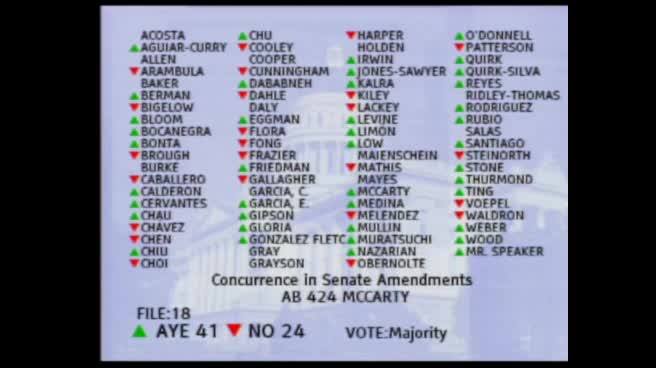 1MIN
Assembly Floor
 1H
Senate Standing Committee on Appropriations
 4MIN
Senate Standing Committee on Transportation and Housing
 1MIN
Assembly Floor
 1H
Assembly Standing Committee on Appropriations
 5MIN
Assembly Standing Committee on Housing and Community Development
Bill Author

Bill Co-Author(s):