AB 1274: Smog check: exemption.
- Session Year: 2017-2018
- House: Assembly
- Latest Version Date: 2017-10-10
Existing law establishes a motor vehicle inspection and maintenance (smog check) program that is administered by the Department of Consumer Affairs. The smog check program requires inspection of motor vehicles upon initial registration, biennially upon renewal of registration, upon transfer of ownership, and in certain other circumstances. Existing law, except as provided, exempts motor vehicles that are 6 or less model-years old from being inspected biennially upon renewal of registration.
Existing law establishes the Carl Moyer Memorial Air Quality Standards Attainment Program, which is administered by the State Air Resources Board. The program authorizes the state board to provide grants to offset the incremental cost of eligible projects that reduce emissions from covered vehicular sources. The program also authorizes funding for a fueling infrastructure demonstration program and for technology development efforts that are expected to result in commercially available technologies in the near-term that would improve the ability of the program to achieve its goals.
This bill would, beginning January 1, 2019, and except as provided, exempt motor vehicles that are 8 or less model-years old from being inspected biennially upon renewal of registration. The bill would assess an annual smog abatement fee of $25 on motor vehicles that are 7 or 8 model-years old. The bill would require a certain amount of the fee to be deposited into the Air Pollution Control Fund and to be available for expenditure, upon appropriation by the Legislature, to fund the Carl Moyer Memorial Air Quality Standards Attainment Program. The bill would require the balance of the fee to be deposited into the Vehicle Inspection and Repair Fund.
This bill would declare that it is to take effect immediately as an urgency statute.
Existing law establishes a motor vehicle inspection and maintenance (smog check) program that is administered by the Department of Consumer Affairs. The smog check program requires inspection of motor vehicles upon initial registration, biennially upon renewal of registration, upon transfer of ownership, and in certain other circumstances. Existing law, except as provided, exempts motor vehicles that are 6 or less model-years old from being inspected biennially upon renewal of registration.
Existing law establishes the Carl Moyer Memorial Air Quality Standards Attainment Program, which is administered by the State Air Resources Board. The program authorizes the state board to provide grants to offset the incremental cost of eligible projects that reduce emissions from covered vehicular sources. The program also authorizes funding for a fueling infrastructure demonstration program and for technology development efforts that are expected to result in commercially available technologies in the near-term that would improve the ability of the program to achieve its goals.
This bill would, beginning January 1, 2019, and except as provided, exempt motor vehicles that are 8 or less model-years old from being inspected biennially upon renewal of registration. The bill would assess an annual smog abatement fee of $25 on motor vehicles that are 7 or 8 model-years old. The bill would require a certain amount of the fee to be deposited into the Air Pollution Control Fund and to be available for expenditure, upon appropriation by the Legislature, to fund the Carl Moyer Memorial Air Quality Standards Attainment Program. The bill would require the balance of the fee to be deposited into the Vehicle Inspection and Repair Fund.
This bill would include a change in state statute that would result in a taxpayer paying a higher tax within the meaning of Section 3 of Article XIIIA of the California Constitution, and thus would require for passage the approval of 2/3 of the membership of each house of the Legislature.
This bill would declare that it is to take effect immediately as an urgency statute.
Existing law establishes a motor vehicle inspection and maintenance (smog check) program that is administered by the Department of Consumer Affairs. The smog check program requires inspection of motor vehicles upon initial registration, biennially upon renewal of registration, upon transfer of ownership, and in certain other circumstances. Existing law, except as provided, exempts motor vehicles that are 6 or less model-years old from being inspected biennially upon renewal of registration.
Existing law establishes the Carl Moyer Memorial Air Quality Standards Attainment Program, which is administered by the State Air Resources Board. The program authorizes the state board to provide grants to offset the incremental cost of eligible projects that reduce emissions from covered vehicular sources. The program also authorizes funding for a fueling infrastructure demonstration program and for technology development efforts that are expected to result in commercially available technologies in the near-term that would improve the ability of the program to achieve its goals.
This bill would, beginning January 1, 2019, and except as provided, exempt motor vehicles that are 8 or less model-years old from being inspected biennially upon renewal of registration. The bill would assess an annual smog abatement fee of $24 $25 on motor vehicles that are 7 or 8 model-years old. The bill would require a certain amount of the fee to be deposited into the Air Pollution Control Fund and to be available for expenditure, upon appropriation by the Legislature, to fund the Carl Moyer Memorial Air Quality Standards Attainment Program. The bill would require the balance of the fee to be deposited into the Vehicle Inspection and Repair Fund.
This bill would include a change in state statute that would result in a taxpayer paying a higher tax within the meaning of Section 3 of Article XIII A of the California Constitution, and thus would require for passage the approval of 2/3 of the membership of each house of the Legislature.
Existing law establishes a motor vehicle inspection and maintenance (smog check) program that is administered by the Department of Consumer Affairs. The smog check program requires inspection of motor vehicles upon initial registration, biennially upon renewal of registration, upon transfer of ownership, and in certain other circumstances. Existing law, except as provided, exempts motor vehicles that are 6 or less model-years old from being inspected biennially upon renewal of registration.
Existing law establishes the Carl Moyer Memorial Air Quality Standards Attainment Program, which is administered by the State Air Resources Board. The program authorizes the state board to provide grants to offset the incremental cost of eligible projects that reduce emissions from covered vehicular sources. The program also authorizes funding for a fueling infrastructure demonstration program and for technology development efforts that are expected to result in commercially available technologies in the near-term that would improve the ability of the program to achieve its goals.
This bill would, except as provided, exempt motor vehicles that are 8 or less model-years old from being inspected biennially upon renewal of registration. The bill would assess an annual smog abatement fee of $24 on motor vehicles that are 7 or 8 model-years old. The bill would require a certain amount of the fee to be deposited into the Air Pollution Control Fund and to be available for expenditure, upon appropriation by the Legislature, to fund the Carl Moyer Memorial Air Quality Standards Attainment Program. The bill would require the balance of the fee to be deposited into the Vehicle Inspection and Repair Fund.
This bill would include a change in state statute that would result in a taxpayer paying a higher tax within the meaning of Section 3 of Article XIII A of the California Constitution, and thus would require for passage the approval of 2/3 of the membership of each house of the Legislature.
Existing law establishes a motor vehicle inspection and maintenance (smog check) program that is administered by the Department of Consumer Affairs. The smog check program requires inspection of motor vehicles upon initial registration, biennially upon renewal of registration, upon transfer of ownership, and in certain other circumstances. Existing law, except as provided, exempts motor vehicles that are 6 or less model-years old from being inspected biennially upon renewal of registration.
Existing law establishes the Carl Moyer Memorial Air Quality Standards Attainment Program, which is administered by the State Air Resources Board. The program authorizes the state board to provide grants to offset the incremental cost of eligible projects that reduce emissions from covered vehicular sources. The program also authorizes funding for a fueling infrastructure demonstration program and for technology development efforts that are expected to result in commercially available technologies in the near-term that would improve the ability of the program to achieve its goals.
This bill would make nonsubstantive changes to these provisions.This bill would, except as provided, exempt motor vehicles that are 8 or less model-years old from being inspected biennially upon renewal of registration. The bill would assess an annual smog abatement fee of $24 on motor vehicles that are 7 or 8 model-years old. The bill would require the fee be deposited into the Air Pollution Control Fund and be available for expenditure, upon appropriation by the Legislature, to fund the Carl Moyer Memorial Air Quality Standards Attainment Program.
This bill would include a change in state statute that would result in a taxpayer paying a higher tax within the meaning of Section 3 of Article XIII A of the California Constitution, and thus would require for passage the approval of 2/3 of the membership of each house of the Legislature.
Existing law establishes the Carl Moyer Memorial Air Quality Standards Attainment Program, which is administered by the State Air Resources Board. The program authorizes the state board to provide grants to offset the incremental cost of eligible projects that reduce emissions from covered vehicular sources. The program also authorizes funding for a fueling infrastructure demonstration program and for technology development efforts that are expected to result in commercially available technologies in the near-term that would improve the ability of the program to achieve its goals.
This bill would make nonsubstantive changes to these provisions.
(a)All motor vehicles powered by internal combustion engines that are registered within an area designated for program coverage shall be required biennially to obtain a certificate of compliance or noncompliance, except for the following:
(1)All motorcycles until the department, pursuant to Section 44012, implements test procedures applicable to motorcycles.
(2)All motor vehicles that have been issued a certificate of compliance or noncompliance or a repair cost waiver upon a change of ownership or initial registration in this state during the preceding six months.
(3)All motor vehicles manufactured prior to the 1976 model-year.
(4)(A)Except as provided in subparagraph (B), all motor vehicles four or less model-years old.
(B)(i)Beginning January 1, 2005, all motor vehicles six or less model-years old, unless the state board finds that providing an exception for these vehicles will prohibit the state from meeting the requirements of Section 176(c) of the federal Clean Air Act (42 U.S.C. Sec. 7401 et seq.) or the states commitments with respect to the state implementation plan required by the federal Clean Air Act.
(ii)Notwithstanding clause (i), beginning January 1, 2019, all motor vehicles eight or less model-years old, unless the state board finds that providing an exception for these vehicles will prohibit the state from meeting the requirements of Section 176(c) of the federal Clean Air Act (42 U.S.C. Sec. 7401 et seq.) or the states commitments with respect to the state implementation plan required by the federal Clean Air Act.
(iii)Clause (ii) does not apply to a motor vehicle that is seven model-years old in year 2018 for which a certificate of compliance has been obtained.
(C)All motor vehicles excepted by this paragraph shall be subject to testing and to certification requirements as determined by the department, if any of the following apply:
(i)The department determines through remote sensing activities or other means that there is a substantial probability that the vehicle has a tampered emission control system or would fail for other cause a smog check test as specified in Section 44012.
(ii)The vehicle was previously registered outside this state and is undergoing initial registration in this state.
(iii)The vehicle is being registered as a specially constructed vehicle.
(iv)The vehicle has been selected for testing pursuant to Section 44014.7 or any other provision of this chapter authorizing out-of-cycle testing.
(D)This paragraph does not apply to diesel-powered vehicles.
(5)In addition to the vehicles exempted pursuant to paragraph (4), any motor vehicle or class of motor vehicles exempted pursuant to subdivision (c) of Section 44024.5. It is the intent of the Legislature that the department, pursuant to the authority granted by this paragraph, exempt at least 15 percent of the lowest emitting motor vehicles from the biennial smog check inspection.
(6)All motor vehicles that the department determines would present prohibitive inspection or repair problems.
(7)Any vehicle registered to the owner of a fleet licensed pursuant to Section 44020 if the vehicle is garaged exclusively outside the area included in program coverage, and is not primarily operated inside the area included in program coverage.
(8)(A)All diesel-powered vehicles manufactured prior to the 1998 model-year.
(B)All diesel-powered vehicles that have a gross vehicle weight rating of 8,501 to 10,000 pounds, inclusive, until the department, in consultation with the state board, pursuant to Section 44012, implements test procedures applicable to these vehicles.
(C)All diesel-powered vehicles that have a gross vehicle weight rating from 10,001 pounds to 14,000 pounds, inclusive, until the state board and the Department of Motor Vehicles determine the best method for identifying these vehicles, and until the department, in consultation with the state board, pursuant to Section 44012, implements test procedures applicable to these vehicles.
(D)All diesel-powered vehicles that have a gross vehicle weight rating of 14,001 pounds or greater.
(b)Vehicles designated for program coverage in enhanced areas shall be required to obtain inspections from appropriate smog check stations operating in enhanced areas.
(c)For purposes of subdivision (a), a collector motor vehicle, as defined in Section 259 of the Vehicle Code, is exempt from those portions of the test required by subdivision (f) of Section 44012 if the collector motor vehicle meets all of the following criteria:
(1)Submission of proof that the motor vehicle is insured as a collector motor vehicle, as shall be required by regulation of the bureau.
(2)The motor vehicle is at least 35 model-years old.
(3)The motor vehicle complies with the exhaust emissions standards for that motor vehicles class and model-year as prescribed by the department, and the motor vehicle passes a functional inspection of the fuel cap and a visual inspection for liquid fuel leaks.
SEC. 2.Section 44060 of the Health and Safety Code is amended to read:44060.(a)The department shall prescribe the form of the certificate of compliance or noncompliance, repair cost waivers, and economic hardship extensions.
(b)The certificates, repair cost waivers, and economic hardship extensions shall be in the form of an electronic entry filed with the department, the Department of Motor Vehicles, and any other person designated by the department. The department shall ensure that the motor vehicle owner or operator is provided with a written report, signed by the licensed technician who performed the inspection, of any test performed by a smog check station, including a pass or fail indication, and written confirmation of the issuance of the certificate.
(c)(1)The department shall charge a fee to a smog check station, including a test-only station, and a station providing referee functions, for a motor vehicle inspected at that station that meets the requirements of this chapter and is issued a certificate of compliance, a certificate of noncompliance, repair cost waiver, or economic hardship extension.
(2)The fee charged pursuant to paragraph (1) shall be calculated to recover the costs of the department and any other state agency directly involved in the implementation, administration, or enforcement of the motor vehicle inspection and maintenance program, and shall not exceed the amount reasonably necessary to fund the operation of the program, including all responsibilities, requirements, and obligations imposed upon the department or any of those state agencies by this chapter, that are not otherwise recoverable by fees received pursuant to Section 44034.
(3)Except for adjustments to reflect changes in the Consumer Price Index, as published by the United States Bureau of Labor Statistics, the fee for each certificate, waiver, or extension shall not exceed seven dollars ($7).
(4)Fees collected by the department pursuant to this subdivision shall be deposited in the Vehicle Inspection and Repair Fund. It is the intent of the Legislature that a prudent surplus be maintained in the Vehicle Inspection and Repair Fund.
(d)(1)(A)Motor vehicles exempted under paragraph (4) of subdivision (a) of Section 44011 that are six or less model-years old shall be subject to an annual smog abatement fee of twelve dollars ($12).
(B)Motor vehicles exempted under paragraph (4) of subdivision (a) of Section 44011 that are seven or eight model-years old shall be subject to an annual smog abatement fee of twenty-five dollars ($25).
(C)The department may also, by regulation, subject motor vehicles that are exempted under paragraph (5) of subdivision (a) of Section 44011 to the twelve dollar ($12) annual smog abatement fee. Payment of the annual smog abatement fee shall be made to the Department of Motor Vehicles at the time of registration of the motor vehicle.
(2)Except as provided in paragraph (1) of subdivision (a) of, and subdivision (b) of, Section 44091.1, fees collected pursuant to this subdivision shall be deposited on a daily basis into the Vehicle Inspection and Repair Fund.
(e)The sale or transfer of the certificate, waiver, or extension by a licensed smog check station or test-only station to any other licensed smog check station or to any other person, and the purchase or acquisition of the certificate, waiver, or extension, by any person, other than from the department, the departments designee, or pursuant to a vehicles inspection or repair conducted pursuant to this chapter, is prohibited.
(f)Following implementation of the electronic entry certificate under subdivision (b), the department may require the modification of the analyzers and other equipment required at smog check stations to prevent the entry of a certificate that has not been issued or validated through prepayment of the fee authorized by subdivision (c).
(g)The fee charged by licensed smog check stations to consumers for a certificate, waiver, or extension shall be the same amount that is charged by the department.
SEC. 3.Section 44060.5 of the Health and Safety Code is amended to read:44060.5.(a)Beginning July 1, 2008, the smog abatement fee described in subparagraph (A) or (C) of paragraph (1) of subdivision (d) of Section 44060 shall be increased by eight dollars ($8).
(b)Revenues generated by the increase described in this section shall be distributed as follows:
(1)The revenues generated by four dollars ($4) shall be deposited in the Air Quality Improvement Fund created by Section 44274.5.
(2)The revenues generated by four dollars ($4) shall be deposited in the Alternative and Renewable Fuel and Vehicle Technology Fund created by Section 44273.
(c)This section shall remain in effect only until January 1, 2024, and as of that date is repealed, unless a later enacted statute, that is enacted before January 1, 2024, deletes or extends that date.
SEC. 4.Section 44091.1 of the Health and Safety Code is amended to read:44091.1.(a)Revenue from the fee specified in subparagraph (A) or (C) of paragraph (1) of subdivision (d) of Section 44060 shall be allocated as follows:
(1)The revenues generated by six dollars ($6) of the fee shall be deposited in the Air Pollution Control Fund, and shall be available for expenditure, upon appropriation by the Legislature, to fund the Carl Moyer Memorial Air Quality Standards Attainment Program (Chapter 9 (commencing with Section 44275)) to the extent that the state board or a participating district determines the moneys are expended to mitigate or remediate the harm caused by the type of motor vehicle on which the fee is imposed.
(2)(A)Except as provided for in subparagraph (B), of the revenue generated by the remaining six dollars ($6) of the fee, four dollars ($4) shall be deposited in the account created by Section 44091, while the revenue generated by the remaining two dollars ($2) shall be deposited in the Vehicle Inspection and Repair Fund and may be expended, upon appropriation, for, among other things, the Clean Vehicle Rebate Project established as a part of the Air Quality Improvement Program pursuant to Article 3 (commencing with Section 44274) of Chapter 8.9.
(B)All revenue generated by the remaining six dollars ($6) of the fee described in this paragraph that is imposed at first registration of a motor vehicle and that is exempted under paragraph (4) of subdivision (a) of Section 44011 shall be deposited in the account created by Section 44091.
(b)(1)Twenty-one dollars ($21) of the amount of the fee specified in subparagraph (B) of paragraph (1) of subdivision (d) of Section 44060 shall be deposited into the Air Pollution Control Fund and shall be available for expenditure, upon appropriation by the Legislature, to fund the Carl Moyer Memorial Air Quality Standards Attainment Program (Chapter 9 (commencing with Section 44275)).
(2)Four dollars ($4) of the amount of the fee specified in subparagraph (B) of paragraph (1) of subdivision (d) of Section 44060 shall be deposited into the Vehicle Inspection and Repair Fund to offset the reduction in revenues collected pursuant to Section 44060 caused by the exemption provided pursuant to Section 44011 for vehicles that are seven- and eight-model years old.
SEC. 5.This act is an urgency statute necessary for the immediate preservation of the public peace, health, or safety within the meaning of Article IV of the California Constitution and shall go into immediate effect. The facts constituting the necessity are:
To ensure sufficient moneys are provided to the Air Pollution Control Fund, administered by the State Air Resources Board, to fund the Carl Moyer Memorial Air Quality Standards Attainment Program to improve air quality in the state, it is necessary for this measure to take effect immediately.
(a)All motor vehicles powered by internal combustion engines that are registered within an area designated for program coverage shall be required biennially to obtain a certificate of compliance or noncompliance, except for the following:
(1)All motorcycles until the department, pursuant to Section 44012, implements test procedures applicable to motorcycles.
(2)All motor vehicles that have been issued a certificate of compliance or noncompliance or a repair cost waiver upon a change of ownership or initial registration in this state during the preceding six months.
(3)All motor vehicles manufactured prior to the 1976 model-year.
(4)(A)Except as provided in subparagraph (B), all motor vehicles four or less model-years old.
(B)(i)Beginning January 1, 2019, 2005, all motor vehicles eight six or less model-years old, unless the state board finds that providing an exception for these vehicles will prohibit the state from meeting the requirements of Section 176(c) of the federal Clean Air Act (42 U.S.C. Sec. 7401 et seq.) or the states commitments with respect to the state implementation plan required by the federal Clean Air Act.
(ii)Notwithstanding clause (i), beginning January 1, 2019, all motor vehicles eight or less model-years old, unless the state board finds that providing an exception for these vehicles will prohibit the state from meeting the requirements of Section 176(c) of the federal Clean Air Act (42 U.S.C. Sec. 7401 et seq.) or the states commitments with respect to the state implementation plan required by the federal Clean Air Act.
(ii)(iii)Clause (i) (ii) does not apply to a motor vehicle that is seven model-years old in year 2018 for which a certificate of compliance has been obtained.
(C)All motor vehicles excepted by this paragraph shall be subject to testing and to certification requirements as determined by the department, if any of the following apply:
(i)The department determines through remote sensing activities or other means that there is a substantial probability that the vehicle has a tampered emission control system or would fail for other cause a smog check test as specified in Section 44012.
(ii)The vehicle was previously registered outside this state and is undergoing initial registration in this state.
(iii)The vehicle is being registered as a specially constructed vehicle.
(iv)The vehicle has been selected for testing pursuant to Section 44014.7 or any other provision of this chapter authorizing out-of-cycle testing.
(D)This paragraph does not apply to diesel-powered vehicles.
(5)In addition to the vehicles exempted pursuant to paragraph (4), any motor vehicle or class of motor vehicles exempted pursuant to subdivision (c) of Section 44024.5. It is the intent of the Legislature that the department, pursuant to the authority granted by this paragraph, exempt at least 15 percent of the lowest emitting motor vehicles from the biennial smog check inspection.
(6)All motor vehicles that the department determines would present prohibitive inspection or repair problems.
(7)Any vehicle registered to the owner of a fleet licensed pursuant to Section 44020 if the vehicle is garaged exclusively outside the area included in program coverage, and is not primarily operated inside the area included in program coverage.
(8)(A)All diesel-powered vehicles manufactured prior to the 1998 model-year.
(B)All diesel-powered vehicles that have a gross vehicle weight rating of 8,501 to 10,000 pounds, inclusive, until the department, in consultation with the state board, pursuant to Section 44012, implements test procedures applicable to these vehicles.
(C)All diesel-powered vehicles that have a gross vehicle weight rating from 10,001 pounds to 14,000 pounds, inclusive, until the state board and the Department of Motor Vehicles determine the best method for identifying these vehicles, and until the department, in consultation with the state board, pursuant to Section 44012, implements test procedures applicable to these vehicles.
(D)All diesel-powered vehicles that have a gross vehicle weight rating of 14,001 pounds or greater.
(b)Vehicles designated for program coverage in enhanced areas shall be required to obtain inspections from appropriate smog check stations operating in enhanced areas.
(c)For purposes of subdivision (a), a collector motor vehicle, as defined in Section 259 of the Vehicle Code, is exempt from those portions of the test required by subdivision (f) of Section 44012 if the collector motor vehicle meets all of the following criteria:
(1)Submission of proof that the motor vehicle is insured as a collector motor vehicle, as shall be required by regulation of the bureau.
(2)The motor vehicle is at least 35 model-years old.
(3)The motor vehicle complies with the exhaust emissions standards for that motor vehicles class and model-year as prescribed by the department, and the motor vehicle passes a functional inspection of the fuel cap and a visual inspection for liquid fuel leaks.
SEC. 2.Section 44060 of the Health and Safety Code is amended to read:44060.(a)The department shall prescribe the form of the certificate of compliance or noncompliance, repair cost waivers, and economic hardship extensions.
(b)The certificates, repair cost waivers, and economic hardship extensions shall be in the form of an electronic entry filed with the department, the Department of Motor Vehicles, and any other person designated by the department. The department shall ensure that the motor vehicle owner or operator is provided with a written report, signed by the licensed technician who performed the inspection, of any test performed by a smog check station, including a pass or fail indication, and written confirmation of the issuance of the certificate.
(c)(1)The department shall charge a fee to a smog check station, including a test-only station, and a station providing referee functions, for a motor vehicle inspected at that station that meets the requirements of this chapter and is issued a certificate of compliance, a certificate of noncompliance, repair cost waiver, or economic hardship extension.
(2)The fee charged pursuant to paragraph (1) shall be calculated to recover the costs of the department and any other state agency directly involved in the implementation, administration, or enforcement of the motor vehicle inspection and maintenance program, and shall not exceed the amount reasonably necessary to fund the operation of the program, including all responsibilities, requirements, and obligations imposed upon the department or any of those state agencies by this chapter, that are not otherwise recoverable by fees received pursuant to Section 44034.
(3)Except for adjustments to reflect changes in the Consumer Price Index, as published by the United States Bureau of Labor Statistics, the fee for each certificate, waiver, or extension shall not exceed seven dollars ($7).
(4)Fees collected by the department pursuant to this subdivision shall be deposited in the Vehicle Inspection and Repair Fund. It is the intent of the Legislature that a prudent surplus be maintained in the Vehicle Inspection and Repair Fund.
(d)(1)(A)Motor vehicles exempted under paragraph (4) of subdivision (a) of Section 44011 that are six or less model-years old shall be subject to an annual smog abatement fee of twelve dollars ($12).
(B)Motor vehicles exempted under paragraph (4) of subdivision (a) of Section 44011 that are seven or eight model-years old shall be subject to an annual smog abatement fee of twenty-five dollars ($25).
(C)The department may also, by regulation, subject motor vehicles that are exempted under paragraph (5) of subdivision (a) of Section 44011 to the twelve dollar ($12) annual smog abatement fee. Payment of the annual smog abatement fee shall be made to the Department of Motor Vehicles at the time of registration of the motor vehicle.
(2)Except as provided in paragraph (1) of subdivision (a) of, and subdivision (b) of, Section 44091.1, fees collected pursuant to this subdivision shall be deposited on a daily basis into the Vehicle Inspection and Repair Fund.
(e)The sale or transfer of the certificate, waiver, or extension by a licensed smog check station or test-only station to any other licensed smog check station or to any other person, and the purchase or acquisition of the certificate, waiver, or extension, by any person, other than from the department, the departments designee, or pursuant to a vehicles inspection or repair conducted pursuant to this chapter, is prohibited.
(f)Following implementation of the electronic entry certificate under subdivision (b), the department may require the modification of the analyzers and other equipment required at smog check stations to prevent the entry of a certificate that has not been issued or validated through prepayment of the fee authorized by subdivision (c).
(g)The fee charged by licensed smog check stations to consumers for a certificate, waiver, or extension shall be the same amount that is charged by the department.
SEC. 3.Section 44060.5 of the Health and Safety Code is amended to read:44060.5.(a)Beginning July 1, 2008, the smog abatement fee described in subparagraph (A) or (C) of paragraph (1) of subdivision (d) of Section 44060 shall be increased by eight dollars ($8).
(b)Revenues generated by the increase described in this section shall be distributed as follows:
(1)The revenues generated by four dollars ($4) shall be deposited in the Air Quality Improvement Fund created by Section 44274.5.
(2)The revenues generated by four dollars ($4) shall be deposited in the Alternative and Renewable Fuel and Vehicle Technology Fund created by Section 44273.
(c)This section shall remain in effect only until January 1, 2024, and as of that date is repealed, unless a later enacted statute, that is enacted before January 1, 2024, deletes or extends that date.
SEC. 4.Section 44091.1 of the Health and Safety Code is amended to read:44091.1.(a)Revenue from the fee specified in subparagraph (A) or (C) of paragraph (1) of subdivision (d) of Section 44060 shall be allocated as follows:
(1)The revenues generated by six dollars ($6) of the fee shall be deposited in the Air Pollution Control Fund, and shall be available for expenditure, upon appropriation by the Legislature, to fund the Carl Moyer Memorial Air Quality Standards Attainment Program (Chapter 9 (commencing with Section 44275)) to the extent that the state board or a participating district determines the moneys are expended to mitigate or remediate the harm caused by the type of motor vehicle on which the fee is imposed.
(2)(A)Except as provided for in subparagraph (B), of the revenue generated by the remaining six dollars ($6) of the fee, four dollars ($4) shall be deposited in the account created by Section 44091, while the revenue generated by the remaining two dollars ($2) shall be deposited in the Vehicle Inspection and Repair Fund and may be expended, upon appropriation, for, among other things, the Clean Vehicle Rebate Project established as a part of the Air Quality Improvement Program pursuant to Article 3 (commencing with Section 44274) of Chapter 8.9.
(B)All revenue generated by the remaining six dollars ($6) of the fee described in this paragraph that is imposed at first registration of a motor vehicle and that is exempted under paragraph (4) of subdivision (a) of Section 44011 shall be deposited in the account created by Section 44091.
(b)(1)Twenty-one dollars ($21) of the amount of the fee specified in subparagraph (B) of paragraph (1) of subdivision (d) of Section 44060 shall be deposited into the Air Pollution Control Fund and shall be available for expenditure, upon appropriation by the Legislature, to fund the Carl Moyer Memorial Air Quality Standards Attainment Program (Chapter 9 (commencing with Section 44275)).
(2)Four dollars ($4) of the amount of the fee specified in subparagraph (B) of paragraph (1) of subdivision (d) of Section 44060 shall be deposited into the Vehicle Inspection and Repair Fund to offset the reduction in revenues collected pursuant to Section 44060 caused by the exemption provided pursuant to Section 44011 for vehicles that are seven- and eight-model years old.
SEC. 5.This act is an urgency statute necessary for the immediate preservation of the public peace, health, or safety within the meaning of Article IV of the California Constitution and shall go into immediate effect. The facts constituting the necessity are:
To ensure sufficient moneys are provided to the Air Pollution Control Fund, administered by the State Air Resources Board, to fund the Carl Moyer Memorial Air Quality Standards Attainment Program to improve air quality in the state, it is necessary for this measure to take effect immediately.
(a)All motor vehicles powered by internal combustion engines that are registered within an area designated for program coverage shall be required biennially to obtain a certificate of compliance or noncompliance, except for the following:
(1)All motorcycles until the department, pursuant to Section 44012, implements test procedures applicable to motorcycles.
(2)All motor vehicles that have been issued a certificate of compliance or noncompliance or a repair cost waiver upon a change of ownership or initial registration in this state during the preceding six months.
(3)All motor vehicles manufactured prior to the 1976 model-year.
(4)(A)Except as provided in subparagraph (B), all motor vehicles four or less model-years old.
(B)(i)Beginning January 1, 2018, 2019, all motor vehicles eight or less model-years old, unless the state board finds that providing an exception for these vehicles will prohibit the state from meeting the requirements of Section 176(c) of the federal Clean Air Act (42 U.S.C. Sec. 7401 et seq.) or the states commitments with respect to the state implementation plan required by the federal Clean Air Act.
(ii)Clause (i) does not apply to a motor vehicle that is seven model-years old in year 2017 2018 for which a certificate of compliance has been obtained.
(C)All motor vehicles excepted by this paragraph shall be subject to testing and to certification requirements as determined by the department, if any of the following apply:
(i)The department determines through remote sensing activities or other means that there is a substantial probability that the vehicle has a tampered emission control system or would fail for other cause a smog check test as specified in Section 44012.
(ii)The vehicle was previously registered outside this state and is undergoing initial registration in this state.
(iii)The vehicle is being registered as a specially constructed vehicle.
(iv)The vehicle has been selected for testing pursuant to Section 44014.7 or any other provision of this chapter authorizing out-of-cycle testing.
(D)This paragraph does not apply to diesel-powered vehicles.
(5)In addition to the vehicles exempted pursuant to paragraph (4), any motor vehicle or class of motor vehicles exempted pursuant to subdivision (c) of Section 44024.5. It is the intent of the Legislature that the department, pursuant to the authority granted by this paragraph, exempt at least 15 percent of the lowest emitting motor vehicles from the biennial smog check inspection.
(6)All motor vehicles that the department determines would present prohibitive inspection or repair problems.
(7)Any vehicle registered to the owner of a fleet licensed pursuant to Section 44020 if the vehicle is garaged exclusively outside the area included in program coverage, and is not primarily operated inside the area included in program coverage.
(8)(A)All diesel-powered vehicles manufactured prior to the 1998 model-year.
(B)All diesel-powered vehicles that have a gross vehicle weight rating of 8,501 to 10,000 pounds, inclusive, until the department, in consultation with the state board, pursuant to Section 44012, implements test procedures applicable to these vehicles.
(C)All diesel-powered vehicles that have a gross vehicle weight rating from 10,001 pounds to 14,000 pounds, inclusive, until the state board and the Department of Motor Vehicles determine the best method for identifying these vehicles, and until the department, in consultation with the state board, pursuant to Section 44012, implements test procedures applicable to these vehicles.
(D)All diesel-powered vehicles that have a gross vehicle weight rating of 14,001 pounds or greater.
(b)Vehicles designated for program coverage in enhanced areas shall be required to obtain inspections from appropriate smog check stations operating in enhanced areas.
(c)For purposes of subdivision (a), a collector motor vehicle, as defined in Section 259 of the Vehicle Code, is exempt from those portions of the test required by subdivision (f) of Section 44012 if the collector motor vehicle meets all of the following criteria:
(1)Submission of proof that the motor vehicle is insured as a collector motor vehicle, as shall be required by regulation of the bureau.
(2)The motor vehicle is at least 35 model-years old.
(3)The motor vehicle complies with the exhaust emissions standards for that motor vehicles class and model-year as prescribed by the department, and the motor vehicle passes a functional inspection of the fuel cap and a visual inspection for liquid fuel leaks.
SEC. 2.Section 44060 of the Health and Safety Code is amended to read:44060.(a)The department shall prescribe the form of the certificate of compliance or noncompliance, repair cost waivers, and economic hardship extensions.
(b)The certificates, repair cost waivers, and economic hardship extensions shall be in the form of an electronic entry filed with the department, the Department of Motor Vehicles, and any other person designated by the department. The department shall ensure that the motor vehicle owner or operator is provided with a written report, signed by the licensed technician who performed the inspection, of any test performed by a smog check station, including a pass or fail indication, and written confirmation of the issuance of the certificate.
(c)(1)The department shall charge a fee to a smog check station, including a test-only station, and a station providing referee functions, for a motor vehicle inspected at that station that meets the requirements of this chapter and is issued a certificate of compliance, a certificate of noncompliance, repair cost waiver, or economic hardship extension.
(2)The fee charged pursuant to paragraph (1) shall be calculated to recover the costs of the department and any other state agency directly involved in the implementation, administration, or enforcement of the motor vehicle inspection and maintenance program, and shall not exceed the amount reasonably necessary to fund the operation of the program, including all responsibilities, requirements, and obligations imposed upon the department or any of those state agencies by this chapter, that are not otherwise recoverable by fees received pursuant to Section 44034.
(3)Except for adjustments to reflect changes in the Consumer Price Index, as published by the United States Bureau of Labor Statistics, the fee for each certificate, waiver, or extension shall not exceed seven dollars ($7).
(4)Fees collected by the department pursuant to this subdivision shall be deposited in the Vehicle Inspection and Repair Fund. It is the intent of the Legislature that a prudent surplus be maintained in the Vehicle Inspection and Repair Fund.
(d)(1)(A)Motor vehicles exempted under paragraph (4) of subdivision (a) of Section 44011 that are six or less model-years old shall be subject to an annual smog abatement fee of twelve dollars ($12).
(B)Motor vehicles exempted under paragraph (4) of subdivision (a) of Section 44011 that are seven or eight model-years old shall be subject to an annual smog abatement fee of twenty-four dollars ($24). twenty-five dollars ($25).
(C)The department may also, by regulation, subject motor vehicles that are exempted under paragraph (5) of subdivision (a) of Section 44011 to the twelve dollar ($12) annual smog abatement fee. Payment of the annual smog abatement fee shall be made to the Department of Motor Vehicles at the time of registration of the motor vehicle.
(2)Except as provided in paragraph (1) of subdivision (a) of, and subdivision (b) of, Section 44091.1, fees collected pursuant to this subdivision shall be deposited on a daily basis into the Vehicle Inspection and Repair Fund.
(e)The sale or transfer of the certificate, waiver, or extension by a licensed smog check station or test-only station to any other licensed smog check station or to any other person, and the purchase or acquisition of the certificate, waiver, or extension, by any person, other than from the department, the departments designee, or pursuant to a vehicles inspection or repair conducted pursuant to this chapter, is prohibited.
(f)Following implementation of the electronic entry certificate under subdivision (b), the department may require the modification of the analyzers and other equipment required at smog check stations to prevent the entry of a certificate that has not been issued or validated through prepayment of the fee authorized by subdivision (c).
(g)The fee charged by licensed smog check stations to consumers for a certificate, waiver, or extension shall be the same amount that is charged by the department.
SEC. 3.Section 44060.5 of the Health and Safety Code is amended to read:44060.5.(a)Beginning July 1, 2008, the smog abatement fee described in subparagraph (A) or (C) of paragraph (1) of subdivision (d) of Section 44060 shall be increased by eight dollars ($8).
(b)Revenues generated by the increase described in this section shall be distributed as follows:
(1)The revenues generated by four dollars ($4) shall be deposited in the Air Quality Improvement Fund created by Section 44274.5.
(2)The revenues generated by four dollars ($4) shall be deposited in the Alternative and Renewable Fuel and Vehicle Technology Fund created by Section 44273.
(c)This section shall remain in effect only until January 1, 2024, and as of that date is repealed, unless a later enacted statute, that is enacted before January 1, 2024, deletes or extends that date.
SEC. 4.Section 44091.1 of the Health and Safety Code is amended to read:44091.1.(a)Revenue from the fee specified in subparagraph (A) or (C) of paragraph (1) of subdivision (d) of Section 44060 shall be allocated as follows:
(1)The revenues generated by six dollars ($6) of the fee shall be deposited in the Air Pollution Control Fund, and shall be available for expenditure, upon appropriation by the Legislature, to fund the Carl Moyer Memorial Air Quality Standards Attainment Program (Chapter 9 (commencing with Section 44275)) to the extent that the state board or a participating district determines the moneys are expended to mitigate or remediate the harm caused by the type of motor vehicle on which the fee is imposed.
(2)(A)Except as provided for in subparagraph (B), of the revenue generated by the remaining six dollars ($6) of the fee, four dollars ($4) shall be deposited in the account created by Section 44091, while the revenue generated by the remaining two dollars ($2) shall be deposited in the Vehicle Inspection and Repair Fund and may be expended, upon appropriation, for, among other things, the Clean Vehicle Rebate Project established as a part of the Air Quality Improvement Program pursuant to Article 3 (commencing with Section 44274) of Chapter 8.9.
(B)All revenue generated by the remaining six dollars ($6) of the fee described in this paragraph that is imposed at first registration of a motor vehicle and that is exempted under paragraph (4) of subdivision (a) of Section 44011 shall be deposited in the account created by Section 44091.
(b)(1)Twenty-one dollars ($21) of the amount of the fee specified in subparagraph (B) of paragraph (1) of subdivision (d) of Section 44060 shall be deposited into the Air Pollution Control Fund and shall be available for expenditure, upon appropriation by the Legislature, to fund the Carl Moyer Memorial Air Quality Standards Attainment Program (Chapter 9 (commencing with Section 44275)).
(2)Three dollars ($3) Four dollars ($4) of the amount of the fee specified in subparagraph (B) of paragraph (1) of subdivision (d) of Section 44060 shall be deposited into the Vehicle Inspection and Repair Fund to offset the reduction in revenues collected pursuant to Section 44060 caused by the exemption provided pursuant to Section 44011 for vehicles that are model years 7 and 8. seven- and eight-model years old.
(a)All motor vehicles powered by internal combustion engines that are registered within an area designated for program coverage shall be required biennially to obtain a certificate of compliance or noncompliance, except for the following:
(1)All motorcycles until the department, pursuant to Section 44012, implements test procedures applicable to motorcycles.
(2)All motor vehicles that have been issued a certificate of compliance or noncompliance or a repair cost waiver upon a change of ownership or initial registration in this state during the preceding six months.
(3)All motor vehicles manufactured prior to the 1976 model-year.
(4)(A)Except as provided in subparagraph (B), all motor vehicles four or less model-years old.
(B)(i)Beginning January 1, 2018, all motor vehicles eight or less model-years old, unless the state board finds that providing an exception for these vehicles will prohibit the state from meeting the requirements of Section 176(c) of the federal Clean Air Act (42 U.S.C. Sec. 7401 et seq.) or the states commitments with respect to the state implementation plan required by the federal Clean Air Act.
(ii)Clause (i) does not apply to a motor vehicle that is seven model-years old in year 2017 for which a certificate of compliance has been obtained.
(C)All motor vehicles excepted by this paragraph shall be subject to testing and to certification requirements as determined by the department, if any of the following apply:
(i)The department determines through remote sensing activities or other means that there is a substantial probability that the vehicle has a tampered emission control system or would fail for other cause a smog check test as specified in Section 44012.
(ii)The vehicle was previously registered outside this state and is undergoing initial registration in this state.
(iii)The vehicle is being registered as a specially constructed vehicle.
(iv)The vehicle has been selected for testing pursuant to Section 44014.7 or any other provision of this chapter authorizing out-of-cycle testing.
(D)This paragraph does not apply to diesel-powered vehicles.
(5)In addition to the vehicles exempted pursuant to paragraph (4), any motor vehicle or class of motor vehicles exempted pursuant to subdivision (c) of Section 44024.5. It is the intent of the Legislature that the department, pursuant to the authority granted by this paragraph, exempt at least 15 percent of the lowest emitting motor vehicles from the biennial smog check inspection.
(6)All motor vehicles that the department determines would present prohibitive inspection or repair problems.
(7)Any vehicle registered to the owner of a fleet licensed pursuant to Section 44020 if the vehicle is garaged exclusively outside the area included in program coverage, and is not primarily operated inside the area included in program coverage.
(8)(A)All diesel-powered vehicles manufactured prior to the 1998 model-year.
(B)All diesel-powered vehicles that have a gross vehicle weight rating of 8,501 to 10,000 pounds, inclusive, until the department, in consultation with the state board, pursuant to Section 44012, implements test procedures applicable to these vehicles.
(C)All diesel-powered vehicles that have a gross vehicle weight rating from 10,001 pounds to 14,000 pounds, inclusive, until the state board and the Department of Motor Vehicles determine the best method for identifying these vehicles, and until the department, in consultation with the state board, pursuant to Section 44012, implements test procedures applicable to these vehicles.
(D)All diesel-powered vehicles that have a gross vehicle weight rating of 14,001 pounds or greater.
(b)Vehicles designated for program coverage in enhanced areas shall be required to obtain inspections from appropriate smog check stations operating in enhanced areas.
(c)For purposes of subdivision (a), a collector motor vehicle, as defined in Section 259 of the Vehicle Code, is exempt from those portions of the test required by subdivision (f) of Section 44012 if the collector motor vehicle meets all of the following criteria:
(1)Submission of proof that the motor vehicle is insured as a collector motor vehicle, as shall be required by regulation of the bureau.
(2)The motor vehicle is at least 35 model-years old.
(3)The motor vehicle complies with the exhaust emissions standards for that motor vehicles class and model-year as prescribed by the department, and the motor vehicle passes a functional inspection of the fuel cap and a visual inspection for liquid fuel leaks.
SEC. 2.Section 44060 of the Health and Safety Code is amended to read:44060.(a) The department shall prescribe the form of the certificate of compliance or noncompliance, repair cost waivers, and economic hardship extensions.
(b) The certificates, repair cost waivers, and economic hardship extensions shall be in the form of an electronic entry filed with the department, the Department of Motor Vehicles, and any other person designated by the department. The department shall ensure that the motor vehicle owner or operator is provided with a written report, signed by the licensed technician who performed the inspection, of any test performed by a smog check station, including a pass or fail indication, and written confirmation of the issuance of the certificate.
(c) (1) The department shall charge a fee to a smog check station, including a test-only station, and a station providing referee functions, for a motor vehicle inspected at that station that meets the requirements of this chapter and is issued a certificate of compliance, a certificate of noncompliance, repair cost waiver, or economic hardship extension.
(2) The fee charged pursuant to paragraph (1) shall be calculated to recover the costs of the department and any other state agency directly involved in the implementation, administration, or enforcement of the motor vehicle inspection and maintenance program, and shall not exceed the amount reasonably necessary to fund the operation of the program, including all responsibilities, requirements, and obligations imposed upon the department or any of those state agencies by this chapter, that are not otherwise recoverable by fees received pursuant to Section 44034.
(3) Except for adjustments to reflect changes in the Consumer Price Index, as published by the United States Bureau of Labor Statistics, the fee for each certificate, waiver, or extension shall not exceed seven dollars ($7).
(4) Fees collected by the department pursuant to this subdivision shall be deposited in the Vehicle Inspection and Repair Fund. It is the intent of the Legislature that a prudent surplus be maintained in the Vehicle Inspection and Repair Fund.
(d) (1) (A)Motor vehicles exempted under paragraph (4) of subdivision (a) of Section 44011 that are six or less model-years old shall be subject to an annual smog abatement fee of twelve dollars ($12).
(B)Motor vehicles exempted under paragraph (4) of subdivision (a) of Section 44011 that are seven or eight model-years old shall be subject to an annual smog abatement fee of twenty-four dollars ($24).
(C)The department may also, by regulation, subject motor vehicles that are exempted under paragraph (5) of subdivision (a) of Section 44011 to the twelve dollar ($12) annual smog abatement fee. Payment of the annual smog abatement fee shall be made to the Department of Motor Vehicles at the time of registration of the motor vehicle.
(2) Except as provided in paragraph (1) of subdivision (a) of, and subdivision (b) of, Section 44091.1, fees collected pursuant to this subdivision shall be deposited on a daily basis into the Vehicle Inspection and Repair Fund.
(e) The sale or transfer of the certificate, waiver, or extension by a licensed smog check station or test-only station to any other licensed smog check station or to any other person, and the purchase or acquisition of the certificate, waiver, or extension, by any person, other than from the department, the departments designee, or pursuant to a vehicles inspection or repair conducted pursuant to this chapter, is prohibited.
(f) Following implementation of the electronic entry certificate under subdivision (b), the department may require the modification of the analyzers and other equipment required at smog check stations to prevent the entry of a certificate that has not been issued or validated through prepayment of the fee authorized by subdivision (c).
(g) The fee charged by licensed smog check stations to consumers for a certificate, waiver, or extension shall be the same amount that is charged by the department.
SEC. 3.Section 44060.5 of the Health and Safety Code is amended to read:44060.5.(a)Beginning July 1, 2008, the smog abatement fee described in subparagraph (A) or (C) of paragraph (1) of subdivision (d) of Section 44060 shall be increased by eight dollars ($8).
(b)Revenues generated by the increase described in this section shall be distributed as follows:
(1)The revenues generated by four dollars ($4) shall be deposited in the Air Quality Improvement Fund created by Section 44274.5.
(2)The revenues generated by four dollars ($4) shall be deposited in the Alternative and Renewable Fuel and Vehicle Technology Fund created by Section 44273.
(c)This section shall remain in effect only until January 1, 2024, and as of that date is repealed, unless a later enacted statute, that is enacted before January 1, 2024, deletes or extends that date.
SEC. 4.Section 44091.1 of the Health and Safety Code is amended to read:44091.1.(a)Revenue from the fee specified in subparagraph (A) or (C) of paragraph (1) of subdivision (d) of Section 44060 shall be allocated as follows:
(1)The revenues generated by six dollars ($6) of the fee shall be deposited in the Air Pollution Control Fund, and shall be available for expenditure, upon appropriation by the Legislature, to fund the Carl Moyer Memorial Air Quality Standards Attainment Program (Chapter 9 (commencing with Section 44275)) to the extent that the state board or a participating district determines the moneys are expended to mitigate or remediate the harm caused by the type of motor vehicle on which the fee is imposed.
(2)(A)Except as provided for in subparagraph (B), of the revenue generated by the remaining six dollars ($6) of the fee, four dollars ($4) shall be deposited in the account created by Section 44091, while the revenue generated by the remaining two dollars ($2) shall be deposited in the Vehicle Inspection and Repair Fund and may be expended, upon appropriation, for, among other things, the Clean Vehicle Rebate Project established as a part of the Air Quality Improvement Program pursuant to Article 3 (commencing with Section 44274) of Chapter 8.9.
(B)All revenue generated by the remaining six dollars ($6) of the fee described in this paragraph that is imposed at first registration of a motor vehicle and that is exempted under paragraph (4) of subdivision (a) of Section 44011 shall be deposited in the account created by Section 44091.
(b)Revenue from (1)Twenty-one dollars ($21) of the amount of the fee specified in subparagraph (B) of paragraph (1) of subdivision (d) of Section 44060 shall be deposited into the Air Pollution Control Fund and shall be available for expenditure, upon appropriation by the Legislature, to fund the Carl Moyer Memorial Air Quality Standards Attainment Program (Chapter 9 (commencing with Section 44275)).
(2)Three dollars ($3) of the amount of the fee specified in subparagraph (B) of paragraph (1) of subdivision (d) of Section 44060 shall be deposited into the Vehicle Inspection and Repair Fund to offset the reduction in revenues collected pursuant to Section 44060 caused by the exemption provided pursuant to Section 44011 for vehicles that are model years 7 and 8.
(a)All motor vehicles powered by internal combustion engines that are registered within an area designated for program coverage shall be required biennially to obtain a certificate of compliance or noncompliance, except for the following:
(1)All motorcycles until the department, pursuant to Section 44012, implements test procedures applicable to motorcycles.
(2)All motor vehicles that have been issued a certificate of compliance or noncompliance or a repair cost waiver upon a change of ownership or initial registration in this state during the preceding six months.
(3)All motor vehicles manufactured prior to the 1976 model-year.
(4)(A)Except as provided in subparagraph (B), all motor vehicles four or less model-years old.
(B)(i)Beginning January 1, 2005, 2018, all motor vehicles six eight or less model-years old, unless the state board finds that providing an exception for these vehicles will prohibit the state from meeting the requirements of Section 176(c) of the federal Clean Air Act (42 U.S.C. Sec. 7401 et seq.) or the states commitments with respect to the state implementation plan required by the federal Clean Air Act.
(ii)Clause (i) does not apply to a motor vehicle that is seven model-years old in year 2017 for which a certificate of compliance has been obtained.
(C)All motor vehicles excepted by this paragraph shall be subject to testing and to certification requirements as determined by the department, if any of the following apply:
(i)The department determines through remote sensing activities or other means that there is a substantial probability that the vehicle has a tampered emission control system or would fail for other cause a smog check test as specified in Section 44012.
(ii)The vehicle was previously registered outside this state and is undergoing initial registration in this state.
(iii)The vehicle is being registered as a specially constructed vehicle.
(iv)The vehicle has been selected for testing pursuant to Section 44014.7 or any other provision of this chapter authorizing out-of-cycle testing.
(D)This paragraph does not apply to diesel-powered vehicles.
(5)In addition to the vehicles exempted pursuant to paragraph (4), any motor vehicle or class of motor vehicles exempted pursuant to subdivision (c) of Section 44024.5. It is the intent of the Legislature that the department, pursuant to the authority granted by this paragraph, exempt at least 15 percent of the lowest emitting motor vehicles from the biennial smog check inspection.
(6)All motor vehicles that the department determines would present prohibitive inspection or repair problems.
(7)Any vehicle registered to the owner of a fleet licensed pursuant to Section 44020 if the vehicle is garaged exclusively outside the area included in program coverage, and is not primarily operated inside the area included in program coverage.
(8)(A)All diesel-powered vehicles manufactured prior to the 1998 model-year.
(B)All diesel-powered vehicles that have a gross vehicle weight rating of 8,501 to 10,000 pounds, inclusive, until the department, in consultation with the state board, pursuant to Section 44012, implements test procedures applicable to these vehicles.
(C)All diesel-powered vehicles that have a gross vehicle weight rating from 10,001 pounds to 14,000 pounds, inclusive, until the state board and the Department of Motor Vehicles determine the best method for identifying these vehicles, and until the department, in consultation with the state board, pursuant to Section 44012, implements test procedures applicable to these vehicles.
(D)All diesel-powered vehicles that have a gross vehicle weight rating of 14,001 pounds or greater.
(b)Vehicles designated for program coverage in enhanced areas shall be required to obtain inspections from appropriate smog check stations operating in enhanced areas.
(c)For purposes of subdivision (a), a collector motor vehicle, as defined in Section 259 of the Vehicle Code, is exempt from those portions of the test required by subdivision (f) of Section 44012 if the collector motor vehicle meets all of the following criteria:
(1)Submission of proof that the motor vehicle is insured as a collector motor vehicle, as shall be required by regulation of the bureau.
(2)The motor vehicle is at least 35 model-years old.
(3)The motor vehicle complies with the exhaust emissions standards for that motor vehicles class and model-year as prescribed by the department, and the motor vehicle passes a functional inspection of the fuel cap and a visual inspection for liquid fuel leaks.
SEC. 2.Section 44060 of the Health and Safety Code is amended to read:44060.(a) The department shall prescribe the form of the certificate of compliance or noncompliance, repair cost waivers, and economic hardship extensions.
(b) The certificates, repair cost waivers, and economic hardship extensions shall be in the form of an electronic entry filed with the department, the Department of Motor Vehicles, and any other person designated by the department. The department shall ensure that the motor vehicle owner or operator is provided with a written report, signed by the licensed technician who performed the inspection, of any test performed by a smog check station, including a pass or fail indication, and written confirmation of the issuance of the certificate.
(c) (1) The department shall charge a fee to a smog check station, including a test-only station, and a station providing referee functions, for a motor vehicle inspected at that station that meets the requirements of this chapter and is issued a certificate of compliance, a certificate of noncompliance, repair cost waiver, or economic hardship extension.
(2) The fee charged pursuant to paragraph (1) shall be calculated to recover the costs of the department and any other state agency directly involved in the implementation, administration, or enforcement of the motor vehicle inspection and maintenance program, and shall not exceed the amount reasonably necessary to fund the operation of the program, including all responsibilities, requirements, and obligations imposed upon the department or any of those state agencies by this chapter, that are not otherwise recoverable by fees received pursuant to Section 44034.
(3) Except for adjustments to reflect changes in the Consumer Price Index, as published by the United States Bureau of Labor Statistics, the fee for each certificate, waiver, or extension shall not exceed seven dollars ($7).
(4) Fees collected by the department pursuant to this subdivision shall be deposited in the Vehicle Inspection and Repair Fund. It is the intent of the Legislature that a prudent surplus be maintained in the Vehicle Inspection and Repair Fund.
(d) (1) (A)Motor vehicles exempted under paragraph (4) of subdivision (a) of Section 44011 that are six or less model-years old shall be subject to an annual smog abatement fee of twelve dollars ($12). The
(B)Motor vehicles exempted under paragraph (4) of subdivision (a) of Section 44011 that are seven or eight model-years old shall be subject to an annual smog abatement fee of twenty-four dollars ($24).
(C)The department may also, by regulation, subject motor vehicles that are exempted under paragraph (5) of subdivision (a) of Section 44011 to the twelve dollar ($12) annual smog abatement fee. Payment of the annual smog abatement fee shall be made to the Department of Motor Vehicles at the time of registration of the motor vehicle.
(2) Except as provided in paragraph (1) of subdivision (a) of of, and subdivision (b) of, Section 44091.1, fees collected pursuant to this subdivision shall be deposited on a daily basis into the Vehicle Inspection and Repair Fund.
(e) The sale or transfer of the certificate, waiver, or extension by a licensed smog check station or test-only station to any other licensed smog check station or to any other person, and the purchase or acquisition of the certificate, waiver, or extension, by any person, other than from the department, the departments designee, or pursuant to a vehicles inspection or repair conducted pursuant to this chapter, is prohibited.
(f) Following implementation of the electronic entry certificate under subdivision (b), the department may require the modification of the analyzers and other equipment required at smog check stations to prevent the entry of a certificate that has not been issued or validated through prepayment of the fee authorized by subdivision (c).
(g) The fee charged by licensed smog check stations to consumers for a certificate, waiver, or extension shall be the same amount that is charged by the department.
SEC. 3.Section 44060.5 of the Health and Safety Code is amended to read:44060.5.(a)Beginning July 1, 2008, the smog abatement fee described in subparagraph (A) or (C) of paragraph (1) of subdivision (d) of Section 44060 shall be increased by eight dollars ($8).
(b)Revenues generated by the increase described in this section shall be distributed as follows:
(1)The revenues generated by four dollars ($4) shall be deposited in the Air Quality Improvement Fund created by Section 44274.5.
(2)The revenues generated by four dollars ($4) shall be deposited in the Alternative and Renewable Fuel and Vehicle Technology Fund created by Section 44273.
(c)This section shall remain in effect only until January 1, 2024, and as of that date is repealed, unless a later enacted statute, that is enacted before January 1, 2024, deletes or extends that date.
SEC. 4.Section 44091.1 of the Health and Safety Code is amended to read:44091.1.Commencing January 1, 2005, (a)Revenue from the fee specified in subparagraph (A) or (C) of paragraph (1) of subdivision (d) of Section 44060 shall be twelve dollars ($12). The revenues from that fee shall be allocated as follows:
(a)(1)The revenues generated by six dollars ($6) of the fee shall be deposited in the Air Pollution Control Fund, and shall be available for expenditure, upon appropriation by the Legislature, to fund the Carl Moyer Memorial Air Quality Standards Attainment Program (Chapter 9 (commencing with Section 44275)) to the extent that the state board or a participating district determines the moneys are expended to mitigate or remediate the harm caused by the type of motor vehicle on which the fee is imposed.
(b)(1)(2)(A)Except as provided for in paragraph (2), subparagraph (B), of the revenue generated by the remaining six dollars ($6) of the fee, four dollars ($4) shall be deposited in the account created by Section 44091, while the revenue generated by the remaining two dollars ($2) shall be deposited in the Vehicle Inspection and Repair Fund and may be expended, upon appropriation, for, among other things, the Clean Vehicle Rebate Project established as a part of the Air Quality Improvement Program pursuant to Article 3 (commencing with Section 44274) of Chapter 8.9.
(2)(B)All revenue generated by the remaining six dollars ($6) of the fee described in this subdivision paragraph that is imposed at first registration of a motor vehicle and that is exempted under paragraph (4) of subdivision (a) of Section 44011 shall be deposited in the account created by Section 44091.
(b)Revenue from the fee specified in subparagraph (B) of paragraph (1) of subdivision (d) of Section 44060 shall be deposited into the Air Pollution Control Fund and shall be available for expenditure, upon appropriation by the Legislature, to fund the Carl Moyer Memorial Air Quality Standards Attainment Program (Chapter 9 (commencing with Section 44275)).
SECTION 1.Section 44280 of the Health and Safety Code, as amended by Section 17 of Chapter 401 of the Statutes of 2013, is amended to read:44280.(a)There is hereby created the Carl Moyer Memorial Air Quality Standards Attainment Program. The program shall be administered by the state board in accordance with this chapter. The administration of the program may be delegated to the districts.(b)The program shall provide grants to offset the incremental cost of projects that reduce covered emissions from covered sources in the state. Eligibility for grant awards shall be determined by the state board, in consultation with the districts, in accordance with this chapter.(c)The program also shall provide funding for a fueling infrastructure demonstration program and for technology development efforts that are expected to result in commercially available technologies in the near-term that would improve the ability of the program to achieve its goals. The infrastructure demonstration and technology development portions of the program shall be managed by the commission, in consultation with the state board.(d)This section shall remain in effect only until January 1, 2024, and as of that date is repealed, unless a later enacted statute, that is enacted before January 1, 2024, deletes or extends that date.(a)There is hereby created the Carl Moyer Memorial Air Quality Standards Attainment Program. The program shall be administered by the state board in accordance with this chapter. The administration of the program may be delegated to the districts.
(b)The program shall provide grants to offset the incremental cost of projects that reduce covered emissions from covered sources in California. the state. Eligibility for grant awards shall be determined by the state board, in consultation with the districts, in accordance with this chapter.
(c)The program also shall also provide funding for a fueling infrastructure demonstration program and for technology development efforts that are expected to result in commercially available technologies in the near-term that would improve the ability of the program to achieve its goals. The infrastructure demonstration and technology development portions of the program shall be managed by the commission, in consultation with the state board.
(d)This section shall remain in effect only until January 1, 2024, and as of that date is repealed, unless a later enacted statute, that is enacted before January 1, 2024, deletes or extends that date.
|
Date
|
Status
|
|---|---|
| Oct 10, 2017 | Chaptered by Secretary of State - Chapter 633, Statutes of 2017. |
| Oct 10, 2017 | Approved by the Governor. |
| Sep 21, 2017 | Enrolled and presented to the Governor at 3:30 p.m. |
| Sep 13, 2017 | Assembly Rule 77(a) suspended. |
| Sep 13, 2017 | In Assembly. Concurrence in Senate amendments pending. May be considered on or after September 15 pursuant to Assembly Rule 77. |
| Sep 12, 2017 | Read third time. Urgency clause adopted. Passed. Ordered to the Assembly. |
| Sep 11, 2017 | Read second time. Ordered to third reading. |
| Sep 8, 2017 | Read third time and amended. Ordered to second reading. |
| Sep 5, 2017 | Read second time. Ordered to third reading. |
| Sep 1, 2017 | From committee: Amend, and do pass as amended. (Ayes 5. Noes 2.) (September 1). |
| Aug 21, 2017 | In committee: Referred to APPR. suspense file. |
| Jul 13, 2017 | In committee: Hearing postponed by committee. |
| Jul 6, 2017 | From committee: Do pass and re-refer to Com. on APPR. (Ayes 4. Noes 2.) (July 5). Re-referred to Com. on APPR. |
| Jun 28, 2017 | From committee: Do pass and re-refer to Com. on EQ. (Ayes 9. Noes 3.) (June 27). Re-referred to Com. on EQ. |
| Jun 14, 2017 | Referred to Coms. on T. & H. and EQ. |
| Jun 1, 2017 | In Senate. Read first time. To Com. on RLS. for assignment. |
| May 31, 2017 | Read third time. Passed. Ordered to the Senate. (Ayes 55. Noes 15. Page 2003.) |
| May 30, 2017 | Read second time and amended. Ordered returned to second reading. |
| May 26, 2017 | From committee: Amend, and do pass as amended. (Ayes 12. Noes 5.) (May 26). |
| May 3, 2017 | In committee: Set, first hearing. Referred to APPR. suspense file. |
| Apr 25, 2017 | From committee: Do pass and re-refer to Com. on APPR. (Ayes 11. Noes 2.) (April 24). Re-referred to Com. on APPR. |
| Apr 17, 2017 | In committee: Set, first hearing. Hearing canceled at the request of author. |
| Apr 3, 2017 | Re-referred to Com. on TRANS. |
| Mar 30, 2017 | From committee chair, with author's amendments: Amend, and re-refer to Com. on TRANS. Read second time and amended. |
| Mar 30, 2017 | Referred to Com. on TRANS. |
| Feb 19, 2017 | From printer. May be heard in committee March 21. |
| Feb 17, 2017 | Read first time. To print. |
|
Date
|
Description
|
Location
|
Votes
|
|
|---|---|---|---|---|
| Sep 13, 2017 | AB 1274 O'Donnell Concurrence - Urgency Added | Assembly Floor |
Passed |
|
| Sep 12, 2017 | Assembly 3rd Reading AB1274 O'Donnell By Lara Urgency Clause | Senate Floor |
Passed |
|
| Sep 1, 2017 | Do pass as amended | Senate Standing Committee on Appropriations |
Passed |
|
| Aug 21, 2017 | Placed on suspense file | Senate Standing Committee on Appropriations |
Passed |
|
| Jul 5, 2017 | Do pass, but first be re-referred to the Committee on [Appropriations] | Senate Standing Committee on Environmental Quality |
Passed |
|
| Jun 27, 2017 | Do pass, but first be re-referred to the Committee on [Environmental Quality] | Senate Standing Committee on Transportation and Housing |
Passed |
|
| May 31, 2017 | AB 1274 O'DONNELL Assembly Third Reading | Assembly Floor |
Passed |
|
| May 26, 2017 | Do pass as amended. | Assembly Standing Committee on Appropriations |
Passed |
|
| Apr 24, 2017 | Do pass and be re-referred to the Committee on [Appropriations] | Assembly Standing Committee on Transportation |
Passed |
This list shows positions taken on this bill by organizations on the date displayed, which is linked to the original source.
Positions by individuals are not included.
|
Organization
|
Position
|
Date
|
|---|---|---|
| Air Resource Board | * Support | Jun 27, 2017 |
| Alliance Of Automobile Manufacturers | ** Support | Jul 3, 2017 |
| alliance of california | ** Support | Jul 3, 2017 |
| Almond Alliance of California | ** Support | Sep 9, 2017 |
| Assembly Floor: 55-15, 5 | ** Against | Sep 4, 2017 |
| Association Of California Egg Farmers | ** Support | Sep 9, 2017 |
| Automotive Service Councils Of California | ** Against | Sep 9, 2017 |
| Bay Air Quality Management District | * Support | Jun 27, 2017 |
| Bay Area Air Quality Management District | ** Support | Apr 21, 2017 |
| California Air Pollution Control Officers Association | ** Support | Sep 9, 2017 |
| California Association Of Wheat Growers | ** Support | Sep 9, 2017 |
| California Autobody Association | ** Against | Sep 9, 2017 |
| California Automotive Business Coalition | ** Against | Sep 9, 2017 |
| California Automotive Wholesalers Association | ** Against | Sep 9, 2017 |
| California Bean Shippers Association | ** Support | Sep 9, 2017 |
| California Cotton Ginners and Growers Association | ** Support | Sep 9, 2017 |
| California Council For Environmental And Economic Balance | ** Support | Sep 9, 2017 |
| California Electric Transportation Coalition | ** Support | Sep 9, 2017 |
| California Emissions Testing Industries | ** Against | Sep 9, 2017 |
| California Farm Bureau Federation | ** Support | Sep 9, 2017 |
| California Grain and Feed Association | ** Support | Sep 9, 2017 |
| California Pear Growers Association | ** Support | Sep 9, 2017 |
| California Seed Association | ** Support | Sep 9, 2017 |
| California State Floral Association | ** Support | Sep 9, 2017 |
| California Warehouse Association | ** Support | Sep 9, 2017 |
| california warehouse association of california | ** Support | Jul 3, 2017 |
| Calstart | ** Support | Sep 9, 2017 |
| City of Duarte | ** Support | Sep 9, 2017 |
| City of Rolling Hills Estates | * Support | Jun 27, 2017 |
| City of South Pasadena | ** Support | Sep 9, 2017 |
| Clean Air Performance Professionals | ** Against | Sep 9, 2017 |
| Family Business Association of California | ** Support | Sep 9, 2017 |
| Howard Jarvis Taxpayers Association | ** Against | Sep 9, 2017 |
| Independent Automotive Professionals | ** Against | Sep 9, 2017 |
| Los Angeles Chamber of Commerce | ** Support | Jul 3, 2017 |
| Los Angeles County Business Federation | ** Support | Sep 9, 2017 |
| Nisei Farmers League | ** Support | Sep 9, 2017 |
| Orange County Business Council | ** Support | Sep 9, 2017 |
| Pacific Egg and Poultry Association | ** Support | Sep 9, 2017 |
| Sacramento Metropolitan Air Quality Management District | ** Support | Sep 9, 2017 |
| San Gabriel Valley Council Of Governments | ** Support | Sep 9, 2017 |
| San Gabriel Valley Economic Partnership | ** Support | Sep 9, 2017 |
| San Joaquin Valley Air Pollution Control District | ** Support | Sep 9, 2017 |
| South Bay Cities Council of Governments | ** Support | Sep 9, 2017 |
| South Coast Air Quality Management District | ** Support | Sep 9, 2017 |
| specialty equipment marketing association | ** Support | Sep 9, 2017 |
| VALLEY INDUSTRY AND COMMERCE ASSOCIATION | ** Support | Sep 9, 2017 |
| Western Agricultural Processors Association | ** Support | Sep 9, 2017 |
CONCURRENCE IN SENATE AMENDMENTS
CSA1 Bill Id:AB 1274
Author:(O'Donnell)
As Amended Ver:September 8, 2017
2/3 vote. Urgency
ASSEMBLY: | 55-15 | (May 31, 2017) | SENATE: | 27-12 | (September 12, 2017) |
Original Committee Reference: TRANS.
SUMMARY: Exempts two additional model years of vehicles (model years seven and eight) from motor vehicle inspection and maintenance program (smog check) requirements and assesses these vehicles a fee of $25 per year for each year they are exempted, directs revenue from the fee to the Carl Moyer Memorial Air Quality Standards Attainment Program (Moyer Program).
The Senate amendments:
- Increase the proposed fee for model years seven and eight vehicles from a proposed $24 per year to $25 per year for each year they are exempted and increases the amount of that fee directed the additional to the smog check program from $3 to $4.
- Delay the operational date of the bill until January 1, 2019.
- Add an urgency clause.
AS PASSED BY THE ASSEMBLY, this bill:
- Added, beginning on January 1, 2018, two additional years to the number of vehicle model years that are exempted from smog check.
- Required that the newly exempted motor vehicles (model years seven and eight) would be subject to an annual smog abatement fee of $24 and directs $21 of the fee to the Air Pollution Control Fund to fund the Moyer Program and $3 of the fee to the smog check program.
- Clarified that this exemption does not apply to a motor vehicle that is seven model years old in the year 2017 for which a certificate of compliance has been obtained.
FISCAL EFFECT: According to the Senate Appropriations Committee:
- Annual estimated smog abatement fee revenue gains of $52.5 million for the Carl Moyer Program, assuming an average of approximately 2.5 million vehicles in the seven and eight year old cohort each year. Actual revenue impacts would depend on the number vehicles subject to the exemption each year. See staff comments.
- Annual estimated smog abatement fee revenue gains of $10 million to nearly offset all losses related to the new exemption that are noted below, assuming an average of approximately 2.5 million vehicles in the seven and eight year old cohort each year.
- Annual estimated smog certificate fee revenue losses of approximately $10.3 million, assuming an average of approximately 2.5 million vehicles in the seven and eight year old cohort each year, half of which would be subject to the $8.25 fee in a single year.
- Ongoing Air Resources Board (ARB) administrative costs of approximately $412,000 for three personnel year of new staff related to the expansion of the Carl Moyer Program.
- One-time Department of Motor Vehicles (DMV) administrative costs of approximately $300,000, primarily related to necessary programming to exempt vehicles that are seven or eight model-years old from biennial smog check requirements, and to assess a $25 annual fee on those vehicles.
COMMENTS: Smog check is a joint effort between the California Air Resources Board, the Bureau of Automotive Repair, and DMV that requires vehicles manufactured in 1976 or later to participate in the biennial inspection at DMV-approved smog check stations in order to renew vehicle registration. The goal of smog check is to reduce air pollution from vehicles by ensuring that cars with excessive emissions are repaired in accordance with state and federal guidelines. With some exceptions, gas-powered vehicles that are six years old or newer are not required to participate in smog check and instead pay a smog abatement fee each year during this six-year period.
Approximately 12 million Californians currently live in communities that exceed the federal standards for ozone and particulate matter (PM) with the South Coast and San Joaquin Valley air basins experiencing some of the worst air pollution in the nation. While various regulatory and legislative efforts have led to substantial and noticeable improvements in air quality and public health, many Californians continue to be seriously affected by poor air quality.
Emissions from heavy-duty diesel engines are a major source of the state's air pollution, including smog-forming nitrogen oxides (NOx), and cancer-causing PM. According to the South Coast Air Quality Management District's (SCAQMD's) 2016 Air Quality Management Plan (AQMP), mobile sources contributed about 88% of the region's total NOx emissions in 2012. The AQMP further explains that, existing rules, regulations and programs are not sufficient to fulfill the SCAQMD's public health mandate given that over the next seven to 15 years, the region must achieve substantial additional reductions in NOx emissions in order to attain the ozone standards by the 2023 deadline.
Incentive programs such as the Moyer Program have been very successful in achieving emission reductions. Specifically, the Moyer Program incentivizes owners of diesel engines to go beyond regulatory requirements by retrofitting, repowering, or replacing their engines with newer and cleaner ones. Unfortunately, the incentive funding levels needed for attainment are significantly more than what has been allocated to date. For example, SCAQMD, estimates that in order to meet the upcoming 2023 and 2031 air quality standards, approximately $11-14 billion in total funding over a seven to 15 year period is needed in the south coast region alone.
To obtain the incentive funding needed to help SCAQMD and other regions of the state facing similar challenges achieve mandated federal air quality standards, the author has introduced this bill which would defer, from year six to year eight, the required smog check requirements for motor vehicles and during the exempted period, these vehicles would instead pay an annual smog abatement fee of $25, due upon registration, in lieu of the cost to complete smog check at a DMV-approved smog check station. A portion ($21) of the revenue generated by the $25 fee would then be utilized to fund the Moyer Program which would, in turn, would reduce toxic air pollution by providing incentive funding to private companies and public agencies to purchase cleaner-than-required engines, equipment, and emission reduction technologies. SCAQMD estimates that this bill would triple the nearly $65 million generated through smog abatement fees per year for the Moyer Program.
This bill seeks to ease the impact on DMV to implement the program by providing both a delayed operative date and an urgency clause. This will give DMV maximum time to implement the changes.
Writing in support of this bill, SCAQMD points out that in years seven and eight, a vehicle owner will ultimately save money over what they would have spent to complete a smog check. They note that given that the average smog test costs between $29 and $69, depending on the county of residence and the type of vehicle being evaluated, vehicle owners can expect to save up to $45 per vehicle for each year of the exemption. SCAQMD also notes that the vast majority of newer light-duty vehicles are equipped with cleaner technologies that typically pass smog check after six years. SCAQMD also notes that the benefits of emissions reductions that would be achieved from diesel engines would far outweigh those achieved from smog repairs on gasoline engines because diesel emissions are significantly more toxic.
Please see the policy committee analysis for full discussion of this bill.
Analysis Prepared by: Victoria Alvarez / TRANS. / (916) 319-2093 FN: 0002332
Office of Senate Floor Analyses (916) 651-1520 Fax: (916) 327-4478 | AB |
THIRD READING
Bill No: AB 1274
:
SENATE TRANS. & HOUSING COMMITTEE: 9-3, 6/27/17
AYES: Beall, Cannella, Allen, Atkins, McGuire, Mendoza, Roth, Skinner, Wiener
NOES: Bates, Gaines, Morrell
NO VOTE RECORDED: Wieckowski
SENATE ENVIRONMENTAL QUALITY COMMITTEE: 4-2, 7/5/17
AYES: Hill, Lara, Skinner, Stern
NOES: Stone, Gaines
NO VOTE RECORDED: Wieckowski
SENATE APPROPRIATIONS COMMITTEE: 5-2, 9/1/17
AYES: Lara, Beall, Bradford, Hill, Wiener
NOES: Bates, Nielsen
ASSEMBLY FLOOR: 55-15, 5/31/17 - See last page for vote
SOURCE: South Coast Air Quality Management District
DIGEST:
This bill expands the smog check exemption to vehicles eight model years old or newer, increases the smog abatement fee for vehicles that are seven or eight model years old, and directs the increased fees to the Carl Moyer Memorial Air Quality Standards Attainment (Carl Moyer) Program.
Senate Floor Amendments of 9/8/17 correct a drafting error to ensure that vehicles up to six model years old continue to be exempt from smog check and add an urgency clause.
Existing law:
- Establishes the Motor Vehicle Inspection Program, commonly known as the smog check program, to help meet federal air quality standards. The Department of Consumer Affairs administers this program through the Bureau of Automotive Repair (BAR). The smog check program generally requires vehicle owners to have their vehicles tested every two years, with some exceptions including gas-powered vehicles manufactured prior to 1976, alternatively fueled vehicles, and vehicles six model years old or newer.
- Establishes the Enhanced Fleet Modernization Program (EFMP), administered by the state Air Resources Board (ARB) and BAR. EFMP provides for the voluntary retirement of passenger vehicles and light- and medium-duty trucks that are high polluters. EFMP offers a voucher to owners to retire a high-polluting vehicle.
- Establishes the Carl Moyer Program under ARB. This program provides grants through the state’s 35 local air quality management and air pollution control districts for deployment of engines, equipment, and emission reduction technologies that are cleaner than required by current laws or regulations. The Carl Moyer Program provides approximately $60 million for projects each year throughout the state.
- Establishes the Alternative and Renewable Fuel and Vehicle Technology Program (ARFVTP), administered by the California Energy Commission. This program provides about $100 million per year for development and deployment of alternative and renewable fuels and advanced transportation technologies to help attain the state’s climate change goals.
- Establishes an annual smog abatement fee of $20 for vehicles six model years or newer that are exempt from smog check. Directs these revenues as follows:
- $6 to the Air Pollution Control Fund for the Carl Moyer Program;
- $4 to the High Polluter Repair or Removal Account within the Vehicle Inspection and Repair Fund (VIRF), which funds EFMP.
- $2 to the VIRF for, among other things, the Clean Vehicle Rebate Program;
- $4 to the Air Quality Improvement Fund, which funds a number of incentive programs to reduce mobile source emissions.
- $4 to the ARFVTP.
This bill:
- Expands the existing smog check exemption to vehicles that are up to eight model years old.
- Maintains the existing $20 smog abatement fee for vehicles that are up to six model years old, as well as the existing allocation of revenues from this fee.
- Imposes a new $25 smog abatement fee for vehicles that are seven or eight model years old. Allocates revenues from this new fee as follows:
- $21 to the Air Pollution Control Fund for the Carl Moyer Program;
- $4 to the VIRF to offset the reduction in (smog check) revenues caused by the exemption for vehicles which are seven or eight model years old.
Comments
- Purpose. The author states that the majority of new vehicles equipped with newer and cleaner technologies pass their first smog check after six years. In order to attain more effective particulate matter (PM) and oxides of nitrogen (NOx) emissions reductions, this bill delays the smog check requirement by an additional two years and instead collects the cost of a smog check as an abatement fee. This will provide additional funds to the Carl Moyer Program, allowing for real and surplus emissions reduction from heavy-duty vehicles. The increased funds will not only assist the state in meeting federal air quality standards by further reducing pollution, but will improve the health of disadvantaged communities throughout the state.
- Impact on emissions. According to ARB, 75% of vehicular air polluting is caused by just 25% of the fleet. Currently, cars up to six model years old are exempt from the smog check requirement because newer vehicles are much cleaner and much less likely to fail a smog test. Bureau of Automotive Repair data indicate that the failure rate of vehicles at the first smog check after six years ranges from 3% to 5%. The author states that given this low failure rate, the money spent to inspect these vehicles could be used more cost effectively to achieve emissions reductions in other programs, such as the highly successful Carl Moyer Program.
- Why a higher smog abatement fee for seven- and eight-year-old cars? Although this bill maintains the $20 smog abatement fee for vehicles up to six years old, it increases the fee to $25 for seven- and eight-year-old vehicles. Writing in opposition, the Howard Jarvis Taxpayers Association states that although it supports providing increased funds to the Carl Moyer Program, the fee for seven- and eight-year-old vehicles should also be $20. The author responds that although this bill may appear to be a fee increase, the effect will be revenue neutral to the consumer because the average cost of a biennial smog check is $48. Instead of paying that amount for a biennial smog check, these customers will now pay the same amount for two years in smog abatement fees, minus the added fee for a smog check certificate and without the inconvenience of having to get a smog check. According to the Senate Appropriations Committee, this bill will result in an increase of about $60 million annually in smog abatement revenues due to the higher fee for seven- and eight-year-old vehicles.
- Amendments. This bill was amended in the Appropriations Committee to increase the smog abatement fee for seven- and eight-year-old vehicles from $24 to $25, with the extra dollar being directed to the VIRF to offset the reduction in smog check revenues caused by the exemption; and to delay implementation from January 1, 2018 to January 1, 2019.
FISCAL EFFECT: Appropriation: Fiscal Com.: Local:
According to the Senate Appropriations Committee:
- Annual estimated smog abatement fee revenue gains of $52.5 million for the Carl Moyer Program, assuming an average of approximately 2.5 million vehicles in the seven and eight year old cohort each year. Actual revenue impacts would depend on the number vehicles subject to the exemption each year. See staff comments. (Air Pollution Control Fund – APCF)
- Annual estimated smog abatement fee revenue gains of $10 million to nearly offset all losses related to the new exemption that are noted below, assuming an average of approximately 2.5 million vehicles in the seven and eight year old cohort each year. (Vehicle Inspection and Repair Fund – VIRF)
- Annual estimated smog certificate fee revenue losses of approximately $10.3 million, assuming an average of approximately 2.5 million vehicles in the seven and eight year old cohort each year, half of which would be subject to the $8.25 fee in a single year. (VIRF)
- Ongoing ARB administrative costs of approximately $412,000 for 3 PY of new staff related to the expansion of the Carl Moyer Program. (APCF)
- One-time Department of Motor Vehicles administrative costs of approximately $300,000, primarily related to necessary programming to exempt vehicles that are seven or eight model-years old from biennial smog check requirements, and to assess a $25 annual fee on those vehicles. (Motor Vehicle Account)
South Coast Air Quality Management District (source)
Almond Alliance of California
Association of California Egg Farmers
California Air Pollution Control Officers Association
California Association of Wheat Growers
California Bean Shippers Association
California Cotton Ginners and Growers Association
California Council for Environmental and Economic Balance
California Electric Transportation Coalition
California Farm Bureau Federation
California Grain and Feed Association
California Pear Growers Association
California Seed Association
California State Floral Association
California Warehouse Association
CALSTART
City of Duarte
City of South Pasadena
Family Business Association of California
Los Angeles County Business Federation
Los Angeles County Division of the League of California Cities
Nisei Farmers League
Orange County Business Council
Pacific Egg and Poultry Association
Sacramento Metropolitan Air Quality Management District
San Gabriel Valley Council of Governments
San Gabriel Valley Economic Partnership
San Joaquin Valley Air Pollution Control District
South Bay Cities Council of Governments
Specialty Equipment Marketing Association
Valley Industry and Commerce Association
Western Agricultural Processors Association
Automotive Service Councils of California
California Autobody Association
California Automotive Business Coalition
California Automotive Wholesalers Association
California Emissions Testing Industries
Clean Air Performance Professionals
Howard Jarvis Taxpayers Association
Independent Automotive Professionals
ARGUMENTS IN SUPPORT: South Coast Air Quality Management District, sponsor of this bill, states that based on its evaluation of its Carl Moyer Program, the increased funding for the program generated by this bill could result in approximately four times greater net NOx emissions reduction benefits for residents in the South Coast region.
ARGUMENTS IN OPPOSITION: A coalition of automotive service industry representatives raise a number of concerns, including that extending the smog check exemption would move the smog check requirement beyond the warranty coverage period for many vehicles; expanding the exemption potentially means more vehicles on the road with emissions levels above federal and state standards; removing these vehicles from the testing pool will likely result in a net job loss and increase unemployment in the state; and smog check center may opt out of the program, resulting in fewer choices for customers.
ASSEMBLY FLOOR: 55-15, 5/31/17
AYES: Aguiar-Curry, Arambula, Baker, Berman, Bloom, Bocanegra, Bonta, Burke, Caballero, Calderon, Cervantes, Chau, Chiu, Chu, Cooley, Cooper, Dababneh, Daly, Flora, Frazier, Friedman, Cristina Garcia, Eduardo Garcia, Gipson, Gloria, Gonzalez Fletcher, Gray, Grayson, Holden, Irwin, Jones-Sawyer, Kalra, Levine, Limón, Low, McCarty, Medina, Mullin, Muratsuchi, Nazarian, O'Donnell, Quirk, Quirk-Silva, Reyes, Ridley-Thomas, Rodriguez, Rubio, Salas, Santiago, Mark Stone, Thurmond, Ting, Weber, Wood, Rendon
NOES: Acosta, Travis Allen, Chávez, Chen, Dahle, Fong, Gallagher, Gomez, Harper, Kiley, Lackey, Maienschein, Obernolte, Voepel, Waldron
NO VOTE RECORDED: Bigelow, Brough, Choi, Cunningham, Eggman, Mathis, Mayes, Melendez, Patterson, Steinorth
9/9/17 16:13:40
**** END ****
SENATE COMMITTEE ON APPROPRIATIONS
Senator Ricardo Lara, Chair
2017 - 2018 Regular Session
AB 1274 (O'Donnell) - Smog check: exemption
Version: May 30, 2017 | Policy Vote: T. & H. 9 - 3, E.Q. 4 - 2 |
Urgency: No | Mandate: No |
Hearing Date: September 1, 2017 | Consultant: Mark McKenzie |
*********** ANALYSIS ADDENDUM – SUSPENSE FILE ***********
The following information is revised to reflect amendments
adopted by the committee on September 1, 2017
Bill Summary:
AB 1274 would expand an exemption from smog check inspection requirements to vehicles that are seven or eight model-years old, assess a $24 smog abatement fee on these vehicles, and direct the majority of the fee revenues to the Carl Moyer Memorial Air Quality Standards Attainment (Carl Moyer) Program, as specified.
Fiscal Impact:
- Annual estimated smog abatement fee revenue gains of $52.5 million for the Carl Moyer Program, assuming an average of approximately 2.5 million vehicles in the seven and eight year old cohort each year. Actual revenue impacts would depend on the number vehicles subject to the exemption each year. See staff comments. (Air Pollution Control Fund – APCF)
- Annual estimated smog abatement fee revenue gains of $10 million to nearly offset all losses related to the new exemption that are noted below, assuming an average of approximately 2.5 million vehicles in the seven and eight year old cohort each year. (Vehicle Inspection and Repair Fund – VIRF)
- Annual estimated smog certificate fee revenue losses of approximately $10.3 million, assuming an average of approximately 2.5 million vehicles in the seven and eight year old cohort each year, half of which would be subject to the $8.25 fee in a single year. (VIRF)
- Ongoing California Air Resources Board (ARB) administrative costs of approximately $412,000 for 3 PY of new staff related to the expansion of the Carl Moyer Program. (APCF)
- One-time Department of Motor Vehicles (DMV) administrative costs of approximately $300,000, primarily related to necessary programming to exempt vehicles that are seven or eight model-years old from biennial smog check requirements, and to assess a $25 annual fee on those vehicles. (Motor Vehicle Account)
Author Amendments:
Increase the smog abatement fee from $24 to $25 on vehicles that are seven or eight model-years old, and deposit the additional $1 fee into the VIRF. The amendments would also delay the bill’s operative date to January 1, 2019.
-- END --
Office of Senate Floor Analyses (916) 651-1520 Fax: (916) 327-4478 | AB |
THIRD READING
Bill No: AB 1274
: in Senate
SENATE TRANS. & HOUSING COMMITTEE: 9-3, 6/27/17
AYES: Beall, Cannella, Allen, Atkins, McGuire, Mendoza, Roth, Skinner, Wiener
NOES: Bates, Gaines, Morrell
NO VOTE RECORDED: Wieckowski
SENATE ENVIRONMENTAL QUALITY COMMITTEE: 4-2, 7/5/17
AYES: Hill, Lara, Skinner, Stern
NOES: Stone, Gaines
NO VOTE RECORDED: Wieckowski
SENATE APPROPRIATIONS COMMITTEE: 5-2, 9/1/17
AYES: Lara, Beall, Bradford, Hill, Wiener
NOES: Bates, Nielsen
ASSEMBLY FLOOR: 55-15, 5/31/17 - See last page for vote
SOURCE: South Coast Air Quality Management District
DIGEST:
This bill expands the smog check exemption to vehicles eight model years old or newer, increases the smog abatement fee for vehicles that are seven or eight model years old, and directs the increased fees to the Carl Moyer Memorial Air Quality Standards Attainment (Carl Moyer) Program.
Existing law:
- Establishes the Motor Vehicle Inspection Program, commonly known as the smog check program, to help meet federal air quality standards. The Department of Consumer Affairs administers this program through the Bureau of Automotive Repair (BAR). The smog check program generally requires vehicle owners to have their vehicles tested every two years, with some exceptions including gas-powered vehicles manufactured prior to 1976, alternatively fueled vehicles, and vehicles six model years old or newer.
- Establishes the Enhanced Fleet Modernization Program (EFMP), administered by the state Air Resources Board (ARB) and BAR. EFMP provides for the voluntary retirement of passenger vehicles and light- and medium-duty trucks that are high polluters. EFMP offers a voucher to owners to retire a high-polluting vehicle.
- Establishes the Carl Moyer Program under ARB. This program provides grants through the state’s 35 local air quality management and air pollution control districts for deployment of engines, equipment, and emission reduction technologies that are cleaner than required by current laws or regulations. The Carl Moyer Program provides approximately $60 million for projects each year throughout the state.
- Establishes the Alternative and Renewable Fuel and Vehicle Technology Program (ARFVTP), administered by the California Energy Commission. This program provides about $100 million per year for development and deployment of alternative and renewable fuels and advanced transportation technologies to help attain the state’s climate change goals.
- Establishes an annual smog abatement fee of $20 for vehicles six model years or newer that are exempt from smog check. Directs these revenues as follows:
- $6 to the Air Pollution Control Fund for the Carl Moyer Program;
- $4 to the High Polluter Repair or Removal Account within the Vehicle Inspection and Repair Fund (VIRF), which funds EFMP.
- $2 to the VIRF for, among other things, the Clean Vehicle Rebate Program;
- $4 to the Air Quality Improvement Fund, which funds a number of incentive programs to reduce mobile source emissions.
- $4 to the ARFVTP.
This bill:
- Expands the existing smog check exemption to vehicles that are up to eight model years old.
- Maintains the existing $20 smog abatement fee for vehicles that are up to six model years old, as well as the existing allocation of revenues from this fee.
- Imposes a new $25 smog abatement fee for vehicles that are seven or eight model years old. Allocates revenues from this new fee as follows:
- $21 to the Air Pollution Control Fund for the Carl Moyer Program;
- $4 to the VIRF to offset the reduction in (smog check) revenues caused by the exemption for vehicles which are seven or eight model years old.
Comments
- Purpose. The author states that the majority of new vehicles equipped with newer and cleaner technologies pass their first smog check after six years. In order to attain more effective particulate matter (PM) and oxides of nitrogen (NOx) emissions reductions, this bill delays the smog check requirement by an additional two years and instead collects the cost of a smog check as an abatement fee. This will provide additional funds to the Carl Moyer Program, allowing for real and surplus emissions reduction from heavy-duty vehicles. The increased funds will not only assist the state in meeting federal air quality standards by further reducing pollution, but will improve the health of disadvantaged communities throughout the state.
- Impact on emissions. According to ARB, 75% of vehicular air polluting is caused by just 25% of the fleet. Currently, cars up to six model years old are exempt from the smog check requirement because newer vehicles are much cleaner and much less likely to fail a smog test. Bureau of Automotive Repair data indicate that the failure rate of vehicles at the first smog check after six years ranges from 3% to 5%. The author states that given this low failure rate, the money spent to inspect these vehicles could be used more cost effectively to achieve emissions reductions in other programs, such as the highly successful Carl Moyer Program.
- Why a higher smog abatement fee for seven- and eight-year-old cars? Although this bill maintains the $20 smog abatement fee for vehicles up to six years old, it increases the fee to $25 for seven- and eight-year-old vehicles. Writing in opposition, the Howard Jarvis Taxpayers Association states that although it supports providing increased funds to the Carl Moyer Program, the fee for seven- and eight-year-old vehicles should also be $20. The author responds that although this bill may appear to be a fee increase, the effect will be revenue neutral to the consumer because the average cost of a biennial smog check is $48. Instead of paying that amount for a biennial smog check, these customers will now pay the same amount for two years in smog abatement fees, minus the added fee for a smog check certificate and without the inconvenience of having to get a smog check. According to the Senate Appropriations Committee, this bill will result in an increase of about $60 million annually in smog abatement revenues due to the higher fee for seven- and eight-year-old vehicles.
- Amendments. This bill was amended in the Appropriations Committee to increase the smog abatement fee for seven- and eight-year-old vehicles from $24 to $25, with the extra dollar being directed to the VIRF to offset the reduction in smog check revenues caused by the exemption; and to delay implementation from January 1, 2018 to January 1, 2019.
FISCAL EFFECT: Appropriation: Fiscal Com.: Local:
According to the Senate Appropriations Committee:
- Annual estimated smog abatement fee revenue gains of $52.5 million for the Carl Moyer Program, assuming an average of approximately 2.5 million vehicles in the seven and eight year old cohort each year. Actual revenue impacts would depend on the number vehicles subject to the exemption each year. See staff comments. (Air Pollution Control Fund – APCF)
- Annual estimated smog abatement fee revenue gains of $10 million to nearly offset all losses related to the new exemption that are noted below, assuming an average of approximately 2.5 million vehicles in the seven and eight year old cohort each year. (Vehicle Inspection and Repair Fund – VIRF)
- Annual estimated smog certificate fee revenue losses of approximately $10.3 million, assuming an average of approximately 2.5 million vehicles in the seven and eight year old cohort each year, half of which would be subject to the $8.25 fee in a single year. (VIRF)
- Ongoing ARB administrative costs of approximately $412,000 for 3 PY of new staff related to the expansion of the Carl Moyer Program. (APCF)
- One-time Department of Motor Vehicles administrative costs of approximately $300,000, primarily related to necessary programming to exempt vehicles that are seven or eight model-years old from biennial smog check requirements, and to assess a $25 annual fee on those vehicles. (Motor Vehicle Account)
South Coast Air Quality Management District (source)
Almond Alliance of California
Association of California Egg Farmers
California Air Pollution Control Officers Association
California Association of Wheat Growers
California Bean Shippers Association
California Cotton Ginners and Growers Association
California Council for Environmental and Economic Balance
California Electric Transportation Coalition
California Farm Bureau Federation
California Grain and Feed Association
California Pear Growers Association
California Seed Association
California State Floral Association
California Warehouse Association
CALSTART
City of Duarte
City of South Pasadena
Family Business Association of California
Los Angeles County Business Federation
Los Angeles County Division of the League of California Cities
Nisei Farmers League
Orange County Business Council
Pacific Egg and Poultry Association
Sacramento Metropolitan Air Quality Management District
San Gabriel Valley Council of Governments
San Gabriel Valley Economic Partnership
San Joaquin Valley Air Pollution Control District
South Bay Cities Council of Governments
Specialty Equipment Marketing Association
Valley Industry and Commerce Association
Western Agricultural Processors Association
Automotive Service Councils of California
California Autobody Association
California Automotive Business Coalition
California Automotive Wholesalers Association
California Emissions Testing Industries
Clean Air Performance Professionals
Howard Jarvis Taxpayers Association
Independent Automotive Professionals
ARGUMENTS IN SUPPORT: South Coast Air Quality Management District, sponsor of this bill, states that based on its evaluation of its Carl Moyer Program, the increased funding for the program generated by this bill could result in approximately four times greater net NOx emissions reduction benefits for residents in the South Coast region.
ARGUMENTS IN OPPOSITION: A coalition of automotive service industry representatives raise a number of concerns, including that extending the smog check exemption would move the smog check requirement beyond the warranty coverage period for many vehicles; expanding the exemption potentially means more vehicles on the road with emissions levels above federal and state standards; removing these vehicles from the testing pool will likely result in a net job loss and increase unemployment in the state; and smog check center may opt out of the program, resulting in fewer choices for customers.
ASSEMBLY FLOOR: 55-15, 5/31/17
AYES: Aguiar-Curry, Arambula, Baker, Berman, Bloom, Bocanegra, Bonta, Burke, Caballero, Calderon, Cervantes, Chau, Chiu, Chu, Cooley, Cooper, Dababneh, Daly, Flora, Frazier, Friedman, Cristina Garcia, Eduardo Garcia, Gipson, Gloria, Gonzalez Fletcher, Gray, Grayson, Holden, Irwin, Jones-Sawyer, Kalra, Levine, Limón, Low, McCarty, Medina, Mullin, Muratsuchi, Nazarian, O'Donnell, Quirk, Quirk-Silva, Reyes, Ridley-Thomas, Rodriguez, Rubio, Salas, Santiago, Mark Stone, Thurmond, Ting, Weber, Wood, Rendon
NOES: Acosta, Travis Allen, Chávez, Chen, Dahle, Fong, Gallagher, Gomez, Harper, Kiley, Lackey, Maienschein, Obernolte, Voepel, Waldron
NO VOTE RECORDED: Bigelow, Brough, Choi, Cunningham, Eggman, Mathis, Mayes, Melendez, Patterson, Steinorth
9/4/17 12:40:49
**** END ****
SENATE COMMITTEE ON
Senator Ricardo Lara, Chair
2017 - 2018 Regular Session
AB 1274 (O'Donnell) - Smog check: exemption
Version: | Policy Vote: |
Urgency: | Mandate: |
Hearing Date: | Consultant: |
This bill meets the criteria for referral to the Suspense File.
Bill Summary:
AB 1274 would expand an exemption from smog check inspection requirements to vehicles that are seven or eight model-years old, assess a $24 smog abatement fee on these vehicles, and direct the majority of the fee revenues to the Carl Moyer Memorial Air Quality Standards Attainment (Carl Moyer) Program, as specified.
Fiscal Impact:
- Annual estimated smog abatement fee revenue gains of $52.5 million for the Carl Moyer Program, assuming an average of approximately 2.5 million vehicles in the seven and eight year old cohort each year. Actual revenue impacts would depend on the number vehicles subject to the exemption each year. See staff comments. (Air Pollution Control Fund – APCF)
- Annual estimated smog abatement fee revenue gains of $7.5 million to partially offset losses related to the new exemption that are noted below, assuming an average of approximately 2.5 million vehicles in the seven and eight year old cohort each year. (Vehicle Inspection and Repair Fund – VIRF)
- Annual estimated smog certificate fee revenue losses of approximately $10.3 million, assuming an average of approximately 2.5 million vehicles in the seven and eight year old cohort each year, half of which would be subject to the $8.25 fee in a single year. (VIRF)
- Ongoing California Air Resources Board (ARB) administrative costs of approximately $412,000 for 3 PY of new staff related to the expansion of the Carl Moyer Program. (APCF)
- One-time Department of Motor Vehicles (DMV) administrative costs of approximately $300,000, primarily related to necessary programming to exempt vehicles that are seven or eight model-years old from biennial smog check requirements, and to assess a $24 annual fee on those vehicles. (Motor Vehicle Account)
Background:
Existing law establishes the Motor Vehicle Inspection Program, commonly known as the smog check program, as a means to measure motor vehicle related pollutants. The program is administered by the Bureau of Automotive Repair (BAR) and generally requires gas-powered motor vehicles in designated areas to pass a biennial smog check inspection with specified exceptions, such as vehicles manufactured prior to the 1976 model year, alternative fuel vehicles, and vehicles six model years old or newer. An $8.25 smog check certificate fee is assessed on vehicles once they pass a smog check. The funds from smog certificate fees are deposited into the VIRF, which funds BAR, including administration of the smog check program and consumer protection operations relating to automotive repair.
Existing law requires that vehicles that are six or less model-years old, and therefore exempt from smog check requirements, are subject to an annual smog abatement fee, which is currently $20. Revenues from the smog abatement fee are allocated as follows:
- $6 to the Air Pollution Control Fund for the Carl Moyer Program.
- $4 to the High Polluter Repair or Removal Account within the VIRF for specified vehicle retire and replacement programs.
- $2 to the VIRF, which supports BAR and a specified clean vehicle rebate program.
- $4 to the Air Quality Improvement Fund, which funds various incentive programs to reduce mobile source emissions.
- $4 to the Alternative and Renewable Fuel and Vehicle Technology Program, which funds specified alternative and renewable fuels and advanced transportation technologies projects.
Existing law establishes the Carl Moyer Program under ARB. This program provides grants through the state’s 35 local air quality management and air pollution control districts for deployment of engines, equipment, and emission reduction technologies that are cleaner than required by current laws or regulations. The Carl Moyer Program provides approximately $60 million for projects each year throughout the state.
Proposed Law:
AB 1274 would expand an exemption to the biennial smog check inspection requirements to vehicles that are up to eight model-years old, rather than six model-years old, beginning January 1, 2018, as specified. Exempt vehicles that are seven or eight model-years old would be subject to an annual $24 smog abatement fee and revenues would be deposited into existing state funds, as follows:
- $21 would be deposited into the Air Pollution Control Fund for the Carl Moyer Program, upon appropriation by the Legislature.
- $3 would be deposited into the VIRF to offset the reduction in revenues from exempting seven and eight year old vehicles from the smog check program. These vehicles would otherwise be subject to a fee of $8.25 for a biennial smog certificate.
Related Legislation:
AB 1317 (Gray), which is also on this Committee’s agenda today, would make well pumps eligible for funding under the Carl Moyer Program.
Staff Comments:
ARB data indicates that an average of approximately 2.5 million vehicles would be subject to the expanded exemption each year from 2019-2023 (approximately 2 million in 2019, rising annually to an estimated 2.99 million by 2023). Over a two year period, each newly-exempt vehicle would be subject to $48 in smog abatement fees, and exempt from paying for a biennial smog check and paying an $8.25 smog certificate fee. This would result in approximately $52.5 million in annual revenue gains for use in the Carl Moyer Program, and a net loss of approximately $2.8 million to the VIRF (from a total loss of $8.25 and gain of $6 per vehicle over a two-year period). These losses could have a negative impact on the administration of the smog check program by BAR.
The Carl Moyer Program provides grant funding for cleaner-than-required engines and equipment. According to ARB, eligible projects include cleaner on-road trucks, school and transit buses, off-road equipment, marine vessels, locomotives, agricultural equipment, light-duty vehicle scrap, and lawn mowers. Staff notes that the Senate Environmental Quality Committee has raised the question of whether it is legal or constitutional to use revenue from fees imposed on vehicles to pay for non-vehicular projects, such as some of those project types funded through the Carl Moyer Program.
Recommended Amendments:
Staff recommends an amendment to revise the distribution of smog abatement fee revenues to minimize the net revenue losses to the VIRF. Specifically, staff recommends the bill be amended to dedicate $4 of each annual $24 smog abatement fee to the VIRF, rather than $3, and $20 to the APCF, rather than $21.
-- END --
SENATE COMMITTEE ON ENVIRONMENTAL QUALITY
Senator Wieckowski, Chair
2017 - 2018 Regular
Bill No: AB 1274
Author: | O'Donnell | ||
Version: | 5/30/2017 | Hearing Date: | 7/5/2017 |
Urgency: | No | Fiscal: | Yes |
Consultant: | Joanne Roy | ||
SUBJECT: Smog check: exemption.
ANALYSIS:
Existing law:
- Under the federal Clean Air Act (42 USC §7401 et seq.):
- Requires the United States Environmental Protection Agency (US EPA) to establish national ambient air quality standards for certain common and widespread pollutants and regulates air emissions from stationary and mobile sources.
- Requires states to adopt enforceable plans to achieve and maintain air quality meeting the national air quality standards.
- Requires the United States Environmental Protection Agency (US EPA) to establish national ambient air quality standards for certain common and widespread pollutants and regulates air emissions from stationary and mobile sources.
- Provides that the California Air Resources Board (ARB) is responsible for developing statewide programs and strategies to reduce the emission of smog-forming pollutants and toxics by mobile sources. These include both on- and off-road sources such as passenger vehicles, motorcycles, trucks, busses, heavy-duty construction equipment, recreational vehicles, marine vessels, lawn and garden equipment, and small utility engines.
- Establishes the state Motor Vehicle Inspection Program (Smog Check Program). (HSC §44000 et seq.).
- Subjects all motor vehicles that are registered within designated areas to a smog check every two years with specified exceptions. (HSC §44011(a)).
- Provides an exception to HSC §44011(a) for motor vehicles six or less model-years old unless ARB finds that providing this exception will prohibit the state from meeting specified requirements of the federal Clean Air Act or the state’s commitments with respect to the state implementation plan required by the federal Clean Air Act. (HSC §44011(a)(4)(B)).
- In lieu of the smog check for vehicles six years old or newer, requires the payment of a $12 annual smog abatement fee.
- Provides that the six-year exception does not apply to non-resident vehicles (previously registered out-of-state) being registered in California for the first time.
- Subjects all motor vehicles that are registered within designated areas to a smog check every two years with specified exceptions. (HSC §44011(a)).
- Establishes the state Carl Moyer Memorial Air Quality Standards Attainment Program (Carl Moyer Program), which is administered by ARB, to fund the incremental cost of eligible projects that reduce emissions of air pollutants from certain vehicular sources in the state. (HSC §44275 et seq.).
This bill:
- Commencing January 1, 2018, adds two additional years to the number of vehicle model years that are exempted from smog check, model years 7 and 8.
- Requires that the newly exempted motor vehicles (model years 7 and 8) are subject to an annual smog abatement fee of $24.
- Directs $21 of the fee to the Air Pollution Control Fund for the purpose of funding the Carl Moyer Program.
- Directs $3 of the fee to the Smog Check Program.
- Directs $21 of the fee to the Air Pollution Control Fund for the purpose of funding the Carl Moyer Program.
- Clarifies that this exemption does not apply to a motor vehicle that is seven model years old in the year 2017 for which a certificate of compliance has been obtained.
Background
- Health Impacts of Air Pollution. When not adequately controlled, air pollution has dire consequences on the health and safety of both people and the environment. Poor air quality causes the lungs to constrict, resulting in wheezing, shortness of breath and chest tightness, especially during exercise or physical activity.
It is well known that air pollution causes asthma. According to the Centers for Disease Control and Prevention, nationwide 7.4% of adults and 8.6% of children have been diagnosed with asthma. In California, the numbers are significantly higher: 13.1% of adults and 12.5% of children have been diagnosed with asthma. Lower income and minority groups are disproportionately affected by asthma due to their increased exposure to air pollution.
Depending on exposure, air pollution alone can cause an increased risk of cardiovascular and respiratory illness, lung disease, cancerous tumors, birth defects, premature births, developmental disorders, central nervous system damage, intellectual disability, persistent memory impairments, epilepsy, dementia, and premature death. - Air Quality Standards. The Federal Clean Air Act (FCAA) passed in 1963 and has been revised many times thereafter. The FCAA and its implementing regulations are intended to protect public health and environmental quality by limiting and reducing pollution from various sources. Under the FCAA, the US EPA establishes National Ambient Air Quality Standards (NAAQS) that apply to outdoor air throughout the country.
In 1969 and 1971, ARB set the first air quality standards for ozone, Particulate Matter (PM), oxides of nitrogen (NOx), oxides of sulfur (SOx), and carbon monoxide due to their negative impacts on public health above specified concentrations.
The federal government followed suit and set NAAQS for six “criteria pollutants.” These included ground-level ozone, PM, NOx, SOx, and carbon monoxide, and added lead. Now, the US EPA reviews each NAAQS at five-year intervals to ensure that the standards are based on the most recent scientific information.
Regions that do not meet the national standards for any one of the standards are designated “nonattainment areas.” The FCAA sets deadlines for attainment based on the severity of nonattainment and requires states to develop comprehensive plans, known as the state implementation plan (SIP), to attain and maintain air-quality standards for each area designated nonattainment for an NAAQS. - Vehicles and Air Pollution. Vehicles are one of the primary sources of air pollution nationally. As such, the FCAA authorizes US EPA to establish and regulate emissions standards for mobile sources.
California, due to its preexisting vehicle-emission standards and severe motor vehicle air pollution problems, is authorized under the FCAA to implement separate mobile emission standards from the federal government. Other states may choose to follow either the national standard or the stricter California standards.
State law assigns the ARB with primary responsibility for control of mobile-source air pollution, including adoption of rules for reducing vehicle emissions, the specification of vehicular fuel composition, emissions control devices, and engine standards. - Bureau of Automotive Repair’s (BAR’s) smog check operations. According to the Business, Consumer Services, and Housing Agency, which is the overlying agency of BAR, the overall smog check operations consist of various programs for the administration and enforcement of the smog check industry and a number of smog check related programs, such as:
- Smog Check Program, which is aimed at reducing air pollution by identifying vehicles needing repairs to correct excess emissions;
- Referee Program, which assists consumers with smog check inspection disputes, inspections of unusual vehicles, and locating hard-to-find emissions parts;
- Roadside Inspection Program, which conducts roadside inspections to gather California vehicle emissions data;
- STAR Program, which certifies smog check stations and technicians meeting specified performance standards for the testing of directed vehicles; and,
- Enforcement Program, including 12 field offices and 8 documentation labs throughout the state, which intakes and investigates smog check and automotive repair complaints from the consumer and takes action on licensees who fail to comply with the laws and regulations pursuant to the Automotive Repair Act.
- Smog Check Program, which is aimed at reducing air pollution by identifying vehicles needing repairs to correct excess emissions;
- California’s Smog Check Program. The purpose of the state’s Smog Check Program is to reduce air pollution from vehicles by making sure that cars with excessive emissions are repaired in accordance with federal and state requirements. The program is a joint effort between ARB, BAR, and the Department of Motor Vehicles (DMV).
With some exceptions, gasoline-powered vehicles, hybrid vehicles, and alternative-fuel vehicles that are model year 1976 and newer require a smog check. Gasoline-powered vehicles that are six years or newer are not required to participate in smog check and instead pay a smog abatement fee each year during this six-year period.
A smog inspection consists of a tailpipe emission test and an inspection of a vehicle’s on-board diagnostic II (OBD II). The tailpipe emission test is a visual inspection in which the technician checks for blue or black smoke emitting from the tailpipe. As long as there is no blue or black exhaust, the vehicle passes this part of the smog inspection. The OBD II test requires the inspector to attach vehicle components to a smog check machine and run the test for certain codes. An OBD II system independently monitors the performance of a vehicle’s emission control system and relays that information to the smog check machine. If the vehicle components pass each code, then the vehicle passes this part of the smog inspection. - Carl Moyer Program: Overview. According to ARB, emissions from heavy-duty diesel engines have been identified as a major source of air pollution, including smog-forming nitrogen oxides (NOx) and cancer-causing air toxics including particulate matter (PM) from diesel combustion. 70% of the airborne carcinogens in California come from diesel exhaust. The Carl Moyer Program accelerates the replacement of older, dirtier diesel engines with newer, cleaner technologies. Emission reductions achieved by the program play a role in helping California meet federal air quality standards and reduce toxic emissions and associated health risk in communities throughout the state.
Approximately $1 billion has been allocated to date and the program continues to provide over $60 million in grant funding each year to clean up older polluting engines throughout the state. The program provides incentives to obtain early or extra emission reductions, especially from emission sources in minority and low-income communities and areas disproportionately impacted by air pollution.
ARB oversees the program by managing and distributing funds; developing and revising guidelines, protocols, and criteria for covered projects; and determining methodologies to evaluate project cost-effectiveness. ARB administers the state Carl Moyer Program, which provides grants through the state’s 35 local air quality management and air pollution control districts (local air districts) for deployment of engines, equipment, and emission-reduction technologies that are cleaner than required by current laws or regulations.
Air districts follow ARB-approved guidelines to select, fund, and monitor specific clean air projects in their areas, providing grants to public and private entities for the incremental cost of cleaner-than-required engines and/or equipment. Each district may focus its funds on specific source categories, to tailor projects to meet local air quality objectives. Emission reductions funded through the program must be permanent, surplus, quantifiable, and enforceable in order to be SIP-creditable.
The Carl Moyer Program is currently authorized at $69 million annually from the following sources:- Smog Abatement Fee. SB 1107 (Committee on Budget and Fiscal Review, Chapter 230, Statutes of 2004) adjusted the smog abatement fee collected for new vehicles registered by the Department of Motor Vehicles (DMV) from $6 to $12, while extending the new vehicle Smog Check exemption period. This additional fee is directed to fund the program – these funds do not have a sunset date.
- Tire fee. AB 923 (Firebaugh, Chapter 707, Statutes of 2004) adjusted the tire fee that is assessed on purchasers of new tires from $1 per tire to $1.75 per tire. This legislation was due to sunset in 2015; AB 8 (Perea, Chapter 401, Statutes of 2013) extended that date through 2023.
- Smog Abatement Fee. SB 1107 (Committee on Budget and Fiscal Review, Chapter 230, Statutes of 2004) adjusted the smog abatement fee collected for new vehicles registered by the Department of Motor Vehicles (DMV) from $6 to $12, while extending the new vehicle Smog Check exemption period. This additional fee is directed to fund the program – these funds do not have a sunset date.
ARB receives from DMV the funds from the additional $6 portion of smog abatement fees, and from the Board of Equalization the funds from the additional $0.75 portion of tire fees. ARB distributes these funds to local air districts.
In addition, AB 923 gave air district governing boards the authority to increase the vehicle registration surcharge by $2 to pay for specific clean air incentive programs, including projects eligible for grants under the Carl Moyer Program. AB 923 $2 DMV funds have become the primary source of the 15% Moyer match required of districts receiving more than the minimum allocation. 19 air districts have adopted the $2 Motor Vehicle Registration fee, providing these districts about $50 million annually for incentive projects. The $2 DMV surcharge fees are sent directly by DMV to the air districts.
According to ARB, the Carl Moyer Program provides about $60 million for projects each year statewide. The program pays up to 85% of the cost to repower engines and up to 100% to purchase an ARB-verified retrofit device. Grants are based on the “incremental cost” of the equipment and the emission benefits of the project. Incremental cost of the project less a baseline cost that would otherwise be incurred in the normal course of business. Maximum grant amounts vary for purchase of new vehicles and equipment.
Comments
- Purpose of Bill. According to the author:
The majority of new vehicles equipped with newer and cleaner technologies pass their first smog check after six years. In order to attain more effective particulate matter and NOx emissions reductions, AB 1274 delays the smog check requirement by an additional two years and instead collects the cost of a smog check as an abatement fee.
This will provide additional funds to the Carl Moyer Program, allowing for real and surplus emissions reduction from heavy-duty vehicles. The increased funds will not only assist the state in meeting federal air quality standards by further reducing pollution, but will improve the health of disadvantaged communities throughout the state.
- Proposed $24 fee: How much would go where? This bill requires that the proposed exempted motor vehicles (model years 7 and 8) be subject to an annual smog abatement fee of $24, directing $21 of the fee to fund the Carl Moyer Program and $3 of the fee to the Smog Check Program.
According to the Assembly Appropriations Committee, this bill would increase revenue of about $67 million annually from the assessment of the $24 fee on the roughly 2.8 million vehicles that are considered model years 7 and 8, although the specific amount of revenue would fluctuate from year to year based on the number of model years 7 and 8 vehicles in each year.
Of the total estimated revenue, $58.6 million would be allocated to the Carl Moyer Program and about $8.4 million would backfill revenue for BAR. - How will this bill impact the Smog Check Program? According to the Business, Consumer Services, and Housing Agency, which is the overlying agency of the Bureau of Automotive Repair (BAR), the existing $8.25 smog check certification fee supports close to 75% of BAR’s operations, specifically the regulation of the smog check industry.
According to the agency, exempting model years 7 and 8 would result in a yearly reduction of approximately 991,818 smog tests, which equates to approximately $8,182,499 in annual lost smog test revenue. Even with the most recent amendments that give the Bureau $3 of the new fee, the Bureau would lose $2,182,499 in annual revenue. For illustrative purposes, increasing the portion of the $24 smog abatement fee to $4 would result in a near break-even with the current $8.25 smog certification fee, but would still result in approximately $182,499 of lost revenue.
With the loss of revenue, the agency does not believe there would be a direct corresponding workload reduction as a result of fewer vehicles having smog checks. This bill would have an impact on BAR’s Smog Check Program as the Bureau stands to lose funding. - Potential unintended consequences – What about the model years 7 and 8 vehicles that didn’t pass their smog test? The agency states that exempting model years 7 and 8 would result in a yearly reduction of approximately 991,818 smog tests. Some of these vehicles are still under warranty during model years 7 and 8. Without a smog check, consumers would likely be unaware of malfunctioning components relating to emissions, and could lose out on repairs that would have been covered by warranty. Also, ARB runs the California Emissions Warranty program, which provides coverage for emissions repairs for 7 years or 70,000 miles. This bill could result in fewer participants in that program for the same reasons.
According to BAR’s “Executive Summary Report – Smog Check Statewide 2016,” for model year 2010, 789,128 initial tests were conducted and 23,690 (3%) vehicles failed. For model year 2011, 131,905 initial tests were conducted and 6,099 (4.62%) vehicles failed.
A question arises as to whether this example of the ~30,000 model years 7 and 8 vehicles that failed the smog test, and likely repaired, was productive in reducing smog emissions and improving air quality.
In addition, would smog emissions in the state have been further reduced had the same ~30,000 cars instead paid the smog abatement fee of $24? - Is diverting money away from the Smog Check Program to the Carl Moyer Program a more effective use of funds for improving air quality? The purpose of both the Carl Moyer Program and the Smog Check Program are to improve air quality in the state. Does taking money away from one program to give to another improve air quality? ARB is currently working on analyzing whether this bill will improve air quality.
- How much would the Carl Moyer Program benefit? The Carl Moyer Program provides over $60 million for projects each year and is funded through tire fees and smog impact vehicle registration fees. According to the Assembly Appropriations Committee, this bill would allocate an additional $58.6 million annually to the Carl Moyer Program, almost doubling the amount of revenue for the program.
- Is age just a number? This bill focuses on expanding the in-lieu fee to vehicle model years 7 and 8. However, mileage driven is not taken into consideration. A more highly driven vehicle model years 7 or 8 will likely have more wear and tear than one of the same model year and that is minimally driven. A question arises as to whether the mileage of a vehicle is a factor that should be considered in determining whether a vehicle should be allowed to pay a smog abatement fee instead of being tested.
- Should a fee on a motor vehicle be used for purposes not related to motor vehicles? The Carl Moyer Program provides grant funding for cleaner-than-required engines and equipment. According to ARB, eligible projects include cleaner on-road trucks, school and transit buses, off-road equipment, marine vessels, locomotives, agricultural equipment, light-duty vehicle scrap, and lawn mowers.
- Fees versus Taxes: Legal Consideration. Regulatory fees, such as those that fund the Carl Moyer Program, established prior to 2010 are subject to the Sinclair Paint test, which establishes whether a levy is a fee or a tax.
Sinclair Paint Co. v. State Board of Equalization, 15 Cal. 4th 866 (1997) considered the legitimacy of a fee levied to support the implementation of the Childhood Lead Poisoning Prevention Act, which provided evaluation, screening, and medical follow-up services to children at risk of lead poisoning. The program was entirely supported by fees imposed on former and current manufacturers of lead or products containing lead, based on the manufacturers “market share” responsibility for the contamination. The California Supreme Court in Sinclair Paint found that a levy is a legitimate fee as long as the revenue of the levy does not exceed the costs of the regulatory activity and the levy is not imposed for an unrelated revenue purpose, and the levy allocated to the payer bears a fair or reasonable relationship to the payer’s burdens on or benefits from the regulatory activity. The Sinclair Paint test is a two-part test: 1) nexus and 2) proportionality. - Nexus. The Sinclair Paint nexus test, which is derived from the case above, requires that a clear nexus must exist between an activity for which a fee is used and the adverse effects related to the activity on which that fee is levied. In order to use the locally imposed motor vehicle fees to pay for remediation of air pollution harm created by motor vehicles, it appears that the funds should be used only to decrease the emissions or the harms directly caused by motor vehicles.
- Proportionality. The Sinclair Paint test also has a proportionality component, which requires those burdened with the fee proportionally benefit from the fee – if assessing a fee to reduce emissions from motor vehicles and motor vehicles are the only item assessed the fee, then 100% of those funds are from motor vehicles. However, not all of the revenue from the fee is used to fund motor vehicle projects. Some of those funds are used to pay for reducing emissions from non-motor vehicle sources, such as locomotives and stationary agriculture equipment, which are not assessed a motor vehicle fee.
- Proposition 22 (2010): The Local Taxpayer, Public Safety, and Transportation Protection Act. In 2010, voters also approved Proposition 22. The initiative added Article XIX to the California Constitution.
Vehicle use fees. Vehicle fees, such as those used to fund the Carl Moyer Program, are limited in their use under Section 3 of Article XIX of the California Constitution, which states that “revenues from fees and taxes imposed by the State upon vehicles or their use or operation, over and above the costs of collection and any refunds authorized by law, shall be used … [for] the state administration and enforcement of laws regulating the use, operation, or registration of vehicles used upon the public streets and highways of this State, including the enforcement of traffic and vehicle laws by state agencies and the mitigation of the environmental effects of motor vehicle operation due to air and sound emissions.”
- Fees versus Taxes: Legal Consideration. Regulatory fees, such as those that fund the Carl Moyer Program, established prior to 2010 are subject to the Sinclair Paint test, which establishes whether a levy is a fee or a tax.
Section 3 also allows those vehicle fees to be used for the same purposes as vehicle fuel taxes (see 3a). Section 3 does state that fees on vehicles can be used to mitigate the environmental effects from other sources emitting the same air and sound emissions as vehicles, so using those moneys for non-vehicular projects is unconstitutional.
- Emission type vs. emission source. Despite failing the Sinclair Paint test and being unconstitutional post-Proposition 22, proponents of using vehicle fees to fund non-motor vehicle projects with revenue from motor vehicle fees argue it is appropriate because the same types of emissions that come from motor vehicles are being addressed. Doing so, it is argued, relieves the pressure of needing to further reduce vehicular emissions.
Despite the logic of that argument and the value of the projects eligible for funding through the Carl Moyer Program, both case law and the Constitution suggest using vehicle fees to fund non-vehicular projects is unlawful and unconstitutional.
This issue has been raised by this Committee before. In 2013, the Senate Environmental Quality Committee analysis for SB 11 (Pavley), which failed in the Assembly Transportation Committee, raised issues with Carl Moyer Program moneys being used in a similar manner as proposed by AB 1317. The issue was also raised in the Senate Environmental Quality Committee analysis for SB 513 (Beall, Chapter 610, Statutes of 2015).
- Emission type vs. emission source. Despite failing the Sinclair Paint test and being unconstitutional post-Proposition 22, proponents of using vehicle fees to fund non-motor vehicle projects with revenue from motor vehicle fees argue it is appropriate because the same types of emissions that come from motor vehicles are being addressed. Doing so, it is argued, relieves the pressure of needing to further reduce vehicular emissions.
Given the outstanding questions about the constitutionality and legality of using Carl Moyer Program moneys to reduce emissions from non-vehicular sources, a question arises as to whether it is prudent to increase the amount of money going towards the Carl Moyer Program when the additional moneys could be used for purposes that would probably be deemed unconstitutional.
- Conclusion. As noted above, this bill could have significant impacts to the Smog Check Program as well as unintended consequences to the owners of vehicles model years 7 and 8. In addition, a question arises as to whether it is prudent to double the revenue into the Carl Moyer Program when those funds could be used in an unconstitutional manner. Because of the concerns raised in this analysis, the Committee may wish to consider whether this bill should move forward in its current form.
DOUBLE REFERRAL:
This measure was heard in Senate Transportation and Housing Committee on June 27, 2017, and passed out of committee with a vote of 9-3.
SOURCE:
South Coast Air Quality Management District
SUPPORT:
Alliance of Automobile Manufacturers
Alliance of California
Association of California Egg Farmers
BizFed, the Los Angeles County Business Federation
California Air Pollution Control Officers Association
California Association of Wheat Growers
California Bean Shippers Association
California Cotton Ginners and Growers Associations
California Council for Environmental and Economic Balance
California Electric Transportation Coalition
California Farm Bureau
California Grain & Feed Association
California Pear Growers Association
California Seed Association
California State Floral Association
California Warehouse Association of California
CALSTART
City of Duarte
City of South Pasadena
Family Business Association of California
Los Angeles Chamber of Commerce
Los Angeles County Division of the League of California Cities
Nisei Farmers League
Orange County Business Council
Sacramento Metropolitan Air Quality Management District
San Gabriel Valley Council of Governments
San Joaquin Valley Air Pollution Control District
South Bay Cities Council of Governments
Specialty Equipment Market Association
Valley Industry and Commerce Association
Western Agricultural Processors Association
OPPOSITION:
Automotive Service Councils of California
California Autobody Association
California Automotive Business Coalition
California Automotive Wholesalers Association
California Emissions Testing Industries
Howard Jarvis Taxpayers Association
Independent Automotive Professionals
-- END --
SENATE COMMITTEE ON TRANSPORTATION AND HOUSING
Senator Jim Beall, Chair
2017 - 2018 Regular
Bill No: Hearing Date: 6/27/2017
Author: | O'Donnell | ||
Version: | 5/30/2017 Amended | ||
Urgency: | No | Fiscal: | Yes |
Consultant: | Erin Riches | ||
SUBJECT: .
DIGEST: This bill expands the smog check exemption to vehicles eight model years old or newer, increases the smog abatement fee for vehicles that are seven or eight model years old, and directs the increased fees to the Carl Moyer Memorial Air Quality Standards Attainment (Carl Moyer) Program.
ANALYSIS:
Existing law:
- Establishes the Motor Vehicle Inspection Program, commonly known as the smog check program, to help meet federal air quality standards. The Department of Consumer Affairs administers this program through the Bureau of Automotive Repair (BAR). The smog check program generally requires vehicle owners to have their vehicles tested every two years, with some exceptions including gas-powered vehicles manufactured prior to 1976, alternatively fueled vehicles, and vehicles six model years old or newer.
- Establishes the Enhanced Fleet Modernization Program (EFMP), administered by the state Air Resources Board (ARB) and BAR. EFMP provides for the voluntary retirement of passenger vehicles and light- and medium-duty trucks that are high polluters. EFMP offers a voucher to owners to retire a high-polluting vehicle.
- Establishes the Carl Moyer Program under ARB. This program provides grants through the state’s 35 local air quality management and air pollution control districts for deployment of engines, equipment, and emission reduction technologies that are cleaner than required by current laws or regulations. The Carl Moyer Program provides approximately $60 million for projects each year throughout the state.
- Establishes the Alternative and Renewable Fuel and Vehicle Technology Program (ARFVTP), administered by the California Energy Commission. This program provides about $100 million per year for development and deployment of alternative and renewable fuels and advanced transportation technologies to help attain the state’s climate change goals.
- Establishes an annual smog abatement fee of $20 for vehicles six model years or newer that are exempt from smog check. Directs these revenues as follows:
- $6 to the Air Pollution Control Fund for the Carl Moyer Program;
- $4 to the High Polluter Repair or Removal Account within the Vehicle Inspection and Repair Fund (VIRF), which funds EFMP.
- $2 to the VIRF for, among other things, the Clean Vehicle Rebate Program;
- $4 to the Air Quality Improvement Fund, which funds a number of incentive programs to reduce mobile source emissions.
- $4 to the ARFVTP.
This bill:
- Expands the existing smog check exemption to vehicles that are up to eight model years old.
- Maintains the existing $20 smog abatement fee for vehicles that are up to six model years old, as well as the existing allocation of revenues from this fee.
- Imposes a new $24 smog abatement fee for vehicles that are seven or eight model years old. Allocates revenues from this new fee as follows:
- $21 to the Air Pollution Control Fund for the Carl Moyer Program;
- $3 to the VIRF to offset the reduction in (smog check) revenues caused by the exemption for vehicles which are seven or eight model years old.
COMMENTS:
- Purpose. The author states that the majority of new vehicles equipped with newer and cleaner technologies pass their first smog check after six years. In order to attain more effective particulate matter (PM) and oxides of nitrogen (NOx) emissions reductions, this bill delays the smog check requirement by an additional two years and instead collects the cost of a smog check as an abatement fee. This will provide additional funds to the Carl Moyer Program, allowing for real and surplus emissions reduction from heavy-duty vehicles. The increased funds will not only assist the state in meeting federal air quality standards by further reducing pollution, but will improve the health of disadvantaged communities throughout the state.
- Impact on emissions. According to ARB, 75% of vehicular air polluting is caused by just 25% of the fleet. Currently, cars up to six model years old are exempt from the smog check requirement because newer vehicles are much cleaner and much less likely to fail a smog test. Bureau of Automotive Repair data indicate that the failure rate of vehicles at the first smog check after six years ranges from 3% to 5%. The author states that given this low failure rate, the money spent to inspect these vehicles could be used more cost effectively to achieve emissions reductions in other programs, such as the highly successful Carl Moyer Program. The South Coast Air Quality Management District, sponsor of this bill, states that based on its evaluation of its Carl Moyer Program, the increased funding for the program generated by this bill could result in approximately four times greater net NOx emissions reduction benefits for residents in the South Coast region.
- Why higher smog abatement fee for seven- and eight-year-old cars? Although this bill maintains the $20 smog abatement fee for vehicles up to six years old, it increases the fee to $24 for seven- and eight-year-old vehicles. Writing in opposition, the Howard Jarvis Taxpayers Association states that although it supports providing increased funds to the Carl Moyer Program, the fee for seven- and eight-year-old vehicles should also be $20. The author responds that although this bill may appear to be a fee increase, the effect will be revenue neutral to the consumer because the average cost of a biennial smog check is $48. Instead of paying that amount for a biennial smog check, these customers will now pay the same amount for two years in smog abatement fees, minus the added fee for a smog check certificate and without the inconvenience of having to get a smog check. According to the Assembly Appropriations Committee, this bill would result in a revenue increase of about $67 million annually due to the higher fee for seven- and eight-year-old vehicles.
- Opposition concerns. A coalition of automotive service industry representatives raise the following concerns:
- Extending the smog check exemption would move the smog check requirement beyond the warranty coverage period for many vehicles, meaning that any smog-related repairs would have to be paid for by the customer.
- Expanding the smog check exemption potentially means more vehicles on the road with emissions levels above federal and state standards.
- Removing these vehicles from the testing pool would likely result in the need for fewer smog check technicians, producing a net job loss and increasing unemployment in the state.
- Smog check service centers may opt out of the program, resulting in possible inconvenience to customers due to fewer available service centers.
The author responds that although he is sympathetic to their concerns, these opponents have failed to provide any data to support their arguments.
- Double referred. This bill has also been referred to the Environmental Quality Committee.
Related Legislation:
AB 1317 (Gray, 2017) — would make well pumps eligible for funding under the Carl Moyer Program. This bill will also be heard in this committee today.
SB 513 (Beall, Chapter 610, Statutes of 2015) — made a number of changes to update the Carl Moyer Program to account for new types of clean technologies that did not exist when the original program regulations were written, based on recommendations of a working group.
AB 8 (Perea, Chapter 401, Statutes of 2013) — extended various temporary, vehicle-related, state and local fees and surcharges to fund vehicle-related air quality, greenhouse gas and related programs, including an increase in the smog abatement fee from $12 to $20.
SB 1107 (Committee on Budget and Fiscal Review, Chapter 230, Statutes of 2004) — expanded the smog check exemption from vehicles up to four years old, to vehicles up to six years old, and increased the annual smog abatement fee from $6 to $12.
AB 923 (Villaraigosa, Chapter 923, Statutes of 1999) — established the Carl Moyer Program, through which ARB provides grants to offset the incremental costs of purchasing or retrofitting engines in order to reduce specified emissions.
Assembly Votes:
Floor: 55-15
Appr: 12-5
Trans: 11-2
FISCAL EFFECT: Appropriation: No Fiscal Com.: Yes Local: No
POSITIONS: (Communicated to the committee before noon on Wednesday,
June 22, 2017.)
SUPPORT:
South Coast Air Quality Management District (sponsor)
Almond Alliance of California
Association of California Egg Farmers
California Air Pollution Control Officers Association
California Association of Wheat Growers
California Bean Shippers Association
California Cotton Ginners and Growers Association
California Council for Environmental and Economic Balance
California Farm Bureau Federation
California Grain and Feed Association
California Pear Growers Association
California Seed Association
California State Floral Association
California Warehouse Association
CALSTART
City of Duarte
City of South Pasadena
Family Business Association of California
Los Angeles County Business Federation
Los Angeles County Division of the League of California Cities
Nisei Farmers League
Orange County Business Council
Pacific Egg and Poultry Association
Sacramento Metropolitan Air Quality Management District
San Gabriel Valley Council of Governments
San Gabriel Valley Economic Partnership
San Joaquin Valley Air Pollution Control District
South Bay Cities Council of Governments
Specialty Equipment Marketing Association
Valley Industry and Commerce Association
Western Agricultural Processors Association
OPPOSITION:
Automotive Service Councils of California
California Autobody Association
California Automotive Business Coalition
California Automotive Wholesalers Association
California Emissions Testing Industries
Howard Jarvis Taxpayers Association
Independent Automotive Professionals
-- END --
ASSEMBLY THIRD READING
ATR Bill Id:AB 1274
Author:(O'Donnell)
As Amended Ver:
2/3 vote
Committee | Votes | Ayes | Noes |
Transportation | 11-2 | Frazier, Aguiar-Curry, Baker, Berman, Bocanegra, Chu, Daly, Friedman, Medina, Nazarian, O'Donnell | Fong, Harper |
Appropriations | 12-5 | Gonzalez Fletcher, Bloom, Bocanegra, Bonta, Calderon, McCarty, Quirk, Friedman, Eduardo Garcia, Gray, Muratsuchi, Reyes | Bigelow, Brough, Fong, Gallagher, Obernolte |
SUMMARY: Exempts two additional model years of vehicles (model years 7 and 8) from motor vehicle inspection and maintenance program (smog check) requirements and assesses these vehicles a fee of $24 per year for each year they are exempted, directs revenue from the fee to the Carl Moyer Memorial Air Quality Standards Attainment Program (Moyer Program). Specifically, this bill:
- Adds, beginning on January 1, 2018, two additional years to the number of vehicle model years that are exempted from smog check.
- Requires that the newly exempted motor vehicles (model years 7 and 8) would be subject to an annual smog abatement fee of $24 and directs $21 of the fee to the Air Pollution Control Fund to fund the Moyer Program and $3 of the fee to the smog check program.
- Clarifies that this exemption does not apply to a motor vehicle that is seven model years old in the year 2017 for which a certificate of compliance has been obtained.
FISCAL EFFECT: According to the Assembly Appropriations Committee, revenue increase of about $67 million annually from the assessment of the $24 fee on the roughly 2.8 million vehicles that are considered model years 7 and 8, although the specific amount of revenue would fluctuate from year to year based on the number of model year 7 and 8 vehicles in each year.
Of the total estimated revenue, $58.6 million would be allocated to the Carl Moyer Memorial Air Quality Standards Attainment Program and about $8.4 million would backfill lost revenue for the Bureau of Automotive Repair.
COMMENTS: Smog check is a joint effort between the California Air Resources Board, the Bureau of Automotive Repair, and Department of Motor Vehicles (DMV) that requires vehicles manufactured in 1976 or later to participate in the biennial inspection at DMV-approved smog check stations in order to renew vehicle registration. The goal of smog check is to reduce air pollution from vehicles by ensuring that cars with excessive emissions are repaired in accordance with state and federal guidelines. With some exceptions, gas-powered vehicles that are six years old or newer are not required to participate in smog check and instead pay a smog abatement fee each year during this 6-year period.
Approximately 12 million Californians currently live in communities that exceed the federal standards for ozone and particulate matter (PM) with the South Coast and San Joaquin Valley air basins experiencing some of the worst air pollution in the nation. While various regulatory and legislative efforts have led to substantial and noticeable improvements in air quality and public health, many Californians continue to be seriously affected by poor air quality.
Emissions from heavy-duty diesel engines are a major source of the state's air pollution, including smog-forming nitrogen oxides (NOx), and cancer-causing PM. According to the South Coast Air Quality Management District's (SCAQMD's) 2016 Air Quality Management Plan (AQMP), mobile sources contributed about 88% of the region's total NOx emissions in 2012. The AQMP further explains that, existing rules, regulations and programs are not sufficient to fulfill the SCAQMD's public health mandate given that over the next seven to 15 years, the region must achieve substantial additional reductions in NOx emissions in order to attain the ozone standards by the 2023 deadline.
Incentive programs such as the Moyer Program have been very successful in achieving emission reductions. Specifically, the Moyer Program incentivizes owners of diesel engines to go beyond regulatory requirements by retrofitting, repowering, or replacing their engines with newer and cleaner ones. Unfortunately, the incentive funding levels needed for attainment are significantly more than what has been allocated to date. For example, SCAQMD, estimates that in order to meet the upcoming 2023 and 2031 air quality standards, approximately $11-14 billion in total funding over a seven to fifteen year period is needed in the south coast region alone.
To obtain the incentive funding needed to help SCAQMD and other regions of the state facing similar challenges achieve mandated federal air quality standards, the author has introduced this bill which would defer, from year six to year eight, the required smog check requirements for motor vehicles and during the exempted period, these vehicles would instead pay an annual smog abatement fee of $24, due upon registration, in lieu of the cost to complete smog check at a DMV-approved smog check station. A portion ($21) of the revenue generated by the $24 fee would then be utilized to fund the Moyer Program which would, in turn, would reduce toxic air pollution by providing incentive funding to private companies and public agencies to purchase cleaner-than-required engines, equipment, and emission reduction technologies. SCAQMD estimates that this bill would triple the nearly $65 million generated through smog abatement fees per year for the Moyer Program.
Writing in support of this bill, SCAQMD points out that in years 7 and 8, a vehicle owner will ultimately save money over what they would have spent to complete a smog check. They note that given that the average smog test costs between $29 and $69, depending on the county of residence and the type of vehicle being evaluated, vehicle owners can expect to save up to $45 per vehicle for each year of the exemption. SCAQMD also notes that the vast majority of newer light-duty vehicles are equipped with cleaner technologies that typically pass smog check after six years. SCAQMD also notes that the benefits of emissions reductions that would be achieved from diesel engines would far outweigh those achieved from smog repairs on gasoline engines because diesel emissions are significantly more toxic.
Please see the policy committee analysis for full discussion of this bill.
Analysis Prepared by: Victoria Alvarez / TRANS. / (916) 319-2093 FN: 0000773
Date of Hearing: May 3, 2017
ASSEMBLY COMMITTEE ON APPROPRIATIONS
Lorena Gonzalez Fletcher, Chair
ABPCA Bill Id:AB 1274
Author:(O'Donnell) – As Amended Ver:March 30, 2017
Policy Committee: | Transportation | Vote: | 11 - 2 |
|
| ||
|
|
Urgency: No State Mandated Local Program: No Reimbursable: No
SUMMARY:
This bill exempts two additional model years of vehicles (model years 7 and 8) from motor vehicle inspection and maintenance program (smog check) requirements, assesses these vehicles a fee of $24 per year for each year they are exempted, and directs revenue from the fee to the Carl Moyer Memorial Air Quality Standards Attainment Program (Moyer Program)
FISCAL EFFECT:
Revenue increase of about $67 million annually from the assessment of the $24 fee on the roughly 2.8 million vehicles that are considered model years 7 and 8, although the specific amount of revenue would fluctuate from year to year based on the number of model year 7 and 8 vehicles in each year.
COMMENTS:
- Background. Existing law establishes the smog check program administered by the state Air Resources Board (ARB) and the Bureau of Automotive Repair (BAR). Existing law also provides, with limited exceptions, that vehicles that are six years old or newer are not required to participate in smog check and instead pay a $12 annual smog abatement fee.
Existing law also establishes the Moyer Program, administered by ARB to provide grants to offset the incremental cost of eligible projects that reduce emissions from certain vehicular sources.
- Purpose. The sponsor of the bill, the South Coast Air Quality Management District (SCAQMD) points out that in years 7 and 8, a vehicle owner will ultimately save money over what they would have spent to complete a smog check. They note that given that the average smog test costs between $29 and $69, depending on the county of residence and the type of vehicle being evaluated, vehicle owners can expect to save up to $45 per vehicle for each year of the exemption. SCAQMD also notes that the vast majority of newer light-duty vehicles are equipped with cleaner technologies that typically pass smog check after six years. SCAQMD also notes that the benefits of emissions reductions that would be achieved from diesel engines would far outweigh those achieved from smog repairs on gasoline engines because diesel emissions are significantly more toxic.
Analysis Prepared by: Jessica Peters / APPR. / (916) 319-2081
Date of Hearing: April 24, 2016
ASSEMBLY COMMITTEE ON TRANSPORTATION
Jim Frazier, Chair
ABPCA Bill Id:AB 1274 (
Author:O'Donnell) – As Amended Ver: March 30, 2017
SUBJECT: Smog check: exemption
SUMMARY: Exempts two additional model years of vehicles (model years 7 and 8) from motor vehicle inspection and maintenance program (smog check) requirements and assesses these vehicles a fee of $24 per year for each year they are exempted, directs revenue from the fee to the Carl Moyer Memorial Air Quality Standards Attainment Program (Moyer Program). Specifically, this bill:
- Adds, beginning on January 1, 2018, two additional years to the number of vehicle model years that are exempted from smog check.
- Requires that the newly exempted motor vehicles (model years 7 and 8) would be subject to an annual smog abatement fee of $24 and directs revenues from the fee to be deposited into the Air Pollution Control Fund to fund the Moyer Program.
- Clarifies that this exemption does not apply to a motor vehicle that is seven model years old in the year 2017 for which a certificate of compliance has been obtained.
EXISTING LAW:
- Establishes the smog check program administered by the state Air Resources Board (ARB) and the Bureau of Automotive Repair (BAR).
- Requires that vehicles manufactured in 1976 or later participate in biennial (every two years) smog check program in participating counties.
- Provides, with limited exceptions, that vehicles that are six years old or newer are not required to participate in smog check and instead pay a $12 annual smog abatement fee.
- Provides that the six-year exception does not apply to non-resident vehicles (previously registered out-of-state) being registered in California for the first time.
- Establishes the Moyer Program, administered by ARB to provide grants to offset the incremental cost of eligible projects that reduce emissions from certain vehicular sources.
FISCAL EFFECT: Unknown
COMMENTS: Smog check is a joint effort between the ARB, BAR, and Department of Motor Vehicles (DMV) that requires vehicles manufactured in 1976 or later to participate in the biennial inspection at DMV-approved smog check stations in order to renew vehicle registration. The goal of smog check is to reduce air pollution from vehicles by ensuring that cars with excessive emissions are repaired in accordance with state and federal guidelines. With some exceptions, gas-powered vehicles that are six years old or newer are not required to participate in smog check and instead pay a smog abatement fee each year during this 6-year period.
Approximately 12 million Californians currently live in communities that exceed the federal standards for ozone and particulate matter (PM) with the South Coast and San Joaquin Valley air basins experiencing some of the worst air pollution in the nation. While various regulatory and legislative efforts have led to substantial and noticeable improvements in air quality and public health, many Californians continue to be seriously affected by poor air quality.
Emissions from heavy-duty diesel engines are a major source of the state’s air pollution, including smog-forming nitrogen oxides (NOx), and cancer-causing PM. According to the South Coast Air Quality Management District's (SCAQMD's) 2016 Air Quality Management Plan (AQMP), mobile sources contributed about 88% of the region’s total NOx emissions in 2012. The AQMP further explains that, existing rules, regulations and programs are not sufficient to fulfill the SCAQMD’s public health mandate given that over the next seven to fifteen years, the region must achieve substantial additional reductions in NOx emissions in order to attain the ozone standards by the 2023 deadline.
Incentive programs such as the Moyer Program have been very successful in achieving emission reductions. Specifically, the Moyer Program incentivizes owners of diesel engines to go beyond regulatory requirements by retrofitting, repowering, or replacing their engines with newer and cleaner ones. Unfortunately, the incentive funding levels needed for attainment are significantly more than what has been allocated to date. For example, SCAQMD, estimates that in order to meet the upcoming 2023 and 2031 air quality standards, approximately $11-14 billion in total funding over a seven to fifteen year period is needed in the south coast region alone.
To obtain the incentive funding needed to help SCAQMD and other regions of the state facing similar challenges achieve mandated federal air quality standards, the author has introduced this bill which would defer, from year six to year eight, the required smog check requirements for motor vehicles and during the exempted period, these vehicles would instead pay an annual smog abatement fee of $24, due upon registration, in lieu of the cost to complete smog check at a DMV-approved smog check station. The revenue generated by the $24 fee would then be utilized to fund the Moyer Program which would, in turn, would reduce toxic air pollution by providing incentive funding to private companies and public agencies to purchase cleaner-than-required engines, equipment, and emission reduction technologies. SCAQMD estimates that this bill would triple the nearly $65 million generated through smog abatement fees per year for the Moyer Program.
Writing in support of this bill, SCAQMD points out that in years 7 and 8, a vehicle owner will ultimately save money over what they would have spent to complete a smog check. They note that given that the average smog test costs between $29 and $69, depending on the county of residence and the type of vehicle being evaluated, vehicle owners can expect to save up to $45 per vehicle for each year of the exemption. SCAQMD also notes that the vast majority of newer light-duty vehicles are equipped with cleaner technologies that typically pass smog check after six years. SCAQMD also notes that the benefits of emissions reductions that would be achieved from diesel engines would far outweigh those achieved from smog repairs on gasoline engines because diesel emissions are significantly more toxic.
Committee concerns:
- While the author suggests that the emissions increase that would result from exempting vehicles in year 7 and 8 from smog check would be offset by the decrease in emissions resulting from additional investment in the Moyer Program, the committee was unable to obtain substantive data to support this argument.
- Exempting vehicles in year 7 and 8 year could have an adverse economic impact on the many stations in California that perform smog tests, many of which are small businesses that have recently invested in new emissions testing equipment. Additionally, businesses that perform emission-related repairs on vehicles that fail smog check inspections would also be adversely affected.
- Smog check data is analyzed by ARB and others to identify problems with vehicle model components that later lead to corrective actions such as recalls. The added two years of exemptions would delay the availability of this data which, in turn, could delay much needed corrective actions.
Related legislation: AB 1317 (Gray) would add stationary irrigation or water conveyance engines (well pumps) to the list of equipment that is eligible for Moyer Program incentive funding. AB 1317 passed out of this committee on April 17, 2017, with a 13-0 vote and is awaiting a hearing by the Assembly Appropriations Committee.
AB 302 (Gipson) would authorize SCAQMD to adopt rules and regulations that require specified operators of public and commercial fleet vehicles to purchase zero-emission and near-zero-emission vehicles for operation in the district. AB 302 is set to be heard by this committee on May 8, 2017.
Previous legislation: AB 8 (Perea), Chapter 401, Statutes of 2013, extended various temporary, vehicle-related, state and local fees and surcharges to fund vehicle-related air quality, greenhouse gas (GHG) and related programs, including an increase in the smog abatement fee.
SB 1107 (Committee on Budget and Fiscal Review), Chapter 230, Statutes of 2004, exempted any motor vehicle up to 6 model-years old from the smog check requirement and increased the annual smog abatement fee for these now exempt vehicles.
AB 923 (Firebaugh), Chapter 707, Statutes of 2004, expanded the Moyer Program to cover additional pollutants and engines and imposed a 75-cent tire fee on tire sales to fund the Moyer Program.
AB 1571 (Villlaraigosa) Chapter 923, Statutes of 1999, established the Moyer Program through which ARB provides grants to offset the incremental costs of purchasing or retrofitting engines in order to reduce specified air emissions.
REGISTERED SUPPORT / OPPOSITION:
Support
South Coast Air Quality Management District (Sponsor)
Bay Area Air Quality Management District
California Air Pollution Control Officers Association
Sacramento Metropolitan Air Quality Management District
Opposition
None on file
Analysis Prepared by: Victoria Alvarez / TRANS. /
Discussed in Hearing
 3MIN
Assembly Floor
 6MIN
Senate Floor
 1H
Senate Standing Committee on Appropriations
 39MIN
Senate Standing Committee on Environmental Quality
 15MIN
Senate Standing Committee on Transportation and Housing
 4MIN
Assembly Floor
 1H
Assembly Standing Committee on Appropriations
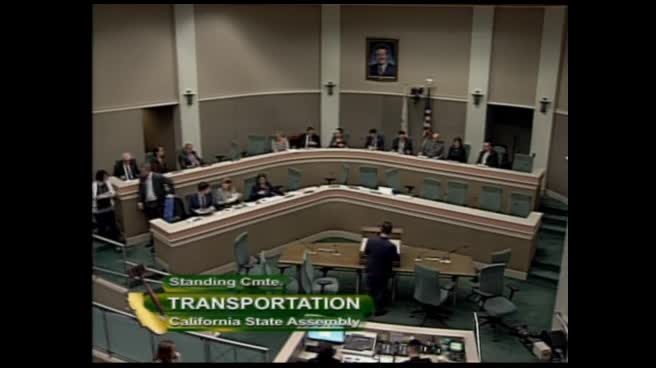 7MIN
Assembly Standing Committee on Transportation
Bill Author

Bill Co-Author(s):