AB 1278: Contractor licensing: judgment debtor prohibition.
- Session Year: 2017-2018
- House: Assembly
- Latest Version Date: 2017-10-05
Existing law, the Contractors State License Law, provides for licensing and regulation of contractors by the Contractors State License Board. That law requires the board, with the approval of the Director of Consumer Affairs, to appoint a registrar of contractors to serve as the executive officer and secretary of the board.
That law directs the board to require, as a condition precedent to accepting an application for licensure, renewal, reinstatement, or to change officers or other personnel of record, that an applicant for a license, previously found to have failed or refused to pay a contractor, subcontractor, consumer, materials supplier, or employee based on a specified unsatisfied final judgment, to file or have on file with the board a bond sufficient to guarantee payment of an amount equal to the unsatisfied judgment or judgments, as specified. That law requires a licensee to notify the registrar in writing of a specified unsatisfied final judgment imposed on the licensee within 90 days of the imposition, and to file or have on file with the board a bond sufficient to guarantee payment of an amount equal to specified unsatisfied judgments within 90 days from date of notification. That law requires the license of a licensee who does not comply with these requirements to be automatically suspended. That law prohibits the suspension from being removed until proof of satisfaction of the judgment, or in lieu thereof, a notarized copy of an accord, is submitted to the registrar.
The bill would revise and recast the provisions relating to notice of an unsatisfied judgment, a sufficient bond for that judgment, and suspension for failure to comply.
The Contractors State License Law also requires the qualifying person and any partner of the licensee or personnel of the licensee named as a judgment debtor in an unsatisfied final judgment to be automatically prohibited from serving as an officer, director, associate, partner, owner, manager, qualifying individual, or other personnel of record of another licensee. That law requires the license of any other existing renewable licensed entity with any of the same personnel of record as the judgment debtor licensee to be suspended until the license of the judgment debtor is reinstated or until those same personnel of record disassociate themselves from the renewable licensed entity.
This bill instead would, if a judgment is entered against a licensee, require a qualifying person or personnel of record of the licensee at the time of the activities on which the judgment is based to be automatically prohibited from serving as a qualifying individual or other personnel of record on another license, until the judgment is satisfied.
Existing law, the Contractors State License Law, provides for licensing and regulation of contractors by the Contractors State License Board. That law requires the board, with the approval of the Director of Consumer Affairs, to appoint a registrar of contractors to serve as the executive officer and secretary of the board.
That law directs the board to require, as a condition precedent to accepting an application for licensure, renewal, reinstatement, or to change officers or other personnel of record, that an applicant for a license, previously found to have failed or refused to pay a contractor, subcontractor, consumer, materials supplier, or employee based on a specified unsatisfied final judgment, to file or have on file with the board a bond sufficient to guarantee payment of an amount equal to the unsatisfied judgment or judgments, as specified. That law requires a licensee to notify the registrar in writing of a specified unsatisfied final judgment imposed on the licensee within 90 days of the imposition, and to file or have on file with the board a bond sufficient to guarantee payment of an amount equal to specified unsatisfied judgments within 90 days from date of notification. That law requires the license of a licensee who does not comply with these requirements to be automatically suspended. That law prohibits the suspension from being removed until proof of satisfaction of the judgment, or in lieu thereof, a notarized copy of an accord, is submitted to the registrar.
This bill would require the suspension to be removed if the licensee provides proof that the judgment is under appeal in a court of competent jurisdiction. The bill would require the suspension to be reinstated after the judgment has been upheld and no further appeal is sought, or all appeals are exhausted. The bill would revise and recast the provisions relating to notice of an unsatisfied judgment, a sufficient bond for that judgment, and suspension for failure to comply.
The Contractors State License Law also requires the qualifying person and any partner of the licensee or personnel of the licensee named as a judgment debtor in an unsatisfied final judgment to be automatically prohibited from serving as an officer, director, associate, partner, owner, manager, qualifying individual, or other personnel of record of another licensee. That law requires the license of any other existing renewable licensed entity with any of the same personnel of record as the judgment debtor licensee to be suspended until the license of the judgment debtor is reinstated or until those same personnel of record disassociate themselves from the renewable licensed entity.
This bill instead would, if a judgment is entered against a licensee, require a qualifying person or personnel of record of the licensee at the time of the activities on which the judgment is based to be automatically prohibited from serving as a qualifying individual or other personnel of record of on another licensee, license, until the judgment is satisfied. The bill would require that this prohibition not apply if the qualifying person or personnel of record provides proof that the judgment is under appeal in a court of competent jurisdiction. The bill would require the suspension to be reinstated after the judgment has been upheld and no further appeal is sought, or all appeals are exhausted.
Existing law, the Contractors State License Law, provides for licensing and regulation of contractors by the Contractors State License Board. That law requires the board, with the approval of the Director of Consumer Affairs, to appoint a registrar of contractors to serve as the executive officer and secretary of the board.
That law directs the board to require, as a condition precedent to accepting an application for licensure, renewal, reinstatement, or to change officers or other personnel of record, that an applicant for a license, previously found to have failed or refused to pay a contractor, subcontractor, consumer, materials supplier, or employee based on a specified unsatisfied final judgment, to file or have on file with the board a bond sufficient to guarantee payment of an amount equal to the unsatisfied judgment or judgments, as specified. That law requires a licensee to notify the registrar in writing of a specified unsatisfied final judgment imposed on the licensee within 90 days of the imposition, and to file or have on file with the board a bond sufficient to guarantee payment of an amount equal to specified unsatisfied judgments within 90 days from date of notification. That law requires the license of a licensee who does not comply with these requirements to be automatically suspended. That law prohibits the suspension from being removed until proof of satisfaction of the judgment, or in lieu thereof, a notarized copy of an accord, is submitted to the registrar.
This bill would require the suspension to be removed if the licensee provides proof that the judgment is under appeal in a court of competent jurisdiction. The bill would require the suspension to be reinstated after the judgment has been upheld and no further appeal is sought, or all appeals are exhausted.
The Contractors State License Law also requires the qualifying person and any partner of the licensee or personnel of the licensee named as a judgment debtor in an unsatisfied final judgment to be automatically prohibited from serving as an officer, director, associate, partner, owner, manager, qualifying individual, or other personnel of record of another licensee. That law requires the license of any other existing renewable licensed entity with any of the same personnel of record as the judgment debtor licensee to be suspended until the license of the judgment debtor is reinstated or until those same personnel of record disassociate themselves from the renewable licensed entity.
This bill instead would would, if a judgment is entered against a licensee, require a qualifying person or personnel of record of the licensee at the time of the activities on which the judgment is based to be automatically prohibited from serving as a qualifying individual or other personnel of record of another licensee if any judgment is entered against the qualifying person or the personnel of record of the licensee, until the judgment is satisfied. The bill would require that this prohibition not apply if the qualifying person or personnel of record provides proof that the judgment is under appeal in a court of competent jurisdiction, but would require the license of the qualifying person or personnel of record to be suspended if the qualifying person or personnel of record was listed on the license subject to the final judgment. jurisdiction. The bill would require the suspension to be reinstated after the judgment has been upheld and no further appeal is sought, or all appeals are exhausted.
Existing law, the Contractors State License Law, provides for licensing and regulation of contractors by the Contractors State License Board. That law requires the board, with the approval of the Director of Consumer Affairs, to appoint a registrar of contractors to serve as the executive officer and secretary of the board.
That law directs the board to require, as a condition precedent to accepting an application for licensure, renewal, reinstatement, or to change officers or other personnel of record, that an applicant for a license, previously found to have failed or refused to pay a contractor, subcontractor, consumer, materials supplier, or employee based on a specified unsatisfied final judgment, to file or have on file with the board a bond sufficient to guarantee payment of an amount equal to the unsatisfied judgment or judgments, as specified. That law requires a licensee to notify the registrar in writing of a specified unsatisfied final judgment imposed on the licensee within 90 days of the imposition, and to file or have on file with the board a bond sufficient to guarantee payment of an amount equal to specified unsatisfied judgments within 90 days from date of notification. That law requires the license of a licensee who does not comply with these requirements to be automatically suspended. That law also prohibits the suspension from being removed until proof of satisfaction of the judgment, or in lieu thereof, a notarized copy of an accord, is submitted to the registrar.
This bill would require the suspension to be removed if the licensee provides proof that the judgment is under appeal in a court of competent jurisdiction.
The Contractors State License Law also requires the qualifying person and any partner of the licensee or personnel of the licensee named as a judgment debtor in an unsatisfied final judgment to be automatically prohibited from serving as an officer, director, associate, partner, owner, manager, qualifying individual, or other personnel of record of another licensee. That law requires the license of any other existing renewable licensed entity with any of the same personnel of record as the judgment debtor licensee to be suspended until the license of the judgment debtor is reinstated or until those same personnel of record disassociate themselves from the renewable licensed entity.
This bill would define final judgment for these purposes as a judgment that is enforceable under the law applicable to the court that entered the judgment and for which no stay of enforcement is in effect. The bill would impose on the licensee the burden of proving that a stay of enforcement is in effect from certified records of the court which issued the stay of enforcement. instead would require a qualifying person or personnel of record to be automatically prohibited from serving as a qualifying individual or other personnel of record of another licensee if any judgment is entered against the qualifying person or the personnel of record of the licensee, until the judgment is satisfied. The bill would require that this prohibition not apply if the qualifying person or personnel of record provides proof that the judgment is under appeal in a court of competent jurisdiction, but would require the license of the qualifying person or personnel of record to be suspended if the qualifying person or personnel of record was listed on the license subject to the final judgment.
Existing law, the Contractors State License Law, provides for licensing and regulation of contractors by the Contractors State License Board. That law requires the board, with the approval of the Director of Consumer Affairs, to appoint a registrar of contractors to serve as the executive officer and secretary of the board.
That law directs the board to require, as a condition precedent to accepting an application for licensure, renewal, reinstatement, or to change officers or other personnel of record, that an applicant for a license, previously found to have failed or refused to pay a contractor, subcontractor, consumer, materials supplier, or employee based on a specified unsatisfied final judgment, to file or have on file with the board a bond sufficient to guarantee payment of an amount equal to the unsatisfied judgment or judgments, as specified. That law requires a licensee to notify the registrar in writing of a specified unsatisfied final judgment imposed on the licensee within 90 days of the imposition, and to file or have on file with the board a bond sufficient to guarantee payment of an amount equal to specified unsatisfied judgments within 90 days from date of notification. That law requires the license of a licensee who does not comply with these requirements to be automatically suspended. That law also requires the qualifying person and any partner of the licensee or personnel of the licensee named as a judgment debtor in an unsatisfied final judgment to be automatically prohibited from serving as an officer, director, associate, partner, owner, manager, qualifying individual, or other personnel of record of another licensee. That law requires the license of any other existing renewable licensed entity with any of the same personnel of record as the judgment debtor licensee to be suspended until the license of the judgment debtor is reinstated or until those same personnel of record disassociate themselves from the renewable licensed entity.
This bill would define final judgment for these purposes as a judgment that is enforceable under the law applicable to the court that entered the judgment and for which no stay of enforcement is in effect. The bill would impose on the licensee the burden of proving that a stay of enforcement is in effect from certified records of the court which issued the stay of enforcement.
The Physical Therapy Practice Act provides for the licensure and regulation of physical therapists and physical therapist assistants by the Physical Therapy Board of California within the Department of Consumer Affairs. Existing law requires the board to adopt regulations necessary to effectuate that act and to comply with the Administrative Procedure Act when adopting those regulations.This bill would make nonsubstantive changes to these provisions.The Physical Therapy Practice Act provides for the licensure and regulation of physical therapists and physical therapist assistants by the Physical Therapy Board of California within the Department of Consumer Affairs. Existing law requires the board to adopt regulations necessary to effectuate that act and to comply with the Administrative Procedure Act when adopting those regulations.
This bill would make nonsubstantive changes to these provisions.
(a)Notwithstanding any other provision of law, the board shall require, as a condition precedent to accepting an application for licensure, renewal, reinstatement, or to change officers or other personnel of record, that an applicant, previously found to have failed or refused to pay a contractor, subcontractor, consumer, materials supplier, or employee based on an unsatisfied final judgment, file or have on file with the board a bond sufficient to guarantee payment of an amount equal to the unsatisfied final judgment or judgments. The applicant shall have 90 days from the date of notification by the board to file the bond or the application shall become void and the applicant shall reapply for issuance, reinstatement, or reactivation of a license. The board may not issue, reinstate, or reactivate a license until the bond is filed with the board. The bond required by this section is in addition to the contractors bond. The bond shall be on file for a minimum of one year, after which the bond may be removed by submitting proof of satisfaction of all debts. The applicant may provide the board with a notarized copy of any accord, reached with any individual holding an unsatisfied final judgment, to satisfy a debt in lieu of filing the bond. The board shall include on the license application for issuance, reinstatement, or reactivation, a statement, to be made under penalty of perjury, as to whether there are any unsatisfied judgments against the applicant on behalf of contractors, subcontractors, consumers, materials suppliers, or the applicants employees. Notwithstanding any other provision of law, if it is found that the applicant falsified the statement then the license will be retroactively suspended to the date of issuance and the license will stay suspended until the bond, satisfaction of judgment, or notarized copy of any accord applicable under this section is filed.
(b)(1)Notwithstanding any other provision of law, all licensees shall notify the registrar in writing of any unsatisfied final judgment imposed on the licensee. If the licensee fails to notify the registrar in writing within 90 days, the license shall be automatically suspended on the date that the registrar is informed, or is made aware of the unsatisfied final judgment.
(2)The suspension shall not be removed until proof of satisfaction of the judgment, or in lieu thereof, a notarized copy of an accord is submitted to the registrar.
(3)If the licensee notifies the registrar in writing within 90 days of the imposition of any unsatisfied final judgment, the licensee shall, as a condition to the continual maintenance of the license, file or have on file with the board a bond sufficient to guarantee payment of an amount equal to all unsatisfied judgments applicable under this section.
(4)The licensee has 90 days from date of notification by the board to file the bond or at the end of the 90 days the license shall be automatically suspended. In lieu of filing the bond required by this section, the licensee may provide the board with a notarized copy of any accord reached with any individual holding an unsatisfied final judgment.
(c)By operation of law, failure to maintain the bond or failure to abide by the accord shall result in the automatic suspension of any license to which this section applies.
(d)A license that is suspended for failure to comply with the provisions of this section can only be reinstated when proof of satisfaction of all debts is made, or when a notarized copy of an accord has been filed as set forth under this section.
(e)This section applies only with respect to an unsatisfied final judgment that is substantially related to the construction activities of a licensee licensed under this chapter, or to the qualifications, functions, or duties of the license.
(f)Except as otherwise provided, this section shall not apply to an applicant or licensee when the financial obligation covered by this section has been discharged in a bankruptcy proceeding.
(g)Except as otherwise provided, the bond shall remain in full force in the amount posted until the entire debt is satisfied. If, at the time of renewal, the licensee submits proof of partial satisfaction of the financial obligations covered by this section, the board may authorize the bond to be reduced to the amount of the unsatisfied portion of the outstanding judgment. When the licensee submits proof of satisfaction of all debts, the bond requirement may be removed.
(h)The board shall take the actions required by this section upon notification by any party having knowledge of the outstanding judgment upon a showing of proof of the judgment.
(i)For the purposes of this section, the term judgment also includes any final arbitration award where the time to file a petition for a trial de novo or a petition to vacate or correct the arbitration award has expired, and no petition is pending.
(j)(1)If a judgment is entered against a licensee, then a qualifying person or personnel of record of the licensee at the time of the activities on which the judgment is based shall be automatically prohibited from serving as a qualifying individual or other personnel of record on another license until the judgment is satisfied.
(2)The prohibition described in paragraph (1) shall cause the license of any other existing renewable licensed entity with any of the same personnel of record as the judgment debtor licensee to be suspended until the license of the judgment debtor is reinstated or until those same personnel of record disassociate themselves from the renewable licensed entity.
(k)For purposes of this section, a cash deposit may be submitted in lieu of the bond.
(l)Notwithstanding subdivision (f), the failure of a licensee to notify the registrar of an unsatisfied final judgment in accordance with this section is cause for disciplinary action.
(a)Notwithstanding any other provision of law, the board shall require, as a condition precedent to accepting an application for licensure, renewal, reinstatement, or to change officers or other personnel of record, that an applicant, previously found to have failed or refused to pay a contractor, subcontractor, consumer, materials supplier, or employee based on an unsatisfied final judgment, file or have on file with the board a bond sufficient to guarantee payment of an amount equal to the unsatisfied final judgment or judgments. The applicant shall have 90 days from the date of notification by the board to file the bond or the application shall become void and the applicant shall reapply for issuance, reinstatement, or reactivation of a license. The board may not issue, reinstate, or reactivate a license until the bond is filed with the board. The bond required by this section is in addition to the contractors bond. The bond shall be on file for a minimum of one year, after which the bond may be removed by submitting proof of satisfaction of all debts. The applicant may provide the board with a notarized copy of any accord, reached with any individual holding an unsatisfied final judgment, to satisfy a debt in lieu of filing the bond. The board shall include on the license application for issuance, reinstatement, or reactivation, a statement, to be made under penalty of perjury, as to whether there are any unsatisfied judgments against the applicant on behalf of contractors, subcontractors, consumers, materials suppliers, or the applicants employees. Notwithstanding any other provision of law, if it is found that the applicant falsified the statement then the license will be retroactively suspended to the date of issuance and the license will stay suspended until the bond, satisfaction of judgment, or notarized copy of any accord applicable under this section is filed.
(b)(1)Notwithstanding any other provision of law, all licensees shall notify the registrar in writing of any unsatisfied final judgment imposed on the licensee. If the licensee fails to notify the registrar in writing within 90 days, the license shall be automatically suspended on the date that the registrar is informed, or is made aware of the unsatisfied final judgment.
(2)(A)The suspension shall not be removed until proof of satisfaction of the judgment, or in lieu thereof, a notarized copy of an accord is submitted to the registrar.
(B)Notwithstanding subparagraph (A), the suspension shall be removed if the licensee provides proof that the judgment is under appeal in a court of competent jurisdiction. The suspension shall be reinstated after the judgment has been upheld and no further appeal is sought, or all appeals are exhausted.(3)If the licensee notifies the registrar in writing within 90 days of the imposition of any unsatisfied final judgment, the licensee shall, as a condition to the continual maintenance of the license, file or have on file with the board a bond sufficient to guarantee payment of an amount equal to all unsatisfied judgments applicable under this section.
(4)The licensee has 90 days from date of notification by the board to file the bond or at the end of the 90 days the license shall be automatically suspended. In lieu of filing the bond required by this section, the licensee may provide the board with a notarized copy of any accord reached with any individual holding an unsatisfied final judgment.
(c)By operation of law, failure to maintain the bond or failure to abide by the accord shall result in the automatic suspension of any license to which this section applies.
(d)A license that is suspended for failure to comply with the provisions of this section can only be reinstated when proof of satisfaction of all debts is made, or when a notarized copy of an accord has been filed as set forth under this section.
(e)This section applies only with respect to an unsatisfied final judgment that is substantially related to the construction activities of a licensee licensed under this chapter, or to the qualifications, functions, or duties of the license.
(f)Except as otherwise provided, this section shall not apply to an applicant or licensee when the financial obligation covered by this section has been discharged in a bankruptcy proceeding.
(g)Except as otherwise provided, the bond shall remain in full force in the amount posted until the entire debt is satisfied. If, at the time of renewal, the licensee submits proof of partial satisfaction of the financial obligations covered by this section, the board may authorize the bond to be reduced to the amount of the unsatisfied portion of the outstanding judgment. When the licensee submits proof of satisfaction of all debts, the bond requirement may be removed.
(h)The board shall take the actions required by this section upon notification by any party having knowledge of the outstanding judgment upon a showing of proof of the judgment.
(i)For the purposes of this section, the term judgment also includes any final arbitration award where the time to file a petition for a trial de novo or a petition to vacate or correct the arbitration award has expired, and no petition is pending.
(j)(1)If a judgment is entered against a licensee, then a qualifying person or personnel of record of the licensee at the time of the activities on which the judgment is based shall be automatically prohibited from serving as a qualifying individual or other personnel of record on another license until the judgment is satisfied.
(2)The prohibition described in paragraph (1) shall cause the license of any other existing renewable licensed entity with any of the same personnel of record as the judgment debtor licensee to be suspended until the license of the judgment debtor is reinstated or until those same personnel of record disassociate themselves from the renewable licensed entity.
(3)The prohibition described in paragraph (1) shall not apply if the qualifying person or personnel of record provides proof that the judgment is under appeal in a court of competent jurisdiction. The suspension described in paragraph (2) shall be reinstated after the judgment has been upheld and no further appeal is sought, or all appeals are exhausted.(k)For purposes of this section, a cash deposit may be submitted in lieu of the bond.
(l)Notwithstanding subdivision (f), the failure of a licensee to notify the registrar of an unsatisfied final judgment in accordance with this section is cause for disciplinary action.
(a)Notwithstanding any other provision of law, the board shall require, as a condition precedent to accepting an application for licensure, renewal, reinstatement, or to change officers or other personnel of record, that an applicant, previously found to have failed or refused to pay a contractor, subcontractor, consumer, materials supplier, or employee based on an unsatisfied final judgment, file or have on file with the board a bond sufficient to guarantee payment of an amount equal to the unsatisfied final judgment or judgments. The applicant shall have 90 days from the date of notification by the board to file the bond or the application shall become void and the applicant shall reapply for issuance, reinstatement, or reactivation of a license. The board may not issue, reinstate, or reactivate a license until the bond is filed with the board. The bond required by this section is in addition to the contractors bond. The bond shall be on file for a minimum of one year, after which the bond may be removed by submitting proof of satisfaction of all debts. The applicant may provide the board with a notarized copy of any accord, reached with any individual holding an unsatisfied final judgment, to satisfy a debt in lieu of filing the bond. The board shall include on the license application for issuance, reinstatement, or reactivation, a statement, to be made under penalty of perjury, as to whether there are any unsatisfied judgments against the applicant on behalf of contractors, subcontractors, consumers, materials suppliers, or the applicants employees. Notwithstanding any other provision of law, if it is found that the applicant falsified the statement then the license will be retroactively suspended to the date of issuance and the license will stay suspended until the bond, satisfaction of judgment, or notarized copy of any accord applicable under this section is filed.
(b)(1)Notwithstanding any other provision of law, all licensees shall notify the registrar in writing of any unsatisfied final judgment imposed on the licensee. If the licensee fails to notify the registrar in writing within 90 days, the license shall be automatically suspended on the date that the registrar is informed, or is made aware of the unsatisfied final judgment.
(2)(A)The suspension shall not be removed until proof of satisfaction of the judgment, or in lieu thereof, a notarized copy of an accord is submitted to the registrar.
(B)Notwithstanding subparagraph (A), the suspension shall be removed if the licensee provides proof that the judgment is under appeal in a court of competent jurisdiction. The suspension shall be reinstated after the judgment has been upheld and no further appeal is sought, or all appeals are exhausted.
(3)If the licensee notifies the registrar in writing within 90 days of the imposition of any unsatisfied final judgment, the licensee shall, as a condition to the continual maintenance of the license, file or have on file with the board a bond sufficient to guarantee payment of an amount equal to all unsatisfied judgments applicable under this section.
(4)The licensee has 90 days from date of notification by the board to file the bond or at the end of the 90 days the license shall be automatically suspended. In lieu of filing the bond required by this section, the licensee may provide the board with a notarized copy of any accord reached with any individual holding an unsatisfied final judgment.
(c)By operation of law, failure to maintain the bond or failure to abide by the accord shall result in the automatic suspension of any license to which this section applies.
(d)A license that is suspended for failure to comply with the provisions of this section can only be reinstated when proof of satisfaction of all debts is made, or when a notarized copy of an accord has been filed as set forth under this section.
(e)This section applies only with respect to an unsatisfied final judgment that is substantially related to the construction activities of a licensee licensed under this chapter, or to the qualifications, functions, or duties of the license.
(f)Except as otherwise provided, this section shall not apply to an applicant or licensee when the financial obligation covered by this section has been discharged in a bankruptcy proceeding.
(g)Except as otherwise provided, the bond shall remain in full force in the amount posted until the entire debt is satisfied. If, at the time of renewal, the licensee submits proof of partial satisfaction of the financial obligations covered by this section, the board may authorize the bond to be reduced to the amount of the unsatisfied portion of the outstanding judgment. When the licensee submits proof of satisfaction of all debts, the bond requirement may be removed.
(h)The board shall take the actions required by this section upon notification by any party having knowledge of the outstanding judgment upon a showing of proof of the judgment.
(i)For the purposes of this section, the term judgment also includes any final arbitration award where the time to file a petition for a trial de novo or a petition to vacate or correct the arbitration award has expired, and no petition is pending.
(j)(1)If a judgment is entered against a qualifying person or a personnel of record of the licensee, the then a qualifying person or personnel of record of the licensee at the time of the activities on which the judgment is based shall be automatically prohibited from serving as a qualifying individual or other personnel of record on another license until the judgment is satisfied.
(2)The prohibition described in paragraph (1) shall not apply if the qualifying person or personnel of record provides proof that the judgment is under appeal in a court of competent jurisdiction. However, if the qualifying person or personnel of record was listed on the license subject to the final judgment, a license of the qualifying person or personnel of record shall be suspended.(3)(2)The prohibition described in paragraph (1) shall cause the license of any other existing renewable licensed entity with any of the same personnel of record as the judgment debtor licensee to be suspended until the license of the judgment debtor is reinstated or until those same personnel of record disassociate themselves from the renewable licensed entity.
(3)The prohibition described in paragraph (1) shall not apply if the qualifying person or personnel of record provides proof that the judgment is under appeal in a court of competent jurisdiction. The suspension described in paragraph (2) shall be reinstated after the judgment has been upheld and no further appeal is sought, or all appeals are exhausted.
(k)For purposes of this section, a cash deposit may be submitted in lieu of the bond.
(l)Notwithstanding subdivision (f), the failure of a licensee to notify the registrar of an unsatisfied final judgment in accordance with this section is cause for disciplinary action.
(a)Notwithstanding any other provision of law, the board shall require, as a condition precedent to accepting an application for licensure, renewal, reinstatement, or to change officers or other personnel of record, that an applicant, previously found to have failed or refused to pay a contractor, subcontractor, consumer, materials supplier, or employee based on an unsatisfied final judgment, file or have on file with the board a bond sufficient to guarantee payment of an amount equal to the unsatisfied final judgment or judgments. The applicant shall have 90 days from the date of notification by the board to file the bond or the application shall become void and the applicant shall reapply for issuance, reinstatement, or reactivation of a license. The board may not issue, reinstate, or reactivate a license until the bond is filed with the board. The bond required by this section is in addition to the contractors bond. The bond shall be on file for a minimum of one year, after which the bond may be removed by submitting proof of satisfaction of all debts. The applicant may provide the board with a notarized copy of any accord, reached with any individual holding an unsatisfied final judgment, to satisfy a debt in lieu of filing the bond. The board shall include on the license application for issuance, reinstatement, or reactivation, a statement, to be made under penalty of perjury, as to whether there are any unsatisfied judgments against the applicant on behalf of contractors, subcontractors, consumers, materials suppliers, or the applicants employees. Notwithstanding any other provision of law, if it is found that the applicant falsified the statement then the license will be retroactively suspended to the date of issuance and the license will stay suspended until the bond, satisfaction of judgment, or notarized copy of any accord applicable under this section is filed.
(b)(1)Notwithstanding any other provision of law, all licensees shall notify the registrar in writing of any unsatisfied final judgment imposed on the licensee. If the licensee fails to notify the registrar in writing within 90 days, the license shall be automatically suspended on the date that the registrar is informed, or is made aware of the unsatisfied final judgment. The
(2)(A)The suspension shall not be removed until proof of satisfaction of the judgment, or in lieu thereof, a notarized copy of an accord is submitted to the registrar. If
(B)Notwithstanding subparagraph (A), the suspension shall be removed if the licensee provides proof that the judgment is under appeal in a court of competent jurisdiction.
(3)If the licensee notifies the registrar in writing within 90 days of the imposition of any unsatisfied final judgment, the licensee shall, as a condition to the continual maintenance of the license, file or have on file with the board a bond sufficient to guarantee payment of an amount equal to all unsatisfied judgments applicable under this section. The
(4)The licensee has 90 days from date of notification by the board to file the bond or at the end of the 90 days the license shall be automatically suspended. In lieu of filing the bond required by this section, the licensee may provide the board with a notarized copy of any accord reached with any individual holding an unsatisfied final judgment.
(c)By operation of law, failure to maintain the bond or failure to abide by the accord shall result in the automatic suspension of any license to which this section applies.
(d)A license that is suspended for failure to comply with the provisions of this section can only be reinstated when proof of satisfaction of all debts is made, or when a notarized copy of an accord has been filed as set forth under this section.
(e)This section applies only with respect to an unsatisfied final judgment that is substantially related to the construction activities of a licensee licensed under this chapter, or to the qualifications, functions, or duties of the license.
(f)Except as otherwise provided, this section shall not apply to an applicant or licensee when the financial obligation covered by this section has been discharged in a bankruptcy proceeding.
(g)Except as otherwise provided, the bond shall remain in full force in the amount posted until the entire debt is satisfied. If, at the time of renewal, the licensee submits proof of partial satisfaction of the financial obligations covered by this section, the board may authorize the bond to be reduced to the amount of the unsatisfied portion of the outstanding judgment. When the licensee submits proof of satisfaction of all debts, the bond requirement may be removed.
(h)The board shall take the actions required by this section upon notification by any party having knowledge of the outstanding judgment upon a showing of proof of the judgment.
(i)For the purposes of this section, the term judgment also includes any final arbitration award where the time to file a petition for a trial de novo or a petition to vacate or correct the arbitration award has expired, and no petition is pending.
(j)A person who was the qualifying person, a partner, or personnel of a licensee being named as a judgment debtor in an unsatisfied final judgment (1)If a judgment is entered against a qualifying person or a personnel of record of the licensee, the qualifying person or personnel of record shall be automatically prohibited from serving as an officer, director, associate, partner, owner, manager, a qualifying individual, individual or other personnel of record on another license. This license until the judgment is satisfied.
(2)The prohibition described in paragraph (1) shall not apply if the qualifying person or personnel of record provides proof that the judgment is under appeal in a court of competent jurisdiction. However, if the qualifying person or personnel of record was listed on the license subject to the final judgment, a license of the qualifying person or personnel of record shall be suspended.
(3)The prohibition described in paragraph (1) shall cause the license of any other existing renewable licensed entity with any of the same personnel of record as the judgment debtor licensee to be suspended until the license of the judgment debtor is reinstated or until those same personnel of record disassociate themselves from the renewable licensed entity.
(k)For purposes of this section, a cash deposit may be submitted in lieu of the bond.
(l)Notwithstanding subdivision (f), the failure of a licensee to notify the registrar of an unsatisfied final judgment in accordance with this section is cause for disciplinary action.
(m)For purposes of this section, final judgment shall mean the judgment is enforceable under the law applicable to the court that entered the judgment and for which no stay of enforcement is in effect. The licensee shall have the burden to prove that a stay of enforcement is in effect from certified records of the court that issued the stay of enforcement.(a)Notwithstanding any other provision of law, the board shall require, as a condition precedent to accepting an application for licensure, renewal, reinstatement, or to change officers or other personnel of record, that an applicant, previously found to have failed or refused to pay a contractor, subcontractor, consumer, materials supplier, or employee based on an unsatisfied final judgment, file or have on file with the board a bond sufficient to guarantee payment of an amount equal to the unsatisfied final judgment or judgments. The applicant shall have 90 days from the date of notification by the board to file the bond or the application shall become void and the applicant shall reapply for issuance, reinstatement, or reactivation of a license. The board may not issue, reinstate, or reactivate a license until the bond is filed with the board. The bond required by this section is in addition to the contractors bond. The bond shall be on file for a minimum of one year, after which the bond may be removed by submitting proof of satisfaction of all debts. The applicant may provide the board with a notarized copy of any accord, reached with any individual holding an unsatisfied final judgment, to satisfy a debt in lieu of filing the bond. The board shall include on the license application for issuance, reinstatement, or reactivation, a statement, to be made under penalty of perjury, as to whether there are any unsatisfied judgments against the applicant on behalf of contractors, subcontractors, consumers, materials suppliers, or the applicants employees. Notwithstanding any other provision of law, if it is found that the applicant falsified the statement then the license will be retroactively suspended to the date of issuance and the license will stay suspended until the bond, satisfaction of judgment, or notarized copy of any accord applicable under this section is filed.
(b)Notwithstanding any other provision of law, all licensees shall notify the registrar in writing of any unsatisfied final judgment imposed on the licensee. If the licensee fails to notify the registrar in writing within 90 days, the license shall be automatically suspended on the date that the registrar is informed, or is made aware of the unsatisfied final judgment. The suspension shall not be removed until proof of satisfaction of the judgment, or in lieu thereof, a notarized copy of an accord is submitted to the registrar. If the licensee notifies the registrar in writing within 90 days of the imposition of any unsatisfied final judgment, the licensee shall, as a condition to the continual maintenance of the license, file or have on file with the board a bond sufficient to guarantee payment of an amount equal to all unsatisfied judgments applicable under this section. The licensee has 90 days from date of notification by the board to file the bond or at the end of the 90 days the license shall be automatically suspended. In lieu of filing the bond required by this section, the licensee may provide the board with a notarized copy of any accord reached with any individual holding an unsatisfied final judgment.
(c)By operation of law, failure to maintain the bond or failure to abide by the accord shall result in the automatic suspension of any license to which this section applies.
(d)A license that is suspended for failure to comply with the provisions of this section can only be reinstated when proof of satisfaction of all debts is made, or when a notarized copy of an accord has been filed as set forth under this section.
(e)This section applies only with respect to an unsatisfied final judgment that is substantially related to the construction activities of a licensee licensed under this chapter, or to the qualifications, functions, or duties of the license.
(f)Except as otherwise provided, this section shall not apply to an applicant or licensee when the financial obligation covered by this section has been discharged in a bankruptcy proceeding.
(g)Except as otherwise provided, the bond shall remain in full force in the amount posted until the entire debt is satisfied. If, at the time of renewal, the licensee submits proof of partial satisfaction of the financial obligations covered by this section, the board may authorize the bond to be reduced to the amount of the unsatisfied portion of the outstanding judgment. When the licensee submits proof of satisfaction of all debts, the bond requirement may be removed.
(h)The board shall take the actions required by this section upon notification by any party having knowledge of the outstanding judgment upon a showing of proof of the judgment.
(i)For the purposes of this section, the term judgment also includes any final arbitration award where the time to file a petition for a trial de novo or a petition to vacate or correct the arbitration award has expired, and no petition is pending.
(j)The qualifying person and any partner of the licensee or personnel of the licensee A person who was the qualifying person, a partner, or personnel of a licensee being named as a judgment debtor in an unsatisfied final judgment shall be automatically prohibited from serving as an officer, director, associate, partner, owner, manager, qualifying individual, or other personnel of record of on another licensee. license. This prohibition shall cause the license of any other existing renewable licensed entity with any of the same personnel of record as the judgment debtor licensee to be suspended until the license of the judgment debtor is reinstated or until those same personnel of record disassociate themselves from the renewable licensed entity.
(k)For purposes of this section, a cash deposit may be submitted in lieu of the bond.
(l)Notwithstanding subdivision (f), the failure of a licensee to notify the registrar of an unsatisfied final judgment in accordance with this section is cause for disciplinary action.
(m)For purposes of this section, final judgment shall mean the judgment is enforceable under the law applicable to the court that entered the judgment and for which no stay of enforcement is in effect. The licensee shall have the burden to prove that a stay of enforcement is in effect from certified records of the court that issued the stay of enforcement.
SECTION 1.Section 2615 of the Business and Professions Code is amended to read:2615.The board shall adopt those regulations as may be necessary to effectuate this chapter. In adopting regulations the board shall comply with the Administrative Procedure Act (Chapter 3.5 (commencing with Section 11340) of Part 1 of Division 3 of Title 2 of the Government Code).The board shall adopt those regulations as may be necessary to effectuate this chapter. In adopting regulations the board shall comply with Chapter the Administrative Procedure Act (Chapter 3.5 (commencing with Section 11340) of Part 1 of Division 3 of Title 2 of the Government Code. Code).
|
Date
|
Status
|
|---|---|
| Oct 5, 2017 | Chaptered by Secretary of State - Chapter 506, Statutes of 2017. |
| Oct 5, 2017 | Approved by the Governor. |
| Sep 19, 2017 | Enrolled and presented to the Governor at 3 p.m. |
| Sep 11, 2017 | Senate amendments concurred in. To Engrossing and Enrolling. |
| Sep 6, 2017 | In Assembly. Concurrence in Senate amendments pending. May be considered on or after September 8 pursuant to Assembly Rule 77. |
| Sep 6, 2017 | Read third time. Passed. Ordered to the Assembly. |
| Aug 22, 2017 | Read second time. Ordered to third reading. |
| Aug 21, 2017 | From committee: Be ordered to second reading pursuant to Senate Rule 28.8. |
| Jul 12, 2017 | From committee: Do pass and re-refer to Com. on APPR. (Ayes 5. Noes 1.) (July 11). Re-referred to Com. on APPR. |
| Jul 3, 2017 | From committee chair, with author's amendments: Amend, and re-refer to committee. Read second time, amended, and re-referred to Com. on JUD. |
| Jun 27, 2017 | From committee: Do pass and re-refer to Com. on JUD. (Ayes 9. Noes 0.) (June 26). Re-referred to Com. on JUD. |
| Jun 13, 2017 | From committee chair, with author's amendments: Amend, and re-refer to committee. Read second time, amended, and re-referred to Com. on B., P. & E.D. |
| Jun 8, 2017 | Referred to Coms. on B., P. & E.D. and JUD. |
| May 26, 2017 | In Senate. Read first time. To Com. on RLS. for assignment. |
| May 26, 2017 | Read third time. Passed. Ordered to the Senate. (Ayes 76. Noes 0. Page 1721.) |
| May 18, 2017 | Read second time. Ordered to Consent Calendar. |
| May 17, 2017 | From committee: Do pass. To Consent Calendar. (Ayes 17. Noes 0.) (May 17). |
| May 2, 2017 | Re-referred to Com. on APPR. |
| May 1, 2017 | Read second time and amended. |
| Apr 27, 2017 | From committee: Amend, and do pass as amended and re-refer to Com. on APPR. (Ayes 11. Noes 0.) (April 25). |
| Apr 18, 2017 | From committee: Do pass and re-refer to Com. on JUD. (Ayes 14. Noes 0.) (April 18). Re-referred to Com. on JUD. |
| Apr 4, 2017 | Re-referred to Com. on B. & P. |
| Apr 3, 2017 | From committee chair, with author's amendments: Amend, and re-refer to Com. on B. & P. Read second time and amended. |
| Mar 30, 2017 | Referred to Coms. on B. & P. and JUD. |
| Feb 19, 2017 | From printer. May be heard in committee March 21. |
| Feb 17, 2017 | Read first time. To print. |
|
Date
|
Description
|
Location
|
Votes
|
|
|---|---|---|---|---|
| Sep 11, 2017 | AB 1278 LOW Concurrence in Senate Amendments | Assembly Floor |
Passed |
|
| Sep 6, 2017 | Assembly 3rd Reading AB1278 Low By Hertzberg | Senate Floor |
Passed |
|
| Jul 11, 2017 | Do pass, but first be re-referred to the Committee on [Appropriations] | Senate Standing Committee on Judiciary |
Passed |
|
| Jun 26, 2017 | Do pass, but first be re-referred to the Committee on [Judiciary] | Senate Standing Committee on Business, Professions and Economic Development |
Passed |
|
| May 26, 2017 | AB 1278 LOW Consent Calendar Second Day Regular Session | Assembly Floor |
Passed |
|
| May 17, 2017 | Do pass. To Consent Calendar. | Assembly Standing Committee on Appropriations |
Passed |
|
| Apr 25, 2017 | Do pass as amended and be re-referred to the Committee on [Appropriations] | Assembly Standing Committee on Judiciary |
Passed |
|
| Apr 18, 2017 | Do pass and be re-referred to the Committee on [Judiciary] | Assembly Standing Committee on Business and Professions |
Passed |
This list shows positions taken on this bill by organizations on the date displayed, which is linked to the original source.
Positions by individuals are not included.
|
Organization
|
Position
|
Date
|
|---|---|---|
| Associated General Contractors | ** Support | Aug 23, 2017 |
| California State Council Of Laborers | ** Support | Aug 23, 2017 |
| Contractors State License Board | * For If Amend | Jun 26, 2017 |
| Operating Engineers | * Support | Apr 18, 2017 |
| Sacramento Regional Builders Exchange | ** Support | Aug 23, 2017 |
| State Building and Construction Trades Council | * Support | Apr 18, 2017 |
CONCURRENCE IN SENATE AMENDMENTS
CSA1 Bill Id:AB 1278
Author:(Low)
As Amended Ver:July 3, 2017
Majority vote
ASSEMBLY: | 76-0 | (May 26, 2017) | SENATE: | 40-0 | (September 6, 2017) |
Original Committee Reference: B. & P.
SUMMARY: Clarifies that, if a judgment is entered against a licensed contractor, the licensee's qualifying person or personnel of record at the time of the activities on which the judgment is based is prohibited from serving on another license as a qualifying individual or other personnel of record, rather than just the licensee's qualifying person or personnel of record at the time the judgement is entered and makes other clarifying changes.
The Senate amendments deleted the provisions relating to the definition of final judgment and added the clarifying and technical changes currently included in the bill.
FISCAL EFFECT: According to the Senate Appropriations Committee, pursuant to Senate Rule 28.8, negligible state costs.
COMMENTS:
Purpose. This bill is sponsored by the California State Council of Laborers. According to the author, "[this bill] clarifies and strengthens existing law regarding the responsibility of personnel for judgements against the contractor with whom they are associated."
Background. The Contractors' State License Law requires anyone who contracts to work on a project that is valued at $500 or more for combined labor and materials costs must be actively licensed under the Contractors State License Board (CSLB). The law specifies that the CSLB only issues licenses to business entities, although an individual contractor can apply for a license as the owner of a sole proprietorship.
For multi-member business entities, the law requires a qualifying person to appear on behalf of the applicant entity. Depending on the type of entity, the qualifying person can be an owner, partner, or other managing or responsible officer, member, or employee. In addition to the qualifying person, certain types of entities must list the remaining managing and responsible associates with the CSLB.
Avoiding Practice Restrictions. Applicants or licensees who are subject to construction-related, unsatisfied final judgments based on the failure to pay obligations must satisfy the judgement or file a bond sufficient to guarantee payment of an amount equal to the unsatisfied judgment. In addition, the law prohibits the personnel of record of a licensee that is named as a judgment debtor in an unsatisfied final judgment from serving as the personnel of record for another licensee. The prohibition, which was established under AB 2993 (Mountjoy), Chapter 1391, Statutes of 1986, was intended to deter contractors who fail to pay another party from transferring the license to another entity and subsequently returning to contracting with no penalty.
However, a licensee is provided time to contest a judgment through the appeals process. The author notes that, "[a]s a result, contractors (and other personnel on the license) who are sued in civil court are able to disassociate from the affected license prior to final judgment and become an officer (or other official of record) on another license. In essence, these unscrupulous contractors can continue to work under a new license, avoiding responsibility for the judgement based on the activities when they were associated with the license."
This bill seeks to prevent this behavior by clarifying that an individual who served as the qualifying person or personnel of record for a licensee during the event that resulted in a final judgement. This clarifies that the responsible personnel are included even if no longer associated with the license at the time the final judgment is entered.
Analysis Prepared by: Vincent Chee / B. & P. / (916) 319-3301 FN: 0002015
Office of Senate Floor Analyses (916) 651-1520 Fax: (916) 327-4478 | AB |
THIRD READING
Bill No: AB 1278
:
SENATE BUS., PROF. & ECON. DEV. COMMITTEE: 9-0, 6/26/17
AYES: Hill, Fuller, Dodd, Galgiani, Glazer, Hernandez, Newman, Pan, Wilk
SENATE JUDICIARY COMMITTEE: 5-1, 7/11/17
AYES: Jackson, Hertzberg, Monning, Stern, Wieckowski
NOES: Anderson
NO VOTE RECORDED: Moorlach
SENATE APPROPRIATIONS COMMITTEE: Senate Rule 28.8
ASSEMBLY FLOOR: 76-0, 5/26/17 (Consent) - See last page for vote
SOURCE: California State Council of Laborers
DIGEST:
This bill specifies that if a judgment is entered against a licensee, then a qualifying person or personnel of record is automatically prohibited from serving as a qualifying individual or other personnel of record, unless the judgment is satisfied.
Existing law:
- Establishes the Contractor’s State License Board (CSLB), within the Department of Consumer Affairs (DCA), for the licensure and regulation of more than 300,000 contractors under the Contractors' State License Law (Contractors Law) by the CSLB; the CSLB is under the direction of the registrar of contractors (Registrar). (Business and Professions Code (BPC) § 7000 et seq.)
- Requires the CSLB, as a condition precedent to accepting an application for licensure, renewal, reinstatement or change of officers or other personnel of records, where the applicant has failed or refused to pay specified individuals, based on an unsatisfied final judgment to file or have on file with the CSLB, a bond sufficient to guarantee payment of an amount equal to the unsatisfied final judgment or judgments. (BPC § 7071.17a)
- Provides the applicant 90 days from the date of the notification by the CSLB to file the bond or the application becomes void, as specified. (BPC § 7071.17(a))
- Requires a statement to be made under penalty of perjury on the application for a license as to whether there are any unsatisfied judgments against the applicant; if it is found that the applicant falsified the statement, then the license will be retroactively suspended to the date of issuance, and the license will stay suspended until the bond, satisfaction of judgment, or notarized copy of accord is filed. (BPC § 7071.17(a))
- Prohibits the qualifying person, any partner of the licensee, or personnel of the licensee named as a judgment debtor in an unsatisfied final judgment from serving as an officer, director, associate, partner, owner, manager, qualifying individual, or other personnel of record of another licensee. (BPC § 7071.17(j))
- Authorizes an applicant or licensee to provide a cash deposit instead of an unsatisfied judgment bond, as specified. (BPC § 7071.17(k))
- Requires a contractor’s bond to be executed by an admitted surety in favor of the State of California, in a form acceptable to the Registrar, and filed with the Registrar by the licensee or applicant; and specifies that a contractor’s bond is for specified benefits, including for an employee of the licensee damaged by the licensee’s failure to pay wages. (BPC § 7071.5(d))
- Requires every person who is an officer, member, responsible manager, or director of a corporation or limited liability company seeking licensure under the Contractors Law to be listed on the application as a member of the personnel of record. (BPC § 7065(b)(1))
- Requires every person who is a member of a partnership seeking a contractor’s license to be listed on the application as a member of the personnel record.
(BPC § 7065(b)(2)) - Specifies that contractor licenses are issued to individual owners, partnerships, corporations, and limited liability companies. (BPC § 7065(b))
- Makes the following definitions in the Contractors Law:
- “Members of the personnel of record” means the individuals listed in the CSLB’s records as associated with a licensee. (BPC § 7025(a))
- “Person” includes an individual, a firm, partnership, corporation, limited liability company, association, or other organization. (BPC § 7025(b))
- “Qualifying person,” “qualifying individual,” or “qualifier,” means a person who qualifies for a contractor license. (BPC § 7025(c))
- “Contractor” or “builder” means a person who performs, offers to perform, or represents the capacity to perform specified acts relating to construction, alteration, repair, or demolition of specified structures, roadways, and projects. (BPC § 7026)
This bill clarifies that if a judgment is entered against a licensee, then a qualifying person or personnel of record of the licensee, at the time of the activities on which the judgment is based, is automatically prohibited from serving as a qualifying individual or other personnel of record on another license until the judgment is satisfied.
Background
CSLB. The CSLB is responsible for implementation and enforcement of the Contractors Law and the laws and regulations related to licensure and enforcement of construction related entities in California. All businesses and individuals who construct or alter, or offer to construct or alter, any building, highway, road, parking facility, railroad, excavation, or other structure in California must be licensed by the CSLB if the total cost (labor and materials) of one or more contracts on the project is $500 or more. The CSLB licenses contractors in 44 license classifications and two certifications.
Currently, a license may be issued to an individual, partnership, corporation, limited liability company, or joint venture. However, all licenses must have a qualifying individual on the license. A qualifying individual is the person listed on the CSLB record who satisfies the experience and examination requirements for a license. Depending on the type of license, the qualifying individual must be designated as an owner, responsible managing employee, responsible managing officer, responsible managing manager, responsible managing member, or qualifying partner in the license records. A qualifying individual is required for every classification and on each license issued by the CSLB; the same person may serve as the qualifier for more than one classification, and licensees may change from one license to another.
Although the CSLB can pursue enforcement actions against licensees, often times, individuals or other entities may bring a civil action against a licensee. As a result, licensees under the CSLB’s jurisdiction are subject to certain suspension and reporting requirements related to the issuance of court-ordered “final judgments” which are deemed to be “construction related”. In addition, applicants for licensure are prohibited from having an unsatisfied final judgment entered against them. For an applicant to qualify for licensure or for a licensee to renew a license or change the licensee’s personnel of record, the applicant or licensee must file a bond sufficient to guarantee payment of an amount equal to the unsatisfied judgment.
Licensed contractors who have an unsatisfied final judgment are required to notify the CSLB of the judgment within 90 days, and if the judgment is not resolved within the 90 days, then the license is suspended until the judgment is satisfied or a bond is secured. According to information from the author, since existing law allows a party time to contest a civil judgment through the appeals process, those who are sued are able to disassociate from the affected license prior to the judgment becoming final, and become an officer or other personnel of record on another license. This essentially allows the contractor to continue to work under a new license while avoiding responsibly for the judgment against the prior license.
The law currently prohibits the personnel of record of a licensee that is named as a judgment debtor in an unsatisfied final judgment from serving as the personnel of record for another licensee. This bill seeks to strengthen this prohibition by further specifying that if a judgment is entered against a qualifying person or the personnel of record of the licensee at the time of the activities on which the judgment is based, than that individual is automatically prohibited from serving as a qualifying individual or other personnel of record of another license, as specified.
FISCAL EFFECT: Appropriation: Fiscal Com.: Local:
California State Council of Laborers (source)
Associated General Contractors
Sacramento Regional Builders Exchange
OPPOSITION: (Verified 8/22/17)
None received
ARGUMENTS IN SUPPORT: Supporters argue that this bill will clarify and strengthen existing law and will prohibit a contractor from disassociating from a license in order to avoid a judgement and continue to work on projects with another license.
ASSEMBLY FLOOR: 76-0, 5/26/17
AYES: Acosta, Aguiar-Curry, Travis Allen, Arambula, Baker, Berman, Bigelow, Bloom, Bocanegra, Bonta, Brough, Burke, Caballero, Calderon, Cervantes, Chávez, Chen, Chiu, Choi, Chu, Cooley, Cooper, Cunningham, Dababneh, Dahle, Daly, Flora, Fong, Frazier, Friedman, Gallagher, Cristina Garcia, Eduardo Garcia, Gipson, Gloria, Gomez, Gonzalez Fletcher, Gray, Grayson, Harper, Holden, Irwin, Jones-Sawyer, Kalra, Kiley, Lackey, Levine, Limón, Low, Maienschein, Mathis, Mayes, McCarty, Medina, Melendez, Mullin, Muratsuchi, Nazarian, Obernolte, O'Donnell, Patterson, Quirk, Quirk-Silva, Reyes, Ridley-Thomas, Rodriguez, Rubio, Salas, Santiago, Mark Stone, Thurmond, Ting, Voepel, Weber, Wood, Rendon
NO VOTE RECORDED: Chau, Eggman, Steinorth, Waldron
8/23/17 15:18:48
**** END ****
Senator Hannah-Beth Jackson, Chair
2017-2018 Regular Session
Bill No: AB 1278 (Author:Low)
Version: July 3, 2017
Hearing Date: July 11, 2017
Fiscal: Yes
Urgency: No
Consultant: MS
SUBJECT
Contractor licensing: judgment debtor prohibition
DESCRIPTION
The Contractors’ State License Law requires the qualifying person and any partner of the licensee or personnel of the licensee named as a judgment debtor in an unsatisfied final judgment to be automatically prohibited from serving as an officer, director, associate, partner, owner, manager, qualifying individual, or other personnel of record of another licensee. That law requires the license of any other existing renewable licensed entity with any of the same personnel of record as the judgment debtor licensee to be suspended until the license of the judgment debtor is reinstated or until those same personnel of record disassociate themselves from the renewable licensed entity.
This bill would instead, if a judgment is entered against a licensee, require a qualifying person or personnel of record of the licensee at the time of the activities on which the judgment is based to be automatically prohibited from serving as a qualifying individual or other personnel of record on another license, until the judgment is satisfied.
BACKGROUND
The Contractors’ State License Board (CSLB) is responsible for the Contractors Law and the laws and regulations related to licensure and enforcement of construction related entities in California. (Bus. & Prof. Code Sec. 7000 et seq.) All businesses and individuals who construct or alter, or offer to construct or alter, any building, highway, road, parking facility, railroad, excavation, or other structure in California must be licensed by the CSLB if the total cost of one or more contracts on the project is equal to or greater than $500. (Id.)
As of the passage of SB 392 (Florez, Ch. 698, Stats. 2010), the CSLB may issue a license to an individual, partnership, corporation, limited liability company, or joint venture. However, all licenses must have a qualifying individual on the license. Existing law considers an individual a “qualifying individual” if they show the required degree of knowledge and experience in the classification applied for, and the general knowledge of building, safety, health, and lien laws of the state and of the administrative principles of the contracting business that the board deems necessary for the safety and protection of the public. (Bus. & Prof. Code Sec. 7068(a).) Depending on the entity seeking licensure, the qualifying individual may have to be a general partner, managing officer, responsible managing officer, or responsible managing employee, as provided. (Bus. & Prof. Code Sec. 7068(a).)
A licensee may be subject to enforcement actions and citations from the CSLB, as well as civil actions by individuals or other entities. Under existing law, a licensee is subject to certain suspension and reporting requirements related to the issuance of court-ordered “final judgments: that are deemed to be “construction related.” (Bus. & Prof. Code Sec. 7071.17(a).) An applicant for licensure or renewal of an existing license must make a statement under penalty of perjury as to whether there are any unsatisfied judgments against the applicant. (Id.) Such an applicant may only qualify for licensure or renewal of a license or to change the licensee’s personnel of record if the applicant or licensee has filed a bond sufficient to guarantee payment of an amount equal to the unsatisfied judgment. Licensed contractors who have an unsatisfied final judgment are required to notify the CSLB of the judgment within 90 days, and if the judgment is not resolved within the 90 days, then the license is suspended until the judgment is satisfied or a bond is secured. (Bus. & Prof. Code Sec. 7071.17(a).) Additionally, existing law prohibits the personnel of record of a licensee that is named as a judgment debtor in an unsatisfied final judgment from serving as the personnel of record for another licensee. (Bus. & Prof. Code Sec. 7071.17(j).)
This bill seeks to further clarify this prohibition on personnel of record of a licensee that is named as a judgment debtor in an unsatisfied final judgment from serving as the personnel of record for another licensee. This bill would, if a judgment is entered against a licensee, require a qualifying person or personnel of record of the licensee at the time of the activities on which the judgment is based to be automatically prohibited from serving as a qualifying individual or other personnel of record on another license, until the judgment is satisfied.
This bill passed out of the Senate Standing Committee on Business, Professions and Economic Development with a 9 to 0 vote.
CHANGES TO EXISTING LAW
Existing law creates the registrar of the Contractors’ State License Board (CSLB), to be appointed by the board, with the approval of the directors. This registrar is the executive officer and secretary of the board, and shall carry out all of the administrative duties as provided by the Contractors’ State License Law. (Bus. & Prof. Code Sec. 7011.)
Existing law requires the CSLB, as a condition precedent to accepting an application for licensure, renewal, reinstatement or change of officers or other personnel of records, where the applicant has failed or refused to pay specified individuals, based on an unsatisfied final judgment to file or have on file with the CSLB, a bond sufficient to guarantee payment of an amount equal to the unsatisfied final judgment or judgments. (Bus. & Prof. Code Sec. 7071.17(a).)
Existing law provides the applicant 90 days from the date of the notification by the CSLB to file the bond or the application becomes void, as specified. (Bus. & Prof. Code Sec. 7071.17(a).)
Existing law requires a statement to be made under penalty of perjury on the application for a license as to whether there are any unsatisfied judgments against the applicant; if it is found that the applicant falsified the statement, then the license will be retroactively suspended to the date of issuance, and the license will stay suspended until the bond, satisfaction of judgment, or notarized copy of accord is filed. (Bus. & Prof. Code Sec. 7071(a).)
Existing law prohibits the qualifying person, any partner of the licensee, or personnel of the licensee named as a judgment debtor in an unsatisfied final judgment from serving as an officer, director, associate, partner, owner, manager, qualifying individual, or other personnel of record of another licensee. (Bus. & Prof. Code Sec. 7071.17(j).)
Existing law provides that an applicant or licensee may provide a cash deposit instead of an unsatisfied judgment bond, as specified. (Bus. & Prof. Code Sec. 7071.17(k).)
Existing law provides that a contractor’s bond shall be executed by an admitted surety in favor of the State of California, in a form acceptable to the Registrar, and filed with the Registrar by the licensee or applicant; and specifies that a contractor’s bond is for specified benefits, including for an employee of the licensee damaged by the licensee’s failure to pay wages. (Bus. & Prof. Code Sec. 7071.5(d).)
Existing law provides that every person who is an officer, member, responsible manager, or director of a corporation or limited liability company seeking licensure under the Contractor’s State License Law shall be listed on the application as a member of the personnel of record. (Bus. & Prof. Code Sec. 7065(b)(1).)
Existing law provides that every person who is a member of a partnership seeking a contractor’s license must be listed on the application as a member of the personnel of record. (Bus. & Prof. Code Sec. 7065(b)(2).)
Existing law provides that contractor licenses are issued to individual owners, partnerships, corporations, and limited liability companies. (Bus. & Prof. Code Sec. 7065(b).)
Existing law provides the following definitions in the Contractors Law:
- “Members of the personnel of record” means the individuals listed in the CSLB’s records as associated with a licensee. (Bus. & Prof. Code Sec. 7025(a).)
- “Person” includes an individual, a firm, partnership, corporation, limited liability company, association, or other organization. (Bus. & Prof. Code Sec. 7025(b).)
- “Qualifying person,” “qualifying individual,” or “qualifier,” means a person who qualifies for a contractor license. (Bus. & Prof. Code Sec. 7025(c).)
- ”Contractor” or “builder” means a person who performs, offers to perform, or represents the capacity to perform specified acts relating to construction, alteration, repair, or demolition of specified structures, roadways, and projects. (Bus. & Prof. Code Sec. 7026.)
This bill would provide, that notwithstanding any other provision of law, all licensees shall notify the registrar in writing of any unsatisfied final judgment imposed on the licensee.
This bill would provide that if the licensee notifies the registrar in writing within 90 days of the imposition of any unsatisfied final judgment, the licensee shall, as a condition for the continual maintenance of the license, file or have on file with the board a bond sufficient to guarantee payment of an amount equal to all unsatisfied judgments applicable under this section.
This bill would provide that if a judgment is entered against a licensee, then a qualifying person or personnel of record from the licensee at the time of the activities on which the judgment is based shall be automatically prohibited from serving as a qualifying individual or other personnel of record on another license until the judgment is satisfied.
This bill would provide that this prohibition on serving as a qualifying individual or other personnel of record on another license until the judgment is satisfied shall cause the license of any other existing renewable licensed entity with any of the same personnel of record as the judgment debtor licensee to be suspended until the license of the judgment debtor is reinstated or until those same personnel of record dissociate themselves from the renewable licensed entity.
COMMENT
- Stated need for this bill
According to the Author:
Recently, the California State License Board (CSLB) has changed its policy on suspending judgments, as required by existing law. According to its Reference Book, when a judgment is received by the CSLB, a notice is sent to the contractor which “gives the contractor 90 days from the date of the notice to resolve the judgment,” after which the “license is automatically suspended” if not resolved.
Citing the Federal Rules of Civil Procedure regarding appeals and motions to set aside a judgment, CSLB staff have now been returning judgments back to filers, “since it does not appear that the judgment is final.” In returning the judgments, the CSLB states that: “In consideration of the rules permitting a federal court to grant a motion to reopen the time to file an appeal for up to 180 days from the date of entry of judgment, 180 days from entry of judgment is sufficient time for the CSLB to determine whether the federal judgment is final or an appeal has been filed.”
This new policy exacerbates the existing problem. Under existing law and the CSLB’s former, written policy, personnel could be removed from the license before judgment was entered, and transfer the operations and license to a new entity. Under the new policy of the CSLB, unscrupulous personnel have an additional 180 days after entry of a judgment to transfer operations and avoid responsibility.
AB 1278 clarifies that if a judgment is entered against a qualifying person or the personnel of record of the licensee, the qualifying person or personnel of record shall be automatically prohibited from serving as a qualifying individual, or other personnel of record of another licensee.
- Ensuring suspension of licenses subject to unsatisfied judgments
Under existing law, an applicant for licensure or renewal of an existing license must make a statement under penalty of perjury as to whether there are any unsatisfied judgments against the applicant. (Bus. & Prof. Code Sec. 7071.17(a).) Such an applicant may only qualify for licensure or renewal of a license or to change the licensee’s personnel of record if the applicant or licensee has filed a bond sufficient to guarantee payment of an amount equal to the unsatisfied judgment. Licensed contractors who have an unsatisfied final judgment are required to notify the CSLB of the judgment within 90 days, and if the judgment is not resolved within the 90 days, then the license is suspended until the judgment is satisfied or a bond is secured. (Id.)
According to the CSLB’s 2017 Reference Book, when the CSLB receives a copy of the judgment, the information is entered on the contractor license record and a notice is sent to the contractor. This notice provides the contractor 90 days from the date of the notice to resolve the judgment. If the CSLB sees the judgment is not resolved following this 90 day period, the contractor’s license is automatically suspended and remains suspended until the judgment is resolved. Furthermore, if the contractor does not report the judgment within 90 days of its issuance, then when the judgment is reported, the CSLB suspends his or her contractor license immediately, without providing the 90 day period to resolve the judgment. (CSLB, Law Reference Book 2017, p. 31-32.)
Arguably, existing law and the practices of the CSLB suggest a preference for ensuring that a licensee, or licensee’s personnel of record, whose license is subject to an unsatisfied judgment are prevented from continuing to operate business as usual until the judgment is satisfied or a bond is secured that would guarantee payment of an amount equal to the unsatisfied judgment. However, proponents of this bill suggest that in practice, individuals are able to disassociate themselves from such a license before the CSLB is able to properly flag them and prevent them from acting as personnel of record on a different license. This allows such individuals to continue engaging in the construction industry while potentially being subject to an unsatisfied judgment counter to the intent of existing law.
This bill seeks to correct such practices by ensuring that a qualifying person or personnel of record of the licensee at the time of the activities on which the judgment is based, is automatically prohibited from serving as a qualifying individual or other personnel of record on another license until the judgment is satisfied. Additionally, this bill would provide that a suspension resulting from an unsatisfied judgment shall not be removed until proof of satisfaction of the judgment, or in lieu thereof, a notarized copy of an accord is submitted to the registrar.
Writing in support, the Sacramento Regional Builders Exchange states:
Under existing law, the CSLB must wait for a final judgment to be entered and then suspend the license upon an unsuccessful appeal. Unfortunately, this process does not provide adequate safeguards to prevent the licensee to be “flagged” by the CSLB and obtain or “jump” onto a secondary license while that individual is appealing a judgment that is not final. By allowing the CSLB to immediately suspend the license upon entry of judgment, the initial suspension would trigger a “flag” on the licensee so that if the licensee applies for a secondary license, CSLB would be able to note that flag during the license screening process.
We believe that AB 1278 will help to prevent bad behavior by unscrupulous contractors, while increasing consumer protections and employee protections within the construction industry.
Support: Associated General Contractors; Laborers’ International Union of North America; Sacramento Regional Builders Exchange
Opposition: None Known
HISTORY
Source: California State Council of Laborers
Related Pending Legislation: SB 486 (Monning, 2017) would provide the CSLB Registrar with the ability to issue a written and detailed letter of admonishment to an applicant, licensee, or registrant instead of issuing a citation when an investigation gives the registrar probable cause to believe that a licensee, registrant, or applicant has committed acts or omissions that are grounds for denial, suspension, or revocation of a license or registration. This bill would require the letter inform the applicant, licensee, or registrant that he or she may submit a written request for an office conference to contest the letter of admonishment, subject to specified procedures, or comply with the letter. This bill is currently in the Assembly Judiciary Committee.
Prior Legislation:
SB 1061 (Mountjoy, Ch. 467, Stats. 1995), made various clean-up and technical changes to the then named Contractors' License Law, including separating bonding requirements into two separate sections (one for license bonds and another for judgment bonds) and provides for the lifting of a license suspension if the contractor files a notarized copy of an accord.
AB 762 (Mountjoy, Ch. 1177, Stats. 1989), eliminated the $50,000 bond or security cap; required applicants and contractors to notify the CSLB within 90 days of an unsatisfied judgment; required the applicant to file the bond or other security within 90 days of notification by the CSLB; and provided that failure to notify the CSLB of an unsatisfied judgment or failure to maintain the required bond is grounds for automatic suspension of the contractors license.
AB 2993 (Mountjoy, Ch. 1391, Stats. 1986), among other things, required that the CSLB require an applicant who previously failed to pay amounts due a contractor, subcontractor, consumer, or employee (based on a recorded and unsatisfied judgment from a court of law in a period five years preceding the application) to file or have on file a bond or other security sufficient to guarantee payment of the unsatisfied judgment or judgments, to a maximum of $50,000.
Prior Vote:
Senate Business, Professions and Economic Development Committee (Ayes 9, Noes 0)
Assembly Floor (Ayes 76, Noes 0)
Assembly Appropriations Committee (Ayes 17, Noes 0)
Assembly Judiciary Committee (Ayes 11, Noes 0)
Assembly Business and Professions Committee (Ayes 14, Noes 0)
**************
SENATE COMMITTEE ON
BUSINESS, PROFESSIONS AND ECONOMIC DEVELOPMENT
Senator Jerry Hill, Chair
2017 - 2018 Regular
Bill No: Hearing Date: June 26, 2017
Author: | |||
Version: | June 13, 2017 | ||
Urgency: | No | Fiscal: | Yes |
Consultant: | Elissa Silva | ||
Subject:
SUMMARY:
Specifies that if a judgment is entered against a licensee, then a qualifying person or personnel of record is automatically prohibited from serving as a qualifying individual or other personnel of record, unless the judgment is under appeal, as specified.
Existing law:
- Establishes the Contractor’s State License Board (CSLB), within the Department of Consumer Affairs (DCA), for the licensure and regulation of more than 300,000 contractors under the Contractors' State License Law (Contractors Law) by the CSLB; the CSLB is under the direction of the registrar of contractors (Registrar). (Business and Professions Code (BPC) § 7000 et seq.)
- Requires the CSLB, as a condition precedent to accepting an application for licensure, renewal, reinstatement or change of officers or other personnel of records, where the applicant has failed or refused to pay specified individuals, based on an unsatisfied final judgment to file or have on file with the CSLB, a bond sufficient to guarantee payment of an amount equal to the unsatisfied final judgment or judgments. (BPC § 7071.17a)
- Provides the applicant 90 days from the date of the notification by the CSLB to file the bond or the application becomes void, as specified. (BPC § 7071.17(a))
- Requires a statement to be made under penalty of perjury on the application for a license as to whether there are any unsatisfied judgments against the applicant; if it is found that the applicant falsified the statement, then the license will be retroactively suspended to the date of issuance, and the license will stay suspended until the bond, satisfaction of judgment, or notarized copy of accord is filed.
(BPC § 7071.17(a)) - Prohibits the qualifying person, any partner of the licensee, or personnel of the licensee named as a judgment debtor in an unsatisfied final judgment from serving as an officer, director, associate, partner, owner, manager, qualifying individual, or other personnel of record of another licensee. (BPC § 7071.17(j))
- Authorizes an applicant or licensee to provide a cash deposit instead of an unsatisfied judgment bond, as specified. (BPC § 7071.17(k))
- Requires a contractor’s bond to be executed by an admitted surety in favor of the State of California, in a form acceptable to the Registrar, and filed with the Registrar by the licensee or applicant; and specifies that a contractor’s bond is for specified benefits, including for an employee of the licensee damaged by the licensee’s failure to pay wages. (BPC § 7071.5(d))
- Requires every person who is an officer, member, responsible manager, or director of a corporation or limited liability company seeking licensure under the Contractors’ State License Law to be listed on the application as a member of the personnel of record. (BPC § 7065(b)(1))
- Requires every person who is a member of a partnership seeking a contractor’s license to be listed on the application as a member of the personnel record.
(BPC § 7065(b)(2)) - Specifies that contractor licenses are issued to individual owners, partnerships, corporations, and limited liability companies. (BPC § 7065(b))
- Makes the following definitions in the Contractors Law:
- “Members of the personnel of record” means the individuals listed in the CSLB’s records as associated with a licensee. (BPC § 7025(a))
- “Person” includes an individual, a firm, partnership, corporation, limited liability company, association, or other organization. (BPC § 7025(b))
- “Qualifying person,” “qualifying individual,” or “qualifier,” means a person who qualifies for a contractor license. (BPC § 7025(c))
- “Contractor” or “builder” means a person who performs, offers to perform, or represents the capacity to perform specified acts relating to construction, alteration, repair, or demolition of specified structures, roadways, and projects. (BPC § 7026)
This bill:
- Clarifies that if a judgment is entered against a licensee, then a qualifying person or personnel of record of the licensee, at the time of the activities on which the judgment is based, is automatically prohibited from serving as a qualifying individuals or other personnel of record on another license until the judgment is satisfied.
- Specifies that the prohibition in Item #1) above, does not apply if the qualifying person or personnel of record provides proof that the judgment is under appeal in a court of competent jurisdiction.
- Clarifies that a suspension resulting from Item #1) above, will cause the license of any other existing renewable licensed entity, with any of the same personnel of record as the judgment debtor, to be suspended and reinstated after the judgment has been upheld and no further appeal is sought or all appeals are exhausted.
- Provides that, in the event that a license is automatically suspended because the licensee fails to notify the registrar in writing about an unsatisfied final judgment, the suspension must be lifted if the licensee provides proof that the judgment is under appeal by a court of competent jurisdiction.
FISCAL EFFECT:
This bill is keyed fiscal by the Legislative Counsel. According to the Assembly Committee on Appropriations Analysis dated May 17, 2017, “minor and absorbable costs to the Contractors State License Board (CSLB).”
COMMENTS:
- Purpose. This bill is sponsored by the California State Council of Laborers. According to the Author,
“Recently, the California State License Board (CSLB) has changed its policy on suspending judgments, as required by existing law. According to its Reference Book, when a judgment is received by the CSLB, a notice is sent to the contractor which “gives the contractor 90 days from the date of the notice to resolve the judgment,” after which the “license is automatically suspended” if not resolved.
Citing the Federal Rules of Civil Procedure regarding appeals and motions to set aside a judgment, CSLB staff have now been returning judgments back to filers, “since it does not appear that the judgment is final.” In returning the judgments, the CSLB states that: “In consideration of the rules permitting a federal court to grant a motion to reopen the time to file an appeal for up to 180 days from the date of entry of judgment, 180 days from entry of judgment is sufficient time for the CSLB to determine whether the federal judgment is final or an appeal has been filed.”
This new policy exacerbates the existing problem. Under existing law and the CSLB’s former, written policy, personnel could be removed from the license before judgment was entered, and transfer the operations and license to a new entity. Under the new policy of the CSLB, unscrupulous personnel have an additional 180 days after entry of a judgment to transfer operations and avoid responsibility.
AB 1278 clarifies that if a judgment is entered against a qualifying person or the personnel of record of the licensee, the qualifying person or personnel of record shall be automatically prohibited from serving as a qualifying individual, or other personnel of record of another licensee.”
- CSLB. The CSLB is responsible for implementation and enforcement of the Contractors Law and the laws and regulations related to licensure and enforcement of construction related entities in California. All businesses and individuals who construct or alter, or offer to construct or alter, any building, highway, road, parking facility, railroad, excavation, or other structure in California must be licensed by the CSLB if the total cost (labor and materials) of one or more contracts on the project is $500 or more. The CSLB licenses contractors in 44 license classifications and two certifications.
Currently, a license may be issued to an individual, partnership, corporation, limited liability company, or joint venture. However, all licenses must have a qualifying individual on the license. A qualifying individual is the person listed on the CSLB record who satisfies the experience and examination requirements for a license. Depending on the type of license, the qualifying individual must be designated as an owner, responsible managing employee, responsible managing officer, responsible managing manager, responsible managing member, or qualifying partner in the license records. A qualifying individual is required for every classification and on each license issued by CSLB; the same person may serve as the qualifier for more than one classification, and licensees may change from one license to another.
Although the CSLB can pursue enforcement actions against licensees, often times, individuals or other entities may bring a civil action against a licensee. As a result, licensees under the CSLB’s jurisdiction are subject to certain suspension and reporting requirements related to the issuance of court-ordered “final judgments” which are deemed to be “construction related”. In addition, applicants for licensure are prohibited from having an unsatisfied final judgment entered against them. For an applicant to qualify for licensure or for a licensee to renew a license or change the licensee’s personnel of record, the applicant or licensee must file a bond sufficient to guarantee payment of an amount equal to the unsatisfied judgment.
Licensed contractors who have an unsatisfied final judgment are required to notify the CSLB of the judgment within 90 days, and if the judgment is not resolved within the 90 days, then the license is suspended until the judgment is satisfied or a bond is secured. According to information from the Author, since existing law allows a party time to contest a civil judgment through the appeals process, those who are sued are able to disassociate from the affected license prior to the judgment becoming final, and become an officer or other personnel of record on another license. This essentially allows the contractor to continue to work under a new license while avoiding responsibly for the judgment against the prior license.
The law currently prohibits the personnel of record of a licensee that is named as a judgment debtor in an unsatisfied final judgment from serving as the personnel of record for another licensee. This bill seeks to strengthen this prohibition by further specifying that if a judgment is entered against a qualifying person or the personnel of record of the licensee at the time of the activities on which the judgment is based, than that individual is automatically prohibited from serving as a qualifying individual or other personnel of record of another license. This bill allows for the license suspension to be lifted if the contractor provides proof that the judgment is on appeal.
- Arguments in Support. The California State Council of Laborers states that, “[This bill] will clarify and strengthen existing law as the responsibility of personnel for judgments against the contractor with whom they are associated. Specifically, it redefines the “base” period to suspend personnel from serving on other licenses to be the period when the violation occurred, rather than when the judgment is entered.”
The Sacramento Regional Builders Exchange writes in support, noting that
“AB 1278 seeks to address a serious problem when a licensed contractor who is sued in civil court, who then may choose to disassociate themselves from the affected license prior to final judgment and continue to work on other projects with another license.”
The Associated General Contractors writes in support, stating that “This measure will prohibit an unscrupulous contractor from disassociating from a license in order to avoid an unsatisfied construction related judgment by obtaining a secondary license.”
- Prior Related Legislation. SB 1061 (Mountjoy, Chapter 467, Statutes of 1995), made various clean-up and technical changes to the then named Contractors' License Law, including separating bonding requirements into two separate sections (one for license bonds and another for judgment bonds) and provides for the lifting of a license suspension if the contractor files a notarized copy of an accord.
AB 762 (Mountjoy, Chapter 1177, Statutes of 1989), eliminated the $50,000 bond or security cap; required applicants and contractors to notify the CSLB within 90 days of an unsatisfied judgment; require the applicant to file the bond or other security within 90 days of notification by the CSLB; provided that failure to notify the CSLB of an unsatisfied judgment or failure to maintain the required bond is grounds for automatic suspension of the contractor's license.
AB 2993 (Mountjoy, Chapter 1391, Statutes of 1986), among other things, required that the CSLB require an applicant who previously failed to pay amounts due a contractor, subcontractor, consumer, or employee (based on a recorded and unsatisfied judgment from a court of law in a period five years preceding the application) to file or have on file a bond or other security sufficient to guarantee payment of the unsatisfied judgment or judgments, to a maximum of $50,000.
NOTE:
Double-referral to Senate Judiciary Committee, second.
SUPPORT AND OPPOSITION:
Support:
California State Council of Laborers (sponsor)
Associated General Contractors
Sacramento Regional Builders Exchange
Opposition:
None on file as of June 20, 2017.
.-- END --
Date of Hearing: May 17, 2017
ASSEMBLY COMMITTEE ON APPROPRIATIONS
Lorena Gonzalez Fletcher, Chair
ABPCA Bill Id:AB 1278
Author:(Low) – As Amended Ver:May 1, 2017
Policy Committee: | Business and Professions | Vote: | 14 - 0 |
Judiciary | 11 - 0 | ||
|
|
Urgency: No State Mandated Local Program: No Reimbursable: No
SUMMARY: This bill clarifies how a licensee subject to an unsatisfied judgment may lift the suspension. Specifically, this bill:
- Clarifies that if a judgment is entered against a qualifying person or the personnel of record of the licensee, they will be automatically prohibited from serving as a qualifying individual or other personnel of record of another licensee.
- Provides that the automatic prohibition does not apply if the qualifying person or personnel of record provides proof that the judgment is under appeal by a court of competent jurisdiction. However, if they were listed on the license subject to the final judgment, all licenses of the qualifying person or personnel of record must be suspended.
- Provides that—in the event that a license is automatically suspended because the licensee fails to notify the registrar in writing about an unsatisfied final judgment—suspension must be lifted if the licensee provides proof that the judgment is under appeal by a court of competent jurisdiction.
FISCAL EFFECT:
Minor and absorbable costs to the Contactors State License Board (CSLB).
COMMENTS:
- Purpose. According to the author, it appears that some licensees—in anticipation of an unfavorable judgment entered against them—will disassociate themselves from a license, and obtain or “jump” onto a secondary license to avoid the risk of license suspension. Additionally, because the suspension rules are triggered upon a “final” judgment, some individuals appeal a judgment and again, “jump” onto a secondary license to avoid the risk of license suspension. The author writes:
Contractors (and other personnel on the license) who are sued in civil court are able to disassociate from the affected license prior to final judgment and become an officer (or other official of record) on another license. In essence, these unscrupulous contractors can continue to work under a new license, and avoid responsibility for the judgment based on the activities when they were associated with the license.
This bill prevents a qualifying individual or personnel of record from jumping onto another license once a judgment is entered against that qualifying individual or personnel of record by automatically suspending the license. To provide due process protections, this bill allows the qualifying individual or licensee to lift the suspension by providing proof that the judgment is under appeal—regardless of whether the appeal is in small claims, or in a court of appeal.
- Background. In California, any contractor who performs work on a project valued at $500 or more must be licensed by the CSLB. Under the CSLB licensing scheme, licenses are issued to business entities, rather than individuals (although an individual contractor may obtain a license as a sole proprietorship). The CSLB defines “a qualifying person” as a person who qualifies for a contractor license, and “a member of the personnel of record” as an individual associated with a license. Accordingly, it is not uncommon for a contractor to be the personnel of record on several licenses.
In order to be licensed, an applicant must not have an unsatisfied construction-related final judgment entered against the applicant; otherwise, the applicant must file a bond to cover the amount of the unsatisfied judgment. Additionally, if a licensee is subject to a final judgment, the licensee must notify the CSLB of that judgment or risk having the license suspended. The suspension can be lifted after the licensee satisfies the judgment or provides other proof that the matter has been resolved.
Under existing law, a qualifying person or personnel of record subject to an unsatisfied construction-related final judgment is automatically prohibited from serving as a qualifying individual or personnel of record on another licensee. The CSLB must wait for a final judgment to be entered (e.g., after appeal), and then suspend the license upon unsuccessful appeal.
- Prior Legislation. SB 1061 (Mountjoy), Chapter 467, Statutes of 1995, made various clean-up and technical changes to the then named Contractors' License Law, including separating bonding requirements into two separate sections (one for license bonds and another for judgment bonds) and provides for the lifting of a license suspension if the contractor files a notarized copy of an accord.
AB 762 (Mountjoy), Chapter 1177, Statutes of 1989, eliminated the $50,000 bond or security cap; required applicants and contractors to notify the CSLB within 90 days of an unsatisfied judgment; require the applicant to file the bond or other security within 90 days of notification by the CSLB; provided that failure to notify the CSLB of an unsatisfied judgment or failure to maintain the required bond is grounds for automatic suspension of the contractor's license.
AB 2993 (Mountjoy), Chapter 1391, Statutes of 1986, among other things, required that the CSLB require an applicant who previously failed to pay amounts due a contractor, subcontractor, consumer, or employee (based on a recorded and unsatisfied judgment from a court of law in a period five years preceding the application) to file or have on file a bond or other security sufficient to guarantee payment of the unsatisfied judgment or judgments, to a maximum of $50,000.
Analysis Prepared by: Jennifer Swenson / APPR. / (916) 319-2081
Date of Hearing: April 25, 2017
ASSEMBLY COMMITTEE ON JUDICIARY
Mark Stone, Chair
ABPCA Bill Id:AB 1278
Author:(Low) – As Amended Ver:April 3, 2017
As Proposed to be Amended
SUBJECT: CONTRACTOR LICENSING: FINAL JUDGMENT
KEY ISSUE: IN ORDER TO PREVENT AN UNSCRUPULOUS CONTRACTOR FROM AVOIDING AN UNSATISFIED CONSTRUCTION-RELATED JUDGMENT, SHOULD IT BE CLARIFIED THAT A CONTRACTOR IS PROHIBITED FROM DISASSOCIATING FROM A SUSPENDED LICENSE IN ORDER TO OBTAIN A SECONDARY LICENSE?
SYNOPSIS
In California, any contractor who performs work on a project valued at $500 or more must be licensed by the Contractors’ State License Board (CSLB). Under the licensing scheme, some contractors are associated with several licenses because the license is issued to an entity, rather than an individual. In order to obtain and maintain that contractor’s license, the licensee must not be subject to unsatisfied construction-related judgments. A licensee subject to an unsatisfied judgment risks license suspension. These strict licensing rules are intended to protect consumers, employees, and the general public.
According to the author, it appears that some licensees—in anticipation of an unfavorable judgment entered against them—will disassociate themselves from a license, and obtain or “jump” onto a secondary license to avoid the risk of license suspension. Additionally, because the suspension rules are triggered upon a “final” judgment, some individuals appeal a judgment and again, “jump” onto a secondary license to avoid the risk of license suspension.
This bill as proposed to be amended clarifies that if a judgment is entered against a qualifying person or the personnel of record of the licensee, the qualifying person or personnel of record shall be automatically prohibited from serving as a qualifying individual, or other personnel of record of another licensee. To provide due process protections, this bill as proposed to be amended states that the automatic prohibition does not apply if the qualifying person or personnel of record provides proof that the judgment is under appeal by a court of competent jurisdiction. However, this bill further provides that if the qualifying person or personnel of record was listed on the license subject to the final judgment, all licenses of the qualifying person or personnel of record shall be suspended. The author plans to adopt in Committee the amendments reflected in this analysis.
This bill is sponsored by the California State Council of Laborers, and has no opposition on file. This bill previously passed out of the Assembly Business and Professions Committee with a 14-0 vote.
SUMMARY: Clarifies how a licensee subject to unsatisfied judgment may lift the suspension. Specifically, this bill:
- Clarifies that if a judgment is entered against a qualifying person or the personnel of record of the licensee, the qualifying person or personnel of record shall be automatically prohibited from serving as a qualifying individual or other personnel of record of another licensee.
- Provides that the automatic prohibition does not apply if the qualifying person or personnel of record provides proof that the judgment is under appeal by a court of competent jurisdiction. However, if the qualifying person or personnel of record was listed on the license subject to the final judgment, all licenses of the qualifying person or personnel of record shall be suspended.
- Provides that—in the event that a license is automatically suspended because the licensee fails to notify the registrar in writing about an unsatisfied final judgment—suspension shall be lifted if the licensee provides proof that the judgment is under appeal by a court of competent jurisdiction.
EXISTING LAW:
- Establishes the Contractors’ State License Board (CSLB) within the Department of Consumer Affairs. (Business and Professions Code Section 7000.5 (a). Unless otherwise stated, all further statutory references are to the Business and Professions Code.)
- Requires the registrar to investigate, classify, and qualify applicants for contractors’ licenses by written examination, as provided. (Section 7065 (a).)
- Allows a contractors’ license to be issued to individual owners, partnerships, corporations, and limited liability companies, as specified. (Section 7065 (b).)
- Provides for the following definitions:
- “Members of the personnel of record” means the individuals listed in the CSLB’s records as associated with a licensee. (Section 7025 (a).)
- “Person” includes an individual, a firm, partnership, corporation, limited liability company, association, or other organization. (Section 7025 (b).)
- “Qualifying person,” “qualifying individual,” or “qualifier,” means a person who qualifies for a contractor license. (Section 7025 (c).)
- “Contractor” or “builder” means a person who performs, offers to perform, or represents the capacity to perform specified acts relating to construction, alteration, repair, or demolition of specified structures, roadways, and projects. (Section 7026.)
- Requires every person who is an officer, member, responsible manager, or director of a corporation or limited liability company seeking licensure to be listed on the application as a member of the personnel of record. (Section 7065 (b)(1).)
- Requires every person who is a member of a partnership seeking a contractor’s license to be listed on the application as a member of the personnel record. (Section 7065 (b)(2).)
- Requires, as a condition precedent to accepting an application for licensure, renewal, reinstatement, or to change officers or other personnel of record, that an applicant, previously found to have failed or refused to pay a contractor, subcontractor, consumer, materials supplier, or employee based on an unsatisfied final judgment, file or have on file with the board a bond sufficient to guarantee payment of an amount equal to the unsatisfied final judgment or judgments, as provided. (Section 7071.17 (a).)
- Requires a licensee to notify the registrar in writing of any unsatisfied final judgment imposed on the licensee. If the licensee fails to notify the registrar in writing within 90 days, the license shall be automatically suspended on the date that the registrar is informed, or is made aware of the unsatisfied final judgment. Prohibits the suspension from being lifted until proof of satisfaction of the judgment, or in lieu thereof, a notarized copy of an accord is submitted to the registrar, as provided. (Section 7071.17 (b).)
- Provides that a qualifying person and any partner of the licensee or personnel of the licensee named as a judgment debtor in an unsatisfied final judgment shall be automatically prohibited from serving as an officer, director, associate, partner, owner, manager, qualifying individual, or other personnel of record of another licensee. This prohibition shall cause the license of any other existing renewable licensed entity with any of the same personnel of record as the judgment debtor licensee to be suspended until the license of the judgment debtor is reinstated or until those same personnel of record disassociate themselves from the renewable licensed entity. (Section 7071.17 (k).)
- Provides that an unsatisfied final judgment applies only to those that are substantially related to the construction activities of a licensee, as provided. (Section 7017.17 (e).)
FISCAL EFFECT: As currently in print this bill is keyed fiscal.
COMMENTS: In California, any contractor who performs work on a project valued at $500 or more must be licensed by the Contractors’ State License Board (CSLB). Under the CSLB licensing scheme, licenses are issued to business entities, rather than individuals (although an individual contractor may obtain a license as a sole proprietorship). CSLB defines “a qualifying person” as a person who qualifies for a contractor license, and “a member of the personnel of record” as an individual associated with a license. Accordingly, it is not uncommon for a contractor to be the personnel of record on several licenses.
To obtain and maintain a contractor’s license, the licensee must not be subject to unsatisfied construction-related judgments. Contractor licensing requirements are intended to protect consumers, employees, and the public from incompetent practice. For example, in order to be licensed, an applicant must not have an unsatisfied construction-related final judgment entered against the applicant; otherwise, the applicant must file a bond to cover the amount of the unsatisfied judgment. Additionally, if a licensee is subject to a final judgment, the licensee must notify the CSLB of that judgment or risk having the license suspended. Of course, the suspension can be lifted after the licensee satisfies the judgment or provides other proof that the matter has been resolved.
To prevent individuals from avoiding unsatisfied judgments, existing law limits license disassociation. Under existing law, a qualifying person or personnel of record subject to an unsatisfied construction-related final judgment is automatically prohibited from serving as a qualifying individual or personnel of record on another licensee. Presumably, the intent behind this law is to prevent individuals at-risk of being suspended from “jumping” onto another license to avoid unsatisfied judgments, and thus, escape paying wages to employees.
Problem that the author is seeking to address. According to the author, it appears that some licensees—in anticipation of an unfavorable judgment entered against them—will disassociate themselves from a license, and obtain or “jump” onto a secondary license to avoid the risk of license suspension. Additionally, because the suspension rules are triggered upon a “final” judgment, some individuals appeal a judgment and again, “jump” onto a secondary license to avoid the risk of license suspension. In stating the need for the bill, the author writes:
Contractors (and other personnel on the license) who are sued in civil court are able to disassociate from the affected license prior to final judgment and become an officer (or other official of record) on another license. In essence, these unscrupulous contractors can continue to work under a new license, and avoid responsibility for the judgment based on the activities when they were associated with the license.
Summary of this bill. This bill as proposed to be amended clarifies that if a judgment is entered against a qualifying person or the personnel of record of the licensee, the qualifying person or personnel of record shall be automatically prohibited from serving as a qualifying individual, or other personnel of record of another licensee. To provide due process protections, this bill states that the automatic prohibition does not apply if the qualifying person or personnel of record provides proof that the judgment is under appeal by a court of competent jurisdiction. However, if the qualifying person or personnel of record was listed on the license subject to the final judgment, all licenses of the qualifying person or personnel of record shall be suspended.
This bill as proposed to be amended provides due process protections before a judgment becomes final. As stated above, this bill as proposed to be amended prevents a qualifying individual or personnel of record from jumping onto another license once a judgment is entered against that qualifying individual or personnel of record by automatically suspending the license. To provide due process protections, this bill allows the qualifying individual or licensee to lift the suspension by providing proof that the judgment is under appeal—regardless of whether the appeal is in small claims, or in a court of appeal.
Under existing law, the CSLB must wait for a final judgment to be entered (e.g., after appeal), and then suspend the license upon unsuccessful appeal. However, this approach does not appear to solve the problem posed by the author. This is because, according to CSLB staff, its licensing system is unable to “flag” an individual trying to obtain or “jump” onto a secondary license while that individual is appealing a judgment that is not final. In other words, CSLB staff would not know that the individual is “jumping” because the CSLB does not know about the judgment (since it’s not final). By allowing the CSLB to immediately suspend the license upon entry of judgment, and then allowing it to lift the suspension upon proof of an appeal, the initial suspension would trigger a “flag” on the licensee so that if the licensee applies for a secondary license, CSLB would be able to note that flag during the licensing process.
As stated above, the author plans to adopt these reasonable amendments as reflected in the analysis, clarifying when a suspension may occur, and when a suspension may be lifted:
On page 3, line 22, after (b), insert (1)
On page 3, line 27, before the period, insert (2)(A)
On page 3, line 29, after the period, insert:
(B) Notwithstanding subparagraph (A), the suspension shall be removed if the licensee provides proof that the judgment is under appeal by a court of competent jurisdiction. (3)
On page 3, line 35, after the period, insert (4)
On page 4, delete lines 30 through 36 inclusive, and insert:
(j)(1) If a judgment is entered against a qualifying person or the personnel of record of the licensee, the qualifying person or personnel of record shall be automatically prohibited from serving as a qualifying individual, or other personnel of record of another licensee.
(2) The prohibition described in paragraph (1) does not apply if the qualifying person or personnel of record provides proof that the judgment is under appeal by a court of competent jurisdiction. However, if the qualifying person or personnel of record was listed on the license subject to the final judgment, all licenses of the qualifying person or personnel of record shall be suspended.
(3) The prohibition described in paragraph (1) shall cause the
On page 5, delete lines 8 through 13 inclusive.
REGISTERED SUPPORT / OPPOSITION:
Support
California State Council of Laborers
Opposition
None on file
Analysis Prepared by: Eric Dang / JUD. / (916) 319-2334
Date of Hearing:
ASSEMBLY COMMITTEE ON BUSINESS AND PROFESSIONS
Rudy Salas, Chair
ABPCA Bill Id:AB 1278
Author:(Low) – As Amended Ver:April 3, 2017
NOTE: This bill is doubled referred, and if passed by this Committee, will be referred to the Assembly Committee on Judiciary.
SUBJECT: Contractor licensing: judgment debtor prohibition: final judgment: definition.
SUMMARY: Defines, for purposes of contractor licensure requirements relating to bonds for unsatisfied final judgements, “final judgment” as a judgment that is enforceable under the law applicable to the court that entered the judgment and for which no stay of enforcement is in effect.
EXISTING LAW:
- Establishes the Contractors’ State License Board (CSLB) within the Department of Consumer Affairs (DCA) and vests the CSLB with all functions and duties relating to the administration of the Contractors’ State License Law. (Business and Professions Code (BPC) §§ 7000-7191)
- Defines, for purposes of the Contractors’ State License Law, the following:
- “Members of the personnel of record” means the individuals listed in the CSLB’s records as associated with a licensee. (BPC § 7025(a))
- “Person” includes an individual, a firm, partnership, corporation, limited liability company, association, or other organization. (BPC § 7025(b))
- “Qualifying person,” “qualifying individual,” or “qualifier,” means a person who qualifies for a contractor license. (BPC § 7025(c))
- “Contractor” or “builder” means a person who performs, offers to perform, or represents the capacity to perform specified acts relating to construction, alteration, repair, or demolition of specified structures, roadways, and projects. (BPC § 7026)
- Specifies that contractor licenses are issued to individual owners, partnerships, corporations, and limited liability companies. (BPC § 7065(b))
- Requires every person who is an officer, member, responsible manager, or director of a corporation or limited liability company seeking licensure under the Contractors’ State License Law to be listed on the application as a member of the personnel of record. (BPC § 7065(b)(1))
- Requires every person who is a member of a partnership seeking a contractor’s license to be listed on the application as a member of the personnel record. (BPC § 7065(b)(2))
- Makes it a misdemeanor for a person to engage in the business of, or act in the capacity of, a contractor within this state if the person is not licensed in accordance with the Contractors’ State License Law. (BPC § 7028(a))
- Requires the CSLB to require, as a condition precedent to accepting an application for licensure, renewal, reinstatement, or to change officers or other personnel of record, that an applicant who has been previously found to have failed or refused to pay a contractor, subcontractor, consumer, materials supplier, or employee based on an unsatisfied final judgment, file or have on file with the CSLB a bond sufficient to guarantee payment of an amount equal to the unsatisfied final judgment and specifies the process for complying with the requirement, including timing, notice, and penalties. (BPC § 7071.17)
- Prohibits the qualifying person, any partner of the licensee, or personnel of the licensee named as a judgment debtor in an unsatisfied final judgement from serving as an officer, director, associate, partner, owner, manager, qualifying individual, or other personnel of record of another licensee. (BPC § 7071.17(j))
- Authorizes an applicant or licensee to provide a cash deposit instead of an unsatisfied judgement bond, as specified. (BPC § 7071.17(k))
- Specifies that an action is deemed to be pending from the time of its commencement until its final determination upon appeal, or until the time for appeal has passed, unless the judgment is sooner satisfied. (California Code of Civil Procedure (CCP) § 1049)
THIS BILL:
- Defines “final judgment,” for purposes of the judgement bond requirement, to mean a judgment that is enforceable under the law applicable to the court that entered the judgment and for which no stay of enforcement is in effect.
- Specifies that the licensee shall have the burden of proving that a stay of enforcement is in effect from certified records of the court that issued the stay of enforcement.
- Makes technical, clarifying changes.
FISCAL EFFECT: Unknown. This bill is keyed fiscal by the Legislative Counsel.
COMMENTS:
Purpose. This bill is sponsored by the California State Council of Laborers. According to the author, “[this bill] clarifies and strengthens existing law regarding the responsibility of personnel for judgements against the contractor with whom they are associated. [This bill clarifies] existing law as to when a judgement becomes final for purposes of suspension of a license by the [CSLB].”
Background. In California, the Contractors’ State License Law requires that anyone who contracts to perform work on a project that is valued at $500 or more for combined labor and materials costs must be actively licensed under the CSLB. The law specifies that the CSLB only issues licenses to business entities, although an individual contractor can apply for a license as the owner of a sole proprietorship.
For multi-member business entities, the law requires a qualifying individual to appear on behalf of the applicant entity. Depending on the type of entity, the qualifying individual can be an owner, partner, or other managing or responsible officer, member, or employee. In addition to the qualifying individual, certain types of entities must list the remaining managing and responsible associates with the CSLB.
Bond Requirements. Contractor licensing requirements are intended to protect consumers and the public from incompetent practice (see BPC § 7000.6). Therefore, an applicant or the applicant’s qualifying individual must meet the minimum qualifications needed to properly provide construction services, which is demonstrated through training, work experience, and examination requirements.
In addition, there are requirements that tend to demonstrate an applicant’s fitness to practice, including background checks, workers’ compensation insurance, and various bond and security deposit requirements. The bonds required under the Contractors’ State License Law are surety bonds. Surety bonds are contracts between the applicant or licensee (principal), the state (beneficiary), and a surety (guarantor) under which the surety guarantees that the principal will fulfill obligations pursuant to the state-issued license.
The surety bonds must be written by a surety company licensed through the California Department of Insurance. Surety boards are similar to liability insurance in that the surety guarantees payment of claims covered under the bond. However, they also differ because the applicant or licensee remains liable to the surety.
Judgment Bonds. One of the surety bonds required under the Contractors’ State License Law is for applicants or licensees who are subject to construction-related, unsatisfied final judgments based on the failure to pay certain parties. For the applicant to qualify for a license or for the licensee to renew a license or change the licensee’s personnel of record, the applicant or licensee must file a bond sufficient to guarantee payment of an amount equal to the unsatisfied judgment.
In addition, the law prohibits the personnel of record of a licensee that is named as a judgment debtor in an unsatisfied final judgment from serving as the personnel of record for another licensee. The prohibition, which was established under AB 2993 (Mountjoy), Chapter 1391, Statutes of 1986, was intended to deter contractors who fail to pay another party from transferring the license to another entity and subsequently returning to contracting with no penalty.
While “final judgment” is not defined under the Contractors’ State License Law, “a judgment does not become final so long as the action in which it was rendered is pending,” and “an action is deemed pending until it is finally determined on appeal or until the time for appeal has passed” (McKee v. National Union Fire Ins. Co. (1993) 15 Cal.App. 4th 285, 289 (quoting Pacific Gas & Elec. Co. v. Nakano (1939) 12 Cal. 2d 711, 714 and CCP § 1049)).
Therefore, a licensee is provided time to contest a judgment through the appeals process. However, the author notes that, “[a]s a result, contractors (and other personnel on the license) who are sued in civil court are able to disassociate from the affected license prior to final judgment and become an officer (or other official of record) on another license. In essence, these unscrupulous contractors can continue to work under a new license, avoiding responsibility for the judgement based on the activities when they were associated with the license.”
This bill seeks to prevent this behavior by defining final judgment to mean a judgement that is enforceable under the laws applicable to the court that entered the judgment, which would include a judgment under which an appeal was available but no stay of enforcement was in effect. Under this bill, the licensee also has the burden of showing that a stay of enforcement is in effect to further limit the period of time in which a licensee or the associated personnel can associate with another license.
Prior Related Legislation. SB 1061 (Mountjoy), Chapter 467, Statutes of 1995, made various clean-up and technical changes to the then named Contractors' License Law, including separating bonding requirements into two separate sections (one for license bonds and another for judgment bonds) and provides for the lifting of a license suspension if the contractor files a notarized copy of an accord.
AB 762 (Mountjoy), Chapter 1177, Statutes of 1989, eliminated the $50,000 bond or security cap; required applicants and contractors to notify the CSLB within 90 days of an unsatisfied judgment; require the applicant to file the bond or other security within 90 days of notification by the CSLB; provided that failure to notify the CSLB of an unsatisfied judgment or failure to maintain the required bond is grounds for automatic suspension of the contractor's license.
AB 2993 (Mountjoy), Chapter 1391, Statutes of 1986, among other things, required that the CSLB require an applicant who previously failed to pay amounts due a contractor, subcontractor, consumer, or employee (based on a recorded and unsatisfied judgment from a court of law in a period five years preceding the application) to file or have on file a bond or other security sufficient to guarantee payment of the unsatisfied judgment or judgments, to a maximum of $50,000.
IMPLEMENTATION ISSUES:
Because the personnel of record at the time the violation resulting in a judgment occurred may no longer be associated with the license when the judgement is entered, the author may wish to clarify that the prohibition against personnel serving on another license applies to the personnel on file. However, because the CSLB does not track the timing of the activities of licensees or personnel of record, the author may also wish to continue to work with the CSLB to develop additional enforcement mechanisms specific to unsatisfied final judgments, such as additional reporting requirements.
REGISTERED SUPPORT:
California State Council of Laborers (sponsor)
REGISTERED OPPOSITION:
None on file.
Analysis Prepared by: Vincent Chee / B. & P. / 916-319-3301
Discussed in Hearing
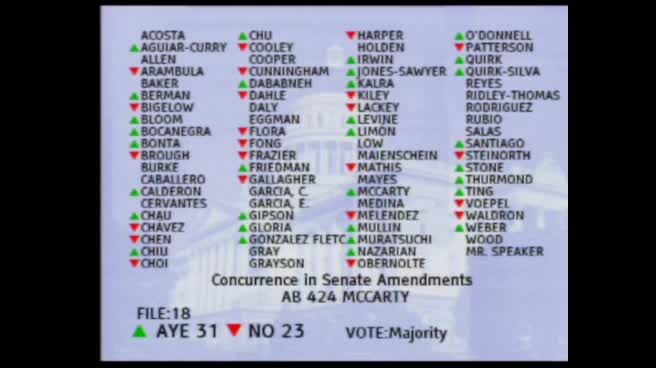 54SEC
Assembly Floor
 2MIN
Senate Floor
 2MIN
Senate Standing Committee on Judiciary
 3MIN
Senate Standing Committee on Business, Professions and Economic Development
 3MIN
Assembly Standing Committee on Judiciary
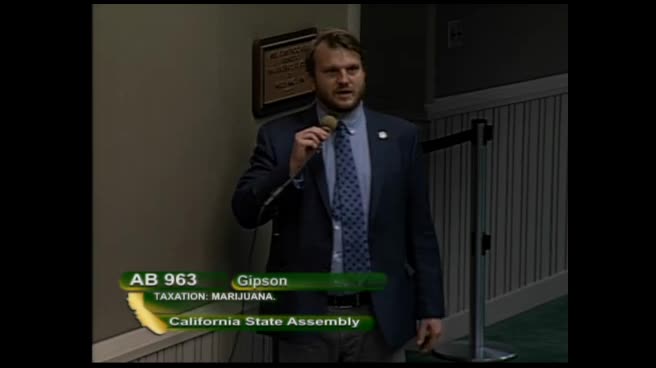 4MIN
Assembly Standing Committee on Business and Professions
Bill Author

Bill Co-Author(s):