AB 1283: Mutual aid: reimbursements: volunteer firefighters.
- Session Year: 2017-2018
- House: Assembly
- Latest Version Date: 2017-08-28
(1)Existing law, enforced by the Labor Commissioner, regulates the terms and conditions of employment, including wages. Existing law prohibits an employer from discharging, or in any manner discriminating against, an employee for taking time off to perform emergency duty as a volunteer firefighter. Existing law makes it a misdemeanor to willfully refuse to pay wages due, as specified, or to falsely deny an amount or validity of an amount owed, as specified. the California Emergency Services Act, requires the Governor to coordinate the State Emergency Plan and any programs necessary for the mitigation of the effects of an emergency in this state, as specified. The act authorizes the Governor, with advice of the Office of Emergency Services, to divide the state into mutual aid regions for the more effective application, administration, and coordination of mutual aid and other emergency-related activities. The act requires the Office of Emergency Services, in consultation with relevant local and state agencies, to develop and adopt a state fire service and rescue emergency mutual aid plan as an annex to the State Emergency Plan.
This bill would require a nonprofit or public fire department with that has volunteer firefighters that receives federal, state, or local reimbursement through a fire agreement for personnel costs associated with firefighting performed on an occasional or sporadic basis in which its volunteer firefighters have participated to pass through to those volunteers an amount equivalent to 20% of the annual amount that otherwise would be required to hire a permanent employee for the same services. The bill would set timelines for issuing the reimbursements to the volunteer firefighters and would require the fire departments utilizing volunteer firefighters to maintain records of those reimbursements, as specified. and receives reimbursement from the federal, state, or local government through a mutual aid request, if the applicable fire agreement is intended to reimburse for personnel costs for work performed associated with firefighting in which the volunteer firefighters of the fire department have participated, to pass through to those volunteers specific reimbursement. The bill would require a fire department that utilizes the services of volunteer firefighters to maintain documentation of reimbursements and allow access to those records as prescribed. The bill would require a fire department to cease using the services of any volunteer firefighter to provide mutual aid response pursuant to the fire agreement who has received pass-through reimbursements that exceed during the fiscal year 20% of the statewide average amount that otherwise would be required to hire a permanent employee to provide the same services and would prohibit such a volunteer from engaging in mutual aid response for the fire department until the following fiscal year. The bill would authorize a volunteer to pursue reimbursement in a civil action if the fire department fails to reimburse the volunteer firefighter in accordance with the bill. By increasing the duties of local officials, and expanding the scope of a crime, this bill would impose a state-mandated local program.
(2)The California Constitution requires the state to reimburse local agencies and school districts for certain costs mandated by the state. Statutory provisions establish procedures for making that reimbursement.This bill would provide that with regard to certain mandates no reimbursement is required by this act for a specified reason.With regard to any other mandates, this bill would provide that, if the Commission on State Mandates determines that the bill contains costs so mandated by the state, reimbursement for those costs shall be made pursuant to the statutory provisions noted above.The California Constitution requires the state to reimburse local agencies and school districts for certain costs mandated by the state. Statutory provisions establish procedures for making that reimbursement.
This bill would provide that, if the Commission on State Mandates determines that the bill contains costs mandated by the state, reimbursement for those costs shall be made pursuant to the statutory provisions noted above.
(1)Existing law, enforced by the Labor Commissioner, regulates the terms and conditions of employment, including wages. Existing law prohibits an employer from discharging, or in any manner discriminating against, an employee for taking time off to perform emergency duty as a volunteer firefighter. Existing law makes it a misdemeanor to willfully refuse to pay wages due, as specified, or to falsely deny an amount or validity of an amount owed, as specified.
This bill would require a nonprofit or public fire department with volunteer firefighters that receives federal federal, state, or local reimbursement through a fire agreement for personnel costs associated with firefighting performed on an occasional or sporadic basis in which its volunteer firefighters have participated to pass through to those volunteers an amount equivalent to 20% of the annual amount that otherwise would be required to hire a permanent employee for the same services, consistent with United States Department of Labor guidance on maintaining the volunteer status of firefighters. services. The bill would set timelines for issuing the reimbursements to the volunteer firefighters and would require the fire departments utilizing volunteer firefighters to maintain records of those reimbursements, as specified. By increasing the duties of local officials, and expanding the scope of a crime, this bill would impose a state-mandated local program.
(2)The California Constitution requires the state to reimburse local agencies and school districts for certain costs mandated by the state. Statutory provisions establish procedures for making that reimbursement.
This bill would provide that with regard to certain mandates no reimbursement is required by this act for a specified reason.
With regard to any other mandates, this bill would provide that, if the Commission on State Mandates determines that the bill contains costs so mandated by the state, reimbursement for those costs shall be made pursuant to the statutory provisions noted above.
(1)Existing law, enforced by the Labor Commissioner, regulates the terms and conditions of employment, including wages. Existing law prohibits an employer from discharging, or in any manner discriminating against, an employee for taking time off to perform emergency duty as a volunteer firefighter. Existing law makes it a misdemeanor to willfully refuse to pay wages due, as specified, or to falsely deny an amount or validity of an amount owed, as specified.
This bill would require a nonprofit or public fire department with volunteer firefighters that receives federal reimbursement for personnel costs associated with firefighting in which its volunteer firefighters have participated to pass through to those volunteers an amount equivalent to 20% of the annual compensation paid to a full-time firefighter employed by the department, as specified. amount that otherwise would be required to hire a permanent employee for the same services, consistent with United States Department of Labor guidance on maintaining the volunteer status of firefighters. By increasing the duties of local officials, and expanding the scope of a crime, this bill would impose a state-mandated local program.
(2)The California Constitution requires the state to reimburse local agencies and school districts for certain costs mandated by the state. Statutory provisions establish procedures for making that reimbursement.
This bill would provide that with regard to certain mandates no reimbursement is required by this act for a specified reason.
With regard to any other mandates, this bill would provide that, if the Commission on State Mandates determines that the bill contains costs so mandated by the state, reimbursement for those costs shall be made pursuant to the statutory provisions noted above.
(1)Existing law, enforced by the Labor Commissioner, regulates the terms and conditions of employment, including wages. Existing law prohibits an employer from discharging, or in any manner discriminating against, an employee for taking time off to perform emergency duty as a volunteer firefighter. Existing law makes it a misdemeanor to willfully refuse to pay wages due, as specified, or to falsely deny an amount or validity of an amount owed, as specified.
This bill would require a nonprofit or public fire department with volunteer firefighters that receives federal reimbursement for personnel costs associated with firefighting in which its volunteer firefighters have participated to pass through to those volunteers an amount equivalent to 20% of the annual compensation paid to a full-time firefighter employed by the department, as specified. By increasing the duties of local officials, and expanding the scope of a crime, this bill would impose a state-mandated local program.
(2)The California Constitution requires the state to reimburse local agencies and school districts for certain costs mandated by the state. Statutory provisions establish procedures for making that reimbursement.
This bill would provide that with regard to certain mandates no reimbursement is required by this act for a specified reason.
With regard to any other mandates, this bill would provide that, if the Commission on State Mandates determines that the bill contains costs so mandated by the state, reimbursement for those costs shall be made pursuant to the statutory provisions noted above.
Existing law, the California Emergency Services Act, grants the Governor certain powers to be exercised in accordance with the State Emergency Plan and programs for the mitigation of the effects of an emergency. Existing law defines the Master Mutual Aid Agreement for purposes of the act. This bill would make nonsubstantive changes in the definition of the Master Mutual Aid Agreement.Existing law, the California Emergency Services Act, grants the Governor certain powers to be exercised in accordance with the State Emergency Plan and programs for the mitigation of the effects of an emergency. Existing law defines the Master Mutual Aid Agreement for purposes of the act.
This bill would make nonsubstantive changes in the definition of the Master Mutual Aid Agreement.
(a)A nonprofit or public fire department that has volunteer firefighters and receives reimbursement from the federal, state, or local government through a mutual aid request, if the applicable fire agreement is intended to reimburse for personnel costs for work performed associated with firefighting in which the volunteer firefighters of the fire department have participated, shall pass through to those volunteers the reimbursement amount defined according to the fire agreement for the specific mutual aid request, excluding normal payroll-related costs for the fire department accompanying the firefighting response.
(b)Reimbursement for a volunteer firefighter pursuant to subdivision (a) may be issued in monthly or annual nominal fees, benefits, expenses, or any combination thereof. If the fire department does not issue reimbursement in monthly or annual nominal fees, benefits, expenses, or any combination thereof, the fire department shall issue reimbursement to the volunteer firefighter not later than 45 days following the receipt of reimbursement funds by the fire department under the fire agreement.
(c)A fire department that utilizes the services of volunteer firefighters shall maintain documentation of reimbursements made to the volunteer firefighters for a period of not less than three years. A fire department subject to this subdivision shall afford a current or former volunteer firefighter the right to inspect or copy records pertaining to his or her service, upon reasonable request to that department.
(d)A fire department shall cease using the services of any volunteer firefighter to provide mutual aid response pursuant to the fire agreement who has received pass-through reimbursements, as described in subdivision (a), that exceed during the fiscal year 20 percent of the statewide average amount that otherwise would be required to hire a permanent employee to provide the same services. A volunteer firefighter subject to this subdivision shall not engage in mutual aid response for the fire department until the following fiscal year.
(e)If a fire department fails to reimburse a volunteer firefighter as described in this section, the volunteer firefighter may pursue reimbursement in a civil action.
SEC. 2.If the Commission on State Mandates determines that this act contains costs mandated by the state, reimbursement to local agencies and school districts for those costs shall be made pursuant to Part 7 (commencing with Section 17500) of Division 4 of Title 2 of the Government Code.
SECTION 1.Section 230.35 is added to the Labor Code, to read:230.35.(a)A nonprofit or public fire department that has volunteer firefighters and receives reimbursement from the federal government, state government, or local government through a fire agreement for personnel costs associated with firefighting in which its volunteer firefighters have participated and where the work is performed on an occasional or sporadic basis, shall pass through to those volunteers an amount equivalent to 20 percent of the annual amount that otherwise would be required to hire a permanent employee for the same services.(b)Reimbursement for a volunteer firefighter under this section may be issued in monthly or annual nominal fees, benefits, expenses, or any combination thereof. If not issued in monthly or annual nominal fees, benefits, expenses, or any combination thereof, reimbursement shall be issued to the volunteer firefighter not later than 30 days following the receipt of reimbursement funds by the fire department under the fire agreement.(c)A fire department that utilizes the services of volunteer firefighters shall maintain documentation of the reimbursements made to the volunteer firefighters for a period of not less than three years. A fire department that is required by this section to keep the information required by this subdivision shall afford a current or former volunteer firefighter the right to inspect or copy records pertaining to his or her service upon reasonable request to that department.SEC. 2.No reimbursement is required by this act pursuant to Section 6 of Article XIIIB of the California Constitution for certain costs that may be incurred by a local agency or school district because, in that regard, this act creates a new crime or infraction, eliminates a crime or infraction, or changes the penalty for a crime or infraction, within the meaning of Section 17556 of the Government Code, or changes the definition of a crime within the meaning of Section 6 of Article XIIIB of the California Constitution.However, if the Commission on State Mandates determines that this act contains other costs mandated by the state, reimbursement to local agencies and school districts for those costs shall be made pursuant to Part 7 (commencing with Section 17500) of Division 4 of Title 2 of the Government Code.(a)A nonprofit or public fire department that has volunteer firefighters and receives reimbursement from the federal government, state government, or local government through a fire agreement for personnel costs associated with firefighting in which its volunteer firefighters have participated and where the work is performed on an occasional or sporadic basis, shall pass through to those volunteers an amount equivalent to 20 percent of the annual amount that otherwise would be required to hire a permanent employee for the same services, consistent with United States Department of Labor guidance on maintaining the volunteer status of these firefighters. services.
(b)Reimbursement for a volunteer firefighter under this section may be issued in monthly or annual nominal fees, benefits, expenses, or any combination thereof. If not issued in monthly or annual nominal fees, benefits, expenses, or any combination thereof, reimbursement shall be issued to the volunteer firefighter not later than 30 days following the receipt of reimbursement funds by the fire department under the fire agreement.
(c)A fire department that utilizes the services of volunteer firefighters shall maintain documentation of the reimbursements made to the volunteer firefighters for a period of not less than three years. A fire department that is required by this section to keep the information required by this subdivision shall afford a current or former volunteer firefighter the right to inspect or copy records pertaining to his or her service upon reasonable request to that department.
SEC. 2.No reimbursement is required by this act pursuant to Section 6 of Article XIIIB of the California Constitution for certain costs that may be incurred by a local agency or school district because, in that regard, this act creates a new crime or infraction, eliminates a crime or infraction, or changes the penalty for a crime or infraction, within the meaning of Section 17556 of the Government Code, or changes the definition of a crime within the meaning of Section 6 of Article XIIIB of the California Constitution.
However, if the Commission on State Mandates determines that this act contains other costs mandated by the state, reimbursement to local agencies and school districts for those costs shall be made pursuant to Part 7 (commencing with Section 17500) of Division 4 of Title 2 of the Government Code.
A nonprofit or public fire department that has volunteer firefighters and receives reimbursement from the federal government for personnel costs associated with firefighting in which its volunteer firefighters have participated shall pass through to those volunteers an amount equivalent to 20 percent of the annual compensation paid to a full-time firefighter employed by the department, amount that otherwise would be required to hire a permanent employee for the same services, consistent with United States Department of Labor guidance on maintaining the volunteer status of these firefighters.
SEC. 2.No reimbursement is required by this act pursuant to Section 6 of Article XIIIB of the California Constitution for certain costs that may be incurred by a local agency or school district because, in that regard, this act creates a new crime or infraction, eliminates a crime or infraction, or changes the penalty for a crime or infraction, within the meaning of Section 17556 of the Government Code, or changes the definition of a crime within the meaning of Section 6 of Article XIIIB of the California Constitution.
However, if the Commission on State Mandates determines that this act contains other costs mandated by the state, reimbursement to local agencies and school districts for those costs shall be made pursuant to Part 7 (commencing with Section 17500) of Division 4 of Title 2 of the Government Code.
A nonprofit or public fire department that has volunteer firefighters and receives reimbursement from the federal government for personnel costs associated with firefighting in which its volunteer firefighters have participated shall pass through to those volunteers an amount equivalent to 20 percent of the annual compensation paid to a full-time firefighter employed by the department, consistent with United States Department of Labor guidance on maintaining the volunteer status of these firefighters.
SEC. 2.No reimbursement is required by this act pursuant to Section 6 of Article XIIIB of the California Constitution for certain costs that may be incurred by a local agency or school district because, in that regard, this act creates a new crime or infraction, eliminates a crime or infraction, or changes the penalty for a crime or infraction, within the meaning of Section 17556 of the Government Code, or changes the definition of a crime within the meaning of Section 6 of Article XIIIB of the California Constitution.
However, if the Commission on State Mandates determines that this act contains other costs mandated by the state, reimbursement to local agencies and school districts for those costs shall be made pursuant to Part 7 (commencing with Section 17500) of Division 4 of Title 2 of the Government Code.
SECTION 1.Section 8561 of the Government Code is amended to read:8561.Master Mutual Aid Agreement means the California Disaster and Civil Defense Master Mutual Aid Agreement, made and entered into by, and between, the State of California, its various departments and agencies, and the various political subdivisions of the state, to facilitate implementation of the purposes of this chapter.Master Mutual Aid Agreement means the California Disaster and Civil Defense Master Mutual Aid Agreement, made and entered into by by, and between between, the State of California, its various departments and agencies, and the various political subdivisions of the state, to facilitate implementation of the purposes of this chapter.
|
Date
|
Status
|
|---|---|
| Sep 5, 2017 | Withdrawn from committee. |
| Aug 31, 2017 | Re-referred to Com. on RLS. pursuant to Senate Rule 29.10(b). |
| Aug 29, 2017 | Read second time. Ordered to third reading. |
| Aug 28, 2017 | Read third time and amended. Ordered to second reading. |
| Jul 11, 2017 | Read second time. Ordered to third reading. |
| Jul 10, 2017 | From committee: Be ordered to second reading pursuant to Senate Rule 28.8. |
| Jun 28, 2017 | From committee: Do pass and re-refer to Com. on APPR. (Ayes 4. Noes 0.) (June 28). Re-referred to Com. on APPR. |
| Jun 21, 2017 | From committee chair, with author's amendments: Amend, and re-refer to committee. Read second time, amended, and re-referred to Com. on L. & I.R. |
| Jun 5, 2017 | In committee: Hearing postponed by committee. |
| May 24, 2017 | Referred to Com. on L. & I.R. |
| May 11, 2017 | In Senate. Read first time. To Com. on RLS. for assignment. |
| May 11, 2017 | Read third time. Passed. Ordered to the Senate. (Ayes 77. Noes 0. Page 1484.) |
| May 4, 2017 | Read second time. Ordered to Consent Calendar. |
| May 3, 2017 | From committee: Do pass. To Consent Calendar. (Ayes 16. Noes 0.) (May 3). |
| Apr 27, 2017 | Re-referred to Com. on APPR. |
| Apr 26, 2017 | From committee chair, with author's amendments: Amend, and re-refer to Com. on APPR. Read second time and amended. |
| Apr 20, 2017 | From committee: Do pass and re-refer to Com. on APPR. (Ayes 6. Noes 0.) (April 19). Re-referred to Com. on APPR. |
| Apr 3, 2017 | Re-referred to Com. on L. & E. |
| Mar 30, 2017 | From committee chair, with author's amendments: Amend, and re-refer to Com. on L. & E. Read second time and amended. |
| Mar 30, 2017 | Referred to Com. on L. & E. |
| Feb 19, 2017 | From printer. May be heard in committee March 21. |
| Feb 17, 2017 | Read first time. To print. |
|
Date
|
Description
|
Location
|
Votes
|
|
|---|---|---|---|---|
| Jun 28, 2017 | Do pass, but first be re-referred to the Committee on [Appropriations] | Senate Standing Committee on Labor and Industrial Relations |
Passed |
|
| May 11, 2017 | AB 1283 RODRIGUEZ Consent Calendar Second Day Regular Session | Assembly Floor |
Passed |
|
| May 3, 2017 | Do pass. To Consent Calendar. | Assembly Standing Committee on Appropriations |
Passed |
|
| Apr 19, 2017 | Do pass and be re-referred to the Committee on [Appropriations] | Assembly Standing Committee on Labor and Employment |
Passed |
This list shows positions taken on this bill by organizations on the date displayed, which is linked to the original source.
Positions by individuals are not included.
|
Organization
|
Position
|
Date
|
|---|---|---|
| California State Firefighters' Association | ** Support | Sep 1, 2017 |
SENATE COMMITTEE ON LABOR AND INDUSTRIAL RELATIONS
Senator Steven Bradford, Chair
2017 - 2018 Regular
Bill No: AB 1283 Hearing Date: September 5, 2017
Author: | Rodriguez | ||
Version: | August 28, 2017 | ||
Urgency: | No | Fiscal: | Yes |
Consultant: | Brandon Seto | ||
Subject: Mutual aid: reimbursements: volunteer firefighters
KEY ISSUE
Should the Legislature add new requirements regarding how reimbursements are passed through to volunteer firefighters operating under an agreement to respond to a mutual aid request?
Should the Legislature limit the amount of mutual aid response that volunteers may perform under these agreements and stipulate that volunteers may pursue a civil action if the bill’s terms are violated?
ANALYSIS
Existing law
- Authorizes the Governor to coordinate the State Emergency Plan and the programs necessary to address an emergency in the state, and to manage related plans and programs of the political subdivisions of the state in order to incorporate them into the State Emergency Plan, the emergency plans and programs of the federal government, and those of other states (Government Code §8569).
- Defines a “mutual aid region” as a subdivision of the state emergency services organization that coordinates mutual aid and other emergency operations within an area of the state (Government Code §8559).
- Further defines “emergency plans” as official approved documents which describe the principles and methods for carrying out emergency operations or rendering mutual aid during emergencies. These plans include the emergency services of governmental agencies, mobilization of resources, and mutual aid (Government Code §8560).
- Charges the Office of Emergency Services, along with relevant local and state agencies, to develop a state fire service and rescue emergency mutual aid plan that, among other things:
- Mobilizes, organizes, and operates the necessary fire, rescue, and hazardous material resources of the state to relieve the effects of disasters.
- Manages the response of available fire, rescue, and hazardous materials resources on a local, area, regional, and statewide basis.
- Establishes guidelines for recruiting and training auxiliary personnel to supplement fire, rescue, and hazardous materials personnel during disaster operations.
(Government Code §8619.5)
This Bill
- Requires a nonprofit or public fire department that receives federal, state, or local reimbursement for personnel costs associated with firefighting to pass through to volunteer firefighters an amount defined by the fire agreement for a specific mutual aid request. This amount excludes normal payroll-related costs for the responding fire department.
- Mandates that these reimbursements for volunteer firefighters may be issued in monthly or annual nominal fees, benefits, expenses, or any combination thereof. If the fire department does not issue reimbursement in this way, it must reimburse volunteer firefighters within 45 days of receiving sufficient funds per the fire agreement.
- Requires that documentation of amounts passed through to volunteer firefighters must be kept on file for at least three years by the fire department for which the volunteers worked. This documentation must be made available to current and former volunteer firefighters upon request.
- Stipulates that a fire department must, for the remainder of the fiscal year, stop using any volunteer firefighter to provide mutual aid response if they have received reimbursements during that fiscal year exceeding the equivalent of 20 percent of the statewide average amount that would be required to hire a permanent employee to provide those same services.
- States that a volunteer firefighter may pursue reimbursement in a civil action if a fire department fails to provide it.
COMMENTS
1. Background on the Fair Labor Standards Act (FLSA) and Volunteer Firefighters, and the
Relationship to This Bill
Congress amended the Fair Labor Standards Act (FLSA) in 1985 to help ensure that true volunteer activities undertaken for civic, charitable, or humanitarian purposes where neither impeded nor discouraged. Yet, Congress also wished to prevent any manipulation, abuse, or avoidance of responsibilities related to minimum wage or overtime requirements through coercion or undue pressure upon individuals to “volunteer” their services in lieu of receiving full-status as an employee.
As such, the FLSA excludes from the definition of employee, any individual who volunteers to perform services for a public agency which is a State, a political subdivision of a State, or an interstate governmental agency, if:
- The individual receives no compensation or is paid expenses, reasonable benefits, or a nominal fee to perform the services for which the individual volunteered; and
- These services are not the same type of services which the individual is employed to perform for such public agency.
Also, an employee of a public agency or interstate governmental agency may volunteer to perform services for any other state, political subdivision, or interstate governmental agency, including a state, political subdivision or agency with which the employing state, political subdivision or agency has a mutual aid agreement. A mutual aid agreement is an agreement in which two or more parties agree to furnish resources and facilities and to render services to each and every other party of the agreement to prevent and combat any type of disaster or emergency.
In a 2008 guidance letter about a fire protection district’s plan to provide stipends to volunteer firefighters, the U.S. Department of Labor (USDOL) advised that a public agency volunteer cannot receive any compensation, but may be paid expenses, reasonable benefits, or a nominal fee, or any combination thereof. USDOL stated that the regulations allow for volunteer firefighters to be paid a nominal fee even if paid on a “per call” or similar basis, as long as such payment is consistent with certain factors denoting the relative “sacrifice” of the volunteer.
Among the factors to be considered in determining this “sacrifice” qualification are: the distance traveled and time and effort expended by the volunteer, whether the volunteer has agreed to be available around-the-clock, and whether the volunteer provides services throughout the year, even if those services are provided periodically. Public agencies should similarly be permitted to pay non-firefighters a nominal fee on a “per call” basis, provided that the amount is, in fact, a nominal fee.
USDOL went on to state that, determining whether a specific amount of expenses, benefits, or fees prevents an individual from qualifying as a volunteer under the FLSA requirements necessitates an examination of “the total amount of payments made . . . in the context of the economic realities of the particular situation.” 29 Code of Federal Regulations §553.106(f). As a general rule, the Department finds that a fee paid is, apart from expenses, nominal as long as it does not exceed 20 percent of the amount that otherwise would be required to hire a permanent employee for the same services.
To this end, the Wage and Hour Opinion Letter FLSA2006-28 (Aug. 7, 2006), as well as Wage and Hour Opinion Letter FLSA2005-51 state that “willingness to volunteer for an activity for 20 percent of the prevailing wage for the job is a likely indicium of the spirit of volunteerism contemplated by the 1985 amendments to the FLSA.” In short, nominal fees given to a volunteer firefighter for any amount of time staffing the department should not exceed 20 percent of what it would cost to employ a firefighter to staff the department for the same amount of time. This is commonly referred to as the “20 percent test.”
In a related manner, this bill sets a work threshold amount of 20 percent of what it would take to hire a full-time employee. When volunteers have provided services equivalent to receiving this amount of reimbursement, they may no longer be used for mutual aid response for the remainder of the fiscal year. This limitation would apply regardless of whether or not a disaster or emergency occurs after a volunteer firefighter has reached this reimbursement ceiling.
2. Need for this bill?
According to the author, during certain large-scale fires, federal, state, and local governments can provide reimbursement to fire departments that participate in fighting those blazes. Those monies are intended to be passed through to volunteer firefighters for completing that service, as they oftentimes have to leave their families, careers, and other obligations to perform these services.
The author adds that revelations regarding volunteer firefighter pay structure have shown that there are a number of fire departments who have not passed through certain fees and reimbursements owed to their volunteer firefighters. In certain parts of the state, especially in rural communities, fire departments are completely volunteer-driven. When compensation is not passed through to volunteers, they may be discouraged from participating in volunteer programs, ultimately compromising public safety.
3. Proponent Arguments:
The sponsor of the bill, the California State Firefighters’ Association (CSFA) states that volunteer firefighters serve as the backbone of the California Mutual Aid System, a system that is largely agreed to be the best in the world. They are involved in their local communities, but are also crucial resources needed in responding to incidents through mutual aid agreements in areas that are not their own.
CSFA adds that in recent large-scale incidents, such as the Lake County and Rough Fire, the federal and state governments provide a reimbursement to those fire departments who participate. Some of these reimbursement monies, according to CSFA, are meant to be passed on to these volunteers through previously agreed-upon contracts. However, CSFA states that many fire departments do not pass the reimbursements through to the volunteer firefighters.
4. Opponent Arguments:
None received.
5. Prior Legislation:
SB 220 (Galgiani) of 2015, was substantially similar to this legislation, but was never set for hearing.
SUPPORT
California State Firefighters' Association (sponsor)
OPPOSITION
None on file.
-- END --
Office of Senate Floor Analyses (916) 651-1520 Fax: (916) 327-4478 | AB |
THIRD READING
Bill No: AB 1283
:
SENATE LABOR & IND. REL. COMMITTEE: 4-0, 6/28/17
AYES: Bradford, Stone, Atkins, Jackson
NO VOTE RECORDED: Mitchell
SENATE APPROPRIATIONS COMMITTEE: Senate Rule 28.8
ASSEMBLY FLOOR: 77-0, 5/11/17 (Consent) - See last page for vote
SUBJECT: Mutual aid: reimbursements: volunteer firefighters
SOURCE: California State Firefighters’ Association
DIGEST:
This bill adds new requirements pertaining to how reimbursements are passed through to volunteer firefighters operating under an agreement for those volunteers to respond to a mutual aid request. Additionally, the bill limits the amount of mutual aid response that these volunteers may perform under these agreements and stipulates that volunteers may pursue a civil action if the bill’s terms are violated.
Senate Floor Amendments of 8/28/17 (1) take the bill out of the Labor Code and move it to the Government Code, (2) clarify the manner by which reimbursements shall be passed through to volunteer firefighters, (3) place limits on the amount of mutual aid response that these volunteers may perform, and (4) stipulate that volunteers may pursue a civil action if the bill’s terms are violated.
Existing law:
- Authorizes the Governor to coordinate the State Emergency Plan and the programs necessary to address an emergency in the state, and to manage related plans and programs of the political subdivisions of the state in order to incorporate them into the State Emergency Plan, the emergency plans and programs of the federal government, and those of other states (Government Code §8569).
- Defines a “mutual aid region” as a subdivision of the state emergency services organization that coordinates mutual aid and other emergency operations within an area of the state (Government Code §8559).
- Defines, further, “emergency plans” as official approved documents which describe the principles and methods for carrying out emergency operations or rendering mutual aid during emergencies. These plans include the emergency services of governmental agencies, mobilization of resources, and mutual aid (Government Code §8560).
- Charges the Office of Emergency Services, along with relevant local and state agencies, to develop a state fire service and rescue emergency mutual aid plan that, among other things:
- Mobilizes, organizes, and operates the necessary fire, rescue, and hazardous material resources of the state to relieve the effects of disasters.
- Manages the response of available fire, rescue, and hazardous materials resources on a local, area, regional, and statewide basis.
- Establishes guidelines for recruiting and training auxiliary personnel to supplement fire, rescue, and hazardous materials personnel during disaster operations. (Government Code §8619.5)
This bill:
- Requires a nonprofit or public fire department that receives federal, state, or local reimbursement for personnel costs associated with firefighting to pass through to volunteer firefighters an amount defined by the fire agreement for a specific mutual aid request. This amount excludes normal payroll-related costs for the responding fire department.
- Mandates that these reimbursements for volunteer firefighters may be issued in monthly or annual nominal fees, benefits, expenses, or any combination thereof. If the fire department does not issue reimbursement in this way, it must reimburse volunteer firefighters within 45 days of receiving sufficient funds per the fire agreement.
- Requires that documentation of amounts passed through to volunteer firefighters must be kept on file for at least three years by the fire department for which the volunteers worked. This documentation must be made available to current and former volunteer firefighters upon request.
- Stipulates that a fire department must, for the remainder of the fiscal year, stop using any volunteer firefighter to provide mutual aid response if they have received reimbursements during that fiscal year exceeding the equivalent of 20 percent of the statewide average amount that would be required to hire a permanent employee to provide those same services.
- States that a volunteer firefighter may pursue reimbursement in a civil action if a fire department fails to provide it.
Comments
Background on the Fair Labor Standards Act (FLSA) and Volunteer Firefighters, and the relationship to this bill. Congress amended the FLSA in 1985 to help ensure that true volunteer activities undertaken for civic, charitable, or humanitarian purposes where neither impeded nor discouraged. Yet, Congress also wished to prevent any manipulation, abuse, or avoidance of responsibilities related to minimum wage or overtime requirements through coercion or undue pressure upon individuals to “volunteer” their services in lieu of receiving full-status as an employee.
As such, the FLSA excludes from the definition of employee, any individual who volunteers to perform services for a public agency which is a State, a political subdivision of a State, or an interstate governmental agency, if:
- The individual receives no compensation or is paid expenses, reasonable benefits, or a nominal fee to perform the services for which the individual volunteered; and
- These services are not the same type of services which the individual is employed to perform for such public agency.
Also, an employee of a public agency or interstate governmental agency may volunteer to perform services for any other state, political subdivision, or interstate governmental agency, including a state, political subdivision or agency with which the employing state, political subdivision or agency has a mutual aid agreement. A mutual aid agreement is an agreement in which two or more parties agree to furnish resources and facilities and to render services to each and every other party of the agreement to prevent and combat any type of disaster or emergency.
In a 2008 guidance letter about a fire protection district’s plan to provide stipends to volunteer firefighters, the U.S. Department of Labor (USDOL) advised that a public agency volunteer cannot receive any compensation, but may be paid expenses, reasonable benefits, or a nominal fee, or any combination thereof. USDOL stated that the regulations allow for volunteer firefighters to be paid a nominal fee even if paid on a “per call” or similar basis, as long as such payment is consistent with certain factors denoting the relative “sacrifice” of the volunteer.
Among the factors to be considered in determining this “sacrifice” qualification are: the distance traveled and time and effort expended by the volunteer, whether the volunteer has agreed to be available around-the-clock, and whether the volunteer provides services throughout the year, even if those services are provided periodically. Public agencies should similarly be permitted to pay non-firefighters a nominal fee on a “per call” basis, provided that the amount is, in fact, a nominal fee.
USDOL went on to state that, determining whether a specific amount of expenses, benefits, or fees prevents an individual from qualifying as a volunteer under the FLSA requirements necessitates an examination of “the total amount of payments made . . . in the context of the economic realities of the particular situation.” 29 Code of Federal Regulations §553.106(f). As a general rule, the USDOL finds that a fee paid is, apart from expenses, nominal as long as it does not exceed 20 percent of the amount that otherwise would be required to hire a permanent employee for the same services.
To this end, the Wage and Hour Opinion Letter FLSA2006-28 (Aug. 7, 2006), as well as Wage and Hour Opinion Letter FLSA2005-51 state that “willingness to volunteer for an activity for 20 percent of the prevailing wage for the job is a likely indicium of the spirit of volunteerism contemplated by the 1985 amendments to the FLSA.” In short, nominal fees given to a volunteer firefighter for any amount of time staffing the department should not exceed 20 percent of what it would cost to employ a firefighter to staff the department for the same amount of time. This is commonly referred to as the “20 percent test.”
In a related manner, this bill sets a work threshold amount of 20 percent of what it would take to hire a full-time employee. When volunteers have provided services equivalent to receiving this amount of reimbursement, they may no longer be used for mutual aid response for the remainder of the fiscal year.
Need for this bill? According to the author, during certain large-scale fires, federal, state, and local governments can provide reimbursement to fire departments that participate in fighting those blazes. Those monies are intended to be passed through to volunteer firefighters for completing that service, as they oftentimes have to leave their families, careers, and other obligations to perform these services.
The author adds that revelations regarding volunteer firefighter pay structure have shown that there are a number of fire departments who have not passed through certain fees and reimbursements owed to their volunteer firefighters. In certain parts of the state, especially in rural communities, fire departments are completely volunteer-driven. When reimbursement is not passed through to volunteers, they may be discouraged from participating in volunteer programs, ultimately compromising public safety.
FISCAL EFFECT: Appropriation: Fiscal Com.: Local:
California State Firefighters’ Association (source)
OPPOSITION: (Verified 8/29/17)
None received
ARGUMENTS IN SUPPORT: The sponsor of the bill, the California State Firefighters’ Association (CSFA) states that volunteer firefighters serve as the backbone of the California Mutual Aid System, a system that is largely agreed to be the best in the world. They are involved in their local communities, but are also crucial resources needed in responding to incidents through mutual aid agreements in areas that are not their own.
CSFA adds that in recent large-scale incidents, such as the Lake County and Rough Fire, the federal and state governments provide a reimbursement to those fire departments who participate. Some of these reimbursement monies, according to CSFA, are meant to be passed on to these volunteers through previously agreed-upon contracts. However, CSFA states that many fire departments do not pass the reimbursements through to the volunteer firefighters.
ASSEMBLY FLOOR: 77-0, 5/11/17
AYES: Acosta, Aguiar-Curry, Travis Allen, Arambula, Baker, Berman, Bigelow, Bloom, Bocanegra, Bonta, Brough, Burke, Caballero, Calderon, Cervantes, Chau, Chávez, Chen, Chiu, Choi, Chu, Cooley, Cooper, Cunningham, Dababneh, Daly, Eggman, Flora, Fong, Frazier, Friedman, Gallagher, Cristina Garcia, Eduardo Garcia, Gipson, Gloria, Gomez, Gonzalez Fletcher, Gray, Grayson, Harper, Holden, Irwin, Jones-Sawyer, Kalra, Kiley, Lackey, Levine, Limón, Low, Maienschein, Mathis, Mayes, McCarty, Medina, Melendez, Mullin, Muratsuchi, Nazarian, Obernolte, Quirk, Quirk-Silva, Reyes, Ridley-Thomas, Rodriguez, Rubio, Salas, Santiago, Steinorth, Mark Stone, Thurmond, Ting, Voepel, Waldron, Weber, Wood, Rendon
NO VOTE RECORDED: Dahle, O'Donnell, Patterson
8/30/17 14:25:56
**** END ****
Office of Senate Floor Analyses (916) 651-1520 Fax: (916) 327-4478 | AB |
THIRD READING
Bill No: AB 1283
:
SENATE LABOR & IND. REL. COMMITTEE: 4-0, 6/28/17
AYES: Bradford, Stone, Atkins, Jackson
NO VOTE RECORDED: Mitchell
SENATE APPROPRIATIONS COMMITTEE: Senate Rule 28.8
ASSEMBLY FLOOR: 77-0, 5/11/17 (Consent) - See last page for vote
SOURCE: California State Firefighters’ Association
DIGEST:
This bill requires a nonprofit or public fire department that receives federal, state, or local reimbursement for personnel costs associated with firefighting, to pay volunteer firefighters an amount equal to 20% of the annual compensation that would otherwise be required to hire a permanent employee for the same services.
Existing law:
- Authorizes the Labor Commissioner to regulate the terms and conditions of employment, including wages (Labor Code §90-98).
- Prohibits an employer from discharging, or in any manner discriminating against, an employee for taking time off to perform emergency duty as a volunteer firefighter (Labor Code §230.3-230.4).
- Makes it a misdemeanor to refuse willfully to pay wages due, as specified, or to deny an amount or validity of an amount owed, as specified (Labor Code §216).
This bill:
- Requires a nonprofit or public fire department that receives federal, state, or local reimbursement for personnel costs associated with firefighting to pass through to volunteer firefighters, if any, whose work is performed on an inconsistent basis, an amount equal to 20% of the annual compensation that would otherwise be required to hire a permanent employee for the same services. This amount may consist of nominal fees, expenses, benefits or any combination of the three.
- Requires that documentation of amounts passed through to volunteer firefighters must be kept on file for at least three years by the fire department for which the volunteers worked. This documentation must be made available to current and former volunteer firefighters upon request.
- Requires that expenses, benefits, and nominal fees related to services performed in these scenarios must be given by a fire department to its volunteer firefighters within 30 days following the department’s receipt of reimbursement funds.
Comments
Background on the Fair Labor Standards Act (FLSA) and Volunteer Firefighters, and the relationship to this bill. Congress amended the FLSA in 1985 to help ensure that true volunteer activities undertaken for civic, charitable, or humanitarian purposes where neither impeded nor discouraged. Yet, Congress also wished to prevent any manipulation, abuse, or avoidance of responsibilities related to minimum wage or overtime requirements through coercion or undue pressure upon individuals to “volunteer” their services in lieu of receiving full-status as an employee.
As such, the FLSA excludes from the definition of employee, any individual who volunteers to perform services for a public agency which is a State, a political subdivision of a State, or an interstate governmental agency, if:
- The individual receives no compensation or is paid expenses, reasonable benefits, or a nominal fee to perform the services for which the individual volunteered; and
- These services are not the same type of services which the individual is employed to perform for such public agency.
Also, an employee of a public agency or interstate governmental agency may volunteer to perform services for any other state, political subdivision, or interstate governmental agency, including a state, political subdivision or agency with which the employing state, political subdivision or agency has a mutual aid agreement. A mutual aid agreement is an agreement in which two or more parties agree to furnish resources and facilities and to render services to each and every other party of the agreement to prevent and combat any type of disaster or emergency.
In a 2008 guidance letter about a fire protection district’s plan to provide stipends to volunteer firefighters, the U.S. Department of Labor (USDOL) advised that a public agency volunteer cannot receive any compensation, but may be paid expenses, reasonable benefits, or a nominal fee, or any combination thereof. USDOL stated that the regulations allow for volunteer firefighters to be paid a nominal fee even if paid on a “per call” or similar basis, as long as such payment is consistent with certain factors denoting the relative “sacrifice” of the volunteer.
Among the factors to be considered in determining this “sacrifice” qualification are: the distance traveled and time and effort expended by the volunteer, whether the volunteer has agreed to be available around-the-clock, and whether the volunteer provides services throughout the year, even if those services are provided periodically. Public agencies should similarly be permitted to pay non-firefighters a nominal fee on a “per call” basis, provided that the amount is, in fact, a nominal fee.
USDOL went on to state that, determining whether a specific amount of expenses, benefits, or fees prevents an individual from qualifying as a volunteer under the FLSA requirements necessitates an examination of “the total amount of payments made . . . in the context of the economic realities of the particular situation.” 29 Code of Federal Regulations §553.106(f). As a general rule, the USDOL finds that a fee paid is, apart from expenses, nominal as long as it does not exceed 20 percent of the amount that otherwise would be required to hire a permanent employee for the same services.
To this end, the Wage and Hour Opinion Letter FLSA2006-28 (Aug. 7, 2006), as well as Wage and Hour Opinion Letter FLSA2005-51 state that “willingness to volunteer for an activity for 20 percent of the prevailing wage for the job is a likely indicium of the spirit of volunteerism contemplated by the 1985 amendments to the FLSA.” In short, nominal fees given to a volunteer firefighter for any amount of time staffing the department should not exceed 20 percent of what it would cost to employ a firefighter to staff the department for the same amount of time. This is commonly referred to as the “20 percent test.”
This bill however presents a different, albeit related issue. Whereas the guidance stated above deals with the amounts that volunteers can be paid up to where they can still be considered volunteers, the provisions of this bill instate a requirement that volunteer firefighters in California must be paid at the 20 percent threshold that would be equivalent to 20 percent what a full-time firefighter would be paid for doing the same work.
Federal law and guidance are relatively silent on such an approach to this issue, as this bill mandates a payment be given to volunteer firefighters in the form or reimbursements or nominal fees. In short, this bill takes on this issue from the opposite direction of most concerns mentioned on the matter. While most inquiries are made regarding how much can be paid to volunteers without them losing that status, this bill states that volunteers should be paid a certain fixed amount but still retain their classification as a volunteer. Retaining that volunteer status would relieve fire departments of any further responsibility they would owe to a full-fledged employee.
It is also worth noting that as volunteers, were there to be any dispute over payment of these fees, these volunteer firefighters likely could not avail themselves of the protections and services of the California Labor Commissioner of the Division of Labor Standards Enforcement. As volunteers, these individuals would not fall under the purview of the Labor Commissioner.
Need for this bill? According to the author, during certain large-scale fires, federal, state, and local governments can provide reimbursement to fire departments that participate in fighting those blazes. Those monies are intended to be passed through to volunteer firefighters for completing that service, as they oftentimes have to leave their families, careers, and other obligations to perform these services.
The author adds that revelations regarding volunteer firefighter pay structure have shown that there are a number of fire departments who have not passed through certain fees and reimbursements owed to their volunteer firefighters. In certain parts of the state, especially in rural communities, fire departments are completely volunteer-driven. When compensation is not passed through to volunteers, they may be discouraged from participating in volunteer programs, ultimately compromising public safety.
FISCAL EFFECT: Appropriation: Fiscal Com.: Local:
California State Firefighters’ Association (source)
OPPOSITION: (Verified 7/10/17)
None received
ARGUMENTS IN SUPPORT: The sponsor of the bill, the California State Firefighters’ Association (CSFA) states that volunteer firefighters serve as the backbone of the California Mutual Aid System, a system that is largely agreed to be the best in the world. They are involved in their local communities, but are also crucial resources needed in responding to incidents through mutual aid agreements in areas that are not their own.
CSFA adds that in recent large-scale incidents, such as the Lake County and Rough Fire, the federal and state governments provide a reimbursement to those fire departments who participate. Some of these reimbursement monies, according to CSFA, are meant to be passed on to these volunteers through previously agreed-upon contracts. However, CSFA states that many fire departments do not pass the reimbursements through to the volunteer firefighters.
ASSEMBLY FLOOR: 77-0, 5/11/17
AYES: Acosta, Aguiar-Curry, Travis Allen, Arambula, Baker, Berman, Bigelow, Bloom, Bocanegra, Bonta, Brough, Burke, Caballero, Calderon, Cervantes, Chau, Chávez, Chen, Chiu, Choi, Chu, Cooley, Cooper, Cunningham, Dababneh, Daly, Eggman, Flora, Fong, Frazier, Friedman, Gallagher, Cristina Garcia, Eduardo Garcia, Gipson, Gloria, Gomez, Gonzalez Fletcher, Gray, Grayson, Harper, Holden, Irwin, Jones-Sawyer, Kalra, Kiley, Lackey, Levine, Limón, Low, Maienschein, Mathis, Mayes, McCarty, Medina, Melendez, Mullin, Muratsuchi, Nazarian, Obernolte, Quirk, Quirk-Silva, Reyes, Ridley-Thomas, Rodriguez, Rubio, Salas, Santiago, Steinorth, Mark Stone, Thurmond, Ting, Voepel, Waldron, Weber, Wood, Rendon
NO VOTE RECORDED: Dahle, O'Donnell, Patterson
7/12/17 9:42:35
**** END ****
SENATE COMMITTEE ON LABOR AND INDUSTRIAL RELATIONS
Senator Steven Bradford, Chair
2017 - 2018 Regular
Bill No: AB 1283 Hearing Date: June 28, 2017
Author: | Rodriguez | ||
Version: | June 21, 2017 | ||
Urgency: | No | Fiscal: | Yes |
Consultant: | Brandon Seto | ||
Subject: Firefighting: federal reimbursements: volunteer firefighters
KEY ISSUE
Should the Legislature require a nonprofit or public fire department that receives federal, state, or local reimbursement for personnel costs associated with firefighting, to pay volunteer firefighters an amount equal to 20% of the annual compensation that would otherwise be required to hire a permanent employee for the same services?
ANALYSIS
Existing law
- Authorizes the Labor Commissioner to regulate the terms and conditions of employment, including wages (Labor Code §90-98).
- Prohibits an employer from discharging, or in any manner discriminating against, an employee for taking time off to perform emergency duty as a volunteer firefighter (Labor Code §230.3-230.4).
- Makes it a misdemeanor to refuse willfully to pay wages due, as specified, or to deny an amount or validity of an amount owed, as specified (Labor Code §216).
This Bill
- Requires a nonprofit or public fire department that receives federal, state, or local reimbursement for personnel costs associated with firefighting to pass through to volunteer firefighters, if any, whose work is performed on an inconsistent basis, an amount equal to 20% of the annual compensation that would otherwise be required to hire a permanent employee for the same services. This amount may consist of nominal fees, expenses, benefits or any combination of the three.
- Requires that documentation of amounts passed through to volunteer firefighters must be kept on file for at least three years by the fire department for which the volunteers worked. This documentation must be made available to current and former volunteer firefighters upon request.
- Requires that expenses, benefits, and nominal fees related to services performed in these scenarios must be given by a fire department to its volunteer firefighters within thirty days following the department’s receipt of reimbursement funds.
COMMENTS
1. Background on the Fair Labor Standards Act (FLSA) and Volunteer Firefighters, and the
Relationship to This Bill
Congress amended the Fair Labor Standards Act (FLSA) in 1985 to help ensure that true volunteer activities undertaken for civic, charitable, or humanitarian purposes where neither impeded nor discouraged. Yet, Congress also wished to prevent any manipulation, abuse, or avoidance of responsibilities related to minimum wage or overtime requirements through coercion or undue pressure upon individuals to “volunteer” their services in lieu of receiving full-status as an employee.
As such, the FLSA excludes from the definition of employee, any individual who volunteers to perform services for a public agency which is a State, a political subdivision of a State, or an interstate governmental agency, if:
- The individual receives no compensation or is paid expenses, reasonable benefits, or a nominal fee to perform the services for which the individual volunteered; and
- These services are not the same type of services which the individual is employed to perform for such public agency.
Also, an employee of a public agency or interstate governmental agency may volunteer to perform services for any other state, political subdivision, or interstate governmental agency, including a state, political subdivision or agency with which the employing state, political subdivision or agency has a mutual aid agreement. A mutual aid agreement is an agreement in which two or more parties agree to furnish resources and facilities and to render services to each and every other party of the agreement to prevent and combat any type of disaster or emergency.
In a 2008 guidance letter about a fire protection district’s plan to provide stipends to volunteer firefighters, the U.S. Department of Labor (USDOL) advised that a public agency volunteer cannot receive any compensation, but may be paid expenses, reasonable benefits, or a nominal fee, or any combination thereof. USDOL stated that the regulations allow for volunteer firefighters to be paid a nominal fee even if paid on a “per call” or similar basis, as long as such payment is consistent with certain factors denoting the relative “sacrifice” of the volunteer.
Among the factors to be considered in determining this “sacrifice” qualification are: the distance traveled and time and effort expended by the volunteer, whether the volunteer has agreed to be available around-the-clock, and whether the volunteer provides services throughout the year, even if those services are provided periodically. Public agencies should similarly be permitted to pay non-firefighters a nominal fee on a “per call” basis, provided that the amount is, in fact, a nominal fee.
USDOL went on to state that, determining whether a specific amount of expenses, benefits, or fees prevents an individual from qualifying as a volunteer under the FLSA requirements necessitates an examination of “the total amount of payments made . . . in the context of the economic realities of the particular situation.” 29 Code of Federal Regulations §553.106(f). As a general rule, the Department finds that a fee paid is, apart from expenses, nominal as long as it does not exceed 20 percent of the amount that otherwise would be required to hire a permanent employee for the same services.
To this end, the Wage and Hour Opinion Letter FLSA2006-28 (Aug. 7, 2006), as well as Wage and Hour Opinion Letter FLSA2005-51 state that “willingness to volunteer for an activity for 20 percent of the prevailing wage for the job is a likely indicium of the spirit of volunteerism contemplated by the 1985 amendments to the FLSA.” In short, nominal fees given to a volunteer firefighter for any amount of time staffing the department should not exceed 20 percent of what it would cost to employ a firefighter to staff the department for the same amount of time. This is commonly referred to as the “20 percent test.”
This bill however presents a different, albeit related issue. Whereas the guidance stated above deals with the amounts that volunteers can be paid up to where they can still be considered volunteers, the provisions of this bill would instate a requirement that volunteer firefighters in California must be paid at the 20 percent threshold that would be equivalent to 20 percent what a full-time firefighter would be paid for doing the same work.
Federal law and guidance are relatively silent on such an approach to this issue, as this bill would mandate a payment be given to volunteer firefighters in the form or reimbursements or nominal fees. In short, this bill takes on this issue from the opposite direction of most concerns mentioned on the matter. While most inquiries are made regarding how much can be paid to volunteers without them losing that status, this bill states that volunteers should be paid a certain fixed amount but still retain their classification as a volunteer. Retaining that volunteer status would relieve fire departments of any further responsibility they would owe to a full-fledged employee.
It is also worth noting that as volunteers, were there to be any dispute over payment of these fees, these volunteer firefighters likely could not avail themselves of the protections and services of the California Labor Commissioner of the Division of Labor Standards Enforcement. As volunteers, these individuals would not fall under the purview of the Labor Commissioner.
2. Need for this bill?
According to the author, during certain large-scale fires, federal, state, and local governments can provide reimbursement to fire departments that participate in fighting those blazes. Those monies are intended to be passed through to volunteer firefighters for completing that service, as they oftentimes have to leave their families, careers, and other obligations to perform these services.
The author adds that revelations regarding volunteer firefighter pay structure have shown that there are a number of fire departments who have not passed through certain fees and reimbursements owed to their volunteer firefighters. In certain parts of the state, especially in rural communities, fire departments are completely volunteer-driven. When compensation is not passed through to volunteers, they may be discouraged from participating in volunteer programs, ultimately compromising public safety.
3. Proponent Arguments:
The sponsor of the bill, the California State Firefighters’ Association (CSFA) states that volunteer firefighters serve as the backbone of the California Mutual Aid System, a system that is largely agreed to be the best in the world. They are involved in their local communities, but are also crucial resources needed in responding to incidents through mutual aid agreements in areas that are not their own.
CSFA adds that in recent large-scale incidents, such as the Lake County and Rough Fire, the federal and state governments provide a reimbursement to those fire departments who participate. Some of these reimbursement monies, according to CSFA, are meant to be passed on to these volunteers through previously agreed-upon contracts. However, CSFA states that many fire departments do not pass the reimbursements through to the volunteer firefighters.
4. Opponent Arguments:
None received.
5. Prior Legislation:
SB 220 (Galgiani) of 2015, was substantially similar to this legislation, but was never set for hearing.
SUPPORT
California State Firefighters' Association (sponsor)
OPPOSITION
None on file.
-- END --
Date of Hearing: May 3, 2017
ASSEMBLY COMMITTEE ON APPROPRIATIONS
Lorena Gonzalez Fletcher, Chair
ABPCA Bill Id:AB 1283
Author:(Rodriguez) – As Amended Ver:April 26, 2017
Policy Committee: | Labor and Employment | Vote: | 6 - 0 |
|
| ||
|
|
Urgency: No State Mandated Local Program: Yes Reimbursable: Yes
SUMMARY:
This bill requires a nonprofit or public fire department that receives federal reimbursement for personnel costs associated with firefighting to pass through to volunteer firefighters, if there are any, an amount equal to 20% of the annual compensation that would otherwise be required to hire a permanent employee for the same services.
FISCAL EFFECT:
No additional costs.
COMMENTS:
Purpose and Background. According to the bill’s sponsor, the California State Firefighters’ Association (CSFA), AB 1283 will help ensure volunteer firefighters receive reimbursement money that they are owed.
Under current US Department of Labor (DOL) guidance, a volunteer firefighter is considered a volunteer as long as reimbursements and fees paid to that volunteer do not exceed 20% of the amount otherwise would be required to hire a permanent employee for the same services. However, according to the author, in recent fire events, such as the wildfires in Lake County, the federal government provided a reimbursement to participating fire departments, but some departments did not pass through money to firefighters.
Analysis Prepared by: Luke Reidenbach / APPR. / (916) 319-2081
Date of Hearing: April 19, 2017
ASSEMBLY COMMITTEE ON LABOR AND EMPLOYMENT
Tony Thurmond, Chair
ABPCA Bill Id:AB 1283 (
Author:Rodriguez) – As Amended Ver:March 30, 2017
SUBJECT: Volunteer firefighters: federal reimbursements
SUMMARY: Requires a nonprofit or public fire department with volunteer firefighters that receives federal reimbursement for personnel costs associated with firefighting in which its volunteer firefighters have participated to pass through to those volunteers an amount equivalent to 20% of the annual compensation paid to a full-time firefighter employed by the department, as specified.
EXISTING LAW:
- Authorizes the Labor Commissioner to regulate the terms and conditions of employment, including wages.
- Prohibits an employer from discharging, or in any manner discriminating against, an employee for taking time off to perform emergency duty as a volunteer firefighter.
- Makes it a misdemeanor to willfully refuse to pay wages due, as specified, or to falsely deny an amount or validity of an amount owed, as specified.
FISCAL EFFECT: unknown
COMMENTS:
Fair Labor Standards Act (FLSA) and Volunteer Firefighters
In enacting 1985 Fair Labor Standards Act (FLSA) Amendments, Congress sought to ensure that true volunteer activities undertaken for civic, charitable, or humanitarian purposes where neither impeded nor discouraged. Yet, Congress also wished to prevent any manipulation or abuse of minimum wage or overtime requirements through coercion or undue pressure upon individuals to “volunteer” their services.
To ensure this, the FLSA excludes from the definition of employee any individual, who volunteers to perform services for a public agency which is a State, a political subdivision of a State, or an interstate governmental agency, if:
- the individual receives no compensation or is paid expenses, reasonable benefits, or a nominal fee to perform the services for which the individual volunteered; and
- such services are not the same type of services which the individual is employed to perform for such public agency.
Also, an employee of a public agency which is a State, political subdivision of a State, or an interstate governmental agency may volunteer to perform services for any other State, political subdivision, or interstate governmental agency, including a State, political subdivision or agency with which the employing State, political subdivision, or agency has a mutual aid agreement.
In a 2008 guidance letter about a fire protection district’s plan to provide stipends the volunteer firefighters, the U.S. Department of Labor (USDOL) advised that a public agency volunteer cannot receive any compensation, but may be paid expenses, reasonable benefits, or a nominal fee, or any combination thereof. USDOL stated that the regulations allow for volunteer firefighters to be paid a nominal fee even if paid on a “per call” or similar basis, as long as such payment is consistent with certain factors denoting the relative “sacrifice” of the volunteer. Among the factors to be considered in determining this: the distance traveled and time and effort expended by the volunteer; whether the volunteer has agreed to be available around-the-clock; and whether the volunteer provides services throughout the year, even if those services are provided periodically. Public agencies should similarly be permitted to pay non-firefighters a nominal fee on a “per call” basis, provided that the amount is, in fact, a nominal fee.
USDOL continued, “Determining whether a specific amount of expenses, benefits, or fees prevents an individual from qualifying as a volunteer under the FLSA requirements an examination of “the total amount of payments made . . . in the context of the economic realities of the particular situation.” 29 C.F.R. Section 553.106(f). As a general rule, the Department finds that a fee paid is (apart from expenses) nominal as long as it does not exceed 20 percent of the amount that otherwise would be required to hire a permanent employee for the same services. See Wage and Hour Opinion Letter FLSA2006-28 (Aug. 7, 2006); Wage and Hour Opinion Letter FLSA2005-51 (“[A] willingness to volunteer for an activity for 20 percent of the prevailing wage for the job is a likely indicium of the spirit of volunteerism contemplated by the 1985 amendments to the FLSA.”); see also Vonbrethorst v. Washington County, Idaho, No. 06-0351, 2008 WL 2785549, at *4 (D. Idaho July 15, 2008) (the fact that “on-call compensation was above twenty percent of full-time employees’ pay for the same on-call shifts” weighs against volunteer status). Thus, for example, if a volunteer firefighter staffs the equivalent of three shifts during a month, the nominal fee should not exceed 20 percent of what it would cost to employ a firefighter to staff these three shifts.” This is commonly referred to as the “20 percent test”.
Need for the Bill
The author asserts, “In recent large scale incidents, such as Lake County and Rough Fire, the federal government provides a reimbursement to those fire departments who participate, and these monies are meant to be passed through. Revelations regarding the pay structure have shown that a growing number of departments are keeping part or all of the pay meant to go to the firefighter.”
The author continues, “Many volunteer firefighters work part-time jobs, have businesses they operate, and are invested in other social and financial interests. In times of major disasters that require the full commitment of manpower and resources, they sacrifice their financial entities, work obligations, and familial responsibilities to protect our state.”
The sponsor, California State Firefighters’ Association (CSFA) argues that, “this bill would require a fire department with volunteer firefighters that receives reimbursement for personnel costs associated with firefighting in which its volunteer firefighters have participated to pass through to those volunteers the money they are due.” CSFA continues, “Volunteer firefighters serve as the backbone of the California Mutual Aid System, a system that is largely agreed to be the best in the world. They are involved in their local communities but are also the crucial resources needed in responding to incidents through mutual aid agreements in areas that are not their own.
Suggested Clarification
While some fire department that utilize volunteer firefighters may have a blend of employee firefighters and volunteer firefighters in the department, other fire departments only utilize volunteer firefighters and do not employ any “full-time firefighters” to use as a comparator when applying the Rule of 20. USDOL guidance addresses this issue and encourages fire departments to look to wage data from neighboring jurisdictions, the state or ultimately the nation, including data from the Department of Labor, Bureau of Labor Statistics to determine the amount that would otherwise be required to hire a permanent employee for the same services, so long as the calculation are based on an approximation of the prevailing wages in that area.
To ensure that this bill is interpreted to apply to fire departments that have a blend of employee firefighters and volunteer firefighters as well as fire departments that only utilize volunteer firefighters, the author may wish to consider amending the bill, if it advances, to more closely track the federal guidance. Specifically, the author may wish to consider amending Section 1 of the bill, which adds Labor Code Section 230.35, to read:
“A nonprofit or public fire department that has volunteer firefighters and receives reimbursement from the federal government for personnel costs associated with firefighting in which its volunteer firefighters have participated shall pass through to those volunteers an amount equivalent to 20 percent of the annual compensation paid to a full-time firefighter employed by the department amount that otherwise would be required to hire a permanent employee for the same services, consistent with United States Department of Labor guidance on maintaining the volunteer status of these firefighters.”
Previous Legislation
SB 220 (Galgiani) of 2015, which was substantially similar to this legislation, was never set for hearing.
REGISTERED SUPPORT / OPPOSITION:
Support
California State Firefighters' Association (sponsor)
Opposition
None
Analysis Prepared by: Jennifer Richard / L. & E. /
Discussed in Hearing
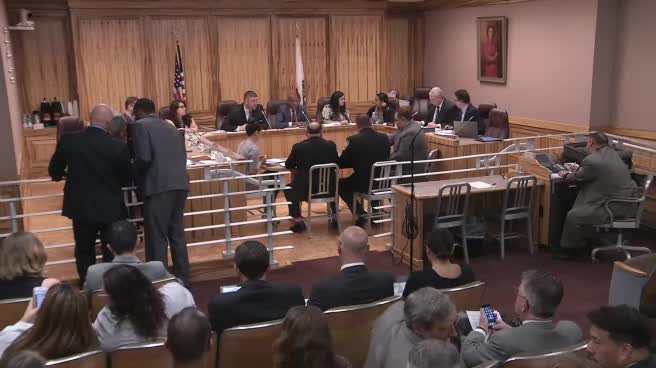 5MIN
Senate Standing Committee on Labor and Industrial Relations
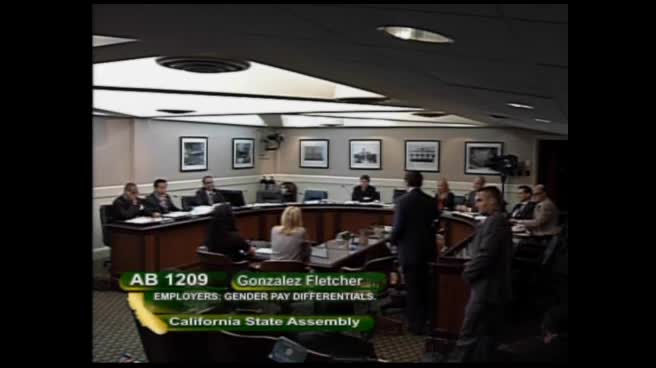 4MIN
Assembly Standing Committee on Labor and Employment
Bill Author

Bill Co-Author(s):