AB 1321: Education finance: fiscal transparency.
- Session Year: 2017-2018
- House: Assembly
- Latest Version Date: 2017-07-19
(1)Existing law establishes a system of elementary and secondary education in this state. Under this system, public and private schools provide instruction to pupils in kindergarten and grades 1 to 12, inclusive.
This bill would require the Superintendent of Public Instruction, the Controller, and the Director of Finance to take actions to ensure, for purposes of transparency, that the reporting of per-pupil expenditures of federal, state, and local funds, funds includes actual personnel expenditures and actual nonpersonnel expenditures of federal, state, and local funds, disaggregated by source of funds, as specified, for each local educational agency and school in the state, as required by a specified provision of the federal Every Student Succeeds Act.
The bill would require the Superintendent, in compliance with federal requirements, to ensure that each local educational agency collects appropriate data, and includes specified information, in the local educational agencys annual report. The bill would also require the Superintendent, the Controller, and the Director of Finance to establish guidelines for the reporting of personnel and nonpersonnel expenditures, as specified, and to establish the methodology for disaggregating local control funding formula funds. specified. The bill would also require the Superintendent, the Controller, and the Director of Finance to consider, no later than March 1, 2018, the provisions of the bill in developing and adopting new standards and criteria for local budgets and expenditures pursuant to a specified statute.
The bill would require local educational agencies to adhere to the standards and criteria adopted pursuant to the bill commencing with the 201819 fiscal year. To the extent that this bill would impose new duties on local educational agencies, it would constitute a state-mandated local program.
(2)The California Constitution requires the state to reimburse local agencies and school districts for certain costs mandated by the state. Statutory provisions establish procedures for making that reimbursement.
This bill would provide that, if the Commission on State Mandates determines that the bill contains costs mandated by the state, reimbursement for those costs shall be made pursuant to the statutory provisions noted above.
(1)Existing law establishes a system of elementary and secondary education in this state. Under this system, public and private schools provide instruction to pupils in kindergarten and grades 1 to 12, inclusive.
This bill would require the Superintendent of Public Instruction, the Controller, and the Director of Finance to take actions to ensure, for purposes of transparency, that the reporting of per-pupil expenditures of federal, state, and local funds, includes actual personnel expenditures and actual nonpersonnel expenditures of federal, state, and local funds, disaggregated by source of funds, as specified, for each local educational agency and school in the state, as required by a specified provision of the federal Every Student Succeeds Act.
The bill would require the Superintendent, in compliance with federal requirements, to ensure that each local educational agency collects appropriate data, and includes specified information information, in the local educational agencys annual report. The bill would also require the Superintendent, the Controller, and the Director of Finance to establish guidelines for the reporting of personnel and nonpersonnel expenditures, as specified, and to establish the methodology for disaggregating local control funding formula funds. The bill would also require the Superintendent, the Controller, and the Director of Finance to consider, no later than March 1, 2018, the provisions of the bill in developing and adopting new standards and criteria for local budgets and expenditures pursuant to a specified statute.
The bill would require local educational agencies to adhere to the standards and criteria adopted pursuant to the bill commencing with the 201819 fiscal year. To the extent that this bill would impose new duties on local educational agencies, it would constitute a state-mandated local program.
(2)The California Constitution requires the state to reimburse local agencies and school districts for certain costs mandated by the state. Statutory provisions establish procedures for making that reimbursement.
This bill would provide that, if the Commission on State Mandates determines that the bill contains costs mandated by the state, reimbursement for those costs shall be made pursuant to the statutory provisions noted above.
(1)Existing law establishes a system of elementary and secondary education in this state. Under this system, public and private schools provide instruction to pupils in kindergarten and grades 1 to 12, inclusive.
This bill would require the Superintendent of Public Instruction, the Controller, and the Director of Finance to take actions to ensure, for purposes of transparency, that the reporting of per-pupil expenditures of federal, state, and local funds, includes actual personnel expenditures and actual nonpersonnel expenditures of federal, state, and local funds, disaggregated by source of funds, for each local educational agency and school in the state, as required by a specified provision of the federal Every Student Succeeds Act.
The bill would require the Superintendent, in compliance with federal requirements, to ensure that each local educational agency collects appropriate data, and includes specified information in the local educational agencys annual report. The bill would also require the Superintendent, the Controller, and the Director of Finance to consider, no later than March 1, 2018, the provisions of the bill in developing and adopting new standards and criteria for local budgets and expenditures pursuant to a specified statute.
The bill would require local educational agencies to adhere to the standards and criteria adopted pursuant to the bill commencing with the 201819 fiscal year. To the extent that this bill would impose new duties on local educational agencies, it would constitute a state-mandated local program.
(2)The California Constitution requires the state to reimburse local agencies and school districts for certain costs mandated by the state. Statutory provisions establish procedures for making that reimbursement.
This bill would provide that, if the Commission on State Mandates determines that the bill contains costs mandated by the state, reimbursement for those costs shall be made pursuant to the statutory provisions noted above.
Existing law establishes a system of elementary and secondary education in this state. Under this system, public and private schools provide instruction to pupils in kindergarten and grades 1 to 12, inclusive.This bill would express the intent of the Legislature to enact legislation that would require, for purposes of transparency, the reporting of per-pupil expenditures of federal, state, and local funds, including actual personnel expenditures and actual nonpersonnel expenditures of federal, state, and local funds, disaggregated by source of funds as hereby defined, for each local educational agency and school in the state as required by a specified provision of the federal Every Student Succeeds Act.Existing law establishes a system of elementary and secondary education in this state. Under this system, public and private schools provide instruction to pupils in kindergarten and grades 1 to 12, inclusive.
This bill would express the intent of the Legislature to enact legislation that would require, for purposes of transparency, the reporting of per-pupil expenditures of federal, state, and local funds, including actual personnel expenditures and actual nonpersonnel expenditures of federal, state, and local funds, disaggregated by source of funds as hereby defined, for each local educational agency and school in the state as required by a specified provision of the federal Every Student Succeeds Act.
(a)For purposes of transparency and local, state, and federal reporting, the Superintendent, the Controller, and the Director of Finance shall accomplish all of the following:
(1)Ensure that the state report card required by Section 1111(h)(1) of the federal Every Student Succeeds Act (Public Law 114-95) includes the per-pupil expenditures of federal, state, and local funds, including actual personnel expenditures and actual nonpersonnel expenditures of federal, state, and local funds, for each local educational agency and each school in the state for the preceding fiscal year. To comply with federal requirements that the state report card be concise, the Superintendent, the Controller, and the Director of Finance shall establish guidelines for the reporting of personnel and nonpersonnel expenditures that minimize, to the extent allowed by federal law, the recordkeeping burden on local educational agencies and that result in a report card that can be quickly and easily understood by the public and enables transparent disclosure of the expenditure of local control funding formula funds.
(2)Enable the disaggregation of local control funding formula base grants and supplemental and concentration grants for each local educational agency and each school for purposes of state and local reporting. The Superintendent, the Controller, and the Director of Finance shall establish the methodology for disaggregating local control funding formula funds.(3)(2)Ensure that the per-pupil expenditures reported include expenditures for free public education, including (A) expenditures for administration, instruction, attendance and health services, pupil transportation services, plant operation and maintenance, fixed charges, and net expenditures to cover deficits for food services and student body activities; but do not include (B) expenditures for community services, capital outlay, and debt service, or any expenditures made from funds received under Title I of the federal Elementary and Secondary Education Act (Public Law 89-10, as amended).
(b)The Superintendent, in compliance with federal requirements, shall ensure that each local educational agency collects appropriate data, and includes in the local educational agencys annual report, the information described in paragraphs (1) and (2) paragraph (1) of subdivision (a) as applied to the local educational agency and each school within the jurisdiction of the local educational agency.
(c)The provisions of this section shall be considered, no later than March 1, 2018, by the Superintendent, the Controller, and the Director of Finance when developing and adopting new standards and criteria pursuant to Section 33127. Notwithstanding any other law, to enable fiscal reporting, local educational agencies shall adhere to the standards and criteria adopted pursuant to this section commencing with the 201819 fiscal year.
SEC. 2.If the Commission on State Mandates determines that this act contains costs mandated by the state, reimbursement to local agencies and school districts for those costs shall be made pursuant to Part 7 (commencing with Section 17500) of Division 4 of Title 2 of the Government Code.
(a)For purposes of transparency and local, state, and federal reporting, the Superintendent, the Controller, and the Director of Finance shall accomplish all of the following:
(1)Ensure that the state report card required by Section 1111(h)(1) of the federal Every Student Succeeds Act (Public Law 114-95) includes the per-pupil expenditures of federal, state, and local funds, including actual personnel expenditures and actual nonpersonnel expenditures of federal, state, and local funds, for each local educational agency and each school in the state for the preceding fiscal year. To comply with federal requirements that the state report card be concise, the Superintendent, the Controller, and the Director of Finance shall establish guidelines for the reporting of personnel and nonpersonnel expenditures that minimize, to the extent allowed by federal law, the recordkeeping burden on local educational agencies and that result in a report card that can be quickly and easily understood by the public and enables transparent disclosure of the expenditure of local control funding formula funds.
(2)Enable the disaggregation of state and local funds by the source of the funds, including, but not necessarily limited to, local control funding formula base grants and supplemental and concentration grants and other state and local funds for each local educational agency and each school for purposes of state and local reporting. The Superintendent, the Controller, and the Director of Finance shall establish the methodology for disaggregating local control funding formula funds.
(3)Ensure that the per-pupil expenditures reported include expenditures for free public education, including (A) expenditures for administration, instruction, attendance and health services, pupil transportation services, plant operation and maintenance, fixed charges, and net expenditures to cover deficits for food services and student body activities; but do not include (B) expenditures for community services, capital outlay, and debt service, or any expenditures made from funds received under Title I of the federal Elementary and Secondary Education Act (Public Law 89-10, as amended).
(b)The Superintendent, in compliance with federal requirements, shall ensure that each local educational agency collects appropriate data, and includes in the local educational agencys annual report report, the information described in paragraphs (1) and (2) of subdivision (a) as applied to the local educational agency and each school within the jurisdiction of the local educational agency.
(c)The provisions of this section shall be considered, no later than March 1, 2018, by the Superintendent, the Controller, and the Director of Finance when developing and adopting new standards and criteria pursuant to Section 33127. Notwithstanding any other law, to enable fiscal reporting, local educational agencies shall adhere to the standards and criteria adopted pursuant to this section commencing with the 201819 fiscal year.
SEC. 2.If the Commission on State Mandates determines that this act contains costs mandated by the state, reimbursement to local agencies and school districts for those costs shall be made pursuant to Part 7 (commencing with Section 17500) of Division 4 of Title 2 of the Government Code.
(a)For purposes of transparency and local, state, and federal reporting, the Superintendent, the Controller, and the Director of Finance shall accomplish all of the following:
(1)Ensure that the state report card required by Section 1111(h)(1) of the federal Every Student Succeeds Act (Public Law 114-95) includes the per-pupil expenditures of federal, state, and local funds, including actual personnel expenditures and actual nonpersonnel expenditures of federal, state, and local funds, for each local educational agency and each school in the state for the preceding fiscal year.
(2)Enable the disaggregation of state and local funds by the source of the funds, including, but not necessarily limited to, local control funding formula base grants and supplemental and concentration grants and other state and local funds for each local educational agency and each school for purposes of state and local reporting.
(3)Ensure that the per-pupil expenditures reported include expenditures for free public education, including (A) expenditures for administration, instruction, attendance and health services, pupil transportation services, plant operation and maintenance, fixed charges, and net expenditures to cover deficits for food services and student body activities; but do not include (B) expenditures for community services, capital outlay, and debt service, or any expenditures made from funds received under Title I of the federal Elementary and Secondary Education Act (Public Law 89-10, as amended).
(b)The Superintendent, in compliance with federal requirements, shall ensure that each local educational agency collects appropriate data, and includes in the local educational agencys annual report the information described in paragraphs (1) and (2) of subdivision (a) as applied to the local educational agency and each school within the jurisdiction of the local educational agency.
(c)The provisions of this section shall be considered, no later than March 1, 2018, by the Superintendent, the Controller, and the Director of Finance when developing and adopting new standards and criteria pursuant to Section 33127. Notwithstanding any other law, to enable fiscal reporting, local educational agencies shall adhere to the standards and criteria adopted pursuant to this section commencing with the 201819 fiscal year.
SEC. 2.If the Commission on State Mandates determines that this act contains costs mandated by the state, reimbursement to local agencies and school districts for those costs shall be made pursuant to Part 7 (commencing with Section 17500) of Division 4 of Title 2 of the Government Code.
SECTION 1.It is the intent of the Legislature to enact legislation that would require, for purposes of transparency, the reporting of per-pupil expenditures of federal, state, and local funds, including actual personnel expenditures and actual nonpersonnel expenditures of federal, state, and local funds, disaggregated by source of funds as hereby defined, for each local educational agency and school in the state as required by Section 1111(h)(1) of the federal Every Student Succeeds Act (Public Law 114-95).It is the intent of the Legislature to enact legislation that would require, for purposes of transparency, the reporting of per-pupil expenditures of federal, state, and local funds, including actual personnel expenditures and actual nonpersonnel expenditures of federal, state, and local funds, disaggregated by source of funds as hereby defined, for each local educational agency and school in the state as required by Section 1111(h)(1) of the federal Every Student Succeeds Act (Public Law 114-95).
|
Date
|
Status
|
|---|---|
| Sep 1, 2017 | In committee: Held under submission. |
| Aug 21, 2017 | In committee: Referred to APPR. suspense file. |
| Jul 19, 2017 | Read second time and amended. Re-referred to Com. on APPR. |
| Jul 18, 2017 | From committee: Amend, and do pass as amended and re-refer to Com. on APPR. (Ayes 7. Noes 0.) (July 12). |
| Jul 3, 2017 | In committee: Set, first hearing. Hearing canceled at the request of author. |
| Jun 8, 2017 | Referred to Com. on ED. |
| May 30, 2017 | In Senate. Read first time. To Com. on RLS. for assignment. |
| May 30, 2017 | Read third time. Passed. Ordered to the Senate. (Ayes 77. Noes 0. Page 1839.) |
| May 26, 2017 | Read second time. Ordered to third reading. |
| May 17, 2017 | In committee: Set, first hearing. Referred to APPR. suspense file. |
| May 4, 2017 | Re-referred to Com. on APPR. |
| May 3, 2017 | Read second time and amended. |
| May 2, 2017 | From committee: Amend, and do pass as amended and re-refer to Com. on APPR. (Ayes 7. Noes 0.) (April 26). |
| Apr 3, 2017 | Re-referred to Com. on ED. |
| Mar 30, 2017 | Referred to Com. on ED. |
| Feb 19, 2017 | From printer. May be heard in committee March 21. |
| Feb 17, 2017 | Read first time. To print. |
|
Date
|
Description
|
Location
|
Votes
|
|
|---|---|---|---|---|
| Aug 21, 2017 | Placed on suspense file | Senate Standing Committee on Appropriations |
Passed |
|
| Jul 12, 2017 | Do pass as amended, but first amend, and re-refer to the Committee on [Appropriations] | Senate Standing Committee on Education |
Passed |
|
| May 30, 2017 | AB 1321 WEBER Assembly Third Reading | Assembly Floor |
Passed |
|
| May 26, 2017 | Do pass. | Assembly Standing Committee on Appropriations |
Passed |
|
| Apr 26, 2017 | Do pass as amended and be re-referred to the Committee on [Appropriations] | Assembly Standing Committee on Education |
Passed |
This list shows positions taken on this bill by organizations on the date displayed, which is linked to the original source.
Positions by individuals are not included.
|
Organization
|
Position
|
Date
|
|---|---|---|
| Abriendo Puertas | ** Support | Jul 11, 2017 |
| Act 4 Entertainment | ** Support | Jul 11, 2017 |
| Alliance for A Better Community | ** Support | Jul 11, 2017 |
| Alliance for Boys and Men of Color | * Support | Jul 12, 2017 |
| Alliance for Education Solutions | ** Support | Jul 11, 2017 |
| amah mutsun tribal band | ** Support | Jul 11, 2017 |
| arriba juntos | ** Support | Jul 11, 2017 |
| arts bridging the gap | ** Support | Jul 11, 2017 |
| Association Of California School Administrators | ** Against | Jul 11, 2017 |
| Autism Deserves Equal Coverage | ** Support | Apr 25, 2017 |
| Autism Deserves Equal Coverage Foundation | ** Support | Jul 11, 2017 |
| Black Parallel School board | ** Support | Jul 11, 2017 |
| Brighter Beginnings | ** Support | Jul 11, 2017 |
| California Alliance of African American Educators | ** Support | Jul 11, 2017 |
| California Association for Bilingual Educators | ** Support | Jul 11, 2017 |
| California Association Of School Business Officials | * Support | Jul 12, 2017 |
| California Association Of Suburban School Districts | ** Against | Jul 11, 2017 |
| California Charter Schools Association | ** Support | Jul 11, 2017 |
| California Competes | ** Support | Jul 11, 2017 |
| California County Superintendents Educational Services Association | ** Against | Jul 11, 2017 |
| California Latino School Boards Association | ** Support | Jul 11, 2017 |
| California Partnership | ** Support | Jul 11, 2017 |
| California School Boards Association | * Support | Jul 12, 2017 |
| California Teachers Association | ** Against | Jul 11, 2017 |
| Californians Together | ** Support | Jul 11, 2017 |
| Catholic Charities | ** Support | Jul 11, 2017 |
| caulder lamm alliance for children | ** Support | Jul 11, 2017 |
| Center for Ecoliteracy | ** Support | Jul 11, 2017 |
| Center For Leadership Equity and Research | ** Support | Jul 11, 2017 |
| Century Latino Organization | ** Support | Jul 11, 2017 |
| Cesar Chavez Foundation | ** Support | Jul 11, 2017 |
| child's pace foundation, inc. | ** Support | Jul 11, 2017 |
| Children Now | * Support | Jul 12, 2017 |
| Children'S Defense Fund | ** Support | Jul 11, 2017 |
| citizen schools in california | ** Support | Jul 11, 2017 |
| Coleman Advocates for Children and Youth | ** Support | Jul 11, 2017 |
| Congregation Beth Am | ** Support | Jul 11, 2017 |
| Congregations Organized for Prophetic Engagement | ** Support | Jul 11, 2017 |
| COPE | * Support | Jul 12, 2017 |
| Cope Family Center | ** Support | Jul 11, 2017 |
| crescent city | ** Support | Jul 11, 2017 |
| Cultiva La Salud | ** Support | Jul 11, 2017 |
| del norte county chamber of commerce | ** Support | Jul 11, 2017 |
| Dolores Huerta Foundation | ** Support | Jul 11, 2017 |
| echo parenting & education | ** Support | Jul 11, 2017 |
| Ed Voice | * Support | Jul 12, 2017 |
| Educate78 | ** Support | Jul 11, 2017 |
| Education Trust-West | ** Support | Jul 11, 2017 |
| Educators for Excellence | ** Support | Jul 11, 2017 |
| Equal Justice Society | ** Support | Jul 11, 2017 |
| escuela de la raza unida | ** Support | Jul 11, 2017 |
| Families In Schools | ** Support | Jul 11, 2017 |
| Families Now | ** Support | Jul 11, 2017 |
| Family Paths, Inc. | ** Support | Jul 11, 2017 |
| Fathers & Families of San Joaquin | ** Support | Jul 11, 2017 |
| Fight Crime: Invest in Kids | ** Support | Jul 11, 2017 |
| focus on family foundation | ** Support | Jul 11, 2017 |
| Fresno Metro Ministry | ** Support | Jul 11, 2017 |
| friends of the family | ** Support | Jul 11, 2017 |
| Future is Now | ** Support | Jul 11, 2017 |
| Girls, Inc. | ** Support | Jul 11, 2017 |
| Go Public Schools | ** Support | Jul 11, 2017 |
| Half Moon Bay Brewing Co. | ** Support | Jul 11, 2017 |
| Harbour Consulting | ** Support | Jul 11, 2017 |
| heart of los angeles | ** Support | Jul 11, 2017 |
| Hispanic Foundation of Silicon Valley | ** Support | Jul 11, 2017 |
| inner-city arts | ** Support | Jul 11, 2017 |
| InnerCity Struggle | ** Support | Jul 11, 2017 |
| Innovate Public Schools | ** Support | Jul 11, 2017 |
| innovation bridge, inc. | ** Support | Jul 11, 2017 |
| Kids First | ** Support | Jul 11, 2017 |
| KIDS' OWN WISDOM | ** Support | Jul 11, 2017 |
| LA Voice | ** Support | Jul 11, 2017 |
| Legal Services for Children | ** Support | Jul 11, 2017 |
| Lincoln | ** Support | Jul 11, 2017 |
| Little Manila Foundation | ** Support | Jul 11, 2017 |
| Los Angeles Urban League | ** Support | Jul 11, 2017 |
| Mexican American Opportunity Foundation | ** Support | Jul 11, 2017 |
| Mission Readiness | ** Support | Jul 11, 2017 |
| Morgan Family Foundation | ** Support | Jul 11, 2017 |
| Motivating Individual Leadership for Public Advancement | ** Support | Jul 11, 2017 |
| National Center for Youth Law | ** Support | Jul 11, 2017 |
| National Council Of La Raza | ** Support | Jul 11, 2017 |
| North Bay Leadership Council | ** Support | Jul 11, 2017 |
| Opening Doors | ** Support | Jul 11, 2017 |
| Orange County Business Council | ** Support | Jul 11, 2017 |
| Our Family Coalition | ** Support | Jul 11, 2017 |
| Parent Institute for Quality Education | ** Support | Jul 11, 2017 |
| parent organization network | ** Support | Jul 11, 2017 |
| Parent Revolution | ** Support | Jul 11, 2017 |
| partners in impact | ** Support | Jul 11, 2017 |
| Partnership for Children and Youth | ** Support | Jul 11, 2017 |
| Partnership for Los Angeles Schools | ** Support | Jul 11, 2017 |
| peninsula bridge | ** Support | Jul 11, 2017 |
| Peninsula Family Service | ** Support | Jul 11, 2017 |
| PICO California | ** Support | Jul 11, 2017 |
| Pro-Kid | ** Support | Jul 11, 2017 |
| professional association of childhood educators | ** Support | Jul 11, 2017 |
| Public Counsel | ** Support | Jul 11, 2017 |
| Public Profit | ** Support | Jul 11, 2017 |
| puente de la costa sur | ** Support | Jul 11, 2017 |
| Reading and Beyond | ** Support | Jul 11, 2017 |
| Ready Nation | ** Support | Jul 11, 2017 |
| Restorative Schools Vision Project | ** Support | Jul 11, 2017 |
| san bernardino school district african american advisory committee | ** Support | Jul 11, 2017 |
| San Bernardino School District African American Advisory Council | ** Support | Apr 25, 2017 |
| San Carlos Chamber of Commerce | ** Support | Jul 11, 2017 |
| san francisco organizing network for education | ** Support | Jul 11, 2017 |
| small school districts' association | ** Against | Jul 11, 2017 |
| solano community foundation | ** Support | Jul 11, 2017 |
| South Stockton Schools Initiative | ** Support | Jul 11, 2017 |
| Speak Up | ** Support | Jul 11, 2017 |
| students for education reform | ** Support | Jul 11, 2017 |
| Students Matter | ** Support | Jul 11, 2017 |
| Teach for America California | ** Support | Apr 25, 2017 |
| teach for america - california | ** Support | Jul 11, 2017 |
| Teach Plus | ** Support | Jul 11, 2017 |
| TeenForce | ** Support | Jul 11, 2017 |
| The GreenHouse | ** Support | Jul 11, 2017 |
| The Inn at Mavericks | ** Support | Jul 11, 2017 |
| the krause center for innovation | ** Support | Jul 11, 2017 |
| the la trust for children's health | ** Support | Jul 11, 2017 |
| United Advocates for Children and Families | ** Support | Jul 11, 2017 |
| United Nations of Consciousness | ** Support | Jul 11, 2017 |
| United Way of Greater Los Angeles | ** Support | Jul 11, 2017 |
| United Ways Of California | ** Support | Jul 11, 2017 |
| Watts | ** Support | Jul 11, 2017 |
| Women's Empowerment | ** Support | Jul 11, 2017 |
| Youth Action Project | * Support | Jul 12, 2017 |
| Youth Alliance | ** Support | Jul 11, 2017 |
| Youth Policy Institute | ** Support | Jul 11, 2017 |
SENATE COMMITTEE ON
Senator Ricardo Lara, Chair
2017 - 2018 Regular Session
AB 1321 (Weber) - Education finance: fiscal transparency
Version: | Policy Vote: |
Urgency: | Mandate: |
Hearing Date: | Consultant: |
This bill meets the criteria for referral to the Suspense File.
Bill Summary:
This bill requires that the Superintendent of Public Instruction (SPI), the State Controller, and the Director of Finance ensure that the state report card required by the federal Every Student Succeeds Act include per-pupil expenditures of federal, state, and local funds for each local educational agency (LEA) and each school in the state. This bill also requires the SPI to ensure that each LEA collects appropriate data and includes it in the annual report of per-pupil expenditures.
Fiscal Impact:
- While the bill mostly mirrors federal requirements, the bill’s requirement for the California Department of Education (CDE) to establish guidelines for the reporting of personnel and non-personnel expenditures appear to exceed that of federal law. The CDE indicates initial one-time General Fund costs of at least $75,000 for this purpose. There would also be additional, unknown administrative costs to provide ongoing technical assistance regarding the reporting guidelines for LEAs and to refine any guidance as necessary.
- Unknown local costs to school districts to modify and/or replace school accounting software (SACS) that may be necessary to report school site expenditure information to the CDE. There will likely be additional costs for school districts to train staff on the software and for financial reporting purposes that presumably, would need to be consistent statewide pursuant to the guidelines established by CDE. To the extent these activities are necessary to comply with federal requirements, they would not be reimbursable by the state.
Background:
Existing federal law requires the annual state report card prepared for the Every Student Succeeds Act (ESSA) to include the per-pupil expenditures of federal, state, and local funds, including actual personnel expenditures and actual nonpersonnel expenditures of federal, state, and local funds, disaggregated by source of funds, for each LEA and each school in the state for the preceding fiscal year.
Existing state law requires the SPI, the Controller, and the Director of Finance to develop and the State Board of Education to approve standards and criteria to be used by LEAs in the development of annual budgets and the management of subsequent expenditures from the budget. Further, existing law requires the SPI, during the development of the standards and criteria, to convene a committee composed of representatives from LEAs, state agencies, the Legislature, and appropriate labor and professional associations, and requires that any future revisions to the standards and criteria follow this process.
Proposed Law:
This bill requires the SPI, the Controller, and the Director of Finance to do the following:
- Ensure that the state report card required by ESSA include the per-pupil expenditures of federal, state, and local funds, including actual personnel expenditures and actual nonpersonnel expenditures of federal, state, and local funds, for each LEA and school in the state for the preceding fiscal year.
- Establish guidelines for the reporting of personnel and nonpersonnel expenditures that minimize the recordkeeping burden on local educational agencies (LEAs) and that result in a report card that can be quickly and easily understood by the public and enables transparent disclosure of the expenditure of local control funding formula (LCFF) funds.
- Ensure that the per-pupil expenditures reported include and exclude certain expenditures, as specified.
Further, this bill requires the SPI, in compliance with federal requirements, to ensure that each LEA collect appropriate data, and include it in the annual report on per-pupil expenditures.
This bill provides that these provisions shall be considered no later than March 1, 2018, by the SPI, the Controller, and the Director of Finance when developing and adopting new standards and criteria for LEA budgets. This bill also requires LEAs to adhere to the standards and criteria adopted pursuant to this bill commencing with the 2018–19 fiscal year.
-- END --
SENATE COMMITTEE ON EDUCATION
Senator Benjamin Allen, Chair
2017 - 2018 Regular
Bill No: Hearing Date: July 12, 2017
Author: | |||
Version: |
| ||
Urgency: | Fiscal: | ||
Consultant: | |||
Subject:
SUMMARY
This bill requires the Superintendent of Public Instruction (SPI), the State Controller, and the Director of Finance to: (1) ensure that per-pupil expenditures by fund source and type are included in the federal state report card for each local educational agency (LEA) and each school in the state, and (2) establish the methodology for requiring each LEA and each school to calculate their expenditures of local control funding formula base, supplemental, and concentration grants for state and local reporting purposes.
BACKGROUND
Existing federal law:
- Requires the annual state report card prepared for the Every Student Succeeds Act (ESSA) to include the per-pupil expenditures of federal, state, and local funds, including actual personnel expenditures and actual nonpersonnel expenditures of federal, state, and local funds, disaggregated by source of funds, for each LEA and each school in the state for the preceding fiscal year.
- Requires the ESSA annual state report card to be concise.
Existing state law:
- Requires the SPI, the Controller, and the Director of Finance to develop and the State Board of Education to approve standards and criteria to be used by LEAs in the development of annual budgets and the management of subsequent expenditures from the budget.
- Requires the SPI, during the development of the standards and criteria, to convene a committee composed of representatives from LEAs, state agencies, the Legislature, and appropriate labor and professional associations, and requires that any future revisions to the standards and criteria follow this process.
ANALYSIS
This bill:
- Requires the SPI, the Controller, and the Director of Finance to do the following:
- Establish guidelines for the reporting of personnel and nonpersonnel expenditures that minimize the recordkeeping burden on local educational agencies (LEAs) and that result in a report card that can be quickly and easily understood by the public and enables transparent disclosure of the expenditure of local control funding formula (LCFF) funds.
- Enable the disaggregation of LCFF base grants and supplemental and concentration grant actual personnel and nonpersonnel expenditures for each LEA and each school.
- Requires the Superintendent of Public Instruction (SPI), in compliance with federal requirements, to ensure that each LEA collect appropriate data, and include it in the annual report on per-pupil expenditures.
- Requires these provisions to be considered, no later than March 1, 2018, by the SPI, the Controller, and the Director of Finance when developing and adopting new standards and criteria for LEA budgets.
- Requires LEAs to adhere to the standards and criteria adopted pursuant to this bill commencing with the 2018–19 fiscal year.
STAFF COMMENTS
- Need for the bill. According to the author, this bill aligns state law with the new federal requirement in Every Student Succeeds Act (ESSA) to report actual per-pupil expenditures by object of expenditure and funding source at both the LEA and individual school levels. ESSA requires this information to be included in state reports beginning with the 2017-18 school year.
However, while this bill is, in part, consistent with federal law, it also goes beyond federal law by requiring the disaggregated reporting of LEA-level and schoolsite expenditures by the three components of the local control funding formula: base, supplemental, and concentration grants. According to the author, “…we still do not know if the additional grants generated by English language learner, low-income, and foster youth enrollment are actually resulting in additional expenditures at the schools they attend…AB 1321 simply expands upon federal reporting requirements to ensure greater alignment and transparency with respect to California’s LCFF expenditures. This ensures that administrators are given clear guidance on how to report this information at the local level, while at the same time allowing the public to know where expenditures are being made across California.”
- Recent guidance from the feds delays per-pupil expenditure reporting until 2018-19. According to a July 28, 2017 “Dear Colleague Letter” from the federal Department of Education, state and local educational agencies will be provided an additional year to implement the new requirement to include on annual state and LEA report cards per-pupil expenditures of federal, state, and local funds for each LEA and school for the preceding fiscal year, disaggregated by source. Therefore, state and local educational agencies may delay, until the 2018-19 school year, this requirement and instead include on report cards for the 2017-18 school year a brief description of the steps the state and locals are taking to ensure that information on per-pupil expenditures will be included for the 2018-19 school year.
Given that additional time has been provided at the federal level to comply with per-pupil expenditure reporting, the Committee may wish to consider whether it is premature to codify these federal reporting requirements in state law at this time.
- Proportionality within the Local Control Funding Formula (LCFF). Central to the LCFF is the principle of proportionality, discerning the appropriate balance of funding received and services provided. Local educational agencies (LEAs) receive additional funding under the LCFF—supplemental and concentration grants—to the extent that they serve students that are English-learners, low-income, or foster youth, often referred to as “unduplicated pupils”. Existing law charged the State Board of Education (SBE) with adopting regulations governing the expenditure of supplemental and concentration grants that: (1) require LEAs to increase or improve services for unduplicated pupils in proportion to the increased funds the pupils generate, and (2) allow supplemental and concentration grants to be used for schoolwide and districtwide purposes.
The LCFF spending regulations adopted by the SBE provide a calculation that LEAs use to determine their minimum proportionality percentage. LEAs must describe within their Local Control and Accountability Plan (LCAP) how they will meet this percentage of increased or improved services for unduplicated pupils over what is provided for all other students using qualitative and/or quantitative measures. This is a snapshot of services that an LEA is providing in a given year.
The spending regulations also cover the conditions under which supplemental and concentration grants can be used for districtwide and schoolwide purposes and still count towards meeting the minimum proportionality requirement. An LEA planning to use supplemental or concentration funds in this way must identify these expenditures in their LCAP and describe how the services are directed towards meeting the LEA’s goals for its unduplicated pupils. If the school district’s enrollment or a school’s enrollment is made up of less than 55 percent or 40 percent unduplicated pupils, respectively, the district must additionally describe how the services provided are the most effective use of funds to meet the district’s goals for its unduplicated pupils.
- County offices review and approve district LCAPs. Existing law tasks county offices of education with both fiscal and academic oversight of districts within their jurisdiction. The academic oversight responsibilities consist primarily of reviewing and approving district LCAPs. As part of this process, state law requires county offices of education to verify that district LCAP documents use the state-approved format, align with districts’ adopted budgets, and appropriately direct funds to unduplicated pupils. If district LCAPs meet these requirements, county offices of education must approve them. If an LCAP is rejected, the county office of education must provide technical assistance in refining the plan.
- Concerns with the state collecting Local Control Funding Formula (LCFF) expenditure data. When the state adopted the LCFF in 2013 and changed the way in which funding is provided to schools, it also changed the associated school accountability structure. Rather than controlling local educational agency (LEA) expenditures through various categorical programs, the state now requires LEAs to improve student outcomes, with a required strategic planning document, the LCAP, and a rubric to assist LEAs in evaluating their strength and weaknesses and establishing their goals, the School System Dashboard. The Local Control and Accountability Plan (LCAP) and the Dashboard are the primary accountability instruments for LEAs and their communities, with the Dashboard also being used to identify struggling districts that need assistance from a county office of education or the California Collaborative for Educational Excellence.
Opponents of this bill argue that, while still a work in progress, the accountability system under the LCFF was never envisioned to be an input-based compliance system, but rather one that offers technical assistance and support to the LEAs that fall short of achieving their goals for student outcomes. As envisioned, the LCAP was meant to be a strategic and long-term planning tool, not an accounting document. By requiring disaggregated reporting of the expenditure of state funds at the LEA and school levels, this bill represents a return to an input-based accountability model, while still holding LEAs accountable for outputs.
This bill requires the disaggregation of LCFF base, supplemental, and concentration grant expenditures for each LEA and each school for state and local reporting purposes. This level of expenditure tracking will create significant costs and complication for LEAs and school sites. Moreover, requiring this level of expenditure reporting at the state and local levels implies that LEAs and school sites will be required to demonstrate their LCFF minimum proportionality solely through expenditure totals. This would be inconsistent with the current requirement that LEAs demonstrate how they will increase or improve services for unduplicated pupils over what is provided for all other students using qualitative or quantitative measures.
To address concerns that this bill is inconsistent with the state’s approach to the LCFF and its associated accountability structure, and that it places costly and complex reporting requirements on LEAs beyond what is required under the federal Every Student Succeeds Act, staff recommends that the bill be amended to remove the requirement that the Superintendent of Public Instruction, the State Controller, and the Director of Finance require each LEA and each school to calculate their expenditures of LCFF base, supplemental, and concentration grants for state and local reporting purposes.
SUPPORT
Children Now (co-sponsor)
Education Trust-West (co-sponsor)
Abriendo Puertas/Opening Doors
Act 4 Entertainment
Alliance for a Better Community
Alliance for Boys and Men of Color
Alliance for Education Solutions
Amah Mutsun Tribal Band
Arriba Juntos
Arts Bridging the Gap
Autism Deserves Equal Coverage Foundation
Black Parallel School Board
Brighter Beginnings
California Alliance of African American Educators
California Association for Bilingual Educators
California Charter Schools Association
California Competes
California Latino School Boards Association
California Partnership
Californians Together
Catholic Charities
Caulder Lamm Alliance for Children
Center for Ecoliteracy
Center for Leadership Equity and Research
Cesar Chavez Foundation
Child’s Pace Foundation, Inc.
Children's Defense Fund
Citizen Schools in California
Congregation Beth Am
Congregations Organized for Prophetic Engagement
Coleman Advocates for Children and Youth
Cope Family Center
Court Appointed Special Education Advocates of Santa Cruz County
Crescent City/Del Norte County Chamber of Commerce
Cultiva La Salud
Dolores Huerta Foundation
Echo Parenting & Education
Educate78
Educators for Excellence
EdVoice
Equal Justice Society
Escuela de la Raza Unida
Families in Schools
Families Now
Family Paths, Inc.
Fathers & Families of San Joaquin
Fight Crime: Invest in Kids
Focus on Family Foundation
Fresno Metro Ministry
Friends of the Family
Future is Now
Girls, Inc.
GO Public Schools
The GreenHouse
Half Moon Bay Brewing Co.
Harbour Consulting
Heart of Los Angeles
Hispanic Foundation of Silicon Valley
Inner-City Arts
InnerCity Struggle
Innovate Public Schools
Innovation Bridge, Inc.
Kids First
Kids' Own Wisdom
LA Voice
Latino and Latina Roundtable of the San Gabriel and Pomona Valley
Legal Services for Children
Lincoln
Little Manila Foundation
Los Angeles Urban League
Mexican American Opportunity Foundation
Mission Readiness
Morgan Family Foundation
Motivating Individual Leadership for Public Advancement
National Center for Youth Law
National Council of La Raza
North Bay Leadership Council
Orange County Business Council
Our Family Coalition
Parent Organization Network
Parent Institute for Quality Education
Parent Revolution
Partners in Impact
Partnership for Children and Youth
Partnership for Los Angeles Schools
Peninsula Bridge
Peninsula Family Service
PICO California
Pro-Kid
Professional Association of Childhood Educators
Public Counsel
Public Profit
Puente de la Costa Sur
Reading and Beyond
Ready Nation
Restorative Schools Vision Project
Riverside County Alliance for Boys and Men of Color
San Bernardino School District African American Advisory Committee
San Carlos Chamber of Commerce
San Francisco Organizing Network for Education
Solano Community Foundation
South Stockton Schools Initiative
Speak UP
Students for Education Reform
Students Matter
Teach for America – California
Teach Plus
TeenForce
The Inn at Mavericks
The Krause Center for Innovation
The LA Trust for Children’s Health
United Advocates for Children and Families
United Nations of Consciousness
United Ways of California
United Way of Greater Los Angeles
Watts/Century Latino Organization
Women's Empowerment
Youth Alliance
Youth Policy Institute
OPPOSITION
Association of California School Administrators
California Association of Suburban School Districts
California County Superintendents Educational Services Association
California Association of School Business Officials
California Teachers Association
Small School Districts’ Association
-- END --
ASSEMBLY THIRD READING
ATR Bill Id:AB 1321
Author:(Weber)
As Amended Ver:May 3, 2017
Majority vote
Committee | Votes | Ayes | Noes |
Education | 7-0 | O'Donnell, Flora, Gloria, Kiley, McCarty, Thurmond, Weber | |
Appropriations | 17-0 | Gonzalez Fletcher, Bigelow, Bloom, Bocanegra, Bonta, Brough, Calderon, McCarty, Quirk, Fong, Friedman, Gallagher, Eduardo Garcia, Gray, Muratsuchi, Obernolte, Reyes |
|
SUMMARY: Requires the state report card that is required by the federal Every Student Succeeds Act (ESSA) to include per-pupil expenditures of federal, state, and local funds, including actual personnel and nonpersonnel expenditures for each local education agency (LEA) and each school in the state. Specifically, this bill:
- Requires the Superintendent of Public Instruction (SPI), the Controller, and the Director of Finance to do the following:
- Establish guidelines for the reporting of personnel and nonpersonnel expenditures that minimize the recordkeeping burden on LEA’s and that result in a report card that can be quickly and easily understood by the public and enables transparent disclosure of the expenditure of local control funding formula funds.
- Enable the disaggregation of local control funding formula base grants and supplemental and concentration grant actual personnel and nonpersonnel expenditures for each LEA and each school.
- Requires the SPI, in compliance with federal requirements, to ensure that each LEA collect appropriate data, and include it in the annual report on per-pupil expenditures.
- Requires these provisions to be considered, no later than March 1, 2018, by the SPI, the Controller, and the Director of Finance when developing and adopting new standards and criteria for LEA budgets.
- Requires LEAs to adhere to the standards and criteria adopted pursuant to this bill commencing with the 2018–19 fiscal year.
FISCAL EFFECT: According to the Assembly Appropriations Committee:
- Approximately $30,000 in administrative costs to California Department of Education (CDE). CDE would incur costs associated with changes to the criteria and standards, including time spent analyzing the law's effects on the criteria and standards, convening and meeting with the committee to discuss and approve changes to the criteria and standards, and implementing the changes in the financial reporting software. Should a software update be needed, additional costs would be incurred.
- Unknown reimbursable costs to LEAs for complying with this new expenditure reporting methodology. The costs incurred would depend on the capability of LEAs' financial systems to account for various activities at the school level. Assuming every LEA in the state submits a claim of $1,000 (the minimum threshold established by the Commission on State Mandates) this bill could result in costs over $2.3 million general fund for the 2,287 LEAs in the state.
COMMENTS: According to information provided by the author's office, this bill aligns state law with the new federal requirement in ESSA to report actual per-pupil expenditures by object of expenditure and funding source at both the LEA and individual school levels. ESSA requires this information to be included in state reports beginning with the 2017-18 school year.
However, while this bill is, in part, consistent with federal law, it also goes beyond federal law by requiring the disaggregated reporting of LEA-level and schoolsite expenditures by the three components of the local control funding formula: base grant, supplemental grant, and concentration factor grant. According to the Assembly Appropriations Committee analysis, because this level of disaggregation of state funds is not required by federal law, it could be a reimbursable K-12 mandate.
Arguments in support. Letters of support and information provided by the author's office focus on the requirement to disaggregate LCFF funding, rather than the federal conformance provisions, and argue that "we still do not know if the additional grants generated by English language learners, low-income youth, and foster youth enrollment are actually resulting in additional expenditures at the schools they attend." Supporters argue that the disaggregation of LCFF funds required by this bill "will finally enable the transparent reporting of supplemental and concentration grant expenditures for each local education and each school in California."
Analysis Prepared by: Rick Pratt / ED. / (916) 319-2087 FN: 0000682
Date of Hearing: May 17, 2017
ASSEMBLY COMMITTEE ON APPROPRIATIONS
Lorena Gonzalez Fletcher, Chair
ABPCA Bill Id:AB 1321
Author:(Weber) – As Amended Ver:May 3, 2017
Policy Committee: | Education | Vote: | 7 - 0 |
|
| ||
|
|
Urgency: No State Mandated Local Program: Yes Reimbursable: Yes
SUMMARY:
This bill requires the state report card required by the federal Every Student Succeeds Act (ESSA) to include per-pupil expenditures of federal, state, and local funds, including actual personnel and nonpersonnel expenditures for each local education agency (LEA). This bill also requires a methodology for disaggregate local control funding formula funds. Specifically, this bill:
- Requires the Superintendent of Public Instruction (SPI), the Controller, and the Director of Finance to do the following:
- Establish guidelines for the reporting of personnel and nonpersonnel expenditures that minimize the recordkeeping burden on LEA’s and that result in a report card that can be quickly and easily understood by the public and enables transparent disclosure of the expenditure of local control funding formula funds.
- Enable the disaggregation of local control funding formula base grants and supplemental and concentration grants for each LEA and each school.
- Requires the SPI, in compliance with federal requirements, to ensure that each LEA collect appropriate data, and include it in the annual report on per-pupil expenditures.
FISCAL EFFECT:
- Approximately $30,000 in administrative costs to California Department of Education (CDE). CDE would incur costs associated with changes to the criteria and standards, including time spent analyzing the law's effects on the criteria and standards, convening and meeting with the committee to discuss and approve changes to the criteria and standards, and implementing the changes in the financial reporting software. Should a software update be needed, additional costs would be incurred.
- Unknown reimbursable costs to LEAs for complying with this new expenditure reporting methodology. The costs incurred would depend on the capability of LEAs' financial systems to account for various activities at the school level. Assuming every LEA in the state submits a claim of $1,000 (the minimum threshold established by the Commission on State Mandates) this bill could result in costs over $2.3 million general fund for the 2,287 LEAs in the state.
COMMENTS:
- Background and Purpose. State law requires the State Board of Education (SBE) to approve standards and criteria to be used by LEAs in the development of annual budgets and the management of subsequent expenditures from the budget. Existing law also requires the SPI, during the development of the standards and criteria, to convene a committee composed of representatives from LEAs, state agencies, the Legislature, and appropriate labor and professional associations, and requires that any future revisions to the standards and criteria follow this process.
According to information provided by the author, this bill aligns state law with the new federal requirement in ESSA to report actual per-pupil expenditures by object of expenditure and funding source at both the LEA and individual school levels. ESSA requires this information to be included in state reports beginning with the 2017-18 school year.
- Staff Comments. The provisions of this bill do not align with current federal (ESSA) and state provisions. Federal law requires a concise annual state report to include the per-pupil expenditures of federal, state, and local funds, including actual personnel expenditures and actual nonpersonnel disaggregated by source of funds for the preceding fiscal year. Prescribing the calculation of per-pupil expenditures in state law does not adhere to federal policy. While LEAs are already able to identify the source of funds (e.g. federal, state or local), further disaggregating LCFF revenue between base, supplemental and concentration components is not necessary to meet the requirements of ESSA. Because this level of disaggregation of state funds is not required by federal law, it could be a reimbursable K-12 mandate.
Analysis Prepared by: Daisy Gonzales / APPR. / (916) 319-2081
Date of Hearing: April 26, 2017
ASSEMBLY COMMITTEE ON EDUCATION
Patrick O'Donnell, Chair
ABPCA Bill Id:AB 1321 (
Author:Weber) – As Amended Ver:March 30, 2017
SUBJECT: Education finance: fiscal transparency
SUMMARY: Requires that the state report card required by the federal Every Student Succeeds Act (ESSA) include per-pupil expenditures of federal, state, and local funds, including actual personnel and nonpersonnel expenditures for each local education agency (LEA) and each school in the state. Specifically, this bill:
- Requires the Superintendent of Public Instruction (SPI), the Controller, and the Director of Finance to do the following:
- Ensure that the state report card required by Section 1111(h)(1) of ESSA (Public Law 114-95) includes the per-pupil expenditures of federal, state, and local funds, including actual personnel expenditures and actual nonpersonnel expenditures of federal, state, and local funds, for each local educational agency and each school in the state for the preceding fiscal year;
- Enable the disaggregation of state and local funds by the source of the funds, including, but not necessarily limited to, local control funding formula base grants and supplemental and concentration grants and other state and local funds for each local educational agency and each school for purposes of state and local reporting; and
- Ensure that the per-pupil expenditures reported include expenditures for free public education, including expenditures for administration, instruction, attendance and health services, pupil transportation services, plant operation and maintenance, fixed charges, and net expenditures to cover deficits for food services and student body activities; but do not include expenditures for community services, capital outlay, and debt service, or any expenditures made from funds received under Title I of the federal Elementary and Secondary Education Act (Public Law 89-10, as amended).
- Requires the SPI, in compliance with federal requirements, to ensure that each local educational agency collects appropriate data, and includes in the local educational agency’s annual report the information on per-pupil expenditures as applied to the local educational agency and each school within the jurisdiction of the local educational agency.
- Requires these provisions to be considered, no later than March 1, 2018, by the SPI, the Controller, and the Director of Finance when developing and adopting new standards and criteria for LEA budgets.
- Requires LEAs to adhere to the standards and criteria adopted pursuant to this bill commencing with the 2018–19 fiscal year.
EXISTING LAW:
Federal:
- Requires the annual state report card prepared for ESSA to include the per-pupil expenditures of federal, state, and local funds, including actual personnel expenditures and actual nonpersonnel expenditures of federal, state, and local funds, disaggregated by source of funds, for each LEA and each school in the state for the preceding fiscal year.
- Requires the annual state report card to be concise.
State:
- Requires the SPI, the Controller, and the Director of Finance to develop and the State Board of Education (SBE) to approve standards and criteria to be used by LEAs in the development of annual budgets and the management of subsequent expenditures from the budget.
- Requires the SPI, during the development of the standards and criteria, to convene a committee composed of representatives from LEAs, state agencies, the Legislature, and appropriate labor and professional associations, and requires that any future revisions to the standards and criteria follow this process.
FISCAL EFFECT: Unknown
COMMENTS: According to information provided by the author's office, this bill aligns state law with the new federal requirement in ESSA to report actual per-pupil expenditures by object of expenditure and funding source at both the LEA and individual school levels. ESSA requires this information to be included in state reports beginning with the 2017-18 school year.
The law itself does not specify the level of detail that is required, and implementing regulations adopted last December by the Obama administration have been repealed. However, nonregulatory guidance adopted in January 2017 is available on the U. S. Department of Education's website. According to the guidance, the following expenditures must be included:
- Administration
- Instruction
- Instructional support
- Student support services
- Pupil transportation services
- Operation and maintenance of plant
- Fixed charges
- Preschool
- Net expenditures to cover deficits for food services and student body activities.
The guidance states that expenditures spent for a school, but not necessarily at the school, should be included in the calculation. This refers to funds spent centrally on behalf of each school. Two ways to do this are suggested. One way is to assign expenditures to the school level only if those costs are related to instruction and support functions (like professional development). The other way is to attribute all of an LEA's central expenditures to individual schools, prorated on the basis of an appropriate measure, such as school enrollment.
Actual expenditures. ESSA requires that "actual" expenditures be reported. The primary purpose of this provision is to require the reporting of the actual expenditures at each school site for salaries and benefits rather than using district-wide averages. However, the term "actual" is applied to all personnel and non-personnel expenditures. This could require the tracking of personnel changes that occur at a school during the school year, because actual personnel costs would be affected by the turnover of employees with different salaries and benefits. It likely would also require tracking expenditures that change from day to day, such as the employment of substitute teachers and other temporary employees at a school site, to include those costs in the "actual expenditures." The cost of tracking and reporting this level of detail could exceed the benefits derived therefrom and the resulting report would be inconsistent with the requirement in ESSA that state report cards be "concise." In addition, an overwhelming amount of data can result in less transparency, not more. Accordingly, staff recommends that the bill be amended to require the Controller, SPI, and the Director of Finance to develop a definition of "actual expenditures" in a way that minimizes detailed, day-to-day record keeping, while still fulfilling the intent of the federal law. This could also help find a reasonable balance between the dual requirements that the state report be both, detailed and concise.
This bill expands on federal law. ESSA requires the disaggregation of expenditure data by federal, state, and local funds. This bill requires the further disaggregation of state funds, which is not required by ESSA. Although the sponsors and supporters of the bill indicate their primary objective is the disaggregation of the local control funding formula (LCFF) by base grant, supplemental grant, and concentration factor grants, the bill requires the disaggregation of all state funds. Other state funding sources include special education, the K-3 LCFF add-on for class size reduction, the grade 9-12 LCFF add-on for college and career readiness, home-to-school transportation, the mandated cost reimbursement block grant, and career-technical education grants, as well as one time funds that are appropriated from year to year for specific purposes, such as professional development. Because this level of disaggregation of state funds is not required by federal law, it may be a reimbursable state mandate. The committee may wish to consider the cost-benefit ratio of reporting aggregate state funding versus disaggregated state funding.
In addition, the disaggregation of LCFF funds by base, supplemental, and concentration factor grants is problematic, because until LCFF targets are fully funded there is no agreed upon method to do this. Different methodologies result in different dollar amounts assigned to each of the three components of the LCFF. For these reasons, and to address the primary objective of the bill, staff recommends that bill be amended to require the disaggregation of only LCFF funds, and only after the LCFF targets have been fully funded.
Input vs. output based accountability. The LCFF and the accompanying system of accountability and continuous improvement were adopted in response to the perceived failure of the prior, input-based accountability system. Prior to the LCFF, school districts received general purpose funding in the form of revenue limits and categorical program funds for a large number of categorical programs. Categorical program funding was required to be spent for the specific purposes—and in accordance with the rules—of each program. Accountability was based on whether funds were spent for their intended purposes and in accordance with program rules; hence the term, "input-based accountability." School districts and education advocates argued that this system was failing to achieve desired results, because it restricted decision making and prioritizing at the local level, resulted in "one size fits all" policies, and accountability was based on compliance with input rules rather than results.
Accordingly, the state switched to an output-based accountabity system with the enactment of the LCFF and the requirement for local education agencies (LEAs) to spend their LCFF dollars in accordance with a locally-developed local control and accountability plan (LCAP). The LCAP requires LEAs to focus on outputs in several priority areas, including academic performance, school climate, performance on Advanced Placement exams, suspension/expulsion rates, and graduation/dropout rates. The online California School Accountability Dashboard allows LEAs and the public to assess and monitor the performance of districts and individual schools on the basis of these output criteria. The LCAPs and Dashboard are the primary instruments for LEAs to hold themselves accountable (and for their communities to hold them accountable) for pupil outcomes. The Dashboard will also be used to identify struggling districts that need assistance from a county office of education or the California Collaborative for Educational Excellence. By required disaggregated reporting of the expenditure of state funds at the LEA and school levels, this bill represents a return to an input-based accountability, while still holding LEAs accountable for outputs.
Arguments in support. Letters of support and information provided by the author's office focus on the requirement to disaggregate LCFF funding, rather than the federal conformance provisions, and argue that "we still do not know if the additional grants generated by English language learners, low-income youth, and foster youth enrollment are actually resulting in additional expenditures at the schools they attend." Supporters argue that the disaggregation of LCFF funds required by this bill "will finally enable the transparent reporting of supplemental and concentration grant expenditures for each local education and each school in California."
REGISTERED SUPPORT / OPPOSITION:
Support
Abriendo Puertas/Opening Doors
Alliance for a Better Community
Autism Deserves Equal Coverage
California Alliance of African American Educators
California Association for Bilingual Educators
California Charter Schools Association
Californians Together
Catholic Charities
Center for Leadership Equity and Research
Cesar Chavez Foundation
Children's Defense Fund
Congregations Organized for Prophetic Engagement
Cope Family Center
Court Appointed Special Education Advocates of Santa Cruz County
Educate78
Education Trust-West
Educators for Excellence
EdVoice
Equal Justice Society
Families in Schools
Families Now
Family Paths, Inc.
Fathers & Families of San Joaquin
Fight Crime: Invest in Kids
Fresno Metro Ministry
Future is Now
Girls, Inc.
GO Public Schools
The GreenHouse
Half Moon Bay Brewing Co.
Hispanic Foundation of Silicon Valley
InnerCity Struggle
Kids' Own Wisdom
LA Voice
Legal Services for Children
Mission Readiness
Morgan Family Foundation
National Center for Youth Law
North Bay Leadership Council
Our Family Coalition
Peninsula Family Service
Parent Institute for Quality Education
Parent Revolution
Partnership for Los Angeles Schools
Peninsula Family Service
Pro-Kid
Public Counsel
Public Profit
Reading and Beyond
Ready Nation
Restorative Schools Vision Project
San Bernardino School District African American Advisory Council
San Carlos Chamber of Commerce
South Stockton Schools Initiative
Speak UP
Students Matter
Teach for America – California
Teach Plus
The Inn at Mavericks
United Nations of Consciousness
United Way of Greater Los Angeles
Women's Empowerment
Youth Policy Institute
Opposition
None received
Analysis Prepared by: Rick Pratt / ED. / (916) 319-2087
Discussed in Hearing
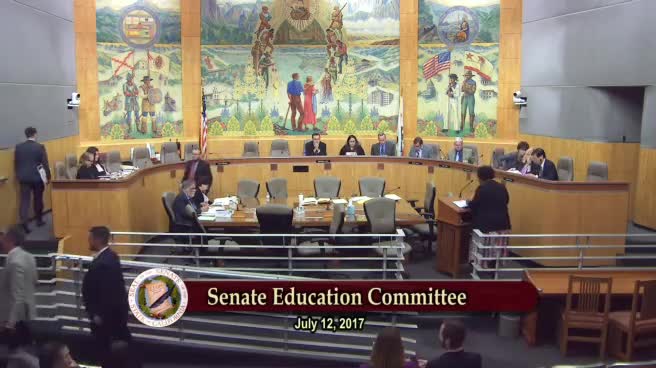 8MIN
Senate Standing Committee on Education
 3MIN
Assembly Floor
 1H
Assembly Standing Committee on Appropriations
 8MIN
Assembly Standing Committee on Education
Bill Author

Bill Co-Author(s):