AB 1355: State parks: fees.
- Session Year: 2017-2018
- House: Assembly
- Latest Version Date: 2017-09-01
Existing law gives control of the state park system to the Department of Parks and Recreation, and requires the Director of Parks and Recreation to promote and regulate the use of the state park system in a manner that conserves the scenery, natural and historic resources, and wildlife for the enjoyment of future generations. Existing law authorizes the department to collect fees, rents, and other returns for the use of any state park system area, with the amounts of those charges to be determined by the department.
This bill would authorize the department to waive all fees for the use, including camping where permitted, of any unit of the state park system by students of the California Cadet Corps or of a public military academy in exchange for completing a community service project at the unit that has been approved in advance by state park officials and staff of the California Cadet Corps or the academy, as applicable.
Existing law gives control of the state park system to the Department of Parks and Recreation, and requires the Director of Parks and Recreation to promote and regulate the use of the state park system in a manner that conserves the scenery, natural and historic resources, and wildlife for the enjoyment of future generations. Existing law authorizes the department to collect fees, rents, and other returns for the use of any state park system area, with the amounts of those charges to be determined by the department.
This bill would require authorize the department to waive all fees for the use, including camping where permitted, of any unit of the state park system by students of the California Cadet Corps or of a public military academy in exchange for completing a community service project at the unit that has been approved in advance by state park officials and staff of the California Cadet Corps or the academy, as applicable.
Existing law gives control of the state park system to the Department of Parks and Recreation, and requires the Director of Parks and Recreation to promote and regulate the use of the state park system in a manner that conserves the scenery, natural and historic resources, and wildlife for the enjoyment of future generations. Existing law authorizes the department to collect fees, rents, and other returns for the use of any state park system area, with the amounts of those charges to be determined by the department.
This bill would require the department to waive all fees for the use, including camping where permitted, of any unit of the state park system by students of the California Cadet Corps or of a public military academy in exchange for completing a community service project at the unit that has been approved in advance by state park officials and staff of the California Cadet Corps or the academy, as applicable.
Existing law, the California Private Postsecondary Education Act of 2009, provides, among other things, for student protections and regulatory oversight of private postsecondary institutions in the state. The act is enforced by the Bureau for Private Postsecondary Education within the Department of Consumer Affairs. Existing law prohibits an institution that is subject to the acts provisions from moving the location of class instruction more than 25 miles from the location of instruction at the time of enrollment, except as provided.This bill would restrict the institution from moving the location of instruction to no more than 15 miles from the location of instruction at enrollment.Existing law, the California Private Postsecondary Education Act of 2009, provides, among other things, for student protections and regulatory oversight of private postsecondary institutions in the state. The act is enforced by the Bureau for Private Postsecondary Education within the Department of Consumer Affairs. Existing law prohibits an institution that is subject to the acts provisions from moving the location of class instruction more than 25 miles from the location of instruction at the time of enrollment, except as provided.
This bill would restrict the institution from moving the location of instruction to no more than 15 miles from the location of instruction at enrollment.
The department may waive all fees for the use, including camping where permitted, of any unit of the state park system by students of the California Cadet Corps or of a public military academy, pursuant to Section 5080.44, in exchange for completing a community service project at the unit that has been approved in advance by state park officials and appropriate staff of the California Cadet Corps or the academy, as applicable.
The department may waive all fees for the use, including camping where permitted, of any unit of the state park system by students of the California Cadet Corps or of a public military academy, pursuant to Section 5080.44, in exchange for completing a community service project at the unit that has been approved in advance by state park officials and appropriate staff of the California Cadet Corps or the academy, as applicable.
The department shall may waive all fees for the use, including camping where permitted, of any unit of the state park system by students of the California Cadet Corps or of a public military academy academy, pursuant to Section 5080.44, in exchange for completing a community service project at the unit that has been approved in advance by state park officials and appropriate staff of the California Cadet Corps or the academy, as applicable.
The department shall waive all fees for the use, including camping where permitted, of any unit of the state park system by students of the California Cadet Corps or of a public military academy in exchange for completing a community service project at the unit that has been approved in advance by state park officials and appropriate staff of the California Cadet Corps or the academy, as applicable.
SECTION 1.Section 94898 of the Education Code is amended to read:94898.(a)An institution shall not merge classes unless all of the students have received the same amount of instruction. This subdivision does not prevent the placement of students, who are enrolled in different educational programs, in the same class if that class is part of each of the educational programs and the placement in a merged class will not impair the students learning of the subject matter of the class.(b)After a student has enrolled in an educational program, the institution shall not do either of the following:(1)Make any unscheduled suspension of any class unless caused by circumstances beyond the institutions control.(2)Change the day or time during the period of attendance in which any class is offered to a day when the student is not scheduled to attend the institution or to a time that is outside of the range of time that the student is scheduled to attend the institution on the day for which the change is proposed unless at least 90 percent of the students who are enrolled consent to the change and the institution offers full refunds to the students who do not consent to the change. For the purpose of this paragraph, range of time means the period beginning with the time at which the students first scheduled class session for the day is set to start and ending with the time the students last scheduled class session for that day is set to finish.(c)If an institution enrolls a student in an educational program that is conducted at a specific site at the time of enrollment, the institution shall not convert the educational program to another method of delivery, such as by means of distance education. This subdivision does not apply to an educational program that also includes a distance education component, if the student is notified during the enrollment process, in writing, that the program contains a distance education component.(d)An institution shall not move the location of class instruction more than 15 miles from the location of instruction at the time of enrollment unless any of the following occur:(1)The institution discloses in writing to each student before enrollment in the educational program that the location of instruction will change after the educational program begins and the address of the new location.(2)The institution applies for, and the bureau grants, approval to change the location. The bureau shall grant the application within 60 days if the bureau, after notice to affected students and an opportunity for them to be heard as prescribed by the bureau, concludes that the change in location would not be unfair or unduly burdensome to students. The bureau may grant approval to change the location subject to reasonable conditions, such as requiring the institution to provide transportation, transportation costs, or refunds to adversely affected students.(3)The institution offers a full refund to students enrolled in the educational program who do not voluntarily consent to the change.(4)An unforeseeable and unavoidable circumstance outside of the control of the institution requires the change in the location of instruction.(a)An institution shall not merge classes unless all of the students have received the same amount of instruction. This subdivision does not prevent the placement of students, who are enrolled in different educational programs, in the same class if that class is part of each of the educational programs and the placement in a merged class will not impair the students learning of the subject matter of the class.
(b)After a student has enrolled in an educational program, the institution shall not do either of the following:
(1)Make any unscheduled suspension of any class unless caused by circumstances beyond the institutions control.
(2)Change the day or time during the period of attendance in which any class is offered to a day when the student is not scheduled to attend the institution or to a time that is outside of the range of time that the student is scheduled to attend the institution on the day for which the change is proposed unless at least 90 percent of the students who are enrolled consent to the change and the institution offers full refunds to the students who do not consent to the change. For the purpose of this paragraph, range of time means the period beginning with the time at which the students first scheduled class session for the day is set to start and ending with the time the students last scheduled class session for that day is set to finish.
(c)If an institution enrolls a student in an educational program that is conducted at a specific site at the time of enrollment, the institution shall not convert the educational program to another method of delivery, such as by means of distance education. This subdivision does not apply to an educational program that also includes a distance education component, if the student is notified during the enrollment process, in writing, that the program contains a distance education component.
(d)An institution shall not move the location of class instruction more than 25 15 miles from the location of instruction at the time of enrollment unless any of the following occur:
(1)The institution discloses in writing to each student before enrollment in the educational program that the location of instruction will change after the educational program begins and the address of the new location.
(2)The institution applies for, and the bureau grants, approval to change the location. The bureau shall grant the application within 60 days if the bureau, after notice to affected students and an opportunity for them to be heard as prescribed by the bureau, concludes that the change in location would not be unfair or unduly burdensome to students. The bureau may grant approval to change the location subject to reasonable conditions, such as requiring the institution to provide transportation, transportation costs, or refunds to adversely affected students.
(3)The institution offers a full refund to students enrolled in the educational program who do not voluntarily consent to the change.
(4)An unforeseeable and unavoidable circumstance outside of the control of the institution requires the change in the location of instruction.
|
Date
|
Status
|
|---|---|
| Sep 1, 2017 | Chaptered by Secretary of State - Chapter 212, Statutes of 2017. |
| Sep 1, 2017 | Approved by the Governor. |
| Aug 25, 2017 | Enrolled and presented to the Governor at 3 p.m. |
| Aug 21, 2017 | Senate amendments concurred in. To Engrossing and Enrolling. |
| Jul 20, 2017 | In Assembly. Concurrence in Senate amendments pending. May be considered on or after August 18 pursuant to Assembly Rule 77. |
| Jul 20, 2017 | Read third time. Passed. Ordered to the Assembly. |
| Jul 18, 2017 | Read second time. Ordered to Consent Calendar. |
| Jul 17, 2017 | From committee: Be placed on second reading file pursuant to Senate Rule 28.8 and ordered to consent calendar. |
| Jul 3, 2017 | Read second time and amended. Re-referred to Com. on APPR. |
| Jun 29, 2017 | From committee: Amend, and do pass as amended and re-refer to Com. on APPR. with recommendation: To Consent Calendar. (Ayes 8. Noes 0.) (June 27). |
| Jun 8, 2017 | In committee: Set, first hearing. Hearing canceled at the request of author. |
| May 24, 2017 | Referred to Com. on N.R. & W. |
| May 11, 2017 | In Senate. Read first time. To Com. on RLS. for assignment. |
| May 11, 2017 | Read third time. Passed. Ordered to the Senate. (Ayes 77. Noes 0. Page 1485.) |
| May 4, 2017 | Read second time. Ordered to Consent Calendar. |
| May 3, 2017 | From committee: Do pass. To Consent Calendar. (Ayes 16. Noes 0.) (May 3). |
| Apr 26, 2017 | From committee: Do pass and re-refer to Com. on APPR. (Ayes 14. Noes 0.) (April 25). Re-referred to Com. on APPR. |
| Apr 18, 2017 | In committee: Hearing postponed by committee. |
| Apr 17, 2017 | From committee: Be re-referred to Com. on W.,P., & W. Re-referred. (Ayes 9. Noes 0.) (April 17). Re-referred to Com. on W.,P., & W. |
| Apr 6, 2017 | Re-referred to Com. on HIGHER ED. |
| Apr 5, 2017 | From committee chair, with author's amendments: Amend, and re-refer to Com. on HIGHER ED. Read second time and amended. |
| Mar 13, 2017 | Referred to Com. on HIGHER ED. |
| Feb 19, 2017 | From printer. May be heard in committee March 21. |
| Feb 17, 2017 | Read first time. To print. |
|
Date
|
Description
|
Location
|
Votes
|
|
|---|---|---|---|---|
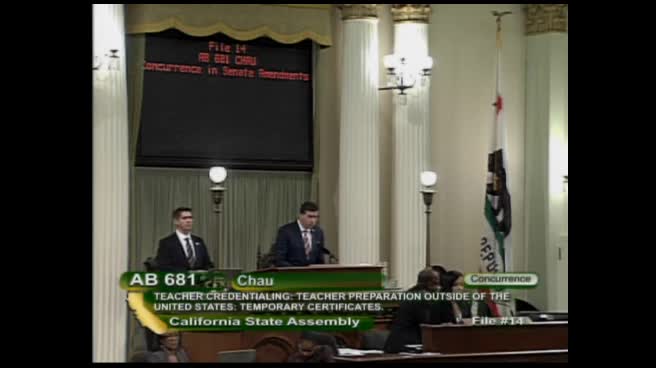
| Aug 21, 2017 | AB 1355 BOCANEGRA Concurrence in Senate Amendments | Assembly Floor |
Passed |
|
| Jul 20, 2017 | Consent Calendar 2nd AB1355 | Senate Floor |
Passed |
|
| Jun 27, 2017 | Do pass as amended, but first amend, and re-refer to the Committee on [Appropriations] with the recommendation: To Consent Calendar | Senate Standing Committee on Natural Resources and Water |
Passed |
|
| May 11, 2017 | AB 1355 BOCANEGRA Consent Calendar Second Day Regular Session | Assembly Floor |
Passed |
|
| May 3, 2017 | Do pass. To Consent Calendar. | Assembly Standing Committee on Appropriations |
Passed |
|
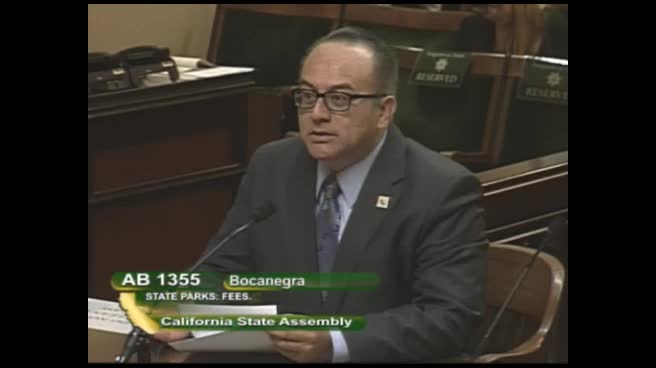
| Apr 25, 2017 | Do pass and be re-referred to the Committee on [Appropriations] | Assembly Standing Committee on Water, Parks, and Wildlife |
Passed |
|
| Apr 17, 2017 | Be re-referred to the Committee on [Water, Parks, and Wildlife] | Assembly Standing Committee on Rules |
Passed |
This list shows positions taken on this bill by organizations on the date displayed, which is linked to the original source.
Positions by individuals are not included.
CONCURRENCE IN SENATE AMENDMENTS
CSA1 Bill Id:AB 1355
Author:(Bocanegra)
As Amended Ver:July 3, 2017
Majority vote
ASSEMBLY: | 77-0 | (May 11, 2017) | SENATE: | 38-0 | (July 20, 2017) |
Original Committee Reference: W., P., & W.
SUMMARY: Authorizes a state park fee waiver for students of the California Cadet Corps or of a public military academy. Specifically, this bill:
Would authorize the department to waive all fees for the use, including camping where permitted, of any unit of the state park system by students of the California Cadet Corps or of a public military academy in exchange for completing a community service project at the unit that has been approved in advance by state park officials and staff of the California Cadet Corps or the academy.
The Senate amendments make the bill permissive by authorizing the department to waive fees instead of requiring the practice. The bill conditions the authorization on current law, per SB 204 (Pavley), Chapter 573, Statutes of 2015, which authorizes the Department of Parks and Recreation (DPR) to accept donations of real property or money from public or private sources to be used for the purpose of funding park programs to benefit youth.
EXISTING LAW:
- Establishes the California State Park system and vests the DPR with control of the state park system and responsibility for administering, protecting, developing, and interpreting state parks for the use and enjoyment of the public. Requires the DPR to protect the state park system from damage and to preserve the peace therein.
- Includes legislative findings that present funding for state parks has been significantly below the level necessary to fulfill the mission of the California State Park system. Requires that the DPR develop a prioritized action plan to increase revenues and collection of user fees at state parks.
- Prohibits the department from collecting fees from any group of pupils in kindergarten or grades 1 to 12, inclusive, or their escorts, including, but not limited to, teachers, other supervisory personnel, and bus drivers, any fee, rental or other return for the use of any unit in the state park system, except Hearst San Simeon State Historic Monument, when the group is visiting the area pursuant to a school outing or field trip under the direction of school personnel and has made prior arrangements with the department either through reservation or contact with the department's historical unit manager.
- Authorizes the DPR to provide discounted passes to certain groups of people including seniors over the age of 62, veterans, and low-income residents, as defined.
- Affirms legislative intent to allow the department to provide complimentary passes to volunteers if certain conditions are met.
FISCAL EFFECT: According to the Assembly Appropriations Committee, no additional state costs. According to DPR, this is practice is authorized under current law. Any lost user fee revenue is likely offset by the savings associated with the community service project.
COMMENTS: This bill requires the DPR to waive all fees for the use, including camping where permitted, of any unit of the state park system by students of the California Cadet Corps or of a public military academy in exchange for completing a community service project at the unit that has been approved in advance by state park officials and staff of the California Cadet Corps or the academy.
Background. Free admission programs are not new to residents and visitors of California. In recent years, "free park" days have been hosted at national parks, state parks, and local parks and museums. These events serve as an entry for all residents and visitors to access park systems and to enjoy many of the 280 park units, over 340 miles of coastline, 970 miles of lake and river frontage, and 4,500 miles of trails the state park system provides. State parks have a number of free and reduced cost admission programs including reduced costs for veterans and military, disabled, and income and age eligibility.
Students, Volunteer Projects and Complimentary Passes in State Parks. SB 204 (Pavley), Chapter 573, Statutes of 2015, authorizes the DPR to accept donations of real property or money from public or private sources to be used for the purpose of funding park programs to benefit youth. SB 204 authorizes the DPR, notwithstanding other provisions of law relating to contracts for services, to enter into agreements that may involve the transfer of funds appropriated to the DPR with public or nonprofit youth serving organizations to provide service and learning opportunities for young people by performing work on state park system programs and projects under the supervision of DPR employees, where the work is not being performed by state park employees, as specified. The bill states legislative findings and declarations that specifically supports the DPR's practice of providing complimentary passes to park volunteers and the extension of such offers to people who volunteer at state parks through cooperating associations.
Public Resources Code 5010.2 explicitly prohibits the DPR from collecting fees from any group of students in grades kindergarten to 12, inclusive, or their escorts on pre-approved field trips. This includes teachers, other supervisory personnel, and bus drivers. There are certain exceptions including rentals and visits to Hearst Castle. The group visiting must be on a school outing or field trip, under the direction of school personnel, and have made prior arrangements with the department either through reservation or contact with the department's historical unit manager. Both public and private schools are covered by this code.
Analysis Prepared by: Catherine Freeman / W., P., & W. / (916) 319-2096 FN: 0001309
Office of Senate Floor Analyses (916) 651-1520 Fax: (916) 327-4478 | AB |
CONSENT
Bill No: AB 1355
:
SENATE NATURAL RES. & WATER COMMITTEE: 8-0, 6/27/17
AYES: Hertzberg, Stone, Allen, Atkins, Hueso, Jackson, Stern, Vidak
NO VOTE RECORDED: Monning
SENATE APPROPRIATIONS COMMITTEE: Senate Rule 28.8
ASSEMBLY FLOOR: 77-0, 5/11/17 (Consent) - See last page for vote
DIGEST:
This bill authorizes the Department of Parks and Recreation to waive all fees for the use, including camping where permitted, of any unit of the state park system by students of the California Cadet Corps or of a public military academy, pursuant to existing law, in exchange for completing a community service project at that same state park unit.
Existing law:
- Vests the California Department of Parks and Recreation (the Parks Department) with control of the state park system and responsibility for administering, protecting, developing, and interpreting state parks for the use and enjoyment of the public. Existing law requires the Director of the Parks Department to promote and regulate the use of the state park system in a manner that conserves the scenery, natural and historic resources, and wildlife in the individual units of the system for the enjoyment of future generations.
- States legislative findings and declarations regarding:
- The importance of California's state parks to protecting the state's historical, natural and cultural heritage.
- The value of volunteers in state parks, and the Parks Department’s practice of providing complimentary passes to park volunteers.
- States legislative intent that the Parks Department extend such offers to persons who volunteer at state parks and through cooperating associations.
- Authorizes the Parks Department, pursuant to Public Resources Code § 5080.44 (a) (SB 204, Pavley, Chapter 573, Statutes of 2015), to enter into agreements with youth-serving non-profit organizations for the purpose of providing youth service, land stewardship, and educational opportunities, as well as for restoration of California’s natural, historic, archaeological, recreational, and scenic resources. Cooperating associations may also provide other services that enhance the visitor experience.
- Authorizes or requires the Parks Department to waive state park fees under a variety of scenarios, ranging from free admission days to reduced or free admission for certain citizens. For example, existing law pursuant to Public Resources Code § 5010.2 prohibits, with some site by site exceptions, the Department from collecting fees from a group of Kindergarten – 12 grade students on a class field trip, when they are under the direction of school personnel and the school has made prior arrangements with the Parks Department. This applies to day use fees for both public and private schools, and the Director of the Parks Department has discretion to apply the fee waiver to overnight school trips as well. Existing law also authorizes the Parks Department to provide discounted passes to certain groups of people including seniors, which is defined as those over the age of 62, low-income residents, and veterans.
This bill authorizes the Parks Department to waive all fees for the use, including camping where permitted, of any unit of the state park system by students of the California Cadet Corps or of a public military academy, pursuant to Section 5080.44 of the Public Resources Code (SB 204, Pavley, 2015), in exchange for completing a community service project at the unit that has been approved in advance by the state park officials and appropriate staff of the California Cadet Corps or the academy, as applicable.
Background
- The Parks Forward Commission, which was a citizen review panel, was established to fulfill requirements in previous legislation from 2012 (California State Parks Stewardship Act, AB 1589; AB 1478). The Parks Forward Commission released a final report in 2015, which included the recommendation to improve relationships with nonprofit and other partners, to improve cultural and resource protection programs, and to expand access to parks.
- The California Cadet Corps is a program offered through public schools that emphasizes leadership skills and public service, and is included as part of the Military Department pursuant to § 51 and §§ 500-520.1 of the Military and Veterans Code. For the 2015-2016 school year, the California Cadet Corps reported an enrollment of nearly 6,000 cadets at 51 school sites. The curriculum for the California Cadet Corps includes map and compass reading and orienteering, physical fitness and wellness, citizenship, and military drill, among others.
Comments
- The authority to enter into agreements with youth-serving nonprofits is designed not only to offer educational experiences to these groups but also to authorize the Parks Department to promote training and to conduct restoration activities under the supervision of the Department at state parks. State Parks have a history of volunteer engagement, which increases the potential for park improvements to be completed. In addition, by entering into agreements, the Parks Department and the California Cadet Corps or any other youth-centered non-profit or public group sets up the scaffolding for consistent, longstanding relationships. This could improve implementation of projects, as members of these organizations may develop skills and expertise, as have long-running volunteer groups in the past.
- This type of fee waiver fits into the general framework of encouraging youth to visit and appreciate state parks. Because the California Cadet Corps is youth focused and provides after school programs, this can be viewed as an extension of that approach.
- Could this type of partnership between the California Cadet Corps and the Parks Department be a model to catalyze other partnerships between organizations and state parks? This bill fits within the framework encouraged by SB 204 in 2015, as well as the recommendations from the Parks Forward Commission.
- State parks offer a wide variety of opportunities for leadership training. Part of the California Cadet Corps curriculum includes orienteering, practical outdoor skills, and leadership training. The open space and varied landscape at many state parks likely offers an exciting opportunity for learning such skills. In addition, with 280 state park units throughout the state, it is likely that a state park is within proximity of many, if not all, the units of the California Cadet Corps or other statewide youth organizations.
- Long-term partnerships between one park and one organization may increase park visits throughout the system. The recommendations of the Parks Forward Commission emphasized the importance of expanding access to parks to a wider portion of the public. If individuals come to state parks for leadership training through organizations such as the California Cadet Corps, it may be more likely that they visit that same park in the future or seek out opportunities to visit other state parks. The opportunity to provide access to state park spaces may help build long-term appreciation and support for California’s state park system. Therefore, in addition to the benefits of restoration work or park improvements, this type of agreement may lead to small increases in state park visitation rates.
FISCAL EFFECT: Appropriation: Fiscal Com.: Local:
None received
OPPOSITION: (Verified 7/17/17)
None received
ARGUMENTS IN SUPPORT: The author argues that “the California Cadet Corps and public military institutions serve a critical function in California’s educational system. Originally founded in 1911 by the Legislature as a youth-in-training program to foster interest in the California National Guard, the Cadet Corps model military units, demonstrating proper behavior and citizenship in their communities. Public military institutions, on the other hand, such as Sun Valley Military Charter […], serve a similar role, and educate hard-to-teach populations in need of non-traditional, structured curriculum. Both training models teach leadership, commitment to the community, loyalty, integrity, healthy, and responsible behavior, and success in all academic endeavors.” In addition to standard curriculum, these institutions offer a variety of after school, weekend and summer programs that include camping trips and outdoor education programs. The author states that “alleviation of fees for use of California State Parks, in exchange for service to the State Park, would go a long way toward alleviating the financial pressures that these programs and institutions undertake to ensure adequate education of their students.”
ASSEMBLY FLOOR: 77-0, 5/11/17
AYES: Acosta, Aguiar-Curry, Travis Allen, Arambula, Baker, Berman, Bigelow, Bloom, Bocanegra, Bonta, Brough, Burke, Caballero, Calderon, Cervantes, Chau, Chávez, Chen, Chiu, Choi, Chu, Cooley, Cooper, Cunningham, Dababneh, Daly, Eggman, Flora, Fong, Frazier, Friedman, Gallagher, Cristina Garcia, Eduardo Garcia, Gipson, Gloria, Gomez, Gonzalez Fletcher, Gray, Grayson, Harper, Holden, Irwin, Jones-Sawyer, Kalra, Kiley, Lackey, Levine, Limón, Low, Maienschein, Mathis, Mayes, McCarty, Medina, Melendez, Mullin, Muratsuchi, Nazarian, Obernolte, Quirk, Quirk-Silva, Reyes, Ridley-Thomas, Rodriguez, Rubio, Salas, Santiago, Steinorth, Mark Stone, Thurmond, Ting, Voepel, Waldron, Weber, Wood, Rendon
NO VOTE RECORDED: Dahle, O'Donnell, Patterson
7/19/17 16:26:47
**** END ****
SENATE COMMITTEE ON NATURAL RESOURCES AND WATER
Senator Robert Hertzberg, Chair
2017 - 2018 Regular
Bill No: AB 1355 Hearing Date: June 27, 2017
Author: | |||
Version: |
| ||
Urgency: | Fiscal: | ||
Consultant: | |||
Subject: State parks: fees
BACKGROUND AND EXISTING LAW
- The California Department of Parks and Recreation (the Parks Department) is vested with control of the state park system and responsibility for administering, protecting, developing, and interpreting state parks for the use and enjoyment of the public. Existing law requires the Director of the Parks Department to promote and regulate the use of the state park system in a manner that conserves the scenery, natural and historic resources, and wildlife in the individual units of the system for the enjoyment of future generations.
- Furthermore, existing law states legislative findings and declarations regarding:
- The importance of California's state parks to protecting the state's historical, natural and cultural heritage.
- The value of volunteers in state parks, and the Parks Department’s practice of providing complimentary passes to park volunteers.
- States legislative intent that the Parks Department extend such offers to persons who volunteer at state parks and through cooperating associations.
- The Parks Forward Commission, which was a citizen review panel, was established to fulfill requirements in previous legislation from 2012 (California State Parks Stewardship Act, AB 1589; AB 1478). The Parks Forward Commission released a final report in 2015, which included the recommendation to improve relationships with nonprofit and other partners, to improve cultural and resource protection programs, and to expand access to parks.
- Pursuant to Public Resources Code § 5080.44 (a) (SB 204, Pavley, Stats of 2015), the Department is authorized to enter into agreements with youth-serving non-profit organizations for the purpose of providing youth service, land stewardship, and educational opportunities, as well as for restoration of California’s natural, historic, archaeological, recreational, and scenic resources. Cooperating associations may also provide other services that enhance the visitor experience.
- State Park fees are waived under a variety of scenarios, ranging from free admission days to reduced or free admission for certain citizens. For example, existing law pursuant to Public Resources Code § 5010.2 prohibits, with some site by site exceptions, the department from collecting fees from a group of Kindergarten – 12 grade students on a class field trip, when they are under the direction of school personnel and the school has made prior arrangements with the Parks Department. This applies to day use fees for both public and private schools, and the Director of the Parks Department has discretion to apply the fee waiver to overnight school trips as well. Existing law also authorizes the Parks Department to provide discounted passes to certain groups of people including seniors, which is defined as those over the age of 62, low-income residents, and veterans.
- The California Cadet Corps is a program offered through public schools that emphasizes leadership skills and public service, and is included as part of the Military Department pursuant to § 51 and §§ 500-520.1 of the Military and Veterans Code. For the 2015-2016 school year, the California Cadet Corps reported an enrollment of nearly 6,000 cadets at 51 school sites. The curriculum for the California Cadet Corps includes map and compass reading and orienteering, physical fitness and wellness, citizenship, and military drill, among others.
PROPOSED LAW
This bill would require the department to waive all fees for the use, including camping where permitted, of any unit of the state park system by students of the California Cadet Corps or of a public military academy in exchange for completing a community service project at the unit that has been approved in advance by state park officials and staff of the California Cadet Corps.
ARGUMENTS IN SUPPORT
The author argues that “the California Cadet Corps and public military institutions serve a critical function in California’s educational system. Originally founded in 1911 by the Legislature as a youth-in-training program to foster interest in the California National Guard, the Cadet Corps model military units, demonstrating proper behavior and citizenship in their communities. Public military institutions, on the other hand, such as Sun Valley Military Charter […], serve a similar role, and educate hard-to-teach populations in need of non-traditional, structured curriculum. Both training models teach leadership, commitment to the community, loyalty, integrity, healthy, and responsible behavior, and success in all academic endeavors.” In addition to standard curriculum, these institutions offer a variety of after school, weekend and summer programs that include camping trips and outdoor education programs. The author states that “alleviation of fees for use of California State Parks, in exchange for service to the State Park, would go a long way toward alleviating the financial pressures that these programs and institutions undertake to ensure adequate education of their students.”
ARGUMENTS IN OPPOSITION
None Received
COMMENTS
- The authority to enter into agreements with youth-serving nonprofits is designed not only to offer educational experiences to these groups but also to authorize the department to promote training and to conduct restoration activities under the supervision of the department at state parks. State Parks have a history of volunteer engagement, which increases the potential for park improvements to be completed. In addition, by entering into agreements, the Parks Department and the California Cadet Corps or any other youth-centered non-profit or public group sets up the scaffolding for consistent, longstanding relationships. This could improve implementation of projects, as members of these organizations may develop skills and expertise, as have long-running volunteer groups in the past.
- This type of fee waiver fits into the general framework of encouraging youth to visit and appreciate state parks. Because the California Cadet Corps is youth focused and provides after school programs, this can be viewed as an extension of that approach.
- Could this type of partnership between the California Cadet Corps and the Parks Department be a model to catalyze other partnerships between organizations and state parks? This bill fits within the framework encouraged by SB 204 in 2015, as well as the recommendations from the Parks Forward Commission. Therefore, the committee may wish to consider linking this bill with the authorization in public Resources Code § 5080.44 (a) (SB 204, Pavley, Stats of 2015), to enter into agreements with youth-serving non-profit organizations for the purpose of providing youth service, land stewardship, and educational opportunities, and restoration at California State Parks [Amendment 1].
- State parks offer a wide variety of opportunities for leadership training. Part of the California Cadet Corps curriculum includes orienteering, practical outdoor skills, and leadership training. The open space and varied landscape at many state parks likely offers an exciting opportunity for learning such skills. In addition, with 280 state park units throughout the state, it is likely that a state park is within proximity of many, if not all, the units of the California Cadet Corps or other statewide youth organizations.
- Long-term partnerships between one park and one organization may increase park visits throughout the system. The recommendations of the Parks Forward Commission emphasized the importance of expanding access to parks to a wider portion of the public. If individuals come to state parks for leadership training through organizations such as the California Cadet Corps, it may be more likely that they visit that same park in the future or seek out opportunities to visit other state parks. The opportunity to provide access to state park spaces may help build long-term appreciation and support for California’s state park system. Therefore, in addition to the benefits of restoration work or park improvements, this type of agreement may lead to small increases in state park visitation rates.
SUGGESTED AMENDMENTS
After conversations with the author’s office, committee staff suggest the following amendment.
AMENDMENT 1
Amend Line 3-9 to read “The Department shall may waive all fees for the use, including camping where permitted, of any unit of the state park system by students of the California Cadet Corps or of a public military academy, pursuant to Section 5080.44 of the Public Resources Code (SB 204, Pavley, 2015), in exchange for completing a community service project at the unit that has been approved in advance by the state park officials and appropriate staff of the California Cadet Corps or the academy, as applicable.”
SUPPORT
None Received
OPPOSITION
None Received
-- END --
Date of Hearing: May 3, 2017
ASSEMBLY COMMITTEE ON APPROPRIATIONS
Lorena Gonzalez Fletcher, Chair
ABPCA Bill Id:AB 1355
Author:(Bocanegra) – As Amended Ver:April 5, 2017
Policy Committee: | Rules | Vote: | 9 - 0 |
Water, Parks and Wildlife | 14 - 0 |
Urgency: No State Mandated Local Program: No Reimbursable: No
SUMMARY:
This bill requires the Department of Parks and Recreation (DPR) to waive all fees for the use, including camping where permitted, of any unit of the state park system by students of the California Cadet Corps or of a public military academy in exchange for completing a community service project at the unit that has been approved in advance by state park officials and staff of the California Cadet Corps or the academy.
FISCAL EFFECT:
No additional state costs. According to DPR, this is practice is authorized under current law. Any lost user fee revenue is likely offset by the savings associated with the community service project.
COMMENTS:
- Purpose. According to the author, in school year 2015-16, the California Cadet Corps reported a very diverse enrollment of approximately 5,947 cadets at 51 school site: 54% of the students are Hispanic, 22% Black, 12% Asian, and 11% White. Similarly, Sun Valley Military Charter reported that it accepts 100% of the students that show up to school, teaches three times the number of Special Education Students as a traditional school, maintains 91 percent free-and-reduced-price lunch-eligible students, and has seven times the number of foster students in its classrooms than a traditional school. It also serves as an educator of last resort for expelled students.
The author further contends, in addition to standard curriculum, these institutions offer a variety of after school, weekend, and summer programs that include camping trips and outdoor education programs. Alleviation of fees for use of California State Parks, in exchange for service to the State Park, would go a long way toward alleviating the financial pressures that these programs and institutions undertake to ensure adequate education of their students.
- The California Cadet Corps. The California Cadet Corps, officially founded in 1911 by the California Legislature and then Adjutant General BG Edwin B. Forbes, is thought to be the oldest known program of its type in the country. The Cadet Corps is a school-based, applied leadership program conducted within a military framework and is designed to provide maximum growth and leadership opportunities for cadets from the elementary through the High School levels.
The California Cadet Corps provides applied leadership opportunities for cadets by allowing them to conduct training to junior cadets, to perform as leaders in their cadet military units, and by demonstrating proper behavior and citizenship at their schools and in their communities. As part of their training, cadets provide assistance and support to the school and community. Examples include color guards, participation in parades, charitable event support, serving as student leaders and peer mentors and escorts or monitors for activities.
- Background. SB 204 (Pavley), Chapter 573, Statutes of 2015, authorizes the DPR to accept donations of real property or money from public or private sources to be used for the purpose of funding park programs to benefit youth. SB 204 authorizes the DPR, notwithstanding other provisions of law relating to contracts for services, to enter into agreements that may involve the transfer of funds appropriated to the DPR with public or nonprofit youth serving organizations to provide service and learning opportunities for young people by performing work on state park system programs and projects under the supervision of DPR employees, where the work is not being performed by state park employees, as specified. The bill states legislative findings and declarations that specifically supports the DPR's practice of providing complimentary passes to park volunteers and the extension of such offers to people who volunteer at state parks through cooperating associations
Analysis Prepared by: Jennifer Galehouse / APPR. / (916) 319-2081
Date of Hearing: April 25, 2017
ASSEMBLY COMMITTEE ON WATER, PARKS, AND WILDLIFE
Eduardo Garcia, Chair
ABPCA Bill Id:AB 1355 (
Author:Bocanegra) – As Amended Ver:April 5, 2017
SUBJECT: State parks: fees
SUMMARY: Requires a state park fee waiver for students of the California Cadet Corps or of a public military academy. Specifically, this bill:
Would require the department to waive all fees for the use, including camping where permitted, of any unit of the state park system by students of the California Cadet Corps or of a public military academy in exchange for completing a community service project at the unit that has been approved in advance by state park officials and staff of the California Cadet Corps or the academy.
EXISTING LAW:
- Establishes the California State Park system and vests the DPR with control of the state park system and responsibility for administering, protecting, developing, and interpreting state parks for the use and enjoyment of the public. Requires the DPR to protect the state park system from damage and to preserve the peace therein.
- Includes legislative findings that present funding for state parks has been significantly below the level necessary to fulfill the mission of the California State Park system. Requires that the DPR develop a prioritized action plan to increase revenues and collection of user fees at state parks.
- Prohibits the department from collecting fees from any group of pupils in kindergarten or grades 1 to 12, inclusive, or their escorts, including, but not limited to, teachers, other supervisory personnel, and bus drivers, any fee, rental or other return for the use of any unit in the state park system, except Hearst San Simeon State Historic Monument, when the group is visiting the area pursuant to a school outing or field trip under the direction of school personnel and has made prior arrangements with the department either through reservation or contact with the department’s historical unit manager.
- Authorizes the DPR to provide discounted passes to certain groups of people including seniors over the age of 62, veterans, and low-income residents, as defined.
- Affirms legislative intent to allow the department to provide complimentary passes to volunteers if certain conditions are met.
FISCAL EFFECT: Unknown
COMMENTS: This bill requires the DPR to waive all fees for the use, including camping where permitted, of any unit of the state park system by students of the California Cadet Corps or of a public military academy in exchange for completing a community service project at the unit that has been approved in advance by state park officials and staff of the California Cadet Corps or the academy.
Background. Free admission programs are not new to residents and visitors of California. In recent years, “free park” days have been hosted at national parks, state parks, and local parks and museums. These events serve as an entry for all residents and visitors to access park systems and to enjoy many of the 280 park units, over 340 miles of coastline, 970 miles of lake and river frontage, and 4,500 miles of trails the state park system provides. State parks have a number of free and reduced cost admission programs including:
- Veterans and Military Access. AB 150 (Olsen), Chapter 688, Statutes of 2013, authorizes the Department of Parks and Recreation (DPR) to offer veterans and active duty or reserve military personnel of the United States (U.S.) Armed Forces or the National Guard, free day use access, or reduced fee access, to California state parks on Memorial Day and Veterans Day. Honorably discharged war veterans who are residents of California with an overall / combined rating at 50% or greater service-connected disability, or were held as prisoners of war by forces hostile to the United States, or recipients of the Medal of Honor are eligible to receive the Distinguished Veteran Pass (formerly Disabled War Veteran/Prisoner of War Pass). This pass entitles the holder to the use of all basic facilities (including day use, camping and boating) in California State Parks at no charge.
- Disabled Discount Pass. For persons with permanent disabilities, this pass entitles the bearer to a 50% discount for vehicle day use, family camping, and boat use fees at California State Park operated units. The pass costs $3.50 (one-time, lifetime).
- Golden Bear Pass. Under the law, any qualifying person receiving Supplemental Security Income (SSI) [CA State Welfare and Institutions Code Section 12200]; any person receiving aid under the applicable aid codes in the CalWORKS Program; or any person 62 years of age or older with income limitations specified on the application form is eligible to receive the Golden Bear Pass. The pass costs $5.00 per calendar year. Persons 62 years of age or older are eligible to receive the Limited Use Golden Bear Pass ($20.00 per calendar year). The pass entitles the holder and spouse or registered domestic partner entry to most California State Park operated units during non-peak season where vehicle day use fees are collected at no charge.
- State Park Free Admission Days. In recent years, California residents have seen a number of “free admission” days at state parks. The opportunity to provide access to outdoor spaces and build long-term appreciation and support for California’s state parks has been carried out through free admission to veterans on Memorial Day and Veterans Day and a Green Friday Program. The California Department of Parks and Recreation (DPR) covers the costs for the free admission to veterans. Green Friday began in 2015 when the well-known retailer REI closed all of its stores on the day after Thanksgiving, urging outdoor activities as an alternative to Black Friday shopping. Save the Redwoods League (League) decided to take the initiative a step further by encouraging people to enjoy the holiday with friends and family in California’s most spectacular landscapes. Collaborating with the DPR, the League covered the day-use fee for 48 redwood parks. The public response was so strong that the program added the California State Parks Foundation as a partner and expanded the number of participating state parks from 48 in 2015 to 116 in 2016. Parks were selected based on their ability to handle large crowds and showcase the diversity of the State Parks System. By the end of the 2016 event, 11,560 parking passes had been downloaded, totaling $115,600. This equated to more than 35,000 participants. Over 60 percent of the participants were first time visitors to a state park. The DPR worked closely with its partners on messaging/public relations and coordinated with field districts to properly welcome the large crowds.
Students, Volunteer Projects and Complimentary Passes in State Parks. SB 204 (Pavley), Chapter 573, Statutes of 2015, authorizes the DPR to accept donations of real property or money from public or private sources to be used for the purpose of funding park programs to benefit youth. SB 204 authorizes the DPR, notwithstanding other provisions of law relating to contracts for services, to enter into agreements that may involve the transfer of funds appropriated to the DPR with public or nonprofit youth serving organizations to provide service and learning opportunities for young people by performing work on state park system programs and projects under the supervision of DPR employees, where the work is not being performed by state park employees, as specified. The bill states legislative findings and declarations that specifically supports the DPR's practice of providing complimentary passes to park volunteers and the extension of such offers to people who volunteer at state parks through cooperating associations.
Public Resources Code 5010.2 explicitly prohibits the DPR from collecting fees from any group of students in grades kindergarten to 12, inclusive, or their escorts on pre-approved field trips. This includes teachers, other supervisory personnel, and bus drivers. There are certain exceptions including rentals and visits to Hearst Castle. The group visiting must be on a school outing or field trip, under the direction of school personnel, and have made prior arrangements with the department either through reservation or contact with the department’s historical unit manager. Both public and private schools are covered by this code.
Related Legislation.
- AB 1358 (Cooley), of this session, would create September 9 (California Admission Day) as a free admission day to all state parks.
- SB 204 (Pavley), Chapter 573, Statutes of 2015, authorizes the DPR to accept donations of real property or money from public or private sources to be used for the purpose of funding park programs to benefit youth.
- AB 150 (Olsen), Chapter 688, Statutes of 2013, authorizes the Department of Parks and Recreation (DPR) to offer veterans and active duty or reserve military personnel of the United States (U.S.) Armed Forces or the National Guard, free day use access, or reduced fee access, to California state parks on Memorial Day and Veterans Day.
REGISTERED SUPPORT / OPPOSITION:
Support
None on file
Opposition
None on file
Analysis Prepared by: Catherine Freeman / W., P., & W. /
Discussed in Hearing
 1MIN
Assembly Floor
 4MIN
Assembly Standing Committee on Water, Parks, and Wildlife
Bill Author
Bill Co-Author(s):