AB 1360: Charter schools: pupil admissions, suspensions, and expulsions.
- Session Year: 2017-2018
- House: Assembly
- Latest Version Date: 2017-10-13
The Charter Schools Act of 1992 provides for the establishment and operation of charter schools and requires a petition for the establishment of a charter school to contain comprehensive descriptions of various procedures, including the charter schools admission, suspension, and expulsion procedures.
This bill would require the charter petition, regardless of the chartering authority, to contain a comprehensive description of procedures by which a pupil can be suspended, expelled, or otherwise involuntarily removed from the charter school that includes an explanation of how the charter school will comply with specified federal and state constitutional due process requirements. The bill would require a school district to provide certain information to a charter school in which a pupil was enrolled and who was expelled or left the charter school if the pupil is subsequently expelled or leaves the school district. To the extent the bill would impose additional requirements on local educational agencies and charter schools, the bill would impose a state-mandated local program.
Existing law requires, if the number of pupils who wish to attend a charter school exceeds capacity, for attendance to be determined by a public random drawing and requires admission preferences to be extended to pupils currently attending the charter school and pupils who reside in the school district or county, depending on the applicable chartering authority. Existing law provides that other preferences may be permitted by a chartering authority on an individual school basis, as specified.
This bill would require other preferences to be approved by the chartering authority at a public hearing and would require the preferences to comply with specified other requirements. To the extent the bill would impose additional duties on local educational agencies, the bill would impose a state-mandated local program.
The bill also would authorize a charter school to encourage parental involvement, but would require the charter school to notify the parents and guardians of applicant pupils and currently enrolled pupils that parental involvement is not a requirement for acceptance to, or continued enrollment at, the charter school.
This bill would incorporate additional changes to Section 47605 of the Education Code proposed by AB 830 to be operative only if this bill and AB 830 are enacted and this bill is enacted last.
The California Constitution requires the state to reimburse local agencies and school districts for certain costs mandated by the state. Statutory provisions establish procedures for making that reimbursement.
This bill would provide that, if the Commission on State Mandates determines that the bill contains costs mandated by the state, reimbursement for those costs shall be made pursuant to the statutory provisions noted above.
The Charter Schools Act of 1992 provides for the establishment and operation of charter schools and requires a petition for the establishment of a charter school to contain comprehensive descriptions of various procedures, including the charter schools admission, suspension, and expulsion procedures.
This bill would require the charter petition, regardless of the chartering authority, to contain a comprehensive description of procedures by which a pupil can be suspended, expelled, or otherwise involuntarily removed, disenrolled, dismissed, transferred, or terminated removed from the charter school that includes an explanation of how the charter school will comply with specified federal and state constitutional due process requirements. The bill would require a school district to provide certain information to a charter school in which a pupil was enrolled and who was expelled or left the charter school if the pupil is subsequently expelled or leaves the school district. To the extent the bill would impose additional requirements on local educational agencies and charter schools, the bill would impose a state-mandated local program.
Existing law requires, if the number of pupils who wish to attend a charter school exceeds capacity, for attendance to be determined by a public random drawing and requires admission preferences to be extended to pupils currently attending the charter school and pupils who reside in the school district or county, depending on the applicable chartering authority. Existing law provides that other preferences may be permitted by a chartering authority on an individual school basis, as specified.
This bill would require other preferences to be approved by the chartering authority at a public hearing and would require the preferences to comply with specified other requirements. To the extent the bill would impose additional duties on local educational agencies, the bill would impose a state-mandated local program.
The bill also would authorize a charter school to encourage parental involvement, but would require the charter school to notify the parents and guardians of applicant pupils and currently enrolled pupils that parental involvement is not a requirement for acceptance to, or continued enrollment at, the charter school.
This bill would incorporate additional changes to Section 47605 of the Education Code proposed by AB 830 to be operative only if this bill and AB 830 are enacted and this bill is enacted last.
The California Constitution requires the state to reimburse local agencies and school districts for certain costs mandated by the state. Statutory provisions establish procedures for making that reimbursement.
This bill would provide that, if the Commission on State Mandates determines that the bill contains costs mandated by the state, reimbursement for those costs shall be made pursuant to the statutory provisions noted above.
The Charter Schools Act of 1992 provides for the establishment and operation of charter schools and requires a petition for the establishment of a charter school to contain comprehensive descriptions of various procedures, including the charter schools admission, suspension, and expulsion procedures.
This bill would require the charter petition petition, regardless of the chartering authority, to contain a comprehensive description of procedures by which a pupil can be suspended, expelled, or otherwise involuntarily removed, disenrolled, dismissed, transferred, or terminated from the charter school that includes an explanation of how the charter school will comply with specified federal and state constitutional due process requirements. The bill would require a school district to provide certain information to a charter school in which a pupil was enrolled and who was expelled or left the charter school if the pupil is subsequently expelled or leaves the school district. To the extent the bill would impose additional requirements on local educational agencies and charter schools, the bill would impose a state-mandated local program.
Existing law requires, if the number of pupils who wish to attend a charter school exceeds capacity, for attendance to be determined by a public random drawing and requires admission preferences to be extended to pupils currently attending the charter school and pupils who reside in the school district. district or county, depending on the applicable chartering authority. Existing law provides that other preferences may be permitted by a chartering authority on an individual school basis, as specified.
This bill would require other preferences to be approved by the chartering authority at a public hearing and would require the preferences to comply with specified other requirements. To the extent the bill would impose additional duties on local educational agencies, the bill would impose a state-mandated local program.
The bill also would authorize a charter school to encourage parental involvement, but would require the charter school to notify the parents and guardians of applicant pupils and currently enrolled pupils that parental involvement is not a requirement for acceptance to, or continued enrollment at, the charter school.
The California Constitution requires the state to reimburse local agencies and school districts for certain costs mandated by the state. Statutory provisions establish procedures for making that reimbursement.
This bill would provide that, if the Commission on State Mandates determines that the bill contains costs mandated by the state, reimbursement for those costs shall be made pursuant to the statutory provisions noted above.
The Charter Schools Act of 1992 provides for the establishment and operation of charter schools and requires a petition for the establishment of a charter school to contain comprehensive descriptions of various procedures, including the charter schools admission, suspension, and expulsion procedures.
This bill would require the charter schools admission, suspension, and expulsion procedures to comply with specified minimum procedural requirements, including that the procedures comply petition to contain a comprehensive description of procedures by which a pupil can be suspended, expelled, or otherwise involuntarily removed, disenrolled, dismissed, transferred, or terminated from the charter school that includes an explanation of how the charter school will comply with specified federal and state constitutional due process requirements. The bill would require a charter schools expulsion procedures to ensure that a pupil is entitled to a formal hearing, as specified, and would authorize a pupil to appeal the expulsion to the county board of education. The bill would require a school district to provide certain information to a charter school in which a pupil was enrolled and who was expelled or left the charter school if the pupil is subsequently expelled or leaves the school district. To the extent the bill would impose additional requirements on local educational agencies and charter schools, the bill would impose a state-mandated local program.
Existing law requires, if the number of pupils who wish to attend a charter school exceeds capacity, for attendance to be determined by a public random drawing and requires admission preferences to be extended to pupils currently attending the charter school and pupils who reside in the school district. Existing law provides that other preferences may be permitted by a chartering authority on an individual school basis, as specified.
This bill would require other preferences to be approved by the charter school chartering authority at a public hearing and would require the preferences to comply with specified other requirements. To the extent the bill would impose additional duties on local educational agencies, the bill would impose a state-mandated local program.
The bill also would authorize a charter school to encourage parental involvement, but would require the charter school to notify the parents and guardians of applicant pupils and currently enrolled pupils that parental involvement, involvement is not a requirement for acceptance to, or continued enrollment at, the charter school.
The California Constitution requires the state to reimburse local agencies and school districts for certain costs mandated by the state. Statutory provisions establish procedures for making that reimbursement.
This bill would provide that, if the Commission on State Mandates determines that the bill contains costs mandated by the state, reimbursement for those costs shall be made pursuant to the statutory provisions noted above.
The Charter Schools Act of 1992 provides for the establishment and operation of charter schools. schools and requires a petition for the establishment of a charter school to contain comprehensive descriptions of various procedures, including the charter schools admission, suspension, and expulsion procedures.
This bill would require the charter schools admission, suspension, and expulsion procedures to comply with specified minimum procedural requirements, including that the procedures comply with federal and state constitutional due process requirements. The bill would require a charter schools expulsion procedures to ensure that a pupil is entitled to a formal hearing, as specified, and would authorize a pupil to appeal the expulsion to the county board of education. To the extent the bill would impose additional requirements on local educational agencies and charter schools, the bill would impose a state-mandated local program.
Existing law requires, if the number of pupils who wish to attend a charter school exceeds capacity, for attendance to be determined by a public random drawing and requires admission preferences to be extended to pupils currently attending the charter school and pupils who reside in the school district. Existing law provides that other preferences may be permitted by a chartering authority on an individual school basis, as specified.
This bill would require other preferences to be approved by the charter school at a public hearing and would require the preferences to comply with specified other requirements.
The bill also would authorize a charter school to encourage parental involvement, but would require the charter school to notify the parents and guardians of applicant pupils and currently enrolled pupils that parental involvement, is not a requirement for acceptance to, or continued enrollment at, the charter school.
The California Constitution requires the state to reimburse local agencies and school districts for certain costs mandated by the state. Statutory provisions establish procedures for making that reimbursement.
This bill would provide that, if the Commission on State Mandates determines that the bill contains costs mandated by the state, reimbursement for those costs shall be made pursuant to the statutory provisions noted above.
This bill would express the intent of the Legislature to enact legislation that would prohibit discriminatory admissions practices and ensure due process in pupil discipline at charter schools.The Charter Schools Act of 1992 provides for the establishment and operation of charter schools.
This bill would express the intent of the Legislature to enact legislation that would prohibit discriminatory admissions practices and ensure due process in pupil discipline at charter schools.
It is the intent of the Legislature in enacting this act to do all of the following:
(a)Ensure equal access to interested pupils at charter schools and prohibit practices that discourage enrollment or disproportionately push out segments of already enrolled pupils.
(b)Ensure that charter school discipline policies are fair and transparent.
(c)Ensure that a pupils constitutional right to due process is protected at charter schools.
(d)Consistent with Section 5 of Article IX of the California Constitution, ensure that charter schools operate within the system of common schools by remaining ... free, nonsectarian and open to all students..., as stated in Wilson v. State Board of Education (1999) 75 Cal.App.4th 1125, 113738.
SEC. 2.Section 47605 of the Education Code is amended to read:47605.(a)(1)Except as set forth in paragraph (2), a petition for the establishment of a charter school within a school district may be circulated by one or more persons seeking to establish the charter school. A petition for the establishment of a charter school shall identify a single charter school that will operate within the geographic boundaries of that school district. A charter school may propose to operate at multiple sites within the school district if each location is identified in the charter school petition. The petition may be submitted to the governing board of the school district for review after either of the following conditions is met:
(A)The petition is signed by a number of parents or legal guardians of pupils that is equivalent to at least one-half of the number of pupils that the charter school estimates will enroll in the charter school for its first year of operation.
(B)The petition is signed by a number of teachers that is equivalent to at least one-half of the number of teachers that the charter school estimates will be employed at the charter school during its first year of operation.
(2)A petition that proposes to convert an existing public school to a charter school that would not be eligible for a loan pursuant to subdivision (c) of Section 41365 may be circulated by one or more persons seeking to establish the charter school. The petition may be submitted to the governing board of the school district for review after the petition is signed by not less than 50 percent of the permanent status teachers currently employed at the public school to be converted.
(3)A petition shall include a prominent statement that a signature on the petition means that the parent or legal guardian is meaningfully interested in having his or her child or ward attend the charter school, or in the case of a teachers signature, means that the teacher is meaningfully interested in teaching at the charter school. The proposed charter shall be attached to the petition.
(4)After receiving approval of its petition, a charter school that proposes to establish operations at one or more additional sites shall request a material revision to its charter and shall notify the authority that granted its charter of those additional locations. The authority that granted its charter shall consider whether to approve those additional locations at an open, public meeting. If the additional locations are approved, there shall be a material revision to the charter schools charter.
(5)A charter school that is unable to locate within the jurisdiction of the chartering school district may establish one site outside the boundaries of the school district, but within the county in which that school district is located, if the school district within the jurisdiction of which the charter school proposes to operate is notified in advance of the charter petition approval, the county superintendent of schools and the Superintendent are notified of the location of the charter school before it commences operations, and either of the following circumstances exists:
(A)The school has attempted to locate a single site or facility to house the entire program, but a site or facility is unavailable in the area in which the school chooses to locate.
(B)The site is needed for temporary use during a construction or expansion project.
(6)Commencing January 1, 2003, a petition to establish a charter school may not be approved to serve pupils in a grade level that is not served by the school district of the governing board considering the petition, unless the petition proposes to serve pupils in all of the grade levels served by that school district.
(b)No later than 30 days after receiving a petition, in accordance with subdivision (a), the governing board of the school district shall hold a public hearing on the provisions of the charter, at which time the governing board of the school district shall consider the level of support for the petition by teachers employed by the school district, other employees of the school district, and parents. Following review of the petition and the public hearing, the governing board of the school district shall either grant or deny the charter within 60 days of receipt of the petition, provided, however, that the date may be extended by an additional 30 days if both parties agree to the extension. In reviewing petitions for the establishment of charter schools pursuant to this section, the chartering authority shall be guided by the intent of the Legislature that charter schools are and should become an integral part of the California educational system and that the establishment of charter schools should be encouraged. The governing board of the school district shall grant a charter for the operation of a school under this part if it is satisfied that granting the charter is consistent with sound educational practice. The governing board of the school district shall not deny a petition for the establishment of a charter school unless it makes written factual findings, specific to the particular petition, setting forth specific facts to support one or more of the following findings:
(1)The charter school presents an unsound educational program for the pupils to be enrolled in the charter school.
(2)The petitioners are demonstrably unlikely to successfully implement the program set forth in the petition.
(3)The petition does not contain the number of signatures required by subdivision (a).
(4)The petition does not contain an affirmation of each of the conditions described in subdivision (d).
(5)The petition does not contain reasonably comprehensive descriptions of all of the following:
(A)(i)The educational program of the charter school, designed, among other things, to identify those whom the charter school is attempting to educate, what it means to be an educated person in the 21st century, and how learning best occurs. The goals identified in that program shall include the objective of enabling pupils to become self-motivated, competent, and lifelong learners.
(ii)The annual goals for the charter school for all pupils and for each subgroup of pupils identified pursuant to Section 52052, to be achieved in the state priorities, as described in subdivision (d) of Section 52060, that apply for the grade levels served, or the nature of the program operated, by the charter school, and specific annual actions to achieve those goals. A charter petition may identify additional school priorities, the goals for the school priorities, and the specific annual actions to achieve those goals.
(iii)If the proposed charter school will serve high school pupils, the manner in which the charter school will inform parents about the transferability of courses to other public high schools and the eligibility of courses to meet college entrance requirements. Courses offered by the charter school that are accredited by the Western Association of Schools and Colleges may be considered transferable and courses approved by the University of California or the California State University as creditable under the A to G admissions criteria may be considered to meet college entrance requirements.
(B)The measurable pupil outcomes identified for use by the charter school. Pupil outcomes, for purposes of this part, means the extent to which all pupils of the charter school demonstrate that they have attained the skills, knowledge, and attitudes specified as goals in the charter schools educational program. Pupil outcomes shall include outcomes that address increases in pupil academic achievement both schoolwide and for all groups of pupils served by the charter school, as that term is defined in subparagraph (B) of paragraph (3) of subdivision (a) of Section 47607. The pupil outcomes shall align with the state priorities, as described in subdivision (d) of Section 52060, that apply for the grade levels served, or the nature of the program operated, by the charter school.
(C)The method by which pupil progress in meeting those pupil outcomes is to be measured. To the extent practicable, the method for measuring pupil outcomes for state priorities shall be consistent with the way information is reported on a school accountability report card.
(D)The governance structure of the charter school, including, but not limited to, the process to be followed by the charter school to ensure parental involvement.
(E)The qualifications to be met by individuals to be employed by the charter school.
(F)The procedures that the charter school will follow to ensure the health and safety of pupils and staff. These procedures shall include the requirement that each employee of the charter school furnish the charter school with a criminal record summary as described in Section 44237.
(G)The means by which the charter school will achieve a racial and ethnic balance among its pupils that is reflective of the general population residing within the territorial jurisdiction of the school district to which the charter petition is submitted.
(H)Admission policies and procedures, consistent with subdivision (d).
(I)The manner in which annual, independent financial audits shall be conducted, which shall employ generally accepted accounting principles, and the manner in which audit exceptions and deficiencies shall be resolved to the satisfaction of the chartering authority.
(J)The procedures by which pupils can be suspended or expelled from the charter school for disciplinary reasons or otherwise involuntarily removed from the charter school for any reason. These procedures, at a minimum, shall include an explanation of how the charter school will comply with federal and state constitutional procedural and substantive due process requirements that is consistent with all of the following:
(i)For suspensions of fewer than 10 days, provide oral or written notice of the charges against the pupil and, if the pupil denies the charges, an explanation of the evidence that supports the charges and an opportunity for the pupil to present his or her side of the story.
(ii)For suspensions of 10 days or more and all other expulsions for disciplinary reasons, both of the following:
(I)Provide timely, written notice of the charges against the pupil and an explanation of the pupils basic rights.
(II)Provide a hearing adjudicated by a neutral officer within a reasonable number of days at which the pupil has a fair opportunity to present testimony, evidence, and witnesses and confront and cross-examine adverse witnesses, and at which the pupil has the right to bring legal counsel or an advocate.
(iii)Contain a clear statement that no pupil shall be involuntarily removed by the charter school for any reason unless the parent or guardian of the pupil has been provided written notice of intent to remove the pupil no less than five schooldays before the effective date of the action. The written notice shall be in the native language of the pupil or the pupils parent or guardian or, if the pupil is a foster child or youth or a homeless child or youth, the pupils educational rights holder, and shall inform him or her of the right to initiate the procedures specified in clause (ii) before the effective date of the action. If the pupils parent, guardian, or educational rights holder initiates the procedures specified in clause (ii), the pupil shall remain enrolled and shall not be removed until the charter school issues a final decision. For purposes of this clause, involuntarily removed includes disenrolled, dismissed, transferred, or terminated, but does not include suspensions specified in clauses (i) and (ii).
(K)The manner by which staff members of the charter schools will be covered by the State Teachers Retirement System, the Public Employees Retirement System, or federal social security.
(L)The public school attendance alternatives for pupils residing within the school district who choose not to attend charter schools.
(M)The rights of an employee of the school district upon leaving the employment of the school district to work in a charter school, and of any rights of return to the school district after employment at a charter school.
(N)The procedures to be followed by the charter school and the entity granting the charter to resolve disputes relating to provisions of the charter.
(O)The procedures to be used if the charter school closes. The procedures shall ensure a final audit of the charter school to determine the disposition of all assets and liabilities of the charter school, including plans for disposing of any net assets and for the maintenance and transfer of pupil records.
(6)The petition does not contain a declaration of whether or not the charter school shall be deemed the exclusive public employer of the employees of the charter school for purposes of Chapter 10.7 (commencing with Section 3540) of Division 4 of Title 1 of the Government Code.
(c)(1)Charter schools shall meet all statewide standards and conduct the pupil assessments required pursuant to Sections 60605 and 60851 and any other statewide standards authorized in statute or pupil assessments applicable to pupils in noncharter public schools.
(2)Charter schools shall, on a regular basis, consult with their parents, legal guardians, and teachers regarding the charter schools educational programs.
(d)(1)In addition to any other requirement imposed under this part, a charter school shall be nonsectarian in its programs, admission policies, employment practices, and all other operations, shall not charge tuition, and shall not discriminate against a pupil on the basis of the characteristics listed in Section 220. Except as provided in paragraph (2), admission to a charter school shall not be determined according to the place of residence of the pupil, or of his or her parent or legal guardian, within this state, except that an existing public school converting partially or entirely to a charter school under this part shall adopt and maintain a policy giving admission preference to pupils who reside within the former attendance area of that public school.
(2)(A)A charter school shall admit all pupils who wish to attend the charter school.
(B)If the number of pupils who wish to attend the charter school exceeds the charter schools capacity, attendance, except for existing pupils of the charter school, shall be determined by a public random drawing. Preference shall be extended to pupils currently attending the charter school and pupils who reside in the school district except as provided for in Section 47614.5. Preferences, including, but not limited to, siblings of pupils admitted or attending the charter school and children of the charter schools teachers, staff, and founders identified in the initial charter, may also be permitted by the chartering authority on an individual charter school basis. Priority order for any preference shall be determined in the charter petition in accordance with all of the following:
(i)Each type of preference shall be approved by the chartering authority at a public hearing.
(ii)Preferences shall be consistent with federal law, the California Constitution, and Section 200.
(iii)Preferences shall not result in limiting enrollment access for pupils with disabilities, academically low-achieving pupils, English learners, neglected or delinquent pupils, homeless pupils, or pupils who are economically disadvantaged, as determined by eligibility for any free or reduced-price meal program, foster youth, or pupils based on nationality, race, ethnicity, or sexual orientation.
(iv)In accordance with Section 49011, preferences shall not require mandatory parental volunteer hours as a criterion for admission or continued enrollment.
(C)In the event of a drawing, the chartering authority shall make reasonable efforts to accommodate the growth of the charter school and shall not take any action to impede the charter school from expanding enrollment to meet pupil demand.
(3)If a pupil is expelled or leaves the charter school without graduating or completing the school year for any reason, the charter school shall notify the superintendent of the school district of the pupils last known address within 30 days, and shall, upon request, provide that school district with a copy of the cumulative record of the pupil, including report cards or a transcript of grades, and health information. If the pupil is subsequently expelled or leaves the school district without graduating or completing the school year for any reason, the school district shall provide this information to the charter school within 30 days if the charter school demonstrates that the pupil had been enrolled in the charter school. This paragraph applies only to pupils subject to compulsory full-time education pursuant to Section 48200.
(e)The governing board of a school district shall not require an employee of the school district to be employed in a charter school.
(f)The governing board of a school district shall not require a pupil enrolled in the school district to attend a charter school.
(g)The governing board of a school district shall require that the petitioner or petitioners provide information regarding the proposed operation and potential effects of the charter school, including, but not limited to, the facilities to be used by the charter school, the manner in which administrative services of the charter school are to be provided, and potential civil liability effects, if any, upon the charter school and upon the school district. The description of the facilities to be used by the charter school shall specify where the charter school intends to locate. The petitioner or petitioners also shall be required to provide financial statements that include a proposed first-year operational budget, including startup costs, and cashflow and financial projections for the first three years of operation.
(h)In reviewing petitions for the establishment of charter schools within the school district, the governing board of the school district shall give preference to petitions that demonstrate the capability to provide comprehensive learning experiences to pupils identified by the petitioner or petitioners as academically low achieving pursuant to the standards established by the department under Section 54032, as that section read before July 19, 2006.
(i)Upon the approval of the petition by the governing board of the school district, the petitioner or petitioners shall provide written notice of that approval, including a copy of the petition, to the applicable county superintendent of schools, the department, and the state board.
(j)(1)If the governing board of a school district denies a petition, the petitioner may elect to submit the petition for the establishment of a charter school to the county board of education. The county board of education shall review the petition pursuant to subdivision (b). If the petitioner elects to submit a petition for establishment of a charter school to the county board of education and the county board of education denies the petition, the petitioner may file a petition for establishment of a charter school with the state board, and the state board may approve the petition, in accordance with subdivision (b). A charter school that receives approval of its petition from a county board of education or from the state board on appeal shall be subject to the same requirements concerning geographic location to which it would otherwise be subject if it received approval from the entity to which it originally submitted its petition. A charter petition that is submitted to either a county board of education or to the state board shall meet all otherwise applicable petition requirements, including the identification of the proposed site or sites where the charter school will operate.
(2)In assuming its role as a chartering agency, the state board shall develop criteria to be used for the review and approval of charter school petitions presented to the state board. The criteria shall address all elements required for charter approval, as identified in subdivision (b), and shall define reasonably comprehensive, as used in paragraph (5) of subdivision (b), in a way that is consistent with the intent of this part. Upon satisfactory completion of the criteria, the state board shall adopt the criteria on or before June 30, 2001.
(3)A charter school for which a charter is granted by either the county board of education or the state board based on an appeal pursuant to this subdivision shall qualify fully as a charter school for all funding and other purposes of this part.
(4)If either the county board of education or the state board fails to act on a petition within 120 days of receipt, the decision of the governing board of the school district to deny the petition shall be subject to judicial review.
(5)The state board shall adopt regulations implementing this subdivision.
(6)Upon the approval of the petition by the county board of education, the petitioner or petitioners shall provide written notice of that approval, including a copy of the petition, to the department and the state board.
(k)(1)The state board may, by mutual agreement, designate its supervisorial and oversight responsibilities for a charter school approved by the state board to any local educational agency in the county in which the charter school is located or to the governing board of the school district that first denied the petition.
(2)The designated local educational agency shall have all monitoring and supervising authority of a chartering agency, including, but not limited to, powers and duties set forth in Section 47607, except the power of revocation, which shall remain with the state board.
(3)A charter school that is granted its charter through an appeal to the state board and elects to seek renewal of its charter shall, before expiration of the charter, submit its petition for renewal to the governing board of the school district that initially denied the charter. If the governing board of the school district denies the charter schools petition for renewal, the charter school may petition the state board for renewal of its charter.
(l)Teachers in charter schools shall hold a Commission on Teacher Credentialing certificate, permit, or other document equivalent to that which a teacher in other public schools would be required to hold. These documents shall be maintained on file at the charter school and are subject to periodic inspection by the chartering authority. It is the intent of the Legislature that charter schools be given flexibility with regard to noncore, noncollege preparatory courses.
(m)A charter school shall transmit a copy of its annual, independent financial audit report for the preceding fiscal year, as described in subparagraph (I) of paragraph (5) of subdivision (b), to its chartering entity, the Controller, the county superintendent of schools of the county in which the charter school is sited, unless the county board of education of the county in which the charter school is sited is the chartering entity, and the department by December 15 of each year. This subdivision does not apply if the audit of the charter school is encompassed in the audit of the chartering entity pursuant to Section 41020.
(n)A charter school may encourage parental involvement, but shall notify the parents and guardians of applicant pupils and currently enrolled pupils that parental involvement is not a requirement for acceptance to, or continued enrollment at, the charter school.
SEC. 2.5.Section 47605 of the Education Code is amended to read:47605.(a)(1)Except as set forth in paragraph (2), a petition for the establishment of a charter school within a school district may be circulated by one or more persons seeking to establish the charter school. A petition for the establishment of a charter school shall identify a single charter school that will operate within the geographic boundaries of that school district. A charter school may propose to operate at multiple sites within the school district if each location is identified in the charter school petition. The petition may be submitted to the governing board of the school district for review after either of the following conditions is met:
(A)The petition is signed by a number of parents or legal guardians of pupils that is equivalent to at least one-half of the number of pupils that the charter school estimates will enroll in the charter school for its first year of operation.
(B)The petition is signed by a number of teachers that is equivalent to at least one-half of the number of teachers that the charter school estimates will be employed at the charter school during its first year of operation.
(2)A petition that proposes to convert an existing public school to a charter school that would not be eligible for a loan pursuant to subdivision (c) of Section 41365 may be circulated by one or more persons seeking to establish the charter school. The petition may be submitted to the governing board of the school district for review after the petition is signed by not less than 50 percent of the permanent status teachers currently employed at the public school to be converted.
(3)A petition shall include a prominent statement that a signature on the petition means that the parent or legal guardian is meaningfully interested in having his or her child or ward attend the charter school, or in the case of a teachers signature, means that the teacher is meaningfully interested in teaching at the charter school. The proposed charter shall be attached to the petition.
(4)After receiving approval of its petition, a charter school that proposes to establish operations at one or more additional sites shall request a material revision to its charter and shall notify the authority that granted its charter of those additional locations. The authority that granted its charter shall consider whether to approve those additional locations at an open, public meeting. If the additional locations are approved, there shall be a material revision to the charter schools charter.
(5)A charter school that is unable to locate within the jurisdiction of the chartering school district may establish one site outside the boundaries of the school district, but within the county in which that school district is located, if the school district within the jurisdiction of which the charter school proposes to operate is notified in advance of the charter petition approval, the county superintendent of schools and the Superintendent are notified of the location of the charter school before it commences operations, and either of the following circumstances exists:
(A)The school has attempted to locate a single site or facility to house the entire program, but a site or facility is unavailable in the area in which the school chooses to locate.
(B)The site is needed for temporary use during a construction or expansion project.
(6)Commencing January 1, 2003, a petition to establish a charter school may not be approved to serve pupils in a grade level that is not served by the school district of the governing board considering the petition, unless the petition proposes to serve pupils in all of the grade levels served by that school district.
(b)No later than 30 days after receiving a petition, in accordance with subdivision (a), the governing board of the school district shall hold a public hearing on the provisions of the charter, at which time the governing board of the school district shall consider the level of support for the petition by teachers employed by the school district, other employees of the school district, and parents. Following review of the petition and the public hearing, the governing board of the school district shall either grant or deny the charter within 60 days of receipt of the petition, provided, however, that the date may be extended by an additional 30 days if both parties agree to the extension. In reviewing petitions for the establishment of charter schools pursuant to this section, the chartering authority shall be guided by the intent of the Legislature that charter schools are and should become an integral part of the California educational system and that the establishment of charter schools should be encouraged. The governing board of the school district shall grant a charter for the operation of a school under this part if it is satisfied that granting the charter is consistent with sound educational practice. The governing board of the school district shall not deny a petition for the establishment of a charter school unless it makes written factual findings, specific to the particular petition, setting forth specific facts to support one or more of the following findings:
(1)The charter school presents an unsound educational program for the pupils to be enrolled in the charter school.
(2)The petitioners are demonstrably unlikely to successfully implement the program set forth in the petition.
(3)The petition does not contain the number of signatures required by subdivision (a).
(4)The petition does not contain an affirmation of each of the conditions described in subdivision (d).
(5)The petition does not contain reasonably comprehensive descriptions of all of the following:
(A)(i)The educational program of the charter school, designed, among other things, to identify those whom the charter school is attempting to educate, what it means to be an educated person in the 21st century, and how learning best occurs. The goals identified in that program shall include the objective of enabling pupils to become self-motivated, competent, and lifelong learners.
(ii)The annual goals for the charter school for all pupils and for each subgroup of pupils identified pursuant to Section 52052, to be achieved in the state priorities, as described in subdivision (d) of Section 52060, that apply for the grade levels served, or the nature of the program operated, by the charter school, and specific annual actions to achieve those goals. A charter petition may identify additional school priorities, the goals for the school priorities, and the specific annual actions to achieve those goals.
(iii)If the proposed charter school will serve high school pupils, the manner in which the charter school will inform parents about the transferability of courses to other public high schools and the eligibility of courses to meet college entrance requirements. Courses offered by the charter school that are accredited by the Western Association of Schools and Colleges may be considered transferable and courses approved by the University of California or the California State University as creditable under the A to G admissions criteria may be considered to meet college entrance requirements.
(B)The measurable pupil outcomes identified for use by the charter school. Pupil outcomes, for purposes of this part, means the extent to which all pupils of the charter school demonstrate that they have attained the skills, knowledge, and attitudes specified as goals in the charter schools educational program. Pupil outcomes shall include outcomes that address increases in pupil academic achievement both schoolwide and for all groups of pupils served by the charter school, as that term is defined in subparagraph (B) of paragraph (3) of subdivision (a) of Section 47607. The pupil outcomes shall align with the state priorities, as described in subdivision (d) of Section 52060, that apply for the grade levels served, or the nature of the program operated, by the charter school.
(C)The method by which pupil progress in meeting those pupil outcomes is to be measured. To the extent practicable, the method for measuring pupil outcomes for state priorities shall be consistent with the way information is reported on a school accountability report card.
(D)The governance structure of the charter school, including, but not limited to, the process to be followed by the charter school to ensure parental involvement.
(E)The qualifications to be met by individuals to be employed by the charter school.
(F)The procedures that the charter school will follow to ensure the health and safety of pupils and staff. These procedures shall include the requirement that each employee of the charter school furnish the charter school with a criminal record summary as described in Section 44237.
(G)The means by which the charter school will achieve a racial and ethnic balance among its pupils that is reflective of the general population residing within the territorial jurisdiction of the school district to which the charter petition is submitted.
(H)Admission policies and procedures, consistent with subdivision (d).
(I)The manner in which annual, independent financial audits shall be conducted, which shall employ generally accepted accounting principles, and the manner in which audit exceptions and deficiencies shall be resolved to the satisfaction of the chartering authority.
(J)The procedures by which pupils can be suspended or expelled from the charter school for disciplinary reasons or otherwise involuntarily removed from the charter school for any reason. These procedures, at a minimum, shall include an explanation of how the charter school will comply with federal and state constitutional procedural and substantive due process requirements that is consistent with all of the following:
(i)For suspensions of fewer than 10 days, provide oral or written notice of the charges against the pupil and, if the pupil denies the charges, an explanation of the evidence that supports the charges and an opportunity for the pupil to present his or her side of the story.
(ii)For suspensions of 10 days or more and all other expulsions for disciplinary reasons, both of the following:
(I)Provide timely, written notice of the charges against the pupil and an explanation of the pupils basic rights.
(II)Provide a hearing adjudicated by a neutral officer within a reasonable number of days at which the pupil has a fair opportunity to present testimony, evidence, and witnesses and confront and cross-examine adverse witnesses, and at which the pupil has the right to bring legal counsel or an advocate.
(iii)Contain a clear statement that no pupil shall be involuntarily removed by the charter school for any reason unless the parent or guardian of the pupil has been provided written notice of intent to remove the pupil no less than five schooldays before the effective date of the action. The written notice shall be in the native language of the pupil or the pupils parent or guardian or, if the pupil is a foster child or youth or a homeless child or youth, the pupils educational rights holder, and shall inform him or her of the right to initiate the procedures specified in clause (ii) before the effective date of the action. If the pupils parent, guardian, or educational rights holder initiates the procedures specified in clause (ii), the pupil shall remain enrolled and shall not be removed until the charter school issues a final decision. For purposes of this clause, involuntarily removed includes disenrolled, dismissed, transferred, or terminated, but does not include suspensions specified in clauses (i) and (ii).
(K)The manner by which staff members of the charter schools will be covered by the State Teachers Retirement System, the Public Employees Retirement System, or federal social security.
(L)The public school attendance alternatives for pupils residing within the school district who choose not to attend charter schools.
(M)The rights of an employee of the school district upon leaving the employment of the school district to work in a charter school, and of any rights of return to the school district after employment at a charter school.
(N)The procedures to be followed by the charter school and the entity granting the charter to resolve disputes relating to provisions of the charter.
(O)The procedures to be used if the charter school closes. The procedures shall ensure a final audit of the charter school to determine the disposition of all assets and liabilities of the charter school, including plans for disposing of any net assets and for the maintenance and transfer of pupil records.
(6)The petition does not contain a declaration of whether or not the charter school shall be deemed the exclusive public employer of the employees of the charter school for purposes of Chapter 10.7 (commencing with Section 3540) of Division 4 of Title 1 of the Government Code.
(c)(1)Charter schools shall meet all statewide standards and conduct the pupil assessments required pursuant to Section 60605 and any other statewide standards authorized in statute or pupil assessments applicable to pupils in noncharter public schools.
(2)Charter schools shall, on a regular basis, consult with their parents, legal guardians, and teachers regarding the charter schools educational programs.
(d)(1)In addition to any other requirement imposed under this part, a charter school shall be nonsectarian in its programs, admission policies, employment practices, and all other operations, shall not charge tuition, and shall not discriminate against a pupil on the basis of the characteristics listed in Section 220. Except as provided in paragraph (2), admission to a charter school shall not be determined according to the place of residence of the pupil, or of his or her parent or legal guardian, within this state, except that an existing public school converting partially or entirely to a charter school under this part shall adopt and maintain a policy giving admission preference to pupils who reside within the former attendance area of that public school.
(2)(A)A charter school shall admit all pupils who wish to attend the charter school.
(B)If the number of pupils who wish to attend the charter school exceeds the charter schools capacity, attendance, except for existing pupils of the charter school, shall be determined by a public random drawing. Preference shall be extended to pupils currently attending the charter school and pupils who reside in the school district except as provided for in Section 47614.5. Preferences, including, but not limited to, siblings of pupils admitted or attending the charter school and children of the charter schools teachers, staff, and founders identified in the initial charter, may also be permitted by the chartering authority on an individual charter school basis. Priority order for any preference shall be determined in the charter petition in accordance with all of the following:
(i)Each type of preference shall be approved by the chartering authority at a public hearing.
(ii)Preferences shall be consistent with federal law, the California Constitution, and Section 200.
(iii)Preferences shall not result in limiting enrollment access for pupils with disabilities, academically low-achieving pupils, English learners, neglected or delinquent pupils, homeless pupils, or pupils who are economically disadvantaged, as determined by eligibility for any free or reduced-price meal program, foster youth, or pupils based on nationality, race, ethnicity, or sexual orientation.
(iv)In accordance with Section 49011, preferences shall not require mandatory parental volunteer hours as a criterion for admission or continued enrollment.
(C)In the event of a drawing, the chartering authority shall make reasonable efforts to accommodate the growth of the charter school and shall not take any action to impede the charter school from expanding enrollment to meet pupil demand.
(3)If a pupil is expelled or leaves the charter school without graduating or completing the school year for any reason, the charter school shall notify the superintendent of the school district of the pupils last known address within 30 days, and shall, upon request, provide that school district with a copy of the cumulative record of the pupil, including report cards or a transcript of grades, and health information. If the pupil is subsequently expelled or leaves the school district without graduating or completing the school year for any reason, the school district shall provide this information to the charter school within 30 days if the charter school demonstrates that the pupil had been enrolled in the charter school. This paragraph applies only to pupils subject to compulsory full-time education pursuant to Section 48200.
(e)The governing board of a school district shall not require an employee of the school district to be employed in a charter school.
(f)The governing board of a school district shall not require a pupil enrolled in the school district to attend a charter school.
(g)The governing board of a school district shall require that the petitioner or petitioners provide information regarding the proposed operation and potential effects of the charter school, including, but not limited to, the facilities to be used by the charter school, the manner in which administrative services of the charter school are to be provided, and potential civil liability effects, if any, upon the charter school and upon the school district. The description of the facilities to be used by the charter school shall specify where the charter school intends to locate. The petitioner or petitioners also shall be required to provide financial statements that include a proposed first-year operational budget, including startup costs, and cashflow and financial projections for the first three years of operation.
(h)In reviewing petitions for the establishment of charter schools within the school district, the governing board of the school district shall give preference to petitions that demonstrate the capability to provide comprehensive learning experiences to pupils identified by the petitioner or petitioners as academically low achieving pursuant to the standards established by the department under Section 54032, as that section read before July 19, 2006.
(i)Upon the approval of the petition by the governing board of the school district, the petitioner or petitioners shall provide written notice of that approval, including a copy of the petition, to the applicable county superintendent of schools, the department, and the state board.
(j)(1)If the governing board of a school district denies a petition, the petitioner may elect to submit the petition for the establishment of a charter school to the county board of education. The county board of education shall review the petition pursuant to subdivision (b). If the petitioner elects to submit a petition for establishment of a charter school to the county board of education and the county board of education denies the petition, the petitioner may file a petition for establishment of a charter school with the state board, and the state board may approve the petition, in accordance with subdivision (b). A charter school that receives approval of its petition from a county board of education or from the state board on appeal shall be subject to the same requirements concerning geographic location to which it would otherwise be subject if it received approval from the entity to which it originally submitted its petition. A charter petition that is submitted to either a county board of education or to the state board shall meet all otherwise applicable petition requirements, including the identification of the proposed site or sites where the charter school will operate.
(2)In assuming its role as a chartering agency, the state board shall develop criteria to be used for the review and approval of charter school petitions presented to the state board. The criteria shall address all elements required for charter approval, as identified in subdivision (b), and shall define reasonably comprehensive, as used in paragraph (5) of subdivision (b), in a way that is consistent with the intent of this part. Upon satisfactory completion of the criteria, the state board shall adopt the criteria on or before June 30, 2001.
(3)A charter school for which a charter is granted by either the county board of education or the state board based on an appeal pursuant to this subdivision shall qualify fully as a charter school for all funding and other purposes of this part.
(4)If either the county board of education or the state board fails to act on a petition within 120 days of receipt, the decision of the governing board of the school district to deny the petition shall be subject to judicial review.
(5)The state board shall adopt regulations implementing this subdivision.
(6)Upon the approval of the petition by the county board of education, the petitioner or petitioners shall provide written notice of that approval, including a copy of the petition, to the department and the state board.
(k)(1)The state board may, by mutual agreement, designate its supervisorial and oversight responsibilities for a charter school approved by the state board to any local educational agency in the county in which the charter school is located or to the governing board of the school district that first denied the petition.
(2)The designated local educational agency shall have all monitoring and supervising authority of a chartering agency, including, but not limited to, powers and duties set forth in Section 47607, except the power of revocation, which shall remain with the state board.
(3)A charter school that is granted its charter through an appeal to the state board and elects to seek renewal of its charter shall, before expiration of the charter, submit its petition for renewal to the governing board of the school district that initially denied the charter. If the governing board of the school district denies the charter schools petition for renewal, the charter school may petition the state board for renewal of its charter.
(l)Teachers in charter schools shall hold a Commission on Teacher Credentialing certificate, permit, or other document equivalent to that which a teacher in other public schools would be required to hold. These documents shall be maintained on file at the charter school and are subject to periodic inspection by the chartering authority. It is the intent of the Legislature that charter schools be given flexibility with regard to noncore, noncollege preparatory courses.
(m)A charter school shall transmit a copy of its annual, independent financial audit report for the preceding fiscal year, as described in subparagraph (I) of paragraph (5) of subdivision (b), to its chartering entity, the Controller, the county superintendent of schools of the county in which the charter school is sited, unless the county board of education of the county in which the charter school is sited is the chartering entity, and the department by December 15 of each year. This subdivision does not apply if the audit of the charter school is encompassed in the audit of the chartering entity pursuant to Section 41020.
(n)A charter school may encourage parental involvement, but shall notify the parents and guardians of applicant pupils and currently enrolled pupils that parental involvement is not a requirement for acceptance to, or continued enrollment at, the charter school.
SEC. 3.Section 47605.6 of the Education Code is amended to read:47605.6.(a)(1)In addition to the authority provided by Section 47605.5, a county board of education may also approve a petition for the operation of a charter school that operates at one or more sites within the geographic boundaries of the county and that provides instructional services that are not generally provided by a county office of education. A county board of education may approve a countywide charter only if it finds, in addition to the other requirements of this section, that the educational services to be provided by the charter school will offer services to a pupil population that will benefit from those services and that cannot be served as well by a charter school that operates in only one school district in the county. A petition for the establishment of a countywide charter school pursuant to this subdivision may be circulated throughout the county by any one or more persons seeking to establish the charter school. The petition may be submitted to the county board of education for review after either of the following conditions is met:
(A)The petition is signed by a number of parents or guardians of pupils residing within the county that is equivalent to at least one-half of the number of pupils that the charter school estimates will enroll in the school for its first year of operation and each of the school districts where the charter school petitioner proposes to operate a facility has received at least 30 days notice of the petitioners intent to operate a charter school pursuant to this section.
(B)The petition is signed by a number of teachers that is equivalent to at least one-half of the number of teachers that the charter school estimates will be employed at the school during its first year of operation and each of the school districts where the charter school petitioner proposes to operate a facility has received at least 30 days notice of the petitioners intent to operate a charter school pursuant to this section.
(2)An existing public school shall not be converted to a charter school in accordance with this section.
(3)After receiving approval of its petition, a charter school that proposes to establish operations at additional sites within the geographic boundaries of the county board of education shall notify the school districts where those sites will be located. The charter school shall also request a material revision of its charter by the county board of education that approved its charter and the county board of education shall consider whether to approve those additional locations at an open, public meeting, held no sooner than 30 days following notification of the school districts where the sites will be located. If approved, the location of the approved sites shall be a material revision of the charter schools approved charter.
(4)A petition shall include a prominent statement indicating that a signature on the petition means that the parent or guardian is meaningfully interested in having his or her child or ward attend the charter school, or in the case of a teachers signature, means that the teacher is meaningfully interested in teaching at the charter school. The proposed charter shall be attached to the petition.
(b)No later than 60 days after receiving a petition, in accordance with subdivision (a), the county board of education shall hold a public hearing on the provisions of the charter, at which time the county board of education shall consider the level of support for the petition by teachers, parents or guardians, and the school districts where the charter school petitioner proposes to place school facilities. Following review of the petition and the public hearing, the county board of education shall either grant or deny the charter within 90 days of receipt of the petition. However, this date may be extended by an additional 30 days if both parties agree to the extension. A county board of education may impose any additional requirements beyond those required by this section that it considers necessary for the sound operation of a countywide charter school. A county board of education may grant a charter for the operation of a charter school under this part only if it is satisfied that granting the charter is consistent with sound educational practice and that the charter school has reasonable justification for why it could not be established by petition to a school district pursuant to Section 47605. The county board of education shall deny a petition for the establishment of a charter school if it finds one or more of the following:
(1)The charter school presents an unsound educational program for the pupils to be enrolled in the charter school.
(2)The petitioners are demonstrably unlikely to successfully implement the program set forth in the petition.
(3)The petition does not contain the number of signatures required by subdivision (a).
(4)The petition does not contain an affirmation of each of the conditions described in subdivision (e).
(5)The petition does not contain reasonably comprehensive descriptions of all of the following:
(A)(i)The educational program of the charter school, designed, among other things, to identify those pupils whom the charter school is attempting to educate, what it means to be an educated person in the 21st century, and how learning best occurs. The goals identified in that program shall include the objective of enabling pupils to become self-motivated, competent, and lifelong learners.
(ii)The annual goals for the charter school for all pupils and for each subgroup of pupils identified pursuant to Section 52052, to be achieved in the state priorities, as described in subdivision (d) of Section 52060, that apply for the grade levels served, or the nature of the program operated, by the charter school, and specific annual actions to achieve those goals. A charter petition may identify additional school priorities, the goals for the school priorities, and the specific annual actions to achieve those goals.
(iii)If the proposed charter school will enroll high school pupils, the manner in which the charter school will inform parents regarding the transferability of courses to other public high schools. Courses offered by the charter school that are accredited by the Western Association of Schools and Colleges may be considered to be transferable to other public high schools.
(iv)If the proposed charter school will enroll high school pupils, information as to the manner in which the charter school will inform parents as to whether each individual course offered by the charter school meets college entrance requirements. Courses approved by the University of California or the California State University as satisfying their prerequisites for admission may be considered as meeting college entrance requirements for purposes of this clause.
(B)The measurable pupil outcomes identified for use by the charter school. Pupil outcomes, for purposes of this part, means the extent to which all pupils of the charter school demonstrate that they have attained the skills, knowledge, and aptitudes specified as goals in the charter schools educational program. Pupil outcomes shall include outcomes that address increases in pupil academic achievement both schoolwide and for all groups of pupils served by the charter school, as that term is defined in subparagraph (B) of paragraph (3) of subdivision (a) of Section 47607. The pupil outcomes shall align with the state priorities, as described in subdivision (d) of Section 52060, that apply for the grade levels served, or the nature of the program operated, by the charter school.
(C)The method by which pupil progress in meeting those pupil outcomes is to be measured. To the extent practicable, the method for measuring pupil outcomes for state priorities shall be consistent with the way information is reported on a school accountability report card.
(D)The location of each charter school facility that the petitioner proposes to operate.
(E)The governance structure of the charter school, including, but not limited to, the process to be followed by the charter school to ensure parental involvement.
(F)The qualifications to be met by individuals to be employed by the charter school.
(G)The procedures that the charter school will follow to ensure the health and safety of pupils and staff. These procedures shall include the requirement that each employee of the charter school furnish the charter school with a criminal record summary as described in Section 44237.
(H)The means by which the charter school will achieve a racial and ethnic balance among its pupils that is reflective of the general population residing within the territorial jurisdiction of the school district to which the charter petition is submitted.
(I)The manner in which annual, independent, financial audits shall be conducted, in accordance with regulations established by the state board, and the manner in which audit exceptions and deficiencies shall be resolved.
(J)The procedures by which pupils can be suspended or expelled from the charter school for disciplinary reasons or otherwise involuntarily removed from the charter school for any reason. These procedures, at a minimum, shall include an explanation of how the charter school will comply with federal and state constitutional procedural and substantive due process requirements that is consistent with all of the following:
(i)For suspensions of fewer than 10 days, provide oral or written notice of the charges against the pupil and, if the pupil denies the charges, an explanation of the evidence that supports the charges and an opportunity for the pupil to present his or her side of the story.
(ii)For suspensions of 10 days or more and all other expulsions for disciplinary reasons, both of the following:
(I)Provide timely, written notice of the charges against the pupil and an explanation of the pupils basic rights.
(II)Provide a hearing adjudicated by a neutral officer within a reasonable number of days at which the pupil has a fair opportunity to present testimony, evidence, and witnesses and confront and cross-examine adverse witnesses, and at which the pupil has the right to bring legal counsel or an advocate.
(iii)Contain a clear statement that no pupil shall be involuntarily removed by the charter school for any reason unless the parent or guardian of the pupil has been provided written notice of intent to remove the pupil no less than five schooldays before the effective date of the action. The written notice shall be in the native language of the pupil or the pupils parent or guardian or, if the pupil is a foster child or youth or a homeless child or youth, the pupils educational rights holder, and shall inform him or her of the right to initiate the procedures specified in clause (ii) before the effective date of the action. If the pupils parent, guardian, or educational rights holder initiates the procedures specified in clause (ii), the pupil shall remain enrolled and shall not be removed until the charter school issues a final decision. For purposes of this clause, involuntarily removed includes disenrolled, dismissed, transferred, or terminated, but does not include suspensions specified in clauses (i) and (ii).
(K)The manner by which staff members of the charter school will be covered by the State Teachers Retirement System, the Public Employees Retirement System, or federal social security.
(L)The procedures to be followed by the charter school and the county board of education to resolve disputes relating to provisions of the charter.
(M)Admission policy and procedures, consistent with subdivision (e).
(N)The public school attendance alternatives for pupils residing within the county who choose not to attend the charter school.
(O)The rights of an employee of the county office of education, upon leaving the employment of the county office of education, to be employed by the charter school, and any rights of return to the county office of education that an employee may have upon leaving the employ of the charter school.
(P)The procedures to be used if the charter school closes. The procedures shall ensure a final audit of the charter school to determine the disposition of all assets and liabilities of the charter school, including plans for disposing of any net assets and for the maintenance and transfer of public records.
(6)A declaration of whether or not the charter school shall be deemed the exclusive public school employer of the employees of the charter school for purposes of the Educational Employment Relations Act (Chapter 10.7 (commencing with Section 3540) of Division 4 of Title 1 of the Government Code).
(7)Any other basis that the county board of education finds justifies the denial of the petition.
(c)A county board of education that approves a petition for the operation of a countywide charter may, as a condition of charter approval, enter into an agreement with a third party, at the expense of the charter school, to oversee, monitor, and report to the county board of education on the operations of the charter school. The county board of education may prescribe the aspects of the charter schools operations to be monitored by the third party and may prescribe appropriate requirements regarding the reporting of information concerning the operations of the charter school to the county board of education.
(d)(1)Charter schools shall meet all statewide standards and conduct the pupil assessments required pursuant to Section 60605 and any other statewide standards authorized in statute or pupil assessments applicable to pupils in noncharter public schools.
(2)Charter schools shall on a regular basis consult with their parents and teachers regarding the charter schools educational programs.
(e)(1)In addition to any other requirement imposed under this part, a charter school shall be nonsectarian in its programs, admission policies, employment practices, and all other operations, shall not charge tuition, and shall not discriminate against any pupil on the basis of ethnicity, national origin, gender, gender identity, gender expression, or disability. Except as provided in paragraph (2), admission to a charter school shall not be determined according to the place of residence of the pupil, or of his or her parent or guardian, within this state.
(2)(A)A charter school shall admit all pupils who wish to attend the charter school.
(B)If the number of pupils who wish to attend the charter school exceeds the charter schools capacity, attendance, except for existing pupils of the charter school, shall be determined by a public random drawing. Preference shall be extended to pupils currently attending the charter school and pupils who reside in the county except as provided for in Section 47614.5. Preferences, including, but not limited to, siblings of pupils admitted or attending the charter school and children of the charter schools teachers, staff, and founders identified in the initial charter, may also be permitted by the chartering authority on an individual charter school basis. Priority order for any preference shall be determined in the charter petition in accordance with all of the following:
(i)Each type of preference shall be approved by the chartering authority at a public hearing.
(ii)Preferences shall be consistent with federal law, the California Constitution, and Section 200.
(iii)Preferences shall not result in limiting enrollment access for pupils with disabilities, academically low-achieving pupils, English learners, neglected or delinquent pupils, homeless pupils, or pupils who are economically disadvantaged, as determined by eligibility for any free or reduced-price meal program, foster youth, or pupils based on nationality, race, ethnicity, or sexual orientation.
(iv)In accordance with Section 49011, preferences shall not require mandatory parental volunteer hours as a criterion for admission or continued enrollment
(C)In the event of a drawing, the county board of education shall make reasonable efforts to accommodate the growth of the charter school and in no event shall take any action to impede the charter school from expanding enrollment to meet pupil demand.
(3)If a pupil is expelled or leaves the charter school without graduating or completing the school year for any reason, the charter school shall notify the superintendent of the school district of the pupils last known address within 30 days and shall, upon request, provide that school district with a copy of the cumulative record of the pupil, including report cards or a transcript of grades, and health information. If the pupil is subsequently expelled or leaves the school district without graduating or completing the school year for any reason, the school district shall provide this information to the charter school within 30 days if the charter school demonstrates that the pupil had been enrolled in the charter school. This paragraph applies only to pupils subject to compulsory full-time education pursuant to Section 48200.
(f)The county board of education shall not require an employee of the county or a school district to be employed in a charter school.
(g)The county board of education shall not require a pupil enrolled in a county program to attend a charter school.
(h)The county board of education shall require that the petitioner or petitioners provide information regarding the proposed operation and potential effects of the charter school, including, but not limited to, the facilities to be used by the charter school, the manner in which administrative services of the charter school are to be provided, and potential civil liability effects, if any, upon the charter school, any school district where the charter school may operate, and upon the county board of education. The petitioner or petitioners shall also be required to provide financial statements that include a proposed first-year operational budget, including startup costs, and cashflow and financial projections for the first three years of operation.
(i)In reviewing petitions for the establishment of charter schools within the county, the county board of education shall give preference to petitions that demonstrate the capability to provide comprehensive learning experiences to pupils identified by the petitioner or petitioners as academically low achieving pursuant to the standards established by the department under Section 54032, as that section read before July 19, 2006.
(j)Upon the approval of the petition by the county board of education, the petitioner or petitioners shall provide written notice of that approval, including a copy of the petition, to the school districts within the county, the Superintendent, and the state board.
(k)If a county board of education denies a petition, the petitioner may not elect to submit the petition for the establishment of the charter school to the state board.
(l)Teachers in charter schools shall be required to hold a Commission on Teacher Credentialing certificate, permit, or other document equivalent to that which a teacher in other public schools would be required to hold. These documents shall be maintained on file at the charter school and shall be subject to periodic inspection by the chartering authority.
(m)A charter school shall transmit a copy of its annual, independent, financial audit report for the preceding fiscal year, as described in subparagraph (I) of paragraph (5) of subdivision (b), to the county office of education, the Controller, and the department by December 15 of each year. This subdivision does not apply if the audit of the charter school is encompassed in the audit of the chartering entity pursuant to Section 41020.
(n)A charter school may encourage parental involvement but shall notify the parents and guardians of applicant pupils and currently enrolled pupils that parental involvement is not a requirement for acceptance to, or continued enrollment at, the charter school.
SEC. 4.Section 2.5 of this bill incorporates amendments to Section 47605 of the Education Code proposed by both this bill and Assembly Bill 830. That section shall only become operative if (1) both bills are enacted and become effective on or before January 1, 2018, (2) each bill amends Section 47605 of the Education Code, and (3) this bill is enacted after Assembly Bill 830, in which case Section 2 of this bill shall not become operative.
SEC. 5.If the Commission on State Mandates determines that this act contains costs mandated by the state, reimbursement to local agencies and school districts for those costs shall be made pursuant to Part 7 (commencing with Section 17500) of Division 4 of Title 2 of the Government Code.
It is the intent of the Legislature in enacting this act to do all of the following:
(a)Ensure equal access to interested pupils at charter schools and prohibit practices that discourage enrollment or disproportionately push out segments of already enrolled pupils.
(b)Ensure that charter school discipline policies are fair and transparent.
(c)Ensure that a pupils constitutional right to due process is protected at charter schools.
(d)Consistent with Section 5 of Article IX of the California Constitution, ensure that charter schools operate within the system of common schools by remaining ... free, nonsectarian and open to all students..., as stated in Wilson v. State Board of Education (1999) 75 Cal.App.4th 1125, 113738.
SEC. 2.Section 47605 of the Education Code is amended to read:47605.(a)(1)Except as set forth in paragraph (2), a petition for the establishment of a charter school within a school district may be circulated by one or more persons seeking to establish the charter school. A petition for the establishment of a charter school shall identify a single charter school that will operate within the geographic boundaries of that school district. A charter school may propose to operate at multiple sites within the school district if each location is identified in the charter school petition. The petition may be submitted to the governing board of the school district for review after either of the following conditions is met:
(A)The petition is signed by a number of parents or legal guardians of pupils that is equivalent to at least one-half of the number of pupils that the charter school estimates will enroll in the charter school for its first year of operation.
(B)The petition is signed by a number of teachers that is equivalent to at least one-half of the number of teachers that the charter school estimates will be employed at the charter school during its first year of operation.
(2)A petition that proposes to convert an existing public school to a charter school that would not be eligible for a loan pursuant to subdivision (c) of Section 41365 may be circulated by one or more persons seeking to establish the charter school. The petition may be submitted to the governing board of the school district for review after the petition is signed by not less than 50 percent of the permanent status teachers currently employed at the public school to be converted.
(3)A petition shall include a prominent statement that a signature on the petition means that the parent or legal guardian is meaningfully interested in having his or her child or ward attend the charter school, or in the case of a teachers signature, means that the teacher is meaningfully interested in teaching at the charter school. The proposed charter shall be attached to the petition.
(4)After receiving approval of its petition, a charter school that proposes to establish operations at one or more additional sites shall request a material revision to its charter and shall notify the authority that granted its charter of those additional locations. The authority that granted its charter shall consider whether to approve those additional locations at an open, public meeting. If the additional locations are approved, there shall be a material revision to the charter schools charter.
(5)A charter school that is unable to locate within the jurisdiction of the chartering school district may establish one site outside the boundaries of the school district, but within the county in which that school district is located, if the school district within the jurisdiction of which the charter school proposes to operate is notified in advance of the charter petition approval, the county superintendent of schools and the Superintendent are notified of the location of the charter school before it commences operations, and either of the following circumstances exists:
(A)The school has attempted to locate a single site or facility to house the entire program, but a site or facility is unavailable in the area in which the school chooses to locate.
(B)The site is needed for temporary use during a construction or expansion project.
(6)Commencing January 1, 2003, a petition to establish a charter school shall may not be approved to serve pupils in a grade level that is not served by the school district of the governing board considering the petition, unless the petition proposes to serve pupils in all of the grade levels served by that school district.
(b)No later than 30 days after receiving a petition, in accordance with subdivision (a), the governing board of the school district shall hold a public hearing on the provisions of the charter, at which time the governing board of the school district shall consider the level of support for the petition by teachers employed by the school district, other employees of the school district, and parents. Following review of the petition and the public hearing, the governing board of the school district shall either grant or deny the charter within 60 days of receipt of the petition, provided, however, that the date may be extended by an additional 30 days if both parties agree to the extension. In reviewing petitions for the establishment of charter schools pursuant to this section, the chartering authority shall be guided by the intent of the Legislature that charter schools are and should become an integral part of the California educational system and that the establishment of charter schools should be encouraged. The governing board of the school district shall grant a charter for the operation of a school under this part if it is satisfied that granting the charter is consistent with sound educational practice. The governing board of the school district shall not deny a petition for the establishment of a charter school unless it makes written factual findings, specific to the particular petition, setting forth specific facts to support one or more of the following findings:
(1)The charter school presents an unsound educational program for the pupils to be enrolled in the charter school.
(2)The petitioners are demonstrably unlikely to successfully implement the program set forth in the petition.
(3)The petition does not contain the number of signatures required by subdivision (a).
(4)The petition does not contain an affirmation of each of the conditions described in subdivision (d).
(5)The petition does not contain reasonably comprehensive descriptions of all of the following:
(A)(i)The educational program of the charter school, designed, among other things, to identify those whom the charter school is attempting to educate, what it means to be an educated person in the 21st century, and how learning best occurs. The goals identified in that program shall include the objective of enabling pupils to become self-motivated, competent, and lifelong learners.
(ii)The annual goals for the charter school for all pupils and for each subgroup of pupils identified pursuant to Section 52052, to be achieved in the state priorities, as described in subdivision (d) of Section 52060, that apply for the grade levels served, or the nature of the program operated, by the charter school, and specific annual actions to achieve those goals. A charter petition may identify additional school priorities, the goals for the school priorities, and the specific annual actions to achieve those goals.
(iii)If the proposed charter school will serve high school pupils, the manner in which the charter school will inform parents about the transferability of courses to other public high schools and the eligibility of courses to meet college entrance requirements. Courses offered by the charter school that are accredited by the Western Association of Schools and Colleges may be considered transferable and courses approved by the University of California or the California State University as creditable under the A to G admissions criteria may be considered to meet college entrance requirements.
(B)The measurable pupil outcomes identified for use by the charter school. Pupil outcomes, for purposes of this part, means the extent to which all pupils of the charter school demonstrate that they have attained the skills, knowledge, and attitudes specified as goals in the charter schools educational program. Pupil outcomes shall include outcomes that address increases in pupil academic achievement both schoolwide and for all groups of pupils served by the charter school, as that term is defined in subparagraph (B) of paragraph (3) of subdivision (a) of Section 47607. The pupil outcomes shall align with the state priorities, as described in subdivision (d) of Section 52060, that apply for the grade levels served, or the nature of the program operated, by the charter school.
(C)The method by which pupil progress in meeting those pupil outcomes is to be measured. To the extent practicable, the method for measuring pupil outcomes for state priorities shall be consistent with the way information is reported on a school accountability report card.
(D)The governance structure of the charter school, including, but not limited to, the process to be followed by the charter school to ensure parental involvement.
(E)The qualifications to be met by individuals to be employed by the charter school.
(F)The procedures that the charter school will follow to ensure the health and safety of pupils and staff. These procedures shall include the requirement that each employee of the charter school furnish it the charter school with a criminal record summary as described in Section 44237.
(G)The means by which the charter school will achieve a racial and ethnic balance among its pupils that is reflective of the general population residing within the territorial jurisdiction of the school district to which the charter petition is submitted.
(H)Admission policies and procedures, consistent with subdivision (d).
(I)The manner in which annual, independent financial audits shall be conducted, which shall employ generally accepted accounting principles, and the manner in which audit exceptions and deficiencies shall be resolved to the satisfaction of the chartering authority.
(J)The procedures by which pupils can be suspended or expelled from the charter school for disciplinary reasons or otherwise involuntarily removed, disenrolled, dismissed, transferred, or terminated removed from the charter school for any reason. These procedures, at a minimum, shall include an explanation of how the charter school will comply with federal and state constitutional procedural and substantive due process requirements that is consistent with all of the following:
(i)For suspensions of fewer than 10 days, provide oral or written notice of the charges against the pupil and, if the pupil denies the charges, an explanation of the evidence that supports the charges and an opportunity for the pupil to present his or her side of the story.
(ii)For suspensions of 10 days or more and all other expulsions for disciplinary reasons, both of the following:
(I)Provide timely, written notice of the charges against the pupil and an explanation of the pupils basic rights.
(II)Provide a hearing adjudicated by a neutral officer within a reasonable number of days at which the pupil has a fair opportunity to present testimony, evidence, and witnesses and confront and cross-examine adverse witnesses, and at which the pupil has the right to bring legal counsel or an advocate.
(iii)Contain a clear statement that no pupil shall be involuntarily removed, disenrolled, dismissed, transferred, or terminated removed by the charter school for any reason unless the parent or guardian of the pupil has been provided written notice of intent to remove, disenroll, dismiss, transfer, or terminate remove the pupil no less than five schooldays before the effective date of the action. The written notice shall be in the native language of the pupil or the pupils parent or guardian or, if the pupil is a foster child or youth or a homeless child or youth, the pupils educational rights holder, and shall inform him or her of the right to initiate the procedures specified in clause (ii) before the effective date of the action. If the pupils parent, guardian, or educational rights holder initiates the procedures specified in clause (ii), the pupil shall remain enrolled and shall not be removed, disenrolled, dismissed, transferred, or terminated removed until the charter school issues a final decision. For purposes of this clause, involuntarily removed, removed includes disenrolled, dismissed, transferred, or terminated terminated, but does not include suspensions specified in clauses (i) and (ii).
(K)The manner by which staff members of the charter schools will be covered by the State Teachers Retirement System, the Public Employees Retirement System, or federal social security.
(L)The public school attendance alternatives for pupils residing within the school district who choose not to attend charter schools.
(M)The rights of an employee of the school district upon leaving the employment of the school district to work in a charter school, and of any rights of return to the school district after employment at a charter school.
(N)The procedures to be followed by the charter school and the entity granting the charter to resolve disputes relating to provisions of the charter.
(O)The procedures to be used if the charter school closes. The procedures shall ensure a final audit of the charter school to determine the disposition of all assets and liabilities of the charter school, including plans for disposing of any net assets and for the maintenance and transfer of pupil records.
(6)The petition does not contain a declaration of whether or not the charter school shall be deemed the exclusive public employer of the employees of the charter school for purposes of Chapter 10.7 (commencing with Section 3540) of Division 4 of Title 1 of the Government Code.
(c)(1)Charter schools shall meet all statewide standards and conduct the pupil assessments required pursuant to Sections 60605 and 60851 and any other statewide standards authorized in statute or pupil assessments applicable to pupils in noncharter public schools.
(2)Charter schools shall, on a regular basis, consult with their parents, legal guardians, and teachers regarding the charter schools educational programs.
(d)(1)In addition to any other requirement imposed under this part, a charter school shall be nonsectarian in its programs, admission policies, employment practices, and all other operations, shall not charge tuition, and shall not discriminate against a pupil on the basis of the characteristics listed in Section 220. Except as provided in paragraph (2), admission to a charter school shall not be determined according to the place of residence of the pupil, or of his or her parent or legal guardian, within this state, except that an existing public school converting partially or entirely to a charter school under this part shall adopt and maintain a policy giving admission preference to pupils who reside within the former attendance area of that public school.
(2)(A)A charter school shall admit all pupils who wish to attend the charter school.
(B)If the number of pupils who wish to attend the charter school exceeds the charter schools capacity, attendance, except for existing pupils of the charter school, shall be determined by a public random drawing. Preference shall be extended to pupils currently attending the charter school and pupils who reside in the school district except as provided for in Section 47614.5. Preferences, including, but not limited to, siblings of pupils admitted or attending the charter school and children of the charter schools teachers, staff, and founders identified in the initial charter, may also be permitted by the chartering authority on an individual charter school basis. Priority order for any preference shall be determined in the charter petition in accordance with all of the following:
(i)Each type of preference shall be approved by the chartering authority at a public hearing.
(ii)Preferences shall be consistent with federal law, the California Constitution, and Section 200.
(iii)Preferences shall not result in limiting enrollment access for pupils with disabilities, academically low-achieving pupils, English learners, neglected or delinquent pupils, homeless pupils, or pupils who are economically disadvantaged, as determined by eligibility for any free or reduced-price meal program, foster youth, or pupils based on nationality, race, ethnicity, or sexual orientation.
(iv)In accordance with Section 49011, preferences shall not require mandatory parental volunteer hours as a criterion for admission or continued enrollment.
(C)In the event of a drawing, the chartering authority shall make reasonable efforts to accommodate the growth of the charter school and shall not take any action to impede the charter school from expanding enrollment to meet pupil demand.
(3)If a pupil is expelled or leaves the charter school without graduating or completing the school year for any reason, the charter school shall notify the superintendent of the school district of the pupils last known address within 30 days, and shall, upon request, provide that school district with a copy of the cumulative record of the pupil, including report cards or a transcript of grades, and health information. If the pupil is subsequently expelled or leaves the school district without graduating or completing the school year for any reason, the school district shall provide this information to the charter school within 30 days if the charter school demonstrates that the pupil had been enrolled in the charter school. This paragraph applies only to pupils subject to compulsory full-time education pursuant to Section 48200.
(e)The governing board of a school district shall not require an employee of the school district to be employed in a charter school.
(f)The governing board of a school district shall not require a pupil enrolled in the school district to attend a charter school.
(g)The governing board of a school district shall require that the petitioner or petitioners provide information regarding the proposed operation and potential effects of the charter school, including, but not limited to, the facilities to be used by the charter school, the manner in which administrative services of the charter school are to be provided, and potential civil liability effects, if any, upon the charter school and upon the school district. The description of the facilities to be used by the charter school shall specify where the charter school intends to locate. The petitioner or petitioners also shall be required to provide financial statements that include a proposed first-year operational budget, including startup costs, and cashflow and financial projections for the first three years of operation.
(h)In reviewing petitions for the establishment of charter schools within the school district, the governing board of the school district shall give preference to petitions that demonstrate the capability to provide comprehensive learning experiences to pupils identified by the petitioner or petitioners as academically low achieving pursuant to the standards established by the department under Section 54032, as that section read before July 19, 2006.
(i)Upon the approval of the petition by the governing board of the school district, the petitioner or petitioners shall provide written notice of that approval, including a copy of the petition, to the applicable county superintendent of schools, the department, and the state board.
(j)(1)If the governing board of a school district denies a petition, the petitioner may elect to submit the petition for the establishment of a charter school to the county board of education. The county board of education shall review the petition pursuant to subdivision (b). If the petitioner elects to submit a petition for establishment of a charter school to the county board of education and the county board of education denies the petition, the petitioner may file a petition for establishment of a charter school with the state board, and the state board may approve the petition, in accordance with subdivision (b). A charter school that receives approval of its petition from a county board of education or from the state board on appeal shall be subject to the same requirements concerning geographic location to which it would otherwise be subject if it received approval from the entity to which it originally submitted its petition. A charter petition that is submitted to either a county board of education or to the state board shall meet all otherwise applicable petition requirements, including the identification of the proposed site or sites where the charter school will operate.
(2)In assuming its role as a chartering agency, the state board shall develop criteria to be used for the review and approval of charter school petitions presented to the state board. The criteria shall address all elements required for charter approval, as identified in subdivision (b), and shall define reasonably comprehensive, as used in paragraph (5) of subdivision (b), in a way that is consistent with the intent of this part. Upon satisfactory completion of the criteria, the state board shall adopt the criteria on or before June 30, 2001.
(3)A charter school for which a charter is granted by either the county board of education or the state board based on an appeal pursuant to this subdivision shall qualify fully as a charter school for all funding and other purposes of this part.
(4)If either the county board of education or the state board fails to act on a petition within 120 days of receipt, the decision of the governing board of the school district to deny the petition shall be subject to judicial review.
(5)The state board shall adopt regulations implementing this subdivision.
(6)Upon the approval of the petition by the county board of education, the petitioner or petitioners shall provide written notice of that approval, including a copy of the petition, to the department and the state board.
(k)(1)The state board may, by mutual agreement, designate its supervisorial and oversight responsibilities for a charter school approved by the state board to any local educational agency in the county in which the charter school is located or to the governing board of the school district that first denied the petition.
(2)The designated local educational agency shall have all monitoring and supervising authority of a chartering agency, including, but not limited to, powers and duties set forth in Section 47607, except the power of revocation, which shall remain with the state board.
(3)A charter school that is granted its charter through an appeal to the state board and elects to seek renewal of its charter shall, before expiration of the charter, submit its petition for renewal to the governing board of the school district that initially denied the charter. If the governing board of the school district denies the charter schools petition for renewal, the charter school may petition the state board for renewal of its charter.
(l)Teachers in charter schools shall hold a Commission on Teacher Credentialing certificate, permit, or other document equivalent to that which a teacher in other public schools would be required to hold. These documents shall be maintained on file at the charter school and are subject to periodic inspection by the chartering authority. It is the intent of the Legislature that charter schools be given flexibility with regard to noncore, noncollege preparatory courses.
(m)A charter school shall transmit a copy of its annual, independent financial audit report for the preceding fiscal year, as described in subparagraph (I) of paragraph (5) of subdivision (b), to its chartering entity, the Controller, the county superintendent of schools of the county in which the charter school is sited, unless the county board of education of the county in which the charter school is sited is the chartering entity, and the department by December 15 of each year. This subdivision does not apply if the audit of the charter school is encompassed in the audit of the chartering entity pursuant to Section 41020.
(n)A charter school may encourage parental involvement, but shall notify the parents and guardians of applicant pupils and currently enrolled pupils that parental involvement is not a requirement for acceptance to, or continued enrollment at, the charter school.
SEC. 2.5.Section 47605 of the Education Code is amended to read:47605.(a)(1)Except as set forth in paragraph (2), a petition for the establishment of a charter school within a school district may be circulated by one or more persons seeking to establish the charter school. A petition for the establishment of a charter school shall identify a single charter school that will operate within the geographic boundaries of that school district. A charter school may propose to operate at multiple sites within the school district if each location is identified in the charter school petition. The petition may be submitted to the governing board of the school district for review after either of the following conditions is met:
(A)The petition is signed by a number of parents or legal guardians of pupils that is equivalent to at least one-half of the number of pupils that the charter school estimates will enroll in the charter school for its first year of operation.
(B)The petition is signed by a number of teachers that is equivalent to at least one-half of the number of teachers that the charter school estimates will be employed at the charter school during its first year of operation.
(2)A petition that proposes to convert an existing public school to a charter school that would not be eligible for a loan pursuant to subdivision (c) of Section 41365 may be circulated by one or more persons seeking to establish the charter school. The petition may be submitted to the governing board of the school district for review after the petition is signed by not less than 50 percent of the permanent status teachers currently employed at the public school to be converted.
(3)A petition shall include a prominent statement that a signature on the petition means that the parent or legal guardian is meaningfully interested in having his or her child or ward attend the charter school, or in the case of a teachers signature, means that the teacher is meaningfully interested in teaching at the charter school. The proposed charter shall be attached to the petition.
(4)After receiving approval of its petition, a charter school that proposes to establish operations at one or more additional sites shall request a material revision to its charter and shall notify the authority that granted its charter of those additional locations. The authority that granted its charter shall consider whether to approve those additional locations at an open, public meeting. If the additional locations are approved, they there shall be a material revision to the charter schools charter.
(5)A charter school that is unable to locate within the jurisdiction of the chartering school district may establish one site outside the boundaries of the school district, but within the county in which that school district is located, if the school district within the jurisdiction of which the charter school proposes to operate is notified in advance of the charter petition approval, the county superintendent of schools and the Superintendent are notified of the location of the charter school before it commences operations, and either of the following circumstances exists:
(A)The school has attempted to locate a single site or facility to house the entire program, but a site or facility is unavailable in the area in which the school chooses to locate.
(B)The site is needed for temporary use during a construction or expansion project.
(6)Commencing January 1, 2003, a petition to establish a charter school may not be approved to serve pupils in a grade level that is not served by the school district of the governing board considering the petition, unless the petition proposes to serve pupils in all of the grade levels served by that school district.
(b)No later than 30 days after receiving a petition, in accordance with subdivision (a), the governing board of the school district shall hold a public hearing on the provisions of the charter, at which time the governing board of the school district shall consider the level of support for the petition by teachers employed by the school district, other employees of the school district, and parents. Following review of the petition and the public hearing, the governing board of the school district shall either grant or deny the charter within 60 days of receipt of the petition, provided, however, that the date may be extended by an additional 30 days if both parties agree to the extension. In reviewing petitions for the establishment of charter schools pursuant to this section, the chartering authority shall be guided by the intent of the Legislature that charter schools are and should become an integral part of the California educational system and that the establishment of charter schools should be encouraged. The governing board of the school district shall grant a charter for the operation of a school under this part if it is satisfied that granting the charter is consistent with sound educational practice. The governing board of the school district shall not deny a petition for the establishment of a charter school unless it makes written factual findings, specific to the particular petition, setting forth specific facts to support one or more of the following findings:
(1)The charter school presents an unsound educational program for the pupils to be enrolled in the charter school.
(2)The petitioners are demonstrably unlikely to successfully implement the program set forth in the petition.
(3)The petition does not contain the number of signatures required by subdivision (a).
(4)The petition does not contain an affirmation of each of the conditions described in subdivision (d).
(5)The petition does not contain reasonably comprehensive descriptions of all of the following:
(A)(i)The educational program of the charter school, designed, among other things, to identify those whom the charter school is attempting to educate, what it means to be an educated person in the 21st century, and how learning best occurs. The goals identified in that program shall include the objective of enabling pupils to become self-motivated, competent, and lifelong learners.
(ii)The annual goals for the charter school for all pupils and for each subgroup of pupils identified pursuant to Section 52052, to be achieved in the state priorities, as described in subdivision (d) of Section 52060, that apply for the grade levels served, or the nature of the program operated, by the charter school, and specific annual actions to achieve those goals. A charter petition may identify additional school priorities, the goals for the school priorities, and the specific annual actions to achieve those goals.
(iii)If the proposed charter school will serve high school pupils, the manner in which the charter school will inform parents about the transferability of courses to other public high schools and the eligibility of courses to meet college entrance requirements. Courses offered by the charter school that are accredited by the Western Association of Schools and Colleges may be considered transferable and courses approved by the University of California or the California State University as creditable under the A to G A to G admissions criteria may be considered to meet college entrance requirements.
(B)The measurable pupil outcomes identified for use by the charter school. Pupil outcomes, for purposes of this part, means the extent to which all pupils of the charter school demonstrate that they have attained the skills, knowledge, and attitudes specified as goals in the charter schools educational program. Pupil outcomes shall include outcomes that address increases in pupil academic achievement both schoolwide and for all groups of pupils served by the charter school, as that term is defined in subparagraph (B) of paragraph (3) of subdivision (a) of Section 47607. The pupil outcomes shall align with the state priorities, as described in subdivision (d) of Section 52060, that apply for the grade levels served, or the nature of the program operated, by the charter school.
(C)The method by which pupil progress in meeting those pupil outcomes is to be measured. To the extent practicable, the method for measuring pupil outcomes for state priorities shall be consistent with the way information is reported on a school accountability report card.
(D)The governance structure of the charter school, including, but not limited to, the process to be followed by the charter school to ensure parental involvement.
(E)The qualifications to be met by individuals to be employed by the charter school.
(F)The procedures that the charter school will follow to ensure the health and safety of pupils and staff. These procedures shall include the requirement that each employee of the charter school furnish it the charter school with a criminal record summary as described in Section 44237.
(G)The means by which the charter school will achieve a racial and ethnic balance among its pupils that is reflective of the general population residing within the territorial jurisdiction of the school district to which the charter petition is submitted.
(H)Admission requirements, if applicable. policies and procedures, consistent with subdivision (d).
(I)The manner in which annual, independent financial audits shall be conducted, which shall employ generally accepted accounting principles, and the manner in which audit exceptions and deficiencies shall be resolved to the satisfaction of the chartering authority.
(J)The procedures by which pupils can be suspended or expelled. expelled from the charter school for disciplinary reasons or otherwise involuntarily removed from the charter school for any reason. These procedures, at a minimum, shall include an explanation of how the charter school will comply with federal and state constitutional procedural and substantive due process requirements that is consistent with all of the following:
(i)For suspensions of fewer than 10 days, provide oral or written notice of the charges against the pupil and, if the pupil denies the charges, an explanation of the evidence that supports the charges and an opportunity for the pupil to present his or her side of the story.
(ii)For suspensions of 10 days or more and all other expulsions for disciplinary reasons, both of the following:
(I)Provide timely, written notice of the charges against the pupil and an explanation of the pupils basic rights.
(II)Provide a hearing adjudicated by a neutral officer within a reasonable number of days at which the pupil has a fair opportunity to present testimony, evidence, and witnesses and confront and cross-examine adverse witnesses, and at which the pupil has the right to bring legal counsel or an advocate.
(iii)Contain a clear statement that no pupil shall be involuntarily removed by the charter school for any reason unless the parent or guardian of the pupil has been provided written notice of intent to remove the pupil no less than five schooldays before the effective date of the action. The written notice shall be in the native language of the pupil or the pupils parent or guardian or, if the pupil is a foster child or youth or a homeless child or youth, the pupils educational rights holder, and shall inform him or her of the right to initiate the procedures specified in clause (ii) before the effective date of the action. If the pupils parent, guardian, or educational rights holder initiates the procedures specified in clause (ii), the pupil shall remain enrolled and shall not be removed until the charter school issues a final decision. For purposes of this clause, involuntarily removed includes disenrolled, dismissed, transferred, or terminated, but does not include suspensions specified in clauses (i) and (ii).
(K)The manner by which staff members of the charter schools will be covered by the State Teachers Retirement System, the Public Employees Retirement System, or federal social security.
(L)The public school attendance alternatives for pupils residing within the school district who choose not to attend charter schools.
(M)The rights of an employee of the school district upon leaving the employment of the school district to work in a charter school, and of any rights of return to the school district after employment at a charter school.
(N)The procedures to be followed by the charter school and the entity granting the charter to resolve disputes relating to provisions of the charter.
(O)The procedures to be used if the charter school closes. The procedures shall ensure a final audit of the charter school to determine the disposition of all assets and liabilities of the charter school, including plans for disposing of any net assets and for the maintenance and transfer of pupil records.
(6)The petition does not contain a declaration of whether or not the charter school shall be deemed the exclusive public employer of the employees of the charter school for purposes of Chapter 10.7 (commencing with Section 3540) of Division 4 of Title 1 of the Government Code.
(c)(1)Charter schools shall meet all statewide standards and conduct the pupil assessments required pursuant to Sections Section 60605 and 60851 and any other statewide standards authorized in statute or pupil assessments applicable to pupils in noncharter public schools.
(2)Charter schools shall, on a regular basis, consult with their parents, legal guardians, and teachers regarding the charter schools educational programs.
(d)(1)In addition to any other requirement imposed under this part, a charter school shall be nonsectarian in its programs, admission policies, employment practices, and all other operations, shall not charge tuition, and shall not discriminate against a pupil on the basis of the characteristics listed in Section 220. Except as provided in paragraph (2), admission to a charter school shall not be determined according to the place of residence of the pupil, or of his or her parent or legal guardian, within this state, except that an existing public school converting partially or entirely to a charter school under this part shall adopt and maintain a policy giving admission preference to pupils who reside within the former attendance area of that public school.
(2)(A)A charter school shall admit all pupils who wish to attend the charter school.
(B)If the number of pupils who wish to attend the charter school exceeds the charter schools capacity, attendance, except for existing pupils of the charter school, shall be determined by a public random drawing. Preference shall be extended to pupils currently attending the charter school and pupils who reside in the school district except as provided for in Section 47614.5. Other preferences may be permitted by the chartering authority on an individual school basis and only if consistent with the law. Preferences, including, but not limited to, siblings of pupils admitted or attending the charter school and children of the charter schools teachers, staff, and founders identified in the initial charter, may also be permitted by the chartering authority on an individual charter school basis. Priority order for any preference shall be determined in the charter petition in accordance with all of the following:
(i)Each type of preference shall be approved by the chartering authority at a public hearing.
(ii)Preferences shall be consistent with federal law, the California Constitution, and Section 200.
(iii)Preferences shall not result in limiting enrollment access for pupils with disabilities, academically low-achieving pupils, English learners, neglected or delinquent pupils, homeless pupils, or pupils who are economically disadvantaged, as determined by eligibility for any free or reduced-price meal program, foster youth, or pupils based on nationality, race, ethnicity, or sexual orientation.
(iv)In accordance with Section 49011, preferences shall not require mandatory parental volunteer hours as a criterion for admission or continued enrollment.
(C)In the event of a drawing, the chartering authority shall make reasonable efforts to accommodate the growth of the charter school and shall not take any action to impede the charter school from expanding enrollment to meet pupil demand.
(3)If a pupil is expelled or leaves the charter school without graduating or completing the school year for any reason, the charter school shall notify the superintendent of the school district of the pupils last known address within 30 days, and shall, upon request, provide that school district with a copy of the cumulative record of the pupil, including report cards or a transcript of grades or report card, grades, and health information. If the pupil is subsequently expelled or leaves the school district without graduating or completing the school year for any reason, the school district shall provide this information to the charter school within 30 days if the charter school demonstrates that the pupil had been enrolled in the charter school. This paragraph applies only to pupils subject to compulsory full-time education pursuant to Section 48200.
(e)The governing board of a school district shall not require an employee of the school district to be employed in a charter school.
(f)The governing board of a school district shall not require a pupil enrolled in the school district to attend a charter school.
(g)The governing board of a school district shall require that the petitioner or petitioners provide information regarding the proposed operation and potential effects of the charter school, including, but not limited to, the facilities to be used by the charter school, the manner in which administrative services of the charter school are to be provided, and potential civil liability effects, if any, upon the charter school and upon the school district. The description of the facilities to be used by the charter school shall specify where the charter school intends to locate. The petitioner or petitioners also shall also be required to provide financial statements that include a proposed first-year operational budget, including startup costs, and cashflow and financial projections for the first three years of operation.
(h)In reviewing petitions for the establishment of charter schools within the school district, the governing board of the school district shall give preference to petitions that demonstrate the capability to provide comprehensive learning experiences to pupils identified by the petitioner or petitioners as academically low achieving pursuant to the standards established by the department under Section 54032, as that section read before July 19, 2006.
(i)Upon the approval of the petition by the governing board of the school district, the petitioner or petitioners shall provide written notice of that approval, including a copy of the petition, to the applicable county superintendent of schools, the department, and the state board.
(j)(1)If the governing board of a school district denies a petition, the petitioner may elect to submit the petition for the establishment of a charter school to the county board of education. The county board of education shall review the petition pursuant to subdivision (b). If the petitioner elects to submit a petition for establishment of a charter school to the county board of education and the county board of education denies the petition, the petitioner may file a petition for establishment of a charter school with the state board, and the state board may approve the petition, in accordance with subdivision (b). A charter school that receives approval of its petition from a county board of education or from the state board on appeal shall be subject to the same requirements concerning geographic location to which it would otherwise be subject if it received approval from the entity to which it originally submitted its petition. A charter petition that is submitted to either a county board of education or to the state board shall meet all otherwise applicable petition requirements, including the identification of the proposed site or sites where the charter school will operate.
(2)In assuming its role as a chartering agency, the state board shall develop criteria to be used for the review and approval of charter school petitions presented to the state board. The criteria shall address all elements required for charter approval, as identified in subdivision (b), and shall define reasonably comprehensive comprehensive, as used in paragraph (5) of subdivision (b) (b), in a way that is consistent with the intent of this part. Upon satisfactory completion of the criteria, the state board shall adopt the criteria on or before June 30, 2001.
(3)A charter school for which a charter is granted by either the county board of education or the state board based on an appeal pursuant to this subdivision shall qualify fully as a charter school for all funding and other purposes of this part.
(4)If either the county board of education or the state board fails to act on a petition within 120 days of receipt, the decision of the governing board of the school district to deny a the petition shall be subject to judicial review.
(5)The state board shall adopt regulations implementing this subdivision.
(6)Upon the approval of the petition by the county board of education, the petitioner or petitioners shall provide written notice of that approval, including a copy of the petition petition, to the department and the state board.
(k)(1)The state board may, by mutual agreement, designate its supervisorial and oversight responsibilities for a charter school approved by the state board to any local educational agency in the county in which the charter school is located or to the governing board of the school district that first denied the petition.
(2)The designated local educational agency shall have all monitoring and supervising authority of a chartering agency, including, but not limited to, powers and duties set forth in Section 47607, except the power of revocation, which shall remain with the state board.
(3)A charter school that is granted its charter through an appeal to the state board and elects to seek renewal of its charter shall, before expiration of the charter, submit its petition for renewal to the governing board of the school district that initially denied the charter. If the governing board of the school district denies the charter schools petition for renewal, the charter school may petition the state board for renewal of its charter.
(l)Teachers in charter schools shall hold a Commission on Teacher Credentialing certificate, permit, or other document equivalent to that which a teacher in other public schools would be required to hold. These documents shall be maintained on file at the charter school and are subject to periodic inspection by the chartering authority. It is the intent of the Legislature that charter schools be given flexibility with regard to noncore, noncollege preparatory courses.
(m)A charter school shall transmit a copy of its annual, independent financial audit report for the preceding fiscal year, as described in subparagraph (I) of paragraph (5) of subdivision (b), to its chartering entity, the Controller, the county superintendent of schools of the county in which the charter school is sited, unless the county board of education of the county in which the charter school is sited is the chartering entity, and the department by December 15 of each year. This subdivision does not apply if the audit of the charter school is encompassed in the audit of the chartering entity pursuant to Section 41020.
(n)A charter school may encourage parental involvement, but shall notify the parents and guardians of applicant pupils and currently enrolled pupils that parental involvement is not a requirement for acceptance to, or continued enrollment at, the charter school.
SEC. 3.Section 47605.6 of the Education Code is amended to read:47605.6.(a)(1)In addition to the authority provided by Section 47605.5, a county board of education may also approve a petition for the operation of a charter school that operates at one or more sites within the geographic boundaries of the county and that provides instructional services that are not generally provided by a county office of education. A county board of education may approve a countywide charter only if it finds, in addition to the other requirements of this section, that the educational services to be provided by the charter school will offer services to a pupil population that will benefit from those services and that cannot be served as well by a charter school that operates in only one school district in the county. A petition for the establishment of a countywide charter school pursuant to this subdivision may be circulated throughout the county by any one or more persons seeking to establish the charter school. The petition may be submitted to the county board of education for review after either of the following conditions is met:
(A)The petition is signed by a number of parents or guardians of pupils residing within the county that is equivalent to at least one-half of the number of pupils that the charter school estimates will enroll in the school for its first year of operation and each of the school districts where the charter school petitioner proposes to operate a facility has received at least 30 days notice of the petitioners intent to operate a charter school pursuant to this section.
(B)The petition is signed by a number of teachers that is equivalent to at least one-half of the number of teachers that the charter school estimates will be employed at the school during its first year of operation and each of the school districts where the charter school petitioner proposes to operate a facility has received at least 30 days notice of the petitioners intent to operate a charter school pursuant to this section.
(2)An existing public school shall not be converted to a charter school in accordance with this section.
(3)After receiving approval of its petition, a charter school that proposes to establish operations at additional sites within the geographic boundaries of the county board of education shall notify the school districts where those sites will be located. The charter school shall also request a material revision of its charter by the county board of education that approved its charter and the county board of education shall consider whether to approve those additional locations at an open, public meeting, held no sooner than 30 days following notification of the school districts where the sites will be located. If approved, the location of the approved sites shall be a material revision of the charter schools approved charter.
(4)A petition shall include a prominent statement indicating that a signature on the petition means that the parent or guardian is meaningfully interested in having his or her child or ward attend the charter school, or in the case of a teachers signature, means that the teacher is meaningfully interested in teaching at the charter school. The proposed charter shall be attached to the petition.
(b)No later than 60 days after receiving a petition, in accordance with subdivision (a), the county board of education shall hold a public hearing on the provisions of the charter, at which time the county board of education shall consider the level of support for the petition by teachers, parents or guardians, and the school districts where the charter school petitioner proposes to place school facilities. Following review of the petition and the public hearing, the county board of education shall either grant or deny the charter within 90 days of receipt of the petition. However, this date may be extended by an additional 30 days if both parties agree to the extension. A county board of education may impose any additional requirements beyond those required by this section that it considers necessary for the sound operation of a countywide charter school. A county board of education may grant a charter for the operation of a charter school under this part only if it is satisfied that granting the charter is consistent with sound educational practice and that the charter school has reasonable justification for why it could not be established by petition to a school district pursuant to Section 47605. The county board of education shall deny a petition for the establishment of a charter school if it finds one or more of the following:
(1)The charter school presents an unsound educational program for the pupils to be enrolled in the charter school.
(2)The petitioners are demonstrably unlikely to successfully implement the program set forth in the petition.
(3)The petition does not contain the number of signatures required by subdivision (a).
(4)The petition does not contain an affirmation of each of the conditions described in subdivision (e).
(5)The petition does not contain reasonably comprehensive descriptions of all of the following:
(A)(i)The educational program of the charter school, designed, among other things, to identify those pupils whom the charter school is attempting to educate, what it means to be an educated person in the 21st century, and how learning best occurs. The goals identified in that program shall include the objective of enabling pupils to become self-motivated, competent, and lifelong learners.
(ii)The annual goals for the charter school for all pupils and for each subgroup of pupils identified pursuant to Section 52052, to be achieved in the state priorities, as described in subdivision (d) of Section 52060, that apply for the grade levels served, or the nature of the program operated, by the charter school, and specific annual actions to achieve those goals. A charter petition may identify additional school priorities, the goals for the school priorities, and the specific annual actions to achieve those goals.
(iii)If the proposed charter school will enroll high school pupils, the manner in which the charter school will inform parents regarding the transferability of courses to other public high schools. Courses offered by the charter school that are accredited by the Western Association of Schools and Colleges may be considered to be transferable to other public high schools.
(iv)If the proposed charter school will enroll high school pupils, information as to the manner in which the charter school will inform parents as to whether each individual course offered by the charter school meets college entrance requirements. Courses approved by the University of California or the California State University as satisfying their prerequisites for admission may be considered as meeting college entrance requirements for purposes of this clause.
(B)The measurable pupil outcomes identified for use by the charter school. Pupil outcomes, for purposes of this part, means the extent to which all pupils of the charter school demonstrate that they have attained the skills, knowledge, and aptitudes specified as goals in the charter schools educational program. Pupil outcomes shall include outcomes that address increases in pupil academic achievement both schoolwide and for all groups of pupils served by the charter school, as that term is defined in subparagraph (B) of paragraph (3) of subdivision (a) of Section 47607. The pupil outcomes shall align with the state priorities, as described in subdivision (d) of Section 52060, that apply for the grade levels served, or the nature of the program operated, by the charter school.
(C)The method by which pupil progress in meeting those pupil outcomes is to be measured. To the extent practicable, the method for measuring pupil outcomes for state priorities shall be consistent with the way information is reported on a school accountability report card.
(D)The location of each charter school facility that the petitioner proposes to operate.
(E)The governance structure of the charter school, including, but not limited to, the process to be followed by the charter school to ensure parental involvement.
(F)The qualifications to be met by individuals to be employed by the charter school.
(G)The procedures that the charter school will follow to ensure the health and safety of pupils and staff. These procedures shall include the requirement that each employee of the charter school furnish it the charter school with a criminal record summary as described in Section 44237.
(H)The means by which the charter school will achieve a racial and ethnic balance among its pupils that is reflective of the general population residing within the territorial jurisdiction of the school district to which the charter petition is submitted.
(I)The manner in which annual, independent, financial audits shall be conducted, in accordance with regulations established by the state board, and the manner in which audit exceptions and deficiencies shall be resolved.
(J)The procedures by which pupils can be suspended or expelled from the charter school for disciplinary reasons or otherwise involuntarily removed, disenrolled, dismissed, transferred, or terminated removed from the charter school for any reason. These procedures, at a minimum, shall include an explanation of how the charter school will comply with federal and state constitutional procedural and substantive due process requirements that is consistent with all of the following:
(i)For suspensions of fewer than 10 days, provide oral or written notice of the charges against the pupil and, if the pupil denies the charges, an explanation of the evidence that supports the charges and an opportunity for the pupil to present his or her side of the story.
(ii)For suspensions of 10 days or more and all other expulsions for disciplinary reasons, both of the following:
(I)Provide timely, written notice of the charges against the pupil and an explanation of the pupils basic rights.
(II)Provide a hearing adjudicated by a neutral officer within a reasonable number of days at which the pupil has a fair opportunity to present testimony, evidence, and witnesses and confront and cross-examine adverse witnesses, and at which the pupil has the right to bring legal counsel or an advocate.
(iii)Contain a clear statement that no pupil shall be involuntarily removed, disenrolled, dismissed, transferred, or terminated removed by the charter school for any reason unless the parent or guardian of the pupil has been provided written notice of intent to remove, disenroll, dismiss, transfer, or terminate remove the pupil no less than five schooldays before the effective date of the action. The written notice shall be in the native language of the pupil or the pupils parent or guardian or, if the pupil is a foster child or youth or a homeless child or youth, the pupils educational rights holder, and shall inform him or her of the right to initiate the procedures specified in clause (ii) before the effective date of the action. If the pupils parent, guardian, or educational rights holder initiates the procedures specified in clause (ii), the pupil shall remain enrolled and shall not be removed, disenrolled, dismissed, transferred, or terminated removed until the charter school issues a final decision. For purposes of this clause, involuntarily removed, removed includes disenrolled, dismissed, transferred, or terminated terminated, but does not include suspensions specified in clauses (i) and (ii).
(K)The manner by which staff members of the charter school will be covered by the State Teachers Retirement System, the Public Employees Retirement System, or federal social security.
(L)The procedures to be followed by the charter school and the county board of education to resolve disputes relating to provisions of the charter.
(M)Admission policy and procedures, consistent with subdivision (e).
(N)The public school attendance alternatives for pupils residing within the county who choose not to attend the charter school.
(O)The rights of an employee of the county office of education, upon leaving the employment of the county office of education, to be employed by the charter school, and any rights of return to the county office of education that an employee may have upon leaving the employ of the charter school.
(P)The procedures to be used if the charter school closes. The procedures shall ensure a final audit of the charter school to determine the disposition of all assets and liabilities of the charter school, including plans for disposing of any net assets and for the maintenance and transfer of public records.
(6)A declaration of whether or not the charter school shall be deemed the exclusive public school employer of the employees of the charter school for purposes of the Educational Employment Relations Act (Chapter 10.7 (commencing with Section 3540) of Division 4 of Title 1 of the Government Code).
(7)Any other basis that the county board of education finds justifies the denial of the petition.
(c)A county board of education that approves a petition for the operation of a countywide charter may, as a condition of charter approval, enter into an agreement with a third party, at the expense of the charter school, to oversee, monitor, and report to the county board of education on the operations of the charter school. The county board of education may prescribe the aspects of the charter schools operations to be monitored by the third party and may prescribe appropriate requirements regarding the reporting of information concerning the operations of the charter school to the county board of education.
(d)(1)Charter schools shall meet all statewide standards and conduct the pupil assessments required pursuant to Section 60605 and any other statewide standards authorized in statute or pupil assessments applicable to pupils in noncharter public schools.
(2)Charter schools shall on a regular basis consult with their parents and teachers regarding the charter schools educational programs.
(e)(1)In addition to any other requirement imposed under this part, a charter school shall be nonsectarian in its programs, admission policies, employment practices, and all other operations, shall not charge tuition, and shall not discriminate against any pupil on the basis of ethnicity, national origin, gender, gender identity, gender expression, or disability. Except as provided in paragraph (2), admission to a charter school shall not be determined according to the place of residence of the pupil, or of his or her parent or guardian, within this state.
(2)(A)A charter school shall admit all pupils who wish to attend the charter school.
(B)If the number of pupils who wish to attend the charter school exceeds the charter schools capacity, attendance, except for existing pupils of the charter school, shall be determined by a public random drawing. Preference shall be extended to pupils currently attending the charter school and pupils who reside in the county except as provided for in Section 47614.5. Preferences, including, but not limited to, siblings of pupils admitted or attending the charter school and children of the charter schools teachers, staff, and founders identified in the initial charter, may also be permitted by the chartering authority on an individual charter school basis. Priority order for any preference shall be determined in the charter petition in accordance with all of the following:
(i)Each type of preference shall be approved by the chartering authority at a public hearing.
(ii)Preferences shall be consistent with federal law, the California Constitution, and Section 200.
(iii)Preferences shall not result in limiting enrollment access for pupils with disabilities, academically low-achieving pupils, English learners, neglected or delinquent pupils, homeless pupils, or pupils who are economically disadvantaged, as determined by eligibility for any free or reduced-price meal program, foster youth, or pupils based on nationality, race, ethnicity, or sexual orientation.
(iv)In accordance with Section 49011, preferences shall not require mandatory parental volunteer hours as a criterion for admission or continued enrollment
(C)In the event of a drawing, the county board of education shall make reasonable efforts to accommodate the growth of the charter school and in no event shall take any action to impede the charter school from expanding enrollment to meet pupil demand.
(3)If a pupil is expelled or leaves the charter school without graduating or completing the school year for any reason, the charter school shall notify the superintendent of the school district of the pupils last known address within 30 days and shall, upon request, provide that school district with a copy of the cumulative record of the pupil, including report cards or a transcript of grades, and health information. If the pupil is subsequently expelled or leaves the school district without graduating or completing the school year for any reason, the school district shall provide this information to the charter school within 30 days if the charter school demonstrates that the pupil had been enrolled in the charter school. This paragraph applies only to pupils subject to compulsory full-time education pursuant to Section 48200.
(f)The county board of education shall not require an employee of the county or a school district to be employed in a charter school.
(g)The county board of education shall not require a pupil enrolled in a county program to attend a charter school.
(h)The county board of education shall require that the petitioner or petitioners provide information regarding the proposed operation and potential effects of the charter school, including, but not limited to, the facilities to be used by the charter school, the manner in which administrative services of the charter school are to be provided, and potential civil liability effects, if any, upon the charter school, any school district where the charter school may operate, and upon the county board of education. The petitioner or petitioners shall also be required to provide financial statements that include a proposed first-year operational budget, including startup costs, and cashflow and financial projections for the first three years of operation.
(i)In reviewing petitions for the establishment of charter schools within the county, the county board of education shall give preference to petitions that demonstrate the capability to provide comprehensive learning experiences to pupils identified by the petitioner or petitioners as academically low achieving pursuant to the standards established by the department under Section 54032, as that section read before July 19, 2006.
(j)Upon the approval of the petition by the county board of education, the petitioner or petitioners shall provide written notice of that approval, including a copy of the petition, to the school districts within the county, the Superintendent, and the state board.
(k)If a county board of education denies a petition, the petitioner may not elect to submit the petition for the establishment of the charter school to the state board.
(l)Teachers in charter schools shall be required to hold a Commission on Teacher Credentialing certificate, permit, or other document equivalent to that which a teacher in other public schools would be required to hold. These documents shall be maintained on file at the charter school and shall be subject to periodic inspection by the chartering authority.
(m)A charter school shall transmit a copy of its annual, independent, financial audit report for the preceding fiscal year, as described in subparagraph (I) of paragraph (5) of subdivision (b), to the county office of education, the Controller, and the department by December 15 of each year. This subdivision does not apply if the audit of the charter school is encompassed in the audit of the chartering entity pursuant to Section 41020.
(n)A charter school may encourage parental involvement but shall notify the parents and guardians of applicant pupils and currently enrolled pupils that parental involvement is not a requirement for acceptance to, or continued enrollment at, the charter school.
SEC. 4.Section 2.5 of this bill incorporates amendments to Section 47605 of the Education Code proposed by both this bill and Assembly Bill 830. That section shall only become operative if (1) both bills are enacted and become effective on or before January 1, 2018, (2) each bill amends Section 47605 of the Education Code, and (3) this bill is enacted after Assembly Bill 830, in which case Section 2 of this bill shall not become operative.
SEC. 4.SEC. 5.If the Commission on State Mandates determines that this act contains costs mandated by the state, reimbursement to local agencies and school districts for those costs shall be made pursuant to Part 7 (commencing with Section 17500) of Division 4 of Title 2 of the Government Code.
It is the intent of the Legislature in enacting this act to do all of the following:
(a)Ensure equal access to interested pupils at charter schools and prohibit practices that discourage enrollment or disproportionately push out segments of already enrolled pupils.
(b)Ensure that charter school discipline policies are fair and transparent.
(c)Ensure that a pupils constitutional right to due process is protected at charter schools.
(d)Consistent with Section 5 of Article IX of the California Constitution, ensure that charter schools operate within the system of common schools by remaining ... free, nonsectarian and open to all students..., as stated in Wilson v. State Board of Education (1999) 75 Cal.App.4th 1125, 113738.
SEC. 2.Section 47605 of the Education Code is amended to read:47605.(a)(1)Except as set forth in paragraph (2), a petition for the establishment of a charter school within a school district may be circulated by one or more persons seeking to establish the charter school. A petition for the establishment of a charter school shall identify a single charter school that will operate within the geographic boundaries of that school district. A charter school may propose to operate at multiple sites within the school district if each location is identified in the charter school petition. The petition may be submitted to the governing board of the school district for review after either of the following conditions is met:
(A)The petition is signed by a number of parents or legal guardians of pupils that is equivalent to at least one-half of the number of pupils that the charter school estimates will enroll in the charter school for its first year of operation.
(B)The petition is signed by a number of teachers that is equivalent to at least one-half of the number of teachers that the charter school estimates will be employed at the charter school during its first year of operation.
(2)A petition that proposes to convert an existing public school to a charter school that would not be eligible for a loan pursuant to subdivision (c) of Section 41365 may be circulated by one or more persons seeking to establish the charter school. The petition may be submitted to the governing board of the school district for review after the petition is signed by not less than 50 percent of the permanent status teachers currently employed at the public school to be converted.
(3)A petition shall include a prominent statement that a signature on the petition means that the parent or legal guardian is meaningfully interested in having his or her child or ward attend the charter school, or in the case of a teachers signature, means that the teacher is meaningfully interested in teaching at the charter school. The proposed charter shall be attached to the petition.
(4)After receiving approval of its petition, a charter school that proposes to establish operations at one or more additional sites shall request a material revision to its charter and shall notify the authority that granted its charter of those additional locations. The authority that granted its charter shall consider whether to approve those additional locations at an open, public meeting. If the additional locations are approved, there shall be a material revision to the charter schools charter.
(5)A charter school that is unable to locate within the jurisdiction of the chartering school district may establish one site outside the boundaries of the school district, but within the county in which that school district is located, if the school district within the jurisdiction of which the charter school proposes to operate is notified in advance of the charter petition approval, the county superintendent of schools and the Superintendent are notified of the location of the charter school before it commences operations, and either of the following circumstances exists:
(A)The school has attempted to locate a single site or facility to house the entire program, but a site or facility is unavailable in the area in which the school chooses to locate.
(B)The site is needed for temporary use during a construction or expansion project.
(6)Commencing January 1, 2003, a petition to establish a charter school shall not be approved to serve pupils in a grade level that is not served by the school district of the governing board considering the petition, unless the petition proposes to serve pupils in all of the grade levels served by that school district.
(b)No later than 30 days after receiving a petition, in accordance with subdivision (a), the governing board of the school district shall hold a public hearing on the provisions of the charter, at which time the governing board of the school district shall consider the level of support for the petition by teachers employed by the school district, other employees of the school district, and parents. Following review of the petition and the public hearing, the governing board of the school district shall either grant or deny the charter within 60 days of receipt of the petition, provided, however, that the date may be extended by an additional 30 days if both parties agree to the extension. In reviewing petitions for the establishment of charter schools pursuant to this section, the chartering authority shall be guided by the intent of the Legislature that charter schools are and should become an integral part of the California educational system and that the establishment of charter schools should be encouraged. The governing board of the school district shall grant a charter for the operation of a school under this part if it is satisfied that granting the charter is consistent with sound educational practice. The governing board of the school district shall not deny a petition for the establishment of a charter school unless it makes written factual findings, specific to the particular petition, setting forth specific facts to support one or more of the following findings:
(1)The charter school presents an unsound educational program for the pupils to be enrolled in the charter school.
(2)The petitioners are demonstrably unlikely to successfully implement the program set forth in the petition.
(3)The petition does not contain the number of signatures required by subdivision (a).
(4)The petition does not contain an affirmation of each of the conditions described in subdivision (d).
(5)The petition does not contain reasonably comprehensive descriptions of all of the following:
(A)(i)The educational program of the charter school, designed, among other things, to identify those whom the charter school is attempting to educate, what it means to be an educated person in the 21st century, and how learning best occurs. The goals identified in that program shall include the objective of enabling pupils to become self-motivated, competent, and lifelong learners.
(ii)The annual goals for the charter school for all pupils and for each subgroup of pupils identified pursuant to Section 52052, to be achieved in the state priorities, as described in subdivision (d) of Section 52060, that apply for the grade levels served, or the nature of the program operated, by the charter school, and specific annual actions to achieve those goals. A charter petition may identify additional school priorities, the goals for the school priorities, and the specific annual actions to achieve those goals.
(iii)If the proposed charter school will serve high school pupils, the manner in which the charter school will inform parents about the transferability of courses to other public high schools and the eligibility of courses to meet college entrance requirements. Courses offered by the charter school that are accredited by the Western Association of Schools and Colleges may be considered transferable and courses approved by the University of California or the California State University as creditable under the A to G admissions criteria may be considered to meet college entrance requirements.
(B)The measurable pupil outcomes identified for use by the charter school. Pupil outcomes, for purposes of this part, means the extent to which all pupils of the charter school demonstrate that they have attained the skills, knowledge, and attitudes specified as goals in the charter schools educational program. Pupil outcomes shall include outcomes that address increases in pupil academic achievement both schoolwide and for all groups of pupils served by the charter school, as that term is defined in subparagraph (B) of paragraph (3) of subdivision (a) of Section 47607. The pupil outcomes shall align with the state priorities, as described in subdivision (d) of Section 52060, that apply for the grade levels served, or the nature of the program operated, by the charter school.
(C)The method by which pupil progress in meeting those pupil outcomes is to be measured. To the extent practicable, the method for measuring pupil outcomes for state priorities shall be consistent with the way information is reported on a school accountability report card.
(D)The governance structure of the charter school, including, but not limited to, the process to be followed by the charter school to ensure parental involvement.
(E)The qualifications to be met by individuals to be employed by the charter school.
(F)The procedures that the charter school will follow to ensure the health and safety of pupils and staff. These procedures shall include the requirement that each employee of the charter school furnish it with a criminal record summary as described in Section 44237.
(G)The means by which the charter school will achieve a racial and ethnic balance among its pupils that is reflective of the general population residing within the territorial jurisdiction of the school district to which the charter petition is submitted.
(H)Admission policies and procedures, consistent with subdivision (d).
(I)The manner in which annual, independent financial audits shall be conducted, which shall employ generally accepted accounting principles, and the manner in which audit exceptions and deficiencies shall be resolved to the satisfaction of the chartering authority.
(J)The procedures by which pupils can be suspended or expelled from the charter school for disciplinary reasons or otherwise involuntarily removed, disenrolled, dismissed, transferred, or terminated from the charter school for any reason. These procedures, at a minimum, shall include an explanation of how the charter school will comply with federal and state constitutional procedural and substantive due process requirements that is consistent with all of the following:
(i)For suspensions of fewer than 10 days, provide oral or written notice of the charges against the pupil and, if the pupil denies the charges, an explanation of the evidence that supports the charges and an opportunity for the pupil to present his or her side of the story.
(ii)For suspensions of 10 days or more and all other expulsions for disciplinary reasons, both of the following:
(I)Provide timely, written notice of the charges against the pupil and an explanation of the pupils basic rights.
(II)Provide a hearing adjudicated by a neutral officer within a reasonable number of days at which the pupil has a fair opportunity to present testimony, evidence, and witnesses and confront and cross-examine adverse witnesses, and at which the pupil has the right to bring legal counsel or an advocate.
(iii)Contain a clear statement that no pupil shall be involuntarily removed, disenrolled, dismissed, transferred, or terminated by the charter school for any reason unless the parent or guardian of the pupil has been provided written notice of intent to remove, disenroll, dismiss, transfer, or terminate the pupil no less than five schooldays before the effective date of the action. The written notice shall be in the native language of the pupil or the pupils parent or guardian or, if the pupil is a foster child or youth or a homeless child or youth, the pupils educational rights holder, and shall inform him or her of the right to initiate the procedures specified in clause (ii) before the effective date of the action. If the pupils parent, guardian, or educational rights holder initiates the procedures specified in clause (ii), the pupil shall remain enrolled and shall not be removed, disenrolled, dismissed, transferred, or terminated until the charter school issues a final decision. For purposes of this clause, involuntarily removed, disenrolled, dismissed, transferred, or terminated does not include suspensions specified in clauses (i) and (ii).
(K)The manner by which staff members of the charter schools will be covered by the State Teachers Retirement System, the Public Employees Retirement System, or federal social security.
(L)The public school attendance alternatives for pupils residing within the school district who choose not to attend charter schools.
(M)The rights of an employee of the school district upon leaving the employment of the school district to work in a charter school, and of any rights of return to the school district after employment at a charter school.
(N)The procedures to be followed by the charter school and the entity granting the charter to resolve disputes relating to provisions of the charter.
(O)The procedures to be used if the charter school closes. The procedures shall ensure a final audit of the charter school to determine the disposition of all assets and liabilities of the charter school, including plans for disposing of any net assets and for the maintenance and transfer of pupil records.
(6)The petition does not contain a declaration of whether or not the charter school shall be deemed the exclusive public employer of the employees of the charter school for purposes of Chapter 10.7 (commencing with Section 3540) of Division 4 of Title 1 of the Government Code.
(c)(1)Charter schools shall meet all statewide standards and conduct the pupil assessments required pursuant to Sections 60605 and 60851 and any other statewide standards authorized in statute or pupil assessments applicable to pupils in noncharter public schools.
(2)Charter schools shall, on a regular basis, consult with their parents, legal guardians, and teachers regarding the charter schools educational programs.
(d)(1)In addition to any other requirement imposed under this part, a charter school shall be nonsectarian in its programs, admission policies, employment practices, and all other operations, shall not charge tuition, and shall not discriminate against a pupil on the basis of the characteristics listed in Section 220. Except as provided in paragraph (2), admission to a charter school shall not be determined according to the place of residence of the pupil, or of his or her parent or legal guardian, within this state, except that an existing public school converting partially or entirely to a charter school under this part shall adopt and maintain a policy giving admission preference to pupils who reside within the former attendance area of that public school.
(2)(A)A charter school shall admit all pupils who wish to attend the charter school.
(B)If the number of pupils who wish to attend the charter school exceeds the charter schools capacity, attendance, except for existing pupils of the charter school, shall be determined by a public random drawing. Preference shall be extended to pupils currently attending the charter school and pupils who reside in the school district except as provided for in Section 47614.5. Preferences, including, but not limited to, siblings of pupils admitted or attending the charter school and children of the charter schools teachers, staff, and founders identified in the initial charter charter, may also be permitted by the chartering authority on an individual charter school basis, and priority basis. Priority order for any preference shall be determined in the charter petition in accordance with all of the following:
(i)Each type of preference shall be approved by the chartering authority at a public hearing.
(ii)Preferences shall be consistent with federal law, the California Constitution, and Section 200.
(iii)Preferences shall not result in limiting enrollment access for pupils with disabilities, academically low-achieving pupils, English learners, neglected or delinquent pupils, homeless pupils, or pupils who are economically disadvantaged, as determined by eligibility for any free or reduced-price meal program, foster youth, or pupils based on nationality, race, ethnicity, or sexual orientation.
(iv)In accordance with Section 49011, preferences shall not require mandatory parental volunteer hours as a criterion for admission or continued enrollment.
(C)In the event of a drawing, the chartering authority shall make reasonable efforts to accommodate the growth of the charter school and shall not take any action to impede the charter school from expanding enrollment to meet pupil demand.
(3)If a pupil is expelled or leaves the charter school without graduating or completing the school year for any reason, the charter school shall notify the superintendent of the school district of the pupils last known address within 30 days, and shall, upon request, provide that school district with a copy of the cumulative record of the pupil, including a transcript of grades or report card, report cards or a transcript of grades, and health information. If the pupil is subsequently expelled or leaves the school district without graduating or completing the school year for any reason, the school district shall provide this information to the charter school within 30 days if the charter school demonstrates that the pupil had been enrolled in the charter school. This paragraph applies only to pupils subject to compulsory full-time education pursuant to Section 48200.
(e)The governing board of a school district shall not require an employee of the school district to be employed in a charter school.
(f)The governing board of a school district shall not require a pupil enrolled in the school district to attend a charter school.
(g)The governing board of a school district shall require that the petitioner or petitioners provide information regarding the proposed operation and potential effects of the charter school, including, but not limited to, the facilities to be used by the charter school, the manner in which administrative services of the charter school are to be provided, and potential civil liability effects, if any, upon the charter school and upon the school district. The description of the facilities to be used by the charter school shall specify where the charter school intends to locate. The petitioner or petitioners also shall be required to provide financial statements that include a proposed first-year operational budget, including startup costs, and cashflow and financial projections for the first three years of operation.
(h)In reviewing petitions for the establishment of charter schools within the school district, the governing board of the school district shall give preference to petitions that demonstrate the capability to provide comprehensive learning experiences to pupils identified by the petitioner or petitioners as academically low achieving pursuant to the standards established by the department under Section 54032, as that section read before July 19, 2006.
(i)Upon the approval of the petition by the governing board of the school district, the petitioner or petitioners shall provide written notice of that approval, including a copy of the petition, to the applicable county superintendent of schools, the department, and the state board.
(j)(1)If the governing board of a school district denies a petition, the petitioner may elect to submit the petition for the establishment of a charter school to the county board of education. The county board of education shall review the petition pursuant to subdivision (b). If the petitioner elects to submit a petition for establishment of a charter school to the county board of education and the county board of education denies the petition, the petitioner may file a petition for establishment of a charter school with the state board, and the state board may approve the petition, in accordance with subdivision (b). A charter school that receives approval of its petition from a county board of education or from the state board on appeal shall be subject to the same requirements concerning geographic location to which it would otherwise be subject if it received approval from the entity to which it originally submitted its petition. A charter petition that is submitted to either a county board of education or to the state board shall meet all otherwise applicable petition requirements, including the identification of the proposed site or sites where the charter school will operate.
(2)In assuming its role as a chartering agency, the state board shall develop criteria to be used for the review and approval of charter school petitions presented to the state board. The criteria shall address all elements required for charter approval, as identified in subdivision (b), and shall define reasonably comprehensive, as used in paragraph (5) of subdivision (b), in a way that is consistent with the intent of this part. Upon satisfactory completion of the criteria, the state board shall adopt the criteria on or before June 30, 2001.
(3)A charter school for which a charter is granted by either the county board of education or the state board based on an appeal pursuant to this subdivision shall qualify fully as a charter school for all funding and other purposes of this part.
(4)If either the county board of education or the state board fails to act on a petition within 120 days of receipt, the decision of the governing board of the school district to deny the petition shall be subject to judicial review.
(5)The state board shall adopt regulations implementing this subdivision.
(6)Upon the approval of the petition by the county board of education, the petitioner or petitioners shall provide written notice of that approval, including a copy of the petition, to the department and the state board.
(k)(1)The state board may, by mutual agreement, designate its supervisorial and oversight responsibilities for a charter school approved by the state board to any local educational agency in the county in which the charter school is located or to the governing board of the school district that first denied the petition.
(2)The designated local educational agency shall have all monitoring and supervising authority of a chartering agency, including, but not limited to, powers and duties set forth in Section 47607, except the power of revocation, which shall remain with the state board.
(3)A charter school that is granted its charter through an appeal to the state board and elects to seek renewal of its charter shall, before expiration of the charter, submit its petition for renewal to the governing board of the school district that initially denied the charter. If the governing board of the school district denies the charter schools petition for renewal, the charter school may petition the state board for renewal of its charter.
(l)Teachers in charter schools shall hold a Commission on Teacher Credentialing certificate, permit, or other document equivalent to that which a teacher in other public schools would be required to hold. These documents shall be maintained on file at the charter school and are subject to periodic inspection by the chartering authority. It is the intent of the Legislature that charter schools be given flexibility with regard to noncore, noncollege preparatory courses.
(m)A charter school shall transmit a copy of its annual, independent financial audit report for the preceding fiscal year, as described in subparagraph (I) of paragraph (5) of subdivision (b), to its chartering entity, the Controller, the county superintendent of schools of the county in which the charter school is sited, unless the county board of education of the county in which the charter school is sited is the chartering entity, and the department by December 15 of each year. This subdivision does not apply if the audit of the charter school is encompassed in the audit of the chartering entity pursuant to Section 41020.
(n)A charter school may encourage parental involvement, but shall notify the parents and guardians of applicant pupils and currently enrolled pupils that parental involvement is not a requirement for acceptance to, or continued enrollment at, the charter school.
SEC. 3.Section 47605.6 of the Education Code is amended to read:47605.6.(a)(1)In addition to the authority provided by Section 47605.5, a county board of education may also approve a petition for the operation of a charter school that operates at one or more sites within the geographic boundaries of the county and that provides instructional services that are not generally provided by a county office of education. A county board of education may approve a countywide charter only if it finds, in addition to the other requirements of this section, that the educational services to be provided by the charter school will offer services to a pupil population that will benefit from those services and that cannot be served as well by a charter school that operates in only one school district in the county. A petition for the establishment of a countywide charter school pursuant to this subdivision may be circulated throughout the county by any one or more persons seeking to establish the charter school. The petition may be submitted to the county board of education for review after either of the following conditions is met:
(A)The petition is signed by a number of parents or guardians of pupils residing within the county that is equivalent to at least one-half of the number of pupils that the charter school estimates will enroll in the school for its first year of operation and each of the school districts where the charter school petitioner proposes to operate a facility has received at least 30 days notice of the petitioners intent to operate a charter school pursuant to this section.
(B)The petition is signed by a number of teachers that is equivalent to at least one-half of the number of teachers that the charter school estimates will be employed at the school during its first year of operation and each of the school districts where the charter school petitioner proposes to operate a facility has received at least 30 days notice of the petitioners intent to operate a charter school pursuant to this section.
(2)An existing public school shall not be converted to a charter school in accordance with this section.
(3)After receiving approval of its petition, a charter school that proposes to establish operations at additional sites within the geographic boundaries of the county board of education shall notify the school districts where those sites will be located. The charter school shall also request a material revision of its charter by the county board of education that approved its charter and the county board of education shall consider whether to approve those additional locations at an open, public meeting, held no sooner than 30 days following notification of the school districts where the sites will be located. If approved, the location of the approved sites shall be a material revision of the charter schools approved charter.
(4)A petition shall include a prominent statement indicating that a signature on the petition means that the parent or guardian is meaningfully interested in having his or her child or ward attend the charter school, or in the case of a teachers signature, means that the teacher is meaningfully interested in teaching at the charter school. The proposed charter shall be attached to the petition.
(b)No later than 60 days after receiving a petition, in accordance with subdivision (a), the county board of education shall hold a public hearing on the provisions of the charter, at which time the county board of education shall consider the level of support for the petition by teachers, parents or guardians, and the school districts where the charter school petitioner proposes to place school facilities. Following review of the petition and the public hearing, the county board of education shall either grant or deny the charter within 90 days of receipt of the petition. However, this date may be extended by an additional 30 days if both parties agree to the extension. A county board of education may impose any additional requirements beyond those required by this section that it considers necessary for the sound operation of a countywide charter school. A county board of education may grant a charter for the operation of a charter school under this part only if it is satisfied that granting the charter is consistent with sound educational practice and that the charter school has reasonable justification for why it could not be established by petition to a school district pursuant to Section 47605. The county board of education shall deny a petition for the establishment of a charter school if it finds one or more of the following:
(1)The charter school presents an unsound educational program for the pupils to be enrolled in the charter school.
(2)The petitioners are demonstrably unlikely to successfully implement the program set forth in the petition.
(3)The petition does not contain the number of signatures required by subdivision (a).
(4)The petition does not contain an affirmation of each of the conditions described in subdivision (e).
(5)The petition does not contain reasonably comprehensive descriptions of all of the following:
(A)(i)The educational program of the charter school, designed, among other things, to identify those pupils whom the charter school is attempting to educate, what it means to be an educated person in the 21st century, and how learning best occurs. The goals identified in that program shall include the objective of enabling pupils to become self-motivated, competent, and lifelong learners.
(ii)The annual goals for the charter school for all pupils and for each subgroup of pupils identified pursuant to Section 52052, to be achieved in the state priorities, as described in subdivision (d) of Section 52060, that apply for the grade levels served, or the nature of the program operated, by the charter school, and specific annual actions to achieve those goals. A charter petition may identify additional school priorities, the goals for the school priorities, and the specific annual actions to achieve those goals.
(iii)If the proposed charter school will enroll high school pupils, the manner in which the charter school will inform parents regarding the transferability of courses to other public high schools. Courses offered by the charter school that are accredited by the Western Association of Schools and Colleges may be considered to be transferable to other public high schools.
(iv)If the proposed charter school will enroll high school pupils, information as to the manner in which the charter school will inform parents as to whether each individual course offered by the charter school meets college entrance requirements. Courses approved by the University of California or the California State University as satisfying their prerequisites for admission may be considered as meeting college entrance requirements for purposes of this clause.
(B)The measurable pupil outcomes identified for use by the charter school. Pupil outcomes, for purposes of this part, means the extent to which all pupils of the charter school demonstrate that they have attained the skills, knowledge, and aptitudes specified as goals in the charter schools educational program. Pupil outcomes shall include outcomes that address increases in pupil academic achievement both schoolwide and for all groups of pupils served by the charter school, as that term is defined in subparagraph (B) of paragraph (3) of subdivision (a) of Section 47607. The pupil outcomes shall align with the state priorities, as described in subdivision (d) of Section 52060, that apply for the grade levels served, or the nature of the program operated, by the charter school.
(C)The method by which pupil progress in meeting those pupil outcomes is to be measured. To the extent practicable, the method for measuring pupil outcomes for state priorities shall be consistent with the way information is reported on a school accountability report card.
(D)The location of each charter school facility that the petitioner proposes to operate.
(E)The governance structure of the charter school, including, but not limited to, the process to be followed by the charter school to ensure parental involvement.
(F)The qualifications to be met by individuals to be employed by the charter school.
(G)The procedures that the charter school will follow to ensure the health and safety of pupils and staff. These procedures shall include the requirement that each employee of the charter school furnish it with a criminal record summary as described in Section 44237.
(H)The means by which the charter school will achieve a racial and ethnic balance among its pupils that is reflective of the general population residing within the territorial jurisdiction of the school district to which the charter petition is submitted.
(I)The manner in which annual, independent, financial audits shall be conducted, in accordance with regulations established by the state board, and the manner in which audit exceptions and deficiencies shall be resolved.
(J)The procedures by which pupils can be suspended or expelled. expelled from the charter school for disciplinary reasons or otherwise involuntarily removed, disenrolled, dismissed, transferred, or terminated from the charter school for any reason. These procedures, at a minimum, shall include an explanation of how the charter school will comply with federal and state constitutional procedural and substantive due process requirements that is consistent with all of the following:
(i)For suspensions of fewer than 10 days, provide oral or written notice of the charges against the pupil and, if the pupil denies the charges, an explanation of the evidence that supports the charges and an opportunity for the pupil to present his or her side of the story.
(ii)For suspensions of 10 days or more and all other expulsions for disciplinary reasons, both of the following:
(I)Provide timely, written notice of the charges against the pupil and an explanation of the pupils basic rights.
(II)Provide a hearing adjudicated by a neutral officer within a reasonable number of days at which the pupil has a fair opportunity to present testimony, evidence, and witnesses and confront and cross-examine adverse witnesses, and at which the pupil has the right to bring legal counsel or an advocate.
(iii)Contain a clear statement that no pupil shall be involuntarily removed, disenrolled, dismissed, transferred, or terminated by the charter school for any reason unless the parent or guardian of the pupil has been provided written notice of intent to remove, disenroll, dismiss, transfer, or terminate the pupil no less than five schooldays before the effective date of the action. The written notice shall be in the native language of the pupil or the pupils parent or guardian or, if the pupil is a foster child or youth or a homeless child or youth, the pupils educational rights holder, and shall inform him or her of the right to initiate the procedures specified in clause (ii) before the effective date of the action. If the pupils parent, guardian, or educational rights holder initiates the procedures specified in clause (ii), the pupil shall remain enrolled and shall not be removed, disenrolled, dismissed, transferred, or terminated until the charter school issues a final decision. For purposes of this clause, involuntarily removed, disenrolled, dismissed, transferred, or terminated does not include suspensions specified in clauses (i) and (ii).
(K)The manner by which staff members of the charter school will be covered by the State Teachers Retirement System, the Public Employees Retirement System, or federal social security.
(L)The procedures to be followed by the charter school and the county board of education to resolve disputes relating to provisions of the charter.
(M)Admission requirements of the charter school, if applicable. policy and procedures, consistent with subdivision (e).
(N)The public school attendance alternatives for pupils residing within the county who choose not to attend the charter school.
(O)The rights of an employee of the county office of education, upon leaving the employment of the county office of education, to be employed by the charter school, and any rights of return to the county office of education that an employee may have upon leaving the employ of the charter school.
(P)The procedures to be used if the charter school closes. The procedures shall ensure a final audit of the charter school to determine the disposition of all assets and liabilities of the charter school, including plans for disposing of any net assets and for the maintenance and transfer of public records.
(6)A declaration of whether or not the charter school shall be deemed the exclusive public school employer of the employees of the charter school for purposes of the Educational Employment Relations Act (Chapter 10.7 (commencing with Section 3540) of Division 4 of Title 1 of the Government Code).
(7)Any other basis that the county board of education finds justifies the denial of the petition.
(c)A county board of education that approves a petition for the operation of a countywide charter may, as a condition of charter approval, enter into an agreement with a third party, at the expense of the charter school, to oversee, monitor, and report to the county board of education on the operations of the charter school. The county board of education may prescribe the aspects of the charter schools operations to be monitored by the third party and may prescribe appropriate requirements regarding the reporting of information concerning the operations of the charter school to the county board of education.
(d)(1)Charter schools shall meet all statewide standards and conduct the pupil assessments required pursuant to Section 60605 and any other statewide standards authorized in statute or pupil assessments applicable to pupils in noncharter public schools.
(2)Charter schools shall on a regular basis consult with their parents and teachers regarding the charter schools educational programs.
(e)(1)In addition to any other requirement imposed under this part, a charter school shall be nonsectarian in its programs, admission policies, employment practices, and all other operations, shall not charge tuition, and shall not discriminate against any pupil on the basis of ethnicity, national origin, gender, gender identity, gender expression, or disability. Except as provided in paragraph (2), admission to a charter school shall not be determined according to the place of residence of the pupil, or of his or her parent or guardian, within this state.
(2)(A)A charter school shall admit all pupils who wish to attend the charter school.
(B)If the number of pupils who wish to attend the charter school exceeds the charter schools capacity, attendance, except for existing pupils of the charter school, shall be determined by a public random drawing. Preference shall be extended to pupils currently attending the charter school and pupils who reside in the county except as provided for in Section 47614.5. Other preferences may Preferences, including, but not limited to, siblings of pupils admitted or attending the charter school and children of the charter schools teachers, staff, and founders identified in the initial charter, may also be permitted by the chartering authority on an individual charter school basis and only if consistent with the law. basis. Priority order for any preference shall be determined in the charter petition in accordance with all of the following:
(i)Each type of preference shall be approved by the chartering authority at a public hearing.
(ii)Preferences shall be consistent with federal law, the California Constitution, and Section 200.
(iii)Preferences shall not result in limiting enrollment access for pupils with disabilities, academically low-achieving pupils, English learners, neglected or delinquent pupils, homeless pupils, or pupils who are economically disadvantaged, as determined by eligibility for any free or reduced-price meal program, foster youth, or pupils based on nationality, race, ethnicity, or sexual orientation.
(iv)In accordance with Section 49011, preferences shall not require mandatory parental volunteer hours as a criterion for admission or continued enrollment
(C)In the event of a drawing, the county board of education shall make reasonable efforts to accommodate the growth of the charter school and in no event shall take any action to impede the charter school from expanding enrollment to meet pupil demand.
(3)If a pupil is expelled or leaves the charter school without graduating or completing the school year for any reason, the charter school shall notify the superintendent of the school district of the pupils last known address within 30 days and shall, upon request, provide that school district with a copy of the cumulative record of the pupil, including report cards or a transcript of grades, and health information. If the pupil is subsequently expelled or leaves the school district without graduating or completing the school year for any reason, the school district shall provide this information to the charter school within 30 days if the charter school demonstrates that the pupil had been enrolled in the charter school. This paragraph applies only to pupils subject to compulsory full-time education pursuant to Section 48200.
(f)The county board of education shall not require an employee of the county or a school district to be employed in a charter school.
(g)The county board of education shall not require a pupil enrolled in a county program to attend a charter school.
(h)The county board of education shall require that the petitioner or petitioners provide information regarding the proposed operation and potential effects of the charter school, including, but not limited to, the facilities to be used by the charter school, the manner in which administrative services of the charter school are to be provided, and potential civil liability effects, if any, upon the charter school, any school district where the charter school may operate, and upon the county board of education. The petitioner or petitioners shall also be required to provide financial statements that include a proposed first-year operational budget, including startup costs, and cashflow and financial projections for the first three years of operation.
(i)In reviewing petitions for the establishment of charter schools within the county, the county board of education shall give preference to petitions that demonstrate the capability to provide comprehensive learning experiences to pupils identified by the petitioner or petitioners as academically low achieving pursuant to the standards established by the department under Section 54032, as that section read before July 19, 2006.
(j)Upon the approval of the petition by the county board of education, the petitioner or petitioners shall provide written notice of that approval, including a copy of the petition, to the school districts within the county, the Superintendent, and the state board.
(k)If a county board of education denies a petition, the petitioner may not elect to submit the petition for the establishment of the charter school to the state board.
(l)Teachers in charter schools shall be required to hold a Commission on Teacher Credentialing certificate, permit, or other document equivalent to that which a teacher in other public schools would be required to hold. These documents shall be maintained on file at the charter school and shall be subject to periodic inspection by the chartering authority.
(m)A charter school shall transmit a copy of its annual, independent, financial audit report for the preceding fiscal year, as described in subparagraph (I) of paragraph (5) of subdivision (b), to the county office of education, the Controller, and the department by December 15 of each year. This subdivision does not apply if the audit of the charter school is encompassed in the audit of the chartering entity pursuant to Section 41020.
(n)A charter school may encourage parental involvement but shall notify the parents and guardians of applicant pupils and currently enrolled pupils that parental involvement is not a requirement for acceptance to, or continued enrollment at, the charter school.
SEC. 3.SEC. 4.If the Commission on State Mandates determines that this act contains costs mandated by the state, reimbursement to local agencies and school districts for those costs shall be made pursuant to Part 7 (commencing with Section 17500) of Division 4 of Title 2 of the Government Code.
It is the intent of the Legislature in enacting this act to do all of the following:
(a)Ensure equal access to interested pupils at charter schools and prohibit practices that discourage enrollment or disproportionately push out segments of already enrolled pupils.
(b)Ensure that charter school discipline policies are fair and transparent.
(c)Ensure that a pupils constitutional right to due process is protected at charter schools.
(d)Consistent with Section 5 of Article IX of the California Constitution, ensure that charter schools operate within the system of common schools by remaining ... free, nonsectarian and open to all students..., as stated in Wilson v. State Board of Education (1999) 75 Cal.App.4th 1125, 113738.
(e)Gather data on pupil turnover in the charter school environment.SEC. 2.Section 47605 of the Education Code is amended to read:47605.(a)(1)Except as set forth in paragraph (2), a petition for the establishment of a charter school within a school district may be circulated by one or more persons seeking to establish the charter school. A petition for the establishment of a charter school shall identify a single charter school that will operate within the geographic boundaries of that school district. A charter school may propose to operate at multiple sites within the school district if each location is identified in the charter school petition. The petition may be submitted to the governing board of the school district for review after either of the following conditions is met:
(A)The petition is signed by a number of parents or legal guardians of pupils that is equivalent to at least one-half of the number of pupils that the charter school estimates will enroll in the charter school for its first year of operation.
(B)The petition is signed by a number of teachers that is equivalent to at least one-half of the number of teachers that the charter school estimates will be employed at the charter school during its first year of operation.
(2)A petition that proposes to convert an existing public school to a charter school that would not be eligible for a loan pursuant to subdivision (c) of Section 41365 may be circulated by one or more persons seeking to establish the charter school. The petition may be submitted to the governing board of the school district for review after the petition is signed by not less than 50 percent of the permanent status teachers currently employed at the public school to be converted.
(3)A petition shall include a prominent statement that a signature on the petition means that the parent or legal guardian is meaningfully interested in having his or her child or ward attend the charter school, or in the case of a teachers signature, means that the teacher is meaningfully interested in teaching at the charter school. The proposed charter shall be attached to the petition.
(4)After receiving approval of its petition, a charter school that proposes to establish operations at one or more additional sites shall request a material revision to its charter and shall notify the authority that granted its charter of those additional locations. The authority that granted its charter shall consider whether to approve those additional locations at an open, public meeting. If the additional locations are approved, there shall be a material revision to the charter schools charter.
(5)A charter school that is unable to locate within the jurisdiction of the chartering school district may establish one site outside the boundaries of the school district, but within the county in which that school district is located, if the school district within the jurisdiction of which the charter school proposes to operate is notified in advance of the charter petition approval, the county superintendent of schools and the Superintendent are notified of the location of the charter school before it commences operations, and either of the following circumstances exists:
(A)The school has attempted to locate a single site or facility to house the entire program, but a site or facility is unavailable in the area in which the school chooses to locate.
(B)The site is needed for temporary use during a construction or expansion project.
(6)Commencing January 1, 2003, a petition to establish a charter school shall not be approved to serve pupils in a grade level that is not served by the school district of the governing board considering the petition, unless the petition proposes to serve pupils in all of the grade levels served by that school district.
(b)No later than 30 days after receiving a petition, in accordance with subdivision (a), the governing board of the school district shall hold a public hearing on the provisions of the charter, at which time the governing board of the school district shall consider the level of support for the petition by teachers employed by the school district, other employees of the school district, and parents. Following review of the petition and the public hearing, the governing board of the school district shall either grant or deny the charter within 60 days of receipt of the petition, provided, however, that the date may be extended by an additional 30 days if both parties agree to the extension. In reviewing petitions for the establishment of charter schools pursuant to this section, the chartering authority shall be guided by the intent of the Legislature that charter schools are and should become an integral part of the California educational system and that the establishment of charter schools should be encouraged. The governing board of the school district shall grant a charter for the operation of a school under this part if it is satisfied that granting the charter is consistent with sound educational practice. The governing board of the school district shall not deny a petition for the establishment of a charter school unless it makes written factual findings, specific to the particular petition, setting forth specific facts to support one or more of the following findings:
(1)The charter school presents an unsound educational program for the pupils to be enrolled in the charter school.
(2)The petitioners are demonstrably unlikely to successfully implement the program set forth in the petition.
(3)The petition does not contain the number of signatures required by subdivision (a).
(4)The petition does not contain an affirmation of each of the conditions described in subdivision (d).
(5)The petition does not contain reasonably comprehensive descriptions of all of the following:
(A)(i)The educational program of the charter school, designed, among other things, to identify those whom the charter school is attempting to educate, what it means to be an educated person in the 21st century, and how learning best occurs. The goals identified in that program shall include the objective of enabling pupils to become self-motivated, competent, and lifelong learners.
(ii)The annual goals for the charter school for all pupils and for each subgroup of pupils identified pursuant to Section 52052, to be achieved in the state priorities, as described in subdivision (d) of Section 52060, that apply for the grade levels served, or the nature of the program operated, by the charter school, and specific annual actions to achieve those goals. A charter petition may identify additional school priorities, the goals for the school priorities, and the specific annual actions to achieve those goals.
(iii)If the proposed charter school will serve high school pupils, the manner in which the charter school will inform parents about the transferability of courses to other public high schools and the eligibility of courses to meet college entrance requirements. Courses offered by the charter school that are accredited by the Western Association of Schools and Colleges may be considered transferable and courses approved by the University of California or the California State University as creditable under the A to G admissions criteria may be considered to meet college entrance requirements.
(B)The measurable pupil outcomes identified for use by the charter school. Pupil outcomes, for purposes of this part, means the extent to which all pupils of the charter school demonstrate that they have attained the skills, knowledge, and attitudes specified as goals in the charter schools educational program. Pupil outcomes shall include outcomes that address increases in pupil academic achievement both schoolwide and for all groups of pupils served by the charter school, as that term is defined in subparagraph (B) of paragraph (3) of subdivision (a) of Section 47607. The pupil outcomes shall align with the state priorities, as described in subdivision (d) of Section 52060, that apply for the grade levels served, or the nature of the program operated, by the charter school.
(C)The method by which pupil progress in meeting those pupil outcomes is to be measured. To the extent practicable, the method for measuring pupil outcomes for state priorities shall be consistent with the way information is reported on a school accountability report card.
(D)The governance structure of the charter school, including, but not limited to, the process to be followed by the charter school to ensure parental involvement.
(E)The qualifications to be met by individuals to be employed by the charter school.
(F)The procedures that the charter school will follow to ensure the health and safety of pupils and staff. These procedures shall include the requirement that each employee of the charter school furnish it with a criminal record summary as described in Section 44237.
(G)The means by which the charter school will achieve a racial and ethnic balance among its pupils that is reflective of the general population residing within the territorial jurisdiction of the school district to which the charter petition is submitted.
(H)Admission policies and procedures, consistent with subdivision (d).
(I)The manner in which annual, independent financial audits shall be conducted, which shall employ generally accepted accounting principles, and the manner in which audit exceptions and deficiencies shall be resolved to the satisfaction of the chartering authority.
(J)The procedures by which pupils can be suspended or expelled, consistent with subdivision (d), which, at a minimum, shall also do the following:(i)Identify a list of acts for which a pupil enrolled in the charter school may be suspended or expelled.(ii)Identify suspension and expulsion procedures, including the maximum length of time for which a pupil may be suspended. The procedures shall also accommodate the rights of pupils with disabilities, consistent with federal law.(J)The procedures by which pupils can be suspended or expelled from the charter school for disciplinary reasons or otherwise involuntarily removed, disenrolled, dismissed, transferred, or terminated from the charter school for any reason. These procedures, at a minimum, shall include an explanation of how the charter school will comply with federal and state
constitutional procedural and substantive due process requirements that is consistent with all of the following:
(i)For suspensions of fewer than 10 days, provide oral or written notice of the charges against the pupil and, if the pupil denies the charges, an explanation of the evidence that supports the charges and an opportunity to present his or her side of the story.
(ii)For suspensions of 10 days or more and all other expulsions for disciplinary reasons, both of the following:
(I)Provide timely, written notice of the charges against the pupil and an explanation of the pupils basic rights.
(II)Provide a hearing adjudicated by a neutral officer within a reasonable number of days at which the pupil has a fair opportunity to present testimony, evidence, and witnesses and confront and cross-examine adverse witnesses, and at which the pupil has the right to bring legal counsel or an advocate.
(iii)Contain a clear statement that no pupil shall be involuntarily removed, disenrolled, dismissed, transferred, or terminated by the charter school for any reason unless the parent or guardian of the pupil has been provided written notice of intent to remove, disenroll, dismiss, transfer, or terminate the pupil no less than five schooldays before the effective date of the action. The written notice shall be in the native language of the pupil or the pupils parent or guardian or, if the pupil is a foster child or youth or a homeless child or youth, the pupils educational rights holder, and shall inform him or her of the right to initiate the procedures specified in clause (ii) before the effective date of the action. If the pupils parent, guardian, or educational rights holder initiates the procedures specified in clause (ii), the pupil shall remain enrolled and shall not be removed, disenrolled, dismissed, transferred, or terminated until the charter school issues a final decision.
(K)The manner by which staff members of the charter schools will be covered by the State Teachers Retirement System, the Public Employees Retirement System, or federal social security.
(L)The public school attendance alternatives for pupils residing within the school district who choose not to attend charter schools.
(M)The rights of an employee of the school district upon leaving the employment of the school district to work in a charter school, and of any rights of return to the school district after employment at a charter school.
(N)The procedures to be followed by the charter school and the entity granting the charter to resolve disputes relating to provisions of the charter.
(O)The procedures to be used if the charter school closes. The procedures shall ensure a final audit of the charter school to determine the disposition of all assets and liabilities of the charter school, including plans for disposing of any net assets and for the maintenance and transfer of pupil records.
(6)The petition does not contain a declaration of whether or not the charter school shall be deemed the exclusive public employer of the employees of the charter school for purposes of Chapter 10.7 (commencing with Section 3540) of Division 4 of Title 1 of the Government Code.
(c)(1)Charter schools shall meet all statewide standards and conduct the pupil assessments required pursuant to Sections 60605 and 60851 and any other statewide standards authorized in statute or pupil assessments applicable to pupils in noncharter public schools.
(2)Charter schools shall, on a regular basis, consult with their parents, legal guardians, and teachers regarding the charter schools educational programs.
(d)(1)In addition to any other requirement imposed under this part, a charter school shall be nonsectarian in its programs, admission policies, employment practices, and all other operations, shall not charge tuition, and shall not discriminate against a pupil on the basis of the characteristics listed in Section 220. Except as provided in paragraph (2), admission to a charter school shall not be determined according to the place of residence of the pupil, or of his or her parent or legal guardian, within this state, except that an existing public school converting partially or entirely to a charter school under this part shall adopt and maintain a policy giving admission preference to pupils who reside within the former attendance area of that public school.
(2)(A)A charter school shall admit all pupils who wish to attend the charter school.
(B)If the number of pupils who wish to attend the charter school exceeds the charter schools capacity, attendance, except for existing pupils of the charter school, shall be determined by a public random drawing. Preference shall be extended to pupils currently attending the charter school and pupils who reside in the school district except as provided for in Section 47614.5. Additionally, other preferences Preferences, including, but not limited to, siblings of pupils admitted or attending the charter school and children of the charter schools teachers, staff, and founders identified in the initial charter may also be permitted by the chartering authority on an individual charter school basis, and priority order for any preference shall be determined in the charter petition in accordance with all of the following:
(i)Each type of preference shall be approved by the charter school chartering authority at a public hearing.
(ii)Preferences shall be consistent with federal law, the California Constitution, and Section 200.
(iii)Preferences shall not result in limiting enrollment access for pupils with disabilities, academically low-achieving pupils, English learners, neglected or delinquent pupils, homeless pupils, or pupils who are economically disadvantaged, as determined by eligibility for any free or reduced-price meal program. program, foster youth, or pupils based on nationality, race, ethnicity, or sexual orientation.
(iv)In accordance with Section 49011, preferences shall not require mandatory parental volunteer hours as a criterion for admission or continued enrollment.
(C)In the event of a drawing, the chartering authority shall make reasonable efforts to accommodate the growth of the charter school and shall not take any action to impede the charter school from expanding enrollment to meet pupil demand.
(3)Charter school suspension and expulsion procedures shall meet the following minimum requirements:(A)The procedures shall comply with federal and state constitutional due process requirements, which include providing notice and an opportunity to be heard.(B)For expulsions, the procedures shall ensure all of the following:(i)The pupil is entitled to a formal hearing to determine if the pupil shall be expelled.(ii)The pupil shall be provided written notice of the hearing, which, at a minimum, shall identify the date and place of the hearing, a statement of the specific facts and charges upon which the proposed expulsion is based, a copy of the disciplinary rules that relate to the alleged violation, and notice of the procedures that will govern the hearing, including those specified in clause (iii).(iii)At the hearing, the pupil or the pupils parent or guardian, or the pupils educational rights holder if the pupil is a foster child or youth or a homeless child or youth, has a right to appear in person or to be represented by an attorney licensed to practice law in California or by a nonattorney adviser, to inspect and obtain copies of all documents to be used at the hearing, to confront and question all witnesses who testify at the hearing, to question all other evidence presented, and to present oral and documentary evidence on the pupils behalf, including through witnesses. A record of the hearing shall be made so that a reasonably accurate and complete written transcription of the proceedings can be made.(iv)If the individual, panel, or board conducting the formal hearing determines that the pupil shall be expelled, the individual, panel, or board shall issue a written decision identifying the basis for the decision, including all facts in support of the decision, which shall be based upon substantial evidence relevant to the charges adduced at the formal hearing and shall not consist solely of hearsay evidence.(v)Written notice of any decision to expel shall be sent by the charter school to the pupil or the pupils parent or guardian, or the pupils educational rights holder if the pupil is a foster child or youth or a homeless child or youth, and shall include notice of the right to appeal the expulsion to the county board of education, as provided for in clause (vi), and notice of the educational placement to be provided to the pupil during the time of expulsion, as provided for in clause (viii).(vi)A pupil may appeal the expulsion to the county board of education with jurisdiction in the county in which the charter school is located.(vii)The charter school shall ensure no loss of instructional days for the pupil pending final determination of the expulsion, including an appeal, if one is filed, by providing the pupil access to educational programming.(viii)Upon final determination to expel a pupil, the charter school shall ensure the pupil is provided access to educational programing until the charter school has confirmed the pupil has been provided a suitable educational placement.(4)A pupil shall not be removed, involuntarily dismissed, disenrolled, or terminated from a charter school unless the charter school has complied with all of the procedures specified in subparagraph (B) of paragraph (3).(5)Nothing in this section is intended to restrict or otherwise limit the rights available to pupils in charter schools under other federal and state law. All such protections shall apply with full force and effect. (6)(3)If a pupil is expelled or leaves the charter school without graduating or completing the school year for any reason, the charter school shall notify the superintendent of the school district of the pupils last known address within 30 days, and shall, upon request, provide that school district with a copy of the cumulative record of the pupil, including a transcript of grades or report card, and health information. If the pupil is subsequently expelled or leaves the school district without graduating or completing the school year for any reason, the school district shall provide this information to the charter school within 30 days if the charter school demonstrates that the pupil had been enrolled in the charter school. This paragraph applies only to pupils subject to compulsory full-time education pursuant to Section 48200.
(e)The governing board of a school district shall not require an employee of the school district to be employed in a charter school.
(f)The governing board of a school district shall not require a pupil enrolled in the school district to attend a charter school.
(g)The governing board of a school district shall require that the petitioner or petitioners provide information regarding the proposed operation and potential effects of the charter school, including, but not limited to, the facilities to be used by the charter school, the manner in which administrative services of the charter school are to be provided, and potential civil liability effects, if any, upon the charter school and upon the school district. The description of the facilities to be used by the charter school shall specify where the charter school intends to locate. The petitioner or petitioners also shall be required to provide financial statements that include a proposed first-year operational budget, including startup costs, and cashflow and financial projections for the first three years of operation.
(h)In reviewing petitions for the establishment of charter schools within the school district, the governing board of the school district shall give preference to petitions that demonstrate the capability to provide comprehensive learning experiences to pupils identified by the petitioner or petitioners as academically low achieving pursuant to the standards established by the department under Section 54032, as that section read before July 19, 2006.
(i)Upon the approval of the petition by the governing board of the school district, the petitioner or petitioners shall provide written notice of that approval, including a copy of the petition, to the applicable county superintendent of schools, the department, and the state board.
(j)(1)If the governing board of a school district denies a petition, the petitioner may elect to submit the petition for the establishment of a charter school to the county board of education. The county board of education shall review the petition pursuant to subdivision (b). If the petitioner elects to submit a petition for establishment of a charter school to the county board of education and the county board of education denies the petition, the petitioner may file a petition for establishment of a charter school with the state board, and the state board may approve the petition, in accordance with subdivision (b). A charter school that receives approval of its petition from a county board of education or from the state board on appeal shall be subject to the same requirements concerning geographic location to which it would otherwise be subject if it received approval from the entity to which it originally submitted its petition. A charter petition that is submitted to either a county board of education or to the state board shall meet all otherwise applicable petition requirements, including the identification of the proposed site or sites where the charter school will operate.
(2)In assuming its role as a chartering agency, the state board shall develop criteria to be used for the review and approval of charter school petitions presented to the state board. The criteria shall address all elements required for charter approval, as identified in subdivision (b), and shall define reasonably comprehensive, as used in paragraph (5) of subdivision (b), in a way that is consistent with the intent of this part. Upon satisfactory completion of the criteria, the state board shall adopt the criteria on or before June 30, 2001.
(3)A charter school for which a charter is granted by either the county board of education or the state board based on an appeal pursuant to this subdivision shall qualify fully as a charter school for all funding and other purposes of this part.
(4)If either the county board of education or the state board fails to act on a petition within 120 days of receipt, the decision of the governing board of the school district to deny the petition shall be subject to judicial review.
(5)The state board shall adopt regulations implementing this subdivision.
(6)Upon the approval of the petition by the county board of education, the petitioner or petitioners shall provide written notice of that approval, including a copy of the petition, to the department and the state board.
(k)(1)The state board may, by mutual agreement, designate its supervisorial and oversight responsibilities for a charter school approved by the state board to any local educational agency in the county in which the charter school is located or to the governing board of the school district that first denied the petition.
(2)The designated local educational agency shall have all monitoring and supervising authority of a chartering agency, including, but not limited to, powers and duties set forth in Section 47607, except the power of revocation, which shall remain with the state board.
(3)A charter school that is granted its charter through an appeal to the state board and elects to seek renewal of its charter shall, before expiration of the charter, submit its petition for renewal to the governing board of the school district that initially denied the charter. If the governing board of the school district denies the charter schools petition for renewal, the charter school may petition the state board for renewal of its charter.
(l)Teachers in charter schools shall hold a Commission on Teacher Credentialing certificate, permit, or other document equivalent to that which a teacher in other public schools would be required to hold. These documents shall be maintained on file at the charter school and are subject to periodic inspection by the chartering authority. It is the intent of the Legislature that charter schools be given flexibility with regard to noncore, noncollege preparatory courses.
(m)A charter school shall transmit a copy of its annual, independent financial audit report for the preceding fiscal year, as described in subparagraph (I) of paragraph (5) of subdivision (b), to its chartering entity, the Controller, the county superintendent of schools of the county in which the charter school is sited, unless the county board of education of the county in which the charter school is sited is the chartering entity, and the department by December 15 of each year. This subdivision does not apply if the audit of the charter school is encompassed in the audit of the chartering entity pursuant to Section 41020.
(n)A charter school may encourage parental involvement, but shall notify the parents and guardians of applicant pupils and currently enrolled pupils that parental involvement is not a requirement for acceptance to, or continued enrollment at, the charter school.
SEC. 3.If the Commission on State Mandates determines that this act contains costs mandated by the state, reimbursement to local agencies and school districts for those costs shall be made pursuant to Part 7 (commencing with Section 17500) of Division 4 of Title 2 of the Government Code.
It is the intent of the Legislature in enacting this act to do all of the following:
(a)Ensure equal access to interested pupils at charter schools and prohibit practices that discourage enrollment or disproportionately push out segments of already enrolled pupils.
(b)Ensure that charter school discipline policies are fair and transparent.
(c)Ensure that a pupils constitutional right to due process is protected at charter schools.
(d)Consistent with Section 5 of Article IX of the California Constitution, ensure that charter schools operate within the system of common schools by remaining ... free, nonsectarian and open to all students..., as stated in Wilson v. State Board of Education (1999) 75 Cal.App.4th 1125, 113738.
(e)Gather data on pupil turnover in the charter school environment.
SEC. 2.Section 47605 of the Education Code is amended to read:47605.(a)(1)Except as set forth in paragraph (2), a petition for the establishment of a charter school within a school district may be circulated by one or more persons seeking to establish the charter school. A petition for the establishment of a charter school shall identify a single charter school that will operate within the geographic boundaries of that school district. A charter school may propose to operate at multiple sites within the school district if each location is identified in the charter school petition. The petition may be submitted to the governing board of the school district for review after either of the following conditions is met:
(A)The petition is signed by a number of parents or legal guardians of pupils that is equivalent to at least one-half of the number of pupils that the charter school estimates will enroll in the charter school for its first year of operation.
(B)The petition is signed by a number of teachers that is equivalent to at least one-half of the number of teachers that the charter school estimates will be employed at the charter school during its first year of operation.
(2)A petition that proposes to convert an existing public school to a charter school that would not be eligible for a loan pursuant to subdivision (c) of Section 41365 may be circulated by one or more persons seeking to establish the charter school. The petition may be submitted to the governing board of the school district for review after the petition is signed by not less than 50 percent of the permanent status teachers currently employed at the public school to be converted.
(3)A petition shall include a prominent statement that a signature on the petition means that the parent or legal guardian is meaningfully interested in having his or her child or ward attend the charter school, or in the case of a teachers signature, means that the teacher is meaningfully interested in teaching at the charter school. The proposed charter shall be attached to the petition.
(4)After receiving approval of its petition, a charter school that proposes to establish operations at one or more additional sites shall request a material revision to its charter and shall notify the authority that granted its charter of those additional locations. The authority that granted its charter shall consider whether to approve those additional locations at an open, public meeting. If the additional locations are approved, they there shall be a material revision to the charter schools charter.
(5)A charter school that is unable to locate within the jurisdiction of the chartering school district may establish one site outside the boundaries of the school district, but within the county in which that school district is located, if the school district within the jurisdiction of which the charter school proposes to operate is notified in advance of the charter petition approval, the county superintendent of schools and the Superintendent are notified of the location of the charter school before it commences operations, and either of the following circumstances exists:
(A)The school has attempted to locate a single site or facility to house the entire program, but a site or facility is unavailable in the area in which the school chooses to locate.
(B)The site is needed for temporary use during a construction or expansion project.
(6)Commencing January 1, 2003, a petition to establish a charter school may shall not be approved to serve pupils in a grade level that is not served by the school district of the governing board considering the petition, unless the petition proposes to serve pupils in all of the grade levels served by that school district.
(b)No later than 30 days after receiving a petition, in accordance with subdivision (a), the governing board of the school district shall hold a public hearing on the provisions of the charter, at which time the governing board of the school district shall consider the level of support for the petition by teachers employed by the school district, other employees of the school district, and parents. Following review of the petition and the public hearing, the governing board of the school district shall either grant or deny the charter within 60 days of receipt of the petition, provided, however, that the date may be extended by an additional 30 days if both parties agree to the extension. In reviewing petitions for the establishment of charter schools pursuant to this section, the chartering authority shall be guided by the intent of the Legislature that charter schools are and should become an integral part of the California educational system and that the establishment of charter schools should be encouraged. The governing board of the school district shall grant a charter for the operation of a school under this part if it is satisfied that granting the charter is consistent with sound educational practice. The governing board of the school district shall not deny a petition for the establishment of a charter school unless it makes written factual findings, specific to the particular petition, setting forth specific facts to support one or more of the following findings:
(1)The charter school presents an unsound educational program for the pupils to be enrolled in the charter school.
(2)The petitioners are demonstrably unlikely to successfully implement the program set forth in the petition.
(3)The petition does not contain the number of signatures required by subdivision (a).
(4)The petition does not contain an affirmation of each of the conditions described in subdivision (d).
(5)The petition does not contain reasonably comprehensive descriptions of all of the following:
(A)(i)The educational program of the charter school, designed, among other things, to identify those whom the charter school is attempting to educate, what it means to be an educated person in the 21st century, and how learning best occurs. The goals identified in that program shall include the objective of enabling pupils to become self-motivated, competent, and lifelong learners.
(ii)The annual goals for the charter school for all pupils and for each subgroup of pupils identified pursuant to Section 52052, to be achieved in the state priorities, as described in subdivision (d) of Section 52060, that apply for the grade levels served, or the nature of the program operated, by the charter school, and specific annual actions to achieve those goals. A charter petition may identify additional school priorities, the goals for the school priorities, and the specific annual actions to achieve those goals.
(iii)If the proposed charter school will serve high school pupils, the manner in which the charter school will inform parents about the transferability of courses to other public high schools and the eligibility of courses to meet college entrance requirements. Courses offered by the charter school that are accredited by the Western Association of Schools and Colleges may be considered transferable and courses approved by the University of California or the California State University as creditable under the A to G A to G admissions criteria may be considered to meet college entrance requirements.
(B)The measurable pupil outcomes identified for use by the charter school. Pupil outcomes, for purposes of this part, means the extent to which all pupils of the charter school demonstrate that they have attained the skills, knowledge, and attitudes specified as goals in the charter schools educational program. Pupil outcomes shall include outcomes that address increases in pupil academic achievement both schoolwide and for all groups of pupils served by the charter school, as that term is defined in subparagraph (B) of paragraph (3) of subdivision (a) of Section 47607. The pupil outcomes shall align with the state priorities, as described in subdivision (d) of Section 52060, that apply for the grade levels served, or the nature of the program operated, by the charter school.
(C)The method by which pupil progress in meeting those pupil outcomes is to be measured. To the extent practicable, the method for measuring pupil outcomes for state priorities shall be consistent with the way information is reported on a school accountability report card.
(D)The governance structure of the charter school, including, but not limited to, the process to be followed by the charter school to ensure parental involvement.
(E)The qualifications to be met by individuals to be employed by the charter school.
(F)The procedures that the charter school will follow to ensure the health and safety of pupils and staff. These procedures shall include the requirement that each employee of the charter school furnish it with a criminal record summary as described in Section 44237.
(G)The means by which the charter school will achieve a racial and ethnic balance among its pupils that is reflective of the general population residing within the territorial jurisdiction of the school district to which the charter petition is submitted.
(H)Admission requirements, if applicable. policies and procedures, consistent with subdivision (d).
(I)The manner in which annual, independent financial audits shall be conducted, which shall employ generally accepted accounting principles, and the manner in which audit exceptions and deficiencies shall be resolved to the satisfaction of the chartering authority.
(J)The procedures by which pupils can be suspended or expelled. expelled, consistent with subdivision (d), which, at a minimum, shall also do the following:
(i)Identify a list of acts for which a pupil enrolled in the charter school may be suspended or expelled.
(ii)Identify suspension and expulsion procedures, including the maximum length of time for which a pupil may be suspended. The procedures shall also accommodate the rights of pupils with disabilities, consistent with federal law.
(K)The manner by which staff members of the charter schools will be covered by the State Teachers Retirement System, the Public Employees Retirement System, or federal social security.
(L)The public school attendance alternatives for pupils residing within the school district who choose not to attend charter schools.
(M)The rights of an employee of the school district upon leaving the employment of the school district to work in a charter school, and of any rights of return to the school district after employment at a charter school.
(N)The procedures to be followed by the charter school and the entity granting the charter to resolve disputes relating to provisions of the charter.
(O)The procedures to be used if the charter school closes. The procedures shall ensure a final audit of the charter school to determine the disposition of all assets and liabilities of the charter school, including plans for disposing of any net assets and for the maintenance and transfer of pupil records.
(6)The petition does not contain a declaration of whether or not the charter school shall be deemed the exclusive public employer of the employees of the charter school for purposes of Chapter 10.7 (commencing with Section 3540) of Division 4 of Title 1 of the Government Code.
(c)(1)Charter schools shall meet all statewide standards and conduct the pupil assessments required pursuant to Sections 60605 and 60851 and any other statewide standards authorized in statute or pupil assessments applicable to pupils in noncharter public schools.
(2)Charter schools shall, on a regular basis, consult with their parents, legal guardians, and teachers regarding the charter schools educational programs.
(d)(1)In addition to any other requirement imposed under this part, a charter school shall be nonsectarian in its programs, admission policies, employment practices, and all other operations, shall not charge tuition, and shall not discriminate against a pupil on the basis of the characteristics listed in Section 220. Except as provided in paragraph (2), admission to a charter school shall not be determined according to the place of residence of the pupil, or of his or her parent or legal guardian, within this state, except that an existing public school converting partially or entirely to a charter school under this part shall adopt and maintain a policy giving admission preference to pupils who reside within the former attendance area of that public school.
(2)(A)A charter school shall admit all pupils who wish to attend the charter school.
(B)If the number of pupils who wish to attend the charter school exceeds the charter schools capacity, attendance, except for existing pupils of the charter school, shall be determined by a public random drawing. Preference shall be extended to pupils currently attending the charter school and pupils who reside in the school district except as provided for in Section 47614.5. Other Additionally, other preferences may be permitted by the chartering authority on an individual charter school basis and only if consistent with the law. basis, in accordance with all of the following:
(i)Each type of preference shall be approved by the charter school at a public hearing.
(ii)Preferences shall be consistent with federal law, the California Constitution, and Section 200.
(iii)Preferences shall not result in limiting enrollment access for pupils with disabilities, academically low-achieving pupils, English learners, neglected or delinquent pupils, homeless pupils, or pupils who are economically disadvantaged, as determined by eligibility for any free or reduced-price meal program.
(iv)In accordance with Section 49011, preferences shall not require mandatory parental volunteer hours as a criterion for admission or continued enrollment.
(C)In the event of a drawing, the chartering authority shall make reasonable efforts to accommodate the growth of the charter school and shall not take any action to impede the charter school from expanding enrollment to meet pupil demand.
(3)Charter school suspension and expulsion procedures shall meet the following minimum requirements:
(A)The procedures shall comply with federal and state constitutional due process requirements, which include providing notice and an opportunity to be heard.
(B)For expulsions, the procedures shall ensure all of the following:
(i)The pupil is entitled to a formal hearing to determine if the pupil shall be expelled.
(ii)The pupil shall be provided written notice of the hearing, which, at a minimum, shall identify the date and place of the hearing, a statement of the specific facts and charges upon which the proposed expulsion is based, a copy of the disciplinary rules that relate to the alleged violation, and notice of the procedures that will govern the hearing, including those specified in clause (iii).
(iii)At the hearing, the pupil or the pupils parent or guardian, or the pupils educational rights holder if the pupil is a foster child or youth or a homeless child or youth, has a right to appear in person or to be represented by an attorney licensed to practice law in California or by a nonattorney adviser, to inspect and obtain copies of all documents to be used at the hearing, to confront and question all witnesses who testify at the hearing, to question all other evidence presented, and to present oral and documentary evidence on the pupils behalf, including through witnesses. A record of the hearing shall be made so that a reasonably accurate and complete written transcription of the proceedings can be made.
(iv)If the individual, panel, or board conducting the formal hearing determines that the pupil shall be expelled, the individual, panel, or board shall issue a written decision identifying the basis for the decision, including all facts in support of the decision, which shall be based upon substantial evidence relevant to the charges adduced at the formal hearing and shall not consist solely of hearsay evidence.
(v)Written notice of any decision to expel shall be sent by the charter school to the pupil or the pupils parent or guardian, or the pupils educational rights holder if the pupil is a foster child or youth or a homeless child or youth, and shall include notice of the right to appeal the expulsion to the county board of education, as provided for in clause (vi), and notice of the educational placement to be provided to the pupil during the time of expulsion, as provided for in clause (viii).
(vi)A pupil may appeal the expulsion to the county board of education with jurisdiction in the county in which the charter school is located.
(vii)The charter school shall ensure no loss of instructional days for the pupil pending final determination of the expulsion, including an appeal, if one is filed, by providing the pupil access to educational programming.
(viii)Upon final determination to expel a pupil, the charter school shall ensure the pupil is provided access to educational programing until the charter school has confirmed the pupil has been provided a suitable educational placement.
(4)A pupil shall not be removed, involuntarily dismissed, disenrolled, or terminated from a charter school unless the charter school has complied with all of the procedures specified in subparagraph (B) of paragraph (3).
(5)Nothing in this section is intended to restrict or otherwise limit the rights available to pupils in charter schools under other federal and state law. All such protections shall apply with full force and effect.
(3)(6)If a pupil is expelled or leaves the charter school without graduating or completing the school year for any reason, the charter school shall notify the superintendent of the school district of the pupils last known address within 30 days, and shall, upon request, provide that school district with a copy of the cumulative record of the pupil, including a transcript of grades or report card, and health information. This paragraph applies only to pupils subject to compulsory full-time education pursuant to Section 48200.
(e)The governing board of a school district shall not require an employee of the school district to be employed in a charter school.
(f)The governing board of a school district shall not require a pupil enrolled in the school district to attend a charter school.
(g)The governing board of a school district shall require that the petitioner or petitioners provide information regarding the proposed operation and potential effects of the charter school, including, but not limited to, the facilities to be used by the charter school, the manner in which administrative services of the charter school are to be provided, and potential civil liability effects, if any, upon the charter school and upon the school district. The description of the facilities to be used by the charter school shall specify where the charter school intends to locate. The petitioner or petitioners also shall also be required to provide financial statements that include a proposed first-year operational budget, including startup costs, and cashflow and financial projections for the first three years of operation.
(h)In reviewing petitions for the establishment of charter schools within the school district, the governing board of the school district shall give preference to petitions that demonstrate the capability to provide comprehensive learning experiences to pupils identified by the petitioner or petitioners as academically low achieving pursuant to the standards established by the department under Section 54032, as that section read before July 19, 2006.
(i)Upon the approval of the petition by the governing board of the school district, the petitioner or petitioners shall provide written notice of that approval, including a copy of the petition, to the applicable county superintendent of schools, the department, and the state board.
(j)(1)If the governing board of a school district denies a petition, the petitioner may elect to submit the petition for the establishment of a charter school to the county board of education. The county board of education shall review the petition pursuant to subdivision (b). If the petitioner elects to submit a petition for establishment of a charter school to the county board of education and the county board of education denies the petition, the petitioner may file a petition for establishment of a charter school with the state board, and the state board may approve the petition, in accordance with subdivision (b). A charter school that receives approval of its petition from a county board of education or from the state board on appeal shall be subject to the same requirements concerning geographic location to which it would otherwise be subject if it received approval from the entity to which it originally submitted its petition. A charter petition that is submitted to either a county board of education or to the state board shall meet all otherwise applicable petition requirements, including the identification of the proposed site or sites where the charter school will operate.
(2)In assuming its role as a chartering agency, the state board shall develop criteria to be used for the review and approval of charter school petitions presented to the state board. The criteria shall address all elements required for charter approval, as identified in subdivision (b), and shall define reasonably comprehensive comprehensive, as used in paragraph (5) of subdivision (b) (b), in a way that is consistent with the intent of this part. Upon satisfactory completion of the criteria, the state board shall adopt the criteria on or before June 30, 2001.
(3)A charter school for which a charter is granted by either the county board of education or the state board based on an appeal pursuant to this subdivision shall qualify fully as a charter school for all funding and other purposes of this part.
(4)If either the county board of education or the state board fails to act on a petition within 120 days of receipt, the decision of the governing board of the school district to deny a the petition shall be subject to judicial review.
(5)The state board shall adopt regulations implementing this subdivision.
(6)Upon the approval of the petition by the county board of education, the petitioner or petitioners shall provide written notice of that approval, including a copy of the petition petition, to the department and the state board.
(k)(1)The state board may, by mutual agreement, designate its supervisorial and oversight responsibilities for a charter school approved by the state board to any local educational agency in the county in which the charter school is located or to the governing board of the school district that first denied the petition.
(2)The designated local educational agency shall have all monitoring and supervising authority of a chartering agency, including, but not limited to, powers and duties set forth in Section 47607, except the power of revocation, which shall remain with the state board.
(3)A charter school that is granted its charter through an appeal to the state board and elects to seek renewal of its charter shall, before expiration of the charter, submit its petition for renewal to the governing board of the school district that initially denied the charter. If the governing board of the school district denies the charter schools petition for renewal, the charter school may petition the state board for renewal of its charter.
(l)Teachers in charter schools shall hold a Commission on Teacher Credentialing certificate, permit, or other document equivalent to that which a teacher in other public schools would be required to hold. These documents shall be maintained on file at the charter school and are subject to periodic inspection by the chartering authority. It is the intent of the Legislature that charter schools be given flexibility with regard to noncore, noncollege preparatory courses.
(m)A charter school shall transmit a copy of its annual, independent financial audit report for the preceding fiscal year, as described in subparagraph (I) of paragraph (5) of subdivision (b), to its chartering entity, the Controller, the county superintendent of schools of the county in which the charter school is sited, unless the county board of education of the county in which the charter school is sited is the chartering entity, and the department by December 15 of each year. This subdivision does not apply if the audit of the charter school is encompassed in the audit of the chartering entity pursuant to Section 41020.
(n)A charter school may encourage parental involvement, but shall notify the parents and guardians of applicant pupils and currently enrolled pupils that parental involvement is not a requirement for acceptance to, or continued enrollment at, the charter school.
SEC. 3.If the Commission on State Mandates determines that this act contains costs mandated by the state, reimbursement to local agencies and school districts for those costs shall be made pursuant to Part 7 (commencing with Section 17500) of Division 4 of Title 2 of the Government Code.
SECTION 1.It is the intent of the Legislature to enact legislation that would prohibit discriminatory admissions practices and ensure due process in pupil discipline at charter schools.It is the intent of the Legislature to enact legislation that would prohibit discriminatory admissions practices and ensure due process in pupil discipline at charter schools.
|
Date
|
Status
|
|---|---|
| Oct 13, 2017 | Chaptered by Secretary of State - Chapter 760, Statutes of 2017. |
| Oct 13, 2017 | Approved by the Governor. |
| Sep 26, 2017 | Enrolled and presented to the Governor at 3 p.m. |
| Sep 15, 2017 | Senate amendments concurred in. To Engrossing and Enrolling. |
| Sep 14, 2017 | In Assembly. Concurrence in Senate amendments pending. |
| Sep 13, 2017 | Read third time. Passed. Ordered to the Assembly. |
| Sep 11, 2017 | Read second time. Ordered to third reading. |
| Sep 8, 2017 | Read third time and amended. Ordered to second reading. |
| Sep 5, 2017 | Read second time. Ordered to third reading. |
| Sep 1, 2017 | From committee: Do pass. (Ayes 6. Noes 0.) (September 1). |
| Jul 17, 2017 | In committee: Referred to APPR. suspense file. |
| Jul 5, 2017 | Read second time and amended. Re-referred to Com. on APPR. |
| Jul 3, 2017 | From committee: Amend, and do pass as amended and re-refer to Com. on APPR. (Ayes 7. Noes 0.) (June 28). |
| Jun 14, 2017 | Referred to Com. on ED. |
| Jun 1, 2017 | In Senate. Read first time. To Com. on RLS. for assignment. |
| May 31, 2017 | Read third time. Passed. Ordered to the Senate. (Ayes 69. Noes 2. Page 1971.) |
| May 30, 2017 | Read second time and amended. Ordered returned to second reading. |
| May 26, 2017 | From committee: Amend, and do pass as amended. (Ayes 12. Noes 5.) (May 26). |
| May 17, 2017 | In committee: Set, first hearing. Referred to APPR. suspense file. |
| Apr 27, 2017 | From committee: Do pass and re-refer to Com. on APPR. (Ayes 5. Noes 2.) (April 26). Re-referred to Com. on APPR. |
| Apr 3, 2017 | Re-referred to Com. on ED. |
| Mar 30, 2017 | From committee chair, with author's amendments: Amend, and re-refer to Com. on ED. Read second time and amended. |
| Feb 19, 2017 | From printer. May be heard in committee March 21. |
| Feb 17, 2017 | Read first time. To print. |
|
Date
|
Description
|
Location
|
Votes
|
|
|---|---|---|---|---|
| Sep 15, 2017 | AB 1360 BONTA Concurrence in Senate Amendments | Assembly Floor |
Passed |
|
| Sep 13, 2017 | Assembly 3rd Reading AB1360 Bonta By Allen | Senate Floor |
Passed |
|
| Sep 1, 2017 | Do pass | Senate Standing Committee on Appropriations |
Passed |
|
| Jul 17, 2017 | Placed on suspense file | Senate Standing Committee on Appropriations |
Passed |
|
| Jun 28, 2017 | Do pass as amended, but first amend, and re-refer to the Committee on [Appropriations] | Senate Standing Committee on Education |
Passed |
|
| May 31, 2017 | AB 1360 BONTA Assembly Third Reading | Assembly Floor |
Passed |
|
| May 26, 2017 | Do pass as amended. | Assembly Standing Committee on Appropriations |
Passed |
|
| Apr 26, 2017 | Do pass and be re-referred to the Committee on [Appropriations] | Assembly Standing Committee on Education |
Passed |
This list shows positions taken on this bill by organizations on the date displayed, which is linked to the original source.
Positions by individuals are not included.
|
Organization
|
Position
|
Date
|
|---|---|---|
| Alliance for Boys and Men of Color | ** Support | Sep 11, 2017 |
| Alliance Of Californians For Community Empowerment | ** Support | Sep 11, 2017 |
| Alliance to Reclaim Our Schools | * Support | May 1, 2017 |
| American Civil Liberties Union | ** Support | Sep 11, 2017 |
| anaheim secondary teachers association | ** Support | Sep 11, 2017 |
| Association Of California School Administrators | ** Support | Sep 11, 2017 |
| Bret Harte Middle School | * Support | May 1, 2017 |
| California Charter Schools Association | ** Support | Sep 11, 2017 |
| California Federation Of Teachers | ** Support | Sep 11, 2017 |
| California Labor Federation | ** Support | Sep 11, 2017 |
| California School Employees Association | ** Support | Sep 11, 2017 |
| California State PTA | ** Support | Sep 11, 2017 |
| California Teachers Association | ** Support | Sep 11, 2017 |
| Charter Schools Development Center | ** Against | Sep 11, 2017 |
| City of San Jose | * Support | May 1, 2017 |
| KIPP Bay Area Schools | * Against | May 1, 2017 |
| Los Angeles Alliance for a New Economy | ** Support | Sep 11, 2017 |
| Los Angeles Unified School District | * Support | Jun 28, 2017 |
| Public Advocates | ** Support | Sep 11, 2017 |
| Public Counsel | ** Support | Sep 11, 2017 |
| Sacramento | * Support | May 1, 2017 |
| San Diego Education Association | ** Support | Apr 25, 2017 |
| South San Jose | * Support | May 1, 2017 |
| Townsend Jr. High School | * Indeterminate | May 1, 2017 |
| undefined | * Support | May 1, 2017 |
| United Educators of San Francisco | ** Support | Sep 11, 2017 |
| United Teachers Los Angeles | * Support | May 1, 2017 |
| United Teachers of Richmond | ** Support | Sep 11, 2017 |
CONCURRENCE IN SENATE AMENDMENTS
CSA1 Bill Id:AB 1360
Author:(Bonta)
As Amended Ver:September 8, 2017
Majority vote
ASSEMBLY: | 69-2 | (May 31, 2017) | SENATE: | 34-6 | (September 13, 2017) |
Original Committee Reference: ED.
SUMMARY: Expands the procedures that must be included in a charter school petition related to when pupils may be involuntarily removed from the charter school, authorizes additional charter school admissions preferences, and requires charter schools to notify parents that parental involvement is not a requirement for acceptance or continued enrollment at the charter school.
The Senate amendments:
- Clarify that the provisions apply to countywide and statewide benefit charter schools as well as traditional charter schools authorized by a school district, or through the charter petitions appeals process, a county office of education or the State Board of Education.
- Change references from students being "involuntarily removed, disenrolled, dismissed, transferred, or terminated" to students being "involuntarily removed."
- Clarify that the notification requirements related to students being "involuntarily removed" do not apply to student suspensions.
- Add double-jointing language to avoid chaptering out issues with AB 830 (Kalra) of the current legislative session.
- Make other minor technical changes.
EXISTING LAW:
- Requires a charter school to admit all pupils who wish to attend the school. Specifies that if the number of pupils who wish to attend the charter school exceeds the school's capacity, attendance must be determined by a public random drawing. Specifies that preference shall be extended to pupils currently attending the charter school and pupils who reside in the county. Other preferences may be permitted by the chartering authority on an individual school basis and only if consistent with the law.
- Establishes equal rights and opportunities in the educational institutions of the state for all persons in public schools, regardless of their disability, gender, gender identity, gender expression, nationality, race or ethnicity, religion, sexual orientation, or any other any characteristic that is considered in the definition of hate crimes.
- Requires a governing board of a school district to hold a public hearing on the provisions of the charter no later than 30 days after receiving a petition and either grant or deny the charter within 60 days of receipt of the petition. Specifies that the governing board of a school district shall not deny a petition for the establishment of a charter school unless it makes written factual findings setting forth specific facts to support the findings, including the finding, among others, that the petition does not contain reasonably comprehensive description of the procedures by which pupils can be suspended or expelled.
FISCAL EFFECT: According to the Senate Appropriations Committee:
- Unknown state reimbursable mandated costs, likely in the hundreds of thousands of dollars in Proposition 98 General Fund, for charter school authorizers (school districts and county offices of education) to review and approve amended charter petitions to conform to the bill's new procedures and to provide ongoing oversight of these requirements.
- Local costs to charter schools, potentially in the low millions of dollars, to amend petitions to conform to the bill’s restrictions on admissions practices and requirements on suspension and expulsions procedures. These costs would not be reimbursable by the state but could create pressure to increase the charter portion of the mandates block grant.
- The California Department of Education anticipates one-time costs of $121,000 General Fund due to the potential provision of technical assistance provided to charter schools and authorizers as a result of this measure.
COMMENTS: According to the author, "Charter schools have contributed to increased segregation rather than diverse integration of our public school system. Research and reports have documented disproportionally high use of punitive and exclusionary discipline in addition to different enrollment practices that violate protections of student rights for public schooling. Students with more significant needs - such as students with disabilities, students with social-emotional needs, and students who are English Learners – are often disenrolled or removed by charter schools, which undermines local communities. Charter schools are part of the statewide public school system, and must have nondiscriminatory admission policies, as well as suspension and expulsion policies that guarantee all students appropriate due process rights. AB 1360 helps ensure that charter schools – as part of our system of public education – provide fair access to all students. AB 1360 clarifies that charter school suspension and expulsion procedures must comply with federal and state constitutional due process requirements, including fair notice and an opportunity to be heard. All children in California should be entitled to equal access to all public education opportunities, including charter schools."
Arguments in support. Supporters of this bill argue that this bill helps to ensure that charter schools provide fair admission and fair discipline. The intent of school choice is to allow parents and families to choose which school their children will attend, not that public schools choose which students they will serve. No charter school should discriminate against a student because of race, language, color, national origin, religion, gender or gender identification, sexual orientation, disability, marital status, or economic status, and should not discriminate against any student because of educational need, academic performance, or any other form of preferential selection. Lastly, parent involvement and voluntary service should be encouraged, but cannot be a condition of enrollment.
Arguments in opposition. Opponents of the bill argue that it is unworkable and could expose school staff and students to unreasonable risk and burdensome restrictions. By requiring charter petitions to address admissions policies and procedures, the bill adds a level of minutiae and detail that is not appropriate for a charter document that is supposed to govern higher-level issues and would require charter schools to seek and obtain charter amendments as their admissions policies and procedures necessarily evolve during the five-year term of a charter. Further, the bill creates new, ill-defined classes of protected students and may prohibit charter schools from establishing their own admission requirements.
Analysis Prepared by: Debbie Look / ED. / (916) 319-2087 FN: 0002226
Office of Senate Floor Analyses (916) 651-1520 Fax: (916) 327-4478 | AB |
THIRD READING
Bill No: AB 1360
:
SENATE EDUCATION COMMITTEE: 7-0, 6/28/17
AYES: Allen, Wilk, Galgiani, Leyva, Mendoza, Pan, Vidak
SENATE APPROPRIATIONS COMMITTEE: 6-0, 9/1/17
AYES: Lara, Beall, Bradford, Hill, Nielsen, Wiener
NO VOTE RECORDED: Bates
ASSEMBLY FLOOR: 69-2, 5/31/17 - See last page for vote
SOURCE: Alliance for Boys and Men of Color
American Civil Liberties Union
California Federation of Teachers
California School Employees Association
California Teachers Association
Public Advocates
Public Counsel
DIGEST:
This bill expands the procedures that must be included in a charter school petition related to when pupils may be suspended, expelled, or otherwise removed from school, authorizes additional charter school admissions preferences, and requires charter schools to notify parents that parental involvement is not a requirement for acceptance or continued enrollment at the charter school.
Senate Floor Amendments of 9/8/17 modify the definition of “involuntarily removed, disenrolled, dismissed, transferred, or terminated” from excluding suspensions, to instead define “involuntarily removed” to include “disenrolled, dismissed, transferred, or terminated, but does not include suspensions.” The amendments make conforming changes throughout the bill. The amendments also add double-jointing language to avoid chaptering issues with AB 830 (Kalra).
- Establishes the Charter Schools Act of 1992 which authorizes a school district, a county board of education or the State Board of Education to approve or deny a petition for a charter school to operate independently from the existing school district structure as a method of accomplishing, among other things, improved student learning.
- Requires a charter school to admit all pupils who wish to attend the school. Specifies that if the number of pupils who wish to attend the charter school exceeds the school's capacity, attendance must be determined by a public random drawing. Specifies that preference shall be extended to pupils currently attending the charter school and pupils who reside in the county. Other preferences may be permitted by the chartering authority on an individual school basis and only if consistent with the law.
- Establishes equal rights and opportunities in the educational institutions of the state for all persons in public schools, regardless of their disability, gender, gender identity, gender expression, nationality, race or ethnicity, religion, sexual orientation, or any other characteristic that is considered in the definition of hate crimes.
- Requires a governing board of a school district to hold a public hearing on the provisions of the charter no later than 30 days after receiving a petition and either grant or deny the charter within 60 days of receipt of the petition. Specifies that the governing board of a school district shall not deny a petition for the establishment of a charter school unless it makes written factual findings setting forth specific facts to support the findings, including the finding, among others, that the petition does not contain reasonably comprehensive description of the procedures by which pupils can be suspended or expelled.
- Specifies that a charter school shall comply with charter school laws but is otherwise exempt from the laws governing school districts, with exceptions.
- Authorizes or requires a principal or a superintendent of schools to suspend or expel a student in a non-charter school committing any of a number of specified acts.
- Specifies the number of days a suspension can occur, the procedures for notifying parents or guardians and the requirement to hold a conference.
- Specifies the process for expulsion, the requirement for the governing board to recommend a plan of rehabilitation for the pupil at the time of the expulsion order, the process for readmission, the requirement for the governing board to establish rules and regulations for expulsions, the right of a pupil to have a hearing, the timeline for the hearing, and the process for appealing an expulsion.
This bill:
- Specifies that a charter petition must contain a reasonably comprehensive description of the procedures by which pupils can be suspended or expelled from the charter school for disciplinary reasons or otherwise involuntarily removed from the charter school for any reason. Requires that these procedures must, at a minimum, include an explanation of how the charter school will comply with federal and state constitutional procedural and substantive due process requirements including all of the following:
- For suspensions of fewer than 10 days, provide oral or written notice of the charges against the pupil and, if the pupil denies the charges, an explanation of the evidence that supports the charges and an opportunity to present his or her side of the story.
- For suspensions of 10 days or more and all expulsions for disciplinary reasons, ensure the provision of both of the following:
- Timely, written notice of the charges against the pupil and an explanation of the pupil's basic rights.
- A hearing adjudicated by a neutral officer within a reasonable number of days at which the pupil has a fair opportunity to present testimony, evidence, and witnesses and confront and cross-examine adverse witnesses, and at which the pupil has the right to bring legal counsel or an advocate.
- A clear statement that no pupil shall be involuntarily removed by the charter school for any reason unless the parent or guardian of the pupil, or educational rights holder in the case of a pupil who is a foster child or homeless, has been provided written notice of intent no less than five schooldays before the effective date of the action and requires:
- The written notice must be in the native language of the pupil or the pupil's parent, guardian, or educational rights holder.
- The pupil must be informed of his or her right to request a hearing before the effective date of the action.
- If the pupil's parent, guardian, or educational rights holder initiates a request to hold a hearing, the pupil must remain enrolled until the charter school issues a final decision.
- Authorizes charter schools to include additional preferences for enrollment where demand for enrollment exceeds the school's capacity, including, but not limited to, siblings of pupils admitted or attending the charter school and children of the charter school's teachers, staff, and founders. Priority order for any preference must be determined in the school's charter petition in accordance with all of the following:
- Each type of preference shall be approved by the chartering authority at a public hearing.
- Preferences shall be consistent with federal law, the California Constitution, and Education Code Section 200.
- Preferences shall not result in limiting enrollment access for pupils with disabilities, academically low-achieving pupils, English learners, neglected or delinquent pupils, homeless pupils, or pupils who are economically disadvantaged, as determined by eligibility for any free or reduced-price meal program, foster youth, or pupils based on nationality, race, ethnicity, or sexual orientation.
- Enrollment preferences shall not require mandatory parental volunteer hours as a criterion for admission or continued enrollment.
- Specifies that if a pupil is expelled or leaves a school district without graduating or completing the school year for any reason and enrolls in a charter school, the school district must, upon proof of enrollment, provide the charter school a copy of the pupil's cumulative record, including a transcript of grades or report card, and health information within 30 days.
- Specifies that a charter school may encourage parental involvement, but must notify the parents and guardians of applicant pupils and currently enrolled pupils that parental involvement is not a requirement for acceptance to, or continued enrollment at, the charter school.
- Defines “involuntarily removed” to include disenrolled, dismissed, transferred, or terminated but does not include suspensions.
- Includes double-jointing language to avoid chaptering issues with AB 830 (Kalra).
Comments
- Need for the bill. According to the author, "charter schools are part of the statewide public school system and must have nondiscriminatory admission policies, as well as suspension and expulsion policies that guarantee all students appropriate due process rights. Any practices that serve to weed out certain children or families – whether intentional or unintentional – are not acceptable and must be eliminated. AB 1360 helps ensure that charter schools – as part of our system of public education – provide fair access to all students, regardless of zip code, family circumstances, where they were born, how they look, who they love, or the language they speak.
“In order to guarantee student access at California's charter schools, we must require charter schools to serve high-need students, at the same level as neighborhood public schools. AB 1360 clarifies that a charter school's admissions policies must not limit access to groups such as low-income students or English learners. AB 1360 clarifies that charter school suspension and expulsion procedures must comply with federal and state constitutional due process requirements, including fair notice and an opportunity to be heard. All children in California should be entitled to equal access to all public education opportunities, including charter schools."
- Federal Charter School Program guidance on admissions lotteries. Charter schools are required to admit all pupils who wish to attend. Current law also requires, if the number of pupils who wish to attend exceeds the capacity of the school, attendance must be determined by a public random drawing. Preference must be given to pupils currently attending the charter school and pupils who reside in the county.
Federal guidance provides that charter schools receiving federal Charter Schools Program funds must use a lottery if more students apply for admission to the charter school than can be admitted. Weighted lotteries, which give preference to one set of students over another, are permitted only when they are necessary to comply with Title VI of the Civil Rights Act of 1964, Title IX of the Education Amendments of 1972, section 504 of the Rehabilitation Act of 1973, the equal protection clause of the Constitution, or applicable State law.
In addition, a charter school may weigh its lottery in favor of students seeking to change schools under the public school choice provisions of title I, part A of the Elementary and Secondary Education Act for the limited purpose of providing greater choice to students covered by those provisions. For example, a charter school could provide each student seeking a transfer under title I with two or more chances to win the lottery, while all other students would have only one chance to win.
A charter school that is oversubscribed and, consequently, must use a lottery, generally must include in that lottery all eligible applicants for admission. A charter school may exempt from the lottery only those students who are deemed to have been admitted to the charter school already and, therefore, do not need to reapply. Specifically, the following categories of applicants may be exempted from the lottery on this basis:
- Students who are enrolled in a public school at the time it is converted into a public charter school;
- Students who are eligible to attend, and are living in the attendance area of, a public school at the time it is converted into a public charter school;
- Siblings of students already admitted to or attending the same charter school;
- Children of a charter school's founders, teachers, and staff (so long as the total number of students allowed under this exemption constitutes only a small percentage of the school's total enrollment); and
- Children of employees in a work-site charter school, (so long as the total number of students allowed under this exemption constitutes only a small percentage of the school's total enrollment).
- Suspensions and expulsions. Under existing law, a principal or a superintendent may suspend or recommend expulsion of a pupil for committing any of a number of specified acts. For expulsions, current law specifies three categories: (a) acts committed by a pupil that result in immediate suspension and recommendation for expulsion; (b) acts committed by a pupil for which a principal or superintendent must recommend expulsion, unless the principal or superintendent finds that expulsion is inappropriate, due to the particular circumstance; and (c) acts committed by a pupil for which a principal or superintendent have the discretion to determine expulsion.
Upon a recommendation of expulsion of a pupil, a school district governing board is required to hold a hearing and provide a student and his or her parents or legal guardians written notice that includes the charges upon which a proposed expulsion is based, within specified timelines. The governing board may meet in closed session, but the final action to expel a pupil must be made in a public session. A pupil who is expelled may file an appeal to the county board of education.
FISCAL EFFECT: Appropriation: Fiscal Com.: Local:
According to the Senate Appropriations Committee:
- Unknown state reimbursable mandated costs, likely in the hundreds of thousands of dollars in Proposition 98 General Fund, for charter school authorizers (school districts and county offices of education) to review and approve amended charter petitions to conform to this bill’s new procedures and to provide ongoing oversight of these requirements.
- Local costs to charter schools, potentially in the low millions of dollars, to amend petitions to conform to this bill’s restrictions on admissions practices and requirements on suspension and expulsions procedures. These costs would not be reimbursable by the state but could create pressure to increase the charter portion of the mandates block grant.
- The California Department of Education anticipates one-time costs of $121,000 General Fund due to the potential provision of technical assistance provided to charter schools and authorizers as a result of this bill.
Alliance for Boys and Men of Color (co-source)
American Civil Liberties Union (co-source)
California Federation of Teachers (co-source)
California School Employees Association (co-source)
California Teachers Association (co-source)
Public Advocates (co-source)
Public Counsel (co-source)
Alliance of Californians for Community Empowerment
Anaheim Secondary Teachers Association
Association of California School Administrators
California Charter Schools Association
California Labor Federation
California State PTA
Los Angeles Alliance for a New Economy
United Educators of San Francisco
United Teachers of Richmond
Charter Schools Development Center
ASSEMBLY FLOOR: 69-2, 5/31/17
AYES: Acosta, Aguiar-Curry, Arambula, Baker, Berman, Bigelow, Bloom, Bocanegra, Bonta, Burke, Caballero, Calderon, Cervantes, Chau, Chávez, Chiu, Chu, Cooley, Cooper, Cunningham, Dababneh, Dahle, Daly, Flora, Frazier, Friedman, Gallagher, Cristina Garcia, Eduardo Garcia, Gipson, Gloria, Gomez, Gonzalez Fletcher, Gray, Grayson, Holden, Irwin, Jones-Sawyer, Kalra, Kiley, Lackey, Levine, Limón, Low, Maienschein, Mathis, Mayes, McCarty, Medina, Mullin, Muratsuchi, Nazarian, O'Donnell, Quirk, Quirk-Silva, Reyes, Ridley-Thomas, Rodriguez, Salas, Santiago, Steinorth, Mark Stone, Thurmond, Ting, Voepel, Waldron, Weber, Wood, Rendon
NOES: Travis Allen, Brough
NO VOTE RECORDED: Chen, Choi, Eggman, Fong, Harper, Melendez, Obernolte, Patterson, Rubio
9/11/17 9:09:26
**** END ****
Office of Senate Floor Analyses (916) 651-1520 Fax: (916) 327-4478 | AB |
THIRD READING
Bill No: AB 1360
:
SENATE EDUCATION COMMITTEE: 7-0, 6/28/17
AYES: Allen, Wilk, Galgiani, Leyva, Mendoza, Pan, Vidak
SENATE APPROPRIATIONS COMMITTEE: 6-0, 9/1/17
AYES: Lara, Beall, Bradford, Hill, Nielsen, Wiener
NO VOTE RECORDED: Bates
ASSEMBLY FLOOR: 69-2, 5/31/17 - See last page for vote
SOURCE: Alliance for Boys and Men of Color
American Civil Liberties Union
California Federation of Teachers
California School Employees Association
California Teachers Association
Public Advocates
Public Counsel
DIGEST:
This bill expands the procedures that must be included in a charter school petition related to when pupils may be suspended, expelled, or otherwise removed from school, authorizes additional charter school admissions preferences, and requires charter schools to notify parents that parental involvement is not a requirement for acceptance or continued enrollment at the charter school.
Existing law:
- Establishes the Charter Schools Act of 1992 which authorizes a school district, a county board of education or the State Board of Education to approve or deny a petition for a charter school to operate independently from the existing school district structure as a method of accomplishing, among other things, improved student learning.
- Requires a charter school to admit all pupils who wish to attend the school. Specifies that if the number of pupils who wish to attend the charter school exceeds the school's capacity, attendance must be determined by a public random drawing. Specifies that preference shall be extended to pupils currently attending the charter school and pupils who reside in the county. Other preferences may be permitted by the chartering authority on an individual school basis and only if consistent with the law.
- Establishes equal rights and opportunities in the educational institutions of the state for all persons in public schools, regardless of their disability, gender, gender identity, gender expression, nationality, race or ethnicity, religion, sexual orientation, or any other characteristic that is considered in the definition of hate crimes.
- Requires a governing board of a school district to hold a public hearing on the provisions of the charter no later than 30 days after receiving a petition and either grant or deny the charter within 60 days of receipt of the petition. Specifies that the governing board of a school district shall not deny a petition for the establishment of a charter school unless it makes written factual findings setting forth specific facts to support the findings, including the finding, among others, that the petition does not contain reasonably comprehensive description of the procedures by which pupils can be suspended or expelled.
- Specifies that a charter school shall comply with charter school laws but is otherwise exempt from the laws governing school districts, with exceptions.
- Authorizes or requires a principal or a superintendent of schools to suspend or expel a student in a non-charter school committing any of a number of specified acts.
- Specifies the number of days a suspension can occur, the procedures for notifying parents or guardians and the requirement to hold a conference.
- Specifies the process for expulsion, the requirement for the governing board to recommend a plan of rehabilitation for the pupil at the time of the expulsion order, the process for readmission, the requirement for the governing board to establish rules and regulations for expulsions, the right of a pupil to have a hearing, the timeline for the hearing, and the process for appealing an expulsion.
This bill:
- Specifies that a charter petition must contain a reasonably comprehensive description of the procedures by which pupils can be suspended or expelled from the charter school for disciplinary reasons or otherwise involuntarily removed, disenrolled, dismissed, transferred, or terminated from the charter school for any reason. Requires that these procedures must, at a minimum, include an explanation of how the charter school will comply with federal and state constitutional procedural and substantive due process requirements including all of the following:
- For suspensions of fewer than 10 days, provide oral or written notice of the charges against the pupil and, if the pupil denies the charges, an explanation of the evidence that supports the charges and an opportunity to present his or her side of the story.
- For suspensions of 10 days or more and all expulsions for disciplinary reasons, ensure the provision of both of the following:
- Timely, written notice of the charges against the pupil and an explanation of the pupil's basic rights.
- A hearing adjudicated by a neutral officer within a reasonable number of days at which the pupil has a fair opportunity to present testimony, evidence, and witnesses and confront and cross-examine adverse witnesses, and at which the pupil has the right to bring legal counsel or an advocate.
- A clear statement that no pupil shall be involuntarily removed, disenrolled, dismissed, transferred, or terminated by the charter school for any reason unless the parent or guardian of the pupil, or educational rights holder in the case of a pupil who is a foster child or homeless, has been provided written notice of intent no less than five schooldays before the effective date of the action and requires:
- The written notice must be in the native language of the pupil or the pupil's parent, guardian, or educational rights holder.
- The pupil must be informed of his or her right to request a hearing before the effective date of the action.
- If the pupil's parent, guardian, or educational rights holder initiates a request to hold a hearing, the pupil must remain enrolled until the charter school issues a final decision.
- Authorizes charter schools to include additional preferences for enrollment where demand for enrollment exceeds the school's capacity, including, but not limited to, siblings of pupils admitted or attending the charter school and children of the charter school's teachers, staff, and founders. Priority order for any preference must be determined in the school's charter petition in accordance with all of the following:
- Each type of preference shall be approved by the chartering authority at a public hearing.
- Preferences shall be consistent with federal law, the California Constitution, and Education Code Section 200.
- Preferences shall not result in limiting enrollment access for pupils with disabilities, academically low-achieving pupils, English learners, neglected or delinquent pupils, homeless pupils, or pupils who are economically disadvantaged, as determined by eligibility for any free or reduced-price meal program, foster youth, or pupils based on nationality, race, ethnicity, or sexual orientation.
- Enrollment preferences shall not require mandatory parental volunteer hours as a criterion for admission or continued enrollment.
- Specifies that if a pupil is expelled or leaves a school district without graduating or completing the school year for any reason and enrolls in a charter school, the school district must, upon proof of enrollment, provide the charter school a copy of the pupil's cumulative record, including a transcript of grades or report card, and health information within 30 days.
- Specifies that a charter school may encourage parental involvement, but must notify the parents and guardians of applicant pupils and currently enrolled pupils that parental involvement is not a requirement for acceptance to, or continued enrollment at, the charter school.
Comments
- Need for the bill. According to the author, "charter schools are part of the statewide public school system and must have nondiscriminatory admission policies, as well as suspension and expulsion policies that guarantee all students appropriate due process rights. Any practices that serve to weed out certain children or families – whether intentional or unintentional – are not acceptable and must be eliminated. AB 1360 helps ensure that charter schools – as part of our system of public education – provide fair access to all students, regardless of zip code, family circumstances, where they were born, how they look, who they love, or the language they speak.
“In order to guarantee student access at California's charter schools, we must require charter schools to serve high-need students, at the same level as neighborhood public schools. AB 1360 clarifies that a charter school's admissions policies must not limit access to groups such as low-income students or English learners. AB 1360 clarifies that charter school suspension and expulsion procedures must comply with federal and state constitutional due process requirements, including fair notice and an opportunity to be heard. All children in California should be entitled to equal access to all public education opportunities, including charter schools."
- Federal Charter School Program guidance on admissions lotteries. Charter schools are required to admit all pupils who wish to attend. Current law also requires, if the number of pupils who wish to attend exceeds the capacity of the school, attendance must be determined by a public random drawing. Preference must be given to pupils currently attending the charter school and pupils who reside in the county.
Federal guidance provides that charter schools receiving federal Charter Schools Program funds must use a lottery if more students apply for admission to the charter school than can be admitted. Weighted lotteries, which give preference to one set of students over another, are permitted only when they are necessary to comply with Title VI of the Civil Rights Act of 1964, Title IX of the Education Amendments of 1972, section 504 of the Rehabilitation Act of 1973, the equal protection clause of the Constitution, or applicable State law.
In addition, a charter school may weigh its lottery in favor of students seeking to change schools under the public school choice provisions of title I, part A of the Elementary and Secondary Education Act for the limited purpose of providing greater choice to students covered by those provisions. For example, a charter school could provide each student seeking a transfer under title I with two or more chances to win the lottery, while all other students would have only one chance to win.
A charter school that is oversubscribed and, consequently, must use a lottery, generally must include in that lottery all eligible applicants for admission. A charter school may exempt from the lottery only those students who are deemed to have been admitted to the charter school already and, therefore, do not need to reapply. Specifically, the following categories of applicants may be exempted from the lottery on this basis:
- Students who are enrolled in a public school at the time it is converted into a public charter school;
- Students who are eligible to attend, and are living in the attendance area of, a public school at the time it is converted into a public charter school;
- Siblings of students already admitted to or attending the same charter school;
- Children of a charter school's founders, teachers, and staff (so long as the total number of students allowed under this exemption constitutes only a small percentage of the school's total enrollment); and
- Children of employees in a work-site charter school, (so long as the total number of students allowed under this exemption constitutes only a small percentage of the school's total enrollment).
- Suspensions and expulsions. Under existing law, a principal or a superintendent may suspend or recommend expulsion of a pupil for committing any of a number of specified acts. For expulsions, current law specifies three categories: (a) acts committed by a pupil that result in immediate suspension and recommendation for expulsion; (b) acts committed by a pupil for which a principal or superintendent must recommend expulsion, unless the principal or superintendent finds that expulsion is inappropriate, due to the particular circumstance; and (c) acts committed by a pupil for which a principal or superintendent have the discretion to determine expulsion.
Upon a recommendation of expulsion of a pupil, a school district governing board is required to hold a hearing and provide a student and his or her parents or legal guardians written notice that includes the charges upon which a proposed expulsion is based, within specified timelines. The governing board may meet in closed session, but the final action to expel a pupil must be made in a public session. A pupil who is expelled may file an appeal to the county board of education.
FISCAL EFFECT: Appropriation: Fiscal Com.: Local:
According to the Senate Appropriations Committee:
- Unknown state reimbursable mandated costs, likely in the hundreds of thousands of dollars in Proposition 98 General Fund, for charter school authorizers (school districts and county offices of education) to review and approve amended charter petitions to conform to this bill’s new procedures and to provide ongoing oversight of these requirements.
- Local costs to charter schools, potentially in the low millions of dollars, to amend petitions to conform to this bill’s restrictions on admissions practices and requirements on suspension and expulsions procedures. These costs would not be reimbursable by the state but could create pressure to increase the charter portion of the mandates block grant.
- The California Department of Education anticipates one-time costs of $121,000 General Fund due to the potential provision of technical assistance provided to charter schools and authorizers as a result of this measure.
Alliance for Boys and Men of Color (co-source)
American Civil Liberties Union (co-source)
California Federation of Teachers (co-source)
California School Employees Association (co-source)
California Teachers Association (co-source)
Public Advocates (co-source)
Public Counsel (co-source)
Alliance of Californians for Community Empowerment
Anaheim Secondary Teachers Association
Association of California School Administrators
California Charter Schools Association
California Labor Federation
California State PTA
Los Angeles Alliance for a New Economy
United Educators of San Francisco
United Teachers of Richmond
OPPOSITION: (Verified 8/31/17)
Charter Schools Development Center
ASSEMBLY FLOOR: 69-2, 5/31/17
AYES: Acosta, Aguiar-Curry, Arambula, Baker, Berman, Bigelow, Bloom, Bocanegra, Bonta, Burke, Caballero, Calderon, Cervantes, Chau, Chávez, Chiu, Chu, Cooley, Cooper, Cunningham, Dababneh, Dahle, Daly, Flora, Frazier, Friedman, Gallagher, Cristina Garcia, Eduardo Garcia, Gipson, Gloria, Gomez, Gonzalez Fletcher, Gray, Grayson, Holden, Irwin, Jones-Sawyer, Kalra, Kiley, Lackey, Levine, Limón, Low, Maienschein, Mathis, Mayes, McCarty, Medina, Mullin, Muratsuchi, Nazarian, O'Donnell, Quirk, Quirk-Silva, Reyes, Ridley-Thomas, Rodriguez, Salas, Santiago, Steinorth, Mark Stone, Thurmond, Ting, Voepel, Waldron, Weber, Wood, Rendon
NOES: Travis Allen, Brough
NO VOTE RECORDED: Chen, Choi, Eggman, Fong, Harper, Melendez, Obernolte, Patterson, Rubio
9/4/17 12:53:35
**** END ****
SENATE COMMITTEE ON
Senator Ricardo Lara, Chair
2017 - 2018 Regular Session
AB 1360 (Bonta) - Charter schools: pupil admissions, suspensions, and expulsions
Version: | Policy Vote: |
Urgency: | Mandate: |
Hearing Date: | Consultant: |
This bill meets the criteria for referral to the Suspense File.
Bill Summary:
This bill expands the procedures for charter school suspensions and expulsions and authorizes additional charter school admissions preferences. This bill also requires charter schools to notify parents that parental involvement is not a requirement for acceptance or continued enrollment at the charter school.
Fiscal Impact:
- Unknown state reimbursable mandated costs, likely in the hundreds of thousands of dollars in Proposition 98 General Fund, for charter school authorizers (school districts and county offices of education) to review and approve amended charter petitions to conform to the bill’s new procedures and to provide ongoing oversight of these requirements.
- Local costs to charter schools, potentially in the low millions of dollars, to amend petitions to conform to the bill’s restrictions on admissions practices and requirements on suspension and expulsions procedures. These costs would not be reimbursable by the state but could create pressure to increase the charter portion of the mandates block grant.
- The California Department of Education (CDE) anticipates one-time costs of $121,000 General Fund due to the potential provision of technical assistance provided to charter schools and authorizers as a result of this measure.
Background:
Existing law establishes the Charter Schools Act of 1992 which authorizes a school district, a county board of education or the state board of education (SBE) to approve or deny a petition for a charter school to operate independently from the existing school district structure as a method of accomplishing, among other things, improved student learning. Charter schools are required to admit all pupils who wish to attend the school. The law specifies that if the number of pupils who wish to attend the charter school exceeds the school's capacity, attendance must be determined by a public random drawing. Preference shall be extended to pupils currently attending the charter school and pupils who reside in the county. Other preferences may be permitted by the chartering authority on an individual school basis and only if consistent with the law. Further, existing law specifies that a charter school shall comply with charter school laws but is otherwise exempt from the laws governing school districts, with exceptions.
Existing law requires a governing board of a school district to hold a public hearing on the provisions of the charter no later than 30 days after receiving a petition and either grant or deny the charter within 60 days of receipt of the petition. It specifies that the governing board of a school district shall not deny a petition for the establishment of a charter school unless it makes written factual findings setting forth specific facts to support the findings, including the finding, among others, that the petition does not contain reasonably comprehensive description of the procedures by which pupils can be suspended or expelled.
Existing law authorizes or requires a principal or a superintendent of schools to suspend or expel a student in a non-charter school committing any of a number of specified acts. It specifies the number of days a suspension can occur, the procedures for notifying parents or guardians and the requirement to hold a conference. Further, existing law specifies the process for expulsion, the requirement for the governing board to recommend a plan of rehabilitation for the pupil at the time of the expulsion order, the process for readmission, the requirement for the governing board to establish rules and regulations for expulsions, the right of a pupil to have a hearing, the timeline for the hearing, and the process for appealing an expulsion.
Proposed Law:
This bill provides that a charter petition must contain a reasonably comprehensive description of the procedures by which pupils can be suspended or expelled from the charter school for disciplinary reasons or otherwise involuntarily removed, disenrolled, dismissed, transferred, or terminated from the charter school for any reason. These procedures must, at a minimum, include an explanation of how the charter school will comply with federal and state constitutional procedural and substantive due process requirements, as specified. These procedures include the provision of oral or written notice of the charges against the pupil and, if the pupil denies the charges, an explanation of the evidence that supports the charges and an opportunity to present his or her side of the story (for suspensions of fewer than 10 days) and a clear statement that no pupil shall be involuntarily removed, disenrolled, dismissed, transferred, or terminated by the charter school for any reason unless the parent or guardian of the pupil, or educational rights holder in the case of a pupil who is a foster child or homeless, has been provided written notice of intent no less than five schooldays before the effective date of the action. The requirements related to students being “involuntarily removed” do not apply to student suspensions, as specified.
This bill authorizes charter schools to include additional preferences for enrollment where demand for enrollment exceeds the school's capacity, including, but not limited to, siblings of pupils admitted or attending the charter school and children of the charter school's teachers, staff, and founders identified in the initial charter. Priority order for any preference must be determined in the school's charter petition in accordance with all of the following:
- Each type of preference shall be approved by the chartering authority at a public hearing.
- Preferences shall be consistent with federal law, the California Constitution, and Education Code Section 200.
- Preferences shall not result in limiting enrollment access for pupils with disabilities, academically low-achieving pupils, English learners, neglected or delinquent pupils, homeless pupils, or pupils who are economically disadvantaged, as determined by eligibility for any free or reduced-price meal program, foster youth, or pupils based on nationality, race, ethnicity, or sexual orientation.
The bill specifies that enrollment preferences shall not require mandatory parental volunteer hours as a criterion for admission or continued enrollment. Further, this bill specifies that if a pupil is expelled or leaves a school district without graduating or completing the school year for any reason and enrolls in a charter school, the school district must, upon proof of enrollment, provide the charter school a copy of the pupil's cumulative record, including a transcript of grades or report card, and health information within 30 days.
Finally, this bill specifies that a charter school may encourage parental involvement, but must notify the parents and guardians of applicant pupils and currently enrolled pupils that parental involvement is not a requirement for acceptance to, or continued enrollment at, the charter school.
Related Legislation:
SB 322 (Leno, 2016), similar to this bill, would have established new requirements for charter school admissions and suspension and expulsion procedures. This bill failed passage on the Assembly Floor.
Staff Comments:
Current law requires charter school petitions to contain reasonably comprehensive descriptions of various items including admissions requirements and suspension and expulsion procedures. This bill modifies the admissions requirements to imposing new restrictions and also establishes new procedures regarding charter suspensions and expulsions. This is likely to result in additional local costs, potentially in the low millions of dollars, for charter schools to conform to these requirements such as the development and implementation of new policies, staff training on the new requirements, and amending charter petitions. Further, charters are likely to incur additional costs for the bill’s requirement to inform parents that parental involvement is not required as a condition of student admission or continued enrollment. These costs would have to be absorbed locally since charters are ineligible to claim reimbursement of costs resulting from state mandates. They do receive a share of the K-12 mandates block grant, but the funding does not address any of the additional costs that may result from this bill. Therefore, there could be pressure to increase the charter’s share of the mandates block grant.
State level costs could be incurred as a result of material revisions to charter petitions so that they conform to the admissions, suspension, and expulsion procedures included this bill. Material revisions to charters are governed by the standards and criteria that apply to new petitions. Existing law provides that renewals and material revisions of charters include a reasonably comprehensive description of any new requirement of a charter school enacted into law after the charter was originally granted or last renewed. Assuming that the bill’s requirements constitute material revisions to charters, this would increase costs to charter authorizers to review and conduct public hearings on the petitions. Assuming these activities would increase administrative workload to the authorizer by 10 hours for each charter school at a standard staffing rate of $50 per hour, including benefits, the costs would be in the hundreds of thousands statewide and could be reimbursable under state mandate law. These costs could be higher if additional administrative time is required to conduct the reviews and public hearings. Further, there would be increased costs for charter authorizers to monitor ongoing compliance and for county boards of education to conduct appeals of contested expulsions.
-- END --
SENATE COMMITTEE ON EDUCATION
Senator Benjamin Allen, Chair
2017 - 2018 Regular
Bill No: AB 1360 Hearing Date: June 28, 2017
Author: | Bonta | ||
Version: | May 30, 2017 | ||
Urgency: | No | Fiscal: | Yes |
Consultant: | Ian Johnson | ||
Subject: Charter schools: pupil admissions, suspensions, and expulsions
SUMMARY
This bill expands the procedures that must be included in a charter school petition related to when pupils may be suspended, expelled, or otherwise removed from school, authorizes additional charter school admissions preferences, and requires charter schools to notify parents that parental involvement is not a requirement for acceptance or continued enrollment at the charter school.
BACKGROUND
Existing law:
- Establishes the Charter Schools Act of 1992 which authorizes a school district, a county board of education or the state board of education (SBE) to approve or deny a petition for a charter school to operate independently from the existing school district structure as a method of accomplishing, among other things, improved student learning.
- Requires a charter school to admit all pupils who wish to attend the school. Specifies that if the number of pupils who wish to attend the charter school exceeds the school's capacity, attendance must be determined by a public random drawing. Specifies that preference shall be extended to pupils currently attending the charter school and pupils who reside in the county. Other preferences may be permitted by the chartering authority on an individual school basis and only if consistent with the law.
- Establishes equal rights and opportunities in the educational institutions of the state for all persons in public schools, regardless of their disability, gender, gender identity, gender expression, nationality, race or ethnicity, religion, sexual orientation, or any other characteristic that is considered in the definition of hate crimes.
- Requires a governing board of a school district to hold a public hearing on the provisions of the charter no later than 30 days after receiving a petition and either grant or deny the charter within 60 days of receipt of the petition. Specifies that the governing board of a school district shall not deny a petition for the establishment of a charter school unless it makes written factual findings setting forth specific facts to support the findings, including the finding, among others, that the petition does not contain reasonably comprehensive description of the procedures by which pupils can be suspended or expelled.
- Specifies that a charter school shall comply with charter school laws but is otherwise exempt from the laws governing school districts, with exceptions.
- Authorizes or requires a principal or a superintendent of schools to suspend or expel a student in a non-charter school committing any of a number of specified acts.
- Specifies the number of days a suspension can occur, the procedures for notifying parents or guardians and the requirement to hold a conference.
- Specifies the process for expulsion, the requirement for the governing board to recommend a plan of rehabilitation for the pupil at the time of the expulsion order, the process for readmission, the requirement for the governing board to establish rules and regulations for expulsions, the right of a pupil to have a hearing, the timeline for the hearing, and the process for appealing an expulsion.
ANALYSIS
This bill:
- Specifies that a charter petition must contain a reasonably comprehensive description of the procedures by which pupils can be suspended or expelled from the charter school for disciplinary reasons or otherwise involuntarily removed, disenrolled, dismissed, transferred, or terminated from the charter school for any reason. Requires that these procedures must, at a minimum, include an explanation of how the charter school will comply with federal and state constitutional procedural and substantive due process requirements including all of the following:
- For suspensions of fewer than 10 days, provide oral or written notice of the charges against the pupil and, if the pupil denies the charges, an explanation of the evidence that supports the charges and an opportunity to present his or her side of the story.
- For suspensions of 10 days or more and all expulsions for disciplinary reasons, ensure the provision of both of the following:
- Timely, written notice of the charges against the pupil and an explanation of the pupil's basic rights.
- A hearing adjudicated by a neutral officer within a reasonable number of days at which the pupil has a fair opportunity to present testimony, evidence, and witnesses and confront and cross-examine adverse witnesses, and at which the pupil has the right to bring legal counsel or an advocate.
- A clear statement that no pupil shall be involuntarily removed, disenrolled, dismissed, transferred, or terminated by the charter school for any reason unless the parent or guardian of the pupil, or educational rights holder in the case of a pupil who is a foster child or homeless, has been provided written notice of intent no less than five schooldays before the effective date of the action and requires:
- The written notice must be in the native language of the pupil or the pupil's parent, guardian, or educational rights holder.
- The pupil must be informed of his or her right to request a hearing before the effective date of the action.
- If the pupil's parent, guardian, or educational rights holder initiates a request to hold a hearing, the pupil must remain enrolled until the charter school issues a final decision.
- Authorizes charter schools to include additional preferences for enrollment where demand for enrollment exceeds the school's capacity, including, but not limited to, siblings of pupils admitted or attending the charter school and children of the charter school's teachers, staff, and founders. Priority order for any preference must be determined in the school's charter petition in accordance with all of the following:
- Each type of preference shall be approved by the chartering authority at a public hearing.
- Preferences shall be consistent with federal law, the California Constitution, and Education Code Section 200.
- Preferences shall not result in limiting enrollment access for pupils with disabilities, academically low-achieving pupils, English learners, neglected or delinquent pupils, homeless pupils, or pupils who are economically disadvantaged, as determined by eligibility for any free or reduced-price meal program, foster youth, or pupils based on nationality, race, ethnicity, or sexual orientation.
- Enrollment preferences shall not require mandatory parental volunteer hours as a criterion for admission or continued enrollment.
- Specifies that if a pupil is expelled or leaves a school district without graduating or completing the school year for any reason and enrolls in a charter school, the school district must, upon proof of enrollment, provide the charter school a copy of the pupil's cumulative record, including a transcript of grades or report card, and health information within 30 days.
- Specifies that a charter school may encourage parental involvement, but must notify the parents and guardians of applicant pupils and currently enrolled pupils that parental involvement is not a requirement for acceptance to, or continued enrollment at, the charter school.
STAFF COMMENTS
- Need for the bill. According to the author, "charter schools are part of the statewide public school system and must have nondiscriminatory admission policies, as well as suspension and expulsion policies that guarantee all students appropriate due process rights. Any practices that serve to weed out certain children or families – whether intentional or unintentional – are not acceptable and must be eliminated. AB 1360 helps ensure that charter schools – as part of our system of public education – provide fair access to all students, regardless of zip code, family circumstances, where they were born, how they look, who they love, or the language they speak.
In order to guarantee student access at California's charter schools, we must require charter schools to serve high-need students, at the same level as neighborhood public schools. AB 1360 clarifies that a charter school's admissions policies must not limit access to groups such as low-income students or English learners. AB 1360 clarifies that charter school suspension and expulsion procedures must comply with federal and state constitutional due process requirements, including fair notice and an opportunity to be heard. All children in California should be entitled to equal access to all public education opportunities, including charter schools."
- Federal Charter School Program guidance on admissions lotteries. Charter schools are required to admit all pupils who wish to attend. Current law also requires, if the number of pupils who wish to attend exceeds the capacity of the school, attendance must be determined by a public random drawing. Preference must be given to pupils currently attending the charter school and pupils who reside in the county.
Federal guidance provides that charter schools receiving federal Charter Schools Program (CSP) funds must use a lottery if more students apply for admission to the charter school than can be admitted. Weighted lotteries, which give preference to one set of students over another, are permitted only when they are necessary to comply with Title VI of the Civil Rights Act of 1964, Title IX of the Education Amendments of 1972, section 504 of the Rehabilitation Act of 1973, the equal protection clause of the Constitution, or applicable State law.
In addition, a charter school may weigh its lottery in favor of students seeking to change schools under the public school choice provisions of title I, part A of the Elementary and Secondary Education Act for the limited purpose of providing greater choice to students covered by those provisions. For example, a charter school could provide each student seeking a transfer under title I with two or more chances to win the lottery, while all other students would have only one chance to win.
A charter school that is oversubscribed and, consequently, must use a lottery, generally must include in that lottery all eligible applicants for admission. A charter school may exempt from the lottery only those students who are deemed to have been admitted to the charter school already and, therefore, do not need to reapply. Specifically, the following categories of applicants may be exempted from the lottery on this basis:
- Students who are enrolled in a public school at the time it is converted into a public charter school;
- Students who are eligible to attend, and are living in the attendance area of, a public school at the time it is converted into a public charter school;
- Siblings of students already admitted to or attending the same charter school;
- Children of a charter school's founders, teachers, and staff (so long as the total number of students allowed under this exemption constitutes only a small percentage of the school's total enrollment);
- Children of employees in a work-site charter school, (so long as the total number of students allowed under this exemption constitutes only a small percentage of the school's total enrollment).
- Suspensions and expulsions. Under existing law, a principal or a superintendent may suspend or recommend expulsion of a pupil for committing any of a number of specified acts. For expulsions, current law specifies three categories: (1) acts committed by a pupil that result in immediate suspension and recommendation for expulsion; (2) acts committed by a pupil for which a principal or superintendent must recommend expulsion, unless the principal or superintendent finds that expulsion is inappropriate, due to the particular circumstance; and (3) acts committed by a pupil for which a principal or superintendent have the discretion to determine expulsion.
Upon a recommendation of expulsion of a pupil, a school district governing board is required to hold a hearing and provide a student and his or her parents or legal guardians written notice that includes the charges upon which a proposed expulsion is based, within specified timelines. The governing board may meet in closed session, but the final action to expel a pupil must be made in a public session. A pupil who is expelled may file an appeal to the county board of education.
- Arguments in support. Supporters of this bill argue that this bill helps to ensure that charter schools, as a part of the public education system, provide fair admission and fair discipline. The intent of school choice is to allow parents and families to choose which school their children will attend, not that public schools choose which students they will serve. No charter school should discriminate against a student because of race, language, color, national origin, religion, gender or gender identification, sexual orientation, disability, marital status, or economic status, and should not discriminate against any student because of educational need, academic performance, or any other form of preferential selection. Lastly, a charter school should not intimidate a student or parent when asking for voluntary contributions to the charter school and that parent involvement and voluntary service should be encouraged, but cannot be a condition of enrollment.
- Arguments in opposition. Opponents of the bill argue that it is unworkable and could expose school staff and students to unreasonable risk and burdensome restrictions. By requiring charter petitions to address admissions policies and procedures, the bill adds a level of minutiae and detail that is not appropriate for a charter document that is supposed to govern higher-level issues and would require charter schools to seek and obtain charter amendments as their admissions policies and procedures necessarily evolve during the five-year term of a charter. Further, the bill creates new, ill-defined classes of protected students and may prohibit charter schools from establishing their own admission requirements.
- Technical amendments. As currently drafted, the provisions of this bill only apply to traditional charter schools—those authorized by a school district or, through the charter petition appeals process, a county office of education or the state. However, existing law also establishes countywide and statewide benefit charter schools. These types of charter schools operate at one or more sites: (1) within the geographic boundaries of the county that provides instructional services that are not provided by a county office of education, or (2) throughout the state. Further, it is unclear whether the bill’s five day written notice requirement before a student is “involuntarily removed” is intended to apply to student suspensions, as suspensions are addressed elsewhere in the bill. If it is the desire of the Committee to pass this measure, staff recommends that the bill be amended to (1) apply to countywide and statewide benefit charter schools, and (2) clarify that the requirements related to students being “involuntarily removed” do not apply to student suspensions.
SUPPORT
Alliance for Boys and Men of Color (co-sponsor)
American Civil Liberties Union (co-sponsor)
California Federation of Teachers (co-sponsor)
California School Employees Association (co-sponsor)
California Teachers Association (co-sponsor)
Public Advocates (co-sponsor)
Public Counsel (co-sponsor)
Alliance of Californians for Community Empowerment
Anaheim Secondary Teachers Association
Association of California School Administrators
California Charter Schools Association
California Labor Federation
California State PTA
Los Angeles Alliance for a New Economy
United Educators of San Francisco
United Teachers of Richmond
OPPOSITION
Charter Schools Development Center
-- END --
ASSEMBLY THIRD READING
ATR Bill Id:AB 1360
Author:(Bonta)
As Amended Ver:May 30, 2017
Majority vote
Committee | Votes | Ayes | Noes |
Education | 5-2 | O'Donnell, Gloria, McCarty, Thurmond, Weber | Flora, Kiley |
Appropriations | 12-5 | Gonzalez Fletcher, Bloom, Bocanegra, Bonta, Calderon, McCarty, Quirk, Friedman, Eduardo Garcia, Gray, Muratsuchi, Reyes | Bigelow, Brough, Fong, Gallagher, Obernolte |
SUMMARY: Establishes requirements for charter school suspensions and expulsions and other involuntary disenrollment procedures; authorizes additional admissions preferences for charter schools; and requires charter schools to notify parents that parental involvement is not a requirement for acceptance or continued enrollment at the charter school. Specifically, this bill:
- Expresses the intent of the Legislature to ensure the following:
- Equal access to interested pupils at charter schools and prohibit practices that discourage enrollment or disproportionately push out segments of already enrolled pupils;
- Charter school discipline policies are fair and transparent;
- A pupil's constitutional right to due process is protected at charter schools;
- Charter schools operate within the system of common schools by remaining free, nonsectarian and open to all students.
- Authorizes charter schools to include additional preferences for enrollment where demand for enrollment exceeds the school's capacity, including, but not limited to, siblings of pupils admitted or attending the charter school and children of the charter school's teachers, staff, and founders. Priority order for any preference must be determined in the school's charter petition in accordance with all of the following:
- Each type of preference shall be approved by the chartering authority at a public hearing;
- Preferences shall be consistent with federal law, the California Constitution, and Education Code Section 200;
- Preferences shall not result in limiting enrollment access for pupils with disabilities, academically low-achieving pupils, English learners, neglected or delinquent pupils, homeless pupils, or pupils who are economically disadvantaged, as determined by eligibility for any free or reduced-price meal program, foster youth, or pupils based on nationality, race, ethnicity, or sexual orientation;
- Enrollment preferences shall not require mandatory parental volunteer hours as a criterion for admission or continued enrollment.
- Specifies that a charter petition must contain a reasonably comprehensive description of the procedures by which pupils can be suspended or expelled from the charter school for disciplinary reasons or otherwise involuntarily removed, disenrolled, dismissed, transferred, or terminated from the charter school for any reason. Requires that these procedures must, at a minimum, include an explanation of how the charter school will comply with federal and state constitutional procedural and substantive due process requirements including all of the following:
- For suspensions of fewer than 10 days, provide oral or written notice of the charges against the pupil and, if the pupil denies the charges, an explanation of the evidence that supports the charges and an opportunity to present his or her side of the story.
- For suspensions of 10 days or more and all expulsions for disciplinary reasons, ensure the provision of both of the following:
- Timely, written notice of the charges against the pupil and an explanation of the pupil's basic rights;
- A hearing adjudicated by a neutral officer within a reasonable number of days at which the pupil has a fair opportunity to present testimony, evidence, and witnesses and confront and cross-examine adverse witnesses, and at which the pupil has the right to bring legal counsel or an advocate.
- A clear statement that no pupil shall be involuntarily removed, disenrolled, dismissed, transferred, or terminated by the charter school for any reason unless the parent or guardian of the pupil, or educational rights holder in the case of a pupil who is a foster child or homeless, has been provided written notice of intent no less than five schooldays before the effective date of the action and requires:
- The written notice must be in the native language of the pupil or the pupil's parent, guardian, or educational rights holder;
- The pupil must be informed of his or her right to request a hearing before the effective date of the action;
- If the pupil's parent, guardian, or educational rights holder initiate a request to hold a hearing, the pupil must remain enrolled until the charter school issues a final decision.
- Specifies that if a pupil is expelled or leaves a school district without graduating or completing the school year for any reason and enrolls in a charter school, the school district must, upon proof of enrollment, provide the charter school a copy of the pupil's cumulative record, including a transcript of grades or report card, and health information within 30 days.
- Specifies that a charter school may encourage parental involvement, but must notify the parents and guardians of applicant pupils and currently enrolled pupils that parental involvement is not a requirement for acceptance to, or continued enrollment at, the charter school.
FISCAL EFFECT: According to the Assembly Appropriations Committee:
- Proposition 98/General Fund state mandated costs to charter schools associated with suspension and expulsion procedures that may be offset by funding provided through the K-12 Mandate Block Grant. The requirements of this bill would also create increased charter oversight duties to ensure compliance with admission requirements and suspension and expulsion policies.
- Proposition 98/General Fund state mandated costs to charter authorizers (school districts and county offices of education), likely in the hundreds of thousands of dollars, to review and approve material revisions to charter petitions and to provide ongoing oversight to ensure compliance with admissions, suspension and expulsion requirements. These costs may be offset by existing oversight fees charged to charter schools. Authorizers are allowed to charge fees for oversight based on actual costs not to exceed 1% or 3% of revenues, depending on facilities' arrangements. As of 2014-15, there were 1,179 charter schools enrolling approximately 544,900 of the state's 6.2 million students.
- Unknown costs to charter schools that may need to modify existing admissions requirements and suspension and expulsion procedures, consistent with the requirements of this bill. Any additional costs would be absorbed locally since charter schools are ineligible to claim reimbursement of costs resulting from state mandates.
COMMENTS:
Purpose of the bill. Current law requires a charter petition to include a description of the procedures by which pupils can be suspended or expelled. This bill requires a charter school petition to contain additional specified details of the procedures by which pupils can be suspended or expelled from the charter school for disciplinary reasons or otherwise involuntarily removed, disenrolled, dismissed, transferred, or terminated from the charter school for any reason. Requires that these procedures must include an explanation of how the charter school will comply with federal and state constitutional procedural and substantive due process requirements.
Current law requires a charter school to admit all pupils who wish to attend. If the number of students who wish to attend exceeds the school's capacity, attendance must be determined by a public random drawing, other than for existing students. This bill authorizes charter schools to include additional admissions preferences including siblings of pupils attending the charter school and children of the charter school's teachers, staff, and founders, subject to specified conditions.
This bill also specifies that parental involvement cannot be a requirement for acceptance to, or continued enrollment at, a charter school.
Need for the bill. According to the author, "charter schools are part of the statewide public school system, and must have nondiscriminatory admission policies, as well as suspension and expulsion policies that guarantee all students appropriate due process rights. Any practices that serve to weed out certain children or families – whether intentional or unintentional – are not acceptable and must be eliminated. AB 1360 helps ensure that charter schools – as part of our system of public education – provide fair access to all students, regardless of zip code, family circumstances, where they were born, how they look, who they love, or the language they speak.
In order to guarantee student access at California's charter schools, we must require charter schools to serve high-need students, at the same level as neighborhood public schools. AB 1360 clarifies that a charter school's admissions policies must not limit access to groups such as low-income students or English learners. AB 1360 clarifies that charter school suspension and expulsion procedures must comply with federal and state constitutional due process requirements, including fair notice and an opportunity to be heard. All children in California should be entitled to equal access to all public education opportunities, including charter schools."
Analysis Prepared by: Debbie Look / ED. / (916) 319-2087 FN: 0000849
Date of Hearing: May 17, 2017
ASSEMBLY COMMITTEE ON APPROPRIATIONS
Lorena Gonzalez Fletcher, Chair
ABPCA Bill Id:AB 1360
Author:(Bonta) – As Amended Ver:March 30, 2017
Policy Committee: | Education | Vote: | 5 - 2 |
|
| ||
|
|
Urgency: No State Mandated Local Program: Yes Reimbursable: Yes
SUMMARY:
This bill modifies the provisions for extending preferences for charter school admissions; requires that these schools notify the parents and guardians of applicant pupils and currently enrolled pupils that parental involvement is not a requirement for acceptance to, or continued enrollment at, the charter school; and establishes requirements for charter school suspension and expulsion procedures.
FISCAL EFFECT:
- Proposition 98/GF state mandated costs to charter schools associated with suspension and expulsion procedures that may be offset by funding provided through the K-12 Mandate Block Grant. The requirements of this bill would also create increased charter oversight duties to ensure compliance with admission requirements and suspension and expulsion policies. In the 2016-17 Budget, the state spent $1.3 billion to reduce the K-12 Education Mandates backlog. The state still has $1.1 billion in outstanding mandate claims.
- Proposition 98/GF state mandated costs to charter authorizers (school districts and county offices of education), likely in the hundreds of thousands of dollars, to review and approve material revisions to charter petitions and to provide ongoing oversight to ensure compliance with admissions, suspension and expulsion requirements. These costs may be offset by existing oversight fees charged to charter schools. Authorizers are allowed to charge fees for oversight based on actual costs not to exceed 1% or 3% of revenues, depending on facilities’ arrangements. As of 2014-15, there were 1,179 charter schools enrolling approximately 544,900 of the state's 6.2 million students.
- Unknown costs to charter schools that may need to modify existing admissions requirements and suspension and expulsion procedures, consistent with the requirements of this bill. Any additional costs would be absorbed locally since charters are ineligible to claim reimbursement of costs resulting from state mandates.
COMMENTS:
- Background. Existing law establishes the Charter Schools Act of 1992 which authorizes a school district, a county board of education or the state board of education (SBE) to approve or deny a petition for a charter school to operate independently from the existing school district structure as a method of accomplishing, among other things, improved student learning. The governing board of a school district must hold a public hearing on the provisions of the charter no later than 30 days after receiving a petition and either grant or deny the charter within 60 days of receipt of the petition. State law also specifies that the governing board of a school district cannot deny a petition for the establishment of a charter school unless it makes written factual findings setting forth specific facts to support the findings, including the finding, among others, that the petition does not contain reasonably comprehensive description of the procedures by which pupils can be suspended or expelled.
In California, non-charter schools are required by state law to abide by all of the provisions in this bill. This includes the process for expulsion, the requirement for the governing board to recommend a plan of rehabilitation for the pupil at the time of the expulsion order, the process for readmission, the requirement for the governing board to establish rules and regulations for expulsions, the right of a pupil to have a hearing, the timeline for the hearing, and the process for appealing an expulsion. Costs incurred qualify as reimbursable state mandates.
The K-12 Mandate Block Grant allows school districts, COEs, and charter schools to receive a per-pupil allocation to conduct mandated activities rather than receive full payment under the existing claims process. Not all mandates in the block grant apply to charter schools; therefore, charter schools receive a lower per pupil allocation as compared to school districts and COEs. (School districts receive $28.42 per student in grades K-8 and $56 per student in grades 9-12.) Charter schools receive a rate of $14.21 per student in grades K-8 and $42 per student in grades 9-12. The existing suspension, expulsion and appeals mandate is included in the block grant. Although charter schools are prohibited from filing separate mandate claims, nearly all charter schools receive block grant funding for a variety of mandated activities, including suspension and expulsion activities.
- Purpose. According to the author, “Charter schools have contributed to increased segregation rather than diverse integration of our public school system. Research and reports have documented disproportionally high use of punitive and exclusionary discipline in addition to different enrollment practices that violate protections of student rights for public schooling. Students with more significant needs - such as students with disabilities, students with social-emotional needs, and students who are English Learners – are often disenrolled or removed by charter schools, which undermines local communities.
Charter schools are part of the statewide public school system, and must have nondiscriminatory admission policies, as well as suspension and expulsion policies that guarantee all students appropriate due process rights. Any practices that serve to weed out certain children or families – whether intentional or unintentional – are not acceptable and must be eliminated. AB 1360 helps ensure that charter schools – as part of our system of public education – provide fair access to all students, regardless of zip code, family circumstances, where they were born, how they look, who they love, or the language they speak. In order to guarantee student access at California’s charter schools, we must require charter schools to serve high-need students such as English learners and special education students, at the same level as neighborhood public schools.”
- Related Legislation. SB 322 (Leno), of the 2015-16 Session, contained identical language as this bill, as well as double-jointing language to avoid chaptering out with SB 739 (Pavley). The bill failed passage on the Assembly Floor.
AB 2032 (Mendoza), of the 2011-12 Session, would have required charter school suspension and expulsion procedures to identify a list of acts for which a pupil may be suspended or expelled, the length of time a pupil may be suspended, and the procedures a pupil and parents and guardians will be informed about their due process rights, including the right to a hearing. This bill was held in this Committee.
AB 1034 (Gatto), of the 2011-12 Session, would have made changes to the requirements for charter schools regarding student admissions requirements that are similar to those proposed by this bill. The bill was vetoed by the Governor. The veto message stated: "Charter schools are established to encourage the widest possible range of innovation and creativity. Their governing charters reflect the ideas and aspirations of those willing to undertake this profoundly difficult challenge. It is critical that they have the flexibility to set admission criteria and parent involvement practices that are consistent with the school's mission."
Analysis Prepared by: Daisy Gonzales / APPR. / (916) 319-2081
Date of Hearing: April 26, 2017
ASSEMBLY COMMITTEE ON EDUCATION
Patrick O'Donnell, Chair
ABPCA Bill Id:AB 1360 (
Author:Bonta) – As Amended Ver:March 30, 2017
SUBJECT: Charter schools: pupil admissions, suspensions, and expulsions
SUMMARY: Modifies the provisions for extending preferences for charter school admissions and establishes requirements for charter school suspension and expulsion procedures. Specifically, this bill:
- Expresses the intent of the Legislature to ensure the following:
- Equal access to interested pupils at charter schools and prohibit practices that discourage enrollment or disproportionately push out segments of already enrolled pupils;
- That charter school discipline policies are fair and transparent;
- That charter schools operate within the system of common schools by remaining "… free, nonsectarian and open to all students…," as stated in Wilson v. State Board of Education (1999);
- Gather data on pupil turnover in the charter school environment.
- Authorizes additional preferences for enrollment in a charter school in accordance with all of the following:
- Each type of preference shall be approved by the charter school at a public hearing;
- Preferences shall be consistent with federal law, the California Constitution, and Education Code Section 200;
- Preferences shall not result in limiting enrollment access for pupils with disabilities, academically low-achieving pupils, English learners, neglected or delinquent pupils, homeless pupils, or pupils who are economically disadvantaged, as determined by eligibility for any free or reduced-price meal program;
- Preferences shall not require mandatory parental volunteer hours as a criterion for admission or continued enrollment.
- Requires a charter school petition's descriptions of suspension and expulsion procedures to do the following:
- Identify the list of acts for which a pupil enrolled in a charter school may be suspended or expelled;
- Identify suspension and expulsion procedures, including the maximum length of time for which a pupil may be suspended. Requires the procedures to also accommodate the rights of pupils with disabilities, consistent with federal law.
- Requires charter school suspension and expulsion procedures to meet the following minimum requirements:
- The procedures shall comply with federal and state constitutional due process requirements, including providing notice and an opportunity to be heard;
- For expulsions, the procedures shall ensure all of the following:
- The pupil is entitled to a formal hearing to determine if the pupil shall be expelled;
- The pupil shall be provided written notice of the hearing, which, at a minimum, identifies the date and place of the hearing, a statement of specific facts and charges upon which the proposed expulsion is based, a copy of the disciplinary rules that relate to the alleged violation, and the notice of the procedures that will govern the hearing;
- At the hearing, the pupil or the pupil's parent or guardian, or the pupil's educational rights holder (if the pupil is a foster child or youth or a homeless child or youth), has a right to appear in person or to be represented by an attorney licensed to practice law in California or by a non-attorney adviser, to inspect and obtain copies of all documents to be used at the hearing, to confront and question all witnesses who testify at the hearing, to question all other evidence presented, and to present oral and documentary evidence on the pupil's behalf, including through witnesses. A record of the hearing shall be made so that a reasonably accurate and complete written transcription of the proceedings can be made;
- If the individual, panel, or board conducting the formal hearing determines that the pupil shall be expelled, a written decision must be issued identifying the basis for the decision, including all facts in support of the decision, which shall be based upon substantial evidence relevant to the charges adduced at the formal hearing and not consist solely of hearsay evidence;
- Written notice of any decision to expel shall be sent by the charter school to the pupil or the pupil's parent or guardian, or the pupil's educational rights holder (if the pupil is a foster child or youth or a homeless child or youth), and shall include notice of the right to appeal the expulsion to the county board of education and notice of the educational placement to be provided to the pupil during the time of expulsion;
- A pupil may appeal the expulsion to the county board of education with jurisdiction in the county in which the charter school is located;
- The charter school shall ensure no loss of instructional days for the pupil pending final determination of the expulsion, including an appeal, if one is filed, by providing the pupil access to educational programming;
- Upon final determination to expel a pupil, the charter school must ensure the pupil is provided access to educational programing until the charter school has confirmed the pupil has been provided a suitable educational placement.
- Specifies that a pupil shall not be removed, involuntarily dismissed, disenrolled, or terminated from a charter school unless the charter school has complied with all of the expulsion procedures specified.
- Specifies that nothing in this bill is intended to restrict or otherwise limit the rights available to pupils in charter schools under other federal and state law. All such protections apply with full force and effect.
- Specifies that a charter school may encourage parental involvement, but must notify the parents and guardians of applicant pupils and currently enrolled pupils that parental involvement is not a requirement for acceptance to, or continued enrollment at, the charter school.
EXISTING LAW:
- Establishes the Charter Schools Act of 1992 which authorizes a school district, a county board of education or the state board of education (SBE) to approve or deny a petition for a charter school to operate independently from the existing school district structure as a method of accomplishing, among other things, improved student learning. (EC 47600 and 47601)
- Requires a charter school to admit all pupils who wish to attend the school. Specifies that if the number of pupils who wish to attend the charter school exceeds the school's capacity, attendance must be determined by a public random drawing. Specifies that preference shall be extended to pupils currently attending the charter school and pupils who reside in the county. Other preferences may be permitted by the chartering authority on an individual school basis and only if consistent with the law. (EC 47605)
- Establishes equal rights and opportunities in the educational institutions of the state for all persons in public schools, regardless of their disability, gender, gender identity, gender expression, nationality, race or ethnicity, religion, sexual orientation, or any other any characteristic that is considered in the definition of hate crimes. (EC 200)
- Requires a governing board of a school district to hold a public hearing on the provisions of the charter no later than 30 days after receiving a petition and either grant or deny the charter within 60 days of receipt of the petition. Specifies that the governing board of a school district shall not deny a petition for the establishment of a charter school unless it makes written factual findings setting forth specific facts to support the findings, including the finding, among others, that the petition does not contain reasonably comprehensive description of the procedures by which pupils can be suspended or expelled. (EC 47605)
- Specifies that a charter school shall comply with charter school laws but is otherwise exempt from the laws governing school districts, except for all of the following: (EC 47610)
- Teacher participation in the State Teachers' Retirement System (STRS) and the Public Employees' Retirement System (PERS) if the charter chooses to offer coverage in either or both of those systems;
- Access to loans from the Charter School Revolving Loan Fund;
- All laws establishing minimum age for public school attendance;
- The California Building Standards Code.
- Authorizes or requires a principal or a superintendent of schools to suspend or expel a student in a non-charter school committing any of a number of specified acts. (EC 48900, 48900.2, 48900.3, 48900.4, 48900.7, 48915)
- Specifies the number of days a suspension can occur, the procedures for notifying parents or guardians and the requirement to hold a conference. (EC 48903, 48911)
- Specifies the process for expulsion, the requirement for the governing board to recommend a plan of rehabilitation for the pupil at the time of the expulsion order, the process for readmission, the requirement for the governing board to establish rules and regulations for expulsions, the right of a pupil to have a hearing, the timeline for the hearing, and the process for appealing an expulsion. (EC 48916, 48916.1, 48918, 48918.5, 48919, 48919.5, 48920, 48921, 48922, 48923, and 48924)
FISCAL EFFECT: Unknown
COMMENTS:
Need for the bill. According to the author,
“Charter schools have contributed to increased segregation rather than diverse integration of our public school system. Research and reports have documented disproportionally high use of punitive and exclusionary discipline in addition to different enrollment practices that violate protections of student rights for public schooling. Students with more significant needs - such as students with disabilities, students with social-emotional needs, and students who are English Learners – are often disenrolled or removed by charter schools, which undermines local communities.
Charter schools are part of the statewide public school system, and must have nondiscriminatory admission policies, as well as suspension and expulsion policies that guarantee all students appropriate due process rights. Any practices that serve to weed out certain children or families – whether intentional or unintentional – are not acceptable and must be eliminated. AB 1360 helps ensure that charter schools – as part of our system of public education – provide fair access to all students, regardless of zip code, family circumstances, where they were born, how they look, who they love, or the language they speak.
In order to guarantee student access at California’s charter schools, we must require charter schools to serve high-need students such as English learners and special education students, at the same level as neighborhood public schools. AB 1360 clarifies that a charter school’s admissions policies must not limit access to groups such as low-income students or English learners. AB 1360 clarifies that charter school suspension and expulsion procedures must comply with federal and state constitutional due process requirements, including fair notice and an opportunity to be heard. All children in California should be entitled to equal access to all public education opportunities, including charter schools.”
Background. Charter schools are authorized by school district governing boards, county boards of education or the SBE. Charter schools must comply with charter school provisions of law and are generally exempt from most laws governing school districts. According to the CDE, there are currently 1,247 charter schools and seven all-charter districts in California enrolling a total of 572,752 students.
As part of its request for approval of charter status, a charter petition must include "reasonably comprehensive" descriptions of specified information, including, among others, a description of the educational program of the school, the governance structure of the school, qualifications required by individuals to be hired at the school, the manner by which annual, independent financial audits will be conducted, the manner by which the school's staff will be covered by the teachers' retirement systems or federal social security, the procedures the school will follow to ensure the health and safety of pupils and staff, and the procedures by which pupils can be suspended or expelled.
Conditions for establishing preferences for charter admission. Charter schools are required to admit all pupils who wish to attend. Current law also requires, if the number of pupils who wish to attend exceeds the capacity of the school, attendance must be determined by a public random drawing. Preference must be given to pupils currently attending the charter school and pupils who reside in the county.
This bill authorizes additional charter school admissions preferences as long as the preferences are:
- Approved by the charter school at a public hearing;
- Consistent with state law, federal law and Education Code Section 200;
- Do not result in limiting enrollment access to specified pupil groups;
- Do not require mandatory parental volunteer hours.
These requirements clarify that charter school admissions preferences must be fair, transparent and must ensure that the school's preferences do not result in limiting enrollment access to students with disabilities, academically low-achieving students, English learners, neglected or delinquent students, homeless students, or students who are economically disadvantaged, as determined by eligibility for any free or reduced-price meal program. These requirements essentially codify other parts of existing law and current practice.
Suspensions and expulsions in school districts: Under existing law, a principal or a superintendent may suspend or recommend expulsion of a pupil for committing any of a number of specified acts. For expulsions, current law specifies three categories: 1) acts committed by a pupil that result in immediate suspension and recommendation for expulsion; 2) acts committed by a pupil for which a principal or superintendent must recommend expulsion, unless the principal or superintendent finds that expulsion is inappropriate, due to the particular circumstance; and 3) acts committed by a pupil for which a principal or superintendent have discretion to determine expulsion.
Upon a recommendation of expulsion of a pupil, a school district governing board is required to hold a hearing and provide a student and his or her parents or legal guardians written notice that includes the charges upon which a proposed expulsion is based, within specified timelines. The governing board may meet in closed session, but the final action to expel a pupil must be made in a public session. A pupil who is expelled may file an appeal to the county board of education.
Suspensions and expulsions in charter schools. Charter schools are required in their petition for a charter to describe the procedures by which pupils can be suspended or expelled, but are not required to comply with the suspension and expulsion policies and procedures which apply to other public schools under current law. This bill establishes procedures that are very similar, although not identical, to the procedures established under Education Code Section 48918 governing the expulsion process for school districts.
The bill requires a charter petition to identify the acts for which a pupil may be suspended or expelled and the length of time for which a pupil may be suspended. This bill allows a charter school to determine the actions subject to suspensions and expulsions and the length of suspensions.
This bill also requires a charter to ensure that its expulsion procedures provide a pupil with specified rights, including the right to receive and appear at a formal hearing, the right to have an attorney or non-legal advisor and the right to inspect documents and question witnesses. The charter must also provide a written notice of the hearing that includes specific facts and charges for which a proposed expulsion is based, the disciplinary rules that relate to the violation, and the procedures governing the hearing. If the individual, panel or board conducting the formal hearing decides to expel the pupil, a written decision must be issued identifying the basis and facts in support of the expulsion. A pupil may appeal the expulsion to the county board of education with jurisdiction in which the charter school is located. Until an expelled pupil is in a suitable educational placement, the charter school must ensure that the pupil is provided access to an educational program.
Research on charter school admission policies. A 2016 report by ACLU and Public Advocates, Unequal Access: How Some California Charter Schools Illegally Restrict Enrollment, reviewed charter schools’ public, written policies on admissions. The authors contend that, out of the roughly 1,200 charter schools in California, at least 253 or over 20% have admissions policies that are exclusionary. The report cites examples of these charter schools, which have admissions requirements for entry, including the following:
- Minimum grade point average (GPA);
- Demonstration of English language proficiency;
- Pupil or parent/guardian essay or interview;
- Proof of citizenship;
- Mandatory parent volunteer hours and/or monetary donations.
The report contends that these types of requirements disadvantage certain groups of students, including English language learners, students with disabilities, and immigrants, among others by precluding or discouraging enrollment.
Discipline in charter schools. A 2016 report by the Center for Civil Rights Remedies at UCLA, Charter Schools, Civil Rights and School Discipline: A Comprehensive Review summarizes the analysis of publicly reported school discipline data for over 5,250 charter schools nationwide. The report notes that deep disparities in discipline practices were found at many charter schools. Findings include the following:
- In 2011-12, charter schools nationally suspended 7.8% of all students enrolled, versus a rate of 6.7% at non-charter schools;
- 235 charter schools suspended more than 50% of their enrolled students with disabilities and in 1,093 charter schools, students with disabilities were suspended at a rate at least 10 percentage points higher than their non-disabled peers;
- Charter secondary schools suspend more than 16 more Black students than White students per every 100 students enrolled;
- Suspension rate for English learners in charter secondary schools is 10% versus 5.6% for White students.
The report does note that, as with regular public schools, most charter schools are not high-suspending. There are wide variations in discipline policy and practice among charter schools. More elementary charter schools met the definition of a lower-suspending school than a higher-suspending school and at the secondary level; higher-suspending charters only slightly outnumbered lower-suspending charters.
The authors conclude that charter schools do not need to have high suspension rates to be successful and “while some charter schools are contributing to the school-to-prison pipeline, others may provide excellent examples of non-punitive approaches that could help plug the pipeline.”
Arguments in support. Supporters note that this bill helps to ensure that charter schools, as a part of the public education system, provide fair admission and fair discipline.
This bill would clarify that a charter school’s admission policies are approved at a public hearing and do not result in limiting access to groups of students, such as low-income students, disabled students, or English learners. They note that the intent of school choice is to allow parents and families to choose which school their children will attend, not that public schools choose which students they will serve. No charter school should discriminate against a student because of race, language, color, national origin, religion, gender or gender identification, sexual orientation, disability, marital status, or economic status, and should not discriminate against any student because of educational need, academic performance, or any other form of preferential selection.
They also note that the bill clarifies that charter school suspension and expulsion procedures must comply with federal and state constitutional due process requirements, including fair notice and an opportunity to be heard.
Finally, they state that a charter school should not intimidate a student or parent when asking for voluntary contributions to the charter school and that parent involvement and voluntary service should be encouraged, but cannot be a condition of enrollment.
Arguments in opposition. The California Charter Schools Association (CCSA) opposes AB 1360 as they contend that it removes charter schools’ ability to establish their own suspension and expulsion practices and would establish a “one size fits all” policy. They note that many charter schools have become leaders in employing restorative justice practices and positive behavioral interventions, and that requiring charter schools to revert to traditional disciplinary practices would undermine these innovative programs.
According to CCSA, charter schools are currently required to ensure students are afforded due process when being recommended for suspension or expulsion under provisions of the U.S. and California constitutions. Charter schools are subject to an additional level of scrutiny through the oversight of the applicable chartering authority.
Finally, CCSA questions the need to revise the requirements for charter school admissions as current law already requires charter schools to outline their admission requirements in their petition and explicitly prohibits practices that discriminate against any protected class of pupils.
Prior and similar legislation. SB 322 (Leno) of the 2015-16 Session contained identical language as this bill, as well as double-jointing language to avoid chaptering out with SB 739 (Pavley). The bill failed passage on the Assembly Floor.
SB 739 (Pavley) of the 2015-16 Session would have prohibited a school district from authorizing a new charter school to be located outside of its jurisdiction if it is assigned a negative budget certification. This bill was vetoed by the Governor.
AB 2032 (Mendoza) of the 2011-12 Session would have required charter school suspension and expulsion procedures to identify a list of acts for which a pupil may be suspended or expelled, the length of time a pupil may be suspended, and the procedures a pupil and parents and guardians will be informed about their due process rights, including the right to a hearing. This bill was held in Assembly Appropriations.
AB 1034 (Gatto) of the 2011-12 Session would have made changes to the requirements for charter schools regarding student admissions requirements that are similar to those proposed by this bill. The bill was vetoed by the Governor. The veto message stated:
"Charter schools are established to encourage the widest possible range of innovation and creativity. Their governing charters reflect the ideas and aspirations of those willing to undertake this profoundly difficult challenge. It is critical that they have the flexibility to set admission criteria and parent involvement practices that are consistent with the school's mission."
SB 433 (Liu) of the 2011-12 Session, which, among other provisions, would have required charter schools to comply with the policies and procedures governing the suspension and expulsion of pupils in other public schools. The bill was held in Senate Education Committee.
REGISTERED SUPPORT / OPPOSITION:
Support
Alliance for Boys and Men of Color (Sponsor)
American Civil Liberties Union (Sponsor)
California Federation of Teachers (Sponsor)
California School Employees Association (Sponsor)
California Teachers Association (Sponsor)
Public Advocates (Sponsor)
Public Counsel (Sponsor)
California State PTA
Los Angeles Alliance for a New Economy
San Diego Education Association
United Teachers of Richmond
Opposition
California Charter Schools Association
Charter Schools Development Center
Analysis Prepared by: Debbie Look / ED. / (916) 319-2087
Discussed in Hearing
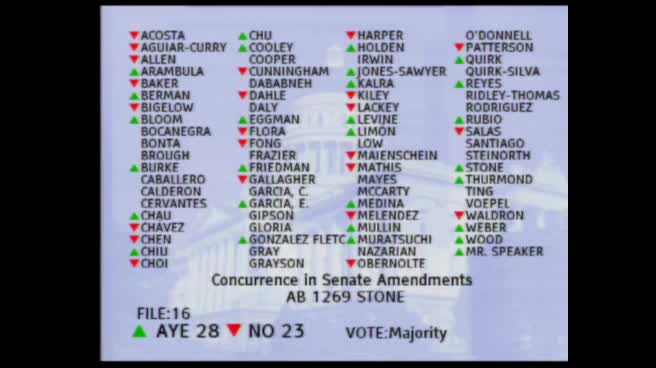 1MIN
Assembly Floor
 3MIN
Senate Floor
 1H
Senate Standing Committee on Appropriations
 7MIN
Senate Standing Committee on Education
 8MIN
Assembly Floor
 1H
Assembly Standing Committee on Appropriations
 26MIN
Assembly Standing Committee on Education
Bill Author

Bill Co-Author(s):