AB 1361: Municipal water districts: water service: Indian tribes.
- Session Year: 2017-2018
- House: Assembly
- Latest Version Date: 2017-10-03
Existing law, the Municipal Water District Law of 1911, provides for the formation of municipal water districts and grants to those districts specified powers. Existing law permits a district to acquire, control, distribute, store, spread, sink, treat, purify, recycle, recapture, and salvage any water for the beneficial use of the district, its inhabitants, or the owners of rights to water in the district. Existing law, upon the request of certain Indian tribes and the satisfaction of certain conditions, requires a district to provide service of water at substantially the same terms applicable to the customers of the district to the Indian tribes lands that are not within a district, as prescribed.
This bill would additionally authorize a district to apply to the applicable local agency formation commission to provide this service of water to Indian lands, as defined, that are not within the district. The bill would require the local agency formation commission to approve the application and authorize the commission to impose conditions on the district with regard to the extension of service. By imposing additional duties on local officials, this bill would impose a state-mandated local program. The bill would prohibit a local agency formation commission from approving an application pursuant to the bills provisions received on or after January 1, 2023, but would authorize a district that received authorization to extend water service to Indian lands before that date to continue to do so after that date.
The California Constitution requires the state to reimburse local agencies and school districts for certain costs mandated by the state. Statutory provisions establish procedures for making that reimbursement.
This bill would provide that no reimbursement is required by this act for a specified reason.
Existing law, the Municipal Water District Law of 1911, provides for the formation of municipal water districts and grants to those districts specified powers. Existing law permits a district to acquire, control, distribute, store, spread, sink, treat, purify, recycle, recapture, and salvage any water for the beneficial use of the district, its inhabitants, or the owners of rights to water in the district. Existing law, upon the request of certain Indian tribes and the satisfaction of certain conditions, requires a district to provide service of water at substantially the same terms applicable to the customers of the district to the Indian tribes lands that are not within a district, as prescribed.
This bill would additionally authorize a district to apply to the applicable local agency formation commission to provide this service of water to Indian lands, as defined, that are not within the district. The bill would require the local agency formation commission to approve the application and authorize the commission to impose conditions on the district with regard to the extension of service. By imposing additional duties on local officials, this bill would impose a state-mandated local program. The bill would prohibit a local agency formation commission from approving an application received on or after January 1, 2023, but would authorize a district that received authorization to extend water service to Indian lands before that date to continue to do so after that date.
The California Constitution requires the state to reimburse local agencies and school districts for certain costs mandated by the state. Statutory provisions establish procedures for making that reimbursement.
This bill would provide that no reimbursement is required by this act for a specified reason.
Existing law, the Municipal Water District Law of 1911, provides for the formation of municipal water districts and grants to those districts specified powers. Existing law permits a district to acquire, control, distribute, store, spread, sink, treat, purify, recycle, recapture, and salvage any water for the beneficial use of the district, its inhabitants, or the owners of rights to water in the district. Existing law, upon the request of certain Indian tribes and the satisfaction of certain conditions, requires a district to provide service of water at substantially the same terms applicable to the customers of the district to the Indian tribes lands that are not within a district, as prescribed.
This bill would additionally authorize a district to apply to the applicable local agency formation commission to provide this service of water to an Indian tribes lands lands, as defined, that are not within the district if the Indian tribes lands are owned by the tribe. district. The bill would require the local agency formation commission to approve the application and authorize the commission to impose conditions on the district with regard to the extension of service. By imposing additional duties on local officials, this bill would impose a state-mandated local program. The bill would prohibit a local agency formation commission from approving an application received on or after January 1, 2023, but would authorize a district that received authorization to extend water service to Indian lands before that date to continue to do so after that date.
The California Constitution requires the state to reimburse local agencies and school districts for certain costs mandated by the state. Statutory provisions establish procedures for making that reimbursement.
This bill would provide that no reimbursement is required by this act for a specified reason.
Existing law, the Municipal Water District Law of 1911, provides for the formation of municipal water districts and grants to those districts specified powers. Existing law permits a district to acquire, control, distribute, store, spread, sink, treat, purify, recycle, recapture, and salvage any water for the beneficial use of the district, its inhabitants, or the owners of rights to water in the district. Existing law, upon the request of certain Indian tribes and the satisfaction of certain conditions, requires a district to provide service of water at substantially the same terms applicable to the customers of the district to the Indian tribes lands that are not within a district, as prescribed.
This bill would authorize, rather than require, additionally authorize a district to provide this service of water. The bill would apply this authorization to all Indian tribes whose lands water to an Indian tribes lands that are not within the district if the Indian tribes lands are owned by the tribe.
Existing law, the Municipal Water District Law of 1911, provides for the formation of municipal water districts and grants to those districts specified powers. Existing law permits a district to acquire, control, distribute, store, spread, sink, treat, purify, recycle, recapture, and salvage any water for the beneficial use of the district, its inhabitants, or the owners of rights to water in the district. Existing law, upon the request of certain Indian tribes and the satisfaction of certain conditions, requires a district to provide service of water at substantially the same terms applicable to the customers of the district to the Indian tribes lands that are not within a district, as prescribed.
This bill would authorize, rather than require, a district to provide this service of water. The bill would apply this authorization to all Indian tribes whose lands are owned by the tribe.
Existing law provides for the establishment and operation of veterans homes at various sites, and provides for an administrator of each home, as specified. Existing law establishes the duties of the Department of Veterans Affairs with regard to the establishment and regulation of veterans homes.This bill would require the Department of Veterans Affairs to conduct a survey to assess the ability of veterans' homes to assist veterans with complex mental and behavioral health needs, and develop a plan to accommodate that population, as prescribed. The bill would require the department to submit the plan and any recommendations for future legislation necessary to achieve its objectives to the Legislature by January 1, 2019.Existing law provides for the establishment and operation of veterans homes at various sites, and provides for an administrator of each home, as specified. Existing law establishes the duties of the Department of Veterans Affairs with regard to the establishment and regulation of veterans homes.
This bill would require the Department of Veterans Affairs to conduct a survey to assess the ability of veterans' homes to assist veterans with complex mental and behavioral health needs, and develop a plan to accommodate that population, as prescribed. The bill would require the department to submit the plan and any recommendations for future legislation necessary to achieve its objectives to the Legislature by January 1, ____. January 1, 2019.
Existing law provides for the establishment and operation of veterans homes at various sites, and provides for an administrator of each home, as specified. Existing law establishes the duties of the Department of Veterans Affairs with regard to the establishment and regulation of veterans homes.
This bill would require the Department of Veterans Affairs to conduct a survey to assess the ability of veterans' homes to assist veterans with complex mental and behavioral health needs, and develop a plan to accommodate that population, as prescribed. The bill would require the department to submit the plan and any recommendations for future legislation necessary to achieve its objectives to the Legislature by January 1, ____.
Existing law, as amended by Proposition 35, an initiative measure approved by the voters at the November 6, 2012, statewide general election, makes it a crime to deprive or violate another persons personal liberty with the intent to obtain forced labor or services. Existing law also makes it a crime to deprive or violate another persons personal liberty for the purpose of prostitution or sexual exploitation. Proposition 35 provides that it may be amended by a statute in furtherance of its objectives by a majority of the membership of each house of the Legislature concurring.This bill would make technical, nonsubstantive changes to that provision.Existing law, as amended by Proposition 35, an initiative measure approved by the voters at the November 6, 2012, statewide general election, makes it a crime to deprive or violate another persons personal liberty with the intent to obtain forced labor or services. Existing law also makes it a crime to deprive or violate another persons personal liberty for the purpose of prostitution or sexual exploitation. Proposition 35 provides that it may be amended by a statute in furtherance of its objectives by a majority of the membership of each house of the Legislature concurring.
This bill would make technical, nonsubstantive changes to that provision.
(a)(1)Except as provided in paragraph (2), upon the request of an Indian tribe and the satisfaction of the conditions stated in subdivision (b), a district shall provide service of water at substantially the same terms applicable to the customers of the district to an Indian tribes lands that are not within a district as if the lands had been fully annexed into the district and into any other public agencies required for the provision of water service if the Indian tribes lands meet all of the following requirements:
(A)The lands were owned by the tribe on January 1, 2016.
(B)The lands are contiguous with at least two districts.
(C)The lands lie within the special study area of at least one district.
(D)At least 70 percent of the Indian tribes total Indian lands are currently within the boundaries of one or more districts.
(2)(A)Upon the request of an Indian tribe that does not meet the requirements of paragraph (1) and upon the satisfaction of the conditions stated in subdivision (b), a district may, until January 1, 2023, apply to the applicable local agency formation commission to extend water service at substantially the same terms applicable to customers of the district to Indian lands that are not within a district as if the lands had been fully annexed into the district and into any other public agencies required for the provision of water service. The local agency formation commission shall approve the application and may impose conditions on the district with regard to the extension of service in accordance with Section 56886 of the Government Code, as long as those terms and conditions do not impair the provision of water service to Indian lands pursuant to this section and similar to those imposed on all agency service recipients without discrimination. A district shall provide the water extension agreement to the local agency formation commission.
(B)A local agency formation commission shall not approve an application on or after January 1, 2023. A district that received authorization to extend water service to Indian lands pursuant to subparagraph (A) may continue to do so after January 1, 2023, provided that the district continues to comply with the conditions imposed by the local agency formation commission.
(C)For purposes of this subdivision, Indian lands means Indian lands, as defined in Section 2703 of Title 25 of the United States Code, that were part of a reservation or held in trust as of January 1, 2017.
(b)Before a district provides service of water pursuant to this section, the Indian tribe shall satisfy all of the following conditions:
(1)The Indian tribe complies with all federal and tribal laws.
(2)The Indian tribe acquires all federal and tribal approvals necessary for the applicable district to provide water service to the tribal lands on substantially the same terms applicable to customers of the district.
(3)The Indian tribe accepts, by agreement, all terms of, and payments to (including service payments), the district and any public agency providing water to said district, as if the Indian tribes lands were fully annexed into the district and into the service area of any other public agency, which terms and payments are also a condition of continued service by a district and by any public agency providing water to said district.
(c)If a district provides service of water to an Indian tribes lands pursuant to this section, the service areas of the district and of any public agencies providing water to the district are deemed for all purposes to include the Indian tribes lands for the longest of the following periods of time:
(1)The time service of water is provided by the district to the Indian tribe.
(2)The time moneys are owed by the Indian tribe to the district for the service of water.
(3)The term of any agreement between the district and the Indian tribe.
SEC. 2.No reimbursement is required by this act pursuant to Section 6 of Article XIIIB of the California Constitution because a local agency or school district has the authority to levy service charges, fees, or assessments sufficient to pay for the program or level of service mandated by this act, within the meaning of Section 17556 of the Government Code.
(a)(1)Except as provided in paragraph (2), upon the request of an Indian tribe and the satisfaction of the conditions stated in subdivision (b), a district shall provide service of water at substantially the same terms applicable to the customers of the district to an Indian tribes lands that are not within a district as if the lands had been fully annexed into the district and into any other public agencies required for the provision of water service if the Indian tribes lands meet all of the following requirements:
(A)The lands were owned by the tribe on January 1, 2016.
(B)The lands are contiguous with at least two districts.
(C)The lands lie within the special study area of at least one district.
(D)At least 70 percent of the Indian tribes total Indian lands are currently within the boundaries of one or more districts.
(2)(A)Upon the request of an Indian tribe that does not meet the requirements of paragraph (1) and upon the satisfaction of the conditions stated in subdivision (b), a district may, until January 1, 2023, apply to the applicable local agency formation commission to extend water service at substantially the same terms applicable to customers of the district to Indian lands that are not within a district as if the lands had been fully annexed into the district and into any other public agencies required for the provision of water service. The local agency formation commission shall approve the application and may impose conditions on the district with regard to the extension of service in accordance with Section 56886 of the Government Code, as long as those terms and conditions do not impair the provision of water service to Indian lands pursuant to this section and are similar to those imposed on a nondiscriminatory basis. all agency service recipients without discrimination. A district shall provide the water extension agreement to the local agency formation commission.
(B)A local agency formation commission shall not approve an application on or after January 1, 2023. A district that received authorization to extend water service to Indian lands pursuant to subparagraph (A) may continue to do so after January 1, 2023, provided that the district continues to comply with the conditions imposed by the local agency formation commission.
(C)For purposes of this subdivision, Indian lands means Indian lands, as defined in Section 2703 of Title 25 of the United States Code, that were part of a reservation or held in trust as of January 1, 2017.
(b)Before a district provides service of water pursuant to this section, the Indian tribe shall satisfy all of the following conditions:
(1)The Indian tribe complies with all federal and tribal laws.
(2)The Indian tribe acquires all federal and tribal approvals necessary for the applicable district to provide water service to the tribal lands on substantially the same terms applicable to customers of the district.
(3)The Indian tribe accepts, by agreement, all terms of, and payments to (including service payments), the district and any public agency providing water to said district, as if the Indian tribes lands were fully annexed into the district and into the service area of any other public agency, which terms and payments are also a condition of continued service by a district and by any public agency providing water to said district.
(c)If a district provides service of water to an Indian tribes lands pursuant to this section, the service areas of the district and of any public agencies providing water to the district are deemed for all purposes to include the Indian tribes lands for the longest of the following periods of time:
(1)The time service of water is provided by the district to the Indian tribe.
(2)The time moneys are owed by the Indian tribe to the district for the service of water.
(3)The term of any agreement between the district and the Indian tribe.
SEC. 2.No reimbursement is required by this act pursuant to Section 6 of Article XIIIB of the California Constitution because a local agency or school district has the authority to levy service charges, fees, or assessments sufficient to pay for the program or level of service mandated by this act, within the meaning of Section 17556 of the Government Code.
(a)(1)Except as provided in paragraph (2), upon the request of an Indian tribe and the satisfaction of the conditions stated in subdivision (b), a district shall provide service of water at substantially the same terms applicable to the customers of the district to an Indian tribes lands that are not within a district as if the lands had been fully annexed into the district and into any other public agencies required for the provision of water service if the Indian tribes lands meet all of the following requirements:
(A)The lands were owned by the tribe on January 1, 2016.
(B)The lands are contiguous with at least two districts.
(C)The lands lie within the special study area of at least one district.
(D)At least 70 percent of the Indian tribes total Indian lands are currently within the boundaries of one or more districts.
(2)(A)Upon the request of an Indian tribe that does not meet the requirements of paragraph (1) and upon the satisfaction of the conditions stated in subdivision (b), a district may, until January 1, 2023, apply to the applicable local agency formation commission to extend water service at substantially the same terms applicable to customers of the district to Indian lands that are not within a district as if the lands had been fully annexed into the district and into any other public agencies required for the provision of water service. The local agency formation commission shall approve the application and may impose conditions on the district with regard to the extension of service in accordance with Section 56886 of the Government Code, as long as those terms and conditions do not impair the provision of water service to Indian lands pursuant to this section and are imposed on a nondiscriminatory basis. A district shall provide the water extension agreement to the local agency formation commission.
(B)A local agency formation commission shall not approve an application on or after January 1, 2023. A district that received authorization to extend water service to Indian lands pursuant to subparagraph (A) may continue to do so after January 1, 2023, provided that the district continues to comply with the conditions imposed by the district. local agency formation commission.
(C)For purposes of this subdivision, Indian lands means Indian lands, as defined in Section 2703 of Title 25 of the United States Code, that were part of a reservation or held in trust as of January 1, 2017.
(b)Before a district provides service of water pursuant to this section, the Indian tribe shall satisfy all of the following conditions:
(1)The Indian tribe complies with all federal and tribal laws.
(2)The Indian tribe acquires all federal and tribal approvals necessary for the applicable district to provide water service to the tribal lands on substantially the same terms applicable to customers of the district.
(3)The Indian tribe accepts, by agreement, all terms of, and payments to (including service payments), the district and any public agency providing water to said district, as if the Indian tribes lands were fully annexed into the district and into the service area of any other public agency, which terms and payments are also a condition of continued service by a district and by any public agency providing water to said district.
(c)If a district provides service of water to an Indian tribes lands pursuant to this section, the service areas of the district and of any public agencies providing water to the district are deemed for all purposes to include the Indian tribes lands for the longest of the following periods of time:
(1)The time service of water is provided by the district to the Indian tribe.
(2)The time moneys are owed by the Indian tribe to the district for the service of water.
(3)The term of any agreement between the district and the Indian tribe.
SEC. 2.No reimbursement is required by this act pursuant to Section 6 of Article XIIIB of the California Constitution because a local agency or school district has the authority to levy service charges, fees, or assessments sufficient to pay for the program or level of service mandated by this act, within the meaning of Section 17556 of the Government Code.
(a)(1)Except as provided in paragraph (2), upon the request of an Indian tribe and the satisfaction of the conditions stated in subdivision (b), a district shall provide service of water at substantially the same terms applicable to the customers of the district to an Indian tribes lands that are not within a district as if the lands had been fully annexed into the district and into any other public agencies required for the provision of water service if the Indian tribes lands meet all of the following requirements:
(A)The lands were owned by the tribe on January 1, 2016.
(B)The lands are contiguous with at least two districts.
(C)The lands lie within the special study area of at least one district.
(D)At least 70 percent of the Indian tribes total Indian lands are currently within the boundaries of one or more districts.
(2)(A)Upon the request of an Indian tribe that does not meet the requirements of paragraph (1) and upon the satisfaction of the conditions stated in subdivision (b), a district may provide may, until January 1, 2023, apply to the applicable local agency formation commission to extend water service of water at substantially the same terms applicable to customers of the district to an Indian tribes lands that are not within a district as if the lands had been fully annexed into the district and into any other public agencies required for the provision of water service if the Indian tribes lands are owned by the tribe. service. The local agency formation commission shall approve the application and may impose conditions on the district with regard to the extension of service in accordance with Section 56886 of the Government Code, as long as those terms and conditions do not impair the provision of water service to Indian lands pursuant to this section and are imposed on a nondiscriminatory basis. A district shall provide the water extension agreement to the local agency formation commission.
(B)A local agency formation commission shall not approve an application on or after January 1, 2023. A district that received authorization to extend water service to Indian lands pursuant to subparagraph (A) may continue to do so after January 1, 2023, provided that the district continues to comply with the conditions imposed by the district.
(C)For purposes of this subdivision, Indian lands means Indian lands, as defined in Section 2703 of Title 25 of the United States Code, that were part of a reservation or held in trust as of January 1, 2017.
(b)Before a district provides service of water pursuant to this section, the Indian tribe shall satisfy all of the following conditions:
(1)The Indian tribe complies with all federal and tribal laws.
(2)The Indian tribe acquires all federal and tribal approvals necessary for the applicable district to provide water service to the tribal lands on substantially the same terms applicable to customers of the district.
(3)The Indian tribe accepts, by agreement, all terms of, and payments to (including service payments), the district and any public agency providing water to said district, as if the Indian tribes lands were fully annexed into the district and into the service area of any other public agency, which terms and payments are also a condition of continued service by a district and by any public agency providing water to said district.
(c)If a district provides service of water to an Indian tribes lands pursuant to this section, the service areas of the district and of any public agencies providing water to the district are deemed for all purposes to include the Indian tribes lands for the longest of the following periods of time:
(1)The time service of water is provided by the district to the Indian tribe.
(2)The time moneys are owed by the Indian tribe to the district for the service of water.
(3)The term of any agreement between the district and the Indian tribe.
SEC. 2.No reimbursement is required by this act pursuant to Section 6 of Article XIIIB of the California Constitution because a local agency or school district has the authority to levy service charges, fees, or assessments sufficient to pay for the program or level of service mandated by this act, within the meaning of Section 17556 of the Government Code.
Upon (a)(1)Except as provided in paragraph (2), upon the request of an Indian tribe and the satisfaction of the conditions stated in subdivision (b), a district shall provide service of water at substantially the same terms applicable to the customers of the district to an Indian tribes lands that are not within a district as if the lands had been fully annexed into the district and into any other public agencies required for the provision of water service if the Indian tribes lands meet all of the following requirements:
(1)(A)The lands were owned by the tribe on January 1, 2016.
(2)(B)The lands are contiguous with at least two districts.
(3)(C)The lands lie within the special study area of at least one district.
(4)(D)At least 70 percent of the Indian tribes total Indian lands are currently within the boundaries of one or more districts.
(2)Upon the request of an Indian tribe that does not meet the requirements of paragraph (1) and upon the satisfaction of the conditions stated in subdivision (b), a district may provide service of water at substantially the same terms applicable to customers of the district to an Indian tribes lands that are not within a district as if the lands had been fully annexed into the district and into any other public agencies required for the provision of water service if the Indian tribes lands are owned by the tribe.
(b)Before a district provides service of water pursuant to this section, the Indian tribe shall satisfy all of the following conditions:
(1)The Indian tribe complies with all federal and tribal laws.
(2)The Indian tribe acquires all federal and tribal approvals necessary for the applicable district to provide water service to the tribal lands on substantially the same terms applicable to customers of the district.
(3)The Indian tribe shall by agreement accept accepts, by agreement, all terms of, and payments to (including service payments), the district and any public agency providing water to said district, as if the Indian tribes lands were fully annexed into the district and into the service area of any other public agency, which terms and payments are also a condition of continued service by a district and by any public agency providing water to said district.
(c)If a district provides service of water to an Indian tribes lands pursuant to this section, the service areas of the district and of any public agencies providing water to the district are deemed for all purposes to include the Indian tribes lands for the longest of the following periods of time:
(1)The time service of water is provided by the district to the Indian tribe.
(2)The time moneys are owed by the Indian tribe to the district for the service of water.
(3)The term of any agreement between the district and the Indian tribe.
SECTION 1.Section 71611.5 of the Water Code is amended to read:71611.5.Notwithstanding any other law:(a)Upon the request of an Indian tribe and the satisfaction of the conditions stated in subdivision (b), a district may provide service of water at substantially the same terms applicable to the customers of the district to an Indian tribes lands that are not within a district as if the lands had been fully annexed into the district and into any other public agencies required for the provision of water service if the Indian tribes lands are owned by the tribe.(b)Before a district provides service of water pursuant to this section, the Indian tribe shall satisfy all of the following conditions:(1)The Indian tribe complies with all federal and tribal laws.(2)The Indian tribe acquires all federal and tribal approvals necessary for the applicable district to provide water service to the tribal lands on substantially the same terms applicable to customers of the district.(3)The Indian tribe accepts, by agreement, all terms of, and payments to (including service payments), the district and any public agency providing water to said district, as if the Indian tribes lands were fully annexed into the district and into the service area of any other public agency, which terms and payments are also a condition of continued service by a district and by any public agency providing water to said district.(c)If a district provides service of water to an Indian tribes lands pursuant to this section, the service areas of the district and of any public agencies providing water to the district are deemed for all purposes to include the Indian tribes lands for the longest of the following periods of time:(1)The time service of water is provided by the district to the Indian tribe.(2)The time moneys are owed by the Indian tribe to the district for the service of water.(3)The term of any agreement between the district and the Indian tribe.Notwithstanding any other law:
(a)Upon the request of an Indian tribe and the satisfaction of the conditions stated in subdivision (b), a district shall may provide service of water at substantially the same terms applicable to the customers of the district to an Indian tribes lands that are not within a district as if the lands had been fully annexed into the district and into any other public agencies required for the provision of water service if the Indian tribes lands meet all of the following requirements: are owned by the tribe.
(1)The lands were owned by the tribe on January 1, 2016.(2)The lands are contiguous with at least two districts.(3)The lands lie within the special study area of at least one district.(4)At least 70 percent of the Indian tribes total Indian lands are currently within the boundaries of one or more districts.(b)Before a district provides service of water pursuant to this section, the Indian tribe shall satisfy all of the following conditions:
(1)The Indian tribe complies with all federal and tribal laws.
(2)The Indian tribe acquires all federal and tribal approvals necessary for the applicable district to provide water service to the tribal lands on substantially the same terms applicable to customers of the district.
(3)The Indian tribe shall accepts, by agreement accept agreement, all terms of, and payments to (including service payments), the district and any public agency providing water to said district, as if the Indian tribes lands were fully annexed into the district and into the service area of any other public agency, which terms and payments are also a condition of continued service by a district and by any public agency providing water to said district.
(c)If a district provides service of water to an Indian tribes lands pursuant to this section, the service areas of the district and of any public agencies providing water to the district are deemed for all purposes to include the Indian tribes lands for the longest of the following periods of time:
(1)The time service of water is provided by the district to the Indian tribe.
(2)The time moneys are owed by the Indian tribe to the district for the service of water.
(3)The term of any agreement between the district and the Indian tribe.
SECTION 1.Section 1012.5 is added to the Military and Veterans Code, to read:1012.5.(a)The department shall conduct a survey to assess the ability of veterans homes to assist veterans with complex mental and behavioral health needs, and develop a plan to accommodate that population. The plan shall address factors including, but not limited to, all of the following:(1)The need for increased staff, including specialized staff, to provide appropriate care and services, and to ensure the safety of both the veterans with complex mental and behavioral health needs and other residents.(2)An evaluation of the required staffing ratios at each level of care.(3)The ability of each veterans home to accommodate veterans with complex mental and behavioral health needs, considering staffing and other budgeting resources, and the objective of minimizing disruption to the existing structure and operation of the veterans home system. The department may elect to dedicate specific beds or units in one or more veterans homes for the complex mental and behavioral health needs population. (b)On or before January 1, 2019, the department shall submit to the Legislature the plan developed pursuant to subdivision (a) and any recommendations for future legislation necessary to achieve the plans objectives. The plan shall be submitted in compliance with Section 9795 of the Government Code.(a)The department shall conduct a survey to assess the ability of veterans homes to assist veterans with complex mental and behavioral health needs, and develop a plan to accommodate that population. The plan shall address factors including, but not limited to, all of the following:
(1)The need for increased staff, including specialized staff, to provide appropriate care and services, and to ensure the safety of both the veterans with complex mental and behavioral health needs and other residents.
(2)An evaluation of the required staffing ratios at each level of care.
(3)The ability of each veterans home to accommodate veterans with complex mental and behavioral health needs, considering staffing and other budgeting resources, and the objective of minimizing disruption to the existing structure and operation of the veterans home system. The department may elect to dedicate specific beds or units in one or more veterans homes for the complex mental and behavioral health needs population.
(b)On or before January 1, ____, January 1, 2019, the department shall submit to the Legislature the plan developed pursuant to subdivision (a) and any recommendations for future legislation necessary to achieve the plans objectives. The plan shall be submitted in compliance with Section 9795 of the Government Code.
(a)The department shall conduct a survey to assess the ability of veterans homes to assist veterans with complex mental and behavioral health needs, and develop a plan to accommodate that population. The plan shall address factors including, but not limited to, all of the following:
(1)The need for increased staff, including specialized staff, to provide appropriate care and services, and to ensure the safety of both the veterans with complex mental and behavioral health needs and other residents.
(2)An evaluation of the required staffing ratios at each level of care.
(3)The ability of each veterans home to accommodate veterans with complex mental and behavioral health needs, considering staffing and other budgeting resources, and the objective of minimizing disruption to the existing structure and operation of the veterans home system. The department may elect to dedicate specific beds or units in one or more veterans homes for the complex mental and behavioral health needs population.
(b)On or before January 1, ____, the department shall submit to the Legislature the plan developed pursuant to subdivision (a) and any recommendations for future legislation necessary to achieve the plans objectives. The plan shall be submitted in compliance with Section 9795 of the Government Code.
SECTION 1.Section 236.1 of the Penal Code is amended to read:236.1.(a)A person who deprives or violates the personal liberty of another with the intent to obtain forced labor or services, is guilty of human trafficking and shall be punished by imprisonment in the state prison for 5, 8, or 12 years and a fine of not more than five hundred thousand dollars ($500,000).(b)A person who deprives or violates the personal liberty of another with the intent to effect or maintain a violation of Section 266, 266h, 266i, 266j, 267, 311.1, 311.2, 311.3, 311.4, 311.5, 311.6, or 518 is guilty of human trafficking and shall be punished by imprisonment in the state prison for 8, 14, or 20 years and a fine of not more than five hundred thousand dollars ($500,000).(c)A person who causes, induces, or persuades, or attempts to cause, induce, or persuade, a person who is a minor at the time of commission of the offense to engage in a commercial sex act, with the intent to effect or maintain a violation of Section 266, 266h, 266i, 266j, 267, 311.1, 311.2, 311.3, 311.4, 311.5, 311.6, or 518 is guilty of human trafficking. A violation of this subdivision is punishable by imprisonment in the state prison as follows:(1)Five, 8, or 12 years and a fine of not more than five hundred thousand dollars ($500,000).(2)Fifteen years to life and a fine of not more than five hundred thousand dollars ($500,000) when the offense involves force, fear, fraud, deceit, coercion, violence, duress, menace, or threat of unlawful injury to the victim or to another person.(d)In determining whether a minor was caused, induced, or persuaded to engage in a commercial sex act, the totality of the circumstances, including the age of the victim, his or her relationship to the trafficker or agents of the trafficker, and any handicap or disability of the victim, shall be considered.(e)Consent by a victim of human trafficking who is a minor at the time of the commission of the offense is not a defense to a criminal prosecution under this section.(f)Mistake of fact as to the age of a victim of human trafficking who is a minor at the time of the commission of the offense is not a defense to a criminal prosecution under this section.(g)The Legislature finds that the definition of human trafficking in this section is equivalent to the federal definition of a severe form of trafficking found in Section 7102(9) of Title 22 of the United States Code.(h)For purposes of this chapter, the following terms have the following meanings:(1)Coercion includes a scheme, plan, or pattern intended to cause a person to believe that failure to perform an act would result in serious harm to or physical restraint against any person; the abuse or threatened abuse of the legal process; debt bondage; or providing and facilitating the possession of a controlled substance to a person with the intent to impair the persons judgment.(2)Commercial sex act means sexual conduct on account of which anything of value is given or received by a person.(3)Deprivation or violation of the personal liberty of another includes substantial and sustained restriction of anothers liberty accomplished through force, fear, fraud, deceit, coercion, violence, duress, menace, or threat of unlawful injury to the victim or to another person, under circumstances where the person receiving or apprehending the threat reasonably believes that it is likely that the person making the threat would carry it out.(4)Duress includes a direct or implied threat of force, violence, danger, hardship, or retribution sufficient to cause a reasonable person to acquiesce in or perform an act that he or she would otherwise not have submitted to or performed; a direct or implied threat to destroy, conceal, remove, confiscate, or possess an actual or purported passport or immigration document of the victim; or knowingly destroying, concealing, removing, confiscating, or possessing an actual or purported passport or immigration document of the victim.(5)Forced labor or services means labor or services that are performed or provided by a person and are obtained or maintained through force, fraud, duress, or coercion, or equivalent conduct that would reasonably overbear the will of the person.(6)Great bodily injury means a significant or substantial physical injury.(7)Minor means a person less than 18 years of age.(8)Serious harm includes any harm, whether physical or nonphysical, including psychological, financial, or reputational harm, that is sufficiently serious, under all the surrounding circumstances, to compel a reasonable person of the same background and in the same circumstances to perform or to continue performing labor, services, or commercial sexual acts in order to avoid incurring that harm.(i)The total circumstances, including the age of the victim, the relationship between the victim and the trafficker or agents of the trafficker, and any handicap or disability of the victim, shall be factors to consider in determining the presence of deprivation or violation of the personal liberty of another, duress, and coercion as described in this section.(a)A person who deprives or violates the personal liberty of another with the intent to obtain forced labor or services, is guilty of human trafficking and shall be punished by imprisonment in the state prison for 5, 8, or 12 years and a fine of not more than five hundred thousand dollars ($500,000).
(b)A person who deprives or violates the personal liberty of another with the intent to effect or maintain a violation of Section 266, 266h, 266i, 266j, 267, 311.1, 311.2, 311.3, 311.4, 311.5, 311.6, or 518 is guilty of human trafficking and shall be punished by imprisonment in the state prison for 8, 14, or 20 years and a fine of not more than five hundred thousand dollars ($500,000).
(c)A person who causes, induces, or persuades, or attempts to cause, induce, or persuade, a person who is a minor at the time of commission of the offense to engage in a commercial sex act, with the intent to effect or maintain a violation of Section 266, 266h, 266i, 266j, 267, 311.1, 311.2, 311.3, 311.4, 311.5, 311.6, or 518 is guilty of human trafficking. A violation of this subdivision is punishable by imprisonment in the state prison as follows:
(1)Five, 8, or 12 years and a fine of not more than five hundred thousand dollars ($500,000).
(2)Fifteen years to life and a fine of not more than five hundred thousand dollars ($500,000) when the offense involves force, fear, fraud, deceit, coercion, violence, duress, menace, or threat of unlawful injury to the victim or to another person.
(d)In determining whether a minor was caused, induced, or persuaded to engage in a commercial sex act, the totality of the circumstances, including the age of the victim, his or her relationship to the trafficker or agents of the trafficker, and any handicap or disability of the victim, shall be considered.
(e)Consent by a victim of human trafficking who is a minor at the time of the commission of the offense is not a defense to a criminal prosecution under this section.
(f)Mistake of fact as to the age of a victim of human trafficking who is a minor at the time of the commission of the offense is not a defense to a criminal prosecution under this section.
(g)The Legislature finds that the definition of human trafficking in this section is equivalent to the federal definition of a severe form of trafficking found in Section 7102(9) of Title 22 of the United States Code.
(h)For purposes of this chapter, the following definitions apply: terms have the following meanings:
(1)Coercion includes a scheme, plan, or pattern intended to cause a person to believe that failure to perform an act would result in serious harm to or physical restraint against any person; the abuse or threatened abuse of the legal process; debt bondage; or providing and facilitating the possession of a controlled substance to a person with the intent to impair the persons judgment.
(2)Commercial sex act means sexual conduct on account of which anything of value is given or received by a person.
(3)Deprivation or violation of the personal liberty of another includes substantial and sustained restriction of anothers liberty accomplished through force, fear, fraud, deceit, coercion, violence, duress, menace, or threat of unlawful injury to the victim or to another person, under circumstances where the person receiving or apprehending the threat reasonably believes that it is likely that the person making the threat would carry it out.
(4)Duress includes a direct or implied threat of force, violence, danger, hardship, or retribution sufficient to cause a reasonable person to acquiesce in or perform an act which that he or she would otherwise not have submitted to or performed; a direct or implied threat to destroy, conceal, remove, confiscate, or possess an actual or purported passport or immigration document of the victim; or knowingly destroying, concealing, removing, confiscating, or possessing an actual or purported passport or immigration document of the victim.
(5)Forced labor or services means labor or services that are performed or provided by a person and are obtained or maintained through force, fraud, duress, or coercion, or equivalent conduct that would reasonably overbear the will of the person.
(6)Great bodily injury means a significant or substantial physical injury.
(7)Minor means a person less than 18 years of age.
(8)Serious harm includes any harm, whether physical or nonphysical, including psychological, financial, or reputational harm, that is sufficiently serious, under all the surrounding circumstances, to compel a reasonable person of the same background and in the same circumstances to perform or to continue performing labor, services, or commercial sexual acts in order to avoid incurring that harm.
(i)The total circumstances, including the age of the victim, the relationship between the victim and the trafficker or agents of the trafficker, and any handicap or disability of the victim, shall be factors to consider in determining the presence of deprivation or violation of the personal liberty of another, duress, and coercion as described in this section.
|
Date
|
Status
|
|---|---|
| Oct 3, 2017 | Chaptered by Secretary of State - Chapter 449, Statutes of 2017. |
| Oct 3, 2017 | Approved by the Governor. |
| Sep 26, 2017 | Enrolled and presented to the Governor at 3 p.m. |
| Sep 15, 2017 | Senate amendments concurred in. To Engrossing and Enrolling. |
| Sep 13, 2017 | Assembly Rule 77(a) suspended. |
| Sep 14, 2017 | From committee: That the Senate amendments be concurred in. (Ayes 6. Noes 0.) (September 14). |
| Sep 15, 2017 | Senate amendments concurred in. To Engrossing and Enrolling. (Ayes 77. Noes 0. Page 3503.). |
| Sep 14, 2017 | Joint Rule 62(a), file notice suspended. (Page 3371.) |
| Sep 13, 2017 | In Assembly. Concurrence in Senate amendments pending. May be considered on or after September 15 pursuant to Assembly Rule 77. |
| Sep 12, 2017 | Read third time. Passed. Ordered to the Assembly. |
| Sep 12, 2017 | Read third time. Passed. Ordered to the Assembly. (Ayes 38. Noes 1. Page 2784.). |
| Sep 11, 2017 | Read second time. Ordered to third reading. |
| Sep 8, 2017 | Action rescinded whereby the bill was read third time, passed, and to Assembly. |
| Sep 8, 2017 | In Senate. Held at Desk. |
| Sep 7, 2017 | Re-referred to Com. on L. GOV. pursuant to Assembly Rule 77.2. |
| Sep 5, 2017 | In Assembly. Concurrence in Senate amendments pending. May be considered on or after September 7 pursuant to Assembly Rule 77. |
| Sep 5, 2017 | Read third time. Passed. Ordered to the Assembly. |
| Aug 29, 2017 | Read second time and amended. Ordered to third reading. |
| Aug 28, 2017 | From committee: Be placed on second reading file pursuant to Senate Rule 28.8 and be amended. |
| Aug 23, 2017 | Re-referred to Com. on APPR. pursuant to Joint Rule 10.5. |
| Aug 22, 2017 | Read second time and amended. Ordered to third reading. |
| Aug 21, 2017 | From committee: Amend, and do pass as amended. (Ayes 6. Noes 0.) (July 19). |
| Jul 6, 2017 | Re-referred to Com. on GOV. & F. |
| Jun 28, 2017 | From committee chair, with author's amendments: Amend, and re-refer to committee. Read second time, amended, and re-referred to Com. on RLS. |
| Jun 26, 2017 | From committee chair, with author's amendments: Amend, and re-refer to committee. Read second time, amended, and re-referred to Com. on RLS. |
| Jun 14, 2017 | Referred to Com. on RLS. |
| Jun 1, 2017 | In Senate. Read first time. To Com. on RLS. for assignment. |
| May 31, 2017 | Read third time. Passed. Ordered to the Senate. (Ayes 77. Noes 0. Page 1944.) |
| May 30, 2017 | Read second time. Ordered to third reading. |
| May 26, 2017 | From committee: Amend, and do pass as amended. (Ayes 16. Noes 0.) (May 26). |
| May 17, 2017 | In committee: Set, first hearing. Referred to APPR. suspense file. |
| Apr 27, 2017 | From committee: Do pass and re-refer to Com. on APPR. (Ayes 9. Noes 0.) (April 25). Re-referred to Com. on APPR. |
| Apr 4, 2017 | Re-referred to Com. on V.A. |
| Apr 3, 2017 | From committee chair, with author's amendments: Amend, and re-refer to Com. on V.A. Read second time and amended. |
| Mar 30, 2017 | Referred to Com. on V.A. |
| Feb 19, 2017 | From printer. May be heard in committee March 21. |
| Feb 17, 2017 | Read first time. To print. |
|
Date
|
Description
|
Location
|
Votes
|
|
|---|---|---|---|---|
| Sep 15, 2017 | AB 1361 GARCIA, E. Concurrence in Senate Amendments | Assembly Floor |
Passed |
|
| Sep 14, 2017 | With recommendation: That Senate amendments be concurred in. | Assembly Standing Committee on Local Government |
Passed |
|
| Sep 12, 2017 | Assembly 3rd Reading AB1361 Eduardo Garcia By Hertzberg | Senate Floor |
Passed |
|
| Sep 5, 2017 | Assembly 3rd Reading AB1361 Eduardo Garcia et al. By Hertzberg | Senate Floor |
Passed |
|
| Jul 19, 2017 | Do pass as amended | Senate Standing Committee on Governance and Finance |
Passed |
|
| May 31, 2017 | AB 1361 GARCIA, E. Assembly Third Reading | Assembly Floor |
Passed |
|
| May 26, 2017 | Do pass as amended. | Assembly Standing Committee on Appropriations |
Passed |
|
| Apr 25, 2017 | Do pass and be re-referred to the Committee on [Appropriations] | Assembly Standing Committee on Veterans Affairs |
Passed |
This list shows positions taken on this bill by organizations on the date displayed, which is linked to the original source.
Positions by individuals are not included.
|
Organization
|
Position
|
Date
|
|---|---|---|
| 319-3958 Fn: 0001674 | ** Against | Sep 6, 2017 |
| 319-3958 Fn: 0002303 | ** Against | Sep 13, 2017 |
| 319-3958 Fn: 0002303 | ** Against | Sep 13, 2017 |
| 319-3958 Fn: 0002375 | ** Against | Sep 15, 2017 |
| Alameda LAFCO | ** Against | Sep 11, 2017 |
| Butte Lafco | ** Against | Sep 11, 2017 |
| calafco | ** Against | Sep 11, 2017 |
| Calaveras Lafco | ** Against | Sep 11, 2017 |
| California Association of Local Agency Formation Commissions | ** Against | Sep 14, 2017 |
| California Association of Local Agency Formation Commissions | ** Against | Sep 14, 2017 |
| California Association Of Psychiatric Technicians | ** Support | Apr 24, 2017 |
| city of escondido | ** Support | Sep 14, 2017 |
| city of escondido | ** Support | Sep 14, 2017 |
| Concern | ** Support | Sep 14, 2017 |
| Concern | ** Support | Sep 14, 2017 |
| Contra Costa LAFCO | ** Against | Sep 11, 2017 |
| El Dorado LAFCO | ** Against | Sep 11, 2017 |
| Imperial Lafco | ** Against | Sep 11, 2017 |
| L. GOV. | ** Against | Sep 15, 2017 |
| Mendocino Lafco | ** Against | Sep 11, 2017 |
| Merced Lafco | ** Against | Sep 11, 2017 |
| Placer Lafco | ** Against | Sep 11, 2017 |
| Plumas Lafco | ** Against | Sep 11, 2017 |
| Rincon Band Luiseno Indians | * Support | Sep 14, 2017 |
| Rincon Band Of Luiseno Indians [Sponsor] | ** Support | Sep 14, 2017 |
| Rincon Band Of Luiseno Indians [Sponsor] | * Support | Sep 14, 2017 |
| San Benito Lafco | ** Against | Sep 11, 2017 |
| San Bernardino LAFCO | ** Against | Sep 11, 2017 |
| San Diego County Water Authority | ** Support | Sep 14, 2017 |
| San Diego County Water Authority | ** Support | Sep 14, 2017 |
| San Diego Local Agency Formation Commission | ** Support | Sep 14, 2017 |
| San Diego Local Agency Formation Commission | ** Support | Sep 14, 2017 |
| San Luis Rey Indian Water Authority | ** Support | Sep 14, 2017 |
| San Luis Rey Indian Water Authority | ** Support | Sep 14, 2017 |
| San Mateo LAFCO | ** Against | Sep 11, 2017 |
| Santa Cruz LAFCO | ** Against | Sep 11, 2017 |
| Santa Cruz, Sonoma, Yolo, And Yuba | ** Against | Sep 14, 2017 |
| Santa Cruz, Sonoma, Yolo, And Yuba | ** Against | Sep 14, 2017 |
| Sonoma LAFCO | ** Against | Sep 11, 2017 |
| Sycuan Band Of The Kumeyaay Nation | ** Support | Sep 14, 2017 |
| Sycuan Band Of The Kumeyaay Nation | ** Support | Sep 14, 2017 |
| United Auburn Indian Community | ** Support | Sep 14, 2017 |
| United Auburn Indian Community | ** Support | Sep 14, 2017 |
| Vista Irrigation District | ** Support | Sep 14, 2017 |
| Vista Irrigation District | ** Support | Sep 14, 2017 |
| Yolo Lafco | ** Against | Sep 11, 2017 |
| Yuba Lafco | ** Against | Sep 11, 2017 |
CONCURRENCE IN SENATE AMENDMENTS
CSA2 Bill Id:AB 1361
Author:(Eduardo Garcia and Waldron)
As Amended Ver:September 8, 2017
Majority vote
ASSEMBLY: |
| (May 31, 2017) | SENATE: | 38-1 | (September 12, 2017) |
(Vote Not Relevant)
COMMITTEE VOTE: | 6-0 | (September 14, 2017) | RECOMMENDATION: | concur |
(L. Gov.)
Original Committee Reference: V.A.
SUMMARY: Authorizes a municipal water district, until January 1, 2023, to apply to a local agency formation commission (LAFCO) to extend water service to Indian lands and prohibits the LAFCO from denying the application.
The Senate amendments delete the Assembly version of this bill, and instead:
- Authorize a municipal water district, upon request of an Indian tribe that has satisfied conditions in existing law, to apply to LAFCO to extend water service to Indian lands that are outside the district at substantially the same terms applicable to the customers of the district as if the lands had been fully annexed within the district, and any other special districts required for the provision of water service, until January 1, 2023.
- Require the LAFCO to approve the application. Authorize the LAFCO to impose terms and conditions with regard to the extension of service in accordance with existing law, as long as the terms and conditions do not impair the provision of water service to Indian lands and similar to those imposed on all agency service recipients without discrimination.
- Require a district to provide the water extension agreement to the LAFCO.
- Prohibit a LAFCO from approving an application on or after January 1, 2023, but allow a previously approved extension of service to continue beyond that date if the district continues to comply with the conditions imposed by LAFCO.
- Define "Indian lands" as lands that were part of a reservation or held in trust as of January 1, 2017, under federal law.
- Make technical changes.
- State that no reimbursement is required by this bill because a local agency or school district has the authority to levy service charges, fees, or other assessments sufficient to pay for the program or level of service mandated by this bill.
EXISTING LAW:
- Defines "district" to mean a municipal water district formed pursuant to the Municipal Water District Act of 1911.
- Authorizes a district to sell water under its control, without preference, to cities, other public corporations and agencies, and persons within the district for use within the district. Defines "water" to include potable and nonpotable water.
- Authorizes a district to supply and deliver water to property not subject to district taxes at special rates, terms, and conditions as determined by the Board.
- Establishes the Cortese-Knox-Hertzberg Act, which defines the procedures for the organization and reorganization of cities, counties, and special districts.
- Authorizes a district to provide new or extended services by contract or agreement outside its jurisdictional boundaries if it requests and receives written approval from LAFCO, as specified.
- Requires, notwithstanding any other provision of law, a district, upon request of an Indian tribe and the satisfaction of the conditions stated in 7), below, to provide water service to the tribe's lands that are not within a district, subject to the following:
- The lands were owned by the tribe on January 1, 2016;
- The lands are contiguous with at least two districts;
- The lands lie within the special study area of at least one district; and,
- At least 70% of the Indian tribe's total Indian lands are currently within the boundaries of one or more districts.
- Requires the Indian tribe, before a district provides water service, to satisfy both of the following conditions:
- The Indian tribe complies with all federal and tribal laws; and,
- The Indian tribe acquires all federal and tribal approvals necessary for the applicable district to provide water service to the tribal lands on substantially the same terms applicable to customers of the district.
FISCAL EFFECT: According to the Senate Appropriations Committee, pursuant to Senate Rule 28.8, negligible state costs.
COMMENTS:
- Background. The Cortese-Knox-Hertzberg Act delegates the Legislature's power to control the boundaries of cities and special districts to LAFCOs, and prohibits the districts from providing water service to the lands outside their boundaries, unless the area is annexed within their boundaries or they obtain written approval to serve territory outside their boundaries.
In 2016, the Legislature exempted the Sycuan Band of the Kumeyaay Nation in San Diego County, from the annexation process under existing law to receive water on the tribe's lands outside a municipal water district [AB 2470 (Gonzalez), Chapter 301, Statutes of 2016)]. AB 2470 only applies if the tribe's lands meet specified requirements, and if the Indian tribe meets specified conditions prior to receiving water service. The Sycuan's original reservation is contiguous with two municipal water districts, Otay Water District and Padre Dam Municipal Water District, and is within a special study area in Padre Dam Municipal Water District.
- Bill Summary. This bill builds upon the exemption established by AB 2470 and authorizes a municipal water district, until January 1, 2023, to apply to a LAFCO to extend water service to a tribe's land, upon request of an Indian tribe if the tribe meets the conditions established by AB 2470. This bill requires LAFCO to approve the application without requiring the usual annexation process. This bill is sponsored by the Rincon Band of Luiseno Indians.
- Author's Statement. According to the author, "Federally recognized tribes are sovereign governments, and are not subject to state and local laws and regulations, except for those required under their compacts. Yet most tribes are unable to access services from nearby water districts without annexing territory to those districts, a process which would subject sovereign tribal governments to state and local regulations and thus violate tribal sovereignty. Furthermore, some tribes may not have the resources to endure the lengthy processes required to ensure access to water service. AB 1361 cuts through the red tape of these processes by allowing tribes and water districts to enter into voluntary agreements for water service, subject to the same terms and conditions with which any other water user would have to comply. It provides Indian tribes with the independence that is warranted by their sovereign nation status, instead of subjecting them to time-consuming and expensive local processes that other similarly situated entities, such as the California and United States governments, do not have to follow."
- Policy Consideration. The Legislature has delegated the power to control local boundaries to the 58 LAFCOs, directing the LAFCOs to discourage urban sprawl, preserve open space and agricultural lands, and provide efficient government services, while considering local conditions and circumstances. This bill bypasses LAFCO, and does not require the usual annexation process to occur. Proponents of this bill argue that it is appropriate for the Legislature to make this determination, instead of LAFCO, to reflect the unique relationship between the state and tribes. Opponents of this bill argue that LAFCO has authority over the boundaries of municipal water districts providing water service and that the LAFCO process allows for an examination of water supply and provision for all utilizing those services.
- Support Arguments. The Rincon Band of Luiseno Indians states, "Because there is no process for water districts to work with neighboring tribes in a manner that does not violate tribal sovereignty, very few tribes have sought relationships with local water districts. Those tribes who have sought water relationships with neighboring districts have faced decades-long lawsuits or negotiations that most tribes do not have the resources to endure. And, lack of collaboration between tribes and neighboring water districts means that local communities are not prepared to triage resources in the event of natural or man-made disasters. Consistent with their status as sovereign nations, tribes that reach an agreement with a local water district are not required to be annexed by the water district or the chain of agencies supplying water to the district, and are thus exempt from LAFCO."
- Opposition Arguments. The California Association of Local Agency Formation Commissions (CALAFCO) states, "The existing, long standing annexation process allows for a thorough, publicly transparent evaluation of both service needs and capability before allowing such a service extension to occur. In the end, it is imperative that all Californian's be treated equally under the law and especially when creating policy that involves the provision of water service. Giving any special interest an 'automatic' approval to limited water supplies without thorough local review authority is bad policy." Additionally, CALAFCO argues that this bill leaves high potential for sprawl, contains vagueness and terminology on terms and conditions that will create potential disasters, and opens the door for detachments from existing districts.
Analysis Prepared by: Misa Lennox / L. GOV. / (916) 319-3958 FN: 0002375
Date of Hearing: September 14, 2017
ASSEMBLY COMMITTEE ON LOCAL GOVERNMENT
Cecilia Aguiar-Curry, Chair
ABPCA Bill Id:AB 1361 (
Author:Eduardo Garcia and Waldron) – As Amended Ver:September 8, 2017
SUBJECT: Municipal water districts: water service: Indian tribes.
SUMMARY: Authorizes a municipal water district, until January 1, 2023, to apply to a local agency formation commission (LAFCO) to extend water service to Indian lands and prohibits the LAFCO from denying the application.
The Senate amendments delete the Assembly version of this bill, and instead:
- Authorize a municipal water district, upon request of an Indian tribe that has satisfied conditions in existing law, to apply to LAFCO to extend water service to Indian lands that are outside the district at substantially the same terms applicable to the customers of the district as if the lands had been fully annexed within the district, and any other special districts required for the provision of water service, until January 1, 2023.
- Require the LAFCO to approve the application. Authorize the LAFCO to impose terms and conditions with regard to the extension of service in accordance with existing law, as long as the terms and conditions do not impair the provision of water service to Indian lands and similar to those imposed on all agency service recipients without discrimination.
- Require a district to provide the water extension agreement to the LAFCO.
- Prohibit a LAFCO from approving an application on or after January 1, 2023, but allow a previously approved extension of service to continue beyond that date if the district continues to comply with the conditions imposed by LAFCO.
- Define "Indian lands" as lands that were part of a reservation or held in trust as of January 1, 2017, under federal law.
- Make technical changes.
- State that no reimbursement is required by this bill because a local agency or school district has the authority to levy service charges, fees, or other assessments sufficient to pay for the program or level of service mandated by this bill.
EXISTING LAW:
- Defines "district" to mean a municipal water district formed pursuant to the Municipal Water District Act of 1911.
- Authorizes a district to sell water under its control, without preference, to cities, other public corporations and agencies, and persons within the district for use within the district. Defines "water" to include potable and nonpotable water.
- Authorizes a district to supply and deliver water to property not subject to district taxes at special rates, terms, and conditions as determined by the Board.
- Establishes the Cortese-Knox-Hertzberg Act, which defines the procedures for the organization and reorganization of cities, counties, and special districts.
- Authorizes a district to provide new or extended services by contract or agreement outside its jurisdictional boundaries if it requests and receives written approval from LAFCO, as specified.
- Requires, notwithstanding any other provision of law, a district, upon request of an Indian tribe and the satisfaction of the conditions stated in 7), below, to provide water service to the tribe's lands that are not within a district, subject to the following:
- The lands were owned by the tribe on January 1, 2016;
- The lands are contiguous with at least two districts;
- The lands lie within the special study area of at least one district; and,
- At least 70% of the Indian tribe's total Indian lands are currently within the boundaries of one or more districts.
- Requires the Indian tribe, before a district provides water service, to satisfy both of the following conditions:
- The Indian tribe complies with all federal and tribal laws; and,
- The Indian tribe acquires all federal and tribal approvals necessary for the applicable district to provide water service to the tribal lands on substantially the same terms applicable to customers of the district.
FISCAL EFFECT: According to the Senate Appropriations Committee, pursuant to Senate Rule 28.8, negligible state costs.
COMMENTS:
- Background. The Cortese-Knox-Hertzberg Act delegates the Legislature's power to control the boundaries of cities and special districts to LAFCOs, and prohibits the districts from providing water service to the lands outside their boundaries, unless the area is annexed within their boundaries or they obtain written approval to serve territory outside their boundaries.
In 2016, the Legislature exempted the Sycuan Band of the Kumeyaay Nation in San Diego County, from the annexation process under existing law to receive water on the tribe's lands outside a municipal water district [AB 2470 (Gonzalez), Chapter 301]. AB 2470 only applies if the tribe's lands meet specified requirements, and if the Indian tribe meets specified conditions prior to receiving water service. The Sycuan's original reservation is contiguous with two municipal water districts, Otay Water District and Padre Dam Municipal Water District, and is within a special study area in Padre Dam Municipal Water District.
- Bill Summary. This bill builds upon the exemption established by AB 2470 and authorizes a municipal water district, until January 1, 2023, to apply to a LAFCO to extend water service to a tribe's land, upon request of an Indian tribe if the tribe meets the conditions established by AB 2470. This bill requires LAFCO to approve the application without requiring the usual annexation process. This bill is sponsored by the Rincon Band of Luiseno Indians.
- Author's Statement. According to the author, "Federally recognized tribes are sovereign governments, and are not subject to state and local laws and regulations, except for those required under their compacts. Yet most tribes are unable to access services from nearby water districts without annexing territory to those districts, a process which would subject sovereign tribal governments to state and local regulations and thus violate tribal sovereignty. Furthermore, some tribes may not have the resources to endure the lengthy processes required to ensure access to water service. AB 1361 cuts through the red tape of these processes by allowing tribes and water districts to enter into voluntary agreements for water service, subject to the same terms and conditions with which any other water user would have to comply. It provides Indian tribes with the independence that is warranted by their sovereign nation status, instead of subjecting them to time-consuming and expensive local processes that other similarly situated entities, such as the California and United States governments, do not have to follow."
- Policy Consideration. The Legislature has delegated the power to control local boundaries to the 58 LAFCOs, directing the LAFCOs to discourage urban sprawl, preserve open space and agricultural lands, and provide efficient government services, while considering local conditions and circumstances. This bill bypasses LAFCO, and does not require the usual annexation process to occur. Proponents of this bill argue that it is appropriate for the Legislature to make this determination, instead of LAFCO, to reflect the unique relationship between the state and tribes. Opponents of this bill argue that LAFCO has authority over the boundaries of municipal water districts providing water service and that the LAFCO process allows for an examination of water supply and provision for all utilizing those services.
- Support Arguments. The Rincon Band of Luiseno Indians states, "Because there is no process for water districts to work with neighboring tribes in a manner that does not violate tribal sovereignty, very few tribes have sought relationships with local water districts. Those tribes who have sought water relationships with neighboring districts have faced decades-long lawsuits or negotiations that most tribes do not have the resources to endure. And, lack of collaboration between tribes and neighboring water districts means that local communities are not prepared to triage resources in the event of natural or man-made disasters. Consistent with their status as sovereign nations, tribes that reach an agreement with a local water district are not required to be annexed by the water district or the chain of agencies supplying water to the district, and are thus exempt from LAFCO."
- Opposition Arguments. The California Association of Local Agency Formation Commissions (CALAFCO) states, "The existing, long standing annexation process allows for a thorough, publicly transparent evaluation of both service needs and capability before allowing such a service extension to occur. In the end, it is imperative that all Californian's be treated equally under the law and especially when creating policy that involves the provision of water service. Giving any special interest an 'automatic' approval to limited water supplies without thorough local review authority is bad policy." Additionally, CALAFCO argues that this bill leaves high potential for sprawl, contains vagueness and terminology on terms and conditions that will create potential disasters, and opens the door for detachments from existing districts.
REGISTERED SUPPORT / OPPOSITION:
Support
Rincon Band of Luiseño Indians [SPONSOR]
City of Escondido
San Diego County Water Authority
San Luis Rey Indian Water Authority
Sycuan Band of the Kumeyaay Nation
United Auburn Indian Community
Vista Irrigation District
Concern
San Diego Local Agency Formation Commission
Opposition
California Association of Local Agency Formation Commissions
Local Agency Formation Commissions of: Alameda, Butte, Calaveras, Contra Costa, El Dorado,
Imperial, Mendocino, Merced, Placer, Plumas, San Benito, San Bernardino, San Mateo,
Santa Cruz, Sonoma, Yolo, and Yuba
Analysis Prepared by: Misa Lennox / L. GOV. / (916) 319-3958
CONCURRENCE IN SENATE AMENDMENTS
CSA1 Bill Id:AB 1361
Author:(Eduardo Garcia and Waldron)
As Amended Ver:September 8, 2017
Majority vote
ASSEMBLY: |
| (May 31, 2017) | SENATE: | 38-1 | (September 12, 2017) |
(Vote Not Relevant)
Original Committee Reference: V.A.
SUMMARY: Authorizes a municipal water district, until January 1, 2023, to apply to a local agency formation commission (LAFCO) to extend water service to Indian lands and prohibits the LAFCO from denying the application.
The Senate amendments delete the Assembly version of this bill, and instead:
- Authorize a municipal water district, upon request of an Indian tribe that has satisfied conditions in existing law, to apply to LAFCO to extend water service to Indian lands that are outside the district at substantially the same terms applicable to the customers of the district as if the lands had been fully annexed within the district, and any other special districts required for the provision of water service, until January 1, 2023.
- Require the LAFCO to approve the application. Authorize the LAFCO to impose terms and conditions with regard to the extension of service in accordance with existing law, as long as the terms and conditions do not impair the provision of water service to Indian lands and similar to those imposed on all agency service recipients without discrimination.
- Require a district to provide the water extension agreement to the LAFCO.
- Prohibit a LAFCO from approving an application on or after January 1, 2023, but allow a previously approved extension of service to continue beyond that date if the district continues to comply with the conditions imposed by LAFCO.
- Define "Indian lands" as lands that were part of a reservation or held in trust as of January 1, 2017, under federal law.
- Make technical changes.
- State that no reimbursement is required by this bill because a local agency or school district has the authority to levy service charges, fees, or other assessments sufficient to pay for the program or level of service mandated by this bill.
EXISTING LAW:
- Defines "district" to mean a municipal water district formed pursuant to the Municipal Water District Act of 1911.
- Authorizes a district to sell water under its control, without preference, to cities, other public corporations and agencies, and persons within the district for use within the district. Defines "water" to include potable and nonpotable water.
- Authorizes a district to supply and deliver water to property not subject to district taxes at special rates, terms, and conditions as determined by the Board.
- Establishes the Cortese-Knox-Hertzberg Act, which defines the procedures for the organization and reorganization of cities, counties, and special districts.
- Authorizes a district to provide new or extended services by contract or agreement outside its jurisdictional boundaries, if it requests and receives written approval from LAFCO, as specified.
- Requires, notwithstanding any other provision of law, a district, upon request of an Indian tribe and the satisfaction of the conditions stated in 7), below, to provide water service to the tribe's lands that are not within a district, subject to the following:
- The lands were owned by the tribe on January 1, 2016;
- The lands are contiguous with at least two districts;
- The lands lie within the special study area of at least one district; and,
- At least 70% of the Indian tribe's total Indian lands are currently within the boundaries of one or more districts.
- Requires the Indian tribe, before a district provides water service, to satisfy both of the following conditions:
- The Indian tribe complies with all federal and tribal laws; and,
- The Indian tribe acquires all federal and tribal approvals necessary for the applicable district to provide water service to the tribal lands on substantially the same terms applicable to customers of the district.
AS PASSED BY THE ASSEMBLY, this bill required the Department of Veterans Affairs to conduct a survey to assess the ability of veterans' homes to assist veterans with complex mental and behavioral health needs.
FISCAL EFFECT: According to the Senate Appropriations Committee, pursuant to Senate Rule 28.8, negligible state costs.
COMMENTS:
- Background. The Cortese-Knox-Hertzberg Act delegates the Legislature's power to control the boundaries of cities and special districts to LAFCOs, and prohibits the districts from providing water service to the lands outside their boundaries, unless the area is annexed within their boundaries or they obtain written approval to serve territory outside their boundaries.
In 2016, the Legislature exempted the Sycuan Band of the Kumeyaay Nation in San Diego County, from the annexation process under existing law to receive water on the tribe's lands outside a municipal water district [AB 2470 (Gonzalez), Chapter 301]. AB 2470 only applies if the tribe's lands meet specified requirements, and if the Indian tribe meets specified conditions prior to receiving water service. The Sycuan's original reservation is contiguous with two municipal water districts, Otay Water District and Padre Dam Municipal Water District, and is within a special study area in Padre Dam Municipal Water District.
- Bill Summary. This bill builds upon the exemption established by AB 2470 and authorizes a municipal water district, until January 1, 2023, to apply to a LAFCO to extend water service to a tribe's land, upon request of an Indian tribe, if the tribe meets the conditions established by AB 2470. This bill requires LAFCO to approve the application without requiring the usual annexation process. This bill is sponsored by the Rincon Band of Luiseno Indians.
- Author's Statement. According to the author, "Federally recognized tribes are sovereign governments, and are not subject to state and local laws and regulations, except for those required under their compacts. Yet most tribes are unable to access services from nearby water districts without annexing territory to those districts, a process which would subject sovereign tribal governments to state and local regulations and thus violate tribal sovereignty. Furthermore, some tribes may not have the resources to endure the lengthy processes required to ensure access to water service. AB 1361 cuts through the red tape of these processes by allowing tribes and water districts to enter into voluntary agreements for water service, subject to the same terms and conditions with which any other water user would have to comply. It provides Indian tribes with the independence that is warranted by their sovereign nation status, instead of subjecting them to time-consuming and expensive local processes that other similarly situated entities, such as the California and United States governments, do not have to follow."
- Policy Consideration. The Legislature has delegated the power to control local boundaries to the 58 LAFCOs, directing the LAFCOs to discourage urban sprawl, preserve open space and agricultural lands, and provide efficient government services, while considering local conditions and circumstances. This bill bypasses LAFCO, and does not require the usual annexation process to occur. Proponents of this bill argue that it is appropriate for the Legislature to make this determination, instead of LAFCO, to reflect the unique relationship between the state and tribes. Opponents of this bill argue that LAFCO has authority over the boundaries of municipal water districts providing water service and that the LAFCO process allows for an examination of water supply and provision for all utilizing those services.
- Support Arguments. The Rincon Band of Luiseno Indians states, "Because there is no process for water districts to work with neighboring tribes in a manner that does not violate tribal sovereignty, very few tribes have sought relationships with local water districts. Those tribes who have sought water relationships with neighboring districts have faced decades-long lawsuits or negotiations that most tribes do not have the resources to endure. And, lack of collaboration between tribes and neighboring water districts means that local communities are not prepared to triage resources in the event of natural or man-made disasters. Consistent with their status as sovereign nations, tribes that reach an agreement with a local water district are not required to be annexed by the water district or the chain of agencies supplying water to the district, and are thus exempt from LAFCO."
- Opposition Arguments. The California Association of Local Agency Formation Commissions (CALAFCO) states, "The existing, long standing annexation process allows for a thorough, publicly transparent evaluation of both service needs and capability before allowing such a service extension to occur. In the end, it is imperative that all Californian's be treated equally under the law and especially when creating policy that involves the provision of water service. Giving any special interest an 'automatic' approval to limited water supplies without thorough local review authority is bad policy." Additionally, CALAFCO argues that this bill leaves high potential for sprawl, contains vagueness and terminology on terms and conditions that will create potential disasters, and opens the door for detachments from existing districts.
- New Provisions. The provisions of this bill have not been heard in an Assembly policy committee this legislative session.
Analysis Prepared by: Misa Lennox / L. GOV. / (916) 319-3958 FN: 0002303
Office of Senate Floor Analyses (916) 651-1520 Fax: (916) 327-4478 | AB |
THIRD READING
Bill No: AB 1361
:
SENATE GOVERNANCE & FIN. COMMITTEE: 6-0, 7/19/17
AYES: McGuire, Nguyen, Beall, Hernandez, Hertzberg, Lara
NO VOTE RECORDED: Moorlach
SENATE APPROPRIATIONS COMMITTEE: Senate Rule 28.8
SENATE FLOOR: 39-1, 9/5/17
AYES: Allen, Anderson, Atkins, Bates, Beall, Berryhill, Bradford, Cannella, De León, Dodd, Fuller, Gaines, Galgiani, Glazer, Hernandez, Hertzberg, Hill, Hueso, Jackson, Lara, Leyva, McGuire, Mendoza, Mitchell, Monning, Morrell, Newman, Nguyen, Nielsen, Pan, Portantino, Roth, Skinner, Stern, Stone, Vidak, Wieckowski, Wiener, Wilk
NOES: Moorlach
ASSEMBLY FLOOR: Not relevant
SOURCE: Rincon Band of Luiseño Indians
DIGEST:
This bill allows a municipal water district, until January 1, 2023, to apply to the applicable local agency formation commission (LAFCO) to extend services to Indian lands, and prohibits a LAFCO from denying the application.
Senate Floor Amendments of 9/8/17 allow a LAFCO to impose conditions on the extension of service that are similar to those imposed on all agency service recipients without discrimination.
Existing law:
- Creates a LAFCO in each county to control the boundaries of cities, county service areas, and most special districts.
- Allows local governments to only exercise their powers and provide services where LAFCO allows them to.
- Requires a LAFCO to adopt a policy document for each city and district called a sphere of influence, updated at least every five years.
- Requires a LAFCO’s boundary decisions to be consistent with the spheres of influence of the affected cities or districts.
- Requires a LAFCO to periodically conduct a “municipal service review” to inform its decisions about spheres of influence, and authorizes a LAFCO to create special study areas to investigate the potential for annexations or other boundary changes.
- Establishes the powers and organization of municipal water districts.
- Allows municipal water districts to sell water to entities within the district for use within the district and to levy taxes on the land within the district.
- Requires—notwithstanding any other law—a district to provide water to an Indian tribe upon request of the tribe, subject to the following conditions:
- The lands were owned by the tribe on January 1, 2016;
- The lands are contiguous with at least two districts;
- The lands lie within the special study area of at least one district; and,
- At least 70% of the Indian tribe's total Indian lands are currently within the boundaries of one or more districts.
- Requires the water service to be provided as if the Indian tribe’s lands had been fully annexed into the district’s territory and the territory of any other public agencies that are required for the provision of water service.
- Requires the tribe to meet certain conditions prior to the district providing water, specifically to:
- Comply with all federal and tribal laws and secure all federal and tribal approvals necessary for the water to be provided on substantially the same terms applicable to customers of the district.
- By agreement, accept all terms of and payments to the district and to any public agency providing water to said district, including service payments. These terms and payments are a condition of continued service by the district.
- Deems the service area of a district providing water to a tribe pursuant to this bill to include the tribe’s lands as long as water is provided to the tribe, the tribe owes money to the district, or there is an agreement between the tribe and the district, whichever is longest.
This bill:
- Allows a municipal water district, upon request of an Indian tribe that has satisfied the conditions in existing law for being provided service by the district, to apply to the applicable LAFCO to extend water service to Indian lands that are not within a district at substantially the same terms applicable to customers of the district as if the lands had been fully annexed into the district and into any other public agencies required for the provision of water service, until January 1, 2023.
- Requires the LAFCO to approve the application.
- Allows the LAFCO to place conditions on the extension of service, as authorized under current law, as long as those terms and conditions do not impair the provision of water service to Indian lands pursuant to this bill and are similar to those imposed on all agency service recipients without discrimination.
- Requires the district to provide the water extension agreement to the LAFCO.
- Prohibits the LAFCO from approving an application on or after January 1, 2023, but allows a previously approved extension of service to continue beyond that date if the district continues to comply with the conditions imposed by the LAFCO.
- Defines Indian lands as lands that were part of a reservation or held in trust as of January 1, 2017, under federal law.
Background
The Legislature delegated its authority over cities and special districts’ boundaries to a LAFCO in each county. Local governments can only exercise their powers and provide services where LAFCO allows them to; the courts refer to LAFCOs as the Legislature’s watchdog over boundary changes. In efforts to promote orderly growth and efficient provision of services, the Cortese-Knox-Hertzberg Local Government Reorganization Act (the CKH Act) establishes a LAFCO’s powers and the procedures for changing cities and special districts’ boundaries, like annexation (AB 2838, Hertzberg, 2000). An annexation occurs when a city or district attaches additional territory to its boundary.
Cities and districts must also obtain a LAFCO's written approval before they can serve territory outside their boundaries. This requirement was established because of a concern that some cities and districts might be circumventing LAFCO review by signing contracts to provide services outside their boundaries without annexing the territory. However, the Legislature recognized the need to accommodate unexpected local conditions and several exemptions were established. In 1999, the Legislature expanded these provisions to allow services outside spheres of influence to correct public health and safety problems, pointing to failing septic tanks and water wells to exemplify the necessity for the change.
When a city or special district requests to extend services outside of its boundaries, LAFCO must follow certain procedures and deadlines to determine whether the application is complete and then approve, disapprove, or conditionally approve the extension of service.
LAFCOs do not have authority over Indian lands as defined in federal law. However, LAFCOs do control whether a local agency may include those lands in its territory for the purposes of where that agency may provide water, or whether the agency may extend services to a tribe outside of its boundaries. In 2016, the Legislature exempted an Indian tribe in San Diego County, the Sycuan Band of the Kumeyaay Nation, from going through the statutorily required annexation process for receiving water from a municipal water district (AB 2470, Gonzalez, 2016).
AB 2470 included conditions that narrowed the bill to apply only to the Sycuan tribe. The Rincon Band of Luiseno Indians wants to allow all tribes statewide to be able to enter into agreements for water service without being annexed.
Comments
- Purpose of the bill. Federally recognized tribes are sovereign governments, and are not subject to state and local laws and regulations, except for those required under their compacts. Yet most tribes are unable to access services from nearby water districts without annexing territory to those districts, a process which would subject sovereign tribal governments to state and local regulations and thus violate tribal sovereignty. Furthermore, some tribes may not have the resources to endure the lengthy processes required to ensure access to water service. AB 1361 cuts through the red tape of these processes by allowing tribes and water districts to enter into voluntary agreements for water service, subject to the same terms and conditions with which any other water user would have to comply. It provides Indian tribes with the independence that is warranted by their sovereign nation status by eliminating a requirement for Indian lands to be annexed before service can be provided. It also provides districts and tribes with certainty when seeking the extension of service through LAFCO, while still allowing LAFCOs to impose conditions as they would otherwise do.
- The big picture. The Legislature has delegated the power to control local boundaries to the 58 LAFCOs, directing the LAFCOs to discourage urban sprawl, preserve open space and agricultural lands, and ensure the efficient provision of government services, while considering local conditions and circumstances. AB 1361 bypasses LAFCO and circumvents the usual annexation process. But doing so could result in unintended consequences, such as burdening other water users that use the same sources of water. The role of LAFCOs is to look beyond the individual interests of the two parties at hand and examine the larger impacts that may result from a change in how services are provided. In addition, some tribes have found that the LAFCO process meets their needs. For example, this year, the Eastern Municipal Water District in Riverside County reached an agreement to annex a portion of the Pechanga Indian Reservation into the district—that application is currently pending before LAFCO. Proponents of this bill argue that it is appropriate for the Legislature to carve Indian tribes out of the LAFCO process to reflect their unique status as sovereign nations. However, just as approving AB 2470 encouraged other tribes to seek the broader exemption provided by this bill, approving AB 1361 may similarly encourage other parties to bypass the local process and instead ask for a statutory fix from the Legislature, with potentially harmful consequences for development patterns.
FISCAL EFFECT: Appropriation: Fiscal Com.: Local:
Rincon Band of Luiseño Indians (source)
City of Escondido
San Diego County Water Authority
San Luis Rey Indian Water Authority
Sycuan Band of the Kumeyaay Nation
United Auburn Indian Community
Vista Irrigation District
Alameda LAFCO
Butte LAFCO
CALAFCO
Calaveras LAFCO
Contra Costa LAFCO
El Dorado LAFCO
Imperial LAFCO
Mendocino LAFCO
Merced LAFCO
Placer LAFCO
Plumas LAFCO
San Benito LAFCO
San Bernardino LAFCO
San Mateo LAFCO
Santa Cruz LAFCO
Sonoma LAFCO
Yolo LAFCO
Yuba LAFCO
9/11/17 9:09:26
**** END ****
CONCURRENCE IN SENATE AMENDMENTS
CSA1 Bill Id:AB 1361
Author:(Eduardo Garcia)
As Amended Ver:August 29, 2017
Majority vote
ASSEMBLY: |
| (May 31, 2017) | SENATE: | 39-1 | (September 5, 2017) |
(Vote Not Relevant)
Original Committee Reference: V.A.
SUMMARY: Authorizes a municipal water district, until January 1, 2023, to apply to a local agency formation commission (LAFCO) to extend water service to Indian lands and prohibits the LAFCO from denying the application.
The Senate amendments delete the Assembly version of this bill, and instead:
- Authorize a municipal water district, upon request of an Indian tribe that has satisfied conditions in existing law, to apply to LAFCO to extend water service to Indian lands that are outside the district at substantially the same terms applicable to the customers of the district as if the lands had been fully annexed within the district, and any other special districts required for the provision of water service, until January 1, 2023.
- Require the LAFCO to approve the application. Authorize the LAFCO to impose terms and conditions with regard to the extension of service in accordance with existing law, as long as the terms and conditions do not impair the provision of water service to Indian lands and are imposed on a nondiscriminatory basis.
- Require a district to provide the water extension agreement to the LAFCO.
- Prohibit a LAFCO from approving an application on or after January 1, 2023, but allow a previously approved extension of service to continue beyond that date if the district continues to comply with the conditions imposed by LAFCO.
- Define "Indian lands" as lands that were part of a reservation or held in trust as of January 1, 2017, under federal law.
- Make technical changes.
- State that no reimbursement is required by this bill because a local agency or school district has the authority to levy service charges, fees, or other assessments sufficient to pay for the program or level of service mandated by this bill.
EXISTING LAW:
- Defines "district" to mean a municipal water district formed pursuant to the Municipal Water District Act of 1911.
- Authorizes a district to sell water under its control, without preference, to cities, other public corporations and agencies, and persons within the district for use within the district. Defines "water" to include potable and nonpotable water.
- Authorizes a district to supply and deliver water to property not subject to district taxes at special rates, terms, and conditions as determined by the Board.
- Establishes the Cortese-Knox-Hertzberg Act, which defines the procedures for the organization and reorganization of cities, counties, and special districts.
- Authorizes a district to provide new or extended services by contract or agreement outside its jurisdictional boundaries, if it requests and receives written approval from LAFCO, as specified.
- Requires, notwithstanding any other provision of law, a district, upon request of an Indian tribe and the satisfaction of the conditions stated in 7), below, to provide water service to the tribe's lands that are not within a district, subject to the following:
- The lands were owned by the tribe on January 1, 2016;
- The lands are contiguous with at least two districts;
- The lands lie within the special study area of at least one district; and,
- At least 70% of the Indian tribe's total Indian lands are currently within the boundaries of one or more districts.
- Requires the Indian tribe, before a district provides water service, to satisfy both of the following conditions:
- The Indian tribe complies with all federal and tribal laws; and,
- The Indian tribe acquires all federal and tribal approvals necessary for the applicable district to provide water service to the tribal lands on substantially the same terms applicable to customers of the district.
AS PASSED BY THE ASSEMBLY, this bill required the Department of Veterans Affairs to conduct a survey to assess the ability of veterans' homes to assist veterans with complex mental and behavioral health needs.
FISCAL EFFECT: According to the Senate Appropriations Committee, pursuant to Senate Rule 28.8, negligible state costs.
COMMENTS:
- Background. The Cortese-Knox-Hertzberg Act delegates the Legislature's power to control the boundaries of cities and special districts to LAFCOs, and prohibits the districts from providing water service to the lands outside their boundaries, unless the area is annexed within their boundaries or they obtain written approval to serve territory outside their boundaries.
In 2016, the Legislature exempted the Sycuan Band of the Kumeyaay Nation in San Diego County, from the annexation process under existing law to receive water on the tribe's lands outside a municipal water district [AB 2470 (Gonzalez), Chapter 301]. AB 2470 only applies if the tribe's lands meet specified requirements, and if the Indian tribe meets specified conditions prior to receiving water service. The Sycuan's original reservation is contiguous with two municipal water districts, Otay Water District and Padre Dam Municipal Water District, and is within a special study area in Padre Dam Municipal Water District.
- Bill Summary. This bill builds upon the exemption established by AB 2470 and authorizes a municipal water district, until January 1, 2023, to apply to a LAFCO to extend water service to a tribe's land, upon request of an Indian tribe, if the tribe meets the conditions established by AB 2470. This bill requires LAFCO to approve the application without requiring the usual annexation process. This bill is sponsored by the Rincon Band of Luiseno Indians.
- Author's Statement. According to the author, "Federally recognized tribes are sovereign governments, and are not subject to state and local laws and regulations, except for those required under their compacts. Yet most tribes are unable to access services from nearby water districts without annexing territory to those districts, a process which would subject sovereign tribal governments to state and local regulations and thus violate tribal sovereignty. Furthermore, some tribes may not have the resources to endure the lengthy processes required to ensure access to water service. AB 1361 cuts through the red tape of these processes by allowing tribes and water districts to enter into voluntary agreements for water service, subject to the same terms and conditions with which any other water user would have to comply. It provides Indian tribes with the independence that is warranted by their sovereign nation status, instead of subjecting them to time-consuming and expensive local processes that other similarly situated entities, such as the California and United States governments, do not have to follow."
- Policy Consideration. The Legislature has delegated the power to control local boundaries to the 58 LAFCOs, directing the LAFCOs to discourage urban sprawl, preserve open space and agricultural lands, and provide efficient government services, while considering local conditions and circumstances. This bill bypasses LAFCO, and does not require the usual annexation process to occur. Proponents of this bill argue that it is appropriate for the Legislature to make this determination, instead of LAFCO, to reflect the unique relationship between the state and tribes. Opponents of this bill argue that LAFCO has authority over the boundaries of municipal water districts providing water service and that the LAFCO process allows for an examination of water supply and provision for all utilizing those services.
- Support Arguments. The Rincon Band of Luiseno Indians states, "Because there is no process for water districts to work with neighboring tribes in a manner that does not violate tribal sovereignty, very few tribes have sought relationships with local water districts. Those tribes who have sought water relationships with neighboring districts have faced decades-long lawsuits or negotiations that most tribes do not have the resources to endure. And, lack of collaboration between tribes and neighboring water districts means that local communities are not prepared to triage resources in the event of natural or man-made disasters. Consistent with their status as sovereign nations, tribes that reach an agreement with a local water district are not required to be annexed by the water district or the chain of agencies supplying water to the district, and are thus exempt from LAFCO."
- Opposition Arguments. The California Association of Local Agency Formation Commissions (CALAFCO) states, "The existing, long standing annexation process allows for a thorough, publicly transparent evaluation of both service needs and capability before allowing such a service extension to occur. In the end, it is imperative that all Californian's be treated equally under the law and especially when creating policy that involves the provision of water service. Giving any special interest an 'automatic' approval to limited water supplies without thorough local review authority is bad policy." Additionally, CALAFCO argues that this bill leaves high potential for sprawl, contains vagueness and terminology on terms and conditions that will create potential disasters, and opens the door for detachments from existing districts.
- New Provisions. The provisions of this bill have not been heard in an Assembly policy committee this legislative session.
Analysis Prepared by: Misa Lennox / L. GOV. / (916) 319-3958 FN: 0001674
Office of Senate Floor Analyses (916) 651-1520 Fax: (916) 327-4478 | AB |
THIRD READING
Bill No: AB 1361
:
SENATE GOVERNANCE & FIN. COMMITTEE: 6-0, 7/19/17
AYES: McGuire, Nguyen, Beall, Hernandez, Hertzberg, Lara
NO VOTE RECORDED: Moorlach
SENATE APPROPRIATIONS COMMITTEE: Senate Rule 28.8
ASSEMBLY FLOOR: Not relevant
SOURCE: Rincon Band of Luiseño Indians
DIGEST:
This bill allows a municipal water district, until January 1, 2023, to apply to the applicable local agency formation commission (LAFCO) to extend services to Indian lands, and prohibits a LAFCO from denying the application.
Existing law:
- Creates a LAFCO in each county to control the boundaries of cities, county service areas, and most special districts.
- Allows local governments to only exercise their powers and provide services where LAFCO allows them to.
- Requires a LAFCO to adopt a policy document for each city and district called a sphere of influence, updated at least every five years.
- Requires a LAFCO’s boundary decisions to be consistent with the spheres of influence of the affected cities or districts.
- Requires a LAFCO to periodically conduct a “municipal service review” to inform its decisions about spheres of influence, and authorizes a LAFCO to create special study areas to investigate the potential for annexations or other boundary changes.
- Establishes the powers and organization of municipal water districts.
- Allows municipal water districts to sell water to entities within the district for use within the district and to levy taxes on the land within the district.
- Requires—notwithstanding any other law—a district to provide water to an Indian tribe upon request of the tribe, subject to the following conditions:
- The lands were owned by the tribe on January 1, 2016;
- The lands are contiguous with at least two districts;
- The lands lie within the special study area of at least one district; and,
- At least 70% of the Indian tribe's total Indian lands are currently within the boundaries of one or more districts.
- Requires the water service to be provided as if the Indian tribe’s lands had been fully annexed into the district’s territory and the territory of any other public agencies that are required for the provision of water service.
- Requires the tribe to meet certain conditions prior to the district providing water, specifically to:
- Comply with all federal and tribal laws and secure all federal and tribal approvals necessary for the water to be provided on substantially the same terms applicable to customers of the district.
- By agreement, accept all terms of and payments to the district and to any public agency providing water to said district, including service payments. These terms and payments are a condition of continued service by the district.
- Deems the service area of a district providing water to a tribe pursuant to this bill to include the tribe’s lands as long as water is provided to the tribe, the tribe owes money to the district, or there is an agreement between the tribe and the district, whichever is longest.
This bill:
- Allows a municipal water district, upon request of an Indian tribe that has satisfied the conditions in existing law for being provided service by the district, to apply to the applicable LAFCO to extend water service to Indian lands that are not within a district at substantially the same terms applicable to customers of the district as if the lands had been fully annexed into the district and into any other public agencies required for the provision of water service, until January 1, 2023.
- Requires the LAFCO to approve the application.
- Allows the LAFCO to place conditions on the extension of service, as authorized under current law, as long as those terms and conditions do not impair the provision of water service to Indian lands pursuant to this section and are imposed on a nondiscriminatory basis.
- Requires the district to provide the water extension agreement to the LAFCO.
- Prohibits the LAFCO from approving an application on or after January 1, 2023, but allows a previously approved extension of service to continue beyond that date if the district continues to comply with the conditions imposed by the LAFCO.
- Defines Indian lands as lands that were part of a reservation or held in trust as of January 1, 2017, under federal law.
Background
The Legislature delegated its authority over cities and special districts’ boundaries to a LAFCO in each county. Local governments can only exercise their powers and provide services where LAFCO allows them to; the courts refer to LAFCOs as the Legislature’s watchdog over boundary changes. In efforts to promote orderly growth and efficient provision of services, the Cortese-Knox-Hertzberg Local Government Reorganization Act (the CKH Act) establishes a LAFCO’s powers and the procedures for changing cities and special districts’ boundaries, like annexation (AB 2838, Hertzberg, 2000). An annexation occurs when a city or district attaches additional territory to its boundary.
Cities and districts must also obtain a LAFCO's written approval before they can serve territory outside their boundaries. This requirement was established because of a concern that some cities and districts might be circumventing LAFCO review by signing contracts to provide services outside their boundaries without annexing the territory. However, the Legislature recognized the need to accommodate unexpected local conditions and several exemptions were established. In 1999, the Legislature expanded these provisions to allow services outside spheres of influence to correct public health and safety problems, pointing to failing septic tanks and water wells to exemplify the necessity for the change.
When a city or special district requests to extend services outside of its boundaries, LAFCO must follow certain procedures and deadlines to determine whether the application is complete and then approve, disapprove, or conditionally approve the extension of service.
LAFCOs do not have authority over Indian lands as defined in federal law. However, LAFCOs do control whether a local agency may include those lands in its territory for the purposes of where that agency may provide water, or whether the agency may extend services to a tribe outside of its boundaries. In 2016, the Legislature exempted an Indian tribe in San Diego County, the Sycuan Band of the Kumeyaay Nation, from going through the statutorily required annexation process for receiving water from a municipal water district (AB 2470, Gonzalez, 2016).
AB 2470 included conditions that narrowed the bill to apply only to the Sycuan tribe. The Rincon Band of Luiseno Indians wants to allow all tribes statewide to be able to enter into agreements for water service without being annexed.
Comments
- Purpose of the bill. Federally recognized tribes are sovereign governments, and are not subject to state and local laws and regulations, except for those required under their compacts. Yet most tribes are unable to access services from nearby water districts without annexing territory to those districts, a process which would subject sovereign tribal governments to state and local regulations and thus violate tribal sovereignty. Furthermore, some tribes may not have the resources to endure the lengthy processes required to ensure access to water service. AB 1361 cuts through the red tape of these processes by allowing tribes and water districts to enter into voluntary agreements for water service, subject to the same terms and conditions with which any other water user would have to comply. It provides Indian tribes with the independence that is warranted by their sovereign nation status by eliminating a requirement for Indian lands to be annexed before service can be provided. It also provides districts and tribes with certainty when seeking the extension of service through LAFCO, while still allowing LAFCOs to impose conditions as they would otherwise do.
- The big picture. The Legislature has delegated the power to control local boundaries to the 58 LAFCOs, directing the LAFCOs to discourage urban sprawl, preserve open space and agricultural lands, and ensure the efficient provision of government services, while considering local conditions and circumstances. AB 1361 bypasses LAFCO and circumvents the usual annexation process. But doing so could result in unintended consequences, such as burdening other water users that use the same sources of water. The role of LAFCOs is to look beyond the individual interests of the two parties at hand and examine the larger impacts that may result from a change in how services are provided. In addition, some tribes have found that the LAFCO process meets their needs. For example, this year, the Eastern Municipal Water District in Riverside County reached an agreement to annex a portion of the Pechanga Indian Reservation into the district—that application is currently pending before LAFCO. Proponents of this bill argue that it is appropriate for the Legislature to carve Indian tribes out of the LAFCO process to reflect their unique status as sovereign nations. However, just as approving AB 2470 encouraged other tribes to seek the broader exemption provided by this bill, approving AB 1361 may similarly encourage other parties to bypass the local process and instead ask for a statutory fix from the Legislature, with potentially harmful consequences for development patterns.
FISCAL EFFECT: Appropriation: Fiscal Com.: Local:
Rincon Band of Luiseño Indians (source)
City of Escondido
San Diego County Water Authority
San Luis Rey Indian Water Authority
Sycuan Band of the Kumeyaay Nation
United Auburn Indian Community
Vista Irrigation District
OPPOSITION: (Verified 8/30/17)
Alameda LAFCO
Butte LAFCO
CALAFCO
Calaveras LAFCO
Contra Costa LAFCO
El Dorado LAFCO
Imperial LAFCO
Mendocino LAFCO
Merced LAFCO
Placer LAFCO
Plumas LAFCO
San Benito LAFCO
San Bernardino LAFCO
San Mateo LAFCO
Santa Cruz LAFCO
Sonoma LAFCO
Yolo LAFCO
Yuba LAFCO
8/30/17 13:46:24
**** END ****
SENATE COMMITTEE ON GOVERNANCE AND FINANCE
Senator Mike McGuire, Chair
2017 - 2018 Regular
Bill No: | AB 1361 | Hearing Date: | 7/19/17 |
Author: | Eduardo Garcia | Tax Levy: | No |
Version: | 6/28/17 | Fiscal: | No |
Consultant: | Favorini-Csorba | ||
Municipal water districts: water service: Indian tribes
Allows a municipal water district to serve Indian lands without LAFCO approval, upon mutual agreement with a tribe.
Background
Local Government Boundaries. The California Constitution requires the Legislature to “prescribe [a] uniform procedure for city formation and city powers” (Article XI, §2[a]). The Legislature delegated its authority over cities and special districts’ boundaries to a local agency formation commission (LAFCO) in each county. Local governments can only exercise their powers and provide services where LAFCO allows them to; the courts refer to LAFCOs as the Legislature’s watchdog over boundary changes. In efforts to promote orderly growth and efficient provision of services, the Cortese-Knox-Hertzberg Local Government Reorganization Act (the CKH Act) establishes a LAFCO’s powers and the procedures for changing cities and special districts’ boundaries, like annexation (AB 2838, Hertzberg, 2000). An annexation occurs when a city or district attaches additional territory to its boundary.
Most boundary changes begin when a city or special district applies to LAFCO, or when registered voters or landowners file petitions with a LAFCO. In limited circumstances, LAFCO can initiate some special district boundary changes: consolidations, dissolutions, mergers, subsidiary districts, or reorganizations. Boundary changes require four (sometimes five) steps:
- First, there must be a completed application to LAFCO, including a petition or resolution, an environmental review document, an agreement on how property taxes will be transferred, and a plan for services that describes what services will be provided at what level and how those services will be financed.
- Second, LAFCO must hold a noticed public hearing, take testimony, and may approve the proposed reorganization. LAFCO may impose terms and conditions that spell out what happens to the assets and liabilities of affected local agencies. If LAFCO disapproves, the proposed reorganization stops.
- Third, LAFCO must hold another public hearing to measure written protests in order to determine whether an election is needed. Although there are many exceptions, in most cases an election is required if 25 percent of the voters in a district, or voters representing 25 percent of the assessed value of land, submit written protests.
- Fourth, if state law requires an election, it occurs among the affected voters, requiring majority voter approval.
- Finally, LAFCO’s staff files formal documents to complete the reorganization.
The Cortese-Knox-Hertzberg Act also requires a LAFCO to approve a consolidation where all of the merging districts pass substantially similar resolutions endorsing the consolidation, although the LAFCO may still impose terms and conditions.
Cities and districts must also obtain a LAFCO's written approval before they can serve territory outside their boundaries. This requirement was established because of a concern that some cities and districts might be circumventing LAFCO review by signing contracts to provide services outside their boundaries without annexing the territory. However, the Legislature recognized the need to accommodate unexpected local conditions and several exemptions were established. In 1999, the Legislature expanded these provisions to allow services outside spheres of influence to correct public health and safety problems, pointing to failing septic tanks and water wells to exemplify the necessity for the change.
When a city or special district requests to extend services outside of its boundaries, LAFCO must follow certain procedures and deadlines to determine whether the application is complete and then approve, disapprove, or conditionally approve the extension of service.
Municipal Water Districts. The Municipal Water District Act of 1911 establishes the powers and organization of municipal water districts. Among other things, the act allows municipal water districts to sell water to entities within the district for use within the district and to levy taxes on the land within the district. When acquiring new customers, municipal water districts may require them to implement water conservation requirements. A district may also establish special rates for areas acquired by annexation and may charge special fees when it serves areas that do not pay district taxes, such as property taxes.
Municipal water districts often purchase water from water wholesalers, such as the Metropolitan Water District of Southern California. In general, water agencies, including wholesalers, may only serve water within their boundaries, so annexations to water retailers also require annexations to the water wholesalers, as well as compliance with terms and conditions.
Indian Tribes. The United States has a unique legal and political relationship with Indian tribes, as provided by the Constitution of the United States, treaties, court decisions, and Federal statutes. The United States government recognizes 567 Indian tribes as sovereign governments. Due to this status, federally recognized tribes are not subject to state and local laws and regulations, except for those required under compacts negotiated with the State of California that provide for authority to conduct gaming activity on Indian lands. Federal law defines Indian lands to mean all lands within the limits of any Indian reservation, and any lands title to which is either held in trust by the United States for the benefit of any Indian tribe, or individual, or held by any Indian tribe or individual subject to restriction by the United States against alienation and over which an Indian tribe exercises governmental power.
Exemption for the Sycuan Tribe. LAFCOs do not have authority over Indian lands as defined in federal law. However, LAFCOs do control whether a local agency may include those lands in its territory for the purposes of where that agency may provide water, or whether the agency may extend services to a tribe outside of its boundaries. In 2016, the Legislature exempted an Indian tribe in San Diego County, the Sycuan Band of the Kumeyaay Nation, from going through the statutorily required annexation process for receiving water from a municipal water district (AB 2470, Gonzalez, 2016). AB 2470 required a district to provide water to an Indian tribe—specifically defined to only include the Sycuan tribe—upon request of the tribe, subject to specified conditions. The water must be provided as if the Indian tribe’s lands had been fully annexed into the district’s territory and the territory of any other public agencies that are required for the provision of water service.
AB 2470 required the tribe to meet certain conditions prior to the district providing water. Specifically, the tribe must comply with all federal and tribal laws and secure all federal and tribal approvals necessary for the water to be provided on substantially the same terms applicable to customers of the district. The Indian tribe must also, by agreement, accept all terms of and payments to the district and to any public agency providing water to said district, including service payments. These terms and payments are a condition of continued service by the district.
AB 2470 deemed the service area of a district providing water to Sycuan to include the tribe’s lands as long as water is provided to the tribe, the tribe owes money to the district, or there is an agreement between the tribe and the district, whichever is longest.
The Sycuan Tribe has since engaged in discussions with the San Diego County Water Authority and Padre Dam Municipal Water District to serve the tribe’s reservation pursuant to AB 2470, and those discussions are ongoing.
AB 2470 included conditions that narrowed the bill to apply only to the Sycuan tribe. The Rincon Band of Luiseno Indians wants to allow all tribes statewide to use the same process for inclusion in the service territory of a water district.
Proposed Law
Assembly Bill 1361 allows a district to provide water to an Indian tribe’s lands that are owned by the Indian tribe, upon request of the tribe and subject to the same conditions as provided in AB 2470. Specifically:
- The water must be provided as if the Indian tribe’s lands had been fully annexed into the district’s territory and the territory of any other public agencies that are required for the provision of water service.
- The service area of a district providing water to a tribe is deemed to include the tribe’s lands as long as water is provided to the tribe, the tribe owes money to the district, or there is an agreement between the tribe and the district, whichever is longest.
- The tribe must comply with all federal and tribal laws and secure all federal and tribal approvals necessary for the water to be provided on substantially the same terms applicable to customers of the district.
- The Indian tribe must also, by agreement, accept all terms of and payments to the district and to any public agency providing water to said district, including service payments. These terms and payments are a condition of continued service by the district.
State Revenue Impact
No estimate.
Comments
1. Purpose of the bill. Federally recognized tribes are sovereign governments, and are not subject to state and local laws and regulations, except for those required under their compacts. Yet most tribes are unable to access services from nearby water districts without annexing territory to those districts, a process which would subject sovereign tribal governments to state and local regulations and thus violate tribal sovereignty. Furthermore, some tribes may not have the resources to endure the lengthy processes required to ensure access to water service. AB 1361 cuts through the red tape of these processes by allowing tribes and water districts to enter into voluntary agreements for water service, subject to the same terms and conditions with which any other water user would have to comply. It provides Indian tribes with the independence that is warranted by their sovereign nation status, instead of subjecting them to time-consuming and expensive local processes that other similarly situated entities, such as the California and United States governments, do not have to follow.
2. The big picture. The Legislature has delegated the power to control local boundaries to the 58 LAFCOs, directing the LAFCOs to discourage urban sprawl, preserve open space and agricultural lands, and ensure the efficient provision of government services, while considering local conditions and circumstances. AB 1361 bypasses LAFCO and circumvents the usual annexation process. But doing so could result in unintended consequences, such as burdening other water users that use the same sources of water. The role of LAFCOs is to look beyond the individual interests of the two parties at hand and examine the larger impacts that may result from a change in how services are provided. In addition, some tribes have found that the LAFCO process meets their needs. For example, this year, the Eastern Municipal Water District in Riverside County reached an agreement to annex a portion of the Pechanga Indian Reservation into the district—that application is currently pending before LAFCO. Proponents of this bill argue that it is appropriate for the Legislature to carve Indian tribes out of the LAFCO process to reflect their unique status as sovereign nations. However, just as approving AB 2470 encouraged other tribes to seek the broader exemption provided by this bill, approving AB 1361 may similarly encourage other parties to bypass the local process and instead ask for a statutory fix from the Legislature, with potentially harmful consequences for development patterns. LAFCO law presents a model for an alternative: when two local agencies propose a merger, the LAFCO must approve, but can still impose conditions. In order to retain the valuable aspects of LAFCO review while respecting the sovereignty of tribes, the Committee may wish to consider amending AB 1361 to require LAFCO to approve an extension of service upon request of a tribe and municipal water district, but to also allow LAFCO to impose conditions that do not impair the provision of service.
3. Let’s be clear. Some Indian lands are held in trust by the federal government for the benefit of the tribe, and is therefore immune from state law except as provided in compacts. Other land is simply owned by the tribe but remains subject to state and local laws. AB 1361 allows an agreement for water service to bypass LAFCO if the Indian tribe’s lands are owned by the tribe. In order to ensure that state and local laws regarding water use and development apply where appropriate, the Committee may wish to consider amending AB 1361 to clarify that this only applies to tribal trust lands and other Indian lands that would otherwise be exempt from state and local regulations.
4. Gut and amend. As introduced, AB 1361 contained language relating to veterans. The Committee never heard that version of the bill. The June 26th amendments deleted the bill's contents and inserted the language relating to municipal water districts.
5. Related legislation. AB 892 (Waldron), which is pending in the Assembly Local Government Committee, contains substantially similar provisions to AB 1361. AB 2470 (Gonzalez, 2016), which the Senate Governance and Finance Committee approved on a vote of 5-0, exempted the Sycuan tribe from the LAFCO process.
Assembly Actions
Not relevant to the June 28th version of the bill.
Support and Opposition
(7/13/17)
Support: Rincon Band of Luiseño Indians (sponsor); City of Escondido; San Luis Rey Indian Water Authority; Vista Irrigation District.
Opposition: CALAFCO; Placer LAFCO; San Bernardino LAFCO; San Mateo LAFCO; Sonoma LAFCO.
-- END --
ASSEMBLY THIRD READING
ATR Bill Id:AB 1361
Author:(Eduardo Garcia)
As Amended Ver:May 26, 2017
Majority vote
Committee | Votes | Ayes | Noes |
Veterans Affairs | 9-0 | Irwin, Brough, Daly, Gloria, Mathis, Muratsuchi, Quirk-Silva, Salas, Voepel | |
Appropriations | 16-0 | Gonzalez Fletcher, Bigelow, Bloom, Bocanegra, Bonta, Brough, Calderon, McCarty, Quirk, Fong, Friedman, Gallagher, Eduardo Garcia, Gray, Muratsuchi, Reyes |
SUMMARY: Requires the Department of Veterans Affairs (CalVet) to conduct a survey to assess the ability of veterans' homes to assist veterans with complex mental and behavioral health needs. Specifically, this bill:
- Requires CalVet to conduct a survey to assess the ability of veterans' homes to assist veterans with complex mental and behavioral health needs and to develop a plan to accommodate that population.
- States that the plan must address factors including, but not limited to: a) the need for increased staff, including specialized staff, b) an evaluation of required staffing ratios, and c) the ability of each veterans' home to accommodate veterans with complex mental and behavioral health needs, considering staffing and other budgeting resources, and the objective of minimizing disruption to the existing structure and operation of the veterans' home system.
- Requires CalVet, by January 1, 2019, to submit the plan to the Legislature along with any recommendations for future legislation to achieve the plan's objectives.
EXISTING LAW:
- Provides for the establishment and operation of veterans' homes at various sites, and provides for an administrator of each home, as specified.
- Establishes the duties of the Department of Veterans Affairs with regard to the establishment and regulation of veterans' homes.
FISCAL EFFECT: According to the Assembly Appropriations Committee:
Onetime costs to CalVet of approximately $200,000 to $300,000 (GF) to develop and conduct a survey, develop a plan, and a report and recommendations to the Legislature.
COMMENTS: According to the Author:
This bill would require the Department of Veterans Affairs to conduct a survey to assess the ability of veterans' homes to assist veterans with complex mental and behavioral health needs, and develop a plan to accommodate that population.
Long–term care, broadly defined, is assistance provided to individuals who have ongoing difficulties performing activities of daily living (ADLs), such as bathing, dressing, eating, and toileting. Generally, people who need long–term care are older and/or have a disability that prevents them from being able to do such activities without assistance.
As of 2016, more than half of California's 1.8 million veterans are over the age of 60, and more than 260,000 veterans (15 percent) are age 80 or older. As individuals age, they will develop difficulties with ADLs and require some level of assistance. Roughly 20 percent of veterans in California receive disability compensation, an indication that they may need some form of long–term care, regardless of age, now or in the future.
In addition, the median household income for California's veterans in 2014 was estimated to be about $74,000, about $12,000 higher than the estimated median household income for Californians overall. According to data from 2015, 7.5% of California's veteran population was below the poverty level, compared to 14.3% of Californians overall. (The income data reflect the median income of households containing veterans, and therefore do not necessarily reflect the median income of veterans themselves. In addition, the income data are estimated from the American Community Survey, in which veterans must choose to identify themselves as veterans—this may lead to underreporting of veterans.)
(Source: Understanding the Veterans Services Landscape in California) http://www.lao.ca.gov/Publications/Report/3525
This bill's concept also finds support in a recent in depth report by the Little Hoover Commission, "A New Approach to California's Veterans Homes." (REPORT #237, MARCH 2017), hereinafter the "Report.".
CalVet leaders told the Commission that the homes are scrambling to respond to and prepare for vastly different health care needs among the current and future veteran cohorts. Among current residents, the rates of Alzheimer's disease and other forms of dementia are on the rise, as is the need for skilled nursing care and memory care, CalVet Deputy Secretary Coby Petersen told Commissioners in March 2016.57 In addition, CalVet leadership explained, Vietnam-era veterans are applying to the homes later in life, but with a higher number of medical diagnoses and prescriptions than what the homes long-term care facilities used to see. Many come with long-undiagnosed and untreated physical and psychological challenges, exacerbated by self-treatment in the form of drugs and alcohol. Despite recent efforts to create behavioral and mental health programs for the veterans homes, California's homes remain unprepared to care for large populations of veterans with complex mental and behavioral health challenges. "The needs of the Vietnam-era and younger veterans are not being met by our current structure," the Yountville home administrator told Commissioners in March 2016. "Behavioral health, addiction issues, post-traumatic stress disorder, traumatic brain injuries, women's health issues and homelessness are diagnoses/ issues which we have little training, staffing or programs to support."
It is clear that CalVet is already aware of the changing demographics but has only just been able to get the system up and running at near full capacity after overcoming several major challenges and making great strides to improve quality of care at the Homes. Furthermore, it was only recently that CalVet had at its helm a medical professional with the depth of experience of the current Secretary. This bill will support and ensure that CalVet will undertake the critical task of looking ahead to make sure that it is ready to evolve the Home system to meet the current needs of veterans, but those they will have 5-10 years from now.
Analysis Prepared by: John Spangler / V.A. / (916) 319-3550 FN: 0000874
Date of Hearing: May 17, 2017
ASSEMBLY COMMITTEE ON APPROPRIATIONS
Lorena Gonzalez Fletcher, Chair
ABPCA Bill Id:AB 1361
Author:(Eduardo Garcia) – As Amended Ver:April 3, 2017
Policy Committee: | Veterans Affairs | Vote: | 9 - 0 |
|
| ||
|
|
Urgency: No State Mandated Local Program: No Reimbursable: No
SUMMARY:
This bill requires the Department of Veterans Affairs (CalVet) to conduct a survey to assess the ability of veterans' homes to assist veterans with complex mental and behavioral health needs. Specifically, this bill:
- Requires CalVet to conduct a survey to assess the ability of veterans' homes to assist veterans with complex mental and behavioral health needs and to develop a plan to accommodate that population.
- States that the plan must address factors including, but not limited to: a) the need for increased staff, including specialized staff, b) an evaluation of required staffing ratios, and c) the ability of each veterans’ home to accommodate veterans with complex mental and behavioral health needs, considering staffing and other budgeting resources, and the objective of minimizing disruption to the existing structure and operation of the veterans’ home system.
- Requires CalVet, by January 1, of an unspecified year, to submit the plan to the Legislature along with any recommendations for future legislation to achieve the plan's objectives.
FISCAL EFFECT:
Onetime costs to CalVet of approximately $200,000 to $300,000 (GF) to develop and conduct a survey, develop a plan, and a report and recommendations to the Legislature. Staff notes there is no year specified by which CalVet must report to the Legislature.
COMMENTS:
- Purpose. According to testimony contained in the March 2017 Little Hoover Commission report, A New Approach to California’s Veterans Homes, "Despite recent efforts to create behavioral and mental health programs for the veterans homes, California’s homes remain unprepared to care for large populations of veterans with complex mental and behavioral health challenges… Behavioral health, addiction issues, post-traumatic stress disorder, traumatic brain injuries, women’s health issues and homelessness are diagnoses/issues which we have little training, staffing or programs to support.”
This bill seeks to identify and develop a plan to address these concerns.
- Background. California is home to approximately 1.8 million of the estimated 21 million veterans in the United States, more than any other state. As of 2016, it is estimated that 90% of California's veterans are male, more than half are over the age of 60, and veterans who served in the Vietnam War make up the largest share of the veteran population.
- Related Legislation. AB 296 (Cervantes) requires CalVet to establish a Task Force on California Women Veterans Health Care to study the health care needs of women veterans in the state and submit a report to the Legislature by January 1, 2021. This bill is pending in this Committee on Suspense.
AB 1618 (Cervantes) establishes, within CalVet, a certification process and a competitive grant program for California veteran service providers (VSPs) to provide supportive services to veterans including health and mental health services, among others. This bill is pending in this Committee on Suspense.
Analysis Prepared by: Jennifer Swenson / APPR. / (916) 319-2081
Date of Hearing: April 25, 2017
ASSEMBLY COMMITTEE ON VETERANS AFFAIRS
Jacqui Irwin, Chair
ABPCA Bill Id:AB 1361 (
Author:Eduardo Garcia) – As Amended Ver:April 3, 2017
SUBJECT: Veterans’ homes: services: complex mental and behavioral health needs
SUMMARY:
- Requires the Department of Veterans Affairs (CALVET) to conduct a survey to assess the ability of veterans' homes to assist veterans with complex mental and behavioral health needs.
- Requires CALVET to develop a plan to accommodate that population.
- States that the plan shall address factors including, but not limited to, all of the following:
- The need for increased staff, including specialized staff, to provide appropriate care and services, and to ensure the safety of both the veterans with complex mental and behavioral health needs and other residents.
- An evaluation of the required staffing ratios at each level of care.
- The ability of each veterans’ home to accommodate veterans with complex mental and behavioral health needs, considering staffing and other budgeting resources, and the objective of minimizing disruption to the existing structure and operation of the veterans’ home system. CALVET may elect to dedicate specific beds or units in one or more veterans’ homes for the complex mental and behavioral health needs population.
EXISTING LAW:
- Provides for the establishment and operation of veterans’ homes at various sites, and provides for an administrator of each home, as specified.
- Establishes the duties of the Department of Veterans Affairs with regard to the establishment and regulation of veterans’ homes.
FISCAL EFFECT: Unknown at this time.
COMMENTS: According to the Author:
This bill would require the Department of Veterans Affairs to conduct a survey to assess the ability of veterans' homes to assist veterans with complex mental and behavioral health needs, and develop a plan to accommodate that population.
Long–term care, broadly defined, is assistance provided to individuals who have ongoing difficulties performing activities of daily living (ADLs), such as bathing, dressing, eating, and toileting. Generally, people who need long–term care are older and/or have a disability that prevents them from being able to do such activities without assistance.
As of 2016, more than half of California’s 1.8 million veterans are over the age of 60, and more than 260,000 veterans (15 percent) are age 80 or older. As individuals age, they will develop difficulties with ADLs and require some level of assistance. Roughly 20 percent of veterans in California receive disability compensation, an indication that they may need some form of long–term care, regardless of age, now or in the future.
In addition, the median household income for California’s veterans in 2014 was estimated to be about $74,000, about $12,000 higher than the estimated median household income for Californians overall. According to data from 2015, 7.5 percent of California’s veteran population was below the poverty level, compared to 14.3 percent of Californians overall. (The income data reflect the median income of households containing veterans, and therefore do not necessarily reflect the median income of veterans themselves. In addition, the income data are estimated from the American Community Survey, in which veterans must choose to identify themselves as veterans—this may lead to underreporting of veterans.)
(Source: Understanding the Veterans Services Landscape in California) http://www.lao.ca.gov/Publications/Report/3525
This bill’s concept also finds support in a recent in depth report by the Little Hoover Commission, “A New Approach to California’s Veterans Homes.” (REPORT #237, MARCH 2017), hereinafter the “Report.”.
CalVet leaders told the Commission that the homes are scrambling to respond to and prepare for vastly different health care needs among the current and future veteran cohorts. Among current residents, the rates of Alzheimer’s disease and other forms of dementia are on the rise, as is the need for skilled nursing care and memory care, CalVet Deputy Secretary Coby Petersen told Commissioners in March 2016.57 In addition, CalVet leadership explained, Vietnam-era veterans are applying to the homes later in life, but with a higher number of medical diagnoses and prescriptions than what the homes long-term care facilities used to see. Many come with long-undiagnosed and untreated physical and psychological challenges, exacerbated by self-treatment in the form of drugs and alcohol. Despite recent efforts to create behavioral and mental health programs for the veterans homes, California’s homes remain unprepared to care for large populations of veterans with complex mental and behavioral health challenges. “The needs of the Vietnam-era and younger veterans are not being met by our current structure,” the Yountville home administrator told Commissioners in March 2016. “Behavioral health, addiction issues, post-traumatic stress disorder, traumatic brain injuries, women’s health issues and homelessness are diagnoses/ issues which we have little training, staffing or programs to support.”
It is clear that CalVet is already aware of the changing demographics but has only just been able to get the system up and running at near full capacity after overcoming several major challenges and making great strides to improve quality of care at the Homes. Furthermore, it was only recently that CalVet had at its helm a medical professional with the depth of experience of the current Secretary. This bill will support and ensure that CalVet will undertake the critical task of looking ahead to make sure that it is ready to evolve the Home system to meet the current needs of veterans, but those they will have 5-10 years from now.
REGISTERED SUPPORT / OPPOSITION:
Support
California Association of Psychiatric Technicians
Opposition
None on File.
Analysis Prepared by: John Spangler / V.A. / (916) 319-3550
Discussed in Hearing
 1MIN
Assembly Floor
 7MIN
Assembly Standing Committee on Local Government
 2MIN
Senate Floor
 3MIN
Senate Floor
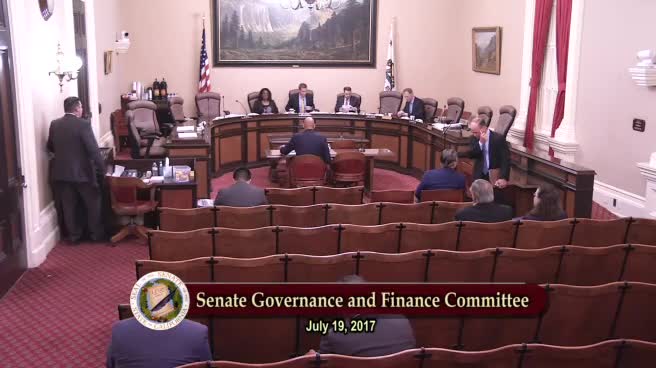 16MIN
Senate Standing Committee on Governance and Finance
 1MIN
Assembly Floor
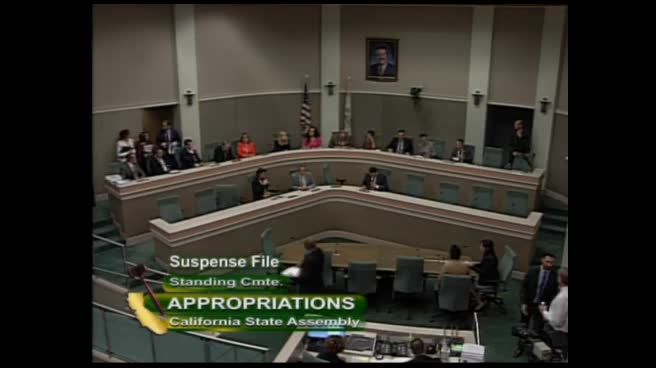 1H
Assembly Standing Committee on Appropriations
 3MIN
Assembly Standing Committee on Veterans Affairs


Bill Co-Author(s):