AB 1379: Certified access specialist program: funding.
- Session Year: 2017-2018
- House: Assembly
- Latest Version Date: 2017-10-11
(1)Existing law requires the State Architect to establish and publicize a program for voluntary certification by the state of any person who meets specified criteria as a certified access specialist (CASp), as provided. Existing law, on and after January 1, 2013, and until December 31, 2017, inclusive, requires that any applicant for an original or renewal of a local business license or equivalent instrument or permit to pay an additional fee of $1 for that license, instrument, or permit, to be collected by the city, county, or city and county that issued the license, instrument, or permit.
This bill would extend the operation of this fee indefinitely and, on and after January 1, 2018, and until December 31, 2023, increase the amount from $1 to $4. The bill would revert the amount of the fee back to $1 on and after January 1, 2024. The bill, in any city, county, or city and county that does not issue a business license or an equivalent instrument or permit, would require an applicant for a building permit to pay an additional fee of $4 on and after January 1, 2018, and until December 31, 2023, and an additional fee of $1 on and after January 1, 2024, for the building permit, to be collected by the city, county, or city and county that issued the building permit.
(2)Existing law requires that the city, county, or city and county retain 70% of the fees collected under the above-described provision, to be used to, among other things, fund increased CASp services in that jurisdiction for the public, thereby making an appropriation. Existing law requires that the remaining 30% of the fees be transmitted on a quarterly basis to the Division of the State Architect for deposit in the Disability Access and Education Revolving Fund, a continuously appropriated fund.
This bill, on and after January 1, 2018, and until December 31, 2023, inclusive, would require the city, county, or city and county to instead retain 90% of the fees collected. The bill would revert the amount retained back to 70% on and after January 1, 2024. The bill would also require the moneys retained by the city, county, or city and county to instead be deposited in a special fund, established by the city, county, or city and county to be known as the CASp Certification and Training Fund, and used for increased CASp training and certification within that local jurisdiction, thereby making an appropriation by expanding the purposes for which the retained fee moneys are required to be spent.
By extending the operation of fees deposited in the Disability Access and Education Revolving Fund, thereby increasing the amount of money in a continuously appropriated fund, this bill would make an appropriation.
(3)By extending the operation of the above-described fee, thereby requiring local officials to collect and allocate these revenues beyond December 31, 2018, this bill would impose a state-mandated local program.
The California Constitution requires the state to reimburse local agencies and school districts for certain costs mandated by the state. Statutory provisions establish procedures for making that reimbursement.
This bill would provide that, if the Commission on State Mandates determines that the bill contains costs mandated by the state, reimbursement for those costs shall be made pursuant to the statutory provisions noted above.
(1)Existing law requires the State Architect to establish and publicize a program for voluntary certification by the state of any person who meets specified criteria as a certified access specialist, specialist (CASp), as provided. Existing law, on and after January 1, 2013, and until December 31, 2017, inclusive, requires that any applicant for an original or renewal of a local business license or equivalent instrument or permit to pay an additional fee of $1 for that license, instrument, or permit, to be collected by the city, county, or city and county that issued the license, instrument, or permit.
This bill would make nonsubstantive changes to this provision. extend the operation of this fee indefinitely and, on and after January 1, 2018, and until December 31, 2023, increase the amount from $1 to $4. The bill would revert the amount of the fee back to $1 on and after January 1, 2024. The bill, in any city, county, or city and county that does not issue a business license or an equivalent instrument or permit, would require an applicant for a building permit to pay an additional fee of $4 on and after January 1, 2018, and until December 31, 2023, and an additional fee of $1 on and after January 1, 2024, for the building permit, to be collected by the city, county, or city and county that issued the building permit.
(2)Existing law requires that the city, county, or city and county retain 70% of the fees collected under the above-described provision, to be used to, among other things, fund increased CASp services in that jurisdiction for the public. Existing law requires that the remaining 30% of the fees be transmitted on a quarterly basis to the Division of the State Architect for deposit in the Disability Access and Education Revolving Fund, a continuously appropriated fund.
This bill, on and after January 1, 2018, and until December 31, 2023, inclusive, would require the city, county, or city and county to instead retain 90% of the fees collected. The bill would revert the amount retained back to 70% on and after January 1, 2024. The bill would also require the moneys retained by the city, county, or city and county to instead be deposited in a special fund, established by the city, county, or city and county to be known as the CASp Certification and Training Fund, and used for increased CASp training and certification within that local jurisdiction.
By extending the operation of fees deposited in the Disability Access and Education Revolving Fund, thereby increasing the amount of money in a continuously appropriated fund, this bill would make an appropriation.
(3)By extending the operation of the above-described fee, thereby requiring local officials to collect and allocate these revenues beyond December 31, 2018, this bill would impose a state-mandated local program.
The California Constitution requires the state to reimburse local agencies and school districts for certain costs mandated by the state. Statutory provisions establish procedures for making that reimbursement.
This bill would provide that, if the Commission on State Mandates determines that the bill contains costs mandated by the state, reimbursement for those costs shall be made pursuant to the statutory provisions noted above.
Existing law requires the State Architect to establish and publicize a program for voluntary certification by the state of any person who meets specified criteria as a certified access specialist, as provided.
This bill would make nonsubstantive changes to this provision.
(a)(1)On and after January 1, 2013, through December 31, 2017, inclusive, any applicant for a local business license or equivalent instrument or permit, and from any applicant for the renewal of a business license or equivalent instrument or permit, shall pay an additional fee of one dollar ($1) for that license, instrument, or permit, which shall be collected by the city, county, or city and county that issued the license, instrument, or permit.
(2)On and after January 1, 2018, through December 31, 2023, the following shall apply:
(A)Any applicant for a local business license or equivalent instrument or permit, and any applicant for the renewal of a business license or equivalent instrument or permit, shall pay an additional fee of four dollars ($4) for that license, instrument, or permit, which shall be collected by the city, county, or city and county that issued the license, instrument, or permit.
(B)In any city, county, or city and county that does not issue a business license or an equivalent instrument or permit, an applicant for a building permit shall pay an additional fee of four dollars ($4) for that building permit, which the city, county, or city and county that issued the building permit shall collect.
(3)On and after January 1, 2024, the following shall apply:
(A)Any applicant for a local business license or equivalent instrument or permit, and any applicant for the renewal of a business license or equivalent instrument or permit, shall pay an additional fee of one dollar ($1) for that license, instrument, or permit, which shall be collected by the city, county, or city and county that issued the license, instrument, or permit.
(B)In any city, county, or city and county that does not issue a business license or an equivalent instrument or permit, an applicant for a building permit shall pay an additional fee of one dollar ($1) for that building permit, which the city, county, or city and county that issued the building permit shall collect.
(b)(1)The city, county, or city and county shall retain the percentage of the fees collected under this section as specified in paragraph (2), of which up to 5 percent of the retained moneys may be used for related administrative costs of this chapter. The city, county, or city and county shall deposit the remaining moneys in a special fund, established by the city, county, or city and county to be known as the CASp Certification and Training Fund. The moneys in the fund shall be used for increased certified access specialist (CASp) training and certification within that local jurisdiction and to facilitate compliance with construction-related accessibility requirements. The highest priority shall be given to the training and retention of certified access specialists to meet the needs of the public in the jurisdiction as provided in Section 55.53 of the Civil Code.
(2)The amount of fees collected under this section and retained by the city, county, or city and county shall be in the following amounts:
(A)On and after January 1, 2018, through December 31, 2023, inclusive, 90 percent.
(B)On and after January 1, 2024, 70 percent.
(c)The remaining amount of all fees collected under this section and not retained by the city, county, or city and county pursuant to subdivision (b) shall be transmitted on a quarterly basis to the Division of the State Architect for deposit in the Disability Access and Education Revolving Fund established under Sections 4465 and 4470. The funds shall be transmitted within 15 days of the last day of the fiscal quarter. The Division of the State Architect shall develop and post on its Internet Web site a standard reporting form for use by all local jurisdictions. Up to 75 percent of the collected funds in the Disability Access and Education Revolving Fund shall be used to establish and maintain oversight of the CASp program and to moderate the expense of CASp certification and testing.
(d)Each city, county, or city and county shall make an annual report, commencing March 1, 2014, to the Division of the State Architect of the total fees collected in the previous calendar year and of its distribution, including the moneys spent on administrative services, the activities undertaken and moneys spent to increase CASp services, the activities undertaken and moneys spent to fund programs to facilitate accessibility compliance, and the moneys transmitted to the Disability Access and Education Revolving Fund.
SEC. 2.If the Commission on State Mandates determines that this act contains costs mandated by the state, reimbursement to local agencies and school districts for those costs shall be made pursuant to Part 7 (commencing with Section 17500) of Division 4 of Title 2 of the Government Code.
(a)(1)On and after January 1, 2013, and until through December 31, 2018, 2017, inclusive, any applicant for a local business license or equivalent instrument or permit, and from any applicant for the renewal of a business license or equivalent instrument or permit, shall pay an additional fee of one dollar ($1) for that license, instrument, or permit, which shall be collected by the city, county, or city and county that issued the license, instrument, or permit.
(2)On and after January 1, 2018, through December 31, 2023, the following shall apply:
(A)Any applicant for a local business license or equivalent instrument or permit, and any applicant for the renewal of a business license or equivalent instrument or permit, shall pay an additional fee of four dollars ($4) for that license, instrument, or permit, which shall be collected by the city, county, or city and county that issued the license, instrument, or permit.
(B)In any city, county, or city and county that does not issue a business license or an equivalent instrument or permit, an applicant for a building permit shall pay an additional fee of four dollars ($4) for that building permit, which the city, county, or city and county that issued the building permit shall collect.
(3)On and after January 1, 2024, the following shall apply:
(A)Any applicant for a local business license or equivalent instrument or permit, and any applicant for the renewal of a business license or equivalent instrument or permit, shall pay an additional fee of one dollar ($1) for that license, instrument, or permit, which shall be collected by the city, county, or city and county that issued the license, instrument, or permit.
(B)In any city, county, or city and county that does not issue a business license or an equivalent instrument or permit, an applicant for a building permit shall pay an additional fee of one dollar ($1) for that building permit, which the city, county, or city and county that issued the building permit shall collect.
(b)(1)The city, county, or city and county shall retain 70 percent the percentage of the fees collected under this section, section as specified in paragraph (2), of which up to 5 percent of the retained moneys may be used for related administrative costs of this chapter. The city, county, or city and county shall deposit the remaining moneys shall be used to fund increased certified access specialist (CASp) services in that jurisdiction for the public in a special fund, established by the city, county, or city and county to be known as the CASp Certification and Training Fund. The moneys in the fund shall be used for increased certified access specialist (CASp) training and certification within that local jurisdiction and to facilitate compliance with construction-related accessibility requirements. The highest priority shall be given to the training and retention of certified access specialists to meet the needs of the public in the jurisdiction as provided in Section 55.53 of the Civil Code.
(2)The amount of fees collected under this section and retained by the city, county, or city and county shall be in the following amounts:
(A)On and after January 1, 2018, through December 31, 2023, inclusive, 90 percent.
(B)On and after January 1, 2024, 70 percent.
(c)The remaining 30 percent amount of all fees collected under this section and not retained by the city, county, or city and county pursuant to subdivision (b) shall be transmitted on a quarterly basis to the Division of the State Architect for deposit in the Disability Access and Education Revolving Fund established under Sections 4465 and 4470. The funds shall be transmitted within 15 days of the last day of the fiscal quarter. The Division of the State Architect shall develop and post on its Internet Web site a standard reporting form for use by all local jurisdictions. Up to 75 percent of the collected funds in the Disability Access and Education Revolving Fund shall be used to establish and maintain oversight of the CASp program and to moderate the expense of CASp certification and testing.
(d)Each city, county, or city and county shall make an annual report, commencing March 1, 2014, to the Division of the State Architect of the total fees collected in the previous calendar year and of its distribution, including the moneys spent on administrative services, the activities undertaken and moneys spent to increase CASp services, the activities undertaken and moneys spent to fund programs to facilitate accessibility compliance, and the moneys transmitted to the Disability Access and Education Revolving Fund.
SEC. 2.If the Commission on State Mandates determines that this act contains costs mandated by the state, reimbursement to local agencies and school districts for those costs shall be made pursuant to Part 7 (commencing with Section 17500) of Division 4 of Title 2 of the Government Code.
SECTION 1.Section 4459.5 of the Government Code is amended to read:4459.5.(a)The State Architect shall establish and publicize a program for voluntary certification by the state of any person who meets specified criteria as a certified access specialist. No later than January 1, 2005, the State Architect shall determine minimum criteria a person is required to meet in order to be a certified access specialist, which may include knowledge sufficient to review, inspect, or advocate universal design requirements, completion of specified training, and testing on standards governing access to buildings for persons with disabilities.(b)The State Architect, upon appropriation of funds by the Legislature, may implement the program described in subdivision (a) with startup funds derived, as a loan, from the reserve of the Public School Planning, Design, and Construction Review Revolving Fund. The loan shall be repaid when sufficient fees have been collected pursuant to Section 4459.8. CORRECTIONS: DigestVote keypage 2.(a)The State Architect shall establish and publicize a program for voluntary certification by the state of any person who meets specified criteria as a certified access specialist. No later than January 1, 2005, the State Architect shall determine minimum criteria a person is required to meet in order to be a certified access specialist, which may include knowledge sufficient to review, inspect, or advocate universal design requirements, completion of specified training, and testing on standards governing access to buildings for persons with disabilities.
(b)The State Architect Architect, upon appropriation of funds by the Legislature, may implement the program described in subdivision (a) with startup funds derived, as a loan, from the reserve of the Public School Planning, Design, and Construction Review Revolving Fund, upon appropriation by the Legislature. That Fund. The loan shall be repaid when sufficient fees have been collected pursuant to Section 4459.8.
|
Date
|
Status
|
|---|---|
| Oct 11, 2017 | Chaptered by Secretary of State - Chapter 667, Statutes of 2017. |
| Oct 11, 2017 | Approved by the Governor. |
| Sep 13, 2017 | Enrolled and presented to the Governor at 4 p.m. |
| Sep 5, 2017 | In Assembly. Ordered to Engrossing and Enrolling. |
| Sep 5, 2017 | Read third time. Passed. Ordered to the Assembly. |
| Aug 22, 2017 | Read second time. Ordered to third reading. |
| Aug 21, 2017 | From committee: Do pass. (Ayes 5. Noes 2.) (August 21). |
| Jul 20, 2017 | Measure version as amended on March 30 corrected. |
| Jul 12, 2017 | From committee: Do pass and re-refer to Com. on APPR. (Ayes 5. Noes 1.) (July 11). Re-referred to Com. on APPR. |
| Jun 27, 2017 | From committee: Do pass and re-refer to Com. on JUD. (Ayes 10. Noes 2.) (June 27). Re-referred to Com. on JUD. |
| Jun 14, 2017 | Referred to Coms. on G.O. and JUD. |
| Jun 5, 2017 | In Senate. Read first time. To Com. on RLS. for assignment. |
| Jun 1, 2017 | Read third time. Passed. Ordered to the Senate. (Ayes 69. Noes 4. Page 2045.) |
| May 26, 2017 | From committee: Do pass. (Ayes 16. Noes 0.) (May 26). |
| May 10, 2017 | In committee: Set, first hearing. Referred to APPR. suspense file. |
| Apr 25, 2017 | From committee: Do pass and re-refer to Com. on APPR. (Ayes 11. Noes 0.) (April 25). Re-referred to Com. on APPR. |
| Apr 3, 2017 | Re-referred to Com. on JUD. |
| Mar 30, 2017 | Referred to Com. on JUD. |
| Feb 19, 2017 | From printer. May be heard in committee March 21. |
| Feb 17, 2017 | Read first time. To print. |
|
Date
|
Description
|
Location
|
Votes
|
|
|---|---|---|---|---|
| Sep 5, 2017 | Assembly 3rd Reading AB1379 Thurmond By Jackson | Senate Floor |
Passed |
|
| Aug 21, 2017 | Do pass | Senate Standing Committee on Appropriations |
Passed |
|
| Jul 11, 2017 | Do pass, but first be re-referred to the Committee on [Appropriations] | Senate Standing Committee on Judiciary |
Passed |
|
| Jun 27, 2017 | Do pass, but first be re-referred to the Committee on [Judiciary] | Senate Standing Committee on Governmental Organization |
Passed |
|
| Jun 1, 2017 | AB 1379 THURMOND Assembly Third Reading | Assembly Floor |
Passed |
|
| May 26, 2017 | Do pass. | Assembly Standing Committee on Appropriations |
Passed |
|
| Apr 25, 2017 | Do pass and be re-referred to the Committee on [Appropriations] | Assembly Standing Committee on Judiciary |
Passed |
This list shows positions taken on this bill by organizations on the date displayed, which is linked to the original source.
Positions by individuals are not included.
|
Organization
|
Position
|
Date
|
|---|---|---|
| Adult Skills Center | ** Support | Aug 30, 2017 |
| California Association Of Realtors | ** Against | Aug 30, 2017 |
| California Building Officials | ** Support | Aug 30, 2017 |
| california in-home supportive services consumer alliance | ** Support | Aug 30, 2017 |
| Consumer Attorneys Of California | ** Support | Aug 30, 2017 |
| Disability Rights of California | ** Support | Aug 30, 2017 |
| Jay Nolan Community Services | ** Support | Aug 30, 2017 |
| State Council on Developmental Disabilities | ** Support | Aug 30, 2017 |
| United Cerebral Palsy Of Los Angeles County | ** Support | Aug 30, 2017 |
| United Cerebral Palsy Of Santa Barbara County | ** Support | Aug 30, 2017 |
| United Cerebral Palsy Of Ventura County | ** Support | Aug 30, 2017 |
Office of Senate Floor Analyses (916) 651-1520 Fax: (916) 327-4478 | AB |
THIRD READING
Bill No: AB 1379
:
SENATE GOVERNMENTAL ORG. COMMITTEE: 10-2, 6/27/17
AYES: Dodd, Berryhill, Bradford, Cannella, Galgiani, Hill, Hueso, Lara, Mendoza, Portantino
NOES: Gaines, Vidak
NO VOTE RECORDED: Glazer
SENATE JUDICIARY COMMITTEE: 5-1, 7/11/17
AYES: Jackson, Hertzberg, Monning, Stern, Wieckowski
NOES: Anderson
NO VOTE RECORDED: Moorlach
SENATE APPROPRIATIONS COMMITTEE: 5-2, 8/21/17
AYES: Lara, Beall, Bradford, Hill, Wiener
NOES: Bates, Nielsen
ASSEMBLY FLOOR: 69-4, 6/1/17 - See last page for vote
SOURCE: Disability Rights of California
DIGEST: This bill seeks to increase funding for the State Certified Access Specialist (CASp) Program in order to increase the availability of CASp services and improve compliance with state and federal construction-related accessibility standards.
ANALYSIS:
Existing law:
- Establishes the California Commission on Disability Access (CDA), an independent state agency composed of 17 members, with the general responsibility for monitoring disability access compliance in California, and the authority to hold hearings and make recommendations to the Legislature for necessary changes to existing state law in order to facilitate implementation of state and federal laws on disability access.
- Requires the Division of State Architect (DSA) to establish and publicize a program for the voluntary certification by the state of any person who meets specified criteria as a CASp.
- Requires each applicant for CASp certification or renewal to pay certain fees, and requires the DSA to periodically review those fees, as specified.
- Provides for the deposit of those fees into the Certified Access Specialist Fund, which is continuously appropriated for use by the DSA to implement the CASp Program.
- Requires, until December 31, 2018, any applicant for a local business license or equivalent instrument or permit, or renewal of a local business license or equivalent instrument or permit, to pay an additional fee of $1 for that license, instrument, or permit.
- Provides that the city, county, or city and county shall retain 70% of the fees collected, of which up to 5% of the retained moneys may be used for general administrative costs. The remaining amount shall be used to fund increased CASp services in that jurisdiction.
- Provides that the remaining 30% of all fees collected shall be transmitted on a quarterly basis to the DSA for deposit in the Disability Access and Education Revolving Fund and used to establish and maintain oversight of the CASp Program and to moderate the expense of CASp certification and testing.
- Requires each city, county, or city and county to send an annual report, commencing March 1, 2014, to the DSA describing the total fees collected in the previous calendar year and of its distribution, including the moneys spent on administrative services, the activities undertaken and moneys spent to increase CASp services, the activities undertaken and moneys spent to fund programs to facilitate accessibility compliance, and the moneys transmitted to the Disability Access and Education Revolving Fund.
This bill:
- Requires, on and after January 1, 2018, through December 31, 2023, any applicant for a local business license or equivalent instrument or permit, and any applicant for the renewal of a business license or equivalent instrument or permit, to pay an additional fee of $4, for that license, instrument, or permit, which shall be collected by the city, county, or city and county that issued the license, instrument, or permit.
- Requires, in any city, county, or city and county that does not issue a business license or an equivalent instrument or permit, an applicant for a building permit to pay an additional fee of $4 for that building permit, which the city, county, or city and county that issued the building permit shall collect.
- Provides that on and after January 1, 2024, the following shall apply:
- Any applicant for a local business license or equivalent instrument or permit, and any applicant for the renewal of a business license or equivalent instrument or permit, shall pay an additional fee of $1 for that license, instrument, or permit, which shall be collected by the city, county, or city and county that issued the license, instrument, or permit.
- In any city, county, or city and county that does not issue a business license or an equivalent instrument or permit, an applicant for a building permit shall pay an additional fee of $1 for that building permit, which the city, county, or city and county that issued the building permit shall collect.
- Creates the CASp Certification and Training Fund (Fund) and specifies that the Fund should be used for increased CASp services in that jurisdiction for the public training and certification within that local jurisdiction and to facilitate compliance with construction-related accessibility requirements.
- Requires the city, county, or city and county that collects the fees to deposit the remaining moneys in the Fund.
- Provides that the amount of fees collected under this section and retained by the city, county, or city and county shall be in the following amounts:
- On and after January 1, 2018, through December 31, 2023, inclusive, 90%.
- On and after January 1, 2024, 70%.
- Provides that any remaining amount of the fees collected under this section and not retained by the city, county, or city and county, shall be transmitted on a quarterly basis to the DSA for deposit in the Disability Access and Education Revolving Fund.
Background
Purpose of the bill. According to the author’s office, “AB 1379 increases resources for local jurisdictions to ensure local building inspectors to have the training and skills to make certain businesses comply with state and federal access laws when reviewing building plans for new construction or renovations. As California grows, and as construction increases, the funding of the CASp Program needs to meet accessibility compliance needs.”
In addition, the author’s office argues that “the proposed changes in this bill balance the needs of the disability and business community as well as local jurisdictions by providing resources to help ensure equal access and compliance.”
Fee structure. This bill generates funds to be used for the purpose of assisting businesses to be in compliance with accessibility requirements by increasing the fee on business licenses, from $1 to $4, and specifying that 90% of the fee shall be retained by the local government and deposited into a special fund which will be used to increase CASp services in that jurisdiction. The $3 increase would be in effect until December 31, 2023. After that six-year period, the fee reverts to its current level of $1 and remains at that level on a permanent basis.
The bill provides that on and after January 1, 2018 through December 31, 2023, 90% of the amount of fees collected under the provisions of this bill shall be retained by the local government that collected that fee. Beginning on January 1, 2024, that amount shall be 70%. Any remaining amount shall be transmitted, on a quarterly basis, to the DSA for deposit in the Disability Access and Education Revolving Fund, which is used to increase compliance with state and federal accessibility requirements.
The author’s office states that the fee would generate $843,680 per year from 2018 through 2023, of which 90% would stay with local jurisdictions.
CASp Program. The CASp Program was created by SB 262 (Kuehl, Chapter 872, Statutes of 2003) and is designed to ensure that individuals participating in the CASp Program are knowledgeable of state and federal accessibility laws and regulations and possess the expertise to promote access to facilities for persons with disabilities. The CASp Program was created with the intent of offering business and facility owners a resource consisting of individuals with the appropriate knowledge demonstrated through examination.
CASp promotes access for persons with disabilities by promoting facility compliance with accessibility standards. Certification is granted to those who have established eligibility and have passed an examination based on knowledge and application of various state and federal accessibility codes, standards, and regulations. The CASp Program regulations describe the criteria for eligibility, examination, and certification.
Services rendered by a CASp may include the review of facility plans and specification for compliance with state and federal accessibility laws, standards, codes, and regulations; investigation of a facility for compliance with state and federal accessibility laws, standards, codes, and regulations; conducting accessibility research, prepare accessibility reports, and/or conducting accessibility inspections; and issue inspection reports and disability access inspection certificates.
Related/Prior Legislation
AB 2873 (Thurmond, 2016) would have required, commencing January 1, 2020, that all building inspectors employed by a local agency who review for compliance with state construction related accessibility standards be a CASp, as specified.
(Held in Senate Inactive File)
AB 2093 (Steinorth, Chapter 279, Statutes of 2016) increased the information available to the public, and to prospective tenants of commercial property about the American with Disabilities Act and a commercial property’s compliance with construction-related accessibility standards.
AB 52 (Gray, 2015) would have provided that the defendant’s maximum liability for statutory damages in a construction-related accessibility claim against a place of public accommodation is $1,000 for each offense if the defendant has corrected all construction-related violations within 180 days of being served with the complaint. (Held in Assembly Judiciary Committee)
AB 54 (Olsen, 2015) would have required a plaintiff who has been denied access to a public accommodation because of a construction-related accessibility violation of a standard which has changed in the past three years to give notice to the defendant 60 days before filing a complaint and an opportunity to cure the violation, with no statutory damages payable to the plaintiff. (Held in Assembly Revenue and Taxation Committee)
AB 1230 (Gomez, Chapter 787, Statutes of 2015) established the California Americans with Disabilities Act Small Business Compliance Act to provide loans to assist small businesses finance the costs of projects that alter or retrofit existing small business facilities to comply with the federal American with Disabilities Act.
AB 1342 (Steinorth, 2015) would have specified that the DSA shall require a CASp applicant to provide the location in which the CASp will provide services. (Vetoed by Governor Brown)
AB 1468 (Baker, 2015) would have provided that a public entity’s possession of a close out letter from the DSA certifying that the buildings, facilities, and other places meet the applicable construction-related accessibility standards of the federal Americans with Disabilities Act, serves as presumptive evidence of compliance with the federal Americans with Disabilities Act. (Held in Assembly Judiciary Committee)
SB 67 (Galgiani, 2015) would have exempted a small business from statutory damage liability in connection with a construction-related accessibility claim and extends the period for correcting construction-related violations that are the basis of a claim from 60 days to 120 days of being served with the complaint, for purposes of reducing a defendant’s minimum statutory damage liability to $1,000. (Held in Senate Judiciary Committee)
SB 1186 (Steinberg, Chapter 383, Statutes of 2012) required a $1 additional fee to be paid by any applicant for a local business license, permit, or similar instrument when it is issue or renewed.
SB 1608 (Corbett, Chapter 549, Statutes of 2008) enacted the CDA and various other reforms intended to increase voluntary compliance with longstanding state and federal laws requiring access to the disabled in any place of public accommodation.
SB 262 (Kuehl, Chapter 872, Statutes of 2003) required the DSA to establish and publicize the CASp Program for voluntary certification by the state of any person who meets specified criteria as a CASp.
FISCAL EFFECT: Appropriation: Fiscal Com.: Local:
According to the Senate Appropriations Committee, increased state revenue to the DSA from increased fees of approximately $210,910 per year until January 1, 2024. This revenue will be available to pay for increased oversight and program costs as a result of expanding CASp services.
In addition, increased in local revenue from increased fees of approximately $6 million per year until January 1, 2024 to fund increased CASp services. A portion of the revenue is available to offset administrative costs; therefore this bill does not create a reimbursable state mandate.
Disability Rights of California (source)
Adult Skills Center
California Building Officials
California In-Home Supportive Services Consumer Alliance
Consumer Attorneys of California
Jay Nolan Community Services
State Council on Developmental Disabilities
United Cerebral Palsy of Los Angeles County
United Cerebral Palsy of Santa Barbara County
United Cerebral Palsy of Ventura County
One individual
OPPOSITION: (Verified 8/22/17)
California Association of Realtors
ARGUMENTS IN SUPPORT: According to Disability Rights California, “many local jurisdictions do not have sufficient resources to provide CASp training and certification for local building inspectors. Without the resources for appropriate training and certification, local building inspectors do not have the skills and knowledge to ensure that building plans they review, comply, with state and federal access laws. AB 1379 would make it so that jurisdictions that do not have business licenses can still collect a fee by including building permits, if no business license exists in the jurisdiction.”
ARGUMENTS IN OPPOSITION: The California Association of Realtors (C.A.R) argues that, “while the need for increased CASp training and certification funding is clear, C.A.R. opposes increasing the fee to obtain a business license to generate that funding. REALTORS® already have to get multiple business licenses because they are required to do so by each local city in which they operate. Moreover, there is no nexus whatsoever between a REALTOR® having to get these business license and funding CASp training and certification.”
ASSEMBLY FLOOR: 69-4, 6/1/17
AYES: Acosta, Aguiar-Curry, Arambula, Baker, Berman, Bloom, Bocanegra, Bonta, Brough, Burke, Caballero, Calderon, Cervantes, Chau, Chávez, Chen, Chiu, Chu, Cooley, Cooper, Cunningham, Dababneh, Dahle, Daly, Eggman, Flora, Fong, Friedman, Gallagher, Cristina Garcia, Eduardo Garcia, Gipson, Gloria, Gomez, Gonzalez Fletcher, Gray, Grayson, Holden, Jones-Sawyer, Kalra, Kiley, Lackey, Levine, Limón, Low, Maienschein, Mathis, McCarty, Medina, Mullin, Muratsuchi, Nazarian, O'Donnell, Quirk, Quirk-Silva, Reyes, Rodriguez, Rubio, Salas, Santiago, Steinorth, Mark Stone, Thurmond, Ting, Voepel, Waldron, Weber, Wood, Rendon
NOES: Travis Allen, Irwin, Melendez, Obernolte
NO VOTE RECORDED: Bigelow, Choi, Frazier, Harper, Mayes, Patterson, Ridley-Thomas
8/30/17 10:51:32
**** END ****
SENATE COMMITTEE ON
Senator Ricardo Lara, Chair
2017 - 2018 Regular Session
AB 1379 (Thurmond) - Certified access specialist program: funding
Version: | Policy Vote: |
Urgency: | Mandate: |
Hearing Date: | Consultant: |
This bill does not meet the criteria for referral to the Suspense File.
Bill Summary:
AB 1379 would increase funding for the State Certified Access Specialist (CASp) program in order to increase the availability of CASp services and improve compliance with state and federal construction-related accessibility standards.
Fiscal Impact:
- Increased state revenue to the Division of the State Architect (DSA) from increased fees of approximately $210,910 per year until January 1, 2024. This revenue will be available to pay for increased oversight and programs costs as a result of expanding CASp services. (Disability Access and Education Revolving Fund)
- Increased local revenue from increased fees of approximately $6 million per year until January 1, 2024 to fund increased CASp services. A portion of the revenues is available to offset administrative costs; therefore this bill does not create a reimbursable state mandate. (CASp Certification and Training Fund)
Background:
The CASp program was created by SB 262 (Kuehl, Chapter 872, Statutes of 2003) and is designed to ensure that individuals participating in the CASp program are knowledgeable of state and federal accessibility laws and regulations and possess the expertise to promote access to facilities for persons with disabilities. The CASp program was created with the intent of offering business and facility owners a resource consisting of individuals with the appropriate knowledge demonstrated through examination.
CASp promotes access for persons with disabilities by promoting facility compliance with accessibility standards. Services rendered by a CASp may include the review of facility plans and specification for compliance with state and federal accessibility laws, standards, codes, and regulations; investigation of a facility for compliance with state and federal accessibility laws, standards, codes, and regulations; conducting accessibility research, prepare accessibility reports, and/or conducting accessibility inspections; and issue inspection reports and disability access inspection certificates.
Proposed Law:
This bill would:
- Require, on and after January 1, 2018, through December 31, 2023, any applicant for a local business license or equivalent instrument or permit, and any applicant for the renewal of a business license or equivalent instrument or permit, to pay an additional fee of $4, for that license, instrument, or permit, which shall be collected by the city, county, or city and county that issued the license, instrument, or permit;
- Require, in any city, county, or city and county that does not issue a business license or an equivalent instrument or permit, an applicant for a building permit to pay an additional fee of $4 for that building permit, which the city, county, or city and county that issued the building permit shall collect;
- Provides that on and after January 1, 2024, the following shall apply:
- Any applicant for a local business license or equivalent instrument or permit, and any applicant for the renewal of a business license or equivalent instrument or permit, shall pay an additional fee of $1 for that license, instrument, or permit, which shall be collected by the city, county, or city and county that issued the license, instrument, or permit;
- In any city, county, or city and county that does not issue a business license or an equivalent instrument or permit, an applicant for a building permit shall pay an additional fee of $1 for that building permit, which the city, county, or city and county that issued the building permit shall collect;
- Create the CASp Certification and Training Fund (Fund) and specify that the Fund should be used for increased CASp services in that jurisdiction for the public training and certification within that local jurisdiction and to facilitate compliance with construction-related accessibility requirements;
- Require the city, county, or city and county that collects the fees to deposit the remaining moneys in the Fund;
- Provide that the amount of fees collected under this section and retained by the city, county, or city and county shall be in the following amounts:
- On and after January 1, 2018, through December 31, 2023, inclusive, 90%;
- On and after January 1, 2024, 70%;
Provide that any remaining amount of the fees collected under this section and not retained by the city, county, or city and county, shall be transmitted on a quarterly basis to the DSA for deposit in the Disability Access and Education Revolving Fund.
Related Legislation:
AB 2873 (Thurmond, 2017) would require, commencing January 1, 2020, that all building inspectors employed by a local agency who review for compliance with state construction related accessibility standards be a CASp, as specified. This bill was held in the Senate Inactive File.
AB 2093 (Steinorth, Chapter 279, Statutes of 2016) increased the information available to the public, and to prospective tenants of commercial property about the American with Disabilities Act and a commercial property’s compliance with construction-related accessibility standards.
AB 1230 (Gomez, Chapter 787, Statutes of 2015) established the California Americans with Disabilities Act Small Business Compliance Act to provide loans to assist small businesses finance the costs of projects that alter or retrofit existing small business facilities to comply with the federal American with Disabilities Act.
AB 1342 (Steinorth, 2015) would have specified that the DSA shall require a CASp applicant to provide the location in which the CASp will provide services. This bill was vetoed by Governor Brown.
SB 1186 (Steinberg, Chapter 383, Statutes of 2012) required a $1 additional fee to be paid by any applicant for a local business license, permit, or similar instrument when it is issue or renewed.
Staff Comments:
Existing law imposes a $1 fee, through December 31, 2017, on each application or renewal application for each local business license of equivalent instrument or permit, in order to support the CASp program. Currently, 70% of the revenue from the fees is retained by the local jurisdiction and 30% is transmitted to DSA. This bill would extend the fee indefinitely and, in cases where a city or county does not issue a business license or equivalent instrument permit, impose the surcharge on building permits. This bill would also raise the fee initially to $4 and revert it back to $1 in 2024. It would also raise the percentage retained by the local jurisdiction initially to 90% and ultimately down to 70% in 2024.
DSA currently receives approximately $632,760 per year from local jurisdictions under the existing fee amount. When the existing fee sunsets on December 21, 2018, DSA will not have a funding source for the Disability Access and Education Revolving Fund and associated mandated activities. The increased fee would provide additional revenue for DSA’s mandated activities related to the CASp program. It is anticipated that as a result of the updated fee structure and fund distribution, DSA would receive approximately $843,680 per year from 2018 through 2023 – an increase of approximately $210,920 from current levels. Beginning January 1, 2024, it is anticipated that DSA would receive approximately $632,760 per year from local jurisdictions.
Additionally, DSA would receive 10% until January 1, 2024, and 30% thereafter of an unknown amount from the new collection of the fee on building permits in local jurisdictions that do no issue business licenses. DSA is only aware of 15 cities that do no issue business licenses; therefore the amount of additional revenue would likely be minimal.
Staff notes that the bill requires moneys to be deposited into the Disability Access and Education Revolving Fund. By extending the operation of fees deposited in the Fund, thereby increasing the amount of money in a continuously appropriated fund, this bill would make an appropriation.
-- END --
Senator Hannah-Beth Jackson, Chair
2017-2018 Regular Session
Bill No: AB 1379 (Author:Thurmond)
Version: March 30, 2017
Hearing Date: July 11, 2017
Fiscal: Yes
Urgency: No
Consultant: TSG
SUBJECT
Certified access specialist program: funding
DESCRIPTION
The Certified Access Specialist Program (CASp) is a program that trains and certifies specialists in assessing whether physical structures such as schools, parks, and shopping malls, comply with the applicable disability access laws. This bill would: (1) extend the fee on business licenses and permits that funds the CASp program; (2) temporarily increase those fees; and (3) reconfigure the formula by which the resulting revenue is distributed; all in order to increase the number of CASp certified local building inspectors in California.
BACKGROUND
Modern disability law requires that new construction and renovations of a certain scale ensure a certain level of accessibility to people of all physical ability and disability. The requirements vary according to a variety of factors. Even for experienced architects and builders, the rules can be complex. In 2003, responding to the need for specialists who could review existing facilities and assess the construction of new facilities, California enacted legislation creating the Certified Access Specialist Program, or CASp, under the auspices of the Division of the State Architect. (SB 262, Kuehl, Ch. 872, Stats. 2003.) Under the CASp program anyone interested can seek state recognition as a certified access specialist by meeting certain specified criteria.
According to the Department of General Services, a Certified Access Specialist (CASp) is: “a professional who has passed an examination and has been certified by the State of California to have specialized knowledge of the applicability of state and federal construction-related accessibility standards. A CASp will know which standards apply to your property based on the age of your facility and its history of improvements.”[1] Obtaining a CASp inspection thus allows a business owner to know whether the physical layout of the business complies with disability access laws and, if not, what adjustments need to be made to it. The program benefits the disabled community by increasing accessibility around the state. At the same time, the program assists businesses to avoid costly lawsuits by helping to ensure that the businesses are compliant with accessibility requirements.
The CASp program is funded through a fee on local business licenses, permits, or equivalent instruments. Existing law requires that anyone taking out or renewing a local business license, permit, or equivalent instrument, has to pay one additional dollar. (Gov. Code Sec. 4467(a).) The city, county, or city and county gets to retain 70 percent of the resulting revenue, which it must use primarily to train and retain certified access specialists in that jurisdiction. (Ibid.) The remaining 30 percent of the revenue goes to the Division of the State Architect for deposit in the Disability Access and Education Revolving Fund. (Ibid.) These laws are set to expire on December 31, 2018.
Despite this funding mechanism, many local jurisdictions do not have sufficient resources to obtain Certified Access Specialists’ (CASp) training and certification for their local building inspectors, according to the author of this bill. The author gives two reasons for this deficit. First, where local jurisdictions do charge for business licenses, the current one dollar additional fee is inadequate to fund CASp training for a sufficient number of building inspectors to meet the need. Second, many local jurisdictions do not charge for business licenses and therefore those jurisdictions do not collect the CASp related surcharge.
To increase compliance and prevent violations, AB 1379 revises and extends the fee structure that supports the CASp program. Specifically, the bill would temporarily increase the CASp related fee on business licenses and renewals to four dollars for the next five years. At the same time, the bill would allow local jurisdictions to retain a larger percentage of the revenue – 90 percent -- generated by the fees for CASp training and disability access purposes. Finally, where the local jurisdiction does not charge for business licenses, this bill would impose the CASp fee on building permits. After five years, the fees would revert back to one dollar and the local rate of retention will return to 70 percent.
AB 1379 passed out of the Senate Committee of Government Organization on a 10 to 2 vote.
CHANGES TO EXISTING LAW
Existing law establishes a voluntary certification program under the Division of the State Architect (DSA) through which an applicant may become a Certified Access Specialist (CASp), indicating that the person has expertise in the area of disability access requirements. (Gov. Code Sec. 4459.8.)
Existing law requires the State Architect to establish the Certified Access Specialist Program (CASp) and develop the specified criteria to have a person qualify as a certified access specialist. (Gov. Code Sec. 4459.5; Civ. Code Sec. 55.52.)
Existing law sets forth the process by which an applicant may become a certified access specialist and instructs the DSA to make each applicant pay fees that are reasonably necessary to implement the certified access specialist program, including processing, registration, and publishing a list of certified access specialists. (Gov. Code Sec. 4459.8.)
Existing law provides that, subject to certain conditions, businesses can obtain reductions in statutory damages or protection from liability for construction related disability access lawsuits if the property has been inspected by a CASp. (Civ. Code Sec. 55.56(g).)
Existing law requires that, on and after January 1, 2013, and until December 31, 2018, any applicant for a local business license or equivalent instrument or permit, and from any applicant for the renewal of a business license or equivalent instrument or permit, shall pay an additional fee of one dollar ($1) for that license, instrument, or permit, which shall be collected by the city, county, or city and county that issued the license, instrument, or permit. (Gov. Code Sec. 4467(a).)
Existing law provides that the city, county, or city and county shall retain 70 percent of the revenue generated from the fee on licenses and permits, of which up to 5 percent of the retained moneys may be used for general administrative costs. The remaining amount must be used to fund increased certified access specialist (CASp) services in that jurisdiction for the public and to facilitate compliance with construction-related accessibility requirements. (Gov. Code. Sec. 4467(b).)
Existing law provides that the remaining 30 percent of revenue collected under this section shall be transmitted on a quarterly basis to the DSA for deposit in the Disability Access and Education Revolving Fund, transmitted within 15 days of the last day of the fiscal quarter, and used to establish and maintain oversight of the CASp program and to moderate the expense of CASp certification and testing. (Gov. Code. Sec. 4467(c).)
Existing law requires each city, county, or city and county to make an annual report, commencing March 1, 2014, to the DSA of the total fees collected in the previous calendar year and of its distribution, including the moneys spent on administrative services, the activities undertaken and moneys spent to increase CASp services, the activities undertaken and moneys spent to fund programs to facilitate accessibility compliance, and the moneys transmitted to the Disability Access and Education Revolving Fund. (Gov. Code. Sec. 4467(d).)
This bill would extend the one dollar ($1) CASp-related fee on applications for local business license, business permit, or equivalent instruments beyond December 31, 2017, and temporarily raise that fee from one dollar ($1) to four dollars ($4) for the period January 1, 2018, through December 31, 2023.
This bill would require any city, county, or city and county that does not issue a business license or an equivalent instrument or permit, to charge and collect an additional, CASp-related fee for building permits. During the period January 1, 2018, through December 31, 2023, that fee would be four dollars ($4); after that, the fee would go down to one dollar ($1).
This bill would create a new “CASp Certification and Training Fund” in each jurisdiction to be used within each jurisdiction for increased training and certification of CASps and to facilitate compliance with construction-related accessibility requirements.
This bill would require the city, county, or city and county that collects CASp-related fees to allocate the resulting revenue as follows during the period January 1, 2018, to December 31, 2023, inclusive:
- retain 90 percent, of which up to 5 percent may be devoted to administrative costs, and the remainder must be deposited into a “CASp Certification and Training Fund” for use within the jurisdiction for increased training and certification of CASps and to facilitate compliance with construction-related accessibility requirements; and
- remit the remaining 10 percent to the Division of the State Architect (DSA) for deposit in the Disability Access and Education Revolving Fund established under Sections 4465 and 4470, which supports the operation of the CASp program.
This bill would require the city, county, or city and county that collects CASp-related fees to allocate the resulting revenue as follows on and after January 1, 2024:
- retain 70 percent, of which up to 5 percent may be devoted to administrative costs, and the remainder must be deposited into a “CASp Certification and Training Fund” for use within the jurisdiction for increased training and certification of CASps and to facilitate compliance with construction-related accessibility requirements; and
- remit the remaining 30 percent to the Division of the State Architect (DSA) for deposit in the Disability Access and Education Revolving Fund established under Sections 4465 and 4470, which supports the operation of the CASp program.
COMMENT
1. Stated need for the bill
According to the author:
AB 1379 balances the needs of the disability and business community by providing resources to local jurisdictions that will help increase compliance, prevent access violations, and limit lawsuit abuse. Members of the disabled community should be allowed to carry on with their daily lives with the basic dignity that comes from being able to go to the same places and have the same access to services as non-disabled persons. Compliance also has the benefit to businesses of helping them avoid litigation.
In further support, Disability Rights California writes:
Many local jurisdictions do not have sufficient resources to provide Certified Access Specialists’ training and certification for local building inspectors. Without the resources for appropriate training and certification, local building inspectors do not have the skills and knowledge to ensure that building plans they review, comply with state and federal access laws. Some jurisdictions do not require business licenses. AB 1379 would make it so that jurisdictions that do not have business licenses can still collect a fee by including building permits, if no business license exists in the jurisdiction.
Building inspector CASps play an essential role in ensuring accessibility as they provide permitting and plan check services for new construction and renovations. This bill is a proactive measure to increase resources to accomplish this goal. The measure is a balanced approach to address the needs of the disability, local jurisdictions, and business community by providing resources to help ensure equal access and compliance.
2. Expressed concerns with the bill
In opposition to the bill, the California Association of Realtors (C.A.R.) writes:
While the need for increased CASp training and certification funding is clear, C.A.R. opposes increasing the fee to obtain a business license to generate that funding. Realtors already have to get multiple business licenses because they are required to do so by each local city in which they operate. Moreover, there is no nexus whatsoever between a Realtor having to get these business licenses and funding CASp training and certification.
In response to these concerns, the author points out that there is a nexus between the work realtors do and the CASp program: realtors arrange for the purchase and sale of properties. Knowing whether or not a property is accessibility compliant is a relevant consideration for both buyers and sellers of property. Among other factors, if a property is not compliant with disability access laws, the parties to the property sale will want to take into account the cost of bringing the property into compliance when approaching the transaction. Since it is important to the buyer and sellers calculations, it is something that realtors need to know. CASp inspections provide precisely that information.
3. Legal impact of the CASp program
Anti-discrimination laws allow aggrieved plaintiffs to sue businesses and other entities if their facilities violate building and construction codes that are designed to ensure accessibility to all, regardless of disability. On the one hand, these laws have sometimes been criticized for diverting resources to legal costs that could otherwise be spent on making the necessary changes. These criticisms have been exacerbated by the perception that some disability access attorneys engage in “gotcha” lawsuits, in which plaintiffs go out searching for even minor accessibility violations and then demand hefty penalties and fees in addition to accessibility upgrades. On the other hand, without some teeth behind these laws, the pace of progress toward greater disability access would almost certainly be slower.
The CASp program is part of an ongoing state effort to incentivize and facilitate California businesses and other entities to take proactive steps to ensure full accessibility, rather than merely responding to litigation. The availability of certified access specialists enables businesses to check for themselves whether or not their facilities are fully compliant with the applicable accessibility laws, rather than finding out through a lawsuit. Originally, having a CASp inspection only benefited businesses and entities by informing them of any violations, thus enabling them to take steps to cure them. More recent laws have gone farther and connected CASp inspections with certain legal benefits. Specifically, undergoing a CASp inspection now entitles the business to “qualified defendant” status, which can reduce the business’ liability exposure in the event that the business is sued in relation to disability access. (Civ. Code Sec. 55.56(g).) “While a licensed design professional, such as an architect or engineer, can provide you an access compliance evaluation of your facility, only a CASp can provide services that offer you “qualified defendant” status in a construction-related accessibility lawsuit.”[2]
Support: The Adult Skills Center; California In-Home Supportive Services Consumer Alliance; Consumer Attorneys of California; Jay Nolan Community Services; United Cerebral Palsy of Los Angeles, Ventura and Santa Barbara Counties; one individual
Opposition: California Association of Realtors
HISTORY
Source: Disability Rights California
Related Pending Legislation:
AB 1148 (Steinorth, 2017) would define commercial property so as to exempt from the CASp inspection notification requirements those properties that are not being rented or leased as public accommodations or facilities to which the general public is invited. AB 1148 is currently on the Senate Floor.
Prior Legislation:
SB 269 (Roth, Chapter 13, Statutes of 2016) protected a business with 50 or fewer employees from liability for minimum statutory damages in a construction-related accessibility claim during the 120-day period immediately after the business has obtained an inspection of its premises by a CASp. SB 269 also established a presumption that certain “technical violations” of construction-related accessibility standards (such as faded paint on parking spaces or missing signage) do not constitute grounds for a complaint under the Unruh Civil Rights Act or the Disabled Persons Act as long as those violations are corrected within 15 days of notification to the business owner.
AB 2093 (Steinorth, Chapter 379, Statutes of 2016) required a commercial property owner to state on every lease form or rental agreement executed after January 1, 2017, whether or not the property being leased has undergone inspection by a CASp, and created a process by which tenants and lessees could access the resulting report or arrange with the lessor to have the property inspected.
AB 2873 (Thurmond, 2016) would have required certain government building inspectors who conduct permitting and plan check services to review for compliance with state construction-related accessibility standards by a place of public accommodation with respect to new construction or renovation to be certified access specialists (CASps). AB 2873 would also have temporarily increased the fee on local business licensing that funds CASp related programs and temporarily allocated a greater percentage of these funds to local CASp training and certification efforts. Finally, AB 2873 would also have required any city, county, or city and county that does not issue business licenses, to charge the CASp-related fee to applicants for building permits. AB 2873 died on the Senate Floor.
AB 1342 (Steinorth, 2015) would have required applicants for CASp certification or renewal to provide to the DSA the name of the city, county, or city and county in which the applicant intends to provide or has provided services, and would have required the DSA to post that information on the DSA Web site. Governor Brown vetoed AB 1342.
AB 1521 (Assembly Committee on the Judiciary, Chapter 755, Statutes of 2015) imposed special pre-filing requirements on “high-frequency litigants” (HFLs)—plaintiffs who file more than 10 or more complaints in one year and attorneys who represent 10 or more high frequency litigant plaintiffs—and post-settlement reporting requirements on all attorneys who file construction-related accessibility claims.
SB 1186 (Steinberg, Chapter 383, Statutes of 2012) required a one-dollar additional fee to be paid by any applicant for a local business license, permit or similar instrument when it is issued or renewed during the period January 1, 2013, to December 31, 2018. SB 1186 divides the revenue generated from this between the local entity that collected the funds and the DSA. The local agency retains 70 percent of the revenue for local CASp training and certification and to support compliance with disability access laws. The DSA receives the remaining 30 percent for oversight of the CASp program.
SB 1608 (Corbett et al; Chapter 549, Statutes of 2008) among other things, provided for an early evaluation of a filed complaint if the defendant had the place of public accommodation at issue inspected and determined to meet applicable physical access standards by a CASp prior to the filing of the complaint.
SB 262 (Kuehl, Chapter 872, Statutes of 2003) created the Certified Access Specialist program (CASp). The purpose of this bill was to meet the public’s need for experienced and trained individuals to assess buildings and sites for compliance with applicable state and federal construction-related accessibility standards.
Prior Vote:
Senate Governmental Organization Committee (Ayes 10, Noes 2)
Assembly Floor (Ayes 69, Noes 4)
Assembly Appropriations Committee (Ayes 16, Noes 0)
Assembly Judiciary Committee (Ayes 11, Noes 0)
**************
What is a CASP? California Department of General Services <http://www.dgs.ca.gov/dsa/Programs/
programCert/casp/consumerfaq.aspx#faq1> (as of June 23, 2017). ↑
What is a CASP? California Department of General Services <http://www.dgs.ca.gov/dsa/Programs/
programCert/casp/consumerfaq.aspx#faq1> (as of June 23, 2017). ↑
SENATE COMMITTEE ON GOVERNMENTAL ORGANIZATION
Senator Bill Dodd
Chair
2017 - 2018 Regular
Bill No: 1379 Hearing Date: 6/27/2017
Author: | |||
Version: | 3/30/2017 Amended | ||
Urgency: | No | Fiscal: | Yes |
Consultant: | Felipe Lopez | ||
SUBJECT: Certified access specialist program: funding
DIGEST: This bill seeks to increase funding for the State Certified Access Specialist (CASp) Program in order to increase the availability of CASp services and improve compliance with state and federal construction-related accessibility standards.
ANALYSIS:
Existing law:
- Establishes the California Commission on Disability Access (CDA), an independent state agency composed of 17 members, with the general responsibility for monitoring disability access compliance in California, and the authority to hold hearings and make recommendations to the Legislature for necessary changes to existing state law in order to facilitate implementation of state and federal laws on disability access.
- Requires the Division of State Architect (DSA) to establish and publicize a program for the voluntarily certification by the state of any person who meets specified criteria as a CASp.
- Requires each applicant for CASp certification or renewal to pay certain fees, and requires the DSA to periodically review those fees, as specified.
- Provides for the deposit of those fees into the Certified Access Specialist Fund, which is continuously appropriated for use by the DSA to implement the CASp Program.
- Requires, until December 31, 2018, any applicant for a local business license or equivalent instrument or permit, or renewal of a local business license or equivalent instrument or permit, to pay an additional fee of $1 for that license, instrument, or permit.
- Provides that the city, county, or city and county shall retain 70% of the fees collected, of which up to 5% of the retained moneys may be used for general administrative costs. The remaining amount shall be used to fund increased CASp services in that jurisdiction.
- Provides that the remaining 30% of all fees collected shall be transmitted on a quarterly basis to the DSA for deposit in the Disability Access and Education Revolving Fund and used to establish and maintain oversight of the CASp Program and to moderate the expense of CASp certification and testing.
- Requires each city, county, or city and county to send an annual report, commencing March 1, 2014, to the DSA describing the total fees collected in the previous calendar year and of its distribution, including the moneys spent on administrative services, the activities undertaken and moneys spent to increase CASp services, the activities undertaken and moneys spent to fund programs to facilitate accessibility compliance, and the moneys transmitted to the Disability Access and Education Revolving Fund.
This bill:
- Requires, on and after January 1, 2018, through December 31, 2023, any applicant for a local business license or equivalent instrument or permit, and any applicant for the renewal of a business license or equivalent instrument or permit, to pay an additional fee of $4, for that license, instrument, or permit, which shall be collected by the city, county, or city and county that issued the license, instrument, or permit.
- Requires, in any city, county, or city and county that does not issue a business license or an equivalent instrument or permit, an applicant for a building permit to pay an additional fee of $4 for that building permit, which the city, county, or city and county that issued the building permit shall collect.
- Provides that on and after January 1, 2024, the following shall apply:
- Any applicant for a local business license or equivalent instrument or permit, and any applicant for the renewal of a business license or equivalent instrument or permit, shall pay an additional fee of $1 for that license, instrument, or permit, which shall be collected by the city, county, or city and county that issued the license, instrument, or permit.
- In any city, county, or city and county that does not issue a business license or an equivalent instrument or permit, an applicant for a building permit shall pay an additional fee of $1 for that building permit, which the city, county, or city and county that issued the building permit shall collect.
- Creates the CASp Certification and Training Fund (Fund) and specifies that the Fund should be used for increased CASp services in that jurisdiction for the public training and certification within that local jurisdiction and to facilitate compliance with construction-related accessibility requirements.
- Requires the city, county, or city and county that collects the fees to deposit the remaining moneys in the Fund.
- Provides that the amount of fees collected under this section and retained by the city, county, or city and county shall be in the following amounts:
- On and after January 1, 2018, through December 31, 2023, inclusive, 90%.
- On and after January 1, 2024, 70%.
- Provides that any remaining amount of the fees collected under this section and not retained by the city, county, or city and county, shall be transmitted on a quarterly basis to the DSA for deposit in the Disability Access and Education Revolving Fund.
Background
Purpose of the bill. According to the author’s office, “AB 1379 increases resources for local jurisdictions to ensure local building inspectors to have the training and skills to make certain businesses comply with state and federal access laws when reviewing building plans for new construction or renovations. As California grows, and as construction increases, the funding of the CASp Program needs to meet accessibility compliance needs.”
In addition, the author’s office argues that “the proposed changes in this bill balance the needs of the disability and business community as well as local jurisdictions by providing resources to help ensure equal access and compliance.”
Fee structure. The bill would generate funds to be used for the purpose of assisting businesses to be in compliance with accessibility requirements by increasing the fee on business licenses, from $1 to $4, and specifying that 90% of the fee shall be retained by the local government and deposited into a special fund which will be used to increase CASp services in that jurisdiction.
The $3 increase would be in effect until December 31, 2023. After that six-year period, the fee would revert to its current level of $1and would remain at that level on a permanent basis.
The bill provides that on and after January 1, 2018 through December 31, 2023, 90% of the amount of fees collected under the provisions of this bill shall be retained by the local government that collected that fee. Beginning on January 1, 2024, that amount shall be 70%. Any remaining amount shall be transmitted, on a quarterly basis, to the DSA for deposit in the Disability Access and Education Revolving Fund, which is used to increase compliance with state and federal accessibility requirements.
The author’s office states that the fee would generate $843,680 per year from 2018 through 2023, of which 90% would stay with local jurisdictions.
CASp Program. The CASp Program was created by SB 262 (Kuehl, Chapter 872, Statutes of 2003) and is designed to ensure that individuals participating in the CASp Program are knowledgeable of state and federal accessibility laws and regulations and possess the expertise to promote access to facilities for persons with disabilities. The CASp Program was created with the intent of offering business and facility owners a resource consisting of individuals with the appropriate knowledge demonstrated through examination.
CASp promotes access for persons with disabilities by promoting facility compliance with accessibility standards. Certification is granted to those who have established eligibility and have passed an examination based on knowledge and application of various state and federal accessibility codes, standards, and regulations. The CASp Program regulations describe the criteria for eligibility, examination, and certification.
Services rendered by a CASp may include the review of facility plans and specification for compliance with state and federal accessibility laws, standards, codes, and regulations; investigation of a facility for compliance with state and federal accessibility laws, standards, codes, and regulations; conducting accessibility research, prepare accessibility reports, and/or conducting accessibility inspections; and issue inspection reports and disability access inspection certificates.
Prior/Related Legislation
AB 2873 (Thurmond, 2017) would have required, commencing January 1, 2020, that all building inspectors employed by a local agency who review for compliance with state construction related accessibility standards be a CASp, as specified.
(Held in Senate Inactive File)
AB 2093 (Steinorth, Chapter 279, Statutes of 2016) increased the information available to the public, and to prospective tenants of commercial property about the American with Disabilities Act and a commercial property’s compliance with construction-related accessibility standards.
AB 52 (Gray, 2015) would have provided that the defendant’s maximum liability for statutory damages in a construction-related accessibility claim against a place of public accommodation is $1,000 for each offense if the defendant has corrected all construction-related violations within 180 days of being served with the complaint. (Held in Assembly Judiciary Committee)
AB 54 (Olsen, 2015) would have required a plaintiff who has been denied access to a public accommodation because of a construction-related accessibility violation of a standard which has changed in the past three years to give notice to the defendant 60 days before filing a complaint and an opportunity to cure the violation, with no statutory damages payable to the plaintiff. (Held in Assembly Revenue and Taxation Committee)
AB 1230 (Gomez, Chapter 787, Statutes of 2015) established the California Americans with Disabilities Act Small Business Compliance Act to provide loans to assist small businesses finance the costs of projects that alter or retrofit existing small business facilities to comply with the federal American with Disabilities Act.
AB 1342 (Steinorth, 2015) would have specified that the DSA shall require a CASp applicant to provide the location in which the CASp will provide services. (Vetoed by Governor Brown)
AB 1468 (Baker, 2015) would have provided that a public entity’s possession of a close out letter from the DSA certifying that the buildings, facilities, and other places meet the applicable construction-related accessibility standards of the federal Americans with Disabilities Act, serves as presumptive evidence of compliance with the federal Americans with Disabilities Act. (Held in Assembly Judiciary Committee)
SB 67 (Galgiani, 2015) would have exempted a small business from statutory damage liability in connection with a construction-related accessibility claim and extends the period for correcting construction-related violations that are the basis of a claim from 60 days to 120 days of being served with the complaint, for purposes of reducing a defendant’s minimum statutory damage liability to $1,000. (Held in Senate Judiciary Committee)
SB 1186 (Steinberg, Chapter 383, Statutes of 2012) required a $1 additional fee to be paid by any applicant for a local business license, permit, or similar instrument when it is issue or renewed.
SB 1608 (Corbett, Chapter 549, Statutes of 2008) enacted the CDA and various other reforms intended to increase voluntary compliance with longstanding state and federal laws requiring access to the disabled in any place of public accommodation.
SB 262 (Kuehl, Chapter 872, Statutes of 2003) required the DSA to establish and publicize the CASp Program for voluntary certification by the state of any person who meets specified criteria as a CASp.
FISCAL EFFECT: Appropriation: Fiscal Com.: Local:
SUPPORT:
Disability Rights of California (Source)
Consumer Attorneys of California
OPPOSITION:
California Association of Realtors
ARGUMENTS IN SUPPORT: According to Disability Rights California, “many local jurisdictions do not have sufficient resources to provide CASp training and certification for local building inspectors. Without the resources for appropriate training and certification, local building inspectors do not have the skills and knowledge to ensure that building plans they review, comply, with state and federal access laws. AB 1379 would make it so that jurisdictions that do not have business licenses can still collect a fee by including building permits, if no business license exists in the jurisdiction.”
ARGUMENTS IN OPPOSITION: The California Association of Realtors (C.A.R) argues that, “while the need for increased CASp training and certification funding is clear, C.A.R. opposes increasing the fee to obtain a business license to generate that funding. REALTORS® already have to get multiple business licenses because they are required to do so by each local city in which they operate. Moreover, there is no nexus whatsoever between a REALTOR® having to get these business license and funding CASp training and certification.”
DUAL REFERRAL: Senate Judiciary Committee
ASSEMBLY THIRD READING
ATR Bill Id:AB 1379
Author:(Thurmond)
As Amended Ver:March 30, 2017
Majority vote
Committee | Votes | Ayes | Noes |
Judiciary | 11-0 | Mark Stone, Cunningham, Chau, Chiu, Cristina Garcia, Holden, Kalra, Kiley, Maienschein, Reyes, Ting | |
Appropriations | 16-0 | Gonzalez Fletcher, Bigelow, Bloom, Bocanegra, Bonta, Brough, Calderon, McCarty, Quirk, Fong, Friedman, Gallagher, Eduardo Garcia, Gray, Muratsuchi, Reyes |
|
SUMMARY: Seeks to increase funding for the state Certified Access Specialist Program (CASp) program in order to increase the availability of CASp services and ultimately improve compliance with state and federal construction-related accessibility standards. Specifically, this bill:
- Requires, on and after January 1, 2018, through December 31, 2023, any applicant for a local business license or equivalent instrument or permit, and any applicant for the renewal of a business license or equivalent instrument or permit, to pay an additional fee of $4 for that license, instrument, or permit, which shall be collected by the city, county, or city and county that issued the license, instrument, or permit.
- Requires, in any city, county, or city and county that does not issue a business license or an equivalent instrument or permit, an applicant for a building permit to pay an additional fee of $4 for that building permit, which the city, county, or city and county that issued the building permit shall collect.
- Provides that on and after January 1, 2024, the following shall apply:
- Any applicant for a local business license or equivalent instrument or permit, and any applicant for the renewal of a business license or equivalent instrument or permit, shall pay an additional fee of $1 for that license, instrument, or permit, which shall be collected by the city, county, or city and county that issued the license, instrument, or permit.
- In any city, county, or city and county that does not issue a business license or an equivalent instrument or permit, an applicant for a building permit shall pay an additional fee of $1 for that building permit, which the city, county, or city and county that issued the building permit shall collect.
- Creates a new "CASp Certification and Training Fund" to be for increased certified access specialist (CASp) services in that jurisdiction for the public training and certification within that local jurisdiction and to facilitate compliance with construction-related accessibility requirements.
- Requires the city, county, or city and county that collects the fees described in 1) through 3), above to deposit the remaining moneys in the CASp Certification and Training Fund described in 4), above.
- Provides that the amount of fees collected under this section and retained by the city, county, or city and county shall be in the following amounts:
- On and after January 1, 2018, through December 31, 2023, inclusive, 90%.
- On and after January 1, 2024, 70%
- Provides that any remaining amount of the fees collected under this section and not retained by the city, county, or city and county pursuant to 6), above, shall be transmitted on a quarterly basis to the Division of the State Architect (DSA) for deposit in the Disability Access and Education Revolving Fund established under Sections 4465 and 4470.
FISCAL EFFECT: According to the Assembly Appropriations Committee:
- Increased state revenue of $200,000 annually for four years to the Division of the State Architect (DSA) that will be available to pay for higher oversight and program costs as a result of expanding CASp services.
- Increased local revenue of $6.1 million annually for four years to fund increased CASp services. A portion of the revenues is available to offset administrative costs, therefore, this bill does not create a reimbursable state mandate.
COMMENTS: According to the author, this bill will provide financial resources to local governments to be used to train and hire additional CASp inspectors, which ultimately will improve compliance with state and federal construction-related accessibility standards and decrease ADA litigation:
As California grows, and as construction increases, the funding of the CASp program needs to meet accessibility compliance needs. Building inspector CASps play a crucial role in preventing accessibility violations as they provide permitting and plan check services for new construction and renovations. Insufficient funding prevents local governments from expanding CASp certification to more building inspectors so they can meet this need. The proposed changes in this bill balance the needs of the disability and business community as well as local jurisdictions by providing resources to help ensure equal access and compliance.
As the Judiciary Committee has repeatedly observed, compliance with ADA standards is the best way to prevent ADA litigation.
Legislative Response to the Problem of "Serial ADA Litigation." The Legislature has enacted a number of bipartisan efforts to encourage compliance with construction-related accessibility standards and provide additional tools and resources to small businesses in the past 15 years.
In 2003, SB 262 (Kuehl), Chapter 872, Statutes of 2003, created the CASp program to meet the public's need for experienced, trained, and tested individuals who can inspect buildings and sites for compliance with applicable state and federal construction-related accessibility standards. In 2008, SB 1608 (Corbett), Chapter 549, Statutes of 2008, among other things, provided for an early evaluation conference regarding a filed complaint if the defendant is a qualified defendant who had the identified place of public accommodation inspected and determined to meet applicable physical access standards by a CASp prior to the filing of the complaint. In 2012, the Legislature approved SB 1186 (Steinberg), Chapter 383, Statutes of 2012, required a $1 additional fee to be paid by any applicant for a local business license, permit or similar instrument when it is issued or renewed to increase disability access and compliance with construction-related accessibility requirements. Additionally, the fee assists local jurisdictions in supporting the CASp program and provides the State Architect with funds to maintain oversight of the CASp program. The funds accrued from this fee are then divided between the local entity that collected the funds, which retains 70%, and DSA, which receives 30%.
Most recently, the Legislature adopted a number of measures to assist small businesses: AB 1521 (Assembly Judiciary Committee), Chapter 755, Statutes of 2015 [which provided additional information and legal resources to small business owners who may not realize how to minimize their liability for ADA violations or respond to a lawsuit filed against them, and limited the practice of high-volume lawsuits]; AB 1230 (Gomez), Chapter 787, Statutes of 2015 [which established the California Americans With Disabilities Act Small Business Capital Access Loan Program to assist small businesses in financing the costs of projects that alter or retrofit existing small business facilities to comply with the ADA]; SB 269 (Roth), Chapter 13, Statutes of 2016 [which protects a business with 50 or fewer employees from liability for minimum statutory damages in a construction-related accessibility claim for the 120-day period after the business has obtained an inspection of its premises by a CASp; and established a presumption that certain "technical violations" of construction-related accessibility standards do not constitute grounds for a complaint under Unruh or the DPA as long as those violations are corrected within 15 days of the business owner being notified of them]; and AB 2093 (Steinorth), Chapter 379, Statutes of 2016 [which requires a commercial property owner to state on every lease form or rental agreement executed after January 1, 2017, whether or not the property being leased has undergone inspection by a CASp].
This bill offers proactive protection against ADA litigation to small businesses. This bill, along the same lines as many of the above measures, seeks to protect small businesses from construction-related accessibility litigation. It would do so on a proactive, rather than reactive, basis. The goal of the bill is to provide increased funding to local governments to hire more CASps, or to allow existing staff to become certified, so that they can assist small businesses come into compliance when they either open newly constructed public accommodations, or remodel those accommodations. The bill would generate the greatly needed funds to be used for this worthy purpose by increasing the fee on business licenses, now used to fund the CASp Program, from one dollar to four dollars, and specifying that the vast majority of that fee (90%) must be retained by the local government and deposited into a special CASp fund. The three dollar increase would last for four years. After that four-year period, the fee would revert to its current level ($1) and would remain at that level on a permanent basis. Given that the fees will help protect the businesses themselves, as well as all members of the public, regardless of disability, there would seem to be an appropriately close nexus between those who pay the fee and those who benefit from it.
Analysis Prepared by: Alison Merrilees / JUD. / (916) 319-2334 FN: 0000636
Date of Hearing: May 10, 2017
ASSEMBLY COMMITTEE ON APPROPRIATIONS
Lorena Gonzalez Fletcher, Chair
ABPCA Bill Id:AB 1379
Author:(Thurmond) – As Amended Ver:March 30, 2017
Policy Committee: | Judiciary | Vote: | 11 - 0 |
|
| ||
|
|
Urgency: No State Mandated Local Program: Yes Reimbursable: No
SUMMARY:
This bill increases the fee charged on business licenses or building permits for the state Certified Access Specialist (CASp) program—to improve compliance with state and federal construction-related accessibility standards—from one dollar to four dollars between January 1, 2018 and December 31, 2023. This bill also provides that 90 percent of the revenue from the fee at the higher rate will be distributed to the local jurisdiction to increase CASp services with the remaining 10 percent allocated to the Division of the State Architect (DSA). This bill would provide that beginning January 1, 2024, the fee would revert to one dollar and the allocation of revenues would revert to the existing formula with 70 percent to local jurisdictions and 30 percent to DSA.
FISCAL EFFECT:
- Increased state revenue of $200,000 annually for four years to the Division of the State Architect (DSA) that will be available to pay for higher oversight and program costs as a result of expanding CASp services.
- Increased local revenue of $6.1 million annually for four years to fund increased CASp services. A portion of the revenues is available to offset administrative costs, therefore, this bill does not create a reimbursable state mandate.
COMMENTS:
- Background. Existing law requires the DSA to establish the Certified Access Specialist Program (CASp) and develop the specified criteria to have a person qualify as a certified access specialist. Existing law requires, on and after January 1, 2013, and until December 31, 2018, any applicant for a local business license or equivalent instrument or permit, and from any applicant for the renewal of a business license or equivalent instrument or permit, to pay an additional fee of one dollar for that license, instrument, or permit, which must be collected by the city, county, or city and county that issued the license, instrument, or permit. The revenue from this fee is split with 70 percent to the local jurisdiction to increase CASp services and 30 percent to DSA for oversight of the CASp program.
- Purpose. According to the author, “As California grows, and as construction increases, the funding of the CASp program needs to meet accessibility compliance needs. Building inspector CASps play a crucial role in preventing accessibility violations as they provide permitting and plan check services for new construction and renovations. Insufficient funding prevents local governments from expanding CASp certification to more building inspectors so they can meet this need. The proposed changes in this bill balance the needs of the disability and business community as well as local jurisdictions by providing resources to help ensure equal access and compliance.”
Analysis Prepared by: Jessica Peters / APPR. / (916) 319-2081
Date of Hearing: April 25, 2017
ASSEMBLY COMMITTEE ON JUDICIARY
Mark Stone, Chair
ABPCA Bill Id:AB 1379
Author:(Thurmond) – As Amended Ver:March 30, 2017
SUBJECT: CERTIFIED ACCESS SPECIALIST PROGRAM: FUNDING
KEY ISSUE: SHOULD ADDITIONAL FUNDS, PAID BY HIGHER BUSINESS LICENSE FEES, BE MADE AVAILABLE TO LOCAL GOVERNMENTS IN ORDER TO TRAIN AND CERTIFY ADDITIONAL CERTIFIED ACCESS SPECIALISTS WHOSE SERVICES ARE BENEFICIAL TO BOTH SMALL BUSINESSES AND THE DISABLED COMMUNITY BY IMPROVING COMPLIANCE WITH CONSTRUCTION-RELATED ACCESSIBILITY STANDARDS?
SYNOPSIS
Under the twenty-seven year-old federal Americans with Disabilities Act (ADA), a business that constitutes a place of public accommodation (e.g., many places of lodging, entertainment, recreation, restaurants, bars, theaters, stores, health clubs, etc.) is prohibited from discriminating on the basis of disability if its operations affect interstate commerce. Compliance, something disabled consumers should be able to count on as they go about their daily lives, also has the added benefit to businesses of helping them to avoid ADA litigation. One significant way to increase compliance with state and federal construction-related accessibility standards is the Certified Access Specialist (CASp) program. In 2003, Senate Bill 262 (Kuehl, Chapter 872, Statutes of 2003) created the CASp program to meet the public's need for experienced, trained, and tested individuals who can inspect buildings and sites for compliance with applicable state and federal construction-related accessibility standards. Since then, a number of bills have expanded the use and effect of CASp inspections. However, no significant new financial resources have been provided to small businesses or to the CASp program, in order to bring businesses into compliance with the law.
In order to increase CASp services, this bill, sponsored by Disability Rights California, seeks to increase funding to local governments to hire more CASps, or to allow existing staff to become certified, by increasing the fee on business licenses that is used to fund the CASp Program from one dollar to four dollars, and specifying that most of the additional funds are to be retained by local governments and deposited into a special CASp fund. The increase would last for four years. Afterwards, the fee would revert to the current level (one dollar) and would remain at that level on a permanent basis. The bill has no known opposition.
SUMMARY: Seeks to increase funding for the state CASp program in order to increase the availability of CASp services and ultimately improve compliance with state and federal construction-related accessibility standards. Specifically, this bill:
- Requires, on and after January 1, 2018, through December 31, 2023, any applicant for a local business license or equivalent instrument or permit, and any applicant for the renewal of a business license or equivalent instrument or permit, to pay an additional fee of four dollars ($4) for that license, instrument, or permit, which shall be collected by the city, county, or city and county that issued the license, instrument, or permit.
- Requires, in any city, county, or city and county that does not issue a business license or an equivalent instrument or permit, an applicant for a building permit to pay an additional fee of four dollars ($4) for that building permit, which the city, county, or city and county that issued the building permit shall collect.
- Provides that on and after January 1, 2024, the following shall apply:
- Any applicant for a local business license or equivalent instrument or permit, and any applicant for the renewal of a business license or equivalent instrument or permit, shall pay an additional fee of one dollar ($1) for that license, instrument, or permit, which shall be collected by the city, county, or city and county that issued the license, instrument, or permit.
- In any city, county, or city and county that does not issue a business license or an equivalent instrument or permit, an applicant for a building permit shall pay an additional fee of one dollar ($1) for that building permit, which the city, county, or city and county that issued the building permit shall collect.
- Creates a new “CASp Certification and Training Fund” to be for increased certified access specialist (CASp) services in that jurisdiction for the public training and certification within that local jurisdiction and to facilitate compliance with construction-related accessibility requirements.
- Requires the city, county, or city and county that collects the fees described in 1) through 3), above to deposit the remaining moneys in the CASp Certification and Training Fund described in 4), above.
- Provides that the amount of fees collected under this section and retained by the city, county, or city and county shall be in the following amounts:
- On and after January 1, 2018, through December 31, 2023, inclusive, 90 percent.
- On and after January 1, 2024, 70 percent.
- Provides that any remaining amount of the fees collected under this section and not retained by the city, county, or city and county pursuant to 6), above, shall be transmitted on a quarterly basis to the Division of the State Architect (DSA) for deposit in the Disability Access and Education Revolving Fund established under Sections 4465 and 4470.
EXISTING LAW:
- Provides for a California Commission on Disability Access, an independent state agency composed of 17 members, with the general responsibility for monitoring disability access compliance in California, and the authority to hold hearings and make recommendations to the Legislature for necessary changes to existing state law in order to facilitate implementation of state and federal laws on disability access. (Gov. Code Sec. 8299 et seq. All further statutory references are to the Government Code, unless otherwise indicated.)
- Requires the Commission to use its funding, as appropriate, to provide information about preventing or minimizing compliance problems among California businesses, and recommending programs to enable persons with disabilities to obtain full and equal access to public facilities. (Section 8299.05.)
- Makes it a priority for the Commission to provide educational resources to promote and facilitate disability access compliance. (Section 8299.06.)
- Requires the State Architect to establish the Certified Access Specialist Program (CASp) and develop the specified criteria to have a person qualify as a certified access specialist. (Section 4459.5; Civil Code Section 55.52.)
- Provides for the certification process in which an applicant may become a certified access specialist. Further provides that the DSA shall require each applicant to pay fees that are reasonably necessary to implement the certified access specialist program, including processing, registration, and publishing a list of certified access specialists. (Section 4459.8.)
- Requires, on and after January 1, 2013, and until December 31, 2018, any applicant for a local business license or equivalent instrument or permit, and from any applicant for the renewal of a business license or equivalent instrument or permit, shall pay an additional fee of one dollar ($1) for that license, instrument, or permit, which shall be collected by the city, county, or city and county that issued the license, instrument, or permit. (Section 4467 (a).)
- Provides that the city, county, or city and county shall retain 70 percent of the fees collected under 6), above, of which up to 5 percent of the retained moneys may be used for general administrative costs and that the remaining amount shall be used to fund increased certified access specialist (CASp) services in that jurisdiction for the public and to facilitate compliance with construction-related accessibility requirements. (Section 4467 (a).)
- Provides that the remaining 30 percent of all fees collected under this section shall be transmitted on a quarterly basis to the DSA for deposit in the Disability Access and Education Revolving Fund, transmitted within 15 days of the last day of the fiscal quarter, and used to establish and maintain oversight of the CASp program and to moderate the expense of CASp certification and testing.
- Requires each city, county, or city and county to make an annual report, commencing March 1, 2014, to the DSA of the total fees collected in the previous calendar year and of its distribution, including the moneys spent on administrative services, the activities undertaken and moneys spent to increase CASp services, the activities undertaken and moneys spent to fund programs to facilitate accessibility compliance, and the moneys transmitted to the Disability Access and Education Revolving Fund.
FISCAL EFFECT: As currently in print this bill is keyed fiscal.
COMMENTS: Under the twenty-seven year-old federal Americans with Disabilities Act (ADA), a business that constitutes a place of public accommodation (e.g., many places of lodging, entertainment, recreation, restaurants, bars, theaters, stores, health clubs, etc.) is prohibited from discriminating on the basis of disability if its operations affect interstate commerce. Prohibited discrimination can take a number of forms – e.g., denial of participation in the facility, or a service, benefit, or good of the business; denial of equal participation in a good, service, or facility; or provision of a different or separate facility, service or good (unless necessary to provide services and the like that are as effective as that provided to others). Government facilities are also covered by the access obligations of the ADA. Compliance, something disabled consumers should be able to count on as they go about their daily lives, also has the added benefit to businesses of helping them to avoid ADA litigation.
Author’s and Sponsor’s Statements. According to the author, this bill will provide financial resources to local governments to be used to train and hire additional CASp inspectors, which ultimately will improve compliance with state and federal construction-related accessibility standards and decrease ADA litigation:
As California grows, and as construction increases, the funding of the CASp program needs to meet accessibility compliance needs. Building inspector CASps play a crucial role in preventing accessibility violations as they provide permitting and plan check services for new construction and renovations. Insufficient funding prevents local governments from expanding CASp certification to more building inspectors so they can meet this need. The proposed changes in this bill balance the needs of the disability and business community as well as local jurisdictions by providing resources to help ensure equal access and compliance.
Similarly, Disability Rights California, the sponsor of AB 1379, points out that providing additional funds to local governments in order to hire more CASps will encourage businesses to bring their premises into compliance with construction-related accessibility standards:
Without the resources for appropriate training and certification, local building inspectors do not have the skills and knowledge to ensure that building plans they review, comply with state and federal access laws. Some jurisdictions do not require business licenses. AB 1379 would make it so that jurisdictions that do not have business licenses can still collect a fee by including building permits, if no business license exists in the jurisdiction.
Building inspector CASps play an essential role in ensuring accessibility as they provide permitting and plan check services for new construction and renovations. This bill is a proactive measure to increase resources to accomplish this goal. The measure is a balanced approach to address the needs of the disability, local jurisdictions, and business community by providing resources to help ensure equal access and compliance.
As this Committee has repeatedly observed, compliance with ADA standards is the best way to prevent ADA litigation.
Legislative Response to the Problem of “Serial ADA Litigation.” In response to complaints that small businesses were the victims of lawsuits by highly litigious plaintiffs and attorneys that filed civil complaints alleging violations of disability access laws as a business practice, rather than a response to a denial of access, the Legislature has enacted a number of bipartisan efforts to encourage compliance with construction-related accessibility standards and provide additional tools and resources to small businesses.
In 2003, Senate Bill 262 (Kuehl), Chapter 872, Statutes of 2003, created the CASp program to meet the public's need for experienced, trained, and tested individuals who can inspect buildings and sites for compliance with applicable state and federal construction-related accessibility standards.
Five years later, Senate Bill 1608 (Corbett), Chapter 549, Statutes of 2008, among other things, provided for an early evaluation conference regarding a filed complaint if the defendant is a qualified defendant who had the identified place of public accommodation inspected and determined to meet applicable physical access standards by a CASp prior to the filing of the complaint.
Four years after that, the Legislature approved Senate Bill 1186 (Steinberg, Chapter 383, Statutes of 2012) required a one-dollar additional fee to be paid by any applicant for a local business license, permit or similar instrument when it is issued or renewed. The fee applies to applications and renewals filed between January 1, 2013 and December 31, 2018 and it is collected by the issuing jurisdiction (city, county, or city and county). The purpose of the fee is to increase disability access and compliance with construction-related accessibility requirements. Additionally, the fee assists local jurisdictions in supporting the CASp program and provides the State Architect with funds to maintain oversight of the CASp program. The funds accrued from this fee are then divided between the local entity that collected the funds, which retains 70 percent, and DSA, which receives 30 percent.
Most recently, the Legislature adopted a number of measures to assist small businesses: AB 1521 (Assembly Committee on Judiciary) in 2015; AB 1230 (Gomez); SB 269 (Roth and Vidak) in 2016; and AB 2093 (Steinorth) in 2016.
AB 1521 provided additional information and legal resources to small business owners who may not realize how to minimize their liability for ADA violations or respond to a lawsuit filed against them. It also limited the practice of high-volume lawsuits motivated by quick settlement with business owners, rather than correction of ADA violations. Specifically, AB 1521 did the following: 1) required the Judicial Council, by July 1, 2016, to develop a form to answer the complaint; 2) required a plaintiff's attorney to provide a defendant with a copy of the answer form when serving the defendant with a complaint or demand letter; 3) defined a "high-frequency litigant" (HFL) as either a plaintiff who has filed 10 or more complaints alleging violations of construction-related accessibility standards in the past 12 months, or an attorney who has represented 10 or more such plaintiffs in the past year (for attorneys, claims that result in correction of violations are not included); and 4) imposed new procedural requirements on HFLs who file new claims, such as a higher filing fee, special pleading requirements, and a certification by the attorney about the merits of the claim. Finally, AB 1521 required attorneys who file construction-related accessibility claims to notify the California Commission on Disability Access about how their claims are resolved.
SB 269, approved the following year, enacted several reforms to increase ADA compliance and financial security to small businesses. Specifically, in one of its most significant provision that is also relevant to this bill, SB 269 protects a business with 50 or fewer employees from liability for minimum statutory damages in a construction-related accessibility claim for the 120-day period after the business has obtained an inspection of its premises by a CASp, allowing the business to identify and correct violations during that period. SB 269 also established a presumption that certain “technical violations” of construction-related accessibility standards (such as faded paint on parking spaces or missing signage) do not constitute grounds for a complaint under Unruh or the DPA as long as those violations are corrected within 15 days of the business owner being notified about them.
AB 2093 (Steinorth), Chap 379, Statutes of 2016, requires a commercial property owner to state on every lease form or rental agreement executed after January 1, 2017, whether or not the property being leased has undergone inspection by a CASp, and requires a commercial property owner to provide additional information to the tenant or lessor about the condition of the rented or leased property.
Finally, AB 1230 (Gomez), Chapter 787, Statutes of 2015, established the California Americans With Disabilities Act Small Business Capital Access Loan Program within the California Capital Access Loan Program in order to create a self-sustaining program to provide loans to assist small businesses in financing the costs of projects that alter or retrofit existing small business facilities according to certain criteria, to comply with the ADA.
This bill offers proactive protection against ADA litigation to small businesses. This bill, along the same lines as many of the above measures, seeks to protect small businesses from construction-related accessibility litigation. Unlike most of the above measures, however, it would do so on a proactive, rather than reactive, basis. The goal of the bill is to provide increased funding to local governments to hire more CASps, or to allow existing staff to become certified, so that they can assist small businesses come into compliance when they either open newly constructed public accommodations, or remodel those accommodations. The bill would generate the greatly needed funds to be used for this worthy purpose by increasing the fee on business licenses, now used to fund the CASp Program, from one dollar to four dollars, and specifying that the vast majority of that fee (90%) must be retained by the local government and deposited into a special CASp fund. The three dollar increase would last for four years. After that four-year period, the fee would revert to its current level (one dollar) and would remain at that level on a permanent basis. Given that the fees will help protect the businesses themselves, as well as all members of the public, regardless of disability, there would seem to be an appropriately close nexus between those who pay the fee and those who benefit from it.
OTHER RELATED PREVIOUS LEGISLATION: SB 251 (Roth, 2015), among other things, would have established a list of "technical violations" that are presumed to not cause a person difficulty, discomfort or embarrassment for the purpose of awarding the plaintiff minimum statutory damages, where certain conditions are satisfied. This would have protected a business from liability for minimum statutory damages for violations of construction-related accessibility standards during the 120 day period after the business obtains a CASp inspection of the interior, the exterior, or the entirety of the premises, provided that all violations were corrected within the 120 day period and other conditions were satisfied. The bill also would have provided a tax credit for eligible expenditures to increase accessibility. Virtually identical to SB 269, except for the fact that it included a tax credit, SB 251 was vetoed by the Governor.
AB 1342 (Steinorth, 2015) required applicants for CASp certification or renewal to additionally provide to the State Architect the name of the city, county, or city and county in which the applicant intends to provide or has provided services, and would require the State Architect to post that information on his or her Internet Web site. AB 1342 was vetoed, with a message that stated the following: “This bill would require a commercial property owner to include in lease forms or rental agreements a statement disclosing if the premises had been inspected by a certified access specialist. I support the idea of providing owners and tenants the opportunity to address accessibility problems. This bill, however, also establishes two permanent positions funded from the General Fund, something more appropriately addressed in the annual budget process.”
AB 2873 (Thurmond, 2016) would have required, as of January 1, 2018, that all building inspectors employed or retained by a local agency who conduct permitting and plan check services to review for compliance with state construction-related accessibility standards by a place of public accommodation with respect to new construction, including, but not limited to, projects relating to tenant improvements that may impact access shall be certified access specialists. Similar to this bill, AB 2873 also would have raised the fee on business licenses that is used to fund the CASp Program from one dollar to four dollars; provided that rather than retaining 70 percent of the business license fee and sending 30 percent to DSA, the local government would keep 90 percent of the funds and provide 10 percent to the DSA and required that any funds collected by the local government would be deposited into a “CASp Certification and Training Fund.” AB 2873 died on the Senate Floor.
REGISTERED SUPPORT / OPPOSITION:
Support
Disability Rights California (sponsor)
Opposition
None on file
Analysis Prepared by: Alison Merrilees / JUD. / (916) 319-2334
Discussed in Hearing
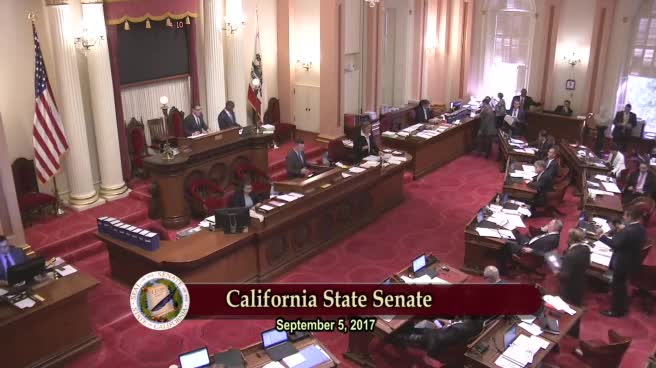 5MIN
Senate Floor
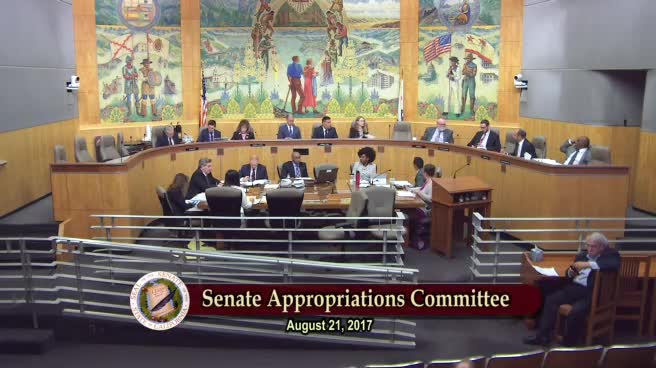 3MIN
Senate Standing Committee on Appropriations
 4MIN
Senate Standing Committee on Judiciary
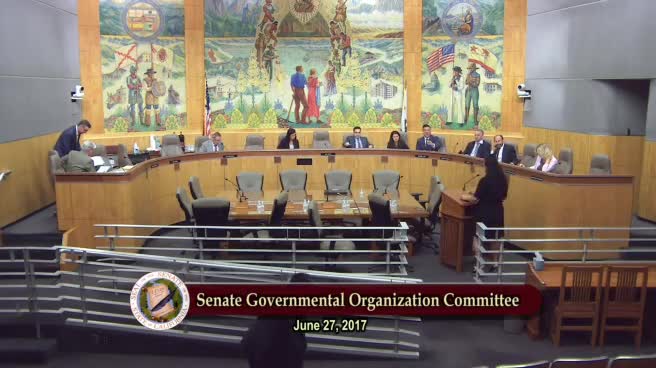 6MIN
Senate Standing Committee on Governmental Organization
 3MIN
Assembly Floor
 1H
Assembly Standing Committee on Appropriations
 6MIN
Assembly Standing Committee on Judiciary
Bill Author

Bill Co-Author(s):