AB 1393: Reckless driving: speed contests: vehicle impoundment.
- Session Year: 2017-2018
- House: Assembly
- Latest Version Date: 2017-09-19
Under existing law, a person who drives a vehicle upon a highway or in an offstreet parking facility in willful or wanton disregard for the safety of persons or property is guilty of reckless driving, which is punishable, upon conviction, by imprisonment in the county jail, payment of a fine, or both the imprisonment and fine, as specified.
Existing law makes it a crime to engage in a motor vehicle speed contest on a highway. Existing law provides that if a person is convicted of engaging in a motor vehicle speed contest on a highway and the vehicle used in the violation is registered to that person, the vehicle may be impounded at the registered owners expense for not less than one day nor more than 30 days.
Under existing law, when a peace officer determines that a person was engaged in reckless driving or a speed contest, the peace officer may immediately arrest and take the person into custody, cause the removal and seizure of the vehicle used in the offense, as prescribed. Existing law requires the vehicle to be impounded for not more than 30 days.
This bill would, with respect to a conviction for reckless driving, or a conviction for engaging in a speed contest, when the person convicted is the registered owner of the vehicle, provide that if it is the first offense the vehicle may be impounded for 30 days, and if it is the 2nd or subsequent offense the vehicle shall be impounded for 30 days, at the registered owners expense. The bill would allow the impoundment period to be reduced by the number of days, if any, that the vehicle was previously impounded, and would authorize the court to decline to impound the vehicle if it would cause undue hardship for the defendants family, as specified. The bill would authorize the release of the vehicle to the legal owner before the 30th day of impoundment, if specified conditions are met.
This bill would, for speed contests, authorize an officer to issue a notice to correct for violation of a mechanical or safety requirement and require correction to be made within 30 days after the date upon which the vehicle was released from impound. The bill would require the violation to be dismissed upon correction, as specified.
By imposing new requirements on local agencies responsible for vehicle impoundment, the bill would create a state-mandated local program.
The California Constitution requires the state to reimburse local agencies and school districts for certain costs mandated by the state. Statutory provisions establish procedures for making that reimbursement.
This bill would provide that, if the Commission on State Mandates determines that the bill contains costs mandated by the state, reimbursement for those costs shall be made pursuant to the statutory provisions noted above.
Under existing law, a person who drives a vehicle upon a highway or in an offstreet parking facility in willful or wanton disregard for the safety of persons or property is guilty of reckless driving, which is punishable, upon conviction, by imprisonment in the county jail, payment of a fine, or both the imprisonment and fine, as specified.
Existing law makes it a crime to engage in a motor vehicle speed contest on a highway. Existing law provides that if a person is convicted of engaging in a motor vehicle speed contest on a highway and the vehicle used in the violation is registered to that person, the vehicle may be impounded at the registered owners expense for not less than one day nor more than 30 days.
Under existing law, when a peace officer determines that a person was engaged in reckless driving or a speed contest, the peace officer may immediately arrest and take the person into custody, cause the removal and seizure of the vehicle used in the offense, as prescribed. Existing law requires the vehicle to be impounded for not more than 30 days.
This bill would, with respect to a conviction for reckless driving, or a conviction for engaging in a speed contest, when the person convicted is the registered owner of the vehicle, provide that if it is the first offense the vehicle may be impounded for 30 days, and if it is the 2nd or subsequent offense the vehicle shall be impounded for 30 days, at the registered owners expense. The bill would allow the impoundment period to be reduced by the number of days, if any, that the vehicle was previously impounded, and would authorize the court to decline to impound the vehicle if it would cause undue hardship for the defendants family, as specified. The bill would authorize the release of the vehicle to the legal owner before the 30th day of impoundment, if specified conditions are met.
This bill would revise the impoundment procedures would, for speed contests, to include the above provisions relating to reducing the period of impoundment by the number of previously impounded days, declining to impound the vehicle based on undue hardship, and early release of the vehicle to the legal owner. The bill would authorize an officer to issue a notice to correct for violation of a mechanical or safety requirement and require correction to be made within 30 days after the date upon which the vehicle was released from impound. The bill would require the violation to be dismissed upon correction, as specified.
By imposing new requirements on local agencies responsible for vehicle impoundment, the bill would create a state-mandated local program.
The California Constitution requires the state to reimburse local agencies and school districts for certain costs mandated by the state. Statutory provisions establish procedures for making that reimbursement.
This bill would provide that, if the Commission on State Mandates determines that the bill contains costs mandated by the state, reimbursement for those costs shall be made pursuant to the statutory provisions noted above.
Under existing law, a person who drives a vehicle upon a highway or in an offstreet parking facility in willful or wanton disregard for the safety of persons or property is guilty of reckless driving, which is punishable, upon conviction, by imprisonment in the county jail, payment of a fine, or both the imprisonment and fine, as specified.
Existing law makes it a crime to engage in a motor vehicle speed contest on a highway. Existing law provides that if a person is convicted of engaging in a motor vehicle speed contest on a highway and the vehicle used in the violation is registered to that person, the vehicle may be impounded at the registered owners expense for not less than one day nor more than 30 days.
Under existing law, when a peace officer determines that a person was engaged in reckless driving or a speed contest, the peace officer may immediately arrest and take the person into custody, cause the removal and seizure of the vehicle used in the offense, as prescribed. Existing law requires the vehicle to be impounded for not more than 30 days.
This bill would specifically require, would, with respect to a conviction for reckless driving, when the person convicted is the registered owner of the vehicle, provide that if it is the first offense the vehicle may be impounded for 30 days, and if it is the 2nd or subsequent offense the vehicle shall be impounded for 30 days, at the registered owners expense. The bill would allow the impoundment period to be reduced by the number of days, if any, that the vehicle was previously impounded, and would authorize the court to decline to impound the vehicle if it would cause undue hardship for the defendants family, as specified. The bill would authorize the release of the vehicle to the legal owner before the 30th day of impoundment, if specified conditions are met.
This bill would revise the impoundment procedures for speed contests, to include the above provisions relating to reducing the period of impoundment by the number of previously impounded days, declining to impound the vehicle based on undue hardship, and early release of the vehicle to the legal owner. The bill would authorize an officer to issue a notice to correct for violation of a mechanical or safety requirement and require correction to be made within 30 days after the date upon which the vehicle was released from impound. The bill would require the violation to be dismissed upon correction, as specified.
By imposing new requirements on local agencies responsible for vehicle impoundment, the bill would create a state-mandated local program.
The California Constitution requires the state to reimburse local agencies and school districts for certain costs mandated by the state. Statutory provisions establish procedures for making that reimbursement.
This bill would provide that, if the Commission on State Mandates determines that the bill contains costs mandated by the state, reimbursement for those costs shall be made pursuant to the statutory provisions noted above.
Under existing law, a person who drives a vehicle upon a highway or in an offstreet parking facility in willful or wanton disregard for the safety of persons or property is guilty of reckless driving, which is punishable, upon conviction, by imprisonment in the county jail, payment of a fine, or both the imprisonment and fine, as specified.
Existing law makes it a crime to engage in a motor vehicle speed contest on a highway. Existing law provides that if a person is convicted of engaging in a motor vehicle speed contest on a highway and the vehicle used in the violation is registered to that person, the vehicle may be impounded at the registered owners expense for not less than one day nor more than 30 days.
Under existing law, when a peace officer determines that a person was engaged in reckless driving or a speed contest, the peace officer may immediately arrest and take the person into custody, cause the removal and seizure of the vehicle used in the offense, as prescribed. Existing law requires the vehicle to be impounded for not more than 30 days.
This bill would specifically require, with respect to a conviction for reckless driving, when the person convicted is the registered owner of the vehicle, that the vehicle be impounded for 30 days, at the registered owners expense. The bill would allow the impoundment period to be reduced by the number of days, if any, that the vehicle was previously impounded, and would authorize the court to decline to impound the vehicle if it would cause undue hardship for the defendants family, as specified. The bill would authorize the release of the vehicle to the legal owner before the 30th day of impoundment, if specified conditions are met.
This bill would revise the impoundment procedures for speed contests, to include the above provisions relating to reducing the period of impoundment by the number of previously impounded days, declining to impound the vehicle based on undue hardship, and early release of the vehicle to the legal owner. The bill would authorize an officer to issue a notice to correct for violation of a mechanical or safety requirement and require correction to be made within 30 days after the date upon which the vehicle was released from impound. The bill would require the violation to be dismissed upon correction, as specified.
By imposing new requirements on local agencies responsible for vehicle impoundment, the bill would create a state-mandated local program.
The California Constitution requires the state to reimburse local agencies and school districts for certain costs mandated by the state. Statutory provisions establish procedures for making that reimbursement.
This bill would provide that, if the Commission on State Mandates determines that the bill contains costs mandated by the state, reimbursement for those costs shall be made pursuant to the statutory provisions noted above.
(a)A person who drives a vehicle upon a highway in willful or wanton disregard for the safety of persons or property is guilty of reckless driving.
(b)A person who drives a vehicle in an offstreet parking facility, as defined in subdivision (c) of Section 12500, in willful or wanton disregard for the safety of persons or property is guilty of reckless driving.
(c)Except as otherwise provided in Section 40008, a person convicted of the offense of reckless driving shall be punished by imprisonment in a county jail for not less than five days nor more than 90 days or by a fine of not less than one hundred forty-five dollars ($145) nor more than one thousand dollars ($1,000), or by both that fine and imprisonment, except as provided in Section 23104 or 23105.
(d)(1)If a person is convicted of a violation of subdivision (a) or (b) and the vehicle used in the violation is registered to that person, the vehicle may be impounded by the arresting or citing law enforcement agency for 30 days if this is the first offense, and shall be impounded by the arresting or citing law enforcement agency for 30 days if this is the second or subsequent offense, at the registered owners expense.
(A)The 30-day period shall be reduced by the number of days, if any, that the vehicle was impounded pursuant of Section 23109.2.
(B)If the court finds that the vehicle to be impounded is the only means of transportation for other members of the defendants family and impounding the vehicle will result in undue hardship for the family, the court may decline to order the vehicle impounded.
(2)A vehicle seized and impounded pursuant to paragraph (1), shall be released to the legal owner of the vehicle, or the legal owners agent, upon demand on or before the 30th day of impoundment if all of the following conditions are met:
(A)The legal owner is a motor vehicle dealer, bank, credit union, acceptance corporation, or other licensed financial institution legally operating in this state, or is another person, not the registered owner, that holds a security interest in the vehicle.
(B)The legal owner or the legal owners agent pays all the towing and storage fees related to the impoundment of the vehicle. Lien sale processing fees shall not be charged to a legal owner that redeems the vehicle on or before the 15th day of impoundment.
(C)The legal owner or the legal owners agent presents foreclosure documents or an affidavit of repossession of the vehicle.
SEC. 2.Section 23109 of the Vehicle Code is amended to read:23109.(a)A person shall not engage in a motor vehicle speed contest on a highway. As used in this section, a motor vehicle speed contest includes a motor vehicle race against another vehicle, a clock, or other timing device. For purposes of this section, an event in which the time to cover a prescribed route of more than 20 miles is measured, but where the vehicle does not exceed the speed limits, is not a speed contest.
(b)A person shall not aid or abet in a motor vehicle speed contest on a highway.
(c)A person shall not engage in a motor vehicle exhibition of speed on a highway, and a person shall not aid or abet in a motor vehicle exhibition of speed on a highway.
(d)A person shall not, for the purpose of facilitating or aiding or as an incident to a motor vehicle speed contest or exhibition upon a highway, in any manner obstruct or place a barricade or obstruction or assist or participate in placing a barricade or obstruction upon a highway.
(e)(1)A person convicted of a violation of subdivision (a) shall be punished by imprisonment in a county jail for not less than 24 hours nor more than 90 days or by a fine of not less than three hundred fifty-five dollars ($355) nor more than one thousand dollars ($1,000), or by both that fine and imprisonment. That person shall also be required to perform 40 hours of community service. The court may order the privilege to operate a motor vehicle suspended for 90 days to six months, as provided in paragraph (8) of subdivision (a) of Section 13352. The persons privilege to operate a motor vehicle may be restricted for 90 days to six months to necessary travel to and from that persons place of employment and, if driving a motor vehicle is necessary to perform the duties of the persons employment, restricted to driving in that persons scope of employment. This subdivision does not interfere with the courts power to grant probation in a suitable case.
(2)If a person is convicted of a violation of subdivision (a) and that violation proximately causes bodily injury to a person other than the driver, the person convicted shall be punished by imprisonment in a county jail for not less than 30 days nor more than six months or by a fine of not less than five hundred dollars ($500) nor more than one thousand dollars ($1,000), or by both that fine and imprisonment.
(f)(1)If a person is convicted of a violation of subdivision (a) for an offense that occurred within five years of the date of a prior offense that resulted in a conviction of a violation of subdivision (a), that person shall be punished by imprisonment in a county jail for not less than four days nor more than six months, and by a fine of not less than five hundred dollars ($500) nor more than one thousand dollars ($1,000).
(2)If the perpetration of the most recent offense within the five-year period described in paragraph (1) proximately causes bodily injury to a person other than the driver, a person convicted of that second violation shall be imprisoned in a county jail for not less than 30 days nor more than six months and by a fine of not less than five hundred dollars ($500) nor more than one thousand dollars ($1,000).
(3)If the perpetration of the most recent offense within the five-year period described in paragraph (1) proximately causes serious bodily injury, as defined in paragraph (4) of subdivision (f) of Section 243 of the Penal Code, to a person other than the driver, a person convicted of that second violation shall be imprisoned in the state prison, or in a county jail for not less than 30 days nor more than one year, and by a fine of not less than five hundred dollars ($500) nor more than one thousand dollars ($1,000).
(4)The court shall order the privilege to operate a motor vehicle of a person convicted under paragraph (1), (2), or (3) suspended for a period of six months, as provided in paragraph (9) of subdivision (a) of Section 13352. In lieu of the suspension, the persons privilege to operate a motor vehicle may be restricted for six months to necessary travel to and from that persons place of employment and, if driving a motor vehicle is necessary to perform the duties of the persons employment, restricted to driving in that persons scope of employment.
(5)This subdivision does not interfere with the courts power to grant probation in a suitable case.
(g)If the court grants probation to a person subject to punishment under subdivision (f), in addition to subdivision (f) and any other terms and conditions imposed by the court, which may include a fine, the court shall impose as a condition of probation that the person be confined in a county jail for not less than 48 hours nor more than six months. The court shall order the persons privilege to operate a motor vehicle to be suspended for a period of six months, as provided in paragraph (9) of subdivision (a) of Section 13352 or restricted pursuant to subdivision (f).
(h)(1)If a person is convicted of a violation of subdivision (a) and the vehicle used in the violation is registered to that person, the vehicle may be impounded by the arresting or citing law enforcement agency for 30 days if this is the first offense, and shall be impounded by the arresting or citing law enforcement agency for 30 days if this is the second or subsequent offense, at the registered owners expense.
(A)The 30-day period shall be reduced by the number of days, if any, that the vehicle was impounded pursuant of Section 23109.2.
(B)If the court finds that the vehicle to be impounded is the only means of transportation for other members of the defendants family and impounding the vehicle will result in undue hardship for the family, the court may decline to order the vehicle impounded.
(2)If the impounded vehicle was found to be in violation of a mechanical requirement of this code, or the vehicle is inspected pursuant to Section 2806 and found to violate that section, an officer may issue a notice to correct pursuant to Section 40303.5, and correction of the violation as set forth in Sections 40610 and 40611 shall be made within 30 days after the date upon which the vehicle was released from impound. Upon correction, the violation issued pursuant to Section 40303.5 shall be dismissed pursuant to Section 40522.
(3)A vehicle seized and impounded pursuant to paragraph (1), shall be released to the legal owner of the vehicle, or the legal owners agent, upon demand on or before the 30th day of impoundment if all of the following conditions are met:
(A)The legal owner is a motor vehicle dealer, bank, credit union, acceptance corporation, or other licensed financial institution legally operating in this state, or is another person, not the registered owner, that holds a security interest in the vehicle.
(B)The legal owner or the legal owners agent pays all the towing and storage fees related to the impoundment of the vehicle. Lien sale processing fees shall not be charged to a legal owner that redeems the vehicle on or before the 15th day of impoundment.
(C)The legal owner or the legal owners agent presents foreclosure documents or an affidavit of repossession of the vehicle.
(i)A person who violates subdivision (b), (c), or (d) shall upon conviction of that violation be punished by imprisonment in a county jail for not more than 90 days, by a fine of not more than five hundred dollars ($500), or by both that fine and imprisonment.
(j)If a persons privilege to operate a motor vehicle is restricted by a court pursuant to this section, the court shall clearly mark the restriction and the dates of the restriction on that persons drivers license and promptly notify the Department of Motor Vehicles of the terms of the restriction in a manner prescribed by the department. The Department of Motor Vehicles shall place that restriction in the persons records in the Department of Motor Vehicles and enter the restriction on a license subsequently issued by the Department of Motor Vehicles to that person during the period of the restriction.
(k)The court may order that a person convicted under this section, who is to be punished by imprisonment in a county jail, be imprisoned on days other than days of regular employment of the person, as determined by the court.
(l)This section shall be known and may be cited as the Louis Friend Memorial Act.
SEC. 3.Section 23109.2 of the Vehicle Code is amended to read:23109.2.(a)(1)Whenever a peace officer determines that a person was engaged in any activity set forth in paragraph (2), the peace officer may immediately arrest and take into custody that person and may cause the removal and seizure of the motor vehicle used in that offense in accordance with Chapter 10 (commencing with Section 22650). A motor vehicle so seized may be impounded for not more than 30 days.
(2)(A)A motor vehicle speed contest, as described in subdivision (a) of Section 23109.
(B)Reckless driving on a highway, as described in subdivision (a) of Section 23103.
(C)Reckless driving in an offstreet parking facility, as described in subdivision (b) of Section 23103.
(D)Exhibition of speed on a highway, as described in subdivision (c) of Section 23109.
(b)The registered and legal owner of a vehicle removed and seized under subdivision (a) or their agents shall be provided the opportunity for a storage hearing to determine the validity of the storage in accordance with Section 22852.
(c)(1)Notwithstanding Chapter 10 (commencing with Section 22650) or any other law, an impounding agency shall release a motor vehicle to the registered owner or his or her agent prior to the conclusion of the impoundment period described in subdivision (a) under any of the following circumstances:
(A)If the vehicle is a stolen vehicle.
(B)If the person alleged to have been engaged in the motor vehicle speed contest, as described in subdivision (a), was not authorized by the registered owner of the motor vehicle to operate the motor vehicle at the time of the commission of the offense.
(C)If the registered owner of the vehicle was neither the driver nor a passenger of the vehicle at the time of the alleged violation pursuant to subdivision (a), or was unaware that the driver was using the vehicle to engage in any activity described in subdivision (a).
(D)If the legal owner or registered owner of the vehicle is a rental car agency.
(E)If, prior to the conclusion of the impoundment period, a citation or notice is dismissed under Section 40500, criminal charges are not filed by the district attorney because of a lack of evidence, or the charges are otherwise dismissed by the court.
(2)A vehicle shall be released pursuant to this subdivision only if the registered owner or his or her agent presents a currently valid drivers license to operate the vehicle and proof of current vehicle registration, or if ordered by a court.
(3)If, pursuant to subparagraph (E) of paragraph (1) a motor vehicle is released prior to the conclusion of the impoundment period, neither the person charged with a violation of subdivision (a) of Section 23109 nor the registered owner of the motor vehicle is responsible for towing and storage charges nor shall the motor vehicle be sold to satisfy those charges.
(d)A vehicle seized and removed under subdivision (a) shall be released to the legal owner of the vehicle, or the legal owners agent, on or before the 30th day of impoundment if all of the following conditions are met:
(1)The legal owner is a motor vehicle dealer, bank, credit union, acceptance corporation, or other licensed financial institution legally operating in this state, or is another person, not the registered owner, holding a security interest in the vehicle.
(2)The legal owner or the legal owners agent pays all towing and storage fees related to the impoundment of the vehicle. Lien sale processing fees shall not be charged to a legal owner who redeems the vehicle on or before the 15th day of impoundment.
(3)The legal owner or the legal owners agent presents foreclosure documents or an affidavit of repossession for the vehicle.
(e)(1)The registered owner or his or her agent is responsible for all towing and storage charges related to the impoundment, and any administrative charges authorized under Section 22850.5.
(2)Notwithstanding paragraph (1), if the person convicted of engaging in the activities set forth in paragraph (2) of subdivision (a) was not authorized by the registered owner of the motor vehicle to operate the motor vehicle at the time of the commission of the offense, the court shall order the convicted person to reimburse the registered owner for any towing and storage charges related to the impoundment, and any administrative charges authorized under Section 22850.5 incurred by the registered owner to obtain possession of the vehicle, unless the court finds that the person convicted does not have the ability to pay all or part of those charges.
(3)If the vehicle is a rental vehicle, the rental car agency may require the person to whom the vehicle was rented to pay all towing and storage charges related to the impoundment and any administrative charges authorized under Section 22850.5 incurred by the rental car agency in connection with obtaining possession of the vehicle.
(4)The owner is not liable for any towing and storage charges related to the impoundment if acquittal or dismissal occurs.
(5)The vehicle may not be sold prior to the defendants conviction.
(6)The impounding agency is responsible for the actual costs incurred by the towing agency as a result of the impoundment should the registered owner be absolved of liability for those charges pursuant to paragraph (3) of subdivision (c). Notwithstanding this provision, nothing shall prohibit an impounding agency from making prior payment arrangements to satisfy this requirement.
(f)A period when a vehicle is subjected to storage under this section shall be included as part of the period of impoundment ordered by the court under subdivision (d) of Section 23103 or subdivision (h) of Section 23109.
SEC. 4.If the Commission on State Mandates determines that this act contains costs mandated by the state, reimbursement to local agencies and school districts for those costs shall be made pursuant to Part 7 (commencing with Section 17500) of Division 4 of Title 2 of the Government Code.
(a)A person who drives a vehicle upon a highway in willful or wanton disregard for the safety of persons or property is guilty of reckless driving.
(b)A person who drives a vehicle in an offstreet parking facility, as defined in subdivision (c) of Section 12500, in willful or wanton disregard for the safety of persons or property is guilty of reckless driving.
(c)Except as otherwise provided in Section 40008, persons a person convicted of the offense of reckless driving shall be punished by imprisonment in a county jail for not less than five days nor more than 90 days or by a fine of not less than one hundred forty-five dollars ($145) nor more than one thousand dollars ($1,000), or by both that fine and imprisonment, except as provided in Section 23104 or 23105.
(d)(1)If a person is convicted of a violation of subdivision (a) or (b) and the vehicle used in the violation is registered to that person, the vehicle may be impounded by the arresting or citing law enforcement agency for 30 days if this is the first offense, and shall be impounded by the arresting or citing law enforcement agency for 30 days if this is the second or subsequent offense, at the registered owners expense.
(A)The 30-day period shall be reduced by the number of days, if any, that the vehicle was impounded pursuant of Section 23109.2.
(B)If the court finds that the vehicle to be impounded is the only means of transportation for other members of the defendants family and impounding the vehicle will result in undue hardship for the family, the court may decline to order the vehicle impounded.
(2)A vehicle seized and impounded pursuant to paragraph (1), shall be released to the legal owner of the vehicle, or the legal owners agent, upon demand on or before the 30th day of impoundment if all of the following conditions are met:
(A)The legal owner is a motor vehicle dealer, bank, credit union, acceptance corporation, or other licensed financial institution legally operating in this state, or is another person, not the registered owner, that holds a security interest in the vehicle.
(B)The legal owner or the legal owners agent pays all the towing and storage fees related to the impoundment of the vehicle. Lien sale processing fees shall not be charged to a legal owner that redeems the vehicle on or before the 15th day of impoundment.
(C)The legal owner or the legal owners agent presents foreclosure documents or an affidavit of repossession of the vehicle.
SEC. 2.Section 23109 of the Vehicle Code is amended to read:23109.(a)A person shall not engage in a motor vehicle speed contest on a highway. As used in this section, a motor vehicle speed contest includes a motor vehicle race against another vehicle, a clock, or other timing device. For purposes of this section, an event in which the time to cover a prescribed route of more than 20 miles is measured, but where the vehicle does not exceed the speed limits, is not a speed contest.
(b)A person shall not aid or abet in a motor vehicle speed contest on a highway.
(c)A person shall not engage in a motor vehicle exhibition of speed on a highway, and a person shall not aid or abet in a motor vehicle exhibition of speed on a highway.
(d)A person shall not, for the purpose of facilitating or aiding or as an incident to a motor vehicle speed contest or exhibition upon a highway, in any manner obstruct or place a barricade or obstruction or assist or participate in placing a barricade or obstruction upon a highway.
(e)(1)A person convicted of a violation of subdivision (a) shall be punished by imprisonment in a county jail for not less than 24 hours nor more than 90 days or by a fine of not less than three hundred fifty-five dollars ($355) nor more than one thousand dollars ($1,000), or by both that fine and imprisonment. That person shall also be required to perform 40 hours of community service. The court may order the privilege to operate a motor vehicle suspended for 90 days to six months, as provided in paragraph (8) of subdivision (a) of Section 13352. The persons privilege to operate a motor vehicle may be restricted for 90 days to six months to necessary travel to and from that persons place of employment and, if driving a motor vehicle is necessary to perform the duties of the persons employment, restricted to driving in that persons scope of employment. This subdivision does not interfere with the courts power to grant probation in a suitable case.
(2)If a person is convicted of a violation of subdivision (a) and that violation proximately causes bodily injury to a person other than the driver, the person convicted shall be punished by imprisonment in a county jail for not less than 30 days nor more than six months or by a fine of not less than five hundred dollars ($500) nor more than one thousand dollars ($1,000), or by both that fine and imprisonment.
(f)(1)If a person is convicted of a violation of subdivision (a) for an offense that occurred within five years of the date of a prior offense that resulted in a conviction of a violation of subdivision (a), that person shall be punished by imprisonment in a county jail for not less than four days nor more than six months, and by a fine of not less than five hundred dollars ($500) nor more than one thousand dollars ($1,000).
(2)If the perpetration of the most recent offense within the five-year period described in paragraph (1) proximately causes bodily injury to a person other than the driver, a person convicted of that second violation shall be imprisoned in a county jail for not less than 30 days nor more than six months and by a fine of not less than five hundred dollars ($500) nor more than one thousand dollars ($1,000).
(3)If the perpetration of the most recent offense within the five-year period described in paragraph (1) proximately causes serious bodily injury, as defined in paragraph (4) of subdivision (f) of Section 243 of the Penal Code, to a person other than the driver, a person convicted of that second violation shall be imprisoned in the state prison, or in a county jail for not less than 30 days nor more than one year, and by a fine of not less than five hundred dollars ($500) nor more than one thousand dollars ($1,000).
(4)The court shall order the privilege to operate a motor vehicle of a person convicted under paragraph (1), (2), or (3) suspended for a period of six months, as provided in paragraph (9) of subdivision (a) of Section 13352. In lieu of the suspension, the persons privilege to operate a motor vehicle may be restricted for six months to necessary travel to and from that persons place of employment and, if driving a motor vehicle is necessary to perform the duties of the persons employment, restricted to driving in that persons scope of employment.
(5)This subdivision does not interfere with the courts power to grant probation in a suitable case.
(g)If the court grants probation to a person subject to punishment under subdivision (f), in addition to subdivision (f) and any other terms and conditions imposed by the court, which may include a fine, the court shall impose as a condition of probation that the person be confined in a county jail for not less than 48 hours nor more than six months. The court shall order the persons privilege to operate a motor vehicle to be suspended for a period of six months, as provided in paragraph (9) of subdivision (a) of Section 13352 or restricted pursuant to subdivision (f).
(h)(1)If a person is convicted of a violation of subdivision (a) and the vehicle used in the violation is registered to that person, the vehicle may be impounded by the arresting or citing law enforcement agency for 30 days if this is the first offense, and shall be impounded by the arresting or citing law enforcement agency for 30 days if this is the second or subsequent offense, at the registered owners expense.
(A)The 30-day period shall be reduced by the number of days, if any, that the vehicle was impounded pursuant of Section 23109.2.
(B)If the court finds that the vehicle to be impounded is the only means of transportation for other members of the defendants family and impounding the vehicle will result in undue hardship for the family, the court may decline to order the vehicle impounded.
(2)If the impounded vehicle was found to be in violation of a mechanical requirement of this code, or the vehicle is inspected pursuant to Section 2806 and found to violate that section, an officer may issue a notice to correct pursuant to Section 40303.5, and correction of the violation as set forth in Sections 40610 and 40611 shall be made within 30 days after the date upon which the vehicle was released from impound. Upon correction, the violation issued pursuant to Section 40303.5 shall be dismissed pursuant to Section 40522.
(3)A vehicle seized and impounded pursuant to paragraph (1), shall be released to the legal owner of the vehicle, or the legal owners agent, upon demand on or before the 30th day of impoundment if all of the following conditions are met:
(A)The legal owner is a motor vehicle dealer, bank, credit union, acceptance corporation, or other licensed financial institution legally operating in this state, or is another person, not the registered owner, that holds a security interest in the vehicle.
(B)The legal owner or the legal owners agent pays all the towing and storage fees related to the impoundment of the vehicle. Lien sale processing fees shall not be charged to a legal owner that redeems the vehicle on or before the 15th day of impoundment.
(C)The legal owner or the legal owners agent presents foreclosure documents or an affidavit of repossession of the vehicle.
(i)A person who violates subdivision (b), (c), or (d) shall upon conviction of that violation be punished by imprisonment in a county jail for not more than 90 days, by a fine of not more than five hundred dollars ($500), or by both that fine and imprisonment.
(j)If a persons privilege to operate a motor vehicle is restricted by a court pursuant to this section, the court shall clearly mark the restriction and the dates of the restriction on that persons drivers license and promptly notify the Department of Motor Vehicles of the terms of the restriction in a manner prescribed by the department. The Department of Motor Vehicles shall place that restriction in the persons records in the Department of Motor Vehicles and enter the restriction on a license subsequently issued by the Department of Motor Vehicles to that person during the period of the restriction.
(k)The court may order that a person convicted under this section, who is to be punished by imprisonment in a county jail, be imprisoned on days other than days of regular employment of the person, as determined by the court.
(l)This section shall be known and may be cited as the Louis Friend Memorial Act.
SEC. 3.Section 23109.2 of the Vehicle Code is amended to read:23109.2.(a)(1)Whenever a peace officer determines that a person was engaged in any activity set forth in paragraph (2), the peace officer may immediately arrest and take into custody that person and may cause the removal and seizure of the motor vehicle used in that offense in accordance with Chapter 10 (commencing with Section 22650). A motor vehicle so seized may be impounded for not more than 30 days.
(2)(A)A motor vehicle speed contest, as described in subdivision (a) of Section 23109.
(B)Reckless driving on a highway, as described in subdivision (a) of Section 23103.
(C)Reckless driving in an offstreet parking facility, as described in subdivision (b) of Section 23103.
(D)Exhibition of speed on a highway, as described in subdivision (c) of Section 23109.
(b)The registered and legal owner of a vehicle removed and seized under subdivision (a) or their agents shall be provided the opportunity for a storage hearing to determine the validity of the storage in accordance with Section 22852.
(c)(1)Notwithstanding Chapter 10 (commencing with Section 22650) or any other law, an impounding agency shall release a motor vehicle to the registered owner or his or her agent prior to the conclusion of the impoundment period described in subdivision (a) under any of the following circumstances:
(A)If the vehicle is a stolen vehicle.
(B)If the person alleged to have been engaged in the motor vehicle speed contest, as described in subdivision (a), was not authorized by the registered owner of the motor vehicle to operate the motor vehicle at the time of the commission of the offense.
(C)If the registered owner of the vehicle was neither the driver nor a passenger of the vehicle at the time of the alleged violation pursuant to subdivision (a), or was unaware that the driver was using the vehicle to engage in any activity described in subdivision (a).
(D)If the legal owner or registered owner of the vehicle is a rental car agency.
(E)If, prior to the conclusion of the impoundment period, a citation or notice is dismissed under Section 40500, criminal charges are not filed by the district attorney because of a lack of evidence, or the charges are otherwise dismissed by the court.
(2)A vehicle shall be released pursuant to this subdivision only if the registered owner or his or her agent presents a currently valid drivers license to operate the vehicle and proof of current vehicle registration, or if ordered by a court.
(3)If, pursuant to subparagraph (E) of paragraph (1) a motor vehicle is released prior to the conclusion of the impoundment period, neither the person charged with a violation of subdivision (a) of Section 23109 nor the registered owner of the motor vehicle is responsible for towing and storage charges nor shall the motor vehicle be sold to satisfy those charges.
(d)A vehicle seized and removed under subdivision (a) shall be released to the legal owner of the vehicle, or the legal owners agent, on or before the 30th day of impoundment if all of the following conditions are met:
(1)The legal owner is a motor vehicle dealer, bank, credit union, acceptance corporation, or other licensed financial institution legally operating in this state, or is another person, not the registered owner, holding a security interest in the vehicle.
(2)The legal owner or the legal owners agent pays all towing and storage fees related to the impoundment of the vehicle. Lien sale processing fees shall not be charged to a legal owner who redeems the vehicle on or before the 15th day of impoundment.
(3)The legal owner or the legal owners agent presents foreclosure documents or an affidavit of repossession for the vehicle.
(e)(1)The registered owner or his or her agent is responsible for all towing and storage charges related to the impoundment, and any administrative charges authorized under Section 22850.5.
(2)Notwithstanding paragraph (1), if the person convicted of engaging in the activities set forth in paragraph (2) of subdivision (a) was not authorized by the registered owner of the motor vehicle to operate the motor vehicle at the time of the commission of the offense, the court shall order the convicted person to reimburse the registered owner for any towing and storage charges related to the impoundment, and any administrative charges authorized under Section 22850.5 incurred by the registered owner to obtain possession of the vehicle, unless the court finds that the person convicted does not have the ability to pay all or part of those charges.
(3)If the vehicle is a rental vehicle, the rental car agency may require the person to whom the vehicle was rented to pay all towing and storage charges related to the impoundment and any administrative charges authorized under Section 22850.5 incurred by the rental car agency in connection with obtaining possession of the vehicle.
(4)The owner is not liable for any towing and storage charges related to the impoundment if acquittal or dismissal occurs.
(5)The vehicle may not be sold prior to the defendants conviction.
(6)The impounding agency is responsible for the actual costs incurred by the towing agency as a result of the impoundment should the registered owner be absolved of liability for those charges pursuant to paragraph (3) of subdivision (c). Notwithstanding this provision, nothing shall prohibit an impounding agency from making prior payment arrangements to satisfy this requirement.
(f)A period when a vehicle is subjected to storage under this section shall be included as part of the period of impoundment ordered by the court under subdivision (d) of Section 23103 or subdivision (h) of Section 23109.
SEC. 4.If the Commission on State Mandates determines that this act contains costs mandated by the state, reimbursement to local agencies and school districts for those costs shall be made pursuant to Part 7 (commencing with Section 17500) of Division 4 of Title 2 of the Government Code.
(a)A person who drives a vehicle upon a highway in willful or wanton disregard for the safety of persons or property is guilty of reckless driving.
(b)A person who drives a vehicle in an offstreet parking facility, as defined in subdivision (c) of Section 12500, in willful or wanton disregard for the safety of persons or property is guilty of reckless driving.
(c)Except as otherwise provided in Section 40008, persons convicted of the offense of reckless driving shall be punished by imprisonment in a county jail for not less than five days nor more than 90 days or by a fine of not less than one hundred forty-five dollars ($145) nor more than one thousand dollars ($1,000), or by both that fine and imprisonment, except as provided in Section 23104 or 23105.
(d)(1)If a person is convicted of a violation of subdivision (a) or (b) and the vehicle used in the violation is registered to that person, the vehicle may be impounded by the arresting or citing law enforcement agency for 30 days if this is the first offense, and shall be impounded by the arresting or citing law enforcement agency for 30 days if this is the second or subsequent offense, at the registered owners expense.
(A)The 30-day period shall be reduced by the number of days, if any, that the vehicle was impounded pursuant of Section 23109.2.
(B)If the court finds that the vehicle to be impounded is the only means of transportation for other members of the defendants family and impounding the vehicle will result in undue hardship for the family, the court may decline to order the vehicle impounded.
(2)A vehicle seized and impounded pursuant to paragraph (1), shall be released to the legal owner of the vehicle, or the legal owners agent, upon demand on or before the 30th day of impoundment if all of the following conditions are met:
(A)The legal owner is a motor vehicle dealer, bank, credit union, acceptance corporation, or other licensed financial institution legally operating in this state, or is another person, not the registered owner, that holds a security interest in the vehicle.
(B)The legal owner or the legal owners agent pays all the towing and storage fees related to the impoundment of the vehicle. Lien sale processing fees shall not be charged to a legal owner that redeems the vehicle on or before the 15th day of impoundment.
(C)The legal owner or the legal owners agent presents foreclosure documents or an affidavit of repossession of the vehicle.
SEC. 2.Section 23109 of the Vehicle Code is amended to read:23109.(a)A person shall not engage in a motor vehicle speed contest on a highway. As used in this section, a motor vehicle speed contest includes a motor vehicle race against another vehicle, a clock, or other timing device. For purposes of this section, an event in which the time to cover a prescribed route of more than 20 miles is measured, but where the vehicle does not exceed the speed limits, is not a speed contest.
(b)A person shall not aid or abet in a motor vehicle speed contest on a highway.
(c)A person shall not engage in a motor vehicle exhibition of speed on a highway, and a person shall not aid or abet in a motor vehicle exhibition of speed on a highway.
(d)A person shall not, for the purpose of facilitating or aiding or as an incident to a motor vehicle speed contest or exhibition upon a highway, in any manner obstruct or place a barricade or obstruction or assist or participate in placing a barricade or obstruction upon a highway.
(e)(1)A person convicted of a violation of subdivision (a) shall be punished by imprisonment in a county jail for not less than 24 hours nor more than 90 days or by a fine of not less than three hundred fifty-five dollars ($355) nor more than one thousand dollars ($1,000), or by both that fine and imprisonment. That person shall also be required to perform 40 hours of community service. The court may order the privilege to operate a motor vehicle suspended for 90 days to six months, as provided in paragraph (8) of subdivision (a) of Section 13352. The persons privilege to operate a motor vehicle may be restricted for 90 days to six months to necessary travel to and from that persons place of employment and, if driving a motor vehicle is necessary to perform the duties of the persons employment, restricted to driving in that persons scope of employment. This subdivision does not interfere with the courts power to grant probation in a suitable case.
(2)If a person is convicted of a violation of subdivision (a) and that violation proximately causes bodily injury to a person other than the driver, the person convicted shall be punished by imprisonment in a county jail for not less than 30 days nor more than six months or by a fine of not less than five hundred dollars ($500) nor more than one thousand dollars ($1,000), or by both that fine and imprisonment.
(f)(1)If a person is convicted of a violation of subdivision (a) for an offense that occurred within five years of the date of a prior offense that resulted in a conviction of a violation of subdivision (a), that person shall be punished by imprisonment in a county jail for not less than four days nor more than six months, and by a fine of not less than five hundred dollars ($500) nor more than one thousand dollars ($1,000).
(2)If the perpetration of the most recent offense within the five-year period described in paragraph (1) proximately causes bodily injury to a person other than the driver, a person convicted of that second violation shall be imprisoned in a county jail for not less than 30 days nor more than six months and by a fine of not less than five hundred dollars ($500) nor more than one thousand dollars ($1,000).
(3)If the perpetration of the most recent offense within the five-year period described in paragraph (1) proximately causes serious bodily injury, as defined in paragraph (4) of subdivision (f) of Section 243 of the Penal Code, to a person other than the driver, a person convicted of that second violation shall be imprisoned in the state prison, or in a county jail for not less than 30 days nor more than one year, and by a fine of not less than five hundred dollars ($500) nor more than one thousand dollars ($1,000).
(4)The court shall order the privilege to operate a motor vehicle of a person convicted under paragraph (1), (2), or (3) suspended for a period of six months, as provided in paragraph (9) of subdivision (a) of Section 13352. In lieu of the suspension, the persons privilege to operate a motor vehicle may be restricted for six months to necessary travel to and from that persons place of employment and, if driving a motor vehicle is necessary to perform the duties of the persons employment, restricted to driving in that persons scope of employment.
(5)This subdivision does not interfere with the courts power to grant probation in a suitable case.
(g)If the court grants probation to a person subject to punishment under subdivision (f), in addition to subdivision (f) and any other terms and conditions imposed by the court, which may include a fine, the court shall impose as a condition of probation that the person be confined in a county jail for not less than 48 hours nor more than six months. The court shall order the persons privilege to operate a motor vehicle to be suspended for a period of six months, as provided in paragraph (9) of subdivision (a) of Section 13352 or restricted pursuant to subdivision (f).
(h)(1)If a person is convicted of a violation of subdivision (a) and the vehicle used in the violation is registered to that person, the vehicle shall be impounded by the arresting or citing law enforcement agency at the registered owners expense for 30 days. may be impounded by the arresting or citing law enforcement agency for 30 days if this is the first offense, and shall be impounded by the arresting or citing law enforcement agency for 30 days if this is the second or subsequent offense, at the registered owners expense.
(A)The 30-day period shall be reduced by the number of days, if any, that the vehicle was impounded pursuant of Section 23109.2.
(B)If the court finds that the vehicle to be impounded is the only means of transportation for other members of the defendants family and impounding the vehicle will result in undue hardship for the family, the court may decline to order the vehicle impounded.
(2)If the impounded vehicle was found to be in violation of a mechanical requirement of this code, or the vehicle is inspected pursuant to Section 2806 and found to violate that section, an officer may issue a notice to correct pursuant to Section 40303.5, and correction of the violation as set forth in Sections 40610 and 40611 shall be made within 30 days after the date upon which the vehicle was released from impound. Upon correction, the violation issued pursuant to Section 40303.5 shall be dismissed pursuant to Section 40522.
(3)A vehicle seized and impounded pursuant to paragraph (1), shall be released to the legal owner of the vehicle, or the legal owners agent, upon demand on or before the 30th day of impoundment if all of the following conditions are met:
(A)The legal owner is a motor vehicle dealer, bank, credit union, acceptance corporation, or other licensed financial institution legally operating in this state, or is another person, not the registered owner, that holds a security interest in the vehicle.
(B)The legal owner or the legal owners agent pays all the towing and storage fees related to the impoundment of the vehicle. Lien sale processing fees shall not be charged to a legal owner that redeems the vehicle on or before the 15th day of impoundment.
(C)The legal owner or the legal owners agent presents foreclosure documents or an affidavit of repossession of the vehicle.
(i)A person who violates subdivision (b), (c), or (d) shall upon conviction of that violation be punished by imprisonment in a county jail for not more than 90 days, by a fine of not more than five hundred dollars ($500), or by both that fine and imprisonment.
(j)If a persons privilege to operate a motor vehicle is restricted by a court pursuant to this section, the court shall clearly mark the restriction and the dates of the restriction on that persons drivers license and promptly notify the Department of Motor Vehicles of the terms of the restriction in a manner prescribed by the department. The Department of Motor Vehicles shall place that restriction in the persons records in the Department of Motor Vehicles and enter the restriction on a license subsequently issued by the Department of Motor Vehicles to that person during the period of the restriction.
(k)The court may order that a person convicted under this section, who is to be punished by imprisonment in a county jail, be imprisoned on days other than days of regular employment of the person, as determined by the court.
(l)This section shall be known and may be cited as the Louis Friend Memorial Act.
SEC. 3.Section 23109.2 of the Vehicle Code is amended to read:23109.2.(a)(1)Whenever a peace officer determines that a person was engaged in any activity set forth in paragraph (2), the peace officer may immediately arrest and take into custody that person and may cause the removal and seizure of the motor vehicle used in that offense in accordance with Chapter 10 (commencing with Section 22650). A motor vehicle so seized may be impounded for not more than 30 days.
(2)(A)A motor vehicle speed contest, as described in subdivision (a) of Section 23109.
(B)Reckless driving on a highway, as described in subdivision (a) of Section 23103.
(C)Reckless driving in an offstreet parking facility, as described in subdivision (b) of Section 23103.
(D)Exhibition of speed on a highway, as described in subdivision (c) of Section 23109.
(b)The registered and legal owner of a vehicle removed and seized under subdivision (a) or their agents shall be provided the opportunity for a storage hearing to determine the validity of the storage in accordance with Section 22852.
(c)(1)Notwithstanding Chapter 10 (commencing with Section 22650) or any other law, an impounding agency shall release a motor vehicle to the registered owner or his or her agent prior to the conclusion of the impoundment period described in subdivision (a) under any of the following circumstances:
(A)If the vehicle is a stolen vehicle.
(B)If the person alleged to have been engaged in the motor vehicle speed contest, as described in subdivision (a), was not authorized by the registered owner of the motor vehicle to operate the motor vehicle at the time of the commission of the offense.
(C)If the registered owner of the vehicle was neither the driver nor a passenger of the vehicle at the time of the alleged violation pursuant to subdivision (a), or was unaware that the driver was using the vehicle to engage in any activity described in subdivision (a).
(D)If the legal owner or registered owner of the vehicle is a rental car agency.
(E)If, prior to the conclusion of the impoundment period, a citation or notice is dismissed under Section 40500, criminal charges are not filed by the district attorney because of a lack of evidence, or the charges are otherwise dismissed by the court.
(2)A vehicle shall be released pursuant to this subdivision only if the registered owner or his or her agent presents a currently valid drivers license to operate the vehicle and proof of current vehicle registration, or if ordered by a court.
(3)If, pursuant to subparagraph (E) of paragraph (1) a motor vehicle is released prior to the conclusion of the impoundment period, neither the person charged with a violation of subdivision (a) of Section 23109 nor the registered owner of the motor vehicle is responsible for towing and storage charges nor shall the motor vehicle be sold to satisfy those charges.
(d)A vehicle seized and removed under subdivision (a) shall be released to the legal owner of the vehicle, or the legal owners agent, on or before the 30th day of impoundment if all of the following conditions are met:
(1)The legal owner is a motor vehicle dealer, bank, credit union, acceptance corporation, or other licensed financial institution legally operating in this state, or is another person, not the registered owner, holding a security interest in the vehicle.
(2)The legal owner or the legal owners agent pays all towing and storage fees related to the impoundment of the vehicle. Lien sale processing fees shall not be charged to a legal owner who redeems the vehicle on or before the 15th day of impoundment.
(3)The legal owner or the legal owners agent presents foreclosure documents or an affidavit of repossession for the vehicle.
(e)(1)The registered owner or his or her agent is responsible for all towing and storage charges related to the impoundment, and any administrative charges authorized under Section 22850.5.
(2)Notwithstanding paragraph (1), if the person convicted of engaging in the activities set forth in paragraph (2) of subdivision (a) was not authorized by the registered owner of the motor vehicle to operate the motor vehicle at the time of the commission of the offense, the court shall order the convicted person to reimburse the registered owner for any towing and storage charges related to the impoundment, and any administrative charges authorized under Section 22850.5 incurred by the registered owner to obtain possession of the vehicle, unless the court finds that the person convicted does not have the ability to pay all or part of those charges.
(3)If the vehicle is a rental vehicle, the rental car agency may require the person to whom the vehicle was rented to pay all towing and storage charges related to the impoundment and any administrative charges authorized under Section 22850.5 incurred by the rental car agency in connection with obtaining possession of the vehicle.
(4)The owner is not liable for any towing and storage charges related to the impoundment if acquittal or dismissal occurs.
(5)The vehicle may not be sold prior to the defendants conviction.
(6)The impounding agency is responsible for the actual costs incurred by the towing agency as a result of the impoundment should the registered owner be absolved of liability for those charges pursuant to paragraph (3) of subdivision (c). Notwithstanding this provision, nothing shall prohibit an impounding agency from making prior payment arrangements to satisfy this requirement.
(f)A period when a vehicle is subjected to storage under this section shall be included as part of the period of impoundment ordered by the court under subdivision (d) of Section 23103 or subdivision (h) of Section 23109.
SEC. 4.If the Commission on State Mandates determines that this act contains costs mandated by the state, reimbursement to local agencies and school districts for those costs shall be made pursuant to Part 7 (commencing with Section 17500) of Division 4 of Title 2 of the Government Code.
(a)A person who drives a vehicle upon a highway in willful or wanton disregard for the safety of persons or property is guilty of reckless driving.
(b)A person who drives a vehicle in an offstreet parking facility, as defined in subdivision (c) of Section 12500, in willful or wanton disregard for the safety of persons or property is guilty of reckless driving.
(c)Except as otherwise provided in Section 40008, persons convicted of the offense of reckless driving shall be punished by imprisonment in a county jail for not less than five days nor more than 90 days or by a fine of not less than one hundred forty-five dollars ($145) nor more than one thousand dollars ($1,000), or by both that fine and imprisonment, except as provided in Section 23104 or 23105.
(d)(1)If a person is convicted of a violation of subdivision (a) or (b) and the vehicle used in the violation is registered to that person, the vehicle shall may be impounded by the arresting or citing law enforcement agency for 30 days, days if this is the first offense, and shall be impounded by the arresting or citing law enforcement agency for 30 days if this is the second or subsequent offense, at the registered owners expense.
(A)The 30-day period shall be reduced by the number of days, if any, that the vehicle was impounded pursuant of Section 23109.2.
(B)If the court finds that the vehicle to be impounded is the only means of transportation for other members of the defendants family and impounding the vehicle will result in undue hardship for the family, the court may decline to order the vehicle impounded.
(2)A vehicle seized and impounded pursuant to paragraph (1), shall be released to the legal owner of the vehicle, or the legal owners agent, upon demand on or before the 30th day of impoundment if all of the following conditions are met:
(A)The legal owner is a motor vehicle dealer, bank, credit union, acceptance corporation, or other licensed financial institution legally operating in this state, or is another person, not the registered owner, that holds a security interest in the vehicle.
(B)The legal owner or the legal owners agent pays all the towing and storage fees related to the impoundment of the vehicle. Lien sale processing fees shall not be charged to a legal owner that redeems the vehicle on or before the 15th day of impoundment.
(C)The legal owner or the legal owners agent presents foreclosure documents or an affidavit of repossession of the vehicle.
SEC. 2.Section 23109 of the Vehicle Code is amended to read:23109.(a)A person shall not engage in a motor vehicle speed contest on a highway. As used in this section, a motor vehicle speed contest includes a motor vehicle race against another vehicle, a clock, or other timing device. For purposes of this section, an event in which the time to cover a prescribed route of more than 20 miles is measured, but where the vehicle does not exceed the speed limits, is not a speed contest.
(b)A person shall not aid or abet in a motor vehicle speed contest on a highway.
(c)A person shall not engage in a motor vehicle exhibition of speed on a highway, and a person shall not aid or abet in a motor vehicle exhibition of speed on a highway.
(d)A person shall not, for the purpose of facilitating or aiding or as an incident to a motor vehicle speed contest or exhibition upon a highway, in any manner obstruct or place a barricade or obstruction or assist or participate in placing a barricade or obstruction upon a highway.
(e)(1)A person convicted of a violation of subdivision (a) shall be punished by imprisonment in a county jail for not less than 24 hours nor more than 90 days or by a fine of not less than three hundred fifty-five dollars ($355) nor more than one thousand dollars ($1,000), or by both that fine and imprisonment. That person shall also be required to perform 40 hours of community service. The court may order the privilege to operate a motor vehicle suspended for 90 days to six months, as provided in paragraph (8) of subdivision (a) of Section 13352. The persons privilege to operate a motor vehicle may be restricted for 90 days to six months to necessary travel to and from that persons place of employment and, if driving a motor vehicle is necessary to perform the duties of the persons employment, restricted to driving in that persons scope of employment. This subdivision does not interfere with the courts power to grant probation in a suitable case.
(2)If a person is convicted of a violation of subdivision (a) and that violation proximately causes bodily injury to a person other than the driver, the person convicted shall be punished by imprisonment in a county jail for not less than 30 days nor more than six months or by a fine of not less than five hundred dollars ($500) nor more than one thousand dollars ($1,000), or by both that fine and imprisonment.
(f)(1)If a person is convicted of a violation of subdivision (a) for an offense that occurred within five years of the date of a prior offense that resulted in a conviction of a violation of subdivision (a), that person shall be punished by imprisonment in a county jail for not less than four days nor more than six months, and by a fine of not less than five hundred dollars ($500) nor more than one thousand dollars ($1,000).
(2)If the perpetration of the most recent offense within the five-year period described in paragraph (1) proximately causes bodily injury to a person other than the driver, a person convicted of that second violation shall be imprisoned in a county jail for not less than 30 days nor more than six months and by a fine of not less than five hundred dollars ($500) nor more than one thousand dollars ($1,000).
(3)If the perpetration of the most recent offense within the five-year period described in paragraph (1) proximately causes serious bodily injury, as defined in paragraph (4) of subdivision (f) of Section 243 of the Penal Code, to a person other than the driver, a person convicted of that second violation shall be imprisoned in the state prison, or in a county jail for not less than 30 days nor more than one year, and by a fine of not less than five hundred dollars ($500) nor more than one thousand dollars ($1,000).
(4)The court shall order the privilege to operate a motor vehicle of a person convicted under paragraph (1), (2), or (3) suspended for a period of six months, as provided in paragraph (9) of subdivision (a) of Section 13352. In lieu of the suspension, the persons privilege to operate a motor vehicle may be restricted for six months to necessary travel to and from that persons place of employment and, if driving a motor vehicle is necessary to perform the duties of the persons employment, restricted to driving in that persons scope of employment.
(5)This subdivision does not interfere with the courts power to grant probation in a suitable case.
(g)If the court grants probation to a person subject to punishment under subdivision (f), in addition to subdivision (f) and any other terms and conditions imposed by the court, which may include a fine, the court shall impose as a condition of probation that the person be confined in a county jail for not less than 48 hours nor more than six months. The court shall order the persons privilege to operate a motor vehicle to be suspended for a period of six months, as provided in paragraph (9) of subdivision (a) of Section 13352 or restricted pursuant to subdivision (f).
(h)(1)If a person is convicted of a violation of subdivision (a) and the vehicle used in the violation is registered to that person, the vehicle shall be impounded by the arresting or citing law enforcement agency at the registered owners expense for 30 days.
(A)The 30-day period shall be reduced by the number of days, if any, that the vehicle was impounded pursuant of Section 23109.2.
(B)If the court finds that the vehicle to be impounded is the only means of transportation for other members of the defendants family and impounding the vehicle will result in undue hardship for the family, the court may decline to order the vehicle impounded.
(2)If the impounded vehicle was found to be in violation of a mechanical requirement of this code, or the vehicle is inspected pursuant to Section 2806 and found to violate that section, an officer may issue a notice to correct pursuant to Section 40303.5, and correction of the violation as set forth in Sections 40610 and 40611 shall be made within 30 days after the date upon which the vehicle was released from impound. Upon correction, the violation issued pursuant to Section 40303.5 shall be dismissed pursuant to Section 40522.
(3)A vehicle seized and impounded pursuant to paragraph (1), shall be released to the legal owner of the vehicle, or the legal owners agent, upon demand on or before the 30th day of impoundment if all of the following conditions are met:
(A)The legal owner is a motor vehicle dealer, bank, credit union, acceptance corporation, or other licensed financial institution legally operating in this state, or is another person, not the registered owner, that holds a security interest in the vehicle.
(B)The legal owner or the legal owners agent pays all the towing and storage fees related to the impoundment of the vehicle. Lien sale processing fees shall not be charged to a legal owner that redeems the vehicle on or before the 15th day of impoundment.
(C)The legal owner or the legal owners agent presents foreclosure documents or an affidavit of repossession of the vehicle.
(i)A person who violates subdivision (b), (c), or (d) shall upon conviction of that violation be punished by imprisonment in a county jail for not more than 90 days, by a fine of not more than five hundred dollars ($500), or by both that fine and imprisonment.
(j)If a persons privilege to operate a motor vehicle is restricted by a court pursuant to this section, the court shall clearly mark the restriction and the dates of the restriction on that persons drivers license and promptly notify the Department of Motor Vehicles of the terms of the restriction in a manner prescribed by the department. The Department of Motor Vehicles shall place that restriction in the persons records in the Department of Motor Vehicles and enter the restriction on a license subsequently issued by the Department of Motor Vehicles to that person during the period of the restriction.
(k)The court may order that a person convicted under this section, who is to be punished by imprisonment in a county jail, be imprisoned on days other than days of regular employment of the person, as determined by the court.
(l)This section shall be known and may be cited as the Louis Friend Memorial Act.
SEC. 3.Section 23109.2 of the Vehicle Code is amended to read:23109.2.(a)(1)Whenever a peace officer determines that a person was engaged in any activity set forth in paragraph (2), the peace officer may immediately arrest and take into custody that person and may cause the removal and seizure of the motor vehicle used in that offense in accordance with Chapter 10 (commencing with Section 22650). A motor vehicle so seized may be impounded for not more than 30 days.
(2)(A)A motor vehicle speed contest, as described in subdivision (a) of Section 23109.
(B)Reckless driving on a highway, as described in subdivision (a) of Section 23103.
(C)Reckless driving in an offstreet parking facility, as described in subdivision (b) of Section 23103.
(D)Exhibition of speed on a highway, as described in subdivision (c) of Section 23109.
(b)The registered and legal owner of a vehicle removed and seized under subdivision (a) or their agents shall be provided the opportunity for a storage hearing to determine the validity of the storage in accordance with Section 22852.
(c)(1)Notwithstanding Chapter 10 (commencing with Section 22650) or any other law, an impounding agency shall release a motor vehicle to the registered owner or his or her agent prior to the conclusion of the impoundment period described in subdivision (a) under any of the following circumstances:
(A)If the vehicle is a stolen vehicle.
(B)If the person alleged to have been engaged in the motor vehicle speed contest, as described in subdivision (a), was not authorized by the registered owner of the motor vehicle to operate the motor vehicle at the time of the commission of the offense.
(C)If the registered owner of the vehicle was neither the driver nor a passenger of the vehicle at the time of the alleged violation pursuant to subdivision (a), or was unaware that the driver was using the vehicle to engage in any activity described in subdivision (a).
(D)If the legal owner or registered owner of the vehicle is a rental car agency.
(E)If, prior to the conclusion of the impoundment period, a citation or notice is dismissed under Section 40500, criminal charges are not filed by the district attorney because of a lack of evidence, or the charges are otherwise dismissed by the court.
(2)A vehicle shall be released pursuant to this subdivision only if the registered owner or his or her agent presents a currently valid drivers license to operate the vehicle and proof of current vehicle registration, or if ordered by a court.
(3)If, pursuant to subparagraph (E) of paragraph (1) a motor vehicle is released prior to the conclusion of the impoundment period, neither the person charged with a violation of subdivision (a) of Section 23109 nor the registered owner of the motor vehicle is responsible for towing and storage charges nor shall the motor vehicle be sold to satisfy those charges.
(d)A vehicle seized and removed under subdivision (a) shall be released to the legal owner of the vehicle, or the legal owners agent, on or before the 30th day of impoundment if all of the following conditions are met:
(1)The legal owner is a motor vehicle dealer, bank, credit union, acceptance corporation, or other licensed financial institution legally operating in this state, or is another person, not the registered owner, holding a security interest in the vehicle.
(2)The legal owner or the legal owners agent pays all towing and storage fees related to the impoundment of the vehicle. Lien sale processing fees shall not be charged to a legal owner who redeems the vehicle on or before the 15th day of impoundment.
(3)The legal owner or the legal owners agent presents foreclosure documents or an affidavit of repossession for the vehicle.
(e)(1)The registered owner or his or her agent is responsible for all towing and storage charges related to the impoundment, and any administrative charges authorized under Section 22850.5.
(2)Notwithstanding paragraph (1), if the person convicted of engaging in the activities set forth in paragraph (2) of subdivision (a) was not authorized by the registered owner of the motor vehicle to operate the motor vehicle at the time of the commission of the offense, the court shall order the convicted person to reimburse the registered owner for any towing and storage charges related to the impoundment, and any administrative charges authorized under Section 22850.5 incurred by the registered owner to obtain possession of the vehicle, unless the court finds that the person convicted does not have the ability to pay all or part of those charges.
(3)If the vehicle is a rental vehicle, the rental car agency may require the person to whom the vehicle was rented to pay all towing and storage charges related to the impoundment and any administrative charges authorized under Section 22850.5 incurred by the rental car agency in connection with obtaining possession of the vehicle.
(4)The owner is not liable for any towing and storage charges related to the impoundment if acquittal or dismissal occurs.
(5)The vehicle may not be sold prior to the defendants conviction.
(6)The impounding agency is responsible for the actual costs incurred by the towing agency as a result of the impoundment should the registered owner be absolved of liability for those charges pursuant to paragraph (3) of subdivision (c). Notwithstanding this provision, nothing shall prohibit an impounding agency from making prior payment arrangements to satisfy this requirement.
(f)A period when a vehicle is subjected to storage under this section shall be included as part of the period of impoundment ordered by the court under subdivision (d) of Section 23103 or subdivision (h) of Section 23109.
SEC. 4.If the Commission on State Mandates determines that this act contains costs mandated by the state, reimbursement to local agencies and school districts for those costs shall be made pursuant to Part 7 (commencing with Section 17500) of Division 4 of Title 2 of the Government Code.
(a) A person who drives a vehicle upon a highway in willful or wanton disregard for the safety of persons or property is guilty of reckless driving.
(b) A person who drives a vehicle in an offstreet parking facility, as defined in subdivision (c) of Section 12500, in willful or wanton disregard for the safety of persons or property is guilty of reckless driving.
(c)Except as otherwise provided in Section 40008, persons convicted of the offense of reckless driving shall be punished by imprisonment in a county jail for not less than five days nor more than 90 days or by a fine of not less than one hundred forty-five dollars ($145) nor more than one thousand dollars ($1,000), or by both that fine and imprisonment, except as provided in Section 23104 or 23105.
(d)(1)If a person is convicted of a violation of subdivision (a) or (b) and the vehicle used in the violation is registered to that person, the vehicle shall be impounded for 30 days, at the registered owners expense.
(A)The 30-day period shall be reduced by the number of days, if any, that the vehicle was impounded pursuant of Section 23109.2.
(B)If the court finds that the vehicle to be impounded is the only means of transportation for other members of the defendants family and impounding the vehicle will result in undue hardship for the family, the court may decline to order the vehicle impounded.
(2)A vehicle seized and impounded pursuant to paragraph (1), shall be released to the legal owner of the vehicle, or the legal owners agent, upon demand on or before the 30th day of impoundment if all of the following conditions are met:
(A)The legal owner is a motor vehicle dealer, bank, credit union, acceptance corporation, or other licensed financial institution legally operating in this state, or is another person, not the registered owner, that holds a security interest in the vehicle.
(B)The legal owner or the legal owners agent pays all the towing and storage fees related to the impoundment of the vehicle. Lien sale processing fees shall not be charged to a legal owner that redeems the vehicle on or before the 15th day of impoundment.
(C)The legal owner or the legal owners agent presents foreclosure documents or an affidavit of repossession of the vehicle.
SEC. 2.Section 23109 of the Vehicle Code is amended to read:23109.(a)A person shall not engage in a motor vehicle speed contest on a highway. As used in this section, a motor vehicle speed contest includes a motor vehicle race against another vehicle, a clock, or other timing device. For purposes of this section, an event in which the time to cover a prescribed route of more than 20 miles is measured, but where the vehicle does not exceed the speed limits, is not a speed contest.
(b)A person shall not aid or abet in any a motor vehicle speed contest on any a highway.
(c)A person shall not engage in a motor vehicle exhibition of speed on a highway, and a person shall not aid or abet in a motor vehicle exhibition of speed on any a highway.
(d)A person shall not, for the purpose of facilitating or aiding or as an incident to any a motor vehicle speed contest or exhibition upon a highway, in any manner obstruct or place a barricade or obstruction or assist or participate in placing a barricade or obstruction upon any a highway.
(e)(1)A person convicted of a violation of subdivision (a) shall be punished by imprisonment in a county jail for not less than 24 hours nor more than 90 days or by a fine of not less than three hundred fifty-five dollars ($355) nor more than one thousand dollars ($1,000), or by both that fine and imprisonment. That person shall also be required to perform 40 hours of community service. The court may order the privilege to operate a motor vehicle suspended for 90 days to six months, as provided in paragraph (8) of subdivision (a) of Section 13352. The persons privilege to operate a motor vehicle may be restricted for 90 days to six months to necessary travel to and from that persons place of employment and, if driving a motor vehicle is necessary to perform the duties of the persons employment, restricted to driving in that persons scope of employment. This subdivision does not interfere with the courts power to grant probation in a suitable case.
(2)If a person is convicted of a violation of subdivision (a) and that violation proximately causes bodily injury to a person other than the driver, the person convicted shall be punished by imprisonment in a county jail for not less than 30 days nor more than six months or by a fine of not less than five hundred dollars ($500) nor more than one thousand dollars ($1,000), or by both that fine and imprisonment.
(f)(1)If a person is convicted of a violation of subdivision (a) for an offense that occurred within five years of the date of a prior offense that resulted in a conviction of a violation of subdivision (a), that person shall be punished by imprisonment in a county jail for not less than four days nor more than six months, and by a fine of not less than five hundred dollars ($500) nor more than one thousand dollars ($1,000).
(2)If the perpetration of the most recent offense within the five-year period described in paragraph (1) proximately causes bodily injury to a person other than the driver, a person convicted of that second violation shall be imprisoned in a county jail for not less than 30 days nor more than six months and by a fine of not less than five hundred dollars ($500) nor more than one thousand dollars ($1,000).
(3)If the perpetration of the most recent offense within the five-year period described in paragraph (1) proximately causes serious bodily injury, as defined in paragraph (4) of subdivision (f) of Section 243 of the Penal Code, to a person other than the driver, a person convicted of that second violation shall be imprisoned in the state prison, or in a county jail for not less than 30 days nor more than one year, and by a fine of not less than five hundred dollars ($500) nor more than one thousand dollars ($1,000).
(4)The court shall order the privilege to operate a motor vehicle of a person convicted under paragraph (1), (2), or (3) suspended for a period of six months, as provided in paragraph (9) of subdivision (a) of Section 13352. In lieu of the suspension, the persons privilege to operate a motor vehicle may be restricted for six months to necessary travel to and from that persons place of employment and, if driving a motor vehicle is necessary to perform the duties of the persons employment, restricted to driving in that persons scope of employment.
(5)This subdivision does not interfere with the courts power to grant probation in a suitable case.
(g)If the court grants probation to a person subject to punishment under subdivision (f), in addition to subdivision (f) and any other terms and conditions imposed by the court, which may include a fine, the court shall impose as a condition of probation that the person be confined in a county jail for not less than 48 hours nor more than six months. The court shall order the persons privilege to operate a motor vehicle to be suspended for a period of six months, as provided in paragraph (9) of subdivision (a) of Section 13352 or restricted pursuant to subdivision (f).
(h)(1)If a person is convicted of a violation of subdivision (a) and the vehicle used in the violation is registered to that person, the vehicle may shall be impounded at the registered owners expense for not less than one day nor more than 30 days.
(A)The 30-day period shall be reduced by the number of days, if any, that the vehicle was impounded pursuant of Section 23109.2.
(B)If the court finds that the vehicle to be impounded is the only means of transportation for other members of the defendants family and impounding the vehicle will result in undue hardship for the family, the court may decline to order the vehicle impounded.
(2)If the impounded vehicle was found to be in violation of a mechanical requirement of this code, or the vehicle is inspected pursuant to Section 2806 and found to violate that section, an officer may issue a notice to correct pursuant to Section 40303.5, and correction of the violation as set forth in Sections 40610 and 40611 shall be made within 30 days after the date upon which the vehicle was released from impound. Upon correction, the violation issued pursuant to Section 40303.5 shall be dismissed pursuant to Section 40522.
(3)A vehicle seized and impounded pursuant to paragraph (1), shall be released to the legal owner of the vehicle, or the legal owners agent, upon demand on or before the 30th day of impoundment if all of the following conditions are met:
(A)The legal owner is a motor vehicle dealer, bank, credit union, acceptance corporation, or other licensed financial institution legally operating in this state, or is another person, not the registered owner, that holds a security interest in the vehicle.
(B)The legal owner or the legal owners agent pays all the towing and storage fees related to the impoundment of the vehicle. Lien sale processing fees shall not be charged to a legal owner that redeems the vehicle on or before the 15th day of impoundment.
(C)The legal owner or the legal owners agent presents foreclosure documents or an affidavit of repossession of the vehicle.
(i)A person who violates subdivision (b), (c), or (d) shall upon conviction of that violation be punished by imprisonment in a county jail for not more than 90 days, by a fine of not more than five hundred dollars ($500), or by both that fine and imprisonment.
(j)If a persons privilege to operate a motor vehicle is restricted by a court pursuant to this section, the court shall clearly mark the restriction and the dates of the restriction on that persons drivers license and promptly notify the Department of Motor Vehicles of the terms of the restriction in a manner prescribed by the department. The Department of Motor Vehicles shall place that restriction in the persons records in the Department of Motor Vehicles and enter the restriction on a license subsequently issued by the Department of Motor Vehicles to that person during the period of the restriction.
(k)The court may order that a person convicted under this section, who is to be punished by imprisonment in a county jail, be imprisoned on days other than days of regular employment of the person, as determined by the court.
(l)This section shall be known and may be cited as the Louis Friend Memorial Act.
SEC. 3.Section 23109.2 of the Vehicle Code is amended to read:23109.2.(a)(1)Whenever a peace officer determines that a person was engaged in any of the activities activity set forth in paragraph (2), the peace officer may immediately arrest and take into custody that person and may cause the removal and seizure of the motor vehicle used in that offense in accordance with Chapter 10 (commencing with Section 22650). A motor vehicle so seized may be impounded for not more than 30 days.
(2)(A)A motor vehicle speed contest, as described in subdivision (a) of Section 23109.
(B)Reckless driving on a highway, as described in subdivision (a) of Section 23103.
(C)Reckless driving in an offstreet parking facility, as described in subdivision (b) of Section 23103.
(D)Exhibition of speed on a highway, as described in subdivision (c) of Section 23109.
(b)The registered and legal owner of a vehicle removed and seized under subdivision (a) or their agents shall be provided the opportunity for a storage hearing to determine the validity of the storage in accordance with Section 22852.
(c)(1)Notwithstanding Chapter 10 (commencing with Section 22650) or any other provision of law, an impounding agency shall release a motor vehicle to the registered owner or his or her agent prior to the conclusion of the impoundment period described in subdivision (a) under any of the following circumstances:
(A)If the vehicle is a stolen vehicle.
(B)If the person alleged to have been engaged in the motor vehicle speed contest, as described in subdivision (a), was not authorized by the registered owner of the motor vehicle to operate the motor vehicle at the time of the commission of the offense.
(C)If the registered owner of the vehicle was neither the driver nor a passenger of the vehicle at the time of the alleged violation pursuant to subdivision (a), or was unaware that the driver was using the vehicle to engage in any of the activities activity described in subdivision (a).
(D)If the legal owner or registered owner of the vehicle is a rental car agency.
(E)If, prior to the conclusion of the impoundment period, a citation or notice is dismissed under Section 40500, criminal charges are not filed by the district attorney because of a lack of evidence, or the charges are otherwise dismissed by the court.
(2)A vehicle shall be released pursuant to this subdivision only if the registered owner or his or her agent presents a currently valid drivers license to operate the vehicle and proof of current vehicle registration, or if ordered by a court.
(3)If, pursuant to subparagraph (E) of paragraph (1) a motor vehicle is released prior to the conclusion of the impoundment period, neither the person charged with a violation of subdivision (a) of Section 23109 nor the registered owner of the motor vehicle is responsible for towing and storage charges nor shall the motor vehicle be sold to satisfy those charges.
(d)A vehicle seized and removed under subdivision (a) shall be released to the legal owner of the vehicle, or the legal owners agent, on or before the 30th day of impoundment if all of the following conditions are met:
(1)The legal owner is a motor vehicle dealer, bank, credit union, acceptance corporation, or other licensed financial institution legally operating in this state, or is another person, not the registered owner, holding a security interest in the vehicle.
(2)The legal owner or the legal owners agent pays all towing and storage fees related to the impoundment of the vehicle. No lien Lien sale processing fees shall not be charged to a legal owner who redeems the vehicle on or before the 15th day of impoundment.
(3)The legal owner or the legal owners agent presents foreclosure documents or an affidavit of repossession for the vehicle.
(e)(1)The registered owner or his or her agent is responsible for all towing and storage charges related to the impoundment, and any administrative charges authorized under Section 22850.5.
(2)Notwithstanding paragraph (1), if the person convicted of engaging in the activities set forth in paragraph (2) of subdivision (a) was not authorized by the registered owner of the motor vehicle to operate the motor vehicle at the time of the commission of the offense, the court shall order the convicted person to reimburse the registered owner for any towing and storage charges related to the impoundment, and any administrative charges authorized under Section 22850.5 incurred by the registered owner to obtain possession of the vehicle, unless the court finds that the person convicted does not have the ability to pay all or part of those charges.
(3)If the vehicle is a rental vehicle, the rental car agency may require the person to whom the vehicle was rented to pay all towing and storage charges related to the impoundment and any administrative charges authorized under Section 22850.5 incurred by the rental car agency in connection with obtaining possession of the vehicle.
(4)The owner is not liable for any towing and storage charges related to the impoundment if acquittal or dismissal occurs.
(5)The vehicle may not be sold prior to the defendants conviction.
(6)The impounding agency is responsible for the actual costs incurred by the towing agency as a result of the impoundment should the registered owner be absolved of liability for those charges pursuant to paragraph (3) of subdivision (c). Notwithstanding this provision, nothing shall prohibit impounding agencies an impounding agency from making prior payment arrangements to satisfy this requirement.
(f)Any A period when a vehicle is subjected to storage under this section shall be included as part of the period of impoundment ordered by the court under subdivision (d) of Section 23103 or subdivision (h) of Section 23109.
SEC. 4.If the Commission on State Mandates determines that this act contains costs mandated by the state, reimbursement to local agencies and school districts for those costs shall be made pursuant to Part 7 (commencing with Section 17500) of Division 4 of Title 2 of the Government Code.
|
Date
|
Status
|
|---|---|
| Jan 12, 2018 | Stricken from file. |
| Jan 3, 2018 | Consideration of Governor's veto pending. |
| Oct 4, 2017 | Vetoed by Governor. |
| Sep 26, 2017 | Enrolled and presented to the Governor at 3 p.m. |
| Sep 15, 2017 | Senate amendments concurred in. To Engrossing and Enrolling. |
| Sep 14, 2017 | In Assembly. Concurrence in Senate amendments pending. |
| Sep 13, 2017 | Read third time. Passed. Ordered to the Assembly. |
| Sep 11, 2017 | Read second time. Ordered to third reading. |
| Sep 7, 2017 | Read third time and amended. Ordered to second reading. |
| Aug 22, 2017 | Read second time. Ordered to third reading. |
| Aug 21, 2017 | From committee: Be ordered to second reading pursuant to Senate Rule 28.8. |
| Jul 12, 2017 | From committee: Do pass and re-refer to Com. on APPR. (Ayes 7. Noes 0.) (July 11). Re-referred to Com. on APPR. |
| Jul 3, 2017 | From committee chair, with author's amendments: Amend, and re-refer to committee. Read second time, amended, and re-referred to Com. on PUB. S. |
| Jun 21, 2017 | From committee: Do pass and re-refer to Com. on PUB. S. (Ayes 10. Noes 0.) (June 20). Re-referred to Com. on PUB. S. |
| Jun 13, 2017 | In committee: Hearing postponed by committee. |
| Jun 6, 2017 | From committee chair, with author's amendments: Amend, and re-refer to committee. Read second time, amended, and re-referred to Com. on T. & H. |
| May 18, 2017 | Referred to Coms. on T. & H. and PUB. S. |
| May 4, 2017 | In Senate. Read first time. To Com. on RLS. for assignment. |
| May 4, 2017 | Read third time. Passed. Ordered to the Senate. (Ayes 76. Noes 0. Page 1395.) |
| Apr 27, 2017 | Read second time. Ordered to Consent Calendar. |
| Apr 26, 2017 | From committee: Do pass. To Consent Calendar. (Ayes 16. Noes 0.) (April 26). |
| Mar 28, 2017 | From committee: Do pass and re-refer to Com. on APPR. (Ayes 14. Noes 0.) (March 27). Re-referred to Com. on APPR. |
| Mar 16, 2017 | Referred to Com. on TRANS. |
| Feb 19, 2017 | From printer. May be heard in committee March 21. |
| Feb 17, 2017 | Read first time. To print. |
|
Date
|
Description
|
Location
|
Votes
|
|
|---|---|---|---|---|
| Sep 15, 2017 | AB 1393 FRIEDMAN Concurrence in Senate Amendments | Assembly Floor |
Passed |
|
| Sep 13, 2017 | Assembly 3rd Reading AB1393 Friedman et al. By Mendoza | Senate Floor |
Passed |
|
| Jul 11, 2017 | Do pass, but first be re-referred to the Committee on [Appropriations] | Senate Standing Committee on Public Safety |
Passed |
|
| Jun 20, 2017 | Do pass, but first be re-referred to the Committee on [Public Safety] | Senate Standing Committee on Transportation and Housing |
Passed |
|
| May 4, 2017 | AB 1393 FRIEDMAN Consent Calendar Second Day Regular Session | Assembly Floor |
Passed |
|
| Apr 26, 2017 | Do pass. To Consent Calendar. | Assembly Standing Committee on Appropriations |
Passed |
|
| Mar 27, 2017 | Do pass and be re-referred to the Committee on [Appropriations] | Assembly Standing Committee on Transportation |
Passed |
This list shows positions taken on this bill by organizations on the date displayed, which is linked to the original source.
Positions by individuals are not included.
|
Organization
|
Position
|
Date
|
|---|---|---|
| American Civil Liberties Union | ** Against | Sep 9, 2017 |
| Assembly Floor Vote: 76 - 0 | ** Against | Jul 10, 2017 |
| Association For Los Angeles Deputy Sheriffs | ** Support | Sep 9, 2017 |
| California Attorneys For Criminal Justice | ** Against | Sep 9, 2017 |
| Department Of Finance | ** Against | Sep 9, 2017 |
| Los Angeles County Professional Peace Officers Association | ** Support | Sep 9, 2017 |
| Los Angeles County Sheriff'S Department | ** Support | Sep 9, 2017 |
| Los Angeles Police Protective League | ** Support | Sep 9, 2017 |
| PURPOSE | ** Against | Jul 10, 2017 |
| Riverside Sheriffs' Association | ** Support | Sep 9, 2017 |
GOVERNOR'S VETO
GV Bill Id:AB 1393
Author:(Friedman)
As Enrolled Ver:September 19, 2017
2/3 vote
ASSEMBLY: | 76-0 | (May 4, 2017) | SENATE: | 40-0 | (September 13, 2017) |
ASSEMBLY: | 77-0 | (September 15, 2017) |
Original Committee Reference: TRANS.
SUMMARY: Requires that a vehicle be impounded for 30 days if the vehicle's registered owner is convicted of second or subsequent offense for reckless driving or engaging in a speed contest while operating the vehicle.
The Senate amendments authorize, rather than require, an officer to impound a vehicle for 30-days if the registered owner is initially convicted of using the vehicle to engage in reckless driving or a speed contest. (Second and subsequent convictions would continue to result in a mandatory 30-day impoundment.)
AS PASSED BY THE ASSEMBLY, this bill:
- Required that a vehicle be impounded for 30 days, at the owner's expense, if the vehicle's registered owner is convicted of reckless driving or engaging in a speed contest.
- Authorized the court to waive the 30-day impoundment requirements if the court determines that impoundment of the vehicle would impose an undue hardship on the registered owner's family.
- Provided that impounded vehicles may be released before the 30th day if the legal owner is a motor vehicle dealer, bank, or other financial institution that holds an interest in the vehicle provided the storage and towing fees are paid by the legal owner.
- Authorized an officer to issue a notice to correct for a violation of a mechanical or safety requirement and require that the correction be made within 30 days after the date the vehicle is released from impound.
FISCAL EFFECT: According to the Senate Appropriations Committee, pursuant to Senate Rule 28.8, negligible state costs.
COMMENTS: According to the author, reckless driving and illegal street racing have created a significant public safety challenge across California. One example of these activities are "sideshows" which are informal demonstrations of vehicle stunts where motorists "spin donuts" and "burn tires" before a crowd of spectators. Sideshows are a growing phenomenon that has moved from impromptu events taking place in parking lots to well-planned events that are announced on social media. Sideshows typically take place on busy city streets and even on major freeways. Sideshows draw large crowds of rowdy spectators who block streets and make it difficult for law enforcement to reach the scene. Law enforcement notes that participants at these events are often cited on multiple drugs and weapons charges in addition to charges filed for aiding or abetting a speed contest. Sideshows and street racing events often turn deadly when vehicles flip or careen into onlookers, passersby, or other cars on the scene. In East Oakland recently a car flipped while performing a "sideshow" killing the driver and a passenger as well as a pedestrian. In August of last year on Interstate 5 in Commerce, three people were killed in a crash caused by street racing and late last year in South Los Angeles, a driver performing "donuts" near a crowd of roughly 300 people lost control of the vehicle, seriously injuring several onlookers.
In an effort to curb this growing problem, the author has introduced this bill that seeks to increase penalties for street racing and reckless driving by establishing a mandatory 30-day impoundment period for vehicles engaged in these activities if the driver is convicted of a second or subsequent offense of reckless driving or street racing. The author points to evidence showing that vehicle impoundments are a proven method of changing driver behavior. For example, she points to a National Highway Traffic Safety Administration study that evaluated California's current 30-day impoundment law for motorists driving with a suspended license. The study revealed that the impoundment penalty significantly reduced subsequent violations. A DMV study also found that the 30-day impoundment penalty resulted in a 38% decrease in subsequent crashes and up to 23% fewer subsequent convictions when a driver's vehicle was impounded.
According to the United States Department of Justice (DOJ), impounding vehicles used in street racing serves as effective tool to deter the behavior because, not only is it costly to retrieve a vehicle from impound, it limits the driver's ability to continue racing the vehicle. DOJ notes that the impoundment penalty is particularly effective as a deterrent when it is widely publicized that if the driver is convicted the vehicle will be impounded.
To help mitigate potential impacts to family members who may rely on the vehicle for transportation, this bill provides the court with the ability to reduce the impoundment period if impounding the vehicle would result in undue hardship to the registered owner's family. Additionally, since many vehicles that are used in speed contests are modified to enhance the vehicle's performance, this bill also authorizes law enforcement to issue a notice to correct the violation of a mechanical or safety requirement and require that the correction be made within 30 days after the vehicle is released from impound.
The cost to retrieve an impounded vehicle varies by locale. For example, in the City of Stockton, the total cost for a 30-day impound is estimated to be approximately $1,860, which includes $175 for the initial cost of towing, $1,500 for outside storage (at a rate of $50 per day), and $100 lien-processing fee. In other municipalities, daily impound storage fees can be in excess of $100 per day, increasing the total cost for a 30-day impound to over $3,000 in certain areas.
This bill is a reintroduction of SB 510 (Hall) of 2015 that was unanimously approved by the Legislature but vetoed by Governor Brown. In his veto message, the Governor noted that imposing a mandatory 30-day impoundment amounted to "robotic and abstract justice" that would undermine a judges' ability to use case-by-case discretion. For second and subsequent convictions of reckless driving and speed contests, the author has opted not to modify the bill to address the Governor's concerns because she believes that providing discretion to the court (beyond undue hardship to family members) to reduce the impound period would undermine the purpose of this bill to provide sufficient penalties to deter this dangerous behavior.
This bill requires courts to impose a mandatory 30-day vehicle impoundment for a second or subsequent case of reckless driving or engaging in an illegal speed contest.
I vetoed a similar bill in 2015, because I believed that current law already allows judges - who see and evaluate first-hand the facts of each case – to impound cars for up to 30 days when circumstances warrant.
I continue to believe that there is no reason for this law except to supplant sound judicial discretion with robotic and abstract justice – something I don't support.
Analysis Prepared by: Victoria Alvarez / TRANS. / (916) 319-2093 FN: 0002463
CONCURRENCE IN SENATE AMENDMENTS
CSA1 Bill Id:AB 1393
Author:(Friedman)
As Amended Ver:September 7, 2017
Majority vote
ASSEMBLY: | 76-0 | (May 4, 2017) | SENATE: | 40-0 | (September 13, 2017) |
Original Committee Reference: TRANS.
SUMMARY: Requires that a vehicle be impounded for 30 days if the vehicle's registered owner is convicted of second or subsequent offense for reckless driving or engaging in a speed contest while operating the vehicle.
The Senate amendments authorize, rather than require, an officer to impound a vehicle for 30-days if the registered owner is initially convicted of using the vehicle to engage in reckless driving or a speed contest. (Second and subsequent convictions would continue to result in a mandatory 30-day impoundment.)
AS PASSED BY THE ASSEMBLY, this bill:
- Required that a vehicle be impounded for 30 days, at the owner's expense, if the vehicle's registered owner is convicted of reckless driving or engaging in a speed contest.
- Authorized the court to waive the 30-day impoundment requirements if the court determines that impoundment of the vehicle would impose an undue hardship on the registered owner's family.
- Provided that impounded vehicles may be released before the 30th day if the legal owner is a motor vehicle dealer, bank, or other financial institution that holds an interest in the vehicle provided the storage and towing fees are paid by the legal owner.
- Authorized an officer to issue a notice to correct for a violation of a mechanical or safety requirement and require that the correction be made within 30 days after the date the vehicle is released from impound.
FISCAL EFFECT: According to the Senate Appropriations Committee, pursuant to Senate Rule 28.8, negligible state costs.
COMMENTS: According to the author, reckless driving and illegal street racing have created a significant public safety challenge across California. One example of these activities are "sideshows" which are informal demonstrations of vehicle stunts where motorists "spin donuts" and "burn tires" before a crowd of spectators. Sideshows are a growing phenomenon that have moved from impromptu events taking place in parking lots to well-planned events that are announced on social media. Sideshows typically take place on busy city streets and even on major freeways. Sideshows draw large crowds of rowdy spectators who block streets and make it difficult for law enforcement to reach the scene. Law enforcement notes that participants at these events are often cited on multiple drugs and weapons charges in addition to charges filed for aiding or abetting a speed contest. Sideshows and street racing events often turn deadly when vehicles flip or careen into onlookers, passersby, or other cars on the scene. In East Oakland recently a car flipped while performing a "sideshow" killing the driver and a passenger as well as a pedestrian. In August of last year on Interstate 5 in Commerce, three people were killed in a crash caused by street racing and late last year in South Los Angeles, a driver performing "donuts" near a crowd of roughly 300 people lost control of the vehicle, seriously injuring several onlookers.
In an effort to curb this growing problem, the author has introduced this bill that seeks to increase penalties for street racing and reckless driving by establishing a mandatory 30-day impoundment period for vehicles engaged in these activities if the driver is convicted of a second or subsequent offense of reckless driving or street racing. The author points to evidence showing that vehicle impoundments are a proven method of changing driver behavior. For example, she points to a National Highway Traffic Safety Administration study that evaluated California's current 30-day impoundment law for motorists driving with a suspended license. The study revealed that the impoundment penalty significantly reduced subsequent violations. A DMV study also found that the 30-day impoundment penalty resulted in a 38% decrease in subsequent crashes and up to 23% fewer subsequent convictions when a driver's vehicle was impounded.
According to the United States Department of Justice (DOJ), impounding vehicles used in street racing serves as effective tool to deter the behavior because, not only is it costly to retrieve a vehicle from impound, it limits the driver's ability to continue racing the vehicle. DOJ notes that the impoundment penalty is particularly effective as a deterrent when it is widely publicized that if the driver is convicted the vehicle will be impounded.
To help mitigate potential impacts to family members who may rely on the vehicle for transportation, this bill provides the court with the ability to reduce the impoundment period if impounding the vehicle would result in undue hardship to the registered owner's family. Additionally, since many vehicles that are used in speed contests are modified to enhance the vehicle's performance, this bill also authorizes law enforcement to issue a notice to correct the violation of a mechanical or safety requirement and require that the correction be made within 30 days after the vehicle is released from impound.
The cost to retrieve an impounded vehicle varies by locale. For example, in the City of Stockton, the total cost for a 30-day impound is estimated to be approximately $1,860, which includes $175 for the initial cost of towing, $1,500 for outside storage (at a rate of $50 per day), and $100 lien-processing fee. In other municipalities, daily impound storage fees can be in excess of $100 per day, increasing the total cost for a 30-day impound to over $3,000 in certain areas.
This bill is a reintroduction of SB 510 (Hall) of 2015 that was unanimously approved by the Legislature but vetoed by Governor Brown. In his veto message, the Governor noted that imposing a mandatory 30-day impoundment amounted to "robotic and abstract justice" that would undermine a judges' ability to use case-by-case discretion. For second and subsequent convictions of reckless driving and speed contests, the author has opted not to modify the bill to address the Governor's concerns because she believes that providing discretion to the court (beyond undue hardship to family members) to reduce the impound period would undermine the purpose of this bill to provide sufficient penalties to deter this dangerous behavior.
Analysis Prepared by: Victoria Alvarez / TRANS. / (916) 319-2093 FN: 0002250
Office of Senate Floor Analyses (916) 651-1520 Fax: (916) 327-4478 | AB |
THIRD READING
Bill No: AB 1393
Amended: 9/7/17 in Senate
SENATE TRANS. & HOUSING COMMITTEE: 10-0, 6/20/17
AYES: Beall, Cannella, Allen, Atkins, Bates, McGuire, Mendoza, Morrell, Roth, Wiener
NO VOTE RECORDED: Gaines, Skinner, Wieckowski
SENATE PUBLIC SAFETY COMMITTEE: 7-0, 7/11/17
AYES: Skinner, Anderson, Bradford, Jackson, Mitchell, Stone, Wiener
SENATE APPROPRIATIONS COMMITTEE: Senate Rule 28.8
ASSEMBLY FLOOR: 76-0, 5/4/17 (Consent) - See last page for vote
DIGEST:
This bill provides that a vehicle may be impounded for 30 days if the vehicle's registered owner is convicted of reckless driving or engaging in a speed contest while operating the vehicle, as specified.
Senate Floor Amendments of 9/7/17 make a technical change and add co-authors.
Existing law:
- Provides that any person who drives a vehicle upon a highway in willful or wanton disregard for the safety of persons or property is guilty of reckless driving.
- Provides that when a person is arrested for street racing or a speed contest, an officer may impound the vehicle for not more than 30 days and that the registered and legal owner of the vehicle is required to be provided a hearing regarding the storage of the vehicle.
- Prohibits a person from engaging in any motor vehicle speed contest which includes a motor vehicle race against another vehicle, a clock, or other timing device.
- Prohibits a person from aiding or abetting in a speed contest.
- Specifies the penalty for a speed contest or the exhibition of speed is a misdemeanor.
This bill:
- Provides that for a first offense, a vehicle may be impounded for 30 days, at the owner's expense, if the vehicle's registered owner is convicted of reckless driving.
- Provides that for a second and every other subsequent offense, a vehicle will be impounded for 30 days, at the owner's expense, if the vehicle's registered owner is convicted of reckless driving and speed contests.
- Authorizes the court to waive the 30-day impoundment requirements if the court determines that impoundment of the vehicle would impose an undue hardship on the registered owner's family.
- Provides that impounded vehicles may be released before the 30th day if the legal owner is a motor vehicle dealer, bank, or other financial institution that holds an interest in the vehicle provided the storage and towing fees are paid by the legal owner.
- Relative to speed contests, authorizes an officer to issue a notice to correct for a violation of a mechanical or safety requirement and require that the correction be made within 30 days after the date the vehicle is released from impound.
Comments
- Purpose. According to the author, “AB 1393 provides some clarity to the law, including a mandatory 30-day impoundment and the required removal of any illegal modifications to a vehicle. By incorporating evidence-based penalties, the law will have the potential to alter driver behavior significantly and improve overall public safety.”
- Sideshows and Speed Contests. A sideshow is where one or a number of vehicles engage in or are involved in illegal reckless driving activities. Increasing in popularity, sideshows involves participants setting up blockades on a highway with drivers engaging in dangerous driving behavior including "spinning donuts" or the "burning" of tires. Due to their growing popularity and increased crackdowns by law enforcement, sideshows are being staged beyond local streets and highways to empty parking facilities.
Since 2015, numerous news reports from the Bay Area have noted that illegal street racing has been prevalent in cities — with many incidents of illegal racing occurring from Oakland down to San Jose. Traffic data collected by the California Highway Patrol (CHP) show that over the last two years, CHP has issued 5,419 citations (2,943 in 2015 and 2,476 in 2016) resulting in convictions for engaging in, aiding, or abetting exhibition of speed on a highway.
- Impoundment. While illegal street racing has become a known problem amongst law enforcement officials, research has found that vehicle impoundments are an effective public safety tool that has also been proven to change driver behavior. According to the U.S. Department of Justice (DOJ), impounding and/or forfeiting vehicles used in street racing has been found to be an effective deterrent due to the threat of loss of valuable property and means to race. DOJ states that this response works best when the ordinance is widely publicized to deter illegal racing and an impound fee is assessed in order for the driver to reclaim the vehicle.
Additionally, a study by the National Highway Traffic Safety Administration that evaluated California's 30-day impoundment requirement for motorists driving with a suspended driver's license found that when drivers had their vehicles impounded, "their subsequent traffic violations and crashes were reduced substantially." Furthermore, a Department of Motor Vehicles study also found that the 30-day impoundment penalty resulted in an estimated 38% reduction in subsequent crashes and up to a 23% reduction in subsequent convictions.
- Modifications. Since many vehicles that are used in speed contests are modified to enhance the vehicle's performance, this bill also authorizes law enforcement to issue a notice to correct the violation of a mechanical or safety requirement and require that the correction be made within 30 days after the vehicle is released from impound. Vehicle modifications include, but are not limited to, intake systems, exhaust systems, and/or installments of turbo kits.
- Financial hardship. To help mitigate potential impacts to family members who may rely on the vehicle for transportation, this bill provides the court with the ability to reduce the impoundment period if impounding the vehicle would result in undue hardship to the registered owner's family.
FISCAL EFFECT: Appropriation: Fiscal Com.: Local:
Los Angeles County Sheriff's Department
Association for Los Angeles Deputy Sheriffs
Los Angeles Police Protective League
Los Angeles County Professional Peace Officers Association
Riverside Sheriffs’ Association
OPPOSITION: (Verified 8/22/17)
American Civil Liberties Union
California Attorneys for Criminal Justice
Department of Finance
ASSEMBLY FLOOR: 76-0, 5/4/17
AYES: Acosta, Aguiar-Curry, Arambula, Baker, Berman, Bloom, Bocanegra, Bonta, Brough, Burke, Caballero, Calderon, Cervantes, Chau, Chávez, Chen, Chiu, Choi, Chu, Cooley, Cooper, Cunningham, Dababneh, Dahle, Daly, Eggman, Flora, Fong, Frazier, Friedman, Gallagher, Eduardo Garcia, Gipson, Gloria, Gomez, Gonzalez Fletcher, Gray, Grayson, Harper, Holden, Irwin, Jones-Sawyer, Kalra, Kiley, Lackey, Levine, Limón, Low, Maienschein, Mathis, Mayes, McCarty, Medina, Melendez, Mullin, Muratsuchi, Nazarian, Obernolte, O'Donnell, Quirk, Quirk-Silva, Reyes, Ridley-Thomas, Rodriguez, Rubio, Salas,
Santiago, Steinorth, Mark Stone, Thurmond, Ting, Voepel, Waldron, Weber, Wood, Rendon
NO VOTE RECORDED: Travis Allen, Bigelow, Cristina Garcia, Patterson
9/9/17 13:50:22
**** END ****
Office of Senate Floor Analyses (916) 651-1520 Fax: (916) 327-4478 | AB |
THIRD READING
Bill No: AB 1393
:
SENATE TRANS. & HOUSING COMMITTEE: 10-0, 6/20/17
AYES: Beall, Cannella, Allen, Atkins, Bates, McGuire, Mendoza, Morrell, Roth, Wiener
NO VOTE RECORDED: Gaines, Skinner, Wieckowski
SENATE PUBLIC SAFETY COMMITTEE: 7-0, 7/11/17
AYES: Skinner, Anderson, Bradford, Jackson, Mitchell, Stone, Wiener
SENATE APPROPRIATIONS COMMITTEE: Senate Rule 28.8
ASSEMBLY FLOOR: 76-0, 5/4/17 (Consent) - See last page for vote
DIGEST:
This bill provides that a vehicle may be impounded for 30 days if the vehicle's registered owner is convicted of reckless driving or engaging in a speed contest while operating the vehicle, as specified.
Existing law:
- Provides that any person who drives a vehicle upon a highway in willful or wanton disregard for the safety of persons or property is guilty of reckless driving.
- Provides that when a person is arrested for street racing or a speed contest, an officer may impound the vehicle for not more than 30 days and that the registered and legal owner of the vehicle is required to be provided a hearing regarding the storage of the vehicle.
- Prohibits a person from engaging in any motor vehicle speed contest which includes a motor vehicle race against another vehicle, a clock, or other timing device.
- Prohibits a person from aiding or abetting in a speed contest.
- Specifies the penalty for a speed contest or the exhibition of speed is a misdemeanor.
This bill:
- Provides that for a first offense, a vehicle may be impounded for 30 days, at the owner's expense, if the vehicle's registered owner is convicted of reckless driving.
- Provides that for a second and every other subsequent offense, a vehicle will be impounded for 30 days, at the owner's expense, if the vehicle's registered owner is convicted of reckless driving and speed contests.
- Authorizes the court to waive the 30-day impoundment requirements if the court determines that impoundment of the vehicle would impose an undue hardship on the registered owner's family.
- Provides that impounded vehicles may be released before the 30th day if the legal owner is a motor vehicle dealer, bank, or other financial institution that holds an interest in the vehicle provided the storage and towing fees are paid by the legal owner.
- Relative to speed contests, authorizes an officer to issue a notice to correct for a violation of a mechanical or safety requirement and require that the correction be made within 30 days after the date the vehicle is released from impound.
Comments
- Purpose. According to the author, “AB 1393 provides some clarity to the law, including a mandatory 30-day impoundment and the required removal of any illegal modifications to a vehicle. By incorporating evidence-based penalties, the law will have the potential to alter driver behavior significantly and improve overall public safety.”
- Sideshows and Speed Contests. A sideshow is where one or a number of vehicles engage in or are involved in illegal reckless driving activities. Increasing in popularity, sideshows involves participants setting up blockades on a highway with drivers engaging in dangerous driving behavior including "spinning donuts" or the "burning" of tires. Due to their growing popularity and increased crackdowns by law enforcement, sideshows are being staged beyond local streets and highways to empty parking facilities.
Since 2015, numerous news reports from the Bay Area have noted that illegal street racing has been prevalent in cities — with many incidents of illegal racing occurring from Oakland down to San Jose. Traffic data collected by the California Highway Patrol (CHP) show that over the last two years, CHP has issued 5,419 citations (2,943 in 2015 and 2,476 in 2016) resulting in convictions for engaging in, aiding, or abetting exhibition of speed on a highway.
- Impoundment. While illegal street racing has become a known problem amongst law enforcement officials, research has found that vehicle impoundments are an effective public safety tool that has also been proven to change driver behavior. According to the U.S. Department of Justice (DOJ), impounding and/or forfeiting vehicles used in street racing has been found to be an effective deterrent due to the threat of loss of valuable property and means to race. DOJ states that this response works best when the ordinance is widely publicized to deter illegal racing and an impound fee is assessed in order for the driver to reclaim the vehicle.
Additionally, a study by the National Highway Traffic Safety Administration that evaluated California's 30-day impoundment requirement for motorists driving with a suspended driver's license found that when drivers had their vehicles impounded, "their subsequent traffic violations and crashes were reduced substantially." Furthermore, a Department of Motor Vehicles study also found that the 30-day impoundment penalty resulted in an estimated 38% reduction in subsequent crashes and up to a 23% reduction in subsequent convictions.
- Modifications. Since many vehicles that are used in speed contests are modified to enhance the vehicle's performance, this bill also authorizes law enforcement to issue a notice to correct the violation of a mechanical or safety requirement and require that the correction be made within 30 days after the vehicle is released from impound. Vehicle modifications include, but are not limited to, intake systems, exhaust systems, and/or installments of turbo kits.
- Financial hardship. To help mitigate potential impacts to family members who may rely on the vehicle for transportation, this bill provides the court with the ability to reduce the impoundment period if impounding the vehicle would result in undue hardship to the registered owner's family.
FISCAL EFFECT: Appropriation: Fiscal Com.: Local:
Los Angeles County Sheriff's Department
Association for Los Angeles Deputy Sheriffs
Los Angeles Police Protective League
Los Angeles County Professional Peace Officers Association
Riverside Sheriffs’ Association
OPPOSITION: (Verified 8/22/17)
American Civil Liberties Union
California Attorneys for Criminal Justice
Department of Finance
ASSEMBLY FLOOR: 76-0, 5/4/17
AYES: Acosta, Aguiar-Curry, Arambula, Baker, Berman, Bloom, Bocanegra, Bonta, Brough, Burke, Caballero, Calderon, Cervantes, Chau, Chávez, Chen, Chiu, Choi, Chu, Cooley, Cooper, Cunningham, Dababneh, Dahle, Daly, Eggman, Flora, Fong, Frazier, Friedman, Gallagher, Eduardo Garcia, Gipson, Gloria, Gomez, Gonzalez Fletcher, Gray, Grayson, Harper, Holden, Irwin, Jones-Sawyer, Kalra, Kiley, Lackey, Levine, Limón, Low, Maienschein, Mathis, Mayes, McCarty, Medina, Melendez, Mullin, Muratsuchi, Nazarian, Obernolte, O'Donnell, Quirk, Quirk-Silva, Reyes, Ridley-Thomas, Rodriguez, Rubio, Salas,
Santiago, Steinorth, Mark Stone, Thurmond, Ting, Voepel, Waldron, Weber, Wood, Rendon
NO VOTE RECORDED: Travis Allen, Bigelow, Cristina Garcia, Patterson
8/23/17 10:51:53
**** END ****
SENATE COMMITTEE ON PUBLIC SAFETY
Senator Nancy Skinner, Chair
2017 - 2018 Regular
Bill No: AB 1393 Hearing Date: July 11, 2017
Author: | Friedman | ||
Version: | July 3, 2017 | ||
Urgency: | No | Fiscal: | Yes |
Consultant: | MK | ||
Subject: Reckless Driving: Speed Contests: Vehicle Impoundment
HISTORY
Source: Author
Prior Legislation: SB 510 (Hall) Vetoed 2015
SB 67 (Perata) - Chapter 727, Stats. 2007
SB 1489 (Perata) - Chapter 411, Stats. 2002
AB 2288 (Aguiar) - Chapter 884, Stats. 1996
SB 833 (Bonta) - Chapter 922, Stats. 1995
AB 5 - Chapter 3, Stats. 1959
Support: Association for Los Angeles Deputy Sheriffs; Los Angeles County Professional Peace Officers Association; Los Angeles County Sheriff’s Department; Riverside Sheriffs’ Association
Opposition: American Civil Liberties Union; California Attorneys for Criminal Justice
Assembly Floor Vote: 76 - 0
PURPOSE
The purpose of this bill is to allow for impound of a vehicle upon conviction for reckless driving and mandate impound upon a second conviction for reckless driving or speed contest.
Existing law provides that any person who drives a vehicle upon a highway in willful or wanton disregard for the safety of persons or property is guilty of reckless driving. (Vehicle Code § 23103)
Existing law prohibits a person from engaging in any motor vehicle speed contest which includes a motor vehicle race against another vehicle, a clock, or other timing device. (Vehicle Code § 23109)
Existing law prohibits a person from aiding or abetting in a speed contest. (Vehicle Code § 23109 (d))
Existing law specifies the penalty for a speed contest or the exhibition of speed is a misdemeanor. (Vehicle Code § 2309 (e) and (f))
Existing law provides that when a person is arrested for street racing or a speed contest, an officer may impound the vehicle for not more than 30 days and that the registered and legal owner of the vehicle is required to be provided a hearing regarding the storage of the vehicle. (Vehicle Code § 23109.2)
Existing law provides that when a person is convicted of a speed contest the court may impound the vehicle for not less than one day nor more than 30 days. (Vehicle Code § 23109)
This bill provides that for a first offense, a vehicle may be impounded for 30 days, at the owner's expense, if the vehicle's registered owner is convicted of reckless driving.
This bill provides that for a second and every other subsequent offense, a vehicle will be impounded for 30 days, at the owner's expense, if the vehicle's registered owner is convicted of reckless driving or speed contest.
This bill provides that the 30-day impound upon conviction shall be reduced by the number of days, if any, that the vehicle was impounded upon arrest.
This bill authorizes the court to waive the 30-day impoundment requirements if the court determines that impoundment of the vehicle would impose an undue hardship on the registered owner's family.
This bill provides that impounded vehicles may be released before the 30th day if the legal owner is a motor vehicle dealer, bank, or other financial institution that holds an interest in the vehicle provided the storage and towing fees are paid by the legal owner.
This bill, relative to speed contests, authorizes an officer to issue a notice to correct for a violation of a mechanical or safety requirement and require that the correction be made within 30 days after the date the vehicle is released from impound.
COMMENTS
1. Need for This Bill
According to the author:
In order to combat reckless driving and street racing, law enforcement entities have turned to evidence-based penalties like extended vehicle impoundments that have proven to change driver behavior. A recent study by the National Highway Safety Administration evaluated California’s 30-day impound requirement for motorists driving with a suspended license and found that impoundment of the vehicle substantially reduced a driver’s subsequent violations and crashes. A California Department of Motor Vehicles study of the same requirement noted that the penalty resulted in an estimated 38% reduction in subsequent crashes and up to a 23% reduction in subsequent convictions when a driver’s vehicle was impounded.
Illegal street racing continues to create a significant public safety threat across California. Traffic data collected by California High Patrol (CHP) show that over a four-year period, the CHP issued citations resulting in 12,586 convictions for engaging in, aiding or abetting exhibition of speed on a highway.
2. Brewster v Beck
The 9th Circuit released an opinion on June 21, 2017 in the Case of Brewster v. Beck.
The court held that the 30-day impoundment of a vehicle constitutes a “seizure” requiring compliance with the Fourth Amendment.
Lamya Brewster loaned her vehicle to a driver with a suspended license. Los Angeles Police Department (LAPD) officers stopped the driver, discovered the suspension, and impounded the vehicle, relying on Veh. Code §14602.6(a)(1), which authorizes impounding a vehicle when the driver has a suspended license. Vehicles seized under this section must generally be held in impound for 30 days. Three days later, Brewster appeared at a hearing before the LAPD with proof that she was the registered owner of the vehicle and her valid California driver’s license. Brewster offered to pay all towing and storage fees that had accrued, but the LAPD refused to release the vehicle before the 30-day holding period had lapsed.
Brewster filed suit under 42 U.S.C. §1983, arguing the 30-day impound was a warrantless seizure that violated the Fourth Amendment. The district court granted the city’s motion to dismiss, finding the 30-day impound was a valid administrative penalty.
The court of appeals reversed, holding that the 30-day impound of Brewster’s vehicle was a seizure that required compliance with the Fourth Amendment. That the seizure of the vehicle was lawful at the outset was not determinative. A seizure is justified under the Fourth Amendment only to the extent that the government’s justification holds force. Thereafter, the government must cease the seizure or secure a new justification. Here, although the initial seizure had a legitimate public safety purpose, that justification vanished when Brewster showed up with proof of ownership and a valid driver’s license. Because the city failed to provide any justification for the continued retention of her car, the district court erred in granting its motion to dismiss. (Brewster v. Beck D.C. No. 5:14-cv-02257-JGB-SP; Summary of the case from The Recorder June 21, 2017 http://www.therecorder.com/id=1202790834632/Brewster-v-Beck?slreturn=20170528190128)
3. Impound Upon Conviction in Addition to Upon Arrest
Existing law provides that law enforcement may impound for 30 days upon arrest and a court may impound upon conviction of a reckless driving or street contest violation. This bill would provide that upon conviction the court may impound the vehicle for 30 days and if it is a second or subsequent conviction the court shall impound a car upon a conviction for reckless driving or street racing.
The bill does say that the court shall reduce the number of days by the days a car may have been impounded upon arrest and also provides that the court shall not impound if it will result in undue hardship to the family.
Will this impound upon conviction pass the Constitutional issues raised by Brewster? Is there a legitimate safety concern after conviction, which may occur months after the violation?
4. Veto to SB 510 (Hall) 2015
SB 510 (Hall) 2015, which was vetoed, was similar to this bill, although it mandated impound on the 1st offense.
This bill requires courts to impose a mandatory 30-day vehicle impoundment for any case of reckless driving or engaging in an illegal speed contest.
Current law already allows judges - who see and evaluate first-hand the facts of each case to impound cars for up to 30 days when circumstances warrant. Accordingly, there would be no reason for this law except to supplant sound judicial discretion with robotic and abstract justice - something I don't support.
Does the Governor’s point that this should remain in the discretion still apply to this bill?
-- END –
SENATE COMMITTEE ON TRANSPORTATION AND HOUSING
Senator Jim Beall, Chair
2017 - 2018 Regular
Bill No: AB 1393 Hearing Date: 6/20/2017
Author: | Friedman | ||
Version: | 6/6/2017 Amended | ||
Urgency: | No | Fiscal: | Yes |
Consultant: | Manny Leon | ||
SUBJECT: Reckless driving: speed contests: vehicle impoundment.
DIGEST: This bill provides that a vehicle may be impounded for 30 days if the vehicle's registered owner is convicted of reckless driving or engaging in a speed contest while operating the vehicle, as specified.
ANALYSIS:
Existing law:
- Provides that any person who drives a vehicle upon a highway in willful or wanton disregard for the safety of persons or property is guilty of reckless driving.
- Provides that when a person is arrested for street racing or a speed contest, an officer may impound the vehicle for not more than 30 days and that the registered and legal owner of the vehicle is required to be provided a hearing regarding the storage of the vehicle.
- Prohibits a person from engaging in any motor vehicle speed contest which includes a motor vehicle race against another vehicle, a clock, or other timing device.
- Prohibits a person from aiding or abetting in a speed contest.
- Specifies the penalty for a speed contest or the exhibition of speed is a misdemeanor.
This bill:
- Provides that for a first offense, a vehicle may be impounded for 30 days, at the owner's expense, if the vehicle's registered owner is convicted of reckless driving.
- Provides that for a second and every other subsequent offense, a vehicle will be impounded for 30 days, at the owner's expense, if the vehicle's registered owner is convicted of reckless driving.
- Authorizes the court to waive the 30-day impoundment requirements if the court determines that impoundment of the vehicle would impose an undue hardship on the registered owner's family.
- Provides that impounded vehicles may be released before the 30th day if the legal owner is a motor vehicle dealer, bank, or other financial institution that holds an interest in the vehicle provided the storage and towing fees are paid by the legal owner.
- Relative to speed contests, authorizes an officer to issue a notice to correct for a violation of a mechanical or safety requirement and require that the correction be made within 30 days after the date the vehicle is released from impound.
COMMENTS:
- Purpose. According to the author, “AB 1393 provides some clarity to the law, including a mandatory 30-day impoundment and the required removal of any illegal modifications to a vehicle. By incorporating evidence-based penalties, the law will have the potential to alter driver behavior significantly and improve overall public safety.”
- Sideshows and Speed Contests. A sideshow is where one or a number of vehicles engage in or are involved in illegal reckless driving activities. Increasing in popularity, sideshows involves participants setting up blockades on a highway with drivers engaging in dangerous driving behavior including "spinning donuts" or the "burning" of tires. Due to their growing popularity and increased crackdowns by law enforcement, sideshows are being staged beyond local streets and highways to empty parking facilities.
Since 2015, numerous news reports from the Bay Area have noted that illegal street racing has been prevalent in cities — with many incidents of illegal racing occurring from Oakland down to San Jose. Traffic data collected by the California Highway Patrol (CHP) show that over the last two years, CHP has issued 5,419 citations (2,943 in 2015 and 2,476 in 2016) resulting in convictions for engaging in, aiding, or abetting exhibition of speed on a highway.
- Impoundment. While illegal street racing has become a known problem amongst law enforcement officials, research has found that vehicle impoundments are an effective public safety tool that has also been proven to change driver behavior. According to the U.S. Department of Justice (DOJ), impounding and/or forfeiting vehicles used in street racing has been found to be an effective deterrent due to the threat of loss of valuable property and means to race. DOJ states that this response works best when the ordinance is widely publicized to deter illegal racing and an impound fee is assessed in order for the driver to reclaim the vehicle.
Additionally, a study by the National Highway Traffic Safety Administration (NHTSA) that evaluated California's 30-day impoundment requirement for motorists driving with a suspended driver's license found that when drivers had their vehicles impounded, "their subsequent traffic violations and crashes were reduced substantially." Furthermore, a DMV study also found that the 30-day impoundment penalty resulted in an estimated 38% reduction in subsequent crashes and up to a 23% reduction in subsequent convictions.
- Modifications. Since many vehicles that are used in speed contests are modified to enhance the vehicle's performance, this bill also authorizes law enforcement to issue a notice to correct the violation of a mechanical or safety requirement and require that the correction be made within 30 days after the vehicle is released from impound. Vehicle modifications include, but are not limited to, intake systems, exhaust systems, and/or installments of turbo kits.
- Financial hardship. To help mitigate potential impacts to family members who may rely on the vehicle for transportation, this bill provides the court with the ability to reduce the impoundment period if impounding the vehicle would result in undue hardship to the registered owner's family.
- Double Referral. This bill has been double referred to the Senate Public Safety committee.
Related Legislation:
SB 510 (Hall, 2015) — similar to this bill, requires a vehicle that is determined to have been involved in a speed contest or engaged in reckless driving to be impounded for 30 days, as specified. This bill was vetoed by the Governor.
FISCAL EFFECT: Appropriation: Fiscal Com.: Local:
POSITIONS: (Communicated to the committee before noon on Wednesday,
June 14, 2017.)
SUPPORT:
Los Angeles County Sheriff's Department
Association for Los Angeles Deputy Sheriffs
Los Angeles Police Protective League
Los Angeles County Professional Peace Officers Association
Riverside Sheriffs’ Association
OPPOSITION:
American Civil Liberties Union
California Attorneys for Criminal Justice
-- END --
SENATE COMMITTEE ON TRANSPORTATION AND HOUSING
Senator Jim Beall, Chair
2017 - 2018 Regular
Bill No: Hearing Date: 6/13/2017
Author: | Friedman | ||
Version: | 6/6/2017 Amended | ||
Urgency: | No | Fiscal: | Yes |
Consultant: | Manny Leon | ||
SUBJECT: .
DIGEST: This bill provides that a vehicle may be impounded for 30 days if the vehicle's registered owner is convicted of reckless driving or engaging in a speed contest while operating the vehicle, as specified.
ANALYSIS:
Existing law:
- Provides that any person who drives a vehicle upon a highway in willful or wanton disregard for the safety of persons or property is guilty of reckless driving.
- Provides that when a person is arrested for street racing or a speed contest, an officer may impound the vehicle for not more than 30 days and that the registered and legal owner of the vehicle is required to be provided a hearing regarding the storage of the vehicle.
- Prohibits a person from engaging in any motor vehicle speed contest which includes a motor vehicle race against another vehicle, a clock, or other timing device.
- Prohibits a person from aiding or abetting in a speed contest.
- Specifies the penalty for a speed contest or the exhibition of speed is a misdemeanor.
This bill:
- Provides that for a first offense, a vehicle may be impounded for 30 days, at the owner's expense, if the vehicle's registered owner is convicted of reckless driving.
- Provides that for a second and every other subsequent offense, a vehicle will be impounded for 30 days, at the owner's expense, if the vehicle's registered owner is convicted of reckless driving.
- Authorizes the court to waive the 30-day impoundment requirements if the court determines that impoundment of the vehicle would impose an undue hardship on the registered owner's family.
- Provides that impounded vehicles may be released before the 30th day if the legal owner is a motor vehicle dealer, bank, or other financial institution that holds an interest in the vehicle provided the storage and towing fees are paid by the legal owner.
- Relative to speed contests, authorizes an officer to issue a notice to correct for a violation of a mechanical or safety requirement and require that the correction be made within 30 days after the date the vehicle is released from impound.
COMMENTS:
- Purpose. According to the author, “AB 1393 provides some clarity to the law, including a mandatory 30-day impoundment and the required removal of any illegal modifications to a vehicle. By incorporating evidence-based penalties, the law will have the potential to alter driver behavior significantly and improve overall public safety.”
- Sideshows and Speed Contests. A sideshow is where one or a number of vehicles engage in or are involved in illegal reckless driving activities. Increasing in popularity, sideshows involves participants setting up blockades on a highway with drivers engaging in dangerous driving behavior including "spinning donuts" or the "burning" of tires. Due to their growing popularity and increased crackdowns by law enforcement, sideshows are being staged beyond local streets and highways to empty parking facilities.
Since 2015, numerous news reports from the Bay Area have noted that illegal street racing has been prevalent in cities — with many incidents of illegal racing occurring from Oakland down to San Jose. Traffic data collected by the California Highway Patrol (CHP) show that over the last two years, CHP has issued 5,419 citations (2,943 in 2015 and 2,476 in 2016) resulting in convictions for engaging in, aiding, or abetting exhibition of speed on a highway.
- Impoundment. While illegal street racing has become a known problem amongst law enforcement officials, research has found that vehicle impoundments are an effective public safety tool that has also been proven to change driver behavior. According to the U.S. Department of Justice (DOJ), impounding and/or forfeiting vehicles used in street racing has been found to be an effective deterrent due to the threat of loss of valuable property and means to race. DOJ states that this response works best when the ordinance is widely publicized to deter illegal racing and an impound fee is assessed in order for the driver to reclaim the vehicle.
Additionally, a study by the National Highway Traffic Safety Administration (NHTSA) that evaluated California's 30-day impoundment requirement for motorists driving with a suspended driver's license found that when drivers had their vehicles impounded, "their subsequent traffic violations and crashes were reduced substantially." Furthermore, a DMV study also found that the 30-day impoundment penalty resulted in an estimated 38% reduction in subsequent crashes and up to a 23% reduction in subsequent convictions.
- Modifications. Since many vehicles that are used in speed contests are modified to enhance the vehicle's performance, this bill also authorizes law enforcement to issue a notice to correct the violation of a mechanical or safety requirement and require that the correction be made within 30 days after the vehicle is released from impound. Vehicle modifications include, but are not limited to, intake systems, exhaust systems, and/or installments of turbo kits.
- Financial hardship. To help mitigate potential impacts to family members who may rely on the vehicle for transportation, this bill provides the court with the ability to reduce the impoundment period if impounding the vehicle would result in undue hardship to the registered owner's family.
- Double Referral. This bill has been double referred to the Senate Public Safety committee.
Related Legislation:
SB 510 (Hall, 2015) — similar to this bill, requires a vehicle that is determined to have been involved in a speed contest or engaged in reckless driving to be impounded for 30 days, as specified. This bill was vetoed by the Governor.
FISCAL EFFECT: Appropriation: No Fiscal Com.: Yes Local: Yes
POSITIONS: (Communicated to the committee before noon on Wednesday,
June 7, 2017.)
SUPPORT:
Los Angeles County Sheriff's Department
OPPOSITION:
American Civil Liberties Union
California Attorneys for Criminal Justice
-- END --
SENATE COMMITTEE ON TRANSPORTATION AND HOUSING
Senator Jim Beall, Chair
2017 - 2018 Regular
Bill No: AB 1393 Hearing Date: 6/13/2017
Author: | Friedman | ||
Version: | 6/6/2017 Amended | ||
Urgency: | No | Fiscal: | Yes |
Consultant: | Manny Leon | ||
SUBJECT: Reckless driving: speed contests: vehicle impoundment.
DIGEST: This bill provides that a vehicle may be impounded for 30 days if the vehicle's registered owner is convicted of reckless driving or engaging in a speed contest while operating the vehicle, as specified.
ANALYSIS:
Existing law:
- Provides that any person who drives a vehicle upon a highway in willful or wanton disregard for the safety of persons or property is guilty of reckless driving.
- Provides that when a person is arrested for street racing or a speed contest, an officer may impound the vehicle for not more than 30 days and that the registered and legal owner of the vehicle is required to be provided a hearing regarding the storage of the vehicle.
- Prohibits a person from engaging in any motor vehicle speed contest which includes a motor vehicle race against another vehicle, a clock, or other timing device.
- Prohibits a person from aiding or abetting in a speed contest.
- Specifies the penalty for a speed contest or the exhibition of speed is a misdemeanor.
This bill:
- Restates that for a first offense, a vehicle may be impounded for 30 days, at the owner's expense, if the vehicle's registered owner is convicted of reckless driving or engaging in a speed contest.
- Provides that for a second and every other subsequent offense, a vehicle will be impounded for 30 days, at the owner's expense, if the vehicle's registered owner is convicted of reckless driving or engaging in a speed contest.
- Authorizes the court to waive the 30-day impoundment requirements if the court determines that impoundment of the vehicle would impose an undue hardship on the registered owner's family.
- Provides that impounded vehicles may be released before the 30th day if the legal owner is a motor vehicle dealer, bank, or other financial institution that holds an interest in the vehicle provided the storage and towing fees are paid by the legal owner.
- Relative to speed contests, authorizes an officer to issue a notice to correct for a violation of a mechanical or safety requirement and require that the correction be made within 30 days after the date the vehicle is released from impound.
COMMENTS:
- Purpose. According to the author, “AB 1393 provides some clarity to the law, including a mandatory 30-day impoundment and the required removal of any illegal modifications to a vehicle. By incorporating evidence-based penalties, the law will have the potential to alter driver behavior significantly and improve overall public safety.”
- Sideshows and Speed Contests. A sideshow is where one or a number of vehicles engage in or are involved in illegal reckless driving activities. Increasing in popularity, sideshows involves participants setting up blockades on a highway with drivers engaging in dangerous driving behavior including "spinning donuts" or the "burning" of tires. Due to their growing popularity and increased crackdowns by law enforcement, sideshows are being staged beyond local streets and highways to empty parking facilities.
Since 2015, numerous news reports from the Bay Area have noted that illegal street racing has been prevalent in cities — with many incidents of illegal racing occurring from Oakland down to San Jose. Traffic data collected by the California Highway Patrol (CHP) show that over the last two years, CHP has issued 5,419 citations (2,943 in 2015 and 2,476 in 2016) resulting in convictions for engaging in, aiding, or abetting exhibition of speed on a highway.
- Impoundment. While illegal street racing has become a known problem amongst law enforcement officials, research has found that vehicle impoundments are an effective public safety tool that has also been proven to change driver behavior. According to the U.S. Department of Justice (DOJ), impounding and/or forfeiting vehicles used in street racing has been found to be an effective deterrent due to the threat of loss of valuable property and means to race. DOJ states that this response works best when the ordinance is widely publicized to deter illegal racing and an impound fee is assessed in order for the driver to reclaim the vehicle.
Additionally, a study by the National Highway Traffic Safety Administration (NHTSA) that evaluated California's 30-day impoundment requirement for motorists driving with a suspended driver's license found that when drivers had their vehicles impounded, "their subsequent traffic violations and crashes were reduced substantially." Furthermore, a DMV study also found that the 30-day impoundment penalty resulted in an estimated 38% reduction in subsequent crashes and up to a 23% reduction in subsequent convictions.
- Modifications. Since many vehicles that are used in speed contests are modified to enhance the vehicle's performance, this bill also authorizes law enforcement to issue a notice to correct the violation of a mechanical or safety requirement and require that the correction be made within 30 days after the vehicle is released from impound. Vehicle modifications include, but are not limited to, intake systems, exhaust systems, and/or installments of turbo kits.
- Financial hardship. To help mitigate potential impacts to family members who may rely on the vehicle for transportation, this bill provides the court with the ability to reduce the impoundment period if impounding the vehicle would result in undue hardship to the registered owner's family.
- Double Referral. This bill has been double referred to the Senate Public Safety committee.
Related Legislation:
SB 510 (Hall, 2015) — similar to this bill, requires a vehicle that is determined to have been involved in a speed contest or engaged in reckless driving to be impounded for 30 days, as specified. This bill was vetoed by the Governor.
FISCAL EFFECT: Appropriation: Fiscal Com.: Local:
POSITIONS: (Communicated to the committee before noon on Wednesday,
June 7, 2017.)
SUPPORT:
Los Angeles County Sheriff's Department
OPPOSITION:
American Civil Liberties Union
California Attorneys for Criminal Justice
-- END --
Date of Hearing: April 26, 2017
ASSEMBLY COMMITTEE ON APPROPRIATIONS
Lorena Gonzalez Fletcher, Chair
ABPCA Bill Id:AB 1393
Author:(Friedman) – As Introduced Ver:February 17, 2017
Policy Committee: | Transportation | Vote: | 14 - 0 |
|
| ||
|
|
Urgency: No State Mandated Local Program: Yes Reimbursable: No
SUMMARY:
This bill requires a vehicle be impounded for 30 days at the owner’s expense if the vehicle's registered owner is convicted of reckless driving or engaging in a speed contest while operating the vehicle. However, this bill allows the court to waive the 30-day impoundment requirements if the court determines that impoundment of the vehicle would impose an undue hardship on the registered owner's family. Additionally, this bill provides that an impounded vehicle may be released before the 30th day if the legal owner is a motor vehicle dealer, bank, or other financial institution that holds an interest in the vehicle provided the storage and towing fees are paid by the legal owner.
FISCAL EFFECT:
Negligible fiscal effect.
COMMENTS:
- Background. Existing law provides that any person who drives a vehicle on a highway, or in an off-street parking facility, with willful or wanton disregard for the safety of persons or property is guilty of reckless driving. A person convicted of reckless driving is subject to imprisonment in county jail and a monetary fine. Existing law also prohibits individuals from engaging in motor vehicle speed contests on a highway and subjects persons convicted of engaging in a speed contest to imprisonment in county jail and a monetary fine. In addition, a court is permitted, but not required, to impound the vehicle of a person convicted of engaging in a speed contest for up to 30 days.
- Purpose. According to the author, “Reckless driving and illegal speed racing have created significant public safety challenges across California. Research has proven that vehicle impoundments are an effective tool to combat the problem and change driver behavior. A National Highway Traffic Safety Administration study evaluated California’s current 30-day impoundment law for motorists driving with a suspended driver’s license found that the impoundment significantly reduced subsequent traffic violations. While current law allows for a 30-day impoundment of vehicles used in reckless driving or street racing, drivers have the ability to retrieve their vehicles during the 30-day window through a variety of methods.”
Analysis Prepared by: Jessica Peters / APPR. / (916) 319-2081
Date of Hearing: March 27, 2017
ASSEMBLY COMMITTEE ON TRANSPORTATION
Jim Frazier, Chair
ABPCA Bill Id:AB 1393 (
Author:Friedman) – As Introduced Ver:February 17, 2017
SUBJECT: Reckless driving: speed contests: vehicle impoundment
SUMMARY: Requires that a vehicle be impounded for 30 days if the vehicle's registered owner is convicted of reckless driving or engaging in a speed contest while operating the vehicle. Specifically, this bill:
- Requires that a vehicle be impounded for 30 days, at the owner's expense, if the vehicle's registered owner is convicted of reckless driving or engaging in a speed contest.
- Authorizes the court to waive the 30-day impoundment requirements if the court determines that impoundment of the vehicle would impose an undue hardship on the registered owner's family.
- Provides that impounded vehicles may be released before the 30th day if the legal owner is a motor vehicle dealer, bank, or other financial institution that holds an interest in the vehicle provided the storage and towing fees are paid by the legal owner.
- Authorizes an officer to issue a notice to correct for a violation of a mechanical or safety requirement and require that the correction be made within 30 days after the date the vehicle is released from impound.
EXISTING LAW:
- Provides that any person who drives a vehicle upon a highway in willful or wanton disregard for the safety of persons or property is guilty of reckless driving.
- Provides that when a person is arrested for street racing or a speed contest, an officer may impound the vehicle for not more than 30 days and that the registered and legal owner of the vehicle is required to be provided a hearing regarding the storage of the vehicle.
- Prohibits a person from engaging in any motor vehicle speed contest which includes a motor vehicle race against another vehicle, a clock, or other timing device.
- Prohibits a person from aiding or abetting in a speed contest.
- Specifies the penalty for a speed contest or the exhibition of speed is a misdemeanor.
FISCAL EFFECT: Unknown
COMMENTS: According to the author, reckless driving and illegal street racing have created a significant public safety challenge across California. One example of these activities are "sideshows" which are informal demonstrations of vehicle stunts where motorists "spin donuts" and "burn tires" before a crowd of spectators. Sideshows are a growing phenomenon that have moved from impromptu events taking place in parking lots to well-planned events that are announced on social media. Sideshows typically take place on busy city streets and even on major freeways. Sideshows draw large crowds of rowdy spectators who block streets and make it difficult for law enforcement to reach the scene. Law enforcement notes that participants at these events are often cited on multiple drugs and weapons charges in addition to charges filed for aiding or abetting a speed contest. Sideshows and street racing events often turn deadly when vehicles flip or careen into onlookers, passersby, or other cars on the scene. In East Oakland recently a car flipped while performing a "sideshow" killing the driver and a passenger as well as a pedestrian. In August of last year on Interstate 5 in Commerce, three people were killed in a crash caused by street racing and late last year in South Los Angeles, a driver performing "donuts" near a crowd of roughly 300 people lost control of the vehicle, seriously injuring several onlookers.
In an effort to curb this growing problem, the author has introduced this bill that seeks to increase penalties for street racing and reckless driving by establishing a mandatory 30-day impoundment period for vehicles engaging in these activities if the driver is convicted of reckless driving or street racing. The author points to evidence showing that vehicle impoundments are a proven method of changing driver behavior. For example, she points to a National Highway Traffic Safety Administration study that evaluated California's current 30-day impoundment law for motorists driving with a suspended license. The study revealed that the impoundment penalty significantly reduced subsequent violations. A DMV study also found that the 30-day impoundment penalty resulted in a 38% decrease in subsequent crashes and up to 23% fewer subsequent convictions when a driver's vehicle was impounded.
According to the U.S. Department of Justice (DOJ), impounding vehicles used in street racing serves as effective tool to deter the behavior because, not only is it costly to retrieve a vehicle from impound, it limits the driver's ability to continue racing the vehicle. The DOJ notes that the impoundment penalty is particularly effective as a deterrent when it is widely publicized that if the driver is convicted the vehicle will be impounded.
To help mitigate potential impacts to family members who may rely on the vehicle for transportation, this bill provides the court with the ability to reduce the impoundment period if impounding the vehicle would result in undue hardship to the registered owner's family. Additionally, since many vehicles that are used in speed contests are modified to enhance the vehicle's performance, this bill also authorizes law enforcement to issue a notice to correct the violation of a mechanical or safety requirement and require that the correction be made within 30 days after the vehicle is released from impound.
The cost to retrieve an impounded vehicle varies by locale. For example, in the City of Stockton, the total cost for a 30-day impound is estimated to be approximately $1,860, which includes $175 for the initial cost of towing, $1,500 for outside storage (at a rate of $50 per day), and $100 lien-processing fee. In other municipalities, daily impound storage fees can be in excess of $100 per day, increasing the total cost for a 30-day impound to over $3,000 in certain areas.
This bill is a reintroduction of SB 510 (Hall) of 2015 that was unanimously approved by the Legislature but vetoed by Governor Brown. In his veto message, the Governor noted that imposing a mandatory 30-day impoundment amounted to "robotic and abstract justice" that would undermine a judges' ability to use case-by-case discretion. The author has opted not to modify the bill to address the Governor's concerns because she believes that providing discretion to the court, beyond undue hardship to family members, to reduce the impound period would undermine the purpose of this bill to provide sufficient penalties to deter this dangerous behavior.
REGISTERED SUPPORT / OPPOSITION:
Support
Los Angeles County Sheriff's Department
Opposition
None on file
Analysis Prepared by: Victoria Alvarez / TRANS. /
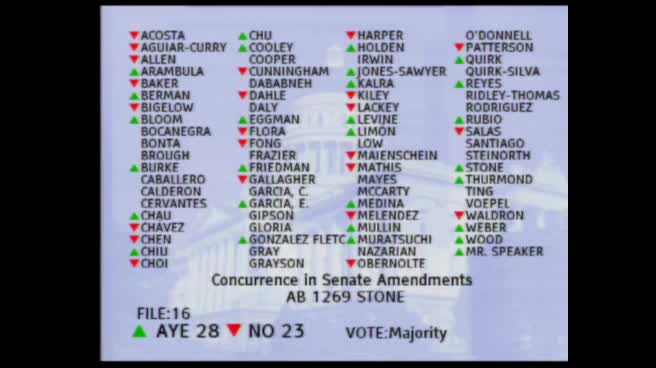
Bill Author