AB 1398: Annuities: cash surrender benefits.
- Session Year: 2017-2018
- House: Assembly
- Latest Version Date: 2017-09-11
Existing law governs annuities and, for those insurance contracts that provide cash surrender benefits, prescribes the cash surrender benefit available prior to maturity. Existing law also requires the death benefit under these contracts to be at least equal to the cash surrender benefit. Existing law requires, with exceptions, that no contract of annuity be delivered or issued for delivery in this state unless it contains, in substance, specified provisions, or corresponding provisions that in the opinion of the commissioner are at least as favorable to the contractholder, upon cessation of payment of considerations under the contract.
This bill, among other things, would require the insurer, for an individual annuity contract issued on or after January 1, 2019, to return to the owner all moneys due for annuity contracts that are surrendered by the contract owner as expeditiously as possible after the request for surrender is received, as defined, but no later than 45 days from the date of surrender, as specified. The bill would authorize insurers to require that a request to surrender a contract be in writing and contain various elements, including, the contract number of the contract and the name, address, and telephone number of the contract owner, on the contract to be surrendered. The bill would also authorize the insurer to require the contract owner to complete an administrative form, as provided, as part of the surrender process, and would require the surrender be processed and all moneys due be returned within 30 days from the effective date of the surrender if the contract owner completes and submits the administrative form within 14 days of the surrender request. The bill would require a contract to include language or be accompanied by a notice setting forth the permitted requirements for a surrender of the contract, as specified.
Existing law governs annuities and, for those insurance contracts that provide cash surrender benefits, prescribes the cash surrender benefit available prior to maturity. Existing law also requires the death benefit under these contracts to be at least equal to the cash surrender benefit. Existing law requires, with exceptions, that no contract of annuity be delivered or issued for delivery in this state unless it contains, in substance, specified provisions, or corresponding provisions that in the opinion of the commissioner are at least as favorable to the contractholder, upon cessation of payment of considerations under the contract.
This bill, among other things, would require the insurer, for an individual annuity contract issued on or after January 1, 2019, to return to the owner all moneys due for annuity contracts that are surrendered by the contract owner as expeditiously as possible after the request for surrender is received, as defined, but no later than 45 days from the date of surrender, as specified. The bill would authorize insurers to require that a request to surrender a contract be in writing and contain various elements, including, the contract number of the contract and the name, address, and telephone number of the contract owner, on the contract to be surrendered. The bill would also authorize the insurer to require the contract owner to complete an administrative form, as provided, as part of the surrender process, and would require the surrender be processed and all moneys due be returned within 30 days from the effective date of the surrender if the contract owner completes and submits the administrative form within 14 days of the surrender request. The bill would require a contract to include language or be accompanied by a notice setting forth the permitted requirements for a surrender of the contract, as specified.
Existing law governs annuities and, for those insurance contracts that provide cash surrender benefits, prescribes the cash surrender benefit available prior to maturity. Existing law also requires the death benefit under these contracts to be at least equal to the cash surrender benefit. Existing law requires, with exceptions, that no contract of annuity be delivered or issued for delivery in this state unless it contains, in substance, specified provisions, or corresponding provisions that in the opinion of the commissioner are at least as favorable to the contractholder, upon cessation of payment of considerations under the contract.
This bill, among other things, would require the insurer, for a an individual annuity contract issued on or after an unspecified date, January 1, 2019, to return to the owner all moneys due for annuity contracts that are surrendered by the contract owner as expeditiously as possible after the request for surrender is received, as defined, but no later than 45 days from the date of surrender, as specified. The bill would authorize insurers to require that a request to surrender a contract be in writing and contain various elements, including, the contract or certificate number of the contract to be surrendered. and the name, address, and telephone number of the contract owner, on the contract to be surrendered. The bill would also authorize the insurer to require the contract owner to complete an administrative form, as provided, as part of the surrender process, and would require the surrender be processed and all moneys due be returned within 30 days from the effective date of the surrender if the contract owner completes and submits the administrative form within 14 days of the surrender request. request. The bill would require a contract to include language or be accompanied by a notice setting forth the elements necessary to surrender permitted requirements for a surrender of the contract, as specified.
Existing law governs annuities and, for those insurance contracts that provide cash surrender benefits, prescribes the cash surrender benefit available prior to maturity. Existing law also requires the death benefit under these contracts to be at least equal to the cash surrender benefit. Existing law requires, with exceptions, that no contract of annuity be delivered or issued for delivery in this state unless it contains, in substance, specified provisions, or corresponding provisions which that in the opinion of the commissioner are at least as favorable to the contractholder, upon cessation of payment of considerations under the contract.
This bill bill, among other things, would require the insurer insurer, for a contract issued on or after an unspecified date, to return to the owner all moneys due for annuity contracts that are surrendered by the contract owner as expeditiously as possible after the request for surrender is received, as defined, but no later than 45 days from the date of surrender, as specified. The bill would authorize insurers to require that a request to surrender a contract be in writing and contain various elements, including, the contract or certificate number of the contract to be surrendered. The bill would also authorize the insurer to require the contract owner to complete an administrative form, as provided, as part of the surrender process, and would require the surrender be processed and all moneys due be returned within 30 days from the date of the surrender if the contract owner completes and submits the administrative form within 14 days of the surrender request. The bill would require a contract to include language or be accompanied by a notice setting forth the elements necessary to surrender the contract, as specified.
Existing law governs annuities and, for those insurance contracts that provide cash surrender benefits, prescribes the cash surrender benefit available prior to maturity. Existing law also requires the death benefit under these contracts to be at least equal to the cash surrender benefit. Existing law requires, with exceptions, that no contract of annuity be delivered or issued for delivery in this state unless it contains, in substance, specified provisions, or corresponding provisions which in the opinion of the commissioner are at least as favorable to the contractholder, upon cessation of payment of considerations under the contract.
This bill would require the insurer to return to the owner all moneys due for annuity contracts that are surrendered by the contract owner as expeditiously as possible after the request for surrender is received, as defined, but no later than 45 days from the date of surrender, as specified. The bill would authorize insurers to require that a request to surrender a contract be in writing and contain various elements, including, the contract or certificate number of the contract to be surrendered. The bill would require a contract to include language or be accompanied by a notice setting forth the elements necessary to surrender the contract, as specified.
(a)(1)For an individual annuity contract subject to this article that is surrendered by the contract owner, the insurer shall return to the owner all moneys due in relation to that contract as expeditiously as possible but not later than 45 days from the date the surrender is effective as provided in subdivision (b).
(2)An insurer may defer payment of cash surrender value for up to six months if the approval described in subdivision (b) of Section 10168.1 has been received by the insurer.
(b)(1)(A)A surrender of a contract is effective on the date the request is received if the request is made to the insurer, or servicing agent authorized by the insurer in writing to receive requests for surrender on the insurers behalf, and contains the elements specified by the insurer in the contract.
(B)The effective date of the surrender of a contract may be up to 45 days after the request for surrender is received if it is permitted by the contract and requested by the contract owner.
(2)The insurer may require the request for surrender to be in writing.
(3)The elements the insurer may require as part of the request for surrender are limited to the following:
(A)A statement that makes it clear that the contract owner intends to surrender, in whole or in part, the contract in question.
(B)The contract number of the contract to be surrendered.
(C)The name, address, and telephone number of the contract owner on the contract to be surrendered.
(D)A clear method of delivery and payee instructions for payment of the surrender value.
(E)For partial surrender, the withdrawal amount, including requested beginning date, frequency, and maximum annual withdrawal amount, and instructions on subaccount withdrawals.
(F)Instructions for tax withholding.
(G)The signature of the owner of the contract, which may be either a wet signature or an electronic signature at the insurers discretion, and if required by the contract or by a legally binding document that the insurer has actual notice of, the signature of a collateral assignee, irrevocable beneficiary, or other person having an interest in the contract through the legally binding document.
(H)Either the contract itself, or, in lieu of the contract, a statement that the contract has been lost or destroyed.
(4)The insurer may require the contract owner to complete an administrative form as part of the surrender process. The insurers administrative form may only request information required to complete the surrender transaction, as set forth in paragraph (3). An administrative form shall be provided to the contract owner within two business days of the request, and shall be available for the contract owner to access on the insurers Internet Web site if the contract owner accesses his or her account information through the insurers Internet Web site. The insurers requirement to complete an administrative form shall not further the effective date of the surrender or extend the 45-day period in which the surrender is required to be processed.
(A)The administrative form shall be designed to provide the insurer with the information needed to complete the surrender transaction consistent with the contract owners request.
(B)If the insurer requires an administrative form and the contract owner completes and submits that form within 14 days of the surrender request, the insurer shall return all moneys due as expeditiously as possible but not later than 30 days from the effective date of the surrender.
(c)When the contract owner requests information about surrendering a contract from the insurer or servicing agent, the insurer or servicing agent shall provide, upon request, as expeditiously as possible, a written notice setting forth either the requirements of this section or the insurers requirements.
(d)A contract subject to this section shall do either of the following:
(1)Include language, which may be included by endorsement, setting forth the permitted requirements for surrender described in this section. Alternatively, if the insurer requires only some of the elements permitted in paragraph (3) of subdivision (b) for a surrender request, the contract language may exclude any of the elements in paragraph (3) of subdivision (b) that the insurer does not require to process the surrender.
(2)Be accompanied by a notice setting forth the permitted requirements for a surrender described in this section. Alternatively, if the insurer requires only some of the elements permitted in paragraph (3) of subdivision (b) for a surrender request, the notice may exclude any of the elements in paragraph (3) of subdivision (b) that the insurer does not require to process the surrender.
(e)(1)For a written request and for purposes of this section, received means the first day that the written notice is delivered to the address of the insurer or servicing agent authorized by the insurer in writing to receive requests for surrender on the insurers behalf.
(2)(A)An insurer or servicing agent shall maintain a procedure for ensuring that requests for surrender are logged or stamped on the date received and not on a later date due to the insurers or servicing agents internal routing or delivery procedures.
(B)If the procedure required pursuant to subparagraph (A) is not maintained, it shall be conclusively presumed that a request was received on the earliest of the following:
(i)The delivery date shown on an express, certified, or registered mail receipt form of the United States Postal Service or by a commercial carrier.
(ii)Two business days after the request was postmarked by the United States Postal Service.
(iii)One business day before the date stamped received by the insurer or servicing agent.
(C)For purposes of this paragraph, business day has the meaning set forth in subdivision (b) of Section 1215.
(D)Postmarks generated by postage meters not located at an office of the United States Postal Service are to be disregarded.
(f)(1)This section does not alter a contractual provision governing calculation of cash or surrender or other values, unless that contractual provision applies a valuation date other than the effective date of surrender described in subdivision (b) to the calculation of cash or surrender or other values.
(2)The effective date established by subdivision (b) is intended to establish a date certain on which a contract owner may rely in determining when the 45-day period specified in subdivision (a) begins to run and a date certain for the insurer to use for the valuation of the contract.
(3)Notwithstanding paragraph (3) of subdivision (b), an insurer may request information that is reasonably necessary to process the surrender in addition to that listed in subdivision (b). An insurers request for additional information does not delay an effective date established by a contract owners compliance with subdivision (b).
(4)An insurer may request a signature guarantee if there is reason to believe a fraudulent situation may occur.
(g)This section shall only apply to contracts issued on or after January 1, 2019.
(a)(1)For an individual annuity contract subject to this article that is surrendered by the contract owner, the insurer shall return to the owner all moneys due in relation to that contract as expeditiously as possible but not later than 45 days from the date the surrender is effective as provided in subdivision (b).
(2)An insurer may defer payment of cash surrender value for up to six months if the approval described in subdivision (b) of Section 10168.1 has been received by the insurer.
(b)(1)(A)A surrender of a contract is effective on the date the request is received if the request is made to the insurer, or servicing agent authorized by the insurer in writing to receive requests for surrender on the insurers behalf, and contains the elements specified by the insurer in the contract.
(B)The effective date of the surrender of a contract may be up to 45 days after the request for surrender is received if it is permitted by the contract and requested by the contract owner.
(2)The insurer may require the request for surrender to be in writing.
(3)The elements the insurer may require as part of the request for surrender are limited to the following:
(A)A statement that makes it clear that the contract owner intends to surrender, in whole or in part, the contract in question.
(B)The contract number of the contract to be surrendered.
(C)The name, address, and telephone number of the contract owner on the contract to be surrendered.
(D)A clear method of delivery and payee instructions for payment of the surrender value.
(E)For partial surrender, the withdrawal amount, including requested beginning date, frequency, and maximum annual withdrawal amount, and instructions on subaccount withdrawals.
(F)Instructions for tax withholding.
(G)The signature of the owner of the contract, which may be either a wet signature or an electronic signature at the insurers discretion, and if required by the contract or by a legally binding document that the insurer has actual notice of, the signature of a collateral assignee, irrevocable beneficiary, or other person having an interest in the contract through the legally binding document.
(H)Either the contract itself, or, in lieu of the contract, a statement that the contract has been lost or destroyed.
(4)The insurer may require the contract owner to complete an administrative form as part of the surrender process. The insurers administrative form may only request information required to complete the surrender transaction, as set forth in paragraph (3). An administrative form shall be provided to the contract owner within two business days of the request, and shall be available for the contract owner to access on the insurers Internet Web site if the contract owner accesses his or her account information through the insurers Internet Web site. The insurers requirement to complete an administrative form shall not further the effective date of the surrender or extend the 45-day period in which the surrender is required to be processed.
(A)The administrative form shall be designed to provide the insurer with the information needed to complete the surrender transaction consistent with the contract owners request.
(B)If the insurer requires an administrative form and the contract owner completes and submits that form within 14 days of the surrender request, the insurer shall return all moneys due as expeditiously as possible but not later than 30 days from the effective date of the surrender.
(c)When the contract owner requests information about surrendering a contract from the insurer or servicing agent, the insurer or servicing agent shall provide, upon request, as expeditiously as possible, a written notice setting forth either the requirements of this section or the insurers requirements.
(d)A contract subject to this section shall do either of the following:
(1)Include language, which may be included by endorsement, setting forth the permitted requirements for surrender described in this section. Alternatively, if the insurer requires only some of the elements permitted in paragraph (3) of subdivision (b) for a surrender request, the contract language may exclude any of the elements in paragraph (3) of subdivision (b) that the insurer does not require to process the surrender.
(2)Be accompanied by a notice setting forth the permitted requirements for a surrender described in this section. Alternatively, if the insurer requires only some of the elements permitted in paragraph (3) of subdivision (b) for a surrender request, the notice may exclude any of the elements in paragraph (3) of subdivision (b) that the insurer does not require to process the surrender.
(e)(1)For a written request and for purposes of this section, received means the first day that the written notice is delivered to the address of the insurer or servicing agent authorized by the insurer in writing to receive requests for surrender on the insurers behalf.
(2)(A)An insurer or servicing agent shall maintain a procedure for ensuring that requests for surrender are logged or stamped on the date received and not on a later date due to the insurers or servicing agents internal routing or delivery procedures.
(B)If the procedure required pursuant to subparagraph (A) is not maintained, it shall be conclusively presumed that a request was received on the earliest of the following:
(i)The delivery date shown on an express, certified, or registered mail receipt form of the United States Postal Service or by a commercial carrier.
(ii)Two business days after the request was postmarked by the United States Postal Service.
(iii)One business day before the date stamped received by the insurer or servicing agent.
(C)For purposes of this paragraph, business day has the meaning set forth in subdivision (b) of Section 1215.
(D)Postmarks generated by postage meters not located at an office of the United States Postal Service are to be disregarded.
(f)(1)This section does not alter a contractual provision governing calculation of cash or surrender or other values, unless that contractual provision applies a valuation date other than the effective date of surrender described in subdivision (b) to the calculation of cash or surrender or other values.
(2)The effective date established by subdivision (b) is intended to establish a date certain on which a contract owner may rely in determining when the 45-day period specified in subdivision (a) begins to run and a date certain for the insurer to use for the valuation of the contract.
(3)Notwithstanding paragraph (3) of subdivision (b), an insurer may request information that is reasonably necessary to process the surrender in addition to that listed in subdivision (b). An insurers request for additional information does not delay an effective date established by a contract owners compliance with subdivision (b).
(4)An insurer may request a signature guarantee if there is reason to believe a fraudulent situation may occur.
(g)This section shall only apply to contracts issued on or after January 1, 2019.
(a)(1)For a an individual annuity contract subject to this article that is surrendered by the contract owner, the insurer shall return to the owner all moneys due in relation to that contract as expeditiously as possible but not later than 45 days from the date the surrender is effective as provided in subdivision (b).
(2)An insurer may defer payment of cash surrender value for up to six months if the approval described in subdivision (b) of Section 10168.1 has been received. received by the insurer.
(b)(1)(A)A surrender of a contract is effective on the date the request is received if the request is made to the insurer, or servicing agent authorized by the insurer in writing to receive requests for surrender on the insurers behalf, and contains the elements specified by the insurer in the contract.
(B)The effective date of the surrender of a contract may be up to 45 days after the request for surrender is received if it is permitted by the contract and requested by the contract owner.
(2)The insurer may require the request for surrender to be in writing.
(3)The elements the insurer may require as part of the request for surrender are limited to the following:
(A)A statement that makes it clear that the contract owner intends to surrender, in whole or in part, the contract in question.
(B)The contract or certificate number of the contract to be surrendered.
(C)The name name, address, and telephone number of the contract owner on the contract to be surrendered.
(D)A clear method of delivery and payee instructions for payment of the surrender value.
(E)For partial surrender, the withdrawal amount, including requested beginning date, frequency, and maximum annual withdrawal amount, and instructions on subaccount withdrawals.
(F)Instructions for tax withholding.
(E)(G)The signature of the owner of the contract contract, which may be either a wet signature or an electronic signature at the insurers discretion, and if required by the contract or by a legally binding document that the insurer has actual notice of, the signature of a collateral assignee, irrevocable beneficiary, or other person having an interest in the contract through the legally binding document.
(F)(H)Either the contract itself, or, in lieu of the contract, a statement that the contract has been lost or destroyed.
(4)The insurer may require the contract owner to complete an administrative form as part of the surrender process. The insurers administrative form may only request information required to complete the surrender transaction. transaction, as set forth in paragraph (3). An administrative form shall be provided to the contract owner within two business days of the request, and the contract owner shall be able to access the form on and shall be available for the contract owner to access on the insurers Internet Web site if the contract owner accesses his or her account information through the insurers Internet Web site. The insurers requirement to complete an administrative form shall not further the effective date of the surrender or extend the 45-day period in which the surrender is required to be processed.
(A)The administrative form shall be designed to provide the insurer with the information needed to complete the surrender transaction consistent with the contract owners request. That information includes:
(i)The name, address, and telephone number of the contract owner.(ii)The contract number.(iii)The withdrawal amount, including requested beginning date, frequency, and maximum annual withdrawal amount.(iv)Instructions on subaccount withdrawals.(v)Instructions for tax withholding.(B)If the insurer requires an administrative form and the contract owner completes and submits that form within 14 days of the surrender request, the insurer shall return all moneys due as expeditiously as possible but not later than 30 days from the effective date of the surrender.
(c)When the contract owner requests information about surrendering a contract from the insurer or servicing agent, the insurer or servicing agent shall provide, upon request, as expeditiously as possible, a written notice setting forth either the requirements of this section or the insurers requirements.
(d)A contract subject to this section shall do either of the following:
(1)Include language, which may be included by endorsement, setting forth the permitted requirements for surrender described in this section. The contract language may exclude any of the requirements in paragraph (3) or paragraph (4) of subdivision (b). Alternatively, if the insurer requires only some of the elements permitted in paragraph (3) of subdivision (b) for a surrender request, the contract language may exclude any of the elements in paragraph (3) of subdivision (b) that the insurer does not require to process the surrender.
(2)Be accompanied by a notice setting forth the elements required to surrender the contract pursuant to this section. The contract language may exclude any of the requirements in paragraph (3) or paragraph (4) of subdivision (b).(2)Be accompanied by a notice setting forth the permitted requirements for a surrender described in this section. Alternatively, if the insurer requires only some of the elements permitted in paragraph (3) of subdivision (b) for a surrender request, the notice may exclude any of the elements in paragraph (3) of subdivision (b) that the insurer does not require to process the surrender.
(e)(1)For a written request and for purposes of this section, received means the first day that the written notice is delivered to the address of the insurer or servicing agent authorized by the insurer in writing to receive requests for surrender on the insurers behalf.
(2)(A)An insurer or servicing agent shall maintain a procedure for ensuring that requests for surrender are logged or stamped on the date received and not on a later date due to the insurers or servicing agents internal routing or delivery procedures.
(B)If the procedure required pursuant to subparagraph (A) is not maintained, it shall be conclusively presumed that a request was received on the earliest of the following:
(i)The delivery date shown on an express, certified, or registered mail receipt form of the United States Postal Service or by a commercial carrier.
(ii)Two business days after the request was postmarked by the United States Postal Service.
(iii)One business day before the date stamped received by the insurer or servicing agent.
(C)For purposes of this paragraph, business day has the meaning set forth in subdivision (b) of Section 1215.
(D)Postmarks generated by postage meters not located at an office of the United States Postal Service are to be disregarded.
(f)(1)This section does not alter a contractual provision governing calculation of cash or surrender or other values, unless that contractual provision applies a valuation date other than the effective date of surrender described in subdivision (b) to the calculation of cash or surrender or other values.
(2)The effective date established by subdivision (b) is intended to establish a date certain on which a contract owner may rely in determining when the 45-day period specified in subdivision (a) begins to run and a date certain for the insurer to use for the valuation of the contract.
(3)Notwithstanding paragraph (3) of subdivision (b), an insurer may request information that is reasonably necessary to process the surrender in addition to that listed in subdivision (b). An insurers request for additional information does not delay an effective date established by a contract owners compliance with subdivision (b).
(4)An insurer may request a signature guarantee if there is reason to believe a fraudulent situation may occur.
(g)This section shall only apply to contracts issued on or after _______. January 1, 2019.
(a)(1)For a contract subject to this article that is surrendered by the contract owner, the insurer shall return to the owner all moneys due in relation to that contract as expeditiously as possible but not later than 45 days from the date the surrender is effective as provided in subdivision (b).
(2)An insurer may defer payment of cash surrender value for up to six months, as described in Section 10168.1, to the extent that deferral is necessary to ensure the solvency of the insurer. months if the approval described in subdivision (b) of Section 10168.1 has been received.
(b)(1)(A)A surrender of a contract is effective on the date the request is received if the request is made to the insurer, or servicing agent authorized by the insurer in writing to receive requests for surrender on the insurers behalf, and contains the elements specified by the insurer in the contract.
(B)The effective date of the surrender of a contract may be up to 45 days after the request for surrender is received if it is permitted by the contract and requested by the contract owner.
(2)The insurer may require the request for surrender to be in writing.
(3)The elements the insurer may require as part of the request for surrender are limited to the following:
(A)A statement that makes it clear that the contract owner intends to surrender, in whole or in part, the contract in question.
(B)The contract or certificate number of the contract to be surrendered.
(C)The name of the contract owner on the contract to be surrendered.
(D)A clear method of delivery and payee instructions for payment of the surrender value.
(D)(E)The signature of the owner of the contract and if required by the contract or by a legally binding document that the insurer has actual notice of, the signature of a collateral assignee, irrevocable beneficiary, or other person having an interest in the contract through the legally binding document.
(E)(F)Either the contract itself, or, in lieu of the contract, a statement that the contract has been lost or destroyed.
(4)The insurer may require the contract owner to complete an administrative form as part of the surrender process. The insurers administrative form may only request information required to complete the surrender transaction. An administrative form shall be provided to the contract owner within two business days of the request, and the contract owner shall be able to access the form on the insurers Internet Web site. The insurers requirement to complete an administrative form shall not further the effective date of the surrender or extend the 45-day period in which the surrender is required to be processed.
(A)The administrative form shall be designed to provide the insurer with the information needed to complete the surrender transaction consistent with the contract owners request. That information includes:
(i)The name, address, and telephone number of the contract owner.
(ii)The contract number.
(iii)The withdrawal amount, including requested beginning date, frequency, and maximum annual withdrawal amount.
(iv)Instructions on subaccount withdrawals.
(v)Instructions for tax withholding.
(B)If the insurer requires an administrative form and the contract owner completes and submits that form within 14 days of the surrender request, the insurer shall return all moneys due as expeditiously as possible but not later than 30 days from the date of the surrender.
(c)When the contract owner requests information about surrendering a contract from the insurer or servicing agent, the insurer or servicing agent shall provide, upon request, as expeditiously as possible, a written notice setting forth either the requirements of this section or the insurers requirements.
(d)A contract subject to this section shall do either of the following:
(1)Include language, which may be included by endorsement, setting forth either the requirements for surrender described in this section or the insurers requirements for surrender. section. The contract language may exclude any of the requirements in paragraph (3) or paragraph (4) of subdivision (b).
(2)Be accompanied by a notice setting forth the elements required to surrender the contract pursuant to this section or the insurers requirements. section. The contract language may exclude any of the requirements in paragraph (3) or paragraph (4) of subdivision (b).
(e)(1)For a written request and for purposes of this section, received means the first day that the written notice is delivered to the address of the insurer or servicing agent authorized by the insurer in writing to receive requests for surrender on the insurers behalf.
(2)(A)An insurer or servicing agent shall maintain a procedure for ensuring that requests for surrender are logged or stamped on the date received and not on a later date due to the insurers or servicing agents internal routing or delivery procedures.
(B)If the procedure required pursuant to subparagraph (A) is not maintained, it shall be conclusively presumed that a request was received on the earliest of the following:
(i)The delivery date shown on an express, certified, or registered mail receipt form of the United States Postal Service or by a commercial carrier.
(ii)Two business days after the request was postmarked by the United States Postal Service.
(iii)One business day before the date stamped received by the insurer or servicing agent.
(C)For purposes of this paragraph, business day has the meaning set forth in subdivision (b) of Section 1215.
(D)Postmarks generated by postage meters not located at an office of the United States Postal Service are to be disregarded.
(f)(1)This section does not alter a contractual provision governing calculation of cash or surrender or other values, unless that contractual provision applies a valuation date other than the effective date of surrender described in subdivision (b) to the calculation of cash or surrender or other values.
(2)The effective date established by subdivision (b) is intended to establish a date certain on which a contract owner may rely in determining when the 45-day period specified in subdivision (a) begins to run and a date certain for the insurer to use for the valuation of the contract.
(3)An Notwithstanding paragraph (3) of subdivision (b), an insurer may request information in addition to that listed in subdivision (b). An insurers request for additional information does not delay an effective date established by a contract owners compliance with subdivision (b).
(g)For purposes of this section, contract owner shall also mean certificate owner when the surrender is under a group annuity contract subject to this article.(4)An insurer may request a signature guarantee if there is reason to believe a fraudulent situation may occur.
(g)This section shall only apply to contracts issued on or after _______.
(a)(1)For a contract subject to this article that is surrendered by the contract owner, the insurer shall return to the owner all moneys due in relation to that contract as expeditiously as possible but not later than 45 days from the date the surrender is effective as provided in subdivision (b).
(2)An insurer may defer payment of cash surrender value for up to six months, as described in Section 10168.1, to the extent that deferral is necessary to ensure the solvency of the insurer.
(b)(1)(A)A surrender of a contract is effective on the date the request is received if the request is made to the insurer, or servicing agent authorized by the insurer in writing to receive requests for surrender on the insurers behalf, and contains the elements specified by the insurer in the contract.
(B)The effective date of the surrender of a contract may be up to 45 days after the request for surrender is received if it is permitted by the contract and requested by the contract owner.
(2)The insurer may require the request for surrender to be in writing.
(3)The elements the insurer may require as part of the request for surrender are limited to the following:
(A)A statement that makes it clear that the contract owner intends to surrender, in whole or in part, the contract in question.
(B)The contract or certificate number of the contract to be surrendered.
(C)The name of the contract owner on the contract to be surrendered.
(D)The signature of the owner of the contract and if required by the contract or by a legally binding document that the insurer has actual notice of, the signature of a collateral assignee, irrevocable beneficiary, or other person having an interest in the contract through the legally binding document.
(E)Either the contract itself, or, in lieu of the contract, a statement that the contract has been lost or destroyed.
(c)When the contract owner requests information about surrendering a contract from the insurer or servicing agent, the insurer or servicing agent shall provide, as expeditiously as possible, a written notice setting forth either the requirements of this section or the insurers requirements.
(d)A contract subject to this section shall do either of the following:
(1)Include language, which may be included by endorsement, setting forth either the requirements for surrender described in this section or the insurers requirements for surrender.
(2)Be accompanied by a notice setting forth the elements required to surrender the contract pursuant to this section or the insurers requirements.
(e)(1)For a written request and for purposes of this section, received means the first day that the written notice is delivered to the address of the insurer or servicing agent authorized by the insurer in writing to receive requests for surrender on the insurers behalf.
(2)(A)An insurer or servicing agent shall maintain a procedure for ensuring that requests for surrender are logged or stamped on the date received and not on a later date due to the insurers or servicing agents internal routing or delivery procedures.
(B)If the procedure required pursuant to subparagraph (A) is not maintained, it shall be conclusively presumed that a request was received on the earliest of the following:
(i)The delivery date shown on an express, certified, or registered mail receipt form of the United States Postal Service or by a commercial carrier.
(ii)Two business days after the request was postmarked by the United States Postal Service.
(iii)One business day before the date stamped received by the insurer or servicing agent.
(C)For purposes of this paragraph, business day has the meaning set forth in subdivision (b) of Section 1215.
(D)Postmarks generated by postage meters not located at an office of the United States Postal Service are to be disregarded.
(f)(1)This section does not alter a contractual provision governing calculation of cash or surrender or other values, unless that contractual provision applies a valuation date other than the effective date of surrender described in subdivision (b) to the calculation of cash or surrender or other values.
(2)The effective date established by subdivision (b) is intended to establish a date certain on which a contract owner may rely in determining when the 45-day period specified in subdivision (a) begins to run and a date certain for the insurer to use for the valuation of the contract.
(3)An insurer may request information in addition to that listed in subdivision (b). An insurers request for additional information does not delay an effective date established by a contract owners compliance with subdivision (b).
(g)For purposes of this section, contract owner shall also mean certificate owner when the surrender is under a group annuity contract subject to this article.
|
Date
|
Status
|
|---|---|
| Sep 11, 2017 | Chaptered by Secretary of State - Chapter 228, Statutes of 2017. |
| Sep 11, 2017 | Approved by the Governor. |
| Aug 30, 2017 | Enrolled and presented to the Governor at 3:30 p.m. |
| Aug 28, 2017 | Senate amendments concurred in. To Engrossing and Enrolling. |
| Jul 20, 2017 | In Assembly. Concurrence in Senate amendments pending. May be considered on or after August 18 pursuant to Assembly Rule 77. |
| Jul 20, 2017 | Read third time. Passed. Ordered to the Assembly. |
| Jul 17, 2017 | Read second time. Ordered to Consent Calendar. |
| Jul 13, 2017 | From committee: Do pass. To Consent Calendar. (Ayes 10. Noes 0.) (July 12). |
| Jun 20, 2017 | From committee chair, with author's amendments: Amend, and re-refer to committee. Read second time, amended, and re-referred to Com. on I., B. & F.I. |
| Jun 8, 2017 | Referred to Com. on I., B. & F.I. |
| May 30, 2017 | In Senate. Read first time. To Com. on RLS. for assignment. |
| May 30, 2017 | Read third time. Passed. Ordered to the Senate. (Ayes 77. Noes 0. Page 1787.) |
| May 4, 2017 | Read second time. Ordered to third reading. |
| May 3, 2017 | From committee: Do pass. (Ayes 13. Noes 0.) (May 3). |
| May 2, 2017 | Re-referred to Com. on INS. |
| May 1, 2017 | From committee chair, with author's amendments: Amend, and re-refer to Com. on INS. Read second time and amended. |
| Mar 13, 2017 | Referred to Com. on INS. |
| Feb 19, 2017 | From printer. May be heard in committee March 21. |
| Feb 17, 2017 | Read first time. To print. |
|
Date
|
Description
|
Location
|
Votes
|
|
|---|---|---|---|---|
| Aug 28, 2017 | AB 1398 KALRA Concurrence in Senate Amendments | Assembly Floor |
Passed |
|
| Jul 20, 2017 | Consent Calendar 2nd AB1398 Kalra | Senate Floor |
Passed |
|
| Jul 12, 2017 | Do pass and be ordered to the Consent Calendar | Senate Standing Committee on Insurance, Banking and Financial Institutions |
Passed |
|
| May 30, 2017 | AB 1398 KALRA Assembly Third Reading | Assembly Floor |
Passed |
|
| May 3, 2017 | Do pass. | Assembly Standing Committee on Insurance |
Passed |
This list shows positions taken on this bill by organizations on the date displayed, which is linked to the original source.
Positions by individuals are not included.
|
Organization
|
Position
|
Date
|
|---|---|---|
| Association of California Life and Health Insurers | ** Support | Jul 19, 2017 |
| California Department of Insurance | ** Support | Jul 19, 2017 |
| Opposition None received | ** Support | Jul 10, 2017 |
| POSITIONS | ** Support | Jul 10, 2017 |
CONCURRENCE IN SENATE AMENDMENTS
CSA1 Bill Id:AB 1398
Author:(Kalra)
As Amended Ver:June 20, 2017
Majority vote
ASSEMBLY: | 77-0 | (May 30, 2017) | SENATE: | 38-0 | (July 20, 2017) |
Original Committee Reference: INS.
SUMMARY: Requires insurers to process the surrender of an annuity within 45 days of receiving the request.
The Senate amendments:
- Delay implementation of the bill until January 1, 2019.
- Make minor, technical, and clarifying changes.
EXISTING LAW:
- Establishes a comprehensive regulatory scheme for the sale of insurance products including annuities.
- Provides formulas to calculate the cash value of an annuity.
- Requires all annuity contracts to be filed with the Department of Insurance before the contract is marketed or sold.
FISCAL EFFECT: Undetermined
COMMENTS:
- Purpose. According to the author, fixed indexed annuities have grown in popularity with seniors and others looking for higher gains without the risk of a variable annuity. In 2015, non-variable annuity sales reached a record-breaking $54.5 billion, an increase of 13% from 2014. Under current law, insurers are not required to use the date a surrender request is received for these annuities to determine the surrender value. Many of these annuities are linked to financial markets and indices where a market value adjustment (MVA) factor is applied upon surrender. This factor fluctuates and can negatively affect the cash surrender value of an indexed annuity depending upon the date used to determine the MVA factor applied in the calculation by the insurer. Under these circumstances, insurers may have a financial incentive to use a market rate that benefits them, not the contract owner. This loss of value may be in addition to the surrender charges and penalties applied. As annuities become more and more common, consumers are being harmed by inconsistent valuation standards and time limits when calculating surrender values.
- Annuities. Annuities are financial products designed to convert the premium paid by the purchaser (in either a lump sum or periodic payments) into a stream of payments to the purchaser. They are designed to provide a stable cash flow for the purchaser (most commonly for retirees) and alleviate the risk of outliving one's assets. Annuities are relatively complex products that provide a wide range of options to the purchaser. Annuities can be structured so that payments will continue so long as either the purchaser or their spouse (if survivorship benefit is elected) is alive or to pay out funds for a fixed period of time. Annuities can also be structured to provide immediate payments or to defer payments to a later date.
- Surrender. Deposits into annuity contracts are typically locked up for a period of time (known as the surrender period) where the annuitant would incur a penalty if all or part of that premium paid was taken out of the annuity. These surrender periods can last anywhere from two to more than 10 years, depending on the particular product. Surrender charges can start out at 10% or more and the penalty typically declines annually over the surrender period. Surrendering an annuity is usually costly to the consumer in immediate financial terms and the loss of the regular source of income can undermine the consumer's long term financial security. This is a particular concern for annuities sold to seniors who may experience unexpected medical or other costs or illness and do not have access any other assets to meet the need.
Analysis Prepared by: Paul Riches / INS. / (916) 319-2086 FN: 0001170
Office of Senate Floor Analyses (916) 651-1520 Fax: (916) 327-4478 | AB |
CONSENT
Bill No: AB 1398
:
SENATE INS., BANK. & FIN. COMMITTEE: 10-0, 7/12/17
AYES: Mendoza, Gaines, Galgiani, Glazer, Hernandez, Lara, Mitchell, Morrell, Newman, Roth
NO VOTE RECORDED: Berryhill, Hueso, Portantino
ASSEMBLY FLOOR: 77-0, 5/30/17 - See last page for vote
SOURCE: California Department of Insurance
DIGEST:
This bill requires insurers, upon surrender of an individual annuity contract, to return all moneys owed as expeditiously as possible, but no later than 45 days from the date of surrender, as specified.
Existing law:
- Regulates, generally, annuities, including individual deferred annuities, and their terms and benefits.
- Provides specific requirements for annuity contracts that provide cash surrender benefits prior to maturity.
- Specifies minimum nonforfeiture amounts for any paid up annuity, cash surrender or death benefits.
- Requires the death benefit under such a contract to be at least equal to the cash surrender benefit.
- Requires all annuity contracts to be filed with the California Department of Insurance (CDI) before the annuity is marketed or sold.
This bill:
- Requires insurers to process the surrender of an individual annuity contract and return to the owner all money due no later than 45 days after receiving a request for surrender, if allowed under the contract.
- Provides that the surrender is effective on the date the request is received by the insurer, as specified.
- Allows the insurer to require the request to include specific elements reasonably necessary to process the surrender, including that it is in writing, the name, address and telephone number of the contract owner, a method of delivery and payment instructions, tax withholding instructions, special instructions for a partial surrender, and either the contract itself or a statement that the contract has been lost or destroyed.
- Allows the insurer to require the owner to complete an administrative form requesting the information in #2 within two days of the request, and requires the form to be available on the insurer’s Web site if the contract owner accesses his or her account through that Web site.
- Requires, if the insurer requires an administrative form and the owner submits the form within 14 days of the surrender request, the insurer to return all money due not later than 30 days from the effective date of the surrender.
- Requires the insurer or servicing agent to provide, upon request from a contract owner, the requirements for surrendering an annuity contract, as specified.
- Requires an annuity contract to include language that explains the requirements for surrender as required by this bill.
- Defines when a written request for surrender is considered received for these purposes, as specified.
- Applies only to annuity contracts issued on or after January 1, 2019
Background
An annuity is a contractual financial product that is designed to accept and grow funds from an individual and then, upon annuitization, pay out a stream of payments to the individual at a later point in time. Annuities were designed to be a reliable means of securing a steady cash flow for an individual during their retirement years and to alleviate fears of outliving one's assets. Fixed indexed annuities have grown in popularity with seniors and others looking for higher gains without the risk of a variable annuity. In 2015, non-variable annuity sales reached a record $54.5 billion, an increase of 13 percent from 2014.
Annuities can be created so that, upon annuitization, payments will continue so long as either the annuitant or their spouse (if survivorship benefit is elected) is alive. Alternatively, annuities can be structured to pay out funds for a fixed amount of time, such as 20 years, regardless of how long the annuitant lives. Furthermore, annuities can begin immediately upon deposit of a lump sum, or they can be structured as deferred benefits.
Deposits into annuity contracts are typically locked up for a period of time, known as the surrender period, where the annuitant would incur a penalty if all or part of that money were touched. These surrender periods can last anywhere from two to more than 10 years, depending on the particular product. Surrendering an annuity is usually costly to the consumer in immediate financial terms and in the loss of a long term source of income. This can be a particular concern for seniors who are sold products that lock up sizable assets for years and then face a major illness or other loss and have no other assets available to meet the need, forcing them to try to recoup assets from the annuity through a surrender process if allowed by the contract.
Under current law, insurers are not required to use the date a surrender request is received for non-variable annuities, i.e., the value at the close of business on the date of the surrender request. Many of these types of annuity products are linked to financial markets and indices where a market value adjustment (MVA) factor is applied upon surrender. This factor fluctuates and can affect the cash surrender value of an indexed annuity depending upon the date used to determine the MVA factor applied in the calculation by the insurer. Under these circumstances, insurers may have a financial incentive to use a market rate that benefits them, not the contract owner. This loss of value may be in addition to any surrender charges and penalties applied.
FISCAL EFFECT: Appropriation: Fiscal Com.: Local:
California Department of Insurance (source)
Association of California Life and Health Insurers
OPPOSITION: (Verified 7/18/17)
None received
ARGUMENTS IN SUPPORT: According to the author, insurers have a financial incentive to use a market rate that benefits them, not the contract owner. AB 1398 protects consumers in need of surrendering a non-variable annuity from undue financial harm because of changing market rates. The CDI sponsored this bill because as annuities become more and more common, consumers are being harmed when insurers have inconsistent valuation standards and time limits when calculating surrender values. This bill will require prompt action by the insurer by establishing a 45 day deadline for consumers to get cash surrenders owed.
ASSEMBLY FLOOR: 77-0, 5/30/17
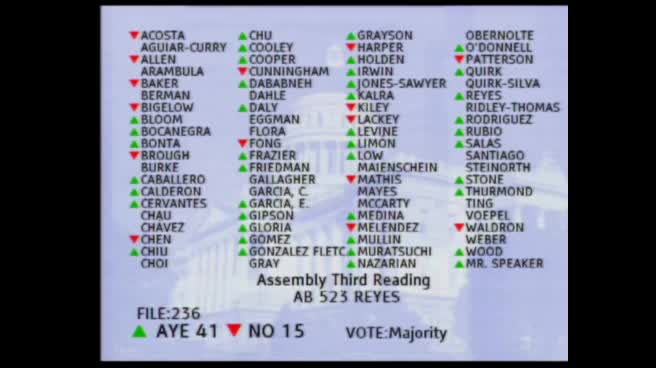
AYES: Acosta, Aguiar-Curry, Travis Allen, Arambula, Baker, Berman, Bigelow, Bloom, Bocanegra, Bonta, Brough, Burke, Caballero, Calderon, Cervantes, Chávez, Chen, Chiu, Chu, Cooley, Cooper, Cunningham, Dababneh, Dahle, Daly, Flora, Fong, Frazier, Friedman, Gallagher, Cristina Garcia, Eduardo Garcia, Gipson, Gloria, Gomez, Gonzalez Fletcher, Gray, Grayson, Harper, Holden, Irwin, Jones-Sawyer, Kalra, Kiley, Lackey, Levine, Limón, Low, Maienschein, Mathis, Mayes, McCarty, Medina, Melendez, Mullin, Muratsuchi, Nazarian, Obernolte, O'Donnell, Patterson, Quirk, Quirk-Silva, Reyes, Ridley-Thomas, Rodriguez, Rubio, Salas, Santiago, Steinorth, Mark Stone, Thurmond, Ting, Voepel, Waldron, Weber, Wood, Rendon
NO VOTE RECORDED: Chau, Choi, Eggman
7/19/17 16:26:48
**** END ****
SENATE COMMITTEE ON
Senator Tony Mendoza, Chair
2017 - 2018 Regular
Bill No: Hearing Date: July 12, 2017
Author: | |||
Version: |
| ||
Urgency: | Fiscal: | ||
Consultant: | |||
Subject:
SUMMARY
Requires insurers, upon surrender of an individual annuity contract, to return all moneys owed as expeditiously as possible, but no later than 45 days from the date of surrender, as specified.
DIGEST
Existing law
- Generally regulates annuities, including individual deferred annuities, and their terms and benefits.
- Provides specific requirements for annuity contracts that provide cash surrender benefits prior to maturity.
- Specifies minimum nonforfeiture amounts for any paid up annuity, cash surrender or death benefits.
- Requires the death benefit under such a contract to be at least equal to the cash surrender benefit.
- Requires all annuity contracts to be filed with the California Department of Insurance (CDI) before the annuity is marketed or sold.
This bill
- Requires insurers to process the surrender of an individual annuity contract and return to the owner all money due no later than 45 days after receiving a request for surrender, if allowed under the contract.
- Allows the insurer to require the request to include specific elements reasonably necessary to process the surrender, including that it is in writing, the name, address and telephone number of the contract owner, a method of delivery and payment instructions, tax withholding instructions, special instructions for a partial surrender, and either the contract itself or a statement that the contract has been lost or destroyed.
- Allows the insurer to require the owner to complete an administrative form requesting the information in #2 within two days of the request, and requires the form to be available on the insurer’s website if the contract owner accesses his or her account through that website.
- If the insurer requires an administrative form and the owner submits the form within 14 days of the surrender request, requires the insurer to return all money due not later than 30 days from the effective date of the surrender.
- Requires the insurer or servicing agent to provide, upon request from a contract owner, the requirements for surrendering an annuity contract, as specified.
- Requires an annuity contract to include language that explains the requirements for surrender as required by this legislation.
- Defines when a written request for surrender is considered received for these purposes, as specified.
- Applies only to annuity contracts issued on or after January 1, 2019.
COMMENTS
- Purpose of the bill AB 1398 sets forth protections on individual fixed annuities that ensures their valuation is based upon when the consumer requested the surrender, lays out what an insurer is allowed to ask for to process a surrender, and sets a reasonable deadline for which a surrender must be processed.
- Background An annuity is a contractual financial product that is designed to accept and grow funds from an individual and then, upon annuitization, pay out a stream of payments to the individual at a later point in time. Annuities were designed to be a reliable means of securing a steady cash flow for an individual during their retirement years and to alleviate fears of outliving one's assets. Fixed indexed annuities have grown in popularity with seniors and others looking for higher gains without the risk of a variable annuity. In 2015, non-variable annuity sales reached a record $54.5 billion, an increase of 13 percent from 2014.
Annuities can be created so that, upon annuitization, payments will continue so long as either the annuitant or their spouse (if survivorship benefit is elected) is alive. Alternatively, annuities can be structured to pay out funds for a fixed amount of time, such as 20 years, regardless of how long the annuitant lives. Furthermore, annuities can begin immediately upon deposit of a lump sum, or they can be structured as deferred benefits.
Deposits into annuity contracts are typically locked up for a period of time, known as the surrender period, where the annuitant would incur a penalty if all or part of that money were touched. These surrender periods can last anywhere from 2 to more than 10 years, depending on the particular product. Surrendering an annuity is usually costly to the consumer in immediate financial terms and in the loss of a long term source of income. This can be a particular concern for seniors who are sold products that lock up sizable assets for years and then face a major illness or other loss and have no other assets available to meet the need, forcing them to try to recoup assets from the annuity through a surrender process if allowed by the contract.
Under current law, insurers are not required to use the date a surrender request is received for non-variable annuities, i.e., the value at the close of business on the date of the surrender request. Many of these types of annuity products are linked to financial markets and indices where a market value adjustment (MVA) factor is applied upon surrender. This factor fluctuates and can affect the cash surrender value of an indexed annuity depending upon the date used to determine the MVA factor applied in the calculation by the insurer. Under these circumstances, insurers may have a financial incentive to use a market rate that benefits them, not the contract owner. This loss of value may be in addition to any surrender charges and penalties applied.
- Support According to the author, insurers have a financial incentive to use a market rate that benefits them, not the contract owner. AB 1398 protects consumers in need of surrendering a non-variable annuity from undue financial harm because of changing market rates. The CDI sponsored this bill because as annuities become more and more common, consumers are being harmed when insurers have inconsistent valuation standards and time limits when calculating surrender values. This bill will require prompt action by the insurer by establishing a 45 day deadline for consumers to get cash surrenders owed.
- Opposition None received
- Prior and Related Legislation SB 426 (Leyva, Chap. 100 Statutes of 2015) Required the death benefit payable under annuities contracts issued to persons 65 years of age or older to be at least equal to the annuity value or accumulations value without any surrender charges or penalties upon death.
POSITIONS
Support
Association of California Life and Health Insurance Companies
California Department of Insurance (sponsor)
Oppose
None received
-- END --
ASSEMBLY THIRD READING
ATR Bill Id:AB 1398
Author:(Kalra)
As Amended Ver:May 1, 2017
Majority vote
Committee | Votes | Ayes | Noes |
Insurance | 13-0 | Daly, Melendez, Bigelow, Caballero, Calderon, Chu, Cooley, Cooper, Dababneh, Dahle, Frazier, Gipson, Voepel |
SUMMARY: Requires insurers to process the surrender of an annuity within 45 days of receiving the request. Specifically, this bill:
- Requires an insurer to pay out the funds from a surrendered annuity within 45 days of receiving the surrender request.
- Specifies that the valuation date for a surrendered annuity is the date on which the insurer receives a written request to surrender.
- Permits an insurer to require the following elements in a surrender request:
- A statement of the contract owner's intent to surrender.
- The contract number of the annuity to be surrendered.
- The name of the contract owner.
- Payee and delivery instructions for the surrender value.
- The contract owner's signature.
- The actual contract.
- Permits an insurer to require the completion of an administrative form that contains specified information requests as part of the surrender process. An insurer must provide the administrative form within two business days of the surrender request and make the form available on the insurer's Web site.
- Provides that if the required administrative form is completed and submitted within fourteen days of the surrender request, the insurer must pay out the surrender value within 30 days of the request.
- Permits the insurer to require a signature guarantee to verify the identity of the person requesting the surrender if fraud is suspected.
- Applies the requirements of the bill to policies issued on or after an unspecified future date.
EXISTING LAW:
- Establishes a comprehensive regulatory scheme for the sale of insurance products including annuities.
- Provides formulas to calculate the cash value of an annuity.
- Requires all annuity contracts to be filed with the Department of Insurance (department) before the contract is marketed or sold.
FISCAL EFFECT: Unknown. This bill is keyed non-fiscal by the Legislative Counsel.
COMMENTS:
- Purpose. According to the author, fixed indexed annuities have grown in popularity with seniors and others looking for higher gains without the risk of a variable annuity. In 2015, non-variable annuity sales reached a record-breaking $54.5 billion, an increase of 13% from 2014. Under current law, insurers are not required to use the date a surrender request is received for these annuities to determine the surrender value. Many of these annuities are linked to financial markets and indices where a market value adjustment (MVA) factor is applied upon surrender. This factor fluctuates and can negatively affect the cash surrender value of an indexed annuity depending upon the date used to determine the MVA factor applied in the calculation by the insurer. Under these circumstances, insurers may have a financial incentive to use a market rate that benefits them, not the contract owner. This loss of value may be in addition to the surrender charges and penalties applied. As annuities become more and more common, consumers are being harmed by inconsistent valuation standards and time limits when calculating surrender values.
- Annuities. Annuities are financial products designed to convert the premium paid by the purchaser (in either a lump sum or periodic payments) into a stream of payments to the purchaser. They are designed to provide a stable cash flow for the purchaser (most commonly for retirees) and alleviate the risk of outliving one's assets. Annuities are relatively complex products that provide a wide range of options to the purchaser. Annuities can be structured so that payments will continue so long as either the purchaser or their spouse (if survivorship benefit is elected) is alive or to pay out funds for a fixed period of time. Annuities can also be structured to provide immediate payments or to defer payments to a later date.
- Surrender. Deposits into annuity contracts are typically locked up for a period of time (known as the surrender period) where the annuitant would incur a penalty if all or part of that premium paid was taken out of the annuity. These surrender periods can last anywhere from two to more than 10 years, depending on the particular product. Surrender charges can start out at 10% or more and the penalty typically declines annually over the surrender period. Surrendering an annuity is usually costly to the consumer in immediate financial terms and the loss of the regular source of income can undermine the consumer's long term financial security. This is a particular concern for annuities sold to seniors who may experience unexpected medical or other costs or illness and do not have access any other assets to meet the need.
- Delayed Implementation. The bill requires that existing annuity contracts be changed to reflect changed rules for surrendering an annuity. Insurers are required to file annuity contract forms with the department. While the statute does not require prior approval, insurers are reluctant to market and sell an annuity until the contract has been reviewed and approved by the department. The review process can be lengthy which requires the effective date of the bill to be delayed to allow time for the review process to be completed. The department and the insurers will need to continue working to determine how long to delay the effective date of the bill. The bill leaves the effective date blank in recognition of these ongoing discussions.
Analysis Prepared by: Paul Riches / INS. / (916) 319-2086 FN: 0000250
Date of Hearing: May 3, 2017
ASSEMBLY COMMITTEE ON INSURANCE
Tom Daly, Chair
ABPCA Bill Id:AB 1398 (
Author:Kalra) – As Amended Ver:May 1, 2017
SUBJECT: Annuities: cash surrender benefits
SUMMARY: Requires insurers to process the surrender of an annuity within 45 days of receiving the request. Specifically, this bill:
- Requires an insurer to pay out the funds from a surrendered annuity within 45 days of receiving the surrender request.
- Specifies that the valuation date for a surrendered annuity is the date on which the insurer receives a written request to surrender.
- Permits an insurer to require the following elements in a surrender request:
- A statement of the contract owner's intent to surrender.
- The contract number of the annuity to be surrendered.
- The name of the contract owner.
- Payee and delivery instructions for the surrender value.
- The contract owner's signature.
- The actual contract.
- Permits an insurer to require the completion of an administrative form that contains specified information requests as part of the surrender process. An insurer must provide the administrative form within two business days of the surrender request and make the form available on the insurer's website.
- Provides that if the required administrative form is completed and submitted within fourteen days of the surrender request, the insurer must pay out the surrender value within 30 days of the request.
- Permits the insurer to require a signature guarantee to verify the identity of the person requesting the surrender if fraud is suspected.
- Applies the requirements of the bill to policies issued on or after an unspecified future date.
EXISTING LAW:
- Establishes a comprehensive regulatory scheme for the sale of insurance products including annuities.
- Provides formulas to calculate the cash value of an annuity.
- Requires all annuity contracts to be filed with the Department of Insurance (department) before the contract is marketed or sold.
FISCAL EFFECT: Undetermined
COMMENTS:
- Purpose. According to the author, fixed indexed annuities have grown in popularity with seniors and others looking for higher gains without the risk of a variable annuity. In 2015, non-variable annuity sales reached a record-breaking $54.5 billion, an increase of 13 percent from 2014. Under current law, insurers are not required to use the date a surrender request is received for these annuities to determine the surrender value. Many of these annuities are linked to financial markets and indices where a market value adjustment (MVA) factor is applied upon surrender. This factor fluctuates and can negatively affect the cash surrender value of an indexed annuity depending upon the date used to determine the MVA factor applied in the calculation by the insurer. Under these circumstances, insurers may have a financial incentive to use a market rate that benefits them, not the contract owner. This loss of value may be in addition to the surrender charges and penalties applied. As annuities become more and more common, consumers are being harmed by inconsistent valuation standards and time limits when calculating surrender values.
- Annuities. Annuities are financial products designed to convert the premium paid by the purchaser (in either a lump sum or periodic payments) into a stream of payments to the purchaser. They are designed to provide a stable cash flow for the purchaser (most commonly for retirees) and alleviate the risk of outliving one's assets. Annuities are relatively complex products that provide a wide range of options to the purchaser. Annuities can be structured so that payments will continue so long as either the purchaser or their spouse (if survivorship benefit is elected) is alive or to pay out funds for a fixed period of time. Annuities can also be structured to provide immediate payments or to defer payments to a later date.
- Surrender. Deposits into annuity contracts are typically locked up for a period of time (known as the surrender period) where the annuitant would incur a penalty if all or part of that premium paid was taken out of the annuity. These surrender periods can last anywhere from 2 to more than 10 years, depending on the particular product. Surrender charges can start out at 10% or more and the penalty typically declines annually over the surrender period. Surrendering an annuity is usually costly to the consumer in immediate financial terms and the loss of the regular source of income can undermine the consumer's long term financial security. This is a particular concern for annuities sold to seniors who may experience unexpected medical or other costs or illness and do not have access any other assets to meet the need.
- Delayed Implementation. The bill requires that existing annuity contracts be changed to reflect changed rules for surrendering an annuity. Insurers are required to file annuity contract forms with the department. While the statute does not require prior approval, insurers are reluctant to market and sell an annuity until the contract has been reviewed and approved by the department. The review process can be lengthy which requires the effective date of the bill to be delayed to allow time for the review process to be completed. The department and the insurers will need to continue working to determine how long to delay the effective date of the bill. The bill leaves the effective date blank in recognition of these ongoing discussions.
REGISTERED SUPPORT / OPPOSITION:
Support
Department of Insurance (sponsor)
Opposition
None received.
Analysis Prepared by: Paul Riches / INS. /
Discussed in Hearing
 2MIN
Assembly Floor
 2MIN
Assembly Floor
 5MIN
Assembly Standing Committee on Insurance
Bill Author

Bill Co-Author(s):