AB 1413: Vehicles: deaf or hard of hearing persons.
- Session Year: 2017-2018
- House: Assembly
- Latest Version Date: 2017-03-28
Existing law requires the owner of a vehicle of a type required to be registered under the Vehicle Code to submit an application for the original or renewal registration of that vehicle to the Department of Motor Vehicles upon the appropriate form furnished by the department, and requires the application to include specified information, including the true, full name of the owner and a description of the vehicle. Existing law also requires the registration card of a vehicle to contain upon its face, among other things, the name and residence or business address or mailing address of the owner and of the legal owner, if any, the registration number assigned to the vehicle, and a description of the vehicle as complete as that required in the application for registration of the vehicle.
This bill would additionally require the registration application to include an option for a deaf or hard of hearing person to include a decal depicting the International Symbol of Access for Hearing Loss referred to in the federal Americans with Disabilities Act Accessibility Guidelines on the registration card for his or her vehicle, and would require the registration card to include the decal if the person opts to include it on the application.
Existing law requires the Department of Motor Vehicles, upon application and without additional fees, to issue a special license plate or plates to a disabled person, disabled veteran, or an organization or agency involved in the transportation of disabled persons or veterans, as specified, in accordance with procedures adopted by the department.This bill would additionally require the department to issue a special license plate or plates to a deaf or hard of hearing person, as specified, and would require the International Symbol of Access for Hearing Loss to be depicted on each deaf or hard of hearing license plate.Existing law requires the owner of a vehicle of a type required to be registered under the Vehicle Code to submit an application for the original or renewal registration of that vehicle to the Department of Motor Vehicles upon the appropriate form furnished by the department, and requires the application to include specified information, including the true, full name of the owner and a description of the vehicle. Existing law also requires the registration card of a vehicle to contain upon its face, among other things, the name and residence or business address or mailing address of the owner and of the legal owner, if any, the registration number assigned to the vehicle, and a description of the vehicle as complete as that required in the application for registration of the vehicle.
This bill would additionally require the registration application to include an option for a deaf or hard of hearing person to include a decal depicting the International Symbol of Access for Hearing Loss referred to in the federal Americans with Disabilities Act Accessibility Guidelines on the registration card for his or her vehicle, and would require the registration card to include the decal if the person opts to include it on the application.
Existing law requires the Department of Motor Vehicles, upon application and without additional fees, to issue a special license plate or plates to a disabled person, disabled veteran, or an organization or agency involved in the transportation of disabled persons or veterans, as specified, in accordance with procedures adopted by the department.
This bill would additionally require the department to issue a special license plate or plates to a deaf or hard of hearing person, as specified, and would require the International Symbol of Access for Hearing Loss to be depicted on each deaf or hard of hearing license plate.
Application for the original or renewal registration of a vehicle of a type that is required to be registered under this code shall be made by the owner to the department upon the appropriate form furnished by the department and shall contain all of the following information:
(a)The true, full name, business or residence and mailing address, and drivers license or identification card number, if any, of the owner, and the true, full name and business or residence or mailing address of the legal owner, if any.
(b)The name of the county in which the owner resides.
(c)A description of the vehicle, including the following data insofar as it may exist:
(1)The make, model, and type of body.
(2)The vehicle identification number or any other identifying number as may be required by the department.
(3)The date first sold by a manufacturer, remanufacturer, or dealer to a consumer.
(d)An option for a deaf or hard of hearing person to include a decal depicting the International Symbol of Access for Hearing Loss referred to in the federal Americans with Disabilities Act Accessibility Guidelines (Appendix A to Part 36 of Title 28 of the Code of Federal Regulations), commonly known as the ear symbol, on the registration card for his or her vehicle.
(e)Any other information that is reasonably required by the department to enable it to determine whether the vehicle is lawfully entitled to registration.
SEC. 2.Section 4453 of the Vehicle Code is amended to read:4453.(a)The registration card shall contain upon its face, the date issued, the name and residence or business address or mailing address of the owner and of the legal owner, if any, the registration number assigned to the vehicle, and a description of the vehicle as complete as that required in the application for registration of the vehicle.
(b)The following motor vehicles shall be identified as such on the face of the registration card whenever the department is able to ascertain that fact at the time application is made for initial registration or transfer of ownership of the vehicle:
(1)A motor vehicle rebuilt and restored to operation that was previously declared to be a total loss salvage vehicle because the cost of repairs exceeds the retail value of the vehicle.
(2)A motor vehicle rebuilt and restored to operation that was previously reported to be dismantled pursuant to Section 11520.
(3)A motor vehicle previously registered to a law enforcement agency and operated in law enforcement work.
(4)A motor vehicle formerly operated as a taxicab.
(5)A motor vehicle manufactured outside of the United States and not intended by the manufacturer for sale in the United States.
(6)A park trailer, as described in Section 18009.3 of the Health and Safety Code, that when moved upon the highway is required to be moved under a permit pursuant to Section 35780.
(7)A motor vehicle that has been reacquired under circumstances described in subdivision (c) of Section 1793.23 of the Civil Code, a vehicle with out-of-state titling documents reflecting a warranty return, or a vehicle that has been identified by an agency of another state as requiring a warranty return title notation, pursuant to the laws of that state. The notation made on the face of the registration and pursuant to this subdivision shall state Lemon Law Buyback.
(c)The registration card for a vehicle owned by a deaf or hard of hearing person shall include a decal depicting the International Symbol of Access for Hearing Loss referred to in the federal Americans with Disabilities Act Accessibility Guidelines (Appendix A to Part 36 of Title 28 of the Code of Federal Regulations), commonly known as the ear symbol, if the person opts to include the decal on the application for the original or renewal registration of a vehicle, as specified in Section 4150.
(d)The director may modify the form, arrangement, and information appearing on the face of the registration card and may provide for standardization and abbreviation of fictitious or firm names on the registration card whenever the director finds that the efficiency of the department will be promoted by so doing.
SEC. 3.Section 5007 of the Vehicle Code is amended to read:5007.(a)The department shall, upon application and without additional fees, issue a special license plate or plates pursuant to procedures adopted by the department to all of the following:(1)A disabled person.(2)A disabled veteran.(3)An organization or agency involved in the transportation of disabled persons or disabled veterans if the motor vehicle that will have the special license plate is used solely for the purpose of transporting those persons.(4)A deaf or hard of hearing person.(b)The special license plates issued under subdivision (a) shall run in a regular numerical series that shall include one or more unique two-letter codes reserved for disabled person license plates, disabled veteran license plates, or deaf or hard of hearing license plates. The International Symbol of Access adopted pursuant to Section 3 of Public Law 100-641, commonly known as the wheelchair symbol, shall be depicted on each disabled person license plate and disabled veteran license plate. The International Symbol of Access for Hearing Loss referred to in the federal Americans with Disabilities Act Accessibility Guidelines (Appendix A to Part 36 of Title 28 of the Code of Federal Regulations), commonly known as the ear symbol, shall be depicted on each deaf or hard of hearing license plate.(c)(1)Except as provided in paragraph (3), prior to issuing a special license plate to a disabled person, disabled veteran, or deaf or hard of hearing person, the department shall require the submission of a certificate, in accordance with paragraph (2), signed by the physician and surgeon, or to the extent that it does not cause a reduction in the receipt of federal aid highway funds, by a nurse practitioner, certified nurse midwife, or physician assistant, substantiating the disability, unless the applicants disability is readily observable and uncontested. The disability of a person who has lost, or has lost the use of, one or more lower extremities or one hand, for a disabled veteran, or both hands for a disabled person, or who has significant limitation in the use of lower extremities, may also be certified by a licensed chiropractor. The blindness of an applicant shall be certified by a licensed physician and surgeon who specializes in diseases of the eye or a licensed optometrist. The physician and surgeon, nurse practitioner, certified nurse midwife, physician assistant, chiropractor, or optometrist certifying the qualifying disability shall provide a full description of the illness or disability on the form submitted to the department.(2)The physician and surgeon, nurse practitioner, certified nurse midwife, physician assistant, chiropractor, or optometrist who signs a certificate submitted under this subdivision shall retain information sufficient to substantiate that certificate and, upon request of the department, shall make that information available for inspection by the Medical Board of California or the appropriate regulatory board.(3)For a disabled veteran, the department shall accept, in lieu of the certificate described in paragraph (1), a certificate from the United States Department of Veterans Affairs that certifies that the applicant is a disabled veteran as described in Section 295.7.(d)A disabled person, disabled veteran, or deaf or hard of hearing person who is issued a license plate or plates under this section shall, upon request, present to a peace officer, or person authorized to enforce parking laws, ordinances, or regulations, a certification form that substantiates the eligibility of the disabled person or veteran or deaf or hard of hearing person to possess the plate or plates. The certification shall be on a form prescribed by the department and contain the name of the disabled person, disabled veteran, or deaf or hard of hearing person to whom the plate or plates were issued, and the name, address, and telephone number of the medical professional described in subdivision (c) who certified the eligibility of the person or veteran for the plate or plates.(e)The certification requirements of subdivisions (c) and (d) do not apply to an organization or agency that is issued a special license plate or plates under paragraph (3) of subdivision (a).(f)The special license plate shall, upon the death of the disabled person, disabled veteran, or deaf or hard of hearing person, be returned to the department within 60 days or upon the expiration of the vehicle registration, whichever occurs first.(g)When a motor vehicle subject to paragraph (3) of subdivision (a) is sold or transferred, the special license plate or plates issued to an organization or agency under paragraph (3) of subdivision (a) for that motor vehicle shall be immediately returned to the department. REVISIONS: HeadingLine 2.Application for the original or renewal registration of a vehicle of a type that is required to be registered under this code shall be made by the owner to the department upon the appropriate form furnished by it the department and shall contain all of the following: following information:
(a)The true, full name, business or residence and mailing address, and drivers license or identification card number, if any, of the owner, and the true, full name and business or residence or mailing address of the legal owner, if any.
(b)The name of the county in which the owner resides.
(c)A description of the vehicle, including the following data insofar as they it may exist:
(1)The make, model, and type of body.
(2)The vehicle identification number or any other identifying number as may be required by the department.
(3)The date first sold by a manufacturer, remanufacturer, or dealer to a consumer.
(d)An option for a deaf or hard of hearing person to include a decal depicting the International Symbol of Access for Hearing Loss referred to in the federal Americans with Disabilities Act Accessibility Guidelines (Appendix A to Part 36 of Title 28 of the Code of Federal Regulations), commonly known as the ear symbol, on the registration card for his or her vehicle.
(d)(e)Any other information that is reasonably required by the department to enable it to determine whether the vehicle is lawfully entitled to registration.
SEC. 2.Section 4453 of the Vehicle Code is amended to read:4453.(a)The registration card shall contain upon its face, the date issued, the name and residence or business address or mailing address of the owner and of the legal owner, if any, the registration number assigned to the vehicle, and a description of the vehicle as complete as that required in the application for registration of the vehicle.
(b)The following motor vehicles shall be identified as such on the face of the registration card whenever the department is able to ascertain that fact at the time application is made for initial registration or transfer of ownership of the vehicle:
(1)A motor vehicle rebuilt and restored to operation that was previously declared to be a total loss salvage vehicle because the cost of repairs exceeds the retail value of the vehicle.
(2)A motor vehicle rebuilt and restored to operation that was previously reported to be dismantled pursuant to Section 11520.
(3)A motor vehicle previously registered to a law enforcement agency and operated in law enforcement work.
(4)A motor vehicle formerly operated as a taxicab.
(5)A motor vehicle manufactured outside of the United States and not intended by the manufacturer for sale in the United States.
(6)A park trailer, as described in Section 18009.3 of the Health and Safety Code, that when moved upon the highway is required to be moved under a permit pursuant to Section 35780.
(7)A motor vehicle that has been reacquired under circumstances described in subdivision (c) of Section 1793.23 of the Civil Code, a vehicle with out-of-state titling documents reflecting a warranty return, or a vehicle that has been identified by an agency of another state as requiring a warranty return title notation, pursuant to the laws of that state. The notation made on the face of the registration and pursuant to this subdivision shall state Lemon Law Buyback.
(c)The registration card for a vehicle owned by a deaf or hard of hearing person shall include a decal depicting the International Symbol of Access for Hearing Loss referred to in the federal Americans with Disabilities Act Accessibility Guidelines (Appendix A to Part 36 of Title 28 of the Code of Federal Regulations), commonly known as the ear symbol, if the person opts to include the decal on the application for the original or renewal registration of a vehicle, as specified in Section 4150.
(c)(d)The director may modify the form, arrangement, and information appearing on the face of the registration card and may provide for standardization and abbreviation of fictitious or firm names on the registration card whenever the director finds that the efficiency of the department will be promoted by so doing.
SECTION 1.SEC. 3.Section 5007 of the Vehicle Code is amended to read:5007.(a)The department shall, upon application and without additional fees, issue a special license plate or plates pursuant to procedures adopted by the department to all of the following:
(1)A disabled person.
(2)A disabled veteran.
(3)An organization or agency involved in the transportation of disabled persons or disabled veterans if the motor vehicle that will have the special license plate is used solely for the purpose of transporting those persons.
(4)A deaf or hard of hearing person.
(b)The special license plates issued under subdivision (a) shall run in a regular numerical series that shall include one or more unique two-letter codes reserved for disabled person license plates, disabled veteran license plates, or deaf or hard of hearing license plates. The International Symbol of Access adopted pursuant to Section 3 of Public Law 100-641, commonly known as the wheelchair symbol, shall be depicted on each disabled person license plate and disabled veteran license plate. The International Symbol of Access for Hearing Loss referred to in the federal Americans with Disabilities Act Accessibility Guidelines (Appendix A to Part 36 of Title 28 of the Code of Federal Regulations, Regulations), commonly known as the ear symbol, shall be depicted on each deaf or hard of hearing license plate.
(c)(1)Except as provided in paragraph (3), prior to issuing a special license plate to a disabled person, disabled veteran, or deaf or hard of hearing person, the department shall require the submission of a certificate, in accordance with paragraph (2), signed by the physician and surgeon, or to the extent that it does not cause a reduction in the receipt of federal aid highway funds, by a nurse practitioner, certified nurse midwife, or physician assistant, substantiating the disability, unless the applicants disability is readily observable and uncontested. The disability of a person who has lost, or has lost the use of, one or more lower extremities or one hand, for a disabled veteran, or both hands for a disabled person, or who has significant limitation in the use of lower extremities, may also be certified by a licensed chiropractor. The blindness of an applicant shall be certified by a licensed physician and surgeon who specializes in diseases of the eye or a licensed optometrist. The physician and surgeon, nurse practitioner, certified nurse midwife, physician assistant, chiropractor, or optometrist certifying the qualifying disability shall provide a full description of the illness or disability on the form submitted to the department.
(2)The physician and surgeon, nurse practitioner, certified nurse midwife, physician assistant, chiropractor, or optometrist who signs a certificate submitted under this subdivision shall retain information sufficient to substantiate that certificate and, upon request of the department, shall make that information available for inspection by the Medical Board of California or the appropriate regulatory board.
(3)For a disabled veteran, the department shall accept, in lieu of the certificate described in paragraph (1), a certificate from the United States Department of Veterans Affairs that certifies that the applicant is a disabled veteran as described in Section 295.7.
(d)A disabled person, disabled veteran, or deaf or hard of hearing person who is issued a license plate or plates under this section shall, upon request, present to a peace officer, or person authorized to enforce parking laws, ordinances, or regulations, a certification form that substantiates the eligibility of the disabled person or veteran or deaf or hard of hearing person to possess the plate or plates. The certification shall be on a form prescribed by the department and contain the name of the disabled person, disabled veteran, or deaf or hard of hearing person to whom the plate or plates were issued, and the name, address, and telephone number of the medical professional described in subdivision (c) who certified the eligibility of the person or veteran for the plate or plates.
(e)The certification requirements of subdivisions (c) and (d) do not apply to an organization or agency that is issued a special license plate or plates under paragraph (3) of subdivision (a).
(f)The special license plate shall, upon the death of the disabled person, disabled veteran, or deaf or hard of hearing person, be returned to the department within 60 days or upon the expiration of the vehicle registration, whichever occurs first.
(g)When a motor vehicle subject to paragraph (3) of subdivision (a) is sold or transferred, the special license plate or plates issued to an organization or agency under paragraph (3) of subdivision (a) for that motor vehicle shall be immediately returned to the department.
(a)The department shall, upon application and without additional fees, issue a special license plate or plates pursuant to procedures adopted by the department to all of the following:
(1)A disabled person.
(2)A disabled veteran.
(3)An organization or agency involved in the transportation of disabled persons or disabled veterans if the motor vehicle that will have the special license plate is used solely for the purpose of transporting those persons.
(4)A deaf or hard of hearing person.
(b)The special license plates issued under subdivision (a) shall run in a regular numerical series that shall include one or more unique two-letter codes reserved for disabled person license plates or plates, disabled veteran license plates. plates, or deaf or hard of hearing license plates. The International Symbol of Access adopted pursuant to Section 3 of Public Law 100-641, commonly known as the wheelchair symbol symbol, shall be depicted on each plate. disabled person license plate and disabled veteran license plate. The International Symbol of Access for Hearing Loss referred to in the federal Americans with Disabilities Act Accessibility Guidelines (Appendix A to Part 36 of Title 28 of the Code of Federal Regulations, commonly known as the ear symbol, shall be depicted on each deaf or hard of hearing license plate.
(c)(1)Except as provided in paragraph (3), prior to issuing a special license plate to a disabled person or person, disabled veteran, or deaf or hard of hearing person, the department shall require the submission of a certificate, in accordance with paragraph (2), signed by the physician and surgeon, or to the extent that it does not cause a reduction in the receipt of federal aid highway funds, by a nurse practitioner, certified nurse midwife, or physician assistant, substantiating the disability, unless the applicants disability is readily observable and uncontested. The disability of a person who has lost, or has lost the use of, one or more lower extremities or one hand, for a disabled veteran, or both hands for a disabled person, or who has significant limitation in the use of lower extremities, may also be certified by a licensed chiropractor. The blindness of an applicant shall be certified by a licensed physician and surgeon who specializes in diseases of the eye or a licensed optometrist. The physician and surgeon, nurse practitioner, certified nurse midwife, physician assistant, chiropractor, or optometrist certifying the qualifying disability shall provide a full description of the illness or disability on the form submitted to the department.
(2)The physician and surgeon, nurse practitioner, certified nurse midwife, physician assistant, chiropractor, or optometrist who signs a certificate submitted under this subdivision shall retain information sufficient to substantiate that certificate and, upon request of the department, shall make that information available for inspection by the Medical Board of California or the appropriate regulatory board.
(3)For a disabled veteran, the department shall accept, in lieu of the certificate described in paragraph (1), a certificate from the United States Department of Veterans Affairs that certifies that the applicant is a disabled veteran as described in Section 295.7.
(d)A disabled person or person, disabled veteran veteran, or deaf or hard of hearing person who is issued a license plate or plates under this section shall, upon request, present to a peace officer, or person authorized to enforce parking laws, ordinances, or regulations, a certification form that substantiates the eligibility of the disabled person or veteran or deaf or hard of hearing person to possess the plate or plates. The certification shall be on a form prescribed by the department and contain the name of the disabled person or person, disabled veteran veteran, or deaf or hard of hearing person to whom the plate or plates were issued, and the name, address, and telephone number of the medical professional described in subdivision (c) who certified the eligibility of the person or veteran for the plate or plates.
(e)The certification requirements of subdivisions (c) and (d) do not apply to an organization or agency that is issued a special license plate or plates under paragraph (3) of subdivision (a).
(f)The special license plate shall, upon the death of the disabled person or person, disabled veteran, or deaf or hard of hearing person, be returned to the department within 60 days or upon the expiration of the vehicle registration, whichever occurs first.
(g)When a motor vehicle subject to paragraph (3) of subdivision (a) is sold or transferred, the special license plate or plates issued to an organization or agency under paragraph (3) of subdivision (a) for that motor vehicle shall be immediately returned to the department.
|
Date
|
Status
|
|---|---|
| Feb 1, 2018 | From committee: Filed with the Chief Clerk pursuant to Joint Rule 56. |
| Jan 31, 2018 | Died pursuant to Art. IV, Sec. 10(c) of the Constitution. |
| Jun 20, 2017 | Coauthors revised. |
| May 26, 2017 | In committee: Held under submission. |
| May 3, 2017 | In committee: Set, first hearing. Referred to APPR. suspense file. |
| Apr 25, 2017 | From committee: Do pass and re-refer to Com. on APPR. (Ayes 12. Noes 1.) (April 24). Re-referred to Com. on APPR. |
| Apr 3, 2017 | In committee: Set, first hearing. Hearing canceled at the request of author. |
| Mar 29, 2017 | Re-referred to Com. on TRANS. |
| Mar 28, 2017 | From committee chair, with author's amendments: Amend, and re-refer to Com. on TRANS. Read second time and amended. |
| Mar 23, 2017 | Re-referred to Com. on TRANS. |
| Mar 22, 2017 | From committee chair, with author's amendments: Amend, and re-refer to Com. on TRANS. Read second time and amended. |
| Mar 13, 2017 | Referred to Com. on TRANS. |
| Feb 19, 2017 | From printer. May be heard in committee March 21. |
| Feb 17, 2017 | Read first time. To print. |
|
Date
|
Description
|
Location
|
Votes
|
|
|---|---|---|---|---|
| Apr 24, 2017 | Do pass and be re-referred to the Committee on [Appropriations] | Assembly Standing Committee on Transportation |
Passed |
This list shows positions taken on this bill by organizations on the date displayed, which is linked to the original source.
Positions by individuals are not included.
|
Organization
|
Position
|
Date
|
|---|---|---|
| California New Car Dealer's Association | * Against Unless Amend | Apr 24, 2017 |
| NorCal Services for Deaf and Hard and Hearing | * Support | Apr 24, 2017 |
| NorCal Services for Deaf and Hard and Hearing | * N/A | Apr 24, 2017 |
Date of Hearing: May 3, 2017
ASSEMBLY COMMITTEE ON APPROPRIATIONS
Lorena Gonzalez Fletcher, Chair
ABPCA Bill Id:AB 1413
Author:(Holden) – As Amended Ver:March 28, 2017
Policy Committee: | Transportation | Vote: | 12 - 1 |
|
| ||
|
|
Urgency: No State Mandated Local Program: No Reimbursable: No
SUMMARY:
This bill requires an application for an original or renewal vehicle registration to additionally include an option for a deaf or hard of hearing person to include a decal depicting the International Symbol of Access for Hearing Loss, commonly known as the “ear symbol” on the registration card for his or her vehicle, and requires that decal to appear on the registration card issued by the Department of Motor Vehicles (DMV), if the person opts to include it.
FISCAL EFFECT:
- One-time Motor Vehicle Account (MVA) costs of about $1 million for DMV to establish the required program, perform the necessary information technology system programming, and promulgate regulations.
- Ongoing MVA costs likely in the tens of thousands to low hundreds of thousands of dollars for increased workload to process transactions, depending on the number of individuals who want to participate in the program.
COMMENTS:
- Background. Existing law requires the owner of a motor vehicle in California to register their vehicle with the DMV. Many vehicle registrations are processed directly by the DMV. In addition, when a motor vehicle is sold or leased by a new motor vehicle dealer, the dealer will work with the DMV to process the registration on behalf of the customer.
Certain information in a vehicle’s registration file can be accessed by law enforcement, such as when a police officer conducts a traffic stop. Currently, if the driver of a vehicle is deaf or hard of hearing, that information is not included in the registration file, and therefore, it is not accessible to law enforcement. As a result, when a law enforcement officer makes a traffic stop, the officer has no way of knowing whether the driver is deaf or hard of hearing and that the person will be unlikely to respond to verbal commands given by the officer.
- Purpose. According to the author, “Currently, there is no indicator for law enforcement that a motorist may be deaf or hard of hearing. Due to this lack of visibility and existing communication barriers, standard law enforcement practices are not always applicable. This situation creates uncertainty for both the deaf motorist, who is entitled to special accommodations, and the law enforcement officers who encounter deaf individuals. This bill will create a visual indication that the registered owner of a vehicle is deaf or hard of hearing. This information will give law enforcement the necessary knowledge to act in accordance with the driver’s disability and legal rights.”
Analysis Prepared by: Jessica Peters / APPR. / (916) 319-2081
Date of Hearing: April 24, 2017
ASSEMBLY COMMITTEE ON TRANSPORTATION
Jim Frazier, Chair
ABPCA Bill Id:AB 1413 (
Author:Holden) – As Amended Ver:March 28, 2017
SUBJECT: Vehicles: deaf or hard of hearing persons
SUMMARY: Requires an application for an original or renewal vehicle registration to additionally include an option for a deaf or hard of hearing person to include a decal depicting the International Symbol of Access for Hearing Loss, commonly known as the “ear symbol” on the registration card for his or her vehicle, and requires that decal to appear on the registration card issued by the Department of Motor Vehicles (DMV), if the person opts to include it.
EXISTING LAW:
- Prohibits a person from driving, moving, or leaving upon a highway or in an offstreet public parking facility a vehicle, unless it is registered with DMV and the appropriate fees have been paid.
- Requires an application for an original or renewal vehicle registration to include information including, the vehicle owner’s true, full name, address, driver’s license number, county of residence, the vehicle’s make, model, type, vehicle identification number, and date first sold to a consumer, and any other information reasonably required by DMV.
- Requires a registration card issued by DMV to contain on its face, the date issued, the name and address of the owner, the vehicle’s registration number, and the description of the vehicle, as provided in the registration application.
- Requires a vehicle registration card to identify if the vehicle registered is a rebuilt salvage vehicle, a vehicle previously registered to a law enforcement agency, a vehicle previously operated as a taxicab, a vehicle manufactured outside the United States and not intended for sale in the United States, a park trailer, or a vehicle requiring a warranty return title notation, as specified.
- Requires a motor vehicle sold or leased by a new motor vehicle dealer to be registered by the dealer using electronic programs provided by a qualified private industry partner, as specified.
FISCAL EFFECT: Unknown
COMMENTS: According to the National Institute on Deafness and Other Communication Disorders, approximately 15% of American adults aged 18 and over report some hearing trouble. Given the size of the deaf and hard of hearing population, law enforcement officers are likely to encounter individuals with communication disorders throughout the course of their work, including at traffic stops.
The author cites an incident in August 2016, during which a deaf man was fatally shot by a state trooper in Charlotte, North Carolina after a brief pursuit because the peace officer, unaware of a motorist’s hearing disability, misinterpreted a motorist’s inability to respond to verbal commands as a threat.
In 2016, 35 million vehicles were registered with DMV. Ten million registration renewal transactions were performed online. Currently, most original vehicle registrations take place at the time of purchase through a car dealer electronically transmitting information to DMV. This bill would require that, when making an original or renewal registration, DMV provide an applicant an option to mark on his or her registration card that they are deaf or hard of hearing.
The author states that this option would alert law enforcement, emergency services, and others that the registered vehicle owner may be hearing impaired, reducing the chance of an altercation or miscommunication.
Writing in opposition, the California New Car Dealers Association argues that this bill “establishes an unworkable point-of-vehicle-sale voluntary designation that targets vehicles rather than drivers, needlessly involving dealers in acquiring, verifying and maintaining this personal driver’s information that is not directly relevant to the purchase or lease. Additionally, this bill runs the considerable risk of creating new liability allegations for dealers regarding the vehicle transaction.”
This bill directly conflicts with AB 381 (Calderon), which passed out of this Committee on March 20, 2017, with a 14-0 vote. AB 381 would require DMV to allow a person to voluntarily indicate that the driver of a vehicle may be deaf or hard of hearing at the time of the original or renewal registration of the vehicle, require DMV to place a notification to that effect in the record of the vehicle registration and provide a peace officer with that information when accessing other information about the vehicle, and prohibit DMV from indicating that information on a driver’s license, certificate of ownership, registration card, or license plate. Both bills raise important policy questions that merit legislative attention. The differences in the proposed solutions should be reconciled before the bills are considered by the full Assembly.
Related legislation: AB 381 (Calderon) would require DMV to establish the Voluntary Deaf or Hard of Hearing Notification Program. AB 381 passed out of this Committee on March 20, 2017, with a 14-0 vote, and is awaiting a hearing in the Assembly Appropriations Committee.
REGISTERED SUPPORT / OPPOSITION:
Support
NorCal Services for Deaf and Hard of Hearing
Opposition
California New Car Dealers Association
Analysis Prepared by: Justin Behrens / TRANS. / (916) 319-2093
Date of Hearing: April 3, 2017
ASSEMBLY COMMITTEE ON TRANSPORTATION
Jim Frazier, Chair
ABPCA Bill Id:AB 1413 (
Author:Holden) – As Amended Ver:March 28, 2017
SUBJECT: Vehicles: deaf or hard of hearing persons
SUMMARY: Requires an application for an original or renewal vehicle registration to additionally include an option for a deaf or hard of hearing person to include a decal depicting the International Symbol of Access for Hearing Loss, commonly known as the “ear symbol” on the registration card for his or her vehicle, and requires that decal to appear on the registration card issued by the Department of Motor Vehicles (DMV), if the person opts to include it.
EXISTING LAW:
- Prohibits a person from driving, moving, or leaving upon a highway or in an offstreet public parking facility a vehicle, unless it is registered with DMV and the appropriate fees have been paid.
- Requires an application for an original or renewal vehicle registration to include information including, the vehicle owner’s true, full name, address, driver’s license number, county of residence, the vehicle’s make, model, type, vehicle identification number, and date first sold to a consumer, and any other information reasonably required by DMV.
- Requires a registration card issued by DMV to contain on its face, the date issued, the name and address of the owner, the vehicle’s registration number, and the description of the vehicle, as provided in the registration application.
- Requires a vehicle registration card to identify if the vehicle registered is a rebuilt salvage vehicle, a vehicle previously registered to a law enforcement agency, a vehicle previously operated as a taxicab, a vehicle manufactured outside the United States and not intended for sale in the United States, a park trailer, or a vehicle requiring a warranty return title notation, as specified.
- Requires a motor vehicle sold or leased by a new motor vehicle dealer to be registered by the dealer using electronic programs provided by a qualified private industry partner, as specified.
FISCAL EFFECT: Unknown
COMMENTS: According to the National Institute on Deafness and Other Communication Disorders, approximately 15% of American adults aged 18 and over report some hearing trouble. Given the size of the deaf and hard of hearing population, law enforcement officers are likely to encounter individuals with communication disorders throughout the course of their work, including at traffic stops.
The author cites an incident in August 2016, during which a deaf man was fatally shot by a state trooper in Charlotte, North Carolina after a brief pursuit because the peace officer, unaware of a motorist’s hearing disability, misinterpreted a motorist’s inability to respond to verbal commands as a threat.
In 2016, 35 million vehicles were registered with DMV. Ten million registration renewal transactions were performed online. Currently, most original vehicle registrations take place at the time of purchase through a car dealer electronically transmitting information to DMV. This bill would require that, when making an original or renewal registration, DMV provide an applicant an option to mark on his or her registration card that they are deaf or hard of hearing.
The author states that this option would alert law enforcement, emergency services, and others that the registered vehicle owner may be hearing impaired, reducing the chance of an altercation or miscommunication.
Writing in opposition, the California New Car Dealers Association argues that this bill “establishes an unworkable point-of-vehicle-sale voluntary designation that targets vehicles rather than drivers, needlessly involving dealers in acquiring, verifying and maintaining this personal driver’s information that is not directly relevant to the purchase or lease. Additionally, this bill runs the considerable risk of creating new liability allegations for dealers regarding the vehicle transaction.”
This bill directly conflicts with AB 381 (Calderon), which passed out of this Committee on March 20, 2017, with a 14-0 vote. AB 381 would require DMV to allow a person to voluntarily indicate that the driver of a vehicle may be deaf or hard of hearing at the time of the original or renewal registration of the vehicle, require DMV to place a notification to that effect in the record of the vehicle registration and provide a peace officer with that information when accessing other information about the vehicle, and prohibit DMV from indicating that information on a driver’s license, certificate of ownership, registration card, or license plate. Both bills raise important policy questions that merit legislative attention. The differences in the proposed solutions should be reconciled before the bills are considered by the full Assembly.
Related legislation: AB 381 (Calderon) would require DMV to establish the Voluntary Deaf or Hard of Hearing Notification Program. AB 381 passed out of this Committee on March 20, 2017, with a 14-0 vote, and is awaiting a hearing in the Assembly Appropriations Committee.
REGISTERED SUPPORT / OPPOSITION:
Support
None on file
Opposition
California New Car Dealers Association
Analysis Prepared by: Justin Behrens / TRANS. /
Discussed in Hearing
 1H
Assembly Standing Committee on Appropriations
 20MIN
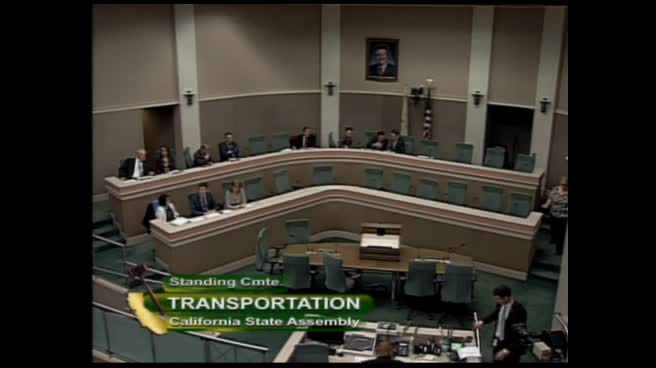
Assembly Standing Committee on Transportation
Bill Author

Bill Co-Author(s):
