AB 1433: Tribal gaming: compact ratification.
- Session Year: 2017-2018
- House: Assembly
- Latest Version Date: 2018-05-14
Existing federal law, the Indian Gaming Regulatory Act of 1988, provides for the negotiation and execution of tribal-state gaming compacts for the purpose of authorizing certain types of gaming on Indian lands within a state. The California Constitution authorizes the Governor to negotiate and conclude tribal-state gaming compacts, subject to ratification by the Legislature. Existing law expressly ratifies a number of tribal-state gaming compacts, and amendments of tribal-state gaming compacts, between the State of California and specified Indian tribes.
The California Environmental Quality Act (CEQA) requires a lead agency to prepare, or cause to be prepared, and certify the completion of, an environmental impact report on a project, as defined, that it proposes to carry out or approve that may have a significant effect on the environment, as defined, or to adopt a negative declaration if it finds that the project will not have that effect.
This bill would ratify the tribal-state gaming compact entered into between the State of California and the Elk Valley Rancheria, California, executed on August 31, 2017. The bill would provide that, in deference to tribal sovereignty, certain actions related to that compact are not projects for purposes of CEQA.
This bill would declare that it is to take effect immediately as an urgency statute.
Existing law establishes various programs to provide financial assistance for natural or working lands.This bill would require the Strategic Growth Council, on or before April 1, 2018, to establish and convene an interagency task force consisting of representatives from various state agencies who are knowledgeable in programs for natural or working lands to develop a common application form and process for those programs. The bill would require the task force, on or before January 1, 2019, to develop and implement the common application form and process for those programs.Existing law establishes various programs to provide financial assistance for natural or working lands.
This bill would require the Strategic Growth Council, on or before April 1, 2018, to establish and convene an interagency taskforce task force consisting of representatives from various state agencies who are knowledgeable in programs for natural or working lands to develop a common application form and process for those programs. The bill would require the taskforce, task force, on or before January 1, 2019, to develop and implement the common application form and process for those programs.
Existing law establishes various programs to provide financial assistance for natural or working lands.
This bill would require the Strategic Growth Council, on or before April 1, 2018, to establish and convene an interagency taskforce consisting of representatives from various state agencies who are knowledgeable in programs for natural or working lands to develop a common application form and process for those programs. The bill would require the taskforce, on or before January 1, 2019, to develop and implement the common application form and process for those programs.
The California Global Warming Solutions Act of 2006 designates the State Air Resources Board as the state agency charged with monitoring and regulating sources of emissions of greenhouse gases. The act authorizes the state board to include the use of market-based compliance mechanisms. Existing law requires all moneys, except for fines and penalties, collected by the state board as part of a market-based compliance mechanism to be deposited in the Greenhouse Gas Reduction Fund and to be available upon appropriation.This bill would create the Climate Adaptation and Resilience Based on Nature Account in the Greenhouse Gas Reduction Fund and would, upon appropriation by the Legislature in the annual Budget Act, make available the moneys in the account to the Wildlife Conservation Board for grants and programs that facilitate actions to protect and improve the resilience of natural and working land systems and enhance habitat, while reducing emissions of greenhouse gases and increasing sequestration. The bill would also provide criteria for selection of grant and program proposals for funding, including a requirement to consider advice from a review committee, to be established by the board, consisting of specified entities, as appropriate.The California Global Warming Solutions Act of 2006 designates the State Air Resources Board as the state agency charged with monitoring and regulating sources of emissions of greenhouse gases. The act authorizes the state board to include the use of market-based compliance mechanisms. Existing law requires all moneys, except for fines and penalties, collected by the state board as part of a market-based compliance mechanism to be deposited in the Greenhouse Gas Reduction Fund and to be available upon appropriation.
This bill would create the Climate Adaptation and Resilience Based on Nature Account in the Greenhouse Gas Reduction Fund and would transfer, beginning in the 201718 fiscal year, 20% of the annual proceeds of the fund to the account. The bill would, upon appropriation by the Legislature in the annual Budget Act, make available the moneys in the account to the Wildlife Conservation Board for grants and programs that facilitate actions to protect and improve the resilience of natural and working land systems and enhance habitat, while reducing emissions of greenhouse gases and increasing sequestration. The bill would also provide criteria for selection of grant and program proposals for funding, including a requirement to collaborate with consider advice from a review committee, to be established by the board, and other consisting of specified entities, where as appropriate.
The California Global Warming Solutions Act of 2006 designates the State Air Resources Board as the state agency charged with monitoring and regulating sources of emissions of greenhouse gases. The act authorizes the state board to include the use of market-based compliance mechanisms. Existing law requires all moneys, except for fines and penalties, collected by the state board as part of a market-based compliance mechanism to be deposited in the Greenhouse Gas Reduction Fund and to be available upon appropriation.
This bill would create the Climate Adaptation and Resilience Based on Nature Account in the Greenhouse Gas Reduction Fund and would transfer, beginning in the 201718 fiscal year, 20% of the annual proceeds of the fund to the account. The bill would, upon appropriation by the Legislature in the annual Budget Act, make available the moneys in the account to the Wildlife Conservation Board for grants and programs that facilitate actions to protect and improve the resilience of natural and working land systems and enhance habitat, while reducing emissions of greenhouse gases and increasing sequestration. The bill would also provide criteria for selection of grant and program proposals for funding, including a requirement to collaborate with a review committee, to be established by the board, and other specified entities, where appropriate.
The California Global Warming Solutions Act of 2006 designates the State Air Resources Board as the state agency charged with monitoring and regulating sources of emissions of greenhouse gases. The act authorizes the state board to include the use of market-based compliance mechanisms. Existing law requires all moneys, except for fines and penalties, collected by the state board as part of a market-based compliance mechanism to be deposited in the Greenhouse Gas Reduction Fund and to be available upon appropriation.
This bill would create the Climate Adaptation and Resilience Based on Nature Account in the Greenhouse Gas Reduction Fund and would transfer, beginning in the 201718 fiscal year, 20% of the annual proceeds of the fund to the account. The bill would, upon appropriation by the Legislature in the annual Budget Act, make available the moneys in the account to the Wildlife Conservation Board for grants and programs that facilitate actions to protect and improve the resilience of natural and working land systems and to reduce enhance habitat, while reducing emissions of greenhouse gases. gases and increasing sequestration.
The California Global Warming Solutions Act of 2006 designates the State Air Resources Board as the state agency charged with monitoring and regulating sources of emissions of greenhouse gases. The act authorizes the state board to include the use of market-based compliance mechanisms. Existing law requires all moneys, except for fines and penalties, collected by the state board as part of a market-based compliance mechanism to be deposited in the Greenhouse Gas Reduction Fund and to be available upon appropriation.
This bill would create the Climate Adaptation and Resilience Based on Nature Account in the Greenhouse Gas Reduction Fund and would transfer, beginning in the 201718 fiscal year, 20% of the annual proceeds of the fund to the account. The bill would, upon appropriation by the Legislature in the annual Budget Act, make available the moneys in the account to the Wildlife Conservation Board for grants and programs that facilitate actions to protect and improve the resilience of natural systems and to reduce emissions of greenhouse gases.
(a)The tribal-state gaming compact entered into in accordance with the federal Indian Gaming Regulatory Act of 1988 (18 U.S.C. Secs. 1166 to 1168, inclusive, and 25 U.S.C. Sec. 2701 et seq.) between the State of California and the Elk Valley Rancheria, California, executed on August 31, 2017, is hereby ratified.
(b)(1)In deference to tribal sovereignty, none of the following shall be deemed a project for purposes of the California Environmental Quality Act (Division 13 (commencing with Section 21000) of the Public Resources Code):
(A)The execution of an amendment to the tribal-state gaming compact ratified by this section.
(B)The execution of the tribal-state gaming compact ratified by this section.
(C)The execution of an intergovernmental agreement, or amendments thereto, between a tribe and a county or city government negotiated pursuant to the express authority of, or as expressly referenced in, the tribal-state gaming compact ratified by this section.
(D)The execution of an intergovernmental agreement between a tribe and the Department of Transportation, or other state agency, negotiated pursuant to the express authority of, or as expressly referenced in, the tribal-state gaming compact ratified by this section.
(E)The on-reservation impacts of compliance with the terms of the tribal-state gaming compact ratified by this section.
(2)Except as expressly provided in this section, this subdivision does not exempt a city, county, or city and county, or the Department of Transportation, or any state agency or local jurisdiction, from the requirements of the California Environmental Quality Act.
SEC. 2.This act is an urgency statute necessary for the immediate preservation of the public peace, health, or safety within the meaning of Article IV of the California Constitution and shall go into immediate effect. The facts constituting the necessity are:
In order to enhance the economic development, stability, and self-sufficiency of the Elk Valley Rancheria, California, and to protect the interests of the tribe and its members, the surrounding community, and the California public at the earliest possible time, it is necessary that this act take effect immediately.
SECTION 1.Part 7 (commencing with Section 71430) is added to Division 34 of the Public Resources Code, to read:7.Unified Program Application and Process71430.(a)For purposes of this section, the following definitions apply:(1)Natural lands means lands consisting of forests, grasslands, deserts, freshwater and riparian systems, wetlands, coastal and estuarine areas, watersheds, wildlands, wildlife habitat, mountain meadows, and other similar open-space land.(2)Working lands means lands used for farming, grazing, or the production of forest products.(b)On or before April 1, 2018, the Strategic Growth Council shall establish and convene an interagency task force consisting of the following:(1)Representatives from the Department of Forestry and Fire Protection who are knowledgeable in the Forest Health Greenhouse Gas Reduction Fund Grant Program and the Urban and Community Forestry Program established pursuant to the California Urban Forestry Act of 1978 (Chapter 2 (commencing with Section 4799.06) of Part 2.5 of Division 4).(2)Representatives from the Strategic Growth Council who are knowledgeable in the Sustainable Agricultural Lands Conservation Program developed pursuant to Part 1 (commencing with Section 75200) of Division 44. (3)Representatives from the Department of Fish and Wildlife who are knowledgeable in the Wetlands Restoration for Greenhouse Gas Reduction Program.(4)Representatives from the Natural Resources Agency who are knowledgeable in the Urban Greening Grant Program developed pursuant to Section 12802.10 of the Government Code.(5)Representatives from the Department of Food and Agriculture who are knowledgeable in the Healthy Soils Program established pursuant to Section 569 of the Food and Agricultural Code.(6)Representatives from the Office of Planning and Research.(7)Representatives from the California Environmental Protection Agency.(8)Representatives from any other department or agency in the state who are knowledgeable in natural or working lands programs of that department of agency that are funded by the Greenhouse Gas Reduction Fund established pursuant to Section 16428.8 of the Government Code.(c)(1)(A)On or before January 1, 2019, the task force shall develop and implement a common application form and process for the programs specified in subdivision (b).(B)The application shall require demonstration that the greenhouse gas benefits resulting from projects are durable with those benefits persisting for at least 50 years.(C)The task force shall develop the application, to the extent feasible, in a manner that obtains basic information and a description of the benefits of a project in a format that may be used for all programs specified in subdivision (b), while recognizing appropriate differences in project types.(2)The task force may also receive applications to fund a county or regional plan that includes natural and working lands for the purposes of reducing the emissions of greenhouse gases, sequestering carbon, and enhancing resilience to climate change. The planning proposal may be granted from any of the programs funded by the Greenhouse Gas Reduction Fund to the extent consistent with the legal requirements pursuant to those programs and shall not exceed 10 percent of funding for those programs.(d)An application developed pursuant to subdivision (c) and submitted to the task force pursuant to the process developed pursuant to subdivision (c) shall be considered to be an application for all the programs specified in subdivision (b).(e)The task force shall evaluate the application submitted and determine which program is the most appropriate funding source for the application and shall forward the application to the appropriate funding agency or department for consideration.(f)It is the intent of the Legislature in enacting this section to streamline the application process for various natural and working lands programs in the state.(a)For purposes of this section, the following definitions apply:
(1)Natural lands means lands consisting of forests, grasslands, deserts, freshwater and riparian systems, wetlands, coastal and estuarine areas, watersheds, wildlands, wildlife habitat, mountain meadows, and other similar open-space land.
(2)Working lands means lands used for farming, grazing, or the production of forest products.
(b)On or before April 1, 2018, the Strategic Growth Council shall establish and convene an interagency taskforce task force consisting of the following:
(1)Representatives from the Department of Forestry and Fire Protection who are knowledgeable in the Forest Health Greenhouse Gas Reduction Fund Grant Program and the Urban and Community Forestry Program established pursuant to the California Urban Forestry Act of 1978 (Chapter 2 (commencing with Section 4799.06) of Part 2.5 of Division 4).
(2)Representatives from the Strategic Growth Council who are knowledgeable in the Sustainable Agricultural Lands Conservation Program developed pursuant to Part 1 (commencing with Section 75200) of Division 44.
(3)Representatives from the Department of Fish and Wildlife who are knowledgeable in the Wetlands Restoration for Greenhouse Gas Reduction Program.
(4)Representatives from the Natural Resources Agency who are knowledgeable in the Urban Greening Grant Program developed pursuant to Section 12802.10 of the Government Code.
(5)Representatives from the Department of Food and Agriculture who are knowledgeable in the Healthy Soils Program established pursuant to Section 569 of the Food and Agricultural Code.
(6)Representatives from the Office of Planning and Research.
(7)Representatives from the California Environmental Protection Agency.
(6)(8)Representatives from any other department or agency in the state who are knowledgeable in natural or working lands programs of that department of agency that are funded by the Greenhouse Gas Reduction Fund established pursuant to Section 16428.8 of the Government Code.
(c)(1)(A)On or before January 1, 2019, the taskforce task force shall develop and implement a common application form and process for the programs specified in subdivision (b).
(B)The application shall require demonstration that the greenhouse gas benefits resulting from projects are durable with those benefits persisting for at least 50 years.
(C)The task force shall develop the application, to the extent feasible, in a manner that obtains basic information and a description of the benefits of a project in a format that may be used for all programs specified in subdivision (b), while recognizing appropriate differences in project types.
(2)The task force may also receive applications to fund a county or regional plan that includes natural and working lands for the purposes of reducing the emissions of greenhouse gases, sequestering carbon, and enhancing resilience to climate change. The planning proposal may be granted from any of the programs funded by the Greenhouse Gas Reduction Fund to the extent consistent with the legal requirements pursuant to those programs and shall not exceed 10 percent of funding for those programs.
(d)An application developed pursuant to subdivision (c) and submitted to the taskforce task force pursuant to the process developed pursuant to subdivision (c) shall be considered to be an application for all the programs specified in subdivision (b).
(e)The taskforce task force shall evaluate the application submitted and determine which program is the most appropriate funding source for the application and shall forward the application to the appropriate funding agency or department for consideration.
(f)It is the intent of the Legislature in enacting this section to streamline the application process for various natural and working lands programs in the state.
(a)For purposes of this section, the following definitions apply:
(1)Natural lands means lands consisting of forests, grasslands, deserts, freshwater and riparian systems, wetlands, coastal and estuarine areas, watersheds, wildlands, wildlife habitat, and other similar open-space land.
(2)Working lands means lands used for farming, grazing, or the production of forest products.
(b)On or before April 1, 2018, the Strategic Growth Council shall establish and convene an interagency taskforce consisting of the following:
(1)Representatives from the Department of Forestry and Fire Protection who are knowledgeable in the Forest Health Greenhouse Gas Reduction Fund Grant Program and the Urban and Community Forestry Program established pursuant to the California Urban Forestry Act of 1978 (Chapter 2 (commencing with Section 4799.06) of Part 2.5 of Division 4).
(2)Representatives from the Strategic Growth Council who are knowledgeable in the Sustainable Agricultural Lands Conservation Program developed pursuant to Part 1 (commencing with Section 75200) of Division 44.
(3)Representatives from the Department of Fish and Wildlife who are knowledgeable in the Wetlands Restoration for Greenhouse Gas Reduction Program.
(4)Representatives from the Natural Resources Agency who are knowledgeable in the Urban Greening Grant Program developed pursuant to Section 12802.10 of the Government Code.
(5)Representatives from the Department of Food and Agriculture who are knowledgeable in the Healthy Soils Program established pursuant to Section 569 of the Food and Agriculture Code.
(6)Representatives from any other department or agency in the state who are knowledgeable in natural or working lands programs of that department of agency that are funded by the Greenhouse Gas Reduction Fund established pursuant to Section 16428.8 of the Government Code.
(c)On or before January 1, 2019, the taskforce shall develop and implement a common application form and process for the programs specified in subdivision (b).
(d)An application developed pursuant to subdivision (c) and submitted to the taskforce pursuant to the process developed pursuant to subdivision (c) shall be considered to be an application for all the programs specified in subdivision (b).
(e)The taskforce shall evaluate the application submitted and determine which program is the most appropriate funding source for the application and shall forward the application to the appropriate funding agency or department for consideration.
(f)It is the intent of the Legislature in enacting this section to streamline the application process for various natural and working lands programs in the state.
SECTION 1.This act shall be known, and may be cited, as the Climate Adaptation and Resilience Based on Nature Act.SEC. 2.The Legislature finds and declares all of the following:(a)Natural and working lands, including forests, farms, rangeland, and wetlands, are significant carbon sinks.(b)Improvements to forest management, agricultural, and ranching practices can substantially reduce emissions of greenhouse gases and increase soil carbon.(c)Our forests and other natural and working lands provide many vital services that benefit all state residents, including capturing, storing, and delivering the majority of the states utilized water, cleaning our air, and providing habitat for our diverse and abundant fish and wildlife, as well as employment for many rural communities. Our forests and other natural areas also offer many beautiful places for recreation and renewal.(d)A warming climate and shifting precipitation regimes are causing additional stress on these systems, exacerbating degradation and impacts from past fragmentation and management, and thereby threatening those carbon stores and other values.(e)Promoting resilience and adapting to a changing climate is a state priority and will enhance the stability and amount of those carbon stores, improve the reliability of our water supplies, help ensure habitat for fish and wildlife, and support rural resource economies. However, there is no dedicated source of funding for natural resource adaptation and resilience efforts.SEC. 3.Article 3.6 (commencing with Section 1373) is added to Chapter 4 of Division 2 of the Fish and Game Code, to read:3.6.Climate Adaptation and Resilience Based on Nature Act1373.(a)For purposes of this section, the following definitions apply:(1)Natural lands means lands consisting of forests, grasslands, deserts, freshwater and riparian systems, wetlands, coastal and estuarine areas, watersheds, wildlands, wildlife habitat, and other similar open-space land.(2)Working lands means lands used for farming, grazing, or the production of forest products.(b)The Climate Adaptation and Resilience Based on Nature Account is hereby created in the Greenhouse Gas Reduction Fund established pursuant to Section 16428.8 of the Government Code, and moneys in the account shall be available upon appropriation by the Legislature. The account may receive moneys upon appropriation by the Legislature from bonds, the Greenhouse Gas Reduction Fund, settlements, or any other revenue sources.(c)Appropriations from the Climate Adaptation and Resilience Based on Nature Account shall be made in the annual Budget Act to the Wildlife Conservation Board for grants and programs that facilitate actions to protect and improve the resilience of natural and working land systems and enhance habitat, while reducing emissions of greenhouse gases and increasing sequestration.(d)(1)The Wildlife Conservation Board shall rank and select grant and program proposals for funding pursuant to this section, considering advice from the review committee established pursuant to paragraph (2).(2)The Wildlife Conservation Board shall convene a review committee consisting of experts from relevant departments, conservancies, boards, and commissions, as appropriate, to advise the board as provided in paragraph (1).(e)Grants and programs funded by this section shall reduce emissions of greenhouse gases, enhance long-term sequestration, and result in enduring benefits.(f)In awarding grants and program funds, the Wildlife Conservation Board shall give priority to projects that restore and maintain relatively natural habitats, promote climate adaptation and resilience in natural or working land systems, and provide multiple ecosystem benefits.This act shall be known, and may be cited, as the Climate Adaptation and Resilience Based on Nature Act.
SEC. 2.The Legislature finds and declares all of the following:
(a)Natural and working lands, including forests, farms, rangeland, and wetlands, are significant carbon sinks.
(b)Improvements to forest management, agricultural, and ranching practices can substantially reduce emissions of greenhouse gases and increase soil carbon.
(c)Our forests and other natural and working lands provide many vital services that benefit all state residents, including capturing, storing, and delivering the majority of the states utilized water, cleaning our air, and providing habitat for our diverse and abundant fish and wildlife, as well as employment for many rural communities. Our forests and other natural areas also offer many beautiful places for recreation and renewal.
(d)A warming climate and shifting precipitation regimes are causing additional stress on these systems, exacerbating degradation and impacts from past fragmentation and management, and thereby threatening those carbon stores and other values.
(e)Promoting resilience and adapting to a changing climate is a state priority and will enhance the stability and amount of those carbon stores, improve the reliability of our water supplies, help ensure habitat for fish and wildlife, and support rural resource economies. However, there is no dedicated source of funding for natural resource adaptation and resilience efforts.
SEC. 3.Section 16428.96 is added to the Government Code, to read:16428.96.(a)The Climate Adaptation and Resilience Based on Nature Account is hereby created in the fund, and moneys in the account shall be available upon appropriation by the Legislature. The account may receive moneys upon appropriation by the Legislature from bonds, settlements, or any other revenue sources. (b)Beginning in the 201718 fiscal year and each fiscal year thereafter, 20 percent of the annual proceeds of the fund are hereby transferred to the Climate Adaptation and Resilience Based on Nature Account.(c)Appropriations from the Climate Adaptation and Resilience Based on Nature Account shall be made in the annual Budget Act to the Wildlife Conservation Board for grants and programs that facilitate actions to protect and improve the resilience of natural and working land systems and enhance habitat, while reducing emissions of greenhouse gases and increasing sequestration.(d)(1)The Wildlife Conservation Board shall rank and select grant and program proposals for funding pursuant to this section in collaboration with the review committee established pursuant to paragraph (2), conservancies, and other departments, boards, and commissions, where appropriate.(2)The Wildlife Conservation Board shall convene a review committee consisting of experts from conservancies and other departments, boards, and commissions, where appropriate, to collaborate with the board as provided in paragraph (1).(e)Grants and programs funded by this section shall reduce emissions of greenhouse gases, enhance long-term sequestration, and result in enduring benefits.(f)In awarding grants and program funds, the Wildlife Conservation Board shall give priority to projects that restore and maintain relatively natural habitats, promote climate adaptation and resilience in natural or working land systems, and provide multiple ecosystem benefits.(g)For purposes of this section, the following definitions apply:(1)Natural lands means lands consisting of forests, grasslands, deserts, freshwater and riparian systems, wetlands, coastal and estuarine areas, watersheds, wildlands, wildlife habitat, and other similar open-space land.(2)Working lands means lands used for farming, grazing, or the production of forest products.SEC. 3.Article 3.6 (commencing with Section 1373) is added to Chapter 4 of Division 2 of the Fish and Game Code, to read:3.6.Climate Adaptation and Resilience Based on Nature Act1373.(a)For purposes of this section, the following definitions apply:
(1)Natural lands means lands consisting of forests, grasslands, deserts, freshwater and riparian systems, wetlands, coastal and estuarine areas, watersheds, wildlands, wildlife habitat, and other similar open-space land.
(2)Working lands means lands used for farming, grazing, or the production of forest products.
(b)The Climate Adaptation and Resilience Based on Nature Account is hereby created in the Greenhouse Gas Reduction Fund established pursuant to Section 16428.8 of the Government Code, and moneys in the account shall be available upon appropriation by the Legislature. The account may receive moneys upon appropriation by the Legislature from bonds, the Greenhouse Gas Reduction Fund, settlements, or any other revenue sources.
(c)Appropriations from the Climate Adaptation and Resilience Based on Nature Account shall be made in the annual Budget Act to the Wildlife Conservation Board for grants and programs that facilitate actions to protect and improve the resilience of natural and working land systems and enhance habitat, while reducing emissions of greenhouse gases and increasing sequestration.
(d)(1)The Wildlife Conservation Board shall rank and select grant and program proposals for funding pursuant to this section, considering advice from the review committee established pursuant to paragraph (2).
(2)The Wildlife Conservation Board shall convene a review committee consisting of experts from relevant departments, conservancies, boards, and commissions, as appropriate, to advise the board as provided in paragraph (1).
(e)Grants and programs funded by this section shall reduce emissions of greenhouse gases, enhance long-term sequestration, and result in enduring benefits.
(f)In awarding grants and program funds, the Wildlife Conservation Board shall give priority to projects that restore and maintain relatively natural habitats, promote climate adaptation and resilience in natural or working land systems, and provide multiple ecosystem benefits.
This act shall be known, and may be cited, as the Climate Adaptation and Resilience Based on Nature Act.
SEC. 2.The Legislature finds and declares all of the following:
(a)Natural and working lands, including forests, farms, rangeland, and wetlands, are significant carbon sinks.
(b)Improvements to forest management, agricultural, and ranching practices can substantially reduce emissions of greenhouse gases and increase soil carbon.
(c)Our forests and other natural and working lands provide many vital services that benefit all state residents, including capturing, storing, and delivering the majority of the states utilized water, cleaning our air, and providing habitat for our diverse and abundant fish and wildlife, as well as employment for many rural communities. Our forests and other natural areas also offer many beautiful places for recreation and renewal.
(d)A warming climate and shifting precipitation regimes are causing additional stress on these systems, exacerbating degradation and impacts from past fragmentation and management, and thereby threatening those carbon stores and other values.
(e)Promoting resilience and adapting to a changing climate is a state priority and will enhance the stability and amount of those carbon stores, improve the reliability of our water supplies, help ensure habitat for fish and wildlife, and support rural resource economies. However, there is no dedicated source of funding for natural resource adaptation and resilience efforts.
SEC. 3.Section 16428.96 is added to the Government Code, to read:16428.96.(a)The Climate Adaptation and Resilience Based on Nature Account is hereby created in the fund, and moneys in the account shall be available upon appropriation by the Legislature. The account may receive moneys upon appropriation by the Legislature from bonds, settlements, or any other revenue sources.
(b)Beginning in the 201718 fiscal year and each fiscal year thereafter, 20 percent of the annual proceeds of the fund are hereby transferred to the Climate Adaptation and Resilience Based on Nature Account.
(c)Appropriations from the Climate Adaptation and Resilience Based on Nature Account shall be made in the annual Budget Act to the Wildlife Conservation Board for grants and programs that facilitate actions to protect and improve the resilience of natural and working land systems and enhance habitat, while reducing emissions of greenhouse gases and increasing sequestration.
(d)(1)The Wildlife Conservation Board shall rank and select grants and programs grant and program proposals for funding pursuant to this section in collaboration with the review committee established pursuant to paragraph (2), regional conservancies conservancies, and other departments, boards, and commissions, where appropriate.
(2)The Wildlife Conservation Board shall convene a review committee consisting of experts from conservancies and other departments, boards, and commissions, where appropriate, to collaborate with the board as provided in paragraph (1).
(e)Programs and grants Grants and programs funded by this section shall reduce emissions of greenhouse gases, enhance long-term sequestration, and result in enduring benefits.
(f)In awarding grants, grants and program funds, the Wildlife Conservation Board shall give priority to projects that restore and maintain relatively natural habitats, promote climate adaptation and resilience in natural or working land systems, and provide multiple ecosystem benefits.
(g)For purposes of this section, the following definitions apply:
(1)Natural lands means lands consisting of forests, grasslands, deserts, freshwater and riparian systems, wetlands, coastal and estuarine areas, watersheds, wildlands, wildlife habitat, and other similar open-space land.
(2)Working lands means lands used for farming, grazing, or the production of forest products.
This act shall be known, and may be cited, as the Climate Adaptation and Resilience Based on Nature Act.
SEC. 2.The Legislature finds and declares all of the following:
(a)Natural and working lands, including forests, farms, rangeland, and wetlands, are significant carbon sinks.
(b)Improvements to forest management, agricultural, and ranching practices can substantially reduce emissions of greenhouse gases and increase soil carbon.
(b)(c)Our forests and other natural and working lands provide many vital services that benefit all state residents, including capturing, storing, and delivering the majority of the states utilized water, cleaning our air, and providing habitat for our diverse and abundant fish and wildlife, as well as employment for many rural communities. Our forests and other natural areas also offer many beautiful places for recreation and renewal.
(c)(d)A warming climate and shifting precipitation regimes are causing additional stress on these natural systems, exacerbating degradation and impacts from past fragmentation and management, and thereby threatening those carbon stores and other values.
(d)(e)Promoting resilience and adapting to a changing climate is a state priority and will enhance the stability and amount of those carbon stores, improve the reliability of our water supplies, help ensure habitat for fish and wildlife, and support rural resource economies. However, there is no dedicated source of funding for natural resource adaptation and resilience efforts.
SEC. 3.Section 16428.96 is added to the Government Code, to read:16428.96.(a)The Climate Adaptation and Resilience Based on Nature Account is hereby created in the fund, and moneys in the account shall be available upon appropriation by the Legislature. The account may receive moneys upon appropriation by the Legislature from bonds, settlements, or any other revenue sources.
(b)Beginning in the 201718 fiscal year and each fiscal year thereafter, 20 percent of the annual proceeds of the fund are hereby transferred to the Climate Adaptation and Resilience Based on Nature Account.
(c)Appropriations from the Climate Adaptation and Resilience Based on Nature Account shall be made in the annual Budget Act to the Wildlife Conservation Board for grants and programs that facilitate actions to protect and improve the resilience of natural and working land systems and reduce enhance habitat, while reducing emissions of greenhouse gases. gases and increasing sequestration.
(d)The Wildlife Conservation Board shall select grants and programs for funding pursuant to this section in collaboration with regional conservancies and other departments, boards, and commissions, where appropriate.
(e)Programs and grants funded by this section shall reduce emissions of greenhouse gases, enhance long-term sequestration, and result in enduring benefits.
(f)In awarding grants, the Wildlife Conservation Board shall give priority to projects that restore and maintain relatively natural habitats, promote climate adaptation and resilience in natural or working land systems, and provide multiple ecosystem benefits.
(g)For purposes of this section, the following definitions apply:
(1)Natural lands means lands consisting of forests, grasslands, deserts, freshwater and riparian systems, wetlands, coastal and estuarine areas, watersheds, wildlands, wildlife habitat, and other similar open-space land.
(2)Working lands means lands used for farming, grazing, or the production of forest products.
This act shall be known, and may be cited, as the Climate Adaptation and Resilience Based on Nature Act.
SEC. 2.The Legislature finds and declares all of the following:
(a)Natural lands, including forests, rangeland, and wetlands, are significant carbon sinks.
(b)Our forests and other natural lands provide many vital services that benefit all state residents, including capturing, storing, and delivering the majority of the states utilized water, cleaning our air, and providing habitat for our diverse and abundant fish and wildlife, as well as employment for many rural communities. Our forests and other natural areas also offer many beautiful places for recreation and renewal.
(c)A warming climate and shifting precipitation regimes are causing additional stress on these natural systems, exacerbating degradation and impacts from past fragmentation and management, and thereby threatening those carbon stores and other values.
(d)Promoting resilience and adapting to a changing climate is a state priority and will enhance the stability and amount of those carbon stores, improve the reliability of our water supplies, help ensure habitat for fish and wildlife, and support rural resource economies. However, there is no dedicated source of funding for natural resource adaptation efforts.
SEC. 3.Section 16428.96 is added to the Government Code, to read:16428.96.(a)The Climate Adaptation and Resilience Based on Nature Account is hereby created in the fund, and moneys in the account shall be available upon appropriation by the Legislature. The account may receive moneys upon appropriation by the Legislature from bonds, settlements, or any other revenue sources.
(b)Beginning in the 201718 fiscal year and each fiscal year thereafter, 20 percent of the annual proceeds of the fund are hereby transferred to the Climate Adaptation and Resilience Based on Nature Account.
(c)Appropriations from the Climate Adaptation and Resilience Based on Nature Account shall be made in the annual Budget Act to the Wildlife Conservation Board for grants and programs that facilitate actions to protect and improve the resilience of natural systems and reduce emissions of greenhouse gases.
(d)The Wildlife Conservation Board shall select grants and programs for funding pursuant to this section in collaboration with regional conservancies and other departments, boards, and commissions, where appropriate.
(e)Programs and grants funded by this section shall reduce emissions of greenhouse gases, enhance long-term sequestration, and result in enduring benefits.
(f)In awarding grants, the Wildlife Conservation Board shall give priority to projects that restore and maintain relatively natural habitats, promote climate adaptation in natural systems, and provide multiple ecosystem benefits.
|
Date
|
Status
|
|---|---|
| May 14, 2018 | Chaptered by Secretary of State - Chapter 11, Statutes of 2018. |
| May 14, 2018 | Approved by the Governor. |
| May 7, 2018 | Enrolled and presented to the Governor at 11 a.m. |
| May 3, 2018 | Urgency clause adopted. Senate amendments concurred in. To Engrossing and Enrolling. |
| Apr 26, 2018 | In Assembly. Concurrence in Senate amendments pending. May be considered on or after April 28 pursuant to Assembly Rule 77. |
| Apr 26, 2018 | Read third time. Urgency clause adopted. Passed. Ordered to the Assembly. |
| Apr 11, 2018 | Read second time. Ordered to third reading. |
| Apr 10, 2018 | From inactive file. |
| Sep 14, 2017 | Ordered to inactive file at the request of Senator McGuire. |
| Sep 5, 2017 | Read second time. Ordered to third reading. |
| Sep 1, 2017 | From committee: Do pass. (Ayes 6. Noes 1.) (September 1). |
| Aug 21, 2017 | In committee: Referred to APPR. suspense file. |
| Jul 18, 2017 | Read second time and amended. Re-referred to Com. on APPR. |
| Jul 17, 2017 | From committee: Amend, and do pass as amended and re-refer to Com. on APPR. (Ayes 8. Noes 0.) (July 11). |
| Jul 6, 2017 | Withdrawn from committee. |
| Jul 6, 2017 | From committee: Do pass and re-refer to Com. on APPR. (Ayes 6. Noes 0.) (July 5). Re-referred to Com. on APPR. |
| Jun 21, 2017 | From committee chair, with author's amendments: Amend, and re-refer to committee. Read second time, amended, and re-referred to Com. on EQ. |
| Jun 14, 2017 | Referred to Coms. on EQ. and N.R. & W. |
| Jun 1, 2017 | In Senate. Read first time. To Com. on RLS. for assignment. |
| May 31, 2017 | Read third time. Passed. Ordered to the Senate. (Ayes 62. Noes 12. Page 1920.) |
| May 30, 2017 | Read second time. Ordered to third reading. |
| May 26, 2017 | From committee: Do pass. (Ayes 13. Noes 4.) (May 26). |
| May 17, 2017 | In committee: Set, first hearing. Referred to APPR. suspense file. |
| May 1, 2017 | Re-referred to Com. on APPR. |
| Apr 27, 2017 | Read second time and amended. |
| Apr 26, 2017 | From committee: Amend, and do pass as amended and re-refer to Com. on APPR. (Ayes 9. Noes 1.) (April 24). |
| Apr 19, 2017 | Re-referred to Com. on NAT. RES. |
| Apr 18, 2017 | From committee chair, with author's amendments: Amend, and re-refer to Com. on NAT. RES. Read second time and amended. |
| Apr 17, 2017 | Re-referred to Com. on NAT. RES. |
| Apr 6, 2017 | From committee chair, with author's amendments: Amend, and re-refer to Com. on NAT. RES. Read second time and amended. |
| Mar 13, 2017 | Referred to Com. on NAT. RES. |
| Feb 19, 2017 | From printer. May be heard in committee March 21. |
| Feb 17, 2017 | Read first time. To print. |
|
Date
|
Description
|
Location
|
Votes
|
|
|---|---|---|---|---|
| May 3, 2018 | AB 1433 WOOD Concurrence - Urgency Added | Assembly Floor |
Passed |
|
| Apr 26, 2018 | Assembly 3rd Reading AB1433 Wood et al. By McGuire Urgency Clause | Senate Floor |
Passed |
|
| Sep 1, 2017 | Do pass | Senate Standing Committee on Appropriations |
Passed |
|
| Aug 21, 2017 | Placed on suspense file | Senate Standing Committee on Appropriations |
Passed |
|
| Jul 11, 2017 | Do pass as amended, but first amend, and re-refer to the Committee on [Appropriations] | Senate Standing Committee on Natural Resources and Water |
Passed |
|
| Jul 5, 2017 | Do pass, but first be re-referred to the Committee on [Appropriations] | Senate Standing Committee on Environmental Quality |
Passed |
|
| May 31, 2017 | AB 1433 WOOD Assembly Third Reading | Assembly Floor |
Passed |
|
| May 26, 2017 | Do pass. | Assembly Standing Committee on Appropriations |
Passed |
|
| Apr 24, 2017 | Do pass as amended and be re-referred to the Committee on [Appropriations] | Assembly Standing Committee on Natural Resources |
Passed |
This list shows positions taken on this bill by organizations on the date displayed, which is linked to the original source.
Positions by individuals are not included.
|
Organization
|
Position
|
Date
|
|---|---|---|
| Audubon California | ** Support | Sep 4, 2017 |
| Bear Yuba Land Trust | ** Support | Jul 3, 2017 |
| Big Sur Land Trust | * Support | Apr 24, 2017 |
| California Association Of Resource Conservation Districts | ** Support | Sep 4, 2017 |
| California Chamber Of Commerce | ** Against | Apr 21, 2017 |
| California Climate and Agriculture Network | ** Support | Sep 4, 2017 |
| California Compost Coalition | * Support | Apr 24, 2017 |
| California Forestry Association | * Against Unless Amend | Apr 24, 2017 |
| California Tahoe Alliance | ** Support | Sep 4, 2017 |
| California Taxpayers Association | ** Against | Sep 4, 2017 |
| California Trout | * Support | Apr 24, 2017 |
| California Trout | * For If Amend | Apr 24, 2017 |
| Carbon Cycle Institute | ** Support | Sep 4, 2017 |
| Community Alliance of Family Farmers | * Support | Apr 24, 2017 |
| Defenders Of Wildlife Mountains Recreation And Conservation Authority | ** Support | Sep 4, 2017 |
| East Bay Regional Park District | ** Support | Jul 7, 2017 |
| Eastern Sierra Land Trust | ** Support | Jul 3, 2017 |
| Grassland Water District | * Support | Apr 24, 2017 |
| Grassland Water District | * For If Amend | Apr 24, 2017 |
| Mountains Recreation And Conservation Authority | ** Support | Apr 21, 2017 |
| Pacific Forest Trust | ** Support | Sep 4, 2017 |
| Placer Land Trust | ** Support | Jul 3, 2017 |
| Sierra Business Council | ** Support | Sep 4, 2017 |
| Sierra Foothill Conservancy | ** Support | Jul 3, 2017 |
| Sierra Forest Legacy | ** Support | Sep 4, 2017 |
| Sonoma County Agricultural Preservation And Open Space District | ** Support | Sep 4, 2017 |
| The Nature Conservancy | ** Support | Sep 4, 2017 |
| The Ocean Conservancy | ** Support | Sep 4, 2017 |
| The Watershed Center | ** Support | Sep 4, 2017 |
| Truckee Donner Land Trust | ** Support | Jul 3, 2017 |
| Trust for Public Land | ** Support | Sep 4, 2017 |
| Wholly H2O | ** Support | Sep 4, 2017 |
| Wild Farm Alliance None Received | ** Support | Sep 4, 2017 |
CONCURRENCE IN SENATE AMENDMENTS
CSA1 Bill Id:AB 1433
Author:(Wood)
As Amended Ver:April 10, 2018
2/3 vote. Urgency
ASSEMBLY: |
| (May 31, 2017) | SENATE: | 34-0 | (April 26, 2018) |
(vote not relevant)
Original Committee Reference: NAT. RES.
SUMMARY: Ratifies the tribal state compact (Compact) entered into between the State of California and the Elk Valley Rancheria, California (Tribe) executed on August 31, 2017. Additionally, this bill provides that, in deference to tribal sovereignty, certain actions are not deemed projects for purposes of the California Environmental Quality Act (CEQA); and, stipulates, except as expressly provided, that none of the provisions shall be construed to exempt a city, county, or city and county, or the Department of Transportation from CEQA requirements.
The Senate amendments:
- Ratify a Compact between the State of California and the Tribe executed on August 31, 2017.
- Provide that in deference to tribal sovereignty, certain actions are not deemed projects for purposes of the California Environmental Quality Act (CEQA), as specified.
- Stipulate, except as expressly provided, that none of the provisions shall be construed to exempt a city, county, or city, and county, or the Department of Transportation, or any state agency or local jurisdictions, from CEQA requirements.
- Contain an urgency clause, allowing this bill to take effect immediately upon enactment.
GENERAL OVERVIEW:
On August 31, 2017, the Elk Valley Rancheria, California, a federally recognized Indian tribe, and the State of California (State) entered into a tribal-state Class III gaming compact pursuant to the Indian Gaming Regulatory Act of 1988.
Currently, the Tribe operates a tribal gaming casino (Elk Valley Casino) in Crescent City, California, in Del Norte County offering Class III gaming activities on its land, including approximately 310 Class III gaming devices pursuant to a 1999 tribal-state compact (1999 Compact). The Tribe's existing 1999 Compact is set to expire in 2020. This new Compact authorizes the Tribe to operate a maximum of 1,200 gaming devices (slot machines) at no more than two gaming facilities located within its existing Indian lands, as defined.
The economic terms of the Compact reflect the Tribe's specific circumstances and the Del Norte market. The Tribe has agreed to pay the State its pro rata share of costs the State incurs for the performance of its duties under the Compact, as specified. The Tribe will not contribute to the Revenue Sharing Trust Fund (RSTF) and the Tribal Nation Grant Fund (TNGF) unless it intends to operate more than 1,200 devices. The Tribe will continue to be eligible to receive RSTF distributions.
The Tribe and Del Norte County have entered into a memorandum of understanding (MOU) to mitigate the off-reservation, as well as environmental impacts from operating a gaming facility. It covers a full range of municipal services: law enforcement and prosecution; emergency response services; fire protection; and sewer and water services.
According to the Governor's Office, the licensing, regulatory, patron protection, labor, public health and safety provisions are substantially the same as other recent compacts. The environmental mitigation process involves a more collaborative process and is likely to cost less, which benefits both the Tribe and the County. In the unlikely event that the Tribe wants to commence a project involving more than 400 slots it will have to renegotiate.
In addition, the Compact: (1) provides a regulatory framework that respects the role of the Tribal Gaming Agency as the primary regulator while also ensuring that state gaming regulators fulfill their responsibilities; (2) requires the Tribe to conduct its gaming activities pursuant to an internal control system that implements minimum internal controls that are no less stringent than those in federal regulations; (3) requires the Tribe to adopt a Tribal Labor Relations Ordinance, as specified; and, (4) contains provisions to protect the health and safety of patrons, guests, and employees.
The Compact's preamble states, the State and the Tribe have concluded that this Compact protects the interests of the Tribe and its members, the surrounding community, and the California public, and will promote and secure long-term stability, mutual respect, and mutual benefits.
The Compact shall be in full force and effect until 25 years following the effective date.
EXISTING LAW:
- Provides, under the Federal Indian Gaming Regulatory Act (IGRA), for the negotiation and conclusion of compacts between federally recognized Indian tribes and the State for the purpose of conducting Class III gaming activities on Indian lands within a State as a means of promoting tribal economic development, self-sufficiency, and strong tribal governments.
- Authorizes expressly a number of tribal-state gaming compacts between the State of California and specified Indian tribes.
- Authorizes the conduct of Class III gaming activities to the extent such activities are permitted by state law, a gaming compact has been concluded by a federally recognized tribe and the State, and the compact has been approved by the Secretary of the Interior.
- Limits the operation of Class III gaming activities to Indian lands acquired on or before October 17, 1988. Provides exceptions to conduct gaming activities on Indian lands acquired after October 17, 1988.
- Defines Indian lands to mean all lands within the limits of any Indian reservation, and any lands title to which is either held in trust by the United States (U.S.) for the benefit of any Indian tribe, or individual, or held by any Indian tribe or individual subject to restriction by the U.S. against alienation and over which an Indian tribe exercises governmental power.
- Requires the State to negotiate to conclude a compact in good faith with an Indian tribe having jurisdiction over the Indian lands upon which the Class III gaming activity is to be conducted. Provides the U.S. district courts with jurisdiction over any cause of action initiated by a tribal government alleging that the State failed to negotiate in good faith to conclude a compact. Prescribes the remedy, mediation supervised by the courts, if it is found that the State failed to negotiate in good faith to conclude a compact.
- Authorizes the Governor, under the California Constitution, to negotiate and conclude compacts, subject to ratification by the Legislature.
FISCAL EFFECT: Unknown
COMMENTS: On March 12, 2018, the Assembly Governmental Organization Committee held an informational hearing on this Compact entered into between the State of California and the Elk Valley Rancheria, California.
Brief History and Background: The Elk Valley Rancheria, California is located approximately one-mile south of Crescent City in Del Norte County, along the Pacific coast in the far northwestern tip of California. The Tribe's current enrollment is 88 members comprised of descendants of Tolowa and Yurok people.
The Tribe's Rancheria was formally established under federal law in 1909. However, with the enactment of the federal California Rancheria Act in 1958, Elk Valley's tribal status was terminated. As a result of the "Tillie Hardwick" decision (Hardwick, et al. v. United States of America) of 1983, a U.S. District Court restored the status of 17 of the small California Rancherias that had been terminated under the 1958 law, including Elk Valley. The Tribe formally reorganized in 1994 pursuant to a written Tribal Constitution approved by the U.S. Secretary of the Interior.
In order to obtain land, the Tribe, in 1995, entered into a lease agreement for a small parcel of property within the Rancheria boundaries that the United States government had accepted into trust. After executing the lease, the Tribe constructed a gaming facility and commenced gaming in November 1995. Since that initial agreement, the Tribe has continued to acquire land within or near the Rancheria. Specifically, the Tribe obtained the Martin Ranch Property in 1998 – approximately 204 acres located approximately one-mile south of the exterior boundaries of the Rancheria. This land was accepted into trust in March 2008, making it eligible for gaming.
In 1999, the Tribe and the State entered into a tribal-state compact. The 1999 Compact enabled the Tribe, through revenues generated by its gaming operation, to improve the governance, environment, education, health, safety, and general welfare of its citizens, to promote a strong tribal government, self-sufficiency, and to provide essential government services to its citizens.
Under the terms of this new Compact, the Tribe will be considered a "limited gaming" tribe and remain eligible for distributions from the RSTF until such time as it operates 350 or more gaming devices (slot machines). According to the Governor's Office, in view of the current market conditions in Del Norte County, it is unlikely the Tribe will ever operate more 349 machines.
The Tribe's "Elk Valley Casino" is a 26,500 square feet facility, offering approximately 300 slot machines, two blackjack tables, six poker tables, an 85-seat restaurant, and bingo hall/events center. The Tribe currently employs approximately 220 people, from that, 120 are employed at its gaming facility.
The Tribe has announced plans to build a new gaming facility, hotel, and conference center on eligible gaming land, i.e., the Martin Ranch property (BIA 2008 Record of Decision). The "Elk Valley Resort and Casino" will be constructed on tribal land adjacent to U.S. Highway 101 and Humboldt Road. The development will include a 40,000-square foot casino, 156-room hotel, 20,000 square foot conference center, and parking facilities. The new facility will have space for up to 400 slot machines, approximately six blackjack tables, a poker room, 135-seat restaurant, and bingo hall/events center.
According to the Tribe, the proposed Elk Valley Casino and Resort has been subject to an extensive environmental review under federal and state law, including the Bureau of Indian Affairs, California Coastal Commission, County of Del Norte, and the City of Crescent City, the National Environmental Policy Act, California Environmental Quality Act, Coastal Act, and the Tribal Environmental Review Ordinance. The Tribe will close the existing casino after the new gaming facility opens.
The Tribe states that their efforts, including the current Elk Valley Casino and future Elk Valley Resort and Casino, increases regional tourism, creates new business opportunities, and increases commercial recreational facilities and opportunities for all members of the community, not just the Tribe.
Key Provisions of the Compact:
Scope of Class III Gaming Authorized: The Tribe is authorized to operate up to 1,200 gaming devices (slot machines), banking or percentage card games, and any devices or games that are authorized under state law to the California State Lottery, provided that the Tribe will not offer such games through use of the Internet unless others in the state are permitted to do so under state and federal law. The Tribe shall not be prohibited from offering Class II gaming or precluded from negotiating a separate compact governing the conduct of off-track wagering at the Tribe's gaming facility. The Tribe shall not engage in Class III gaming that is not expressly authorized in the Compact. Although the device limit is 1,200 slot machines, the environmental provisions of this Compact limit the Tribe to no more than 400 slot machines because the environmental analysis related to the Record of Decision to place the Martin Ranch property into trust evaluated a project of that scope. If the Tribe intends to commence a Project that will result in the operation of more than 400 slot machines, the Tribe and the State must renegotiate the Compact.
Authorized Gaming Facility: The Tribe may establish and operate not more than two (2) gaming facilities and engage in Class III gaming only on eligible Indian lands held in trust for the Tribe, located within the boundaries of the Tribe's Rancheria, as those boundaries exist as of the execution date of this Compact, as legally described in, and represented on the map at Appendix A hereto, and on which Class III gaming may lawfully be conducted under IGRA. The Tribe may combine and operate in its gaming facilities any forms and kinds of gaming permitted under law, except to the extent limited under IGRA, this Compact, or the Tribe's gaming ordinance.
Memorandum of Agreement with Del Norte County: The Tribe and County have entered into a memorandum of understanding (MOU) to mitigate the off-reservation, as well as environmental impacts resulting from the existing casino and new facility being planned. It covers a full range of municipal services: law enforcement and prosecution; emergency response services; fire protection; and sewer and water services. The MOU provides for escalating annual payments estimated to be approximately $430,000 in the first year of operation after full build out. In addition, the project is expected to generate additional local and state taxes of $2 million due to construction activities and between $400,000 and $520,000 from increased economic activity associated with resort operations in the County.
Exclusivity: Provides that in the event the exclusive right of Indian tribes to operate slot machines in California pursuant to the California Constitution is lost and other non-Indian entities are able to operate slot machines the Tribe shall have the right to terminate this Compact, in which case the Tribe will lose the right to operate Class III gaming authorized by this Compact; or continue under this Compact, with an entitlement to a reduction of revenue sharing as defined.
Tribal Ownership, Management, and Control of Gaming Operation: The gaming operation authorized under this Compact shall be owned solely by the Tribe.
Payments to the RSTF or the TNGF: Under the terms of this new Compact, the Tribe shall have no obligation to pay any amount to the RSTF and TNGF so long as the Tribe operates less than 1,200 slot machines. The Compact defines "Net Win" to mean the "drop from gaming devices, plus the redemption value of expired tickets, less fills, less payouts, less that portion of the gaming operation's payments to a third-party wide-area progressive jackpot system provider that is contributed only to the progressive jackpot amount."
If the MOA with the County ceases to be in effect, the State may request renegotiation of this Compact to address issues related to local mitigation and reasonable contributions to the RSTF and TNGF.
Payments to the Special Distribution Fund: The Tribe shall pay to the State on a pro rata basis the State's costs incurred for purposes consistent with IGRA, including the performance of all its duties under this Compact, the administration and implementation of tribal-state Class III gaming compacts, and funding for the Office of Problem Gambling, as determined by the monies appropriated in the annual Budget Act each fiscal year to carry out those purposes.
The Tribe's pro rata share of the State's costs in any given year this Compact is in effect may not be increased more than 5% per year and shall be calculated using the following equation: "The maximum number of gaming devices operated in the gaming facility during the previous State fiscal year as determined by the California Gambling Control Commission (CGCC), divided by the maximum number of gaming devices operated by all federally recognized tribes in California pursuant to tribal-state Class III gaming compacts during the previous State fiscal year, multiplied by the Appropriation, equals the Tribe's pro rata share."
In other recent compacts, such as Graton, Pechanga, Morongo and others, the tribes agreed to pay more than their pro rata share. There is budget trailer language to authorize the Department of Finance and CGCC to reduce or eliminate the obligation of RSTF eligible tribes to make payments into the SDF if the SDF has sufficient funds to meet its obligations. The Compact includes a new provision that addresses this objective: In any given state fiscal year, to the extent permissible and only as may be provided under State law, the State Gaming Agency may reduce or eliminate the Tribe's pro rata share payment obligation to the SDF.
Additional Compact Components:
Gaming Ordinance and Regulations: All gaming activities conducted under this Compact shall, at a minimum, comply with: 1) a gaming ordinance duly adopted by the Tribe and approved in accordance with IGRA, 2) all rules, regulations, procedures, specifications, and standards duly adopted by the National Indian Gaming Commission (NIGC), the Tribal Gaming Agency, and the California Gambling Control Commission (CGCC), and 3) the provisions of this Compact, as specified.
Licensing Requirements and Procedures: All persons in any way connected with the gaming operation or gaming facility who are required to be licensed or to submit to a background investigation under IGRA, and any others required to be licensed under this Compact, including, without limitation, all gaming employees, gaming resource suppliers, financial sources, and any other person having a significant influence over the gaming operation, must be licensed by the Tribal Gaming Agency and cannot have had any determination of suitability denied or revoked by the Commission. In addition, every gaming employee must obtain, and thereafter maintain current, a valid tribal gaming license, as specified.
Minimum Internal Control Standards: The Compact requires the Tribe to conduct its gaming activities pursuant to an internal control system that implements MICS that are no less stringent than specified MICS of the NIGC. It requires gaming to operate pursuant to a written internal control system that reasonably assures that assets are safeguarded and accountability over assets is maintained, liabilities are properly recorded and contingent liabilities are properly disclosed, financial records are accurate and reliable, transactions are performed in accordance with the Tribe's authorization.
The Tribe is required to provide to the CGCC, upon written request, a copy of the independent certified public accountant agreed-upon procedures report conducted annually for submission to the NIGC pursuant to federal law. This report verifies that the gaming operation is in compliance with the NIGC's minimum internal control standards.
Patron Disputes: A patron who makes an oral or written complaint to personnel of the gaming operation over the play or operation of any game within five days of the play or operation at issue shall be notified in writing of the patron's right to request in writing, within five days of the gaming operation's written notification to the patron of that right, resolution of the dispute by the Tribal Gaming Agency. The decision shall be issued within 15 days of the patron's request. If dissatisfied with the resolution, or no decision is rendered within 15 days of submission, the patron may seek resolution either in the Tribe's tribal court system, once a tribal court system is established, or before a three-member tribal claims commission.
Any party dissatisfied with the award of the arbitrator may at the party's election invoke the JAMS Optional Arbitration Appeal Procedure. The cost and expenses of arbitration shall be initially borne equally by the Tribe and the patron but the JAMS arbitrator shall award to the prevailing party its costs and expenses (but no attorney fees). The Tribe consents to the jurisdiction of the tribal court, tribal claims commission, JAMS Optional Appeal Procedure and any action to enforce their judgments or the obligations in this section.
Public and Workplace Liability: Requires the Tribe to obtain and maintain a commercial general liability insurance policy which provides coverage of no less than $10 million and adopt a Tort Liability Ordinance stipulating that California tort law governs claims. Also, provides that California tort law shall apply to specified claims if the Tribe fails to adopt a Tort Liability Ordinance.
The Tribe must consent to jurisdiction in the Tribe's tribal court system, once a tribal court system is established, or before a three-member tribal claims commission. Any party dissatisfied with the award of the tribal venue may invoke the JAMS Optional Arbitration Appeal Procedure. The appeal will be based solely on the record developed in the tribal court or tribal claims commission proceedings. Factual determinations will not be set aside if supported by substantial evidence. The cost and expenses of arbitration shall be initially borne equally by the parties but the JAMS arbitrator shall award to the prevailing party its costs and expenses (but no attorney fees). The Tribe consents to the jurisdiction of the tribal court, tribal claims commission, JAMS Optional Appeal Procedure and any action to enforce their judgments or the obligations, as defined.
Environmental Protections: The Tribe has a comprehensive MOU with Del Norte County and is working to update and extend the MOA. If the Tribe and County are unable to agree to an extension, prior to commencing a Project, the Tribe must prepare a Tribal Environmental Impact Report (TEIR) and, through a process that describes notice, comment, and dispute resolution, agree to binding enforceable mitigation with Del Norte County.
Health and Safety Standards: The Tribe has agreed to comply with federal water quality and safe drinking water standards applicable in California. The Tribe has agreed to adopt and comply with tribal health standards for food and beverage handling that is no less stringent than State public health standards. The Tribe must also adopt and comply with federal and state laws forbidding harassment, including sexual harassment, discrimination and retaliation. In addition, the Tribe must maintain a $3 million insurance policy for these purposes and adopt an ordinance that includes a dispute resolution process.
Building Codes and Fire Safety: In order to assure the protection of the health and safety of all gaming facility patrons, guests, and employees, the Tribe shall adopt and shall maintain throughout the term of this Compact, an ordinance that requires any covered gaming facility construction to meet or exceed the applicable codes. Gaming facility construction, expansion, improvement, modification or renovation must also comply with the federal Americans with Disabilities Act.
Emergency Services Accessibility: The Tribe must make reasonable provisions for adequate emergency fire, medical, and related relief and disaster services for patrons and employees.
Enhanced Audit and Compliance Review Procedures: In addition to providing for an annual independent audit, the Compact allows the state to conduct its own annual audit and compact compliance review of the gaming operation, gaming facility, and gaming activities to ensure compliance with all provisions of this compact.
Inspection and Testing of Slot Machines: Gaming devices will have to be tested, approved and certified by an independent gaming test laboratory or state governmental gaming test laboratory to ensure they are being operated according to specified technical standards. Also, requires the CGCC to maintain adequate records that demonstrate compliance with software and hardware specifications. The CGCC would be authorized to annually conduct up to four random inspections of slot machines in operation to confirm that the slot machines are operating in conformance with these standards.
Labor Provisions: The Compact provides that the gaming activities authorized by this Compact may only commence after the Tribe has adopted an ordinance identical to the Tribal Labor Relations Ordinance (TRLO) provided for in Appendix B of the Compact, and the gaming activities may only continue as long as the Tribe maintains the ordinance. If the Tribe employs 250 or more persons in a tribal casino facility, then the provisions of the TLRO become effective. The TLRO provides for a secret ballot election.
The TLRO provides for union neutrality. The Tribe will not oppose union but can advocate the benefits of working for the Tribe. A union must issue a Notice of Intent or Organize (NOIO). For a period of 365 days following delivery of a NOIO, the union shall not engage in strikes, picketing, boycotts, attack websites, or other economic activity at or in relation to the Tribal casino or related facility. During the 365 days after the Tribe received the NOIO, the union must collect dated and signed authorization cards and complete the secret ballot election. Failure to complete the secret ballot election within 365 days shall preclude the union from delivering another NOIO for a period of 730 days. After the certification that 30% of the employees have expressed an interest in the union, a notice of election shall be issues and the election shall be concluded within 30 calendar days thereafter. Secret ballot elections shall be held at workplace and at least one neutral location. Employee may mail ballots so long as received by election day. Union representation requires an affirmative vote of 50% plus one of all votes cast.
Workers' Compensation: The Tribe agrees to participate in the state's workers' compensation program with respect to employees at the casino. All disputes arising from the workers' compensation laws shall be heard by the State Workers' Compensation Appeals Board pursuant to the California Labor Code. In lieu of participating in the state's workers' compensation system, the Tribe may create and maintain a system that provides redress for employee work-related injuries through requiring insurance or self-insurance, which system must include a scope of coverage, provision of up to $10,000 in medical treatment for an alleged injury until the date that liability for the claim is accepted or rejected. Furthermore, the Tribe agrees that it will participate in the state's unemployment compensation program for providing benefits and unemployment compensation disability benefits to employees at the gaming facility. The Tribe shall withhold all taxes due to the state, except for Tribal members living on the Tribe's reservation, and forward such amounts to the state.
Prohibitions Regarding Minors: The Tribe shall prohibit persons under the age of 18 years from being present in any room or area in which gaming activities are being conducted unless the person is en-route to a non-gaming area of the gaming facility, or is employed at the gaming facility in a capacity other than as a gaming employee. The Tribe shall also prohibit persons under the age of 21 years from being present in any room or area in which alcoholic beverages may be consumed, except to the extent permitted by the Department of Alcoholic Beverage Control (ABC) for other commercial establishments serving alcoholic beverages.
Alcoholic Beverage Service: Purchase, sale, and service of alcoholic beverages by or to patrons shall be subject to state alcoholic beverage laws.
Tobacco Provisions: The Tribe agrees to provide a non-smoking area in the gaming facility and to utilize a ventilation system throughout the gaming facility that exhausts tobacco smoke to the extent reasonably feasible. The Tribe agrees not to offer or sell tobacco or e-cigarettes to anyone younger than the minimum age specified in state law.
Problem Gambling: The gaming operation must establish a program, approved by the Tribal Gaming Agency, to mitigate pathological and problem gaming by implementing specified measures.
Amendment by Agreement: The terms and conditions of the Compact may be amended at any time by the mutual and written agreement of both parties, provided that each party voluntarily consents to such negotiations in writing. Any amendments to the Compact shall be deemed to supersede, supplant and extinguish all previous understandings and agreements on the subject.
Effective Date: The Compact shall not be effective unless and until all of the following have occurred: (a) the Compact is ratified by statute in accordance with state law and, (b) notice of approval or constructive approval is published in the Federal Register. Once effective, this Compact shall be in full force and in effect until 25 years following the effective date.
Additional Background Information:
Compact Ratification: The State Constitution, as amended by Proposition 1A of March 2000, permits Indian tribes to conduct and operate slot machines, lottery games, and banked and percentage card games on Indian land. These gambling activities shall only occur if:
- The Governor and an Indian tribe reach agreement on a compact;
- The Legislature approves the compact, and
- The federal government approves the compact.
The Governor is the designated State officer responsible for negotiating and executing, on behalf of the State, Tribal-State gaming compacts with federally recognized Indian tribes located within the State of California. Following completion of negotiations, the Governor shall submit a copy of any executed Tribal-State compact to both houses of the Legislature for ratification and shall submit a copy of the executed compact to the Secretary of State. This Compact provides that it shall not be presented to the Legislature for a ratification vote until the Tribe has provided the written proof and will provide written proof to the Governor the tribal governing body has ratified it.
The Federal Indian Gaming Regulatory Act (IGRA) of 1988: Established the jurisdictional framework that presently governs Indian gaming. Under IGRA, before a tribe may lawfully conduct class III gaming (games commonly played at casinos, such as slot machines and black jack), the following conditions must be met: (1) The particular form of class III gaming must be permitted in the state; (2) The tribe and the state must have negotiated a compact that has been approved by the Secretary of the Interior; and (3) The tribe must have adopted a tribal gaming ordinance that has been approved by the chairman of the National Indian Gaming Commission.
Rincon Decision: In 2004, the Rincon Band of Mission Indians sued the State in federal court after negotiations for a new gambling agreement with then-Governor Schwarzenegger came to a standstill. The Tribe believed the Governor was violating federal law by insisting that tribes pay money into the state's General Fund in exchange for more slot machines.
In July 2011, the United States Supreme Court declined to review a Ninth Circuit Court's decision that ruled the state could not require the Rincon Band tribe to pay a percentage of slot machine revenue into California's General Fund for more gaming devices. The Ninth Circuit had affirmed a lower court decision that the new financial concessions were nothing more than a state tax on tribal casino revenues, which is prohibited by IGRA. The court concluded that a "non-negotiable, mandatory payment of 10% of net win into the State treasury for unrestricted use yields public revenue and is [therefore] a tax and that the court was therefore required to consider the State's demand as evidence of bad faith under IGRA's statutes."
The Rincon decision has changed the dynamics of tribal-state compact negotiations in California.
Special Distribution Fund: Existing law creates the SDF in the State Treasury for the receipt of revenue contributions made by tribal governments pursuant to the terms of the 1999 model Tribal-State Gaming compacts and authorizes the Legislature to appropriate money from the SDF for the following purposes: 1) grants for programs designed to address gambling addiction; 2) grants for the support of state and local government agencies impacted by tribal government gaming; 3) compensation for regulatory costs incurred by CGCC and the Department of Justice (DOJ) in connection with the implementation and administration of compacts; 4) payment of shortfalls that may occur in the Indian Gaming RSTF; 5) disbursements for the purpose of implementing the terms of tribal labor relations ordinances promulgated in accordance with the terms of the 1999 compacts; and, 6) any other purpose specified by law. The distribution formula "sunsets" on January 1, 2021.
Revenue Sharing Trust Fund: Existing law also creates in the State Treasury the RSTF for the receipt and deposit of moneys derived from gaming device license fees that are paid into the RSTF pursuant to the terms of specified tribal-state gaming compacts for the purpose of making distributions to non-compacted tribes (e.g., federally-recognized non-gaming and tribes that operate casinos with fewer than 350 slot machines). Revenue in the RSTF is available to CGCC, upon appropriation by the Legislature, for making distributions of $1.1 million annually to non-compact tribes. The RSTF was created as part of the 1999 compacts, which, in conjunction with the passage of Proposition 1A (2000), created gaming compacts with approximately 60 California tribes. Non-compact tribes are considered third-party beneficiaries of the 1999 compacts.
Tribal Nation Grant Fund: The TNGF was created in the Graton Rancheria compact (AB 517 (Hall), Chapter 12, Statutes of 2012), as a new destination for gaming revenue for distribution of funds to non-gaming and limited-gaming tribes, upon application of such tribes for purposes related to effective self-governance, self-determined community, and economic development. The fund is designed to be fluid and payments are intended to be made to non-gaming tribes on a "need" basis, upon application by non-gaming tribes. The TNGF currently does not receive funding.
Recent/Prior legislation: SB 6 (Hueso), Chapter 455, Statutes of 2017. Ratified the amendment to the tribal-state gaming compact entered into between the State of California and the Quechan Tribe of the Fort Yuma Indian Reservation, executed on August 31, 2017.
SB 626 (Dodd), Chapter 465, Statutes of 2017. Ratified the amendment to the tribal-state gaming compact entered into between the State of California and the Federated Indians of Graton Rancheria, executed on August 18, 2017.
SB 585 (Mendoza and McGuire), Chapter 464, Statutes of 2017. Ratified the amendment to the tribal-state gaming compact entered into between the State of California and the Dry Creek Rancheria Band of Pomo Indians, executed on August 18, 2017.
AB 174 (Bigelow), Chapter 435, Statutes of 2017. Ratified the tribal-state gaming compact entered into between the State of California and the United Auburn Indian Community, executed on August 18, 2017.
AB 253 (Bigelow), Chapter 437, Statutes of 2017. Ratified the tribal-state gaming compact entered into between the State of California and the Tuolumne Band of Me-Wuk Indians, executed on August 18, 2017.
AB 394 (Mathis), Chapter 440, Statutes of 2017. Ratified a tribal-State gaming compact entered into between the State of California and the Tule River Indian Tribe of California, executed on August 31, 2017.
AB 891 (Mayes), Chapter 447, Statutes of 2017. Ratified the tribal-state gaming compact entered into between the State of California and the Morongo Band of Mission Indians, executed on September 6, 2017.
AB 1606 (Cooper), Chapter 453, Statutes of 2017. Ratified the tribal-state gaming compact entered into between the State of California and the Wilton Rancheria, executed on July 19, 2017.
AB 1378 (Gray), Chapter 450, Statutes of 2017. Ratified an amendment to the tribal-state gaming compact entered into between the State of California and the San Manuel Band of Mission Indians, executed on August 18, 2017.
Proposition 1A (Adopted by the People of California on March 7, 2000) modified the prohibition against casinos and lotteries in the California Constitution to authorize the Governor to negotiate compacts, subject to legislative ratification, for the operation of slot machines, lottery games, and banking and percentage card games by federally recognized Indian tribes on Indian lands in California, in accordance with federal law. Authorized slot machines, lottery games, and banking and percentage card games to be conducted and operated on Indian lands subject to the compacts.
AB 1385 (Battin), Chapter 874, Statutes of 1999. Designated the Governor as the state officer responsible for negotiating and executing compacts between the state and federally recognized Indian tribes located in the state. Also, ratified 57 compacts (Tule River Indian Tribe of California) and created two special funds in the State Treasury (SDF and RSTF), as specified.
Proposition 5 (Adopted by the People of California on November 3, 1998) specified the terms and conditions of mandatory compacts between the State and tribal governments for class III gambling on Indian lands; amended California law to allow slot machines and banked card games at tribal casinos; provided for contributions to trust funds benefiting non-gaming tribes, statewide emergency medical care programs, and programs benefiting communities near tribes; and, allowed tribes to retain a monopoly on authorized gambling. Proposition 5 was found to be unconstitutional because it amended a provision of the Government Code and did not amend the Constitution. The proposition was invalidated in its entirety, save the final sentence of Government Code Section 98005, containing the state's consent to federal suits brought by California tribes pursuant to IGRA.
SB 287 (Burton, Chapter 409, Statutes of 1998). Ratified 11 compacts negotiated between the State of California and Indian tribes that permitted class III video gaming devices on tribal lands and established a process for ratifying other compacts.
Analysis Prepared by: Eric Johnson / G.O. / (916) 319-2531 FN: 0002784
Office of Senate Floor Analyses (916) 651-1520 Fax: (916) 327-4478 | AB |
THIRD READING
Bill No: AB 1433
: 4/10/18
PRIOR VOTES NOT RELEVANT
NOTE: On March 13, 2018, the Senate Governmental Organization Committee held an informational hearing on the tribal-state gaming compact between the State of California and the Elk Valley Rancheria, California, executed on August 31, 2017.
SUBJECT: Tribal gaming: compact ratification
DIGEST:
This bill ratifies the tribal state compact (Compact) entered into between the State of California and the Elk Valley Rancheria, California (hereafter “Tribe) executed on August 31, 2017.
Senate Floor Amendments of 4/10/18 delete the prior version of the bill and instead add language ratifying the Compact entered into between the State of California and the Tribe executed on August 31, 2017. The amendments also add Senator McGuire as a coauthor and add an urgency clause.
Existing law:
- Provides, under the Indian Gaming Regulatory Act (IGRA), for the negotiation and conclusion of compacts between federally recognized Indian tribes and the State for the purpose of conducting Class III gaming activities on Indian lands within a State as a means of promoting tribal economic development, self-sufficiency, and strong tribal governments.
- Authorizes expressly a number of tribal-state gaming compacts between the State of California and specified Indian tribes.
- Authorizes the conduct of Class III gaming activities to the extent such activities are permitted by state law, a gaming compact has been concluded by a federally recognized tribe and the State, and the compact has been approved by the Secretary of the Interior.
- Limits the operation of Class III gaming activities to Indian lands acquired on or before October 17, 1988. Provides, for certain exceptions to conduct gaming activities on Indian lands acquired after October 17, 1988.
- Defines “Indian lands” to mean all lands within the limits of any Indian reservation, and any lands title to which is either held in trust by the United States for the benefit of any Indian tribe, or individual, or held by any Indian tribe or individual subject to restriction by the U.S. against alienation and over which an Indian tribe exercises governmental power.
- Requires the State to negotiate to conclude a compact in good faith with an Indian tribe having jurisdiction over the Indian lands upon which the Class III gaming activity is to be conducted. Provides the U.S. district courts with jurisdiction over any cause of action initiated by a tribal government alleging that the State failed to negotiate in good faith to conclude a compact. Prescribes the remedy, mediation supervised by the courts, if it is found that the State failed to negotiate in good faith to conclude a compact.
- Authorizes the Governor, under the California Constitution, to negotiate and conclude compacts, subject to ratification by the Legislature.
This bill:
- Ratifies the Compact between the State of California and the Tribe executed on August 31, 2017.
- Provides that in deference to tribal sovereignty, certain actions are not deemed projects for purposes of the California Environmental Quality Act (CEQA).
- Stipulates, except as expressly provided, that none of the provisions shall be construed to exempt a city, county, or city, and county, or the Department of Transportation, or any state agency or local jurisdictions, from CEQA requirements.
- Contains an urgency clause.
Background
The Compact between the State of California and the Tribe was executed on August 31, 2017.
The Compact authorizes the Tribe to operate a maximum of 1,200 slot machines at no more than two gaming facilities located on eligible Indian lands held in trust for the Tribe, and located within the boundaries of the Tribe’s reservation.
The Tribe has agreed to pay the State its pro rata share of costs the State incurs for the performance of its duties under the Compact. The Compact does not require the Tribe to pay into the Revenue Sharing Trust Fund (RSTF) or the Tribal Nation Grant Fund (TNGF). However, if the Tribe intends to operate more than 1,200 slot machines during the term of this Compact, the Compact requires the Tribe to enter into negotiations with the State for an amendment regarding payments to the RSTF or the TNGF.
In 2002, the Tribe entered into a Memorandum of Understanding (MOU) with Del Norte County (County). The Compact requires the Tribe to maintain a binding enforceable agreement for such undertakings and services that mitigate the impacts of the Tribe’s casino. According to the Tribe, the current MOU covers a full range of municipal services, including law enforcement, emergency response services, fire protection, and sewer and water services. The MOU provides for escalating annual payments estimated to be approximately $430,000 in the first year after the new casino is built.
According to the Governor’s Office, certain terms of the Compact related to licensing, regulatory, environmental mitigation, patron protection, labor, public health and safety provisions are substantially the same as recent compacts.
The Compact’s preamble notes that this Compact protects the interests of the Tribe and its members, the surrounding community, and the California public, and will promote and secure long-term stability, mutual respect, and mutual benefits.
The Compact’s preamble also notes that the Tribe and the State entered into a Tribal-State Compact in 1999 which enabled the Tribe, through revenues generated by its casino, to improve the governance, environment, education, health, safety, and general welfare of its citizens.
Once effective (legislative ratification and federal approval required), this Compact will be in full force and effect for 25 years following the effective date.
Brief History of the Elk Valley Rancheria, California. Established in 1909, the Elk Valley Rancheria, California is located in modern-day Del Norte County, California, one mile south of the city of Crescent City. According to the Tribe, the Tribe’s current enrollment is 88 members, compromised of descendants of Tolowa and Yurok people.
In 1954, the Tribe, along with approximately 40 other Rancherias throughout California, was terminated from federal recognition due to the passage of the California Rancheria Act. In 1987, the Tribe gained federal recognition, but unfortunately the Tribe no longer owned any land within the Rancheria.
In order to obtain land, the Tribe, in 1995, entered into a lease agreement for a small parcel of property within the Rancheria boundaries that the U.S. government hand accepted into trust. Since that initial agreement, the Tribe has continued to acquire land within or near the Rancheria. Specifically, the Tribe obtained the Martin Ranch Property in 1998 – approximately 204 acres located approximately one mile south of the exterior boundaries of the Rancheria. This land was accepted into trust in March 2008, making it eligible for gaming.
The Tribe currently operates the Elk Valley Casino which consists of approximately 300 slot machines, two blackjack tables, six poker tables, an 85-seat restaurant, and bingo hall/events center. The Tribe plans on opening a new casino, the Elk Valley Resort and Casino, at which point the current casino would close.
The Elk Valley Resort and Casino is planned to include a 156 room hotel, 20,000 square foot conference center, and parking facilities. The new casino will have space for 400 slot machines, approximately six blackjack tables, a poker room, a 135-seat restaurant, and bingo hall/events center.
According to the Tribe, the Tribe currently employs approximately 220 employees. Approximately 120 of them are employed at the Elk Valley Casino. When the Elk Valley’s Resort and Casino is fully built, the Tribe anticipates an increase to approximately 200-250 employees. At full build, the Tribe expects that the proposed Elk Valley Resort and Casino will attract 640,000 visitors in the first year of operation. The project is expected to generate additional local and state taxes of $2 million due to construction activities and between $400,000 and $520,000 from increased economic activity.
The Tribe states that their efforts, including the current Elk Valley Casino and future Elk Valley Resort and Casino, increases regional tourism, creates new business opportunities, and increases commercial recreational facilities and opportunities for all members of the community, not just the Tribe.
KEY PROVISIONS OF THE COMPACT
Scope of Class III Gaming Authorized. The Tribe is authorized to operate up to 1,200 slot machines, banking or percentage card games, and any devices or games that are authorized under state law to the California State Lottery, provided that the Tribe will not offer such games through use of the Internet unless others in the state not affiliated with or licensed by the California State Lottery are permitted to do so under state and federal law. The Tribe shall not engage in Class III Gaming that is not expressly authorized in the Compact.
Authorized Gaming Facility. The Tribe may establish and operate no more than two gaming facilities and engage in Class III gaming only on eligible Indian lands held in trust for the Tribe, located within the boundaries of the Tribe’s reservation.
Payments to the Special Distribution Fund (SDF). The Tribe shall pay to the State, on a pro rata basis, the costs the State incurs for the performance of all its duties under this Compact, as established by the monies appropriated in the annual Budget Act for the performance of their duties under the Class III Gaming Compacts.
Exclusivity. Provides that in the event the exclusive right of Indian tribes to operate Class III gaming in California pursuant to the California Constitution is abrogated by the enactment, amendment, or repeal of a state statute or constitutional provision or the conclusive and dispositive judicial construction of a statute or the State Constitution by a California appellate court after the effective date of this Compact, that gaming devices may lawfully be operated by non-Indian entities, the Tribe shall have the right to terminate this Compact, as specified.
Payments to the RSTF or the TNGF. The Compact does not require the Tribe to pay into either the RSTF or the TNGF. However, the Compact does include a provision that would require the Tribe to enter into negotiation shall the Tribe have intentions of operating more than 1,200 slot machines for payments into the RSTF or the TNGF.
ADDITIONAL COMPACT COMPONENTS
Gaming Ordinance and Regulations. All gaming activities conducted under this Compact shall, at a minimum, comply with a gaming ordinance duly adopted by the Tribe and approved in accordance with IGRA and all applicable rules, regulations, procedures, specifications, and standards duly adopted by the National Indian Gaming Commission, the Tribal Gaming Agency, and the State Gaming Agency, and with the provisions of this Compact, as specified.
Prohibitions Regarding Minors. The Tribe shall prohibit persons under the age 18 years from being present in any room or area in which gaming activities are being conducted unless the person is en route to a non-gaming area of the gaming facility, or is employed at the gaming facility in a capacity other than as a gaming employee.
Problem Gambling. The gaming operation must establish a program, approved by the Tribal Gaming Agency, to mitigate pathological and problem gaming by implementing specified measures.
Environmental Protections. The Tribe currently has an MOU with the County of Del Norte which covers the environmental impact of the casino project discussed above. So long as the County and the Tribe agree, within 90 days after the effective date of this compact, to extend the MOU’s effective date, and for so long as the extended MOU exists, the Tribe is not required to complete a new environmental impact report. However, if the Tribe intends to commence a project that will result in the operation of more than 400 slot machines, the Compact requires the Tribe and the State to commence good faith negotiations to address the environmental review of that new project. According to the Governor’s office, the new modified environmental mitigation process in this Compact involves a more collaborative process and is likely to cost less which benefits both the Tribe and the County.
Labor Provisions. Provides that the gaming activities authorized by this Compact may only commence after the Tribe has adopted an ordinance identical to the Tribal Labor Relations Ordinance (TLRO), referenced as Appendix B of the Compact, and the gaming activities may only continue as long as the Tribe maintains the ordinance. If the Tribe employs 250 or more persons in a tribal casino facility, then the provisions of the TLRO become effective. The TLRO provides for a secret ballot election and union neutrality. After the certification that 30% of the eligible employees in a bargaining unit have expressed an interest in the union, a notice of election shall be issued and the election shall be concluded within 30 calendar days thereafter. Employees may mail in ballots provided they are received by Election Day. Union representation requires an affirmative vote of 50% plus one of all votes cast.
ADDITIONAL BACKGROUND INFORMATION
Indian Gaming Regulatory Act. In 1988, Congress enacted IGRA to provide a statutory basis for the operation and regulation of gaming on Indian lands. IGRA provides that an Indian tribe may conduct gaming activity on Indian lands if the activity “is not specifically prohibited by federal law and is conducted within a State which does not prohibit such gaming activity.”
IGRA distinguishes between three classes of gaming (Class I, Class II, and Class III) and provides for different forms of regulation for each class. Class I gaming includes “social games” for minor prizes or “traditional forms of Indian gaming.” Class II gaming is defined to include bingo and card games that are explicitly authorized by the laws of the state, or that are not explicitly prohibited by the laws of the state and are played at any location in the State, so long as the card games are played in conformity with those laws and regulations. Class III gaming includes such things as slot machines, casino games, and banked card games such as black jack and baccarat. Class III gaming may only be conducted under terms of a compact negotiated between an Indian tribe and a State.
IGRA was enacted against a legal background in which Indian tribes and individuals generally are exempt from state taxation within their own territory. IGRA provides that with the exception of assessments permitted under the statute, to defray the State’s costs of regulating gaming activity, IGRA shall not be interpreted as conferring upon a State authority to impose any tax, fee, charge, or other assessment upon an Indian tribe to engage in Class III activity. Nor may a State refuse to enter into negotiations based on the lack of authority to impose such a tax, fee, charge, or other assessment.
When a tribe requests negotiations for a Class III compact, IGRA requires the State to negotiate with the Indian tribe in good faith. IGRA provides a comprehensive process to prevent an impasse in compact negotiations, which is triggered when a tribe files suit alleging that the State has refused to negotiate or has failed to negotiate in good faith.
Before 2000, the California Constitution prohibited Class III gaming. In 2000, California voters approved Proposition 1A, which had been proposed by the Governor and passed by the Legislature. Proposition 1A amended the California Constitution to permit the State to negotiate compacts with federally recognized Indian tribes for certain Class III gaming activities. Because non-Indian parties were still forbidden from operating gaming facilities, Proposition 1A granted Indian tribes a “constitutionally protected monopoly on most types of Class III games in California.”
Special Distribution Fund. Existing law creates the SDF in the State Treasury for the receipt of revenue contributions made by tribal governments pursuant to the terms of the 1999 model Tribal-State Gaming Compacts and authorizes the Legislature to appropriate money from the SDF for the following purposes: grants for programs designed to address gambling addiction; grants for the support of state and local government agencies impacted by tribal government gaming; compensation for regulatory costs incurred by the CGCC and DOJ in connection with the implementation and administration of compacts; payment of shortfalls that may occur in the RSTF; disbursements for the purpose of implementing the terms of tribal labor relations ordinances promulgated in accordance with the terms of the 1999 compacts; and, any other purpose specified by law. (Pursuant to compact renegotiations that took place with several of the larger gaming tribes during the Schwarzenegger administration, revenue from those tribes is directed into the state General Fund, instead of the SDF.)
Current law establishes a method of calculating the distribution of appropriations from the SDF for grants to local government agencies impacted by tribal gaming. This method includes a requirement that the State Controller, in consultation with the CGCC, deposit funds into County Tribal Casino Accounts and Individual Tribal Casino Accounts based upon a process that takes into consideration whether the county has tribes that pay, or do not pay, into the SDF.
Revenue Sharing Trust Fund. Existing law creates in the State Treasury the RSTF for the receipt and deposit of moneys derived from gaming device license fees that are paid into the RSTF pursuant to the terms of specified tribal-state gaming compacts for the purpose of making distributions to non-compacted California tribes (e.g., federally-recognized non-gaming tribes and tribes that operate casinos with fewer than 350 slot machines). Revenue in the RSTF is available to CGCC, upon appropriation by the Legislature, for making distributions of $1.1 million annually to non-compact tribes. The RSTF was created as part of the 1999 compacts, which, in conjunction with the passage of Proposition 1A, created gaming compacts with approximately 60 California tribes. Non-compact tribes are considered third-party beneficiaries of the 1999 compacts.
Tribal Nation Grant Fund. This particular fund (referenced in recent compacts) was created to complement the RSTF and provides for the distribution of funds to non-gaming tribes, upon application of such tribes for purposes related to effective self-governance, self-determined community, and economic development. Payments from this fund are intended to be made to non-gaming tribes on a “need” basis, upon application. Payments from the TNGF are expected to begin in 2018.
Related/Prior Legislation
SB 6 (Hueso, Chapter 455, Statutes of 2017) ratified the tribal-state gaming compact entered into between the State of California and the Quechan Tribe of the Fort Yuma Indian Reservation.
SB 626 (Dodd, Chapter 465, Statutes of 2017) ratified the amendment to the tribal-state gaming compact entered into between the State of California and the Federated Indians of Graton Rancheria, executed on August 18, 2017.
AB 174 (Bigelow, Chapter 435, Statutes of 2017) ratified the tribal-state gaming compact entered into between the State of California and the United Auburn Indian Community, executed on August 18, 2017.
AB 253 (Bigelow, Chapter 437, Statutes of 2017) ratified the tribal-tribal state gaming compact entered into between the State of California and the Tuolumne Band of Me-Wuk Indians, executed on August 18, 2017.
AB 394 (Mathis, Chapter 684, Statutes of 2017) ratified the tribal-state gaming compact entered into between the State of California and the Tule River Indian Tribe of California, executed on August 31, 2017.
AB 891 (Mayes, Chapter 447, Statutes of 2017) ratified the tribal-state gaming compact entered into between the State of California and the Morongo Band of Mission Indians, executed on September 6, 2017.
AB 1606 (Cooper, Chapter 453, Statutes of 2017) ratified the tribal-state gaming compact entered into between the State of California and the Wilton Rancheria, executed on July 19, 2017.
AB 1378 (Gray, Chapter 450, Statutes of 2017) ratified the amendment to the tribal-state gaming compact entered into between the State of California and the San Manuel Band of Mission Indians executed on August 18, 2017.
FISCAL EFFECT: Appropriation: No Fiscal Com.: Yes Local: No
None received
OPPOSITION: (Verified 4/10/18)
None received
Prepared by: Felipe Lopez / G.O. / (916) 651-1530
4/11/18 13:52:10
**** END ****
Office of Senate Floor Analyses (916) 651-1520 Fax: (916) 327-4478 | AB |
THIRD READING
Bill No: AB 1433
:
SENATE ENVIRONMENTAL QUALITY COMMITTEE: 6-0, 7/5/17
AYES: Wieckowski, Gaines, Hill, Lara, Skinner, Stern
NO VOTE RECORDED: Stone
SENATE NATURAL RES. & WATER COMMITTEE: 8-0, 7/11/17
AYES: Hertzberg, Allen, Atkins, Hueso, Jackson, Monning, Stern, Vidak
NO VOTE RECORDED: Stone
SENATE APPROPRIATIONS COMMITTEE: 6-1, 9/1/17
AYES: Lara, Beall, Bradford, Hill, Nielsen, Wiener
NOES: Bates
ASSEMBLY FLOOR: Not relevant
DIGEST:
This bill requires the Strategic Growth Council (SGC), by April 1, 2018, to establish and convene an interagency task force to develop and implement a common application form and process for specified programs.
Existing law:
- Requires, under the California Global Warming Solutions Act of 2006 (also known as AB 32), the Air Resources Board (ARB) to determine the 1990 statewide greenhouse gas (GHG) emissions level and approve a statewide GHG emissions limit that is equivalent to that level to be achieved by 2020. (Health and Safety Code (HSC) §38500 et seq.)
- Allows the ARB until December 31, 2020, under certain circumstances, to adopt regulations that utilize market-based compliance mechanisms. (HSC §38562)
- Requires ARB to ensure that statewide GHG emissions are reduced to at least 40% below the 1990 level by December 31, 2030. (HSC §38566)
- Establishes the Greenhouse Gas Reduction Fund (GGRF) in the State Treasury, requires all moneys, except for fines and penalties, collected pursuant to a market-based mechanism be deposited in the fund. (Government Code §16428.8)
- Authorizes, among other things, the use of GGRF funds for the purposes of reducing GHG emissions associated with water use and supply, land and natural resource conservation and management, forestry, and sustainable agriculture. (HSC §39712)
This bill:
- Defines “natural lands” to be “lands consisting of forests, grasslands, deserts, freshwater and riparian systems, wetlands, coastal and estuarine areas, watersheds, wildlands, wildlife habitat, mountain meadows, and other similar open-space land.”
- Defines “working lands” to be “lands used for farming, grazing, or the production of forest products.”
- Requires, on or before April 1, 2018, the SGC to establish and convene a task force with the following membership:
- Representatives from CAL FIRE who are knowledgeable of the GGRF funded Forest Health program(s).
- Representatives from SGC who are knowledgeable of the Sustainable Agricultural Lands Conversion Program.
- Representatives from the California Department of Fish and Wildlife who are knowledgeable of the GGRF funded Wetlands Restoration program(s).
- Representatives from the California Natural Resources Agency (CNRA) who are knowledgeable of the Urban Greening Grant Program.
- Representatives from the Department of Food and Agriculture who are knowledgeable of the Healthy Soils Program.
- Representatives from the Office of Planning and Research.
- Representatives from the California Environmental Protection Agency.
- Representatives from any other department or agency in the state who are knowledgeable in natural or working lands programs that the department or agency funds with GGRF moneys.
- Requires the task force to develop a common application for all natural and working lands programs funded with GGRF moneys that:
- Requires demonstration that the GHG benefits resulting from projects are durable with those benefits persisting for at least 50 years.
- Obtains basic information and a description of the benefits of a project in a format that may be used for all programs, while recognizing appropriate differences in project types.
- Allows the task force to receive applications to fund a county or regional plan that includes natural and working lands for the purposes of reducing the emissions of GHGs, sequestering carbon, and enhancing resilience to climate change, and specifies that he planning proposal may be granted from any of the programs funded by GGRF, as specified.
- Specifies that an application submitted under the common application is an application to every program.
- Requires the task force to evaluate which program is most appropriate to fund a proposed project.
- Specifies that it is the intent of the Legislature in enacting this bill to streamline the application process for applicants to natural and working lands programs.
Background
- GGRF funded natural and working lands programs according to the 2017 annual cap-and-trade report.
- Forest Health. CAL FIRE funds and implements projects to proactively restore forest health to reduce GHGs, protect upper watersheds where the state’s water supply originates, promote the long-term storage of carbon in forests trees and soils, and contribute to the overall forest health. The Forest Health program is comprised of five project activities: reforestation, pest management, fuels reduction, forest conservation, and biomass utilization.
The FY 2016-17 program reflects a new program structure directing funds to fewer, larger landscape-level projects that will typically implement a collection of individual but complementary forest health management practices.
Program Benefits. GHG benefits are based on estimated increased carbon storage on reforested, treated, and protected lands; carbon stored long term in wood products; and avoided emissions from renewable energy generation. The program is not expected to provide direct benefits to disadvantaged communities due to the likeliness that projects will be located in rural areas. Co-benefits include: protecting and improving water quality through natural filtration; providing quality fish and wildlife habitat; making forests more resistant to fire; decreasing the likelihood of pests and disease that may cause significant impacts; creating greater biological diversity; providing jobs for rural communities within the wood products industry; providing opportunities for public education on forest management and conservation practices; protecting and preserving archeological resources through forest management practices; and providing increased recreational opportunities.
- Urban and Community Forestry. The Urban and Community Forestry program is comprised of multiple project types that support urban tree site improvement, tree planting, and maintenance, urban wood and biomass utilization, and improved long-term urban forest management.
Program Benefits. GHG benefits are based on estimated carbon sequestration of planted trees, building energy savings from tree shade, carbon stored long-term in wood products, and avoided emissions from renewable energy generation.
Projects provide environmental improvements for disadvantaged community residents. Once fully implemented, 100% of these projects are expected to be considered as “located in” disadvantaged communities, which requires a majority of the project (trees planted) to be publicly accessible in a disadvantaged community. Because projects cannot be evaluated against this criterion until all trees are planted, disadvantaged community benefits for ongoing Urban Forestry projects are currently listed as “to be determined.” Co-benefits include: improved air, soil, and water quality; improved public health outcomes; improved urban forest management; reduced storm water runoff; reduced urban heat island effect; and employment opportunities.
- Sustainable Agricultural Lands Conservation. A component of the Affordable Housing and Sustainable Communities Program, the Sustainable Agricultural Lands Conservation Program is tasked with making strategic investments that prevent agricultural lands from being converted to more GHG-intensive land uses, specifically by protecting at-risk agricultural lands from conversion to urban or rural residential development.
Program Benefits. GHG emission reductions are quantified from the estimated vehicle miles traveled avoided by protecting agricultural land and limiting opportunities for expansive, vehicle-dependent forms of development. Disadvantaged community benefits include: providing public access to members of disadvantaged communities for specified recreational or educational programs and providing flood protection for downstream disadvantaged communities. Co-benefits include: protection of open space and view shed, riparian corridors (including Coho salmon streams), oak woodland and special plant species, and seasonal migration routes for deer; sage grouse habitat; and high Sierra Nevada groundwater recharge. In many cases, adjacency to other protected lands enhances the zone of protection.
- Sacramento-San Joaquin Delta and Coastal Wetlands. Projects restore or enhance Sacramento-San Joaquin Delta and coastal wetlands and achieve GHG emission reductions through carbon sequestration and avoided emissions.
Program Benefits. Increases carbon sequestration capacity and protects long-term carbon storage levels by restoring or enhancing Delta and coastal wetlands.
Disadvantaged community benefits include: increased access to open space, recreation and other community assets, improved air quality, socioeconomic benefits, and flood protection/safety. Co-benefits include: habitat restoration and enhancement; improved habitat connectivity; improved flood protection for local communities; reduction or reversal of land subsidence; protection and improvement of water quality through filtration and pollution reduction; and enhanced climate readiness.
- Urban Greening Program. This new competitive grant program will fund projects that reduce GHG emissions by enhancing and expanding neighborhood parks; provide greening of public lands and structures; mitigate urban heat islands; establish green streets and alleyways; and develop non-motorized urban trails that provide safe routes for travel between residences, workplaces, commercial centers, and schools. In 2016, CNRA held two public meetings statewide, and facilitated a public comment process to inform program design.
Program Benefits. Net GHG benefits are expected to be achieved through carbon sequestration and storage by planting trees; reduced building energy use from strategically planted trees that shade buildings; and reduced vehicle miles traveled by constructing bicycle paths, bicycle lanes, or pedestrian facilities.
Disadvantaged community benefits may include: creating more walkable and bike-able trails; and improving open spaces, parks, greenbelts in disadvantaged communities. Additional benefits may include increasing economic opportunities or improving air and water quality. Co-benefits may include groundwater recharge and water treatment by creating green streets that capture both urban and stormwater runoff; climate resilience and adaptation of urban areas that reduce vulnerability to climate impacts and improve the ability of natural systems to buffer the impacts of climate change; economic, social, and health benefits, including, but not limited to, recreational opportunities by activating new community space, workforce education and training by employing youth labor and residents of disadvantaged communities; improved air quality resulting from reduced vehicle miles traveled; ecosystem services (e.g., wildlife habitat, pollination, and natural food web adaptation); open space values; healthy communities; safe routes to schools; and parks/recreational access.
- Healthy Soils. This new program will provide financial incentives to implement on-farm management practices that will build soil carbon and reduce agricultural GHG emissions, through direct incentives to farmers and ranchers, as well as through demonstration projects. Farmers and ranchers (incentives) and partnerships between agricultural operations/ industry groups, academia, non-profit organizations and/ or resource conservation districts (demonstration projects) will be eligible to apply for funds.
Program Benefits. Net GHG benefits are achieved through incentivizing specific management practices that will build soil organic matter and reduce GHG emissions, including compost application, cover crops, improved fertilizer management, and reduced/no-till.
The projects may provide environmental improvements for disadvantaged communities. Co-benefits may include: increased soil organic matter, such as improved plant health and yields; increased water infiltration and retention; reduced sediment erosion and dust; and improved biological diversity and wildlife habitat.
Comments
- Purpose of bill. According to the author, “Restoring and protecting natural and working lands is the most effective way to take carbon out of the atmosphere. These lands are also critical for climate change adaptation, water security, biodiversity, and rural communities. However, it is increasingly clear that California’s strategy to prepare these resources for climate change is ineffective, as these lands are severely degraded by past management, fire suppression, development, and fragmentation. For the state to meet its climate goals, we will need a comprehensive program that will conserve and restore these invaluable landscapes.
“Currently, a number of different programs focus on conserving and preparing our natural and working lands and provide funding and support to businesses, non-profits, and government entities. These are among the most cost-effective investments of the Greenhouse Gas Reduction Fund. Unfortunately, these programs are spread across a litany of departments, boards, and counsels, creating confusion for would-be applicants and disjointed climate investments. AB 1433 would bring experts from each of these programs together to create a one-stop shop for applicants and a more cohesive strategy for our state’s climate investments.”
FISCAL EFFECT: Appropriation: Fiscal Com.: Local:
According to the Senate Appropriations Committee, there are unknown, significant costs to the SGC (unspecified special fund) to convene the task force and develop application and process; and unknown, likely minor costs to the Department of Forestry and Fire Protection, the Department of Fish and Wildlife, the Natural Resources Agency, the Department of Food and Agriculture, the Office of Planning and Research, the California Environmental Protection Agency.
Pacific Forest Trust (source)
Audubon California
California Association of Resource Conservation Districts
California Climate and Agriculture Network
California Tahoe Alliance
Carbon Cycle Institute
Defenders of Wildlife Mountains Recreation and Conservation Authority
Sierra Business Council
Sierra Forest Legacy
Sonoma County Agricultural Preservation and Open Space District
The Nature Conservancy
The Ocean Conservancy
The Watershed Center
Trust for Public Land
Wholly H2O
Wild Farm Alliance None received
California Taxpayers Association
9/4/17 12:24:08
SENATE COMMITTEE ON APPROPRIATIONS
Senator Ricardo Lara, Chair
2017 - 2018 Regular Session
AB 1433 (Wood) - Natural and working lands: unified program application and process
Version: July 18, 2017 | Policy Vote: E.Q. 6 - 0, N.R. & W. 8 - 0 |
Urgency: No | Mandate: No |
Hearing Date: August 21, 2017 | Consultant: Narisha Bonakdar |
This bill meets the criteria for referral to the Suspense File.
Bill Summary:
- AB 1433 requires the Strategic Growth Council (SGC), by April 1, 2018, to establish and convene an interagency task force to develop and implement a common application form and process for specified programs.
Fiscal Impact:
- Unknown, significant costs to the SGC (unspecified special fund) to convene the task force and develop application and process.
- Unknown, likely minor costs to the Department of Forestry and Fire Protection, the Department of Fish and Wildlife, the Natural Resources Agency, the Department of Food and Agriculture, the Office of Planning and Research, the California Environmental Protection Agency.
Background:
The Strategic Growth Council. The SGC was created in 2008 by Senate Bill 7324, and is charged with the following four main tasks to encourage the development of sustainable communities:
- Identify and review activities and funding programs of member state agencies that may be coordinated to improve air and water quality, improve natural resource protection, increase the availability of affordable housing, improve transportation, meet the goals of the California Global Warming Solutions Act of 2006 and the strategies and priorities developed in the state’s climate adaptation strategy known as the Safeguarding California Plan, encourage sustainable land use planning, and revitalize urban and community centers in a sustainable manner.
- Recommend policies and investment strategies and priorities to the Governor, the Legislature, and to appropriate state agencies to encourage the development of sustainable communities.
- Provide, fund, and distribute data and information to local governments and regional agencies that will assist in developing and planning sustainable communities.
- Manage and award grants and loans to support the planning and development of sustainable communities.
California Global Warming Solutions Act of 2006 (Act). The California Global Warming Solutions Act of 2006 requires the Air Resources Board (ARB) to determine the 1990 statewide greenhouse gas (GHG) emissions level and approve a statewide GHG emissions limit that is equivalent to that level to be achieved by 2020. The Act also allows the ARB to adopt regulations that utilize market-based compliance mechanisms (cap-and-trade). This authority, which originally sunsetted on December 31, 2020, was extended by Legislature with a 2/3 vote (discussed in “Related Legislation” below). All funds, except for fines and penalties, collected pursuant to a market-based mechanism must be deposited into the Greenhouse Gas Reduction Fund (GGRF), for use on projects and programs that reduce GHG emissions associated with water use and supply, land and natural resource conservation and management, forestry, and sustainable agriculture. The Act was later amended to require ARB to ensure that statewide GHG emissions are reduced to at least 40% below the 1990 level by December 31, 2030.
GGRF funded natural and working lands programs (2017 annual cap-and-trade report.) Various state entities administer programs intended to reduce GHG emissions on natural and working lands. These include the following:
- The California Department of Fire and Forestry funds and implements projects to proactively restore forest health to reduce GHGs, protect upper watersheds where the state’s water supply originates, promote the long-term storage of carbon in forests trees and soils, and contribute to the overall forest health. The Forest Health program is comprised of five project activities: reforestation, pest management, fuels reduction, forest conservation, and biomass utilization.
- The Urban and Community Forestry program is comprised of multiple project types that support urban tree site improvement, tree planting, and maintenance, urban wood and biomass utilization, and improved long-term urban forest management.
- The Sustainable Agricultural Lands Conservation Program, a component of the Affordable Housing and Sustainable Communities Program, is tasked with making strategic investments that prevent agricultural lands from being converted to more GHG-intensive land uses, specifically by protecting at-risk agricultural lands from conversion to urban or rural residential development.
- The Sacramento-San Joaquin Delta and Coastal Wetlands is focused on restoring or enhancing Sacramento-San Joaquin Delta and coastal wetlands and achieve GHG emission reductions through carbon sequestration and avoided emissions.
- The Urban Greening Program provides competitive grant to fund projects that reduce GHG emissions by enhancing and expanding neighborhood parks; provide greening of public lands and structures; mitigate urban heat islands; establish green streets and alleyways; and develop non-motorized urban trails that provide safe routes for travel between residences, workplaces, commercial centers, and schools. In 2016, CNRA held two public meetings statewide, and facilitated a public comment process to inform program design.
- The Healthy Soils will provide financial incentives to implement on-farm management practices that will build soil carbon and reduce agricultural GHG emissions, through direct incentives to farmers and ranchers, as well as through demonstration projects. Farmers and ranchers (incentives) and partnerships between agricultural operations/industry groups, academia, non-profit organizations and/ or resource conservation districts (demonstration projects) will be eligible to apply for funds.
Use of Cap-and-Trade Auction Revenue. Since November 2012, ARB has conducted eight California-only and 11 joint California-Québec cap-and-trade auctions. To date, $3.4 billion has been appropriated by the Legislature to 12 state agencies that have distributed $1.2 billion to projects that have been completed or are under way. Several bills direct expenditures of auction proceeds (discussed in “Related Legislation”). These statutes also require a state agency, prior to expending any money appropriated to it by the Legislature from the fund, to prepare a description of 1) proposed expenditures, 2) how they will further the regulatory purposes of AB 32, 3) how they will achieve specified greenhouse gas emission reductions, 4) how the agency considered other objectives of that act, and 5) how the agency will document expenditure results.
Budget Allocations. SB 862 (Committee on Budget and Fiscal Review, Chapter 36, Statutes of 2014) established a long-term cap-and-trade expenditure plan by continuously appropriating portions of the funds for designated programs or purposes. The legislation appropriates 25% for the state’s high-speed rail project, 20% for affordable housing and sustainable communities’ grants, 10% to the Transit and Intercity Rail Capital Program, and 5% for low-carbon transit operations. The remaining 40% is available for annual appropriation by the Legislature.
Proposed Law:
- Defines terms for the purposes of the bill.
- Requires SGC, by April 1, 2018, to establish and convene an interagency task force consisting of the following:
- Representatives from the Department of Forestry and Fire Protection who are knowledgeable in the Forest Health Greenhouse Gas Reduction Fund Grant Program and the Urban and Community Forestry Program established pursuant to the California Urban Forestry Act of 1978 (Chapter 2 (commencing with Section 4799.06) of Part 2.5 of Division 4).
- Representatives from the Strategic Growth Council who are knowledgeable in the Sustainable Agricultural Lands Conservation Program developed pursuant to Part 1 (commencing with Section 75200) of Division 44.
- Representatives from the Department of Fish and Wildlife who are knowledgeable in the Wetlands Restoration for Greenhouse Gas Reduction Program.
- Representatives from the Natural Resources Agency who are knowledgeable in the Urban Greening Grant Program developed pursuant to Section 12802.10 of the Government Code.
- Representatives from the Department of Food and Agriculture who are knowledgeable in the Healthy Soils Program established pursuant to Section 569 of the Food and Agricultural Code.
- Representatives from the Office of Planning and Research.
- Representatives from the California Environmental Protection Agency.
- Representatives from any other department or agency in the state who are knowledgeable in natural or working lands programs of that department of agency that are funded by the Greenhouse Gas Reduction Fund.
- Requires the task force, by January 1, 2019, to develop and implement a common application form and process for specified programs, and specifies the following:
- The application requires demonstration that the greenhouse gas benefits resulting from projects are durable with those benefits persisting for at least 50 years.
- The task force shall develop the application, to the extent feasible, in a manner that obtains basic information and a description of the benefits of a project in a format that may be used for all programs specified in subdivision (b), while recognizing appropriate differences in project types.
- Allows the task force may also receive applications to fund a county or regional plan that includes natural and working lands for the purposes of reducing the emissions of greenhouse gases, sequestering carbon, and enhancing resilience to climate change. The planning proposal may be granted from any of the programs funded by the GGRF to the extent consistent with the legal requirements pursuant to those programs and cannot exceed 10 percent of funding for those programs.
- Requires the task force to evaluate the application submitted and determine which program is the most appropriate funding source for the application and forward the application to the appropriate funding agency or department for consideration.
- States Legislative intent to streamline the application process for various natural and working lands programs in the state.
Related Legislation:
AB 398 (Gomez, Chapter 135, Statutes of 2017), among other things, requires the ARB, to update the scoping plan by January 1, 2018; extends ARB’s authority to establish a market-based mechanism, specifically cap-and-trade; requires ARB to include specified price ceilings, price containment points, offset credit compliance limits, and industry assistance factors for allowance allocation as part of the regulation; requires additional reports and accountability to the Legislature; and prohibits an air quality management district (AQMD) from adopting or implementing an emission reduction rule for carbon dioxide from stationary sources that are also subject to cap-and-trade.
AB 136 (Garcia, Chapter 136, Statutes of 2017) requires the ARB to improve air pollution data collection and reporting; requires expedited pollution control retrofit of large stationary sources; increases penalties for air pollution violations; requires enhanced air pollution monitoring; requires ARB to adopt a statewide emissions reduction strategy targeting pollution-burdened communities; and requires ARB and air districts to implement community emissions reduction programs.
AB 1550 (Gomez, Chapter 369, Statutes of 2016) requires a minimum of 25% of GGRF moneys be spent on projects located within and benefiting disadvantaged communities and an additional minimum of 10% of GGRF moneys be spent on projects that benefit low-income households or are within, and benefit low-income communities.
SB 535 (de León, Chapter 830, Statutes of 2012) requires that 25% of auction revenue be used to benefit disadvantaged communities and requires that 10% of auction revenue be invested in disadvantaged communities.
AB 1532 (J. Pérez, Chapter 807, Statutes of 2012) directs the Department of Finance to develop and periodically update a three-year investment plan that identifies feasible and cost-effective GHG emission reduction investments to be funded with cap-and-trade auction revenues and specifies that reduction of GHG emissions through strategic planning and development of sustainable infrastructure projects, are eligible investments of GGRF.
SB 1018 (Committee on Budget and Fiscal Review, Chapter 39, Statutes of 2012) created the GGRF, into which all auction revenue is to be deposited. The legislation requires that before departments can spend moneys from the GGRF, they must prepare a record specifying: (1) how the expenditures will be used, (2) how the expenditures will further the purposes of AB 32 (Núñez and Pavley, Chapter 488, Statutes of 2006), (3) how the expenditures will achieve GHG emission reductions, (4) how the department considered other non-GHG-related objectives, and (5) how the department will document the results of the expenditures.
SB 862 (Committee on Budget and Fiscal Review, Chapter 36, Statutes of 2014) established a long-term cap-and-trade expenditure plan by continuously appropriating portions of the funds for designated programs or purposes. The legislation appropriates 25% for the state’s high-speed rail project, 20% for affordable housing and sustainable communities’ grants, 10% to the Transit and Intercity Rail Capital Program, and 5% for low-carbon transit operations. The remaining 40% is available for annual appropriation by the Legislature.
Staff Comments:
Purpose of bill. According to the author, “Restoring and protecting natural and working lands is the most effective way to take carbon out of the atmosphere. These lands are also critical for climate change adaptation, water security, biodiversity, and rural communities. However, it is increasingly clear that California’s strategy to prepare these resources for climate change is ineffective, as these lands are severely degraded by past management, fire suppression, development, and fragmentation. For the state to meet its climate goals, we will need a comprehensive program that will conserve and restore these invaluable landscapes.
“Currently, a number of different programs focus on conserving and preparing our natural and working lands and provide funding and support to businesses, non-profits, and government entities. These are among the most cost-effective investments of the Greenhouse Gas Reduction Fund. Unfortunately, these programs are spread across a litany of departments, boards, and counsels, creating confusion for would-be applicants and disjointed climate investments. AB 1433 would bring experts from each of these programs together to create a one-stop shop for applicants and a more cohesive strategy for our state’s climate investments.”
-- END --
SENATE COMMITTEE ON NATURAL RESOURCES AND WATER
Senator Robert Hertzberg, Chair
2017 - 2018 Regular
Bill No: AB Hearing Date: July 11, 2017
Author: | Wood | ||
Version: | June 21, 2017 | ||
Urgency: | No | Fiscal: | Yes |
Consultant: | William Craven | ||
Subject: Natural and working lands: unified program application and process
BACKGROUND AND EXISTING LAW
- Created, through SB 732 (Steinberg), the Strategic Growth Council (SGC) in 2008 which is charged with 4 main responsibilities:
- Identify and review activities and funding programs of member state agencies that may be coordinated to improve air and water quality, improve natural resource protection, increase the availability of affordable housing, improve transportation, meet the goals of the California Global Warming Solutions Act of 2006 and the strategies and priorities developed in the state’s climate adaptation strategy known as the Safeguarding California Plan.
- Encourage sustainable land use planning, and revitalize urban and community centers in a sustainable manner.
- Recommend policies and investment strategies and priorities to the Governor, the Legislature, and to appropriate state agencies to encourage the development of sustainable communities; and
- Provide, fund, and distribute data and information to local governments and regional agencies that will assist in developing and planning sustainable communities.
PROPOSED LAW
This bill:
- Defines “natural lands” to be “lands consisting of forests, grasslands, deserts, freshwater and riparian systems, wetlands, coastal and estuarine areas, watersheds, wildlands, wildlife habitat, and other similar open-space land.”
- Defines “working lands” to be “lands used for farming, grazing, or the production of forest products.”
- Requires, on or before April 1, 2018, SGC to establish and convene a taskforce with the following membership:
- Representatives from CALFIRE who are knowledgeable of the GGRF funded Forest Health program(s).
- Representatives from SGC who are knowledgeable of the Sustainable Agricultural Lands Conversion Program.
- Representatives from the California Department of Fish and Wildlife (CDFW) who are knowledgeable of the GGRF funded Wetlands Restoration program(s).
- Representatives from the California Natural Resources Agency (CNRA) who are knowledgeable of the Urban Greening Grant Program.
- Representatives from the Department of Food and Agriculture who are knowledgeable of the Healthy Soils Program.
- Representatives from any other department or agency in the state who are knowledgeable in natural or working lands programs that the department or agency funds with GGRF moneys.
- Representatives from CALFIRE who are knowledgeable of the GGRF funded Forest Health program(s).
- Requires the taskforce to develop a common application for all natural and working lands programs funded with GGRF moneys.
- Specifies that an application submitted under the common application is an application to every program.
- Requires the taskforce to evaluate which program is most appropriate to fund a proposed project.
- Specifies that it is the intent of the Legislature in enacting this measure to streamline the application process for applicants to natural and working lands programs.
ARGUMENTS IN SUPPORT
According to the author, “Restoring and protecting natural and working lands is the most effective way to take carbon out of the atmosphere. These lands are also critical for climate change adaptation, water security, biodiversity, and rural communities. However, it is increasingly clear that California’s strategy to prepare these resources for climate change is ineffective, as these lands are severely degraded by past management, fire suppression, development, and fragmentation. For the state to meet its climate goals, we will need a comprehensive program that will conserve and restore these invaluable landscapes.
An addition, the author noted, “A number of different programs focus on conserving and preparing our natural and working lands and provide funding and support to businesses, non-profits, and government entities. These are among the most cost-effective investments of the Greenhouse Gas Reduction Fund. Unfortunately, these programs are spread across a litany of departments, boards, and counsels, creating confusion for would-be applicants and disjointed climate investments. AB 1433 would bring experts from each of these programs together to create a one-stop shop for applicants and a more cohesive strategy for our state’s climate investments.”
ARGUMENTS IN OPPOSITION
CalTax opposes the bill because it “distorts the nature of a regulatory fee.” It believes that some grant expenditures that may be proposed would be valid only if the fee were passed with a 2/3 vote of the Legislature. (Comment 1).
COMMENTS
- A statement in the Senate Environmental Quality analysis addressed the issue raised by the opposition. As many know, a business coalition is actively litigating the question of whether the cap and trade program is subject to a 2/3 vote requirement. On April 6, 2017, the appellate court issued a ruling that again declined to hold that the cap-and-trade auctions are a tax.
The appellate court ruled that ARB did not exceed its authority in creating the cap-and-trade program, stating that “the Legislature gave broad discretion to the Board to design a distribution system, and a system including the auction of some allowances did not exceed the scope of legislative delegation. Further, the Legislature later ratified the auction system by specifying how to use the proceeds derived therefrom.”
The appellate court also stated clearly “that the auction sales do not equate to a tax” explaining that “the hallmarks of a tax are: 1) that it is compulsory; and 2) that the payor receives nothing of particular value for payment of the tax, that is, the payor receives nothing of specific value for the tax itself. Contrary to plaintiffs’ view, the purchase of allowances is a voluntary decision driven by business judgments as to whether it is more beneficial to the company to make the purchase than to reduce emissions …these twin aspects of the auction system, voluntary participation and purchase of a specific thing of value, preclude a finding that the auction system has the hallmarks of a tax.”
The appellate court also found that “the purchase of emissions allowances, whether directly from the Board at auction or on the secondary market, is a business driven decision, not a governmentally compelled decision [and] unlike any other tax … the purchase of an emissions allowance conveys a valuable property interest—the privilege to pollute California’s air—that may be freely sold or traded on the secondary market.”
As a result, the appellate court found that “the Sinclair Paint test is not applicable [to the cap-and-trade program], because the auction system is unlike other governmental charges that may raise the “tax or fee” question resolved thereby. The system is the voluntary purchase of a valuable commodity and not a tax under any test.”
As the Committee knows, negotiations are ongoing between the administration and the Legislature regarding a possible extension of the cap and trade program.
Comments
- Purpose of bill. According to the author, “Restoring and protecting natural and working lands is the most effective way to take carbon out of the atmosphere. These lands are also critical for climate change adaptation, water security, biodiversity, and rural communities. However, it is increasingly clear that California’s strategy to prepare these resources for climate change is ineffective, as these lands are severely degraded by past management, fire suppression, development, and fragmentation. For the state to meet its climate goals, we will need a comprehensive program that will conserve and restore these invaluable landscapes.
“Currently, a number of different programs focus on conserving and preparing our natural and working lands and provide funding and support to businesses, non-profits, and government entities. These are among the most cost-effective investments of the Greenhouse Gas Reduction Fund. Unfortunately, these programs are spread across a litany of departments, boards, and counsels, creating confusion for would-be applicants and disjointed climate investments. AB 1433 would bring experts from each of these programs together to create a one-stop shop for applicants and a more cohesive strategy for our state’s climate investments.” - In conversation with the sponsor, three modest amendments are suggested. The first authorizes the task force to consider applications to fund county and regional plans that would reduce greenhouse gas emissions. The second adds the Governor’s Office of Planning and Research to the task force. The third asks the task force to follow the same policy regarding the durability and persistence of the greenhouse gas reductions that were codified for forestry projects last year in PRC 4799.05 and to the extent practicable, to develop the application so that common elements and benefits are described in a uniform fashion. It is important that these investments have a long-term shelf-life. There is also a fourth technical amendment.
SUGGESTED AMENDMENTS
AMENDMENT 1
Add to Section 71430 (c), page 3, line 28:
The task force may also receive applications to fund a county or regional plan which includes natural and working lands for the purposes of reducing greenhouse gas emissions, sequestering carbon, and enhancing resilience to climate change. Such planning proposals may be granted from any of the GGRF programs, to the extent consistent with the legal requirements of the funding source, and may not exceed 10 percent of any grant program.
AMENDMENT 2
Add to Sec. 71430 (b)(7): the Governor’s Office of Planning and Research and California Environmental Protection Agency.
AMENDMENT 3
Add, in 71430(c) at end:
The application shall require demonstration that the greenhouse gas benefits from the projects are durable with benefits persisting for at least fifty years.
- The task force shall construct the application, to the extent feasible, in a manner that obtains basic information and a description of project benefits in a format that may be used for all of the programs described in subdivision (b), while recognizing appropriate differences in project types.
AMENDMENT 4
Page 2, line 12, after “Wetlands,” Add : “and Watershed” and add “mountain meadows” into the definition of natural lands.
SUPPORT
East Bay Regional Park District
Pacific Forest Trust
Trust for Public Land
OPPOSITION
CalTax
SENATE COMMITTEE ON ENVIRONMENTAL QUALITY
Senator Wieckowski, Chair
2017 - 2018 Regular
Bill No: AB 1433
Author: | Wood | ||
Version: | 6/21/2017 | Hearing Date: | 7/5/2017 |
Urgency: | No | Fiscal: | Yes |
Consultant: | David Ernest García | ||
SUBJECT: Natural and working lands: unified program application and process.
ANALYSIS:
Existing law:
- Requires, under the California Global Warming Solutions Act of 2006 (also known as AB 32), the Air Resources Board (ARB) to determine the 1990 statewide greenhouse gas (GHG) emissions level and approve a statewide GHG emissions limit that is equivalent to that level to be achieved by 2020. (Health and Safety Code (HSC) §38500 et seq.)
- Allows the ARB until December 31, 2020, under certain circumstances, to adopt regulations that utilize market-based compliance mechanisms. (HSC §38562)
- Requires ARB to ensure that statewide GHG emissions are reduced to at least 40% below the 1990 level by December 31, 2030. (HSC §38566)
- Establishes the Greenhouse Gas Reduction Fund (GGRF) in the State Treasury, requires all moneys, except for fines and penalties, collected pursuant to a market-based mechanism be deposited in the fund. (Government Code §16428.8)
- Authorizes, among other things, the use of GGRF funds for the purposes of reducing GHG emissions associated with water use and supply, land and natural resource conservation and management, forestry, and sustainable agriculture. (HSC §39712)
This bill:
- Defines “natural lands” to be “lands consisting of forests, grasslands, deserts, freshwater and riparian systems, wetlands, coastal and estuarine areas, watersheds, wildlands, wildlife habitat, and other similar open-space land.”
- Defines “working lands” to be “lands used for farming, grazing, or the production of forest products.”
- Requires, on or before April 1, 2018, the Strategic Growth Council (SGC) to establish and convene a taskforce with the following membership:
- Representatives from CALFIRE who are knowledgeable of the GGRF funded Forest Health program(s).
- Representatives from SGC who are knowledgeable of the Sustainable Agricultural Lands Conversion Program.
- Representatives from the California Department of Fish and Wildlife (CDFW) who are knowledgeable of the GGRF funded Wetlands Restoration program(s).
- Representatives from the California Natural Resources Agency (CNRA) who are knowledgeable of the Urban Greening Grant Program.
- Representatives from the Department of Food and Agriculture who are knowledgeable of the Healthy Soils Program.
- Representatives from any other department or agency in the state who are knowledgeable in natural or working lands programs that the department or agency funds with GGRF moneys.
- Representatives from CALFIRE who are knowledgeable of the GGRF funded Forest Health program(s).
- Requires the taskforce to develop a common application for all natural and working lands programs funded with GGRF moneys.
- Specifies that an application submitted under the common application is an application to every program.
- Requires the taskforce to evaluate which program is most appropriate to fund a proposed project.
- Specifies that it is the intent of the Legislature in enacting this measure to streamline the application process for applicants to natural and working lands programs.
Background
- GGRF funded natural and working lands programs according to the 2017 annual cap-and-trade report.
- Forest Health. CALFIRE funds and implements projects to proactively restore forest health to reduce GHGs, protect upper watersheds where the state’s water supply originates, promote the long-term storage of carbon in forests trees and soils, and contribute to the overall forest health. The Forest Health program is comprised of five project activities: reforestation, pest management, fuels reduction, forest conservation, and biomass utilization.
The FY 2016-17 program reflects a new program structure directing funds to fewer, larger landscape-level projects that will typically implement a collection of individual but complementary forest health management practices.
Program Benefits. GHG benefits are based on estimated increased carbon storage on reforested, treated, and protected lands; carbon stored long term in wood products; and avoided emissions from renewable energy generation. The program is not expected to provide direct benefits to disadvantaged communities due to the likeliness that projects will be located in rural areas. Co-benefits include: protecting and improving water quality through natural filtration; providing quality fish and wildlife habitat; making forests more resistant to fire; decreasing the likelihood of pests and disease that may cause significant impacts; creating greater biological diversity; providing jobs for rural communities within the wood products industry; providing opportunities for public education on forest management and conservation practices; protecting and preserving archeological resources through forest management practices; providing increased recreational opportunities. - Urban and Community Forestry. The Urban and Community Forestry program is comprised of multiple project types that support urban tree site improvement, tree planting, and maintenance, urban wood and biomass utilization, and improved long-term urban forest management.
Program Benefits. GHG benefits are based on estimated carbon sequestration of planted trees, building energy savings from tree shade, carbon stored long-term in wood products, and avoided emissions from renewable energy generation.
Projects provide environmental improvements for disadvantaged community residents. Once fully implemented, 100% of these projects are expected to be considered as “located in” disadvantaged communities, which requires a majority of the project (trees planted) to be publicly accessible in a disadvantaged community. Because projects cannot be evaluated against this criterion until all trees are planted, disadvantaged community benefits for ongoing Urban Forestry projects are currently listed as “to be determined.” Co-benefits include: improved air, soil, and water quality; improved public health outcomes; improved urban forest management; reduced storm water runoff; reduced urban heat island effect; and employment opportunities. - Sustainable Agricultural Lands Conservation. A component of the Affordable Housing and Sustainable Communities Program, the Sustainable Agricultural Lands Conservation Program is tasked with making strategic investments that prevent agricultural lands from being converted to more GHG-intensive land uses, specifically by protecting at-risk agricultural lands from conversion to urban or rural residential development.
Program Benefits. GHG emission reductions are quantified from the estimated vehicle miles traveled avoided by protecting agricultural land and limiting opportunities for expansive, vehicle-dependent forms of development. Disadvantaged community benefits include: providing public access to members of disadvantaged communities for specified recreational or educational programs and providing flood protection for downstream disadvantaged communities. Co-benefits include: protection of open space and view shed, riparian corridors (including Coho salmon streams), oak woodland and special plant species, and seasonal migration routes for deer; sage grouse habitat; and high Sierra Nevada groundwater recharge. In many cases, adjacency to other protected lands enhances the zone of protection. - Sacramento-San Joaquin Delta and Coastal Wetlands. Projects restore or enhance Sacramento-San Joaquin Delta and coastal wetlands and achieve GHG emission reductions through carbon sequestration and avoided emissions.
Program Benefits. Increases carbon sequestration capacity and protects long-term carbon storage levels by restoring or enhancing Delta and coastal wetlands.
Disadvantaged community benefits include: increased access to open space, recreation and other community assets, improved air quality, socioeconomic benefits, and flood protection/safety. Co-benefits include: habitat restoration and enhancement; improved habitat connectivity; improved flood protection for local communities; reduction or reversal of land subsidence; protection and improvement of water quality through filtration and pollution reduction; and enhanced climate readiness. - Urban Greening Program. This new competitive grant program will fund projects that reduce GHG emissions by enhancing and expanding neighborhood parks; provide greening of public lands and structures; mitigate urban heat islands; establish green streets and alleyways; and develop non-motorized urban trails that provide safe routes for travel between residences, workplaces, commercial centers, and schools. In 2016, CNRA held two public meetings statewide, and facilitated a public comment process to inform program design.
Program Benefits. Net GHG benefits are expected to be achieved through carbon sequestration and storage by planting trees; reduced building energy use from strategically planted trees that shade buildings; and reduced vehicle miles traveled by constructing bicycle paths, bicycle lanes, or pedestrian facilities.
Disadvantaged community benefits may include: creating more walkable and bike-able trails; and improving open spaces, parks, greenbelts in disadvantaged communities. Additional benefits may include increasing economic opportunities or improving air and water quality. Co-benefits may include groundwater recharge and water treatment by creating green streets that capture both urban and stormwater runoff; climate resilience and adaptation of urban areas that reduce vulnerability to climate impacts and improve the ability of natural systems to buffer the impacts of climate change; economic, social, and health benefits, including, but not limited to, recreational opportunities by activating new community space, workforce education and training by employing youth labor and residents of disadvantaged communities; improved air quality resulting from reduced vehicle miles traveled; ecosystem services (e.g., wildlife habitat, pollination, and natural food web adaptation); open space values; healthy communities; safe routes to schools; and parks/ recreational access. - Healthy Soils. This new program will provide financial incentives to implement on-farm management practices that will build soil carbon and reduce agricultural GHG emissions, through direct incentives to farmers and ranchers, as well as through demonstration projects. Farmers and ranchers (incentives) and partnerships between agricultural operations/industry groups, academia, non-profit organizations and/ or resource conservation districts (demonstration projects) will be eligible to apply for funds.
Program Benefits. Net GHG benefits are achieved through incentivizing specific management practices that will build soil organic matter and reduce GHG emissions, including compost application, cover crops, improved fertilizer management, and reduced/no-till.
The projects may provide environmental improvements for disadvantaged communities. Co-benefits may include: increased soil organic matter, such as improved plant health and yields; increased water infiltration and retention; reduced sediment erosion and dust; and improved biological diversity and wildlife habitat.
- Forest Health. CALFIRE funds and implements projects to proactively restore forest health to reduce GHGs, protect upper watersheds where the state’s water supply originates, promote the long-term storage of carbon in forests trees and soils, and contribute to the overall forest health. The Forest Health program is comprised of five project activities: reforestation, pest management, fuels reduction, forest conservation, and biomass utilization.
- Use of Cap-and-Trade Auction Revenue. Since November 2012, ARB has conducted eight California-only and 11 joint California-Québec cap-and-trade auctions. To date, $3.4 billion has been appropriated by the Legislature to 12 state agencies that have distributed $1.2 billion to projects that have been completed or are under way.
State law specifies that the auction revenues must be used to facilitate the achievement of measurable GHG emissions reductions and outlines various categories of allowable expenditures. Statute further requires the Department of Finance, in consultation with ARB and any other relevant state agency, to develop a three-year investment plan for the auction proceeds, which are deposited in the GGRF. ARB is required to develop guidance for administering agencies on reporting and quantifying methodologies for programs and projects funded through the GGRF to ensure the investments further the regulatory purposes of AB 32.
Proceeds from cap-and-trade auctions provide an opportunity for the state to invest in projects that help California achieve its climate goals and provide benefits to disadvantaged communities. Several bills in 2012, one in 2014, and one in 2016 provide legislative direction for the expenditure of auction proceeds including SB 535 (de León, Chapter 830, Statutes of 2012), AB 1532 (J. Pérez, Chapter 807, Statutes of 2012), SB 1018 (Committee on Budget and Fiscal Review, Chapter 39, Statutes of 2012), SB 862 (Committee on Budget and Fiscal Review, Chapter 36, Statutes of 2014), and AB 1550 (Gomez, Chapter 369, Statutes of 2016).
SB 535 (de León, Chapter 830, Statutes of 2012) requires that 25% of auction revenue be used to benefit disadvantaged communities and requires that 10% of auction revenue be invested in disadvantaged communities.
AB 1532 (J. Pérez, Chapter 807, Statutes of 2012) directs the Department of Finance to develop and periodically update a three-year investment plan that identifies feasible and cost-effective GHG emission reduction investments to be funded with cap-and-trade auction revenues and specifies that reduction of GHG emissions through strategic planning and development of sustainable infrastructure projects, are eligible investments of GGRF.
SB 1018 (Committee on Budget and Fiscal Review, Chapter 39, Statutes of 2012) created the GGRF, into which all auction revenue is to be deposited. The legislation requires that before departments can spend moneys from the GGRF, they must prepare a record specifying: (1) how the expenditures will be used, (2) how the expenditures will further the purposes of AB 32 (Núñez and Pavley, Chapter 488, Statutes of 2006), (3) how the expenditures will achieve GHG emission reductions, (4) how the department considered other non-GHG-related objectives, and (5) how the department will document the results of the expenditures.
SB 862 (Committee on Budget and Fiscal Review, Chapter 36, Statutes of 2014) established a long-term cap-and-trade expenditure plan by continuously appropriating portions of the funds for designated programs or purposes. The legislation appropriates 25% for the state’s high-speed rail project, 20% for affordable housing and sustainable communities grants, 10% to the Transit and Intercity Rail Capital Program, and 5% for low-carbon transit operations. The remaining 40% is available for annual appropriation by the Legislature.
AB 1550 (Gomez, Chapter 369, Statutes of 2016) requires a minimum of 25% of GGRF moneys be spent on projects located within and benefiting disadvantaged communities and an additional minimum of 10% of GGRF moneys be spent on projects that benefit low-income households or are within, and benefit low-income communities.
These statutes also require a state agency, prior to expending any money appropriated to it by the Legislature from the fund, to prepare a description of 1) proposed expenditures, 2) how they will further the regulatory purposes of AB 32, 3) how they will achieve specified greenhouse gas emission reductions, 4) how the agency considered other objectives of that act, and 5) how the agency will document expenditure results.
- Fees versus Taxes: Legal Consideration of Cap-and-Trade Auction Revenues. Regulatory fees established prior to 2010 (due to Proposition 26) are subject to the Sinclair Paint test, which helps determine whether a levy is a fee or a tax.
Sinclair Paint Co. v. State Board of Equalization, 15 Cal. 4th 866 (1997) considered the legitimacy of a fee levied to support the implementation of the Childhood Lead Poisoning Prevention Act, which provided evaluation, screening, and medical follow-up services to children at risk of lead poisoning. The program was entirely supported by fees imposed on former and current manufacturers of lead or products containing lead, based on the manufacturers “market share” responsibility for the contamination. The California Supreme Court in Sinclair Paint found that a levy is a legitimate fee as long as the revenue of the levy does not exceed the costs of the regulatory activity and the levy is not imposed for an unrelated revenue purpose, and the levy allocated to the payer bears a fair or reasonable relationship to the payer’s burdens on or benefits from the regulatory activity. The Sinclair Paint test is a two-part test: 1) nexus and 2) proportionality.
Nexus. The Sinclair Paint nexus test, which is derived from the case above, requires that a clear nexus must exist between an activity for which a fee is used and the adverse effects related to the activity on which that fee is levied. In order to use a fee imposed to pay for remediation of the harm created by the release of GHGs, it appears that the funds should be used only to decrease the emissions or the harms directly caused by those activities that releases GHGs.
Proportionality. The Sinclair Paint test also has a proportionality component, which requires those burdened with the fee proportionally benefit from the fee – if assessing a fee to reduce GHG emissions on industry, then 100% of those funds are from industry. However, not all of the revenue from the fee is used to fund industrial projects. Some of those funds are used to pay for reducing emissions from other sources, such as wetlands restoration and stationary agriculture equipment, which are not assessed the fee.
The 2012-13 Budget analysis of cap-and-trade auction revenue by the Legislative Analyst’s Office (LAO) noted that, based on an opinion from the Office of Legislative Counsel, the auction revenues should be considered “mitigation” fee revenues, subject to the Sinclair Paint test. The LAO concluded, based on the opinion, that in order for their use to be valid as mitigation fees, revenues from the cap-and-trade auction must be used to mitigate GHG emissions or the harms caused by GHG emissions.
In 2012, the California Chamber of Commerce filed a lawsuit against the ARB claiming that cap-and-trade auction revenues constitute illegal tax revenue. In November 2013, the superior court ruling declined to hold the auction a tax, concluding that it is more akin to a regulatory fee. In February of 2014, the plaintiffs filed an appeal with the 3rd District Court of Appeal in Sacramento. Arguments were heard before the Appellate Court in January of 2017.
On April 6, 2017, the appellate court issued a ruling that again declined to hold that the cap-and-trade auctions are a tax.
- Third Appellate Court District Ruling. The appellate court ruled that ARB did not exceed its authority in creating the cap-and-trade program, stating that “the Legislature gave broad discretion to the Board to design a distribution system, and a system including the auction of some allowances did not exceed the scope of legislative delegation. Further, the Legislature later ratified the auction system by specifying how to use the proceeds derived therefrom.”
The appellate court also stated clearly “that the auction sales do not equate to a tax” explaining that “the hallmarks of a tax are: 1) that it is compulsory; and 2) that the payor receives nothing of particular value for payment of the tax, that is, the payor receives nothing of specific value for the tax itself. Contrary to plaintiffs’ view, the purchase of allowances is a voluntary decision driven by business judgments as to whether it is more beneficial to the company to make the purchase than to reduce emissions …these twin aspects of the auction system, voluntary participation and purchase of a specific thing of value, preclude a finding that the auction system has the hallmarks of a tax.”
Going further than the superior court, the appellate court also found that “the purchase of emissions allowances, whether directly from the Board at auction or on the secondary market, is a business driven decision, not a governmentally compelled decision [and] unlike any other tax … the purchase of an emissions allowance conveys a valuable property interest—the privilege to pollute California’s air—that may be freely sold or traded on the secondary market.”
As a result, the appellate court found that “the Sinclair Paint test is not applicable [to the cap-and-trade program], because the auction system is unlike other governmental charges that may raise the “tax or fee” question resolved thereby. The system is the voluntary purchase of a valuable commodity and not a tax under any test.” - Budget Allocations. SB 862 (Committee on Budget and Fiscal Review, Chapter 36, Statutes of 2014) established a long-term cap-and-trade expenditure plan by continuously appropriating portions of the funds for designated programs or purposes. The legislation appropriates 25% for the state’s high-speed rail project, 20% for affordable housing and sustainable communities grants, 10% to the Transit and Intercity Rail Capital Program, and 5% for low-carbon transit operations. The remaining 40% is available for annual appropriation by the Legislature.
The Governor’s 2017-18 proposed budget proposes the following $2.2 billion expenditure plan: (1) $900 million continuously appropriated for state transit assistance ($75 million), transit and intercity rail ($150 million), the Sustainable Communities Strategy ($300 million), and the state’s high-speed rail project ($375 million), and; (2) $1.3 billion in discretionary funding for a variety of projects. This includes $500 million for public transit and active transportation projects and $363 million for clean transportation and petroleum use reduction, as well as $392 million for a variety of other greenhouse gas reducing programs.
The Governor’s 2017-18 proposed budget makes the aforementioned funding for discretionary spending contingent on the Legislature reauthorizing ARB to utilize a market-based compliance mechanism to reduce GHG emissions (specifically, referencing a cap-and-trade program) beyond 2020 with a two-thirds vote. The budget approved by the Legislature on June 15, 2017 did not include any discretionary GGRF expenditures since the Legislature did not reauthorize ARB to utilize a market-based compliance mechanism to reduce GHG emissions.
Comments
- Purpose of bill. According to the author, “Restoring and protecting natural and working lands is the most effective way to take carbon out of the atmosphere. These lands are also critical for climate change adaptation, water security, biodiversity, and rural communities. However, it is increasingly clear that California’s strategy to prepare these resources for climate change is ineffective, as these lands are severely degraded by past management, fire suppression, development, and fragmentation. For the state to meet its climate goals, we will need a comprehensive program that will conserve and restore these invaluable landscapes.
“Currently, a number of different programs focus on conserving and preparing our natural and working lands and provide funding and support to businesses, non-profits, and government entities. These are among the most cost-effective investments of the Greenhouse Gas Reduction Fund. Unfortunately, these programs are spread across a litany of departments, boards, and counsels, creating confusion for would-be applicants and disjointed climate investments. AB 1433 would bring experts from each of these programs together to create a one-stop shop for applicants and a more cohesive strategy for our state’s climate investments.” - Timing. As noted in the background, no discretionary GGRF funding was made available in the Budget Act this year due to the fact that the legislature did not reauthorize a market-based compliance mechanism to reduce GHG emissions (e.g., cap-and-trade, a carbon tax, etc.) as the Governor requested.
Although the policy contained in AB 1433 might make it easier for applicants to apply to GGRF-funded programs that target working and natural lands, the goals of the bill will be made moot because no money is being allocated to these programs.
Finally, under this bill, the common application form would only be in place for two years before the current cap-and-trade program expires. The Legislature could reauthorize cap-and-trade in a fashion that would make the common application proposed by this measure useful, but it is also possible that a future cap-and-trade program may not allocate any funding for the types of projects targeted by this bill. - Author amendments. Should the committee approve this measure, the author would like to amend his bill to include representatives of other boards or departments with expertise in statewide grant-making programs on the taskforce, and to clarify that the taskforce may forward applications to other relevant programs if it determines doing so would be appropriate.
DOUBLE REFERRAL:
If this measure is approved by the Senate Environmental Quality Committee, the do pass motion must include the action to re-refer the bill to the Senate Natural Resources and Water Committee.
SOURCE:
Pacific Forest Trust
SUPPORT:
Bear Yuba Land Trust
East Bay Regional Park District
Eastern Sierra Land Trust
Placer Land Trust
Sierra Business Council
Sierra Foothill Conservancy
Truckee Donner Land Trust
OPPOSITION:
None received
-- END --
ASSEMBLY THIRD READING
ATR Bill Id:AB 1433
Author:(Wood)
As Amended Ver:April 27, 2017
Majority vote
Committee | Votes | Ayes | Noes |
Natural Resources | 9-1 | Cristina Garcia, Acosta, Chau, Eggman, Flora, Limón, McCarty, Muratsuchi, Mark Stone | Travis Allen |
Appropriations | 13-4 | Gonzalez Fletcher, Bloom, Bocanegra, Bonta, Calderon, McCarty, Quirk, Friedman, Gallagher, Eduardo Garcia, Gray, Muratsuchi, Reyes | Bigelow, Brough, Fong, Obernolte |
SUMMARY: Establishes Climate Adaptation and Resilience Based on Nature (CARBON) account at the Wildlife Conservation Board (WCB) to provide grants and programs that facilitate actions to protect and improve the resilience of natural and working land systems and enhance habitat, while reducing greenhouse (GHG) emissions and increasing sequestration. Specifically, this bill:
- Requires the WCB to convene a review committee consisting of experts from relevant departments, conservancies, boards, and commissions, as appropriate, to provide advice in the ranking and selection of proposals for funding;
- Defines "natural lands" as lands consisting of forests, grasslands, deserts, freshwater, and riparian systems, wetlands, coastal and estuarine areas, watersheds, wildlands, wildlife habitat, parks, and other similar open-space land; and,
- Defines "working lands" as land used for farming, grazing, or the production of forest products.
EXISTING LAW:
- Requires the Air Resources Board (ARB), pursuant to California Global Warming Solutions Act of 2006 [AB 32 (Núñez), Chapter 488, Statutes of 2006], to adopt a statewide GHG emissions limit equivalent to 1990 levels by 2020 and adopt regulations to achieve maximum technologically feasible and cost-effective GHG emission reductions. AB 32 authorizes ARB to permit the use of market-based compliance mechanisms to comply with GHG reduction regulations once specified conditions are met.
- Establishes the Greenhouse Gas Reduction Fund (GGRF) and requires all moneys, except for fines and penalties, collected by ARB from the auction or sale of allowances pursuant to a market-based compliance mechanism (i.e., the cap-and-trade program adopted by ARB under AB 32) to be deposited in the GGRF and available for appropriation by the Legislature.
- Establishes the GGRF Investment Plan and Communities Revitalization Act (Act) to set procedures for the investment of GHG allowance auction revenues. Authorizes a range of GHG reduction investments and establishes several policy objectives:
- Maximize economic, environmental, and public health benefits;
- Foster job creation;
- Complement efforts to improve air quality;
- Direct investment toward the most disadvantaged communities and households in the state;
- Provide opportunities for businesses, public agencies, nonprofits, and other community institutions to participate in and benefit from statewide efforts to reduce GHG emissions; and,
- Lessen the impacts and effects of climate change on the state's communities, economy, and environment.
- Specifies that moneys appropriated from the GGRF through investments may include funding to reduce GHG emissions as follows:
- Energy efficiency, clean and renewable energy generation, distributed renewable energy generation, transmission and storage, and other related actions;
- The development of state-of-the-art systems to move goods and freight, advanced technology vehicles and vehicle infrastructure, advanced biofuels, and low-carbon and efficient public transportation;
- Water use and water supply, land and natural resource conservation and management, forestry, and sustainable agriculture projects;
- Strategic planning and development of sustainable infrastructure projects;
- In-state diversion of municipal solid waste from disposal through waste reduction, diversion, and reuse;
- Investments in programs implemented by local and regional agencies, local and regional collaboratives, and nonprofit organizations coordinating with local governments; and,
- Funding research, development, and deployment of innovative technologies, measures, and practices related to programs and projects funded pursuant to the Act.
- Requires the investment plan to allocate:
- A minimum of 25% of the available moneys in the GGRF to projects located within, and that provide benefits to individuals living in, disadvantaged communities;
- A minimum of 5% of the available moneys in the GGRF to projects that benefit low-income households or to projects located within, and benefiting individuals living in, low-income communities; and,
- A minimum of 5% of the available moneys in the GGRF to projects that benefit low-income households that are outside of, but within 0.5 miles of, disadvantaged communities, or to projects located within the boundaries of, and benefiting individuals living in, low-income communities that are outside of, but within 0.5 miles of, disadvantaged communities.
- Declares it is the policy of the state that the protection and management of natural and working lands is an important strategy in meeting the state's GHG emissions reduction goals. Requires all state agencies, including, the Natural Resources Agency, the Department of Food and Agriculture, and the California Environmental Protection Agency, and their respective departments, boards, and commissions to consider the policy.
FISCAL EFFECT: According to the Assembly Appropriations Committee, cost pressures, likely in the tens of millions to hundreds of millions of dollars to fund the CARBON program (GGRF and other funds). WCB administrative costs will vary depending on the size of the program.
COMMENTS:
- Working and Natural Lands. Natural and working lands are some of the most cost-effective GGRF investments. Prior GGRF investments in forest health and conservation are estimated to cost $4 and $10 a ton of GHG emission reduction. Other programs funded with GGRF are estimated costing hundreds of dollars per ton. However, natural and working lands have only received approximately 2.3% of the allocated GGRF funding. In comparison, the Clean Vehicle Rebate Program has received 10% of GGRF funding. Investments in working and natural lands have important adaptation and climate resilience benefits, including avoiding wildfires, tree mortality, and improving watershed health and habitat.
Recent research has shown that had the land associated with the Rim Fire, a >250,000-acre fire in the Sierra Nevada in 2013, been intentionally managed for resource objectives, the impact could have been five times less. Further, the GHG emissions from the Rim Fire were substantial, releasing an amount equivalent to the annual GHG emissions from 2.3 million vehicles or 3.2 coal-fired power plants.
The most recent draft of the Forest Carbon Plan released by the Natural Resources Agency and California Environmental Protection Agency states that "current rates of fuel reduction, thinning of overly dense forests, and use of prescribed and managed fire are far below levels needed to restore forest health, prevent extreme fires, and meet the state's GHG reduction targets." The Forest Carbon Plan calls for aggressively increasing the number of acres treated to reduce fuels.
One reason that natural and working lands have not received significant funding despite being a cost effective investment that provides significant co-benefits, is that much of GGRF is required to be spent on other programs. Sixty percent of GGRF is continuously appropriated and 30% is required to be spent in or near disadvantaged communities. While there is some overlap in meeting the 60% continuously appropriated and the 30% requirement in disadvantaged communities in order to meet both requirements there is less available funding for natural and working lands. The only investment in natural and working lands contained in the continuously appropriated funding is to protect agricultural land, which has had $49.2 million allocated through 2016.
- WCB. The WCB was created by legislation in 1947 to administer a capital outlay program for wildlife conservation and related public recreation. While part of DFW, WCB is an independent Board with authority and funding to carry out an acquisition and development program for wildlife conservation. WCB consists of the President of the Fish and Game Commission, the Director of the DFW and the Director of the Department of Finance. Legislation that created WCB also established a Legislative Advisory Committee consisting of three members of the Senate and three members of the Assembly, which meet with WCB, and provide legislative oversight.
The primary responsibilities of WCB are to select, authorize and allocate funds for the purchase of land and waters suitable for recreation purposes and the preservation, protection and restoration of wildlife habitat. WCB's three main functions are land acquisition, habitat restoration, and development of wildlife-oriented public access facilities, which are carried out through its programs. WCB approves and funds projects that set aside lands within the State for such purposes, through acquisition or other means, to meet these objectives. WCB can also authorize the construction of facilities for recreational purposes on property in which it has a proprietary interest.
Analysis Prepared by: Michael Jarred / NAT. RES. / (916) 319-2092 FN: 0000753
Date of Hearing: May 17, 2017
ASSEMBLY COMMITTEE ON APPROPRIATIONS
Lorena Gonzalez Fletcher, Chair
ABPCA Bill Id:AB 1433
Author:(Wood) – As Amended Ver:April 27, 2017
Policy Committee: | Natural Resources | Vote: | 9 - 1 |
|
| ||
|
|
Urgency: No State Mandated Local Program: No Reimbursable: No
SUMMARY:
This bill establishes Climate Adaptation and Resilience Based on Nature (CARBON) account at the Wildlife Conservation Board (WCB) to provide grants and programs that facilitate actions to protect and improve the resilience of natural and working land systems and enhance habitat, while reducing greenhouse (GHG) emissions and increasing sequestration. Specifically, this bill:
- Requires the WCB to convene a review committee consisting of experts from relevant departments, conservancies, boards, and commissions, as appropriate, to provide advice in the ranking and selection of proposals for funding.
- Defines “natural lands” as lands consisting of forests, grasslands, deserts, freshwater, and riparian systems, wetlands, coastal and estuarine areas, watersheds, wildlands, wildlife habitat, parks, and other similar open-space land.
- Defines “working lands” as land used for farming, grazing, or the production of forest products.
FISCAL EFFECT:
Cost pressures, likely in the tens of millions to hundreds of millions of dollars to fund the CARBON program (GGRF and other funds). WCB administrative costs will vary depending on the size of the program.
COMMENTS:
- Purpose. According to the author, " Natural and working lands face multiple threats: development, fragmentation, a history of fire suppression and mismanagement, and climate change. These lands also have the potential to store considerable amounts of carbon and help the state adapt to climate change. However, there is no comprehensive plan or funding source for the restoration and conservation of natural and working lands. Previous funding has been piecemeal, variable (e.g., bond funding), and siloed into different agencies. CARBON would establish a continuous appropriation of the GGRF and provide coordinated funding in natural and working lands to achieve multiple climate benefits."
- Background. The California Global Warming Solutions Act of 2006 (AB 32) requires the Air Resources Board (ARB) to adopt a statewide GHG emissions limit equivalent to 1990 levels by 2020 and adopt regulations, including market-based compliance mechanisms, to achieve maximum technologically feasible and cost-effective GHG emission reductions.
As part of the implementation of AB 32 market-based compliance measures, ARB adopted a cap-and-trade program that caps the allowable statewide emissions and provides for the auctioning of emission credits, the proceeds of which are quarterly deposited into the GGRF available for appropriation by the Legislature.
The 2014-15 Budget Act allocated cap-and-trade revenues for the 2014-15 fiscal year and established a long-term plan for the allocation of cap-and-trade revenues beginning in fiscal year 2015-16.
The Budget continuously appropriates 35% of cap-and-trade funds for investments in transit, affordable housing, and sustainable communities. Twenty-five percent of the revenues are continuously appropriated to continue the construction of high-speed rail. The remaining 40% are to be appropriated annually by the Legislature for investments in programs that include low-carbon transportation, energy efficiency and renewable energy, and natural resources and waste diversion.
- Working and Natural Lands. Natural and working lands are some of the most cost-effective GGRF investments. Prior GGRF investments in forest health and conservation are estimated to cost $4 and $10 a ton of GHG emission reduction. Other programs funded with GGRF are estimated costing hundreds of dollars per ton. However, natural and working lands have only received approximately 2.3% of the allocated GGRF funding. In comparison, the Clean Vehicle Rebate Program has received 10% of GGRF funding. Investments in working and natural lands have important adaptation and climate resilience benefits, including avoiding wildfires, tree mortality, and improving watershed health and habitat.
- WCB. The WCB was created by legislation in 1947 to administer a capital outlay program for wildlife conservation and related public recreation. While part of DFW, WCB is an independent Board with authority and funding to carry out an acquisition and development program for wildlife conservation. WCB consists of the President of the Fish and Game Commission, the Director of the DFW and the Director of the Department of Finance.
The primary responsibilities of WCB are to select, authorize and allocate funds for the purchase of land and waters suitable for recreation purposes and the preservation, protection and restoration of wildlife habitat. WCB's three main functions are land acquisition, habitat restoration, and development of wildlife-oriented public access facilities, which are carried out through its programs.
Analysis Prepared by: Jennifer Galehouse / APPR. / (916) 319-2081
Date of Hearing: April 24, 2017
ASSEMBLY COMMITTEE ON NATURAL RESOURCES
Cristina Garcia, Chair
ABPCA Bill Id:AB 1433 (
Author:Wood) – As Amended Ver:April 18, 2017
SUBJECT: Climate Adaptation and Resilience Based on Nature Act
SUMMARY: Requires the annual transfer of 20% of the proceeds of the Greenhouse Gas Reduction Fund (GGRF) for grants and programs that facilitate actions to protect and improve the resilience of natural and working land systems and enhance habitat, while reducing greenhouse gas (GHG) emissions and increasing carbon sequestration.
EXISTING LAW:
- Requires the Air Resources Board (ARB), pursuant to California Global Warming Solutions Act of 2006 [AB 32 (Nunez), Chapter 488, Statutes of 2006], to adopt a statewide GHG emissions limit equivalent to 1990 levels by 2020 and adopt regulations to achieve maximum technologically feasible and cost-effective GHG emission reductions. AB 32 authorizes ARB to permit the use of market-based compliance mechanisms to comply with GHG reduction regulations once specified conditions are met.
- Establishes the GGRF and requires all moneys, except for fines and penalties, collected by ARB from the auction or sale of allowances pursuant to a market-based compliance mechanism (i.e., the cap-and-trade program adopted by ARB under AB 32) to be deposited in the GGRF and available for appropriation by the Legislature.
- Establishes the GGRF Investment Plan and Communities Revitalization Act (Act) to set procedures for the investment of GHG allowance auction revenues. Authorizes a range of GHG reduction investments and establishes several policy objectives:
- Maximize economic, environmental, and public health benefits;
- Foster job creation;
- Complement efforts to improve air quality;
- Direct investment toward the most disadvantaged communities and households in the state;
- Provide opportunities for businesses, public agencies, nonprofits, and other community institutions to participate in and benefit from statewide efforts to reduce GHG emissions; and,
- Lessen the impacts and effects of climate change on the state's communities, economy, and environment.
- Maximize economic, environmental, and public health benefits;
- Specifies that moneys appropriated from the GGRF through investments may include funding to reduce GHG emissions as follows:
- Energy efficiency, clean and renewable energy generation, distributed renewable energy generation, transmission and storage, and other related actions;
- The development of state-of-the-art systems to move goods and freight, advanced technology vehicles and vehicle infrastructure, advanced biofuels, and low-carbon and efficient public transportation;
- Water use and water supply, land and natural resource conservation and management, forestry, and sustainable agriculture projects;
- Strategic planning and development of sustainable infrastructure projects;
- In-state diversion of municipal solid waste from disposal through waste reduction, diversion, and reuse;
- Investments in programs implemented by local and regional agencies, local and regional collaboratives, and nonprofit organizations coordinating with local governments; and,
- Funding research, development, and deployment of innovative technologies, measures, and practices related to programs and projects funded pursuant to the Act.
- Energy efficiency, clean and renewable energy generation, distributed renewable energy generation, transmission and storage, and other related actions;
- Requires the investment plan to allocate:
- A minimum of 25% of the available moneys in the GGRF to projects located within, and that provide benefits to individuals living in, disadvantaged communities;
- A minimum of 5% of the available moneys in the GGRF to projects that benefit low-income households or to projects located within, and benefiting individuals living in, low-income communities; and,
- A minimum of 5% of the available moneys in the GGRF to projects that benefit low-income households that are outside of, but within ½ mile of, disadvantaged communities, or to projects located within the boundaries of, and benefiting individuals living in, low-income communities that are outside of, but within ½ mile of, disadvantaged communities.
- A minimum of 25% of the available moneys in the GGRF to projects located within, and that provide benefits to individuals living in, disadvantaged communities;
- Declares it is the policy of the state that the protection and management of natural and working lands is an important strategy in meeting the state’s GHG emissions reduction goals. Requires all state agencies, including, the Natural Resources Agency, the Department of Food and Agriculture, and the California Environmental Protection Agency, and their respective departments, boards, and commissions to consider the policy.
THIS BILL:
- Makes various findings related to natural and working lands, including that there is no dedicated source of funding for natural resource adaptation and resilience efforts.
- Creates the Climate Adaptation and Resilience Based on Nature (CARBON) account. Authorizes the CARBON account to receive money, upon appropriation, by the Legislature from bonds, settlements, or any other revenue sources.
- Requires 20% of the annual proceeds of the GGRF to be transferred to the CARBON account beginning fiscal year 2017-18.
- Requires appropriations from the CARBON account to be made in the annual Budget Act to the Wildlife Conservation Board (WCB) for grants and programs that facilitate actions to protect and improve the resilience of natural and working land systems and enhance habitat, while reducing GHG emissions and increasing sequestration.
- Requires the WCB to select grants and programs for funding in collaboration with conservancies and other departments, boards, and commissions. Requires WCB to give priority to projects that restore relatively natural habitats, promote climate adaptation and resilience in natural and working lands, and provide multiple ecosystem benefits.
- Requires WCB to convene a review committee, comprised of experts from relevant departments and conservancies, to help rank and select proposals for funding.
- Defines “working lands” as land used for farming, grazing, or the production of forest products.
- Defines “natural lands” as lands consisting of forests, grasslands, deserts, freshwater, and riparian systems, wetlands, coastal and estuarine areas, watersheds, wildlands, wildlife habitat, parks, and other similar open-space land.
FISCAL EFFECT: Unknown
COMMENTS:
- Existing GGRF funding and programs. The 2014-15 Budget Act allocated GGRF revenues for the 2014-15 fiscal year and established a long-term plan for the allocation of GGRF revenues beginning in fiscal year 2015-16. Thirty-five percent of GGRF is continuously appropriated for investments in transit, affordable housing, and sustainable communities. Twenty-five percent is continuously appropriated to continue the construction of the high-speed rail project. The remaining 40% is subject to annual appropriation by the Legislature for investments in programs that include low-carbon transportation, energy efficiency and renewable energy, and natural resources and waste diversion.
The 2017 Annual Report of Cap and Trade Auction Proceeds includes an analysis of funds spent within and benefiting disadvantaged communities, excluding high speed rail spending. According to the report, 34% of expenditures were for projects located within disadvantaged communities and 50% of the overall funding benefited disadvantaged communities.
Listed below are the major GGRF program areas and funding to date, totaling $3.385 billion:
- Sustainable Communities and Clean Transportation:
- High Speed Rail Authority, High Speed Rail Project, $800 million
- State Transit Assistance, Low-Carbon Transit Operations, $135 million
- Transportation Agency, Transit and Intercity Rail Capital Program, $381 million
- SGC, Affordable Housing and Sustainable Communities Program, $570 million
- Department of Transportation, Active Transportation, $10 million
- SGC, Transformative Climate Communities Program and Technical Assistance, $142 million
- ARB, Low Carbon Transportation, $695 million
- Short-Lived Climate Pollutants:
- ARB, Black Carbon Woodsmoke, $5 million
- Department of Resources Recycling and Recovery, Waste Diversion, $71 million
- CDFA, Dairy Digesters and Alternative Fuels, $65 million
- CDFA, Healthy Soils, $8 million
- Carbon Sequestration:
- CAL FIRE, Healthy Forests, $49 million
- CAL FIRE, Urban and Community Forestry, $33 million
- DFW, Wetlands and Watershed Restoration, $30 million
- Natural Resources Agency, Urban Greening, $80 million
- Energy Efficiency/Renewable Energy:
- Department of Community Services and Development, Energy Efficiency Upgrades/Weatherization, $174 million
- Department of Water Resources, Water Use Efficiency, $70 million
- CDFA, State Water Efficiency and Enhancement Program, $68 million
- Sustainable Communities and Clean Transportation:
The Governor's 2017-18 Budget proposes $2.155 billion in expenditures:
- Continuous Appropriations:
- High Speed Rail, Authority, $375 million
- Low Carbon Transit Operations, State Transit Assistance, $75 million
- Transit and Intercity Rail Capital Program, Transportation Agency, $150 million
- Affordable Housing and Sustainable Communities Program, SGC, $300 million
- Transportation Package, $500 million:
- Transportation Agency, Transit and Intercity Rail Capital Program
- Department of Transportation, Active Transportation
- Fifty Percent Reduction in Petroleum Use:
- ARB, Low Carbon Transportation, $363 million
- Transformational Climate Communities:
- SGC, Transformative Climate Communities and Technical Assistance and Outreach, $142 million
- Short-Lived Climate Pollutants, $95 million:
- ARB, Black Carbon Woodsmoke
- Department of Resources Recycling and Recovery, Waste Diversion
- CDFA, Dairy Digesters
- Carbon Sequestration, $127.5 million:
- CAL FIRE, Healthy Forests and Urban Greening
- CDFA, Climate Smart Agriculture and Healthy Soils
- Natural Resources Agency, Urban Greening
- Energy Efficiency/Renewable Energy, $27.5 million:
- Department of Community Services and Development, Energy Efficiency Upgrades/Weatherization
- CDFA, State Water Efficiency and Enhancement Program
- Continuous Appropriations:
- Cap and trade auction revenues. The GGRF is funded by cap and trade auction revenues. While some auctions generated significant funds, more recent auctions have generated less revenue. Fiscal year 2015-16 peaked at over $1.8 billion; however, the last three auctions raised just over $380 million in proceeds. The February 2017 auction generated just $8.1 million. The next auction will take place on May 16th.
- Author’s statement:
Natural and working lands face multiple threats: development, fragmentation, a history of fire suppression and mismanagement, and climate change. These lands also have the potential to store considerable amounts of carbon and help the state adapt to climate change. However, there is no comprehensive plan or funding source for the restoration and conservation of natural and working lands. Previous funding has been piecemeal, variable (e.g., bond funding), and siloed into different agencies. CARBON would establish a continuous appropriation of the GGRF and provide coordinated funding in natural and working lands to achieve multiple climate benefits.
- Working and Natural Lands. Natural and working lands are some of the most cost-effective GGRF investments. Prior GGRF investments in forest health and conservation are estimated to cost $4 and $10 a ton of GHG emission reduction. Other programs funded with GGRF are estimated costing hundreds of dollars per ton. However, natural and working lands have only received approximately 2.3% of the allocated GGRF funding. In comparison, the Clean Vehicle Rebate Program has received 10% of GGRF funding. Investments in working and natural lands have important adaptation and climate resilience benefits, including avoiding wildfires, tree mortality, and improving watershed health and habitat.
Recent research has shown that had the land associated with the Rim Fire, a >250,000-acre fire in the Sierra Nevada in 2013, been intentionally managed for resource objectives, the impact could have been 5 times less. Further, the GHG emissions from the Rim Fire were substantial, releasing an amount equivalent to the annual GHG emissions from 2.3 million vehicles or 3.2 coal-fired power plants.
The most recent draft of the Forest Carbon Plan released by the Natural Resources Agency and California Environmental Protection Agency states that “current rates of fuel reduction, thinning of overly dense forests, and use of prescribed and managed fire are far below levels needed to restore forest health, prevent extreme fires, and meet the state’s GHG reduction targets.” The Forest Carbon Plan calls for aggressively increasing the number of acres treated to reduce fuels.
One reason that natural and working lands have not received significant funding despite being a cost effective investment that provides significant co-benefits, is that much of GGRF is required to be spent on other programs. Sixty percent of GGRF is continuously appropriated and 30% is required to be spent in or near disadvantaged communities. While there is some overlap in meeting the 60% continuously appropriated and the 30% requirement in disadvantaged communities in order to meet both requirements there is less available funding for natural and working lands. The only investment in natural and working lands contained in the continuously appropriated funding is to protect agricultural land, which has had $49.2 million allocated through 2016.
This bill would transfer 20% of annual proceeds to the CARBON account to be appropriated in the Budget Act to the WCB for grants and programs that benefit natural and working lands. This requirement would significantly reduce the amount of funding that the Legislature could appropriate each budget year from the GGRF and could interfere with other statutory requirements. The author and committee may wish to consider amending the bill to strike the 20% transfer.
- WCB. The WCB was created by legislation in 1947 to administer a capital outlay program for wildlife conservation and related public recreation. While part of DFW, WCB is an independent Board with authority and funding to carry out an acquisition and development program for wildlife conservation. WCB consists of the President of the Fish and Game Commission, the Director of the DFW and the Director of the Department of Finance. Legislation that created WCB also established a Legislative Advisory Committee consisting of three members of the Senate and three members of the Assembly, which meet with WCB, and provide legislative oversight.
The primary responsibilities of WCB are to select, authorize and allocate funds for the purchase of land and waters suitable for recreation purposes and the preservation, protection and restoration of wildlife habitat. WCB's three main functions are land acquisition, habitat restoration, and development of wildlife-oriented public access facilities, which are carried out through its programs. WCB approves and funds projects that set aside lands within the State for such purposes, through acquisition or other means, to meet these objectives. WCB can also authorize the construction of facilities for recreational purposes on property in which it has a proprietary interest.
This bill proposed to transfer 20% of annual proceeds to be spent by the WCB to benefit natural and working lands. However, WCB has never received an allocation of GGRF. Through 2016, the SGC, the Department of Conservation (DOC), DFW, CDFA, and CAL FIRE have received and administered the $78 million allocated for natural and working lands. Many of those programs have developed funding guidelines, hired staff, and have significant expertise. The WCB has an excellent track record of conservation acquisition and easement work, which GGRF has been used for. This bill does require WCB to collaborate and convene a review committee with other relevant agencies, but is silent on what would happen to their existing programs. WCB would likely be able to effectively administer a program that benefits natural and working lands and reduces GHG emissions. However, until it has a proven track record, it might not be prudent to have it be the only entity to do that. The author and committee may wish to consider to amending the bill to establish a CARBON program at WCB that will be one way of spending GGRF funds to benefit natural and working lands.
- Related legislation.
AB 1342 (Flora) continuously appropriates $100 million from GGRF to the CAL FIRE and continuously appropriates $200 million from the GGRF to the Department of Resources Recycling and Recovery for GHG emissions reduction projects. This bill is also scheduled to be heard on April 24 in this committee.
AB 1608 (Karla) establishes the Vibrant Landscape Program to be administered by the DOC, to assist eligible applicants in development and implementation of county and regional plans to integrate the conservation and management of natural and working lands with other sectors to reduce GHG emissions. This bill is also scheduled to be heard on April 24 in this committee.
REGISTERED SUPPORT / OPPOSITION:
Support
Pacific Forest Trust (Sponsor)
Audubon California
California Association of Resource Conservation Districts
California Climate and Agriculture Network
California Tahoe Alliance
Carbon Cycle Institute
Defenders of Wildlife
Mountains Recreation and Conservation Authority
Sierra Business Council
Sierra Forest Legacy
Sonoma County Agricultural Preservation and Open Space District
The Nature Conservancy
The Watershed Center
The Ocean Conservancy
Trust for Public Land
Wholly H2O
Wild Farm Alliance
Opposition
California Chamber of Commerce
California Taxpayers Association
Analysis Prepared by: Michael Jarred / NAT. RES. /
Discussed in Hearing
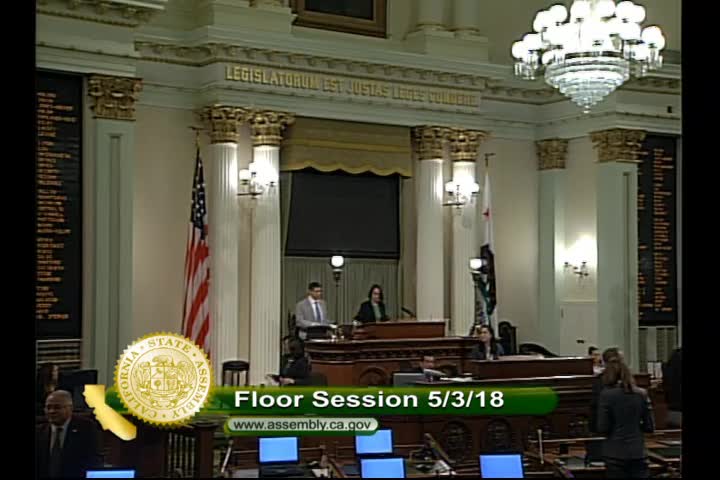 2MIN
Assembly Floor
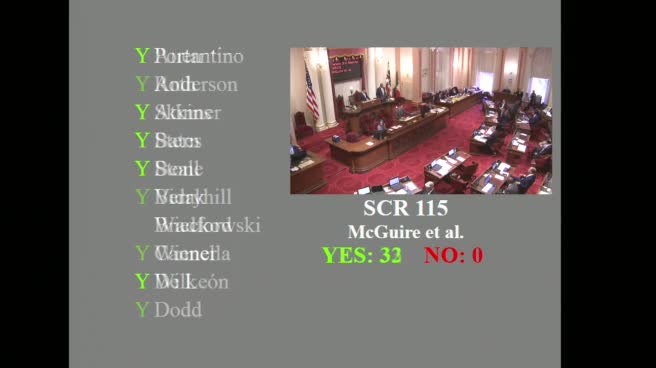 1MIN
Senate Floor
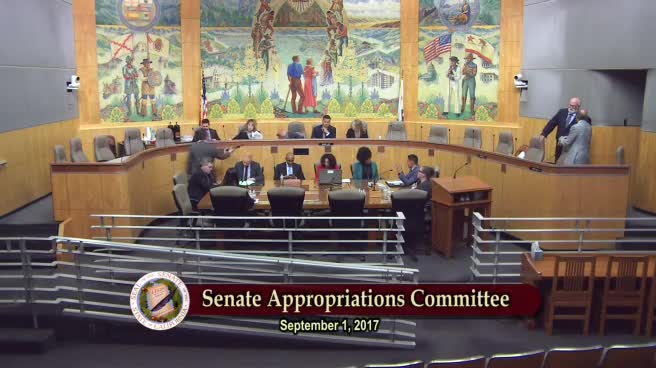 1H
Senate Standing Committee on Appropriations
 6MIN
Senate Standing Committee on Environmental Quality
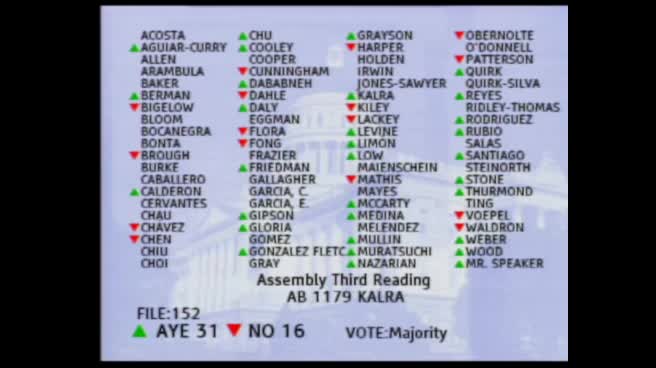 1MIN
Assembly Floor
 1H
Assembly Standing Committee on Appropriations
 10MIN
Assembly Standing Committee on Natural Resources
Bill Author

Bill Co-Author(s):