AB 1440: Peace officers.
- Session Year: 2017-2018
- House: Assembly
- Latest Version Date: 2017-07-24
Under existing law, federal criminal investigators and law enforcement officers are not California peace officers, but are authorized to exercise the powers of arrest of a peace officer in this state under specified circumstances, including when probable cause exists to believe that a public offense that involves immediate danger to persons or property has just occurred or is being committed.
This bill would specify that United States Immigration and Customs Enforcement officers and United States Customs and Border Protection officers are not California peace officers.
Under existing law, federal criminal investigators and law enforcement officers are not California peace officers, but are authorized to exercise the powers of arrest of a peace officer in this state under specified circumstances, including when probable cause exists to believe that a public offense that involves immediate danger to persons or property has just occurred or is being committed.
This bill would specify that United States Immigration and Customs Enforcement officers are not California peace officers.
Existing law establishes the Aid to Families with Dependent Children-Foster Care (AFDC-FC) program, under which counties provide payments to foster care providers on behalf of qualified children in foster care. Existing law requires the county to review the childs or nonminor dependents payment amount annually, including an examination of any circumstances of a foster child or nonminor dependent that are subject to change and could affect the childs or nonminor dependents potential eligibility or payment amount.This bill would make a technical, nonsubstantive change to that provision.Existing law establishes the Aid to Families with Dependent Children-Foster Care (AFDC-FC) program, under which counties provide payments to foster care providers on behalf of qualified children in foster care. Existing law requires the county to review the childs or nonminor dependents payment amount annually, including an examination of any circumstances of a foster child or nonminor dependent that are subject to change and could affect the childs or nonminor dependents potential eligibility or payment amount.
This bill would make a technical, nonsubstantive change to that provision.
The Legislature finds and declares all of the following:
(a)California is experiencing a new reality under the current federal administration, with particularly concerning tactics and strategies being employed by the United States Immigration and Customs Enforcement (ICE) in the enforcement of federal immigration orders.
(b)The concerning tactics and strategies include ICE officers misrepresenting themselves as peace officers or police officers to persuade and compel friends, family members, and associates of suspected undocumented immigrants to reveal information about, or the whereabouts of, a suspected undocumented immigrant.
(c)These tactics undermine the trust and faith Californias local law enforcement works to develop with local communities every day to provide for the publics safety.
(d)Additionally, ICE officers are not trained as California peace officers, they are not required to undergo the rigorous training required to become a California peace officer, and the training received by ICE officers in the course of their official duties is not as comprehensive as, and thus not equivalent to, the training required to be a California peace officer.
(e)As a result, California must take any and all necessary actions to disassociate the actions of ICE officers with those of state and local peace officers, make it clear that federal immigration officers are not California peace officers, and appropriately ensure the public knows the difference.
SEC. 2.Section 830.85 is added to the Penal Code, immediately following Section 830.8, to read:830.85.Notwithstanding any other law, United States Immigration and Customs Enforcement officers and United States Customs and Border Protection officers are not California peace officers.
The Legislature finds and declares all of the following:
(a)California is experiencing a new reality under the current federal administration, with particularly concerning tactics and strategies being employed by the United States Immigration and Customs Enforcement (ICE) in the enforcement of federal immigration orders.
(b)The concerning tactics and strategies include ICE officers misrepresenting themselves as peace officers or police officers to persuade and compel friends, family members, and associates of suspected undocumented immigrants to reveal information about, or the whereabouts of, a suspected undocumented immigrant.
(c)These tactics undermine the trust and faith Californias local law enforcement works to develop with local communities every day to provide for the publics safety.
(d)Additionally, ICE officers are not trained as California peace officers, they are not required to undergo the rigorous training required to become a California peace officer, and the training received by ICE officers in the course of their official duties is not as comprehensive as, and thus not equivalent to, the training required to be a California peace officer.
(e)As a result, California must take any and all necessary actions to disassociate the actions of ICE officers with those of state and local peace officers, make it clear that federal immigration officers are not California peace officers, and appropriately ensure the public knows the difference.
SECTION 1.SEC. 2.Section 830.85 is added to the Penal Code, immediately following Section 830.8, to read:830.85.Notwithstanding any other law, United States Immigration and Customs Enforcement officers and United States Customs and Border Protection officers are not California peace officers.
Notwithstanding any other law, United States Immigration and Customs Enforcement officers are not California peace officers.
SECTION 1.Section 11401.5 of the Welfare and Institutions Code is amended to read:11401.5.The county shall annually review the childs or nonminor dependents payment amount. The review shall include an examination of any circumstances of a foster child or nonminor dependent that are subject to change and could affect the childs or nonminor dependents potential eligibility or payment amount, including, but not limited to, authority for placement, eligible facility, and age.The county shall annually review the childs or nonminor dependents payment amount annually. amount. The review shall include an examination of any circumstances of a foster child or nonminor dependent that are subject to change and could affect the childs or nonminor dependents potential eligibility or payment amount, including, but not limited to, authority for placement, eligible facility, and age.
|
Date
|
Status
|
|---|---|
| Jul 24, 2017 | Chaptered by Secretary of State - Chapter 116, Statutes of 2017. |
| Jul 24, 2017 | Approved by the Governor. |
| Jul 12, 2017 | Enrolled and presented to the Governor at 11:30 a.m. |
| Jul 6, 2017 | Senate amendments concurred in. To Engrossing and Enrolling. (Ayes 56. Noes 4. Page 2466.). |
| Jun 29, 2017 | In Assembly. Concurrence in Senate amendments pending. May be considered on or after July 1 pursuant to Assembly Rule 77. |
| Jun 29, 2017 | Read third time. Passed. Ordered to the Assembly. |
| Jun 21, 2017 | Read second time. Ordered to third reading. |
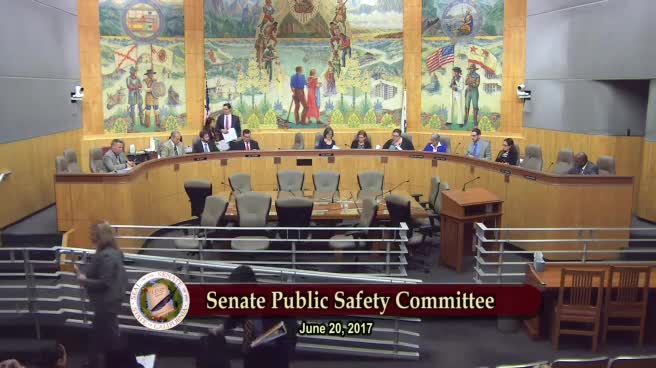
| Jun 20, 2017 | From committee: Do pass. (Ayes 5. Noes 2.) (June 20). |
| Jun 14, 2017 | From committee chair, with author's amendments: Amend, and re-refer to committee. Read second time, amended, and re-referred to Com. on PUB. S. |
| Jun 8, 2017 | Referred to Com. on PUB. S. |
| May 26, 2017 | In Senate. Read first time. To Com. on RLS. for assignment. |
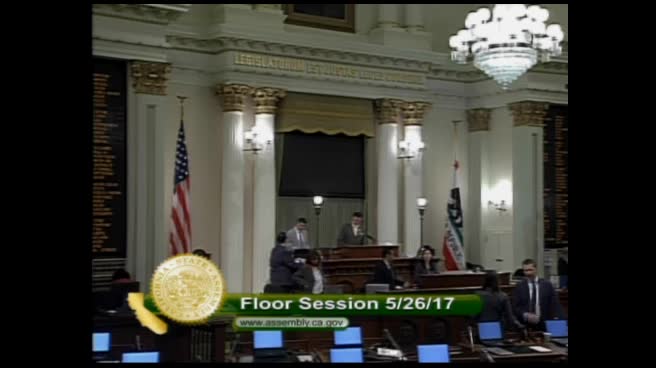
| May 26, 2017 | Read third time. Passed. Ordered to the Senate. (Ayes 58. Noes 3. Page 1705.) |
| Apr 26, 2017 | Read second time. Ordered to third reading. |
| Apr 25, 2017 | From committee: Do pass. (Ayes 7. Noes 0.) (April 25). |
| Mar 29, 2017 | Re-referred to Com. on PUB. S. |
| Mar 28, 2017 | From committee chair, with author's amendments: Amend, and re-refer to Com. on PUB. S. Read second time and amended. |
| Mar 27, 2017 | Referred to Com. on PUB. S. |
| Feb 19, 2017 | From printer. May be heard in committee March 21. |
| Feb 17, 2017 | Read first time. To print. |
|
Date
|
Description
|
Location
|
Votes
|
|
|---|---|---|---|---|
| Jul 6, 2017 | AA1c - 372070, Amendment | Assembly Floor |
Passed |
|
| Jun 29, 2017 | Assembly 3rd Reading AB1440 Kalra By Lara | Senate Floor |
Passed |
|
| Jun 20, 2017 | Do pass | Senate Standing Committee on Public Safety |
Passed |
|
| May 26, 2017 | AB 1440 KALRA Assembly Third Reading | Assembly Floor |
Passed |
|
| Apr 25, 2017 | Do pass. | Assembly Standing Committee on Public Safety |
Passed |
This list shows positions taken on this bill by organizations on the date displayed, which is linked to the original source.
Positions by individuals are not included.
CONCURRENCE IN SENATE AMENDMENTS
CSA1 Bill Id:AB 1440
Author:(Kalra)
As Amended Ver:June 14, 2017
Majority vote
ASSEMBLY: | 58-3 | (May 26, 2017) | SENATE: | 27-8 | (June 29, 2017) |
Original Committee Reference: PUB. S.
SUMMARY: Clarifies that United States Immigration and Customs Enforcement (ICE) officers and border protection officers are not California peace officers.
The Senate amendments clarify, additionally, that border protection officers are not California peace officers.
EXISTING LAW:
- States that federal criminal investigators and law enforcement officers are not California peace officers, but may exercise the powers of arrest under the following circumstances:
- When a public offense is committed in the officer's presence, where there is probable cause to believe that a felony has been committed, or pursuant to a warrant of arrest;
- When these investigator and law enforcement officers are engaged in the enforcement of federal criminal laws and exercise the arrest powers only incidental to the performance of these duties;
- When requested by a California law enforcement agency to be involved with a joint task force or criminal investigation; and,
- When probable cause exists to believe a public offense that involves immediate danger to person or property has just occurred or is being committed.
- Provides that every peace officer shall satisfactorily complete an introductory course of training prescribed by the Commission on Peace Officer Standards and Training (POST) and that after July 1, 1989 satisfactory completion of the course shall be demonstrated by passage of an appropriate examination developed or approved by POST.
- Provides that prior to the exercise of peace officer powers, every peace officer shall have satisfactorily completed the POST course.
- Provides that a person shall not have the powers of a peace officer until he or she has satisfactorily completed the POST course.
- Provides that any person completing the POST training who does not become employed as a peace officer within three years from the date of passing the examination, or who has a three-year or longer break in service as a peace officer, shall pass the examination prior to the exercise of powers as a peace officer, except as specified.
- Declares specific persons to be peace officers: any sheriff, under sheriff, deputy sheriff, chief of police, officer of municipal public safety agency who performs police functions, police officer, officer of the San Diego Unified Port District Harbor Police, marshal or deputy marshal of a superior court or county, port warden or port police office of the Harbor Department of the City of Los Angeles, or inspector or investigator employed in that capacity in the office of the district attorney. Provides that the authority of these peace officers extends to any place in California as follows
- As to a public offense committed or which there is probable cause to believe has been committed within the political subdivision that employs the peace officer or in which the peace officer serves;
- Where the peace officer has prior consent of the chief of police or chief, director or chief executive officer of a consolidated municipal public safety agency, or person authorized by him or her to give consent if the place is within a city or of the sheriff, or person authorized by him or her to give consent if the place is within a county; and
- As to a public offense committed or which there is probable cause to believe has been committed in the peace officer's presence, and with respect to which there is immediate danger to person or property, or of the perpetrator's escape.
- Provides that the following persons are peace officers whose authority extends to any place in the state for the purpose of performing their primary duty or when making an arrest as to any public offense with respect to which there is immediate danger to person or property, or of the escape of the perpetrator of that offense. Those peace officers may carry firearms only if authorized and under terms and conditions specified by their employing agency:
- Persons designated as a security officer by a municipal utility district pursuant to Section 12820 of the Public Utilities Code, if the primary duty of the officer is the protection of the properties of the utility district and the protection of the persons thereon;
- Persons designated as a security officer by a county water district pursuant to Section 30547 of the Water Code, if the primary duty of the officer is the protection of the properties of the county water district and the protection of the persons thereon;
- The security director of the public utilities commission of a city and county, if the primary duty of the security director is the protection of the properties of the commission and the protection of the persons thereon; and
- Persons employed as a park ranger by a municipal water district pursuant to Section 71341.5 of the Water Code, if the primary duty of the park ranger is the protection of the properties of the municipal water district and the protection of the persons thereon.
- Provides that the following are peace offices, who may carry firearms only if authorized and under terms and conditions specified by their employing agency, whose authority extends to any place in California for the purpose of performing their primary duty, or when making an arrest for a public offense where there is immediate danger to a person or property or to prevent the perpetrator's escape, as specified, or during a state of emergency, as specified:
- Members of the San Francisco Bay Area Rapid Transit District Police Department if their primary duty is enforcement of the law in or about property owned, operated or administered by the district or when performing a necessary duty with respect to patrons, employees and properties of the district;
- Harbor or port police if their primary duty is enforcement of law in or about property owned, operated or administered by harbor or port or when performing a necessary duty with respect to patrons, employees and properties of the harbor or port;
- Transit police officers or peace offices of a county, city, transit development board or district if the primary duty is the enforcement of the law in or abut property owned, operated or administered by the employing agency or when performing a necessary duty with respect to patrons, employees and properties of the employing agency;
- Persons employed as airport law enforcement officers by a city, county or district operating the airport or a joint powers agency operating the airport if their primary duty is the enforcement of the law in or about property owned, operated and administered by the employing agency or when performing a necessary duty with respect to patrons, employees and properties of the employing agency; and
- Railroad police officers commissioned by the Governor if their primary duty is the enforcement of the law in or about property owned, operated or administered by the employing agency or when performing necessary duties with respect to patrons, employees and properties of the employing agency.
FISCAL EFFECT: Unknown. This bill is keyed non-fiscal by the Legislative Counsel.
COMMENTS: According to the author, "When compared, it is clear that ICE agents do not undergo the same thorough and rigorous training required of licensed peace officers in California.
"Recognizing that federal law pre-empts state law, this bill may be viewed as symbolic. However, as California and the rest of the nation enter into a new reality of aggressive and, at times, deceitful actions undertaken to enforce immigration actions, California must take any and all necessary actions to disassociate the actions of federal ICE agents with those of licensed state and local peace officers."
Analysis Prepared by: Gregory Pagan / PUB. S. / (916) 319-3744 FN: 0001015
Office of Senate Floor Analyses (916) 651-1520 Fax: (916) 327-4478 | AB |
THIRD READING
Bill No: AB 1440
:
SENATE PUBLIC SAFETY COMMITTEE: 5-2, 6/20/17
AYES: Skinner, Bradford, Jackson, Mitchell, Wiener
NOES: Anderson, Stone
ASSEMBLY FLOOR: 58-3, 5/26/17 - See last page for vote
DIGEST:
This bill clarifies that United States Immigration and Customs Enforcement (ICE) officers are not California peace officers.
Existing law:
- States that federal criminal investigators and law enforcement officers are not California peace officers, but may exercise the powers of arrest under the following circumstances: (Pen. Code § 830.8, subd. (a)(1)-(4).)
- When a public offense is committed in the officer's presence, where there is probable cause to believe that a felony has been committed, or pursuant to a warrant of arrest;
- When these investigator and law enforcement officers are engaged in the enforcement of federal criminal laws and exercise the arrest powers only incidental to the performance of these duties;
- When requested by a California law enforcement agency to be involved with a joint task force or criminal investigation; and,
- When probable cause exists to believe a public offense that involves immediate danger to person or property has just occurred or is being committed.
- Provides that every peace officer shall satisfactorily complete an introductory course of training prescribed by the Commission on Peace Officer Standards and Training (POST) and that after July 1, 1989, satisfactory completion of the course shall be demonstrated by passage of an appropriate examination developed or approved by POST. (Pen. Code § 832, subd. (a).)
- Provides that prior to the exercise of peace officer powers, every peace officer shall have satisfactorily completed the POST course. (Pen. Code § 832, subd. (b).)
- Provides that a person shall not have the powers of a peace officer until he or she has satisfactorily completed the POST course. (Pen. Code § 832, subd. (c).)
- Provides that any person completing the POST training who does not become employed as a peace officer within three years from the date of passing the examination, or who has a three-year or longer break in service as a peace officer, shall pass the examination prior to the exercise of powers as a peace officer, except as specified. (Pen. Code § 832, subd. (e)(1).)
- Declares specific persons to be peace officers: any sheriff, undersheriff, deputy sheriff, chief of police, officer of municipal public safety agency who performs police functions, police officer, officer of the San Diego Unified Port District Harbor Police, marshal or deputy marshal of a superior court or county, port warden or port police office of the Harbor Department of the City of Los Angeles, or inspector or investigator employed in that capacity in the office of the district attorney. Provides that the authority of these peace officers extends to any place in California as follows (Pen. Code § 830.1(a)):
- As to a public offense committed or which there is probable cause to believe has been committed within the political subdivision that employs the peace officer or in which the peace officer serves. (Pen. Code § 830.1(a)(1).)
- Where the peace officer has prior consent of the chief of police or chief, director or chief executive officer of a consolidated municipal public safety agency, or person authorized by him or her to give consent if the place is within a city, or of the sheriff, or person authorized by him or her to give consent if the place is within a county; and (Pen. Code § 830.1(a) (2).)
- As to a public offense committed or which there is probable cause to believe has been committed in the peace officer's presence, and with respect to which there is immediate danger to person or property, or of the perpetrator's escape. (Pen. Code § 830.1(a)(3).)
- Provides that the following persons are peace officers whose authority extends to any place in the state for the purpose of performing their primary duty or when making an arrest as to any public offense with respect to which there is immediate danger to person or property, or of the escape of the perpetrator of that offense. Those peace officers may carry firearms only if authorized and under terms and conditions specified by their employing agency: (Pen. Code § 830.34.)
- Persons designated as a security officer by a municipal utility district pursuant to Section 12820 of the Public Utilities Code, if the primary duty of the officer is the protection of the properties of the utility district and the protection of the persons thereon;
- Persons designated as a security officer by a county water district pursuant to Section 30547 of the Water Code, if the primary duty of the officer is the protection of the properties of the county water district and the protection of the persons thereon;
- The security director of the public utilities commission of a city and county, if the primary duty of the security director is the protection of the properties of the commission and the protection of the persons thereon; and
- Persons employed as a park ranger by a municipal water district pursuant to Section 71341.5 of the Water Code, if the primary duty of the park ranger is the protection of the properties of the municipal water district and the protection of the persons thereon.
- Provides that the following are peace officers, who may carry firearms only if authorized and under terms and conditions specified by their employing agency, whose authority extends to any place in California for the purpose of performing their primary duty, or when making an arrest for a public offense where there is immediate danger to a person or property or to prevent the perpetrator's escape, as specified, or during a state of emergency, as specified: (Pen. Code §830.33.)
- Members of the San Francisco Bay Area Rapid Transit District Police Department if their primary duty is enforcement of the law in or about property owned, operated or administered by the district or when performing a necessary duty with respect to patrons, employees and properties of the district;
- Harbor or port police if their primary duty is enforcement of law in or about property owned, operated or administered by harbor or port or when performing a necessary duty with respect to patrons, employees and properties of the harbor or port;
- Transit police officers or peace officers of a county, city, transit development board or district if the primary duty is the enforcement of the law in or about property owned, operated or administered by the employing agency or when performing a necessary duty with respect to patrons, employees and properties of the employing agency;
- Persons employed as airport law enforcement officers by a city, county or district operating the airport or a joint powers agency operating the airport if their primary duty is the enforcement of the law in or about property owned, operated and administered by the employing agency or when performing a necessary duty with respect to patrons, employees and properties of the employing agency; and
- Railroad police officers commissioned by the Governor if their primary duty is the enforcement of the law in or about property owned, operated or administered by the employing agency or when performing necessary duties with respect to patrons, employees and properties of the employing agency.
This bill:
- Clarifies that ICE officers and Customs and Border Protection officers are not California peace officers.
- Makes the following findings and declarations:
- California is experiencing a new reality under the current federal administration with particularly concerning tactics and strategies being employed by ICE in the enforcement of federal immigration orders.
- This includes ICE agents misrepresenting themselves as licensed peace officers, or police, to persuade and compel friends, family members, and associates of suspected undocumented immigrants to reveal information about them or their whereabouts.
- Such tactics undermine the trust and faith California’s local law enforcement work to develop with local communities every day to provide for the public’s safety.
- Additionally, ICE officers are not trained as California peace officers, they are not required to undergo the rigorous training required to become a California peace officer, and the training received by ICE officers in the course of their official duties is not as comprehensive, and thus not equivalent too, the training required to be a California peace officer.
- As a result, California must take any and all necessary actions to disassociate the actions of federal ICE agents with those of licensed state and local peace officers, and make it clear that federal immigration agents are not California licensed peace officers, and that any and all steps need to be taken to appropriately ensure the public knows the difference.
Background
ICE is undertaking unprecedented and aggressive tactics to identify, monitor, and detain undocumented immigrants for deportation. As a part of this effort, ICE agents are not only tracking those suspected of being undocumented, but their friends, family members, and associates in an effort to detain persons who are suspected to be or are known to be undocumented. Oftentimes, ICE agents have been known to pretend or misrepresent themselves as licensed peace officers in order to compel or coerce potential suspects into revealing or cooperating with them under false pretenses.
The process to become an ICE agent is entirely different from what is required to become a licensed peace officer in California. Whereas a prospective ICE agent undergoes five weeks of Spanish language training and just 80 hours of basic law enforcement training, a prospective licensed peace officer must undergo a minimum of 664 hours of training.
As required by state law, and established by POST, licensed peace officers undergo a thorough and rigorous training offered by a state licensed policy academy. Their training is lengthy and involves training related to leadership, professionalism and ethics, to crimes against children and sex crimes, to understanding victimology and crisis intervention.
FISCAL EFFECT: Appropriation: Fiscal Com.: Local:
American Civil Liberties Union
Asian Americans Advancing Justice
California Public Defenders Association
City and County of San Francisco
Peace Officers Research Association of California
San Francisco Mayor Edwin Lee
Santa Clara County Board of Supervisors
United Farm Workers
OPPOSITION: (Verified 6/20/17)
None received
ASSEMBLY FLOOR: 58-3, 5/26/17
AYES: Acosta, Aguiar-Curry, Arambula, Baker, Berman, Bloom, Bocanegra, Bonta, Burke, Caballero, Calderon, Cervantes, Chiu, Chu, Cooley, Cooper, Cunningham, Dababneh, Daly, Flora, Frazier, Friedman, Cristina Garcia, Eduardo Garcia, Gipson, Gloria, Gomez, Gonzalez Fletcher, Gray, Grayson, Holden, Irwin, Jones-Sawyer, Kalra, Lackey, Levine, Limón, Low, Maienschein, McCarty, Medina, Mullin, Muratsuchi, Nazarian, O'Donnell, Quirk, Quirk-Silva, Reyes, Rodriguez, Rubio, Salas, Santiago, Mark Stone, Thurmond, Ting, Weber, Wood, Rendon
NOES: Choi, Harper, Mathis
NO VOTE RECORDED: Travis Allen, Bigelow, Brough, Chau, Chávez, Chen, Dahle, Eggman, Fong, Gallagher, Kiley, Mayes, Melendez, Obernolte, Patterson, Ridley-Thomas, Steinorth, Voepel, Waldron
6/21/17 13:38:24
**** END ****
SENATE COMMITTEE ON PUBLIC SAFETY
Senator Nancy Skinner, Chair
2017 - 2018 Regular
Bill No: AB 1440 Hearing Date: June 20, 2017
Author: | Kalra | ||
Version: | June 14, 2017 | ||
Urgency: | No | Fiscal: | No |
Consultant: | GC | ||
Subject: Peace Officers
HISTORY
Source: Author
Prior Legislation: None
Support: American Civil Liberties Union, California Public Defenders Association; Peace Officers Research Association of California; San Francisco Mayor Edwin Lee
Opposition: None known
Assembly Floor Vote: 58 - 3
PURPOSE
The purpose of this bill is to clarify that United States Immigration and Customs Enforcement (ICE) officers and Customs and Border Protection officers are not California peace officers.
Existing law states that federal criminal investigators and law enforcement officers are not California peace officers, but may exercise the powers of arrest under the following circumstances: (Pen Code, § 830.8, subd. (a)(1)-(4).)
- When a public offense is committed in the officer's presence, where there is probable cause to believe that a felony has been committed, or pursuant to a warrant of arrest;
- When these investigator and law enforcement officers are engaged in the enforcement of federal criminal laws and exercise the arrest powers only incidental to the performance of these duties;
- When requested by a California law enforcement agency to be involved with a joint task force or criminal investigation; and,
- When probable cause exists to believe a public offense that involves immediate danger to person or property has just occurred or is being committed.
Existing law provides that every peace officer shall satisfactorily complete an introductory course of training prescribed by the Commission on Peace Officer Standards and Training (POST) and that after July 1, 1989 satisfactory completion of the course shall be demonstrated by passage of an appropriate examination developed or approved by POST. (Pen. Code. § 832, subd. (a).)
Existing law provides that prior to the exercise of peace officer powers, every peace officer shall have satisfactorily completed the POST course. (Pen. Code, § 832, subd. (b).)
Existing law provides that a person shall not have the powers of a peace officer until he or she has satisfactorily completed the POST course. (Pen. Code, § 832, subd. (c).)
Existing law provides that any person completing the POST training who does not become employed as a peace officer within three years from the date of passing the examination, or who has a three-year or longer break in service as a peace officer, shall pass the examination prior to the exercise of powers as a peace officer, except as specified. (Pen. Code, § 832, subd. (e)(1).)
Existing law declares specific persons to be peace officers: any sheriff, under sheriff, deputy sheriff, chief of police, officer of municipal public safety agency who performs police functions, police officer, officer of the San Diego Unified Port District Harbor Police, marshal or deputy marshal of a superior court or county, port warden or port police office of the Harbor Department of the City of Los Angeles, or inspector or investigator employed in that capacity in the office of the district attorney. Provides that the authority of these peace officers extends to any place in California as follows (Pen. Code, § 830.1(a)):
- As to a public offense committed or which there is probable cause to believe has been committed within the political subdivision that employs the peace officer or in which the peace officer serves; (Pen. Code, § 830.1(a)(1).)
- Where the peace officer has prior consent of the chief of police or chief, director or chief executive officer of a consolidated municipal public safety agency, or person authorized by him or her to give consent if the place is within a city or of the sheriff, or person authorized by him or her to give consent if the place is within a county; and (Pen. Code, § 830.1(a) (2).)
- As to a public offense committed or which there is probable cause to believe has been committed in the peace officer's presence, and with respect to which there is immediate danger to person or property, or of the perpetrator's escape. (Pen. Code, § 830.1(a)(3).)
Existing law provides that the following persons are peace officers whose authority extends to any place in the state for the purpose of performing their primary duty or when making an arrest as to any public offense with respect to which there is immediate danger to person or property, or of the escape of the perpetrator of that offense. Those peace officers may carry firearms only if authorized and under terms and conditions specified by their employing agency: (Pen. Code, § 830.34.)
- Persons designated as a security officer by a municipal utility district pursuant to Section 12820 of the Public Utilities Code, if the primary duty of the officer is the protection of the properties of the utility district and the protection of the persons thereon;
- Persons designated as a security officer by a county water district pursuant to Section 30547 of the Water Code, if the primary duty of the officer is the protection of the properties of the county water district and the protection of the persons thereon;
- The security director of the public utilities commission of a city and county, if the primary duty of the security director is the protection of the properties of the commission and the protection of the persons thereon; and
- Persons employed as a park ranger by a municipal water district pursuant to Section 71341.5 of the Water Code, if the primary duty of the park ranger is the protection of the properties of the municipal water district and the protection of the persons thereon.
Existing law provides that the following are peace offices, who may carry firearms only if authorized and under terms and conditions specified by their employing agency, whose authority extends to any place in California for the purpose of performing their primary duty, or when making an arrest for a public offense where there is immediate danger to a person or property or to prevent the perpetrator's escape, as specified, or during a state of emergency, as specified: (Pen. Code, §830.33.)
- Members of the San Francisco Bay Area Rapid Transit District Police Department if their primary duty is enforcement of the law in or about property owned, operated or administered by the district or when performing a necessary duty with respect to patrons, employees and properties of the district;
- Harbor or port police if their primary duty is enforcement of law in or about property owned, operated or administered by harbor or port or when performing a necessary duty with respect to patrons, employees and properties of the harbor or port;
- Transit police officers or peace offices of a county, city, transit development board or district if the primary duty is the enforcement of the law in or abut property owned, operated or administered by the employing agency or when performing a necessary duty with respect to patrons, employees and properties of the employing agency;
- Persons employed as airport law enforcement officers by a city, county or district operating the airport or a joint powers agency operating the airport if their primary duty is the enforcement of the law in or about property owned, operated and administered by the employing agency or when performing a necessary duty with respect to patrons, employees and properties of the employing agency; and
- Railroad police officers commissioned by the Governor if their primary duty is the enforcement of the law in or about property owned, operated or administered by the employing agency or when performing necessary duties with respect to patrons, employees and properties of the employing agency.
This bill clarifies that United States Immigration and Customs Enforcement (ICE) officers and Customs and Border Protection officers are not California peace officers.
This bill makes the following findings and declarations:
- California is experiencing a new reality under the current federal administration with particularly concerning tactics and strategies being employed by federal Immigration and Customs Enforcement in the enforcement of federal immigration orders.
- This includes ICE agents misrepresenting themselves as licensed peace officers, or police, to persuade and compel friends, family members, and associates of suspected undocumented immigrants to reveal information about them or their whereabouts.
- Such tactics undermine the trust and faith California’s local law enforcement work to develop with local communities every day to provide for the public’s safety.
- Additionally, ICE officers are not trained as California peace officers, they are not required to undergo the rigorous training required to become a California peace officer, and the training received by ICE officers in the course of their official duties is not as comprehensive, and thus not equivalent too, the training required to be a California peace officer.
- As a result, California must take any and all necessary actions to disassociate the actions of federal ICE agents with those of licensed state and local peace officers, and make it clear that federal immigration agents are not California licensed peace officers, and that any all steps need to be taken to appropriately ensure the public knows the difference.
COMMENTS
1. Need for This Bill
According to the author:
When compared, it is clear that ICE agents do not undergo the same thorough and rigorous training required of licensed peace officers in California.
As California and the rest of the nation enter into a new reality of aggressive and, at times, deceitful actions undertaken to enforce immigration actions, California must take any and all necessary actions to disassociate the actions of federal ICE agents with those of licensed state and local peace officers.
2. ICE Under the Current Administration
According to the background provided by the author, under the new federal administration, the ICE Agency is undertaking unprecedented and aggressive tactics to identify, monitor, and detain undocumented immigrants for deportation.
As a part of this effort, ICE agents are not only tracking those suspected of being undocumented, but their friends, family members, and associates in an effort to detain persons who are suspected to be or are known to be undocumented. Oftentimes ICE agents have been known to pretend, or misrepresent themselves as licensed peace officers in order to compel or coerce potential suspects into revealing or cooperating with them under false pretenses.
In fact, it is not uncommon for ICE agents to not have a federally issued warrant when they are seeking to detain someone on suspicion of being undocumented.[1] Without a warrant they cannot force themselves into someone’s home and, instead must receive consent from an adult to enter. In order to obtain this consent, ICE agents will lie and declare themselves as police, i.e. a licensed peace officer.
The use of this tactic has been described as particularly egregious. Even though the ICE Agency has stated that these tactics are “consistent with their authorities under federal law and the Constitution,” it is a ruse that undermines state and local law enforcement efforts to promote and improve public safety.
Further, ICE agents are not licensed peace officers. They are not trained as peace officers, nor do they attend a law enforcement academy.
Rather, in order to become an ICE agent, a person must be between the ages of 21 and 27, possess a bachelor’s degree, and undergo a criminal background check. If the person passes the criminal background check, they must take and pass a written exam and a series of physical fitness tests.
If successful, s/he may be hired as an ICE agent. Once hired, the agent must complete two training courses: a five-week Spanish language training program and the 80-day Basic Law Enforcement Training Program. The intent of these programs are to provide the agent “with training on core components of the law, policy and regularly used skill sets such as: alien processing, fugitive operations, firearms and defensive techniques emphasizing the Immigration Enforcement Agent work environment, interviewing techniques, and blocks relating to officer and detainee safety, both inside and outside a detention environment.”[2]
The process to become an ICE Agent is entirely different from what is required to become a licensed peace officer in California. Whereas a prospective ICE agent undergoes five weeks of Spanish language training and just 80 hours of basic law enforcement training, a prospective licensed peace officer must undergo a minimum of 664 hours of training.[3]
As required by state law, and established by the California Commission on Police Officer Standards and Training (POST), licensed peace officers undergo a thorough and rigorous training offered by a state licensed policy academy. Their training is lengthy and involves trainings related to leadership, professionalism and ethics, to crimes against children and sex crimes, to understanding victimology and crisis intervention.[4]
3. Argument in Support
According to the California Public Defenders Association:
While federal criminal investigators and law enforcement officers are technically not California peace officers, they are authorized to exercise the powers of arrest of a peace officer in this state under specified circumstances, including when probable cause exists to believe that a public offense that involves immediate danger to persons or property has just occurred or is being committed. This will bill will make clear that United States Immigration and Customs Enforcement officers are not California peace officers.
Unfortunately given the political climate we live in today, this bill is necessary to protect those residing in the State of California from intrusions by United States Immigration and Customs Enforcement officers.
-- END –
It's legal for an immigration agent to pretend to be a police officer outside someone's door. But should it be? http://www.latimes.com/local/lanow/la-me-immigration-deportation-ruses-20170219-story.html ↑
Federal Law Enforcement Training Program. Immigration & Customs Enforcement, Basic Immigration Enforcement Training Program. https://www.fletc.gov/training-program/immigration-customs-enforcement-basic-immigration-enforcement-training-program ↑
California Police Officer Standards and Training. Minimum Content and Hourly Requirements – Regular Basic Course – Standard Format. ↑
POST Regular Basic Course Curriculum. https://www.post.ca.gov/regular-basic-course-training-specifications.aspx ↑
ASSEMBLY THIRD READING
ATR Bill Id:AB 1440
Author:(Kalra)
As Amended Ver:March 28, 2017
Majority vote
Committee | Votes | Ayes | Noes |
Public Safety | 7-0 | Jones-Sawyer, Lackey, Flora, Gonzalez Fletcher, Quirk, Rubio, Santiago |
SUMMARY: Clarifies that United States Immigration and Customs Enforcement (ICE) officers are not California peace officers.
EXISTING LAW:
- States that federal criminal investigators and law enforcement officers are not California peace officers, but may exercise the powers of arrest under the following circumstances:
- When a public offense is committed in the officer's presence, where there is probable cause to believe that a felony has been committed, or pursuant to a warrant of arrest;
- When these investigator and law enforcement officers are engaged in the enforcement of federal criminal laws and exercise the arrest powers only incidental to the performance of these duties;
- When requested by a California law enforcement agency to be involved with a joint task force or criminal investigation; and,
- When probable cause exists to believe a public offense that involves immediate danger to person or property has just occurred or is being committed.
- Provides that every peace officer shall satisfactorily complete an introductory course of training prescribed by the Commission on Peace Officer Standards and Training (POST) and that after July 1, 1989 satisfactory completion of the course shall be demonstrated by passage of an appropriate examination developed or approved by POST.
- Provides that prior to the exercise of peace officer powers, every peace officer shall have satisfactorily completed the POST course.
- Provides that a person shall not have the powers of a peace officer until he or she has satisfactorily completed the POST course.
- Provides that any person completing the POST training who does not become employed as a peace officer within three years from the date of passing the examination, or who has a three-year or longer break in service as a peace officer, shall pass the examination prior to the exercise of powers as a peace officer, except as specified.
- Declares specific persons to be peace officers: any sheriff, under sheriff, deputy sheriff, chief of police, officer of municipal public safety agency who performs police functions, police officer, officer of the San Diego Unified Port District Harbor Police, marshal or deputy marshal of a superior court or county, port warden or port police office of the Harbor Department of the City of Los Angeles, or inspector or investigator employed in that capacity in the office of the district attorney. Provides that the authority of these peace officers extends to any place in California as follows
- As to a public offense committed or which there is probable cause to believe has been committed within the political subdivision that employs the peace officer or in which the peace officer serves;
- Where the peace officer has prior consent of the chief of police or chief, director or chief executive officer of a consolidated municipal public safety agency, or person authorized by him or her to give consent if the place is within a city or of the sheriff, or person authorized by him or her to give consent if the place is within a county; and
- As to a public offense committed or which there is probable cause to believe has been committed in the peace officer's presence, and with respect to which there is immediate danger to person or property, or of the perpetrator's escape.
- Provides that the following persons are peace officers whose authority extends to any place in the state for the purpose of performing their primary duty or when making an arrest as to any public offense with respect to which there is immediate danger to person or property, or of the escape of the perpetrator of that offense. Those peace officers may carry firearms only if authorized and under terms and conditions specified by their employing agency:
- Persons designated as a security officer by a municipal utility district pursuant to Section 12820 of the Public Utilities Code, if the primary duty of the officer is the protection of the properties of the utility district and the protection of the persons thereon;
- Persons designated as a security officer by a county water district pursuant to Section 30547 of the Water Code, if the primary duty of the officer is the protection of the properties of the county water district and the protection of the persons thereon;
- The security director of the public utilities commission of a city and county, if the primary duty of the security director is the protection of the properties of the commission and the protection of the persons thereon; and
- Persons employed as a park ranger by a municipal water district pursuant to Section 71341.5 of the Water Code, if the primary duty of the park ranger is the protection of the properties of the municipal water district and the protection of the persons thereon.
- Provides that the following are peace offices, who may carry firearms only if authorized and under terms and conditions specified by their employing agency, whose authority extends to any place in California for the purpose of performing their primary duty, or when making an arrest for a public offense where there is immediate danger to a person or property or to prevent the perpetrator's escape, as specified, or during a state of emergency, as specified:
- Members of the San Francisco Bay Area Rapid Transit District Police Department if their primary duty is enforcement of the law in or about property owned, operated or administered by the district or when performing a necessary duty with respect to patrons, employees and properties of the district;
- Harbor or port police if their primary duty is enforcement of law in or about property owned, operated or administered by harbor or port or when performing a necessary duty with respect to patrons, employees and properties of the harbor or port;
- Transit police officers or peace offices of a county, city, transit development board or district if the primary duty is the enforcement of the law in or abut property owned, operated or administered by the employing agency or when performing a necessary duty with respect to patrons, employees and properties of the employing agency;
- Persons employed as airport law enforcement officers by a city, county or district operating the airport or a joint powers agency operating the airport if their primary duty is the enforcement of the law in or about property owned, operated and administered by the employing agency or when performing a necessary duty with respect to patrons, employees and properties of the employing agency; and
- Railroad police officers commissioned by the Governor if their primary duty is the enforcement of the law in or about property owned, operated or administered by the employing agency or when performing necessary duties with respect to patrons, employees and properties of the employing agency.
FISCAL EFFECT: Unknown. This bill is keyed non-fiscal by the Legislative Counsel.
COMMENTS:
According to the author, "When compared, it is clear that ICE agents do not undergo the same thorough and rigorous training required of licensed peace officers in California.
"Recognizing that federal law pre-empts state law, this bill may be viewed as symbolic. However, as California and the rest of the nation enter into a new reality of aggressive and, at times, deceitful actions undertaken to enforce immigration actions, California must take any and all necessary actions to disassociate the actions of federal ICE agents with those of licensed state and local peace officers."
Analysis Prepared by: Gregory Pagan / PUB. S. / (916) 319-3744 FN: 0000163
Date of Hearing:
Chief Counsel: Gregory Pagan
ASSEMBLY COMMITTEE ON PUBLIC SAFETY
Reginald Byron Jones-Sawyer, Sr., Chair
ABPCA Bill Id:AB 1440
Author:(Kalra) – As Amended Ver:March 28, 2017
SUMMARY:
Clarifies that United States Immigration and Customs Enforcement (ICE) officers are not California peace officers.
EXISTING LAW:
- States that federal criminal investigators and law enforcement officers are not California peace officers, but may exercise the powers of arrest under the following circumstances:
- When a public offense is committed in the officer's presence, where there is probable cause to believe that a felony has been committed, or pursuant to a warrant of arrest;
- When these investigator and law enforcement officers are engaged in the enforcement of federal criminal laws and exercise the arrest powers only incidental to the performance of these duties;
- When requested by a California law enforcement agency to be involved with a joint task force or criminal investigation; and,
- When probable cause exists to believe a public offense that involves immediate danger to person or property has just occurred or is being committed. (Pen Code, § 830.8, subd. (a)(1)-(4).)
- When a public offense is committed in the officer's presence, where there is probable cause to believe that a felony has been committed, or pursuant to a warrant of arrest;
- Provides that every peace officer shall satisfactorily complete an introductory course of training prescribed by the Commission on Peace Officer Standards and Training (POST) and that after July 1, 1989 satisfactory completion of the course shall be demonstrated by passage of an appropriate examination developed or approved by POST. (Pen. Code. § 832, subd. (a).)
- Provides that prior to the exercise of peace officer powers, every peace officer shall have satisfactorily completed the POST course. (Pen. Code, § 832, subd. (b).)
- Provides that a person shall not have the powers of a peace officer until he or she has satisfactorily completed the POST course. (Pen. Code, § 832, subd. (c).)
- Provides that any person completing the POST training who does not become employed as a peace officer within three years from the date of passing the examination, or who has a three-year or longer break in service as a peace officer, shall pass the examination prior to the exercise of powers as a peace officer, except as specified. (Pen. Code, § 832, subd. (e)(1).)
- Declares specific persons to be peace officers: any sheriff, under sheriff, deputy sheriff, chief of police, officer of municipal public safety agency who performs police functions, police officer, officer of the San Diego Unified Port District Harbor Police, marshal or deputy marshal of a superior court or county, port warden or port police office of the Harbor Department of the City of Los Angeles, or inspector or investigator employed in that capacity in the office of the district attorney. Provides that the authority of these peace officers extends to any place in California as follows (Pen. Code, § 830.1(a)):
- As to a public offense committed or which there is probable cause to believe has been committed within the political subdivision that employs the peace officer or in which the peace officer serves; (Pen. Code, § 830.1(a)(1).)
- Where the peace officer has prior consent of the chief of police or chief, director or chief executive officer of a consolidated municipal public safety agency, or person authorized by him or her to give consent if the place is within a city or of the sheriff, or person authorized by him or her to give consent if the place is within a county; and (Pen. Code, § 830.1(a) (2).)
- As to a public offense committed or which there is probable cause to believe has been committed in the peace officer's presence, and with respect to which there is immediate danger to person or property, or of the perpetrator's escape. (Pen. Code, § 830.1(a)(3).)
- As to a public offense committed or which there is probable cause to believe has been committed within the political subdivision that employs the peace officer or in which the peace officer serves; (Pen. Code, § 830.1(a)(1).)
- Provides that the following persons are peace officers whose authority extends to any place in the state for the purpose of performing their primary duty or when making an arrest as to any public offense with respect to which there is immediate danger to person or property, or of the escape of the perpetrator of that offense. Those peace officers may carry firearms only if authorized and under terms and conditions specified by their employing agency: (Pen. Code, § 830.34.)
- Persons designated as a security officer by a municipal utility district pursuant to Section 12820 of the Public Utilities Code, if the primary duty of the officer is the protection of the properties of the utility district and the protection of the persons thereon;
- Persons designated as a security officer by a county water district pursuant to Section 30547 of the Water Code, if the primary duty of the officer is the protection of the properties of the county water district and the protection of the persons thereon;
- The security director of the public utilities commission of a city and county, if the primary duty of the security director is the protection of the properties of the commission and the protection of the persons thereon; and
- Persons employed as a park ranger by a municipal water district pursuant to Section 71341.5 of the Water Code, if the primary duty of the park ranger is the protection of the properties of the municipal water district and the protection of the persons thereon.
- Persons designated as a security officer by a municipal utility district pursuant to Section 12820 of the Public Utilities Code, if the primary duty of the officer is the protection of the properties of the utility district and the protection of the persons thereon;
- Provides that the following are peace offices, who may carry firearms only if authorized and under terms and conditions specified by their employing agency, whose authority extends to any place in California for the purpose of performing their primary duty, or when making an arrest for a public offense where there is immediate danger to a person or property or to prevent the perpetrator's escape, as specified, or during a state of emergency, as specified:
- Members of the San Francisco Bay Area Rapid Transit District Police Department if their primary duty is enforcement of the law in or about property owned, operated or administered by the district or when performing a necessary duty with respect to patrons, employees and properties of the district;
- Harbor or port police if their primary duty is enforcement of law in or about property owned, operated or administered by harbor or port or when performing a necessary duty with respect to patrons, employees and properties of the harbor or port;
- Transit police officers or peace offices of a county, city, transit development board or district if the primary duty is the enforcement of the law in or abut property owned, operated or administered by the employing agency or when performing a necessary duty with respect to patrons, employees and properties of the employing agency;
- Persons employed as airport law enforcement officers by a city, county or district operating the airport or a joint powers agency operating the airport if their primary duty is the enforcement of the law in or about property owned, operated and administered by the employing agency or when performing a necessary duty with respect to patrons, employees and properties of the employing agency; and
- Railroad police officers commissioned by the Governor if their primary duty is the enforcement of the law in or about property owned, operated or administered by the employing agency or when performing necessary duties with respect to patrons, employees and properties of the employing agency. (Pen. Code, §830.33.)
- Members of the San Francisco Bay Area Rapid Transit District Police Department if their primary duty is enforcement of the law in or about property owned, operated or administered by the district or when performing a necessary duty with respect to patrons, employees and properties of the district;
FISCAL EFFECT:
Unknown
COMMENTS:
- Author's Statement: According to the author, "When compared, it is clear that ICE agents do not undergo the same thorough and rigorous training required of licensed peace officers in California.
"Recognizing that federal law pre-empts state law, this bill may be viewed as symbolic. However, as California and the rest of the nation enter into a new reality of aggressive and, at times, deceitful actions undertaken to enforce immigration actions, California must take any and all necessary actions to disassociate the actions of federal ICE agents with those of licensed state and local peace officers."
- Background: According to materials supplied by the author, Under the new federal administration, the ICE Agency is undertaking unprecedented and aggressive tactics to identify, monitor, and detain undocumented immigrants for deportation.
As a part of this effort, ICE agents are not only tracking those suspected of being undocumented, but their friends, family members, and associates in an effort to detain persons who are suspected to be or are known to be undocumented. Oftentimes ICE agents have been known to pretend, or misrepresent themselves as licensed peace officers in order to compel or coerce potential suspects into revealing or cooperating with them under false pretenses.
In fact, it is not uncommon for ICE agents to not have a federally issued warrant when they are seeking to detain someone on suspicion of being undocumented.[1] Without a warrant they cannot force themselves into someone’s home and, instead must receive consent from an adult to enter. In order to obtain this consent, ICE agents will lie and declare themselves as police, i.e. a licensed peace officer.
The use of this tactic has been described as particularly egregious. Even though the ICE Agency has stated that these tactics are “consistent with their authorities under federal law and the Constitution,” it is a ruse that undermines state and local law enforcement efforts to promote and improve public safety.
Further, ICE agents are not licensed peace officers. They are not trained as peace officers, nor do they attend a law enforcement academy.
Rather, in order to become an ICE agent, a person must be between the ages of 21 and 27, possess a bachelor’s degree, and undergo a criminal background check. If the person passes the criminal background check, they must take and pass a written exam and a series of physical fitness tests.
If successful, s/he may be hired as an ICE agent. Once hired, the agent must complete two training courses: a five-week Spanish language training program and the 80-day Basic Law Enforcement Training Program. The intent of these programs are to provide the agent “with training on core components of the law, policy and regularly used skill sets such as: alien processing, fugitive operations, firearms and defensive techniques emphasizing the Immigration Enforcement Agent work environment, interviewing techniques, and blocks relating to officer and detainee safety, both inside and outside a detention environment.”[2]
The process to become an ICE Agent is entirely different from what is required to become a licensed peace officer in California. Whereas a prospective ICE agent undergoes five weeks of Spanish language training and just 80 hours of basic law enforcement training, a prospective licensed peace officer must undergo a minimum of 664 hours of training.[3]
As required by state law, and established by the California Commission on Police Officer Standards and Training (POST), licensed peace officers undergo a thorough and rigorous training offered by a state licensed policy academy. Their training is lengthy and involves trainings related to leadership, professionalism and ethics, to crimes against children and sex crimes, to understanding victimology and crisis intervention.[4]
REGISTERED SUPPORT / OPPOSITION:
Support
California Public Defenders Association
Opposition
None
Analysis Prepared by:
Gregory Pagan / PUB. S. /
It's legal for an immigration agent to pretend to be a police officer outside someone's door. But should it be? http://www.latimes.com/local/lanow/la-me-immigration-deportation-ruses-20170219-story.html ↑
Federal Law Enforcement Training Program. Immigration & Customs Enforcement, Basic Immigration Enforcement Training Program. https://www.fletc.gov/training-program/immigration-customs-enforcement-basic-immigration-enforcement-training-program ↑
California Police Officer Standards and Training. Minimum Content and Hourly Requirements – Regular Basic Course – Standard Format. ↑
POST Regular Basic Course Curriculum. https://www.post.ca.gov/regular-basic-course-training-specifications.aspx ↑
Bill Author

Bill Co-Author(s):