AB 1461: Food facility employee: food handler cards.
- Session Year: 2017-2018
- House: Assembly
- Latest Version Date: 2017-09-05
(1)Existing law, the California Retail Food Code, establishes uniform health and sanitation standards for, and provides for regulation by the State Department of Public Health of, retail food facilities, and requires local health agencies to enforce these provisions. The code defines food facility to mean an operation that stores, prepares, packages, serves, vends, or otherwise provides food for human consumption at the retail level, and includes, among others, public and private school cafeterias, and excludes, among others, private homes. The code requires a food handler to obtain a food handler card, as specified, and to maintain the card for the duration of his or her employment as a food handler. A person who violates any provision of the code is guilty of a misdemeanor, except as otherwise provided.
This bill would require an employee of a food facility that is a business organized for profit that offers meal subscription plans, as defined, who is a food handler to obtain a food handler card in accordance with the requirements described above. By imposing duties on local officials and creating a new crime, the bill would impose a state-mandated local program.
(2)The California Constitution requires the state to reimburse local agencies and school districts for certain costs mandated by the state. Statutory provisions establish procedures for making that reimbursement.
This bill would provide that with regard to certain mandates no reimbursement is required by this act for a specified reason.
With regard to any other mandates, this bill would provide that, if the Commission on State Mandates determines that the bill contains costs so mandated by the state, reimbursement for those costs shall be made pursuant to the statutory provisions noted above.
(1)Existing law, the California Retail Food Code, establishes uniform health and sanitation standards for, and provides for regulation by the State Department of Public Health of, retail food facilities, and requires local health agencies to enforce these provisions. The code defines food facility to mean an operation that stores, prepares, packages, serves, vends, or otherwise provides food for human consumption at the retail level, and includes, among others, public and private school cafeterias, and excludes, among others, private homes. The code requires a food handler to obtain a food handler card, as specified, and to maintain the card for the duration of his or her employment as a food handler. A person who violates any provision of the code is guilty of a misdemeanor, except as otherwise provided.
This bill would require an employee of a food facility that is a business organized for profit that offers meal subscription plans, as defined, who is a food handler, as those terms are specified for the purposes of this act, handler to obtain a food handler card. card in accordance with the requirements described above. By imposing duties on local officials and creating a new crime, the bill would impose a state-mandated local program.
(2)The California Constitution requires the state to reimburse local agencies and school districts for certain costs mandated by the state. Statutory provisions establish procedures for making that reimbursement.
This bill would provide that with regard to certain mandates no reimbursement is required by this act for a specified reason.
With regard to any other mandates, this bill would provide that, if the Commission on State Mandates determines that the bill contains costs so mandated by the state, reimbursement for those costs shall be made pursuant to the statutory provisions noted above.
(1)Existing law, the California Retail Food Code, establishes uniform health and sanitation standards for, and provides for regulation by the State Department of Public Health of, retail food facilities, and requires local health agencies to enforce these provisions. The code defines food facility to mean an operation that stores, prepares, packages, serves, vends, or otherwise provides food for human consumption at the retail level, and includes, among others, public and private school cafeterias, and excludes, among others, private homes. The code requires a food handler to obtain a food handler card, as specified, and to maintain the card for the duration of his or her employment as a food handler. A person who violates any provision of the code is guilty of a misdemeanor, except as otherwise provided.
This bill would include within the definition of food facility a business organized for profit to receive food orders and fulfill those orders, except as specified, if the employee works, in whole or in part, with unpackaged food for purposes of the food handler card requirements. require an employee of a food facility who is a food handler, as those terms are specified for the purposes of this act, to obtain a food handler card. By imposing duties on local officials and creating a new crime, the bill would impose a state-mandated local program.
The(2)The California Constitution requires the state to reimburse local agencies and school districts for certain costs mandated by the state. Statutory provisions establish procedures for making that reimbursement.
This bill would provide that with regard to certain mandates no reimbursement is required by this act for a specified reason.
With regard to any other mandates, this bill would provide that, if the Commission on State Mandates determines that the bill contains costs so mandated by the state, reimbursement for those costs shall be made pursuant to the statutory provisions noted above.
Existing law, the California Retail Food Code, establishes uniform health and sanitation standards for, and provides for regulation by the State Department of Public Health of, retail food facilities, as defined, and requires local health agencies to enforce these provisions. The code defines food facility to mean an operation that stores, prepares, packages, serves, vends, or otherwise provides food for human consumption at the retail level, and includes, among others, public and private school cafeterias, and excludes, among others, private homes. The code requires a food handler to obtain a food handler card, as specified, and to maintain the card for the duration of his or her employment as a food handler. A person who violates any provision of the code is guilty of a misdemeanor, except as otherwise provided.
This bill would require an employee of a food delivery enterprise who is involved in the preparation, storage, or service of food as part of his or her employment to obtain a food handler card, as specified. The bill would define food delivery enterprise to mean a business organized for profit to receive food orders from consumers, fulfill those orders, and deliver food to the consumers in their residences or another location, as may be specified by the consumer, and would specify that a food delivery enterprise does not include a food facility for purposes of the code. include within the definition of food facility a business organized for profit to receive food orders and fulfill those orders, except as specified, if the employee works, in whole or in part, with unpackaged food for purposes of the food handler card requirements. By imposing duties on local officials and creating a new crime, the bill would impose a state-mandated local program.
The California Constitution requires the state to reimburse local agencies and school districts for certain costs mandated by the state. Statutory provisions establish procedures for making that reimbursement.
This bill would provide that with regard to certain mandates no reimbursement is required by this act for a specified reason.
With regard to any other mandates, this bill would provide that, if the Commission on State Mandates determines that the bill contains costs so mandated by the state, reimbursement for those costs shall be made pursuant to the statutory provisions noted above.
Existing law, the California Retail Food Code, establishes uniform health and sanitation standards for, and provides for regulation by the State Department of Public Health of, retail food facilities, as defined, and requires local health agencies to enforce these provisions. The code requires a food handler to obtain a food handler card, as specified, and to maintain the card for the duration of his or her employment as a food handler. A person who violates any provision of the code is guilty of a misdemeanor, except as otherwise provided.
This bill would require an employee of a food delivery enterprise who is involved in the preparation, storage, or service of food as part of his or her employment to obtain a food handler card, as specified. The bill would define food delivery enterprise to mean a business organized for profit to receive food orders from consumers, fulfill those orders, and deliver food to the consumers in their residences or another location, as may be specified by the consumer, and would specify that a food delivery enterprise does not include a food facility for purposes of the code. By imposing duties on local officials and creating a new crime, the bill would impose a state-mandated local program.
The California Constitution requires the state to reimburse local agencies and school districts for certain costs mandated by the state. Statutory provisions establish procedures for making that reimbursement.
This bill would provide that with regard to certain mandates no reimbursement is required by this act for a specified reason.
With regard to any other mandates, this bill would provide that, if the Commission on State Mandates determines that the bill contains costs so mandated by the state, reimbursement for those costs shall be made pursuant to the statutory provisions noted above.
(a)An employee of a food facility, as defined in Section 113789, and that is also a business organized for profit that offers meal subscription plans, who is a food handler, as defined in Section 113790, and who also works in whole or in part with unpackaged food, shall obtain a food handler card in accordance with Section 113948.
(b)Nothing in this section shall be construed to require an employee of or an independent contractor who provides services to an online website or mobile application or service that is not a food facility and that enables individuals to place food delivery orders from food facilities, including, but not limited to, retail restaurants or grocery stores, to obtain a food handler card pursuant to subdivision (a).
(c)Nothing in this section shall change the classification of an independent contractor.
(d)For purposes of this section, meal subscription plan means a subscription-based meal delivery service that provides customers with original recipes and preportioned ingredients needed to prepare those recipes at home.
SEC. 2.No reimbursement is required by this act pursuant to Section 6 of Article XIIIB of the California Constitution for certain costs that may be incurred by a local agency or school district because, in that regard, this act creates a new crime or infraction, eliminates a crime or infraction, or changes the penalty for a crime or infraction, within the meaning of Section 17556 of the Government Code, or changes the definition of a crime within the meaning of Section 6 of Article XIIIB of the California Constitution.
However, if the Commission on State Mandates determines that this act contains other costs mandated by the state, reimbursement to local agencies and school districts for those costs shall be made pursuant to Part 7 (commencing with Section 17500) of Division 4 of Title 2 of the Government Code.
(a)An employee of a food facility, as defined in Section 113789 113789, and that is also a business organized for profit to receive and fulfill food orders, that offers meal subscription plans, who is a food handler, as defined in Section 113790 113790, and who also works in whole or in part with unpackaged food, shall obtain a food handler card in accordance with Section 113948.
(b)Nothing in this section shall be construed to require an employee of or an independent contractor who provides services to an online website or mobile application or service that is not a food facility and that enables individuals to place food delivery orders from food facilities, including, but not limited to, retail restaurants or grocery stores, to obtain a food handler card pursuant to subdivision (a).
(c)Nothing in this section shall change the classification of an independent contractor.
(d)For purposes of this section, meal subscription plan means a subscription-based meal delivery service that provides customers with original recipes and preportioned ingredients needed to prepare those recipes at home.
SEC. 2.No reimbursement is required by this act pursuant to Section 6 of Article XIIIB of the California Constitution for certain costs that may be incurred by a local agency or school district because, in that regard, this act creates a new crime or infraction, eliminates a crime or infraction, or changes the penalty for a crime or infraction, within the meaning of Section 17556 of the Government Code, or changes the definition of a crime within the meaning of Section 6 of Article XIIIB of the California Constitution.
However, if the Commission on State Mandates determines that this act contains other costs mandated by the state, reimbursement to local agencies and school districts for those costs shall be made pursuant to Part 7 (commencing with Section 17500) of Division 4 of Title 2 of the Government Code.
An employee of a food facility, as defined in Section 113789 and that is also a business organized for profit to receive and fulfill food orders, who is a food handler, as defined in Section 113790 and who also works in whole or in part with unpackaged food, shall obtain a food handler card in accordance with Section 113948.
SEC. 2.No reimbursement is required by this act pursuant to Section 6 of Article XIIIB of the California Constitution for certain costs that may be incurred by a local agency or school district because, in that regard, this act creates a new crime or infraction, eliminates a crime or infraction, or changes the penalty for a crime or infraction, within the meaning of Section 17556 of the Government Code, or changes the definition of a crime within the meaning of Section 6 of Article XIIIB of the California Constitution.
However, if the Commission on State Mandates determines that this act contains other costs mandated by the state, reimbursement to local agencies and school districts for those costs shall be made pursuant to Part 7 (commencing with Section 17500) of Division 4 of Title 2 of the Government Code.
(a)Food facility means an operation that stores, prepares, packages, serves, vends, or otherwise provides food for human consumption at the retail level, including, but not limited to, the following:
(1)An operation where food is consumed on or off the premises, regardless of whether there is a charge for the food.
(2)A place used in conjunction with the operations described in this subdivision, including, but not limited to, storage facilities for food-related utensils, equipment, and materials.
(b)Food facility includes permanent and nonpermanent food facilities, including, but not limited to, the following:
(1)Public and private school cafeterias.
(2)Restricted food service facilities.
(3) Licensed health care facilities, except as provided in paragraph (12) of subdivision (c).
(4)Commissaries.
(5)Mobile food facilities.
(6)Mobile support units.
(7)Temporary food facilities.
(8)Vending machines.
(9)Certified farmers markets, for purposes of permitting and enforcement pursuant to Section 114370.
(10)Farm stands, for purposes of permitting and enforcement pursuant to Section 114375.
(11)Fishermens markets.
(12)A business organized for profit to receive food orders and fulfill those orders, except as provided in subdivision (c), if the employee works, in whole or in part, with unpackaged food for purposes of the food handler card requirements specified in Sections 113790 and 113948.
(c)Food facility does not include any of the following:
(1)A cooperative arrangement wherein no permanent facilities are used for storing or handling food.
(2)A private home, including a cottage food operation that is registered or has a permit pursuant to Section 114365.
(3)A church, private club, or other nonprofit association that gives or sells food to its members and guests, and not to the general public, at an event that occurs not more than three days in any 90-day period.
(4)A for-profit entity that gives or sells food at an event that occurs not more than three days in a 90-day period for the benefit of a nonprofit association, if the for-profit entity receives no monetary benefit, other than that resulting from recognition from participating in an event.
(5)Premises set aside for wine tasting, as that term is used in Section 23356.1 of the Business and Professions Code, or premises set aside by a beer manufacturer, as defined in Section 25000.2 of the Business and Professions Code, and in the regulations adopted pursuant to those sections, that comply with Section 118375, regardless of whether there is a charge for the wine or beer tasting, if no other beverage, except for bottles of wine or beer and prepackaged nonpotentially hazardous beverages, is offered for sale or for onsite consumption and no food, except for crackers, pretzels, or prepackaged food that is not potentially hazardous food is offered for sale or for onsite consumption.
(6)An outlet or location, including, but not limited to, premises, operated by a producer, selling or offering for sale only whole produce grown by the producer or shell eggs, or both, provided the sales are conducted at an outlet or location controlled by the producer.
(7)A commercial food processing establishment, as defined in Section 111955.
(8)A child day care facility, as defined in Section 1596.750.
(9)A community care facility, as defined in Section 1502.
(10)A residential care facility for the elderly, as defined in Section 1569.2.
(11)A residential care facility for the chronically ill, which has the same meaning as a residential care facility, as defined in Section 1568.01.
(12)(A)An intermediate care facility for the developmentally disabled, as defined in subdivisions (e), (h), and (m) of Section 1250, with a capacity of six beds or fewer.
(B)A facility described in subparagraph (A) shall report any foodborne illness or outbreak to the local health department and to the State Department of Public Health within 24 hours of the illness or outbreak.
(13)A community food producer, as defined in Section 113752.
SEC. 2.No reimbursement is required by this act pursuant to Section 6 of Article XIIIB of the California Constitution for certain costs that may be incurred by a local agency or school district because, in that regard, this act creates a new crime or infraction, eliminates a crime or infraction, or changes the penalty for a crime or infraction, within the meaning of Section 17556 of the Government Code, or changes the definition of a crime within the meaning of Section 6 of Article XIIIB of the California Constitution.
However, if the Commission on State Mandates determines that this act contains other costs mandated by the state, reimbursement to local agencies and school districts for those costs shall be made pursuant to Part 7 (commencing with Section 17500) of Division 4 of Title 2 of the Government Code.
(a)For purposes of this chapter, food delivery enterprise means a business organized for profit to receive food orders from consumers, fulfill those orders, and deliver the orders to the consumers in their residences or another location, as may be specified by the consumer. A food delivery enterprise does not include a food facility, as defined in Section 113789, for purposes of this part.
(b)An employee of a food delivery enterprise who is involved in the preparation, storage, or service of food as part of his or her employment shall obtain a food handler card in accordance with Section 113948.
SEC. 2.No reimbursement is required by this act pursuant to Section 6 of Article XIIIB of the California Constitution for certain costs that may be incurred by a local agency or school district because, in that regard, this act creates a new crime or infraction, eliminates a crime or infraction, or changes the penalty for a crime or infraction, within the meaning of Section 17556 of the Government Code, or changes the definition of a crime within the meaning of Section 6 of Article XIIIB of the California Constitution.
However, if the Commission on State Mandates determines that this act contains other costs mandated by the state, reimbursement to local agencies and school districts for those costs shall be made pursuant to Part 7 (commencing with Section 17500) of Division 4 of Title 2 of the Government Code.
|
Date
|
Status
|
|---|---|
| Jan 12, 2018 | Stricken from file. |
| Jan 3, 2018 | Consideration of Governor's veto pending. |
| Oct 11, 2017 | Vetoed by Governor. |
| Sep 7, 2017 | Enrolled and presented to the Governor at 3 p.m. |
| Aug 31, 2017 | In Assembly. |
| Aug 31, 2017 | Read third time. Passed. Ordered to the Assembly. |
| Aug 22, 2017 | Read second time. Ordered to third reading. |
| Aug 21, 2017 | From committee: Be ordered to second reading pursuant to Senate Rule 28.8. |
| Jul 13, 2017 | From committee: Do pass and re-refer to Com. on APPR. (Ayes 7. Noes 1.) (July 12). Re-referred to Com. on APPR. |
| Jun 14, 2017 | Referred to Com. on HEALTH. |
| Jun 5, 2017 | In Senate. Read first time. To Com. on RLS. for assignment. |
| Jun 1, 2017 | Read third time. Passed. Ordered to the Senate. (Ayes 54. Noes 21. Page 2051.) |
| May 31, 2017 | Assembly Rule 69(d) suspended. (Page 1990.) |
| May 30, 2017 | Read third time and amended. Ordered to third reading. (Page 1775.) |
| May 25, 2017 | Read second time. Ordered to third reading. |
| May 24, 2017 | From committee: Do pass. (Ayes 12. Noes 5.) (May 24). |
| May 17, 2017 | In committee: Hearing postponed by committee. |
| May 10, 2017 | In committee: Set, second hearing. Hearing canceled at the request of author. |
| May 3, 2017 | In committee: Set, first hearing. Hearing canceled at the request of author. |
| Apr 19, 2017 | From committee: Do pass and re-refer to Com. on APPR. (Ayes 10. Noes 3.) (April 18). Re-referred to Com. on APPR. |
| Apr 18, 2017 | Re-referred to Com. on HEALTH. |
| Apr 17, 2017 | Re-referred to Com. on HEALTH. |
| Apr 6, 2017 | From committee chair, with author's amendments: Amend, and re-refer to Com. on HEALTH. Read second time and amended. |
| Mar 13, 2017 | Referred to Com. on HEALTH. |
| Feb 19, 2017 | From printer. May be heard in committee March 21. |
| Feb 17, 2017 | Read first time. To print. |
|
Date
|
Description
|
Location
|
Votes
|
|
|---|---|---|---|---|
| Aug 31, 2017 | Assembly 3rd Reading AB1461 Thurmond By Newman | Senate Floor |
Passed |
|
| Jul 12, 2017 | Do pass, but first be re-referred to the Committee on [Appropriations] | Senate Standing Committee on Health |
Passed |
|
| Jun 1, 2017 | AB 1461 THURMOND Assembly Third Reading | Assembly Floor |
Passed |
|
| May 24, 2017 | Do pass. | Assembly Standing Committee on Appropriations |
Passed |
|
| Apr 18, 2017 | Do pass and be re-referred to the Committee on [Appropriations] | Assembly Standing Committee on Health |
Passed |
This list shows positions taken on this bill by organizations on the date displayed, which is linked to the original source.
Positions by individuals are not included.
|
Organization
|
Position
|
Date
|
|---|---|---|
| Blue Apron | * Support | Apr 18, 2017 |
| Blue Apron | * Against Unless Amend | Apr 18, 2017 |
| California Asian Pacific Chamber Of Commerce | ** Against | Aug 23, 2017 |
| California Association of Environmental Health Administrators | ** Support | Aug 23, 2017 |
| California Black Chamber of Commerce | ** Against | Aug 23, 2017 |
| California Grocers Association | ** Support | Aug 23, 2017 |
| California Manufacturers And Technology Association | ** Against | Aug 23, 2017 |
| CALinnovates | ** Against | Aug 23, 2017 |
| Instacart | * Support | Apr 18, 2017 |
| Instacart | * Against Unless Amend | Apr 18, 2017 |
| Latin Business Association | ** Against | Aug 23, 2017 |
| Lifelock, Inc. | * Support | Apr 18, 2017 |
| mulvaney's b&l restaurant | ** Support | Aug 23, 2017 |
| Orange County Hispanic Chamber of Commerce | ** Against | Aug 23, 2017 |
| San Joaquin County Hispanic Chamber of Commerce | ** Against | Aug 23, 2017 |
| Silicon Valley Organization | ** Against | Aug 23, 2017 |
| slavic-american chamber of commerce | ** Against | Aug 23, 2017 |
| southern california hispanic chamber of commerce | ** Against | Aug 23, 2017 |
| Technet | * Against Unless Amend | Apr 18, 2017 |
| united food and commercial workers states council | ** Support | Aug 23, 2017 |
| Valley Industry & Commerce Association | ** Against | Aug 23, 2017 |
GOVERNOR'S VETO
GV Bill Id:AB 1461
Author:(Thurmond)
As Enrolled Ver:September 5, 2017
2/3 vote
Committee | Votes | Ayes | Noes |
Health | 10-3 | Wood, Bonta, Burke, Limón, McCarty, Nazarian, Quirk-Silva, Rodriguez, Santiago, Thurmond | Gallagher, Patterson, Waldron |
Appropriations | 12-5 | Gonzalez Fletcher, Bloom, Bocanegra, Bonta, Gloria, Chau, Quirk, Friedman, Eduardo Garcia, Jones-Sawyer, Muratsuchi, Reyes | Bigelow, Brough, Fong, Gallagher, Obernolte |
ASSEMBLY: | 54-21 | (June 1, 2017) | SENATE: | 24-14 | (August 31, 2017) |
SUMMARY: Requires an employee of a food facility that offers meal subscription plans, who is a food handler and who also works in whole or in part with unpackaged food to obtain a food handler card.
- Requires an individual, who is an employee of a food facility that is also a business organized for profit that offers meal subscription plans, who is a food handler and who also works in whole or in part with unpackaged food to obtain a food handler card.
- States that nothing in this bill shall be construed to require an employee of or an independent contractor who provides services to an online website or mobile application or service that is not a food facility and that enables individuals to place food delivery orders from food facilities, including, but not limited to, retail restaurants or grocery stores, to obtain a food handler card.
- States that nothing in this bill shall change the classification of an independent contractor.
- Defines "meal subscription plan" to mean a subscription-based meal delivery service that provides customers with original recipes and preportioned ingredients needed to prepare those recipes at home.
EXISTING LAW:
- Defines food facility to mean an operation that stores, prepares, packages, serves, vends, or otherwise provides food for human consumption at the retail level, and includes, among others, public and private school cafeterias, and excludes, among others, private homes.
- Defines food handler to mean an individual who is involved in the preparation, storage, or service of food in a food facility that sells food for human consumption to the general public. Requires a food handler to obtain a food handler card from a nationally accredited training provider within 30 days of his or her employment and to maintain the card for the duration of his or her employment as a food handler.
FISCAL EFFECT: According to the Assembly Appropriations Committee, since this requirement is locally enforced and enforcement costs can be recovered through local fees, negligible state costs.
COMMENTS: According to the author, food distribution fulfillment and delivery centers are entering the grocery delivery service industry with promises of curated recipes and raw ingredients needed to cook each meal, but with no guarantees that proper health and safety measures are being met at every stage of food handling and packaging. The emergence of these businesses has raised serious public health and environmental safety concerns with consumers and public health officials alike. The state has a compelling public health interest to ensure that these operators are in compliance and not undermining or circumventing existing state and county health and safety laws. The author states that this bill would assure food safety by requiring a Food Handler Certification Card of employees who handle unpackaged food.
The California Retail Food Code (CRFC) contains the structural, equipment, and operational requirements for all California retail food facilities. Provisions of CRFC are primarily enforced by 62 local environmental health regulatory agencies. The Department of Public Health, Food and Drug Branch plays a supporting role in the enforcement of CRFC by providing technical expertise to evaluate processes and procedures and to answer technical and legal inquires for local agencies, industry and consumers.
Food handlers must obtain a food handler card from an American National Standards Institute accredited training program. In order to obtain the card, a food handler must complete a two and one half hour training course and pass an examination of 40 questions with a score of at least 70%. The course and examination may be offered through a trainer-led class and examination, through the use of a computer program or the Internet, or through a combination of these.
The federal Food and Drug Administration (FDA) also regulates the food industry. Facilities that manufacture, process, pack, or hold food are required to be registered with FDA and are subject to federal inspection. Food manufacturers are subject to FDA's longstanding Current Good Manufacturing Practice regulations, which include requirements for hygienic practices, personnel training and qualification, sanitation, equipment and building maintenance, and food production and controls.
This bill requires employees of a food facility that offers a meal subscription plan to obtain food handler cards if they work with unpackaged food.
This bill attempts to regulate a burgeoning new business model of home food delivery. I'm not convinced, however, that the existing regulatory scheme for food facilities is suitable for this new industry. I encourage the Legislature to continue to work on this issue with the Department of Public Health and interested stakeholders to ensure food safety is protected and innovation is encouraged.
Analysis Prepared by: John Gilman / HEALTH / (916) 319-2097 FN: 0002454
Office of Senate Floor Analyses (916) 651-1520 Fax: (916) 327-4478 | AB |
THIRD READING
Bill No: AB 1461
Amended: 5/30/17 in Assembly
SENATE HEALTH COMMITTEE: 7-1, 7/12/17
AYES: Hernandez, Atkins, Leyva, Mitchell, Monning, Newman, Roth
NOES: Nguyen
NO VOTE RECORDED: Nielsen
SENATE APPROPRIATIONS COMMITTEE: Senate Rule 28.8
ASSEMBLY FLOOR: 54-21, 6/1/17 - See last page for vote
SUBJECT: Food facility employee: food handler cards
SOURCE: California Grocers Association
United Food and Commercial Workers State Council
DIGEST:
This bill requires an employee of a food facility, and that is also a for-profit business that offers meal subscription plans, to obtain a food handler card if they work in whole or in part with unpackaged food.
Existing law:
- Establishes the California Retail Food Code (CalCode) to regulate retail food facilities, which is under the administration of the Department of Public Health (DPH) and enforced by local environmental health officers. Prohibits any food facility from being open for business without a valid permit from the local health agency having jurisdiction over the food facility.
- Defines “food facility,” for purposes of the CalCode, as an operation that stores, prepares, packages, serves, vends, or otherwise provides food for human consumption at the retail level. Exempts from the definition of “food facility” certain specified entities, including a commercial food processing establishment, as defined.
- Defines “food handler,” for purposes of the CalCode, as an individual who is involved in the preparation, storage, or service of food in a food facility.
- Requires all food handlers to obtain a “food handler card” within 30 days from the date of hire, and to maintain a valid food handler card for the duration of employment.
- Prohibits any person from engaging in the manufacture, packing, or holding of any processed food unless the person has a valid registration as a food processing establishment from DPH. Defines a food processing establishment as any room, building, or place maintained, used, or operated for the purposes of commercially storing, packaging, making, cooking, mixing, processing, bottling, canning, packing, slaughtering, or otherwise preparing or handling food except restaurants.
This bill:
- Requires an employee of a food facility, as defined in existing law, and that is also a business organized for profit that offers meal subscription plans, who is a food handler, as defined in existing law, and who also works in whole or in part with unpackaged food, to obtain a food handler card in accordance with specified provisions of existing law.
- Defines “meal subscription plan,” for purposes of this bill, as a subscription-based meal delivery service that provides customers with original recipes and proportioned ingredients needed to prepare those recipes at home.
- Prohibits anything in this bill from being construed to require an employee of or an independent contractor who provides services to an online website or mobile application or service that is not a food facility and that enables individuals to place food delivery orders from food facilities, including, but not limited to, retail restaurants or grocery stores, to obtain a food handler card.
- Prohibits anything in this bill from changing the classification of an independent contractor.
Comments
- Author’s statement. According to the author, this bill seeks to define a new business model and bring them into the regulatory framework that exists for all other food facilities. This bill will help workers receive a basic understanding of food safety standards and guidelines that protects both consumers and workers handling un-cooked food items for human consumption. The emergence of food facility meal-kit subscriptions directly to consumers has raised serious concerns of public health and environmental safety with consumers and public health officials alike. The state has a compelling public health interest to ensure that these operators are in compliance and not undermining or circumventing existing state and county health and safety laws. This is a preventative measure to help protect families and children from getting food poisoning and sick. This bill extends existing law to include employees who work in whole or in part with unpackaged foods at a business organized for-profit that offers meal subscription plans to obtain a Food Handler Certificate.
- Food handler certification. SB 602 (Padilla, Chapter 309, Statutes of 2010) was enacted to require food handlers to obtain food handler cards. The intent of food handler certification is to provide employees who handle non-prepackaged food with an overview of key elements of food safety in order to prevent the transmission of foodborne illnesses. Both the course and test for food handlers is required to be available online, and the test does not require a proctor. Topics covered include foodborne illness, time and temperature control, personal hygiene, cross-contamination prevention, and proper cleaning and sanitizing techniques. To obtain a food handler card, applicants are required to take the food handler training course and pass the assessment test with a score of at least 70%. The food handler test and card is required to be provided by a training provider that is accredited by the American National Standards Institute (ANSI), and at least one vendor is required to offer the course for $15 or less. Food handler cards are valid for three years. The law requiring food handler cards does contain some exemptions, including those working in temporary food facilities, grocery stores, unionized food facilities, and food facilities with in-house training approved in another state. Additionally, food handlers that were subject to pre-existing local food handler programs in the counties of Riverside, San Bernardino, and San Diego are exempted.
- Regulatory requirements pertaining to food processing facilities. In state law, the Sherman Food, Drug, and Cosmetic Law (Sherman Act), as well as the California Food Sanitation Act (CFSA), govern commercial food processing establishments. Under the Sherman Act, “all good manufacturing practices regulations” for any food, drug, device, or cosmetic adopted under federal law are considered the good manufacturing practices of California. DPH is permitted to adopt interpretive regulations as necessary to define “current good manufacturing practice.” The Sherman Act requires DPH to inspect food processing facilities to determine compliance, and to target the inspections based on DPH’s statewide assessment of public health risk potential, including the food safety practices and compliance histories of persons who manufacture, pack, or hold processed foods. The CFSA generally governs the sanitary requirements of the physical building and equipment, but does require employees to wash their hands and arms thoroughly in clean water before beginning work and immediately after visiting a lavatory. Generally, the enforcement of the laws governing food processing establishments is carried out by DPH, as opposed to the retail food safety of the CalCode that is enforced by local health agencies. The exceptions are where DPH has delegated authority to local enforcement agencies in Los Angeles County, Orange County, San Bernardino County, and the City of Vernon.
The federal “good manufacturing practices,” adopted by the Food and Drug Administration (FDA), which food processing establishments are obligated to follow are detailed in a specific Hazard Analysis and Risk-Based Preventative Controls regulation. Among other requirements, food processors are required to establish hazard analysis to identify reasonable foreseeable hazards that may be present in the food handled at that establishment, implement preventive controls to minimize hazards, and establish monitoring and corrective action procedures. With regard to food safety training for employees, the federal regulations require “all individuals engaged in manufacturing, processing, packing, or holding food” to have the education, training, or experience necessary to manufacture, process, pack, or hold clean and safe food as appropriate, and to “receive training in the principles of food hygiene and food safety, including the importance of employee health and personal hygiene, as appropriate to the food, the facility, and the individual’s assigned duties.” - Not clear this bill will have the intended effect. According to the author, this bill is intended to “define a new business model and bring them into the regulatory framework that exists for all other food facilities.” However, the bill requires that a “food facility,” as defined in existing law, “and that is also a business” that offers meal subscription plans, to have certain employees obtain a food handler card. This means that for this bill to apply, the business would have to meet BOTH the old definition of a food facility, AND the new definition of a meal subscription plan. However, all food facilities are already required to have their employees obtain food handler cards (unless exempted). Blue Apron, which according to the author is an example of a meal subscription business that does not currently have to meet food handler card requirements, is currently registered with DPH as a food processor. Because the existing definition of a food facility exempts food processors, Blue Apron does not meet the definition of a food facility, and still wouldn’t even under this bill. If the author’s intent is to require employees of entities that are registered as food processors and therefore exempt from retail food facility requirements to obtain food handler cards, the author may wish to consider clarifying the bill to require employees of businesses that meet the definition of a meal subscription service, including those registered as food processors, to obtain food handler cards.
- A food processor or a retail food facility? This bill raises a question as to whether modern, direct-to-consumer business practices have created a gray area where California law is not sufficiently clear in whether a business should be regulated as a food processor or a retail food facility. In general, there are two regulatory structures: one for food processors/manufacturers, which generally process and sell food products at a wholesale level, and another for retail food facilities, most commonly restaurants that sell prepared food to consumers. The former is generally regulated at the state level, while the latter is regulated at the local level, and they follow two different bodies of law. Meal subscription services such as Blue Apron argue that they are registered as food processors, and appropriately regulated under that body of law, as they are processing and packaging raw materials in centralized facilities, which is then packaged and delivered across the region of the country served by that distribution center, where it will later be prepared by the customer into a meal, which is not equivalent to something like a restaurant. The sponsors of this bill point to three meal subscription services that are similar to Blue Apron that the sponsors have contacted and, according to the sponsors, either already comply with the food handler card requirements or are willing to do so: CHEF’D, based in El Segundo; Gobble Inc., based in Stockton, and Sun Basket Company in San Jose. However, all three of those facilities are registered by DPH as food processors, just like Blue Apron, and are exempt from the definition of a food facility. If California were to incorporate meal subscription services into the retail food facility body of law that is regulated at the local level, it would raise questions as to similar business that are located in other states and delivering products to California customers. However, the author is only intending to apply the food handler card requirement to these businesses, and is not directly addressing the larger question of which is the appropriate regulatory structure for these businesses.
Related/Prior Legislation
SB 602 (Padilla, Chapter 309, Statutes of 2010) required a food handler, as defined, to obtain a food handler card within 30 days after his/her hire date at a food facility, with specified exceptions, beginning June 1, 2011, and mandates at least one of the accredited food safety certification examinations required under current law to be offered online.
SB 303 (Padilla, Chapter 233, Statutes of 2011) clarified that existing law requiring a food handler to obtain a food handler card only applies to food handlers employed at a food facility that sells food for human consumption to the general public, required that after January 1, 2012, a food handler must obtain a food handler card exclusively from a nationally accredited training provider, and clarified that snack bars, prisons and county jails, and elderly nutrition programs are exempt from the food handler certification requirements.
FISCAL EFFECT: Appropriation: No Fiscal Com.: Yes Local: Yes
California Grocers Association (co-source)
United Food and Commercial Workers States Council (co-source)
California Association of Environmental Health Administrators
Mulvaney’s B&L Restaurant
OPPOSITION: (Verified 8/22/17)
California Asian Pacific Chamber of Commerce
California Black Chamber of Commerce
CALInnovates
California Manufacturers and Technology Association
Latin Business Association
Orange County Hispanic Chamber of Commerce
San Joaquin County Hispanic Chamber of Commerce
Silicon Valley Organization
Slavic-American Chamber of Commerce
Southern California Hispanic Chamber of Commerce
Valley Industry & Commerce Association
ARGUMENTS IN SUPPORT: This bill is co-sponsored by the United Food and Commercial Workers States Council and the California Grocers Association (sponsors). According to the sponsors, in recent years, meal-kit subscription enterprises have expanded their presence in the food industry, delivering products to consumers that range from curated recipes with raw ingredients needed to prepare each meal, to fully prepared dishes that need only be reheated at a consumer’s home. According to the sponsors, these operations operate in a sort of legal gray area when it comes to food safety oversight, as current statutes have not been updated since the emergence of these new types of services. According to the sponsors, these new types of food facilities have raised safety concerns amongst consumers and public health officials alike due to the apparent absence of a minimum standard for employees’ understanding of California’s food safety standards, something a food handler card would provide. The sponsors state that there is a compelling interest to ensure uniformity in food safety training for the sake of consumers. This bill is also supported by the California Association of Environmental Health Administrators (CAEHA), which represent local environmental health departments. According to CAEHA, regulating food deliveries will assist local programs in their efforts to protect consumers from foodborne illness associated with consumption of time and temperature abused potentially hazardous foods. CAEHA states that local enforcement agencies will need to add these enterprises to their existing food inventory for routine inspections and ensure standards and adequate training are in place to protect delivered foods from abuse. Mulvaney’s B&L Restaurant states that food handler cards ensure that everyone in the industry understands the uniform food health and safety standards that help keep employees and customers safe and healthy. Mulvaney’s states that it strongly supports requiring food handler cards of “meal-kit subscription” types of businesses as a preventive measure to protect consumers.
ARGUMENTS IN OPPOSITION: CALInnovates states in opposition that truly protecting California consumers requires a thoughtful approach that develops smart regulations that make sense in the 21st century economy, and that requiring companies to comply with the regulatory schemes of multiple industries, all subject to the discretion of regulators who don’t necessarily apply those schemes consistently across the state, clearly fails to accomplish that goal. According to CALInnovates, this kind of approach threatens other innovative companies in other industries, too. The Latin Business Association states in opposition that California’s regulatory environment should support, not discourage, creative, innovative ways of doing business. The California Asian Pacific Chamber of Commerce states in opposition that innovative companies are rethinking how to connect with customers, including how to grocery shop and cook at home, and that this creative thinking has been the hallmark of California, which we should be promoting, not squashing. The Valley Industry and Commerce Association states in opposition that requiring this bill could ultimately impact all food-processing facilities by making them fulfill the same requirements as retail food facilities.
The California Manufacturers and Technology Association (CMTA) states that it opposes this bill unless amended to exempt operations that adhere to more stringent safety requirements when able to demonstrate a greater regulatory burden. According to CMTA, this bill imposes an inferior food safety standard on highly regulated companies that would stifle their innovation while doing nothing to improve food safety at these facilities. CMTA states that this bill arbitrarily requires companies that offer a “meal subscription plan” to comply with two competing sets of regulations – one that covers food processors, and the other that applies to food facilities. CMTA states that food processors are not food facilities, and must follow strict food safety requirements established by the federal FDA and DPH, which cover the entire food processing operation, including employee food hygiene and safety training. CMTA argues that facilities that are subject to this stringent food safety regimen should not be burdened with this additional requirement that blurs the regulatory lines between these two entirely different operations. Specifically, CMTA is requesting an amendment that would permit food facilities to request DPH for an exemption from the requirements of this bill, and require DPH to grant the exemption if the food facility provides food hygiene and food safety training to its food handler employees as required under federal good manufacturing practice regulations.
ASSEMBLY FLOOR: 54-21, 6/1/17
AYES: Aguiar-Curry, Arambula, Baker, Berman, Bloom, Bocanegra, Bonta, Caballero, Calderon, Cervantes, Chau, Chiu, Chu, Cooley, Dababneh, Daly, Eggman, Friedman, Cristina Garcia, Eduardo Garcia, Gipson, Gloria, Gomez, Gonzalez Fletcher, Grayson, Holden, Irwin, Jones-Sawyer, Kalra, Lackey, Levine, Limón, Low, Maienschein, McCarty, Medina, Mullin, Muratsuchi, Nazarian, O'Donnell, Quirk, Reyes, Ridley-Thomas, Rodriguez, Rubio, Salas, Santiago, Steinorth, Mark Stone, Thurmond, Ting, Weber, Wood, Rendon
NOES: Acosta, Travis Allen, Bigelow, Brough, Chávez, Chen, Cunningham,
Dahle, Flora, Frazier, Gallagher, Gray, Harper, Kiley, Mathis, Mayes, Melendez, Obernolte, Patterson, Voepel, Waldron
NO VOTE RECORDED: Burke, Choi, Cooper, Fong, Quirk-Silva
Prepared by: Vincent D. Marchand / HEALTH / (916) 651-4111
8/23/17 16:35:35
SENATE COMMITTEE ON HEALTH
Senator Ed Hernandez, O.D., Chair
BILL NO: AB 1461
AUTHOR: | Thurmond | ||
VERSION: | May 30, 2017 | ||
HEARING DATE: | July 12, 2017 | ||
CONSULTANT: | Vincent D. Marchand | ||
SUBJECT: Food facility employee: food handler cards
SUMMARY:
Requires an employee of a food facility, and that is also a for-profit business that offers meal subscription plans, to obtain a food handler card if they work in whole or in part with unpackaged food.
Existing law:
- Establishes the California Retail Food Code (CalCode) to regulate retail food facilities, which is under the administration of the Department of Public Health (DPH) and enforced by local environmental health officers. Prohibits any food facility from being open for business without a valid permit from the local health agency having jurisdiction over the food facility.
- Defines “food facility,” for purposes of the CalCode, as an operation that stores, prepares, packages, serves, vends, or otherwise provides food for human consumption at the retail level.
- Exempts from the definition of “food facility” certain specified entities, including a commercial food processing establishment, as defined.
- Defines “food handler,” for purposes of the CalCode, as an individual who is involved in the preparation, storage, or service of food in a food facility.
- Requires all food handlers to obtain a “food handler card” within 30 days from the date of hire, and to maintain a valid food handler card for the duration of employment.
- Prohibits any person from engaging in the manufacture, packing, or holding of any processed food unless the person has a valid registration as a food processing establishment from DPH. Defines a food processing establishment as any room, building, or place maintained, used, or operated for the purposes of commercially storing, packaging, making, cooking, mixing, processing, bottling, canning, packing, slaughtering, or otherwise preparing or handling food except restaurants.
This bill:
- Requires an employee of a food facility, as defined in existing law, and that is also a business organized for profit that offers meal subscription plans, who is a food handler, as defined in existing law, and who also works in whole or in part with unpackaged food, to obtain a food handler card in accordance with specified provisions of existing law.
- Defines “meal subscription plan,” for purposes of this bill, as a subscription-based meal delivery service that provides customers with original recipes and proportioned ingredients needed to prepare those recipes at home.
- Prohibits anything in this bill from being construed to require an employee of or an independent contractor who provides services to an online website or mobile application or service that is not a food facility and that enables individuals to place food delivery orders from food facilities, including, but not limited to, retail restaurants or grocery stores, to obtain a food handler card.
- Prohibits anything in this bill from changing the classification of an independent contractor.
FISCAL EFFECT:
According to the Assembly Committee on Appropriations:
Since this requirement is locally enforced and enforcement costs can be recovered through local fees, negligible state costs.
PRIOR VOTES:
Assembly Floor: | 54 - 21 |
Assembly Appropriations Committee: | 12 - 5 |
Assembly Health Committee: | 10 - 3 |
COMMENTS:
- Author’s statement. According to the author, this bill seeks to define a new business model and bring them into the regulatory framework that exists for all other food facilities. This bill will help workers receive a basic understanding of food safety standards and guidelines that protects both consumers and workers handling un-cooked food items for human consumption. The emergence of food facility meal-kit subscriptions directly to consumers has raised serious concerns of public health and environmental safety with consumers and public health officials alike. The state has a compelling public health interest to ensure that these operators are in compliance and not undermining or circumventing existing state and county health and safety laws. This is a preventative measure to help protect families and children from getting food poisoning and sick. This bill extends existing law to include employees who work in whole or in part with unpackaged foods at a business organized for-profit that offers meal subscription plans to obtain a Food Handler Certificate.
- Food handler certification. SB 602 (Padilla, Chapter 309, Statutes of 2010) was enacted to require food handlers to obtain food handler cards. The intent of food handler certification is to provide employees who handle non-prepackaged food with an overview of key elements of food safety in order to prevent the transmission of foodborne illnesses. Both the course and test for food handlers is required to be available online, and the test does not require a proctor. Topics covered include foodborne illness, time and temperature control, personal hygiene, cross-contamination prevention, and proper cleaning and sanitizing techniques. To obtain a food handler card, applicants are required to take the food handler training course and pass the assessment test with a score of at least 70%. The food handler test and card is required to be provided by a training provider that is accredited by the American National Standards Institute (ANSI), and at least one vendor is required to offer the course for $15 or less. There are many ANSI-accredited food handler training providers, and a number of them offer the course and card for around $10. Food handler cards are valid for three years. The law requiring food facilities to have all food handlers obtain a food handler card does contain some exemptions, including those working in temporary food facilities, grocery stores, unionized food facilities, and food facilities with in-house training approved in another state (many chain restaurants, such as Burger King, Denny’s, and McDonald’s, are exempted under this provision). Additionally, food handlers that were subject to pre-existing local food handler programs in the counties of Riverside, San Bernardino, and San Diego are exempted.
- Regulatory requirements pertaining to food processing facilities. In state law, the Sherman Food, Drug, and Cosmetic Law (Sherman Act), as well as the California Food Sanitation Act (CFSA), govern commercial food processing establishments. Under the Sherman Act, “all good manufacturing practices regulations” for any food, drug, device, or cosmetic adopted under federal law are considered the good manufacturing practices of California. DPH is permitted to adopt interpretive regulations as necessary to define “current good manufacturing practice.” The Sherman Act requires DPH to inspect food processing facilities to determine compliance, and to target the inspections based on DPH’s statewide assessment of public health risk potential, including the food safety practices and compliance histories of persons who manufacture, pack, or hold processed foods. The CFSA generally governs the sanitary requirements of the physical building and equipment, but does require employees to wash their hands and arms thoroughly in clean water before beginning work and immediately after visiting a lavatory. Generally, the enforcement of the laws governing food processing establishments is carried out by DPH, as opposed to the retail food safety of the CalCode that is enforced by local health agencies. The exceptions are where DPH has delegated authority to local enforcement agencies in Los Angeles County, Orange County, San Bernardino County, and the City of Vernon.
The federal “good manufacturing practices,” adopted by the Food and Drug Administration (FDA),that food processing establishments are obligated to follow are detailed in a specific Hazard Analysis and Risk-Based Preventative Controls regulation. Among other requirements, food processors are required to establish hazard analysis to identify reasonable foreseeable hazards that may be present in the food handled at that establishment, implement preventive controls to minimize hazards, and establish monitoring and corrective action procedures. With regard to food safety training for employees, the federal regulations require “all individuals engaged in manufacturing, processing, packing, or holding food” to have the education, training, or experience necessary to manufacture, process, pack, or hold clean and safe food as appropriate, and to “receive training in the principles of food hygiene and food safety, including the importance of employee health and personal hygiene, as appropriate to the food, the facility, and the individual’s assigned duties.” - Prior legislation. SB 602 (Padilla, Chapter 309, Statutes of 2010) requires a food handler, as defined, to obtain a food handler card within 30 days after his/her hire date at a food facility, with specified exceptions, beginning June 1, 2011, and mandates at least one of the accredited food safety certification examinations required under current law to be offered online.
SB 303 (Padilla, Chapter 233, Statutes of 2011) clarified that existing law requiring a food handler to obtain a food handler card only applies to food handlers employed at a food facility that sells food for human consumption to the general public, required that after January 1, 2012, a food handler must obtain a food handler card exclusively from a nationally accredited training provider, and clarified that snack bars, prisons and county jails, and elderly nutrition programs are exempt from the food handler certification requirements. - Support. This bill is co-sponsored by the United Food and Commercial Workers States Council and the California Grocers Association (sponsors). According to the sponsors, in recent years, meal-kit subscription enterprises have expanded their presence in the food industry, delivering products to consumers that range from curated recipes with raw ingredients needed to prepare each meal, to fully prepared dishes that need only be reheated at a consumer’s home. According to the sponsors, these operations operate in a sort of legal gray area when it comes to food safety oversight, as current statutes have not been updated since the emergence of these new types of services. According to the sponsors, these new types of food facilities have raised safety concerns amongst consumers and public health officials alike due to the apparent absence of a minimum standard for employees’ understanding of California’s food safety standards, something a food handler card would provide. The sponsors state that there is a compelling interest to ensure uniformity in food safety training for the sake of consumers. This bill is also supported by the California Association of Environmental Health Administrators (CAEHA), which represent local environmental health departments. According to CAEHA, regulating food deliveries will assist local programs in their efforts to protect consumers from foodborne illness associated with consumption of time and temperature abused potentially hazardous foods. CAEHA states that local enforcement agencies will need to add these enterprises to their existing food inventory for routine inspections and ensure standards and adequate training are in place to protect delivered foods from abuse. Mulvaney’s B&L Restaurant states in support that all of its employees adhere to the requirements of the food handler certification program, and that these cards ensure that everyone in the industry understands the uniform food health and safety standards that help keep employees and customers safe and healthy. Mulvaney’s states that it strongly supports requiring food handler cards of “meal-kit subscription” types of businesses as a preventive measure to protect consumers.
- Opposition. CALInnovates states in opposition that truly protecting California consumers requires a thoughtful approach that develops smart regulations that make sense in the 21st century economy, and that requiring companies to comply with the regulatory schemes of multiple industries, all subject to the discretion of regulators who don’t necessarily apply those schemes consistently across the state, clearly fails to accomplish that goal. According to CALInnovates, this kind of approach threatens other innovative companies in other industries, too. The Latino Business Association states in opposition that California’s regulatory environment should support, not discourage, creative, innovative ways of doing business. The California Asian Pacific Chamber of Commerce states in opposition that innovative companies are rethinking how to connect with customers, including how to grocery shop and cook at home, and that this creative thinking has been the hallmark of California, which we should be promoting, not squashing. The Valley Industry and Commerce Association states in opposition that requiring this bill could ultimately impact all food-processing facilities by making them fulfill the same requirements as retail food facilities.
- Oppose unless amended. The California Manufacturers and Technology Association (CMTA) states that it opposes this bill unless amended to exempt operations that adhere to more stringent safety requirements when able to demonstrate a greater regulatory burden. According to CMTA, this bill imposes an inferior food safety standard on highly regulated companies that would stifle their innovation while doing nothing to improve food safety at these facilities. CMTA states that this bill arbitrarily requires companies that offer a “meal subscription plan” to comply with two competing sets of regulations – one that covers food processors, and the other that applies to food facilities. CMTA states that food processors are not food facilities, and must follow strict food safety requirements established by the federal FDA and DPH, which cover the entire food processing operation, including employee food hygiene and safety training. CMTA argues that facilities that are subject to this stringent food safety regimen should not be burdened with this additional requirement that blurs the regulatory lines between these two entirely different operations. Specifically, CMTA is requesting an amendment that would permit food facilities to request DPH for an exemption from the food handler requirements of this bill, and require DPH to grant the exemption if the food facility provides food hygiene and food safety training to its food handler employees as required under federal good manufacturing practice regulations.
- Not clear this bill will have the intended effect. According to the author, this bill is intended to “define a new business model and bring them into the regulatory framework that exists for all other food facilities.” However, the bill requires that a “food facility,” as defined in existing law, “and that is also a business” that offers meal subscription plans, to have certain employees obtain a food handler card. This means that for this bill to apply, the business would have to meet BOTH the old definition of a food facility, AND the new definition of a meal subscription plan. However, all food facilities are already required to have their employees obtain food handler cards (unless exempted). Blue Apron, which according to the author is an example of a meal subscription business that does not currently have to meet food handler card requirements, is currently registered with DPH as a food processor. Because the existing definition of a food facility exempts food processors, Blue Apron does not meet the definition of a food facility, and still wouldn’t even under this bill. If the intent of the author is to require employees of Blue Apron or other entities that are registered as food processors and therefore exempt from retail food facility requirements to obtain food handler cards, the author may wish to consider clarifying the bill to require employees of businesses that meet the definition of a meal subscription service, including those registered as food processors, to obtain food handler cards.
- A food processor or a retail food facility? This bill raises a question as to whether modern, direct-to-consumer business practices have created a gray area where California law is not sufficiently clear in whether a business should be regulated as a food processor or a retail food facility. In general, there are two regulatory structures: one for food processors/manufacturers, which generally process and sell food products at a wholesale level, and another for retail food facilities, most commonly restaurants that sell prepared food to consumers. The former is generally regulated at the state level, while the latter is regulated at the local level, and they follow two different bodies of law. Meal subscription services such as Blue Apron argue that they are registered as food processors, and appropriately regulated under that body of law, as they are processing and packaging raw materials in centralized facilities, which is then packaged and delivered across the region of the country served by that distribution center, where it will later be prepared by the customer into a meal, which is not equivalent to something like a restaurant. The sponsors of this bill point to three meal subscription services that are similar to Blue Apron that the sponsors have contacted and, according to the sponsors, either already comply with the food handler card requirements or are willing to do so: CHEF’D, based in El Segundo; Gobble Inc., based in Stockton, and Sun Basket Company in San Jose. However, all three of those facilities are registered by DPH as food processors, just like Blue Apron, and are exempt from the definition of a food facility. If California were to incorporate meal subscription services into the retail food facility body of law that is regulated at the local level, it would raise questions as to similar business that are located in other states and delivering products to California customers. However, the author is only intending to apply the food handler card requirement to these businesses, and is not directly addressing the larger question of which is the appropriate regulatory structure for these businesses.
SUPPORT AND OPPOSITION:
Support: California Grocers Association (co-sponsor)
United Food and Commercial Workers States Council (co-sponsor)
California Association of Environmental Health Administrators
Mulvaney’s B&L Restaurant
Oppose: California Asian Pacific Chamber of Commerce
California Black Chamber of Commerce
CALInnovates
California Manufacturers and Technology Association (unless amended)
Latin Business Association
Orange County Hispanic Chamber of Commerce
San Joaquin County Hispanic Chamber of Commerce
Silicon Valley Organization
Slavic-American Chamber of Commerce
Southern California Hispanic Chamber of Commerce
Valley Industry & Commerce Association
-- END --
ASSEMBLY THIRD READING
ATR Bill Id:AB 1461
Author:(Thurmond)
As Amended Ver:May 30, 2017
Majority vote
Committee | Votes | Ayes | Noes |
Health | 10-3 | Wood, Bonta, Burke, Limón, McCarty, Nazarian, Quirk-Silva, Rodriguez, Santiago, Thurmond | Gallagher, Patterson, Waldron |
Appropriations | 12-5 | Gonzalez Fletcher, Bloom, Bocanegra, Bonta, Gloria, Chau, Quirk, Friedman, Eduardo Garcia, Jones-Sawyer, Muratsuchi, Reyes | Bigelow, Brough, Fong, Gallagher, Obernolte |
SUMMARY: Requires an employee of a food facility that offers meal subscription plans, who is a food handler and who also works in whole or in part with unpackaged food to obtain a food handler card.
- Requires an individual, who is an employee of a food facility that is also a business organized for profit that offers meal subscription plans, who is a food handler and who also works in whole or in part with unpackaged food to obtain a food handler card.
- States that nothing in this bill shall be construed to require an employee of or an independent contractor who provides services to an online website or mobile application or service that is not a food facility and that enables individuals to place food delivery orders from food facilities, including, but not limited to, retail restaurants or grocery stores, to obtain a food handler card.
- States that nothing in this bill shall change the classification of an independent contractor.
- Defines "meal subscription plan" to mean a subscription-based meal delivery service that provides customers with original recipes and preportioned ingredients needed to prepare those recipes at home.
EXISTING LAW:
- Defines food facility to mean an operation that stores, prepares, packages, serves, vends, or otherwise provides food for human consumption at the retail level, and includes, among others, public and private school cafeterias, and excludes, among others, private homes.
- Defines food handler to mean an individual who is involved in the preparation, storage, or service of food in a food facility that sells food for human consumption to the general public. Requires a food handler to obtain a food handler card from a nationally accredited training provider within 30 days of his or her employment and to maintain the card for the duration of his or her employment as a food handler.
FISCAL EFFECT: According to the Assembly Appropriations Committee, since this requirement is locally enforced and enforcement costs can be recovered through local fees, negligible state costs.
COMMENTS: According to the author, food distribution fulfillment and delivery centers are entering the grocery delivery service industry with promises of curated recipes and raw ingredients needed to cook each meal, but with no guarantees that proper health and safety measures are being met at every stage of food handling and packaging. The emergence of these businesses has raised serious public health and environmental safety concerns with consumers and public health officials alike. The state has a compelling public health interest to ensure that these operators are in compliance and not undermining or circumventing existing state and county health and safety laws. The author states that this bill would assure food safety by requiring a Food Handler Certification Card of employees who handle unpackaged food.
The California Retail Food Code (CRFC) contains the structural, equipment, and operational requirements for all California retail food facilities. Provisions of CRFC are primarily enforced by 62 local environmental health regulatory agencies. The Department of Public Health, Food and Drug Branch plays a supporting role in the enforcement of CRFC by providing technical expertise to evaluate processes and procedures and to answer technical and legal inquires for local agencies, industry and consumers.
Food handlers must obtain a food handler card from an American National Standards Institute accredited training program. In order to obtain the card, a food handler must complete a two and one half hour training course and pass an examination of 40 questions with a score of at least 70%. The course and examination may be offered through a trainer-led class and examination, through the use of a computer program or the Internet, or through a combination of these.
The federal Food and Drug Administration (FDA) also regulates the food industry. Facilities that manufacture, process, pack, or hold food are required to be registered with FDA and are subject to federal inspection. Food manufacturers are subject to FDA's longstanding Current Good Manufacturing Practice regulations, which include requirements for hygienic practices, personnel training and qualification, sanitation, equipment and building maintenance, and food production and controls.
Analysis Prepared by: John Gilman / HEALTH / (916) 319-2097 FN: 0000804
ASSEMBLY THIRD READING
ATR Bill Id:AB 1461
Author:(Thurmond)
As Amended Ver:April 17, 2017
Majority vote
Committee | Votes | Ayes | Noes |
Health | 10-3 | Wood, Bonta, Burke, Limón, McCarty, Nazarian, Quirk-Silva, Rodriguez, Santiago, Thurmond | Gallagher, Patterson, Waldron |
Appropriations | 12-5 | Gonzalez Fletcher, Bloom, Bocanegra, Bonta, Gloria, Chau, Quirk, Friedman, Eduardo Garcia, Jones-Sawyer, Muratsuchi, Reyes | Bigelow, Brough, Fong, Gallagher, Obernolte |
SUMMARY: Requires an individual, who is an employee of a food facility that is also a business organized for profit to receive and fulfill food orders, who is a food handler and who also works in whole or in part with unpackaged food to obtain a food handler card.
EXISTING LAW:
- Defines food facility to mean an operation that stores, prepares, packages, serves, vends, or otherwise provides food for human consumption at the retail level, and includes, among others, public and private school cafeterias, and excludes, among others, private homes.
- Defines food handler to mean an individual who is involved in the preparation, storage, or service of food in a food facility that sells food for human consumption to the general public. Requires a food handler to obtain a food handler card from a nationally accredited training provider within 30 days of his or her employment and to maintain the card for the duration of his or her employment as a food handler.
FISCAL EFFECT: According to the Assembly Appropriations Committee, since this requirement is locally enforced and enforcement costs can be recovered through local fees, negligible state costs.
COMMENTS: According to the author, food distribution fulfillment and delivery centers are entering the grocery delivery service industry with promises of curated recipes and raw ingredients needed to cook each meal, but with no guarantees that proper health and safety measures are being met at every stage of food handling and packaging. The emergence of these businesses has raised serious public health and environmental safety concerns with consumers and public health officials alike. The state has a compelling public health interest to ensure that these operators are in compliance and not undermining or circumventing existing state and county health and safety laws. The author states that this bill would assure food safety by requiring a Food Handler Certification Card of employees who handle unpackaged food.
The California Retail Food Code (CRFC) contains the structural, equipment, and operational requirements for all California retail food facilities. Provisions of CRFC are primarily enforced by 62 local environmental health regulatory agencies. The Department of Public Health, Food and Drug Branch plays a supporting role in the enforcement of CRFC by providing technical expertise to evaluate processes and procedures and to answer technical and legal inquires for local agencies, industry and consumers.
Food handlers must obtain a food handler card from an American National Standards Institute accredited training program. In order to obtain the card, a food handler must complete a two and one half hour training course and pass an examination of 40 questions with a score of at least 70%. The course and examination may be offered through a trainer-led class and examination, through the use of a computer program or the Internet, or through a combination of these.
The federal Food and Drug Administration (FDA) also regulates the food industry. Facilities that manufacture, process, pack, or hold food are required to be registered with FDA and are subject to federal inspection. Food manufacturers are subject to FDA's longstanding Current Good Manufacturing Practice regulations, which include requirements for hygienic practices, personnel training and qualification, sanitation, equipment and building maintenance, and food production and controls.
The California Grocers Association and the United Food and Commercial Workers, cosponsors of this bill, argue that the emergence of meal delivery through food fulfillment centers to consumers has raised serious public health and environmental safety concerns. Supporters believe that a food handler card provides employees in such centers a reasonable level of training in proper food safety practices to help prevent the spread of foodborne illness.
Instacart writes in opposition that this bill attempts to apply traditional regulations to new and innovative technologies that are fundamentally changing the food supply chain, specifically citing the situation where an Instacart employee is merely handling unpackaged food for delivery to a customer.
Analysis Prepared by: John Gilman / HEALTH / (916) 319-2097 FN: 0000496
Date of Hearing: May 24, 2017
ASSEMBLY COMMITTEE ON APPROPRIATIONS
Lorena Gonzalez Fletcher, Chair
ABPCA Bill Id:AB 1461
Author:(Thurmond) – As Amended Ver:April 17, 2017
Policy Committee: | Health | Vote: | 10 - 3 |
Urgency: No State Mandated Local Program: Yes Reimbursable: No
SUMMARY:
This bill requires employees of for-profit food facilities who work in whole or in part with unpackaged food to obtain a food handler card.
FISCAL EFFECT:
Since this requirement is locally enforced and enforcement costs can be recovered through local fees, negligible state costs.
COMMENTS:
- Purpose. According to the author, food distribution fulfillment and delivery centers are entering the grocery delivery service industry with promises of curated recipes and raw ingredients, but with no guarantees that proper health and safety measures are being met. In arguing for this bill, the author cites a number of reports of health and safety violations by Blue Apron, a food fulfillment and delivery service, at its Richmond, California facility, including a health violation related to the requirement for clean and sanitized food handling surfaces. This bill is sponsored by the United Food and Commercial Workers and the California Grocers Association, and has no opposition on file.
- Background. The California Retail Food Code (CRFC), which is enforced by 62 local environmental health regulatory agencies, contains the structural, equipment, and operational requirements for all California retail food facilities. The California Department of Public Health (CDPH) provides high-level oversight and technical expertise related to the CRFC. Current law requires food handlers—individuals involved in the preparation, storage, or service of food in a retail food facility—to obtain a food handler card from an accredited training program. Retail food facilities also must submit to local permitting and inspections to ensure they are following relevant codes. In contrast, CDPH Food and Drug Branch regulates the manufacture, processing, storage and distribution of food products that are not sold directly to consumers. California law requires these food businesses to obtain a state license, certificate or registration, depending on the activity. In essence, the state regulates wholesale food handling, while local jurisdictions regulate retail facilities. The sponsors of this bill argue innovation in the food sales and distribution system raises questions about whether a proper regulatory framework is in place.
Analysis Prepared by: Lisa Murawski / APPR. / (916) 319-2081
Date of Hearing: May 17, 2017
ASSEMBLY COMMITTEE ON APPROPRIATIONS
Lorena Gonzalez Fletcher, Chair
ABPCA Bill Id:AB 1461
Author:(Thurmond) – As Amended Ver:April 17, 2017
Policy Committee: | Health | Vote: | 10 - 3 |
Urgency: No State Mandated Local Program: Yes Reimbursable: No
SUMMARY:
This bill requires employees of for-profit food facilities who work in whole or in part with unpackaged food to obtain a food handler card.
FISCAL EFFECT:
Since this requirement is locally enforced and enforcement costs can be recovered through local fees, negligible state costs.
COMMENTS:
- Purpose. According to the author, food distribution fulfillment and delivery centers are entering the grocery delivery service industry with promises of curated recipes and raw ingredients, but with no guarantees that proper health and safety measures are being met. In arguing for this bill, the author cites a number of reports of health and safety violations by Blue Apron, a food fulfillment and delivery service, at its Richmond, California facility, including a health violation related to the requirement for clean and sanitized food handling surfaces. This bill is sponsored by the United Food and Commercial Workers and the California Grocers Association, and has no opposition on file.
- Background. The California Retail Food Code (CRFC), which is enforced by 62 local environmental health regulatory agencies, contains the structural, equipment, and operational requirements for all California retail food facilities. The California Department of Public Health (CDPH) provides high-level oversight and technical expertise related to the CRFC. Current law requires food handlers—individuals involved in the preparation, storage, or service of food in a retail food facility—to obtain a food handler card from an accredited training program. Retail food facilities also must submit to local permitting and inspections to ensure they are following relevant codes. In contrast, CDPH Food and Drug Branch regulates the manufacture, processing, storage and distribution of food products that are not sold directly to consumers. California law requires these food businesses to obtain a state license, certificate or registration, depending on the activity. In essence, the state regulates wholesale food handling, while local jurisdictions regulate retail facilities. The sponsors of this bill argue innovation in the food sales and distribution system raises questions about whether a proper regulatory framework is in place.
Analysis Prepared by: Lisa Murawski / APPR. / (916) 319-2081
Date of Hearing: May 10, 2017
ASSEMBLY COMMITTEE ON APPROPRIATIONS
Lorena Gonzalez Fletcher, Chair
ABPCA Bill Id:AB 1461
Author:(Thurmond) – As Amended Ver:April 17, 2017
Policy Committee: | Health | Vote: | 10 - 3 |
|
| ||
|
|
Urgency: No State Mandated Local Program: Yes Reimbursable: No
SUMMARY:
This bill requires employees of for-profit food facilities who work in whole or in part with unpackaged food to obtain a food handler card.
FISCAL EFFECT:
Since this requirement is locally enforced and enforcement costs can be recovered through local fees, negligible state costs.
COMMENTS:
- Purpose. According to the author, food distribution fulfillment and delivery centers are entering the grocery delivery service industry with promises of curated recipes and raw ingredients, but with no guarantees that proper health and safety measures are being met. In arguing for this bill, the author cites a number of reports of health and safety violations by Blue Apron, a food fulfillment and delivery service, at its Richmond, California facility, including a health violation related to the requirement for clean and sanitized food handling surfaces. This bill is sponsored by the United Food and Commercial Workers and the California Grocers Association, and has no opposition on file.
- Background. The California Retail Food Code (CRFC), which is enforced by 62 local environmental health regulatory agencies, contains the structural, equipment, and operational requirements for all California retail food facilities. The California Department of Public Health (CDPH) provides high-level oversight and technical expertise related to the CRFC. Current law requires food handlers—individuals involved in the preparation, storage, or service of food in a retail food facility—to obtain a food handler card from an accredited training program. Retail food facilities also must submit to local permitting and inspections to ensure they are following relevant codes. In contrast, CDPH Food and Drug Branch regulates the manufacture, processing, storage and distribution of food products that are not sold directly to consumers. California law requires these food businesses to obtain a state license, certificate or registration, depending on the activity. In essence, the state regulates wholesale food handling, while local jurisdictions regulate retail facilities. The sponsors of this bill argue innovation in the food sales and distribution system raises questions about whether a proper regulatory framework is in place.
Analysis Prepared by: Lisa Murawski / APPR. / (916) 319-2081
Date of Hearing: May 3, 2017
ASSEMBLY COMMITTEE ON APPROPRIATIONS
Lorena Gonzalez Fletcher, Chair
ABPCA Bill Id:AB 1461
Author:(Thurmond) – As Amended Ver:April 17, 2017
Policy Committee: | Health | Vote: | 10 - 3 |
|
|
Urgency: No State Mandated Local Program: Yes Reimbursable: No
SUMMARY:
This bill requires employees of for-profit food facilities who work in whole or in part with unpackaged food to obtain a food handler card.
FISCAL EFFECT:
Since this requirement is locally enforced and enforcement costs can be recovered through local fees, negligible state costs.
COMMENTS:
- Purpose. According to the author, food distribution fulfillment and delivery centers are entering the grocery delivery service industry with promises of curated recipes and raw ingredients, but with no guarantees that proper health and safety measures are being met. In arguing for this bill, the author cites a number of reports of health and safety violations by Blue Apron, a food fulfillment and delivery service, at its Richmond, California facility, including a health violation related to the requirement for clean and sanitized food handling surfaces. This bill is sponsored by the United Food and Commercial Workers and the California Grocers Association, and has no opposition on file.
- Background. The California Retail Food Code (CRFC), which is enforced by 62 local environmental health regulatory agencies, contains the structural, equipment, and operational requirements for all California retail food facilities. The California Department of Public Health (CDPH) provides high-level oversight and technical expertise related to the CRFC. Current law requires food handlers—individuals involved in the preparation, storage, or service of food in a retail food facility—to obtain a food handler card from an accredited training program. Retail food facilities also must submit to local permitting and inspections to ensure they are following relevant codes. In contrast, CDPH Food and Drug Branch regulates the manufacture, processing, storage and distribution of food products that are not sold directly to consumers. California law requires these food businesses to obtain a state license, certificate or registration, depending on the activity. In essence, the state regulates wholesale food handling, while local jurisdictions regulate retail facilities. The sponsors of this bill argue innovation in the food sales and distribution system raises questions about whether a proper regulatory framework is in place.
Analysis Prepared by: Lisa Murawski / APPR. / (916) 319-2081
Date of Hearing: April 18, 2017
ASSEMBLY COMMITTEE ON HEALTH
Jim Wood, Chair
ABPCA Bill Id:AB 1461
Author:(Thurmond) – As Amended Ver:April 17, 2017
SUBJECT: Food facilities: food handler cards.
SUMMARY: Requires an individual, who is an employee of a food facility that is also a business organized for profit to receive and fulfill food orders, who is a food handler and who also works in whole or in part with unpackaged food to obtain a food handler card.
EXISTING LAW:
- Establishes, under the California Retail Food Code (CRFC), uniform health and sanitation standards for retail food facilities, provides for their regulation by the Department of Public Health DPA), and requires local health agencies to enforce these provisions.
- Defines food facility to mean an operation that stores, prepares, packages, serves, vends, or otherwise provides food for human consumption at the retail level, and includes, among others, public and private school cafeterias, and excludes, among others, private homes.
- Defines food handler to mean an individual who is involved in the preparation, storage, or service of food in a food facility that sells food for human consumption to the general public. Excludes from the definition of food handler an individual holding a valid food safety certificate or an individual involved in the preparation, storage, or service of food in a temporary food facility.
- Requires a food handler to obtain a food handler card from a nationally accredited training provider within 30 days of his or her employment and to maintain the card for the duration of his or her employment as a food handler.
- Provides that a person who violates any provision of the CRFC is guilty of a misdemeanor, except as otherwise specified.
FISCAL EFFECT: This bill has not yet been analyzed by a fiscal committee.
COMMENTS:
- PURPOSE OF THIS BILL. According to the author, food distribution fulfillment and delivery centers are entering the grocery delivery service industry with promises of curated recipes and raw ingredients needed to cook each meal, but with no guarantees that proper health and safety measures are being met at every stage of food handling and packaging. The emergence of these businesses has raised serious public health and environmental safety concerns with consumers and public health officials alike. The state has a compelling public health interest to ensure that these operators are in compliance and not undermining or circumventing existing state and county health and safety laws. The author states that this bill would assure food safety by requiring a Food Handler Certification Card of employees who handle unpackaged food. In arguing for this bill, the author cites a number of reports of health and safety violations by Blue Apron, a food fulfillment and delivery service, at its Richmond, California facility. According to the author, Blue Apron failed to properly register with the state, has been inspected multiple times by the Occupational Safety and Health Administration, and was issued one major and eight minor violations in the latest health inspection by Contra Costa County Health Services. The author states that the major violation was related to the requirement for clean and sanitized food handling surfaces
- BACKGROUND. CRFC contains the structural, equipment, and operational requirements for all California retail food facilities. Provisions of CRCF are primarily enforced by 62 local environmental health regulatory agencies. DPH Food and Drug Branch plays a supporting role in the enforcement of CRFC by providing technical expertise to evaluate processes and procedures and to answer technical and legal inquires for local agencies, industry and consumers.
- Food handler card. Food handlers must obtain a food handler card from an American National Standards Institute accredited training program. In order to obtain the card, a food handler must complete a two and one half hour training course and pass an examination of 40 questions with a score of at least 70%. The course and examination may be offered through a trainer-led class and examination, through the use of a computer program or the Internet, or through a combination of these. The Committee found food handler card courses available on the Internet for $7.00 to $9.00.
- Food and Drug Administration. The federal Food and Drug Administration (FDA) also regulates the food industry. Facilities that manufacture, process, pack, or hold food are required to be registered with FDA and are subject to federal inspection. Food manufacturers are subject to FDA's longstanding Current Good Manufacturing Practice regulations, which include requirements for hygienic practices, personnel training and qualification, sanitation, equipment and building maintenance, and food production and controls. The federal Food Safety Modernization Act (FSMA) was enacted in 2011. FSMA is a sweeping overhaul of food-safety regulation, emphasizes prevention, and focuses on system risk reduction at all points in the food supply chain, including during transport of food to and from a processing facility. FSMA provides FDA with authority to suspend the registration of a food facility if FDA determines that food manufactured, processed, packed, received, or held by a registered food facility has a reasonable probability of causing serious adverse health consequences or death to humans or animals. According to the FDA, FSMA also “heralded a new era of enhanced collaboration between the FDA and its counterparts in state governments across the country. The states have an important role in bringing to life the FSMA mandate that the prevention of illnesses, rather than response to outbreaks, should be the cornerstone of the nation’s food safety system.”
- SUPPORT. The California Grocers Association and the United Food and Commercial Workers, cosponsors of this bill, argue that the emergence of meal delivery through food fulfillment centers to consumers has raised serious public health and environmental safety concerns. Supporters argue that the state has a compelling public health interest to ensure these operators are in full compliance with the law and believe that a food handler card provides employees in such centers a reasonable level of training in proper food safety practices to help prevent the spread of foodborne illness.
- OPPOSE UNLESS AMENDED. TechNet opposes a prior version of this bill unless amended because it is ambiguous and has the potential to impact on-line or platform-based services, which, unlike traditional food preparation facilities, simply provide consumers a mechanism to receive their food or related products via at-home delivery.
- PREVIOUS LEGISLATION.
- SB 303 (Padilla), Chapter 233, Statues of 2012, clarifies that existing law requiring a food handler to obtain a food handler card only applies to food handlers employed at a food facility that sells food for human consumption to the general public, requires that after January 1, 2012, a food handler must obtain a food handler card exclusively from a nationally accredited training provider, and clarifies that snack bars, prisons and county jails, and elderly nutrition programs are exempt from the food handler certification requirements.
- SB 602 (Padilla), Chapter 309, Statutes of 2010, requires a food handler, as defined, to obtain a food handler card within 30 days after his/her hire date at a food facility, with specified exceptions, beginning June 1, 2011, and mandates at least one of the accredited food safety certification examinations required under current law to be offered online.
REGISTERED SUPPORT / OPPOSITION:
Support
California Grocers Association (cosponsor)
United Food and Commercial Workers (cosponsor)
Opposition
None on file.
Analysis Prepared by: John Gilman / HEALTH / (916) 319-2097
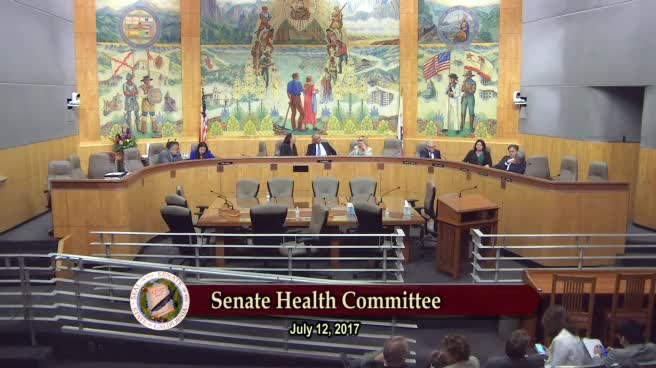
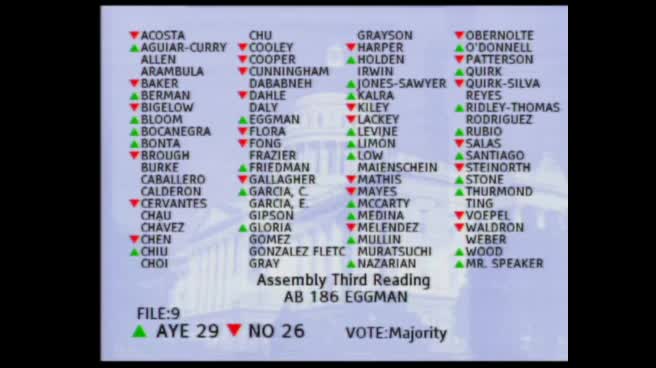
Bill Author

Bill Co-Author(s):