AB 1463: Election of judges: working group.
- Session Year: 2017-2018
- House: Assembly
- Latest Version Date: 2017-04-20
Existing law authorizes the chair of the Judicial Council to appoint committees composed of, among others, official court reporters, judges, attorneys, and experts in specialized fields, to advise the Judicial Council on the condition of business in the courts and the means for improving the administration of justice.
This bill would establish, until January 1, 2021, a working group with a membership appointed by the Judicial Council, as specified, to improve voter education of candidates for judicial election. The bill would require the working group to meet to consider what information would be useful to voters in a judicial election and how to make this information accessible to voters. The bill would require the Judicial Council to report the working groups findings to the Legislature on or before January 1, 2020.
Existing law establishes the Trial Court Trust Fund, the proceeds of which are apportioned to fund trial court operations, as well as providing for the direct payment or reimbursement of the actual costs of operating one or more trial courts upon the authorization of the participating courts. Existing law prohibits the Judicial Council from expending funds on the Court Case Management System without consent from the Legislature, except as specified.This bill would repeal the language prohibiting the Judicial Council from expending funds on the Court Case Management System without consent from the Legislature.Existing law establishes the Trial Court Trust Fund, the proceeds of which are apportioned to fund trial court operations, as well as providing for the direct payment or reimbursement of the actual costs of operating one or more trial courts upon the authorization of the participating courts. Existing law prohibits the Judicial Council from expending funds on the Court Case Management System without consent from the Legislature, except as specified.
This bill would repeal the language prohibiting the Judicial Council from expending funds on the Court Case Management System without consent from the Legislature.
(a)There is a working group to improve voter education of candidates for judicial election.
(b)The Judicial Council shall appoint the members of the working group, which shall include, but not be limited to, one or more representatives of all of the following:
(1)Commission on Judicial Nominees Evaluation of the State Bar of California.
(2)County election officials.
(3)Secretary of State.
(c)The working group shall meet to consider what information would be useful to voters in a judicial election and how to make this information accessible to voters. The working group may consider whether it is appropriate or feasible to post judicial decisions on an Internet Web site maintained by a government entity.
(d)(1)On or before January 1, 2020, the Judicial Council shall report the findings of the working group to the Legislature.
(2)The Judicial Council shall submit the report required by paragraph (1) in compliance with Section 9795.
(e)This section shall remain in effect only until January 1, 2021, and as of that date is repealed.
SECTION 1.Section 68085 of the Government Code is amended to read:68085.(a)(1)There is hereby established the Trial Court Trust Fund, the proceeds of which shall be apportioned for the purposes authorized in this section, including apportionment to the trial courts to fund trial court operations, as defined in Section 77003.(2)The apportionment payments shall be made by the Controller. The final payment from the Trial Court Trust Fund for each fiscal year shall be made on or before August 31 of the subsequent fiscal year.(A)Notwithstanding any other law, in order to promote statewide efficiency, the Judicial Council may authorize the direct payment or reimbursement or both of actual costs from the Trial Court Trust Fund or the State Trial Court Improvement and Modernization Fund to fund the costs of operating one or more trial courts upon the authorization of the participating courts. These paid or reimbursed costs may be for services provided to the court or courts by the Administrative Office of the Courts or payment for services or property of any kind contracted for by the court or courts or on behalf of the courts by the Administrative Office of the Courts. The amount of appropriations from the State Trial Court Improvement and Modernization Fund under this subdivision may not exceed 20 percent of the amount deposited in the State Trial Court Improvement and Modernization Fund pursuant to subdivision (a) of Section 77205. The direct payment or reimbursement of costs from the Trial Court Trust Fund may be supported by the reduction of a participating courts allocation from the Trial Court Trust Fund to the extent that the courts expenditures for the program are reduced and the court is supported by the expenditure. The Judicial Council shall provide the affected trial courts with quarterly reports on expenditures from the Trial Court Trust Fund incurred as authorized by this subdivision. The Judicial Council shall establish procedures to provide for the administration of this paragraph in a way that promotes the effective, efficient, reliable, and accountable operation of the trial courts.(B)As used in subparagraph (A), the term costs of operating one or more trial courts includes any expenses related to operation of the court or performance of its functions, including, but not limited to, statewide administrative and information technology infrastructure supporting the courts. The term costs of operating one or more trial courts is not restricted to items considered court operations pursuant to Section 77003, but is subject to policies, procedures, and criteria established by the Judicial Council, and may not include an item that is a cost that must otherwise be paid by the county or city and county in which the court is located.(b)Notwithstanding any other law, the fees listed in subdivision (c) shall all be deposited upon collection in a special account in the county treasury, and transmitted monthly to the State Treasury for deposit in the Trial Court Trust Fund.(c)(1)Except as specified in subdivision (d), this section applies to all fees collected on or before December 31, 2005, pursuant to Sections 631.3, 116.230, and 403.060 of the Code of Civil Procedure and Sections 26820.4, 26823, 26826, 26826.01, 26827, 26827.4, 26830, 26832.1, 26833.1, 26835.1, 26836.1, 26837.1, 26838, 26850.1, 26851.1, 26852.1, 26853.1, 26855.4, 26862, 68086, 72055, 72056, 72056.01, and 72060.(2)Notwithstanding any other law, except as specified in subdivision (d) of this section and subdivision (a) of Section 68085.7, this section applies to all fees and fines collected on or before December 31, 2005, pursuant to Sections 116.390, 116.570, 116.760, 116.860, 177.5, 491.150, 704.750, 708.160, 724.100, 1134, 1161.2, and 1218 of the Code of Civil Procedure, Sections 26824, 26828, 26829, 26834, and 72059 of the Government Code, and subdivisions (b) and (c) of Section 166 and Section 1214.1 of the Penal Code.(3)If any of the fees provided for in this subdivision are partially waived by court order, and the fee is to be divided between the Trial Court Trust Fund and any other fund, the amount of the partial waiver shall be deducted from the amount to be distributed to each fund in the same proportion as the amount of each distribution bears to the total amount of the fee.(d)This section does not apply to that portion of a filing fee collected pursuant to Section 26820.4, 26826, 26827, 72055, or 72056 that is allocated for dispute resolution pursuant to Section 470.3 of the Business and Professions Code, the county law library pursuant to Section 6320 of the Business and Professions Code, the Judges Retirement Fund pursuant to Section 26822.3, automated recordkeeping or conversion to micrographics pursuant to Sections 26863 and 68090.7, and courthouse financing pursuant to Section 76238. This section also does not apply to fees collected pursuant to subdivisions (a) and (c) of Section 27361.(e)This section applies to all payments required to be made to the State Treasury by any county or city and county pursuant to Section 77201, 77201.1, or 77205.(f)Notwithstanding any other law, no agency may take action to change the amounts allocated to any of the funds described in subdivision (a), (b), (c), or (d).(g)The Judicial Council shall reimburse the Controller for the actual administrative costs that will be incurred under this section. Costs reimbursed under this section shall be determined on an annual basis in consultation with the Judicial Council.(h)Any amounts required to be transmitted by a county or city and county to the state pursuant to this section shall be remitted to the State Treasury no later than 45 days after the end of the month in which the fees were collected. This remittance shall be accompanied by a remittance advice identifying the collection month and the appropriate account in the Trial Court Trust Fund to which it is to be deposited. Any remittance that is not made by the county or city and county in accordance with this section shall be considered delinquent, and subject to the interest and penalties specified in this section.(i)Upon receipt of any delinquent payment required pursuant to this section, the Controller shall do the following:(1)Calculate interest on the delinquent payment by multiplying the amount of the delinquent payment at a daily rate equivalent to the rate of return of money deposited in the Local Agency Investment Fund pursuant to Section 16429.1 from the date the payment was originally due to either 30 days after the date of the issuance by the Controller of the final audit report concerning the failure to pay or the date of payment by the entity responsible for the delinquent payment, whichever comes first.(2)Calculate a penalty at a daily rate equivalent to 11/2 percent per month from the date 30 days after the date of the issuance by the Controller of the final audit report concerning the failure to pay.(j)(1)Interest or penalty amounts calculated pursuant to subdivision (i) shall be paid by the county, city and county, or court to the Trial Court Trust Fund no later than 45 days after the end of the month in which the interest or penalty was calculated. Payment shall be made by the entity responsible for the error or other action that caused the failure to pay, as determined by the Controller in notice given to that party by the Controller.(2)Notwithstanding Section 77009, any interest or penalty on a delinquent payment that a court is required to make pursuant to this section and Section 24353 shall be paid from the Trial Court Operations Fund for that court.(3)The Controller may permit a county, city and county, or court to pay the interest or penalty amounts according to a payment schedule in the event of a large interest or penalty amount that causes a hardship to the paying entity.(4)The party responsible for the error or other action that caused the failure to pay may include, but is not limited to, the party that collected the funds who is not the party responsible for remitting the funds to the Trial Court Trust Fund, if the collecting party failed or delayed in providing the remitting party with sufficient information needed by the remitting party to distribute the funds.(k)The Trial Court Trust Fund shall be invested in the Surplus Money Investment Fund and all interest earned shall be allocated to the Trial Court Trust Fund quarterly and shall be allocated among the courts in accordance with the requirements of subdivision (a).(l)It is the intent of the Legislature that the revenues required to be deposited into the Trial Court Trust Fund be remitted as soon after collection by the courts as possible.(m)Except for subdivisions (a) and (k), this section does not apply to fees and fines that are listed in subdivision (a) of Section 68085.1 that are collected on or after January 1, 2006.(n)The changes made to subdivisions (i) and (j) of this section by the act adding this subdivision shall apply to all delinquent payments for which no final audit has been issued by the Controller prior to January 1, 2008.(o)Nothing in this section or any other law shall be construed to authorize the Judicial Council to redirect funds from the Trial Court Trust Fund for any purpose other than for allocation to trial courts or as otherwise specifically appropriated by statute.(a)(1)There is hereby established the Trial Court Trust Fund, the proceeds of which shall be apportioned for the purposes authorized in this section, including apportionment to the trial courts to fund trial court operations, as defined in Section 77003.
(2)The apportionment payments shall be made by the Controller. The final payment from the Trial Court Trust Fund for each fiscal year shall be made on or before August 31 of the subsequent fiscal year.
(A)Notwithstanding any other provision of law, in order to promote statewide efficiency, the Judicial Council may authorize the direct payment or reimbursement or both of actual costs from the Trial Court Trust Fund or the State Trial Court Improvement and Modernization Fund to fund the costs of operating one or more trial courts upon the authorization of the participating courts. These paid or reimbursed costs may be for services provided to the court or courts by the Administrative Office of the Courts or payment for services or property of any kind contracted for by the court or courts or on behalf of the courts by the Administrative Office of the Courts. The amount of appropriations from the State Trial Court Improvement and Modernization Fund under this subdivision may not exceed 20 percent of the amount deposited in the State Trial Court Improvement and Modernization Fund pursuant to subdivision (a) of Section 77205. The direct payment or reimbursement of costs from the Trial Court Trust Fund may be supported by the reduction of a participating courts allocation from the Trial Court Trust Fund to the extent that the courts expenditures for the program are reduced and the court is supported by the expenditure. The Judicial Council shall provide the affected trial courts with quarterly reports on expenditures from the Trial Court Trust Fund incurred as authorized by this subdivision. The Judicial Council shall establish procedures to provide for the administration of this paragraph in a way that promotes the effective, efficient, reliable, and accountable operation of the trial courts.
(B)As used in subparagraph (A), the term costs of operating one or more trial courts includes any expenses related to operation of the court or performance of its functions, including, but not limited to, statewide administrative and information technology infrastructure supporting the courts. The term costs of operating one or more trial courts is not restricted to items considered court operations pursuant to Section 77003, but is subject to policies, procedures, and criteria established by the Judicial Council, and may not include an item that is a cost that must otherwise be paid by the county or city and county in which the court is located.
(b)Notwithstanding any other provision of law, the fees listed in subdivision (c) shall all be deposited upon collection in a special account in the county treasury, and transmitted monthly to the State Treasury for deposit in the Trial Court Trust Fund.
(c)(1)Except as specified in subdivision (d), this section applies to all fees collected on or before December 31, 2005, pursuant to Sections 631.3, 116.230, and 403.060 of the Code of Civil Procedure and Sections 26820.4, 26823, 26826, 26826.01, 26827, 26827.4, 26830, 26832.1, 26833.1, 26835.1, 26836.1, 26837.1, 26838, 26850.1, 26851.1, 26852.1, 26853.1, 26855.4, 26862, 68086, 72055, 72056, 72056.01, and 72060.
(2)Notwithstanding any other provision of law, except as specified in subdivision (d) of this section and subdivision (a) of Section 68085.7, this section applies to all fees and fines collected on or before December 31, 2005, pursuant to Sections 116.390, 116.570, 116.760, 116.860, 177.5, 491.150, 704.750, 708.160, 724.100, 1134, 1161.2, and 1218 of the Code of Civil Procedure, Sections 26824, 26828, 26829, 26834, and 72059 of the Government Code, and subdivisions (b) and (c) of Section 166 and Section 1214.1 of the Penal Code.
(3)If any of the fees provided for in this subdivision are partially waived by court order, and the fee is to be divided between the Trial Court Trust Fund and any other fund, the amount of the partial waiver shall be deducted from the amount to be distributed to each fund in the same proportion as the amount of each distribution bears to the total amount of the fee.
(d)This section does not apply to that portion of a filing fee collected pursuant to Section 26820.4, 26826, 26827, 72055, or 72056 that is allocated for dispute resolution pursuant to Section 470.3 of the Business and Professions Code, the county law library pursuant to Section 6320 of the Business and Professions Code, the Judges Retirement Fund pursuant to Section 26822.3, automated recordkeeping or conversion to micrographics pursuant to Sections 26863 and 68090.7, and courthouse financing pursuant to Section 76238. This section also does not apply to fees collected pursuant to subdivisions (a) and (c) of Section 27361.
(e)This section applies to all payments required to be made to the State Treasury by any county or city and county pursuant to Section 77201, 77201.1, or 77205.
(f)Notwithstanding any other provision of law, no agency may take action to change the amounts allocated to any of the funds described in subdivision (a), (b), (c), or (d).
(g)The Judicial Council shall reimburse the Controller for the actual administrative costs that will be incurred under this section. Costs reimbursed under this section shall be determined on an annual basis in consultation with the Judicial Council.
(h)Any amounts required to be transmitted by a county or city and county to the state pursuant to this section shall be remitted to the State Treasury no later than 45 days after the end of the month in which the fees were collected. This remittance shall be accompanied by a remittance advice identifying the collection month and the appropriate account in the Trial Court Trust Fund to which it is to be deposited. Any remittance that is not made by the county or city and county in accordance with this section shall be considered delinquent, and subject to the interest and penalties specified in this section.
(i)Upon receipt of any delinquent payment required pursuant to this section, the Controller shall do the following:
(1)Calculate interest on the delinquent payment by multiplying the amount of the delinquent payment at a daily rate equivalent to the rate of return of money deposited in the Local Agency Investment Fund pursuant to Section 16429.1 from the date the payment was originally due to either 30 days after the date of the issuance by the Controller of the final audit report concerning the failure to pay or the date of payment by the entity responsible for the delinquent payment, whichever comes first.
(2)Calculate a penalty at a daily rate equivalent to 11/2 percent per month from the date 30 days after the date of the issuance by the Controller of the final audit report concerning the failure to pay.
(j)(1)Interest or penalty amounts calculated pursuant to subdivision (i) shall be paid by the county, city and county, or court to the Trial Court Trust Fund no later than 45 days after the end of the month in which the interest or penalty was calculated. Payment shall be made by the entity responsible for the error or other action that caused the failure to pay, as determined by the Controller in notice given to that party by the Controller.
(2)Notwithstanding Section 77009, any interest or penalty on a delinquent payment that a court is required to make pursuant to this section and Section 24353 shall be paid from the Trial Court Operations Fund for that court.
(3)The Controller may permit a county, city and county, or court to pay the interest or penalty amounts according to a payment schedule in the event of a large interest or penalty amount that causes a hardship to the paying entity.
(4)The party responsible for the error or other action that caused the failure to pay may include, but is not limited to, the party that collected the funds who is not the party responsible for remitting the funds to the Trial Court Trust Fund, if the collecting party failed or delayed in providing the remitting party with sufficient information needed by the remitting party to distribute the funds.
(k)The Trial Court Trust Fund shall be invested in the Surplus Money Investment Fund and all interest earned shall be allocated to the Trial Court Trust Fund quarterly and shall be allocated among the courts in accordance with the requirements of subdivision (a).
(l)It is the intent of the Legislature that the revenues required to be deposited into the Trial Court Trust Fund be remitted as soon after collection by the courts as possible.
(m)Except for subdivisions (a) and (k), this section does not apply to fees and fines that are listed in subdivision (a) of Section 68085.1 that are collected on or after January 1, 2006.
(n)The changes made to subdivisions (i) and (j) of this section by the act adding this subdivision shall apply to all delinquent payments for which no final audit has been issued by the Controller prior to January 1, 2008.
(o)The Judicial Council shall not expend any of these funds on the system known as the Court Case Management System without consent from the Legislature, except for the maintenance and operation of Court Case Management System Version 2 and Version 3.(p)(o)Nothing in this section or any other provision of law shall be construed to authorize the Judicial Council to redirect funds from the Trial Court Trust Fund for any purpose other than for allocation to trial courts or as otherwise specifically appropriated by statute.
(q)This section shall become operative on January 1, 2013.|
Date
|
Status
|
|---|---|
| Feb 1, 2018 | From committee: Filed with the Chief Clerk pursuant to Joint Rule 56. |
| Jan 31, 2018 | Died pursuant to Art. IV, Sec. 10(c) of the Constitution. |
| May 26, 2017 | In committee: Held under submission. |
| May 17, 2017 | In committee: Set, first hearing. Referred to APPR. suspense file. |
| Apr 25, 2017 | From committee: Do pass and re-refer to Com. on APPR. (Ayes 8. Noes 3.) (April 25). Re-referred to Com. on APPR. |
| Apr 24, 2017 | Re-referred to Com. on JUD. |
| Apr 20, 2017 | From committee chair, with author's amendments: Amend, and re-refer to Com. on JUD. Read second time and amended. |
| Mar 13, 2017 | Referred to Com. on JUD. |
| Feb 19, 2017 | From printer. May be heard in committee March 21. |
| Feb 17, 2017 | Read first time. To print. |
|
Date
|
Description
|
Location
|
Votes
|
|
|---|---|---|---|---|
| Apr 25, 2017 | Do pass and be re-referred to the Committee on [Appropriations] | Assembly Standing Committee on Judiciary |
Passed |
This list shows positions taken on this bill by organizations on the date displayed, which is linked to the original source.
Positions by individuals are not included.
Date of Hearing: May 17, 2017
ASSEMBLY COMMITTEE ON APPROPRIATIONS
Lorena Gonzalez Fletcher, Chair
ABPCA Bill Id:AB 1463
Author:(Levine) – As Amended Ver:April 20, 2017
Policy Committee: | Judiciary | Vote: | 8 - 3 |
|
| ||
|
|
Urgency: No State Mandated Local Program: No Reimbursable: No
SUMMARY:
This bill establishes a working group convened by the Judicial Council to examine how to improve voter education of candidates for judicial election. This bill requires the Judicial Council to report the findings of the working group to the Legislature by January 1, 2020.
FISCAL EFFECT:
GF costs in the tens of thousands of dollars to form the working group and prepare the required report.
COMMENTS:
- Background. Existing law establishes that judges of the Supreme Court are elected at large and judges of courts of appeal are elected in their districts at general elections at the same time and places as the Governor. Existing law establishes that judges of superior courts are elected in their counties at general elections except as otherwise necessary to meet the requirements of federal law. Existing law also allows the Governor to appoint a judge to fill a vacant position.
- Purpose. According to the author, “When Californians vote in elections there are plenty of resources they can turn to in order to get information on who they are voting for. When it comes to our own elections as members of the legislature, our constituents can look up what bills we have authored and how we have voted. When it comes to judges, however, our voters have no such information available to them. The lack of a statewide database makes it nearly impossible for the state to even begin to collect this data for voters to analyze.
Analysis Prepared by: Jessica Peters / APPR. / (916) 319-2081
Date of Hearing: April 25, 2017
ASSEMBLY COMMITTEE ON JUDICIARY
Mark Stone, Chair
ABPCA Bill Id:AB 1463
Author:(Levine) – As Amended Ver:April 20, 2017
SUBJECT: ELECTION OF JUDGES: WORKING GROUP
KEY ISSUE: IN ORDER TO IMPROVE VOTER EDUCATION about CANDIDATES FOR JUDICIAL ELECTION, SHOULD THE JUDICIAL COUNCIL be required to CONVENE A WORKING GROUP of representatives FROM THE COMMISSION ON JUDICIAL NOMINEES EVALUATION, county ELECTION OFFICIALS, and the secretary of state TO CONSIDER how to educate voters and encourage VOTing IN JUDICIAL ELECTIONs?
SYNOPSIS
Voters are often not informed about judicial elections. Studies have found that voter roll-off (which occurs when voters cast votes on some—usually, high-profile contests—but not all issues on their ballots) in state Supreme Court elections was 25.6 percent (i.e. 25.6% do not completely fill out their ballots) between 1980 and 2000, with the highest levels of roll-off for nonpartisan and retention elections. When Californians vote in elections, there are plenty of resources they can turn to in order to get information on who they are voting for. When it comes to the election of members of the Legislature, constituents can look up what bills Members have authored and how they have voted. When it comes to judges, however, voters have no such information available to them. The lack of a statewide database also makes it nearly impossible for the state to even collect this data for voters to analyze.
In September 2007, then-Chief Justice Ronald George established the Commission for Impartial Courts. The Commission was tasked with providing recommendations on how to increase public trust and confidence in the judiciary, and ensure judicial impartiality and accountability for the benefit of all Californians. In 2009, the Commission issued its recommendations, and included ideas on how to improve voter education for judicial elections. It appears that several recommendations have been implemented, but many—due to fiscal constraints—have not been pursued.
Consistent with the Commission’s call for further study, this bill requires the Judicial Council to establish a working group to consider how to improve voter education about candidates for judicial election, including a consideration of what information would be useful to voters in a judicial election and how to make this information accessible to voters. The bill allows the working group to consider whether it is appropriate or feasible to post judicial decisions on an Internet Web site maintained by a government entity. The Judicial Council must report its findings no later than January 1, 2020. This bill is author-sponsored. There is no support or opposition on file.
SUMMARY: Establishes a working group convened by the Judicial Council to examine how to improve voter education of candidates for judicial election. Specifically, this bill:
- Establishes a working group to improve voter education of candidates for judicial election.
- Requires the Judicial Council to appoint the members of the working group, which shall include, but not be limited to, one or more representatives of all of the following:
- Commission on Judicial Nominees Evaluation of the State Bar of California.
- County election officials.
- Secretary of State.
- The working group shall meet to consider what information would be useful to voters in a judicial election and how to make this information accessible to voters. The working group may consider whether it is appropriate or feasible to post judicial decisions on an Internet Web site maintained by a government entity.
- Requires the Judicial Council, on or before January 1, 2020, to report the findings of the working group to the Legislature, as provided.
- Repeals these provisions after January 1, 2021.
EXISTING LAW:
- Establishes that judges of the Supreme Court shall be elected at large and judges of courts of appeal shall be elected in their districts at general elections at the same time and places as the Governor. Their terms are 12 years beginning the Monday after January 1 following their election, except that a judge elected to an unexpired term serves the remainder of the term. In creating a new court of appeal district or division the Legislature shall provide that the first elective terms are 4, 8, and 12 years. (Cal. Const., art. VI, Section 16, subd. (a).)
- Establishes that Judges of superior courts shall be elected in their counties at general elections except as otherwise necessary to meet the requirements of federal law. In the latter case the Legislature, by two-thirds vote of the membership of each house thereof, with the advice of judges within the affected court, may provide for their election by the system as prescribed, or by any other arrangement. The Legislature may provide that an unopposed incumbent’s name not appear on the ballot. (Cal. Const., art. VI, Section 16, subd. (b).)
- Provides that in the event of a vacancy in a judicial office to be filled by appointment of the Governor, or in the event that a declaration of candidacy is not filed by a judge and the Governor is required to nominate a candidate prescribed in the Constitution, the Governor shall first submit to a designated agency of the State Bar of California the names of all potential appointees or nominees for the judicial office for evaluation of their judicial qualifications. (Government Code Section 12011.5 (a).)
- Requires that upon receipt from the Governor the names of candidates for judicial office and their completed personal data questionnaires, the State Bar shall use appropriate confidential procedures to evaluate and determine the qualifications of each candidate with regard to his or her ability to discharge the judicial duties of the office to which the appointment or nomination shall be made. (Government Code Section 12011.5 (c).)
- Establishes that the Secretary of State is the chief elections officer of the state, and shall administer the provisions of the Elections Code. The Secretary of State shall see that elections are efficiently conducted and that state election laws are enforced. The Secretary of State may require elections officers to make reports concerning elections in their jurisdictions. (Government Code Section 12172.5.)
- Requires every candidate for a judicial office, as described, shall file in the office of the elections official in which his or her nomination papers are required to be filed, a written and signed declaration of his or her intention to become a candidate for that office on a form to be supplied by the elections official. A candidate for a numerically designated judicial office shall state in his or her declaration for which office he or she intends to become a candidate. (Elections Code Section 8023.)
- Encourages the Judicial Council to adopt rules to provide for uniformity in rules and procedures throughout all courts in a county and statewide. (Government Code Section 68070 (b).)
FISCAL EFFECT: As currently in print this bill is keyed fiscal.
COMMENTS: Voter “roll-off” occurs when voters cast votes on some—usually, high-profile contests—but not all issues on their ballots. A significant percentage of those Californians who vote do not completely fill out their ballots, often failing to cast votes in judicial elections. In explaining the reason for the bill, the author states:
Voters are often not informed about judicial elections. Studies have found that voter roll-off in state Supreme Court elections was 25.6 percent between 1980 and 2000, with the highest levels of roll-off for nonpartisan and retention elections. (Melinda Gann Hall, “Voting in State Supreme Court Elections: Competition and Context as Democratic Incentives” (2007) 69 Journal of Politics 1147.) According to a Greenberg Quinlan Rosner Research National Survey of Voters, only 22 percent of Americans know “a great deal” about what their state courts and judges do.
When Californians vote in elections there are plenty of resources they can turn to in order to get information on who they are voting for. When it comes to our own elections as members of the legislature, our constituents can look up what bills we have authored and how we have voted. When it comes to judges, however, our voters have no such information available to them. The lack of a statewide database makes it nearly impossible for the state to even begin to collect this data for voters to analyze.
Summary of this bill. Accordingly, this bill requires the Judicial Council to establish a working group to consider how to improve voter education of candidates for judicial election, including a consideration of what information would be useful to voters in a judicial election and how to make this information accessible to voters. This bill allows the working group to consider whether it is appropriate or feasible to post judicial decisions on an Internet Web site maintained by a government entity. The Judicial Council must report its findings no later than January 1, 2020.
Commission on Impartial Courts studied voter education. In September 2007, then-Chief Justice Ronald George established the Commission for Impartial Courts. According to the Commission’s report, the Commission was formed in the wake of threats against the independence of state judiciaries across the country:
In many states, courts increasingly had come under attack from partisan and special interests seeking to influence judicial decisionmaking, and judicial elections were becoming more like elections for political office: expensive, negative, and overly political. These kinds of national developments could not be ignored—the question was not if these trends would spread to California, but when. (Commission for Impartial Court: Final Report, Judicial Council (2009).)
Accordingly, the Commission was charged with studying and providing recommendations to the Judicial Council on ways to strengthen our court system, increase public trust and confidence in the judiciary, and ensure judicial impartiality and accountability for the benefit of all Californians. On voter education, the Commission specifically found that efforts were needed to improve public confidence in our courts. In its report, it stated:
An engaged and educated electorate is essential to maintaining public trust and confidence in a fair and impartial court system. Voters are entitled to abundant, full, and fair information that will empower them to make informed choices about candidates for judicial office. The commission agrees that the judicial branch needs to play an active role in encouraging a more informed and aware voting public, including affirming for courts and judges the value of providing neutral information to voters, creating resources for the coordination of voter education and outreach efforts by the courts, and advocating for legislative and rule changes that would provide greater and more useful information for voters. (Ibid.) [emphasis added].
To that end, the Commission made a number of proposals to improve voter education on candidates for judicial office:
- Voter focus groups should be conducted within California to determine what information to provide in education materials;
- Voter education materials should be developed to inform voters about the constitutional duties and responsibilities of judges and justices and the role of the state court system;
- Judicial candidates should participate in candidate forums and respond to appropriate questionnaires;
- Efforts should be undertaken to determine the most effective uses of multimedia tools to promote voter education;
- Collaboration should be established among the Judicial Council, the League of Women Voters, the California Channel, and other groups to inform and educate voters; and
- Politically neutral toolkits regarding voter information and best practices on public outreach should be developed for use by judicial candidates.
Several recommendations have been adopted; however, many relating to voter education remain under further review and consideration. In 2012, the Judicial Council provided an update to the implementation status of the Commission’s recommendations. Several of the recommendations in the Commission’s nearly-400-page report have been adopted by either the Judicial Council, or by another body. (Implementation Status of Recommendations by the Commission for Impartial Courts, Judicial Council (Dec. 2012).) For example, in response to the Commission’s report, the Legislature enacted AB 2487 (Feuer, Chap. 686, Stats. 2010), which requires the disqualification of a superior court judge who has received a campaign contribution in excess of $1,500 from a party or counsel in a matter before the court.
However, many of the recommendations relating to voter education remain under open-ended “further review and consideration.” When asked about this, Judicial Council staff noted that during this period, courts faced significant cuts and could not justifiably direct resources to examine this issue while court services were reduced, such as the closure of courthouses, lay-offs, and furloughs. (Indeed, while the fiscal health of our courts is better now than in previous years, it might be argued that our courts continue to face significant fiscal difficulties.)
Consistent with the Commission’s call for further study, this bill requires the Judicial Council to develop a working group to study how to improve voter education of candidates for judicial election. Notwithstanding the many recommendations issued by the Commission, the Commission also recommended that further study be undertaken to consider effective methods of increasing public knowledge of judicial candidates and their qualifications, including development of a model of judicial candidate evaluation. For example, the Commission suggested that there should be further study of how to create a system to evaluate qualifications of judicial candidates—similar to evaluation of judicial applicants appointed by the Governor. The Commission also considered whether there should be further study of how to increase public knowledge about judicial candidates and their qualifications. This bill, consistent with the Commission’s recommendations, requires the Judicial Council to create a working group to further study how to increase and improve voter education of candidates for judicial election, including a consideration of what information would be useful to voters in a judicial election and how to make this information accessible to voters. Given that the Judicial Council may not have specific expertise on elections and voter behavior, this bill requires the Judicial Council to appoint members to the working group from the Secretary of State, county election officials, and the Judicial Nominees Evaluation Commission of the State Bar.
When thinking about the election of a judicial officer, there is a natural tension between democratic accountability and judicial impartiality. In recent months, we’ve witnessed a number of disheartening and demoralizing attacks on our judges. When frustrated by legal results, it’s easy to resort to name-calling and insults. And yet, there will be instances—albeit rare—where a judicial decision raises actual doubt about a judge’s ability to render a fair and impartial decision. Striking that balance is difficult. As the Commission wisely noted, “voters must balance the objective of holding the incumbent accountable for his or her past performance against the other objective of selecting the most qualified of the candidates to serve in the future.” (Commission for Impartial Court: Final Report, Judicial Council (2009).) Given that there are many policy questions about what information would be useful to a voter (and alternatively, what information would not be useful) to make a decision, it seems appropriate for the Judicial Council to convene a working group to study this question and determine whether and how an appropriate balance can be struck.
REGISTERED SUPPORT / OPPOSITION:
Support
None on file
Opposition
None on file
Analysis Prepared by: Eric Dang / JUD. / (916) 319-2334
Discussed in Hearing
 1H
Assembly Standing Committee on Appropriations
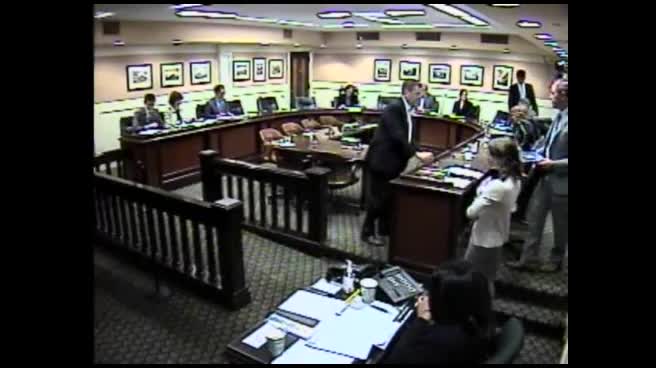 2MIN
Assembly Standing Committee on Judiciary
Bill Author

Bill Co-Author(s):