AB 1468: Community colleges: student equity plans.
- Session Year: 2017-2018
- House: Assembly
- Latest Version Date: 2017-07-12
Existing law, the Seymour-Campbell Student Success Act of 2012, provides that the purpose of the act is to increase California community college student access and success by providing effective core matriculation services of orientation, assessment and placement, counseling, and other education planning services, and academic interventions. The act specifies the responsibilities of students and institutions in entering into the matriculation process, and requires the Board of Governors of the California Community Colleges to develop a formula for allocating funding for the Student Success and Support Program that would be implemented under the act. Existing law requires, as a condition for receiving Student Success and Support Program funding, that the governing board of each community college district maintain a student equity plan, as specified.
This bill would authorize the use of funding from the Student Equity Program not to exceed 7.5% of a districts total allocation for that program, up to $25,000 of apportionment funds per campus, or both, for the provision of emergency student financial assistance, as defined, to eligible students, as defined, to overcome unforeseen financial challenges, as specified, that would directly impact a students ability to persist in his or her course of study, if emergency student financial assistance is included in an institutions plan for interventions to students.
Existing law, the Seymour-Campbell Student Success Act of 2012, provides that the purpose of the act is to increase California community college student access and success by providing effective core matriculation services of orientation, assessment and placement, counseling, and other education planning services, and academic interventions. The act specifies the responsibilities of students and institutions in entering into the matriculation process, and requires the Board of Governors of the California Community Colleges to develop a formula for allocating funding for the Student Success and Support Program that would be implemented under the act. Existing law requires, as a condition for receiving Student Success and Support Program funding, that the governing board of each community college district maintain a student equity plan, as specified.
This bill would authorize the use of funding from the Student Equity Program, Program not to exceed 7.5% of a districts total allocation for that program, up to $25,000 of apportionment funds per campus, or both, for the provision of emergency student financial assistance, as defined, to eligible students, as defined, to overcome unforeseen financial challenges, as specified, that would directly impact a students ability to persist in his or her course of study, if emergency student financial assistance is included in an institutions plan for interventions to students.
Existing law, the Seymour-Campbell Student Success Act of 2012, provides that the purpose of the act is to increase California community college student access and success by providing effective core matriculation services of orientation, assessment and placement, counseling, and other education planning services, and academic interventions. The act specifies the responsibilities of students and institutions in entering into the matriculation process, and requires the Board of Governors of the California Community Colleges to develop a formula for allocating funding for the Student Success and Support Program that would be implemented under the act. Existing law requires, as a condition for receiving Student Success and Support Program funding, that the governing board of each community college district maintain a student equity plan, as specified.
This bill would authorize the use of funding from the Student Equity Program Program, up to $25,000 of apportionment funds per campus, or both, for the provision of emergency student financial assistance, as defined, to eligible students, as defined, to overcome unforeseen financial challenges, as specified, that would directly impact a students ability to persist in his or her course of study, if emergency student financial assistance is included in an institutions plan for interventions to students.
Existing law, the Seymour-Campbell Student Success Act of 2012, provides that the purpose of the act is to increase California community college student access and success by providing effective core matriculation services of orientation, assessment and placement, counseling, and other education planning services, and academic interventions. The act specifies the responsibilities of students and institutions in entering into the matriculation process, and requires the Board of Governors of the California Community Colleges to develop a formula for allocating funding for the Student Success and Support Program that would be implemented under the act. Existing law requires, as a condition for receiving Student Success and Support Program funding, that the governing board of each community college district maintain a student equity plan, as specified.
This bill would authorize the use of funding from the Student Equity Program for the provision of emergency student financial assistance, as defined, to eligible students, as defined, to overcome unforeseen financial challenges, as specified, that would directly impact a students ability to persist in his or her course of study, if emergency student financial assistance is included in an institutions plan for interventions to students.
This bill would make a nonsubstantive change to the provision requiring a student equity plan for program funding.Existing law, the Seymour-Campbell Student Success Act of 2012, provides that the purpose of the act is to increase California community college student access and success by providing effective core matriculation services of orientation, assessment and placement, counseling, and other education planning services, and academic interventions. The act specifies the responsibilities of students and institutions in entering into the matriculation process, and requires the Board of Governors of the California Community Colleges to develop a formula for allocating funding for the Student Success and Support Program that would be implemented under the act. Existing law requires, as a condition for receiving Student Success and Support Program funding, that the governing board of each community college district maintain a student equity plan, as specified.
This bill would make a nonsubstantive change to the provision requiring a student equity plan for program funding.
(a)As a condition for receiving Student Success and Support Program funding, and in order to ensure equal educational opportunities and to promote student success for all students, regardless of race, gender, age, disability, or economic circumstances, the governing board of each community college district shall maintain a student equity plan that includes all of the following for each community college within the community college district:
(1)Campus-based research as to the extent of student equity by gender and for each of the following categories of students:
(A)Current or former foster youth.
(B)Students with disabilities.
(C)Low-income students.
(D)Veterans.
(E)Students in the following ethnic and racial categories, as they are defined by the United States Census Bureau for the 2010 Census for reporting purposes:
(i)American Indian or Alaska Native.
(ii)Asian.
(iii)Black or African American.
(iv)Hispanic or Latino.
(v)Native Hawaiian or other Pacific Islander.
(vi)White.
(vii)Some other race.
(viii)More than one race.
(2)Goals for access to, and completion of, basic skills, career technical education and workforce training, and transfer courses for the overall student population and for each population group of high-need or disadvantaged students, and a determination of what activities are most likely to effectively meet those goals.
(3)Whether significant underrepresentation is found to exist pursuant to paragraphs (1) and (2), measures for addressing the disparities in those areas, implementation activities designed to attain the goals specified in paragraph (2), including, but not limited to, the adoption of evidence-based models of remediation, implementation of placement tests and policies that more accurately predict student success and identify students remedial needs, and a means of coordinating with, at a minimum, the following student equity-related categorical programs or campus-based programs:
(A)Students with disabilities.
(B)Extended Opportunity Programs and Services and Special Services.
(C)Fund for Student Success.
(D)Student Success and Support Program.
(E)Programs for foster youth.
(F)Programs for veterans.
(G)Special Services for CalWORKs Recipients.
(H)Student Financial Aid Administration.
(I)Student Success for Basic Skills Students.
(4)Sources of funds for the activities in the plan.
(5)A schedule and process for evaluation.
(6)An executive summary that includes, at a minimum, the student groups for whom goals have been set, the goals, the initiatives that the community college or community college district will undertake to achieve these goals, the resources that have been budgeted for that purpose, and the community college district official to contact for further information. Commencing with the 201617 academic year, the executive summary shall also include a detailed accounting of how funding was expended and an assessment of the progress made in achieving the identified goals.
(b)Student equity plans shall be developed with the active involvement of all groups on campus as required by law, including, but not limited to, the academic senate, academic faculty and staff, student services, and students, and with the involvement of appropriate people from the community.
(c)The plan shall be adopted by the governing board of the community college district and submitted to the Chancellor of the California Community Colleges on or before January 1, 2015, who shall publish all executive summaries, sending copies to the appropriate policy and budget committees of the Legislature, the Department of Finance, every community college and community college district, each consultation group identified in subdivision (b) that so requests, and additional individuals and organizations as deemed appropriate.
(d)The plan shall be updated every three academic years and plan updates shall be submitted to the Chancellor of the California Community Colleges for publication and distribution as provided for in subdivision (c).
(e)(1)Funding for the Student Equity Program not to exceed 7.5 percent of the total allocation for that district for the program, up to twenty-five thousand dollars ($25,000) per campus of apportionment funding, or both, may be used for provision of emergency student financial assistance to help an eligible student overcome unforeseen financial challenges that would directly impact the students ability to persist in his or her course of study. These challenges include, but are not necessarily limited to, the immediate need for shelter or food. Each community college district and campus is encouraged to consider the unique characteristics of its student body in developing specific guidelines for further defining what constitutes an unforeseen financial challenge for its students.
(2)In order for emergency student financial assistance to be an allowable use of Student Equity Program funds, emergency student financial assistance shall be included in the institutions plan for interventions to students.
(3)For purposes of this subdivision, the following terms are defined as follows:
(A)Eligible student means a student who has experienced an unforeseen financial challenge, who currently meets the definition of satisfactory academic progress of the college he or she attends, who has submitted a Free Application for Federal Student Aid or a California Dream Act application to the college he or she attends, and who is at risk of not persisting in his or her course of study due to the unforeseen financial challenge.
(B)Emergency student financial assistance means financial support in the form of financial assistance to support a student to overcome unforeseen financial challenges so that he or she can continue his or her course of study.
(a)As a condition for receiving Student Success and Support Program funding, and in order to ensure equal educational opportunities and to promote student success for all students, regardless of race, gender, age, disability, or economic circumstances, the governing board of each community college district shall maintain a student equity plan that includes all of the following for each community college within the community college district:
(1)Campus-based research as to the extent of student equity by gender and for each of the following categories of students:
(A)Current or former foster youth.
(B)Students with disabilities.
(C)Low-income students.
(D)Veterans.
(E)Students in the following ethnic and racial categories, as they are defined by the United States Census Bureau for the 2010 Census for reporting purposes:
(i)American Indian or Alaska Native.
(ii)Asian.
(iii)Black or African American.
(iv)Hispanic or Latino.
(v)Native Hawaiian or other Pacific Islander.
(vi)White.
(vii)Some other race.
(viii)More than one race.
(2)Goals for access to, and completion of, basic skills, career technical education and workforce training, and transfer courses for the overall student population and for each population group of high-need or disadvantaged students, and a determination of what activities are most likely to effectively meet those goals.
(3)Whether significant underrepresentation is found to exist pursuant to paragraphs (1) and (2), measures for addressing the disparities in those areas, implementation activities designed to attain the goals specified in paragraph (2), including, but not limited to, the adoption of evidence-based models of remediation, implementation of placement tests and policies that more accurately predict student success and identify students remedial needs, and a means of coordinating with, at a minimum, the following student equity-related categorical programs or campus-based programs:
(A)Students with disabilities.
(B)Extended Opportunity Programs and Services and Special Services.
(C)Fund for Student Success.
(D)Student Success and Support Program.
(E)Programs for foster youth.
(F)Programs for veterans.
(G)Special Services for CalWORKs Recipients.
(H)Student Financial Aid Administration.
(I)Student Success for Basic Skills Students.
(4)Sources of funds for the activities in the plan.
(5)A schedule and process for evaluation.
(6)An executive summary that includes, at a minimum, the student groups for whom goals have been set, the goals, the initiatives that the community college or community college district will undertake to achieve these goals, the resources that have been budgeted for that purpose, and the community college district official to contact for further information. Commencing with 201617 academic year, the executive summary shall also include a detailed accounting of how funding was expended and an assessment of the progress made in achieving the identified goals.
(b)Student equity plans shall be developed with the active involvement of all groups on campus as required by law, including, but not limited to, the academic senate, academic faculty and staff, student services, and students, and with the involvement of appropriate people from the community.
(c)The plan shall be adopted by the governing board of the community college district and submitted to the Chancellor of the California Community Colleges on or before January 1, 2015, who shall publish all executive summaries, sending copies to the appropriate policy and budget committees of the Legislature, the Department of Finance, every community college and community college district, each consultation group identified in subdivision (b) that so requests, and additional individuals and organizations as deemed appropriate.
(d)The plan shall be updated every three academic years and plan updates shall be submitted to the Chancellor of the California Community Colleges for publication and distribution as provided for in subdivision (c).
(e)(1)Funding for the Student Equity Program, Program not to exceed 7.5 percent of the total allocation for that district for the program, up to twenty-five thousand dollars ($25,000) per campus of apportionment funding, or both, may be used for provision of emergency student financial assistance to help an eligible student overcome unforeseen financial challenges that would directly impact the students ability to persist in his or her course of study. These challenges include, but are not necessarily limited to, the immediate need for shelter or food. Each community college district and campus is encouraged to consider the unique characteristics of its student body in developing specific guidelines for further defining what constitutes an unforeseen financial challenge for its students.
(2)In order for emergency student financial assistance to be an allowable use of Student Equity Program funds, emergency student financial assistance shall be included in the institutions plan for interventions to students.
(3)For purposes of this subdivision, the following terms are defined as follows:
(A)Eligible student means a student who has experienced an unforeseen financial challenge, who currently meets the definition of satisfactory academic progress of the college he or she attends, and who is at risk of not persisting in his or her course of study due to the unforeseen financial challenge.
(B)Emergency student financial assistance means financial support in the form of financial assistance to support a student to overcome unforeseen financial challenges so that he or she can continue his or her course of study.
(a)As a condition for receiving Student Success and Support Program funding, and in order to ensure equal educational opportunities and to promote student success for all students, regardless of race, gender, age, disability, or economic circumstances, the governing board of each community college district shall maintain a student equity plan that includes all of the following for each community college within the community college district:
(1)Campus-based research as to the extent of student equity by gender and for each of the following categories of students:
(A)Current or former foster youth.
(B)Students with disabilities.
(C)Low-income students.
(D)Veterans.
(E)Students in the following ethnic and racial categories, as they are defined by the United States Census Bureau for the 2010 Census for reporting purposes:
(i)American Indian or Alaska Native.
(ii)Asian.
(iii)Black or African American.
(iv)Hispanic or Latino.
(v)Native Hawaiian or other Pacific Islander.
(vi)White.
(vii)Some other race.
(viii)More than one race.
(2)Goals for access to, and completion of, basic skills, career technical education and workforce training, and transfer courses for the overall student population and for each population group of high-need or disadvantaged students, and a determination of what activities are most likely to effectively meet those goals.
(3)Whether significant underrepresentation is found to exist pursuant to paragraphs (1) and (2), measures for addressing the disparities in those areas, implementation activities designed to attain the goals specified in paragraph (2), including, but not limited to, the adoption of evidence-based models of remediation, implementation of placement tests and policies that more accurately predict student success and identify students remedial needs, and a means of coordinating with, at a minimum, the following student equity-related categorical programs or campus-based programs:
(A)Students with disabilities.
(B)Extended Opportunity Programs and Services and Special Services.
(C)Fund for Student Success.
(D)Student Success and Support Program.
(E)Programs for foster youth.
(F)Programs for veterans.
(G)Special Services for CalWORKs Recipients.
(H)Student Financial Aid Administration.
(I)Student Success for Basic Skills Students.
(4)Sources of funds for the activities in the plan.
(5)A schedule and process for evaluation.
(6)An executive summary that includes, at a minimum, the student groups for whom goals have been set, the goals, the initiatives that the community college or community college district will undertake to achieve these goals, the resources that have been budgeted for that purpose, and the community college district official to contact for further information. Commencing with 201617 academic year, the executive summary shall also include a detailed accounting of how funding was expended and an assessment of the progress made in achieving the identified goals.
(b)Student equity plans shall be developed with the active involvement of all groups on campus as required by law, including, but not limited to, the academic senate, academic faculty and staff, student services, and students, and with the involvement of appropriate people from the community.
(c)The plan shall be adopted by the governing board of the community college district and submitted to the Chancellor of the California Community Colleges on or before January 1, 2015, who shall publish all executive summaries, sending copies to the appropriate policy and budget committees of the Legislature, the Department of Finance, every community college and community college district, each consultation group identified in subdivision (b) that so requests, and additional individuals and organizations as deemed appropriate.
(d)The plan shall be updated every three academic years and plan updates shall be submitted to the Chancellor of the California Community Colleges for publication and distribution as provided for in subdivision (c).
(e)(1)Funding for the Student Equity Program Program, up to twenty-five thousand dollars ($25,000) per campus of apportionment funding, or both, may be used for provision of emergency student financial assistance to help an eligible student overcome unforeseen financial challenges that would directly impact the students ability to persist in his or her course of study. These challenges include, but are not necessarily limited to, the immediate need for shelter or food. Each community college district and campus is encouraged to consider the unique characteristics of its student body in developing specific guidelines for further defining what constitutes an unforeseen financial challenge for its students.
(2)In order for emergency student financial assistance to be an allowable use of Student Equity Program funds, emergency student financial assistance shall be included in the institutions plan for interventions to students.
(3)For purposes of this subdivision, the following terms are defined as follows:
(A)Eligible student means a student who has experienced an unforeseen financial challenge, who currently meets the definition of satisfactory academic progress of the college he or she attends, and who is at risk of not persisting in his or her course of study due to the unforeseen financial challenge.
(B)Emergency student financial assistance means financial support in the form of financial assistance to support a student to overcome unforeseen financial challenges so that he or she can continue his or her course of study.
(a)As a condition for receiving Student Success and Support Program funding, and in order to ensure equal educational opportunities and to promote student success for all students, regardless of race, gender, age, disability, or economic circumstances, the governing board of each community college district shall maintain a student equity plan that includes all of the following for each community college within the community college district:
(1)Campus-based research as to the extent of student equity by gender and for each of the following categories of students:
(A)Current or former foster youth.
(B)Students with disabilities.
(C)Low-income students.
(D)Veterans.
(E)Students in the following ethnic and racial categories, as they are defined by the United States Census Bureau for the 2010 Census for reporting purposes:
(i)American Indian or Alaska Native.
(ii)Asian.
(iii)Black or African American.
(iv)Hispanic or Latino.
(v)Native Hawaiian or other Pacific Islander.
(vi)White.
(vii)Some other race.
(viii)More than one race.
(2)Goals for access to, and completion of, basic skills, career technical education and workforce training, and transfer courses for the overall student population and for each population group of high-need or disadvantaged students, and a determination of what activities are most likely to effectively meet those goals.
(3)Whether significant underrepresentation is found to exist pursuant to paragraphs (1) and (2), measures for addressing the disparities in those areas, implementation activities designed to attain the goals specified in paragraph (2), including, but not limited to, the adoption of evidence-based models of remediation, implementation of placement tests and policies that more accurately predict student success and identify students remedial needs, and a means of coordinating with, at a minimum, the following student equity-related categorical programs or campus-based programs:
(A)Students with disabilities.
(B)Extended Opportunity Programs and Services and Special Services.
(C)Fund for Student Success.
(D)Student Success and Support Program.
(E)Programs for foster youth.
(F)Programs for veterans.
(G)Special Services for CalWORKs Recipients.
(H)Student Financial Aid Administration.
(I)Student Success for Basic Skills Students.
(4)Sources of funds for the activities in the plan.
(5)A schedule and process for evaluation.
(6)An executive summary that includes, at a minimum, the students student groups for whom goals have been set, the goals, the initiatives that the community college or community college district will undertake to achieve these goals, the resources that have been budgeted for that purpose, and the community college district official to contact for further information. Commencing with 201617 academic year, the executive summary shall also include a detailed accounting of how funding was expended and an assessment of the progress made in achieving the identified goals.
(b)Student equity plans shall be developed with the active involvement of all groups on campus as required by law, including, but not limited to, the academic senate, academic faculty and staff, student services, and students, and with the involvement of appropriate people from the community.
(c)The plan shall be adopted by the governing board of the community college district and submitted to the Chancellor of the California Community Colleges on or before January 1, 2015, who shall publish all executive summaries, sending copies to the appropriate policy and budget committees of the Legislature, the Department of Finance, every community college and community college district, each consultation group identified in subdivision (b) that so requests, and additional individuals and organizations as deemed appropriate.
(d)The plan shall be updated every three academic years and plan updates shall be submitted to the Chancellor of the California Community Colleges for publication and distribution as provided for in subdivision (c).
(e)(1)Funding for the Student Equity Program may be used for provision of emergency student financial assistance to help an eligible student overcome unforeseen financial challenges that would directly impact the students ability to persist in his or her course of study. These challenges include, but are not necessarily limited to, the immediate need for shelter or food. Each community college district and campus is encouraged to consider the unique characteristics of its student body in developing specific guidelines for further defining what constitutes an unforeseen financial challenge for its students.
(2)In order for emergency student financial assistance to be an allowable use of Student Equity Program funds, emergency student financial assistance shall be included in the institutions plan for interventions to students.
(3)For purposes of this subdivision, the following terms are defined as follows:
(A)Eligible student means a student who has experienced an unforeseen financial challenge, who currently meets the definition of satisfactory academic progress of the college he or she attends, and who is at risk of not persisting in his or her course of study due to the unforeseen financial challenge.
(B)Emergency student financial assistance means financial support in the form of financial assistance to support a student to overcome unforeseen financial challenges so that he or she can continue his or her course of study.
(a)As a condition for receiving Student Success and Support Program funding, and in order to ensure equal educational opportunities and to promote student success for all students, regardless of race, gender, age, disability, or economic circumstances, the governing board of each community college district shall maintain a student equity plan that includes all of the following for each community college in within the community college district:
(1)Campus-based research as to the extent of student equity by gender and for each of the following categories of students:
(A)Current or former foster youth.
(B)Students with disabilities.
(C)Low-income students.
(D)Veterans.
(E)Students in the following ethnic and racial categories, as they are defined by the United States Census Bureau for the 2010 Census for reporting purposes:
(i)American Indian or Alaska Native.
(ii)Asian.
(iii)Black or African American.
(iv)Hispanic or Latino.
(v)Native Hawaiian or other Pacific Islander.
(vi)White.
(vii)Some other race.
(viii)More than one race.
(2)Goals for access to, and completion of, basic skills, career technical education and workforce training, and transfer courses for the overall student population and for each population group of high-need or disadvantaged students, and a determination of what activities are most likely to effectively meet those goals.
(3)Whether significant underrepresentation is found to exist pursuant to paragraphs (1) and (2), measures for addressing the disparities in those areas, implementation activities designed to attain the goals specified in paragraph (2), including, but not limited to, the adoption of evidence-based models of remediation, implementation of placement tests and policies that more accurately predict student success and identify students remedial needs, and a means of coordinating with, at a minimum, the following student equity-related categorical programs or campus-based programs:
(A)Students with disabilities.
(B)Extended Opportunity Programs and Services and Special Services.
(C)Fund for Student Success.
(D)Student Success and Support Program.
(E)Programs for foster youth.
(F)Programs for veterans.
(G)Special Services for CalWORKs Recipients.
(H)Student Financial Aid Administration.
(I)Student Success for Basic Skills Students.
(4)Sources of funds for the activities in the plan.
(5)A schedule and process for evaluation.
(6)An executive summary that includes, at a minimum, the students groups for whom goals have been set, the goals, the initiatives that the community college or community college district will undertake to achieve these goals, the resources that have been budgeted for that purpose, and the community college district official to contact for further information. Commencing with 201617 academic year, the executive summary shall also include a detailed accounting of how funding was expended and an assessment of the progress made in achieving the identified goals.
(b)Student equity plans shall be developed with the active involvement of all groups on campus as required by law, including, but not limited to, the academic senate, academic faculty and staff, student services, and students, and with the involvement of appropriate people from the community.
(c)The plan shall be adopted by the governing board of the community college district and submitted to the Chancellor of the California Community Colleges on or before January 1, 2015, who shall publish all executive summaries, sending copies to the appropriate policy and budget committees of the Legislature, the Department of Finance, every community college and community college district, each consultation group identified in subdivision (b) that so requests, and additional individuals and organizations as deemed appropriate.
(d)The plan shall be updated every three academic years and plan updates shall be submitted to the Chancellor of the California Community Colleges for publication and distribution as provided for in subdivision (c).
|
Date
|
Status
|
|---|---|
| Sep 1, 2017 | In committee: Held under submission. |
| Aug 21, 2017 | In committee: Referred to APPR. suspense file. |
| Jul 12, 2017 | Read second time and amended. Re-referred to Com. on APPR. |
| Jul 11, 2017 | From committee: Amend, and do pass as amended and re-refer to Com. on APPR. (Ayes 5. Noes 1.) (July 5). |
| Jun 29, 2017 | From committee chair, with author's amendments: Amend, and re-refer to committee. Read second time, amended, and re-referred to Com. on ED. |
| May 18, 2017 | Referred to Coms. on ED. and APPR. |
| May 8, 2017 | In Senate. Read first time. To Com. on RLS. for assignment. |
| May 8, 2017 | Read third time. Passed. Ordered to the Senate. (Ayes 55. Noes 22. Page 1422.) |
| May 2, 2017 | Read second time. Ordered to third reading. |
| May 1, 2017 | Withdrawn from committee. |
| Apr 26, 2017 | From committee: Do pass and re-refer to Com. on APPR. (Ayes 9. Noes 3.) (April 25). Re-referred to Com. on APPR. |
| Apr 4, 2017 | Re-referred to Com. on HIGHER ED. |
| Apr 3, 2017 | From committee chair, with author's amendments: Amend, and re-refer to Com. on HIGHER ED. Read second time and amended. |
| Mar 29, 2017 | Re-referred to Com. on HIGHER ED. |
| Mar 28, 2017 | From committee chair, with author's amendments: Amend, and re-refer to Com. on HIGHER ED. Read second time and amended. |
| Mar 27, 2017 | Referred to Com. on HIGHER ED. |
| Feb 19, 2017 | From printer. May be heard in committee March 21. |
| Feb 17, 2017 | Read first time. To print. |
|
Date
|
Description
|
Location
|
Votes
|
|
|---|---|---|---|---|
| Aug 21, 2017 | Placed on suspense file | Senate Standing Committee on Appropriations |
Passed |
|
| Jul 5, 2017 | Do pass as amended, but first amend, and re-refer to the Committee on [Appropriations] | Senate Standing Committee on Education |
Passed |
|
| May 8, 2017 | AB 1468 CHIU Assembly Third Reading | Assembly Floor |
Passed |
|
| Apr 25, 2017 | Do pass and be re-referred to the Committee on [Appropriations] | Assembly Standing Committee on Higher Education |
Passed |
This list shows positions taken on this bill by organizations on the date displayed, which is linked to the original source.
Positions by individuals are not included.
|
Organization
|
Position
|
Date
|
|---|---|---|
| A Place Called Home | ** Support | Jul 5, 2017 |
| California Community Colleges Chancellor's Office | ** Support | Jul 5, 2017 |
| Consumer Attorneys Of California | ** Support | Jul 5, 2017 |
| Courage Campaign | ** Support | Jul 5, 2017 |
| emergency aid for college students | ** Support | Jul 5, 2017 |
| First Place for Youth | ** Support | Jul 5, 2017 |
| John Burton Advocates for Youth | ** Support | Jul 5, 2017 |
| LA Chamber of Commerce | * Support | Jul 5, 2017 |
| Los Angeles Area Chamber Of Commerce | * Support | Jul 5, 2017 |
| Move LA | ** Support | Apr 24, 2017 |
| Move LA | ** Support | Apr 24, 2017 |
| Scholarship America | * Support | Jul 5, 2017 |
| Student Senate for California Community Colleges | ** Support | Jul 5, 2017 |
| uAspire | ** Support | Apr 24, 2017 |
| uAspire | ** Support | Apr 24, 2017 |
SENATE COMMITTEE ON
Senator Ricardo Lara, Chair
2017 - 2018 Regular Session
AB 1468 (Chiu) - Community colleges: student equity plans
Version: | Policy Vote: |
Urgency: | Mandate: |
Hearing Date: | Consultant: |
This bill meets the criteria for referral to the Suspense File.
Bill Summary:
This bill authorizes the use of funding from the Student Equity Program not to exceed 7.5 percent and up to $25,000 of apportionment funds per campus or both, for the provision of emergency student financial assistance to help eligible California Community College (CCC) students overcome unforeseen financial challenges that would directly impact the student’s ability to persist in his or her course of study.
Fiscal Impact:
- The 2017-18 Budget Act includes $160 million Proposition 98 General Fund for Student Equity Plans. By authorizing community college districts to use up to 7.5 percent of their Student Equity Plan funding allocations and for all 114 campuses to use up to $25,000 of its apportionment funding to provide emergency financial assistance grants to students, this bill would allow approximately $14.8 million to be used for this purpose each year. This could then lead to a similar amount in Proposition 98 General Fund cost pressure to backfill the funds for existing Student Equity Program purposes such as tutoring and supplemental instruction.
- Community college districts and campuses are likely to incur minor and absorbable costs to develop and administer an emergency student financial assistance grant program. Any administrative costs to the Chancellor’s Office are also expected to be minor and absorbable.
Background:
Existing law establishes the student success and support program (SSSP) in order to provide a variety of programs intended to ensure the success of CCC students, including, but not limited to: a) student assessment before course registration; b) counseling and other education planning services; c) advising; and, d) development of an education plan leading to a course of study. It specifies that funding for the SSSP be targeted to fully implement orientation, assessment, counseling and advising, and other education planning services needed to assist a student in making an informed decision about his or her educational goal and course of study and in the development of an education plan.
Existing law requires that all CCC districts, with the assistance of the CCC Chancellor, establish and maintain institutional research to evaluate the effectiveness of the SSSP, as specified, and of any other programs or services designed to facilitate students' completion of their educational goals and course of study.
As a condition for receiving SSSP funding, and in order to ensure equal educational opportunities and to promote student success for all students, regardless of race, gender, age, disability, or economic circumstances, the governing board of each CCC district is required to maintain a student equity plan that includes, but is not limited to, the following:
- Campus-based research as to the extent of student equity by gender and specified underrepresented groups.
- Goals for access to, and completion of, basic skills, career technical education and workforce training, and transfer courses for the overall student population and for each population group of high-need or disadvantaged students, and a determination of what activities are most likely to effectively meet those goals.
- Where significant underrepresentation is found to exist, measures for addressing the disparities in those areas, implementation activities designed to attain the specified goals, including, but not limited to, the adoption of evidence-based models of remediation; and, d) a schedule and process for evaluation. The plan shall be adopted by the governing board of the CCC district and submitted to the CCC Chancellor, as specified.
Existing law requires the CCC Chancellor to allocate funds provided for purposes of successfully implementing the activities and goals specified in the student equity plans, consistent with all of the following:
- CCC districts serving greater populations of students who are high-need or disadvantaged receive greater resources to provide services to students, consistent with the goals and activities specified in their student equity plans.
- Criteria established by the Chancellor for calculating the number of high-need and disadvantaged students in a CCC district.
- The list established by the Chancellor of eligible and ineligible expenditures and activities to ensure that funding is used to support the implementation of student equity plan goals and the coordination of services for the targeted student populations.
Proposed Law:
This bill authorizes the use of funding from the Student Equity Program not to exceed 7.5 percent of the total allocation for that district for the program and up to $25,000 of apportionment funds per campus or both, for the provision of emergency student financial assistance to help eligible students overcome unforeseen financial challenges that would directly impact the student’s ability to persist in his or her course of study.
This bill specifies that unforeseen financial challenges shall include but is not necessarily limited to, the immediate need for shelter or food.
Further, this bill encourages each community college district and campus to consider the unique characteristics of its student body in developing specific guidelines for further defining what constitutes an unforeseen financial challenge for its students.
This bill requires emergency student financial assistance to be included in the institution’s plan for interventions to students in order to be considered an allowable use of Student Equity Program funds.
This bill defines various terms for purposes of the bill.
Related Legislation:
SB 307 (Nguyen, 2017) requests the Regents of the University of California (UC) to convene a task force, consisting of three representatives from the UC, California State University, and the CCCs, selected by the governing boards of each segment for the purpose of conducting a study to determine the extent, causes, and effects of housing insecurity and homelessness of current and future students. SB 307 is pending in the Assembly Appropriations Committee.
Staff Comments:
Since the 2014-15 fiscal year, the Legislature has provided dedicated funding for student equity planning to improve access and outcomes for high-need and disadvantaged student groups. Colleges may use student equity funds to provide a broad array of services as long as these expenditures target student groups with achievement gaps identified in a college student equity plan submitted to the CCC Chancellor’s Office. Each college develops specific goals/outcomes and actions to address disparities that are discovered, disaggregating data for indicators by student demographics. College plans must describe the implementation of each indicator, as well as policies, activities, and procedures as they related to student equity at college.
The Chancellor of the CCCs is to allocate the funds in a manner that ensures districts with a greater proportion or number of students who are high-need, as determined by the Chancellor’s Office, receive greater resources to provide services. In addition, as a condition of receipt of the funds, the districts are required to include in their Student Equity Plan how they will coordinate existing student support services in a manner to better serve their high-need student populations.
The 2017-18 Budget Act includes $160 million in Proposition 98 funds for the Student Equity Program. This bill authorizes up to 7.5 percent of a district’s total allocation for the program and up to $25,000 of apportionment funds per campus, or both, for the provision of emergency student financial assistance, such as food, housing, transportation, and health care, thereby redirecting these resources away from student services that include tutoring, supplemental instruction, and professional development. This could create significant cost pressure for the state to backfill these funds in order to maintain the existing level of student support services.
-- END --
SENATE COMMITTEE ON EDUCATION
Senator Benjamin Allen, Chair
2017 - 2018 Regular
Bill No: Hearing Date: July 5, 2017
Author: | Chiu | ||
Version: |
| ||
Urgency: | Fiscal: | ||
Consultant: | |||
Subject:
SUMMARY
This bill authorizes the use of funding from the Student Equity Program not to exceed 7.5 percent and up to $25,000 of apportionment funds per campus or both, for the provision of emergency student financial assistance to help eligible California Community College (CCC) students overcome unforeseen financial challenges that would directly impact the student’s ability to persist in his or her course of study.
BACKGROUND
Existing law:
- Establishes the student success and support program (SSSP) in order to provide a variety of programs intended to ensure the success of CCC students, including, but not limited to: a) student assessment before course registration; b) counseling and other education planning services; c) advising; and, d) development of an education plan leading to a course of study. Specifies funding for the SSSP be targeted to fully implement orientation, assessment, counseling and advising, and other education planning services needed to assist a student in making an informed decision about his or her educational goal and course of study and in the development of an education plan. (Education Code (EC) § 78212).
- Requires that all CCC districts, with the assistance of the CCC Chancellor, establish and maintain institutional research to evaluate the effectiveness of the SSSP, as specified, and of any other programs or services designed to facilitate students' completion of their educational goals and course of study.
- Requires the metrics for such research to include, but be not limited to the following: a) prior educational experience, including transcripts when appropriate, as determined by the chancellor; b) educational goals and courses of study; c) criteria for exemption from orientation, assessment, or required counseling or advisement, if applicable; d) need for financial assistance; e) disaggregated data by ethnicity, gender, disability, age, and socioeconomic status, to the extent this information is available; f) academic performance, such as the completion of specified unit thresholds, success in basic skills courses, grade point average, course completion outcomes, transfer readiness, and degree and certificate completion; and, g) any additional information that the chancellor finds appropriate (EC § 78214).
- As a condition for receiving Student Success and Support Program (SSSP) funding, and in order to ensure equal educational opportunities and to promote student success for all students, regardless of race, gender, age, disability, or economic circumstances, the governing board of each California Community College (CCC) district is required to maintain a student equity plan that includes, but is not limited to, the following for each CCC:
- Campus-based research as to the extent of student equity by gender and specified underrepresented groups.
- Goals for access to, and completion of, basic skills, career technical education and workforce training, and transfer courses for the overall student population and for each population group of high-need or disadvantaged students, and a determination of what activities are most likely to effectively meet those goals.
- Where significant underrepresentation is found to exist, measures for addressing the disparities in those areas, implementation activities designed to attain the specified goals, including, but not limited to, the adoption of evidence-based models of remediation; and, d) a schedule and process for evaluation. The plan shall be adopted by the governing board of the CCC district and submitted to the CCC Chancellor, as specified (EC § 78820).
- Requires the CCC Chancellor to allocate funds provided for purposes of successfully implementing the activities and goals specified in the student equity plans, consistent with all of the following:
- Submission of a student equity plan that is consistent, as specified in EC Section 78220.
- CCC districts serving greater populations of students who are high-need or disadvantaged receive greater resources to provide services to students, consistent with the goals and activities specified in their student equity plans.
- Criteria established by the Chancellor for calculating the number of high-need and disadvantaged students in a CCC district.
- The list established by the Chancellor of eligible and ineligible expenditures and activities to ensure that funding is used to support the implementation of student equity plan goals and the coordination of services for the targeted student populations. (EC § 78221).
- Requires a report by the Chancellor provided to the Department of Finance, the Legislative Analyst, and the appropriate policy and fiscal committees of the Legislature, on the expenditure of student equity funds. (EC § 78221).
ANALYSIS
This bill:
- Authorizes the use of funding from the Student Equity Program not to exceed 7.5 percent of the total allocation for that district for the program and up to $25,000 of apportionment funds per campus or both, for the provision of emergency student financial assistance to help eligible students overcome unforeseen financial challenges that would directly impact the student’s ability to persist in his or her course of study.
- Specifies unforeseen financial challenges to include but is not necessarily limited to, the immediate need for shelter or food.
- Encourages each community college district and campus to consider the unique characteristics of its student body in developing specific guidelines for further defining what constitutes an unforeseen financial challenge for its students.
- Requires emergency student financial assistance to be included in the institution’s plan for interventions to students in order to be considered an allowable use of Student Equity Program funds.
- Defines the following terms for purposes of the bill:
- “Eligible student,” to mean a student who has experienced an unforeseen
financial challenge, who currently meets the definition of satisfactory academic progress of the college he or she attends, and who is at risk of not persisting in his or her course of study due to the unforeseen financial challenge.
- “Emergency student financial assistance” to mean financial support in the
form of financial assistance to support a student to overcome unforeseen financial challenges so that he or she can continue his or her course of study.
STAFF COMMENTS
- Need for the bill. According to the author, “With the soaring cost of college education, students are continually strapped for cash and often lack the resources to cover basic needs such as housing, food, and transportation. Studies show that many students on the financial edge can have their entire community college career derailed by just one financial emergency. Emergency aid provides “just-in-time,” grants to students who are facing unexpected financial emergencies due to medical expenses, car repairs or child care. Authorizing California Community Colleges to provide small emergency grants to students who are at risk of dropping out due to an unforeseen financial emergency would provide colleges with an effective tool to improve student success and completion rates.”
This bill would authorize the use of community college apportionment dollars and funds designated for the Student Equity program for purposes of granting emergency aid to Community College students.
- History of Student Equity Planning. In 1991, the California Legislature charged all levels of public education to provide education equity, “through environment in which each person…has a reasonable chance to fully develop his or her potential.” In keeping with these requirements, the California Community Colleges (CCC) Board of Governors (BOG) adopted a student equity policy in 1992, to ensure that groups historically underrepresented in higher education have an equal opportunity for access, success, and transfer; enjoining all districts to develop, implement, and evaluate a student equity plan. In 1996, the BOG amended its policy to establish the adoption of a student equity plan as a minimum standard for receipt of state funding. In 2008-09, due to the economic downturn and state budget cuts many regulatory requirements related to student equity and other initiative, were suspended.
In January 2011, in response to SB 1143 (Liu, Chapter 409, Statutes of 2010), the BOG embarked on a 12-month planning process to improve student success, creating the Student Success Task Force. The Task Force published recommendations in early 2012, many of which became part of the Student Success Task Force. The Task Force published recommendations in early 2012, many of which became part of Student Success Act of 2012 the effort to improve student success established by SB 1456 (Lowenthal, Chapter 624, Statutes of 2012). Among many important changes in the Act, it reaffirmed the importance of focusing on student equity in the effort to improve student success. In 2013, the Chancellor’s Office convened a Student Equity Workgroup to review and update the student equity planning process, ensuring that each college identifies strategies to address and monitor equity issues as well as to mitigate the disproportionate impact on student access and achievement.
- Designated use of Student Equity funds at CCCs. In the 2014-15 Budget Act, the Legislature provided dedicated funding for student equity planning to improve access and outcomes for disadvantaged groups. Colleges may use student equity funds to provide a broad array of services as long as these expenditures target student groups with achievement gaps identified in a college student equity plan submitted to the CCC Chancellor’s Office.
The Chancellor of the CCCs is to allocate the funds in a manner that ensures districts with a greater proportion or number of students who are high-need, as determined by the Chancellor’s Office, receive greater resources to provide services. In addition, as a condition of receipt of the funds, the districts are required to include in their Student Equity Plan how they will coordinate existing student support services in a manner to better serve their high-need student populations.
- How are colleges using Student Equity funds? In its evaluation of the Student Success Act, the Legislative Analyst’s Office reports that many colleges use funds to support the following student equity activities:
- Expanding existing student support services such as tutoring and supplemental instruction.
- Implementing peer mentoring programs and learning communities for underrepresented minorities
- Offering equity-focused professional development for faculty and staff.
- Emergency aid. According to a December 2015 report, by Wisconsin Hope Lab, entitled, "Investing in Student Completion: Overcoming Financial Barriers to Retention Through Small-Dollar Grants and Emergency Aid Programs," a deepening financial need among students exists and growing concerns about college retention. The report finds that there is an increased interest in emergency aid programs, but also many challenges in implementing them effectively, due in part, to administrators having to delicately navigate tensions between providing access and support and rationing scarce resources. The report recommends that clear criteria for program eligibility, while providing flexibility for determinations in unusual circumstances, must be established and clearly communicated.
- Non-tuition costs. According to the California Student Aid Commission, “non-tuition” costs exceed $18,000 annually for California Community College (CCC) students living independently. Research by the Institute for College Access and Success reveals a student’s ability to pay the full cost of attendance is an important factor in his or her success. As such, a student who cannot afford to fully cover access costs such as textbooks, transportation, food, and housing may make choices that undermine their ability to complete their education. For example, they may need to work more hours at the expense of studying. In response to this need, the state has increased efforts to provide additional aid specifically for Community College Students to cover living expense.
- Recent efforts to help CCC students cover the full cost of attendance. In order to assist low-income students pay for non-tuition cost and help them reach their academic goals in a timely manner, the state enacted several aid programs. With the recently enacted Budget, an eligible student could receive up to $4,270 annually for living expenses. These programs include the following:
- Cal Grant B access award provides students who meet the income and GPA (at least 2.0) requirements an annual allowance of $1,670.
- Full-Time Student Success grant provides an annual supplemental award of $600 to Cal Grant B and C recipients who are enrolled full-time (12 units or more).
- Completion Grant, established by SB 85 (Committee on Budget, Chapter 23, and Statutes of 2017) provides a grant award of $2,000 annually to Full-Time Student Success recipients who complete 15 units within an academic year.
To qualify for these additional aid programs, a student would need to submit a Free Application for Federal Student Aid or California Dream Application. Community college student are less likely to complete the FAFSA or DREAM application and miss grant aid opportunities. If it is the desire of the committee to move this measure forward staff recommends that the bill be amended to require a student seeking, “Emergency student financial assistance,” to complete and submit either a Free Application for Federal Student Aid (FAFSA) or a California Dream Act application.
- Other related budget activities. In addition to establishing the Completion Grant, SB 85 appropriates $2.5 million from the General Fund to the Board of Governors of the California Community Colleges (CCCs) to provide grants to community college districts to be used for purposes related to addressing student hunger at community colleges.
- Is this the appropriate remedy? Student equity planning focuses on increasing access to, and completion of, English as Second Language and basic skills, degree, certificate and transfer courses for the overall student population and for each population group of high-need or disadvantaged students. Each college develops specific goals/outcomes and actions to address disparities that are discovered, disaggregating data for indicators by student demographics. College plans must describe the implementation of each indicator, as well as policies, activities, and procedures as they related to student equity at college. Student equity plans are prepared with three-to-five year time frames in terms of planned activities and improvements, to align with the Student Success and Support Program plan.
As noted in staff comments #2 and #3, the state has exerted extensive effort and allocated funding to better coordinate delivery of existing student support services to reduce equity gaps through the Student Equity Program. This bill authorizes the use of up to 7.5 percent in Student Equity funds for the provision of emergency student financial assistance.
- Should this Committee authorize the use of Student Equity funds for purposes unrelated to the effort to implement strategies close access and achievement gaps among demographic groups?
- Would this bill set a precedent that dilutes Student equity funds intended for critical academic support services for the provision of nonacademic financial assistance?
- The current emergency aid programs at Pasadena City College and Grossmont College were funded from external sources, such as district foundations and other fundraising efforts. Are these more appropriate funding sources?
- If state funds are to be used for this purpose, would it be more appropriate to expand the resources available through state financial aid programs?
- Related and Prior legislation.
SB 307 (Nguyen, 2017) Requests the Regents of the University of California (UC) to convene a task force, consisting of three representatives from the UC, California State University (CSU) and California Community Colleges (CCC), selected by the governing boards of each segment for the purpose of conducting a study to determine the extent, causes, and effects of housing insecurity and homelessness of current and future students. SB 307 is pending hearing in the Assembly Higher Education Committee.
AB 543 (Limon, 2017) requires the CSU Trustees, the CCC Board of Governors, and encourages the University of California (UC) Regents, to designate as a "hunger free campus" each of its respective campuses. The provisions in AB 543 were adopted into SB 85 budget trailer bill.
AB 2822 (Chiu, 2016) would have required the CCC Chancellor's Office to provide guidelines for community college districts or campuses that seek to establish student emergency aid programs among the services they provide. AB 2822 authorized the solicitation and receipt of funding from private sources to cover the cost of the emergency aid program. AB 2822 was ordered to inactive file at the request of the author and subsequently died.
SUPPORT
A Place Called Home
California Community Colleges Chancellor’s Office
Consumer Attorneys of California
Courage Campaign
First Place for Youth
Emergency Aid for College Students
John Burton Advocates for Youth
Los Angeles Area Chamber of Commerce
Scholarship America
Student Senate for California Community Colleges
OPPOSITION
None received
-- END --
ASSEMBLY THIRD READING
ATR Bill Id:AB 1468
Author:(Chiu)
As Amended Ver:April 3, 2017
Majority vote
Committee | Votes | Ayes | Noes |
Higher Education | 9-3 | Medina, Arambula, Bloom, Irwin, Levine, Low, Quirk-Silva, Santiago, Weber | Baker, Choi, Kiley |
SUMMARY: Authorizes the use of funding from the California Community Colleges (CCC) Student Equity Program, up to $25,000 per campus of apportionment funding, or both, to be used for emergency student financial assistance to help an eligible student overcome unforeseen financial challenges that would directly impact the student’s ability to persist in his or her course of study.
EXISTING LAW:
- Creates the Student Success and Support Program (SSSP) in order to provide a variety of programs intended to ensure the success of CCC students, including, but not limited to: a) student assessment before course registration; b) counseling and other education planning services; c) advising; and, d) development of an education plan leading to a course of study. Specifies funding for SSSP shall be targeted to fully implement orientation, assessment, counseling and advising, and other education planning services needed to assist a student in making an informed decision about his or her educational goal and course of study and in the development of an education plan. (Education Code (EC) Section 78212).
- Requires that all community college districts (CCD), with the assistance of the CCC Chancellor, establish and maintain institutional research to evaluate the effectiveness of the SSSP, as specified, and of any other programs or services designed to facilitate students' completion of their educational goals and course of study. Specifies the metrics for said research shall include, but be not limited to the following: a) prior educational experience, including transcripts when appropriate, as determined by the chancellor; b) educational goals and courses of study; c) criteria for exemption from orientation, assessment, or required counseling or advisement, if applicable; d) need for financial assistance; e) disaggregated data by ethnicity, gender, disability, age, and socioeconomic status, to the extent this information is available; f) academic performance, such as the completion of specified unit thresholds, success in basic skills courses, grade point average, course completion outcomes, transfer readiness, and degree and certificate completion; and, g) any additional information that the chancellor finds appropriate (EC Section 78214).
- As a condition for receiving SSSP funding, and in order to ensure equal educational opportunities and to promote student success for all students, regardless of race, gender, age, disability, or economic circumstances, the governing board of each CCD shall maintain a student equity plan that includes, but is not limited to, the following for each community college in the CCD: a) campus-based research as to the extent of student equity by gender and specified underrepresented groups (including, but limited to, current or former foster youth, veterans, and students with disabilities); b) goals for access to, and completion of, basic skills, career technical education and workforce training, and transfer courses for the overall student population and for each population group of high-need or disadvantaged students, and a determination of what activities are most likely to effectively meet those goals; c) where significant underrepresentation is found to exist, measures for addressing the disparities in those areas, implementation activities designed to attain the specified goals, including, but not limited to, the adoption of evidence-based models of remediation; and, d) a schedule and process for evaluation. The plan shall be adopted by the governing board of the CCD and submitted to the CCC Chancellor, as specified (EC Section 78220).
- Requires the CCC Chancellor to allocate funds provided for purposes of successfully implementing the activities and goals specified in the student equity plans, consistent with all of the following: a) ensure CCDs submit a student equity plan that is consistent, as specified in EC Section 78220; b) ensure that CCDs serving greater populations of students who are high-need or disadvantaged receive greater resources to provide services to students, consistent to the goals and activities specified in their student equity plans; c) establish criteria for calculating the number of high-need and disadvantaged students in a CCD; d) establish a list of eligible and ineligible expenditures and activities to ensure that funding is used to support the implementation of student equity plan goals and the coordination of services for the targeted student populations; and, e) report to the Department of Finance, the Legislative Analyst, and the appropriate policy and fiscal committees of the Legislature, on the expenditure of student equity funds (EC Section 78221).
FISCAL EFFECT: Unknown. This bill is keyed non-fiscal by the Legislative Counsel.
COMMENTS: Need for the measure. According to the author, emergency aid is becoming an effective tool in assisting in student retention and completion. The author contends that, "The field of emergency aid is quickly emerging as a best practice for community colleges around the nation, but is still a new frontier."
The author argues that without any clear legislative direction or authority regarding emergency aid, and without available funding, colleges may be hesitant to explore and implement this up-and-coming means to supporting students in emergency crisis."
This measure authorizes the use of funding from the Student Equity Program, up to $25,000 of apportionment funding per campus, or both, for the provision of providing emergency student financial assistance.
Student equity plans. The 2016-17 Budget Act allocated $155 million in ongoing funds to CCDs to implement student equity plans. The 2016-17 allocations to districts were calculated using the existing student equity funding formula, which includes factors for annual full-time equivalent student (FTES), high need students, educational attainment of residential zip code, participation rate, poverty rate, unemployment rate, and unduplicated foster youth headcount.
To be noted, student equity funds must be used to address the student equity populations and indicators as defined in statute (EC Sections 78220 and 78221) and be based on the disproportionate impact study, goals, and activities as outlined in the CCDs student equity plans that are submitted to the CCC Chancellor's Office (CCCCO). Additionally, the colleges have two fiscal years to expend these funds. The expenditure cycle for the 2016-17 funds will thus end on June 30, 2018; the CCDs will have to provide mid-cycle and end of cycle expenditure reports to the CCCCO in September 2017 and September 2018, respectively.
Emergency aid. Individual campuses throughout various states are providing emergency aid for their students. Emergency aid comes in the form of supplemental grants, financial aid advances, or even small personal loans.
According to a December 2015 report by Wisconsin Hope Lab, entitled, "Investing in Student Completion: Overcoming Financial Barriers to Retention Through Small-Dollar Grants and Emergency Aid Programs," a deepening financial need among students exists. The report found that there is an increased interest in emergency aid programs, but also many challenges in implementing them effectively, due in part to administrators having to delicately navigate tensions between providing access and support and rationing scarce resources. Additionally, the report recommended that clear criteria for program eligibility, while providing flexibility for determining what constitutes an unusual circumstance, must be established and clearly communicated as policies are created seeking to create emergency aid programs.
Related and prior legislation. SB 307 (Nguyen) of the current legislative session, which is pending a hearing in the Senate Appropriations Committee, would, in part, request the University of California (UC) Regents to convene a task force, consisting of three UC representatives selected by the Regents, three representatives of the California State University (CSU) selected by the CSU Trustees, and three representatives of the CCC selected by the CCC Board of Governors, to conduct a study to determine the extent, causes, and effects of housing insecurity and homelessness of current postsecondary students in this state, and requires the study to be submitted to the Legislature on or before December 31, 2018.
AB 2822 (Chiu) of 2016, which was placed on the Senate Floor Inactive File by request of the author, in part, required the CCCCO to provide guidelines for CCD or campuses that seek to establish student emergency aid programs among the services they provide.
Analysis Prepared by: Jeanice Warden / HIGHER ED. / (916) 319-3960 FN: 0000221
Date of Hearing: April 25, 2017
ASSEMBLY COMMITTEE ON HIGHER EDUCATION
Jose Medina, Chair
ABPCA Bill Id:AB 1468 (
Author:Chiu) – As Amended Ver:April 3, 2017
SUBJECT: Community colleges: student equity plans.
SUMMARY: Authorizes the use of funding from the California Community Colleges (CCC) Student Equity Program, up to $25,000 per campus of apportionment funding, or both, to be used for emergency student financial assistance to help an eligible student overcome unforeseen financial challenges that would directly impact the student’s ability to persist in his or her course of study. Specifically, this bill:
- Specifies that the challenges (as referenced in the summary above) include, but are not necessarily limited to, the immediate need for shelter or food.
- Encourages each community college district and campus to consider the unique characteristics of its student body in developing specific guidelines for further defining what constitutes an unforeseen financial challenge for its students.
- Requires, in order to be an allowable use of Student Equity Program funds, emergency student financial assistance to be included in the institution’s plan for interventions to students.
- Defines the following terms:
- “Eligible student” means a student who has experienced an unforeseen financial challenge, who currently meets the definition of satisfactory academic progress of the college he or she attends, and who is at risk of not persisting in his or her course of study due to the unforeseen financial challenge; and,
- “Emergency student financial assistance” means financial support in the form of financial assistance to support a student to overcome unforeseen financial challenges so that he or she can continue his or her course of study.
EXISTING LAW:
- Creates the Student Success and Support Program (SSSP) in order to provide a variety of programs intended to ensure the success of CCC students, including, but not limited to: a) student assessment before course registration; b) counseling and other education planning services; c) advising; and, d) development of an education plan leading to a course of study. Specifies funding for SSSP shall be targeted to fully implement orientation, assessment, counseling and advising, and other education planning services needed to assist a student in making an informed decision about his or her educational goal and course of study and in the development of an education plan. (Education Code (EC) 78212).
- Requires that all community college districts (CCD), with the assistance of the CCC Chancellor, establish and maintain institutional research to evaluate the effectiveness of the SSSP, as specified, and of any other programs or services designed to facilitate students' completion of their educational goals and course of study. Specifies the metrics for said research shall include, but be not limited to the following: a) prior educational experience, including transcripts when appropriate, as determined by the chancellor; b) educational goals and courses of study; c) criteria for exemption from orientation, assessment, or required counseling or advisement, if applicable; d) need for financial assistance; e) disaggregated data by ethnicity, gender, disability, age, and socioeconomic status, to the extent this information is available; f) academic performance, such as the completion of specified unit thresholds, success in basic skills courses, grade point average, course completion outcomes, transfer readiness, and degree and certificate completion; and, g) any additional information that the chancellor finds appropriate (EC Section 78214).
- As a condition for receiving SSSP funding, and in order to ensure equal educational opportunities and to promote student success for all students, regardless of race, gender, age, disability, or economic circumstances, the governing board of each CCD shall maintain a student equity plan that includes, but is not limited to, the following for each community college in the CCD: a) campus-based research as to the extent of student equity by gender and specified underrepresented groups (including, but limited to, current or former foster youth, veterans, and students with disabilities); b) goals for access to, and completion of, basic skills, career technical education and workforce training, and transfer courses for the overall student population and for each population group of high-need or disadvantaged students, and a determination of what activities are most likely to effectively meet those goals; c) where significant underrepresentation is found to exist, measures for addressing the disparities in those areas, implementation activities designed to attain the specified goals, including, but not limited to, the adoption of evidence-based models of remediation; and, d) a schedule and process for evaluation. The plan shall be adopted by the governing board of the CCD and submitted to the CCC Chancellor, as specified (EC 78220).
- Requires the CCC Chancellor to allocate funds provided for purposes of successfully implementing the activities and goals specified in the student equity plans, consistent with all of the following: a) ensure CCDs submit a student equity plan that is consistent, as specified in EC Section 78220; b) ensure that CCDs serving greater populations of students who are high-need or disadvantaged receive greater resources to provide services to students, consistent to the goals and activities specified in their student equity plans; c) establish criteria for calculating the number of high-need and disadvantaged students in a CCD; d) establish a list of eligible and ineligible expenditures and activities to ensure that funding is used to support the implementation of student equity plan goals and the coordination of services for the targeted student populations; and, e) report to the Department of Finance, the Legislative Analyst, and the appropriate policy and fiscal committees of the Legislature, on the expenditure of student equity funds (EC Section 78221).
FISCAL EFFECT: Unknown
COMMENTS: Need for the measure. According to the author, emergency aid is becoming an effective tool in assisting in student retention and completion. The author contends that, "The field of emergency aid is quickly emerging as a best practice for community colleges around the nation, but is still a new frontier."
The author argues that without any clear legislative direction or authority regarding emergency aid, and without available funding, colleges may be hesitant to explore and implement this up-and-coming means to supporting students in emergency crisis."
This measure authorizes the use of funding from the Student Equity Program, up to $25,000 of apportionment funding per campus, or both, for the provision of providing emergency student financial assistance.
Student equity plans. The 2016-17 Budget Act allocated $155 million in ongoing funds to CCDs to implement student equity plans. The 2016-17 allocations to districts were calculated using the existing student equity funding formula, which includes factors for annual full-time equivalent student (FTES), high need students, educational attainment of residential zip code, participation rate, poverty rate, unemployment rate, and unduplicated foster youth headcount.
To be noted, student equity funds must be used to address the student equity populations and indicators as defined in statute (EC Sections 78220 and 78221) and be based on the disproportionate impact study, goals, and activities as outlined in the CCDs student equity plans that are submitted to the CCC Chancellor's Office (CCCCO). Additionally, the colleges have two fiscal years to expend these funds. The expenditure cycle for the 2016-17 funds will thus end on June 30, 2018; the CCDs will have to provide mid-cycle and end of cycle expenditure reports to the CCCCO in September 2017 and September 2018, respectively.
Emergency Aid. Individual campuses throughout various states are providing emergency aid for their students. Emergency aid comes in the form of supplemental grants, financial aid advances, or even small personal loans.
According to a December 2015 report by Wisconsin Hope Lab, entitled, "Investing in Student Completion: Overcoming Financial Barriers to Retention Through Small-Dollar Grants and Emergency Aid Programs," a deepening financial need among students exists". The report found that there is an increased interest in emergency aid programs, but also many challenges in implementing them effectively, due in part to administrators having to delicately navigate tensions between providing access and support and rationing scarce resources. Additionally, the report recommended that clear criteria for program eligibility, while providing flexibility for determining what constitutes an unusual circumstance, must be established and clearly communicated as policies are created seeking to create emergency aid programs.
As noted above, various campuses throughout the nation are beginning to offer forms of emergency aid. Here are a few:
1) Pasadena City College offers short-term emergency loans for unexpected expenses, books and supplies. Loans are usually processed within 24-48 hours and must be repaid within 30 days.
2) The University of California, Berkeley, makes short-term loans available to students in good standing who are faced with sudden, unforeseen financial need. Students who qualify, may receive between $775 and $1,300 in emergency funds. Loans are interest-free and are due within 60 days of disbursement.
3) Georgia State University provides micro grants to students each semester to help cover modest financial shortfalls affecting the students’ ability to pay tuition and fees and prevents them from stopping their studies or dropping out. This past fall, more than 18,000 of Georgia State’s more than 25,000 bachelor’s-degree-seeking students (72 percent) had some level of unmet need. This means that even after grants, loans, scholarships, family contributions and the income generated from students working 20 hours a week, the students lack sufficient funds to attend college. Each semester, hundreds of qualified students are dropped from their classes for lack of payment. For as little as $300, Panther Retention Grants provide the emergency funding to allow students who want to get their degrees the opportunity to remain enrolled. Last year, nearly 2,000 Georgia State students were brought back to the classroom—and kept on the path to attaining a college degree—through the program. Sixty-one percent of the seniors who received Panther Retention Grant support last academic year graduated within two semesters of receiving the grant, and 82 percent either had graduated or were still enrolled one year after receiving the grant. With more than 5,000 grants awarded over the past four years, the Panther Retention Grant program has prevented thousands of students from dropping out of Georgia State.
Committee comments. This measure, AB 637 (Medina), which unanimously passed out of this Committee on 18 April, and AB 1018 (Reyes), which will be heard today by this Committee, all seek to amend the same code section; and conflict with each other.
Moving forward, Committee staff recommends that the authors' work together to address potential chaptering out issues.
Related and prior legislation. SB 307 (Nguyen), which is set to be heard in the Senate Education Committee later this week, would, in part, request the University of California (UC) Regents to convene a task force, consisting of three UC representatives selected by the Regents, three representatives of the California State University (CSU) selected by the CSU Trustees, and three representatives of the CCC selected by the CCC Board of Governors, to conduct a study to determine the extent, causes, and effects of housing insecurity and homelessness of current postsecondary students in this state, and requires the study to be submitted to the Legislature on or before December 31, 2018.
AB 2822 (Chiu) of 2016, which was placed on the Senate Floor Inactive File by request of the author, in part, required the CCCCO to provide guidelines for CCD or campuses that seek to establish student emergency aid programs among the services they provide.
REGISTERED SUPPORT / OPPOSITION:
Support
A Place Called Home
Consumer Attorneys of California
Courage Campaign
First Place for Youth
Los Angeles Chamber of Commerce
Move LA
Scholarship America
Student Senate for California Community Colleges
uAspire
Opposition
None on file.
Analysis Prepared by: Jeanice Warden / HIGHER ED. / (916) 319-3960
Discussed in Hearing
 14MIN
Senate Standing Committee on Education
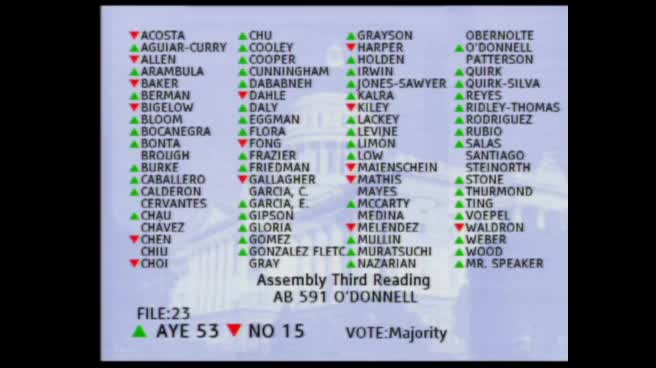 2MIN
Assembly Floor
 10MIN
Assembly Standing Committee on Higher Education
Bill Author

Bill Co-Author(s):