AB 1469: School transportation.
- Session Year: 2017-2018
- House: Assembly
- Latest Version Date: 2017-02-17
Existing law authorizes the governing board of a school district to provide for the transportation of pupils to and from school whenever in the judgment of the board the transportation is advisable and good reasons exist to do so.
This bill would entitle a pupil who attends a public, noncharter school that receives Title 1 federal funding to free transportation to and from school if certain conditions are met. The bill would require a school district not currently providing transportation to all pupils attending schools that receive Title 1 federal funding to implement a plan developed, in consultation with specified stakeholders, to ensure that all pupils entitled to free transportation receive the transportation. The bill would authorize school districts to contract with a municipally owned transit system to transport pupils if certain conditions are met. By imposing new duties on a local educational agency, the bill would constitute a state-mandated local program.
This bill would create the Transportation and Access to Public School Fund and require the Superintendent of Public Instruction, upon appropriation to this fund by the Legislature, to allocate moneys from this fund to school districts, county offices of education, entities providing services under a school transportation joint powers agreement, or regional occupational centers or programs that provide pupil transportation an amount equal to the actual costs of the entitled transportation pursuant to this bill. The bill would provide that these provisions shall become operative only to the extent that funding is provided in the annual Budget Act or another statute.
The California Constitution requires the state to reimburse local agencies and school districts for certain costs mandated by the state. Statutory provisions establish procedures for making that reimbursement.
This bill would provide that, if the Commission on State Mandates determines that the bill contains costs mandated by the state, reimbursement for those costs shall be made pursuant to the statutory provisions noted above.
(a)The Legislature finds and declares all of the following:
(1)According to data released by the United States Census Bureau, without a high school diploma, Americans are almost twice as likely to live in poverty.
(2)Several independent academic studies indicate a marked increase in school participation and graduation rates among children who were guaranteed transportation to and from school.
(3)According to a recent report by former Attorney General Kamala Harris, poverty and financial instability is the number one cause of truancy in the state.
(4)Research shows a strong relationship between access to transportation and improved school attendance.
(b)Based on the findings and declarations in subdivision (a), it is the intent of the Legislature to enact legislation that would support school participation and high school attainment among low-income youth.
SEC. 2.Section 39800 of the Education Code is amended to read:39800.(a) The In addition to the requirement to provide transportation pursuant to Section 39800.1, the governing board of any school district may provide for the transportation of pupils to and from school whenever whenever, in the judgment of the board governing board, the transportation is advisable and good reasons exist therefor. exist. The governing board of a school district may purchase or rent and provide for the upkeep, care, and operation of vehicles, or vehicles. The governing board of a school district may also contract and pay for the transportation of middle school and high school pupils to and from school by common carrier or a vehicle driven by a public employee of a municipally owned transit system, or may contract with and pay responsible private parties for the transportation. These contracts may be made with the parent or guardian of the pupil being transported. A The governing board of a school district may allow the transportation of preschool or nursery school pupils in schoolbuses owned or operated by the school district. A state reimbursement may not be received by a school district for the transportation of preschool or nursery school pupils.
(b)As used in this article, municipally owned transit system means a transit system owned by a city, city or by a district created under Part 1 (commencing with Section 24501) of Division 10 of the Public Utilities Code.
SEC. 3.Section 39800.1 is added to the Education Code, to read:39800.1.(a)Notwithstanding any other law, a pupil attending a public, noncharter school that receives Title 1 federal funding shall be entitled to free transportation to and from school, if either of the following conditions are met:
(1)The pupil resides more than one-half mile from the school.
(2)The neighborhood through which the pupil must travel to get to school is unsafe, as defined by the plan established pursuant to paragraph (1) of subdivision (b), which may include factors, including, but not limited to, stray dogs, lack of sidewalks, known gang activity, presence of environmental problems and hazards, required crossings of freeways or busy intersections, or other reasons documented by stakeholders in the plan developed pursuant to subdivision (c).
(b)(1) A school district not currently providing transportation to all pupils attending schools that receive Title 1 federal funding shall implement a plan to ensure that all pupils entitled to free transportation pursuant to subdivision (a) receive the transportation.
(2)The plan shall identify and accommodate the special rights of homeless youth, as defined pursuant to the federal McKinney-Vento Homeless Assistance Act (42 U.S.C. Sec. 11301 et seq.).
(c)The plan required by paragraph (1) of subdivision (b) shall be developed with the consultation of teachers, school administrators, regional local transit authorities, local air districts, the Department of Transportation, parents, pupils, and other stakeholders.
(d)If free, dependable, and timely transportation is not already available to pupils entitled to transportation services pursuant to this section, the school district shall ensure that the pupils entitled to the transportation are provided free transportation.
(e)Notwithstanding subdivision (f), transportation provided pursuant to this section shall be provided by a public employee.
(f)A school district may partner with a municipality owned transit system to provide the transportation provided pursuant to this section to middle school and high school pupils if all of the following conditions are met:
(1)All drivers are public employees of a municipality owned transit system as defined in subdivision (b) of Section 39800.
(2)The municipality owned transit system can certify that the transit system can ensure consistent, adequate routes and schedules to enable pupils to get home, to school and back, and does not charge the school district more than marginal cost for each transit pass.
(3)Nothing in this section would prevent a local transportation agency from providing no-cost transit passes to pupils attending Title 1 schools.
(g)All transportation provided pursuant to this section shall be reimbursed by the Transportation and Access to Public School Fund created pursuant to Section 39800.2.
SEC. 4.Section 39800.2 is added to the Education Code, to read:39800.2.(a)The Transportation and Access to Public School Fund is hereby created in the State Treasury to be administered by the department.
(b)Funds in the Transportation and Access to Public School Fund shall, upon appropriation by the Legislature, be allocated to the department for allocation to local educational agencies pursuant to the process established by the Superintendent.
(c)Commencing with the 201819 fiscal year, the Superintendent shall allocate from the Transportation and Access to Public School Fund to each school district, county office of education, entity providing services under a school transportation joint powers agreement, or regional occupational center or program that provides pupil transportation an amount equal to the actual costs of the entitled transportation established pursuant to Section 39800.1. The allocation shall be in addition to any amount apportioned for home-to-school transportation pursuant to Article 10 (commencing with Section 41850) of Chapter 5 of Part 24.
(d)This section shall become operative only to the extent that funding is provided in the annual Budget Act or another statute for the purposes of this section.
SEC. 5.If the Commission on State Mandates determines that this act contains costs mandated by the state, reimbursement to local agencies and school districts for those costs shall be made pursuant to Part 7 (commencing with Section 17500) of Division 4 of Title 2 of the Government Code.
|
Date
|
Status
|
|---|---|
| Feb 1, 2018 | From committee: Filed with the Chief Clerk pursuant to Joint Rule 56. |
| Jan 31, 2018 | Died pursuant to Art. IV, Sec. 10(c) of the Constitution. |
| May 26, 2017 | In committee: Held under submission. |
| May 17, 2017 | In committee: Set, first hearing. Referred to APPR. suspense file. |
| Apr 27, 2017 | From committee: Do pass and re-refer to Com. on APPR. (Ayes 5. Noes 1.) (April 26). Re-referred to Com. on APPR. |
| Mar 13, 2017 | Referred to Com. on ED. |
| Feb 19, 2017 | From printer. May be heard in committee March 21. |
| Feb 17, 2017 | Read first time. To print. |
|
Date
|
Description
|
Location
|
Votes
|
|
|---|---|---|---|---|
| Apr 26, 2017 | Do pass and be re-referred to the Committee on [Appropriations] | Assembly Standing Committee on Education |
Passed |
This list shows positions taken on this bill by organizations on the date displayed, which is linked to the original source.
Positions by individuals are not included.
|
Organization
|
Position
|
Date
|
|---|---|---|
| 9 to 5 California | ** Support | Apr 25, 2017 |
| Alliance for Boys and Men of Color | ** Support | Apr 25, 2017 |
| California Association of School Social Workers | ** Support | Apr 25, 2017 |
| California Catholic Conference | ** Support | Apr 25, 2017 |
| California Pan-Ethnic Health Network | ** Support | Apr 25, 2017 |
| California School Boards Association | * Against | May 1, 2017 |
| California School-Based Health Alliance | ** Support | Apr 25, 2017 |
| Children'S Defense Fund | ** Support | Apr 25, 2017 |
| Children'S Defense Fund | ** Support | Apr 25, 2017 |
| ChildrenS Defense Fund | ** Support | Apr 25, 2017 |
| Coalition of California Welfare Rights Organizations, Inc. | ** Support | Apr 25, 2017 |
| Courage Campaign | ** Support | Apr 25, 2017 |
| Genders & Sexualities Alliance Network | ** Support | Apr 25, 2017 |
| Homeboy Recycling | ** Support | Apr 25, 2017 |
| InnerCity Struggle | ** Support | Apr 25, 2017 |
| Koreatown Immigrant Workers Alliance | ** Support | Apr 25, 2017 |
| LA's BEST After School Enrichment Program | ** Support | Apr 25, 2017 |
| LA's BEST After School Enrichment Program | ** Support | Apr 25, 2017 |
| LAs BEST After School Enrichment Program | ** Support | Apr 25, 2017 |
| Los Angeles Brotherhood Crusade | ** Support | Apr 25, 2017 |
| One individual | ** Support | Apr 25, 2017 |
| Our Family Coalition | ** Support | Apr 25, 2017 |
| Public Counsel | ** Support | Apr 25, 2017 |
| Riverside Temple Beth El | ** Support | Apr 25, 2017 |
| San Pedro Neighbors for Peace & Justice | ** Support | Apr 25, 2017 |
| SHIELDS for Families | ** Support | Apr 25, 2017 |
| The Western Center on Law and Poverty | * Support | May 1, 2017 |
| W. Haywood Burns Institute | ** Support | Apr 25, 2017 |
| Young Women's Freedom Center | ** Support | Apr 25, 2017 |
| Young Women's Freedom Center | ** Support | Apr 25, 2017 |
| Young Womens Freedom Center | ** Support | Apr 25, 2017 |
| Youth Justice Coalition | * Indeterminate | May 1, 2017 |
| Youth Justice Coalitions High School | * Support | May 1, 2017 |
Date of Hearing: May 17, 2017
ASSEMBLY COMMITTEE ON APPROPRIATIONS
Lorena Gonzalez Fletcher, Chair
ABPCA Bill Id:AB 1469
Author:(Grayson) – As Introduced Ver:February 17, 2017
Policy Committee: | Education | Vote: | 5 - 1 |
Urgency: No State Mandated Local Program: Yes Reimbursable: Yes
SUMMARY:
This bill requires school districts to provide free transportation to and from school for pupils attending public, non-charter schools that receive Title I federal funding, subject to an appropriation for this purpose. Specifically, this bill:
- Requires public non-charter schools that receive Title I federal funding to provide free transportation to and from school if the pupil resides from than one-half mile from the school, and the neighborhood through which the pupil must travel to get to school is unsafe, due to factors including, but not limited to, stray dogs, lack of sidewalks, known gang activity, presence of environmental problems and hazards, required crossings of freeways or busy intersections, or other reasons documented by stakeholders.
- Requires a school district not currently providing transportation to all pupils attending schools that receive Title I federal funding to implement a plan to ensure that all pupils entitled to transportation receive free, dependable, and timely transportation. The school plan is to be developed in consultation with teachers, school administrators, regional local transportation authorities, local air districts, the Department of Transportation, parents, pupils, and other stakeholders.
- Authorizes school districts to partner with a municipality owned transit system to provide transportation to applicable middle school and high school pupils.
- Subject to funding in the Budget Act or another statute, establishes the Transportation and Access to Public School Fund in the State Treasury to be administered by the California Department of Education (CDE) for the purposes of providing funding to local education agencies (LEAs) for the required transportation.
- Requires the Superintendent of Public Instruction (SPI), beginning in the 2018-19 fiscal year, to allocate funding equal to the cost of the entitled transportation, and specifies that these allocations are in addition to funding apportioned for existing home-to- school transportation.
FISCAL EFFECT:
- Proposition 98/General Fund costs pressures, potentially in the hundreds of millions of dollars, to provide free transportation to Title I students living more than half-a mile from school and in need of a safe route to school. In 2015-16 school year there were 6 million students enrolled in 9,613 schools funded by Title I funds. The costs of providing transportation will vary by school and by the number of children that meet the requirements for free transportation. For the Los Angeles Unified School District this would mean providing transportation to 391,788 students and for the San Diego Unified School District this would mean providing transportation for 55,095 more students. The San Diego Unified School district estimates this cost to be roughly $32 million annually. Schools districts statewide would face annual increased costs that include new buses, driver costs, fuel, bus maintenance and bus storage. The Governor's budget does not propose funding for this purpose and the Legislative budget committees have not considered this issue.
- $25,000 GF one-time costs to CDE for program software and expenditure data collection and on-going administrative costs to CDE of approximately $134,000. CDE anticipates increased workload associated with planning, implementing and sustaining the newly created Transportation and Access to Public School Fund. However, this fund will only be created if funding is provided the Budget act or another measure.
COMMENTS:
- Background and Purpose. Existing law provides state funding for school district and county office of education transportation costs based on the amount received for that purpose in the prior year, or the agencies’ actual transportation costs, whichever is less. Existing law also requires school districts to provide transportation services for special education students if the students’ individualized education plans specify such a need.
According to a 2014 report by the Legislative Analyst, Review of School Transportation in California, approximately 12% of California students rode the school bus on a daily basis in 2011-12. Nationally, up to 50% of students ride the bus to school. The report suggests the lower rate of school bus usage in California may be partially due to the greater proportion of students who live within two miles from school in California. The districts transporting larger shares of students tended to have smaller enrollments, be located in more rural areas, and enroll larger proportions of students from low-income families. Many districts running larger transportation programs reported that they offer such services because many of their students lack viable alternatives for getting to school. Other reasons included long distances between homes and schools, and unsafe conditions affecting travel between home and school.
According to the author, “Excessive school absenteeism has long-term negative effects. Students who frequently miss schools are more likely to struggle academically and be pushed out of school altogether. As a result, these students are more likely to get involved in a cycle of juvenile crime, gang activities, substance abuse, and incarceration. The inability to afford transportation to and from school is one of the most frequently cited barriers that low-income youth face in attending school. Unlike many other states, California does not guarantee school bus transportation to students who live beyond walking distance from school.”
- Related Legislation. AB 1572 (Campos), of the 2015-16 Session, was substantially similar to this bill. The bill was held in Assembly Appropriations.
AB 891 (Campos), of the 2015-16 Session, would have provided low income students free transportation to and from school, and required each LEA to designate a liaison to address transportation issues. This bill was held in Assembly Appropriations.
Analysis Prepared by: Daisy Gonzales / APPR. / (916) 319-2081
Date of Hearing: April 26, 2017
ASSEMBLY COMMITTEE ON EDUCATION
Patrick O'Donnell, Chair
ABPCA Bill Id:AB 1469 (
Author:Grayson) – As Introduced Ver:February 17, 2017
SUBJECT: School transportation
SUMMARY: Requires school districts to provide free transportation to and from school for pupils attending public, non-charter schools that receive Title I federal funding, subject to an appropriation for this purpose. Specifically, this bill:
- Expresses findings and declarations regarding the connection between lack of transportation and school attendance for students living in poverty.
- Expresses the intent of the Legislature to enact legislation that would support school participation and high school attainment among low-income youth.
- Specifies that a pupil attending a public, non-charter school that receives Title I federal funding is entitled to free transportation to and from school if either of the following two conditions are met:
- The pupil resides from than one-half mile from the school;
- The neighborhood through which the pupil must travel to get to school is unsafe, due to factors including, but not limited to, stray dogs, lack of sidewalks, known gang activity, presence of environmental problems and hazards, required crossings of freeways or busy intersections, or other reasons documented by stakeholders.
- Requires a school district not currently providing transportation to all pupils attending schools that receive Title I federal funding to implement a plan to ensure that all pupils entitled to transportation receive free, dependable, and timely transportation.
- Requires the plan to identify and accommodate the special rights of homeless youth.
- Specifies that the plan is to be developed in consultation with teachers, school administrators, regional local transportation authorities, local air districts, the Department of Transportation, parents, pupils, and other stakeholders.
- Requires that the transportation be provided by a public employee.
- Authorizes school districts to partner with a municipality owned transit system to provide transportation to applicable middle school and high school pupils, if all of the following conditions are met:
- All drivers are public employees of a municipality owned transit system;
- The municipality owned transit system can certify that the transit system can ensure consistent, adequate routes and schedules to enable pupils to get home, to school and back, and does not charge the school district more than marginal cost for each transit pass;
- Nothing prevents a local transportation agency from providing no-cost transit passes to pupils attending Title I schools.
- Establishes the Transportation and Access to Public School Fund in the State Treasury to be administered by the California Department of Education (CDE) for the purposes of providing funding to local education agencies (LEAs) for the required transportation.
- Requires the Superintendent of Public Instruction (SPI), beginning in the 2018-19 fiscal year, to allocate funding equal to the cost of the entitled transportation to each school district, county office of education, entity providing services under a school transportation joint powers agreement, or regional occupational center or program that provides pupil transportation.
- Specifies that these allocations are in addition to funding apportioned for existing home-to-school transportation.
- Specifies that these provisions will become operative only to the extent that funding is provided in the annual Budget Act or another statute.
EXISTING LAW: Provides state funding for school district and county office of education transportation costs based on the amount received for that purpose in the prior year, or the agencies’ actual transportation costs, whichever is less. Existing law also requires school districts to provide transportation services for special education students if the students’ individualized education plans specify such a need. (EC 41850)
FISCAL EFFECT: The Office of Legislative Counsel has keyed this as a state-mandated local program.
COMMENTS:
This bill would require any public non-charter school that receives Title I funding, to provide free transportation to all pupils who live more than one-half mile from the school or who face safety hazards in walking to school. In the case of elementary school pupils, or those living in rural areas not well served by municipal transit systems, this transportation would likely be provided by school buses. For middle and high school students in suburban or urban areas, the transportation requirement could be fulfilled by providing pupils free passes for the local municipal transit system. These requirements are subject to an appropriation for this purpose.
Need for the bill. According to the author,
“Excessive school absenteeism has long-term negative effects. Students who frequently miss school are more likely to struggle academically and be pushed out of school altogether. As a result, these students are more likely to get involved in a cycle of juvenile crime, gang activities, substance abuse, and incarceration.
The inability to afford transportation to and from school is one of the most frequently cited barriers that low-income youth face in attending school. Unlike many other states, California does not guarantee school bus transportation to students who live beyond walking distance from school. Funding for school buses is insufficient, and many districts have significantly reduced or eliminated busing except for special education students.”
High rate of childhood poverty impacts academic achievement. According to the Public Policy Institute of California, 21.2% of children in California lived in families without enough resources to make ends meet in 2015, up from 17.3% in 2007. Additionally, 5.2% of California’s children were in deep poverty as they live in families with less than half of the resources needed to make ends meet. The rates of child poverty vary by region and by ethnicity. The poverty rate for Latino children (31.6%) was more than double that of Asian American (13.5%) and white (11.9%) children in California in 2014.
The achievement gap between low-income children and youth and their higher-income peers has been well-documented. This gap is present when children enter school and often widens as the child progresses through the education system. Research has shown that children living in poverty are five times more likely to drop out of high school than their higher-income peers, and only 9% will obtain a college degree. A 2012 study, by the Annie Casey Foundation, noted that “children who spend a year or more in poverty account for 38% of all children, but they account for 70% of all children who do not graduate from high school.”
Impact of poverty on school attendance. Chronic absenteeism in the early school years has been proven to be a strong indicator of failure to graduate from high school or to attend college. According to the California Attorney General’s In School +On Track 2015, chronic absence rates are over 8% for K-5 students, meaning that an estimated 230,000 students in California missed 18 or more days of school in the 2014-2015 school year. Furthermore, as many as 31,000 students in California are estimated to have missed more than 36 days of school, or 20% of the 2014-2015 school year. Low-income students and students of color are much more likely to be absent from elementary school and to miss a greater number of days due to suspensions.
Home-to-school transportation in California. California does not require districts to transport students to and from school. Instead, state law gives discretion to the district governing board to provide pupil transportation “whenever in the judgment of the board the transportation is advisable and good reasons exist.” Federal law requires districts to provide transportation to students with disabilities, if required by their Individual Education Plan (IEP), and to homeless students.
According to a 2014 report by the Legislative Analyst, Review of School Transportation in California, approximately 12% of California students rode the school bus on a daily basis in 2011-12. Nationally, up to 50% of students ride the bus to school. The report suggests the lower rate of school bus usage in California may be partially due to the greater proportion of students who live within two miles of school in California, an estimated 70%, versus 50% nationally.
According to 2009 data, California students travel to and from school using a variety of modes: 54% by automobile, 28% walking/biking, 14% by school bus, and 4% using public transit or other methods.
Approximately 275 districts, or one-quarter of the districts in the state, transport fewer than 10% of their students, while 100 districts transport more than half of their students. The districts transporting larger shares of students tended to have smaller enrollments, be located in more rural areas, and enroll larger proportions of students from low-income families. Many districts running larger transportation programs reported that they offer such services because many of their students lack viable alternatives for getting to school. Other reasons included long distances between homes and schools, and unsafe conditions affecting travel between home and school.
How is home-to-school transportation currently funded? Until the enactment of the Local Control Funding Formula (LCFF), home-to-school transportation was a categorical program that reimbursed school districts and county offices of education (COEs) for prior year approved transportation costs. Funding for transportation is one of the few funding streams that did not get rolled into the LCFF. Instead, districts and COEs continue to receive, outside of their LCFF funding, the same amount of transportation funding they received in the year immediately preceding the enactment of the LCFF, 2012-13. Districts and COEs receiving those funds must continue to spend them on transportation.
The amount received by districts and COEs varies widely, based on a variety of historical factors. Some get more than 90% of their approved costs reimbursed with state funding. Others get no state funding at all, even though they have approved costs. The statewide average reimbursement is about 35% of approved costs. Because the amount received by districts is held flat, transportation funding does not keep pace with inflation and, over time, becomes less related to actual workload. Some urban districts provide home-to-school transportation, while others do not, and rely instead on public transit.
In 2011-12, districts reported spending approximately $1.4 billion statewide on pupil transportation. This is primarily funded from three sources, according to the LAO report:
- 63% funded from local unrestricted funds ($860 million);
- 36% from categorical home-to-school transportation funds ($491 million);
- 1% from fees charged to families ($17 million).
State law allows districts to charge fees to offset transportation expenses under certain conditions, but prohibits the assessing of fees to pupils who have disabilities or are indigent.
Which schools receive Title I funding? Title I of the Elementary and Secondary Education Act, (ESEA) provides financial assistance to LEAs and schools with high numbers or high percentages of children from low-income families to help ensure that all children meet challenging state academic standards. LEAs target the Title I funds they receive to schools with the highest percentages of children from low-income families. Unless a participating school is operating a schoolwide program, the school must focus Title I services on children who are failing, or most at risk of failing, to meet state academic standards. Schools in which children from low-income families make up at least 40 percent of enrollment are eligible to use Title I funds for schoolwide programs that serve all children in the school.
According to the CDE, in 2015-16, there were a total of 6,002,842 students enrolled into a total of 9,613 schools funded with Title I funds. This represents 96% of all K-12 students enrolled and 92% of all public K-12 schools. The committee may wish to consider whether the requirement to provide free transportation should apply to all schools receiving Title I funds or whether there should be a minimum threshold of Title I eligible pupils at a given school, such as the schoolwide metric of 40%?
Distances travel to and from school. As California does not require districts to provide home-to-school transportation, there are no mandated requirements for the eligibility of students based upon the distance between home and school. A sampling from other jurisdictions includes the following guidelines for establishing school transportation, in addition to consideration of safety hazards:
- Connecticut: 1 mile for K-3; 1.5 miles for Grades 4-8; 2 miles for Grades 9-12
- New York City: .5 –1 mile for K-2; 1-1.5 miles for Grades 3-6; 1.5 miles for Grades 7-12
- Pennsylvania: law allows a district to ask a child, regardless of age, to walk up to 1.5 miles to a bus stop
- Texas: statewide threshold of 2 miles from school, regardless of age
The committee may wish to consider whether a requirement to bus all eligible students who live more than one-half mile from school is appropriate, regardless of the age of the student?
Arguments in support. Sponsors of the bill note that the inability to afford transportation to and from school is one of the most frequently cited barriers that low-income children and youth face in attending school. As education is one of the best pathways out of poverty, it is important to ensure all children, especially low-income children, are in school. Chronic absenteeism is associated with lower academic performance. Regular school attendance is especially critical for students from families living in poverty who are less likely to have the resources to help students make up for lost time in the classroom.
Providing free transportation to low-income students, such as free public transit passes for middle and high school students, and school bus transportation for younger students and those in rural communities, will enable them to attend school regularly and take advantage of afterschool and summer programming proven to improve educational outcomes. They argue that, no public school student should be kept from a day of learning and nutrition because their parents didn’t have enough money for a public transportation pass or the requisite gas money.
Supporters contend that AB 1469 will reduce absenteeism, improve school success, increase graduation rates, and extend the promise of economic mobility for our state’s poorest students. They note that funding for student transportation required by the bill would be provided by the newly established Transportation and Access to Public School Fund, upon appropriation by the Legislature.
Arguments in opposition. The California School Boards Association (CSBA) argues that this bill would require districts to spend limited federal Title I funds to provide transportation for any student attending an eligible school, regardless of their ability to pay. Local determination of the need for transportation is permissible within the LCFF, but may not be the best use of funds in any given district or situation. The definition of “unsafe” areas is open-ended and broad and could open districts to both liability and uncontrolled costs. Finally, CSBA states that the existing formula for transportation reimbursement is outdated, inequitable, and inadequate and that this issue should be addressed within the larger context of school transportation funding reform.
Similar or prior legislation. AB 1572 (Campos) of the 2015-16 Session was substantially similar to this bill, and passed out of Assembly Education on a 5-2 vote. The bill was held in Assembly Appropriations.
AB 891 (Campos) of the 2015-16 Session would have provided low income students free transportation to and from school, and required each LEA to designate a liaison to address transportation issues. This bill was held in Assembly Appropriations.
SB 882 (Hertzberg) Chapter 167, Statutes of 2016 provides that minors not be subject to criminal penalties for evading a transit fare.
SB 1166 (Vidak) of the 2013-14 Session, would have required school districts to receive state reimbursement for the full cost of home-to-school transportation of pupils through an appropriation in the annual Budget Act. This bill failed passage in the Senate Education Committee.
AB 1448 (Furutani) of the 2011-12 Session would have required the Legislature to not reduce funding for the home-to-school transportation program below the amount established in the 2011 Budget Act. This bill was held in Assembly Appropriations.
REGISTERED SUPPORT / OPPOSITION:
Support
9 to 5 California (Sponsor)
Children’s Defense Fund (Sponsor)
Western Center on Law & Poverty (Sponsor)
Youth Justice Coalition (Sponsor)
Alliance for Boys and Men of Color
California Association of School Social Workers
California Catholic Conference
California Pan-Ethnic Health Network
California School-Based Health Alliance
Coalition of California Welfare Rights Organizations, Inc.
Courage Campaign
Genders & Sexualities Alliance Network
Homeboy Recycling
InnerCity Struggle
Koreatown Immigrant Workers Alliance
LA’s BEST After School Enrichment Program
Los Angeles Brotherhood Crusade
Our Family Coalition
Public Counsel
Riverside Temple Beth El
San Pedro Neighbors for Peace & Justice
SHIELDS for Families
W. Haywood Burns Institute
Young Women’s Freedom Center
One individual
Opposition
California School Boards Association
Analysis Prepared by: Debbie Look / ED. / (916) 319-2087
Discussed in Hearing
 1H
Assembly Standing Committee on Appropriations
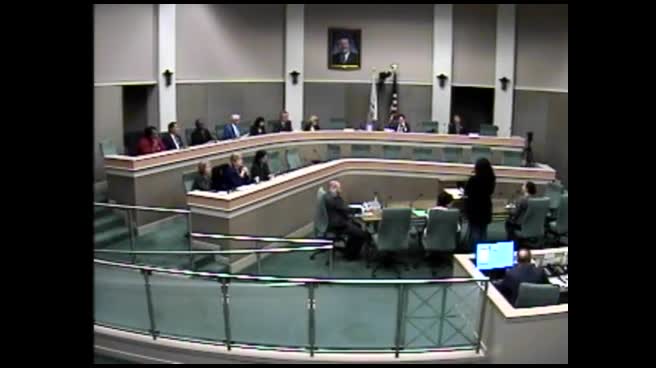 10MIN
Assembly Standing Committee on Education
Bill Author

Bill Co-Author(s):