AB 1479: Public records: custodian of records: civil penalties.
- Session Year: 2017-2018
- House: Assembly
- Latest Version Date: 2017-09-13
Existing law, the California Public Records Act, requires a public agency, defined to mean any state or local agency, to make its public records available for public inspection and to make copies available upon request and payment of a fee, unless the public records are exempt from disclosure. Existing law requires an agency to justify withholding a record from disclosure by demonstrating either that the record in question is exempt under express provisions of law or that on the facts of the particular case the public interest served by not disclosing the record clearly outweighs the public interest served by disclosure of the record. Existing law requires specified state and local agencies to establish written guidelines for accessibility of records. Existing law authorizes a person to institute proceedings for injunctive or declarative relief or writ of mandate in any court of competent jurisdiction to enforce his or her right to inspect or to receive a copy of any public record or class of public records under these provisions.
This bill, until January 1, 2023, would require public agencies to designate a person or persons, or office or offices to act as the agencys custodian of records who is responsible for responding to any request made pursuant to the California Public Records Act and any inquiry from the public about a decision by the agency to deny a request for records. The bill also would make other conforming changes. Because the bill would require local agencies to perform additional duties, the bill would impose a state-mandated local program.
The California Constitution requires the state to reimburse local agencies and school districts for certain costs mandated by the state. Statutory provisions establish procedures for making that reimbursement.
This bill would provide that no reimbursement is required by this act for a specified reason.
The California Constitution requires local agencies, for the purpose of ensuring public access to the meetings of public bodies and the writings of public officials and agencies, to comply with a statutory enactment that amends or enacts laws relating to public records or open meetings and contains findings demonstrating that the enactment furthers the constitutional requirements relating to this purpose.
This bill would make legislative findings to that effect.
Existing law, the California Public Records Act, requires a public agency, defined to mean any state or local agency, to make its public records available for public inspection and to make copies available upon request and payment of a fee, unless the public records are exempt from disclosure. Existing law requires an agency to justify withholding a record from disclosure by demonstrating either that the record in question is exempt under express provisions of law or that on the facts of the particular case the public interest served by not disclosing the record clearly outweighs the public interest served by disclosure of the record. Existing law requires specified state and local agencies to establish written guidelines for accessibility of records. Existing law authorizes a person to institute proceedings for injunctive or declarative relief or writ of mandate in any court of competent jurisdiction to enforce his or her right to inspect or to receive a copy of any public record or class of public records under these provisions.
This bill, until January 1, 2023, would require public agencies to designate a person or persons, or office or offices to act as the agencys custodian of records who is responsible for responding to any request made pursuant to the California Public Records Act and any inquiry from the public about a decision by the agency to deny a request for records. The bill also would make other conforming changes. Because the bill would require local agencies to perform additional duties, the bill would impose a state-mandated local program.
The bill, until January 1, 2023, also would authorize a court that finds by preponderance of the evidence that an agency, knowingly and willfully without substantial justification, failed to respond to a request for records, improperly withheld from a member of the public, public records that were clearly subject to public disclosure, unreasonably delayed providing the contents of a record subject to disclosure in whole or in part, or improperly assessed a fee upon a requester that exceeded the direct cost of duplication, or otherwise did not act in good faith to comply with these provisions, to assess a civil penalty against the agency in an amount not less than $1,000, nor more than $5,000. The bill would require the penalty to be awarded to the requester. The bill would prohibit assessment of the penalty if the court determines that the public record was not subject to public disclosure pursuant to the California Public Records Act or decisional law, or that the agency reasonably withheld the record based upon an ambiguous or unsettled question of law or a legally recognized privilege.The California Constitution requires the state to reimburse local agencies and school districts for certain costs mandated by the state. Statutory provisions establish procedures for making that reimbursement.
This bill would provide that no reimbursement is required by this act for a specified reason.
The California Constitution requires local agencies, for the purpose of ensuring public access to the meetings of public bodies and the writings of public officials and agencies, to comply with a statutory enactment that amends or enacts laws relating to public records or open meetings and contains findings demonstrating that the enactment furthers the constitutional requirements relating to this purpose.
This bill would make legislative findings to that effect.
Existing law, the California Public Records Act, requires a public agency, defined to mean any state or local agency, to make its public records available for public inspection and to make copies available upon request and payment of a fee, unless the public records are exempt from disclosure. Existing law requires an agency to justify withholding a record from disclosure by demonstrating either that the record in question is exempt under express provisions of law or that on the facts of the particular case the public interest served by not disclosing the record clearly outweighs the public interest served by disclosure of the record. Existing law requires specified state and local agencies to establish written guidelines for accessibility of records. Existing law authorizes a person to institute proceedings for injunctive or declarative relief or writ of mandate in any court of competent jurisdiction to enforce his or her right to inspect or to receive a copy of any public record or class of public records under these provisions.
This bill bill, until January 1, 2023, would require public agencies to designate a person or persons, or office or offices to act as the agencys custodian of records who is responsible for responding to any request made pursuant to the California Public Records Act and any inquiry from the public about a decision by the agency to deny a request for records. The bill also would make other conforming changes. Because the bill would require local agencies to perform additional duties, the bill would impose a state-mandated local program.
The bill would also bill, until January 1, 2023, also would authorize a court that finds by preponderance of the evidence that an agency agency, knowingly and willfully without substantial justification, failed to respond to a request for records, improperly withheld from a member of the public, public records that were clearly subject to public disclosure, unreasonably delayed providing the contents of a record subject to disclosure in whole or in part, or improperly assessed a fee upon a requester that exceeded the direct cost of duplication, without substantial justification, or otherwise did not act in good faith to comply with these provisions, to assess a civil penalty against the agency in an amount not less than $1,000, nor more than $5,000. The bill would require the penalty to be awarded to the requester. The bill would prohibit assessment of the penalty if the court determines that the public record was not subject to public disclosure pursuant to the California Public Records Act or decisional law. law, or that the agency reasonably withheld the record based upon an ambiguous or unsettled question of law or a legally recognized privilege.
The California Constitution requires the state to reimburse local agencies and school districts for certain costs mandated by the state. Statutory provisions establish procedures for making that reimbursement.
This bill would provide that no reimbursement is required by this act for a specified reason.
The California Constitution requires local agencies, for the purpose of ensuring public access to the meetings of public bodies and the writings of public officials and agencies, to comply with a statutory enactment that amends or enacts laws relating to public records or open meetings and contains findings demonstrating that the enactment furthers the constitutional requirements relating to this purpose.
This bill would make legislative findings to that effect.
Existing law, the California Public Records Act, requires a public agency, defined to mean any state or local agency, to make its public records available for public inspection and to make copies available upon request and payment of a fee, unless the public records are exempt from disclosure. Existing law requires an agency to justify withholding a record from disclosure by demonstrating either that the record in question is exempt under express provisions of law or that on the facts of the particular case the public interest served by not disclosing the record clearly outweighs the public interest served by disclosure of the record. Existing law requires specified state and local agencies to establish written guidelines for accessibility of records. Existing law authorizes a person to institute proceedings for injunctive or declarative relief or writ of mandate in any court of competent jurisdiction to enforce his or her right to inspect or to receive a copy of any public record or class of public records under these provisions.
This bill would require public agencies to designate a person or persons, or office or offices to act as the agencys custodian of records who is responsible for responding to any request made pursuant to the California Public Records Act and any inquiry from the public about a decision by the agency to deny a request for records. The bill also would make other conforming changes. Because the bill would require local agencies to perform additional duties, the bill would impose a state-mandated local program.
The bill would also authorize a court that finds by preponderance of the evidence that an agency failed to respond to a request for records, improperly withheld from a member of the public, public records that were clearly subject to public disclosure, unreasonably delayed providing the contents of a record subject to disclosure in whole or in part, or improperly assessed a fee upon a requester that exceeded the direct cost of duplication, without substantial justification, or otherwise did not act in good faith to comply with these provisions, to assess a civil penalty against the agency in an amount not less than $1,000, nor more than $5,000. The bill would require the penalty to be awarded to the requester. The bill would prohibit assessment of the penalty if the public record was not subject to public disclosure pursuant to the California Public Records Act or decisional law.
The California Constitution requires the state to reimburse local agencies and school districts for certain costs mandated by the state. Statutory provisions establish procedures for making that reimbursement.
This bill would provide that no reimbursement is required by this act for a specified reason.
The California Constitution requires local agencies, for the purpose of ensuring public access to the meetings of public bodies and the writings of public officials and agencies, to comply with a statutory enactment that amends or enacts laws relating to public records or open meetings and contains findings demonstrating that the enactment furthers the constitutional requirements relating to this purpose.
This bill would make legislative findings to that effect.
Existing law, the California Public Records Act, requires a public agency, defined to mean any state or local agency, to make its public records available for public inspection and to make copies available upon request and payment of a fee, unless the public records are exempt from disclosure. Existing law requires an agency to justify withholding a record from disclosure by demonstrating either that the record in question is exempt under express provisions of law or that on the facts of the particular case the public interest served by not disclosing the record clearly outweighs the public interest served by disclosure of the record. Existing law requires specified state and local agencies to establish written guidelines for accessibility of records. Existing law authorizes a person to institute proceedings for injunctive or declarative relief or writ of mandate in any court of competent jurisdiction to enforce his or her right to inspect or to receive a copy of any public record or class of public records under these provisions.
This bill would require public agencies to designate a person or office to act as the agencys custodian of records who is responsible for responding to any request made pursuant to the California Public Records Act and any inquiry from the public about a decision by the agency to deny a request for records. The bill also would make other conforming changes. Because the bill would require local agencies to perform additional duties, the bill would impose a state-mandated local program.
The bill would also authorize a court that finds that an agency or the custodian failed to respond to a request for records, improperly withheld from a member of the public, public records which that were clearly subject to public disclosure, unreasonably delayed providing the contents of a record subject to disclosure in whole or in part, assessed an unreasonable or unauthorized fee upon a requester, improperly assessed a fee upon a requester that exceeded the direct cost of duplication, or otherwise did not act in good faith to comply with these provisions, to assess a civil penalty against the agency in an amount not less than $1,000, nor more than $5,000.
The California Constitution requires the state to reimburse local agencies and school districts for certain costs mandated by the state. Statutory provisions establish procedures for making that reimbursement.
This bill would provide that no reimbursement is required by this act for a specified reason.
The California Constitution requires local agencies, for the purpose of ensuring public access to the meetings of public bodies and the writings of public officials and agencies, to comply with a statutory enactment that amends or enacts laws relating to public records or open meetings and contains findings demonstrating that the enactment furthers the constitutional requirements relating to this purpose.
This bill would make legislative findings to that effect.
Existing law, the California Public Records Act, requires a public agency, defined to mean any state or local agency, to make its public records available for public inspection and to make copies available upon request and payment of a fee, unless the public records are exempt from disclosure. Existing law requires an agency to justify withholding a record from disclosure by demonstrating either that the record in question is exempt under express provisions of law or that on the facts of the particular case the public interest served by not disclosing the record clearly outweighs the public interest served by disclosure of the record. Existing law requires specified state and local agencies to establish written guidelines for accessibility of records. Existing law authorizes a person to institute proceedings for injunctive or declarative relief or writ of mandate in any court of competent jurisdiction to enforce his or her right to inspect or to receive a copy of any public record or class of public records under these provisions.
This bill would require public agencies to identify a supervisor designate a person or office to act as the agencys custodian of records who shall review a determination by the agency that a request for records is denied. is responsible for responding to any request made pursuant to the California Public Records Act and any inquiry from the public about a decision by the agency to deny a request for records. The bill also would make other conforming changes. Because the bill would require local agencies to perform additional duties, the bill would impose a state-mandated local program.
The bill would also authorize a court that finds that an agency or the custodian improperly withheld public records from a member of the public without justification, failed to furnish a properly requested record or a portion thereof in a timely manner, public, public records which were clearly subject to public disclosure, unreasonably delayed providing the contents of a record subject to disclosure in whole or in part, assessed an unreasonable or unauthorized fee upon a requester, or otherwise did not act in good faith to comply with these provisions, to assess punitive damages a civil penalty against the agency in an amount not less than $1,000, nor more than $5,000, that shall be deposited into the Public Records Assistance Fund, which is created by the bill. $5,000.
The California Constitution requires the state to reimburse local agencies and school districts for certain costs mandated by the state. Statutory provisions establish procedures for making that reimbursement.This bill would provide that, if the Commission on State Mandates determines that the bill contains costs mandated by the state, reimbursement for those costs shall be made pursuant to the statutory provisions noted above.The California Constitution requires the state to reimburse local agencies and school districts for certain costs mandated by the state. Statutory provisions establish procedures for making that reimbursement.
This bill would provide that no reimbursement is required by this act for a specified reason.
The California Constitution requires local agencies, for the purpose of ensuring public access to the meetings of public bodies and the writings of public officials and agencies, to comply with a statutory enactment that amends or enacts laws relating to public records or open meetings and contains findings demonstrating that the enactment furthers the constitutional requirements relating to this purpose.
This bill would make legislative findings to that effect.
Existing law, the California Public Records Act, requires a public agency, defined to mean any state or local agency, to make its public records available for public inspection and to make copies available upon request and payment of a fee, unless the public records are exempt from disclosure. Existing law requires an agency to justify withholding a record from disclosure by demonstrating either that the record in question is exempt under express provisions of law or that on the facts of the particular case the public interest served by not disclosing the record clearly outweighs the public interest served by disclosure of the record. Existing law requires specified state and local agencies to establish written guidelines for accessibility of records. Existing law authorizes a person to institute proceedings for injunctive or declarative relief or writ of mandate in any court of competent jurisdiction to enforce his or her right to inspect or to receive a copy of any public record or class of public records under these provisions.
This bill would require public agencies to identify a supervisor of records who shall review a determination by the agency that a request for records is denied. The bill also would make other conforming changes. Because the bill would require local agencies to perform additional duties, the bill would impose a state-mandated local program.
The bill would also authorize a court that finds that an agency improperly withheld public records from a member of the public without justification, failed to furnish a properly requested record or a portion thereof in a timely manner, assessed an unreasonable fee upon a requester, or otherwise did not act in good faith to comply with these provisions, to assess punitive damages against the agency in an amount not less than $1,000, nor more than $5,000, that shall be deposited into the Public Records Assistance Fund, which is created by the bill.
The California Constitution requires the state to reimburse local agencies and school districts for certain costs mandated by the state. Statutory provisions establish procedures for making that reimbursement.
This bill would provide that, if the Commission on State Mandates determines that the bill contains costs mandated by the state, reimbursement for those costs shall be made pursuant to the statutory provisions noted above.
Existing law prohibits an affidavit of registration from containing a statement urging or indicating support or opposition to a candidate or measure, and it also prohibits a person, other than the registrant, from writing on or affixing thereto, or causing to be written on or affixed thereto, this type of statement.This bill would make technical, nonsubstantive changes to this provision.Existing law prohibits an affidavit of registration from containing a statement urging or indicating support or opposition to a candidate or measure, and it also prohibits a person, other than the registrant, from writing on or affixing thereto, or causing to be written on or affixed thereto, this type of statement.
This bill would make technical, nonsubstantive changes to this provision.
(a)Public records are open to inspection at all times during the office hours of the state or local agency and every person has a right to inspect any public record, except as hereafter provided. Any reasonably segregable portion of a record shall be available for inspection by any person requesting the record after deletion of the portions that are exempted by law.
(b)Except with respect to public records exempt from disclosure by express provisions of law, each state or local agency, upon a request for a copy of records that reasonably describes an identifiable record or records, shall make the records promptly available to any person upon payment of fees covering direct costs of duplication, or a statutory fee if applicable. Upon request, an exact copy shall be provided unless impracticable to do so.
(c)Each agency, upon a request for a copy of records, shall, within 10 days from receipt of the request, determine whether the request, in whole or in part, seeks copies of disclosable public records in the possession of the agency and shall promptly notify the person making the request of the determination and the reasons therefor. In unusual circumstances, the time limit prescribed in this section may be extended by written notice by the head of the agency or his or her designee to the person making the request, setting forth the reasons for the extension and the date on which a determination is expected to be dispatched. No notice shall specify a date that would result in an extension for more than 14 days. When the agency dispatches the determination, and if the agency determines that the request seeks disclosable public records, the agency shall state the estimated date and time when the records will be made available. As used in this section, unusual circumstances means the following, but only to the extent reasonably necessary to the proper processing of the particular request:
(1)The need to search for and collect the requested records from field facilities or other establishments that are separate from the office processing the request.
(2)The need to search for, collect, and appropriately examine a voluminous amount of separate and distinct records that are demanded in a single request.
(3)The need for consultation, which shall be conducted with all practicable speed, with another agency having substantial interest in the determination of the request or among two or more components of the agency having substantial subject matter interest therein.
(4)The need to compile data, to write programming language or a computer program, or to construct a computer report to extract data.
(d)Nothing in this chapter shall be construed to permit an agency to delay or obstruct the inspection or copying of public records. The notification of denial of any request for records required by Section 6255 shall set forth the names and titles or positions of each person responsible for the denial. Each agency shall designate a person or persons, or office or offices to act as the agencys custodian of records who is responsible for responding to any requests made pursuant to this chapter and any inquiry from the public about a decision by the agency to deny a request for records. This subdivision does not impose a duty upon a requestor to direct the request to a designated custodian, or prevent a person or office that is not the designated custodian from disclosing information pursuant to this chapter.
(e)Except as otherwise prohibited by law, a state or local agency may adopt requirements for itself that allow for faster, more efficient, or greater access to records than prescribed by the minimum standards set forth in this chapter.
(f)In addition to maintaining public records for public inspection during the office hours of the public agency, a public agency may comply with subdivision (a) by posting any public record on its Internet Web site and, in response to a request for a public record posted on the Internet Web site, directing a member of the public to the location on the Internet Web site where the public record is posted. However, if after the public agency directs a member of the public to the Internet Web site, the member of the public requesting the public record requests a copy of the public record due to an inability to access or reproduce the public record from the Internet Web site, the public agency shall promptly provide a copy of the public record pursuant to subdivision (b).
(g)This section shall become inoperative and is repealed on January 1, 2023.
SEC. 2.Section 6253 is added to the Government Code, to read:6253.(a)Public records are open to inspection at all times during the office hours of the state or local agency and every person has a right to inspect any public record, except as hereafter provided. Any reasonably segregable portion of a record shall be available for inspection by any person requesting the record after deletion of the portions that are exempted by law.
(b)Except with respect to public records exempt from disclosure by express provisions of law, each state or local agency, upon a request for a copy of records that reasonably describes an identifiable record or records, shall make the records promptly available to any person upon payment of fees covering direct costs of duplication, or a statutory fee if applicable. Upon request, an exact copy shall be provided unless impracticable to do so.
(c)Each agency, upon a request for a copy of records, shall, within 10 days from receipt of the request, determine whether the request, in whole or in part, seeks copies of disclosable public records in the possession of the agency and shall promptly notify the person making the request of the determination and the reasons therefor. In unusual circumstances, the time limit prescribed in this section may be extended by written notice by the head of the agency or his or her designee to the person making the request, setting forth the reasons for the extension and the date on which a determination is expected to be dispatched. No notice shall specify a date that would result in an extension for more than 14 days. When the agency dispatches the determination, and if the agency determines that the request seeks disclosable public records, the agency shall state the estimated date and time when the records will be made available. As used in this section, unusual circumstances means the following, but only to the extent reasonably necessary to the proper processing of the particular request:
(1)The need to search for and collect the requested records from field facilities or other establishments that are separate from the office processing the request.
(2)The need to search for, collect, and appropriately examine a voluminous amount of separate and distinct records that are demanded in a single request.
(3)The need for consultation, which shall be conducted with all practicable speed, with another agency having substantial interest in the determination of the request or among two or more components of the agency having substantial subject matter interest therein.
(4)The need to compile data, to write programming language or a computer program, or to construct a computer report to extract data.
(d)Nothing in this chapter shall be construed to permit an agency to delay or obstruct the inspection or copying of public records. The notification of denial of any request for records required by Section 6255 shall set forth the names and titles or positions of each person responsible for the denial.
(e)Except as otherwise prohibited by law, a state or local agency may adopt requirements for itself that allow for faster, more efficient, or greater access to records than prescribed by the minimum standards set forth in this chapter.
(f)In addition to maintaining public records for public inspection during the office hours of the public agency, a public agency may comply with subdivision (a) by posting any public record on its Internet Web site and, in response to a request for a public record posted on the Internet Web site, directing a member of the public to the location on the Internet Web site where the public record is posted. However, if after the public agency directs a member of the public to the Internet Web site, the member of the public requesting the public record requests a copy of the public record due to an inability to access or reproduce the public record from the Internet Web site, the public agency shall promptly provide a copy of the public record pursuant to subdivision (b).
(g)This section shall become operative on January 1, 2023.
SEC. 3.Section 6259 of the Government Code is amended to read:6259.(a)Whenever it is made to appear by verified petition to the superior court of the county where the records or some part thereof are situated that certain public records are being improperly withheld from a member of the public, the court shall order the custodian of records or person charged with withholding the records to disclose the public record or show cause why he or she should not do so. The court shall decide the case after examining the record in camera, if permitted by subdivision (b) of Section 915 of the Evidence Code, papers filed by the parties and any oral argument and additional evidence as the court may allow.
(b)If the court finds that the custodian of records or other public officials decision to refuse disclosure is not justified under Section 6254 or 6255, he or she shall order the custodian of records or public official to make the record public. If the judge determines that the custodian of records or other public official was justified in refusing to make the record public, he or she shall return the item to the custodian of records or other public official without disclosing its content with an order supporting the decision refusing disclosure.
(c)In an action filed on or after January 1, 1991, an order of the court, either directing disclosure by a public official or supporting the decision of the custodian of records or other public official refusing disclosure, is not a final judgment or order within the meaning of Section 904.1 of the Code of Civil Procedure from which an appeal may be taken, but shall be immediately reviewable by petition to the appellate court for the issuance of an extraordinary writ. Upon entry of any order pursuant to this section, a party shall, in order to obtain review of the order, file a petition within 20 days after service upon him or her of a written notice of entry of the order, or within a further time not exceeding an additional 20 days as the trial court may for good cause allow. If the notice is served by mail, the period within which to file the petition shall be increased by five days. A stay of an order or judgment shall not be granted unless the petitioning party demonstrates it will otherwise sustain irreparable damage and probable success on the merits. Any person who fails to obey the order of the court shall be cited to show cause why he or she is not in contempt of court.
(d)The court shall award court costs and reasonable attorney fees to the plaintiff should the plaintiff prevail in litigation filed pursuant to this section. The costs and fees shall be paid by the public agency of which the custodian of records or public official is a member or employee and shall not become a personal liability of the custodian of records or public official. If the court finds that the plaintiffs case is clearly frivolous, it shall award court costs and reasonable attorney fees to the public agency.
(e)This section shall become inoperative and is repealed on January 1, 2023.
SEC. 4.Section 6259 is added to the Government Code, to read:6259.(a)Whenever it is made to appear by verified petition to the superior court of the county where the records or some part thereof are situated that certain public records are being improperly withheld from a member of the public, the court shall order the officer or person charged with withholding the records to disclose the public record or show cause why he or she should not do so. The court shall decide the case after examining the record in camera, if permitted by subdivision (b) of Section 915 of the Evidence Code, papers filed by the parties, and any oral argument and additional evidence as the court may allow.
(b)If the court finds that the public officials decision to refuse disclosure is not justified under Section 6254 or 6255, he or she shall order the public official to make the record public. If the judge determines that the public official was justified in refusing to make the record public, he or she shall return the item to the public official without disclosing its content with an order supporting the decision refusing disclosure.
(c)In an action filed on or after January 1, 1991, an order of the court, either directing disclosure by a public official or supporting the decision of the public official refusing disclosure, is not a final judgment or order within the meaning of Section 904.1 of the Code of Civil Procedure from which an appeal may be taken, but shall be immediately reviewable by petition to the appellate court for the issuance of an extraordinary writ. Upon entry of any order pursuant to this section, a party shall, in order to obtain review of the order, file a petition within 20 days after service upon him or her of a written notice of entry of the order, or within a further time not exceeding an additional 20 days as the trial court may for good cause allow. If the notice is served by mail, the period within which to file the petition shall be increased by five days. A stay of an order or judgment shall not be granted unless the petitioning party demonstrates it will otherwise sustain irreparable damage and probable success on the merits. Any person who fails to obey the order of the court shall be cited to show cause why he or she is not in contempt of court.
(d)The court shall award court costs and reasonable attorney fees to the plaintiff should the plaintiff prevail in litigation filed pursuant to this section. The costs and fees shall be paid by the public agency of which the public official is a member or employee and shall not become a personal liability of the public official. If the court finds that the plaintiffs case is clearly frivolous, it shall award court costs and reasonable attorney fees to the public agency.
(e)This section shall become operative on January 1, 2023.
SEC. 5.No reimbursement is required by this act pursuant to Section 6 of Article XIIIB of the California Constitution because the only costs that may be incurred by a local agency or school district under this act would result from a legislative mandate that is within the scope of paragraph (7) of subdivision (b) of Section 3 of Article I of the California Constitution.
SEC. 6.The Legislature finds and declares that Sections 1 and 3 of this act, which amend Sections 6253 and 6259 of the Government Code, respectively, further, within the meaning of paragraph (7) of subdivision (b) of Section 3 of Article I of the California Constitution, the purposes of that constitutional section as it relates to the right of public access to the meetings of local public bodies or the writings of local public officials and local agencies. Pursuant to paragraph (7) of subdivision (b) of Section 3 of Article I of the California Constitution, the Legislature makes the following findings:
By requiring local agencies to designate custodians of records responsible for responding to requests and inquiries under the California Public Records Act, this act furthers the publics access to public records.
(a)Public records are open to inspection at all times during the office hours of the state or local agency and every person has a right to inspect any public record, except as hereafter provided. Any reasonably segregable portion of a record shall be available for inspection by any person requesting the record after deletion of the portions that are exempted by law.
(b)Except with respect to public records exempt from disclosure by express provisions of law, each state or local agency, upon a request for a copy of records that reasonably describes an identifiable record or records, shall make the records promptly available to any person upon payment of fees covering direct costs of duplication, or a statutory fee if applicable. Upon request, an exact copy shall be provided unless impracticable to do so.
(c)Each agency, upon a request for a copy of records, shall, within 10 days from receipt of the request, determine whether the request, in whole or in part, seeks copies of disclosable public records in the possession of the agency and shall promptly notify the person making the request of the determination and the reasons therefor. In unusual circumstances, the time limit prescribed in this section may be extended by written notice by the head of the agency or his or her designee to the person making the request, setting forth the reasons for the extension and the date on which a determination is expected to be dispatched. No notice shall specify a date that would result in an extension for more than 14 days. When the agency dispatches the determination, and if the agency determines that the request seeks disclosable public records, the agency shall state the estimated date and time when the records will be made available. As used in this section, unusual circumstances means the following, but only to the extent reasonably necessary to the proper processing of the particular request:
(1)The need to search for and collect the requested records from field facilities or other establishments that are separate from the office processing the request.
(2)The need to search for, collect, and appropriately examine a voluminous amount of separate and distinct records that are demanded in a single request.
(3)The need for consultation, which shall be conducted with all practicable speed, with another agency having substantial interest in the determination of the request or among two or more components of the agency having substantial subject matter interest therein.
(4)The need to compile data, to write programming language or a computer program, or to construct a computer report to extract data.
(d)Nothing in this chapter shall be construed to permit an agency to delay or obstruct the inspection or copying of public records. The notification of denial of any request for records required by Section 6255 shall set forth the names and titles or positions of each person responsible for the denial. Each agency shall designate a person or persons, or office or offices to act as the agencys custodian of records who is responsible for responding to any requests made pursuant to this chapter and any inquiry from the public about a decision by the agency to deny a request for records. This subdivision does not impose a duty upon a requestor to direct the request to a designated custodian, or prevent a person or office that is not the designated custodian from disclosing information pursuant to this chapter.
(e)Except as otherwise prohibited by law, a state or local agency may adopt requirements for itself that allow for faster, more efficient, or greater access to records than prescribed by the minimum standards set forth in this chapter.
(f)In addition to maintaining public records for public inspection during the office hours of the public agency, a public agency may comply with subdivision (a) by posting any public record on its Internet Web site and, in response to a request for a public record posted on the Internet Web site, directing a member of the public to the location on the Internet Web site where the public record is posted. However, if after the public agency directs a member of the public to the Internet Web site, the member of the public requesting the public record requests a copy of the public record due to an inability to access or reproduce the public record from the Internet Web site, the public agency shall promptly provide a copy of the public record pursuant to subdivision (b).
(g)This section shall become inoperative and is repealed on January 1, 2023.
SEC. 2.Section 6253 is added to the Government Code, to read:6253.(a)Public records are open to inspection at all times during the office hours of the state or local agency and every person has a right to inspect any public record, except as hereafter provided. Any reasonably segregable portion of a record shall be available for inspection by any person requesting the record after deletion of the portions that are exempted by law.
(b)Except with respect to public records exempt from disclosure by express provisions of law, each state or local agency, upon a request for a copy of records that reasonably describes an identifiable record or records, shall make the records promptly available to any person upon payment of fees covering direct costs of duplication, or a statutory fee if applicable. Upon request, an exact copy shall be provided unless impracticable to do so.
(c)Each agency, upon a request for a copy of records, shall, within 10 days from receipt of the request, determine whether the request, in whole or in part, seeks copies of disclosable public records in the possession of the agency and shall promptly notify the person making the request of the determination and the reasons therefor. In unusual circumstances, the time limit prescribed in this section may be extended by written notice by the head of the agency or his or her designee to the person making the request, setting forth the reasons for the extension and the date on which a determination is expected to be dispatched. No notice shall specify a date that would result in an extension for more than 14 days. When the agency dispatches the determination, and if the agency determines that the request seeks disclosable public records, the agency shall state the estimated date and time when the records will be made available. As used in this section, unusual circumstances means the following, but only to the extent reasonably necessary to the proper processing of the particular request:
(1)The need to search for and collect the requested records from field facilities or other establishments that are separate from the office processing the request.
(2)The need to search for, collect, and appropriately examine a voluminous amount of separate and distinct records that are demanded in a single request.
(3)The need for consultation, which shall be conducted with all practicable speed, with another agency having substantial interest in the determination of the request or among two or more components of the agency having substantial subject matter interest therein.
(4)The need to compile data, to write programming language or a computer program, or to construct a computer report to extract data.
(d)Nothing in this chapter shall be construed to permit an agency to delay or obstruct the inspection or copying of public records. The notification of denial of any request for records required by Section 6255 shall set forth the names and titles or positions of each person responsible for the denial.
(e)Except as otherwise prohibited by law, a state or local agency may adopt requirements for itself that allow for faster, more efficient, or greater access to records than prescribed by the minimum standards set forth in this chapter.
(f)In addition to maintaining public records for public inspection during the office hours of the public agency, a public agency may comply with subdivision (a) by posting any public record on its Internet Web site and, in response to a request for a public record posted on the Internet Web site, directing a member of the public to the location on the Internet Web site where the public record is posted. However, if after the public agency directs a member of the public to the Internet Web site, the member of the public requesting the public record requests a copy of the public record due to an inability to access or reproduce the public record from the Internet Web site, the public agency shall promptly provide a copy of the public record pursuant to subdivision (b).
(g)This section shall become operative on January 1, 2023.
(Amended by Stats. 2016, Ch. 275, Sec. 1. (AB 2853) Effective January 1, 2017. [Note: The Section 6253 that was modified (on July 17, 1991) by GRP 1 of 1991 was renumbered as 6253.4 by Stats. 1998, Ch. 620. See Section 6253.4 as to incorporation of the GRP 1 changes by later legislation.])SEC. 3.Section 6259 of the Government Code is amended to read:6259.(a)Whenever it is made to appear by verified petition to the superior court of the county where the records or some part thereof are situated that certain public records are being improperly withheld from a member of the public, the court shall order the custodian of records or person charged with withholding the records to disclose the public record or show cause why he or she should not do so. The court shall decide the case after examining the record in camera, if permitted by subdivision (b) of Section 915 of the Evidence Code, papers filed by the parties and any oral argument and additional evidence as the court may allow.
(b)If the court finds that the custodian of records or other public officials decision to refuse disclosure is not justified under Section 6254 or 6255, he or she shall order the custodian of records or public official to make the record public. If the judge determines that the custodian of records or other public official was justified in refusing to make the record public, he or she shall return the item to the custodian of records or other public official without disclosing its content with an order supporting the decision refusing disclosure.
(c)In an action filed on or after January 1, 1991, an order of the court, either directing disclosure by a public official or supporting the decision of the custodian of records or other public official refusing disclosure, is not a final judgment or order within the meaning of Section 904.1 of the Code of Civil Procedure from which an appeal may be taken, but shall be immediately reviewable by petition to the appellate court for the issuance of an extraordinary writ. Upon entry of any order pursuant to this section, a party shall, in order to obtain review of the order, file a petition within 20 days after service upon him or her of a written notice of entry of the order, or within a further time not exceeding an additional 20 days as the trial court may for good cause allow. If the notice is served by mail, the period within which to file the petition shall be increased by five days. A stay of an order or judgment shall not be granted unless the petitioning party demonstrates it will otherwise sustain irreparable damage and probable success on the merits. Any person who fails to obey the order of the court shall be cited to show cause why he or she is not in contempt of court.
(d)(1)The court shall award court costs and reasonable attorney fees to the plaintiff should the plaintiff prevail in litigation filed pursuant to this section. The costs and fees shall be paid by the public agency of which the custodian of records or public official is a member or employee and shall not become a personal liability of the custodian of records or public official. If the court finds that the plaintiffs case is clearly frivolous, it shall award court costs and reasonable attorney fees to the public agency.
(2)If the court finds that the plaintiffs case is clearly frivolous, it shall award court costs and reasonable attorney fees to the public agency.(3)(A)If a court finds by preponderance of the evidence that an agency, knowingly and willfully without substantial justification, failed to respond to a request for records as required pursuant to subdivision (c) of Section 6253, improperly withheld a public record from a member of the public that was clearly subject to public disclosure, unreasonably delayed providing the contents of a record subject to disclosure in whole or in part, or improperly assessed a fee upon a requester that exceeded the direct cost of duplication, or otherwise did not act in good faith to comply with this chapter, the court may assess a civil penalty against the agency in an amount not less than one thousand dollars ($1,000) nor more than five thousand dollars ($5,000), which shall be awarded to the requester. In an action alleging multiple violations the court may assess a penalty for each violation, however the total amount assessed shall not exceed five thousand dollars ($5,000).(B)A court shall not assess a civil penalty pursuant to this paragraph if it determines that the public record was not subject to public disclosure pursuant to the California Public Records Act or decisional law, or that the agency reasonably withheld the record based upon an ambiguous or unsettled question of law or a legally recognized privilege.(e)This section shall become inoperative and is repealed on January 1, 2023.
SEC. 4.Section 6259 is added to the Government Code, to read:6259.(a)Whenever it is made to appear by verified petition to the superior court of the county where the records or some part thereof are situated that certain public records are being improperly withheld from a member of the public, the court shall order the officer or person charged with withholding the records to disclose the public record or show cause why he or she should not do so. The court shall decide the case after examining the record in camera, if permitted by subdivision (b) of Section 915 of the Evidence Code, papers filed by the parties parties, and any oral argument and additional evidence as the court may allow.
(b)If the court finds that the public officials decision to refuse disclosure is not justified under Section 6254 or 6255, he or she shall order the public official to make the record public. If the judge determines that the public official was justified in refusing to make the record public, he or she shall return the item to the public official without disclosing its content with an order supporting the decision refusing disclosure.
(c)In an action filed on or after January 1, 1991, an order of the court, either directing disclosure by a public official or supporting the decision of the public official refusing disclosure, is not a final judgment or order within the meaning of Section 904.1 of the Code of Civil Procedure from which an appeal may be taken, but shall be immediately reviewable by petition to the appellate court for the issuance of an extraordinary writ. Upon entry of any order pursuant to this section, a party shall, in order to obtain review of the order, file a petition within 20 days after service upon him or her of a written notice of entry of the order, or within a further time not exceeding an additional 20 days as the trial court may for good cause allow. If the notice is served by mail, the period within which to file the petition shall be increased by five days. A stay of an order or judgment shall not be granted unless the petitioning party demonstrates it will otherwise sustain irreparable damage and probable success on the merits. Any person who fails to obey the order of the court shall be cited to show cause why he or she is not in contempt of court.
(d)The court shall award court costs and reasonable attorney fees to the plaintiff should the plaintiff prevail in litigation filed pursuant to this section. The costs and fees shall be paid by the public agency of which the public official is a member or employee and shall not become a personal liability of the public official. If the court finds that the plaintiffs case is clearly frivolous, it shall award court costs and reasonable attorney fees to the public agency.
(e)This section shall become operative on January 1, 2023.
(Amended by Stats. 1993, Ch. 926, Sec. 10. Effective January 1, 1994.)SEC. 5.No reimbursement is required by this act pursuant to Section 6 of Article XIIIB of the California Constitution because the only costs that may be incurred by a local agency or school district under this act would result from a legislative mandate that is within the scope of paragraph (7) of subdivision (b) of Section 3 of Article I of the California Constitution.
SEC. 6.The Legislature finds and declares that Sections 1 and 3 of this act, which amend Sections 6253 and 6259 of the Government Code, respectively, further, within the meaning of paragraph (7) of subdivision (b) of Section 3 of Article I of the California Constitution, the purposes of that constitutional section as it relates to the right of public access to the meetings of local public bodies or the writings of local public officials and local agencies. Pursuant to paragraph (7) of subdivision (b) of Section 3 of Article I of the California Constitution, the Legislature makes the following findings:
By requiring local agencies to designate custodians of records responsible for responding to requests and inquiries under the California Public Records Act, this act furthers the publics access to public records.
(a)Public records are open to inspection at all times during the office hours of the state or local agency and every person has a right to inspect any public record, except as hereafter provided. Any reasonably segregable portion of a record shall be available for inspection by any person requesting the record after deletion of the portions that are exempted by law.
(b)Except with respect to public records exempt from disclosure by express provisions of law, each state or local agency, upon a request for a copy of records that reasonably describes an identifiable record or records, shall make the records promptly available to any person upon payment of fees covering direct costs of duplication, or a statutory fee if applicable. Upon request, an exact copy shall be provided unless impracticable to do so.
(c)Each agency, upon a request for a copy of records, shall, within 10 days from receipt of the request, determine whether the request, in whole or in part, seeks copies of disclosable public records in the possession of the agency and shall promptly notify the person making the request of the determination and the reasons therefor. In unusual circumstances, the time limit prescribed in this section may be extended by written notice by the head of the agency or his or her designee to the person making the request, setting forth the reasons for the extension and the date on which a determination is expected to be dispatched. No notice shall specify a date that would result in an extension for more than 14 days. When the agency dispatches the determination, and if the agency determines that the request seeks disclosable public records, the agency shall state the estimated date and time when the records will be made available. As used in this section, unusual circumstances means the following, but only to the extent reasonably necessary to the proper processing of the particular request:
(1)The need to search for and collect the requested records from field facilities or other establishments that are separate from the office processing the request.
(2)The need to search for, collect, and appropriately examine a voluminous amount of separate and distinct records that are demanded in a single request.
(3)The need for consultation, which shall be conducted with all practicable speed, with another agency having substantial interest in the determination of the request or among two or more components of the agency having substantial subject matter interest therein.
(4)The need to compile data, to write programming language or a computer program, or to construct a computer report to extract data.
(d)Nothing in this chapter shall be construed to permit an agency to delay or obstruct the inspection or copying of public records. The notification of denial of any request for records required by Section 6255 shall set forth the names and titles or positions of each person responsible for the denial. Each agency shall designate a person or persons, or office or offices to act as the agencys custodian of records who is responsible for responding to any requests made pursuant to this chapter and any inquiry from the public about a decision by the agency to deny a request for records. This subdivision does not impose a duty upon a requestor to direct the request to a designated custodian, or prevent a person or office that is not the designated custodian from disclosing information pursuant to this chapter.
(e)Except as otherwise prohibited by law, a state or local agency may adopt requirements for itself that allow for faster, more efficient, or greater access to records than prescribed by the minimum standards set forth in this chapter.
(f)In addition to maintaining public records for public inspection during the office hours of the public agency, a public agency may comply with subdivision (a) by posting any public record on its Internet Web site and, in response to a request for a public record posted on the Internet Web site, directing a member of the public to the location on the Internet Web site where the public record is posted. However, if after the public agency directs a member of the public to the Internet Web site, the member of the public requesting the public record requests a copy of the public record due to an inability to access or reproduce the public record from the Internet Web site, the public agency shall promptly provide a copy of the public record pursuant to subdivision (b).
(g)This section shall become inoperative and is repealed on January 1, 2023.
SEC. 2.Section 6253 is added to the Government Code, to read:6253.(a)Public records are open to inspection at all times during the office hours of the state or local agency and every person has a right to inspect any public record, except as hereafter provided. Any reasonably segregable portion of a record shall be available for inspection by any person requesting the record after deletion of the portions that are exempted by law.
(b)Except with respect to public records exempt from disclosure by express provisions of law, each state or local agency, upon a request for a copy of records that reasonably describes an identifiable record or records, shall make the records promptly available to any person upon payment of fees covering direct costs of duplication, or a statutory fee if applicable. Upon request, an exact copy shall be provided unless impracticable to do so.
(c)Each agency, upon a request for a copy of records, shall, within 10 days from receipt of the request, determine whether the request, in whole or in part, seeks copies of disclosable public records in the possession of the agency and shall promptly notify the person making the request of the determination and the reasons therefor. In unusual circumstances, the time limit prescribed in this section may be extended by written notice by the head of the agency or his or her designee to the person making the request, setting forth the reasons for the extension and the date on which a determination is expected to be dispatched. No notice shall specify a date that would result in an extension for more than 14 days. When the agency dispatches the determination, and if the agency determines that the request seeks disclosable public records, the agency shall state the estimated date and time when the records will be made available. As used in this section, unusual circumstances means the following, but only to the extent reasonably necessary to the proper processing of the particular request:
(1)The need to search for and collect the requested records from field facilities or other establishments that are separate from the office processing the request.
(2)The need to search for, collect, and appropriately examine a voluminous amount of separate and distinct records that are demanded in a single request.
(3)The need for consultation, which shall be conducted with all practicable speed, with another agency having substantial interest in the determination of the request or among two or more components of the agency having substantial subject matter interest therein.
(4)The need to compile data, to write programming language or a computer program, or to construct a computer report to extract data.
(d)Nothing in this chapter shall be construed to permit an agency to delay or obstruct the inspection or copying of public records. The notification of denial of any request for records required by Section 6255 shall set forth the names and titles or positions of each person responsible for the denial.
(e)Except as otherwise prohibited by law, a state or local agency may adopt requirements for itself that allow for faster, more efficient, or greater access to records than prescribed by the minimum standards set forth in this chapter.
(f)In addition to maintaining public records for public inspection during the office hours of the public agency, a public agency may comply with subdivision (a) by posting any public record on its Internet Web site and, in response to a request for a public record posted on the Internet Web site, directing a member of the public to the location on the Internet Web site where the public record is posted. However, if after the public agency directs a member of the public to the Internet Web site, the member of the public requesting the public record requests a copy of the public record due to an inability to access or reproduce the public record from the Internet Web site, the public agency shall promptly provide a copy of the public record pursuant to subdivision (b).
(g)This section shall become operative on January 1, 2023.
(Amended by Stats. 2016, Ch. 275, Sec. 1. (AB 2853) Effective January 1, 2017. [Note: The Section 6253 that was modified (on July 17, 1991) by GRP 1 of 1991 was renumbered as 6253.4 by Stats. 1998, Ch. 620. See Section 6253.4 as to incorporation of the GRP 1 changes by later legislation.])
SEC. 2.SEC. 3.Section 6259 of the Government Code is amended to read:6259.(a)Whenever it is made to appear by verified petition to the superior court of the county where the records or some part thereof are situated that certain public records are being improperly withheld from a member of the public, the court shall order the custodian of records or person charged with withholding the records to disclose the public record or show cause why he or she should not do so. The court shall decide the case after examining the record in camera, if permitted by subdivision (b) of Section 915 of the Evidence Code, papers filed by the parties and any oral argument and additional evidence as the court may allow.
(b)If the court finds that the custodian of records or other public officials decision to refuse disclosure is not justified under Section 6254 or 6255, he or she shall order the custodian of records or public official to make the record public. If the judge determines that the custodian of records or other public official was justified in refusing to make the record public, he or she shall return the item to the custodian of records or other public official without disclosing its content with an order supporting the decision refusing disclosure.
(c)In an action filed on or after January 1, 1991, an order of the court, either directing disclosure by a public official or supporting the decision of the custodian of records or other public official refusing disclosure, is not a final judgment or order within the meaning of Section 904.1 of the Code of Civil Procedure from which an appeal may be taken, but shall be immediately reviewable by petition to the appellate court for the issuance of an extraordinary writ. Upon entry of any order pursuant to this section, a party shall, in order to obtain review of the order, file a petition within 20 days after service upon him or her of a written notice of entry of the order, or within a further time not exceeding an additional 20 days as the trial court may for good cause allow. If the notice is served by mail, the period within which to file the petition shall be increased by five days. A stay of an order or judgment shall not be granted unless the petitioning party demonstrates it will otherwise sustain irreparable damage and probable success on the merits. Any person who fails to obey the order of the court shall be cited to show cause why he or she is not in contempt of court.
(d)(1)The court shall award court costs and reasonable attorney fees to the plaintiff should the plaintiff prevail in litigation filed pursuant to this section. The costs and fees shall be paid by the public agency of which the custodian of records or public official is a member or employee and shall not become a personal liability of the custodian of records or public official.
(2)If the court finds that the plaintiffs case is clearly frivolous, it shall award court costs and reasonable attorney fees to the public agency.
(3)(A)If a court finds by preponderance of the evidence that an agency agency, knowingly and willfully without substantial justification, failed to respond to a request for records as required pursuant to subdivision (c) of Section 6253, improperly withheld a public record from a member of the public that was clearly subject to public disclosure, unreasonably delayed providing the contents of a record subject to disclosure in whole or in part, or improperly assessed a fee upon a requester that exceeded the direct cost of duplication, without substantial justification, or otherwise did not act in good faith to comply with this chapter, the court may assess a civil penalty against the agency in an amount not less than one thousand dollars ($1,000) nor more than five thousand dollars ($5,000), which shall be awarded to the requester. In an action alleging multiple violations the court may assess a penalty for each violation, however the total amount assessed shall not exceed five thousand dollars ($5,000).
(B)A court shall not assess a civil penalty pursuant to this paragraph if it determines that the public record was not subject to public disclosure pursuant to the California Public Records Act or decisional law. law, or that the agency reasonably withheld the record based upon an ambiguous or unsettled question of law or a legally recognized privilege.
(e)This section shall become inoperative and is repealed on January 1, 2023.
SEC. 4.Section 6259 is added to the Government Code, to read:6259.(a)Whenever it is made to appear by verified petition to the superior court of the county where the records or some part thereof are situated that certain public records are being improperly withheld from a member of the public, the court shall order the officer or person charged with withholding the records to disclose the public record or show cause why he or she should not do so. The court shall decide the case after examining the record in camera, if permitted by subdivision (b) of Section 915 of the Evidence Code, papers filed by the parties and any oral argument and additional evidence as the court may allow.
(b)If the court finds that the public officials decision to refuse disclosure is not justified under Section 6254 or 6255, he or she shall order the public official to make the record public. If the judge determines that the public official was justified in refusing to make the record public, he or she shall return the item to the public official without disclosing its content with an order supporting the decision refusing disclosure.
(c)In an action filed on or after January 1, 1991, an order of the court, either directing disclosure by a public official or supporting the decision of the public official refusing disclosure, is not a final judgment or order within the meaning of Section 904.1 of the Code of Civil Procedure from which an appeal may be taken, but shall be immediately reviewable by petition to the appellate court for the issuance of an extraordinary writ. Upon entry of any order pursuant to this section, a party shall, in order to obtain review of the order, file a petition within 20 days after service upon him or her of a written notice of entry of the order, or within a further time not exceeding an additional 20 days as the trial court may for good cause allow. If the notice is served by mail, the period within which to file the petition shall be increased by five days. A stay of an order or judgment shall not be granted unless the petitioning party demonstrates it will otherwise sustain irreparable damage and probable success on the merits. Any person who fails to obey the order of the court shall be cited to show cause why he or she is not in contempt of court.
(d)The court shall award court costs and reasonable attorney fees to the plaintiff should the plaintiff prevail in litigation filed pursuant to this section. The costs and fees shall be paid by the public agency of which the public official is a member or employee and shall not become a personal liability of the public official. If the court finds that the plaintiffs case is clearly frivolous, it shall award court costs and reasonable attorney fees to the public agency.
(e)This section shall become operative on January 1, 2023.
(Amended by Stats. 1993, Ch. 926, Sec. 10. Effective January 1, 1994.)
SEC. 3.SEC. 5.No reimbursement is required by this act pursuant to Section 6 of Article XIIIB of the California Constitution because the only costs that may be incurred by a local agency or school district under this act would result from a legislative mandate that is within the scope of paragraph (7) of subdivision (b) of Section 3 of Article I of the California Constitution.
SEC. 4.SEC. 6.The Legislature finds and declares that Sections 1 and 2 3 of this act, which amend Sections 6253 and 6259 of the Government Code, respectively, further, within the meaning of paragraph (7) of subdivision (b) of Section 3 of Article I of the California Constitution, the purposes of that constitutional section as it relates to the right of public access to the meetings of local public bodies or the writings of local public officials and local agencies. Pursuant to paragraph (7) of subdivision (b) of Section 3 of Article I of the California Constitution, the Legislature makes the following findings:
By requiring local agencies to designate custodians of records responsible for responding to requests and inquiries under the California Public Records Act, this act furthers the publics access to public records.
(a)Public records are open to inspection at all times during the office hours of the state or local agency and every person has a right to inspect any public record, except as hereafter provided. Any reasonably segregable portion of a record shall be available for inspection by any person requesting the record after deletion of the portions that are exempted by law.
(b)Except with respect to public records exempt from disclosure by express provisions of law, each state or local agency, upon a request for a copy of records that reasonably describes an identifiable record or records, shall make the records promptly available to any person upon payment of fees covering direct costs of duplication, or a statutory fee if applicable. Upon request, an exact copy shall be provided unless impracticable to do so.
(c)Each agency, upon a request for a copy of records, shall, within 10 days from receipt of the request, determine whether the request, in whole or in part, seeks copies of disclosable public records in the possession of the agency and shall promptly notify the person making the request of the determination and the reasons therefor. In unusual circumstances, the time limit prescribed in this section may be extended by written notice by the head of the agency or his or her designee to the person making the request, setting forth the reasons for the extension and the date on which a determination is expected to be dispatched. No notice shall specify a date that would result in an extension for more than 14 days. When the agency dispatches the determination, and if the agency determines that the request seeks disclosable public records, the agency shall state the estimated date and time when the records will be made available. As used in this section, unusual circumstances means the following, but only to the extent reasonably necessary to the proper processing of the particular request:
(1)The need to search for and collect the requested records from field facilities or other establishments that are separate from the office processing the request.
(2)The need to search for, collect, and appropriately examine a voluminous amount of separate and distinct records that are demanded in a single request.
(3)The need for consultation, which shall be conducted with all practicable speed, with another agency having substantial interest in the determination of the request or among two or more components of the agency having substantial subject matter interest therein.
(4)The need to compile data, to write programming language or a computer program, or to construct a computer report to extract data.
(d)Nothing in this chapter shall be construed to permit an agency to delay or obstruct the inspection or copying of public records. The notification of denial of any request for records required by Section 6255 shall set forth the names and titles or positions of each person responsible for the denial. Each agency shall designate a person or persons, or office or offices to act as the agencys custodian of records who is responsible for responding to any requests made pursuant to this chapter and any inquiry from the public about a decision by the agency to deny a request for records. This subdivision does not impose a duty upon a requestor to direct the request to a designated custodian, or prevent a person or office that is not the designated custodian from disclosing information pursuant to this chapter.
(e)Except as otherwise prohibited by law, a state or local agency may adopt requirements for itself that allow for faster, more efficient, or greater access to records than prescribed by the minimum standards set forth in this chapter.
(f)In addition to maintaining public records for public inspection during the office hours of the public agency, a public agency may comply with subdivision (a) by posting any public record on its Internet Web site and, in response to a request for a public record posted on the Internet Web site, directing a member of the public to the location on the Internet Web site where the public record is posted. However, if after the public agency directs a member of the public to the Internet Web site, the member of the public requesting the public record requests a copy of the public record due to an inability to access or reproduce the public record from the Internet Web site, the public agency shall promptly provide a copy of the public record pursuant to subdivision (b).
SEC. 2.Section 6259 of the Government Code is amended to read:6259.(a)Whenever it is made to appear by verified petition to the superior court of the county where the records or some part thereof are situated that certain public records are being improperly withheld from a member of the public, the court shall order the custodian of records or person charged with withholding the records to disclose the public record or show cause why he or she should not do so. The court shall decide the case after examining the record in camera, if permitted by subdivision (b) of Section 915 of the Evidence Code, papers filed by the parties and any oral argument and additional evidence as the court may allow.
(b)If the court finds that the custodian of records or other public officials decision to refuse disclosure is not justified under Section 6254 or 6255, he or she shall order the custodian of records or public official to make the record public. If the judge determines that the custodian of records or other public official was justified in refusing to make the record public, he or she shall return the item to the custodian of records or other public official without disclosing its content with an order supporting the decision refusing disclosure.
(c)In an action filed on or after January 1, 1991, an order of the court, either directing disclosure by a public official or supporting the decision of the custodian of records or other public official refusing disclosure, is not a final judgment or order within the meaning of Section 904.1 of the Code of Civil Procedure from which an appeal may be taken, but shall be immediately reviewable by petition to the appellate court for the issuance of an extraordinary writ. Upon entry of any order pursuant to this section, a party shall, in order to obtain review of the order, file a petition within 20 days after service upon him or her of a written notice of entry of the order, or within a further time not exceeding an additional 20 days as the trial court may for good cause allow. If the notice is served by mail, the period within which to file the petition shall be increased by five days. A stay of an order or judgment shall not be granted unless the petitioning party demonstrates it will otherwise sustain irreparable damage and probable success on the merits. Any person who fails to obey the order of the court shall be cited to show cause why he or she is not in contempt of court.
(d)(1)The court shall award court costs and reasonable attorney fees to the plaintiff should the plaintiff prevail in litigation filed pursuant to this section. The costs and fees shall be paid by the public agency of which the custodian of records or public official is a member or employee and shall not become a personal liability of the custodian of records or public official.
(2)If the court finds that the plaintiffs case is clearly frivolous, it shall award court costs and reasonable attorney fees to the public agency.
(3)(A)If a court finds by preponderance of the evidence that an agency failed to respond to a request for records as required pursuant to subdivision (c) of Section 6253, improperly withheld a public record from a member of the public that was clearly subject to public disclosure, unreasonably delayed providing the contents of a record subject to disclosure in whole or in part, or improperly assessed a fee upon a requester that exceeded the direct cost of duplication, without substantial justification, or otherwise did not act in good faith to comply with this chapter, the court may assess a civil penalty against the agency in an amount not less than one thousand dollars ($1,000) nor more than five thousand dollars ($5,000). ($5,000), which shall be awarded to the requester. In an action alleging multiple violations the court may assess a penalty for each violation, however the total amount assessed shall not exceed five thousand dollars ($5,000).
(B)A court shall not assess a civil penalty pursuant to this paragraph if the public record was not subject to public disclosure pursuant to the California Public Records Act or decisional law.
SEC. 3.No reimbursement is required by this act pursuant to Section 6 of Article XIIIB of the California Constitution because the only costs that may be incurred by a local agency or school district under this act would result from a legislative mandate that is within the scope of paragraph (7) of subdivision (b) of Section 3 of Article I of the California Constitution.
SEC. 4.The Legislature finds and declares that Sections 1 and 2 of this act, which amend Sections 6253 and 6259 of the Government Code, respectively, further, within the meaning of paragraph (7) of subdivision (b) of Section 3 of Article I of the California Constitution, the purposes of that constitutional section as it relates to the right of public access to the meetings of local public bodies or the writings of local public officials and local agencies. Pursuant to paragraph (7) of subdivision (b) of Section 3 of Article I of the California Constitution, the Legislature makes the following findings:
By requiring local agencies to designate custodians of records responsible for responding to requests and inquiries under the California Public Records Act, this act furthers the publics access to public records.
(a)Public records are open to inspection at all times during the office hours of the state or local agency and every person has a right to inspect any public record, except as hereafter provided. Any reasonably segregable portion of a record shall be available for inspection by any person requesting the record after deletion of the portions that are exempted by law.
(b)Except with respect to public records exempt from disclosure by express provisions of law, each state or local agency, upon a request for a copy of records that reasonably describes an identifiable record or records, shall make the records promptly available to any person upon payment of fees covering direct costs of duplication, or a statutory fee if applicable. Upon request, an exact copy shall be provided unless impracticable to do so.
(c)Each agency, upon a request for a copy of records, shall, within 10 days from receipt of the request, determine whether the request, in whole or in part, seeks copies of disclosable public records in the possession of the agency and shall promptly notify the person making the request of the determination and the reasons therefor. In unusual circumstances, the time limit prescribed in this section may be extended by written notice by the head of the agency or his or her designee to the person making the request, setting forth the reasons for the extension and the date on which a determination is expected to be dispatched. No notice shall specify a date that would result in an extension for more than 14 days. When the agency dispatches the determination, and if the agency determines that the request seeks disclosable public records, the agency shall state the estimated date and time when the records will be made available. As used in this section, unusual circumstances means the following, but only to the extent reasonably necessary to the proper processing of the particular request:
(1)The need to search for and collect the requested records from field facilities or other establishments that are separate from the office processing the request.
(2)The need to search for, collect, and appropriately examine a voluminous amount of separate and distinct records that are demanded in a single request.
(3)The need for consultation, which shall be conducted with all practicable speed, with another agency having substantial interest in the determination of the request or among two or more components of the agency having substantial subject matter interest therein.
(4)The need to compile data, to write programming language or a computer program, or to construct a computer report to extract data.
(d)Nothing in this chapter shall be construed to permit an agency to delay or obstruct the inspection or copying of public records. The notification of denial of any request for records required by Section 6255 shall set forth the names and titles or positions of each person responsible for the denial. Each agency shall designate a person or office to act as the agencys custodian of records who is responsible for responding to any requests made pursuant to this chapter and any inquiry from the public about a decision by the agency to deny a request for records.
(e)Except as otherwise prohibited by law, a state or local agency may adopt requirements for itself that allow for faster, more efficient, or greater access to records than prescribed by the minimum standards set forth in this chapter.
(f)In addition to maintaining public records for public inspection during the office hours of the public agency, a public agency may comply with subdivision (a) by posting any public record on its Internet Web site and, in response to a request for a public record posted on the Internet Web site, directing a member of the public to the location on the Internet Web site where the public record is posted. However, if after the public agency directs a member of the public to the Internet Web site, the member of the public requesting the public record requests a copy of the public record due to an inability to access or reproduce the public record from the Internet Web site, the public agency shall promptly provide a copy of the public record pursuant to subdivision (b).
SEC. 2.Section 6259 of the Government Code is amended to read:6259.(a)Whenever it is made to appear by verified petition to the superior court of the county where the records or some part thereof are situated that certain public records are being improperly withheld from a member of the public, the court shall order the custodian of records or person charged with withholding the records to disclose the public record or show cause why he or she should not do so. The court shall decide the case after examining the record in camera, if permitted by subdivision (b) of Section 915 of the Evidence Code, papers filed by the parties and any oral argument and additional evidence as the court may allow.
(b)If the court finds that the custodian of records or other public officials decision to refuse disclosure is not justified under Section 6254 or 6255, he or she shall order the custodian of records or public official to make the record public. If the judge determines that the custodian of records or other public official was justified in refusing to make the record public, he or she shall return the item to the custodian of records or other public official without disclosing its content with an order supporting the decision refusing disclosure.
(c)In an action filed on or after January 1, 1991, an order of the court, either directing disclosure by a public official or supporting the decision of the custodian of records or other public official refusing disclosure, is not a final judgment or order within the meaning of Section 904.1 of the Code of Civil Procedure from which an appeal may be taken, but shall be immediately reviewable by petition to the appellate court for the issuance of an extraordinary writ. Upon entry of any order pursuant to this section, a party shall, in order to obtain review of the order, file a petition within 20 days after service upon him or her of a written notice of entry of the order, or within a further time not exceeding an additional 20 days as the trial court may for good cause allow. If the notice is served by mail, the period within which to file the petition shall be increased by five days. A stay of an order or judgment shall not be granted unless the petitioning party demonstrates it will otherwise sustain irreparable damage and probable success on the merits. Any person who fails to obey the order of the court shall be cited to show cause why he or she is not in contempt of court.
(d)(1)The court shall award court costs and reasonable attorney fees to the plaintiff should the plaintiff prevail in litigation filed pursuant to this section. The costs and fees shall be paid by the public agency of which the custodian of records or public official is a member or employee and shall not become a personal liability of the custodian of records or public official.
(2)If the court finds that the plaintiffs case is clearly frivolous, it shall award court costs and reasonable attorney fees to the public agency.
(3)If a court finds that an agency or the custodian of records or other public official of an agency failed to respond to a request for records as required pursuant to subdivision (c) of Section 6253, improperly withheld a public record from a member of the public that was clearly subject to public disclosure, unreasonably delayed providing the contents of a record subject to disclosure in whole or in part, assessed an unreasonable or unauthorized fee upon a requester, improperly assessed a fee upon a requester that exceeded the direct cost of duplication, or otherwise did not act in good faith to comply with this chapter, the court may assess a civil penalty against the agency in an amount not less than one thousand dollars ($1,000) nor more than five thousand dollars ($5,000).
SEC. 3.No reimbursement is required by this act pursuant to Section 6 of Article XIII B of the California Constitution because the only costs that may be incurred by a local agency or school district under this act would result from a legislative mandate that is within the scope of paragraph (7) of subdivision (b) of Section 3 of Article I of the California Constitution.
SEC. 4.The Legislature finds and declares that Sections 1 and 2 of this act, which amend Sections 6255 6253 and 6259 of the Government Code, respectively, further, within the meaning of paragraph (7) of subdivision (b) of Section 3 of Article I of the California Constitution, the purposes of that constitutional section as it relates to the right of public access to the meetings of local public bodies or the writings of local public officials and local agencies. Pursuant to paragraph (7) of subdivision (b) of Section 3 of Article I of the California Constitution, the Legislature makes the following findings:
By requiring local agencies to designate custodians of records responsible for responding to requests and inquiries under the California Public Records Act, this act furthers the publics access to public records.
(a)The agency shall justify withholding any record by demonstrating that the record in question is exempt under express provisions of this chapter or that on the facts of the particular case the public interest served by not disclosing the record clearly outweighs the public interest served by disclosure of the record.
(b)A response to a written request for inspection or copies of public records that includes a determination that the request is denied, in whole or in part, shall be in writing.
(c)Each agency shall identify a supervisor designate a person or office to act as the agencys custodian of records who shall review a determination is responsible for responding to any request made pursuant to this chapter and any inquiry from the public about a decision by the agency that to deny a request for records is denied. records.
SEC. 2.Section 6259 of the Government Code is amended to read:6259.(a)Whenever it is made to appear by verified petition to the superior court of the county where the records or some part thereof are situated that certain public records are being improperly withheld from a member of the public, the court shall order the supervisor custodian of records or person charged with withholding the records to disclose the public record or show cause why he or she should not do so. The court shall decide the case after examining the record in camera, if permitted by subdivision (b) of Section 915 of the Evidence Code, papers filed by the parties and any oral argument and additional evidence as the court may allow.
(b)If the court finds that the supervisor custodian of records or other public officials decision to refuse disclosure is not justified under Section 6254 or 6255, he or she shall order the supervisor custodian of records or public official to make the record public. If the judge determines that the supervisor custodian of records or other public official was justified in refusing to make the record public, he or she shall return the item to the supervisor custodian of records or other public official without disclosing its content with an order supporting the decision refusing disclosure.
(c)In an action filed on or after January 1, 1991, an order of the court, either directing disclosure by a public official or supporting the decision of the supervisor custodian of records or other public official refusing disclosure, is not a final judgment or order within the meaning of Section 904.1 of the Code of Civil Procedure from which an appeal may be taken, but shall be immediately reviewable by petition to the appellate court for the issuance of an extraordinary writ. Upon entry of any order pursuant to this section, a party shall, in order to obtain review of the order, file a petition within 20 days after service upon him or her of a written notice of entry of the order, or within a further time not exceeding an additional 20 days as the trial court may for good cause allow. If the notice is served by mail, the period within which to file the petition shall be increased by five days. A stay of an order or judgment shall not be granted unless the petitioning party demonstrates it will otherwise sustain irreparable damage and probable success on the merits. Any person who fails to obey the order of the court shall be cited to show cause why he or she is not in contempt of court.
(d)(1)The court shall award court costs and reasonable attorney fees to the plaintiff should the plaintiff prevail in litigation filed pursuant to this section. The costs and fees shall be paid by the public agency of which the supervisors custodian of records or public official is a member or employee and shall not become a personal liability of the supervisor custodian of records or public official.
(2)If the court finds that the plaintiffs case is clearly frivolous, it shall award court costs and reasonable attorney fees to the public agency.
(3)If a court finds that an agency or the supervisor custodian of records or other public official of an agency improperly withheld a public record from a member of the public without justification, failed to furnish a properly requested record or a portion thereof in a timely manner, that was clearly subject to public disclosure, unreasonably delayed providing the contents of a record subject to disclosure in whole or in part, assessed an unreasonable or unauthorized fee upon a requester, or otherwise did not act in good faith to comply with this chapter, the court may assess punitive damages a civil penalty against the agency in an amount not less than one thousand dollars ($1,000) nor more than five thousand dollars ($5,000) that shall be deposited into the Public Records Assistance Fund, which is hereby established in the state treasury. ($5,000).
SEC. 3.If the Commission on State Mandates determines that this act contains costs mandated by the state, reimbursement to local agencies and school districts for those costs shall be made pursuant to Part 7 (commencing with Section 17500) of Division 4 of Title 2 of the Government Code.SEC. 3.No reimbursement is required by this act pursuant to Section 6 of Article XIII B of the California Constitution because the only costs that may be incurred by a local agency or school district under this act would result from a legislative mandate that is within the scope of paragraph (7) of subdivision (b) of Section 3 of Article I of the California Constitution.
SEC. 4.The Legislature finds and declares that Sections 1 and 2 of this act, which amend Sections 6255 and 6259 of the Government Code, respectively, further, within the meaning of paragraph (7) of subdivision (b) of Section 3 of Article I of the California Constitution, the purposes of that constitutional section as it relates to the right of public access to the meetings of local public bodies or the writings of local public officials and local agencies. Pursuant to paragraph (7) of subdivision (b) of Section 3 of Article I of the California Constitution, the Legislature makes the following findings:
By requiring local agencies to designate custodians of records responsible for responding to requests and inquiries under the California Public Records Act, this act furthers the publics access to public records.
(a)The agency shall justify withholding any record by demonstrating that the record in question is exempt under express provisions of this chapter or that on the facts of the particular case the public interest served by not disclosing the record clearly outweighs the public interest served by disclosure of the record.
(b)A response to a written request for inspection or copies of public records that includes a determination that the request is denied, in whole or in part, shall be in writing.
(c)Each agency shall identify a supervisor of records who shall review a determination by the agency that a request for records is denied.
SEC. 2.Section 6259 of the Government Code is amended to read:6259.(a)Whenever it is made to appear by verified petition to the superior court of the county where the records or some part thereof are situated that certain public records are being improperly withheld from a member of the public, the court shall order the officer supervisor of records or person charged with withholding the records to disclose the public record or show cause why he or she should not do so. The court shall decide the case after examining the record in camera, if permitted by subdivision (b) of Section 915 of the Evidence Code, papers filed by the parties and any oral argument and additional evidence as the court may allow.
(b)If the court finds that the supervisor of records or other public officials decision to refuse disclosure is not justified under Section 6254 or 6255, he or she shall order the supervisor of records or public official to make the record public. If the judge determines that the supervisor of records or other public official was justified in refusing to make the record public, he or she shall return the item to the supervisor of records or other public official without disclosing its content with an order supporting the decision refusing disclosure.
(c)In an action filed on or after January 1, 1991, an order of the court, either directing disclosure by a public official or supporting the decision of the supervisor of records or other public official refusing disclosure, is not a final judgment or order within the meaning of Section 904.1 of the Code of Civil Procedure from which an appeal may be taken, but shall be immediately reviewable by petition to the appellate court for the issuance of an extraordinary writ. Upon entry of any order pursuant to this section, a party shall, in order to obtain review of the order, file a petition within 20 days after service upon him or her of a written notice of entry of the order, or within such a further time not exceeding an additional 20 days as the trial court may for good cause allow. If the notice is served by mail, the period within which to file the petition shall be increased by five days. A stay of an order or judgment shall not be granted unless the petitioning party demonstrates it will otherwise sustain irreparable damage and probable success on the merits. Any person who fails to obey the order of the court shall be cited to show cause why he or she is not in contempt of court.
(d)(1)The court shall award court costs and reasonable attorney fees to the plaintiff should the plaintiff prevail in litigation filed pursuant to this section. The costs and fees shall be paid by the public agency of which the supervisors of records or public official is a member or employee and shall not become a personal liability of the supervisor of records or public official. If
(2)If the court finds that the plaintiffs case is clearly frivolous, it shall award court costs and reasonable attorney fees to the public agency.
(3)If a court finds that an agency or the supervisor of records or other public official of an agency improperly withheld a public record from a member of the public without justification, failed to furnish a properly requested record or a portion thereof in a timely manner, assessed an unreasonable fee upon a requester, or otherwise did not act in good faith to comply with this chapter, the court may assess punitive damages against the agency in an amount not less than one thousand dollars ($1,000) nor more than five thousand dollars ($5,000) that shall be deposited into the Public Records Assistance Fund, which is hereby established in the state treasury.
SEC. 3.If the Commission on State Mandates determines that this act contains costs mandated by the state, reimbursement to local agencies and school districts for those costs shall be made pursuant to Part 7 (commencing with Section 17500) of Division 4 of Title 2 of the Government Code.
SECTION 1.Section 18105 of the Elections Code is amended to read:18105.(a)An affidavit of registration or voter registration card shall not contain, and a person other than the registrant shall not write on or affix thereto, or cause to be written on or affixed thereto, a statement urging or indicating support or opposition to a candidate or measure.(b)A person who violates this section is guilty of a misdemeanor.No (a)An affidavit of registration or voter registration card shall not contain, and no a person other than the registrant shall not write on or affix thereto, or cause to be written on or affixed thereto, any a statement urging or indicating support or opposition to any a candidate or measure.
Any
(b)A person who violates this section is guilty of a misdemeanor.
|
Date
|
Status
|
|---|---|
| Jan 12, 2018 | Stricken from file. |
| Jan 3, 2018 | Consideration of Governor's veto pending. |
| Oct 13, 2017 | Vetoed by Governor. |
| Sep 19, 2017 | Enrolled and presented to the Governor at 3 p.m. |
| Sep 11, 2017 | Senate amendments concurred in. To Engrossing and Enrolling. |
| Sep 6, 2017 | In Assembly. Concurrence in Senate amendments pending. May be considered on or after September 8 pursuant to Assembly Rule 77. |
| Sep 6, 2017 | Read third time. Passed. Ordered to the Assembly. |
| Sep 5, 2017 | Read second time. Ordered to third reading. |
| Sep 1, 2017 | From committee: Amend, and do pass as amended. (Ayes 7. Noes 0.) (September 1). |
| Aug 21, 2017 | In committee: Referred to APPR. suspense file. |
| Jul 18, 2017 | Read second time and amended. Re-referred to Com. on APPR. |
| Jul 17, 2017 | From committee: Amend, and do pass as amended and re-refer to Com. on APPR. (Ayes 6. Noes 1.) (July 11). |
| Jul 3, 2017 | From committee chair, with author's amendments: Amend, and re-refer to committee. Read second time, amended, and re-referred to Com. on JUD. |
| Jun 26, 2017 | In committee: Set, first hearing. Hearing canceled at the request of author. |
| Jun 19, 2017 | From committee chair, with author's amendments: Amend, and re-refer to committee. Read second time, amended, and re-referred to Com. on JUD. |
| Jun 8, 2017 | Referred to Com. on JUD. |
| May 30, 2017 | In Senate. Read first time. To Com. on RLS. for assignment. |
| May 30, 2017 | Read third time. Passed. Ordered to the Senate. (Ayes 71. Noes 1. Page 1843.) |
| May 26, 2017 | From committee: Do pass. (Ayes 16. Noes 0.) (May 26). |
| May 10, 2017 | In committee: Set, first hearing. Referred to APPR. suspense file. |
| May 1, 2017 | Re-referred to Com. on APPR. |
| Apr 27, 2017 | Read second time and amended. |
| Apr 26, 2017 | From committee: Amend, and do pass as amended and re-refer to Com. on APPR. (Ayes 11. Noes 0.) (April 25). |
| Mar 22, 2017 | Re-referred to Com. on JUD. |
| Mar 21, 2017 | From committee chair, with author's amendments: Amend, and re-refer to Com. on JUD. Read second time and amended. |
| Mar 20, 2017 | Referred to Com. on JUD. |
| Feb 19, 2017 | From printer. May be heard in committee March 21. |
| Feb 17, 2017 | Read first time. To print. |
|
Date
|
Description
|
Location
|
Votes
|
|
|---|---|---|---|---|
| Sep 11, 2017 | AB 1479 BONTA Concurrence in Senate Amendments | Assembly Floor |
Passed |
|
| Sep 6, 2017 | Assembly 3rd Reading AB1479 Bonta et al. By Wieckowski | Senate Floor |
Passed |
|
| Sep 1, 2017 | Do pass as amended | Senate Standing Committee on Appropriations |
Passed |
|
| Aug 21, 2017 | Placed on suspense file | Senate Standing Committee on Appropriations |
Passed |
|
| Jul 11, 2017 | Do pass as amended, but first amend, and re-refer to the Committee on [Appropriations] | Senate Standing Committee on Judiciary |
Passed |
|
| May 30, 2017 | AB 1479 BONTA Assembly Third Reading | Assembly Floor |
Passed |
|
| May 26, 2017 | Do pass. | Assembly Standing Committee on Appropriations |
Passed |
|
| Apr 25, 2017 | Do pass as amended and be re-referred to the Committee on [Appropriations] | Assembly Standing Committee on Judiciary |
Passed |
This list shows positions taken on this bill by organizations on the date displayed, which is linked to the original source.
Positions by individuals are not included.
|
Organization
|
Position
|
Date
|
|---|---|---|
| American Civil Liberties Union- California | ** Support | Apr 23, 2017 |
| Association of California Healthcare Districts | ** Against | Sep 5, 2017 |
| Association Of California Water Agencies | ** Against | Sep 5, 2017 |
| Association of Monterey Bay Area Governments | ** Against | Sep 5, 2017 |
| Beta Healthcare Group | ** Against | Sep 5, 2017 |
| Board of Supervisors, County of Sutter | ** Against | Apr 23, 2017 |
| California Association of Clerks and Election Officials | ** Against | Sep 5, 2017 |
| california department of fish and wildlife | ** Against | Sep 5, 2017 |
| California Downtown Association | * Against Unless Amend | Jul 11, 2017 |
| California Municipal Utilities Association | ** Against | Sep 5, 2017 |
| California Newspaper Publishers Association | ** Support | Apr 23, 2017 |
| California Professional Firefighters | * Against Unless Amend | Jul 11, 2017 |
| California Special District Association | * Neutral | Jul 11, 2017 |
| California State Association Of Counties | * Against | Jul 11, 2017 |
| Californians Aware | ** Support | Sep 5, 2017 |
| City Clerks Association of California | ** Against | Sep 5, 2017 |
| City Of El Centro | ** Against | Sep 5, 2017 |
| City Of Huntington Beach | ** Against | Sep 5, 2017 |
| City Of La Quinta | ** Against | Sep 5, 2017 |
| City of Palm Desert | ** Against | Sep 5, 2017 |
| City of Torrance | ** Against | Sep 5, 2017 |
| Climate Action Campaign | ** Support | Sep 5, 2017 |
| Coastal Environmental Rights Foundation | ** Support | Sep 5, 2017 |
| Costa Mesa Sanitary District | ** Against | Sep 5, 2017 |
| County Of Los Angeles | ** Against | Sep 5, 2017 |
| County of Orange | ** Against | Sep 5, 2017 |
| Department of Fish and Wildlife | ** Against | Sep 5, 2017 |
| Downtown Center Los Angeles Business Improvement District | * Against | Jul 11, 2017 |
| Eco San Diego | ** Support | Sep 5, 2017 |
| Electronic Frontier Foundation | ** Support | Sep 5, 2017 |
| Fashion District Business Improvement District | * Against | Jul 11, 2017 |
| First Amendment Coalition | ** Support | Sep 5, 2017 |
| Historic Core of Los Angeles Business Improvement District | * Against | Jul 11, 2017 |
| Hollywood Entertainment District BID | * Against | Jul 11, 2017 |
| Inland Oversight Committee | ** Support | Sep 5, 2017 |
| Judge Quentin L. Kopp | ** Support | Sep 5, 2017 |
| Kern County Board of Supervisors | * Against | Jul 11, 2017 |
| League Of California Cities | * Neutral | Jul 11, 2017 |
| Los Angeles County Board of Supervisors | * Against | Jul 11, 2017 |
| Naked Capitalism | ** Support | Sep 5, 2017 |
| Oakland Privacy | ** Support | Sep 5, 2017 |
| San Diegans For Open Government | ** Support | Sep 5, 2017 |
| San Diego Audubon Society | ** Support | Sep 5, 2017 |
| San Diego Coastkeeper | ** Support | Sep 5, 2017 |
| Santa Cruz Regional 9-1-1 | ** Against | Sep 5, 2017 |
| South Bay Cities Council of Governments | ** Against | Sep 5, 2017 |
| South Park BID | * Against | Jul 11, 2017 |
| Think Computer Foundation | ** Support | Sep 5, 2017 |
| Urban Counties of California | ** Against | Apr 23, 2017 |
GOVERNOR'S VETO
GV Bill Id:AB 1479
Author:(Bonta)
As Enrolled Ver:September 13, 2017
2/3 vote
ASSEMBLY: | 71-1 | (May 30, 2017) | SENATE: | 39-0 | (September 6, 2017) |
ASSEMBLY: | 76-0 | (September 11, 2017) |
Original Committee Reference: JUD.
SUMMARY: Seeks to increase transparency in the process for requesting access to public records under the California Public Records Act (PRA or CPRA), and to allow a court to assess civil penalties for a government agency's bad faith non-compliance with the PRA. Specifically, this bill:
- Requires, until January 1, 2023, that public agencies designate a person or office to act as the agency's custodian to respond to any request made pursuant for a public record and any inquiry from the public about a decision by the agency to deny a request for records.
- Makes legislative findings about how this act furthers the public's access to public records: "By requiring local agencies to designate custodians of records responsible for responding to requests and inquiries under the California Public Records Act, this act furthers the public's access to public records."
The Senate amendments:
- Delete the provision that allows a court, if it finds that an agency or custodian improperly withheld a public record that was clearly subject to disclosure, unreasonably delayed providing the contents of a record subject to disclosure in whole or in part, assessed an unreasonable or unauthorized fee upon a requester, or otherwise did not act in good faith to comply with the Act, to assess a civil penalty against the agency in an amount not less than $1,000 nor more than $5,000.
- Add a sunset provision to the requirement that public agencies designate a person or persons, or office or offices to act as the agency's custodian of records who is responsible for responding to any request made pursuant to the PRA and any inquiry from the public about a decision by the agency to deny a request for records, providing that the requirement expires on January 1, 2023.
FISCAL EFFECT: According to the Senate Appropriations Committee, unknown, potentially-significant costs ranging from the hundreds of thousands of dollars to negligible (General Fund) to each of the various state agencies and departments (of which there are over 150) depending on an agency's current practice and if it would need to hire additional personnel to designate a person as custodian of records.
The California Constitution exempts a subvention of funds from the state to reimburse local governments for the program or increased level of service with respect to legislative mandates related to compliance with the PRA.
COMMENTS: The California Public Records Act (PRA or CPRA) was enacted in 1968 (AB 1381 (Bagley), Chapter 1473, Statutes of 1968) and codified as Government Code Sections 6250 through 6276.48. Similar to the federal Freedom of Information Act, the PRA requires that the documents and "writings" of a public agency be open and available for public inspection, unless they are exempt from disclosure. (Government Code Sections 6250 to 6270.) The PRA is premised on the principle that "access to information concerning the conduct of the people's business is a fundamental and necessary right of every person in this state." It defines a "public record" to mean "any writing containing information relating to the conduct of the public's business prepared, owned, used, or retained by any state or local agency regardless of physical form or characteristics." (Government Code Section 6252(e).)
According to the author:
When the Legislature enacted the California Public Records Act, it declared that access to information concerning the conduct of people's business is a fundamental and necessary right of every person in this state. The CRPA is an essential component to open government. This bill ensures that CRPA hold the government accountable to the public. Specifically, this bill will strengthen the power of citizens to gain access to public records in part by increasing the consequences for public entities that unreasonably delay in responding to public records requests.
Designation of a custodian of records is consistent with statutory requirements and case law. The bill requires a public agency to designate a person or office to act as the agency's custodian of records to respond to any request made pursuant to the PRA for a public record and to respond to any inquiry from the public about a decision by the agency to deny a request for records. This provision is not only consistent with the terminology in CPRA – which repeatedly uses the term "custodian"—but is also consistent with what appellate courts have said should be the practice of government agencies. Once an agency receives a PRA request, it "has the duty to respond to requests for disclosure of the information in public records, including assisting the requester in formulating reasonable requests, because of the City's superior knowledge about the contents of its records. The City's duty requires it to communicate the scope of the information requested to the custodians of its records[.]" (Community Youth Athletic Center v. City of National City (2013) 220 Cal.App.4th 1385, 1417.) Therefore, this provision in the bill appears to merely clarify existing law.
This bill requires public agencies designate a person or office to act as the agency's custodian of records to respond to any California Public Records Act request.
I am not convinced this bill would have any measurable impact on the speed or accuracy in responding to Public Record Act requests. While I am open to future discussions about strengthening public record disclosures for all branches of California government, this bill has the potential to further confuse an already complex process.
Analysis Prepared by: Alison Merrilees / JUD. / (916) 319-2334 FN: 0002473
CONCURRENCE IN SENATE AMENDMENTS
CSA1 Bill Id:AB 1479
Author:(Bonta)
As Amended Ver:September 1, 2017
Majority vote
ASSEMBLY: | 71-1 | (May 30, 2017) | SENATE: | 39-0 | (September 6, 2017) |
Original Committee Reference: JUD.
SUMMARY: Seeks to increase transparency in the process for requesting access to public records under the California Public Records Act (PRA or CPRA), and to allow a court to assess civil penalties for a government agency's bad faith non-compliance with the PRA. Specifically, this bill:
- Requires, until January 1, 2023, that public agencies designate a person or office to act as the agency's custodian to respond to any request made pursuant for a public record and any inquiry from the public about a decision by the agency to deny a request for records.
- Makes legislative findings about how this act furthers the public's access to public records: "By requiring local agencies to designate custodians of records responsible for responding to requests and inquiries under the California Public Records Act, this act furthers the public's access to public records."
The Senate amendments:
- Delete the provision that allows a court, if it finds that an agency or custodian improperly withheld a public record that was clearly subject to disclosure, unreasonably delayed providing the contents of a record subject to disclosure in whole or in part, assessed an unreasonable or unauthorized fee upon a requester, or otherwise did not act in good faith to comply with the Act, to assess a civil penalty against the agency in an amount not less than $1,000 nor more than $5,000.
- Add a sunset provision to the requirement that public agencies designate a person or persons, or office or offices to act as the agency's custodian of records who is responsible for responding to any request made pursuant to the PRA and any inquiry from the public about a decision by the agency to deny a request for records, providing that the requirement expires on January 1, 2023.
FISCAL EFFECT: According to the Senate Appropriations Committee, unknown, potentially-significant costs ranging from the hundreds of thousands of dollars to negligible (General Fund) to each of the various state agencies and departments (of which there are over 150) depending on an agency's current practice and if it would need to hire additional personnel to designate a person as custodian of records.
The California Constitution exempts a subvention of funds from the state to reimburse local governments for the program or increased level of service with respect to legislative mandates related to compliance with the PRA.
COMMENTS: The California Public Records Act (PRA or CPRA) was enacted in 1968 (AB 1381 (Bagley), Chapter 1473, Statutes of 1968) and codified as Government Code Sections 6250 through 6276.48. Similar to the federal Freedom of Information Act, the PRA requires that the documents and "writings" of a public agency be open and available for public inspection, unless they are exempt from disclosure. (Government Code Sections 6250 to 6270.) The PRA is premised on the principle that "access to information concerning the conduct of the people's business is a fundamental and necessary right of every person in this state." It defines a "public record" to mean "any writing containing information relating to the conduct of the public's business prepared, owned, used, or retained by any state or local agency regardless of physical form or characteristics." (Government Code Section 6252(e).)
According to the author:
When the Legislature enacted the California Public Records Act, it declared that access to information concerning the conduct of people's business is a fundamental and necessary right of every person in this state. The CRPA is an essential component to open government. This bill ensures that CRPA hold the government accountable to the public. Specifically, this bill will strengthen the power of citizens to gain access to public records in part by increasing the consequences for public entities that unreasonably delay in responding to public records requests.
Designation of a custodian of records is consistent with statutory requirements and case law. The bill requires a public agency to designate a person or office to act as the agency's custodian of records to respond to any request made pursuant to the PRA for a public record and to respond to any inquiry from the public about a decision by the agency to deny a request for records. This provision is not only consistent with the terminology in CPRA – which repeatedly uses the term "custodian"—but is also consistent with what appellate courts have said should be the practice of government agencies. Once an agency receives a PRA request, it "has the duty to respond to requests for disclosure of the information in public records, including assisting the requester in formulating reasonable requests, because of the City's superior knowledge about the contents of its records. The City's duty requires it to communicate the scope of the information requested to the custodians of its records[.]" (Community Youth Athletic Center v. City of National City (2013) 220 Cal.App.4th 1385, 1417.) Therefore, this provision in the bill appears to merely clarify existing law.
Analysis Prepared by: Alison Merrilees / JUD. / (916) 319-2334 FN: 0001761
Office of Senate Floor Analyses (916) 651-1520 Fax: (916) 327-4478 | AB |
THIRD READING
Bill No: AB 1479
Amended: 9/1/17 in Senate
SENATE JUDICIARY COMMITTEE: 6-1, 7/11/17
AYES: Jackson, Anderson, Hertzberg, Monning, Stern, Wieckowski
NOES: Moorlach
SENATE APPROPRIATIONS COMMITTEE: 7-0, 9/1/17
AYES: Lara, Bates, Beall, Bradford, Hill, Nielsen, Wiener
ASSEMBLY FLOOR: 71-1, 5/30/17 - See last page for vote
DIGEST:
This bill requires public agencies designate a person or office to act as the agency’s custodian of records who would be responsible for responding to any request made pursuant to the California Public Records Act (CPRA) and any inquiry from the public about a decision by the agency to deny a request for records. This bill provides that the designation of a custodian of records does not impose a duty upon a requester to direct the request to a designated custodian, nor does it prevent a person or office that is not the designated custodian from disclosing information pursuant to this chapter.
Existing law:
- Provides, under the California Constitution, that “the people have the right of access to information concerning the conduct of the people’s business, and therefore, the meetings of public bodies and the writings of public officials and agencies shall be open to public scrutiny...” (Cal. Const., art. I, Sec. 3.)
- Governs, under CPRA, the disclosure of information collected and maintained by public agencies. (Gov. Code Sec. 6250 et seq.) Generally, all public records are accessible to the public upon request, unless the record requested is exempt from public disclosure. There are 30 general categories of documents or information that are exempt from disclosure, essentially due to the character of the information, and unless it is shown that the public’s interest in disclosure outweighs the public’s interest in non-disclosure of the information, the exempt information may be withheld by the public agency with custody of the information. (Gov. Code Sec. 6254.)
- Provides that an agency shall justify withholding any record by demonstrating that the record in question is exempt under express provisions of the CPRA, or that on the facts of the particular case the public interest served by not disclosing the record clearly outweighs the public interest served by disclosure of the record. (Gov. Code Sec. 6255(a).)
- Provides that a response to a written request for inspection or copies of public records that includes a determination that the request is denied, in whole or in part, shall be in writing. (Gov. Code Sec. 6255(b).)
- Defines state agency, for the purposes of the CPRA, to include every state officer, department, division, bureau, board, and commission or other state body or agency except for the Legislature and the Judiciary. (Gov. Code Sec. 6252.)
- Provides that public records are open to inspection at all times during the office hours of the state or local agency and every person has a right to inspect any public record, except as provided. (Gov. Code Sec. 6253(a).)
- Provides that each state or local agency, upon a request for a copy of records that reasonably describes an identifiable record or records, shall make the records promptly available to any person upon payment of fees covering direct costs of duplication, or a statutory fee if applicable. Upon request, an exact copy shall be provided unless impracticable to do so. (Gov. Code Sec. 6253(b).)
- Provides that each agency shall determine within 10 days from the receipt of the CPRA request, whether the request, in whole or in part, seeks copies of disclosable public records in the possession of the agency and shall promptly notify the person making the request of the agency’s determinations and reasons therefore. In unusual circumstances, the time limit may be extended by written notice by the head of the agency or his or her designee, but notice shall specify a date that would result in an extension not for more than 14 days. (Gov. Code Section 6253(c).)
- Provides that the public agency shall do all of the following to the extent reasonable under the circumstances:
- Assist the member of the public to identify records and information that are responsive to the request or to the purpose of the request, if stated;
- Describe the information technology and physical location in which the records exist; and
- Provide suggestions for overcoming any practical basis for denying access to the records or information sought. (Gov. Code Sec. 6253.1(a).)
- Provides that some state agencies shall establish written guidelines for the accessibility of public records and shall post these written guidelines in a conspicuous public place at the offices of these agencies, and provide a copy of the guidelines upon request and free of charge. (Gov. Code Sec. 6253.4.)
- Allows any person to institute proceedings for injunctive relief, declarative relief, or a writ of mandate in any court of competent jurisdiction to enforce his or her right to inspect or receive a copy of any public record or class of public records under the CPRA. (Gov. Code Sec. 6258.)
- Provides for whenever it is made to appear by verified petition to the superior court of the county where the public records are situated, that specified public records are being improperly withheld from a member of the public, the court shall order the officer or person charged with withholding the records to disclose them or show cause why he or she should not have to disclose them. (Gov. Code Sec. 6259(a).)
- Requires the court to order the public official to make the record public if the court finds that the public official’s decision to refuse disclosure is not justified under Government Code Section 6245 or 6255. If the court finds the public official was justified in refusing to make the record public, he or she shall return the item to the public official without disclosing its content and issue an order supporting the decision to refuse disclosure. (Gov. Code Sec. 6259(b).)
- Allows review of a court’s decision directing disclosure of records or supporting the public official’s refusal to disclose. The decision of the court is not viewed as a final judgment or order appealable within the meaning of Section 904.1 of the Code of Civil Procedure, but rather is considered to be immediately reviewable by petition to the appellate court for the issuance of an extraordinary writ. A stay of an order or judgment may be granted if the petitioning party demonstrates it will otherwise sustain irreparable damage and probable success on the merits. In order to obtain this review, a party shall file a petition within 20 days of service of a written notice of entry of the order. (Gov. Code Sec. 6259(c).)
- Provides that the court shall award court costs and reasonable attorney fees to the plaintiff should the plaintiff prevail in litigation filed pursuant to the CPRA. The costs and fees shall be paid by the public agency of which the public official is a member or employee and shall not become a personal liability of the public official. (Gov. Code Sec. 6259(d).)
- Provides that if the court finds that the plaintiff’s case is clearly frivolous, it shall award court costs and reasonable attorney fees to the public agency. (Gov. Code Sec. 6259(d).)
This bill:
- Provides that each agency shall designate a person or office to act as the agency’s custodian of records who is responsible for responding to any requests made pursuant to the CPRA and any inquiry from the public about a decision by the agency to deny a request for records.
- Provides that the designation of a custodian of records does not impose a duty upon a requester to direct the request to a designated custodian, nor does it prevent a person or office that is not the designated custodian from disclosing information pursuant to this chapter.
- Sunsets on January 1, 2023.
Comments
Making public records more accessible. Existing law provides that a public agency should assist the member of the public make a focused and effective request. Specifically, existing law provides the public agency shall do all of the following to the extent reasonable under the circumstances:
- Assist the member of the public to identify records and information that are responsive to the request or to the purpose of the request, if stated;
- Describe the information technology and physical location in which the records exist; and
- Provide suggestions for overcoming any practical basis for denying access to the records or information sought. (Gov. Code Sec. 6253.1(a).)
Additionally, existing law provides that every agency may adopt regulations stating the procedures a member of the public should follow when making a CPRA request. Existing law further states that some state agencies shall establish written guidelines for the accessibility of public records and shall post these written guidelines in a conspicuous public place at the offices of these agencies, and provide a copy of the guidelines upon request and free of charge. The agencies included in this requirement for written, publicly posted guidelines includes, but is not limited to, the: Department of Motor Vehicles; Transportation Agency, Department of Consumer Affairs; Secretary of State, Department of Insurance, San Francisco Bay Conservation and Development Commission; State Department of Social Services; State Department of Public Health; California Coastal Commission; and Los Angeles County Air Pollution Control District. (Gov. Code Sec. 6253.4.)
Despite these provisions, under existing law it is not clear to whom a member of the public should direct their request, unless it is included in the agency’s guidelines. Though the CPRA is often utilized by organizations with legal and other specialized knowledge who may understand the process, the goal of the CPRA is to make these records available to a member of the general public. (Cal. Const., art. I, Sec. 3.) This bill thus requires each agency subject to the CPRA to designate a person or office to act as the agency’s custodian of records who is responsible for responding to any request made pursuant to this chapter and any inquiry from the public about a decision by the agency to deny a request for the records. The author believes this change will help clarify the process for making a CPRA request with a particular agency and prevent delayed responses to a CPRA request.
In opposition, the, California Municipal Utilities Association, Association of California Healthcare Districts, Beta Healthcare Group, and Association of California Water Agencies writes:
Local agencies strive to comply with the strict guidelines inherent with the CPRA, including responding within a 10-day period from the time of the request; this measure runs counter to that intent. AB 1479 would cause further delays in processing requests by creating a bottleneck in the process. AB 1479 requires each public agency to designate a person or office to act as the agency’s “custodian of records.” The custodian of records is then responsible for responding to all CPRA requests made to the agency. Rather than allowing an agency to determine who is the most appropriate person or office to respond to a request, based on their level of expertise on the subject of a request, AB 1479 takes a one-size-fits-all approach to responding to CPRA requests. For example, when a county receives a question about sheriff’s records, should the same office respond to that request that is also responding to requests about health services? Records and information are going to need to be shuffled from office to office, and department to department, unnecessarily to meet the requirements of this bill.
This bill was amended to provide that the designation of a custodian of records does not impose a duty upon a requester to direct the request to a designated custodian, nor does it prevent a person or office that is not the designated custodian from disclosing information pursuant to this chapter. This ensures that a request made by an individual not aware of the custodian of records would still be a valid request. Moreover, it provides clarification to agencies that even employees or offices who are not designated as the custodian of records, may provide information regarding a CPRA request. This provision would ensure that another employee may be able to respond to a request should the agency need someone who is not the designated custodian to respond or provide information regarding a CPRA request. This arguably addresses some of the concerns raised by the California Municipal Utilities Association, Association of California Healthcare Districts, Beta Healthcare Group, and Association of California Water Agencies.
FISCAL EFFECT: Appropriation: Fiscal Com.: Local:
According to the Senate Appropriations Committee:
- Unknown, potentially-significant costs ranging from the hundreds of thousands of dollars to negligible (General Fund) to each of the various state agencies and departments (of which there are over 150) depending on an agency’s current practice and if it would need to hire additional personnel to designate a person as custodian of records.
- The California Constitution exempts a subvention of funds from the state to reimburse local governments for the program or increased level of service with respect to legislative mandates related to compliance with the PRA.
American Civil Liberties Union of California
California Broadcasters Association
Californians Aware
Cleveland National Forest Foundation - Save Our Forest and Ranchlands
Climate Action Campaign
Coastal Environmental Rights Foundation
ECO San Diego
Electronic Frontier Foundation
First Amendment Coalition
Inland Oversight Committee
Judge Quentin L. Kopp
Naked Capitalism
Oakland Privacy
San Diegans for Open Government
San Diego Audubon Society
San Diego Coastkeeper
Think Computer Foundation
One Individual
Association of California Healthcare Districts
Association of California Water Agencies
Association of Monterey Bay Area Governments
Beta Healthcare Group
California Association of Clerks and Election Officials
California Department of Fish and Wildlife
California Municipal Utilities Association
City Clerks Association of California
City of El Centro
City of Huntington Beach
City of La Quinta
City of Palm Desert
City of Torrance
Costa Mesa Sanitary District
County of Los Angeles
County of Orange
Department of Fish and Wildlife
Santa Cruz Regional 9-1-1
South Bay Cities Council of Governments
ASSEMBLY FLOOR: 71-1, 5/30/17
AYES: Acosta, Aguiar-Curry, Travis Allen, Arambula, Baker, Berman, Bigelow, Bloom, Bocanegra, Bonta, Brough, Burke, Caballero, Calderon, Cervantes, Chávez, Chen, Chiu, Chu, Cooley, Cunningham, Dababneh, Dahle, Daly, Flora, Fong, Frazier, Friedman, Cristina Garcia, Gipson, Gloria, Gomez, Gonzalez Fletcher, Gray, Grayson, Harper, Holden, Jones-Sawyer, Kalra, Kiley, Lackey, Levine, Low, Maienschein, Mathis, McCarty, Medina, Melendez, Mullin, Muratsuchi, Nazarian, Obernolte, O'Donnell, Patterson, Quirk, Quirk-Silva, Reyes, Ridley-Thomas, Rodriguez, Rubio, Salas, Santiago, Steinorth, Mark Stone, Thurmond, Ting, Voepel, Waldron, Weber, Wood, Rendon
NOES: Irwin
NO VOTE RECORDED: Chau, Choi, Cooper, Eggman, Gallagher, Eduardo Garcia, Limón, Mayes
9/5/17 18:15:34
**** END ****
SENATE COMMITTEE ON
Senator Ricardo Lara, Chair
2017 - 2018 Regular Session
AB 1479 (Bonta) - Public records: custodian of records: civil penalties
Version: | Policy Vote: |
Urgency: | Mandate: |
Hearing Date: | Consultant: |
Bill Summary:
AB 1479 would require public agencies to designate a person or office to act as the agency’s custodian of records who would be responsible for responding to California Public Records Act (PRA) requests and would create a civil penalty for not or improperly responding to a PRA request, as specified.
*********** ANALYSIS ADDENDUM – SUSPENSE FILE ***********
The following information is revised to reflect amendments
adopted by the committee on September 1, 2017
Fiscal Impact:
Unknown, potentially-significant costs ranging from the hundreds of thousands of dollars to negligible (General Fund) to each of the various state agencies and departments (of which there are over 150) depending on an agency’s current practice and if it would need to hire additional personnel to designate a person as custodian of records.
The California Constitution exempts a subvention of funds from the state to reimburse local governments for the program or increased level of service with respect to legislative mandates related to compliance with the PRA.
Committee Amendments:
Strike the civil penalty provision.
-- END --
SENATE COMMITTEE ON
Senator Ricardo Lara, Chair
2017 - 2018 Regular Session
AB 1479 (Bonta) - Public records: custodian of records: civil penalties
Version: | Policy Vote: |
Urgency: | Mandate: |
Hearing Date: | Consultant: |
This bill meets the criteria for referral to the Suspense File.
Bill Summary:
AB 1479 would require public agencies to designate a person or office to act as the agency’s custodian of records who would be responsible for responding to California Public Records Act (PRA) requests and would create a civil penalty for not or improperly responding to a PRA request, as specified.
Fiscal Impact:
- Custodians of records: Unknown, potentially-significant costs ranging from the hundreds of thousands of dollars to negligible (General Fund) to each of the various state agencies and departments (of which there are over 150) depending on an agency’s current practice and if it would need to hire additional personnel to designate a person as custodian of records.
- Civil penalty: It is unknown how many time a court would assess a civil penalty on a state entity as provided in this bill. If it were to happen ten times in one year, the added cost of this provision would range from $10,000 to $50,000, excluding the public agencies’ legal costs in defending against the actions. Depending on the frequency with which an agency is alleged to have violated the provisions of this bill, AB 1479 could result in the need to hire additional lawyers and legal staff for the agency to litigate these matters.
To the extent that this provision incentivizes additional lawsuits that otherwise would not have been filed, this measure would result in the greater need of court time and resource, placing cost pressures on the General Fund.
Background:
Existing law states that it is a fundamental and necessary right of every person in California to have access to information concerning the conduct of the people’s business. The California Public Records Act provides that public records are subject to disclosure and must be made available to the public unless the record is exempt from disclosure. While the state strongly favors disclosure, the public’s right is not absolute. Though the CPRA gives every person the right to inspect and obtain copies of all state and local government documents not exempt from disclosure, the act includes two exceptions. The first exception explicitly lists twenty-nine general categories of records (based on the character of the information in the records) that are expressly exempt from public disclosure. The second exception is the “catchall” exemption that allows an agency to withhold any record by demonstrating that an express exemption applies or that the public interest served by withholding the records clearly outweighs the public interest served in disclosure. When utilizing the “catchall” exemption, the court conducts a balancing test to determine when a record must be disclosed based upon the facts of that particular case.
Any person is allowed to petition for injunctive relief, declarative relief, or a writ of mandate in any court of competent jurisdiction to enforce his or her right to inspect or receive a copy of any public record or class of public records under the PRA. The court is required to award court costs and reasonable attorney fees to the plaintiff should the plaintiff prevail in litigation filed pursuant to the act. The costs and fees must be paid by the public agency of which the public official is a member or employee and are not to become a personal liability of the public official. Additionally, if the court finds that the plaintiff’s case is clearly frivolous, it is required to award court costs and reasonable attorney fees to the public agency.
The California Constitution exempts a subvention of funds from the state to reimburse local governments for the program or increased level of service with respect to legislative mandates related to compliance with the PRA.
Proposed Law:
This bill would require public agencies to designate a person or office to act as the agency’s custodian of records who is responsible for responding to any PRA request and any inquiry from the public about a decision to deny a request for records. Additionally, it would allow a court to assess a civil penalty between $1,000 and $5,000 against the agency and awarded to the requester if the court finds by preponderance of the evidence that an agency, knowingly and willfully without substantial justification, failed to respond to a request for records, improperly withheld records that were clearly subject to public disclosure, unreasonably delayed providing the contents of a record subject to disclosure in whole or in part, or improperly assessed a fee upon a requester that exceeded the direct cost of duplication, or otherwise did not act in good faith to comply with these provisions.
The provisions of AB 1479 would sunset on January 1, 2023.
Related Legislation:
SB 657 (Bates, 2017) would require a court in a reverse public records action to apply the provisions of the PRA as if the action had been initiated by a person requesting disclosure of a public record. Further, it would provide that, if a court orders the public agency to disclose the records in a reverse public records action, the court shall order the person who initiated the action to pay the court costs and reasonable attorney’s fees of the requestor. This bill is pending in the Senate Committee on Judiciary.
SB 804 (Morrell, 2017) would state the intent of the Legislature to require the exploration and promotion of efficiencies and modernization in the storage of, and public access to, local government documents and recordings. This bill is pending in Senate Committee on Rules.
SCA 3 (Leno, Ch. 123, Stats. 2013; Proposition 42 (June 3, 2014)) amended the California Constitution to require local agencies to comply with the PRA and the Ralph M. Brown Act and any subsequent amendments that further the constitutional provisions on public access to public agency meetings and records.
-- END --
Senator Hannah-Beth Jackson, Chair
2017-2018 Regular Session
Bill No: AB 1479 (Author:Bonta)
Version: July 3, 2017
Hearing Date: July 11, 2017
Fiscal: Yes
Urgency: No
Consultant: MS
SUBJECT
Public records: custodian of records: civil penalties
DESCRIPTION
This bill would require public agencies designate a person or office to act as the agency’s custodian of records who would be responsible for responding to any request made pursuant to the California Public Records Act (CPRA) and any inquiry from the public about a decision by the agency to deny a request for records. This bill would provide that the designation of a custodian of records does not impose a duty upon a requester to direct the request to a designated custodian, nor does it prevent a person or office that is not the designated custodian from disclosing information pursuant to this chapter.
Moreover, this bill would provide that a court may assess a civil penalty against the agency in an amount not less than $1,000, nor more than $5,000, if the court finds by a preponderance of the evidence that the agency as improperly responded to a CPRA request, as provided.
BACKGROUND
“Access to information concerning the conduct of the people’s business is a fundamental and necessary right of every person in this state.” (Gov. Code Sec. 6250.) The CPRA provides that public records are subject to disclosure and must be made available to the public unless that type of record is exempt from disclosure. (Gov. Code Sec. 6254.) California’s policy when it comes to the CPRA is strongly in favor of the disclosure of public records. (San Lorenzo Valley Community Advocates for Responsible Education v. San Lorenzo Valley Unified School Dist. (2006) 139 Cal.App.4th 1356, 1408.)
However, even with this preference for access, “’the public’s right to disclosure of public records is not absolute.’” (Id., internal citations omitted.) Though the CPRA gives every person the right to inspect and obtain copies of all state and local government documents not exempt from disclosure (Gov. Code Sec. 6253), the CPRA includes two exceptions to the general policy of disclosure of public records. The first exception is found in Government Code Section 6254, which explicitly lists those types of documents that are exempt from disclosure. The CPRA includes 29 general categories of records that are expressly exempt from public disclosure. These categories are based on the character of the information in the records. The second exception is the “catchall” exception found in Government Code Section 6255. This Section provides that the agency may withhold any record by demonstrating that an express exemption applies or that the public interest served by withholding the records clearly outweighs the public interest served in disclosure. When utilizing the “catchall” exemption, the court conducts a balancing test to determine when a record must be disclosed based upon the facts of that particular case. (San Lorenzo Valley Community Advocates for Responsible Education v. San Lorenzo Valley Unified School District (2006) 139 Cal.App.4th 1356, 1408; Gov. Code Sec. 6255.)
This bill would require public agencies designate a person or office to act as the agency’s custodian of records who is responsible for responding to any request made pursuant to the California Public Records Act (CPRA) and any inquiry from the public about a decision by the agency to deny a request for records. This bill would provide that the designation of a custodian of records does not impose a duty upon a requester to direct the request to a designated custodian, nor does it prevent a person or office that is not the designated custodian from disclosing information pursuant to this chapter. Additionally, the bill would provide that a court may assess a civil penalty against an agency in an amount not less than $1,000 nor more than $5,000 per an action, to be awarded to the requester, if the court finds by a preponderance of the evidence that the agency:
- failed to respond to a request for records as required pursuant to the CPRA;
- improperly withheld a public record from a member of the public that was clearly subject to public disclosure;
- unreasonably delayed providing the contents of a record subject to disclosure in whole or in part;
- improperly assessed a fee upon a requester that exceeded the direct cost of duplication, without substantial justification; or
- otherwise did not act in good faith to comply with the CPRA.
CHANGES TO EXISTING LAW
Existing law, the California Constitution, provides that “the people have the right of access to information concerning the conduct of the people’s business, and therefore, the meetings of public bodies and the writings of public officials and agencies shall be open to public scrutiny...” (Cal. Const., art. I, Sec. 3.)
Existing law, the California Public Records Act (CPRA), governs the disclosure of information collected and maintained by public agencies. (Gov. Code Sec. 6250 et seq.) Generally, all public records are accessible to the public upon request, unless the record requested is exempt from public disclosure. There are 30 general categories of documents or information that are exempt from disclosure, essentially due to the character of the information, and unless it is shown that the public’s interest in disclosure outweighs the public’s interest in non-disclosure of the information, the exempt information may be withheld by the public agency with custody of the information. (Gov. Code Sec. 6254.)
Existing law provides that an agency shall justify withholding any record by demonstrating that the record in question is exempt under express provisions of the CPRA, or that on the facts of the particular case the public interest served by not disclosing the record clearly outweighs the public interest served by disclosure of the record. (Gov. Code Sec. 6255(a).)
Existing law provides that a response to a written request for inspection or copies of public records that includes a determination that the request is denied, in whole or in part, shall be in writing. (Gov. Code Sec. 6255(b).)
Existing law defines state agency, for the purposes of the CPRA, to include every state officer, department, division, bureau, board, and commission or other state body or agency except for the Legislature and the Judiciary. (Gov. Code Sec. 6252.)
Existing law provides that public records are open to inspection at all times during the office hours of the state or local agency and every person has a right to inspect any public record, except as provided. (Gov. Code Sec. 6253(a).)
Existing law provides that each state or local agency, upon a request for a copy of records that reasonably describes an identifiable record or records, shall make the records promptly available to any person upon payment of fees covering direct costs of duplication, or a statutory fee if applicable. Upon request, an exact copy shall be provided unless impracticable to do so. (Gov. Code Sec. 6253(b).)
Existing law provides that each agency shall determine within 10 days from the receipt of the CPRA request, whether the request, in whole or in part, seeks copies of disclosable public records in the possession of the agency and shall promptly notify the person making the request of the agency’s determinations and reasons therefore. In unusual circumstances, the time limit may be extended by written notice by the head of the agency or his or her designee, but notice shall specify a date that would result in an extension not for more than 14 days. (Gov. Code Section 6253(c).)
Existing law provides that the public agency shall do all of the following to the extent reasonable under the circumstances:
- assist the member of the public to identify records and information that are responsive to the request or to the purpose of the request, if stated;
- describe the information technology and physical location in which the records exist; and
- provide suggestions for overcoming any practical basis for denying access to the records or information sought. (Gov. Code Sec. 6253.1(a).)
Existing law provides that some state agencies shall establish written guidelines for the accessibility of public records and shall post these written guidelines in a conspicuous public place at the offices of these agencies, and provide a copy of the guidelines upon request and free of charge. (Gov. Code Sec. 6253.4.)
Existing law allows any person to institute proceedings for injunctive relief, declarative relief, or a writ of mandate in any court of competent jurisdiction to enforce his or her right to inspect or receive a copy of any public record or class of public records under the CPRA. (Gov. Code Sec. 6258.)
Existing law provides for whenever it is made to appear by verified petition to the superior court of the county where the public records are situated, that specified public records are being improperly withheld from a member of the public, the court shall order the officer or person charged with withholding the records to disclose them or show cause why he or she should not have to disclose them. (Gov. Code Sec. 6259(a).)
Existing law requires the court to order the public official to make the record public if the court finds that the public official’s decision to refuse disclosure is not justified under Section 6245 or 6255. If the court finds the public official was justified in refusing to make the record public, he or she shall return the item to the public official without disclosing its content and issue an order supporting the decision to refuse disclosure. (Gov. Code Sec. 6259(b).)
Existing law allows review of a court’s decision directing disclosure of records or supporting the public official’s refusal to disclose. The decision of the court is not viewed as a final judgment or order appealable within the meaning of Section 904.1 of the Code of Civil procedure, but rather is considered to be immediately reviewable by petition to the appellate court for the issuance of an extraordinary writ. A stay of an order or judgment may be granted if the petitioning party demonstrates it will otherwise sustain irreparable damage and probable success on the merits. In order to obtain this review, a party shall file a petition within 20 days of service of a written notice of entry of the order. (Gov. Code Sec. 6259(c).)
Existing law provides that the court shall award court costs and reasonable attorney fees to the plaintiff should the plaintiff prevail in litigation filed pursuant to the CPRA. The costs and fees shall be paid by the public agency of which the public official is a member or employee and shall not become a personal liability of the public official. (Gov. Code Sec. 6259(d).)
Existing law provides that if the court finds that the plaintiff’s case is clearly frivolous, it shall award court costs and reasonable attorney fees to the public agency. (Gov. Code Sec. 6259(d).)
This bill would provide that each agency shall designate a person or office to act as the agency’s custodian of records who is responsible for responding to any requests made pursuant to the CPRA and any inquiry from the public about a decision by the agency to deny a request for records.
This bill would provide that the designation of a custodian of records does not impose a duty upon a requester to direct the request to a designated custodian, nor does it prevent a person or office that is not the designated custodian from disclosing information pursuant to this chapter.
This bill would provide that the court may assess a civil penalty against an agency in an amount not less than $1,000 nor more than $5,000 per action, if the court finds by a preponderance of the evidence that the agency:
- failed to respond to a request for records as required pursuant to the CPRA;
- improperly withheld a public record from a member of the public that was clearly subject to public disclosure;
- unreasonably delayed providing the contents of a record subject to disclosure in whole or in part;
- improperly assessed a fee upon a requester that exceeded the direct cost of duplication, without substantial justification; or
- otherwise did not act in good faith to comply with the CPRA.
This bill would provide that the civil penalty assessed against the agency shall be awarded to the requester, if awarded at all.
This bill would provide that the court shall not assess a civil penalty pursuant to this paragraph if the public record was not subject to public disclosure pursuant to the California Public Records Act or decisional law.
This bill would make other technical and conforming changes.
COMMENT
- Stated need for this bill
According to the Author:
AB 1479 will bring Californians closer to their local and state government by creating greater transparency and responsiveness. When the Legislature enacted the California Public Records Act, it declared that access to information concerning the conduct of people’s business is a fundamental right. However, there are various delays in responding to public records requests and at times exorbitant fees charged for producing such records. This stifles the public’s ability to access public records. In order to address and prevent the issue of agencies inappropriately withholding public records, this bill would require public agencies to designate a person or office to act as the agency’s custodian of records who will respond to a request and inquiry from the public about a decision by the agency to deny a request for records. This bill would also authorize a court to assess a civil penalty against an agency if it finds that an agency improperly withheld a public record that was clearly subject to public disclosure, unreasonably delayed in providing the contents of a record, assessed an unauthorized fee upon a requester, or otherwise did not act in good faith to comply with these provisions. This bill will hold government accountable and strengthen public access laws.
- CPRA request process
Under existing law and practices, an individual may typically request access to public records from any state agency during the course of their normal business hours. (Gov. Code Sec. 6253.) The CPRA defines a “public record” as a “writing containing information relating to the conduct of the public’s business prepared, owned, used, or retained by any state or local agency regardless of physical form or characteristics.” (Gov. Code Sec. 6252.) Additionally, the CPRA defines state agency, for the purposes of the CPRA, to include every state officer, department, division, bureau, board, and commission or other state body or agency, except for the Legislature and the Judiciary. (Gov. Code Sec. 6252.)
The CPRA allows 10 days for an agency to respond to a request to inspect. Within 10 days from the request, the agency is to determine whether the request, in whole or in part, seeks copies of disclosable public records in the possession of the agency. Upon making this determination, the agency shall promptly notify the individual making the request of their determination and the reasons therefor. In unusual circumstances, the 10 day time limit may be extended through written notice for not more than 14 days. (Gov. Code Sec. 6253.)
Despite the time limits currently provided for under existing law, delayed response times are arguably a common complaint. Writing in support, Oakland’s Privacy Commission states that the average response time to their requests is 60 weeks, while they, at times, receive no response. Currently, the ACLU of Southern California is suing the Los Angeles Police Department for a systematic violation of the CPRA in terms of both unanswered CPRA requests and requests for which a response took far longer than current law allows. (See Mather, ACLU sues LAPD over ‘systemic violation’ of public records law (April 25, 2017) <http://www.latimes. com/local/lanow/la-me-ln-lapd-records-lawsuit-20170425-story.html> [as of June 20,2017].) Moreover, the California Newspaper Publishers Association (CNPA) reports frequent delays in response to newspaper’s requests for public records. It took newspapers in the Bay Area 16 months to gain access to information regarding sexual assault incidents that occurred at the University of California during the course of the three prior years. Writing about another example, CNPA states:
For example, the East Bay Times made CPRA requests for records related to the Ghost Ship fire that occurred in December 2016. In a letter dated December 16, the City of Oakland promised to release records to the newspaper related to the incident. By February 2, 2017, the City had failed to provide the records responsive to the newspaper’s request. The newspaper sent a lawyer’s letter to the City, citing its protracted delay in responding to the request: “Given the gravity of this tragedy and the overwhelming public importance of access to records enabling the public to understand why it happened and to start to find solutions to prevent such occurrences in the future, the City’s evident desire to control the message and delay the public’s right of access during this critical time to the public’s discourse on the matter is inexcusable.”
The newspaper threatened to sue if the records were not released. As a result, more than 600 pages of records were promptly released.
- Disclosable request determination
The agency is supposed to inform the individual who made the request that records are disclosable, and an estimated date and time when the records will be made available. (Gov. Code Sec. 6253(c).) Additionally, existing law provides that the agency shall make the records promptly available to any person upon payment of fees covering direct costs of duplication, or a statutory fee if applicable. (Gov. Code Sec. 6253(b).) The statute as originally adopted in 1968 stated “reasonable fee” but through various amendments the statute was changed to state “direct costs of duplication.” The Court of Appeals stated in North County Parents Organization v. Department of Ed. that “direct cost of duplication” means no more than what it costs to make a copy of the public record. Furthermore, based on a review of legislative history and previous legislative language, the court determined that this cost could not include the efforts made by the agency to respond to the appellant’s request, regardless of the time and effort spent researching, preparing documents for review, excising material not subject to disclosure, etc. (North County Parents Organization v. Department of Ed. (1994) 23 Cal.App.4th 144, 147-148.)
Due to this current statutory language, duplicating records often results in an individual making physical copies of printed materials and paying the cost per page of copying. The CPRA is not limited to print materials. For example, the ACLU recently succeeded in a suit against the City of Hayward and its police department for a violation of CPRA in which an Alameda County judge ruled that a public agency cannot charge excessive fees for police body worn camera footage. (National Lawyers Guild v. Hayward BD (Bodycam Records) (June 24, 2016) <https://www.aclunc.org/our-work/legal-docket/national-lawyers-guild-v-hayward-pd-bodycam-records> [as of June 20, 2017].)
- Nondisclosable request determination
If an agency makes the determination that a requested record is not subject to the CPRA, they must provide the individual with a written determination that the request is denied, in whole or in part. (Gov. Code Sec. 6255.) Existing law provides any person may institute proceedings for injunctive relief, declarative relief, or a writ of mandate in any court of competent jurisdiction to enforce his or her right to inspect or receive a copy of any public record or class of public records under the CPRA. (Gov. Code Sec. 6258.) This typically occurs once a determination denying the request has been provided, but may also occur if the request was never answered.
It is then up to the court to determine whether the records are subject to the CPRA, or whether the agency violated the CPRA in some other way depending on the facts of the case before them. When utilizing the “catchall” exemption provided for in Government Code Section 6255, the court conducts a balancing test to determine when a record must be disclosed based upon the facts of that particular case. (San Lorenzo Valley Community Advocates for Responsible Education v. San Lorenzo Valley Unified School Dist. (2006) 139 Cal.App.4th 1356.) Should the court find that the decision to refuse disclosure was not justified under Section 6254 or 6255 of the Government Code, existing law provides that the court shall order the agency make the record public. (Gov. Code Sec. 6259(b).) Should the court decide the agency made the correct decision, the records remain private.
- Making public records more accessible
Existing law provides that a public agency should assist the member of the public make a focused and effective request. Specifically, existing law provides the public agency shall do all of the following to the extent reasonable under the circumstances:
- assist the member of the public to identify records and information that are responsive to the request or to the purpose of the request, if stated;
- describe the information technology and physical location in which the records exist; and
- provide suggestions for overcoming any practical basis for denying access to the records or information sought. (Gov. Code Sec. 6253.1(a).)
Additionally, existing law provides that every agency may adopt regulations stating the procedures a member of the public should follow when making a CPRA request. Existing law further states that some state agencies shall establish written guidelines for the accessibility of public records and shall post these written guidelines in a conspicuous public place at the offices of these agencies, and provide a copy of the guidelines upon request and free of charge. The agencies included in this requirement for written, publicly posted guidelines includes, but is not limited to, the: Department of Motor Vehicles; Transportation Agency, Department of Consumer Affairs; Secretary of State, Department of Insurance, San Francisco Bay Conservation and Development Commission; State Department of Social Services; State Department of Public Health; California Coastal Commission; and Los Angeles County Air Pollution Control District. (Gov. Code Sec. 6253.4.)
Despite these provisions, under existing law it is not clear to whom a member of the public should direct their request, unless it is included in the agency’s guidelines. Though the CPRA is often utilized by organizations with legal and other specialized knowledge who may understand the process, the goal of the CPRA is to make these records available to a member of the general public. (Cal. Const., art. I, Sec. 3.) This bill would thus require each agency subject to the CPRA to designate a person or office to act as the agency’s custodian of records who is responsible for responding to any request made pursuant to this chapter and any inquiry from the public about a decision by the agency to deny a request for the records. The author believes this change will help clarify the process for making a CPRA request with a particular agency and prevent delayed responses to a CPRA request, like those discussed in Comment 2.
In opposition, the League of California Cities, California Municipal Utilities Association, Urban Counties of California, California State Association of Counties, California Special Districts Association, Association of California Healthcare Districts, Beta Healthcare Group, Rural County Representatives of California, and Association of California Water Agencies writes:
Local agencies strive to comply with the strict guidelines inherent with the CPRA, including responding within a 10-day period from the time of the request; this measure runs counter to that intent. AB 1479 would cause further delays in processing requests by creating a bottleneck in the process. AB 1479 requires each public agency to designate a person or office to act as the agency’s “custodian of records.” The custodian of records is then responsible for responding to all CPRA requests made to the agency. Rather than allowing an agency to determine who is the most appropriate person or office to respond to a request, based on their level of expertise on the subject of a request, AB 1479 takes a one-size-fits-all approach to responding to CPRA requests. For example, when a county receives a question about sheriff’s records, should the same office respond to that request that is also responding to requests about health services? Records and information are going to need to be shuffled from office to office, and department to department, unnecessarily to meet the requirements of this bill.
This bill was amended to provide that the designation of a custodian of records does not impose a duty upon a requester to direct the request to a designated custodian, nor does it prevent a person or office that is not the designated custodian from disclosing information pursuant to this chapter. This ensures that a request made by an individual not aware of the custodian of records would still be a valid request. Moreover, it provides clarification to agencies that even employees or offices who are not designated as the custodian of records, may provide information regarding a CPRA request. This provision would ensure that another employee may be able to respond to a request should the agency need someone who is not the designated custodian to respond or provide information regarding a CPRA request. This arguably addresses some of the concerns raised by the League of California Cities, California Municipal Utilities Association, Urban Counties of California, California State Association of Counties, California Special Districts Association, Association of California Healthcare Districts, Beta Healthcare Group, Rural County Representatives of California, and Association of California Water Agencies.
- Addition of civil penalties
Under existing law, in addition to the court ordering the record(s) be made public upon a finding in favor of the CPRA request, the court must also award court costs and reasonable attorney fees to the plaintiff when the plaintiff prevails in litigation filed pursuant to the CPRA. Existing law provides that the costs and fees awarded shall be paid by the public agency. Furthermore, if the court finds that the plaintiff’s case was clearly frivolous, then the court shall award court costs and reasonable attorney fees to the public agency. (Gov. Code Sec. 6259(d).)
This bill would provide that the court may assess a civil penalty against an agency in an amount not less than $1,000 nor more than $5,000 per action, to be awarded to the requester, if the court finds by a preponderance of the evidence that the agency improperly responded to a CPRA request as provided.
In support of this bill, CNPA writes:
The CPRA was modeled after the federal Freedom of Information Act [FOIA]. In adopting the FOIA, Congress was specifically concerned that agencies would delay in responding to requests, and as a result “an agency’s failure to comply with the FOIA’s time limits is, by itself, a violation of the FOIA.” Gilmore v. U.S. Dep’t of Energy, 33 F.Supp2d 1184, 1187 (N.D.Cal.1998); see also Long v. IRS, 693 F.2d 907, 910 (9th Cir. 1982)(concluding that an agency’s unreasonable delay is disclosing non-exempt documents violated the FOIA and “courts have a duty to prevent those abuses.”)
AB 1479 would adopt FOIA’s reasoning into the CPRA and provide a concrete mechanism for a requester enforcing the right of access in court to allege that the agency unreasonably delayed in producing the records.
In support, Oakland Privacy Commission writes:
The average response time to my request is sixty (60) weeks. Some of my requests have received no response at all, demonstrating that CPRA reform is needed and that a stronger disincentive to misconduct than simply awarding attorney’s fees is called for. AB 1479 will address this concern.
Opposition to the bill is concerned that the addition of these penalties will only encourage litigation. In opposition, the League of California Cities, California Municipal Utilities Association, Urban Counties of California, California State Association of Counties, California Special Districts Association, Association of California Healthcare Districts, Beta Healthcare Group, Rural County Representatives of California, and Association of California Water Agencies writes:
The notion of introducing civil penalties into the body of law pertaining to the California Public Records Act (CPRA) is troublesome. Doing so sets a costly and precarious precedent. Such an introduction of civil penalties could lead to abuses of the CPRA and be likened to the well-documented abuses associated with frivolous Americans with Disabilities Act (ADA) lawsuits filed against small businesses. For years small businesses have been targeted with lawsuits and forced to either go to court or quickly settle regardless of corrections to the alleged violations – a failure of the law’s intention. In response, the Legislature has in recent years adopted measures to provide relief enabling good actors in the business community the time afforded to make needed structural changes to comply with the ADA before a lawsuit can be filed.
Similar to unwarranted ADA lawsuits, AB 1479 would provide a financial incentive for serial litigants from across the nation, to extort taxpayer dollars from the state and local public agencies. Tax dollars that would otherwise be used to provide essential services such as healthcare, fire protection, park and road maintenance, and police protection. Public agencies will be forced to settle out of court to avoid expending time and resources for a costly trial, even when the agency is attempting to comply in good faith with the law.
Under the CPRA, the requester can file suit on the day after responsive records are due which could be as early as eleven days after the request if there has been no extension of time. Once a suit is filed, generous attorneys’ fees established in current law may still be awarded under the “catalyst” theory even if the agency discloses the requested records after the litigation has commenced. Paying plaintiff’s attorneys’ fees in a PRA case can cost an agency upwards of $100,000. An additional $5,000 fine on top of $100,000 will not stop bad actors from willful violations – rather AB 1479 will incentivize litigation while punishing good actors trying to comply with the statutory deadlines in CPRA law.
In response to the raised concerns that the addition of a civil penalty would incentivize costly and unnecessary litigation, the Author suggested the following amendments to narrow the provision for civil penalties.
Suggested Amendments:
(3)(A) If a court finds by preponderance of the evidence that an agency agency, knowingly and willfully without substantial justification, failed to respond to the request for records as required pursuant to subdivision (c) of Section 6253, improperly withheld a public record from a member of the public that was clearly subject to public disclosure, unreasonably delayed providing the contents of a record subject to disclosure in whole or in part, or improperly assessed a fee upon a requester that exceeded the direct cost of duplication, without substantial justification, or otherwise did not act in good faith to comply with this chapter, the court may assess a civil penalty against the agency in an amount not less than one thousand dollars ($1,000) nor more than five thousand dollars ($5,000), which shall be awarded to the requester. In an action alleging multiple violations the court may assess a penalty for each violation, however the total amount assessed shall not exceed five thousand dollars ($5,000).
(B) A court shall not assess a civil penalty pursuant to this paragraph if it determines that the public record was not subject to public disclosure pursuant to the California Public Records Act or decisional law. law, or that the agency reasonably withheld the record based upon an ambiguous or unsettled question of law or a legally recognized privilege.
Additionally, the Author has agreed to the inclusion of a five year sunset date in order to review the impact of this legislation.
Support: American Civil Liberties Union of California (ACLU); California Broadcasters Association (CBA); California Newspaper Publishers Association (CNPA); Californians Aware (CalAware); Coastal Environmental Rights Foundation; Cleveland National Forest Foundation - Save Our Forest and Ranchlands; Climate Action Campaign; ECO San Diego; Electronic Frontier Foundation; First Amendment Coalition (FAC); Inland Oversight Committee; Judge Quentin L. Kopp; Naked Capitalism; Oakland Privacy; San Diegans for Open Government; San Diego Audubon Society; San Diego Coastkeeper; Think Computer Foundation; One Individual
Opposition:
Alpine Village-Sequoia Crest Community Services District; Ambrose Recreation & Park District; Antelope Valley Mosquito and Vector Control District; Aptos/La Selva Fire Protection District; Association of California Healthcare Districts; Association of California Water Agencies; Association of Monterey Bay Area Governments; Bayshore Sanitary District; Beta Healthcare Group; California Association of Clerks and Election Officials; Cameron Estates Community Services District; California Municipal Utilities Association; California Special Districts Association; California State Association of Counties; Cameron Estates Community Services District; Chico Area Recreation and Park District; City Clerks Association of California; City of El Centro; City of Huntington Beach; City of La Quinta; City of Palm Desert; City of Torrance; Costa Mesa Sanitary District; County of Los Angeles; County Sanitation Districts of Los Angeles County; County of Orange; Del Pas Manor Water District; Eden Health District; El Dorado Hills Community Services District; Fallbrook Regional Health District; Garberville Sanitary District; Georgetown Divide Recreation District; Georgetown Fire District; Goleta Sanitary District; Goleta West Sanitary District; Greater Los Angeles County Vector Control District; Helendale Community Services District; Hornbrook Community Services District; Indian Wells Valley Water District; Ione Memorial District; Kern County Cemetery District No. 1; Kern Mosquito and Vector Control District; Lake Don Pedro Community Services District; League of California Cities; Leucadia Wastewater District; Lincoln Rural County Fire Protection District; McKinleyville Community Services District; Menlo Park Fire Protection District; Midway City Sanitary District; Mojave Desert Air Quality Management District; Monte Rio Recreation and Park District; Monte Rio Recreation and Park District; Monte Vista Water District; Monterey Peninsula Regional Park District; Monterey Regional Waste Management District; Moss Landing Harbor District; North County Fire Protection District; North County Recreation and Park District; Palos Verdes Library District; Paradise Cemetery District; Rancho Simi Recreation and Park District; Rowland Water District; Rural County Representatives of California; Saddle Creek Community Services District; Salton Community Services District; San Bernardino Valley Water Conservation District; Santa Cruz Regional 9-1-1; South Bay Cities Council of Governments; South Tahoe Public Utility District; Special District Risk Management Authority; Squaw Valley Public Service District; Stockton East Water District; Three Valleys Municipal Water District; Tulare Mosquito Abatement District; Urban Counties of California; Vallecitos Water District; Vista Irrigation District; Wasco Recreation and Parks District; West Point Fire Protection District
HISTORY
Source: Author
Related Pending Legislation:
SB 804 (Morrell, 2017) would state the intent of the Legislature to require the exploration and promotion of efficiencies and modernization in the storage of, and public access to, local government documents and recordings. This bill is currently in Senate Rules Committee.
SB 657 (Bates, 2017) would require a court in a reverse public records action to apply the provisions of the CPRA as if the action had been initiated by a person requesting disclosure of a public record. Further, this bill would provide that, if a court orders the public agency to disclose the records in a reverse public records action, the court shall order the person who initiated the action to pay the court costs and reasonable attorney’s fees of the requestor. This bill is currently in the Senate Judiciary Committee.
Prior Legislation:
SCA 3 (Leno, Ch. 123, Stats. 2013) placed a measure on the ballot to amend the California Constitution to require local agencies to comply with the CPRA and the Ralph M. Brown Act, and any subsequent amendments that further the constitutional provisions on public access to public agency meetings and records.
SB 1696 (Yee, Ch. 62, Stats. 2008) prohibited a state or local agency from allowing another party to control the disclosure of information that is otherwise subject to disclosure under the CPRA. Additionally, this bill specified that regardless of any contract term to the contrary, a contract for the purpose of conducting a review, audit, or report between a private entity and a state or local agency, including the University of California, is subject to the same disclosure requirements and exceptions as other public records under the CPRA.
Prior Vote:
Assembly Floor (Ayes 71, Noes 1)
Assembly Appropriations Committee (Ayes 16, Noes 0)
Assembly Judiciary Committee (Ayes 11, Noes 0)
**************
ASSEMBLY THIRD READING
ATR Bill Id:AB 1479
Author:(Bonta)
As Amended Ver:April 27, 2017
Majority vote
Committee | Votes | Ayes | Noes |
Judiciary | 11-0 | Mark Stone, Cunningham, Chau, Chiu, Cristina Garcia, Holden, Kalra, Kiley, Maienschein, Reyes, Ting | |
Appropriations | 16-0 | Gonzalez Fletcher, Bigelow, Bloom, Bocanegra, Bonta, Brough, Calderon, McCarty, Quirk, Fong, Friedman, Eduardo Garcia, Gray, Muratsuchi, Obernolte, Reyes |
|
SUMMARY: Seeks to increase transparency in the process for requesting access to public records under the California Public Records Act (PRA or CPRA), and to allow a court to assess civil penalties for a government agency's bad faith non-compliance with the PRA. Specifically, this bill:
- Requires that public agencies designate a person or office to act as the agency's custodian to respond to any request made pursuant for a public record and any inquiry from the public about a decision by the agency to deny a request for records.
- Allows a court, if it finds that an agency or custodian improperly withheld a public record that was clearly subject to disclosure, unreasonably delayed providing the contents of a record subject to disclosure in whole or in part, assessed an unreasonable or unauthorized fee upon a requester, or otherwise did not act in good faith to comply with the Act, to assess a civil penalty against the agency in an amount not less than $1,000 nor more than $5,000.
- Makes legislative findings about how this act furthers the public's access to public records: "By requiring local agencies to designate custodians of records responsible for responding to requests and inquiries under the California Public Records Act, this act furthers the public's access to public records."
FISCAL EFFECT: According to the Assembly Appropriations Committee:
- Unknown state costs (General Fund and/or special funds) for potential civil penalties and attorney's fees if state entities are found by a court to not have acted in good faith to meet the responsibilities under the PRA.
- Unknown, but likely minor, costs for state entities to designate a custodian of records for PRA purposes.
COMMENTS: The California Public Records Act (PRA or CPRA) was enacted in 1968 (AB 1381 (Bagley), Chapter 1473, Statutes of 1968) and codified as Government Code Sections 6250 through 6276.48. Similar to the federal Freedom of Information Act, the PRA requires that the documents and "writings" of a public agency be open and available for public inspection, unless they are exempt from disclosure. (Government Code Sections 6250 to 6270.) The PRA is premised on the principle that "access to information concerning the conduct of the people's business is a fundamental and necessary right of every person in this state." It defines a "public record" to mean "any writing containing information relating to the conduct of the public's business prepared, owned, used, or retained by any state or local agency regardless of physical form or characteristics." (Government Code Section 6252(e).)
According to the author:
When the Legislature enacted the California Public Records Act, it declared that access to information concerning the conduct of people's business is a fundamental and necessary right of every person in this state. The CRPA is an essential component to open government. This bill ensures that CRPA hold the government accountable to the public. Specifically, this bill will strengthen the power of citizens to gain access to public records in part by increasing the consequences for public entities that unreasonably delay in responding to public records requests.
Supporters of this bill have many examples of local governments violating the PRA by committing all of the acts that would justify imposition of the civil penalty under this bill. The bill authorizes a court to impose a "civil penalty" upon a government agency that has done any of the following: 1) improperly withheld a public record that was clearly subject to disclosure; 2) unreasonably delayed providing the contents of a record subject to disclosure in whole or in part; 3) assessed an unreasonable or unauthorized fee upon a requester; or 4) otherwise did not act in good faith to comply with the PRA. Unfortunately, supporters of this bill have many examples of local governments doing these things:
- Examples where a local government improperly withheld a public record that was clearly subject to disclosure. California Newspaper Publishers Association (CNPA) provided the Judiciary Committee with several letters written by counties, in response to PRA requests, in which the counties refused to provide employee names and salary information, which the CA Supreme Court has said is clearly disclosable information. (See (International Federation of Professional and Technical Engineers, Local 21, AFL-CIO v. Superior Court (2007) 42 Cal.4th 319.)
- Examples where a local government unreasonably delayed providing the contents of a record subject to disclosure in whole or in part. In the example of a Ghost Ship fire provided by the CNPA, above, the East Bay Times made repeated requests to a city for records regarding fire and building safety standard enforcement, originally in mid-December of 2016 and again in early February of 2017. During that approximate six-month period, the city did not provide the reporter with a single document. The city eventually turned over 600 pages of records to the newspaper, but only after receiving multiple requests, including a threat of litigation. As explained more fully, below, a months-long delay by a government agency before providing a single document is not consistent with the California Supreme Court's holding in Filarsky v. Superior Court (2002) 28 Cal.4th 419, 427. Such conduct is clearly inconsistent with the expectations of the Legislature – made clear from the very specific timelines and limited exceptions to those timelines provided in the PRA – for disclosures to be made "expeditiously."
- Examples where a local government assessed an unreasonable or unauthorized fee upon a requester. CNPA provided the Judiciary Committee with several letters from local governments that assessed what were clearly unreasonable and unauthorized fees upon requesters of public records. For example, one county stated that the requester—the Calaveras Enterprise, a small local newspaper with limited funds--was responsible for a more than $1,500 charge for the time of a public employee "for compilation, review, electronic extraction, redaction and transmission" of registration forms in order to redact confidential information from otherwise public records and make them available to the requester. Such charges are clearly unauthorized by the PRA, according to numerous appellate court decisions, including North County Parents Organization v. Department of Education (1994) 23 Cal.App.4th 144, 148, which held that the "'Direct cost' [authorized under the PRA] does not include the ancillary tasks necessarily associated with the retrieval, inspection and handling of the file from which the copy is extracted."
- Examples where a local government otherwise did not act in good faith to comply with the PRA. This catch-all provision would authorize a court to award the civil penalty authorized by the bill based upon conduct that does not meet the criteria of any of the three types of violations of the PRA, above. While it is difficult to imagine a scenario in which a government agency could violate the PRA without committing any of the three specific violations, above, it is theoretically possible. One example is arguably the factual scenario discussed in San Diegans for Open Government v. City of San Diego (2016) 247 Cal.App.4th 1306. In that case, open government advocates sought e-mails pertaining to official city business, including but not limited to any emails sent to or from City Attorney Goldsmith's personal e-mail account. When the city received the request, four city attorneys reviewed it and concluded that it sought only e-mails stored and maintained in Goldsmith's private e-mail account and not e-mails saved to City's e-mail account, which was clearly an incorrect interpretation of the plain wording of the request. Although the city attorneys conceded they were aware private e-mails stored on city servers that were public records, the city did not search for the e-mails and promptly denied that aspect of the request. The city did not search for and disclose the e-mails until after the requester filed a lawsuit. (Id., at p. 1322.) The catch-all provided by the bill could be helpful because in a case like this where there was an honest, but unreasonable, misunderstanding of the PRA request, but no delay in responding to the request and no unauthorized fee assessed, or in another case where the agency acts in bad faith, but the conduct does not meet the criteria of one the three types of violations of the PRA, above.
Designation of a custodian of records is consistent with statutory requirements and case law. The bill requires a public agency to designate a person or office to act as the agency's custodian of records to respond to any request made pursuant to the PRA for a public record and to respond to any inquiry from the public about a decision by the agency to deny a request for records. This provision is not only consistent with the terminology in CPRA – which repeatedly uses the term "custodian"—but is also consistent with what appellate courts have said should be the practice of government agencies. Once an agency receives a PRA request, it "has the duty to respond to requests for disclosure of the information in public records, including assisting the requester in formulating reasonable requests, because of the City's superior knowledge about the contents of its records. The City's duty requires it to communicate the scope of the information requested to the custodians of its records[.]" (Community Youth Athletic Center v. City of National City (2013) 220 Cal.App.4th 1385, 1417.) Therefore, this provision in the bill appears to merely clarify existing law.
Authorization of civil penalty for unreasonable or bad faith conduct is consistent with case law and the public interest. This bill allows (but does not require) a court to assess a civil penalty against the agency in an amount not less than $1,000 nor more than $5,000 under specific circumstances. This bill allows a court to do so if it finds that an agency or custodian committed one of a number of specific acts in violation of the PRA, or – as a catch-all – "otherwise did not act in good faith to comply with the Act."
This bill no longer authorizes "punitive damages" to be awarded, which appears to be an appropriate change, considering that current law only authorizes punitive damages "where it is proven by clear and convincing evidence that the defendant has been guilty of oppression, fraud, or malice." (Civil Code Section 3294(a).) Instead, this bill authorizes (but does not require) a court to impose a "civil penalty" on a government agency that has improperly withheld a public record from a member of the public and one of the following conditions apply:
- The record was clearly subject to public disclosure.
- The agency unreasonably delayed providing the contents of a record subject to disclosure in whole or in part.
- The agency assessed an unreasonable or unauthorized fee upon a requester.
- The agency otherwise did not act in good faith to comply with the PRA.
Despite the opposition coalition's argument that the bill would authorize a new theory of liability, the bill does not, in fact, do so. This bill merely adds an additional remedy – to be imposed on a discretionary basis when certain specific criteria are satisfied – to Government Code Section 6259, which the opposition coalition acknowledges to be the section of the PRA which provides remedies for violations of the PRA. Furthermore, the Legislature clearly has the authority to amend the PRA in a manner that improves or expands the right of the public to obtain government records. Although the California Constitution requires that a "state ... rule... that limits the right of access shall be adopted with findings demonstrating the interest protected by the limitation and the need for protecting that interest" (Cal. Const., art. 1, sec. 3, subd. (b), par. (2) [emphasis added].), no such requirement applies to a measure that expands public access to government records, as this bill does. In fact, the Legislative findings that were recently added to the bill provide that "By requiring local agencies to designate custodians of records responsible for responding to requests and inquiries under the California Public Records Act, this act furthers the public's access to public records."
Analysis Prepared by: Alison Merrilees / JUD. / (916) 319-2334 FN: 0000657
Date of Hearing: May 10, 2017
ASSEMBLY COMMITTEE ON APPROPRIATIONS
Lorena Gonzalez Fletcher, Chair
ABPCA Bill Id:AB 1479
Author:(Bonta) – As Amended Ver:April 27, 2017
Policy Committee: | Judiciary | Vote: | 11 - 0 |
|
| ||
|
|
Urgency: No State Mandated Local Program: Yes Reimbursable: No
SUMMARY:
This bill amends the California Public Records Act (PRA). Specifically, this bill:
- Requires that public agencies designate a person or office to act as the agency’s custodian to respond to any request made pursuant for a public record request and any inquiry from the public about a decision by the agency to deny a request for records.
- Allows a court, if it finds that an agency or custodian improperly withheld a public record that was clearly subject to disclosure, unreasonably delayed providing the contents of a record subject to disclosure in whole or in part, assessed an unreasonable or unauthorized fee upon a requester, or otherwise did not act in good faith to comply with the Act, to assess a civil penalty against the agency in an amount of $1,000 to $5,000.
FISCAL EFFECT:
- Unknown state costs (GF and/or special funds) for potential civil penalties and attorney’s fees if state entities are found by a court to not have acted in good faith to meet the responsibilities under the PRA.
- Unknown, but likely minor, costs for state entities to designate a custodian of records for PRA purposes.
COMMENTS:
- Background. Existing law provides, under the PRA, that all public agency records are open to public inspection upon request, unless the records are otherwise exempt from public disclosure. Existing law also requires, except with respect to public records exempt from disclosure by express provisions of law, each state or local agency, upon a request for a copy of records that reasonably describes an identifiable record or records, must make the records promptly available to any person upon payment of fees covering direct costs of duplication, or a statutory fee if applicable. In addition, existing law specifies certain requirements for compliance with PRA, such as requiring each agency within 10 days from receipt of a request to determine whether the request, in whole or in part, seeks copies of disclosable public records in the possession of the agency.
- Purpose. According to the author, “When the Legislature enacted the California Public Records Act, it declared that access to information concerning the conduct of people’s business is a fundamental and necessary right of every person in this state. The CRPA is an essential component to open government. This bill ensures that CRPA holds the government accountable to the public. Specifically, this bill will strengthen the power of citizens to gain access to public records in part by increasing the consequences for public entities that unreasonably delay in responding to public records requests.”
Analysis Prepared by: Jessica Peters / APPR. / (916) 319-2081
Date of Hearing: April 25, 2017
ASSEMBLY COMMITTEE ON JUDICIARY
Mark Stone, Chair
ABPCA Bill Id:AB 1479
Author:(Bonta) – As Amended Ver:March 21, 2017
As Proposed to be Amended
SUBJECT: PUBLIC RECORDS: CUSTODIAN OF RECORDS: FINES
KEY ISSUE: SHOULD THE CALIFORNIA PUBLIC RECORDS ACT BE AMENDED IN A NUMBER OF WAYS TO IMPROVE PUBLIC ACCESS TO GOVERNMENT RECORDS, INCLUDING BY ADDING A REQUIREMENT FOR AGENCIES TO DESIGNATE A CUSTODIAN OF RECORDS, AND AUTHORIZING A COURT TO IMPOSE A CIVIL PENALTY OF UP TO $5,000 WHEN AN AGENCY DOES NOT ACT IN GOOD FAITH TO COMPLY WITH THE ACT?
SYNOPSIS
The California Public Records Act (PRA or CPRA) was enacted in 1968, codified as Government Code sections 6250 through 6276.48, and enshrined in California’s Constitution. The PRA has been amended and strengthened by the voters and the Legislature numerous times since then. Nevertheless, many open government advocates and newspaper organizations that support this bill allege that government agencies have delayed responding to, and even actively obstructed, requests for public documents in a number of recent high-profile investigations of public hazards and corruption. They argue that such incidents demonstrate why the reforms proposed by this bill are necessary. Specifically, they say that the public had a keen interest in the tragic Ghost Ship fire that occurred in Oakland in December of 2016; alleged misconduct by former UC Davis Chancellor Linda Katehi; and the near collapse of the Oroville dam, but when investigative reporters sought documents related to these incidents government agencies delayed complying with their PRA requests, thereby thwarting expeditious investigations and consequently undermining public trust in the competence, ethical standards, and diligence of the government. Supporters of the bill allege that such delays are distressingly commonplace.
In order to facilitate the public in obtaining the public records to which they are entitled and to give the public a point of contact about requests that are denied or delayed, the bill requires that public agencies designate a person or office to act as the agency’s custodian of records who is responsible for responding to PRA requests and handling inquiries from the public about denials of requests for public records. In order to encourage compliance with the PRA, the bill allows (but does not require) a court to assess a civil penalty against the agency in an amount not less than one thousand dollars ($1,000), nor more than five thousand dollar ($5,000), if the court finds that the agency did any of the following: (1) improperly withheld a public record that was clearly subject to disclosure; (2) unreasonably delayed providing the contents of a record subject to disclosure in whole or in part; (3) assessed an unreasonable or unauthorized fee upon a requester; or (4) otherwise did not act in good faith to comply with the PRA. Supporters of the bill have provided the Committee with numerous examples of local governments violating existing provisions of the PRA by committing all of these enumerated unlawful acts.
The author will take a number of clarifying amendments in this Committee, specifically to remove the term “punitive damages,” and use the term “civil penalty”; limit the circumstances under which a court can award such a penalty; change the term “supervisor” of records to “custodian” in order to be consistent with existing law; and add appropriate legislative findings that the bill increases the public’s access to government records. The bill summary and analysis reflect those amendments. The bill is supported by a number of transparency, civil rights, and open government advocates, as well as dozens of private citizens who sent emails and letters of support to the Committee. The bill is opposed by a coalition of local government organizations and utilities, as well as the Sutter County Board of Supervisors.
SUMMARY: Seeks to increase transparency in the process for requesting access to public records under the California Public Records Act (PRA or CPRA), and to allow a court to assess civil penalties for a government agency’s bad faith non-compliance with the PRA. Specifically, this bill:
- Requires that public agencies designate a person or office to act as the agency’s custodian to respond to any request made pursuant for a public record and any inquiry from the public about a decision by the agency to deny a request for records.
- Allows a court, if it finds that an agency or custodian improperly withheld a public record that was clearly subject to disclosure, unreasonably delayed providing the contents of a record subject to disclosure in whole or in part, assessed an unreasonable or unauthorized fee upon a requester, or otherwise did not act in good faith to comply with the Act, to assess a civil penalty against the agency in an amount not less than one thousand dollars ($1,000) nor more than five thousand dollar ($5,000).
- Makes legislative findings about how this act furthers the public’s access to public records: “By requiring local agencies to designate custodians of records responsible for responding to requests and inquiries under the California Public Records Act, this act furthers the public’s access to public records.”
EXISTING LAW:
- Provides, in the California Constitution, that “The people have the right of access to information concerning the conduct of the people’s business, and therefore . . . the writings of public officials and agencies shall be open to public scrutiny.” (Cal. Const., art. 1, sec. 3, subd. (b), par. (1).)
- Requires, pursuant to the California Constitution, that “A state, court rule, or other authority . . . that limits the right of access shall be adopted with findings demonstrating the interest protected by the limitation and the need for protecting that interest.” (Cal. Const., art. 1, sec. 3, subd. (b), par. (2).)
- Provides, under the PRA, that all public agency records are open to public inspection upon request, unless the records are otherwise exempt from public disclosure. (Government Code Section 6250 et seq. All further statutory references are to this code, unless otherwise indicated.)
- Requires, except with respect to public records exempt from disclosure by express provisions of law, each state or local agency, upon a request for a copy of records that reasonably describes an identifiable record or records, shall make the records promptly available to any person upon payment of fees covering direct costs of duplication, or a statutory fee if applicable. (Section 6253 (b).)
- Requires each agency, upon a request for a copy of records, to, within 10 days from receipt of the request, determine whether the request, in whole or in part, seeks copies of disclosable public records in the possession of the agency and shall promptly notify the person making the request of the determination and the reasons therefor. (Section 6253 (c).)
- Allows, in unusual circumstances, the time limit prescribed in 5), above, to be extended by written notice by the head of the agency or his or her designee to the person making the request, setting forth the reasons for the extension and the date on which a determination is expected to be dispatched, but provides that no notice shall specify a date that would result in an extension for more than 14 days and requires the agency, if it determines that the request seeks disclosable public records, to state the estimated date and time when the records will be made available. (Ibid.)
- Defines "unusual circumstances" as the following, but only to the extent reasonably necessary to the proper processing of the particular request:
- The need to search for and collect the requested records from field facilities or other establishments that are separate from the office processing the request.
- The need to search for, collect, and appropriately examine a voluminous amount of separate and distinct records that are demanded in a single request.
- The need for consultation, which shall be conducted with all practicable speed, with another agency having substantial interest in the determination of the request or among two or more components of the agency having substantial subject matter interest therein.
- The need to compile data, to write programming language or a computer program, or to construct a computer report to extract data. (Ibid.)
- Provides that “Nothing in [the PRA] shall be construed to permit an agency to delay or obstruct the inspection or copying of public records.” (Section 6253 (d).)
- Requires that the notification of denial of any request for records required by Section 6255 shall set forth the names and titles or positions of each person responsible for the denial. (Ibid.)
- Provides that, if the court finds that the public official’s decision to refuse disclosure is not justified, he or she shall order the public official to make the record public and also provides that if the judge determines that the public official was justified in refusing to make the record public, he or she shall return the item to the public official without disclosing its content with an order supporting the decision refusing disclosure. (Section 6259 (b).)
- Requires the court to award court costs and reasonable attorney fees to the plaintiff should the plaintiff prevail in litigation filed pursuant to this section, specifies that the costs and fees shall be paid by the public agency, but also provides that the public official who denied the request does not have personal liability. (Section 6259 (d).)
- Requires the court, if it finds that the plaintiff’s case is clearly frivolous, award court costs and reasonable attorney fees to the public agency. (Ibid.)
FISCAL EFFECT: As currently in print this bill is keyed fiscal.
COMMENTS: The California Public Records Act (PRA or CPRA) was enacted in 1968 (Chapter 1473, Statutes of 1968) and codified as Sections 6250 through 6276.48. Similar to the federal Freedom of Information Act, the PRA requires that the documents and "writings" of a public agency be open and available for public inspection, unless they are exempt from disclosure. (Sections 6250-6270.) The PRA is premised on the principle that "access to information concerning the conduct of the people’s business is a fundamental and necessary right of every person in this state." It defines a “public record” to mean “any writing containing information relating to the conduct of the public’s business prepared, owned, used, or retained by any state or local agency regardless of physical form or characteristics.” (Section 6252 (e).)
In 2004, the voters of the state approved Proposition 59, which was placed on the ballot by a unanimous vote of both houses of the Legislature. Proposition 59 amended the California Constitution to specifically protect the right of the public to access and obtain government records: “The people have the right of access to information concerning the conduct of the people’s business, and therefore . . . the writings of public officials and agencies shall be open to public scrutiny.” (Cal. Const., art. 1, sec. 3, subd. (b), par. (1).) In 2014, voters again approved an initiative, Proposition 42, which further increased public access to government records. It was also placed on the ballot after being unanimously approved by the Legislature in SCA 3 (Leno), Chapter 123. Proposition 42 requires local agencies to comply with the PRA and the Brown Act, and with any subsequent statutory enactment amending either act. Proposition 42 also makes the state’s compensation of costs for new or higher levels of service in the PRA discretionary rather than mandatory.
This bill appears to further the long history of legislative efforts to increase and improve the public’s access to records of the government, a principle furthered by the state’s constitution and clearly popular with the state’s voters. According to the author:
When the Legislature enacted the California Public Records Act, it declared that access to information concerning the conduct of people’s business is a fundamental and necessary right of every person in this state. The CRPA is an essential component to open government. This bill ensures that CRPA hold the government accountable to the public. Specifically, this bill will strengthen the power of citizens to gain access to public records in part by increasing the consequences for public entities that unreasonably delay in responding to public records requests.
Recent examples of government agencies withholding records in violation of the PRA and contrary to the public interest. Supporters of this bill cite a number of recent examples of incidents where government agencies have delayed responding to, and even actively obstructed, the efforts of news organizations to investigate public hazards, as evidence that the reforms proposed by this bill and designed to encourage compliance with the PRA are necessary. The California Newspaper Publishers Association (CNPA), for example, cites the tragic Ghost Ship fire that occurred in Oakland in December of 2016 as an example of how a local government delayed the release of public records in order to obstruct a newspaper’s investigation into Oakland’s enforcement of fire and safety codes. According to CNPA, the East Bay Times had to threaten suing the city in order to obtain records after repeated requests for city records were ignored or delayed:
In a letter dated December 16, the City of Oakland promised to release records to the newspaper related to the incident. By February 2, 2017, the City had failed to produce the records responsive to the newspaper’s request. The newspaper sent a lawyer’s letter to the City, citing its protracted delay in responding to the request: “Given the gravity of this tragedy and the overwhelming public importance of access to records enabling the public to understand why it happened and to start to find solutions to prevent such occurrences in the future, the City’s evident desire to control the message and delay the public’s right of access during this critical time to the public’s discourse on the matter is inexcusable.” The newspaper threatened to sue if the records were not released. As a result, more than 600 pages of records were promptly released.
Likewise, when former UC Davis Chancellor Linda Katehi came under criticism after a nearly month-long sit-in outside her office; reports about her service on for-profit corporate boards (including a textbook manufacturer doing business with the university); nepotism allegations; and the pepper-spraying by campus police of student activists that attracted national and even international attention, reporters from the Sacramento Bee requested records about Katehi from UC Davis. According to the Bee, a “primary university tactic” for dealing with the public relations crisis “appears to be limiting release of public documents, salaries and calendars involving Katehi and others.”
Seven requests for documents filed with UC Davis and the University of California president’s office by The Sacramento Bee remained largely unanswered for weeks as controversy has built over Katehi’s participation on outside corporate boards.
. . . At 4:31 p.m. Thursday, hours after The Bee asked for comment on the delays, UC Davis officials emailed some of the materials being sought and said searches for others still are underway.
The university’s responses to public records requests note that “there is no requirement for a public agency to actually supply the records within 10 days of receiving a request, unless the records are readily available. (Lambert, Diana and Stanton, Sam, “Is UC Davis delaying access to public records during student protest?”, Sacramento Bee, April 6, 2016; Available at http://www.sacbee.com/news/local/education/article70635942.html#storylink=cpy.)
More recently, reporters have sought records relating to construction of the Oroville Dam. According to an editorial in the San Francisco Chronicle, “Since the dam’s crumbling spillways forced hundreds of thousands to evacuate downstream areas amid heavy winter rains, the Department of Water Resources has become increasingly reluctant to release information about the structure’s weaknesses and planned repairs. Even as the state prepared to spend $275 million in public funds to repair the nation’s tallest dam, officials cited security concerns and antiterrorism regulations to keep contract, inspection and other records from reporters and the public.” (“Spill the Oroville Dam Records,” Editor, San Francisco Chronicle, April 19, 2017; Available at: http://www.sfchronicle.com/opinion/editorials/article/Spill-the-Oroville-Dam-records-11084994.php.)
In all of these cases, the public had a keen interest in the subject matter of the investigations—about the alleged failure of public officials to either protect the safety of the public from deadly risks (such as living in a fire trap or near a dam at risk of failure) or to protect public funds being wasted and mismanaged—and had continuing concerns about whether those risks were being addressed and corrected, or, if not, would continue unabated. Unfortunately, these types of delays--which undermine public trust in the competence, ethical standards, and diligence of the government--are common, according to the First Amendment Coalition, which supports the bill. It cites a study conducted in San Diego as proof of the need for reforms to the PRA, such as those proposed by this bill:
The problem of agency delay is widespread. As detailed in a March 19, 2016 article in the San Diego Union-Tribune (“Fees, delays, can slow flow of records”), that newspaper collected logs of all CPRA requests from 107 local agencies between January 2015 and March 2016. The logs resulted in a database of more than 11,000 requests. Of those requests, more than 25 percent showed that public agencies missed the CPRA-mandated timelines for disclosure and response. At least one agency took an average of 66 days to respond to requests -- more than six times longer than the 10-day requirement under the CPRA. These findings are in accord with FAC’s experience and, we believe, highlight a serious problem.
In addition to the examples of delayed compliance with the PRA, above, supporters of this bill have many examples of local governments violating the PRA by committing all of the acts that would justify imposition of the civil penalty under this bill. The bill authorizes a court to impose a “civil penalty” upon a government agency that has done any of the following: (1) improperly withheld a public record that was clearly subject to disclosure; (2) unreasonably delayed providing the contents of a record subject to disclosure in whole or in part; (3) assessed an unreasonable or unauthorized fee upon a requester; or (4) otherwise did not act in good faith to comply with the PRA. Unfortunately, supporters of this bill have many examples of local governments doing these things:
(1) Examples where a local government improperly withheld a public record that was clearly subject to disclosure. CNPA provided the Committee with several letters written by counties, in response to PRA requests, in which the counties refused to provide employee names and salary information, which the CA Supreme Court has said is clearly disclosable information. (See (International Federation of Professional and Technical Engineers, Local 21, AFL-CIO v. Superior Court (2007) 42 Cal.4th 319.)
(2) Examples where a local government unreasonably delayed providing the contents of a record subject to disclosure in whole or in part. In the example of a Ghost Ship fire provided by the CNPA, above, the East Bay Times made repeated requests to a city for records regarding fire and building safety standard enforcement, originally in mid-December of 2016 and again in early February of 2017. During that approximate six-month period, the city did not provide the reporter with a single document. The city eventually turned over 600 pages of records to the newspaper, but only after receiving multiple requests, including a threat of litigation. As explained more fully, below, a months-long delay by a government agency before providing a single document is not consistent with the California Supreme Court’s holding in Filarsky v. Superior Court (2002) 28 Cal.4th 419, 427. Such conduct is clearly inconsistent with the expectations of the Legislature—made clear from the very specific timelines and limited exceptions to those timelines provided in the PRA—for disclosures to be made “expeditiously.”
(3) Examples where a local government assessed an unreasonable or unauthorized fee upon a requester. CNPA provided the Committee with several letters from local governments that assessed what were clearly unreasonable and unauthorized fees upon requesters of public records. For example, one county stated that the requester—the Calaveras Enterprise, a small local newspaper with limited funds--was responsible for a more than $1,500 charge for the time of a public employee “for compilation, review, electronic extraction, redaction and transmission” of registration forms in order to redact confidential information from otherwise public records and make them available to the requester. Such charges are clearly unauthorized by the PRA, according to numerous appellate court decisions, including North County Parents Organization v. Department of Education (1994) 23 Cal.App.4th 144, 148, which held that the “ ‘Direct cost’ [authorized under the PRA] does not include the ancillary tasks necessarily associated with the retrieval, inspection and handling of the file from which the copy is extracted.”
(4) Examples where a local government otherwise did not act in good faith to comply with the PRA. This catch-all provision would authorize a court to award the civil penalty authorized by the bill based upon conduct that does not meet the criteria of any of the three types of violations of the PRA, above. While it is difficult to imagine a scenario in which a government agency could violate the PRA without committing any of the three specific violations, above, it is theoretically possible. One example is arguably the factual scenario discussed in San Diegans for Open Government v. City of San Diego (2016) 247 Cal.App.4th 1306. In that case, open government advocates sought e-mails pertaining to official city business, including but not limited to any emails sent to or from City Attorney Goldsmith's personal e-mail account. When the city received the request, four city attorneys reviewed it and concluded that it sought only e-mails stored and maintained in Goldsmith's private e-mail account and not e-mails saved to City's e-mail account, which was clearly an incorrect interpretation of the plain wording of the request. Although the city attorneys conceded they were aware private e-mails stored on city servers that were public records, the city did not search for the e-mails and promptly denied that aspect of the request. The city did not search for and disclose the e-mails until after the requester filed a lawsuit. (Id., at p. 1322.) The catch-all provided by the bill could be helpful because in a case like this where there was an honest, but unreasonable, misunderstanding of the PRA request, but no delay in responding to the request and no unauthorized fee assessed, or in another case where the agency acts in bad faith, but the conduct does not meet the criteria of one the three types of violations of the PRA, above.
The PRA already requires agencies to act in a diligent and prompt manner to respond to, and comply with, requests for public records. The PRA requires a government agency, within 10 days of receiving a request, to make a preliminary determination whether the request, in whole or in part, seeks copies of disclosable public records in the possession of the agency and to promptly notify the person making the request of its determination. (Section 6253 (c).) It provides additional time to an agency to make this determination, but only in “unusual circumstances” and then requires the agency to provide written notice to the person who made the request, setting forth the reasons for the extension and the date on which a determination is expected to be made. (Ibid.) It specifies that the notice of extension must not extend the date by more than 14 days and requires the agency, if it determines that the request seeks disclosable public records, to state the estimated date and time when the records will be made available. (Ibid.) The PRA defines "unusual circumstances" (that necessitate an extension of time for the agency to make its initial determination) by listing specific reasons that justify a delay:
- The need to search for and collect the requested records from field facilities or other establishments that are separate from the office processing the request.
- The need to search for, collect, and appropriately examine a voluminous amount of separate and distinct records that are demanded in a single request.
- The need for consultation, which shall be conducted with all practicable speed, with another agency having substantial interest in the determination of the request or among two or more components of the agency having substantial subject matter interest therein.
- The need to compile data, to write programming language or a computer program, or to construct a computer report to extract data. (Ibid.)
Finally, the PRA provides that “Nothing in [the PRA] shall be construed to permit an agency to delay or obstruct the inspection or copying of public records.” (Section 6253 (d).)
The fact that the PRA is so specific and so prescriptive indicates the intent of the Legislature (and the voters who have repeatedly approved strengthening the PRA) to ensure that agencies are diligent in complying with PRA requests. As discussed above, the California Supreme Court confirmed this interpretation of the law in Filarsky v. Superior Court, supra, 28 Cal.4th, at p. 427, writing that these procedures “reflect a clear legislative intent that the determination of the obligation to disclose records requested from a public agency be made expeditiously.”
Designation of a custodian of records is consistent with statutory requirements and case law. The bill requires a public agency to designate a person or office to act as the agency’s custodian of records to respond to any request made pursuant to the PRA for a public record and to respond to any inquiry from the public about a decision by the agency to deny a request for records. This provision is not only consistent with the terminology in CPRA—which repeatedly uses the term “custodian”—but is also consistent with what appellate courts have said should be the practice of government agencies. Once an agency receives a PRA request, it “has the duty to respond to requests for disclosure of the information in public records, including assisting the requester in formulating reasonable requests, because of the City's superior knowledge about the contents of its records. The City's duty requires it to communicate the scope of the information requested to the custodians of its records[.]” (Community Youth Athletic Center v. City of National City (2013) 220 Cal.App.4th 1385, 1417.) Therefore, this provision in the bill appears to merely clarify existing law.
Authorization of civil penalty for unreasonable or bad faith conduct is consistent with case law and the public interest. The bill allows (but does not require) a court to assess a civil penalty against the agency in an amount not less than one thousand dollars ($1,000) nor more than five thousand dollar ($5,000) under specific circumstances. The bill allows a court to do so if it finds that an agency or custodian committed one of a number of specific acts in violation of the PRA, or—as a catch-all—“otherwise did not act in good faith to comply with the Act.”
According to Californians Aware, which supports the bill, this civil penalty is appropriate, not only to serve as a disincentive for local agencies to delay and obstruct compliance with legitimate PRA requests, but also as a way to compensate members of the public for the significant inconvenience “in terms of a plaintiff’s diverted time, attention and energy for weeks or months, [that] are not recouped by an award of attorney’s fees” when the plaintiff is forced to file a lawsuit in order to obtain the documents to which, under existing law, they clearly are entitled.
On the other hand, the coalition of local governments (“opposition coalition”) objects to any additional penalty being authorized in the law. Writing in opposition to a prior version of the bill, which authorized “punitive damages” for a number of grounds which no longer justify the award of even a civil penalty under the bill (including that the agency “improperly withheld a public record from a member of the public without justification, failed to furnish a properly requested record or a portion thereof in a timely manner”), the coalition states the following:
It is our contention that adding the additional punitive damages award provision—which could be as high as $5,000 per violation will lead to a litany of satellite litigation given the grounds for punitive damages are so vast. Under this measure damages can be awarded on every type of violation, no matter how significant, no matter if a denial was made in good faith, etc. In addition, viewed more broadly, the idea of punitive damages becoming a fixture in legislation against public entities is a troublesome precedent. Local agencies already potentially face significant liability exposure each time a request is denied due to the potential award of attorneys’ fees.
As proposed to be amended, the bill no longer authorizes “punitive damages” to be awarded, which appears to be an appropriate change, considering that current law only authorizes punitive damages “where it is proven by clear and convincing evidence that the defendant has been guilty of oppression, fraud, or malice.” (Civil Code Section 3294 (a).) Instead, the bill authorizes (but does not require) a court to impose a “civil penalty” on a government agency that has improperly withheld a public record from a member of the public and one of the following conditions apply:
- The record was clearly subject to public disclosure.
- The agency unreasonably delayed providing the contents of a record subject to disclosure in whole or in part.
- The agency assessed an unreasonable or unauthorized fee upon a requester.
- The agency otherwise did not act in good faith to comply with the PRA.
Despite the fact that the bill only authorizes the additional civil penalty to be imposed and only authorized it under limited circumstances (where there has been a violation of the PRA), the opposition coalition objects to the term “unreasonable”:
The bill also appears to authorize a requestor to sue a public agency if the agency has “assessed an unreasonable fee upon a requester.” However, the term “unreasonable” is not expressly defined in this measure, thereby creating uncertainty for agencies and increasing their exposure to litigation. Agencies are expressly authorized to charge certain fees, and there are existing avenues to challenge improper fees that have more exacting standards under current law.
Although the term “unreasonable” is not defined in the bill, as the opposition coalition states, the failure to define the term does not also “thereby creat[e] uncertainty for agencies and increasing their exposure to litigation,” as it also alleges. In fact, the term “unreasonable” is repeatedly used in existing statutory (in 51 different sections of the Government Code alone) and case law. Courts are familiar with interpreting what it means, including in the context of the PRA. In fact, one appellate court held that reasonableness is the standard for determining whether an agency has complied with the PRA, in conducting a diligent search for records or assisting a requester to formulate a request that will be successful, for example: “We are mindful of the press of business of public agencies, particularly in these difficult fiscal times, and do not hold the City to an impossible standard, merely a reasonable one.” (Community Youth Athletic Center v. City of National City, sura, 220 Cal.App.4th, at p. 1428.)
The opposition coalition also seems to take the untenable position that although additional penalties are not authorized by the PRA under existing law, the Legislature cannot amend the PRA to authorize new remedies or penalties. It writes the following in opposition to the bill:
In County of Santa Clara v. Superior Court (Naymark) (2009) 171 Cal.App.4th 119, the court found that Government Code sections 6258 and 6259 are narrow in terms of the types of lawsuits that are permitted under those sections. Under current law, lawsuits cannot be brought under Government Code sections 6258 or 6259 to challenge other alleged deficiencies in CPRA compliance—such as the production of a request that has already occurred but was late.
However, this bill makes amends Government Code section 6259 to authorize the court to assess damages if a court finds a violation of the CPRA because the agency “failed to furnish a properly requested record or a portion thereof in a timely manner, assessed an unreasonable fee upon a requester, or otherwise did not act in good faith to comply with this chapter.” But those causes of actions are not permitted under Government Code section 6259, per the courts determination in Naymark. The result is that this measure creates a situation whereby there is a remedy provided for a cause of action that is not available. This is untenable.
Despite the opposition coalition’s argument that the bill would authorize a new theory of liability, the bill does not, in fact, do so. The bill merely adds an additional remedy—to be imposed on a discretionary basis when certain specific criteria are satisfied--to Section 6259, which the opposition coalition acknowledges to be the section of the PRA which provides remedies for violations of the PRA. The County of Santa Clara v. Superior Court (Naymark) case cited by the opposition coalition, does not limit the theories under which a plaintiff may seek to enforce his or her rights to obtain public records pursuant to the PRA. In fact, it stands for a contrary proposition. In that case, the plaintiffs alleged that a number of cities in the Bay Area had adopted policies for the release of public records that were contrary to the PRA and a number of other state laws. They argued that “the expenditure of money to implement and enforce these illegal policies and practices ‘constitutes an illegal expenditure of public funds within the meaning of Code of Civil Procedure section 526a’ [an action by a taxpayer “to obtain a judgment, restraining and preventing any illegal expenditure of, waste of, or injury to, the estate, funds, or other property of a county, town, city or city and county of the state].” (County of Santa Clara v. Superior Court, supra, 171 Cal.App.4th, at p. 124.) The appellate court held that neither the PRA nor California Supreme Court precedent precluded the taxpayers from making such an argument and proceeding with their action in order to enforce the PRA:
The CPRA was enacted to further “the fundamental right of every person in this state to have prompt access to information in the possession of public agencies.” [Citation omitted.] As the California Supreme Court recognized in Filarsky, the CPRA provides the exclusive remedy for resolving whether a public entity has erroneously refused to disclose a particular record or class of records. Nowhere in the CPRA is there any language that explicitly or implicitly restricts, permits, or precludes any type of legal action “concerning” public records other than whether a particular record or class of records must be disclosed. The CPRA's judicial remedy is limited to a requestor's action to determine whether a particular record or class of records must be disclosed. The purpose of the CPRA is furthered, not obstructed, by citizen suits under Code of Civil Procedure section 526a to enforce the CPRA's provisions. (Id., at p. 130.)
Furthermore, the Legislature clearly has the authority to amend the PRA in a manner that improves or expands the right of the public to obtain government records. Although the California Constitution requires that a “state . . . rule. . . that limits the right of access shall be adopted with findings demonstrating the interest protected by the limitation and the need for protecting that interest” (Cal. Const., art. 1, sec. 3, subd. (b), par. (2) [emphasis added], no such requirement applies to a measure that expands public access to government records, as this bill does. In fact, the Legislative findings that were recently added to the bill provide that “By requiring local agencies to designate custodians of records responsible for responding to requests and inquiries under the California Public Records Act, this act furthers the public’s access to public records.”
OTHER ARGUMENTS IN SUPPORT: The First Amendment Coalition writes the following in support of AB 1479:
We routinely see complaints about the failure of government agencies to comply with the timelines set forth under the CPRA for responding to requests for public records. Indeed, this is one of the most frequent complaints we receive. It is clear beyond doubt that government agencies across California routinely ignore the timelines set forth under the CPRA. . . Delay is particularly problematic for news reporters and others who need information promptly and, for such requesters, a delay in response is effectively a denial. . . .However, under present law, there are no specific penalties for exceeding these mandatory time frames. The result is that government agencies routinely take far longer than required to even respond to a request, and in some instances delay for many, many months in providing records. . . AB 1479 provides much needed incentives to curtail such improper delays.
The California Newspaper Publishers Association supports AB 1479 because, among other things, it will “create greater incentives for public agencies to comply with their duties under the California Public Records Act (CPRA).”
Delay and other barriers to access in the production of records are commonplace. These unlawful acts which limit the public’s constitutional right to access government records come in many forms, typically, an agency’s failure to comply with the CPRA’s stated deadlines, and attempts to charge exorbitant, unlawful fees which deter a requester from actually obtaining records. Even CNPA’s members, who are some of the most sophisticated public records requesters, are given the runaround by agencies that want to withhold access without issuing an outright denial to a request.
The Committee also received dozens of email messages and letters from private citizens in support of the bill, expressing frustration with government offices that do not promptly comply with requests for PRA requests by the public. For example, David Soares, of Santa Cruz, writes as follows:
I have become aware in recent years that state and public agencies are less open in how they conduct the public's business, and less responsive to requests by citizens and the media to requests for information under the Public Records Act. This is an alarming development and a threat to our democratic form of government. . . . The penalty provisions of AB 1479 will go a long way to assuring that public officials take seriously their duty to do the public's business in public. The great U.S. Supreme Court Justice Louis Brandeis once wrote that, "Sunlight is said to be the best of disinfectants, electric light the most efficient policeman." Cronyism and corruption are on the rise with the new administration in Washington. Never before has it been so important for Californians to lead the way in resisting that tendency in our society, in order to preserve our great democracy.
OTHER ARGUMENTS IN OPPOSITION: The Sutter County Board of Supervisors writes that, “While the bill appears to be a worthy attempt to get public agencies to be responsive to records requests, there are already enough incentives for local public agencies to comply with the law, including existing court costs and negative publicity if they don’t. . . .Local government bodies already take the California Public Records Act seriously because it is the law, failure to do so can cost agencies unlimited legal fees and the publicity surrounding he failure to respond to public records request can undermine public confidence in the agency.”
REGISTERED SUPPORT / OPPOSITION:
Support
American Civil Liberties Union- California
Californians Aware
California Newspaper Publishers Association
First Amendment Coalition
Think Computer Foundation
Naked Capitalism
Numerous private individuals
Opposition
Association of California Healthcare Districts
Board of Supervisors, County of Sutter
California Municipal Utilities Association
California State Association of Counties
California Special Districts Association
League of California Cities
Urban Counties of California
Analysis Prepared by: Alison Merrilees / JUD. / (916) 319-2334
Discussed in Hearing
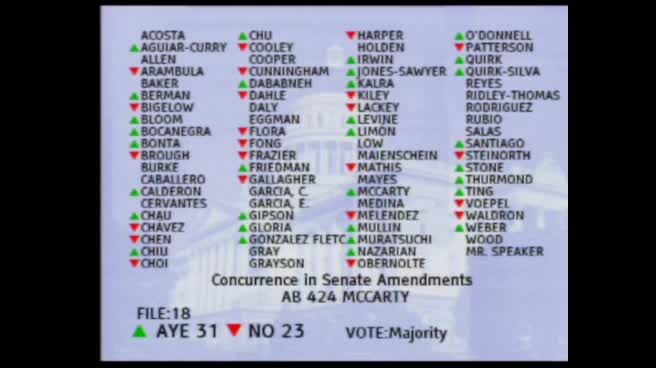 1MIN
Assembly Floor
 2MIN
Senate Floor
 1H
Senate Standing Committee on Appropriations
 10MIN
Senate Standing Committee on Judiciary
 2MIN
Assembly Floor
 1H
Assembly Standing Committee on Appropriations
 30MIN
Assembly Standing Committee on Judiciary
Bill Author

Bill Co-Author(s):
