AB 1513: Registered home care aides: disclosure of contact information.
- Session Year: 2017-2018
- House: Assembly
- Latest Version Date: 2017-09-15
Existing law establishes the Home Care Services Consumer Protection Act, which provides for the licensure and regulation of home care organizations, as defined, by the State Department of Social Services, and for the registration of home care aides. The act requires the department to establish and maintain a registry of registered home care aides and home care aide applicants on the departments Internet Web site, as provided. The act prohibits the registry on the Internet Web site from providing any additional, individually identifiable information about a registered home care aide or home care aide applicant. Existing law authorizes the department to maintain additional information for registered home care aides or home care aide applicants, as necessary for the administration of the act, but prohibits the department from making that information publicly available on the registry. A violation of the act is a misdemeanor, punishable by a fine not to exceed $1,000, by imprisonment in a county jail for a period not to exceed 180 days, or by both that fine and imprisonment.
This bill would require, beginning September 1, 2018, an electronic copy of a registered home care aides name, telephone number, and cellular telephone number, if available, on file with the department to be made available, upon request, to a labor organization, as specified. The bill would prohibit a labor organization from using or disclosing this information, as specified. The bill would also require the department to establish a simple opt-out procedure by which a registered home care aide may request that his or her contact information on file with the department not be disclosed in response to a request by a labor organization. The bill would require the department to provide a written notice with information about the opt-out procedure to registered home care aides, as specified. Because a violation of the Home Care Services Consumer Protection Act is punishable as a misdemeanor and this bill would expand requirements under the act, this bill would impose a state-mandated local program.
The California Constitution requires the state to reimburse local agencies and school districts for certain costs mandated by the state. Statutory provisions establish procedures for making that reimbursement.
This bill would provide that no reimbursement is required by this act for a specified reason.
Existing law establishes the Home Care Services Consumer Protection Act, which provides for the licensure and regulation of home care organizations, as defined, by the State Department of Social Services, and for the registration of home care aides. The act requires the department to establish and maintain a registry of registered home care aides and home care aide applicants on the departments Internet Web site, as provided. The act prohibits the registry on the Internet Web site from providing any additional, individually identifiable information about a registered home care aide or home care aide applicant. Existing law authorizes the department to maintain additional information for registered home care aides or home care aide applicants, as necessary for the administration of the act, but prohibits the department from making that information publicly available on the registry. A violation of the act is a misdemeanor, punishable by a fine not to exceed $1,000, by imprisonment in a county jail for a period not to exceed 180 days, or by both that fine and imprisonment.
This bill would require, beginning September 1, 2018, an electronic copy of a registered home care aides name, mailing address, telephone number, and cellular telephone number, and email address number, if available, on file with the department to be made available, upon request, to a labor organization, as specified. The bill would prohibit a labor organization from using this information for any purpose other than employee organizing, representation, and assistance activities. or disclosing this information, as specified. The bill would also require the department to establish an a simple opt-out procedure by which a registered home care aide may request that his or her contact information on file with the department not be disclosed in response to a request by a labor organization. The bill would require the department to provide a written notice with information about the opt-out procedure to registered home care aides, as specified. Because a violation of the Home Care Services Consumer Protection Act is punishable as a misdemeanor, misdemeanor and this bill would expand requirements under the act, this bill would impose a state-mandated local program.
The California Constitution requires the state to reimburse local agencies and school districts for certain costs mandated by the state. Statutory provisions establish procedures for making that reimbursement.
This bill would provide that no reimbursement is required by this act for a specified reason.
Existing law establishes the Home Care Services Consumer Protection Act, which provides for the licensure and regulation of home care organizations, as defined, by the State Department of Social Services, and for the registration of home care aides. The act requires the department to establish and maintain a registry of registered home care aides and home care aide applicants on the departments Internet Web site, as provided. The act prohibits the registry on the Internet Web site from providing any additional, individually identifiable information about a registered home care aide or home care aide applicant. Existing law authorizes the department to maintain additional information for registered home care aides or home care aide applicants, as necessary for the administration of the act, but prohibits the department from making that information publicly available on the registry. A violation of the act is a misdemeanor, punishable by a fine not to exceed $1,000, by imprisonment in a county jail for a period not to exceed 180 days, or by both that fine and imprisonment.
This bill would require, beginning March September 1, 2018, a an electronic copy of a registered home care aides name, mailing address, telephone number, cellular telephone number, and email address on file with the department to be made available, upon request, to a labor organization, as specified. The bill would prohibit a labor organization from using this information for any purpose other than employee organizing, representation, and assistance activities. The bill would also require the department to establish an opt-out procedure by which a registered home care aide may request that his or her contact information on file with the department not be disclosed in response to a request by a labor organization. The bill would require the department to provide a written notice with information about the opt-out procedure to registered home care aides, as specified. Because a violation of the Home Care Services Consumer Protection Act is punishable as a misdemeanor, this bill would impose a state-mandated local program.
The California Constitution requires the state to reimburse local agencies and school districts for certain costs mandated by the state. Statutory provisions establish procedures for making that reimbursement.
This bill would provide that no reimbursement is required by this act for a specified reason.
Existing law establishes the Home Care Services Consumer Protection Act, which provides for the licensure and regulation of home care organizations, as defined, by the State Department of Social Services, and for the registration of home care aides. The act requires the department to establish and maintain a registry of registered home care aides and home care aide applicants on the departments Internet Web site, as provided. The act prohibits the registry on the Internet Web site from providing any additional, individually identifiable information about a registered home care aide or home care aide applicant. Existing law authorizes the department to maintain additional information for registered home care aides or home care aide applicants, as necessary for the administration of the act, but prohibits the department from making that information publicly available on the registry. A violation of the act is a misdemeanor, punishable by a fine not to exceed $1,000, by imprisonment in a county jail for a period not to exceed 180 days, or by both that fine and imprisonment.
This bill would require the department to maintain a current list of all registered home care aides that includes the information on the Internet Web site registry and each registered home care aide's address and telephone number on file with the department and further require the department to provide this list, upon request, to a governmental or non-profit entity that provides training, educational classes, and other specified services to registered home care aides. The bill would also require the department to establish a procedure for registered home care aides to request that their contact information not be disclosed in this manner.This bill would require, beginning March 1, 2018, a copy of a registered home care aides name, mailing address, telephone number, cellular telephone number, and email address on file with the department to be made available, upon request, to a labor organization, as specified. The bill would prohibit a labor organization from using this information for any purpose other than employee organizing, representation, and assistance activities. The bill would also require the department to establish an opt-out procedure by which a registered home care aide may request that his or her contact information on file with the department not be disclosed in response to a request by a labor organization. The bill would require the department to provide a written notice with information about the opt-out procedure to registered home care aides, as specified. Because a violation of the Home Care Services Consumer Protection Act is punishable as a misdemeanor, this bill would impose a state-mandated local program.
The California Constitution requires the state to reimburse local agencies and school districts for certain costs mandated by the state. Statutory provisions establish procedures for making that reimbursement.
This bill would provide that no reimbursement is required by this act for a specified reason.
Existing law establishes the Home Care Services Consumer Protection Act, which provides for the licensure and regulation of home care organizations, as defined, by the State Department of Social Services, and for the registration of home care aides. Existing law The act requires the department to take certain actions with regard to the administration of the home care aide registry by establishing and maintaining the establish and maintain a registry of registered home care aides and home care aide applicants on the departments Internet Web site, as provided, and updating the home care registry upon receiving notification from a home care organization that an affiliated home care aide is no longer employed by the home care organization. provided. The act prohibits the registry on the Internet Web site from providing any additional, individually identifiable information about a registered home care aide or home care aide applicant. Existing law authorizes the department to maintain additional information for registered home care aides or home care aide applicants, as necessary for the administration of the act, but prohibits the department from making that information publicly available on the registry.
This bill would require the department to maintain, and provide upon request as a public record, a current list of all registered home care aides that includes the information on its Internet Web site and the aides address and telephone number, unless the aide requests that his or her contact information not be disclosed. maintain a current list of all registered home care aides that includes the information on the Internet Web site registry and each registered home care aide's address and telephone number on file with the department and further require the department to provide this list, upon request, to a governmental or non-profit entity that provides training, educational classes, and other specified services to registered home care aides. The bill would also require the department to establish a procedure for registered home care aides to request that their contact information not be disclosed. disclosed in this manner.
Existing law establishes the Home Care Services Consumer Protection Act, which provides for the licensure and regulation of home care organizations, as defined, by the State Department of Social Services, and for the registration of home care aides. Existing law requires the department to take certain actions with regard to the administration of the home care aide registry by establishing and maintaining the registry of registered home care aides and home care aide applicants on the departments Internet Web site, as provided, and updating the home care registry upon receiving notification from a home care organization that an affiliated home care aide is no longer employed by the home care organization.
This bill would require the department to maintain, and provide upon request as a public record, a current list of all registered home care aides that includes the information on its Internet Web site and the aides address and telephone number, unless the aide requests that his or her contact information not be disclosed. The bill would also require the department to establish a procedure for home care aides to request that their contact information not be disclosed.
Existing law, the California Residential Care Facilities for the Elderly Act, provides for the licensure of residential care facilities for the elderly by the State Department of Social Services. Existing law authorizes the department to impose various civil penalties for a licensing violation under those provisions, as specified, and establishes a process for the appeal of a citation.This bill would require the Legislative Analysts Office to review the enforcement framework for residential care facilities for the elderly and to submit recommendations for any updates to the relevant policy committees of the Legislature on or before October 1, 2018.Existing law, the California Residential Care Facilities for the Elderly Act, provides for the licensure of residential care facilities for the elderly by the State Department of Social Services. Existing law authorizes the department to impose various civil penalties for a licensing violation under those provisions, as specified, and establishes a process for the appeal of a citation.
This bill would require the Legislative Analysts Office to review the enforcement framework for residential care facilities for the elderly and to submit recommendations for any updates to the relevant policy committees of the Legislature on or before October 1, 2018.
The department shall do all of the following in the administration of the home care aide registry:
(a)Establish and maintain on the departments Internet Web site the registry of registered home care aides and home care aide applicants.
(1)To expedite the ability of a consumer to determine if a registered home care aide or home care aide applicant has passed a background examination, pursuant to Section 1796.23, the Internet Web site shall enable consumers to look up the registration status by providing the registered home care aides or home care aide applicants name and registration number. The Internet Web site shall also provide the registration status, the status of the background examination, the registration expiration date, and, if applicable, the home care organization with which the affiliated home care aide is associated.
(2)The Internet Web site shall not provide any additional, individually identifiable information about a registered home care aide or home care aide applicant. The department may request and may maintain additional information for registered home care aides or home care aide applicants, as necessary for the administration of this chapter, that shall not be publicly available on the home care aide registry.
(b)Update the home care registry upon receiving notification from a home care organization that an affiliated home care aide is no longer employed by the home care organization.
(c)Notwithstanding any other provision of this chapter to the contrary, information regarding a registered home care aide is not subject to public disclosure pursuant to this chapter, except as provided in subdivision (d).
(d)Beginning September 1, 2018, an electronic copy of a registered home care aides name, telephone number, and cellular telephone number, if available, on file with the department shall be made available, upon request, to a labor organization in which a provider of in-home supportive services, as described in Article 7 (commencing with Section 12300) of Chapter 3 of Part 3 of Division 9 of the Welfare and Institutions Code, or a registered home care aide, already participates and which exists for the purpose, in whole or in part, of dealing with employers of home care aides concerning access to training, grievances, labor disputes, wages, rates of pay, hours of employment, or conditions of work. The labor organization shall not use this information for any purpose other than employee organizing, representation, and assistance activities. The labor organization shall not disclose this information to any other party.
(e)The department shall establish a simple opt-out procedure by which a registered home care aide may request that his or her contact information on file with the department not be disclosed in response to a request described in subdivision (d).
(f)(1)On or before July 1, 2018, the department shall provide written notice to all registered home care aides that registered before July 1, 2018, that their information may be shared with a labor organization, as described in subdivision (d). The written notice shall provide a registered home care aide the option to change his or her mailing address on file with the department. The written notice shall also include instructions on how to utilize the opt-out procedure described in subdivision (e).
(2)Commencing July 1, 2018, the department shall provide the written notice described in paragraph (1) as part of the application process to become a registered home care aide.
(g)This section applies solely to an individual who provides services as a home care aide under this chapter.
SEC. 2.No reimbursement is required by this act pursuant to Section 6 of Article XIIIB of the California Constitution because the only costs that may be incurred by a local agency or school district will be incurred because this act creates a new crime or infraction, eliminates a crime or infraction, or changes the penalty for a crime or infraction, within the meaning of Section 17556 of the Government Code, or changes the definition of a crime within the meaning of Section 6 of Article XIIIB of the California Constitution.
The department shall do all of the following in the administration of the home care aide registry:
(a)Establish and maintain on the departments Internet Web site the registry of registered home care aides and home care aide applicants.
(1)To expedite the ability of a consumer to determine if a registered home care aide or home care aide applicant has passed a background examination, pursuant to Section 1796.23, the Internet Web site shall enable consumers to look up the registration status by providing the registered home care aides or home care aide applicants name and registration number. The Internet Web site shall also provide the registration status, the status of the background examination, the registration expiration date, and, if applicable, the home care organization with which the affiliated home care aide is associated.
(2)The Internet Web site shall not provide any additional, individually identifiable information about a registered home care aide or home care aide applicant. The department may request and may maintain additional information for registered home care aides or home care aide applicants, as necessary for the administration of this chapter, that shall not be publicly available on the home care aide registry.
(b)Update the home care registry upon receiving notification from a home care organization that an affiliated home care aide is no longer employed by the home care organization.
(c)Notwithstanding any other provision of this chapter to the contrary, information regarding a registered home care aide is not subject to public disclosure pursuant to this chapter, except as provided in subdivision (d).
(d)Beginning September 1, 2018, an electronic copy of a registered home care aides name, mailing address, telephone number, and cellular telephone number, and email address number, if available, on file with the department shall be made available, upon request, to a labor organization in which a provider of in-home supportive services, as described in Article 7 (commencing with Section 12300) of Chapter 3 of Part 3 of Division 9 of the Welfare and Institutions Code, or a registered home care aide, already participates and which exists for the purpose, in whole or in part, of dealing with employers of home care aides concerning access to training, grievances, labor disputes, wages, rates of pay, hours of employment, or conditions of work. The labor organization shall not use this information for any purpose other than employee organizing, representation, and assistance activities. The labor organization shall not disclose this information to any other party.
(e)The department shall establish an a simple opt-out procedure by which a registered home care aide may request that his or her contact information on file with the department not be disclosed in response to a request described in subdivision (d).
(f)(1)On or before July 1, 2018, the department shall provide written notice to all registered home care aides that registered before July 1, 2018, that their information may be shared with a labor organization, as described in subdivision (d). The written notice shall provide a registered home care aide the option to change his or her mailing address on file with the department. The written notice shall also include instructions on how to utilize the opt-out procedure described in subdivision (e).
(2)Commencing July 1, 2018, the department shall provide the written notice described in paragraph (1) as part of the application process to become a registered home care aide.
(g)This section applies solely to an individual who provides services as a home care aide under this chapter.
SEC. 2.No reimbursement is required by this act pursuant to Section 6 of Article XIIIB of the California Constitution because the only costs that may be incurred by a local agency or school district will be incurred because this act creates a new crime or infraction, eliminates a crime or infraction, or changes the penalty for a crime or infraction, within the meaning of Section 17556 of the Government Code, or changes the definition of a crime within the meaning of Section 6 of Article XIIIB of the California Constitution.
The department shall do all of the following in the administration of the home care aide registry:
(a)Establish and maintain on the departments Internet Web site the registry of registered home care aides and home care aide applicants.
(1)To expedite the ability of a consumer to determine if a registered home care aide or home care aide applicant has passed a background examination, pursuant to Section 1796.23, the Internet Web site shall enable consumers to look up the registration status by providing the registered home care aides or home care aide applicants name and registration number. The Internet Web site shall also provide the registration status, the status of the background examination, the registration expiration date, and, if applicable, the home care organization with which the affiliated home care aide is associated.
(2)The Internet Web site shall not provide any additional, individually identifiable information about a registered home care aide or home care aide applicant. The department may request and may maintain additional information for registered home care aides or home care aide applicants, as necessary for the administration of this chapter, that shall not be publicly available on the home care aide registry.
(b)Update the home care registry upon receiving notification from a home care organization that an affiliated home care aide is no longer employed by the home care organization.
(c)Notwithstanding any other provision of this chapter to the contrary, information regarding a registered home care aide is not subject to public disclosure pursuant to this chapter, except as provided in subdivision (d).
(d)Beginning March September 1, 2018, a an electronic copy of a registered home care aides name, mailing address, telephone number, cellular telephone number, and email address on file with the department shall be made available, upon request, to a labor organization in which a provider of in-home supportive services, as described in Article 7 (commencing with Section 12300) of Chapter 3 of Part 3 of Division 9 of the Welfare and Institutions Code, or a registered home care aide, already participates and which exists for the purpose, in whole or in part, of dealing with employers of home care aides concerning access to training, grievances, labor disputes, wages, rates of pay, hours of employment, or conditions of work. The labor organization shall not use this information for any purpose other than employee organizing, representation, and assistance activities.
(e)The department shall establish an opt-out procedure by which a registered home care aide may request that his or her contact information on file with the department not be disclosed in response to a request described in subdivision (d).
(f)(1)On or before January July 1, 2018, the department shall provide written notice to all registered home care aides that registered before January July 1, 2018, that their information may be shared with a labor organization, as described in subdivision (d). The written notice shall provide a registered home care aide the option to change his or her mailing address on file with the department. The written notice shall also include instructions on how to utilize the opt-out procedure described in subdivision (e).
(2)Commencing January July 1, 2018, the department shall provide the written notice described in paragraph (1) as part of the application process to become a registered home care aide.
(g)This section applies solely to an individual who provides services as a home care aide under the Home Care Services Consumer Protection Act (Chapter 13 (commencing with Section 1796.10) of Division 2). this chapter.
SEC. 2.No reimbursement is required by this act pursuant to Section 6 of Article XIIIB of the California Constitution because the only costs that may be incurred by a local agency or school district will be incurred because this act creates a new crime or infraction, eliminates a crime or infraction, or changes the penalty for a crime or infraction, within the meaning of Section 17556 of the Government Code, or changes the definition of a crime within the meaning of Section 6 of Article XIIIB of the California Constitution.
The department shall do all of the following in the administration of the home care aide registry:
(a)Establish and maintain on the departments Internet Web site the registry of registered home care aides and home care aide applicants.
(1)To expedite the ability of a consumer to search and locate determine if a registered home care aide or home care aide applicant, applicant has passed a background examination, pursuant to Section 1796.23, the Internet Web site shall enable consumers to look up the registration status by providing the registered home care aides or home care aide applicants name, registration number, name and registration number. The Internet Web site shall also provide the registration status, the status of the background examination, the registration expiration date, and, if applicable, the home care organization with which the affiliated home care aide is associated.
(2)The Internet Web site shall not provide any additional, individually identifiable information about a registered home care aide or home care aide applicant. The department may request and may maintain additional information for registered home care aides or home care aide applicants, as necessary for the administration of this chapter, that shall not be publicly available on the home care aide registry.
(b)Update the home care registry upon receiving notification from a home care organization that an affiliated home care aide is no longer employed by the home care organization.
(c)(1)Maintain a current list of all registered home care aides that includes the information on the Internet Web site and each registered home care aides address and telephone number on file with the department. The list shall not contain the contact information of a registered home care aide who has requested his or her contact information not be disclosed pursuant to paragraph (2). Notwithstanding any other law, the list shall be provided upon request to a governmental or non-profit entity that provides training, educational classes, or other resources to registered home care aides to improve the quality of care, provides professional development training or support resources for registered home care aides, or provides services to assist registered home care aides obtain additional clients.(2)The department shall establish an opt-out procedure by which a registered home care aide may request that his or her contact information on file with the department not be disclosed in response to a request described in paragraph (1).(c)Notwithstanding any other provision of this chapter to the contrary, information regarding a registered home care aide is not subject to public disclosure pursuant to this chapter, except as provided in subdivision (d).
(d)Beginning March 1, 2018, a copy of a registered home care aides name, mailing address, telephone number, cellular telephone number, and email address on file with the department shall be made available, upon request, to a labor organization in which a provider of in-home supportive services, as described in Article 7 (commencing with Section 12300) of Chapter 3 of Part 3 of Division 9 of the Welfare and Institutions Code, or a registered home care aide, already participates and which exists for the purpose, in whole or in part, of dealing with employers of home care aides concerning access to training, grievances, labor disputes, wages, rates of pay, hours of employment, or conditions of work. The labor organization shall not use this information for any purpose other than employee organizing, representation, and assistance activities.
(e)The department shall establish an opt-out procedure by which a registered home care aide may request that his or her contact information on file with the department not be disclosed in response to a request described in subdivision (d).
(f)(1)On or before January 1, 2018, the department shall provide written notice to all registered home care aides that registered before January 1, 2018, that their information may be shared with a labor organization, as described in subdivision (d). The written notice shall provide a registered home care aide the option to change his or her mailing address on file with the department. The written notice shall also include instructions on how to utilize the opt-out procedure described in subdivision (e).
(2)Commencing January 1, 2018, the department shall provide the written notice described in paragraph (1) as part of the application process to become a registered home care aide.
(g)This section applies solely to an individual who provides services as a home care aide under the Home Care Services Consumer Protection Act (Chapter 13 (commencing with Section 1796.10) of Division 2).
SEC. 2.No reimbursement is required by this act pursuant to Section 6 of Article XIIIB of the California Constitution because the only costs that may be incurred by a local agency or school district will be incurred because this act creates a new crime or infraction, eliminates a crime or infraction, or changes the penalty for a crime or infraction, within the meaning of Section 17556 of the Government Code, or changes the definition of a crime within the meaning of Section 6 of Article XIIIB of the California Constitution.
The department shall do all of the following in the administration of the home care aide registry:
(a)Establish and maintain on the departments Internet Web site the registry of registered home care aides and home care aide applicants.
(1)To expedite the ability of a consumer to search and locate a registered home care aide or home care aide applicant, the Internet Web site shall enable consumers to look up the registration status by providing the registered home care aides or home care aide applicants name, registration number, registration status, registration expiration date, and, if applicable, the home care organization with which the affiliated home care aide is associated.
(2)The Internet Web site shall not provide any additional, individually identifiable information about a registered home care aide or home care aide applicant. The department may request and may maintain additional information for registered home care aides or home care aide applicants, as necessary for the administration of this chapter, that shall not be publicly available on the home care aide registry.
(b)Update the home care registry upon receiving notification from a home care organization that an affiliated home care aide is no longer employed by the home care organization.
(c)Maintain, and provide upon request as a public record, a current list of all registered home care aides that includes the information on the Internet Web site and the aides address and telephone number on file with the department, unless the aide has requested that his or her contact information not be disclosed. The department shall establish a procedure by which home care aides may request that their contact information not be disclosed.(c)(1)Maintain a current list of all registered home care aides that includes the information on the Internet Web site and each registered home care aides address and telephone number on file with the department. The list shall not contain the contact information of a registered home care aide who has requested his or her contact information not be disclosed pursuant to paragraph (2). Notwithstanding any other law, the list shall be provided upon request to a governmental or non-profit entity that provides training, educational classes, or other resources to registered home care aides to improve the quality of care, provides professional development training or support resources for registered home care aides, or provides services to assist registered home care aides obtain additional clients.
(2)The department shall establish an opt-out procedure by which a registered home care aide may request that his or her contact information on file with the department not be disclosed in response to a request described in paragraph (1).
The department shall do both all of the following in the administration of the home care aide registry:
(a)Establish and maintain on the departments Internet Web site the registry of registered home care aides and home care aide applicants.
(1)To expedite the ability of a consumer to search and locate a registered home care aide or home care aide applicant, the Internet Web site shall enable consumers to look up the registration status by providing the registered home care aides or home care aide applicants name, registration number, registration status, registration expiration date, and, if applicable, the home care organization with which the affiliated home care aide is associated.
(2)The Internet Web site shall not provide any additional, individually identifiable information about a registered home care aide or home care aide applicant. The department may request and may maintain additional information for registered home care aides or home care aide applicants, as necessary for the administration of this chapter, that shall not be publicly available on the home care aide registry.
(b)Update the home care registry upon receiving notification from a home care organization that an affiliated home care aide is no longer employed by the home care organization.
(c)Maintain, and provide upon request as a public record, a current list of all registered home care aides that includes the information on the Internet Web site and the aides address and telephone number on file with the department, unless the aide has requested that his or her contact information not be disclosed. The department shall establish a procedure by which home care aides may request that their contact information not be disclosed.
SECTION 1.Section 1569.1 of the Health and Safety Code is amended to read:1569.1.(a)The Legislature hereby finds and declares:(1)The Legislature has taken steps in recent years to develop a continuum of long-term social and health support services for older persons in the community that provide a range of options for long-term care and residential care facilities for the elderly are central in that continuum.(2)These efforts require a reevaluation of residential care for the elderly outside the constraints of the Community Care Facilities Act.(3)The Community Care Facilities Act was enacted in 1973 with the primary purpose of ensuring that residents of state hospitals would have access to safe, alternative community-based housing.(4)Since that time, due to shortages in affordable housing and a greater demand for residences for the elderly providing some care and supervision, a growing number of elderly persons with health and social care needs now reside in community care facilities that may or may not be designed to meet their needs.(5)Progress in the field of gerontology has provided new insights and information as to the types of services required to allow older persons to remain as independent as possible while residing in a residential care facility for the elderly.(6)The fluctuating health and social status of older persons demands a system of residential care that can respond to these needs by making available multilevels of service within the facility, thus reducing the need for residents with fluctuating conditions to move between medical and nonmedical facilities.(7)Residential care facilities for the elderly that are not primarily medically oriented represent a humane approach to meeting the housing, social, and service needs of older persons, and can provide a homelike environment for older persons with a variety of care needs.(8)It is, therefore, the intent of the Legislature to require that residential care facilities for the elderly be licensed as a separate category within the existing licensing structure of the State Department of Social Services.(b)(1)The Legislative Analysts Office shall review the enforcement framework for residential care facilities for the elderly and submit recommendations for any updates to the relevant policy committees of the Legislature on or before October 1, 2018.(2)The requirement for submitting a report pursuant to this subdivision is inoperative on October 1, 2022, pursuant to Section 10231.5 of the Government Code.(3)The report required by this subdivision shall be submitted in compliance with Section 9795 of the Government Code.(a)The Legislature hereby finds and declares:
(a)(1)The Legislature has taken steps in recent years to develop a continuum of long-term social and health support services for older persons in the community that provide a range of options for long-term care and residential care facilities for the elderly are central in that continuum.
(b)(2)These efforts require a reevaluation of residential care for the elderly outside the constraints of the Community Care Facilities Act.
(c)(3)The Community Care Facilities Act was enacted in 1973 with the primary purpose of ensuring that residents of state hospitals would have access to safe, alternative community-based housing.
(d)(4)Since that time, due to shortages in affordable housing and a greater demand for residences for the elderly providing some care and supervision, a growing number of elderly persons with health and social care needs now reside in community care facilities that may or may not be designed to meet their needs.
(e)(5)Progress in the field of gerontology has provided new insights and information as to the types of services required to allow older persons to remain as independent as possible while residing in a residential care facility for the elderly.
(f)(6)The fluctuating health and social status of older persons demands a system of residential care that can respond to these needs by making available multilevels of service within the facility, thus reducing the need for residents with fluctuating conditions to move between medical and nonmedical facilities.
(g)(7)Residential care facilities for the elderly which that are not primarily medically oriented represent a humane approach to meeting the housing, social social, and service needs of older persons, and can provide a homelike environment for older persons with a variety of care needs.
(h)(8)It is, therefore, the intent of the Legislature to require that residential care facilities for the elderly be licensed as a separate category within the existing licensing structure of the State Department of Social Services.
(b)(1)The Legislative Analysts Office shall review the enforcement framework for residential care facilities for the elderly and submit recommendations for any updates to the relevant policy committees of the Legislature on or before October 1, 2018.
(2)The requirement for submitting a report pursuant to this subdivision is inoperative on October 1, 2022, pursuant to Section 10231.5 of the Government Code.
(3)The report required by this subdivision shall be submitted in compliance with Section 9795 of the Government Code.
|
Date
|
Status
|
|---|---|
| Jan 12, 2018 | Stricken from file. |
| Jan 3, 2018 | Consideration of Governor's veto pending. |
| Oct 15, 2017 | Vetoed by Governor. |
| Sep 21, 2017 | Enrolled and presented to the Governor at 3:30 p.m. |
| Sep 13, 2017 | Senate amendments concurred in. To Engrossing and Enrolling. |
| Sep 11, 2017 | In Assembly. Concurrence in Senate amendments pending. May be considered on or after September 13 pursuant to Assembly Rule 77. |
| Sep 11, 2017 | Read third time. Passed. Ordered to the Assembly. |
| Sep 7, 2017 | Read second time. Ordered to third reading. |
| Sep 6, 2017 | Read third time and amended. Ordered to second reading. |
| Sep 5, 2017 | Read second time. Ordered to third reading. |
| Sep 1, 2017 | From committee: Do pass. (Ayes 5. Noes 2.) (September 1). |
| Aug 21, 2017 | In committee: Referred to APPR. suspense file. |
| Jul 18, 2017 | Read second time and amended. Re-referred to Com. on APPR. |
| Jul 17, 2017 | From committee: Amend, and do pass as amended and re-refer to Com. on APPR. (Ayes 4. Noes 3.) (July 11). |
| Jun 27, 2017 | From committee chair, with author's amendments: Amend, and re-refer to committee. Read second time, amended, and re-referred to Com. on HUMAN S. |
| Jun 12, 2017 | In committee: Set, first hearing. Hearing canceled at the request of author. |
| Jun 1, 2017 | Referred to Com. on HUMAN S. |
| May 22, 2017 | In Senate. Read first time. To Com. on RLS. for assignment. |
| May 22, 2017 | Read third time. Passed. Ordered to the Senate. (Ayes 49. Noes 27. Page 1647.) |
| May 11, 2017 | Read second time. Ordered to third reading. |
| May 10, 2017 | From committee: Do pass. (Ayes 12. Noes 5.) (May 10). |
| Apr 26, 2017 | From committee: Do pass and re-refer to Com. on APPR. (Ayes 5. Noes 2.) (April 25). Re-referred to Com. on APPR. |
| Apr 20, 2017 | Re-referred to Com. on HUM. S. |
| Apr 19, 2017 | From committee chair, with author's amendments: Amend, and re-refer to Com. on HUM. S. Read second time and amended. |
| Apr 17, 2017 | From committee: Be re-referred to Com. on HUM. S. Re-referred. (Ayes 9. Noes 0.) (April 17). Re-referred to Com. on HUM. S. |
| Apr 6, 2017 | Re-referred to Com. on RLS. pursuant to Assembly Rule 96. |
| Apr 5, 2017 | From committee chair, with author's amendments: Amend, and re-refer to Com. on AGING & L.T.C. Read second time and amended. |
| Mar 27, 2017 | Referred to Com. on AGING & L.T.C. |
| Feb 19, 2017 | From printer. May be heard in committee March 21. |
| Feb 17, 2017 | Read first time. To print. |
|
Date
|
Description
|
Location
|
Votes
|
|
|---|---|---|---|---|
| Sep 13, 2017 | AB 1513 KALRA Concurrence in Senate Amendments | Assembly Floor |
Passed |
|
| Sep 11, 2017 | Assembly 3rd Reading AB1513 Kalra By Leyva | Senate Floor |
Passed |
|
| Sep 1, 2017 | Do pass | Senate Standing Committee on Appropriations |
Passed |
|
| Aug 21, 2017 | Placed on suspense file | Senate Standing Committee on Appropriations |
Passed |
|
| Jul 11, 2017 | Do pass as amended, but first amend, and re-refer to the Committee on [Appropriations] | Senate Standing Committee on Human Services |
Passed |
|
| May 22, 2017 | AB 1513 KALRA Assembly Third Reading | Assembly Floor |
Passed |
|
| May 10, 2017 | Do pass. | Assembly Standing Committee on Appropriations |
Passed |
|
| Apr 25, 2017 | Do pass and be re-referred to the Committee on [Appropriations] | Assembly Standing Committee on Human Services |
Passed |
|
| Apr 17, 2017 | Be re-referred to the Committee on [Human Services] | Assembly Standing Committee on Rules |
Passed |
This list shows positions taken on this bill by organizations on the date displayed, which is linked to the original source.
Positions by individuals are not included.
|
Organization
|
Position
|
Date
|
|---|---|---|
| 1 individual | ** Against | Sep 3, 2017 |
| 24 hour homecare | ** Against | Sep 8, 2017 |
| Apex Care | * Against | Apr 25, 2017 |
| Bright Star | * Against | Apr 25, 2017 |
| BrightStar Care | ** Against | Sep 8, 2017 |
| California Association For Health Services At Home | ** Against | Jul 7, 2017 |
| California Commission on Aging | ** Support | Sep 8, 2017 |
| California Labor Federation | ** Support | Sep 8, 2017 |
| california long-term education center | ** Support | Sep 8, 2017 |
| Department Of Finance | ** Against | Sep 8, 2017 |
| Eldercare Services | ** Against | Sep 8, 2017 |
| Home Care Association Of America | ** Against | Sep 8, 2017 |
| Home Helpers Of San Mateo County | ** Against | Sep 8, 2017 |
| Home Instead Senior Care | ** Against | Sep 8, 2017 |
| Local 2015 | * Support | Apr 25, 2017 |
| Maxim Healthcare Services | ** Against | Sep 8, 2017 |
| Rescare, Inc. | * Against | May 10, 2017 |
| Right at Home | * Against | Apr 25, 2017 |
| Right At Home In Home Care &Assistance | ** Against | Sep 8, 2017 |
| Right at Home Sacramento | * Against | Apr 25, 2017 |
| Sacramento | * Support | Apr 25, 2017 |
| SEIU California | ** Support | Sep 8, 2017 |
| Sonoma County | * Support | Apr 25, 2017 |
| The California Association For Health Services At Home | ** Against | Sep 8, 2017 |
| The California Disability Services Association | ** Against | Sep 8, 2017 |
| The R. Street Institute | ** Against | Sep 8, 2017 |
| UDW AFSCME Local 3930 | ** Support | Sep 8, 2017 |
| Visiting Angels | ** Against | Sep 8, 2017 |
| Wise & Healthy Aging | ** Against | Sep 8, 2017 |
GOVERNOR'S VETO
GV Bill Id:AB 1513
Author:(Kalra)
As Enrolled Ver:September 15, 2017
2/3 vote
ASSEMBLY: | 49-27 | (May 22, 2017) | SENATE: | 21-16 | (September 11, 2017) |
ASSEMBLY: | 49-28 | (September 13, 2017) |
Original Committee Reference: AGING & L.T.C.
SUMMARY: Requires the Department of Social Services (DSS) to maintain a list of registered home care aides and to make that list available, upon request, to specified entities.
Specifically, this bill:
- Clarifies that the purpose of a consumer's ability to search the DSS-maintained home care aide registry is to enable the consumer to determine if a registered home care aide or home care aide applicant has passed the background examination required by current law.
- Clarifies that, in order to look up a home care aide's or home care aide applicant's registration status, the consumer must provide the aide's or applicant's name and registration number, and that the Internet Web site must provide the registration status and expiration date, status of the background examination, and, where applicable, the home care organization with which the home care aide is affiliated.
- Requires, as of September 1, 2018, an electronic copy of a registered home care aide's name, telephone number, and cellular telephone number, if available, on file with DSS to be made available, upon request, to a labor organization in which a provider of in-home supportive services (IHSS) or a registered home care aide, already participates and which exists for the purpose of dealing with employers of home care aides concerning a number of employment-related factors, as specified.
- Prohibits the labor organization requesting the list from using the information for any purpose other than employee organizing, representation, and assistance activities and further, prohibits the labor organization from disclosing the information to any other party.
- Requires DSS to establish a simple opt-out procedure whereby a registered home care aide can request that his or her contact information on file with DSS not be disclosed, as specified.
- Requires DSS, by July 1, 2018, to provide written notice to all registered home care aides that registered prior to that date, and as part of the application process to become a registered home care aide, that: notifies the aide that his or her information may be shared with a labor organization, provides the aide the option to change his or her mailing address on file with the department, and includes instructions on how to utilize the opt-out procedure, as specified.
- Stipulates that the provisions of current law and this bill pertaining to DSS's administration of the home care aide registry, as specified, apply solely to an individual who provides services as a home care aide under the Home Care Services Chapter of Health and Safety Code and further, states that information regarding a registered home care aide is not subject to public disclosure, except as provided for in the provisions of this bill related to the information DSS must provide to labor organizations, as specified.
- Makes technical amendments.
The Senate amendments:
- Add language clarifying that the purpose of a consumer's ability to search the DSS-maintained home care aide registry is to enable the consumer to determine if a registered home care aide or home care aide applicant has passed the background examination required by current law.
- Add language clarifying that, in order to look up a home care aide's registration status, the consumer must provide the aide's name and registration number, and that the Internet Web site must provide the registration status and expiration date, status of the background examination, and, where applicable, the home care organization with which the home care aide is affiliated.
- Delete language regarding the list of registered home care aide information that requires the list DSS must maintain of all registered home care aides to include information contained on the Internet Web site home care aide registry as well as the home care aide's address and that requires this list to be provided upon request to governmental or non-profit entities providing specified services related to home care aides.
- Add language regarding the list of registered home care aide information that requires the list DSS must maintain of all registered home care aides to include an aide's cellular telephone number, where available, and that requires an electronic copy to be made available, upon request, to a labor organization in which a provider of in-home supportive services (IHSS) or a registered home care aide, already participates and which exists for the purpose of dealing with employers of home care aides concerning a number of employment-related factors, as specified.
- Add language prohibiting the labor organization requesting the list from using the information for any purpose other than employee organizing, representation, and assistance activities and further, prohibiting the labor organization from disclosing the information to any other party.
- Clarify that the opt-out procedure that DSS must establish must be a simple one.
- Add language requiring DSS, by July 1, 2018, to provide written notice to all registered home care aides that registered prior to that date, and as part of the application process to become a registered home care aide, that: notifies the aide that his or her information may be shared with a labor organization, provides the aide the option to change his or her mailing address on file with the department, and includes instructions on how to utilize the opt-out procedure, as specified.
- Add language stipulating that the provisions of current law and this bill pertaining to DSS's administration of the home care aide registry, as specified, apply solely to an individual who provides services as a home care aide under the Home Care Services Chapter of Health and Safety Code and stating that information regarding a registered home care aide is not subject to public disclosure, except as provided for in the provisions of this bill related to the information DSS must provide to labor organizations, as specified.
- Make technical amendments.
EXISTING LAW:
- Adopts the Home Care Services Consumer Protection Act to provide for the licensure and regulation of home care organizations and the registration of home care aides, as defined. (Health and Safety Code (HSC) Section 1796.10 et seq.)
- Requires DSS to establish and regularly update an online home care aide registry to include specified information on home care aide applicants and registered home care aides, as defined. (HSC Section 1796.29)
- Defines "home care services" as nonmedical services and assistance, as specified, provided by a registered home care aide to a client who, due to advanced age or physical or mental disability, cannot perform these services and uses such services to remain in his or her residence. (HSC Section 1796.12 (n))
- Defines "home care organization" to mean an adult individual or entity that arranges for home care services by an affiliated home care aide to a client and is licensed, as specified. (HSC Section 1796.12 (j))
- Defines "affiliated home care aide" to mean an adult individual who is employed by a home care organization to provide home care services to a client and is listed on the home care registry. (HSC Section 1796.12 (a))
- Defines "independent home care aide" to mean an adult individual who is not employed by a home care organization but who is listed on the home care aide registry and is providing home care services through a direct agreement with a client. (HSC Section 1796.12 (p))
- Defines "registered home care aide" to mean an affiliated home care aide or independent home care aide who is listed on the home care aide registry. (HSC Section 1796.12 (o))
- Requires background clearances for home care aides applying to be on the home care aide registry, as specified. (HSC Section 1796.23-1796.28)
- Requires affiliated home care aides hired on or after January 1, 2016, to demonstrate that they are free of active tuberculosis, as specified. (HSC Section 1796.45)
- Creates the Home Care Fund and requires certain fees, as specified, to be imposed by DSS on home care organizations and deposited into this fund. (HSC Section 1796.47-1796.49)
- Prescribes enforcement procedures, fines and penalties for violations of the Home Care Services Protection Act by a home care organization or a home care aide, as specified. (HSC Section 1796.51-1796.59)
FISCAL EFFECT: According to the Senate Appropriations Committee on August 21, 2017, this bill may result in the following costs:
- Significant costs to DSS for increased workload to develop an opt-out procedure and to maintain a record keeping system; and
- One-time significant costs, likely in the tens of thousands of dollars for automation to build and maintain a list of home care aides who have and have not opted-out of having their contact information being disclosed to a labor organization. (General Fund)
COMMENTS:
Home Care Aide Registry: The Home Care Services Consumer Protection Act was enacted in 2013, with the adoption of AB 1217 (Lowenthal), Chapter 790, Statutes of 2013. This bill adopted a number of measures aimed at better regulating the home care services industry, which has expanded significantly in order to meet the needs of California's growing senior population, needs that include obtaining in-home care to facilitate individuals' ability to continue to live comfortably in their own residences. Home care aides play an important role in meeting this need by providing a breadth of nonmedical services to elderly individuals and individuals with physical and mental disabilities. These services can include assistance with cooking, cleaning, dressing, feeding, bathing, and other typical daily needs.
The new requirements of the Home Care Services Consumer Protection Act were implemented beginning January 1, 2016. They included, among other requirements, the following:
- Requiring DSS to establish an online registry where home care aides directly employed by home care organizations must be listed, and where other independent home care aides may volunteer to register;
- Requiring home care aides to pass a background clearance in order to be listed on the registry;
- Requiring home care organizations to ensure that their employees are on the registry, have passed a tuberculosis test, and have completed specified training; and
- Requiring the licensure and regulation of home care organizations, including the development of related complaint and other processes, and the collections of fees and penalties.
Currently, the online Home Care Aide Registry contains over 111,000 searchable home care aides on the registry, of which approximately 9% are independent home care aides. Of the searchable home care aides, over 90,000 have been registered and there are approximately 7,500 pending registration. Approximately 1,300 home care organizations have obtained licensure.
Need for this bill: According to the author, "This bill allows home care aides the opportunity to benefit from training, information, resources and more. These services can help home care aides advance in their careers and to increase the level of care they provide. This is an invaluable opportunity as the state's aging population continues to grow."
PRIOR LEGISLATION:
AB 1667 (Dodd) of 2016, would have included home care aide domestic referral agencies in the Home Care Services Consumer Protection Act. It was held in the Assembly Appropriations Committee.
AB 782 (Dababneh) of 2015, would have included home care aide domestic referral agencies in the Home Care Services Consumer Protection Act. It was held in the Assembly Appropriations Committee.
AB 1863 (Jones) of 2014, would have included home care aide domestic referral agencies in the Home Care Services Consumer Protection Act. It was held in the Senate Appropriations Committee.
SB 855 (Budget and Fiscal Review Committee), Chapter 29, Statutes of 2014, revised and recast provisions of the Home Care Services Consumer Protection Act and delayed implementation one year until January 1, 2016.
AB 1217 (Lowenthal), Chapter 790, Statutes of 2013, established the Home Care Services Consumer Protection Act.
This bill requires the Department of Social Services to provide labor organizations with the names and telephone numbers of home care aides on the department's Home Care Registry unless a home care aide opts out of allowing this information to be shared.
Home care aides have placed their names and personal contact information on the Registry for the purpose of allowing consumers and their families to determine whether an aide has undergone a criminal background check and received training. I am concerned about now releasing the personal information of these home care aides, who joined the registry without knowing that their information would be disclosed as prescribed by this bill.
Analysis Prepared by: Daphne Hunt / HUM. S. / (916) 319-2089 FN: 0002478
CONCURRENCE IN SENATE AMENDMENTS
CSA1 Bill Id:AB 1513
Author:(Kalra)
As Amended Ver:September 6, 2017
Majority vote
ASSEMBLY: | 49-27 | (May 22, 2017) | SENATE: | 21-16 | (September 11, 2017) |
Original Committee Reference: HUM. S.
SUMMARY: Requires the Department of Social Services (DSS) to maintain a list of registered home care aides and to make that list available, upon request, to specified entities.
Specifically, this bill:
- Clarifies that the purpose of a consumer's ability to search the DSS-maintained home care aide registry is to enable the consumer to determine if a registered home care aide or home care aide applicant has passed the background examination required by current law.
- Clarifies that, in order to look up a home care aide's or home care aide applicant's registration status, the consumer must provide the aide's or applicant's name and registration number, and that the Internet Web site must provide the registration status and expiration date, status of the background examination, and, where applicable, the home care organization with which the home care aide is affiliated.
- Requires, as of September 1, 2018, an electronic copy of a registered home care aide's name, telephone number, and cellular telephone number, if available, on file with DSS to be made available, upon request, to a labor organization in which a provider of in-home supportive services (IHSS) or a registered home care aide, already participates and which exists for the purpose of dealing with employers of home care aides concerning a number of employment-related factors, as specified.
- Prohibits the labor organization requesting the list from using the information for any purpose other than employee organizing, representation, and assistance activities and further, prohibits the labor organization from disclosing the information to any other party.
- Requires DSS to establish a simple opt-out procedure whereby a registered home care aide can request that his or her contact information on file with DSS not be disclosed, as specified.
- Requires DSS, by July 1, 2018, to provide written notice to all registered home care aides that registered prior to that date, and as part of the application process to become a registered home care aide, that: notifies the aide that his or her information may be shared with a labor organization, provides the aide the option to change his or her mailing address on file with the department, and includes instructions on how to utilize the opt-out procedure, as specified.
- Stipulates that the provisions of current law and this bill pertaining to DSS's administration of the home care aide registry, as specified, apply solely to an individual who provides services as a home care aide under the Home Care Services Chapter of Health and Safety Code and further, states that information regarding a registered home care aide is not subject to public disclosure, except as provided for in the provisions of this bill related to the information DSS must provide to labor organizations, as specified.
- Makes technical amendments.
The Senate amendments:
- Add language clarifying that the purpose of a consumer's ability to search the DSS-maintained home care aide registry is to enable the consumer to determine if a registered home care aide or home care aide applicant has passed the background examination required by current law.
- Add language clarifying that, in order to look up a home care aide's registration status, the consumer must provide the aide's name and registration number, and that the Internet Web site must provide the registration status and expiration date, status of the background examination, and, where applicable, the home care organization with which the home care aide is affiliated.
- Delete language regarding the list of registered home care aide information that requires the list DSS must maintain of all registered home care aides to include information contained on the Internet Web site home care aide registry as well as the home care aide's address and that requires this list to be provided upon request to governmental or non-profit entities providing specified services related to home care aides.
- Add language regarding the list of registered home care aide information that requires the list DSS must maintain of all registered home care aides to include an aide's cellular telephone number, where available, and that requires an electronic copy to be made available, upon request, to a labor organization in which a provider of in-home supportive services (IHSS) or a registered home care aide, already participates and which exists for the purpose of dealing with employers of home care aides concerning a number of employment-related factors, as specified.
- Add language prohibiting the labor organization requesting the list from using the information for any purpose other than employee organizing, representation, and assistance activities and further, prohibiting the labor organization from disclosing the information to any other party.
- Clarify that the opt-out procedure that DSS must establish must be a simple one.
- Add language requiring DSS, by July 1, 2018, to provide written notice to all registered home care aides that registered prior to that date, and as part of the application process to become a registered home care aide, that: notifies the aide that his or her information may be shared with a labor organization, provides the aide the option to change his or her mailing address on file with the department, and includes instructions on how to utilize the opt-out procedure, as specified.
- Add language stipulating that the provisions of current law and this bill pertaining to DSS's administration of the home care aide registry, as specified, apply solely to an individual who provides services as a home care aide under the Home Care Services Chapter of Health and Safety Code and stating that information regarding a registered home care aide is not subject to public disclosure, except as provided for in the provisions of this bill related to the information DSS must provide to labor organizations, as specified.
- Make technical amendments.
EXISTING LAW:
- Adopts the Home Care Services Consumer Protection Act to provide for the licensure and regulation of home care organizations and the registration of home care aides, as defined. (Health and Safety Code (HSC) Section 1796.10 et seq.)
- Requires DSS to establish and regularly update an online home care aide registry to include specified information on home care aide applicants and registered home care aides, as defined. (HSC Section 1796.29)
- Defines "home care services" as nonmedical services and assistance, as specified, provided by a registered home care aide to a client who, due to advanced age or physical or mental disability, cannot perform these services and uses such services to remain in his or her residence. (HSC Section 1796.12 (n))
- Defines "home care organization" to mean an adult individual or entity that arranges for home care services by an affiliated home care aide to a client and is licensed, as specified. (HSC Section 1796.12 (j))
- Defines "affiliated home care aide" to mean an adult individual who is employed by a home care organization to provide home care services to a client and is listed on the home care registry. (HSC Section 1796.12 (a))
- Defines "independent home care aide" to mean an adult individual who is not employed by a home care organization but who is listed on the home care aide registry and is providing home care services through a direct agreement with a client. (HSC Section 1796.12 (p))
- Defines "registered home care aide" to mean an affiliated home care aide or independent home care aide who is listed on the home care aide registry. (HSC Section 1796.12 (o))
- Requires background clearances for home care aides applying to be on the home care aide registry, as specified. (HSC Section 1796.23-1796.28)
- Requires affiliated home care aides hired on or after January 1, 2016, to demonstrate that they are free of active tuberculosis, as specified. (HSC Section 1796.45)
- Creates the Home Care Fund and requires certain fees, as specified, to be imposed by DSS on home care organizations and deposited into this fund. (HSC Section 1796.47-1796.49)
- Prescribes enforcement procedures, fines and penalties for violations of the Home Care Services Protection Act by a home care organization or a home care aide, as specified. (HSC Section 1796.51-1796.59)
FISCAL EFFECT: According to the Senate Appropriations Committee on August 21, 2017, this bill may result in the following costs:
- Significant costs to DSS for increased workload to develop an opt-out procedure and to maintain a record keeping system; and
- One-time significant costs, likely in the tens of thousands of dollars for automation to build and maintain a list of home care aides who have and have not opted-out of having their contact information being disclosed to a labor organization. (General Fund)
COMMENTS:
Home Care Aide Registry: The Home Care Services Consumer Protection Act was enacted in 2013, with the adoption of AB 1217 (Lowenthal), Chapter 790, Statutes of 2013. This bill adopted a number of measures aimed at better regulating the home care services industry, which has expanded significantly in order to meet the needs of California's growing senior population, needs that include obtaining in-home care to facilitate individuals' ability to continue to live comfortably in their own residences. Home care aides play an important role in meeting this need by providing a breadth of nonmedical services to elderly individuals and individuals with physical and mental disabilities. These services can include assistance with cooking, cleaning, dressing, feeding, bathing, and other typical daily needs.
The new requirements of the Home Care Services Consumer Protection Act were implemented beginning January 1, 2016. They included, among other requirements, the following:
- Requiring DSS to establish an online registry where home care aides directly employed by home care organizations must be listed, and where other independent home care aides may volunteer to register;
- Requiring home care aides to pass a background clearance in order to be listed on the registry;
- Requiring home care organizations to ensure that their employees are on the registry, have passed a tuberculosis test, and have completed specified training; and
- Requiring the licensure and regulation of home care organizations, including the development of related complaint and other processes, and the collections of fees and penalties.
Currently, the online Home Care Aide Registry contains over 111,000 searchable home care aides on the registry, of which approximately 9% are independent home care aides. Of the searchable home care aides, over 90,000 have been registered and there are approximately 7,500 pending registration. Approximately 1,300 home care organizations have obtained licensure.
Need for this bill: According to the author, "This bill allows home care aides the opportunity to benefit from training, information, resources and more. These services can help home care aides advance in their careers and to increase the level of care they provide. This is an invaluable opportunity as the state's aging population continues to grow."
PRIOR LEGISLATION:
AB 1667 (Dodd) of 2016, would have included home care aide domestic referral agencies in the Home Care Services Consumer Protection Act. It died in the Assembly Appropriations Committee.
AB 782 (Dababneh) of 2015, would have included home care aide domestic referral agencies in the Home Care Services Consumer Protection Act. It died in the Assembly Appropriations Committee.
AB 1863 (Jones)of 2014, would have included home care aide domestic referral agencies in the Home Care Services Consumer Protection Act. It died in the Senate Appropriations Committee.
SB 855 (Budget and Fiscal Review Committee), Chapter 29, Statutes of 2014, revised and recast provisions of the Home Care Services Consumer Protection Act and delayed implementation one year until January 1, 2016.
AB 1217 (Lowenthal), Chapter 790, Statutes of 2013, established the Home Care Services Consumer Protection Act.
Analysis Prepared by: Daphne Hunt / HUM. S. / (916) 319-2089 FN: 0002182
Office of Senate Floor Analyses (916) 651-1520 Fax: (916) 327-4478 | AB |
THIRD READING
Bill No: AB 1513
:
SENATE HUMAN SERVICES COMMITTEE: 4-3, 7/11/17
AYES: Wiener, Leyva, McGuire, Portantino
NOES: Berryhill, Glazer, Nguyen
SENATE APPROPRIATIONS COMMITTEE: 5-2, 9/1/17
AYES: Lara, Beall, Bradford, Hill, Wiener
NOES: Bates, Nielsen
ASSEMBLY FLOOR: 49-27, 5/22/17 - See last page for vote
DIGEST: This bill requires the California Department of Social Services (CDSS) to provide a copy of a registered home care aide’s name, telephone number, and cellular telephone number, if available, on file with CDSS to be made available to a labor organization, as specified. This bill prohibits a labor organization from using or disclosing this information, as specified, and requires CDSS to establish a simple opt-out procedure by which a registered home care aide may request that his or her contact information not be disclosed.
Senate Floor Amendments of 9/6/17 remove mailing address and email address from the list of contact information to be provided to labor organizations; prohibit labor organizations from disclosing the contact information to any other party; and require CDSS to make the opt-out procedure for disclosure of registered home care aides’ contact information to be simple one.
Existing law:
- Adopts the Home Care Services Consumer Protection Act to provide for the licensure and regulation of home care organizations and the registration of home care aides and makes CDSS responsible for administering and enforcing the act, as specified.
- Defines “home care services” as nonmedical services and assistance, as specified, provided by a registered home care aide to a client who, due to advanced age or physical or mental disability, cannot perform these services and uses such services to remain in his or her residence.
- Defines “home care organization” to mean an adult individual or entity that arranges for home care services by an affiliated home care aide to a client, and is licensed, as specified.
- Defines “affiliated home care aide” to mean an adult individual who is employed by a home care organization to provide home care services to a client and is listed on the home care registry.
- Defines “independent home care aide” to mean an adult individual who is not employed by a home care organization but who is listed on the home care aide registry and is providing home care services through a direct agreement with a client.
- Defines “registered home care aide” to mean an affiliated home care aide or independent home care aide who is listed on the home care aide registry.
- Defines “home care aide applicant” to mean an individual, 18 years of age or older, who is requesting to become a registered home care aide and from whom CDSS has received and is processing the individual’s complete home care aide application and nonrefundable application fee.
- Defines “home care aide registry” to mean a department-established and department-maintained Internet Web site of registered home care aides and home care aide applicants, which includes all of the following: the individual’s name, registration number, registration status, registration expiration date, and, if applicable, the home care organization to which the affiliated home care aide or affiliated home care aide applicant is associated.
- Requires CDSS to establish and regularly update an online home care aide registry to include specified information on home care aide applicants and registered home care aides, as defined. Requires that the Internet Web site shall enable consumers to look up the registration status by providing the registered home care aide’s or home care applicant’s name, registration number, registration status, and other specified information.
- Requires CDSS to establish a home care aide registry and to continuously update the registry information. Specifically, upon submission of the home care aide application and fingerprints or other required identification, CDSS shall enter into the home care aide registry the person’s name, identification number, and an indicator that the person has submitted a home care aide application and fingerprints or identification documentation. This person shall be known as a “home care aide applicant.”
- Requires background clearances for home care aides applying to be on the home care aide registry, as specified.
- Requires registered home care aides and home care aide applicants to maintain a current mailing address with the department. Further requires registered home care aides and home care aide applicants to inform the department of any new mailing address in writing within 10 days of a change in address.
- Prescribes enforcement procedures, fines and penalties for violations of the Home Care Services Protection Act by a home care organization or a home care aide, as specified.
This bill:
- Requires the CDSS Web site that contains the registry of registered home care aides and home care applicants to expedite the ability of a consumer to determine if a registered home care aide or home care aide applicant has passed a background examination. Requires the Internet Web site to enable consumers to look up the registration status by providing the registered home care aide’s or home care aide applicant’s name and registration number and the Internet Web site shall provide the registration status, the status of the background examination, the registration expiration date, and, if applicable, the home care organization with which the affiliated home care aide is associated.
- Provides that, notwithstanding any other provision of this chapter to the contrary, information regarding a registered home care aide is not subject to public disclosure, as specified.
- Requires that, beginning September 1, 2018, an electronic copy of a registered home care aide’s name, telephone number, and cellular telephone number, if available, on file with CDSS shall be made available, upon request, to a labor organization, as specified, which exists for the purpose, in whole or in part, of dealing with employers of home care aides concerning access to training, grievances, labor disputes, wages, rates of pay, hours of employment, or conditions of work.
- Prohibits the labor organization from using this information for any purpose other than employee organizing, representation, and assistance activities.
- Prohibits the labor organization from disclosing the contact information to any other party.
- Requires CDSS to establish a simple opt-out procedure by which a registered home care aide may request that his or her contact information on file with CDSS not be disclosed in response to a request, as specified.
- Requires CDSS, on or before July 1, 2018, to provide written notice to all registered home care aides that registered before that date that their information may be shared with a labor organization, as specified. Requires the written notice to provide a registered home care aide the option to change his or her mailing address on file with CDSS and to include instructions on how to utilize the opt-out procedure.
- Requires CDSS, commencing July 1, 2018, to provide the written notice as part of the application process to become a registered home care aide.
- Provides that the bill applies solely to an individual who provides services as a home care aide under the Home Care Services Consumer Protection Act.
Background
According to the author, “This bill allows home care aides the opportunity to benefit from information, resources and more. These services can help home care aides advance in their careers and to increase the level of care they provide. This is an invaluable opportunity as the state’s aging population continues to grow.”
A recent publication by the Legislative Analyst Office entitled A Long-Term Care Outlook: Disability Among California’s Seniors indicates that California’s senior population (adults age 65 years or older) is projected to increase from 5 million in 2015 to nearly 12 million by 2060. California will experience unique challenges and opportunities due to this drastic shift in the population of people who will require long-term services and supports to remain active in their homes and community.
In-home care makes it possible for people who are elderly and disabled to live comfortably and safely in their own residences. Home care aides provide a wide array of nonmedical services to elderly individuals and individuals with physical and mental disabilities. They assist with activities of daily living such as housekeeping, meal preparation, and other personal care services. According to the Bureau of Labor Statistics there are approximately 145,000 private home care aides in California.
Home Care Aide Registry
The Home Care Services Consumer Protection Act (AB 1217, Lowenthal, Chapter 790, Statutes of 2013) created a regulatory structure for the home care services industry and required CDSS to license private agencies that provide private pay in-home care services to California’s elderly and disabled population, as well as to certify individual home care aides who are employed by those agencies and provide personal care services. Home care aides who work independently are not required to register with CDSS, but they may choose to do so.
CDSS has established an online registry where home care aides directly employed by home care organizations must be listed, and where other independent home care aides may volunteer to register. Currently, the online home care aide registry contains information about more than 111,000 searchable home care aides, of which approximately 9 percent are independent home care aides. Approximately 1,300 home care organizations have obtained licensure.
The CDSS home care aide registry Web site will verify whether or not a home care aide is registered once a consumer has provided the aide’s name and personnel identification number. The consumer must obtain this information through the home care organization or directly from the home care aide. The Web site provides inquiring consumers with the home care aides’ registration status, expiration date, and, if applicable, the home care organization with which the affiliated home care aide is associated. By law, the Web site does not provide individually identifiable information, such as the address or telephone number of registrants.
According to the bill’s sponsor there are several non-profit entities that currently provide training to home care aides. For example, the California Long Term Care Education Center provides educational and training services and programs. Unions representing such workers also provide trainings, education and other provider assistance programs. Under current law, these training providers cannot access contact information for the registered home care aides.
Related/Prior Legislation
AB 1667 (Dodd, 2016) would have included home care aide domestic referral agencies in the Home Care Services Consumer Protection Act. It was did not pass out of the Assembly Appropriations Committee.
AB 782 (Dababneh, 2015) would have included home care aide domestic referral agencies in the Home Care Services Consumer Protection Act. It did not pass out of the Assembly Appropriations Committee.
AB 1863 (Jones, 2014) would have included home care aide domestic referral agencies in the Home Care Services Consumer Protection Act. It did not pass out of the Senate Appropriations Committee.
SB 855 (Committee on Budget and Fiscal Review, Chapter 29, Statutes of 2014) revised and recast provisions of the Home Care Services Consumer Protection Act and delayed implementation one year until January 1, 2016.
AB 1217 (Lowenthal, Chapter 790, Statutes of 2013) established the Home Care Services Consumer Protection Act.
FISCAL EFFECT: Appropriation: Fiscal Com.: Local:
According to the Senate Appropriations Committee:
- Significant costs to CDSS for increased workload to develop an opt-out procedure and to maintain a record keeping system.
- One-time significant costs, likely in the tens of thousands of dollars for automation to build and maintain a list of home care aides who have and have not opted-out of having their contact information being disclosed to a labor organization. (GF)
SEIU California (source)
California Commission on Aging
California Labor Federation
California Long-Term Education Center
UDW AFSCME Local 3930
24 Hour HomeCare
BrightStar Care
Department of Finance
Eldercare Services
Home Care Association of America
Home Helpers of San Mateo County
Home Instead Senior Care
Maxim Healthcare Services
Right at Home In Home Care &Assistance
The California Association for Health Services at Home
The California Disability Services Association
The R. Street Institute
Visiting Angels
Wise & Healthy Aging
One Individual
ARGUMENTS IN SUPPORT: The SEIU California writes in support of this bill, “AB 1513 allows home care aides the opportunity to benefit from information, resources training and more by allowing CDSS to provide, upon request from a governmental or non-profit entity as specified, a public record of all registered home care aides who agree to make their contact information public. These services can help home care aides advance their careers and to increase the level of care they provide. This is an invaluable opportunity as the state’s aging population continues to grow…
Amendments taken in the Assembly Human Services Committee address concerns raised by stakeholders by narrowing the scope of agencies and organizations who could request information from the Home Care Services Consumer Protections Registry….”
ARGUMENTS IN OPPOSITION: Writing in opposition, the California Association for Health Services at Home (CAHSAH) states, “The online public home care aide registry created under AB 1217 of 2013 was designed and implemented by the Home Care Services Bureau to ensure that home care clients were receiving care by specially trained and licensed home care providers. AB 1217 always intended the home care aide registry to protect a home care aide’s personal information from public access…There is no public benefit or justification for providing an aide’s private information at a labor organization’s request. This bill goes against California’s best practices for securing an individual’s personal information.”
ASSEMBLY FLOOR: 49-27, 5/22/17
AYES: Aguiar-Curry, Arambula, Berman, Bloom, Bocanegra, Burke, Caballero, Calderon, Cervantes, Chau, Chiu, Chu, Cooper, Dababneh, Daly, Eggman, Friedman, Cristina Garcia, Eduardo Garcia, Gipson, Gloria, Gomez, Gonzalez Fletcher, Gray, Holden, Jones-Sawyer, Kalra, Levine, Limón, Low, McCarty, Medina, Mullin, Muratsuchi, O'Donnell, Quirk, Quirk-Silva, Reyes, Ridley-Thomas, Rodriguez, Rubio, Salas, Santiago, Mark Stone, Thurmond, Ting, Weber, Wood, Rendon
NOES: Acosta, Travis Allen, Baker, Bigelow, Brough, Chávez, Choi, Cooley, Cunningham, Dahle, Flora, Fong, Frazier, Gallagher, Harper, Irwin, Kiley, Lackey, Maienschein, Mathis, Mayes, Melendez, Obernolte, Patterson, Steinorth, Voepel, Waldron
NO VOTE RECORDED: Bonta, Chen, Grayson, Nazarian
9/8/17 20:49:01
**** END ****
Office of Senate Floor Analyses (916) 651-1520 Fax: (916) 327-4478 | AB |
THIRD READING
Bill No: AB 1513
:
SENATE HUMAN SERVICES COMMITTEE: 4-3, 7/11/17
AYES: Wiener, Leyva, McGuire, Portantino
NOES: Berryhill, Glazer, Nguyen
SENATE APPROPRIATIONS COMMITTEE: 5-2, 9/1/17
AYES: Lara, Beall, Bradford, Hill, Wiener
NOES: Bates, Nielsen
ASSEMBLY FLOOR: 49-27, 5/22/17 - See last page for vote
DIGEST: This bill requires the California Department of Social Services (CDSS) to provide a copy of a registered home care aide’s name, mailing address, telephone number, cellular telephone number, and email address on file with CDSS to be made available, upon request, to a labor organization, as specified. This bill also requires CDSS to establish an opt-out procedure by which a registered home care aide may request that his or her contact information not be disclosed.
Existing law:
- Adopts the Home Care Services Consumer Protection Act to provide for the licensure and regulation of home care organizations and the registration of home care aides and makes CDSS responsible for administering and enforcing the act, as specified.
- Defines “home care services” as nonmedical services and assistance, as specified, provided by a registered home care aide to a client who, due to advanced age or physical or mental disability, cannot perform these services and uses such services to remain in his or her residence.
- Defines “home care organization” to mean an adult individual or entity that arranges for home care services by an affiliated home care aide to a client, and is licensed, as specified.
- Defines “affiliated home care aide” to mean an adult individual who is employed by a home care organization to provide home care services to a client and is listed on the home care registry.
- Defines “independent home care aide” to mean an adult individual who is not employed by a home care organization but who is listed on the home care aide registry and is providing home care services through a direct agreement with a client.
- Defines “registered home care aide” to mean an affiliated home care aide or independent home care aide who is listed on the home care aide registry.
- Defines “home care aide applicant” to mean an individual, 18 years of age or older, who is requesting to become a registered home care aide and from whom CDSS has received and is processing the individual’s complete home care aide application and nonrefundable application fee.
- Defines “home care aide registry” to mean a department-established and department-maintained Internet Web site of registered home care aides and home care aide applicants, which includes all of the following: the individual’s name, registration number, registration status, registration expiration date, and, if applicable, the home care organization to which the affiliated home care aide or affiliated home care aide applicant is associated.
- Requires CDSS to establish and regularly update an online home care aide registry to include specified information on home care aide applicants and registered home care aides, as defined. Requires that the Internet Web site shall enable consumers to look up the registration status by providing the registered home care aide’s or home care applicant’s name, registration number, registration status, and other specified information.
- Requires CDSS to establish a home care aide registry and to continuously update the registry information. Specifically, upon submission of the home care aide application and fingerprints or other required identification, CDSS shall enter into the home care aide registry the person’s name, identification number, and an indicator that the person has submitted a home care aide application and fingerprints or identification documentation. This person shall be known as a “home care aide applicant.”
- Requires background clearances for home care aides applying to be on the home care aide registry, as specified.
- Requires registered home care aides and home care aide applicants to maintain a current mailing address with the department. Further requires registered home care aides and home care aide applicants to inform the department of any new mailing address in writing within 10 days of a change in address.
- Prescribes enforcement procedures, fines and penalties for violations of the Home Care Services Protection Act by a home care organization or a home care aide, as specified.
This bill:
- Requires the CDSS Web site that contains the registry of registered home care aides and home care applicants to expedite the ability of a consumer to determine if a registered home care aide or home care aide applicant has passed a background examination. Requires the Internet Web site to enable consumers to look up the registration status by providing the registered home care aide’s or home care aide applicant’s name and registration number and the Internet Web site shall provide the registration status, the status of the background examination, the registration expiration date, and, if applicable, the home care organization with which the affiliated home care aide is associated.
- Provides that, notwithstanding any other provision of this chapter to the contrary, information regarding a registered home care aide is not subject to public disclosure, as specified.
- Requires that, beginning September 1, 2018, an electronic copy of a registered home care aide’s name, mailing address, telephone number, cellular telephone number, and email address on file with CDSS shall be made available, upon request, to a labor organization, as specified, which exists for the purpose, in whole or in part, of dealing with employers of home care aides concerning access to training, grievances, labor disputes, wages, rates of pay, hours of employment, or conditions of work.
- Prohibits the labor organization from using this information for any purpose other than employee organizing, representation, and assistance activities.
- Requires CDSS to establish an opt-out procedure by which a registered home care aide may request that his or her contact information on file with CDSS not be disclosed in response to a request, as specified.
- Requires CDSS, on or before July 1, 2018, to provide written notice to all registered home care aides that registered before that date that their information may be shared with a labor organization, as specified. Requires the written notice to provide a registered home care aide the option to change his or her mailing address on file with CDSS and to include instructions on how to utilize the opt-out procedure.
- Requires CDSS, commencing July 1, 2018, to provide the written notice as part of the application process to become a registered home care aide.
- Provides that the bill applies solely to an individual who provides services as a home care aide under the Home Care Services Consumer Protection Act.
Background
According to the author, “This bill allows home care aides the opportunity to benefit from information, resources and more. These services can help home care aides advance in their careers and to increase the level of care they provide. This is an invaluable opportunity as the state’s aging population continues to grow.”
A recent publication by the Legislative Analyst Office entitled A Long-Term Care Outlook: Disability Among California’s Seniors indicates that California’s senior population (adults age 65 years or older) is projected to increase from 5 million in 2015 to nearly 12 million by 2060. California will experience unique challenges and opportunities due to this drastic shift in the population of people who will require long-term services and supports to remain active in their homes and community.
In-home care makes it possible for people who are elderly and disabled to live comfortably and safely in their own residences. Home care aides provide a wide array of nonmedical services to elderly individuals and individuals with physical and mental disabilities. They assist with activities of daily living such as housekeeping, meal preparation, and other personal care services. According to the Bureau of Labor Statistics there are approximately 145,000 private home care aides in California.
Home Care Aide Registry
The Home Care Services Consumer Protection Act (AB 1217, Lowenthal, Chapter 790, Statutes of 2013) created a regulatory structure for the home care services industry and required CDSS to license private agencies that provide private pay in-home care services to California’s elderly and disabled population, as well as to certify individual home care aides who are employed by those agencies and provide personal care services. Home care aides who work independently are not required to register with CDSS, but they may choose to do so.
CDSS has established an online registry where home care aides directly employed by home care organizations must be listed, and where other independent home care aides may volunteer to register. Currently, the online home care aide registry contains information about more than 111,000 searchable home care aides, of which approximately 9 percent are independent home care aides. Approximately 1,300 home care organizations have obtained licensure.
The CDSS home care aide registry Web site will verify whether or not a home care aide is registered once a consumer has provided the aide’s name and personnel identification number. The consumer must obtain this information through the home care organization or directly from the home care aide. The Web site provides inquiring consumers with the home care aides’ registration status, expiration date, and, if applicable, the home care organization with which the affiliated home care aide is associated. By law, the Web site does not provide individually identifiable information, such as the address or telephone number of registrants.
According to the bill’s sponsor there are several non-profit entities that currently provide training to home care aides. For example, the California Long Term Care Education Center provides educational and training services and programs. Unions representing such workers also provide trainings, education and other provider assistance programs. Under current law, these training providers cannot access contact information for the registered home care aides.
Related/Prior Legislation
AB 1667 (Dodd, 2016) would have included home care aide domestic referral agencies in the Home Care Services Consumer Protection Act. It was did not pass out of the Assembly Appropriations Committee.
AB 782 (Dababneh, 2015) would have included home care aide domestic referral agencies in the Home Care Services Consumer Protection Act. It did not pass out of the Assembly Appropriations Committee.
AB 1863 (Jones, 2014) would have included home care aide domestic referral agencies in the Home Care Services Consumer Protection Act. It did not pass out of the Senate Appropriations Committee.
SB 855 (Committee on Budget and Fiscal Review, Chapter 29, Statutes of 2014) revised and recast provisions of the Home Care Services Consumer Protection Act and delayed implementation one year until January 1, 2016.
AB 1217 (Lowenthal, Chapter 790, Statutes of 2013) established the Home Care Services Consumer Protection Act.
FISCAL EFFECT: Appropriation: Fiscal Com.: Local:
According to Senate Appropriations Committee:
- Significant costs to CDSS for increased workload to develop an opt-out procedure and to maintain a record keeping system.
- One-time significant costs, likely in the tens of thousands of dollars for automation to build and maintain a list of home care aides who have and have not opted-out of having their contact information being disclosed to a labor organization. (GF)
SEIU California (source)
UDW AFSCME Local 3930
California Commission on Aging
California Labor Federation
California Long-Term Education Center
OPPOSITION: (Verified 8/29/17)
24 Hour HomeCare
BrightStar Care
Department of Finance
Eldercare Services
Home Care Association of America
Home Helpers of San Mateo County
Home Instead Senior Care
Maxim Healthcare Services
Right at Home In Home Care &Assistance
The California Association for Health Services at Home
The California Disability Services Association
The R. Street Institute
Visiting Angels
Wise & Healthy Aging
1 Individual
ARGUMENTS IN SUPPORT: The SEIU California writes in support of this bill, “AB 1513 allows home care aides the opportunity to benefit from information, resources training and more by allowing CDSS to provide, upon request from a governmental or non-profit entity as specified, a public record of all registered home care aides who agree to make their contact information public. These services can help home care aides advance their careers and to increase the level of care they provide. This is an invaluable opportunity as the state’s aging population continues to grow…
Amendments taken in the Assembly Human Services Committee address concerns raised by stakeholders by narrowing the scope of agencies and organizations who could request information from the Home Care Services Consumer Protections Registry….”
ARGUMENTS IN OPPOSITION: Writing in opposition, the California Association for Health Services at Home (CAHSAH) states, “The online public home care aide registry created under AB 1217 of 2013 was designed and implemented by the Home Care Services Bureau to ensure that home care clients were receiving care by specially trained and licensed home care providers. AB 1217 always intended the home care aide registry to protect a home care aide’s personal information from public access…There is no public benefit or justification for providing an aide’s private information at a labor organization’s request. This bill goes against California’s best practices for securing an individual’s personal information.”
ASSEMBLY FLOOR: 49-27, 5/22/17
AYES: Aguiar-Curry, Arambula, Berman, Bloom, Bocanegra, Burke, Caballero, Calderon, Cervantes, Chau, Chiu, Chu, Cooper, Dababneh, Daly, Eggman, Friedman, Cristina Garcia, Eduardo Garcia, Gipson, Gloria, Gomez, Gonzalez Fletcher, Gray, Holden, Jones-Sawyer, Kalra, Levine, Limón, Low, McCarty, Medina, Mullin, Muratsuchi, O'Donnell, Quirk, Quirk-Silva, Reyes, Ridley-Thomas, Rodriguez, Rubio, Salas, Santiago, Mark Stone, Thurmond, Ting, Weber, Wood, Rendon
NOES: Acosta, Travis Allen, Baker, Bigelow, Brough, Chávez, Choi, Cooley, Cunningham, Dahle, Flora, Fong, Frazier, Gallagher, Harper, Irwin, Kiley, Lackey, Maienschein, Mathis, Mayes, Melendez, Obernolte, Patterson, Steinorth, Voepel, Waldron
NO VOTE RECORDED: Bonta, Chen, Grayson, Nazarian
9/3/17 18:12:39
**** END ****
SENATE COMMITTEE ON APPROPRIATIONS
Senator Ricardo Lara, Chair
2017 - 2018 Regular Session
AB 1513 (Kalra) - Registered home care aides: disclosure of contact information
Version: July 18, 2017 | Policy Vote: HUMAN S. 4 - 3 |
Urgency: No | Mandate: Yes |
Hearing Date: August 21, 2017 | Consultant: Debra Cooper |
This bill meets the criteria for referral to the Suspense File.
Bill Summary:
AB 1513 would require the California Department of Social Services (CDSS) to provide a copy of a registered home care aide’s name, mailing address, telephone number, cellular telephone number, and email address on file with CDSS to be made available, upon request, to a labor organization, as specified, and would prohibit a labor organization from using this information for any purpose other than employee organizing, representation and assistance activities.
Fiscal Impact:
- Significant costs to CDSS for increased workload to develop an opt-out procedure and to maintain a record keeping system.
- One-time significant costs, likely in the tens of thousands of dollars for automation to build and maintain a list of home care aides who have and have not opted-out of having their contact information being disclosed to a labor organization. (GF)
Background:
AB 1217 (Lowenthal, Chapter 790, Statutes of 2013) established the Home Care Services Consumer Protection Act which created a regulatory structure for the home care services industry, required CDSS to license private agencies that provide private pay in-home care services to California’s elderly and disabled population, and required CDSS to certify individual home care aides who are employed by those agencies. Home care aides who work independently are not required to register with CDSS, but may choose to do so. As of January 1, 2016, CDSS has established an online registry where home care aides directly employed by home care organizations must be listed and where other independent home care aides may volunteer to register. Registered home care aides are required to pass a background clearance in order to be listed.
Currently, the online home care aide registry contains more than 111,000 searchable home care aides. Approximately 9% of those aides are independent home care aides. About 90,000 of the aides have been registered, while the remained were either denied, revoked, closed, or are pending registration. Approximately 1,300 home care organizations have obtained licensure.
Once a consumer has provided an aide’s name and personnel identification number, the registry will verify whether or not a home care aide is registered. The aide’s name and personnel identification number must be obtain be the consumer through the home care organization or directly from the home care aide. The website provides the consumer with the home care aide’s registration status, expiration date, and home care organization, if applicable. By law, the website does not provide individually identifiable information such as registrants’ address or telephone number.
Proposed Law:
This bill would add to CDSS’s requirements in the administration of the home care aide registry. Specifically, it would require CDSS to:
- In addition to providing a registered home care aide’s or home care aide applicant’s name and registration number, and registration status on the CDSS website, also provide the status of the background examination to expedite the ability of a consumer to determine if a registered home care aide or home care aide applicant has passed a background examination. This information should not be subject to public disclosure;
- Beginning September 1, 2018, make available, upon request, to a labor organization, as specified, an electronic copy of a registered home care aide’s name, mailing address, telephone number, cellular telephone number, and email address on file with the department. The labor organization shall not use this information for any purpose other than employee organizing, representation, and assistance activities;
- Establish an opt-out procedure by which a registered home care aide may request that his or her contact information on file with the department not be disclosed in response to a request by a labor organization;
- By July 1, 2018, provide written notice to all registered home care aides that registered before July 1, 2018, and as part of the application process to become a registered home care aide that their information may be shared with a labor organization. The written notice shall provide a registered home care aide the option to change his or her mailing address on file with the department and include instructions on how to utilize the opt-out procedure.
Related Legislation:
SB 855 (Committee on Budget and Fiscal Review, Chapter 29, Statutes of 2014) revised and recast provisions of the Home Care Services Consumer Protection Act and delayed implementation one year until January 1, 2016.
AB 1217 (Lowenthal, Chapter 790, Statutes of 2013) established the Home Care Services Consumer Protection Act.
-- END --
SENATE COMMITTEE ON HUMAN SERVICES
Senator Wiener, Chair
2017 - 2018 Regular
Bill No: AB 1513
Author: | Kalra | ||
Version: | June 27, 2017 | Hearing Date: | July 11, 2017 |
Urgency: | No | Fiscal: | Yes |
Consultant: | Taryn Smith | ||
Subject: Registered home care aids: disclosure of contact information
SUMMARY
This bill requires the California Department of Social Services (CDSS) to provide a copy of a registered home care aide’s name, mailing address, telephone number, cellular telephone number, and email address on file with CDSS to be made available, upon request, to a labor organization, as specified. The bill prohibits a labor organization from using this information for any purpose other than employee organizing, representation, and assistance activities. The bill also requires CDSS to establish an opt-out procedure by which a registered home care aide may request that his or her contact information not be disclosed, as specified.
ABSTRACT
Existing law:
- Adopts the Home Care Services Consumer Protection Act to provide for the licensure and regulation of home care organizations and the registration of home care aides and makes CDSS responsible for administering and enforcing the act, as specified. (HSC 1796.10 et seq.)
- Defines “home care services” as nonmedical services and assistance, as specified, provided by a registered home care aide to a client who, due to advanced age or physical or mental disability, cannot perform these services and uses such services to remain in his or her residence. (HSC 1796.12 (n))
- Defines “home care organization” to mean an adult individual or entity that arranges for home care services by an affiliated home care aide to a client, and is licensed, as specified. (HSC 1796.12 (j))
- Defines “affiliated home care aide” to mean an adult individual who is employed by a home care organization to provide home care services to a client and is listed on the home care registry. (HSC 1796.12 (a))
- Defines “independent home care aide” to mean an adult individual who is not employed by a home care organization but who is listed on the home care aide registry and is providing home care services through a direct agreement with a client. (HSC 1796.12 (p))
- Defines “registered home care aide” to mean an affiliated home care aide or independent home care aide who is listed on the home care aide registry. (HSC 1796.12 (o))
- Defines “home care aide applicant” to mean an individual, 18 years of age or older, who is requesting to become a registered home care aide and from whom CDSS has received and is processing the individual’s complete home care aide application and nonrefundable application fee. (HSC 1796.12 (g)
- Defines “home care aide registry” to mean a department-established and department-maintained Internet Web site of registered home care aides and home care aide applicants, which includes all of the following: the individual’s name, registration number, registration status, registration expiration date, and, if applicable, the home care organization to which the affiliated home care aide or affiliated home care aide applicant is associated. (HSC 1796.12 (i))
- Requires CDSS to establish and regularly update an online home care aide registry to include specified information on home care aide applicants and registered home care aides, as defined. Requires that the Internet web site shall enable consumers to look up the registration status by providing the registered home care aide’s or home care applicant’s name, registration number, registration status, and other specified information. (HSC 1796.29)
- Requires CDSS to establish a home care aide registry and to continuously update the registry information. Specifically, upon submission of the home care aide application and fingerprints or other required identification, CDSS shall enter into the home care aide registry the person’s name, identification number, and an indicator that the person has submitted a home care aide application and fingerprints or identification documentation. This person shall be known as a “home care aide applicant.” (HSC 1796.24)
- Requires background clearances for home care aides applying to be on the home care aide registry, as specified. (HSC 1796.23 et seq.)
- Requires registered home care aides and home care aide applicants to maintain a current mailing address with the department. Further requires registered home care aides and home care aide applicants to inform the department of any new mailing address in writing within 10 days of a change in address. (HSC 1796.28)
- Creates the Home Care Fund and requires certain fees, as specified, to be imposed by DSS on home care organizations and deposited into this fund. (HSC 1796.47-1796.49)
- Prescribes enforcement procedures, fines and penalties for violations of the Home Care Services Protection Act by a home care organization or a home care aide, as specified. (HSC 1796.51-1796.59)
This bill:
- Requires the CDSS website that contains the registry of registered home care aides and home care applicants to expedite the ability of a consumer to determine if a registered home care aide or home care aide applicant has passed a background examination. Requires the Internet Web site to enable consumers to look up the registration status by providing the registered home care aide’s or home care aide applicant’s name and registration number and the Internet Web site shall provide the registration status, the status of the background examination, the registration expiration date, and, if applicable, the home care organization with which the affiliated home care aide is associated.
- Provides that, notwithstanding any other provision of this chapter to the contrary, information regarding a registered home care aide is not subject to public disclosure, as specified.
- Requires that, beginning March 1, 2018, a copy of a registered home care aide’s name, mailing address, telephone number, cellular telephone number, and email address on file with CDSS shall be made available, upon request, to a labor organization, as specified, which exists for the purpose, in whole or in part, of dealing with employers of home care aides concerning access to training, grievances, labor disputes, wages, rates of pay, hours of employment, or conditions of work.
- Prohibits the labor organization from using this information for any purpose other than employee organizing, representation, and assistance activities.
- Requires CDSS to establish an opt-out procedure by which a registered home care aide may request that his or her contact information on file with CDSS not be disclosed in response to a request, as specified.
- Requires CDSS, on or before January 1, 2018, to provide written notice to all registered home care aides that registered before that date that their information may be shared with a labor organization, as specified. Requires the written notice to provide a registered home care aide the option to change his or her mailing address on file with CDSS and to include instructions on how to utilize the opt-out procedure.
- Requires CDSS, commencing January 1, 2018, to provide the written notice as part of the application process to become a registered home care aide.
- Provides that the bill applies solely to an individual who provides services as a home care aide under the Home Care Services Consumer Protection Act.
FISCAL IMPACT
According to an analysis prepared by the Assembly Appropriations Committee, this bill would generate ongoing annual costs to CDSS, in the range of $75,000 to $100,000, for one position to establish and maintain the more detailed version of the list as required by this bill.
BACKGROUND AND DISCUSSION
Purpose of the bill:
According to the author, “This bill allows home care aides the opportunity to benefit from information, resources and more. These services can help home care aides advance in their careers and to increase the level of care they provide. This is an invaluable opportunity as the state’s aging population continues to grow.”
Background:
A recent publication by the Legislative Analyst Office entitled A Long-Term Care Outlook: Disability Among California’s Seniors indicates that California’s senior population (adults age 65 years or older) is projected to increase from 5 million in 2015 to nearly 12 million by 2060. California will experience unique challenges and opportunities due to this drastic shift in the population of people who will require long-term services and supports to remain active in their homes and community.
In-home care makes it possible for people who are elderly and disabled to live comfortably and safely in their own residences. Home care aides provide a wide array of nonmedical services to elderly individuals and individuals with physical and mental disabilities. They assist with activities of daily living such as housekeeping, meal preparation, and other personal care services. According to the Bureau of Labor Statistics there are approximately 145,000 private home care aides in California.
Home Care Aide Registry
The Home Care Services Consumer Protection Act (AB 1217, Lowenthal, Chapter 790, Statutes of 2013) created a regulatory structure for the home care services industry and required CDSS to license private agencies that provide private pay in-home care services to California’s elderly and disabled population, as well as to certify individual home care aides who are employed by those agencies and provide personal care services. Home care aides who work independently are not required to register with CDSS, but they may choose to do so.
CDSS has fully implemented The Home Care Services Consumer Protection Act as of January 1, 2016, therefore:
- CDSS has established an online registry where home care aides directly employed by home care organizations must be listed, and where other independent home care aides may volunteer to register;
- Registered home care aides, whether employed by a home care organization or working independently, are required to pass a background clearance in order to be listed on the registry;
- Home care organizations are required to ensure that their employees are on the registry, have passed a tuberculosis test, and have completed specified training; and
- Licensure and regulation of home care organizations is operational, including the development of related complaint and other processes, collections of fees and assessment of penalties.
Currently, the online home care aide registry contains more than 111,000 searchable home care aides, of which approximately 9 percent are independent home care aides. Of the searchable home care aides, more than 90,000 have been registered, about 15,300 were denied, revoked or closed, and there are approximately 7,500 pending registrations. Approximately 1,300 home care organizations have obtained licensure.
The home care aide registry on the CDSS website will verify whether or not a home care aide is registered once a consumer has provided the aide’s name and personnel identification number. The consumer must obtain this information through the home care organization or directly from the home care aide. The website provides inquiring consumers with the home care aides’ registration status, expiration date, and, if applicable, the home care organization with which the affiliated home care aide is associated. By law, the website does not provide individually identifiable information, such as the address or telephone number of registrants.
According to the bill’s sponsor there are several non-profit entities that currently provide training to home care aides. For example, the California Long Term Care Education Center provides educational and training services and programs. Unions representing such workers also provide trainings, education and other provider assistance programs. Under current law, these training providers cannot access contact information for the registered home care aides.
SUPPORT/OPPOSITION
Arguments in support
The California Long-Term Care Education Center writes the following in support of this bill:
“AB 1513 allows home care aides the opportunity to benefit from information, resources and representation provided by specific labor organizations committed to improving the long term care workforce and industry. These services can help home care aides advance in their careers and to increase the level of care they provide. This is an invaluable opportunity as the state’s aging population continues to grow…
The June 27th amendments address privacy concerns raised by stakeholders by narrowing the scope of who can request information from the Home Care Services Consumer Protections Registry to labor organizations that currently provide representation to In-Home Supportive Services (IHSS) providers and/or registered home care aides in order to provide access to training, grievances, labor disputes, wages, rates of pay, hours of employment, or conditions of work. Additionally, new amendments make clear that the labor organization cannot use this information for any purpose other than employee organizing, representation, and assistance activities.”
Arguments in opposition
Writing in opposition, the California Association for Health Services at Home (CAHSAH) states:
The online public home care aide registry created under AB 1219 of 2013 was designed and implemented by the Home Care Services Bureau to ensure that home care clients were receiving care by specially trained and licensed home care providers. AB 1217 always intended the home care aide registry to protect a home care aide’s personal information from public access…There is no public benefit or justification for providing an aide’s private information at a labor organization’s request. This bill goes against California’s best practices for securing an individual’s personal information.”
Related legislation:
AB 1667 (Dodd, 2016) would have included home care aide domestic referral agencies in the Home Care Services Consumer Protection Act. It was did not pass out of the Assembly Appropriations Committee.
AB 782 (Dababneh, 2015) would have included home care aide domestic referral agencies in the Home Care Services Consumer Protection Act. It did not pass out of the Assembly Appropriations Committee.
AB 1863 (Jones, 2014) would have included home care aide domestic referral agencies in the Home Care Services Consumer Protection Act. It did not pass out of the Senate Appropriations Committee.
SB 855 (Committee on Budget and Fiscal Review, Chapter 29, Statutes of 2014) revised and recast provisions of the Home Care Services Consumer Protection Act and delayed implementation one year until January 1, 2016.
AB 1217 (Lowenthal, Chapter 790, Statutes of 2013) established the Home Care Services Consumer Protection Act.
COMMENTS
In order to allow CDSS time to implement the opt out provisions of this bill and to clarify that CDSS will provide the contact information electronically, the following amendments are suggested:
(d) Beginning March 1, 2018, a copy September 1, 2018 an electronic copy of a registered home care aide’s name, mailing address, telephone number, cellular telephone number, and email address on file with the department shall be made available, upon request, to a labor organization in which a provider of in-home supportive services, as described in Article 7 (commencing with Section 12300) of Chapter 3 of Part 3 of Division 9 of the Welfare and Institutions Code, or a registered home care aide, already participates and which exists for the purpose, in whole or in part, of dealing with employers of home care aides concerning access to training, grievances, labor disputes, wages, rates of pay, hours of employment, or conditions of work. The labor organization shall not use this information for any purpose other than employee organizing, representation, and assistance activities.
(e) The department shall establish an opt-out procedure by which a registered home care aide may request that his or her contact information on file with the department not be disclosed in response to a request described in subdivision (d).
(f) (1) On or before January 1, 2018 July1, 2018, the department shall provide written notice to all registered home care aides that registered before January 1, 2018 July 1, 2018, that their information may be shared with a labor organization, as described in subdivision (d). The written notice shall provide a registered home care aide the option to change his or her mailing address on file with the department. The written notice shall also include instructions on how to utilize the opt-out procedure described in subdivision (e).
(2) Commencing January 1, 2018 July 1, 2018, the department shall provide the written notice described in paragraph (1) as part of the application process to become a registered home care aide.
PRIOR VOTES
Assembly Floor: | 49 - 27 |
Assembly Appropriations Committee: | 12 - 5 |
Assembly Human Services Committee: | 5 - 2 |
Assembly Rules Committee: | 9 - 0 |
POSITIONS
Support:
SEIU California (Sponsor)
UDW AFSCME Local 3930
California Commission on Aging
California Labor Federation
California Long-Term Education Center
Oppose:
24 Hour HomeCare
BrightStar Care
California Association for Health Services at Home
Home Care Association of America
Home Helpers of San Mateo County
Home Instead Senior Care
Maxim Healthcare Services
Right at Home In Home Care &Assistance
The R Street Institute
Visiting Angels
Wise & Healthy Aging
1 Individual
-- END –
ASSEMBLY THIRD READING
ATR Bill Id:AB 1513
Author:()
As Amended Ver:
Majority vote
Committee | Votes | Ayes | Noes |
Human Services | 5-2 | Rubio, Arambula, Reyes, Mark Stone, Gonzalez Fletcher | Choi, Maienschein |
Appropriations | 12-5 | Gonzalez Fletcher, Bloom, Bocanegra, Bonta, Calderon, Chau, Eggman, Friedman, Eduardo Garcia, Gray, Muratsuchi, Reyes | Bigelow, Brough, Fong, Gallagher, Obernolte |
SUMMARY: Requires the Department of Social Services (DSS) to maintain a list of registered home care aides and to make that list available, upon request, to specified entities. Specifically, this bill:
- Requires DSS to maintain a current list of all registered home care aides that:
- Includes information contained on the Internet Web site registry of registered home care aides and home care aide applicants;
- Includes each registered home care aide's address and telephone number on file with DSS; and
- Does not include the contact information of a registered home care aide who has requested that such information not be disclosed, as specified.
- Requires the list of registered home care aide information maintained by DSS to be provided upon request to governmental or non-profit entities providing specified services related to home care aides.
- Requires DSS to establish an opt-out procedure whereby a registered home care aide can request that his or her contact information on file with DSS not be disclosed, as specified.
EXISTING LAW:
- Adopts the Home Care Services Consumer Protection Act to provide for the licensure and regulation of home care organizations and the registration of home care aides, as defined. (Health and Safety Code (HSC) Section 1796.10 et seq.)
- Requires DSS to establish and regularly update an online home care aide registry to include specified information on home care aide applicants and registered home care aides, as defined. (HSC Section 1796.29)
- Defines "home care services" as nonmedical services and assistance, as specified, provided by a registered home care aide to a client who, due to advanced age or physical or mental disability, cannot perform these services and uses such services to remain in his or her residence. (HSC Section 1796.12 (n))
- Defines "home care organization" to mean an adult individual or entity that arranges for home care services by an affiliated home care aide to a client and is licensed, as specified. (HSC Section 1796.12 (j))
- Defines "affiliated home care aide" to mean an adult individual who is employed by a home care organization to provide home care services to a client and is listed on the home care registry. (HSC Section 1796.12 (a))
- Defines "independent home care aide" to mean an adult individual who is not employed by a home care organization but who is listed on the home care aide registry and is providing home care services through a direct agreement with a client. (HSC Section 1796.12 (p))
- Defines "registered home care aide" to mean an affiliated home care aide or independent home care aide who is listed on the home care aide registry. (HSC Section 1796.12 (o))
- Requires background clearances for home care aides applying to be on the home care aide registry, as specified. (HSC Section 1796.23-1796.28)
- Requires affiliated home care aides hired on or after January 1, 2016, to demonstrate that they are free of active tuberculosis, as specified. (HSC Section 1796.45)
- Creates the Home Care Fund and requires certain fees, as specified, to be imposed by DSS on home care organizations and deposited into this fund. (HSC Section 1796.47-1796.49)
- Prescribes enforcement procedures, fines and penalties for violations of the Home Care Services Protection Act by a home care organization or a home care aide, as specified. (HSC Section 1796.51-1796.59)
FISCAL EFFECT: According to the Assembly Appropriations Committee on May 10, 2017, this bill may result in ongoing annual costs to DSS, in the range of $75,000 to $100,000, for one position to establish and maintain the more detailed version of the list as required by this bill.
COMMENTS:
Home Care Aide Registry: The Home Care Services Consumer Protection Act was enacted in 2013, with the adoption of AB 1217 (Lowenthal), Chapter 790, Statutes of 2013. This bill adopted a number of measures aimed at better regulating the home care services industry, which has expanded significantly in order to meet the needs of California's growing senior population, needs that include obtaining in-home care to facilitate individuals' ability to continue to live comfortably in their own residences. Home care aides play an important role in meeting this need by providing a breadth of nonmedical services to elderly individuals and individuals with physical and mental disabilities. These services can include assistance with cooking, cleaning, dressing, feeding, bathing, and other typical daily needs.
The new requirements of the Home Care Services Consumer Protection Act were implemented beginning January 1, 2016. They included, among other requirements, the following:
- Requiring DSS to establish an online registry where home care aides directly employed by home care organizations must be listed, and where other independent home care aides may volunteer to register;
- Requiring home care aides to pass a background clearance in order to be listed on the registry;
- Requiring home care organizations to ensure that their employees are on the registry, have passed a tuberculosis test, and have completed specified training; and
- Requiring the licensure and regulation of home care organizations, including the development of related complaint and other processes, and the collections of fees and penalties.
Currently, the online Home Care Aide Registry contains over 111,000 searchable home care aides on the registry, of which approximately 9% are independent home care aides. Of the searchable home care aides, over 90,000 have been registered and there are approximately 7,500 pending registration. Approximately 1,300 home care organizations have obtained licensure.
Need for this bill: According to the author, "This bill allows home care aides the opportunity to benefit from information, resources and more. These services can help home care aides advance in their careers and to increase the level of care they provide. This is an invaluable opportunity as the state's aging population continues to grow."
According to SEIU California, sponsors of this bill:
"When the Home Care Aide Registry was created there was an understanding that the registry would be able to connect individuals who needed assistance in their home with home care aides as well as organizations who want to provide information and training to providers for the purposes of advancing their training or connecting with potential clients. However, someone visiting the Home Care Aide Registry on the CDSS website is only able to verify whether or not a home care aide is registered once a consumer has their full name and the provider's personnel identification number; assuming they have obtained this information through the home care organization. Additionally, without a real way for governmental or non-profit organizations to outreach to home care aides to offer professional development services, the growth of a trained and adequate long term care workforce could be stunted and the growing population of seniors and people with disabilities could in turn be adversely impacted."
Opposition: Writing in opposition, the Home Care Association of America states that this bill:
"… would invade the privacy of our home care aides by requiring that their home addresses and telephone numbers be disclosed, upon request of any governmental agency or any nonprofit as described by the bill.
"No compelling state interest is served by enabling the disclosure of home care aides' home address and telephone numbers except to the California Department of Social Services (DSS), which regulates home care organizations and registers home care aides, pursuant to AB 1217 (Lowenthal) of 2013, which just took effect on January 1, 2016.
"…The purpose of the registry is to ensure that individuals who provide home care services have satisfied a background ground check, are properly trained and are thus authorized by the State of California to be a home care aide. Individuals seeking confirmation that a particular person is indeed a registered home care aide can obtain confirmation by referring to the registry, either online or by calling the Department of Social Services. No home care client has suffered due to the absence of a home care aide's home address and telephone on the registry."
PRIOR LEGISLATION:
AB 1667 (Dodd) of 2016, would have included home care aide domestic referral agencies in the Home Care Services Consumer Protection Act. It died in the Assembly Appropriations Committee.
AB 782 (Dababneh) of 2015, would have included home care aide domestic referral agencies in the Home Care Services Consumer Protection Act. It died in the Assembly Appropriations Committee.
AB 1863 (Jones)of 2014, would have included home care aide domestic referral agencies in the Home Care Services Consumer Protection Act. It died in the Senate Appropriations Committee.
SB 855 (Budget and Fiscal Review Committee), Chapter 29, Statutes of 2014, revised and recast provisions of the Home Care Services Consumer Protection Act and delayed implementation one year until January 1, 2016.
AB 1217 (Lowenthal), Chapter 790, Statutes of 2013, established the Home Care Services Consumer Protection Act.
Analysis Prepared by: Daphne Hunt / HUM. S. / (916) 319-2089 FN: 0000337
Date of Hearing: May 10, 2017
ASSEMBLY COMMITTEE ON APPROPRIATIONS
Lorena Gonzalez Fletcher, Chair
ABPCA Bill Id:AB 1513
Author:(Kalra) – As Amended Ver:April 19, 2017
Policy Committee: | Human Services | Vote: | 5 - 2 |
|
|
Urgency: No State Mandated Local Program: No Reimbursable: No
SUMMARY:
This bill requires the Department of Social Services (DSS) to maintain a list of registered home care aides and to make that list available, upon request, to specified entities. Specifically, this bill:
- Requires DSS to maintain a current list of all registered home care aides that includes the information contained on the Internet Web site registry of registered home care aides and home care aide applicants, as well as each registered home care aide’s address and telephone number on file with DSS.
- Specifies that the list must not include the contact information of a registered home care aide who has requested that such information not be disclosed, and requires DSS to establish an opt-out procedure whereby such a request can be made, as specified.
- Requires the list of registered home care aide information to be provided, upon request, to governmental or non-profit entities providing specified services related to home care aides.
FISCAL EFFECT:
Ongoing annual costs to DSS, in the range of $75,000 to $100,000, for one position to establish and maintain the more detailed version of the list as required by this bill.
COMMENTS:
- Purpose. According to the author “Without a real way for governmental or non-profit organizations to outreach to home care aides to offer professional development services, the growth of a trained and adequate long term care workforce could be stunted and the growing population of seniors and people with disabilities could in turn be adversely impacted. This bill allows home care aides the opportunity to benefit from information, resources and more. These services can help home care aides advance in their careers and to increase the level of care they provide. This is an invaluable opportunity as the state’s aging population continues to grow.”
- Background. The Home Care Services Consumer Protection Act, enacted in 2013, adopted a number of measures aimed at better regulating the home care services industry. Among the requirements of the Home Care Services Consumer Protection Act was a requirement that DSS establish an online registry where home care aides directly employed by home care organizations must register, and where other independent home care aides may volunteer to register. Currently, the online Home Care Aide Registry contains over 111,000 searchable home care aides on the registry, of which approximately 9% are independent home care aides.
- Support. According to SEIU California, sponsors of this bill, “When the Home Care Aide Registry was created there was an understanding that the registry would be able to connect individuals who needed assistance in their home with home care aides as well as organizations who want to provide information and training to providers for the purposes of advancing their training or connecting with potential clients."
- Opposition. Writing in opposition, the Home Care Association of America states that this bill “… would invade the privacy of our home care aides by requiring that their home addresses and telephone numbers be disclosed, upon request of any governmental agency or any nonprofit as described by the bill. …The purpose of the registry is to ensure that individuals who provide home care services have satisfied a background ground check, are properly trained and are thus authorized by the State of California to be a home care aide. No compelling state interest is served by enabling the disclosure of home care aides’ home address and telephone numbers except to DSS."
- Prior Legislation. AB 1667 (Dodd), of the 2015-16 Legislative Session, would have included home care aide domestic referral agencies in the Home Care Services Consumer Protection Act. It was held on Suspense in this Committee.
AB 782 (Dababneh), of the 2015-16 Legislative Session, would have included home care aide domestic referral agencies in the Home Care Services Consumer Protection Act. It was held on Suspense in this Committee.
AB 1863 (Jones), of the 2013-14 Legislative Session, would have included home care aide domestic referral agencies in the Home Care Services Consumer Protection Act. It was held on Suspense in the Senate Appropriations Committee.
SB 855 (Committee on Budget and Fiscal Review), Chapter 29, Statutes of 2014, revised and recast provisions of the Home Care Services Consumer Protection Act and delayed implementation one year until January 1, 2016.
AB 1217 (Lowenthal), Chapter 790, Statutes of 2013, established the Home Care Services Consumer Protection Act.
Analysis Prepared by: Jennifer Swenson / APPR. / (916) 319-2081
Date of Hearing: April 25, 2017
ASSEMBLY COMMITTEE ON HUMAN SERVICES
Blanca Rubio, Chair
ABPCA Bill Id:AB 1513 (
Author:Kalra) – As Amended Ver:April 19, 2017
SUBJECT: Registered home care aides: disclosure of contact information
SUMMARY: Requires the Department of Social Services (DSS) to maintain a list of registered home care aides and to make that list available, upon request, to specified entities.
Specifically, this bill:
- Requires DSS to maintain a current list of all registered home care aides that:
- Includes information contained on the Internet Web site registry of registered home care aides and home care aide applicants;
- Includes each registered home care aide’s address and telephone number on file with DSS; and
- Does not include the contact information of a registered home care aide who has requested that such information not be disclosed, as specified.
- Requires the list of registered home care aide information maintained by DSS to be provided upon request to governmental or non-profit entities providing specified services related to home care aides.
- Requires DSS to establish an opt-out procedure whereby a registered home care aide can request that his or her contact information on file with DSS not be disclosed, as specified.
EXISTING LAW:
- Adopts the Home Care Services Consumer Protection Act to provide for the licensure and regulation of home care organizations and the registration of home care aides, as defined. (HSC 1796.10 et seq.)
- Requires DSS to establish and regularly update an online home care aide registry to include specified information on home care aide applicants and registered home care aides, as defined. (HSC 1796.29)
- Defines “home care services” as nonmedical services and assistance, as specified, provided by a registered home care aide to a client who, due to advanced age or physical or mental disability, cannot perform these services and uses such services to remain in his or her residence. (HSC 1796.12 (n))
- Defines “home care organization” to mean an adult individual or entity that arranges for home care services by an affiliated home care aide to a client and is licensed, as specified. (HSC 1796.12 (j))
- Defines “affiliated home care aide” to mean an adult individual who is employed by a home care organization to provide home care services to a client and is listed on the home care registry. (HSC 1796.12 (a))
- Defines “independent home care aide” to mean an adult individual who is not employed by a home care organization but who is listed on the home care aide registry and is providing home care services through a direct agreement with a client. (HSC 1796.12 (p))
- Defines “registered home care aide” to mean an affiliated home care aide or independent home care aide who is listed on the home care aide registry. (HSC 1796.12 (o))
- Requires background clearances for home care aides applying to be on the home care aide registry, as specified. (HSC 1796.23-1796.28)
- Requires affiliated home care aides hired on or after January 1, 2016, to demonstrate that they are free of active tuberculosis, as specified. (HSC 1796.45)
- Creates the Home Care Fund and requires certain fees, as specified, to be imposed by DSS on home care organizations and deposited into this fund. (HSC 1796.47-1796.49)
- Prescribes enforcement procedures, fines and penalties for violations of the Home Care Services Protection Act by a home care organization or a home care aide, as specified. (HSC 1796.51-1796.59)
FISCAL EFFECT: Unknown.
COMMENTS:
Home Care Aide Registry: The Home Care Services Consumer Protection Act was enacted in 2013, with the adoption of AB 1217 (Lowenthal), Chapter 790, Statutes of 2013. This bill adopted a number of measures aimed at better regulating the home care services industry, which has expanded significantly in order to meet the needs of California’s growing senior population, needs that include obtaining in-home care to facilitate individuals’ ability to continue to live comfortably in their own residences. Home care aides play an important role in meeting this need by providing a breadth of nonmedical services to elderly individuals and individuals with physical and mental disabilities. These services can include assistance with cooking, cleaning, dressing, feeding, bathing, and other typical daily needs.
The new requirements of the Home Care Services Consumer Protection Act were implemented beginning January 1, 2016. They included, among other requirements, the following:
- Requiring DSS to establish an online registry where home care aides directly employed by home care organizations must be listed, and where other independent home care aides may volunteer to register;
- Requiring home care aides to pass a background clearance in order to be listed on the registry;
- Requiring home care organizations to ensure that their employees are on the registry, have passed a tuberculosis test, and have completed specified training; and
- Requiring the licensure and regulation of home care organizations, including the development of related complaint and other processes, and the collections of fees and penalties.
Currently, the online Home Care Aide Registry contains over 111,000 searchable home care aides on the registry, of which approximately 9% are independent home care aides. Of the searchable home care aides, over 90,000 have been registered and there are approximately 7,500 pending registration. Approximately 1,300 home care organizations have obtained licensure.
Need for this bill: According to the author, “This bill allows home care aides the opportunity to benefit from information, resources and more. These services can help home care aides advance in their careers and to increase the level of care they provide. This is an invaluable opportunity as the state’s aging population continues to grow.”
According to SEIU California, sponsors of this bill:
“When the Home Care Aide Registry was created there was an understanding that the registry would be able to connect individuals who needed assistance in their home with home care aides as well as organizations who want to provide information and training to providers for the purposes of advancing their training or connecting with potential clients. However, someone visiting the Home Care Aide Registry on the CDSS website is only able to verify whether or not a home care aide is registered once a consumer has their full name and the provider’s personnel identification number; assuming they have obtained this information through the home care organization. Additionally, without a real way for governmental or non-profit organizations to outreach to home care aides to offer professional development services, the growth of a trained and adequate long term care workforce could be stunted and the growing population of seniors and people with disabilities could in turn be adversely impacted.”
Opposition: Writing in opposition, the Home Care Association of America states that this bill:
“… would invade the privacy of our home care aides by requiring that their home addresses and telephone numbers be disclosed, upon request of any governmental agency or any nonprofit as described by the bill.
No compelling state interest is served by enabling the disclosure of home care aides’ home address and telephone numbers except to the California Department of Social Services (DSS), which regulates home care organizations and registers home care aides, pursuant to AB 1217 (Lowenthal) of 2013, which just took effect on January 1, 2016.
…The purpose of the registry is to ensure that individuals who provide home care services have satisfied a background ground check, are properly trained and are thus authorized by the State of California to be a home care aide. Individuals seeking confirmation that a particular person is indeed a registered home care aide can obtain confirmation by referring to the registry, either online or by calling the Department of Social Services. No home care client has suffered due to the absence of a home care aide’s home address and telephone on the registry.”
PRIOR LEGISLATION:
AB 1667 (Dodd), 2016, would have included home care aide domestic referral agencies in the Home Care Services Consumer Protection Act. It died in the Assembly Appropriations Committee.
AB 782 (Dababneh), 2015, would have included home care aide domestic referral agencies in the Home Care Services Consumer Protection Act. It died in the Assembly Appropriations Committee.
AB 1863 (Jones), 2014, would have included home care aide domestic referral agencies in the Home Care Services Consumer Protection Act. It died in the Senate Appropriations Committee.
SB 855 (Committee on Budget and Fiscal Review), Chapter 29, Statutes of 2014, revised and recast provisions of the Home Care Services Consumer Protection Act and delayed implementation one year until January 1, 2016.
AB 1217 (Lowenthal), Chapter 790, Statutes of 2013, established the Home Care Services Consumer Protection Act.
REGISTERED SUPPORT / OPPOSITION:
Support
SEIU California, Sponsor
Opposition
Home Care Association of America
Analysis Prepared by: Daphne Hunt / HUM. S. / (916) 319-2089
Discussed in Hearing
 9MIN
Assembly Floor
 4MIN
Senate Floor
 1H
Senate Standing Committee on Appropriations
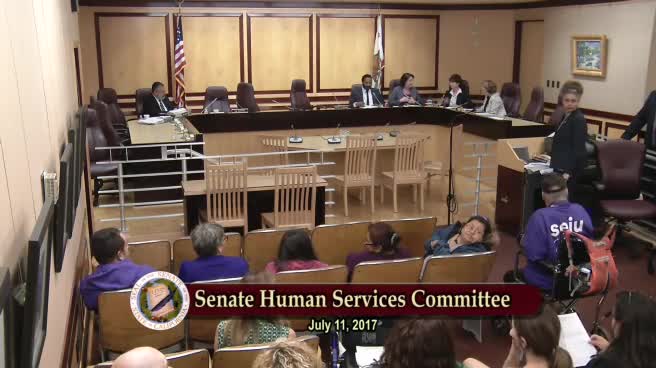 39MIN
Senate Standing Committee on Human Services
 3MIN
Assembly Floor
 4MIN
Assembly Standing Committee on Appropriations
 24MIN
Assembly Standing Committee on Human Services
Bill Author

Bill Co-Author(s):