AB 154: Prisoners: mental health treatment.
- Session Year: 2017-2018
- House: Assembly
- Latest Version Date: 2017-09-07
Existing law requires a court, upon the conviction of a defendant of a felony resulting in his or her sentencing to state prison, to recommend in writing that the defendant participate in a counseling or education program having a substance abuse component while imprisoned if the court makes certain findings relating to his or her drug use.
This bill would require a court, upon the conviction of a defendant for a felony resulting in his or her sentencing to state prison, to recommend in writing that the defendant receive a mental health evaluation if the court finds that the defendant at the time of the commission of the offense was suffering from a serious mental illness or has a demonstrated history of mental illness.
Existing law requires a court, upon the conviction of a defendant of a felony resulting in his or her sentencing to state prison, to recommend in writing that the defendant participate in a counseling or education program having a substance abuse component while imprisoned if the court makes certain findings relating to his or her drug use.
This bill would require a court, upon the conviction of a defendant for a felony resulting in his or her sentencing to state prison, to recommend in writing that the defendant participate in a counseling or education program having a mental health component while imprisoned receive a mental health evaluation if the court finds that the defendant at the time of the commission of the offense was suffering from a serious mental illness, illness or has a demonstrated history of mental illness, or at the time of the offense was suffering from a mental illness that was a substantial factor that contributed to the defendants criminal conduct. illness.
Existing law requires a court, upon the conviction of a defendant of a felony resulting in his or her sentencing to state prison, to recommend in writing that the defendant participate in a counseling or education program having a substance abuse component while imprisoned if the court makes certain findings relating to his or her drug use.
This bill would require a court, upon the conviction of a defendant for a felony resulting in his or her sentencing to state prison, to recommend in writing that the defendant participate in a counseling or education program having a mental health component while imprisoned if the court finds that the defendant at the time of the commission of the offense was suffering from a serious mental illness, has a demonstrated history of mental illness, or at the time of the offense was suffering from a mental illness that was a substantial factor that contributed to the defendants criminal conduct.
Existing law prohibits a person from being tried, adjudged to punishment, or having his or her probation, mandatory supervision, postrelease community supervision, or parole revoked while that person is mentally incompetent. Existing law establishes a process by which a defendants mental competency is evaluated and by which the defendant receives treatment, including, if applicable, antipsychotic medication, with the goal of returning the defendant to competency. Existing law credits time spent by a defendant in a state hospital or other facility as a result of commitment during the process toward the term of any imprisonment for which the defendant is sentenced.This bill would authorize a defendant who is or has been eligible for public mental health services due to a serious mental illness or who is eligible for Social Security Disability Insurance benefits due to a diagnosed mental illness to petition the court, after the defendants plea or conviction but prior to sentencing, for a sentence that includes mental health treatment. The bill would authorize a court, if it finds that the defendant has shown that he or she meets the criteria by a preponderance of the evidence, to order the Department of Corrections and Rehabilitation or the county authority to provide specified mental health service, including placement in a residential mental health treatment facility instead of state prison or county jail, placement in a mental health program within the state prison or county jail, or preparation of a postrelease mental health treatment plan. The bill would authorize the court, upon petition of the defendant or the prosecution, to recall a sentence that includes a mental health order and resentence the defendant to other mental health treatment or resentence the defendant without mental health treatment. The bill would provide that the defendant has the right to counsel for these proceedings.By imposing additional duties upon county jail authorities, this bill would create a state-mandated local program.The California Constitution requires the state to reimburse local agencies and school districts for certain costs mandated by the state. Statutory provisions establish procedures for making that reimbursement.This bill would provide that, if the Commission on State Mandates determines that the bill contains costs mandated by the state, reimbursement for those costs shall be made pursuant to the statutory provisions noted above.Existing law prohibits a person from being tried, adjudged to punishment, or having his or her probation, mandatory supervision, postrelease community supervision, or parole revoked while that person is mentally incompetent. Existing law establishes a process by which a defendants mental competency is evaluated and by which the defendant receives treatment, including, if applicable, antipsychotic medication, with the goal of returning the defendant to competency. Existing law credits time spent by a defendant in a state hospital or other facility as a result of commitment during the process toward the term of any imprisonment for which the defendant is sentenced.
This bill would authorize a defendant who is or has been eligible for public mental health services due to a serious mental illness or who is eligible for Social Security Disability Insurance benefits due to a diagnosed mental illness to petition the court, after the defendants plea or conviction but prior to sentencing, for a sentence that includes mental health treatment. The bill would authorize a court, if it finds that the defendant has shown that he or she meets the criteria by a preponderance of the evidence, to order the Department of Corrections and Rehabilitation or the county authority to provide specified mental health service, including placement in a residential mental health treatment facility instead of state prison or county jail, placement in a mental health program within the state prison or county jail, or preparation of a postrelease mental health treatment plan. The bill would authorize the court, upon petition of the defendant or the prosecution, to recall a sentence that includes a mental health order and resentence the defendant to other mental health treatment or resentence the defendant without mental health treatment. The bill would provide that the defendant has the right to counsel for these proceedings.
By imposing additional duties upon county jail authorities, this bill would create a state-mandated local program.
The California Constitution requires the state to reimburse local agencies and school districts for certain costs mandated by the state. Statutory provisions establish procedures for making that reimbursement.
This bill would provide that, if the Commission on State Mandates determines that the bill contains costs mandated by the state, reimbursement for those costs shall be made pursuant to the statutory provisions noted above.
(a)Upon conviction of any felony in which the defendant is sentenced to state prison and in which the court makes the findings set forth in subdivision (b), a court shall, in addition to any other terms of imprisonment, fine, and conditions, recommend in writing that the defendant participate in a counseling or education program having a substance abuse component while imprisoned.
(b)The court shall make the recommendation specified in subdivision (a) if it finds that any of the following are true:
(1)That the defendant at the time of the commission of the offense was under the influence of any alcoholic beverages.
(2)That the defendant at the time of the commission of the offense was under the influence of any controlled substance.
(3)That the defendant has a demonstrated history of substance abuse.
(4)That the offense or offenses for which the defendant was convicted are drug related.
(c)Upon conviction of any felony in which the defendant is sentenced to state prison and in which the court makes the findings set forth in subdivision (d), a court shall, in addition to any other terms of imprisonment, fine, and conditions, recommend in writing that the defendant receive a mental health evaluation.
(d)The court shall make the recommendation specified in subdivision (c) if it finds that either of the following are true:
(1)That the defendant at the time of the commission of the offense was suffering from a serious mental illness.
(2)The defendant has a demonstrated history of mental illness.
(a)Upon conviction of any felony in which the defendant is sentenced to state prison and in which the court makes the findings set forth in subdivision (b), a court shall, in addition to any other terms of imprisonment, fine, and conditions, recommend in writing that the defendant participate in a counseling or education program having a substance abuse component while imprisoned.
(b)The court shall make the recommendation specified in subdivision (a) if it finds that any of the following are true:
(1)That the defendant at the time of the commission of the offense was under the influence of any alcoholic beverages.
(2)That the defendant at the time of the commission of the offense was under the influence of any controlled substance.
(3)That the defendant has a demonstrated history of substance abuse.
(4)That the offense or offenses for which the defendant was convicted are drug related.
(c)Upon conviction of any felony in which the defendant is sentenced to state prison and in which the court makes the findings set forth in subdivision (d), a court shall, in addition to any other terms of imprisonment, fine, and conditions, recommend in writing that the defendant participate in a counseling or education program having a mental health component while imprisoned. receive a mental health evaluation.
(d)The court shall make the recommendation specified in subdivision (c) if it finds that any either of the following are true:
(1)That the defendant at the time of the commission of the offense was suffering from a serious mental illness.
(2)The defendant has a demonstrated history of mental illness.
(3)That the defendant at the time of the commission of the offense was suffering from a mental illness that was a substantial factor that contributed to the defendants criminal conduct.(a)Upon conviction of any felony in which the defendant is sentenced to state prison and in which the court makes the findings set forth in subdivision (b), a court shall, in addition to any other terms of imprisonment, fine, and conditions, recommend in writing that the defendant participate in a counseling or education program having a substance abuse component while imprisoned.
(b)The court shall make the recommendation specified in subdivision (a) if it finds that any of the following are true:
(1)That the defendant at the time of the commission of the offense was under the influence of any alcoholic beverages.
(2)That the defendant at the time of the commission of the offense was under the influence of any controlled substance.
(3)That the defendant has a demonstrated history of substance abuse.
(4)That the offense or offenses for which the defendant was convicted are drug related.
(c)Upon conviction of any felony in which the defendant is sentenced to state prison and in which the court makes the findings set forth in subdivision (d), a court shall, in addition to any other terms of imprisonment, fine, and conditions, recommend in writing that the defendant participate in a counseling or education program having a mental health component while imprisoned.
(d)The court shall make the recommendation specified in subdivision (c) if it finds that any of the following are true:
(1)That the defendant at the time of the commission of the offense was suffering from a serious mental illness.
(2)The defendant has a demonstrated history of mental illness.
(3)That the defendant at the time of the commission of the offense was suffering from a mental illness that was a substantial factor that contributed to the defendants criminal conduct.
SECTION 1.This act shall be known and may be cited as the Mental Health Justice Act.SEC. 2.The Legislature finds and declares the following:(a)Exposure to violence increases the risk of developing a mental health condition such as post-traumatic stress disorder. Children in underserved communities are more likely to be exposed to violence than other children.(b)Ten times as many people with mental illness are in prisons and jails today than are in mental health treatment facilities.(c)Correctional facilities spend two to three times more money on adults with mental illnesses than they do on people who do not live with a mental illness.(d)Despite overall decreasing prison populations, Californias prisons are experiencing increasing demand for mental health treatment services as prison inmates require mental health treatment at higher rates. This number is anticipated to continue to increase in the next five years and beyond.(e)In California, the annual prison cost for an inmate in the general population is $51,000, while the annual community housing and outpatient treatment costs for a person with mental illness are 60 percent less at $20,412.(f)Nearly half of all prisoners in California are mentally ill and have received psychiatric treatment within the past year. This number has almost doubled in the last 15 years, making jails and prisons the de facto mental health system.(g)Individuals with mental illnesses tend to stay longer in prison or jail and, when released, are at a higher risk of returning to prison or jail than those without these illnesses.(h)Mental health court participants have a significantly lower (47 percent) recidivism rate compared to similar defendants in traditional court.(i)Mental health courts allow for the consideration of a defendants mental health status during court proceedings and have shown to save $7 in costs for every $1 spent.(j)According to the United States Supreme Court, conditions in California prisons exacerbate mental health issues significantly. Offenders with mental illness are often subjected to higher rates of physical and sexual trauma, forced restraints, solitary confinement, and overmedication while incarcerated. Those who are kept in isolation are at higher risk for psychiatric injury, self-harm, and suicide.(k)A defendants mental illness should inform case processing and the nature of any criminal charges, in alignment with public safety and a defendants constitutional rights.(l)California must increase diversion programs to redirect defendants with mental illness away from prisons and jails, which exacerbate mental illnesses, impede treatment, and increase costs, and toward proven mental health treatment services.SEC. 3.Chapter 16 (commencing with Section 1425) is added to Title 10 of Part 2 of the Penal Code, to read:16.Mental Health Treatment1425.(a)A defendant who has pleaded guilty or nolo contendere to, or was convicted of, a felony or misdemeanor and who currently is, or at any prior time was, eligible for public mental health services due to serious mental illness or who currently is, or at any prior time was, eligible for Social Security Disability Insurance benefits due to a diagnosed mental illness may petition the court for a sentence that includes mental health treatment. The petition shall be filed after the defendants plea or conviction, but before his or her sentencing.(b)The defendant shall bear the burden of establishing by a preponderance of the evidence that he or she meets the criteria in subdivision (a).(c)If the court determines that the defendant has met his or her burden, as described in subdivision (b), and that it is in the public interest, the court may order that the defendants sentence include one or more of the following:(1)(A)A requirement that the defendant serve, if the defendant agrees, all or a part of his or her sentence in a residential mental health treatment facility instead of in the state prison or a county jail, if that placement would not pose an unreasonable risk of danger to public safety and is in the interest of justice pursuant to Section 1385.(B)A defendant is not eligible for subparagraph (A) if his or her current plea or conviction is for a violent felony, as defined in subdivision (c) of Section 667.5, or if the defendant is required by statute to serve his or her entire sentence only in state prison.(2)Regardless of the offense to which the defendant pleaded guilty or nolo contendere or for which the defendant was convicted, a requirement that the Department of Corrections and Rehabilitation or county jail authority, as applicable, place the defendant in a mental health program within the state prison or county jail system at a level of care determined to be appropriate by the departments mental health staff or county mental health staff, within 30 days of the defendants sentencing.(3)Regardless of the offense to which the defendant pleaded guilty or nolo contendere or for which the defendant was convicted, a requirement that the Department of Corrections and Rehabilitation or the county jail authority, as applicable, prepare a postrelease mental health treatment plan six months prior to the defendants release from custody. The treatment plan shall specify the manner in which the defendant will receive mental health treatment services following release from custody and shall address, if applicable and at the discretion of the court, medication management, housing, and substance abuse treatment.(d)At any time, upon a petition from the defendant or prosecutor, if it is in the public interest, the court may recall a sentence that includes a mental health treatment order issued under this section and either resentence the defendant to other mental health treatment authorized under subdivision (c) or resentence the defendant in the same manner as if he or she had not previously been sentenced with application of this section. The defendant shall receive credit for the time he or she served on the prior sentence.(e)The defendant shall have the right to counsel for all proceedings under this section.SEC. 4. If the Commission on State Mandates determines that this act contains costs mandated by the state, reimbursement to local agencies and school districts for those costs shall be made pursuant to Part 7 (commencing with Section 17500) of Division 4 of Title 2 of the Government Code.This act shall be known and may be cited as the Mental Health Justice Act.
SEC. 2.The Legislature finds and declares the following:
(a)Exposure to violence increases the risk of developing a mental health condition such as post-traumatic stress disorder. Children in underserved communities are more likely to be exposed to violence than other children.
(b)Ten times as many people with mental illness are in prisons and jails today than are in mental health treatment facilities.
(c)Correctional facilities spend two to three times more money on adults with mental illnesses than they do on people who do not live with a mental illness.
(d)Despite overall decreasing prison populations, Californias prisons are experiencing increasing demand for mental health treatment services as prison inmates require mental health treatment at higher rates. This number is anticipated to continue to increase in the next five years and beyond.
(e)In California, the annual prison cost for an inmate in the general population is $51,000, while the annual community housing and outpatient treatment costs for a person with mental illness are 60 percent less at $20,412.
(f)Nearly half of all prisoners in California are mentally ill and have received psychiatric treatment within the past year. This number has almost doubled in the last 15 years, making jails and prisons the de facto mental health system.
(g)Individuals with mental illnesses tend to stay longer in prison or jail and, when released, are at a higher risk of returning to prison or jail than those without these illnesses.
(h)Mental health court participants have a significantly lower (47 percent) recidivism rate compared to similar defendants in traditional court.
(i)Mental health courts allow for the consideration of a defendants mental health status during court proceedings and have shown to save $7 in costs for every $1 spent.
(j)According to the United States Supreme Court, conditions in California prisons exacerbate mental health issues significantly. Offenders with mental illness are often subjected to higher rates of physical and sexual trauma, forced restraints, solitary confinement, and overmedication while incarcerated. Those who are kept in isolation are at higher risk for psychiatric injury, self-harm, and suicide.
(k)A defendants mental illness should inform case processing and the nature of any criminal charges, in alignment with public safety and a defendants constitutional rights.
(l)California must increase diversion programs to redirect defendants with mental illness away from prisons and jails, which exacerbate mental illnesses, impede treatment, and increase costs, and toward proven mental health treatment services.
SEC. 3.Chapter 16 (commencing with Section 1425) is added to Title 10 of Part 2 of the Penal Code, to read:16.Mental Health Treatment1425.(a)A defendant who has pleaded guilty or nolo contendere to, or was convicted of, a felony or misdemeanor and who currently is, or at any prior time was, eligible for public mental health services due to serious mental illness or who currently is, or at any prior time was, eligible for Social Security Disability Insurance benefits due to a diagnosed mental illness may petition the court for a sentence that includes mental health treatment. The petition shall be filed after the defendants plea or conviction, but before his or her sentencing.
(b)The defendant shall bear the burden of establishing by a preponderance of the evidence that he or she meets the criteria in subdivision (a).
(c)If the court determines that the defendant has met his or her burden, as described in subdivision (b), and that it is in the public interest, the court may order that the defendants sentence include one or more of the following:
(1)(A)A requirement that the defendant serve, if the defendant agrees, all or a part of his or her sentence in a residential mental health treatment facility instead of in the state prison or a county jail, if that placement would not pose an unreasonable risk of danger to public safety and is in the interest of justice pursuant to Section 1385.
(B)A defendant is not eligible for subparagraph (A) if his or her current plea or conviction is for a violent felony, as defined in subdivision (c) of Section 667.5, or if the defendant is required by statute to serve his or her entire sentence only in state prison.
(2)Regardless of the offense to which the defendant pleaded guilty or nolo contendere or for which the defendant was convicted, a requirement that the Department of Corrections and Rehabilitation or county jail authority, as applicable, place the defendant in a mental health program within the state prison or county jail system at a level of care determined to be appropriate by the departments mental health staff or county mental health staff, within 30 days of the defendants sentencing.
(3)Regardless of the offense to which the defendant pleaded guilty or nolo contendere or for which the defendant was convicted, a requirement that the Department of Corrections and Rehabilitation or the county jail authority, as applicable, prepare a postrelease mental health treatment plan six months prior to the defendants release from custody. The treatment plan shall specify the manner in which the defendant will receive mental health treatment services following release from custody and shall address, if applicable and at the discretion of the court, medication management, housing, and substance abuse treatment.
(d)At any time, upon a petition from the defendant or prosecutor, if it is in the public interest, the court may recall a sentence that includes a mental health treatment order issued under this section and either resentence the defendant to other mental health treatment authorized under subdivision (c) or resentence the defendant in the same manner as if he or she had not previously been sentenced with application of this section. The defendant shall receive credit for the time he or she served on the prior sentence.
(e)The defendant shall have the right to counsel for all proceedings under this section.
SEC. 4.If the Commission on State Mandates determines that this act contains costs mandated by the state, reimbursement to local agencies and school districts for those costs shall be made pursuant to Part 7 (commencing with Section 17500) of Division 4 of Title 2 of the Government Code.
|
Date
|
Status
|
|---|---|
| Jan 12, 2018 | Stricken from file. |
| Jan 3, 2018 | Consideration of Governor's veto pending. |
| Sep 25, 2017 | Vetoed by Governor. |
| Sep 12, 2017 | Enrolled and presented to the Governor at 2:30 p.m. |
| Sep 5, 2017 | Senate amendments concurred in. To Engrossing and Enrolling. (Ayes 77. Noes 0.). |
| Aug 31, 2017 | In Assembly. Concurrence in Senate amendments pending. May be considered on or after September 2 pursuant to Assembly Rule 77. |
| Aug 31, 2017 | Read third time. Passed. Ordered to the Assembly. |
| Aug 23, 2017 | Ordered to special consent calendar. |
| Jul 13, 2017 | Read second time and amended. Ordered to third reading. |
| Jul 12, 2017 | From committee: Amend, and do pass as amended. (Ayes 7. Noes 0.) (July 11). |
| Jun 14, 2017 | Referred to Com. on PUB. S. |
| Jun 1, 2017 | In Senate. Read first time. To Com. on RLS. for assignment. |
| May 31, 2017 | Read third time. Passed. Ordered to the Senate. (Ayes 76. Noes 0. Page 1951.) |
| May 30, 2017 | Read second time. Ordered to third reading. |
| May 26, 2017 | From committee: Amend, and do pass as amended. (Ayes 12. Noes 5.) (May 26). |
| Apr 5, 2017 | In committee: Set, first hearing. Referred to APPR. suspense file. |
| Mar 1, 2017 | From committee: Do pass and re-refer to Com. on APPR. (Ayes 5. Noes 2.) (February 28). Re-referred to Com. on APPR. |
| Feb 13, 2017 | In committee: Hearing postponed by committee. |
| Jan 30, 2017 | Referred to Com. on PUB. S. |
| Jan 12, 2017 | From printer. May be heard in committee February 11. |
| Jan 11, 2017 | Read first time. To print. |
|
Date
|
Description
|
Location
|
Votes
|
|
|---|---|---|---|---|
| Sep 5, 2017 | AB 154 LEVINE Concurrence in Senate Amendments | Assembly Floor |
Passed |
|
| Aug 31, 2017 | Special Consent Calendar # AB154 | Senate Floor |
Passed |
|
| Jul 11, 2017 | Do pass as amended | Senate Standing Committee on Public Safety |
Passed |
|
| May 31, 2017 | AB 154 LEVINE Assembly Third Reading | Assembly Floor |
Passed |
|
| May 26, 2017 | Do pass as amended. | Assembly Standing Committee on Appropriations |
Passed |
|
| Feb 28, 2017 | Do pass and be re-referred to the Committee on [Appropriations] | Assembly Standing Committee on Public Safety |
Passed |
This list shows positions taken on this bill by organizations on the date displayed, which is linked to the original source.
Positions by individuals are not included.
|
Organization
|
Position
|
Date
|
|---|---|---|
| 1. Need For This Bill | ** Against | Jul 10, 2017 |
| Assembly Floor Vote: 76 - 0 | ** Against | Jul 10, 2017 |
| California Attorneys For Criminal Justice | * Indeterminate | Mar 1, 2017 |
| California Catholic Conference | ** Support | Jul 14, 2017 |
| California Disability Rights | * Support | Mar 1, 2017 |
| California Public Defenders Association | ** Against | Jul 14, 2017 |
| National Association of Social Workers | ** Support | Jul 14, 2017 |
| PURPOSE | ** Against | Jul 10, 2017 |
| Steinberg Institute | ** Support | Jul 14, 2017 |
GOVERNOR'S VETO
GV Bill Id:AB 154
Author:(Levine)
As Enrolled Ver:September 7, 2017
2/3 vote
ASSEMBLY: | 76-0 | (May 31, 2017) | SENATE: | 37-0 | (August 31, 2017) |
ASSEMBLY: | 77-0 | (September 5, 2017) |
Original Committee Reference: PUB. S.
SUMMARY: Requires a court to recommend that a defendant sentenced to state prison receive a mental health evaluation, if the court makes specified findings concerning the defendant's mental health status.
The Senate amendments:
- Delete language requiring a court to recommend that a defendant sentenced to state prison participate in a counseling or education program that includes a mental health component, if the court makes specified findings concerning the defendant's mental health status.
- Require a court to recommend that a defendant sentenced to state prison receive a mental health evaluation, if the court finds that either of the following is true:
- That the defendant at the time of the commission of the offense was suffering from a serious mental illness.
- The defendant has a demonstrated history of mental illness.
EXISTING LAW:
- Finds and declares that the provision of probation services is an essential element in the administration of criminal justice. The safety of the public, which shall be a primary goal through the enforcement of court-ordered conditions of probation; the nature of the offense; the interests of justice, including punishment, reintegration of the offender into the community, and enforcement of conditions of probation; the loss to the victim; and the needs of the defendant shall be the primary considerations in the granting of probation.
- In any case in which it appears to the person in charge of a county jail, city jail, or juvenile detention facility, or to any judge of a court in the county in which the jail or juvenile detention facility is located, that a person in custody in that jail or juvenile detention facility may be mentally disordered, he or she may cause the prisoner to be taken to a facility for 72-hour treatment and evaluation and he or she shall inform the facility in writing, which shall be confidential, of the reasons that the person is being taken to the facility. The local mental health director or his or her designee may examine the prisoner prior to transfer to a facility for treatment and evaluation.
- Where the court causes the prisoner to be transferred to a 72-hour facility, the court shall forthwith notify the local mental health director or his or her designee, the prosecuting attorney, and counsel for the prisoner in the criminal or juvenile proceedings about that transfer. Where the person in charge of the jail or juvenile detention facility causes the transfer of the prisoner to a 72-hour facility the person shall immediately notify the local mental health director or his or her designee and each court within the county where the prisoner has a pending proceeding about the transfer. Upon notification by the person in charge of the jail or juvenile detention facility the court shall forthwith notify counsel for the prisoner and the prosecuting attorney in the criminal or juvenile proceedings about that transfer.
- If a prisoner is detained in, or remanded to, a mental health facility pursuant, the facility shall transmit a report, which shall be confidential, to the person in charge of the jail or juvenile detention facility or judge of the court who caused the prisoner to be taken to the facility and to the local mental health director or his or her designee, concerning the condition of the prisoner. A new report shall be transmitted at the end of each period of confinement as specified, upon conversion to voluntary status, and upon filing of temporary letters of conservatorship.
- A prisoner who has been transferred to an inpatient facility pursuant to this section may convert to voluntary inpatient status without obtaining the consent of the court, the person in charge of the jail or juvenile detention facility, or the local mental health director. At the beginning of that conversion to voluntary status, the person in charge of the facility shall transmit a report to the person in charge of the jail or juvenile detention facility or judge of the court who caused the prisoner to be taken to the facility, counsel for the prisoner, prosecuting attorney, and local mental health director or his or her designee.
- If the prisoner is detained in, or remanded to, a mental health facility, the time passed in the facility shall count as part of the prisoner's sentence. When the prisoner is detained in, or remanded to, the facility, the person in charge of the jail or juvenile detention facility shall advise the professional person in charge of the facility of the expiration date of the prisoner's sentence. If the prisoner is to be released from the facility before the expiration date, the professional person in charge shall notify the local mental health director or his or her designee, counsel for the prisoner, the prosecuting attorney, and the person in charge of the jail or juvenile detention facility, who shall send for, take, and receive the prisoner back into the jail or juvenile detention facility.
- A defendant, either charged with or convicted of a criminal offense, or a minor alleged to be within the jurisdiction of the juvenile court, may be concurrently subject to mental health detention as specified by law under the Welfare and Institutions Code.
- If a prisoner is detained in a mental health facility pursuant to the Welfare and Institutions Code and if the person in charge of the facility determines that arraignment or trial would be detrimental to the well-being of the prisoner, the time spent in the facility shall not be computed in any statutory time requirements for arraignment or trial in any pending criminal or juvenile proceedings. Otherwise, this section shall not affect any statutory time requirements for arraignment or trial in any pending criminal or juvenile proceedings.
- States that upon conviction of any felony in which the defendant is sentenced to state prison, and the court makes any of the findings listed below, a court shall, in addition to any other terms of imprisonment, fine, and conditions, recommend in writing that the defendant participate in a counseling or education program having a substance abuse component while imprisoned:
- That the defendant at the time of the commission of the offense was under the influence of any alcoholic beverages;
- That the defendant at the time of the commission of the offense was under the influence of any controlled substance;
- That the defendant has a demonstrated history of substance abuse; and
- That the offense or offenses for which the defendant was convicted are drug related.
AS PASSED BY THE ASSEMBLY, this bill:
- Specified that if a defendant has been convicted of a felony and sentenced to state prison and a court makes specified findings regarding a defendant's mental health status, the court shall recommend that a defendant to participate in a counseling or education program having a mental health component while imprisoned.
- Stated that in order to make the recommendation above, the court must find that one of the following conditions applies:
- That the defendant at the time of the commission of the offense was suffering from a serious mental illness;
- That the defendant has a demonstrated history of mental illness; or
- That the defendant at the time of the commission of the offense was suffering from a mental illness that was a substantial factor that contributed to the defendant's criminal conduct.
FISCAL EFFECT: Unknown. This bill is keyed non-fiscal by the Legislative Counsel.
COMMENTS: According to the author, "Jails and prisons have become California's de facto mental health facilities with those who are mentally ill being far more likely to be incarcerated than to be in a psychiatric hospital. Incarcerating those with mental illness does not make sense from an outcomes or a fiscal stand point. Studies have found that individuals who participate in mental health courts reoffend one third of the time than those who do not and that participant's show significant improvement in quality of life. Furthermore, mental health courts have been demonstrated to save $7 in costs for every $1 spent. It costs $51,000 a year to house an inmate, and $20,412 to house and treat a person with mental illness. AB 154 gives the court the ability to consider the presence of a mental illness in criminal sentencing."
GOVERNOR'S VETO MESSAGE:
This bill requires the sentencing court, after making specified findings, to provide a recommendation to the California Department of Corrections and Rehabilitation to conduct a mental health evaluation on a defendant sentenced to state prison.
While I understand the author's intent, the California Department of Corrections and Rehabilitation already conducts mental health evaluations on every defendant sentenced to state prison, regardless of a recommendation from the court.
Analysis Prepared by: David Billingsley / PUB. S. / (916) 319-3744 FN: 0002428
CONCURRENCE IN SENATE AMENDMENTS
CSA1 Bill Id:AB 154
Author:(Levine)
As Amended Ver:July 13, 2017
Majority vote
ASSEMBLY: | 76-0 | (May 31, 2017) | SENATE: | 37-0 | (August 31, 2017) |
Original Committee Reference: PUB. S.
SUMMARY: Requires a court to recommend that a defendant sentenced to state prison receive a mental health evaluation, if the court makes specified findings concerning the defendant's mental health status.
The Senate amendments:
- Delete language requiring a court to recommend that a defendant sentenced to state prison participate in a counseling or education program that includes a mental health component, if the court makes specified findings concerning the defendant's mental health status.
- Require a court to recommend that a defendant sentenced to state prison receive a mental health evaluation, if the court finds that either of the following is true:
- That the defendant at the time of the commission of the offense was suffering from a serious mental illness.
- The defendant has a demonstrated history of mental illness.
EXISTING LAW:
- Finds and declares that the provision of probation services is an essential element in the administration of criminal justice. The safety of the public, which shall be a primary goal through the enforcement of court-ordered conditions of probation; the nature of the offense; the interests of justice, including punishment, reintegration of the offender into the community, and enforcement of conditions of probation; the loss to the victim; and the needs of the defendant shall be the primary considerations in the granting of probation.
- In any case in which it appears to the person in charge of a county jail, city jail, or juvenile detention facility, or to any judge of a court in the county in which the jail or juvenile detention facility is located, that a person in custody in that jail or juvenile detention facility may be mentally disordered, he or she may cause the prisoner to be taken to a facility for 72-hour treatment and evaluation and he or she shall inform the facility in writing, which shall be confidential, of the reasons that the person is being taken to the facility. The local mental health director or his or her designee may examine the prisoner prior to transfer to a facility for treatment and evaluation.
- Where the court causes the prisoner to be transferred to a 72-hour facility, the court shall forthwith notify the local mental health director or his or her designee, the prosecuting attorney, and counsel for the prisoner in the criminal or juvenile proceedings about that transfer. Where the person in charge of the jail or juvenile detention facility causes the transfer of the prisoner to a 72-hour facility the person shall immediately notify the local mental health director or his or her designee and each court within the county where the prisoner has a pending proceeding about the transfer. Upon notification by the person in charge of the jail or juvenile detention facility the court shall forthwith notify counsel for the prisoner and the prosecuting attorney in the criminal or juvenile proceedings about that transfer.
- If a prisoner is detained in, or remanded to, a mental health facility pursuant, the facility shall transmit a report, which shall be confidential, to the person in charge of the jail or juvenile detention facility or judge of the court who caused the prisoner to be taken to the facility and to the local mental health director or his or her designee, concerning the condition of the prisoner. A new report shall be transmitted at the end of each period of confinement as specified, upon conversion to voluntary status, and upon filing of temporary letters of conservatorship.
- A prisoner who has been transferred to an inpatient facility pursuant to this section may convert to voluntary inpatient status without obtaining the consent of the court, the person in charge of the jail or juvenile detention facility, or the local mental health director. At the beginning of that conversion to voluntary status, the person in charge of the facility shall transmit a report to the person in charge of the jail or juvenile detention facility or judge of the court who caused the prisoner to be taken to the facility, counsel for the prisoner, prosecuting attorney, and local mental health director or his or her designee.
- If the prisoner is detained in, or remanded to, a mental health facility, the time passed in the facility shall count as part of the prisoner's sentence. When the prisoner is detained in, or remanded to, the facility, the person in charge of the jail or juvenile detention facility shall advise the professional person in charge of the facility of the expiration date of the prisoner's sentence. If the prisoner is to be released from the facility before the expiration date, the professional person in charge shall notify the local mental health director or his or her designee, counsel for the prisoner, the prosecuting attorney, and the person in charge of the jail or juvenile detention facility, who shall send for, take, and receive the prisoner back into the jail or juvenile detention facility.
- A defendant, either charged with or convicted of a criminal offense, or a minor alleged to be within the jurisdiction of the juvenile court, may be concurrently subject to mental health detention as specified by law under the Welfare and Institutions Code.
- If a prisoner is detained in a mental health facility pursuant to the Welfare and Institutions Code and if the person in charge of the facility determines that arraignment or trial would be detrimental to the well-being of the prisoner, the time spent in the facility shall not be computed in any statutory time requirements for arraignment or trial in any pending criminal or juvenile proceedings. Otherwise, this section shall not affect any statutory time requirements for arraignment or trial in any pending criminal or juvenile proceedings.
- States that upon conviction of any felony in which the defendant is sentenced to state prison, and the court makes any of the findings listed below, a court shall, in addition to any other terms of imprisonment, fine, and conditions, recommend in writing that the defendant participate in a counseling or education program having a substance abuse component while imprisoned:
- That the defendant at the time of the commission of the offense was under the influence of any alcoholic beverages;
- That the defendant at the time of the commission of the offense was under the influence of any controlled substance;
- That the defendant has a demonstrated history of substance abuse; and
- That the offense or offenses for which the defendant was convicted are drug related.
AS PASSED BY THE ASSEMBLY, this bill:
- Specified that if a defendant has been convicted of a felony and sentenced to state prison and a court makes specified findings regarding a defendant's mental health status, the court shall recommend that a defendant to participate in a counseling or education program having a mental health component while imprisoned.
- Stated that in order to make the recommendation above, the court must find that one of the following conditions applies:
- That the defendant at the time of the commission of the offense was suffering from a serious mental illness;
- That the defendant has a demonstrated history of mental illness; or
- That the defendant at the time of the commission of the offense was suffering from a mental illness that was a substantial factor that contributed to the defendant's criminal conduct.
FISCAL EFFECT: Unknown. This bill is keyed non-fiscal by the Legislative Counsel.
COMMENTS: According to the author, "Jails and prisons have become California's de facto mental health facilities with those who are mentally ill being far more likely to be incarcerated than to be in a psychiatric hospital. Incarcerating those with mental illness does not make sense from an outcomes or a fiscal stand point. Studies have found that individuals who participate in mental health courts reoffend one third of the time than those who do not and that participant's show significant improvement in quality of life. Furthermore, mental health courts have been demonstrated to save $7 in costs for every $1 spent. It costs $51,000 a year to house an inmate, and $20,412 to house and treat a person with mental illness. AB 154 gives the court the ability to consider the presence of a mental illness in criminal sentencing."
Analysis Prepared by: David Billingsley / PUB. S. / (916) 319-3744 FN: 0001187
Office of Senate Floor Analyses (916) 651-1520 Fax: (916) 327-4478 | AB |
THIRD READING
Bill No: AB 154
: in Senate
SENATE PUBLIC SAFETY COMMITTEE: 7-0, 7/11/17
AYES: Skinner, Anderson, Bradford, Jackson, Mitchell, Stone, Wiener
ASSEMBLY FLOOR: 76-0, 5/31/17 - See last page for vote
DIGEST:
This bill requires the sentencing court, after making specified findings, to provide a recommendation to the California Department of Corrections and Rehabilitation to conduct a mental health evaluation on a defendant sentenced to state prison.
ANALYSIS: Existing law states that upon conviction of any felony in which the defendant is sentenced to state prison, and the court makes any of the findings listed below, a court shall, in addition to any other terms of imprisonment, fine, and conditions, recommend in writing that the defendant participate in a counseling or education program having a substance abuse component while imprisoned:
- That the defendant at the time of the commission of the offense was under the influence of any alcoholic beverages.
- That the defendant at the time of the commission of the offense was under the influence of any controlled substance.
- That the defendant has a demonstrated history of substance abuse.
- That the offense or offenses for which the defendant was convicted are drug related. (Pen. Code, § 1203.096.)
This bill provides that upon a conviction of any felony in which the defendant is sentenced to state prison and in which the court makes any of the following findings, the court shall, in addition to any other terms of imprisonment, fine, and conditions, recommend in writing that the defendant receive a mental health evaluation:
- That the defendant at the time of the commission of the offense was suffering from a serious mental illness; or,
- The defendant has a demonstrated history of mental illness.
FISCAL EFFECT: Appropriation: Fiscal Com.: Local:
California Catholic Conference
National Association of Social Workers
Steinberg Institute
OPPOSITION: (Verified 7/13/17)
California Public Defenders Association
ARGUMENTS IN SUPPORT: According to the Steinberg Institute, “. . . . We know that mental health conditions worsen behind bars, and that without treatment the rate of repeat offenses is much greater. On the flip side of this, mental health court participants have significantly lower recidivism rates, often reintegrating into their community in a productive way and have shown to save $7 in costs for every $1 spent. We believe AB 154 can help to mitigate the state’s current struggle to treat offenders with a mental health diagnosis in prison and county jails, especially as people with mental illness are far less likely to commit a crime, violate prison rules, or recidivate if they are receiving high quality treatment.”
ARGUMENTS IN OPPOSITION: According to the California Public Defenders Association, “If [the bill] were amended so that the findings could not later be used to indefinitely institutionalize the person the individual after they completed their jail or prison sentence, the legislation would be less objectionable.”
ASSEMBLY FLOOR: 76-0, 5/31/17
AYES: Acosta, Aguiar-Curry, Travis Allen, Arambula, Baker, Berman, Bigelow, Bloom, Bocanegra, Bonta, Brough, Burke, Caballero, Calderon, Cervantes, Chau, Chávez, Chiu, Chu, Cooley, Cooper, Cunningham, Dababneh, Dahle, Daly, Flora, Fong, Frazier, Friedman, Gallagher, Cristina Garcia, Eduardo Garcia, Gipson, Gloria, Gomez, Gonzalez Fletcher, Gray, Grayson, Harper, Holden, Irwin, Jones-Sawyer, Kalra, Kiley, Lackey, Levine, Limón, Low, Maienschein, Mathis, Mayes, McCarty, Medina, Mullin, Muratsuchi, Nazarian, Obernolte, O'Donnell, Patterson, Quirk, Quirk-Silva, Reyes, Ridley-Thomas, Rodriguez, Rubio, Salas, Santiago, Steinorth, Mark Stone, Thurmond, Ting, Voepel, Waldron, Weber, Wood, Rendon
NO VOTE RECORDED: Chen, Choi, Eggman, Melendez
7/14/17 13:48:42
**** END ****
SENATE COMMITTEE ON PUBLIC SAFETY
Senator Nancy Skinner, Chair
2017 - 2018 Regular
Bill No: AB 154 Hearing Date: July 11, 2017
Author: | Levine | ||
Version: | May 30, 2017 | ||
Urgency: | No | Fiscal: | No |
Consultant: | SC | ||
Subject: Prisoners: Mental Health Treatment
HISTORY
Source: Author
Prior Legislation: AB 2263 (Levine), held in Assembly Appropriations, 2016
AB 1006 (Levine), held in Assembly Appropriations, 2015
AB 170 (Bentley), Ch. 552, Stats. 1991
Support: California Catholic Conference; National Association of Social Workers; Steinberg Institute
Opposition: California Public Defenders Association
Assembly Floor Vote: 76 - 0
ANALYSIS REFLECTS AUTHOR’S AMENDMENTS TO BE OFFERED IN COMMITTEE
PURPOSE
The purpose of this bill is to require the sentencing court, after making specified findings, to provide a recommendation to the California Department of Corrections and Rehabilitation (CDCR) to conduct a mental health evaluation on a defendant sentenced to state prison.
Existing law states that upon conviction of any felony in which the defendant is sentenced to state prison, and the court makes any of the findings listed below, a court shall, in addition to any other terms of imprisonment, fine, and conditions, recommend in writing that the defendant participate in a counseling or education program having a substance abuse component while imprisoned:
- That the defendant at the time of the commission of the offense was under the influence of any alcoholic beverages;
- That the defendant at the time of the commission of the offense was under the influence of any alcoholic beverages;
- That the defendant at the time of the commission of the offense was under the influence of any alcoholic beverages; or,
- That the offense or offenses for which the defendant was convicted are drug related.
(Pen. Code, § 1203.096.)
This bill provides that upon a conviction of any felony in which the defendant is sentenced to state prison and in which the court makes any of the following findings, the court shall, in addition to any other terms of imprisonment, fine, and conditions, recommend in writing that the defendant receive a mental health evaluation:
- That the defendant at the time of the commission of the offense was suffering from a serious mental illness; or,
- The defendant has a demonstrated history of mental illness.
COMMENTS
1. Need for This Bill
According to the author:
It is estimated that 45% of the state’s prison population is living with a mental illness. In the last 15 years the number of people with mental health issues in prison has almost doubled. The Los Angeles County Jail has been called “the largest mental health provider in the country.”
Unless the county has a mental health court, judges often play no role in looking at the mental health of the defendant. Under current law, judges are required to make a recommendation that an individual seek substance abuse treatment if substance abuse played a role in the commission of the crime. This bill requires judges to make a similar recommendation if the defendant’s mental health played a role in the commission of the crime.
2. Growing Population of Mentally Ill Inmates
The Department of Corrections and Rehabilitation’s (CDCR) Council on Mentally Ill Offenders (COMIO) regards the growing number of inmates suffering from mental health issues as a pressing concern.
A 2015 Stanford Law School report found that the number of mentally ill people in California’s state prisons have almost doubled in the past 15 years. (Mills, Romano and Steinberg, When did prisons become acceptable mental healthcare facilities? Stanford Law School Three Strikes Project (Feb. 12, 2015).) The report defines “mentally ill prisoner” as an inmate suffering from a serious mental illness, as diagnosed by the prison Mental Health Delivery System.
According to the report, approximately 45 percent of prison inmates had been treated for severe mental illness the previous year. The report also found that once a mentally ill offender is in the criminal system, they tend to be subjected to harsher sentencing than others for the same crimes: “despite rules of court in California designed to mitigate punishments for mentally ill offenders, the average sentence imposed on defendants suffering from mental illness is longer than the
average sentence imposed on defendants who do not have mental health diagnosis but who committed the same crime. Unfortunately this is true across every category of crime in California. For example, the average sentence for burglary imposed on mentally ill defendants is 30 percent longer than the average sentence for non-mentally ill defendants convicted of the same crime.” Additionally, “[w]hen it comes time to be considered for release, once again the mentally ill fare miserably. For example, the number of mentally ill prisoners denied relief under new resentencing laws enacted under Proposition 36 is three times greater than the number of non-mentally-ill prisoners who have been denied relief.” (Id. at 2.)
Once they are released from prison, the report found that mentally ill offenders are not provided with any treatment or services causing them to cycle back through the criminal justice system. “We provide virtually no effective mental health facilities and programs to help released prisoners who are in desperate need of mental health treatment. This service deficit naturally results in higher recidivism rates and an ongoing sense of social isolation and abandonment. And the cycle then begins again with new arrests, new prosecutions, new lengthy sentences, new impediments to release, and eventual release into a system that provides nothing but an inevitable, tragic trajectory back into the criminal justice system.” (Id. at 3.)
The report made three recommendations: (1) reform the way we sentence the mentally ill; (2) provide meaningful treatment in prison; and continue meaningful treatment after prison. (Id. at 3-4.)
3. Argument in Support
According to the Steinberg Institute:
. . . . We know that mental health conditions worsen behind bars, and that without treatment the rate of repeat offenses is much greater. On the flip side of this, mental health court participants have significantly lower recidivism rates, often reintegrating into their community in a productive way and have shown to save $7 in costs for every $1 spent. We believe AB 154 can help to mitigate the state’s current struggle to treat offenders with a mental health diagnosis in prison and county jails, especially as people with mental illness are far less likely to commit a crime, violate prison rules, or recidivate if they are receiving high quality treatment.
4. Argument in Opposition
According to the California Public Defenders Association:
If [the bill] were amended so that the findings could not later be used to indefinitely institutionalize the person the individual after they completed their jail or prison sentence, the legislation would be less objectionable.
-- END –
ASSEMBLY THIRD READING
ATR Bill Id:AB 154
Author:(Levine)
As Amended Ver:May 30, 2017
Majority vote
Committee | Votes | Ayes | Noes |
Public Safety | 5-2 | Jones-Sawyer, Gonzalez Fletcher, Quirk, Rubio, Santiago | Lackey, Cunningham |
Appropriations | 12-5 | Gonzalez Fletcher, Bloom, Bocanegra, Bonta, Calderon, McCarty, Quirk, Friedman, Eduardo Garcia, Gray, Muratsuchi, Reyes | Bigelow, Brough, Fong, Gallagher, Obernolte |
SUMMARY: Requires a court to recommend that a defendant sentenced to state prison participate in a counseling or education program that includes a mental health component, if the court makes specified findings concerning the defendant's mental health status. Specifically, this bill:
- Specifies that if a defendant has been convicted of a felony and sentenced to state prison and a court makes specified findings regarding a defendant's mental health status, the court shall recommend that a defendant to participate in a counseling or education program having a mental health component while imprisoned.
- States that in order to make the recommendation above, the court must find that one of the following conditions applies:
- That the defendant at the time of the commission of the offense was suffering from a serious mental illness;
- That the defendant has a demonstrated history of mental illness; or
- That the defendant at the time of the commission of the offense was suffering from a mental illness that was a substantial factor that contributed to the defendant's criminal conduct.
EXISTING LAW:
- Finds and declares that the provision of probation services is an essential element in the administration of criminal justice. The safety of the public, which shall be a primary goal through the enforcement of court-ordered conditions of probation; the nature of the offense; the interests of justice, including punishment, reintegration of the offender into the community, and enforcement of conditions of probation; the loss to the victim; and the needs of the defendant shall be the primary considerations in the granting of probation.
- In any case in which it appears to the person in charge of a county jail, city jail, or juvenile detention facility, or to any judge of a court in the county in which the jail or juvenile detention facility is located, that a person in custody in that jail or juvenile detention facility may be mentally disordered, he or she may cause the prisoner to be taken to a facility for 72-hour treatment and evaluation and he or she shall inform the facility in writing, which shall be confidential, of the reasons that the person is being taken to the facility. The local mental health director or his or her designee may examine the prisoner prior to transfer to a facility for treatment and evaluation.
- Where the court causes the prisoner to be transferred to a 72-hour facility, the court shall forthwith notify the local mental health director or his or her designee, the prosecuting attorney, and counsel for the prisoner in the criminal or juvenile proceedings about that transfer. Where the person in charge of the jail or juvenile detention facility causes the transfer of the prisoner to a 72-hour facility the person shall immediately notify the local mental health director or his or her designee and each court within the county where the prisoner has a pending proceeding about the transfer. Upon notification by the person in charge of the jail or juvenile detention facility the court shall forthwith notify counsel for the prisoner and the prosecuting attorney in the criminal or juvenile proceedings about that transfer.
- If a prisoner is detained in, or remanded to, a mental health facility pursuant, the facility shall transmit a report, which shall be confidential, to the person in charge of the jail or juvenile detention facility or judge of the court who caused the prisoner to be taken to the facility and to the local mental health director or his or her designee, concerning the condition of the prisoner. A new report shall be transmitted at the end of each period of confinement as specified, upon conversion to voluntary status, and upon filing of temporary letters of conservatorship.
- A prisoner who has been transferred to an inpatient facility pursuant to this section may convert to voluntary inpatient status without obtaining the consent of the court, the person in charge of the jail or juvenile detention facility, or the local mental health director. At the beginning of that conversion to voluntary status, the person in charge of the facility shall transmit a report to the person in charge of the jail or juvenile detention facility or judge of the court who caused the prisoner to be taken to the facility, counsel for the prisoner, prosecuting attorney, and local mental health director or his or her designee.
- If the prisoner is detained in, or remanded to, a mental health facility, the time passed in the facility shall count as part of the prisoner's sentence. When the prisoner is detained in, or remanded to, the facility, the person in charge of the jail or juvenile detention facility shall advise the professional person in charge of the facility of the expiration date of the prisoner's sentence. If the prisoner is to be released from the facility before the expiration date, the professional person in charge shall notify the local mental health director or his or her designee, counsel for the prisoner, the prosecuting attorney, and the person in charge of the jail or juvenile detention facility, who shall send for, take, and receive the prisoner back into the jail or juvenile detention facility.
- A defendant, either charged with or convicted of a criminal offense, or a minor alleged to be within the jurisdiction of the juvenile court, may be concurrently subject to mental health detention as specified by law under the Welfare and Institutions Code.
- If a prisoner is detained in a mental health facility pursuant to the Welfare and Institutions Code and if the person in charge of the facility determines that arraignment or trial would be detrimental to the well-being of the prisoner, the time spent in the facility shall not be computed in any statutory time requirements for arraignment or trial in any pending criminal or juvenile proceedings. Otherwise, this section shall not affect any statutory time requirements for arraignment or trial in any pending criminal or juvenile proceedings.
- States that upon conviction of any felony in which the defendant is sentenced to state prison, and the court makes any of the findings listed below, a court shall, in addition to any other terms of imprisonment, fine, and conditions, recommend in writing that the defendant participate in a counseling or education program having a substance abuse component while imprisoned:
- That the defendant at the time of the commission of the offense was under the influence of any alcoholic beverages;
- That the defendant at the time of the commission of the offense was under the influence of any controlled substance;
- That the defendant has a demonstrated history of substance abuse; and
- That the offense or offenses for which the defendant was convicted are drug related.
FISCAL EFFECT: According to the Assembly Appropriations Committee, potential costs in the tens of thousands of dollars if the Judges' recommendations are interpreted to be a requirement on CDCR to provide additional mental health services. Furthermore, this bill may result in additional inmates being subject to Coleman v. Brown. It is difficult, if not impossible, to estimate the fiscal impact for this bill.
One single additional Enhanced Outpatient Program (EOP) inmate would cost the state between $20,119 and $45,885 per year at minimum; a single Correctional Clinical Case Management System (CCCMS) inmate would cost the state between $3,808 and $17,919. CDCR anticipates addition legal cost to petition the courts if their assessment of an inmate is in disagreement with the court, and to remove an inmate from care should the inmate's mental health condition improve.
COMMENTS: According to the author, "Jails and prisons have become California's de facto mental health facilities with those who are mentally ill being far more likely to be incarcerated than to be in a psychiatric hospital. Incarcerating those with mental illness does not make sense from an outcomes or a fiscal stand point. Studies have found that individuals who participate in mental health courts reoffend one third of the time than those who do not and that participant's show significant improvement in quality of life. Furthermore, mental health courts have been demonstrated to save $7 in costs for every $1 spent. It costs $51,000 a year to house an inmate, and $20,412 to house and treat a person with mental illness. AB 154 gives the court the ability to consider the presence of a mental illness in criminal sentencing."
Analysis Prepared by: David Billingsley / PUB. S. / (916) 319-3744 FN: 0000593
Date of Hearing: April 5, 2017
ASSEMBLY COMMITTEE ON APPROPRIATIONS
Lorena Gonzalez Fletcher, Chair
ABPCA Bill Id:AB 154
Author:(Levine) – As Introduced Ver:January 11, 2017
Policy Committee: | Public Safety | Vote: | 5 - 2 |
Urgency: No State Mandated Local Program: Yes Reimbursable: No
SUMMARY:
This bill allows the court to order a defendant to serve all or part of their state prison or county jail sentence in a residential mental health facility, when a defendant establishes that they meet specified criteria regarding mental illness. Specifically, this bill:
- Authorizes the court, upon a determination that a defendant has met the specified criteria regarding mental illness, and a determination that it is in the public interest, to order one or more of the following:
- The defendant to serve, if the defendant agrees, all or a part of his or her sentence in a residential mental health treatment facility instead of in state prison or county jail. Defendants with a current conviction for a violent felony, as specified, would not qualify.
- The California Department of Corrections and Rehabilitation (CDCR) or the county jail to place the defendant in a mental health program within the state prison or county jail system, respectively, at a level of care determined to be appropriate by mental health staff, within 30 days of the defendant’s placement in the state prison or county jail.
- CDCR or the county jail to prepare a postrelease mental health treatment plan six months prior to the defendant’s release to parole or postrelease community supervision which specifies the manner in which the defendant will receive mental health treatment services following that release, and shall address, if applicable and in the discretion of the court, medication management, housing, and substance abuse treatment.
- The defendant to serve, if the defendant agrees, all or a part of his or her sentence in a residential mental health treatment facility instead of in state prison or county jail. Defendants with a current conviction for a violent felony, as specified, would not qualify.
(Continued on page 2)
FISCAL EFFECT:
- Potential costs in the hundreds of thousands of dollars (GF) to CDCR. This bill would create a parallel track for inmates to be referred to the Mental Health Services Delivery System; one based on the system that has been developed by CDCR’s Division of Health Care Services in collaboration with and monitored by the Federal court in Coleman v. Brown, and a second system based on this bill, in which the courts determine that inmates require mental health care. Furthermore, This bill may result in additional inmates being subject to Coleman v. Brown. It is difficult, if not impossible, to estimate the fiscal impact for this bill.
One single additional Enhanced Outpatient Program (EOP) inmate would cost the state between $20,119 and $45,885 per year at minimum; a single Correctional Clinical Case Management System (CCCMS) inmate would cost the state between $3,808 and $17,919. CDCR anticipates addition legal cost to petition the courts if their assessment of an inmate is in disagreement with the court, and to remove an inmate from care should the inmate’s mental health condition improve.
This bill could result in savings to CDCR however, if inmates serve their time in residential facilities instead of correctional institutions.
- Potential costs in the hundreds of thousands of dollars (Trial Court Fund/GF) to the courts for the additional hearings that will be requested.
- Potential significant nonreimbursable state mandated costs to counties to provide additional mental health services to current inmates in county jails. Some costs will be offset if inmates serve their time in residential facilities instead of county jails.
SUMMARY (Continued):
- Permits a defendant, who at any prior time was eligible for public mental health services due to serious mental illness, or who is currently, or at any prior time was, eligible for Social Security Insurance due to a diagnosed mental illness, to petition the court for a sentence that includes mental health treatment. The petition must be filed after the defendant’s plea or conviction, but before his or her sentencing.
- Specifies that the defendant shall bear the burden of establishing by a preponderance of the evidence that he or she meets the specified criteria regarding mental illness.
- The defendant or prosecutor may, at any time, petition the court to recall a sentence that includes a mental health treatment order issued under these guidelines and the court may re-sentence the defendant, provided the defendant gets credit for the time he or she served and the court does not impose a sentence longer than originally imposed.
COMMENTS:
- Purpose. According to the author, "Jails and prisons have become California’s de facto mental health facilities, with those who are mentally ill being far more likely to be incarcerated than to be in a psychiatric hospital. Incarcerating those with mental illness does not make sense from an outcomes or a fiscal stand point. Furthermore, mental health courts have been demonstrated to save $7 in costs for every $1 spent. It costs $51,000 a year to house an inmate, and $20,412 to house and treat a person with mental illness. AB 154 gives the court the ability to consider the presence of a mental illness in criminal sentencing.”
- Background. Under current law, the court, in granting probation, may suspend the imposing or the execution of the sentence and may direct that the suspension may continue for a period of time not exceeding the maximum possible term of the sentence, except as specified, and upon those terms and conditions as it determines. The court also has authority to modify and change any and all the terms and conditions and to reimprison the probationer in the county jail, as specified.
- Increased Rates of Recidivism Among Mentally Ill Offenders. A 2012 review conducted by the Utah Criminal Justice Center found that released inmates with serious mental illness experience poorer outcomes overall as they are “twice as likely to have their probation or parole revoked, are at an elevated risk for rearrest, incarceration, and homelessness, lack skills to obtain and sustain employment, and have higher rates of medical problems.” Also, CDCR data shows higher rates of recidivism in inmates identified with mental health issues when compared to those without.
- California’s Current Sentencing Scheme Does Not Provide an Option for a Judge to Impose a Split Prison Sentence. Under California’s sentencing scheme, if a person is sent to state prison, they are sentenced for a determinate amount of time. Once an individual is sentenced to State Prison they are committed to the custody of CDCR. Once CDCR has custody of a defendant, CDCR, not the court, decides where and in what type of custodial setting the defendant serves their state prison term.
- Support. According to The Steinberg Institute, “Simply locking people up with mental illness does not make sense from an outcomes standpoint, or from a civil rights perspective for that matter. … We believe AB 154 can help to mitigate the state's current struggle to treat offenders with a mental health diagnosis in prison and county jails, especially as people with mental illness are far less likely to commit a crime, violate prison rules, or recidivate if they are receiving high quality treatment."
- Opposition. According to the California Public Defenders Association, “Although the goal of seeking treatment for the mentally ill appears laudable, the proposed legislation has the potential to create havoc in the lives of the mentally ill. This bill creates a considerable invasion of the person’s privacy with little or no concomitant benefit."
- Related Legislation:
SB 8 (Beall), requires the state prison or a county jail to provide inmates with reasonable access to outside victim advocates for emotional support services related to sexual abuse, domestic violence, and suicide prevention by allowing inmates to call the toll-free hotlines of organizations that provide mental health crisis support. SB 8 is awaiting hearing in the Senate Appropriations Committee.
AB 620 (Holden), required the department to provide meaningful opportunity for the successful release of inmates by providing individual introspective trauma informed therapy, as defined, for specified inmates at least one year prior to an offender’s minimum eligible parole date. AB 620 is pending in this committee.
- Prior Legislation:
AB 1006 and AB 2262 by Assemblymember Levine, of the 2015-16 Legislative Session, were very similar to AB 154. Both bills were held in the Assembly Appropriations Committee.
Analysis Prepared by: Pedro Reyes / APPR. / 916 319-2081
Date of Hearing:
Counsel: David Billingsley
ASSEMBLY COMMITTEE ON
Reginald Byron Jones-Sawyer, Sr., Chair
ABPCA Bill Id:
Author:() – As Ver:
SUMMARY:
Allows the court to order a defendant to serve all, or part, of their state prison or county jail sentence in a residential mental health facility, when a defendant establishes that they meet specified criteria regarding mental illness. Specifically, this bill:
- Permits a defendant, who at any prior time was eligible for public mental health services due to serious mental illness, or who is currently, or at any prior time was, eligible for Social Security Insurance due to a diagnosed mental illness, to petition the court for a sentence that includes mental health treatment.
- Specifies that the petition shall be filed after the defendant’s plea or conviction, but before his or her sentencing.
- Specifies that the defendant shall bear the burden of establishing by a preponderance of the evidence that he or she meets the specified criteria regarding mental illness.
- Authorizes the court, upon a determination that a defendant has met the specified criteria regarding mental illness, and a determination that it is in the public interest, to order one or more of the following:
- That the defendant serve, if the defendant agrees, all or a part of his or her sentence in a residential mental health treatment facility instead of in the state prison or county jail. Defendants with a current conviction for a violent felony, as specified, would not qualify.
- The California Department of Corrections and Rehabilitation (CDCR) or the county jail to place the defendant in a mental health program within the state prison or county jail system, respectively, at a level of care determined to be appropriate by mental health staff, within 30 days, of the defendant’s placement in the state prison or county jail; and
- CDCR or the county jail to prepare a postrelease mental health treatment plan six months prior to the defendant’s release to parole or postrelease community supervision which specifies the manner in which the defendant will receive mental health treatment services following that release, and shall address, if applicable and in the discretion of the court, medication management, housing, and substance abuse treatment.
- That the defendant serve, if the defendant agrees, all or a part of his or her sentence in a residential mental health treatment facility instead of in the state prison or county jail. Defendants with a current conviction for a violent felony, as specified, would not qualify.
- The defendant or prosecutor may, at any time, petition the court to recall a sentence that includes a mental health treatment order issued under these guidelines and the court may resentence the defendant, provided the defendant gets credit for the time he or she served and the court does not impose sentence longer than originally imposed.
- Specifies that a re-sentence may, but is not required to, include other mental health treatment, as specified.
- States that a defendant is not eligible to serve a portion of his or her sentence in a residential mental health treatment facility if their current plea or conviction is for specified offenses.
- Provides that the defendant has the right to counsel for these proceedings.
EXISTING LAW:
- Finds and declares that the provision of probation services is an essential element in the administration of criminal justice. The safety of the public, which shall be a primary goal through the enforcement of court-ordered conditions of probation; the nature of the offense; the interests of justice, including punishment, reintegration of the offender into the community, and enforcement of conditions of probation; the loss to the victim; and the needs of the defendant shall be the primary considerations in the granting of probation. (Pen. Code, § 1202.7.)
- In any case in which it appears to the person in charge of a county jail, city jail, or juvenile detention facility, or to any judge of a court in the county in which the jail or juvenile detention facility is located, that a person in custody in that jail or juvenile detention facility may be mentally disordered, he or she may cause the prisoner to be taken to a facility for 72-hour treatment and evaluation and he or she shall inform the facility in writing, which shall be confidential, of the reasons that the person is being taken to the facility. The local mental health director or his or her designee may examine the prisoner prior to transfer to a facility for treatment and evaluation. (Pen. Code, § 4011.6.)
- Where the court causes the prisoner to be transferred to a 72-hour facility, the court shall forthwith notify the local mental health director or his or her designee, the prosecuting attorney, and counsel for the prisoner in the criminal or juvenile proceedings about that transfer. Where the person in charge of the jail or juvenile detention facility causes the transfer of the prisoner to a 72-hour facility the person shall immediately notify the local mental health director or his or her designee and each court within the county where the prisoner has a pending proceeding about the transfer. Upon notification by the person in charge of the jail or juvenile detention facility the court shall forthwith notify counsel for the prisoner and the prosecuting attorney in the criminal or juvenile proceedings about that transfer. (Pen. Code, § 4011.6.)
- If a prisoner is detained in, or remanded to, a mental health facility pursuant, the facility shall transmit a report, which shall be confidential, to the person in charge of the jail or juvenile detention facility or judge of the court who caused the prisoner to be taken to the facility and to the local mental health director or his or her designee, concerning the condition of the prisoner. A new report shall be transmitted at the end of each period of confinement as specified, upon conversion to voluntary status, and upon filing of temporary letters of conservatorship. (Pen. Code, § 4011.6.)
- A prisoner who has been transferred to an inpatient facility pursuant to this section may convert to voluntary inpatient status without obtaining the consent of the court, the person in charge of the jail or juvenile detention facility, or the local mental health director. At the beginning of that conversion to voluntary status, the person in charge of the facility shall transmit a report to the person in charge of the jail or juvenile detention facility or judge of the court who caused the prisoner to be taken to the facility, counsel for the prisoner, prosecuting attorney, and local mental health director or his or her designee. (Pen. Code, § 4011.6.)
- If the prisoner is detained in, or remanded to, a mental health facility, the time passed in the facility shall count as part of the prisoner's sentence. When the prisoner is detained in, or remanded to, the facility, the person in charge of the jail or juvenile detention facility shall advise the professional person in charge of the facility of the expiration date of the prisoner's sentence. If the prisoner is to be released from the facility before the expiration date, the professional person in charge shall notify the local mental health director or his or her designee, counsel for the prisoner, the prosecuting attorney, and the person in charge of the jail or juvenile detention facility, who shall send for, take, and receive the prisoner back into the jail or juvenile detention facility. (Pen. Code, § 4011.6.)
- A defendant, either charged with or convicted of a criminal offense, or a minor alleged to be within the jurisdiction of the juvenile court, may be concurrently subject to mental health detention as specified by law under the Welfare and Institutions Code. (Pen. Code, § 4011.6.)
- If a prisoner is detained in a mental health facility pursuant to the Welfare and Institutions Code and if the person in charge of the facility determines that arraignment or trial would be detrimental to the well-being of the prisoner, the time spent in the facility shall not be computed in any statutory time requirements for arraignment or trial in any pending criminal or juvenile proceedings. Otherwise, this section shall not affect any statutory time requirements for arraignment or trial in any pending criminal or juvenile proceedings. (Pen. Code, § 4011.6.)
- States that upon conviction of any felony in which the defendant is sentenced to state prison, and the court makes any of the findings listed below, a court shall, in addition to any other terms of imprisonment, fine, and conditions, recommend in writing that the defendant participate in a counseling or education program having a substance abuse component while imprisoned:
- That the defendant at the time of the commission of the offense was under the influence of any alcoholic beverages; (Pen. Code, § 1203.096, subd. (b)(1).)
- That the defendant at the time of the commission of the offense was under the influence of any controlled substance; (Pen. Code, § 1203.096, subd. (b)(2).)
- That the defendant has a demonstrated history of substance abuse; and (Pen. Code, § 1203.096, subd. (b)(3).)
- That the offense or offenses for which the defendant was convicted are drug related. (Pen. Code, § 1203.096, subd. (b)(4).)
FISCAL EFFECT:
Unknown
COMMENTS:
- Author's Statement: According to the author, "Jails and prisons have become California’s de facto mental health facilities with those who are mentally ill being far more likely to be incarcerated than to be in a psychiatric hospital. Incarcerating those with mental illness does not make sense from an outcomes or a fiscal stand point. Studies have found that individuals who participate in mental health courts reoffend one third of the time than those who do not and that participant’s show significant improvement in quality of life. Furthermore, mental health courts have been demonstrated to save $7 in costs for every $1 spent. It costs $51,000 a year to house an inmate, and $20,412 to house and treat a person with mental illness. AB 154 gives the court the ability to consider the presence of a mental illness in criminal sentencing.”
- Prevalence of Mentally Ill Offenders: The Department of Corrections and Rehabilitation’s (CDCR) Council on Mentally Ill Offenders (COMIO) regards the growing number of inmates suffering from mental health issues as a pressing concern.[1]
Nationally, a 2009 American Psychiatric Association study “found that 14.5% of male and 31.0% of female inmates recently admitted to jail have a serious mental illness” which is three to six times higher than rates found in the general population. “A serious mental illness” included major depressive disorder, depressive disorder not otherwise specified, schizophrenia spectrum disorder, schizoaffective disorder, schizophreniform disorder, brief psychotic disorder, delusional disorder, and psychotic disorder not otherwise specified.[2]
In 2009, the Division of Correctional Health Care Services for the CDCR estimated that 23 percent of California’s prison inmates have a serious mental illness.[3] According to the Berkeley Center for Criminal Justice, an estimated “40 to 70 percent of youth in the California juvenile justice system have some mental health disorder or illness,” with 15 to 25 percent considered severely mentally ill. Based on these numbers, youth in California’s juvenile justice system are two to four times more likely to be in need of mental health care than California youth generally.[4] The Bureau of Justice Statistics reported in 2006 that 74 percent of mentally ill state prisoners and 76 percent of mentally ill local jail inmates also met the criteria for substance dependence or abuse indicating a larger issue with co-occurring disorders among mentally ill offenders.[5]
- Increased Rates of Recidivism Among Mentally Ill Offenders: A 2012 review conducted by the Utah Criminal Justice Center found that released inmates with serious mental illness experience poorer outcomes overall as they are “twice as likely to have their probation or parole revoked, are at an elevated risk for rearrest, incarceration, and homelessness, lack skills to obtain and sustain employment, and have higher rates of medical problems.” [6]
In 2009, the Council of State Governors Justice Center released a report entitled Improving Outcomes for People with Mental Illnesses under Community Corrections Supervision, which stated that the reasons for increased recidivism among mental ill offenders may be multifaceted:
Once people with mental illnesses are finally released, it is often extremely difficult for them to successfully transition from incarceration to the community. Their mental illnesses may be linked to community corrections supervision failure in a number of ways. Skeem and Loudon have characterized these links as being direct, indirect, or spurious.
First, mental illnesses may directly result in probation or parole revocation. For example, an individual may not access treatment, leading him or her to decompensate, behave in a bizarre or dangerous manner in public, get arrested for this behavior, and have his or her probation revoked.
Second, mental illnesses may indirectly result in revocation. For example, an individual with clinical depression may have impaired functioning that prevents him or her from maintaining employment and paying court ordered fines, which are standard conditions of release. Notably, many people with mental illnesses returning to the community from jail or prison lack financial or social supports. Some were receiving Medicaid and other forms of public assistance at the time of their arrest, and these benefits are typically terminated rather than suspended during incarceration, and rarely reinstated immediately upon release. In short, there is often no safety net to compensate for functional impairments that may place individuals with mental illnesses at risk for revocation.
Third, mental illnesses may not result in revocation. Instead, the relationship between the two may be spurious—that is, more apparent than real—because a third variable associated with mental illness causes revocation. For example, an individual with bipolar disorder may be at risk of committing a new offense not because of his or her mental illness, but because of criminogenic attitudes or affiliation with antisocial peers. Alternatively, an individual with psychosis may be monitored exceptionally closely and revoked readily by his or her probation officer, given that traditional supervision strategies often reflect misconceptions about (and stigma associated with) mental illness.[7]
CDCR data shows higher rates of recidivism in inmates identified with mental health issues when compared to those without. Upon release, inmates exhibiting mental health problems are assigned one of two mental health services designations: Enhanced Outpatient Program (EOP) or Correctional Clinical Case Management System (CCCMS). Inmates with severe mental illness expected to experience difficulty transitioning out of corrections are designated as EOP and receive treatment at a level similar to day treatment services in the community, while inmates receiving CCCMS services are housed within the general population and participate on an outpatient basis. In the 2012 CDCR Outcome Evaluation Report, 76.7 percent of first-release inmates with an EOP designation recidivated after three years, compared to lower rates found in CCCMS designees (70.6 percent) and those without a designation (62 percent).[8]
According to a 2005 CDCR report, mental health issues “comprised the single most critical gap in juvenile justice services. ... According to those surveyed, the number of at-risk youth and youthful offenders with mental health problems continues to increase as does the seriousness of their mental illnesses. The only thing not increasing is the resources to treat and confine these troubled and troubling youth.” Even if juvenile offenders receive assistance, absence of treatment after release may contribute to a path of behavior that includes continued delinquency and adult criminality.[9]
- Under Existing Law, Judges Have Discretion to Impose Conditions on Felony or Misdemeanor Cases When a Defendant is Placed on Probation: Probation is the suspension of the imposition or execution of a sentence and the conditional release of a defendant into the community under the direction of a probation officer. “Probation is generally reserved for convicted criminals whose conditional release into society poses minimal risk to public safety and promotes rehabilitation.” People v. Carbajal (1995) 10 Cal.4th 1114,1120. Probation can be conditioned on serving a period of incarceration in county jail and on conditions reasonably related to the offense. Certain convicted felons are not eligible for probation. Other felons are presumptively ineligible for probation, but may be granted probation in an unusual case.
The primary considerations in granting probation are: (1) Public safety; (2) the nature of the offense; (3) the interests of justice; (4) the victim’s loss; and (5) the defendant’s needs. (Pen. Code, § 1202.7.)
Courts have broad general discretion to fashion and impose additional probation conditions that are particularized to the defendants. People v. Smith (2007) 152. Cal.App.4th 1245, 1249. Courts may impose any “reasonable” conditions necessary to secure justice and assist the rehabilitation of the probationer. Under existing law, a judge can impose a condition of probation that a defendant spend a certain amount of time in a residential mental health facility in conjunction with a jail sentence, or as an alternative to a jail sentence. In imposing probation conditions related to mental health, the court is not limited to ordering residential mental health treatment. The court can order outpatient mental health treatment, or other mental health directives the court finds appropriate. When a defendant is placed on probation the court retains jurisdiction over the case to ensure the defendant complies with probation. The court has the power to impose further punishment if the defendant does not comply with probation.
- California’s Current Sentencing Scheme Does Not Provide an Option for a Judge to Impose a Split Prison Sentence: Under California’s sentencing scheme, if a person is sent to state prison, they are sentenced for a determinate amount of time. Once an individual is sentenced to State Prison they are committed to the custody of CDCR. Once CDCR has custody of a defendant, CDCR, not the court, decides where and in what type of custodial setting the defendant serves their state prison term.
When a court sentences a defendant to state prison, the court loses jurisdiction over the individual.
“If the judgment is for imprisonment, ‘the defendant must forthwith be committed to the custody of the proper officer and by him or her detained until the judgment is complied with.’ The sheriff, upon receipt of the certified abstract of judgment "or minute order thereof," is required to deliver the defendant to the warden of the state prison together with the certified abstract of judgment or minute order. ‘It is clear then that at least upon the receipt of the abstract of the judgment by the sheriff, the execution of the judgment is in progress.’
“Thus, for example, in People v. Banks, we considered the effect of a stay of execution in the context of the trial court's authority to grant probation for certain offenses. We observed that upon entry of a guilty plea, if the trial court chooses to retain jurisdiction under the statutes dealing with probation, it may pronounce judgment and suspend its execution by refraining from issuing a commitment of the defendant to the prison authority. We stated: "The critical requirement for control over the defendant and the rest of the action is that the court shall not have surrendered its jurisdiction in the premises by committing and delivering the defendant to the prison authority." People v. Karaman, (1992) 4 Cal.4th 335,345 (citation omitted)(italics added.)
Because the court loses jurisdiction over a defendant when they are sentenced to state prison, it is unclear who would have the authority to enforce transfer of a defendant from a mental health facility to a state prison if treatment in a residential mental health treatment was ordered for a portion of the defendant’s sentence at the beginning of the sentence. The same problem would exist if the court sentenced the defendant to begin their term with state prison, but directed the later part of the state prison term to be served in a mental health facility.
For the same jurisdictional reasons, it is unclear what remedies would be available if a defendant left a residential mental health treatment facility after being sentenced to such a facility for a portion of, or all of, a state prison sentence.
- Logistical Difficulties of Post Sentencing Procedures to Petition the Court to Change the Defendant’s Status Regarding Their Mental Health Treatment: The proposed legislation allows for the defendant or prosecutor to petition the court to transfer the defendant from a residential mental health facility to a state prison or county jail, and provides that defendants have a right to counsel for those proceedings. From a practical standpoint, appointing counsel for an individual who is in a residential mental health treatment facility presents challenges for a system where most of the defendants are represented by Public Defender Offices. Public Defender Offices are accustomed to visiting and representing clients in custody at the local county jail. To see and represent clients placed in a variety of mental health facilities that can be in disparate geographic regions would present substantial obstacles to such representation. The same obstacles are present if a defendant in state prison required representation, in the sentencing court, on a petition to remove the defendant from a mental health program in the state prison.
- Michigan: The state of Michigan passed Senate Bill 558 in 2014. That law requires county law enforcement and community mental health service programs, in coordination with courts and other key local partners, to create policies and practices that would provide mental health treatment and assistance to individuals with mental illness. Specifically, the policies and practices created would focus on individuals who are considered at risk of entering the criminal justice system; who not receiving needed mental health services during incarceration in a county jail or state prison; and who are not receiving needed mental health treatment services upon release or discharge from a county jail.
http://michigan.gov/snyder/0,4668,7-277-57577-323279--,00.html
- Argument in Support: According to the Steinberg Institute, “The Steinberg Institute is starkly aware of the fact that roughly half of all prisoners in California live with a mental illness and have received psychiatric treatment within the past year. Many of these offenders’ crimes were directly linked to their mental health condition and the lack of appropriate treatment. According to the U.S. Supreme Court, conditions in California prisons are exacerbating psychiatric disorders of prisoners living with mental illness. When released from custody, parolees with mental illness have a higher recidivism rate compared to healthy parolees. This creates a revolving door of high cost individuals remaining in the criminal justice system and not accessing the treatment they need to become productive citizens.
“AB 154 addresses this issue by authorizing courts to consider the mental health status of a defendant when sentencing and to include mental health treatment in prison and county jails when in the best interests of the defendant and the community. The bill would authorize the provision of specified mental health service, including placement in a residential mental health treatment facility instead of state prison or county jail, placement in a mental health program within the state prison or county jail, or preparation of a post-release mental health treatment plan. The bill would ensure that the defendant has the right to counsel for these proceedings.
“Simply locking people up with mental illness does not make sense from an outcomes standpoint, or from a civil rights perspective for that matter. We know that mental health conditions worsen behind bars, and that without treatment the rate of repeat offences is much greater. On the flip side of this, mental health court participants have significantly lower recidivism rates, often reintegrating into their community in a productive way and have shown to save $7 in costs for every $1 spent. We believe AB 154 can help to mitigate the state's current struggle to treat offenders with a mental health diagnosis in prison and county jails, especially as people with mental illness are far less likely to commit a crime, violate prison rules, or recidivate if they are receiving high quality treatment.”
- Argument in Opposition: According to the California Public Defenders Association, “Although the goal of seeking treatment for the mentally ill appears laudable, the proposed legislation has the potential to create havoc in the lives of the mentally ill. This bill creates a considerable invasion of the person’s privacy with little or no concomitant benefit.
“1. Only the defendant should be empowered to seek a determination of diagnosable mental illness. An individual has a privacy right in their own mental health diagnosis. The prosecutor should not have the right to seek a mental health diagnosis for the defendant which is ostensibly for the individual’s best interest without the defendant’s consent.
“There are already provisions to deal with defendants who are so acutely mental ill that they are incompetent to stand trial. (Penal Code section 1368 et seq.) There are also provisions for defendants who are not guilty by reason of insanity. (Penal Code section 1026.) Mentally Disordered Offenders (MDO’s) who commit or threaten a crime of violence and whose severe mental illness either caused their offense or exacerbated their offense can be civilly committed to a state mental hospital after the completion of their prison term. (Penal Code section 2970 et seq.)
“2. Any finding of a diagnosable mental disorder should be confidential and given only to appropriate state prison medical staff or mental health treatment facility. The finding should not be used for any other future purpose. Mentally ill individuals have faced, and continue to face invidious discrimination from employers, landlords and others.
“3. Any determination of a diagnosable mental disorder made as a part of this act should not be used to support a future finding of Sexually Violent Predator (Welfare & Institutions Code section 6600 et seq.) or Mentally Disordered Offender (Penal Code section 2970 et seq.).
“Unfortunately, AB 154 fails to take into account, recent research, mental health proposals being implemented in other parts of the country and even, the data compiled by at least one of its sponsors.”
- Related Legislation:
- SB 6 (Beall), would require an inmate in the state prison or a county jail to provide inmates with reasonable access to outside victim advocates for emotional support services related to sexual abuse, domestic violence, and suicide prevention by allowing inmates to call the toll-free hotlines of organizations that provide mental health crisis support. SB 6 is awaiting hearing in Senate Public Safety.
- AB 620 (Holden), would require the department to provide meaningful opportunity for the successful release of inmates by providing individual introspective trauma informed therapy, as defined, for specified inmates at least one year prior to an offender’s minimum eligible parole date. AB 629 is pending committee referral in the Assembly Rules Committee.
- SB 6 (Beall), would require an inmate in the state prison or a county jail to provide inmates with reasonable access to outside victim advocates for emotional support services related to sexual abuse, domestic violence, and suicide prevention by allowing inmates to call the toll-free hotlines of organizations that provide mental health crisis support. SB 6 is awaiting hearing in Senate Public Safety.
- Prior Legislation:
- AB 2262 (Levine), of the 2015-16 Legislative Session, would have allowed the court to order the defendant to serve part of his or her sentence in a residential mental health treatment facility or order the defendant placed in a mental health program in the state prison or county jail, if the defendant had a diagnosable mental condition. AB 2262 was held in the Assembly Appropriations Committee.
- AB 1006 (Levine), of the 2015-16 Legislative Session, would have allowed the court to order the defendant to serve part of his or her sentence in a residential mental health treatment facility or order the defendant placed in a mental health program in the state prison or county jail, if the defendant had a diagnosable mental condition. AB 1006 was held in the Assembly Appropriations Committee.
- SB 1054 (Steinberg), Chapter 436, Statutes of 2014, clarifies that mental health grants be divided equally between adult and juvenile mentally ill offender crime reduction grants and streamline the grant process.
- SB 1323 (Cedillo), of the 2005-06 Legislative Session, would have appropriated $350,000 from the General Fund to the department for allocation, over 5 years, to the County of Los Angeles, at the consent of the county, for the purpose of funding one position to work, in conjunction with the Los Angeles County Superior Court, on a 5‑year Prototype Court Pilot Program for nonviolent felony offenders in the state who have been identified as having both serious mental health and substance abuse problems. SB 1323 was held in the Senate Appropriations Committee.
- SB 643 (Ortiz), of the 2001-02 Legislative Session, would have enacted the Mental Health Enhancement and Crime Prevention Act of 2001, which would require the board to reimburse counties meeting specified requirements for the excess cost of providing more effective psychotropic medications to inmates in county correctional facilities during their incarceration and after release. SB 643 was held in the Assembly Appropriations Committee.
- AB 2262 (Levine), of the 2015-16 Legislative Session, would have allowed the court to order the defendant to serve part of his or her sentence in a residential mental health treatment facility or order the defendant placed in a mental health program in the state prison or county jail, if the defendant had a diagnosable mental condition. AB 2262 was held in the Assembly Appropriations Committee.
REGISTERED SUPPORT / OPPOSITION:
Support
California Catholic Conference
Disability Rights California
Steinberg Institute
Opposition
California Public Defenders Association
Analysis Prepared by:
http://www.cdcr.ca.gov/comio/Legislation.html ↑
Steadman, H., Osher, F. C., Robbins, P. C., Case, B., & Samuels, S. (2009). Prevalence of serious mental illness among jail inmates. Psychiatric Services, 60(6), 761-765. <http://www.ncbi.nlm.nih.gov/pubmed/19487344>. ↑
Administrative Office of the Courts, Center for Families, Children & the Courts. (2011). Task Force for Criminal Justice Collaboration on Mental Health Issues: Final Report. <http://www.mentalcompetency.org/resources/guides-standards/files/California%20Mental%20Health%20Task%20Force%20Report.pdf>. ↑
Berkeley Center for Criminal Justice. (2010). Juvenile Justice Policy Brief Series: Mental Health Issues in California’s Juvenile Justice System. <https://www.law.berkeley.edu/img/BCCJ_Mental_Health_Policy_Brief_May_2010.pdf> ↑
Treatment Advocacy Center & National Sheriffs’ Association. (2010). More Mentally Ill Persons Are in Jails and Prisons Than Hospitals: A Survey of States. <http://www.treatmentadvocacycenter.org/storage/documents/final_jails_v_hospitals_study.pdf> ↑
University of Utah, Utah Criminal Justice Center. (2012). Treating Offenders with Mental Illness: A Review of the Literature. <http://ucjc.utah.edu/wp-content/uploads/MIO-butters-6-30-12-FINAL.pdf>. ↑
https://s3.amazonaws.com/static.nicic.gov/Library/023634.pdf. ↑
http://www.cdcr.ca.gov/adult_research_branch/Research_Documents/ARB_FY_0708_Recidivism_Report_10.23.12.pdf. ↑
California Department of Corrections and Rehabilitation. (2005). Status Report on Juvenile Justice Reform. ↑
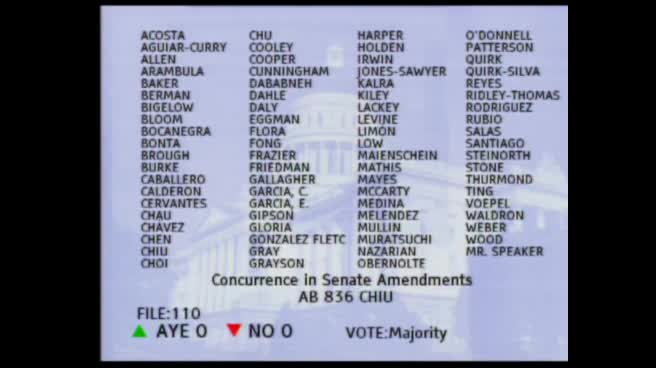

Bill Author

Bill Co-Author(s):