AB 1608: Vibrant landscapes for California.
- Session Year: 2017-2018
- House: Assembly
- Latest Version Date: 2017-05-01
The California Farmland Conservancy Program Act requires the Department of Conservation to implement and administer a program to provide grants for the acquisition by specified applicants of agricultural conservation easements, as defined. The act allows an agricultural conservation easement to provide for the construction and use of structures necessary for agricultural production and marketing, additional residences for immediate family members of the landowner, and necessary housing for seasonal or full-time employees of the agricultural operation.
Existing law establishes the Agricultural Protection Planning Grant Program administered by the department to provide planning grants to improve the protection of agricultural lands and grazing lands, including oak woodlands and grasslands.
Existing law authorizes the Wildlife Conservation Board to expend moneys for the acquisition of conservation easements to protect rangeland, grazing lands, and grasslands.
This bill would require the department to develop the Vibrant Landscape Program to assist eligible applicants in the development and implementation of county and regional plans to, among other things, integrate the conservation and management of natural and working lands with other sectors to reduce the emissions of greenhouse gases and achieve other public and environmental benefits. The bill would require the department, in collaboration with the Strategic Growth Council and the State Air Resources Board, to develop guidelines and criteria for the program. The bill would establish the Vibrant Landscape Program Fund in the State Treasury and would, upon appropriation by the Legislature, authorize the department to expend moneys in the fund to implement the program.
The California Farmland Conservancy Program Act requires the Department of Conservation to implement and administer a program to provide grants for the acquisition by specified applicants of agricultural conservation easements, as defined. The act allows an agricultural conservation easement to provide for the construction and use of structures necessary for agricultural production and marketing, additional residences for immediate family members of the landowner, and necessary housing for seasonal or full-time employees of the agricultural operation.
Existing law establishes the Agricultural Protection Planning Grant Program administered by the department to provide planning grants to improve the protection of agricultural lands and grazing lands, including oak woodlands and grasslands.
Existing law authorizes the Wildlife Conservation Board to expend moneys for the acquisition of conservation easements to protect rangeland, grazing lands, and grasslands.
This bill would require the department to develop and implement the Vibrant Landscape Program to assist eligible applicants in the development and implementation of county and regional plans that to, among other things, integrate the conservation and management of natural and working lands with other sectors to reduce the emissions of greenhouse gases and to provide other environmental cobenefits and to provide funding for land management and conservation activities that reduce the emissions of greenhouse gases and achieve other public and environmental cobenefits. benefits. The bill would require the department, in collaboration with the Strategic Growth Council and the State Air Resources Board, to develop guidelines and criteria for the program. The bill would establish the Vibrant Landscape Program Fund in the State Treasury and would, upon appropriation by the Legislature, authorize the department to expend moneys in the fund to implement the program.
The California Farmland Conservancy Program Act requires the Department of Conservation to implement and administer a program to provide grants for the acquisition by specified applicants of agricultural conservation easements, as defined. The act allows an agricultural conservation easement to provide for the construction and use of structures necessary for agricultural production and marketing, additional residences for immediate family members of the landowner, and necessary housing for seasonal or full-time employees of the agricultural operation.
Existing law establishes the Agricultural Protection Planning Grant Program administered by the department to provide planning grants to improve the protection of agricultural lands and grazing lands, including oak woodlands and grasslands.
Existing law authorizes the Wildlife Conservation Board to expend moneys for the acquisition of conservation easements to protect rangeland, grazing lands, and grasslands.
This bill would require the department to develop and implement the Vibrant Landscape Program to assist eligible applicants in the development of county and regional plans that integrate the conservation and management of natural and working lands with other sectors to reduce the emissions of greenhouse gases and to provide other environmental cobenefits and to provide funding for land management and conservation activities that reduce the emissions of greenhouse gases and achieve other environmental cobenefits. The bill would require the department, in collaboration with the Strategic Growth Council and the State Air Resources Board, to develop guidelines and criteria for the program. The bill would establish the Vibrant Landscape Program Fund in the State Treasury and would, upon appropriation by the Legislature, authorize the department to expend moneys in the fund to implement the program.
(a)The Legislature finds and declares all of the following:
(1)The states natural and working lands have critical roles in providing multiple benefits, including food, wood products, habitat, water quality, and climate change mitigation.
(2)Natural and working lands should be managed and conserved for the multiple benefits they provide.
(3)The state recognizes the critical role of natural and working lands in providing solutions to climate change, as identified in the Governors Executive Order B-30-15 and Chapter 545 of the Statutes of 2016.
(4)Natural and working lands store considerable amounts of carbon. These terrestrial ecosystems store 2,100 gigatons of carbon and they are unique as they can actively remove carbon from the atmosphere and store that carbon for long periods of time.
(5)Local governments and land managers across the state have significant influence over the maintenance and management of natural and working lands for their climate and other benefits. In spite of this, there is little guidance, and there are few tools and incentives for them to advance the conservation and management of these landscapes for climate and other benefits.
(b)It is the intent of the Legislature to create a program and fund for local governments and land managers to build partnerships in rural and urban areas across the state to develop and implement land use plans and activities to address climate change and advance other critical benefits, including food, habitat, wood products, water quality, and public health, provided by both natural and working lands.
2.Definitions12305.For purposes of this division, the following definitions apply:
(a)Department means the Department of Conservation.
(b)Eligible applicants means cities, counties, special districts and authorities, including open-space districts and resource conservation districts, and nonprofit organizations.
(c)Fund means the Vibrant Landscape Program Fund established pursuant to Section 12320.
(d)Greenhouse gas reduction includes the removal of carbon dioxide from the atmosphere through carbon sequestration as well as reduced or avoided emissions of greenhouse gases.
(e)Greenprint means a plan that identifies strategically planned and managed networks of natural lands and waters, working landscapes, including farmland, ranchland, and working forests, and recreational and other open spaces that conserve ecosystem values and functions, creates climate resilient communities, and is integrated into community and regional growth strategies.
(f)Natural lands means lands consisting of forests, grasslands, deserts, freshwater and riparian systems, wetlands, coastal and estuarine areas, watersheds, wildlands, or wildlife habitat, or lands used for recreational purposes, including parks, urban and community forests, trails, greenbelts, and other similar open-space land.
(g)Program means the Vibrant Landscape Program developed pursuant to Section 12310.
(h)Working lands means lands use used for farming, grazing, or the production of forest products.
3.Vibrant Landscape Program12310.(a)(1)The department shall develop the Vibrant Landscape Program to provide incentives to manage and conserve natural and working lands to address climate change and achieve other public and environmental benefits. The program shall assist eligible applicants to develop and implement county or regional plans, including county climate action plans and greenprints, across rural and urban areas, that do the following:
(A)Integrate the conservation and management of natural and working lands with other sectors to optimize the reduction of emissions of greenhouse gases and achieve other public and environmental benefits.
(B)Achieve measurable and durable reductions in the emissions of greenhouse gases.
(C)Advance the conservation of natural and working lands and associated habitat.
(D)Advance climate resilience, water quality, habitat connectivity, food production, wood products production, and other benefits.
(E)Complement a sustainable communities strategy developed pursuant to Section 65080 of the Government Code, if applicable.
(2)In awarding funds pursuant to this subdivision, the program, the department shall give preference to applications that include a county as a partner and a broad and diverse set of local partners, such as resource conservation districts, open-space districts and authorities, and nonprofit organizations.
(3)In awarding funds pursuant to the program, the department may make grant awards for plan development contingent on the implementation of one or more activities identified by the plan.
(b)(1)The To the extent funds are available, the program shall also provide funding to eligible applicants and landowners for land management and conservation activities, including land acquisitions, across the state that reduce the emissions of greenhouse gases and achieve multiple environmental benefits, including, but not limited to, agricultural viability, habitat connectivity, water quality, air quality, and climate resilience.
(2)Eligible activities include, but are not limited to, the following:(A)Land and riparian restoration.(B)Conservation of natural and working lands to sequester carbon and reduce emissions of greenhouse gases.(C)Improved forest management.(D)Urban forestry.(E)Agricultural and rangeland management activities, including, but not limited to, nutrient management and compost applications.(3)(2)In awarding providing funds pursuant to this subdivision, the department shall give preference to activities that would do the following:
(A)Help implement a plan developed pursuant to subdivision (a).
(B)Help implement a plan that is consistent with the criteria adopted by the department pursuant to Section 12311.
(C)Optimize the reduction in emissions of greenhouse gases.
(D)Optimize climate resilience and additional public and environmental benefits.
(c)(1)Funding awarded pursuant to the program shall not duplicate funding from programs implemented by other state agencies on land management, conservation, or greenhouse gas reduction.
(2)The department shall provide technical assistance to an eligible applicant to identify relevant programs implemented by other state agencies or funding sources that can assist in implementation of a plan that is eligible for funding pursuant to the program.
12311.The department, in collaboration with the Strategic Growth Council and the State Air Resources Board, shall develop guidelines and criteria for the program.
4.Fiscal Provision12320.The Vibrant Landscape Program Fund is hereby established in the State Treasury. Moneys in the fund, upon appropriation by the Legislature, may be expended by the department to implement the program. Moneys from the Greenhouse Gas Reduction Fund established pursuant to Section 16428.8 of the Government Code and other appropriate funding sources may be deposited into the fund as authorized by the Legislature.
(a)The Legislature finds and declares all of the following:
(1)The states natural and working lands have critical roles in providing multiple benefits, including food, wood products, habitat, water quality, and climate change mitigation.
(2)Natural and working lands should be managed and conserved for the multiple benefits they provide.
(3)The state recognizes the critical role of natural and working lands in providing solutions to climate change, as identified in the Governors Executive Order B-30-15 and Chapter 545 of the Statutes of 2016.
(4)Natural and working lands store considerable amounts of carbon. These terrestrial ecosystems store 2,100 gigatons of carbon and they are unique as they can actively remove carbon from the atmosphere and store that carbon for long periods of time.
(5)Local governments and land managers across the state have significant influence over the maintenance and management of natural and working lands for their climate and other benefits. In spite of this, there is little guidance, and there are few tools and incentives for them to advance the conservation and management of these landscapes for climate and other benefits.
(b)It is the intent of the Legislature to create a program and fund for local governments and land managers to build partnerships in rural and urban areas across the state to develop and implement land use plans and activities to address climate change and advance other critical benefits, including food, habitat, wood products, water quality, and public health, provided by both natural and working lands.
2.Definitions12305.For purposes of this division, the following definitions apply:
(a)Department means the Department of Conservation.
(b)Eligible applicants means cities, counties, special districts, districts and authorities, including open-space districts and resource conservation districts, metropolitan planning organizations, and nonprofit organizations.
(c)Fund means the Vibrant Landscape Program Fund established pursuant to Section 12320.
(d)Greenhouse gas reduction includes the removal of carbon dioxide from the atmosphere through carbon sequestration. sequestration as well as reduced or avoided emissions of greenhouse gases.
(e)Greenprint means a plan that identifies strategically planned and managed networks of natural lands and waters, working landscapes, including farmland, ranchland, and working forests, and recreational and other open spaces that conserve ecosystem values and functions, creates climate resilient communities, and is integrated into community and regional growth strategies.
(f)Natural lands means lands consisting of forests, grasslands, deserts, freshwater and riparian systems, wetlands, coastal and estuarine areas, watersheds, wildlands, or wildlife habitat, or lands used for recreational purposes, including parks, urban and community forests, trails, greenbelts, and other similar open-space land.
(g)Program means the Vibrant Landscape Program developed pursuant to Section 12310.
(h)Working lands means lands use for farming, grazing, or the production of forest products.
3.Vibrant Landscape Program12310.(a)(1)The department shall develop and implement the Vibrant Landscape Program to provide incentives to manage and conserve natural and working lands to address climate change and achieve other public and environmental benefits. The program shall assist eligible applicants in developing to develop and implement county or regional plans, including county climate action plans and greenprint, greenprints, across rural and urban areas integrating the conservation and management of natural and working lands, including agricultural and forest lands with other sectors to reduce the emissions of greenhouse gases and achieve climate resilience and other public and environmental cobenefits. The program shall support plans areas, that do the following:
(A)Integrate the conservation and management of natural and working lands with other sectors to optimize the reduction of emissions of greenhouse gases and achieve other public and environmental benefits.
(B)Achieve measurable and durable reductions in the emissions of greenhouse gases.
(A)Demonstrate how plan implementation will advance(C)Advance the conservation of natural and working lands and associated habitat and measurable and durable reductions in the emissions of greenhouse gases. habitat.
(B)(D)Advance climate resilience, water quality, habitat connectivity, food production, wood products production, and other benefits.
(C)(E)Complement a sustainable communities strategy developed pursuant to Section 65080 of the Government Code, if applicable.
(2)In awarding funds pursuant to this subdivision, the department shall give preference to an application submitted by a group of eligible applicants applications that includes a county. include a county as a partner and a broad and diverse set of local partners, such as resource conservation districts, open-space districts and authorities, and nonprofit organizations.
(b)(1)The program may shall also provide funding to eligible applicants and landowners for land management and conservation activities activities, including land acquisitions, across the state that reduce the emissions of greenhouse gases and achieve multiple environmental cobenefits. benefits, including, but not limited to, agricultural viability, habitat connectivity, water quality, air quality, and climate resilience.
(2)Eligible activities include, but are not limited to, the following:
(A)Riparian Land and riparian restoration.
(B)Preventing the conversion Conservation of natural and working lands to development and other intensive land use. sequester carbon and reduce emissions of greenhouse gases.
(C)Improvement in Improved forest management.
(D)Urban forestry.
(E)Agricultural and rangeland management activities, including, but not limited to, nutrient management and compost applications.
(3)In awarding funds pursuant to this subdivision, the department shall give preference to activities that would do both of the following:
(A)Implement a plan developed pursuant to subdivision (a).(B)Provide the most cobenefits.(A)Help implement a plan developed pursuant to subdivision (a).
(B)Help implement a plan that is consistent with the criteria adopted by the department pursuant to Section 12311.
(C)Optimize the reduction in emissions of greenhouse gases.
(D)Optimize climate resilience and additional public and environmental benefits.
12311.The department, in collaboration with the Strategic Growth Council and the State Air Resources Board, shall develop guidelines and criteria for the program.
4.Fiscal Provision12320.The Vibrant Landscape Program Fund is hereby established in the State Treasury. Moneys in the fund, upon appropriation by the Legislature, may be expended by the department to implement the program. Moneys from the Greenhouse Gas Reduction Fund established pursuant to Section 16428.8 of the Government Code and other appropriate funding sources may be deposited into the fund as authorized by the Legislature.
(a)The Legislature finds and declares all of the following:
(1)The states natural and working lands have critical roles in providing multiple benefits, including food, wood products, habitat, water quality, and climate change mitigation.
(2)Natural and working lands should be managed and conserved for the multiple benefits they provide.
(3)The state recognizes the critical role of natural and working lands in providing solutions to climate change, as identified in the Governors Executive Order B-30-15 and Chapter 545 of the Statutes of 2016.
(4)Natural and working lands store considerable amounts of carbon. These terrestrial ecosystems store 2,100 gigatons of carbon and they are unique as they can actively remove carbon from the atmosphere and store that carbon for long periods of time.
(5)Local governments and land managers across the state have significant influence over the maintenance and management of natural and working lands for their climate and other benefits. In spite of this, there is little guidance, and there are few tools and incentives for them to advance the conservation and management of these landscapes for climate and other benefits.
(b)It is the intent of the Legislature to create a program and fund for local governments and land managers in rural and urban areas across the state to develop and implement land use plans and activities to address climate change and advance other critical benefits, including food, habitat, wood products, water quality, and public health, provided by both natural and working lands.
2.Definitions12305.For purposes of this division, the following definitions apply:
(a)Department means the Department of Conservation.
(b)Eligible applicants means cities, counties, special districts, including open-space districts and resource conservation districts, metropolitan planning organizations, and nonprofit organizations.
(c)Fund means the Vibrant Landscape Program Fund established pursuant to Section 12320.
(d)Greenhouse gas reduction includes the removal of carbon dioxide from the atmosphere through carbon sequestration.
(e)Greenprint means a plan that identifies strategically planned and managed networks of natural lands and waters, working landscapes, including farmland, ranchland, and working forests, and recreational and other open spaces that conserve ecosystem values and functions, creates climate resilient communities, and is integrated into community and regional growth strategies.
(f)Natural lands means lands consisting of forests, grasslands, deserts, freshwater and riparian systems, wetlands, coastal and estuarine areas, watersheds, wildlands, or wildlife habitat, or lands used for recreational purposes, including parks, urban and community forests, trails, greenbelts, and other similar open-space land.
(g)Program means the Vibrant Landscape Program developed pursuant to Section 12310.
(h)Working lands means lands use for farming, grazing, or the production of forest products.
3.Vibrant Landscape Program12310.(a)(1)The department shall develop and implement the Vibrant Landscape Program to assist eligible applicants in developing county or regional plans, including county climate plans and greenprint, across rural and urban areas integrating the conservation and management of natural and working lands, including agricultural and forest lands with other sectors to reduce the emissions of greenhouse gases and achieve climate resilience and other public and environmental cobenefits. The program shall support plans that do the following:
(A)Demonstrate how plan implementation will advance the conservation of natural and working lands and associated habitat and measurable and durable reductions in the emissions of greenhouse gases.
(B)Advance climate resilience, water quality, food production, wood products production, and other benefits.
(C)Complement a sustainable communities strategy developed pursuant to Section 65080 of the Government Code, if applicable.
(2)In awarding funds pursuant to this subdivision, the department shall give preference to an application submitted by a group of eligible applicants that includes a county.
(b)(1)The program may also provide funding for land management and conservation activities across the state that reduce the emissions of greenhouse gases and achieve multiple environmental cobenefits.
(2)Eligible activities include, but are not limited to, the following:
(A)Riparian restoration.
(B)Preventing the conversion of natural and working lands to development and other intensive land use.
(C)Improvement in forest management.
(D)Urban forestry.
(3)In awarding funds pursuant to this subdivision, the department shall give preference to activities that would do both of the following:
(A)Implement a plan developed pursuant to subdivision (a).
(B)Provide the most cobenefits.
12311.The department, in collaboration with the Strategic Growth Council and the State Air Resources Board, shall develop guidelines and criteria for the program.
4.Fiscal Provision12320.The Vibrant Landscape Program Fund is hereby established in the State Treasury. Moneys in the fund, upon appropriation by the Legislature, may be expended by the department to implement the program. Moneys from the Greenhouse Gas Reduction Fund established pursuant to Section 16428.8 of the Government Code and other appropriate funding sources may be deposited into the fund as authorized by the Legislature.
|
Date
|
Status
|
|---|---|
| Feb 1, 2018 | From committee: Filed with the Chief Clerk pursuant to Joint Rule 56. |
| Jan 31, 2018 | Died pursuant to Art. IV, Sec. 10(c) of the Constitution. |
| May 26, 2017 | In committee: Held under submission. |
| May 10, 2017 | In committee: Set, first hearing. Referred to APPR. suspense file. |
| May 2, 2017 | Re-referred to Com. on APPR. |
| May 1, 2017 | Read second time and amended. |
| Apr 27, 2017 | From committee: Amend, and do pass as amended and re-refer to Com. on APPR. (Ayes 9. Noes 1.) (April 24). |
| Apr 18, 2017 | Re-referred to Com. on NAT. RES. |
| Apr 17, 2017 | From committee chair, with author's amendments: Amend, and re-refer to Com. on NAT. RES. Read second time and amended. |
| Mar 16, 2017 | Referred to Com. on NAT. RES. |
| Feb 19, 2017 | From printer. May be heard in committee March 21. |
| Feb 17, 2017 | Read first time. To print. |
|
Date
|
Description
|
Location
|
Votes
|
|
|---|---|---|---|---|
| Apr 24, 2017 | Do pass as amended and be re-referred to the Committee on [Appropriations] | Assembly Standing Committee on Natural Resources |
Passed |
This list shows positions taken on this bill by organizations on the date displayed, which is linked to the original source.
Positions by individuals are not included.
|
Organization
|
Position
|
Date
|
|---|---|---|
| 350 Silicon Valley | ** Support | Apr 21, 2017 |
| Association Of Compost Producers | ** Support | Apr 21, 2017 |
| Audobon California | * Support | Apr 24, 2017 |
| Big Sur Land Trust | ** Support | Apr 21, 2017 |
| CA ReLeaf | ** Support | Apr 21, 2017 |
| California and Santa Clara Valley Open Space Authority | * Support | Apr 24, 2017 |
| California Association Of Resource Conservation Districts | * Support | Apr 24, 2017 |
| California Climate & Agricultural Network | * Support | Apr 24, 2017 |
| California Compost Coalition | * Support | Apr 24, 2017 |
| California State Association Of Counties | * Support | Apr 24, 2017 |
| Carbon Cycle Institute | * Support | Apr 24, 2017 |
| Center For Food Safety | ** Support | Apr 21, 2017 |
| Defenders Of Wildlife | ** Support | Apr 21, 2017 |
| East Bay Regional Park District | * Support | Apr 24, 2017 |
| Mid Peninsula Regional Open Space | * Support | Apr 24, 2017 |
| Move LA | ** Support | Apr 21, 2017 |
| Pacific Forest Trust | ** Support | Apr 21, 2017 |
| Peninsula Open Space Trust | ** Support | Apr 21, 2017 |
| The Nature Conservancy | * Support | Apr 24, 2017 |
Date of Hearing: May 10, 2017
ASSEMBLY COMMITTEE ON APPROPRIATIONS
Lorena Gonzalez Fletcher, Chair
ABPCA Bill Id:AB 1608
Author:(Kalra) – As Amended Ver:May 1, 2017
Policy Committee: | Natural Resources | Vote: | 9 - 1 |
|
| ||
|
|
Urgency: No State Mandated Local Program: No Reimbursable: No
SUMMARY:
This bill requires the Department of Conservation (DOC) to develop the Vibrant Landscape Program (Program) to provide assistance and incentives to cities, counties, special districts, authorities, and nonprofits to manage and conserve natural and working lands to address climate change and achieve other public and environmental benefits. Specifically, this bill:
- Requires the Program to assist eligible applicants to develop and implement county or regional plans, including county climate action plans and greenprints, as defined, across rural and urban areas.
- Requires DOC to give preference to applicants that include a county as a partner and a broad and diverse set of local partners, such as resource conservation districts, open-space districts, authorities, and nonprofits organizations.
- Requires the Program to provide funding to eligible applicants and landowners for land management and conservation activities, including land acquisitions, across the state that reduce greenhouse gas (GHG) emissions and achieve multiple environmental benefits.
- Requires DOC, in collaboration with the Strategic Growth Council (SCG) and Air Resources Board (ARB) to develop guidelines for the Program.
- Establishes the Vibrant Landscape Program Fund and authorizes the fund to receive monies from GGRF and other appropriate funding sources.
FISCAL EFFECT:
- Annual cost pressures, likely in the tens of millions of dollars, to fund the incentives Program (GGRF and other funds).
- Annual ongoing costs, in the $600,000 to $615,000 range, for DOC to develop program guidelines and criteria, review applications and direct collaboration with other agencies (GGRF or other funds).
- Unknown costs for SGC and ARB to assist in the development of Program guidelines.
COMMENTS:
- Purpose. AB 1608 establishes the Program to provide incentives to manage and conserve natural and working lands to address climate change and achieve other public and environmental benefits.
- Background. The California Global Warming Solutions Act of 2006 (AB 32) requires ARB to adopt a statewide GHG emissions limit equivalent to 1990 levels by 2020 and adopt regulations, including market-based compliance mechanisms, to achieve maximum technologically feasible and cost-effective GHG emission reductions.
As part of the implementation of AB 32 market-based compliance measures, ARB adopted a cap-and-trade program that caps the allowable statewide emissions and provides for the auctioning of emission credits, the proceeds of which are quarterly deposited into the GGRF available for appropriation by the Legislature.
The 2014-15 Budget Act allocated cap-and-trade revenues for the 2014-15 fiscal year and established a long-term plan for the allocation of cap-and-trade revenues beginning in fiscal year 2015-16.
The Budget continuously appropriates 35% of cap-and-trade funds for investments in transit, affordable housing, and sustainable communities. Twenty-five percent of the revenues are continuously appropriated to continue the construction of high-speed rail. The remaining 40% are to be appropriated annually by the Legislature for investments in programs that include low-carbon transportation, energy efficiency and renewable energy, and natural resources and waste diversion.
While some auctions generated significant funds, more recent auctions have generated less revenue. Fiscal year 2015-16 peaked at over $1.8 billion; however, the three recent auctions raised just over $380 million in proceeds. The February 2017 auction generated just $8.1 million. The next auction will take place on May 16th.
- Other Land Programs. DOC’s Division of Land Resource Protection operates several programs to conserve farmland and open space resources. One such program the DOC operates on behalf of the SGC is the Sustainable Communities Agricultural Land Conservation Program (SALC), which funds agricultural land conservation with revenue from the GGRF. Through 2016, SALC has had $44 million of GGRF allocated to it.
SALC is intended to complement investments made in urban areas with the purchase of agricultural conservation easements and development of agricultural land strategy plans that result in GHG reductions and a more resilient agricultural sector. While the SALC includes funding for planning grants to support cities and counties with developing local and regional land use policies and strategies that protect critical agricultural land, DOC has had difficulty actually encumbering funds for planning.
In fiscal year 2015-16, the SGC delegated $2.5 million in GGRF to DOC for expenditure on planning grants under SALC. DOC can only award grants to reimburse local governments after they have undertaken the planning work and demonstrated reductions in emissions. This requires an upfront investment from the local government, which has proven a barrier for many potential applicants. During the last round of grants, only two local governments applied for the planning grants by the established deadline.
- Related legislation. AB 1342 (Flora) makes monies available from GGRF to the Cal Fire for the Healthy Forests program and Cal Recycle for GHG emissions reduction projects. This bill is pending in this Committee.
AB 1433 (Wood) makes monies available from the GGRF for grants and programs that facilitate actions to protect and improve the resilience of natural and working land systems and enhance habitat, while reducing GHG emissions and increasing sequestration. This bill is also pending in this Committee.
Analysis Prepared by: Jennifer Galehouse / APPR. / (916) 319-2081
Date of Hearing: April 24, 2017
ASSEMBLY COMMITTEE ON NATURAL RESOURCES
Cristina Garcia, Chair
ABPCA Bill Id:AB 1608 (
Author:Kalra) – As Amended Ver:April 17, 2017
SUBJECT: Vibrant landscapes for climate, people, and multiple benefits
SUMMARY: Requires the Department of Conservation (DOC) to develop the Vibrant Landscape Program (program) to provide assistance and incentives to cities, counties, special districts, authorities, and nonprofits to manage and conserve natural and working lands to address climate change and achieve other public and environmental benefits.
EXISTING LAW:
- Requires the Air Resources Board (ARB), pursuant to California Global Warming Solutions Act of 2006 [AB 32 (Nunez), Chapter 488, Statutes of 2006], to adopt a statewide greenhouse gas (GHG) emissions limit equivalent to 1990 levels by 2020 and adopt regulations to achieve maximum technologically feasible and cost-effective GHG emission reductions. AB 32 authorizes ARB to permit the use of market-based compliance mechanisms to comply with GHG reduction regulations once specified conditions are met.
- Establishes the Greenhouse Gas Reduction Fund (GGRF) and requires all moneys, except for fines and penalties, collected by ARB from the auction or sale of allowances pursuant to a market-based compliance mechanism (i.e., the cap-and-trade program adopted by ARB under AB 32) to be deposited in the GGRF and available for appropriation by the Legislature.
- Establishes the GGRF Investment Plan and Communities Revitalization Act (Act) to set procedures for the investment of GHG allowance auction revenues. Authorizes a range of GHG reduction investments and establishes several policy objectives:
- Maximize economic, environmental, and public health benefits;
- Foster job creation;
- Complement efforts to improve air quality;
- Direct investment toward the most disadvantaged communities and households in the state;
- Provide opportunities for businesses, public agencies, nonprofits, and other community institutions to participate in and benefit from statewide efforts to reduce GHG emissions; and,
- Lessen the impacts and effects of climate change on the state's communities, economy, and environment.
- Maximize economic, environmental, and public health benefits;
- Specifies that moneys appropriated from the GGRF through investments may include funding to reduce GHG emissions as follows:
- Energy efficiency, clean and renewable energy generation, distributed renewable energy generation, transmission and storage, and other related actions;
- The development of state-of-the-art systems to move goods and freight, advanced technology vehicles and vehicle infrastructure, advanced biofuels, and low-carbon and efficient public transportation;
- Water use and water supply, land and natural resource conservation and management, forestry, and sustainable agriculture projects;
- Strategic planning and development of sustainable infrastructure projects;
- In-state diversion of municipal solid waste from disposal through waste reduction, diversion, and reuse;
- Investments in programs implemented by local and regional agencies, local and regional collaboratives, and nonprofit organizations coordinating with local governments; and,
- Funding research, development, and deployment of innovative technologies, measures, and practices related to programs and projects funded pursuant to the Act.
- Energy efficiency, clean and renewable energy generation, distributed renewable energy generation, transmission and storage, and other related actions;
- Requires the investment plan to allocate:
- A minimum of 25% of the available moneys in the GGRF to projects located within, and that provide benefits to individuals living in, disadvantaged communities;
- A minimum of 5% of the available moneys in the GGRF to projects that benefit low-income households or to projects located within, and benefiting individuals living in, low-income communities; and,
- A minimum of 5% of the available moneys in the GGRF to projects that benefit low-income households that are outside of, but within ½ mile of, disadvantaged communities, or to projects located within the boundaries of, and benefiting individuals living in, low-income communities that are outside of, but within ½ mile of, disadvantaged communities.
- A minimum of 25% of the available moneys in the GGRF to projects located within, and that provide benefits to individuals living in, disadvantaged communities;
- Requires metropolitan planning organizations to include sustainable communities strategies, as defined, in their regional transportation plans for the purpose of reducing GHG emissions, aligns planning for transportation and housing, and creates specified incentives for the implementation of the strategies.
- Requires the Strategic Growth Council (SGC) to develop and administer the Affordable Housing and Sustainable Communities Program to reduce GHG emissions through projects that implement land use, housing, transportation, and agricultural land preservation practices to support infill and compact development, and that support related and coordinated public policy objectives.
- Declares it is the policy of the state that the protection and management of natural and working lands is an important strategy in meeting the state’s GHG emissions reduction goals. Requires all state agencies, including the Natural Resources Agency, the Department of Food and Agriculture, and the California Environmental Protection Agency, and their respective departments, boards, and commissions to consider the policy.
- Creates the Transformative Climate Communities Program (TCCP) administered by the SGC. Requires the TCCP to develop and implement a neighborhood-level transformative climate community plans that include multiple, coordinated GHG emissions reduction projects that provide local economic, environmental, and health benefits to disadvantaged communities. Declares that such comprehensive public investments can be more effectively catalyzed to support innovative community and climate transformation in disadvantaged communities.
THIS BILL:
- Makes various legislative findings and declares it is the intent of the Legislature to create a program and fund for local governments and land managers to build partnerships in rural and urban areas across the state to develop and implement land use plans and activities to address climate change and advance other critical benefits, including food, habitat, wood products, water quality, and public health, provided by both natural and working lands.
- Requires DOC to develop the program to provide incentives to manage and conserve natural and working lands to address climate change and achieve other public and environmental benefits.
- Defines “greenprints” to mean a plan that identifies strategically planned and managed networks of natural lands and waters, working landscapes, including farmland, ranchland, and working forests, and recreational and other open spaces that conserve ecosystem values and functions, creates climate resilient communities, and is integrated into community and regional growth strategies.
- Requires the program to assist eligible applicants to develop and implement county or regional plans, including county climate action plans and greenprints, across rural and urban areas. Requires the plans to do the following:
- Integrate the conservation and management of natural and working lands with other sectors to optimize the reduction of GHG emissions;
- Achieve measurable and durable reductions in GHG emissions;
- Advance the conservation of natural and working lands and associated habitat;
- Advance climate resilience, water quality, habitat connectivity, food production, wood products production, and other benefits; and,
- Complement a sustainable communities strategy.
- Requires DOC to give preference to applicants that include a county as a partner and a broad and diverse set of local partners, such as resource conservation districts, open-space districts and authorities, and nonprofits organizations.
- Requires the program to provide funding to eligible applicants and landowners for land management and conservation activities, including land acquisitions, across the state that reduce GHG emissions and achieve multiple environmental benefits.
- Specifies that eligible activates include, but are not limited to, the following:
- Land and riparian restoration;
- Conservation of natural and working lands;
- Improved forest management;
- Urban forestry; and,
- Agricultural and rangeland management activates, including, but not limited to, nutrient management and compost applications.
- Land and riparian restoration;
- Requires DOC to give preference to activities that would do the following:
- Implement a plan funded through the program and consistent with guidelines developed for the program; and,
- Optimize reductions in GHG emissions and climate resilience.
- Requires DOC, in collaboration with the SGC and the ARB, to develop guidelines for the program.
- Establishes the Vibrant Landscape Program Fund. Authorizes the fund to receive funding from GGRF and other appropriate funding sources.
FISCAL EFFECT: Unknown
COMMENTS:
- Existing GGRF funding and programs. The 2014-15 Budget Act allocated GGRF revenues for the 2014-15 fiscal year and established a long-term plan for the allocation of GGRF revenues beginning in fiscal year 2015-16. Thirty-five percent of GGRF is continuously appropriated for investments in transit, affordable housing, and sustainable communities. Twenty-five percent is continuously appropriated to continue the construction of the high-speed rail project. The remaining 40% is subject to annual appropriation by the Legislature for investments in programs that include low-carbon transportation, energy efficiency and renewable energy, and natural resources and waste diversion.
The 2017 Annual Report of Cap and Trade Auction Proceeds includes an analysis of funds spent within and benefiting disadvantaged communities, excluding high speed rail spending. According to the report, 34% of expenditures were for projects located within disadvantaged communities and 50% of the overall funding benefited disadvantaged communities.
Listed below are the major GGRF program areas and funding to date, totaling $3.385 billion:
- Sustainable Communities and Clean Transportation:
- High Speed Rail Authority, High Speed Rail Project, $800 million
- State Transit Assistance, Low-Carbon Transit Operations, $135 million
- Transportation Agency, Transit and Intercity Rail Capital Program, $381 million
- SGC, Affordable Housing and Sustainable Communities Program, $570 million
- Department of Transportation, Active Transportation, $10 million
- SGC, Transformative Climate Communities Program and Technical Assistance, $142 million
- ARB, Low Carbon Transportation, $695 million
- Short-Lived Climate Pollutants:
- ARB, Black Carbon Woodsmoke, $5 million
- Department of Resources Recycling and Recovery, Waste Diversion, $71 million
- Department of Food and Agriculture, Dairy Digesters and Alternative Fuels, $65 million
- Department of Food and Agriculture, Healthy Soils, $8 million
- Carbon Sequestration:
- Department of Forestry and Fire Protection( CAL FIRE), Healthy Forests, $49 million
- Department of Forestry and Fire Protection, Urban and Community Forestry, $33 million
- Department of Fish and Wildlife, Wetlands and Watershed Restoration, $30 million
- Natural Resources Agency, Urban Greening, $80 million
- Energy Efficiency/Renewable Energy:
- Department of Community Services and Development, Energy Efficiency Upgrades/Weatherization, $174 million
- Department of Water Resources, Water Use Efficiency, $70 million
- Department of Food and Agriculture, State Water Efficiency and Enhancement Program, $68 million
- Sustainable Communities and Clean Transportation:
The Governor's 2017-18 Budget proposes $2.155 billion in expenditures:
- Continuous Appropriations:
- High Speed Rail, Authority, $375 million
- Low Carbon Transit Operations, State Transit Assistance, $75 million
- Transit and Intercity Rail Capital Program, Transportation Agency, $150 million
- Affordable Housing and Sustainable Communities Program, SGC, $300 million
- Transportation Package, $500 million:
- Transportation Agency, Transit and Intercity Rail Capital Program
- Department of Transportation, Active Transportation
- Fifty Percent Reduction in Petroleum Use:
- ARB, Low Carbon Transportation, $363 million
- Transformational Climate Communities:
- SGC, Transformative Climate Communities and Technical Assistance and Outreach, $142 million
- Short-Lived Climate Pollutants, $95 million:
- ARB, Black Carbon Woodsmoke
- Department of Resources Recycling and Recovery, Waste Diversion
- Department of Food and Agriculture, Dairy Digesters
- Carbon Sequestration, $127.5 million:
- CAL FIRE, Healthy Forests and Urban Greening
- Department of Food and Agriculture, Climate Smart Agriculture and Healthy Soils
- Natural Resources Agency, Urban Greening
- Energy Efficiency/Renewable Energy, $27.5 million:
- Department of Community Services and Development, Energy Efficiency Upgrades/Weatherization
- Department of Food and Agriculture, State Water Efficiency and Enhancement Program
- Continuous Appropriations:
- Cap and trade auction revenues. The GGRF is funded by cap-and-trade auction revenues. While some auctions generated significant funds, more recent auctions have generated less revenue. Fiscal year 2015-16 peaked at over $1.8 billion; however, the three auctions raised just over $380 million in proceeds. The February 2017 auction generated just $8.1 million. The next auction will take place on May 16th.
- Background. DOC’s Division of Land Resource Protection operates several programs to conserve farmland and open space resources. One such program the DOC operates on behalf of the SGC is the Sustainable Communities Agricultural Land Conservation Program (SALC), which funds agricultural land conservation with revenue from the GGRF. Through 2016, SALC has had $44 million of GGRF allocated to it.
SALC is intended to complement investments made in urban areas with the purchase of agricultural conservation easements and development of agricultural land strategy plans that result in GHG reductions and a more resilient agricultural sector. While the SALC includes funding for planning grants to support cities and counties with developing local and regional land use policies and strategies that protect critical agricultural land, DOC has had difficulty actually encumbering funding for planning.
In fiscal year 2015-16, the SGC delegated $2.5 million in GGRF to DOC for expenditure on planning grants under SALC. DOC can only award grants to reimburse local governments after they have undertaken the planning work and demonstrated reductions in emissions. This requires an upfront investment from the local government, which has proven a barrier for many potential applicants. During the last round of grants, only two local governments applied for the planning grants by the established deadline.
Land use planning can have large impacts on GHG emissions through reductions in vehicle miles traveled and preservation of lands that sequester carbon. Recent University of California research suggests that California’s agricultural and open-space lands have a significant capacity to sequester carbon and contribute to the state’s GHG emission reduction goals. These include storing carbon in trees, plants, and the soil. If local governments do not plan for the protection and conservation of natural and working lands, it is likely that the state’s projected growth will put pressure to develop these lands. However, planning on its own does not reduce GHG emissions. Local governments must make decisions to protect natural and working lands from development in order for those plans to actually contribute to meeting the state’s GHG emission reduction goals.
- This bill. AB 1608 establishes the program to provide incentives to manage and conserve natural and working lands to address climate change and achieve other public and environmental benefits. One way it does that is by having the program assist in the development of county and regional plans, including county climate action plans, and greenprints. The bill also allows the program to provide funding to implement the various plans. However, the eligible activities that can be funded are repetitive of programs that already exist in various agencies. One example is urban forestry and improved forest management. CAL FIRE provides funding for both of these activities. This bill would require DOC to also provide funding for those activities, which is duplicative and inefficient. The author and committee may wish to consider amending the bill to eliminate duplicative incentives, and instead require DOC to provide technical assistance to identify other relevant state grant programs that can assist in implementing plans funded by the program. The author and committee may also wish to consider allowing other relevant programs funded by GGRF to prioritize projects that implement plans developed with funding from the program.
- Related legislation.
AB 1342 (Flora) continuously appropriates $100 million from GGRF to CAL FIRE and continuously appropriates $200 million from the GGRF to the Department of Resources Recycling and Recovery for GHG emissions reduction projects. This bill is also scheduled to be heard on April 24 in this committee.
AB 1433 (Wood) requires the annual transfer of 20% of the annual proceeds of GGRF for grants and programs that facilitate actions to protect and improve the resilience of natural and working land systems and enhance habitat, while reducing GHG emissions and increasing sequestration. This bill is also scheduled to be heard on April 24 in this committee.
REGISTERED SUPPORT / OPPOSITION:
Support
The Nature Conservancy (Co-sponsor)
Santa Clara Valley Open Space Authority (Co-sponsor)
350 Silicon Valley
Association of Compost Producers
Audubon California
Big Sur Land Trust
California Association of Resource Conservation Districts
California State Association of Counties
Carbon Cycle Institute
CA ReLeaf
Center for Food Safety
Defenders of Wildlife
Midpeninsula Regional Open Space District
Move LA
Pacific Forest Trust
Peninsula Open Space Trust
Opposition
None on file
Analysis Prepared by: Michael Jarred / NAT. RES. /
Discussed in Hearing
 1H
Assembly Standing Committee on Appropriations
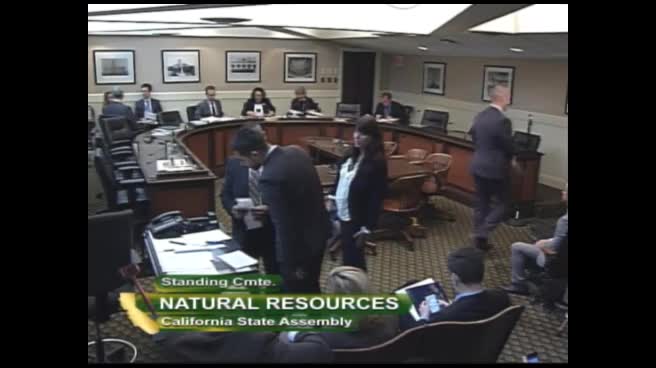 8MIN
Assembly Standing Committee on Natural Resources
Bill Author

Bill Co-Author(s):
