AB 1637: City of San Diego: County of Santa Clara: housing authority: middle-income housing projects.
- Session Year: 2017-2018
- House: Assembly
- Latest Version Date: 2017-10-14
The Housing Authorities Law authorizes a housing authority of a city or county to, among other things, prepare, carry out, acquire, lease, and operate housing projects and housing developments for persons of low income, as provided. That law grants powers to an authority relating to, among other things, the issuance of bonds.
This bill would make findings and declarations relating to affordable housing. The bill, until January 1, 2022, would authorize a housing authority located in the City of San Diego or the County of Santa Clara to implement a pilot program to develop and finance a middle-income housing project, as defined, if the project receives gap financing, as defined. The bill would prohibit financial or other assistance from any public or private source, as specified, from being used to provide gap financing to units that will be occupied at or above market-rate rents. The bill would require any gap financing to be approved by the housing authoritys legislative body, as provided, and would require the housing authority to provide a report to the Legislature, as specified.
This bill would also make legislative findings and declarations as to the necessity of a special statute for the City of San Diego and the County of Santa Clara.
The Housing Authorities Law authorizes a housing authority of a city or county to, among other things, prepare, carry out, acquire, lease, and operate housing projects and housing developments for persons of low income, as provided. That law grants powers to an authority relating to, among other things, the issuance of bonds.
This bill would make findings and declarations relating to affordable housing. The bill bill, until January 1, 2022, would authorize an authority a housing authority located in the City of San Diego or the County of Santa Clara to implement a pilot program to develop and finance a middle-income housing project, as defined, if the project receives gap financing, as defined. The bill would prohibit financial or other assistance from any public or private source, as specified, from being used to provide gap financing to units that will be occupied at market-rate rents. The bill would require any gap financing to be approved by the housing authoritys legislative body, as provided, and would require the housing authority to provide a report to the Legislature, as specified.
This bill would also make legislative findings and declarations as to the necessity of a special statute for the City of San Diego and the County of Santa Clara.
The Housing Authorities Law authorizes a housing authority of a city or county to, among other things, prepare, carry out, acquire, lease, and operate housing projects and housing developments for persons of low income, as provided. That law grants powers to an authority relating to, among other things, the issuance of bonds.
This bill would make findings and declarations relating to affordable housing. The bill would authorize an authority to develop and finance a middle-income housing project, as defined, if the project receives gap financing, as defined. The bill would prohibit financial or other assistance from any public or private source, as specified, from being used to provide gap financing to units that will be occupied at market-rate rents.
The Housing Authorities Law authorizes a housing authority of a city or county to, among other things, prepare, carry out, acquire, lease, and operate housing projects and housing developments for persons of low income, as provided. That law grants powers to an authority relating to, among other things, the issuance of bonds.
This bill would make findings and declarations relating to affordable housing. The bill would authorize an authority to develop and finance a middle-income housing project project, as defined, if funds received pursuant to bonds are only used to finance units occupied by persons of low income. the project receives gap financing, as defined. The bill would authorize units occupied by persons and families of middle income to be financed with prohibit financial or other assistance from any public or private source. The bill would prohibit funds received pursuant to bonds and specified public sources source, as specified, from being used to finance provide gap financing to units that will be occupied at market-rate rents.
The Housing Authorities Law authorizes a housing authority of a city or county to, among other things, prepare, carry out, acquire, lease, and operate housing projects and housing developments for persons of low income, as provided. That law grants powers to an authority relating to, among other things, the issuance of bonds.
This bill would authorize a housing authority to also develop, operate, and provide financing for mixed-income housing projects, as defined, and to exercise any or all powers granted to the authority relating to, among other things, the issuance of bonds for these purposes.This bill would authorize an authority to develop and finance a middle-income housing project if funds received pursuant to bonds are only used to finance units occupied by persons of low income. The bill would authorize units occupied by persons and families of middle income to be financed with financial or other assistance from any public or private source. The bill would prohibit funds received pursuant to bonds and specified public sources from being used to finance units occupied at market-rate rents.
The Housing Authorities Law authorizes a housing authority of a city or county to, among other things, prepare, carry out, acquire, lease, and operate housing projects and housing developments for persons of low income, as provided. That law grants powers to an authority relating to, among other things, the issuance of bonds.
This bill would authorize a housing authority to also develop, operate, and provide financing for mixed-income housing projects, as defined, and to exercise any or all powers granted to the authority relating to, among other things, the issuance of bonds for these purposes.
The Planning and Zoning Law requires, when an applicant proposes a housing development within the jurisdiction of a local government, that the city, county, or city and county provide the developer with a density bonus and other incentives or concessions for the production of lower income housing units or for the donation of land within the development if the developer, among other things, agrees to construct a specified percentage of units for very low, low-, or moderate-income households or qualifying residents. Existing law, in order to provide for the expeditious processing of a density bonus application, requires the local government to, among other things, notify the applicant for a density bonus whether the application is complete in a manner consistent with a specified provision that requires the notification to be in writing.This bill would make a nonsubstantive change to that provision.The Planning and Zoning Law requires, when an applicant proposes a housing development within the jurisdiction of a local government, that the city, county, or city and county provide the developer with a density bonus and other incentives or concessions for the production of lower income housing units or for the donation of land within the development if the developer, among other things, agrees to construct a specified percentage of units for very low, low-, or moderate-income households or qualifying residents. Existing law, in order to provide for the expeditious processing of a density bonus application, requires the local government to, among other things, notify the applicant for a density bonus whether the application is complete in a manner consistent with a specified provision that requires the notification to be in writing.
This bill would make a nonsubstantive change to that provision.
The Legislature hereby finds and declares all of the following:
(a)Housing authorities are vitally important public agencies dedicated to preserving and increasing affordable housing throughout California.
(b)It is in the public interest that housing authorities maintain their focus on providing affordable housing options for extremely low, very low, and low-income Californians.
(c)It is also in the public interest that a continuum of housing be provided for a broad spectrum of persons, but specifically including those of low income and also including those earning middle incomes.
(d)It is in the public interest that mixed-income projects be developed by housing authorities so that persons of divergent income levels may live in the same project, with each mixed-income housing project including persons of low and very low incomes.
(e)By allowing housing authorities located in the City of San Diego and the County of Santa Clara to implement a pilot program to develop and finance mixed-income projects, additional low-income housing will be built, much of which would not otherwise have been constructed because of insufficient financing options.
(f)Currently, there are inadequate sources of financing available to encourage developers to develop, construct, and operate a sufficient number of mixed-income projects to provide for a continuum of housing at various income levels.
(g)The lack of an adequate supply of housing at all levels drives up the rents and costs of ownership of all levels of housing, which has a detrimental effect upon the residents of the State of California. The absence of an adequate supply of housing for those households earning very low, low, moderate, and middle incomes causes a disproportionate hardship on those households.
(h)The creation of additional middle-income housing would allow for the development of housing for persons who are school teachers, nurses, police, first responders, and firefighters, among others.
(i)Section 42 of the Internal Revenue Code, relating to low-income tax credit, allows federal tax credits to be used to finance projects in which not less than 20 percent of the units are affordable to, and occupied by, persons and families earning 50 percent or less of the area median gross income, or in projects in which not less than 40 percent of the units are affordable to, and occupied by, persons and families that earn 60 percent or less of the area median gross income. Current state law, the Housing Authorities Law (Article 1 (commencing with Section 34200) of Part 2 of Division 24 of the Health and Safety Code), allows for multifamily housing bonds to be issued to serve the same populations that are provided for under Section 142(d) of the Internal Revenue Code, relating to qualified residential projects.
SEC. 2.Article 4.5 (commencing with Section 34340) is added to Chapter 1 of Part 2 of Division 24 of the Health and Safety Code, to read:4.5.Middle-Income Housing Projects34340.(a)A housing authority located in the City of San Diego or the County of Santa Clara may implement a pilot program to develop and finance a middle-income housing project as follows:
(1)Middle-income housing projects may receive gap financing from funds received pursuant to Section 34315.3.
(2)Financial or other assistance received from any public source pursuant to Section 34315.3 shall not be used to provide gap financing to units that will be occupied at or above market-rate rents.
(3)Any gap financing for middle-income housing projects shall first be approved by the housing authoritys legislative body by resolution after a public hearing. Notice of the time and place of the hearing shall be published in a newspaper of general circulation in the community at least once per week for at least two successive weeks, as specified in Section 6066 of the Government Code, prior to the hearing.
(4)The resolution approving the gap financing agreement shall contain a finding that gap financing will provide housing for low- and middle-income persons and is consistent with this section.
(5)(A)On or before January 1, 2020, and on or before January 1, 2022, the housing authority shall provide a report to the Legislature that contains the following information for each calendar year during which the housing authority implemented a pilot program pursuant to this section:
(i)The number of units produced using gap financing.
(ii)The amount of gap financing per regulated unit.
(iii)The levels of affordability of those units produced using gap financing.
(iv)The term of affordability for those units produced using gap financing.
(B)A report submitted to the Legislature pursuant to this paragraph shall be submitted in compliance with Section 9795 of the Government Code.
(b)For the purposes of this article, the following terms have the following meanings:
(1)Middle-income housing project means a housing project that includes at least 40 percent of units, excluding units available for managers, that are affordable to and will be occupied by persons of low income, as well as at least 10 percent of units that are affordable to and will be occupied by persons and families of middle income.
(2)Persons of low income has the same meaning as in Section 34213.
(3)Persons and families of middle income has the same meaning as in Section 65008 of the Government Code.
(4)Gap financing means a loan from a housing authority to fund the remaining cost of development of a middle-income housing project after other funds have been secured, including, but not limited to, bond funds, tax credits, conventional loans, or other private and public funds.
(c)Nothing in this section shall be construed to change current law regarding housing authority bond authority pursuant to this part or low-income housing tax credits, as described by Section 42(g) of the Internal Revenue Code.
(d)This article does not require a housing authority in the City of San Diego or the County of Santa Clara to implement the pilot program described by this section.
34341.This article shall remain in effect only until January 1, 2022, and as of that date is repealed.
SEC. 3.The Legislature finds and declares that a special statute is necessary and that a general statute cannot be made applicable within the meaning of Section 16 of Article IV of the California Constitution because of the unique needs of the City of San Diego and the County of Santa Clara to develop and finance middle-income housing projects.
The Legislature hereby finds and declares all of the following:
(a)Housing authorities are vitally important public agencies dedicated to preserving and increasing affordable housing throughout California.
(b)It is in the public interest that housing authorities maintain their focus on providing affordable housing options for extremely low, very low, and low-income Californians.
(c)It is also in the public interest that a continuum of housing be provided for a broad spectrum of persons, but specifically including those of low income and also including those earning middle incomes.
(d)It is in the public interest that mixed-income projects be developed by housing authorities so that persons of divergent income levels may live in the same project, with each mixed income mixed-income housing project including persons of low and very low incomes.
(e)By allowing housing authorities located in the City of San Diego and the County of Santa Clara to implement a pilot program to develop and finance mixed income mixed-income projects, additional low-income housing will be built, much of which would not otherwise have been constructed because of insufficient financing options.
(f)Currently, there are inadequate sources of financing available to encourage developers to develop, construct, and operate a sufficient number of mixed income mixed-income projects to provide for a continuum of housing at various income levels.
(g)The lack of an adequate supply of housing at all levels drives up the rents and costs of ownership of all levels of housing, which has a detrimental effect upon the residents of the State of California. The absence of an adequate supply of housing for those households earning very low, low, moderate, and middle incomes causes a disproportionate hardship on those households.
(h)The creation of additional middle income middle-income housing would allow for the development of housing for persons who are school teachers, nurses, police, first responders, and firefighters, among others.
(i)Section 42 of the Internal Revenue Code, relating to low-income tax credit, allows federal tax credits to be used to finance projects in which not less than 20% 20 percent of the units are affordable to, and occupied by, persons and families earning 50% 50 percent or less of the area median gross income, or in projects in which not less than 40% 40 percent of the units are affordable to, and occupied by, persons and families that earn 60% 60 percent or less of the area median gross income. Current state law, the Housing Authorities Law (Article 1 (commencing with Section 34200) of Part 2 of Division 24 of the Health and Safety Code), allows for multifamily housing bonds to be issued to serve the same populations that are provided for under Section 142(d) of the Internal Revenue Code, relating to qualified residential projects.
SEC. 2.Article 4.5 (commencing with Section 34340) is added to Chapter 1 of Part 2 of Division 24 of the Health and Safety Code, to read:4.5.Middle-Income Housing Projects34340.(a)An authority A housing authority located in the City of San Diego or the County of Santa Clara may implement a pilot program to develop and finance a middle-income housing project as follows:
(1)Middle-income housing projects may receive gap financing from funds received pursuant to Section 34315.3.
(2)Financial or other assistance received from any public source pursuant to Section 34315.3 shall not be used to provide gap financing to units that will be occupied at or above market-rate rents.
(3)Any gap financing for middle-income housing projects shall first be approved by the housing authoritys legislative body by resolution after a public hearing. Notice of the time and place of the hearing shall be published in a newspaper of general circulation in the community at least once per week for at least two successive weeks, as specified in Section 6066 of the Government Code, prior to the hearing.
(4)The resolution approving the gap financing agreement shall contain a finding that gap financing will provide housing for low- and middle-income persons and is consistent with this section.
(5)(A)On or before January 1, 2020, and on or before January 1, 2022, the housing authority shall provide a report to the Legislature that contains the following information for each calendar year during which the housing authority implemented a pilot program pursuant to this section:
(i)The number of units produced using gap financing.
(ii)The amount of gap financing per regulated unit.
(iii)The levels of affordability of those units produced using gap financing.
(iv)The term of affordability for those units produced using gap financing.
(B)A report submitted to the Legislature pursuant to this paragraph shall be submitted in compliance with Section 9795 of the Government Code.
(b)For the purposes of this article, the following terms have the following meanings:
(1)Middle-income housing project means a housing project that includes at least 40 percent of units, excluding units available for managers, that are affordable to and will be occupied by persons of low income, as well as at least 10 percent of units that are affordable to and will be occupied by persons and families of middle income.
(2)Persons of low income has the same meaning as in Section 34213.
(3)Persons and families of middle income has the same meaning as in Section 65008 of the Government Code.
(4)Gap financing means a loan from a housing authority to fund the remaining cost of development of a middle-income housing project after other funds have been secured, including, but not limited to, bond funds, tax credits, conventional loans, or other private and public funds.
(c)Nothing in this section shall be construed to change current law regarding housing authority bond authority pursuant to this part or low-income housing tax credits, as described by Section 42(g) of the Internal Revenue Code.
(d)This article does not require a housing authority in the City of San Diego or the County of Santa Clara to implement the pilot program described by this section.
34341.This article shall remain in effect only until January 1, 2022, and as of that date is repealed.
SEC. 3.The Legislature finds and declares that a special statute is necessary and that a general statute cannot be made applicable within the meaning of Section 16 of Article IV of the California Constitution because of the unique needs of the City of San Diego and the County of Santa Clara to develop and finance middle-income housing projects.
The Legislature hereby finds and declares all of the following:
(a)Housing authorities are vitally important public agencies dedicated to preserving and increasing affordable housing throughout California.
(b)It is in the public interest that housing authorities maintain their focus on providing affordable housing options for extremely low, very low, and low-income Californians.
(c)It is also in the public interest that a continuum of housing be provided for a broad spectrum of persons, but specifically including those of low income and also including those earning middle incomes.
(d)It is in the public interest that mixed-income projects be developed by housing authorities so that persons of divergent income levels may live in the same project, with each mixed income housing project including persons of low and very low incomes.
(e)By allowing housing authorities to develop and finance mixed income projects, additional low-income housing will be built, much of which would not otherwise have been constructed because of insufficient financing options.
(f)Currently, there are inadequate sources of financing available to encourage developers to develop, construct, and operate a sufficient number of mixed income projects to provide for a continuum of housing at various income levels.
(g)The lack of an adequate supply of housing at all levels drives up the rents and costs of ownership of all levels of housing, which has a detrimental effect upon the residents of the State of California. The absence of an adequate supply of housing for those households earning very low, low, moderate, and middle incomes causes a disproportionate hardship on those households.
(h)The creation of additional middle income housing would allow for the development of housing for persons who are school teachers, nurses, police, first responders, and firefighters, among others.
(i)Section 42 of the Internal Revenue Code, relating to low-income tax credit, allows federal tax credits to be used to finance projects in which not less than 20% of the units are affordable to, and occupied by, persons and families earning 50% or less of the area median gross income, or in projects in which not less than 40% of the units are affordable to, and occupied by, persons and families that earn 60% or less of the area median gross income. Current state law, the Housing Authorities Law (Article 1 (commencing with Section 34200) of Part 2 of Division 24 of the Health and Safety Code), allows for multifamily housing bonds to be issued to serve the same populations that are provided for under Section 142(d) of the Internal Revenue Code, relating to qualified residential projects.
SEC. 2.Article 4.5 (commencing with Section 34340) is added to Chapter 1 of Part 2 of Division 24 of the Health and Safety Code, to read:4.5.Middle-Income Housing Projects34340.(a)An authority may develop and finance a middle-income housing project as follows:
(1)Middle-income housing projects may receive gap financing from funds received pursuant to Section 34315.3.
(2)Financial or other assistance received from any public source pursuant to Section 34315.3 shall not be used to provide gap financing to units that will be occupied at market-rate rents.
(b)For the purposes of this article, the following terms have the following meanings:
(1)Middle-income housing project means a housing project that includes at least 40 percent of units, excluding units available for managers, that are affordable to and will be occupied by persons of low income, as well as at least 10 percent of units that are affordable to and will be occupied by persons and families of middle income.
(2)Persons of low income has the same meaning as in Section 34213.
(3)Persons and families of middle income has the same meaning as in Section 65008 of the Government Code.
(4)Gap financing means a loan from a housing authority to fund the remaining cost of development of a middle-income housing project after other funds have been secured, including, but not limited to, bond funds, tax credits, conventional loans, or other private and public funds.
(c)Nothing in this section shall be construed to change current law regarding housing authority bond authority pursuant to this part or low-income housing tax credits, as described by Section 42(g) of the Internal Revenue Code.
The Legislature hereby finds and declares all of the following:
(a)Housing authorities are vitally important public agencies dedicated to preserving and increasing affordable housing throughout California.
(b)It is in the public interest that housing authorities maintain their focus on providing affordable housing options for extremely low, very low, and low-income Californians.
(c)It is also in the public interest that a continuum of housing be provided for a broad spectrum of persons, but specifically including those of low income and also including those earning middle incomes.
(d)It is in the public interest that mixed-income projects be developed by housing authorities so that persons of divergent income levels may live in the same project, with each mixed income housing project including persons of low and very low incomes.
(e)By allowing housing authorities to develop and finance mixed income projects, additional low-income housing will be built, much of which would not otherwise have been constructed because of insufficient financing options.
(f)Currently, there are inadequate sources of financing available to encourage developers to develop, construct, and operate a sufficient number of mixed income projects to provide for a continuum of housing at various income levels.
(g)The lack of an adequate supply of housing at all levels drives up the rents and costs of ownership of all levels of housing, which has a detrimental effect upon the residents of the State of California. The absence of an adequate supply of housing for those households earning very low, low, moderate, and middle incomes causes a disproportionate hardship on those households.
(h)The creation of additional middle income housing would allow for the development of housing for persons who are school teachers, nurses, police, first responders, and firefighters, among others.
(i)Section 42 of the Internal Revenue Code, relating to low-income tax credit, allows federal tax credits to be used to finance projects in which not less than 20% of the units are affordable to, and occupied by, persons and families earning 50% or less of the area median gross income, or in projects in which not less than 40% of the units are affordable to, and occupied by, persons and families that earn 60% or less of the area median gross income. Current state law, the Housing Authorities Law (Article 1 (commencing with Section 34200) of Part 2 of Division 24 of the Health and Safety Code), allows for multifamily housing bonds to be issued to serve the same populations that are provided for under Section 142(d) of the Internal Revenue Code, relating to qualified residential projects.
SECTION 1.SEC. 2.Article 4.5 (commencing with Section 34340) is added to Chapter 1 of Part 2 of Division 24 of the Health and Safety Code, to read:4.5.Middle-Income Housing Projects34340.(a)An authority may develop and finance a middle-income housing project as follows:
(1)Funds received pursuant to bonds issued pursuant to Article 5 (commencing with Section 34350) shall only be used to finance units that will be occupied by persons of low income. (2)Units that will be occupied by persons and families of middle income may be financed with(1)Middle-income housing projects may receive gap financing from funds received pursuant to Section 34315.3.
(3)Funds received pursuant to bonds issued pursuant to Article 5 (commencing with Section 34350) and financial(2)Financial or other assistance received from any public source pursuant to Section 34315.3 shall not be used to finance provide gap financing to units that will be occupied at market-rate rents.
(b)For the purposes of this article, the following terms have the following meanings:
(1)Middle-income housing project means a housing project that includes at least 40 percent of units, excluding units available for managers, that will be occupied by persons of low income, as well as at least 10 percent of units that are affordable to and will be occupied by persons and families of middle income.
(2)Persons of low income has the same meaning as in Section 34213.
(3)Persons and families of middle income has the same meaning as in Section 65008 of the Government Code.
(4)Gap financing means a loan from a housing authority to fund the remaining cost of development of a middle-income housing project after other funds have been secured, including, but not limited to, bond funds, tax credits, conventional loans, or other private and public funds.
(c)Nothing in this section shall be construed to change current law regarding housing authority bond authority pursuant to this part or low-income housing tax credits, as described by Section 42(g) of the Internal Revenue Code.
(a)An authority may develop and finance a middle-income housing project as follows:
(1)Funds received pursuant to bonds issued pursuant to Article 5 (commencing with Section 34350) shall only be used to finance units that will be occupied by persons of low income.
(2)Units that will be occupied by persons and families of middle income may be financed with funds received pursuant to Section 34315.3.
(3)Funds received pursuant to bonds issued pursuant to Article 5 (commencing with Section 34350) and financial or other assistance received from any public source pursuant to Section 34315.3 shall not be used to finance units that will be occupied at market-rate rents.
(b)For the purposes of this article, the following terms have the following meanings:
(1)Middle-income housing project means a housing project that includes at least 40 percent of units, excluding units available for managers, that will be occupied by persons of low income.
(2)Persons of low income has the same meaning as in Section 34213.
(3)Persons and families of middle income has the same meaning as in Section 65008 of the Government Code.
SECTION 1.The Legislature hereby finds and declares all of the following:(a)Housing authorities are vitally important public agencies dedicated to preserving and increasing affordable housing throughout California.(b)It is in the public interest that housing authorities maintain their focus on providing affordable housing options for extremely low, very low and low income Californians.(c)It is also in the public interest that a continuum of housing be provided for a broad spectrum of persons, but specifically including those of low income and also including those earning middle incomes.(d)It is in the public interest that mixed income projects be developed by housing authorities so that persons of divergent income levels may live in the same project, with each mixed income housing project including persons of low and very low incomes.(e)By allowing housing authorities to develop and finance mixed income projects, additional low income housing will be built, much of which would not otherwise have been constructed because of insufficient financing options.(f)Currently, there are inadequate sources of financing available to encourage developers to develop, construct and operate a sufficient number of mixed income projects to provide for a continuum of housing at various income levels.(g)The lack of an adequate supply of housing at all levels drives up the rents and costs of ownership of all levels of housing, which has a detrimental effect upon the residents of the State of California. The absence of an adequate supply of housing for those households earning very low, low, moderate, and workforce incomes causes a disproportionate hardship on those households.(h)The creation of additional middle income housing would allow for the development of housing for persons who are school teachers, nurses, police, first responders, and firefighters, among others. SEC. 2.Section 34335 is added to the Health and Safety Code, to read:34335.(a)An authority may do both of the following: (1)Develop, operate, and provide financing for mixed-income housing projects.(2)Exercise any or all powers granted to the authority pursuant to Article 5 (commencing with Section 34350) for purposes of this section.(b)For purposes of this section, all of the following shall apply:(1)Persons of workforce income means persons and households whose income is 150 percent or less of area median income.(2)Persons of low income means persons and households whose income is 80 percent or less of area median income.(3)Mixed-income housing project means a project to which both of the following apply:(A)At least 20 percent of the units, except for managers units, are affordable to, and occupied by, persons of low income.(B)The project includes workforce housing.(4)Workforce housing means units affordable to, and occupied by, persons of workforce income.The Legislature hereby finds and declares all of the following:
(a)Housing authorities are vitally important public agencies dedicated to preserving and increasing affordable housing throughout California.
(b)It is in the public interest that housing authorities maintain their focus on providing affordable housing options for extremely low, very low and low income Californians.
(c)It is also in the public interest that a continuum of housing be provided for a broad spectrum of persons, but specifically including those of low income and also including those earning middle incomes.
(d)It is in the public interest that mixed income projects be developed by housing authorities so that persons of divergent income levels may live in the same project, with each mixed income housing project including persons of low and very low incomes.
(e)By allowing housing authorities to develop and finance mixed income projects, additional low income housing will be built, much of which would not otherwise have been constructed because of insufficient financing options.
(f)Currently, there are inadequate sources of financing available to encourage developers to develop, construct and operate a sufficient number of mixed income projects to provide for a continuum of housing at various income levels.
(g)The lack of an adequate supply of housing at all levels drives up the rents and costs of ownership of all levels of housing, which has a detrimental effect upon the residents of the State of California. The absence of an adequate supply of housing for those households earning very low, low, moderate, and workforce incomes causes a disproportionate hardship on those households.
(h)The creation of additional middle income housing would allow for the development of housing for persons who are school teachers, nurses, police, first responders, and firefighters, among others.
SECTION 1.SEC. 2.Section 34335 is added to the Health and Safety Code, to read:34335.(a)An authority may do both of the following:
(1)Develop, operate, and provide financing for mixed-income housing projects.
(2)Exercise any or all powers granted to the authority pursuant to Article 5 (commencing with Section 34350) for purposes of this section.
(b)For purposes of this section, all of the following shall apply:
(1)Persons of workforce income means persons and households whose income is 150 percent or less of area median income.
(2)Persons of low income means persons and households whose income is 80 percent or less of area median income.
(3)Mixed-income housing project means a project to which both of the following apply:
(A)At least 20 percent of the units, except for managers units, are affordable to, and occupied by, persons of low income.
(B)The project includes workforce housing.
(4)Workforce housing means units affordable to, and occupied by, persons of workforce income.
(a)An authority may do both of the following:
(1)Develop, operate, and provide financing for mixed-income housing projects.
(2)Exercise any or all powers granted to the authority pursuant to Article 5 (commencing with Section 34350) for purposes of this section.
(b)For purposes of this section, all of the following shall apply:
(1)Persons of workforce income means persons and households whose income is 150 percent or less of area median income.
(2)Persons of low income means persons and households whose income is 80 percent or less of area median income.
(3)Mixed-income housing project means a project to which both of the following apply:
(A)At least 20 percent of the units, except for managers units, are affordable to, and occupied by, persons of low income.
(B)The project includes workforce housing.
(4)Workforce housing means units affordable to, and occupied by, persons of workforce income.
SECTION 1.Section 65915 of the Government Code is amended to read:65915.(a)(1)When an applicant seeks a density bonus for a housing development within, or for the donation of land for housing within, the jurisdiction of a city, county, or city and county, that local government shall comply with this section. A city, county, or city and county shall adopt an ordinance that specifies how compliance with this section will be implemented. Failure to adopt an ordinance shall not relieve a city, county, or city and county from complying with this section.(2)A local government shall not condition the submission, review, or approval of an application pursuant to this chapter on the preparation of an additional report or study that is not otherwise required by state law, including this section. This subdivision does not prohibit a local government from requiring an applicant to provide reasonable documentation to establish eligibility for a requested density bonus, incentives or concessions, as described in subdivision (d), waivers or reductions of development standards, as described in subdivision (e), and parking ratios, as described in subdivision (p).(3)In order to provide for the expeditious processing of a density bonus application, the local government shall do all of the following:(A)Adopt procedures and timelines for processing a density bonus application.(B)Provide a list of all documents and information required to be submitted with the density bonus application in order for the density bonus application to be deemed complete. This list shall be consistent with this chapter.(C)Notify the applicant for a density bonus in writing whether the application is complete in a manner consistent with Section 65943.(b)(1)A city, county, or city and county shall grant one density bonus, the amount of which shall be as specified in subdivision (f), and, if requested by the applicant and consistent with the applicable requirements of this section, incentives or concessions, as described in subdivision (d), waivers or reductions of development standards, as described in subdivision (e), and parking ratios, as described in subdivision (p), when an applicant for a housing development seeks and agrees to construct a housing development, excluding any units permitted by the density bonus awarded pursuant to this section, that will contain at least any one of the following:(A)Ten percent of the total units of a housing development for lower income households, as defined in Section 50079.5 of the Health and Safety Code.(B)Five percent of the total units of a housing development for very low income households, as defined in Section 50105 of the Health and Safety Code.(C)A senior citizen housing development, as defined in Sections 51.3 and 51.12 of the Civil Code, or a mobilehome park that limits residency based on age requirements for housing for older persons pursuant to Section 798.76 or 799.5 of the Civil Code.(D)Ten percent of the total dwelling units in a common interest development, as defined in Section 4100 of the Civil Code, for persons and families of moderate income, as defined in Section 50093 of the Health and Safety Code, provided that all units in the development are offered to the public for purchase.(E)Ten percent of the total units of a housing development for transitional foster youth, as defined in Section 66025.9 of the Education Code, disabled veterans, as defined in Section 18541, or homeless persons, as defined in the federal McKinney-Vento Homeless Assistance Act (42 U.S.C. Sec. 11301 et seq.). The units described in this subparagraph shall be subject to a recorded affordability restriction of 55 years and shall be provided at the same affordability level as very low income units.(2)For purposes of calculating the amount of the density bonus pursuant to subdivision (f), an applicant who requests a density bonus pursuant to this subdivision shall elect whether the bonus shall be awarded on the basis of subparagraph (A), (B), (C), (D), or (E) of paragraph (1).(3)For the purposes of this section, total units or total dwelling units does not include units added by a density bonus awarded pursuant to this section or any local law granting a greater density bonus.(c)(1)An applicant shall agree to, and the city, county, or city and county shall ensure, the continued affordability of all very low and low-income rental units that qualified the applicant for the award of the density bonus for 55 years or a longer period of time if required by the construction or mortgage financing assistance program, mortgage insurance program, or rental subsidy program. Rents for the lower income density bonus units shall be set at an affordable rent as defined in Section 50053 of the Health and Safety Code.(2)An applicant shall agree to, and the city, county, or city and county shall ensure that, the initial occupant of all for-sale units that qualified the applicant for the award of the density bonus are persons and families of very low, low, or moderate income, as required, and that the units are offered at an affordable housing cost, as that cost is defined in Section 50052.5 of the Health and Safety Code. The local government shall enforce an equity sharing agreement, unless it is in conflict with the requirements of another public funding source or law. The following apply to the equity sharing agreement:(A)Upon resale, the seller of the unit shall retain the value of any improvements, the downpayment, and the sellers proportionate share of appreciation. The local government shall recapture any initial subsidy, as defined in subparagraph (B), and its proportionate share of appreciation, as defined in subparagraph (C), which amount shall be used within five years for any of the purposes described in subdivision (e) of Section 33334.2 of the Health and Safety Code that promote home ownership.(B)For purposes of this subdivision, the local governments initial subsidy shall be equal to the fair market value of the home at the time of initial sale minus the initial sale price to the moderate-income household, plus the amount of any downpayment assistance or mortgage assistance. If upon resale the market value is lower than the initial market value, then the value at the time of the resale shall be used as the initial market value.(C)For purposes of this subdivision, the local governments proportionate share of appreciation shall be equal to the ratio of the local governments initial subsidy to the fair market value of the home at the time of initial sale.(3)(A)An applicant shall be ineligible for a density bonus or any other incentives or concessions under this section if the housing development is proposed on any property that includes a parcel or parcels on which rental dwelling units are or, if the dwelling units have been vacated or demolished in the five-year period preceding the application, have been subject to a recorded covenant, ordinance, or law that restricts rents to levels affordable to persons and families of lower or very low income; subject to any other form of rent or price control through a public entitys valid exercise of its police power; or occupied by lower or very low income households, unless the proposed housing development replaces those units, and either of the following applies:(i)The proposed housing development, inclusive of the units replaced pursuant to this paragraph, contains affordable units at the percentages set forth in subdivision (b).(ii)Each unit in the development, exclusive of a managers unit or units, is affordable to, and occupied by, either a lower or very low income household.(B)For the purposes of this paragraph, replace shall mean either of the following:(i)If any dwelling units described in subparagraph (A) are occupied on the date of application, the proposed housing development shall provide at least the same number of units of equivalent size to be made available at affordable rent or affordable housing cost to, and occupied by, persons and families in the same or lower income category as those households in occupancy. If the income category of the household in occupancy is not known, it shall be rebuttably presumed that lower income renter households occupied these units in the same proportion of lower income renter households to all renter households within the jurisdiction, as determined by the most recently available data from the United States Department of Housing and Urban Developments Comprehensive Housing Affordability Strategy database. For unoccupied dwelling units described in subparagraph (A) in a development with occupied units, the proposed housing development shall provide units of equivalent size to be made available at affordable rent or affordable housing cost to, and occupied by, persons and families in the same or lower income category as the last household in occupancy. If the income category of the last household in occupancy is not known, it shall be rebuttably presumed that lower income renter households occupied these units in the same proportion of lower income renter households to all renter households within the jurisdiction, as determined by the most recently available data from the United States Department of Housing and Urban Developments Comprehensive Housing Affordability Strategy database. All replacement calculations resulting in fractional units shall be rounded up to the next whole number. If the replacement units will be rental dwelling units, these units shall be subject to a recorded affordability restriction for at least 55 years. If the proposed development is for-sale units, the units replaced shall be subject to paragraph (2).(ii)If all dwelling units described in subparagraph (A) have been vacated or demolished within the five-year period preceding the application, the proposed housing development shall provide at least the same number of units of equivalent size as existed at the highpoint of those units in the five-year period preceding the application to be made available at affordable rent or affordable housing cost to, and occupied by, persons and families in the same or lower income category as those persons and families in occupancy at that time, if known. If the incomes of the persons and families in occupancy at the highpoint is not known, it shall be rebuttably presumed that low-income and very low income renter households occupied these units in the same proportion of low-income and very low income renter households to all renter households within the jurisdiction, as determined by the most recently available data from the United States Department of Housing and Urban Developments Comprehensive Housing Affordability Strategy database. All replacement calculations resulting in fractional units shall be rounded up to the next whole number. If the replacement units will be rental dwelling units, these units shall be subject to a recorded affordability restriction for at least 55 years. If the proposed development is for-sale units, the units replaced shall be subject to paragraph (2).(C)Notwithstanding subparagraph (B), for any dwelling unit described in subparagraph (A) that is or was, within the five-year period preceding the application, subject to a form of rent or price control through a local governments valid exercise of its police power and that is or was occupied by persons or families above lower income, the city, county, or city and county may do either of the following:(i)Require that the replacement units be made available at affordable rent or affordable housing cost to, and occupied by, low-income persons or families. If the replacement units will be rental dwelling units, these units shall be subject to a recorded affordability restriction for at least 55 years. If the proposed development is for-sale units, the units replaced shall be subject to paragraph (2).(ii)Require that the units be replaced in compliance with the jurisdictions rent or price control ordinance, provided that each unit described in subparagraph (A) is replaced. Unless otherwise required by the jurisdictions rent or price control ordinance, these units shall not be subject to a recorded affordability restriction.(D)For purposes of this paragraph, equivalent size means that the replacement units contain at least the same total number of bedrooms as the units being replaced.(E)Subparagraph (A) does not apply to an applicant seeking a density bonus for a proposed housing development if his or her application was submitted to, or processed by, a city, county, or city and county before January 1, 2015.(d)(1)An applicant for a density bonus pursuant to subdivision (b) may submit to a city, county, or city and county a proposal for the specific incentives or concessions that the applicant requests pursuant to this section, and may request a meeting with the city, county, or city and county. The city, county, or city and county shall grant the concession or incentive requested by the applicant unless the city, county, or city and county makes a written finding, based upon substantial evidence, of any of the following:(A)The concession or incentive does not result in identifiable and actual cost reductions, consistent with subdivision (k), to provide for affordable housing costs, as defined in Section 50052.5 of the Health and Safety Code, or for rents for the targeted units to be set as specified in subdivision (c).(B)The concession or incentive would have a specific, adverse impact, as defined in paragraph (2) of subdivision (d) of Section 65589.5, upon public health and safety or the physical environment or on any real property that is listed in the California Register of Historical Resources and for which there is no feasible method to satisfactorily mitigate or avoid the specific, adverse impact without rendering the development unaffordable to low-income and moderate-income households.(C)The concession or incentive would be contrary to state or federal law.(2)The applicant shall receive the following number of incentives or concessions:(A)One incentive or concession for projects that include at least 10 percent of the total units for lower income households, at least 5 percent for very low income households, or at least 10 percent for persons and families of moderate income in a common interest development.(B)Two incentives or concessions for projects that include at least 20 percent of the total units for lower income households, at least 10 percent for very low income households, or at least 20 percent for persons and families of moderate income in a common interest development.(C)Three incentives or concessions for projects that include at least 30 percent of the total units for lower income households, at least 15 percent for very low income households, or at least 30 percent for persons and families of moderate income in a common interest development.(3)The applicant may initiate judicial proceedings if the city, county, or city and county refuses to grant a requested density bonus, incentive, or concession. If a court finds that the refusal to grant a requested density bonus, incentive, or concession is in violation of this section, the court shall award the plaintiff reasonable attorneys fees and costs of suit. Nothing in this subdivision shall be interpreted to require a local government to grant an incentive or concession that has a specific, adverse impact, as defined in paragraph (2) of subdivision (d) of Section 65589.5, upon health, safety, or the physical environment, and for which there is no feasible method to satisfactorily mitigate or avoid the specific adverse impact. Nothing in this subdivision shall be interpreted to require a local government to grant an incentive or concession that would have an adverse impact on any real property that is listed in the California Register of Historical Resources. The city, county, or city and county shall establish procedures for carrying out this section, that shall include legislative body approval of the means of compliance with this section.(4)The city, county, or city and county shall bear the burden of proof for the denial of a requested concession or incentive.(e)(1)In no case may a city, county, or city and county apply any development standard that will have the effect of physically precluding the construction of a development meeting the criteria of subdivision (b) at the densities or with the concessions or incentives permitted by this section. An applicant may submit to a city, county, or city and county a proposal for the waiver or reduction of development standards that will have the effect of physically precluding the construction of a development meeting the criteria of subdivision (b) at the densities or with the concessions or incentives permitted under this section, and may request a meeting with the city, county, or city and county. If a court finds that the refusal to grant a waiver or reduction of development standards is in violation of this section, the court shall award the plaintiff reasonable attorneys fees and costs of suit. Nothing in this subdivision shall be interpreted to require a local government to waive or reduce development standards if the waiver or reduction would have a specific, adverse impact, as defined in paragraph (2) of subdivision (d) of Section 65589.5, upon health, safety, or the physical environment, and for which there is no feasible method to satisfactorily mitigate or avoid the specific adverse impact. Nothing in this subdivision shall be interpreted to require a local government to waive or reduce development standards that would have an adverse impact on any real property that is listed in the California Register of Historical Resources, or to grant any waiver or reduction that would be contrary to state or federal law.(2)A proposal for the waiver or reduction of development standards pursuant to this subdivision shall neither reduce nor increase the number of incentives or concessions to which the applicant is entitled pursuant to subdivision (d).(f)For the purposes of this chapter, density bonus means a density increase over the otherwise maximum allowable gross residential density as of the date of application by the applicant to the city, county, or city and county, or, if elected by the applicant, a lesser percentage of density increase, including, but not limited to, no increase in density. The amount of density increase to which the applicant is entitled shall vary according to the amount by which the percentage of affordable housing units exceeds the percentage established in subdivision (b).(1)For housing developments meeting the criteria of subparagraph (A) of paragraph (1) of subdivision (b), the density bonus shall be calculated as follows:Percentage Low-Income UnitsPercentage Density Bonus10201121.512231324.514261527.51730.518321933.52035(2)For housing developments meeting the criteria of subparagraph (B) of paragraph (1) of subdivision (b), the density bonus shall be calculated as follows:Percentage Very Low Income UnitsPercentage Density Bonus520622.5725827.59301032.51135(3)(A)For housing developments meeting the criteria of subparagraph (C) of paragraph (1) of subdivision (b), the density bonus shall be 20 percent of the number of senior housing units.(B)For housing developments meeting the criteria of subparagraph (E) of paragraph (1) of subdivision (b), the density bonus shall be 20 percent of the number of the type of units giving rise to a density bonus under that subparagraph.(4)For housing developments meeting the criteria of subparagraph (D) of paragraph (1) of subdivision (b), the density bonus shall be calculated as follows:Percentage Moderate-Income UnitsPercentage Density Bonus10511612713814915101611171218131914201521162217231824192520262127222823292430253126322733283429353036313732383339344035(5)All density calculations resulting in fractional units shall be rounded up to the next whole number. The granting of a density bonus shall not require, or be interpreted, in and of itself, to require a general plan amendment, local coastal plan amendment, zoning change, or other discretionary approval.(g)(1)When an applicant for a tentative subdivision map, parcel map, or other residential development approval donates land to a city, county, or city and county in accordance with this subdivision, the applicant shall be entitled to a 15-percent increase above the otherwise maximum allowable residential density for the entire development, as follows:Percentage Very Low IncomePercentage Density Bonus101511161217131814191520162117221823192420252126222723282429253026312732283329343035(2)This increase shall be in addition to any increase in density mandated by subdivision (b), up to a maximum combined mandated density increase of 35 percent if an applicant seeks an increase pursuant to both this subdivision and subdivision (b). All density calculations resulting in fractional units shall be rounded up to the next whole number. Nothing in this subdivision shall be construed to enlarge or diminish the authority of a city, county, or city and county to require a developer to donate land as a condition of development. An applicant shall be eligible for the increased density bonus described in this subdivision if all of the following conditions are met:(A)The applicant donates and transfers the land no later than the date of approval of the final subdivision map, parcel map, or residential development application.(B)The developable acreage and zoning classification of the land being transferred are sufficient to permit construction of units affordable to very low income households in an amount not less than 10 percent of the number of residential units of the proposed development.(C)The transferred land is at least one acre in size or of sufficient size to permit development of at least 40 units, has the appropriate general plan designation, is appropriately zoned with appropriate development standards for development at the density described in paragraph (3) of subdivision (c) of Section 65583.2, and is or will be served by adequate public facilities and infrastructure.(D)The transferred land shall have all of the permits and approvals, other than building permits, necessary for the development of the very low income housing units on the transferred land, not later than the date of approval of the final subdivision map, parcel map, or residential development application, except that the local government may subject the proposed development to subsequent design review to the extent authorized by subdivision (i) of Section 65583.2 if the design is not reviewed by the local government prior to the time of transfer.(E)The transferred land and the affordable units shall be subject to a deed restriction ensuring continued affordability of the units consistent with paragraphs (1) and (2) of subdivision (c), which shall be recorded on the property at the time of the transfer.(F)The land is transferred to the local agency or to a housing developer approved by the local agency. The local agency may require the applicant to identify and transfer the land to the developer.(G)The transferred land shall be within the boundary of the proposed development or, if the local agency agrees, within one-quarter mile of the boundary of the proposed development.(H)A proposed source of funding for the very low income units shall be identified not later than the date of approval of the final subdivision map, parcel map, or residential development application.(h)(1)When an applicant proposes to construct a housing development that conforms to the requirements of subdivision (b) and includes a child care facility that will be located on the premises of, as part of, or adjacent to, the project, the city, county, or city and county shall grant either of the following:(A)An additional density bonus that is an amount of square feet of residential space that is equal to or greater than the amount of square feet in the child care facility.(B)An additional concession or incentive that contributes significantly to the economic feasibility of the construction of the child care facility.(2)The city, county, or city and county shall require, as a condition of approving the housing development, that the following occur:(A)The child care facility shall remain in operation for a period of time that is as long as or longer than the period of time during which the density bonus units are required to remain affordable pursuant to subdivision (c).(B)Of the children who attend the child care facility, the children of very low income households, lower income households, or families of moderate income shall equal a percentage that is equal to or greater than the percentage of dwelling units that are required for very low income households, lower income households, or families of moderate income pursuant to subdivision (b).(3)Notwithstanding any requirement of this subdivision, a city, county, or city and county shall not be required to provide a density bonus or concession for a child care facility if it finds, based upon substantial evidence, that the community has adequate child care facilities.(4)Child care facility, as used in this section, means a child day care facility other than a family day care home, including, but not limited to, infant centers, preschools, extended day care facilities, and schoolage child care centers.(i)Housing development, as used in this section, means a development project for five or more residential units, including mixed-use developments. For the purposes of this section, housing development also includes a subdivision or common interest development, as defined in Section 4100 of the Civil Code, approved by a city, county, or city and county and consists of residential units or unimproved residential lots and either a project to substantially rehabilitate and convert an existing commercial building to residential use or the substantial rehabilitation of an existing multifamily dwelling, as defined in subdivision (d) of Section 65863.4, where the result of the rehabilitation would be a net increase in available residential units. For the purpose of calculating a density bonus, the residential units shall be on contiguous sites that are the subject of one development application, but do not have to be based upon individual subdivision maps or parcels. The density bonus shall be permitted in geographic areas of the housing development other than the areas where the units for the lower income households are located.(j)(1)The granting of a concession or incentive shall not require or be interpreted, in and of itself, to require a general plan amendment, local coastal plan amendment, zoning change, study, or other discretionary approval. For purposes of this subdivision, study does not include reasonable documentation to establish eligibility for the concession or incentive or to demonstrate that the incentive or concession meets the definition set forth in subdivision (k). This provision is declaratory of existing law.(2)Except as provided in subdivisions (d) and (e), the granting of a density bonus shall not require or be interpreted to require the waiver of a local ordinance or provisions of a local ordinance unrelated to development standards.(k)For the purposes of this chapter, concession or incentive means any of the following:(1)A reduction in site development standards or a modification of zoning code requirements or architectural design requirements that exceed the minimum building standards approved by the California Building Standards Commission as provided in Part 2.5 (commencing with Section 18901) of Division 13 of the Health and Safety Code, including, but not limited to, a reduction in setback and square footage requirements and in the ratio of vehicular parking spaces that would otherwise be required that results in identifiable and actual cost reductions, to provide for affordable housing costs, as defined in Section 50052.5 of the Health and Safety Code, or for rents for the targeted units to be set as specified in subdivision (c).(2)Approval of mixed-use zoning in conjunction with the housing project if commercial, office, industrial, or other land uses will reduce the cost of the housing development and if the commercial, office, industrial, or other land uses are compatible with the housing project and the existing or planned development in the area where the proposed housing project will be located.(3)Other regulatory incentives or concessions proposed by the developer or the city, county, or city and county that result in identifiable and actual cost reductions to provide for affordable housing costs, as defined in Section 50052.5 of the Health and Safety Code, or for rents for the targeted units to be set as specified in subdivision (c).(l)Subdivision (k) does not limit or require the provision of direct financial incentives for the housing development, including the provision of publicly owned land, by the city, county, or city and county, or the waiver of fees or dedication requirements.(m)This section does not supersede or in any way alter or lessen the effect or application of the California Coastal Act of 1976 (Division 20 (commencing with Section 30000) of the Public Resources Code).(n)If permitted by local ordinance, nothing in this section shall be construed to prohibit a city, county, or city and county from granting a density bonus greater than what is described in this section for a development that meets the requirements of this section or from granting a proportionately lower density bonus than what is required by this section for developments that do not meet the requirements of this section.(o)For purposes of this section, the following definitions shall apply:(1)Development standard includes a site or construction condition, including, but not limited to, a height limitation, a setback requirement, a floor area ratio, an onsite open-space requirement, or a parking ratio that applies to a residential development pursuant to any ordinance, general plan element, specific plan, charter, or other local condition, law, policy, resolution, or regulation.(2)Maximum allowable residential density means the density allowed under the zoning ordinance and land use element of the general plan, or, if a range of density is permitted, means the maximum allowable density for the specific zoning range and land use element of the general plan applicable to the project. Where the density allowed under the zoning ordinance is inconsistent with the density allowed under the land use element of the general plan, the general plan density shall prevail.(p)(1) Except as provided in paragraphs (2) and (3), upon the request of the developer, a city, county, or city and county shall not require a vehicular parking ratio, inclusive of handicapped and guest parking, of a development meeting the criteria of subdivisions (b) and (c), that exceeds the following ratios:(A)Zero to one bedroom: one onsite parking space.(B)Two to three bedrooms: two onsite parking spaces.(C)Four and more bedrooms: two and one-half parking spaces.(2)Notwithstanding paragraph (1), if a development includes the maximum percentage of low-income or very low income units provided for in paragraphs (1) and (2) of subdivision (f) and is located within one-half mile of a major transit stop, as defined in subdivision (b) of Section 21155 of the Public Resources Code, and there is unobstructed access to the major transit stop from the development, then, upon the request of the developer, a city, county, or city and county shall not impose a vehicular parking ratio, inclusive of handicapped and guest parking, that exceeds 0.5 spaces per bedroom. For purposes of this subdivision, a development shall have unobstructed access to a major transit stop if a resident is able to access the major transit stop without encountering natural or constructed impediments.(3)Notwithstanding paragraph (1), if a development consists solely of rental units, exclusive of a managers unit or units, with an affordable housing cost to lower income families, as provided in Section 50052.5 of the Health and Safety Code, then, upon the request of the developer, a city, county, or city and county shall not impose a vehicular parking ratio, inclusive of handicapped and guest parking, that exceeds the following ratios:(A)If the development is located within one-half mile of a major transit stop, as defined in subdivision (b) of Section 21155 of the Public Resources Code, and there is unobstructed access to the major transit stop from the development, the ratio shall not exceed 0.5 spaces per unit.(B)If the development is a for-rent housing development for individuals who are 62 years of age or older that complies with Sections 51.2 and 51.3 of the Civil Code, the ratio shall not exceed 0.5 spaces per unit. The development shall have either paratransit service or unobstructed access, within one-half mile, to fixed bus route service that operates at least eight times per day.(C)If the development is a special needs housing development, as defined in Section 51312 of the Health and Safety Code, the ratio shall not exceed 0.3 spaces per unit. The development shall have either paratransit service or unobstructed access, within one-half mile, to fixed bus route service that operates at least eight times per day.(4)If the total number of parking spaces required for a development is other than a whole number, the number shall be rounded up to the next whole number. For purposes of this subdivision, a development may provide onsite parking through tandem parking or uncovered parking, but not through onstreet parking.(5)This subdivision shall apply to a development that meets the requirements of subdivisions (b) and (c), but only at the request of the applicant. An applicant may request parking incentives or concessions beyond those provided in this subdivision pursuant to subdivision (d).(6)This subdivision does not preclude a city, county, or city and county from reducing or eliminating a parking requirement for development projects of any type in any location.(7)Notwithstanding paragraphs (2) and (3), if a city, county, city and county, or an independent consultant has conducted an areawide or jurisdictionwide parking study in the last seven years, then the city, county, or city and county may impose a higher vehicular parking ratio not to exceed the ratio described in paragraph (1), based upon substantial evidence found in the parking study, that includes, but is not limited to, an analysis of parking availability, differing levels of transit access, walkability access to transit services, the potential for shared parking, the effect of parking requirements on the cost of market-rate and subsidized developments, and the lower rates of car ownership for low-income and very low income individuals, including seniors and special needs individuals. The city, county, or city and county shall pay the costs of any new study. The city, county, or city and county shall make findings, based on a parking study completed in conformity with this paragraph, supporting the need for the higher parking ratio.(8)A request pursuant to this subdivision shall neither reduce nor increase the number of incentives or concessions to which the applicant is entitled pursuant to subdivision (d).(q)Each component of any density calculation, including base density and bonus density, resulting in fractional units shall be separately rounded up to the next whole number. The Legislature finds and declares that this provision is declaratory of existing law.(r)This chapter shall be interpreted liberally in favor of producing the maximum number of total housing units.(a)(1)When an applicant seeks a density bonus for a housing development within, or for the donation of land for housing within, the jurisdiction of a city, county, or city and county, that local government shall comply with this section. A city, county, or city and county shall adopt an ordinance that specifies how compliance with this section will be implemented. Failure to adopt an ordinance shall not relieve a city, county, or city and county from complying with this section.
(2)A local government shall not condition the submission, review, or approval of an application pursuant to this chapter on the preparation of an additional report or study that is not otherwise required by state law, including this section. This subdivision does not prohibit a local government from requiring an applicant to provide reasonable documentation to establish eligibility for a requested density bonus, incentives or concessions, as described in subdivision (d), waivers or reductions of development standards, as described in subdivision (e), and parking ratios, as described in subdivision (p).
(3)In order to provide for the expeditious processing of a density bonus application, the local government shall do all of the following:
(A)Adopt procedures and timelines for processing a density bonus application.
(B)Provide a list of all documents and information required to be submitted with the density bonus application in order for the density bonus application to be deemed complete. This list shall be consistent with this chapter.
(C)Notify the applicant for a density bonus in writing whether the application is complete in a manner consistent with Section 65943.
(b)(1)A city, county, or city and county shall grant one density bonus, the amount of which shall be as specified in subdivision (f), and, if requested by the applicant and consistent with the applicable requirements of this section, incentives or concessions, as described in subdivision (d), waivers or reductions of development standards, as described in subdivision (e), and parking ratios, as described in subdivision (p), when an applicant for a housing development seeks and agrees to construct a housing development, excluding any units permitted by the density bonus awarded pursuant to this section, that will contain at least any one of the following:
(A)Ten percent of the total units of a housing development for lower income households, as defined in Section 50079.5 of the Health and Safety Code.
(B)Five percent of the total units of a housing development for very low income households, as defined in Section 50105 of the Health and Safety Code.
(C)A senior citizen housing development, as defined in Sections 51.3 and 51.12 of the Civil Code, or a mobilehome park that limits residency based on age requirements for housing for older persons pursuant to Section 798.76 or 799.5 of the Civil Code.
(D)Ten percent of the total dwelling units in a common interest development, as defined in Section 4100 of the Civil Code, for persons and families of moderate income, as defined in Section 50093 of the Health and Safety Code, provided that all units in the development are offered to the public for purchase.
(E)Ten percent of the total units of a housing development for transitional foster youth, as defined in Section 66025.9 of the Education Code, disabled veterans, as defined in Section 18541, or homeless persons, as defined in the federal McKinney-Vento Homeless Assistance Act (42 U.S.C. Sec. 11301 et seq.). The units described in this subparagraph shall be subject to a recorded affordability restriction of 55 years and shall be provided at the same affordability level as very low income units.
(2)For purposes of calculating the amount of the density bonus pursuant to subdivision (f), an applicant who requests a density bonus pursuant to this subdivision shall elect whether the bonus shall be awarded on the basis of subparagraph (A), (B), (C), (D), or (E) of paragraph (1).
(3)For the purposes of this section, total units or total dwelling units does not include units added by a density bonus awarded pursuant to this section or any local law granting a greater density bonus.
(c)(1)An applicant shall agree to, and the city, county, or city and county shall ensure, the continued affordability of all very low and low-income rental units that qualified the applicant for the award of the density bonus for 55 years or a longer period of time if required by the construction or mortgage financing assistance program, mortgage insurance program, or rental subsidy program. Rents for the lower income density bonus units shall be set at an affordable rent as defined in Section 50053 of the Health and Safety Code.
(2)An applicant shall agree to, and the city, county, or city and county shall ensure that, the initial occupant of all for-sale units that qualified the applicant for the award of the density bonus are persons and families of very low, low, or moderate income, as required, and that the units are offered at an affordable housing cost, as that cost is defined in Section 50052.5 of the Health and Safety Code. The local government shall enforce an equity sharing agreement, unless it is in conflict with the requirements of another public funding source or law. The following apply to the equity sharing agreement:
(A)Upon resale, the seller of the unit shall retain the value of any improvements, the downpayment, and the sellers proportionate share of appreciation. The local government shall recapture any initial subsidy, as defined in subparagraph (B), and its proportionate share of appreciation, as defined in subparagraph (C), which amount shall be used within five years for any of the purposes described in subdivision (e) of Section 33334.2 of the Health and Safety Code that promote home ownership.
(B)For purposes of this subdivision, the local governments initial subsidy shall be equal to the fair market value of the home at the time of initial sale minus the initial sale price to the moderate-income household, plus the amount of any downpayment assistance or mortgage assistance. If upon resale the market value is lower than the initial market value, then the value at the time of the resale shall be used as the initial market value.
(C)For purposes of this subdivision, the local governments proportionate share of appreciation shall be equal to the ratio of the local governments initial subsidy to the fair market value of the home at the time of initial sale.
(3)(A)An applicant shall be ineligible for a density bonus or any other incentives or concessions under this section if the housing development is proposed on any property that includes a parcel or parcels on which rental dwelling units are or, if the dwelling units have been vacated or demolished in the five-year period preceding the application, have been subject to a recorded covenant, ordinance, or law that restricts rents to levels affordable to persons and families of lower or very low income; subject to any other form of rent or price control through a public entitys valid exercise of its police power; or occupied by lower or very low income households, unless the proposed housing development replaces those units, and either of the following applies:
(i)The proposed housing development, inclusive of the units replaced pursuant to this paragraph, contains affordable units at the percentages set forth in subdivision (b).
(ii)Each unit in the development, exclusive of a managers unit or units, is affordable to, and occupied by, either a lower or very low income household.
(B)For the purposes of this paragraph, replace shall mean either of the following:
(i)If any dwelling units described in subparagraph (A) are occupied on the date of application, the proposed housing development shall provide at least the same number of units of equivalent size to be made available at affordable rent or affordable housing cost to, and occupied by, persons and families in the same or lower income category as those households in occupancy. If the income category of the household in occupancy is not known, it shall be rebuttably presumed that lower income renter households occupied these units in the same proportion of lower income renter households to all renter households within the jurisdiction, as determined by the most recently available data from the United States Department of Housing and Urban Developments Comprehensive Housing Affordability Strategy database. For unoccupied dwelling units described in subparagraph (A) in a development with occupied units, the proposed housing development shall provide units of equivalent size to be made available at affordable rent or affordable housing cost to, and occupied by, persons and families in the same or lower income category as the last household in occupancy. If the income category of the last household in occupancy is not known, it shall be rebuttably presumed that lower income renter households occupied these units in the same proportion of lower income renter households to all renter households within the jurisdiction, as determined by the most recently available data from the United States Department of Housing and Urban Developments Comprehensive Housing Affordability Strategy database. All replacement calculations resulting in fractional units shall be rounded up to the next whole number. If the replacement units will be rental dwelling units, these units shall be subject to a recorded affordability restriction for at least 55 years. If the proposed development is for-sale units, the units replaced shall be subject to paragraph (2).
(ii)If all dwelling units described in subparagraph (A) have been vacated or demolished within the five-year period preceding the application, the proposed housing development shall provide at least the same number of units of equivalent size as existed at the highpoint of those units in the five-year period preceding the application to be made available at affordable rent or affordable housing cost to, and occupied by, persons and families in the same or lower income category as those persons and families in occupancy at that time, if known. If the incomes of the persons and families in occupancy at the highpoint is not known, it shall be rebuttably presumed that low-income and very low income renter households occupied these units in the same proportion of low-income and very low income renter households to all renter households within the jurisdiction, as determined by the most recently available data from the United States Department of Housing and Urban Developments Comprehensive Housing Affordability Strategy database. All replacement calculations resulting in fractional units shall be rounded up to the next whole number. If the replacement units will be rental dwelling units, these units shall be subject to a recorded affordability restriction for at least 55 years. If the proposed development is for-sale units, the units replaced shall be subject to paragraph (2).
(C)Notwithstanding subparagraph (B), for any dwelling unit described in subparagraph (A) that is or was, within the five-year period preceding the application, subject to a form of rent or price control through a local governments valid exercise of its police power and that is or was occupied by persons or families above lower income, the city, county, or city and county may do either of the following:
(i)Require that the replacement units be made available at affordable rent or affordable housing cost to, and occupied by, low-income persons or families. If the replacement units will be rental dwelling units, these units shall be subject to a recorded affordability restriction for at least 55 years. If the proposed development is for-sale units, the units replaced shall be subject to paragraph (2).
(ii)Require that the units be replaced in compliance with the jurisdictions rent or price control ordinance, provided that each unit described in subparagraph (A) is replaced. Unless otherwise required by the jurisdictions rent or price control ordinance, these units shall not be subject to a recorded affordability restriction.
(D)For purposes of this paragraph, equivalent size means that the replacement units contain at least the same total number of bedrooms as the units being replaced.
(E)Subparagraph (A) does not apply to an applicant seeking a density bonus for a proposed housing development if his or her application was submitted to, or processed by, a city, county, or city and county before January 1, 2015.
(d)(1)An applicant for a density bonus pursuant to subdivision (b) may submit to a city, county, or city and county a proposal for the specific incentives or concessions that the applicant requests pursuant to this section, and may request a meeting with the city, county, or city and county. The city, county, or city and county shall grant the concession or incentive requested by the applicant unless the city, county, or city and county makes a written finding, based upon substantial evidence, of any of the following:
(A)The concession or incentive does not result in identifiable and actual cost reductions, consistent with subdivision (k), to provide for affordable housing costs, as defined in Section 50052.5 of the Health and Safety Code, or for rents for the targeted units to be set as specified in subdivision (c).
(B)The concession or incentive would have a specific, adverse impact, as defined in paragraph (2) of subdivision (d) of Section 65589.5, upon public health and safety or the physical environment or on any real property that is listed in the California Register of Historical Resources and for which there is no feasible method to satisfactorily mitigate or avoid the specific, adverse impact without rendering the development unaffordable to low-income and moderate-income households.
(C)The concession or incentive would be contrary to state or federal law.
(2)The applicant shall receive the following number of incentives or concessions:
(A)One incentive or concession for projects that include at least 10 percent of the total units for lower income households, at least 5 percent for very low income households, or at least 10 percent for persons and families of moderate income in a common interest development.
(B)Two incentives or concessions for projects that include at least 20 percent of the total units for lower income households, at least 10 percent for very low income households, or at least 20 percent for persons and families of moderate income in a common interest development.
(C)Three incentives or concessions for projects that include at least 30 percent of the total units for lower income households, at least 15 percent for very low income households, or at least 30 percent for persons and families of moderate income in a common interest development.
(3)The applicant may initiate judicial proceedings if the city, county, or city and county refuses to grant a requested density bonus, incentive, or concession. If a court finds that the refusal to grant a requested density bonus, incentive, or concession is in violation of this section, the court shall award the plaintiff reasonable attorneys fees and costs of suit. Nothing in this subdivision shall be interpreted to require a local government to grant an incentive or concession that has a specific, adverse impact, as defined in paragraph (2) of subdivision (d) of Section 65589.5, upon health, safety, or the physical environment, and for which there is no feasible method to satisfactorily mitigate or avoid the specific adverse impact. Nothing in this subdivision shall be interpreted to require a local government to grant an incentive or concession that would have an adverse impact on any real property that is listed in the California Register of Historical Resources. The city, county, or city and county shall establish procedures for carrying out this section, that shall include legislative body approval of the means of compliance with this section.
(4)The city, county, or city and county shall bear the burden of proof for the denial of a requested concession or incentive.
(e)(1)In no case may a city, county, or city and county apply any development standard that will have the effect of physically precluding the construction of a development meeting the criteria of subdivision (b) at the densities or with the concessions or incentives permitted by this section. An applicant may submit to a city, county, or city and county a proposal for the waiver or reduction of development standards that will have the effect of physically precluding the construction of a development meeting the criteria of subdivision (b) at the densities or with the concessions or incentives permitted under this section, and may request a meeting with the city, county, or city and county. If a court finds that the refusal to grant a waiver or reduction of development standards is in violation of this section, the court shall award the plaintiff reasonable attorneys fees and costs of suit. Nothing in this subdivision shall be interpreted to require a local government to waive or reduce development standards if the waiver or reduction would have a specific, adverse impact, as defined in paragraph (2) of subdivision (d) of Section 65589.5, upon health, safety, or the physical environment, and for which there is no feasible method to satisfactorily mitigate or avoid the specific adverse impact. Nothing in this subdivision shall be interpreted to require a local government to waive or reduce development standards that would have an adverse impact on any real property that is listed in the California Register of Historical Resources, or to grant any waiver or reduction that would be contrary to state or federal law.
(2)A proposal for the waiver or reduction of development standards pursuant to this subdivision shall neither reduce nor increase the number of incentives or concessions to which the applicant is entitled pursuant to subdivision (d).
(f)For the purposes of this chapter, density bonus means a density increase over the otherwise maximum allowable gross residential density as of the date of application by the applicant to the city, county, or city and county, or, if elected by the applicant, a lesser percentage of density increase, including, but not limited to, no increase in density. The amount of density increase to which the applicant is entitled shall vary according to the amount by which the percentage of affordable housing units exceeds the percentage established in subdivision (b).
(1)For housing developments meeting the criteria of subparagraph (A) of paragraph (1) of subdivision (b), the density bonus shall be calculated as follows:
| Percentage Low-Income Units | Percentage Density Bonus |
| 10 | 20 |
| 11 | 21.5 |
| 12 | 23 |
| 13 | 24.5 |
| 14 | 26 |
| 15 | 27.5 |
| 17 | 30.5 |
| 18 | 32 |
| 19 | 33.5 |
| 20 | 35 |
(2)For housing developments meeting the criteria of subparagraph (B) of paragraph (1) of subdivision (b), the density bonus shall be calculated as follows:
| Percentage Very Low Income Units | Percentage Density Bonus |
| 5 | 20 |
| 6 | 22.5 |
| 7 | 25 |
| 8 | 27.5 |
| 9 | 30 |
| 10 | 32.5 |
| 11 | 35 |
(3)(A)For housing developments meeting the criteria of subparagraph (C) of paragraph (1) of subdivision (b), the density bonus shall be 20 percent of the number of senior housing units.
(B)For housing developments meeting the criteria of subparagraph (E) of paragraph (1) of subdivision (b), the density bonus shall be 20 percent of the number of the type of units giving rise to a density bonus under that subparagraph.
(4)For housing developments meeting the criteria of subparagraph (D) of paragraph (1) of subdivision (b), the density bonus shall be calculated as follows:
| Percentage Moderate-Income Units | Percentage Density Bonus |
| 10 | 5 |
| 11 | 6 |
| 12 | 7 |
| 13 | 8 |
| 14 | 9 |
| 15 | 10 |
| 16 | 11 |
| 17 | 12 |
| 18 | 13 |
| 19 | 14 |
| 20 | 15 |
| 21 | 16 |
| 22 | 17 |
| 23 | 18 |
| 24 | 19 |
| 25 | 20 |
| 26 | 21 |
| 27 | 22 |
| 28 | 23 |
| 29 | 24 |
| 30 | 25 |
| 31 | 26 |
| 32 | 27 |
| 33 | 28 |
| 34 | 29 |
| 35 | 30 |
| 36 | 31 |
| 37 | 32 |
| 38 | 33 |
| 39 | 34 |
| 40 | 35 |
(5)All density calculations resulting in fractional units shall be rounded up to the next whole number. The granting of a density bonus shall not require, or be interpreted, in and of itself, to require a general plan amendment, local coastal plan amendment, zoning change, or other discretionary approval.
(g)(1)When an applicant for a tentative subdivision map, parcel map, or other residential development approval donates land to a city, county, or city and county in accordance with this subdivision, the applicant shall be entitled to a 15-percent increase above the otherwise maximum allowable residential density for the entire development, as follows:
| Percentage Very Low Income | Percentage Density Bonus |
| 10 | 15 |
| 11 | 16 |
| 12 | 17 |
| 13 | 18 |
| 14 | 19 |
| 15 | 20 |
| 16 | 21 |
| 17 | 22 |
| 18 | 23 |
| 19 | 24 |
| 20 | 25 |
| 21 | 26 |
| 22 | 27 |
| 23 | 28 |
| 24 | 29 |
| 25 | 30 |
| 26 | 31 |
| 27 | 32 |
| 28 | 33 |
| 29 | 34 |
| 30 | 35 |
(2)This increase shall be in addition to any increase in density mandated by subdivision (b), up to a maximum combined mandated density increase of 35 percent if an applicant seeks an increase pursuant to both this subdivision and subdivision (b). All density calculations resulting in fractional units shall be rounded up to the next whole number. Nothing in this subdivision shall be construed to enlarge or diminish the authority of a city, county, or city and county to require a developer to donate land as a condition of development. An applicant shall be eligible for the increased density bonus described in this subdivision if all of the following conditions are met:
(A)The applicant donates and transfers the land no later than the date of approval of the final subdivision map, parcel map, or residential development application.
(B)The developable acreage and zoning classification of the land being transferred are sufficient to permit construction of units affordable to very low income households in an amount not less than 10 percent of the number of residential units of the proposed development.
(C)The transferred land is at least one acre in size or of sufficient size to permit development of at least 40 units, has the appropriate general plan designation, is appropriately zoned with appropriate development standards for development at the density described in paragraph (3) of subdivision (c) of Section 65583.2, and is or will be served by adequate public facilities and infrastructure.
(D)The transferred land shall have all of the permits and approvals, other than building permits, necessary for the development of the very low income housing units on the transferred land, not later than the date of approval of the final subdivision map, parcel map, or residential development application, except that the local government may subject the proposed development to subsequent design review to the extent authorized by subdivision (i) of Section 65583.2 if the design is not reviewed by the local government prior to the time of transfer.
(E)The transferred land and the affordable units shall be subject to a deed restriction ensuring continued affordability of the units consistent with paragraphs (1) and (2) of subdivision (c), which shall be recorded on the property at the time of the transfer.
(F)The land is transferred to the local agency or to a housing developer approved by the local agency. The local agency may require the applicant to identify and transfer the land to the developer.
(G)The transferred land shall be within the boundary of the proposed development or, if the local agency agrees, within one-quarter mile of the boundary of the proposed development.
(H)A proposed source of funding for the very low income units shall be identified not later than the date of approval of the final subdivision map, parcel map, or residential development application.
(h)(1)When an applicant proposes to construct a housing development that conforms to the requirements of subdivision (b) and includes a child care facility that will be located on the premises of, as part of, or adjacent to, the project, the city, county, or city and county shall grant either of the following:
(A)An additional density bonus that is an amount of square feet of residential space that is equal to or greater than the amount of square feet in the child care facility.
(B)An additional concession or incentive that contributes significantly to the economic feasibility of the construction of the child care facility.
(2)The city, county, or city and county shall require, as a condition of approving the housing development, that the following occur:
(A)The child care facility shall remain in operation for a period of time that is as long as or longer than the period of time during which the density bonus units are required to remain affordable pursuant to subdivision (c).
(B)Of the children who attend the child care facility, the children of very low income households, lower income households, or families of moderate income shall equal a percentage that is equal to or greater than the percentage of dwelling units that are required for very low income households, lower income households, or families of moderate income pursuant to subdivision (b).
(3)Notwithstanding any requirement of this subdivision, a city, county, or city and county shall not be required to provide a density bonus or concession for a child care facility if it finds, based upon substantial evidence, that the community has adequate child care facilities.
(4)Child care facility, as used in this section, means a child day care facility other than a family day care home, including, but not limited to, infant centers, preschools, extended day care facilities, and schoolage child care centers.
(i)Housing development, as used in this section, means a development project for five or more residential units, including mixed-use developments. For the purposes of this section, housing development also includes a subdivision or common interest development, as defined in Section 4100 of the Civil Code, approved by a city, county, or city and county and consists of residential units or unimproved residential lots and either a project to substantially rehabilitate and convert an existing commercial building to residential use or the substantial rehabilitation of an existing multifamily dwelling, as defined in subdivision (d) of Section 65863.4, where the result of the rehabilitation would be a net increase in available residential units. For the purpose of calculating a density bonus, the residential units shall be on contiguous sites that are the subject of one development application, but do not have to be based upon individual subdivision maps or parcels. The density bonus shall be permitted in geographic areas of the housing development other than the areas where the units for the lower income households are located.
(j)(1)The granting of a concession or incentive shall not require or be interpreted, in and of itself, to require a general plan amendment, local coastal plan amendment, zoning change, study, or other discretionary approval. For purposes of this subdivision, study does not include reasonable documentation to establish eligibility for the concession or incentive or to demonstrate that the incentive or concession meets the definition set forth in subdivision (k). This provision is declaratory of existing law.
(2)Except as provided in subdivisions (d) and (e), the granting of a density bonus shall not require or be interpreted to require the waiver of a local ordinance or provisions of a local ordinance unrelated to development standards.
(k)For the purposes of this chapter, concession or incentive means any of the following:
(1)A reduction in site development standards or a modification of zoning code requirements or architectural design requirements that exceed the minimum building standards approved by the California Building Standards Commission as provided in Part 2.5 (commencing with Section 18901) of Division 13 of the Health and Safety Code, including, but not limited to, a reduction in setback and square footage requirements and in the ratio of vehicular parking spaces that would otherwise be required that results in identifiable and actual cost reductions, to provide for affordable housing costs, as defined in Section 50052.5 of the Health and Safety Code, or for rents for the targeted units to be set as specified in subdivision (c).
(2)Approval of mixed-use zoning in conjunction with the housing project if commercial, office, industrial, or other land uses will reduce the cost of the housing development and if the commercial, office, industrial, or other land uses are compatible with the housing project and the existing or planned development in the area where the proposed housing project will be located.
(3)Other regulatory incentives or concessions proposed by the developer or the city, county, or city and county that result in identifiable and actual cost reductions to provide for affordable housing costs, as defined in Section 50052.5 of the Health and Safety Code, or for rents for the targeted units to be set as specified in subdivision (c).
(l)Subdivision (k) does not limit or require the provision of direct financial incentives for the housing development, including the provision of publicly owned land, by the city, county, or city and county, or the waiver of fees or dedication requirements.
(m)This section does not supersede or in any way alter or lessen the effect or application of the California Coastal Act of 1976 (Division 20 (commencing with Section 30000) of the Public Resources Code).
(n)If permitted by local ordinance, nothing in this section shall be construed to prohibit a city, county, or city and county from granting a density bonus greater than what is described in this section for a development that meets the requirements of this section or from granting a proportionately lower density bonus than what is required by this section for developments that do not meet the requirements of this section.
(o)For purposes of this section, the following definitions shall apply:
(1)Development standard includes a site or construction condition, including, but not limited to, a height limitation, a setback requirement, a floor area ratio, an onsite open-space requirement, or a parking ratio that applies to a residential development pursuant to any ordinance, general plan element, specific plan, charter, or other local condition, law, policy, resolution, or regulation.
(2)Maximum allowable residential density means the density allowed under the zoning ordinance and land use element of the general plan, or, if a range of density is permitted, means the maximum allowable density for the specific zoning range and land use element of the general plan applicable to the project. Where the density allowed under the zoning ordinance is inconsistent with the density allowed under the land use element of the general plan, the general plan density shall prevail.
(p)(1) Except as provided in paragraphs (2) and (3), upon the request of the developer, a city, county, or city and county shall not require a vehicular parking ratio, inclusive of handicapped and guest parking, of a development meeting the criteria of subdivisions (b) and (c), that exceeds the following ratios:
(A)Zero to one bedroom: one onsite parking space.
(B)Two to three bedrooms: two onsite parking spaces.
(C)Four and more bedrooms: two and one-half parking spaces.
(2)Notwithstanding paragraph (1), if a development includes the maximum percentage of low-income or very low income units provided for in paragraphs (1) and (2) of subdivision (f) and is located within one-half mile of a major transit stop, as defined in subdivision (b) of Section 21155 of the Public Resources Code, and there is unobstructed access to the major transit stop from the development, then, upon the request of the developer, a city, county, or city and county shall not impose a vehicular parking ratio, inclusive of handicapped and guest parking, that exceeds 0.5 spaces per bedroom. For purposes of this subdivision, a development shall have unobstructed access to a major transit stop if a resident is able to access the major transit stop without encountering natural or constructed impediments.
(3)Notwithstanding paragraph (1), if a development consists solely of rental units, exclusive of a managers unit or units, with an affordable housing cost to lower income families, as provided in Section 50052.5 of the Health and Safety Code, then, upon the request of the developer, a city, county, or city and county shall not impose a vehicular parking ratio, inclusive of handicapped and guest parking, that exceeds the following ratios:
(A)If the development is located within one-half mile of a major transit stop, as defined in subdivision (b) of Section 21155 of the Public Resources Code, and there is unobstructed access to the major transit stop from the development, the ratio shall not exceed 0.5 spaces per unit.
(B)If the development is a for-rent housing development for individuals who are 62 years of age or older that complies with Sections 51.2 and 51.3 of the Civil Code, the ratio shall not exceed 0.5 spaces per unit. The development shall have either paratransit service or unobstructed access, within one-half mile, to fixed bus route service that operates at least eight times per day.
(C)If the development is a special needs housing development, as defined in Section 51312 of the Health and Safety Code, the ratio shall not exceed 0.3 spaces per unit. The development shall have either paratransit service or unobstructed access, within one-half mile, to fixed bus route service that operates at least eight times per day.
(4)If the total number of parking spaces required for a development is other than a whole number, the number shall be rounded up to the next whole number. For purposes of this subdivision, a development may provide onsite parking through tandem parking or uncovered parking, but not through onstreet parking.
(5)This subdivision shall apply to a development that meets the requirements of subdivisions (b) and (c), but only at the request of the applicant. An applicant may request parking incentives or concessions beyond those provided in this subdivision pursuant to subdivision (d).
(6)This subdivision does not preclude a city, county, or city and county from reducing or eliminating a parking requirement for development projects of any type in any location.
(7)Notwithstanding paragraphs (2) and (3), if a city, county, city and county, or an independent consultant has conducted an areawide or jurisdictionwide parking study in the last seven years, then the city, county, or city and county may impose a higher vehicular parking ratio not to exceed the ratio described in paragraph (1), based upon substantial evidence found in the parking study, that includes, but is not limited to, an analysis of parking availability, differing levels of transit access, walkability access to transit services, the potential for shared parking, the effect of parking requirements on the cost of market-rate and subsidized developments, and the lower rates of car ownership for low-income and very low income individuals, including seniors and special needs individuals. The city, county, or city and county shall pay the costs of any new study. The city, county, or city and county shall make findings, based on a parking study completed in conformity with this paragraph, supporting the need for the higher parking ratio.
(8)A request pursuant to this subdivision shall neither reduce nor increase the number of incentives or concessions to which the applicant is entitled pursuant to subdivision (d).
(q)Each component of any density calculation, including base density and bonus density, resulting in fractional units shall be separately rounded up to the next whole number. The Legislature finds and declares that this provision is declaratory of existing law.
(r)This chapter shall be interpreted liberally in favor of producing the maximum number of total housing units.
|
Date
|
Status
|
|---|---|
| Oct 14, 2017 | Chaptered by Secretary of State - Chapter 801, Statutes of 2017. |
| Oct 14, 2017 | Approved by the Governor. |
| Sep 25, 2017 | Enrolled and presented to the Governor at 12 p.m. |
| Sep 14, 2017 | Senate amendments concurred in. To Engrossing and Enrolling. |
| Sep 13, 2017 | Assembly Rule 77(a) suspended. |
| Sep 12, 2017 | In Assembly. Concurrence in Senate amendments pending. May be considered on or after September 14 pursuant to Assembly Rule 77. |
| Sep 11, 2017 | Read third time. Passed. Ordered to the Assembly. |
| Sep 6, 2017 | Read second time. Ordered to third reading. |
| Sep 5, 2017 | Read third time and amended. Ordered to second reading. |
| Aug 23, 2017 | Read second time. Ordered to third reading. |
| Aug 22, 2017 | Read third time and amended. Ordered to second reading. |
| Aug 21, 2017 | Ordered to third reading. |
| Jul 19, 2017 | Read second time. Ordered to Consent Calendar. |
| Jul 18, 2017 | From committee: Do pass. To Consent Calendar. (Ayes 12. Noes 0.) (July 18). |
| Jul 10, 2017 | From committee chair, with author's amendments: Amend, and re-refer to committee. Read second time, amended, and re-referred to Com. on T. & H. |
| Jun 1, 2017 | Referred to Com. on T. & H. |
| May 22, 2017 | In Senate. Read first time. To Com. on RLS. for assignment. |
| May 22, 2017 | Read third time. Passed. Ordered to the Senate. (Ayes 76. Noes 0. Page 1655.) |
| May 16, 2017 | Read second time. Ordered to third reading. |
| May 15, 2017 | Read second time and amended. Ordered returned to second reading. |
| May 11, 2017 | From committee: Amend, and do pass as amended. (Ayes 7. Noes 0.) (May 10). |
| May 4, 2017 | Re-referred to Com. on H. & C.D. |
| May 3, 2017 | From committee chair, with author's amendments: Amend, and re-refer to Com. on H. & C.D. Read second time and amended. |
| Mar 29, 2017 | Re-referred to Com. on H. & C.D. |
| Mar 28, 2017 | From committee chair, with author's amendments: Amend, and re-refer to Com. on H. & C.D. Read second time and amended. |
| Mar 27, 2017 | Referred to Com. on H. & C.D. |
| Feb 19, 2017 | From printer. May be heard in committee March 21. |
| Feb 17, 2017 | Read first time. To print. |
|
Date
|
Description
|
Location
|
Votes
|
|
|---|---|---|---|---|
| Sep 14, 2017 | AB 1637 GLORIA Concurrence in Senate Amendments | Assembly Floor |
Passed |
|
| Sep 11, 2017 | Assembly 3rd Reading AB1637 Gloria By Atkins | Senate Floor |
Passed |
|
| Jul 18, 2017 | Do pass and be ordered to the Consent Calendar | Senate Standing Committee on Transportation and Housing |
Passed |
|
| May 22, 2017 | AB 1637 GLORIA Assembly Third Reading | Assembly Floor |
Passed |
|
| May 10, 2017 | Do pass as amended. | Assembly Standing Committee on Housing and Community Development |
Passed |
This list shows positions taken on this bill by organizations on the date displayed, which is linked to the original source.
Positions by individuals are not included.
|
Organization
|
Position
|
Date
|
|---|---|---|
| California Association Of Housing Authorities | ** Support | Sep 6, 2017 |
| California Association Of Realtors | ** Support | Sep 6, 2017 |
| California Council For Affordable Housing | ** Support | Sep 6, 2017 |
| City Of San Diego | ** Support | Sep 6, 2017 |
| League Of California Cities | * Support | May 10, 2017 |
| San Diego County Apartment Association | ** Support | Sep 6, 2017 |
| San Diego Housing Commission | ** Support | Sep 6, 2017 |
| San Diego Regional Chamber Of Commerce | ** Support | Sep 6, 2017 |
CONCURRENCE IN SENATE AMENDMENTS
CSA1 Bill Id:AB 1637
Author:(Gloria)
As Amended Ver:September 5, 2017
Majority vote
ASSEMBLY: | 76-0 | (May 22, 2017) | SENATE: | 39-0 | (September 11, 2017) |
Original Committee Reference: H. & C.D.
SUMMARY: Allows a housing authority in the City of San Diego or County of Santa Clara to implement a pilot program to develop and finance middle-income housing developments. Specifically, this bill:
- Allows a housing authority in the City of San Diego or County of Santa Clara to implement a pilot program to develop and finance middle-income housing developments as follows:
- Middle-income housing projects may receive gap financing from funds received from public and private sources for gap financing.
- Prohibits the use of funds from a public source to be used for gap financing for units that will be occupied at or above market-rate rents.
- Requires gap financing for middle-income housing projects to be approved by the housing authorities' legislative body by resolution after a public hearing. Requires notice of the hearing to be noticed in a newspaper prior to the hearing as specified.
- Requires the resolution approving the gap financing agreement to include a finding that gap financing will provide housing for low- and middle-income persons.
- Require a housing authority, on or before January 1, 2020 and or on or before January 1, 2022, to report to the Legislature the following information each calendar year that the housing authority implements the pilot program:
- The number of units produced using gap financing;
- The amount of gap financing per regulated unit; and
- The levels of affordability of those units produced using gap financing.
- Defines "middle-income housing project" to mean a housing project that includes at least 40% of the units affordable and occupied by persons at or below 80% of Area Median Income (AMI) and at least 10% of the units that are affordable to persons and families at incomes not exceeding 150% of AMI.
- Defines "persons of low income" to mean persons and families whose income does not exceed 80% of the AMI.
- Defines "persons and families of middle income" to mean persons and families whose income does not exceed 150% of AMI.
- Defines "gap financing" to mean a loan from a housing authority to fund the remaining cost of development of a middle-income housing project after other funds have been secured, including, but not limited to, bond funds, tax credits, conventional loans, or other private and public funds.
- Provides that nothing in the bill shall be construed to change current law housing authority's bond authority beyond existing law
- Provides that a housing authority in the City of San Diego or the County of Santa Clara is not required to implement a pilot program to finance middle-income housing projects.
- Provides that a special statute is needed because of the unique needs of the City of San Diego and the County of Santa Clara to develop and finance middle-income housing projects.
- Includes a sunset date of January 1, 2022.
The Senate amendments:
- Add legislative findings and declarations.
- Limit the provisions of the bill to housing authorities located in the city of San Diego and counties of Santa Clara.
- Add to the definition of "middle-income housing project" a requirement that at least 10% of the units in a development are occupied by persons or families with incomes of 150% of AMI.
- Define "gap financing" to mean a loan from a housing authority to fund the remaining cost of development of a middle-income housing project after other funds have been secured, including, but not limited to, bond funds, tax credits, conventional loans, or other private and public funds.
- Provide that nothing in the bill shall be construed to change current law regarding housing authority's bond authority including but not limited to low-income housing tax credits.
- Add a requirement that cities or counties that develop a pilot program to finance middle income housing projects report specified information to the Legislature on the outcomes of the program.
- Add a sunset date of January 1, 2022.
FISCAL EFFECT: None.
COMMENTS:
Background: In the 1930s, the federal government authorized the creation of housing authorities to develop and manage public housing and complete urban renewal. Housing authorities are also responsible for administering Section 8 vouchers. In the late 1990s, a small number of housing authorities were designated "Move to Work" agencies – an attempt to provide greater opportunities to create and test locally-designed strategies to increase efficiency, help residents find employment that could lead to self-sufficiency, and increase housing choices for low income families. These agencies were given exemptions from many existing public housing and voucher rules and more flexibility in the use of federal funds. After the dissolution of redevelopment agencies (RDA), many housing authorities took over the assets of the former RDAs and responsibility for monitoring those assets.
Housing authorities can issue tax-exempt revenue bonds to finance the acquisition, construction, rehabilitation, refinance, or development of multi-family rental housing. The amount of state tax- exempt bonds that can be issued in the state is capped. Bonding capacity is allocated to local agencies by the California Tax Credit Allocation Committee (CDLAC). Tax-exempt bonds require that 20% of the units in a development be limited to households at 50% or less of AMI. The remaining units could be of any income, including market rate. Housing authorities cannot lend on any portion of a rental housing development with affordability levels of more than 80% of AMI. Housing authorities have explicit authority in state law to finance for-sale units up to 150% of AMI.
This bill would authorize a housing authority in the City of San Diego or the County of Santa Clara to develop and finance mixed-income developments where 40% of the units are restricted to persons making 80% or less of AMI. Housing authorities could use financial assistance from any public or private source to financed units for middle income households – households with incomes that do not exceed 150% of AMI.
Purpose of this bill: According to the author, "For years California has been unable to produce enough housing to meet the needs of its growing population. Insufficient supply has been driving up the cost of housing across the state and more acutely in major metropolitan areas. The cost to buy or rent in areas like Los Angeles, San Diego, and San Francisco has become prohibitively expensive. At the same time, the units that are being produced are almost entirely being built for the top of the market while a small share are being built to meet affordable housing needs. Almost entirely missing from new development is housing stock aimed at the entry level market. In order to fill the missing middle, the state needs a tool to incentivize the development of housing stock that can meet the needs of our working families and middle class." The author has stated the intent of bill is to provide "gap financing to developers who want to build mixed-income projects and lend on projects where incomes exceed 80% of AMI."
Source of funding: The sponsor, the City of San Diego, has indicated their intent is to use unrestricted local funds generated from transit-oriented development fees and general fund dollars to provide construction loans on rental units that fall between 80% and 150% of AMI. Under existing law, housing authorities can finance projects that are mixed-income provided that 20% of the units are limited to 80% of AMI or less. Housing authorities can accept financial or other assistance from any public or private source and spend those funds for the purpose and activities allowed under state law. The City of San Diego has an existing inclusionary housing ordinance that requires in lieu fees to go toward units serving households at or below 65% of AMI. Tax-exempt multifamily housing bonds are limited to financing projects in which 20% of the units are limited to households making 50% or less of AMI.
Purpose of housing authorities: Historically, the primary purpose of public housing authorities has been to serve low- and very low-income households. The author notes that existing state law authorizes local housing authorities to finance and develop single-family housing up to 150% AMI, and to own mixed-income housing developments in certain circumstances. However, existing law does not specifically authorize local housing authorities to lend money to help finance the higher end portions of these developments. This bill would explicitly allow local authorities to help finance middle-income housing in addition to low-income housing.
Analysis Prepared by: Lisa Engel / H. & C.D. / (916) 319-2085 FN: 0002189
Office of Senate Floor Analyses (916) 651-1520 Fax: (916) 327-4478 | AB |
THIRD READING
Bill No: AB 1637
:
SENATE TRANS. & HOUSING COMMITTEE: 12-0, 7/18/17
AYES: Beall, Cannella, Allen, Atkins, Gaines, McGuire, Morrell, Roth, Skinner, Vidak, Wieckowski, Wiener
NO VOTE RECORDED: Mendoza
ASSEMBLY FLOOR: 76-0, 5/22/17 - See last page for vote
DIGEST:
This bill authorizes local housing authorities to provide gap financing for development of projects in which at least 40% of housing units will be occupied by low-income individuals and at least 10% of units are affordable to, and will be occupied by, middle-income individuals.
Senate Floor Amendments of 9/5/17 limit this bill to the City of San Diego and County of Santa Clara; require gap financing provided under this bill to first be approved by the housing authority’s legislative body, after a public hearing; require a housing authority that uses gap financing pursuant to this bill to submit a specified report to the Legislature; and sunset this bill on January 1, 2022.
Senate Floor Amendments of 8/22/17 clarify that 40% of units in a project financed under this bill must be affordable to low-income individuals.
ANALYSIS: Existing federal law establishes public housing to provide decent and safe rental housing for eligible low-income families, seniors, and individuals with disabilities. The U.S. Department of Housing and Urban Development (HUD) administers federal aid to local housing authorities that manage public housing for low-income residents at affordable rents. Housing authorities determine an applicant’s eligibility for public housing based on income limits developed by HUD. HUD sets income limits as a percentage of the median income for the county or metropolitan area (area median income, or AMI) as follows:
- Extremely low-income: 0-30% AMI
- Very low-income: 31-50% AMI
- Low-income: 51-80% AMI
- Moderate income: 81-120% AMI
- Above moderate income: 121% AMI and above
Existing state law requires a housing authority to rent or lease only to low-income individuals and “to provide safe and sanitary accommodations to the occupants, without overcrowding.” At least 20% of all units in housing projects assisted by a housing authority must be available for occupancy on a priority basis to low-income individuals (up to 80% AMI).
This bill:
- Authorizes a housing authority in the City of San Diego or Santa Clara County to implement a pilot program to develop and provide gap financing for a middle-income housing project, defined as one in which at least 40% of units are designated low-income (up to 80% AMI) and at least 10% of units are designated middle-income (up to 150% AMI).
- Prohibits a housing authority from using public funds to provide gap financing for market-rate units.
- Defines “gap financing” as a loan from a housing authority to fund the remaining cost of development of a middle-income housing project after other funds have been secured, including but not limited to bond funds, tax credits, conventional loans, or other private and public lands.
- Requires any gap financing to first be approved by the housing authority’s legislative body by resolution after a public hearing that is noticed in accordance with existing law. Requires the resolution to include a finding that gap financing will provide housing for low- and middle-income individuals.
- Requires the housing authority, on or before January 1, 2020 and January 1, 2022, to submit a report to the Legislature that includes the following information for each year during which the housing authority implemented a pilot program pursuant to this bill:
- The number of housing units produced using gap financing.
- The amount of gap financing per regulated unit.
- The levels of affordability of the units produced using gap financing.
- The term of affordability for the units produced using gap financing.
- Provides that this bill shall sunset on January 1, 2022.
Comments
- Purpose. The author states that California’s longstanding housing crisis has led the state to become one of the least affordable places to live in the nation. According to the State Department of Housing and Community Development, California families are facing a harder time finding a place to live now than at any other time in history. More than 1.5 million California households spend over half of their monthly income on rent. This has led to overcrowding and housing instability. This bill takes steps to promote production of middle-income housing and relieve housing crisis pressure by authorizing a housing authority to develop and fund middle-income housing projects.
- No changes to existing restrictions on public funds. This bill allows local housing authorities to provide assistance for middle-income housing up to 150% AMI. Since most federal and state housing funds are capped at 80% AMI, local authorities would not be able to use those funds for purposes of this bill. Instead, the sponsor of this bill, the City of San Diego, envisions funding from “unrestricted” sources such as grants, donations, and local general fund monies. For example, the San Diego Housing Commission derives revenue from the net operating income from the 160 properties the commission owns and operates.
- Taking funds from low-income units? By allowing local housing authorities to help finance units of up to 150% AMI, this bill potentially decreases funding for low-income housing units. To help address this concern, this bill requires at least 40% of the units in a development funded by a housing authority to be low-income (80% AMI). The author states that this bill will allow housing authorities to leverage funding to help build projects that may not otherwise get built because of funding issues, and to spur growth of not only low-income units, but of “missing” middle-income units. The City of San Diego recently established a Transit Oriented Development Fund “to supplement traditional sources of gap financing for the creation and preservation of affordable housing.” This bill will enable the San Diego Housing Commission to help provide financing to achieve these goals.
- Setting a new precedent? Historically, the primary purpose of public housing authorities has been to serve low- and very low-income households. The author notes that existing state law authorizes local housing authorities to finance and develop single-family housing up to 150% AMI, and to own mixed-income housing developments in certain circumstances. However, existing law does not specifically authorize local housing authorities to lend money to help finance the higher end portions of these developments. This bill explicitly allows local authorities to help finance middle-income housing in addition to low-income housing. To help address any concerns about setting a new precedent, this bill has been amended to make it a pilot project in one city and one county and to sunset it in 2022.
FISCAL EFFECT: Appropriation: Fiscal Com.: Local:
SUPPORT: (Verified 9/6/17)
City of San Diego (source)
California Association of Housing Authorities
California Association of Realtors
California Council for Affordable Housing
San Diego County Apartment Association
San Diego Housing Commission
San Diego Regional Chamber of Commerce
OPPOSITION: (Verified 9/6/17)
None received
ARGUMENTS IN SUPPORT: The City of San Diego, sponsor of this bill, states that currently there are inadequate sources of financing available to encourage developers to develop, construct, and operate a sufficient number of mixed income projects to provide for a continuum of housing at various income levels. This bill will provide a tool to incentivize the development of housing stock that can meet the needs of our working families and middle class.
ASSEMBLY FLOOR: 76-0, 5/22/17
AYES: Acosta, Aguiar-Curry, Travis Allen, Arambula, Baker, Berman, Bigelow, Bloom, Bocanegra, Brough, Burke, Caballero, Calderon, Cervantes, Chau, Chávez, Chiu, Choi, Chu, Cooley, Cooper, Cunningham, Dababneh, Dahle, Daly, Eggman, Flora, Fong, Frazier, Friedman, Gallagher, Cristina Garcia, Eduardo Garcia, Gipson, Gloria, Gomez, Gonzalez Fletcher, Gray, Grayson, Holden, Irwin, Jones-Sawyer, Kalra, Kiley, Lackey, Levine, Limón, Low, Maienschein, Mathis, Mayes, McCarty, Medina, Melendez, Mullin, Muratsuchi, Obernolte, O'Donnell, Patterson, Quirk, Quirk-Silva, Reyes, Ridley-Thomas, Rodriguez, Rubio, Salas, Santiago, Steinorth, Mark Stone, Thurmond, Ting, Voepel, Waldron, Weber, Wood, Rendon
NO VOTE RECORDED: Bonta, Chen, Harper, Nazarian
9/6/17 16:02:25
**** END ****
Office of Senate Floor Analyses (916) 651-1520 Fax: (916) 327-4478 | AB |
THIRD READING
Bill No: AB 1637
:
SENATE TRANS. & HOUSING COMMITTEE: 12-0, 7/18/17
AYES: Beall, Cannella, Allen, Atkins, Gaines, McGuire, Morrell, Roth, Skinner, Vidak, Wieckowski, Wiener
NO VOTE RECORDED: Mendoza
ASSEMBLY FLOOR: 76-0, 5/22/17 - See last page for vote
DIGEST:
This bill authorizes local housing authorities to provide gap financing for development of projects in which at least 40% of housing units will be occupied by low-income individuals and at least 10% of units are affordable to, and will be occupied by, middle-income individuals.
Senate Floor Amendments of 8/22/17 clarify that 40% of units in a project financed under this bill must be affordable to low-income individuals.
ANALYSIS: Existing federal law establishes public housing to provide decent and safe rental housing for eligible low-income families, seniors, and individuals with disabilities. The U.S. Department of Housing and Urban Development (HUD) administers federal aid to local housing authorities that manage public housing for low-income residents at affordable rents. Housing authorities determine an applicant’s eligibility for public housing based on income limits developed by HUD. HUD sets income limits as a percentage of the median income for the county or metropolitan area (area median income, or AMI) as follows:
- Extremely low-income: 0-30% AMI
- Very low-income: 31-50% AMI
- Low-income: 51-80% AMI
- Moderate income: 81-120% AMI
- Above moderate income: 121% AMI and above
Existing state law requires a housing authority to rent or lease only to low-income individuals and “to provide safe and sanitary accommodations to the occupants, without overcrowding.” At least 20% of all units in housing projects assisted by a housing authority must be available for occupancy on a priority basis to low-income individuals (up to 80% AMI).
This bill:
- Authorizes a housing authority to develop and provide gap financing for a middle-income housing project, defined as one in which at least 40% of units are designated low-income (up to 80% AMI) and at least 10% of units are designated middle-income (up to 150% AMI).
- Prohibits a housing authority from using public funds to provide gap financing for market-rate units.
- Defines “gap financing” as a loan from a housing authority to fund the remaining cost of development of a middle-income housing project after other funds have been secured, including but not limited to bond funds, tax credits, conventional loans, or other private and public lands.
Comments
- Purpose. The author states that California’s longstanding housing crisis has led the state to become one of the least affordable places to live in the nation. According to the State Department of Housing and Community Development, California families are facing a harder time finding a place to live now than at any other time in history. More than 1.5 million California households spend over half of their monthly income on rent. This has led to overcrowding and housing instability. This bill takes steps to promote production of middle-income housing and relieve housing crisis pressure by authorizing a housing authority to develop and fund middle-income housing projects.
- No changes to existing restrictions on public funds. This bill allows local housing authorities to provide assistance for middle-income housing up to 150% AMI. Since most federal and state housing funds are capped at 80% AMI, local authorities would not be able to use those funds for purposes of this bill. Instead, the sponsor of this bill, the City of San Diego, envisions funding from “unrestricted” sources such as grants, donations, and local general fund monies. For example, the San Diego Housing Commission derives revenue from the net operating income from the 160 properties the commission owns and operates.
- Taking funds from low-income units? By allowing local housing authorities to help finance units of up to 150% AMI, this bill potentially decreases funding for low-income housing units. To help address this concern, this bill requires at least 40% of the units in a development funded by a housing authority to be low-income (80% AMI). The author states that this bill will allow housing authorities to leverage funding to help build projects that may not otherwise get built because of funding issues, and to spur growth of not only low-income units, but of “missing” middle-income units. The City of San Diego recently established a Transit Oriented Development Fund “to supplement traditional sources of gap financing for the creation and preservation of affordable housing.” This bill will enable the San Diego Housing Commission to help provide financing to achieve these goals.
- Setting a new precedent? Historically, the primary purpose of public housing authorities has been to serve low- and very low-income households. The author notes that existing state law authorizes local housing authorities to finance and develop single-family housing up to 150% AMI, and to own mixed-income housing developments in certain circumstances. However, existing law does not specifically authorize local housing authorities to lend money to help finance the higher end portions of these developments. This bill explicitly allows local authorities to help finance middle-income housing in addition to low-income housing.
FISCAL EFFECT: Appropriation: Fiscal Com.: Local:
City of San Diego (source)
California Association of Housing Authorities
California Association of Realtors
California Council for Affordable Housing
San Diego County Apartment Association
San Diego Housing Commission
San Diego Regional Chamber of Commerce
OPPOSITION: (Verified 8/23/17)
None received
ARGUMENTS IN SUPPORT: The City of San Diego, sponsor of this bill, states that currently there are inadequate sources of financing available to encourage developers to develop, construct, and operate a sufficient number of mixed income projects to provide for a continuum of housing at various income levels. This bill will provide a tool to incentivize the development of housing stock that can meet the needs of our working families and middle class.
ASSEMBLY FLOOR: 76-0, 5/22/17
AYES: Acosta, Aguiar-Curry, Travis Allen, Arambula, Baker, Berman, Bigelow, Bloom, Bocanegra, Brough, Burke, Caballero, Calderon, Cervantes, Chau, Chávez, Chiu, Choi, Chu, Cooley, Cooper, Cunningham, Dababneh, Dahle, Daly, Eggman, Flora, Fong, Frazier, Friedman, Gallagher, Cristina Garcia, Eduardo Garcia, Gipson, Gloria, Gomez, Gonzalez Fletcher, Gray, Grayson, Holden, Irwin, Jones-Sawyer, Kalra, Kiley, Lackey, Levine, Limón, Low, Maienschein, Mathis, Mayes, McCarty, Medina, Melendez, Mullin, Muratsuchi, Obernolte, O'Donnell, Patterson, Quirk, Quirk-Silva, Reyes, Ridley-Thomas, Rodriguez, Rubio, Salas, Santiago, Steinorth, Mark Stone, Thurmond, Ting, Voepel, Waldron, Weber, Wood, Rendon
NO VOTE RECORDED: Bonta, Chen, Harper, Nazarian
8/23/17 10:56:45
**** END ****
Office of Senate Floor Analyses (916) 651-1520 Fax: (916) 327-4478 | AB |
THIRD READING
Bill No: AB 1637
:
SENATE TRANS. & HOUSING COMMITTEE: 12-0, 7/18/17
AYES: Beall, Cannella, Allen, Atkins, Gaines, McGuire, Morrell, Roth, Skinner, Vidak, Wieckowski, Wiener
NO VOTE RECORDED: Mendoza
ASSEMBLY FLOOR: 76-0, 5/22/17 - See last page for vote
DIGEST:
This bill authorizes local housing authorities to provide gap financing for development of projects in which at least 40% of housing units are designated as low-income and at least 10% of units are designated as middle-income.
ANALYSIS: Existing federal law establishes public housing to provide decent and safe rental housing for eligible low-income families, seniors, and individuals with disabilities. The U.S. Department of Housing and Urban Development (HUD) administers federal aid to local housing authorities that manage public housing for low-income residents at affordable rents. Housing authorities determine an applicant’s eligibility for public housing based on income limits developed by HUD. HUD sets income limits as a percentage of the median income for the county or metropolitan area (area median income, or AMI) as follows:
- Extremely low-income: 0-30% AMI
- Very low-income: 31-50% AMI
- Low-income: 51-80% AMI
- Moderate income: 81-120% AMI
- Above moderate income: 121% AMI and above
Existing state law requires a housing authority to rent or lease only to low-income individuals and “to provide safe and sanitary accommodations to the occupants, without overcrowding.” At least 20% of all units in housing projects assisted by a housing authority must be available for occupancy on a priority basis to low-income individuals (up to 80% AMI).
This bill:
- Authorizes a housing authority to develop and provide gap financing for a middle-income housing project, defined as one in which at least 40% of units are designated low-income (up to 80% AMI) and at least 10% of units are designated middle-income (up to 150% AMI).
- Prohibits a housing authority from using public funds to provide gap financing for market-rate units.
- Defines “gap financing” as a loan from a housing authority to fund the remaining cost of development of a middle-income housing project after other funds have been secured, including but not limited to bond funds, tax credits, conventional loans, or other private and public lands.
Comments
- Purpose. The author states that California’s longstanding housing crisis has led the state to become one of the least affordable places to live in the nation. According to the State Department of Housing and Community Development, California families are facing a harder time finding a place to live now than at any other time in history. More than 1.5 million California households spend over half of their monthly income on rent. This has led to overcrowding and housing instability. This bill takes steps to promote production of middle-income housing and relieve housing crisis pressure by authorizing a housing authority to develop and fund middle-income housing projects.
- No changes to existing restrictions on public funds. This bill allows local housing authorities to provide assistance for middle-income housing up to 150% AMI. Since most federal and state housing funds are capped at 80% AMI, local authorities would not be able to use those funds for purposes of this bill. Instead, the sponsor of this bill, the City of San Diego, envisions funding from “unrestricted” sources such as grants, donations, and local general fund monies. For example, the San Diego Housing Commission derives revenue from the net operating income from the 160 properties the commission owns and operates.
- Taking funds from low-income units? By allowing local housing authorities to help finance units of up to 150% AMI, this bill potentially decreases funding for low-income housing units. To help address this concern, this bill requires at least 40% of the units in a development funded by a housing authority to be low-income (80% AMI). The author states that this bill will allow housing authorities to leverage funding to help build projects that may not otherwise get built because of funding issues, and to spur growth of not only low-income units, but of “missing” middle-income units. The City of San Diego recently established a Transit Oriented Development Fund “to supplement traditional sources of gap financing for the creation and preservation of affordable housing.” This bill will enable the San Diego Housing Commission to help provide financing to achieve these goals.
- Setting a new precedent? Historically, the primary purpose of public housing authorities has been to serve low- and very low-income households. The author notes that existing state law authorizes local housing authorities to finance and develop single-family housing up to 150% AMI, and to own mixed-income housing developments in certain circumstances. However, existing law does not specifically authorize local housing authorities to lend money to help finance the higher end portions of these developments. This bill explicitly allows local authorities to help finance middle-income housing in addition to low-income housing.
FISCAL EFFECT: Appropriation: Fiscal Com.: Local:
City of San Diego (source)
California Association of Housing Authorities
California Association of Realtors
California Council for Affordable Housing
San Diego County Apartment Association
San Diego Housing Commission
San Diego Regional Chamber of Commerce
OPPOSITION: (Verified 7/18/17)
None received
ARGUMENTS IN SUPPORT: The City of San Diego, sponsor of this bill, states that currently there are inadequate sources of financing available to encourage developers to develop, construct, and operate a sufficient number of mixed income projects to provide for a continuum of housing at various income levels. This bill will provide a tool to incentivize the development of housing stock that can meet the needs of our working families and middle class.
ASSEMBLY FLOOR: 76-0, 5/22/17
AYES: Acosta, Aguiar-Curry, Travis Allen, Arambula, Baker, Berman, Bigelow, Bloom, Bocanegra, Brough, Burke, Caballero, Calderon, Cervantes, Chau, Chávez, Chiu, Choi, Chu, Cooley, Cooper, Cunningham, Dababneh, Dahle, Daly, Eggman, Flora, Fong, Frazier, Friedman, Gallagher, Cristina Garcia, Eduardo Garcia, Gipson, Gloria, Gomez, Gonzalez Fletcher, Gray, Grayson, Holden, Irwin, Jones-Sawyer, Kalra, Kiley, Lackey, Levine, Limón, Low, Maienschein, Mathis, Mayes, McCarty, Medina, Melendez, Mullin, Muratsuchi, Obernolte, O'Donnell, Patterson, Quirk, Quirk-Silva, Reyes, Ridley-Thomas, Rodriguez, Rubio, Salas, Santiago, Steinorth, Mark Stone, Thurmond, Ting, Voepel, Waldron, Weber, Wood, Rendon
NO VOTE RECORDED: Bonta, Chen, Harper, Nazarian
8/22/17 10:42:26
**** END ****
Office of Senate Floor Analyses (916) 651-1520 Fax: (916) 327-4478 | AB |
CONSENT
Bill No: AB 1637
:
SENATE TRANS. & HOUSING COMMITTEE: 12-0, 7/18/17
AYES: Beall, Cannella, Allen, Atkins, Gaines, McGuire, Morrell, Roth, Skinner, Vidak, Wieckowski, Wiener
NO VOTE RECORDED: Mendoza
ASSEMBLY FLOOR: 76-0, 5/22/17 - See last page for vote
DIGEST:
This bill authorizes local housing authorities to provide gap financing for development of projects in which at least 40% of housing units are designated as low-income and at least 10% of units are designated as middle-income.
ANALYSIS: Existing federal law establishes public housing to provide decent and safe rental housing for eligible low-income families, seniors, and individuals with disabilities. The U.S. Department of Housing and Urban Development (HUD) administers federal aid to local housing authorities that manage public housing for low-income residents at affordable rents. Housing authorities determine an applicant’s eligibility for public housing based on income limits developed by HUD. HUD sets income limits as a percentage of the median income for the county or metropolitan area (area median income, or AMI) as follows:
- Extremely low-income: 0-30% AMI
- Very low-income: 31-50% AMI
- Low-income: 51-80% AMI
- Moderate income: 81-120% AMI
- Above moderate income: 121% AMI and above
Existing state law requires a housing authority to rent or lease only to low-income individuals and “to provide safe and sanitary accommodations to the occupants, without overcrowding.” At least 20% of all units in housing projects assisted by a housing authority must be available for occupancy on a priority basis to low-income individuals (up to 80% AMI).
This bill:
- Authorizes a housing authority to develop and provide gap financing for a middle-income housing project, defined as one in which at least 40% of units are designated low-income (up to 80% AMI) and at least 10% of units are designated middle-income (up to 150% AMI).
- Prohibits a housing authority from using public funds to provide gap financing for market-rate units.
- Defines “gap financing” as a loan from a housing authority to fund the remaining cost of development of a middle-income housing project after other funds have been secured, including but not limited to bond funds, tax credits, conventional loans, or other private and public lands.
Comments
- Purpose. The author states that California’s longstanding housing crisis has led the state to become one of the least affordable places to live in the nation. According to the State Department of Housing and Community Development, California families are facing a harder time finding a place to live now than at any other time in history. More than 1.5 million California households spend over half of their monthly income on rent. This has led to overcrowding and housing instability. This bill takes steps to promote production of middle-income housing and relieve housing crisis pressure by authorizing a housing authority to develop and fund middle-income housing projects.
- No changes to existing restrictions on public funds. This bill allows local housing authorities to provide assistance for middle-income housing up to 150% AMI. Since most federal and state housing funds are capped at 80% AMI, local authorities would not be able to use those funds for purposes of this bill. Instead, the sponsor of this bill, the City of San Diego, envisions funding from “unrestricted” sources such as grants, donations, and local general fund monies. For example, the San Diego Housing Commission derives revenue from the net operating income from the 160 properties the commission owns and operates.
- Taking funds from low-income units? By allowing local housing authorities to help finance units of up to 150% AMI, this bill potentially decreases funding for low-income housing units. To help address this concern, this bill requires at least 40% of the units in a development funded by a housing authority to be low-income (80% AMI). The author states that this bill will allow housing authorities to leverage funding to help build projects that may not otherwise get built because of funding issues, and to spur growth of not only low-income units, but of “missing” middle-income units. The City of San Diego recently established a Transit Oriented Development Fund “to supplement traditional sources of gap financing for the creation and preservation of affordable housing.” This bill will enable the San Diego Housing Commission to help provide financing to achieve these goals.
- Setting a new precedent? Historically, the primary purpose of public housing authorities has been to serve low- and very low-income households. The author notes that existing state law authorizes local housing authorities to finance and develop single-family housing up to 150% AMI, and to own mixed-income housing developments in certain circumstances. However, existing law does not specifically authorize local housing authorities to lend money to help finance the higher end portions of these developments. This bill explicitly allows local authorities to help finance middle-income housing in addition to low-income housing.
FISCAL EFFECT: Appropriation: Fiscal Com.: Local:
City of San Diego (source)
California Association of Housing Authorities
California Association of Realtors
California Council for Affordable Housing
San Diego County Apartment Association
San Diego Housing Commission
San Diego Regional Chamber of Commerce
OPPOSITION: (Verified 7/18/17)
None received
ARGUMENTS IN SUPPORT: The City of San Diego, sponsor of this bill, states that currently there are inadequate sources of financing available to encourage developers to develop, construct, and operate a sufficient number of mixed income projects to provide for a continuum of housing at various income levels. This bill will provide a tool to incentivize the development of housing stock that can meet the needs of our working families and middle class.
ASSEMBLY FLOOR: 76-0, 5/22/17
AYES: Acosta, Aguiar-Curry, Travis Allen, Arambula, Baker, Berman, Bigelow, Bloom, Bocanegra, Brough, Burke, Caballero, Calderon, Cervantes, Chau, Chávez, Chiu, Choi, Chu, Cooley, Cooper, Cunningham, Dababneh, Dahle, Daly, Eggman, Flora, Fong, Frazier, Friedman, Gallagher, Cristina Garcia, Eduardo Garcia, Gipson, Gloria, Gomez, Gonzalez Fletcher, Gray, Grayson, Holden, Irwin, Jones-Sawyer, Kalra, Kiley, Lackey, Levine, Limón, Low, Maienschein, Mathis, Mayes, McCarty, Medina, Melendez, Mullin, Muratsuchi, Obernolte, O'Donnell, Patterson, Quirk, Quirk-Silva, Reyes, Ridley-Thomas, Rodriguez, Rubio, Salas, Santiago, Steinorth, Mark Stone, Thurmond, Ting, Voepel, Waldron, Weber, Wood, Rendon
NO VOTE RECORDED: Bonta, Chen, Harper, Nazarian
7/20/17 11:14:18
**** END ****
SENATE COMMITTEE ON TRANSPORTATION AND HOUSING
Senator Jim Beall, Chair
2017 - 2018 Regular
Bill No: AB 1637 Hearing Date: 7/18/2017
Author: | Gloria | ||
Version: | 7/10/2017 Amended | ||
Urgency: | No | Fiscal: | No |
Consultant: | Erin Riches | ||
SUBJECT: Local housing authority: middle-income housing projects
DIGEST: This bill authorizes local housing authorities to provide gap financing for development of projects in which at least 40% of housing units are designated as low-income and at least 10% of units are designated as middle-income.
ANALYSIS:
Existing federal law establishes public housing to provide decent and safe rental housing for eligible low-income families, seniors, and individuals with disabilities. The U.S. Department of Housing and Urban Development (HUD) administers federal aid to local housing authorities that manage public housing for low-income residents at affordable rents.
Housing authorities determine an applicant’s eligibility for public housing based on income limits developed by HUD. HUD sets income limits as a percentage of the median income for the county or metropolitan area (area median income, or AMI) as follows:
- Extremely low-income: 0-30% AMI
- Very low-income: 31-50% AMI
- Low-income: 51-80% AMI
- Moderate income: 81-120% AMI
- Above moderate income: 121% AMI and above
Existing state law requires a housing authority to rent or lease only to low-income individuals and “to provide safe and sanitary accommodations to the occupants, without overcrowding.” At least 20% of all units in housing projects assisted by a housing authority must be available for occupancy on a priority basis to low-income individuals (up to 80% AMI).
This bill:
- Authorizes a housing authority to develop and provide gap financing for a middle-income housing project, defined as one in which at least 40% of units are designated low-income (up to 80% AMI) and at least 10% of units are designated middle-income (up to 150% AMI).
- Prohibits a housing authority from using public funds to provide gap financing for market-rate units.
- Defines “gap financing” as a loan from a housing authority to fund the remaining cost of development of a middle-income housing project after other funds have been secured, including but not limited to bond funds, tax credits, conventional loans, or other private and public lands.
COMMENTS:
- Purpose. The author states that California’s longstanding housing crisis has led the state to become one of the least affordable places to live in the nation. According to the state Department of Housing and Community Development, California families are facing a harder time finding a place to live now than at any other time in history. More than 1.5 million California households spend over half of their monthly income on rent. This has led to overcrowding and housing instability. This bill takes steps to promote production of middle-income housing and relieve housing crisis pressure by authorizing a housing authority to develop and fund middle-income housing projects.
- No changes to existing restrictions on public funds. This bill allows local housing authorities to provide assistance for middle-income housing up to 150% AMI. Since most federal and state housing funds are capped at 80% AMI, local authorities would not be able to use those funds for purposes of this bill. Instead, the sponsor of this bill, the City of San Diego, envisions funding from “unrestricted” sources such as grants, donations, and local general fund monies. For example, the San Diego Housing Commission derives revenue from the net operating income from the 160 properties the commission owns and operates.
- Taking funds from low-income units? By allowing local housing authorities to help finance units of up to 150% AMI, this bill potentially decreases funding for low-income housing units. To help address this concern, this bill requires at least 40% of the units in a development funded by a housing authority to be low-income (80% AMI). The author states that this bill will allow housing authorities to leverage funding to help build projects that may not otherwise get built because of funding issues, and to spur growth of not only low-income units, but of “missing” middle-income units. The City of San Diego recently established a Transit Oriented Development Fund “to supplement traditional sources of gap financing for the creation and preservation of affordable housing.” This bill would enable the San Diego Housing Commission to help provide financing to achieve these goals.
- Setting a new precedent? Historically, the primary purpose of public housing authorities has been to serve low- and very low-income households. The author notes that existing state law authorizes local housing authorities to finance and develop single-family housing up to 150% AMI, and to own mixed-income housing developments in certain circumstances. However, existing law does not specifically authorize local housing authorities to lend money to help finance the higher end portions of these developments. This bill would explicitly allow local authorities to help finance middle-income housing in addition to low-income housing.
Assembly Votes
Floor: 76-0
H&CD: 7-0
FISCAL EFFECT: Appropriation: Fiscal Com.: Local:
POSITIONS: (Communicated to the committee before noon on Wednesday,
July 12, 2017)
SUPPORT:
City of San Diego (sponsor)
California Association of Housing Authorities
California Council for Affordable Housing
California Association of Realtors
San Diego Housing Commission
San Diego Regional Chamber of Commerce
OPPOSITION:
None received.
-- END --
ASSEMBLY THIRD READING
ATR Bill Id:AB 1637
Author:(Gloria)
As Amended Ver:May 15, 2017
Majority vote
Committee | Votes | Ayes | Noes |
Housing | 7-0 | Chiu, Steinorth, Bocanegra, Chau, Choi, Kalra, Limón |
SUMMARY: Allows housing authorities to develop or finance mixed-income housing projects in which 40% of the units are limited to households whose income does not exceed 80% of area median income (AMI). Specifically, this bill:
- Allows housing authorities to develop or finance mixed-income housing projects in which 40% of the units are limited to households whose income does not exceed 80% of AMI and as follows:
- Funds received from bonds shall only be used to finance units occupied by low income persons;
- Units occupied by persons and families of low income may be financed with financial or other assistance from any public or private source;
- Prohibits the use of bond funds or finance or other assistance from any public source to finance units occupied at market-rate rents.
- Defines "persons of low income" to mean persons and families whose income does not exceed 80% of the AMI.
- Defines "persons and families of middle income" to mean persons and families whose income does not exceed 150% of AMI.
EXISTING LAW:
- Allows a housing authority to do all of the following:
- Prepare, carry out, acquire, lease, and operate housing projects for low income persons;
- Provide for the construction, reconstruction, improvement, alteration or development of all or a part of a housing development;
- Provide financing for the acquisition, construction, rehabilitation, refinancing, or development of dwelling accommodations for low income persons;
- Provide counselling, referral, and advisory services to persons and families that are low or moderate income in connection with purchasing, renting, occupying, maintaining, or repairing housing;
- Provide security necessary to a project and its inhabitants;
- Assist housing projects with financing pursuant to Health and Safety Code Section 34312.3. (Health and Safety Code Section 34312).
- Allows a housing authority to accept financial or other assistance from any public or private source and expend any funds received for the purposes allowed under state law including leased housing (Health and Safety Code Section 34315.3).
- Requires that not less than 20% of the units financed by a housing authority must be available for occupancy on a priority basis to persons with an income of 80% or less of AMI (Health and Safety Code Section 34312.3).
FISCAL EFFECT: None.
COMMENTS:
Background: In the 1930s, the federal government authorized the creation of housing authorities to develop and manage public housing and complete urban renewal. Housing authorities are also responsible for administering Section 8 vouchers. In the late 1990s, a small number of housing authorities were designated "Move to Work" agencies – an attempt to provide greater opportunities to create and test locally-designed strategies to increase efficiency, help residents find employment that could lead to self-sufficiency, and increase housing choices for low income families. These agencies were given exemptions from many existing public housing and voucher rules and more flexibility in the use of federal funds. After the dissolution of redevelopment agencies (RDA), many housing authorities took over the assets of the former RDAs and responsibility for monitoring those assets.
Housing authorities can issue tax-exempt revenue bonds to finance the acquisition, construction, rehabilitation, refinance, or development of multi-family rental housing. The amount of state tax- exempt bonds that can be issued in the state is capped. Bonding capacity is allocated to local agencies by the California Tax Credit Allocation Committee (CDLAC). Tax-exempt bonds require that 20% of the units in a development be limited to households at 50% or less of AMI. The remaining units could be of any income, including market rate. Housing authorities cannot lend on any portion of a rental housing development with affordability levels of more than 80% of AMI. Housing authorities have explicit authority in state law to finance for-sale units up to 150% of AMI.
This bill would authorize a housing authority to develop and finance mixed-income developments where 40% of the units are restricted to persons making 80% or less of AMI. Housing authorities could use financial assistance from any public or private source to financed units for middle income households – households with incomes that do not exceed 150% of AMI.
Purpose of this bill: According to the author, "For years California has been unable to produce enough housing to meet the needs of its growing population. Insufficient supply has been driving up the cost of housing across the state and more acutely in major metropolitan areas. The cost to buy or rent in areas like Los Angeles, San Diego, and San Francisco has become prohibitively expensive. At the same time, the units that are being produced are almost entirely being built for the top of the market while a small share are being built to meet affordable housing needs. Almost entirely missing from new development is housing stock aimed at the entry level market. In order to fill the missing middle, the state needs a tool to incentivize the development of housing stock that can meet the needs of our working families and middle class." The author has stated the intent of bill is to provide "gap financing to developers who want to build mixed-income projects and lend on projects where incomes exceed 80% of AMI."
Source of funding: The sponsor, the City of San Diego, has indicated their intent is to use unrestricted local funds generated from transit-oriented development fees and general fund dollars to provide construction loans on rental units that fall between 80% and 150% of AMI. Under existing law, housing authorities can finance projects that are mixed-income provided that 20% of the units are limited to 80% of AMI or less. Housing authorities can accept financial or other assistance from any public or private source and spend those funds for the purpose and activities allowed under state law. The City of San Diego has an existing inclusionary housing ordinance that requires in lieu fees to go toward units serving households at or below 65% of AMI. Tax-exempt multifamily housing bonds are limited to financing projects in which 20% of the units are limited to households making 50% or less of AMI. In light of existing law, the committee may wish to limit the bill to allow housing authorities to use funds it receives from other sources, other than bonds, to finance units for middle income households.
Purpose of housing authorities: Historically, the primary purpose of housing authorities has been to serve low and very-low income households. According to data produced by the San Diego Housing Commission and the San Diego Association of Governments, 49% of all very low income families in San Diego County pay more than 50% of their income toward rent. This bill would expand that purpose to financing rental units up to 150% of AMI and could potentially result in the housing authority subsidizing market rate units. The median income in San Diego County is $79,300; at 150% of AMI a household earning $119,000 could qualify for a subsidized unit. At an affordable housing cost, a family would be limited to paying 30% of their income toward rent or $2,927 per month. The average rent for a two-bedroom apartment in San Diego County is $1,800. State law defines households of low and moderate income as those making 120% or less of AMI.
Analysis Prepared by: Lisa Engel / H. & C.D. / (916) 319-2085 FN: 0000431
Date of Hearing: May 10, 2017
ASSEMBLY COMMITTEE ON HOUSING AND COMMUNITY DEVELOPMENT
David Chiu, Chair
ABPCA Bill Id:AB 1637 (
Author:Gloria) – As Amended Ver:May 3, 2017
SUBJECT: Local housing authority: mixed-income housing projects
SUMMARY: Authorizes a housing authority to finance mixed-income housing developments that include rental housing units for households whose income is 150% of area median income (AMI) or less. Specifically, this bill:
- Makes legislative findings and declarations.
- Allows a housing authority to develop, operate, and provide financing for mixed-income housing projects.
- Allows a housing authority to exercise any or all powers granted to the authority by existing law to develop mixed-income housing.
- Defines "persons of workforce income" to mean persons and households whose income is 150% or less of AMI.
- Defines "persons of low income" to mean persons and households whose income is 80% or less of AMI.
- Defines "mixed income housing project" to mean a project to which both of the following apply:
- At least 20% of the units, except for the manager's unit, are affordable to, and occupied by persons of low income; and
- The project includes workforce housing.
- Defines "workforce housing" to means units affordable to, and occupied by, persons of workforce income.
EXISTING LAW:
- Allows a housing authority to do all of the following:
- Prepare, carry out, acquire, lease, and operate housing projects for low income persons;
- Provide for the construction, reconstruction, improvement, alteration or development of all or a part of a housing development;
- Provide financing for the acquisition, construction, rehabilitation, refinancing, or development of dwelling accommodations for low income persons;
- Provide counselling, referral, and advisory services to persons and families that are low or moderate income in connection with purchasing, renting, occupying, maintaining, or repairing housing;
- Provide security necessary to a project and its inhabitants;
- Assist housing projects with financing pursuant to Health and Safety Code Section 34312.3. (Health and Safety Code Section 34312).
- Allows a housing authority to accept financial or other assistance from any public or private source and expend any funds received for the purposes allowed under state law including leased housing (Health and Safety Code Section 34315.3).
- Requires that not less than 20% of the units financed by a housing authority must be available for occupancy on a priority basis to persons with an income of 80% or less of AMI (Health and Safety Code Section 34312.3).
FISCAL EFFECT: None.
COMMENTS:
Background:
In the 1930s, the federal government authorized the creation of housing authorities to develop and manage public housing and complete urban renewal. Housing authorities are also responsible for administering Section 8 vouchers. In the late 1990s, a small number of housing authorities were designated “Move to Work” agencies – an attempt to provide greater opportunities to create and test locally-designed strategies to increase efficiency, help residents find employment that could lead to self-sufficiency, and increase housing choices for low income families. These agencies were given exemptions from many existing public housing and voucher rules and more flexibility in the use of federal funds. After the dissolution of redevelopment agencies (RDA), many housing authorities took over the assets of the former RDAs and responsibility for monitoring those assets.
Housing authorities can issue tax-exempt revenue bonds to finance the acquisition, construction, rehabilitation, refinance, or development of multi-family rental housing. The amount of state tax- exempt bonds that can be issued in the state is capped. Bonding capacity is allocated to local agencies by the California Tax Credit Allocation Committee (CDLAC). Tax-exempt bonds require that 20% of the units in a development be limited to households at 50% or less of AMI. The remaining units could be of any income, including market rate. Housing authorities cannot lend on any portion of a rental housing development with affordability levels of more than 80% of AMI. Housing authorities have explicit authority in state law to finance for-sale units up to 150% of AMI.
This bill would authorize a housing authority to operate, develop, or finance mixed-income developments where 20% of the units are restricted to persons making 80% or less of AMI and the remaining units would include "workforce housing." Workforce housing is not defined but the bill does include a definition of "persons of workforce income" as persons and households with an income of 150% or less of AMI.
Purpose of this bill: According to the author, "For years California has been unable to produce enough housing to meet the needs of its growing population. Insufficient supply has been driving up the cost of housing across the state and more acutely in major metropolitan areas. The cost to buy or rent in areas like Los Angeles, San Diego, and San Francisco has become prohibitively expensive. At the same time, the units that are being produced are almost entirely being built for the top of the market while a small share are being built to meet affordable housing needs. Almost entirely missing from new development is housing stock aimed at the entry level market. In order to fill the missing middle, the state needs a tool to incentivize the development of housing stock that can meet the needs of our working families and middle class." The author has stated the intent of bill is to provide "gap financing to developers who want to build mixed-income projects and lend on projects where incomes exceed 80% of AMI."
Source of funding: The sponsor, the City of San Diego, has indicated their intent is to use unrestricted local funds generated from transit-oriented development fees and general fund dollars to provide construction loans on rental units that fall between 80% and 150% of AMI. Under existing law, housing authorities can finance projects that are mixed-income provided that 20% of the units are limited to 80% of AMI or less. Housing authorities can accept financial or other assistance from any public or private source and spend those funds for the purpose and activities allowed under state law. The City of San Diego has an existing inclusionary housing ordinance that requires in lieu fees to go toward units serving households at or below 65% of AMI. Tax-exempt multifamily housing bonds are limited to financing projects in which 20% of the units are limited to households making 50% or less of AMI. In light of existing law, the committee may wish to limit the bill to allow housing authorities to use funds it receives from other sources, other than bonds, to finance units for middle income households.
Purpose of housing authorities: Historically, the primary purpose of housing authorities has been to serve low and very-low income households. According to data produced by the San Diego Housing Commission and the San Diego Association of Governments, 49% of all very low income families in San Diego County pay more than 50% of their income toward rent. This bill would expand that purpose to financing rental units up to 150% of AMI and could potentially result in the housing authority subsidizing market rate units. The median income in San Diego County is $79,300; at 150% of AMI a household earning $119,000 could qualify for a subsidized unit. At an affordable housing cost, a family would be limited to paying 30% of their income toward rent or $2,927 per month. The average rent for a two-bedroom apartment in San Diego County is $1,800. State law defines households of low and moderate income as those making 120% or less of AMI. The committee may wish to consider limiting the bill to household with incomes of 120% or less of AMI.
Committee amendments: The committee may wish to consider amendments to narrow the scope of the bill to allow housing authorities to use financial assistance from public or private sources to finance units in a development up to 120% of AMI where 20% of the units in the development are limited to 80% of AMI and below.
REGISTERED SUPPORT / OPPOSITION:
Support
City of San Diego (Sponsor)
Opposition
None on file
Analysis Prepared by: Lisa Engel / H. & C.D. / (916) 319-2085
Discussed in Hearing
 1MIN
Assembly Floor
 2MIN
Senate Floor
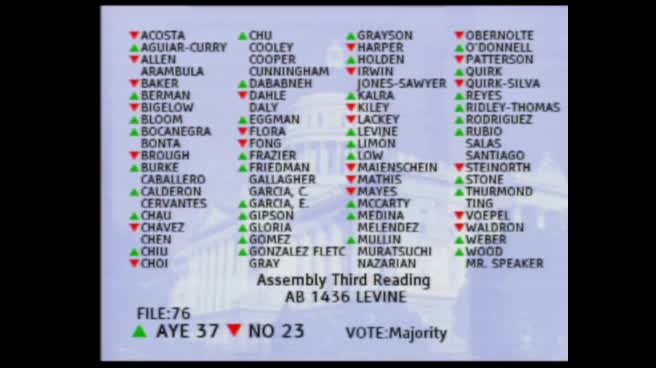 1MIN
Assembly Floor
 13MIN
Assembly Standing Committee on Housing and Community Development
Bill Author

Bill Co-Author(s):