AB 1647: Petroleum refineries: air monitoring systems.
- Session Year: 2017-2018
- House: Assembly
- Latest Version Date: 2017-10-08
Existing law generally designates air pollution control and air quality management districts with the primary responsibility for the control of air pollution from all sources other than vehicular sources. Existing law authorizes the State Air Resources Board or the air district to require the owner or the operator of an air pollution emission source to take any action that the state board or the air district determines to be reasonable for the determination of the amount of air pollution emissions from that source.
This bill would require a refinery-related community air monitoring system, as defined, to be installed on or before January 1, 2020, as specified, and would require an air district to design, develop, install, operate, and maintain the refinery-related community air monitoring system or to contract with a third party to provide those services. The bill would require an owner or operator of a petroleum refinery to develop, install, operate, and maintain a fence-line monitoring system, as defined, on or before January 1, 2020, as specified. The bill would require the air district and the owner or operator of a refinery to collect real-time data from these monitoring systems, to provide that data as quickly as possible in a publicly accessible format, and to maintain records of that data. The bill would require the owner or operator of a petroleum refinery to be responsible for the costs associated with the refinery-related community air monitoring system and the fence-line monitoring system, except as specified. By adding to the duties of air districts, this bill would impose a state-mandated local program.
The California Constitution requires the state to reimburse local agencies and school districts for certain costs mandated by the state. Statutory provisions establish procedures for making that reimbursement.
This bill would provide that no reimbursement is required by this act for a specified reason.
Existing law generally designates air pollution control and air quality management districts with the primary responsibility for the control of air pollution from all sources other than vehicular sources. Existing law authorizes the State Air Resources Board or the air district to require the owner or the operator of an air pollution emission source to take any action that the state board or the air district determines to be reasonable for the determination of the amount of air pollution emissions from that source.
This bill would require a community air monitoring system, as defined, to be installed on or before January 1, 2020, as specified, and would require an air district to oversee the development, installation, operation, and maintenance of design, develop, install, operate, and maintain the community air monitoring system. system or to contract with a third party to provide those services. The bill would require an owner or operator of a petroleum refinery to develop, install, operate, and maintain a fence-line monitoring system, as defined, on or before January 1, 2020, as specified. The bill would require the air district and the owner or operator of a refinery to collect real-time data from these monitoring systems, to provide that data as quickly as possible in a publicly accessible format, and to maintain records of that data. The bill would require the owner or operator of a petroleum refinery to be responsible for the costs associated with the community air monitoring system and the fence-line monitoring system, except as specified. By adding to the duties of air districts, this bill would impose a state-mandated local program.
The California Constitution requires the state to reimburse local agencies and school districts for certain costs mandated by the state. Statutory provisions establish procedures for making that reimbursement.
This bill would provide that no reimbursement is required by this act for a specified reason.
Existing law generally designates air pollution control and air quality management districts with the primary responsibility for the control of air pollution from all sources other than vehicular sources. Existing law authorizes the State Air Resources Board or the air district to require the owner or the operator of an air pollution emission source to take any action that the state board or the air district determines to be reasonable for the determination of the amount of air pollution emissions from that source.
This bill would require an air district to require the owner or operator of a petroleum refinery to install a community air monitoring system, as defined, to be installed on or before January 1, 2020, as specified, and would require an air district to oversee the development, installation, operation, and maintenance of the community air monitoring system. The bill would require an owner or operator of a petroleum refinery to install develop, install, operate, and maintain a fence-line monitoring system, as defined, on or before January 1, 2019, 2020, as specified. The bill would require the air district and the owner or operator of a refinery to collect real-time data from these monitoring systems, to provide that data as quickly as possible in a publicly accessible format, and to maintain records of that data. By adding to the duties of air districts, this bill would impose a state-mandated local program.
The California Constitution requires the state to reimburse local agencies and school districts for certain costs mandated by the state. Statutory provisions establish procedures for making that reimbursement.
This bill would provide that no reimbursement is required by this act for a specified reason.
Existing law generally designates air pollution control and air quality management districts with the primary responsibility for the control of air pollution from all sources other than vehicular sources. Existing law authorizes the State Air Resources Board or the air district to require the owner or the operator of an air pollution emission source to take any action that the state board or the air district determines to be reasonable for the determination of the amount of air pollution emissions from that source.
This bill would require an air district to require the owner or operator of a petroleum refinery to install a community air monitoring system, as defined, on or before January 1, 2020, as specified, and to install a fence-line monitoring system, as defined, on or before January 1, 2019, as specified. The bill would require the owner or operator of a refinery to collect real-time data from these monitoring systems, to make provide that data available to the public at the time of collection as quickly as possible in a publicly accessible format, and to maintain records of that data. By adding to the duties of air districts, this bill would impose a state-mandated local program.
The California Constitution requires the state to reimburse local agencies and school districts for certain costs mandated by the state. Statutory provisions establish procedures for making that reimbursement.
This bill would provide that no reimbursement is required by this act for a specified reason.
Existing law generally designates air pollution control and air quality management districts with the primary responsibility for the control of air pollution from all sources other than vehicular sources. Existing law authorizes the State Air Resources Board or the air district to require the owner or the operator of an air pollution emission source to take any action that the state board or the air district determines to be reasonable for the determination of the amount of air pollution emissions from that source.
This bill would require an air district to require the owner or operator of a petroleum refinery to install a community air monitoring system, as defined, on or before January 1, 2020, as specified, and to install a fence-line monitoring system, as defined, on or before January 1, 2019. By adding to the duties of air districts, this bill would impose a state-mandated local program. 2019, as specified. The bill would require the owner or operator of a refinery to collect real-time data from these monitoring systems, to make that data available to the public at the time of collection in a publicly accessible format, and to maintain records of that data. By adding to the duties of air districts, this bill would impose a state-mandated local program.
The California Constitution requires the state to reimburse local agencies and school districts for certain costs mandated by the state. Statutory provisions establish procedures for making that reimbursement.
This bill would provide that no reimbursement is required by this act for a specified reason.
Existing law generally designates air pollution control and air quality management districts with the primary responsibility for the control of air pollution from all sources other than vehicular sources. Existing law authorizes the State Air Resources Board or the air district to require the owner or the operator of an air pollution emission source to take any action that the state board or the air district determines to be reasonable for the determination of the amount of air pollution emissions from that source.
This bill would require an air district to require the owner or operator of a petroleum refinery to install a community air monitoring system, as defined, on or before January 1, 2020, and to install a fence-line monitoring system, as defined, on or before January 1, 2019. By adding to the duties of air districts, this bill would impose a state-mandated local program. The bill would require the owner or operator of a refinery to collect real-time data from these monitoring systems, to make that data available to the public at the time of collection in a publicly accessible format, and to maintain records of that data.
The California Constitution requires the state to reimburse local agencies and school districts for certain costs mandated by the state. Statutory provisions establish procedures for making that reimbursement.
This bill would provide that no reimbursement is required by this act for a specified reason.
(a)For purposes of this section, the following definitions apply:
(1)Refinery-related community air monitoring system means equipment that measures and records air pollutant concentrations in the ambient air at or near sensitive receptor locations near a petroleum refinery and that may be useful for estimating associated pollutant exposures and health risks and in determining trends in air pollutant levels over time.
(2)Fence-line monitoring system means equipment that measures and records air pollutant concentrations at or adjacent to a petroleum refinery and that may be useful for detecting or estimating the quantity of fugitive emissions, gas leaks, and other air emissions from the refinery.
(b)Notwithstanding Section 42708, and on or before January 1, 2020, a refinery-related community air monitoring system shall be installed near each refinery that is consistent with the requirements and guidance applicable to the siting of air quality monitors as established by the federal Environmental Protection Agency and that meets all of the following requirements:
(1)A district shall design, develop, install, operate, and maintain the refinery-related community air monitoring system, which shall be operated and maintained in accordance with guidance from the appropriate district. A district may contract with a third party to implement this paragraph.
(2)The refinery-related community air monitoring system shall include equipment capable of measuring compounds emitted to the atmosphere from refinery processes, as determined by the appropriate district.
(c)On or before January 1, 2020, the owner or operator of a petroleum refinery shall develop, install, operate, and maintain a fence-line monitoring system in accordance with guidance developed by the appropriate district.
(d)The district and the owner or operator of a petroleum refinery shall collect real-time data from the refinery-related community air monitoring system and the fence-line monitoring system and shall maintain records of that data. To the extent feasible, the data generated by these systems shall be provided to the public as quickly as possible in a publicly accessible format.
(e)Guidance developed by a district pursuant to this section shall take into account technological capabilities and incorporate input from affected parties and, to the extent feasible, shall be informed by refinery-related guidance in the monitoring plan prepared pursuant to subdivision (b) of Section 42705.5.
(f)(1)Except as provided in paragraph (2), the owner or operator of a petroleum refinery shall be responsible for the costs associated with implementing this section.
(2)To the extent a refinery-related community air monitoring system is intentionally utilized by a district to monitor emissions from sources under its jurisdiction other than a petroleum refinery, the district shall ensure the costs of the system are shared in a reasonably equitable manner.
SEC. 2.No reimbursement is required by this act pursuant to Section 6 of Article XIIIB of the California Constitution because a local agency or school district has the authority to levy service charges, fees, or assessments sufficient to pay for the program or level of service mandated by this act, within the meaning of Section 17556 of the Government Code.
(a)For purposes of this section, the following definitions apply:
(1)Community Refinery-related community air monitoring system means equipment that measures and records air pollutant concentrations in the ambient air at or near sensitive receptor locations near a petroleum refinery and that may be useful for estimating associated pollutant exposures and health risks and in determining trends in air pollutant levels over time.
(2)Fence-line monitoring system means equipment that measures and records air pollutant concentrations along the property boundary of at or adjacent to a petroleum refinery and that may be useful for detecting or estimating the quantity of fugitive emissions, gas leaks, and other air emissions from the refinery.
(b)Notwithstanding Section 42708, and on or before January 1, 2020, a refinery-related community air monitoring system shall be installed near each refinery that is consistent with the requirements and guidance applicable to the siting of air quality monitors as established by the federal Environmental Protection Agency and that meets all of the following requirements:
(1)A district shall design, develop, install, operate, and maintain the refinery-related community air monitoring system, which shall be operated and maintained in accordance with guidance from the appropriate district. A district may contract with a third party to implement this paragraph.
(2)The refinery-related community air monitoring system shall include equipment capable of measuring compounds emitted to the atmosphere from refinery processes, as determined by the appropriate district.
(c)On or before January 1, 2020, the owner or operator of a petroleum refinery shall develop, install, operate, and maintain a fence-line monitoring system in accordance with guidance developed by the appropriate district.
(d)The district and the owner or operator of a petroleum refinery shall collect real-time data from the refinery-related community air monitoring system and the fence-line monitoring system and shall maintain records of that data. To the extent feasible, the data generated by these systems shall be provided to the public as quickly as possible in a publicly accessible format.
(e)Guidance developed by a district pursuant to this section shall take into account technological capabilities and incorporate input from affected parties. parties and, to the extent feasible, shall be informed by refinery-related guidance in the monitoring plan prepared pursuant to subdivision (b) of Section 42705.5.
(f)(1)Except as provided in paragraph (2), the owner or operator of a petroleum refinery shall be responsible for the costs associated with implementing this section.
(2)To the extent a refinery-related community air monitoring system is intentionally utilized by a district to monitor emissions from sources under its jurisdiction other than a petroleum refinery, the district shall ensure the costs of the system are shared in a reasonably equitable manner.
SEC. 2.No reimbursement is required by this act pursuant to Section 6 of Article XIIIB of the California Constitution because a local agency or school district has the authority to levy service charges, fees, or assessments sufficient to pay for the program or level of service mandated by this act, within the meaning of Section 17556 of the Government Code.
(a)For purposes of this section, the following definitions apply:
(1)Community air monitoring system means equipment that measures and records air pollutant concentrations in the ambient air at or near sensitive receptor locations near a petroleum refinery and that may be useful for estimating associated pollutant exposures and health risks and in determining trends in air pollutant levels over time.
(2)Fence-line monitoring system means equipment that measures and records air pollutant concentrations along the property boundary of a petroleum refinery and that may be useful for detecting or estimating the quantity of fugitive emissions, gas leaks, and other air emissions from the refinery.
(b)Notwithstanding Section 42708, and on or before January 1, 2020, a community air monitoring system shall be installed that is consistent with the requirements and guidance applicable to the siting of air quality monitors as established by the federal Environmental Protection Agency and that meets all of the following requirements:
(1)A district shall oversee the development, installation, operation, and maintenance of design, develop, install, operate, and maintain the community air monitoring system, which shall be operated and maintained in accordance with guidance from the appropriate district. A district may contract with a third party to implement this paragraph.
(2)The community air monitoring system shall include equipment capable of measuring compounds emitted to the atmosphere from refinery processes, as determined by the appropriate district.
(c)On or before January 1, 2020, the owner or operator of a petroleum refinery shall develop, install, operate, and maintain a fence-line monitoring system in accordance with guidance developed by the appropriate district. The guidance developed by the district shall take into account technological capabilities and incorporate input from affected parties.
(d)The district and the owner or operator of a petroleum refinery shall collect real-time data from the community air monitoring system and the fence-line monitoring system and shall maintain records of that data. To the extent feasible, the data generated by these systems shall be provided to the public as quickly as possible in a publicly accessible format.
(e)Guidance developed by a district pursuant to this section shall take into account technological capabilities and incorporate input from affected parties.
(f)(1)Except as provided in paragraph (2), the owner or operator of a petroleum refinery shall be responsible for the costs associated with implementing this section.
(2)To the extent a community air monitoring system is intentionally utilized by a district to monitor emissions from sources under its jurisdiction other than a petroleum refinery, the district shall ensure the costs of the system are shared in a reasonably equitable manner.
SEC. 2.No reimbursement is required by this act pursuant to Section 6 of Article XIIIB of the California Constitution because a local agency or school district has the authority to levy service charges, fees, or assessments sufficient to pay for the program or level of service mandated by this act, within the meaning of Section 17556 of the Government Code.
(a)For purposes of this section, the following definitions apply:
(1)Community air monitoring system means equipment that measures and records air pollutant concentrations in the ambient air at or near sensitive receptor locations near a petroleum refinery and that may be useful for estimating associated pollutant exposures and health risks and in determining trends in air pollutant levels over time.
(2)Fence-line monitoring system means equipment that measures and records air pollutant concentrations along the property boundary of a petroleum refinery and that may be useful for detecting or estimating the quantity of fugitive emissions, gas leaks, and other air emissions from the refinery.
(b)Notwithstanding Section 42708, a district shall require the owner or operator of a petroleum refinery to install the following monitoring systems, which shall be operated and maintained in accordance with guidance from the district:(1)A(b)Notwithstanding Section 42708, and on or before January 1, 2020, a community air monitoring system, system shall be installed on or before January 1, 2020, based on that is consistent with the requirements and guidance applicable to the siting of air quality monitors as established by the federal Environmental Protection Agencys monitoring siting requirements and guidance. The community air monitoring system shall include equipment capable of measuring compounds resulting from refinery processes that are likely to impact communities. Agency and that meets all of the following requirements:
(1)A district shall oversee the development, installation, operation, and maintenance of the community air monitoring system, which shall be operated and maintained in accordance with guidance from the appropriate district.
(2)The community air monitoring system shall include equipment capable of measuring compounds emitted to the atmosphere from refinery processes, as determined by the appropriate district.
(2)A(c)On or before January 1, 2020, the owner or operator of a petroleum refinery shall develop, install, operate, and maintain a fence-line monitoring system, installed on or before January 1, 2019, as required by system in accordance with guidance developed by the appropriate district. The guidance developed by the district shall take into account technological capabilities and incorporate input from affected parties.
(c)(d)The district and the owner or operator of a petroleum refinery shall collect real-time data from the community air monitoring system and the fence-line monitoring system and shall maintain records of that data. To the extent feasible, the data generated by these systems shall be provided to the public as quickly as possible in a publicly accessible format.
SEC. 2.No reimbursement is required by this act pursuant to Section 6 of Article XIIIB of the California Constitution because a local agency or school district has the authority to levy service charges, fees, or assessments sufficient to pay for the program or level of service mandated by this act, within the meaning of Section 17556 of the Government Code.
(a)For purposes of this section, the following definitions apply:
(1)Community air monitoring system means equipment that measures and records air pollutant concentrations in the ambient air at or near sensitive receptor locations near a petroleum refinery and that may be useful for estimating associated pollutant exposures and health risks and in determining trends in air pollutant levels over time.
(2)Fence-line monitoring system means equipment that measures and records air pollutant concentrations along the property boundary of a petroleum refinery and that may be useful for detecting or estimating the quantity of fugitive emissions, gas leaks, and other air emissions from the refinery.
(b)Notwithstanding Section 42708, a district shall require the owner or operator of a petroleum refinery to install the following monitoring systems, which shall be operated and maintained in accordance with the regional air monitoring plan approved by guidance from the district:
(1)A community air monitoring system, installed on or before January 1, 2020, based on the federal Environmental Protection Agencys monitoring siting requirements and guidance. The community air monitoring system shall include equipment capable of measuring compounds resulting from refinery processes that are likely to impact communities.
(2)A fence-line monitoring system, installed on or before January 1, 2019, as required by guidance developed by the appropriate district. The guidance developed by the district shall take into account technological capabilities and incorporate input from affected parties.
(c)The owner or operator of a petroleum refinery shall collect real-time data from the community air monitoring system and the fence-line monitoring system and shall maintain records of that data. This data shall be available to the public at the time of collection To the extent feasible, the data generated by these systems shall be provided to the public as quickly as possible in a publicly accessible format.
SEC. 2.No reimbursement is required by this act pursuant to Section 6 of Article XIIIB of the California Constitution because a local agency or school district has the authority to levy service charges, fees, or assessments sufficient to pay for the program or level of service mandated by this act, within the meaning of Section 17556 of the Government Code.
(a)For purposes of this section, the following definitions apply:
(1)Community air monitoring system means equipment that measures and records air pollutant concentrations in the ambient air at or near sensitive receptor locations near a petroleum refinery and that may be useful for estimating associated pollutant exposures and health risks and in determining trends in air pollutant levels over time.
(2)Fence-line monitoring system means equipment that measures and records air pollutant concentrations along the property boundary of a petroleum refinery and that may be useful for detecting or estimating the quantity of fugitive emissions, gas leaks, and other air emissions from the refinery.
(b)Notwithstanding Section 42708, a district shall require the owner or operator of a petroleum refinery to install the following monitoring systems, which shall be operated and maintained in accordance with the regional air monitoring plan approved by the district:
(1)A community air monitoring system, installed on or before January 1, 2020. 2020, based on the federal Environmental Protection Agencys monitoring siting requirements and guidance. The community air monitoring system shall include equipment capable of measuring compounds resulting from refinery processes that are likely to impact communities.
(2)A fence-line monitoring system, installed on or before January 1, 2019. 2019, as required by guidance developed by the appropriate district. The guidance developed by the district shall take into account technological capabilities and incorporate input from affected parties.
(c)The owner or operator of a petroleum refinery shall collect real-time data from the community air monitoring system and the fence-line monitoring system and shall maintain records of that data. This data shall be available to the public at the time of collection in a publicly accessible format.
SEC. 2.No reimbursement is required by this act pursuant to Section 6 of Article XIIIB of the California Constitution because a local agency or school district has the authority to levy service charges, fees, or assessments sufficient to pay for the program or level of service mandated by this act, within the meaning of Section 17556 of the Government Code.
(a)For purposes of this section, the following definitions apply:
(1)Community air monitoring system means equipment that measures and records air pollutant concentrations in the ambient air at or near sensitive receptor locations near a petroleum refinery and that may be useful for estimating associated pollutant exposures and health risks and in determining trends in air pollutant levels over time.
(2)Fence-line monitoring system means equipment that measures and records air pollutant concentrations along the property boundary of a petroleum refinery and that may be useful for detecting or estimating the quantity of fugitive emissions, gas leaks, and other air emissions from the refinery.
(b)Notwithstanding Section 42708, a district shall require the owner or operator of a petroleum refinery to install the following monitoring systems, which shall be operated and maintained in accordance with the regional air monitoring plan approved by the district:
(1)A community air monitoring system, installed on or before January 1, 2020.
(2)A fence-line monitoring system, installed on or before January 1, 2019.
(c)The owner or operator of a petroleum refinery shall collect real-time data from the community air monitoring system and the fence-line monitoring system and shall maintain records of that data. This data shall be available to the public at the time of collection in a publicly accessible format.
SEC. 2.No reimbursement is required by this act pursuant to Section 6 of Article XIIIB of the California Constitution because a local agency or school district has the authority to levy service charges, fees, or assessments sufficient to pay for the program or level of service mandated by this act, within the meaning of Section 17556 of the Government Code.
|
Date
|
Status
|
|---|---|
| Oct 8, 2017 | Chaptered by Secretary of State - Chapter 589, Statutes of 2017. |
| Oct 8, 2017 | Approved by the Governor. |
| Sep 21, 2017 | Enrolled and presented to the Governor at 3:30 p.m. |
| Sep 13, 2017 | Assembly Rule 77(a) suspended. |
| Sep 12, 2017 | In Assembly. Concurrence in Senate amendments pending. May be considered on or after September 14 pursuant to Assembly Rule 77. |
| Sep 11, 2017 | Read third time. Passed. Ordered to the Assembly. |
| Aug 30, 2017 | Read second time. Ordered to third reading. |
| Aug 29, 2017 | Read third time and amended. Ordered to second reading. |
| Jul 11, 2017 | Read second time. Ordered to third reading. |
| Jul 10, 2017 | From committee: Be ordered to second reading pursuant to Senate Rule 28.8. |
| Jun 22, 2017 | Read second time and amended. Re-referred to Com. on APPR. |
| Jun 21, 2017 | From committee: Amend, and do pass as amended and re-refer to Com. on APPR. (Ayes 5. Noes 1.) (June 21). |
| Jun 8, 2017 | From committee chair, with author's amendments: Amend, and re-refer to committee. Read second time, amended, and re-referred to Com. on EQ. |
| Jun 8, 2017 | Referred to Com. on EQ. |
| May 30, 2017 | In Senate. Read first time. To Com. on RLS. for assignment. |
| May 30, 2017 | Read third time. Passed. Ordered to the Senate. (Ayes 56. Noes 18. Page 1788.) |
| May 26, 2017 | Read third time and amended. Ordered to third reading. (Page 1708.) |
| May 4, 2017 | Read second time. Ordered to third reading. |
| May 3, 2017 | From committee: Do pass. (Ayes 11. Noes 5.) (May 3). |
| Apr 18, 2017 | Re-referred to Com. on NAT. RES. |
| Apr 17, 2017 | From committee chair, with author's amendments: Amend, and re-refer to Com. on NAT. RES. Read second time and amended. |
| Mar 16, 2017 | Referred to Com. on NAT. RES. |
| Feb 19, 2017 | From printer. May be heard in committee March 21. |
| Feb 17, 2017 | Read first time. To print. |
|
Date
|
Description
|
Location
|
Votes
|
|
|---|---|---|---|---|
| Sep 13, 2017 | AB 1647 MURATSUCHI Concurrence in Senate Amendments | Assembly Floor |
Passed |
|
| Sep 11, 2017 | Assembly 3rd Reading AB1647 Muratsuchi et al. By Wieckowski | Senate Floor |
Passed |
|
| Jun 21, 2017 | Do pass as amended, but first amend, and re-refer to the Committee on [Appropriations] | Senate Standing Committee on Environmental Quality |
Passed |
|
| May 30, 2017 | AB 1647 MURATSUCHI Assembly Third Reading | Assembly Floor |
Passed |
|
| May 3, 2017 | Do pass. | Assembly Standing Committee on Appropriations |
Passed |
|
| Apr 17, 2017 | Do pass and be re-referred to the Committee on [Appropriations] | Assembly Standing Committee on Natural Resources |
Passed |
This list shows positions taken on this bill by organizations on the date displayed, which is linked to the original source.
Positions by individuals are not included.
|
Organization
|
Position
|
Date
|
|---|---|---|
| 42 individuals | ** Support | Aug 30, 2017 |
| Bay Area Air Quality Management District | ** Support | Aug 30, 2017 |
| California Association Of Professional Scientists | ** Support | Aug 30, 2017 |
| California Environmental Justice Alliance | ** Support | Aug 30, 2017 |
| California Interfaith Power & Light | ** Support | Aug 30, 2017 |
| California State PTA | ** Support | Aug 30, 2017 |
| County of Los Angeles Board of Supervisors | ** Support | Aug 30, 2017 |
| Environmental Defense Fund | ** Support | Aug 30, 2017 |
| Families Lobbying Against Refinery Exposures | ** Support | Aug 30, 2017 |
| Sierra Club California | ** Support | Aug 30, 2017 |
CONCURRENCE IN SENATE AMENDMENTS
CSA1 Bill Id:AB 1647
Author:(Muratsuchi)
As Amended Ver:August 29, 2017
Majority vote
ASSEMBLY: | 56-18 | (May 30, 2017) | SENATE: | 28-11 | (September 11, 2017) |
Original Committee Reference: NAT. RES.
SUMMARY: Requires community and fence-line air monitoring systems at and near each petroleum refinery.
The Senate amendments:
- Require air districts, rather than petroleum refineries, to design, develop, install, operate, and maintain refinery-related community air monitoring systems.
- Delay the deadline for a petroleum refinery to develop, install, operate, and maintain a fence-line monitoring systems from January 1, 2019 to January 1, 2020.
- Provide that the owner or operator of a petroleum refinery shall be responsible for the costs of implementing the monitoring requirements, except for community air monitoring systems that are intentionally utilized by a district to monitor other sources, in which case, the district shall ensure that costs are shared in a reasonably equitable manner.
- Makes related clarifying and technical changes.
EXISTING LAW:
- Establishes the Air Resources Board (ARB) to regulate motor vehicle emissions, coordinate activities of air districts for the purposes of the federal Clean Air Act, and implement the California Global Warming Solutions Act.
- Subject to the powers of the ARB, requires air districts to adopt and enforce rules and regulations to achieve and maintain the state and federal ambient air quality standards in all areas affected by non-vehicular emission sources under their jurisdiction.
- Authorizes ARB and each air district to adopt rules and regulations to require the owner or the operator of any air pollution emission source to take such action as ARB or the district may determine to be reasonable for the determination of the amount of such emission from such source.
- Authorizes an air pollution control officer to require from an applicant for, or the holder of, any permit provided for by the regulations of the district board, such information, analyses, plans, or specifications which will disclose the nature, extent, quantity, or degree of air contaminants which are, or may be, discharged by the source for which the permit was issued or applied.
FISCAL EFFECT: According to the Senate Appropriations Committee, pursuant to Senate Rule 28.8, negligible state costs.
COMMENTS: Depending on how they are defined, there are 15 to 20 petroleum refineries in California. The largest refineries producing transportation fuels are clustered in the Los Angeles County cities of Carson, El Segundo, Torrance, and Wilmington; Richmond, Martinez, and Rodeo in Contra Costa County; and Benicia in Solano County. There are also three smaller refineries near Bakersfield and two in Santa Maria. The large refineries are among the largest stationary sources of criteria pollutants, toxic air contaminants, and greenhouse gases in the state. In recent years, outages, fires, and other accidents have heightened community concerns surrounding the refineries.
On August 6, 2012, a substantial fire occurred due to a hydrocarbon leak at a crude oil processing unit at the Chevron Refinery in Richmond. The fire resulted in a large plume of black smoke and visible emissions from a refinery flare. The Contra Costa County Health Department issued a community warning and ordered a shelter-in-place for approximately five hours in Richmond and San Pablo. Thousands of residents sought medical treatment, with most suffering respiratory and/or eye discomfort. The incident prompted the Bay Area Air Quality Management District (BAAQMD) to identify a series of follow-up actions to enhance the district's ability to respond to similar incidents, including convening a panel of air monitoring experts and ultimately developing air monitoring guidelines for refineries, which were adopted in 2016.
On February 18, 2015, a major explosion occurred at the Torrance oil refinery, injuring four workers and shutting down the refinery for more than a year. The explosion also caused an 80,000-pound refinery component to land just a few feet away from a tank filled with hydrofluoric acid (HF), a highly toxic chemical used as an alkylation catalyst by only two refineries in the State of California. Since the 2015 explosion, there has been growing public concern not only over HF, but also a series of fires, accidents, and unplanned and extensive flaring that has occurred at the Torrance refinery. In 2016, unplanned flaring occurred on three separate occasions during power outages. The last of these outage/flaring events, on October 11, 2016, resulted in the City of Torrance issuing a shelter-in-place order for residents near the refinery, and the South Coast Air Quality Management District (SCAQMD) issuing a notice of violation.
According to the author, this bill will require the installation and maintenance of air quality monitors at the refinery fence-line and in the community, and require that the governing agency publicly report the readings from the monitors, if feasible for the governing agency. Under current law, there is no requirement for fence-line and community monitoring state-wide. Some air districts (BAAQMD and SCAQMD) either have regulations on this issue or they are in the process of adopting them, but there's no state-wide standard. This bill would simply require the local air districts to adopt a standard and then make the data accessible to the public as soon as feasibly possible. Air quality monitoring has become increasingly important to communities who live near any large pollution source. In an effort to understand the sources of pollution, how to appropriately mitigate them, and identify when pollution becomes hazardous for the communities, the state has an interest in collecting data on air quality.
Analysis Prepared by: Lawrence Lingbloom / NAT. RES. / (916) 319-2092 FN: 0002307
Office of Senate Floor Analyses (916) 651-1520 Fax: (916) 327-4478 | AB |
THIRD READING
Bill No: AB 1647
Amended: 8/29/17 in Senate
SENATE ENVIRONMENTAL QUALITY COMMITTEE: 5-1, 6/21/17
AYES: Wieckowski, Hill, Lara, Skinner, Stern
NOES: Stone
NO VOTE RECORDED: Gaines
SENATE APPROPRIATIONS COMMITTEE: Senate Rule 28.8
ASSEMBLY FLOOR: 56-18, 5/30/17 - See last page for vote
DIGEST:
This bill requires community air monitoring and fence-line monitoring systems to be installed on and near petroleum refineries, as specified.
Senate Floor Amendments of 8/29/17 make technical amendments to change the name of the proposed air monitoring systems, and change code sections in order to avoid conflicts with a previously chaptered bill.
ANALYSIS: Existing federal law sets, in the Federal Clean Air Act (FCAA) and its implementing regulations, National Ambient Air Quality Standards (NAAQS) for six criteria pollutants, provides that air basins that do not achieve NAAQS as nonattainment, allows only California to set vehicular emissions standards stricter than the federal government, and allows other states to adopt either the federal or California vehicular emissions standards. (42 U.S.C. §7401 et seq.)
Existing state law:
- Establishes the Air Resources Board (ARB) as the air pollution control agency in California and requires the ARB, among other things, to control emissions from a wide array of mobile sources and coordinate with local air districts to control emissions from stationary sources in order to implement the FCAA. (Health and Safety Code (HSC) §39500 et seq.)
- Provides shared authority over toxic air contaminant emissions between ARB and local air districts. (HSC §39650 et seq.)
- Requires, subject to the powers and duties of the ARB, the local air districts to adopt and enforce rules and regulations to achieve and maintain the state and federal ambient air quality standards in all areas affected by emission sources under their jurisdiction, and to enforce all applicable provisions of state and federal law. (HSC §40001)
- Requires each local air district to appoint an Air Pollution Control Officer (APCO) with specified duties and responsibilities. (HSC §40750 et seq.)
- Authorizes an APCO, at any time, to require from an applicant for, or the holder of, any permit information, analyses, plans, or specifications that will disclose the nature, extent, quantity, or degree of air contaminants which are, or may be, discharged under the permit. (HSC §42303)
This bill:
- Defines “Refinery-related community air monitoring system” as “equipment that measures and records air pollutant concentrations in the ambient air at or near sensitive receptor locations near a petroleum refinery and that may be useful for estimating associated pollutant exposures and health risks and in determining trends in air pollutant levels over time.”
- Defines “fence-line monitoring system” as “equipment that measures and records air pollutant concentrations at or adjacent to a petroleum refinery and that may be useful for detecting or estimating the quantity of fugitive emissions, gas leaks, and other air emissions from the refinery.”
- Requires, on or before January 1, 2020, a refinery-related community air monitoring system that is consistent with the requirements and guidance regarding the siting of air quality monitors provided by the federal Environmental Protection Agency to be installed that meets the following requirements:
- Is operated and maintained consistent with guidance and oversight by the appropriate district.
- Includes equipment to measure compounds as specified by the appropriate district.
- Is operated and maintained consistent with guidance and oversight by the appropriate district.
- Requires, on or before January 1, 2020, the owner or operator of a petroleum refinery to install, operate, and maintain a fence-line monitoring system in accordance with guidance provided by the appropriate district, as specified.
- Requires the district and the owner or operator of a petroleum refinery to collect and maintain real-time data from the community air monitoring system and the fence-line monitoring system and, to the extent feasible, provide that data to the public, as specified.
- Requires that all guidance developed by an air district pursuant to this measure shall take into account technological capabilities and incorporate input from affected parties, as specified.
- Specifies that the owner or operator of a petroleum refinery is responsible for the costs associated with implementing both monitoring systems unless the refinery-related community air monitoring system is intentionally utilized by a district to monitor emissions from other sources under its jurisdiction, which shall then be shared in a reasonably equitable manner.
Background
- Refinery safety. In California, there is not one single state agency responsible for the complete picture of the compliance status of a refinery. Instead, nearly a dozen state agencies have regulatory responsibilities for overseeing aspects of refinery operations, such as air emissions, worker safety, emergency response, handling hazardous materials, and others. California is home to nearly 20 major oil refineries (defined as those that refine more than 10,000 barrels per day), as well as several minor refineries spread across the state. Of the major oil refineries, five are located in the Bay Area, three in Kern County, one in San Luis Obispo County, and the remaining eight refineries in Los Angeles County.
Each region has its own local air pollution control district and other agencies that serve as first responders, as well as other agencies that handle environmental hazards, which further broaden the number of agencies involved in regulating refinery operations. Agencies involved in regulating refinery operations include, but are not limited to, the following:- Local Air Pollution Control Districts are largely responsible for overseeing air emissions from stationary sources, including refineries. Local air pollution control districts, such as the Bay Area Air Quality Management District (BAAQMD) and the South Coast Air Quality Management District (SCAQMD) issue air permits and ensure compliance with air quality regulations and laws.
- California Division of Occupational Safety and Health (CalOSHA) monitors and enforces regulations and laws related to worker safety, including preventing release of hazardous chemicals that could expose employees and others to serious hazard.
- Certified Unified Program Agencies (CUPAs) are local agencies, often city or county local hazardous materials units, that consolidate, coordinate, and make consistent the administrative requirements, permits, inspections, and enforcement activities of six environmental and emergency response programs. These include Hazardous Material Release Response Plans and Inventories (known as Business Plans) and the California Accidental Release Prevention (CalARP) Program, along with four others programs.
- California Environmental Protection Agency (CalEPA) oversees the implementation of the Certified Unified Program, including certified local unified program agencies.
- California Office of Emergency Services (CalOES) coordinates responses to major disasters, assures the state’s readiness to respond to and recover from all hazards (natural, manmade, war-caused emergencies and disasters) and assists local governments in their emergency preparedness, response, recovery, and hazard mitigation efforts.
- Local Air Pollution Control Districts are largely responsible for overseeing air emissions from stationary sources, including refineries. Local air pollution control districts, such as the Bay Area Air Quality Management District (BAAQMD) and the South Coast Air Quality Management District (SCAQMD) issue air permits and ensure compliance with air quality regulations and laws.
- Regulations related to refinery safety.
- Process Safety Management (PSM) – Administered through CalOSHA. The purpose of the PSM standard is to prevent releases of hazardous chemicals that could expose employees and others to serious hazards. The focus of the PSM is on-site chemical releases. CalOSHA operates the only PSM Unit in the nation. The PSM was promulgated by the 1990 amendments of the federal Clean Air Act.
- California Accidental Release Prevention Program (CalARP) – Administered by CalOES. The purpose of the program is to prevent accidental releases of substances that can cause serious harm to the public and the environment, to minimize the damage if releases occur, and to satisfy community right-to-know laws. CalOES administers CalARP as part of the state’s Unified Hazardous Waste and Hazardous Materials Management Program, and the CUPAs implement the program at the local level. The focus of the CalARP program is off-site chemical releases needing emergency response.
- Contra Costa County ISO – Administered by the county in unincorporated areas. (Subsequently adopted by Richmond in 2000, and updated in 2013.) The purpose of the ISO is to expand on the CalARP and prevent accidental release of hazardous chemicals, involve the public and industry, and conduct periodic audits of the plans and inspections of the industrial plants.
- Process Safety Management (PSM) – Administered through CalOSHA. The purpose of the PSM standard is to prevent releases of hazardous chemicals that could expose employees and others to serious hazards. The focus of the PSM is on-site chemical releases. CalOSHA operates the only PSM Unit in the nation. The PSM was promulgated by the 1990 amendments of the federal Clean Air Act.
- ExxonMobil Torrance refinery. The ExxonMobil Torrance refinery dates back to 1907. It is one of the major refineries in the state that produces gasoline and other fuels. Per ExxonMobil, the Torrance facility covers 750 acres, employs approximately 650 employees and 550 contractors. The refinery processes an average of 155,000 barrels of crude oil per day and produces 1.8 billion gallons of gasoline per year.
At approximately 8:50am on February 18, 2015, a significant explosion occurred at the ExxonMobil refinery in the City of Torrance which ripped apart major structures at the facility, shook homes for miles around the blast in the populated Southern California community, and sent ash into the air, landing on cars and homes throughout the area. Caltech officials said the explosion created ground shaking equivalent to a magnitude-1.7 earthquake. The enormity of the blast could have resulted in severe injuries and possible fatalities. Fortunately, only minor injuries were reported, including eight workers who were decontaminated onsite and four taken to the hospital. Three of the injured were released the same day. One worker remained hospitalized with a knee injury.
A smoke advisory was issued for neighborhoods near the refinery while regulators conducted analysis as to the potential health threat of the ash. Torrance Unified School District, the local school district, issued a “shelter-in-place” warning to nearby schools. Several schools were affected and sheltered in place during the day of the incident. However, not all schools knew of the alert or were informed of the proper procedures.
Agencies who responded to the incident included: Torrance Fire Department who served as the incident commander, Los Angeles County Fire Hazardous Materials (HazMat), SCAQMD, and CalOSHA.
The exact cause of the explosion is under investigation, however, initial inspections point to an over-pressurized air filtration device, an electrostatic precipitator, as the source of the explosion. Other sources of suspicion include washers and valves that had not been replaced in a very long time. The electrostatic precipitator is a piece of equipment roughly 100-feet long and used in the refining process to capture particulates and other air contaminants to prevent them from being released into the air. Agencies and news reports have noted that at the time of the incident workers were addressing the fluid catalytic cracking unit (FCC), a main unit at the refinery that converts crude oil to high-octane gasoline and other fuels. As a result, the FCC unit was off, or on standby mode.
In the aftermath of the incident, city officials held a briefing at the City Council meeting the Tuesday following the explosion. City officials acknowledged the need to improve response, particularly the effectiveness of the communications tools they have in place. The City of Torrance Fire Department has the ability to notify residents when a major incident has occurred with a suite of communications tools, including the use of a community warning siren system intended to alert the public in close proximity to ExxonMobil Refinery of a chemical release and the need to shelter in place. However, the alert sirens were not utilized on the day of the incident. The City also has a phone alert system that calls residents who have signed up for the service, Torrance Alerts, which was utilized with mixed results as noted by City Councilmembers who expressed confusion with the system.
In addition to the communications tools, the City has a barrier system for both Crenshaw and Del Amo Boulevards, two of the major roadways bordering the refinery, to restrict traffic in order to reduce exposure and support the emergency response effort. The day of the incident, the Del Amo Boulevard barrier was used, but the Crenshaw Boulevard barrier was not utilized - Chevron Richmond refinery explosion in 2012. The explosion at the ExxonMobil Torrance refinery is the first major refinery incident in the state since the August 6, 2012 Chevron Richmond refinery explosion that endangered the lives of 19 workers and sent 15,000 residents to local hospitals as a plume of black smoke enveloped the region. According to the incident summary by the U.S. Chemical Safety Board (CSB), the explosion at the Richmond refinery was the result of a catastrophic ruptured pipe in the #4 crude unit which released flammable, high temperature light gas oil, which then vaporized into a large, opaque vapor cloud that engulfed 19 workers.
Two minutes after the release, the vapor ignited and all but one worker escaped the fireball. The remaining worker, a Chevron refinery fire fighter, was in a fire engine wearing full protective gear which enabled him to survive. Additionally, 15,000 residents flooded local emergency rooms and hospitals to report concerns from the smoke and related particulate pollution.
In response to the incident, CalOSHA, the CSB, and the United States Environmental Protection Agency (US EPA) opened investigations and have issued reports. Chevron also completed its own investigation. According to a 2014 report issued by a state working group, “all four investigations identified serious concerns about process safety management procedures at the refinery and expressed the need for stronger preventative safeguards.”
The CSB released its final report in January 2015 in which it attributes a number of technical and managerial missteps by Chevron that resulted in the explosion. The report noted that the steel of the ruptured pipe was extremely vulnerable to corrosion, particularly from sulfur commonly used in the refining process. The CSB further points to Chevron management who did not understand how to address the leak in the pipe and whose actions made the situation worse. Moreover, according to the CSB, management rejected or ignored reports from employees that conditions were unsafe, including employee requests for safer equipment and practices.
As a result of the incident, Chevron has paid millions in fines, including a record-breaking fine issued by CalOSHA, and millions to affected community members and local government agencies for incident response and medical-related costs.
FISCAL EFFECT: Appropriation: Fiscal Com.: Local:
Bay Area Air Quality Management District
California Association of Professional Scientists
California Environmental Justice Alliance
California Interfaith Power & Light
California State PTA
County of Los Angeles Board of Supervisors
Environmental Defense Fund
Families Lobbying Against Refinery Exposures
Sierra Club California
42 Individuals
OPPOSITION: (Verified 8/29/17)
None received
ASSEMBLY FLOOR: 56-18, 5/30/17
AYES: Acosta, Aguiar-Curry, Arambula, Baker, Berman, Bloom, Bocanegra, Bonta, Burke, Caballero, Calderon, Cervantes, Chiu, Chu, Cooley, Cooper, Cunningham, Dababneh, Daly, Frazier, Friedman, Cristina Garcia, Eduardo Garcia, Gipson, Gloria, Gomez, Gonzalez Fletcher, Gray, Grayson, Holden, Irwin, Jones-Sawyer, Kalra, Levine, Limón, Low, Maienschein, McCarty, Medina, Mullin, Muratsuchi, Nazarian, O'Donnell, Quirk, Quirk-Silva, Reyes, Ridley-Thomas, Rodriguez, Salas, Santiago, Mark Stone, Thurmond, Ting, Weber, Wood, Rendon
NOES: Travis Allen, Bigelow, Brough, Chávez, Dahle, Flora, Fong, Gallagher, Harper, Kiley, Lackey, Mathis, Mayes, Melendez, Obernolte, Patterson, Voepel, Waldron
NO VOTE RECORDED: Chau, Chen, Choi, Eggman, Rubio, Steinorth
8/30/17 10:19:45
Office of Senate Floor Analyses (916) 651-1520 Fax: (916) 327-4478 | AB |
THIRD READING
Bill No: AB 1647
:
SENATE ENVIRONMENTAL QUALITY COMMITTEE: 5-1, 6/21/17
AYES: Wieckowski, Hill, Lara, Skinner, Stern
NOES: Stone
NO VOTE RECORDED: Gaines
SENATE APPROPRIATIONS COMMITTEE: Senate Rule 28.8
ASSEMBLY FLOOR: 56-18, 5/30/17 - See last page for vote
DIGEST:
This bill requires community air monitoring and fence-line monitoring systems to be installed on and near petroleum refineries, as specified.
ANALYSIS: Existing federal law sets, in the Federal Clean Air Act (FCAA) and its implementing regulations, National Ambient Air Quality Standards (NAAQS) for six criteria pollutants, provides that air basins that do not achieve NAAQS as nonattainment, allows only California to set vehicular emissions standards stricter than the federal government, and allows other states to adopt either the federal or California vehicular emissions standards. (42 U.S.C. §7401 et seq.)
Existing state law:
- Establishes the Air Resources Board (ARB) as the air pollution control agency in California and requires the ARB, among other things, to control emissions from a wide array of mobile sources and coordinate with local air districts to control emissions from stationary sources in order to implement the FCAA. (Health and Safety Code (HSC) §39500 et seq.)
- Provides shared authority over toxic air contaminant emissions between ARB and local air districts. (HSC §39650 et seq.)
- Requires, subject to the powers and duties of the ARB, the local air districts to adopt and enforce rules and regulations to achieve and maintain the state and federal ambient air quality standards in all areas affected by emission sources under their jurisdiction, and to enforce all applicable provisions of state and federal law. (HSC §40001)
- Requires each local air district to appoint an Air Pollution Control Officer (APCO) with specified duties and responsibilities. (HSC §40750 et seq.)
- Authorizes an APCO, at any time, to require from an applicant for, or the holder of, any permit information, analyses, plans, or specifications that will disclose the nature, extent, quantity, or degree of air contaminants which are, or may be, discharged under the permit. (HSC §42303)
This bill:
- Defines “community air monitoring system” as “equipment that measures and records air pollutant concentrations in the ambient air at or near sensitive receptor locations near a petroleum refinery and that may be useful for estimating associated pollutant exposures and health risks and in determining trends in air pollutant levels over time.”
- Defines “fence-line monitoring system” as “equipment that measures and records air pollutant concentrations along the property boundary of a petroleum refinery and that may be useful for detecting or estimating the quantity of fugitive emissions, gas leaks, and other air emissions from the refinery.”
- Requires, on or before January 1, 2020, a community air monitoring system that is consistent with the requirements and guidance regarding the siting of air quality monitors provided by the federal Environmental Protection Agency to be installed that meets the following requirements:
- Is operated and maintained consistent with guidance and oversight by the appropriate district.
- Includes equipment to measure compounds as specified by the appropriate district.
- Is operated and maintained consistent with guidance and oversight by the appropriate district.
- Requires, on or before January 1, 2020, the owner or operator of a petroleum refinery to install, operate, and maintain a fence-line monitoring system in accordance with guidance provided by the appropriate district, as specified.
- Requires the district and the owner or operator of a petroleum refinery to collect and maintain real-time data from the community air monitoring system and the fence-line monitoring system and, to the extent feasible, provide that data to the public, as specified.
- Requires that all guidance developed by an air district pursuant to this measure shall take into account technological capabilities and incorporate input from affected parties.
- Specifies that the owner or operator of a petroleum refinery is responsible for the costs associated with implementing both monitoring systems unless the community air monitoring system is intentionally utilized by a district to monitor emissions from other sources under its jurisdiction, which shall then be shared in a reasonably equitable manner.
Background
- Refinery safety. In California, there is not one single state agency responsible for the complete picture of the compliance status of a refinery. Instead, nearly a dozen state agencies have regulatory responsibilities for overseeing aspects of refinery operations, such as air emissions, worker safety, emergency response, handling hazardous materials, and others. California is home to nearly 20 major oil refineries (defined as those that refine more than 10,000 barrels per day), as well as several minor refineries spread across the state. Of the major oil refineries, five are located in the Bay Area, three in Kern County, one in San Luis Obispo County, and the remaining eight refineries in Los Angeles County.
Each region has its own local air pollution control district and other agencies that serve as first responders, as well as other agencies that handle environmental hazards, which further broaden the number of agencies involved in regulating refinery operations. Agencies involved in regulating refinery operations include, but are not limited to, the following:- Local Air Pollution Control Districts are largely responsible for overseeing air emissions from stationary sources, including refineries. Local air pollution control districts, such as the Bay Area Air Quality Management District (BAAQMD) and the South Coast Air Quality Management District (SCAQMD) issue air permits and ensure compliance with air quality regulations and laws.
- California Division of Occupational Safety and Health (CalOSHA) monitors and enforces regulations and laws related to worker safety, including preventing release of hazardous chemicals that could expose employees and others to serious hazard.
- Certified Unified Program Agencies (CUPAs) are local agencies, often city or county local hazardous materials units, that consolidate, coordinate, and make consistent the administrative requirements, permits, inspections, and enforcement activities of six environmental and emergency response programs. These include Hazardous Material Release Response Plans and Inventories (known as Business Plans) and the California Accidental Release Prevention (CalARP) Program, along with four others programs.
- California Environmental Protection Agency (CalEPA) oversees the implementation of the Certified Unified Program, including certified local unified program agencies.
- California Office of Emergency Services (CalOES) coordinates responses to major disasters, assures the state’s readiness to respond to and recover from all hazards (natural, manmade, war-caused emergencies and disasters) and assists local governments in their emergency preparedness, response, recovery, and hazard mitigation efforts.
- Local Air Pollution Control Districts are largely responsible for overseeing air emissions from stationary sources, including refineries. Local air pollution control districts, such as the Bay Area Air Quality Management District (BAAQMD) and the South Coast Air Quality Management District (SCAQMD) issue air permits and ensure compliance with air quality regulations and laws.
- Regulations related to refinery safety.
- Process Safety Management (PSM) – Administered through CalOSHA. The purpose of the PSM standard is to prevent releases of hazardous chemicals that could expose employees and others to serious hazards. The focus of the PSM is on-site chemical releases. CalOSHA operates the only PSM Unit in the nation. The PSM was promulgated by the 1990 amendments of the federal Clean Air Act.
- California Accidental Release Prevention Program (CalARP) – Administered by CalOES. The purpose of the program is to prevent accidental releases of substances that can cause serious harm to the public and the environment, to minimize the damage if releases occur, and to satisfy community right-to-know laws. CalOES administers CalARP as part of the state’s Unified Hazardous Waste and Hazardous Materials Management Program, and the CUPAs implement the program at the local level. The focus of the CalARP program is off-site chemical releases needing emergency response.
- Contra Costa County ISO – Administered by the county in unincorporated areas. (Subsequently adopted by Richmond in 2000, and updated in 2013.) The purpose of the ISO is to expand on the CalARP and prevent accidental release of hazardous chemicals, involve the public and industry, and conduct periodic audits of the plans and inspections of the industrial plants.
- Process Safety Management (PSM) – Administered through CalOSHA. The purpose of the PSM standard is to prevent releases of hazardous chemicals that could expose employees and others to serious hazards. The focus of the PSM is on-site chemical releases. CalOSHA operates the only PSM Unit in the nation. The PSM was promulgated by the 1990 amendments of the federal Clean Air Act.
- ExxonMobil Torrance refinery. The ExxonMobil Torrance refinery dates back to 1907. It is one of the major refineries in the state that produces gasoline and other fuels. Per ExxonMobil, the Torrance facility covers 750 acres, employs approximately 650 employees and 550 contractors. The refinery processes an average of 155,000 barrels of crude oil per day and produces 1.8 billion gallons of gasoline per year.
At approximately 8:50am on February 18, 2015, a significant explosion occurred at the ExxonMobil refinery in the City of Torrance which ripped apart major structures at the facility, shook homes for miles around the blast in the populated Southern California community, and sent ash into the air, landing on cars and homes throughout the area. Caltech officials said the explosion created ground shaking equivalent to a magnitude-1.7 earthquake. The enormity of the blast could have resulted in severe injuries and possible fatalities. Fortunately, only minor injuries were reported, including eight workers who were decontaminated onsite and four taken to the hospital. Three of the injured were released the same day. One worker remained hospitalized with a knee injury.
A smoke advisory was issued for neighborhoods near the refinery while regulators conducted analysis as to the potential health threat of the ash. Torrance Unified School District, the local school district, issued a “shelter-in-place” warning to nearby schools. Several schools were affected and sheltered in place during the day of the incident. However, not all schools knew of the alert or were informed of the proper procedures.
Agencies who responded to the incident included: Torrance Fire Department who served as the incident commander, Los Angeles County Fire Hazardous Materials (HazMat), SCAQMD, and CalOSHA.
The exact cause of the explosion is under investigation, however, initial inspections point to an over-pressurized air filtration device, an electrostatic precipitator, as the source of the explosion. Other sources of suspicion include washers and valves that had not been replaced in a very long time. The electrostatic precipitator is a piece of equipment roughly 100-feet long and used in the refining process to capture particulates and other air contaminants to prevent them from being released into the air. Agencies and news reports have noted that at the time of the incident workers were addressing the fluid catalytic cracking unit (FCC), a main unit at the refinery that converts crude oil to high-octane gasoline and other fuels. As a result, the FCC unit was off, or on standby mode.
In the aftermath of the incident, city officials held a briefing at the City Council meeting the Tuesday following the explosion. City officials acknowledged the need to improve response, particularly the effectiveness of the communications tools they have in place. The City of Torrance Fire Department has the ability to notify residents when a major incident has occurred with a suite of communications tools, including the use of a community warning siren system intended to alert the public in close proximity to ExxonMobil Refinery of a chemical release and the need to shelter in place. However, the alert sirens were not utilized on the day of the incident. The City also has a phone alert system that calls residents who have signed up for the service, Torrance Alerts, which was utilized with mixed results as noted by City Councilmembers who expressed confusion with the system.
In addition to the communications tools, the City has a barrier system for both Crenshaw and Del Amo Boulevards, two of the major roadways bordering the refinery, to restrict traffic in order to reduce exposure and support the emergency response effort. The day of the incident, the Del Amo Boulevard barrier was used, but the Crenshaw Boulevard barrier was not utilized - Chevron Richmond refinery explosion in 2012. The explosion at the ExxonMobil Torrance refinery is the first major refinery incident in the state since the August 6, 2012 Chevron Richmond refinery explosion that endangered the lives of 19 workers and sent 15,000 residents to local hospitals as a plume of black smoke enveloped the region. According to the incident summary by the U.S. Chemical Safety Board (CSB), the explosion at the Richmond refinery was the result of a catastrophic ruptured pipe in the #4 crude unit which released flammable, high temperature light gas oil, which then vaporized into a large, opaque vapor cloud that engulfed 19 workers.
Two minutes after the release, the vapor ignited and all but one worker escaped the fireball. The remaining worker, a Chevron refinery fire fighter, was in a fire engine wearing full protective gear which enabled him to survive. Additionally, 15,000 residents flooded local emergency rooms and hospitals to report concerns from the smoke and related particulate pollution.
In response to the incident, CalOSHA, the CSB, and the United States Environmental Protection Agency (US EPA) opened investigations and have issued reports. Chevron also completed its own investigation. According to a 2014 report issued by a state working group, “all four investigations identified serious concerns about process safety management procedures at the refinery and expressed the need for stronger preventative safeguards.”
The CSB released its final report in January 2015 in which it attributes a number of technical and managerial missteps by Chevron that resulted in the explosion. The report noted that the steel of the ruptured pipe was extremely vulnerable to corrosion, particularly from sulfur commonly used in the refining process. The CSB further points to Chevron management who did not understand how to address the leak in the pipe and whose actions made the situation worse. Moreover, according to the CSB, management rejected or ignored reports from employees that conditions were unsafe, including employee requests for safer equipment and practices.
As a result of the incident, Chevron has paid millions in fines, including a record-breaking fine issued by CalOSHA, and millions to affected community members and local government agencies for incident response and medical-related costs.
FISCAL EFFECT: Appropriation: Fiscal Com.: Local:
Bay Area Air Quality Management District
California Association of Professional Scientists
California Environmental Justice Alliance
California Interfaith Power & Light
California State PTA
County of Los Angeles Board of Supervisors
Environmental Defense Fund
Families Lobbying Against Refinery Exposures
Sierra Club California
42 Individuals
OPPOSITION: (Verified 7/10/17)
None received
ASSEMBLY FLOOR: 56-18, 5/30/17
AYES: Acosta, Aguiar-Curry, Arambula, Baker, Berman, Bloom, Bocanegra, Bonta, Burke, Caballero, Calderon, Cervantes, Chiu, Chu, Cooley, Cooper, Cunningham, Dababneh, Daly, Frazier, Friedman, Cristina Garcia, Eduardo Garcia, Gipson, Gloria, Gomez, Gonzalez Fletcher, Gray, Grayson, Holden, Irwin, Jones-Sawyer, Kalra, Levine, Limón, Low, Maienschein, McCarty, Medina, Mullin, Muratsuchi, Nazarian, O'Donnell, Quirk, Quirk-Silva, Reyes, Ridley-Thomas, Rodriguez, Salas, Santiago, Mark Stone, Thurmond, Ting, Weber, Wood, Rendon
NOES: Travis Allen, Bigelow, Brough, Chávez, Dahle, Flora, Fong, Gallagher, Harper, Kiley, Lackey, Mathis, Mayes, Melendez, Obernolte, Patterson, Voepel, Waldron
NO VOTE RECORDED: Chau, Chen, Choi, Eggman, Rubio, Steinorth
7/12/17 11:41:46
SENATE COMMITTEE ON ENVIRONMENTAL QUALITY
Senator Wieckowski, Chair
2017 - 2018 Regular
Bill No: AB 1647
Author: | Muratsuchi | ||
Version: | 6/8/2017 | Hearing Date: | 6/21/2017 |
Urgency: | No | Fiscal: | Yes |
Consultant: | David Ernest García | ||
SUBJECT: Petroleum refineries: air monitoring systems
ANALYSIS:
Existing federal law:
- The Federal Clean Air Act (FCAA) and its implementing regulations set National Ambient Air Quality Standards (NAAQS) for six criteria pollutants, designate air basins that do not achieve NAAQS as nonattainment, allow only California to set vehicular emissions standards stricter than the federal government, and allow other states to adopt either the federal or California vehicular emissions standards. (42 U.S.C. §7401 et seq.)
Existing state law:
- Establishes the Air Resources Board (ARB) as the air pollution control agency in California and requires the ARB, among other things, to control emissions from a wide array of mobile sources and coordinate with local air districts to control emissions from stationary sources in order to implement the FCAA. (Health and Safety Code (HSC) §39500 et seq.)
- Provides shared authority over toxic air contaminant emissions between ARB and local air districts. (HSC §39650 et seq.)
- Requires, subject to the powers and duties of the ARB, the local air districts to adopt and enforce rules and regulations to achieve and maintain the state and federal ambient air quality standards in all areas affected by emission sources under their jurisdiction, and to enforce all applicable provisions of state and federal law. (HSC §40001)
- Requires each local air district to appoint an Air Pollution Control Officer (APCO) with specified duties and responsibilities. (HSC §40750 et seq.)
- Authorizes an APCO, at any time, to require from an applicant for, or the holder of, any permit information, analyses, plans, or specifications that will disclose the nature, extent, quantity, or degree of air contaminants which are, or may be, discharged under the permit. (HSC §42303)
This bill:
- Defines “community air monitoring system” as “equipment that measures and records air pollutant concentrations in the ambient air at or near sensitive receptor locations near a petroleum refinery and that may be useful for estimating associated pollutant exposures and health risks and in determining trends in air pollutant levels over time.”
- Defines “fence-line monitoring system” as “equipment that measures and records air pollutant concentrations along the property boundary of a petroleum refinery and that may be useful for detecting or estimating the quantity of fugitive emissions, gas leaks, and other air emissions from the refinery.”
- Requires, on or before January 1, 2020, a community air monitoring system that is consistent with the requirements and guidance regarding the siting of air quality monitors provided by the federal Environmental Protection Agency to be installed that meets the following requirements:
- Is operated and maintained consistent with guidance and oversight by the appropriate district.
- Includes equipment to measure compounds as specified by the appropriate district.
- Is operated and maintained consistent with guidance and oversight by the appropriate district.
- Requires, on or before January 1, 2020, the owner or operator of a petroleum refinery to install, operate, and maintain a fence-line monitoring system in accordance with guidance provided by the appropriate district, as specified.
- Requires the district and the owner or operator of a petroleum refinery to collect and maintain real-time data from the community air monitoring system and the fence-line monitoring system and, to the extent feasible, provide that data to the public, as specified.
Background
- Refinery safety. In California, there is not one single state agency responsible for the complete picture of the compliance status of a refinery. Instead, nearly a dozen state agencies have regulatory responsibilities for overseeing aspects of refinery operations, such as air emissions, worker safety, emergency response, handling hazardous materials, and others. California is home to nearly 20 major oil refineries (defined as those that refine more than 10,000 barrels per day), as well as several minor refineries spread across the state. Of the major oil refineries, five are located in the Bay Area, three in Kern County, one in San Luis Obispo County, and the remaining eight refineries in Los Angeles County.
Each region has its own local air pollution control district and other agencies that serve as first responders, as well as other agencies that handle environmental hazards, which further broaden the number of agencies involved in regulating refinery operations. Agencies involved in regulating refinery operations include, but are not limited to, the following:- Local Air Pollution Control Districts are largely responsible for overseeing air emissions from stationary sources, including refineries. Local air pollution control districts, such as the Bay Area Air Quality Management District (BAAQMD) and the South Coast Air Quality Management District (SCAQMD) issue air permits and ensure compliance with air quality regulations and laws.
- California Division of Occupational Safety and Health (CalOSHA) monitors and enforces regulations and laws related to worker safety, including preventing release of hazardous chemicals that could expose employees and others to serious hazard.
- Certified Unified Program Agencies (CUPAs) are local agencies, often city or county local hazardous materials units, that consolidate, coordinate, and make consistent the administrative requirements, permits, inspections, and enforcement activities of six environmental and emergency response programs. These include Hazardous Material Release Response Plans and Inventories (known as Business Plans) and the California Accidental Release Prevention (CalARP) Program, along with four others programs.
- California Environmental Protection Agency (CalEPA) oversees the implementation of the Certified Unified Program, including certified local unified program agencies.
- California Office of Emergency Services (CalOES) coordinates responses to major disasters, assures the state’s readiness to respond to and recover from all hazards (natural, manmade, war-caused emergencies and disasters) and assists local governments in their emergency preparedness, response, recovery, and hazard mitigation efforts.
- Local Air Pollution Control Districts are largely responsible for overseeing air emissions from stationary sources, including refineries. Local air pollution control districts, such as the Bay Area Air Quality Management District (BAAQMD) and the South Coast Air Quality Management District (SCAQMD) issue air permits and ensure compliance with air quality regulations and laws.
- Regulations related to refinery safety.
- Process Safety Management (PSM) – Administered through CalOSHA. The purpose of the PSM standard is to prevent releases of hazardous chemicals that could expose employees and others to serious hazards. The focus of the PSM is on-site chemical releases. CalOSHA operates the only PSM Unit in the nation. The PSM was promulgated by the 1990 amendments of the federal Clean Air Act.
- California Accidental Release Prevention Program (CalARP) – Administered by CalOES. The purpose of the program is to prevent accidental releases of substances that can cause serious harm to the public and the environment, to minimize the damage if releases occur, and to satisfy community right-to-know laws. CalOES administers CalARP as part of the state’s Unified Hazardous Waste and Hazardous Materials Management Program, and the CUPAs implement the program at the local level. The focus of the CalARP program is off-site chemical releases needing emergency response.
- Contra Costa County ISO – Administered by the county in unincorporated areas. (Subsequently adopted by Richmond in 2000, and updated in 2013.) The purpose of the ISO is to expand on the CalARP and prevent accidental release of hazardous chemicals, involve the public and industry, and conduct periodic audits of the plans and inspections of the industrial plants.
- Process Safety Management (PSM) – Administered through CalOSHA. The purpose of the PSM standard is to prevent releases of hazardous chemicals that could expose employees and others to serious hazards. The focus of the PSM is on-site chemical releases. CalOSHA operates the only PSM Unit in the nation. The PSM was promulgated by the 1990 amendments of the federal Clean Air Act.
- ExxonMobil Torrance refinery. The ExxonMobil Torrance refinery dates back to 1907. It is one of the major refineries in the state that produces gasoline and other fuels. Per ExxonMobil, the Torrance facility covers 750 acres, employs approximately 650 employees and 550 contractors. The refinery processes an average of 155,000 barrels of crude oil per day and produces 1.8 billion gallons of gasoline per year.
At approximately 8:50am on February 18, 2015, a significant explosion occurred at the ExxonMobil refinery in the City of Torrance which ripped apart major structures at the facility, shook homes for miles around the blast in the populated Southern California community, and sent ash into the air, landing on cars and homes throughout the area. Caltech officials said the explosion created ground shaking equivalent to a magnitude-1.7 earthquake. The enormity of the blast could have resulted in severe injuries and possible fatalities. Fortunately, only minor injuries were reported, including eight workers who were decontaminated onsite and four taken to the hospital. Three of the injured were released the same day. One worker remained hospitalized with a knee injury.
A smoke advisory was issued for neighborhoods near the refinery while regulators conducted analysis as to the potential health threat of the ash. Torrance Unified School District, the local school district, issued a “shelter-in-place” warning to nearby schools. Several schools were affected and sheltered in place during the day of the incident. However, not all schools knew of the alert or were informed of the proper procedures.
Agencies who responded to the incident included: Torrance Fire Department who served as the incident commander, Los Angeles County Fire Hazardous Materials (HazMat), SCAQMD, and CalOSHA.
The exact cause of the explosion is under investigation, however, initial inspections point to an over-pressurized air filtration device, an electrostatic precipitator, as the source of the explosion. Other sources of suspicion include washers and valves that had not been replaced in a very long time. The electrostatic precipitator is a piece of equipment roughly 100-feet long and used in the refining process to capture particulates and other air contaminants to prevent them from being released into the air. Agencies and news reports have noted that at the time of the incident workers were addressing the fluid catalytic cracking unit (FCC), a main unit at the refinery that converts crude oil to high-octane gasoline and other fuels. As a result, the FCC unit was off, or on standby mode.
In the aftermath of the incident, city officials held a briefing at the City Council meeting the Tuesday following the explosion. City officials acknowledged the need to improve response, particularly the effectiveness of the communications tools they have in place. The City of Torrance Fire Department has the ability to notify residents when a major incident has occurred with a suite of communications tools, including the use of a community warning siren system intended to alert the public in close proximity to ExxonMobil Refinery of a chemical release and the need to shelter in place. However, the alert sirens were not utilized on the day of the incident. The City also has a phone alert system that calls residents who have signed up for the service, Torrance Alerts, which was utilized with mixed results as noted by City Councilmembers who expressed confusion with the system.
In addition to the communications tools, the City has a barrier system for both Crenshaw and Del Amo Boulevards, two of the major roadways bordering the refinery, to restrict traffic in order to reduce exposure and support the emergency response effort. The day of the incident, the Del Amo Boulevard barrier was used, but the Crenshaw Boulevard barrier was not utilized - Chevron Richmond refinery explosion in 2012. The explosion at the ExxonMobil Torrance refinery is the first major refinery incident in the state since the August 6, 2012 Chevron Richmond refinery explosion that endangered the lives of 19 workers and sent 15,000 residents to local hospitals as a plume of black smoke enveloped the region. According to the incident summary by the U.S. Chemical Safety Board (CSB), the explosion at the Richmond refinery was the result of a catastrophic ruptured pipe in the #4 crude unit which released flammable, high temperature light gas oil, which then vaporized into a large, opaque vapor cloud that engulfed 19 workers.
Two minutes after the release, the vapor ignited and all but one worker escaped the fireball. The remaining worker, a Chevron refinery fire fighter, was in a fire engine wearing full protective gear which enabled him to survive. Additionally, 15,000 residents flooded local emergency rooms and hospitals to report concerns from the smoke and related particulate pollution.
In response to the incident, CalOSHA, the CSB, and the United States Environmental Protection Agency (US EPA) opened investigations and have issued reports. Chevron also completed its own investigation. According to a 2014 report issued by a state working group, “all four investigations identified serious concerns about process safety management procedures at the refinery and expressed the need for stronger preventative safeguards.”
The CSB released its final report in January 2015 in which it attributes a number of technical and managerial missteps by Chevron that resulted in the explosion. The report noted that the steel of the ruptured pipe was extremely vulnerable to corrosion, particularly from sulfur commonly used in the refining process. The CSB further points to Chevron management who did not understand how to address the leak in the pipe and whose actions made the situation worse. Moreover, according to the CSB, management rejected or ignored reports from employees that conditions were unsafe, including employee requests for safer equipment and practices.
As a result of the incident, Chevron has paid millions in fines, including a record-breaking fine issued by CalOSHA, and millions to affected community members and local government agencies for incident response and medical-related costs.
Comments
- Purpose of Bill. According to the author, “AB 1647 is part of a package of bills I am carrying to increase safety at California’s refineries. Whether it is in Richmond or Torrance, communities across the state need to feel safe and understand what chemicals are present in their communities. AB 1647 requires the installation and maintenance of air quality monitors at the refinery fence-line and in the community, and require that the governing agency publicly report the readings from the monitors in real-time, if feasible for the governing agency.
“Under current law, there is no state-wide requirement for fence-line and community monitoring of most chemicals. Some air quality monitoring districts (BAAQMD and SCAQMD) either have regulations on this issue or they are in the process of adopting them. Additionally, the federal government requires the monitoring of benzene. This bill would simply require the local air districts to adopt a standard and then make the data accessible to the public as soon as feasibly possible.
“Air quality monitoring has become increasingly important to communities who live near any large pollution source. In an effort to understand the sources of pollution, how to appropriately mitigate them, and identify when pollution becomes hazardous for the communities, the state has an interest in collecting data on air quality.” - Air monitoring. Currently, the Bay Area Air Quality Management District (BAAQMD) has adopted some regulatory requirements for community monitoring and has indicated that they are working on more regulations. The refineries in BAAQMD’s jurisdiction have submitted their fence-line monitoring plans per an existing regulatory requirement; these are currently under review.
San Luis Obispo County Air Pollution Control District (SLOAPCD) has one fence-line monitor at a refinery within its jurisdiction that measures sulfur dioxide, Particulate Matter (PM) less than ten microns in diameter, and PM less than 2.5 microns in diameter. BAAQMD indicates there are far more compounds to be captured by fence-line monitoring, particularly hydrogen sulfide, which is the odorant added to natural gas that gives the otherwise odorless gas its characteristic foul smell similar to rotten eggs.
SCAQMD currently has no fence-line or community air monitoring regulations in place, but are at the initial stages of exploring the adoption of their own rules. - Developing guidance. Air districts are tasked with proving guidance multiple times in AB 1647, but only one time are they required to develop that guidance taking into account technological capabilities and seeking input from affected parties.
This is a fair and logical approach that should apply throughout the bill, so the committee may wish to consider amending the bill so that taking into account technological capabilities and seeking input from affected parties apply universally to the development of guidance in AB 1647. - Who pays? It is clear in AB 1647 that the owner or operator of a petroleum refinery is responsible to pay for the fence-line monitoring system required by the bill. It is unclear, however, who is responsible for the costs associated with the community air monitoring system.
The committee may wish to amend AB 1647 to require that the owner or operator of a petroleum refinery is responsible for the costs associated with implementing both air monitoring systems. - Technical and clarifying amendment. AB 1647 currently tasks districts to “oversee the development, installation, operation, and maintenance of the community air monitoring system,” but air districts have pointed out that they may also design or contract for such systems.
A technical and clarifying amendment is needed.
Related/Prior Legislation
AB 1645 (Muratsuchi, 2017) phases out the use of hydrofluoric acid by California refineries. AB 1645 is awaiting hearing in the Assembly Committee on Environmental Safety and Toxic Materials.
AB 1646 (Muratsuchi, 2017) requires that a refinery’s risk management plan be available to the public; it calls for a creation and maintenance of a publicly accessible community alert plan; and it requires the maintenance of a public alert system including, but not limited to, alarms and sirens to alert the public in the case of emergency. AB 1646 is set to be heard in the Senate Committee on Environmental Quality on June 21, 2017.
AB 1648 (Muratsuchi, 2017) increases the number of state refinery inspectors at the California Division of Occupational Safety and Health (Cal OSHA). A budget request has been made in conjunction with this bill. AB 1648 is awaiting hearing in the Assembly Committee on Labor and Employment.
AB 1649 (Muratsuchi, 2017) will codify and make permanent the existing Interagency Refinery Task Force created by Governor Jerry Brown. AB 1649 is set to be heard in the Senate Committee on Environmental Quality on June 21, 2017.
AB 246 (Santiago, 2017) requires the Department of Toxic Substances Control (DTSC), as a condition for a new hazardous waste facility permit or a renewal of a hazardous waste facility permit, to require a permit applicant, only for facilities that treat or dispose of hazardous waste, to install and maintain a fence-line monitoring system to measure and record emissions along the border of the facility. AB 246 is in the Senate Environmental Quality Committee.
SOURCE:
Author
SUPPORT:
Bay Area Air Quality Management District
California Association of Professional Scientists
California Environmental Justice Alliance
California State PTA
County of Los Angeles Board of Supervisors
Environmental Defense Fund
Families Lobbying Against Refinery Exposures
Sierra Club California
OPPOSITION:
None received
-- END --
ASSEMBLY THIRD READING
ATR Bill Id:AB 1647
Author:(Muratsuchi)
As Amended Ver:May 26, 2017
Majority vote
Committee | Votes | Ayes | Noes |
Natural Resources | 8-2 | Cristina Garcia, Acosta, Chau, Eggman, Limón, McCarty, Muratsuchi, Mark Stone | Travis Allen, Harper |
Appropriations | 11-5 | Gonzalez Fletcher, Bloom, Bocanegra, Bonta, Calderon, Chau, Eggman, Friedman, Eduardo Garcia, Muratsuchi, Reyes | Bigelow, Brough, Fong, Gallagher, Obernolte |
SUMMARY: Requires petroleum refineries to install specified community and fence-line air monitoring systems and collect, maintain, and publish the resulting data. Specifically, this bill:
- Requires an air district to require a petroleum refinery owner or operator to install the following monitoring systems, and operate and maintain them in accordance with guidance from the district:
- A community air monitoring system, installed on or before January 1, 2020, including equipment capable of measuring compounds resulting from refinery processes that are likely to impact communities; and
- A fence-line monitoring system, installed on or before January 1, 2019, as required by district guidance taking into account technological capabilities and incorporating input from affected parties.
- Requires a petroleum refinery owner or operator to collect real-time data from the monitoring systems, maintain records of the data, and make it available as quickly as possible in a publicly accessible format.
EXISTING LAW:
- Establishes the Air Resources Board (ARB) to regulate motor vehicle emissions, coordinate activities of air districts for the purposes of the federal Clean Air Act, and implement the California Global Warming Solutions Act.
- Subject to the powers of the ARB, requires air districts to adopt and enforce rules and regulations to achieve and maintain the state and federal ambient air quality standards in all areas affected by non-vehicular emission sources under their jurisdiction.
- Authorizes ARB and each air district to adopt rules and regulations to require the owner or the operator of any air pollution emission source to take such action as ARB or the district may determine to be reasonable for the determination of the amount of such emission from such source.
- Authorizes an air pollution control officer to require from an applicant for, or the holder of, any permit provided for by the regulations of the district board, such information, analyses, plans, or specifications which will disclose the nature, extent, quantity, or degree of air contaminants which are, or may be, discharged by the source for which the permit was issued or applied.
FISCAL EFFECT: According to the Assembly Appropriations Committee, minor, absorbable state costs.
COMMENTS: Depending on how they are defined, there are 15 to 20 petroleum refineries in California. The largest refineries producing transportation fuels are clustered in the Los Angeles County cities of Carson, El Segundo, Torrance, and Wilmington; Richmond, Martinez, and Rodeo in Contra Costa County; and Benicia in Solano County. There are also three smaller refineries near Bakersfield and two in Santa Maria. The large refineries are among the largest stationary sources of criteria pollutants, toxic air contaminants, and greenhouse gases in the state. In recent years, outages, fires, and other accidents have heightened community concerns surrounding the refineries.
On August 6, 2012, a substantial fire occurred due to a hydrocarbon leak at a crude oil processing unit at the Chevron Refinery in Richmond. The fire resulted in a large plume of black smoke and visible emissions from a refinery flare. The Contra Costa County Health Department issued a community warning and ordered a shelter-in-place for approximately five hours in Richmond and San Pablo. Thousands of residents sought medical treatment, with most suffering respiratory and/or eye discomfort. The incident prompted the Bay Area Air Quality Management District (BAAQMD) to identify a series of follow-up actions to enhance the district's ability to respond to similar incidents, including convening a panel of air monitoring experts and ultimately developing air monitoring guidelines for refineries, which were adopted in 2016.
On February 18, 2015, a major explosion occurred at the Torrance oil refinery, injuring four workers and shutting down the refinery for more than a year. The explosion also caused an 80,000-pound refinery component to land just a few feet away from a tank filled with hydrofluoric acid (HF), a highly toxic chemical used as an alkylation catalyst by only two refineries in the State of California. Since the 2015 explosion, there has been growing public concern not only over HF, but also a series of fires, accidents, and unplanned and extensive flaring that has occurred at the Torrance refinery. In 2016, unplanned flaring occurred on three separate occasions during power outages. The last of these outage/flaring events, on October 11, 2016, resulted in the City of Torrance issuing a shelter-in-place order for residents near the refinery, and the South Coast Air Quality Management District (SCAQMD) issuing a notice of violation.
According to the author, this bill will require the installation and maintenance of air quality monitors at the refinery fence-line and in the community, and require that the governing agency publicly report the readings from the monitors, if feasible for the governing agency. Under current law, there is no requirement for fence-line and community monitoring state-wide. Some air districts (BAAQMD and SCAQMD) either have regulations on this issue or they are in the process of adopting them, but there's no state-wide standard. This bill would simply require the local air districts to adopt a standard and then make the data accessible to the public as soon as feasibly possible. Air quality monitoring has become increasingly important to communities who live near any large pollution source. In an effort to understand the sources of pollution, how to appropriately mitigate them, and identify when pollution becomes hazardous for the communities, the state has an interest in collecting data on air quality.
Analysis Prepared by: Lawrence Lingbloom / NAT. RES. / (916) 319-2092 FN: 0000480
ASSEMBLY THIRD READING
ATR Bill Id:AB 1647
Author:(Muratsuchi)
As Amended Ver:April 17, 2017
Majority vote
Committee | Votes | Ayes | Noes |
Natural Resources | 8-2 | Cristina Garcia, Acosta, Chau, Eggman, Limón, McCarty, Muratsuchi, Mark Stone | Travis Allen, Harper |
Appropriations | 11-5 | Gonzalez Fletcher, Bloom, Bocanegra, Bonta, Calderon, Chau, Eggman, Friedman, Eduardo Garcia, Muratsuchi, Reyes | Bigelow, Brough, Fong, Gallagher, Obernolte |
SUMMARY: Requires petroleum refineries to install specified community and fence-line air monitoring systems and collect, maintain, and publish the resulting data. Specifically, this bill:
- Requires an air district to require a petroleum refinery owner or operator to install the following monitoring systems, and operate and maintain them in accordance with the district-approved regional air monitoring plan:
- A community air monitoring system, installed on or before January 1, 2020, including equipment capable of measuring compounds resulting from refinery processes that are likely to impact communities; and
- A fence-line monitoring system, installed on or before January 1, 2019, as required by district guidance taking into account technological capabilities and incorporating input from affected parties.
- Requires a petroleum refinery owner or operator to collect real-time data from the monitoring systems, maintain records of the data, and make it available to the public at the time of collection in a publicly accessible format.
EXISTING LAW:
- Establishes the Air Resources Board (ARB) to regulate motor vehicle emissions, coordinate activities of air districts for the purposes of the federal Clean Air Act, and implement the California Global Warming Solutions Act.
- Subject to the powers of the ARB, requires air districts to adopt and enforce rules and regulations to achieve and maintain the state and federal ambient air quality standards in all areas affected by non-vehicular emission sources under their jurisdiction.
- Authorizes ARB and each air district to adopt rules and regulations to require the owner or the operator of any air pollution emission source to take such action as ARB or the district may determine to be reasonable for the determination of the amount of such emission from such source.
- Authorizes an air pollution control officer to require from an applicant for, or the holder of, any permit provided for by the regulations of the district board, such information, analyses, plans, or specifications which will disclose the nature, extent, quantity, or degree of air contaminants which are, or may be, discharged by the source for which the permit was issued or applied.
FISCAL EFFECT: According to the Assembly Appropriations Committee, minor, absorbable state costs.
COMMENTS: Depending on how they are defined, there are 15 to 20 petroleum refineries in California. The largest refineries producing transportation fuels are clustered in the Los Angeles County cities of Carson, El Segundo, Torrance, and Wilmington; Richmond, Martinez, and Rodeo in Contra Costa County; and Benicia in Solano County. There are also three smaller refineries near Bakersfield and two in Santa Maria. The large refineries are among the largest stationary sources of criteria pollutants, toxic air contaminants, and greenhouse gases in the state. In recent years, outages, fires, and other accidents have heightened community concerns surrounding the refineries.
On August 6, 2012, a substantial fire occurred due to a hydrocarbon leak at a crude oil processing unit at the Chevron Refinery in Richmond. The fire resulted in a large plume of black smoke and visible emissions from a refinery flare. The Contra Costa County Health Department issued a community warning and ordered a shelter-in-place for approximately five hours in Richmond and San Pablo. Thousands of residents sought medical treatment, with most suffering respiratory and/or eye discomfort. The incident prompted the Bay Area Air Quality Management District (BAAQMD) to identify a series of follow-up actions to enhance the district's ability to respond to similar incidents, including convening a panel of air monitoring experts and ultimately developing air monitoring guidelines for refineries, which were adopted in 2016.
On February 18, 2015, a major explosion occurred at the Torrance oil refinery, injuring four workers and shutting down the refinery for more than a year. The explosion also caused an 80,000-pound refinery component to land just a few feet away from a tank filled with hydrofluoric acid (HF), a highly toxic chemical used as an alkylation catalyst by only two refineries in the State of California. Since the 2015 explosion, there has been growing public concern not only over HF, but also a series of fires, accidents, and unplanned and extensive flaring that has occurred at the Torrance refinery. In 2016, unplanned flaring occurred on three separate occasions during power outages. The last of these outage/flaring events, on October 11, 2016, resulted in the City of Torrance issuing a shelter-in-place order for residents near the refinery, and the South Coast Air Quality Management District (SCAQMD) issuing a notice of violation.
According to the author, this bill will require the installation and maintenance of air quality monitors at the refinery fence-line and in the community, and require that the governing agency publicly report the readings from the monitors in real-time, if feasible for the governing agency. Under current law, there is no requirement for fence-line and community monitoring state-wide. Some air districts (BAAQMD and SCAQMD) either have regulations on this issue or they are in the process of adopting them, but there's no state-wide standard. This bill would simply require the local air districts to adopt a standard and then make the data accessible to the public as soon as feasibly possible. Air quality monitoring has become increasingly important to communities who live near any large pollution source. In an effort to understand the sources of pollution, how to appropriately mitigate them, and identify when pollution becomes hazardous for the communities, the state has an interest in collecting data on air quality.
Analysis Prepared by: Lawrence Lingbloom / NAT. RES. / FN: 0000268
Date of Hearing: May 3, 2017
ASSEMBLY COMMITTEE ON APPROPRIATIONS
Lorena Gonzalez Fletcher, Chair
ABPCA Bill Id:AB 1647
Author:(Muratsuchi) – As Amended Ver:April 17, 2017
Policy Committee: | Natural Resources | Vote: | 8 - 2 |
|
| ||
|
|
Urgency: No State Mandated Local Program: Yes Reimbursable: No
SUMMARY:
This bill requires an air district to require a petroleum refinery owner or operator to install the following monitoring systems, and operate and maintain them in accordance with the district-approved regional air monitoring plan:
- A community air monitoring system, installed on or before January 1, 2020, including equipment capable of measuring compounds resulting from refinery processes that are likely to impact communities; and
- A fence-line monitoring system, installed on or before January 1, 2019, as required by district guidance taking into account technological capabilities and incorporating input from affected parties.
Additionally, this bill requires a petroleum refinery owner or operator to collect real-time data, maintain records, and make it available to the public in an accessible format.
FISCAL EFFECT:
Minor, absorbable state costs.
COMMENTS:
- Purpose. According to the author, in order to understand the sources of pollution, how to mitigate them, and identify when pollution becomes hazardous for the communities, the state has an interest in collecting data on air quality. The author further contends, that given that there is no current state standard, it is appropriate for the state to require a baseline set of standards for the air quality monitoring districts to adopt.
- Background. There are 15 to 20 petroleum refineries in California. The largest refineries producing transportation fuels are clustered in the Los Angeles County cities of Carson, El Segundo, Torrance, and Wilmington; Richmond, Martinez, and Rodeo in Contra Costa County; and Benicia in Solano County. There are also three smaller refineries near Bakersfield and two in Santa Maria. The large refineries are among the largest stationary sources of criteria pollutants, toxic air contaminants, and greenhouse gases in the state. In recent years, outages, fires, and other accidents have heightened community concerns surrounding the refineries.
Analysis Prepared by: Jennifer Galehouse / APPR. / (916) 319-2081
Date of Hearing: April 17, 2017
ASSEMBLY COMMITTEE ON NATURAL RESOURCES
Cristina Garcia, Chair
ABPCA Bill Id:AB 1647 (
Author:Muratsuchi) – As Introduced Ver:February 17, 2017
SUBJECT: Petroleum refineries: air monitoring systems
SUMMARY: Requires petroleum refineries to install specified community and fence-line air monitoring systems and collect, maintain, and publish the resulting data.
EXISTING LAW:
- Establishes the Air Resources Board (ARB) to regulate motor vehicle emissions, coordinate activities of air districts for the purposes of the federal Clean Air Act, and implement the California Global Warming Solutions Act (AB 32).
- Subject to the powers of the ARB, requires air districts to adopt and enforce rules and regulations to achieve and maintain the state and federal ambient air quality standards in all areas affected by non-vehicular emission sources under their jurisdiction.
- Authorizes ARB and each air district to adopt rules and regulations to require the owner or the operator of any air pollution emission source to take such action as ARB or the district may determine to be reasonable for the determination of the amount of such emission from such source.
- Authorizes an air pollution control officer to require from an applicant for, or the holder of, any permit provided for by the regulations of the district board, such information, analyses, plans, or specifications which will disclose the nature, extent, quantity, or degree of air contaminants which are, or may be, discharged by the source for which the permit was issued or applied.
THIS BILL:
- Requires an air district to require a petroleum refinery owner or operator to install the following monitoring systems, and operate and maintain them in accordance with the district-approved regional air monitoring plan:
- A community air monitoring system, installed on or before January 1, 2020, including equipment capable of measuring compounds resulting from refinery processes that are likely to impact communities; and
- A fence-line monitoring system, installed on or before January 1, 2019, as required by district guidance taking into account technological capabilities and incorporating input from affected parties.
- Requires a petroleum refinery owner or operator to collect real-time data from the monitoring systems, maintain records of the data, and make it available to the public at the time of collection in a publicly accessible format.
FISCAL EFFECT: Unknown
COMMENTS:
- Background. Depending on how they are defined, there are 15 to 20 petroleum refineries in California. The largest refineries producing transportation fuels are clustered in the Los Angeles County cities of Carson, El Segundo, Torrance, and Wilmington; Richmond, Martinez, and Rodeo in Contra Costa County; and Benicia in Solano County. There are also three smaller refineries near Bakersfield and two in Santa Maria. The large refineries are among the largest stationary sources of criteria pollutants, toxic air contaminants, and greenhouse gases in the state. In recent years, outages, fires, and other accidents have heightened community concerns surrounding the refineries.
On August 6, 2012, a substantial fire occurred due to a hydrocarbon leak at a crude oil processing unit at the Chevron Refinery in Richmond. The fire resulted in a large plume of black smoke and visible emissions from a refinery flare. The Contra Costa County Health Department issued a community warning and ordered a shelter-in-place for approximately five hours in Richmond and San Pablo. Thousands of residents sought medical treatment, with most suffering respiratory and/or eye discomfort. The incident prompted the Bay Area Air Quality Management District to identify a series of follow-up actions to enhance the district’s ability to respond to similar incidents, including convening a panel of air monitoring experts and ultimately developing air monitoring guidelines for refineries, which were adopted in 2016.
On February 18, 2015, a major explosion occurred at the Torrance oil refinery, injuring four workers and shutting down the refinery for more than a year. The explosion also caused an 80,000-pound refinery component to land just a few feet away from a tank filled with hydrofluoric acid (HF), a highly toxic chemical used as an alkylation catalyst by only two refineries in the State of California. Since the 2015 explosion, there has been growing public concern not only over HF, but also a series of fires, accidents, and unplanned and extensive flaring that has occurred at the Torrance refinery. In 2016, unplanned flaring occurred on three separate occasions during power outages. The last of these outage/flaring events, on October 11, 2016, resulted in the City of Torrance issuing a shelter-in-place order for residents near the refinery, and the South Coast Air Quality Management District issuing a notice of violation.
- Author's statement:
AB 1647 will require the installation and maintenance of air quality monitors at the refinery fence-line and in the community, and require that the governing agency publicly report the readings from the monitors in real-time, if feasible for the governing agency. Under current law, there is no requirement for fence-line and community monitoring state-wide. Some air quality monitoring districts (BAAQMD and SCAQMD) either have regulations on this issue or they are in the process of adopting them, but there’s no state-wide standard. This bill would simply require the local air districts to adopt a standard and then make the data accessible to the public as soon as feasibly possible.
Air quality monitoring has become increasingly important to communities who live near any large pollution source. In an effort to understand the sources of pollution, how to appropriately mitigate them, and identify when pollution becomes hazardous for the communities, the state has an interest in collecting data on air quality. Given that there is no current state standard, it is appropriate for the state to require a baseline set of standards for the air quality monitoring districts to adopt.
REGISTERED SUPPORT / OPPOSITION:
Support
California Environmental Justice Alliance
California Interfaith Power & Light
County of Los Angeles, Board of Supervisors
Opposition
None on file
Analysis Prepared by: Lawrence Lingbloom / NAT. RES. /
Discussed in Hearing
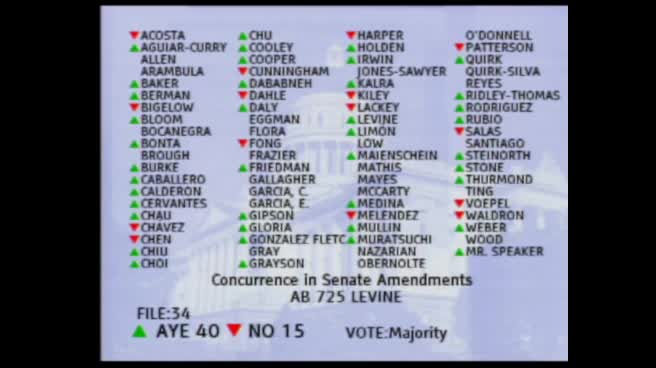 1MIN
Assembly Floor
 3MIN
Senate Floor
 3MIN
Senate Standing Committee on Environmental Quality
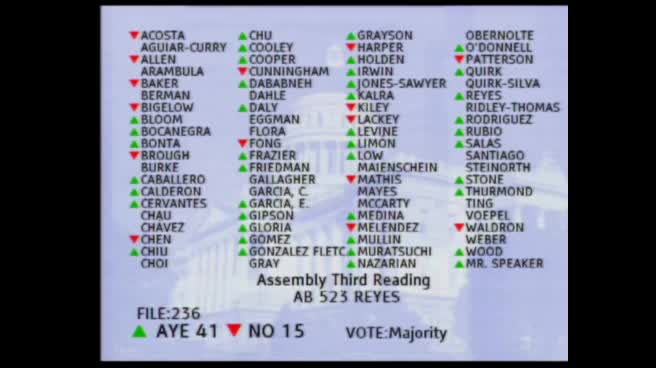 1MIN
Assembly Floor
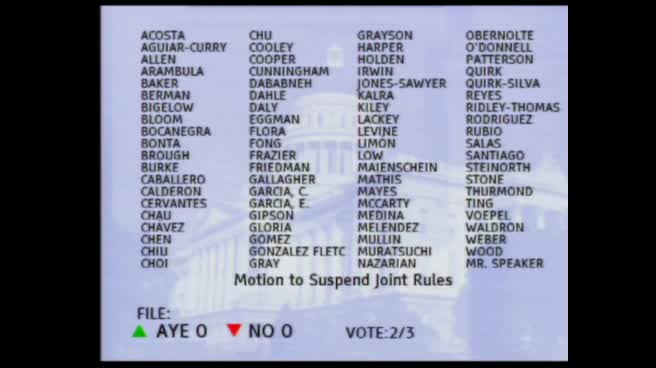 1MIN
Assembly Floor
 4MIN
Assembly Standing Committee on Appropriations
 6MIN
Assembly Standing Committee on Natural Resources
Bill Author


