AB 1674: University of California: nonresident student enrollment.
- Session Year: 2017-2018
- House: Assembly
- Latest Version Date: 2017-10-14
Existing law expresses the intent of the Legislature that the University of California establish nonresident student tuition policies that are consistent with their resident student fee policies. The provisions are applicable to the University of California only if the Regents of the University of California act, by resolution, to make them applicable.
This bill would request the University of California, in collaboration with the Academic Senate of the University of California, to ensure that implementation of any admissions policy regarding admission of nonresident undergraduate students includes guidance that ensures the academic qualifications for admitted nonresident undergraduate students generally exceeds the academic qualifications of resident undergraduate students, and would request the University of California to report specified information to the Legislature annually regarding implementation of the policy.
Existing law expresses the intent of the Legislature that the University of California establish nonresident student tuition policies that are consistent with their resident student fee policies. The provisions are applicable to the University of California only if the Regents of the University of California act, by resolution, to make them applicable.
This bill would require request the University of California, in collaboration with the Academic Senate of the University of California, as a condition of receipt of funds appropriated in the annual Budget Act, to ensure that implementation of any admissions policy regarding admission of nonresident undergraduate students includes guidance that ensures the academic qualifications for admitted nonresident undergraduate students generally exceeds the academic qualifications of resident undergraduate students, and would require request the University of California to report specified information to the Legislature annually regarding implementation of the policy.
Existing law expresses the intent of the Legislature that the University of California establish nonresident student tuition policies that are consistent with their resident student fee policies. The provisions are applicable to the University of California only if the Regents of the University of California act, by resolution, to make them applicable.
This bill would require the University of California, in collaboration with the Academic Senate of the University of California, as a condition of receipt of funds appropriated in the annual Budget Act, to ensure that implementation of any admissions policy regarding admission of nonresident undergraduate students includes guidance that ensures the academic qualifications for admitted nonresident undergraduate students generally exceeds the academic qualifications of resident undergraduate students, and would require the University of California to report specified information to the Legislature annually regarding implementation of the policy.
The University of California is requested to comply with both of the following:
(a)By July 1, 2018, the University of California, in collaboration with the Academic Senate of the University of California, is requested to ensure that implementation of any admissions policy it adopts regarding admission of nonresident undergraduate students shall include guidance that ensures that the academic qualifications for admitted nonresident undergraduate students generally exceeds, on average, the academic qualifications of resident undergraduate students admitted at each campus.
(b)The University of California is requested to report to the Legislature annually regarding implementation of this policy, including, but not limited to, the mean and median scores on academic indicators of admitted resident and nonresident undergraduate students at each campus.
As a condition of receipt of funds appropriated in the annual Budget Act, and notwithstanding Section 68134, the The University of California shall is requested to comply with both of the following:
(a)By July 1, 2018, the University of California, in collaboration with the Academic Senate of the University of California, shall is requested to ensure that implementation of any admissions policy it adopts regarding admission of nonresident undergraduate students shall include guidance that ensures that the academic qualifications for admitted nonresident undergraduate students generally exceeds, on average, the academic qualifications of resident undergraduate students admitted at each campus.
(b)The University of California shall is requested to report to the Legislature annually regarding implementation of this policy, including, but not limited to, the mean and median scores on academic indicators of admitted resident and nonresident undergraduate students at each campus.
As a condition of receipt of funds appropriated in the annual Budget Act, and notwithstanding Section 68134, the University of California shall comply with both of the following:
(a)By July 1, 2018, the University of California, in collaboration with the Academic Senate of the University of California, shall ensure that implementation of any admissions policy it adopts regarding admission of nonresident undergraduate students shall include guidance that ensures that the academic qualifications for admitted nonresident undergraduate students generally exceeds, on average, the academic qualifications of resident undergraduate students admitted at each campus.
(b)The University of California shall report to the Legislature annually regarding implementation of this policy, including, but not limited to, the mean and median scores on academic indicators of admitted resident and nonresident undergraduate students at each campus.
|
Date
|
Status
|
|---|---|
| Oct 14, 2017 | Chaptered by Secretary of State - Chapter 803, Statutes of 2017. |
| Oct 14, 2017 | Approved by the Governor. |
| Sep 7, 2017 | Enrolled and presented to the Governor at 3 p.m. |
| Aug 31, 2017 | In Assembly. Ordered to Engrossing and Enrolling. |
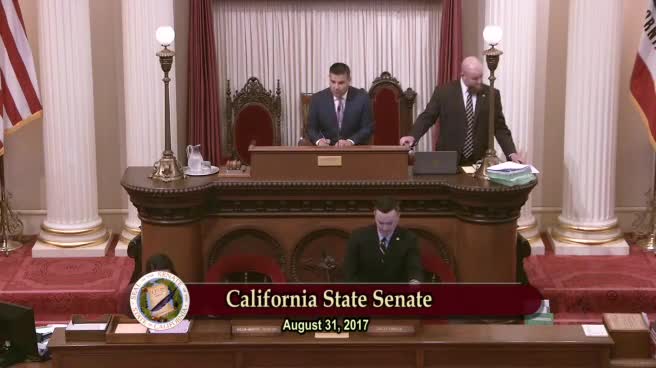
| Aug 31, 2017 | Read third time. Passed. Ordered to the Assembly. |
| Jul 18, 2017 | Read second time. Ordered to third reading. |
| Jul 17, 2017 | From committee: Be ordered to second reading pursuant to Senate Rule 28.8. |
| Jul 5, 2017 | From committee: Do pass and re-refer to Com. on APPR. (Ayes 6. Noes 0.) (July 5). Re-referred to Com. on APPR. |
| Jun 14, 2017 | Referred to Com. on ED. |
| Jun 1, 2017 | In Senate. Read first time. To Com. on RLS. for assignment. |
| May 31, 2017 | Read third time. Passed. Ordered to the Senate. (Ayes 77. Noes 0. Page 1899.) |
| May 26, 2017 | From committee: Do pass. (Ayes 17. Noes 0.) (May 26). |
| May 3, 2017 | In committee: Set, first hearing. Referred to APPR. suspense file. |
| Apr 24, 2017 | Re-referred to Com. on APPR. |
| Apr 20, 2017 | Read second time and amended. |
| Apr 19, 2017 | From committee: Amend, and do pass as amended and re-refer to Com. on APPR. (Ayes 12. Noes 0.) (April 18). |
| Mar 16, 2017 | Referred to Com. on HIGHER ED. |
| Feb 19, 2017 | From printer. May be heard in committee March 21. |
| Feb 17, 2017 | Read first time. To print. |
|
Date
|
Description
|
Location
|
Votes
|
|
|---|---|---|---|---|
| Aug 31, 2017 | Assembly 3rd Reading AB1674 Grayson et al. By Galgiani | Senate Floor |
Passed |
|
| Jul 5, 2017 | Do pass, but first be re-referred to the Committee on [Appropriations] | Senate Standing Committee on Education |
Passed |
|
| May 31, 2017 | AB 1674 GRAYSON Assembly Third Reading | Assembly Floor |
Passed |
|
| May 26, 2017 | Do pass. | Assembly Standing Committee on Appropriations |
Passed |
|
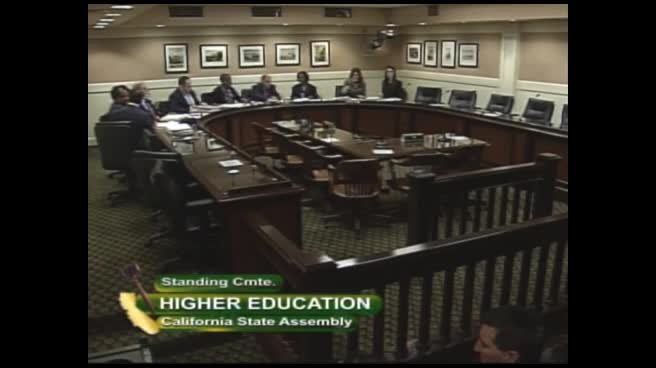
| Apr 18, 2017 | Do pass as amended and be re-referred to the Committee on [Appropriations] | Assembly Standing Committee on Higher Education |
Passed |
This list shows positions taken on this bill by organizations on the date displayed, which is linked to the original source.
Positions by individuals are not included.
|
Organization
|
Position
|
Date
|
|---|---|---|
| California Competes | ** Support | Jul 19, 2017 |
| California Federation Of Teachers | ** Support | Jul 19, 2017 |
Office of Senate Floor Analyses (916) 651-1520 Fax: (916) 327-4478 | AB |
THIRD READING
Bill No: AB 1674
:
SENATE EDUCATION COMMITTEE: 6-0, 7/5/17
AYES: Allen, Wilk, Galgiani, Leyva, Pan, Vidak
NO VOTE RECORDED: Mendoza
SENATE APPROPRIATIONS COMMITTEE: Senate Rule 28.8
ASSEMBLY FLOOR: 77-0, 5/31/17 - See last page for vote
DIGEST:
This bill requests the University of California (UC) to ensure that implementation of any admissions policy regarding admission of nonresident undergraduate students complies with certain requirements and report to the Legislature annually.
Existing law:
- Establishes the UC, a public trust to be administered by the Regents of the UC and grants the Regents full powers of organization and government, subject only to such legislative control as may be necessary to insure security of its funds, compliance with the terms of its endowments, statutory requirements around competitive bidding and contracts, sales of property and the purchase of materials, goods and services (California Constitution, Section (9)(a), Article IX).
- Expresses the intent of the Legislature that the UC establish nonresident student tuition policies that are consistent with their resident student fee policies (Education Code § 68052).
This bill requests the UC to comply with both of the following:
- Ensure, by July 1, 2018, the UC, in collaboration with the Academic Senate, that implementation of any admissions policy it adopts regarding admission of nonresident undergraduate students includes guidance that ensures that the academic qualifications for admitted nonresident undergraduate students generally exceeds, on average, the academic qualifications of resident undergraduate students admitted at each campus.
- Report to the Legislature annually regarding implementation of this policy, including, but not limited to, the mean and median scores on academic indicators of admitted resident and nonresident undergraduate students at each campus.
Comments
- Need for the bill. According to the author, “the University of California’s (UC’s) practices have been detrimental to California residents. As UC continues to admit a growing number of out-of-state and international students, equally- and more highly-qualified California students are being denied admission. In the past ten years, UC denied admission to around 4,300 residents with scores equal to or higher than the median scores of admitted nonresidents. In addition, when they are admitted, residents are often offered a spot at an alternate campus- not a campus of their choice while UC increasingly offers nonresidents admission to at least one campus of their choice.” This bill seeks to implement recommendations from the report by requesting that the UC ensure that any admissions policy it adopts regarding nonresident undergraduate students includes guidance that ensures that nonresidents generally exceeds, on average, the academic standards of California residents who are admitted at each campus.
- Bureau of State Audits (BSA) Audit. On March 29, 2016, the California State Auditor released a report, The University of California, Its Admissions and Financial Decisions have Disadvantaged California Resident Students. The report lists as its key findings that the university has undermined its commitment to residents in an effort to increase its revenue by recruiting and enrolling nonresidents. The report specifically cites that:
- Despite a 52 percent increase in resident applicants, resident enrollment increased by only 10 percent over the last 10 years while nonresident enrollment increased by 432 percent.
- The University lowered the admission standard for nonresidents and admitted nearly 16,000 nonresidents over the past three years with academic scores that fell below the median of admitted residents.
- Admitted residents were increasingly denied their campus of choice, yet admitted nonresidents were always admitted to one of their campuses of choice.
- Mandatory fees doubled for residents while they increased for nonresidents at a much lower rate.
Among other things, the BSA recommended that the UC revise its admission standard for nonresidents to require campuses to admit only nonresidents with admissions credentials that place them in the upper half of the residents it admits.
In response, the UC asserts that its admissions policies overwhelmingly favor Californians, and that state funding determines how many California residents the UC enrolls.
- Related budget activity. In May 2015, the UC Board of Regents approved increases in undergraduate non-resident supplemental tuition of up to eight percent per year for the next five years. Additionally, the 2015 Budget Act contained several related provisions. Among other things, it provided $25 million to the UC contingent on increasing California resident enrollment by 5,000 students holding resident tuition flat in 2015-16 and 2016-17 and redirecting nonresident institutional aid to support resident students.
The 2016 Budget Act provided an additional $18.5 million to the UC contingent upon enrolling 2,500 more California residents by the 2017-18 academic year and upon the UC Regents adoption of a university-wide policy capping the enrollment of non-residents. UC Regents to take action on a policy in May, see Comment 9), below.
- Status of out-of-state admissions. At UC, non-resident students pay roughly $27,000 per year more than California-resident students. The UC reports that for the 2015-16 academic year, 15.5 percent of its undergraduates systemwide were non-residents. Additionally, nonresident enrollment for 2015-16 was capped at those campuses that had seen the largest growth were Berkeley (25 percent), Los Angeles (19 percent) and San Diego (17 percent) was directed to cap their enrollment of nonresidents at 20 percent.
- Status of resident admissions. According to the UC, as a result of state funding support provided for enrollment, between fall 2015 and fall 2016, over 6,400 California undergraduate residents were enrolled. This fall, UC anticipates enrolling an additional 2,500 resident students.
- UC Admissions policy. The Board of Admissions and Relations with Schools (BOARS) oversees all matters relating to the admissions of undergraduate students. BOARS regulates the policies and practices used in the admissions process and recommends and directs efforts to improve the admissions process. According to the UC, its Comprehensive Review Policy governs the admission and selection of undergraduates at its nine campuses. Freshmen applications are assessed using multiple measures of achievement (high school course completion, grade point average, and standardized test scores) and promise while considering applicants’ educational context. Comprehensive review involves consideration of 14 factors, utilized by all campuses, but the specific evaluation process and weight given to each factor differ from campus to campus, and year to year, based on campus-specific goals and needs.
According to the UC, this same comprehensive review is applied to nonresident applicants.
- UC Admission Guarantee. UC’s admission guarantee policy, applicable to all California resident high school graduates, includes Statewide Eligibility (SE), Eligibility in the Local Context (ELC), and Entitled to Review (ETR). The UC guarantees admission to the system (though not necessarily to the first-choice campus) to all California applicants who are in the top nine percent of California high school graduates (SE), or in the top nine percent of their respective high school class (ELC). The top nine percent is determined by a formula based on grade point average (GPA) and standardized test scores.
In 2012, the UC implemented a new freshman admissions policy, ETR. Under this policy, students are not guaranteed admission but are guaranteed a comprehensive review of their application if they have completed 11 of 15 required a-g courses with a weighted GPA of at least 3.0 by the end of their junior year. The intent was to confer the right to a full application review to a broader pool of college-going California students while ending the practice of excluding many high-achieving students solely on the basis of UC’s extensive standardized testing requirements.
According to the UC, it does not provide a similar guarantee of admission to nonresident students.
- BOARS policy change on admission of nonresidents. In 2011, BOARS approved new guidelines regarding the admission of nonresident and international students that eliminated wording that nonresidents "should demonstrate stronger admission criteria than CA residents by generally being in the upper half of those ordinarily eligible" for admission. BOARS revised its principles to state that admitted nonresidents should "compare favorably to California residents admitted.” In addition, a December 2011 resolution by BOARS resolves that to the fullest extent possible campuses should evaluate and select residents and nonresidents according to the same criteria and scores, enrollment targets for nonresidents should be set such that admitted nonresidents compare favorably at each campus, campus Senate admissions committees should work with local campus administration, and if needed BOARS and systemwide administration to ensure these principles are being met. At the end of each admission cycle, BOARS resolved that each campus provides an assessment of the extent to which the compare favorable rule is being met to include a description of, the evaluation/selection criteria, measures, and supporting data.
- Current policy for admission of nonresidents. The UC reports that the current policy for admissions of nonresidents includes the following provisions:
- Nonresident applicants must have a higher GPA than resident applicants.
- There is no guarantee of admission for nonresidents, while there is for California residents.
- Nonresident students must be at least as qualified, on average, as admitted students across the system.
In addition, in May of this year, the UC Regents adopted a policy on nonresident student enrollment based on its commitment to prioritizing the enrollment of California residents and at the same time acknowledging the value it places on the diversity of experience, cultures, and backgrounds that nonresidents provide. In accordance with these principles, the University adopted a policy which includes the following:
- Continue to offer a place on at least one of its undergraduate campuses to every California undergraduate resident applicant who meets the University’s requirements for guaranteed admission.
- Continue to enroll a total number of California resident undergraduates equal to or exceeding the number of resident undergraduates for whom the University is provided funding by the State.
- Nonresident undergraduates will continue to be enrolled in addition to, rather than in place of, funded California undergraduates at each campus. Campuses wishing to increase nonresident enrollment may not reduce enrollment of funded California students to accommodate this growth.
- At each campus that in academic year 2017-18 enrolls fewer than 18 percent of its undergraduates from outside California, California residents shall continue to represent a minimum of 82 percent of all undergraduate students.
- At each campus whose nonresident undergraduate enrollment in academic year 2017-18 exceeds 18 percent of total undergraduate enrollment, the proportion of nonresident undergraduates enrolled in the future may not exceed the proportion in 2017-18.
FISCAL EFFECT: Appropriation: Fiscal Com.: Local:
California Competes
California Federation of Teachers
OPPOSITION: (Verified 7/17/17)
None received
ASSEMBLY FLOOR: 77-0, 5/31/17
AYES: Acosta, Aguiar-Curry, Travis Allen, Arambula, Baker, Berman, Bigelow, Bloom, Bocanegra, Bonta, Brough, Burke, Caballero, Calderon, Cervantes, Chau, Chávez, Chen, Chiu, Chu, Cooley, Cooper, Cunningham, Dababneh, Dahle, Daly, Flora, Fong, Frazier, Friedman, Gallagher, Cristina Garcia, Eduardo Garcia, Gipson, Gloria, Gomez, Gonzalez Fletcher, Gray, Grayson, Harper, Holden, Irwin, Jones-Sawyer, Kalra, Kiley, Lackey, Levine, Limón, Low, Maienschein, Mathis, Mayes, McCarty, Medina, Mullin, Muratsuchi, Nazarian, Obernolte, O'Donnell, Patterson, Quirk, Quirk-Silva, Reyes, Ridley-Thomas, Rodriguez, Rubio, Salas, Santiago, Steinorth, Mark Stone, Thurmond, Ting, Voepel, Waldron, Weber, Wood, Rendon
NO VOTE RECORDED: Choi, Eggman, Melendez
7/19/17 16:26:53
**** END ****
SENATE COMMITTEE ON EDUCATION
Senator Benjamin Allen, Chair
2017 - 2018 Regular
Bill No: AB 1674 Hearing Date: July 5, 2017
Author: | Grayson | ||
Version: | April 20, 2017 | ||
Urgency: | No | Fiscal: | Yes |
Consultant: | Olgalilia Ramirez | ||
Subject: University of California: nonresident student enrollment
SUMMARY
This bill requests the University of California (UC) to ensure that implementation of any admissions policy regarding admission of nonresident undergraduate students complies with certain requirements and report to the Legislature annually.
BACKGROUND
Existing law:
- Establishes the UC, a public trust to be administered by the Regents of the UC and grants the Regents full powers of organization and government, subject only to such legislative control as may be necessary to insure security of its funds, compliance with the terms of its endowments, statutory requirements around competitive bidding and contracts, sales of property and the purchase of materials, goods and services (California Constitution, Section (9)(a), Article IX).
- Expresses the intent of the Legislature that the UC establish nonresident student tuition policies that are consistent with their resident student fee policies (Education Code § 68052)
ANALYSIS
This bill:
- Requests the UC to comply with both of the following:
- Ensure, by July 1, 2018, the UC, in collaboration with the Academic
Senate, that implementation of any admissions policy it adopts regarding admission of nonresident undergraduate students includes guidance that ensures that the academic qualifications for admitted nonresident undergraduate students generally exceeds, on average, the academic qualifications of resident undergraduate students admitted at each campus.
- Report to the Legislature annually regarding implementation of this policy,
including, but not limited to, the mean and median scores on academic indicators of admitted resident and nonresident undergraduate students at each campus.
STAFF COMMENTS
- Need for the bill. According to the author, “the University of California’s (UC’s) practices have been detrimental to California residents. As UC continues to admit a growing number of out-of-state and international students, equally- and more highly-qualified California students are being denied admission. In the past ten years, UC denied admission to around 4,300 residents with scores equal to or higher than the median scores of admitted nonresidents. In addition, when they are admitted, residents are often offered a spot at an alternate campus- not a campus of their choice while UC increasingly offers nonresidents admission to at least one campus of their choice.” This bill seeks to implement recommendations from the report by requesting that the UC ensure that any admissions policy it adopts regarding nonresident undergraduate students includes guidance that ensures that nonresidents generally exceeds, on average, the academic standards of California residents who are admitted at each campus
- BSA Audit. On March 29, 2016, the California State Auditor released a report, The University of California, Its Admissions and Financial Decisions have Disadvantaged California Resident Students. The report lists as its key findings that the university has undermined its commitment to residents in an effort to increase its revenue by recruiting and enrolling nonresidents. The report specifically cites that:
- Despite a 52 percent increase in resident applicants, resident enrollment increased by only 10 percent over the last 10 years while nonresident enrollment increased by 432 percent.
- The University lowered the admission standard for nonresidents and admitted nearly 16,000 nonresidents over the past three years with academic scores that fell below the median of admitted residents.
- Admitted residents were increasingly denied their campus of choice, yet admitted nonresidents were always admitted to one of their campuses of choice.
- Mandatory fees doubled for residents while they increased for nonresidents at a much lower rate.
Among other things, the Bureau of State Audits recommended that the UC revise its admission standard for nonresidents to require campuses to admit only nonresidents with admissions credentials that place them in the upper half of the residents it admits.
In response, the UC asserts that its admissions policies overwhelmingly favor Californians, and that state funding determines how many California residents the UC enrolls.
- Related budget activity. In May 2015, the UC Board of Regents approved increases in undergraduate non-resident supplemental tuition of up to 8 percent per year for the next five years. Additionally, the 2015 Budget Act contained several related provisions. Among other things, it provided $25 million to the University of California (UC) contingent on increasing California resident enrollment by 5,000 students holding resident tuition flat in 2015-16 and 2016-17 and redirecting nonresident institutional aid to support resident students.
The 2016 Budget Act provided an additional $18.5 million to the UC contingent upon enrolling 2,500 more California residents by the 2017-18 academic year and upon the UC Regents adoption of a university-wide policy capping the enrollment of non-residents. UC Regents to take action on a policy in May, see comment # 9 below.
- Status of out-of-state admissions. At UC, non-resident students pay roughly $27,000 per year more than California-resident students. The UC reports that for the 2015-16 academic year, 15.5 percent of its undergraduates systemwide were non-residents. Additionally, nonresident enrollment for 2015-16 was capped at those campuses that had seen the largest growth were Berkeley (25 percent), Los Angeles (19 percent) and San Diego (17 percent) was directed to cap their enrollment of nonresidents at 20 percent.
- Status of resident admissions. According to the UC, as a result of state funding support provided for enrollment, between fall 2015 and fall 2016, over 6,400 California undergraduate residents were enrolled. This fall, UC anticipates enrolling an additional 2,500 resident students.
- UC Admissions policy. The Board of Admissions and Relations with Schools (BOARS) oversees all matters relating to the admissions of undergraduate students. BOARS regulates the policies and practices used in the admissions process and recommends and directs efforts to improve the admissions process. According to the UC, its Comprehensive Review Policy governs the admission and selection of undergraduates at its nine campuses. Freshmen applications are assessed using multiple measures of achievement (high school course completion, grade point average, and standardized test scores) and promise while considering applicants’ educational context. Comprehensive review involves consideration of 14 factors, utilized by all campuses, but the specific evaluation process and weight given to each factor differ from campus to campus, and year to year, based on campus-specific goals and needs.
According to the UC, this same comprehensive review is applied to nonresident applicants.
- UC Admission Guarantee. UC’s admission guarantee policy, applicable to all California resident high school graduates, includes Statewide Eligibility (SE), Eligibility in the Local Context (ELC), and Entitled to Review (ETR). The UC guarantees admission to the system (though not necessarily to the first-choice campus) to all California applicants who are in the top 9 percent of California high school graduates (SE), or in the top 9 percent of their respective high school class (ELC). The top 9 percent is determined by a formula based on grade point average (GPA) and standardized test scores.
In 2012, the University of California (UC) implemented a new freshman admissions policy, Entitled to Review (ETR). Under this policy, students are not guaranteed admission but are guaranteed a comprehensive review of their application if they have completed 11 of 15 required a-g courses with a weighted GPA of at least 3.0 by the end of their junior year. The intent was to confer the right to a full application review to a broader pool of college-going California students while ending the practice of excluding many high-achieving students solely on the basis of UC’s extensive standardized testing requirements.
According to the UC, it does not provide a similar guarantee of admission to nonresident students.
- BOARS policy change on admission of nonresidents. In 2011, Board of Admissions and Relations with Schools (BOARS) approved new guidelines regarding the admission of nonresident and international students that eliminated wording that nonresidents "should demonstrate stronger admission criteria than CA residents by generally being in the upper half of those ordinarily eligible" for admission. BOARS revised its principles to state that admitted nonresidents should "compare favorably to California residents admitted.” In addition, a December 2011 resolution by BOARS resolves that to the fullest extent possible campuses should evaluate and select residents and nonresidents according to the same criteria and scores, enrollment targets for nonresidents should be set such that admitted nonresidents compare favorably at each campus, campus Senate admissions committees should work with local campus administration, and if needed BOARS and systemwide administration to ensure these principles are being met. At the end of each admission cycle, BOARS resolved that each campus provides an assessment of the extent to which the compare favorable rule is being met to include a description of, the evaluation/selection criteria, measures, and supporting data.
- Current policy for admission of nonresidents. The UC reports that the current policy for admissions of nonresidents includes the following provisions:
- Nonresident applicants must have a higher GPA than resident applicants.
- There is no guarantee of admission for nonresidents, while there is for California residents.
- Nonresident students must be at least as qualified, on average, as admitted students across the system.
In addition, In May of this year, the UC Regents adopted a policy on nonresident student enrollment based on its commitment to prioritizing the enrollment of California residents and at the same time acknowledging the value it places on the diversity of experience, cultures, and backgrounds that nonresidents provide. In accordance with these principles, the University adopted a policy which includes the following:
- Continue to offer a place on at least one of its undergraduate campuses to every California undergraduate resident applicant who meets the University’s requirements for guaranteed admission.
- Continue to enroll a total number of California resident undergraduates equal to or exceeding the number of resident undergraduates for whom the University is provided funding by the State.
- Nonresident undergraduates will continue to be enrolled in addition to, rather than in place of, funded California undergraduates at each campus. Campuses wishing to increase nonresident enrollment may not reduce enrollment of funded California students to accommodate this growth.
- At each campus that in academic year 2017-18 enrolls fewer than 18 percent of its undergraduates from outside California, California residents shall continue to represent a minimum of 82 percent of all undergraduate students.
- At each campus whose nonresident undergraduate enrollment in academic year 2017-18 exceeds 18 percent of total undergraduate enrollment, the proportion of nonresident undergraduates enrolled in the future may not exceed the proportion in 2017-18.
- Is this bill necessary? It would seem that legislation is unnecessary to encourage that the University Of California (UC) adopt the specified enrollment policy given the UC’s constitutional autonomy as noted in the background of this analysis.
- Related legislation.
AB 1711 (McCarty, 2016) similar to this bill, would have required, instead of requested, the University of California, as a condition of receipt of annual Budget Act funding, in collaboration with the Academic Senate, to ensure that implementation of any admissions policy it adopts regarding nonresident undergraduate students to include guidance that ensures that the academic qualifications of these students generally exceeds, on average, the academic qualifications of resident undergraduate students admitted at each campus. This version of AB 1711 was approved by this Committee by a vote of 8 to 0.
SB 236 (Nguyen, 2017), in part, would have required that out-of-state undergraduate students make up no more than 10 percent of the total undergraduate enrollment systemwide and at each campus of the University of California and, as a condition for the expenditure of annual Budget Act funding. SB 236 was heard and subsequently failed passage in this Committee on April 19th.
SCA 4 (Nguyen, 2015) proposed, in part, to add a new section to Article IX of the State Constitution that would require, beginning with the 2017-18 academic year, that out-of-state undergraduate students make up no more than 10 percent of the total undergraduate enrollment systemwide and at each campus of the UC.SCA 4 was heard and subsequently failed passage in this Committee on June 15, 2015, reconsideration was granted but no further action was taken.
AB 1370 (Medina, 2015) prohibits the number of undergraduate non-resident students enrolled at any University Of California (UC) campus from exceeding the number enrolled in the 2015-16 academic year, requires that beginning the 2018-19 academic year and each academic year thereafter, that funds, generated from undergraduate non-resident enrollment be directed to fund increased enrollment of undergraduate resident students and requires UC to annually publish a report that includes information about the amount, method of distribution, and expenditure purposes of revenues generated by undergraduate non-resident enrollment at each campus including the number of California resident undergraduate students admitted. AB 1370 was never heard by this Committee.
SUPPORT
California Federation of Teachers
California Competes Higher Education for a Strong Economy
OPPOSITION
None received
-- END --
ASSEMBLY THIRD READING
ATR Bill Id:AB 1674
Author:(Grayson, et al.)
As Amended Ver:April 20, 2017
Majority vote
Committee | Votes | Ayes | Noes |
Higher Education | 12-0 | Medina, Baker, Arambula, Bloom, Chávez, Irwin, Kiley, Levine, Low, Quirk-Silva, Santiago, Weber | |
Appropriations | 17-0 | Gonzalez Fletcher, Bigelow, Bloom, Bocanegra, Bonta, Brough, Calderon, McCarty, Quirk, Fong, Friedman, Gallagher, Eduardo Garcia, Gray, Muratsuchi, Obernolte, Reyes |
|
SUMMARY: Requests that the University of California (UC), in collaboration with the Academic Senate of the UC, comply with specific requirements regarding the admission policies of nonresident undergraduate students, and report to the Legislature annually.
EXISTING LAW:
- Establishes the UC, a public trust to be administered by the Regents of the UC and grants the Regents full powers of organization and government, subject only to such legislative control as may be necessary to insure security of its funds, compliance with the terms of its endowments, statutory requirements around competitive bidding and contracts, sales of property and the purchase of materials, goods and services (California Constitution, Section (9)(a), Article IX).
- Expresses the intent of the Legislature that the UC establish nonresident student tuition policies that are consistent with their resident student fee policies (Education Code Section 68052).
FISCAL EFFECT: According to the Assembly Appropriations Committee, UC estimates no additional costs associated with this bill.
COMMENTS: Background. California State Auditor (CSA) released a report, "The University of California, its Admissions and Financial Decisions Have Disadvantaged California Resident Students" on March 29, 2016. The report lists as its key findings that the university has undermined its commitment to residents in an effort to increase its revenue by recruiting and enrolling nonresidents. The report found, in part, that:
- Despite a 52% increase in resident applicants, resident enrollment increased by only 10% over the last 10 years while nonresident enrollment increased by 432%;
- The University lowered the admission standard for nonresidents and admitted nearly 16,000 nonresidents over the past three years with academic scores that fell below the median of admitted residents; and,
- Admitted residents were increasingly denied their campus of choice, yet admitted nonresidents were always admitted to one of their campuses of choice.
Among other things, the CSA recommended that the UC revise its admission standard for nonresidents to require campuses to admit only nonresidents with admissions credentials that place them in the upper half of the residents it admits.
To note, it has been a little over a year since the report was released. According to the UC, its Academic Senate is currently reviewing the UC's "Compare Favorably" policy, and expects to release a report later this year on current Academic Senate policy with respect to nonresident admission.
Purpose of the measure. According to the author, "This bill increases fair access to the UC for qualified resident undergraduate students." The author contends that by requiring that the UC annually report to the Legislature the status of its admissions policy, it ensures accountability and transparency and ensures that eligible California students are no longer denied admittance.
Committee staff understands that this measure is in response to the aforementioned CSA report.
UC Admissions policy. The Board of Admissions and Relations with Schools (BOARS) oversees all matters relating to the admissions of undergraduate students. BOARS regulates the policies and practices used in the admissions process and recommends and directs efforts to improve the admissions process. According to the UC, its Comprehensive Review Policy governs the admission and selection of undergraduates at its nine campuses. Freshmen applications are assessed using multiple measures of achievement (high school course completion, grade point average, and standardized test scores) and promise while considering applicants’ educational context. Comprehensive review involves consideration of 14 factors, utilized by all campuses, but the specific evaluation process and weight given to each factor differ from campus to campus, and year to year, based on campus-specific goals and needs.
According to the UC this same comprehensive review is applied to nonresident applicants.
BOARS policy change on admission of nonresidents. BOARS, in 2011, approved new guidelines regarding the admission of nonresident and international students that eliminated wording that nonresidents "should demonstrate stronger admission criteria than CA residents by generally being in the upper half of those ordinarily eligible" for admission. BOARS revised its principles to state that admitted nonresidents should "compare favorably to California residents admitted.” Additionally, a December 2011 resolution by BOARS resolved, that to the fullest extent possible, campuses should evaluate and select residents and nonresidents according to the same criteria and scores, enrollment targets for nonresidents should be set such that admitted nonresidents compare favorably at each campus, campus Senate admissions committees should work with local campus administration, and if needed BOARS and systemwide administration to ensure these principles are being met. At the end of each admission cycle BOARS resolved that each campus provide an assessment of the extent to which the compare favorable rule is being met and include a description of the evaluation/selection criteria, measures, and supporting data.
Recent budget movement. The 2015-16 Budget Act provided $25 million to the UC contingent on increasing California resident enrollment by 5,000 students, holding resident tuition flat in 2015-16 and 2016-17, and redirecting nonresident institutional aid to support resident students.
The 2016-17 Budget Act provided an additional $18.5 million to the UC contingent upon enrolling 2,500 more California residents by the 2017-18 school year and upon the UC Regent's adoption of a university-wide policy capping the enrollment of nonresidents.
According to the Legislative Analyst's Office (LAO) February 2017 analysis of the 2017-18 Budget, consistent with state expectations, UC plans to spend $45 million to enroll 2,500 more resident undergraduate students in 2017-18. Additionally, UC plans to enroll 1,000 (3%) more nonresident undergraduate students in 2017-18. To note, nonresident enrollment growth would be funded from the base tuition charged to said students as well as a portion of nonresident supplemental tuition revenue.
Related legislation. AB 1711 (McCarty) of 2016, which was held in the Senate Appropriations Committee, was substantially similar in nature to this measure.
Analysis Prepared by: Jeanice Warden / HIGHER ED. / (916) 319-3960 FN: 0000640
Date of Hearing: May 3, 2017
ASSEMBLY COMMITTEE ON APPROPRIATIONS
Lorena Gonzalez Fletcher, Chair
ABPCA Bill Id:AB 1674
Author:(Grayson) – As Amended Ver:April 20, 2017
Policy Committee: | Higher Education | Vote: | 12 - 0 |
|
| ||
|
|
Urgency: No State Mandated Local Program: No Reimbursable: No
SUMMARY:
This bill request that the University of California (UC), in collaboration with the Academic Senate of the UC, to comply with specific requirements regarding nonresidents and report to the Legislature annually. Specifically, this bill:
- Request that by July 1, 2018, the University of California, in collaboration with the Academic Senate of the University of California, ensure that implementation of any admissions policy adopted regarding admission of nonresident undergraduate students include guidance that ensures that the academic qualifications for admitted nonresident undergraduate students generally exceeds, on average, the academic qualifications of resident undergraduate students admitted at each campus.
- Requests that UC report to the Legislature annually regarding implementation of this policy, including, but not limited to, the mean and median scores on academic indicators of admitted resident and nonresident undergraduate students at each campus.
FISCAL EFFECT:
UC estimates no additional cost associated with this bill.
COMMENTS:
Purpose and Background. Existing law establishes the UC, a public trust to be administered by the Regents of the UC, and grants the Regents full powers of organization and government, subject only to such legislative control as may be necessary to insure security of its funds, compliance with the terms of its endowments, statutory requirements around competitive bidding and contracts, sales of property, and the purchase of materials, goods and services.
California State Auditor (CSA) released a report, "The University of California, Its Admissions and Financial Decisions Have Disadvantaged California Resident Students" on March 29, 2016. The report lists as its key findings that the university has undermined its commitment to residents in an effort to increase its revenue by recruiting and enrolling nonresidents. According to the author, "This bill increases fair access to the UC for qualified resident undergraduate students." The author contends that by requiring that the UC annually report to the Legislature the status of its admissions policy, it ensures accountability and transparency and ensures that eligible California students are no longer denied admittance.
Analysis Prepared by: Daisy Gonzales / APPR. / (916) 319-2081
Date of Hearing: April 18, 2017
ASSEMBLY COMMITTEE ON HIGHER EDUCATION
Jose Medina, Chair
ABPCA Bill Id:AB 1674 (
Author:Grayson) – As Introduced Ver:February 17, 2017
SUBJECT: University of California: nonresident student enrollment.
SUMMARY: Requires the University of California (UC), as a condition of receipt of funds appropriated in the annual Budget Act, comply with specified requirements. Specifically, this bill:
- Requires the UC, by July 1, 2018, in collaboration with the UC Academic Senate, to ensure that implementation of any admissions policy it adopts regarding admission of nonresident undergraduate students shall include guidance that ensures that the academic qualifications for admitted nonresident undergraduate students generally exceeds, on average, the academic qualifications of resident undergraduate students admitted at each campus.
- Requires the UC to report to the Legislature annually regarding implementation of this policy, including, but not limited to, the mean and median scores on academic indicators of admitted resident and nonresident undergraduate students at each campus.
- Mandates that the UC comply with numbers 1 and 2 above, as a condition of receipt of funds appropriated in the annual Budget Act.
EXISTING LAW:
- Establishes the UC, a public trust to be administered by the Regents of the UC and grants the Regents full powers of organization and government, subject only to such legislative control as may be necessary to insure security of its funds, compliance with the terms of its endowments, statutory requirements around competitive bidding and contracts, sales of property and the purchase of materials, goods and services (Article IX, Section (9)(a) of the California Constitution).
- Expresses the intent of the Legislature that the UC establish nonresident student tuition policies that are consistent with their resident student fee policies (Education Code Section 68052).
FISCAL EFFECT: Unknown.
COMMENTS: Background. California State Auditor (CSA) released a report, "The University of California, Its Admissions and Financial Decisions Have Disadvantaged California Resident Students" on March 29, 2016. The report lists as its key findings that the university has undermined its commitment to residents in an effort to increase its revenue by recruiting and enrolling nonresidents. The report found, in part, that:
- Despite a 52 percent increase in resident applicants, resident enrollment increased by only 10 percent over the last 10 years while nonresident enrollment increased by 432 percent;
- The University lowered the admission standard for nonresidents and admitted nearly 16,000 nonresidents over the past three years with academic scores that fell below the median of admitted residents; and,
- Admitted residents were increasingly denied their campus of choice, yet admitted nonresidents were always admitted to one of their campuses of choice.
Among other things, the CSA recommended that the UC revise its admission standard for nonresidents to require campuses to admit only nonresidents with admissions credentials that place them in the upper half of the residents it admits.
To note, it has been a little over a year since the report was released. According to the UC, its Academic Senate is currently reviewing the UC's "Compare Favorably" policy, and expects to release a report later this year on current Academic Senate policy with respect to nonresident admission.
Purpose of the measure. According to the author, "This bill increases fair access to the UC for qualified resident undergraduate students." The author contends that by requiring that the UC annually report to the Legislature the status of its admissions policy, it ensures accountability and transparency and ensures that eligible California students are no longer denied admittance.
Committee staff understands that this measure is in response to the aforementioned CSA report.
UC Admissions policy. The Board of Admissions and Relations with Schools (BOARS) oversees all matters relating to the admissions of undergraduate students. BOARS regulates the policies and practices used in the admissions process and recommends and directs efforts to improve the admissions process. According to the UC, its Comprehensive Review Policy governs the admission and selection of undergraduates at its nine campuses. Freshmen applications are assessed using multiple measures of achievement (high school course completion, grade point average, and standardized test scores) and promise while considering applicants’ educational context. Comprehensive review involves consideration of 14 factors, utilized by all campuses, but the specific evaluation process and weight given to each factor differ from campus to campus, and year to year, based on campus-specific goals and needs.
According to the UC this same comprehensive review is applied to nonresident applicants.
BOARS policy change on admission of nonresidents. BOARS, in 2011, approved new guidelines regarding the admission of nonresident and international students that eliminated wording that nonresidents "should demonstrate stronger admission criteria than CA residents by generally being in the upper half of those ordinarily eligible" for admission. BOARS revised its principles to state that admitted nonresidents should "compare favorably to California residents admitted.” Additionally, a December 2011 resolution by BOARS resolved, that to the fullest extent possible, campuses should evaluate and select residents and nonresidents according to the same criteria and scores, enrollment targets for nonresidents should be set such that admitted nonresidents compare favorably at each campus, campus Senate admissions committees should work with local campus administration, and if needed BOARS and systemwide administration to ensure these principles are being met. At the end of each admission cycle BOARS resolved that each campus provide an assessment of the extent to which the compare favorable rule is being met and include a description of the evaluation/selection criteria, measures, and supporting data.
Recent budget movement. The 2015-16 Budget Act provided $25 million to the UC contingent on increasing California resident enrollment by 5,000 students, holding resident tuition flat in 2015-16 and 2016-17, and redirecting nonresident institutional aid to support resident students.
The 2016-17 Budget Act provided an additional $18.5 million to the UC contingent upon enrolling 2,500 more California residents by the 2017-18 school year and upon the UC Regent’s adoption of a university-wide policy capping the enrollment of nonresidents.
According to the Legislative Analyst's Office (LAO) February 2017 analysis of the 2017-18 Budget, consistent with state expectations, UC plans to spend $45 million to enroll 2,500 more resident undergraduate students in 2017-18. Additionally, UC plans to enroll 1,000 (3 percent) more nonresident undergraduate students in 2017-18. To note, nonresident enrollment growth would be funded from the base tuition charged to said students as well as a portion of nonresident supplemental tuition revenue.
Policy considerations. This measure, as a condition of receiving state funds, requires the UC to comply with certain conditions, as specified. Is it appropriate and sound policy to condition UC's entire state funding on the implementation of one policy?
Committee staff recommends, and the author has agreed to accept, the following amendment:
68052.1. As a condition of receipt of funds appropriated in the annual Budget Act, and notwithstanding Section 68134, the The University of California shall is requested to comply with both of the following:
(b) The University of California shall is requested to report to the Legislature annually regarding implementation of this policy, including, but not limited to, the mean and median scores on academic indicators of admitted resident and nonresident undergraduate students at each campus.
Additionally, the UC Academic Senate sets admissions policies, with authority delegated by the Regents. As outlined in previous sections of this analysis, BOARS regulates the policies and practices used in the admissions process and recommends and directs efforts to improve the admissions process.
Moving forward, the author may wish to consider deleting the requirement of the UC collaborating with the Academic Senate when it implements its admission policies and instead determine if it should be explicitly stated that the UC will have to collaborate with BOARS.
Related legislation. AB 1711 (McCarty) of 2016, which was held in the Senate Appropriations Committee, was substantially similar in nature to this measure.
REGISTERED SUPPORT / OPPOSITION:
Support
None on file
Opposition
None on file
Analysis Prepared by: Jeanice Warden / HIGHER ED. / (916) 319-3960





Bill Co-Author(s):