AB 1701: Labor-related liabilities: original contractor.
- Session Year: 2017-2018
- House: Assembly
- Latest Version Date: 2017-10-14
Under existing law, an action may be brought for nonpayment of wages, fringe benefits, or health and welfare or pension fund contributions.
This bill would, for all contracts entered into on or after January 1, 2018, require a direct contractor, as defined, making or taking a contract in the state for the erection, construction, alteration, or repair of a building, structure, or other work, to assume, and be liable for, specified debt owed to a wage claimant that is incurred by a subcontractor, at any tier, acting under, by, or for the direct contractor for the wage claimants performance of labor included in the subject of the original contract. The bill would authorize the Labor Commissioner to bring an action under specified statutes or in a civil action to enforce this liability, as provided. The bill would also authorize a third party owed fringe or other benefits or a joint labor-management cooperation committee, as defined, to bring a civil action to enforce the liability against a direct contractor under these provisions, as specified. The bill would provide that it does not apply to any work being done by an employee of the state or any political subdivision of the state. The bill would require a subcontractor, upon request from the direct contractor, to provide specified information regarding the subcontractors and third partys work on the project and would provide that the direct contractor could withhold disputed sums upon the subcontractors failure to provide the requested information, as specified. The bill would provide that these obligations and remedies are in addition to any other remedy provided by law. The bill would provide that its provisions are severable.
Under existing law, an action may be brought for nonpayment of wages, fringe benefits, or health and welfare or pension fund contributions.
This bill would would, for all contracts entered into on or after January 1, 2018, require a direct contractor, as defined, making or taking a contract in the state for the erection, construction, alteration, or repair of a building, structure, or other work, to assume, and be liable for, specified debt owed to a wage claimant that is incurred by a subcontractor, at any tier, acting under, by, or for the direct contractor for the wage claimants performance of labor included in the subject of the original contract. The bill would authorize the Labor Commissioner to bring an action under specified statutes or in a civil action to enforce this liability, as provided. The bill would also authorize a third party owed fringe or other benefits or a joint labor-management cooperation committee, as defined, to bring a civil action to enforce the liability against a direct contractor under these provisions, as specified. The bill would provide that it does not apply to any work being done by an employee of the state or any political subdivision of the state. The bill would require a subcontractor, upon request from the direct contractor, to provide specified information regarding the subcontractors and third partys work on the project. project and would provide that the direct contractor could withhold disputed sums upon the subcontractors failure to provide the requested information, as specified. The bill would provide that these obligations and remedies are in addition to any other remedy provided by law. The bill would provide that its provisions are severable.
Under existing law, an action may be brought for nonpayment of wages, fringe benefits, or health and welfare or pension fund contributions.
This bill would require a direct contractor, as defined, making or taking a contract in the state for the erection, construction, alteration, or repair of a building, structure, or other work, to assume, and be liable for, specified debt owed to a wage claimant that is incurred by a subcontractor, at any tier, acting under, by, or for the direct contractor for the wage claimants performance of labor included in the subject of the original contract. The bill would authorize civil actions the Labor Commissioner to bring an action under specified statutes or in a civil action to enforce this liability, as provided. The bill would also authorize a third party owed fringe or other benefits or a joint labor-management cooperation committee, as defined, to bring a civil action to enforce the liability against a direct contractor under these provisions, as specified. The bill would provide that it does not apply to any work being done by an employee of the state or any political subdivision of the state. The bill would require a subcontractor, upon request from the direct contractor, to provide specified information regarding the subcontractors and third partys work on the project. The bill would provide that this remedy is these obligations and remedies are in addition to any other remedy provided by law. The bill would provide that its provisions are severable.
Under existing law, an action may be brought for nonpayment of wages, fringe benefits, or health and welfare or pension fund contributions.
This bill would require a direct contractor, as defined, making or taking a contract in the state for the erection, construction, alteration, or repair of a building, structure, or other work, to assume, and be liable for, specified debt owed to a wage claimant that is incurred by a subcontractor, at any tier, acting under, by, or for the direct contractor for the wage claimants performance of labor included in the subject of the original contract. The bill would authorize civil actions to enforce this liability, as provided. The bill would provide that this remedy is in addition to any other remedy provided by law.
Existing law prohibits a person or his or her agent or officer from issuing in payment of wages due (1) an acknowledgment of indebtedness unless it is negotiable and payable in cash at an established place of business in the state with a specified name and address and at the time of issuance and for at least 30 days thereafter or (2) a thing redeemable in merchandise or otherwise than in money.This bill would make nonsubstantive changes to those provisions.Existing law prohibits a person or his or her agent or officer from issuing in payment of wages due (1) an acknowledgment of indebtedness unless it is negotiable and payable in cash at an established place of business in the state with a specified name and address and at the time of issuance and for at least 30 days thereafter or (2) a thing redeemable in merchandise or otherwise than in money.
This bill would make nonsubstantive changes to those provisions.
(a)(1)For contracts entered into on or after January 1, 2018, a direct contractor making or taking a contract in the state for the erection, construction, alteration, or repair of a building, structure, or other private work, shall assume, and is liable for, any debt owed to a wage claimant or third party on the wage claimants behalf, incurred by a subcontractor at any tier acting under, by, or for the direct contractor for the wage claimants performance of labor included in the subject of the contract between the direct contractor and the owner.
(2)The direct contractors liability under this section shall extend only to any unpaid wage, fringe or other benefit payment or contribution, including interest owed but shall not extend to penalties or liquidated damages.
(3)A direct contractor or any other person shall not evade, or commit any act that negates, the requirements of this section. This section does not prohibit a direct contractor or subcontractor at any tier from establishing by contract or enforcing any otherwise lawful remedies against a subcontractor it hires for liability created by the nonpayment of wages, fringe or other benefit payments, or contributions by that subcontractor or by a subcontractor at any tier working under that subcontractor.
(b)(1)The Labor Commissioner may enforce against a direct contractor the liability for unpaid wages created by subdivision (a) pursuant to Section 98 or 1197.1, or through a civil action. The direct contractors liability shall be limited to unpaid wages, including any interest owed.
(2)A third party owed fringe or other benefit payments or contributions on a wage claimants behalf may bring a civil action against a direct contractor to enforce the liability created by subdivision (a). The court shall award a prevailing plaintiff in such an action its reasonable attorneys fees and costs, including expert witness fees.
(3)A joint labor-management cooperation committee established pursuant to the federal Labor Management Cooperation Act of 1978 (29 U.S.C. Sec. 175a) may bring an action in any court of competent jurisdiction against a direct contractor or subcontractor at any tier for unpaid wages owed to a wage claimant by the direct contractor or subcontractor for the performance of private work, including unpaid wages owed by the direct contractor, pursuant to subdivision (a). The court shall award a prevailing plaintiff in such an action its reasonable attorneys fees and costs, including expert witness fees. Prior to commencement of an action against a direct contractor to enforce the liability created by subdivision (a), the committee shall provide the direct contractor and subcontractor that employed the wage claimant with at least 30 days notice by first-class mail. The notice need only describe the general nature of the claim and shall not limit the liability of the direct contractor or preclude subsequent amendments of an action to encompass additional wage claimants employed by the subcontractor.
(4)No other party may bring an action against a direct contractor to enforce the liability created by subdivision (a).
(c)Unless otherwise provided by law, property of the direct contractor may be attached, after trial, for the payment of any judgment received pursuant to this section.
(d)An action brought pursuant to this section shall be filed within one year of the earliest of the following:
(1)Recordation of the notice of completion of the direct contract, pursuant to Section 8182 of the Civil Code.
(2)Recordation of a notice of cessation of the work covered by the direct contract, pursuant to Section 8188 of the Civil Code.
(3)Actual completion of the work covered by the direct contract.
(e)This section does not apply to work performed by an employee of the state, a special district, a city, a county, a city and county, or any political subdivision of the state.
(f)(1)Upon request by a direct contractor to a subcontractor, the subcontractor and any lower tier subcontractors under contract to the subcontractor shall provide payroll records, which, at a minimum, contain the information set forth in subdivision (a) of Section 226, and which are payroll records as contemplated by Section 1174, of its employees who are providing labor on a private work, which payroll records shall be marked or obliterated only to prevent disclosure of an individuals full social security number, but shall provide the last four digits of the social security number. The payroll records must contain information sufficient to apprise the requesting party of the subcontractors payment status in making fringe or other benefit payments or contributions to a third party on the employees behalf.
(2)Upon request of a direct contractor to a subcontractor, the subcontractor and any lower tier subcontractors under contract to the subcontractor shall provide the direct contractor award information that includes the project name, name and address of the subcontractor, contractor with whom the subcontractor is under contract, anticipated start date, duration, and estimated journeymen and apprentice hours, and contact information for its subcontractors on the project.
(3)A subcontractors failure to comply with this subdivision shall not relieve a direct contractor from any of the obligations contained in this section.
(g)For purposes of this section, direct contractor and subcontractor have the same meanings as provided in Sections 8018 and 8046, respectively, of the Civil Code.
(h)The obligations and remedies provided in this section shall be in addition to any obligations and remedies otherwise provided by law, except that nothing in this section shall be construed to impose liability on a direct contractor for anything other than unpaid wages and fringe or other benefit payments or contributions including interest owed.
(i)Nothing in this section shall alter the owners obligation to timely pay a direct contractor as set forth in Sections 8800 and 8812 of the Civil Code, or a direct contractors obligation to timely pay a subcontractor as set forth in Section 7108.5 of the Business and Professions Code and Section 8814 of the Civil Code, or the penalties for failing to do so as set forth in Sections 8800 and 8818 of the Civil Code and Section 7108.5 of the Business and Professions Code, except that the direct contractor may withhold as disputed all sums owed if a subcontractor does not timely provide the information requested under paragraphs (1) and (2) of subdivision (f), until that information is provided.
(j)The provisions of this section are severable. If any provision of this section or its application is held invalid, that invalidity shall not affect other provisions or applications that can be given effect without the invalid provision or application.
(a)(1)For contracts entered into on or after January 1, 2018, a direct contractor making or taking a contract in the state for the erection, construction, alteration, or repair of a building, structure, or other private work, shall assume, and is liable for, any debt owed to a wage claimant or third party on the wage claimants behalf, incurred by a subcontractor at any tier acting under, by, or for the direct contractor for the wage claimants performance of labor included in the subject of the contract between the direct contractor and the owner.
(2)The direct contractors liability under this section shall extend only to any unpaid wage, fringe or other benefit payment or contribution, including interest owed but shall not extend to penalties or liquidated damages.
(3)A direct contractor or any other person shall not evade, or commit any act that negates, the requirements of this section. This section does not prohibit a direct contractor or subcontractor at any tier from establishing by contract or enforcing any otherwise lawful remedies against a subcontractor it hires for liability created by the nonpayment of wages, fringe or other benefit payments, or contributions by that subcontractor or by a subcontractor at any tier working under that subcontractor.
(b)(1)The Labor Commissioner may enforce against a direct contractor the liability for unpaid wages created by subdivision (a) pursuant to Section 98 or 1197.1, or through a civil action. The direct contractors liability shall be limited to unpaid wages, including any interest owed.
(2)A third party owed fringe or other benefit payments or contributions on a wage claimants behalf may bring a civil action against a direct contractor to enforce the liability created by subdivision (a). The court shall award a prevailing plaintiff in such an action its reasonable attorneys fees and costs, including expert witness fees.
(3)A joint labor-management cooperation committee established pursuant to the federal Labor Management Cooperation Act of 1978 (29 U.S.C. Sec. 175a) may bring an action in any court of competent jurisdiction against a direct contractor or subcontractor at any tier for unpaid wages owed to a wage claimant by the direct contractor or subcontractor for the performance of private work, including unpaid wages owed by the direct contractor, pursuant to subdivision (a). The court shall award a prevailing plaintiff in such an action its reasonable attorneys fees and costs, including expert witness fees. Prior to commencement of an action against a direct contractor to enforce the liability created by subdivision (a), the committee shall provide the direct contractor and subcontractor that employed the wage claimant with at least 30 days notice by first-class mail. The notice need only describe the general nature of the claim and shall not limit the liability of the direct contractor or preclude subsequent amendments of an action to encompass additional wage claimants employed by the subcontractor.
(4)No other party may bring an action against a direct contractor to enforce the liability created by subdivision (a).
(c)Unless otherwise provided by law, property of the direct contractor may be attached, after trial, for the payment of any judgment received pursuant to this section.
(d)An action brought pursuant to this section shall be filed within one year of the date of completion of the work for which the labor was performed. earliest of the following:
(1)Recordation of the notice of completion of the direct contract, pursuant to Section 8182 of the Civil Code.
(2)Recordation of a notice of cessation of the work covered by the direct contract, pursuant to Section 8188 of the Civil Code.
(3)Actual completion of the work covered by the direct contract.
(e)This section does not apply to work performed by an employee of the state, a special district, a city, a county, a city and county, or any political subdivision of the state.
(f)(1)Upon request by a direct contractor to a subcontractor, the subcontractor and any lower tier subcontractors under contract to the subcontractor shall provide payroll records, which, at a minimum, contain the information set forth in subdivision (a) of Section 226, and which are payroll records as contemplated by Section 1174, of its employees who are providing labor on a private work, which payroll records shall be marked or obliterated only to prevent disclosure of an individuals full social security number, but shall provide the last four digits of the social security number. The payroll records must contain information sufficient to apprise the requesting party of the subcontractors payment status in making fringe or other benefit payments or contributions to a third party on the employees behalf.
(2)Upon request of a direct contractor to a subcontractor, the subcontractor and any lower tier subcontractors under contract to the subcontractor shall provide the direct contractor award information that includes the project name, name and address of the subcontractor, contractor with whom the subcontractor is under contract, anticipated start date, duration, and estimated journeymen and apprentice hours, and contact information for its subcontractors on the project.
(3)A subcontractors failure to comply with this subdivision shall not relieve a direct contractor from any of the obligations contained in this section.
(g)For purposes of this section, direct contractor and subcontractor have the same meanings as provided in Sections 8018 and 8046, respectively, of the Civil Code.
(h)The obligations and remedies provided in this section shall be in addition to any obligations and remedies otherwise provided by law, except that nothing in this section shall be construed to impose liability on a direct contractor for anything other than unpaid wages and fringe or other benefit payments or contributions including interest owed.
(i)Nothing in this section shall alter the owners obligation to timely pay a direct contractor as set forth in Sections 8800 and 8812 of the Civil Code, or a direct contractors obligation to timely pay a subcontractor as set forth in Section 7108.5 of the Business and Professions Code and Section 8814 of the Civil Code, or the penalties for failing to do so as set forth in Sections 8800 and 8818 of the Civil Code and Section 7108.5 of the Business and Professions Code, except that the direct contractor may withhold as disputed all sums owed if a subcontractor does not timely provide the information requested under paragraphs (1) and (2) of subdivision (f), until that information is provided.
(j)The provisions of this section are severable. If any provision of this section or its application is held invalid, that invalidity shall not affect other provisions or applications that can be given effect without the invalid provision or application.
(a)(1)A For contracts entered into on or after January 1, 2018, a direct contractor making or taking a contract in the state for the erection, construction, alteration, or repair of a building, structure, or other private work, shall assume, and is liable for, any debt owed to a wage claimant or third party on the wage claimants behalf, incurred by a subcontractor at any tier acting under, by, or for the direct contractor for the wage claimants performance of labor included in the subject of the contract between the direct contractor and the owner.
(2)The direct contractors liability under this section shall extend only to any unpaid wage, fringe or other benefit payment or contribution, including interest owed but shall not extend to penalties or liquidated damages.
(3)A direct contractor or any other person shall not evade, or commit any act that negates, the requirements of this section. This section does not prohibit a direct contractor or subcontractor at any tier from establishing by contract or enforcing any otherwise lawful remedies against a subcontractor at any tier it hires for liability created by acts of a subcontractor at any tier. the nonpayment of wages, fringe or other benefit payments, or contributions by that subcontractor or by a subcontractor at any tier working under that subcontractor.
(b)(1)The Labor Commissioner may enforce against a direct contractor the liability for unpaid wages created by subdivision (a) pursuant to Section 98 or 1197.1, or through a civil action. The direct contractors liability shall be limited to unpaid wages, including any interest owed.
(2)A third party owed fringe or other benefit payments or contributions on a wage claimants behalf may bring a civil action against a direct contractor to enforce the liability created by subdivision (a). The court shall award a prevailing plaintiff in such an action its reasonable attorneys fees and costs, including expert witness fees.
(3)A joint labor-management cooperation committee established pursuant to the federal Labor Management Cooperation Act of 1978 (29 U.S.C. Sec. 175a) may bring an action in any court of competent jurisdiction against a direct contractor or subcontractor at any tier for unpaid wages owed to a wage claimant by the direct contractor or subcontractor for the performance of private work, including unpaid wages owed by the direct contractor, pursuant to subdivision (a). The court shall award a prevailing plaintiff in such an action its reasonable attorneys fees and costs, including expert witness fees. Prior to commencement of an action against a direct contractor to enforce the liability created by subdivision (a), the committee shall provide the direct contractor and subcontractor that employed the wage claimant with at least 30 days notice by first-class mail. The notice need only describe the general nature of the claim and shall not limit the liability of the direct contractor or preclude subsequent amendments of an action to encompass additional wage claimants employed by the subcontractor.
(4)No other party may bring an action against a direct contractor to enforce the liability created by subdivision (a).
(c)Unless otherwise provided by law, property of the direct contractor may be attached attached, after trial, for the payment of any judgment received pursuant to this section.
(d)An action brought pursuant to this section shall be filed within one year of the date of completion of the work for which the labor was performed.
(e)This section does not apply to work performed by an employee of the state, a special district, a city, a county, a city and county, or any political subdivision of the state.
(f)(1)Upon request by a direct contractor to a subcontractor at any tier, the subcontractor subcontractor, the subcontractor and any lower tier subcontractors under contract to the subcontractor shall provide payroll records, which, at a minimum, contain the information set forth in subdivision (a) of Section 226, and which are payroll records as contemplated by Section 1174, of its employees who are providing labor on a private work, which payroll records shall be marked or obliterated only to prevent disclosure of an individuals full social security number, but shall provide the last four digits of the social security number. The payroll records must contain information sufficient to apprise the requesting party of the subcontractors payment status in making fringe or other benefit payments or contributions to a third party on the employees behalf.
(2)Upon request of a direct contractor, each subcontractor at any tier on private work contractor to a subcontractor, the subcontractor and any lower tier subcontractors under contract to the subcontractor shall provide the direct contractor award information that includes the project name, name and address of the subcontractor, contractor with whom the subcontractor is under contract, anticipated start date, duration, and estimated journeymen and apprentice hours, and contact information for its subcontractors on the project.
(3)A subcontractors failure to comply with this subdivision shall not relieve a direct contractor from any of the obligations contained in this section.
(g)For purposes of this section, direct contractor and subcontractor have the same meanings as provided in Sections 8018 and 8046, respectively, of the Civil Code.
(h)The obligations and remedies provided in this section shall be in addition to any obligations and remedies otherwise provided by law. law, except that nothing in this section shall be construed to impose liability on a direct contractor for anything other than unpaid wages and fringe or other benefit payments or contributions including interest owed.
(i)Nothing in this section shall alter the owners obligation to timely pay a direct contractor as set forth in Sections 8800 and 8812 of the Civil Code, or a direct contractors obligation to timely pay a subcontractor as set forth in Section 7108.5 of the Business and Professions Code and Section 8814 of the Civil Code, or the penalties for failing to do so as set forth in Sections 8800 and 8818 of the Civil Code and Section 7108.5 of the Business and Professions Code. Code, except that the direct contractor may withhold as disputed all sums owed if a subcontractor does not timely provide the information requested under paragraphs (1) and (2) of subdivision (f), until that information is provided.
(j)The provisions of this section are severable. If any provision of this section or its application is held invalid, that invalidity shall not affect other provisions or applications that can be given effect without the invalid provision or application.
(a)(1)A direct contractor making or taking a contract in the state for the erection, construction, alteration, or repair of a building, structure, or other private work, shall assume, and is liable for, any debt owed to a wage claimant or third party on the wage claimants behalf, incurred by a subcontractor at any tier acting under, by, or for the direct contractor for the wage claimants performance of labor included in the subject of the contract between the direct contractor and the owner.
(2)The direct contractors liability under this section shall extend to any unpaid wage, fringe or other benefit payment or contribution, including interest thereon, and the state tax payment owed to a wage claimant or third party on the wage claimants behalf, owed but shall not extend to penalties or liquidated damages unless otherwise provided by law. damages.
(3)A direct contractor or any other person shall not evade, or commit any act that negates, the requirements of this section. This section does not prohibit a direct contractor or subcontractor at any tier from establishing by contract or enforcing any otherwise lawful remedies against a subcontractor at any tier for liability created by acts of a subcontractor at any tier.
(b)A wage claimant may sue directly or through an assignee for the debt described in subdivision (a).(c)(b)(1)The Labor Commissioner, the district attorney of a county, or prosecuting attorney of a city or city and county where the direct contractor resides or is found may institute a civil action against the direct contractor for the amount owed. Commissioner may enforce against a direct contractor the liability for unpaid wages created by subdivision (a) pursuant to Section 98 or 1197.1, or through a civil action.
(2)A third party owed fringe or other benefit payments or contributions on a wage claimants behalf may bring a civil action against a direct contractor to enforce the liability created by subdivision (a). The court shall award a prevailing plaintiff in such an action its reasonable attorneys fees and costs, including expert witness fees.
(3)A joint labor-management cooperation committee established pursuant to the federal Labor Management Cooperation Act of 1978 (29 U.S.C. Sec. 175a) may bring an action in any court of competent jurisdiction against a direct contractor or subcontractor at any tier for unpaid wages owed to a wage claimant by the direct contractor or subcontractor for the performance of private work, including unpaid wages owed by the direct contractor, pursuant to subdivision (a). The court shall award a prevailing plaintiff in such an action its reasonable attorneys fees and costs, including expert witness fees. Prior to commencement of an action against a direct contractor to enforce the liability created by subdivision (a), the committee shall provide the direct contractor and subcontractor that employed the wage claimant with at least 30 days notice by first-class mail. The notice need only describe the general nature of the claim and shall not limit the liability of the direct contractor or preclude subsequent amendments of an action to encompass additional wage claimants employed by the subcontractor.
(d)(c)Unless otherwise provided by law, property of the direct contractor may be attached for the payment of any judgment received pursuant to this section.
(e)(d)An action brought pursuant to this section shall be filed within one year of the date of completion of the work for which the labor was performed.
(f)(e)This section does not apply to work performed by an employee of the state, a special district, a city, a county, a city and county, or any political subdivision of the state.
(f)(1)Upon request by a direct contractor to a subcontractor at any tier, the subcontractor shall provide payroll records, which, at a minimum, contain the information set forth in subdivision (a) of Section 226, and which are payroll records as contemplated by Section 1174, of its employees who are providing labor on a private work, which payroll records shall be marked or obliterated only to prevent disclosure of an individuals full social security number, but shall provide the last four digits of the social security number. The payroll records must contain information sufficient to apprise the requesting party of the subcontractors payment status in making fringe or other benefit payments or contributions to a third party on the employees behalf.
(2)Upon request of a direct contractor, each subcontractor at any tier on private work shall provide the direct contractor award information that includes the project name, name and address of the subcontractor, contractor with whom the subcontractor is under contract, anticipated start date, duration, and estimated journeymen and apprentice hours, and contact information for its subcontractors on the project.
(3)A subcontractors failure to comply with this subdivision shall not relieve a direct contractor from any of the obligations contained in this section.
(g)For purposes of this section, direct contractor and subcontractor have the same meanings as provided in Sections 8018 and 8046, respectively, of the Civil Code.
(h)The remedy obligations and remedies provided in this section shall be in addition to any remedy obligations and remedies otherwise provided by law.
(i)Nothing in this section shall alter the owners obligation to timely pay a direct contractor as set forth in Sections 8800 and 8812 of the Civil Code, or a direct contractors obligation to timely pay a subcontractor as set forth in Section 7108.5 of the Business and Professions Code and Section 8814 of the Civil Code, or the penalties for failing to do so as set forth in Sections 8800 and 8818 of the Civil Code and Section 7108.5 of the Business and Professions Code.
(j)The provisions of this section are severable. If any provision of this section or its application is held invalid, that invalidity shall not affect other provisions or applications that can be given effect without the invalid provision or application.
(a)(1)A direct contractor making or taking a contract in the state for the erection, construction, alteration, or repair of a building, structure, or other work, shall assume, and is liable for, any debt owed to a wage claimant incurred by a subcontractor at any tier acting under, by, or the direct contractor for the wage claimants performance of labor included in the subject of the contract between the direct contractor and the owner.
(2)The direct contractors liability shall extend to any wage, fringe or other benefit payment or contribution, including interest thereon, and the state tax payment owed to a wage claimant or third party on the wage claimants behalf, but shall not extend to penalties or liquidated damages unless otherwise provided by law.
(3)A direct contractor or any other person shall not evade, or commit any act that negates, the requirements of this section.
(b)A wage claimant may sue directly or through an assignee for the debt described in subdivision (a).
(c)The Labor Commissioner, the district attorney of a county, or prosecuting attorney of a city or city and county where the direct contractor resides or is found may institute a civil action against the direct contractor for the amount owed.
(d)Unless otherwise provided by law, property of the direct contractor may be attached for the payment of any judgment received pursuant to this section.
(e)An action brought pursuant to this section shall be filed within one year of the date of completion of the work for which the labor was performed.
(f)This section does not apply to work performed by an employee of the state, a special district, a city, a county, a city and county, or any political subdivision of the state.
(g)For purposes of this section, direct contractor and subcontractor have the same meanings as provided in Sections 8018 and 8046, respectively, of the Civil Code.
(h)The remedy provided in this section shall be in addition to any remedy otherwise provided by law.
SECTION 1.Section 212 of the Labor Code is amended to read:212.(a)A person, or agent or officer thereof, shall not issue in payment of wages due, or to become due, or as an advance on wages to be earned:(1)An order, check, draft, note, memorandum, or other acknowledgment of indebtedness, unless it is negotiable and payable in cash, on demand, without discount, at some established place of business in the state, the name and address of which shall appear on the instrument, and at the time of its issuance and for a reasonable time thereafter, which shall be at least 30 days, the maker or drawer has sufficient funds in, or credit, arrangement, or understanding with the drawee for its payment.(2)A scrip, coupon, card, or other thing redeemable, in merchandise or purporting to be payable or redeemable otherwise than in money.(b)Where an instrument mentioned in subdivision (a) is protested or dishonored, the notice or memorandum of protest or dishonor is admissible as proof of presentation, nonpayment, and protest and is presumptive evidence of knowledge of insufficiency of funds or credit with the drawee.(c)Notwithstanding paragraph (1) of subdivision (a), if the drawee is a bank, the banks address need not appear on the instrument and, in that case, the instrument shall be negotiable and payable in cash, on demand, without discount, at a place of business of the drawee chosen by the person entitled to enforce the instrument. REVISIONS: HeadingLine 4.(a)No A person, or agent or officer thereof, shall not issue in payment of wages due, or to become due, or as an advance on wages to be earned:
(1)Any An order, check, draft, note, memorandum, or other acknowledgment of indebtedness, unless it is negotiable and payable in cash, on demand, without discount, at some established place of business in the state, the name and address of which must shall appear on the instrument, and at the time of its issuance and for a reasonable time thereafter, which must shall be at least 30 days, the maker or drawer has sufficient funds in, or credit, arrangement, or understanding with the drawee for its payment.
(2)Any A scrip, coupon, cards card, or other thing redeemable, in merchandise or purporting to be payable or redeemable otherwise than in money.
(b)Where an instrument mentioned in subdivision (a) is protested or dishonored, the notice or memorandum of protest or dishonor is admissible as proof of presentation, nonpayment nonpayment, and protest and is presumptive evidence of knowledge of insufficiency of funds or credit with the drawee.
(c)Notwithstanding paragraph (1) of subdivision (a), if the drawee is a bank, the banks address need not appear on the instrument and, in that case, the instrument shall be negotiable and payable in cash, on demand, without discount, at any a place of business of the drawee chosen by the person entitled to enforce the instrument.
|
Date
|
Status
|
|---|---|
| Oct 14, 2017 | Chaptered by Secretary of State - Chapter 804, Statutes of 2017. |
| Oct 14, 2017 | Approved by the Governor. |
| Sep 20, 2017 | Enrolled and presented to the Governor at 4:30 p.m. |
| Sep 13, 2017 | Assembly Rule 77(a) suspended. |
| Sep 12, 2017 | In Assembly. Concurrence in Senate amendments pending. May be considered on or after September 14 pursuant to Assembly Rule 77. |
| Sep 6, 2017 | Read third time. Passed. Ordered to the Assembly. |
| Sep 5, 2017 | Read second time. Ordered to third reading. |
| Sep 1, 2017 | Withdrawn from committee. |
| Aug 28, 2017 | From committee chair, with author's amendments: Amend, and re-refer to committee. Read second time, amended, and re-referred to Com. on RLS. |
| Aug 22, 2017 | Read second time and amended. Re-referred to Com. on RLS. |
| Aug 21, 2017 | From committee: Amend, and do pass as amended and re-refer to Com. on RLS. (Ayes 4. Noes 2.) (July 18). |
| Jul 10, 2017 | From committee chair, with author's amendments: Amend, and re-refer to committee. Read second time, amended, and re-referred to Com. on JUD. |
| Jun 28, 2017 | From committee: Do pass and re-refer to Com. on JUD. (Ayes 3. Noes 1.) (June 28). Re-referred to Com. on JUD. |
| Jun 1, 2017 | In committee: Hearing postponed by committee. |
| May 24, 2017 | Referred to Coms. on L. & I.R. and JUD. |
| May 11, 2017 | In Senate. Read first time. To Com. on RLS. for assignment. |
| May 11, 2017 | Read third time. Passed. Ordered to the Senate. (Ayes 52. Noes 19. Page 1480.) |
| May 4, 2017 | Read second time. Ordered to third reading. |
| May 3, 2017 | Coauthors revised. |
| Mar 27, 2017 | Re-referred to Com. on L. & E. |
| Mar 23, 2017 | From committee chair, with author's amendments: Amend, and re-refer to Com. on L. & E. Read second time and amended. |
| Mar 1, 2017 | From printer. May be heard in committee March 31. |
| Feb 28, 2017 | Read first time. To print. |
|
Date
|
Description
|
Location
|
Votes
|
|
|---|---|---|---|---|
| Sep 13, 2017 | AB 1701 THURMOND Concurrence in Senate Amendments | Assembly Floor |
Passed |
|
| Sep 6, 2017 | Assembly 3rd Reading AB1701 Thurmond et al. By Bradford | Senate Floor |
Passed |
|
| Jul 18, 2017 | Do pass as amended, but first amend, and re-refer to the Committee on [Rules] | Senate Standing Committee on Judiciary |
Passed |
|
| Jun 28, 2017 | Do pass, but first be re-referred to the Committee on [Judiciary] | Senate Standing Committee on Labor and Industrial Relations |
Passed |
|
| May 11, 2017 | AB 1701 THURMOND Assembly Third Reading | Assembly Floor |
Passed |
|
| May 3, 2017 | Do pass. | Assembly Standing Committee on Labor and Employment |
Passed |
This list shows positions taken on this bill by organizations on the date displayed, which is linked to the original source.
Positions by individuals are not included.
|
Organization
|
Position
|
Date
|
|---|---|---|
| aceves construction & design, inc. | ** Against | Sep 5, 2017 |
| Associated Builders & Contractors - Central California Chapter | ** Against | Sep 5, 2017 |
| Associated Builders & Contractors - Northern California Chapter | ** Against | Sep 5, 2017 |
| Associated Builders & Contractors- Southern California Chapter | ** Against | Sep 5, 2017 |
| Associated General Contractors Of California | ** Against | Sep 5, 2017 |
| Bell Gardens Chamber Of Commerce | ** Against | Sep 5, 2017 |
| Berkeley City Council | ** Support | Sep 5, 2017 |
| Bernadette Suarez, Councilmember, City Of Lawndale | ** Against | Sep 5, 2017 |
| Building Industry Association of Fresno | ** Against | Sep 5, 2017 |
| Building Industry Association of Greater Valley | ** Against | Sep 5, 2017 |
| Building Industry Association Of Los Angeles | ** Against | Sep 5, 2017 |
| Building Industry Association of Orange County | ** Against | Sep 5, 2017 |
| Building Industry Association of San Diego County | ** Against | Sep 5, 2017 |
| Building Industry Association of Southern California | ** Against | Sep 5, 2017 |
| Building Industry Association of the Bay Area | ** Against | Sep 5, 2017 |
| Building Industry Association, Southern California Baldy View Chapter | ** Against | Sep 5, 2017 |
| Calaveras County Taxpayers Association | ** Against | Sep 5, 2017 |
| California Apartment Association | ** Against | Sep 5, 2017 |
| California Building Industry Association | ** Against | Sep 5, 2017 |
| California Business Properties Association | ** Against | Sep 5, 2017 |
| California Chamber Of Commerce | ** Against | Sep 5, 2017 |
| California Chapters of the American Fire Sprinkler Association | ** Against | Sep 5, 2017 |
| California community builders | * Against | Jul 18, 2017 |
| California Conference of Carpenters | ** Support | Sep 5, 2017 |
| CALIFORNIA CONSTRUCTION & INDUSTRIAL MATERIALS ASSOCIATION | ** Against | Sep 5, 2017 |
| California Labor Federation, Afl-Cio | ** Support | Sep 5, 2017 |
| California Taxpayer Protection Committee | ** Against | Sep 5, 2017 |
| California Taxpayers Coalition | ** Against | Sep 5, 2017 |
| California-Nevada Conference Of Operating Engineers | ** Support | Sep 5, 2017 |
| Camarillo Chamber of Commerce | ** Against | Sep 5, 2017 |
| Carpenters Contractors Cooperation Committee | * Support | May 3, 2017 |
| Cerritos Regional Chamber of Commerce | ** Against | Sep 5, 2017 |
| Chamber of Commerce of the Santa Barbara Region | ** Against | Sep 5, 2017 |
| Civil Justice Association Of California | ** Against | Sep 5, 2017 |
| Construction Employers Association (CEA) PAC | * Against | May 3, 2017 |
| Contra Costa Taxpayers Association | ** Against | Sep 5, 2017 |
| Contractors Cooperation Committee | ** Support | May 1, 2017 |
| Desert Valleys Builders Association | ** Against | Sep 5, 2017 |
| Eduardo De La Riva, Councilmember, City Of Maywood | ** Against | Sep 5, 2017 |
| Federation Of California Builders Exchanges | ** Against | Sep 5, 2017 |
| Flex Construction | ** Against | Sep 5, 2017 |
| Fresno Chamber of Commerce | ** Against | Sep 5, 2017 |
| Gateway Chambers Alliance | ** Against | Sep 5, 2017 |
| Greater Coachella Valley Chamber of Commerce | ** Against | Sep 5, 2017 |
| Greater Irvine Chamber of Commerce | ** Against | Sep 5, 2017 |
| Hispanic Chambers Of Commerce Of San Francisco | ** Against | Sep 5, 2017 |
| Home Builders Association of Kern County | ** Against | Sep 5, 2017 |
| Independent Roofing Contractors | * Against | May 3, 2017 |
| Independent Roofing Contractors of California, Inc. | ** Against | Sep 5, 2017 |
| Innovative Structural Engineering | ** Against | Sep 5, 2017 |
| Judy Nelson, Councilmember, City Of Glendora | ** Against | Sep 5, 2017 |
| Lathing Industry Labor-Management Committee, Inc. | ** Support | Jul 17, 2017 |
| Los Angeles Area Chamber Of Commerce | ** Against | Sep 5, 2017 |
| Madera Counties | ** Against | Sep 5, 2017 |
| Mcm Construction | ** Against | Sep 5, 2017 |
| MLC Holdings, Inc. | ** Against | Sep 5, 2017 |
| national federation of independent business - california | ** Against | Sep 5, 2017 |
| North Orange County Chamber of Commerce | ** Against | Sep 5, 2017 |
| North State Building Industry Association | ** Against | Sep 5, 2017 |
| Norwalk Chamber Of Commerce | ** Against | Sep 5, 2017 |
| Oceanside Chamber of Commerce | ** Against | Sep 5, 2017 |
| Orange County Business Council | ** Against | Sep 5, 2017 |
| Oxnard Chamber of Commerce | ** Against | Sep 5, 2017 |
| Plumbing Heating Cooling Contractors Of California | * Against | May 3, 2017 |
| Plumbing-Heating-Cooling Contractors Association of California | ** Against | Sep 5, 2017 |
| Regional Hispanic Chamber Of Commerce | ** Against | Sep 5, 2017 |
| Sacramento Regional Builders Exchange | ** Against | Sep 5, 2017 |
| San Gabriel Valley Economic Partnership | ** Against | Sep 5, 2017 |
| Santa Maria Valley Chamber of Commerce | ** Against | Sep 5, 2017 |
| South Gate Chamber Of Commerce | ** Against | Sep 5, 2017 |
| Southwest California Legislative Council | ** Against | Sep 5, 2017 |
| State Building and Construction Trades Council | ** Support | Sep 5, 2017 |
| Tuolumne County Chamber of Commerce | ** Against | Sep 5, 2017 |
| Valley Industry & Commerce Association | ** Against | Sep 5, 2017 |
| Ventura Counties | ** Against | Sep 5, 2017 |
| Western Electrical Contractors Association | ** Against | Sep 5, 2017 |
| Western States Drywall | ** Support | May 1, 2017 |
| Yuba-Sutter Chamber of Commerce | ** Against | Sep 5, 2017 |
CONCURRENCE IN SENATE AMENDMENTS
CSA1 Bill Id:AB 1701
Author:(Thurmond)
As Amended Ver:August 28, 2017
Majority vote
ASSEMBLY: | 52-19 | (May 11, 2017) | SENATE: | 25-12 | (September 6, 2017) |
Original Committee Reference: L. & E.
SUMMARY: Holds general contractors and subcontractors jointly liable for unpaid wages, including fringe benefits.
The Senate amendments:
- Narrow those authorized to bring a civil action to enforce the liability against a general contractor under these provisions to a third party owed fringe or other benefits or a joint labor-management cooperation committee.
- Authorize the Labor Commissioner to bring an action to enforce the liability against a general contractor through either a civil action or the administrative process for disputing unpaid wages.
- Clarify that the bill would not apply to any work being done by an employee of the state or any political subdivision of the state.
- Require that, upon request by the general contractor, a subcontractor and any lower tier subcontractors under contract to the subcontractor must provide the following:
- Payroll records, which, at a minimum, contain the information required under existing law for paystubs, including wages, hours of work, and deductions. The payroll records must contain information sufficient to apprise the requesting party of the subcontractor's payment status in making fringe or other benefit payments or contributions to a third party on the employee's behalf.
- Information that includes the project name, name and address of the subcontractor, contractor with whom the subcontractor is under contract, anticipated start date, duration, and estimated journeymen and apprentice hours, and contact information for its subcontractors on the project.
- Allow a general contractor to withhold disputed sums upon the subcontractor's failure to provide the requested information.
- Provide that the provisions of the bill are severable.
- Establish liability under the provisions of the bill for contracts entered into on or after January 1, 2018.
- Limit the general contractor's liability to unpaid wages, including any interest owed. This provision specifically excludes penalties and liquidated damages.
- Only allow property of the general contractor to be attached for the payment of any judgment received under the provisions of the bill after trial.
- Clarify that nothing in the bill shall be construed to impose liability on a general contractor for anything other than unpaid wages and fringe or other benefit payments or contributions including interest owed.
- Clarify that an action brought pursuant to the bill shall be filed within one year of the earliest of the following:
- An owner recording a notice of completion of a work of improvement within 15 days of the work being completed, as provided by existing law;
- An owner recording a notice of continuous cessation of labor on a work of improvement, as provided by existing law; or
- Actual completion of the work.
FISCAL EFFECT: None
COMMENTS: Wage theft is a persistent challenge in California. This bill continues, but also departs, from this legislative tradition of fighting against wage theft. First, this measure extends joint liability to both a general contractor and a subcontractor for unpaid wages, similar to what is found in the arena of public works. Again, similar to existing law, this bill clearly defines liability for joint liability, limiting the number of parties which can pursue a civil action and what amounts can be sought.
While Senate amendments clarified that the liability can be addressed through a contract between the subcontractor and subcontractor, this bill does not require a worker or third party to exhaust his or her options before moving on to the general contractor, nor does this measure require the worker or third party to secure a judgment against the subcontractor in order to pursue a joint liability action. Proponents argue that these differences will ensure that unpaid wages will be quickly addressed, while also protecting direct contractors and subcontractors from undue burden.
The sponsor, California Conference of Carpenters, writes, "General contractors have been traditionally held to answer for the defects in the delivery of a project caused by their subcontractor’s errors. By making the general contractor answerable to employees when a subcontractor defaults, AB 1701 makes compliance with payment of wages and benefits part of the project the general contractor must deliver… The General Contractor is the single entity that has the most knowledge of every aspect of the project. They can, for instance, require subcontractors to disclose wage and fringe benefit data to monitor proper payment of wages and fringe benefits. A general contractor can also, like an awarding agency, retain monies owed to its subcontractor pending a review of whether they are complying with applicable law and collective bargaining agreements."
The California Building Industry Association writes, "The problem that this bill purports to remedy is a failure by the management of the carpenter's trust fund to collect contributions from their signatory contractors. But rather than resolving this issue by going after those parties, this bill goes after general contractors who have already paid those subcontractors, requiring them to double pay for those fringe benefits. A requirement that the general contractor must pay twice for the same service can hardly be called a benefit to the general contractor."
Analysis Prepared by: Jennifer Richard / L. & E. / (916) 319-2091 FN: 0001932
Office of Senate Floor Analyses (916) 651-1520 Fax: (916) 327-4478 | AB |
THIRD READING
Bill No: AB 1701
:
SENATE LABOR & IND. REL. COMMITTEE: 3-1, 6/28/17
AYES: Bradford, Atkins, Jackson
NOES: Stone
NO VOTE RECORDED: Mitchell
SENATE JUDICIARY COMMITTEE: 4-2, 7/18/17
AYES: Jackson, Hertzberg, Monning, Stern
NOES: Moorlach, Anderson
NO VOTE RECORDED: Wieckowski
ASSEMBLY FLOOR: 52-19, 5/11/17 - See last page for vote
SOURCE: California Conference of Carpenters
DIGEST:
This bill holds general contractors and subcontractors jointly liable for unpaid wages, including fringe benefits, and authorizes civil actions to enforce the joint liability.
Existing law:
- Requires, for the purposes of public works projects, that contracts and subcontractors be held jointly and severally liable for all amounts due pursuant to a final order under this chapter or a judgment thereon. The Labor Commissioner shall first exhaust all reasonable remedies to collect the amount due from the subcontractor before pursuing the claim against the contractor. (Labor Code §1743)
- Requires that, if a final judgment against an employer for nonpayment of wages remains unsatisfied after a period of 30 days after the time to appeal has expired and no appeal is pending, the employer shall not continue to conduct business in this state, including conducting business using the labor of another business, contractor, or subcontractor instead of the labor of an employee, unless the employer has obtained a surety bond and has filed a copy of that bond with the Labor Commissioner. (Labor Code 238)
- Provides that a client employer shares with a labor contractor all civil legal responsibility and civil liability for all workers supplied by that labor contractor for the payment of wages and the failure to secure valid workers’ compensation coverage. (Labor Code 2810.3)
- Permits a contractor or subcontractor or worker to file a mechanic’s lien to enforce a claim of wages, including fringe benefits. (Civil Code §§8400, 8416, and 8430)
- Permits a claim to filed against a contractor’s bond for unpaid wages, including fringe benefits, within six months of a payment delinquency being discovered.
(Business and Professions Code §§ 7071.5, 7071.6.5 and 7071.11)
This bill extends liability, for contracts entered into on or after January 1, 2018, to a direct contractor for any debt owed to a wage claimant that is incurred by a subcontractor acting under, by or for the direct contractor. Specifically, this bill:
- Extends liability from a subcontractor at any tier acting under, by, or for the director contractor for any debt owed to a wage claimant or third party on the wage claimant’s behalf for the wage claimant’s performance of labor included in the subject of the contract between the direct contractor and the owner. This liability applies to both public and private work.
- Limits the liability to any unpaid wage, fringe or other benefit payment or contribution, including interest owed, but explicitly excludes penalties and liquidated damages.
- Prohibits a direct contractor or any other person from evading or negating the requirements of this section, but explicitly allows a direct contractor or subcontractor at any tier from establishing by contract or enforcing any otherwise lawful remedies against a subcontractor it hires for liability created by the nonpayment of wages.
- Provides that the Labor Commissioner may enforce the liability against a direct contractor through either a civil action or the administrative process for disputing unpaid wages (frequently referred to as a Berman Hearing).
- Limits enforcement of direct contractor liability through civil action to the Labor Commissioner, a joint labor-management cooperation committee, or a third party which is owed fringe or benefit payments.
- Requires, for private works, that civil actions be filed within one year of the earliest of the following:
- An owner recording a notice of completion of a work of improvement within 15 days of the work being completed, as provided by existing law;
- An owner recording a notice of continuous cessation of labor on a work of improvement, as provided by existing law; or
- Actual completion of the work.
- Requires that, upon request by a direct contractor to a subcontractor, the subcontractor and any lower tier subcontractors under contract to the subcontractor must provide the following:
- Payroll records, which, at a minimum, contain the information required under existing law for paystubs, including wages, hours of work, and deductions. The payroll records must contain information sufficient to apprise the requesting party of the subcontractor’s payment status in making fringe or other benefit payments or contributions to a third party on the employee’s behalf.
- Information that includes the project name, name and address of the subcontractor, contractor with whom the subcontractor is under contract, anticipated start date, duration, and estimated journeymen and apprentice hours, and contact information for its subcontractors on the project.
- Provides that the joint liability discussed above is in addition to any obligations and remedies otherwise provided by law, and that nothing in this bill alters an owner’s obligation to timely pay his or her direct contractor.
- Provides that the sections of this bill are severable.
Comments
Wage Theft and AB 1701
As noted in previous analyses, wage theft is a persistent challenge in California. In some industries, such as garment manufacture and childcare, wage theft is virtually an industrial norm, rather than the product of “bad apples” or outliers. In response to this, the Legislature has passed and the Governor has signed multiple bills to curb wage theft and encourage collection of back wages for workers who are victims of wage theft. Most recently, Senator DeLeon authored SB 588 (Chapter 803, Statutes of 2015), which allows the Labor Commissioner to file a lien or levy on an employer’s property if he or she has not paid a judgment of unpaid wages to his or her employees.
AB 1701 continues, but also departs, from this legislative tradition of fighting against wage theft. First, AB 1701 extends joint liability to both a general contractor and a subcontractor for unpaid wages, similar to what is found in the arena of public works. Again, similar to existing law, AB 1701 clearly defines liability for joint liability, limiting the number of parties which can pursue a civil action and what amounts can be sought. Additionally, by clarifying that the liability can be addressed through a contract between the subcontractor and subcontractor, AB 1701 addresses a concern raised in the Senate Labor and Industrial Relations Committee analysis.
However, unlike existing law, AB 1701 does not require a worker or third party to exhaust his or her options before moving on to the general contractor, nor does AB 1701 require the worker or third party to secure a judgment against the subcontractor in order to pursue a joint liability action. Proponents argue that these differences will ensure that unpaid wages will be quickly addressed, while also protecting direct contractors and subcontractors from undue burden.
Related/Prior Legislation
SB 588 (DeLeon, Chapter 803, Statutes of 2015) allowed the Labor Commissioner to file a lien or levy on an employer’s property in order to assist the employee in collecting unpaid wages when there is a judgment against the employer.
FISCAL EFFECT: Appropriation: Fiscal Com.: Local:
California Conference of Carpenters (source)
Berkeley City Council
California Labor Federation, AFL-CIO
California-Nevada Conference of Operating Engineers
State Building and Construction Trades Council
Aceves Construction & Design, Inc.
Associated Builders & Contractors - Central California Chapter
Associated Builders & Contractors - Northern California Chapter
Associated Builders & Contractors- Southern California Chapter
Associated General Contractors of California
Bell Gardens Chamber of Commerce
Bernadette Suarez, Councilmember, City of Lawndale
Building Industry Association of Fresno/Madera Counties
Building Industry Association of Greater Valley
Building Industry Association of Los Angeles/Ventura Counties
Building Industry Association of Orange County
Building Industry Association of San Diego County
Building Industry Association of Southern California
Building Industry Association of the Bay Area
Building Industry Association, Southern California Baldy View Chapter
Calaveras County Taxpayers Association
California Apartment Association
California Building Industry Association
California Business Properties Association
California Chamber of Commerce
California Chapters of the American Fire Sprinkler Association
California Construction & Industrial Materials Association
California Taxpayer Protection Committee
California Taxpayers Coalition
Camarillo Chamber of Commerce
Cerritos Regional Chamber of Commerce
Chamber of Commerce of the Santa Barbara Region
Civil Justice Association of California
Contra Costa Taxpayers Association
Desert Valleys Builders Association
Eduardo De La Riva, Councilmember, City of Maywood
Federation of California Builders Exchanges
Flex Construction
Fresno Chamber of Commerce
Gateway Chambers Alliance
Greater Coachella Valley Chamber of Commerce
Greater Irvine Chamber of Commerce
Hispanic Chambers of Commerce of San Francisco
Home Builders Association of Kern County
Independent Roofing Contractors of California, Inc.
Innovative Structural Engineering
Judy Nelson, Councilmember, City of Glendora
Los Angeles Area Chamber of Commerce
MCM Construction
Mike Spence, Mayor Pro Tem, City of West Covina
MLC Holdings, Inc.
National Federation of Independent Business – California
North Orange County Chamber of Commerce
North State Building Industry Association
Norwalk Chamber of Commerce
Oceanside Chamber of Commerce
Orange County Business Council
Oxnard Chamber of Commerce
Plumbing-Heating-Cooling Contractors Association of California
Regional Hispanic Chamber of Commerce
Sacramento Regional Builders Exchange
San Diego, Southern California, and Central Valley Chapters of Associated Builders and Contractors
San Gabriel Valley Economic Partnership
Santa Maria Valley Chamber of Commerce
South Gate Chamber of Commerce
Southwest California Legislative Council
Tuolumne County Chamber of Commerce
Valley Industry & Commerce Association
Western Electrical Contractors Association
Yuba-Sutter Chamber of Commerce
ARGUMENTS IN SUPPORT: The sponsor, California Conference of Carpenters, writes, “General contractors have been traditionally held to answer for the defects in the delivery of a project caused by their subcontractor’s errors. By making the general contractor answerable to employees when a subcontractor defaults, AB 1701 makes compliance with payment of wages and benefits part of the project the general contractor must deliver… The General Contractor is the single entity that has the most knowledge of every aspect of the project. They can, for instance, require subcontractors to disclose wage and fringe benefit data to monitor proper payment of wages and fringe benefits. A general contractor can also, like an awarding agency, retain monies owed to its subcontractor pending a review of whether they are complying with applicable law and collective bargaining agreements.”
ARGUMENTS IN OPPOSITION: The California Building Industry Association writes, “The problem that this bill purports to remedy is a failure by the management of the carpenter’s trust fund to collect contributions from their signatory contractors. But rather than resolving this issue by going after those parties, this bill goes after general contractors who have already paid those subcontractors, requiring them to double pay for those fringe benefits. A requirement that the general contractor must pay twice for the same service can hardly be called a benefit to the general contractor.”
ASSEMBLY FLOOR: 52-19, 5/11/17
AYES: Aguiar-Curry, Arambula, Berman, Bloom, Bocanegra, Bonta, Burke, Caballero, Calderon, Chau, Chávez, Chiu, Chu, Cooley, Cooper, Dababneh, Daly, Eggman, Frazier, Friedman, Cristina Garcia, Eduardo Garcia, Gipson, Gloria, Gomez, Gonzalez Fletcher, Gray, Grayson, Holden, Irwin, Jones-Sawyer, Kalra, Levine, Limón, Low, McCarty, Medina, Mullin, Muratsuchi, Nazarian, Quirk, Reyes, Ridley-Thomas, Rubio, Salas, Santiago, Mark Stone, Thurmond, Ting, Weber, Wood, Rendon
NOES: Acosta, Travis Allen, Bigelow, Brough, Chen, Choi, Fong, Harper, Kiley, Lackey, Maienschein, Mathis, Mayes, Melendez, Obernolte, Quirk-Silva, Steinorth, Voepel, Waldron
NO VOTE RECORDED: Baker, Cervantes, Cunningham, Dahle, Flora, Gallagher, O'Donnell, Patterson, Rodriguez
9/5/17 17:41:37
**** END ****
Senator Hannah-Beth Jackson, Chair
2017-2018 Regular Session
Bill No: AB 1701 (Author:Thurmond)
Version: July 10, 2017
Hearing Date: July 18, 2017
Fiscal: No
Urgency: No
Consultant: TSG
SUBJECT
Labor-related liabilities: original contractor
DESCRIPTION
This bill would make director contractors liable for the wages, fringe benefits, or contributions of all workers on a private construction project, in the event that the subcontractor directly employing the workers fails to pay them.
BACKGROUND
Most large, modern construction projects involve a cascading chain of entities, each responsible for providing some element of the overall project, bound together by contracts. At the top of this cascade is the general contractor (also known as a “direct contractor”), who is ultimately responsible for delivering the completed project to the person or business who ordered it built. In the middle are the subcontractors, who agree to perform discrete tasks within the overall project, either by carrying out the task themselves, or divvying up the task into still further pieces and hiring another “tier” of subcontractors to complete those parts. At the far end of the cascade are the workers that the various subcontractors employ to get the job done. If all goes well, those workers are paid promptly for their labor and any fringe benefits they have been promised. If the workers belong to a union, the subcontractor who employed them also sends dues contributions to the corresponding labor trust fund.
This bill is about what happens when all does not go well.
Under current law, if a subcontractor on a private construction project fails to pay all of the wages, fringe benefits, and contributions to which the workers are lawfully entitled, the primary recourse for the workers and the labor trust fund is to seek payment from the subcontractor who stiffed them. Alternatively, the workers may engage in the sometimes lengthy, costly, and not always successful process of trying to impose a mechanics lien on the project. Either way, the workers and the trust funds may find themselves going unpaid for some time or even not getting paid at all. This bill, by contrast, would make the direct contractor liable for any unpaid wages, fringe benefits, or contributions. In this way, the direct contractor becomes the backstop that ensures workers and trust funds are not left holding the bag.
This bill passed out of the Senate Labor and Industrial Relations Committee on a 3 to 1 vote.
CHANGES TO EXISTING LAW
Existing law requires, for the purposes of public works projects, that contractors and subcontractors be held jointly and severally liable for all amounts due pursuant to a final order under this chapter or a judgment thereon. The Labor Commissioner shall first exhaust all reasonable remedies to collect the amount due from the subcontractor before pursuing the claim against the contractor. (Lab. Code Sec. 1743.)
Existing law requires that, if a final judgment against an employer for nonpayment of wages remains unsatisfied after a period of 30 days after the time to appeal has expired and no appeal is pending, the employer shall not continue to conduct business in this state, including conducting business using the labor of another business, contractor, or subcontractor instead of the labor of an employee, unless the employer has obtained a surety bond and has filed a copy of that bond with the Labor Commissioner. (Lab. Code Sec. 238.)
Existing law provides that a client employer shares with a labor contractor all civil legal responsibility and civil liability for all workers supplied by that labor contractor for the payment of wages and the failure to secure valid workers’ compensation coverage. (Lab. Code Sec. 2810.3)
Existing law permits a contractor or subcontractor or worker to file a mechanic’s lien to enforce a claim of wages, including fringe benefits. (Civ. Code Secs. 8400, 8416, and 8430.)
Existing law permits a claim to be filed against a contractor’s bond for unpaid wages, including fringe benefits, within 6 months of a payment delinquency being discovered.
(Bus. & Prof. Code Secs. 7071.5, 7071.6.5 and 7071.11.)
This bill would require a direct contractor making or taking a contract in the state for the erection, construction, alteration, or repair of a building, structure, or other private work, to assume, and be liable for, specified debt owed to a wage claimant or third party on the wage claimant’s behalf that is incurred by a subcontractor, at any tier, acting under, by, or for the direct contractor for the wage claimant’s performance of labor included in the subject of the original contract between the direct contractor and the owner.
This bill specifies that the direct contractor’s liability under its provisions shall extend to any unpaid wage, fringe or other benefit payment or contribution, including interest owed, but shall not extend to penalties or liquidated damages.
This bill would authorize the Labor Commissioner to bring an action under specified statutes or in a civil action to enforce this liability, as provided.
This bill would prohibit a direct contractor or other person from evading, or committing an act that negates, its requirements. This prohibition does not prohibit a direct contractor or subcontractor from establishing by contract or enforcing otherwise lawful remedies against a subcontractor for liability created by acts of a subcontractor at any tier.
This bill would authorize a third party owed fringe or other benefits to bring a civil action to enforce the liability against a direct contractor under these provisions and requires the court to award a prevailing plaintiff in such an action its reasonable attorneys’ fees and costs.
This bill would authorize a joint labor-management cooperation committee to bring a civil action against a direct contractor or subcontractor at any tier for unpaid wages owed to the claimant for performance of private work and requires the court to award a prevailing plaintiff in such an action its reasonable attorneys’ fees and costs.
This bill would require a joint labor-management cooperation committee availing itself of this remedy to provide the direct contractor and subcontractor that employed the wage claimant with at least 30 days’ notice prior to commencement of such an action. The notice must describe the general nature of the claim, but shall not limit the liability of the direct contractor or preclude amendments to encompass additional claimants employed by a subcontractor.
This bill would require an action brought pursuant to its provisions to be filed within one year of the date of completion of the work.
This bill would allow property of a direct contractor to be attached for payment of any judgment received pursuant to its provisions, unless otherwise provided by law.
This bill would provide that it does not apply to any work being done by an employee of the state or any political subdivision of the state.
This bill would require a subcontractor, upon request from a direct contractor, to provide payroll records containing specified information, including information regarding the subcontractor’s and third party’s work on the project and payment status in making fringe or other benefit payments to a third party on the employee’s behalf.
This bill would require a subcontractor, upon request of a direct contractor, to provide the direct contractor specified information about a project. A subcontractor’s failure to comply with this requirement would not relieve a direct contractor from its obligations under this bill.
This bill would provide that the obligations and remedies specified in the bill are in addition to any other remedy provided by law.
This bill would provide that its provisions are severable.
COMMENT
1. Stated need for the bill
According to the author:
The bill is intended to combat the pernicious effects of underground economy employers who fail to pay wages to their employees. The Department of Industrial Relations has estimated that the State of California loses “an estimated $8.4 billion to $28 billion in unpaid income, insurance, and sales taxes” as a result of wage theft and underground economy. The bill also addresses the issue facing third parties owed contributions such as trust funds who must deal with mounting shortfalls from delinquent contributions, which often require reduction of benefits for participants and beneficiaries of their funds.
Holding a direct contractor liable for the wage debts and delinquent contributions of its subcontractor is based on the concept of joint and several liability, a long-standing doctrine recognized by this country’s and state’s jurisprudence. The bill makes the substantive policy choice that where a direct contractor’s subcontractor at any tier defaults on wage or fringe benefit obligations it owes, it is the direct contractor – and not the employee or an entity owed contributions – that should bear the risk of loss. Fault is properly placed with the direct contractor, since it was responsible for hiring the subcontractor that failed to pay wages or fringe benefit contributions.
Indeed, a direct contractor must deliver a project to an owner free of defects, one of which should include defects related to unpaid wages and delinquent contributions. A direct contractor is in the best position to manage a project to avoid these obligations and is empowered by the bill to ask for payroll and project information from a subcontractor at any tier. This information will allow a direct contractor to more effectively monitor its project for compliance with fringe benefit and wage obligations of its subcontractors at any tier.
In support, the California Conference of Carpenters writes:
The intent of this measure is to provide similar protections to construction workers in the private sector that already exist in public works construction. […] AB 1701 establishes the policy determination that the general contractor – not an employee – should bear the risk of loss when a subcontractor at any tier fails to pay agreed upon wages and benefits to that employee.[…] By making the general contractor liable when a subcontractor defaults or simply fails to make lawful wage and benefit payments, AB 1701 makes compliance with payment of wages and benefits part of the project the general contractor must deliver.
In further support, the Western States Drywall/Lathing Industry Labor-Management Cooperation Committee, Inc., writes:
AB 1701 is a better alternative to mechanics liens in that it will encourage direct contractors to hire subcontractors that are responsible and can complete jobs, make payroll, and pay taxes. The underground economy is a serious issue in the construction industry costing California taxpayers billions in unpaid payroll taxes. In many cases, workers go unpaid when subcontractors go out of business or abscond during a project. AB 1701 encourages direct contractors to take responsibility for their subcontractor’s work when wage issues arise, just as they do for any construction defects created by their subcontractors.
2. Amendments taken since the bill was heard in the Labor and Industrial Relations Committee
During consideration of this bill before the Senate Committee on Labor and Industrial Relations, some committee members urged the bill’s proponents and opponents to continue conversations to see whether at least some mutually agreeable compromises could be reached. The resulting discussion did yield a new round of amendments that are reflected in the bill in print. Those amendments can be summarized as follows:
- they clarify that the bill’s terms apply to private sector projects only;
- they eliminate what had been an unrestricted private right of action to enforce the bill; limiting enforcement instead to labor trust funds, the California Labor Commission, and Joint Labor-Management Compliance Committees;
- they require subcontractors to provide payroll and fringe benefit records to the general contractor when requested, in order to make it easier for the general contractor to monitor and verify that payments are being made properly; and
- they require a Joint Labor Management Compliance Committee to provide the general contractor with 30 days’ notice prior to bringing an action against the general contractor, thus giving the general contractor an opportunity to ensure the alleged debts are cleared up before litigation begins.
Referring to these amendments, the sponsor of the bill states that “substantial amendments have been added to provide a clear path to accountability for workplace violations and it offers employers a clear path, without litigation or costly penalties, to compliance.” While acknowledging that some amendments have been taken, the opponents to the bill argue that they do not go far enough and have not addressed key concerns.
3. Remaining opposition to the bill
The amendments taken since the bill left the Senate Committee on Labor and Industrial Relations have moved at least some of the various parties closer to a bill with which they could all live. Nonetheless, significant and fundamental disagreements remain. The primary disputes can be summarized as follows:
- Paying twice
As a threshold matter, opponents of the bill argue that, if enacted, this bill would sometimes subject direct contractors to paying for labor twice: they would pay a subcontractor for the job, including labor costs, first, and then, if a subcontractor absconds without fully compensating its workers, the direct contractors have to pay that labor cost again.
Proponents of this bill respond that the prospect that direct contractors may have to pay twice will help to ensure that workers and trust funds get paid their due. In the first place, liability to cover unpaid wages, fringe benefits, and contributions will incentivize director contractors to be vigilant to make certain that everyone on their projects is getting paid timely and in full. Second of all, when direct contractors do receive a report that workers have not been paid, they will be swift to respond and put pressure on the subcontractors to resolve the matter quickly, before the general contractor’s liability for those debts is implicated. As the Northwest California Carpenters Regional Council puts it: “[i]t is understandable that general contractors would prefer not to be accountable for the labor costs incurred. That does not mean, however, that leaving workers bearing all the risk of subcontractor malfeasance, incompetence, or bad luck is good public policy.”
- Exhausting remedies against the subcontractors first
This second issue is the most fundamental sticking point. It relates to what the Labor Commissioner or a Joint Labor Management Committee must do, if anything before going to the direct contractor to recover unpaid wages, benefits, and contributions.
Opponents of the bill – even those willing to accept direct contractor liability for unpaid wages, benefits, and contributions – are adamant that such liability should accrue only after the Labor Commission or the Joint Labor Management Committee has made reasonable efforts to collect from the subcontractor who failed to pay the wages in the first place, as well as from each “tier” of subcontractors up the chain until the direct contractor is reached. This is the structure, they point out, that is used in the public works context. (Lab. Code Sec. 1743(a).) They assert, moreover, that skipping to the top of the chain lets the bad actor off of the hook and reduces the incentive that each subcontractor has to be careful about the subcontractors that the subcontractor hires for the next tier below, since liability for any delinquencies will jump right to the top. As the Construction Employers’ Association puts it: “If the goals of the measure are to penalize unscrupulous employers and level the playing field for law-abiding employers, then the amendments fail to accomplish this by shifting all liability on to direct contractors and none on to subcontractors.”
Some subcontractors also object to the “jump to the top” structure in the bill because of its possible effects on the content of the contracts that direct contractors may demand of their subcontractors. According to this criticism, direct contractors will almost certainly begin requiring additional contractual guarantees, most likely in the form of some kind of indemnification clause, to mitigate against the risks that this bill imposes on them. That could have the effect, some of the subcontractors argue, of pushing up construction costs overall. In the case of subcontractors that work exclusively with union labor, it might make them less competitive. As the California Association of Sheet Metal and Air Conditioning Contractors National Association puts it in a letter opposing the bill: “[g]eneral contractors are businesses and will choose the lower cost option of contracting with non-signatory subcontractors to avoid the potential liability of union trust payments.” (Emphasis in the original.)
The proponents counter that general contractors are uniquely positioned to ensure payment of wages and benefits on a job site. As the sponsor puts it: “the General Contractor is the single entity that has the most knowledge of every aspect of the project.” With the power to demand wage and benefit data from subcontractors, the general contractor can monitor proper payment across the project. The general contractor can also withhold payments when aspects of the project are in dispute, thus giving general contractors a stick by which to require compliance from other parties further down the chain.
Additionally, proponents of the bill note, the general contractor is far better positioned to recover unpaid wages and benefits. As the Southwest Regional Council of Carpenters notes, the remedies available to general contractors to recover on a shortfall by one of their subcontractors include: “due diligence in investigation the solvency of a contractor, obtaining personal guarantees against the subcontractors’ owners, mandating that checks be jointly payable to both the general and subcontractor, and requiring the subcontractor to post a bond. A general contractor also can, like an awarding agency, retain monies to its subcontractors pending a review of whether they are complying with applicable law and collective bargaining agreements.”
As to the impact of the bill’s liability shift on subcontractors, the proponents argue that the primary effect will be to reward good actors. In the words of the Northwest California Carpenters Regional Council: “[i]n an environment of direct contractor liability, subcontractors with superior business and labor management systems will thrive, while subcontractors with poor practices will see market share shrink.” Indeed, the proponents of the bill urge that the bill will not only ensure that workers get paid, but also help to root out the underground economy, which is prevalent in the construction industry.
4. Extension of existing law and legal concepts
Imposing liability on a general contractor for the failure of a subcontractor to pay wages or benefits would be new in the context of California private sector construction projects. Yet the concept has plenty of precedent. The bill is patterned after a Nevada law that has been on the books there since 1931. (Nevada Revised Statute Sec. 608.150.) In the public works context, California already makes general contractors the backstop for unpaid wages and benefits, though that law requires the Labor Commission to make reasonable efforts to recover from subcontractors before reaching the general contractor. (Lab. Code Sec. 1743(a).)
More broadly, the legal concept underpinning AB 1701 emerges from the idea that a general contractor’s responsibility to all workers on the jobsite should not necessarily be limited by the fact that the general contractor did not directly hire the worker. Instead, as the State Building and Constructions Trade Council comments: “[t]he economic reality between employers is increasingly the standard, rather than simply the direct control of a workers’ performance, to further the purposes of labor protection statutes.” In other words, layers of contractual relationships should not shield an entity from the basic responsibility to ensure that workplace rights are upheld when that entity effectively controls the worksite.
5. Shortcomings of mechanics liens
Mechanics liens are an existing mechanism for collecting debts related to a construction project. Anyone supplying materials or labor that improves property and who has not been compensated for those improvements can file to place a mechanics lien on the property. In order to clear the lien, the property owner must pay the underlying debts.
The proponents of this bill acknowledge that mechanics liens are an existing mechanism for accomplishing the same goal as this bill: recovering unpaid wages, benefits, and contributions. Imposing a mechanics lien is a highly technical and detailed process however, and it must be accomplished under tight deadlines: two to three months after completion of the project. In practice, therefore, workers must have an attorney to file a mechanics lien. (Civ. Code Secs. 8400, 8416, and 8430.) Moreover, liens must be filed against each property owner on a project that the unpaid workers helped to build. Put together, these factors mean that mechanics liens are rarely a practical solution for many workers. As the Northern California Carpenters Regional Council writes: “[d]espite the prevalence of wage theft in the construction industry, mechanics liens almost never are filed by or on behalf of unorganized workers.”
6. Committee Amendments
As discussed, there is a fundamental disagreement over whether entities seeking to recover unpaid wages, benefits, or contributions should have to work up the tiers of subcontractors or, as the bill currently allows, should be able to skip straight to the direct contractor. Meanwhile, however, there are other elements of the bill on which the parties basically agree, but some further refining amendments are still useful.
In summary form, those amendments:
- clarify that the direct contractor’s liability under this bill extends no further than unpaid wages, fringe benefits, and contributions, and the interest thereon, and does not include any form of penalty or liquidated damages;
- clarify that only the California Labor Commission, a union trust fund, or a joint labor-management cooperation committee can pursue the direct contractor for the liability created by the bill;
- limit the requirement that a subcontractor provide payroll records to the direct contractor upon request to the first two subcontract “tiers;” and
- permit a direct contractor to withhold as “disputed” all sums owing if a subcontractor does not timely provide payroll records or lower tier subcontractor contact information.
The specific amendments are:
Amendment 1
On page 2, in line 3, after “218.7.” insert:
For contracts entered into on or after January 1, 2018:
Amendment 2
On page 2, in line 12, after “extend” insert:
only
Amendment 3
On page 3, in line 5, after “action.” Insert:
The direct contractor’s liability shall be limited to unpaid wages, including any interest owed.
Amendment 4
On page 3, after line 29, insert:
(4) No other party may bring an action against a direct contractor to enforce the liability created by subdivision (a).
Amendment 5
On page 3, in line 32, strike out “attached for” and insert:
attached, after trial, for
Amendment 6
On page 4, in lines 4 and 5, strike out “subcontractor at any tier, the subcontractor” and insert:
subcontractor, the subcontractor and any lower tier subcontractors under contract to the subcontractor
Amendment 7
On page 4, in lines 16 and 17, strike out “contractor, each subcontractor at any tier on private work” and insert:
contractor to a subcontractor, the subcontractor and any lower tier subcontractors under contract to the subcontractor
Amendment 8
On page 4, in line 31, strike out “law.” and insert:
law, except that nothing in this section shall be construed to impose liability on a direct contractor for anything other than unpaid wages and fringe or other benefit payments or contributions including interest owed.
Amendment 9
On page 4, in line 39, strike out “Code.” and insert:
Code, except that the direct contractor may withhold as “disputed” all sums owing if a subcontractor does not timely provide the information requested under (f)(1) and (f)(2) of this section, until such information is provided.
Support: Berkeley City Council; California Labor Federation, AFL-CIO; California-Nevada Conference of Operating Engineers; Carpenters/Contractors Cooperation Committee; Northern California Carpenters Regional Council; Southwest Regional Council of Carpenters; State Building and Construction Trades Council; Western States Drywall/Lathing Industry Labor-Management Committee, Inc.
Opposition: Aceves Construction & Design, Inc.; Associated Builders & Contractors – Central California Chapter; Associated Builders & Contractors - Northern California Chapter; Associated Builders & Contractors – Southern California Chapter; Associated General Contractors of California; Bell Gardens Chamber of Commerce; Bernadette Suarez, Councilmember, City of Lawndale; Building Industry Association of Fresno/Madera Counties; Building Industry Association of Greater Valley; Building Industry Association of LA/Ventura Counties; Building Industry Association of Orange County; Building Industry Association of San Diego County; Building Industry Association of Southern California; Building Industry Association of the Bay Area; Building Industry Association, Southern California Baldy View Chapter; Calaveras County Taxpayers Association; California Apartment Association; California Association of Sheet Metal and Air Conditioning Contractors National Association; California Building Industry Association; California Business Properties Association; California Chamber of Commerce; California Chapters of the American Fire Sprinkler Association; California Construction & Industrial Materials Association; California Taxpayer Protection Committee; California Taxpayers Coalition; Camarillo Chamber of Commerce; Cerritos Regional Chamber of Commerce; Civil Justice Association of California; Construction Employers’ Association; Contra Costa Taxpayers Association; Desert Valleys Builders Association; Eduardo De La Riva, Councilmember, City of Maywood; Federation of California Builders Exchanges; Flex Construction; Fresno Chamber of Commerce; Gateway Chambers Alliance; Greater Coachella Valley Chamber of Commerce; Greater Irvine Chamber of Commerce; Hispanic Chambers of Commerce of San Francisco; Home Builders Association of Kern County; Independent Roofing Contractors of California, Inc.; Innovative Structural Engineering; Judy Nelson, Councilmember, City of Glendora; Los Angeles Area Chamber of Commerce; MCM Construction; Mike Spence, Mayor Pro Tem, City of West Covina; MLC Holdings, Inc.; National Federation of Independent Business – California; North Orange County Chamber of Commerce; North State Building Industry Association; Norwalk Chamber of Commerce; Oceanside Chamber of Commerce; Orange County Business Council; Oxnard Chamber of Commerce; Plumbing-Heating-Cooling Contractors Association of California; Regional Hispanic Chamber of Commerce; Sacramento Regional Builders Exchange; San Diego, Southern California, and Central Valley Chapters of Associated Builders and Contractors; San Gabriel Valley Economic Partnership; Santa Maria Valley Chamber of Commerce; South Gate Chamber of Commerce; Southwest California Legislative Council; The Chamber of Commerce of the Santa Barbara Region; Tuolumne County Chamber of Commerce; Valley Industry & Commerce Association; Western Electrical Contractors Association; Yuba-Sutter Chamber of Commerce
HISTORY
Source: California Conference of Carpenters
Related Pending Legislation: None known
Prior Legislation:
AB 1897 (Hernández, Chapter 728, Statutes of 2014) required a client employer, defined as “a business entity that obtains or is provided workers to perform labor within the usual course of business from a labor contractor” to share with a labor contractor all civil legal responsibility and civil liability for all workers supplied by that labor contractor for the payment of wages and the failure to obtain valid workers’ compensation coverage. It also prohibited a client employer from shifting to the labor contractor legal duties or liabilities under workplace safety provisions with respect to workers provided by the labor contractor.
AB 2288 (Cedillo, 2012) would have extended liability for unpaid wages, fringe benefits, and contributions to direct contractors, much like this bill. AB 2288 died in the Assembly Committee on Labor and Employment.
Prior Vote:
Senate Labor and Industrial Relations Committee (Ayes 3, Noes 1)
Assembly Floor (Ayes 52, Noes 19)
Assembly Labor and Employment Committee (Ayes 6, Noes 1)
**************
SENATE COMMITTEE ON LABOR AND INDUSTRIAL RELATIONS
Senator Steven Bradford, Chair
2017 - 2018 Regular
Bill No: AB 1701 Hearing Date: June 28, 2017
Author: | Thurmond | ||
Version: | March 23, 2017 | ||
Urgency: | No | Fiscal: | No |
Consultant: | Gideon L. Baum | ||
Subject: Labor-related liabilities: original contractor
KEY ISSUE
Should the Legislature hold general contractors and subcontractors jointly liable for unpaid wages, including fringe benefits, and authorize civil actions to enforce the joint liability?
ANALYSIS
Existing law:
- Requires, for the purposes of public works projects, that contracts and subcontractors be held jointly and severally liable for all amounts due pursuant to a final order under this chapter or a judgment thereon. The Labor Commissioner shall first exhaust all reasonable remedies to collect the amount due from the subcontractor before pursuing the claim against the contractor. (Labor Code §1743)
- Requires that, if a final judgment against an employer for nonpayment of wages remains unsatisfied after a period of 30 days after the time to appeal has expired and no appeal is pending, the employer shall not continue to conduct business in this state, including conducting business using the labor of another business, contractor, or subcontractor instead of the labor of an employee, unless the employer has obtained a surety bond and has filed a copy of that bond with the Labor Commissioner. (Labor Code 238)
- Provides that a client employer shares with a labor contractor all civil legal responsibility and civil liability for all workers supplied by that labor contractor for the payment of wages and the failure to secure valid workers’ compensation coverage.
(Labor Code 2810.3) - Permits a contractor or subcontractor or worker to file a mechanic’s lien to enforce a claim of wages, including fringe benefits. (Civil Code §§8400, 8416, and 8430)
- Permits a claim to filed against a contractor’s bond for unpaid wages, including fringe benefits, within 6 months of a payment delinquency being discovered.
(Business and Professions Code §§ 7071.5, 7071.6.5 & 7071.11)
This Bill:
- Requires a direct contractor, as defined, making or taking a contract in the state for the erection, construction, alteration, or repair of a building, structure, or other work, to assume, and be liable for, specified debt owed to a wage claimant that is incurred by a subcontractor.
- Extends liability to any wage, fringe or other benefit payment or contribution, including interest thereon, and the state tax payment owed to a wage claimant or third party on the wage claimant’s behalf, but shall not extend to penalties or liquidated damages unless otherwise provided by law.
- Prohibits a director contractor from evading, or commit any act that negates, the requirements of this bill.
- Authorizes civil actions to enforce this liability, as provided. The bill also provides that this remedy is in addition to any other remedy provided by law.
COMMENTS
1. Wage Theft and AB 1701:
As noted in previous analyses, wage theft is a persistent challenge in California. In some industries, such as garment manufacture and childcare, wage theft is virtually an industrial norm, rather than the product of “bad apples” or outliers. In response to this, the Legislature has passed and the Governor has signed multiple bills to curb wage theft and encourage collection of back wages for workers who are victims of wage theft. Most recently, Senator DeLeon authored SB 588 (2015), which allows the Labor Commissioner to file a lien or levy on an employer’s property if he or she has not paid a judgment of unpaid wages to his or her employees.
AB 1701 continues, but also departs, from this legislative tradition of fighting against wage theft. First, AB 1701 extends joint liability to both a general contractor and a subcontractor for unpaid wages, similar to what is found in the arena of public works. However, AB 1701 does not require a worker or third party to exhaust his or her options before moving on to the general contractor, nor does AB 1701 require the worker or third party to secure a judgment against the subcontractor in order to pursue a joint liability action. Second, unlike existing law, AB 1701 appears to prevent general contractors from contracting with their subcontractors in a manner that would address joint liability due to a subcontractor’s failure to pay wages.
Proponents and opponents are currently working on amendments to address the challenges of wage theft in the construction industry, including the theft of an employee’s wage categorized as fringe benefits, in order to improve employer compliance and minimize wage theft in the construction industry. These discussions are currently on-going. At this point, however, no amendments have been finalized.
2. Proponent Arguments:
The sponsor, California Conference of Carpenters, write, “General contractors have been traditionally held to answer for the defects in the delivery of a project caused by their subcontractor’s errors. By making the general contractor answerable to employees when a subcontractor defaults, AB 1701 makes compliance with payment of wages and benefits part of the project the general contractor must deliver… The General Contractor is the single entity that has the most knowledge of every aspect of the project. They can, for instance, require subcontractors to disclose wage and fringe benefit data to monitor proper payment of wages and fringe benefits. A general contractor can also, like an awarding agency, retain monies owed to its subcontractor pending a review of whether they are complying with applicable law and collective bargaining agreements.”
3. Opponent Arguments:
The California Building Industry Association (CBIA) writes, “The problem that this bill purports to remedy is a failure by the management of the carpenter’s trust fund to collect contributions from their signatory contractors. But rather than resolving this issue by going after those parties, this bill goes after general contractors who have already paid those subcontractors, requiring them to double pay for those fringe benefits. A requirement that the general contractor must pay twice for the same service can hardly be called a benefit to the general contractor.”
The Construction Employers’ Association (CEA), writes, “This measure also creates a private right of civil action against general contractors for subcontractor delinquencies up to one year from the date of completion of the work. Under current law, liens must be filed either 90 days from the date of completion or 60 days from recordation of a notice of completion. Among other things, this increases the likelihood that project owners and contractors are able to withhold amounts due to other parties in order to resolve the complaint. Pursuant to this measure, those amounts due will be long gone and there will be virtually no way for a general contractor to collect from a subcontractor, meaning all of the liability will fall directly on the general contractor, not the actual party who failed to pay the trust.”
4. Double Referral:
This bill has been double referred and, if approved by this committee today, it will be sent to the Senate Judiciary Committee for a hearing.
4. Prior Legislation:
SB 588 (DeLeon), Chapter 803, Statutes of 2015, allows the Labor Commissioner to file a lien or levy on an employer’s property in order to assist the employee in collecting unpaid wages when there is a judgment against the employer.
AB 1646 (Steinberg), Chapter 954, Statutes of 2000, holds a contractor and subcontractor jointly and severally liable for all amounts due, including underpaid wages and penalties on public works projects, pursuant to a final order for a violation of the prevailing wage law.
SUPPORT
California Conference of Carpenters (Sponsor)
Berkeley City Council
California Labor Federation, AFL-CIO
California-Nevada Conference of Operating Engineers
State Building and Construction Trades Council
OPPOSITION
Aceves Construction & Design, Inc.
Associated Builders & Contractors – Central California Chapter
Associated Builders & Contractors - Northern California Chapter
Associated Builders & Contractors – Southern California Chapter
Associated General Contractors of California
Bell Gardens Chamber of Commerce
Bernadette Suarez, Councilmember, City of Lawndale
Building Industry Association of Fresno/Madera Counties
Building Industry Association of Greater Valley
Building Industry Association of LA/Ventura Counties
Building Industry Association of Orange County
Building Industry Association of San Diego County
Building Industry Association of Southern California
Building Industry Association of the Bay Area
Building Industry Association, Southern California Baldy View Chapter
Calaveras County Taxpayers Association
California Apartment Association
California Building Industry Association
California Business Properties Association
California Chamber of Commerce
California Chapters of the American Fire Sprinkler Association
California Construction & Industrial Materials Association
California Taxpayer Protection Committee
California Taxpayers Coalition
Camarillo Chamber of Commerce
Cerritos Regional Chamber of Commerce
Civil Justice Association of California
Contra Costa Taxpayers Association
Desert Valleys Builders Association
Eduardo De La Riva, Councilmember, City of Maywood
Federation of California Builders Exchanges
Flex Construction
Fresno Chamber of Commerce
Gateway Chambers Alliance
Greater Coachella Valley Chamber of Commerce
Greater Irvine Chamber of Commerce
Hispanic Chambers of Commerce of San Francisco
Home Builders Association of Kern County
Independent Roofing Contractors of California, Inc.
Innovative Structural Engineering
Judy Nelson, Councilmember, City of Glendora
Los Angeles Area Chamber of Commerce
MCM Construction
Mike Spence, Mayor Pro Tem, City of West Covina
MLC Holdings, Inc.
National Federation of Independent Business – California
North Orange County Chamber of Commerce
North State Building Industry Association
Norwalk Chamber of Commerce
Oceanside Chamber of Commerce
Orange County Business Council
Oxnard Chamber of Commerce
Plumbing-Heating-Cooling Contractors Association of California
Regional Hispanic Chamber of Commerce
Sacramento Regional Builders Exchange
San Diego, Southern California, and Central Valley Chapters of Associated Builders and Contractors
San Gabriel Valley Economic Partnership
Santa Maria Valley Chamber of Commerce
South Gate Chamber of Commerce
Southwest California Legislative Council
The Chamber of Commerce of the Santa Barbara Region
Tuolumne County Chamber of Commerce
Valley Industry & Commerce Association
Western Electrical Contractors Association
Yuba-Sutter Chamber of Commerce
-- END --
ASSEMBLY THIRD READING
ATR Bill Id:AB 1701
Author:(Thurmond)
As Amended Ver:March 23, 2017
Majority vote
Committee | Votes | Ayes | Noes |
Labor | 6-1 | Thurmond, Flora, Gonzalez Fletcher, Jones-Sawyer, Kalra, McCarty | Harper |
SUMMARY: Holds a direct contractor jointly liable for nonpayment of wages, fringe benefits, or health and welfare or pension fund contributions owed to a wage claimant that is incurred by a subcontractor. Specifically, this bill:
- Requires a direct contractor, as defined, making or taking a contract in the state for the erection, construction, alteration, or repair of a building, structure, or other work, to assume, and be liable for, specified debt owed to a wage claimant that is incurred by a subcontractor, at any tier, acting under, by, or for the direct contractor for the wage claimant's performance of labor included in the subject of the original contract.
- Authorizes civil actions to enforce this liability, as provided. The bill also provides that this remedy is in addition to any other remedy provided by law.
EXISTING LAW:
- Allows an action to be brought against an employer for nonpayment of wages, fringe benefits, or health and welfare or pension fund contributions.
- Holds a contractor and subcontractor jointly and severally liable for all amounts due, including underpaid wages and penalties, pursuant to a final order of the Labor Commissioner for a violation of the prevailing wage law.
- States that a client employer shall share with a labor contractor all civil legal responsibility and civil liability for all workers supplied by that labor contractor for the payment of wages and the failure to secure valid workers' compensation coverage.
FISCAL EFFECT: None. This bill is keyed non-fiscal by the Legislative Counsel.
COMMENTS: The author asserts, when a subcontractor skips town or files for bankruptcy before paying their employees the wages and benefits they are due, employees have few remedies available to them under existing law. This not only financially imperils a worker and his or her family, but in the case of unpaid contributions to union pension and welfare benefit trust funds, it also diminishes the important safety net these trusts are able to provide all their members.
The author continues that under current law, general contractors are able to look away from some of the disreputable labor practices of their subcontractors without a risk of financial liability. This allows general contractors to enjoy lower labor costs without any consequences. It can also perpetuate the underground economy.
Arguments in Support
The sponsor, California Conference of Carpenters, write, "General contractors have been traditionally held to answer for the defects in the delivery of a project caused by their subcontractor's errors. By making the general contractor answerable to employees when a subcontractor defaults, AB 1701 makes compliance with payment of wages and benefits part of the project the general contractor must deliver… The General Contractor is the single entity that has the most knowledge of every aspect of the project. They can, for instance, require subcontractors to disclose wage and fringe benefit data to monitor proper payment of wages and fringe benefits. A general contractor can also, like an awarding agency, retain monies owed to its subcontractor pending a review of whether they are complying with applicable law and collective bargaining agreements."
The Carpenters/Contractors Cooperation Committee (C/CCC) writes, "In all my time at the C/CCC, I have not encountered a situation where mechanic's liens have helped workers recover their wages, as this is a cumbersome complex process directed at the owner and not the general contractor, who is best suited to guarantee workers are paid correctly and laws are being complied on their project."
C/CCC continues, "This bill is one more tool for enforcement agencies and private stakeholders to utilize as a way to keep the construction industry vibrant and economically healthy. Every day our organization reaches out to non-union general contractors, including major players, to alert them of problematic non-union subcontractors with proven records of hundreds of thousands of dollars in wage theft, of criminal premium fraud and grand theft convictions, or repeat offenses, and these general contractors choose to look away and ignore this because they have no skin in the game. They figure it's not their problem, they can get the benefits of cheap labor without any consequences, even though it's taking place on their project where they are financially benefitting. As a result, they are complicit in fomenting the underground economy. When general contractors realize they will be held liable for their cheating subcontractors, they will take extra precautions to hire responsible subcontractors. This will benefit honest contractors, workers and their families, tax-payers and the public as a whole."
Arguments in Opposition
The California Building Industry Association (CBIA) writes, "The problem that this bill purports to remedy is a failure by the management of the carpenter's trust fund to collect contributions from their signatory contractors. But rather than resolving this issue by going after those parties, this bill goes after general contractors who have already paid those subcontractors, requiring them to double pay for those fringe benefits. A requirement that the general contractor must pay twice for the same service can hardly be called a benefit to the general contractor."
CBIA continues the law already provides trust funds and laborers with remedies, including mechanics liens and Labor Code section 2810.3. There has been no case made that these are inadequate to address the problem. Moreover, where the general contractor is a related entity to the property owner, this bill subjects the same parties to a kind of double jeopardy by adding a new private right of action to these other remedies along with lien rights against the general contractor without any of the due process protections inherent in these other remedies. Finally, although it is claimed that this measure is needed because a subcontractor may file bankruptcy, AB 1701 does not condition the general contractor's liability on that event or even a requirement that the trust funds exhaust their remedies in pursuing payment from the subcontractor first."
The Construction Employers' Association (CEA), writes, "This measure also creates a private right of civil action against general contractors for subcontractor delinquencies up to one year from the date of completion of the work. Under current law, liens must be filed either 90 days from the date of completion or 60 days from recordation of a notice of completion. Among other things, this increases the likelihood that project owners and contractors are able to withhold amounts due other parties in order to resolve the complaint. Pursuant to this measure, those amounts due will be long gone and there will be virtually no way for a general contractor to collect from a subcontractor, meaning all of the liability will fall directly on the general contractor, not the actual party who failed to pay the trust."
Analysis Prepared by: Jennifer Richard / L. & E. / (916) 319-2091 FN: 0000246
Date of Hearing: May 3, 2017
ASSEMBLY COMMITTEE ON LABOR AND EMPLOYMENT
Tony Thurmond, Chair
ABPCA Bill Id:AB 1701 (
Author:Thurmond) – As Amended Ver:March 23, 2017
SUBJECT: Labor-related liabilities: original contractor
SUMMARY: Holds a direct contractor jointly liable for nonpayment of wages, fringe benefits, or health and welfare or pension fund contributions owed to a wage claimant that is incurred by a subcontractor. Specifically, this bill:
- Requires a direct contractor, as defined, making or taking a contract in the state for the erection, construction, alteration, or repair of a building, structure, or other work, to assume, and be liable for, specified debt owed to a wage claimant that is incurred by a subcontractor, at any tier, acting under, by, or for the direct contractor for the wage claimant’s performance of labor included in the subject of the original contract.
- Authorizes civil actions to enforce this liability, as provided. The bill also provides that this remedy is in addition to any other remedy provided by law.
EXISTING LAW:
- Allows an action to be brought against an employer for nonpayment of wages, fringe benefits, or health and welfare or pension fund contributions.
- Holds a contractor and subcontractor jointly and severally liable for all amounts due, including underpaid wages and penalties, pursuant to a final order of the Labor Commissioner for a violation of the prevailing wage law.
- States that a client employer shall share with a labor contractor all civil legal responsibility and civil liability for all workers supplied by that labor contractor for the payment of wages and the failure to secure valid workers’ compensation coverage.
FISCAL EFFECT: None. This bill is keyed non-fiscal by the Legislative Counsel.
COMMENTS: The author asserts, when a subcontractor skips town or files for bankruptcy before paying their employees the wages and benefits they are due, employees have few remedies available to them under existing law. This not only financially imperils a worker and his or her family, but in the case of unpaid contributions to union pension and welfare benefit trust funds, it also diminishes the important safety net these trusts are able to provide all their members.
The author continues that under current law, general contractors are able to look away from some of the disreputable labor practices of their subcontractors without a risk of financial liability. This allows general contractors to enjoy lower labor costs without any consequences. It can also perpetuate the underground economy.
Arguments in Support
The sponsor, California Conference of Carpenters, write, “General contractors have been traditionally held to answer for the defects in the delivery of a project caused by their subcontractor’s errors. By making the general contractor answerable to employees when a subcontractor defaults, AB 1701 makes compliance with payment of wages and benefits part of the project the general contractor must deliver… The General Contractor is the single entity that has the most knowledge of every aspect of the project. They can, for instance, require subcontractors to disclose wage and fringe benefit data to monitor proper payment of wages and fringe benefits. A general contractor can also, like an awarding agency, retain monies owed to its subcontractor pending a review of whether they are complying with applicable law and collective bargaining agreements.”
The Carpenters/Contractors Cooperation Committee (C/CCC) writes “In all my time at the C/CCC, I have not encountered a situation where mechanic’s liens have helped workers recover their wages, as this is a cumbersome complex process directed at the owner and not the general contractor, who is best suited to guarantee workers are paid correctly and laws are being complied on their project.”
C/CCC continues, “This bill is one more tool for enforcement agencies and private stakeholders to utilize as a way to keep the construction industry vibrant and economically healthy. Every day our organization reaches out to non-union general contractors, including major players, to alert them of problematic non-union subcontractors with proven records of hundreds of thousands of dollars in wage theft, of criminal premium fraud and grand theft convictions, or repeat offenses, and these general contractors choose to look away and ignore this because they have no skin in the game. They figure it’s not their problem, they can get the benefits of cheap labor without any consequences, even though it’s taking place on their project where they are financially benefitting. As a result, they are complicit in fomenting the underground economy. When general contractors realize they will be held liable for their cheating subcontractors, they will take extra precautions to hire responsible subcontractors. This will benefit honest contractors, workers and their families, tax-payers and the public as a whole.”
Arguments in Opposition
The California Building Industry Association (CBIA) writes, “The problem that this bill purports to remedy is a failure by the management of the carpenter’s trust fund to collect contributions from their signatory contractors. But rather than resolving this issue by going after those parties, this bill goes after general contractors who have already paid those subcontractors, requiring them to double pay for those fringe benefits. A requirement that the general contractor must pay twice for the same service can hardly be called a benefit to the general contractor.”
CBIA continues the law already provides trust funds and laborers with remedies, including mechanics liens and Labor Code section 2810.3. There has been no case made that these are inadequate to address the problem. Moreover, where the general contractor is a related entity to the property owner, AB 1701 subjects the same parties to a kind of double jeopardy by adding a new private right of action to these other remedies along with lien rights against the general contractor without any of the due process protections inherent in these other remedies. Finally, although it is claimed that this measure is needed because a subcontractor may file bankruptcy, AB 1701 does not condition the general contractor’s liability on that event or even a requirement that the trust funds exhaust their remedies in pursuing payment from the subcontractor first.”
The Construction Employers’ Association (CEA), writes, “This measure also creates a private right of civil action against general contractors for subcontractor delinquencies up to one year from the date of completion of the work. Under current law, liens must be filed either 90 days from the date of completion or 60 days from recordation of a notice of completion. Among other things, this increases the likelihood that project owners and contractors are able to withhold amounts due other parties in order to resolve the complaint. Pursuant to this measure, those amounts due will be long gone and there will be virtually no way for a general contractor to collect from a subcontractor, meaning all of the liability will fall directly on the general contractor, not the actual party who failed to pay the trust.”
Previous Legislation
AB 1897 (Hernández), Chapter 728, Statutes of 2014. Among other provisions, states that a client employer shall share with a labor contractor all civil legal responsibility and civil liability for all workers supplied by that labor contractor for the payment of wages and the failure to secure valid workers’ compensation coverage.
AB 1646 (Steinberg), Chapter 954, Statutes of 2000. Among other provisions, holds a contractor and subcontractor jointly and severally liable for all amounts due, including underpaid wages and penalties, pursuant to a final order of the Labor Commissioner for a violation of the prevailing wage law.
REGISTERED SUPPORT / OPPOSITION:
Support
California Conference of Carpenters
California-Nevada Conference of Operating Engineers
Carpenters/Contractors Cooperation Committee
Northern California Carpenters Regional Council
State Building and Construction Trades Council, AFL-CIO
Western States Drywall/Lathing Industry Labor-Management Committee, Inc.
Opposition
California Association of Sheet Metal and Air Conditioning Contractors National Association
California Building Industry Association
Construction Employers' Association
Analysis Prepared by: Jennifer Richard / L. & E. /
Discussed in Hearing
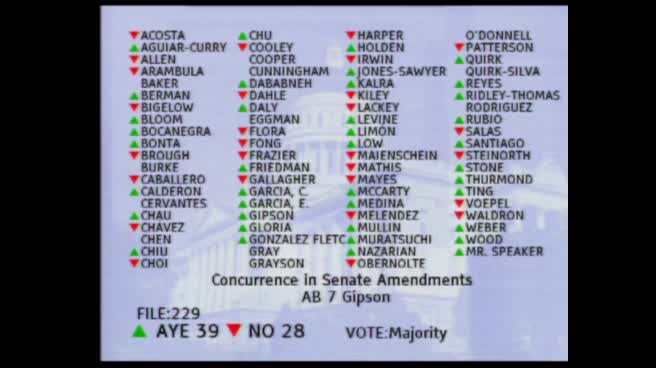 6MIN
Assembly Floor
 14MIN
Senate Floor
 28MIN
Senate Standing Committee on Judiciary
 29MIN
Senate Standing Committee on Labor and Industrial Relations
 2MIN
Assembly Floor
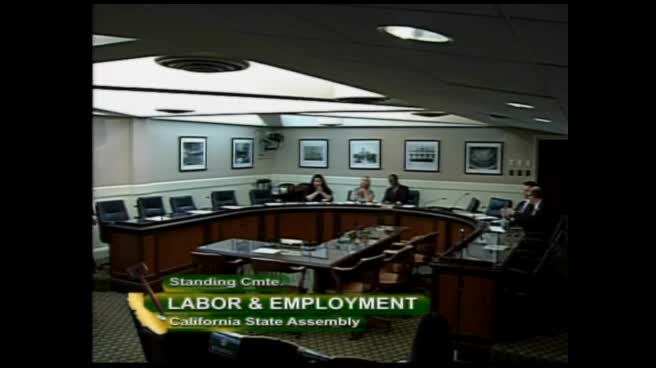 26MIN
Assembly Standing Committee on Labor and Employment
Bill Author

Bill Co-Author(s):
