AB 1713: Fertilizer: fertilizing material.
- Session Year: 2017-2018
- House: Assembly
- Latest Version Date: 2017-04-19
Existing law generally regulates fertilizer materials and requires the Secretary of Food and Agriculture, to the extent necessary to enforce those laws, to take samples, make analyses or examinations, and conduct investigations concerning the use, sale, adulteration, or misbranding of any substance, and to inspect the fertilizing material manufacturing facilities and take samples at various stages of production to verify label and labeling claims and production processes.
This bill would additionally require the secretary, at least once a year for each licensee, to conduct on-farm field tests. tests within the distribution system of high-risk material. The bill would require the Department of Food and Agriculture to report to the Fertilizer Inspection Advisory Board the cost of an inspection program for organic input material conducted pursuant to specified provisions.
Existing law requires the secretary to establish sampling procedures by regulation.
This bill would require the secretary to update those regulations relating to sampling methodology on or before July 1, 2018.
Under existing law, it is unlawful for the owner of a plant, crop, or commodity to knowingly treat or apply to that plant, crop, or commodity, or cause that plant, crop, or commodity to be treated or applied, with a fertilizer that was stolen or otherwise acquired by illegal means.This bill would extend that provision, and related penalty provisions, to mislabeled fertilizer. 2018. Because a violation of provisions the regulations relating to fertilizing materials is a misdemeanor, by changing the definition of a crime this bill would impose a state-mandated local program.
The California Constitution requires the state to reimburse local agencies and school districts for certain costs mandated by the state. Statutory provisions establish procedures for making that reimbursement.
This bill would provide that no reimbursement is required by this act for a specified reason.
Existing law generally regulates fertilizer materials and requires the Secretary of Food and Agriculture, to the extent necessary to enforce those laws, to take samples, make analyses or examinations, and conduct investigations concerning the use, sale, adulteration, or misbranding of any substance, and to inspect the fertilizing material manufacturing facilities and take samples at various stages of production to verify label and labeling claims and production processes.
This bill would additionally require the secretary, at least once a year for each licensee, to conduct on-farm field tests.
Existing law requires the secretary to establish sampling procedures by regulation.
This bill would require the secretary to update those regulations relating to sampling methodology on or before July 1, 2018.
Under existing law, it is unlawful for the owner of a plant, crop, or commodity to knowingly treat or apply to that plant, crop, or commodity, or cause that plant, crop, or commodity to be treated or applied, with a fertilizer that was stolen or otherwise acquired by illegal means.
This bill would extend that provision, and related penalty provisions, to mislabeled fertilizer. Because a violation of provisions relating to fertilizing materials is a misdemeanor, by changing the definition of a crime this bill would impose a state-mandated local program.
The California Constitution requires the state to reimburse local agencies and school districts for certain costs mandated by the state. Statutory provisions establish procedures for making that reimbursement.
This bill would provide that no reimbursement is required by this act for a specified reason.
The secretary shall, at the times and to the extent necessary for the enforcement of this chapter, do all of the following:
(a)Take samples of any substance.
(b)Make analyses or examinations of any substance.
(c)Conduct investigations concerning the use, sale, adulteration, or misbranding of any substance.
(d)Inspect the fertilizing material manufacturing facilities and take samples at various stages of production to verify label and labeling claims and production processes.
(e)At least once a year for each licensee, conduct on-farm field tests. tests within the distribution system of high-risk material.
SEC. 2.Section 14642.5 is added to the Food and Agricultural Code, to read:14642.5.The department shall report to the Fertilizer Inspection Advisory Board the cost of an inspection program for organic input material conducted pursuant to this article.
SEC. 3.Section 14646 of the Food and Agricultural Code is amended to read:14646.(a)The secretary shall establish sampling procedures by regulation.
(b)The secretary shall update those regulations relating to sampling methodology on or before July 1, 2018.
SEC. 4.Section 14649 of the Food and Agricultural Code is amended to read:14649.(a)It is unlawful for the owner of a plant, crop, or commodity to knowingly treat or apply to that plant, crop, or commodity, or cause that plant, crop, or commodity to be treated or applied, with a fertilizer that was stolen or otherwise acquired by illegal means or is mislabeled.(b)The owner of a crop, who is found by a court to have violated this section, in addition to any other penalties imposed by a court, shall be subject to a fine of ten thousand dollars ($10,000) plus an amount equal to one-half the value of the crop on which the illegally obtained or mislabeled fertilizer was applied.(c)For purposes of this section, one-half the value of the crop means one-half the market value of the crop that was actually treated with the illegally obtained or mislabeled fertilizer as determined by the actual sale of the crop or, if the crop is not actually sold, as determined by the secretary based on an average of the typical market value for such a crop sold in the normal channels of trade in the year in which the crop was produced and in the preceding two years.(d)Moneys received as a result of fines and penalties imposed pursuant to this section shall be divided and distributed as follows:(1)Fifty percent to the county in which the case was brought to court or in which a court approved settlement of the matter was negotiated.(2)Twenty-five percent to the office of the county agricultural commissioner.(3)Twenty-five percent to the department.SEC. 5.SEC. 4.No reimbursement is required by this act pursuant to Section 6 of Article XIIIB of the California Constitution because the only costs that may be incurred by a local agency or school district will be incurred because this act creates a new crime or infraction, eliminates a crime or infraction, or changes the penalty for a crime or infraction, within the meaning of Section 17556 of the Government Code, or changes the definition of a crime within the meaning of Section 6 of Article XIIIB of the California Constitution.
The secretary shall have free access at reasonable times to all records, premises, production processes, or conveyances that are used in the manufacture, transportation, importation, distribution, storage, or application of any fertilizing material. material, including access to material in the field.
SEC. 2.Section 14642 of the Food and Agricultural Code is amended to read:14642.The secretary shall, at the times and to the extent necessary for the enforcement of this chapter, do all of the following:
(a)Take samples of any substance.
(b)Make analyses or examinations of any substance.
(c)Conduct investigations concerning the use, sale, adulteration, or misbranding of any substance.
(d)Inspect the fertilizing material manufacturing facilities and take samples at various stages of production to verify label and labeling claims and production processes.
(e)At least once a year for each licensee, conduct on-farm field tests.
SEC. 3.Section 14646 of the Food and Agricultural Code is amended to read:14646.(a)The secretary shall establish sampling procedures by regulation.
(b)The secretary shall update those regulations relating to sampling methodology on or before July 1, 2018.
SEC. 4.Section 14649 of the Food and Agricultural Code is amended to read:14649.(a)It is unlawful for the owner of a plant, crop, or commodity to knowingly treat or apply to that plant, crop, or commodity, or cause that plant, crop, or commodity to be treated or applied, with a fertilizer that was stolen or otherwise acquired by illegal means. means or is mislabeled.
(b)The owner of a crop, who is found by a court to have violated this section, in addition to any other penalties imposed by a court, shall be subject to a fine of ten thousand dollars ($10,000) plus an amount equal to one-half the value of the crop on which the illegally obtained or mislabeled fertilizer was applied.
(c)For purposes of this section, one-half the value of the crop means one-half the market value of the crop that was actually treated with the illegally obtained or mislabeled fertilizer as determined by the actual sale of the crop or, if the crop is not actually sold, as determined by the director secretary based on an average of the typical market value for such a crop sold in the normal channels of trade in the year in which the crop was produced and in the preceding two years.
(d)Moneys received as a result of fines and penalties imposed pursuant to this section shall be divided and distributed as follows:
(1)Fifty percent to the county in which the case was brought to court or in which a court approved settlement of the matter was negotiated.
(2)Twenty-five percent to the office of the county agricultural commissioner.
(3)Twenty-five percent to the department.
SEC. 5.No reimbursement is required by this act pursuant to Section 6 of Article XIIIB of the California Constitution because the only costs that may be incurred by a local agency or school district will be incurred because this act creates a new crime or infraction, eliminates a crime or infraction, or changes the penalty for a crime or infraction, within the meaning of Section 17556 of the Government Code, or changes the definition of a crime within the meaning of Section 6 of Article XIIIB of the California Constitution.
|
Date
|
Status
|
|---|---|
| Feb 1, 2018 | From committee: Filed with the Chief Clerk pursuant to Joint Rule 56. |
| Jan 31, 2018 | Died pursuant to Art. IV, Sec. 10(c) of the Constitution. |
| May 26, 2017 | In committee: Held under submission. |
| May 10, 2017 | In committee: Set, first hearing. Referred to APPR. suspense file. |
| Apr 27, 2017 | From committee: Do pass and re-refer to Com. on APPR. (Ayes 10. Noes 0.) (April 26). Re-referred to Com. on APPR. |
| Apr 20, 2017 | Re-referred to Com. on AGRI. |
| Apr 19, 2017 | From committee chair, with author's amendments: Amend, and re-refer to Com. on AGRI. Read second time and amended. |
| Mar 16, 2017 | Referred to Com. on AGRI. |
| Mar 10, 2017 | From printer. May be heard in committee April 9. |
| Mar 9, 2017 | Read first time. To print. |
|
Date
|
Description
|
Location
|
Votes
|
|
|---|---|---|---|---|
| Apr 26, 2017 | Do pass and be re-referred to the Committee on [Appropriations] | Assembly Standing Committee on Agriculture |
Passed |
This list shows positions taken on this bill by organizations on the date displayed, which is linked to the original source.
Positions by individuals are not included.
|
Organization
|
Position
|
Date
|
|---|---|---|
| Almond Alliance of California | ** Support | Apr 26, 2017 |
| California Certified Organic Farmers | * Support | Apr 26, 2017 |
| California Pear Growers Association | ** Support | Apr 26, 2017 |
| California Seed Association | ** Support | Apr 26, 2017 |
| True Organic Products, Inc. | ** Support | Apr 26, 2017 |
Date of Hearing: May 10, 2017
ASSEMBLY COMMITTEE ON APPROPRIATIONS
Lorena Gonzalez Fletcher, Chair
ABPCA Bill Id:AB 1713
Author:(Committee on Agriculture) – As Amended Ver:April 19, 2017
Policy Committee: | Agriculture | Vote: | 10 - 0 |
|
| ||
|
|
Urgency: No State Mandated Local Program: Yes Reimbursable: No
SUMMARY:
This bill makes assorted changes related to the regulation of fertilizing materials and organic inputs materials (OIM) manufacturers. Specifically, this bill:
- Requires California Department of Food and Agriculture’s (CDFA) to conduct field tests of high-risk material at least once a year for each licensee.
- Requires CDFA to update regulations relating to sampling methodology by July 1, 2018.
- Requires CDFA to report to the Fertilizer Inspection Advisory Board (Board) the cost of the inspection for OIM.
FISCAL EFFECT:
Increased in-field sampling and laboratory costs for CDFA of approximately $2.8 million in 2017-18, $2.4 million in 2018-19, and $2.5 million in 2019-20. These costs include additional personnel to obtain fertilizer samples, new specialized equipment, and operating expenses. CDFA may increase licensing and registration fees up to their statutorily allowed levels, but these increases are unlikely to cover the costs of this bill.
COMMENTS:
Background and Purpose. The OIM program is an industry-funded program that was created in 2009 in the aftermath of a CDFA investigation of a manufacturer who falsely labeled its fertilizer as organic. Following this incident, consumers and the organic industry strived for better regulatory oversight on behalf of CDFA. AB 1811 (Dodd), Chapter 448, Statutes of 2016, made further updates to OIM inspection by allowing CDFA to focus on high risk OIM production or producers.
AB 1713 intended to encourage CDFA to review their testing and sampling procedures and review new scientific advancements to ensure the program elements are keeping up with scientific progress. Supporters of this bill state that because organic fertilizer is comprised of a variety of inputs and can vary greatly, the regulatory program needs to have unique features to maintain the integrity of certification process.
Analysis Prepared by: Luke Reidenbach / APPR. / (916) 319-2081
Date of Hearing: April 26, 2017
ASSEMBLY COMMITTEE ON AGRICULTURE
Anna Caballero, Chair
ABPCA Bill Id:AB 1713
Author:(Committee on Agriculture) – As Introduced Ver:April 19, 2017
SUBJECT: Fertilizer: fertilizing material.
SUMMARY: This bill requires the California Department of Food and Agriculture (CDFA) to perform annual field test for Organic Inputs Material (OIM) for high risk materials. Specifically, this bill:
- Requires CDFA to conduct field tests on OIM that are considered high risk material.
- Requires CDFA to update regulations relating to sampling methodology on or before July 1, 2018.
- Requires CDFA to report to the Fertilizer Inspection Advisory Board the cost of the inspection for OIM.
EXISTING LAW:
- Regulates fertilizer materials and requires CDFA, to the extent necessary to enforce those laws, to take samples; make analyses or examinations; conduct investigations concerning the use, sale, adulteration, or misbranding of any substance; and to inspect the fertilizing material manufacturing facilities and take samples at various stages of production to verify label and labeling claims and production processes.
- Allows CDFA to give priority OIM inspections that are considered high-risk.
- Defines OIM to mean any bulk or packaged commercial fertilizer, agricultural mineral, auxiliary soil and plant substance, specialty fertilizer, or soil amendment, excluding pesticides, that is to be used in organic crop and food production and that complies with the requirements of the National Organic Program (NOP) standards.
FISCAL EFFECT: Unknown
COMMENTS: In 2009, the Legislature changed and updated the laws affecting OIM as a result of one manufacturer spiking their organically labeled product with a synthetic substance that is prohibited for use on organic crops. Such a product does not create a health risk but does violate the requirements for NOP. Following this discovery, there was an outcry by the organic industry and consumers from this incident of fraud. While no organic farmer lost their certification, they could have. A more rigorous inspection process was put in place.
AB 1811 (Dodd), Chapter 448, Statutes of 2016, made further updates to OIM inspection by allowing CDFA to focus on high risk OIM production or producers. One of the discussion points around AB 1811 was the cost to non-organic fertilizer producer to help supplement the cost of OIM inspection. By shifting OIM inspections to focus on high risk material, AB 1811 sought to relieve the fiscal burden borne by non-organic fertilizer producers and establish a sustainable inspection protocol that is cost-effective and efficacious.
Supporters state because organic fertilizer is comprised of a variety of inputs and can vary greatly, the regulatory program needs to have unique features to maintain the integrity of the certification. While the nitrogen, phosphorous, and potassium ratio, known as N-P-K, is paramount concerns of all fertilizer regulatory programs, the organic fertilizer program also needs to ensure product integrity. This bill is intended to encourage CDFA to review their testing and sampling procedures and review new scientific advancements to ensure the program elements are keeping up with scientific progress. Additionally, sampling outside the manufacturers facility should also be encouraged to ensure integrity is maintained through the distribution system.
PRIOR LEGISLATION: AB 1811 (Dodd) authorized CDFA to develop a new schedule for organic input material OIM registration; authorized provisional label registration, as specified; prioritize inspections for high-risk products and manufacturers; and, authorized CDFA to determine whether a fertilizer material is mislabeled.
REGISTERED SUPPORT / OPPOSITION:
Support
Almond Alliance of California
California Pear Growers Association
California Seed Association
True Organic Products, Inc.
Opposition
None on file
Analysis Prepared by: Victor Francovich / AGRI. / (916) 319-2084
Discussed in Hearing
 1H
Assembly Standing Committee on Appropriations
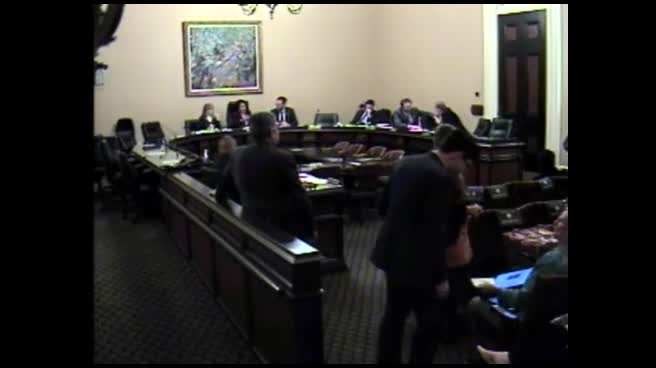 8MIN
Assembly Standing Committee on Agriculture
Bill Author
Bill Co-Author(s):
