AB 1768: The County of San Bernardino: housing authority: middle-income housing projects.
- Session Year: 2017-2018
- House: Assembly
- Latest Version Date: 2018-07-09
The Housing Authorities Law authorizes a housing authority of a city or county to, among other things, prepare, carry out, acquire, lease, and operate housing projects and housing developments for persons of low income, as provided. That law grants powers to an authority relating to, among other things, the issuance of bonds.
Existing law, until January 1, 2022, authorizes a housing authority located in the City of San Diego or the County of Santa Clara to implement a pilot program to develop and finance a middle-income housing project, as defined, if the project receives gap financing, as defined. Existing law requires any gap financing to be approved by the housing authoritys legislative body, as provided, and requires the housing authority to provide a report to the Legislature, as specified.
This bill would authorize a housing authority in the County of San Bernardino, until January 1, 2022, also to develop and finance a middle-income housing project if it receives gap financing. The bill would make legislative findings and declarations as to the necessity of a special statute for the County of San Bernardino.
(a)A housing authority located in the City of San Diego, the County of San Bernardino, or the County of Santa Clara may implement a pilot program to develop and finance a middle-income housing project as follows:
(1)Middle-income housing projects may receive gap financing from funds received pursuant to Section 34315.3.
(2)Financial or other assistance received from any public source pursuant to Section 34315.3 shall not be used to provide gap financing to units that will be occupied at or above market-rate rents.
(3)Any gap financing for middle-income housing projects shall first be approved by the housing authoritys legislative body by resolution after a public hearing. Notice of the time and place of the hearing shall be published in a newspaper of general circulation in the community at least once per week for at least two successive weeks, as specified in Section 6066 of the Government Code, prior to the hearing.
(4)The resolution approving the gap financing agreement shall contain a finding that gap financing will provide housing for low- and middle-income persons and is consistent with this section.
(5)(A)On or before January 1, 2020, and on or before January 1, 2022, the housing authority shall provide a report to the Legislature that contains the following information for each calendar year during which the housing authority implemented a pilot program pursuant to this section:
(i)The number of units produced using gap financing.
(ii)The amount of gap financing per regulated unit.
(iii)The levels of affordability of those units produced using gap financing.
(iv)The term of affordability for those units produced using gap financing.
(B)A report submitted to the Legislature pursuant to this paragraph shall be submitted in compliance with Section 9795 of the Government Code.
(b)For the purposes of this article, the following terms have the following meanings:
(1)Middle-income housing project means a housing project that includes at least 40 percent of units, excluding units available for managers, that are affordable to and will be occupied by persons of low income, as well as at least 10 percent of units that are affordable to and will be occupied by persons and families of middle income.
(2)Persons of low income has the same meaning as in Section 34213.
(3)Persons and families of middle income has the same meaning as in Section 65008 of the Government Code.
(4)Gap financing means a loan from a housing authority to fund the remaining cost of development of a middle-income housing project after other funds have been secured, including, but not limited to, bond funds, tax credits, conventional loans, or other private and public funds.
(c)Nothing in this section shall be construed to change current law regarding housing authority bond authority pursuant to this part or low-income housing tax credits, as described by Section 42(g) of the Internal Revenue Code.
(d)This article does not require a housing authority in the City of San Diego, the County of San Bernardino, or the County of Santa Clara to implement the pilot program described by this section.
SEC. 2.The Legislature finds and declares that a special statute is necessary and that a general statute cannot be made applicable within the meaning of Section 16 of Article IV of the California Constitution because of the unique needs of the County of San Bernardino to develop and finance middle-income housing projects.
(a)A housing authority located in the City of San Diego Diego, the County of San Bernardino, or the County of Santa Clara may implement a pilot program to develop and finance a middle-income housing project as follows:
(1)Middle-income housing projects may receive gap financing from funds received pursuant to Section 34315.3.
(2)Financial or other assistance received from any public source pursuant to Section 34315.3 shall not be used to provide gap financing to units that will be occupied at or above market-rate rents.
(3)Any gap financing for middle-income housing projects shall first be approved by the housing authoritys legislative body by resolution after a public hearing. Notice of the time and place of the hearing shall be published in a newspaper of general circulation in the community at least once per week for at least two successive weeks, as specified in Section 6066 of the Government Code, prior to the hearing.
(4)The resolution approving the gap financing agreement shall contain a finding that gap financing will provide housing for low- and middle-income persons and is consistent with this section.
(5)(A)On or before January 1, 2020, and on or before January 1, 2022, the housing authority shall provide a report to the Legislature that contains the following information for each calendar year during which the housing authority implemented a pilot program pursuant to this section:
(i)The number of units produced using gap financing.
(ii)The amount of gap financing per regulated unit.
(iii)The levels of affordability of those units produced using gap financing.
(iv)The term of affordability for those units produced using gap financing.
(B)A report submitted to the Legislature pursuant to this paragraph shall be submitted in compliance with Section 9795 of the Government Code.
(b)For the purposes of this article, the following terms have the following meanings:
(1)Middle-income housing project means a housing project that includes at least 40 percent of units, excluding units available for managers, that are affordable to and will be occupied by persons of low income, as well as at least 10 percent of units that are affordable to and will be occupied by persons and families of middle income.
(2)Persons of low income has the same meaning as in Section 34213.
(3)Persons and families of middle income has the same meaning as in Section 65008 of the Government Code.
(4)Gap financing means a loan from a housing authority to fund the remaining cost of development of a middle-income housing project after other funds have been secured, including, but not limited to, bond funds, tax credits, conventional loans, or other private and public funds.
(c)Nothing in this section shall be construed to change current law regarding housing authority bond authority pursuant to this part or low-income housing tax credits, as described by Section 42(g) of the Internal Revenue Code.
(d)This article does not require a housing authority in the City of San Diego Diego, the County of San Bernardino, or the County of Santa Clara to implement the pilot program described by this section.
SEC. 2.The Legislature finds and declares that a special statute is necessary and that a general statute cannot be made applicable within the meaning of Section 16 of Article IV of the California Constitution because of the unique needs of the County of San Bernardino to develop and finance middle-income housing projects.
|
Date
|
Status
|
|---|---|
| Jul 9, 2018 | Chaptered by Secretary of State - Chapter 66, Statutes of 2018. |
| Jul 9, 2018 | Approved by the Governor. |
| Jun 26, 2018 | Enrolled and presented to the Governor at 3 p.m. |
| Jun 18, 2018 | In Assembly. Ordered to Engrossing and Enrolling. |
| Jun 18, 2018 | Read third time. Passed. Ordered to the Assembly. |
| Jun 13, 2018 | Read second time. Ordered to Consent Calendar. |
| Jun 12, 2018 | From committee: Do pass. To Consent Calendar. (Ayes 12. Noes 0.) (June 12). |
| May 24, 2018 | Referred to Com. on T. & H. |
| May 15, 2018 | In Senate. Read first time. To Com. on RLS. for assignment. |
| May 14, 2018 | Read third time. Passed. Ordered to the Senate. |
| May 10, 2018 | Read second time. Ordered to third reading. |
| May 9, 2018 | From committee: Do pass. (Ayes 7. Noes 0.) (May 9). |
| Jan 22, 2018 | Referred to Com. on H. & C.D. |
| Jan 5, 2018 | From printer. May be heard in committee February 4. |
| Jan 4, 2018 | Read first time. To print. |
|
Date
|
Description
|
Location
|
Votes
|
|
|---|---|---|---|---|
| Jun 18, 2018 | Consent Calendar AB1768 Steinorth | Senate Floor |
Passed |
|
| Jun 12, 2018 | Do pass and be ordered to the Consent Calendar | Senate Standing Committee on Transportation and Housing |
Passed |
|
| May 14, 2018 | AB 1768 STEINORTH Assembly Third Reading | Assembly Floor |
Passed |
|
| May 9, 2018 | Do pass. | Assembly Standing Committee on Housing and Community Development |
Passed |
This list shows positions taken on this bill by organizations on the date displayed, which is linked to the original source.
Positions by individuals are not included.
|
Organization
|
Position
|
Date
|
|---|---|---|
| California Association Of Housing Authorities | * Support | May 9, 2018 |
| California Council For Affordable Housing | ** Support | Jun 13, 2018 |
| County of San Bernardino | ** Support | May 7, 2018 |
| San Bernardino County | ** Support | Jun 13, 2018 |
| San Bernardino County Housing Authority | * Support | May 9, 2018 |
Office of Senate Floor Analyses (916) 651-1520 Fax: (916) 327-4478 | AB |
CONSENT
Bill No: AB 1768
:
SENATE TRANS. & HOUSING COMMITTEE: 12-0, 6/12/18
AYES: Beall, Cannella, Allen, Dodd, Gaines, Galgiani, McGuire, Roth, Skinner, Vidak, Wieckowski, Wiener
NO VOTE RECORDED: Morrell
ASSEMBLY FLOOR: 77-0, 5/14/18 - See last page for vote
DIGEST:
This bill expands a pilot program that allows certain local housing authorities to provide gap financing for housing projects that include middle-income units.
Existing law:
- Establishes public housing to provide decent and safe rental housing for eligible low-income families, seniors, and individuals with disabilities. The US Department of Housing and Urban Development (HUD) administers federal aid to local housing authorities that manage public housing for low-income individuals at affordable rents. Housing authorities determine an applicant’s eligibility for public housing based on income limits developed by HUD. HUD sets income limits as a percentage of the median income for the county or metropolitan area (area median income, or AMI) as follows:
- Extremely low-income: 0-30% AMI
- Very low-income: 31-50% AMI
- Moderate income: 51-80% AMI
- Above moderate income: 121% AMI and above
- Requires a housing authority to rent or lease only to low-income individuals and “to provide safe and sanitary accommodations to the occupants, without overcrowding.” At least 20% of all units in housing projects assisted by a housing authority must be available for occupancy on a priority basis to low-income individuals with incomes of up to 80% AMI.
- Authorizes, pursuant to AB 1637 (Gloria, Chapter 801, Statutes of 2017), a housing authority in the City of San Diego or the County of Santa Clara to implement a pilot program to develop and provide gap financing for a middle-income housing project, defined as one in which at least 40% of units are designated low-income (up to 80% AMI) and at least 10% of units are designated middle-income (up to 150% AMI). Gap financing must first be approved by the housing authority’s legislative body by resolution after a public hearing that is noticed in accordance with existing law. The housing authority must submit a report to the Legislature as specified; the pilot program will sunset on January 1, 2022.
This bill includes San Bernardino County in the pilot project that allows housing authorities in the City of San Diego and County of Santa Clara to provide gap financing for middle-income housing units.
Background
Historically, the primary purpose of public housing authorities has been to serve low- and very low-income households. Existing state law allows authorities to finance and develop single-family housing up to 150% AMI and to own mixed-income housing developments under certain circumstances. However, existing law does not specifically authorize housing authorities to help finance the higher end portions of these developments. To address this concern, AB 1637 of 2017 established a pilot program to allow authorities in two localities to finance middle-income housing units. The pilot is intended to enable these authorities to leverage funding for projects that might not otherwise get built due to funding issues, as well as to spur growth of “missing” middle-income units. To address potential concerns about possibly depleting funds for low-income housing units, AB 1637 requires at least 40% of the units in a development funded by a housing authority to be low-income.
Comments
- Purpose. The author states that we must take an “all-of-the-above” approach to tackling the housing crisis in California and make sure we address the growing “missing middle” that is often forgotten in policy discussions. Allowing San Bernardino County to produce additional mixed-income projects gives it the flexibility to make costs pencil out by incorporating market rate and even middle-income housing to help pay for low-income, affordable housing. The author states that under this proposal, everyone is given the opportunity to succeed.
- Expanding to San Bernardino. The pilot program currently includes only the City of San Diego and the County of Santa Clara. The author states that it is appropriate to expand the pilot to San Bernardino County as its population is largely underserved due to the economic conditions necessary to build middle-income housing. San Bernardino County states that it has significantly different housing market conditions than the current pilot program regions.
The pilot program requires any participating housing authority to submit reports to the Legislature by January 1, 2020, and January 1, 2022, on the number of housing units produced using gap financing, the amount of gap financing per regulated unit, and the levels and term of affordability of the units produced using gap financing. While it may be appropriate to expand the pilot program to a third area, after this year the committee may wish to consider refraining from further expansions until reports are submitted and the effectiveness of the pilot can be evaluated.
Related/Prior Legislation
AB 1637 (Gloria, Chapter 801, Statutes of 2017) authorized local housing authorities to provide gap financing for development of projects in which at least 40% of housing units will be occupied by low-income individuals and at least 10% of units are affordable to, and will be occupied by, middle-income individuals.
FISCAL EFFECT: Appropriation: Fiscal Com.: Local:
California Council for Affordable Housing
San Bernardino County
OPPOSITION: (Verified 6/12/18)
None received
ARGUMENTS IN SUPPORT: San Bernardino County states that this bill directly supports the creation of middle income housing to increase the local supply of homes affordable to the workforce, including school teachers, nurses, police, first responders, and fire fighters, among others, who earn too much to qualify for existing affordable housing programs yet might not be able to afford to live in the communities where they work.
ASSEMBLY FLOOR: 77-0, 5/14/18
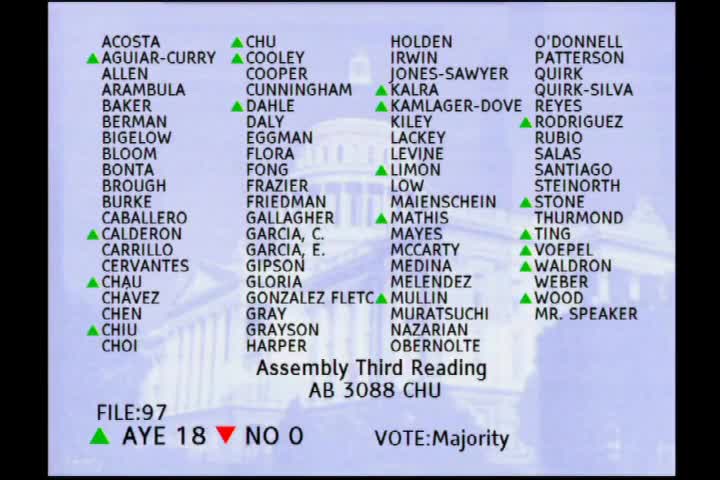
AYES: Acosta, Aguiar-Curry, Travis Allen, Arambula, Baker, Berman, Bigelow, Bloom, Bonta, Brough, Burke, Caballero, Calderon, Carrillo, Cervantes, Chau, Chávez, Chen, Chiu, Choi, Chu, Cooley, Cooper, Cunningham, Dahle, Daly, Eggman, Flora, Fong, Frazier, Friedman, Gallagher, Eduardo Garcia, Gipson, Gloria, Gonzalez Fletcher, Gray, Grayson, Harper, Holden, Irwin, Jones-Sawyer, Kalra, Kamlager-Dove, Kiley, Lackey, Levine, Limón, Low, Maienschein, Mathis, Mayes, McCarty, Medina, Melendez, Mullin, Muratsuchi, Nazarian, Obernolte, O'Donnell, Patterson, Quirk, Quirk-Silva, Reyes, Rodriguez, Rubio, Salas, Santiago, Steinorth, Mark Stone, Thurmond, Ting, Voepel, Waldron, Weber, Wood, Rendon
NO VOTE RECORDED: Cristina Garcia
6/13/18 14:34:57
**** END ****
SENATE COMMITTEE ON TRANSPORTATION AND HOUSING
Senator Jim Beall, Chair
2017 - 2018 Regular
Bill No: Hearing Date: 6/12/2018
Author: | Steinorth | ||
Version: | 1/4/2018 | ||
Urgency: | No | Fiscal: | No |
Consultant: | Erin Riches | ||
SUBJECT:
DIGEST: This bill expands a pilot program that allows certain local housing authorities to provide gap financing for housing projects that include middle-income units.
ANALYSIS:
Existing law establishes public housing to provide decent and safe rental housing for eligible low-income families, seniors, and individuals with disabilities. The US Department of Housing and Urban Development (HUD) administers federal aid to local housing authorities that manage public housing for low-income individuals at affordable rents. Housing authorities determine an applicant’s eligibility for public housing based on income limits developed by HUD. HUD sets income limits as a percentage of the median income for the county or metropolitan area (area median income, or AMI) as follows:
- Extremely low-income: 0-30% AMI
- Very low-income: 31-50% AMI
- Moderate income: 51-80% AMI
- Above moderate income: 121% AMI and above
Existing law requires a housing authority to rent or lease only to low-income individuals and “to provide safe and sanitary accommodations to the occupants, without overcrowding.” At least 20% of all units in housing projects assisted by a housing authority must be available for occupancy on a priority basis to low-income individuals with incomes of up to 80% AMI.
Existing law (AB 1637, Gloria, Chapter 801, Statutes of 2017) authorizes a housing authority in the City of San Diego or the County of Santa Clara to implement a pilot program to develop and provide gap financing for a middle-income housing project, defined as one in which at least 40% of units are designated low-income (up to 80% AMI) and at least 10% of units are designated middle-income (up to 150% AMI). Gap financing must first be approved by the housing authority’s legislative body by resolution after a public hearing that is noticed in accordance with existing law. The housing authority must submit a report to the Legislature as specified; the pilot program will sunset on January 1, 2022.
This bill includes San Bernardino County in the pilot project that allows housing authorities in the City of San Diego and County of Santa Clara to provide gap financing for middle-income housing units.
COMMENTS
- Purpose. The author states that we must take an “all-of-the-above” approach to tackling the housing crisis in California and make sure we address the growing “missing middle” that is often forgotten in policy discussions. Allowing San Bernardino County to produce additional mixed-income projects gives it the flexibility to make costs pencil out by incorporating market rate and even middle-income housing to help pay for low-income, affordable housing. The author states that under this proposal, everyone is given the opportunity to succeed.
- Background on the pilot program. Historically, the primary purpose of public housing authorities has been to serve low- and very low-income households. Existing state law allows authorities to finance and develop single-family housing up to 150% AMI and to own mixed-income housing developments under certain circumstances. However, existing law does not specifically authorize housing authorities to help finance the higher end portions of these developments. To address this concern, AB 1637 of 2017 established a pilot program to allow authorities in two localities to finance middle-income housing units. The pilot is intended to enable these authorities to leverage funding for projects that might not otherwise get built due to funding issues, as well as to spur growth of “missing” middle-income units. To address potential concerns about possibly depleting funds for low-income housing units, AB 1637 requires at least 40% of the units in a development funded by a housing authority to be low-income.
- Expanding to San Bernardino. The pilot program currently includes only the City of San Diego and the County of Santa Clara. The author states that it is appropriate to expand the pilot to San Bernardino County as its population is largely underserved due to the economic conditions necessary to build middle-income housing. San Bernardino County states that it has significantly different housing market conditions than the current pilot program regions.
The pilot program requires any participating housing authority to submit reports to the Legislature by January 1, 2020 and January 1, 2022, on the number of housing units produced using gap financing, the amount of gap financing per regulated unit, and the levels and term of affordability of the units produced using gap financing. While it may be appropriate to expand the pilot program to a third area, after this year the committee may wish to consider refraining from further expansions until reports are submitted and the effectiveness of the pilot can be evaluated.
Related Legislation:
AB 1637 (Gloria, Chapter 801, Statutes of 2017) — authorized local housing authorities to provide gap financing for development of projects in which at least 40% of housing units will be occupied by low-income individuals and at least 10% of units are affordable to, and will be occupied by, middle-income individuals.
Assembly Votes:
Floor: 77-0
H&CD: 7-0
FISCAL EFFECT: Appropriation: No Fiscal Com.: No Local: No
POSITIONS: (Communicated to the committee before noon on Wednesday,
June 6, 2018.)
SUPPORT:
California Council for Affordable Housing
San Bernardino County
OPPOSITION:
None received.
-- END --
ASSEMBLY THIRD READING
ATR Bill Id:AB 1768
Author:(Steinorth)
As Introduced Ver:January 4, 2018
Majority vote
Committee | Votes | Ayes | Noes |
Housing | 7-0 | Chiu, Maienschein, Chau, Choi, Gloria, Limón, Wood |
SUMMARY: Adds a housing authority in the County of San Bernardino to the list of housing authorities allowed, but not required, to implement a pilot program to develop and finance a middle-income housing project as specified in existing law.
FISCAL EFFECT: None
COMMENTS:
Background: In the 1930s, the federal government authorized the creation of housing authorities to develop and manage public housing and complete urban renewal. Housing authorities are also responsible for administering Section 8 vouchers. In the late 1990s, the federal Department of Housing and Urban Development (HUD) designated a small number of housing authorities "Moving to Work" agencies – an attempt to provide greater opportunities to create and test locally-designed strategies to increase efficiency, help residents find employment that could lead to self-sufficiency, and increase housing choices for low income families. These agencies were given exemptions from many existing public housing and voucher rules and more flexibility in the use of federal funds. After the dissolution of redevelopment agencies (RDA), many housing authorities took over the assets of the former RDAs and responsibility for monitoring those assets.
Housing authorities can issue tax-exempt revenue bonds to finance the acquisition, construction, rehabilitation, refinance, or development of multi-family rental housing. The amount of state tax- exempt bonds that can be issued in the state is capped. Bonding capacity is allocated to local agencies by the California Tax Credit Allocation Committee (TCAC). Tax-exempt bonds require that 20% of the units in a development be limited to households at 50% or less of the median income for the county or metropolitan area (AMI). The remaining units could be of any income, including market rate. Housing authorities cannot lend on any portion of a rental housing development with affordability levels of more than 80% of AMI. Housing authorities have explicit authority in state law to finance for-sale units up to 150% of AMI.
HUD sets income limits as a percentage of the AMI as follows:
- Extremely low-income: 0-30% AMI
- Very low-income: 31-50% AMI
- Low-income: 51-80% AMI
- Moderate income: 81-120% AMI
- Above moderate income: 121% AMI and above
Last year, AB 1637 (Gloria), Chapter 801, Statutes of 2017, allowed, but did not require, a housing authority in the City of San Diego or the County of Santa Clara to develop and finance mixed-income developments where 40% of the units are restricted to persons making 80% or less of AMI. Housing authorities in this pilot program can use financial assistance from any (unrestricted) public or private source to finance the remaining units for middle income households – households with incomes that do not exceed 150% of AMI.
This bill adds a housing authority in the County of San Bernardino to the housing authorities permitted, but not required, to operate this type of pilot program. According to the Department of Housing and Community Development, the AMI in San Bernardino County in 2017 was $65,000 for a household of four.
Purpose of this bill: According to the author, "At no cost to the State, AB 1768 will simply expand the pilot program established last year by [AB 1637 (Gloria)], Chapter 801 by authorizing the County of San Bernardino, which has significantly different housing market conditions than the current pilot program regions, to develop and finance mixed-income developments, where:
- At least 40% of the units are restricted to persons of low income.
- At least 10% of the units are affordable to persons and families of middle income.
"The intent is to give incentives to developers to meet the needs of our middle-class families by building housing projects for both middle- and low-income persons in the County of San Bernardino that are largely underserved due to the economic conditions necessary to build such housing."
Source of funding: The County of San Bernardino has indicated their intent is to use unrestricted local funds generated from rent revenues collected from the housing authority's existing portfolio of multifamily housing developed or acquired via conventional (private, non-HUD) financing, to provide construction loans (gap financing) for rental units that fall between 80% and 150% of AMI. Under existing law, housing authorities can finance projects that are mixed-income provided that 20% of the units are limited to 80% of AMI or less. Housing authorities can accept financial or other assistance from any public or private source and spend those funds for the purpose and activities allowed under state law. In addition, this pilot program is scheduled to sunset in 2022, and the housing authorities that choose to operate this program are required to submit reports to the Legislature in 2020 and 2022 on the number of units produced, the amount of financing per affordable unit, and the level of affordability of those units.
Related legislation:
AB 1637 (Gloria), Chapter 801, Statutes of 2017: Allowed, but did not require, a housing authority in the City of San Diego and the County of Santa Clara to develop and finance mixed-income developments where 40% of the units are restricted to persons making 80% or less of AMI.
Analysis Prepared by: Lisa Engel / H. & C.D. / (916) 319-2085 FN: 0002891
Date of Hearing: May 9, 2018
ASSEMBLY COMMITTEE ON HOUSING AND COMMUNITY DEVELOPMENT
David Chiu, Chair
ABPCA Bill Id:AB 1768 (
Author:Steinorth) – As Introduced Ver:January 4, 2018
SUBJECT: The County of San Bernardino: housing authority: middle-income housing projects
SUMMARY: Adds a housing authority in the County of San Bernardino to the list of housing authorities allowed, but not required, to implement a pilot program to develop and finance a middle-income housing project as specified in existing law.
EXISTING LAW:
- Requires a housing authority to rent or lease only to low-income individuals and to provide safe and sanitary accommodations to the occupants, without overcrowding.
- Allows a housing authority to do all of the following:
- Prepare, carry out, acquire, lease, and operate housing projects for low-income persons.
- Provide for the construction, reconstruction, improvement, alteration, or development of all or part of a housing development.
- Provide financing for the acquisition, construction, rehabilitation, refinancing, or development of dwelling accommodations for low-income persons.
- Provide counseling, referral, and advisory services to persons and families that are low- or moderate-income in connection with purchasing, renting, occupying, maintaining, or repairing housing.
- Provide security necessary to a project and its inhabitants.
- Assist housing projects with financing pursuant to Health and Safety Code Section 34312.3.
- Allows a housing authority to accept financial or other assistance from any public or private source and expend any funds received for the purposes allowed under state law, including leased housing.
- Requires not less than 20% of the units financed by a housing authority to be available for occupancy on a priority basis to persons with an income of 80% of AMI or less.
- Allows a housing authority in the City of San Diego or the County of Santa Clara to implement a pilot program to develop and finance middle-income housing developments, until January 1, 2022, as follows:
- Middle-income housing projects may receive funds from public and private sources for gap financing;
- Prohibits the use of funds from a public source for gap financing for units that will be occupied at or above market-rate rents;
- Requires gap financing for middle-income housing projects to be approved by a housing authority's legislative body by resolution after a public hearing;
- Requires notice of the hearing to be noticed in a newspaper as specified;
- Requires the resolution approving the gap financing agreement to include a finding that gap financing will provide housing for low- and middle-income persons; and
- Requires a housing authority, on or before January 1, 2020 and on or before January 1, 2022, to report to the Legislature the following information each calendar year that the housing authority implements the pilot program:
- The number of units produced using gap financing;
- The amount of gap financing per regulated unit; and
- The levels of affordability of those units produced using gap financing.
- Defines “middle-income housing project” to mean a housing project that includes at least 40% of the units affordable to and occupied by persons at or below 80% of area median income (AMI) and at least 10% of the units affordable to persons and families at incomes not exceeding 150% of AMI.
- Defines “persons of low income” to mean persons and families whose income does not exceed 80% of AMI.
- Defines “persons and families of middle income” to mean persons and families whose income does not exceed 150% of AMI.
- Defines “gap financing” to mean a loan from a housing authority to fund the remaining cost of development of a middle-income housing project after other funds have been secured, including, but not limited to, bond funds, tax credits, conventional loans, or other private and public funds.
- Provides that nothing in these provisions shall be construed to change a housing authority’s bond authority beyond current law.
- Provides that a housing authority in the City of San Diego or the County of Santa Clara is not required to implement a pilot program to finance middle-income housing projects.
FISCAL EFFECT: None
COMMENTS:
Background: In the 1930s, the federal government authorized the creation of housing authorities to develop and manage public housing and complete urban renewal. Housing authorities are also responsible for administering Section 8 vouchers. In the late 1990s, the federal Department of Housing and Urban Development (HUD) designated a small number of housing authorities "Moving to Work" agencies – an attempt to provide greater opportunities to create and test locally-designed strategies to increase efficiency, help residents find employment that could lead to self-sufficiency, and increase housing choices for low income families. These agencies were given exemptions from many existing public housing and voucher rules and more flexibility in the use of federal funds. After the dissolution of redevelopment agencies (RDA), many housing authorities took over the assets of the former RDAs and responsibility for monitoring those assets.
Housing authorities can issue tax-exempt revenue bonds to finance the acquisition, construction, rehabilitation, refinance, or development of multi-family rental housing. The amount of state tax- exempt bonds that can be issued in the state is capped. Bonding capacity is allocated to local agencies by the California Tax Credit Allocation Committee (TCAC). Tax-exempt bonds require that 20% of the units in a development be limited to households at 50% or less of AMI. The remaining units could be of any income, including market rate. Housing authorities cannot lend on any portion of a rental housing development with affordability levels of more than 80% of AMI. Housing authorities have explicit authority in state law to finance for-sale units up to 150% of AMI.
HUD sets income limits as a percentage of the median income for the county or metropolitan area (AMI) as follows:
1) Extremely low-income: 0-30% AMI
2) Very low-income: 31-50% AMI
3) Low-income: 51-80% AMI
4) Moderate income: 81-120% AMI
5) Above moderate income: 121% AMI and above
Last year, AB 1637 (Gloria, Chapter 801, Statutes of 2017) allowed, but did not require, a housing authority in the City of San Diego or the County of Santa Clara to develop and finance mixed-income developments where 40% of the units are restricted to persons making 80% or less of AMI. Housing authorities in this pilot program can use financial assistance from any (unrestricted) public or private source to finance the remaining units for middle income households – households with incomes that do not exceed 150% of AMI.
This bill adds a housing authority in the County of San Bernardino to the housing authorities permitted, but not required, to operate this type of pilot program. According to the Department of Housing and Community Development, the AMI in San Bernardino County in 2017 was $65,000 for a household of four.
Purpose of this bill: According to the author, “At no cost to the State, AB 1768 will simply expand the pilot program established last year by Chapter 801 by authorizing the County of San Bernardino, which has significantly different housing market conditions than the current pilot program regions, to develop and finance mixed-income developments, where:
- At least 40% of the units are restricted to persons of low income.
- At least 10% of the units are affordable to persons and families of middle income.
“The intent is to give incentives to developers to meet the needs of our middle-class families by building housing projects for both middle- and low-income persons in the County of San Bernardino that are largely underserved due to the economic conditions necessary to build such housing.”
Source of funding: The County of San Bernardino has indicated their intent is to use unrestricted local funds generated from rent revenues collected from the housing authority’s existing portfolio of multifamily housing developed or acquired via conventional (private, non-HUD) financing, to provide construction loans (gap financing) for rental units that fall between 80% and 150% of AMI. Under existing law, housing authorities can finance projects that are mixed-income provided that 20% of the units are limited to 80% of AMI or less. Housing authorities can accept financial or other assistance from any public or private source and spend those funds for the purpose and activities allowed under state law. In addition, this pilot program is scheduled to sunset in 2022, and the housing authorities that choose to operate this program are required to submit reports to the Legislature in 2020 and 2022 on the number of units produced, the amount of financing per affordable unit, and the level of affordability of those units.
Policy considerations: This bill proposes to add the County of San Bernardino to a pilot program that was only authorized last year. Before adding other new counties to the pilot program, the Committee may wish to consider whether it would be prudent to wait for the results of the pilot programs (if any are authorized) and review the reports that must be submitted in 2020 and 2022 to evaluate the effectiveness of the program.
Related legislation:
AB 1637 (Gloria, Chapter 801, Statutes of 2017): Allowed, but did not require, a housing authority in the City of San Diego and the County of Santa Clara to develop and finance mixed-income developments where 40% of the units are restricted to persons making 80% or less of AMI.
REGISTERED SUPPORT / OPPOSITION:
Support
California Council for Affordable Housing
County of San Bernardino
Opposition
None on file
Analysis Prepared by: Nicole Restmeyer / H. & C.D. / (916) 319-2085
Discussed in Hearing
 1MIN
Assembly Floor
 6MIN
Assembly Standing Committee on Housing and Community Development
Bill Author

Bill Co-Author(s):