AB 1772: Fire insurance: indemnity.
- Session Year: 2017-2018
- House: Assembly
- Latest Version Date: 2018-09-21
Existing law defines the measure of indemnity for a loss under an open fire insurance policy and specifies time limits under which an insured must collect the full replacement cost of the loss. In the event of a loss relating to a state of emergency, as defined, existing law establishes a minimum time limit of not less than 24 months from the date that the first payment toward the actual cash value is made during which the insured may collect the full replacement cost of the loss, subject to the policy limit, as specified.
This bill would extend the minimum time limit during which an insured may collect the full replacement cost of a loss relating to a state of emergency to 36 months. The bill would require that additional extensions of 6 months be provided to policyholders for good cause under that circumstance. The bill would also require that policy forms issued by an insurer be in compliance with these changes on and after July 1, 2019. The bill would also make technical changes.
This bill would incorporate additional changes to Section 2051.5 of the Insurance Code proposed by AB 1800 and SB 894 to be operative only if this bill, AB 1800, and SB 894 are enacted and this bill is enacted last.
This bill would declare that it is to take effect immediately as an urgency statute.
Existing law defines the measure of indemnity for a loss under an open fire insurance policy and specifies time limits under which an insured must collect the full replacement cost of the loss. In the event of a loss relating to a state of emergency, as defined, existing law establishes a minimum time limit of not less than 24 months from the date that the first payment toward the actual cash value is made during which the insured may collect the full replacement cost of the loss, subject to the policy limit, as specified.
This bill would extend the minimum time limit during which an insured may collect the full replacement cost of a loss relating to a state of emergency to 36 months. The bill would require that additional extensions of 6 months be provided to policyholders for good cause under that circumstance. The bill would also require that policy forms issued by an insurer be in compliance with these changes on and after July 1, 2019. The bill would also make technical changes.
This bill would incorporate additional changes to Section 2051.5 of the Insurance Code proposed by AB 1800 and SB 894 to be operative only if this bill, AB 1800, and SB 894 are enacted and this bill is enacted last.
This bill would declare that it is to take effect immediately as an urgency statute.
Existing law defines the measure of indemnity for a loss under an open fire insurance policy and specifies time limits under which an insured must collect the full replacement cost of the loss. In the event of a loss relating to a state of emergency, as defined, existing law establishes a minimum time limit of not less than 24 months from the date that the first payment toward the actual cash value is made during which the insured may collect the full replacement cost of the loss, subject to the policy limit, as specified.
This bill would extend the minimum time limit during which an insured may collect the full replacement cost of a loss relating to a state of emergency to 36 months. The bill would require that additional extensions of 6 months be provided to policyholders for good cause under that circumstance. The bill would also require that policy forms issued by an insurer be in compliance with these changes on and after July 1, 2019. The bill would also make technical changes.
This bill would incorporate additional changes to Section 2051.5 of the Insurance Code proposed by AB 1800 and SB 894 to be operative only if this bill, AB 1800, and SB 894 are enacted and this bill is enacted last.
This bill would declare that it is to take effect immediately as an urgency statute.
Existing law defines the measure of indemnity for a loss under an open fire insurance policy and specifies time limits under which an insured must collect the full replacement cost of the loss. In the event of a loss relating to a state of emergency, as defined, existing law establishes a minimum time limit of not less than 24 months from the date that the first payment toward the actual cash value is made during which the insured may collect the full replacement cost of the loss, subject to the policy limit, as specified.
This bill would extend the minimum time limit during which an insured may collect the full replacement cost of a loss relating to a state of emergency to 36 months. The bill would require that additional extensions of 6 months be provided to policyholders for good cause under that circumstance. The bill would also require that policy forms used issued by an insurer be in compliance with these changes on and after July 1, 2019. The bill would also make technical changes.
Existing law defines the measure of indemnity for a loss under an open fire insurance policy and specifies time limits under which an insured must collect the full replacement cost of the loss. In the event of a loss relating to a state of emergency, as defined, existing law establishes a minimum time limit of not less than 24 months from the date that the first payment toward the actual cash value is made during which the insured may collect the full replacement cost of the loss, subject to the policy limit, as specified.
This bill would extend the minimum time limit during which an insured may collect the full replacement cost of a loss relating to a state of emergency to 36 months. The bill would require that additional extensions of 6 months be provided to policyholders for good cause under that circumstance. The bill would also require that policy forms used by an insurer be in compliance with these changes on and after July 1, 2019. The bill would also make technical changes.
Existing law defines the measure of indemnity for a loss under an open fire insurance policy and specifies time limits under which an insured must collect the full replacement cost of the loss. In the event of a loss relating to a state of emergency, as defined, existing law establishes a minimum time limit of not less than 24 months from the date that the first payment toward the actual cash value is made during which the insured may collect the full replacement cost of the loss, subject to the policy limit, as specified.
This bill would extend the minimum time limit during which an insured may collect the full replacement cost of a loss relating to a state of emergency to 36 months. The bill would also make technical changes.
(a)(1)Under an open policy that requires payment of the replacement cost for a loss, the measure of indemnity is the amount that it would cost the insured to repair, rebuild, or replace the thing lost or injured, without a deduction for physical depreciation, or the policy limit, whichever is less.
(2)If the policy requires the insured to repair, rebuild, or replace the damaged property in order to collect the full replacement cost, the insurer shall pay the actual cash value of the damaged property, as defined in Section 2051, until the damaged property is repaired, rebuilt, or replaced. Once the property is repaired, rebuilt, or replaced, the insurer shall pay the difference between the actual cash value payment made and the full replacement cost reasonably paid to replace the damaged property, up to the limits stated in the policy.
(b)(1)(A)(i)A time limit of less than 12 months from the date that the first payment toward the actual cash value is made shall not be placed upon an insured in order to collect the full replacement cost of the loss, subject to the policy limit.
(ii)In the event of a loss relating to a state of emergency, as defined in Section 8558 of the Government Code, a time limit of less than 36 months from the date that the first payment toward the actual cash value is made shall not be placed upon the insured in order to collect the full replacement cost of the loss, subject to the policy limit.
(iii)This section does not prohibit an insurer from allowing the insured additional time to collect the full replacement cost.
(B)An insurer shall provide to a policyholder one or more additional extensions of six months for good cause pursuant to clause (i) or (ii) of subparagraph (A) if the insured, acting in good faith and with reasonable diligence, encounters a delay or delays in approval for, or reconstruction of, the home or residence that are beyond the control of the insured. Circumstances beyond the control of the insured include, but are not limited to, unavoidable construction permit delays, the lack of necessary construction materials, or the unavailability of contractors to perform the necessary work.
(2)In the event of a covered loss relating to a state of emergency, as defined in Section 8558 of the Government Code, coverage for additional living expenses is for a period of 24 months, but is subject to other policy provisions, provided that an extension of time required by this paragraph beyond the period provided in the policy does not increase the additional living expense policy limit in force at the time of the loss.
(c)In the event of a total loss of the insured structure, a policy issued or delivered in this state shall not contain a provision that limits or denies payment of the replacement cost in the event the insured decides to rebuild or replace the property at a location other than the insured premises. However, the measure of indemnity shall be based upon the replacement cost of the insured property and shall not be based upon the cost to repair, rebuild, or replace at a location other than the insured premises.
(d)This section does not prohibit an insurer from restricting payment in cases of suspected fraud.
(e)(1)On and after July 1, 2005, and only until July 1, 2019, all policy forms used by an insurer shall be in compliance with this section, except for the changes made to this section by the act that added paragraph (2).
(2)On and after July 1, 2019, all policy forms issued by an insurer shall be in compliance with this section in its entirety, including the changes made to this section by the act that added this paragraph.
SEC. 1.3.Section 2051.5 of the Insurance Code is amended to read:2051.5.(a)(1)Under an open policy that requires payment of the replacement cost for a loss, the measure of indemnity is the amount that it would cost the insured to repair, rebuild, or replace the thing lost or injured, without a deduction for physical depreciation, or the policy limit, whichever is less.
(2)If the policy requires the insured to repair, rebuild, or replace the damaged property in order to collect the full replacement cost, the insurer shall pay the actual cash value of the damaged property, as defined in Section 2051, until the damaged property is repaired, rebuilt, or replaced. Once the property is repaired, rebuilt, or replaced, the insurer shall pay the difference between the actual cash value payment made and the full replacement cost reasonably paid to replace the damaged property, up to the limits stated in the policy.
(b)(1)(A)(i)A time limit of less than 12 months from the date that the first payment toward the actual cash value is made shall not be placed upon an insured in order to collect the full replacement cost of the loss, subject to the policy limit.
(ii)In the event of a loss relating to a state of emergency, as defined in Section 8558 of the Government Code, a time limit of less than 36 months from the date that the first payment toward the actual cash value is made shall not be placed upon the insured in order to collect the full replacement cost of the loss, subject to the policy limit.
(iii)This section does not prohibit an insurer from allowing the insured additional time to collect the full replacement cost.
(B)An insurer shall provide to a policyholder one or more additional extensions of six months for good cause pursuant to clause (i) or (ii) of subparagraph (A) if the insured, acting in good faith and with reasonable diligence, encounters a delay or delays in approval for, or reconstruction of, the home or residence that are beyond the control of the insured. Circumstances beyond the control of the insured include, but are not limited to, unavoidable construction permit delays, the lack of necessary construction materials, or the unavailability of contractors to perform the necessary work.
(2)In the event of a covered loss relating to a state of emergency, as defined in Section 8558 of the Government Code, coverage for additional living expenses is for a period of 24 months, but is subject to other policy provisions, provided that an extension of time required by this paragraph beyond the period provided in the policy does not increase the additional living expense policy limit in force at the time of the loss.
(c)In the event of a total loss of the insured structure, a policy issued or delivered in this state shall not contain a provision that limits or denies, on the basis that the insured has decided to rebuild at a new location or to purchase an already built home at a new location, payment of the building code upgrade cost or the replacement cost, including any extended replacement cost coverage, to the extent those costs are otherwise covered by the terms of the policy or any policy endorsement. However, the measure of indemnity shall not exceed the replacement cost, including the building code upgrade cost and any extended replacement cost coverage, if applicable, to repair, rebuild, or replace the insured structure at its original location.
(d)This section does not prohibit an insurer from restricting payment in cases of suspected fraud.
(e)(1)On and after July 1, 2005, and only until July 1, 2019, all policy forms used by an insurer shall be in compliance with this section, except for the changes made to this section by the act that added paragraph (2).
(2)On and after July 1, 2019, all policy forms issued by an insurer shall be in compliance with this section in its entirety, including the changes made to this section by the act that added this paragraph.
SEC. 1.5.Section 2051.5 of the Insurance Code is amended to read:2051.5.(a)(1)Under an open policy that requires payment of the replacement cost for a loss, the measure of indemnity is the amount that it would cost the insured to repair, rebuild, or replace the thing lost or injured, without a deduction for physical depreciation, or the policy limit, whichever is less.
(2)If the policy requires the insured to repair, rebuild, or replace the damaged property in order to collect the full replacement cost, the insurer shall pay the actual cash value of the damaged property, as defined in Section 2051, until the damaged property is repaired, rebuilt, or replaced. Once the property is repaired, rebuilt, or replaced, the insurer shall pay the difference between the actual cash value payment made and the full replacement cost reasonably paid to replace the damaged property, up to the limits stated in the policy.
(b)(1)(A)(i)A time limit of less than 12 months from the date that the first payment toward the actual cash value is made shall not be placed upon an insured in order to collect the full replacement cost of the loss, subject to the policy limit.
(ii)In the event of a loss relating to a state of emergency, as defined in Section 8558 of the Government Code, a time limit of less than 36 months from the date that the first payment toward the actual cash value is made shall not be placed upon the insured in order to collect the full replacement cost of the loss, subject to the policy limit.
(iii)This section does not prohibit an insurer from allowing the insured additional time to collect the full replacement cost.
(B)An insurer shall provide to a policyholder one or more additional extensions of six months for good cause pursuant to clause (i) or (ii) of subparagraph (A) if the insured, acting in good faith and with reasonable diligence, encounters a delay or delays in approval for, or reconstruction of, the home or residence that are beyond the control of the insured. Circumstances beyond the control of the insured include, but are not limited to, unavoidable construction permit delays, the lack of necessary construction materials, or the unavailability of contractors to perform the necessary work.
(2)In the event of a covered loss relating to a state of emergency, as defined in Section 8558 of the Government Code, coverage for additional living expenses shall be for a period of no less than 24 months from the inception of the loss, but shall be subject to other policy provisions. An insurer shall grant an extension of up to 12 additional months, for a total of 36 months, if an insured acting in good faith and with reasonable diligence encounters a delay or delays in the reconstruction process that are the result of circumstances beyond the control of the insured. Circumstances beyond the control of the insured include, but are not limited to, unavoidable construction permit delays, lack of necessary construction materials, and lack of available contractors to perform the necessary work. Additional extensions of six months shall be provided to policyholders for good cause.
(c)In the event of a total loss of the insured structure, a policy issued or delivered in this state shall not contain a provision that limits or denies payment of the replacement cost in the event the insured decides to rebuild or replace the property at a location other than the insured premises. However, the measure of indemnity shall be based upon the replacement cost of the insured property and shall not be based upon the cost to repair, rebuild, or replace at a location other than the insured premises.
(d)This section does not prohibit an insurer from restricting payment in cases of suspected fraud.
(e)(1)On and after July 1, 2005, and only until July 1, 2019, all policy forms used by an insurer shall be in compliance with this section, except for the changes made to this section by the act that added paragraph (2).
(2)On and after July 1, 2019, all policy forms issued by an insurer shall be in compliance with this section in its entirety, including the changes made to this section by the act that added this paragraph.
SEC. 1.7.Section 2051.5 of the Insurance Code is amended to read:2051.5.(a)(1)Under an open policy that requires payment of the replacement cost for a loss, the measure of indemnity is the amount that it would cost the insured to repair, rebuild, or replace the thing lost or injured, without a deduction for physical depreciation, or the policy limit, whichever is less.
(2)If the policy requires the insured to repair, rebuild, or replace the damaged property in order to collect the full replacement cost, the insurer shall pay the actual cash value of the damaged property, as defined in Section 2051, until the damaged property is repaired, rebuilt, or replaced. Once the property is repaired, rebuilt, or replaced, the insurer shall pay the difference between the actual cash value payment made and the full replacement cost reasonably paid to replace the damaged property, up to the limits stated in the policy.
(b)(1)(A)(i)A time limit of less than 12 months from the date that the first payment toward the actual cash value is made shall not be placed upon an insured in order to collect the full replacement cost of the loss, subject to the policy limit.
(ii)In the event of a loss relating to a state of emergency, as defined in Section 8558 of the Government Code, a time limit of less than 36 months from the date that the first payment toward the actual cash value is made shall not be placed upon the insured in order to collect the full replacement cost of the loss, subject to the policy limit.
(iii)This section does not prohibit an insurer from allowing the insured additional time to collect the full replacement cost.
(B)An insurer shall provide to a policyholder one or more additional extensions of six months for good cause pursuant to clause (i) or (ii) of subparagraph (A) if the insured, acting in good faith and with reasonable diligence, encounters a delay or delays in approval for, or reconstruction of, the home or residence that are beyond the control of the insured. Circumstances beyond the control of the insured include, but are not limited to, unavoidable construction permit delays, the lack of necessary construction materials, or the unavailability of contractors to perform the necessary work.
(2)In the event of a covered loss relating to a state of emergency, as defined in Section 8558 of the Government Code, coverage for additional living expenses shall be for a period of no less than 24 months from the inception of the loss, but shall be subject to other policy provisions. An insurer shall grant an extension of up to 12 additional months, for a total of 36 months, if an insured acting in good faith and with reasonable diligence encounters a delay or delays in the reconstruction process that are the result of circumstances beyond the control of the insured. Circumstances beyond the control of the insured include, but are not limited to, unavoidable construction permit delays, lack of necessary construction materials, and lack of available contractors to perform the necessary work. Additional extensions of six months shall be provided to policyholders for good cause.
(c)In the event of a total loss of the insured structure, a policy issued or delivered in this state shall not contain a provision that limits or denies, on the basis that the insured has decided to rebuild at a new location or to purchase an already built home at a new location, payment of the building code upgrade cost or the replacement cost, including any extended replacement cost coverage, to the extent those costs are otherwise covered by the terms of the policy or any policy endorsement. However, the measure of indemnity shall not exceed the replacement cost, including the building code upgrade cost and any extended replacement cost coverage, if applicable, to repair, rebuild, or replace the insured structure at its original location.
(d)This section does not prohibit an insurer from restricting payment in cases of suspected fraud.
(e)(1)On and after July 1, 2005, and only until July 1, 2019, all policy forms used by an insurer shall be in compliance with this section, except for the changes made to this section by the act that added paragraph (2).
(2)On and after July 1, 2019, all policy forms issued by an insurer shall be in compliance with this section in its entirety, including the changes made to this section by the act that added this paragraph.
SEC. 2.(a)Section 1.3 of this bill incorporates amendments to Section 2051.5 of the Insurance Code proposed by both this bill and Assembly Bill 1800. That section of this bill shall only become operative if (1) both bills are enacted and become effective on or before January 1, 2019, (2) each bill amends Section 2051.5 of the Insurance Code, (3) Senate Bill 894 is not enacted or as enacted does not amend that section, and (4) this bill is enacted after Assembly Bill 1800, in which case Section 2051.5 of the Insurance Code, as amended by Assembly Bill 1800, shall remain operative only until the operative date of this bill, at which time Section 1.3 of this bill shall become operative, and Sections 1, 1.5, and 1.7 shall not become operative.
(b)Section 1.5 of this bill incorporates amendments to Section 2051.5 of the Insurance Code proposed by both this bill and Senate Bill 894. That section of this bill shall only become operative if (1) both bills are enacted and become effective on or before January 1, 2019, but this bill becomes operative first, (2) each bill amends Section 2051.5 of the Insurance Code, (3) Assembly Bill 1800 is not enacted or as enacted does not amend that section, and (4) this bill is enacted after Senate Bill 894, in which case Section 2051.5 of the Insurance Code, as amended by Section 1 of this bill, shall remain operative only until the operative date of Senate Bill 894, at which time Section 1.5 of this bill shall become operative, and Sections 1.3 and 1.7 of this bill shall not become operative.
(c)Section 1.7 of this bill incorporates amendments to Section 2051.5 of the Insurance Code proposed by this bill, Assembly Bill 1800, and Senate Bill 894. That section of this bill shall only become operative if (1) all three bills are enacted and become effective on or before January 1, 2019, (2) all three bills amend Section 2051.5 of the Insurance Code, and (3) this bill is enacted after Assembly Bill 1800 and Senate Bill 894, in which case Section 2051.5 of the Insurance Code, as amended by Section 1.3 of this bill, shall remain operative only until the operative date of Senate Bill 894, at which time Section 1.7 of this bill shall become operative, and Sections 1 and 1.5 of this bill shall not become operative.
SEC. 3.This act is an urgency statute necessary for the immediate preservation of the public peace, health, or safety within the meaning of Article IV of the California Constitution and shall go into immediate effect. The facts constituting the necessity are:
In order to ensure that the changes made by the bill extending the minimum time periods during which insureds may collect the full replacement cost of a loss take effect for as much of the 2018 fire season as possible, it is necessary that this act take effect immediately.
(a)(1)Under an open policy that requires payment of the replacement cost for a loss, the measure of indemnity is the amount that it would cost the insured to repair, rebuild, or replace the thing lost or injured, without a deduction for physical depreciation, or the policy limit, whichever is less.
(2)If the policy requires the insured to repair, rebuild, or replace the damaged property in order to collect the full replacement cost, the insurer shall pay the actual cash value of the damaged property, as defined in Section 2051, until the damaged property is repaired, rebuilt, or replaced. Once the property is repaired, rebuilt, or replaced, the insurer shall pay the difference between the actual cash value payment made and the full replacement cost reasonably paid to replace the damaged property, up to the limits stated in the policy.
(b)(1)(A)(i)A time limit of less than 12 months from the date that the first payment toward the actual cash value is made shall not be placed upon an insured in order to collect the full replacement cost of the loss, subject to the policy limit.
(ii)In the event of a loss relating to a state of emergency, as defined in Section 8558 of the Government Code, a time limit of less than 36 months from the date that the first payment toward the actual cash value is made shall not be placed upon the insured in order to collect the full replacement cost of the loss, subject to the policy limit.
(iii)This section does not prohibit an insurer from allowing the insured additional time to collect the full replacement cost.
(B)An insurer shall provide to a policyholder one or more additional extensions of six months for good cause pursuant to clause (i) or (ii) of subparagraph (A) if the insured, acting in good faith and with reasonable diligence, encounters a delay or delays in approval for, or reconstruction of, the home or residence that are beyond the control of the insured. Circumstances beyond the control of the insured include, but are not limited to, unavoidable construction permit delays, the lack of necessary construction materials, or the unavailability of contractors to perform the necessary work.
(2)In the event of a covered loss relating to a state of emergency, as defined in Section 8558 of the Government Code, coverage for additional living expenses is for a period of 24 months, but is subject to other policy provisions, provided that an extension of time required by this paragraph beyond the period provided in the policy does not increase the additional living expense policy limit in force at the time of the loss.
(c)In the event of a total loss of the insured structure, a policy issued or delivered in this state shall not contain a provision that limits or denies payment of the replacement cost in the event the insured decides to rebuild or replace the property at a location other than the insured premises. However, the measure of indemnity shall be based upon the replacement cost of the insured property and shall not be based upon the cost to repair, rebuild, or replace at a location other than the insured premises.
(d)This section does not prohibit an insurer from restricting payment in cases of suspected fraud.
(e)(1)On and after July 1, 2005, and only until July 1, 2019, all policy forms used by an insurer shall be in compliance with this section, except for the changes made to this section by the act that added paragraph (2).
(2)On and after July 1, 2019, all policy forms issued by an insurer shall be in compliance with this section in its entirety, including the changes made to this section by the act that added this paragraph.
SEC. 1.3.Section 2051.5 of the Insurance Code is amended to read:2051.5.(a)(1)Under an open policy that requires payment of the replacement cost for a loss, the measure of indemnity is the amount that it would cost the insured to repair, rebuild, or replace the thing lost or injured, without a deduction for physical depreciation, or the policy limit, whichever is less.
(2)If the policy requires the insured to repair, rebuild, or replace the damaged property in order to collect the full replacement cost, the insurer shall pay the actual cash value of the damaged property, as defined in Section 2051, until the damaged property is repaired, rebuilt, or replaced. Once the property is repaired, rebuilt, or replaced, the insurer shall pay the difference between the actual cash value payment made and the full replacement cost reasonably paid to replace the damaged property, up to the limits stated in the policy.
(b)(1)(A)(i)A time limit of less than 12 months from the date that the first payment toward the actual cash value is made shall not be placed upon an insured in order to collect the full replacement cost of the loss, subject to the policy limit.
(ii)In the event of a loss relating to a state of emergency, as defined in Section 8558 of the Government Code, a time limit of less than 36 months from the date that the first payment toward the actual cash value is made shall not be placed upon the insured in order to collect the full replacement cost of the loss, subject to the policy limit.
(iii)This section does not prohibit an insurer from allowing the insured additional time to collect the full replacement cost.
(B)An insurer shall provide to a policyholder one or more additional extensions of six months for good cause pursuant to clause (i) or (ii) of subparagraph (A) if the insured, acting in good faith and with reasonable diligence, encounters a delay or delays in approval for, or reconstruction of, the home or residence that are beyond the control of the insured. Circumstances beyond the control of the insured include, but are not limited to, unavoidable construction permit delays, the lack of necessary construction materials, or the unavailability of contractors to perform the necessary work.
(2)In the event of a covered loss relating to a state of emergency, as defined in Section 8558 of the Government Code, coverage for additional living expenses is for a period of 24 months, but is subject to other policy provisions, provided that an extension of time required by this paragraph beyond the period provided in the policy does not increase the additional living expense policy limit in force at the time of the loss.
(c)In the event of a total loss of the insured structure, a policy issued or delivered in this state shall not contain a provision that limits or denies, on the basis that the insured has decided to rebuild at a new location or to purchase an already built home at a new location, payment of the building code upgrade cost or the replacement cost, including any extended replacement cost coverage, to the extent those costs are otherwise covered by the terms of the policy or any policy endorsement. However, the measure of indemnity shall not exceed the replacement cost, including the building code upgrade cost and any extended replacement cost coverage, if applicable, to repair, rebuild, or replace the insured structure at its original location.
(d)This section does not prohibit an insurer from restricting payment in cases of suspected fraud.
(e)(1)On and after July 1, 2005, and only until July 1, 2019, all policy forms used by an insurer shall be in compliance with this section, except for the changes made to this section by the act that added paragraph (2).
(2)On and after July 1, 2019, all policy forms issued by an insurer shall be in compliance with this section in its entirety, including the changes made to this section by the act that added this paragraph.
SEC. 1.5.Section 2051.5 of the Insurance Code is amended to read:2051.5.(a)(1)Under an open policy that requires payment of the replacement cost for a loss, the measure of indemnity is the amount that it would cost the insured to repair, rebuild, or replace the thing lost or injured, without a deduction for physical depreciation, or the policy limit, whichever is less.
(2)If the policy requires the insured to repair, rebuild, or replace the damaged property in order to collect the full replacement cost, the insurer shall pay the actual cash value of the damaged property, as defined in Section 2051, until the damaged property is repaired, rebuilt, or replaced. Once the property is repaired, rebuilt, or replaced, the insurer shall pay the difference between the actual cash value payment made and the full replacement cost reasonably paid to replace the damaged property, up to the limits stated in the policy.
(b)(1)(A)(i)A time limit of less than 12 months from the date that the first payment toward the actual cash value is made shall not be placed upon an insured in order to collect the full replacement cost of the loss, subject to the policy limit.
(ii)In the event of a loss relating to a state of emergency, as defined in Section 8558 of the Government Code, a time limit of less than 36 months from the date that the first payment toward the actual cash value is made shall not be placed upon the insured in order to collect the full replacement cost of the loss, subject to the policy limit.
(iii)This section does not prohibit an insurer from allowing the insured additional time to collect the full replacement cost.
(B)An insurer shall provide to a policyholder one or more additional extensions of six months for good cause pursuant to clause (i) or (ii) of subparagraph (A) if the insured, acting in good faith and with reasonable diligence, encounters a delay or delays in approval for, or reconstruction of, the home or residence that are beyond the control of the insured. Circumstances beyond the control of the insured include, but are not limited to, unavoidable construction permit delays, the lack of necessary construction materials, or the unavailability of contractors to perform the necessary work.
(2)In the event of a covered loss relating to a state of emergency, as defined in Section 8558 of the Government Code, coverage for additional living expenses shall be for a period of no less than 24 months from the inception of the loss, but shall be subject to other policy provisions. An insurer shall grant an extension of up to 12 additional months, for a total of 36 months, if an insured acting in good faith and with reasonable diligence encounters a delay or delays in the reconstruction process that are the result of circumstances beyond the control of the insured. Circumstances beyond the control of the insured include, but are not limited to, unavoidable construction permit delays, lack of necessary construction materials, and lack of available contractors to perform the necessary work. Additional extensions of six months shall be provided to policyholders for good cause.
(c)In the event of a total loss of the insured structure, a policy issued or delivered in this state shall not contain a provision that limits or denies payment of the replacement cost in the event the insured decides to rebuild or replace the property at a location other than the insured premises. However, the measure of indemnity shall be based upon the replacement cost of the insured property and shall not be based upon the cost to repair, rebuild, or replace at a location other than the insured premises.
(d)This section does not prohibit an insurer from restricting payment in cases of suspected fraud.
(e)(1)On and after July 1, 2005, and only until July 1, 2019, all policy forms used by an insurer shall be in compliance with this section, except for the changes made to this section by the act that added paragraph (2).
(2)On and after July 1, 2019, all policy forms issued by an insurer shall be in compliance with this section in its entirety, including the changes made to this section by the act that added this paragraph.
SEC. 1.7.Section 2051.5 of the Insurance Code is amended to read:2051.5.(a)(1)Under an open policy that requires payment of the replacement cost for a loss, the measure of indemnity is the amount that it would cost the insured to repair, rebuild, or replace the thing lost or injured, without a deduction for physical depreciation, or the policy limit, whichever is less.
(2)If the policy requires the insured to repair, rebuild, or replace the damaged property in order to collect the full replacement cost, the insurer shall pay the actual cash value of the damaged property, as defined in Section 2051, until the damaged property is repaired, rebuilt, or replaced. Once the property is repaired, rebuilt, or replaced, the insurer shall pay the difference between the actual cash value payment made and the full replacement cost reasonably paid to replace the damaged property, up to the limits stated in the policy.
(b)(1)(A)(i)A time limit of less than 12 months from the date that the first payment toward the actual cash value is made shall not be placed upon an insured in order to collect the full replacement cost of the loss, subject to the policy limit.
(ii)In the event of a loss relating to a state of emergency, as defined in Section 8558 of the Government Code, a time limit of less than 36 months from the date that the first payment toward the actual cash value is made shall not be placed upon the insured in order to collect the full replacement cost of the loss, subject to the policy limit.
(iii)This section does not prohibit an insurer from allowing the insured additional time to collect the full replacement cost.
(B)An insurer shall provide to a policyholder one or more additional extensions of six months for good cause pursuant to clause (i) or (ii) of subparagraph (A) if the insured, acting in good faith and with reasonable diligence, encounters a delay or delays in approval for, or reconstruction of, the home or residence that are beyond the control of the insured. Circumstances beyond the control of the insured include, but are not limited to, unavoidable construction permit delays, the lack of necessary construction materials, or the unavailability of contractors to perform the necessary work.
(2)In the event of a covered loss relating to a state of emergency, as defined in Section 8558 of the Government Code, coverage for additional living expenses shall be for a period of no less than 24 months from the inception of the loss, but shall be subject to other policy provisions. An insurer shall grant an extension of up to 12 additional months, for a total of 36 months, if an insured acting in good faith and with reasonable diligence encounters a delay or delays in the reconstruction process that are the result of circumstances beyond the control of the insured. Circumstances beyond the control of the insured include, but are not limited to, unavoidable construction permit delays, lack of necessary construction materials, and lack of available contractors to perform the necessary work. Additional extensions of six months shall be provided to policyholders for good cause.
(c)In the event of a total loss of the insured structure, a policy issued or delivered in this state shall not contain a provision that limits or denies, on the basis that the insured has decided to rebuild at a new location or to purchase an already built home at a new location, payment of the building code upgrade cost or the replacement cost, including any extended replacement cost coverage, to the extent those costs are otherwise covered by the terms of the policy or any policy endorsement. However, the measure of indemnity shall not exceed the replacement cost, including the building code upgrade cost and any extended replacement cost coverage, if applicable, to repair, rebuild, or replace the insured structure at its original location.
(d)This section does not prohibit an insurer from restricting payment in cases of suspected fraud.
(e)(1)On and after July 1, 2005, and only until July 1, 2019, all policy forms used by an insurer shall be in compliance with this section, except for the changes made to this section by the act that added paragraph (2).
(2)On and after July 1, 2019, all policy forms issued by an insurer shall be in compliance with this section in its entirety, including the changes made to this section by the act that added this paragraph.
SEC. 2.(a)Section 1.3 of this bill incorporates amendments to Section 2051.5 of the Insurance Code proposed by both this bill and Assembly Bill 1800. That section of this bill shall only become operative if (1) both bills are enacted and become effective on or before January 1, 2019, (2) each bill amends Section 2051.5 of the Insurance Code, (3) Senate Bill 894 is not enacted or as enacted does not amend that section, and (4) this bill is enacted after Assembly Bill 1800, in which case Section 2051.5 of the Insurance Code, as amended by Assembly Bill 1800, shall remain operative only until the operative date of this bill, at which time Section 1.3 of this bill shall become operative, and Sections 1, 1.5, and 1.7 shall not become operative.
(b)Section 1.5 of this bill incorporates amendments to Section 2051.5 of the Insurance Code proposed by both this bill and Senate Bill 894. That section of this bill shall only become operative if (1) both bills are enacted and become effective on or before January 1, 2019, but this bill becomes operative first, (2) each bill amends Section 2051.5 of the Insurance Code, (3) Assembly Bill 1800 is not enacted or as enacted does not amend that section, and (4) this bill is enacted after Senate Bill 894, in which case Section 2051.5 of the Insurance Code, as amended by Section 1 of this bill, shall remain operative only until the operative date of Senate Bill 894, at which time Section 1.5 of this bill shall become operative, and Sections 1.3 and 1.7 of this bill shall not become operative.
(c)Section 1.7 of this bill incorporates amendments to Section 2051.5 of the Insurance Code proposed by this bill, Assembly Bill 1800, and Senate Bill 894. That section of this bill shall only become operative if (1) all three bills are enacted and become effective on or before January 1, 2019, (2) all three bills amend Section 2051.5 of the Insurance Code, and (3) this bill is enacted after Assembly Bill 1800 and Senate Bill 894, in which case Section 2051.5 of the Insurance Code, as amended by Section 1.3 of this bill, shall remain operative only until the operative date of Senate Bill 894, at which time Section 1.7 of this bill shall become operative, and Sections 1 and 1.5 of this bill shall not become operative.
SEC. 3.This act is an urgency statute necessary for the immediate preservation of the public peace, health, or safety within the meaning of Article IV of the California Constitution and shall go into immediate effect. The facts constituting the necessity are:
In order to ensure that the changes made by the bill extending the minimum time periods during which insureds may collect the full replacement cost of a loss take effect for as much of the 2018 fire season as possible, it is necessary that this act take effect immediately.
(a)(1)Under an open policy that requires payment of the replacement cost for a loss, the measure of indemnity is the amount that it would cost the insured to repair, rebuild, or replace the thing lost or injured, without a deduction for physical depreciation, or the policy limit, whichever is less.
(2)If the policy requires the insured to repair, rebuild, or replace the damaged property in order to collect the full replacement cost, the insurer shall pay the actual cash value of the damaged property, as defined in Section 2051, until the damaged property is repaired, rebuilt, or replaced. Once the property is repaired, rebuilt, or replaced, the insurer shall pay the difference between the actual cash value payment made and the full replacement cost reasonably paid to replace the damaged property, up to the limits stated in the policy.
(b)(1)(A)(i)A time limit of less than 12 months from the date that the first payment toward the actual cash value is made shall not be placed upon an insured in order to collect the full replacement cost of the loss, subject to the policy limit.
(ii)In the event of a loss relating to a state of emergency, as defined in Section 8558 of the Government Code, a time limit of less than 36 months from the date that the first payment toward the actual cash value is made shall not be placed upon the insured in order to collect the full replacement cost of the loss, subject to the policy limit.
(iii)This section does not prohibit an insurer from allowing the insured additional time to collect the full replacement cost.
(B)An insurer shall provide to a policyholder one or more additional extensions of six months for good cause pursuant to clause (i) or (ii) of subparagraph (A) if the insured, acting in good faith and with reasonable diligence, encounters a delay or delays in approval for, or reconstruction of, the home or residence that are beyond the control of the insured. Circumstances beyond the control of the insured include, but are not limited to, unavoidable construction permit delays, the lack of necessary construction materials, or the unavailability of contractors to perform the necessary work.
(2)In the event of a covered loss relating to a state of emergency, as defined in Section 8558 of the Government Code, coverage for additional living expenses is for a period of 24 months, but is subject to other policy provisions, provided that an extension of time required by this paragraph beyond the period provided in the policy does not increase the additional living expense policy limit in force at the time of the loss.
(c)In the event of a total loss of the insured structure, a policy issued or delivered in this state shall not contain a provision that limits or denies payment of the replacement cost in the event the insured decides to rebuild or replace the property at a location other than the insured premises. However, the measure of indemnity shall be based upon the replacement cost of the insured property and shall not be based upon the cost to repair, rebuild, or replace at a location other than the insured premises.
(d)This section does not prohibit an insurer from restricting payment in cases of suspected fraud.
(e)(1)On and after July 1, 2005, and only until July 1, 2019, all policy forms used by an insurer shall be in compliance with this section, except for the changes made to this section by the act that added paragraph (2).
(2)On and after July 1, 2019, all policy forms issued by an insurer shall be in compliance with this section in its entirety, including the changes made to this section by the act that added this paragraph.
SEC. 1.3.Section 2051.5 of the Insurance Code is amended to read:2051.5.(a)(1)Under an open policy that requires payment of the replacement cost for a loss, the measure of indemnity is the amount that it would cost the insured to repair, rebuild, or replace the thing lost or injured, without a deduction for physical depreciation, or the policy limit, whichever is less.
If(2)If the policy requires the insured to repair, rebuild, or replace the damaged property in order to collect the full replacement cost, the insurer shall pay the actual cash value of the damaged property, as defined in Section 2051, until the damaged property is repaired, rebuilt, or replaced. Once the property is repaired, rebuilt, or replaced, the insurer shall pay the difference between the actual cash value payment made and the full replacement cost reasonably paid to replace the damaged property, up to the limits stated in the policy.
(b)(1)Except as provided in paragraph (2), no time limit of less than 12 months from the date that the first payment toward the actual cash value is made shall be placed upon an insured in order to collect the full replacement cost of the loss, subject to the policy limit. Additional extensions of six months shall be provided to policyholders for good cause. In(b)(1)(A)(i)A time limit of less than 12 months from the date that the first payment toward the actual cash value is made shall not be placed upon an insured in order to collect the full replacement cost of the loss, subject to the policy limit.
(ii)In the event of a loss relating to a state of emergency, as defined in Section 8558 of the Government Code, no a time limit of less than 24 36 months from the date that the first payment toward the actual cash value is made shall not be placed upon the insured in order to collect the full replacement cost of the loss, subject to the policy limit. Nothing in this section shall prohibit the insurer from allowing the insured additional time to collect the full replacement cost.
(iii)This section does not prohibit an insurer from allowing the insured additional time to collect the full replacement cost.
(B)An insurer shall provide to a policyholder one or more additional extensions of six months for good cause pursuant to clause (i) or (ii) of subparagraph (A) if the insured, acting in good faith and with reasonable diligence, encounters a delay or delays in approval for, or reconstruction of, the home or residence that are beyond the control of the insured. Circumstances beyond the control of the insured include, but are not limited to, unavoidable construction permit delays, the lack of necessary construction materials, or the unavailability of contractors to perform the necessary work.
(2)In the event of a covered loss relating to a state of emergency, as defined in Section 8558 of the Government Code, coverage for additional living expenses shall be is for a period of 24 months, but shall be is subject to other policy provisions, provided that any an extension of time required by this paragraph beyond the period provided in the policy shall not act to does not increase the additional living expense policy limit in force at the time of the loss. This paragraph shall become operative on January 1, 2007.
(c)In the event of a total loss of the insured structure, no a policy issued or delivered in this state may contain a provision that limits or denies payment of the replacement cost in the event the insured decides to rebuild or replace the property at a location other than the insured premises. However, the measure of indemnity shall be based upon the replacement cost of the insured property and shall not be based upon the cost to repair, rebuild, or replace at a location other than the insured premises. shall not contain a provision that limits or denies, on the basis that the insured has decided to rebuild at a new location or to purchase an already built home at a new location, payment of the building code upgrade cost or the replacement cost, including any extended replacement cost coverage, to the extent those costs are otherwise covered by the terms of the policy or any policy endorsement. However, the measure of indemnity shall not exceed the replacement cost, including the building code upgrade cost and any extended replacement cost coverage, if applicable, to repair, rebuild, or replace the insured structure at its original location.
(d)Nothing in this section shall This section does not prohibit an insurer from restricting payment in cases of suspected fraud.
(e)The changes made to this section by the act that added this subdivision shall be implemented by an insurer on and after the effective date of that act, except that an insurer shall not be required to modify policy forms to be consistent with those changes until July 1, 2005. On and after July 1, 2005, all policy forms used by an insurer shall reflect those changes.(e)(1)On and after July 1, 2005, and only until July 1, 2019, all policy forms used by an insurer shall be in compliance with this section, except for the changes made to this section by the act that added paragraph (2).
(2)On and after July 1, 2019, all policy forms issued by an insurer shall be in compliance with this section in its entirety, including the changes made to this section by the act that added this paragraph.
SEC. 1.5.Section 2051.5 of the Insurance Code is amended to read:2051.5.(a)(1)Under an open policy that requires payment of the replacement cost for a loss, the measure of indemnity is the amount that it would cost the insured to repair, rebuild, or replace the thing lost or injured, without a deduction for physical depreciation, or the policy limit, whichever is less.
If(2)If the policy requires the insured to repair, rebuild, or replace the damaged property in order to collect the full replacement cost, the insurer shall pay the actual cash value of the damaged property, as defined in Section 2051, until the damaged property is repaired, rebuilt, or replaced. Once the property is repaired, rebuilt, or replaced, the insurer shall pay the difference between the actual cash value payment made and the full replacement cost reasonably paid to replace the damaged property, up to the limits stated in the policy.
(b)(1)Except as provided in paragraph (2), no time limit of less than 12 months from the date that the first payment toward the actual cash value is made shall be placed upon an insured in order to collect the full replacement cost of the loss, subject to the policy limit. Additional extensions of six months shall be provided to policyholders for good cause. In(b)(1)(A)(i)A time limit of less than 12 months from the date that the first payment toward the actual cash value is made shall not be placed upon an insured in order to collect the full replacement cost of the loss, subject to the policy limit.
(ii)In the event of a loss relating to a state of emergency, as defined in Section 8558 of the Government Code, no a time limit of less than 24 36 months from the date that the first payment toward the actual cash value is made shall not be placed upon the insured in order to collect the full replacement cost of the loss, subject to the policy limit. Nothing in this section shall prohibit the insurer from allowing the insured additional time to collect the full replacement cost.
(iii)This section does not prohibit an insurer from allowing the insured additional time to collect the full replacement cost.
(B)An insurer shall provide to a policyholder one or more additional extensions of six months for good cause pursuant to clause (i) or (ii) of subparagraph (A) if the insured, acting in good faith and with reasonable diligence, encounters a delay or delays in approval for, or reconstruction of, the home or residence that are beyond the control of the insured. Circumstances beyond the control of the insured include, but are not limited to, unavoidable construction permit delays, the lack of necessary construction materials, or the unavailability of contractors to perform the necessary work.
(2)In the event of a covered loss relating to a state of emergency, as defined in Section 8558 of the Government Code, coverage for additional living expenses shall be for a period of 24 months, but shall be subject to other policy provisions, provided that any extension of time required by this paragraph beyond the period provided in the policy shall not act to increase the additional living expense policy limit in force at the time of the loss. This paragraph shall become operative on January 1, 2007. shall be for a period of no less than 24 months from the inception of the loss, but shall be subject to other policy provisions. An insurer shall grant an extension of up to 12 additional months, for a total of 36 months, if an insured acting in good faith and with reasonable diligence encounters a delay or delays in the reconstruction process that are the result of circumstances beyond the control of the insured. Circumstances beyond the control of the insured include, but are not limited to, unavoidable construction permit delays, lack of necessary construction materials, and lack of available contractors to perform the necessary work. Additional extensions of six months shall be provided to policyholders for good cause.
(c)In the event of a total loss of the insured structure, no a policy issued or delivered in this state may shall not contain a provision that limits or denies payment of the replacement cost in the event the insured decides to rebuild or replace the property at a location other than the insured premises. However, the measure of indemnity shall be based upon the replacement cost of the insured property and shall not be based upon the cost to repair, rebuild, or replace at a location other than the insured premises.
(d)Nothing in this section shall This section does not prohibit an insurer from restricting payment in cases of suspected fraud.
(e)The changes made to this section by the act that added this subdivision shall be implemented by an insurer on and after the effective date of that act, except that an insurer shall not be required to modify policy forms to be consistent with those changes until July 1, 2005. On and after July 1, 2005, all policy forms used by an insurer shall reflect those changes.(e)(1)On and after July 1, 2005, and only until July 1, 2019, all policy forms used by an insurer shall be in compliance with this section, except for the changes made to this section by the act that added paragraph (2).
(2)On and after July 1, 2019, all policy forms issued by an insurer shall be in compliance with this section in its entirety, including the changes made to this section by the act that added this paragraph.
SEC. 1.7.Section 2051.5 of the Insurance Code is amended to read:2051.5.(a)(1)Under an open policy that requires payment of the replacement cost for a loss, the measure of indemnity is the amount that it would cost the insured to repair, rebuild, or replace the thing lost or injured, without a deduction for physical depreciation, or the policy limit, whichever is less.
If(2)If the policy requires the insured to repair, rebuild, or replace the damaged property in order to collect the full replacement cost, the insurer shall pay the actual cash value of the damaged property, as defined in Section 2051, until the damaged property is repaired, rebuilt, or replaced. Once the property is repaired, rebuilt, or replaced, the insurer shall pay the difference between the actual cash value payment made and the full replacement cost reasonably paid to replace the damaged property, up to the limits stated in the policy.
(b)(1)Except as provided in paragraph (2), no time limit of less than 12 months from the date that the first payment toward the actual cash value is made shall be placed upon an insured in order to collect the full replacement cost of the loss, subject to the policy limit. Additional extensions of six months shall be provided to policyholders for good cause. In(b)(1)(A)(i)A time limit of less than 12 months from the date that the first payment toward the actual cash value is made shall not be placed upon an insured in order to collect the full replacement cost of the loss, subject to the policy limit.
(ii)In the event of a loss relating to a state of emergency, as defined in Section 8558 of the Government Code, no a time limit of less than 24 36 months from the date that the first payment toward the actual cash value is made shall not be placed upon the insured in order to collect the full replacement cost of the loss, subject to the policy limit. Nothing in this section shall prohibit the insurer from allowing the insured additional time to collect the full replacement cost.
(iii)This section does not prohibit an insurer from allowing the insured additional time to collect the full replacement cost.
(B)An insurer shall provide to a policyholder one or more additional extensions of six months for good cause pursuant to clause (i) or (ii) of subparagraph (A) if the insured, acting in good faith and with reasonable diligence, encounters a delay or delays in approval for, or reconstruction of, the home or residence that are beyond the control of the insured. Circumstances beyond the control of the insured include, but are not limited to, unavoidable construction permit delays, the lack of necessary construction materials, or the unavailability of contractors to perform the necessary work.
(2)In the event of a covered loss relating to a state of emergency, as defined in Section 8558 of the Government Code, coverage for additional living expenses shall be for a period of 24 months, but shall be subject to other policy provisions, provided that any extension of time required by this paragraph beyond the period provided in the policy shall not act to increase the additional living expense policy limit in force at the time of the loss. This paragraph shall become operative on January 1, 2007. shall be for a period of no less than 24 months from the inception of the loss, but shall be subject to other policy provisions. An insurer shall grant an extension of up to 12 additional months, for a total of 36 months, if an insured acting in good faith and with reasonable diligence encounters a delay or delays in the reconstruction process that are the result of circumstances beyond the control of the insured. Circumstances beyond the control of the insured include, but are not limited to, unavoidable construction permit delays, lack of necessary construction materials, and lack of available contractors to perform the necessary work. Additional extensions of six months shall be provided to policyholders for good cause.
(c)In the event of a total loss of the insured structure, no a policy issued or delivered in this state may contain a provision that limits or denies payment of the replacement cost in the event the insured decides to rebuild or replace the property at a location other than the insured premises. However, the measure of indemnity shall be based upon the replacement cost of the insured property and shall not be based upon the cost to repair, rebuild, or replace at a location other than the insured premises. shall not contain a provision that limits or denies, on the basis that the insured has decided to rebuild at a new location or to purchase an already built home at a new location, payment of the building code upgrade cost or the replacement cost, including any extended replacement cost coverage, to the extent those costs are otherwise covered by the terms of the policy or any policy endorsement. However, the measure of indemnity shall not exceed the replacement cost, including the building code upgrade cost and any extended replacement cost coverage, if applicable, to repair, rebuild, or replace the insured structure at its original location.
(d)Nothing in this section shall This section does not prohibit an insurer from restricting payment in cases of suspected fraud.
(e)The changes made to this section by the act that added this subdivision shall be implemented by an insurer on and after the effective date of that act, except that an insurer shall not be required to modify policy forms to be consistent with those changes until July 1, 2005. On and after July 1, 2005, all policy forms used by an insurer shall reflect those changes.(e)(1)On and after July 1, 2005, and only until July 1, 2019, all policy forms used by an insurer shall be in compliance with this section, except for the changes made to this section by the act that added paragraph (2).
(2)On and after July 1, 2019, all policy forms issued by an insurer shall be in compliance with this section in its entirety, including the changes made to this section by the act that added this paragraph.
SEC. 2.(a)Section 1.3 of this bill incorporates amendments to Section 2051.5 of the Insurance Code proposed by both this bill and Assembly Bill 1800. That section of this bill shall only become operative if (1) both bills are enacted and become effective on or before January 1, 2019, (2) each bill amends Section 2051.5 of the Insurance Code, (3) Senate Bill 894 is not enacted or as enacted does not amend that section, and (4) this bill is enacted after Assembly Bill 1800, in which case Section 2051.5 of the Insurance Code, as amended by Assembly Bill 1800, shall remain operative only until the operative date of this bill, at which time Section 1.3 of this bill shall become operative, and Sections 1, 1.5, and 1.7 shall not become operative.
(b)Section 1.5 of this bill incorporates amendments to Section 2051.5 of the Insurance Code proposed by both this bill and Senate Bill 894. That section of this bill shall only become operative if (1) both bills are enacted and become effective on or before January 1, 2019, but this bill becomes operative first, (2) each bill amends Section 2051.5 of the Insurance Code, (3) Assembly Bill 1800 is not enacted or as enacted does not amend that section, and (4) this bill is enacted after Senate Bill 894, in which case Section 2051.5 of the Insurance Code, as amended by Section 1 of this bill, shall remain operative only until the operative date of Senate Bill 894, at which time Section 1.5 of this bill shall become operative, and Sections 1.3 and 1.7 of this bill shall not become operative.
(c)Section 1.7 of this bill incorporates amendments to Section 2051.5 of the Insurance Code proposed by this bill, Assembly Bill 1800, and Senate Bill 894. That section of this bill shall only become operative if (1) all three bills are enacted and become effective on or before January 1, 2019, (2) all three bills amend Section 2051.5 of the Insurance Code, and (3) this bill is enacted after Assembly Bill 1800 and Senate Bill 894, in which case Section 2051.5 of the Insurance Code, as amended by Section 1.3 of this bill, shall remain operative only until the operative date of Senate Bill 894, at which time Section 1.7 of this bill shall become operative, and Sections 1 and 1.5 of this bill shall not become operative.
SEC. 3.This act is an urgency statute necessary for the immediate preservation of the public peace, health, or safety within the meaning of Article IV of the California Constitution and shall go into immediate effect. The facts constituting the necessity are:
In order to ensure that the changes made by the bill extending the minimum time periods during which insureds may collect the full replacement cost of a loss take effect for as much of the 2018 fire season as possible, it is necessary that this act take effect immediately.
(a)(1)Under an open policy that requires payment of the replacement cost for a loss, the measure of indemnity is the amount that it would cost the insured to repair, rebuild, or replace the thing lost or injured, without a deduction for physical depreciation, or the policy limit, whichever is less.
(2)If the policy requires the insured to repair, rebuild, or replace the damaged property in order to collect the full replacement cost, the insurer shall pay the actual cash value of the damaged property, as defined in Section 2051, until the damaged property is repaired, rebuilt, or replaced. Once the property is repaired, rebuilt, or replaced, the insurer shall pay the difference between the actual cash value payment made and the full replacement cost reasonably paid to replace the damaged property, up to the limits stated in the policy.
(b)(1)(A)(i)Except as provided in paragraph (2), a A time limit of less than 12 months from the date that the first payment toward the actual cash value is made shall not be placed upon an insured in order to collect the full replacement cost of the loss, subject to the policy limit.
(ii)In the event of a loss relating to a state of emergency, as defined in Section 8558 of the Government Code, a time limit of less than 36 months from the date that the first payment toward the actual cash value is made shall not be placed upon the insured in order to collect the full replacement cost of the loss, subject to the policy limit.
(iii)This section does not prohibit an insurer from allowing the insured additional time to collect the full replacement cost.
(B)An insurer shall provide to a policyholder one or more additional extensions of six months for good cause pursuant to clause (i) or (ii) of subparagraph (A) if the insured, acting in good faith and with reasonable diligence, encounters a delay or delays in approval for, or reconstruction of, the home or residence that are beyond the control of the insured. Circumstances beyond the control of the insured include, but are not limited to, unavoidable construction permit delays, the lack of necessary construction materials, or the unavailability of contractors to perform the necessary work.
(2)In the event of a covered loss relating to a state of emergency, as defined in Section 8558 of the Government Code, coverage for additional living expenses is for a period of 24 months, but is subject to other policy provisions, provided that an extension of time required by this paragraph beyond the period provided in the policy does not increase the additional living expense policy limit in force at the time of the loss.
(c)In the event of a total loss of the insured structure, a policy issued or delivered in this state shall not contain a provision that limits or denies payment of the replacement cost in the event the insured decides to rebuild or replace the property at a location other than the insured premises. However, the measure of indemnity shall be based upon the replacement cost of the insured property and shall not be based upon the cost to repair, rebuild, or replace at a location other than the insured premises.
(d)This section does not prohibit an insurer from restricting payment in cases of suspected fraud.
(e)(1)On and after July 1, 2005, and only until July 1, 2019, all policy forms used by an insurer shall be in compliance with this section, except for the changes made to this section by the act that added paragraph (2).
(2)On and after July 1, 2019, all policy forms used issued by an insurer shall be in compliance with this section in its entirety, including the changes made to this section by the act that added this paragraph.
(a)(1)Under an open policy that requires payment of the replacement cost for a loss, the measure of indemnity is the amount that it would cost the insured to repair, rebuild, or replace the thing lost or injured, without a deduction for physical depreciation, or the policy limit, whichever is less.
(2)If the policy requires the insured to repair, rebuild, or replace the damaged property in order to collect the full replacement cost, the insurer shall pay the actual cash value of the damaged property, as defined in Section 2051, until the damaged property is repaired, rebuilt, or replaced. Once the property is repaired, rebuilt, or replaced, the insurer shall pay the difference between the actual cash value payment made and the full replacement cost reasonably paid to replace the damaged property, up to the limits stated in the policy.
(b)(1)(A)(i)Except as provided in paragraph (2), no a time limit of less than 12 months from the date that the first payment toward the actual cash value is made shall not be placed upon an insured in order to collect the full replacement cost of the loss, subject to the policy limit. Additional extensions of six months shall be provided to policyholders for good cause. In
(ii)In the event of a loss relating to a state of emergency, as defined in Section 8558 of the Government Code, no a time limit of less than 36 months from the date that the first payment toward the actual cash value is made shall not be placed upon the insured in order to collect the full replacement cost of the loss, subject to the policy limit. This
(iii)This section does not prohibit the an insurer from allowing the insured additional time to collect the full replacement cost.
(B)An insurer shall provide to a policyholder one or more additional extensions of six months for good cause pursuant to clause (i) or (ii) of subparagraph (A) if the insured, acting in good faith and with reasonable diligence, encounters a delay or delays in approval for, or reconstruction of, the home or residence that are beyond the control of the insured. Circumstances beyond the control of the insured include, but are not limited to, unavoidable construction permit delays, the lack of necessary construction materials, or the unavailability of contractors to perform the necessary work.
(2)In the event of a covered loss relating to a state of emergency, as defined in Section 8558 of the Government Code, coverage for additional living expenses is for a period of 24 months, but is subject to other policy provisions, provided that an extension of time required by this paragraph beyond the period provided in the policy does not increase the additional living expense policy limit in force at the time of the loss. This paragraph shall become operative on January 1, 2007.
(c)In the event of a total loss of the insured structure, a policy issued or delivered in this state shall not contain a provision that limits or denies payment of the replacement cost in the event the insured decides to rebuild or replace the property at a location other than the insured premises. However, the measure of indemnity shall be based upon the replacement cost of the insured property and shall not be based upon the cost to repair, rebuild, or replace at a location other than the insured premises.
(d)This section does not prohibit an insurer from restricting payment in cases of suspected fraud.
(e)(1)On and after July 1, 2005, and only until July 1, 2019, all policy forms used by an insurer shall comply with this section. be in compliance with this section, except for the changes made to this section by the act that added paragraph (2).
(2)On and after July 1, 2019, all policy forms used by an insurer shall be in compliance with this section in its entirety, including the changes made to this section by the act that added this paragraph.
(a)(1)Under an open policy that requires payment of the replacement cost for a loss, the measure of indemnity is the amount that it would cost the insured to repair, rebuild, or replace the thing lost or injured, without a deduction for physical depreciation, or the policy limit, whichever is less.
If(2)If the policy requires the insured to repair, rebuild, or replace the damaged property in order to collect the full replacement cost, the insurer shall pay the actual cash value of the damaged property, as defined in Section 2051, until the damaged property is repaired, rebuilt, or replaced. Once the property is repaired, rebuilt, or replaced, the insurer shall pay the difference between the actual cash value payment made and the full replacement cost reasonably paid to replace the damaged property, up to the limits stated in the policy.
(b)(1)Except as provided in paragraph (2), no time limit of less than 12 months from the date that the first payment toward the actual cash value is made shall be placed upon an insured in order to collect the full replacement cost of the loss, subject to the policy limit. Additional extensions of six months shall be provided to policyholders for good cause. In the event of a loss relating to a state of emergency, as defined in Section 8558 of the Government Code, no time limit of less than 24 36 months from the date that the first payment toward the actual cash value is made shall be placed upon the insured in order to collect the full replacement cost of the loss, subject to the policy limit. Nothing in this section shall prohibit This section does not prohibit the insurer from allowing the insured additional time to collect the full replacement cost.
(2)In the event of a covered loss relating to a state of emergency, as defined in Section 8558 of the Government Code, coverage for additional living expenses shall be is for a period of 24 months, but shall be is subject to other policy provisions, provided that any an extension of time required by this paragraph beyond the period provided in the policy shall not act to does not increase the additional living expense policy limit in force at the time of the loss. This paragraph shall become operative on January 1, 2007.
(c)In the event of a total loss of the insured structure, no a policy issued or delivered in this state may shall not contain a provision that limits or denies payment of the replacement cost in the event the insured decides to rebuild or replace the property at a location other than the insured premises. However, the measure of indemnity shall be based upon the replacement cost of the insured property and shall not be based upon the cost to repair, rebuild, or replace at a location other than the insured premises.
(d)Nothing in this section shall prohibit This section does not prohibit an insurer from restricting payment in cases of suspected fraud.
(e)The changes made to this section by the act that added this subdivision shall be implemented by an insurer on and after the effective date of that act, except that an insurer shall not be required to modify policy forms to be consistent with those changes until July 1, 2005. On and after July 1, 2005, all policy forms used by an insurer shall reflect those changes. comply with this section.
|
Date
|
Status
|
|---|---|
| Sep 21, 2018 | Chaptered by Secretary of State - Chapter 627, Statutes of 2018. |
| Sep 21, 2018 | Approved by the Governor. |
| Sep 11, 2018 | Enrolled and presented to the Governor at 4:30 p.m. |
| Aug 31, 2018 | Urgency clause adopted. Senate amendments concurred in. To Engrossing and Enrolling. |
| Aug 31, 2018 | In Assembly. Concurrence in Senate amendments pending. |
| Aug 31, 2018 | Read third time. Urgency clause adopted. Passed. Ordered to the Assembly. |
| Aug 29, 2018 | Read third time. Urgency clause refused adoption. |
| Aug 27, 2018 | Read second time. Ordered to third reading. |
| Aug 24, 2018 | From inactive file. |
| Jun 21, 2018 | Ordered to inactive file at the request of Senator McGuire. |
| Jun 19, 2018 | Read second time and amended. Ordered to third reading. |
| Jun 18, 2018 | From committee: Amend, and do pass as amended. (Ayes 11. Noes 0.) (June 13). |
| May 10, 2018 | Referred to Com. on INS. |
| Apr 26, 2018 | In Senate. Read first time. To Com. on RLS. for assignment. |
| Apr 26, 2018 | Read third time. Passed. Ordered to the Senate. |
| Apr 19, 2018 | Read second time. Ordered to Consent Calendar. |
| Apr 18, 2018 | From committee: Do pass. To Consent Calendar. (Ayes 13. Noes 0.) (April 18). |
| Apr 12, 2018 | Re-referred to Com. on INS. |
| Apr 11, 2018 | From committee chair, with author's amendments: Amend, and re-refer to Com. on INS. Read second time and amended. |
| Jan 22, 2018 | Referred to Com. on INS. |
| Jan 5, 2018 | From printer. May be heard in committee February 4. |
| Jan 4, 2018 | Read first time. To print. |
|
Date
|
Description
|
Location
|
Votes
|
|
|---|---|---|---|---|
| Aug 31, 2018 | AB 1772 Aguiar-Curry Concurrence - Urgency Added | Assembly Floor |
Passed |
|
| Aug 31, 2018 | Assembly 3rd Reading AB1772 Aguiar-Curry et al. By McGuire Urgency Clause | Senate Floor |
Passed |
|
| Aug 29, 2018 | Assembly 3rd Reading AB1772 Aguiar-Curry et al. By McGuire Reconsider | Senate Floor |
Passed |
|
| Aug 29, 2018 | Assembly 3rd Reading AB1772 Aguiar-Curry et al. By McGuire Urgency Clause | Senate Floor |
Passed |
|
| Jun 13, 2018 | Do pass as amended | Senate Standing Committee on Insurance |
Passed |
|
| Apr 26, 2018 | AB 1772 AGUIAR-CURRY Consent Calendar Second Day | Assembly Floor |
Passed |
|
| Apr 18, 2018 | Do pass. To Consent Calendar. | Assembly Standing Committee on Insurance |
Passed |
This list shows positions taken on this bill by organizations on the date displayed, which is linked to the original source.
Positions by individuals are not included.
|
Organization
|
Position
|
Date
|
|---|---|---|
| Board of Supervisors in Napa | * Support | Jun 13, 2018 |
| Board of Supervisors in Sonoma | * Support | Jun 13, 2018 |
| California Department of Insurance | ** Support | Aug 30, 2018 |
| League Of California Cities | ** Support | Aug 30, 2018 |
| mayors' and councilmembers' association of sonoma county | ** Support | Aug 30, 2018 |
| Medtronic | ** Support | Aug 30, 2018 |
| Medtronic | * Support | Jun 13, 2018 |
| Mendocino County Board of Supervisors | ** Support | Aug 30, 2018 |
| Napa County Board of Supervisors | ** Support | Aug 30, 2018 |
| Rural County Representatives of California | ** Support | Aug 30, 2018 |
| Santa Rosa City Council | ** Support | Aug 30, 2018 |
| Sonoma County Board of Supervisors | ** Support | Aug 30, 2018 |
| United Policyholders | ** Support | Aug 30, 2018 |
CONCURRENCE IN SENATE AMENDMENTS
CSA1 Bill Id:AB 1772
Author:(Aguiar-Curry and Wood)
As Amended Ver:August 24, 2018
2/3 vote. Urgency
ASSEMBLY: | 74-0 | (April 26, 2018) | SENATE: | 38-0 | (August 31, 2018) |
Original Committee Reference: INS.
SUMMARY: Extends from 24 months to 36 months the period of time within which a policyholder is entitled to collect full replacement benefits under a replacement cost fire insurance policy. Specifically, this bill:
- Extends the time period to 36 months, in cases of a loss relating to a declared disaster, after the first payment of loss is made, during which the policyholder is entitled to full replacement cost benefits.
- Adopts a definition of "good cause" which entitles the policyholder to six month extensions of time, on top of the 36 months provided by this bill.
- Defines good cause to include, but not be limited to, specified delays that are beyond the control of the policyholder.
The Senate amendments:
- Adopt an urgency clause.
- Adopt chaptering language to avoid conflicts with SB 894 (Dodd and McGuire) and AB 1800 (Levine), both of the current legislative session.
- Make technical changes.
EXISTING LAW:
- Provides that, in the case of losses unrelated to a declared disaster, the policyholder has 12 months, plus additional time for good cause, during which full replacement cost benefits are available.
- Provides that, in the case of losses relating to a declared disaster, the policyholder has 24 month, plus additional time for good cause, during which full replacement cost benefits are available.
- Provides no definition of what constitutes good cause.
FISCAL EFFECT: Unknown, although Legislative Counsel designated this bill to be non-fiscal.
COMMENTS:
- Purpose. The author is concerned that the devastating fires last year, and the fires of 2015, have shown that when large communities suffer these wildfire disasters, there is too much stress on local resources to enable homeowners to rebuild in a timely manner. The goal of the bill is to ensure that homeowners, who face delays in permitting, finding contractors who have an adequate labor force, and other structural impediments after a wildfire disaster, have adequate time to rebuild their homes and still receive full replacement cost benefits under their policy.
- Construction delays. There are numerous reasons why rebuilding homes after firestorms such as California experienced last year can be a multi-year process. There is already evidence, for example, that there is a serious shortage of qualified carpenters to perform the needed work. In the Santa Rosa area, where a tract subdivision was wiped out, discussions were had with developers that could offer more of a mass-production approach, with several sets of plans pre-approved, similar to the original tract design. That hope faded away when the builders could not commit to being able to hire enough framers to do the work. As a result, the more ponderous process of hundreds of "one-off" rebuilding projects is likely to occur. Other challenges include too few contractors, inadequate supplies of building materials, building permit and inspection delays. The evidence from prior firestorms suggests rebuilding periods can be a challenge, and 2017 was the worst fire year on record.
- Good cause. Current law is drafted somewhat awkwardly. The right to six-month good cause extensions follows the 12 month, non-disaster loss language, but precedes the 24 month disaster loss language. This structure could plausibly be read to mean that the good cause extensions apply only to the non-disaster losses. The bill cures this problem by making it clear that the good cause extensions would apply in both circumstances.
Analysis Prepared by: Mark Rakich / INS. / (916) 319-2086 FN: 0005148
Office of Senate Floor Analyses (916) 651-1520 Fax: (916) 327-4478 | AB |
THIRD READING
Bill No: AB 1772
: 8/24/18
SENATE INSURANCE COMMITTEE: 11-0, 6/13/18
AYES: Glazer, Gaines, Galgiani, Hernandez, Hueso, Lara, Mitchell, Moorlach, Morrell, Portantino, Roth
NO VOTE RECORDED: Berryhill, Newman
SENATE FLOOR: 26-4, 8/29/18 (FAIL)
AYES: Allen, Atkins, Beall, Bradford, De León, Delgado, Dodd, Galgiani, Glazer, Hernandez, Hertzberg, Hill, Hueso, Jackson, Lara, Leyva, McGuire, Mitchell, Monning, Pan, Portantino, Roth, Skinner, Stern, Wieckowski, Wiener
NOES: Gaines, Morrell, Nielsen, Wilk
NO VOTE RECORDED: Anderson, Bates, Berryhill, Cannella, Chang, Fuller, Moorlach, Nguyen, Stone, Vidak
ASSEMBLY FLOOR: 74-0, 4/26/18 (Consent) - See last page for vote
SOURCE: California Department of Insurance
DIGEST:
This bill extends the minimum time limit for an insured to collect the full replacement cost of a loss related to a state of emergency to 36 months; requires an insurer to provide additional extensions of 6 months if the insured, acting in good faith and with due diligence, encounters a delay or delays in approvals or reconstruction of the home; and requires all policy forms issued or renewed by an insurer to be in compliance with these changes on or after July 1, 2019.
Senate Floor Amendments of 8/24/18 contain double-jointing language with AB 1800 (Levine) and SB 894 (Dodd) to prevent chaptering conflicts, and add an urgency clause.
Existing law:
- Specifies that the measure of indemnity under a policy that requires payment of the replacement cost for a loss is the amount it would cost the insured to repair, rebuild or replace the thing lost, without deduction for depreciation, or the policy limit, whichever is less.
- Requires the insurer to pay the actual cash value of the damaged property until the property is repaired, rebuilt or replaced.
- Provides that no time limit of less than 12 months from the first payment toward the actual cash value may be placed on an insured to collect the full replacement cost of the loss, subject to the policy limit.
- Provides that if the loss is a result of a state of emergency, no time limit of less than 24 months may be provided to the insured to collect the full replacement cost of the loss.
This bill:
- Extends the minimum time limit for an insured to collect the full replacement cost of a loss related to a state of emergency to 36 months.
- Requires an insurer to provide additional extensions of 6 months if the insured, acting in good faith and with due diligence, encounters a delay or delays in approvals or reconstruction of the home.
- Requires all policy forms issued or renewed by an insurer to be in compliance with these changes on or after July 1, 2019.
- Includes an urgency clause so that victims of the remainder of the 2018 fire season may benefit from the extended time periods for collecting full replacement cost provided by this bill.
Background
The requirement that insurers provide at least 24 months for a homeowner to rebuild following a loss relating to a state of emergency was enacted after multiple fires destroyed or damaged more than 2,800 structures in San Diego, San Bernardino, Ventura, and Los Angeles Counties in 2003. (AB 2199, Kehoe, Chapter 311, Statutes of 2004 and SB 2, Speier, Chapter 447, Statutes of 2005).
The magnitude of the 2017 fires and record losses in urban areas like Santa Rosa at a time when the construction industry had already been struggling to keep up with construction demand suggest that reconstruction delays due to the massive need for debris removal, permitting demand and lack of contractors and materials are likely. Generally speaking, an insured is only entitled to the actual cash value of their property and contents until they have actually been replaced. The extended timeframes proposed in this bill will allow victims of total losses in major disasters to collect the benefits they are due if they face significant delays in rebuilding. In fact, homeowners who lost their homes in the 2015 Valley and Butte fires are still struggling to rebuild, and now face competition from Sonoma and Napa for contractors and materials. As large fires become more frequent, the rebuilding process is likely to continue facing serious time delays.
FISCAL EFFECT: Appropriation: Fiscal Com.: Local:
California Department of Insurance (source)
League of California Cities
Mayors’ and Councilmembers’ Association of Sonoma County
Medtronic
Mendocino County Board of Supervisors
Napa County Board of Supervisors
Rural County Representatives of California
Santa Rosa City Council
Sonoma County Board of Supervisors
United Policyholders
OPPOSITION: (Verified 8/27/18)
None received
ARGUMENTS IN SUPPORT: The Sonoma County Board of Supervisors supports AB 1772 because after losing a home or business in a fire resulting in a state of emergency, current law provides a policy holder with at least two years to rebuild their property and receive the full replacement cost coverage they paid for. However, experience shows that two years is often insufficient time for families to rebuild the insured property. Rebuild times for the North Bay fires of 2017 are expected to be just as time consuming as the rebuild efforts from the Butte and Valley fires, which are still underway after more than 2 years.
ASSEMBLY FLOOR: 74-0, 4/26/18
AYES: Acosta, Aguiar-Curry, Arambula, Baker, Berman, Bigelow, Bloom, Bonta, Brough, Burke, Caballero, Calderon, Carrillo, Cervantes, Chau, Chávez, Chen, Chiu, Choi, Chu, Cooley, Cooper, Cunningham, Dahle, Daly, Eggman, Flora, Frazier, Friedman, Gallagher, Eduardo Garcia, Gipson, Gloria, Gonzalez Fletcher, Gray, Grayson, Harper, Holden, Irwin, Jones-Sawyer, Kalra, Kamlager-Dove, Kiley, Lackey, Levine, Limón, Low, Maienschein, Mathis, Mayes, McCarty, Medina, Melendez, Mullin, Muratsuchi, Nazarian, Obernolte, O'Donnell, Patterson, Quirk, Quirk-Silva, Reyes, Rubio, Salas, Santiago, Steinorth, Mark Stone, Thurmond, Ting, Voepel, Waldron, Weber, Wood, Rendon
NO VOTE RECORDED: Travis Allen, Fong, Cristina Garcia, Rodriguez
8/30/18 9:58:38
**** END ****
Office of Senate Floor Analyses (916) 651-1520 Fax: (916) 327-4478 | AB |
THIRD READING
Bill No: AB 1772
:
SENATE INSURANCE COMMITTEE: 11-0, 6/13/18
AYES: Glazer, Gaines, Galgiani, Hernandez, Hueso, Lara, Mitchell, Moorlach, Morrell, Portantino, Roth
NO VOTE RECORDED: Berryhill, Newman
ASSEMBLY FLOOR: 74-0, 4/26/18 (Consent) - See last page for vote
SOURCE: California Department of Insurance
DIGEST:
This bill extends the minimum time limit for an insured to collect the full replacement cost of a loss related to a state of emergency to 36 months; requires an insurer to provide additional extensions of 6 months if the insured, acting in good faith and with due diligence, encounters a delay or delays in approvals or reconstruction of the home; and requires all policy forms issued or renewed by an insurer to be in compliance with these changes on or after July 1, 2019.
Existing law:
- Specifies that the measure of indemnity under a policy that requires payment of the replacement cost for a loss is the amount it would cost the insured to repair, rebuild or replace the thing lost, without deduction for depreciation, or the policy limit, whichever is less.
- Requires the insurer to pay the actual cash value of the damaged property until the property is repaired, rebuilt or replaced.
- Provides that no time limit of less than 12 months from the first payment toward the actual cash value may be placed on an insured to collect the full replacement cost of the loss, subject to the policy limit.
- Provides that if the loss is a result of a state of emergency, no time limit of less than 24 months may be provided to the insured to collect the full replacement cost of the loss.
This bill:
- Extends the minimum time limit for an insured to collect the full replacement cost of a loss related to a state of emergency to 36 months.
- Requires an insurer to provide additional extensions of 6 months if the insured, acting in good faith and with due diligence, encounters a delay or delays in approvals or reconstruction of the home.
- Requires all policy forms issued or renewed by an insurer to be in compliance with these changes on or after July 1, 2019.
Background
The requirement that insurers provide at least 24 months for a homeowner to rebuild following a loss relating to a state of emergency was enacted after multiple fires destroyed or damaged more than 2,800 structures in San Diego, San Bernardino, Ventura, and Los Angeles Counties in 2003 (AB 2199 (Kehoe, Chapter 311, Statutes of 2004 and SB 2 Speier, Chapter 447, Statutes of 2005).
The magnitude of the 2017 fires and record losses in urban areas like Santa Rosa at a time when the construction industry had already been struggling to keep up with construction demand suggest that reconstruction delays due to the massive need for debris removal, permitting demand and lack of contractors and materials are likely. Generally speaking, an insured is only entitled to the actual cash value of their property and contents until they have actually been replaced. The extended timeframes proposed in this bill will allow victims of total losses in major disasters to collect the benefits they are due if they face significant delays in rebuilding. In fact, homeowners who lost their homes in the 2015 Valley and Butte fires are still struggling to rebuild, and now face competition from Sonoma and Napa for contractors and materials. As large fires become more frequent, the rebuilding process is likely to continue facing serious time delays.
FISCAL EFFECT: Appropriation: Fiscal Com.: Local:
California Department of Insurance (source)
League of California Cities
Mayors’ and Councilmembers’ Association of Sonoma County
Medtronic
Mendocino County Board of Supervisors
Napa County Board of Supervisors
Rural County Representatives of California
Santa Rosa City Council
Sonoma County Board of Supervisors
United Policyholders
OPPOSITION: (Verified 6/20/18)
None received
ARGUMENTS IN SUPPORT: The Sonoma County Board of Supervisors supports AB 1772 because after losing a home or business in a fire resulting in a state of emergency, current law provides a policy holder with at least two years to rebuild their property and receive the full replacement cost coverage they paid for. However, experience shows that two years is often insufficient time for families to rebuild the insured property. Rebuild times for the North Bay fires of 2017 are expected to be just as time consuming as the rebuild efforts from the Butte and Valley fires, which are still underway after more than 2 years.
ASSEMBLY FLOOR: 74-0, 4/26/18
AYES: Acosta, Aguiar-Curry, Arambula, Baker, Berman, Bigelow, Bloom, Bonta, Brough, Burke, Caballero, Calderon, Carrillo, Cervantes, Chau, Chávez, Chen, Chiu, Choi, Chu, Cooley, Cooper, Cunningham, Dahle, Daly, Eggman, Flora, Frazier, Friedman, Gallagher, Eduardo Garcia, Gipson, Gloria, Gonzalez Fletcher, Gray, Grayson, Harper, Holden, Irwin, Jones-Sawyer, Kalra, Kamlager-Dove, Kiley, Lackey, Levine, Limón, Low, Maienschein, Mathis, Mayes, McCarty, Medina, Melendez, Mullin, Muratsuchi, Nazarian, Obernolte, O'Donnell, Patterson, Quirk, Quirk-Silva, Reyes, Rubio, Salas, Santiago, Steinorth, Mark Stone, Thurmond, Ting, Voepel, Waldron, Weber, Wood, Rendon
NO VOTE RECORDED: Travis Allen, Fong, Cristina Garcia, Rodriguez
6/20/18 15:12:19
**** END ****
SENATE COMMITTEE ON
Senator Steven Glazer, Chair
2017 - 2018 Regular
Bill No: Hearing Date: June 13, 2018
Author: | |||
Version: |
| ||
Urgency: | Fiscal: | ||
Consultant: | |||
Subject:
SUMMARY
Extends the minimum time limit for an insured to collect the full replacement cost of a loss related to a state of emergency to 36 months; requires an insurer to provide additional extensions of 6 months if the insured, acting in good faith and with due diligence, encounters a delays or delays in approvals or reconstruction of the home; and requires all policy forms used by an insurer to be in compliance with these changes on or after July 1, 2019.
DIGEST
Existing law
- Specifies that the measure of indemnity under a policy that requires payment of the replacement cost for a loss is the amount it would cost the insured to repair, rebuild or replace the thing lost, without deduction for depreciation, or the policy limit, whichever is less.
- Requires the insurer to pay the actual cash value of the damaged property until the property is repaired, rebuilt or replaced.
- Provides that no time limit of less than 12 months from the first payment toward the actual cash value may be placed on an insured to collect the full replacement cost of the loss, subject to the policy limit.
- Provides that if the loss is a result of a state of emergency, no time limit of less than 24 months may be provided to the insured to collect the full replacement cost of the loss.
This bill
- Extends the minimum time limit for an insured to collect the full replacement cost of a loss related to a state of emergency to 36 months.
- Requires an insurer to provide additional extensions of 6 months if the insured, acting in good faith and with due diligence, encounters a delays or delays in approvals or reconstruction of the home.
- Requires all policy forms used by an insurer to be in compliance with these changes on or after July 1, 2019.
COMMENTS
- Purpose of the bill According to the author, AB 1772 will provide wildfire victims an additional year to rebuild their homes and businesses after a catastrophic wildfire and collect the full replacement cost coverage to which they are entitled. This bill also creates more uniformity and certainty in the application of 6 month extensions by defining “good cause” to include delays beyond the control of the policyholder. By extending the time a policy holder has to recoup their losses after a devastating fire, this bill will prevent stressful battles with insurance companies and bring families greater peace of mind.
- Background In 2017 California experienced the largest and most destructive wildfire season in its history. Nearly 9,000 wildfires tore through the state, burning 1.2 million acres of land, destroying more than 10,800 structures—more than the previous nine years combined--and killing at least 46 people. In addition, mudslides following and resulting from the Thomas fire in Santa Barbara County destroyed or damaged more than 400 homes and killed at least another 21. Insured fire losses for 2017 exceed $12 billion.
The requirement that insurers provide at least 24 months for a homeowner to rebuild following a loss relating to a state of emergency was enacted after multiple fires destroyed or damaged more than 2,800 structures in San Diego, San Bernardino, Ventura, and Los Angeles Counties in 2003 by AB 2199 (Kehoe, Chapter 311, Statutes of 2004) and SB 2 (Speier, Chapter 447, Statutes of 2005).
The magnitude of the 2017 fires and record losses in urban areas like Santa Rosa at a time when the construction industry had already been struggling to keep up with construction demand suggest that reconstruction delays due to the massive need for debris removal, permitting demand and lack of contractors and materials are likely. Generally speaking, an insured is only entitled to the actual cash value of their property and contents until they have actually been replaced. The extended timeframes proposed in this bill will allow victims of total losses in major disasters to collect the benefits they are due if they face significant delays in rebuilding. In fact, homeowners who lost their homes in the 2015 Valley and Butte fires are still struggling to rebuild, and now face competition from Sonoma and Napa for contractors and materials. As large fires become more frequent, the rebuilding process is likely to continue facing serious time delays.
- Support The Sonoma County Board of Supervisors supports AB 1772 because after losing a home or business in a fire resulting in a state of emergency, current law provides a policy holder with at least two years to rebuild their property and receive the full replacement cost coverage they paid for. However, experience shows that two years is often insufficient time for families to rebuild the insured property. Rebuild times for the North Bay fires of 2017 are expected to be just as time consuming as the rebuild efforts from the Butte and Valley fires, which are still underway after more than 2 years.
- Opposition None received.
- Questions
- Should this requirement only be applied to policies issued or renewed as of July 1, 2019, or should insurers have to immediately send out replacement policy forms as of that date?
- This bill, SB 894 and AB 1800 all amend Insurance Code Section 2051.5. All three bills will have to be amended to avoiding chaptering out conflicts.
- Suggested Amendments
- On page 3, line 28, Delete “used” and replace with “issued or renewed”.
- Current law establishes a minimum time of 12 months to collect the full replacement cost of the loss, and a minimum of 24 months if the loss is related to a state of emergency. The language in current statute adds an unnecessary qualifier and double negative that could cause confusion. By deleting the phrase “except as provided in paragraph 2”, it makes clear that the minimum statutory time is 12 months. The subsequent subparagraph then adds an additional amount of time for states of emergency. Committee suggests the following technical amendment:
- On page 2, line 17, Amend as follows:
Except as provided in paragraph (2),Noatime limit of less than 12 months from the date that the first payment toward the actual cash value is made shallnot
- On page 2, line 17, Amend as follows:
- Prior and Related Legislation
AB 2199 (Kehoe), Chap. 311, Stat. of 2004, specified that in the event of a loss relating to a declared "state of emergency," no time limit of less than 24 months shall be placed upon the insured to collect the full replacement cost of the loss, subject to the policy limit. This bill also provided that insurers are not prohibited from allowing the insured additional time to collect the full replacement cost.
SB 824 (Lara) Prohibits an insurer from canceling or refusing to renew a homeowners’ insurance policy for one year from the date of a declaration of a state of emergency; and directs the CDI to conduct a data call on wild fire and fire loss experience from insurers writing homeowners’ insurance.
SB 894 (Dodd) After a total loss of a home in a declared disaster area, requires an insurer to renew a residential insurance policy for at least two annual renewal periods or 24 months, whichever is greater, requires an insurer to grant an additional 12-month extension for a total of 36 months for additional living expense if an insured acting in good faith and with reasonable due diligence encounters a delay, subject to policy limits, allows an insured to combine payments for actual losses up to the policy limits for the primary dwelling, other structures and contents, limited to the amount necessary to rebuild or replace the home if the policy limits for the dwelling are insufficient, specifies that the payments for losses under this provision shall be full replacement value without requiring the replacement of the other structures or contents.
SB 917 (Jackson) Provides that if loss or damage results from a combination of perils, one of which is a landslide, coverage shall be provided if an insured peril is the efficient proximate cause of the loss or damage.
AB 1797 (Levine) Requires insurers to provide an biennial estimate of replacement costs to the insured at the time of policy renewal.
AB 1799 (Levine) Requires an insurer to provide a full copy of an insurance policy upon request after a covered loss.
AB 1875 (Wood) Requires referral to an alternate source of insurance when an insurer declines to offer extended replacement coverage.
AB 2229 (Wood) Requires the Residential Property Insurance Disclosure form to include information regarding any fire safety discounts offered by the insurer.
AB 2594 (Friedman) Revises the standard form policy and extends the period in which to bring suit from 12 to 24 months after inception of the loss if the loss was related to a state of emergency.
POSITIONS
Support
California Department of Insurance (Sponsor)
League of California Cities
Mayors’ and Councilmembers’ Association of Sonoma County
Medtronic
Mendocino County Board of Supervisors
Napa County Board of Supervisors
Rural County Representatives of California
Santa Rosa City Council
Sonoma County Board of Supervisors
United Policyholders
Oppose
None received
-- END --
Date of Hearing: April 18, 2018
ASSEMBLY COMMITTEE ON INSURANCE
Tom Daly, Chair
ABPCA Bill Id:AB 1772 (
Author:Aguiar-Curry) – As Amended Ver:April 11, 2018
SUBJECT: Homeowners' insurance: indemnity
SUMMARY: Extends from 24 months to 36 months the period of time within which a policyholder is entitled to collect full replacement benefits under a replacement cost fire insurance policy. Specifically, this bill:
- Extends the time period to 36 months, in cases of a loss relating to a declared disaster, after the first payment of loss is made, during which the policyholder is entitled to full replacement cost benefits.
- Adopts a definition of “good cause” which entitles the policyholder to six month extensions of time, on top of the 36 months provided by the bill.
- Defines good cause to include, but not be limited to, specified delays that are beyond the control of the policyholder.
EXISTING LAW:
- Provides that, in the case of losses unrelated to a declared disaster, the policyholder has 12 months, plus additional time for good cause, during which full replacement cost benefits are available.
- Provides that, in the case of losses relating to a declared disaster, the policyholder has 24 month, plus additional time for good cause, during which full replacement cost benefits are available.
- Provides no definition of what constitutes good cause.
FISCAL EFFECT: Undetermined, although Legislative Counsel designated the bill to be non-fiscal.
COMMENTS:
- Purpose. The author is concerned that the devastating fires last year, and the fires of 2015, have shown that when large communities suffer these wildfire disasters, there is too much stress on local resources to enable homeowners to rebuild in a timely manner. The goal of the bill is to ensure that homeowners, who face delays in permitting, finding contractors who have an adequate labor force, and other structural impediments after a wildfire disaster, have adequate time to rebuild their homes and still receive full replacement cost benefits under their policy.
- Construction delays. There are numerous reasons why rebuilding homes after firestorms such as California experienced last year can be a multi-year process. There is already evidence, for example, that there is a serious shortage of qualified carpenters to perform the needed work. In the Santa Rosa area, where a tract subdivision was wiped out, discussions were had with developers that could offer more of a mass-production approach, with several sets of plans pre-approved, similar to the original tract design. That hope faded away when the builders could not commit to being able to hire enough framers to do the work. As a result, the more ponderous process of hundreds of “one-off” rebuilding projects is likely to occur. Other challenges include too few contractors, inadequate supplies of building materials, building permit and inspection delays. The evidence from prior firestorms suggests rebuilding periods can be a challenge, and 2017 was the worst fire year on record.
- Good cause. Current law is drafted somewhat awkwardly. The right to six-month good cause extensions follows the 12 month, non-disaster loss language, but precedes the 24 month disaster loss language. This structure could plausibly be read to mean that the good cause extensions apply only to the non-disaster losses. The bill cures this problem by making it clear that the good cause extensions would apply in both circumstances.
REGISTERED SUPPORT / OPPOSITION:
Support
Department of Insurance (Sponsor)
Mendocino County Board of Supervisors
Santa Rosa City Council
Sonoma County Board of Supervisors
United Policyholders
Opposition
None received
Analysis Prepared by: Mark Rakich / INS. / (916) 319-2086
Discussed in Hearing
 1MIN
Senate Floor
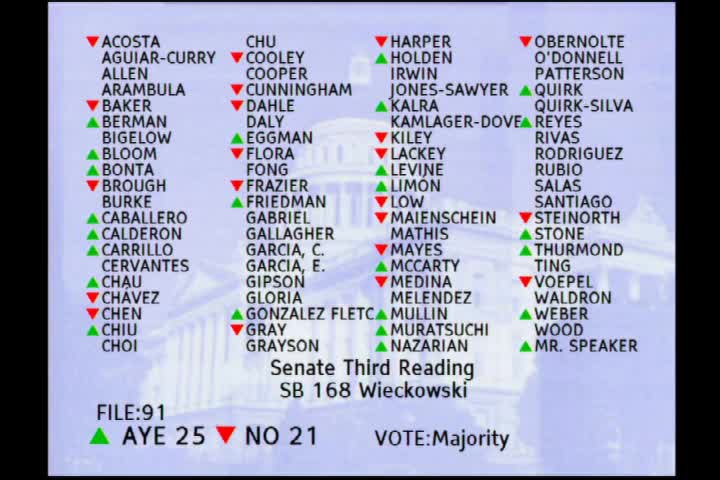 1MIN
Assembly Floor
 2MIN
Senate Floor
 5MIN