AB 1780: Importation of diseased dogs and cats.
- Session Year: 2017-2018
- House: Assembly
- Latest Version Date: 2018-05-25
Existing law requires a person seeking to import a dog into this state for the purpose of resale or a change of ownership to obtain a health certificate for the dog that has been completed by a licensed veterinarian and is dated within 10 days prior to the date on which the dog is brought into the state. Existing law prohibits a breeder from knowingly selling a diseased dog.
This bill would require authorize the State Public Health Officer to investigate certain reports of outbreaks of communicable diseases monitor any report issued by a reliable and verifiable public source of an outbreak of a communicable disease occurring in another state caused by, or purported to be caused by, contact with a dog or cat to determine, among other things, the probable impacts of the communicable disease on the state. cat. The bill would authorize the officer, upon investigation and specific findings, officer to issue an order to prohibit the importation of dogs or cats that could pose a risk of an outbreak of any communicable disease that is dangerous to individuals. individuals, if he or she makes a determination, as specified. The bill would impose a civil penalty for a violation of an order issued pursuant to these provisions.
Existing law requires a person seeking to import a dog into this state for the purpose of resale or a change of ownership to obtain a health certificate for the dog that has been completed by a licensed veterinarian and is dated within 10 days prior to the date on which the dog is brought into the state. Existing law prohibits a breeder from knowingly selling a diseased dog.
This bill would require the State Public Health Officer to investigate certain reports of outbreaks of communicable diseases caused by, or purported to be caused by, contact with a dog or cat to determine, among other things, the probable impacts of the communicable disease on the state. The bill would authorize the officer, upon investigation and specific findings, to issue an order to prohibit the importation of dogs or cats that could pose a risk of an outbreak of any communicable disease that is dangerous to animals or individuals, as specified. individuals. The bill would impose a civil penalty for a violation of an order issued pursuant to these provisions.
Existing law requires a person seeking to import a dog into this state for the purpose of resale or a change of ownership to obtain a health certificate for the dog that has been completed by a licensed veterinarian and is dated within 10 days prior to the date on which the dog is brought into the state. Existing law prohibits a breeder from knowingly selling a diseased dog.
This bill would require the State Public Health Officer to investigate certain reports of outbreaks of communicable diseases caused by, or purported to be caused by, contact with a dog or cat to determine, among other things, the probable impacts of the communicable disease on the state. The bill would authorize the officer, upon investigation and specific findings, to issue an order to prohibit the importation of dogs or cats that could pose a risk of an outbreak of any communicable disease that is dangerous to animals or individuals, as specified. The bill would impose a civil penalty for a violation of an order issued pursuant to these provisions.
The State Public Health Officer shall investigate, or cause an investigation to be made of, may monitor any report issued by a reliable and verifiable public source of an outbreak of a communicable disease occurring in another state caused by, or purported to be caused by, contact with a dog or cat issued by a reliable and verifiable public source, including, cat. For purposes of this chapter, a reliable and verifiable public source may include, but is not limited to, the federal National Notifiable Diseases Surveillance System, to determine the extent, source, and location of the communicable disease and the probable impacts of the communicable disease on the state. the federal Centers for Disease Control and Prevention.
121715.5.(a)If upon investigation the State Public Health Officer finds determines that the importation of dogs or cats into this state from another state for the purpose of resale or change of ownership could pose a risk of an outbreak of any communicable disease that is dangerous to individuals, the State Public Health Officer may issue an order to prohibit the importation of those affected dogs or cats. The State Public Health Officers determination may include, but is not limited to, the extent, source, and location of the communicable disease and the probable impacts of the communicable disease on the state.
(b)The State Public Health Officer shall tailor the order to reasonably prevent danger to individuals caused by the importation of those affected dogs or cats linked to the outbreak and specify the date or conditions under which the order expires.
121715.10.(a)A person who violates an order issued pursuant to this chapter by importing a prohibited dog or cat into this state shall be subject to a civil penalty of five hundred dollars ($500) for each separate imported prohibited dog or cat.
(b)A violation of an order issued pursuant to this chapter shall not constitute a crime.
(c)For purposes of this section, person shall mean an individual, firm, partnership, corporation, association, or other entity.
The State Public Health Officer shall investigate, or cause an investigation to be made of, any report of an outbreak of a communicable disease caused by, or purported to be caused by, contact with a dog or cat issued by a reliable and verifiable public source, including, but not limited to, the federal National Notifiable Diseases Surveillance System, to determine the extent, source, and location of the communicable disease and the probable impacts of the communicable disease on the state.
121715.5.(a)If upon investigation the State Public Health Officer finds that the importation of dogs or cats into this state from another state for the purpose of resale or change of ownership could pose a risk of an outbreak of any communicable disease that is dangerous to animals or individuals, the State Public Health Officer may issue an order to prohibit the importation of those affected dogs or cats.
(b)The State Public Health Officer shall tailor the order to reasonably prevent danger to animals or individuals caused by the importation of those affected dogs or cats linked to the outbreak and specify the date or conditions under which the order expires.
121715.10.(a)A person who violates an order issued pursuant to this chapter by importing a prohibited dog or cat into this state shall be subject to a civil penalty of five hundred dollars ($500) for each separate imported prohibited dog or cat.
(b)A violation of an order issued pursuant to this chapter shall not constitute a crime.
(c)For purposes of this section, person shall mean an individual, firm, partnership, corporation, association, or other entity.
|
Date
|
Status
|
|---|---|
| Aug 16, 2018 | In committee: Held under submission. |
| Aug 6, 2018 | In committee: Referred to APPR. suspense file. |
| Jun 27, 2018 | From committee: Do pass and re-refer to Com. on APPR. with recommendation: To Consent Calendar. (Ayes 7. Noes 0.) (June 26). Re-referred to Com. on APPR. |
| Jun 21, 2018 | From committee: Do pass and re-refer to Com. on JUD. (Ayes 8. Noes 0.) (June 20). Re-referred to Com. on JUD. |
| Jun 7, 2018 | Referred to Coms. on HEALTH and JUD. |
| May 31, 2018 | In Senate. Read first time. To Com. on RLS. for assignment. |
| May 30, 2018 | Read third time. Passed. Ordered to the Senate. |
| May 29, 2018 | Read second time. Ordered to third reading. |
| May 25, 2018 | From committee: Amend, and do pass as amended. (Ayes 16. Noes 0.) (May 25). |
| Apr 4, 2018 | In committee: Set, first hearing. Referred to suspense file. |
| Mar 21, 2018 | From committee: Do pass and re-refer to Com. on APPR. with recommendation: To Consent Calendar. (Ayes 15. Noes 0.) (March 20). Re-referred to Com. on APPR. |
| Feb 21, 2018 | Re-referred to Com. on HEALTH. |
| Feb 20, 2018 | From committee chair, with author's amendments: Amend, and re-refer to Com. on HEALTH. Read second time and amended. |
| Jan 22, 2018 | Referred to Com. on HEALTH. |
| Jan 5, 2018 | From printer. May be heard in committee February 4. |
| Jan 4, 2018 | Read first time. To print. |
|
Date
|
Description
|
Location
|
Votes
|
|
|---|---|---|---|---|
| Aug 6, 2018 | Placed on suspense file | Senate Standing Committee on Appropriations |
Passed |
|
| Jun 26, 2018 | Do pass, but first be re-referred to the Committee on [Appropriations] with the recommendation: To Consent Calendar | Senate Standing Committee on Judiciary |
Passed |
|
| Jun 20, 2018 | Do pass, but first be re-referred to the Committee on [Judiciary] | Senate Standing Committee on Health |
Passed |
|
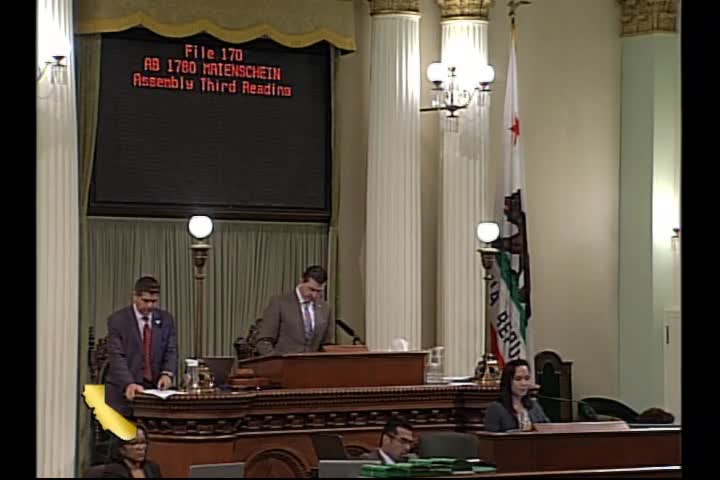
| May 30, 2018 | AB 1780 MAIENSCHEIN Assembly Third Reading | Assembly Floor |
Passed |
|
| May 25, 2018 | Do pass as amended. | Assembly Standing Committee on Appropriations |
Passed |
|
| Mar 20, 2018 | Do pass and be re-referred to the Committee on [Appropriations] with recommendation: To Consent Calendar | Assembly Standing Committee on Health |
Passed |
This list shows positions taken on this bill by organizations on the date displayed, which is linked to the original source.
Positions by individuals are not included.
|
Organization
|
Position
|
Date
|
|---|---|---|
| American Kennel Club | ** Support | Jun 18, 2018 |
| California Animal Control Directors Association | ** Support | Jun 18, 2018 |
| San Diego Humane Society | ** Support | Jun 18, 2018 |
| State Humane Association of California | ** Support | Jun 18, 2018 |
SENATE COMMITTEE ON APPROPRIATIONS
Senator Anthony Portantino, Chair
2017 - 2018 Regular Session
AB 1780 (Maienschein) - Importation of diseased dogs and cats
Version: May 25, 2018 | Policy Vote: HEALTH 8 - 0, JUD. 7 - 0 |
Urgency: No | Mandate: No |
Hearing Date: August 6, 2018 | Consultant: Samantha Lui |
This bill meets the criteria for referral to the Suspense File.
Bill Summary:
- Authorizes the State Public Health Officer (PHO) to monitor any report issued by a reliable and verifiable public source of an outbreak of a communicable disease occurring in another state caused by, or purported to be caused by, contact with a dog or cat. Permits the PHO, if he or she determines that the importation of dogs or cats into this state could pose a risk of an outbreak of a communicable disease, to issue an order to prohibit the importation of those affected dogs or cats.
Fiscal Impact:
The California Department of Public Health estimates costs of $519,000 (General Fund) in fiscal year 18-19 and ongoing, specifically:
- 3.0 permanent positions ($382,700 General Fund) – 1.0 Research Scientist IV, 1.0 Public Health Microbiologist II, and 1.0 Associate Governmental Program Analyst II to monitor reports of and investigate outbreaks of diseases in dogs and cats, send a veterinary investigator to the field wherever these outbreaks occur, collect specimens from animals and humans and test them for evidence of diseases, and implement control measures as necessary pursuant to AB 1780 requirements. The three positions are a research scientist, a public health microbiologist, and an associate governmental program analyst.
- Laboratory and field supply costs, travel costs, and other state operations costs are estimated to be $136,000 (General Fund).
CDPH notes that it does not currently have the infrastructure or staff necessary to meet the investigation requirement of this bill. For additional information about the fiscal assumptions, please see Staff Comments.
Background:
- According to CDPH, all domestic dogs coming into California must be healthy, and dogs over four months of age must have a certificate of current rabies vaccination. A Certificate of Veterinary Inspection (CVI), also known as a health certificate, is not required for privately owned dogs being brought into California. However, persons bringing dogs into California with intent to sell or transfer ownership must have a CVI completed by a licensed veterinarian within the 10 days prior to importation. The person bringing the dog into the state must send a copy of the health certificate to the LHD in the county in which the dog is to be sold or in the county of residence of the person who is receiving the dog. All domestic cats being brought into the state must be healthy, but neither a CVI nor a rabies vaccination is required to import a cat into California.
Existing law prohibits a breeder from knowingly selling a dog that is diseased, ill, or has a condition, any one of which that requires hospitalization or nonelective surgical procedures. A breeder who violates this prohibition subject to civil penalties as follows:
- First offense is a penalty of up to $1,000 and/or prohibition from selling dogs for up to 30 days;
- Second offense is a penalty of up to $2,500 and/or a prohibition from selling dogs for up to 90 days;
- Third offense is a penalty of up to $5,000 and/or a prohibition from selling dogs for up to six months; and,
- Fourth and subsequent offenses is a penalty of up to $10,000 and/or a prohibition from selling dogs for up to one year.
In addition, current law requires a person seeking to bring a dog into this state for the purpose of resale or change of ownership to obtain a health certificate for that dog that has been completed by a licensed veterinarian within 10 days prior to the date on which the dog is brought into the state. The health certificate must be submitted to the local health department (LHD) where the dog is to be offered for sale or to the county of residence of the individual purchasing or receiving a dog, as specified.
According to the January 2018 Final Outbreak Advisory, evidence indicated contact with puppies sold through Petland stores were a likely source of a Campylobacter outbreak, which affected a total of 113 people with laboratory-confirmed infections or symptoms across 17 states (Connecticut, Florida, Georgia, Illinois, Kansas, Massachusetts, Maryland, Missouri, New Hampshire, New York, Ohio, Oklahoma, Pennsylvania, Tennessee, Utah, Wisconsin, and Wyoming). Ill people ranged in age from less than one year to 86, and 23 infected people were hospitalized.
Proposed Law:
- The bill includes the following provisions, among others:
- Authorizes the State Public Health Officer (PHO) to monitor any report issued by a reliable and verifiable public source of an outbreak of a communicable disease occurring in another state caused by, or purported to be caused by, contact with a dog or cat.
- Permits the PHO, if he or she determines that the importation of dogs or cats into this state could pose a risk of an outbreak of a communicable disease, to issue an order to prohibit the importation of those affected dogs or cats.
- Requires the PHO to tailor the order to reasonably prevent danger and specify the date or conditions under which the order expires.
- Imposes a civil penalty of $500 on a person for each separate imported prohibited dog or cat.
- Provides a violation of this bill is not a crime.
Related Legislation:
- AB 1809 (Maienschein, Chapter 498, Statutes of 2014) requires a person seeking to bring a dog into this state or importing dogs into this state for the purpose of resale or change of ownership to obtain a health certificate for that dog that has been completed by a licensed veterinarian and is dated within 10 days prior to the date on which the dog is brought into the state.
Staff Comments:
- According to CDPH, the PHO already has authority to issue an order banning the entry of dogs and cats into California if necessary to protect public health, so this bill does not appear to add any new powers or authority. In addition, existing law provides specified penalties on the importation of diseased dogs.
CDPH’s fiscal assumptions are as follows:
The Veterinary Public Health Program (VPHP) of the Los Angeles County Department of Public Health (LACDPH) has staff of 8 veterinarians, 1 epidemiologist/analyst, 1 CDC Public Health Associate, 4 administrative support staff, and 8 field staff to investigate outbreaks of disease in dogs/cats and other animals. In 2017, LACDPH VPHP investigated approximately 8-10 outbreaks of disease in dogs/cats. As approximately 25 percent of all dogs/cats in California reside in Los Angeles County, it is estimated that 20 or more disease outbreaks among dogs/cats occur statewide each year for which this bill would direct CDPH to investigate. This added responsibility could not be absorbed by the CDPH-VPHS existing staff and resources. Costs for investigation of outbreaks outside of California are not included because CDPH has no jurisdiction to investigate outbreaks outside of state or US borders. In addition, costs for enforcement of importation bans are not included because CDPH has no enforcement mechanism. Enforcement currently exists with each states’ health or animal control authority, or as regulated and enforced by the USDA and the CDC.
The three positions needed to implement the bill include:
- 1.0 Research Scientist (RS) IV (Veterinary Sciences) to investigate and prepare reports on outbreaks of animal diseases, coordinate with local public health and animal control agencies by travel to field sites, collect specimens from animals and humans and ship them to the laboratory for testing, develop dog/cat importation prohibition orders.
- 1.0 Public Health Microbiologist II to receive and process specimens collected as part of outbreak investigations, perform testing for selected zoonotic diseases, prepare and distribute reports of test results, maintain database of specimens received and test results.
- 1.0 Associate Governmental Program Analyst to provide general administrative support to outbreak investigations, collect and maintain contact information for owners of dogs/cats, prepare and package importation prohibition orders and other correspondence.
-- END --
Senator Hannah-Beth Jackson, Chair
2017-2018 Regular Session
Bill No: AB 1780 (Author:Maienschein)
Version: May 25, 2018
Hearing Date: June 26, 2018
Fiscal: Yes
Urgency: No
Consultant: MEC
SUBJECT
Importation of diseased dogs and cats
DESCRIPTION
This bill would provide that if the State Public Health Officer (SPHO) determines that the importation of dogs or cats into this state from another state for the purpose of resale or change of ownership could pose a risk of an outbreak of any communicable disease that is dangerous to individuals, the SPHO may issue an order to prohibit the importation of those affected dogs or cats. This bill would provide that any person (defined as an individual , firm, partnership, corporation, association, or other entity) who violates the order by importing a prohibited dog or cat into this state shall be subject to a civil penalty of five hundred dollars ($500) for each separate imported prohibited dog or cat.
BACKGROUND
Pets can carry dangerous diseases that put public health at risk as illustrated by a recent outbreak of campylobacter infections. According to a January 30, 2018 Final Outbreak Advisory by the Centers for Disease Control and Prevention, there was a multistate outbreak of multidrug–resistant campylobacter infections linked to contact with pet store puppies that resulted in 113 cases of human illness in 17 states with 23 hospitalizations. (Multistate Outbreak of Multidrug-Resistant Campylobacter Infections Linked to Contact with Pet Store Puppies, Center for Disease Control and Prevention (Jan. 30, 2018) available at <https://www.cdc.gov/campylobacter/outbreaks/puppies-9-17/index.html> [as of 6/19/18].) The CDC reported that the evidence indicated that contact with the puppies sold through certain stores were a likely source of the outbreak. (Id.) The campylobacter bacteria isolated from the sickened people were resistant to first-line antibiotics. (Id.) Ninety-nine percent of people who fell ill reported contact with a puppy in the week before the illness began. (Id.) Eighty-seven percent reported they had contact with a puppy from the specific pet store chain or had contact with a person who became sick after contact with a puppy from one of these specific pet stores. (Id.) According to the CDC, puppies in the outbreak may have become infected at various points along the distribution chain when they had contact with infected puppies during transport to pet store locations. (Id.)
In an effort to better protect the public from disease, this bill would provide that if the SPHO determines that the importation of dogs or cats into this state from another state for the purpose of resale or change of ownership could pose a risk of an outbreak of any communicable disease that is dangerous to individuals, the SPHO may issue an order to prohibit the importation of those affected dogs or cats. Those who violate the order would be subject to civil penalties of $500 per imported prohibited dog or cat.
This measure was heard in the Senate Committee on Health on June 20, 2018 and passed out on an 8 to 0 vote.
CHANGES TO EXISTING LAW
Existing law requires the Department of Public Health (DPH) to examine the causes of communicable disease in man and domestic animals occurring or likely to occur in this state. (Health & Saf. Code Sec. 120125.)
Existing law gives the Public Health Officer (SPHO), as the director of DPH, broad authority to detect, monitor, and prevent the spread of communicable disease in the state, including the ability to:
- require reporting of communicable disease that DPH identifies, on timelines and in a manner determined by DPH;
- adopt and enforce regulations requiring strict or modified isolation, or quarantine, for any of the contagious, infectious, or communicable diseases, if in the opinion of DPH, the action is necessary for the protection of the public health;
- take measures as are necessary to ascertain the nature of the disease and prevent its spread, including, if it considers it proper, to take possession or control of the body of any living person, or the corpse of any deceased person;
- quarantine, isolate, inspect, and disinfect persons, animals, houses, rooms, other property, places, cities, or localities, whenever in its judgment the action is necessary to protect or preserve the public health; and
- destroy such objects as bedding, carpets, household goods, furnishings, materials, clothing, or animals, when ordinary means of disinfection are considered unsafe, and when the property is in its judgment, an imminent menace to the public health. (Health & Saf. Code Sec. 120130, et seq.)
Existing law requires a person seeking to bring a dog into this state for the purpose of resale or change of ownership to obtain a health certificate for that dog that has been completed by a licensed veterinarian within 10 days prior to the date on which the dog is brought into the state. Requires the health certificate to be submitted to the local health department where the dog is to be offered for sale or to the county of residence of the individual purchasing or receiving a dog, as specified. Existing law permits the local health department to use the information on the health certificate as it deems appropriate. (Health & Saf. Code Sec. 121720.)
Existing law prohibits a breeder from knowingly selling a dog that is diseased, ill, or has a condition, any one of which that requires hospitalization or nonelective surgical procedures. Makes a breeder who violates this prohibition subject to civil penalties as follows: the first offense could result in a penalty of up to $1,000 and/or prohibition from selling dogs for up to 30 days; the second offense could result in a penalty of up to $2,500 and/or a prohibition from selling dogs for up to 90 days; the third offense could result in a penalty of up to $5,000 and/or a prohibition from selling dogs for up to six months; and the fourth and subsequent offenses could result in a penalty of up to $10,000 and/or a prohibition from selling dogs for up to one year. (Health & Saf. Code Sec. 122060.)
Existing law provides that an action for recovery of the civil penalty described above may be prosecuted by the district attorney for the county in which the violation occurred, or the city attorney for the city in that the violation occurred, in the appropriate court. (Id.)
This bill would provide that the SPHO may monitor any report issued by a reliable and verifiable public source of an outbreak of a communicable disease occurring in another state caused by, or purported to be caused by, contact with a dog or cat.
This bill would provide that if the SPHO determines that the importation of dogs or cats into this state from another state for the purpose of resale or change of ownership could pose a risk of an outbreak of any communicable disease that is dangerous to individuals, the SPHO may issue an order to prohibit the importation of those affected dogs or cats.
This bill would provide that the SPHO’s determination may include, but is not limited to, the extent, source, and location of the communicable disease and the probable impacts of the communicable disease on the state.
This bill would provide that the SPHO shall tailor the order to reasonably prevent danger to individuals caused by the importation of those affected dogs or cats linked to the outbreak and specify the date or conditions under which the order expires.
This bill would provide that any person (defined as an individual, firm, partnership, corporation, association, or other entity) who violates one of the orders described above by importing a prohibited dog or cat into this state shall be subject to a civil penalty of five hundred dollars ($500) for each separate imported prohibited dog or cat.
This bill would provide that a violation of one of these orders shall not constitute a crime.
COMMENT
1. Stated need for the bill
According to the author:
Existing law vests in the Department of Public Health’s authority to take specified actions to contain communicable disease outbreaks when they occur within the state, but does not authorize action when an out of state outbreak of disease could affect public health and safety. As the prevalence of online pet sales grows and the role of USDA in regulating the puppy mill industry diminishes, the opportunity for interstate outbreaks may increase. As reported by the U.S. Centers for Disease Control and Prevention (CDC), a recent example of such an outbreak is a Campylobacter bacterial infection that affected people in 17 states, with nearly two dozen people being hospitalized (https://www.cdc.gov/campylobacter/outbreaks/puppies-9-17/index.html).
While the outbreak continued to spread, the existing scope of the Department’s [ . . . ] authority did not enable it to ensure that pets linked to the outbreak were not brought into the state. Given the prevalence of multistate transactions and the dangerous nature of animal-borne disease, AB 1780 will expand the Department’s authority to better protect public health and allow it to investigate and issue an order prohibiting the importation of dogs or cats affected by a communicable disease outbreak into the state. AB 1780 will protect the public from communicable diseases that can be transferred from animals to humans by prohibiting the importation of affected dogs or cats by a disease outbreak.
The American Kennel Club, in support, explains:
In addition to the dangers posed by diseases transmitted between dogs and cats, there are diseases carried by imported dogs that can affect other animals, such as brucellosis in dairy and beef cattle, and zoonotic diseases that can be transmitted to humans (rabies, tuberculosis, brucellosis and Asian flu). In 2017, an outbreak of antibiotic-resistant Campylobacter sickened 97 people in 17 states. Virtually all the illnesses were traced to imported puppies.
The AKC hopes that AB 1780 will reduce the importing of sick dogs and cats by investigating how they came to be in California and then taking steps to prevent these incidents from happening.
Also in support, the San Diego Humane Society writes:
Unfortunately, many Californians are still falling prey to deceptive online advertising from so-called “puppy mills,” where dogs are bred and raised in deplorable conditions with little human interaction. Puppies from unscrupulous breeders run the risk of having significant health issues that may not be apparent to the buyer until the new pet arrives. Unsuspecting online buyers are not informed of the conditions under which their puppies were bred and may be unaware that they may be importing a puppy from a large-scale breeder with chronic and ongoing disease management issues.
To make matters worse, the federal government has been taking steps to restrict such consumers’ access to key information that was previously made available relating to Animal Welfare Act (AWA) violations by licensed commercial pet breeders. In early 2017, the USDA removed AWA inspection records from their web site. Recent FOIA inquires for information that was once available on demand via the web have resulted in delayed reports of nearly 100 percent redacted information. Low USDA standards and infrequent inspections have long allowed extraordinary mistreatment and negligence to persist. But now, even paltry records of gross welfare violations or sanitation and disease management are beyond the public’s view.
2. Civil penalties
This bill would provide that any person who violates an order issued by the SPHO by importing a prohibited dog or cat into this state shall be subject to a civil penalty of five hundred dollars ($500) for each separate imported prohibited dog or cat. The legislation does not indicate who is permitted to bring the civil action. Would the SPHO bring the action to recover civil penalties? The legislation also does not indicate where the penalties would be deposited. Would penalties be deposited into a fund that supports the SPHO?
This Committee may wish to clarify that the Attorney General, District Attorney, and City Attorney may also bring an action to impose civil penalties for violations of this chapter. This Committee may also wish to designate where the funds would be deposited. An option is to deposit the funds with the Attorney General or state General Fund when the Attorney General brings the action. Similarly, the Committee may wish to require that the funds be deposited in the County general fund when an action is brought by the District Attorney of County Counsel. The Committee may wish to also require that funds be deposited in the City general fund when an action is brought by the City Attorney.
Support: American Society for the Prevention of Cruelty to Animals; American Kennel Club; California Animal Control Directors Association; National Animal Interest Alliance Trust; San Diego Humane Society; State Humane Association of California
Opposition: None Known
HISTORY
Source: Author
Related Pending Legislation: None Known
Prior Legislation:
AB 485 (O’Donnell, Ch. 740, Stats. 2017) prohibits, beginning January 1, 2019, a pet store operator from selling a live cat, dog, or rabbit in a pet store unless they were obtained from a public animal control agency or shelter, specified nonprofit, or animal rescue or adoption organization, as defined; permits a public or private shelter to enter into cooperative agreement with animal rescue or adoption organizations regarding rabbits; requires dogs or cats sold in a retail pet store to comply with current spay and neuter laws; provides specified exemptions to the pet warranty law; and permits an animal control officer, a humane officer, or a peace officer to enforce the pet store prohibition.
SB 945 (Monning, Ch. 364, Stats. 2016) established standards for pet boarding facilities and pet boarding operators, as specified.
AB 1809 (Maienschein, Ch. 498, Stats. 2014) requires a person seeking to bring a dog into this state or importing dogs into this state for the purpose of resale or change of ownership to obtain a health certificate for that dog that has been completed by a licensed veterinarian and be dated within 10 days prior to the date on which the dog is brought into the state.
AB 339 (Dickenson, Ch. 231, Stats. 2013), made it unlawful to sell animals at a swap meet unless the local jurisdiction has adopted an ordinance that includes specified requirements relating to the care and treatment of animals, beginning January 1, 2016.
AB 490 (Smyth, Ch. 446, Stats. 2009), revised the guidelines by which a pet store operator or employee may euthanize rodents and rabbits intended as food for another animal, and modified the definition of a pet store, as specified.
AB 1347 (Caballero, Ch. 703, Stats. 2007) enacted the Pet Store Animal Care Act that would establish procedures for the care and maintenance of animals in the custody of a pet store and details the responsibilities of the pet shop, the standards for enclosures, animal care requirements, record keeping, standards keeping the animals healthy including veterinary care, euthanasia standards and disclosures that must be made to a person who purchases a pet, and provides for a “notice to correct” and monetary misdemeanor penalties for specified violations of the Act.
Prior Vote:
Assembly Floor (Ayes 77, Noes 0)
Assembly Appropriations Committee (Ayes 16, Noes 0)
Assembly Health Committee (Ayes 15, Noes 0)
**************
SENATE COMMITTEE ON HEALTH
Senator Dr. Richard Pan, Chair
BILL NO: AB 1780
AUTHOR: | Maienschein | ||
VERSION: | May 25, 2018 | ||
HEARING DATE: | June 20, 2018 | ||
CONSULTANT: | Melanie Moreno | ||
SUBJECT: Importation of diseased dogs and cats.
SUMMARY:
- Permits the State Public Health Officer (PHO) to monitor any report issued by a reliable and verifiable public source of an outbreak of a communicable disease occurring in another state caused by, or purported to be caused by, contact with a dog or cat. Permits the PHO, if he or she determines that the importation of dogs or cats into this state could pose a risk of an outbreak of a communicable disease, to issue an order to prohibit the importation of those affected dogs or cats.
Existing law:
- Requires Department of Public Health (DPH) to examine the causes of communicable disease in man and domestic animals occurring or likely to occur in this state. [HSC §120125]
- Gives the PHO, as the director of DPH, broad authority to detect, monitor, and prevent the spread of communicable disease in the state, including the ability to:
- Require reporting of communicable disease that DPH identifies, on timelines and in a manner determined by DPH;
- Adopt and enforce regulations requiring strict or modified isolation, or quarantine, for any of the contagious, infectious, or communicable diseases, if in the opinion of DPH, the action is necessary for the protection of the public health;
- Take measures as are necessary to ascertain the nature of the disease and prevent its spread. Permits DPH, to that end, if it considers it proper, to take possession or control of the body of any living person, or the corpse of any deceased person;
- Quarantine, isolate, inspect, and disinfect persons, animals, houses, rooms, other property, places, cities, or localities, whenever in its judgment the action is necessary to protect or preserve the public health; and,
- Destroy such objects as bedding, carpets, household goods, furnishings, materials, clothing, or animals, when ordinary means of disinfection are considered unsafe, and when the property is in its judgment, an imminent menace to the public health. [HSC §120130, et seq.]
- Requires a person seeking to bring a dog into this state for the purpose of resale or change of ownership to obtain a health certificate for that dog that has been completed by a licensed veterinarian within 10 days prior to the date on which the dog is brought into the state. Requires the health certificate to be submitted to the local health department (LHD) where the dog is to be offered for sale or to the county of residence of the individual purchasing or receiving a dog, as specified. Permits the LHD to use the information on the health certificate as it deems appropriate. [HSC §121720]
- Prohibits a breeder from knowingly selling a dog that is diseased, ill, or has a condition, any one of which that requires hospitalization or nonelective surgical procedures. Makes a breeder who violates this prohibition subject to civil penalties as follows: first offense is a penalty of up to $1,000 and/or prohibition from selling dogs for up to 30 days; second offense is a penalty of up to $2,500 and/or a prohibition from selling dogs for up to 90 days; third offense is a penalty of up to $5,000 and/or a prohibition from selling dogs for up to six months; and, fourth and subsequent offenses is a penalty of up to $10,000 and/or a prohibition from selling dogs for up to one year. [HSC §122060]
This bill:
- Permits the PHO to monitor any report issued by a reliable and verifiable public source, as specified, of an outbreak of a communicable disease occurring in another state caused by, or purported to be caused by, contact with a dog or cat.
- Permits the PHO, if he or she determines that the importation of dogs or cats into this state from another state for the purpose of resale or change of ownership could pose a risk of an outbreak of any communicable disease that is dangerous to individuals, to issue an order to prohibit the importation of those affected dogs or cats. Permits the determination to include, but not be limited to, the extent, source, and location of the communicable disease and the probable impacts of the communicable disease on the state.
- Requires the PHO to tailor the order to reasonably prevent danger to individuals caused by the importation of those affected dogs or cats linked to the outbreak and specify the date or conditions under which the order expires.
- Requires an individual, firm, partnership, corporation, association, or other entity who violates an order by importing a prohibited dog or cat into this state to be subject to a civil penalty of $500 for each separate imported prohibited dog or cat. Prohibits a violation of an order from constituting a crime.
FISCAL EFFECT:
According to the Assembly Appropriations Committee, it is unclear whether the DPH will incur costs to monitor animal-related disease outbreaks. This bill simply authorizes the department to ban importation if DPH determines such importation poses a dangerous risk of outbreak, and the creation of a new penalty may encourage compliance with an order but is unlikely to generate significant General Fund revenue.
PRIOR VOTES:
Assembly Floor: | 77 - 0 |
Assembly Appropriations Committee: | 16 - 0 |
Assembly Health Committee: | 15 - 0 |
COMMENTS:
- Author’s statement. According to the author, existing law vests in DPH’s authority to take specified actions to contain communicable disease outbreaks when they occur within the state, but does not authorize action when an out of state outbreak of disease could affect public health and safety. As the prevalence of online pet sales grows and the role of United States Department of Agriculture in regulating the puppy mill industry diminishes, the opportunity for interstate outbreaks may increase. As reported by the U.S. Centers for Disease Control and Prevention (CDC), a recent example of such an outbreak is a Campylobacter bacterial infection that affected people in 17 states, with nearly two dozen people being hospitalized. While the outbreak continued to spread, the existing scope of DPH’s authority did not enable it to ensure that pets linked to the outbreak were not brought into the state. Given the prevalence of multistate transactions and the dangerous nature of animal-borne disease, AB 1780 will expand DPH’s authority to better protect public health and allow it to investigate and issue an order prohibiting the importation of dogs or cats affected by a communicable disease outbreak into the state. AB 1780 will protect the public from communicable diseases that can be transferred from animals to humans by prohibiting the importation of affected dogs or cats by a disease outbreak.
- California entrance requirements for dogs and cats. According to DPH, all domestic dogs coming into California must be healthy, and dogs over four months of age must have a certificate of current rabies vaccination. A Certificate of Veterinary Inspection (CVI), also known as a health certificate, is not required for privately owned dogs being brought into California. However, persons bringing dogs into California with intent to sell or transfer ownership must have a CVI completed by a licensed veterinarian within the 10 days prior to importation. The person bringing the dog into the state must send a copy of the health certificate to the LHD in the county in which the dog is to be sold or in the county of residence of the person who is receiving the dog. All domestic cats being brought into the state must be healthy, but neither a CVI nor a rabies vaccination is required to import a cat into California. DPH recommends that persons transporting dogs or cats via commercial air call the airline for any additional requirements they might have.
- Campylobacter outbreak. The author and sponsor of this bill point to a recent outbreak of Campylobacter as a reason for bringing forth this bill. According to the CDC, people with Campylobacter infection usually have diarrhea (often bloody), fever, and abdominal cramps, which may be accompanied by nausea and vomiting. Symptoms usually start within two to five days after exposure and last about a week, but some infected people do not have any symptoms. In people with weakened immune systems, Campylobacter occasionally spreads to the bloodstream and causes a life-threatening infection. From January 2016 through January 2018, the CDC, several states, and the U.S. Department of Agriculture’s Animal and Plant Health Inspection Service investigated an outbreak of multidrug-resistant Campylobacter infections. According to the January 2018 Final Outbreak Advisory, evidence indicated that contact with puppies sold through Petland stores were a likely source of this outbreak. A total of 113 people with laboratory-confirmed infections or symptoms consistent with Campylobacter infection were linked to this outbreak in 17 states (Connecticut, Florida, Georgia, Illinois, Kansas, Massachusetts, Maryland, Missouri, New Hampshire, New York, Ohio, Oklahoma, Pennsylvania, Tennessee, Utah, Wisconsin, and Wyoming). Ill people ranged in age from less than one year to 86, and 23 infected people were hospitalized. Campylobacter bacteria isolated from clinical samples were resistant to multiple common, first-line antibiotics.
According to the CDC, enhanced infection prevention measures throughout the distribution chain may help reduce the spread of Campylobacter infections among puppies. Additionally, this multidrug-resistant outbreak highlights the need for responsible use of antibiotics in pets. Education about best practices for Campylobacter disease prevention, diarrhea management in puppies, and responsible antibiotic use is essential throughout the distribution chain to help prevent the emergence and spread of antibiotic resistance. Pet owners should be aware that any puppy or dog, regardless of where it is purchased or adopted, may carry germs like Campylobacter that can make people sick.
- Double referral. This bill is double referred. Should it pass out of this committee, it will be referred to the Senate Committee on Judiciary.
- Prior legislation. AB 1809 (Maienschein, Chapter 498, Statutes of 2014) requires a person seeking to bring a dog into this state or importing dogs into this state for the purpose of resale or change of ownership to obtain a health certificate for that dog that has been completed by a licensed veterinarian and is dated within 10 days prior to the date on which the dog is brought into the state.
- Support. The San Diego Humane Society writes that many Californians are still falling prey to deceptive online advertising from so-called “puppy mills,” where dogs are bred and raised in deplorable conditions with little human interaction. Unsuspecting online buyers are not informed of the conditions under which their puppies were bred and may be unaware that they may be importing a puppy from a large-scale breeder with chronic and ongoing disease management issues. The American Society for the Prevention of Cruelty to Animals cites the recent outbreak originating from puppies at a retail pet store chain affecting humans in 17 states, and states that existing scope of DPH’s authority would not enable it to impose protections to ensure that pets linked to such outbreaks are not brought into the state. The American kennel Club states that this bill will reduce the importing of sick dogs and cats by investigating how they came to be in California and then taking steps to prevent these incidents from happening. The California Animal Control Directors Association and the State Humane Association of California write in support of this bill, but respectfully ask that it extend the scope to grant DPH the authority to investigate outbreaks in other countries and prohibit, if appropriate, the importation of dogs and cats from those affected areas.
- Policy comment. According to DPH, the PHO already has authority to issue an order banning the entry of dogs and cats into California if necessary to protect public health, so this bill does not appear to add any new powers or authority. Additionally, there is a prohibition in existing law on the importation of diseased dogs, with stiffer penalties that outlined under this bill. The need for this bill is unclear.
SUPPORT AND OPPOSITION:
Support: American Kennel Club
American Society for the Prevention of Cruelty to Animals
California Animal Control Directors Association
San Diego Humane Society
State Humane Association of California
Oppose: None received
-- END --
ASSEMBLY THIRD READING
ATR Bill Id:AB 1780
Author:(Maienschein)
As Amended Ver:
Majority vote
Committee | Votes | Ayes | Noes |
Health | 15-0 | Wood, Maienschein, Aguiar-Curry, Bonta, Burke, Carrillo, Flora, Limón, McCarty, Nazarian, Rodriguez, Santiago, Obernolte, Thurmond, Waldron | |
Appropriations | 16-0 | Gonzalez Fletcher, Bigelow, Bloom, Bonta, Calderon, Carrillo, Chau, Eggman, Fong, Friedman, Gallagher, Eduardo Garcia, Nazarian, Obernolte, Quirk, Reyes |
|
SUMMARY: Permits the State Public Health Officer (Officer) to monitor any report issued by a reliable and verifiable public source of an outbreak of communicable disease caused by, or purported to be caused by, contact with a dog or cat. Specifically, this bill:
- Authorizes the Officer to issue an order to prohibit the importation of dogs or cats that could pose a risk of an outbreak of any communicable disease that is dangerous to individuals if the Officer determines that the importation of dogs or cats into this state for the purpose of resale or change of ownership from another state could pose a risk of an outbreak. Specifies that the Officer's determination may include, but is not limited to, the extent, source, and location of the communicable disease and the probable impacts of the communicable disease on the state.
- Requires the Officer to tailor the order to reasonably prevent danger to individuals caused by the importation of those affected dogs or cats linked to the outbreak and specify the date or conditions under which the order expires.
- Penalizes a person who violates an order issued by the Officer by importing a prohibited dog or cat into this state with a civil penalty of $500 for each separate imported prohibited dog or cat.
- Specifies that a violation of an order does not constitute a crime.
- Defines a person as an individual, firm, partnership, corporation, association, or other entity.
EXISTING LAW:
- Provides for the regulation, licensing, and record keeping of dogs by cities and counties including provisions to ensure dogs are spayed, neutered, and determine the general health of dogs prior to sale or placement.
- Establishes procedures for the care and maintenance of animals in the custody of a pet store and details the responsibilities of the pet shop, the standards for enclosures, animal care requirements, record keeping, and standards for keeping the animals healthy including veterinary care, euthanasia standards, and disclosures that must be made to a person who purchases a pet.
- Establishes the Polanco-Lockyer Pet Breeder Warranty Act (Act) which provides for the sale, transfer, or giveaway of all or part of three or more litters or 20 or more dogs during the preceding 12 months that were bred and reared on the premises of the person, firm, partnership, corporation, or other association.
FISCAL EFFECT: According to the Appropriations Committee, it is unclear whether the Department of Public Health (DPH) will incur costs to monitor animal-related disease outbreaks. This bill simply authorizes the department to ban importation if DPH determines such importation poses a dangerous risk of outbreak, and the creation of a new penalty may encourage compliance with an order but is unlikely to generate significant General Fund revenue.
COMMENTS: According to the author, this bill assists DPH in ensuring that preventable, communicable disease is not imported into the state. Given the recent highly contagious outbreak affecting 17 states, it is imperative that DPH be provided the authority to take action in the event that disease carrying dogs or cats could endanger the public.
In California, there are a host of laws related to the sale of pets, including regulations for animal care in pet stores, consumer rights, requirements for breeders, sales at swap meets, and kennels. Prior to 2018, there were no prohibitions on pet store operators related to the sale of puppies, kittens, rabbits or dogs acquired from individuals, brokers, or mass commercial breeders, known as "puppy mills." "Puppy Mills" or "Kitty Factories" are common terms for large commercial breeding facilities that mass produce animals for sale at retail markets. It is estimated that there are 10,000 puppy mills in the United States. These are separate from other types of breeders who produce a smaller quantity of animals and typically in California do not sell directly to retail pet outlets; however, there were no restrictions on pet stores as to where they can acquire animals for retail sale. Mass produced, commercial animal breeders are typically scrutinized for their treatment of the animals including producing sick animals, inhumane treatment, and providing abhorrent living conditions.
Recent changes to state law significantly revised statutes regarding the sale of animals in the State of California. AB 485 (O'Donnell), Chapter 470, Statutes of 2017, now prohibits a pet store operator from selling a live dog, cat, or rabbit in a pet store unless the dog, cat, or rabbit was obtained from a public animal control agency or shelter, society for the prevention of cruelty to animals shelter, humane society shelter, or rescue group, as defined, that is in a cooperative agreement with at least one private or public shelter. California is the first state in the nation to require that pet stores to sell only rescue animals. Proponents of this bill express that this significant change in state law will result in an increase in animals being imported from other states, and that therefore increased protections against the importation of diseased dogs and cats is necessary.
According to information by the Centers for Disease Control and Prevention (CDC), several states, and the United States Department of Agriculture's Animal and Plant Health Inspection Service investigated a multistate outbreak of multidrug-resistant Campylobacter infections. Campylobacter causes an estimated 1.3 million illnesses each year in the United States. Most illnesses likely occur due to eating raw or undercooked poultry, or to eating something that touched it. Some are due to contaminated water, contact with animals, or drinking raw (unpasteurized) milk. Epidemiologic and laboratory evidence indicated that contact with puppies sold through Petland stores were a likely source of this outbreak. A total of 113 people with laboratory-confirmed infections or symptoms consistent with Campylobacter infection were linked to this outbreak and illnesses were reported from 17 states and 23 were hospitalized. In interviews, ill people answered questions about the foods they ate and any animal contact in the week before they became ill. Ninety-nine percent of people reported contact with a puppy in the week before illness started, and 87% reported they had contact with a puppy from Petland stores, or had contact with a person who became sick after contact with a puppy from a Petland store. Twenty-five of the ill people worked at Petland stores.
The American Society for the Prevention of Cruelty to Animals (ASPCA), sponsor of this bill, states that this bill is necessary to protect public health and safety by issuing an order prohibiting the importation of dogs or cats for the purpose of resale or change of ownership. ASPCA notes that existing law vests in DPH the authority to take specified actions to contain these outbreaks when they occur within the state. However, as the prevalence of online pet sales grows, the opportunity for interstate outbreaks may increase. For example, as reported by the CDC, such a recent outbreak originating from puppies from a retail pet store chain affected humans in 17 states. While the outbreak has spread to 17 states over the course of months, the existing scope of DPH's authority would not enable it to impose protections to ensure that pets linked to the outbreak are not brought into the state. Given the growing prevalence of multistate pet sales transactions and the dangerous nature of animal-borne disease, this bill proposes to expand DPH's authority to better protect public health and safety.
Analysis Prepared by: Paula Villescaz / HEALTH / (916) 319-2097 FN: 0003334
Date of Hearing: April 4, 2018
ASSEMBLY COMMITTEE ON APPROPRIATIONS
Lorena Gonzalez Fletcher, Chair
ABPCA Bill Id:AB 1780
Author:(Maienschein) – As Amended Ver:February 20, 2018
Policy Committee: | Health | Vote: | 15-0 |
Urgency: No State Mandated Local Program: No Reimbursable: No
SUMMARY:
This bill requires the state public health officer to investigate a communicable disease outbreak related to a dog or cat when a report is issued by a reliable public source, as specified, and authorizes the public health officer to issue an order prohibiting importation, if the investigation identifies an outbreak risk.
It also creates a civil penalty of $500 per imported dog or cat for violating such an order.
FISCAL EFFECT:
- $520,000 GF to the California Department of Public Health for staff to monitor, investigate, and control disease outbreaks. These costs only include in-state investigations, consistent with CDPH's jurisdiction, and do not include enforcement costs because CDPH has no enforcement authority.
- The creation of a new penalty may encourage compliance with an order but is unlikely to generate significant GF revenue.
COMMENTS:
- Purpose. This bill is sponsored by the American Society for the Prevention of Cruelty to Animals (ASPCA) in order to provide sufficient authority for CDPH to block importation of dogs and cats in the event of an animal-related communicable disease outbreak.
- Background. The state public health officer and local health officers are granted broad general authority to investigate, track and control communicable diseases. In some cases, the law establishes additional requirements and authorities related to specific communicable diseases or disease vectors. Local entities currently investigate animal-related outbreaks.
In fall 2017, the federal Centers for Disease Control and Prevention reported a multistate outbreak of multidrug-resistant Campylobacter infection linked to contact with puppies at a chain pet store. Campylobacter is an intestinal illness from which most infected people recover in two to five days, but infection also carries a small risk of serious or long-term consequences. Although the outbreak did not reach California, it sickened a total of 113 people throughout 17 states. Proponents of this bill assert more dogs and cats may be imported as a result of recent legislation, effective this year, that limits California pet store sales to rescue animals. They argue CDPH needs the authority proposed in the bill in order to block importation of diseased dogs and cats.
Analysis Prepared by: Lisa Murawski / APPR. / (916) 319-2081
Date of Hearing: March 20, 2018
ASSEMBLY COMMITTEE ON HEALTH
Jim Wood, Chair
ABPCA Bill Id:AB 1780
Author:(Maienschein) – As Amended Ver:February 20, 2018
SUBJECT: Importation of diseased dogs and cats.
SUMMARY: Requires the State Public Health Officer (Officer) to investigate certain reports of outbreaks of communicable diseases caused by, or purported to be caused by, contact with a dog or cat to determine, among other things, the probable impacts of the communicable disease on the state. Specifically, this bill:
- Authorizes the Officer, upon investigation and specific findings, to issue an order to prohibit the importation of dogs or cats that could pose a risk of an outbreak of any communicable disease that is dangerous to individuals.
- Requires the Officer to tailor the order to reasonably prevent danger to individuals caused by the importation of those affected dogs or cats linked to the outbreak and specify the date or conditions under which the order expires.
- Penalizes a person who violates an order issued by the Officer by importing a prohibited dog or cat into this state with a civil penalty of $500 for each separate imported prohibited dog or cat.
- Specifies that a violation of an order does not constitute a crime.
- Defines a person as an individual, firm, partnership, corporation, association, or other entity.
EXISTING LAW:
- Provides for the regulation, licensing, and record keeping of dogs by cities and counties including provisions to ensure dogs are spayed, neutered, and determine the general health of dogs prior to sale or placement.
- Establishes procedures for the care and maintenance of animals in the custody of a pet store and details the responsibilities of the pet shop, the standards for enclosures, animal care requirements, record keeping, and standards for keeping the animals healthy including veterinary care, euthanasia standards, and disclosures that must be made to a person who purchases a pet.
- Establishes the Polanco-Lockyer Pet Breeder Warranty Act (Act) which provides for the sale, transfer, or giveaway of all or part of three or more litters or 20 or more dogs during the preceding 12 months that were bred and reared on the premises of the person, firm, partnership, corporation, or other association.
- Defines a "breeder" for purposes of the Act to mean a person, firm, partnership, corporation, or other association that has sold, transferred, or given away all or part of three or more litters or 20 or more dogs during the preceding 12 months that were bred and reared on the premises of the person, firm, partnership, corporation, or other association.
- Requires that unless an animal is irremediably suffering from a serious injury or illness, a stray dog must be held for owner redemption during the first three days of the holding period, not including the day of impoundment and available for owner redemption or adoption for the remainder of the holding period, as specified.
- Provides for the regulation of cats and requires the holding period for an impounded stray cat to be six business days, not including the day of impoundment, with exceptions as specified.
- Requires that prior to euthanasia of an animal, unless the animal is irremediably suffering from an injury or illness, any stray dog or cat that is impounded must be released to a nonprofit, animal rescue or adoption organization if requested by the organization prior to the scheduled euthanasia of that animal. Allows, in addition to any required spay or neuter deposit, the public or private shelter, at its discretion, to assess a fee, not to exceed the standard adoption fee, for animals adopted or released.
FISCAL EFFECT: This bill has not yet been analyzed by a fiscal committee.
COMMENTS:
- PURPOSE OF THIS BILL. According to the author, this bill assists the Department of Public Health (DPH) in ensuring that preventable, communicable disease is not imported into the state. Given the recent highly contagious outbreak affecting 17 states, it is imperative that DPH be provided the authority to take action in the event that disease carrying dogs or cats could endanger the public.
- BACKGROUND. In California, there are a host of laws related to the sale of pets, including regulations for animal care in pet stores, consumer rights, requirements for breeders, sales at swap meets, and kennels. Prior to 2018, there were no prohibitions on pet store operators related to the sale of puppies, kittens, rabbits or dogs acquired from individuals, brokers, or mass commercial breeders, known as "puppy mills". "Puppy Mills" or "Kitty Factories" are common terms for large commercial breeding facilities that mass produce animals for sale at retail markets. It is estimated that there are 10,000 puppy mills in the United States. These are separate from other types of breeders who produce a smaller quantity of animals and typically in California do not sell directly to retail pet outlets; however, there were no restrictions on pet stores as to where they can acquire animals for retail sale. Mass produced, commercial animal breeders are typically scrutinized for their treatment of the animals including producing sick animals, inhumane treatment, and providing abhorrent living conditions.
Recent changes to state law significantly revised statutes regarding the sale of animals in the State of California. AB 485 (O'Donnell), Chapter 470, Statutes of 2017, now prohibits a pet store operator from selling a live dog, cat, or rabbit in a pet store unless the dog, cat, or rabbit was obtained from a public animal control agency or shelter, society for the prevention of cruelty to animals shelter, humane society shelter, or rescue group, as defined, that is in a cooperative agreement with at least one private or public shelter. California is the first state in the nation to require that pet stores to sell only rescue animals. Proponents of this bill express that this significant change in state law will result in an increase in animals being imported from other states, and that therefore increased protections against the importation of diseased dogs and cats is necessary.
- CAMPYLOBACTER OUTBREAK. According to information by the Centers for Disease Control and Prevention (CDC), several states, and the U.S. Department of Agriculture’s Animal and Plant Health Inspection Service investigated a multistate outbreak of multidrug-resistant Campylobacter infections. Campylobacter causes an estimated 1.3 million illnesses each year in the United States. Most illnesses likely occur due to eating raw or undercooked poultry, or to eating something that touched it. Some are due to contaminated water, contact with animals, or drinking raw (unpasteurized) milk. Epidemiologic and laboratory evidence indicated that contact with puppies sold through Petland stores were a likely source of this outbreak. A total of 113 people with laboratory-confirmed infections or symptoms consistent with Campylobacter infection were linked to this outbreak and illnesses were reported from 17 states and 23 were hospitalized. In interviews, ill people answered questions about the foods they ate and any animal contact in the week before they became ill. Ninety-nine percent of people reported contact with a puppy in the week before illness started, and 87% reported they had contact with a puppy from Petland stores, or had contact with a person who became sick after contact with a puppy from a Petland store. Twenty-five of the ill people worked at Petland stores.
- SUPPORT. The American Society for the Prevention of Cruelty to Animals (ASPCA), sponsor of this bill, states that this bill is necessary to protect public health and safety by issuing an order prohibiting the importation of dogs or cats for the purpose of resale or change of ownership. ASPCA notes that existing law vests in DPH the authority to take specified actions to contain these outbreaks when they occur within the state. However, as the prevalence of online pet sales grows, the opportunity for interstate outbreaks may increase. For example, as reported by the CDC, such a recent outbreak originating from puppies from a retail pet store chain affected humans in 17 states. While the outbreak has spread to 17 states over the course of months, the existing scope of DPH's authority would not enable it to impose protections to ensure that pets linked to the outbreak are not brought into the state. Given the growing prevalence of multistate pet sales transactions and the dangerous nature of animal-borne disease, this bill proposes to expand DPH's authority to better protect public health and safety.
- RELATED LEGISLATION. AB 485 prohibits a pet store operator from selling a live cat, dog, or rabbit in a retail pet store unless the dog, cat, or rabbit was obtained from a public animal control agency or shelter or rescue group as defined; requires all authorized sales of dogs and cats to be in compliance with laws requiring the spaying or neutering of animals; permits a public or private shelter to enter into cooperative agreement with animal rescue or adoption organizations regarding rabbits; and, requires pet stores to maintain and post records relating to the source of each dog, cat, or rabbit the pet store sells for at least one year.
- PREVIOUS LEGISLATION.
- SB 945 (Monning), Chapter 557, Statutes of 2015, established standards for pet boarding facilities and pet boarding operators, as specified.
- AB 339 (Dickenson), Chapter 231, Statues of 2013, made it unlawful to sell animals at a swap meet unless the local jurisdiction has adopted an ordinance that includes specified requirements relating to the care and treatment of animals, beginning January 1, 2016.
- AB 490 (Smyth), Chapter, 446, Statutes of 2009, revised the guidelines by which a pet store operator or employee may euthanize rodents and rabbits intended as food for another animal, and modified the definition of a pet store, as specified.
- AB 1347 (Caballero), Chapter 703, Statutes of 2007, enacted the Pet Store Animal Care Act that would establish procedures for the care and maintenance of animals in the custody of a pet store and details the responsibilities of the pet shop, the standards for enclosures, animal care requirements, record keeping, standards keeping the animals healthy including veterinary care, euthanasia standards and disclosures that must be made to a person who purchases a pet and provides for a “notice to correct” and monetary misdemeanor penalties for specified violations of the Act.
REGISTERED SUPPORT / OPPOSITION:
Support
American Society for the Prevention of Cruelty to Animals (ASPCA)
Opposition
None on file.
Analysis Prepared by: Paula Villescaz / HEALTH / (916) 319-2097
Discussed in Hearing
View Older Hearings
Bill Author

Bill Co-Author(s):
