AB 1798: Schoolbuses: passenger restraint systems.
- Session Year: 2017-2018
- House: Assembly
- Latest Version Date: 2018-08-27
Existing law requires that schoolbuses manufactured on or after July 1, 2004, or July 1, 2005, depending on vehicle capacity and weight, and purchased or leased for use in California be equipped with a passenger restraint system, as specified, at all designated seating positions, unless specifically prohibited by the National Highway Traffic Safety Administration. Existing law makes a violation of these requirements a crime.
This bill would require that, on or before July 1, 2035, all schoolbuses in use in California be equipped with a passenger restraint system, as defined. Because a violation of the bills requirements would be a crime, the bill would impose a state-mandated local program.
The California Constitution requires the state to reimburse local agencies and school districts for certain costs mandated by the state. Statutory provisions establish procedures for making that reimbursement.
This bill would provide that no reimbursement is required by this act for a specified reason.
Existing law requires that schoolbuses manufactured on or after July 1, 2004, or July 1, 2005, depending on vehicle capacity and weight, and purchased or leased for use in California be equipped with a passenger restraint system, as specified, at all designated seating positions, unless specifically prohibited by the National Highway Traffic Safety Administration. A Existing law makes a violation of these provisions is requirements a crime.
This bill would require, no later than January 1, 2028, any schoolbus used for the transportation of any pupil attending a public or private primary or secondary school to be equipped with passenger restraint systems. The bill would authorize the person or entity owning or operating a schoolbus to comply with the passenger safety restraint requirement either through retrofitting existing schoolbuses or purchasing new schoolbuses. require that, on or before July 1, 2035, all schoolbuses in use in California be equipped with a passenger restraint system, as defined. Because a violation of the bills requirements would be a crime, the bill would impose a state-mandated local program.
The California Constitution requires the state to reimburse local agencies and school districts for certain costs mandated by the state. Statutory provisions establish procedures for making that reimbursement.
This bill would provide that no reimbursement is required by this act for a specified reason.
Existing law requires that schoolbuses manufactured on or after July 1, 2004, or July 1, 2005, depending on vehicle capacity and weight, and purchased or leased for use in California be equipped with a passenger restraint system, as specified, at all designated seating positions, unless specifically prohibited by the National Highway Traffic Safety Administration. A violation of these provisions is a crime.
This bill would require, no later than January 1, 2028, any schoolbus used for the transportation of any pupil attending a public or private primary or secondary school to be equipped with passenger restraint systems. The bill would authorize the person or entity owning or operating a schoolbus to comply with the passenger safety restraint requirement either through retrofitting existing schoolbuses or purchasing new schoolbuses. Because a violation of the bills requirements would be a crime, the bill would impose a state-mandated local program.
The California Constitution requires the state to reimburse local agencies and school districts for certain costs mandated by the state. Statutory provisions establish procedures for making that reimbursement.
This bill would provide that no reimbursement is required by this act for a specified reason.
(a)Unless specifically prohibited by the National Highway Traffic Safety Administration, all schoolbuses purchased or leased for use in California shall be equipped at all designated seating positions with a combination pelvic and upper torso passenger restraint system, if the schoolbus is either of the following:
(1)Type 1, as defined in paragraph (1) of subdivision (b) of Section 1201 of Title 13 of the California Code of Regulations, and is manufactured on or after July 1, 2005.
(2)Type 2, as defined in paragraph (2) of subdivision (b) of Section 1201 of Title 13 of the California Code of Regulations, and is manufactured on or after July 1, 2004.
(b)For purposes of this section, a passenger restraint system means any of the following:
(1)A restraint system that is in compliance with Federal Motor Vehicle Safety Standard 209, for a type 2 seatbelt assembly, and with Federal Motor Vehicle Safety Standard 210, as those standards were in effect on the date the schoolbus was manufactured.
(2)A restraint system certified by the schoolbus manufacturer that is in compliance with Federal Motor Vehicle Safety Standard 222 and incorporates a type 2 lap/shoulder restraint system.
(c)A person, school district, or organization, with respect to a schoolbus equipped with passenger restraint systems pursuant to this section, shall not be charged for a violation of this code or any regulation adopted thereunder requiring a passenger to use a passenger restraint system, if a passenger on the schoolbus fails to use or improperly uses the passenger restraint system.
(d)It is the intent of the Legislature, in implementing this section, that school pupil transportation providers work to prioritize the allocation of schoolbuses purchased, leased, or contracted for on or after July 1, 2004, for type 2 schoolbuses, or on or after July 1, 2005, for type 1 schoolbuses, to ensure that elementary level schoolbus passengers receive first priority for new schoolbuses whenever feasible.
(e)On or before July 1, 2035, all schoolbuses in use in California shall be equipped with a passenger restraint system.
SEC. 2.No reimbursement is required by this act pursuant to Section 6 of Article XIIIB of the California Constitution because the only costs that may be incurred by a local agency or school district will be incurred because this act creates a new crime or infraction, eliminates a crime or infraction, or changes the penalty for a crime or infraction, within the meaning of Section 17556 of the Government Code, or changes the definition of a crime within the meaning of Section 6 of Article XIIIB of the California Constitution.
(a)Unless specifically prohibited by the National Highway Traffic Safety Administration, all schoolbuses purchased or leased for use in California shall be equipped at all designated seating positions with a combination pelvic and upper torso passenger restraint system, if the schoolbus is either of the following:
(1)Type 1, as defined in paragraph (1) of subdivision (b) of Section 1201 of Title 13 of the California Code of Regulations, and is manufactured on or after July 1, 2005.
(2)Type 2, as defined in paragraph (2) of subdivision (b) of Section 1201 of Title 13 of the California Code of Regulations, and is manufactured on or after July 1, 2004.
(b)For purposes of this section, a passenger restraint system means any of the following:
(1)A restraint system that is in compliance with Federal Motor Vehicle Safety Standard 209, for a type 2 seatbelt assembly, and with Federal Motor Vehicle Safety Standard 210, as those standards were in effect on the date the schoolbus was manufactured.
(2)A restraint system certified by the schoolbus manufacturer that is in compliance with Federal Motor Vehicle Safety Standard 222 and incorporates a type 2 lap/shoulder restraint system.
(c)No A person, school district, or organization, with respect to a schoolbus equipped with passenger restraint systems pursuant to this section, may shall not be charged for a violation of this code or any regulation adopted thereunder requiring a passenger to use a passenger restraint system, if a passenger on the schoolbus fails to use or improperly uses the passenger restraint system.
(d)It is the intent of the Legislature, in implementing this section, that school pupil transportation providers work to prioritize the allocation of schoolbuses purchased, leased, or contracted for on or after July 1, 2004, for type 2 schoolbuses, or on or after July 1, 2005, for type 1 schoolbuses, to ensure that elementary level schoolbus passengers receive first priority for new schoolbuses whenever feasible.
(e)On or before July 1, 2035, all schoolbuses in use in California shall be equipped with a passenger restraint system.
SEC. 2.No reimbursement is required by this act pursuant to Section 6 of Article XIIIB of the California Constitution because the only costs that may be incurred by a local agency or school district will be incurred because this act creates a new crime or infraction, eliminates a crime or infraction, or changes the penalty for a crime or infraction, within the meaning of Section 17556 of the Government Code, or changes the definition of a crime within the meaning of Section 6 of Article XIIIB of the California Constitution.
SECTION 1.(a)The Legislature finds and declares all of the following:(1)According to the Department of the California Highway Patrol, in 2016, only 54 percent, or 10,710 out of 19,690, of certified schoolbuses in California were equipped with seatbelts.(2)According to the National Highway Traffic Safety Administration (NHTSA), more than 15,000 lives are saved each year in the United States because drivers and their passengers were wearing seatbelts when they were in accidents.(3)According to a NHTSA study, between 2003 and 2012, inclusive, 174 schoolage children died in school transportation-related crashes. During that same time period, 89 school transportation-related crashes occurred in which at least one passenger of the school transportation vehicles involved died.(4)A study conducted by the Center for Injury Research and Policy (CIRP) at Columbus Childrens Hospital found that there are an estimated three times as many schoolbus accident-related injuries than previously thought. CIRP found that emergency departments treat approximately 17,000 schoolbus-related injuries annually.(b)Therefore, it is the intent of the Legislature to encourage all schoolbuses to be equipped with seatbelts on or before January 1, 2028, in accordance with existing federal regulations, either through retrofitting existing schoolbuses or purchasing new schoolbuses, in order to ensure, within a feasible timeframe, the safety of all students who use schoolbuses.SEC. 2.Section 27316.3 is added to the Vehicle Code, to read:27316.3.(a)A schoolbus used for the transportation of a pupil attending a public or private primary or secondary school shall on and after January 1, 2028, be equipped with a passenger restraint system for all designated seating positions.(b)For purposes of this section, a passenger restraint system means either of the following:(1)A restraint system that is in compliance with Federal Motor Vehicle Safety Standard 209, for a type 2 seatbelt assembly, and with Federal Motor Vehicle Safety Standard 210, as those standards were in effect on the date the schoolbus was manufactured.(2)A restraint system certified by the schoolbus manufacturer that is in compliance with Federal Motor Vehicle Safety Standard 222 and incorporates a type 2 lap/shoulder restraint system.(c)A person or public or private entity that owns or operates a schoolbus described in subdivision (a) may comply with this section by, before January 1, 2028, doing either of the following:(1)Retrofitting any noncompliant schoolbus with passenger restraint systems at all designated seating positions.(2)Replacing any noncompliant schoolbus with a schoolbus equipped with passenger restraint systems at all designated seating positions.(d)A person, school district, or organization, with respect to a schoolbus equipped with passenger restraint systems in accordance with this section, shall not be charged for a violation of this code or a regulation adopted thereunder requiring a passenger to use a passenger restraint system, if a passenger on the schoolbus fails to use or improperly uses the passenger restraint system.SEC. 3.No reimbursement is required by this act pursuant to Section 6 of Article XIIIB of the California Constitution because the only costs that may be incurred by a local agency or school district will be incurred because this act creates a new crime or infraction, eliminates a crime or infraction, or changes the penalty for a crime or infraction, within the meaning of Section 17556 of the Government Code, or changes the definition of a crime within the meaning of Section 6 of Article XIIIB of the California Constitution.(a)The Legislature finds and declares all of the following:
(1)According to the Department of the California Highway Patrol, in 2016, only 54 percent, or 10,710 out of 19,690, of certified schoolbuses in California were equipped with seatbelts.
(2)According to the National Highway Traffic Safety Administration (NHTSA), more than 15,000 lives are saved each year in the United States because drivers and their passengers were wearing seatbelts when they were in accidents.
(3)According to a NHTSA study, between 2003 and 2012, inclusive, 174 schoolage children died in school transportation-related crashes. During that same time period, 89 school transportation-related crashes occurred in which at least one passenger of the school transportation vehicles involved died.
(4)A study conducted by the Center for Injury Research and Policy (CIRP) at Columbus Childrens Hospital found that there are an estimated three times as many schoolbus accident-related injuries than previously thought. CIRP found that emergency departments treat approximately 17,000 schoolbus-related injuries annually.
(b)Therefore, it is the intent of the Legislature to encourage all schoolbuses to be equipped with seatbelts on or before January 1, 2028, in accordance with existing federal regulations, either through retrofitting existing schoolbuses or purchasing new schoolbuses, in order to ensure, within a feasible timeframe, the safety of all students who use schoolbuses.
SEC. 2.Section 27316.3 is added to the Vehicle Code, to read:27316.3.(a)A schoolbus used for the transportation of a pupil attending a public or private primary or secondary school shall on and after January 1, 2028, be equipped with a passenger restraint system for all designated seating positions.
(b)For purposes of this section, a passenger restraint system means either of the following:
(1)A restraint system that is in compliance with Federal Motor Vehicle Safety Standard 209, for a type 2 seatbelt assembly, and with Federal Motor Vehicle Safety Standard 210, as those standards were in effect on the date the schoolbus was manufactured.
(2)A restraint system certified by the schoolbus manufacturer that is in compliance with Federal Motor Vehicle Safety Standard 222 and incorporates a type 2 lap/shoulder restraint system.
(c)A person or public or private entity that owns or operates a schoolbus described in subdivision (a) may comply with this section by, before January 1, 2028, doing either of the following:
(1)Retrofitting any noncompliant schoolbus with passenger restraint systems at all designated seating positions.
(2)Replacing any noncompliant schoolbus with a schoolbus equipped with passenger restraint systems at all designated seating positions.
(d)A person, school district, or organization, with respect to a schoolbus equipped with passenger restraint systems in accordance with this section, shall not be charged for a violation of this code or a regulation adopted thereunder requiring a passenger to use a passenger restraint system, if a passenger on the schoolbus fails to use or improperly uses the passenger restraint system.
SEC. 3.No reimbursement is required by this act pursuant to Section 6 of Article XIIIB of the California Constitution because the only costs that may be incurred by a local agency or school district will be incurred because this act creates a new crime or infraction, eliminates a crime or infraction, or changes the penalty for a crime or infraction, within the meaning of Section 17556 of the Government Code, or changes the definition of a crime within the meaning of Section 6 of Article XIIIB of the California Constitution.
|
Date
|
Status
|
|---|---|
| Aug 27, 2018 | Chaptered by Secretary of State - Chapter 206, Statutes of 2018. |
| Aug 27, 2018 | Approved by the Governor. |
| Aug 14, 2018 | Enrolled and presented to the Governor at 4 p.m. |
| Aug 9, 2018 | In Assembly. Ordered to Engrossing and Enrolling. |
| Aug 9, 2018 | Read third time. Passed. Ordered to the Assembly. |
| Aug 7, 2018 | Read second time. Ordered to third reading. |
| Aug 6, 2018 | From committee: Be ordered to second reading pursuant to Senate Rule 28.8. |
| Jun 20, 2018 | From committee: Do pass and re-refer to Com. on APPR. (Ayes 13. Noes 0.) (June 19). Re-referred to Com. on APPR. |
| Jun 7, 2018 | Referred to Com. on T. & H. |
| May 30, 2018 | In Senate. Read first time. To Com. on RLS. for assignment. |
| May 29, 2018 | Read third time. Passed. Ordered to the Senate. |
| May 25, 2018 | From committee: Do pass. (Ayes 15. Noes 0.) (May 25). |
| Apr 25, 2018 | In committee: Set, first hearing. Referred to APPR. suspense file. |
| Apr 12, 2018 | From committee: Do pass and re-refer to Com. on APPR. (Ayes 6. Noes 0.) (April 11). Re-referred to Com. on APPR. |
| Mar 20, 2018 | From committee: Do pass and re-refer to Com. on ED. (Ayes 13. Noes 0.) (March 19). Re-referred to Com. on ED. |
| Mar 15, 2018 | Re-referred to Com. on TRANS. |
| Mar 14, 2018 | From committee chair, with author's amendments: Amend, and re-refer to Com. on TRANS. Read second time and amended. |
| Jan 22, 2018 | Referred to Coms. on TRANS. and ED. |
| Jan 10, 2018 | From printer. May be heard in committee February 9. |
| Jan 9, 2018 | Read first time. To print. |
|
Date
|
Description
|
Location
|
Votes
|
|
|---|---|---|---|---|
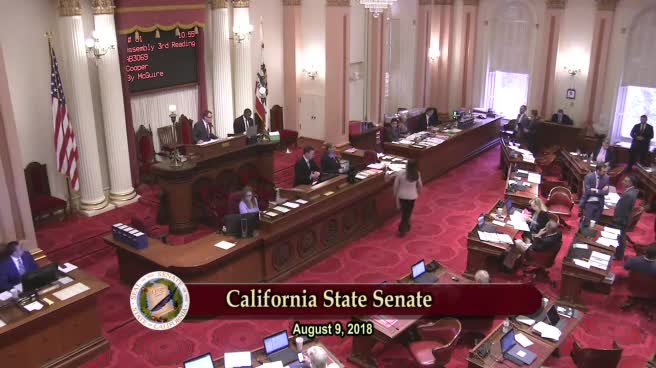
| Aug 9, 2018 | Assembly 3rd Reading AB1798 Chu By Cannella | Senate Floor |
Passed |
|
| Jun 19, 2018 | Do pass, but first be re-referred to the Committee on [Appropriations] | Senate Standing Committee on Transportation and Housing |
Passed |
|
| May 29, 2018 | AB 1798 CHU Assembly Third Reading | Assembly Floor |
Passed |
|
| May 25, 2018 | Do pass. | Assembly Standing Committee on Appropriations |
Passed |
|
| Apr 11, 2018 | Do pass and be re-referred to the Committee on [Appropriations] | Assembly Standing Committee on Education |
Passed |
|
| Mar 19, 2018 | Do pass and be re-referred to the Committee on [Education] | Assembly Standing Committee on Transportation |
Passed |
This list shows positions taken on this bill by organizations on the date displayed, which is linked to the original source.
Positions by individuals are not included.
|
Organization
|
Position
|
Date
|
|---|---|---|
| American Academy of Pediatrics | ** Support | Aug 8, 2018 |
| California Medical Association | ** Support | Aug 8, 2018 |
| County Health Executives Association Of California | ** Support | Aug 8, 2018 |
| School Transportation Coalition | * Support | Mar 19, 2018 |
Office of Senate Floor Analyses (916) 651-1520 Fax: (916) 327-4478 | AB |
THIRD READING
Bill No: AB 1798
:
SENATE TRANS. & HOUSING COMMITTEE: 13-0, 6/19/18
AYES: Beall, Cannella, Allen, Dodd, Gaines, Galgiani, McGuire, Morrell, Roth, Skinner, Vidak, Wieckowski, Wiener
SENATE APPROPRIATIONS COMMITTEE: Senate Rule 28.8
ASSEMBLY FLOOR: 76-0, 5/29/18 - See last page for vote
DIGEST:
This bill requires all schoolbuses in use in California to be equipped with a passenger restraint system by July 1, 2035.
Existing law:
- Requires all schoolbuses purchased or leased for use in California to be equipped at all designated seating positions with a combination pelvic and upper torso passenger restraint system, unless specifically prohibited by the National Highway Traffic Safety Administration (NHTSA).
- Declares the intent of the Legislature that school pupil transportation providers ensure that elementary level schoolbus passengers receive first priority for new schoolbuses whenever feasible.
This bill requires, on or before July 1, 2035, all schoolbuses in use in California to be equipped with a passenger restraint system.
Comments
- Purpose. According to the author, “We must do everything we can to prevent injuries and fatalities and ensure that children safely travel to and from school. Seatbelts save lives and various studies and reports agree. This bill will ensure that all students have equal access to the safest form of school transportation.”
- Seat belts are already mandated on newly purchased schoolbuses. In 1999, the Legislature passed and Governor Davis signed AB 15 (Gallegos, Chapter 648, Statutes of 1999), which required all schoolbuses purchased or leased for use in California to have a seatbelt, starting in 2002 or 2003, depending on the type of schoolbus. The following year the Legislature extended the requirement to 2004 or 2005 in anticipation of a study conducted by the NHTSA on whether seatbelts were necessary in schoolbuses.
- Early NHTSA stance. In 2002 NHTSA released their report concluding that lap belts appear to have little, if any, benefit in reducing serious-to-fatal injuries in severe frontal crashes. NHTSA recognized that schoolbus transportation is one of the safest forms of transportation in the United States. Because of the use of compartmentalization, schoolbuses are significantly safer than cars or trucks. Schoolbus seats, made with an energy-absorbing steel inner structure and high, padded seat backs, are secured to the schoolbus floor. Students are protected within the seating compartment much like eggs in a carton. According to NHTSA, American students are nearly eight times safer riding in a schoolbus than in their own family cars.
The fatality rate for schoolbuses is only 0.2 fatalities per 100 million vehicle miles traveled (VMT), compared to 1.5 fatalities per 100 million VMT for cars. In nearly 10 years, 174 pupils in schoolbuses lost their lives in traffic accidents, compared to an estimated 40,200 traffic fatalities overall in 2016 alone.
- More recent NHTSA policy. Recently, however, NHTSA has changed its stance on seatbelts in schoolbuses. In 2015 the NHTSA administrator stated, “The position of the National Highway Traffic Safety Administration is that seat belts save lives …. So NHTSA’s policy is that every child on every school bus should have a three-point seat belt.”
The National Transportation Safety Board also recognizes the benefits of seatbelts on schoolbuses and states, “Although schoolbuses are extremely safe, we have investigated schoolbus crashes in which children were injured and even killed. These were typically side-impact crashes or high-speed rollovers. In these accidents, compartmentalization was not enough to prevent all injuries; for some of the children involved, a seat belt could have lessened their injuries or even saved their lives. As a result of our schoolbus crash investigations, we believe — and have recommended — that, when investing in new schoolbuses, the purchased vehicles should provide children with the best protection available, which includes 3-point seat belts.”
- Already Making Progress. According to the California Highway Patrol (CHP), the number of schoolbuses with passenger restraint systems has increased steadily since requiring new schoolbuses to have seatbelts. The percentage of schoolbuses equipped with restraint systems increased from around 7.4 percent (1,900 out of 25,822) in 2007 to around 54.4 percent (10,710 out of 19,690) in 2016. Based on current trends, CHP estimates that by 2025, around 90% of schoolbuses could be equipped with restraint systems.
- Any Burden on Schools? A schoolbus generally has a useful life of about 30 years. Because all school buses purchased in California have included seatbelts since 2005, by 2035 all older schoolbuses that do not have seatbelts will have reached the end of their expected useful life. However, it is possible that some school districts would have used a small number of these older buses beyond their expected useful lives and will instead, because of this bill, need to replace these schoolbuses by 2035.
Related/Prior Legislation
SB 20 (Hill, Chapter 593, Statutes of 2017) required certain passengers of buses to wear a seatbelt if a seatbelt is equipped. This law excludes schoolbuses.
AB 692 (Chu, 2017) would have required school districts to provide information to the California Department of Education and the CHP to formulate a plan to have all schoolbuses equipped with passenger restraint systems by January 1, 2023. AB 692 was held on the Senate Appropriations Committee suspense file.
SB 568 (Morrow, Chapter 581, Statutes of 2001) delayed the AB 15 implementaion deadlines until July 1, 2005, for type 1 schoolbuses, and July 1, 2004, for type 2 schoolbuses.
AB 15 (Gallegos, Chapter 648, Statutes of 1999) required all schoolbuses manufactured by specified dates to be equipped with passenger restraint systems.
FISCAL EFFECT: Appropriation: Fiscal Com.: Local:
American Academy of Pediatrics
California Medical Association
County Health Executives Association of California
None received
ASSEMBLY FLOOR: 76-0, 5/29/18
AYES: Acosta, Aguiar-Curry, Travis Allen, Arambula, Baker, Berman, Bigelow, Bloom, Bonta, Brough, Burke, Caballero, Calderon, Carrillo, Cervantes, Chau, Chávez, Chen, Chiu, Choi, Chu, Cooley, Cooper, Cunningham, Dahle, Daly, Eggman, Flora, Fong, Frazier, Friedman, Gallagher, Cristina Garcia, Eduardo Garcia, Gipson, Gloria, Gonzalez Fletcher, Gray, Grayson, Harper, Holden, Irwin, Jones-Sawyer, Kalra, Kamlager-Dove, Lackey, Levine, Limón, Low, Maienschein, Mathis, Mayes, McCarty, Medina, Melendez, Mullin, Muratsuchi, Nazarian, O'Donnell, Patterson, Quirk, Quirk-Silva, Reyes, Rodriguez, Rubio, Salas, Santiago, Steinorth, Mark Stone, Thurmond, Ting, Voepel, Waldron, Weber, Wood, Rendon
NO VOTE RECORDED: Kiley, Obernolte
8/8/18 11:13:53
**** END ****
SENATE COMMITTEE ON TRANSPORTATION AND HOUSING
Senator Jim Beall, Chair
2017 - 2018 Regular
Bill No: Hearing Date: 6/19/2018
Author: | Chu | ||
Version: | 3/14/2018 | ||
Urgency: | No | Fiscal: | Yes |
Consultant: | Howard Posner | ||
SUBJECT:
DIGEST: This bill requires all schoolbuses in use in California to be equipped with a passenger restraint system by July 1, 2035.
ANALYSIS:
Existing law:
- Requires all schoolbuses purchased or leased for use in California to be equipped at all designated seating positions with a combination pelvic and upper torso passenger restraint system, unless specifically prohibited by the National Highway Traffic Safety Administration (NHTSA).
- Declares the intent of the Legislature that school pupil transportation providers ensure that elementary level schoolbus passengers receive first priority for new schoolbuses whenever feasible.
This bill requires, on or before July 1, 2035, all schoolbuses in use in California to be equipped with a passenger restraint system.
COMMENTS
- Author’s statement: “We must do everything we can to prevent injuries and fatalities and ensure that children safely travel to and from school. Seatbelts save lives and various studies and reports agree. This bill will ensure that all students have equal access to the safest form of school transportation.”
- Seat belts are already mandated on newly purchased schoolbuses. In 1999, the Legislature passed and Governor Davis signed AB 15 (Gallegos), Chapter 648, Statutes of 1999, which required all schoolbuses purchased or leased for use in California to have a seatbelt, starting in 2002 or 2003, depending on the type of schoolbus. The following year the Legislature extended the requirement to 2004 or 2005 in anticipation of a study conducted by the National Highway Traffic Safety Administration (NHTSA) on whether seatbelts were necessary in schoolbuses.
- Early NHTSA stance. In 2002 NHTSA released their report concluding that lap belts appear to have little, if any, benefit in reducing serious-to-fatal injuries in severe frontal crashes. NHTSA recognized that schoolbus transportation is one of the safest forms of transportation in the United States. Because of the use of compartmentalization, schoolbuses are significantly safer than cars or trucks. Schoolbus seats, made with an energy-absorbing steel inner structure and high, padded seat backs, are secured to the schoolbus floor. Students are protected within the seating compartment much like eggs in a carton. According to NHTSA, American students are nearly eight times safer riding in a schoolbus than in their own family cars.
The fatality rate for schoolbuses is only 0.2 fatalities per 100 million vehicle miles traveled (VMT), compared to 1.5 fatalities per 100 million VMT for cars. In nearly 10 years, 174 pupils in schoolbuses lost their lives in traffic accidents, compared to an estimated 40,200 traffic fatalities overall in 2016 alone.
- More recent NHTSA policy. Recently, however, NHTSA has changed its stance on seatbelts in schoolbuses. In 2015 the NHTSA administrator stated, “The position of the National Highway Traffic Safety Administration is that seat belts save lives …. So NHTSA’s policy is that every child on every school bus should have a three-point seat belt.”
The National Transportation Safety Board also recognizes the benefits of seatbelts on schoolbuses and states, “Although schoolbuses are extremely safe, we have investigated schoolbus crashes in which children were injured and even killed. These were typically side-impact crashes or high-speed rollovers. In these accidents, compartmentalization was not enough to prevent all injuries; for some of the children involved, a seat belt could have lessened their injuries or even saved their lives. As result of our schoolbus crash investigations, we believe—and have recommended—that, when investing in new schoolbuses, the purchased vehicles should provide children with the best protection available, which includes 3-point seat belts.”
- Other states. California, Arkansas, Florida, Louisiana, New Jersey, New York, and Texas have passed some variation of a requirement for schoolbuses to have seatbelts.
- Just how prevalent are schoolbuses without seatbelts? According to the California Highway Patrol (CHP), the number of schoolbuses with passenger restraint systems has increased steadily since requiring new schoolbuses to have seatbelts. The percentage of schoolbuses equipped with restraint systems increased from around 7.4 percent (1,900 out of 25,822) in 2007 to around 54.4 percent (10,710 out of 19,690) in 2016. Based on these numbers, the CHP estimates that by 2025, around 90% of schoolbuses could be equipped with restraint systems.
- At what price? According to the Assembly Appropriations Committee analysis, the bill will result in cost pressures to school districts that do not otherwise plan to replace buses that do not have seatbelts by 2035. A schoolbus generally has a useful life of about 30 years. Because all school buses purchased in California have included seatbelts since 2005, by 2035 all older schoolbuses that do not have seatbelts will have reached the end of their expected useful life. However, it is possible that some school districts would otherwise use a small number of these older buses beyond their expected useful lives and will instead need to replace these schoolbuses sooner. If, for example, only 10 schoolbuses had to be replaced earlier than planned as a result of this bill, the aggregate replacement cost would be $3 million, assuming a $300,000 price tag for each schoolbus.
Related Legislation:
AB 692 (Chu, 2017) — would have required school districts to provide information to the California Department of Education (CDE) and the CHP to formulate a plan to have all schoolbuses equipped with passenger restraint systems by January 1, 2023. AB 692 was held on the Senate Appropriations Committee suspense file.
AB 15 (Gallegos, Chapter 648, Statutes of 1999) — required all schoolbuses manufactured by specified dates to be equipped with passenger restraint systems.
SB 568 (Morrow, Chapter 581, Statutes of 2001) — delayed the AB 15 implementaion deadlines until July 1, 2005 for type 1 schoolbuses, and July 1, 2004 for type 2 schoolbuses.
SB 20 (Hill, Chapter 593, Statutes of 2017) — required certain passengers of buses to wear a seatbelt if a seatbelt is equipped. This law excludes schoolbuses.
ASSEMBLY VOTES:
Floor: 76-0
Education: 6-0
Transportation: 13-0
FISCAL EFFECT: Appropriation: No Fiscal Com.: Yes Local: Yes
POSITIONS: (Communicated to the committee before noon on Wednesday,
June 13, 2018.)
SUPPORT:
American Academy of Pediatrics
California Medical Association
County Health Executives Association of California
OPPOSITION:
None received.
-- END --
ASSEMBLY THIRD READING
ATR Bill Id:AB 1798
Author:(Chu)
As Amended Ver:March 14, 2018
Majority vote
Committee | Votes | Ayes | Noes |
Transportation | 13-0 | Frazier, Fong, Baker, Berman, Chu, Daly, Friedman, Gipson, Harper, Mathis, Medina, Nazarian, O'Donnell | |
Education | 6-0 | O'Donnell, Kalra, McCarty, Steinorth, Thurmond, Weber | |
Appropriations | 15-0 | Gonzalez Fletcher, Bigelow, Bloom, Bonta, Calderon, Carrillo, Chau, Eggman, Fong, Friedman, Gallagher, Eduardo Garcia, Nazarian, Quirk, Reyes |
SUMMARY: Requires all school buses to have seatbelts by July 1, 2035. Specifically, this bill:
- Requires a person or public or private entity that owns or operates a school bus that is used for the transportation of a pupil attending a public or private primary or secondary school to be equipped with a passenger restraint system for all designated seating positions.
- Requires the passenger restraint system to be in compliance with federal motor vehicle safety standards as those standards were in effect on the date the school bus was manufactured.
- Provides that an individual may comply with this section by either retrofitting any non-compliant school bus with passenger restraint systems at all designated seating positions, or replacing any non-compliant school bus with a school bus equipped with passenger restraint systems at all designated seating positions.
- Provides that a person, school district, or organization, with respect to a school bus with passenger restraint system shall not be charged with a violation of this code or regulation adopted requiring a passenger to use a passenger restraint system, if a passenger on the school bus fails to use or improperly uses the passenger restraint system.
FISCAL EFFECT: According to the Assembly Appropriations Committee, cost pressures (General Fund (GF)/Proposition 98) to school districts that do not otherwise plan to replace buses that do not have seatbelts by 2035. A school bus generally has a useful life of about 30 years. Because all school buses sold in California have included seatbelts since 2005, by 2035 all older school buses that do not have seatbelts will have reached the end of their expected useful life. However, it is possible that some school districts would otherwise use a small number of these older buses beyond the expected useful life and will instead need to use GF/Proposition 98 funds to replace these school buses sooner. For example, if only 10 school buses would not otherwise be replaced by 2035 the cost to replace these school buses sooner in order to meet the 2035 timeline would be $3,000,000, assuming $300,000 cost for each school bus.
COMMENTS: In 1999, the Legislature passed and Governor Davis signed AB 15 (Gallegos), Chapter 648, Statutes of 1999, which required all school buses purchased or leased for use in California to have a seatbelt by 2002 or 2003, depending on the type of school bus. The following year the legislature extended the requirement to 2004 or 2005 in anticipation of a study conducted by the National Highway Traffic Safety Administration (NHTSA) on whether seatbelts were necessary in school buses.
In 2002 NHTSA released their report concluding that lap belts appear to have little, if any, benefit in reducing serious-to-fatal injuries in severe frontal crashes. NHTSA recognized that school bus transportation is one of the safest forms of transportation in the United States. Because of the use of compartmentalization, school buses are significantly safer than cars or trucks. School bus seats, made with an energy-absorbing steel inner structure and high, padded seat backs, are secured to the school bus floor. Students are protected within the seating compartment much like eggs in a carton. According to NHTSA, American students are nearly eight times safer riding in a school bus than with their own parents and guardians in cars.
The fatality rate for school buses is only 0.2 fatalities per 100 million vehicle miles traveled (VMT), compared to 1.5 fatalities per 100 million VMT for cars. In nearly 10 years, the fatality rate for pupils in school buses was 174, compared to an estimated 40,200 traffic fatalities in 2016 alone.
Recently, however, NHTSA has changed course on its stance on seatbelts in school buses. In 2015 the NHTSA administrator stated, "The position of the National Highway Traffic Safety Administration is that seat belts save lives …. So NHTSA’s policy is that every child on every school bus should have a three-point seat belt."
The National Transportation Safety Board has also recognizes the benefits of seatbelts on school buses and states, "Although school buses are extremely safe, we have investigated school bus crashes in which children were injured and even killed. These were typically side-impact crashes or high-speed rollovers. In these accidents, compartmentalization was not enough to prevent all injuries; for some of the children involved, a seat belt could have lessened their injuries or even saved their lives. As result of our school bus crash investigations, we believe—and have recommended—that, when investing in new school buses, the purchased vehicles should provide children with the best protection available, which includes 3-point seat belts."
California, Arkansas, Florida, Louisiana, New Jersey, New York, and Texas have passed some variation of a requirement for school buses to have seatbelts. At least 29 states introduced legislation last year to mandate seatbelts.
According to the California Highway Patrol (CHP), the number of school buses with passenger restraint systems has increased steadily since requiring new school buses to have seatbelts. The percentage of school buses equipped with restraint systems increased from around 7.4% (1,900 out of 25,822) in 2007 to around 54.4% (10,710 out of 19,690) in 2016. Based on these numbers, the CHP estimates that by 2025, around 90% of school buses could be equipped with restraint systems.
Analysis Prepared by: David Sforza / TRANS. / (916) 319-2093 FN: 0003068
Date of Hearing: April 25, 2018
ASSEMBLY COMMITTEE ON APPROPRIATIONS
Lorena Gonzalez Fletcher, Chair
ABPCA Bill Id:AB 1798
Author:(Chu) – As Amended Ver:March 14, 2018
Policy Committee: | Transportation | Vote: | 13 - 0 |
Education | 6 - 0 | ||
|
|
Urgency: No State Mandated Local Program: Yes Reimbursable: No
SUMMARY:
This bill requires all school buses to have seatbelts by July 1, 2035.
FISCAL EFFECT:
Cost pressures (GF/Proposition 98) to school districts that do not otherwise plan to replace buses that do not have seatbelts by 2035. A school bus generally has a useful life of about 30 years. Because all school buses sold in California have included seatbelts since 2005, by 2035 all older school buses that do not have seatbelts will have reached the end of their expected useful life. However, it is possible that some school districts would otherwise use a small number of these older buses beyond the expected useful life and will instead need to use GF/Proposition 98 funds to replace these school buses sooner. For example, if only 10 school buses would not otherwise be replaced by 2035 the cost to replace these school buses sooner in order to meet the 2035 timeline would be $3,000,000, assuming $300,000 cost for each school bus.
COMMENTS:
- Background. Under federal law, all small school buses (under 10,000 pounds) must be equipped with a seatbelt at each seating position on the bus. For larger school buses, state law requires school buses purchased or leased after 2004 or 2005 (depending on the various types of buses) to have seatbelts at all seating positions. School bus manufacturers have been selling only seatbelt-equipped buses in California since these laws went into effect. As a result, many school buses in the state have seatbelts. However, some older school buses, which were purchased prior to 2004, are still being operated without seatbelts. In a recent study, CHP found that in 2016 more than 54% of school buses on the road had seatbelts. CHP estimates that by 2025, 90% of all school buses will have seatbelts.
- Purpose. This bill requires all school buses to have seatbelts by July 1, 2035, essentially requiring schools with older buses that do not have seatbelts to replace these buses by 2035.
- Prior legislation. AB 692 (Chu), of the current legislative session, requires school districts to provide information to the California Department of Education (CDE) and the CHP to formulate a plan to have all school buses equipped with passenger restraint systems by January 1, 2023. AB 692 was held on the Senate Appropriations Committee suspense file.
Analysis Prepared by: Jessica Peters / APPR. / (916) 319-2081
Date of Hearing: April 11, 2018
ASSEMBLY COMMITTEE ON EDUCATION
Patrick O'Donnell, Chair
ABPCA Bill Id:AB 1798 (
Author:Chu) – As Amended Ver:March 14, 2018
[This bill was double referred to the Assembly Transportation Committee and was heard by that committee as it applies to issues within its jurisdiction.]
SUBJECT: Schoolbuses: passenger restraint systems
SUMMARY: Requires all school buses to have seatbelts by July 1, 2035. Specifically, this bill:
- Requires a person or public or private entity that owns or operates a school bus that is used for the transportation of a pupil attending a public or private primary or secondary school to be equipped with a passenger restraint system for all designated seating positions.
- Requires the passenger restraint system to be in compliance with federal motor vehicle safety standards as those standards were in effect on the date the school bus was manufactured.
- Provides that an individual may comply with this section by either retrofitting any non-compliant school bus with passenger restraint systems at all designated seating positions, or replacing any non-compliant school bus with a school bus equipped with passenger restraint systems at all designated seating positions.
- Provides that a person, school district, or organization, with respect to a school bus with passenger restraint system shall not be charged with a violation of this code or regulation adopted requiring a passenger to use a passenger restraint system, if a passenger on the school bus fails to use or improperly uses the passenger restraint system.
EXISTING LAW:
Existing federal law requires that small school buses (10,000 pounds or less) be equipped with a seatbelt at each seating position.
Existing state law:
- Requires all school buses purchased or leased for use in California to be equipped at all designated seating positions with a combination pelvic and upper torso passenger restraint system by 2004 or 2005 depending on the type of school bus.
- Prohibits a person, school district, or organization from being charged for a violation of a requirement of a passenger to use a passenger restraint system if a passenger on the school bus fails to use or improperly uses the passenger restraint system.
- States the intent of the Legislature that school pupil transportation providers work to ensure that elementary level school bus passengers receive first priority for new school buses whenever feasible, as specified.
FISCAL EFFECT: Legislative Counsel has keyed this bill a state-mandated local program
COMMENTS: In 1999, the Legislature passed and Governor Davis signed AB 15 (Gallegos), Chapter 648, Statutes of 1999, which required all school buses purchased or leased for use in California to have a seatbelt by 2002 or 2003, depending on the type of school bus. The following year the legislature extended the requirement to 2004 or 2005 in anticipation of a study conducted by the National Highway Traffic Safety Administration (NHTSA) on whether seatbelts were necessary in school buses.
In 2002 NHTSA released their report concluding that lap belts appear to have little, if any, benefit in reducing serious-to-fatal injuries in severe frontal crashes. NHTSA recognized that school bus transportation is one of the safest forms of transportation in the United States. Because of the use of compartmentalization, school buses are significantly safer than cars or trucks. School bus seats, made with an energy-absorbing steel inner structure and high, padded seat backs, are secured to the school bus floor. Students are protected within the seating compartment much like eggs in a carton. According to NHTSA, American students are nearly eight times safer riding in a school bus than with their own parents and guardians in cars.
The fatality rate for school buses is only .2 fatalities per 100 million vehicle miles traveled (VMT), compared to 1.5 fatalities per 100 million VMT for cars. In nearly 10 years, the fatality rate for pupils in school buses was 174, compared to an estimated 40,200 traffic fatalities in 2016 alone.
Recently, however, NHTSA has changed course on its stance on seatbelts in school buses. In 2015 the NHTSA administrator stated, “The position of the National Highway Traffic Safety Administration is that seat belts save lives …. So NHTSA’s policy is that every child on every school bus should have a three-point seat belt.”
The National Transportation Safety Board has also recognizes the benefits of seatbelts on school buses and states, “Although school buses are extremely safe, we have investigated school bus crashes in which children were injured and even killed. These were typically side-impact crashes or high-speed rollovers. In these accidents, compartmentalization was not enough to prevent all injuries; for some of the children involved, a seat belt could have lessened their injuries or even saved their lives. As result of our school bus crash investigations, we believe—and have recommended—that, when investing in new school buses, the purchased vehicles should provide children with the best protection available, which includes 3-point seat belts.”
California, Arkansas, Florida, Louisiana, New Jersey, New York, and Texas have passed some variation of a requirement for school buses to have seatbelts. At least 29 states introduced legislation last year to mandate seatbelts.
According to the California Highway Patrol (CHP), the number of school buses with passenger restraint systems has increased steadily since requiring new school buses to have seatbelts. The percentage of school buses equipped with restraint systems increased from around 7.4 percent (1,900 out of 25,822) in 2007 to around 54.4 percent (10,710 out of 19,690) in 2016. Based on these numbers, the CHP estimates that by 2025, around 90% of school buses could be equipped with restraint systems.
Related legislation. AB 692 (Chu) of 2017, would have required school districts to provide information to the California Department of Education (CDE) and the CHP to formulate a plan to have all school buses equipped with passenger restraint systems by January 1, 2023. AB 692 was held on the Senate Appropriations Committee suspense file.
AB 15 (Gallegos), Chapter 648, Statutes of 1999, requires all school buses manufactured on or after a certain date to be equipped with passenger restraint systems.
SB 568 (Morrow), Chapter 581, Statutes of 2001, delayed the effective date for the requirement for all school buses to be manufactured with seatbelts to July 1, 2005 for type 1 school buses, and July 1, 2004 for type 2 school buses.
SB 20 (Hill), Chapter 593, Statutes of 2017, requires certain passengers of buses to wear a seatbelt if a seatbelt is equipped. This law excludes school buses.
REGISTERED SUPPORT / OPPOSITION:
Support
American Academy of Pediatrics
California Medical Association
County Health Executives Association of California
Opposition
None received
Analysis Prepared by: Rick Pratt / ED. / (916) 319-2087
Date of Hearing: March 19, 2018
ASSEMBLY COMMITTEE ON TRANSPORTATION
Jim Frazier, Chair
ABPCA Bill Id:AB 1798 (
Author:Chu) – As Amended Ver:March 14, 2018
SUBJECT: Schoolbuses: passenger restraint systems
SUMMARY: Requires all school buses to have seatbelts by July 1, 2035. Specifically, this bill:
- Requires a person or public or private entity that owns or operates a school bus that is used for the transportation of a pupil attending a public or private primary or secondary school to be equipped with a passenger restraint system for all designated seating positions.
- Requires the passenger restraint system to be in compliance with federal motor vehicle safety standards as those standards were in effect on the date the school bus was manufactured.
- Provides that an individual may comply with this section by either retrofitting any non-compliant school bus with passenger restraint systems at all designated seating positions, or replacing any non-compliant school bus with a school bus equipped with passenger restraint systems at all designated seating positions.
- Provides that a person, school district, or organization, with respect to a school bus with passenger restraint system shall not be charged with a violation of this code or regulation adopted requiring a passenger to use a passenger restraint system, if a passenger on the school bus fails to use or improperly uses the passenger restraint system.
EXISTING LAW:
Existing federal law requires that small school buses (10,000 pounds or less) be equipped with a seatbelt at each seating position.
Existing state law:
- Requires all school buses purchased or leased for use in California to be equipped at all designated seating positions with a combination pelvic and upper torso passenger restraint system by 2004 or 2005 depending on the type of school bus.
- Prohibits a person, school district, or organization from being charged for a violation of a requirement of a passenger to use a passenger restraint system if a passenger on the school bus fails to use or improperly uses the passenger restraint system.
- States the intent of the Legislature that school pupil transportation providers work to ensure that elementary level school bus passengers receive first priority for new school buses whenever feasible, as specified.
FISCAL EFFECT: Unknown
COMMENTS: In 1999, the Legislature passed and Governor Davis signed AB 15 (Gallegos), Chapter 648, Statutes of 1999, which required all school buses purchased or leased for use in California to have a seatbelt by 2002 or 2003, depending on the type of school bus. The following year the legislature extended the requirement to 2004 or 2005 in anticipation of a study conducted by the National Highway Traffic Safety Administration (NHTSA) on whether seatbelts were necessary in school buses.
In 2002 NHTSA released their report concluding that lap belts appear to have little, if any, benefit in reducing serious-to-fatal injuries in severe frontal crashes. NHTSA recognized that school bus transportation is one of the safest forms of transportation in the United States. Because of the use of compartmentalization, school buses are significantly safer than cars or trucks. School bus seats, made with an energy-absorbing steel inner structure and high, padded seat backs, are secured to the school bus floor. Students are protected within the seating compartment much like eggs in a carton. According to NHTSA, American students are nearly eight times safer riding in a school bus than with their own parents and guardians in cars.
The fatality rate for school buses is only .2 fatalities per 100 million vehicle miles traveled (VMT), compared to 1.5 fatalities per 100 million VMT for cars. In nearly 10 years, the fatality rate for pupils in school buses was 174, compared to an estimated 40,200 traffic fatalities in 2016 alone.
Recently, however, NHTSA has changed course on its stance on seatbelts in school buses. In 2015 the NHTSA administrator stated, “The position of the National Highway Traffic Safety Administration is that seat belts save lives …. So NHTSA’s policy is that every child on every school bus should have a three-point seat belt.”
The National Transportation Safety Board has also recognizes the benefits of seatbelts on school buses and states, “Although school buses are extremely safe, we have investigated school bus crashes in which children were injured and even killed. These were typically side-impact crashes or high-speed rollovers. In these accidents, compartmentalization was not enough to prevent all injuries; for some of the children involved, a seat belt could have lessened their injuries or even saved their lives. As result of our school bus crash investigations, we believe—and have recommended—that, when investing in new school buses, the purchased vehicles should provide children with the best protection available, which includes 3-point seat belts.”
California, Arkansas, Florida, Louisiana, New Jersey, New York, and Texas have passed some variation of a requirement for school buses to have seatbelts. At least 29 states introduced legislation last year to mandate seatbelts.
According to the California Highway Patrol (CHP), the number of school buses with passenger restraint systems has increased steadily since requiring new school buses to have seatbelts. The percentage of school buses equipped with restraint systems increased from around 7.4 percent (1,900 out of 25,822) in 2007 to around 54.4 percent (10,710 out of 19,690) in 2016. Based on these numbers, the CHP estimates that by 2025, around 90% of school buses could be equipped with restraint systems.
Double referral: This bill will be referred to the Assembly Education Committee should it pass out of this committee.
Previous legislation: AB 692 (Chu) of 2017, would have required school districts to provide information to the California Department of Education (CDE) and the CHP to formulate a plan to have all school buses equipped with passenger restraint systems by January 1, 2023. AB 692 was held on the Senate Appropriations Committee suspense file.
AB 15 (Gallegos), Chapter 648, Statutes of 1999, requires all school buses manufactured on or after a certain date to be equipped with passenger restraint systems.
SB 568 (Morrow), Chapter 581, Statutes of 2001, delayed the effective date for the requirement for all school buses to be manufactured with seatbelts to July 1, 2005 for type 1 school buses, and July 1, 2004 for type 2 school buses.
SB 20 (Hill), Chapter 593, Statutes of 2017, requires certain passengers of buses to wear a seatbelt if a seatbelt is equipped. This law excludes school buses.
REGISTERED SUPPORT / OPPOSITION:
Support
County Health Executives Association of California
Opposition
School Transportation Coalition
Analysis Prepared by: David Sforza / TRANS. / (916) 319-2093
Discussed in Hearing
 1MIN
Senate Floor
 1MIN
Senate Standing Committee on Transportation and Housing
 59SEC
Assembly Floor
 5MIN
Assembly Standing Committee on Education
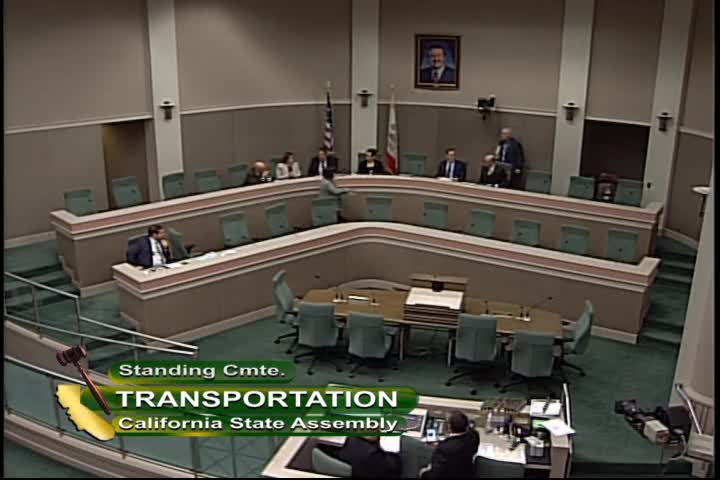 2MIN
Assembly Standing Committee on Transportation
Bill Author

Bill Co-Author(s):