AB 1868: Pupil instruction: sexual health education: sexually suggestive or sexually explicit materials.
- Session Year: 2017-2018
- House: Assembly
- Latest Version Date: 2018-09-17
Existing law, the California Healthy Youth Act, requires school districts to ensure that all pupils in grades 7 to 12, inclusive, receive comprehensive sexual health education and human immunodeficiency virus (HIV) prevention education, as specified. Under the act, this instruction includes, among other things, information about sexual harassment, sexual assault, adolescent relationship abuse, intimate partner violence, and human trafficking.
This bill would explicitly authorize a school district to provide optional instruction, as part of comprehensive sexual health education and HIV prevention education, regarding the potential risks and consequences of creating and sharing sexually suggestive or sexually explicit materials through cellular telephones, social networking Internet Web sites, computer networks, or other digital media.
This bill would incorporate additional changes to Section 51934 of the Education Code proposed by AB 1861 to be operative only if this bill and AB 1861 are enacted and this bill is enacted last.
Existing law, the California Healthy Youth Act, requires school districts to ensure that all pupils in grades 7 to 12, inclusive, receive comprehensive sexual health education and HIV human immunodeficiency virus (HIV) prevention education, as specified. Under the act, this instruction includes, among other things, information about sexual harassment, sexual assault, adolescent relationship abuse, intimate partner violence, and human trafficking.
This bill would explicitly authorize a school district to provide optional instruction, as part of comprehensive sexual health education and HIV prevention education, regarding the potential risks and consequences of creating and sharing sexually suggestive or sexually explicit materials through cellular telephones, social networking Internet Web sites, computer networks, or other digital media.
This bill would incorporate additional changes to Section 51934 of the Education Code proposed by AB 1861 to be operative only if this bill and AB 1861 are enacted and this bill is enacted last.
Existing law, the California Healthy Youth Act, requires school districts to ensure that all pupils in grades 7 to 12, inclusive, receive comprehensive sexual health education and HIV prevention education, as specified. Under the act, this instruction includes, among other things, information about sexual harassment, sexual assault, adolescent relationship abuse, intimate partner violence, and human trafficking.
This bill would explicitly authorize a school district to provide optional instruction, as part of comprehensive sexual health education and HIV prevention education, regarding the potential risks and consequences of creating and sharing sexually suggestive or sexually explicit materials through cellular telephones, social networking Internet Web sites, computer networks, or other digital media.
(a)Each school district shall ensure that all pupils in grades 7 to 12, inclusive, receive comprehensive sexual health education and HIV prevention education from instructors trained in the appropriate courses. Each pupil shall receive this instruction at least once in junior high or middle school and at least once in high school. This instruction shall include all of the following:
(1)Information on the nature of HIV, as well as other sexually transmitted infections, and their effects on the human body.
(2)Information on the manner in which HIV and other sexually transmitted infections are and are not transmitted, including information on the relative risk of infection according to specific behaviors, including sexual activities and injection drug use.
(3)Information that abstinence from sexual activity and injection drug use is the only certain way to prevent HIV and other sexually transmitted infections and abstinence from sexual intercourse is the only certain way to prevent unintended pregnancy. This instruction shall provide information about the value of delaying sexual activity while also providing medically accurate information on other methods of preventing HIV and other sexually transmitted infections and pregnancy.
(4)Information about the effectiveness and safety of all federal Food and Drug Administration (FDA) approved methods that prevent or reduce the risk of contracting HIV and other sexually transmitted infections, including use of antiretroviral medication, consistent with the federal Centers for Disease Control and Prevention.
(5)Information about the effectiveness and safety of reducing the risk of HIV transmission as a result of injection drug use by decreasing needle use and needle sharing.
(6)Information about the treatment of HIV and other sexually transmitted infections, including how antiretroviral therapy can dramatically prolong the lives of many people living with HIV and reduce the likelihood of transmitting HIV to others.
(7)Discussion about social views on HIV and AIDS, including addressing unfounded stereotypes and myths regarding HIV and AIDS and people living with HIV. This instruction shall emphasize that successfully treated HIV-positive individuals have a normal life expectancy, all people are at some risk of contracting HIV, and the only way to know if one is HIV-positive is to get tested.
(8)Information about local resources, how to access local resources, and pupils legal rights to access local resources for sexual and reproductive health care such as testing and medical care for HIV and other sexually transmitted infections and pregnancy prevention and care, as well as local resources for assistance with sexual assault and intimate partner violence.
(9)Information about the effectiveness and safety of all FDA-approved contraceptive methods in preventing pregnancy, including, but not limited to, emergency contraception. Instruction on pregnancy shall include an objective discussion of all legally available pregnancy outcomes, including, but not limited to, all of the following:
(A)Parenting, adoption, and abortion.
(B)Information on the law on surrendering physical custody of a minor child 72 hours of age or younger, pursuant to Section 1255.7 of the Health and Safety Code and Section 271.5 of the Penal Code.
(C)The importance of prenatal care.
(10)Information about sexual harassment, sexual assault, sexual abuse, and human trafficking. Information on human trafficking shall include information on the prevalence, nature, and strategies to reduce the risk of human trafficking, techniques to set healthy boundaries, and how to safely seek assistance.
(11)Information about adolescent relationship abuse and intimate partner violence, including the early warning signs thereof.
(b)A school district may provide optional instruction, as part of comprehensive sexual health education and HIV prevention education, regarding the potential risks and consequences of creating and sharing sexually suggestive or sexually explicit materials through cellular telephones, social networking Internet Web sites, computer networks, or other digital media.
(c)A school district may provide comprehensive sexual health education or HIV prevention education consisting of age-appropriate instruction earlier than grade 7 using instructors trained in the appropriate courses. A school district that elects to offer comprehensive sexual health education or HIV prevention education earlier than grade 7 may provide age appropriate and medically accurate information on any of the general topics contained in paragraphs (1) to (11), inclusive, of subdivision (a).
SEC. 1.5.Section 51934 of the Education Code is amended to read:51934.(a)Each school district shall ensure that all pupils in grades 7 to 12, inclusive, receive comprehensive sexual health education and HIV prevention education from instructors trained in the appropriate courses. Each pupil shall receive this instruction at least once in junior high or middle school and at least once in high school. This instruction shall include all of the following:
(1)Information on the nature of HIV, as well as other sexually transmitted infections, and their effects on the human body.
(2)Information on the manner in which HIV and other sexually transmitted infections are and are not transmitted, including information on the relative risk of infection according to specific behaviors, including sexual activities and injection drug use.
(3)Information that abstinence from sexual activity and injection drug use is the only certain way to prevent HIV and other sexually transmitted infections and abstinence from sexual intercourse is the only certain way to prevent unintended pregnancy. This instruction shall provide information about the value of delaying sexual activity while also providing medically accurate information on other methods of preventing HIV and other sexually transmitted infections and pregnancy.
(4)Information about the effectiveness and safety of all federal Food and Drug Administration (FDA) approved methods that prevent or reduce the risk of contracting HIV and other sexually transmitted infections, including use of antiretroviral medication, consistent with the federal Centers for Disease Control and Prevention.
(5)Information about the effectiveness and safety of reducing the risk of HIV transmission as a result of injection drug use by decreasing needle use and needle sharing.
(6)Information about the treatment of HIV and other sexually transmitted infections, including how antiretroviral therapy can dramatically prolong the lives of many people living with HIV and reduce the likelihood of transmitting HIV to others.
(7)Discussion about social views on HIV and AIDS, including addressing unfounded stereotypes and myths regarding HIV and AIDS and people living with HIV. This instruction shall emphasize that successfully treated HIV-positive individuals have a normal life expectancy, all people are at some risk of contracting HIV, and the only way to know if one is HIV-positive is to get tested.
(8)Information about local resources, how to access local resources, and pupils legal rights to access local resources for sexual and reproductive health care such as testing and medical care for HIV and other sexually transmitted infections and pregnancy prevention and care, as well as local resources for assistance with sexual assault and intimate partner violence.
(9)Information about the effectiveness and safety of all FDA-approved contraceptive methods in preventing pregnancy, including, but not limited to, emergency contraception. Instruction on pregnancy shall include an objective discussion of all legally available pregnancy outcomes, including, but not limited to, all of the following:
(A)Parenting, adoption, and abortion.
(B)Information on the law on surrendering physical custody of a minor child 72 hours of age or younger, pursuant to Section 1255.7 of the Health and Safety Code and Section 271.5 of the Penal Code.
(C)The importance of prenatal care.
(10)Information about sexual harassment, sexual assault, sexual abuse, and human trafficking. Information on human trafficking shall include both of the following:
(A)Information on the prevalence, nature, and strategies to reduce the risk of human trafficking, techniques to set healthy boundaries, and how to safely seek assistance.
(B)Information on how social media and mobile device applications are used for human trafficking.
(11)Information about adolescent relationship abuse and intimate partner violence, including the early warning signs thereof.
(b)A school district may provide optional instruction, as part of comprehensive sexual health education and HIV prevention education, regarding the potential risks and consequences of creating and sharing sexually suggestive or sexually explicit materials through cellular telephones, social networking Internet Web sites, computer networks, or other digital media.
(c)A school district may provide comprehensive sexual health education or HIV prevention education consisting of age-appropriate instruction earlier than grade 7 using instructors trained in the appropriate courses. A school district that elects to offer comprehensive sexual health education or HIV prevention education earlier than grade 7 may provide age appropriate and medically accurate information on any of the general topics contained in paragraphs (1) to (11), inclusive, of subdivision (a).
SEC. 2.Section 1.5 of this bill incorporates amendments to Section 51934 of the Education Code proposed by both this bill and Assembly Bill 1861. That section of this bill shall only become operative if (1) both bills are enacted and become effective on or before January 1, 2019, (2) each bill amends Section 51934 of the Education Code, and (3) this bill is enacted after Assembly Bill 1861, in which case Section 1 of this bill shall not become operative.
(a)Each school district shall ensure that all pupils in grades 7 to 12, inclusive, receive comprehensive sexual health education and HIV prevention education from instructors trained in the appropriate courses. Each pupil shall receive this instruction at least once in junior high or middle school and at least once in high school. This instruction shall include all of the following:
(1)Information on the nature of HIV, as well as other sexually transmitted infections, and their effects on the human body.
(2)Information on the manner in which HIV and other sexually transmitted infections are and are not transmitted, including information on the relative risk of infection according to specific behaviors, including sexual activities and injection drug use.
(3)Information that abstinence from sexual activity and injection drug use is the only certain way to prevent HIV and other sexually transmitted infections and abstinence from sexual intercourse is the only certain way to prevent unintended pregnancy. This instruction shall provide information about the value of delaying sexual activity while also providing medically accurate information on other methods of preventing HIV and other sexually transmitted infections and pregnancy.
(4)Information about the effectiveness and safety of all federal Food and Drug Administration (FDA) approved methods that prevent or reduce the risk of contracting HIV and other sexually transmitted infections, including use of antiretroviral medication, consistent with the federal Centers for Disease Control and Prevention.
(5)Information about the effectiveness and safety of reducing the risk of HIV transmission as a result of injection drug use by decreasing needle use and needle sharing.
(6)Information about the treatment of HIV and other sexually transmitted infections, including how antiretroviral therapy can dramatically prolong the lives of many people living with HIV and reduce the likelihood of transmitting HIV to others.
(7)Discussion about social views on HIV and AIDS, including addressing unfounded stereotypes and myths regarding HIV and AIDS and people living with HIV. This instruction shall emphasize that successfully treated HIV-positive individuals have a normal life expectancy, all people are at some risk of contracting HIV, and the only way to know if one is HIV-positive is to get tested.
(8)Information about local resources, how to access local resources, and pupils legal rights to access local resources for sexual and reproductive health care such as testing and medical care for HIV and other sexually transmitted infections and pregnancy prevention and care, as well as local resources for assistance with sexual assault and intimate partner violence.
(9)Information about the effectiveness and safety of all FDA-approved contraceptive methods in preventing pregnancy, including, but not limited to, emergency contraception. Instruction on pregnancy shall include an objective discussion of all legally available pregnancy outcomes, including, but not limited to, all of the following:
(A)Parenting, adoption, and abortion.
(B)Information on the law on surrendering physical custody of a minor child 72 hours of age or younger, pursuant to Section 1255.7 of the Health and Safety Code and Section 271.5 of the Penal Code.
(C)The importance of prenatal care.
(10)Information about sexual harassment, sexual assault, sexual abuse, and human trafficking. Information on human trafficking shall include information on the prevalence, nature, and strategies to reduce the risk of human trafficking, techniques to set healthy boundaries, and how to safely seek assistance.
(11)Information about adolescent relationship abuse and intimate partner violence, including the early warning signs thereof.
(b)A school district may provide optional instruction, as part of comprehensive sexual health education and HIV prevention education, regarding the potential risks and consequences of creating and sharing sexually suggestive or sexually explicit materials through cellular telephones, social networking Internet Web sites, computer networks, or other digital media.
(c)A school district may provide comprehensive sexual health education or HIV prevention education consisting of age-appropriate instruction earlier than grade 7 using instructors trained in the appropriate courses. A school district that elects to offer comprehensive sexual health education or HIV prevention education earlier than grade 7 may provide age appropriate and medically accurate information on any of the general topics contained in paragraphs (1) to (11), inclusive, of subdivision (a).
SEC. 1.5.Section 51934 of the Education Code is amended to read:51934.(a)Each school district shall ensure that all pupils in grades 7 to 12, inclusive, receive comprehensive sexual health education and HIV prevention education from instructors trained in the appropriate courses. Each pupil shall receive this instruction at least once in junior high or middle school and at least once in high school. This instruction shall include all of the following:
(1)Information on the nature of HIV, as well as other sexually transmitted infections, and their effects on the human body.
(2)Information on the manner in which HIV and other sexually transmitted infections are and are not transmitted, including information on the relative risk of infection according to specific behaviors, including sexual activities and injection drug use.
(3)Information that abstinence from sexual activity and injection drug use is the only certain way to prevent HIV and other sexually transmitted infections and abstinence from sexual intercourse is the only certain way to prevent unintended pregnancy. This instruction shall provide information about the value of delaying sexual activity while also providing medically accurate information on other methods of preventing HIV and other sexually transmitted infections and pregnancy.
(4)Information about the effectiveness and safety of all federal Food and Drug Administration (FDA) approved methods that prevent or reduce the risk of contracting HIV and other sexually transmitted infections, including use of antiretroviral medication, consistent with the federal Centers for Disease Control and Prevention.
(5)Information about the effectiveness and safety of reducing the risk of HIV transmission as a result of injection drug use by decreasing needle use and needle sharing.
(6)Information about the treatment of HIV and other sexually transmitted infections, including how antiretroviral therapy can dramatically prolong the lives of many people living with HIV and reduce the likelihood of transmitting HIV to others.
(7)Discussion about social views on HIV and AIDS, including addressing unfounded stereotypes and myths regarding HIV and AIDS and people living with HIV. This instruction shall emphasize that successfully treated HIV-positive individuals have a normal life expectancy, all people are at some risk of contracting HIV, and the only way to know if one is HIV-positive is to get tested.
(8)Information about local resources, how to access local resources, and pupils legal rights to access local resources for sexual and reproductive health care such as testing and medical care for HIV and other sexually transmitted infections and pregnancy prevention and care, as well as local resources for assistance with sexual assault and intimate partner violence.
(9)Information about the effectiveness and safety of all FDA-approved contraceptive methods in preventing pregnancy, including, but not limited to, emergency contraception. Instruction on pregnancy shall include an objective discussion of all legally available pregnancy outcomes, including, but not limited to, all of the following:
(A)Parenting, adoption, and abortion.
(B)Information on the law on surrendering physical custody of a minor child 72 hours of age or younger, pursuant to Section 1255.7 of the Health and Safety Code and Section 271.5 of the Penal Code.
(C)The importance of prenatal care.
(10)Information about sexual harassment, sexual assault, sexual abuse, and human trafficking. Information on human trafficking shall include information both of the following:
(A)Information on the prevalence, nature, and strategies to reduce the risk of human trafficking, techniques to set healthy boundaries, and how to safely seek assistance.
(B)Information on how social media and mobile device applications are used for human trafficking.
(11)Information about adolescent relationship abuse and intimate partner violence, including the early warning signs thereof.
(b)A school district may provide optional instruction, as part of comprehensive sexual health education and HIV prevention education, regarding the potential risks and consequences of creating and sharing sexually suggestive or sexually explicit materials through cellular telephones, social networking Internet Web sites, computer networks, or other digital media.
(b)(c)A school district may provide comprehensive sexual health education or HIV prevention education consisting of age-appropriate instruction earlier than grade 7 using instructors trained in the appropriate courses. A school district that elects to offer comprehensive sexual health education or HIV prevention education earlier than grade 7 may provide age appropriate and medically accurate information on any of the general topics contained in paragraphs (1) to (11), inclusive, of subdivision (a).
SEC. 2.Section 1.5 of this bill incorporates amendments to Section 51934 of the Education Code proposed by both this bill and Assembly Bill 1861. That section of this bill shall only become operative if (1) both bills are enacted and become effective on or before January 1, 2019, (2) each bill amends Section 51934 of the Education Code, and (3) this bill is enacted after Assembly Bill 1861, in which case Section 1 of this bill shall not become operative.
(a)Each school district shall ensure that all pupils in grades 7 to 12, inclusive, receive comprehensive sexual health education and HIV prevention education from instructors trained in the appropriate courses. Each pupil shall receive this instruction at least once in junior high or middle school and at least once in high school. This instruction shall include all of the following:
(1)Information on the nature of HIV, as well as other sexually transmitted infections, and their effects on the human body.
(2)Information on the manner in which HIV and other sexually transmitted infections are and are not transmitted, including information on the relative risk of infection according to specific behaviors, including sexual activities and injection drug use.
(3)Information that abstinence from sexual activity and injection drug use is the only certain way to prevent HIV and other sexually transmitted infections and abstinence from sexual intercourse is the only certain way to prevent unintended pregnancy. This instruction shall provide information about the value of delaying sexual activity while also providing medically accurate information on other methods of preventing HIV and other sexually transmitted infections and pregnancy.
(4)Information about the effectiveness and safety of all federal Food and Drug Administration (FDA) approved methods that prevent or reduce the risk of contracting HIV and other sexually transmitted infections, including use of antiretroviral medication, consistent with the federal Centers for Disease Control and Prevention.
(5)Information about the effectiveness and safety of reducing the risk of HIV transmission as a result of injection drug use by decreasing needle use and needle sharing.
(6)Information about the treatment of HIV and other sexually transmitted infections, including how antiretroviral therapy can dramatically prolong the lives of many people living with HIV and reduce the likelihood of transmitting HIV to others.
(7)Discussion about social views on HIV and AIDS, including addressing unfounded stereotypes and myths regarding HIV and AIDS and people living with HIV. This instruction shall emphasize that successfully treated HIV-positive individuals have a normal life expectancy, all people are at some risk of contracting HIV, and the only way to know if one is HIV-positive is to get tested.
(8)Information about local resources, how to access local resources, and pupils legal rights to access local resources for sexual and reproductive health care such as testing and medical care for HIV and other sexually transmitted infections and pregnancy prevention and care, as well as local resources for assistance with sexual assault and intimate partner violence.
(9)Information about the effectiveness and safety of all FDA-approved contraceptive methods in preventing pregnancy, including, but not limited to, emergency contraception. Instruction on pregnancy shall include an objective discussion of all legally available pregnancy outcomes, including, but not limited to, all of the following:
(A)Parenting, adoption, and abortion.
(B)Information on the law on surrendering physical custody of a minor child 72 hours of age or younger, pursuant to Section 1255.7 of the Health and Safety Code and Section 271.5 of the Penal Code.
(C)The importance of prenatal care.
(10)Information about sexual harassment, sexual assault, sexual abuse, and human trafficking. Information on human trafficking shall include information on the prevalence, nature, and strategies to reduce the risk of human trafficking, techniques to set healthy boundaries, and how to safely seek assistance.
(11)Information about adolescent relationship abuse and intimate partner violence, including the early warning signs thereof.
(b)A school district may provide optional instruction, as part of comprehensive sexual health education and HIV prevention education, regarding the potential risks and consequences of creating and sharing sexually suggestive or sexually explicit materials through cellular telephones, social networking Internet Web sites, computer networks, or other digital media.
(b)(c)A school district may provide comprehensive sexual health education or HIV prevention education consisting of age-appropriate instruction earlier than grade 7 using instructors trained in the appropriate courses. A school district that elects to offer comprehensive sexual health education or HIV prevention education earlier than grade 7 may provide age appropriate and medically accurate information on any of the general topics contained in paragraphs (1) to (11), inclusive, of subdivision (a).
|
Date
|
Status
|
|---|---|
| Sep 17, 2018 | Chaptered by Secretary of State - Chapter 428, Statutes of 2018. |
| Sep 17, 2018 | Approved by the Governor. |
| Sep 6, 2018 | Enrolled and presented to the Governor at 3 p.m. |
| Aug 29, 2018 | Senate amendments concurred in. To Engrossing and Enrolling. |
| Aug 23, 2018 | In Assembly. Concurrence in Senate amendments pending. May be considered on or after August 25 pursuant to Assembly Rule 77. |
| Aug 23, 2018 | Read third time. Passed. Ordered to the Assembly. |
| Aug 8, 2018 | Read second time. Ordered to third reading. |
| Aug 7, 2018 | Read third time and amended. Ordered to second reading. |
| Jun 14, 2018 | Read second time. Ordered to third reading. |
| Jun 13, 2018 | From committee: Do pass. (Ayes 7. Noes 0.) (June 13). |
| May 30, 2018 | Referred to Com. on ED. |
| May 22, 2018 | In Senate. Read first time. To Com. on RLS. for assignment. |
| May 21, 2018 | Read third time. Passed. Ordered to the Senate. |
| May 14, 2018 | Read second time. Ordered to third reading. |
| May 10, 2018 | From committee: Do pass. (Ayes 6. Noes 0.) (May 9). |
| Jan 29, 2018 | Referred to Com. on ED. |
| Jan 13, 2018 | From printer. May be heard in committee February 12. |
| Jan 12, 2018 | Read first time. To print. |
|
Date
|
Description
|
Location
|
Votes
|
|
|---|---|---|---|---|
| Aug 29, 2018 | AB 1868 CUNNINGHAM Concurrence in Senate Amendments | Assembly Floor |
Passed |
|
| Aug 23, 2018 | Assembly 3rd Reading AB1868 Cunningham By Galgiani | Senate Floor |
Passed |
|
| Jun 13, 2018 | Do pass | Senate Standing Committee on Education |
Passed |
|
| May 21, 2018 | AB 1868 CUNNINGHAM Assembly Third Reading | Assembly Floor |
Passed |
|
| May 9, 2018 | Do pass. | Assembly Standing Committee on Education |
Passed |
This list shows positions taken on this bill by organizations on the date displayed, which is linked to the original source.
Positions by individuals are not included.
|
Organization
|
Position
|
Date
|
|---|---|---|
| Aids Healthcare Foundation | ** Support | Aug 8, 2018 |
| American Civil Liberties Union of California | ** Against | Aug 8, 2018 |
| California Catholic Conference | ** Support | Aug 8, 2018 |
| California Parent Teacher Association | * Support | Jun 13, 2018 |
| California Parent Teacher Association | * Support | Jun 13, 2018 |
| California Police Chiefs Association | ** Support | Aug 8, 2018 |
| California State Parent Teacher Association | * Support | Jun 13, 2018 |
| California State PTA | ** Support | Aug 8, 2018 |
| Crime Victims United Of California | ** Support | Aug 8, 2018 |
| National Rural Education Association | ** Support | Aug 8, 2018 |
| San Luis Obispo County Office Of Education | * Support | Jun 13, 2018 |
CONCURRENCE IN SENATE AMENDMENTS
CSA1 Bill Id:AB 1868
Author:(Cunningham)
As Amended Ver:August 7, 2018
Majority vote
ASSEMBLY: | 74-0 | (May 21, 2018) | SENATE: | 39-0 | (August 23, 2018) |
Original Committee Reference: ED.
SUMMARY: Authorizes school districts to provide instruction, as part of comprehensive sexual health education, on the potential risks and consequences of creating and sharing sexually-suggestive or explicit materials through cell phones, social networking sites, computer networks, or other digital media.
The Senate amendments add double-jointing language to avoid chaptering out issues with AB 1861 (Rodriguez) of the current legislative session.
FISCAL EFFECT: None. This bill has been keyed non-fiscal by the Legislative Counsel.
Analysis Prepared by: Naomi Ondrasek / ED. / (916) 319-2087 FN: 0003903
Office of Senate Floor Analyses (916) 651-1520 Fax: (916) 327-4478 | AB |
THIRD READING
Bill No: AB 1868
Amended: in Senate
SENATE EDUCATION COMMITTEE: 7-0, 6/13/18
AYES: Allen, Wilk, Galgiani, Leyva, McGuire, Pan, Vidak
ASSEMBLY FLOOR: 74-0, 5/21/18 - See last page for vote
DIGEST:
This bill expressly authorizes school districts to provide optional instruction, as part of the age-appropriate comprehensive sexual health education and HIV prevention education that school districts are required to provide, regarding the potential risks and consequences of creating and sharing sexually-suggestive or explicit materials through cell phones, social networking sites, computer networks, or other digital media.
Senate Floor Amendments of 8/7/18 add double-jointing language to avoid chaptering issues with AB 1861 (Rodriguez).
Existing law:
1) Requires school districts to provide age-appropriate comprehensive sexual health education, delivered by trained instructors, to all students in grades 7 to 12, at least once in middle school and once in high school. (Education Code § 51934)
2) Requires the comprehensive sexual health education instruction to include, among other instruction related to sexually transmitted infections and procreation, both of the following:
a) Information about sexual harassment, sexual assault, sexual abuse, and human trafficking. Information on human trafficking shall include information on the prevalence, nature, and strategies to reduce the risk of human trafficking, techniques to set healthy boundaries, and how to safely seek assistance.
b) Information about adolescent relationship abuse and intimate partner violence, including the early warning signs thereof. (EC § 51934)
3) Requires that parents or guardians be given the right to excuse their child from all or part of comprehensive sexual health education. (EC § 51938)
4) Prohibits students from being suspended or expelled, except for specified acts, including cyber sexual bullying. (EC § 48900)
5) Defines "bullying" as any severe or pervasive physical or verbal conduct—including communications made in writing or via an electronic act—that is directed by a pupil or group of pupils towards one or more pupils, and can be reasonably predicted to have one or more of the following effects:
a) Causing students to fear for themselves or their property.
b) Causing substantial detriment to a student’s physical or mental health.
c) Interfering with a student’s academic performance.
d) Interfering with a student’s ability to participate in or benefit from the services, activities, or privileges provided by a school.
6) Specifies that an electronic act shall not constitute pervasive conduct solely on the basis that it has been transmitted on the Internet or is currently posted on the Internet. (EC § 48900)
7) Defines "electronic act" as the creation or transmission of a communication, originated on or off school property, using an electronic device such as a telephone, wireless telephone, or other wireless communication device, computer, or pager. Examples of electronic acts include, but are not limited to, the following:
a) A message, text, sound, or image.
b) A post on a social networking Web site, including, but not limited to:
i) Posting to or creating a “burn page.” A burn page is defined to mean a Web site created for the purpose of having one or more of the effects specified under the definition of bullying.
ii) Creating a credible impersonation of another pupil for the purpose of having one or more of the effects specified under the definition of bullying. “Credible impersonation” is defined as intentionally impersonating a pupil, without consent, for the purpose of bullying the pupil.
iii) Creating a “false profile” for the purpose of having one or more of the effects specified under the definition of bullying. A false profile is defined as a profile of a fictitious pupil or a profile using the likeness or attributes of an actual pupil, other than the pupil who created the false profile. (EC § 48900)
8) Defines cyber sexual bullying as the use of electronic means to disseminate a photograph or visual recording that contains a nude, semi-nude, or sexually explicit depiction of a visually-identifiable minor. (EC § 48900)
9) Requires the California Department of Education (CDE) to display on its Web site current, periodically updated information on curricula and other resources that address cyber sexual bullying. (EC § 234.2)
10) Requires the CDE to annually inform school districts of information about cyber sexual bullying located on its Web site. (EC § 234.2)
11) Encourages school districts to inform pupils about the CDE Web site information on cyber sexual bullying. (EC § 234.2)
12) Requires the CDE to develop an online training module to help school staff, school administrators, parents, pupils, and community members understand the dynamics of, and how to address, bullying and cyberbullying. (EC § 32283.5)
13) States that every person sending or receiving sexually-explicit images of a minor constitutes child pornography, regardless of the age of the sender or recipient, and specifies punishments that may include fines, imprisonment, or both. (Penal Code §§ 288.2; 311-311.3)
This bill expressly authorizes school districts to provide optional instruction, as part of the comprehensive sexual health education and HIV prevention education that school districts are required to provide, regarding the potential risks and consequences of creating and sharing sexually-suggestive or explicit materials through cell phones, social networking sites, computer networks, or other digital media.
Comments
1) Need for the bill. According to the author, “Existing laws already make cyber sexual bullying an offense capable of school suspension. We must allow schools to teach that everyone is worthy of respect, and that harassment of any kind is unacceptable.
“In order to address this dangerous growing epidemic, we must provide kids with the knowledge they need to know about the potential dangers, both physical and emotional, of engaging in this type of behavior.”
2) Sexting is prevalent. According to the author, “In a 2011 New York Times article, a columnist described how ‘….teenagers, who have ready access to technology and are growing up in a culture that celebrates body flaunting, sexting is laughably easy, unremarkable and even compelling: the primary reason teenagers sext is to look cool and sexy to someone they find attractive.
“An Internet poll conducted for The Associated Press and MTV by Knowledge Networks indicated that 24 percent of 14- to 17-year olds had been involved in ‘sexting,’ either by cellphone or on the Internet.’”
These figures are supported by survey data of 5,500 middle and high school students from across the United States conducted by the Cyberbullying Research Center, which indicates that the prevalence of sexting increases with student age. Overall, the survey indicated at 12 percent of students surveyed said they had sent an explicit image of themselves to another person at some point in their lifetime, “but almost one out of every five seventeen year-olds had sent an explicit image of themselves to someone else at some point in their lifetime, compared to less than 6% of twelve year-olds.”
3) Updated health curriculum framework forthcoming. The Health Framework California Public Schools, Kindergarten through Grade Twelve was adopted by the State Board of Education (SBE) in 2003, but is no longer current, as it does not reflect the updated health education content standards that were adopted in 2008. However, the health curriculum framework is currently under revision and final adoption by SBE is scheduled for May 2019. In April 2018, the CDE released on its Web site a draft of the Health Education Framework. The topics required by this bill are already integrated throughout the framework. For example, the Framework states that as early as third grade, students may begin using online resources for school assignments and recreational purposes, making it necessary that they “learn the school rules for Internet use” and understand that “the rules are meant to help protect [them] from online dangers and also to prevent cyber bullying.” The Framework also encourages teachers to discuss potentially dangerous situations that third graders may encounter online. For grades 4-6, the Framework introduces a discussion of unsafe uses of mobile devices and the Internet, including sexting and the sharing of provocative photos. Students in these grades also “learn about the consequences of being a cyber bully and sexting,” and “sending sexually suggestive photos through social networks.” For grades 7-8, the Framework includes an activity in which students “discuss the dangers of the Internet and sharing sexually explicit photographs,” and “recognize that once they send or allow someone else to take an explicit photograph, they no longer have control of who sees it or where it may be shared…” For grades 9-12, the Framework includes a suggested activity in which students learn about the “possible negative, legal, and lasting consequences of sexting by researching and analyzing current events related to sexting and then discussing the outcomes.”
Related/Prior Legislation
AB 1861 (Rodriguez, 2018) requires that students receive instruction on how social media and mobile device applications are used in human trafficking, by adding it to the content included in comprehensive sexual health education. AB 1861 is pending in on the Senate floor.
AB 2601 (Weber, 2018) requires charter schools, commencing with the 2019-20 school year, to ensure that all pupils in 7th through 12th grade receive comprehensive sexual health education and HIV prevention education. AB 2601 is pending in the Senate Appropriations Committee.
SB 947 (Jackson, 2018) requires the Superintendent of Public Instruction, on or before December 1, 2019, and in consultation with the State Board of Education and an advisory committee, to identify and develop best practices and recommendations for instruction in digital citizenship, Internet safety, and media literacy. SB 947 is pending on the Assembly floor.
SB 830 (Dodd, 2018) requires the Instructional Quality Commission to develop, and the SBE to adopt, modify, or revise, a model curriculum in media literacy. SB 830 is pending in the Assembly Appropriations Committee.
AB 2536 (Chau, Chapter 419, Statutes of 2016) added “cyber sexual bullying” as a type of bullying, by means of an electronic act, for which a student could be suspended or expelled from school. The bill also required the CDE to provide, on its Internet Web site, information on the dangers and consequences of cyber sexual bullying to school districts and encouraged school districts to inform students of this information.
AB 2212 (Harper, Chapter 412, Statutes of 2016) added video to the definition of “an act of bullying by means of an electronic act.”
AB 329 (Weber, Chapter 398, Statutes of 2015) required schools to provide comprehensive sexual health education in grades 7-12, and modified the required components of sexual health education and HIV/AIDS prevention education. The bill also renamed the California Comprehensive Sexual Health and HIV/AIDS Prevention Education Act the California Healthy Youth Act.
AB 1993 (Fox, Chapter 418, Statutes of 2014) required the CDE to develop an online training module on bullying and cyberbullying.
SB 919 (Lieu, 2011-12 Session) would have defined sexting, required a School/Law Enforcement Partnership to have the purpose of reducing sexting, and added sexting directed toward a pupil or school personnel as an offense for which a student may be suspended or expelled. The bill died in the Assembly Appropriations Committee.
AB 1043 (Torres, 2011-12 Session) would have specified that any minor engaged in "sexting" images of himself or herself or another minor may be adjudicated a ward of the juvenile court. The bill died in the Assembly Committee on Public Safety.
AB 321 (Hernández, 2011-12 Session) would have authorized a school district to provide instruction on the potential risks and consequences of creating and sharing sexually suggestive or explicit materials through cellular telephones, social networking Web sites, computer networks, or other digital media. The bill died in the Assembly Appropriations Committee.
FISCAL EFFECT: Appropriation: Fiscal Com.: Local:
AIDS Healthcare Foundation
California Association for Health, Physical Education, Recreation and Dance
California Catholic Conference
California Police Chiefs Association
California State PTA
Crime Victims United of California
National Rural Education Association
American Civil Liberties Union of California
ASSEMBLY FLOOR: 74-0, 5/21/18
AYES: Acosta, Aguiar-Curry, Travis Allen, Arambula, Baker, Berman, Bigelow, Bloom, Bonta, Brough, Burke, Caballero, Calderon, Carrillo, Cervantes, Chau, Chávez, Chen, Chiu, Choi, Chu, Cooley, Cooper, Cunningham, Dahle, Daly, Flora, Fong, Frazier, Friedman, Gallagher, Gipson, Gloria, Gonzalez Fletcher, Grayson, Harper, Holden, Irwin, Jones-Sawyer, Kalra, Kamlager-Dove, Kiley, Lackey, Levine, Limón, Low, Maienschein, Mathis, Mayes, McCarty, Medina, Melendez, Mullin, Muratsuchi, Nazarian, Obernolte, O'Donnell, Patterson, Quirk, Quirk-Silva, Reyes, Rodriguez, Rubio, Salas, Santiago, Steinorth, Mark Stone, Thurmond, Ting, Voepel, Waldron, Weber, Wood, Rendon
NO VOTE RECORDED: Eggman, Cristina Garcia, Eduardo Garcia, Gray
8/8/18 12:42:25
**** END ****
Office of Senate Floor Analyses (916) 651-1520 Fax: (916) 327-4478 | AB |
THIRD READING
Bill No: AB 1868
:
SENATE EDUCATION COMMITTEE: 7-0, 6/13/18
AYES: Allen, Wilk, Galgiani, Leyva, McGuire, Pan, Vidak
ASSEMBLY FLOOR: 74-0, 5/21/18 - See last page for vote
DIGEST:
This bill expressly authorizes school districts to provide optional instruction, as part of the age-appropriate comprehensive sexual health education and HIV prevention education that school districts are required to provide, regarding the potential risks and consequences of creating and sharing sexually-suggestive or explicit materials through cell phones, social networking sites, computer networks, or other digital media.
Existing law:
1) Requires school districts to provide age-appropriate comprehensive sexual health education, delivered by trained instructors, to all students in grades 7 to 12, at least once in middle school and once in high school. (Education Code § 51934)
2) Requires the comprehensive sexual health education instruction to include, among other instruction related to sexually transmitted infections and procreation, both of the following:
a) Information about sexual harassment, sexual assault, sexual abuse, and human trafficking. Information on human trafficking shall include information on the prevalence, nature, and strategies to reduce the risk of human trafficking, techniques to set healthy boundaries, and how to safely seek assistance.
b) Information about adolescent relationship abuse and intimate partner violence, including the early warning signs thereof. (EC § 51934)
3) Requires that parents or guardians be given the right to excuse their child from all or part of comprehensive sexual health education. (EC § 51938)
4) Prohibits students from being suspended or expelled, except for specified acts, including cyber sexual bullying. (EC § 48900)
5) Defines "bullying" as any severe or pervasive physical or verbal conduct—including communications made in writing or via an electronic act—that is directed by a pupil or group of pupils towards one or more pupils, and can be reasonably predicted to have one or more of the following effects:
a) Causing students to fear for themselves or their property.
b) Causing substantial detriment to a student’s physical or mental health.
c) Interfering with a student’s academic performance.
d) Interfering with a student’s ability to participate in or benefit from the services, activities, or privileges provided by a school.
6) Specifies that an electronic act shall not constitute pervasive conduct solely on the basis that it has been transmitted on the Internet or is currently posted on the Internet. (EC § 48900)
7) Defines "electronic act" as the creation or transmission of a communication, originated on or off school property, using an electronic device such as a telephone, wireless telephone, or other wireless communication device, computer, or pager. Examples of electronic acts include, but are not limited to, the following:
a) A message, text, sound, or image.
b) A post on a social networking Web site, including, but not limited to:
i) Posting to or creating a “burn page.” A burn page is defined to mean a Web site created for the purpose of having one or more of the effects specified under the definition of bullying.
ii) Creating a credible impersonation of another pupil for the purpose of having one or more of the effects specified under the definition of bullying. “Credible impersonation” is defined as intentionally impersonating a pupil, without consent, for the purpose of bullying the pupil.
iii) Creating a “false profile” for the purpose of having one or more of the effects specified under the definition of bullying. A false profile is defined as a profile of a fictitious pupil or a profile using the likeness or attributes of an actual pupil, other than the pupil who created the false profile. (EC § 48900)
8) Defines cyber sexual bullying as the use of electronic means to disseminate a photograph or visual recording that contains a nude, semi-nude, or sexually explicit depiction of a visually-identifiable minor. (EC § 48900)
9) Requires the California Department of Education (CDE) to display on its Web site current, periodically updated information on curricula and other resources that address cyber sexual bullying. (EC § 234.2)
10) Requires the CDE to annually inform school districts of information about cyber sexual bullying located on its Web site. (EC § 234.2)
11) Encourages school districts to inform pupils about the CDE Web site information on cyber sexual bullying. (EC § 234.2)
12) Requires the CDE to develop an online training module to help school staff, school administrators, parents, pupils, and community members understand the dynamics of, and how to address, bullying and cyberbullying. (EC § 32283.5)
13) States that every person sending or receiving sexually-explicit images of a minor constitutes child pornography, regardless of the age of the sender or recipient, and specifies punishments that may include fines, imprisonment, or both. (Penal Code §§ 288.2; 311-311.3)
This bill expressly authorizes school districts to provide optional instruction, as part of the comprehensive sexual health education and HIV prevention education that school districts are required to provide, regarding the potential risks and consequences of creating and sharing sexually-suggestive or explicit materials through cell phones, social networking sites, computer networks, or other digital media.
Comments
1) Need for the bill. According to the author, “Existing laws already make cyber sexual bullying an offense capable of school suspension. We must allow schools to teach that everyone is worthy of respect, and that harassment of any kind is unacceptable.
“In order to address this dangerous growing epidemic, we must provide kids with the knowledge they need to know about the potential dangers, both physical and emotional, of engaging in this type of behavior.”
2) Sexting is prevalent. According to the author, “In a 2011 New York Times article, a columnist described how ‘….teenagers, who have ready access to technology and are growing up in a culture that celebrates body flaunting, sexting is laughably easy, unremarkable and even compelling: the primary reason teenagers sext is to look cool and sexy to someone they find attractive.
“An Internet poll conducted for The Associated Press and MTV by Knowledge Networks indicated that 24 percent of 14- to 17-year olds had been involved in ‘sexting,’ either by cellphone or on the Internet.’”
These figures are supported by survey data of 5,500 middle and high school students from across the United States conducted by the Cyberbullying Research Center, which indicates that the prevalence of sexting increases with student age. Overall, the survey indicated at 12 percent of students surveyed said they had sent an explicit image of themselves to another person at some point in their lifetime, “but almost one out of every five seventeen year-olds had sent an explicit image of themselves to someone else at some point in their lifetime, compared to less than 6% of twelve year-olds.”
3) Updated health curriculum framework forthcoming. The Health Framework California Public Schools, Kindergarten through Grade Twelve was adopted by the State Board of Education (SBE) in 2003, but is no longer current, as it does not reflect the updated health education content standards that were adopted in 2008. However, the health curriculum framework is currently under revision and final adoption by SBE is scheduled for May 2019. In April 2018, the CDE released on its Web site a draft of the Health Education Framework. The topics required by this bill are already integrated throughout the framework. For example, the Framework states that as early as third grade, students may begin using online resources for school assignments and recreational purposes, making it necessary that they “learn the school rules for Internet use” and understand that “the rules are meant to help protect [them] from online dangers and also to prevent cyber bullying.” The Framework also encourages teachers to discuss potentially dangerous situations that third graders may encounter online. For grades 4-6, the Framework introduces a discussion of unsafe uses of mobile devices and the Internet, including sexting and the sharing of provocative photos. Students in these grades also “learn about the consequences of being a cyber bully and sexting,” and “sending sexually suggestive photos through social networks.” For grades 7-8, the Framework includes an activity in which students “discuss the dangers of the Internet and sharing sexually explicit photographs,” and “recognize that once they send or allow someone else to take an explicit photograph, they no longer have control of who sees it or where it may be shared…” For grades 9-12, the Framework includes a suggested activity in which students learn about the “possible negative, legal, and lasting consequences of sexting by researching and analyzing current events related to sexting and then discussing the outcomes.”
Related/Prior Legislation
AB 1861 (Rodriguez, 2018) requires that students receive instruction on how social media and mobile device applications are used in human trafficking, by adding it to the content included in comprehensive sexual health education. AB 1861 is pending in the Senate Appropriations Committee.
AB 2601 (Weber, 2018) requires charter schools to ensure that all pupils in 7th through 12th grade receive comprehensive sexual health education and HIV prevention education. AB 2601 is pending in the Senate Education Committee.
SB 947 (Jackson, 2018) requires the Superintendent of Public Instruction, on or before December 1, 2019, and in consultation with an advisory committee, to identify best practices and recommendations for instruction in digital citizenship, Internet safety, and media literacy. SB 947 is pending in the Assembly Education Committee.
SB 830 (Dodd, 2018) requires the Instructional Quality Commission to develop, and the SBE to adopt, modify, or revise, a model curriculum in media literacy. SB 830 is pending in the Assembly Education Committee.
AB 2536 (Chau, Chapter 419, Statutes of 2016) added “cyber sexual bullying” as a type of bullying, by means of an electronic act, for which a student could be suspended or expelled from school. The bill also required the CDE to provide, on its Internet Web site, information on the dangers and consequences of cyber sexual bullying to school districts and encouraged school districts to inform students of this information.
AB 2212 (Harper, Chapter 412, Statutes of 2016) added video to the definition of “an act of bullying by means of an electronic act.”
AB 329 (Weber, Chapter 398, Statutes of 2015) required schools to provide comprehensive sexual health education in grades 7-12, and modified the required components of sexual health education and HIV/AIDS prevention education. The bill also renamed the California Comprehensive Sexual Health and HIV/AIDS Prevention Education Act the California Healthy Youth Act.
AB 1993 (Fox, Chapter 418, Statutes of 2014) required the CDE to develop an online training module on bullying and cyberbullying.
SB 919 (Lieu, 2011-12 Session) would have defined sexting, required a School/Law Enforcement Partnership to have the purpose of reducing sexting, and added sexting directed toward a pupil or school personnel as an offense for which a student may be suspended or expelled. The bill died in the Assembly Appropriations Committee.
AB 1043 (Torres, 2011-12 Session) would have specified that any minor engaged in "sexting" images of himself or herself or another minor may be adjudicated a ward of the juvenile court. The bill died in the Assembly Committee on Public Safety.
AB 321 (Hernández, 2011-12 Session) would have authorized a school district to provide instruction on the potential risks and consequences of creating and sharing sexually suggestive or explicit materials through cellular telephones, social networking Web sites, computer networks, or other digital media. The bill died in the Assembly Appropriations Committee.
FISCAL EFFECT: Appropriation: Fiscal Com.: Local:
AIDS Healthcare Foundation
California Association for Health, Physical Education, Recreation and Dance
California Catholic Conference
California Police Chiefs Association
California State PTA
Crime Victims United of California
National Rural Education Association
OPPOSITION: (Verified 6/13/18)
American Civil Liberties Union of California
ASSEMBLY FLOOR: 74-0, 5/21/18
AYES: Acosta, Aguiar-Curry, Travis Allen, Arambula, Baker, Berman, Bigelow, Bloom, Bonta, Brough, Burke, Caballero, Calderon, Carrillo, Cervantes, Chau, Chávez, Chen, Chiu, Choi, Chu, Cooley, Cooper, Cunningham, Dahle, Daly, Flora, Fong, Frazier, Friedman, Gallagher, Gipson, Gloria, Gonzalez Fletcher, Grayson, Harper, Holden, Irwin, Jones-Sawyer, Kalra, Kamlager-Dove, Kiley, Lackey, Levine, Limón, Low, Maienschein, Mathis, Mayes, McCarty, Medina, Melendez, Mullin, Muratsuchi, Nazarian, Obernolte, O'Donnell, Patterson, Quirk, Quirk-Silva, Reyes, Rodriguez, Rubio, Salas, Santiago, Steinorth, Mark Stone, Thurmond, Ting, Voepel, Waldron, Weber, Wood, Rendon
NO VOTE RECORDED: Eggman, Cristina Garcia, Eduardo Garcia, Gray
6/15/18 11:16:21
**** END ****
SENATE COMMITTEE ON EDUCATION
Senator Benjamin Allen, Chair
2017 - 2018 Regular
Bill No: AB 1868 Hearing Date: June 13, 2018
Author: | |||
Version: | January 12, 2018 | ||
Urgency: | No | Fiscal: | No |
Consultant: | Brandon Darnell | ||
Subject: Pupil instruction: sexual health education: sexually suggestive or sexually explicit materials.
SUMMARY
This bill expressly authorizes school districts to provide optional instruction, as part of the age-appropriate comprehensive sexual health education and HIV prevention education that school districts are required to provide, regarding the potential risks and consequences of creating and sharing sexually-suggestive or explicit materials through cell phones, social networking sites, computer networks, or other digital media.
BACKGROUND
Existing law:
1) Requires school districts to provide age-appropriate comprehensive sexual health education, delivered by trained instructors, to all students in grades 7 to 12, at least once in middle school and once in high school. (Education Code § 51934)
2) Requires the comprehensive sexual health education instruction to include, among other instruction related to sexually transmitted infections and procreation, both of the following:
a) Information about sexual harassment, sexual assault, sexual abuse, and human trafficking. Information on human trafficking shall include information on the prevalence, nature, and strategies to reduce the risk of human trafficking, techniques to set healthy boundaries, and how to safely seek assistance.
b) Information about adolescent relationship abuse and intimate partner violence, including the early warning signs thereof. (EC § 51934)
3) Requires that parents or guardians be given the right to excuse their child from all or part of comprehensive sexual health education. (EC § 51938)
4) Prohibits students from being suspended or expelled, except for specified acts, including cyber sexual bullying. (EC § 48900)
5) Defines "bullying" as any severe or pervasive physical or verbal conduct—including communications made in writing or via an electronic act—that is directed by a pupil or group of pupils towards one or more pupils, and can be reasonably predicted to have one or more of the following effects:
a) Causing students to fear for themselves or their property.
b) Causing substantial detriment to a student’s physical or mental health.
c) Interfering with a student’s academic performance.
d) Interfering with a student’s ability to participate in or benefit from the services, activities, or privileges provided by a school.
6) Specifies that an electronic act shall not constitute pervasive conduct solely on the basis that it has been transmitted on the internet or is currently posted on the internet. (EC § 48900)
7) Defines "electronic act" as the creation or transmission of a communication, originated on or off school property, using an electronic device such as a telephone, wireless telephone, or other wireless communication device, computer, or pager. Examples of electronic acts include, but are not limited to, the following:
a) A message, text, sound, or image.
b) A post on a social networking website, including, but not limited to:
i) Posting to or creating a “burn page.” A burn page is defined to mean a website created for the purpose of having one or more of the effects specified under the definition of bullying.
ii) Creating a credible impersonation of another pupil for the purpose of having one or more of the effects specified under the definition of bullying. “Credible impersonation” is defined as intentionally impersonating a pupil, without consent, for the purpose of bullying the pupil.
iii) Creating a “false profile” for the purpose of having one or more of the effects specified under the definition of bullying. A false profile is defined as a profile of a fictitious pupil or a profile using the likeness or attributes of an actual pupil, other than the pupil who created the false profile. (EC § 48900)
8) Defines cyber sexual bullying as the use of electronic means to disseminate a photograph or visual recording that contains a nude, semi-nude, or sexually explicit depiction of a visually-identifiable minor. (EC § 48900)
9) Requires the California Department of Education to display on its website current, periodically updated information on curricula and other resources that address cyber sexual bullying. (EC § 234.2)
10) Requires the California Department of Education (CDE) to annually inform school districts of information about cyber sexual bullying located on its website.
(EC § 234.2)
11) Encourages school districts to inform pupils about the CDE website information on cyber sexual bullying. (EC § 234.2)
12) Requires the CDE to develop an online training module to help school staff, school administrators, parents, pupils, and community members understand the dynamics of, and how to address, bullying and cyberbullying. (EC § 32283.5)
13) States that every person sending or receiving sexually-explicit images of a minor constitutes child pornography, regardless of the age of the sender or recipient, and specifies punishments that may include fines, imprisonment, or both.
(Penal Code §§ 288.2; 311-311.3)
ANALYSIS
This bill expressly authorizes school districts to provide optional instruction, as part of the comprehensive sexual health education and HIV prevention education that school districts are required to provide, regarding the potential risks and consequences of creating and sharing sexually-suggestive or explicit materials through cell phones, social networking sites, computer networks, or other digital media.
STAFF COMMENTS
- Need for the bill. According to the author, “Existing laws already make cyber sexual bullying an offense capable of school suspension. We must allow schools to teach that everyone is worthy of respect, and that harassment of any kind is unacceptable.
In order to address this dangerous growing epidemic, we must provide kids with the knowledge they need to know about the potential dangers, both physical and emotional, of engaging in this type of behavior.”
2) Sexting is prevalent. According to the author, “In a 2011 New York Times article, a columnist described how “….teenagers, who have ready access to technology and are growing up in a culture that celebrates body flaunting, sexting is laughably easy, unremarkable and even compelling: the primary reason teenagers sext is to look cool and sexy to someone they find attractive.
An Internet poll conducted for The Associated Press and MTV by Knowledge Networks indicated that 24 percent of 14- to 17-year olds had been involved in “sexting,” either by cellphone or on the Internet.”
These figures are supported by survey data of 5,500 middle and high school students from across the United States conducted by the Cyberbullying Research Center, which indicates that the prevalence of sexting increases with student age. Overall, the survey indicated at 12 percent of students surveyed said they had sent an explicit image of themselves to another person at some point in their lifetime, “but almost one out of every five seventeen year-olds had sent an explicit image of themselves to someone else at some point in their lifetime, compared to less than 6% of twelve year-olds.”
3) Updated health curriculum framework forthcoming. The Health Framework California Public Schools, Kindergarten Through Grade Twelve was adopted by the State Board of Education (SBE) in 2003, but is no longer current, as it does not reflect the updated health education content standards that were adopted in 2008. However, The health curriculum framework is currently under revision and final adoption by SBE is scheduled for May 2019. In April 2018, the California Department of Education (CDE) released on its website a draft of the Health Education Framework. The topics required by this bill are already integrated throughout the framework. For example, the framework states that as early as third grade, students may begin using online resources for school assignments and recreational purposes, making it necessary that they “learn the school rules for Internet use” and understand that “the rules are meant to help protect [them] from online dangers and also to prevent cyber bullying.” The framework also encourages teachers to discuss potentially dangerous situations that third graders may encounter online. For grades 4-6, the framework introduces a discussion of unsafe uses of mobile devices and the internet, including sexting and the sharing of provocative photos. Students in these grades also “learn about the consequences of being a cyber bully and sexting,” and “sending sexually suggestive photos through social networks.” For grades 7-8, the framework includes an activity in which students “discuss the dangers of the Internet and sharing sexually explicit photographs,” and “recognize that once they send or allow someone else to take an explicit photograph, they no longer have control of who sees it or where it may be shared…” For grades 9-12, the framework includes a suggested activity in which students learn about the “possible negative, legal, and lasting consequences of sexting by researching and analyzing current events related to sexting and then discussing the outcomes.” Given that these topics are already addressed in the soon-to-updated framework, and that the instruction proposed by the bill is optional, the committee may wish to consider whether the bill is necessary.
4) Related and previous legislation. AB 1861 (Rodriguez, 1861) requires that students receive instruction on how social media and mobile device applications are used in human trafficking, by adding it to the content included in comprehensive sexual health education.
AB 2601 (Weber, 2018) requires charter schools to ensure that all pupils in 7th through 12th grade receive comprehensive sexual health education and HIV prevention education.
SB 947 (Jackson, 2018) requires the Superintendent of Public Instruction (SPI), on or before December 1, 2019, and in consultation with an advisory committee, to identify best practices and recommendations for instruction in digital citizenship, internet safety, and media literacy.
SB 830 (Dodd, 2018) requires the Instructional Quality Commission (IQC) to develop, and the State Board of Education (SBE) to adopt, modify, or revise, a model curriculum in media literacy.
AB 2536 (Chau, Chapter 419, Statutes of 2016) adds “cyber sexual bullying” as a type of bullying, by means of an electronic act, for which a student could be suspended or expelled from school. This bill also requires the California Department of Education (CDE) to provide, on its internet website, information on the dangers and consequences of cyber sexual bullying to school districts and encouraged school districts to inform students of this information.
AB 2212 (Harper, Chapter 412, Statutes of 2016) adds video to the definition of “an act of bullying by means of an electronic act.”
AB 329 (Weber, Chapter 398, Statutes of 2015) requires schools to provide comprehensive sexual health education in grades 7-12, and modified the required components of sexual health education and HIV/AIDS prevention education. This bill also renamed the California Comprehensive Sexual Health and HIV/AIDS Prevention Education Act the California Healthy Youth Act.
SB 919 (Lieu, 2011-12 Session) would have defined sexting, required a School/Law Enforcement Partnership to have the purpose of reducing sexting, and added sexting directed toward a pupil or school personnel as an offense for which a student may be suspended or expelled. This bill died in the Assembly Appropriations Committee.
AB 1043 (Torres, 2011-12 Session) would have specified that any minor engaged in "sexting" images of himself or herself or another minor may be adjudicated a ward of the juvenile court. This bill died in the Assembly Committee on Public Safety.
AB 321 (Hernández, 2011-12 Session) would have authorized a school district to provide instruction on the potential risks and consequences of creating and sharing sexually suggestive or explicit materials through cellular telephones, social networking websites, computer networks, or other digital media. This bill died in the Assembly Appropriations Committee.
AB 1993 (Fox, Chapter 418, Statutes of 2014) requires the CDE to develop an online training module on bullying and cyberbullying.
SUPPORT
AIDS Healthcare Foundation
California Association for Health, Physical Education, Recreation and Dance
California Catholic Conference
California Police Chiefs Association
California State PTA
Crime Victims United of California
National Rural Education Association
OPPOSITION
American Civil Liberties Union of California
-- END --
ASSEMBLY THIRD READING
ATR Bill Id:AB 1868
Author:(Cunningham)
As Introduced Ver:January 12, 2018
Majority vote
Committee | Votes | Ayes | Noes |
Education | 6-0 | O'Donnell, Kiley, Kalra, Steinorth, Thurmond, Weber |
SUMMARY: Authorizes school districts to provide instruction, as part of comprehensive sexual health education, on the potential risks and consequences of creating and sharing sexually-suggestive or explicit materials through cell phones, social networking sites, computer networks, or other digital media.
FISCAL EFFECT: This bill is keyed non-fiscal by the Legislative Counsel.
COMMENTS:
Need for the bill. The author's office states, "Current law allows for sexual cyber bullying to be an offense worthy of school suspension or other consequences. This bill educates students before it gets to this step and allows schools the option of teaching students about the legal, physical and emotional dangers of sending sexually explicit messages. AB 1868 accomplishes this by authorizing a school district to provide optional instruction, as part of comprehensive sexual health education and HIV prevention education, on the potential risks and consequences of creating and sharing sexually suggestive or sexually explicit materials through cellular telephones, social networking websites, computer networks, or other digital media."
Criminal charges against minors for sexting. The Cyberbullying Research Center, established by researchers from Florida Atlantic University and the University of Wisconsin-Eau Claire, defines "sexting" as the "sending or receiving of sexually-explicit or sexually-suggestive images or video via a cell phone." The center reported in 2016 that the prevalence of sexting increases with student age.
In a 2014 book entitled Adolescent Sexual Behavior in the Digital Age: Considerations for Clinicians, Legal Professionals, and Educators, researchers state that "lawmakers across the United States are struggling to play legislative catch-up with a teen trend that challenges the legislative intent underlying child pornography laws. Those laws originally were designed to protect minors from adults, not to prosecute them for what some see as youthful indiscretions…"
Individuals in California, regardless of their age, can be charged under child pornography laws for creating, sending, or receiving sexually-explicit images of a minor. As a result, minors have been charged with either misdemeanors or felonies and forced to register as sex offenders. The Cyberbullying Research Center states that "youth should not be prosecuted using laws that were intended to protect them from adults" and that teenagers who unwittingly violate child pornography laws "should not be placed on sexual offender registries, as that will largely ruin their life potential."
Inclusion of cyber bullying and safe internet use in the revised health curriculum framework. The revised health curriculum framework is scheduled for final adoption by the State Board of Education for May 2019, although a draft of the framework was released on California Department of Education's website in April 2018.
The topics required by this bill are already integrated throughout the framework. For example, the framework states that as early as third grade, students may begin using online resources for school assignments and recreational purposes, making it necessary that they "learn the school rules for Internet use" and understand that "the rules are meant to help protect [them] from online dangers and also to prevent cyber bullying." The framework also encourages teachers to discuss potentially dangerous situations that third graders may encounter online. For grades 4-6, the framework introduces a discussion of unsafe uses of mobile devices and the internet, including sexting and the sharing of provocative photos. Students in these grades also "learn about the consequences of being a cyber bully and sexting," and "sending sexually suggestive photos through social networks." For grades 7-8, the framework includes an activity in which students "discuss the dangers of the Internet and sharing sexually explicit photographs," and "recognize that once they send or allow someone else to take an explicit photograph, they no longer have control of who sees it or where it may be shared…" For grades 9-12, the framework includes a suggested activity in which students learn about the "possible negative, legal, and lasting consequences of sexting by researching and analyzing current events related to sexting and then discussing the outcomes."
Analysis Prepared by: Naomi Ondrasek / ED. / (916) 319-2087 FN: 0002920
Date of Hearing: May 9, 2018
ASSEMBLY COMMITTEE ON EDUCATION
Patrick O'Donnell, Chair
ABPCA Bill Id:AB 1868 (
Author:Cunningham) – As Introduced Ver:January 12, 2018
SUBJECT: Pupil instruction: sexual health education: sexually suggestive or sexually explicit materials
SUMMARY: Authorizes school districts to provide instruction, as part of comprehensive sexual health education, on the potential risks and consequences of creating and sharing sexually-suggestive or explicit materials through cell phones, social networking sites, computer networks, or other digital media.
EXISTING LAW:
- Requires school districts to provide comprehensive sexual health education, delivered by trained instructors, to all students in grades 7 to 12, at least once in middle school and once in high school (EC 51934).
- Requires that parents or guardians be given the right to excuse their child from all or part of comprehensive sexual health education (EC 51938).
- Prohibits students from being suspended or expelled, except for specified acts, including cyber sexual bullying (EC 48900).
- Defines "bullying" as any severe or pervasive physical or verbal conduct—including communications made in writing or via an electronic act—that is directed by a pupil or group of pupils towards one or more pupils, and can be reasonably predicted to have one or more of the following effects (EC 48900):
- Causing students to fear for themselves or their property.
- Causing substantial detriment to a student’s physical or mental health.
- Interfering with a student’s academic performance.
- Interfering with a student’s ability to participate in or benefit from the services, activities, or privileges provided by a school.
- Specifies that an electronic act shall not constitute pervasive conduct solely on the basis that it has been transmitted on the internet or is currently posted on the internet (EC 48900).
- Defines "electronic act" as the creation or transmission of a communication, originated on or off school property, using an electronic device such as a telephone, wireless telephone, or other wireless communication device, computer, or pager. Examples of electronic acts include, but are not limited to, the following (EC 48900):
- A message, text, sound, or image.
- A post on a social networking website, including, but not limited to:
- Posting to or creating a “burn page.” A burn page is defined to mean a website created for the purpose of having one or more of the effects specified under the definition of bullying.
- Creating a credible impersonation of another pupil for the purpose of having one or more of the effects specified under the definition of bullying. “Credible impersonation” is defined as intentionally impersonating a pupil, without consent, for the purpose of bullying the pupil.
- Creating a “false profile” for the purpose of having one or more of the effects specified under the definition of bullying. A false profile is defined as a profile of a fictitious pupil or a profile using the likeness or attributes of an actual pupil, other than the pupil who created the false profile.
- Defines cyber sexual bullying as the use of electronic means to disseminate a photograph or visual recording that contains a nude, semi-nude, or sexually explicit depiction of a visually-identifiable minor (EC 48900).
- Requires the CDE to display on its website current, periodically updated information on curricula and other resources that address cyber sexual bullying (EC 234.2).
- Requires the CDE to annually inform school districts of information about cyber sexual bullying, located on its website (EC 234.2).
- Encourages school districts to inform pupils about the CDE website information on cyber sexual bullying (EC 234.2).
- Requires the CDE to develop an online training module to help school staff, school administrators, parents, pupils, and community members understand the dynamics of, and how to address, bullying and cyberbullying (EC 32283.5).
- Prohibits the suspension of a pupil or an expulsion, unless it has been determined that the pupil has committed certain acts, including engaging in an act of bullying or cyberbullying (EC 48900).
- States that every person sending or receiving sexually-explicit images of a minor constitutes child pornography, regardless of the age of the sender or recipient, and specifies punishments that may include fines, imprisonment, or both (Penal Code 288.2, Penal Code 311-311.3).
FISCAL EFFECT: This bill has been keyed non-fiscal by the Office of Legislative Counsel.
COMMENTS:
Need for the bill. The author’s office states, “Current law allows for sexual cyber bullying to be an offense worthy of school suspension or other consequences. This bill educates students before it gets to this step and allows schools the option of teaching students about the legal, physical and emotional dangers of sending sexually explicit messages. AB 1868 accomplishes this by authorizing a school district to provide optional instruction, as part of comprehensive sexual health education and HIV prevention education, on the potential risks and consequences of creating and sharing sexually suggestive or sexually explicit materials through cellular telephones, social networking websites, computer networks, or other digital media.”
Criminal charges against minors for sexting. The Cyberbullying Research Center, established by researchers from Florida Atlantic University and the University of Wisconsin-Eau Claire, defines “sexting” as the “sending or receiving of sexually-explicit or sexually-suggestive images or video via a cell phone.” The center reported in 2016 that the prevalence of sexting increases with student age (see chart below).
In a 2014 book entitled Adolescent Sexual Behavior in the Digital Age: Considerations for Clinicians, Legal Professionals, and Educators, researchers state that electronic communications with sexually-themed content are difficult to interpret under existing child pornography laws, when the communicators are students. For example, when minors take nude photos of themselves and text them to their friends, does this qualify as creation and distribution of child pornography? Should minors receiving such texts from their friends be charged for having possession of child pornography?
The researchers also state that “lawmakers across the United States are struggling to play legislative catch-up with a teen trend that challenges the legislative intent underlying child pornography laws. Those laws originally were designed to protect minors from adults, not to prosecute them for what some see as youthful indiscretions…” Although some states have addressed the issue by adopting new laws that “substantially lessen the punishment for minors who consensually sext with other minors,” individuals in California, regardless of their age, can still be charged under child pornography laws for creating, sending, or receiving sexually-explicit images of a minor. As a result, the authors state that minors have been charged with either misdemeanors or felonies and forced to register as sex offenders. The Cyberbullying Research Center states that “youth should not be prosecuted using laws that were intended to protect them from adults” and that teenagers who unwittingly violate child pornography laws “should not be placed on sexual offender registries, as that will largely ruin their life potential.”
According to the California Department of Justice, convicted sex offenders in California are added to a tiered registry, in which high-risk offenders are required to register for life, while low-risk offenders can petition to be removed after either 10 or 20 years if they do not reoffend. Sex offenders in California must regularly update their residency and contact information with local law enforcement.
Tragic outcomes associated with cyber sexual bullying. Current law defines “cyber sexual bullying” as the dissemination of photographs or visual recordings containing nude, semi-nude, or sexually-explicit depictions of minors that negatively impact a student (e.g., by impairing academic performance, causing fear, etc.). It also identifies cyber sexual bullying as an offense for which students can be expelled or suspended.
According to the Cyberbullying Research Center, sexually-explicit images that are initially sent between romantic partners can find their way to unintended recipients via social networking sites, email, instant messaging programs, and video chats. In some cases, these actions have led to tragic outcomes. For example, the Cyberbullying Research Center describes a case in which a 13 year old girl sent a revealing “selfie” photo to a peer, who distributed it to other students, prompting weeks of bullying that ultimately led her to commit suicide.
Inclusion of cyber bullying and safe internet use in the revised health curriculum framework. In 2008, the Instructional Quality Commission (IQC) began the process of revising the Health Education Framework to reflect current health education statutes, as well as the state’s health content standards, adopted by the State Board of Education (SBE) in 2008. However, AB 4 X2 (Evans) Chapter 2, Statutes of 2009 halted all work on instructional materials adoptions and framework revisions until the 2013-14 school year, a response to the state’s fiscal emergency. That suspension was later extended until the 2015-16 school year by SB 70 (Committee on Budget), Chapter 7, Statutes of 2011.
The health curriculum framework revision has since been reinitiated, and final adoption by SBE is scheduled for May 2019. In April 2018, the CDE released on its website a draft of the Health Education Framework. The topics required by this bill are already integrated throughout the framework. For example, the framework states that as early as third grade, students may begin using online resources for school assignments and recreational purposes, making it necessary that they “learn the school rules for Internet use” and understand that “the rules are meant to help protect [them] from online dangers and also to prevent cyber bullying.” The framework also encourages teachers to discuss potentially dangerous situations that third graders may encounter online. For grades 4-6, the framework introduces a discussion of unsafe uses of mobile devices and the internet, including sexting and the sharing of provocative photos. Students in these grades also “learn about the consequences of being a cyber bully and sexting,” and “sending sexually suggestive photos through social networks.” For grades 7-8, the framework includes an activity in which students “discuss the dangers of the Internet and sharing sexually explicit photographs,” and “recognize that once they send or allow someone else to take an explicit photograph, they no longer have control of who sees it or where it may be shared…” For grades 9-12, the framework includes a suggested activity in which students learn about the “possible negative, legal, and lasting consequences of sexting by researching and analyzing current events related to sexting and then discussing the outcomes.”
Status of comprehensive sexual health mandate implementation. While the mandate to provide comprehensive sexual health education has been effective since January 1, 2016, instructional materials aligned to the content required by law will not be adopted until well after the Health Curriculum Framework is completed and adopted in May 2019. In the interim, schools are required by law to provide this instruction, and school districts may look to the CDE for guidance on how to meet the requirements of the law.
Opposing arguments. The American Civil Liberties Union states, “AB 1868 injects unnecessary confusion into [comprehensive sexual health education] because the bill adds permissive instruction to a program that is otherwise limited to mandatory instruction. Furthermore, the terms “sexually suggestive” and “sexually explicit” are vague and open to interpretation that may not align with the health-positive framework of the California Healthy Youth Act (CHYA). Moreover, this vague addition to the curriculum is superfluous because under CHYA, young people already receive information about healthy decision-making.”
Related legislation. AB 1861 (Rodriguez) of this Session requires that students receive instruction on how social media and mobile device applications are used in human trafficking, by adding it to the content included in comprehensive sexual health education.
AB 2601 (Weber) of this Session requires charter schools to ensure that all pupils in 7th through 12th grade receive comprehensive sexual health education and HIV prevention education.
SB 947 (Jackson) of this Session requires the Superintendent of Public Instruction (SPI), on or before December 1, 2019, and in consultation with an advisory committee, to identify best practices and recommendations for instruction in digital citizenship, internet safety, and media literacy.
SB 830 (Dodd) of this Session requires the IQC to develop, and the SBE to adopt, modify, or revise, a model curriculum in media literacy.
Prior legislation. SB 203 (Jackson) of the 2017-18 Session would have required the CDE, on or before December 1, 2018 and in consultation with the SPI and an advisory committee, to identify best practices and recommendations for instruction in digital citizenship, Internet safety, and media literacy, and to report to the appropriate fiscal and policy committees of the Legislature on strategies to implement the best practices and recommendations statewide. This bill died in the Senate Appropriations Committee.
SB 135 (Dodd) of the 2017-18 Session would have required the CDE to identify, in consultation with the SPI and an advisory committee, best practices and recommendations for instruction in digital citizenship, internet safety, and media literacy, and to report to the appropriate fiscal and policy committees of the Legislature on strategies to implement the best practices and recommendations statewide, on or before December 1, 2018. This bill died in the Assembly Appropriations Committee.
AB 2536, Chapter 419, Statutes of 2016 added “cyber sexual bullying” as a type of bullying, by means of an electronic act, for which a student could be suspended or expelled from school. This bill also required the CDE to provide, on its internet website, information on the dangers and consequences of cyber sexual bullying to school districts and encouraged school districts to inform students of this information. The introduced, but not the chaptered, version of the bill would have required comprehensive sexual health education to include information on sexting, including the following: the legal consequences and penalties for sharing sexually suggestive or explicit materials; the non-legal consequences of sharing sexually suggestive or explicit materials, including impacts on relationships, loss of educational and employment opportunities, and removal from school programs and extracurricular activities; the potential long-term consequences of sharing sexually suggestive or explicit materials over the internet; and the connection between cyber bullying and sharing sexually suggestive or explicit materials.
AB 2212, Chapter 412, Statutes of 2016 added video to the definition of “an act of bullying by means of an electronic act.”
AB 329 (Weber), Chapter 398, Statutes of 2015 required schools to provide comprehensive sexual health education in grades 7-12, and modified the required components of sexual health education and HIV/AIDS prevention education. This bill also renamed the California Comprehensive Sexual Health and HIV/AIDS Prevention Education Act the California Healthy Youth Act.
SB 1435 (Jackson), Chapter 633, Statutes of 2016 required the Instructional Quality Commission to consider including comprehensive information for kindergarten and grades 1 to 8, inclusive, on the development of healthy relationships in the health curriculum framework revision that occurred after January 1, 2017.
SB 919 (Lieu) of the 2011-12 Session would have defined sexting, required a School/Law Enforcement Partnership to have the purpose of reducing sexting, and added sexting directed toward a pupil or school personnel as an offense for which a student may be suspended or expelled. This bill died in the Assembly Appropriations Committee.
AB 1043 (Torres) of the 2011-12 Session would have specified that any minor engaged in "sexting" images of himself or herself or another minor may be adjudicated a ward of the juvenile court. This bill died in the Assembly Committee on Public Safety.
AB 321 (Hernández) of the 2011-12 Session would have authorized a school district to provide instruction on the potential risks and consequences of creating and sharing sexually suggestive or explicit materials through cellular telephones, social networking websites, computer networks, or other digital media. This bill died in the Assembly Appropriations Committee.
AB 1993 (Fox), Chapter 418, Statutes of 2014 required the CDE to develop an online training module on bullying and cyberbullying.
REGISTERED SUPPORT / OPPOSITION:
Support
AIDS Healthcare Foundation
California Association for Health, Physical Education, Recreation and Dance
California Police Chiefs Association
California State PTA
Crime Victims United of California
National Rural Education Association
Opposition
American Civil Liberties Union
Analysis Prepared by: Naomi Ondrasek / ED. / (916) 319-2087
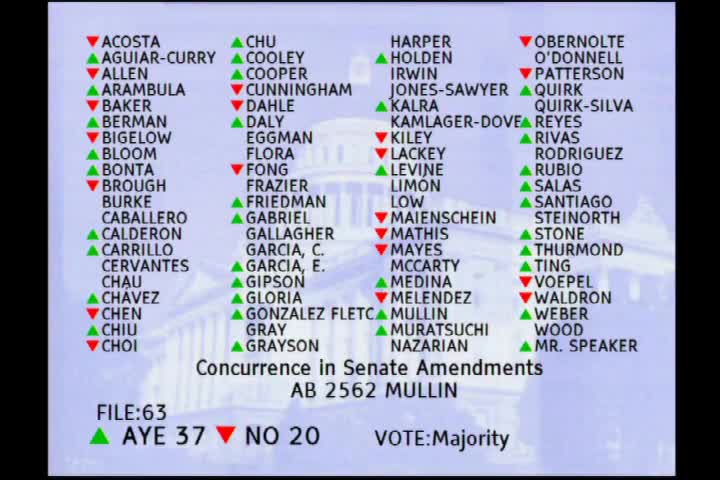
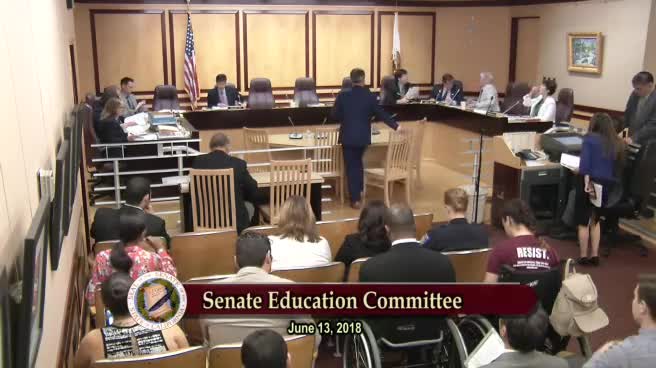
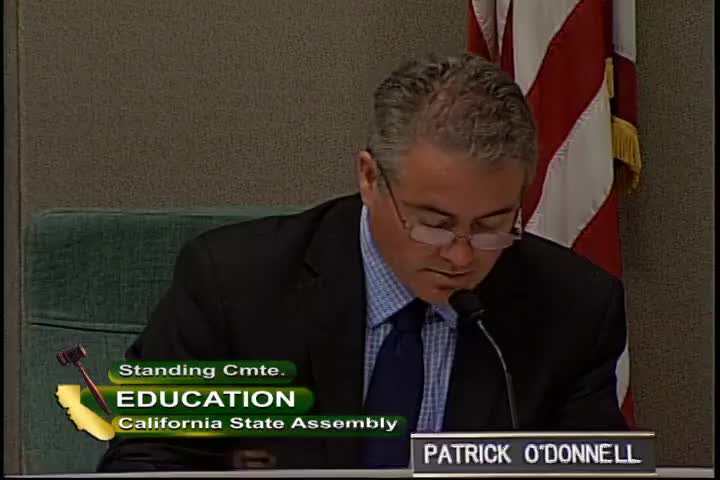
Bill Author

Bill Co-Author(s):