AB 1907: Vehicle loads.
- Session Year: 2017-2018
- House: Assembly
- Latest Version Date: 2018-03-19
Existing law prohibits a person from operating a vehicle on any highway unless it is constructed, covered, or loaded as to prevent any of its contents or load, other than clear water or feathers from live birds, from escaping the vehicle. Under existing law, a violation of this provision is an infraction punishable by a fine determined by the Judicial Council. Existing law also requires a vehicle carrying animals to have the animals properly secured. Under existing law, a violation of this provision is an infraction punishable by a specified fine, set at escalating amounts for subsequent convictions.
This bill would make the penalty for driving with an unsecured load the same as the penalty for driving with animals that have not been properly secured.
The California Constitution requires the state to reimburse local agencies and school districts for certain costs mandated by the state. Statutory provisions establish procedures for making that reimbursement.
This bill would provide that no reimbursement is required by this act for a specified reason.
Except with respect to specified federal regulations related to the transport of hay and straw, existing law prohibits a vehicle from being driven or moved on a highway unless the vehicle is so constructed, covered, or loaded as to prevent any of its contents or load from dropping, sifting, leaking, blowing, spilling, or otherwise escaping from the vehicle, expect as specified. Under existing law, aggregate material, as defined, may be carried only in the cargo area of a vehicle, as specified.This bill would make technical, nonsubstantive changes to those provisions.Except with respect to specified federal regulations related to the transport of hay and straw, existing law prohibits a vehicle from being driven or moved on a highway unless the vehicle is so constructed, covered, or loaded as to prevent any of its contents or load from dropping, sifting, leaking, blowing, spilling, or otherwise escaping from the vehicle, expect as specified. Under existing law, aggregate material, as defined, may be carried only in the cargo area of a vehicle, as specified.
This bill would make technical, nonsubstantive changes to those provisions.
Every person convicted of an infraction for violation of Section 23114 or 23117 shall be punished as follows:
(a)By a fine of not less than fifty dollars ($50) nor more than one hundred dollars ($100).
(b)For a second infraction occurring within one year of a prior infraction which resulted in a conviction, a fine of not less than seventy-five dollars ($75) nor more than two hundred dollars ($200).
(c)For a third or any subsequent infraction occurring within one year of two or more prior infractions which resulted in convictions, a fine of not less than one hundred dollars ($100) nor more than two hundred fifty dollars ($250).
SEC. 2.No reimbursement is required by this act pursuant to Section 6 of Article XIIIB of the California Constitution because the only costs that may be incurred by a local agency or school district will be incurred because this act creates a new crime or infraction, eliminates a crime or infraction, or changes the penalty for a crime or infraction, within the meaning of Section 17556 of the Government Code, or changes the definition of a crime within the meaning of Section 6 of Article XIIIB of the California Constitution.
SECTION 1.Section 23114 of the Vehicle Code is amended to read:23114.(a) Except as provided in Subpart I (commencing with Section 393.100) of Title 49 of the Code of Federal Regulations related to hay and straw, a vehicle shall not be driven or moved on a highway unless the vehicle is so constructed, covered, or loaded as to prevent any of its contents or load other than clear water or feathers from live birds from dropping, sifting, leaking, blowing, spilling, or otherwise escaping from the vehicle.(b)(1)Aggregate material shall only be carried in the cargo area of a vehicle. The cargo area shall not contain any hole, crack, or opening through which that material may escape, regardless of the degree to which the vehicle is loaded, except as provided in paragraph (2).(2)A vehicle used to transport aggregate materials, regardless of the degree to which the vehicle is loaded, shall be equipped with all of the following:(A)Properly functioning seals on openings used to empty the load, including, but not limited to, bottom dump release gates and tailgates.(B)Splash flaps behind every tire, or set of tires, regardless of the position on the truck, truck tractor, or trailer.(C)Center flaps at a location to the rear of each bottom dump release gate as to trucks or trailers equipped with bottom dump release gates. The center flap may be positioned directly behind the bottom dump release gate and in front of the rear axle of the vehicle, or it may be positioned to the rear of the rear axle in line with the splash flaps required behind the tires. The width of the center flap may extend up to one inch from one sidewall to the opposite sidewall of the inside tires and shall extend to within five inches of the pavement surface, and may be not less than 24 inches from the bottom edge to the top edge of the center flap.(D)Fenders starting at the splash flap with the leading edge of the fenders extending forward at least six inches beyond the center of the axle that cover the tops of tires not already covered by the truck, truck tractor, or trailer body.(E)Complete enclosures on all vertical sides of the cargo area, including, but not limited to, tailgates.(F)Shed boards designed to prevent aggregate materials from being deposited on the vehicle body during top loading.(c)A vehicle comprised of full rigid enclosures is exempt only from subparagraphs (C) and (F) of paragraph (2) of subdivision (b).(d)For purposes of this section, aggregate material means rock fragments, pebbles, sand, dirt, gravel, cobbles, crushed base, asphalt, and other similar materials.(e)(1)In addition to subdivisions (a) and (b), a vehicle may not transport aggregate material upon a highway unless the material is covered.(2)A vehicle transporting a load composed entirely of asphalt material is exempt only from the provisions of this section requiring that loads be covered.(3)A vehicle transporting a load composed entirely of petroleum coke material is not required to cover its load if it is loaded using safety procedures, specialized equipment, and a chemical surfactant designed to prevent materials from blowing, spilling, or otherwise escaping from the vehicle.(4)A vehicle transporting a load of aggregate material is not required to cover its load if the load, where it contacts the sides, front, and back of the cargo container area, remains six inches from the upper edge of the container area, and if the load does not extend, at its peak, above any part of the upper edge of the cargo container area.(f)A person who provides a location for vehicles to be loaded with an aggregate material or other material shall provide a location for vehicle operators to comply with this section before entering a highway.(1)A person is exempt from the requirements of this subdivision if the location that he or she provides for vehicles to be loaded with the materials described in this subdivision has 100 yards or less between the scale houses where the trucks carrying aggregate material are weighed and the point of egress to a public road.(2)A driver of a vehicle loaded with aggregate material leaving a location exempted from the requirements of this subdivision is authorized to operate on a public road only until that driver is able to safely cover the load at a site near the locations point of egress to the public road. Except as provided under paragraph (4) of subdivision (e), an uncovered vehicle described in this paragraph may not operate more than 200 yards from the point of egress to the public road.(a) Except as provided in Subpart I (commencing with Section 393.100) of Title 49 of the Code of Federal Regulations related to hay and straw, a vehicle shall not be driven or moved on any a highway unless the vehicle is so constructed, covered, or loaded as to prevent any of its contents or load other than clear water or feathers from live birds from dropping, sifting, leaking, blowing, spilling, or otherwise escaping from the vehicle.
(b)(1)Aggregate material shall only be carried in the cargo area of a vehicle. The cargo area shall not contain any holes, cracks, or openings hole, crack, or opening through which that material may escape, regardless of the degree to which the vehicle is loaded, except as provided in paragraph (2).
(2)Every A vehicle used to transport aggregate materials, regardless of the degree to which the vehicle is loaded, shall be equipped with all of the following:
(A)Properly functioning seals on any openings used to empty the load, including, but not limited to, bottom dump release gates and tailgates.
(B)Splash flaps behind every tire, or set of tires, regardless of the position on the truck, truck tractor, or trailer.
(C)Center flaps at a location to the rear of each bottom dump release gate as to trucks or trailers equipped with bottom dump release gates. The center flap may be positioned directly behind the bottom dump release gate and in front of the rear axle of the vehicle, or it may be positioned to the rear of the rear axle in line with the splash flaps required behind the tires. The width of the center flap may extend not more than up to one inch from one sidewall to the opposite sidewall of the inside tires and shall extend to within five inches of the pavement surface, and may be not less than 24 inches from the bottom edge to the top edge of that the center flap.
(D)Fenders starting at the splash flap with the leading edge of the fenders extending forward at least six inches beyond the center of the axle that cover the tops of tires not already covered by the truck, truck tractor, or trailer body.
(E)Complete enclosures on all vertical sides of the cargo area, including, but not limited to, tailgates.
(F)Shed boards designed to prevent aggregate materials from being deposited on the vehicle body during top loading.
(c)Vehicles A vehicle comprised of full rigid enclosures are is exempt only from subparagraphs (C) and (F) of paragraph (2) of subdivision (b).
(d)For purposes of this section, aggregate material means rock fragments, pebbles, sand, dirt, gravel, cobbles, crushed base, asphalt, and other similar materials.
(e)(1)In addition to subdivisions (a) and (b), a vehicle may not transport any aggregate material upon a highway unless the material is covered.
(2)Vehicles transporting loads A vehicle transporting a load composed entirely of asphalt material are is exempt only from the provisions of this section requiring that loads be covered.
(3)Vehicles transporting loads A vehicle transporting a load composed entirely of petroleum coke material are is not required to cover their loads if they are its load if it is loaded using safety procedures, specialized equipment, and a chemical surfactant designed to prevent materials from blowing, spilling, or otherwise escaping from the vehicle.
(4)Vehicles transporting loads of aggregate materials are not required to cover their loads A vehicle transporting a load of aggregate material is not required to cover its load if the load, where it contacts the sides, front, and back of the cargo container area, remains six inches from the upper edge of the container area, and if the load does not extend, at its peak, above any part of the upper edge of the cargo container area.
(f)A person who provides a location for vehicles to be loaded with an aggregate material or other material shall provide a location for vehicle operators to comply with this section before entering a highway.
(1)A person is exempt from the requirements of this subdivision if the location that he or she provides for vehicles to be loaded with the materials described in this subdivision has 100 yards or less between the scale houses where the trucks carrying aggregate material are weighed and the point of egress to a public road.
(2)A driver of a vehicle loaded with aggregate material leaving locations a location exempted from the requirements of this subdivision is authorized to operate on public roads a public road only until that driver is able to safely cover the load at a site near the locations point of egress to the public road. Except as provided under paragraph (4) of subdivision (e), an uncovered vehicle described in this paragraph may not operate more than 200 yards from the point of egress to the public road.
|
Date
|
Status
|
|---|---|
| Apr 9, 2018 | In committee: Set, first hearing. Failed passage. Reconsideration granted. |
| Mar 19, 2018 | From committee chair, with author's amendments: Amend, and re-refer to Com. on TRANS. Read second time and amended. |
| Mar 20, 2018 | Re-referred to Com. on TRANS. |
| Mar 19, 2018 | Referred to Com. on TRANS. |
| Jan 23, 2018 | From printer. May be heard in committee February 22. |
| Jan 22, 2018 | Read first time. To print. |
|
Date
|
Description
|
Location
|
Votes
|
|
|---|---|---|---|---|
| Apr 9, 2018 | Reconsideration. | Assembly Standing Committee on Transportation |
Passed |
|
| Apr 9, 2018 | Do pass and be re-referred to the Committee on [Appropriations] | Assembly Standing Committee on Transportation |
Passed |
This list shows positions taken on this bill by organizations on the date displayed, which is linked to the original source.
Positions by individuals are not included.
|
Organization
|
Position
|
Date
|
|---|---|---|
| One Private Citizen | ** Support | Apr 6, 2018 |
| Western States Trucking Association | * Against | Apr 9, 2018 |
Date of Hearing: April 9, 2018
ASSEMBLY COMMITTEE ON TRANSPORTATION
Jim Frazier, Chair
ABPCA Bill Id:AB 1907 (
Author:Choi) – As Amended Ver:March 19, 2018
SUBJECT: Vehicle loads
SUMMARY: Increases the fine for every person convicted of an infraction for a violation of failing to secure a vehicle load as follows:
- By a fine no less than $50 nor more than $100.
- For a third or any subsequent infraction occurring within one year of two or more prior infractions which resulted in convictions, a fine not less than $100 nor more than $250.
EXISTING LAW:
- Prohibits an individual from driving or moving a vehicle on any highway unless the vehicle is so constructed, covered, or loaded so as to prevent any of its contents or load other than clear water, hay, straw, or feathers from live birds from dropping, sifting, leaking, blowing, spilling, or otherwise escaping from the vehicle.
- Establishes that aggregate material is only to be carried in a cargo area that does not contain any holes, cracks, or openings through which that material may escape, regardless of the degree to which the vehicle is loaded.
- Requires that every vehicle used to transport aggregate materials, regardless of the degree to which the vehicle is loaded, is to be equipped with properly functioning seals on any openings used to empty the load, including, but not limited to, bottom dump release gates and tailgates.
- Exempts vehicles from covering their loads, if the load where it contacts the sides, front, and back of the cargo container area, remains six inches from the upper edge of the container area, and if the load does not extend, at its peak, above any part of the upper edge of the cargo container area.
- Provides that a violation of the above provisions shall be punishable as follows:
- By a fine not exceeding $100.
- A second violation of the above provision occurring within the prior two years is a misdemeanor, and not an infraction.
- For a third or subsequent infraction occurring within one year of two or more prior infractions that resulted in convictions, a fine not exceeding $250.
- By a fine not exceeding $100.
FISCAL EFFECT: Unknown
COMMENTS:
Unsecured loads and traffic fatalities: In 2016 AAA Foundation for Traffic Safety issued a report titled The Prevalence of Motor Vehicle Crashes Involving Road Debris, United States, 2011-2014. The study examined three publicly-available sources of data on motor vehicle crashes in the United States to estimate the number of crashes that involved debris on the roadway. Debris-related crashes were defined as crashes in which a vehicle struck or was struck by an object that fell or was struck by an object that fell or became detached from another vehicle, struck a non-fixed object on the roadway, or crashed after swerving to avoid an object on the roadway.
Results from the study suggests that road debris was a factor in an estimated average of 50,658 police reported crashes, resulting in nearly 10,000 injuries and 124 deaths annually in the United States between 2011 and 2014. Debris related crashes were approximately 4 times as likely to occur on interstate highways. Approximately 35,000 crashes, 7,500 injuries and 89 deaths are attributed to accidents caused by debris from vehicles.
Increasing fines: The costs of fines and fees associated with traffic and parking citations has steadily increased over the last few decades. After adding on fees to base fines, tickets can total in the hundreds of dollars. Add-on fees for minor offenses double or quadruple the original fine, and until recently California suspended driver’s licenses for failure to pay traffic fines.
Unpaid traffic fine debt has been adding up. According to the Legislative Analyst Office, the state now has over $10 billion in unpaid court ordered debt. The Legislature and Governor have made several efforts to collect unpaid debt and to address the negative consequences of unpaid fines. In last year’s budget, the state removed the court’s authority to notify the Department of Motor Vehicles for the suspension of individual’s driver’s licenses for unpaid traffic fines. Governor Brown also signed AB 503 (Lackey), Chapter 741, Statutes of 2017, which requires a payment program to be offered to indigent individuals before agencies can use DMV to collect unpaid parking tickets.
Actual cost: Every year the Judicial Council releases the Uniform Bail and Penalty Schedule, which provides the recommended penalties for vehicle infractions. Under that schedule, a violation for an unsecured load has a $35 base fine. However, after adding in the additional fees, the total cost of the ticket comes out to $235. This bill would provide for a minimum base fine of $50, similar to the fine for not securing an animal properly. After additional fees are accessed, that fine totals $285.
Misdemeanor vs. infraction: This bill adds to a current code section which requires a conviction for an infraction for a second violation in a one year period have a minimum fine of $75 to $250. However, elsewhere in the vehicle code a section violation of failing to secure a vehicle load within a two year time period is a misdemeanor, and not an infraction. In this case, the additional fine would not apply, as a second violation would result in jail time.
Opposition: The Western States Trucking Association (WTSA), writing in opposition, argues, “Given the ongoing disbelief and lack of evidence that increased penalties actually have a deterrent effect upon driving behaviors, combined with the disproportionate impact of higher fines on low-income earners like truck drivers….WTSA believes that…increasing safety on our highways by reducing debris falling from vehicles would be better served by a public education program.”
Committee concerns: While the author intends to increase the minimum base fine by $15 for unsecured loads, the net result would increase the penalty by $50. This may be a small amount of money for a trucking company to pay, but it could be a large amount for the weekend mover who may have an item fall off the back of his or her vehicle.
Further, it is unclear how this additional penalty would actually deter individuals from failing to secure their load properly. Generally people do not want to lose the items on the back of their vehicles. An additional $50 penalty is not going to change their behavior of accidently losing things they would prefer not to lose. A second violation in a two-year period already results in a misdemeanor instead of an infraction. It may be more prudent to focus on educating individuals about ways to properly load their vehicles.
Related legislation: AB 1925 (Choi) requires DMV to include at least one question on unsecured vehicle loads in their written examination of new and renewing applicants for driver’s licenses. AB 1925 is set to be heard by this committee on April 9, 2018.
SB 185 (Hertzberg) requires a court to determine a defendant’s ability to pay traffic violations and make specified accommodations if it determines the defendant to be indigent. SB 185 is awaiting a hearing by the Assembly Appropriations Committee.
AB 971 (Choi) would have increased fines for failing to secure a load (in a vehicle) and required that a death caused by an object falling from a vehicle is grounds for a vehicular manslaughter conviction. AB 971 was heard for testimony only by this committee on January 8, 2018, and returned to the Chief Clerk pursuant to Joint Rule 56.
AB 972 (Choi) would have required items carried in a vehicle cargo area to be labeled so that the owner can be identified should the item fall from the vehicle. AB 972 was heard for testimony only by this committee on January 8, 2018, and returned to the Chief Clerk pursuant to Joint Rule 56.
REGISTERED SUPPORT / OPPOSITION:
Support
One private citizen
Opposition
Western States Trucking Association
Analysis Prepared by: David Sforza / TRANS. / (916) 319-2093
Discussed in Hearing
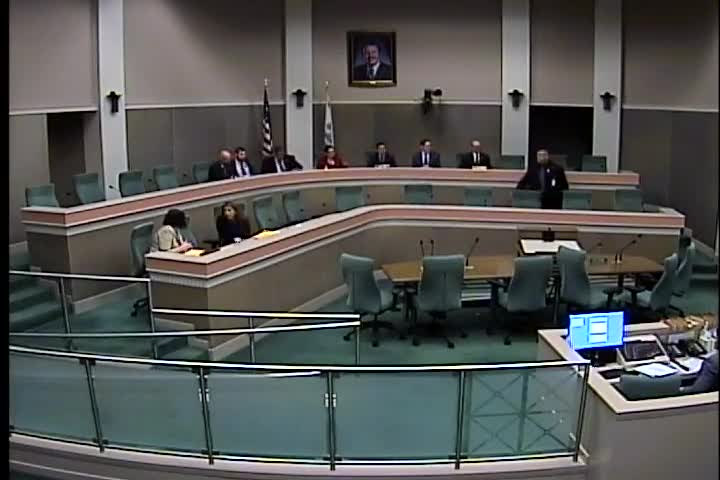 14MIN
Assembly Standing Committee on Transportation
Bill Author

Bill Co-Author(s):